Jump to content
Talk Sox
  • Create Account

Recommended Posts

Posted
Who said none of the definitions are accurate?


One study might define a clutch situation as 8th inning or later with the game tied or within on run. Another study might define a clutch situation as 7th inning or later with the score within 2 runs. The definitions are certainly accurate and the research is certainly relevant.


It might be a different story if different definitions of clutch provided different research results. But when all the studies conclude the same thing, it makes a pretty strong case against clutch being a repeatable and predictable skill.

I said "if". Others have said that the term can't be defined to their satisfaction.
  • Replies 843
  • Created
  • Last Reply

Top Posters In This Topic

Posted
You can say that as often as you like. It won't make it true.
You have said it yourself that the studies do not definitively disprove the existence of clutch... or are you changing your position?
Posted
Also, I want to know how it is that clutch can't be dis-proven if we can't agree on its definition, yet OTOH, people know it exists even though there's no definition of what it is.


I'm not sure why it's so difficult to define, really. It's not all that complicated, or it shouldn't be, in my opinion. A clutch player is a player whose performance in high-leverage situations is equal to or better than their overall performance. A clutch player is someone whose numbers indicate they're not adversely affected by pressure.

Posted
You have said it yourself that the studies do not definitively disprove the existence of clutch... or are you changing your position?


I am talking about your claims that the research is irrelevant, pointless, and useless.

Posted
I'm not sure why it's so difficult to define, really. It's not all that complicated, or it shouldn't be, in my opinion. A clutch player is a player whose performance in high-leverage situations is equal to or better than their overall performance. A clutch player is someone whose numbers indicate they're not adversely affected by pressure.


Then you are talking about roughly half the players in MLB. Statistically speaking, half the players perform better than or equal to their norm in high leverage situations and half the players perform equal to or worse than their norm in high leverage situations.


Which is also exactly what you would find in a completely randomly generated sample of data. Coincidence? I think not.

Posted
Then you are talking about roughly half the players in MLB. Statistically speaking, half the players perform better than or equal to their norm in high leverage situations and half the players perform equal to or worse than their norm in high leverage situations.


Which is also exactly what you would find in a completely randomly generated sample of data. Coincidence? I think not.


As I said before, though, I think the real problem is in defining high leverage situations, and I would like to see a study that places much more weight on the leverage of the game. Which would narrow the samples down to postseason games and crucial late-season games.


Which, unfortunately, also makes the samples too small when combined with the randomness factor.

Posted
As I said before, though, I think the real problem is in defining high leverage situations, and I would like to see a study that places much more weight on the leverage of the game. Which would narrow the samples down to postseason games and crucial late-season games.


Which, unfortunately, also makes the samples too small when combined with the randomness factor.


There is research out there somewhere on postseason clutch, but I have not been able to locate it. :(


But, your post is fair enough.

Posted
I am talking about your claims that the research is irrelevant, pointless, and useless.
If the definitions are not accepted, the research that hasn't definitively disproved those definitions is pointless, imo. Yes, I will continue to maintain that.
Posted (edited)
Then you are talking about roughly half the players in MLB. Statistically speaking, half the players perform better than or equal to their norm in high leverage situations and half the players perform equal to or worse than their norm in high leverage situations.


Again, we get all wrapped around the axle by defining players as being either clutch or not clutch when the truth is someplace in between. IMHO at least half of the players are clutch and the other half aren't. Those who are VERY clutch are able to perform at, say, 50% above their norm. That is, a .300 hitter would hit ~.450 in clutch situations. That would then taper down to those who perform at their norm in clutch situations and everyone between those two would be varying degrees of clutch.

At the other end of the spectrum those who are not clutch (dare I call them chokers?) will hit at 50% below their norm. That same .300 hitter will hit ~.150 in clutch situations and those in between will also have varying degrees of clutch.


Of course that's not statistically provable because of the relative number of opportunities in clutch situations vs. the number of opportunities in non-clutch situations would be a relatively small sample size. As I said a while back, some things aren't statistically provable. They just ARE.


There will always be a debate about this because there are unresolved parameters.

1. There is no accepted definition of a clutch situation.

2. There is no accepted definition of what makes a clutch player.

3. Once a player has enough AB's for us to know "what he is" his number of PA's in clutch situations (whatever that means) will be so small as to be too small a sample size to be meaningful.


As for me, I feel the same way about "clutch" as US Supreme Court Justice Potter Stewart said about pornography. I can't define it but I know it when I see it.

Edited by S5Dewey
Posted

Let's consider the case of Bob Gibson as a clutch performer.


Gibson had 81 postseason innings to his credit. So, of course, the sample isn't large enough.


But those 81 innings came in a total of 9 games. That's right, an average of 9 innings per game. One 8-inning game, one 10-inning complete game, and 7 9-inning complete games.


The 9 games came in a total of 3 postseasons. They also came in a total of 3 series - the World Series of 1964, 1967 and 1968. This was before divisional play began.


So Gibson pitched 27 innings in each of 3 World Series. He pitched 5 games on 3 days rest and one game on 2 days rest.


For the 9 games he had a 1.89 ERA, a .89 WHIP and a 5.41 K/BB.


He was MVP of the 1964 and 1967 World Series.

Posted
Oh Slasher, because I like you, I'm going to let you slide with this post.


But seriously, how has clutch been proven?


Because someone says it exists, that's proving that it does?


hey Kimmi. it's exactly how i love you. i cant prove love. but it exists. no?

Posted
Let's consider the case of Bob Gibson as a clutch performer.


Gibson had 81 postseason innings to his credit. So, of course, the sample isn't large enough.


But those 81 innings came in a total of 9 games. That's right, an average of 9 innings per game. One 8-inning game, one 10-inning complete game, and 7 9-inning complete games.


The 9 games came in a total of 3 postseasons. They also came in a total of 3 series - the World Series of 1964, 1967 and 1968. This was before divisional play began.


So Gibson pitched 27 innings in each of 3 World Series. He pitched 5 games on 3 days rest and one game on 2 days rest.


For the 9 games he had a 1.89 ERA, a .89 WHIP and a 5.41 K/BB.


He was MVP of the 1964 and 1967 World Series.


Pretty incredible numbers, even for a small sample size. I'm not trying to lessen the greatness of this feat, but a little context is needed.


The NL ERA those years were 3.54 and 3.38, so while 1.89 is amazing, it was only about 1.50 better than the regular season NL ERA those years. Last year's NL ERA was 4.17, so a comparable modern number might be a 2.67 ERA.

Posted
Pretty incredible numbers, even for a small sample size. I'm not trying to lessen the greatness of this feat, but a little context is needed.


The NL ERA those years were 3.54 and 3.38, so while 1.89 is amazing, it was only about 1.50 better than the regular season NL ERA those years. Last year's NL ERA was 4.17, so a comparable modern number might be a 2.67 ERA.


If you look at it on a proportionate basis, 1.89 is about 55% of 3.54 and 3.38. So a comparable number for 2016 might be more like 2.30.


I think the even more impressive numbers for Gibby are the 9 innings per start (most on short rest), the WHIP and the K/BB.

Posted
If you look at it on a proportionate basis, 1.89 is about 55% of 3.54 and 3.38. So a comparable number for 2016 might be more like 2.30.


I think the even more impressive numbers for Gibby are the 9 innings per start (most on short rest), the WHIP and the K/BB.


Agreed. Nobody comes close to the iron men of eras past.

Posted

In 1968, Gibson started 34 games and completed 28 (13 were shutouts!). He had a 1.12 ERA and 0.853 WHIP.


He also had 28 CGs in 1969!

Posted

If you look at it on a proportionate basis, 1.89 is about 55% of 3.54 and 3.38. So a comparable number for 2016 might be more like 2.30.


Here's a comp:


from 1999-2003, Pedro had a 2.10 ERA. The closest other was RJ at 2.66 and then Mussina at 3.58! The AL ERA in that time was between 4.47 and 4.98 for an average of about 4.60.

2.10 is about 45% of 6.65!


Pedro's 2000 ERA+ of 291 was the best in MLB since 1880. He also had the 9th best alltime ERA+ at 243 in 1999. All-in-all, he had 5 of the best 36 in MLB history (5 of the top 18 since 1930)!


Bob Gibson placed 7th in 1968, but had no other top 220 seasons.

Community Moderator
Posted
Gibson was a beast.


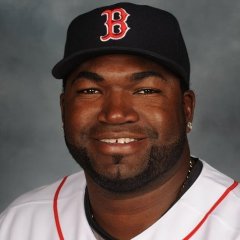
You know who was really a beast? The Greatest Clutch Hitter in the History of the Boston Red Sox, David Ortiz, #34.

Posted
You know who was really a beast? The Greatest Clutch Hitter in the History of the Boston Red Sox, David Ortiz, #34.


True, if only "clutch" existed!

:(

Posted
Again, we get all wrapped around the axle by defining players as being either clutch or not clutch when the truth is someplace in between. IMHO at least half of the players are clutch and the other half aren't. Those who are VERY clutch are able to perform at, say, 50% above their norm. That is, a .300 hitter would hit ~.450 in clutch situations. That would then taper down to those who perform at their norm in clutch situations and everyone between those two would be varying degrees of clutch.

At the other end of the spectrum those who are not clutch (dare I call them chokers?) will hit at 50% below their norm. That same .300 hitter will hit ~.150 in clutch situations and those in between will also have varying degrees of clutch.


What you have just described is similar to what happens when data is randomly generated. With the actual data, you would expect some players to perform better than average and other players to perform worse than average, just because that's the way things happen. In other words, the actual data is no different than the randomly generated data. There is no statistical significance behind those players whom you consider clutch. Furthermore, they can't repeat their 50% above the norm from one year to the next.

Posted
Let's consider the case of Bob Gibson as a clutch performer.


Gibson had 81 postseason innings to his credit. So, of course, the sample isn't large enough.


But those 81 innings came in a total of 9 games. That's right, an average of 9 innings per game. One 8-inning game, one 10-inning complete game, and 7 9-inning complete games.


The 9 games came in a total of 3 postseasons. They also came in a total of 3 series - the World Series of 1964, 1967 and 1968. This was before divisional play began.


So Gibson pitched 27 innings in each of 3 World Series. He pitched 5 games on 3 days rest and one game on 2 days rest.


For the 9 games he had a 1.89 ERA, a .89 WHIP and a 5.41 K/BB.


He was MVP of the 1964 and 1967 World Series.


Or maybe Gibson was just a very good pitcher, period?


His 1968 season he had an ERA of 1.12 and a WHIP of 0.85.


In comparison to those numbers, we could say that he choked in the postseason. ;)

Posted
hey Kimmi. it's exactly how i love you. i cant prove love. but it exists. no?


Of course it exists. I have never said that something only exists if it can be proven to exist. There are a lot of intangibles that I strongly believe do exist, though I have no proof of it.


The difference with clutch, defined as a repeatable skill, is that there is very strong statistical evidence that it doesn't exist.

Posted (edited)
Clutch exists. 100%. as has been proven throughout this thread.

those that are trying to "argue" that it doesn't are just trolling.

lol @ whoever thought a professional baseball player has the same focus in every AB situation. too funny.

that really seals the faux argument that you are trying to make.


Right, so now you're saying players DON'T try their hardest in every at-bat?* That players go up to the plate thinking "Gee, this isn't the post season or anything, so I can just go through the motions this time."


Newdflash - these are the best players in the world.* Most of them are better at baseball than most of us are at ANYTHING.* They didn't get where they are by not trying their hardest at EVERY opportunity.* Even players we think of as bad - even guys like Josh Rutledge, who some feel shouldn't even be on the team - are better at baseball than most of us can fathom.* Most people will go through their whole lives and never meet a baseball player as good as Josh Rutledge, and most people will never be as good at their jobs as Rutledge is at baseball, where he is arguably among the 750 best in the world.


So we look for clutch in players like David Ortiz.* Certainly, Ortiz has come up big in a lot of big situations.* He has also come up big in a lot of less important ones. Know why?* Because David Ortiz is a TERRIFIC HITTER OVERALL and comes up big a lot!! The man possesses a superhuman ability to hit a baseball traveling in excess of 90mph and drive it a long way, one possessed by very few living human beings.* Very few.* He has also failed in a lot of clutch siituations, but when it comes to hitting, one success can erase a lot of failures.* That's the nature of glorifying a 30% success rate.***But no one talks about his 1 for 12 in the 2009 ALCS loss to the Angels.* Know why?* Because 2004 and 2013 were far more memorable. Or, if you're right, he simply wasn't trying in 2009.


So I guess clutch does exist, but in reputation only.* We as fans love to remember the big moments, and we only remember the bad ones for players we didn't like much.* At one point in one of these threads, I asked about the biggest clutch hit JD Drew had.* The answer, as expected, was the grand slam off Fausto Carmona, which was a big hit.* But really, his 2008 ALCS against Tampa was turning into a stream of clutch JD Drew hits in the comeback that fell short.* But what is he remembered for in that series?* Striking out in the biggest at bat of the series against David Price (remember him?* The guy you insisted was the very definition of a choker?* Are we full circle yet?)* So when you don't have Ortiz' history, I guess you can't afford to make big outs and still be "clutch", huh?* Ask Yaz about that.* I remember seeing posters criticizing him for ending Game 163 in 1978 with a weak pop up, and how "unclutch" he was.* All of this was done by people who didn't see 1967, I guess.* (I didn't either, not being born yet, but I did know about it and didn't think his reputation as a player should be defined by one at bat at age 39.* Ah, but the reputation of "clutch."* How it pervades.)


To go non-baseball, there was some Tom Brady mention at one point, and how he was just amazingly "clutch" in the Super Bowl.* When I asked would he still be clutch if Edelman didn't catch that ball, the answer was "It wasn't fourth down, so he would have made the next play."* THAT is reputation, not clutch play.* And we know this because you gave him success on a PLAY THAT NEVER HAPPENED.* Brady has absolutely had failures in the same situation - twice the year before in the AFC Chmpaionship game in Denver, and even in the first Super Bowl against the Giants, but when you have a clutch reputation, success is expected and apparently assumed.


Really, we could go on about this, but great players have their great moments.* But they have them because they are great players, and are talented enough to take advantage of the opportunities.* The players make the moments, not the other way around as you want it to be.* But we remember - and sometimes misremember - them for it.* And sometimes, they do get lucky.* Take Luis Gonzalez, who had inarguably the biggest hit in Diamondbacks history.* Was he "focused" then more so than in his other at bats?* Or was there some randomness involved?* He did hit a routine shallow pop up to shortstop that would have been an easy out under any defensive alignemt. Except one.* But what alignment were the Yankees in on that very pitch?


Or maybe Jeter wasn't trying...

Edited by notin
Posted

Good post Notin. Clutch is very much about perception, and often times that perception is false.


I mentioned a study where fans were allowed to choose a player that they would want up in a clutch situation. Fans chose the player with the clutch reputation rather than the better player (Jeter vs ARod, as one example). In clutch situations, the better player overwhelmingly outhit the supposed clutch player.

Posted
Or maybe Gibson was just a very good pitcher, period?


Yes he was. David Price is a very good pitcher, too. You know the rest...

Posted
Yes he was. David Price is a very good pitcher, too. You know the rest...


That's the way a random sample is going to shake out. Some will perform better in the clutch, others will perform worse.

Posted
To go non-baseball, there was some Tom Brady mention at one point, and how he was just amazingly "clutch" in the Super Bowl.* When I asked would he still be clutch if Edelman didn't catch that ball, the answer was "It wasn't fourth down, so he would have made the next play."* THAT is reputation, not clutch play.* And we know this because you gave him success on a PLAY THAT NEVER HAPPENED.* Brady has absolutely had failures in the same situation - twice the year before in the AFC Chmpaionship game in Denver, and even in the first Super Bowl against the Giants, but when you have a clutch reputation, success is expected and apparently assumed.


I would argue that Brady has proven himself to be a clutch performer, even though he has had his failures. His ability to execute those late touchdown drives in the last 2 Super Bowl wins was phenomenal.


Some people may have unrealistic definitions of clutch. That doesn't mean it doesn't exist.

Posted
That's the way a random sample is going to shake out. Some will perform better in the clutch, others will perform worse.


Whether the guy does great in the clutch or lousy in the clutch, you always have a readily available explanation other than mental factors. :)

Create an account or sign in to comment

You need to be a member in order to leave a comment

Create an account

Sign up for a new account in our community. It's easy!

Register a new account

Sign in

Already have an account? Sign in here.

Sign In Now
The Talk Sox Caretaker Fund

You all care about this site. The next step is caring for it. We’re asking you to caretake this site so it can remain the premier Red Sox community on the internet.

×
×
  • Create New...