


mvp 78
-
Posts
86,700 -
Joined
-
Last visited
-
Days Won
275
mvp 78's Achievements




-
 Hitch reacted to a post in a topic:
Red Sox Pre-Offseason Mega Thread
Hitch reacted to a post in a topic:
Red Sox Pre-Offseason Mega Thread
-
drewski6 reacted to a post in a topic:
2026 MLB post-Red Sox postseason thread
-
NHNative reacted to a post in a topic:
2026 MLB post-Red Sox postseason thread
-
mvp 78 reacted to a post in a topic:
A Realistic View at the 2027 Red Sox Part I
-
WS is on FOX
-

A Realistic View at the 2027 Red Sox Part I
mvp 78 replied to moonslav59's topic in Boston Red Sox Talk
Story was also one of the squeakiest wheels when Cora was fired. While Story was on the active roster: Red Sox 31-39 (including WC) -
A Realistic View at the 2027 Red Sox Part I
mvp 78 replied to moonslav59's topic in Boston Red Sox Talk
Ketel is damaged goods and should come MUCH cheaper now. Wonder if HOU is more likely to hold onto Paredes after squeaking into the playoffs again? -
CLE vs MIL because the Rays don't deserve a new stadium.
-
They had the Dodgers on the ropes and the back end of the rotation is very beatable right now. Drohan and Harrison had great stretches early on, but aren't those pitchers in October.
-
A Realistic View at the 2027 Red Sox Part I
mvp 78 replied to moonslav59's topic in Boston Red Sox Talk
Maybe Mets would eat some of the salary too? -
It wasn't really a "bullpen" game, it was Drohan opening for May. The back end of their starting pitching kind of fell off at the end of the season.
-
A Realistic View at the 2027 Red Sox Part I
mvp 78 replied to moonslav59's topic in Boston Red Sox Talk
He's just a better bet to be available than Story. Not saying I'd do the swap though. -
A Realistic View at the 2027 Red Sox Part I
mvp 78 replied to moonslav59's topic in Boston Red Sox Talk
I'm not very intrigued by Imanaga at Fenway. *** Rogers: 6'5" LHP, 92nd percentile BB rate & chase rate, coming off career high in starts and IP -
A Realistic View at the 2027 Red Sox Part I
mvp 78 replied to moonslav59's topic in Boston Red Sox Talk
I know one big difference between Story and Semien!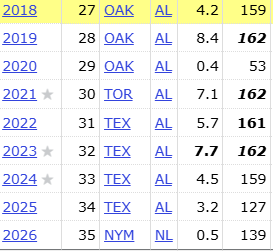
-
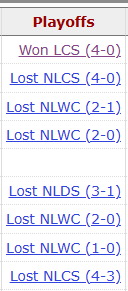
Prior to this year, they have absolutely struggled each and every postseason. They deserve it.
-
If Gasper is the one year wonder that Bauers is, they should trade him this offseason.
-
I think Suarez is what he is: a 150 IP guy. Just because you pay him more, doesn't mean he's going to be able to go out there 32 games next season.
-
At 5, you can live with Bello. Bennett is kind of an unknown going into year 2. His ERA skyrocketed after the ASB. His FIP when up a little bit too. Which pitcher should the Sox expect for '27: first or second half? Suarez will give you 150 IP next season. You'll need a 6th starter to give you another 4-5 GS for sure. Is Wehunt good enough as a fill in late season? Not terribly concerned about Tolle TBH. No injury history really and pitched well all season. May fall back a bit, but I don't see him completely collapsing. Pitching is inherently risky in the modern era though. If you told me that Crochet doesn't make it out of ST and gets season ending surgery, I wouldn't be surprised. If you told me that he returned to '25 form and won the CY, I wouldn't be surprised.
-
A Realistic View at the 2027 Red Sox Part I
mvp 78 replied to moonslav59's topic in Boston Red Sox Talk
I've been saying to trade Duran, Story and Masa. I've been told it's impossible. If they eat enough salary, anything is possible.
