Jump to content
Talk Sox
  • Create Account

Recommended Posts

Posted

Ok, so ive been reading a lot of posts regarding a player being "clutch" or not. Bellhorn made a suggestion for a thread..so Heres what I think...

There IS a human element to this game that cant be denied. Well, you can deny it but youd be wrong:) Each players mental makeup and Higher pressure situations can change players. Some players can remain the same where there heartbeat stays the same or even slows down. Some can have zero thoughts except exactly whats going on. On the other hand, some players can get a bit "excited" in the same situations where their heart is racing or they out think themselves...basically they get in their own way.

The problem is unless your in a players head youll never really know unless you hear certain things when the player talks that may shed some light...So my answer is I believe the human element is a big part of baseball in this situation and therefore I believe certain players, no matter skill level, are able to stay balanced in any situation which gives them a greater chance for success more times than not in some of the biggest, pressure filled situations. Not sure if that means I believe in a "clutch" player or not though...


So, Does a clutch player exist? I look forward to your answers.

  • Replies 843
  • Created
  • Last Reply

Top Posters In This Topic

Posted

I think mental make-up is a big part of overall success and success "when it counts" (clutch).


It's hard to prove that the reason player A does better than player B "in the clutch" is because of superior mental-make-up, or if it is just some confluence of random events.


I'm fine with using the term "clutch" for describing events and happenings, or to say so and so "sure seems to come through in the clutch", but when it come to definitively labeling a player "clutch" (or "choke"), I don't think it is something I'd do.


Sample sizes are often too small, and when larger sample sizes are used, the results often mimic the same results as a random generator would produce, so even then, it's hard to "prove" anything.


Also, is "clutch" doing better or much better than you usually do or that you do in "Non-clutch" situations?


If a great player does great in the clutch- but no better than non-clutch situations, is he still "clutch"?


The argument or debate is often sidetracked by varying views on just what clutch is and which situations are actually clutch or not.

Posted

Good answer. Im not sure how to define clutch...i more or less defined what it is to "stay cool" in a pressure situation. If thats part of the meaning of clutch, then im ok with that.

The outcome may not be a good one, but someone can still "stay cool" and not have success...,maybe the pitcher was "cooler" that day;)

Its hard to define

Posted

I kind of view clutch as rising above your norm to do better when it counts, but since most super clutch situations usually involve facing better-than-norm pitching and defense, one might expect everyone's clutch "norm" to be lower than non-clutch "norm". If that's the case, then a player producing at his non-norm rate could be viewed as "clutch" by some, and I get it.


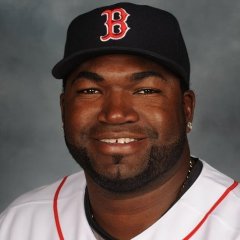
Papi's playoff, high leverage and "late & close" numbers were all pretty close to his overall career numbers, so unless yo apply the "harder than normal" aspect to hitting in the clutch, it's hard to argue he was definitively clutch.


The other important aspect of the Papi case is that if you had a random generator spit out results on the same amount of players and sample sizes "in the clutch", one would see some random samples with very high numbers, so was it all just luck or not? That's what's the hard thing to prove one way or the other.


I've always said, if any one baseball player could ever be definitively called clutch, it would have to be Papi. I admit, I'm biased and have not experienced other players from other teams continuously coming through "when it counted".

Posted (edited)
Whether "clutch" exists or IS up for debate. However, the fact that some people wilt under the pressure IS NOT up for debate. Edited by mvp 78
Posted

I think my position on 'clutch' has been pretty well established, so let me share something with you.


Basketball season is now winding down in my state and the tournament to crown State Champions starts this week and I attend most games in my section of the state.


Last season I saw a player on a team leading by one point foul a player on the opposing team as time expired. I saw a 16 year old kid go to the line to shoot one-and-one with the game and the season in the balance. If they win they advance. If they lose they go home. That kid made both ends of the one-and-on for the win, and the ball never even touched the rim. Swish. Twice. Random? With that kind of pressure. I think not. Please don't tell me that clutch doesn't exist.

Posted

I think it's quite possible that baseball is the hardest sport in which to identify clutch or non-clutch because of the issues with randomness and sample sizes.


Nobody's going to argue very strenuously against Michael Jordan or Tom Brady being clutch.

Posted
Whether "clutch" exists or IS up for debate. However, the fact that some people wilt under the pressure IS NOT up for debate.


So if they have the right make up, they can handle those situations. If not, they usually dont.

This I agree 100% with.

Some can handle some pressure, but then hit a wall of sorts when it gets to be too much.

Its all depends when it gets to be too much for some.

Do you think it can be learned to keep balanced at all times or are we just the way we are?

Posted
So if they have the right make up, they can handle those situations. If not, they usually dont.

This I agree 100% with.

Some can handle some pressure, but then hit a wall of sorts when it gets to be too much.

Its all depends when it gets to be too much for some.

Do you think it can be learned to keep balanced at all times or are we just the way we are?


We are who we are.


Some people say that people that wilt get filtered out in the minors. I think some people just have so much more talent than other players that they will make the majors no matter what. However, once they get to the majors and their talent is equal to everyone else's, their nerves are more likely to play a major role. Also, some lights are burn brighter than others (think Melancon in Boston). Nerves may change depending on venue, importance of the game, etc.

Posted
Whether "clutch" exists or IS up for debate. However, the fact that some people wilt under the pressure IS NOT up for debate.


I wanna buy this post a steak dinner.

Posted
Whether "clutch" exists or IS up for debate. However, the fact that some people wilt under the pressure IS NOT up for debate.


I have never disagreed that some people will fold under pressure. My contention is that those people will not make it to the major leagues, or will not last very long if they do make it.


Because of the competitiveness and the pressure the players face just to get to that level, I would say that virtually all major leaguers are 'clutch', meaning they are not chokers.

Posted

On the idea that some players get into such a place mentally that they can 'will' themselves to hit a homerun or accomplish some other great feat in a big moment. If that is the case, why don't they 'will' themselves to do so every time they're up in a big moment?


Perhaps they are 'willing' themselves to hit a homerun every time they're in a clutch moment, but most times they fail. When they succeed, it's a great feeling. Everyone wants to think these players did something otherworldly. Perhaps they're not doing anything differently than they usually do.


People tend to remember the big moments. We tend not to remember all the times that our clutch heroes failed to come through in the clutch.

Posted
On the idea that some players get into such a place mentally that they can 'will' themselves to hit a homerun or accomplish some other great feat in a big moment. If that is the case, why don't they 'will' themselves to do so every time they're up in a big moment?


Perhaps they are 'willing' themselves to hit a homerun every time they're in a clutch moment, but most times they fail. When they succeed, it's a great feeling. Everyone wants to think these players did something otherworldly. Perhaps they're not doing anything differently than they usually do.


People tend to remember the big moments. We tend not to remember all the times that our clutch heroes failed to come through in the clutch.


This is interesting for sure. Good opinions and points of view. One of my questions would be, who gets to decide what a clutch moment is?

Posted
On the idea that some players get into such a place mentally that they can 'will' themselves to hit a homerun or accomplish some other great feat in a big moment. If that is the case, why don't they 'will' themselves to do so every time they're up in a big moment?


Perhaps they are 'willing' themselves to hit a homerun every time they're in a clutch moment, but most times they fail. When they succeed, it's a great feeling. Everyone wants to think these players did something otherworldly. Perhaps they're not doing anything differently than they usually do.


People tend to remember the big moments. We tend not to remember all the times that our clutch heroes failed to come through in the clutch.


Clearly it's impossible for a hitter to come up big every time, or even half the time. The odds are stacked too heavily against him.


I think it's plausible that some hitters might be better than average in the clutch, though.

Posted
Like I said - when is the clutch? Who gets to decide? It is not definitive. I'm just guessing but I bet this drives some people nuts. My great players might always do well in the clutch and not so much when the stakes aren't quite so high.
Posted
This is interesting for sure. Good opinions and points of view. One of my questions would be, who gets to decide what a clutch moment is?


The stat geeks have admitted that one of the problems with 'proving' whether clutch exists or not is that clutch has not been clearly defined. What might be considered clutch to one person might not be clutch to another. Also, there are varying degrees of clutch moments.

Posted
Clearly it's impossible for a hitter to come up big every time, or even half the time. The odds are stacked too heavily against him.


I think it's plausible that some hitters might be better than average in the clutch, though.


It's not only plausible, but it is true that some hitters are better than average in the clutch. But is that because they are clutch or is it because they are lucky?

Posted
The stat geeks have admitted that one of the problems with 'proving' whether clutch exists or not is that clutch has not been clearly defined. What might be considered clutch to one person might not be clutch to another. Also, there are varying degrees of clutch moments.


I would think that it would be extremely difficult if not impossible to define something like this. It might be why we hear (and I use) we know it when we see it. Sometimes you can even feel it. Once again, these types of things that are not clearly defined make the games special for me. I mentioned pycho-cybenetics to you a while ago. The great NBA scorer Bob McAdoo quite often used to go through his pre-practice shooting routine without a basketball. He believed that mentally he saw himself scoring which enabled him to actually score - he sure did!

Posted
I would think that it would be extremely difficult if not impossible to define something like this. It might be why we hear (and I use) we know it when we see it. Sometimes you can even feel it. Once again, these types of things that are not clearly defined make the games special for me. I mentioned pycho-cybenetics to you a while ago. The great NBA scorer Bob McAdoo quite often used to go through his pre-practice shooting routine without a basketball. He believed that mentally he saw himself scoring which enabled him to actually score - he sure did!


There is something that goes on during big moments. I have experienced it myself. I just hesitate to call it clutch, or more accurately, I hesitate to say that some players have a clutch quality. It is not a repeatable skill and it has no predictive value.


It's similar to momentum.

Posted
It's not only plausible, but it is true that some hitters are better than average in the clutch. But is that because they are clutch or is it because they are lucky?


I don't think there's any question that baseball is the hardest sport to identify clutch because randomness is such a factor.


But if it exists in other major sports it seems credible that it also exists in baseball. Maybe the discussion of clutch should also be looking at other sports. Why would baseball be different?


S5 was talking about the kid making the 2 free throws at the end of the game. I wonder if clutch free throw shooting stats in the NBA have ever been looked at.

Posted

This whole discussion kinda-sorta goes to something I've wondered about and even asked at one point.


Aren't we tacitly acknowledging that "clutch" exists when we insist on having a lights-out closer for the 9th inning? Doesn't that imply that there's a real possibility that the hitters in the 9th inning can "turn it up a notch" when necessary?

Posted
This whole discussion kinda-sorta goes to something I've wondered about and even asked at one point.


Aren't we tacitly acknowledging that "clutch" exists when we insist on having a lights-out closer for the 9th inning? Doesn't that imply that there's a real possibility that the hitters in the 9th inning can "turn it up a notch" when necessary?


That may be part of it. The other big factor, though, is that the 9th inning is considered the most important inning, the highest-leverage inning, the inning where the game is most on the line. The postseason does seem to raise the value of the closer, although this past postseason also showed that in today's game, a guy like Andrew Miller who doesn't pitch the 9th can also be a huge weapon.

Posted

Aren't we tacitly acknowledging that "clutch" exists when we insist on having a lights-out closer for the 9th inning? Doesn't that imply that there's a real possibility that the hitters in the 9th inning can "turn it up a notch" when necessary?


Maybe they are just important outs to get.

Posted
Whether it's true or not, there is definitely a perception that some pitchers who are good in the seventh or eighth inning aren't really built to handle the pressure of being the closer.
Posted
This whole discussion kinda-sorta goes to something I've wondered about and even asked at one point.


Aren't we tacitly acknowledging that "clutch" exists when we insist on having a lights-out closer for the 9th inning? Doesn't that imply that there's a real possibility that the hitters in the 9th inning can "turn it up a notch" when necessary?


Yes -

Posted
That may be part of it. The other big factor, though, is that the 9th inning is considered the most important inning, the highest-leverage inning, the inning where the game is most on the line. The postseason does seem to raise the value of the closer, although this past postseason also showed that in today's game, a guy like Andrew Miller who doesn't pitch the 9th can also be a huge weapon.


I've probably posted this before, but what you're saying goes back to what Bill James has said - that teams should use their best relief pitcher situationally. Games are often lost in the 6th, 7th, or 8th innings off the middle relievers while the closer sits on the bench. James says that teams shouldn't hesitate to use their best reliever in their highest pressure situations regardless of the inning.


The Cubs had the luxury of having both Miller and a "real closer" so they could use Miller in tight situations but Miller being as effective as he was may have lessened the need for that "real closer".

Posted
This whole discussion kinda-sorta goes to something I've wondered about and even asked at one point.


Aren't we tacitly acknowledging that "clutch" exists when we insist on having a lights-out closer for the 9th inning? Doesn't that imply that there's a real possibility that the hitters in the 9th inning can "turn it up a notch" when necessary?


No. What we're saying is that we want one of our most consistent relievers in the 9th inning because a lead blown in the 9th is the hardest of all blown leads to recover from due to having the least time. So putting your stingiest run-allower in the position where giving up a run would go worst for you just makes sense statistically and logically.

Posted
I've probably posted this before, but what you're saying goes back to what Bill James has said - that teams should use their best relief pitcher situationally. Games are often lost in the 6th, 7th, or 8th innings off the middle relievers while the closer sits on the bench. James says that teams shouldn't hesitate to use their best reliever in their highest pressure situations regardless of the inning.


The Cubs had the luxury of having both Miller and a "real closer" so they could use Miller in tight situations but Miller being as effective as he was may have lessened the need for that "real closer".

I've always maintained that this is a pointless conversation.


THere are three possibilities for a team -- they can either have zero, 1, or more than 1 good relievers.


If you have more than 1 good reliever the whole thing is moot because you have a guy for both jobs.


If you have only 1 good reliever, the whole thing is moot -- close with him, you're screwed in middle innings, use him in middle innings you're screwed at the end of the game.


If you have 0 good relievers, the whole thing is moot -- you have no good relievers so your bullpen sucks.


At no point in this conversation is the conversation in general actually worth having.

Posted

Dojji, there is some merit in your point but you're oversimplifying.


Good teams now generally have at least 3 relievers that could be classified as good.


Let's look at the 2016 Guardians.


Their top 3 relievers, the guys that Francona used as much as possible in the postseason, were Miller, Allen and Shaw.


You could call Miller Mr. Excellent - 1.45 ERA for the season

Call Allen Mr. Very Good - 2.51 ERA

Call Shaw Mr. Good - 3.24 ERA


The traditional way to employ these 3 guys would be to use Mr. Good, then Mr. Very Good, then Mr. Excellent.

But what Tito generally did was use Mr. Excellent, Mr. Good, then Mr. Very Good.

Posted
I've always maintained that this is a pointless conversation.


The point that I don't agree that it's pointless not withstanding, this conversation is at least as worth having as some we've had here in the past month! ;)

Create an account or sign in to comment

You need to be a member in order to leave a comment

Create an account

Sign up for a new account in our community. It's easy!

Register a new account

Sign in

Already have an account? Sign in here.

Sign In Now
The Talk Sox Caretaker Fund

You all care about this site. The next step is caring for it. We’re asking you to caretake this site so it can remain the premier Red Sox community on the internet.

×
×
  • Create New...