


Alex Mayes
-
Posts
875 -
Joined
-
Last visited
Recent Profile Visitors
11,697 profile views





Alex Mayes's Achievements


-
 Alex Mayes reacted to a post in a topic:
Letting Sonny Gray Walk Was A Symptom of A Much Larger Red Sox Problem
-
In their first post-non-tender-deadline move, the Boston Red Sox have traded RHP Johan Oviedo to the Arizona Diamondbacks. The Red Sox are receiving Luke Dotson, a left-handed pitcher currently in High-A, and a player to be named later in the trade. Dotson appeared in 34 games for the Hillsboro Hops where he worked a 3.00 ERA with 64 strikeouts and a 1.38 WHIP. He's a tall lefty, standing 6'4" and weighs 210 pounds. Oviedo pitched 3.2 innings in 2026 for the Red Sox before he landed on the injured list with a right flexor strain that kept him sidelined until the middle of September, when he began a rehab assignment in Triple-A Worcester. He was seen as a potential back-end rotation piece when the team acquired him. Oviedo came to Boston with a long injury history. He underwent Tommy John surgery while with the Pirates in 2024, causing him to miss that entire season. Then through various other injuries, he missed an additional 112 games in 2025 before be traded to the Red Sox in December of last year. The Red Sox acquired Oviedo in a deal with the Pittsburgh Pirates last offseason. They also got Tyler Samaniego and Adonys Guzman in exchange for Jhostynxon Garcia and Jesus Travieso. While it may be a shock to see Oviedo traded just after he was tendered a contract for the 2027 season, there were reports immediately after the deadline that the team had fielded multiple calls on the right-hander. In Oviedo's most recent healthy season with the Pirates (2023), he made 32 starts. During those starts he pitched to nine wins and 14 losses with a 4.31 ERA, 4.49 FIP, 20.2 K%, 10.6 BB%, and a 1.8 fWAR. While he never carried a strong pedigree, he was a pitcher that Craig Breslow and Andrew Bailey believed they could improve to the point that he could become a true rotation piece for the club. Through his injury shortened 2026, that obviously did not work out in his favor. There was belief that his stuff could play up out of a bullpen role or that he could possibly assume a swingman style reliever spot if Brayan Bello moved back into the rotation next season, but now he's a project for the Diamondbacks to figure out. While this trade is a big blow to the starting pitching depth, Oviedo was out of minor-league options heading into the 2027 season. Breslow is taking a bit of a gamble by trading from an already weaker group of starting pitchers after the 2026 trade deadline and the departure of Sonny Gray, but the front office has proven that they can identify pitchers that can help the Red Sox immediately. Look for Breslow to make another move before the December lockout to shore up the starting rotation a bit more. View full article
-
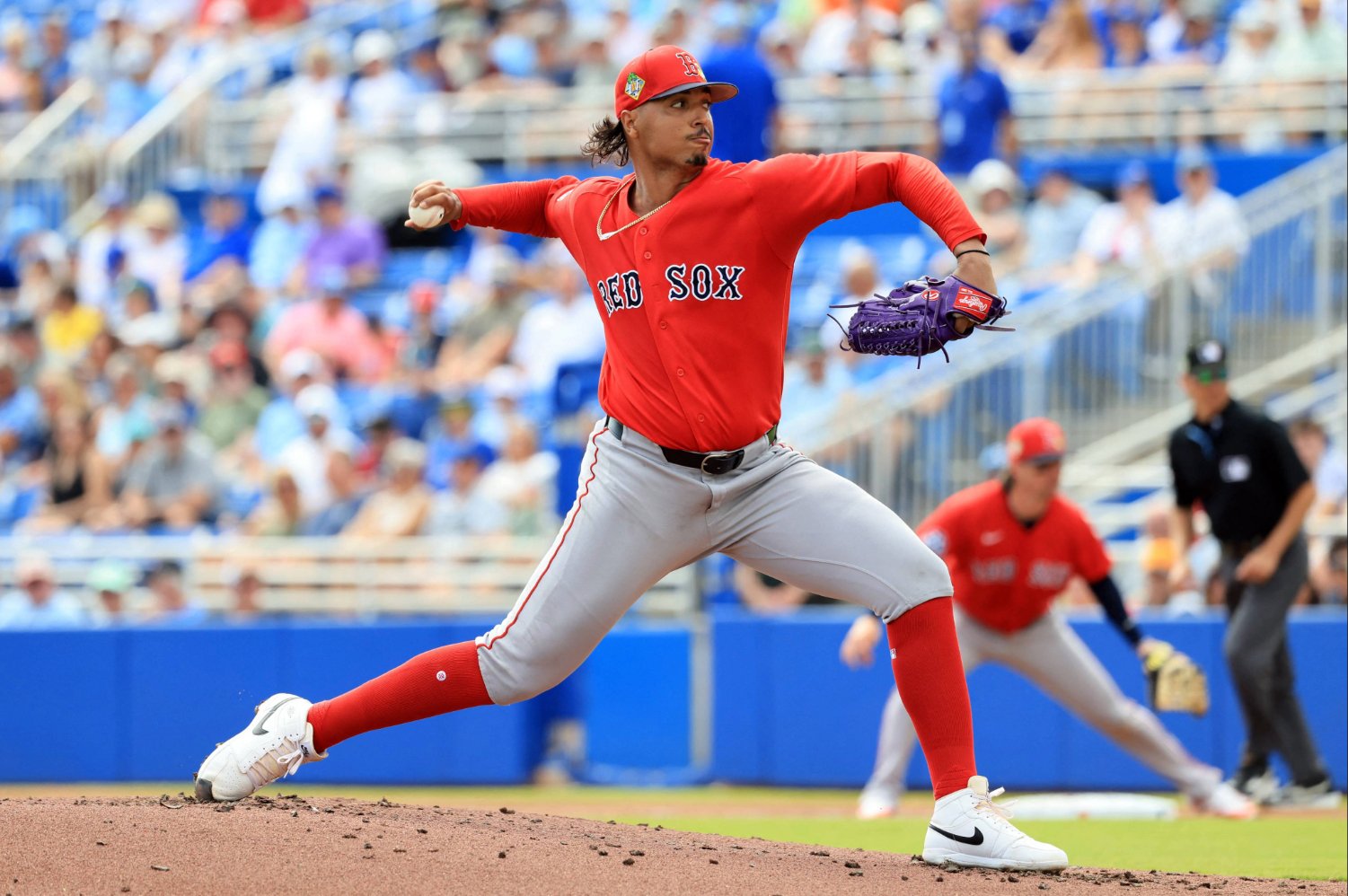 In their first post-non-tender-deadline move, the Boston Red Sox have traded RHP Johan Oviedo to the Arizona Diamondbacks. The Red Sox are receiving Luke Dotson, a left-handed pitcher currently in High-A, and a player to be named later in the trade. Dotson appeared in 34 games for the Hillsboro Hops where he worked a 3.00 ERA with 64 strikeouts and a 1.38 WHIP. He's a tall lefty, standing 6'4" and weighs 210 pounds. Oviedo pitched 3.2 innings in 2026 for the Red Sox before he landed on the injured list with a right flexor strain that kept him sidelined until the middle of September, when he began a rehab assignment in Triple-A Worcester. He was seen as a potential back-end rotation piece when the team acquired him. Oviedo came to Boston with a long injury history. He underwent Tommy John surgery while with the Pirates in 2024, causing him to miss that entire season. Then through various other injuries, he missed an additional 112 games in 2025 before be traded to the Red Sox in December of last year. The Red Sox acquired Oviedo in a deal with the Pittsburgh Pirates last offseason. They also got Tyler Samaniego and Adonys Guzman in exchange for Jhostynxon Garcia and Jesus Travieso. While it may be a shock to see Oviedo traded just after he was tendered a contract for the 2027 season, there were reports immediately after the deadline that the team had fielded multiple calls on the right-hander. In Oviedo's most recent healthy season with the Pirates (2023), he made 32 starts. During those starts he pitched to nine wins and 14 losses with a 4.31 ERA, 4.49 FIP, 20.2 K%, 10.6 BB%, and a 1.8 fWAR. While he never carried a strong pedigree, he was a pitcher that Craig Breslow and Andrew Bailey believed they could improve to the point that he could become a true rotation piece for the club. Through his injury shortened 2026, that obviously did not work out in his favor. There was belief that his stuff could play up out of a bullpen role or that he could possibly assume a swingman style reliever spot if Brayan Bello moved back into the rotation next season, but now he's a project for the Diamondbacks to figure out. While this trade is a big blow to the starting pitching depth, Oviedo was out of minor-league options heading into the 2027 season. Breslow is taking a bit of a gamble by trading from an already weaker group of starting pitchers after the 2026 trade deadline and the departure of Sonny Gray, but the front office has proven that they can identify pitchers that can help the Red Sox immediately. Look for Breslow to make another move before the December lockout to shore up the starting rotation a bit more.
-
Red Sox Tender Contracts to Every Arbitration-Eligible Player
Alex Mayes posted a rumor in MLB Notes
 In a bit of a surprising move, the Boston Red Sox have tendered contracts to all of their arbitration-eligible players for 2027. MassLive’s Chris Cotillo and Sean McAdam were first with the news. While it is surprising that Jarren Duran, Tanner Houck, Kutter Crawford, Johan Oviedo, and Triston Casas were all tendered contracts for the 2027 season, it does not signal that each player will remain with the club. With the looming December lockout, the front office can still trade any of these names until that date. Depending on how the CBA negotiations shake out in the coming months, some of those names could be on the move once we get through the lockout as well. There were a number of other names that the team tendered contracts to before the 5 pm EST deadline, but none of those should come as a shock to anyone. Adley Rutschman, Wilyer Abreu, Tyron Guerrero, Erik Miller, newly acquired backstop Nick Fortes, Greg Weissert, and Justin Slaten will all be under contract heading into 2027 as well after Friday’s deadline. There will be more names non-tendered across the league that may interest Craig Breslow and company, so it will be interesting to see how he navigates the final week and a half of the pre-lockout offseason.
-
In a bit of a surprising move, the Boston Red Sox have tendered contracts to all of their arbitration-eligible players for 2027. MassLive’s Chris Cotillo and Sean McAdam were first with the news. While it is surprising that Jarren Duran, Tanner Houck, Kutter Crawford, Johan Oviedo, and Triston Casas were all tendered contracts for the 2027 season, it does not signal that each player will remain with the club. With the looming December lockout, the front office can still trade any of these names until that date. Depending on how the CBA negotiations shake out in the coming months, some of those names could be on the move once we get through the lockout as well. There were a number of other names that the team tendered contracts to before the 5 pm EST deadline, but none of those should come as a shock to anyone. Adley Rutschman, Wilyer Abreu, Tyron Guerrero, Erik Miller, newly acquired backstop Nick Fortes, Greg Weissert, and Justin Slaten will all be under contract heading into 2027 as well after Friday’s deadline. There will be more names non-tendered across the league that may interest Craig Breslow and company, so it will be interesting to see how he navigates the final week and a half of the pre-lockout offseason. View full rumor
-
Alex Mayes reacted to a post in a topic:
Triston Casas' Future With Red Sox Is All Kinds of Murky Following Jake Bauers Signing
-
southpaw777 reacted to a post in a topic:
Triston Casas' Future With Red Sox Is All Kinds of Murky Following Jake Bauers Signing
-
EMERGENCY POD: Welcome, Jake Bauers!
Alex Mayes replied to Talk Sox's topic in Talk Sox Front Page News
Valid. I honestly hadn't looked up stats on his WS performance and just went off the eye test, which probably was influenced by the NLCS run haha. -
Alex Mayes reacted to a post in a topic:
EMERGENCY POD: Welcome, Jake Bauers!
-
That's my take as well. I really hope they tender him a contract to keep him around because there's so much potential there and they'll need that thump at some point.
-
Alex Mayes reacted to a post in a topic:
Triston Casas' Future With Red Sox Is All Kinds of Murky Following Jake Bauers Signing
-
The biggest question most fans are asking themselves after the Boston Red Sox signed Jake Bauers has been thus: Where the heck is he going to play? He has split time at first base, left field, and designated hitter in his career but as we have previously written, he slots in best as a hybrid/semi-full time designated hitter and first baseman with this roster. Luckily, The Athletic’s Jen McCaffrey has shined a light on the current plans for the lefty slugger. She reports that a team source, who spoke on the condition of anonymity because they were not authorized to speak publicly, noted that Bauers will do as we predicted, splitting time at designated hitter and first base with Willson Contreras moving forward. This makes a ton of sense for the organization. Contreras was the best hitter on the team in 2026 but he struggled with a handful of injuries that required time off toward the end of the season. Due to this, Contreras entered the playoffs in less than optimal form and was largely a non-contributor down the stretch. This is through no fault of his own, as he cannot control when he’s hit by a pitch or when his legs have had enough of a long baseball season, but by bringing in Bauers, the team will be able to cycle both in the field in an effort to keep them fresh. A tandem of Bauers and Contreras will give the Red Sox a potent one-two punch at both positions that most teams don’t have. There is one person who stands to be a bit hung out to dry now that the first base depth chart has gotten even deeper, though: Triston Casas is now on the outside looking in, even more so than he was after the team traded for Contreras last offseason. Casas has an incredible amount of potential—we just need to look to the second half of the 2023 season when he was one of the best power hitters in the entire league. Unfortunately, Casas has suffered two catastrophic, freak injuries that have kept him off the field for the last two seasons. He suffered from a torn cartilage in his ribcage in April 2024, then ruptured the patellar tendon in his left knee in May of 2025. Once he started rehabbing to return to the field, he suffered a left-side abdominal strain in spring training in 2026. Finally, at the end of the 2026 season, he underwent surgery on his left wrist. He appears to finally by healthy enough to play in the Dominican Winter League for the Tigres del Licey, but seeing is believing in his case. If Casas plays well during his time in the Dominican this winter while staying healthy, the Red Sox could have a couple of different options with him moving forward. As currently constructed, the major-league roster doesn’t have space for all three first basemen. The team could choose to let Casas spend ample time in Worcester in 2027 to find his footing against upper-level pitching as he prepares for a late-season or injury-necessitated call-up. He's still only 26 and likely has a future ahead of him in baseball in some capacity, so it stands to reason that the team who drafted him would prefer for him to figure things out in their organization. The other option, though, has the Red Sox cutting bait with the young slugger as they wish him well in his future endeavors. The non-tender deadline for the offseason is quickly approaching on Friday, November 20. While Casas’ projected salary isn’t astronomical (only $1.6-1.7 million), that is money the team could believe is better allocated to a player who can contribute immediately on the big-league roster. The first base depth chart for the Red Sox became significantly deeper with the addition of Bauers, which isn't a position you normally need a lot of depth at. While there is a large portion of the fanbase that would love to see Casas get another shot with the big-league club, he looks like the odd-man out and could find himself in a different organization sooner than later if the front office has lost faith in his ability to stay healthy. View full article
-
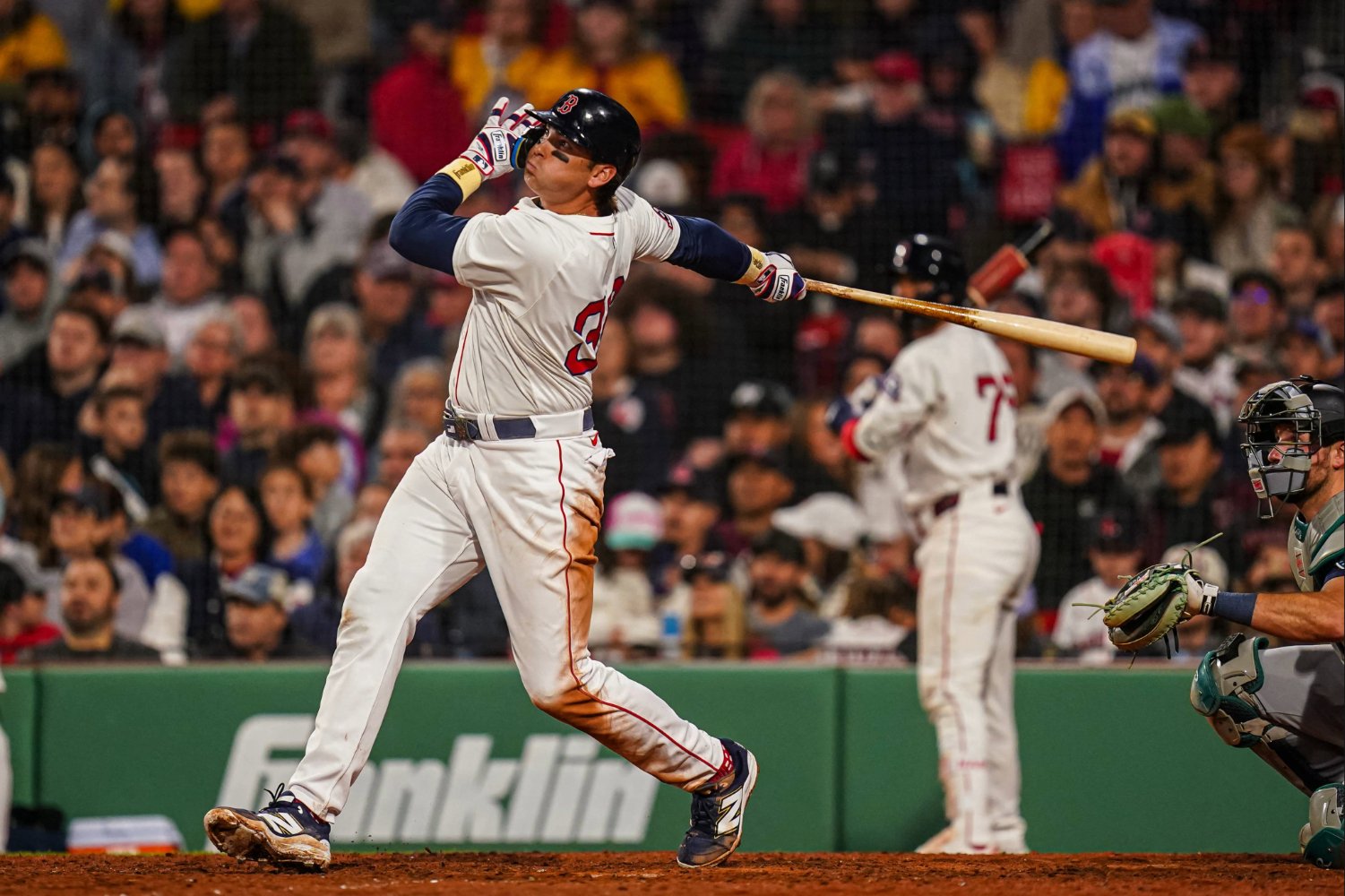 The biggest question most fans are asking themselves after the Boston Red Sox signed Jake Bauers has been thus: Where the heck is he going to play? He has split time at first base, left field, and designated hitter in his career but as we have previously written, he slots in best as a hybrid/semi-full time designated hitter and first baseman with this roster. Luckily, The Athletic’s Jen McCaffrey has shined a light on the current plans for the lefty slugger. She reports that a team source, who spoke on the condition of anonymity because they were not authorized to speak publicly, noted that Bauers will do as we predicted, splitting time at designated hitter and first base with Willson Contreras moving forward. This makes a ton of sense for the organization. Contreras was the best hitter on the team in 2026 but he struggled with a handful of injuries that required time off toward the end of the season. Due to this, Contreras entered the playoffs in less than optimal form and was largely a non-contributor down the stretch. This is through no fault of his own, as he cannot control when he’s hit by a pitch or when his legs have had enough of a long baseball season, but by bringing in Bauers, the team will be able to cycle both in the field in an effort to keep them fresh. A tandem of Bauers and Contreras will give the Red Sox a potent one-two punch at both positions that most teams don’t have. There is one person who stands to be a bit hung out to dry now that the first base depth chart has gotten even deeper, though: Triston Casas is now on the outside looking in, even more so than he was after the team traded for Contreras last offseason. Casas has an incredible amount of potential—we just need to look to the second half of the 2023 season when he was one of the best power hitters in the entire league. Unfortunately, Casas has suffered two catastrophic, freak injuries that have kept him off the field for the last two seasons. He suffered from a torn cartilage in his ribcage in April 2024, then ruptured the patellar tendon in his left knee in May of 2025. Once he started rehabbing to return to the field, he suffered a left-side abdominal strain in spring training in 2026. Finally, at the end of the 2026 season, he underwent surgery on his left wrist. He appears to finally by healthy enough to play in the Dominican Winter League for the Tigres del Licey, but seeing is believing in his case. If Casas plays well during his time in the Dominican this winter while staying healthy, the Red Sox could have a couple of different options with him moving forward. As currently constructed, the major-league roster doesn’t have space for all three first basemen. The team could choose to let Casas spend ample time in Worcester in 2027 to find his footing against upper-level pitching as he prepares for a late-season or injury-necessitated call-up. He's still only 26 and likely has a future ahead of him in baseball in some capacity, so it stands to reason that the team who drafted him would prefer for him to figure things out in their organization. The other option, though, has the Red Sox cutting bait with the young slugger as they wish him well in his future endeavors. The non-tender deadline for the offseason is quickly approaching on Friday, November 20. While Casas’ projected salary isn’t astronomical (only $1.6-1.7 million), that is money the team could believe is better allocated to a player who can contribute immediately on the big-league roster. The first base depth chart for the Red Sox became significantly deeper with the addition of Bauers, which isn't a position you normally need a lot of depth at. While there is a large portion of the fanbase that would love to see Casas get another shot with the big-league club, he looks like the odd-man out and could find himself in a different organization sooner than later if the front office has lost faith in his ability to stay healthy.
-
In a stunning pre-lockout move, the Boston Red Sox have signed free agent first baseman Jake Bauers to a four-year, $58 million contract. While Craig Breslow downplayed the need to add power to be a World Series contender just last week, he was obviously paying close attention to what the Brewers’ slugger was doing to help power that team to their first championship. While the addition of Bauers instantly makes the Red Sox’s lineup more potent, it creates a handful of roster questions that must be addressed before December 1. First, there is the obvious corresponding move that has to be made just to add Bauers to the 40-man roster. While there are a number of DFA candidates currently on that list, it wouldn’t be surprising to see Breslow try to free up some space by finally moving either Jarren Duran or Masataka Yoshida. Sure, he can DFA Raymond Burgos, but that'd be a temporary solution to what is now a serious logjam. Arguably, the biggest piece of news to come out of the GM Meetings in Las Vegas was that many rival executives and scouts were very open about the fact that the Red Sox were willing to move on from Duran. While a return for the outfielder likely won’t be earth-shattering, he has some value on the open market and can help replenish a diminished farm system at a bare minimum. The same can be said for Yoshida, who is on the final year of his contract and will be looking at decreased playing time with Bauers in the fold. Yoshida has been a fine hitter when healthy, but he doesn’t have an offensive profile that makes sense as a DH in Boston, and he’s outranked on the outfield depth chart by guys who are lightyears better on defense. Both Duran and Yoshida were likely to split time at DH in 2027 without any additions, but now they are both going to be on the outside looking in for playing time. While it will be a hard pill for Breslow to swallow, neither should be on the roster when November turns to December. The biggest question, though, is where Bauers will play. We’ll have more on the first base depth chart in the coming days, but The Athletic’s Jen McCaffrey is hearing from sources that he’s expected to split time at first and designated hitter. That makes sense, but Bauers has the type of offensive approach that the Red Sox should be looking for in a mostly full-time DH. After the Sox were eliminated from the postseason, I wrote about how the DH by committee method that the team has employed under Breslow wasn’t going to be beneficial any longer, and it seems that Breslow may be coming around to that idea as well. Bauers also has experience in the outfield but with Roman Anthony, Ceddanne Rafaela, and Wilyer Abreu patrolling the grass, don’t expect to see the big man out there for more than a spot start or two. By signing Bauers, the Red Sox have made the first big splash of the offseason and could be primed to move some household names to help accommodate his presence in the lineup. This is clearly just step one in a long offseason plan, but it's hard not to like the way this team is moving. View full article
-
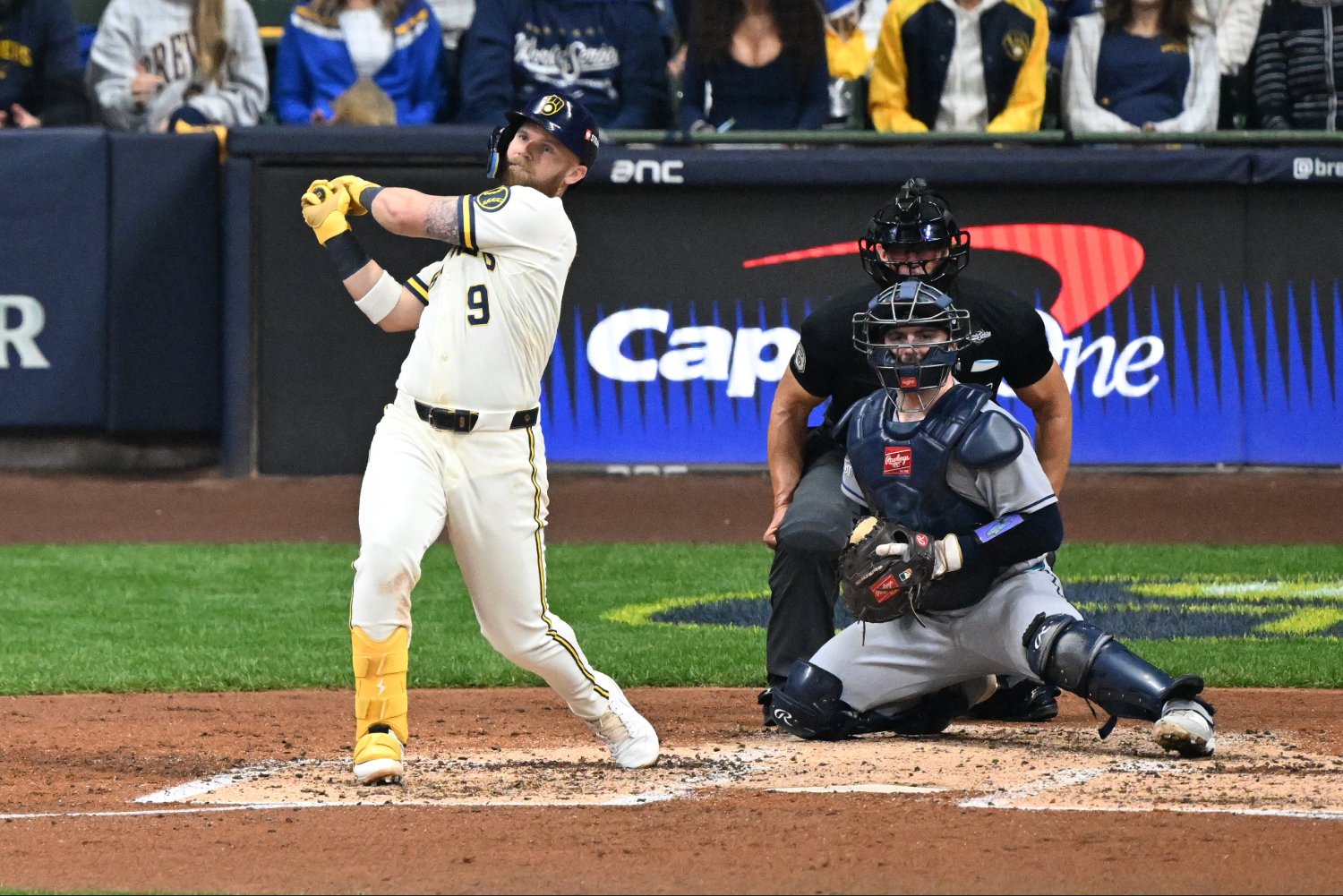 In a stunning pre-lockout move, the Boston Red Sox have signed free agent first baseman Jake Bauers to a four-year, $58 million contract. While Craig Breslow downplayed the need to add power to be a World Series contender just last week, he was obviously paying close attention to what the Brewers’ slugger was doing to help power that team to their first championship. While the addition of Bauers instantly makes the Red Sox’s lineup more potent, it creates a handful of roster questions that must be addressed before December 1. First, there is the obvious corresponding move that has to be made just to add Bauers to the 40-man roster. While there are a number of DFA candidates currently on that list, it wouldn’t be surprising to see Breslow try to free up some space by finally moving either Jarren Duran or Masataka Yoshida. Sure, he can DFA Raymond Burgos, but that'd be a temporary solution to what is now a serious logjam. Arguably, the biggest piece of news to come out of the GM Meetings in Las Vegas was that many rival executives and scouts were very open about the fact that the Red Sox were willing to move on from Duran. While a return for the outfielder likely won’t be earth-shattering, he has some value on the open market and can help replenish a diminished farm system at a bare minimum. The same can be said for Yoshida, who is on the final year of his contract and will be looking at decreased playing time with Bauers in the fold. Yoshida has been a fine hitter when healthy, but he doesn’t have an offensive profile that makes sense as a DH in Boston, and he’s outranked on the outfield depth chart by guys who are lightyears better on defense. Both Duran and Yoshida were likely to split time at DH in 2027 without any additions, but now they are both going to be on the outside looking in for playing time. While it will be a hard pill for Breslow to swallow, neither should be on the roster when November turns to December. The biggest question, though, is where Bauers will play. We’ll have more on the first base depth chart in the coming days, but The Athletic’s Jen McCaffrey is hearing from sources that he’s expected to split time at first and designated hitter. That makes sense, but Bauers has the type of offensive approach that the Red Sox should be looking for in a mostly full-time DH. After the Sox were eliminated from the postseason, I wrote about how the DH by committee method that the team has employed under Breslow wasn’t going to be beneficial any longer, and it seems that Breslow may be coming around to that idea as well. Bauers also has experience in the outfield but with Roman Anthony, Ceddanne Rafaela, and Wilyer Abreu patrolling the grass, don’t expect to see the big man out there for more than a spot start or two. By signing Bauers, the Red Sox have made the first big splash of the offseason and could be primed to move some household names to help accommodate his presence in the lineup. This is clearly just step one in a long offseason plan, but it's hard not to like the way this team is moving.
-
The Boston Red Sox don’t necessarily need to add big names to their rotation this offseason, but that doesn’t mean that there isn't room for upgrades. The group already has an incredibly strong point as currently constructed with Garrett Crochet, Ranger Suarez, Payton Tolle, Jake Bennett, Brayan Bello, Tanner Houck, and even Kutter Crawford all looking to make an impact next season, but there is one name on the free-agent market that makes a lot of sense to add to this starting rotation that could fill a Sonny Gray-shaped hole in a way that Bello and company could not. Yes, Clay Holmes is the perfect starter that the Red Sox need to target this offseason. Holmes didn’t have the healthiest year in 2026, and his numbers aren’t the most spectacular, but under the hood there is a lot to like. While pitching for both the Mets and Cubs last season, the right-hander tossed 101.1 innings over 18 games started, working a 6-8 record with 78 strikeouts, 42 walks, a 3.29 ERA, 18.6 K%, 10 BB%, and a 1.8 fWAR. What’s most astonishing though, and the thing the Red Sox likely love more than anything else about Holmes, is that his groundball rate came in at an amazing 60.7%. President of baseball operations Craig Breslow has said from the day he was hired that the Red Sox are built on pitching and defense. Holmes' propensity for keeping the ball on the ground and in the yard would make him a perfect fit for that philosophy. His pitch mix plays into the Red Sox’s defensive strength. He’s a sinker-baller that averages 93.1 MPH on his primary pitch. He also mixes in a sweeper, change up, cutter, curveball, and a four-seam fastball that comes in just a tick lower than his sinker. He’s not going to blow you away by any means, but he is able to induce weak contact that allows the defense behind him to play up to their potential. To best appreciate what Holmes can bring to the Red Sox, we need to look at contact metrics. For his career, he’s averaged a 0.4° launch angle and his career average exit velocity sits at 89.1 MPH. He only allows a 4.9% barrel rate and the type of contact against him is heavily weighted at 48.4% topped. That's a pitcher who won't be intimidated by the convoluted outfield dimensions of Fenway Park, and it doesn’t hurt that he would also add a right-handed slant to a lefty-heavy rotation. Clay Holmes isn’t the flashiest addition the Red Sox could add this offseason, but his profile proves that he would be incredibly useful in Boston as both a veteran leader and a pitcher who offers something besides a “Three-Headed Monster of Hard” pitch mix that both Crochet and Tolle are fond of using. It remains to be seen if the market for Holmes will price out the Red Sox, who, to reiterate, do not have to add starting rotation help for 2027. If he remains relatively affordable, this is a partnership that would pay tremendous dividends for both sides. View full article
-
Red Sox Free Agent Wish List: Clay Holmes Should Be Pitching Target No. 1
Alex Mayes posted an article in Red Sox
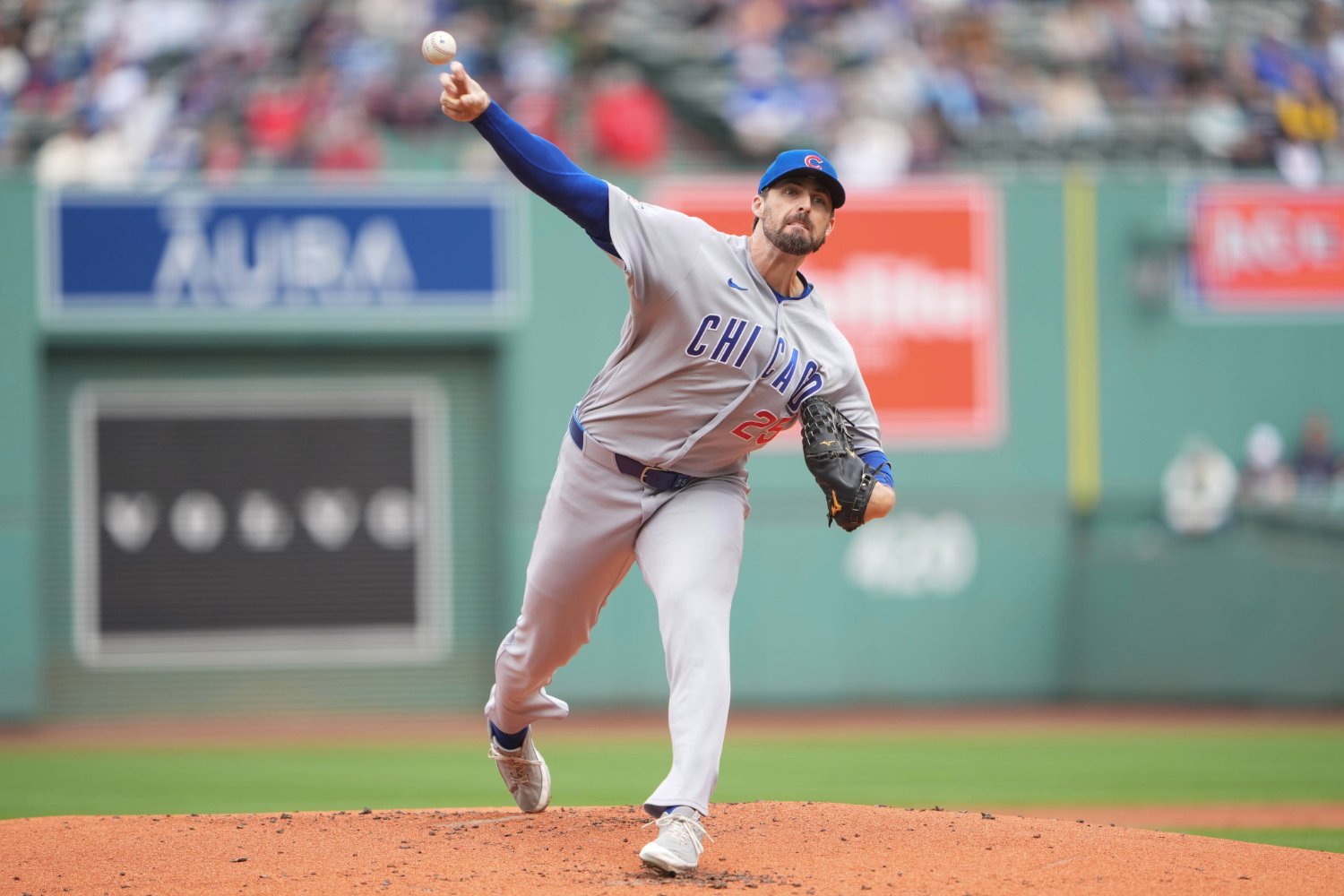 The Boston Red Sox don’t necessarily need to add big names to their rotation this offseason, but that doesn’t mean that there isn't room for upgrades. The group already has an incredibly strong point as currently constructed with Garrett Crochet, Ranger Suarez, Payton Tolle, Jake Bennett, Brayan Bello, Tanner Houck, and even Kutter Crawford all looking to make an impact next season, but there is one name on the free-agent market that makes a lot of sense to add to this starting rotation that could fill a Sonny Gray-shaped hole in a way that Bello and company could not. Yes, Clay Holmes is the perfect starter that the Red Sox need to target this offseason. Holmes didn’t have the healthiest year in 2026, and his numbers aren’t the most spectacular, but under the hood there is a lot to like. While pitching for both the Mets and Cubs last season, the right-hander tossed 101.1 innings over 18 games started, working a 6-8 record with 78 strikeouts, 42 walks, a 3.29 ERA, 18.6 K%, 10 BB%, and a 1.8 fWAR. What’s most astonishing though, and the thing the Red Sox likely love more than anything else about Holmes, is that his groundball rate came in at an amazing 60.7%. President of baseball operations Craig Breslow has said from the day he was hired that the Red Sox are built on pitching and defense. Holmes' propensity for keeping the ball on the ground and in the yard would make him a perfect fit for that philosophy. His pitch mix plays into the Red Sox’s defensive strength. He’s a sinker-baller that averages 93.1 MPH on his primary pitch. He also mixes in a sweeper, change up, cutter, curveball, and a four-seam fastball that comes in just a tick lower than his sinker. He’s not going to blow you away by any means, but he is able to induce weak contact that allows the defense behind him to play up to their potential. To best appreciate what Holmes can bring to the Red Sox, we need to look at contact metrics. For his career, he’s averaged a 0.4° launch angle and his career average exit velocity sits at 89.1 MPH. He only allows a 4.9% barrel rate and the type of contact against him is heavily weighted at 48.4% topped. That's a pitcher who won't be intimidated by the convoluted outfield dimensions of Fenway Park, and it doesn’t hurt that he would also add a right-handed slant to a lefty-heavy rotation. Clay Holmes isn’t the flashiest addition the Red Sox could add this offseason, but his profile proves that he would be incredibly useful in Boston as both a veteran leader and a pitcher who offers something besides a “Three-Headed Monster of Hard” pitch mix that both Crochet and Tolle are fond of using. It remains to be seen if the market for Holmes will price out the Red Sox, who, to reiterate, do not have to add starting rotation help for 2027. If he remains relatively affordable, this is a partnership that would pay tremendous dividends for both sides.
-
The Boston Red Sox have a lot of roster decisions to make now that the World Series has ended. All roster members who are on the 60-day injured list must be added to the 40-man roster for the postseason. As currently constructed, they will need to clear two additional roster spots to make room for the seven players they currently have on the 60-day IL. Within the first 12 hours of free agency opening, Isiah Kiner-Falefa and Patrick Sandoval both became free agents, and the team traded utility outfielder Nate Eaton (to the Athletics) and fan favorite Tsung-Che Cheng (to the Tigers). While that helps unclog the roster a bit, there are still some decisions to be made. The Red Sox have a number of candidates they can designate for assignment before November 2. There are a handful of players that the team can DFA in short order without making waves. Left-hander Raymond Burgos is, in my estimation, the most likely option here. He was a late season call-up who stepped up when the team needed pitching depth, pitching both ends of a doubleheader and eating innings when the bullpen couldn’t afford to be burned. While pitching depth is something that every team needs, there are options beyond Burgos that make more sense in the long run for the organization. He technically has two minor-league options left, but he’s going to have to be DFA’d and then pass through waivers for the team to keep him in the system. His resilience will likely work in his favor as he looks to land a short-term deal somewhere else. He would be welcomed back to the organization on a minor-league deal, but don’t be surprised if he lands somewhere else for 2027. Outfielder Jahmai Jones was a midseason addition that proved to be a force against left-handed pitching. He platooned in left field with Jarren Duran for most of his tenure in Boston, but with Roman Anthony presumably healthy heading into 2027, Jones is going to be a piece that can be let go without dipping into very much depth. He would be a great piece to have off the bench, but when there are so many names that have to be added back to the 40-man roster that he might be a victim of some roster math. There's also names to consider like Kutter Crawford, who has missed almost two full seasons, or Zack Kelly, who seems like a prime change-of-scenery candidate after spending more time on the road traveling between Worcester and Boston than he has on the field. If not them, you're most likely going to see a few more trades to clear roster spots. There’s a handful of guys who don’t seem like they are long for the Red Sox. Depending on how you slice it, that list is headlined by either Masataka Yoshida, Jarren Duran, and even Trevor Story. There are reports that Duran and Yoshida are squarely in the mix to be moved this offseason given their respective contract statuses and past success. Neither player will command a huge return, but finding buyers for either could be easier this offseason since the free-agent market is the weakest it has been in years. What makes a Story trade far less likely is that he achieved 10-and-5 rights at the conclusion of the 2026 season, so he essentially holds a full no-trade clause. It’s possible he could be moved, but it would have to be a situation where he feels that he could thrive and those are likely to be few and far between at this point in his injury-plagued career. Should the Red Sox look to move Duran, Yoshida, or Story in a trad, then they’d need to put their foot on the gas to get something done. As they proved with their trades of Eaton and Cheng, it’s possible to make deals immediately after the conclusion of the season, but to move on from a major piece of the roster is a more involved process. It’s possible a deal could be made, but Craig Breslow isn’t known for being the quickest negotiator in the league. To be able to clear the final few 40-man roster spots, some tough decisions are going to have to be made over the next handful of days. Expect Breslow to explore every avenue available to him, but the roster crunch is only going to get worse when the team has to decide which prospects to protect and when they start signing big-league free agents. View full article
-
 The Boston Red Sox have a lot of roster decisions to make now that the World Series has ended. All roster members who are on the 60-day injured list must be added to the 40-man roster for the postseason. As currently constructed, they will need to clear two additional roster spots to make room for the seven players they currently have on the 60-day IL. Within the first 12 hours of free agency opening, Isiah Kiner-Falefa and Patrick Sandoval both became free agents, and the team traded utility outfielder Nate Eaton (to the Athletics) and fan favorite Tsung-Che Cheng (to the Tigers). While that helps unclog the roster a bit, there are still some decisions to be made. The Red Sox have a number of candidates they can designate for assignment before November 2. There are a handful of players that the team can DFA in short order without making waves. Left-hander Raymond Burgos is, in my estimation, the most likely option here. He was a late season call-up who stepped up when the team needed pitching depth, pitching both ends of a doubleheader and eating innings when the bullpen couldn’t afford to be burned. While pitching depth is something that every team needs, there are options beyond Burgos that make more sense in the long run for the organization. He technically has two minor-league options left, but he’s going to have to be DFA’d and then pass through waivers for the team to keep him in the system. His resilience will likely work in his favor as he looks to land a short-term deal somewhere else. He would be welcomed back to the organization on a minor-league deal, but don’t be surprised if he lands somewhere else for 2027. Outfielder Jahmai Jones was a midseason addition that proved to be a force against left-handed pitching. He platooned in left field with Jarren Duran for most of his tenure in Boston, but with Roman Anthony presumably healthy heading into 2027, Jones is going to be a piece that can be let go without dipping into very much depth. He would be a great piece to have off the bench, but when there are so many names that have to be added back to the 40-man roster that he might be a victim of some roster math. There's also names to consider like Kutter Crawford, who has missed almost two full seasons, or Zack Kelly, who seems like a prime change-of-scenery candidate after spending more time on the road traveling between Worcester and Boston than he has on the field. If not them, you're most likely going to see a few more trades to clear roster spots. There’s a handful of guys who don’t seem like they are long for the Red Sox. Depending on how you slice it, that list is headlined by either Masataka Yoshida, Jarren Duran, and even Trevor Story. There are reports that Duran and Yoshida are squarely in the mix to be moved this offseason given their respective contract statuses and past success. Neither player will command a huge return, but finding buyers for either could be easier this offseason since the free-agent market is the weakest it has been in years. What makes a Story trade far less likely is that he achieved 10-and-5 rights at the conclusion of the 2026 season, so he essentially holds a full no-trade clause. It’s possible he could be moved, but it would have to be a situation where he feels that he could thrive and those are likely to be few and far between at this point in his injury-plagued career. Should the Red Sox look to move Duran, Yoshida, or Story in a trad, then they’d need to put their foot on the gas to get something done. As they proved with their trades of Eaton and Cheng, it’s possible to make deals immediately after the conclusion of the season, but to move on from a major piece of the roster is a more involved process. It’s possible a deal could be made, but Craig Breslow isn’t known for being the quickest negotiator in the league. To be able to clear the final few 40-man roster spots, some tough decisions are going to have to be made over the next handful of days. Expect Breslow to explore every avenue available to him, but the roster crunch is only going to get worse when the team has to decide which prospects to protect and when they start signing big-league free agents.
-
Most Boston Red Sox fans agreed that 2026 was the year that Wilyer Abreu needed to take the next step in his offensive game to prove that he should be considered a piece to build around. We already know just how outstanding of a defender he is in right field—he’s won back-to-back Gold Gloves and is nominated for a third—but offensively, Abreu had a complicated track record. While I'd stop short of saying that he completely broke out this year, as he suffered from cold streaks that broke up scorching hot runs throughout the season, Abreu did take an impressive step against left-handed pitching that has to be celebrated. Let’s dive into the numbers. On the season, Abreu slashed .248/.327/.446 with 24 home runs, 76 RBIs, a .335 wOBA, 20.7 K%, 10.4 BB%, 112 wRC+, and 3.3 fWAR. He set career highs in both home runs and RBIs and that should give the Red Sox’s front office confidence that he’s going to continue to improve as he goes through his arbitration years. Until this season, he operated in a platoon role in right field. He only really started against right-handed pitchers while he was on the bench as a late-game substitute whenever a southpaw was on the mound. Alex Cora, and later Chad Tracy, charged Abreu with taking a step forward against lefties this season as he was handed the keys to the full-time starting role in right field. He more than rewarded their confidence in him; against lefties, Abreu slashed .295/.375/.479 with six home runs, 27 RBI, a .373 wOBA, 16.6 K%, 10.6 BB%, and a 138 wRC+. While he didn’t hit a ton of homers, he was putting the ball in play frequently and getting on base at an impressive clip. His success against lefties got to the point that when opposing managers would make a move to the bullpen to bring in their trusted left-handed to face Abreu, both Lou Merloni and Dave O’Brien would start to chuckle because they knew Abreu’s splits weren’t what most people would assume this season. The flip side though, is that Abreu took a big step back against right-handed pitchers. His slash line looks decidedly worse for this split: .226/.305/.430 with 18 home runs, 49 RBI, a .317 wOBA, 22.6 K%, 10.3 BB%, and a 99 wRC+. That being said, Abreu found his power stroke against righties and that should continue to carry into 2027 and beyond. It’s plausible to suggest he spent the bulk of last offseason focusing on becoming a better hitter against left-handed pitching and that left him unprepared for righties. He'll have to discover that balance to really emerge as an offensive star, but he now has verifiable proof that he can mash against all pitchers, regardless of which side they throw from. At the end of the day, Abreu continues to dominate right field for the Red Sox. As long as he’s healthy, he’s going to be patrolling around the biggest home right field in baseball while adding Gold Gloves to his growing collection. If he can just marry his evolution against lefties with a resurgence against righties, Abreu could be in All-Star conversations as quickly as next season. Should that come to fruition, the Red Sox would be smart to lock him up with a contract extension sooner rather than later. View full article
