


Maddie Landis
-
Posts
268 -
Joined
Content Type
Profiles
Boston Red Sox Videos
2026 Boston Red Sox Top Prospects Ranking
Boston Red Sox Free Agent & Trade Rumors, Notes, & Tidbits
Guides & Resources
2025 Boston Red Sox Draft Pick Tracker
News
2026 Boston Red Sox Draft Tracker: Picks & Bonuses
Forums
Blogs
Events
Store
Downloads
Gallery
Everything posted by Maddie Landis
-
Weekly Snapshot Record Last Week: 3-3 (Overall 65-54) Runs Scored Last Week: 33 Runs Surrendered Last Week: 27 Standings 2nd in the AL East 4.0 GB 1st Place Currently hold the 2nd WC Spot Transactions 8/5/25: Red Sox recalled Isaiah Campbell from Triple-A Worcester 8/5/25: Red Sox designated Jorge Alcala for assignment 8/6/25: Red Sox signed free agent Jose Alexandra to a minor league contract 8/6/25: St. Louis Cardinals claimed Jorge Alcala off waivers from the Red Sox 8/8/25: Red Sox claimed Ali Sanchez off waivers from the Toronto Blue Jays Scores Game 114 (8/4) | KC 5, BOS 8 Game 115 (8/5) | KC 2, BOS 6 Game 116 (8/6) | KC 7, BOS 3 Game 117 (8/8) | BOS 10, SD 2 Game 118 (8/9) | BOS 4, SD 5 Game 119 (8/10) | BOS 2, SD 6 TL;DR Breakdown/Highlights Royals series: The Red Sox offense immediately hit the ground running in game one. They scored five runs off the newly acquired Royals starter Bailey Falter in the first inning. Rob Refsynder drove in two runs via a single, and Jarren Duran demolished a three-run home run (456 ft) to center field, the farthest home run hit at Fenway this year. Brayan Bello threw his 12th quality start of the season. In the eighth inning, Jorge Alcala almost blew the lead, but Justin Wilson and Garrett Whitlock prevented the Royals' offense from gaining additional ground. Tuesday night, Garrett Crochet took the mound. Need I say more? The team only scored two runs off the Royals’ starter Ryan Bergert. However, they rattled the Royals’ relievers, Angel Zerpa and former Red Sox John Schreiber. The opponent’s defense didn’t do much to help their pitchers. The Red Sox’s crown jewel of the 2025 Trade Deadline, Dustin May, made his long-awaited debut. On paper, his outing was so-so; he only pitched 3 2/3 innings and yielded three earned runs. If you dive deeper into his metrics, he recorded 11 whiffs and posted a 34% CSW%. Unfortunately, May got behind in the count often. By the bottom of the third inning, he had clocked 91 pitches, so he was pulled early. After scoring two runs in the first inning, the Red Sox’s offense floundered. Jordan Hicks and Isaiah Campbell gave up four runs in relief to solidify the Royals’ lead. Padres series: On Friday night, the Red Sox faced their former friend, Nick Pivetta. While the top of the order didn’t contribute much, the team’s underperforming players came through and delivered. Masataka Yoshida and Connor Wong each drove in three runs. Walker Buehler tossed a scoreless, quality start. I don’t want to swamp this article with several videos, so check out the highlights from the game on the Red Sox’s YouTube. Games 2 and 3 were less exciting. Lucas Giolito’s performance was below par (or perhaps he was overperforming?). He gave up four earned runs in 4 2/3 innings. two of San Diego’s runs were issued freely via bases-loaded walks in the bottom of the fifth. Meanwhile, former friend Xander Bogaerts went 2-4 with an RBI single and a solo home run. Game 2 was dragged into extra innings. David Hamilton pinch-hit for Masataka Yoshida at the top of the 10th. During the Padres series, Yoshida posted a .500 average and 1.444 OPS with 267 wRC+. Yes, speed is important in extra innings. Instead of benching the team’s hottest hitter over the weekend for an underperforming (.174/.265/.492 slash line) defense-first bench bat, maybe wait until the former gets on base? Unsurprisingly, Hamilton struck out on a foul bunt, and the team’s subsequent bats went into hibernation. Ramón Laureano hit a walk-off single to secure the Padres’ win. Brayan Bello took the bump in Game 3. Like Giolito, he wasn’t on his A-game and yielded 5 earned runs in 5 2/3 innings. The Red Sox’s offensive hibernation carried into Sunday’s game. At the top of the seventh, they had the opportunity to score with the bases loaded, but Ceddanne Rafaela, Abraham Toro, and Roman Anthony struck out. The Red Sox play the Astros this coming week. Alex Bregman returns to Houston for the first time since his offseason departure. Over the weekend, the Red Sox take on the better-than-expected Marlins at Fenway. Random Stats The Red Sox are 1-9 in extra innings games on the road this year. As previously mentioned, Masataka Yoshida is heating up. His average is up to .258, and OPS is at .707 with 89 wRC+. Skipper Alex Cora is allowing him more opportunities to face lefties, and Abreu’s stats are trending positively. Since July 5, Wilyer Abreu is slashing .250/.294/.375 with 80 wRC+ against left-handed pitchers. The team’s catchers have been underperforming since the All-Star Break (July 18 to present): Connor Wong: .207 BA, .560 OPS, 15.6% strikeout rate with 47 wRC+ Carlos Narváez: .111 BA, .393 OPS, 29.2% strikeout rate with -2 wRC+ Website Highlights Please welcome Talk Sox's new writer, Jordan Leandre! Walker Buehler’s Last Stand with the Red Sox is Here by Jordan Leandre Roman Anthony Extension: How Do Contracts for Other Young MLB Stars Compare? by Braden Ramsey Craig Breslow Has Won Over the Red Sox Veterans in the Clubhouse by Alex Mayes Romy González Has Evolved Into Rob Refsnyder 2.0 by Brandon Glick The Gamble of Signing Young Players to Long Contracts and Why Red Sox Fans Shouldn't Worry About Roman Anthony by Nick John Looking Ahead August 11th: Red Sox (Crochet) @ Astros (Javier): 8:10 pm EDT August 12th: Red Sox (May) @ Astros (Arrighetti): 8:10 pm EDT August 13th: Red Sox (Buehler) @ Astros (Brown): 7:10 pm EDT August 15th: Marlins vs Red Sox: 7:10 pm EDT August 16th: Marlins vs Red Sox: 4:10 pm EDT August 17th: Marlins vs Red Sox: 1:35 pm EDT View full article
-
Red Sox Week in Review: Holding Steady Against Good Competition
Maddie Landis posted an article in Talk Sox
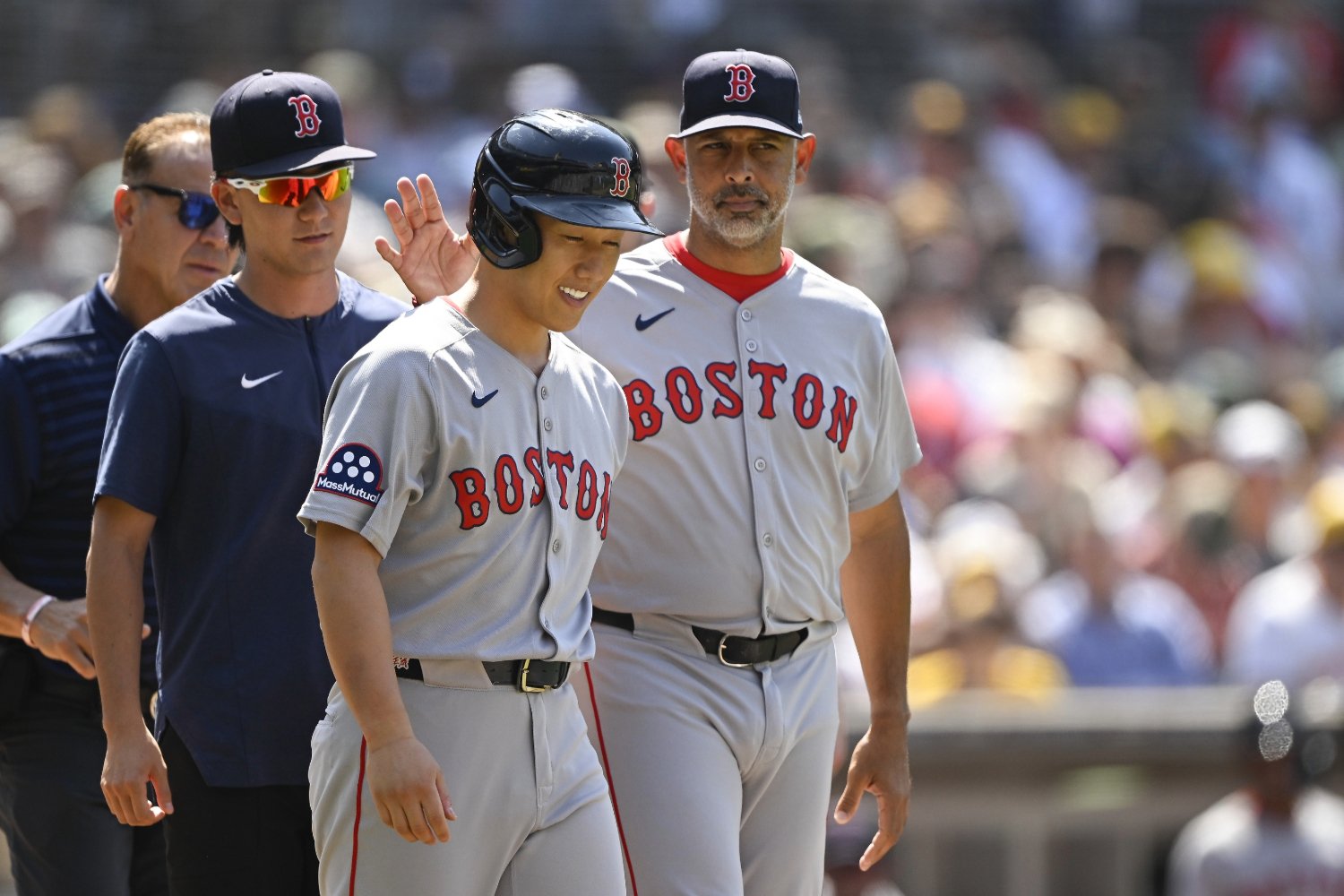 Weekly Snapshot Record Last Week: 3-3 (Overall 65-54) Runs Scored Last Week: 33 Runs Surrendered Last Week: 27 Standings 2nd in the AL East 4.0 GB 1st Place Currently hold the 2nd WC Spot Transactions 8/5/25: Red Sox recalled Isaiah Campbell from Triple-A Worcester 8/5/25: Red Sox designated Jorge Alcala for assignment 8/6/25: Red Sox signed free agent Jose Alexandra to a minor league contract 8/6/25: St. Louis Cardinals claimed Jorge Alcala off waivers from the Red Sox 8/8/25: Red Sox claimed Ali Sanchez off waivers from the Toronto Blue Jays Scores Game 114 (8/4) | KC 5, BOS 8 Game 115 (8/5) | KC 2, BOS 6 Game 116 (8/6) | KC 7, BOS 3 Game 117 (8/8) | BOS 10, SD 2 Game 118 (8/9) | BOS 4, SD 5 Game 119 (8/10) | BOS 2, SD 6 TL;DR Breakdown/Highlights Royals series: The Red Sox offense immediately hit the ground running in game one. They scored five runs off the newly acquired Royals starter Bailey Falter in the first inning. Rob Refsynder drove in two runs via a single, and Jarren Duran demolished a three-run home run (456 ft) to center field, the farthest home run hit at Fenway this year. Brayan Bello threw his 12th quality start of the season. In the eighth inning, Jorge Alcala almost blew the lead, but Justin Wilson and Garrett Whitlock prevented the Royals' offense from gaining additional ground. Tuesday night, Garrett Crochet took the mound. Need I say more? The team only scored two runs off the Royals’ starter Ryan Bergert. However, they rattled the Royals’ relievers, Angel Zerpa and former Red Sox John Schreiber. The opponent’s defense didn’t do much to help their pitchers. The Red Sox’s crown jewel of the 2025 Trade Deadline, Dustin May, made his long-awaited debut. On paper, his outing was so-so; he only pitched 3 2/3 innings and yielded three earned runs. If you dive deeper into his metrics, he recorded 11 whiffs and posted a 34% CSW%. Unfortunately, May got behind in the count often. By the bottom of the third inning, he had clocked 91 pitches, so he was pulled early. After scoring two runs in the first inning, the Red Sox’s offense floundered. Jordan Hicks and Isaiah Campbell gave up four runs in relief to solidify the Royals’ lead. Padres series: On Friday night, the Red Sox faced their former friend, Nick Pivetta. While the top of the order didn’t contribute much, the team’s underperforming players came through and delivered. Masataka Yoshida and Connor Wong each drove in three runs. Walker Buehler tossed a scoreless, quality start. I don’t want to swamp this article with several videos, so check out the highlights from the game on the Red Sox’s YouTube. Games 2 and 3 were less exciting. Lucas Giolito’s performance was below par (or perhaps he was overperforming?). He gave up four earned runs in 4 2/3 innings. two of San Diego’s runs were issued freely via bases-loaded walks in the bottom of the fifth. Meanwhile, former friend Xander Bogaerts went 2-4 with an RBI single and a solo home run. Game 2 was dragged into extra innings. David Hamilton pinch-hit for Masataka Yoshida at the top of the 10th. During the Padres series, Yoshida posted a .500 average and 1.444 OPS with 267 wRC+. Yes, speed is important in extra innings. Instead of benching the team’s hottest hitter over the weekend for an underperforming (.174/.265/.492 slash line) defense-first bench bat, maybe wait until the former gets on base? Unsurprisingly, Hamilton struck out on a foul bunt, and the team’s subsequent bats went into hibernation. Ramón Laureano hit a walk-off single to secure the Padres’ win. Brayan Bello took the bump in Game 3. Like Giolito, he wasn’t on his A-game and yielded 5 earned runs in 5 2/3 innings. The Red Sox’s offensive hibernation carried into Sunday’s game. At the top of the seventh, they had the opportunity to score with the bases loaded, but Ceddanne Rafaela, Abraham Toro, and Roman Anthony struck out. The Red Sox play the Astros this coming week. Alex Bregman returns to Houston for the first time since his offseason departure. Over the weekend, the Red Sox take on the better-than-expected Marlins at Fenway. Random Stats The Red Sox are 1-9 in extra innings games on the road this year. As previously mentioned, Masataka Yoshida is heating up. His average is up to .258, and OPS is at .707 with 89 wRC+. Skipper Alex Cora is allowing him more opportunities to face lefties, and Abreu’s stats are trending positively. Since July 5, Wilyer Abreu is slashing .250/.294/.375 with 80 wRC+ against left-handed pitchers. The team’s catchers have been underperforming since the All-Star Break (July 18 to present): Connor Wong: .207 BA, .560 OPS, 15.6% strikeout rate with 47 wRC+ Carlos Narváez: .111 BA, .393 OPS, 29.2% strikeout rate with -2 wRC+ Website Highlights Please welcome Talk Sox's new writer, Jordan Leandre! Walker Buehler’s Last Stand with the Red Sox is Here by Jordan Leandre Roman Anthony Extension: How Do Contracts for Other Young MLB Stars Compare? by Braden Ramsey Craig Breslow Has Won Over the Red Sox Veterans in the Clubhouse by Alex Mayes Romy González Has Evolved Into Rob Refsnyder 2.0 by Brandon Glick The Gamble of Signing Young Players to Long Contracts and Why Red Sox Fans Shouldn't Worry About Roman Anthony by Nick John Looking Ahead August 11th: Red Sox (Crochet) @ Astros (Javier): 8:10 pm EDT August 12th: Red Sox (May) @ Astros (Arrighetti): 8:10 pm EDT August 13th: Red Sox (Buehler) @ Astros (Brown): 7:10 pm EDT August 15th: Marlins vs Red Sox: 7:10 pm EDT August 16th: Marlins vs Red Sox: 4:10 pm EDT August 17th: Marlins vs Red Sox: 1:35 pm EDT
 -
The Red Sox selected Roman Anthony from Marjory Stoneman Douglas High School (Parkland, Florida) in the second round (79th pick) of the 2022 MLB Draft. Anthony spent most of his childhood in West Palm Beach, Florida. He attended Cardinal Newman High School in his hometown for his freshman and sophomore years before transferring to Stoneman Douglas to follow his travel ball coach, Todd Fitz-Gerald, and play in a more competitive league. Stoneman Douglas has produced numerous MLB players, including Anthony Rizzo (FA), Coby Mayo (Orioles), and Jesús Luzardo (Phillies). Even as a teenager, Anthony’s metrics showcased his power, contact ability, and elite plate discipline. He blasted 450-foot home runs at various high school showcases. Between his junior and senior years, he doubled his home run total, nearly doubled his RBIs, and significantly reduced his strikeout rate in just four additional games. Grade Year GP PA Avg OPS RBI HR K% BB% Senior 2021-22 32 129 .520 1.569 40 10 11.6% 16.3% Junior 2020-21 28 109 .362 1.182 21 5 19.3% 25.7% Perfect Game, a scouting database that hosts tournaments and showcases for high school baseball players, wrote the following about Anthony’s swing in his profile: “Begins with a slightly open stance and a high hand set at the plate; tight turn moving into swing, shows quickness and above average bat speed through the zone. Shows a handle for the barrel, fluidity to path, comes out of coil well into swing and creates separation.” 2022 Season Anthony graduated from high school just two months before his professional baseball debut. At age 18, he had a brief cup of coffee, splitting time evenly between the Florida Complex League Red Sox and Single-A Salem Red Sox. He finished with a .306 average, .734 OPS, 9.6% strikeout rate, and 10.8% batted ball rate in 20 games. 2023 Season Anthony stayed in Salem for the start of the 2023 season. Despite his slow start (a recurring theme throughout his career) with a .228 average in 42 games, the organization promoted him to High-A Salem. Anthony quickly found his stride and posted a .294 average, 38 RBIs, and 12 home runs across 54 games. Towards the end of the MiLB season, Anthony was promoted to Double-A Portland and played his last 10 games (.343 average, 1.020 OPS) with the Portland Sea Dogs. Once an under-the-radar prospect at the beginning of the 2023 season, Anthony garnered organizational and national recognition by the end of the year. He was named the Red Sox’s 2023 Minor League Hitter of the Year. Baseball America ranked him as the Red Sox’s No. 1 prospect in 2023, and he jumped onto their Top 100 list as the No. 19 overall prospect. 2024 Season Anthony entered the 2024 season with increased attention. He began in Double-A Portland, posting a .269 average, .856 OPS, 25.5% strikeout rate, and 12.8% batted ball rate in 84 games. Anthony put on a show-stopping performance at the inaugural 2024 All-Star Future Skills Showcase, displaying his ability to drive the ball to all corners of the ballpark. On July 31, he hit a 116 mph home run, the hardest hit ball in the Red Sox’s entire organization in 2024. On August 12th, he, Kristian Campbell, and Marcelo Mayer were promoted to Triple-A Worcester. Anthony finished the season with a .288 average, 913 OPS, 18.9% strikeout and batted ball rate, 108.4 average exit velocity (98th percentile), and 45.5% hard hit (85th percentile) rate in 35 Triple-A games. His strong performance garnered national attention. Come September, Baseball America listed him as the No. 1 prospect in baseball. 2025 Season Much to the chagrin of Red Sox fans, Anthony stayed in Worcester at the beginning of the 2025 season. It appeared he was major-league-ready. He still showcased the ability to hit for contact, tapped into more of his power, and maintained composure and discipline at the plate. In 52 games from March to May, he posted a .313 average, 1.244 OPS, 17.5% strikeout rate, and 25.3% batted ball rate. Just days before his eventual call-up, he hit a 497-foot grand slam. Past performance is the best predictor of future behavior. Just like in the earlier stages of his career, Anthony initially struggled after his major league call-up. He recorded three hits, a .074 average, .416 OPS, 15 wRC+, 25.8% strikeout rate, and a 9.7% batted ball rate in his first 31 plate appearances (from June 9 to June 19). That stretch represents 16% of his total 189 plate appearances. Anthony only needed nine games to adjust to the highest level of competition in professional baseball. Since June 20, he’s been on a tear, slashing .313/.429/.456 with a 149 wRC+, a 14.1% batted ball rate, and a 23.9% strikeout rate. It usually takes at least a season for players to get accustomed to the ever-growing gap between Triple-A and MLB pitching. Consider Ceddanne Rafaela and Jarren Duran’s rookie year struggles. He’s brought his power and patience with him to the big leagues. Among players with a minimum of 150 plate appearances, Anthony has posted the fifth-highest hard hit rate (55.0%) and the 15th-lowest chase rate (19.1%). Most analysts harp on Anthony’s offensive prowess. Depending on who you ask, his defense is middle-of-the-road. He’s already shown flashes of above-average potential, particularly in his range and instincts. Adjusting to the faster style of play on the field hasn’t been an issue for Anthony; he’s made several highlight-reel-worthy catches, including one in his second game where he robbed Jonathan Aranda of a hit in right field. In 47 games, he’s recorded four outs above average and a 61st percentile (27.8 ft/s) sprint speed. Anthony’s ascension to the majors occurred in the blink of an eye. He just turned 21 this past May and is already wealthier than 99.99% of the people reading this sentence. As much as I loved advanced metrics, what impresses me the most about Roman Anthony is his character. He demonstrates remarkable poise and maturity in his approach to the game and has consistently maintained a strong desire to improve. Former Red Sox Scout Willie Romay remarked, “A sign of a good player is they’re able to get critiqued and work at it, not everybody does that… I remember having a conversation with Roman, and he’s like, ‘Willie, what do I need to work on that I can be better at? What’s good in my game and what needs to be better?’” In a game where the most successful players fail 70% of the time, a baseball player’s ability to handle adversity and failure is a strong indicator of their success in the majors. I wrote the following in a previous piece about team-friendly extensions: “Conducting due diligence on the potential face of a franchise is a pivotal step in long-term contract negotiations.” Wander Franco and, more recently, Emmanuel Clase serve as cautionary tales of what can happen when teams overlook that process. That’s what makes Trevor Story’s comments resonate more: “It's hard to believe, man. Just given his stature, the way he carries himself, his maturity level and all that follows him onto the field, too… Just a special person, a special player. Obviously someone who’s gonna be around for a long time, and pumped that he's on our squad.” Teams aren’t just investing in a player’s future performance; they’re committing to his character and his role as the face of the franchise. During a recent game, Jarren Duran made a leaping catch on a Carlos Correa fly ball in center field. Anthony was right behind him, ready to back him up, and immediately checked to make sure he was okay. Ceddanne Rafaela has done the same and vice versa. The boys have each other's backs. While other playoff contenders, like the Cubs, also show strong chemistry (if you want to call it that), the camaraderie the Red Sox have built is special, and Anthony has been a key driving force behind it. Anthony’s quiet, humble confidence has transformed the clubhouse, and his breakout performance has arguably been the primary catalyst for the Red Sox’s resurgence. At the time of his major league debut, the team held a 32-36 record, sat in fourth place in the AL East, and trailed the final wild card spot by 4.5 games. FanGraphs estimated they had a 15.4% chance of making the playoffs. Since then, the tide has turned dramatically. The Red Sox have posted a 32-16 record, the second-best in baseball, and a run differential of +66, the third highest in the league. Now, the Red Sox hold the first American League wild card spot, have a 75.0% chance (per FanGraphs) of making the playoffs, and are firmly in the race for the AL East division title. With his rare combination of power, elite plate discipline, and most importantly, his exceptional character, the world is Roman Anthony’s oyster, and he’s just getting started. View full article
-
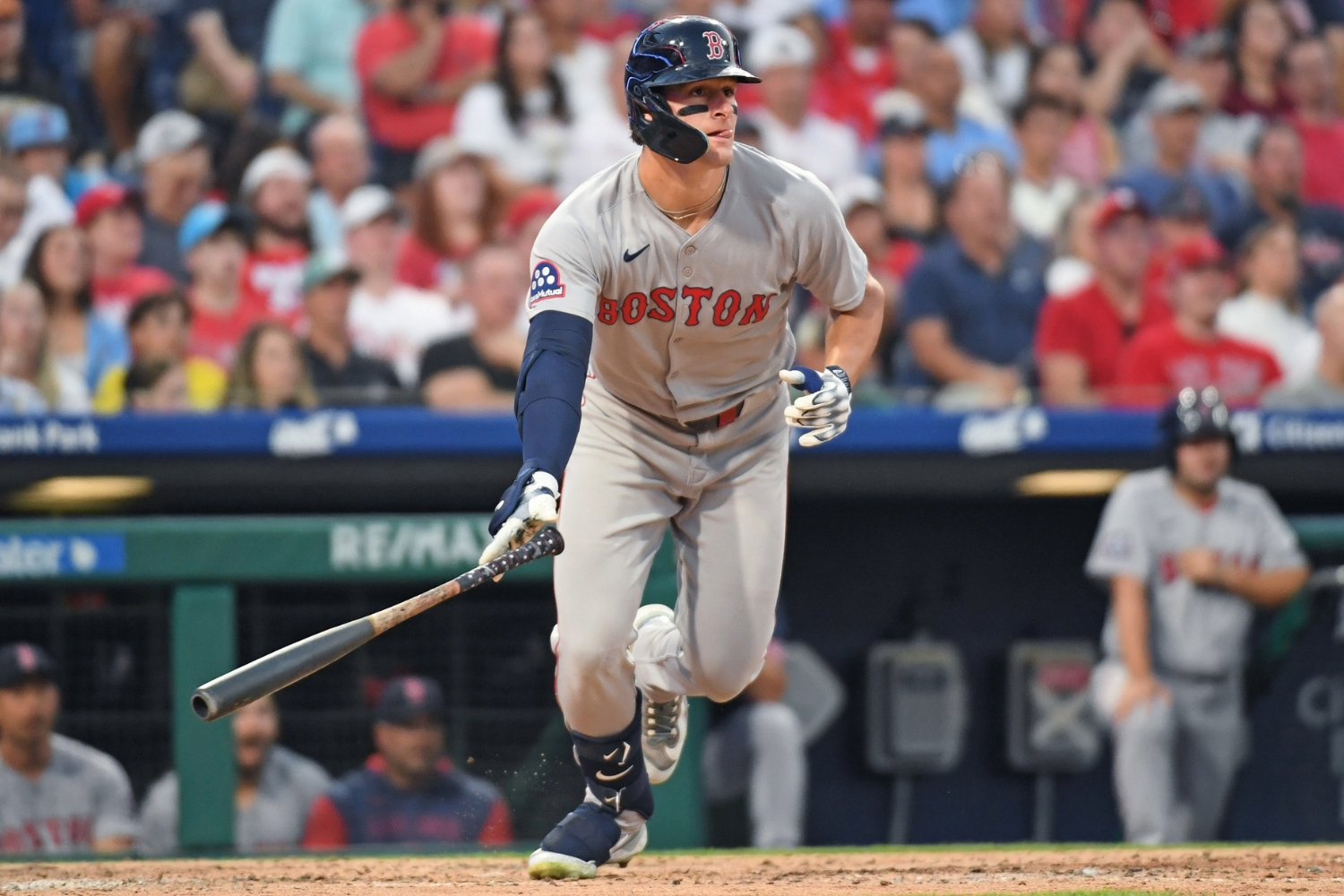 The Red Sox selected Roman Anthony from Marjory Stoneman Douglas High School (Parkland, Florida) in the second round (79th pick) of the 2022 MLB Draft. Anthony spent most of his childhood in West Palm Beach, Florida. He attended Cardinal Newman High School in his hometown for his freshman and sophomore years before transferring to Stoneman Douglas to follow his travel ball coach, Todd Fitz-Gerald, and play in a more competitive league. Stoneman Douglas has produced numerous MLB players, including Anthony Rizzo (FA), Coby Mayo (Orioles), and Jesús Luzardo (Phillies). Even as a teenager, Anthony’s metrics showcased his power, contact ability, and elite plate discipline. He blasted 450-foot home runs at various high school showcases. Between his junior and senior years, he doubled his home run total, nearly doubled his RBIs, and significantly reduced his strikeout rate in just four additional games. Grade Year GP PA Avg OPS RBI HR K% BB% Senior 2021-22 32 129 .520 1.569 40 10 11.6% 16.3% Junior 2020-21 28 109 .362 1.182 21 5 19.3% 25.7% Perfect Game, a scouting database that hosts tournaments and showcases for high school baseball players, wrote the following about Anthony’s swing in his profile: “Begins with a slightly open stance and a high hand set at the plate; tight turn moving into swing, shows quickness and above average bat speed through the zone. Shows a handle for the barrel, fluidity to path, comes out of coil well into swing and creates separation.” 2022 Season Anthony graduated from high school just two months before his professional baseball debut. At age 18, he had a brief cup of coffee, splitting time evenly between the Florida Complex League Red Sox and Single-A Salem Red Sox. He finished with a .306 average, .734 OPS, 9.6% strikeout rate, and 10.8% batted ball rate in 20 games. 2023 Season Anthony stayed in Salem for the start of the 2023 season. Despite his slow start (a recurring theme throughout his career) with a .228 average in 42 games, the organization promoted him to High-A Salem. Anthony quickly found his stride and posted a .294 average, 38 RBIs, and 12 home runs across 54 games. Towards the end of the MiLB season, Anthony was promoted to Double-A Portland and played his last 10 games (.343 average, 1.020 OPS) with the Portland Sea Dogs. Once an under-the-radar prospect at the beginning of the 2023 season, Anthony garnered organizational and national recognition by the end of the year. He was named the Red Sox’s 2023 Minor League Hitter of the Year. Baseball America ranked him as the Red Sox’s No. 1 prospect in 2023, and he jumped onto their Top 100 list as the No. 19 overall prospect. 2024 Season Anthony entered the 2024 season with increased attention. He began in Double-A Portland, posting a .269 average, .856 OPS, 25.5% strikeout rate, and 12.8% batted ball rate in 84 games. Anthony put on a show-stopping performance at the inaugural 2024 All-Star Future Skills Showcase, displaying his ability to drive the ball to all corners of the ballpark. On July 31, he hit a 116 mph home run, the hardest hit ball in the Red Sox’s entire organization in 2024. On August 12th, he, Kristian Campbell, and Marcelo Mayer were promoted to Triple-A Worcester. Anthony finished the season with a .288 average, 913 OPS, 18.9% strikeout and batted ball rate, 108.4 average exit velocity (98th percentile), and 45.5% hard hit (85th percentile) rate in 35 Triple-A games. His strong performance garnered national attention. Come September, Baseball America listed him as the No. 1 prospect in baseball. 2025 Season Much to the chagrin of Red Sox fans, Anthony stayed in Worcester at the beginning of the 2025 season. It appeared he was major-league-ready. He still showcased the ability to hit for contact, tapped into more of his power, and maintained composure and discipline at the plate. In 52 games from March to May, he posted a .313 average, 1.244 OPS, 17.5% strikeout rate, and 25.3% batted ball rate. Just days before his eventual call-up, he hit a 497-foot grand slam. Past performance is the best predictor of future behavior. Just like in the earlier stages of his career, Anthony initially struggled after his major league call-up. He recorded three hits, a .074 average, .416 OPS, 15 wRC+, 25.8% strikeout rate, and a 9.7% batted ball rate in his first 31 plate appearances (from June 9 to June 19). That stretch represents 16% of his total 189 plate appearances. Anthony only needed nine games to adjust to the highest level of competition in professional baseball. Since June 20, he’s been on a tear, slashing .313/.429/.456 with a 149 wRC+, a 14.1% batted ball rate, and a 23.9% strikeout rate. It usually takes at least a season for players to get accustomed to the ever-growing gap between Triple-A and MLB pitching. Consider Ceddanne Rafaela and Jarren Duran’s rookie year struggles. He’s brought his power and patience with him to the big leagues. Among players with a minimum of 150 plate appearances, Anthony has posted the fifth-highest hard hit rate (55.0%) and the 15th-lowest chase rate (19.1%). Most analysts harp on Anthony’s offensive prowess. Depending on who you ask, his defense is middle-of-the-road. He’s already shown flashes of above-average potential, particularly in his range and instincts. Adjusting to the faster style of play on the field hasn’t been an issue for Anthony; he’s made several highlight-reel-worthy catches, including one in his second game where he robbed Jonathan Aranda of a hit in right field. In 47 games, he’s recorded four outs above average and a 61st percentile (27.8 ft/s) sprint speed. Anthony’s ascension to the majors occurred in the blink of an eye. He just turned 21 this past May and is already wealthier than 99.99% of the people reading this sentence. As much as I loved advanced metrics, what impresses me the most about Roman Anthony is his character. He demonstrates remarkable poise and maturity in his approach to the game and has consistently maintained a strong desire to improve. Former Red Sox Scout Willie Romay remarked, “A sign of a good player is they’re able to get critiqued and work at it, not everybody does that… I remember having a conversation with Roman, and he’s like, ‘Willie, what do I need to work on that I can be better at? What’s good in my game and what needs to be better?’” In a game where the most successful players fail 70% of the time, a baseball player’s ability to handle adversity and failure is a strong indicator of their success in the majors. I wrote the following in a previous piece about team-friendly extensions: “Conducting due diligence on the potential face of a franchise is a pivotal step in long-term contract negotiations.” Wander Franco and, more recently, Emmanuel Clase serve as cautionary tales of what can happen when teams overlook that process. That’s what makes Trevor Story’s comments resonate more: “It's hard to believe, man. Just given his stature, the way he carries himself, his maturity level and all that follows him onto the field, too… Just a special person, a special player. Obviously someone who’s gonna be around for a long time, and pumped that he's on our squad.” Teams aren’t just investing in a player’s future performance; they’re committing to his character and his role as the face of the franchise. During a recent game, Jarren Duran made a leaping catch on a Carlos Correa fly ball in center field. Anthony was right behind him, ready to back him up, and immediately checked to make sure he was okay. Ceddanne Rafaela has done the same and vice versa. The boys have each other's backs. While other playoff contenders, like the Cubs, also show strong chemistry (if you want to call it that), the camaraderie the Red Sox have built is special, and Anthony has been a key driving force behind it. Anthony’s quiet, humble confidence has transformed the clubhouse, and his breakout performance has arguably been the primary catalyst for the Red Sox’s resurgence. At the time of his major league debut, the team held a 32-36 record, sat in fourth place in the AL East, and trailed the final wild card spot by 4.5 games. FanGraphs estimated they had a 15.4% chance of making the playoffs. Since then, the tide has turned dramatically. The Red Sox have posted a 32-16 record, the second-best in baseball, and a run differential of +66, the third highest in the league. Now, the Red Sox hold the first American League wild card spot, have a 75.0% chance (per FanGraphs) of making the playoffs, and are firmly in the race for the AL East division title. With his rare combination of power, elite plate discipline, and most importantly, his exceptional character, the world is Roman Anthony’s oyster, and he’s just getting started.
 -
 Aside from pitchers not named Garrett Crochet, Aroldis Chapman, Brayan Bello, or Garrett Whitlock, the Red Sox’s pitching staff put together a middle-of-the-road performance in July. They threw 130.2 innings (11th) and posted a 3.10 ERA (3rd), 21.1% strikeout rate (18th), and 1.8 fWAR (11th). Here’s an overview of the Red Sox’s best pitching performances this month. While the number one spot remains the same for the fourth consecutive month, there are two new faces featured. 3. Brennan Bernardino Appearing in 47 games this year, Bernardino has looked overworked at times. Upon first glance, Berandino’s stats don’t scream lights-out reliever, but he deserves recognition for his performance and willingness to take the mound whenever his team needs him. He posted a 0.00 ERA, 2.68 FIP, 21.7% strikeout rate, 10.9% batted ball rate, and 0.3 fWAR across 12.0 innings in July. Despite his up-and-down performance, he is the only Red Sox pitcher who has not given up a single earned run over the past month. Bernardino also recorded his first career save on July 23rd. For the sake of his health, I hope the Red Sox lean on Steven Matz so he can get some much-needed rest. 2. Garrett Whitlock Garrett Whitlock is on fire. He posted a 0.96 ERA, 0.20 FIP, 44.4% strikeout rate, 0.0% batted ball rate, and 0.6 fWAR across 9.1 innings in July. His strikeout rate is the highest among Red Sox pitchers over the past month. Whitlock has been sharper than a Japanese steak knife in high-leverage situations, which was a glaring area of weakness earlier in the season. See his 2025 monthly high-leverage situations splits: March/April: 5.40 ERA May: 15.00 ERA June: 0.00 ERA July: 0.00 ERA In June and July, he hasn’t allowed a single earned run during high-leverage situations. Whitlock could easily slot in as the team’s closer right now, and he might get more opportunities to close games as the season progresses. 1. Garrett Crochet Garrett Crochet started in four games, posting a 1.73 ERA, 2.40 FIP, 28.7% strikeout rate, 5.6% batted ball rate, and 0.9 fWAR across 26.0 innings. Whenever he takes the mound, I automatically assume the Red Sox will win. He’s just that good. On July 12, Crochet threw a nine-inning shutout versus the Rays. Crochet is giving Tarik Skubal a run for his money in the American League Cy Young race. He leads pitchers in strikeouts (175) and innings pitched (141.1), and ranks third in fWAR (4.5), eighth in FIP (2.53), and 17th in ERA (2.23). If Crochet maintains his performance through the end of the season, BBWAA members will face a tough voting decision come the fall. Are we missing any players? Let us know below in the comments!
 -
Aside from pitchers not named Garrett Crochet, Aroldis Chapman, Brayan Bello, or Garrett Whitlock, the Red Sox’s pitching staff put together a middle-of-the-road performance in July. They threw 130.2 innings (11th) and posted a 3.10 ERA (3rd), 21.1% strikeout rate (18th), and 1.8 fWAR (11th). Here’s an overview of the Red Sox’s best pitching performances this month. While the number one spot remains the same for the fourth consecutive month, there are two new faces featured. 3. Brennan Bernardino Appearing in 47 games this year, Bernardino has looked overworked at times. Upon first glance, Berandino’s stats don’t scream lights-out reliever, but he deserves recognition for his performance and willingness to take the mound whenever his team needs him. He posted a 0.00 ERA, 2.68 FIP, 21.7% strikeout rate, 10.9% batted ball rate, and 0.3 fWAR across 12.0 innings in July. Despite his up-and-down performance, he is the only Red Sox pitcher who has not given up a single earned run over the past month. Bernardino also recorded his first career save on July 23rd. For the sake of his health, I hope the Red Sox lean on Steven Matz so he can get some much-needed rest. 2. Garrett Whitlock Garrett Whitlock is on fire. He posted a 0.96 ERA, 0.20 FIP, 44.4% strikeout rate, 0.0% batted ball rate, and 0.6 fWAR across 9.1 innings in July. His strikeout rate is the highest among Red Sox pitchers over the past month. Whitlock has been sharper than a Japanese steak knife in high-leverage situations, which was a glaring area of weakness earlier in the season. See his 2025 monthly high-leverage situations splits: March/April: 5.40 ERA May: 15.00 ERA June: 0.00 ERA July: 0.00 ERA In June and July, he hasn’t allowed a single earned run during high-leverage situations. Whitlock could easily slot in as the team’s closer right now, and he might get more opportunities to close games as the season progresses. 1. Garrett Crochet Garrett Crochet started in four games, posting a 1.73 ERA, 2.40 FIP, 28.7% strikeout rate, 5.6% batted ball rate, and 0.9 fWAR across 26.0 innings. Whenever he takes the mound, I automatically assume the Red Sox will win. He’s just that good. On July 12, Crochet threw a nine-inning shutout versus the Rays. Crochet is giving Tarik Skubal a run for his money in the American League Cy Young race. He leads pitchers in strikeouts (175) and innings pitched (141.1), and ranks third in fWAR (4.5), eighth in FIP (2.53), and 17th in ERA (2.23). If Crochet maintains his performance through the end of the season, BBWAA members will face a tough voting decision come the fall. Are we missing any players? Let us know below in the comments! View full article
-
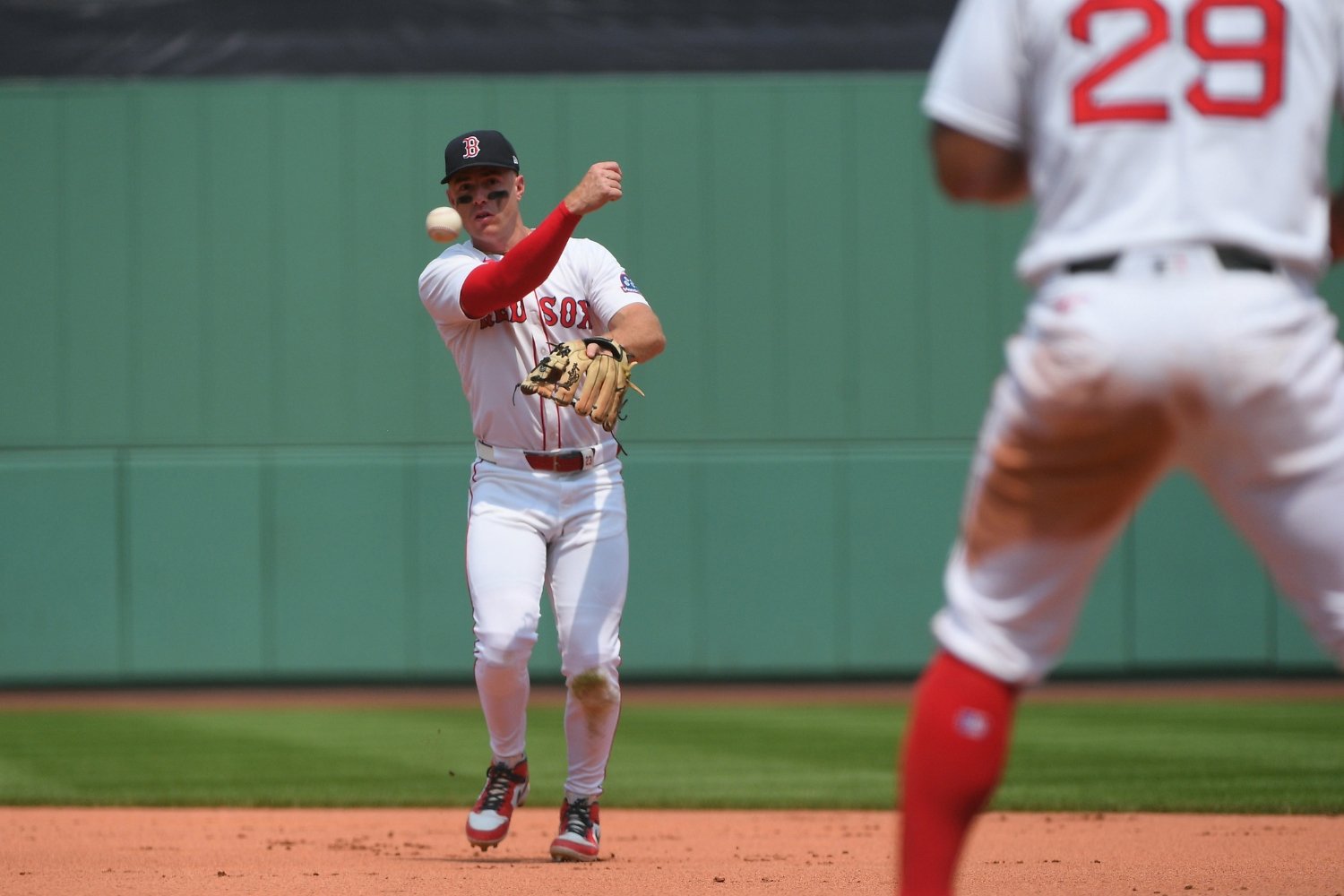 Weekly Snapshot Record Last Week: 4-2 (Overall 62-51) Runs Scored Last Week: 40 Runs Surrendered Last Week: 16 Standings 2nd in the AL East 3.0 GB 1st Place Currently Hold the 2nd WC Spot Scores Game 108 (7/28) | BOS 4, MN 5 Game 109 (7/29) | BOS 8, MN 5 Game 110 (7/30) | BOS 13, MN 1 Game 111 (8/1) | HOU 1, BOS 2 Game 112 (8/2) | HOU 3, BOS 7 Game 113 (8/3) | HOU 1, BOS 6 Transactions 8/2/25: Activated RHP Dustin May 8/2/25: Transferred RHP Luis Guerrero (right elbow strain) from the 15-day IL to the 60-day IL 8/2/25: Optioned RHP Nick Burdi to Triple-A Worcester 8/2/25: Optioned RHP Cooper Criswell to Triple-A Worcester 8/2/25: Optioned RHP Zack Kelly to Triple-A Worcester 8/1/25: Assigned Nick Burdi on a rehab assignment to Triple-A Worcester 8/1/25: Activated LHP Steven Matz 8/1/25: Optioned LHP Brennan Bernadino to Triple-A Worcester 7/31/25: Transferred RHP Hunter Dobbins (right ACL tear) from the 15-day IL to the 60-day IL 7/31/25: Placed RHP Tanner Houck (right flexor pronator strain) on the 60-day IL 7/31/25: STL traded LHP Steven Matz to BOS for 1B Blaze Jordan 7/31/25: LAD traded RHP Dustin May to Bos for RF James Tibbs III and OF Zach Erhard 7/29/25: Recalled Cooper Criswell from Triple-A Worcester 7/29/25: Optioned RHP Richard Fitts to Triple-A Worcester TL;DR Breakdown/Highlights Twins series: Fresh off a series dub against the reigning World Series champions, the Red Sox arrived in Minneapolis (or is it St. Paul?). A turbulent flight briefly diverted their route, and they had to stop in Detroit for a layover. The flight left some of their players and relievers with motion sickness, and they were unavailable to pitch Monday night. Richard Fitts yielded two earned runs across four innings. After a 90-minute rain delay, Jordan Hicks blew the Red Sox’s two-run lead in the bottom of the ninth. Lucas Giolito took the mound in Game 2. He looked better than in his previous outing and threw a quality start. Wilyer Abreu, Roman Anthony, Jarren Duran, and Ceddanne Rafaela recorded one RBI, and Trevor Story knocked in three runs. During Wednesday’s day game, the Red Sox’s offense went on a tear. Trevor Story, Jarren Duran, Romy Gonzalez, and Masataka Yoshida hit the ball out of the park. Connor Wong even joined in the fun, recording his first extra-base hit of the season! Gonzalez’s and Yoshida’s home runs came off pitches from Twins position player Kody Klemens. Brayan Bello threw a quality start in the 13-1 win. Astros Series: Friday night, fans witnessed a surprising pitcher’s duel between Astros’ ace Hunter Brown and Cooper Criswell. Roman Anthony’s first career walk-off (single) secured the Red Sox’s win in the 10th. Walker Buehler gave up three earned runs on nine hits across 4.1 innings. Luckily, the Red Sox’s offense provided more than enough run support. Trevor Story had another 3-RBI game, and he, Romy Gonzalez, and Abraham Toro hit home runs off the Astros starter, Colton Gordon. The Red Sox completed their sweep, beating Houston 6-1, and extended their win streak to five games. Carlos Correa homered in the first, but otherwise, the Astros didn’t score any runs. Giolito threw 8.0 innings and struck out four batters. Connor Wong recorded his second RBI of the season via a sacrifice fly. Trevor Story continued his hitting streak, logging his fifth consecutive game with a hit. The Red Sox have a three-game homestand versus the Royals Monday through Wednesday, before playing the Padres in San Diego this weekend. Let’s hope their longer flight out west is smoother. Random Stats Per this week’s edition of David Laurilla’s Sunday Notes on FanGraphs, “The Red Sox are 16-1 in games where Trevor Story has gone deep this season. Story has 197 home runs for his career.” Trevor Story ranks 3rd among SS in RBIs and 6th in the American League for RBIs. Slash Lines Trevor Story: .391/.462/.957, 3 HRs, 8 RBIs, and 278 wRC+ Jarren Duran: .333/.391/.810, 2 HRs, 5 RBIs, and 221 wRC+ Roman Anthony: .375/.483/.458, 0 HRs, 3 RBIs, and 169 wRC+ Ceddanne Rafaela: .304/.320/.478, 0 HRs, 3 RBIs, and 110 wRC+ Wilyer Abreu: .278/.300/.389, 0 HRs, 4 RBIs, and 81 wRC+ Alex Bregman: .238/.273/.429, 1 HR, 3 RBIs, and 88 wRC+ Abraham Toro: .182/.240/.364, 1 HR, 3 RBIs, and 58 wRC+ Steven Matz threw a scoreless inning with one strikeout in his Red Sox debut. Bad weeks (pitchers edition): Jordan Hicks: 13.50 ERA, 18.2% strikeout rate, 6.86 FIP in 1.1 IP Justin Wilson: 10.80 ERA, 42.9% strikeout rate, 7.31 FIP in 1.2 IP Walker Buehler: 6.23 ERA, 0.00% strikeout rate, 8.18 FIP in 4.1 IP Jorge Alcala: 4.50 ERA, 16.7% strikeout rate, 13.91 FIP in 1.2 IP Website Highlights Talk Sox writers were excited to cover the website’s first MLB Trade Deadline! Nick and Alex were on the ball and quickly published pieces after moves were announced. Finley and Brandon wrote in-depth pieces on the Red Sox’s post-trade deadline outlook. ICYMI: Looking at the 3 Prospects the Red Sox Traded at the MLB Trade Deadline by Nick John Analyzing Red Sox’s Pitching Staff Going Forward from 2025 MLB Trade Deadline by Finley Rogan Red Sox 2025 Trade Deadline Grades: High-Upside Pitching Doesn’t Get Graded on a Curve by Brandon Glick It Doesn’t Seem That Way At First Glance, But Steven Matz Makes a Lot of Sense for The 2025 Red Sox by Alex Mayes Red Sox Trade for St. Louis Cardinals’ Steven Matz by Nick John Looking Ahead August 4th: Royals (Falter) @ Red Sox (Bello): 7:10 pm EDT August 5th: Royals (Bergert) @ Red Sox (Crochet): 7:10 pm EDT August 6th: Royals (Wacha) @ Red Sox (May): 7:10 pm EDT August 8th: Red Sox @ Padres: 9:40 pm EDT August 9th: Red Sox @ Padres: 8:40 pm EDT August 10th: Red Sox @ Padres: 4:10 pm EDT
 -
Weekly Snapshot Record Last Week: 4-2 (Overall 62-51) Runs Scored Last Week: 40 Runs Surrendered Last Week: 16 Standings 2nd in the AL East 3.0 GB 1st Place Currently Hold the 2nd WC Spot Scores Game 108 (7/28) | BOS 4, MN 5 Game 109 (7/29) | BOS 8, MN 5 Game 110 (7/30) | BOS 13, MN 1 Game 111 (8/1) | HOU 1, BOS 2 Game 112 (8/2) | HOU 3, BOS 7 Game 113 (8/3) | HOU 1, BOS 6 Transactions 8/2/25: Activated RHP Dustin May 8/2/25: Transferred RHP Luis Guerrero (right elbow strain) from the 15-day IL to the 60-day IL 8/2/25: Optioned RHP Nick Burdi to Triple-A Worcester 8/2/25: Optioned RHP Cooper Criswell to Triple-A Worcester 8/2/25: Optioned RHP Zack Kelly to Triple-A Worcester 8/1/25: Assigned Nick Burdi on a rehab assignment to Triple-A Worcester 8/1/25: Activated LHP Steven Matz 8/1/25: Optioned LHP Brennan Bernadino to Triple-A Worcester 7/31/25: Transferred RHP Hunter Dobbins (right ACL tear) from the 15-day IL to the 60-day IL 7/31/25: Placed RHP Tanner Houck (right flexor pronator strain) on the 60-day IL 7/31/25: STL traded LHP Steven Matz to BOS for 1B Blaze Jordan 7/31/25: LAD traded RHP Dustin May to Bos for RF James Tibbs III and OF Zach Erhard 7/29/25: Recalled Cooper Criswell from Triple-A Worcester 7/29/25: Optioned RHP Richard Fitts to Triple-A Worcester TL;DR Breakdown/Highlights Twins series: Fresh off a series dub against the reigning World Series champions, the Red Sox arrived in Minneapolis (or is it St. Paul?). A turbulent flight briefly diverted their route, and they had to stop in Detroit for a layover. The flight left some of their players and relievers with motion sickness, and they were unavailable to pitch Monday night. Richard Fitts yielded two earned runs across four innings. After a 90-minute rain delay, Jordan Hicks blew the Red Sox’s two-run lead in the bottom of the ninth. Lucas Giolito took the mound in Game 2. He looked better than in his previous outing and threw a quality start. Wilyer Abreu, Roman Anthony, Jarren Duran, and Ceddanne Rafaela recorded one RBI, and Trevor Story knocked in three runs. During Wednesday’s day game, the Red Sox’s offense went on a tear. Trevor Story, Jarren Duran, Romy Gonzalez, and Masataka Yoshida hit the ball out of the park. Connor Wong even joined in the fun, recording his first extra-base hit of the season! Gonzalez’s and Yoshida’s home runs came off pitches from Twins position player Kody Klemens. Brayan Bello threw a quality start in the 13-1 win. Astros Series: Friday night, fans witnessed a surprising pitcher’s duel between Astros’ ace Hunter Brown and Cooper Criswell. Roman Anthony’s first career walk-off (single) secured the Red Sox’s win in the 10th. Walker Buehler gave up three earned runs on nine hits across 4.1 innings. Luckily, the Red Sox’s offense provided more than enough run support. Trevor Story had another 3-RBI game, and he, Romy Gonzalez, and Abraham Toro hit home runs off the Astros starter, Colton Gordon. The Red Sox completed their sweep, beating Houston 6-1, and extended their win streak to five games. Carlos Correa homered in the first, but otherwise, the Astros didn’t score any runs. Giolito threw 8.0 innings and struck out four batters. Connor Wong recorded his second RBI of the season via a sacrifice fly. Trevor Story continued his hitting streak, logging his fifth consecutive game with a hit. The Red Sox have a three-game homestand versus the Royals Monday through Wednesday, before playing the Padres in San Diego this weekend. Let’s hope their longer flight out west is smoother. Random Stats Per this week’s edition of David Laurilla’s Sunday Notes on FanGraphs, “The Red Sox are 16-1 in games where Trevor Story has gone deep this season. Story has 197 home runs for his career.” Trevor Story ranks 3rd among SS in RBIs and 6th in the American League for RBIs. Slash Lines Trevor Story: .391/.462/.957, 3 HRs, 8 RBIs, and 278 wRC+ Jarren Duran: .333/.391/.810, 2 HRs, 5 RBIs, and 221 wRC+ Roman Anthony: .375/.483/.458, 0 HRs, 3 RBIs, and 169 wRC+ Ceddanne Rafaela: .304/.320/.478, 0 HRs, 3 RBIs, and 110 wRC+ Wilyer Abreu: .278/.300/.389, 0 HRs, 4 RBIs, and 81 wRC+ Alex Bregman: .238/.273/.429, 1 HR, 3 RBIs, and 88 wRC+ Abraham Toro: .182/.240/.364, 1 HR, 3 RBIs, and 58 wRC+ Steven Matz threw a scoreless inning with one strikeout in his Red Sox debut. Bad weeks (pitchers edition): Jordan Hicks: 13.50 ERA, 18.2% strikeout rate, 6.86 FIP in 1.1 IP Justin Wilson: 10.80 ERA, 42.9% strikeout rate, 7.31 FIP in 1.2 IP Walker Buehler: 6.23 ERA, 0.00% strikeout rate, 8.18 FIP in 4.1 IP Jorge Alcala: 4.50 ERA, 16.7% strikeout rate, 13.91 FIP in 1.2 IP Website Highlights Talk Sox writers were excited to cover the website’s first MLB Trade Deadline! Nick and Alex were on the ball and quickly published pieces after moves were announced. Finley and Brandon wrote in-depth pieces on the Red Sox’s post-trade deadline outlook. ICYMI: Looking at the 3 Prospects the Red Sox Traded at the MLB Trade Deadline by Nick John Analyzing Red Sox’s Pitching Staff Going Forward from 2025 MLB Trade Deadline by Finley Rogan Red Sox 2025 Trade Deadline Grades: High-Upside Pitching Doesn’t Get Graded on a Curve by Brandon Glick It Doesn’t Seem That Way At First Glance, But Steven Matz Makes a Lot of Sense for The 2025 Red Sox by Alex Mayes Red Sox Trade for St. Louis Cardinals’ Steven Matz by Nick John Looking Ahead August 4th: Royals (Falter) @ Red Sox (Bello): 7:10 pm EDT August 5th: Royals (Bergert) @ Red Sox (Crochet): 7:10 pm EDT August 6th: Royals (Wacha) @ Red Sox (May): 7:10 pm EDT August 8th: Red Sox @ Padres: 9:40 pm EDT August 9th: Red Sox @ Padres: 8:40 pm EDT August 10th: Red Sox @ Padres: 4:10 pm EDT View full article
-
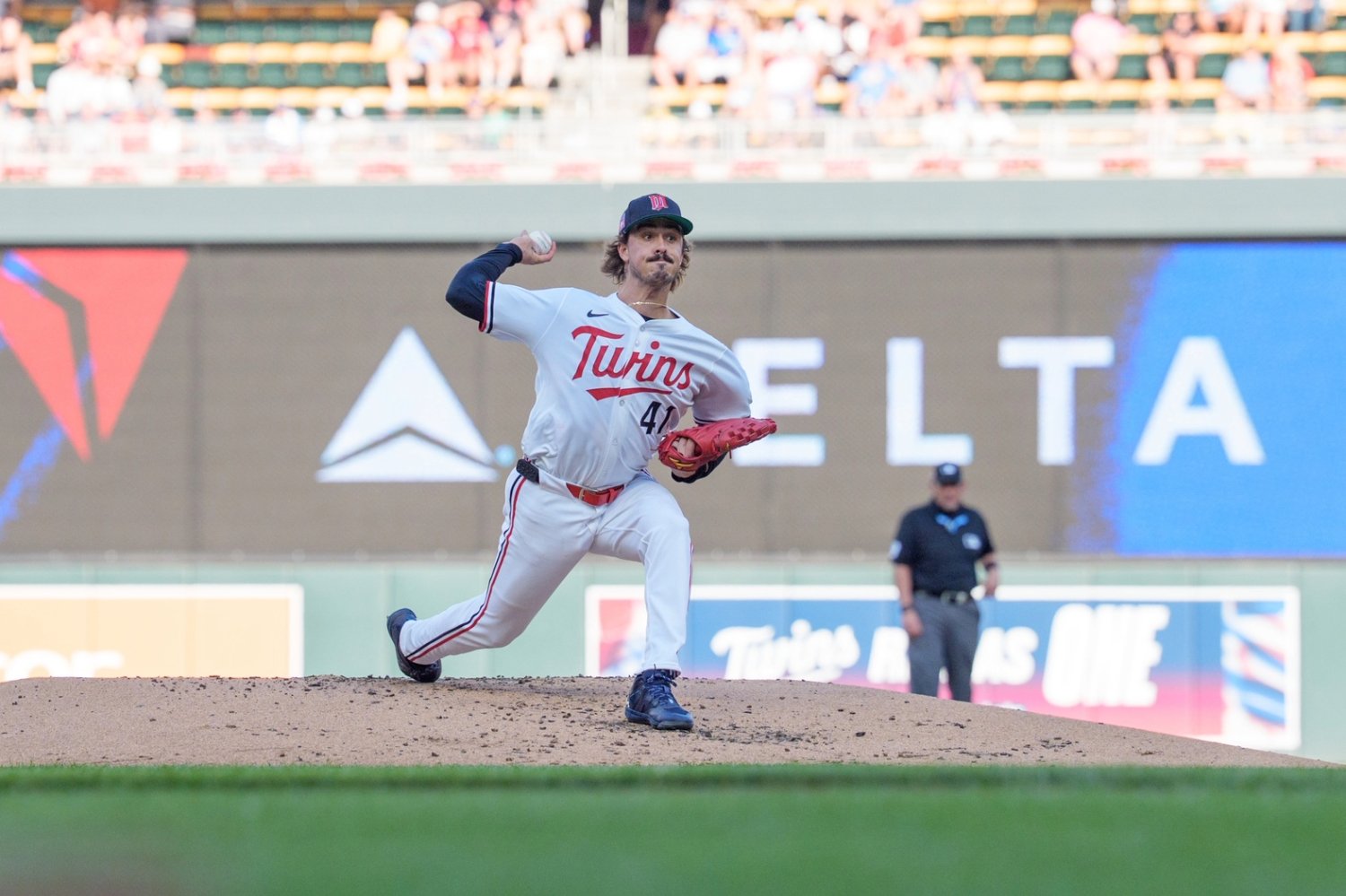 Long before my time, news and entertainment were two separate, distinct entities. In contemporary society, news is falsely distributed under the guise of sensationalist entertainment. The late media theorist and cultural critic Neil Postman warns about the dangers of blurring entertainment and politics, journalism, and other facets of society in his 1985 book "Amusing Ourselves to Death: Public Discourse in the Age of Show Business". He primarily discusses using television as the medium (tool) for distributing entertaining subject matter: “In America, everyone is entitled to an opinion, and it is certainly useful to have a few when a pollster shows up. But these are opinions of a quite different roder from eighteenth- or nineteenth-century opinions. It is probably more accurate to call them emotions rather than opinions, which would account for the fact that they change from week to week, as the pollsters tell us. What is happening here is that television is altering the meaning of 'being informed' by creating a species of information that might properly be called disinformation.” While YouTube, Twitch, and other video streaming platforms weren’t present when Postman wrote his book 40-something years ago, his arguments still apply to these new mediums, and they were in action during the last 30 minutes of the 2025 MLB Trade Deadline. Unless you live under a rock, you’re probably aware of the Section 10 Podcast as a Red Sox fan. The podcast originally debuted in 2015 as part of Barstool’s media network. It’s featured a revolving cast of hosts and undergone name and platform changes over the years, but Section 10’s founder, Jared Carrabis, has been the podcast’s mainstay. Carrabis often appears on MLB Network and NESN as a guest commentator. This year, Section 10 hosted interviews with Carlos Narváez and Jarren Duran, which were informative and engaging. Interestingly, the Duran interview came after Carrabis angrily posted a series of tweets about what turned out to be Duran unfollowing Section 10’s Twitter account and Carrabis’s Instagram account. Given Carrabis’s large cult-like following and Duran’s history with mental health struggles, it was weird for him to have a public freakout over an unfollow. Professional athletes have demanding schedules and are not obligated to give content creators the time or maintain personal relationships with them. Following the interview, it appears the pair reconciled. Perhaps it’s the slow, steady decline of cable television, or the loneliness epidemic. Maybe it’s a combination of both that’s driven the popularity of streaming. To me, there’s a meta quality to watching someone else react to a baseball game/news channel when I could just directly watch it myself. Yesterday afternoon/evening, Carrabis hosted a special Baseball Is Dead (sponsored by Underdog Fantasy) livestream for the trade deadline. Watching a group of dudes constantly refresh their Twitter feeds and mutter to themselves in Carrabis’ basement isn’t my cup of tea, so kudos to anyone tuned into their five-plus hour stream. (For what it's worth, Carrabis’ basement looks like a cool place to chill.) In his defense, Carrabis has previously been connected to the Red Sox's moves like the Garrett Crochet trade and the Alex Bregman signing. Between roughly 5:45 to 5:48 pm on the day of the MLB Trade Deadline, Red Sox fans were falsely led to believe that the team traded for Joe Ryan. Section 10 cohost Coley Mick tweeted about it. Subsequently, Fox Sports and Yahoo Sports posted and then quickly deleted two graphics breaking the news. In the wake of the trade deadline, various reports articulated that the Joe Ryan trade was never close to coming into fruition. Ken Rosenthal remarked, “My understanding is that any talks they had with the Twins were feeble at best and did not come at them hard”. Chris Cotilo’s source said they were “not close”. At 6:03 pm, Alex Speier confirmed the team did not acquire Ryan. Carrabis maintains the deal for Joe Ryan was on the five-yard line. Despite the trade not materializing, we can always turn to the fallout’s reaction memes. At the end of the day, Carrabis has a monetary incentive to generate clicks and drive engagement. Tweeting “Streets. Talking.” around the trade deadline is superfluous. Of course, the organization is trying to finagle a move. The sky is blue. For someone who allegedly has a direct line to the Red Sox’s war room, Carrabis, a content creator, breaking a trade just minutes before a reputable reporter, like Jeff Passan, confirms it is rather unremarkable. Boston’s passionate sports culture is reflected in its media industry. Podcasts like Section 10 have captured a sizable chunk of Red Sox Nation. Fans are increasingly turning to digital platforms for news, making it difficult for traditional journalists to compete. Live streams filmed informally by content creators in the comfort of their home represent a welcoming environment compared to watching traditional, suited analysts sitting in legacy media’s imposing network studios. When the distinction between news and entertainment blurs, Postman articulated, “The problem is not that television presents us with entertaining subject matter, but that all subject matter is presented as entertaining”, regardless of its validity. Jared Carrabis and the other Section 10 hosts' reactions to games, trades, and signings serve as a lens through which fans interpret and shape their perceptions. Seemingly, everyone and their mom is a content creator. In a sports media landscape saturated with attention-grabbing personalities, content often triumphs over the truth.
 -
Long before my time, news and entertainment were two separate, distinct entities. In contemporary society, news is falsely distributed under the guise of sensationalist entertainment. The late media theorist and cultural critic Neil Postman warns about the dangers of blurring entertainment and politics, journalism, and other facets of society in his 1985 book "Amusing Ourselves to Death: Public Discourse in the Age of Show Business". He primarily discusses using television as the medium (tool) for distributing entertaining subject matter: “In America, everyone is entitled to an opinion, and it is certainly useful to have a few when a pollster shows up. But these are opinions of a quite different roder from eighteenth- or nineteenth-century opinions. It is probably more accurate to call them emotions rather than opinions, which would account for the fact that they change from week to week, as the pollsters tell us. What is happening here is that television is altering the meaning of 'being informed' by creating a species of information that might properly be called disinformation.” While YouTube, Twitch, and other video streaming platforms weren’t present when Postman wrote his book 40-something years ago, his arguments still apply to these new mediums, and they were in action during the last 30 minutes of the 2025 MLB Trade Deadline. Unless you live under a rock, you’re probably aware of the Section 10 Podcast as a Red Sox fan. The podcast originally debuted in 2015 as part of Barstool’s media network. It’s featured a revolving cast of hosts and undergone name and platform changes over the years, but Section 10’s founder, Jared Carrabis, has been the podcast’s mainstay. Carrabis often appears on MLB Network and NESN as a guest commentator. This year, Section 10 hosted interviews with Carlos Narváez and Jarren Duran, which were informative and engaging. Interestingly, the Duran interview came after Carrabis angrily posted a series of tweets about what turned out to be Duran unfollowing Section 10’s Twitter account and Carrabis’s Instagram account. Given Carrabis’s large cult-like following and Duran’s history with mental health struggles, it was weird for him to have a public freakout over an unfollow. Professional athletes have demanding schedules and are not obligated to give content creators the time or maintain personal relationships with them. Following the interview, it appears the pair reconciled. Perhaps it’s the slow, steady decline of cable television, or the loneliness epidemic. Maybe it’s a combination of both that’s driven the popularity of streaming. To me, there’s a meta quality to watching someone else react to a baseball game/news channel when I could just directly watch it myself. Yesterday afternoon/evening, Carrabis hosted a special Baseball Is Dead (sponsored by Underdog Fantasy) livestream for the trade deadline. Watching a group of dudes constantly refresh their Twitter feeds and mutter to themselves in Carrabis’ basement isn’t my cup of tea, so kudos to anyone tuned into their five-plus hour stream. (For what it's worth, Carrabis’ basement looks like a cool place to chill.) In his defense, Carrabis has previously been connected to the Red Sox's moves like the Garrett Crochet trade and the Alex Bregman signing. Between roughly 5:45 to 5:48 pm on the day of the MLB Trade Deadline, Red Sox fans were falsely led to believe that the team traded for Joe Ryan. Section 10 cohost Coley Mick tweeted about it. Subsequently, Fox Sports and Yahoo Sports posted and then quickly deleted two graphics breaking the news. In the wake of the trade deadline, various reports articulated that the Joe Ryan trade was never close to coming into fruition. Ken Rosenthal remarked, “My understanding is that any talks they had with the Twins were feeble at best and did not come at them hard”. Chris Cotilo’s source said they were “not close”. At 6:03 pm, Alex Speier confirmed the team did not acquire Ryan. Carrabis maintains the deal for Joe Ryan was on the five-yard line. Despite the trade not materializing, we can always turn to the fallout’s reaction memes. At the end of the day, Carrabis has a monetary incentive to generate clicks and drive engagement. Tweeting “Streets. Talking.” around the trade deadline is superfluous. Of course, the organization is trying to finagle a move. The sky is blue. For someone who allegedly has a direct line to the Red Sox’s war room, Carrabis, a content creator, breaking a trade just minutes before a reputable reporter, like Jeff Passan, confirms it is rather unremarkable. Boston’s passionate sports culture is reflected in its media industry. Podcasts like Section 10 have captured a sizable chunk of Red Sox Nation. Fans are increasingly turning to digital platforms for news, making it difficult for traditional journalists to compete. Live streams filmed informally by content creators in the comfort of their home represent a welcoming environment compared to watching traditional, suited analysts sitting in legacy media’s imposing network studios. When the distinction between news and entertainment blurs, Postman articulated, “The problem is not that television presents us with entertaining subject matter, but that all subject matter is presented as entertaining”, regardless of its validity. Jared Carrabis and the other Section 10 hosts' reactions to games, trades, and signings serve as a lens through which fans interpret and shape their perceptions. Seemingly, everyone and their mom is a content creator. In a sports media landscape saturated with attention-grabbing personalities, content often triumphs over the truth. View full article
-
Alex and Maddie react to the Red Sox surviving the gauntlet of National League teams, then break down just how much the schedule softens up through August. They pivot to trade rumors surrounding the team, and each picks their ideal trade candidates as the deadline draws near. Listen on Apple Podcasts: https://podcasts.apple.com/us/podcast/the-talk-sox-podcast/id1783204104 Listen on Spotify: https://open.spotify.com/show/3qPrPXEngu0CxgTmlf0ynm Listen on iHeartRadio: https://www.iheart.com/podcast/263-the-talk-sox-podcast-244591331/ Listen on Pocket Casts: https://pca.st/4tmd121v Watch on YouTube: https://www.youtube.com/@talksox View full article
-
 Alex and Maddie react to the Red Sox surviving the gauntlet of National League teams, then break down just how much the schedule softens up through August. They pivot to trade rumors surrounding the team, and each picks their ideal trade candidates as the deadline draws near. Listen on Apple Podcasts: https://podcasts.apple.com/us/podcast/the-talk-sox-podcast/id1783204104 Listen on Spotify: https://open.spotify.com/show/3qPrPXEngu0CxgTmlf0ynm Listen on iHeartRadio: https://www.iheart.com/podcast/263-the-talk-sox-podcast-244591331/ Listen on Pocket Casts: https://pca.st/4tmd121v Watch on YouTube: https://www.youtube.com/@talksox
 -
He leads the team in VIBES+, MUSCLES+, and xAUTOGRAPHS.
-
Red Sox Week in Review: Going 3-3 Against National League Behemoths
Maddie Landis posted an article in Red Sox
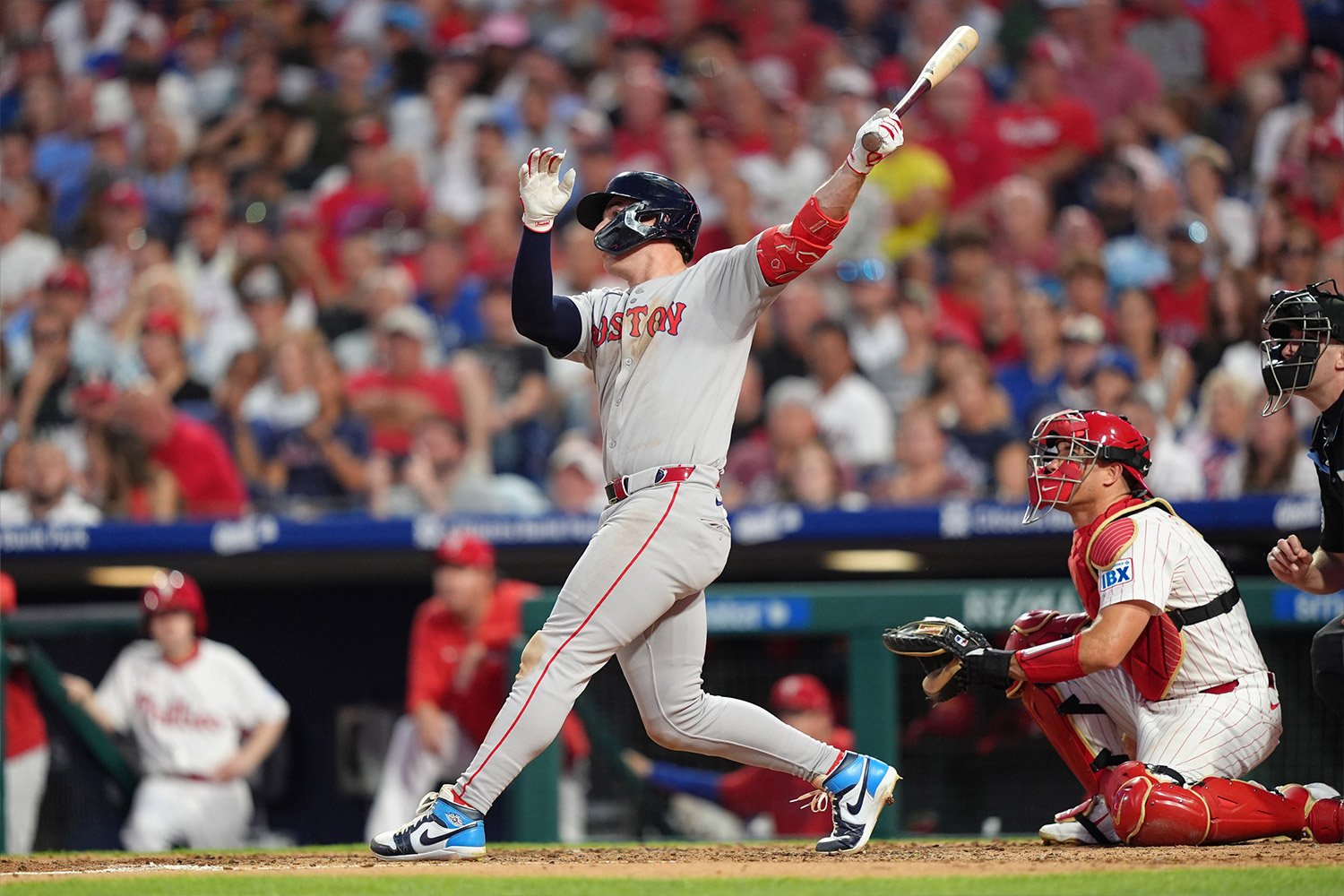 Weekly Snapshot Record Last Week: 3-3 (Overall 57-50) Runs Scored Last Week: 22 Runs Surrendered Last Week: 25 Standings 3rd in the AL East 7.0 GB 1st Place Currently Hold the 3rd WC Spot Scores Game 102 (7/21) | BOS 2, PHI 3 Game 103 (7/22) | BOS 1, PHI 4 Game 104 (7/23) | BOS 9, PHL 8 Game 105 (7/25) | BOS 2, LAD 5 Game 106 (7/26) | BOS 4, LAD 2 Game 107 (7/27) | BOS 4, LAD 3 TL;DR Breakdown/Highlights Phillies series: The first two games of the Phillies series were frustrating to watch. On Monday, it appeared the team got to Zack Wheeler. Jarren Duran hit a leadoff home run, and Wheeler wasn’t locating his pitches in the strike zone. (He posted a 43% zone rate for the game.) By the second inning, Wheeler’s pitch count was up to 40, and despite getting ahead in counts, Red Sox hitters couldn’t achieve success at the plate. Walker Buehler threw a rare quality start. In the bottom of the 10th, Jordan Hicks loaded the bases via a walk, wild pitch, and an intentional walk. The Phillies were saved by the umpires and scored a walkoff run from a questionable catcher’s interference by Carlos Narváez. On Tuesday night, Phillies ace Cristopher Sánchez threw a complete game, recording 12 strikeouts. Richard Fitts gave up two runs in the first and second innings, which were the only runs the Phillies scored, so kudos to the bullpen (Brennan Bernardino, Chris Murphy, and Greg Weissert) for pitching four scoreless relief innings. Wednesday night, Lucas Giolito didn’t look sharp. He gave up four home runs in just four innings—two in the bottom of the first to Kyle Schwarber and Bryce Harper, followed by one each in the third and fourth innings to Nick Castellanos and Bryson Stott. Jesus Luzardo, who has had some pretty big blowups throughout the year, was dominant through five innings. All hope was lost until the fifth inning. Masataka Yoshida sparked a rally with a double, the Red Sox’s first hit of the game. Ceddanne Rafaela and Marcelo Mayer walked to load the bases. Jarren Duran and Rob Refsynder also walked, drawing two runs for the Red Sox. Subsequently, Romy Gonzalez hit a grand slam. The game went back and forth until the 11th inning, when Carlos Narváez hit a two-run home run to give the Red Sox the final lead of the night. The Red Sox became the first team in history to win a game after striking out 15+ times, surrendering at least five home runs, and coming back from a five-run deficit. Dodger series: On Friday night, Brayan Bello got knocked around, yielding three earned runs across 5.1 innings. The Red Sox went 1-9 with runners in scoring position. Connor Wong looked sharp. He recorded his first extra-base hit of the season and picked off Andy Pages in a steal attempt. Garrett Crochet only threw two bad pitches in Game 2. He gave up a leadoff home run to Shohei Ohtani. Teoscar Hernandez also hit a home run in the first inning. After that, he settled in, and the Dodgers didn’t score any additional runs. Jarren Duran hit not one, but two triples and one double. Roman Anthony put up a fight during a 10-pitch at-bat and knocked Dodgers’ starter Clayton Kershaw out of the game with an RBI double. In the final game of the series, Walker Buehler took the mound, facing his former team. He issued four strikeouts, five walks, and three earned runs across 4 2/3 innings. Fortunately, the Red Sox’s offense woke up. Roman Anthony hit his first career triple and drove in Abraham Toro. Alex Bregman demolished a two-run homer over the Monster to solidify the Red Sox’s lead. In the bottom of the eighth, Ceddanne Rafaela bailed out Jordan Hicks to turn a double play at second. The Red Sox fly out to Minnesota to play the anemic Twins (3-7 in their last 10) before returning home to face the Astros. Random Stats Could Romy Gonzalez be an everyday player? Since June 25th, he’s posted a 92 wRC+ against right-handed pitchers. He’s 12th on Statcast’s Exit Velocity and Barrels leaderboard with 11.4 Brls/PA%. The Red Sox are slashing .261/.332/.432, 108 wRC+ versus left-handed pitching in 2025. They rank 3rd on the FanGraphs leaderboard for the year. Jarren Duran’s on a hot streak, perhaps fueled by the flurry of trade rumors? Over the past week, he’s hit one home run and five RBIs with 191 wRC+. Alex Bregman is back. Since July 20th, he’s slashing .368/.368/.579, with four RBIs and 160 wRC+. Carlos Narváez is second among rookies in fWAR with 2.9. Earlier this week, he led rookies in fWAR, but was displaced after Nick Kurtz’s historic four home run game. He’s posted the most DRS among catchers with 14. The Red Sox are 38-15 when they score first. Website Highlights Tanner Houck’s Future May Be Diverging From the Red Sox by Brandon Glick Payton Tolle Should be Made Untouchable by Red Sox at Trade Deadline by Nick John The Red Sox Must Outlast Elite Competition Before Schedule Softens by Finley Rogan Looking Ahead July 28th: Red Sox (Fitts) @ Twins (Woods Richardson): 7:40 pm EDT July 29th: Red Sox (Giolito) @ Twins (Paddack): 7:40 pm EDT July 30th: Red Sox (Bello) @ Twins (TBD): 1:10 pm EDT August 1st: Astros vs Red Sox: 7:10 pm EDT August 2nd: Astros vs Red Sox: 4:10 pm EDT August 3rd: Astros vs Red Sox: 11:35 am EDT
 -
Weekly Snapshot Record Last Week: 3-3 (Overall 57-50) Runs Scored Last Week: 22 Runs Surrendered Last Week: 25 Standings 3rd in the AL East 7.0 GB 1st Place Currently Hold the 3rd WC Spot Scores Game 102 (7/21) | BOS 2, PHI 3 Game 103 (7/22) | BOS 1, PHI 4 Game 104 (7/23) | BOS 9, PHL 8 Game 105 (7/25) | BOS 2, LAD 5 Game 106 (7/26) | BOS 4, LAD 2 Game 107 (7/27) | BOS 4, LAD 3 TL;DR Breakdown/Highlights Phillies series: The first two games of the Phillies series were frustrating to watch. On Monday, it appeared the team got to Zack Wheeler. Jarren Duran hit a leadoff home run, and Wheeler wasn’t locating his pitches in the strike zone. (He posted a 43% zone rate for the game.) By the second inning, Wheeler’s pitch count was up to 40, and despite getting ahead in counts, Red Sox hitters couldn’t achieve success at the plate. Walker Buehler threw a rare quality start. In the bottom of the 10th, Jordan Hicks loaded the bases via a walk, wild pitch, and an intentional walk. The Phillies were saved by the umpires and scored a walkoff run from a questionable catcher’s interference by Carlos Narváez. On Tuesday night, Phillies ace Cristopher Sánchez threw a complete game, recording 12 strikeouts. Richard Fitts gave up two runs in the first and second innings, which were the only runs the Phillies scored, so kudos to the bullpen (Brennan Bernardino, Chris Murphy, and Greg Weissert) for pitching four scoreless relief innings. Wednesday night, Lucas Giolito didn’t look sharp. He gave up four home runs in just four innings—two in the bottom of the first to Kyle Schwarber and Bryce Harper, followed by one each in the third and fourth innings to Nick Castellanos and Bryson Stott. Jesus Luzardo, who has had some pretty big blowups throughout the year, was dominant through five innings. All hope was lost until the fifth inning. Masataka Yoshida sparked a rally with a double, the Red Sox’s first hit of the game. Ceddanne Rafaela and Marcelo Mayer walked to load the bases. Jarren Duran and Rob Refsynder also walked, drawing two runs for the Red Sox. Subsequently, Romy Gonzalez hit a grand slam. The game went back and forth until the 11th inning, when Carlos Narváez hit a two-run home run to give the Red Sox the final lead of the night. The Red Sox became the first team in history to win a game after striking out 15+ times, surrendering at least five home runs, and coming back from a five-run deficit. Dodger series: On Friday night, Brayan Bello got knocked around, yielding three earned runs across 5.1 innings. The Red Sox went 1-9 with runners in scoring position. Connor Wong looked sharp. He recorded his first extra-base hit of the season and picked off Andy Pages in a steal attempt. Garrett Crochet only threw two bad pitches in Game 2. He gave up a leadoff home run to Shohei Ohtani. Teoscar Hernandez also hit a home run in the first inning. After that, he settled in, and the Dodgers didn’t score any additional runs. Jarren Duran hit not one, but two triples and one double. Roman Anthony put up a fight during a 10-pitch at-bat and knocked Dodgers’ starter Clayton Kershaw out of the game with an RBI double. In the final game of the series, Walker Buehler took the mound, facing his former team. He issued four strikeouts, five walks, and three earned runs across 4 2/3 innings. Fortunately, the Red Sox’s offense woke up. Roman Anthony hit his first career triple and drove in Abraham Toro. Alex Bregman demolished a two-run homer over the Monster to solidify the Red Sox’s lead. In the bottom of the eighth, Ceddanne Rafaela bailed out Jordan Hicks to turn a double play at second. The Red Sox fly out to Minnesota to play the anemic Twins (3-7 in their last 10) before returning home to face the Astros. Random Stats Could Romy Gonzalez be an everyday player? Since June 25th, he’s posted a 92 wRC+ against right-handed pitchers. He’s 12th on Statcast’s Exit Velocity and Barrels leaderboard with 11.4 Brls/PA%. The Red Sox are slashing .261/.332/.432, 108 wRC+ versus left-handed pitching in 2025. They rank 3rd on the FanGraphs leaderboard for the year. Jarren Duran’s on a hot streak, perhaps fueled by the flurry of trade rumors? Over the past week, he’s hit one home run and five RBIs with 191 wRC+. Alex Bregman is back. Since July 20th, he’s slashing .368/.368/.579, with four RBIs and 160 wRC+. Carlos Narváez is second among rookies in fWAR with 2.9. Earlier this week, he led rookies in fWAR, but was displaced after Nick Kurtz’s historic four home run game. He’s posted the most DRS among catchers with 14. The Red Sox are 38-15 when they score first. Website Highlights Tanner Houck’s Future May Be Diverging From the Red Sox by Brandon Glick Payton Tolle Should be Made Untouchable by Red Sox at Trade Deadline by Nick John The Red Sox Must Outlast Elite Competition Before Schedule Softens by Finley Rogan Looking Ahead July 28th: Red Sox (Fitts) @ Twins (Woods Richardson): 7:40 pm EDT July 29th: Red Sox (Giolito) @ Twins (Paddack): 7:40 pm EDT July 30th: Red Sox (Bello) @ Twins (TBD): 1:10 pm EDT August 1st: Astros vs Red Sox: 7:10 pm EDT August 2nd: Astros vs Red Sox: 4:10 pm EDT August 3rd: Astros vs Red Sox: 11:35 am EDT View full article
-
 Editor's Note: Though not one of our traditional, Red Sox-centric articles, Maddie put in a huge amount of work to share this experience with you, our readers. We hope you to take the time to enjoy and share in her adventure in Japan, one of the international hubs currently expanding the baseball scene. Please enjoy. I’ve always tried to incorporate baseball games into my travel plans whenever possible. Sports embody culture. A stadium’s architecture mirrors a cultural aesthetics and the relationship between the building’s design, its fans, and the surrounding area. Pregame, in-game, and postgame ceremonies and rituals allow communities to express their cultural identity through music, dancing, and rituals. Food is another cultural identity marker, reflecting local ingredients, social customs, and traditions. Last May, I attended the London Series between the New York Mets and the Philadelphia Phillies. While I love traveling to Europe, there isn’t a strong baseball culture present. Although I’ve lived in Pennsylvania for most of my life, I couldn't care less about the Phillies' record. I was primarily attending for the 1) food and 2) the vibes, like Jazz Chisholm during the Home Run Derby this year, and 3) the chance to see London Stadium, the home of West Ham F.C., converted to a baseball field. While the London Series resembled (and smelled like) a home game for the Phillies at Citizens Bank Park, the fans brought their energy, enthusiasm, and jeering, which was mostly reserved for the Mets, although they booed Whit Merrifield after he struck out. The atmosphere at the London Series reminded me that baseball is more than a sport - it’s a unifying force, bringing people together from different backgrounds and countries to share the experience of watching a baseball game. I left London feeling inspired and brimming with curiosity. I wanted to continue exploring how different cultures engage with my favorite sport. This newfound curiosity eventually led my sister and me to Japan. Since the Red Sox signed Masataka Yoshida, a former Orix Buffaloes player, I’ve adopted them as my favorite Nippon Professional Baseball (NPB) team. The Buffaloes have produced several players who made their mark in MLB, including Hideo Nomo, Yoshinobu Yamamoto, and newly-inducted Hall of Famer, Ichiro Suzuki. Their home is the Kyocera Dome in Osaka. NPB teams are owned by corporations that brand their teams with their company name. The Buffaloes' owner is Orix, a financial services conglomerate. Other NPB team owners run more exciting businesses. For example, the Hiroshima Toyo Carp’s primary owner is the Matsuda family, related to the founder of Mazda Motor Corporation. Their stadium is rightfully named the Mazda Zoom-Zoom Stadium. The Yomiuri Giants, who are often referred to as “the New Yankees of Japan,” are owned by Yomiuri Shimbun Holdings, the largest media conglomerate in Japan. The Yomiuri Shimbun newspaper and the Nippon Television Network fall under their umbrella. The Giants play at the elusive Tokyo Dome. Read more about the Nippon Professional Baseball Organization structure here. From what I had read online, the Kyocera Dome isn’t at the top of must-see NPB stadiums for tourists. Some seasoned fans recommend avoiding the stadium altogether. Nonetheless, I wasn’t planning this trip solely around NPB games. It was just one piece of the puzzle, and I didn’t want to overwhelm the rest of my travel plans (and bore my sister) with baseball games. I wanted to immerse myself in the Japanese baseball scene, and the Orix Buffaloes’ schedule aligned perfectly with our itinerary. The game we attended was on July 8th, 2025, the second-to-last day of our trip. On the day of the game, I woke up exhausted at 4:00 am in Kyoto. Jet lag played a part, but I set my alarm early to shoot photos in Gion, Kyoto’s famous historic district, before the throngs of tourists arrived. The temperature was already at 84°F, and like the rest of Japan, it was humid. As I walked around the quiet streets lined with traditional wooden machiya buildings, I realized that I’d have to be at the baseball game in 12 hours. Later in the morning, we took a train to Osaka Station from Kyoto Station, which took about 20 minutes. Exiting Osaka station armed with our 40-pound suitcases, we were tired, sweaty, and dehydrated after 12 days of non-stop travel and sightseeing. According to our phones, we averaged 30,000 steps and climbed up 50 flights of stairs per day. I’m usually good with directions, but the Japanese train stations really tested me. While we were attempting to navigate to the pickup location for our hotel shuttle bus, a camera crew suddenly appeared, offering to guide us. It turned out they were filming two famous Japanese Rozan comedians, Hirofumi Suga (菅 広文) and Fuminori Ujihara (宇治原 史規) for a weekly directions segment on the MBS channel. Hirofumi spoke some English and asked us questions, with Fuminori translating. The conversation turned to baseball, and we discussed Seiya Suzuki's MLB success. We spoke for about 10 minutes before they “dropped” us at the shuttle bus location. Yet, we still couldn’t find the shuttle and probably missed it due to the filming. Confused, we walked around and avoided the crew near the station’s south exit. This probably led us in the wrong direction. We ultimately took a taxi to the hotel. After dropping off our bags, we grabbed lunch at Kuromon Market before heading back to rest before the game. We’d planned to take the subway to the stadium, but exhaustion set in, so we ended up calling an Uber instead. We arrived at the Kyocera Dome around 4:08 pm, and our Uber driver dropped us off below the gates at street level. We received a special B Mode-themed jersey with our tickets. Surprisingly, the giveaway pickup area was separate from the main gates. Themed banners were on display around the stadium for the promotion. The outside of the Kyocera Dome resembles a spaceship. It opened in 1997, so it’s a fairly new building. The 90s weren’t exactly a groundbreaking time in architectural design, and some of the futuristic elements haven’t aged well. Sure, the Kyocera Dome isn’t the most aesthetically appealing stadium, but I was more concerned about the atmosphere and fans. MLB releases tickets for the full season at once, while NPB ticket sales vary by team. To purchase Buffaloes tickets, I first had to join the BsCLUB (the team’s fan club). Registering required entering my name in half-width Kanji using a special tool, which was challenging as I don’t speak Japanese. The Buffaloes began selling tickets just over a month before the game, so I bought mine in late May. Our digital tickets cost 9,600円 (about $65). Before officially entering the stadium, we hit up the gargantuan team store. The Buffaloes sold gear for the Fukuoka Softbank Hawks, the opposing team. I’ve only seen this at Fenway before, so I appreciated the Buffaloes’ gesture. I bought a Soichiro Yamazaki (my favorite Buffaloes player) shirsey and my sister also purchased a hat, which she wanted to wear during the game. Just past the registers, the Buffaloes had a special table set up to carefully remove clothing tags with scissors. Upon entering the seating bowl, we immediately realized we were on the wrong side of the stadium. We managed to catch a glimpse of the Softbank Hawks' batting practice before our grumbling tummies ushered us back to the concourse for food. I encountered one Japanese fan wearing a Red Sox hat. I smiled at him, but since the Japanese tend to be polite rather than friendly, he gave me a puzzled look. Internationally, sports hats are often viewed more as a fashion statement than a symbol of fandom. The Kyocera Dome had a solid selection of food, ranging from traditional options like okonomiyaki (savory pancakes), takoyaki (fried octopus balls), bento boxes, and ramen to stereotypical American (hot dogs, French fries, and hamburgers). We saw a couple of Domino's and KFC stands. Asahi is a popular beer in Japan. Beer girls were serving alcohol to seated fans. The food was cheap, especially compared to MLB games, where everything is price-gauged. My sister tried the Itamae Dog, an orange float soda. I ate the Toribo (large chicken fries) and drank a lemon highball. I also received a special Soichiro Yamazaki baseball card with my order. We both agreed the food was delicious. You can see in the photo below that our seats had individual fans blowing a very mild stream of air. Our seats were on the first base side. Similar to European football games, the fans were divided by team. SoftBank Hawks fans occupied the third base line and left field, while the Buffaloes fans were around first base and right field. Each team’s ōendan (official cheering squad) was positioned in separate outfields (Buffaloes in right field and SoftBank Hawks in left). Both ōendans had drums and megaphones to generate noise, and flag bearers waved flags when their team was batting. We were given fan clappers upon entering the stadium and a lime for a Tokushima travel promotion. There were only a few Western fans in attendance. MVI_1288.mp4 BsGravity, the Buffaloes dance vocal group, gave an opening performance 20 minutes before the game, joined by the team’s mascots, Buffalo Bull and Buffalo Bell. They sang the team’s theme song “Sky” by the Japanese band Mega Stopper. The Buffaloes were in first place in the Pacific League when we saw them play. They’re currently in 3rd place. Former Cubs pitcher Anderson Espinoza took the mound for the Buffaloes. He initially looked strong and pitched two scoreless innings. The fans had a special "Vamos Espinoza!" cheer for him, and hearing Japanese fans chant in Spanish was a heartwarming moment of cultural exchange. The Japanese style of play seemed a little slower than MLB. Both teams featured lefty-heavy lineups. I’m not sure if this was a team-specific thing or common throughout the Nippon League. At the top of the fourth inning, we decided to grab ice cream. While waiting in line, we heard raucous cheering from the stadium. Espinoza had given up a grand slam in the top of the fourth inning. Later in the inning, Buffaloes' center fielder Keita Nakagawa hit a home run off the Hawks' starter Kohei Arihara. This was the only run the Buffaloes scored in the game. Thanks to our dessert quest, we missed the only two home runs of the game. The Softbank Hawks rallied again in the fifth inning and scored four more runs. Former Red Sox player Jeter Downs drove in three with a bases-clearing double. BsGravity took the stage again when the Lucky 7 arrived (the Japanese equivalent of the 7th inning stretch). The Buffaloes sold souvenir light-up sticks that flickered in sync with the performance. The Kyocera Dome reminded me of the Rogers Centre in Toronto. They’re both indoor stadiums with cavernous roofs and waves of blue seats. While the lower seating bowl was filled with fans, the upper levels were significantly less crowded, and some sections remained empty throughout the game. Moreover, I was surprised by the lack of cultural barriers. Although we couldn't understand everything the announcers were saying, we were able to follow the game's progression as ball knowers. English words like strike, ball, and strikeout were part of their vocabulary. The Japanese umpires' gestures were the same as their American counterparts (albeit their calls weren’t as egregious). The Japanese fans' coordinated collective enthusiasm was palpable from the cheering and singing. Each player had a special song. Despite being down by eight runs, the Buffaloes fans continued cheering for their players. We didn’t hear any heckling, booing, or screaming, even after Espinoza gave up the grand slam. Unlike American baseball games, the fans weren’t treating the game as a social drinking event. They actually paid attention to the game. By the bottom of the eighth inning, it was apparent that the Buffaloes would lose the game. It was 9:00 pm, and we were exhausted after a travel day, and we had been up for over 12 hours. We felt a twinge of guilt leaving early since Japanese fans typically stay for the entire game. Despite not seeing the Buffaloes play at their best, we had a great experience at our first NPB game. It was definitely one of the trip’s highlights. Since returning home, I’ve had some time to reminisce about the trip. When I left for Japan three weeks ago, the Red Sox were in a slump, having been swept by the lowly Angels and the division-leading Blue Jays. Now, heading into the All-Star Break, they’re the hottest team in baseball. In sharp contrast to the mercurial nature of American baseball fans (myself included), Japanese fans display an unwavering passion for the game. At times, my sister and I were stuck in a tourist purgatory. Navigating Japanese train stations felt like a Sisyphean challenge. The humidity was suffocating, we were jetlagged throughout the trip, and it seemed like we couldn’t escape the crowds of tourists wherever we went. We quipped, “How dare other tourists decide to travel to Japan at the same time as us and visit the same attractions!” Some temples offered a welcome break from the masses, while others felt more like tourist traps. Like Phoebe Bridgers, I got bored at the temple. What I yearned for was an authentic experience of Japanese culture. But as the trip progressed, my perspective shifted. No matter where you go, you’re always bound to encounter loud, obnoxious tourists. However, the more I interacted with the Japanese, the more I realized how gracious and polite they were. Some moments truly captured the spirit of the country, whether we were sharing a late-night dinner with salarymen in an izakaya outside Shimbashi Station in Tokyo or attempting to climb Mt. Fuji (a storm thwarted our hike). Many of my interactions with locals revolved around my baseball hyperfixation. During a ramen-making class in Mt. Fuji, one of our hosts told us she was from the Iwate Prefecture, and was surprised to hear that I was familiar with the area because Dodgers pitcher, Roki Sasaki, is from there as well. Reading about Sasaki’s hometown in The Athletic helped me connect with her, making the conversation more memorable. Still, nothing stood out more to me than the baseball game at the Kyocera Dome. It was an undeniably authentic Japanese experience that embodied the energy, enthusiasm, and resilience of their people. There’s still so much of Japan I’d love to see. My sister and I want to scale the entirety of Mt. Fuji sans thunderstorms. Other Nippon League stadiums are on my bucket list. The Tokyo Dome is one of them, but I’ll keep it on my radar for a future trip - maybe when the Red Sox are playing there. Baseball started in the United States, but its heartbeat permeates throughout the world, transcending borders and cultures. Experiencing how Japan embraces and elevates the sport reminded me that baseball’s magic lies in its ability to bridge and connect people. In an Ameri-centric world that often feels divided, the universal love for baseball brings us together, pitch by pitch, cheer by cheer, and hot dog by hot dog. Ganbatte! MVI_1287.mp4 IMG_9358.MOV IMG_9387.MOV
 -
Editor's Note: Though not one of our traditional, Red Sox-centric articles, Maddie put in a huge amount of work to share this experience with you, our readers. We hope you to take the time to enjoy and share in her adventure in Japan, one of the international hubs currently expanding the baseball scene. Please enjoy. I’ve always tried to incorporate baseball games into my travel plans whenever possible. Sports embody culture. A stadium’s architecture mirrors a cultural aesthetics and the relationship between the building’s design, its fans, and the surrounding area. Pregame, in-game, and postgame ceremonies and rituals allow communities to express their cultural identity through music, dancing, and rituals. Food is another cultural identity marker, reflecting local ingredients, social customs, and traditions. Last May, I attended the London Series between the New York Mets and the Philadelphia Phillies. While I love traveling to Europe, there isn’t a strong baseball culture present. Although I’ve lived in Pennsylvania for most of my life, I couldn't care less about the Phillies' record. I was primarily attending for the 1) food and 2) the vibes, like Jazz Chisholm during the Home Run Derby this year, and 3) the chance to see London Stadium, the home of West Ham F.C., converted to a baseball field. While the London Series resembled (and smelled like) a home game for the Phillies at Citizens Bank Park, the fans brought their energy, enthusiasm, and jeering, which was mostly reserved for the Mets, although they booed Whit Merrifield after he struck out. The atmosphere at the London Series reminded me that baseball is more than a sport - it’s a unifying force, bringing people together from different backgrounds and countries to share the experience of watching a baseball game. I left London feeling inspired and brimming with curiosity. I wanted to continue exploring how different cultures engage with my favorite sport. This newfound curiosity eventually led my sister and me to Japan. Since the Red Sox signed Masataka Yoshida, a former Orix Buffaloes player, I’ve adopted them as my favorite Nippon Professional Baseball (NPB) team. The Buffaloes have produced several players who made their mark in MLB, including Hideo Nomo, Yoshinobu Yamamoto, and newly-inducted Hall of Famer, Ichiro Suzuki. Their home is the Kyocera Dome in Osaka. NPB teams are owned by corporations that brand their teams with their company name. The Buffaloes' owner is Orix, a financial services conglomerate. Other NPB team owners run more exciting businesses. For example, the Hiroshima Toyo Carp’s primary owner is the Matsuda family, related to the founder of Mazda Motor Corporation. Their stadium is rightfully named the Mazda Zoom-Zoom Stadium. The Yomiuri Giants, who are often referred to as “the New Yankees of Japan,” are owned by Yomiuri Shimbun Holdings, the largest media conglomerate in Japan. The Yomiuri Shimbun newspaper and the Nippon Television Network fall under their umbrella. The Giants play at the elusive Tokyo Dome. Read more about the Nippon Professional Baseball Organization structure here. From what I had read online, the Kyocera Dome isn’t at the top of must-see NPB stadiums for tourists. Some seasoned fans recommend avoiding the stadium altogether. Nonetheless, I wasn’t planning this trip solely around NPB games. It was just one piece of the puzzle, and I didn’t want to overwhelm the rest of my travel plans (and bore my sister) with baseball games. I wanted to immerse myself in the Japanese baseball scene, and the Orix Buffaloes’ schedule aligned perfectly with our itinerary. The game we attended was on July 8th, 2025, the second-to-last day of our trip. On the day of the game, I woke up exhausted at 4:00 am in Kyoto. Jet lag played a part, but I set my alarm early to shoot photos in Gion, Kyoto’s famous historic district, before the throngs of tourists arrived. The temperature was already at 84°F, and like the rest of Japan, it was humid. As I walked around the quiet streets lined with traditional wooden machiya buildings, I realized that I’d have to be at the baseball game in 12 hours. Later in the morning, we took a train to Osaka Station from Kyoto Station, which took about 20 minutes. Exiting Osaka station armed with our 40-pound suitcases, we were tired, sweaty, and dehydrated after 12 days of non-stop travel and sightseeing. According to our phones, we averaged 30,000 steps and climbed up 50 flights of stairs per day. I’m usually good with directions, but the Japanese train stations really tested me. While we were attempting to navigate to the pickup location for our hotel shuttle bus, a camera crew suddenly appeared, offering to guide us. It turned out they were filming two famous Japanese Rozan comedians, Hirofumi Suga (菅 広文) and Fuminori Ujihara (宇治原 史規) for a weekly directions segment on the MBS channel. Hirofumi spoke some English and asked us questions, with Fuminori translating. The conversation turned to baseball, and we discussed Seiya Suzuki's MLB success. We spoke for about 10 minutes before they “dropped” us at the shuttle bus location. Yet, we still couldn’t find the shuttle and probably missed it due to the filming. Confused, we walked around and avoided the crew near the station’s south exit. This probably led us in the wrong direction. We ultimately took a taxi to the hotel. After dropping off our bags, we grabbed lunch at Kuromon Market before heading back to rest before the game. We’d planned to take the subway to the stadium, but exhaustion set in, so we ended up calling an Uber instead. We arrived at the Kyocera Dome around 4:08 pm, and our Uber driver dropped us off below the gates at street level. We received a special B Mode-themed jersey with our tickets. Surprisingly, the giveaway pickup area was separate from the main gates. Themed banners were on display around the stadium for the promotion. The outside of the Kyocera Dome resembles a spaceship. It opened in 1997, so it’s a fairly new building. The 90s weren’t exactly a groundbreaking time in architectural design, and some of the futuristic elements haven’t aged well. Sure, the Kyocera Dome isn’t the most aesthetically appealing stadium, but I was more concerned about the atmosphere and fans. MLB releases tickets for the full season at once, while NPB ticket sales vary by team. To purchase Buffaloes tickets, I first had to join the BsCLUB (the team’s fan club). Registering required entering my name in half-width Kanji using a special tool, which was challenging as I don’t speak Japanese. The Buffaloes began selling tickets just over a month before the game, so I bought mine in late May. Our digital tickets cost 9,600円 (about $65). Before officially entering the stadium, we hit up the gargantuan team store. The Buffaloes sold gear for the Fukuoka Softbank Hawks, the opposing team. I’ve only seen this at Fenway before, so I appreciated the Buffaloes’ gesture. I bought a Soichiro Yamazaki (my favorite Buffaloes player) shirsey and my sister also purchased a hat, which she wanted to wear during the game. Just past the registers, the Buffaloes had a special table set up to carefully remove clothing tags with scissors. Upon entering the seating bowl, we immediately realized we were on the wrong side of the stadium. We managed to catch a glimpse of the Softbank Hawks' batting practice before our grumbling tummies ushered us back to the concourse for food. I encountered one Japanese fan wearing a Red Sox hat. I smiled at him, but since the Japanese tend to be polite rather than friendly, he gave me a puzzled look. Internationally, sports hats are often viewed more as a fashion statement than a symbol of fandom. The Kyocera Dome had a solid selection of food, ranging from traditional options like okonomiyaki (savory pancakes), takoyaki (fried octopus balls), bento boxes, and ramen to stereotypical American (hot dogs, French fries, and hamburgers). We saw a couple of Domino's and KFC stands. Asahi is a popular beer in Japan. Beer girls were serving alcohol to seated fans. The food was cheap, especially compared to MLB games, where everything is price-gauged. My sister tried the Itamae Dog, an orange float soda. I ate the Toribo (large chicken fries) and drank a lemon highball. I also received a special Soichiro Yamazaki baseball card with my order. We both agreed the food was delicious. You can see in the photo below that our seats had individual fans blowing a very mild stream of air. Our seats were on the first base side. Similar to European football games, the fans were divided by team. SoftBank Hawks fans occupied the third base line and left field, while the Buffaloes fans were around first base and right field. Each team’s ōendan (official cheering squad) was positioned in separate outfields (Buffaloes in right field and SoftBank Hawks in left). Both ōendans had drums and megaphones to generate noise, and flag bearers waved flags when their team was batting. We were given fan clappers upon entering the stadium and a lime for a Tokushima travel promotion. There were only a few Western fans in attendance. MVI_1288.mp4 BsGravity, the Buffaloes dance vocal group, gave an opening performance 20 minutes before the game, joined by the team’s mascots, Buffalo Bull and Buffalo Bell. They sang the team’s theme song “Sky” by the Japanese band Mega Stopper. The Buffaloes were in first place in the Pacific League when we saw them play. They’re currently in 3rd place. Former Cubs pitcher Anderson Espinoza took the mound for the Buffaloes. He initially looked strong and pitched two scoreless innings. The fans had a special "Vamos Espinoza!" cheer for him, and hearing Japanese fans chant in Spanish was a heartwarming moment of cultural exchange. The Japanese style of play seemed a little slower than MLB. Both teams featured lefty-heavy lineups. I’m not sure if this was a team-specific thing or common throughout the Nippon League. At the top of the fourth inning, we decided to grab ice cream. While waiting in line, we heard raucous cheering from the stadium. Espinoza had given up a grand slam in the top of the fourth inning. Later in the inning, Buffaloes' center fielder Keita Nakagawa hit a home run off the Hawks' starter Kohei Arihara. This was the only run the Buffaloes scored in the game. Thanks to our dessert quest, we missed the only two home runs of the game. The Softbank Hawks rallied again in the fifth inning and scored four more runs. Former Red Sox player Jeter Downs drove in three with a bases-clearing double. BsGravity took the stage again when the Lucky 7 arrived (the Japanese equivalent of the 7th inning stretch). The Buffaloes sold souvenir light-up sticks that flickered in sync with the performance. The Kyocera Dome reminded me of the Rogers Centre in Toronto. They’re both indoor stadiums with cavernous roofs and waves of blue seats. While the lower seating bowl was filled with fans, the upper levels were significantly less crowded, and some sections remained empty throughout the game. Moreover, I was surprised by the lack of cultural barriers. Although we couldn't understand everything the announcers were saying, we were able to follow the game's progression as ball knowers. English words like strike, ball, and strikeout were part of their vocabulary. The Japanese umpires' gestures were the same as their American counterparts (albeit their calls weren’t as egregious). The Japanese fans' coordinated collective enthusiasm was palpable from the cheering and singing. Each player had a special song. Despite being down by eight runs, the Buffaloes fans continued cheering for their players. We didn’t hear any heckling, booing, or screaming, even after Espinoza gave up the grand slam. Unlike American baseball games, the fans weren’t treating the game as a social drinking event. They actually paid attention to the game. By the bottom of the eighth inning, it was apparent that the Buffaloes would lose the game. It was 9:00 pm, and we were exhausted after a travel day, and we had been up for over 12 hours. We felt a twinge of guilt leaving early since Japanese fans typically stay for the entire game. Despite not seeing the Buffaloes play at their best, we had a great experience at our first NPB game. It was definitely one of the trip’s highlights. Since returning home, I’ve had some time to reminisce about the trip. When I left for Japan three weeks ago, the Red Sox were in a slump, having been swept by the lowly Angels and the division-leading Blue Jays. Now, heading into the All-Star Break, they’re the hottest team in baseball. In sharp contrast to the mercurial nature of American baseball fans (myself included), Japanese fans display an unwavering passion for the game. At times, my sister and I were stuck in a tourist purgatory. Navigating Japanese train stations felt like a Sisyphean challenge. The humidity was suffocating, we were jetlagged throughout the trip, and it seemed like we couldn’t escape the crowds of tourists wherever we went. We quipped, “How dare other tourists decide to travel to Japan at the same time as us and visit the same attractions!” Some temples offered a welcome break from the masses, while others felt more like tourist traps. Like Phoebe Bridgers, I got bored at the temple. What I yearned for was an authentic experience of Japanese culture. But as the trip progressed, my perspective shifted. No matter where you go, you’re always bound to encounter loud, obnoxious tourists. However, the more I interacted with the Japanese, the more I realized how gracious and polite they were. Some moments truly captured the spirit of the country, whether we were sharing a late-night dinner with salarymen in an izakaya outside Shimbashi Station in Tokyo or attempting to climb Mt. Fuji (a storm thwarted our hike). Many of my interactions with locals revolved around my baseball hyperfixation. During a ramen-making class in Mt. Fuji, one of our hosts told us she was from the Iwate Prefecture, and was surprised to hear that I was familiar with the area because Dodgers pitcher, Roki Sasaki, is from there as well. Reading about Sasaki’s hometown in The Athletic helped me connect with her, making the conversation more memorable. Still, nothing stood out more to me than the baseball game at the Kyocera Dome. It was an undeniably authentic Japanese experience that embodied the energy, enthusiasm, and resilience of their people. There’s still so much of Japan I’d love to see. My sister and I want to scale the entirety of Mt. Fuji sans thunderstorms. Other Nippon League stadiums are on my bucket list. The Tokyo Dome is one of them, but I’ll keep it on my radar for a future trip - maybe when the Red Sox are playing there. Baseball started in the United States, but its heartbeat permeates throughout the world, transcending borders and cultures. Experiencing how Japan embraces and elevates the sport reminded me that baseball’s magic lies in its ability to bridge and connect people. In an Ameri-centric world that often feels divided, the universal love for baseball brings us together, pitch by pitch, cheer by cheer, and hot dog by hot dog. Ganbatte! MVI_1287.mp4 IMG_9358.MOV IMG_9387.MOV View full article
- 1 reply
-
- 1
-

-
I thought about including Early and Sandlin in an initial draft!
-
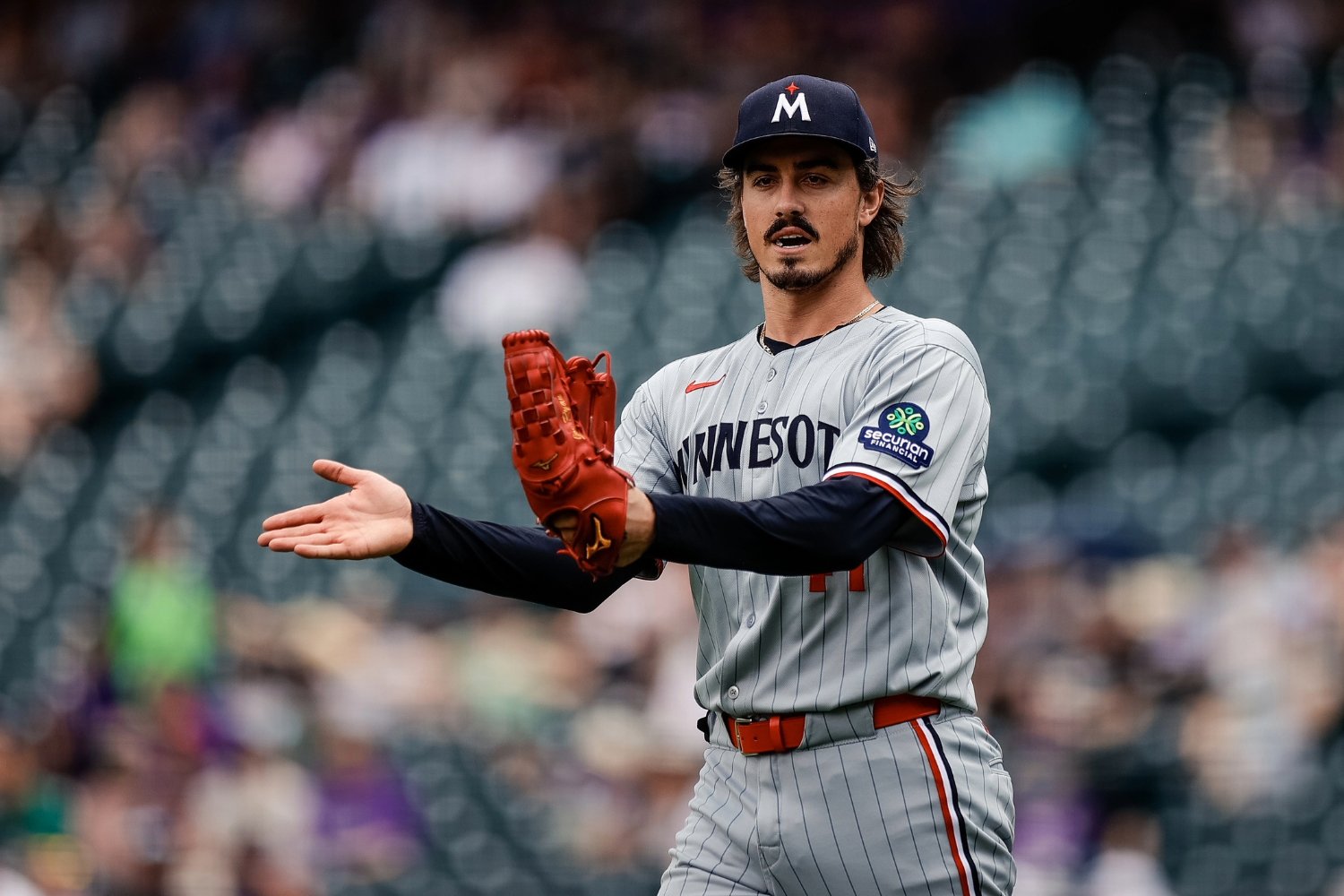 Let it be known: I have nothing against the state of Minnesota. Sure, Minnesotans incorrectly refer to casseroles as “hot dishes”, they seem to be obsessed with hockey, and their accent sounds Canadian, but none of that is their fault. One thing is certain: the Minnesota Twins, who, as their name suggests, are located in Minnesota, have a valuable trade piece that could help the Red Sox make a deep playoff run. That trade piece is the Twins’ starting pitcher Joe Ryan. The Twins hold significant influence at the 2025 trade deadline. Whether they choose to be buyers or sellers is up for question. If they are sellers, they have the opportunity to be within playoff contention next year, but they have to thread the needle carefully. A three-team trade proposal involving the Phillies, Twins, and Red Sox, with Joe Ryan headlining the deal, would help each team. Back in May, FanGraphs projected the Twins held a 68.7% chance of making the playoffs. The team was riding high on a 13-game winning streak, and it looked like the Twins were a formidable opponent for the Detroit Tigers in the AL Central. Since then, their season has fallen apart, and the team currently is at a 14.8% chance of making the playoffs. Shockingly, they’re part of a small group of four teams that have won ten games in a row this season, a list that also includes the Red Sox. Various organizational components can be blamed for the Twins' meltdown. Injuries to Pablo Lopez and Bailey Ober have offset their rotation. Over the past year, the Pohlad family has flirted with the notion of selling the Twins. Offsetting some payroll at the deadline would help them sell the team and stock up their farm system to appeal to a potential buyer. They probably can’t shed Carlos Correa’s albatross six-year $200 million contract, but they can move other pieces and gain valuable prospects. The organization has also indicated that they’re willing to listen to trades for players on expiring contracts. Phillies receive OF Jarren Duran (28, 1.7 fWAR) and RP Jhoan Duran (27, 1.2 fWAR) I’ll start with my least favorite team in this proposal, the Phillies. Since 2022, the Phillies' outfield ranks 23rd in fWAR. To be honest, I’m impressed that the Phillies made the World Series in 2022, the NLCS in 2023, and the NLDS in 2024 with such a mediocre outfield. Four seasons into his five-year, $100 million contract, Phillies right fielder Nick Castellanos has accumulated a total of 1.2 fWAR. The team uses an inefficient platoon of Johan Rojas (.232/.287/.303, 63 wRC+) and Brandon Marsh (.244/.318/.341, 85 wRC+) in left/center field. The Phillies' outfield woes were on full display during Wednesday night’s marathon versus the Red Sox. After fouling off four pitches from Red Sox reliever Brennan Bernardino (the team’s eighth pitcher of the game), former Twins outfielder Max Kepler (.203/.300/.366, 85 wRC+) struck out looking to end the game in the 11th inning. Kepler signed a $10 million, one-year deal with the Phillies in the offseason. The Red Sox have five very competent outfielders on their major league roster and throughout their farm system. As much as it pains me to write this, Jarren Duran is the odd man out. Baseball is a business, and if trading from a position of strength helps address a roster weakness, the Red Sox must seriously consider moving Duran at the trade deadline. The speedy outfielder’s swing would fare well in Philly. Per Statcast’s Expected Home Runs by Park, Duran would have hit 26 home runs last year and 12 this season if all of them were hit at Citizens Bank Park. He also seemed to be enjoying himself in Philly earlier this week. This trade proposal features not one, but two Durans—both with first names that start with “J” and end in “n”. Jhoan Duran (1.94 ERA, 26.4% strikeout rate, 8.3% batted ball rate, and 2.40 FIP across 45.1 innings pitched) would strengthen the Phillies' shaky bullpen (ranked 15th via FanGraphs). Twins receive OF Jhostynxon Garcia (22, ETA: early 2026), SS/3B Franklin Arias (19, ETA: mid-2027), SP Payton Tolle (ETA: mid-2026), SP Mick Abel (23, ETA: 2025), and 2B Aroon Escobar (20, ETA: 2028) The Twins are reportedly seeking “at least two top-100-caliber prospects” for Griffin Jax and Jhoan Duran. The team currently has a strong farm system—Baseball America listed the Twins with the eighth-best farm system at the beginning of the season. Here, the Twins would receive a haul of five top-100 prospects. SP Payton Tolle: #54 SS/3B Franklin Arias: #72 SP Mick Abel: #93 2B Aroon Escobar: #97 OF Jhostynxon Garcia: #100 Payton Tolle is a dominant left-handed pitching prospect, currently playing in Double-A for the Portland Sea Dogs. He was a second-round pick in the 2024 draft. Tolle’s fastball reaches a maximum of 98 mph with a whooping 66.7% whiff rate. Some reports suggest Tolle could skip Triple-A à la lefty flamethrowers Garrett Crochet and Chris Sale. In recent years, the Twins have failed to develop quality infielders. Utility infielder Brooks Lee’s defensive metrics (-5 OAA, -9 DRS) are abysmal, and he doesn’t contribute much offensively (.249/.288/.367, 81 wRC+). Royce Lewis is slightly more defensively sound (1 OAA, 2 DRS), but his bat (.237/.302/.385, 92 wRC+) is on par with Lee's. Shortstop/third baseman prospect Franklin Arias might hold the key to reshaping the Twins' infield. Arias holds a .288/.339/.396 slash line, 113 wRC in the minors. Although his Major League debut is still some time away, he earned the 2024 Florida Complex League MVP award and was selected as a Florida Complex League All-Star. Keith Law recently ranked Arias as the ninth-best prospect in baseball. Arias has made significant strides with his bat speed and has the potential to develop into a right-handed, defensively sound power hitter. While the Twins probably won’t make the postseason in 2025, their future looks bright, with outfield prospects Walker Jenkins and Emmanuel Rodriguez expected to debut next early year. Byron Buxton is under contract until 2028. Buxton’s turnaround this season is encouraging, but his extensive injury history raises concerns about his ability to contribute over the rest of his contract. If Jenkins and Rodriguez don't immediately succeed in the majors, Jhostynxon Garcia is a high-impact prospect on the cusp of reaching the majors that provides the Twins with additional outfield depth. By trading Mick Abel to the Twins, the Phillies immediately help offset the loss of Joe Ryan (who I’ll get to in a moment). The Phillies have a strong pitching rotation, and Andrew Painter’s call-up is imminent, making Abel an expendable resource. Earlier this season, Abel had a small cup of coffee in the majors. He initially looked strong in his major league debut, going six scoreless innings (albeit against the lowly Pirates). After getting knocked around by the Cubs, Mets, and Padres, Abel was sent down to Triple-A. He’s posted a 1.83 ERA, 3.36 FIP, and 27.0% strikeout rate in the minors this year. Abel’s curveball is nasty, generating a 38.6% whiff rate, and his fastball velocity ranks in the 77th percentile (96.0 mph). Abel’s biggest issue is his control. At age 23, Abel is young, and his underlying metrics indicate he still has time to develop into an elite starter The Phillies' contention window is rapidly closing, likely after the 2026 season, and they’re desperate to make a deep run in October. Second baseman Aroon Escobar (.282/.366/.438, 125 wRC+), who shot up in prospect rankings this year, is the cherry on top to woo the Twins. Red Sox Receive SP Joe Ryan (29, 2.9 fWAR), C Christian Vázquez (34, 0.0 fWAR), and RP Griffin Jax (30, 1.4 fWAR) Joe Ryan immediately slots in as the Red Sox’s No. 2 starter. He’s pitching at a career-best rate in 2025, posting a 2.63 ERA, 3.13 FIP, 29.2% strikeout rate, and 3.13 FIP across 116.1 innings. Ryan is eligible for his second year of arbitration in the offseason. Given his strong performance this year, he should net way more than this year's salary of $3 million. There is a surplus of caliber free-agent starters in the 2025-26 offseason, and the Twins would net more of a return trading Ryan at the deadline versus in the offseason. Trading away Payton Tolle, Jhostynxon Garcia, and Franklin Arias is a tough pill to swallow. However, the Red Sox are one of the few teams that possess the capital to swing a trade for Joe Ryan. Since Roman Anthony, Ceddanne Rafaela, and Wilyer Abreu are the outfield of the future, Garcia is blocked from making his major league debut. When the time comes, Marcelo Mayer will likely be holding Arias down in the minors. The time is now for the team to sell some, but not all, of their prospects. Early in the season, Connor Wong (.144/.228/.144, 5 wRC+) was booted from the Red Sox’s starting catcher role by Carlos Narváez. It’s almost August, and Wong has only recorded one RBI. As a 25-year-old rookie, Carlos Narváez (.266/.339/.439m 113 wRC+) has stepped into the team’s starting catcher role flawlessly. Catcher is such a demanding position, and the worst thing the Red Sox can do is run Narváez to the ground by overworking him. Vázquez (.190/.254/.272, 48 wRC+) fills the team’s backup catcher role, and he isn’t hitting worse than Wong. At age 34, he’s still a serviceable defender (2 DRS, 90th percentile blocks above average). Vázquez would be a veteran presence on a young Red Sox team and a mentor for Narváez, plus the Twins would offload the remainder of his contract via trade. Griffin Jax (4.09 ERA, 36.4% strikeout rate, 6.4% batted ball rate, and 2.07 FIP across 44.0 innings) alleviates stress in the Red Sox’s bullpen, which infamously disintegrates after July. Looking towards the future, Jax is a potential reliever-turned-starter candidate for Andrew Bailey’s pitching lab. This trade proposal addresses each team’s roster needs. The Twins replenish their farm system with impact pitchers and position players, and they shed some payroll without selling any major pieces from their core. It alleviates the Red Sox’s outfield logjam, adds a controllable starting pitcher to their rotation and an impact bullpen piece, and helps the Phillies bolster their bullpen and outfield. What do you think of this proposal?
 -
Let it be known: I have nothing against the state of Minnesota. Sure, Minnesotans incorrectly refer to casseroles as “hot dishes”, they seem to be obsessed with hockey, and their accent sounds Canadian, but none of that is their fault. One thing is certain: the Minnesota Twins, who, as their name suggests, are located in Minnesota, have a valuable trade piece that could help the Red Sox make a deep playoff run. That trade piece is the Twins’ starting pitcher Joe Ryan. The Twins hold significant influence at the 2025 trade deadline. Whether they choose to be buyers or sellers is up for question. If they are sellers, they have the opportunity to be within playoff contention next year, but they have to thread the needle carefully. A three-team trade proposal involving the Phillies, Twins, and Red Sox, with Joe Ryan headlining the deal, would help each team. Back in May, FanGraphs projected the Twins held a 68.7% chance of making the playoffs. The team was riding high on a 13-game winning streak, and it looked like the Twins were a formidable opponent for the Detroit Tigers in the AL Central. Since then, their season has fallen apart, and the team currently is at a 14.8% chance of making the playoffs. Shockingly, they’re part of a small group of four teams that have won ten games in a row this season, a list that also includes the Red Sox. Various organizational components can be blamed for the Twins' meltdown. Injuries to Pablo Lopez and Bailey Ober have offset their rotation. Over the past year, the Pohlad family has flirted with the notion of selling the Twins. Offsetting some payroll at the deadline would help them sell the team and stock up their farm system to appeal to a potential buyer. They probably can’t shed Carlos Correa’s albatross six-year $200 million contract, but they can move other pieces and gain valuable prospects. The organization has also indicated that they’re willing to listen to trades for players on expiring contracts. Phillies receive OF Jarren Duran (28, 1.7 fWAR) and RP Jhoan Duran (27, 1.2 fWAR) I’ll start with my least favorite team in this proposal, the Phillies. Since 2022, the Phillies' outfield ranks 23rd in fWAR. To be honest, I’m impressed that the Phillies made the World Series in 2022, the NLCS in 2023, and the NLDS in 2024 with such a mediocre outfield. Four seasons into his five-year, $100 million contract, Phillies right fielder Nick Castellanos has accumulated a total of 1.2 fWAR. The team uses an inefficient platoon of Johan Rojas (.232/.287/.303, 63 wRC+) and Brandon Marsh (.244/.318/.341, 85 wRC+) in left/center field. The Phillies' outfield woes were on full display during Wednesday night’s marathon versus the Red Sox. After fouling off four pitches from Red Sox reliever Brennan Bernardino (the team’s eighth pitcher of the game), former Twins outfielder Max Kepler (.203/.300/.366, 85 wRC+) struck out looking to end the game in the 11th inning. Kepler signed a $10 million, one-year deal with the Phillies in the offseason. The Red Sox have five very competent outfielders on their major league roster and throughout their farm system. As much as it pains me to write this, Jarren Duran is the odd man out. Baseball is a business, and if trading from a position of strength helps address a roster weakness, the Red Sox must seriously consider moving Duran at the trade deadline. The speedy outfielder’s swing would fare well in Philly. Per Statcast’s Expected Home Runs by Park, Duran would have hit 26 home runs last year and 12 this season if all of them were hit at Citizens Bank Park. He also seemed to be enjoying himself in Philly earlier this week. This trade proposal features not one, but two Durans—both with first names that start with “J” and end in “n”. Jhoan Duran (1.94 ERA, 26.4% strikeout rate, 8.3% batted ball rate, and 2.40 FIP across 45.1 innings pitched) would strengthen the Phillies' shaky bullpen (ranked 15th via FanGraphs). Twins receive OF Jhostynxon Garcia (22, ETA: early 2026), SS/3B Franklin Arias (19, ETA: mid-2027), SP Payton Tolle (ETA: mid-2026), SP Mick Abel (23, ETA: 2025), and 2B Aroon Escobar (20, ETA: 2028) The Twins are reportedly seeking “at least two top-100-caliber prospects” for Griffin Jax and Jhoan Duran. The team currently has a strong farm system—Baseball America listed the Twins with the eighth-best farm system at the beginning of the season. Here, the Twins would receive a haul of five top-100 prospects. SP Payton Tolle: #54 SS/3B Franklin Arias: #72 SP Mick Abel: #93 2B Aroon Escobar: #97 OF Jhostynxon Garcia: #100 Payton Tolle is a dominant left-handed pitching prospect, currently playing in Double-A for the Portland Sea Dogs. He was a second-round pick in the 2024 draft. Tolle’s fastball reaches a maximum of 98 mph with a whooping 66.7% whiff rate. Some reports suggest Tolle could skip Triple-A à la lefty flamethrowers Garrett Crochet and Chris Sale. In recent years, the Twins have failed to develop quality infielders. Utility infielder Brooks Lee’s defensive metrics (-5 OAA, -9 DRS) are abysmal, and he doesn’t contribute much offensively (.249/.288/.367, 81 wRC+). Royce Lewis is slightly more defensively sound (1 OAA, 2 DRS), but his bat (.237/.302/.385, 92 wRC+) is on par with Lee's. Shortstop/third baseman prospect Franklin Arias might hold the key to reshaping the Twins' infield. Arias holds a .288/.339/.396 slash line, 113 wRC in the minors. Although his Major League debut is still some time away, he earned the 2024 Florida Complex League MVP award and was selected as a Florida Complex League All-Star. Keith Law recently ranked Arias as the ninth-best prospect in baseball. Arias has made significant strides with his bat speed and has the potential to develop into a right-handed, defensively sound power hitter. While the Twins probably won’t make the postseason in 2025, their future looks bright, with outfield prospects Walker Jenkins and Emmanuel Rodriguez expected to debut next early year. Byron Buxton is under contract until 2028. Buxton’s turnaround this season is encouraging, but his extensive injury history raises concerns about his ability to contribute over the rest of his contract. If Jenkins and Rodriguez don't immediately succeed in the majors, Jhostynxon Garcia is a high-impact prospect on the cusp of reaching the majors that provides the Twins with additional outfield depth. By trading Mick Abel to the Twins, the Phillies immediately help offset the loss of Joe Ryan (who I’ll get to in a moment). The Phillies have a strong pitching rotation, and Andrew Painter’s call-up is imminent, making Abel an expendable resource. Earlier this season, Abel had a small cup of coffee in the majors. He initially looked strong in his major league debut, going six scoreless innings (albeit against the lowly Pirates). After getting knocked around by the Cubs, Mets, and Padres, Abel was sent down to Triple-A. He’s posted a 1.83 ERA, 3.36 FIP, and 27.0% strikeout rate in the minors this year. Abel’s curveball is nasty, generating a 38.6% whiff rate, and his fastball velocity ranks in the 77th percentile (96.0 mph). Abel’s biggest issue is his control. At age 23, Abel is young, and his underlying metrics indicate he still has time to develop into an elite starter The Phillies' contention window is rapidly closing, likely after the 2026 season, and they’re desperate to make a deep run in October. Second baseman Aroon Escobar (.282/.366/.438, 125 wRC+), who shot up in prospect rankings this year, is the cherry on top to woo the Twins. Red Sox Receive SP Joe Ryan (29, 2.9 fWAR), C Christian Vázquez (34, 0.0 fWAR), and RP Griffin Jax (30, 1.4 fWAR) Joe Ryan immediately slots in as the Red Sox’s No. 2 starter. He’s pitching at a career-best rate in 2025, posting a 2.63 ERA, 3.13 FIP, 29.2% strikeout rate, and 3.13 FIP across 116.1 innings. Ryan is eligible for his second year of arbitration in the offseason. Given his strong performance this year, he should net way more than this year's salary of $3 million. There is a surplus of caliber free-agent starters in the 2025-26 offseason, and the Twins would net more of a return trading Ryan at the deadline versus in the offseason. Trading away Payton Tolle, Jhostynxon Garcia, and Franklin Arias is a tough pill to swallow. However, the Red Sox are one of the few teams that possess the capital to swing a trade for Joe Ryan. Since Roman Anthony, Ceddanne Rafaela, and Wilyer Abreu are the outfield of the future, Garcia is blocked from making his major league debut. When the time comes, Marcelo Mayer will likely be holding Arias down in the minors. The time is now for the team to sell some, but not all, of their prospects. Early in the season, Connor Wong (.144/.228/.144, 5 wRC+) was booted from the Red Sox’s starting catcher role by Carlos Narváez. It’s almost August, and Wong has only recorded one RBI. As a 25-year-old rookie, Carlos Narváez (.266/.339/.439m 113 wRC+) has stepped into the team’s starting catcher role flawlessly. Catcher is such a demanding position, and the worst thing the Red Sox can do is run Narváez to the ground by overworking him. Vázquez (.190/.254/.272, 48 wRC+) fills the team’s backup catcher role, and he isn’t hitting worse than Wong. At age 34, he’s still a serviceable defender (2 DRS, 90th percentile blocks above average). Vázquez would be a veteran presence on a young Red Sox team and a mentor for Narváez, plus the Twins would offload the remainder of his contract via trade. Griffin Jax (4.09 ERA, 36.4% strikeout rate, 6.4% batted ball rate, and 2.07 FIP across 44.0 innings) alleviates stress in the Red Sox’s bullpen, which infamously disintegrates after July. Looking towards the future, Jax is a potential reliever-turned-starter candidate for Andrew Bailey’s pitching lab. This trade proposal addresses each team’s roster needs. The Twins replenish their farm system with impact pitchers and position players, and they shed some payroll without selling any major pieces from their core. It alleviates the Red Sox’s outfield logjam, adds a controllable starting pitcher to their rotation and an impact bullpen piece, and helps the Phillies bolster their bullpen and outfield. What do you think of this proposal? View full article
-
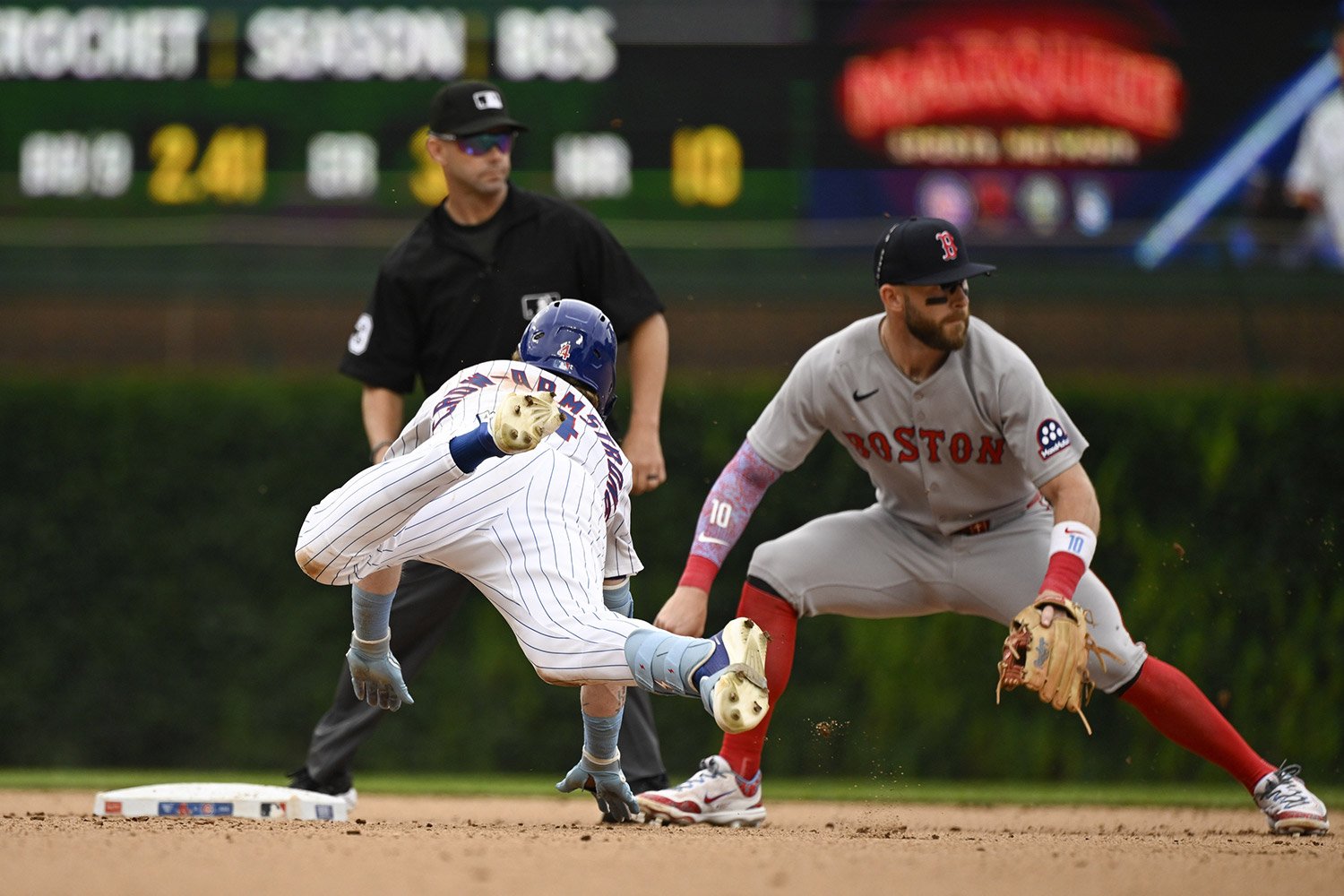 Weekly Snapshot: Record Last Week 1-2 (Overall 54-47) Runs Scored Last Week: 7 Runs Surrendered Last Week: 11 Standings: 3rd in the AL East 5.0 GB 1st Place 0.0 WCGB (3rd Wild Card Spot) Scores: Game 99 (7/18) | BOS 1, CHC 4 Game 100 (7/19) | BOS 0, CHC 6 Game 101 (7/20) | BOS 6, CHC 1 Transactions: 7/18/25: Red Sox signed free agent Ronaldo Hernández to a minor league contract 7/12/25: Red Sox placed Hunter Dobbins (right ACL tear) on the 15-day IL 7/12/25: Red Sox recalled Richard Fitts from Triple-A Worcester 7/12/25: Red Sox traded Blake Sabol to the Chicago White Sox for cash considerations TL;DR Breakdown/Highlights Cubs series: In the first two games of the series, the Red Sox's bats disappeared. They went 1-11 with runners in scoring position. On Friday, Lucas Giolito looked rocky in the first inning, yielding a three-run homer to Seiya Suzuki after walking the Cubs' first two batters. Unfortunately, the Red Sox couldn’t provide Giolito run support. Saturday night, Cubs starter Shota Imanaga threw a seven-inning shutout. Brayan Bello pitched a quality start, but again, the Red Sox failed to provide their starter with much-needed run support. Imanaga snapped Roman Anthony’s 10-game hitting streak. The Cubs hit five total home runs, three of them off Chris Murphy. For Sunday’s game, Alex Cora tinkered with the Red Sox’s lineup defensively and offensively. Masatake Yoshida took the field for the first time since October 1st, 2023. Ceddanne Rafaela shifted to second base and moved up to third in the batting order. Fortunately, the team’s bats woke up late in the game. Wilyer Abreu hit two home runs, marking his fourth multi-home run game of the season. Since returning from the IL, Alex Bregman was slashing .188/.188/.250 with a 12.5% strikeout rate and 0.0% batted ball rate. In the top of the eighth, he hit a home run off the bench to solidify the Red Sox’s lead. Ace Garrett Crochet limited the Cubs' explosive offense to one run over six innings. The Red Sox continue to play tough National League teams this week. Following the Cubs series, they travel to Philadelphia for a three-game series versus the Phillies. They’ll face two of the Phillies' aces, Zach Wheeler and Cristopher Sanchez. Tuesday (TBS) and Wednesday (ESPN) games will be nationally televised. The team returns home for the weekend to play the Dodgers. Fox will cover Saturday night’s game. Random Stats Since 2023, the Red Sox have held a 53-47 record through 100 games. The Red Sox rank second in team hard-hit rate and fifth in team barrel rate. Red Sox’s starters lead the American League in first-inning runs allowed with 68. Ceddanne Rafaela’s 17 DRS are the most in baseball. Masataka Yoshida’s hard hit rate currently stands at 50% this year. This will probably regress to the mean as he gets more at-bats. Website Highlights You can catch up on the 2025 MLB Draft right here on Talk Sox! Billy and Nick wrote excellent pieces on the Red Sox’s draft picks. Read more: Red Sox 2025 Draft Overview: Focus on College Pitching Highlights A Valuable Strategy by Billy Mock Red Sox Select Kyson Witherspoon 15th Overall in the 2025 MLB Draft by Billy Mock Red Sox Select RHP Marcus Phillips 33rd Overall In The 2025 MLB Draft by Nick John Red Sox Select RHP Anthony Eyanson 87th Overall in 2025 MLB Draft by Nick John Vote For Your Top Red Sox Prospects! by Brock Beauchamp Trade Deadline Coverage The First Base Rental Market is Weak, but the Red Sox Can Still Swing a Trade by Alex Mayes Like the Red Sox, Fans Should Buy Into the Idea of Carlos Santana at the Trade Deadline by Brandon Glick Starting Pitcher Targets Red Sox Fans Should Familiarize Themselves With Before Trade Deadline by Maddie Landis Did you know? Talk Sox is part of the DiamondCentric network, which also covers the Cubs, Brewers, Blue Jays, Marlins, Padres, and Twins. Be sure to check out their new website and follow them on social media! The website’s homepage is an all-inclusive feed featuring content from their entire network. In today’s world, well-written baseball content is hard to come by, but DiamondCentric contributors are constantly posting quality pieces. Looking Ahead July 21st – Red Sox (Buehler) at Phillies (Wheeler) – 6:45 pm EDT June 24th – Red Sox (Fitts) at Phillies (Sanchez) – 6:45 pm EDT (TBS coverage) June 25th – Red Sox (Giolito) at Phillies (Luzardo probable) – 7:05 pm EDT (ESPN coverage) June 27th – Dodgers at Red Sox – 7:10 pm EDT June 28th – Dodgers at Red Sox – 7:15 pm EDT (Fox coverage) June 29th – Dodgers at Red Sox – 1:35 pm EDT
 -
Weekly Snapshot: Record Last Week 1-2 (Overall 54-47) Runs Scored Last Week: 7 Runs Surrendered Last Week: 11 Standings: 3rd in the AL East 5.0 GB 1st Place 0.0 WCGB (3rd Wild Card Spot) Scores: Game 99 (7/18) | BOS 1, CHC 4 Game 100 (7/19) | BOS 0, CHC 6 Game 101 (7/20) | BOS 6, CHC 1 Transactions: 7/18/25: Red Sox signed free agent Ronaldo Hernández to a minor league contract 7/12/25: Red Sox placed Hunter Dobbins (right ACL tear) on the 15-day IL 7/12/25: Red Sox recalled Richard Fitts from Triple-A Worcester 7/12/25: Red Sox traded Blake Sabol to the Chicago White Sox for cash considerations TL;DR Breakdown/Highlights Cubs series: In the first two games of the series, the Red Sox's bats disappeared. They went 1-11 with runners in scoring position. On Friday, Lucas Giolito looked rocky in the first inning, yielding a three-run homer to Seiya Suzuki after walking the Cubs' first two batters. Unfortunately, the Red Sox couldn’t provide Giolito run support. Saturday night, Cubs starter Shota Imanaga threw a seven-inning shutout. Brayan Bello pitched a quality start, but again, the Red Sox failed to provide their starter with much-needed run support. Imanaga snapped Roman Anthony’s 10-game hitting streak. The Cubs hit five total home runs, three of them off Chris Murphy. For Sunday’s game, Alex Cora tinkered with the Red Sox’s lineup defensively and offensively. Masatake Yoshida took the field for the first time since October 1st, 2023. Ceddanne Rafaela shifted to second base and moved up to third in the batting order. Fortunately, the team’s bats woke up late in the game. Wilyer Abreu hit two home runs, marking his fourth multi-home run game of the season. Since returning from the IL, Alex Bregman was slashing .188/.188/.250 with a 12.5% strikeout rate and 0.0% batted ball rate. In the top of the eighth, he hit a home run off the bench to solidify the Red Sox’s lead. Ace Garrett Crochet limited the Cubs' explosive offense to one run over six innings. The Red Sox continue to play tough National League teams this week. Following the Cubs series, they travel to Philadelphia for a three-game series versus the Phillies. They’ll face two of the Phillies' aces, Zach Wheeler and Cristopher Sanchez. Tuesday (TBS) and Wednesday (ESPN) games will be nationally televised. The team returns home for the weekend to play the Dodgers. Fox will cover Saturday night’s game. Random Stats Since 2023, the Red Sox have held a 53-47 record through 100 games. The Red Sox rank second in team hard-hit rate and fifth in team barrel rate. Red Sox’s starters lead the American League in first-inning runs allowed with 68. Ceddanne Rafaela’s 17 DRS are the most in baseball. Masataka Yoshida’s hard hit rate currently stands at 50% this year. This will probably regress to the mean as he gets more at-bats. Website Highlights You can catch up on the 2025 MLB Draft right here on Talk Sox! Billy and Nick wrote excellent pieces on the Red Sox’s draft picks. Read more: Red Sox 2025 Draft Overview: Focus on College Pitching Highlights A Valuable Strategy by Billy Mock Red Sox Select Kyson Witherspoon 15th Overall in the 2025 MLB Draft by Billy Mock Red Sox Select RHP Marcus Phillips 33rd Overall In The 2025 MLB Draft by Nick John Red Sox Select RHP Anthony Eyanson 87th Overall in 2025 MLB Draft by Nick John Vote For Your Top Red Sox Prospects! by Brock Beauchamp Trade Deadline Coverage The First Base Rental Market is Weak, but the Red Sox Can Still Swing a Trade by Alex Mayes Like the Red Sox, Fans Should Buy Into the Idea of Carlos Santana at the Trade Deadline by Brandon Glick Starting Pitcher Targets Red Sox Fans Should Familiarize Themselves With Before Trade Deadline by Maddie Landis Did you know? Talk Sox is part of the DiamondCentric network, which also covers the Cubs, Brewers, Blue Jays, Marlins, Padres, and Twins. Be sure to check out their new website and follow them on social media! The website’s homepage is an all-inclusive feed featuring content from their entire network. In today’s world, well-written baseball content is hard to come by, but DiamondCentric contributors are constantly posting quality pieces. Looking Ahead July 21st – Red Sox (Buehler) at Phillies (Wheeler) – 6:45 pm EDT June 24th – Red Sox (Fitts) at Phillies (Sanchez) – 6:45 pm EDT (TBS coverage) June 25th – Red Sox (Giolito) at Phillies (Luzardo probable) – 7:05 pm EDT (ESPN coverage) June 27th – Dodgers at Red Sox – 7:10 pm EDT June 28th – Dodgers at Red Sox – 7:15 pm EDT (Fox coverage) June 29th – Dodgers at Red Sox – 1:35 pm EDT View full article
-
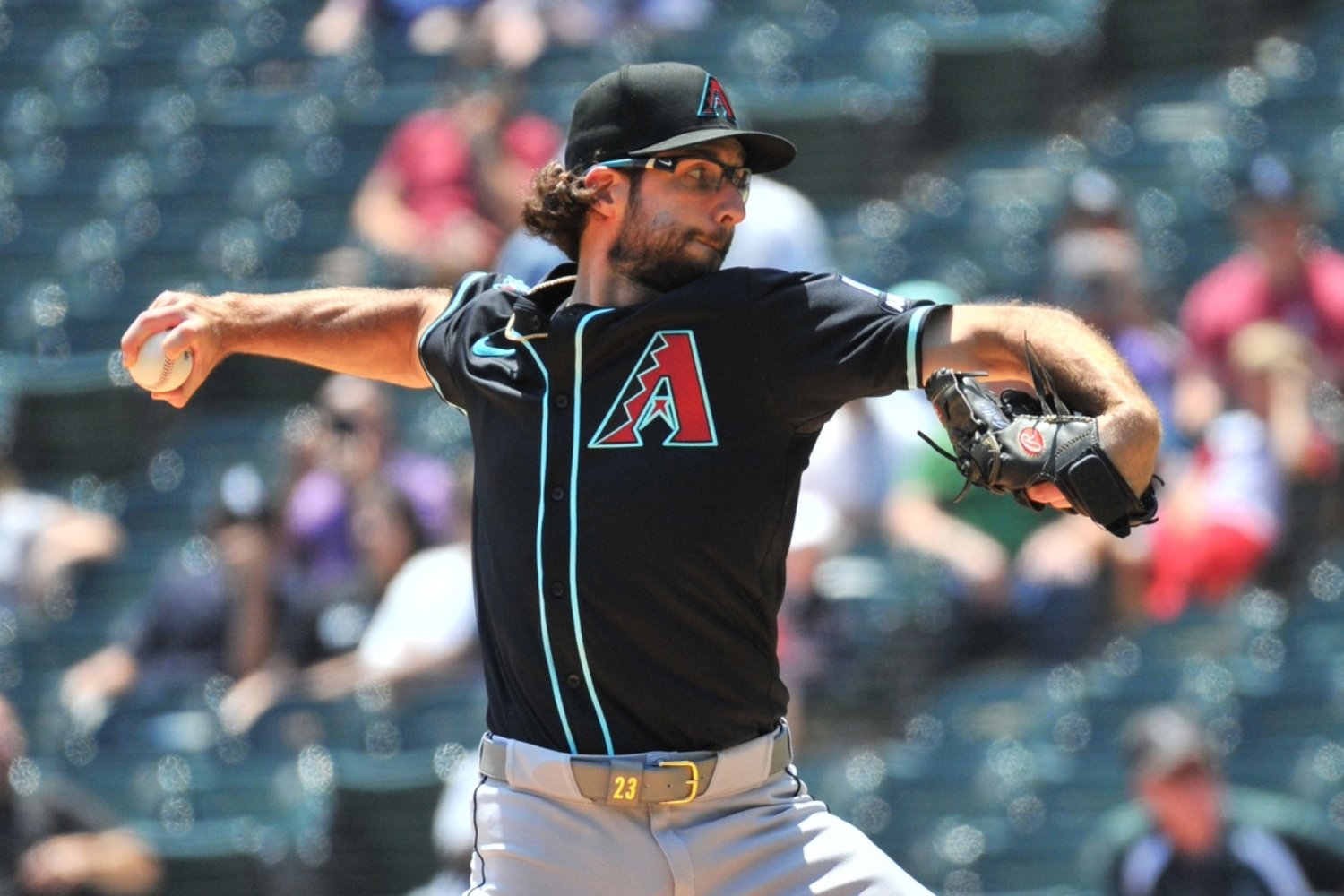 As the hot stove starts heating up over the next couple of weeks, you’ll hear some names on the rumor mill. Here’s a quick overview of starting pitchers connected to the Red Sox ahead of the 2025 MLB Trade Deadline. Zac Gallen, 29, RHP, Arizona Diamondbacks ($13.5 million owed in 2025, UFA in 2026) Gallen is having a rough year. From March to the end of June, he posted a 5.75 ERA, 20.8% strikeout rate, 9.9% batted ball rate, and 5.17 FIP. This month, Gallen’s ERA has dropped to 3.50, and his strikeout rate has increased to a whooping 30.1%. Gallen’s fastball is his primary pitch. The rest of his arsenal consists of swing and miss stuff like his curveball. Since 2022, his fastball velocity has steadily dropped from 94.1 mph to 93.3 mph. Yes, fastball velocity is expected to drop with age, but the fact that Gallen’s primary pitch is currently sitting at 93.3 mph when he’s only 29 is concerning. Another issue is his fastball command. In previous seasons, he’d attack the perimeter of the strike zone to set up his curveball. Now, his control is off, and he can’t locate the pitch at the bottom of the zone. Gallen’s curveball also isn’t as effective as it once was. In 2024, he limited batters to a .192 wOBA and 27 wRC+ with the pitch; this year, those have jumped to .333 and 125, respectively. He’s throwing the pitch at the bottom of the zone, similar to previous seasons, but hitters are punishing him for it this year. Despite his subpar performance this year, Gallen is drawing interest from the Yankees, Mets, and Blue Jays, among others. His pedigree indicates he could turn things around; he finished fifth in NL Cy Young voting in 2022 and third in 2023. Between 2022 and 2025, he ranks 12th on the starting pitchers WAR leaderboard. He could be a great candidate for Andrew Bailey's pitching lab to “fix” him. Gallen is also a Boras client, so it’s unlikely he’ll immediately sign an extension with the team that trades for him. Merrill Kelly, 36, RHP, Arizona Diamondbacks ($7.0 million in 2025, UFA in 2026) Every time I write about Merrill Kelly, my fingers betray me and type "Marill", the adorable water-type Pokémon. If Merrill ever throws a curveball that splashes, I’m blaming Nintendo. Merrill Kelly has stepped up to help the ailing Diamondbacks rotation. He’s not a traditional number two starter, but he is a consistent pitcher who controls his pitches well (career 104 Location+). Kelly played a significant role during the Diamondbacks’ 2023 postseason run, and his established postseason success as a pitcher should draw interest from teams. His postseason ERA is 2.25 with a 30.8% strikeout rate across 24.0 innings pitched. He’s 36 years old, so age is obviously a concern with him. Kelly is a late bloomer who pitched for the SK Wyverns in the KBO between 2015 and 2018 before joining the Diamondbacks in 2019. Seth Lugo, 36, RHP, Kansas City Royals ($15.0 million in 2025, $15.0 million player option in 2026) Last October, I wrote about Seth Lugo’s breakout as a former reliever turned starter. Lugo’s extensive arsenal doesn’t contain super overwhelming stuff, but his pitch mix lets him deceive batters. Lugo’s underlying metrics point to regression. His LOB% spiked to 88% (MLB average: 73%), and his 2.67 ERA is outperforming his 4.28 FIP and 4.06 xFIP. Whether the Royals choose to sell at the deadline remains uncertain. The Royals (47-50) are 12 games back in the AL Central. Their farm system ranks in the bottom third of the league (Baseball America listed them at 27 in February), so they could bolster their system by moving Lugo, who’s on an expiring contract, at the deadline. Charlie Morton, 41, RHP, Baltimore Orioles ($15 million in 2025, UFA in 2026) Veteran pitcher Charlie Morton initially had a rough start with the Orioles. He posted a 9.45 ERA, 18.8% strikeout rate, and 15.2% batted ball rate through the end of April. In May, the Orioles demoted Morton to the bullpen, where he settled in (2.10 ERA, 24.3% K%, and 11.4% BB%). Since June 1st, his ERA is 2.72 with a 26.5% strikeout rate and 7.4% batted ball rate. At age 40, Morton’s fastball is averaging 94.1 mph. His curveball remains an elite pitch (3150 RPM) with a 33.7% whiff rate. The two-time World Series champion brings valuable intangibles to any playoff-bound pitching staff, thanks to his 18-year MLB career and extensive postseason experience. Over 80 innings in the playoffs, he’s posted a 3.60 ERA, 3.67 FIP, a 26.8% strikeout rate, and a 9.6% barreled ball rate. While the Orioles haven’t officially declared themselves sellers, the writing is on the wall—Fangraphs currently pegs their playoff odds at just 2.8%. Morton still has time to boost his trade value and move past his rough start before the deadline arrives. Andrew Heaney, 34, LHP, Pittsburgh Pirates ($5.25 million in 2025, UFA in 2026) Looking at Andrew Heaney’s Savant page, his stats don’t suggest he’ll move the needle for any playoff-bound team. Heaney got off to the season on a strong footing, recording a 2.61 ERA with 29 strikeouts in April versus the Yankees, Reds, Nationals, Angels, and Cubs. Since May, Heaney’s fallen off a cliff. His fastball is down 2.5 mph, averaging around 90.0 mph. Month ERA K% BB% BA OBP SLG May 4.74 11.3 13.0 .276 .374 .480 June 5.57 20.6 5.3 .259 .292 .492 July 12.60 7.4 7.4 .375 .444 .917 Heaney is a reclamation project, but if a team believes it can help him return to form, he could be a valuable addition. He won a ring with the Rangers in 2023 and brings postseason experience. Among the pitchers listed in this article, he may have the lowest floor, but pitching depth is crucial in the postseason. While he doesn't have the flashiest stuff, Heaney can solidify a rotation as a back-end innings eater. Which of these pitchers do you want the Red Sox to go after at the trade deadline? Let us know in the comments!
 -
As the hot stove starts heating up over the next couple of weeks, you’ll hear some names on the rumor mill. Here’s a quick overview of starting pitchers connected to the Red Sox ahead of the 2025 MLB Trade Deadline. Zac Gallen, 29, RHP, Arizona Diamondbacks ($13.5 million owed in 2025, UFA in 2026) Gallen is having a rough year. From March to the end of June, he posted a 5.75 ERA, 20.8% strikeout rate, 9.9% batted ball rate, and 5.17 FIP. This month, Gallen’s ERA has dropped to 3.50, and his strikeout rate has increased to a whooping 30.1%. Gallen’s fastball is his primary pitch. The rest of his arsenal consists of swing and miss stuff like his curveball. Since 2022, his fastball velocity has steadily dropped from 94.1 mph to 93.3 mph. Yes, fastball velocity is expected to drop with age, but the fact that Gallen’s primary pitch is currently sitting at 93.3 mph when he’s only 29 is concerning. Another issue is his fastball command. In previous seasons, he’d attack the perimeter of the strike zone to set up his curveball. Now, his control is off, and he can’t locate the pitch at the bottom of the zone. Gallen’s curveball also isn’t as effective as it once was. In 2024, he limited batters to a .192 wOBA and 27 wRC+ with the pitch; this year, those have jumped to .333 and 125, respectively. He’s throwing the pitch at the bottom of the zone, similar to previous seasons, but hitters are punishing him for it this year. Despite his subpar performance this year, Gallen is drawing interest from the Yankees, Mets, and Blue Jays, among others. His pedigree indicates he could turn things around; he finished fifth in NL Cy Young voting in 2022 and third in 2023. Between 2022 and 2025, he ranks 12th on the starting pitchers WAR leaderboard. He could be a great candidate for Andrew Bailey's pitching lab to “fix” him. Gallen is also a Boras client, so it’s unlikely he’ll immediately sign an extension with the team that trades for him. Merrill Kelly, 36, RHP, Arizona Diamondbacks ($7.0 million in 2025, UFA in 2026) Every time I write about Merrill Kelly, my fingers betray me and type "Marill", the adorable water-type Pokémon. If Merrill ever throws a curveball that splashes, I’m blaming Nintendo. Merrill Kelly has stepped up to help the ailing Diamondbacks rotation. He’s not a traditional number two starter, but he is a consistent pitcher who controls his pitches well (career 104 Location+). Kelly played a significant role during the Diamondbacks’ 2023 postseason run, and his established postseason success as a pitcher should draw interest from teams. His postseason ERA is 2.25 with a 30.8% strikeout rate across 24.0 innings pitched. He’s 36 years old, so age is obviously a concern with him. Kelly is a late bloomer who pitched for the SK Wyverns in the KBO between 2015 and 2018 before joining the Diamondbacks in 2019. Seth Lugo, 36, RHP, Kansas City Royals ($15.0 million in 2025, $15.0 million player option in 2026) Last October, I wrote about Seth Lugo’s breakout as a former reliever turned starter. Lugo’s extensive arsenal doesn’t contain super overwhelming stuff, but his pitch mix lets him deceive batters. Lugo’s underlying metrics point to regression. His LOB% spiked to 88% (MLB average: 73%), and his 2.67 ERA is outperforming his 4.28 FIP and 4.06 xFIP. Whether the Royals choose to sell at the deadline remains uncertain. The Royals (47-50) are 12 games back in the AL Central. Their farm system ranks in the bottom third of the league (Baseball America listed them at 27 in February), so they could bolster their system by moving Lugo, who’s on an expiring contract, at the deadline. Charlie Morton, 41, RHP, Baltimore Orioles ($15 million in 2025, UFA in 2026) Veteran pitcher Charlie Morton initially had a rough start with the Orioles. He posted a 9.45 ERA, 18.8% strikeout rate, and 15.2% batted ball rate through the end of April. In May, the Orioles demoted Morton to the bullpen, where he settled in (2.10 ERA, 24.3% K%, and 11.4% BB%). Since June 1st, his ERA is 2.72 with a 26.5% strikeout rate and 7.4% batted ball rate. At age 40, Morton’s fastball is averaging 94.1 mph. His curveball remains an elite pitch (3150 RPM) with a 33.7% whiff rate. The two-time World Series champion brings valuable intangibles to any playoff-bound pitching staff, thanks to his 18-year MLB career and extensive postseason experience. Over 80 innings in the playoffs, he’s posted a 3.60 ERA, 3.67 FIP, a 26.8% strikeout rate, and a 9.6% barreled ball rate. While the Orioles haven’t officially declared themselves sellers, the writing is on the wall—Fangraphs currently pegs their playoff odds at just 2.8%. Morton still has time to boost his trade value and move past his rough start before the deadline arrives. Andrew Heaney, 34, LHP, Pittsburgh Pirates ($5.25 million in 2025, UFA in 2026) Looking at Andrew Heaney’s Savant page, his stats don’t suggest he’ll move the needle for any playoff-bound team. Heaney got off to the season on a strong footing, recording a 2.61 ERA with 29 strikeouts in April versus the Yankees, Reds, Nationals, Angels, and Cubs. Since May, Heaney’s fallen off a cliff. His fastball is down 2.5 mph, averaging around 90.0 mph. Month ERA K% BB% BA OBP SLG May 4.74 11.3 13.0 .276 .374 .480 June 5.57 20.6 5.3 .259 .292 .492 July 12.60 7.4 7.4 .375 .444 .917 Heaney is a reclamation project, but if a team believes it can help him return to form, he could be a valuable addition. He won a ring with the Rangers in 2023 and brings postseason experience. Among the pitchers listed in this article, he may have the lowest floor, but pitching depth is crucial in the postseason. While he doesn't have the flashiest stuff, Heaney can solidify a rotation as a back-end innings eater. Which of these pitchers do you want the Red Sox to go after at the trade deadline? Let us know in the comments! View full article
-
Late Saturday morning, just before the 2025 MLB All-Star break, the Red Sox placed Hunter Dobbins on the 15-day injured list for a right ACL tear. Just before his brief return, he was activated from another 15-day injured list stint dating back to June 22 due to a right elbow strain. Expect Dobbins to get transferred to the 60-day IL in short order, opening up a spot on the 40-man roster. Dobbins sustained his injury during the second inning of the game while racing to cover first base on a Chandler Simpson groundout. He had previously torn his right ACL in high school. Given the severity of the injury, Dobbins’ rookie season is finished. Dr. Jesse Morse (who’s a great follow for baseball-related injuries) reports that his recovery time will take between 9-12 months, so he’ll start the 2026 season on the injured list. As a 25-year-old rookie, the Texas native only played in 13 games, posting a 4.13 ERA across 61.0 innings. Despite his low 19th-percentile strikeout rate (17.6%), he was an effective pitcher who bolstered the team’s oft-injured rotation. Dobbins had a diversified six-pitch mix that complemented his strong command (50.7% Zone%, 104 Location+). He primarily threw his 95.5 mph fastball to set up his slider (28.9% whiff rate) and curveball (38.2% whiff rate). In mid-June, his sinker made its debut against the Yankees. Dobbins wasn’t super flashy on the mound, but he induced weak contact (48.4% ground ball rate) and limited traffic on the basepaths with his 6.6% batted-ball rate. The Red Sox recalled Richard Fitts, who was previously optioned to Triple-A Worcester for Dobbins' short-lived return. Fitts holds a 4.28 ERA across 33.2 innings this year. Per Tim Healey of the Boston Globe, he’ll take the mound between July 21st and 22nd in Philly. Aside from Richard Fitts, Tanner Houck or Kyle Harrison could take over Dobbins’ spot in the rotation. Houck is currently on a rehab assignment in Triple-A Worcester, but looked like a pumpkin earlier in the season. Kyle Harrison is also in Worcester, tinkering with his pitch mix. Earlier this week on the Greg Hill Show, chief baseball officer Craig Breslow indicated the organization would focus on acquiring impact starting pitching before the trade deadline. With Hunter Dobbins' injury further exacerbating the rotation’s depth, the Red Sox will have to move one of their outfielders for a starting pitcher. View full article

