


Maddie Landis
-
Posts
256 -
Joined
Content Type
Profiles
Boston Red Sox Videos
2026 Boston Red Sox Top Prospects Ranking
Boston Red Sox Free Agent & Trade Rumors, Notes, & Tidbits
Guides & Resources
2025 Boston Red Sox Draft Pick Tracker
News
2026 Boston Red Sox Draft Tracker: Picks & Bonuses
Forums
Blogs
Events
Store
Downloads
Gallery
Everything posted by Maddie Landis
-
Weekly Snapshot: Record Last Week 3-3 (Overall 32-35) Runs Scored Last Week: 47 Runs Surrendered Last Week: 43 Standings: 4th in the AL East, 8.5 GB 1st Place 4.0 WCGB Scores: Game 62 (6/2) | LAA 7, BOS 6 Game 63 (6/3) | LAA 4, BOS 3 Game 64 (6/4) | LAA 9, BOS 11 Game 65 (6/6) | BOS 6, NYY 9 Game 66 (6/7) | BOS 10, NYY 7 Game 67 (6/8) | BOS 11, NYY 7 Transactions: 06/02/25: Optioned Nate Eaton to Triple-A Worcester 06/02/25: Activated Romy Gonzalez from the 10-day IL (left quad contusion) 06/03/25: Recalled Cooper Criswell from Triple-A Worcester 06/03/25: Optioned Richard Fitts to Triple-A Worcester 06/03/25: Signed free-agent Breylin Cruz to a minor league contract 06/03/25: Sent Chris Murphy on a rehab assignment to Double-A Portland 06/03/25: Placed Nick Burdi on the 15-day IL (right foot contusion) 06/04/25: Signed Eddison Septimo to a minor league contract 06/05/25: Outrighted Blake Sabol to Triple-A Worcester 06/07/25: Recalled Josh Winckowski from Triple-A Worcester 06/07/25: Selected the contract of Robert Stock from Triple-A Worcester TL;DR Breakdown/Highlights Angels series: Aside from Brayan Bello, who had a passable outing (lacking run support), the Red Sox’s starting pitching was abysmal. Richard Fitts gave up five earned runs in one single inning, and Lucas Giolito gave up eight earned runs in 1 2/3 innings. The Red Sox narrowly avoided being swept by the lowly Angels thanks to Ceddanne Rafaela’s 299-foot walk-off home run. Yankees series: I’ll start with the positives. The Red Sox ended up winning the series, taking two of three from the Yankees. On Friday night, Marcelo Mayer hit his first major league home run! The Yankees fan who caught the ball graciously returned the ball to Marcelo and received a signed bat from him. Again, much to everyone’s surprise, Trevor Story had a strong performance and bolstered the team’s offense. Story went hitless in the first game of the series but turned things around in the subsequent games. He hit five RBIs in Saturday’s game and recorded two hits and one RBI in four at-bats on Sunday. Story holds a .320/.393/.520 slash line in June. Maybe he’s heating up in support of Pride Month? He has been a notoriously streaky hitter throughout his career, but if he can sustain this level of production while Alex Bregman is injured, the team’s offense will benefit from it. Over the past week, the starting pitching has been the Red Sox’s biggest issue, not their offense. (This is baseball, and the team might pull a reverse Uno card on fans this week.) Nonetheless, the Red Sox are finding ways to score without Alex Bregman. Abraham Toro is also on a hot streak, and he hit a second-deck home run on Sunday night. Rafael Devers, Trevor Story, Abraham Toro, Carlos Narváez, and Kristian Campbell hit five total home runs on Sunday. Both Campbell and Story seem to be moving out of their slumps. Garrett Crochet and Hunter Dobbins looked solid in their respective outings as well, each throwing at least five innings On the other hand, Walker Buehler yielded seven runs (five earned) in two innings. Jazz Chisholm and Anthony Volpe hit home runs in the first inning off him, which irked me. Aaron Judge is currently having another historic season, and he’s a future Hall of Famer, so I give Red Sox pitchers a pass when they face him. However, Buehler gave up home runs to two of the Yankees’ most overrated, underperforming players in the first inning. For a pitcher fresh off a World Series win against the Yankees, Buehler should have pitched better. The Red Sox return home for a six-game homestand, featuring a three-game series against the Rays before playing the Yankees in another three-game weekend series. Random Stats: 5/26 – 6/1 Slash Lines Good weeks: Marcelo Mayer: .333/.429/.833, 242 wRC+ Abraham Toro: .417/.444/.667, 202 wRC+ Kristian Campbell: .294/.429/.529, 171 wRC+ Bad weeks: Wilyer Abreu: .200/.167/.200, -20 wRC+ Red Sox starter’s 7.01 ERA in the first inning is the second-worst in the majors behind the Colorado Rockies. Rafael Devers leads the American League in RBIs (57). On Saturday night, Roman Anthony launched a 497 ft (115.6 mph EV) grand slam versus the Rochester Red Wings. Anthony’s home run recorded the farthest hit distance among Red Sox players between Triple-A and MLB this year. Whether you’re looking at traditional fielding metrics or modern analytics, Kristan Campbell is by far the worst defensive second baseman in the league. Like Jarren Duran, Campbell’s struggles are related to the mental side of the game, and when he plays with confidence, things click for him. The 2025 Red Sox’s offense is an anomaly. See below for their offensive rankings in the American League: 127 doubles (1st) 330 runs (2nd) 318 RBIs (2nd) 617 strikeouts (2nd) 83 home runs (3rd) Despite these numbers, they rank first in the league for strikeouts with runners in scoring position (183). Website Highlights: Three Red Sox Prospects Named Player Of The Month For Their Respective Leagues by Nick John Connor Wong Has An Uncertain Future With Red Sox by Finley Rogan Can Ceddanne Rafaela Emulate Pete Crow-Armstrong's Breakout? by Maddie Landis Looking Ahead: June 9th – Tampa Bay Rays (Baz) at Red Sox (Bello) – 7:10 pm EDT June 10th – Tampa Bay Rays (Pepiot) at Red Sox (Giolito) – 7:10 pm EDT June 11th Tampa Bay Rays (Littell) at Red Sox (Buehler) – 7:10 pm EDT June 13th – Yankees at Red Sox – 7:10 pm EDT June 14th – Yankees at Red Sox – 7:15 pm EDT (Fox coverage) June 15th – Yankees at Red Sox – 1:35 pm EDT View full article
-
Maybe I’m just a sucker for Garrett Popcorn, but I find myself frequently rooting for the Chicago Cubs because of center fielder Pete Crow-Armstrong. The Cubs are an offensive powerhouse, largely thanks to PCA (not to discredit Kyle Tucker and Seiya Suzuki’s contributions). Crow- Armstrong’s breakout season has shown baseball fans that heavy swing-and-miss hitters can be successful, MVP-caliber players. Now, Crow-Armstrong is an anomaly. He flips back and forth with Seiya Suzuki for the most RBIs in baseball and leads the National League in stolen bases and WAR, but if you check his Baseball Savant page, you'll find a lot of blue. PCA and Ceddanne Rafaela initially profile similarly as speedy, Gold Glove-caliber center fielders with middling plate discipline. On one hand, PCA is an MVP candidate for the Cubs, who are likely making a deep postseason run in the fall. Meanwhile, Rafaela is the free-swinging, defense-first centerfielder for the underperforming Red Sox, who currently hold a 12.6% chance of making the playoffs. However, their Savant pages share striking similarities. The primary difference between Crow-Armstrong and Rafaela ultimately boils down to launch angle and pull rate. Their batted ball profiles were nearly identical last season. This year? Not so much. Crow-Armstrong has a higher launch angle and pull rate, and a lower ground ball rate than Rafaela. Player Year Barrel% Launch Angle GB/FB GB% Pull% Pull GB% Pull Air% Pete Crow-Armstrong 2024 7.4 17.2 0.88 42.5 40.7 21.4 19.3 Ceddanne Rafaela 2024 7.5 14.9 1.14 42.5 37.2 20.1 17.1 Pete Crow-Armstrong 2025 13.6 23.3 0.48 27.8 44.3 14.8 29.5 Ceddanne Rafaela 2025 13.2 11.8 1.11 45.3 35.2 23.3 11.9 When Rafaela hits the ball in the opposite direction, it tends to result in an out (.337 xwOBA). The same goes for PCA (.299 xwOBA). Rafaela fares better when he pulls the ball — his xwOBA jumps to .422 in those events. Likewise, PCA’s xwOBA skyrockets to .592. Pulled balls typically result in higher exit velocities than balls hit to the opposite field, but Rafaela is an exception. His 39.4% opposite hard hit rate is 4.4% above the league average. (For pull-side balls, he holds a 51.9% hard hit rate.) As of late, he’s seen more success hitting the ball in the opposite direction. Given that Rafaela’s xwOBA split, exit velocity, and barrel rate are higher than PCA’s batted balls in the opposite direction, I think his overall offensive ceiling could be in the same stratosphere — he just needs to start pulling the ball more. Player Batted Ball Direction xWOBA EV (MPH) LA (°) Hard Hit% Barrle/PA% Attack Angle Swing Length Pete Crow-Armstrong Opposite 0.299 84.7 33 30.8 10.3 10° 7.1 Ceddanne Rafaela Opposite 0.337 88.6 27 39.4 12.1 7° 7.2 Pete Crow-Armstrong Pull 0.592 93.9 19 56.3 22.5 18° 7.4 Ceddanne Rafaela Pull 0.422 93.2 4 51.9 9.6 15° 7.7 As Davy Andrews noted, “The point is that the further out you hit the ball, the more likely you are to pull the ball, because your bat will be angled toward the pull side.” Looking at Statcast’s new swing metrics, it’s apparent that PCA is making contact with the ball in front of the plate more than Rafaela. Since he’s attacking the ball earlier, his launch angle is higher, resulting in a higher pulled fly ball rate and fewer ground balls. If Rafaela can make contact with the ball in front of the plate, he’ll pull the bar in the air more frequently and hit fewer ground balls. So, how does a player pull the bar in the air? Again, it ties to launch angle, but also swing length. Longer swing lengths correlate with higher pull rates, as batters must make contact with the ball in front of the plate to pull it. Rafaela has the second-longest swing length (7.5) on the Red Sox. His swing length is .3 ft longer than PCA’s, so he doesn’t have to alter his swing to pull the ball. By and large, when players hit the ball in front of the plate, their launch angle increases as they lift the ball on an upward trajectory (assuming they have an ideal swing path). Image credit to Driveline Rafaela’s lack of plate discipline could negatively affect his ability to hit the ball in front of the plate. Since last year, he’s made some strides at the plate. His strikeout rate is 19.2% (61st percentile), his whiff rate is 26.3% (38th percentile), and his walk rate is up to 4.7% (12th percentile). While his chase rate (46.4%, 2nd percentile) remains abysmal, he’s made some improvements to his swing decisions. Is there room to improve? Obviously, yes. Rafaela won’t turn into Juan Soto or Seiya Suzuki overnight, but if he can cut down his chase rate to at least around 35%, he’ll be in the same ballpark as Corbin Carroll and Julio Rodríguez. I haven't even touched on Rafaela's elite defense. He's at the top of the leaderboards for various Statcast fielding metrics, including fielding run value (2nd), arm strength (11th), and outs above average (5th). These rankings include other position players; if you separate these metrics by positional split, Rafaela is undoubtedly the best center fielder in the American League. Watch his rookie season defensive highlights. Rafaela was shifted to the infield during his rookie season, so his defensive prowess in center field wasn't fully realized. As a rookie playing out of his natural position, his bat suffered at second base, slashing .059/.059/.059, -86 wRC+ in eight games. It was average at shortstop with a .261/.269/.470, 101 wRC+ slash line across 81 games. Defensively, he was one of the worst defensive shortstops in the league, posting negative seven outs above average. To Rafaela's credit, he handled being moved out of position gracefully. Having him play center field regularly this year, though, is helping his bat. Ceddanne Rafaela can be a controversial player for Red Sox fans. Roman Anthony, baseball’s number one prospect, has been knocking at the door with a battering ram, and Rafaela is on a short leash for some. Until writing this article, I thought Rafaela should be benched for Anthony. Time is ticking for someone other than Rafael Devers or Alex Bregman to step up and help carry the team’s offense. If Rafaela can be like PCA, I’d rather keep him and try to move Wilyer Abreu. An outfield with Roman Anthony, Jarren Duran, and Ceddanne Rafaela is more competitive than one with Abreu, who remains a streaky platoon player in his sophomore season. Anthony and Rafaela complement each other — Rafaela could help Anthony improve his defense, and Anthony can teach Rafaela a thing or two about plate discipline. June and July will be telling months for Rafaela's career. He’s dealt with bad luck this year and has recently shown signs of turning a corner. Since June 1st, he’s slashed .433/.433/.867 with four home runs and six RBIs. In the Angels series, he hit three of these home runs, including a two-run walk-off shot. If Ceddanne Rafaela can put everything together, he'll become a household name like Pete Crow-Armstrong. View full article
-
Can Ceddanne Rafaela Emulate Pete Crow-Armstrong's Breakout?
Maddie Landis posted an article in Red Sox
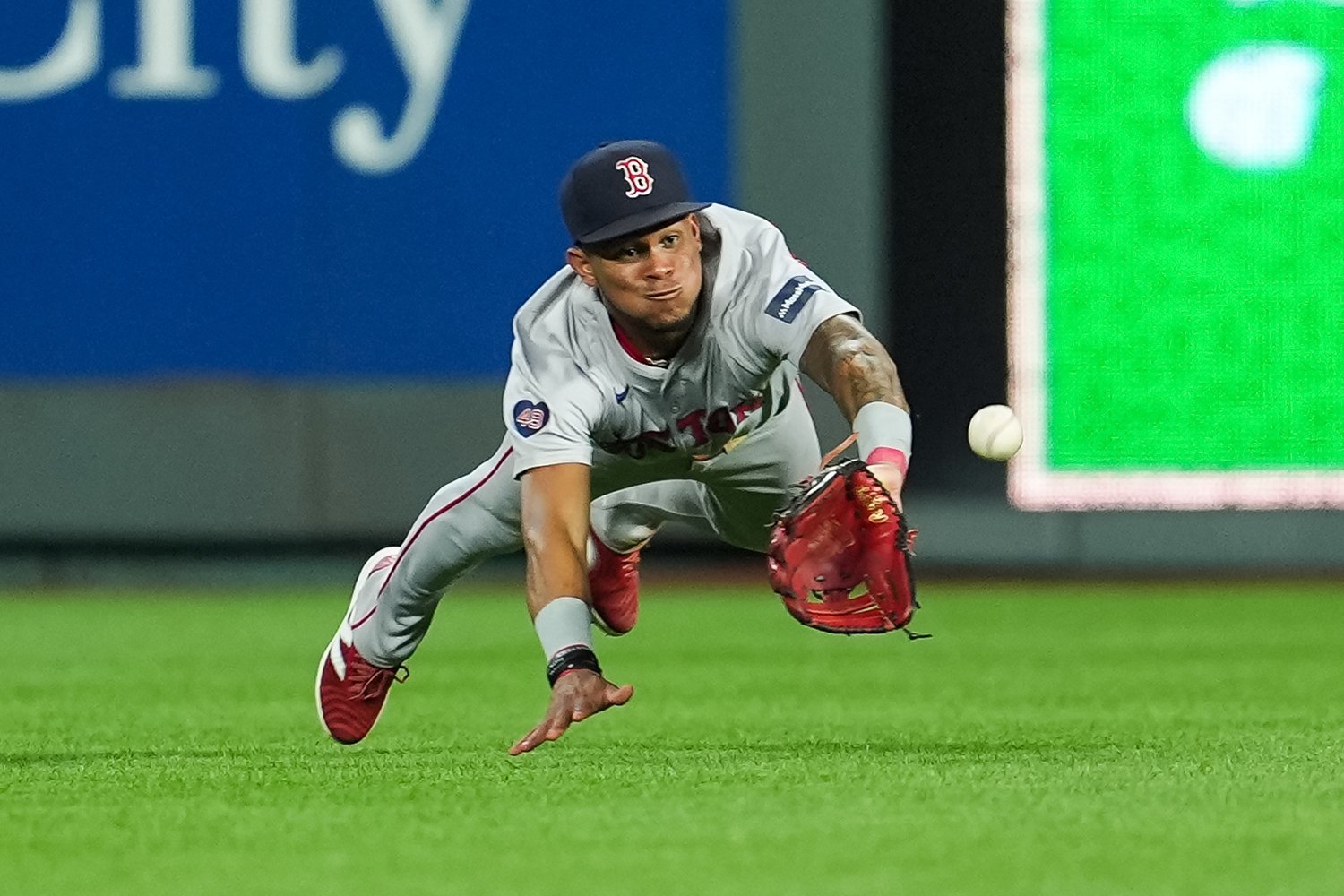 Maybe I’m just a sucker for Garrett Popcorn, but I find myself frequently rooting for the Chicago Cubs because of center fielder Pete Crow-Armstrong. The Cubs are an offensive powerhouse, largely thanks to PCA (not to discredit Kyle Tucker and Seiya Suzuki’s contributions). Crow- Armstrong’s breakout season has shown baseball fans that heavy swing-and-miss hitters can be successful, MVP-caliber players. Now, Crow-Armstrong is an anomaly. He flips back and forth with Seiya Suzuki for the most RBIs in baseball and leads the National League in stolen bases and WAR, but if you check his Baseball Savant page, you'll find a lot of blue. PCA and Ceddanne Rafaela initially profile similarly as speedy, Gold Glove-caliber center fielders with middling plate discipline. On one hand, PCA is an MVP candidate for the Cubs, who are likely making a deep postseason run in the fall. Meanwhile, Rafaela is the free-swinging, defense-first centerfielder for the underperforming Red Sox, who currently hold a 12.6% chance of making the playoffs. However, their Savant pages share striking similarities. The primary difference between Crow-Armstrong and Rafaela ultimately boils down to launch angle and pull rate. Their batted ball profiles were nearly identical last season. This year? Not so much. Crow-Armstrong has a higher launch angle and pull rate, and a lower ground ball rate than Rafaela. Player Year Barrel% Launch Angle GB/FB GB% Pull% Pull GB% Pull Air% Pete Crow-Armstrong 2024 7.4 17.2 0.88 42.5 40.7 21.4 19.3 Ceddanne Rafaela 2024 7.5 14.9 1.14 42.5 37.2 20.1 17.1 Pete Crow-Armstrong 2025 13.6 23.3 0.48 27.8 44.3 14.8 29.5 Ceddanne Rafaela 2025 13.2 11.8 1.11 45.3 35.2 23.3 11.9 When Rafaela hits the ball in the opposite direction, it tends to result in an out (.337 xwOBA). The same goes for PCA (.299 xwOBA). Rafaela fares better when he pulls the ball — his xwOBA jumps to .422 in those events. Likewise, PCA’s xwOBA skyrockets to .592. Pulled balls typically result in higher exit velocities than balls hit to the opposite field, but Rafaela is an exception. His 39.4% opposite hard hit rate is 4.4% above the league average. (For pull-side balls, he holds a 51.9% hard hit rate.) As of late, he’s seen more success hitting the ball in the opposite direction. Given that Rafaela’s xwOBA split, exit velocity, and barrel rate are higher than PCA’s batted balls in the opposite direction, I think his overall offensive ceiling could be in the same stratosphere — he just needs to start pulling the ball more. Player Batted Ball Direction xWOBA EV (MPH) LA (°) Hard Hit% Barrle/PA% Attack Angle Swing Length Pete Crow-Armstrong Opposite 0.299 84.7 33 30.8 10.3 10° 7.1 Ceddanne Rafaela Opposite 0.337 88.6 27 39.4 12.1 7° 7.2 Pete Crow-Armstrong Pull 0.592 93.9 19 56.3 22.5 18° 7.4 Ceddanne Rafaela Pull 0.422 93.2 4 51.9 9.6 15° 7.7 As Davy Andrews noted, “The point is that the further out you hit the ball, the more likely you are to pull the ball, because your bat will be angled toward the pull side.” Looking at Statcast’s new swing metrics, it’s apparent that PCA is making contact with the ball in front of the plate more than Rafaela. Since he’s attacking the ball earlier, his launch angle is higher, resulting in a higher pulled fly ball rate and fewer ground balls. If Rafaela can make contact with the ball in front of the plate, he’ll pull the bar in the air more frequently and hit fewer ground balls. So, how does a player pull the bar in the air? Again, it ties to launch angle, but also swing length. Longer swing lengths correlate with higher pull rates, as batters must make contact with the ball in front of the plate to pull it. Rafaela has the second-longest swing length (7.5) on the Red Sox. His swing length is .3 ft longer than PCA’s, so he doesn’t have to alter his swing to pull the ball. By and large, when players hit the ball in front of the plate, their launch angle increases as they lift the ball on an upward trajectory (assuming they have an ideal swing path). Image credit to Driveline Rafaela’s lack of plate discipline could negatively affect his ability to hit the ball in front of the plate. Since last year, he’s made some strides at the plate. His strikeout rate is 19.2% (61st percentile), his whiff rate is 26.3% (38th percentile), and his walk rate is up to 4.7% (12th percentile). While his chase rate (46.4%, 2nd percentile) remains abysmal, he’s made some improvements to his swing decisions. Is there room to improve? Obviously, yes. Rafaela won’t turn into Juan Soto or Seiya Suzuki overnight, but if he can cut down his chase rate to at least around 35%, he’ll be in the same ballpark as Corbin Carroll and Julio Rodríguez. I haven't even touched on Rafaela's elite defense. He's at the top of the leaderboards for various Statcast fielding metrics, including fielding run value (2nd), arm strength (11th), and outs above average (5th). These rankings include other position players; if you separate these metrics by positional split, Rafaela is undoubtedly the best center fielder in the American League. Watch his rookie season defensive highlights. Rafaela was shifted to the infield during his rookie season, so his defensive prowess in center field wasn't fully realized. As a rookie playing out of his natural position, his bat suffered at second base, slashing .059/.059/.059, -86 wRC+ in eight games. It was average at shortstop with a .261/.269/.470, 101 wRC+ slash line across 81 games. Defensively, he was one of the worst defensive shortstops in the league, posting negative seven outs above average. To Rafaela's credit, he handled being moved out of position gracefully. Having him play center field regularly this year, though, is helping his bat. Ceddanne Rafaela can be a controversial player for Red Sox fans. Roman Anthony, baseball’s number one prospect, has been knocking at the door with a battering ram, and Rafaela is on a short leash for some. Until writing this article, I thought Rafaela should be benched for Anthony. Time is ticking for someone other than Rafael Devers or Alex Bregman to step up and help carry the team’s offense. If Rafaela can be like PCA, I’d rather keep him and try to move Wilyer Abreu. An outfield with Roman Anthony, Jarren Duran, and Ceddanne Rafaela is more competitive than one with Abreu, who remains a streaky platoon player in his sophomore season. Anthony and Rafaela complement each other — Rafaela could help Anthony improve his defense, and Anthony can teach Rafaela a thing or two about plate discipline. June and July will be telling months for Rafaela's career. He’s dealt with bad luck this year and has recently shown signs of turning a corner. Since June 1st, he’s slashed .433/.433/.867 with four home runs and six RBIs. In the Angels series, he hit three of these home runs, including a two-run walk-off shot. If Ceddanne Rafaela can put everything together, he'll become a household name like Pete Crow-Armstrong.
 -
Red Sox Week in Review: Four Steps Back, Two Steps Forward
Maddie Landis posted an article in Red Sox
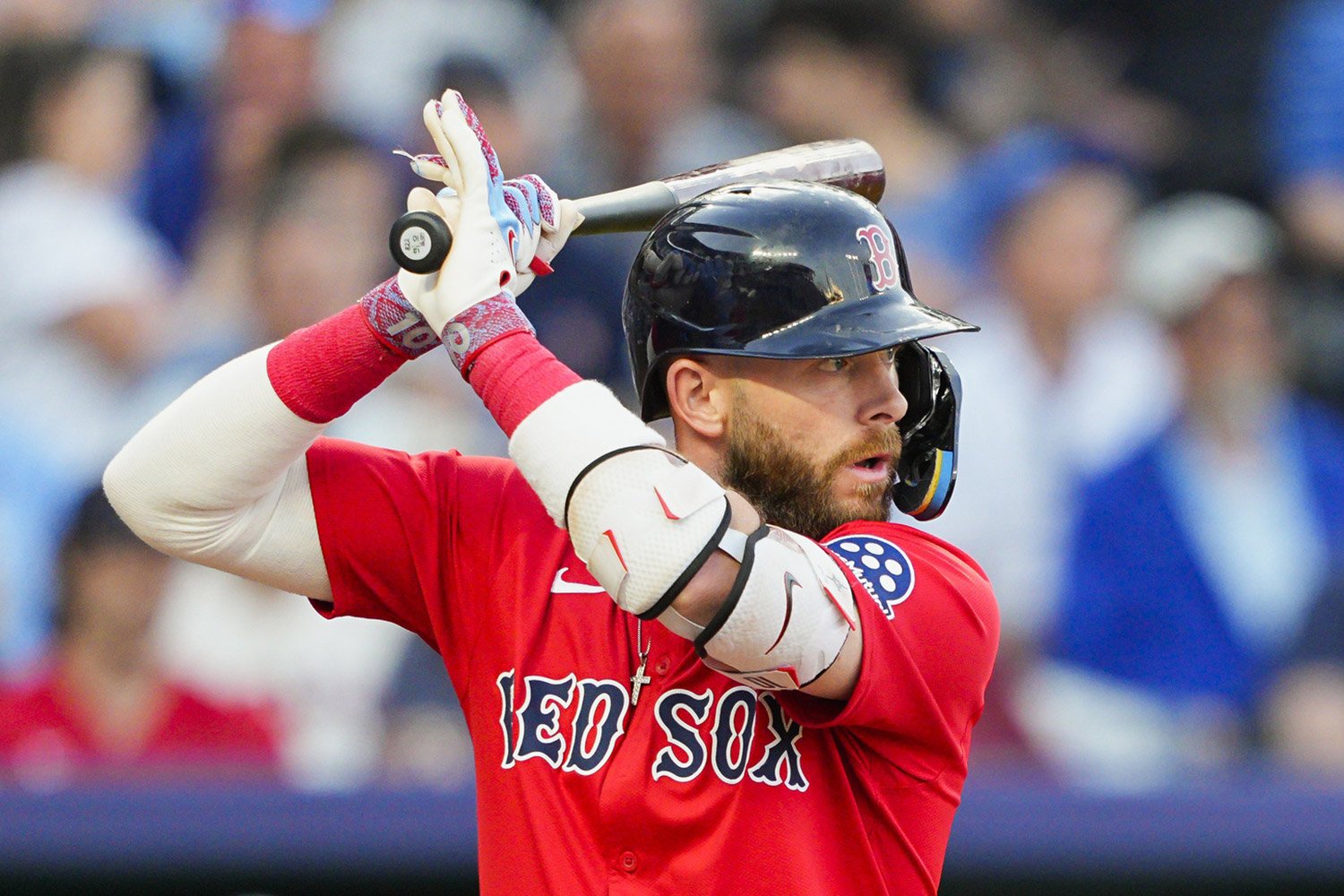 Weekly Snapshot: Record Last Week 2-4 (Overall 28-32) Runs Scored Last Week: 16 Runs Surrendered Last Week: 21 Standings: 4th in the AL East 8.5 GB 1st Place 4.0 WCGB Scores: Game 56 (5/26) | BOS 2, MIL 3 Game 57 (5/27 | BOS 1, MIL 5 Game 58 (5/28) | BOS 5, MIL 6 Game 59 (5/30) | BOS 5, ATL 1 Game 60 (5/31) | BOS 0, ATL 5 Game 61 (6/1) | BOS 3, ATL 1 Transactions: 6/01/25: Placed Justin Slaten on the 15-day injured list (right shoulder inflammation) 6/01/25: Designated Blake Sabol for assignment 6/01/25: Optioned Nick Sogard to Triple-A Worcester 6/01/25: Recalled Luis Guerrero from Triple-A Worcester 5/26/25: Signed Allan Griman to a minor league contract 5/27/25: Traded Sean Newcomb to the Athletics for cash considerations 5/27/25: Optioned Zach Penrod to Triple-A Worcester 5/27/25: Optioned Zack Kelly to Triple-A Worcester 5/27/25: Activated Zach Penrod from the 60-day injured list 5/27/25: Signed Jorge Juan to a minor league contract 5/27/25: Sent Chris Murphy on a rehab assignment to Single-A Greenville 5/27/25: Activated Richard Fitts from the 15-day injured list 5/30/25: Recalled Nick Burdi from Triple-A Worcester 5/30/25: Placed Liam Hendriks on the 15-day injured list (right shoulder inflammation) TL;DR Breakdown/Highlights Brewers series: The Brewers series was simply embarrassing. The Red Sox blew three leads in a row, and they were playing sloppy baseball across the board. After the first game, Rob Refsnyder provided some blunt commentary on the team’s performance. Hendriks blew the second game in the 10th inning, yielding a walk-off grand slam to Christian Yelich. With the bases loaded in the final game of the series, Ceddanne Rafaela committed a terrible baserunning mistake. The team might have won the game if not for the error. In the 10th inning, Kristian Campbell made a bad throw to home that helped turn a single into a double. Let it be noted that the Brewers are on a hot streak. They just swept the Phillies, who held the best record in the National League at the start of the series. Perhaps it only takes a sweep of the Red Sox to make good teams look like the Rockies. Braves series: On Friday night, Marcelo Mayer made a nice play at third and finally celebrated his first win with the team. Much to everyone’s surprise, Trevor Story carried the team’s offense in Atlanta. He homered on Friday night and scored the team’s only three runs in Sunday’s game. Historically, he’s played well against the Braves. Since 2016, Story holds the highest wRC+ (191) split against the Braves as a shortstop with over 50 plate appearances. The Red Sox return home for a three-game series against the Angels before playing the Yankees for the first time this season in the Bronx. Note: the Saturday (Fox) and Sunday (ESPN) games will be broadcast on national television. I can’t wait to hear John Smoltz and Eduardo Pérez glaze the Yankees on two consecutive nights! Random Stats: 5/26 – 6/1 Slash Lines Good weeks: Ceddanne Rafaela: .438/.438/.688, 218 wRC+ Abraham Toro: .313/.313/.375, 120 wRC+ Kristan Campbell: .267/.313/.267, 62 wRC+ Campbell’s slugging percentage is obviously low. However, he recorded four hits in the past week, which is a good sign for him. Xander Bogaerts also performed poorly for a month in his rookie year. Bad weeks: Carlos Narváez: .176/.222/.235, 21 wRC+ Jarren Duran: .174/.208/.217, 11 wRC+ David Hamilton: .000/.000/.000, -100 wRC+ Why is David Hamilton still getting playing time? Saturday's game was the first shutout for the Red Sox this season. For a team that's three games under .500, it's impressive that they hadn't been shut out beforehand. The Red Sox bullpen has pitched 222.1 innings, the fourth most in baseball. Meanwhile, their starters have pitched 316.0 innings, placing them in the top third of the league. This is a little surprising, given that their starters usually don’t pitch past the fifth inning. Garrett Crochet currently leads pitchers with seven 100+ pitch games. Jarren Duran has the lowest on-base percentage (.322) among leadoff hitters with 200+ plate appearances. Connor Wong still hasn’t recorded an RBI or a home run. Between Lucas Giolito, Liam Hendriks, and Patrick Sandoval, the Red Sox have spent a total of $66.75 million on oft-injured, middling pitchers. (Sandoval still has yet to pitch a game in a Red Sox uniform, so I’m reserving judgment on him for now.) Website Highlights The Red Sox Are Awful In One-Run Games. How Can They Fix It? by Daniel Fox A Deep-Dive Into The Red Sox's Offensive Struggles Reveals Obvious Solutions by Daniel Fox Blaze Jordan's Hot Start Is Creating An Interesting Conversation In Red Sox Organization by Nick John Blaze Jordan was promoted to Worcester as I was writing this piece! Rob Refsnyder's "We Suck" Comments Are Correct, But Red Sox Need A Different Leader by Alex Mayes Looking Ahead: June 2nd – Los Angeles Angels (Anderson) at Red Sox (Fitts) – 7:10 pm EDT June 3rd – Los Angeles Angels (Kikuchi) at Red Sox (Bello) – 7:10 pm EDT June 4th – Los Angeles Angels (Soriano) at Red Sox (Giolito) – 1:35 pm EDT June 6th – Red Sox at Yankees – 7:05 pm EDT June 7th – Red Sox at Yankees – 7:35 pm EDT (Fox coverage) June 8th – Red Sox at Yankees – 6:30 pm EDT (ESPN coverage)
 -
Weekly Snapshot: Record Last Week 2-4 (Overall 28-32) Runs Scored Last Week: 16 Runs Surrendered Last Week: 21 Standings: 4th in the AL East 8.5 GB 1st Place 4.0 WCGB Scores: Game 56 (5/26) | BOS 2, MIL 3 Game 57 (5/27 | BOS 1, MIL 5 Game 58 (5/28) | BOS 5, MIL 6 Game 59 (5/30) | BOS 5, ATL 1 Game 60 (5/31) | BOS 0, ATL 5 Game 61 (6/1) | BOS 3, ATL 1 Transactions: 6/01/25: Placed Justin Slaten on the 15-day injured list (right shoulder inflammation) 6/01/25: Designated Blake Sabol for assignment 6/01/25: Optioned Nick Sogard to Triple-A Worcester 6/01/25: Recalled Luis Guerrero from Triple-A Worcester 5/26/25: Signed Allan Griman to a minor league contract 5/27/25: Traded Sean Newcomb to the Athletics for cash considerations 5/27/25: Optioned Zach Penrod to Triple-A Worcester 5/27/25: Optioned Zack Kelly to Triple-A Worcester 5/27/25: Activated Zach Penrod from the 60-day injured list 5/27/25: Signed Jorge Juan to a minor league contract 5/27/25: Sent Chris Murphy on a rehab assignment to Single-A Greenville 5/27/25: Activated Richard Fitts from the 15-day injured list 5/30/25: Recalled Nick Burdi from Triple-A Worcester 5/30/25: Placed Liam Hendriks on the 15-day injured list (right shoulder inflammation) TL;DR Breakdown/Highlights Brewers series: The Brewers series was simply embarrassing. The Red Sox blew three leads in a row, and they were playing sloppy baseball across the board. After the first game, Rob Refsnyder provided some blunt commentary on the team’s performance. Hendriks blew the second game in the 10th inning, yielding a walk-off grand slam to Christian Yelich. With the bases loaded in the final game of the series, Ceddanne Rafaela committed a terrible baserunning mistake. The team might have won the game if not for the error. In the 10th inning, Kristian Campbell made a bad throw to home that helped turn a single into a double. Let it be noted that the Brewers are on a hot streak. They just swept the Phillies, who held the best record in the National League at the start of the series. Perhaps it only takes a sweep of the Red Sox to make good teams look like the Rockies. Braves series: On Friday night, Marcelo Mayer made a nice play at third and finally celebrated his first win with the team. Much to everyone’s surprise, Trevor Story carried the team’s offense in Atlanta. He homered on Friday night and scored the team’s only three runs in Sunday’s game. Historically, he’s played well against the Braves. Since 2016, Story holds the highest wRC+ (191) split against the Braves as a shortstop with over 50 plate appearances. The Red Sox return home for a three-game series against the Angels before playing the Yankees for the first time this season in the Bronx. Note: the Saturday (Fox) and Sunday (ESPN) games will be broadcast on national television. I can’t wait to hear John Smoltz and Eduardo Pérez glaze the Yankees on two consecutive nights! Random Stats: 5/26 – 6/1 Slash Lines Good weeks: Ceddanne Rafaela: .438/.438/.688, 218 wRC+ Abraham Toro: .313/.313/.375, 120 wRC+ Kristan Campbell: .267/.313/.267, 62 wRC+ Campbell’s slugging percentage is obviously low. However, he recorded four hits in the past week, which is a good sign for him. Xander Bogaerts also performed poorly for a month in his rookie year. Bad weeks: Carlos Narváez: .176/.222/.235, 21 wRC+ Jarren Duran: .174/.208/.217, 11 wRC+ David Hamilton: .000/.000/.000, -100 wRC+ Why is David Hamilton still getting playing time? Saturday's game was the first shutout for the Red Sox this season. For a team that's three games under .500, it's impressive that they hadn't been shut out beforehand. The Red Sox bullpen has pitched 222.1 innings, the fourth most in baseball. Meanwhile, their starters have pitched 316.0 innings, placing them in the top third of the league. This is a little surprising, given that their starters usually don’t pitch past the fifth inning. Garrett Crochet currently leads pitchers with seven 100+ pitch games. Jarren Duran has the lowest on-base percentage (.322) among leadoff hitters with 200+ plate appearances. Connor Wong still hasn’t recorded an RBI or a home run. Between Lucas Giolito, Liam Hendriks, and Patrick Sandoval, the Red Sox have spent a total of $66.75 million on oft-injured, middling pitchers. (Sandoval still has yet to pitch a game in a Red Sox uniform, so I’m reserving judgment on him for now.) Website Highlights The Red Sox Are Awful In One-Run Games. How Can They Fix It? by Daniel Fox A Deep-Dive Into The Red Sox's Offensive Struggles Reveals Obvious Solutions by Daniel Fox Blaze Jordan's Hot Start Is Creating An Interesting Conversation In Red Sox Organization by Nick John Blaze Jordan was promoted to Worcester as I was writing this piece! Rob Refsnyder's "We Suck" Comments Are Correct, But Red Sox Need A Different Leader by Alex Mayes Looking Ahead: June 2nd – Los Angeles Angels (Anderson) at Red Sox (Fitts) – 7:10 pm EDT June 3rd – Los Angeles Angels (Kikuchi) at Red Sox (Bello) – 7:10 pm EDT June 4th – Los Angeles Angels (Soriano) at Red Sox (Giolito) – 1:35 pm EDT June 6th – Red Sox at Yankees – 7:05 pm EDT June 7th – Red Sox at Yankees – 7:35 pm EDT (Fox coverage) June 8th – Red Sox at Yankees – 6:30 pm EDT (ESPN coverage) View full article
-
Happy Asian American and Pacific Islander Heritage Month! The Asian American and Pacific Islander community has made its mark in MLB, garnering various accolades and industry-wide recognition. In honor of the special month, I’ll be exploring potential Nippon Professional Baseball offseason acquisitions for the Red Sox. With the uncertainty surrounding Triston Casas' future in baseball, the organization needs a long-term solution at first base. Since 2018, the organization’s first base production ranks 25th in baseball (net 5.9 WAR). So far this season, Romy Gonzalez has produced the most WAR (0.2) at first. Pete Alonso headlines the upcoming free agent first base group, assuming the Mets don’t rework his contract. He’s posting insane numbers thus far and could be a potential, albeit costly, solution for the Red Sox. Other first base options include Josh Naylor, Paul Goldschmidt, and Rhys Hoskins (mutual option). Moving across the infield, Alex Bregman is posting career-high numbers with the Red Sox, and he’s expected to opt out of his three-year, $120 million contract. The Cubs, Phillies, Tigers, and Yankees need upgrades at third, and there will be a stronger market for Bregman in the upcoming offseason. Eugenio Suárez and Max Muncy (club option) will also be free agents, but they’re on the wrong side of 30. Don’t fret! Not one, but two free agents beyond the domestic confines of the mainland United States address the Red Sox’s needs at first and third. Munetaka Murakami, 26, 1B/3B/DH Despite his oblique injury hindering his playing time this year, Japanese superstar Munetaka Murakami will be the crown jewel of the 2025-26 offseason. He’s primarily listed as a third baseman, but he won’t be playing there in the majors. The Nippon League is currently in a dead-ball era, and the lack of offense props up Murakami’s career fielding stats (.943 FP) at third. On the other side of the infield, Murakami is a competent first baseman. He’s only recorded 11 errors across eight seasons at the position. His .994 career fielding percentage puts him a knock below Matt Olson, Carlos Santana, and Pete Alonso, a solid group of defenders. Murakami is best known for his bat. In 2022, he won the Triple Crown in the Nippon League, the Central League MVP for the second time in his career, and he hit 56 home runs, marking a new NPB record. He sees virtually every pitch type well. One of my concerns with Murakami is his plate discipline. He holds a 29.5% career strikeout rate. His zone swing rate has remained stagnant throughout his career, while his whiff rate has dramatically increased over the past four years. He posted the worst contact rate in the Nippon League between 2023 (65.7%) and 2024 (62.7%). Speaking of velocity, Murakami also struggles against high-velocity fastballs. Only 6% of his home runs were hit off fastballs over 150 km/h (93.21 mph). Nearly a quarter (24.79%) of his home runs came from fastballs below 149 km/h (below 92.58 mph). Back in 2022, Fangraphs noted that the average fastball velocity gap between the Nippon and Major League is slowly narrowing. Murakami’s lack of plate discipline, high strikeout numbers, and issues with high-velocity pitches raise some alarms for his transition to the majors. However, the drop off in his stats coincides with the NPB’s dead ball era, beginning in 2023. Even in an "off" year, Murakami hit 33 home runs - two more than the team’s leader, Tyler O'Neill (32), in 2024. Kazuma Okamoto, 29 1B/3B Kazuma Okamoto is another NPB free-agent target for the Red Sox. Like Murakami, Okamoto plays first (.996 FP) and third (.966 FP), though his defense is more sound than Murakami’s. Okamoto provides power as a righty, hitting at least 27 home runs per season since 2018. He doesn’t strike out often (16.5% career K-rate), and he fares well versus fastballs greater than 150 km/h, slashing .277/.368/.528 (58 RBIs, 19 home runs, and 150 wRC+). Okamoto is about four years older than Murakami, so there’s some concern about how he’ll hold up as he ages. He’s currently missing part of the 2025 season due to a left elbow injury. Unlike Rōki Sasaki, Murakami and Okamoto will not be subject to international bonus pool restrictions. Both players are over 25 years old and have more than six years of service time in NPB, making them eligible to sign MLB contracts without limitations. Money talks, and the Red Sox have the financial resources to pursue either player aggressively. While their international scouting presence in Asia isn’t as strong as the Cubs or Dodgers, the organization maintains a presence in Japan. Following Sportsology Inc.’s internal front-office audit, international scouts Kento Matsumoto (Japan) and Won-Sang Lee (South Korea) are reportedly still employed by the Red Sox. Notably, Matsumoto helped scout Masataka Yoshida. That said, no matter what scouting and analysts’ reports suggest, we can’t come to a consensus on an international free agent’s performance in MLB until they get meaningful playing time. Early evaluations of Masataka Yoshida suggested that he could be a better player than Seiya Suzuki, but Yoshida’s tenure in Boston has been marred by injuries. Now in the third year of his five-year, $90 million contract, he’s only appeared in 248 games, whereas Suzuki is a well-rounded contributor with his bat and glove. Munetaka Murakami and Kazuma Okamoto are currently missing playing time due to injuries. Given that the Red Sox already have a costly, oft-injured Japanese player on their team, potentially adding another one carries significant risk. Still, both Murakami and Okamoto offer more defensive value and greater power potential than Yoshida. Risk often correlates with reward, and 30+ home run-caliber first basemen don’t hit the market every offseason. At the very least, the Red Sox should be doing their due diligence and actively monitoring both players ahead of a key offseason for their emerging young core. View full article
-
How Hard Should the Red Sox Pursue Munetaka Murakami and Kazuma Okamoto?
Maddie Landis posted an article in Red Sox
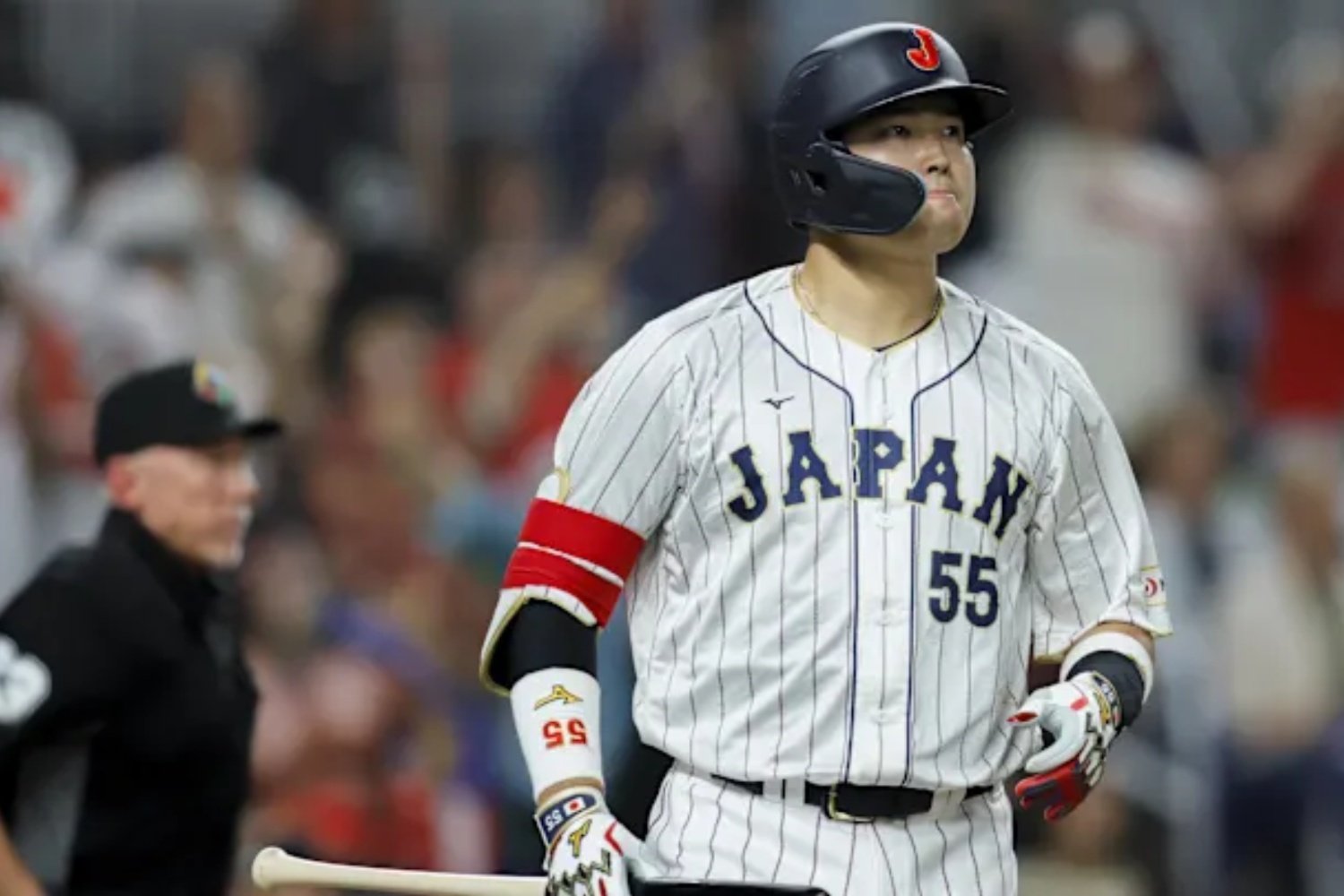 Happy Asian American and Pacific Islander Heritage Month! The Asian American and Pacific Islander community has made its mark in MLB, garnering various accolades and industry-wide recognition. In honor of the special month, I’ll be exploring potential Nippon Professional Baseball offseason acquisitions for the Red Sox. With the uncertainty surrounding Triston Casas' future in baseball, the organization needs a long-term solution at first base. Since 2018, the organization’s first base production ranks 25th in baseball (net 5.9 WAR). So far this season, Romy Gonzalez has produced the most WAR (0.2) at first. Pete Alonso headlines the upcoming free agent first base group, assuming the Mets don’t rework his contract. He’s posting insane numbers thus far and could be a potential, albeit costly, solution for the Red Sox. Other first base options include Josh Naylor, Paul Goldschmidt, and Rhys Hoskins (mutual option). Moving across the infield, Alex Bregman is posting career-high numbers with the Red Sox, and he’s expected to opt out of his three-year, $120 million contract. The Cubs, Phillies, Tigers, and Yankees need upgrades at third, and there will be a stronger market for Bregman in the upcoming offseason. Eugenio Suárez and Max Muncy (club option) will also be free agents, but they’re on the wrong side of 30. Don’t fret! Not one, but two free agents beyond the domestic confines of the mainland United States address the Red Sox’s needs at first and third. Munetaka Murakami, 26, 1B/3B/DH Despite his oblique injury hindering his playing time this year, Japanese superstar Munetaka Murakami will be the crown jewel of the 2025-26 offseason. He’s primarily listed as a third baseman, but he won’t be playing there in the majors. The Nippon League is currently in a dead-ball era, and the lack of offense props up Murakami’s career fielding stats (.943 FP) at third. On the other side of the infield, Murakami is a competent first baseman. He’s only recorded 11 errors across eight seasons at the position. His .994 career fielding percentage puts him a knock below Matt Olson, Carlos Santana, and Pete Alonso, a solid group of defenders. Murakami is best known for his bat. In 2022, he won the Triple Crown in the Nippon League, the Central League MVP for the second time in his career, and he hit 56 home runs, marking a new NPB record. He sees virtually every pitch type well. One of my concerns with Murakami is his plate discipline. He holds a 29.5% career strikeout rate. His zone swing rate has remained stagnant throughout his career, while his whiff rate has dramatically increased over the past four years. He posted the worst contact rate in the Nippon League between 2023 (65.7%) and 2024 (62.7%). Speaking of velocity, Murakami also struggles against high-velocity fastballs. Only 6% of his home runs were hit off fastballs over 150 km/h (93.21 mph). Nearly a quarter (24.79%) of his home runs came from fastballs below 149 km/h (below 92.58 mph). Back in 2022, Fangraphs noted that the average fastball velocity gap between the Nippon and Major League is slowly narrowing. Murakami’s lack of plate discipline, high strikeout numbers, and issues with high-velocity pitches raise some alarms for his transition to the majors. However, the drop off in his stats coincides with the NPB’s dead ball era, beginning in 2023. Even in an "off" year, Murakami hit 33 home runs - two more than the team’s leader, Tyler O'Neill (32), in 2024. Kazuma Okamoto, 29 1B/3B Kazuma Okamoto is another NPB free-agent target for the Red Sox. Like Murakami, Okamoto plays first (.996 FP) and third (.966 FP), though his defense is more sound than Murakami’s. Okamoto provides power as a righty, hitting at least 27 home runs per season since 2018. He doesn’t strike out often (16.5% career K-rate), and he fares well versus fastballs greater than 150 km/h, slashing .277/.368/.528 (58 RBIs, 19 home runs, and 150 wRC+). Okamoto is about four years older than Murakami, so there’s some concern about how he’ll hold up as he ages. He’s currently missing part of the 2025 season due to a left elbow injury. Unlike Rōki Sasaki, Murakami and Okamoto will not be subject to international bonus pool restrictions. Both players are over 25 years old and have more than six years of service time in NPB, making them eligible to sign MLB contracts without limitations. Money talks, and the Red Sox have the financial resources to pursue either player aggressively. While their international scouting presence in Asia isn’t as strong as the Cubs or Dodgers, the organization maintains a presence in Japan. Following Sportsology Inc.’s internal front-office audit, international scouts Kento Matsumoto (Japan) and Won-Sang Lee (South Korea) are reportedly still employed by the Red Sox. Notably, Matsumoto helped scout Masataka Yoshida. That said, no matter what scouting and analysts’ reports suggest, we can’t come to a consensus on an international free agent’s performance in MLB until they get meaningful playing time. Early evaluations of Masataka Yoshida suggested that he could be a better player than Seiya Suzuki, but Yoshida’s tenure in Boston has been marred by injuries. Now in the third year of his five-year, $90 million contract, he’s only appeared in 248 games, whereas Suzuki is a well-rounded contributor with his bat and glove. Munetaka Murakami and Kazuma Okamoto are currently missing playing time due to injuries. Given that the Red Sox already have a costly, oft-injured Japanese player on their team, potentially adding another one carries significant risk. Still, both Murakami and Okamoto offer more defensive value and greater power potential than Yoshida. Risk often correlates with reward, and 30+ home run-caliber first basemen don’t hit the market every offseason. At the very least, the Red Sox should be doing their due diligence and actively monitoring both players ahead of a key offseason for their emerging young core.
 -
Article: Episode 12: Bregman Down, Mayer Up
Maddie Landis posted a topic in Talk Sox Front Page News
With the injury to Alex Bregman, Maddie, Alex, and Adam discuss the Red Sox infield woes. They look optimistically at Marcelo Mayer’s debut and Garrett Crochet’s dominance after the first inning of his starts. They speculate about a couple possible trade candidates that could keep the Sox above .500. Listen on Apple Podcasts: https://podcasts.apple.com/us/podcast/the-talk-sox-podcast/id1783204104 Listen on Spotify: https://open.spotify.com/show/3qPrPXEngu0CxgTmlf0ynm Listen on iHeartRadio: https://www.iheart.com/podcast/263-the-talk-sox-podcast-244591331/ Listen on Pocket Casts: https://pca.st/4tmd121v Watch on YouTube: https://www.youtube.com/@talksox View full article -
 With the injury to Alex Bregman, Maddie, Alex, and Adam discuss the Red Sox infield woes. They look optimistically at Marcelo Mayer’s debut and Garrett Crochet’s dominance after the first inning of his starts. They speculate about a couple possible trade candidates that could keep the Sox above .500. Listen on Apple Podcasts: https://podcasts.apple.com/us/podcast/the-talk-sox-podcast/id1783204104 Listen on Spotify: https://open.spotify.com/show/3qPrPXEngu0CxgTmlf0ynm Listen on iHeartRadio: https://www.iheart.com/podcast/263-the-talk-sox-podcast-244591331/ Listen on Pocket Casts: https://pca.st/4tmd121v Watch on YouTube: https://www.youtube.com/@talksox
 -
Weekly Snapshot: Record Last Week 4-3 (Overall 27-28) Runs Scored Last Week: 33 Runs Surrendered Last Week: 23 Standings: 2nd in the AL East 6.0 GB from 1st Place 2.0 Wild Card Games Back Scores: Game 49 (5/19) | NYM 1, BOS 3 Game 50 (5/20) | NYM 0, BOS 2 Game 51 (5/21) | NYM 5, BOS 1 Game 52 (5/23) | BAL 5, BOS 19 Game 53 (5/24) | BAL 5, BOS 6 Game 54 (5/24) | BAL 2, BOS 1 Game 55 (5/25) | BAL 5, BOS 1 Transactions: 5/20/25: Optioned Nick Burdi to AAA Worcester 5/20/25: Activated Walker Buehler (right shoulder inflammation) from the 15-day injured list 5/21/25: Signed Erickson Ettien to a minor league contract 5/22/25: Acquired Ryan Noda from the Los Angeles Angels for cash 5/22/25: Transferred Masataka Yoshida (right shoulder labral repair) from the 10-day injured list to the 60-day injured list 5/22/25: Richard Fitts (right pectoral strain) sent on a rehab assignment to AA Portland 5/22/25: Signed P.J. Labriola to a minor league contract 5/24/25: Recalled Luis Guerrero from AAA Worcester 5/24/25: Selected the contract of Marcelo Mayer from AAA Worcester 5/24/25: Activated Cooper Criswell 5/24/25: Designated Sean Newcomb for assignment 5/24/25: Transferred Triston Casas from the 10-day injured list to the 60-day injured list 5/24/25: Placed Alex Bregman (right quad strain) on the 10-day injured list 5/24/25: Sent Zach Penrod on a rehab assignment to FCL Red Sox 5/25/25: Optioned Cooper Criswell to AAA Worcester 5/25/25: Recalled Zach Kelly from AAA Worcester 5/25/25: Optioned Luis Guerrero to AAA Worcester TL;DR Breakdown/Highlights Mets series: On the bright side, the Red Sox pitching looked solid, and they scored enough runs to scrape by and take two out of three games from that other baseball team in New York City. They were the first team in baseball to score three runs off the Mets' ace Kodai Senga. Orioles series: The Red Sox hit new highs and lows playing the Orioles. They split the four-game series, winning the first two games, losing the second game in Saturday’s doubleheader, and the final game on Sunday. In the series opener, they scored 19 runs, and Rafael Devers hit eight RBI and two home runs, including his second grand slam in a week. Devers alone accounts for 30% of the team's runs in the past week. Third baseman Alex Bregman was pulled from Friday’s game. He was placed on the 10-day injured list for a right quad strain. Subsequently, the Red Sox called up Marcelo Mayer for the second game in Saturday’s doubleheader. He went 0-4 in his first major league game before recording two hits, a double (105.1 mph EV) and a single (85.5 mph EV) in his second game. Since their starters stay in the game past the fifth inning, the Red Sox’s bullpen is pretty taxed. Luis Guerrero pitched 1 1/3 innings on Saturday before being sent back down to Worcester. Guerrero (12.5% k-rate, 37.5% bb-rate) couldn’t find the strike zone and yielded one strikeout, three balls, two hits, and one earned run. Zack Kelly, Guerrero's replacement, didn't fare better on Sunday. Following Sunday’s game, the Red Sox embark on a weeklong road trip, hitting Milwaukee and Atlanta. The Brewers are 5-5 in their last 10 games and the Braves have been rejuvenated by the Ronald Acuña Jr.’s triumphant return. Random Stats The Red Sox have held a .500 record 12 times this season, the most in baseball. The Red Sox need to find a solution at the fourth hole. The fourth spot in their lineup ranks 28th in average (.197), last in OBP (.242) and wRC+ (56), and second highest for strikeout rate (28.3%). After putting Campbell there for 10 games (.140/.159/.209, -10 wRC+), it’s obvious that he isn’t the immediate answer. Campbell is a young player, who could potentially fill in the role *sometime* in his career, but the experiment has run its course. He’s already being yanked around the field and placing even more pressure on him to produce offensively isn’t yielding the best results for the team and his development. 5/19 – 5/25 Slash Lines Players Trending Up Carlos Narvaez: .421/.476/.789, 250 wRC+ Rafael Devers: .364/.481/.818, 253 wRC+ Jarren Duran: .304/.370/.609, 161 wRC+ (10 days after I published this article on Duran’s wider batting stance, the distance between his feet has dropped by 0.8 inches.) Players Trending Down Kristian Campbell: .188/.316/.188, 51 wRC+ Trevor Story: .136/.174/.182, -11 wRC+ Ceddanne Rafaela: .056/.150/.056, -44 wRC+ David Hamilton: .111/.111/.111, -56 wRC+ Website Highlights Top Red Sox Prospect Marcelo Mayer Has Been Called Up To Boston Alex Bregman Leaves With Quad Tightness & The Red Sox's Backup Plan Is Paper Thin When Tanner Houck Returns, Where Will He Fit In With The Current Pitching Staff? Looking Ahead May 26th – Red Sox at Brewers – 2:10 pm EDT May 27th – Red Sox at Brewers – 7:10 pm EDT May 28th – Red Sox at Brewers – 1:10 pm EDT May 30th – Red Sox at Braves – 7:15 pm EDT May 31st – Red Sox at Braves – 4:10 pm EDT June 1st – Red Sox at Braves – 1:35 pm EDT View full article
-
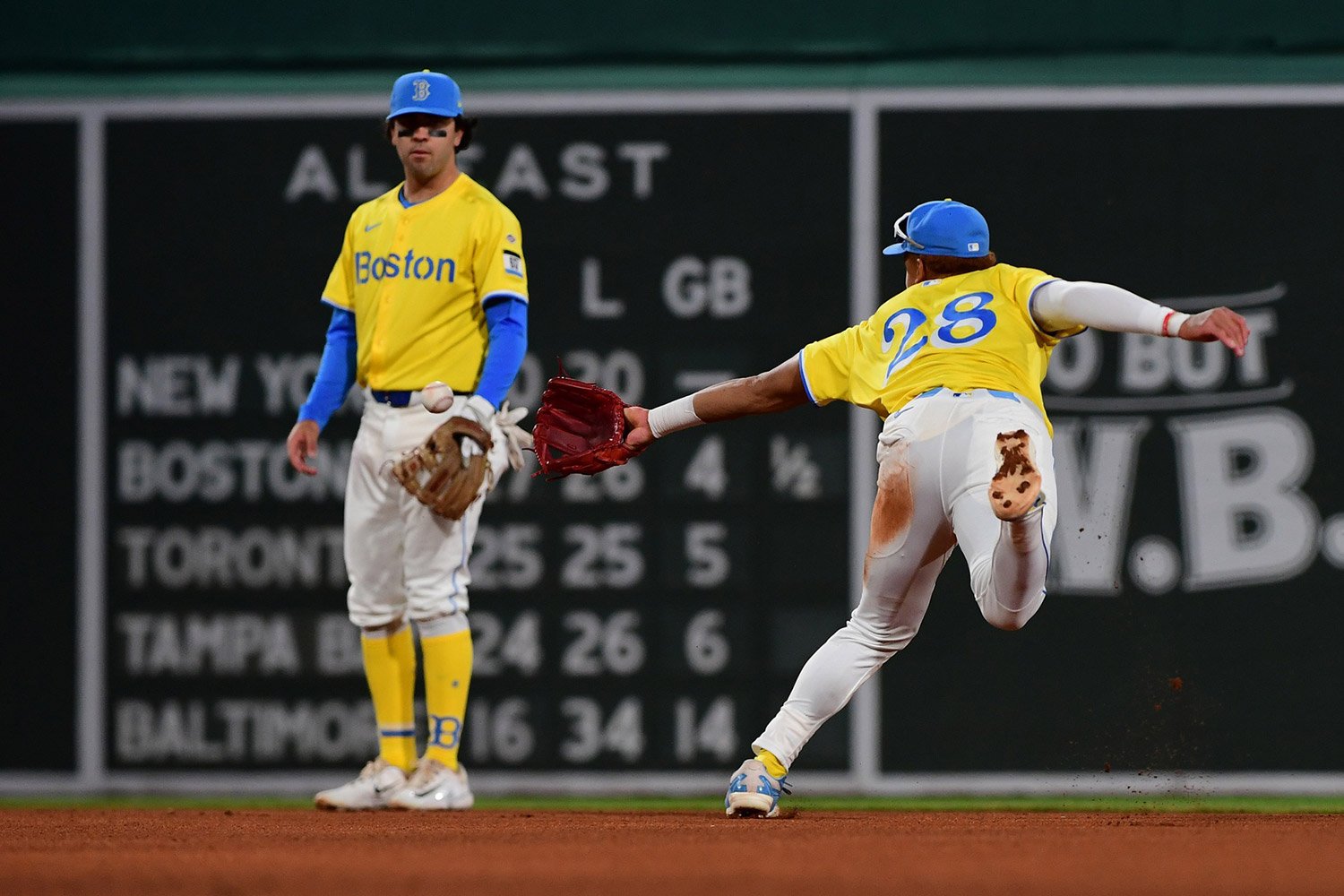 Weekly Snapshot: Record Last Week 4-3 (Overall 27-28) Runs Scored Last Week: 33 Runs Surrendered Last Week: 23 Standings: 2nd in the AL East 6.0 GB from 1st Place 2.0 Wild Card Games Back Scores: Game 49 (5/19) | NYM 1, BOS 3 Game 50 (5/20) | NYM 0, BOS 2 Game 51 (5/21) | NYM 5, BOS 1 Game 52 (5/23) | BAL 5, BOS 19 Game 53 (5/24) | BAL 5, BOS 6 Game 54 (5/24) | BAL 2, BOS 1 Game 55 (5/25) | BAL 5, BOS 1 Transactions: 5/20/25: Optioned Nick Burdi to AAA Worcester 5/20/25: Activated Walker Buehler (right shoulder inflammation) from the 15-day injured list 5/21/25: Signed Erickson Ettien to a minor league contract 5/22/25: Acquired Ryan Noda from the Los Angeles Angels for cash 5/22/25: Transferred Masataka Yoshida (right shoulder labral repair) from the 10-day injured list to the 60-day injured list 5/22/25: Richard Fitts (right pectoral strain) sent on a rehab assignment to AA Portland 5/22/25: Signed P.J. Labriola to a minor league contract 5/24/25: Recalled Luis Guerrero from AAA Worcester 5/24/25: Selected the contract of Marcelo Mayer from AAA Worcester 5/24/25: Activated Cooper Criswell 5/24/25: Designated Sean Newcomb for assignment 5/24/25: Transferred Triston Casas from the 10-day injured list to the 60-day injured list 5/24/25: Placed Alex Bregman (right quad strain) on the 10-day injured list 5/24/25: Sent Zach Penrod on a rehab assignment to FCL Red Sox 5/25/25: Optioned Cooper Criswell to AAA Worcester 5/25/25: Recalled Zach Kelly from AAA Worcester 5/25/25: Optioned Luis Guerrero to AAA Worcester TL;DR Breakdown/Highlights Mets series: On the bright side, the Red Sox pitching looked solid, and they scored enough runs to scrape by and take two out of three games from that other baseball team in New York City. They were the first team in baseball to score three runs off the Mets' ace Kodai Senga. Orioles series: The Red Sox hit new highs and lows playing the Orioles. They split the four-game series, winning the first two games, losing the second game in Saturday’s doubleheader, and the final game on Sunday. In the series opener, they scored 19 runs, and Rafael Devers hit eight RBI and two home runs, including his second grand slam in a week. Devers alone accounts for 30% of the team's runs in the past week. Third baseman Alex Bregman was pulled from Friday’s game. He was placed on the 10-day injured list for a right quad strain. Subsequently, the Red Sox called up Marcelo Mayer for the second game in Saturday’s doubleheader. He went 0-4 in his first major league game before recording two hits, a double (105.1 mph EV) and a single (85.5 mph EV) in his second game. Since their starters stay in the game past the fifth inning, the Red Sox’s bullpen is pretty taxed. Luis Guerrero pitched 1 1/3 innings on Saturday before being sent back down to Worcester. Guerrero (12.5% k-rate, 37.5% bb-rate) couldn’t find the strike zone and yielded one strikeout, three balls, two hits, and one earned run. Zack Kelly, Guerrero's replacement, didn't fare better on Sunday. Following Sunday’s game, the Red Sox embark on a weeklong road trip, hitting Milwaukee and Atlanta. The Brewers are 5-5 in their last 10 games and the Braves have been rejuvenated by the Ronald Acuña Jr.’s triumphant return. Random Stats The Red Sox have held a .500 record 12 times this season, the most in baseball. The Red Sox need to find a solution at the fourth hole. The fourth spot in their lineup ranks 28th in average (.197), last in OBP (.242) and wRC+ (56), and second highest for strikeout rate (28.3%). After putting Campbell there for 10 games (.140/.159/.209, -10 wRC+), it’s obvious that he isn’t the immediate answer. Campbell is a young player, who could potentially fill in the role *sometime* in his career, but the experiment has run its course. He’s already being yanked around the field and placing even more pressure on him to produce offensively isn’t yielding the best results for the team and his development. 5/19 – 5/25 Slash Lines Players Trending Up Carlos Narvaez: .421/.476/.789, 250 wRC+ Rafael Devers: .364/.481/.818, 253 wRC+ Jarren Duran: .304/.370/.609, 161 wRC+ (10 days after I published this article on Duran’s wider batting stance, the distance between his feet has dropped by 0.8 inches.) Players Trending Down Kristian Campbell: .188/.316/.188, 51 wRC+ Trevor Story: .136/.174/.182, -11 wRC+ Ceddanne Rafaela: .056/.150/.056, -44 wRC+ David Hamilton: .111/.111/.111, -56 wRC+ Website Highlights Top Red Sox Prospect Marcelo Mayer Has Been Called Up To Boston Alex Bregman Leaves With Quad Tightness & The Red Sox's Backup Plan Is Paper Thin When Tanner Houck Returns, Where Will He Fit In With The Current Pitching Staff? Looking Ahead May 26th – Red Sox at Brewers – 2:10 pm EDT May 27th – Red Sox at Brewers – 7:10 pm EDT May 28th – Red Sox at Brewers – 1:10 pm EDT May 30th – Red Sox at Braves – 7:15 pm EDT May 31st – Red Sox at Braves – 4:10 pm EDT June 1st – Red Sox at Braves – 1:35 pm EDT
 -
The Red Sox are over a quarter of the way through the 2025 season, and something seems off. Amidst the never-ending Devers drama, other stories are being swept under the rug. Many fans questioned whether or not Jarren Duran would replicate his breakout 2024 performance. Unfortunately, Duran is off to a cool start this year. In 42 games, the outfielder is slashing .254/.300/.381 with two home runs and an 86 wRC+. Duran is the Red Sox’s offensive spark plug. He wreaks havoc when he gets on base. He turns routine singles into doubles and doubles into triples. He even makes stealing home look easy. The lineup is a lot deeper when his bat is hot. On May 10th, Duran had two hits in five at-bats and the Red Sox won 10-1 against the Royals. On April 27th, he collected four hits in six at-bats and the Red Sox won 13-1 against the Guardians. He needs to get on base to wreak havoc, but he hasn’t been doing that much this year. Upon first glance, Duran’s batting stance looks similar to the previous year. However, thanks to Statcast’s new batting stance metrics, you can see the minor change in Duran’s stance. The distance between his feet has increased. He’s using a wider stance (26.1 inches), an increase of 6.6 inches from 2024 (19.5 inches). Duran’s wider stance disrupts the timing of his swing. Since his feet are further apart, he faces more difficulty transitioning to the proper launch position, causing him to miss the ball more. Looking at Duran’s pitch splits, his struggles are most evident versus four-seam fastballs. He’s chasing the pitch more this year at 30.6%. [His overall chase rate is up to 33.9%, up from 28.1% in 2024.] Year Pitch Type AVG SLG BABIP Run Value Chase% 2024 Four-seam .284 .546 .348 12 20.8 2025 Four-seam .224 .431 .273 0 30.6 Narrow stances utilize long strides to generate power. Duran’s batting stance has changed significantly throughout his career. Last year, he incorporated a leg kick into his swing, and it helped him breakout at the plate. He discontinued the leg kick for most of this year, but recently adopted it again on May 9th. It’s unclear whether Duran is inadvertently widening his stance or if someone from the organization advised him to. (I’m leaning towards the latter.) Typically, power hitters have wider stances, but Duran isn’t a power hitter. Despite his impressive Gabe Kapler-esque physique, I don’t foresee him ever becoming one, which is fine! Leadoff headers typically aren’t sluggers (unless you’re Kyle Schwarber or Shohei Ohtani). Duran’s primary job is to get on base. He has plenty of protection behind him in the lineup to drive him home. The Red Sox rank 19th in the league with a .239 average with runners in scoring position. That’s unacceptable for a team making a playoff push. Jarren Duran isn’t solely to blame for the team’s offensive woes, but his lackluster performance at the plate is certainly making things worse. In the sixth inning on Tuesday, Duran struck out with the bases loaded to end the inning. The Red Sox lost the game by one run in extra innings. Duran walking in the sixth would’ve put them over the bump. The rub is that Duran is putting up uncompetitive at-bats. He hasn’t recorded a single walk in his last 54 plate appearances. He’s seeing 3.52 pitches per plate appearance, the 10th lowest in MLB. For reference, free-swinging Ceddanne Rafaela sees 3.54 pitches per plate appearance. In a weak American League, the Red Sox have the opportunity to make the playoffs for the first time in four years. Changes are needed to capitalize on that opportunity, and it starts with Duran’s bat getting hot again. View full article
-
 The Red Sox are over a quarter of the way through the 2025 season, and something seems off. Amidst the never-ending Devers drama, other stories are being swept under the rug. Many fans questioned whether or not Jarren Duran would replicate his breakout 2024 performance. Unfortunately, Duran is off to a cool start this year. In 42 games, the outfielder is slashing .254/.300/.381 with two home runs and an 86 wRC+. Duran is the Red Sox’s offensive spark plug. He wreaks havoc when he gets on base. He turns routine singles into doubles and doubles into triples. He even makes stealing home look easy. The lineup is a lot deeper when his bat is hot. On May 10th, Duran had two hits in five at-bats and the Red Sox won 10-1 against the Royals. On April 27th, he collected four hits in six at-bats and the Red Sox won 13-1 against the Guardians. He needs to get on base to wreak havoc, but he hasn’t been doing that much this year. Upon first glance, Duran’s batting stance looks similar to the previous year. However, thanks to Statcast’s new batting stance metrics, you can see the minor change in Duran’s stance. The distance between his feet has increased. He’s using a wider stance (26.1 inches), an increase of 6.6 inches from 2024 (19.5 inches). Duran’s wider stance disrupts the timing of his swing. Since his feet are further apart, he faces more difficulty transitioning to the proper launch position, causing him to miss the ball more. Looking at Duran’s pitch splits, his struggles are most evident versus four-seam fastballs. He’s chasing the pitch more this year at 30.6%. [His overall chase rate is up to 33.9%, up from 28.1% in 2024.] Year Pitch Type AVG SLG BABIP Run Value Chase% 2024 Four-seam .284 .546 .348 12 20.8 2025 Four-seam .224 .431 .273 0 30.6 Narrow stances utilize long strides to generate power. Duran’s batting stance has changed significantly throughout his career. Last year, he incorporated a leg kick into his swing, and it helped him breakout at the plate. He discontinued the leg kick for most of this year, but recently adopted it again on May 9th. It’s unclear whether Duran is inadvertently widening his stance or if someone from the organization advised him to. (I’m leaning towards the latter.) Typically, power hitters have wider stances, but Duran isn’t a power hitter. Despite his impressive Gabe Kapler-esque physique, I don’t foresee him ever becoming one, which is fine! Leadoff headers typically aren’t sluggers (unless you’re Kyle Schwarber or Shohei Ohtani). Duran’s primary job is to get on base. He has plenty of protection behind him in the lineup to drive him home. The Red Sox rank 19th in the league with a .239 average with runners in scoring position. That’s unacceptable for a team making a playoff push. Jarren Duran isn’t solely to blame for the team’s offensive woes, but his lackluster performance at the plate is certainly making things worse. In the sixth inning on Tuesday, Duran struck out with the bases loaded to end the inning. The Red Sox lost the game by one run in extra innings. Duran walking in the sixth would’ve put them over the bump. The rub is that Duran is putting up uncompetitive at-bats. He hasn’t recorded a single walk in his last 54 plate appearances. He’s seeing 3.52 pitches per plate appearance, the 10th lowest in MLB. For reference, free-swinging Ceddanne Rafaela sees 3.54 pitches per plate appearance. In a weak American League, the Red Sox have the opportunity to make the playoffs for the first time in four years. Changes are needed to capitalize on that opportunity, and it starts with Duran’s bat getting hot again.
 -
Going into Tuesday night’s Red Sox game, the vibes were immaculate. The Red Sox dominated the Guardians and Blue Jays in the two previous games, scoring 23 combined runs. Between the rotation and the bullpen, their pitching looked sharp. Everything was finally falling into place. After not pitching in over a year, Lucas Giolito debuted with the Red Sox. Alex, Adam, and I discussed Giolito’s start with some apprehension in our recent podcast episode. Much to everyone’s relief, Giolito coasted through five scoreless innings. His fastball reached a maximum of 96 mph and generated a 31.3% whiff rate. He brushed the strike zone’s corners masterfully with his changeup. Surprisingly, Giolito remained on the mound for the sixth inning. Cora’s decision to keep Giolito in the game was questionable. After the fifth inning, he had thrown 66 pitches in his first major league game since October 1st, 2023. Usually, pitchers returning from rehab stints slowly acclimate to a full workload. Dozens of articles review the disadvantages of starting pitchers facing the batting order for the third time, and by the sixth inning, it was evident that Blue Jays’ hitters were acquainted with Giolito’s repertoire. The Blue Jays quickly cut the Red Sox's lead in half in two subsequent at-bats. Giolito yielded two home runs off his changeup: a two-run shot to Daulton Varsho, and a solo home run to Alejandro Kirk. Relief pitcher Garrett Whitlock took the mound in the seventh inning. This was another problematic decision by Cora. Like Giolito, Whitlock relies heavily on his changeup (22.7% usage in 2025). At their best, changeups are deceptive pitches, but if a batter recognizes one, the pitcher is punished for it. Whitlock and Giolito’s changeup pitch heat-maps overlap towards the bottom third of the zone. Whitlock allowed Ernie Clement and Vladimir Guerrero Jr. to reach base via singles. Anthony Santander launched yet another (very poorly located) changeup out of the park to tie the game. The Red Sox proceeded to lose the game in extra innings. Alex Cora’s pitching mismanagement is responsible for that loss. After a strong start, Giolito was left in the game for too long. Cora escalated the situation further by bringing in Whitlock, another changeup-heavy pitcher, who blew the team’s lead. I understand Cora’s reluctance to put Justin Wilson, Liam Hendriks, or Greg Weissert in a higher-leverage situation, but he helped create one by keeping Giolito in the game. Keeping Whitlock available after Houck’s outing should’ve been on Cora’s radar. On the bright side, Giolito recorded a quality start in his Red Sox debut. Lucas Giolito and Brayan Bello’s solid outings bode well for the team’s starting rotation. Garrett Crochet is an ace. Walker Buehler has two quality starts in his past two games. Sean Newcomb, friend of the Talk Sox Podcast, looks decent in the bullpen. Giolito and Whitlock were injured last year, so the opportunity never presented itself to have them pitch in back-to-back innings. Before Tuesday's game, Whitlock held a 1.72 ERA. Despite his bad outing, he remains a reliable bullpen arm. Going forward, Cora must consider how his starting pitchers’ repertoire compares to successive relief pitchers. View full article
-
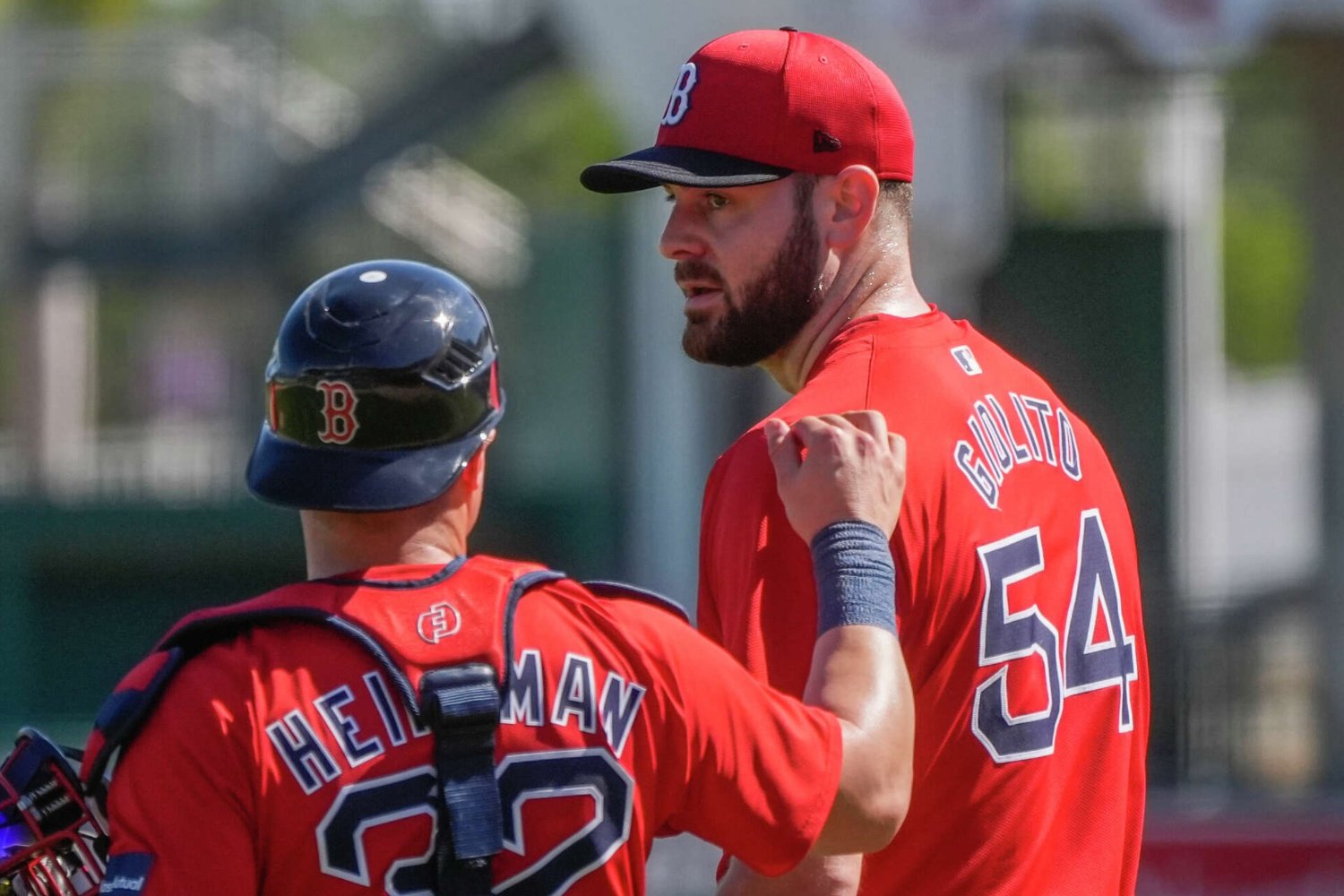 Going into Tuesday night’s Red Sox game, the vibes were immaculate. The Red Sox dominated the Guardians and Blue Jays in the two previous games, scoring 23 combined runs. Between the rotation and the bullpen, their pitching looked sharp. Everything was finally falling into place. After not pitching in over a year, Lucas Giolito debuted with the Red Sox. Alex, Adam, and I discussed Giolito’s start with some apprehension in our recent podcast episode. Much to everyone’s relief, Giolito coasted through five scoreless innings. His fastball reached a maximum of 96 mph and generated a 31.3% whiff rate. He brushed the strike zone’s corners masterfully with his changeup. Surprisingly, Giolito remained on the mound for the sixth inning. Cora’s decision to keep Giolito in the game was questionable. After the fifth inning, he had thrown 66 pitches in his first major league game since October 1st, 2023. Usually, pitchers returning from rehab stints slowly acclimate to a full workload. Dozens of articles review the disadvantages of starting pitchers facing the batting order for the third time, and by the sixth inning, it was evident that Blue Jays’ hitters were acquainted with Giolito’s repertoire. The Blue Jays quickly cut the Red Sox's lead in half in two subsequent at-bats. Giolito yielded two home runs off his changeup: a two-run shot to Daulton Varsho, and a solo home run to Alejandro Kirk. Relief pitcher Garrett Whitlock took the mound in the seventh inning. This was another problematic decision by Cora. Like Giolito, Whitlock relies heavily on his changeup (22.7% usage in 2025). At their best, changeups are deceptive pitches, but if a batter recognizes one, the pitcher is punished for it. Whitlock and Giolito’s changeup pitch heat-maps overlap towards the bottom third of the zone. Whitlock allowed Ernie Clement and Vladimir Guerrero Jr. to reach base via singles. Anthony Santander launched yet another (very poorly located) changeup out of the park to tie the game. The Red Sox proceeded to lose the game in extra innings. Alex Cora’s pitching mismanagement is responsible for that loss. After a strong start, Giolito was left in the game for too long. Cora escalated the situation further by bringing in Whitlock, another changeup-heavy pitcher, who blew the team’s lead. I understand Cora’s reluctance to put Justin Wilson, Liam Hendriks, or Greg Weissert in a higher-leverage situation, but he helped create one by keeping Giolito in the game. Keeping Whitlock available after Houck’s outing should’ve been on Cora’s radar. On the bright side, Giolito recorded a quality start in his Red Sox debut. Lucas Giolito and Brayan Bello’s solid outings bode well for the team’s starting rotation. Garrett Crochet is an ace. Walker Buehler has two quality starts in his past two games. Sean Newcomb, friend of the Talk Sox Podcast, looks decent in the bullpen. Giolito and Whitlock were injured last year, so the opportunity never presented itself to have them pitch in back-to-back innings. Before Tuesday's game, Whitlock held a 1.72 ERA. Despite his bad outing, he remains a reliable bullpen arm. Going forward, Cora must consider how his starting pitchers’ repertoire compares to successive relief pitchers.
 -
This squad has a lot of promise but they have yet to reach it. Maddie, Alex, and Adam try to wrap up two weeks of ups and downs including one terrible and one pretty good series against the White Sox. They talk about Trevor Story's hot streak, Tanner Houck's cold streak, and when we can expect Roman Anthony in the Red Sox lineup. Listen on Apple Podcasts: https://podcasts.apple.com/us/podcast/the-talk-sox-podcast/id1783204104 Listen on Spotify: https://open.spotify.com/show/3qPrPXEngu0CxgTmlf0ynm Listen on iHeartRadio: https://www.iheart.com/podcast/263-the-talk-sox-podcast-244591331/ Listen on Pocket Casts: https://pca.st/4tmd121v Watch on YouTube: https://www.youtube.com/@talksox View full article
- 2 replies
-
- 1
-

-
- kristian campbell
- marcelo mayer
- (and 4 more)
-
 Maddie, Alex, and Adam try to wrap up two weeks of ups and downs including one terrible and one pretty good series against the White Sox. They talk about Trevor Story's hot streak, Tanner Houck's cold streak, and when we can expect Roman Anthony in the Red Sox lineup. Listen on Apple Podcasts: https://podcasts.apple.com/us/podcast/the-talk-sox-podcast/id1783204104 Listen on Spotify: https://open.spotify.com/show/3qPrPXEngu0CxgTmlf0ynm Listen on iHeartRadio: https://www.iheart.com/podcast/263-the-talk-sox-podcast-244591331/ Listen on Pocket Casts: https://pca.st/4tmd121v Watch on YouTube: https://www.youtube.com/@talksox
 -
 Over the past two weeks, several teams announced extensions with their young players. Among the six players and teams, Boras advised only one player, Vladimir Guerrero Jr., who signed the most expensive extension. Kristian Campbell (Beverly Hill Sports Council), Ketel Marte (QC Sports), Jackson Merrill (KHG Sports Management), Garrett Crochet (CAA Sports), and Cal Raleigh (Excel Sports Management) are represented by different agencies. Looking beyond 2025, other team-friendly extensions were negotiated by agents not named Scott Boras. As the phrasing suggests, team-friendly extensions tend to favor the team, paying below a player’s market value. Young players sign pre-arbitration contracts for a myriad of reasons, such as guaranteed financial security and loyalty to the team that drafted them. Teams offer the deals in order to save money. Team Player Agent Date Value Length AAV TOR Vladimir Guerrero Jr. Boras Corporation April 2025 500 14 35.7 BOS Kristian Campbell Beverly Hill Sports Council April 2025 60 8 7.5 ARI Ketel Marte QC Sports April 2025 116.5 6 19.4 SDP Jackson Merrill KHG Sports Management April 2025 135 9 15 BOS Garrett Crochet CAA Sports April 2025 170 6 28.3 SEA Cal Raleigh Excel Sports Management March 2025 105 6 17.5 KCR Bobby Witt Jr. Octagon Baseball February 2024 288.8 11 26.3 MIL Jackson Chourio Beverly Hill Sports Council December 2023 82 8 10.3 CIN Hunter Greene CAA Sports April 2023 53 6 8.8 ARI Corbin Carroll CAA Sports March 2023 111 8 13.9 SEA Julio Rodríguez Octagon Baseball August 2022 209.3 12 17.4 CLE Emmanuel Clase Nova Sports Agency April 2022 20 5 4 The collective bargaining agreement’s looming expiration date (December 1st, 2026) is a catalyst for the recent wave of team-friendly extensions. MLB’s league minimum salary ($760,000) is the lowest among professional U.S. sports leagues (NBA: $1,157,153, NFL: $840,000, and NHL: $775,000). NBA rosters are significantly smaller than NFL or MLB rosters. However, MLB plays the most games, so baseball players earn less money per game over a longer season. Previous lockouts resulted in the loss of regular-season games (162 scheduled). 1972 season: 153-56 games 1981 season: 102-111 games 1994 season: 112-117 games 1995 season: 144 games MLB players are paid in monthly or semi-monthly installments, meaning they miss out on paychecks during lockouts. Players still earn signing bonuses and deferred payments when a lockout occurs. See the following recent signing bonuses: Vladimir Guerrero Jr.: $325 million Kristian Campbell: $2 million Jackson Merrill: $10 million Garrett Crochet: $4 million Cal Raleigh: $10 million With no current limits on contracts or team salaries, players are eager to take advantage of the free market while they can. If they don't, they might regret passing up the opportunity to secure generational wealth. Extensions tend to buy out young players' arbitration years , when they're making more than the league-minimum salary but still woefully underpaid. Players make the minimum ($760,000 this season) until they have three years of service time. After that, the player and the club present salary offers and typically agree on a number, bypassing the need for an actual arbitration hearing. This past offseason, the Red Sox avoided arbitration with Garrett Crochet, Tanner Houck, Kutter Crawford, and Jarren Duran. However, if the two sides can't agree, they meet before a panel of three neutral arbitrators to present their arguments in an arbitration hearing. According to the 2022-26 MLB CBA, admissible evidence includes, “the quality of the Player’s contribution to his Club during the past season (including but not limited to his overall performance, special qualities of leadership and public appeal), the length and consistency of his career contribution, the record of the Player’s past compensation, comparative baseball salaries, the existence of any physical or mental defects on the part of the Player, and the recent performance record of the Club including but not limited to its League standing and attendance as an indication of public acceptance.” Afterward, both sides submit rebuttals, and the panel concludes by ruling in favor of either the player or the club’s number. This is typically announced within a day. Baseball’s salary arbitration process is unique. It can lead to strained relationships between players and the front office. Blue Jays shortstop Bo Bichette voiced his opinion on baseball’s arbitration process: “Arbitration is an incredibly flawed process, one that isn't very good for the game. There's no reason to pit owners and executives against players. Just no reason. I just don't think that’s a good position for relationships… As players and as owners we should be striving to have a good relationship between boss and employee.” Teams win roughly about 57% of salary arbitration hearings. Various studies indicate that the number of MLB arbitration salary hearings has declined in recent years. If a team’s roster is loaded with expensive free agents, the front office will announce that it has little financial flexibility to make further improvements. I’ll pick on the Phillies here. After splurging in previous offseasons, they had limited spending power heading into the 2024-25 offseason. Phillies GM Dave Dombrowski shares a close relationship with agent Boras, who represents several key players on the team, including Bryce Harper, Nick Castellanos, Alec Bohm, Bryson Stott, Garrett Stubbs, and Ranger Suárez. Unlike the Orioles or Tigers, the Phillies don’t have a robust homegrown core. However, they've also been one of the best teams in baseball over the past three seasons. Dombrowski and Boras represent a roster construction method that has fallen out of favor in recent years. When Dombrowski took the helm in Boston, the organization had a top farm system, ownership that was willing to spend, and top-to-bottom talent. The stars were perfectly aligned for his all-in, win-now mindset. His strategies the Red Sox earned a World Series ring, and I will always be thankful for that. The rub is that Dombrowski’s strategies only work if your team wins a World Series. The Phillies have not done so yet. Their young players (Bohm: -8 wRC+, Marsh: 38 wRC+, and Stott: 101 wRC+) are underperforming, and the rest of their roster is filled with aging, underperforming players (Turner: 93 wRC+ and Realmuto: 78 wRC+) signed to multimillion-dollar contracts. That said, Kyle Schwarber and Bryce Harper are blue-chip players who will always rake. Andrew Painter is a bright spot in the farm system, and I think he’ll develop into a top-of-the-rotation arm. Still, it remains to be seen whether Dombrowski’s win-now approach can succeed in the long run, especially when compared to executives like Alex Anthopolous, David Stearns, and Andrew Friedman, who have emphasize building sustainable, successful franchises (though Sterns and Friedman, done establishing their ability to win on a shoestrong, now represent the game's two highest-spending teams). The Red Sox recently locked up Garrett Crochet and Kristian Campbell. Crochet agreed to a six-year, $160 million deal and Campbell signed an eight-year, $60 million contract. Crochet's deal is closer to his actual market value, while Campbell's is much lower. The Red Sox bought out Crochet’s prime years and his final arbitration year. Sixty million dollars is life-changing money for a young 22-year-old like Campbell. Although Campbell's deal does drastically lower the ceiling of his future earning potential, it does include escalators that could increase the deal to $100 million. If Crochet and Campbell were Boras’ clients, they almost certainly wouldn't have agreed to these extensions. Super-agents like Boras, not to mention the MLBPA, balk when players sign team-friendly deals. Bob Nightengale disclosed that attorneys from the union encouraged Jackson Merrill to reject the Padres’ nine-year, $135 million offer. Scott Boras loves to offer his opinion on virtually every aspect of baseball. Boras fixated on the partial no-trade clause in Merrill’s contract, “If a player signs a contract for team relationship purposes, the key provision is a full no-trade... Without it, the likelihood of remaining with one team is highly improbable, as the business of baseball supersedes all player preferences.” On the other hand, Merrill expressed his excitement about the deal, saying, “I think just hearing the opportunity to sign with the San Diego Padres was enough for me… You can't just sign for $700 million and expect everything to be perfect.” Not every player can wait six years to bet on themselves in free agency like Juan Soto, Bryce Harper, or Shohei Ohtani. For some players, team-friendly extensions might be their only real shot at securing life-changing money and future financial stability. These days, it's rare to see players stick with one team. Players can’t predict the future; injuries or a dip in performance can derail an athlete’s career at any time. At the time he signed it, Ronald Acuña Jr.’s eight-year, $100 million extension appeared to be a borderline expoitative underpay for a superstar-in-the-making. When healthy, Acuña is arguably the best player in the league. However, he’s torn the ACLs in both of his knees. He missed the second half of the 2021 season and was limited to just 49 games in 2024. If Acuña hadn’t signed an extension with the Braves in 2019, he would be a free agent in the upcoming offseason. Since Acuña’s skillset relies on his speed and the toll his injuries have taken (see his drop in sprint speed from 2021 to 2024), he likely wouldn’t have commanded the money he once expected in free agency, meaning that his deal wasn't quite as much of an underpay as it initially appeared. So far, I’ve written about positive team extensions. That’s not to say there aren’t any bad team-friendly extensions. After a monster 2018 spring training performance, the Phillies signed infielder (later a utility player) Scott Kingery to a six-year, $24 million contract. Matt Klentak, the Phillies GM, was supposedly inspired to extend him after he read an article titled, “Top Phillies Prospect Scott Kingery Is MLB's Next Dustin Pedroia.” Between 2018 and 2022, Kingery played in 325 games for the Phillies and amassed 0.1 WAR. In August 2014, Rusney Castillo agreed to a seven-year, $72.5 million deal, only for him to spend most of his contract marinating at McCoy Stadium. Wander Franco is another example of an extension aging poorly, not for performance reasons, but because was charged with sexual abuse and human trafficking. Twenty-something players are a volatile stock. Their performance on the field is just one facet of their overall development. Male brains finish developing at age 30. Conducting due diligence on the potential face of a franchise is a pivotal step in long-term contract negotiations. In the Rays' case, omitting this step has led to monetary losses, a public relations scandal, and a blow to their team’s reputation. Intangibles are just as important, if not more important than a player’s pedigree and performance. A headstrong, pompous, five-tool high school prospect can evolve into an aggressive, emotionally immature player who is a clubhouse cancer. Conversely, a modest, teachable under-the-radar prospect who lacks a certain tool, say power, could flourish in an organization that teaches him how to tap into his power. While Wander Franco hasn’t deterred other teams from extending their young players, they will be more mindful of a player’s maturity going forward. Boras implied there’s a commonality among players and their agents who broker team-friendly extensions: Front offices 'look for agencies that are new or have few clients and are in need of money," he said. This leaves club executives “often surprised early, well-below market contracts are accepted.” While this has seemed like a pattern in some cases, especially for Anthopoulos and the Braves, it's not true for everyone. Established in 1984, the Beverly Hill Sports Council (Kristian Campbell and Jackson Chourio) has represented esteemed Hall of Famers including George Brett, Mike Piazza, and Trevor Hoffman. CAA (Garrett Crochet, Corbin Carroll, and Hunter Greene) is another powerhouse agency. Another point: some players remain loyal to their original agents, who work at smaller agencies. These firms agree to team-friendly extensions not for their financial gain, but because they’re focused on their clients' best interests. More professional athletes than you might think are motivated by factors beyond money. Some players just want to focus on their sport. Others might prefer to stay with the team that drafted them, where they feel most comfortable. In the free market, players have the freedom to choose any agency to represent them. Baseball players understand the terms when they decide to work with Boras. Boras’s clients are notoriously reluctant to sign team-friendly deals, as he encourages them to test free agency, which usually maximizes a player’s value. As a result, these players rarely return to their original teams. The Boras Four In the 2023-24 offseason, Boras clients Blake Snell, Cody Bellinger, Matt Chapman, and Jordan Montgomery, also known as the “Boras Four,” signed late after not getting the large deals they expected to land, and their performances suffered. Snell, the incumbent National League Cy Young Award winner, signed a two-year, $62 million deal with the Giants just nine days before Opening Day. Snell dealt with injuries during the first half of the season. He only pitched 104 innings, posting a 3.12 ERA (3.1 WAR) for the season. However, he found his groove in the second half. Half IP ERA K% BB% FIP First 35.2 6.31 26.6 10.8 3.78 Second 68.1 1.45 39.6 10.4 1.72 Snell’s story has a happy ending. The following offseason, Snell opted out of his contract and inked a five-year, $182 million contract with the Dodgers. Cody Bellinger, the Dodgers' former wunderkind, reportedly targeted a deal “in excess of $250 million.” On February 27, 2024, about two weeks after position players arrived at camp, Bellinger agreed to a three-year, $80 million deal with the Cubs. Following his comeback season, Bellinger dealt with various injuries. He spent about a month on the IL and slashed .266/.325/.426 slash line with 18 home runs (109 wRC+, 2.2 WAR) in 2024. Before signing a three-year, $54 million contract with the Giants in the middle of spring training, Matt Chapman had previously declined two extension offers from the Athletics (10 years, $150 million) and Blue Jays (6 years, $120 million). Come September, Chapman’s contract evolved into a six-year, $151 million extension. He delivered the strongest performance among the Boras four, yielding 5.4 WAR and earning his fifth Gold Glove Award in 2024. Jordan Montgomery sought to cash in after helping the Rangers win their first World Series. In his initial asking price, he reportedly was “aiming to top the $172 million that Aaron Nola received from the Phillies.” Comparing Montgomery to Aaron Nola was a questionable decision in itself. (Many Phillies fans believe Nola’s contract is an overpay, which I agree with. Living in the heart of Phillies territory, I catch their games now and then. Nola’s disastrous fourth innings are his Achilles' heel.) Teams weren’t biting, and Montgomery remained a free agent after spring training had concluded. He eventually signed a one-year, $25 million deal with the Diamondbacks two days after Opening Day. Was Montgomery doomed from the start of his tenure with the Diamondbacks? Pitchers benefit from spring training, arriving earlier than position players, to get themselves acclimated to the marathon baseball season. Before his Diamondbacks debut (April 19th, 2024), he only pitched in one simulated game and made two starts with the Diamondbacks’ Triple-A affiliate. During this time, he also fired Scott Boras. Montgomery would go on to have a disastrous season. In early July, he was placed on the 15-day IL with right knee inflammation. The following month, he was demoted to the bullpen. His ERA jumped to 6.23 (3.20 ERA in 2023), and his strikeout rate dropped to 15.6% (21.4% in 2024). Montgomery’s tumultuous season can’t be solely blamed for the lack of spring training. Red Sox fans recall that the organization pursued Jordan Montgomery. The Red Sox needed a left-handed pitcher in their starting rotation, and Montgomery’s wife resided in Boston for her dermatology residency. As a former Yankees pitcher, he was accustomed to pitching the American League East. The Red Sox and Montgomery felt like a perfect match. After an initial Zoom call, conversations between the Red Sox and Montgomery stalled. On March 28, the day before Montgomery signed with the Diamondbacks, Jon Heyman wrote “Montgomery didn’t love the Red Sox because he wants to win.” Later in the season, when the Diamondbacks were visiting Boston, Montgomery lamented over his unlucky offseason. His direct statement contradicts Heyman’s quote: “I had a Zoom call with (the Red Sox), that’s really all I know. It went good,” Montgomery said. “I don’t know, obviously Boras kind of butchered it, so I’m just trying to move on from the offseason and try to forget it.” The Red Sox (rightfully) faced criticism for their inactivity during the 2023–24 offseason. However, Montgomery didn’t blame the team for the deal falling through. He pointed the finger at Scott Boras. To be fair, Montgomery could have agreed to the team's offer. Boras might have suggested that other teams were willing to pay him more money and encouraged him to hold out. Who knows? The 2024-25 Offseason Boras’s most recent offseason produced better results for his clients. Juan Soto signed a record-breaking 15-year, $765 million contract with the Mets. Snell finally received his big payday with the Dodgers. Corbin Burnes agreed to a six-year, $210 million contract with the Diamondbacks. Alex Bregman’s three-year, $120 million deal with the Red Sox is tied for the sixth-largest contract by AAV and features added value in the form of two opt-ous. This brings us to Pete Alonso. In May 2023, just one year before Alonso hit free agency, the Mets offered him a seven-year, $158 million extension. When this offer was made, Alonso was represented by Apex Baseball. He hired Boras during the 2023 offseason. Later, reports emerged that Alonso was targeting at least $200 million. He wound up with a two-year, $54 million contract with the Mets. Alonso is off to a hot start for the season. He’s ranked second in the league for barrel rate and he lowered his strikeout rate. Given his strong performance and desire to stay with the Mets, I wouldn’t be surprised to see Alonso’s contract reworked sometime during the season. Outmaneuvering Boras Earlier this year, I wrote about the Red Sox modeling the Braves’ strategy to extend their young core. Per Baseball-Reference, the Braves notably do not have any players represented by Boras Corporation. This roster construction strategy begs the question: Do some teams avoid Boras clients entirely? Ken Rosenthal tackled this question over a year ago and the short answer is yes. Since Rosenthal’s article was published, the Dodgers now have three Boras clients on their team: Brudsar Graterol, Michael Conforto, and Blake Snell. Baseball’s elite players are no longer solely represented by Boras. Looking at the top ten hitters and catchers ranked by fWAR since 2022, only five players are Boras’ clients. Four (Dylan Cease, Zac Gallen, Tarik Skubal, and Corbin Burnes) are pitchers with Juan Soto being the only hitter. Shohei Ohtani, the face of baseball, is represented by Nez Balelo of CAA. Fangraphs WAR Leaders 2022-Present Hitters Pitchers Player Agent WAR Player Agent WAR Aaron Judge PSI Sports Management 28.2 Zack Wheeler Wasserman 15.9 Francisco Lindor Sportsmeter, LLC 20 Logan Webb ACES 14.3 Shohei Ohtani CAA Sports 19.9 Kevin Gausman Klutch Sports 13.9 Bobby Witt Jr. Octagon Baseball 19.2 Aaron Nola Paragon Sports International 13.2 Mookie Betts VC Sports Group 18.8 Dylan Cease Boras Corporation 13.2 Freddie Freeman Self-Represented 18.7 Framber Valdez Octagon Baseball 12.6 Juan Soto Boras Corporation 18.2 Zac Gallen Boras Corporation 12.3 José Ramírez Republik Sports 17.4 Tarik Skubal Boras Corporation 12.2 Dansby Swanson Excel Sports Management 16.3 Sonny Gray Bo McKinnis 11.7 Julio Rodríguez Octagon Baseball 16 Corbin Burnes Boras Corporation 11.7 Corbin Burnes, 30, is off to a rocky start with the Diamondbacks. Dylan Cease and Zac Gallen will enter free agency at age 30 during the 2024–25 offseason, while Tarik Skubal will reach free agency at the same age in 2027. According to FanGraphs, pitchers’ velocity peaks in their early 20s and declines after they turn 26. Starting pitching remains a premium, sought-after position for teams. Unless Cease, Gallen, and Skubal turn into pumpkins before they hit free agency, they’re likely to land massive contracts that will secure financial stability for themselves and their great-great-grandchildren. In the past, teams were more willing to hand out nine-figure contracts based on a player's past performance. Today, with the help of data analytics and hordes of nerds (including some former players), organizations use predictive models to estimate a player's future performance and assign a corresponding dollar value. Still, signing any player to a long-term deal is a risk. Signing Boras clients doesn’t always produce the most efficient return on investment. Consider the following contracts, which are broken down by value in millions and the production the player provided both before and after signing their deal. I’m not going to delve into the specifics of each contract, but it’s clear that injuries and underperformance can limit any player's value, regardless of the contract they sign. Player Signed Value Length fWAR Before fWAR After Anthony Rendon 2020 245 7 30 3.8 Stephen Strasburg 2020 245 7 36.6 0 Javier Báez 2021 140 6 21.6 2.2 Xander Bogaerts 2022 280 11 34 6.8 Kris Bryant 2022 182 7 31 -1.7 *Trevor Story 2022 140 6 20.3 3.6 Masataka Yoshida 2022 90 5 N/A 1.4 Carlos Rodón 2022 162 6 18.2 1.8 *Nick Castellanos 2022 100 5 13.3 1.8 *Player dropped Boras after signing. Almost all the players listed above are hitters. As with pitchers, Father Time isn’t on their side, and their performance drops after their age-30 season, which is when they become free agents. Organizations are certainly aware of this trend for both hitters and pitchers. This is by design; players can't get paid what their worth during the years when they're worth the most. Boras represents four key Detroit Tigers: Tarik Skubal, the reigning American League Cy Young Award winner, Jackson Jobe, Jace Jung, and surging Spencer Torkelson. The Tigers are currently leading the AL Central and managed to sneak into the 2024 postseason because of strong performances from their young core. If they keep playing well, fans will be pushing to extend these players. This brings me to my final question. Is Scott Boras a deterrent in the draft? With the second pick in the 1997 draft, the Phillies selected right fielder J.D. Drew. He was represented by Boras, who had explicitly stated Drew wouldn’t sign with any team unless he received $10 million. Nonetheless, the Phillies picked him and were firm on their offer of $3 million. The Phillies kept their offer on the table, thinking Drew would fold. Drew ended up playing a year of independent ball with the St. Paul Saints. The following year, he entered the draft again. He was selected by the Cardinals as the fifth pick, signing for $7 million. To this day, J.D. Drew remains a villain in Phillies lore. Luke Hochevar, Pedro Alvarez, Alex Rodriguez, and Jason Varitek are other examples of Boras clients who held out of the draft because they didn’t like the initial offer from the team that drafted them. High school baseball players who are drafted are allowed to have agents negotiate on their behalf without jeopardizing their NCAA eligibility. However, agents are not permitted to directly negotiate with MLB teams for college players. They can only advise student-athletes. Because of these rules, it’s almost impossible to discern who Boras could advise in the 2025 MLB Draft. I’ll admit that I don’t follow the high school/college baseball or the MLB draft closely as I should. While conducting research for this article, I learned about the Boras Classic. Beginning in 2013, the Boras Classic is an annual free high school baseball tournament held in northern and southern California, Arizona, and Texas. According to its website, over 300 MLB draftees and 1,200 Division 1 commits have played in the tournament. Its Instagram regularly posts photos from tournament games. High schooler, Ethan Holliday, the younger brother of Jackson Holliday is projected to be the first pick in the MLB Draft. One can assume that he’ll follow in his brother and father’s footsteps and have Boras represent him. Another potential top pick, Seth Hernandez, participated in the Boras Classic. However, playing in the Boras Classic doesn’t necessarily mean a prospect will be advised by Boras. The website lists Paul Skenes as a participant, but he Skenes represented by ISE Baseball. ISE Baseball (@isebaseball) • Instagram photo WWW.INSTAGRAM.COM 14K likes, 74 comments - isebaseball on November 18, 2024: "🏆 Rookie of the Year 🏆 Congratulations @paulskenes on being named the 2024 National League Rookie of the Year! #TeamISE". From a business perspective, the Boras Classic creates a yearly opportunity for Scott Boras to connect with up-and-coming high school baseball players. As Boras’ clients age and retire, the tournament is a steady pipeline for new clients to emerge. While expensive prep baseball programs gain popularity, participation in Little League Baseball is dwindling. Once a cherished tradition for high school student-athletes, many now forgo playing baseball for their school, choosing to play exclusively for their private clubs. Three (Mater Dei, Oak Ridge, Chaparral, and Corona del Sol) out of the five high schools that host the Boras Classic are public schools, which reinforces the tournament’s mission to create opportunities for all youth and high school baseball players, no matter their socioeconomic background. Regardless of an organization’s stance on Scott Boras, avoiding drafting prospects associated with him is an extreme oversight. In a worst-case scenario, teams only have control over said player for up to six very underpaid years (if the prospect even makes it to the major leagues), before they lose them to free agency. A team could also trade a Boras client after failing to agree to an extension. This strategy worked well for the Nationals and Padres with Juan Soto. Whether you like him or not, Scott Boras does his job very, very well. At age 72, he’s showing no signs of slowing down. During the 2024-25 offseason, Boras negotiated contracts that totaled nearly $1.7 billion, a new record for an agent’s haul in a single offseason. As for Boras’ next mega contracts? He advises the Reds' speedster Elly de la Cruz, Gunnar Henderson, Jackson Holliday, and the four productive Tigers players. Team-friendly extensions are unlikely to be his forte, and that's perfectly fine. Year after year, Boras will continue to secure at least one A-list client a $100+ million contract, solidifying his place as one of the most influential agents in baseball.
-
- 1
-

-
- scott boras
- kristian campbell
- (and 1 more)
-
Dubbed “The Most Powerful Sports Agent in the World” by Forbes, long-time agent Scott Boras has a history of negotiating record-breaking contracts for his clients. Has he hit a cold streak? Over the past two weeks, several teams announced extensions with their young players. Among the six players and teams, Boras advised only one player, Vladimir Guerrero Jr., who signed the most expensive extension. Kristian Campbell (Beverly Hill Sports Council), Ketel Marte (QC Sports), Jackson Merrill (KHG Sports Management), Garrett Crochet (CAA Sports), and Cal Raleigh (Excel Sports Management) are represented by different agencies. Looking further past 2025, other team-friendly extensions were negotiated by agents not named Scott Boras. As the phrasing suggests, team-friendly extensions tend to favor the team, paying below a player’s market value. Young players sign pre-arbitration contracts for a myriad of reasons, such as guaranteed financial security and loyalty to the team that drafted them. Teams offer the deals in order to save money. Team Player Agent Date Value Length AAV TOR Vladimir Guerrero Jr. Boras Corporation April 2025 500 14 35.7 BOS Kristian Campbell Beverly Hill Sports Council April 2025 60 8 7.5 ARI Ketel Marte QC Sports April 2025 116.5 6 19.4 SDP Jackson Merrill KHG Sports Management April 2025 135 9 15 BOS Garrett Crochet CAA Sports April 2025 170 6 28.3 SEA Cal Raleigh Excel Sports Management March 2025 105 6 17.5 KCR Bobby Witt Jr. Octagon Baseball February 2024 288.8 11 26.3 MIL Jackson Chourio Beverly Hill Sports Council December 2023 82 8 10.3 CIN Hunter Greene CAA Sports April 2023 53 6 8.8 ARI Corbin Carroll CAA Sports March 2023 111 8 13.9 SEA Julio Rodríguez Octagon Baseball August 2022 209.3 12 17.4 CLE Emmanuel Clase Nova Sports Agency April 2022 20 5 4 Extensions tend to buy out young players' arbitration years , when they're making more than the league-minimum salary but still woefully underpaid. Players make the minimum ($760,000 this season) until they have three years of service time. Afer that, the player and the club present salary offers and typically agree on a number, bypassing the need for an actual arbitration hearing. This past offseason the Red Sox avoided arbitration with Garrett Crochet, Tanner Houck, Kutter Crawford, and Jarren Duran. However, if the two sides can't agree, they meet before a panel of three neutral arbitrators to present their arguments in an arbitration hearing. According to the 2022-26 MLB CBA, admissible evidence includes, “the quality of the Player’s contribution to his Club during the past season (including but not limited to his overall performance, special qualities of leadership and public appeal), the length and consistency of his career contribution, the record of the Player’s past compensation, comparative baseball salaries, the existence of any physical or mental defects on the part of the Player, and the recent performance record of the Club including but not limited to its League standing and attendance as an indication of public acceptance.” Afterward, both sides submit rebuttals, and the panel concludes by ruling in favor of either the player or the club’s number. This is typically announced within a day. Baseball’s salary arbitration process is unique. It can lead to strained relationships between players and the front office. Blue Jays shortstop, Bo Bichette voiced his opinion on baseball’s arbitration process: “Arbitration is an incredibly flawed process, one that isn't very good for the game. There's no reason to pit owners and executives against players. Just no reason. I just don't think that’s a good position for relationships… As players and as owners we should be striving to have a good relationship between boss and employee.” Teams win roughly about 57% of salary arbitration hearings various studies indicate that the number of MLB arbitration salary hearings has declined in recent years. If a team’s roster is loaded with expensive free agents, the front office will announce that it has little financial flexibility to make further improvements. I’ll pick on the Phillies here. After splurging in previous offseasons, they had limited spending power heading into the 2024-25 offseason. Phillies GM Dave Dombrowski shares a close relationship with agent Boras, who represents several key players on the team, including Bryce Harper, Nick Castellanos, Alec Bohm, Bryson Stott, Garrett Stubbs, and Ranger Suárez. Unlike the Orioles or Tigers, the Phillies don’t have a robust homegrown core. However, they've also been one of the best teams in baseball over the past three seasons. Dombrowski and Boras represent a roster construction method that has fallen out of favor in recent years. When Dombrowski took the helm in Boston, the organization had a top farm system, ownership that was willing to spend, and top-to-bottom talent. The stars were perfectly aligned for his all-in, win-now mindset. His strategies the Red Sox earned a World Series ring, and I will always be thankful for that. The rub is that Dombrowski’s strategies only work if your team wins a World Series. The Phillies have not done so yet. Their young players (Bohm: -8 wRC+, Marsh: 38 wRC+, and Stott: 101 wRC+) are underperforming, and the rest of their roster is filled with aging, underperforming players (Turner: 93 wRC+ and Realmuto: 78 wRC+) signed to multimillion-dollar contracts. That said, Kyle Schwarber and Bryce Harper are blue-chip players who will always rake. Andrew Painter is a bright spot in the farm system and I think he’ll develop into a top-of-the-rotation arm. Still, it remains to be seen whether Dombrowski’s win-now approach can succeed in the long run, especially when compared to executives like Alex Anthopolous, David Stearns, and Andrew Friedman, who have emphasize building sustainable, successful franchises (though Sterns and Friedman, done establishing their ability to win on a shoestrong, now represent the game's two highest-spending teams). The Red Sox recently locked up Garrett Crochet and Kristian Campbell. Crochet agreed to a six-year, $160 million deal and Campbell signed an eight-year, $60 million contract. Crochet's deal is closer to his actual market value, while Campbell's is much lower. The Red Sox bought out Crochet’s prime years and his final arbitration year. Sixty million dollars is life-changing money for a young 22-year-old like Campbell. Although Campbell's deal does drastically lower the ceiling of his future earning potential, it does include escalators that could increase the deal to $100 million. If Crochet and Campbell were Boras’ clients, they almost certainly wouldn't have agreed to these extensions. Super-agents like Boras, not to mention the MLBPA, balk when players sign team-friendly deals. Bob Nightengale disclosed that attorneys from the union encouraged Jackson Merrill to reject the Padres’ nine-year, $135 million offer. Scott Boras loves to offer his opinion on virtually every aspect of baseball. Boras fixated on the partial no-trade clause in Merrill’s contract, “If a player signs a contract for team relationship purposes, the key provision is a full no-trade... Without it, the likelihood of remaining with one team is highly improbable, as the business of baseball supersedes all player preferences.” On the other hand, Merrill expressed his excitement about the deal, saying, “I think just hearing the opportunity to sign with the San Diego Padres was enough for me… You can't just sign for $700 million and expect everything to be perfect.” Not every player can wait six years to bet on themselves in free agency like Juan Soto, Bryce Harper, or Shohei Ohtani. For some players, team-friendly extensions might be their only real shot at securing life-changing money and future financial stability. These days, it's rare to see players stick with one team. Players can’t predict the future; injuries or a dip in performance can derail an athlete’s career at any time. At the time he signed it, Ronald Acuña Jr.’s eight-year, $100 million extension appeared to be a borderline expoitative underpay for a superstar-in-the-making. When healthy, Acuña is arguably the best player in the league. However, he’s torn the ACLs in both of his knees. He missed the second half of the 2021 season and was limited to just 49 games in 2024. If Acuña hadn’t signed an extension with the Braves in 2019, he would be a free agent in the upcoming 2024-25 offseason. Since Acuña’s skillset relies on his speed and the toll his injuries have taken (see his drop in sprint speed from 2021 to 2024), he likely wouldn’t have commanded the money he once expected in free agency, meaning that his deal wasn't quite as much of an underpay as it initially appeared. So far, I’ve written about positive team extensions. That’s not to say there aren’t any bad team-friendly extensions. After a monster 2018 spring training performance, the Phillies signed infielder (later a utility player) Scott Kingery to a six-year, $24 million contract. Matt Klentak, the Phillies GM, was supposedly inspired to extend him after he read an article titled, “Top Phillies Prospect Scott Kingery Is MLB's Next Dustin Pedroia.” Between 2018 and 2022, Kingery played in 325 games for the Phillies and amassed 0.1 WAR. In August 2014, Rusney Castillo agreed to a seven-year, $72.5 million deal, only for him to spend most of his contract marinating at McCoy Stadium. Wander Franco is another example of an extension aging poorly not for performance reasons, but because was charged with sexual abuse and human trafficking. Twenty-something players are a volatile stock. Their performance on the field is just one facet of their overall development. Male brains finish developing at age 30. Conducting due diligence on the potential face of a franchise is a pivotal step in long-term contract negotiations. In the Rays' case, omitting this step has led to monetary losses, a public relations scandal, and a blow to their team’s reputation. Intangibles are just as important, if not more important than a player’s pedigree and performance. A headstrong, pompous, five-tool high school prospect can evolve into an aggressive, emotionally immature player who is a clubhouse cancer. Conversely, a modest, teachable under-the-radar prospect who lacks a certain tool, say power, could flourish in an organization that teaches him how to tap into his power. While Wander Franco hasn’t deterred other teams from extending their young players, they will be more mindful of a player’s maturity going forward. Boras implied there’s a commonality among players and their agents who broker team-friendly extensions: Front offices 'look for agencies that are new or have few clients and are in need of money," he said. This leaves club executives “often surprised early, well-below market contracts are accepted.” While this has seemed like a pattern in some cases, especially for Anthopoulos and the Braves, it's not true for everyone. Established in 1984, the Beverly Hill Sports Council (Kristian Campbell and Jackson Chourio) has represented esteemed Hall of Famers including George Brett, Mike Piazza, and Trevor Hoffman. CAA (Garrett Crochet, Corbin Carroll, and Hunter Greene) is another powerhouse agency. Another point: some players remain loyal to their original agents, who work at smaller agencies. These firms agree to team-friendly extensions not for their financial gain, but because they’re focused on their clients' best interests. More professional athletes than you might think are motivated by factors beyond money. Some players just want to focus on their sport. Others might prefer to stay with the team that drafted them, where they feel most comfortable. In the free market, players have the freedom to choose any agency to represent them. Baseball players understand the terms when they decide to work with Boras. Boras’s clients are notoriously reluctant to sign team-friendly deals, as he encourages them to test free agency, which usually maximizes a player’s value. As a result, these players rarely return to their original teams. The Boras Four In the 2023-24 offseason, Boras clients Blake Snell, Cody Bellinger, Matt Chapman, and Jordan Montgomery, also known as the “Boras Four,” signed late after not getting the large deals they expected to land, and their performances suffered. Snell, the incumbent National League Cy Young Award winner, signed a two-year, $62 million deal with the Giants just nine days before Opening Day. Snell dealt with injuries during the first half of the season. He only pitched 104 innings, posting a 3.12 ERA (3.1 WAR) for the season. However, he found his groove in the second half. Half IP ERA K% BB% FIP First 35.2 6.31 26.6 10.8 3.78 Second 68.1 1.45 39.6 10.4 1.72 Snell’s story has a happy ending. The following offseason, Snell opted out of his contract and inked a five-year, $182 million contract with the Dodgers. Cody Bellinger, the Dodgers' former wunderkind, reportedly targeted a deal “in excess of $250 million” On February 27, 2024, about two weeks after position players arrived at camp, Bellinger agreed to a three-year, $80 million deal with the Cubs. Following his comeback season, Bellinger dealt with various injuries. He spent about a month on the IL and slashed .266/.325/.426 slash line with 18 home runs (109 wRC+, 2.2 WAR) in 2024. Before signing a three-year, $54 million contract with the Giants in the middle of spring training, Matt Chapman had previously declined two extension offers from the Athletics (10 years, $150 million) and Blue Jays (6 years, $120 million). Come September, Chapman’s contract evolved into a six-year $151 million extension. He delivered the strongest performance among the Boras four, yielding 5.4 WAR and earning his fifth Gold Glove Award in 2024. Jordan Montgomery sought to cash in after helping the Rangers win their first World Series. In his initial asking price, he reportedly was “aiming to top the $172 million that Aaron Nola received from the Phillies.” Comparing Montgomery to Aaron Nola was a questionable decision in itself. (Many Phillies fans believe Nola’s contract is an overpay, which I agree with. Living in the heart of Phillies territory, I catch their games now and then. Nola’s disastrous fourth innings are his Achilles' heel.) Teams weren’t biting and Montgomery remained a free agent after spring training had concluded. He eventually signed a one-year, $25 million deal with the Diamondbacks two days after Opening Day. Was Montgomery doomed from the start of his tenure with the Diamondbacks? Pitchers benefit from spring training, arriving earlier than position players, to get themselves acclimated to the marathon baseball season. Before his Diamondbacks debut (April 19th, 2024), he only pitched in one stimulated game and made two starts with the Diamondbacks’ Triple-A affiliate. During this time, he also fired Scott Boras. Montgomery would go on to have a disastrous season. In early July, he was placed on the 15-day IL with right knee inflammation. The following month, he was demoted to the bullpen. His ERA jumped to 6.23 (3.20 ERA in 2023), and his strikeout rate dropped to 15.6% (21.4% in 2024). Montgomery’s tumultuous season can’t be solely blamed for the lack of spring training. Red Sox fans recall that the organization pursued Jordan Montgomery. The Red Sox needed a left-handed pitcher in their starting rotation and Montgomery’s wife resided in Boston for her dermatology residency. As a former Yankees pitcher, he was accustomed to pitching the American League East. The Red Sox and Montgomery felt like a perfect match. After an initial Zoom call, conversations between the Red Sox and Montgomery stalled. On March 28, the day before Montgomery signed with the Diamondbacks, Jon Heyman wrote “Montgomery didn’t love the Red Sox because he wants to win.” Later in the season, when the Diamondbacks were visiting Boston, Montgomery lamented over his unlucky offseason. His direct statement contradicts Heyman’s quote: “I had a Zoom call with (the Red Sox), that’s really all I know. It went good,” Montgomery said. “I don’t know, obviously Boras kind of butchered it, so I’m just trying to move on from the offseason and try to forget it.” The Red Sox (rightfully) faced criticism for their inactivity during the 2023–24 offseason. However, Montgomery didn’t blame the team for the deal falling through. He pointed the finger at Scott Boras. To be fair, Montgomery could have agreed to the team's offer. Boras might have suggested that other teams were willing to pay him more money and encouraged him to hold out. Who knows? The 2024-25 Offseason Boras’s most recent offseason produced better results for his clients. Juan Soto signed a record-breaking 15-year, $765 million contract with the Mets. Snell finally received his big payday with the Dodgers. Corbin Burnes agreed to a six-year, $210 million contract with the Diamondbacks. Alex Bregman’s three-year, $120 million deal with the Red Sox is tied for the sixth-largest contract by AAV and features added value in the form of two opt-ous. This brings us to Pete Alonso. In May 2023, just one year before Alonso hit free agency, the Mets offered him a seven-year, $158 million extension. When this offer was made, Alonso was represented by Apex Baseball. He hired Boras during the 2023 offseason. Later, reports emerged that Alonso was targeting at least $200 million. He wound up with a two-year, $54 million contract with the Mets. Alonso is off to a hot start for the season. He’s ranked second in the league for barrel rate and he lowered his strikeout rate. Given his strong performance and desire to stay with the Mets, I wouldn’t be surprised to see Alonso’s contract reworked sometime during the season. Outmaneuvering Boras Earlier this year, I wrote about the Red Sox modeling the Braves’ strategy to extend their young core. Per Baseball Reference, the Braves notably do not have any players represented by Boras Corporation. This roster construction strategy begs the question: Do some teams avoid Boras clients entirely? Ken Rosenthal tackled this question over a year ago and the short answer is yes. Since Rosenthal’s article was published, the Dodgers now have three Boras clients on their team: Brudsar Graterol, Michael Conforto, and Blake Snell. Baseball’s elite players are no longer solely represented by Boras. Looking at the top ten hitters and catchers ranked by fWAR since 2022, only five players are Boras’ clients. Four (Dylan Cease, Zac Gallen, Tarik Skubal, and Corbin Burnes) are pitchers with Juan Soto being the only hitter. Shohei Ohtani, the face of baseball, is represented by Nez Balelo of CAA. Fangraphs WAR Leaders 2022-Present Hitters Pitchers Player Agent WAR Player Agent WAR Aaron Judge PSI Sports Management 28.2 Zack Wheeler Wasserman 15.9 Francisco Lindor Sportsmeter, LLC 20 Logan Webb ACES 14.3 Shohei Ohtani CAA Sports 19.9 Kevin Gausman Klutch Sports 13.9 Bobby Witt Jr. Octagon Baseball 19.2 Aaron Nola Paragon Sports International 13.2 Mookie Betts VC Sports Group 18.8 Dylan Cease Boras Corporation 13.2 Freddie Freeman Self-Represented 18.7 Framber Valdez Octagon Baseball 12.6 Juan Soto Boras Corporation 18.2 Zac Gallen Boras Corporation 12.3 José Ramírez Republik Sports 17.4 Tarik Skubal Boras Corporation 12.2 Dansby Swanson Excel Sports Management 16.3 Sonny Gray Bo McKinnis 11.7 Julio Rodríguez Octagon Baseball 16 Corbin Burnes Boras Corporation 11.7 Corbin Burnes, 30, is off to a rocky start with the Diamondbacks. Dylan Cease and Zac Gallen will enter free agency at age 30 during the 2024–25 offseason, while Tarik Skubal will reach free agency at the same age in 2027. According to Fangraphs, pitchers’ velocity peaks in their early 20s and declines after they turn 26. Starting pitching remains a premium, sought-after position for teams. Unless Cease, Gallen, and Skubal turn into pumpkins before they hit free agency, they’re likely to land massive contracts that will secure financial stability for themselves and their great-great-grandchildren. In the past, teams were more willing to hand out nine-figure contracts based on a player's past performance. Today, with the help of data analytics and hordes of nerds (including some former players), organizations use predictive models to estimate a player's future performance and assign a corresponding dollar value. Still, signing any player to a long-term deal is a risk. Signing Boras clients doesn’t always produce the most efficient return on investment. Consider the following contracts, which are broken down by value in million and the production the player provided both before and after signing their deal. I’m not going to delve into the specifics of each contract, but it’s clear that injuries and underperformance can limit any player's value, regardless of the contract they sign. Player Signed Value Length fWAR Before fWAR After Anthony Rendon 2020 245 7 30 3.8 Stephen Strasburg 2020 245 7 36.6 0 Javier Báez 2021 140 6 21.6 2.2 Xander Bogaerts 2022 280 11 34 6.8 Kris Bryant 2022 182 7 31 -1.7 *Trevor Story 2022 140 6 20.3 3.6 Masataka Yoshida 2022 90 5 N/A 1.4 Carlos Rodón 2022 162 6 18.2 1.8 *Nick Castellanos 2022 100 5 13.3 1.8 *Player dropped Boras after signing. Almost all the players listed above are hitters. As with pitchers, Father Time isn’t on their side, and their performance drops after their age 30 season, which is when they become free agents. Organizations are certainly aware of this trend for both hitters and pitchers. This is by design; players can't get paid what their worth during the years when they're worth the most. The Orioles are currently in a strange predicament (and yes, Scott Boras is involved). According to one uncorroborated report, GM Mike Elias is reluctant to spend money despite permission from owndership. After trading for Corbin Burnes in the previous offseason, they let him walk in free agency. Other than signing 41-year-old Charlie Morton didn’t do much to bolster their shallow rotation. Moreover, the organization hasn’t extended any of its homegrown core. Boras represents Jackson Holliday, Jordan Westburg, and Gunnar Henderson. Holliday hasn’t played a full season in the majors and has yet to perform, so I understand the organization’s reluctance to extend him. The same goes for Westburg, though he has played in 187 games since 2023. Regardless, Gunnar Henderson is the best shortstop in the league, and keeping him in an Orioles uniform for the rest of his career should be a priority for the organization. Unlike Holliday, Westburg, and Henderson, Adley Rutschman is represented by Dan Vertlieb of Wasserman, so it’s more likely that he could be extended. The Tigers are in a similar situation. Boras represents Tarik Skubal, the reigning American League Cy Young Award winner, Jackson Jobe, Jace Yung, and Spencer Torkelson. The Tigers are currently leading the AL Central and managed to sneak into the 2024 postseason because of strong performances from their young core. If they keep playing well, fans will be pushing to extend these players. This brings me to my final question. Is Scott Boras a deterrent in the draft? With the second pick in the 1997 draft, the Phillies selected right fielder J.D. Drew. He was represented by Boras, who had explicitly stated Drew wouldn’t sign with any team unless he received $10 million. Nonetheless, the Phillies picked him and were firm on their offer of $3 million. The Phillies kept their offer on the table, thinking Drew would fold. Drew ended up playing a year of independent ball with the St. Paul Saints. The following year, he entered the draft again. He was selected by the Cardinals as the fifth pick, signing for $7 million. To this day, J.D. Drew remains a villain in Phillies lore. Luke Hochevar, Pedro Alvarez, Alex Rodriguez, and Jason Varitek are other examples of Boras clients who held out of the draft because they didn’t like the initial offer from the team that drafted them. High school baseball players who are drafted are allowed to have agents negotiate on their behalf without jeopardizing their NCAA eligibility. However, agents are not permitted to directly negotiate with MLB teams for college players. They can only advise student-athletes. Because of these rules, it’s almost impossible to discern who Boras could advise in the 2025 MLB Draft. I’ll admit that I don’t follow the high school/college baseball or the MLB draft closely as I should. While conducting research for this article, I learned about the Boras Classic. Beginning in 2013, the Boras Classic is an annual free high school baseball tournament held in northern and southern California, Arizona, and Texas. According to its website, over 300 MLB draftees and 1,200 Division 1 commits have played in the tournament. Its Instagram regularly posts photos from tournament games. High schooler, Ethan Holliday, the younger brother of Jackson Holliday is projected to be the first pick in the MLB Draft. One can assume that he’ll follow in his brother and father’s footsteps and have Boras represent him. Another potential top pick, Seth Hernandez, participated in the Boras Classic. However, playing in the Boras Classic doesn’t necessarily mean a prospect will be advised by Boras. The website lists Paul Skenes as a participant, but he Skenes represented by ISE Baseball. ISE Baseball (@isebaseball) • Instagram photo WWW.INSTAGRAM.COM 14K likes, 74 comments - isebaseball on November 18, 2024: "🏆 Rookie of the Year 🏆 Congratulations @paulskenes on being named the 2024 National League Rookie of the Year! #TeamISE". From a business perspective, the Boras Classic creates a yearly opportunity for Scott Boras to connect with up-and-coming high school baseball players. As Boras’ clients age and retire, the tournament is a steady pipeline for new clients to emerge. While expensive prep baseball programs gain popularity, participation in Little League Baseball is dwindling. Once a cherished tradition for high school student-athletes, many now forgo playing baseball for their school, choosing to play exclusively for their private clubs. Three (Mater Dei, Oak Ridge, Chaparral, and Corona del Sol) out of the five high schools that host the Boras Classic are public schools, which reinforces the tournament’s mission to create opportunities for all youth and high school baseball players, no matter their socioeconomic background. Regardless of an organization’s stance on Scott Boras, avoiding drafting prospects associated with him is an extreme oversight. In a worst-case scenario, teams only have control over said player for up to six very underpaid years (if the prospect even makes it to the major leagues), before they lose them to free agency. A team could also trade a Boras client after failing to agree to an extension. This strategy worked well for the Nationals and Padres with Juan Soto. Whether you like him or not, Scott Boras does his job very, very well. At age 72, he’s showing no signs of slowing down. During the 2024-25 offseason, Boras negotiated contracts that totaled nearly $1.7 billion, a new record for an agent’s haul in a single offseason. As for Boras’ next mega contracts? He advises the Reds' speedster Elly de la Cruz, the previously-mentioned trio of Orioles blonde cherubs, and four players young Tigers. Team-friendly extensions are unlikely to be his forte, and that's perfectly fine. Year after year, Boras will continue to secure at least one A-list client a $100+ million contract, solidifying his place as one of the most influential agents in baseball. View full article
-
Article: Rafael Devers Is Back
Maddie Landis replied to Nick John's topic in Talk Sox Front Page News
He made a quick pit stop at the Ben and Jerry's on Brookline Ave. -
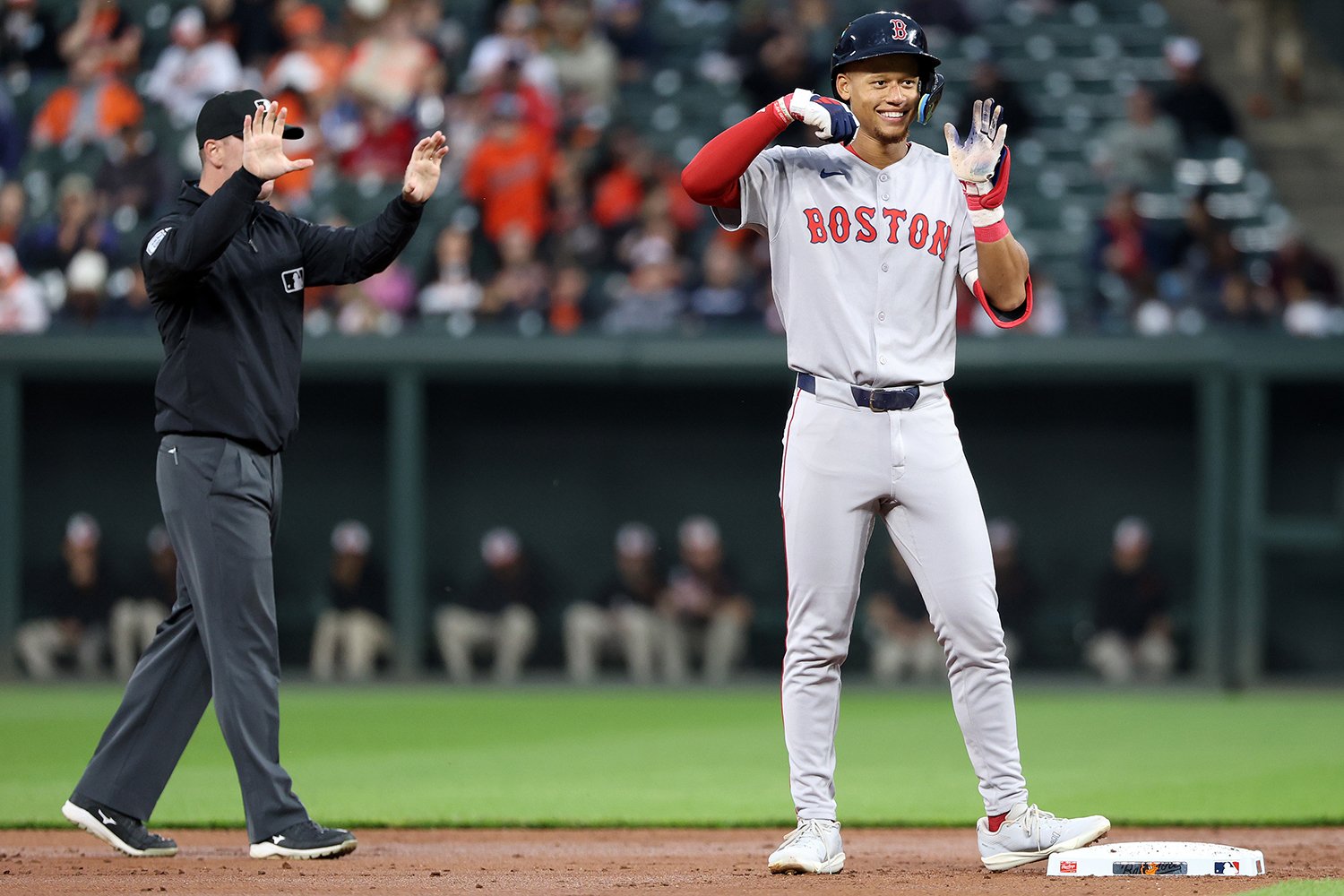 The Boston Red Sox have only played 10 games in the 2025 season, and Kristian Campbell is already cooking. According to Elias Sports, Campbell is the first player in Red Sox history to record over 10 hits, more than six extra-base hits, and four walks in his first seven career games. Campbell's four doubles, two home runs, and eight walks all rank second on the team. His 0.7 fWAR ranks seventh among all position players. Campbell’s hot bat and ability to play multiple positions has helped cement his status as an everyday player for the Red Sox. Most coverage on Campbell discusses his power, exit velocity, and bat speed, but his sprint speed (28.0 feet per second, 80th percentile) is underrated. He's swiped one bag thus far and the athletic Red Sox lead the American League with 14 stolen bases. As the season progresses, Campbell's absurd 207 wRC+ will come down to earth. With only 10 games under his belt, Campbell’s defensive metrics aren’t substantial yet. However, he’s handled moving between second base to left field well. His arm is his weakest tool, but you don’t need a powerful throwing arm as a second baseman. More on Campbell’s power later. I would argue that there is an sixth tool for assessing a player's potential to succeed in the major leagues: plate discipline. While the classic five tools can be developed through training, plate discipline is a skillset that’s much harder to improve. Pitch recognition is a critical component of plate discipline. If a batter can’t identify pitches, they’ll make bad swing decisions, limiting their ability to make contact with the ball. Hitters with poor plate discipline like Ceddanne Rafaela strike out more. Conversely, hitters with elite plate discipline post lower whiff, chase, and strikeout rates, and have higher on-base percentages. If a player recognizes the specific pitches and their trajectory, they can modify their swing and adjust their bat path to make contact with the ball. They also can identify deceptive pitches that end up outside of the zone, thus improving their overall batting metrics. Throughout his baseball career, Campbell has displayed tremendous plate discipline. In high school, he struck out just 16 times in 155 PAs (10.3%) between his junior and senior years. As an under-the-radar redshirt freshman at Georgia Tech, Campbell ran a 7.8% rate, striking out just 17 times in 45 games. In two minor league seasons, he ran a 20.1% strikeout rate. Before the 2024 minor league season, preliminary scouting reports referenced Campbell’s smart swing decisions, bat-to-ball skills, and low strikeout rate. Power, notably, was excluded as Campbell only hit two home runs during his college career. In his MLB Draft 2023 Report card, Keith Law wrote the following about Campbell: “He was very tough to strike out, whiffing just under 8 percent of the time this year, but hits the ball on the ground way too often and has a short swing that isn’t conducive to harder contact.” The Red Sox got Campbell in a weighted bat program to improve his power, and they tweaked his batting stance and swing path to generate lift. These changes had an immediate effect on Campbell’s performance. He knocked a total of 20 home runs in his first full minor league season, starting in Single A+ with a brief stint in Double-A before being promoted to Triple-A in August 2024. Campbell’s hitting a variety of pitches. Many rookies typically deal with growing pains at the major league level, but Campbell hit his first home run (112.2 mph EV, 431 ft, HR in 29/30 parks) in his third game. Less than a week later, in the final game of the series against the Orioles, Campbell came up to bat in the top of the second inning with Wilyer Abreu on first base. Orioles pitcher Charlie Morton initially threw him a curveball that clipped the high inside corner of the strike zone and Campbell ducked out of the way of the pitch. Four pitches later, he launched the ball to the left field bleachers (104.1 mph EV, 388 ft, HR in 30/30 parks). Last Thursday was my first time seeing Campbell play in-person. Even now, he resembles a veteran at the plate. He has better plate discipline than most established major leaguers. He's composed, doesn’t get flustered easily, works the count, and adjusts his swing between pitches. Earlier this week, Mike Petriello dived into Campbell’s stats and noted, “You can feel confident that you know a hitter’s bat speed after only about six or seven swings.” Campbell’s bat speed (73.5 mph average, 76th percentile) currently ranks 4th among Red Sox players. Following Campbell’s strong start, Petriello suggested improving bat speed could be the primary hitting revolution to monitor, unlike the emergence of torpedo bats. Bat speed still remains a relatively new metric to follow. Yet, Fangraphs is almost always ahead of the curve when it comes to analyzing new statistics. In March 2022, Justin Choi pointed out, “It’s common to regard bat-to-ball skills and swing decisions as fundamentals. They’re what hitters must master before adding bat speed, suggesting a natural order of operations.” This has significant implications for scouts. Traditionally, players who can’t hit for power are often written off, limiting them to the role of contact hitters. According to Driveline: “Research by Dr. Alan Nathan demonstrates that for every 1 mph increase in bat speed, exit velocity increases by approximately 1.2 mph. This increase translates to an additional 4-7 feet of carry distance on perfectly hit balls, which can turn warning track outs into doubles or home runs.” Campbell follows the model of Justin Turner and Daniel Murphy, a player with elite bat-to-ball skills and smart swing decisions who successfully unlocked his ability to hit for power by improving his bat speed and launch angle. While he exemplifies the success of the Red Sox’s revamped hitting development program, Campbell is far from the only player benefitting. Last August, Roman Anthony launched a 458-foot home run with a 116 mph exit velocity. This was the hardest-hit ball across the entire organization in 2024, including the majors. Marcelo Mayer knocked a 115.2 mph double in Portland last year. With Anthony and Mayer are poised to make an impact sometime this season, the Red Sox will continue to reap the benefits of their new hitting development program. Power hitters are often recognized for their bat speeds and exit velocities rather than their defensive capabilities. Kristian Campbell, however, stands out not only for his impressive bat speed and exit velocities but also for his ability to play second base competently. At just 22 years old, Campbell is under contract through at least the 2032 season. As Campbell gains more confidence in each game he plays, his trajectory suggests that he’ll easily become a household name by the end of the season. Over the past year, various analysts have provided extensive coverage of the Red Sox player development overhaul. Read more at the following: With an awkward but powerful swing, Red Sox prospect Kristian Campbell is hitting rockets at Portland by Alex Speier Kristian Campbell: Baseball America’s Minor League Player of the Year by Geoff Pontes Fast-rising Red Sox prospect Kristian Campbell added ‘power,’ ‘bat speed’ by Christopher Smith How The Red Sox Overhauled Their Hitting Development Program In 2024 by Alex Speier How a Subtle Tweak Helped Kristian Campbell Become A Top MLB Prospect by J.J. Cooper Spring training: How Red Sox built MLB's best prospect trio by Jeff Passan
 -
Diving into Kristian Campbell's red-hot major-league debut. The Boston Red Sox have only played 10 games in the 2025 season, and Kristian Campbell is already cooking. According to Elias Sports, Campbell is the first player in Red Sox history to record over 10 hits, more than six extra-base hits, and four walks in his first seven career games. Campbell's four doubles, two home runs, and eight walks all rank second on the team. His 0.7 fWAR ranks seventh among all position players. Campbell’s hot bat and ability to play multiple positions has helped cement his status as an everyday player for the Red Sox. Most coverage on Campbell discusses his power, exit velocity, and bat speed, but his sprint speed (28.0 feet per second, 80th percentile) is underrated. He's swiped one bag thus far and the athletic Red Sox lead the American League with 14 stolen bases. As the season progresses, Campbell's absurd 207 wRC+ will come down to earth. With only 10 games under his belt, Campbell’s defensive metrics aren’t substantial yet. However, he’s handled moving between second base to left field well. His arm is his weakest tool, but you don’t need a powerful throwing arm as a second baseman. More on Campbell’s power later. I would argue that there is an sixth tool for assessing a player's potential to succeed in the major leagues: plate discipline. While the classic five tools can be developed through training, plate discipline is a skillset that’s much harder to improve. Pitch recognition is a critical component of plate discipline. If a batter can’t identify pitches, they’ll make bad swing decisions, limiting their ability to make contact with the ball. Hitters with poor plate discipline like Ceddanne Rafaela strike out more. Conversely, hitters with elite plate discipline post lower whiff, chase, and strikeout rates, and have higher on-base percentages. If a player recognizes the specific pitches and their trajectory, they can modify their swing and adjust their bat path to make contact with the ball. They also can identify deceptive pitches that end up outside of the zone, thus improving their overall batting metrics. Throughout his baseball career, Campbell has displayed tremendous plate discipline. In high school, he struck out just 16 times in 155 PAs (10.3%) between his junior and senior years. As an under-the-radar redshirt freshman at Georgia Tech, Campbell ran a 7.8% rate, striking out just 17 times in 45 games. In two minor league seasons, he ran a 20.1% strikeout rate. Before the 2024 minor league season, preliminary scouting reports referenced Campbell’s smart swing decisions, bat-to-ball skills, and low strikeout rate. Power, notably, was excluded as Campbell only hit two home runs during his college career. In his MLB Draft 2023 Report card, Keith Law wrote the following about Campbell: “He was very tough to strike out, whiffing just under 8 percent of the time this year, but hits the ball on the ground way too often and has a short swing that isn’t conducive to harder contact.” The Red Sox got Campbell in a weighted bat program to improve his power, and they tweaked his batting stance and swing path to generate lift. These changes had an immediate effect on Campbell’s performance. He knocked a total of 20 home runs in his first full minor league season, starting in Single A+ with a brief stint in Double-A before being promoted to Triple-A in August 2024. Campbell’s hitting a variety of pitches. Many rookies typically deal with growing pains at the major league level, but Campbell hit his first home run (112.2 mph EV, 431 ft, HR in 29/30 parks) in his third game. Less than a week later, in the final game of the series against the Orioles, Campbell came up to bat in the top of the second inning with Wilyer Abreu on first base. Orioles pitcher Charlie Morton initially threw him a curveball that clipped the high inside corner of the strike zone and Campbell ducked out of the way of the pitch. Four pitches later, he launched the ball to the left field bleachers (104.1 mph EV, 388 ft, HR in 30/30 parks). Last Thursday was my first time seeing Campbell play in-person. Even now, he resembles a veteran at the plate. He has better plate discipline than most established major leaguers. He's composed, doesn’t get flustered easily, works the count, and adjusts his swing between pitches. Earlier this week, Mike Petriello dived into Campbell’s stats and noted, “You can feel confident that you know a hitter’s bat speed after only about six or seven swings.” Campbell’s bat speed (73.5 mph average, 76th percentile) currently ranks 4th among Red Sox players. Following Campbell’s strong start, Petriello suggested improving bat speed could be the primary hitting revolution to monitor, unlike the emergence of torpedo bats. Bat speed still remains a relatively new metric to follow. Yet, Fangraphs is almost always ahead of the curve when it comes to analyzing new statistics. In March 2022, Justin Choi pointed out, “It’s common to regard bat-to-ball skills and swing decisions as fundamentals. They’re what hitters must master before adding bat speed, suggesting a natural order of operations.” This has significant implications for scouts. Traditionally, players who can’t hit for power are often written off, limiting them to the role of contact hitters. According to Driveline: “Research by Dr. Alan Nathan demonstrates that for every 1 mph increase in bat speed, exit velocity increases by approximately 1.2 mph. This increase translates to an additional 4-7 feet of carry distance on perfectly hit balls, which can turn warning track outs into doubles or home runs.” Campbell follows the model of Justin Turner and Daniel Murphy, a player with elite bat-to-ball skills and smart swing decisions who successfully unlocked his ability to hit for power by improving his bat speed and launch angle. While he exemplifies the success of the Red Sox’s revamped hitting development program, Campbell is far from the only player benefitting. Last August, Roman Anthony launched a 458-foot home run with a 116 mph exit velocity. This was the hardest-hit ball across the entire organization in 2024, including the majors. Marcelo Mayer knocked a 115.2 mph double in Portland last year. With Anthony and Mayer are poised to make an impact sometime this season, the Red Sox will continue to reap the benefits of their new hitting development program. Power hitters are often recognized for their bat speeds and exit velocities rather than their defensive capabilities. Kristian Campbell, however, stands out not only for his impressive bat speed and exit velocities but also for his ability to play second base competently. At just 22 years old, Campbell is under contract through at least the 2032 season. As Campbell gains more confidence in each game he plays, his trajectory suggests that he’ll easily become a household name by the end of the season. Over the past year, various analysts have provided extensive coverage of the Red Sox player development overhaul. Read more at the following: With an awkward but powerful swing, Red Sox prospect Kristian Campbell is hitting rockets at Portland by Alex Speier Kristian Campbell: Baseball America’s Minor League Player of the Year by Geoff Pontes Fast-rising Red Sox prospect Kristian Campbell added ‘power,’ ‘bat speed’ by Christopher Smith How The Red Sox Overhauled Their Hitting Development Program In 2024 by Alex Speier How a Subtle Tweak Helped Kristian Campbell Become A Top MLB Prospect by J.J. Cooper Spring training: How Red Sox built MLB's best prospect trio by Jeff Passan View full article
-
What can Baseball Savant's new batting stance metrics tell us about Rafael Devers' struggles to start the 2025 season. Last week, Baseball Savant released its newest feature. Fans can now explore a batting stance leaderboard that offers insights on batters’ positioning within the batter’s box. If you want to learn more, Mike Petriello wrote a solid overview of different batting stances across the league. If you're just focused on the Red Sox, you won't be surprised to learn that Rafael Devers, the Red Sox’s newly-minted designated hitter, has arguably the most extreme batting stance in all of baseball. He sets himself up by extending his right leg behind his body with his left leg slightly crouched. From the pitcher’s perspective, Devers’ body resembles the letter K. Pre-swing, Devers steps forward with his right leg, placing it closer to the front of the batter’s box. Thereafter, he rotates his hips and shoulders simultaneously. His hand movement follows a horizontal J shape, starting at eye level before coiling back and moving with his lower body. At the end of his swing, his bat rests on his right shoulder. This clip offers a slow-motion view of his swing from the open side. The separation of Devers’ hips and shoulders and his rapid barrel acceleration generate a ton of power. In 2024, his 52.6% hard-hit rate put him in the 95th percentile, and his average 93.2-mph exit velocity ranked in the 96th. It’s evident that Devers’ batting stance has changed from last season. He is standing farther back in the batter’s box, closer to the umpire. His right foot is now positioned almost outside of the batter's box and his stance angle increased from 67 degrees in 2024 to 77 degrees in 2025. Devers stance is so dramatically open that only one other player in baseball is within 30 degrees of him. From left to right, the images below show 2023, 2024, and 2025. Devers is also holding the bat significantly higher. Previously, he held the bat knob at eye level. Now, it’s high above his head. Despite the higher positioning of his hands, Devers’ swing length has decreased by 4 inches. Moreover, his average bat speed dropped from 72.5 mph in 2024 to 69.0 mph in 2025. There's a good reason for this: Devers has been behind on everything. Statcast measures bat speed at the moment the bat is closest to the ball, and the bat accelerates through the hitting zone. Because Devers is constantly getting beat, his bat speed is being measured deeper, when his bat hasn't gotten going yet. The chart below displays Devers’ batting stats and swing mechanics since 2023. Year Whiff% wRC+ Bat Speed Swing Length Stance Angle VBA 2023 26 124 73.4 7.5 53° Open 27.9° 2024 31 134 72.5 7.4 67° Open 27.1° 2025 71 -84 69 7 77° Open 26.7° Suffice it to say Devers’ batting adjustments haven’t helped him so far. He struck out 10 times over the first three games of the season, a new record, and added two more in the fourth game. As of Monday morning, he was tied for the highest strikeout rate in baseball. My biggest takeaway from his adjustments is the shift in his timing. A wider stance can help a batter generate more power with a longer swing, but it also increases the margin for error, requiring more movement to get into a hitting position, which could make it harder to adjust to offspeed pitches. With his right foot positioned farther back, Devers has been late on fastballs and looks like a pumpkin against offspeed pitches and breaking balls. Last year, Statcast had him worth 13 runs against fastballs, but in 2025, he's whiffed on 74% of them. Despite his rocky start, Devers remains an elite batter. He won't be down forever. He spent the offseason (and some of spring training) recovering from shoulder injuries and might just need more time to get comfortable at the plate. He's one of the game's best, most consistent hitters, and he's accustomed to making adjustments at the plate. In each of the past three seasons, the Red Sox have recorded winning records in the first half of the season and losing records in the second half. If anything, I’d welcome a slower start to the season if it means that the Red Sox will finish the season strong. It’s worth noting that four games is a tiny sample size. That said, in their first series against the Rangers, the Red Sox stranded 32 runners. With the exceptions of Wilyer Abreu and Kristian Campbell, they struck out 38 times in 110 at-bats, and put up a measly .118/.192/.136 slash line, according to Ian Browne. If the Red Sox are going to succeed, Devers will need to keep adjusting until he gets his timing back. View full article
-
Rafael Devers’ Batting Stance Is More Extreme; So Are His Struggles
Maddie Landis posted an article in Red Sox
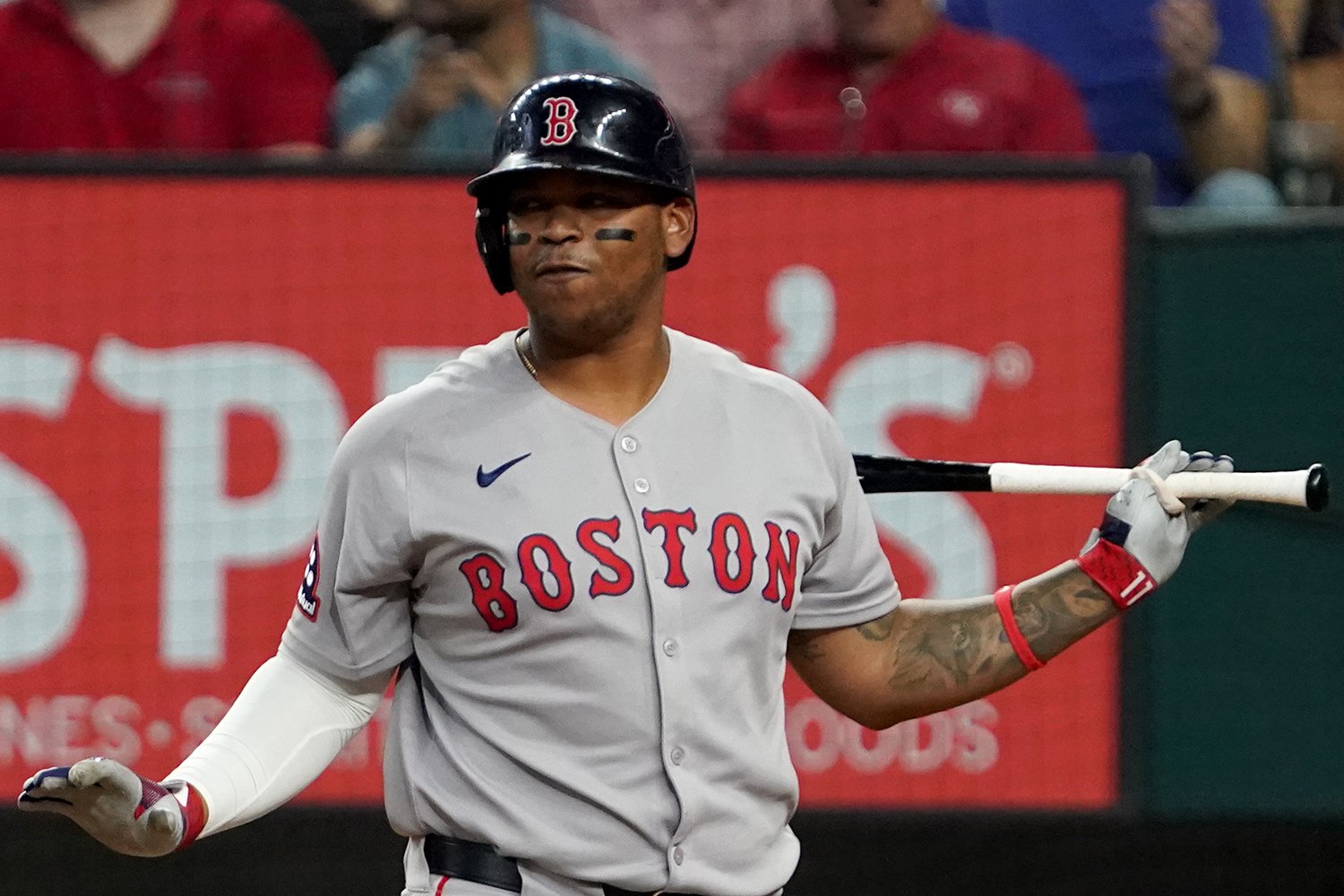 Last week, Baseball Savant released its newest feature. Fans can now explore a batting stance leaderboard that offers insights on batters’ positioning within the batter’s box. If you want to learn more, Mike Petriello wrote a solid overview of different batting stances across the league. If you're just focused on the Red Sox, you won't be surprised to learn that Rafael Devers, the Red Sox’s newly-minted designated hitter, has arguably the most extreme batting stance in all of baseball. He sets himself up by extending his right leg behind his body with his left leg slightly crouched. From the pitcher’s perspective, Devers’ body resembles the letter K. Pre-swing, Devers steps forward with his right leg, placing it closer to the front of the batter’s box. Thereafter, he rotates his hips and shoulders simultaneously. His hand movement follows a horizontal J shape, starting at eye level before coiling back and moving with his lower body. At the end of his swing, his bat rests on his right shoulder. This clip offers a slow-motion view of his swing from the open side. The separation of Devers’ hips and shoulders and his rapid barrel acceleration generate a ton of power. In 2024, his 52.6% hard-hit rate put him in the 95th percentile, and his average 93.2-mph exit velocity ranked in the 96th. It’s evident that Devers’ batting stance has changed from last season. He is standing farther back in the batter’s box, closer to the umpire. His right foot is now positioned almost outside of the batter's box and his stance angle increased from 67 degrees in 2024 to 77 degrees in 2025. Devers stance is so dramatically open that only one other player in baseball is within 30 degrees of him. From left to right, the images below show 2023, 2024, and 2025. Devers is also holding the bat significantly higher. Previously, he held the bat knob at eye level. Now, it’s high above his head. Despite the higher positioning of his hands, Devers’ swing length has decreased by 4 inches. Moreover, his average bat speed dropped from 72.5 mph in 2024 to 69.0 mph in 2025. There's a good reason for this: Devers has been behind on everything. Statcast measures bat speed at the moment the bat is closest to the ball, and the bat accelerates through the hitting zone. Because Devers is constantly getting beat, his bat speed is being measured deeper, when his bat hasn't gotten going yet. The chart below displays Devers’ batting stats and swing mechanics since 2023. Year Whiff% wRC+ Bat Speed Swing Length Stance Angle VBA 2023 26 124 73.4 7.5 53° Open 27.9° 2024 31 134 72.5 7.4 67° Open 27.1° 2025 71 -84 69 7 77° Open 26.7° Suffice it to say Devers’ batting adjustments haven’t helped him so far. He struck out 10 times over the first three games of the season, a new record, and added two more in the fourth game. As of Monday morning, he was tied for the highest strikeout rate in baseball. My biggest takeaway from his adjustments is the shift in his timing. A wider stance can help a batter generate more power with a longer swing, but it also increases the margin for error, requiring more movement to get into a hitting position, which could make it harder to adjust to offspeed pitches. With his right foot positioned farther back, Devers has been late on fastballs and looks like a pumpkin against offspeed pitches and breaking balls. Last year, Statcast had him worth 13 runs against fastballs, but in 2025, he's whiffed on 74% of them. Despite his rocky start, Devers remains an elite batter. He won't be down forever. He spent the offseason (and some of spring training) recovering from shoulder injuries and might just need more time to get comfortable at the plate. He's one of the game's best, most consistent hitters, and he's accustomed to making adjustments at the plate. In each of the past three seasons, the Red Sox have recorded winning records in the first half of the season and losing records in the second half. If anything, I’d welcome a slower start to the season if it means that the Red Sox will finish the season strong. It’s worth noting that four games is a tiny sample size. That said, in their first series against the Rangers, the Red Sox stranded 32 runners. With the exceptions of Wilyer Abreu and Kristian Campbell, they struck out 38 times in 110 at-bats, and put up a measly .118/.192/.136 slash line, according to Ian Browne. If the Red Sox are going to succeed, Devers will need to keep adjusting until he gets his timing back.

