


Maddie Landis
-
Posts
268 -
Joined
Content Type
Profiles
Boston Red Sox Videos
2026 Boston Red Sox Top Prospects Ranking
Boston Red Sox Free Agent & Trade Rumors, Notes, & Tidbits
Guides & Resources
2025 Boston Red Sox Draft Pick Tracker
News
2026 Boston Red Sox Draft Tracker: Picks & Bonuses
Forums
Blogs
Events
Store
Downloads
Gallery
Everything posted by Maddie Landis
-
Baseball analytics have evolved significantly since Bill James’ mail-order Baseball Abstracts. With technology producing up to seven terabytes of data per game, new data is readily accessible to teams. The influx of data and analytics has altered baseball, allowing players and fans to gain better insight into the game. Data helps players identify their strengths, examine weaknesses, and adjust their training regimes appropriately. Managers possess more knowledge and can adjust their in-game strategies. Baseball analytics have evolved significantly since Bill James’ mail-order Baseball Abstracts. With technology producing up to seven terabytes of data per game, new data is readily accessible to teams. The influx of data and analytics has altered baseball, allowing players and fans to gain better insight into the game. Data helps players identify their strengths, examine weaknesses, and adjust their training regimes appropriately. Managers possess more knowledge and can adjust their in-game strategies. For example, on June 16th, 2024, the Red Sox took advantage of Yankees’ catcher Jose Trevino, who ranks in the 5th percentile for Caught Stealing Above Average and set a franchise record with nine stolen bases in a single game. They established a precedent for other teams to follow, and in a subsequent game, the Orioles stole four bases with Trevino behind the plate. Pitching technology has grown faster than batter technology. Trackman, MLB’s first ball-tracking system, debuted in 2015. Five years later, the league implemented the Hawk-Eye system. Previously unidentifiable metrics such as release point, extension, pitch velocity, and spin rate have helped pitchers elevate their game. Pitchers have welcomed advanced analytics with open arms, implementing improved mechanics and tinkering with pitches in pitching labs. At the detriment of offensive production, pitch velocity has increased dramatically over the past two decades. Twenty years ago, the league yielded a .264 batting average. Since then, it plummeted to a .243 average in 2024. Strikeouts are also on the rise. The league average strikeout rate jumped from 16.5% in 2000 to 22.6% almost a decade later. Red Sox beat writers posted several videos of players practicing during spring training. The following video (courtesy of Pete Abraham) shows a 9-Hole, a Designated Hitter®, a portable Trackman system, and several Edgertronic cameras. The 9-hole and Designated Hitter are more traditional pieces of equipment that help pitchers with their aim, while the latter stimulates pitching to a live batter. As its name suggests, the Trackman System is a ball-tracking technology that uses a Doppler radar to record advanced metrics, including pitch speed, spin rate, spin efficiency, release point, pitch location, bat speed, exit velocity, and launch angle. According to Trackman’s website, a Trackman B1 starts at $18,995. High-speed Edgertronic cameras can shoot up to 17,000 frames per second. Driveline lists an Edgertronic Baseball Development camera kit at $8,999. These cameras provide a biomechanical analysis of a pitcher or batter’s form. In a Foul Territory episode from January 2024, Adam Ottavino discussed using an Edgertronic camera to improve his pitches. The following video from the Red Sox shows Tanner Houck, Brennan Bernardino, and Zack Kelly pitching with an Edgertronic camera behind them and an image overlay of their pitch delivery. Jen McCaffrey posted a video of Garrett Crochet pitching to Roman Anthony. Trackman data is projected on the Fenway South scoreboard following Crochet’s pitches. It’s hard to identify metrics on the scoreboard, so I attached a similar photo taken during a Cincinnati Reds batting practice in April 2024. The scoreboard shows exit velocity, hit distance, and hit spin rate. Another piece of equipment to note is the Trajekt Arc. Self-described as “the greatest hitting experience in the world,” the technology projects a selectable pitcher on a video screen. Then, a pitching machine replicates the selected pitcher’s movement. The Red Sox have three Trajekt Arc machines throughout their system. In the middle of the 2022 season, the organization installed a Trajekt Arc inside the home batting cage at Fenway Park. The following spring, one was placed in Fenway South. Additionally, Polar Park houses a Trajekt Arc. The Red Sox pair their Trajekt system with HitTrax, a simulator that measures exit velocity, launch angle, and other advanced batted ball metrics. See below for a video of the Trajekt machine in action: What’s the price of a Trajekt system and a HitTrax machine? The Associated Press reports, "Each machine costs $15,000 to $20,000 a month as part of a three-year lease”. A HitTrax Pro will only set you back $14,900. Last spring, HitTrax posted a video of Triston Casas using their technology. HitTrax Baseball & Softball (@hittraxofficial) • Instagram reel WWW.INSTAGRAM.COM 83 likes, 4 comments - hittraxofficial on February 13, 2024: "Red Sox first baseman, Triston Casas gearing up for the season at @thesystem8!! We can’t wait to see him in action during Spring... How can players use this technology to combat the ongoing pitching evolution? Let’s look at Jarren Duran, for instance. Last year, he struggled against changeups, yielding a 72 wRC+ and 25.0% K-rate. Cole Ragans has a dominant changeup, and Duran has struggled against it. Before facing Ragans in a Royals game, Duran could use a Trajekt machine to work on his approach versus Ragans’ changeups. Evolving technology helps players evaluate their skill sets and identifies areas of improvement, and the Red Sox have made substantial investments in these advancements. The organization is reaping the benefits of effectively utilizing these tools by pairing Trajekt, Edgertronic, and other cutting-edge technology with former Driveline personnel’s expertise. After revamping their minor league hitting development program, the Red Sox farm system ranks number one according to Baseball America. Keith Law placed them as the second-best farm system behind the Mariners. Investing in the major league roster is as important as building farm system depth. However, leveraging advanced technology to maximize players' capabilities and develop internal resources with a steady talent pipeline reduces the reliance on costly, aging free-agent acquisitions. During Chaim Bloom's era, fans complained that he neglected the major league roster. Bloom’s tenure will be viewed negatively depending on who you ask, but he poached several Driveline employees to join the Red Sox and modernized the team’s outdated analytics/research department. Craig Breslow inherited Bloom’s overhauled analytics department, hired additional Driveline personnel, and added impact pieces to the major league roster. The Red Sox currently stand in a good position with their state-of-the-art technology infrastructure, robust farm system, and young talent. View full article
-
Triston Casas and the Price of Bat Speed
Maddie Landis replied to Maddie Landis's topic in Talk Sox Front Page News
The same goes for Yoshida. His right arm holds the bat at the end of his swing so his right shoulder, which underwent a labrum repair, bears the follow-through’s force. (Devers’ issues have primarily been with his left shoulder.) -
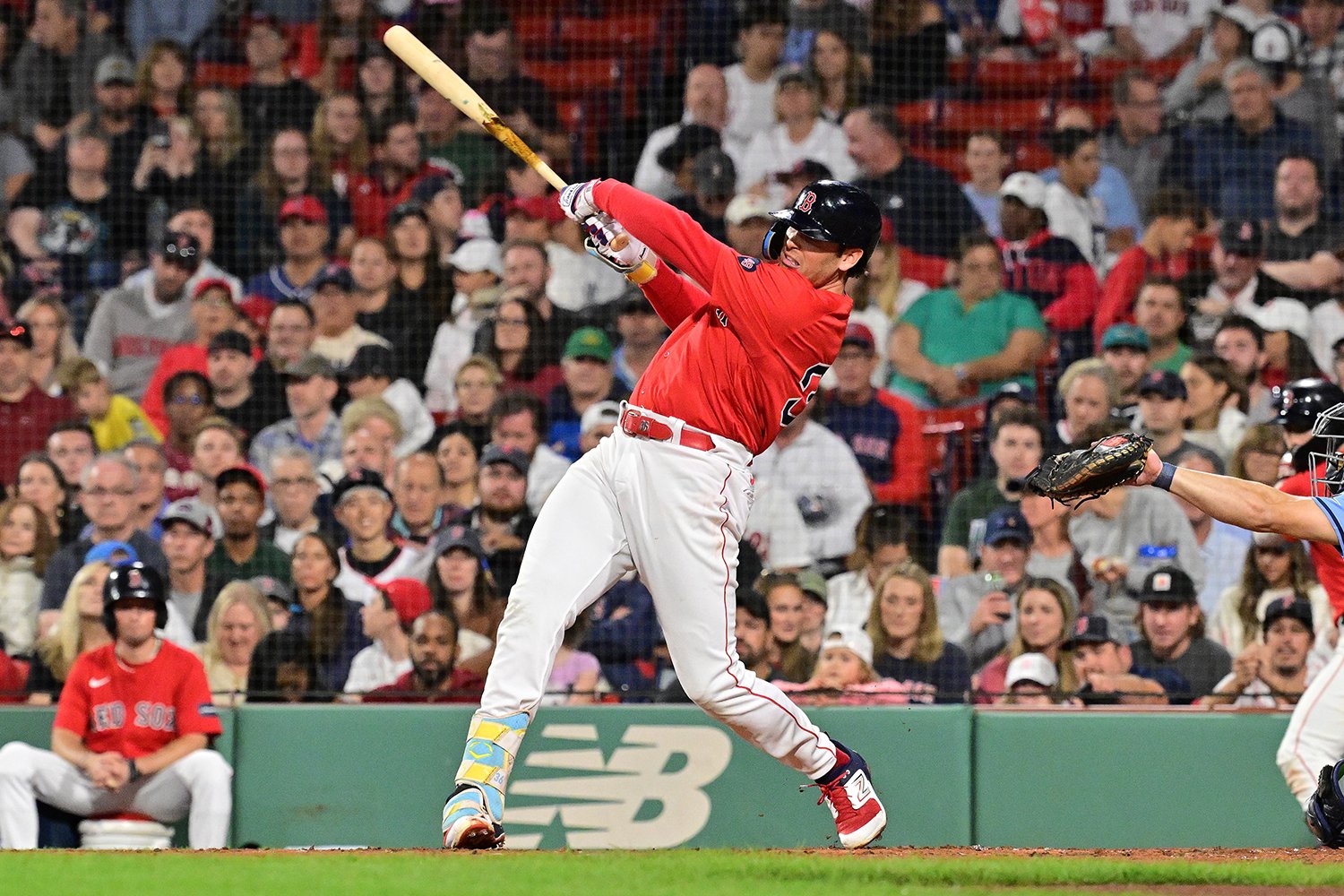 Last May, Major League Baseball introduced bat speed metrics for the 2024 season to Baseball Savant. Like exit velocity, bat speed is another data point for evaluation, and this week, Baseball Savant unveiled bat speed metrics for the second half of the 2023 season. Triston Casas’ average bat speed ranked in the 94th percentile (75.8 mph) in 2023 but dropped slightly in 2024 (74.6 mph). Casas’ modest bat speed decline isn’t surprising. On April 20, 2024, he sustained a left rib cartilage tear, later describing his pain, “[The doctor] pretty much chalked it up to me being so big, rotating so fast, so many times that I created a car crash within my body.” It’s commendable that Casas recovered from a dramatic injury in four months and improved his bat speed upon his return. His injury was a primary factor in his bat speed decline, but he made a few adjustments. A baseball swing is a kinetic chain transfer. Various body parts work together to generate energy to hit a baseball. Power flows from the ground up, starting in the pelvis and transitioning to the hips, torso, arms, hands, and its final destination - the bat. The kinetic chain creates power. Upon the bat’s contact with the ball, the ball goes boom. Efficient swings produce the most power. Sox fans are aware that Casas frequently adjusts his approach/stance at the plate in between pitches. On a two-strike count, he adopts a wider stance. In a 2023 FanGraphs interview, he discussed his different swings: For the sake of this article, I'll be analyzing Casas' swing in instances where he hit a home run. Pre-swing, he looks cool and collected. Casas utilizes a bottom-hand-dominant grip directly above the bat knob with a small leg kick. Tension explodes upon contact with the ball. His shoulders rotate abruptly and his wrists snap in his follow-through. Speaking of which, Casas’ follow-through is violent. Check out his first home run from last year. His hips and shoulders rotate hard enough that he's forced to catch himself with his left leg. Because of this, his abdomen bears the load of his powerful swing. The force of his swing brings the bat to his shoulders, coiling his abdomen before dropping it at his hips. You see this violent follow-through again before his injury in April. Vertical bat angle (VBA) refers to the angle of the bat, relative to the ground, at the moment of contact. VBA correlates to launch angle, so a swing with a higher VBA will usually yield a higher launch angle, because the bat connects with the ball on an upward trajectory. (For more on VBA, read this in-depth article from Driveline Baseball.) Higher launch angles result in fly balls so a hitter’s ideal launch angle varies on their exit velocity and individual power. Casas’ VBA has jumped 3.9 degrees since his major league debut. 2022: VBA: 33.1 (.197/.358/.408, 5 HR, 12 RBI, 20 wRC+, 24.2 K%) 2023 VBA: 36.1 (.263/.367/.490, 24 HR, 65 RBI, 139 wRC+, 25.1% K%) 2024 VBA: 37.0 (.241/.337/.462, 13 HR, 32 RBI, 119 wRC+, 31.7% K%) Proper mechanics ensure the most effective power generation. Making contact with the ball at a degree forces Casas’ abdomen to carry the force of his swing. The gradual increase of Casas’ VBA, combined with the inefficient energy transfer in his swing indicates his injury was a ticking time bomb. In the Statcast era, it’s easy to get caught up in minute details like bat speed, exit velocity, and VBA. The primary question remains - did Casas’ drop in bat speed affect his performance? Let’s take a closer look at his stats. Month Bat Speed HR K% BB% wRC+ HH% EV Jul 2023 75.9 7 24.7 14.3 216 48.9 91.9 Aug 2023 75.9 5 22 14 145 44.4 90.4 Sep 2023 75.7 3 26.3 14 132 44.1 88.2 Apr 2024 74.4 6 28.9 13.3 132 42.3 89.9 Jun 2024 72.7 0 66.7 33.3 40 Aug 2024 74.4 2 33.9 8.1 110 37.1 89.3 Sep 2024 75 5 31.8 13.6 114 54.2 91.2 Note that Casas played just one game in June 2024, so those cells aren't included in the color-coding. These don’t metrics highlight any significant drop in his production. From July 2023 to September 2024, his average wRC+ was 127. He grades above the league average in exit velocity and hard-hit rate so his overall power wasn’t affected by the reduction in bat speed. Moreover, Casas’ injury didn’t happen suddenly. His cartilage gradually deteriorated until it ultimately tore, meaning he played while dealing with pain in April, during which time he posted a 132 wRC+ and hit six home runs. In September 2024, his bat speed improved to 75 mph, while his VBA dropped to 34.8 degrees, contributing to a significant increase in his fly ball rate (28.6% to 47.9%) and hard-hit rate (22.9% to 41.7%). Casas hit three home runs in his first three at-bats against the Minnesota Twins on September 22, 2024. Compared to earlier in the season, his follow-through appears to be smoother and he’s not stumbling in the batter’s box anymore. Bat speed is just another statistic to measure a hitter’s performance. It remains a relatively new metric for analysis, so more information will follow as additional data becomes available. With sprint speed, pitch velocity, exit velocity, and now bat speed, chasing speed is the new trend in contemporary baseball. The Red Sox farm system overhauled its hitting development program in 2024, placing a greater significance onbat speed, bat-to-ball skills, swing decisions and ball flight . They now rank No. 1 in Baseball America’s Farm System rankings. A pitchers have continued chasing velocity, UCL injurieshave continued to rise. Year-round baseball, with its repetitive motions, puts strain on an athlete’s body. Players push themselves to the human body’s maximum limit, sometimes hurting themselves in the process. Freddie Freeman played through the 2024 World Series with a sprained ankle and broken rib cartilage. Last year, Braves catcher Sean Murphy faced a setback with a strained oblique and it negatively affected his offensive production. At times, Triston Casas appeared to be in noticeable pain before he was officially placed on the injured list. As new metrics spark the demand for “peak” performance, the wear and tear on baseball players has never been more drastic.
 -
Hitters and instructors have gone all-in on chasing bat speed. Now that Statcast allows us to quantify it, we'll be able to determine its value. Hitters and instructors have gone all-in on chasing bat speed. Now that Statcast allows us to quantify it, we'll be able to determine its value. Last May, Major League Baseball introduced bat speed metrics for the 2024 season to Baseball Savant. Like exit velocity, bat speed is another data point for evaluation, and this week, Baseball Savant unveiled bat speed metrics for the second half of the 2023 season. Triston Casas’ average bat speed ranked in the 94th percentile (75.8 mph) in 2023 but dropped slightly in 2024 (74.6 mph). Casas’ modest bat speed decline isn’t surprising. On April 20, 2024, he sustained a left rib cartilage tear, later describing his pain, “[The doctor] pretty much chalked it up to me being so big, rotating so fast, so many times that I created a car crash within my body.” It’s commendable that Casas recovered from a dramatic injury in four months and improved his bat speed upon his return. His injury was a primary factor in his bat speed decline, but he made a few adjustments. A baseball swing is a kinetic chain transfer. Various body parts work together to generate energy to hit a baseball. Power flows from the ground up, starting in the pelvis and transitioning to the hips, torso, arms, hands, and its final destination - the bat. The kinetic chain creates power. Upon the bat’s contact with the ball, the ball goes boom. Efficient swings produce the most power. Sox fans are aware that Casas frequently adjusts his approach/stance at the plate in between pitches. On a two-strike count, he adopts a wider stance. In a 2023 FanGraphs interview, he discussed his different swings: For the sake of this article, I'll be analyzing Casas' swing in instances where he hit a home run. Pre-swing, he looks cool and collected. Casas utilizes a bottom-hand-dominant grip directly above the bat knob with a small leg kick. Tension explodes upon contact with the ball. His shoulders rotate abruptly and his wrists snap in his follow-through. Speaking of which, Casas’ follow-through is violent. Check out his first home run from last year. His hips and shoulders rotate hard enough that he's forced to catch himself with his left leg. Because of this, his abdomen bears the load of his powerful swing. The force of his swing brings the bat to his shoulders, coiling his abdomen before dropping it at his hips. You see this violent follow-through again before his injury in April. Vertical bat angle (VBA) refers to the angle of the bat, relative to the ground, at the moment of contact. VBA correlates to launch angle, so a swing with a higher VBA will usually yield a higher launch angle, because the bat connects with the ball on an upward trajectory. (For more on VBA, read this in-depth article from Driveline Baseball.) Higher launch angles result in fly balls so a hitter’s ideal launch angle varies on their exit velocity and individual power. Casas’ VBA has jumped 3.9 degrees since his major league debut. 2022: VBA: 33.1 (.197/.358/.408, 5 HR, 12 RBI, 20 wRC+, 24.2 K%) 2023 VBA: 36.1 (.263/.367/.490, 24 HR, 65 RBI, 139 wRC+, 25.1% K%) 2024 VBA: 37.0 (.241/.337/.462, 13 HR, 32 RBI, 119 wRC+, 31.7% K%) Proper mechanics ensure the most effective power generation. Making contact with the ball at a degree forces Casas’ abdomen to carry the force of his swing. The gradual increase of Casas’ VBA, combined with the inefficient energy transfer in his swing indicates his injury was a ticking time bomb. In the Statcast era, it’s easy to get caught up in minute details like bat speed, exit velocity, and VBA. The primary question remains - did Casas’ drop in bat speed affect his performance? Let’s take a closer look at his stats. Month Bat Speed HR K% BB% wRC+ HH% EV Jul 2023 75.9 7 24.7 14.3 216 48.9 91.9 Aug 2023 75.9 5 22 14 145 44.4 90.4 Sep 2023 75.7 3 26.3 14 132 44.1 88.2 Apr 2024 74.4 6 28.9 13.3 132 42.3 89.9 Jun 2024 72.7 0 66.7 33.3 40 Aug 2024 74.4 2 33.9 8.1 110 37.1 89.3 Sep 2024 75 5 31.8 13.6 114 54.2 91.2 Note that Casas played just one game in June 2024, so those cells aren't included in the color-coding. These don’t metrics highlight any significant drop in his production. From July 2023 to September 2024, his average wRC+ was 127. He grades above the league average in exit velocity and hard-hit rate so his overall power wasn’t affected by the reduction in bat speed. Moreover, Casas’ injury didn’t happen suddenly. His cartilage gradually deteriorated until it ultimately tore, meaning he played while dealing with pain in April, during which time he posted a 132 wRC+ and hit six home runs. In September 2024, his bat speed improved to 75 mph, while his VBA dropped to 34.8 degrees, contributing to a significant increase in his fly ball rate (28.6% to 47.9%) and hard-hit rate (22.9% to 41.7%). Casas hit three home runs in his first three at-bats against the Minnesota Twins on September 22, 2024. Compared to earlier in the season, his follow-through appears to be smoother and he’s not stumbling in the batter’s box anymore. Bat speed is just another statistic to measure a hitter’s performance. It remains a relatively new metric for analysis, so more information will follow as additional data becomes available. With sprint speed, pitch velocity, exit velocity, and now bat speed, chasing speed is the new trend in contemporary baseball. The Red Sox farm system overhauled its hitting development program in 2024, placing a greater significance onbat speed, bat-to-ball skills, swing decisions and ball flight . They now rank No. 1 in Baseball America’s Farm System rankings. A pitchers have continued chasing velocity, UCL injurieshave continued to rise. Year-round baseball, with its repetitive motions, puts strain on an athlete’s body. Players push themselves to the human body’s maximum limit, sometimes hurting themselves in the process. Freddie Freeman played through the 2024 World Series with a sprained ankle and broken rib cartilage. Last year, Braves catcher Sean Murphy faced a setback with a strained oblique and it negatively affected his offensive production. At times, Triston Casas appeared to be in noticeable pain before he was officially placed on the injured list. As new metrics spark the demand for “peak” performance, the wear and tear on baseball players has never been more drastic. View full article
-
Red Sox 2025 Spring Training Newbies: How'd They Get Here?
Maddie Landis posted an article in Red Sox
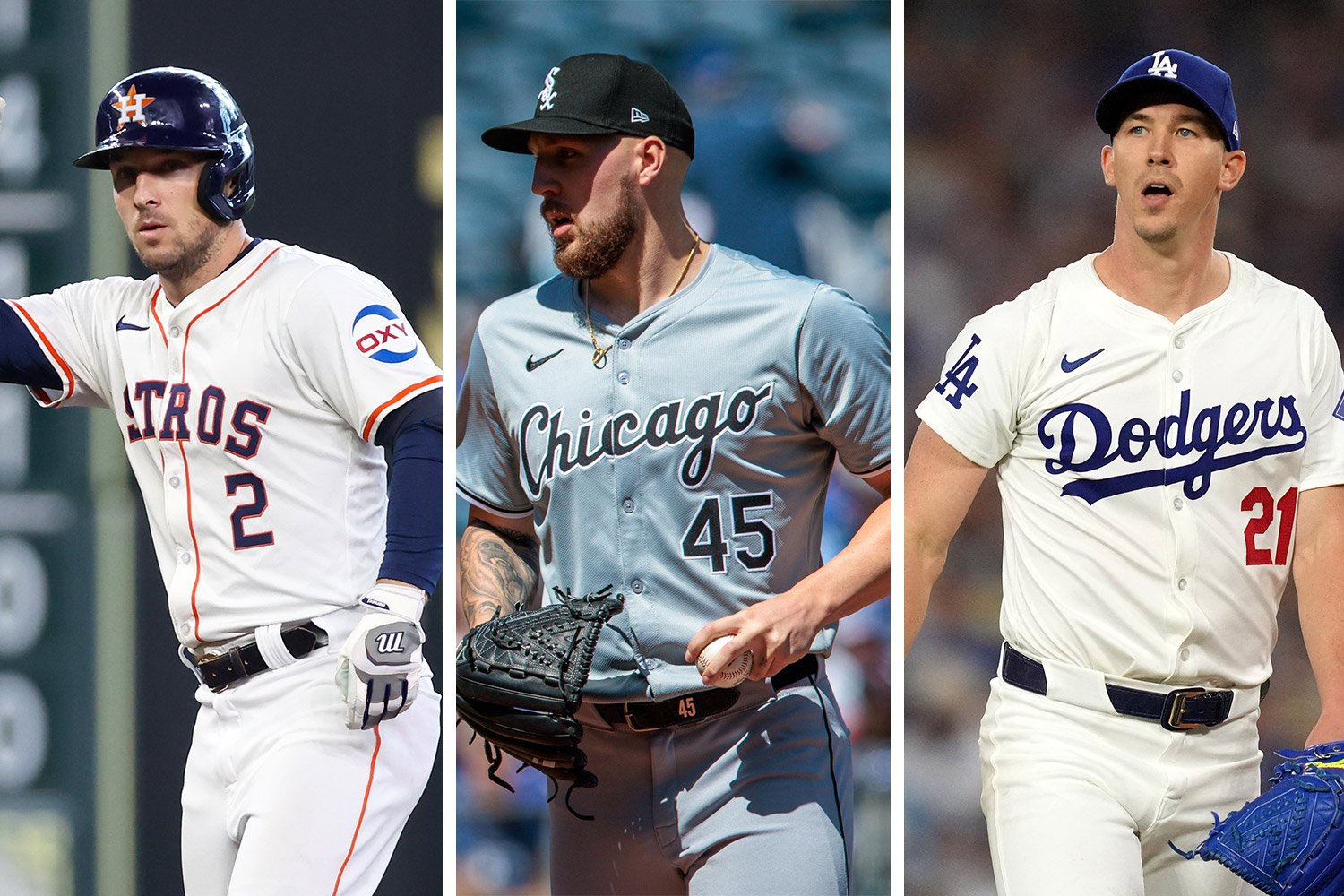 Baseball is back! Pitchers and catchers have arrived in Fort Myers. The Red Sox have had one of the strongest offseasons in the American League and acquired several players. Here’s a quick guide to the new faces in the organization. Starting Pitchers LHP Garrett Crochet How they were acquired: On December 11th, 2024, the Red Sox traded Kyle Teel, Braden Montgomery, Chase Meidroth, and Wikelman Gonzalez to the Chicago White Sox for Garrett Crochet. Alex Cora provided a cheeky physical description of Crochet, "Big dude... Hopefully, Chris doesn’t take it personally, but he looks like Chris Sale, but stronger". Likelihood of staying: Crochet is under team control through the 2026 season. Since he joined the team, he’s been the subject of extension talks, but he recently articulated that he wants a full season under his belt before any potential extension. RHP Walker Buehler How they were acquired: The Red Sox signed free agent Walker Buehler to a one-year $21.05 million contract with incentives in December 2024. Buehler earned two World Series rings with the Los Angeles Dodgers and recorded the final out of the 2024 World Series. Likelihood of staying: Unless the Red Sox are playing poorly through the trade deadline, Buehler will remain a Red Sox for the season. LHP Patrick Sandoval How they were acquired: The Red Sox signed free agent Patrick Sandoval to a two-year $18.25 million contract in December 2024. Sandoval previously pitched for the Los Angeles Angels as a reliever before transitioning to a starter. He suffered from a season-ending UCL tear in June 2024 and is expected to return to the major league roster in the second half of the season. Likelihood of staying: Sandoval will probably stay with the team for the next two years. Since he’ll be returning from a major surgery, he has little to offer in trade value. RHP Yhoiker Fajardo How they were acquired: The Red Sox traded Cam Booser to the Chicago White Sox for Yhoiker Fajardo. Likelihood of staying: Fajardo, an 18-year-old pitching prospect, played in the Dominican Summer League last year. He’s a young player with no incentive to rush his development. Relief Pitchers RHP Matt McShane How they were acquired: The Red Sox traded Chase Shugart to the Pittsburgh Pirates for Matt McShane. McShane was a 13th-round 2024 draft pick and previously played college baseball for St. Joseph’s University. Likelihood of staying: Sox Prospects anticipates McShane will start the season in Low-A. LHP Aroldis Chapman How they were acquired: Aroldis Chapman signed a one-year $10.75 contract with the Red Sox. Likelihood of staying: Chapman is a veteran relief pitcher expected to be one of the core bullpen pieces for the season. RHP Joe Vogatsky How they were acquired: The Red Sox traded Emmanuel Valdez to the Pittsburgh Pirates for Joe Vogatsky, a former James Madison University relief pitcher. Likelihood of staying: Vogatsky was a late-round 2024 draft pick. He’s another young pitching prospect to bolster the team’s pitching depth - Sox Prospects projects he’ll make his organizational debut with the Single-A Salem Red Sox. LHP Jovani Morán How they were acquired: The Red Sox traded Mickey Gaspar to the Minnesota Twins for Jovani Morán. Likelihood of staying: Morán is a relief pitcher who pitched 91 innings for the Twins in three seasons. He could be a candidate for one of the remaining bullpen spots, but he’ll likely be a depth piece in Triple-A if any relievers come down with an injury. Position Players C Seby Zavala How they were acquired: Seby Zavala signed a minor-league contract with the Red Sox. He previously played for the Arizona Diamondbacks, Seattle Mariners, and Chicago White Sox. Likelihood of staying: Zavala is one of the three catchers the Red Sox acquired after Kyle Teel was traded to the White Sox. He’s another positional depth piece that the Red Sox can turn to in an emergency. C Carlos Narváez How they were acquired: The Red Sox traded Elmer Rodriguez-Cruz and Future Considerations to the New York Yankees for Carlos Narvaez. Likelihood of staying: Narváez had a brief cup of coffee in the majors last season but was blocked by Austin Wells. During spring training, Zavala, Narváez, and Blake Sabol will fight for the backup catcher spot. UTL Abraham Toro How they were acquired: Abraham Toro signed a minor-league contract with the Red Sox. Likelihood of staying: Toro is a utility infielder who previously played for the Houston Astros, Milwaukee Brewers, and most recently, the Athletics. Toro is yet another minor-league depth piece. C Blake Sabol How they were acquired: The Red Sox acquired Blake Sabol from the San Francisco Giants for international bonus pool space. Likelihood of staying: Sabol is a catcher and an outfielder, albeit a left-handed hitter. As mentioned, he’s another depth piece for the team and will be battling for the backup catcher position. 2B Alex Bregman How they were acquired: Alex Bregman signed with the Red Sox on February 12th, 2025. Likelihood of staying: Bregman has two opt-outs in his contract, so he could leave after one season with the Red Sox to sign a higher, long-term deal with another team. Craig Breslow’s niche is finding obscure pitching prospects, and it’ll be interesting to follow Fajardo, McShane, Vogatsky, and Morán’s development as they work their way up the Red Sox’s farm system. Farm system depth is just as important as depth on the 40-man roster. Post-Bregman signing, it’s apparent that Breslow found a balance for both. Bregman shores up the infield defense and doesn’t put immediate pressure on Kristian Campbell and the other young guys to start producing immediately. Rafael Devers had Xander Bogaerts to mentor him, Dustin Pedroia took Mookie Betts under his wing, and now Kristian Campbell and Marcelo Mayer can turn to Alex Bregman. Position players will host their first workout on February 17th, and the Red Sox will play their first spring training game against the Northeastern Huskies on February 21st. Barring any additional last-minute moves, these are the newcomers. Welcome to the Red Sox!
 -
Baseball is back! Pitchers and catchers have arrived in Fort Myers. The Red Sox have had one of the strongest offseasons in the American League and acquired several players. Here’s a quick guide to the new faces in the organization. Baseball is back! Pitchers and catchers have arrived in Fort Myers. The Red Sox have had one of the strongest offseasons in the American League and acquired several players. Here’s a quick guide to the new faces in the organization. Starting Pitchers LHP Garrett Crochet How they were acquired: On December 11th, 2024, the Red Sox traded Kyle Teel, Braden Montgomery, Chase Meidroth, and Wikelman Gonzalez to the Chicago White Sox for Garrett Crochet. Alex Cora provided a cheeky physical description of Crochet, "Big dude... Hopefully, Chris doesn’t take it personally, but he looks like Chris Sale, but stronger". Likelihood of staying: Crochet is under team control through the 2026 season. Since he joined the team, he’s been the subject of extension talks, but he recently articulated that he wants a full season under his belt before any potential extension. RHP Walker Buehler How they were acquired: The Red Sox signed free agent Walker Buehler to a one-year $21.05 million contract with incentives in December 2024. Buehler earned two World Series rings with the Los Angeles Dodgers and recorded the final out of the 2024 World Series. Likelihood of staying: Unless the Red Sox are playing poorly through the trade deadline, Buehler will remain a Red Sox for the season. LHP Patrick Sandoval How they were acquired: The Red Sox signed free agent Patrick Sandoval to a two-year $18.25 million contract in December 2024. Sandoval previously pitched for the Los Angeles Angels as a reliever before transitioning to a starter. He suffered from a season-ending UCL tear in June 2024 and is expected to return to the major league roster in the second half of the season. Likelihood of staying: Sandoval will probably stay with the team for the next two years. Since he’ll be returning from a major surgery, he has little to offer in trade value. RHP Yhoiker Fajardo How they were acquired: The Red Sox traded Cam Booser to the Chicago White Sox for Yhoiker Fajardo. Likelihood of staying: Fajardo, an 18-year-old pitching prospect, played in the Dominican Summer League last year. He’s a young player with no incentive to rush his development. Relief Pitchers RHP Matt McShane How they were acquired: The Red Sox traded Chase Shugart to the Pittsburgh Pirates for Matt McShane. McShane was a 13th-round 2024 draft pick and previously played college baseball for St. Joseph’s University. Likelihood of staying: Sox Prospects anticipates McShane will start the season in Low-A. LHP Aroldis Chapman How they were acquired: Aroldis Chapman signed a one-year $10.75 contract with the Red Sox. Likelihood of staying: Chapman is a veteran relief pitcher expected to be one of the core bullpen pieces for the season. RHP Joe Vogatsky How they were acquired: The Red Sox traded Emmanuel Valdez to the Pittsburgh Pirates for Joe Vogatsky, a former James Madison University relief pitcher. Likelihood of staying: Vogatsky was a late-round 2024 draft pick. He’s another young pitching prospect to bolster the team’s pitching depth - Sox Prospects projects he’ll make his organizational debut with the Single-A Salem Red Sox. LHP Jovani Morán How they were acquired: The Red Sox traded Mickey Gaspar to the Minnesota Twins for Jovani Morán. Likelihood of staying: Morán is a relief pitcher who pitched 91 innings for the Twins in three seasons. He could be a candidate for one of the remaining bullpen spots, but he’ll likely be a depth piece in Triple-A if any relievers come down with an injury. Position Players C Seby Zavala How they were acquired: Seby Zavala signed a minor-league contract with the Red Sox. He previously played for the Arizona Diamondbacks, Seattle Mariners, and Chicago White Sox. Likelihood of staying: Zavala is one of the three catchers the Red Sox acquired after Kyle Teel was traded to the White Sox. He’s another positional depth piece that the Red Sox can turn to in an emergency. C Carlos Narváez How they were acquired: The Red Sox traded Elmer Rodriguez-Cruz and Future Considerations to the New York Yankees for Carlos Narvaez. Likelihood of staying: Narváez had a brief cup of coffee in the majors last season but was blocked by Austin Wells. During spring training, Zavala, Narváez, and Blake Sabol will fight for the backup catcher spot. UTL Abraham Toro How they were acquired: Abraham Toro signed a minor-league contract with the Red Sox. Likelihood of staying: Toro is a utility infielder who previously played for the Houston Astros, Milwaukee Brewers, and most recently, the Athletics. Toro is yet another minor-league depth piece. C Blake Sabol How they were acquired: The Red Sox acquired Blake Sabol from the San Francisco Giants for international bonus pool space. Likelihood of staying: Sabol is a catcher and an outfielder, albeit a left-handed hitter. As mentioned, he’s another depth piece for the team and will be battling for the backup catcher position. 2B Alex Bregman How they were acquired: Alex Bregman signed with the Red Sox on February 12th, 2025. Likelihood of staying: Bregman has two opt-outs in his contract, so he could leave after one season with the Red Sox to sign a higher, long-term deal with another team. Craig Breslow’s niche is finding obscure pitching prospects, and it’ll be interesting to follow Fajardo, McShane, Vogatsky, and Morán’s development as they work their way up the Red Sox’s farm system. Farm system depth is just as important as depth on the 40-man roster. Post-Bregman signing, it’s apparent that Breslow found a balance for both. Bregman shores up the infield defense and doesn’t put immediate pressure on Kristian Campbell and the other young guys to start producing immediately. Rafael Devers had Xander Bogaerts to mentor him, Dustin Pedroia took Mookie Betts under his wing, and now Kristian Campbell and Marcelo Mayer can turn to Alex Bregman. Position players will host their first workout on February 17th, and the Red Sox will play their first spring training game against the Northeastern Huskies on February 21st. Barring any additional last-minute moves, these are the newcomers. Welcome to the Red Sox! View full article
-
The Red Sox can't seem to wait for spring training to actually get started. The Red Sox can't seem to wait for spring training to actually get started. It’s typical for boomers to make an early appearance at events. (We all have that one relative who comes at least five hours early for holiday functions, right?) Millennial and Gen-Z workers are notoriously late to work, but this isn’t the case for young Red Sox players! The first workout for pitchers and catchers is scheduled for Wednesday, February 12, and many players have arrived at JetBlue Park earlier than expected. Last Friday, Pete Abraham reported, “Brayan Bello, Brennan Bernardino, Kutter Crawford, Garrett Crochet, Lucas Giolito, Romy Gonzalez, Justin Slaten, and Greg Weissert also were at Fenway South. In all, there were about 25 players on the field Friday.” Abraham lists an interesting mix of players, primarily made up of pitchers. The Red Sox are considering utilizing a six-man rotation for the start of the season. Bello, Crawford, Crochet, and Giolito are automatic fill-ins as rotation pitchers. Tanner Houck and Walker Buehler are the two remaining rotation pitchers who have not yet reported to Fort Myers. Cressey Sports Performance, located in Palm Springs, Florida, posted several videos of Tanner Houck training at their facilities over the offseason. The current 26-man roster rules stipulate that teams can carry a maximum of 13 pitchers from Opening Day through August 31 and the postseason. With Garrett Whitlock joining the bullpen, Liam Hendriks' return, the Aroldis Chapman and Justin Wilson signings, and Slaten’s strong rookie year performance, only two remaining bullpen spots remain, and Bernadino and Weissert will be competing for one of them. At the end of the 2024 season press conference, Alex Cora emphasized the need for stronger conditioning to manage the season workload, “We’ve been talking to the players….We’ve been talking about physicality….This is a good time for us to address that….September has been a challenge for us the last few years. Is it physical or mental? We’ll take a look at that.” He also referenced the Guardian’s bullpen as a framework to follow, “Take a look around the league right now and the best bullpens they got horses out there, you know? They’re freaking big and strong and they sustain the season. Look at Cleveland. All those guys they have 60-something appearances and they were really good”. (Note: Cora’s statement about the Guardians’ was made before their bullpen fell apart during the American League Championship Series.) Rafael Devers has been in Fort Myers since mid-January. Reporters also saw Kristian Campbell, Masataka Yoshida, and Romy Gonzalez in camp. As the team’s highest-paid player, Devers showing up to camp early encourages other players to do so. Kristian Campbell, Baseball America’s 2024 Minor League Player of the Year, will soon be battling for a spot on the Opening Day roster. Yoshida spent most of his offseason in Boston, away from his home country, recovering from labrum-repair surgery. Romy Gonzalez, who primarily was used as a utility platoon bat last season, is also vying for the starting second-base job. Competition breeds success. Given that players will be fighting for spots on the 26-man roster, they will be putting forth their best effort in spring training. Showing up for spring training early conveys a positive message. The players seem ready to get to work and are just as excited as the fans about the season's start. View full article
-
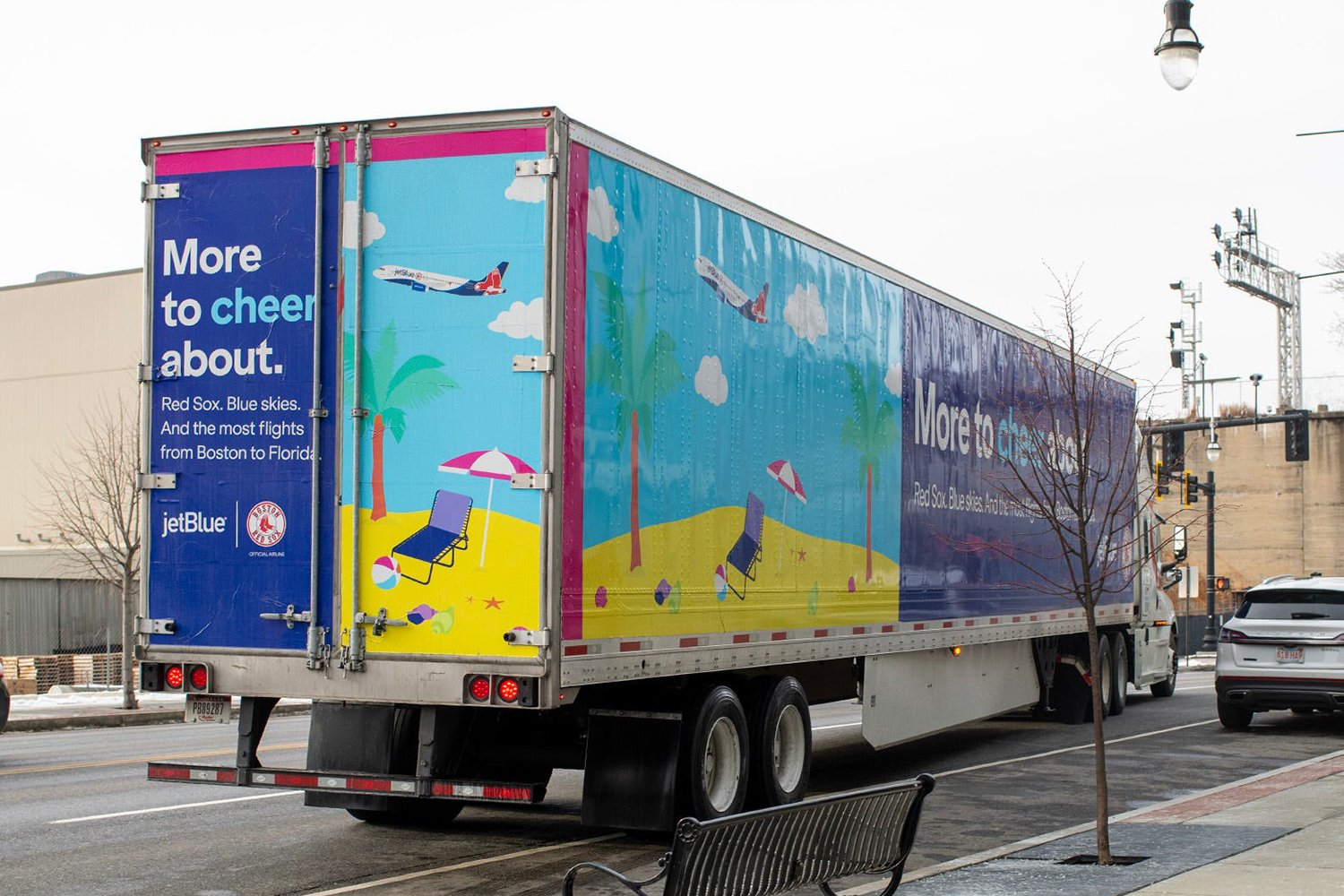 It’s typical for boomers to make an early appearance at events. (We all have that one relative who comes at least five hours early for holiday functions, right?) Millennial and Gen-Z workers are notoriously late to work, but this isn’t the case for young Red Sox players! The first workout for pitchers and catchers is scheduled for Wednesday, February 12, and many players have arrived at JetBlue Park earlier than expected. Last Friday, Pete Abraham reported, “Brayan Bello, Brennan Bernardino, Kutter Crawford, Garrett Crochet, Lucas Giolito, Romy Gonzalez, Justin Slaten, and Greg Weissert also were at Fenway South. In all, there were about 25 players on the field Friday.” Abraham lists an interesting mix of players, primarily made up of pitchers. The Red Sox are considering utilizing a six-man rotation for the start of the season. Bello, Crawford, Crochet, and Giolito are automatic fill-ins as rotation pitchers. Tanner Houck and Walker Buehler are the two remaining rotation pitchers who have not yet reported to Fort Myers. Cressey Sports Performance, located in Palm Springs, Florida, posted several videos of Tanner Houck training at their facilities over the offseason. The current 26-man roster rules stipulate that teams can carry a maximum of 13 pitchers from Opening Day through August 31 and the postseason. With Garrett Whitlock joining the bullpen, Liam Hendriks' return, the Aroldis Chapman and Justin Wilson signings, and Slaten’s strong rookie year performance, only two remaining bullpen spots remain, and Bernadino and Weissert will be competing for one of them. At the end of the 2024 season press conference, Alex Cora emphasized the need for stronger conditioning to manage the season workload, “We’ve been talking to the players….We’ve been talking about physicality….This is a good time for us to address that….September has been a challenge for us the last few years. Is it physical or mental? We’ll take a look at that.” He also referenced the Guardian’s bullpen as a framework to follow, “Take a look around the league right now and the best bullpens they got horses out there, you know? They’re freaking big and strong and they sustain the season. Look at Cleveland. All those guys they have 60-something appearances and they were really good”. (Note: Cora’s statement about the Guardians’ was made before their bullpen fell apart during the American League Championship Series.) Rafael Devers has been in Fort Myers since mid-January. Reporters also saw Kristian Campbell, Masataka Yoshida, and Romy Gonzalez in camp. As the team’s highest-paid player, Devers showing up to camp early encourages other players to do so. Kristian Campbell, Baseball America’s 2024 Minor League Player of the Year, will soon be battling for a spot on the Opening Day roster. Yoshida spent most of his offseason in Boston, away from his home country, recovering from labrum-repair surgery. Romy Gonzalez, who primarily was used as a utility platoon bat last season, is also vying for the starting second-base job. Competition breeds success. Given that players will be fighting for spots on the 26-man roster, they will be putting forth their best effort in spring training. Showing up for spring training early conveys a positive message. The players seem ready to get to work and are just as excited as the fans about the season's start.
 -
The cover photo is fitting for the Lunar New Year!
- 144 replies
-
- 1
-

-
- kristian campbell
- rob refsnyder
- (and 1 more)
-
Major League Baseball has enjoyed a legal monopoly for over a century. Now, its chosen licensing partner is gobbling up competitors like there's no tomorrow while lowering quality and raising prices. Major League Baseball has enjoyed a legal monopoly for over a century. Now, its chosen licensing partner is gobbling up competitors like there's no tomorrow while lowering quality and raising prices. The lack of quality options in the licensed sports market is increasingly frustrating for fans, especially as apparel prices continue to rise and quality declines. One company is at the heart of this discontent. If you’ve spent any time on social media in the past year, you’ve probably seen complaints about the quality of Fanatics products. Has this hurt the company's revenue? No. Sportico recently reported that Fanatics' revenue jumped to $8.1 billion in 2024, a 15% increase from the previous year, and broke down the company's revenue: Fanatics dipped its toes in the collectibles market, acquiring Topps in 2022, as well as online sports betting, with the creation of Fanatics Sportsbook in 2023. Most of its revenue comes from Fanatics Commerce, which designs, manufactures, and distributes its merchandise and other companies' products. Despite the grievances, people are still buying Fanatics products, but not necessarily because they want to. There aren’t many other options to purchase from, and that's by design. Over the past eight years, Fanatics secured long-term licensing deals with all four major US sports leagues, in addition to Major League Soccer, Formula 1, an ever-growing list of NCAA teams, and the Australian Football League. More recently, it has been buying up competitors. In December 2020, Fanatics bought WinCraft, another licensed sports goods company. The company acquired Mitchell & Ness, a prominent vintage sportswear apparel company, in early 2022, and last year, they became the majority holder of Lids, a major hat retailer. Fanatics isn’t limited to consumer sportswear apparel; it also has an exclusive partnership with Nike to distribute player uniforms for the National Hockey League and Major League Baseball. Following the official rollout of the new MLB uniforms in 2024, Fanatics faced a wave of scrutiny from players (and fans) due to the subpar quality. Red Sox reliever Zack Kelly stated, “The numbers look like iron-ons….A big-league uniform should be special. It was hard for me to get here and for other guys, too. I think there will be some changes. I hope so.” MLB is reportedly transitioning back to the older uniform templates this year with larger player names and numbers, the older fabric, and customizable pants. NHL fans have had similar complaints. Cornell's Legal Information Institute provides a definition of a monopoly: “When a single company or entity creates an unreasonable restraint of competition in a market….In essence, the term monopoly may be used any time that a market for a good is controlled by a limited number of actors.” Getting more specific, case law has established precedents to identify a firm’s monopoly power. United States of America, v. Dentsply International held that “Absent other pertinent factors, a share significantly larger than 55% has been required to establish prima facie market power.” Market research firm Mordor Intelligence estimates the size of the licensed sports market a $37.51 billion. In December 2022, Fanatics' valuation reached $31 billion. With an expansive portfolio that includes Fanatics Collectibles, Fanatics Betting & Gaming, Fanatics Collect, and Fanatics Events, it’s difficult to pinpoint the exact contribution of Fanatics Commerce to their valuation. Given that Fanatics Commerce generates 77% of the company’s revenue ($6.1 billion in 2024), it’s evident that the division holds a dominant market share. During the nineteenth century, powerful robber barons like Andrew Carnegie, John D. Rockefeller, and Cornelius Vanderbilt to create monopolies in their respective industries through ruthless anti-competitive tactics and currying favor from pro-business with politicians. Carnegie Steel Company controlled the steel industry’s supply chain. Rockefeller’s Standard Oil oversaw 90% of the United States’ oil pipelines and refineries. Vanderbilt dominated the shipping and railroad industry. Facing public concerns over the power of large corporations, Congress passed the Sherman Antitrust Act in 1890 and Clayton Antitrust Act of 1914 to protect consumers from unfair monopolistic practices. Despite those practices, Major League Baseball enjoys a legal monopoly. The league's antitrust exemption has been upheld by the Supreme Court three times in the past century. Federal Baseball Club v. National League (1922) unanimously ruled that “Organized Baseball is not interstate commerce and does not constitute an attempt to monopolize within the Sherman Act.” Toolson v. New York Yankees, Inc. (1952) upheld Federal in a 7-2 vote, basing their decision on stare decisis. Once again, the Supreme Court reaffirmed Federal’s ruling in Flood v. Kuhn (1972). MLB is currently facing an antitrust lawsuit. Plaintiff Casey Distributing, a licensed sports hard goods seller, alleged that MLB and Fanatics breached the Sherman Act: “MLB, Fanatics, and certain horizontally competing licensees and retailers have entered into various agreements that serve to severely limit Fanatics’ and Defendants’ competition on TPOMs.” The case currently remains open. Its most recent update was in August of 2023 when MLB requested additional time to submit briefs in support of its motion to dismiss the lawsuit. Fanatics isn’t slowing down. In October 2024, Fanatics Sportsbook signed a nonexclusive deal with the MLBPA to use MLB player names, images, and likenesses in advertising. The deal emerged a couple of weeks after the MLBPA sued FanDuel, DraftKings, bet365, and Underdog Fantasy for unauthorized use of names, images, and likenesses. Fanatics Collectibles, whose portfolio includes Topps, Bowman, and the English Premier League, will open its first flagship European store in London this spring. Antitrust law is very complicated and very political. Casey’s outcome is yet to be determined. Since MLB and the MLBPA hold financial stakes in Fanatics, it’s improbable that they would want the company to face antitrust penalties. The Department of Justice is currently engaged in a lawsuit with Ticketmaster. Once this case is settled, the DOJ could potentially shift its focus to Fanatics. Consumers deserve a broader range of choices when purchasing licensed sports apparel. Fortunately, platforms like eBay and Depop offer quality vintage options free of the ubiquitous Fanatics logo. Additionally, 47 Brand remains independent — at least for now. However, as Fanatics aggressively expands its presence, avoiding it has become nearly impossible. View full article
-
 The lack of quality options in the licensed sports market is increasingly frustrating for fans, especially as apparel prices continue to rise and quality declines. One company is at the heart of this discontent. If you’ve spent any time on social media in the past year, you’ve probably seen complaints about the quality of Fanatics products. Has this hurt the company's revenue? No. Sportico recently reported that Fanatics' revenue jumped to $8.1 billion in 2024, a 15% increase from the previous year, and broke down the company's revenue: Fanatics dipped its toes in the collectibles market, acquiring Topps in 2022, as well as online sports betting, with the creation of Fanatics Sportsbook in 2023. Most of its revenue comes from Fanatics Commerce, which designs, manufactures, and distributes its merchandise and other companies' products. Despite the grievances, people are still buying Fanatics products, but not necessarily because they want to. There aren’t many other options to purchase from, and that's by design. Over the past eight years, Fanatics secured long-term licensing deals with all four major US sports leagues, in addition to Major League Soccer, Formula 1, an ever-growing list of NCAA teams, and the Australian Football League. More recently, it has been buying up competitors. In December 2020, Fanatics bought WinCraft, another licensed sports goods company. The company acquired Mitchell & Ness, a prominent vintage sportswear apparel company, in early 2022, and last year, they became the majority holder of Lids, a major hat retailer. Fanatics isn’t limited to consumer sportswear apparel; it also has an exclusive partnership with Nike to distribute player uniforms for the National Hockey League and Major League Baseball. Following the official rollout of the new MLB uniforms in 2024, Fanatics faced a wave of scrutiny from players (and fans) due to the subpar quality. Red Sox reliever Zack Kelly stated, “The numbers look like iron-ons….A big-league uniform should be special. It was hard for me to get here and for other guys, too. I think there will be some changes. I hope so.” MLB is reportedly transitioning back to the older uniform templates this year with larger player names and numbers, the older fabric, and customizable pants. NHL fans have had similar complaints. Cornell's Legal Information Institute provides a definition of a monopoly: “When a single company or entity creates an unreasonable restraint of competition in a market….In essence, the term monopoly may be used any time that a market for a good is controlled by a limited number of actors.” Getting more specific, case law has established precedents to identify a firm’s monopoly power. United States of America, v. Dentsply International held that “Absent other pertinent factors, a share significantly larger than 55% has been required to establish prima facie market power.” Market research firm Mordor Intelligence estimates the size of the licensed sports market a $37.51 billion. In December 2022, Fanatics' valuation reached $31 billion. With an expansive portfolio that includes Fanatics Collectibles, Fanatics Betting & Gaming, Fanatics Collect, and Fanatics Events, it’s difficult to pinpoint the exact contribution of Fanatics Commerce to their valuation. Given that Fanatics Commerce generates 77% of the company’s revenue ($6.1 billion in 2024), it’s evident that the division holds a dominant market share. During the nineteenth century, powerful robber barons like Andrew Carnegie, John D. Rockefeller, and Cornelius Vanderbilt to create monopolies in their respective industries through ruthless anti-competitive tactics and currying favor from pro-business with politicians. Carnegie Steel Company controlled the steel industry’s supply chain. Rockefeller’s Standard Oil oversaw 90% of the United States’ oil pipelines and refineries. Vanderbilt dominated the shipping and railroad industry. Facing public concerns over the power of large corporations, Congress passed the Sherman Antitrust Act in 1890 and Clayton Antitrust Act of 1914 to protect consumers from unfair monopolistic practices. Despite those practices, Major League Baseball enjoys a legal monopoly. The league's antitrust exemption has been upheld by the Supreme Court three times in the past century. Federal Baseball Club v. National League (1922) unanimously ruled that “Organized Baseball is not interstate commerce and does not constitute an attempt to monopolize within the Sherman Act.” Toolson v. New York Yankees, Inc. (1952) upheld Federal in a 7-2 vote, basing their decision on stare decisis. Once again, the Supreme Court reaffirmed Federal’s ruling in Flood v. Kuhn (1972). MLB is currently facing an antitrust lawsuit. Plaintiff Casey Distributing, a licensed sports hard goods seller, alleged that MLB and Fanatics breached the Sherman Act: “MLB, Fanatics, and certain horizontally competing licensees and retailers have entered into various agreements that serve to severely limit Fanatics’ and Defendants’ competition on TPOMs.” The case currently remains open. Its most recent update was in August of 2023 when MLB requested additional time to submit briefs in support of its motion to dismiss the lawsuit. Fanatics isn’t slowing down. In October 2024, Fanatics Sportsbook signed a nonexclusive deal with the MLBPA to use MLB player names, images, and likenesses in advertising. The deal emerged a couple of weeks after the MLBPA sued FanDuel, DraftKings, bet365, and Underdog Fantasy for unauthorized use of names, images, and likenesses. Fanatics Collectibles, whose portfolio includes Topps, Bowman, and the English Premier League, will open its first flagship European store in London this spring. Antitrust law is very complicated and very political. Casey’s outcome is yet to be determined. Since MLB and the MLBPA hold financial stakes in Fanatics, it’s improbable that they would want the company to face antitrust penalties. The Department of Justice is currently engaged in a lawsuit with Ticketmaster. Once this case is settled, the DOJ could potentially shift its focus to Fanatics. Consumers deserve a broader range of choices when purchasing licensed sports apparel. Fortunately, platforms like eBay and Depop offer quality vintage options free of the ubiquitous Fanatics logo. Additionally, 47 Brand remains independent — at least for now. However, as Fanatics aggressively expands its presence, avoiding it has become nearly impossible.
 -
Can the Red Sox Mimic the Braves?
Maddie Landis replied to Maddie Landis's topic in Talk Sox Front Page News
Aside from Fried, the Braves initial wave of prospects from 2017-2021 didn't include many pitchers. Their second wave of prospects contains more pitchers, ex. Spencer Strider and Bryce Elder (2022), AJ Smith-Shawver (2023), Spencer Schwellenbach (2024) and Hurston Waldrep (2024). The Red Sox drafted 14 pitchers last year so I think the pitching prospects will come in time, possibly a couple of years after this current group. I agree though that the pitching side is significantly lighter than the Braves... Amongst our current group of pitchers, we don't have big names that jump out like Strider or Fried. However, many frontline pitchers (Tarik Skubal and Zac Gallen off the top of my head) were drafted in later rounds. -
Thanks to team-friendly extensions and a willingness to move on when before fan favorites hit their decline phase, Atlanta is now six years into a sustained run of excellence. Can the Red Sox follow their lead? Thanks to team-friendly extensions and a willingness to move on when before fan favorites hit their decline phase, Atlanta is now six years into a sustained run of excellence. Can the Red Sox follow their lead? From 2014 to 2017, the Braves were a mediocre team, mustering losing records in four consecutive seasons. The 2017 Atlanta Braves finished third in the National League East with a 72-90 record. The following season, they reversed their record to 90-72 and claimed their first division title in five years. Under the helm of their new general manager, Alex Anthopolous, the Braves ushered in a new era of sustained success, netting six division titles from 2018 to 2023, including back-to-back 100-win seasons in 2022 and 2023. The Braves have utilized three key strategies to achieve sustainable success: A strong core of prospects emerging in subsequent seasons. Sustainable financial management. A demonstrated willingness to part ways with homegrown talent. Talent Pipeline The Braves have built a consistent pipeline of talent that’s been a key factor in their sustained success. In 2017, Ozzie Albies and Max Fried made their big league debuts. In 2018, the league witnessed Ronald Acuña Jr.'s meteoric rise to stardom. In 2019, Austin Riley broke into the major leagues. In 2022, Spencer Strider and Michael Harris II joined the Braves roster. In 2024, Spencer Schwellenbach stepped up and made his mark in the big leagues, contributing to the Braves injury-laden rotation. Looking at 2026 and beyond, Jose Perdomo (SS), Hurston Waldrep (RP), and Drake Baldwin (C) are amongst the next wave of prospects to contribute to the team. The steady influx of homegrown impact talent gives the team valuable internal resources, reduces the need for free-agent signings, and provides financial flexibility. Financial Sustainability Despite being a large market team, the Braves spend their money wisely. According to Cot's Contracts, Atlanta's 2025 payroll is currently the ninth-highest in baseball. The Braves' core has been built around buying out their homegrown players' arbitration years and retaining them during their prime. Only 2.1% of the Braves' 2025 roster is arbitration-eligible, the lowest percentage in the league. 2B: Ozzie Albies (28), seven years, $35 million from 2019-2025 with 2026-27 club options 3B: Austin Riley (27), 10 years, $212 million from 2023-2032 with 2033 club option OF: Ronald Acuña Jr. (27), eight years, $100 million from 2019-2026 with 2027-28 club options OF: Michael Harris II (23), eight years, $72 million from 2023-2030 with 2031-32 club options SP: Spencer Strider (26), six year, $75 million from 2023-2028 with 2029 club option When you consider these players' performances, their contracts look like bargains. Generally speaking, MLB players reach their peak performance between the ages of 27 and 29, with a typical decline starting around age 30. The Braves' core is secured through their prime years, and their extensions also account for potential aging curves. Factoring in club options, Albies' contract ends at age 30, Acuña's at age 30, Harris's at age 31, and Strider's at age 30. Moreover, the Braves are quick to pounce on extensions with players they acquired via trade. 1B: Matt Olson (30), eight years, $168 million from 2022-2029 C: Sean Murphy (30), six years, $73 million from 2023-2028 with a 2029 club option SP: Reynaldo López (31), three years $30 million from 2025-2027 RP: Raisel Iglesias (35), four years, $58 million from 2022-2025 Aside from shortstop and one or two outfield positions, their starting nine and rotation have been set since 2022. Since their core is retained throughout the next decade, the Braves aren’t connected to premier free agents in the offseason. Who needs Juan Soto when you have Acuña at home? The Braves have shown a demonstrated willingness to part ways with homegrown talent either via free agency or trades. Consider the following moves: March 2022: Traded Cristian Pache, Shea Langeliers, Joey Estes, and Ryan Cusick for Matt Olson (27) March 2022: Freddie Freeman (33), signed a six-year, $162-million contract with the Dodgers December 2022: Dansby Swanson (29), signed a seven-year, $177-million contract with the Cubs December 2022: William Contreras (25), acquired Sean Murphy November 2024: Travis d’Arnaud (35): signed a two-year, $12-million contract with the Angels December 2024: Max Fried (30): signed an eight-year, $218-million contract with the Yankees The Braves have a history of letting homegrown talent walk, but they consistently fill those spots with younger, often comparable (if not better) players. They were happy to let Freddie Freeman walk with the younger, cheaper Matt Olson available. Dansby Swanson was another key departure, but the Braves were able to redirect resources toward extending players like Olson, Austin Riley, and Sean Murphy. In December 2022, the Braves moved William Contreras, who they viewed more as a designated hitter, for Sean Murphy, a defense-first catcher. Subsequently, the Braves had the best catching tandem in the league with Travis d’Arnaud and Sean Murphy. Going into the 2024 season, the Braves needed an everyday outfielder. They traded Jackson Kowar and Cole Philips to the Mariners for Jarred Kelenic, Marco Gonzalez, and Evan White. This wasn’t the flashiest move for the Braves, but it filled a need for the team, and they secured a young, cost-controlled outfielder for the future. This offseason the Braves chose not to pursue Travis d’Arnaud and Max Fried. Both players are aging, and they have a considerable number of pitching prospects and Drake Baldwin who can take over d’Arnaud’s role as backup catcher in the future. Is it possible for other teams, like the Red Sox, to mimic the Braves' sustained success? The Red Sox' current roster construction model closely aligns with the Braves' strategies, suggesting that a similar approach could lead to long-term success. Talent Pipeline Roman Anthony and Kristian Campbell are expected to make their major league debuts this year. If he has an outstanding year in Worcester, Marcelo Mayer could also see some big-league action later in the season. Beyond 2025, David Sandlin (friend of the Talk Sox podcast) and Jhostynxon Garcia could join the team in 2026. Though he isn’t a homegrown prospect, Grissom is akin to a new player for the Red Sox this year. While conducting research for this piece, I noticed that Braves infielders usually have one to two “bad” seasons before finding their stride: Dansby Swanson slashed .246/.322/.348, 77 OPS+, and 0.9 bWAR during his first two seasons. Ozzie Albies’ WAR jumped from 1.3 in 2017 to 4.1 in 2018. Austin Riley had a negative WAR from 2019 to 2020 before he produced a 6.3 WAR season in 2021. Given the trend of Braves infielders taking a couple of seasons to fully develop, Grissom could be the key difference-maker, potentially turning the team from a .500 record into a wild-card contender. At the very least, he should have a shot to be the starting second baseman this year. He partook in the annual Story camp and looks healthier than he did last year. Some players face growing pains at the major league level. Many Red Sox fans wrote off Jarren Duran before his breakout 2024 season. During his rookie year, Casas looked like a lost cause before posting monster numbers during the second half of the season. Sustainable Financials The Red Sox currently have a cost-controlled core to build around. Rafael Devers (28): 10-year, $313.5 million from 2024-2033 Brayan Bello (25): 6-year, $55 million from 2024-2029 with a 2030 club option Ceddane Rafaela (24) - 8-year, $50 million from 2024-2031, with a 2032 club option Factoring in club options, Devers' contract ends at age 37, Bello’s contract ends at age 31, and Rafaela’s at age 32, so the Red Sox have control of these players through their prime. The team has a plethora of young talent that can be signed to reasonable cost-controlled deals. Triston Casas, Tanner Houck, and Garret Crochet are extension targets. If Roman Anthony hits the ground running after he’s called up, he’s also in the mix for an extension. Since the Red Sox haven’t gone after premier free agents, such as Corbin Burnes and Max Fried, this offseason, they have money to allocate toward extending Crochet. The Red Sox spent money for the sake of it and are now stuck with Masataka Yoshida, who doesn’t fit with the team’s current roster construction. Signing Alex Bregman might lead to another Yoshida conundrum. The Red Sox have a lot of right-handed second-base depth with Vaughn Grissom, Romy Gonzalez, and Kristian Campbell. All of whom hit left-handed pitchers better than Bregman in recent years. Money is finite, and I’d rather see the Red Sox leverage their second base depth for the 2025 season rather than commit to a long-term contract with Bregman. The funds for his contract could be better spent on player extensions. Parting Ways With Homegrown Talent The Red Sox traded Kyle Teel, Braden Montgomery, Chase Meidroth, and Wikelman González to the White Sox for Crochet. Amongst this group of prospects, Teel is the closest to his major league debut. Meidroth was blocked by the aforementioned group of second baseman and Montgomery and González’s major league ETA isn’t imminent. Starting pitching, especially a left-handed option, was a known need for the team, and the Red Sox nabbed the frontline trade target of the 2024-2025 offseason. On the same day the Red Sox traded Teel, they acquired Carlos Narváez, a defense-first catcher, to help offset the loss. Jarren Duran is set to become a free agent in 2033, at the age of 33. The Red Sox should keep him during his arbitration years, but let him walk once he hits free agency. As he ages, his speed is likely to decline, and it's a huge piece of his game. It’s more prudent to invest in younger players instead. The Braves are the perfect model for roster construction, demonstrating controlled, sustainable success, and the Red Sox have the opportunity to emulate their approach. There’s a wave of prospects ready to join the Red Sox in the upcoming years. They have the financial flexibility to extend young talent like Crochet, Casas, and Anthony, allowing them to build upon their core of Devers, Bello, and Rafaela. The Red Sox should continue to spend their money wisely and avoid large free-agent signings when they have a ton of talent knocking at the door. However, that doesn’t mean they should refrain from investing in the team. After all, they’re one of the most valuable sports franchises. Locking up their young talent and filling roster holes with shrewd free agent signings is the best way to follow the Braves. View full article
-
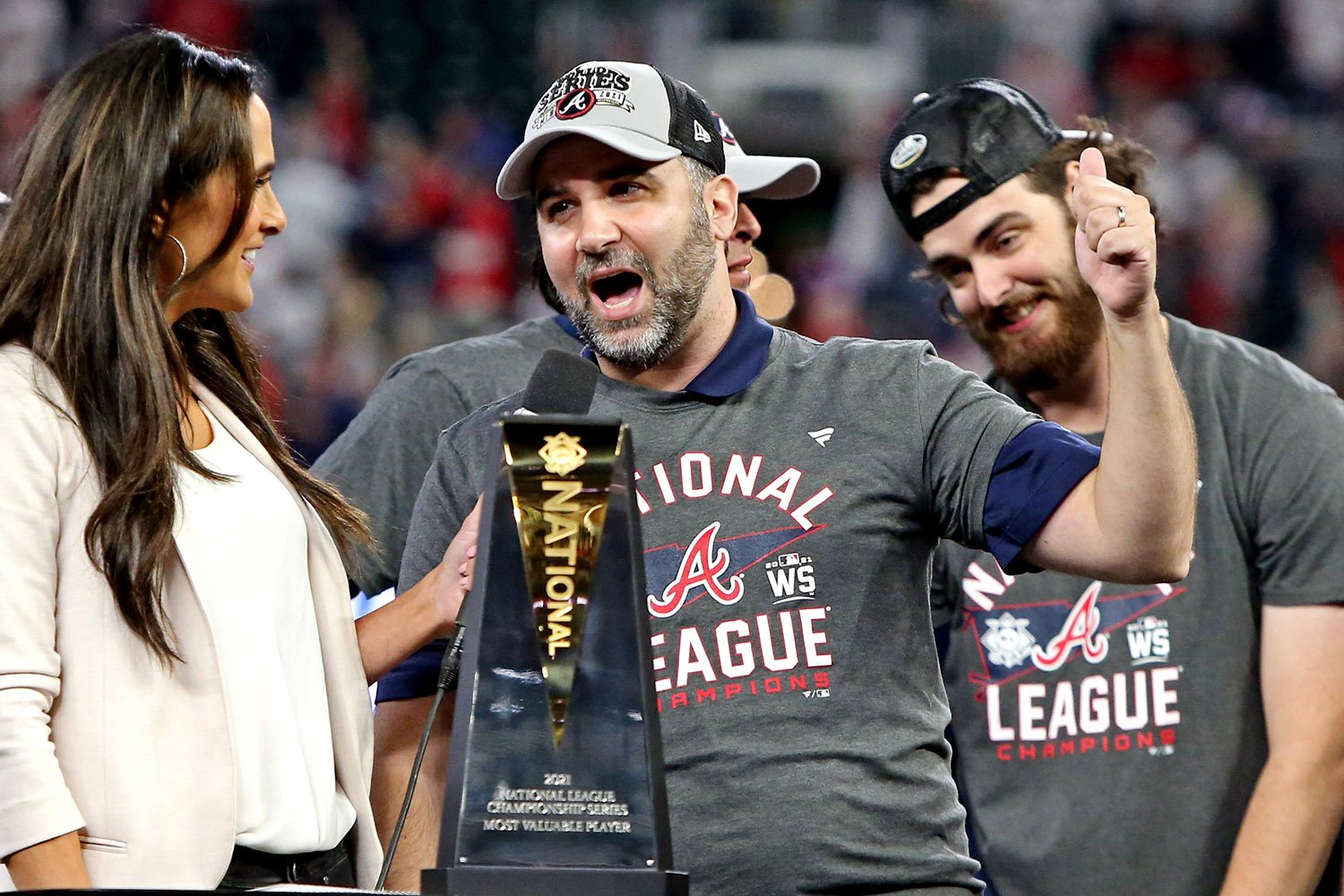 From 2014 to 2017, the Braves were a mediocre team, mustering losing records in four consecutive seasons. The 2017 Atlanta Braves finished third in the National League East with a 72-90 record. The following season, they reversed their record to 90-72 and claimed their first division title in five years. Under the helm of their new general manager, Alex Anthopolous, the Braves ushered in a new era of sustained success, netting six division titles from 2018 to 2023, including back-to-back 100-win seasons in 2022 and 2023. The Braves have utilized three key strategies to achieve sustainable success: A strong core of prospects emerging in subsequent seasons. Sustainable financial management. A demonstrated willingness to part ways with homegrown talent. Talent Pipeline The Braves have built a consistent pipeline of talent that’s been a key factor in their sustained success. In 2017, Ozzie Albies and Max Fried made their big league debuts. In 2018, the league witnessed Ronald Acuña Jr.'s meteoric rise to stardom. In 2019, Austin Riley broke into the major leagues. In 2022, Spencer Strider and Michael Harris II joined the Braves roster. In 2024, Spencer Schwellenbach stepped up and made his mark in the big leagues, contributing to the Braves injury-laden rotation. Looking at 2026 and beyond, Jose Perdomo (SS), Hurston Waldrep (RP), and Drake Baldwin (C) are amongst the next wave of prospects to contribute to the team. The steady influx of homegrown impact talent gives the team valuable internal resources, reduces the need for free-agent signings, and provides financial flexibility. Financial Sustainability Despite being a large market team, the Braves spend their money wisely. According to Cot's Contracts, Atlanta's 2025 payroll is currently the ninth-highest in baseball. The Braves' core has been built around buying out their homegrown players' arbitration years and retaining them during their prime. Only 2.1% of the Braves' 2025 roster is arbitration-eligible, the lowest percentage in the league. 2B: Ozzie Albies (28), seven years, $35 million from 2019-2025 with 2026-27 club options 3B: Austin Riley (27), 10 years, $212 million from 2023-2032 with 2033 club option OF: Ronald Acuña Jr. (27), eight years, $100 million from 2019-2026 with 2027-28 club options OF: Michael Harris II (23), eight years, $72 million from 2023-2030 with 2031-32 club options SP: Spencer Strider (26), six year, $75 million from 2023-2028 with 2029 club option When you consider these players' performances, their contracts look like bargains. Generally speaking, MLB players reach their peak performance between the ages of 27 and 29, with a typical decline starting around age 30. The Braves' core is secured through their prime years, and their extensions also account for potential aging curves. Factoring in club options, Albies' contract ends at age 30, Acuña's at age 30, Harris's at age 31, and Strider's at age 30. Moreover, the Braves are quick to pounce on extensions with players they acquired via trade. 1B: Matt Olson (30), eight years, $168 million from 2022-2029 C: Sean Murphy (30), six years, $73 million from 2023-2028 with a 2029 club option SP: Reynaldo López (31), three years $30 million from 2025-2027 RP: Raisel Iglesias (35), four years, $58 million from 2022-2025 Aside from shortstop and one or two outfield positions, their starting nine and rotation have been set since 2022. Since their core is retained throughout the next decade, the Braves aren’t connected to premier free agents in the offseason. Who needs Juan Soto when you have Acuña at home? The Braves have shown a demonstrated willingness to part ways with homegrown talent either via free agency or trades. Consider the following moves: March 2022: Traded Cristian Pache, Shea Langeliers, Joey Estes, and Ryan Cusick for Matt Olson (27) March 2022: Freddie Freeman (33), signed a six-year, $162-million contract with the Dodgers December 2022: Dansby Swanson (29), signed a seven-year, $177-million contract with the Cubs December 2022: William Contreras (25), acquired Sean Murphy November 2024: Travis d’Arnaud (35): signed a two-year, $12-million contract with the Angels December 2024: Max Fried (30): signed an eight-year, $218-million contract with the Yankees The Braves have a history of letting homegrown talent walk, but they consistently fill those spots with younger, often comparable (if not better) players. They were happy to let Freddie Freeman walk with the younger, cheaper Matt Olson available. Dansby Swanson was another key departure, but the Braves were able to redirect resources toward extending players like Olson, Austin Riley, and Sean Murphy. In December 2022, the Braves moved William Contreras, who they viewed more as a designated hitter, for Sean Murphy, a defense-first catcher. Subsequently, the Braves had the best catching tandem in the league with Travis d’Arnaud and Sean Murphy. Going into the 2024 season, the Braves needed an everyday outfielder. They traded Jackson Kowar and Cole Philips to the Mariners for Jarred Kelenic, Marco Gonzalez, and Evan White. This wasn’t the flashiest move for the Braves, but it filled a need for the team, and they secured a young, cost-controlled outfielder for the future. This offseason the Braves chose not to pursue Travis d’Arnaud and Max Fried. Both players are aging, and they have a considerable number of pitching prospects and Drake Baldwin who can take over d’Arnaud’s role as backup catcher in the future. Is it possible for other teams, like the Red Sox, to mimic the Braves' sustained success? The Red Sox' current roster construction model closely aligns with the Braves' strategies, suggesting that a similar approach could lead to long-term success. Talent Pipeline Roman Anthony and Kristian Campbell are expected to make their major league debuts this year. If he has an outstanding year in Worcester, Marcelo Mayer could also see some big-league action later in the season. Beyond 2025, David Sandlin (friend of the Talk Sox podcast) and Jhostynxon Garcia could join the team in 2026. Though he isn’t a homegrown prospect, Grissom is akin to a new player for the Red Sox this year. While conducting research for this piece, I noticed that Braves infielders usually have one to two “bad” seasons before finding their stride: Dansby Swanson slashed .246/.322/.348, 77 OPS+, and 0.9 bWAR during his first two seasons. Ozzie Albies’ WAR jumped from 1.3 in 2017 to 4.1 in 2018. Austin Riley had a negative WAR from 2019 to 2020 before he produced a 6.3 WAR season in 2021. Given the trend of Braves infielders taking a couple of seasons to fully develop, Grissom could be the key difference-maker, potentially turning the team from a .500 record into a wild-card contender. At the very least, he should have a shot to be the starting second baseman this year. He partook in the annual Story camp and looks healthier than he did last year. Some players face growing pains at the major league level. Many Red Sox fans wrote off Jarren Duran before his breakout 2024 season. During his rookie year, Casas looked like a lost cause before posting monster numbers during the second half of the season. Sustainable Financials The Red Sox currently have a cost-controlled core to build around. Rafael Devers (28): 10-year, $313.5 million from 2024-2033 Brayan Bello (25): 6-year, $55 million from 2024-2029 with a 2030 club option Ceddane Rafaela (24) - 8-year, $50 million from 2024-2031, with a 2032 club option Factoring in club options, Devers' contract ends at age 37, Bello’s contract ends at age 31, and Rafaela’s at age 32, so the Red Sox have control of these players through their prime. The team has a plethora of young talent that can be signed to reasonable cost-controlled deals. Triston Casas, Tanner Houck, and Garret Crochet are extension targets. If Roman Anthony hits the ground running after he’s called up, he’s also in the mix for an extension. Since the Red Sox haven’t gone after premier free agents, such as Corbin Burnes and Max Fried, this offseason, they have money to allocate toward extending Crochet. The Red Sox spent money for the sake of it and are now stuck with Masataka Yoshida, who doesn’t fit with the team’s current roster construction. Signing Alex Bregman might lead to another Yoshida conundrum. The Red Sox have a lot of right-handed second-base depth with Vaughn Grissom, Romy Gonzalez, and Kristian Campbell. All of whom hit left-handed pitchers better than Bregman in recent years. Money is finite, and I’d rather see the Red Sox leverage their second base depth for the 2025 season rather than commit to a long-term contract with Bregman. The funds for his contract could be better spent on player extensions. Parting Ways With Homegrown Talent The Red Sox traded Kyle Teel, Braden Montgomery, Chase Meidroth, and Wikelman González to the White Sox for Crochet. Amongst this group of prospects, Teel is the closest to his major league debut. Meidroth was blocked by the aforementioned group of second baseman and Montgomery and González’s major league ETA isn’t imminent. Starting pitching, especially a left-handed option, was a known need for the team, and the Red Sox nabbed the frontline trade target of the 2024-2025 offseason. On the same day the Red Sox traded Teel, they acquired Carlos Narváez, a defense-first catcher, to help offset the loss. Jarren Duran is set to become a free agent in 2033, at the age of 33. The Red Sox should keep him during his arbitration years, but let him walk once he hits free agency. As he ages, his speed is likely to decline, and it's a huge piece of his game. It’s more prudent to invest in younger players instead. The Braves are the perfect model for roster construction, demonstrating controlled, sustainable success, and the Red Sox have the opportunity to emulate their approach. There’s a wave of prospects ready to join the Red Sox in the upcoming years. They have the financial flexibility to extend young talent like Crochet, Casas, and Anthony, allowing them to build upon their core of Devers, Bello, and Rafaela. The Red Sox should continue to spend their money wisely and avoid large free-agent signings when they have a ton of talent knocking at the door. However, that doesn’t mean they should refrain from investing in the team. After all, they’re one of the most valuable sports franchises. Locking up their young talent and filling roster holes with shrewd free agent signings is the best way to follow the Braves.
 -
After returning from the holidays and New Years, Adam, Alex and Maddie discuss the Red Sox signing Walker Buehler and Patrick Sandoval. After returning from the holidays and New Years, Adam, Alex and Maddie discuss the Red Sox signing Walker Buehler and Patrick Sandoval. They answer questions like: Should Boston go with a six man rotation? If not, which starter pitcher do you leave out of the mix? Should the Red Sox trade Masataka Yoshida? Triston Casas? Wilyer Abreyu? And what is the deal with Roki Sasaki? Listen on Apple Podcasts: https://podcasts.apple.com/us/podcast/the-talk-sox-podcast/id1783204104 Listen on Spotify: https://open.spotify.com/show/3qPrPXEngu0CxgTmlf0ynm Listen on iHeartRadio: https://www.iheart.com/podcast/263-the-talk-sox-podcast-244591331/ Listen on Pocket Casts: https://pca.st/4tmd121v Watch on YouTube: https://www.youtube.com/@talksox View full article
-
- 1
-
-
- walker buehler
- roki sasaki
- (and 3 more)
-
 They answer questions like: Should Boston go with a six man rotation? If not, which starter pitcher do you leave out of the mix? Should the Red Sox trade Masataka Yoshida? Triston Casas? Wilyer Abreyu? And what is the deal with Roki Sasaki? Listen on Apple Podcasts: https://podcasts.apple.com/us/podcast/the-talk-sox-podcast/id1783204104 Listen on Spotify: https://open.spotify.com/show/3qPrPXEngu0CxgTmlf0ynm Listen on iHeartRadio: https://www.iheart.com/podcast/263-the-talk-sox-podcast-244591331/ Listen on Pocket Casts: https://pca.st/4tmd121v Watch on YouTube: https://www.youtube.com/@talksox
 -
December is upon us! Can you believe it? The holidays are right around the corner and pitchers and catchers will be reporting before we know it. Looking for the perfect gift for a Red Sox fan, but don't know where to start? Check out Talk Sox’s Holiday Gift Guide. December is upon us! Can you believe it? The holidays are right around the corner and pitchers and catchers will be reporting before we know it. Looking for the perfect gift for a Red Sox fan, but don't know where to start? Check out Talk Sox’s Holiday Gift Guide. Apparel New Era and the Boston-based '47 offer a wide selection of Red Sox clothing for adults and children to showcase their team spirit with modern and retro designs. Whether you’re looking for a new hoodie, hat, t-shirt, or jacket, both stores have you covered. Fanatics sells official MLB jerseys. Not a fan of the new Fanatics jerseys? You can find vintage ones from Majestic, Russell Athletic, and other brands on eBay. How about a 1975 Bill Lee home jersey? The Dream Shop and City Colors can customize jerseys if you want something particular. Personally, I'm not a fan of the replica home jerseys with player's names on the backs that are sold online. Bill from The Dream Shop is a pleasure to work with and helped me make a custom Casas jersey. (Note: If you place an order with him now, it probably won't arrive in time for the holidays, but he also sells gift cards.) If you're looking for something less formal, BreakingT might be more up your alley. They've got a wide selection of Red Sox t-shirts celebrating players from the team's past and present. Fenway Dirt Fanatics also sells collectibles and memorabilia, including dirt from Fenway Park. What better way to tell that special someone you care than a shaker full of dirt? It's better than a lump of coal. Dugout Mugs Made from wooden baseball bats, Dugout Mugs are a unique addition to any mug collection, and they have a wide variety of Red Sox mugs . Dugout Mugs has also collaborated with Tanner Houck’s charity, Pitch for Adoption. A portion of the proceeds from Houck's Mug will benefit the Caritas Family Solutions. Wall Art Etsy sellers, CozyBurrowStudio and HomeArenaDesigns, sell tasteful, handmade art that celebrates the Red Sox, Boston, and all of Massachusetts. The sign below is from HomeArenaDesigns. Books Red Sox Century: The Definitive History of Baseball's Most Storied Franchise, Expanded and Updated by Glenn Stout and Richard A. Johnson If you want a general overview of Red Sox history from its establishment in 1904 to the 2004, this is the go-to book. Spanning 544 pages, this book is filled with photographs and well-written articles, making it a great coffee table accent for a subtle touch of Red Sox flair. Francona: The Red Sox Years by Terry Francona and Dan Shaughnessy Francona outlines Francona’s playing career to the start of his managerial tenure in Cleveland. If you haven't watched it yet, this book is a great segway into Netflix’s “The Comeback: 2004 Boston Red Sox” documentary (though 2004 only encompasses a small portion of the book). Francona will manage the Cincinnati Reds next year, and it’ll be interesting to see how he handles the team. Homegrown: How the Red Sox Built a Champion from the Ground Up by Alex Speier Speier is a phenomenal writer, and Homegrown follows the journeys of the 2018 World Series core. It’s a bittersweet read, knowing these players sport other team’s uniforms in the present-day. The MVP Machine: How Baseball's New Nonconformists Are Using Data to Build Better Players by Ben Lindbergh and Travis Sawchik The MVP Machine is an insightful read about modern baseball player development and technology. Lindbergh and Sawchik aren’t solely sports journalists, and you can tell their take on the sport differs from a “traditional” writer such as Dan Shaughnessy. Tickets Nothing beats watching a baseball game at Fenway! Even though the 2025 Red Sox schedule has already been released, single-game tickets aren’t available yet. However, 2025 season tickets are available now. The Tenth Man Plan is the smallest package with tickets to 10 games (as its name suggests). If you want to be notified when single-game tickets are on sale, sign up for the Red Sox email newsletter. Memorabilia Are you looking for some game-used memorabilia? MLB Auctions has a wide range of game-used memorabilia from signed baseballs, bases, and bats. The Jersey Street Store also features a sizeable collection of baseballs signed by current and former Red Sox players and yearbooks/media guides from the past. Do you have any additional Red Sox gift recommendations? Let us know below in the comments! View full article
-
 Apparel New Era and the Boston-based '47 offer a wide selection of Red Sox clothing for adults and children to showcase their team spirit with modern and retro designs. Whether you’re looking for a new hoodie, hat, t-shirt, or jacket, both stores have you covered. Fanatics sells official MLB jerseys. Not a fan of the new Fanatics jerseys? You can find vintage ones from Majestic, Russell Athletic, and other brands on eBay. How about a 1975 Bill Lee home jersey? The Dream Shop and City Colors can customize jerseys if you want something particular. Personally, I'm not a fan of the replica home jerseys with player's names on the backs that are sold online. Bill from The Dream Shop is a pleasure to work with and helped me make a custom Casas jersey. (Note: If you place an order with him now, it probably won't arrive in time for the holidays, but he also sells gift cards.) If you're looking for something less formal, BreakingT might be more up your alley. They've got a wide selection of Red Sox t-shirts celebrating players from the team's past and present. Fenway Dirt Fanatics also sells collectibles and memorabilia, including dirt from Fenway Park. What better way to tell that special someone you care than a shaker full of dirt? It's better than a lump of coal. Dugout Mugs Made from wooden baseball bats, Dugout Mugs are a unique addition to any mug collection, and they have a wide variety of Red Sox mugs . Dugout Mugs has also collaborated with Tanner Houck’s charity, Pitch for Adoption. A portion of the proceeds from Houck's Mug will benefit the Caritas Family Solutions. Wall Art Etsy sellers, CozyBurrowStudio and HomeArenaDesigns, sell tasteful, handmade art that celebrates the Red Sox, Boston, and all of Massachusetts. The sign below is from HomeArenaDesigns. Books Red Sox Century: The Definitive History of Baseball's Most Storied Franchise, Expanded and Updated by Glenn Stout and Richard A. Johnson If you want a general overview of Red Sox history from its establishment in 1904 to the 2004, this is the go-to book. Spanning 544 pages, this book is filled with photographs and well-written articles, making it a great coffee table accent for a subtle touch of Red Sox flair. Francona: The Red Sox Years by Terry Francona and Dan Shaughnessy Francona outlines Francona’s playing career to the start of his managerial tenure in Cleveland. If you haven't watched it yet, this book is a great segway into Netflix’s “The Comeback: 2004 Boston Red Sox” documentary (though 2004 only encompasses a small portion of the book). Francona will manage the Cincinnati Reds next year, and it’ll be interesting to see how he handles the team. Homegrown: How the Red Sox Built a Champion from the Ground Up by Alex Speier Speier is a phenomenal writer, and Homegrown follows the journeys of the 2018 World Series core. It’s a bittersweet read, knowing these players sport other team’s uniforms in the present-day. The MVP Machine: How Baseball's New Nonconformists Are Using Data to Build Better Players by Ben Lindbergh and Travis Sawchik The MVP Machine is an insightful read about modern baseball player development and technology. Lindbergh and Sawchik aren’t solely sports journalists, and you can tell their take on the sport differs from a “traditional” writer such as Dan Shaughnessy. Tickets Nothing beats watching a baseball game at Fenway! Even though the 2025 Red Sox schedule has already been released, single-game tickets aren’t available yet. However, 2025 season tickets are available now. The Tenth Man Plan is the smallest package with tickets to 10 games (as its name suggests). If you want to be notified when single-game tickets are on sale, sign up for the Red Sox email newsletter. Memorabilia Are you looking for some game-used memorabilia? MLB Auctions has a wide range of game-used memorabilia from signed baseballs, bases, and bats. The Jersey Street Store also features a sizeable collection of baseballs signed by current and former Red Sox players and yearbooks/media guides from the past. Do you have any additional Red Sox gift recommendations? Let us know below in the comments!
 -
Talk Sox recently unveiled a fun tool to build-your-own 2025 roster. For this exercise, I’m using projected contract values outlined in an Athletic article by Tim Britton and the MLB Trade Rumors Projected Arbitration Salaries for 2025. The 2025 CBT threshold is $241 million. Sox Stats outlined on the team’s financial situation on Blue Sky: “The Red Sox current sit roughly $63M under the luxury tax threshold. If they spend more, up to $83M this winter, their only penalty is a $4M tax. They can spend $103M and their only penalty is a $12M tax. After that, it's higher taxes and your first-round pick is moved down 10 spots.” Based on Sam Kennedy’s recent comments, the Red Sox are prepared to pay the competitive balance tax so they could dish out $103 million in contracts this offseason. Starting Rotation Max Fried Tanner Houck Garret Crochet Brayan Bello Lucas Giolito Bullpen Tanner Scott Justin Slaten Liam Hendriks Garrett Whitlock Cooper Criswell Luis Guerrero Greg Weissert Brennan Bernardino Lineup CF: Jarren Duran LF: Juan Soto 3B: Rafael Devers 1B: Triston Casas SS: Trevor Story DH: Masataka Yoshida 2B: Vaughn Grissom C: Connor Wong RF: Ceddanne Rafaela Bench OF: Rob Refsnyder UTL: David Hamilton UTL: Romy Gonzalez C: Carson Kelly Free Agent Acquisitions LHP Max Fried, 6-year, $180 million contract Max Fried is a perfect fit for the Red Sox. He’s an elite southpaw and the Red Sox rotation lacks a frontline lefthanded starter. He’s a proven ace and led the Brave’s starter’s pitchers in WAR (15.4) from 2020-24. He’s a clubhouse guy. He’s best friends with Lucas Giolito (and Jack Flaherty). Fried is more consistent than he’s given credit for. He posts well below league-average ERA and FIP. His K% rate grades above league average. His metrics don’t scream a sudden decline. He’s represented by the Baseball Team at CAA, not Scott Boras, so his contract shouldn’t be too egregious. OF Juan Soto, 12-year, $540 million contract It’s Juan Soto. Enough said. C Carson Kelly, 2-year, $14 million contract, mutual option I wrote about Carson Kelly last week. In recent years, Kelly’s bat hasn’t held up, but he’s a competent defender who would provide balance for Connor Wong’s defensive woes. LHP Tanner Scott, 4-year, $64 million contract It’s unlikely that Kenley Jansen will resign with the Red Sox. They need a proven closer. Garrett Whitlock and Liam Hendriks return to the bullpen, but both are coming back from injuries. They could pitch poorly so Tanner Scott could help offset any of their setbacks and gives Alex Cora a go-to guy in the 9th. Trade Targets: LHP Garrett Crochet, $2.9 million Red Sox Trade: OF Wilyer Abreu, SP Kutter Crawford, OF Jhostynxon Garcia (“The Password”) Red Sox Receive, SP Garrett Crochet Crochet is frequently brought up as a trade target for the Red Sox. Given their annus horribilis, the White Sox will/should be desperate for any help they can get. Crochet has only pitched one solid season, so the White Sox's asking price shouldn’t be too high. Since he was a former relief pitcher, he doesn’t have that much mileage on his arm. He’s cheap, and the Red Sox have the financial capability to offer him an extension. It seems like the perfect deal if they can trade for him without giving up any of the Big Four. With these moves, the Red Sox payroll would increase to $230.30 million next year. It gives them some wiggle room to take on additional contracts at the trade deadline and fills the team’s need for left-handed starting pitchers, bullpen depth, and a bonafide Hall-of-Fame player. C: Connor Wong ($0.78M) 1B: Tristan Casas ($0.78M) 2B: Vaughn Grissom ($0.78M) 3B: Rafael Devers ($29.00M) SS: Trevor Story ($23.33M) LF: Juan Soto ($40.00M) CF: Jarren Duran ($4.90M) RF: Ceddanne Rafaela ($1.25M) DH: Masataka Yoshida ($18.00M) 4th OF: Rob Refsnyder ($1.95M) Utility: David Hamilton ($0.78M) Utility: Romy Gonzalez ($0.77M) Backup C: Carson Kelly ($6.00M) NA: Add Dead Money Here ($0.00M) SP1: Max Fried ($30.00M) SP2: Tanner Houck ($4.50M) SP3: Garrett Crochet ($2.90M) SP4: Brayan Bello ($9.17M) SP5: Lucas Giolito ($19.25M) RP: Tanner Scott ($11.50M) RP: Justin Slaten ($0.78M) RP: Liam Hendriks ($10.00M) RP: Garrett Whitlock ($5.50M) RP: Cooper Criswell ($0.76M) RP: Luis Guerrero ($0.78M) RP: Greg Weissert ($0.78M) RP: Brennan Bernardino ($0.76M) NA: Add Dead Money Here ($0.00M) Payroll is 11.11% over budget
-
The Red Sox definitely need to land some pitching, but catching is extremely important, and the free agent market is extremely thin. It's time to act. The Red Sox definitely need to land some pitching, but catching is extremely important, and the free agent market is extremely thin. It's time to act. The bond between a catcher and a pitcher is often regarded as the most important relationship in baseball. The catcher orchestrates the game, calling pitches and helping the pitcher throw their best stuff. The pitcher and catcher must be in sync. Frontline starters need a reliable catcher to work with. Former catcher Brett Mayne once said, “What's the most important part of the game? Pitching. If it wasn't, why would teams throw this kind of money around lately? [That said] you have to have a good catcher. It's like having a phenomenal racehorse, but no jockey. Will the horse win the race without one? Probably not.” The Red Sox lack both an ace and a reliable catcher. In recent years, the catcher position has remained a revolving door. Since 2023, Red Sox catchers have generated a total of 2.7 fWAR, which ranks 25th in the league. Catchers Reese McGuire, Connor Wong, and Danny Jansen yielded varying results for the Red Sox rotation last season. Pitcher Catcher G IP ERA Brayan Bello Reese McGuire 23 116 4.89 Brayan Bello Connor Wong 37 205.1 4.03 Brayan Bello Danny Jansen 8 39 3.23 Tanner Houck Reese McGuire 11 62.1 2.60 Tanner Houck Connor Wong 38 204.2 4.00 Tanner Houck Danny Jansen 3 17.2 5.09 Kutter Crawford Reese McGuire 19 86 3.77 Kutter Crawford Connor Wong 44 214 4.58 Kutter Crawford Danny Jansen 5 25 7.20 Brayan Bello’s 2024 second-half resurgence could be attributed to Jansen, who joined the team at the trade deadline. Jansen caught eight games for Bello, whose ERA dropped to 3.47 following the trade deadline. Conversely, Tanner Houck and Kutter Crawford’s ERA ballooned when pitching to Jansen. Since Jansen became a free agent, Wong remains the sole veteran catcher on the 40-man roster. Oof. The organization doesn’t see prospect Kyle Teel making the 2025 Opening Day roster. When asked about Teel’s major league readiness, Craig Breslow emphasized, “What’s most important for him is to continue to develop.” After being promoted to Triple-A, Teel got off to a slow start, slashing .214/.306/.321 in August. He finished strong, recording a .375/.516/.542 slash line in September. With Teel in Triple-A for an indefinite amound of time next season, the Red Sox need a veteran, defense-first backup catcher who can fortify the position until he graduates from the minors. As much as I like Wong, he's an offense-first catcher. Wong alone isn’t enough to entice a frontline starter to the Red Sox. This offseason the Red Sox have seemingly been showing interest in every premier free agent from Willy Adames to Blake Snell to Juan Soto. However, they aren’t linked to any catchers, whose market is moving quicker than expected. Travis d’Arnaud, arguably the top catcher in the class, has already signed a two-year, $12-million contract with the Angels. As a former pitcher, Breslow is aware of the importance of the relationship between the pitcher and catcher. He clarified that the team is in the market for a backup catcher, stating, “We’ll certainly explore opportunities to get better….That includes potentially in kind of a backup role to Connor or however, things shake out.” A pitcher’s success is often attributed to the performance of his catcher. Signing a frontline starter, but neglecting their need for a catcher is equivalent to purchasing a Porsche and neglecting its maintenance by filling it with regular unleaded gasoline. This offseason feels different. Various third-party sources outside the Red Sox have indicated they’re looking to make a big splash in the offseason. They surprisingly emerged as a legitimate contender for Juan Soto, which wasn’t on anybody’s offseason bingo card. However, the Red Sox must get their priorities straight and solidify their catching depth before making a strong push for a frontline starter and/or any once-in-a-generation outfielders. Given the rotation’s mixed results with Danny Jansen, a reunion probably isn't in the pitching staff’s best interest. Kyle Higashioka and Carson Kelly are two of the best remaining options on the free agent market. I highly doubt that either will sign for more money than d’Arnaud, so they’re affordable. A one-year deal with a mutual option after the first year would provide Teel with more to develop and do so without jamming the team’s budget. Name Age BA OBP K% HR RBI wRC+ fWAR Kyle Higashioka 34 .220 .263 28.1% 17 45 105 1.6 Carson Kelly 29 .238 .313 17.6% 9 32 99 1.8 There aren’t any huge concerns surrounding either player’s offense. Personally, I don’t expect a catcher to generate a ton of runs. Their most important duty is to provide sound defense. If they can do so while providing a roughly league-average offensive line, they’re doing their job well. At first glance, Higashioka’s bat has more thump than Kelly's, with almost double the amount of home runs and a higher wRC+. However, Kelly’s strikeout rate is lower and overall these differences are marginal. Frontline starters’ catching splits indicate that Higashioka and Kelly complement top-tier starting pitchers. Michael King, Joe Musgrove, and Yu Darvish pitched well when Kyle Higashioka caught for them. Tarik Skubal, Zac Gallen, and Jack Flaherty posted solid numbers with Carson Kelly. Defensively, Higashioka and Kelly diverge, but they still mark a significant improvement over Connor Wong’s defense. According to Statcast, Higashioka falls in the 8th percentile in blocking, the 27th percentile in catching base stealers, the 65th percentile in framing, and the 10th percentile in pop time (2.02 seconds). His defensive performance isn’t what it used to be. Conversely, Kelly grades out in the 63rd percentile in blocking, 85th for in catching stealers, the 68th percentile in framing, and 38th in pop time(1.97 seconds). Kelly is a stellar defender with youth on his side. However, it's important to note that framing is by far the most important part of the job, and Higashioka and Kelly grade out fairly similarly there. On another, more random note, Higashioka is a fourth-generation Japanese American who reportedly learned some Japanese to connect with former Yankees pitcher Masahiro Tanaka. Why is this important? Roki Sasaki, the 23-year-old Japanese pitching phenom will be posted by the Chibba Lotte Marines. Sasaki is an affordable option who could sign with any team. Since money is no object to him, The Athletic reported he will “prioritize stability, lifestyle, comfort and, according to league sources, a team’s track record with player development”. A Japanese-speaking catcher like Higashioka could help lure Sasaki to the Red Sox. Since they both speak Japanese, he could assist Sasaki in acclimating to life in a foreign country. Along with Masataka Yoshida, Sasaki would also have a friend who shares the experience of transitioning from the Nippon League to Major League Baseball. That said, the team already has a strong record in player development and Boston recently ranked as the second happiest city to live in the U.S. Signing a player solely to attract another is ill-advised. It’s speculated that Chaim Bloom did this with Masataka Yoshida in an attempt to entice Yoshinobu Yamamoto, who ultimately signed with the Dodgers. The Red Sox are currently stuck with an expensive, slap-hitting DH. Given Wong’s paltry defense, the Red Sox should prioritize Kelly, a defense-first catcher. Kelly is younger than Higashioka and has plenty of knowledge and experience, with eight years of major-league playing time. He could mentor Kyle Teel and be the bridge until Teel is major league-ready. If Wong has another slump halfway through the season, Kelly could fill the primary catcher role. His spray chart indicates that he could capitalize on Fenway’s wonky dimensions to generate extra-base hits. Looking far down the road, Kelly has a solid relationship with Zac Gallen, who could be a free-agent target next year. At the moment, the Red Sox's catching depth is miles behind their competitors for starting pitchers. The Blue Jays and Orioles have Alejandro Kirk and Adley Rutschman, two young bona fide studs. Tyler Heineman, the Blue Jays' backup catcher, has four more years under team control. Like the Red Sox, the Orioles have a vacant backup catcher position. The Red Sox cannot neglect their catching depth when they are pursuing frontline starters. Since Nick Pivetta declined his mutual option, the Red Sox have an additional $21 million to spend. Some of this money should be allocated toward catching depth. Given their shared needs and interest in starters, the Orioles represent a genuine threat to snipe any Red Sox targets. The Red Sox must act quickly before Kelly or Higashioka can sign elsewhere. View full article
-
The Red Sox Must Bolster Their Catching Depth Before They Sign an Ace
Maddie Landis posted an article in Red Sox
 The bond between a catcher and a pitcher is often regarded as the most important relationship in baseball. The catcher orchestrates the game, calling pitches and helping the pitcher throw their best stuff. The pitcher and catcher must be in sync. Frontline starters need a reliable catcher to work with. Former catcher Brett Mayne once said, “What's the most important part of the game? Pitching. If it wasn't, why would teams throw this kind of money around lately? [That said] you have to have a good catcher. It's like having a phenomenal racehorse, but no jockey. Will the horse win the race without one? Probably not.” The Red Sox lack both an ace and a reliable catcher. In recent years, the catcher position has remained a revolving door. Since 2023, Red Sox catchers have generated a total of 2.7 fWAR, which ranks 25th in the league. Catchers Reese McGuire, Connor Wong, and Danny Jansen yielded varying results for the Red Sox rotation last season. Pitcher Catcher G IP ERA Brayan Bello Reese McGuire 23 116 4.89 Brayan Bello Connor Wong 37 205.1 4.03 Brayan Bello Danny Jansen 8 39 3.23 Tanner Houck Reese McGuire 11 62.1 2.60 Tanner Houck Connor Wong 38 204.2 4.00 Tanner Houck Danny Jansen 3 17.2 5.09 Kutter Crawford Reese McGuire 19 86 3.77 Kutter Crawford Connor Wong 44 214 4.58 Kutter Crawford Danny Jansen 5 25 7.20 Brayan Bello’s 2024 second-half resurgence could be attributed to Jansen, who joined the team at the trade deadline. Jansen caught eight games for Bello, whose ERA dropped to 3.47 following the trade deadline. Conversely, Tanner Houck and Kutter Crawford’s ERA ballooned when pitching to Jansen. Since Jansen became a free agent, Wong remains the sole veteran catcher on the 40-man roster. Oof. The organization doesn’t see prospect Kyle Teel making the 2025 Opening Day roster. When asked about Teel’s major league readiness, Craig Breslow emphasized, “What’s most important for him is to continue to develop.” After being promoted to Triple-A, Teel got off to a slow start, slashing .214/.306/.321 in August. He finished strong, recording a .375/.516/.542 slash line in September. With Teel in Triple-A for an indefinite amound of time next season, the Red Sox need a veteran, defense-first backup catcher who can fortify the position until he graduates from the minors. As much as I like Wong, he's an offense-first catcher. Wong alone isn’t enough to entice a frontline starter to the Red Sox. This offseason the Red Sox have seemingly been showing interest in every premier free agent from Willy Adames to Blake Snell to Juan Soto. However, they aren’t linked to any catchers, whose market is moving quicker than expected. Travis d’Arnaud, arguably the top catcher in the class, has already signed a two-year, $12-million contract with the Angels. As a former pitcher, Breslow is aware of the importance of the relationship between the pitcher and catcher. He clarified that the team is in the market for a backup catcher, stating, “We’ll certainly explore opportunities to get better….That includes potentially in kind of a backup role to Connor or however, things shake out.” A pitcher’s success is often attributed to the performance of his catcher. Signing a frontline starter, but neglecting their need for a catcher is equivalent to purchasing a Porsche and neglecting its maintenance by filling it with regular unleaded gasoline. This offseason feels different. Various third-party sources outside the Red Sox have indicated they’re looking to make a big splash in the offseason. They surprisingly emerged as a legitimate contender for Juan Soto, which wasn’t on anybody’s offseason bingo card. However, the Red Sox must get their priorities straight and solidify their catching depth before making a strong push for a frontline starter and/or any once-in-a-generation outfielders. Given the rotation’s mixed results with Danny Jansen, a reunion probably isn't in the pitching staff’s best interest. Kyle Higashioka and Carson Kelly are two of the best remaining options on the free agent market. I highly doubt that either will sign for more money than d’Arnaud, so they’re affordable. A one-year deal with a mutual option after the first year would provide Teel with more to develop and do so without jamming the team’s budget. Name Age BA OBP K% HR RBI wRC+ fWAR Kyle Higashioka 34 .220 .263 28.1% 17 45 105 1.6 Carson Kelly 29 .238 .313 17.6% 9 32 99 1.8 There aren’t any huge concerns surrounding either player’s offense. Personally, I don’t expect a catcher to generate a ton of runs. Their most important duty is to provide sound defense. If they can do so while providing a roughly league-average offensive line, they’re doing their job well. At first glance, Higashioka’s bat has more thump than Kelly's, with almost double the amount of home runs and a higher wRC+. However, Kelly’s strikeout rate is lower and overall these differences are marginal. Frontline starters’ catching splits indicate that Higashioka and Kelly complement top-tier starting pitchers. Michael King, Joe Musgrove, and Yu Darvish pitched well when Kyle Higashioka caught for them. Tarik Skubal, Zac Gallen, and Jack Flaherty posted solid numbers with Carson Kelly. Defensively, Higashioka and Kelly diverge, but they still mark a significant improvement over Connor Wong’s defense. According to Statcast, Higashioka falls in the 8th percentile in blocking, the 27th percentile in catching base stealers, the 65th percentile in framing, and the 10th percentile in pop time (2.02 seconds). His defensive performance isn’t what it used to be. Conversely, Kelly grades out in the 63rd percentile in blocking, 85th for in catching stealers, the 68th percentile in framing, and 38th in pop time(1.97 seconds). Kelly is a stellar defender with youth on his side. However, it's important to note that framing is by far the most important part of the job, and Higashioka and Kelly grade out fairly similarly there. On another, more random note, Higashioka is a fourth-generation Japanese American who reportedly learned some Japanese to connect with former Yankees pitcher Masahiro Tanaka. Why is this important? Roki Sasaki, the 23-year-old Japanese pitching phenom will be posted by the Chibba Lotte Marines. Sasaki is an affordable option who could sign with any team. Since money is no object to him, The Athletic reported he will “prioritize stability, lifestyle, comfort and, according to league sources, a team’s track record with player development”. A Japanese-speaking catcher like Higashioka could help lure Sasaki to the Red Sox. Since they both speak Japanese, he could assist Sasaki in acclimating to life in a foreign country. Along with Masataka Yoshida, Sasaki would also have a friend who shares the experience of transitioning from the Nippon League to Major League Baseball. That said, the team already has a strong record in player development and Boston recently ranked as the second happiest city to live in the U.S. Signing a player solely to attract another is ill-advised. It’s speculated that Chaim Bloom did this with Masataka Yoshida in an attempt to entice Yoshinobu Yamamoto, who ultimately signed with the Dodgers. The Red Sox are currently stuck with an expensive, slap-hitting DH. Given Wong’s paltry defense, the Red Sox should prioritize Kelly, a defense-first catcher. Kelly is younger than Higashioka and has plenty of knowledge and experience, with eight years of major-league playing time. He could mentor Kyle Teel and be the bridge until Teel is major league-ready. If Wong has another slump halfway through the season, Kelly could fill the primary catcher role. His spray chart indicates that he could capitalize on Fenway’s wonky dimensions to generate extra-base hits. Looking far down the road, Kelly has a solid relationship with Zac Gallen, who could be a free-agent target next year. At the moment, the Red Sox's catching depth is miles behind their competitors for starting pitchers. The Blue Jays and Orioles have Alejandro Kirk and Adley Rutschman, two young bona fide studs. Tyler Heineman, the Blue Jays' backup catcher, has four more years under team control. Like the Red Sox, the Orioles have a vacant backup catcher position. The Red Sox cannot neglect their catching depth when they are pursuing frontline starters. Since Nick Pivetta declined his mutual option, the Red Sox have an additional $21 million to spend. Some of this money should be allocated toward catching depth. Given their shared needs and interest in starters, the Orioles represent a genuine threat to snipe any Red Sox targets. The Red Sox must act quickly before Kelly or Higashioka can sign elsewhere.
 -
A Plea For The Red Sox To Sign Juan Soto
Maddie Landis replied to Maddie Landis's topic in Talk Sox Front Page News
Passan tweeted the Red Sox are meeting with Soto after the Blue Jays: https://x.com/JeffPassan/status/1856324233657213222 -
A Plea For The Red Sox To Sign Juan Soto
Maddie Landis replied to Maddie Landis's topic in Talk Sox Front Page News
-
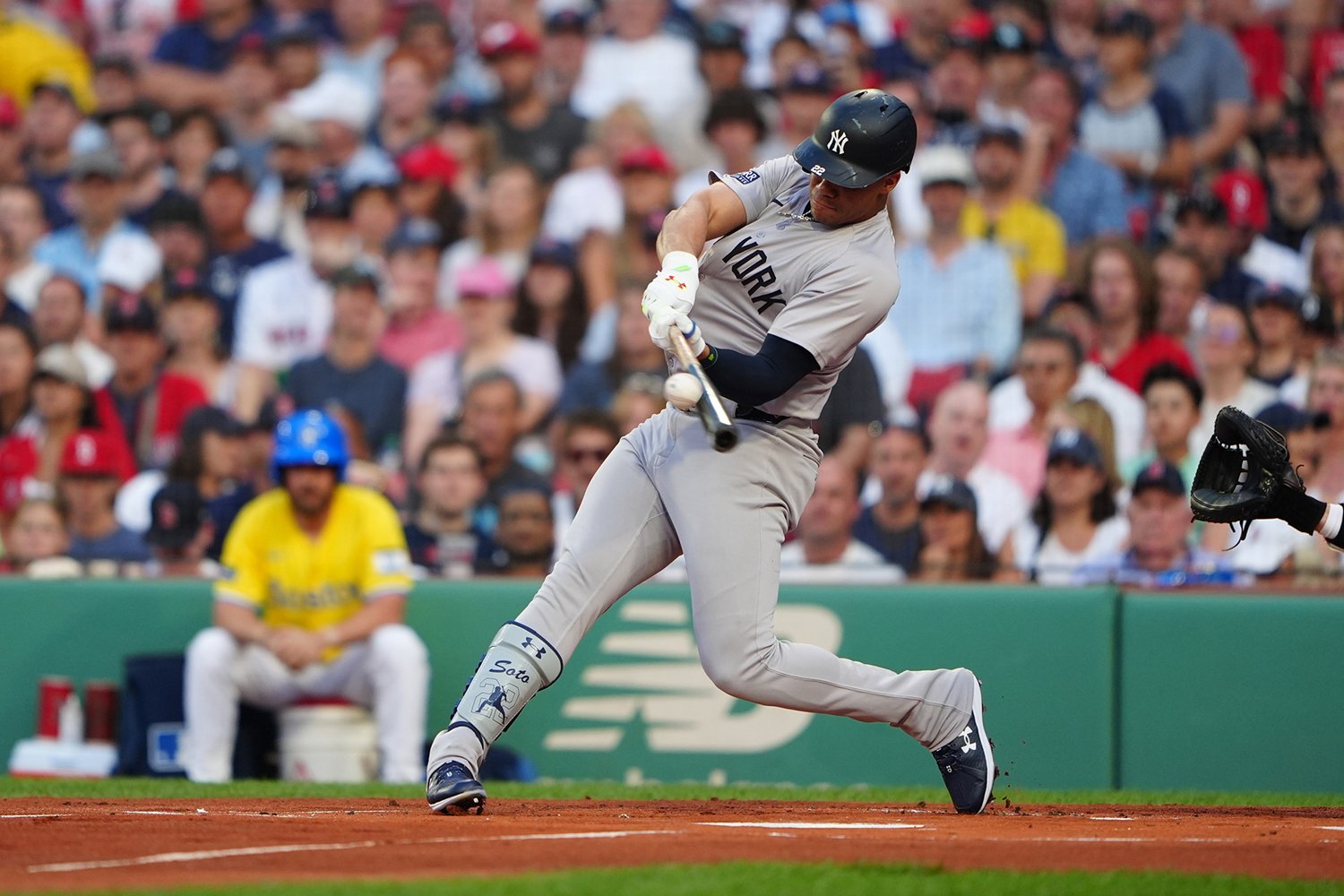 “It’s expensive to sign baseball players,” John Henry once said, much to the chagrin of Red Sox fans. Henry’s statement rings true. Free agent contract values are increasing each year. Last offseason, Shohei Ohtani signed a 10-year, $700-million contract to play for the Los Angeles Dodgers, which broke the previous record for the most expensive professional sports contract. Previously, Mike Trout’s 12-year, $426.5-million extension was the largest contract in baseball. Due to the COVID-19 pandemic, the free agent market dipped following the 2020 season. Free agents affected by the shortened pandemic season “only” inked $1.36 billion total in contracts. However, since then, the total value of free-agent contracts has risen steadily. Some players, arguably, aren’t worth their gargantuan contracts. Others are. Twenty-six-year-old future Hall of Famers like Juan Soto seldom enters free agency. The Athletic projects that Soto will garner a 12-year, $540-million contract. He’s worth every penny, and the Red Sox must pursue him. Sure, money is paramount to Soto, but winning comes in at a close second. It’s important to point out that the Red Sox are behemoths in recent World Series history. Since 2004, they have a 16-3 record in the World Series. On the other hand, the Yankees possess a 5-6 record. Sniping the Yankees' primary offseason target is a dub by itself. The Yankees' core is not sustainable. The World Series accentuated their roster construction flaws, from their shoddy defense to their inefficiency on the basepaths. Moreover, the Yankees have the second-oldest roster in the league at an average age of 29.3. Their roster is constrained by several aging superstars in the middle of expensive, long-term contracts. Gerrit Cole (34), Carlos Rodón (31), and Giancarlo Stanton (34) are being paid at least $25 million per year until 2027 or 2028. Aaron Judge has about $280 million remaining on his contract. As I mentioned earlier, Juan Soto is 26 years old. He’s two years younger than Rafael Devers, Jarren Duran, Tanner Houck, Kutter Crawford, and Garrett Whitlock. Soto has shown that his floor is an All-Star caliber player in six MLB seasons. His ceiling is a perennial top-10 MVP candidate and Silver Slugger winner. Soto would be “just another guy” in the crowded dugouts of the Yankees or Dodgers clubhouse, but he could be the star of the Red Sox. The Red Sox have a young homegrown core. Any egregious long-term contracts don’t saddle the organization. They have a strong farm system. Sustainable contention looms over the horizon, but they need someone to push them over from mediocrity. Over the past couple of seasons, it seems like the Red Sox are banking on the Big Four to impact the major-league roster immediately. Putting all their eggs in one basket is a risky move. At the very least, one of the Big Four will break out in the majors. Allocating some, not all, of their resources toward a generational talent provides them with a backup plan and insurance in case any of their prospects fail to perform in the majors. Opponents argue, “But Soto is a left-handed hitter! The team has too many lefties!” The roster is notably lefty-heavy, but it’s not like the Red Sox lefties can’t hit against left-handed pitching. Triston Casas and Rafael Devers hold 114 and 98 wRC+ career splits against southpaws. Soto is frequently likened to Ted Williams for a reason. He has no trouble hitting the ball, regardless of a pitcher’s handedness. Look at his career splits against left-handed pitching. Career BA OBP SLG RBI HR K% wRC+ vs LHP .268 .383 .475 191 56 18.0 135 Wouldn't you like to see the second coming of Ted Williams spend the rest of his career in Fenway Park? Slotting Soto into the lineup would exacerbate the lefty-dominant nature of the lineup, but his career splits mark a substantial improvement over Ceddanne Rafaela (62 wRC+), Masataka Yoshida (84 wRC+), and Jarren Duran (88 wRC+). It's also important to remember that injuries were part of the reason the lineup was so lefty-heavy. The holes Vaughn Grissom and Trevor Story left in the infield were filled by left-handed batters David Hamilton, Dom Smith, and Enmanuel Valdez , creating a false narrative that the lineup is too reliant on left-handed batters. It should look a little more balanced next year with (fingers crossed) healthy seasons from Trevor Story and Vaughn Grissom. Assuming Wilyer Abreu is traded, imagine this lineup: CF Jarren Duran (L) LF Juan Soto (L) 3B Rafael Devers (L) 1B Triston Casas (L) SS Trevor Story (R) DH Masataka Yoshida (L) C Connor Wong (R) RF Ceddanne Rafaela (R) 2B Vaughn Grissom (R) Beautiful, no? Along with Triston Casas and Masataka Yoshida, Soto will exasperate opposing pitchers, driving pitch counts up and opposing managers insane. Soto could provide some cushion for Raffy and alleviate him from the burden/expectation of carrying the team’s offense. Despite being the team’s highest-paid player and the face of the franchise, Devers is notably reserved and shies away from the media. He’s not an outspoken leader, preferring to stay quiet and let his work speak for itself. This is fine, but the Boston media is intense and passionate. Soto is a showy performer and doesn’t shy away from the spotlight. By taking center stage in the organization, he would reduce pressure from the media. Lefties with opposite field power can take advantage of the Green Monster and Soto is no exception. He pulled the ball more frequently while playing in Yankee Stadium last year, but he's capable of spraying the ball all over the field. Soto would pepper Lansdowne Street with home runs. He could easily hit 50+ home runs playing 81 games at Fenway each year. Heck, he might surpass David Ortiz’s single-season record of 54 home runs. Speaking of which, like David Ortiz, Soto is Dominican. He plays for the Dominican World Baseball team. The Red Sox have a strong history of Dominican baseball stars. Pedro Martinez, David Ortiz, and Manny Ramirez’s contributions to the 2004 Red Sox will never be forgotten. This past spring, the organization recently updated its Dominican Academy and played an exhibition series in Santo Domingo (Soto’s hometown). Juan Soto grew up idolizing Manny, Pedro, and Big Papi. Why not join Rafael Devers and Brayan Bello to form a new Dominican trio? Smart investments matter for sustainable contention. You can’t put a brand-new 2025 Ferrari 812 GTS engine in a 1995 PT Cruiser and expect the car to run smoothly. You also can’t keep “fixing” glaring holes with Band-Aids and expect a winning product on the field. The Red Sox indicated they’ll stop cosplaying as a small market team and are ready to spend. Simply spending for the sake of spending isn’t sustainable. They must be cognizant of where they're allocating their resources. That said, the Red Sox have a list of things that need fixing in the offseason. Their outfield was a bright spot on the team and doesn’t necessarily need any additional help. However, landing a generational talent like Soto should take precedence over their other issues, and the Red Sox must be proactive. Pursue Soto and let the rest of the roster sort itself out.
 -
It's great to look for surplus value, to be strategic, and to sign players who suit your roster needs. But you know what else is great? Getting the best player on the market. It's great to look for surplus value, to be strategic, and to sign players who suit your roster needs. But you know what else is great? Getting the best player on the market. “It’s expensive to sign baseball players,” John Henry once said, much to the chagrin of Red Sox fans. Henry’s statement rings true. Free agent contract values are increasing each year. Last offseason, Shohei Ohtani signed a 10-year, $700-million contract to play for the Los Angeles Dodgers, which broke the previous record for the most expensive professional sports contract. Previously, Mike Trout’s 12-year, $426.5-million extension was the largest contract in baseball. Due to the COVID-19 pandemic, the free agent market dipped following the 2020 season. Free agents affected by the shortened pandemic season “only” inked $1.36 billion total in contracts. However, since then, the total value of free-agent contracts has risen steadily. Some players, arguably, aren’t worth their gargantuan contracts. Others are. Twenty-six-year-old future Hall of Famers like Juan Soto seldom enters free agency. The Athletic projects that Soto will garner a 12-year, $540-million contract. He’s worth every penny, and the Red Sox must pursue him. Sure, money is paramount to Soto, but winning comes in at a close second. It’s important to point out that the Red Sox are behemoths in recent World Series history. Since 2004, they have a 16-3 record in the World Series. On the other hand, the Yankees possess a 5-6 record. Sniping the Yankees' primary offseason target is a dub by itself. The Yankees' core is not sustainable. The World Series accentuated their roster construction flaws, from their shoddy defense to their inefficiency on the basepaths. Moreover, the Yankees have the second-oldest roster in the league at an average age of 29.3. Their roster is constrained by several aging superstars in the middle of expensive, long-term contracts. Gerrit Cole (34), Carlos Rodón (31), and Giancarlo Stanton (34) are being paid at least $25 million per year until 2027 or 2028. Aaron Judge has about $280 million remaining on his contract. As I mentioned earlier, Juan Soto is 26 years old. He’s two years younger than Rafael Devers, Jarren Duran, Tanner Houck, Kutter Crawford, and Garrett Whitlock. Soto has shown that his floor is an All-Star caliber player in six MLB seasons. His ceiling is a perennial top-10 MVP candidate and Silver Slugger winner. Soto would be “just another guy” in the crowded dugouts of the Yankees or Dodgers clubhouse, but he could be the star of the Red Sox. The Red Sox have a young homegrown core. Any egregious long-term contracts don’t saddle the organization. They have a strong farm system. Sustainable contention looms over the horizon, but they need someone to push them over from mediocrity. Over the past couple of seasons, it seems like the Red Sox are banking on the Big Four to impact the major-league roster immediately. Putting all their eggs in one basket is a risky move. At the very least, one of the Big Four will break out in the majors. Allocating some, not all, of their resources toward a generational talent provides them with a backup plan and insurance in case any of their prospects fail to perform in the majors. Opponents argue, “But Soto is a left-handed hitter! The team has too many lefties!” The roster is notably lefty-heavy, but it’s not like the Red Sox lefties can’t hit against left-handed pitching. Triston Casas and Rafael Devers hold 114 and 98 wRC+ career splits against southpaws. Soto is frequently likened to Ted Williams for a reason. He has no trouble hitting the ball, regardless of a pitcher’s handedness. Look at his career splits against left-handed pitching. Career BA OBP SLG RBI HR K% wRC+ vs LHP .268 .383 .475 191 56 18.0 135 Wouldn't you like to see the second coming of Ted Williams spend the rest of his career in Fenway Park? Slotting Soto into the lineup would exacerbate the lefty-dominant nature of the lineup, but his career splits mark a substantial improvement over Ceddanne Rafaela (62 wRC+), Masataka Yoshida (84 wRC+), and Jarren Duran (88 wRC+). It's also important to remember that injuries were part of the reason the lineup was so lefty-heavy. The holes Vaughn Grissom and Trevor Story left in the infield were filled by left-handed batters David Hamilton, Dom Smith, and Enmanuel Valdez , creating a false narrative that the lineup is too reliant on left-handed batters. It should look a little more balanced next year with (fingers crossed) healthy seasons from Trevor Story and Vaughn Grissom. Assuming Wilyer Abreu is traded, imagine this lineup: CF Jarren Duran (L) LF Juan Soto (L) 3B Rafael Devers (L) 1B Triston Casas (L) SS Trevor Story (R) DH Masataka Yoshida (L) C Connor Wong (R) RF Ceddanne Rafaela (R) 2B Vaughn Grissom (R) Beautiful, no? Along with Triston Casas and Masataka Yoshida, Soto will exasperate opposing pitchers, driving pitch counts up and opposing managers insane. Soto could provide some cushion for Raffy and alleviate him from the burden/expectation of carrying the team’s offense. Despite being the team’s highest-paid player and the face of the franchise, Devers is notably reserved and shies away from the media. He’s not an outspoken leader, preferring to stay quiet and let his work speak for itself. This is fine, but the Boston media is intense and passionate. Soto is a showy performer and doesn’t shy away from the spotlight. By taking center stage in the organization, he would reduce pressure from the media. Lefties with opposite field power can take advantage of the Green Monster and Soto is no exception. He pulled the ball more frequently while playing in Yankee Stadium last year, but he's capable of spraying the ball all over the field. Soto would pepper Lansdowne Street with home runs. He could easily hit 50+ home runs playing 81 games at Fenway each year. Heck, he might surpass David Ortiz’s single-season record of 54 home runs. Speaking of which, like David Ortiz, Soto is Dominican. He plays for the Dominican World Baseball team. The Red Sox have a strong history of Dominican baseball stars. Pedro Martinez, David Ortiz, and Manny Ramirez’s contributions to the 2004 Red Sox will never be forgotten. This past spring, the organization recently updated its Dominican Academy and played an exhibition series in Santo Domingo (Soto’s hometown). Juan Soto grew up idolizing Manny, Pedro, and Big Papi. Why not join Rafael Devers and Brayan Bello to form a new Dominican trio? Smart investments matter for sustainable contention. You can’t put a brand-new 2025 Ferrari 812 GTS engine in a 1995 PT Cruiser and expect the car to run smoothly. You also can’t keep “fixing” glaring holes with Band-Aids and expect a winning product on the field. The Red Sox indicated they’ll stop cosplaying as a small market team and are ready to spend. Simply spending for the sake of spending isn’t sustainable. They must be cognizant of where they're allocating their resources. That said, the Red Sox have a list of things that need fixing in the offseason. Their outfield was a bright spot on the team and doesn’t necessarily need any additional help. However, landing a generational talent like Soto should take precedence over their other issues, and the Red Sox must be proactive. Pursue Soto and let the rest of the roster sort itself out. View full article
- 687 replies
-
- 1
-

-
- juan soto
- john henry
- (and 1 more)
