Maddie Landis
-
Posts
268 -
Joined
Content Type
Profiles
Boston Red Sox Videos
2026 Boston Red Sox Top Prospects Ranking
Boston Red Sox Free Agent & Trade Rumors, Notes, & Tidbits
Guides & Resources
2025 Boston Red Sox Draft Pick Tracker
News
2026 Boston Red Sox Draft Tracker: Picks & Bonuses
Forums
Blogs
Events
Store
Downloads
Gallery
Everything posted by Maddie Landis
-
 Alex and Maddie celebrate the one-year anniversary of the Talk Sox Podcast by analyzing why Cole Ragans makes a lot of sense for the Red Sox. They then talk through whether the team is overvaluing Jarren Duran and discuss whether he should be traded over Wilyer Abreu. Finally, they talk through the latest news, connecting the team to Ketel Marte. Thanks to everyone who has made this last year a success here on the Talk Sox Podcast! Listen on Apple Podcasts: https://podcasts.apple.com/us/podcast/the-talk-sox-podcast/id1783204104 Listen on Spotify: https://open.spotify.com/show/3qPrPXEngu0CxgTmlf0ynm Listen on iHeartRadio: https://www.iheart.com/podcast/263-the-talk-sox-podcast-244591331/ Listen on Pocket Casts: https://pca.st/4tmd121v Watch on YouTube: https://www.youtube.com/@talksox
 -
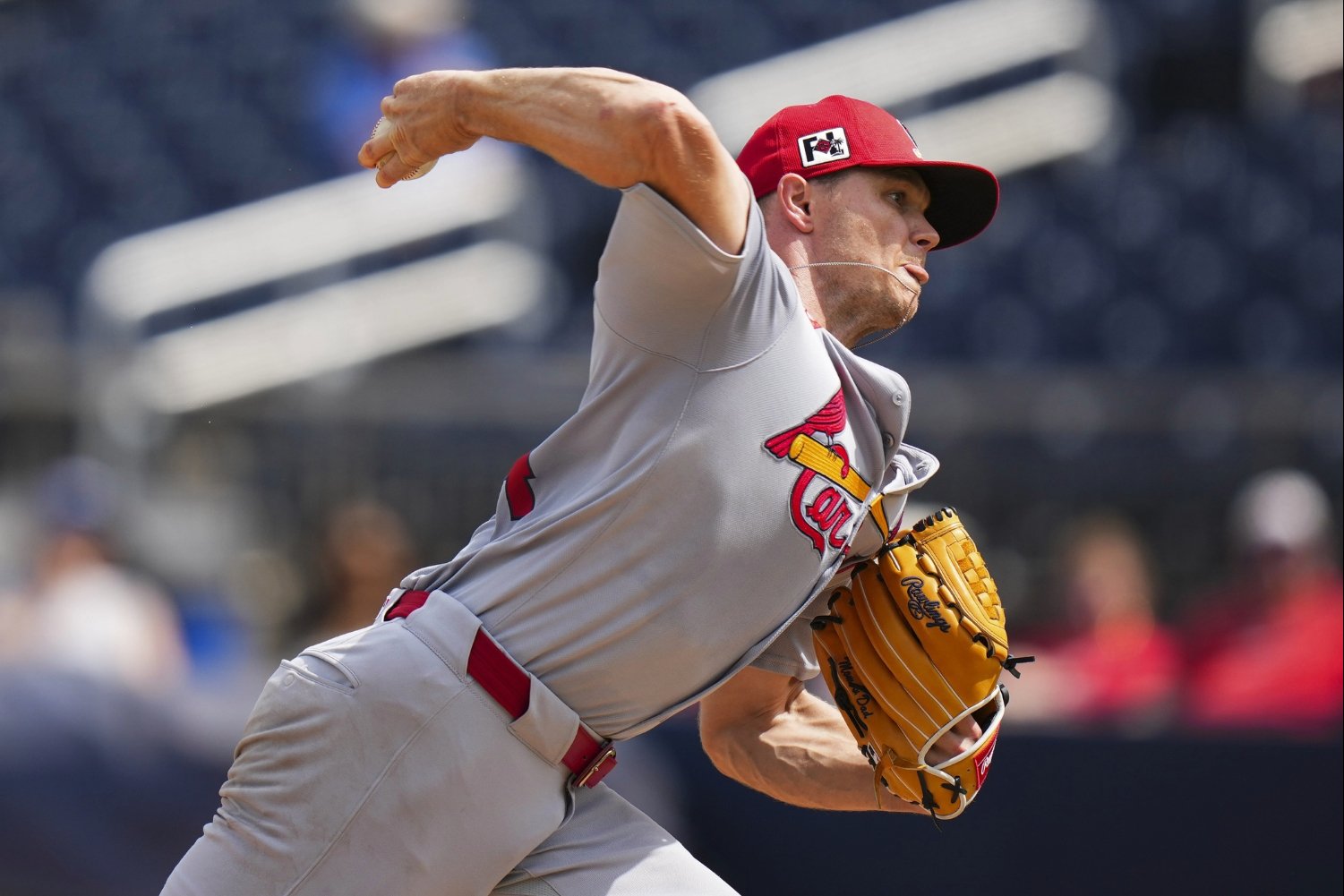 Late Tuesday morning, Jeff Passan reported that the Red Sox were trading pitchers Brandon Clarke and Richard Fitts in exchange for Sonny Gray and $20 million in cash. Gray’s base 2026 salary is $31 million and includes a $10 million mutual buyout option, so his total salary minus the $20 million in cash is $21 million. Gray, a November Scorpio, turned 36 this month. The former Vanderbilt Commodore has played for five different teams (Athletics: 2013-17, Yankees: 2017-18, Reds: 2019-21, Twins: 2022-23, and Cardinals: 2024-25) in the majors throughout his 13-year career. The Red Sox mark his sixth team, meaning he’s played for 20% of the league. Is age merely a number? In his age-35 season, Gray’s 2025 performance (21.7% K-BB% [seventh among qualified pitchers], 4.28 ERA, 3.39 FIP, 3.07 xFIP, and 3.6 fWAR) was significantly better than any Red Sox pitcher not named Garrett Crochet. Let’s dive into Gray’s arsenal. Gray’s pitch mix graph might be one of the most intensive that I’ve stumbled upon on Baseball Savant. With the plethora of colors, curves, and abrupt breaks, it resembles something akin to a Japanese subway station map. The biggest takeaway from the graph is that Gray has adapted consistently throughout his career. You can see how Gray has dropped the use of his four-seamer and sinker, while leaning more on his breaking pitches (curveball and sweeper) in his mid-thirties. Four-Seamer (22.3%) Gray’s four-seamer has never been a dominant pitch. It hit an all-time low in velocity (91.7 mph) and strikeout rate (4.6%) this past season. With only 10.5 inches (ranked 422 out of 438) of induced vertical break, the pitch doesn’t generate much rise. Unsurprisingly, Gray’s four-seamer yielded a .376 BA and .584 SLG, which were higher than his .360 xBA and .573 xSLG. The strongest tools in Gray’s arsenal are his breaking pitches, so he aligns with the Red Sox pitching lab’s paradigm of tossing more breaking balls and limiting fastball usage. Sweeper (19.3%) Gray’s sweeper is his bread and butter. Among qualified pitchers, the pitch posted the highest strikeout rate (51.2%), the fourth-highest whiff rate (42.3%), and the fifth-highest run value (7). With 42.0 inches of vertical drop and 14.9 inches of horizontal break, Gray’s sweeper has a more distinct sinking effect. If you want a primer on the dominance of Gray’s sweeper, check out this thread on Twitter. Curveball (18.3%) Gray recorded a 35.4% put-away rate with his curveball, the highest in baseball. Compared to the previous season (13.9% pitch rate), he threw the pitch more often, and its usage reached an all-time high in September. Opposing batters struggled against the pitch (150 BA, .156 xBA, .173 wOBA, and .182 xWOBA). Sinker (17.4%) Gray’s sinker saw a decline this season. Last year, it dropped from a +5 run value and 105 Stuff+ to 1 and 97 mark, respectively. He yielded 25 home runs: six on his four-seamer, five on his sweeper, three on his curveball, three on his changeup, one on his cutter, and seven on his sinker, the most of any pitch. Opposing batters started making more contact on Gray’s sinker, and the pitch saw a significant jump in slugging percentage from .385 to .477. The Rest of Gray’s Arsenal (Cutter: 12.6%, Changeup: 8.4%, Slider: 1.6%, and Slow Curve: 0.1%) Pitch Run Value Stuff+ wOBA xwOBA K% Whiff% PutAway% Hard-Hit% Cutter -1 91 .424 .380 4.4% 23.3% 30.0% 45.0% Changeup -3 80 .464 .436 7.5% 25.6% 27.3% 30.6% Slider 1 123 .215 .211 30.0% 38.1% 42.9% 28.6% Gray’s cutter and changeup posted a wOBA higher than their xwOBA, indicating he’s dealt with poor luck on those pitches. His cutter and changeup’s putaway rates are solid, so he’s productive at retiring batters with those pitches, but their low strikeout rates indicate he hasn’t been able to get ahead of batters frequently; Gray’s 26.7% two-strike percentage ranked 403 among the 436 qualified pitchers. When he was behind in the count this past season, his batted ball rate was alarmingly high (52.9%), and his strikeout rate was low (5.9%). When he was ahead in the account, his batted ball rate plummeted to 2.6% and his strikeout rate increased to 53.2%. Simply put, Gray’s biggest issue is getting to a two-strike count. On a positive note, his first-strike percentage reached an all-time high of 64.7% in 2025. He’s trending in the right direction and may only need to incorporate some pitch sequencing adjustments to put himself in more advantageous counts. Despite Gray’s slider posting the highest Stuff+ (123) in his arsenal and a strong strikeout rate, he rarely threw the pitch. He seems to have a love-hate relationship with the pitch, dropping it after 2019, bringing it back for the 2021-22 seasons, shelving it again in 2023, and reintroducing it this year. Its velocity dipped from 83.6 mph in 2021 to 83.2 mph before matching its 2019 speed in 2025. If he leans on the pitch more consistently next season, he should get ahead in the count more often. We’re at the end of Gray’s arsenal! He only threw his slow curveball twice in 2025, so it’s more of a flex than a go-to tool in his mix. The Red Sox did not extend a $22.05 million qualifying offer to Lucas Giolito, allowing Gray to step into Giolito’s role as a mid-rotation starter. Gray has substantially more swing-and-miss stuff than Giolito and doesn’t come with the baggage of injury issues, which bolsters the Red Sox’s pitching staff. Most importantly, the veteran adds some stability behind Garrett Crochet in the rotation. He has been a reliable starter over the past two seasons, tossing 166.1 innings in 2024 and 180.2 in 2025. Cot’s Contracts estimates the Red Sox's 2026 payroll at $216.86 million, leaving $27.13 million to spend before reaching the $244 million luxury tax threshold. Their payroll was $8.72 million over the $241 million threshold in 2025, so it wouldn’t be surprising if they’re willing to exceed the threshold again next season. Red Sox Chief Baseball Officer Craig Breslow remarked on the trade, “We felt like there was an opportunity to upgrade our rotation in 2026, and we did that. It’s early in the offseason. There are still opportunities that I anticipate materializing. Exactly what they look like, I’m not sure. But we’re not going to close off any chance to make the team better.” The Sonny Gray trade marks the first move of the Red Sox’s offseason, and based on Breslow’s comments, they’re poised to pursue additional roster upgrades in the coming weeks and months.
 -
Late Tuesday morning, Jeff Passan reported that the Red Sox were trading pitchers Brandon Clarke and Richard Fitts in exchange for Sonny Gray and $20 million in cash. Gray’s base 2026 salary is $31 million and includes a $10 million mutual buyout option, so his total salary minus the $20 million in cash is $21 million. Gray, a November Scorpio, turned 36 this month. The former Vanderbilt Commodore has played for five different teams (Athletics: 2013-17, Yankees: 2017-18, Reds: 2019-21, Twins: 2022-23, and Cardinals: 2024-25) in the majors throughout his 13-year career. The Red Sox mark his sixth team, meaning he’s played for 20% of the league. Is age merely a number? In his age-35 season, Gray’s 2025 performance (21.7% K-BB% [seventh among qualified pitchers], 4.28 ERA, 3.39 FIP, 3.07 xFIP, and 3.6 fWAR) was significantly better than any Red Sox pitcher not named Garrett Crochet. Let’s dive into Gray’s arsenal. Gray’s pitch mix graph might be one of the most intensive that I’ve stumbled upon on Baseball Savant. With the plethora of colors, curves, and abrupt breaks, it resembles something akin to a Japanese subway station map. The biggest takeaway from the graph is that Gray has adapted consistently throughout his career. You can see how Gray has dropped the use of his four-seamer and sinker, while leaning more on his breaking pitches (curveball and sweeper) in his mid-thirties. Four-Seamer (22.3%) Gray’s four-seamer has never been a dominant pitch. It hit an all-time low in velocity (91.7 mph) and strikeout rate (4.6%) this past season. With only 10.5 inches (ranked 422 out of 438) of induced vertical break, the pitch doesn’t generate much rise. Unsurprisingly, Gray’s four-seamer yielded a .376 BA and .584 SLG, which were higher than his .360 xBA and .573 xSLG. The strongest tools in Gray’s arsenal are his breaking pitches, so he aligns with the Red Sox pitching lab’s paradigm of tossing more breaking balls and limiting fastball usage. Sweeper (19.3%) Gray’s sweeper is his bread and butter. Among qualified pitchers, the pitch posted the highest strikeout rate (51.2%), the fourth-highest whiff rate (42.3%), and the fifth-highest run value (7). With 42.0 inches of vertical drop and 14.9 inches of horizontal break, Gray’s sweeper has a more distinct sinking effect. If you want a primer on the dominance of Gray’s sweeper, check out this thread on Twitter. Curveball (18.3%) Gray recorded a 35.4% put-away rate with his curveball, the highest in baseball. Compared to the previous season (13.9% pitch rate), he threw the pitch more often, and its usage reached an all-time high in September. Opposing batters struggled against the pitch (150 BA, .156 xBA, .173 wOBA, and .182 xWOBA). Sinker (17.4%) Gray’s sinker saw a decline this season. Last year, it dropped from a +5 run value and 105 Stuff+ to 1 and 97 mark, respectively. He yielded 25 home runs: six on his four-seamer, five on his sweeper, three on his curveball, three on his changeup, one on his cutter, and seven on his sinker, the most of any pitch. Opposing batters started making more contact on Gray’s sinker, and the pitch saw a significant jump in slugging percentage from .385 to .477. The Rest of Gray’s Arsenal (Cutter: 12.6%, Changeup: 8.4%, Slider: 1.6%, and Slow Curve: 0.1%) Pitch Run Value Stuff+ wOBA xwOBA K% Whiff% PutAway% Hard-Hit% Cutter -1 91 .424 .380 4.4% 23.3% 30.0% 45.0% Changeup -3 80 .464 .436 7.5% 25.6% 27.3% 30.6% Slider 1 123 .215 .211 30.0% 38.1% 42.9% 28.6% Gray’s cutter and changeup posted a wOBA higher than their xwOBA, indicating he’s dealt with poor luck on those pitches. His cutter and changeup’s putaway rates are solid, so he’s productive at retiring batters with those pitches, but their low strikeout rates indicate he hasn’t been able to get ahead of batters frequently; Gray’s 26.7% two-strike percentage ranked 403 among the 436 qualified pitchers. When he was behind in the count this past season, his batted ball rate was alarmingly high (52.9%), and his strikeout rate was low (5.9%). When he was ahead in the account, his batted ball rate plummeted to 2.6% and his strikeout rate increased to 53.2%. Simply put, Gray’s biggest issue is getting to a two-strike count. On a positive note, his first-strike percentage reached an all-time high of 64.7% in 2025. He’s trending in the right direction and may only need to incorporate some pitch sequencing adjustments to put himself in more advantageous counts. Despite Gray’s slider posting the highest Stuff+ (123) in his arsenal and a strong strikeout rate, he rarely threw the pitch. He seems to have a love-hate relationship with the pitch, dropping it after 2019, bringing it back for the 2021-22 seasons, shelving it again in 2023, and reintroducing it this year. Its velocity dipped from 83.6 mph in 2021 to 83.2 mph before matching its 2019 speed in 2025. If he leans on the pitch more consistently next season, he should get ahead in the count more often. We’re at the end of Gray’s arsenal! He only threw his slow curveball twice in 2025, so it’s more of a flex than a go-to tool in his mix. The Red Sox did not extend a $22.05 million qualifying offer to Lucas Giolito, allowing Gray to step into Giolito’s role as a mid-rotation starter. Gray has substantially more swing-and-miss stuff than Giolito and doesn’t come with the baggage of injury issues, which bolsters the Red Sox’s pitching staff. Most importantly, the veteran adds some stability behind Garrett Crochet in the rotation. He has been a reliable starter over the past two seasons, tossing 166.1 innings in 2024 and 180.2 in 2025. Cot’s Contracts estimates the Red Sox's 2026 payroll at $216.86 million, leaving $27.13 million to spend before reaching the $244 million luxury tax threshold. Their payroll was $8.72 million over the $241 million threshold in 2025, so it wouldn’t be surprising if they’re willing to exceed the threshold again next season. Red Sox Chief Baseball Officer Craig Breslow remarked on the trade, “We felt like there was an opportunity to upgrade our rotation in 2026, and we did that. It’s early in the offseason. There are still opportunities that I anticipate materializing. Exactly what they look like, I’m not sure. But we’re not going to close off any chance to make the team better.” The Sonny Gray trade marks the first move of the Red Sox’s offseason, and based on Breslow’s comments, they’re poised to pursue additional roster upgrades in the coming weeks and months. View full article
-
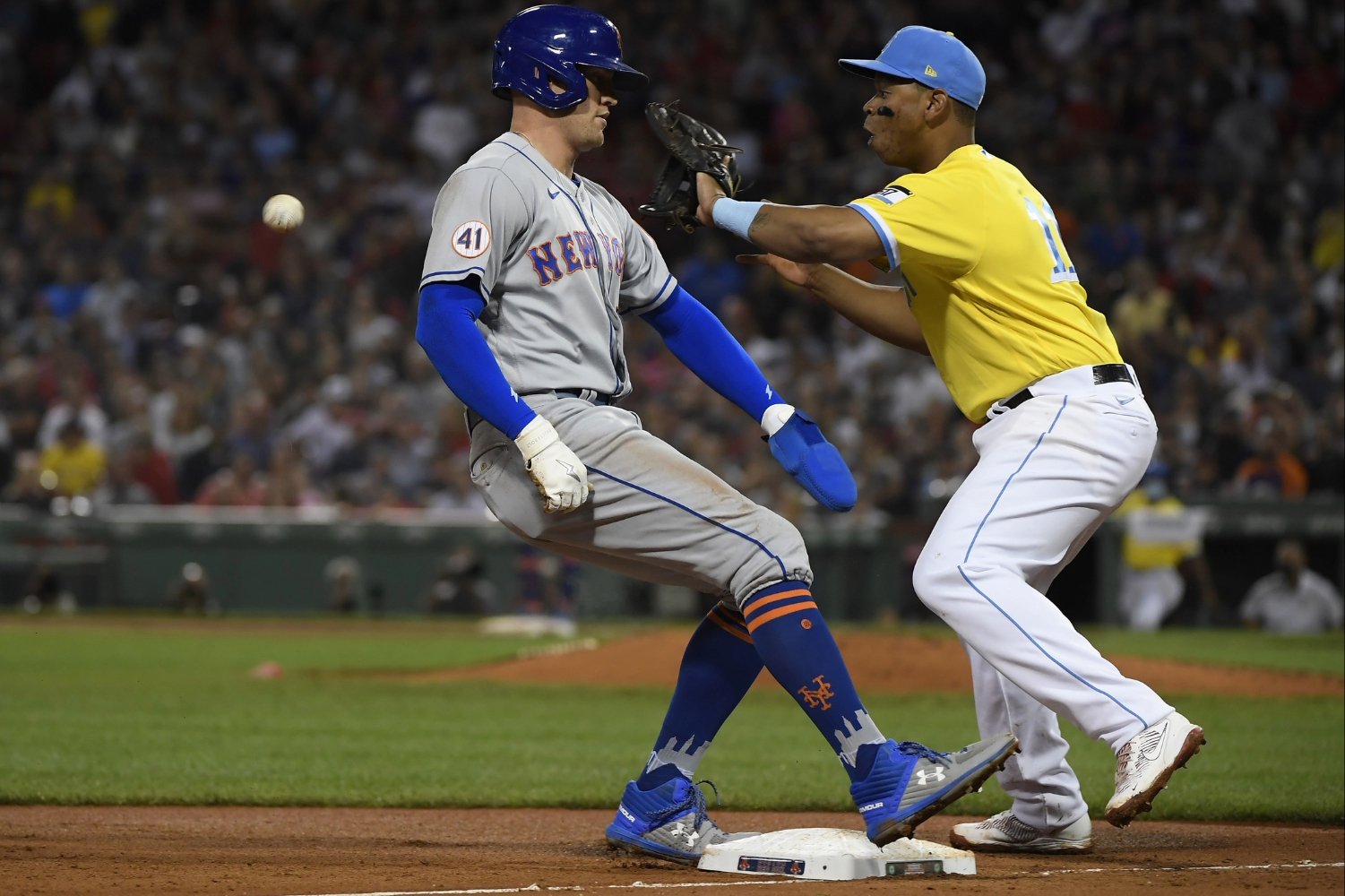 Last week, the Baltimore Orioles received outfielder Taylor Ward in exchange for right-handed starter Grayson Rodriguez. Ward is owed $13.7 million next year before he hits free agency in 2027. At age 26, Rodriguez is under team control through the 2029 season. His career has been riddled with injuries—shoulder and lat issues sidelined his playing time in 2024. This past season, he didn’t pitch, and in August, he underwent debridement surgery on his right elbow. On the other hand, Ward belted a career high of 35 home runs in 2025 (fifth in the AL). With the ability to hit the ball to all parts of the field, Ward should fare well playing 81 games in the hitter-friendly confines of Camden Yards. On Nov. 24, Jeff Passan reported that the Mets were trading outfielder Brandon Nimmo to the Texas Rangers for second baseman Marcus Semien. Entering his age-33 season, Nimmo is owed $102.5 million through 2030, while Semien, who turned 35 in September, is owed $72 million through 2028. The Mets are sending $5 million to help offset the salary difference. The longest-tenured member of the Mets’ core, Nimmo had a stellar season at the plate in 2025, recording 114 wRC+, 25 home runs, and a career-high 50.2% hard-hit rate. However, his defensive metrics have dwindled with age. After primarily starting in center field throughout his career, Nimmo has shifted to left field. His defensive regression correlates with the decline in his sprint speed. Three years ago, Nimmo ranked in the 84th percentile for sprint speed (28.6 ft/s), and his Outs Above Average (OAA) was in the 91st percentile (six). Since then, both metrics dropped significantly. In 2025, his sprint speed fell to the 46th percentile (27.3 ft/s), while his OAA decreased to the 42nd percentile (one). Marcus Semien profiles as the exact opposite of Brandon Nimmo. Semien was sidelined with a Lisfranc sprain and left foot injury in 2025. Over the past couple of seasons, his bat has shown a steady decline: 2023: 128 wRC+ (during Texas’ World Series run) 2024: 101 wRC+ 2025: 89 wRC+ While Semien has maintained solid plate discipline, he isn’t a substantial threat at the plate anymore. Yet, unlike Nimmo, his defense has remained elite. He won his second Gold Glove in 2025 (7 OAA). Semien is a threat on the basepaths and has maintained an elite sprint speed through his mid-30s. This past season, the Mets ranked last in the league for sprint speed, so Semien provides a much-needed boost to the team’s baserunning. At second base, the Mets had a revolving door of second basemen with Jeff McNeil, Brett Baty, and Luisangel Acuña manning the position at various points in the season. Semien shores up the defense of the right side of the Mets’ infield, and a change of scenery could help rejuvenate his bat. In the outfield, Juan Soto is locked in right for the foreseeable future. Center field is a question mark. The Mets avoided arbitration with Tyrone Taylor, a plus defender in center field with elite speed. Internally, they could look to call up prospects Carson Benge and/or Jett Williams to fill in at center field during the 2026 season. McNeil also provides some positional versatility and can play in the outfield. Looking at the Steamer’s 2026 projections for the top free-agent outfielders, the outfield market is weak. Outside of Kyle Tucker and Cody Bellinger, these players don’t move the needle greatly for contending teams. Given that outfielders are prime extension candidates (Julio Rodríguez, Jackson Chourio, Corbin Carroll, Jackson Merrill, and Roman Anthony), the free-agent outfield pool will continue to narrow. Player Age Position BB% K% ISO BABIP AVG OPS wOBA wRC+ WAR Kyle Tucker 29 RF 13.6% 15.2% .215 .278 .268 .853 .366 136 3.7 Mike Yastrzemski 36 RF 10.9% 23.3% .180 .269 .229 .726 .316 102 1.0 Cody Bellinger 30 CF 8.2% 15.0% .184 .282 .267 .781 .336 115 2.8 Cedric Mullins 31 CF 8.9% 22.8% .156 .274 .230 .689 .302 92 1.2 Rob Refsnyder 35 LF 10.4% 26.1% .161 .315 .248 .743 .325 108 0.4 Taylor Ward 32 LF 10.3% 24.1% .192 .286 .243 .764 .325 114 2.2 Brandon Nimmo 33 LF 9.7% 22.1% .172 .301 .255 .763 .333 115 2.5 Jarren Duran 29 LF 8.1% 23.5% .178 .319 .257 .760 .329 107 2.4 Wilyer Abreu 26 RF 11.1% 24.5% .203 .295 .249 .786 .338 113 1.7 The Red Sox are currently flush with outfield talent. Jarren Duran and Wilyer Abreu stand out as potential trade candidates. Projection-wise, both are younger and offer more long-term value than the 2025-26 free agent outfielders not named Cody Bellinger and Kyle Tucker. Although Duran took a step backwards in 2025, he is an above-average outfielder under team control through 2028. His skillset relies on his elite speed (29.1 ft/s, 91st percentile), which typically regresses with age. Considering that Duran prides himself on his insane workout routines and taking care of his body, his speed won't diminish overnight. Abreu is a two-time Gold Glove winner in just his first two full major league seasons. This past season, he slugged 22 home runs, the second-most on the Red Sox, and has four remaining years of control. While his ceiling has been a topic of debate, he’s proven that he can provide Gold Glove defense and has the potential to reach 30 home runs with his power. An ideal trade partner would have a surplus of controllable starting pitcher depth and need an upgrade in the outfield. Contending teams in the bottom third of the league for outfielder OAA include the Phillies, Rays, Braves, Mets, and Reds. The Phillies are far from a perfect match, the Rays are an intra-division team, and the Braves could potentially align with the Red Sox's need for a power bat at first (Matt Olson, anyone?). Again, similar to the Red Sox, the Braves and Mets are in search of a top-of-the-rotation starter. The Mets have an intriguing crop of pitching prospects (Brandon Sproat, Jonah Tong), but if you're trading Duran/Abreu, you would prefer receiving a proven major league pitcher. On another note, Justin Willard, the Red Sox's former Director of Pitching, was hired by the Mets as their new pitching coach. Willard was a pivotal piece in overhauling the Red Sox's pitching program. The impact of his departure is unknown and could make the Red Sox more averse to taking on pitching projects moving forward. Following the Taylor Ward and Brandon Nimmo trades, the hot stove is just starting to heat up. Jarren Duran and/or Wilyer Abreu stand to provide a higher return than Grayson Rodriguez or Marcus Semien, and the front office must make a decisive decision to sell high on one or both players as it pursues the necessary pitching upgrades to make a World Series push.
 -
Last week, the Baltimore Orioles received outfielder Taylor Ward in exchange for right-handed starter Grayson Rodriguez. Ward is owed $13.7 million next year before he hits free agency in 2027. At age 26, Rodriguez is under team control through the 2029 season. His career has been riddled with injuries—shoulder and lat issues sidelined his playing time in 2024. This past season, he didn’t pitch, and in August, he underwent debridement surgery on his right elbow. On the other hand, Ward belted a career high of 35 home runs in 2025 (fifth in the AL). With the ability to hit the ball to all parts of the field, Ward should fare well playing 81 games in the hitter-friendly confines of Camden Yards. On Nov. 24, Jeff Passan reported that the Mets were trading outfielder Brandon Nimmo to the Texas Rangers for second baseman Marcus Semien. Entering his age-33 season, Nimmo is owed $102.5 million through 2030, while Semien, who turned 35 in September, is owed $72 million through 2028. The Mets are sending $5 million to help offset the salary difference. The longest-tenured member of the Mets’ core, Nimmo had a stellar season at the plate in 2025, recording 114 wRC+, 25 home runs, and a career-high 50.2% hard-hit rate. However, his defensive metrics have dwindled with age. After primarily starting in center field throughout his career, Nimmo has shifted to left field. His defensive regression correlates with the decline in his sprint speed. Three years ago, Nimmo ranked in the 84th percentile for sprint speed (28.6 ft/s), and his Outs Above Average (OAA) was in the 91st percentile (six). Since then, both metrics dropped significantly. In 2025, his sprint speed fell to the 46th percentile (27.3 ft/s), while his OAA decreased to the 42nd percentile (one). Marcus Semien profiles as the exact opposite of Brandon Nimmo. Semien was sidelined with a Lisfranc sprain and left foot injury in 2025. Over the past couple of seasons, his bat has shown a steady decline: 2023: 128 wRC+ (during Texas’ World Series run) 2024: 101 wRC+ 2025: 89 wRC+ While Semien has maintained solid plate discipline, he isn’t a substantial threat at the plate anymore. Yet, unlike Nimmo, his defense has remained elite. He won his second Gold Glove in 2025 (7 OAA). Semien is a threat on the basepaths and has maintained an elite sprint speed through his mid-30s. This past season, the Mets ranked last in the league for sprint speed, so Semien provides a much-needed boost to the team’s baserunning. At second base, the Mets had a revolving door of second basemen with Jeff McNeil, Brett Baty, and Luisangel Acuña manning the position at various points in the season. Semien shores up the defense of the right side of the Mets’ infield, and a change of scenery could help rejuvenate his bat. In the outfield, Juan Soto is locked in right for the foreseeable future. Center field is a question mark. The Mets avoided arbitration with Tyrone Taylor, a plus defender in center field with elite speed. Internally, they could look to call up prospects Carson Benge and/or Jett Williams to fill in at center field during the 2026 season. McNeil also provides some positional versatility and can play in the outfield. Looking at the Steamer’s 2026 projections for the top free-agent outfielders, the outfield market is weak. Outside of Kyle Tucker and Cody Bellinger, these players don’t move the needle greatly for contending teams. Given that outfielders are prime extension candidates (Julio Rodríguez, Jackson Chourio, Corbin Carroll, Jackson Merrill, and Roman Anthony), the free-agent outfield pool will continue to narrow. Player Age Position BB% K% ISO BABIP AVG OPS wOBA wRC+ WAR Kyle Tucker 29 RF 13.6% 15.2% .215 .278 .268 .853 .366 136 3.7 Mike Yastrzemski 36 RF 10.9% 23.3% .180 .269 .229 .726 .316 102 1.0 Cody Bellinger 30 CF 8.2% 15.0% .184 .282 .267 .781 .336 115 2.8 Cedric Mullins 31 CF 8.9% 22.8% .156 .274 .230 .689 .302 92 1.2 Rob Refsnyder 35 LF 10.4% 26.1% .161 .315 .248 .743 .325 108 0.4 Taylor Ward 32 LF 10.3% 24.1% .192 .286 .243 .764 .325 114 2.2 Brandon Nimmo 33 LF 9.7% 22.1% .172 .301 .255 .763 .333 115 2.5 Jarren Duran 29 LF 8.1% 23.5% .178 .319 .257 .760 .329 107 2.4 Wilyer Abreu 26 RF 11.1% 24.5% .203 .295 .249 .786 .338 113 1.7 The Red Sox are currently flush with outfield talent. Jarren Duran and Wilyer Abreu stand out as potential trade candidates. Projection-wise, both are younger and offer more long-term value than the 2025-26 free agent outfielders not named Cody Bellinger and Kyle Tucker. Although Duran took a step backwards in 2025, he is an above-average outfielder under team control through 2028. His skillset relies on his elite speed (29.1 ft/s, 91st percentile), which typically regresses with age. Considering that Duran prides himself on his insane workout routines and taking care of his body, his speed won't diminish overnight. Abreu is a two-time Gold Glove winner in just his first two full major league seasons. This past season, he slugged 22 home runs, the second-most on the Red Sox, and has four remaining years of control. While his ceiling has been a topic of debate, he’s proven that he can provide Gold Glove defense and has the potential to reach 30 home runs with his power. An ideal trade partner would have a surplus of controllable starting pitcher depth and need an upgrade in the outfield. Contending teams in the bottom third of the league for outfielder OAA include the Phillies, Rays, Braves, Mets, and Reds. The Phillies are far from a perfect match, the Rays are an intra-division team, and the Braves could potentially align with the Red Sox's need for a power bat at first (Matt Olson, anyone?). Again, similar to the Red Sox, the Braves and Mets are in search of a top-of-the-rotation starter. The Mets have an intriguing crop of pitching prospects (Brandon Sproat, Jonah Tong), but if you're trading Duran/Abreu, you would prefer receiving a proven major league pitcher. On another note, Justin Willard, the Red Sox's former Director of Pitching, was hired by the Mets as their new pitching coach. Willard was a pivotal piece in overhauling the Red Sox's pitching program. The impact of his departure is unknown and could make the Red Sox more averse to taking on pitching projects moving forward. Following the Taylor Ward and Brandon Nimmo trades, the hot stove is just starting to heat up. Jarren Duran and/or Wilyer Abreu stand to provide a higher return than Grayson Rodriguez or Marcus Semien, and the front office must make a decisive decision to sell high on one or both players as it pursues the necessary pitching upgrades to make a World Series push. View full article
-
 Maddie and Alex run through the roster changes as the Red Sox prepare for the Rule 5 draft. They then discuss Kristian Campbell's new position in left field and turn that into a discussion on Jarren Duran trade packages. They wrap up the episode by running through the Pete Alonso rumors and discussing other potential free-agent fits. Listen on Apple Podcasts: https://podcasts.apple.com/us/podcast/the-talk-sox-podcast/id1783204104 Listen on Spotify: https://open.spotify.com/show/3qPrPXEngu0CxgTmlf0ynm Listen on iHeartRadio: https://www.iheart.com/podcast/263-the-talk-sox-podcast-244591331/ Listen on Pocket Casts: https://pca.st/4tmd121v Watch on YouTube: https://www.youtube.com/@talksox
 -
Maddie and Alex run through the roster changes as the Red Sox prepare for the Rule 5 draft. They then discuss Kristian Campbell's new position in left field and turn that into a discussion on Jarren Duran trade packages. They wrap up the episode by running through the Pete Alonso rumors and discussing other potential free-agent fits. Listen on Apple Podcasts: https://podcasts.apple.com/us/podcast/the-talk-sox-podcast/id1783204104 Listen on Spotify: https://open.spotify.com/show/3qPrPXEngu0CxgTmlf0ynm Listen on iHeartRadio: https://www.iheart.com/podcast/263-the-talk-sox-podcast-244591331/ Listen on Pocket Casts: https://pca.st/4tmd121v Watch on YouTube: https://www.youtube.com/@talksox View full article
-
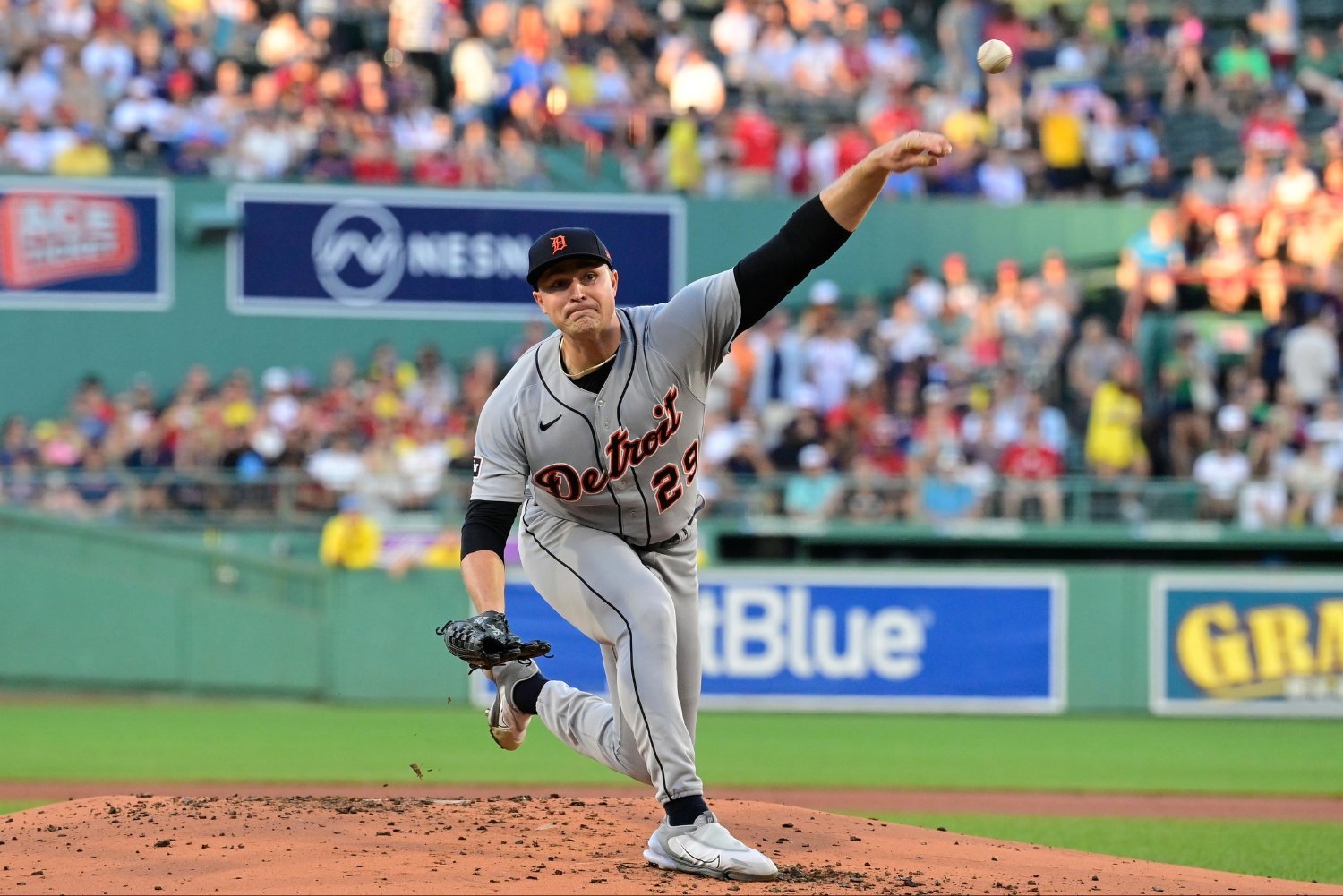 The 2025 Detroit Tigers season was an emotional rollercoaster. Heading into the All-Star Break, the team held a 59-38 record, the best in baseball, and a 12-game division lead over the Cleveland Guardians in the AL Central. Following an epic collapse (28-37), they finished the season second in the division behind the Guardians. It’s difficult to imagine where the Tigers would be without their ace Tarik Skubal. Over the past three seasons, the team went 38-13 in the southpaw's starts. Skubal won the AL pitching Triple Crown in 2024, leading AL pitchers with 18 wins, a 2.39 ERA, and 228 strikeouts, and unanimously won the AL Cy Young Award. His dominance continued in 2025, and he won his second consecutive AL Cy Young Award, finishing with 13 wins, a 2.21 ERA, and 241 strikeouts. Skubal had Tommy John surgery in 2017, causing him to miss part of the 2016 season and the entirety of the 2017 season at Seattle University. Although Skubal’s velocity (95 mph fastball) was promising, concerns over his injury led him to fall in the 2018 MLB Draft, with the Tigers selecting him in the ninth round (255th overall). After his first two seasons in the Tigers’ farm system, a December 2020 Baseball America scouting report projected Skubal’s “ceiling of at least a mid-rotation starter”. Skubal underwent flexor tendon surgery in August 2022. He returned to pitching just before the 2023 All-Star Break, with the velocity on almost all of his pitches increasing. The following season, he tinkered with his pitch sequencing, reducing the use of his slider (14.9%) and fastball (33.2%), while throwing his changeup (27.0%) and sinker (20.6%) more often. Following the Tigers' departure from the 2025 postseason, Jon Heyman reported that the Tigers and Skubal are over $250 million apart in extension negotiations, sparking speculation that Skubal could be dealt this offseason. At the recent GM meetings, Craig Breslow stated the Red Sox were looking to add a frontline starter to put behind Garrett Crochet and a power bat. What about a pitcher who could slot in front of Garrett Crochet? Let’s imagine a Red Sox trade for Tarik Skubal. To start, it’s worth examining the Tigers’ positional needs. Like Alex Cora, Tigers skipper A.J. Hinch values defensive versatility and moved players around the field during the season. The chart below shows the Tigers’ and Red Sox’s 2025 positional splits, highlighting the top contributor at each position by fWAR ranking among qualified players. 2025 Red Sox vs Tigers Positional Split Rankings Red Sox Position Tigers 12th Catcher 3rd 18th 1B 13th 25th 2B 8th 7th 3B 32nd 17th SS 22nd 8th LF 12th 3rd CF 32nd 9th RF 11th 12th Rotation 7th 2nd Bullpen 24th First-time Gold Glove winner catcher Dillon Dingler (4.6 fWAR) is under control through 2030. First baseman Spencer Torkelson (2.3 fWAR) had a strong season and enters free agency in 2029. Second base is more unsettled; Gleyber Torres (2.6 fWAR) signed a $15 million, one-year deal and is now a free agent. The Red Sox utilized a revolving door at second base during the season, so the team doesn’t have a surplus to assist Detroit. Going into the 2026 season, there is uncertainty at third for both teams. The Tigers aggressively pursued Alex Bregman last offseason, offering a six-year, $171.5 million contract, but he signed a three-year, $120 million deal with the Red Sox. Now that Bregman has opted out, the Tigers are rumored to be gearing up for another run for him. Utility man Zack McKinstry (1.7 fWAR) generated the most production at shortstop. In the outfield, Riley Greene (2.3 fWAR) primarily manned left field. Center field stands out as a major area for upgrade, as Tigers center fielders ranked 28th overall in baseball. Though he’s primarily regarded as a shortstop, Javier Báez’s 0.7 fWAR led the eight players who appeared in center field in 2025. Wenceel Pérez (1.9 fWAR) and Kerry Carpenter (0.9 fWAR) were a productive platoon pair in right field, similar to Wilyer Abreu and Rob Refsnyder. Pérez, a defensive wizard, produced four Outs Above Average, while Carpenter dominated right-handed pitching (122 wRC+ split). Trade Scenario Gauging a potential Skubal trade is tough. Skubal enters free agency after the 2026 season, leaving him with one year of team control. A somewhat comparable trade occurred in February 2024, when the Orioles acquired then 29-year-old Corbin Burnes, who also had one year of remaining control. Though Burnes is a quality pitcher, he doesn’t reach Skubal’s ceiling and was a couple of years removed from his 2021 Cy Young Award season. Mock Trade: Boston receives: LHP Tarik Skubal Detroit receives: LHP Connelly Early/Payton Tolle, OF Jarren Duran, and SS Franklin Arias (Baseball America’s No. 48 prospect) Connelly Early or Payton Tolle help offset the loss of Skubal. Both have high ceilings and experience pitching in the majors. While Duran's performance took a step back in 2025, his 3.9 fWAR ranked 13th in baseball among position players. He’s posted seven OAA in center field over the past two seasons, and would be a significant upgrade for the Tigers. Arias is a well-regarded right-handed shortstop, ranked fourth in the Red Sox’s system and 48th overall (Baseball America). Sox Prospects projects his major league debut in mid-2027, which coincides with the expiration of McKinstry’s contract. Outfielder Jhostynxon Garcia could be swapped for Arias, though adding another outfielder to the trade would be somewhat redundant. Fellow shortstop Marcelo Mayer could factor into a Skubal trade, though his trade value is diminished after his season ended prematurely with a wrist injury. Since Skubal is a Scott Boras client, he is unlikely to sign an extension with his new team. Adding another layer of complexity to a Skubal trade is the potential for a lockout. MLB’s Collective Bargaining Agreement is set to expire on December 1, 2026. If/when a lockout occurs, Skubal will likely be a free agent. The 2021 Major League Baseball lockout lasted 99 days, spanning from December 2, 2021, to March 10, 2022. Four days before the start of the lockout, 11 players, including Javier Báez, Max Scherzer, Corey Seager, and Marcus Semien, signed a total of $1.9 billion of contracts. The final day set a record of $1.3 billion in new contracts. During lockouts, free agents aren’t allowed to negotiate with teams, but once the work stoppage ends, a flurry of free agent signings typically ensues. After the 2021 lockout ended, several notable players quickly signed contracts: 3/18/22: Kris Bryant signed a seven-year, $182 million contract with the Rockies 3/18/22: Freddie Freeman signed a six-year, $162 million contract with the Dodgers 3/22/22: Carlos Correa signed a three-year $105.3 million contract with the Twins 3/23/22: Trevor Story signed a six-year, $140 million contract with the Red Sox Alternatively, Sandy Alcantara is a controllable No. 2 starter in the trade market that wouldn’t cost as much as Skubal. Meanwhile, this year’s free agent starting pitching market is thin, “headlined” by Dylan Cease, Ranger Suarez, and Zac Gallen. Under Craig Breslow, free-agent pitching additions have been an area of weakness. FanGraphs’ 2024 “We Tried” Tracker shows the Red Sox pursued starters Blake Snell, Yusei Kikuchi, Shane Bieber, and Max Fried, but ultimately fell short. Looking ahead, waiting to pursue Skubal in free agency would be a cleaner path for the Red Sox. By the time Skubal enters free agency, the team will have a general manager to oversee free agent contract negotiations. Moreover, the Red Sox are one of the few organizations that could afford Skubal’s projected $400 million contract without sacrificing a substantial package of young talent.
 -
The 2025 Detroit Tigers season was an emotional rollercoaster. Heading into the All-Star Break, the team held a 59-38 record, the best in baseball, and a 12-game division lead over the Cleveland Guardians in the AL Central. Following an epic collapse (28-37), they finished the season second in the division behind the Guardians. It’s difficult to imagine where the Tigers would be without their ace Tarik Skubal. Over the past three seasons, the team went 38-13 in the southpaw's starts. Skubal won the AL pitching Triple Crown in 2024, leading AL pitchers with 18 wins, a 2.39 ERA, and 228 strikeouts, and unanimously won the AL Cy Young Award. His dominance continued in 2025, and he won his second consecutive AL Cy Young Award, finishing with 13 wins, a 2.21 ERA, and 241 strikeouts. Skubal had Tommy John surgery in 2017, causing him to miss part of the 2016 season and the entirety of the 2017 season at Seattle University. Although Skubal’s velocity (95 mph fastball) was promising, concerns over his injury led him to fall in the 2018 MLB Draft, with the Tigers selecting him in the ninth round (255th overall). After his first two seasons in the Tigers’ farm system, a December 2020 Baseball America scouting report projected Skubal’s “ceiling of at least a mid-rotation starter”. Skubal underwent flexor tendon surgery in August 2022. He returned to pitching just before the 2023 All-Star Break, with the velocity on almost all of his pitches increasing. The following season, he tinkered with his pitch sequencing, reducing the use of his slider (14.9%) and fastball (33.2%), while throwing his changeup (27.0%) and sinker (20.6%) more often. Following the Tigers' departure from the 2025 postseason, Jon Heyman reported that the Tigers and Skubal are over $250 million apart in extension negotiations, sparking speculation that Skubal could be dealt this offseason. At the recent GM meetings, Craig Breslow stated the Red Sox were looking to add a frontline starter to put behind Garrett Crochet and a power bat. What about a pitcher who could slot in front of Garrett Crochet? Let’s imagine a Red Sox trade for Tarik Skubal. To start, it’s worth examining the Tigers’ positional needs. Like Alex Cora, Tigers skipper A.J. Hinch values defensive versatility and moved players around the field during the season. The chart below shows the Tigers’ and Red Sox’s 2025 positional splits, highlighting the top contributor at each position by fWAR ranking among qualified players. 2025 Red Sox vs Tigers Positional Split Rankings Red Sox Position Tigers 12th Catcher 3rd 18th 1B 13th 25th 2B 8th 7th 3B 32nd 17th SS 22nd 8th LF 12th 3rd CF 32nd 9th RF 11th 12th Rotation 7th 2nd Bullpen 24th First-time Gold Glove winner catcher Dillon Dingler (4.6 fWAR) is under control through 2030. First baseman Spencer Torkelson (2.3 fWAR) had a strong season and enters free agency in 2029. Second base is more unsettled; Gleyber Torres (2.6 fWAR) signed a $15 million, one-year deal and is now a free agent. The Red Sox utilized a revolving door at second base during the season, so the team doesn’t have a surplus to assist Detroit. Going into the 2026 season, there is uncertainty at third for both teams. The Tigers aggressively pursued Alex Bregman last offseason, offering a six-year, $171.5 million contract, but he signed a three-year, $120 million deal with the Red Sox. Now that Bregman has opted out, the Tigers are rumored to be gearing up for another run for him. Utility man Zack McKinstry (1.7 fWAR) generated the most production at shortstop. In the outfield, Riley Greene (2.3 fWAR) primarily manned left field. Center field stands out as a major area for upgrade, as Tigers center fielders ranked 28th overall in baseball. Though he’s primarily regarded as a shortstop, Javier Báez’s 0.7 fWAR led the eight players who appeared in center field in 2025. Wenceel Pérez (1.9 fWAR) and Kerry Carpenter (0.9 fWAR) were a productive platoon pair in right field, similar to Wilyer Abreu and Rob Refsnyder. Pérez, a defensive wizard, produced four Outs Above Average, while Carpenter dominated right-handed pitching (122 wRC+ split). Trade Scenario Gauging a potential Skubal trade is tough. Skubal enters free agency after the 2026 season, leaving him with one year of team control. A somewhat comparable trade occurred in February 2024, when the Orioles acquired then 29-year-old Corbin Burnes, who also had one year of remaining control. Though Burnes is a quality pitcher, he doesn’t reach Skubal’s ceiling and was a couple of years removed from his 2021 Cy Young Award season. Mock Trade: Boston receives: LHP Tarik Skubal Detroit receives: LHP Connelly Early/Payton Tolle, OF Jarren Duran, and SS Franklin Arias (Baseball America’s No. 48 prospect) Connelly Early or Payton Tolle help offset the loss of Skubal. Both have high ceilings and experience pitching in the majors. While Duran's performance took a step back in 2025, his 3.9 fWAR ranked 13th in baseball among position players. He’s posted seven OAA in center field over the past two seasons, and would be a significant upgrade for the Tigers. Arias is a well-regarded right-handed shortstop, ranked fourth in the Red Sox’s system and 48th overall (Baseball America). Sox Prospects projects his major league debut in mid-2027, which coincides with the expiration of McKinstry’s contract. Outfielder Jhostynxon Garcia could be swapped for Arias, though adding another outfielder to the trade would be somewhat redundant. Fellow shortstop Marcelo Mayer could factor into a Skubal trade, though his trade value is diminished after his season ended prematurely with a wrist injury. Since Skubal is a Scott Boras client, he is unlikely to sign an extension with his new team. Adding another layer of complexity to a Skubal trade is the potential for a lockout. MLB’s Collective Bargaining Agreement is set to expire on December 1, 2026. If/when a lockout occurs, Skubal will likely be a free agent. The 2021 Major League Baseball lockout lasted 99 days, spanning from December 2, 2021, to March 10, 2022. Four days before the start of the lockout, 11 players, including Javier Báez, Max Scherzer, Corey Seager, and Marcus Semien, signed a total of $1.9 billion of contracts. The final day set a record of $1.3 billion in new contracts. During lockouts, free agents aren’t allowed to negotiate with teams, but once the work stoppage ends, a flurry of free agent signings typically ensues. After the 2021 lockout ended, several notable players quickly signed contracts: 3/18/22: Kris Bryant signed a seven-year, $182 million contract with the Rockies 3/18/22: Freddie Freeman signed a six-year, $162 million contract with the Dodgers 3/22/22: Carlos Correa signed a three-year $105.3 million contract with the Twins 3/23/22: Trevor Story signed a six-year, $140 million contract with the Red Sox Alternatively, Sandy Alcantara is a controllable No. 2 starter in the trade market that wouldn’t cost as much as Skubal. Meanwhile, this year’s free agent starting pitching market is thin, “headlined” by Dylan Cease, Ranger Suarez, and Zac Gallen. Under Craig Breslow, free-agent pitching additions have been an area of weakness. FanGraphs’ 2024 “We Tried” Tracker shows the Red Sox pursued starters Blake Snell, Yusei Kikuchi, Shane Bieber, and Max Fried, but ultimately fell short. Looking ahead, waiting to pursue Skubal in free agency would be a cleaner path for the Red Sox. By the time Skubal enters free agency, the team will have a general manager to oversee free agent contract negotiations. Moreover, the Red Sox are one of the few organizations that could afford Skubal’s projected $400 million contract without sacrificing a substantial package of young talent. View full article
-
The Boston Red Sox’s rotation lacks a No. 2 starter. There are plenty of in-house candidates (Brayan Bello, Connelly Early, Kyle Harrison) to fill in at the back of the rotation, along with pitchers returning from injuries. Hunter Dobbins (torn ACL), Kutter Crawford (mysterious wrist injury), and Patrick Sandoval (torn UCL) are expected to pitch again at some point in the 2026 season. However, you can’t rely on recovering pitchers to immediately contribute like they would at full health. Effectively, the Red Sox need a pitcher to cement their rotation and fill the gap between Garrett Crochet and their backend starters. Fortunately, the team possesses the financial resources to allocate towards free-agent starters (or perhaps an expensive trade target). Which pitchers should they go after? Dylan Cease (30, 3.4 fWAR) Projected Contract Analyst Length AAV Total Jim Bowden 6-years $31.67 M $187.0 M Tim Britton 6-years $29.0 M $174.0 M Matthew Pouliot 7-years $30.0 M $210.0 M 2025 Stats IP ERA K-BB% HardHit% GB% FIP xFIP WAR 168.0 4.55 19.9% 37.4% 36.6% 3.56 3.56 3.4 Dylan Cease’s durability is his most valuable asset. Over the past four seasons, he’s pitched at least 150 innings, and the Red Sox’s rotation needs consistency behind Crochet. His slider is an authoritative pitch. In 2024, it posted the highest run value (25) among all pitch types. Cease’s 11.52 strikeouts per nine innings was the best in the majors this year. He's attached to a qualifying offer, so it'll be interesting to see where his market leads. In terms of complementing Crochet, it's hard to imagine Boston doing better than a right-hander with his raw stuff. Ranger Suárez (30, 4.0 fWAR) Projected Contract Analyst Length AAV Total Jim Bowden 6-years $27.33 M $164.0 M Tim Britton 6-years $25.5 M $153.0 M Matthew Pouliot 5-years $27.0 M $135.0 M 2025 Stats IP ERA K-BB% HardHit% GB% FIP xFIP WAR 157.1 3.20 17.4% 31.1% 46.8% 3.21 3.61 4.0 Ranger Suárez has been a cornerstone of the Phillies’ rotation over the past two seasons, but Zach Wheeler’s sheer dominance and the rise of Cristopher Sanchez pushed him down to the No. 3 spot. On any other team, he’d likely profile as a No. 2 starter. Read more about Ranger’s potential fit with the Red Sox in @Jordan Leandre's write-up. Zac Gallen (30, 1.1 fWAR) Projected Contract Analyst Length AAV Total Jim Bowden 5-years $27.0 M $135.0 M Tim Britton 2-years $21.0 M $42.0 M Matthew Pouliot 2-years $22.5 M $45.0 M 2025 Stats IP ERA K-BB% HardHit% GB% FIP xFIP WAR 192.0 4.83 13.4% 41.0% 43.6% 4.50 4.12 1.1 Going into the 2025 season, it seemed like Zac Gallen was primed to cash in on a large contract. Three years ago, Gallen finished third in the NL Cy Young race and has remained a consistent Cy Young candidate throughout his career. Unfortunately, for most of the 2025 season, Gallen appeared to be a shell of his former self. His performance was, as my fellow Gen Z-ers say, “mid”. With a 5.40 ERA in the first half, his potential trade value took a hit, and he remained with the Diamondbacks through the conclusion of the trade deadline. Gallen’s fastball is the staple of his arsenal. He’s thrown the pitch 47% of the time throughout his career. The pitch is the bridge to his secondaries (knuckle curve, cutter, changeup, slider, and sinker). When he paints his fastball on the outer edges of the strike zone, he creates a deadly combo with his secondaries. Between March and July, he struggled to command his fastball, and its velocity dropped (93.3 mph). Once the dog days of summer passed, he found better control and improved his velocity (94.0 mph). By the conclusion of the second half, he posted a 3.97 ERA. Like Dylan Cease, Gallen’s durability is a major asset, throwing an average of 183.5 innings per season since 2022. Given his subpar performance in his walk year, Gallen won’t fetch a lengthy, long-term contract. If Andrew Bailey’s pitching lab can help him rebound, he’s a high-ceiling reclamation project. Tatsuya Imai (28) Projected Contract Analyst Length AAV Total Jim Bowden 7-years $22.0 M $154.0 M Tim Britton 8-years $23.75 M $190.0 M 2025 Stats IP ERA K-BB% HardHit% GB% FIP xFIP 163.2 1.92 20.7% 16.5 48.3% 2.01 2.26 Freshly minted 2025 World Series MVP Yoshinobu Yamamoto has proved that smaller Japanese starters can succeed in MLB. Imai (5’11”) is the youngest free-agent starter this offseason, and I’d expect the Red Sox to be interested in him. For a deeper look into Imai, check out my piece from October. Improving the rotation is a priority for the Red Sox’s front office this offseason. A free-agent acquisition is a start (no pun intended), though this year's free agency class is weaker compared to previous seasons. That said, the organization boasts a strong pitching development program, and has a history of turning even questionable signings into consistent contributors (see: Aroldis Chapman). Through whatever means, expect the Sox to enter the 2026 season with another starter between Crochet and Bello in the pecking order. View full article
-
Four Free Agent Fits For the Top of the Red Sox’s Rotation
Maddie Landis posted an article in Red Sox
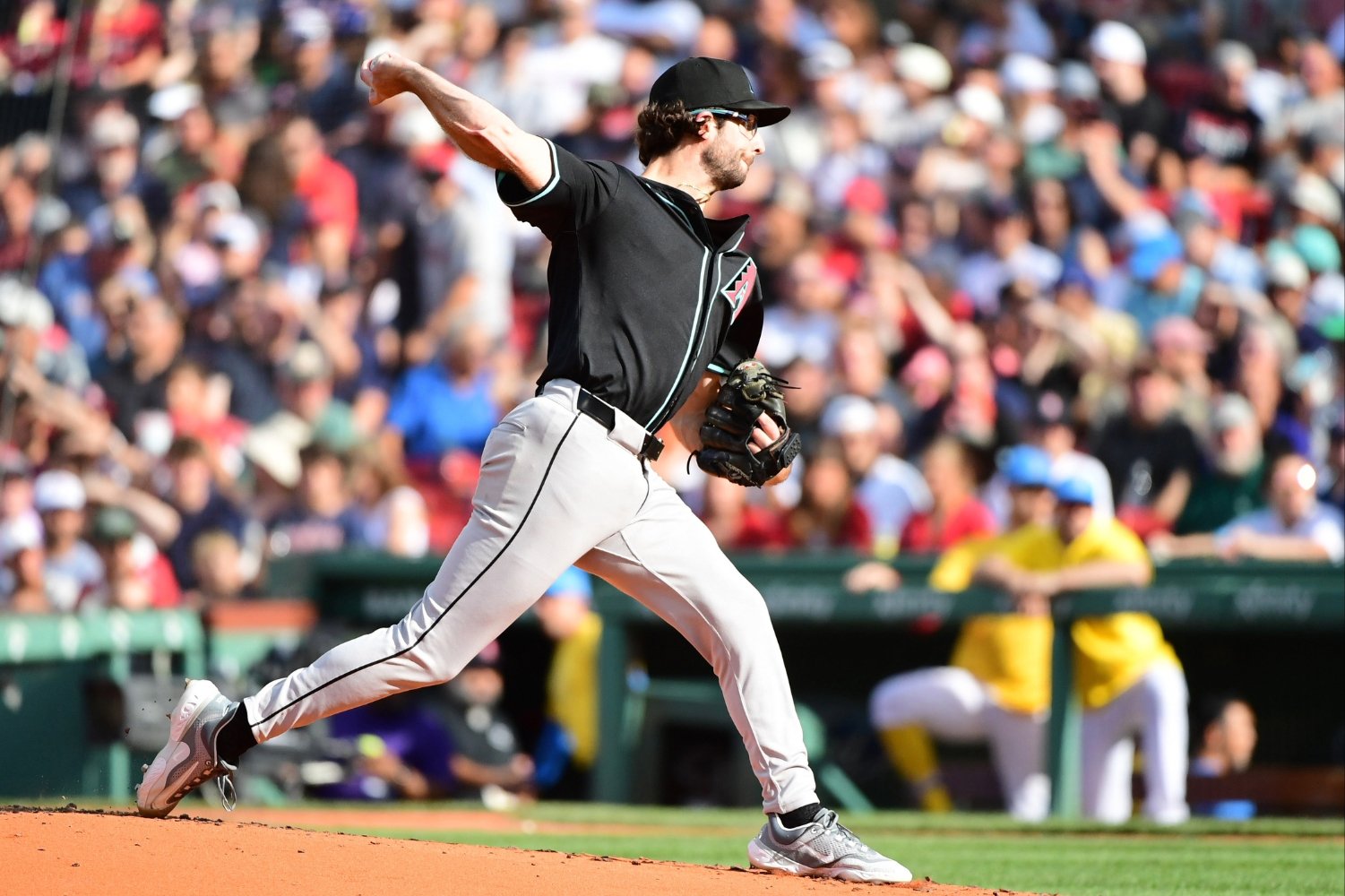 The Boston Red Sox’s rotation lacks a No. 2 starter. There are plenty of in-house candidates (Brayan Bello, Connelly Early, Kyle Harrison) to fill in at the back of the rotation, along with pitchers returning from injuries. Hunter Dobbins (torn ACL), Kutter Crawford (mysterious wrist injury), and Patrick Sandoval (torn UCL) are expected to pitch again at some point in the 2026 season. However, you can’t rely on recovering pitchers to immediately contribute like they would at full health. Effectively, the Red Sox need a pitcher to cement their rotation and fill the gap between Garrett Crochet and their backend starters. Fortunately, the team possesses the financial resources to allocate towards free-agent starters (or perhaps an expensive trade target). Which pitchers should they go after? Dylan Cease (30, 3.4 fWAR) Projected Contract Analyst Length AAV Total Jim Bowden 6-years $31.67 M $187.0 M Tim Britton 6-years $29.0 M $174.0 M Matthew Pouliot 7-years $30.0 M $210.0 M 2025 Stats IP ERA K-BB% HardHit% GB% FIP xFIP WAR 168.0 4.55 19.9% 37.4% 36.6% 3.56 3.56 3.4 Dylan Cease’s durability is his most valuable asset. Over the past four seasons, he’s pitched at least 150 innings, and the Red Sox’s rotation needs consistency behind Crochet. His slider is an authoritative pitch. In 2024, it posted the highest run value (25) among all pitch types. Cease’s 11.52 strikeouts per nine innings was the best in the majors this year. He's attached to a qualifying offer, so it'll be interesting to see where his market leads. In terms of complementing Crochet, it's hard to imagine Boston doing better than a right-hander with his raw stuff. Ranger Suárez (30, 4.0 fWAR) Projected Contract Analyst Length AAV Total Jim Bowden 6-years $27.33 M $164.0 M Tim Britton 6-years $25.5 M $153.0 M Matthew Pouliot 5-years $27.0 M $135.0 M 2025 Stats IP ERA K-BB% HardHit% GB% FIP xFIP WAR 157.1 3.20 17.4% 31.1% 46.8% 3.21 3.61 4.0 Ranger Suárez has been a cornerstone of the Phillies’ rotation over the past two seasons, but Zach Wheeler’s sheer dominance and the rise of Cristopher Sanchez pushed him down to the No. 3 spot. On any other team, he’d likely profile as a No. 2 starter. Read more about Ranger’s potential fit with the Red Sox in @Jordan Leandre's write-up. Zac Gallen (30, 1.1 fWAR) Projected Contract Analyst Length AAV Total Jim Bowden 5-years $27.0 M $135.0 M Tim Britton 2-years $21.0 M $42.0 M Matthew Pouliot 2-years $22.5 M $45.0 M 2025 Stats IP ERA K-BB% HardHit% GB% FIP xFIP WAR 192.0 4.83 13.4% 41.0% 43.6% 4.50 4.12 1.1 Going into the 2025 season, it seemed like Zac Gallen was primed to cash in on a large contract. Three years ago, Gallen finished third in the NL Cy Young race and has remained a consistent Cy Young candidate throughout his career. Unfortunately, for most of the 2025 season, Gallen appeared to be a shell of his former self. His performance was, as my fellow Gen Z-ers say, “mid”. With a 5.40 ERA in the first half, his potential trade value took a hit, and he remained with the Diamondbacks through the conclusion of the trade deadline. Gallen’s fastball is the staple of his arsenal. He’s thrown the pitch 47% of the time throughout his career. The pitch is the bridge to his secondaries (knuckle curve, cutter, changeup, slider, and sinker). When he paints his fastball on the outer edges of the strike zone, he creates a deadly combo with his secondaries. Between March and July, he struggled to command his fastball, and its velocity dropped (93.3 mph). Once the dog days of summer passed, he found better control and improved his velocity (94.0 mph). By the conclusion of the second half, he posted a 3.97 ERA. Like Dylan Cease, Gallen’s durability is a major asset, throwing an average of 183.5 innings per season since 2022. Given his subpar performance in his walk year, Gallen won’t fetch a lengthy, long-term contract. If Andrew Bailey’s pitching lab can help him rebound, he’s a high-ceiling reclamation project. Tatsuya Imai (28) Projected Contract Analyst Length AAV Total Jim Bowden 7-years $22.0 M $154.0 M Tim Britton 8-years $23.75 M $190.0 M 2025 Stats IP ERA K-BB% HardHit% GB% FIP xFIP 163.2 1.92 20.7% 16.5 48.3% 2.01 2.26 Freshly minted 2025 World Series MVP Yoshinobu Yamamoto has proved that smaller Japanese starters can succeed in MLB. Imai (5’11”) is the youngest free-agent starter this offseason, and I’d expect the Red Sox to be interested in him. For a deeper look into Imai, check out my piece from October. Improving the rotation is a priority for the Red Sox’s front office this offseason. A free-agent acquisition is a start (no pun intended), though this year's free agency class is weaker compared to previous seasons. That said, the organization boasts a strong pitching development program, and has a history of turning even questionable signings into consistent contributors (see: Aroldis Chapman). Through whatever means, expect the Sox to enter the 2026 season with another starter between Crochet and Bello in the pecking order.
 -
I’ve always been a sneaker head. (My heels are reserved for special occasions.) Throughout my adult life, I've moved between various apartments, with shoes (and books) making up the bulk of my belongings. Shoes can elevate a simple outfit. When meeting someone for the first time, their shoes are one of the first things I notice. To quote Carrie Bradshaw: “Shoes are the exclamation point at the end of an outfit." Different shoe styles can reveal a lot about an individual’s personality. Since I was a teenager, New Balance has been my go-to shoe brand. I sport their 574 sneakers daily. New Balance offers a solid collection ranging from lifestyle shoes to running shoes. As a Boston sports fan, I appreciate their connection to the city. In an Instagram post dating back to February 1, 2021, former Red Sox second baseman Dustin Pedroia was listed as “The Founding Father” of New Balance Baseball. New Balance Baseball (@newbalancebaseball) • Instagram photos and videos WWW.INSTAGRAM.COM 15K likes, 37 comments - newbalancebaseball on February 1, 2021: "The founding father of New Balance Baseball. Thank you, Dustin Pedroia.". As a member of Generation Z, sneaker culture is a major component of my identity. Nike has dominated the sneaker scene for as long as I can remember, with its Air Force 1 and Jordan lines being iconic staples for sneaker heads. I used to work in the auction industry, and I was surprised to learn that Sotheby’s and Christie’s, two prominent auction houses, have special departments for sneakers/streetwear. A rare pair of Michael Jordan's Prototype Air Jordans netted a staggering $325,085 at auction. This past summer, several reports indicated that Nike’s revenue share was expected to drop. Bloomberg even has a special page on Nike’s Upheaval. Recent reports suggest that Nike still holds a substantial market share, and its revenue is about the same. Nike holds a special place in baseball’s history. In 1996, in partnership with former Mariners player Ken Griffey Jr., Nike created the Nike Air Griffey Max 1, a shoe that became synonymous with the iconic Swingman Logo. In more recent years, Nike has garnered a more negative reputation in baseball. The company’s reputation took a hit after the 2024 MLB uniform controversy, which even has its own Wikipedia page. Following Nike’s takeover of the MLB’s uniform contract, their decision to place their swoosh on the front of players’ jerseys left a sour taste in my mouth. Although I typically avoid American football like the plague, my in-depth research revealed that the swoosh is located on the sleeves of NFL jerseys. Why can’t MLB follow suit? In the past, Majestic subtly placed their logo on the jersey sleeves, far from the conspicuous placement that Nike has chosen. Athlete sponsorships help brands gain name recognition. When star athletes wear said brand’s gear, it builds their brand awareness and provides positive promotion. If you’re reading this, you’ve probably watched an MLB game on TV recently, so you’ve seen Shohei Ohtani’s New Balance commercial, which features the ear-worm “Hollywood Swinging” by Kool & The Gang. The song is infectious, and I often find myself humming “Hey, hey, hey. What ya got to say?” long after the commercial ends. New Balance's growth is remarkable. Their rise to prominence has given Nike a run for its money. Intending to reach $10 billion in revenue, New Balance set a record $7.8 billion in 2024, putting them on track to hit their target in the coming years. Outside of baseball, New Balance sponsors several notable athletes, including tennis superstar Coco Gauff, Buffalo Bills’ quarterback Josh Allen, Los Angeles Sparks forward Cameron Brink, and Cooper Flagg, the first pick of the 2025 NBA Draft. In the offseason, you can catch the varying renditions of New Balance’s commercial featuring professional athletes from the aforementioned list. Constantly watching Ohtani’s New Balance commercial throughout the baseball season led me to wonder, which brand’s athletes have generated the most WAR? *Note: Players can choose their preferred equipment. Just sporting a specific brand’s gear doesn’t mean that brand sponsors them. I’ve included players who have appeared on a brand’s social media page, have been posted in a brand’s press release, or have the brand listed in their social media bio. These are indicative of a brand’s sponsorship of an athlete. 4. Adidas Adidas Player fWAR JP Crawford 17.9 Julio Rodríguez 21.2 Trea Turner 47.6 Jackson Holliday 1.2 José Ramírez 57.7 Kike Hernández 10.6 Jackson Chourio 6.9 Jordan Lawlar -0.6 Lars Nootbaar 8.9 Jung Hoo Lee 2.5 Pete Crow-Armstrong 7.8 Oneil Cruz 6.9 Total 188.6 Adidas ranked last among the "Big 4" sports apparel companies. In 1924, Brothers Adolf and Rudolph Dassler founded the company in the industrial town of Herzogenaurach, located in Bavaria, Germany. The company rose to prominence following the 1936 Olympics. Adolf Dassler convinced Jesse Owens to wear spiked running shoes supplied by him. Owens won four gold medals at the Olympics, propelling Adidas into the forefront of the athletic footwear industry. When discussing Adidas’ history, it's worth mentioning the company's troubled past. The Dasslers were members of the Nazi Party, and Adidas supplied boots to Nazi Germany’s Armed Forces during World War II. Given Adidas’ European heritage, it’s no surprise that they sponsor elite football (soccer) clubs including Manchester United, FC Bayern Munich, Juventus, Arsenal, and Real Madrid. Adidas is the official supplier of the FIFA World Cup and UEFA Champions League, two of the largest global soccer tournaments. Baseball seems more like an afterthought on their individual sponsorship list. José Ramírez leads the Adidas pack with 57.7 fWAR. Younger players signed to Adidas include Julio Rodríguez (21.2 fWAR), Jackson Chourio (6.9 fWAR), and Oneil Cruz (6.9 fWAR). Whether Jackson Holliday’s (1.2 fWAR), the first overall pick in the 2022 MLB Draft, performance will meet expectations, and whether Pete Crow-Armstrong’s (7.8 fWAR) first half of the 2025 season was a fluke, remain open questions, and will determine if Adidas can maintain its relevance as a sponsor for professional baseball players. While Adidas may not have a strong presence in baseball, its foothold in the soccer industry has propelled the Samba shoes to become one of the most iconic and widely worn sneakers globally, and it will continue to be a dominant brand outside of baseball. 3. Under Armour Under Armour Player fWAR Masataka Yoshida 1.5 Bryce Harper 55.6 Gunnar Henderson 18.2 Freddie Freeman 64.7 Bobby Witt Jr. 26.7 Juan Soto 42.3 Alec Bohm 9.2 Total 218.2 Under Armour is the newest company on this list. Founded in 1996 by former University of Maryland special teams captain Kevin Plank, the company’s first product was moisture-wicking shirts to wear under jerseys. That same year, Under Armour landed its first major apparel sale with Georgia Tech, and several other Division 1 Football programs signed deals with the company. In 2010, Under Armour hit $1 billion in annual revenue. In 2016, Under Armour signed a deal to become the official uniform provider to MLB. Two years later, they withdrew from the agreement, citing financial restraints. Nike quickly swooped in and replaced Under Armour as the official sponsor of MLB uniforms. Under Armour has the smallest group of athletes with seven, five fewer than Adidas. However, their athletes have generated 218.2 fWAR, 29.6 more than Adidas. Their roster is carried by established stalwarts Freddie Freeman (64.7 fWAR), Juan Soto (42.3 fWAR), and Bryce Harper (55.6 fWAR). Moreover, younger five-tool players like Gunnar Henderson (18.2 fWAR) and Bobby Witt Jr. (26.7 fWAR) help the company accumulate WAR. Despite the company’s waning popularity in the United States, Under Armour holds a strong presence in Asia as a streetwear brand. The Red Sox’s designated hitter and the “Best Baseball Player” in GQ Japan’s 2023 “Men of the Year” series, Masataka Yoshida (1.5 fWAR) is endorsed by Under Armour. 2. New Balance New Balance Player fWAR Shohei Ohtani 49.7 Francisco Lindor 60.4 Jose Altuve 60.0 Bryan Reynolds 18.6 Jacob Misiorowski 1.2 Hunter Goodman 1.9 Kris Bubic 6.2 James Wood 4.6 Cal Raleigh 22.9 Jac Caglianone -1.5 Ceddanne Rafaela 4.9 Jeremy Peña 14.5 Triston Casas 2.2 Josh Lowe 4.5 Michael Harris II 12.0 Ha Seong Kim 11.2 Cedric Mullins 15.3 Nathaniel Lowe 10.6 Bryce Elder 3.7 Sonny Gray 38.0 Jeff McNeil 21.1 Nick Kurtz 4.6 Total 366.6 In 1906, Irish immigrant William J. Riley established the New Balance Arch Support Company in Boston, Massachusetts. As its original name suggests, the company sold arch supports, designed with three primary support points, to alleviate stress and offer more balance. New Balance designed its first shoe, the Trackster, in 1960. The Trackster featured the first ripple sole for additional grip support and was offered in varying widths. Beforehand, running shoes came with metal spikes, prompting New Balance to establish itself as a sneaker manufacturer. Its prime location in Boston allowed the Trackster to gain popularity with local college cross-country teams, Boston University, Massachusetts Institute of Technology, and Tufts. In 1972, Jim Davis, the company’s current CEO, bought the company, then with only six full-time employees, on Patriots’ Day. Today, New Balance is a global company. Forbes reports that the company employs 7,500 people and generated $6.5 billion in revenue in 2024. In 2017, Francisco Lindor (60.4 fWAR) signed with New Balance to be the face of New Balance Baseball. Four years later, the Lindor 1, Lindor’s signature cleat designed in collaboration with New Balance, dropped. Additional models of the cleats have been released in the following years. Two-way superstar Shohei Ohtani (49.7 fWAR) joined the New Balance Family in 2023. Just from watching the National League Division series, you can see that Ohtani is decked out head-to-toe in New Balance gear. Over the past year, New Balance’s baseball family has grown faster than a Mormon family can multiply and replenish the earth. The company has been aggressive in signing individual sponsorships with up-and-coming baseball players. Nick Kurtz (4.6 fWAR), the presumptive 2025 American League Rookie of the Year, is signed to the company, as is Cal Raleigh (22.9 fWAR), arguably the frontrunner for the 2025 American League MVP. James Wood (4.6 fWAR), Jeremy Peña (14.5 fWAR), Jacob Misiorowski (1.2 fWAR), and Ceddanne Rafaela (4.9 fWAR) round out New Balance’s younger core alongside their established stars. 1. Nike Nike Player fWAR Roman Anthony 2.7 Ronald Acuña Jr. 31.9 Roki Sasaki -0.1 Yoshinobu Yamamoto 7.9 Walker Buehler 14.8 Mike Trout 87.2 Cody Bellinger 28.7 Javier Báez 24.9 Tim Anderson 17.7 Marcus Semien 38.8 Corbin Carroll 17.6 Paul Skenes 10.8 Tarik Skubal 19.3 *Aaron Judge 61.6 *Elly de la Cruz 12.8 *Vladimir Guerrero Jr. 20.6 *Mookie Betts 62.6 *Jazz Chisholm Jr. 14.4 Total 474.2 *signed to the Air Jordan brand Originally called Blue Ribbon Sports (BRS), Nike was set up by Oregon Ducks track athlete Phil Knight, along with his coach, Bill Bowerman. Knight was used as a test subject to try out prototypes of Bowerman’s running shoes. BRS started as a distributor for the Japanese footwear brand Onitsuka Tiger in 1962. For about 18 years, BRS and Onitsuka Tiger maintained a successful working relationship. By 1971, the two companies cut ties regarding disagreement over supply chain distribution rights. Following their breakup with Onitsuka Tiger, BRS rebranded as Nike. Graphic designer Carolyn Davidson designed the omnipresent swoosh in 1971. Three years later, on January 22, 1974, the swoosh was registered with the U.S. Patent and Trademark Office. (For a more in-depth overview of Nike’s history, read The Street’s write-up.) Nike currently holds a 16.4% market share, the largest in the global sportswear market. The company sponsors uniforms for the NBA, WNBA, MLB, and NFL. Mike Trout, who has accumulated a total of 87.2 fWAR, the highest among active players, is endorsed by Nike. When healthy, Ronald Acuña Jr. (31.9) is another WAR machine. Nike endorses some of the best promising players in baseball, including Corbin Carroll (17.6 fWAR), Paul Skenes (10.8 fWAR), Roman Anthony (2.7 fWAR), and Yoshinobu Yamamoto (7.9 fWAR). Nike allowed Michael Jordan to create his own brand within their umbrella. Today, Air Jordan endorses Aaron Judge, Elly De La Cruz, Vladimir Guerrero Jr., Mookie Betts, and Jazz Chisholm Jr. MLB Air Jordan sponsorees have amassed 172 fWAR. By themselves, Nike’s sponsored athletes rack up 302.2 fWAR. When you combine the two brands, WAR, you get a whopping total of 474.2 fWAR. Company Total fWAR Nike 474.2 New Balance 366.6 Under Armour 218.2 Adidas 188.6 If Air Jordan were considered its own company, New Balance’s sponsored athletes would lead with 366.6 fWAR. Air Jordan by itself is a powerhouse with 172 fWAR, putting it just behind Adidas (188.6 fWAR). In recent years, Under Armour has been relatively stagnant in recruiting new athletes. With the wave of NPB players expected to be posted this offseason, I’m curious to see if any of them sign with Under Armour. Could New Balance overtake Nike in the future? Possibly. The face of the baseball is tied to their brand, and their young core could propel them to the front of the pack, but competing with Nike’s established roster will be difficult. Expect New Balance to continue to be aggressive in signing new baseball players over the next year. Following the conclusion of the 2026 MLB season, I’d like to revisit this list. In the meantime, I’ll keep sporting my 574s. View full article
-
Which Sportswear Company’s Athletes Have Accumulated the Most WAR?
Maddie Landis posted an article in Red Sox
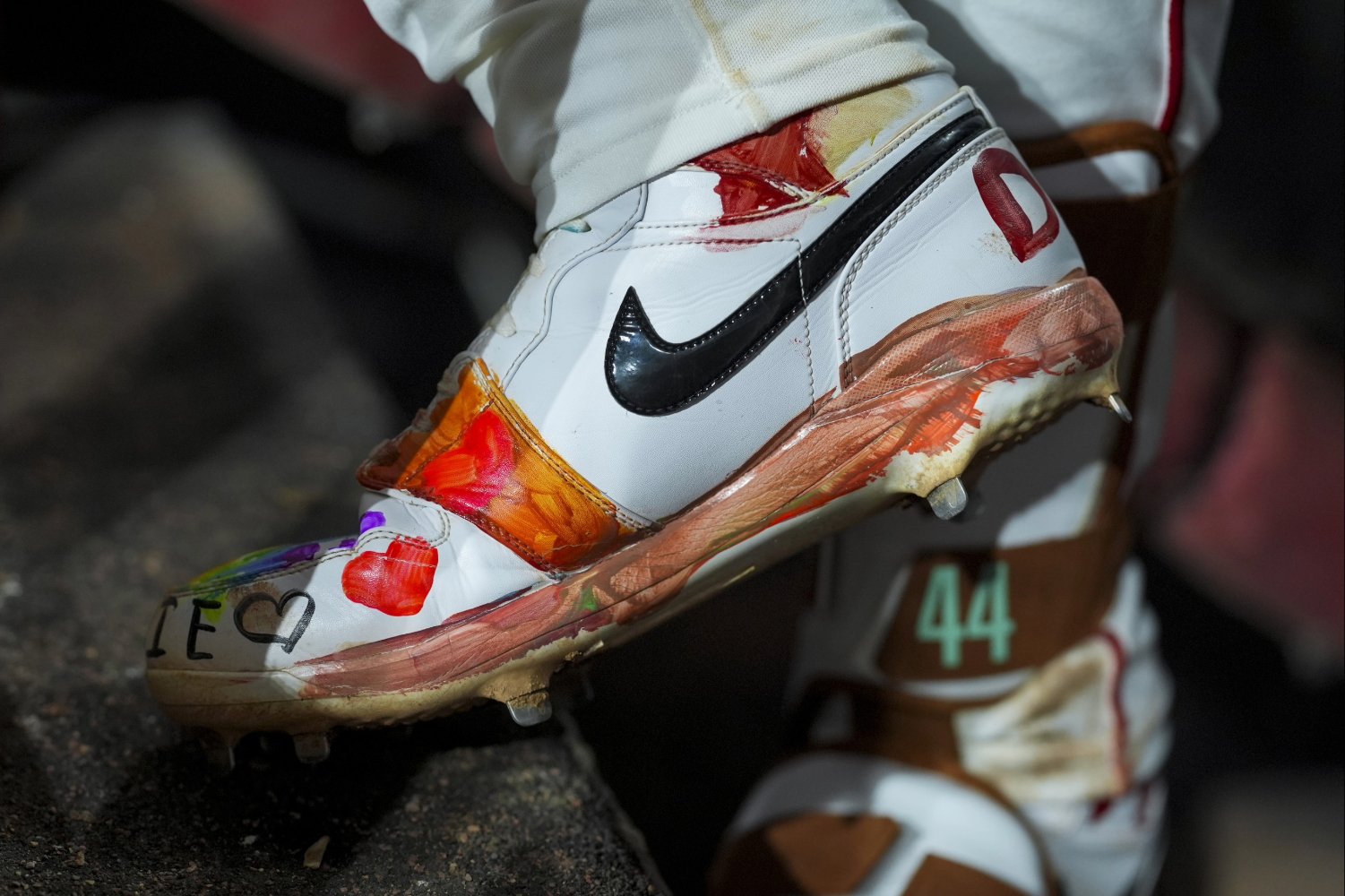 I’ve always been a sneaker head. (My heels are reserved for special occasions.) Throughout my adult life, I've moved between various apartments, with shoes (and books) making up the bulk of my belongings. Shoes can elevate a simple outfit. When meeting someone for the first time, their shoes are one of the first things I notice. To quote Carrie Bradshaw: “Shoes are the exclamation point at the end of an outfit." Different shoe styles can reveal a lot about an individual’s personality. Since I was a teenager, New Balance has been my go-to shoe brand. I sport their 574 sneakers daily. New Balance offers a solid collection ranging from lifestyle shoes to running shoes. As a Boston sports fan, I appreciate their connection to the city. In an Instagram post dating back to February 1, 2021, former Red Sox second baseman Dustin Pedroia was listed as “The Founding Father” of New Balance Baseball. New Balance Baseball (@newbalancebaseball) • Instagram photos and videos WWW.INSTAGRAM.COM 15K likes, 37 comments - newbalancebaseball on February 1, 2021: "The founding father of New Balance Baseball. Thank you, Dustin Pedroia.". As a member of Generation Z, sneaker culture is a major component of my identity. Nike has dominated the sneaker scene for as long as I can remember, with its Air Force 1 and Jordan lines being iconic staples for sneaker heads. I used to work in the auction industry, and I was surprised to learn that Sotheby’s and Christie’s, two prominent auction houses, have special departments for sneakers/streetwear. A rare pair of Michael Jordan's Prototype Air Jordans netted a staggering $325,085 at auction. This past summer, several reports indicated that Nike’s revenue share was expected to drop. Bloomberg even has a special page on Nike’s Upheaval. Recent reports suggest that Nike still holds a substantial market share, and its revenue is about the same. Nike holds a special place in baseball’s history. In 1996, in partnership with former Mariners player Ken Griffey Jr., Nike created the Nike Air Griffey Max 1, a shoe that became synonymous with the iconic Swingman Logo. In more recent years, Nike has garnered a more negative reputation in baseball. The company’s reputation took a hit after the 2024 MLB uniform controversy, which even has its own Wikipedia page. Following Nike’s takeover of the MLB’s uniform contract, their decision to place their swoosh on the front of players’ jerseys left a sour taste in my mouth. Although I typically avoid American football like the plague, my in-depth research revealed that the swoosh is located on the sleeves of NFL jerseys. Why can’t MLB follow suit? In the past, Majestic subtly placed their logo on the jersey sleeves, far from the conspicuous placement that Nike has chosen. Athlete sponsorships help brands gain name recognition. When star athletes wear said brand’s gear, it builds their brand awareness and provides positive promotion. If you’re reading this, you’ve probably watched an MLB game on TV recently, so you’ve seen Shohei Ohtani’s New Balance commercial, which features the ear-worm “Hollywood Swinging” by Kool & The Gang. The song is infectious, and I often find myself humming “Hey, hey, hey. What ya got to say?” long after the commercial ends. New Balance's growth is remarkable. Their rise to prominence has given Nike a run for its money. Intending to reach $10 billion in revenue, New Balance set a record $7.8 billion in 2024, putting them on track to hit their target in the coming years. Outside of baseball, New Balance sponsors several notable athletes, including tennis superstar Coco Gauff, Buffalo Bills’ quarterback Josh Allen, Los Angeles Sparks forward Cameron Brink, and Cooper Flagg, the first pick of the 2025 NBA Draft. In the offseason, you can catch the varying renditions of New Balance’s commercial featuring professional athletes from the aforementioned list. Constantly watching Ohtani’s New Balance commercial throughout the baseball season led me to wonder, which brand’s athletes have generated the most WAR? *Note: Players can choose their preferred equipment. Just sporting a specific brand’s gear doesn’t mean that brand sponsors them. I’ve included players who have appeared on a brand’s social media page, have been posted in a brand’s press release, or have the brand listed in their social media bio. These are indicative of a brand’s sponsorship of an athlete. 4. Adidas Adidas Player fWAR JP Crawford 17.9 Julio Rodríguez 21.2 Trea Turner 47.6 Jackson Holliday 1.2 José Ramírez 57.7 Kike Hernández 10.6 Jackson Chourio 6.9 Jordan Lawlar -0.6 Lars Nootbaar 8.9 Jung Hoo Lee 2.5 Pete Crow-Armstrong 7.8 Oneil Cruz 6.9 Total 188.6 Adidas ranked last among the "Big 4" sports apparel companies. In 1924, Brothers Adolf and Rudolph Dassler founded the company in the industrial town of Herzogenaurach, located in Bavaria, Germany. The company rose to prominence following the 1936 Olympics. Adolf Dassler convinced Jesse Owens to wear spiked running shoes supplied by him. Owens won four gold medals at the Olympics, propelling Adidas into the forefront of the athletic footwear industry. When discussing Adidas’ history, it's worth mentioning the company's troubled past. The Dasslers were members of the Nazi Party, and Adidas supplied boots to Nazi Germany’s Armed Forces during World War II. Given Adidas’ European heritage, it’s no surprise that they sponsor elite football (soccer) clubs including Manchester United, FC Bayern Munich, Juventus, Arsenal, and Real Madrid. Adidas is the official supplier of the FIFA World Cup and UEFA Champions League, two of the largest global soccer tournaments. Baseball seems more like an afterthought on their individual sponsorship list. José Ramírez leads the Adidas pack with 57.7 fWAR. Younger players signed to Adidas include Julio Rodríguez (21.2 fWAR), Jackson Chourio (6.9 fWAR), and Oneil Cruz (6.9 fWAR). Whether Jackson Holliday’s (1.2 fWAR), the first overall pick in the 2022 MLB Draft, performance will meet expectations, and whether Pete Crow-Armstrong’s (7.8 fWAR) first half of the 2025 season was a fluke, remain open questions, and will determine if Adidas can maintain its relevance as a sponsor for professional baseball players. While Adidas may not have a strong presence in baseball, its foothold in the soccer industry has propelled the Samba shoes to become one of the most iconic and widely worn sneakers globally, and it will continue to be a dominant brand outside of baseball. 3. Under Armour Under Armour Player fWAR Masataka Yoshida 1.5 Bryce Harper 55.6 Gunnar Henderson 18.2 Freddie Freeman 64.7 Bobby Witt Jr. 26.7 Juan Soto 42.3 Alec Bohm 9.2 Total 218.2 Under Armour is the newest company on this list. Founded in 1996 by former University of Maryland special teams captain Kevin Plank, the company’s first product was moisture-wicking shirts to wear under jerseys. That same year, Under Armour landed its first major apparel sale with Georgia Tech, and several other Division 1 Football programs signed deals with the company. In 2010, Under Armour hit $1 billion in annual revenue. In 2016, Under Armour signed a deal to become the official uniform provider to MLB. Two years later, they withdrew from the agreement, citing financial restraints. Nike quickly swooped in and replaced Under Armour as the official sponsor of MLB uniforms. Under Armour has the smallest group of athletes with seven, five fewer than Adidas. However, their athletes have generated 218.2 fWAR, 29.6 more than Adidas. Their roster is carried by established stalwarts Freddie Freeman (64.7 fWAR), Juan Soto (42.3 fWAR), and Bryce Harper (55.6 fWAR). Moreover, younger five-tool players like Gunnar Henderson (18.2 fWAR) and Bobby Witt Jr. (26.7 fWAR) help the company accumulate WAR. Despite the company’s waning popularity in the United States, Under Armour holds a strong presence in Asia as a streetwear brand. The Red Sox’s designated hitter and the “Best Baseball Player” in GQ Japan’s 2023 “Men of the Year” series, Masataka Yoshida (1.5 fWAR) is endorsed by Under Armour. 2. New Balance New Balance Player fWAR Shohei Ohtani 49.7 Francisco Lindor 60.4 Jose Altuve 60.0 Bryan Reynolds 18.6 Jacob Misiorowski 1.2 Hunter Goodman 1.9 Kris Bubic 6.2 James Wood 4.6 Cal Raleigh 22.9 Jac Caglianone -1.5 Ceddanne Rafaela 4.9 Jeremy Peña 14.5 Triston Casas 2.2 Josh Lowe 4.5 Michael Harris II 12.0 Ha Seong Kim 11.2 Cedric Mullins 15.3 Nathaniel Lowe 10.6 Bryce Elder 3.7 Sonny Gray 38.0 Jeff McNeil 21.1 Nick Kurtz 4.6 Total 366.6 In 1906, Irish immigrant William J. Riley established the New Balance Arch Support Company in Boston, Massachusetts. As its original name suggests, the company sold arch supports, designed with three primary support points, to alleviate stress and offer more balance. New Balance designed its first shoe, the Trackster, in 1960. The Trackster featured the first ripple sole for additional grip support and was offered in varying widths. Beforehand, running shoes came with metal spikes, prompting New Balance to establish itself as a sneaker manufacturer. Its prime location in Boston allowed the Trackster to gain popularity with local college cross-country teams, Boston University, Massachusetts Institute of Technology, and Tufts. In 1972, Jim Davis, the company’s current CEO, bought the company, then with only six full-time employees, on Patriots’ Day. Today, New Balance is a global company. Forbes reports that the company employs 7,500 people and generated $6.5 billion in revenue in 2024. In 2017, Francisco Lindor (60.4 fWAR) signed with New Balance to be the face of New Balance Baseball. Four years later, the Lindor 1, Lindor’s signature cleat designed in collaboration with New Balance, dropped. Additional models of the cleats have been released in the following years. Two-way superstar Shohei Ohtani (49.7 fWAR) joined the New Balance Family in 2023. Just from watching the National League Division series, you can see that Ohtani is decked out head-to-toe in New Balance gear. Over the past year, New Balance’s baseball family has grown faster than a Mormon family can multiply and replenish the earth. The company has been aggressive in signing individual sponsorships with up-and-coming baseball players. Nick Kurtz (4.6 fWAR), the presumptive 2025 American League Rookie of the Year, is signed to the company, as is Cal Raleigh (22.9 fWAR), arguably the frontrunner for the 2025 American League MVP. James Wood (4.6 fWAR), Jeremy Peña (14.5 fWAR), Jacob Misiorowski (1.2 fWAR), and Ceddanne Rafaela (4.9 fWAR) round out New Balance’s younger core alongside their established stars. 1. Nike Nike Player fWAR Roman Anthony 2.7 Ronald Acuña Jr. 31.9 Roki Sasaki -0.1 Yoshinobu Yamamoto 7.9 Walker Buehler 14.8 Mike Trout 87.2 Cody Bellinger 28.7 Javier Báez 24.9 Tim Anderson 17.7 Marcus Semien 38.8 Corbin Carroll 17.6 Paul Skenes 10.8 Tarik Skubal 19.3 *Aaron Judge 61.6 *Elly de la Cruz 12.8 *Vladimir Guerrero Jr. 20.6 *Mookie Betts 62.6 *Jazz Chisholm Jr. 14.4 Total 474.2 *signed to the Air Jordan brand Originally called Blue Ribbon Sports (BRS), Nike was set up by Oregon Ducks track athlete Phil Knight, along with his coach, Bill Bowerman. Knight was used as a test subject to try out prototypes of Bowerman’s running shoes. BRS started as a distributor for the Japanese footwear brand Onitsuka Tiger in 1962. For about 18 years, BRS and Onitsuka Tiger maintained a successful working relationship. By 1971, the two companies cut ties regarding disagreement over supply chain distribution rights. Following their breakup with Onitsuka Tiger, BRS rebranded as Nike. Graphic designer Carolyn Davidson designed the omnipresent swoosh in 1971. Three years later, on January 22, 1974, the swoosh was registered with the U.S. Patent and Trademark Office. (For a more in-depth overview of Nike’s history, read The Street’s write-up.) Nike currently holds a 16.4% market share, the largest in the global sportswear market. The company sponsors uniforms for the NBA, WNBA, MLB, and NFL. Mike Trout, who has accumulated a total of 87.2 fWAR, the highest among active players, is endorsed by Nike. When healthy, Ronald Acuña Jr. (31.9) is another WAR machine. Nike endorses some of the best promising players in baseball, including Corbin Carroll (17.6 fWAR), Paul Skenes (10.8 fWAR), Roman Anthony (2.7 fWAR), and Yoshinobu Yamamoto (7.9 fWAR). Nike allowed Michael Jordan to create his own brand within their umbrella. Today, Air Jordan endorses Aaron Judge, Elly De La Cruz, Vladimir Guerrero Jr., Mookie Betts, and Jazz Chisholm Jr. MLB Air Jordan sponsorees have amassed 172 fWAR. By themselves, Nike’s sponsored athletes rack up 302.2 fWAR. When you combine the two brands, WAR, you get a whopping total of 474.2 fWAR. Company Total fWAR Nike 474.2 New Balance 366.6 Under Armour 218.2 Adidas 188.6 If Air Jordan were considered its own company, New Balance’s sponsored athletes would lead with 366.6 fWAR. Air Jordan by itself is a powerhouse with 172 fWAR, putting it just behind Adidas (188.6 fWAR). In recent years, Under Armour has been relatively stagnant in recruiting new athletes. With the wave of NPB players expected to be posted this offseason, I’m curious to see if any of them sign with Under Armour. Could New Balance overtake Nike in the future? Possibly. The face of the baseball is tied to their brand, and their young core could propel them to the front of the pack, but competing with Nike’s established roster will be difficult. Expect New Balance to continue to be aggressive in signing new baseball players over the next year. Following the conclusion of the 2026 MLB season, I’d like to revisit this list. In the meantime, I’ll keep sporting my 574s.
 -
Baseball clubs are lucrative investments for owners. In 2002, John Henry bought the Red Sox for $380 million under Fenway Sports Group, now a global sports empire. Twenty-three years later, Forbes estimates the team’s value at $4.8 billion. According to CNBC, the Red Sox generated $514 million (6th) in revenue last year. While 2025 revenue hasn’t been released yet, 2025 proved to be a successful season for the Red Sox. Attendance increased by 1,439 fans per game from 2024 to 2025 (32,838 to 34,377), moving up from 11th to 10th in MLB. This season also marked the Red Sox’s first playoff appearance in four years. Deep playoff runs are lucrative for clubs and their players. The 2024 World Series featured a marquee matchup between the Dodgers ($8 billion) and Yankees ($5.8 billion), the two most valuable teams in the sport with sizeable fan bases. Viewership increased to an average of 15.8 million per game, a 67% increase from the 2023 World Series. MLB collects postseason gate receipts (the sum of ticket sales) and allocates the money to playoff teams using the following criteria outlined in the 2022-26 Collective Bargaining Agreement: One Players' pool shall be created from the World Series, the two League Championship Series, the four Division Series, and the four Wild Card Series. Contributions shall be made into the pool as follows: (1) 60% of the total gate receipts from the first 4 World Series games; (2) 60% of the total gate receipts from the first four games of each League Championship Series; (3) 60% of the total gate receipts from the first three games (4 if the Division Series is expanded to the best of 7 games) of each Division Series; and (4) 60% of the total gate receipts from the first two games of each Wild Card Series after deducting the traveling expenses of the visiting Clubs (up to a maximum of $100,000 per Club per game) from the total gate receipts. Among the playoff teams, the playoff bonus pool is distributed as follows: Players' Pool Distribution Breakdown World Series Winner 36% World Series Loser 24% League Championship Losers (2) 24% Division Series Losers (4) 13% Wild Card Series Losers: (4) 3% Teams that advance further in the postseason receive larger shares of the players’ pool. Notably, the players' pool significantly increased following the implementation of the expanded playoff format in 2022. Players determine how the money is allocated through full or partial shares. Postseason shares are not distributed to front office personnel, but players can vote to allocate shares to athletic trainers, clubhouse attendants, and coaches. Last year, the Dodgers' World Series champion pool totaled $46.47 million, with full shares at $405,000. Club owners receive the remaining 40% of the gate receipts for the guaranteed games and 100% of the gate receipts from additional playoff games. During the playoffs, home and visiting teams are treated the same, regardless of venue, so the gate receipts are divided evenly between them. The Yankees hosted the 2025 American League Wild Card Series. As the home team, the Yankees benefited from merchandise sales, concession sales, and parking revenue. According to the 2025 Yankees Postseason Ticket Pricing averaged at $223.60 for the Wild Card Series. 2025 AL WCS Gate Receipts Gate Receipts Estimates Game/Date Attendance Average Ticket Price Gate Receipt Share Total Game 1, 9/30 47,027 $233.60 20% $2,197,101.44 Game 2, 10/1 47,993 $233.60 20% $2,242,232.96 Game 3, 10/2 48,833 $233.60 *50% $5,703,694.40 *Owners receive 100% of gate receipts for non-required games Red Sox ownership received roughly $10,143,028.80 in total from the team’s 2025 playoff run. For a short-lived postseason run, a $10.143 million profit isn’t chump change. Any additional money is a surprise to be sure, but a welcome one, allowing for more funds to be reinvested in the team. Moreover, postseason runs yield additional benefits for teams, including heightened visibility, increased fan interest, a spike in ticket sales in the subsequent season, and new opportunities for advertising revenue. At the Red Sox’s End of Season Press Conference, Red Sox Chief Baseball Officer Craig Breslow acknowledged that “the team’s window of contention is upon us.” Unlike the broken window at the Louvre’s Apollo Wing, the Red Sox’s contention window isn’t shattered - it’s wide open. The team has a solid core to build around with their younger players locked up for the foreseeable future. Garrett Crochet put together a Cy Young caliber performance in his first season as a full-time starter with the Red Sox. Roman Anthony is already a cornerstone and is just starting his major league career. The team ranked 6th in stolen bases (139) and 8th in RBIs (748). Meanwhile, the Red Sox’s bullpen was the best in the American League (6.8 WAR). This offseason, the Red Sox must spend to address the holes in their roster. Fortunately, the team has plenty of opportunities to strengthen its lineup and pitching staff for a deeper postseason run in 2026. The Red Sox finished the 2025 season with a payroll of $248.64 million. Red Sox Payroll (a must-follow on social media) estimates the club is currently committed to $218.92 million in 2026. With the extra revenue from the team’s playoff run and additional money coming off the books, the Red Sox have the cash and momentum to make a substantial splash(es) in the coming months. Note: Part 2 of this piece will review the Red Sox’s revenue, payroll, and EBITDA to shed further insight on the team's financial position heading into the offseason. View full article
-
How Much Money Did the Red Sox Earn From Their 2025 Playoff Appearance?
Maddie Landis posted an article in Red Sox
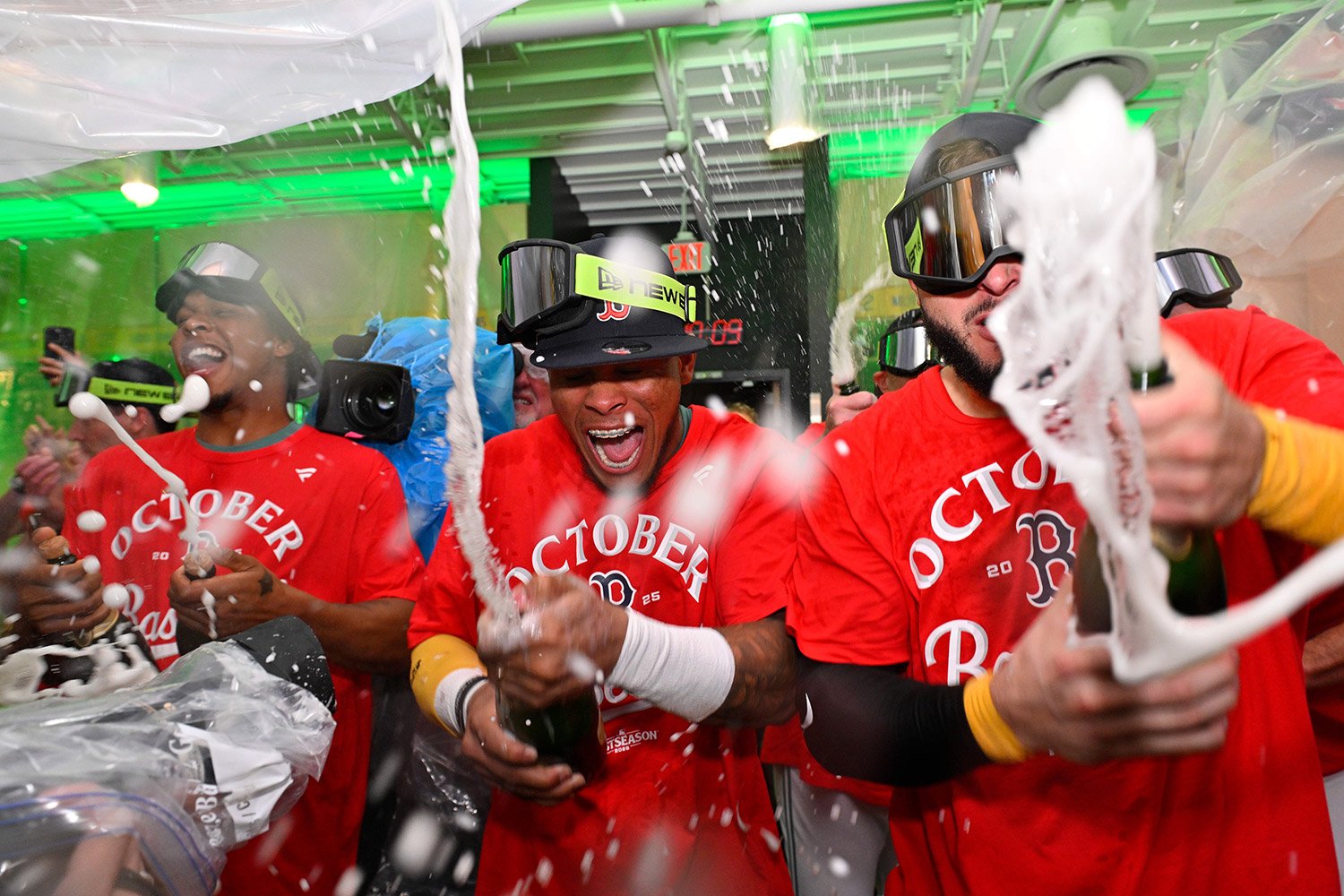 Baseball clubs are lucrative investments for owners. In 2002, John Henry bought the Red Sox for $380 million under Fenway Sports Group, now a global sports empire. Twenty-three years later, Forbes estimates the team’s value at $4.8 billion. According to CNBC, the Red Sox generated $514 million (6th) in revenue last year. While 2025 revenue hasn’t been released yet, 2025 proved to be a successful season for the Red Sox. Attendance increased by 1,439 fans per game from 2024 to 2025 (32,838 to 34,377), moving up from 11th to 10th in MLB. This season also marked the Red Sox’s first playoff appearance in four years. Deep playoff runs are lucrative for clubs and their players. The 2024 World Series featured a marquee matchup between the Dodgers ($8 billion) and Yankees ($5.8 billion), the two most valuable teams in the sport with sizeable fan bases. Viewership increased to an average of 15.8 million per game, a 67% increase from the 2023 World Series. MLB collects postseason gate receipts (the sum of ticket sales) and allocates the money to playoff teams using the following criteria outlined in the 2022-26 Collective Bargaining Agreement: One Players' pool shall be created from the World Series, the two League Championship Series, the four Division Series, and the four Wild Card Series. Contributions shall be made into the pool as follows: (1) 60% of the total gate receipts from the first 4 World Series games; (2) 60% of the total gate receipts from the first four games of each League Championship Series; (3) 60% of the total gate receipts from the first three games (4 if the Division Series is expanded to the best of 7 games) of each Division Series; and (4) 60% of the total gate receipts from the first two games of each Wild Card Series after deducting the traveling expenses of the visiting Clubs (up to a maximum of $100,000 per Club per game) from the total gate receipts. Among the playoff teams, the playoff bonus pool is distributed as follows: Players' Pool Distribution Breakdown World Series Winner 36% World Series Loser 24% League Championship Losers (2) 24% Division Series Losers (4) 13% Wild Card Series Losers: (4) 3% Teams that advance further in the postseason receive larger shares of the players’ pool. Notably, the players' pool significantly increased following the implementation of the expanded playoff format in 2022. Players determine how the money is allocated through full or partial shares. Postseason shares are not distributed to front office personnel, but players can vote to allocate shares to athletic trainers, clubhouse attendants, and coaches. Last year, the Dodgers' World Series champion pool totaled $46.47 million, with full shares at $405,000. Club owners receive the remaining 40% of the gate receipts for the guaranteed games and 100% of the gate receipts from additional playoff games. During the playoffs, home and visiting teams are treated the same, regardless of venue, so the gate receipts are divided evenly between them. The Yankees hosted the 2025 American League Wild Card Series. As the home team, the Yankees benefited from merchandise sales, concession sales, and parking revenue. According to the 2025 Yankees Postseason Ticket Pricing averaged at $223.60 for the Wild Card Series. 2025 AL WCS Gate Receipts Gate Receipts Estimates Game/Date Attendance Average Ticket Price Gate Receipt Share Total Game 1, 9/30 47,027 $233.60 20% $2,197,101.44 Game 2, 10/1 47,993 $233.60 20% $2,242,232.96 Game 3, 10/2 48,833 $233.60 *50% $5,703,694.40 *Owners receive 100% of gate receipts for non-required games Red Sox ownership received roughly $10,143,028.80 in total from the team’s 2025 playoff run. For a short-lived postseason run, a $10.143 million profit isn’t chump change. Any additional money is a surprise to be sure, but a welcome one, allowing for more funds to be reinvested in the team. Moreover, postseason runs yield additional benefits for teams, including heightened visibility, increased fan interest, a spike in ticket sales in the subsequent season, and new opportunities for advertising revenue. At the Red Sox’s End of Season Press Conference, Red Sox Chief Baseball Officer Craig Breslow acknowledged that “the team’s window of contention is upon us.” Unlike the broken window at the Louvre’s Apollo Wing, the Red Sox’s contention window isn’t shattered - it’s wide open. The team has a solid core to build around with their younger players locked up for the foreseeable future. Garrett Crochet put together a Cy Young caliber performance in his first season as a full-time starter with the Red Sox. Roman Anthony is already a cornerstone and is just starting his major league career. The team ranked 6th in stolen bases (139) and 8th in RBIs (748). Meanwhile, the Red Sox’s bullpen was the best in the American League (6.8 WAR). This offseason, the Red Sox must spend to address the holes in their roster. Fortunately, the team has plenty of opportunities to strengthen its lineup and pitching staff for a deeper postseason run in 2026. The Red Sox finished the 2025 season with a payroll of $248.64 million. Red Sox Payroll (a must-follow on social media) estimates the club is currently committed to $218.92 million in 2026. With the extra revenue from the team’s playoff run and additional money coming off the books, the Red Sox have the cash and momentum to make a substantial splash(es) in the coming months. Note: Part 2 of this piece will review the Red Sox’s revenue, payroll, and EBITDA to shed further insight on the team's financial position heading into the offseason.
 -
I’d love a Lavender Lamborghini. Unfortunately, my current financial situation doesn’t allow for one. I have priorities and expenses to consider. Most of the time, you have to choose practically over what you want. That’s reminiscent of what the Red Sox are going through in deciding which free agents to pursue this offseason. In 2025, the revolving door of Red Sox first basemen posted 0.5 total fWAR, 22nd in the league. For the second consecutive season, Triston Casas (.182/.277/.302, 56 wRC+, -0.6 fWAR) suffered a catastrophic injury, leaving the team with a hole at first and the lineup devoid of a power bat—one that desperately needed thump following the Rafael Devers trade. The Red Sox’s woes at first base were brought to light in the postseason. While Romy González (.305/.343/.483, 123 wRC+, 1.5 fWAR) and Nathaniel Lowe (.280/.370/.420, 114 wRC+ split with the Red Sox) posted competent offensive metrics in the regular season, they went a combined 0-16 during the American League Wild Card series. González should be a bench player, but was forced into an everyday role due to injuries. In mid-August, Lowe was designated for assignment by the Nationals, went unclaimed on waivers, and signed a one-year deal with the Red Sox. He committed a costly error in the winner-take-all final game of the Wild Card series. With Alex Bregman opting out of his contract and (hopefully temporarily) coming off the Red Sox’s 2026 payroll, the team’s projection drops to $218.92 million. This leaves them $25.08 million to spend before the first competitive balance tax threshold of $244 million in 2026. Going back to my opening metaphor, Pete Alonso represents a Lavender Lamborghini in the Red Sox’s offseason. Alonso (.272/.347/.524, 141 wRC+, 3.6 fWAR) is expected to opt out of his contract with the New York Mets and is reportedly seeking a seven-year deal in free agency. To his credit, he has remained healthy throughout his career. Over the past two years, Alonso has played complete 162-game seasons at first base. Barring the shortened 2020 pandemic season, he has never hit below 30 home runs. He's also improved dramatically on his strikeout problems since a high rate in his rookie year (26.4%). Alonso is a pull-heavy (41.1% career pull rate) powerful righty whose swing would fare well at Fenway. His batting profile suggests he won’t regress at the plate in the future. His 93.5 mph average exit velocity (seventh in MLB) and 89 barrels (third in MLB) were the highest of his career. On the field, Alonso’s defense is subpar. His -9 outs above average in 2025, the worst figure of his career, was in the second percentile. Alonso’s asking price is steep. He has every right to hold himself to a high standard, but it’s unusual for him to be seeking such a lengthy contract, especially since he’ll be entering his age-31 season next year. Matt Olson’s 8-year, $168 million contract would be the closest comparable to what Alonso is asking for. However, Olson signed the deal at age 28. In 2019, Paul Goldschmidt, then 31, signed a 5-year, $130 million extension with the Cardinals. Olson is an athletic first baseman (as was Goldschmidt in his prime), and he (two) and Goldschmidt (three) had won multiple Gold Glove Awards before their extensions. Shelling out anything similar to a one-dimensional player is a waste of resources. This is just my personal opinion, but when you’re signing position players to multi-year, high-AAV contracts, they need to be at least average defensively. Consider Rafael Devers, Nick Castellanos, and Juan Soto’s contracts—all are great hitters, to be sure, but they don't have a high floor to fall back on when their bat wanes through slumps. While Alonso would add much-needed power to the Red Sox’s lineup, I’d rather see the team focus its resources on re-signing Alex Bregman and acquiring a No. 2 starter. Thus, I come to you with the notion that Rhys Hoskins is a cheaper option that the Red Sox should pursue at first base. Hoskins signed a two-year contract with the Milwaukee Brewers and has an $18 million mutual option for the 2026 season. Given Andrew Vaughn’s surprising turnaround with the Brewers, the team is expected to decline Hoskins’ option. Vaughn enters his third year of arbitration this offseason and will earn less than Hoskins' mutual option in 2026. Hoskins’ career slash line at Fenway is .300/.600/1.112 OPS (197 wRC+). With a 32.6% pull air rate (ranked third among right-handed hitters since 2024), his swing is perfect for the Green Monster. I created the following visualization of Hoskins' home runs hit at home over the past two years with an overlay at Fenway Park. Had he played with the Red Sox, he would have added approximately 19 home runs, bringing his total to 57 home runs, which would be tied for third with his old teammate, Bryce Harper. Hoskins was injured this year, so he shouldn’t come with a crazy asking price. He also isn’t a defensive wizard like Matt Olson. He posted one OAA through 670.2 innings this season. His career total is -13 OAA. [For reference, Alonso’s is -32.] The catch is that the Red Sox wouldn’t be tied to his defense on a lengthy, high-AAV contract. Then there’s the Triston Casas question. His future remains uncertain due to his injury history. In 2024 and 2025, the Red Sox were forced to scramble early in the season to find a replacement for Casas. To avoid a similar situation, they should conduct thorough due diligence in the offseason. If Casas is healthy at the start of the 2026 season, Hoskins would likely serve as a right-handed platoon bat, but that’s a big “if”. Plus, the Red Sox already have a right-handed platoon bat in Romy González. I like González, and his defensive versatility has been invaluable to the team. However, despite his elite exit velocity and hard hit rate, he’s only hit 15 home runs in the past two seasons. The team needs power, and González still has not proven he can unlock that potential. The depth of the Red Sox’s bench has been a key to their success, but I wonder if a shakeup is needed to propel them further in the postseason next year. Nick Sogard posted the seventh-highest WPA of 0.16 in the Wild Card round of the 2025 postseason. As a switch-hitter with defensive versatility, he’d likely be a permanent bench piece on almost any other team. It might be time to promote Sogard to a full-time role on the bench and move on from González, who could be packaged in a trade for a No. 2 starter. The easiest route for the Red Sox to add power to their lineup presents itself at first base (Munetaka Murakami is another high-profile player that the Red Sox could pursue). On top of acquiring a No. 2 starter, whether by trade or in free agency, re-signing Alex Bregman should be a priority for the Red Sox. The organization possesses the financial means to keep Bregman and make significant upgrades at first base and in the rotation, but recent offseasons suggest they may not be willing to splurge heavily. Signing big-name free agents isn’t the best strategy for long-term financial health and roster construction; just look at the Phillies’ current predicament. Alternatively, Rhys Hoskins is an affordable first-base option who provides a strong middle-of-the-order presence with the kind of right-handed power the Sox are seeking. View full article
-
Rhys Hoskins Is the Cheap First Base Solution Red Sox Need
Maddie Landis posted an article in Red Sox
 I’d love a Lavender Lamborghini. Unfortunately, my current financial situation doesn’t allow for one. I have priorities and expenses to consider. Most of the time, you have to choose practically over what you want. That’s reminiscent of what the Red Sox are going through in deciding which free agents to pursue this offseason. In 2025, the revolving door of Red Sox first basemen posted 0.5 total fWAR, 22nd in the league. For the second consecutive season, Triston Casas (.182/.277/.302, 56 wRC+, -0.6 fWAR) suffered a catastrophic injury, leaving the team with a hole at first and the lineup devoid of a power bat—one that desperately needed thump following the Rafael Devers trade. The Red Sox’s woes at first base were brought to light in the postseason. While Romy González (.305/.343/.483, 123 wRC+, 1.5 fWAR) and Nathaniel Lowe (.280/.370/.420, 114 wRC+ split with the Red Sox) posted competent offensive metrics in the regular season, they went a combined 0-16 during the American League Wild Card series. González should be a bench player, but was forced into an everyday role due to injuries. In mid-August, Lowe was designated for assignment by the Nationals, went unclaimed on waivers, and signed a one-year deal with the Red Sox. He committed a costly error in the winner-take-all final game of the Wild Card series. With Alex Bregman opting out of his contract and (hopefully temporarily) coming off the Red Sox’s 2026 payroll, the team’s projection drops to $218.92 million. This leaves them $25.08 million to spend before the first competitive balance tax threshold of $244 million in 2026. Going back to my opening metaphor, Pete Alonso represents a Lavender Lamborghini in the Red Sox’s offseason. Alonso (.272/.347/.524, 141 wRC+, 3.6 fWAR) is expected to opt out of his contract with the New York Mets and is reportedly seeking a seven-year deal in free agency. To his credit, he has remained healthy throughout his career. Over the past two years, Alonso has played complete 162-game seasons at first base. Barring the shortened 2020 pandemic season, he has never hit below 30 home runs. He's also improved dramatically on his strikeout problems since a high rate in his rookie year (26.4%). Alonso is a pull-heavy (41.1% career pull rate) powerful righty whose swing would fare well at Fenway. His batting profile suggests he won’t regress at the plate in the future. His 93.5 mph average exit velocity (seventh in MLB) and 89 barrels (third in MLB) were the highest of his career. On the field, Alonso’s defense is subpar. His -9 outs above average in 2025, the worst figure of his career, was in the second percentile. Alonso’s asking price is steep. He has every right to hold himself to a high standard, but it’s unusual for him to be seeking such a lengthy contract, especially since he’ll be entering his age-31 season next year. Matt Olson’s 8-year, $168 million contract would be the closest comparable to what Alonso is asking for. However, Olson signed the deal at age 28. In 2019, Paul Goldschmidt, then 31, signed a 5-year, $130 million extension with the Cardinals. Olson is an athletic first baseman (as was Goldschmidt in his prime), and he (two) and Goldschmidt (three) had won multiple Gold Glove Awards before their extensions. Shelling out anything similar to a one-dimensional player is a waste of resources. This is just my personal opinion, but when you’re signing position players to multi-year, high-AAV contracts, they need to be at least average defensively. Consider Rafael Devers, Nick Castellanos, and Juan Soto’s contracts—all are great hitters, to be sure, but they don't have a high floor to fall back on when their bat wanes through slumps. While Alonso would add much-needed power to the Red Sox’s lineup, I’d rather see the team focus its resources on re-signing Alex Bregman and acquiring a No. 2 starter. Thus, I come to you with the notion that Rhys Hoskins is a cheaper option that the Red Sox should pursue at first base. Hoskins signed a two-year contract with the Milwaukee Brewers and has an $18 million mutual option for the 2026 season. Given Andrew Vaughn’s surprising turnaround with the Brewers, the team is expected to decline Hoskins’ option. Vaughn enters his third year of arbitration this offseason and will earn less than Hoskins' mutual option in 2026. Hoskins’ career slash line at Fenway is .300/.600/1.112 OPS (197 wRC+). With a 32.6% pull air rate (ranked third among right-handed hitters since 2024), his swing is perfect for the Green Monster. I created the following visualization of Hoskins' home runs hit at home over the past two years with an overlay at Fenway Park. Had he played with the Red Sox, he would have added approximately 19 home runs, bringing his total to 57 home runs, which would be tied for third with his old teammate, Bryce Harper. Hoskins was injured this year, so he shouldn’t come with a crazy asking price. He also isn’t a defensive wizard like Matt Olson. He posted one OAA through 670.2 innings this season. His career total is -13 OAA. [For reference, Alonso’s is -32.] The catch is that the Red Sox wouldn’t be tied to his defense on a lengthy, high-AAV contract. Then there’s the Triston Casas question. His future remains uncertain due to his injury history. In 2024 and 2025, the Red Sox were forced to scramble early in the season to find a replacement for Casas. To avoid a similar situation, they should conduct thorough due diligence in the offseason. If Casas is healthy at the start of the 2026 season, Hoskins would likely serve as a right-handed platoon bat, but that’s a big “if”. Plus, the Red Sox already have a right-handed platoon bat in Romy González. I like González, and his defensive versatility has been invaluable to the team. However, despite his elite exit velocity and hard hit rate, he’s only hit 15 home runs in the past two seasons. The team needs power, and González still has not proven he can unlock that potential. The depth of the Red Sox’s bench has been a key to their success, but I wonder if a shakeup is needed to propel them further in the postseason next year. Nick Sogard posted the seventh-highest WPA of 0.16 in the Wild Card round of the 2025 postseason. As a switch-hitter with defensive versatility, he’d likely be a permanent bench piece on almost any other team. It might be time to promote Sogard to a full-time role on the bench and move on from González, who could be packaged in a trade for a No. 2 starter. The easiest route for the Red Sox to add power to their lineup presents itself at first base (Munetaka Murakami is another high-profile player that the Red Sox could pursue). On top of acquiring a No. 2 starter, whether by trade or in free agency, re-signing Alex Bregman should be a priority for the Red Sox. The organization possesses the financial means to keep Bregman and make significant upgrades at first base and in the rotation, but recent offseasons suggest they may not be willing to splurge heavily. Signing big-name free agents isn’t the best strategy for long-term financial health and roster construction; just look at the Phillies’ current predicament. Alternatively, Rhys Hoskins is an affordable first-base option who provides a strong middle-of-the-order presence with the kind of right-handed power the Sox are seeking.
 -
Tatsuya Imai: The Most Underrated Free-Agent Starting Pitcher
Maddie Landis posted an article in Red Sox
 After the Red Sox’s short postseason run, it’s clear the team needs a No. 2 pitcher for their rotation. Domestically, the 2025-26 free-agent starting pitcher class is headlined by quality yet red-flag-laden pitchers, such as Zac Gallen (30), Dylan Cease (29), Michael King (30), and Framber Valdez (31). Gallen regressed in 2025, posting a 4.83 ERA and 21.5% strikeout rate, the highest of his career. Cease (forearm cramp) and King (knee inflammation and pinched nerve in his right hand shoulder) dealt with injuries and were sidelined at various points during the season. Valdez pitched a complete season, recording a 3.66 ERA and 23.3% strikeout rate across 192.0 innings pitched, but certain character issues make me question the idea of signing him to a long-term deal. All four pitchers will be on the wrong side of 30 come the start of the 2026 season, and Red Sox owner John Henry is notoriously apprehensive about dishing out long-term contracts to aging pitchers. While last year’s Japanese starting pitcher market centered around Roki Sasaki, a larger group of players is expected to be posted in the 2025-26 offseason. Back in May, I wrote about the Red Sox pursuing slugger Munetaka Murakami and utility infielder/outfielder Kazuma Okamoto. Yes, the Red Sox also need a power hitter—this was brought to light following Roman Anthony’s oblique injury. There are so many ifs, ands, and buts surrounding Alex Bregman’s and (potentially) Trevor Story’s opt-outs, and the discussion about adding any infielder free agents should be put on hold until their respective decisions are announced. In the meantime, let’s turn our attention to potential additions to the Red Sox’s rotation. While Murakami and Okamoto are already garnering interest, there’s a third player who fans should start familiarizing themselves with ahead of the offseason: Tatsuya Imai, the best free-agent starting pitcher you might not know about. Over the past seven years, more NPB pitchers (seven) have made the jump to MLB versus batters (three). Of the three batters, Shohei Ohtani and Seiya Suzuki posted respectable WARs in their rookie seasons. Ohtani is a unicorn, a first-ballot Hall of Famer, and the best baseball player that I’ll see in my lifetime. Suzuki is a criminally underrated player. His home run total jumped from 14 in his 2022 rookie season to 20 in 2023, then 21 in 2024, before breaking out in 2025 with 32 home runs and 103 RBIs. This brings me to the third NPB batter who made the jump to MLB: Masataka Yoshida. Just mentioning Masataka Yoshida’s name prompts robust debate among Red Sox fans. Compared to Seiya Suzuki’s performance and similar contract, Yoshida is being overpaid, and his performance has not met the expectations of his five-year, $90 million contract. Yoshida is a one-dimensional player who’s limited defensively to left field and has primarily been used as a designated platoon hitter against right-handed pitchers. Yet, among batters with a minimum of 1,000 PAs since 2023, he’s recorded a 13.0% strikeout rate, ranked 12th, and a 16.5% whiff rate, ranked 21st. Moreover, Yoshida posted the Red Sox’s highest wRC+ (228) and WPA (0.28) in the 2025 postseason. Understandably, Red Sox ownership might be a little apprehensive about shelling out a projected $200+ million, long-term contract to another Japanese batter when they’re already tied to an underperforming, costly one. On the other hand, Tatsuya Imai could slot in as the team’s number two or three starter. Japanese Batter Stats NPB Team Player Age at MLB Debut Initial MLB Contract Length & Value Rookie Year fWAR NPB wRC+ MLB wRC+ Total fWAR Nippon-Ham Fighters Shohei Ohtani 23 1-yr, $545k (2018) 2.7 N/A 156 36.0 Hiroshima Toyo Carp Seiya Suzuki 27 5-yr, $85m (2022-26) 2.0 178 127 11.1 Orix Buffaloes Masataka Yoshida 29 5-yr, $90m (2023-27) 0.7 181 109 1.5 Former NPB pitchers are gaining ground in MLB. Kodai Senga’s impressive 2.98 ERA in his 2022 debut season earned him a spot on the National League’s All-Star Game roster, a seventh-place finish in Cy Young Award voting, and second in Rookie of the Year voting. Despite his injury history in recent years, it’s a shame that the Mets, with their bloated payroll, were able to sign him to a five-year, $75 million steal of a contract. Two years later, Shota Imanaga, who signed a four-year, $53.25 million contract with the Cubs, followed suit and was named to the National League’s All-Star Game roster, finished fifth in Cy Young Award voting, and fourth in Rookie of the Year voting. That same offseason, Yoshinobu Yamamoto, who had never pitched in MLB beforehand, inked a 12-year, $325 million deal with the Dodgers, the largest contract ever for a pitcher. Japanese Pitcher Stats NPB Team Player Age at MLB Debut Initial MLB Contract Length & Value Rookie Year fWAR NPB K-BB% MLB K-BB% Total fWAR Hiroshima Toyo Carp Kenta Maeda 28 8-yr, $25m (2016-23) 2.9 15.0% 18.8% 15.0 Nippon-Ham Fighters Shohei Ohtani 23 1-yr, $545k (2018) 1.1 19.4% 22.8% 13.7 Saitama Seibu Lions Yusei Kikuchi 28 3-yr, $43m, 2019-21, 2022 player option 0.2 17.3% 15.4% 10.2 Fukuoka SoftBank Hawks Kodai Senga 30 5-year, $75 million (2023-27) 3.4 18.8% 15.6% 5.0 Yokohama DeNA BayStars Shota Imanaga 30 4-yr, $53.25m (2024-25), 2026-27 player option, 2028 club option 3.1 18.5% 18.8% 4.0 Orix Buffaloes Yoshinobu Yamamoto 25 12-yr, $325m, (2024-35) 2.9 20.0% 21.4% 7.9 Chibba Lotte Marines *Roki Sasaki 23 1-yr, $760k (2025) 26.7% 3.7% -0.1 Considering the immediate success of NPB pitchers in the majors, signing a pitcher like Tatsuya Imai represents a safer, more cost-effective solution compared to pursuing an NPB batter. Imai is a 27-year-old right-handed pitcher for the Seibu Lions. This offseason presents an opportune time for the Lions to post Imai, who just completed his eighth season in the Nippon League. NPB players waive international bonus pool money restrictions once they’re at least 25 years old and have played in a foreign league recognized by MLB for at least six seasons. Some reports have indicated that Imai’s contract could amount to $200 million. Unlike the Roki Sasaki sweepstakes, where he was limited to international bonus pool money restrictions, Imai’s market will be limited to teams with the resources and willingness to pay a sizable contract. In the past, the Lions have been reluctant to post their pitchers, rejecting pitcher Kona Takashi’s request to be posted following the 2023 NPB season. The organization risks potentially letting Imai walk for free as a free agent after the 2026 season. When the Red Sox signed Masataka Yoshida, they paid a $15.375 million posting fee to the Buffaloes, calculated from his $90 million contract. Note: posting fees are not factored into CBT payroll. Likewise, it's worth noting that Yoshida and Imai are represented by Scott Boras. Imai had a breakout season in 2025, posting a career-high 27.8% strikeout rate (NPB average: 19.6% strikeout rate) across 163.7 IP. For reference, Yoshinobu Yamamoto recorded a 26.6% strikeout rate in his final NPB season (2023) with the Orix Buffaloes. Imai’s strikeout rate has trended positively through eight NPB seasons. He excels at limiting hard contact (16.5% hard hit rate) and preventing pitches from leaving the park (4.3% HR/FB). Imai’s 53.8% ground ball rate, combined with his overpowering arsenal, mirrors the formula of MLB’s elite starting pitchers, who blend high strikeouts with ground-ball tendencies. Imai’s major-league-ready six-pitch mix consists of a four-seam fastball that averages 95 mph and occasionally hits 98-99 mph, a slider, a changeup, a splitter, a curveball, and a new sinker. Despite his four-seamer lacking carry and elite shape, he locates the pitch at the top of the zone to generate swings and misses. Imai pairs his fastball with his nasty slider that sits in the mid-80s. This combo works well against right-handed batters, but takes a hit against lefties. When facing lefties, he relies more on his off-speed pitches. Around the horn, Japanese players have shone in the 2025 postseason. While Ohtani’s batting has been so-so, he racked up nine strikeouts with an absurd 34.8% K-BB% in his postseason pitching debut. Yoshinobu Yamamoto looked sharp against the Reds in Wild Card Round, and then authored a complete-game victory over the Brewers in the NLCS. In the other NLDS, Seiya Suzuki tied Jackson Chourio for the fastest pitch hit (101.4 mph) for a playoff HR in the pitch-tracking era. There's no reason to believe Imai will falter in October. The Red Sox’s 2026 starting pitching depth is deep. Fans witnessed some of the organization’s young arms receive a cup of coffee in the 2025 season. Pitching prospects are volatile, and I have no exception to trading unproven prospects for established major league talent. Signing Tatsuya Imai and then drawing from their surplus of young arms and trading for a major league starter like Joe Ryan, Sandy Alcantara, Hunter Greene, or even Tarik Skubal would allow the Red Sox to make a deeper run in the postseason. Imagine the following rotation: SP1: Garrett Crochet SP2: Sandy Alcantara/Joe Ryan/Tarik Skubal/Hunter Greene SP3: Tatsuya Imai SP4: Brayan Bello SP5: Kutter Crawford/Connelly Early/Hunter Dobbins/Payton Tolle The Red Sox reportedly offered Yoshinobu Yamamoto at least $300 million, and they made a strong push to sign Roki Sasaki, but ultimately fell short in both cases. With a free-agent market full of older, inconsistent starting pitchers, the Red Sox have another opportunity to finally secure a young Japanese ace in Tatsuya Imai.
 -
After the Red Sox’s short postseason run, it’s clear the team needs a No. 2 pitcher for their rotation. Domestically, the 2025-26 free-agent starting pitcher class is headlined by quality yet red-flag-laden pitchers, such as Zac Gallen (30), Dylan Cease (29), Michael King (30), and Framber Valdez (31). Gallen regressed in 2025, posting a 4.83 ERA and 21.5% strikeout rate, the highest of his career. Cease (forearm cramp) and King (knee inflammation and pinched nerve in his right hand shoulder) dealt with injuries and were sidelined at various points during the season. Valdez pitched a complete season, recording a 3.66 ERA and 23.3% strikeout rate across 192.0 innings pitched, but certain character issues make me question the idea of signing him to a long-term deal. All four pitchers will be on the wrong side of 30 come the start of the 2026 season, and Red Sox owner John Henry is notoriously apprehensive about dishing out long-term contracts to aging pitchers. While last year’s Japanese starting pitcher market centered around Roki Sasaki, a larger group of players is expected to be posted in the 2025-26 offseason. Back in May, I wrote about the Red Sox pursuing slugger Munetaka Murakami and utility infielder/outfielder Kazuma Okamoto. Yes, the Red Sox also need a power hitter—this was brought to light following Roman Anthony’s oblique injury. There are so many ifs, ands, and buts surrounding Alex Bregman’s and (potentially) Trevor Story’s opt-outs, and the discussion about adding any infielder free agents should be put on hold until their respective decisions are announced. In the meantime, let’s turn our attention to potential additions to the Red Sox’s rotation. While Murakami and Okamoto are already garnering interest, there’s a third player who fans should start familiarizing themselves with ahead of the offseason: Tatsuya Imai, the best free-agent starting pitcher you might not know about. Over the past seven years, more NPB pitchers (seven) have made the jump to MLB versus batters (three). Of the three batters, Shohei Ohtani and Seiya Suzuki posted respectable WARs in their rookie seasons. Ohtani is a unicorn, a first-ballot Hall of Famer, and the best baseball player that I’ll see in my lifetime. Suzuki is a criminally underrated player. His home run total jumped from 14 in his 2022 rookie season to 20 in 2023, then 21 in 2024, before breaking out in 2025 with 32 home runs and 103 RBIs. This brings me to the third NPB batter who made the jump to MLB: Masataka Yoshida. Just mentioning Masataka Yoshida’s name prompts robust debate among Red Sox fans. Compared to Seiya Suzuki’s performance and similar contract, Yoshida is being overpaid, and his performance has not met the expectations of his five-year, $90 million contract. Yoshida is a one-dimensional player who’s limited defensively to left field and has primarily been used as a designated platoon hitter against right-handed pitchers. Yet, among batters with a minimum of 1,000 PAs since 2023, he’s recorded a 13.0% strikeout rate, ranked 12th, and a 16.5% whiff rate, ranked 21st. Moreover, Yoshida posted the Red Sox’s highest wRC+ (228) and WPA (0.28) in the 2025 postseason. Understandably, Red Sox ownership might be a little apprehensive about shelling out a projected $200+ million, long-term contract to another Japanese batter when they’re already tied to an underperforming, costly one. On the other hand, Tatsuya Imai could slot in as the team’s number two or three starter. Japanese Batter Stats NPB Team Player Age at MLB Debut Initial MLB Contract Length & Value Rookie Year fWAR NPB wRC+ MLB wRC+ Total fWAR Nippon-Ham Fighters Shohei Ohtani 23 1-yr, $545k (2018) 2.7 N/A 156 36.0 Hiroshima Toyo Carp Seiya Suzuki 27 5-yr, $85m (2022-26) 2.0 178 127 11.1 Orix Buffaloes Masataka Yoshida 29 5-yr, $90m (2023-27) 0.7 181 109 1.5 Former NPB pitchers are gaining ground in MLB. Kodai Senga’s impressive 2.98 ERA in his 2022 debut season earned him a spot on the National League’s All-Star Game roster, a seventh-place finish in Cy Young Award voting, and second in Rookie of the Year voting. Despite his injury history in recent years, it’s a shame that the Mets, with their bloated payroll, were able to sign him to a five-year, $75 million steal of a contract. Two years later, Shota Imanaga, who signed a four-year, $53.25 million contract with the Cubs, followed suit and was named to the National League’s All-Star Game roster, finished fifth in Cy Young Award voting, and fourth in Rookie of the Year voting. That same offseason, Yoshinobu Yamamoto, who had never pitched in MLB beforehand, inked a 12-year, $325 million deal with the Dodgers, the largest contract ever for a pitcher. Japanese Pitcher Stats NPB Team Player Age at MLB Debut Initial MLB Contract Length & Value Rookie Year fWAR NPB K-BB% MLB K-BB% Total fWAR Hiroshima Toyo Carp Kenta Maeda 28 8-yr, $25m (2016-23) 2.9 15.0% 18.8% 15.0 Nippon-Ham Fighters Shohei Ohtani 23 1-yr, $545k (2018) 1.1 19.4% 22.8% 13.7 Saitama Seibu Lions Yusei Kikuchi 28 3-yr, $43m, 2019-21, 2022 player option 0.2 17.3% 15.4% 10.2 Fukuoka SoftBank Hawks Kodai Senga 30 5-year, $75 million (2023-27) 3.4 18.8% 15.6% 5.0 Yokohama DeNA BayStars Shota Imanaga 30 4-yr, $53.25m (2024-25), 2026-27 player option, 2028 club option 3.1 18.5% 18.8% 4.0 Orix Buffaloes Yoshinobu Yamamoto 25 12-yr, $325m, (2024-35) 2.9 20.0% 21.4% 7.9 Chibba Lotte Marines *Roki Sasaki 23 1-yr, $760k (2025) 26.7% 3.7% -0.1 Considering the immediate success of NPB pitchers in the majors, signing a pitcher like Tatsuya Imai represents a safer, more cost-effective solution compared to pursuing an NPB batter. Imai is a 27-year-old right-handed pitcher for the Seibu Lions. This offseason presents an opportune time for the Lions to post Imai, who just completed his eighth season in the Nippon League. NPB players waive international bonus pool money restrictions once they’re at least 25 years old and have played in a foreign league recognized by MLB for at least six seasons. Some reports have indicated that Imai’s contract could amount to $200 million. Unlike the Roki Sasaki sweepstakes, where he was limited to international bonus pool money restrictions, Imai’s market will be limited to teams with the resources and willingness to pay a sizable contract. In the past, the Lions have been reluctant to post their pitchers, rejecting pitcher Kona Takashi’s request to be posted following the 2023 NPB season. The organization risks potentially letting Imai walk for free as a free agent after the 2026 season. When the Red Sox signed Masataka Yoshida, they paid a $15.375 million posting fee to the Buffaloes, calculated from his $90 million contract. Note: posting fees are not factored into CBT payroll. Likewise, it's worth noting that Yoshida and Imai are represented by Scott Boras. Imai had a breakout season in 2025, posting a career-high 27.8% strikeout rate (NPB average: 19.6% strikeout rate) across 163.7 IP. For reference, Yoshinobu Yamamoto recorded a 26.6% strikeout rate in his final NPB season (2023) with the Orix Buffaloes. Imai’s strikeout rate has trended positively through eight NPB seasons. He excels at limiting hard contact (16.5% hard hit rate) and preventing pitches from leaving the park (4.3% HR/FB). Imai’s 53.8% ground ball rate, combined with his overpowering arsenal, mirrors the formula of MLB’s elite starting pitchers, who blend high strikeouts with ground-ball tendencies. Imai’s major-league-ready six-pitch mix consists of a four-seam fastball that averages 95 mph and occasionally hits 98-99 mph, a slider, a changeup, a splitter, a curveball, and a new sinker. Despite his four-seamer lacking carry and elite shape, he locates the pitch at the top of the zone to generate swings and misses. Imai pairs his fastball with his nasty slider that sits in the mid-80s. This combo works well against right-handed batters, but takes a hit against lefties. When facing lefties, he relies more on his off-speed pitches. Around the horn, Japanese players have shone in the 2025 postseason. While Ohtani’s batting has been so-so, he racked up nine strikeouts with an absurd 34.8% K-BB% in his postseason pitching debut. Yoshinobu Yamamoto looked sharp against the Reds in Wild Card Round, and then authored a complete-game victory over the Brewers in the NLCS. In the other NLDS, Seiya Suzuki tied Jackson Chourio for the fastest pitch hit (101.4 mph) for a playoff HR in the pitch-tracking era. There's no reason to believe Imai will falter in October. The Red Sox’s 2026 starting pitching depth is deep. Fans witnessed some of the organization’s young arms receive a cup of coffee in the 2025 season. Pitching prospects are volatile, and I have no exception to trading unproven prospects for established major league talent. Signing Tatsuya Imai and then drawing from their surplus of young arms and trading for a major league starter like Joe Ryan, Sandy Alcantara, Hunter Greene, or even Tarik Skubal would allow the Red Sox to make a deeper run in the postseason. Imagine the following rotation: SP1: Garrett Crochet SP2: Sandy Alcantara/Joe Ryan/Tarik Skubal/Hunter Greene SP3: Tatsuya Imai SP4: Brayan Bello SP5: Kutter Crawford/Connelly Early/Hunter Dobbins/Payton Tolle The Red Sox reportedly offered Yoshinobu Yamamoto at least $300 million, and they made a strong push to sign Roki Sasaki, but ultimately fell short in both cases. With a free-agent market full of older, inconsistent starting pitchers, the Red Sox have another opportunity to finally secure a young Japanese ace in Tatsuya Imai. View full article
-
 Maddie and Alex join to talk about the heartbreaking loss as the Red Sox were shut out against the Yankees in game three of the Wild Card round. Listen on Apple Podcasts: https://podcasts.apple.com/us/podcast/the-talk-sox-podcast/id1783204104 Listen on Spotify: https://open.spotify.com/show/3qPrPXEngu0CxgTmlf0ynm Listen on iHeartRadio: https://www.iheart.com/podcast/263-the-talk-sox-podcast-244591331/ Listen on Pocket Casts: https://pca.st/4tmd121v Watch on YouTube: https://www.youtube.com/@talksox
 -
Maddie and Alex join to talk about the heartbreaking loss as the Red Sox were shut out against the Yankees in game three of the Wild Card round. Listen on Apple Podcasts: https://podcasts.apple.com/us/podcast/the-talk-sox-podcast/id1783204104 Listen on Spotify: https://open.spotify.com/show/3qPrPXEngu0CxgTmlf0ynm Listen on iHeartRadio: https://www.iheart.com/podcast/263-the-talk-sox-podcast-244591331/ Listen on Pocket Casts: https://pca.st/4tmd121v Watch on YouTube: https://www.youtube.com/@talksox View full article
-
 Alex and Maddie are joined by Brock Beauchamp to talk about the closely-fought Red Sox win over the Yankees in game one of the Wild Card round. Listen on Apple Podcasts: https://podcasts.apple.com/us/podcast/the-talk-sox-podcast/id1783204104 Listen on Spotify: https://open.spotify.com/show/3qPrPXEngu0CxgTmlf0ynm Listen on iHeartRadio: https://www.iheart.com/podcast/263-the-talk-sox-podcast-244591331/ Listen on Pocket Casts: https://pca.st/4tmd121v Watch on YouTube: https://www.youtube.com/@talksox
 -
Alex and Maddie are joined by Brock Beauchamp to talk about the closely-fought Red Sox win over the Yankees in game one of the Wild Card round. Listen on Apple Podcasts: https://podcasts.apple.com/us/podcast/the-talk-sox-podcast/id1783204104 Listen on Spotify: https://open.spotify.com/show/3qPrPXEngu0CxgTmlf0ynm Listen on iHeartRadio: https://www.iheart.com/podcast/263-the-talk-sox-podcast-244591331/ Listen on Pocket Casts: https://pca.st/4tmd121v Watch on YouTube: https://www.youtube.com/@talksox View full article
-
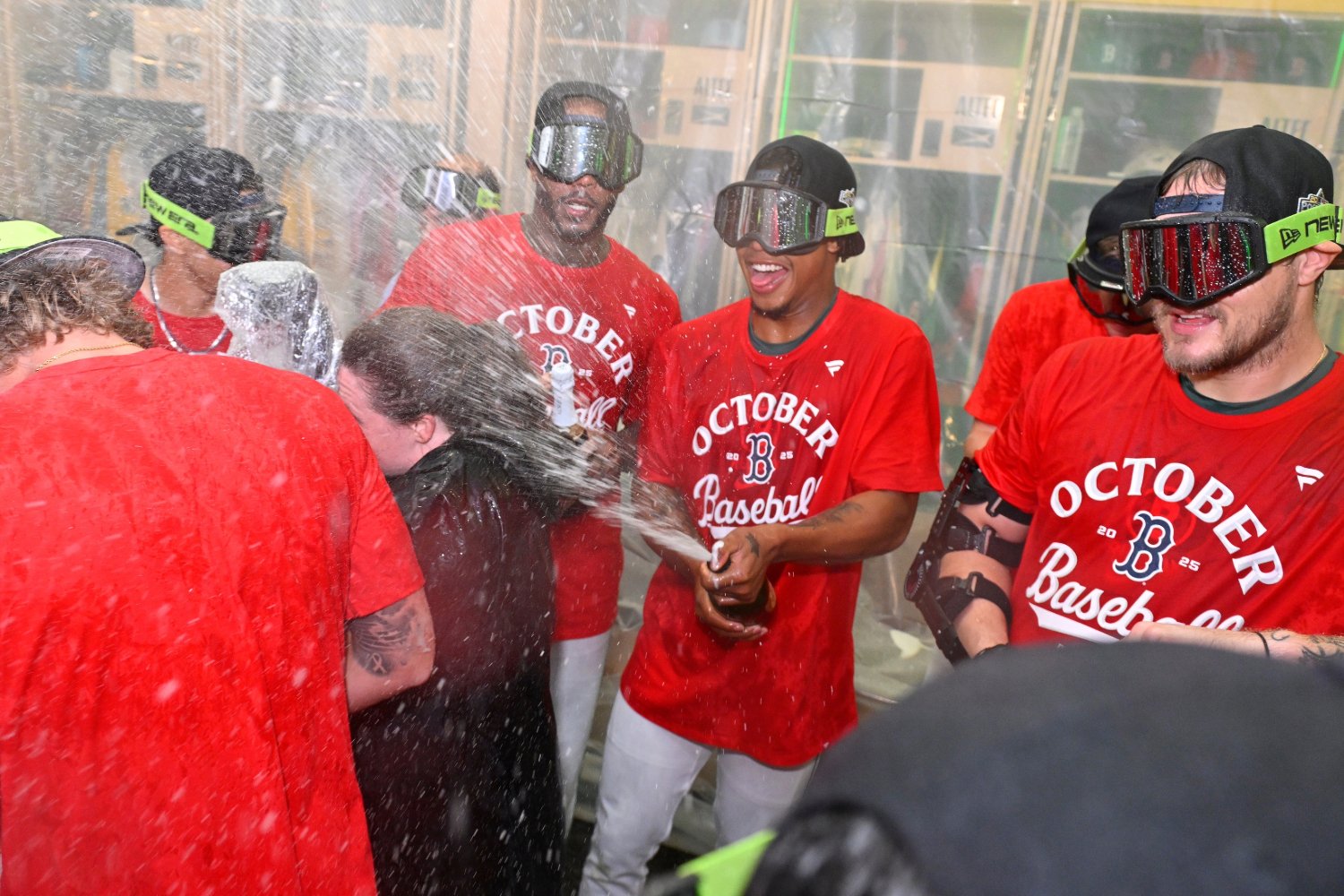 Weekly Snapshot Record Last Week: 4-2 (Overall 89-73) Runs Scored Last Week: 21 Runs Surrendered Last Week: 16 Scores Game 157 (9/23) | BOS 4, TOR 1 Game 158 (9/24) | BOS 7, TOR 1 Game 159 (9/25) | BOS 1, TOR 6 Game 160 (9/26) | DET, 3, BOS 4 Game 161 (9/27) | DET 2, BOS 1 Game 162 (9/28) | DET 3, BOS 4 Transactions 9/21/25: DFA’d Ali Sánchez 9/23/25: Activated Wilyer Abreu (right calf strain) from the 10-day IL 9/23/25: Outrighted Ali Sánchez to Triple-A Worcester 9/28/25: Activated José De León TL;DR Breakdown/Highlights Blue Jays series: In Game 1, Lucas Giolito took the mound and yielded one run across 4.2 innings. The bullpen (Wilson, Whitlock, Slaten, and Chapman) tossed 4.1 scoreless innings. Nathaniel Lowe (+25.8% WPA) led the Red Sox’s offense and drove in two runs. Carlos Narváez hit a two-run RBI double in the sixth inning to cement the team’s lead. Tuesday night, Garrett Crochet had a clean outing. He threw eight scoreless innings and recorded six strikeouts. On the other hand, Max Scherzer, the Blue Jays starter, was taken out of the game after yielding four earned runs through five innings. Masataka Yoshida and Carlos Narváez hit home runs. In Game 3, things went awry for the Red Sox. In the bottom of the sixth, a Trevor Story error catapulted the Blue Jays’ offense, leading them to score six runs. At the top of the seventh, Story hit an RBI single to score Jarren Duran from second base; the Red Sox’s sole run of the game. Tigers series: Friday night felt like a playoff game. The Red Sox started the game on the verge of clinching a postseason berth. Despite recording six strikeouts in three innings (albeit with three earned runs), Red Sox starter Kyle Harrison was pulled early. Alex Cora turned to the Red Sox’s bullpen. Justin Slaten, Steven Matz, Greg Weissert, Zack Kelly, Garrett Whitlock, and Aroldis Chapman came through and prevented the Tigers from scoring again. Masataka Yoshida, the team’s hottest hitter, drove in the first run of the game. With the game tied in the bottom of the ninth, Ceddanne Rafaela hit a walk-off triple. After Friday night’s celebrations, Alex Cora rested some of the team’s starters. Red Sox starter Connelly Early recorded seven strikeouts and two earned runs through five innings. The Tigers' pitchers held the Red Sox’s offense to one run. With the win, Detroit punched its way into the playoffs. In the final game of the regular season, Masataka Yoshida got to work quickly and demolished a 384-ft home run (HR: 30/30 parks). José De León, who was called up to provide the bullpen with some rest, racked up eight strikeouts through 6.2 innings. He yielded three earned runs, but the Red Sox’s offense (Jarren Duran: 2B, one RBI, David Hamilton: one HR, two RBIs) outscored the Tigers. ICMYI: After Friday night’s win, the Red Sox clinched a playoff berth. Starting Tuesday, they’ll play Yankees in New York over a three-game Wild Card series. It’s great to see the Red Sox play baseball in the fall again. Be sure to follow Talk Sox’s Red Sox coverage throughout the postseason! Random Stats For the 2025 season, the Red Sox have the best bullpen in the AL (6.8 fWAR). Last year, their bullpen ranked 17th (3.5 fWAR). Meanwhile, the Yankees bullpen (2.0 fWAR) grades at 22nd in the majors. Carlos Narváez has posted a 172 wRC+ vs the Yankees, the highest among Red Sox hitters from 2024 to 2025. Alex Bregman was one of the team’s least productive hitters in September (2.16 BA, 640 OPS, 76 wRC+). Since 2004, the Red Sox have an 8-4 record against the Yankees in the postseason. Website Highlights Boston Red Sox Minor League Hitters of the Year (2025) by Nick John Masataka Yoshida’s Rocky 2025 Has Taken A Pleasant Turn by Nick John Five Red Sox Prospects Who Underperformed Expectations in 2025 by Billy Mock Garrett Corchet Suddenly Looks Mortal. Is Time Away from Fenway the Cure-All? by Brandon Glick Wilyer Abreu is the Red Sox’s Offensive Wild Card Heading into October by Alex Mayes Looking Ahead September 30th: Red Sox @ Yankees - 6:08 pm EDT October 1st: Red Sox @ Yankees - 6:08 pm EDT *October 2nd: Red Sox @ Yankees - 6:08 pm EDT *If necessary
 -
Weekly Snapshot Record Last Week: 4-2 (Overall 89-73) Runs Scored Last Week: 21 Runs Surrendered Last Week: 16 Scores Game 157 (9/23) | BOS 4, TOR 1 Game 158 (9/24) | BOS 7, TOR 1 Game 159 (9/25) | BOS 1, TOR 6 Game 160 (9/26) | DET, 3, BOS 4 Game 161 (9/27) | DET 2, BOS 1 Game 162 (9/28) | DET 3, BOS 4 Transactions 9/21/25: DFA’d Ali Sánchez 9/23/25: Activated Wilyer Abreu (right calf strain) from the 10-day IL 9/23/25: Outrighted Ali Sánchez to Triple-A Worcester 9/28/25: Activated José De León TL;DR Breakdown/Highlights Blue Jays series: In Game 1, Lucas Giolito took the mound and yielded one run across 4.2 innings. The bullpen (Wilson, Whitlock, Slaten, and Chapman) tossed 4.1 scoreless innings. Nathaniel Lowe (+25.8% WPA) led the Red Sox’s offense and drove in two runs. Carlos Narváez hit a two-run RBI double in the sixth inning to cement the team’s lead. Tuesday night, Garrett Crochet had a clean outing. He threw eight scoreless innings and recorded six strikeouts. On the other hand, Max Scherzer, the Blue Jays starter, was taken out of the game after yielding four earned runs through five innings. Masataka Yoshida and Carlos Narváez hit home runs. In Game 3, things went awry for the Red Sox. In the bottom of the sixth, a Trevor Story error catapulted the Blue Jays’ offense, leading them to score six runs. At the top of the seventh, Story hit an RBI single to score Jarren Duran from second base; the Red Sox’s sole run of the game. Tigers series: Friday night felt like a playoff game. The Red Sox started the game on the verge of clinching a postseason berth. Despite recording six strikeouts in three innings (albeit with three earned runs), Red Sox starter Kyle Harrison was pulled early. Alex Cora turned to the Red Sox’s bullpen. Justin Slaten, Steven Matz, Greg Weissert, Zack Kelly, Garrett Whitlock, and Aroldis Chapman came through and prevented the Tigers from scoring again. Masataka Yoshida, the team’s hottest hitter, drove in the first run of the game. With the game tied in the bottom of the ninth, Ceddanne Rafaela hit a walk-off triple. After Friday night’s celebrations, Alex Cora rested some of the team’s starters. Red Sox starter Connelly Early recorded seven strikeouts and two earned runs through five innings. The Tigers' pitchers held the Red Sox’s offense to one run. With the win, Detroit punched its way into the playoffs. In the final game of the regular season, Masataka Yoshida got to work quickly and demolished a 384-ft home run (HR: 30/30 parks). José De León, who was called up to provide the bullpen with some rest, racked up eight strikeouts through 6.2 innings. He yielded three earned runs, but the Red Sox’s offense (Jarren Duran: 2B, one RBI, David Hamilton: one HR, two RBIs) outscored the Tigers. ICMYI: After Friday night’s win, the Red Sox clinched a playoff berth. Starting Tuesday, they’ll play Yankees in New York over a three-game Wild Card series. It’s great to see the Red Sox play baseball in the fall again. Be sure to follow Talk Sox’s Red Sox coverage throughout the postseason! Random Stats For the 2025 season, the Red Sox have the best bullpen in the AL (6.8 fWAR). Last year, their bullpen ranked 17th (3.5 fWAR). Meanwhile, the Yankees bullpen (2.0 fWAR) grades at 22nd in the majors. Carlos Narváez has posted a 172 wRC+ vs the Yankees, the highest among Red Sox hitters from 2024 to 2025. Alex Bregman was one of the team’s least productive hitters in September (2.16 BA, 640 OPS, 76 wRC+). Since 2004, the Red Sox have an 8-4 record against the Yankees in the postseason. Website Highlights Boston Red Sox Minor League Hitters of the Year (2025) by Nick John Masataka Yoshida’s Rocky 2025 Has Taken A Pleasant Turn by Nick John Five Red Sox Prospects Who Underperformed Expectations in 2025 by Billy Mock Garrett Corchet Suddenly Looks Mortal. Is Time Away from Fenway the Cure-All? by Brandon Glick Wilyer Abreu is the Red Sox’s Offensive Wild Card Heading into October by Alex Mayes Looking Ahead September 30th: Red Sox @ Yankees - 6:08 pm EDT October 1st: Red Sox @ Yankees - 6:08 pm EDT *October 2nd: Red Sox @ Yankees - 6:08 pm EDT *If necessary View full article