Maddie Landis
-
Posts
268 -
Joined
Content Type
Profiles
Boston Red Sox Videos
2026 Boston Red Sox Top Prospects Ranking
Boston Red Sox Free Agent & Trade Rumors, Notes, & Tidbits
Guides & Resources
2025 Boston Red Sox Draft Pick Tracker
News
2026 Boston Red Sox Draft Tracker: Picks & Bonuses
Forums
Blogs
Events
Store
Downloads
Gallery
Everything posted by Maddie Landis
-
Welcome to Talk Sox!
-
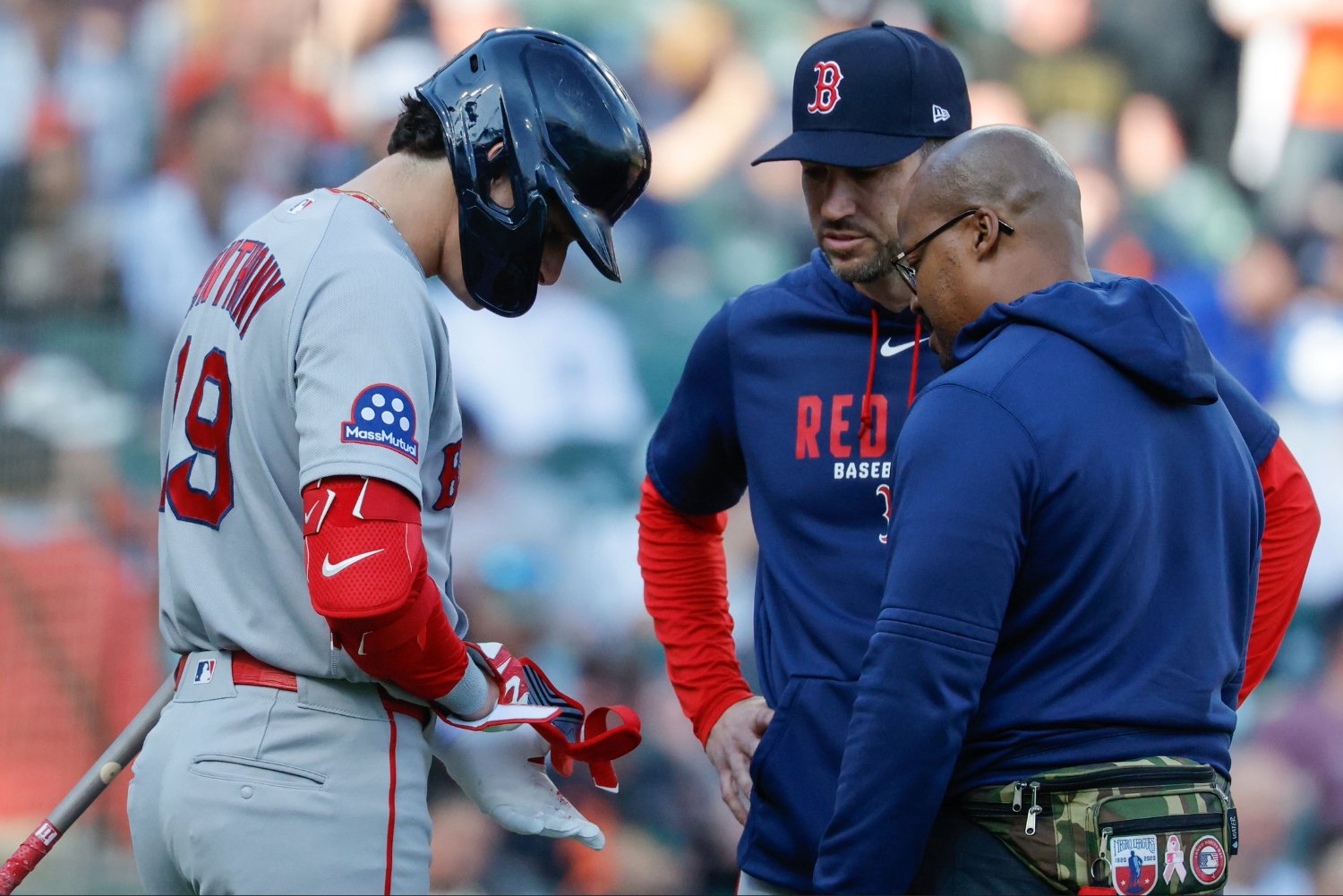 Boston is one of the premier healthcare cities in the United States. It’s home to three medical schools. Massachusetts General is regarded as one of the best hospitals in the world. Brigham and Women’s Hospital and Beth Israel Deaconess Medical Center aren’t far behind. Both are elite healthcare institutions in their own right. (Grey's Anatomy taught me all I need to know about medical programs.) Fenway Park sits 2.2 miles from Mass General's main campus. The Boston Red Sox have access to some of the best doctors in the world, and somehow fans can’t get a clear answer on what’s wrong with the team’s players. Why has the team’s medical staff dropped the ball multiple times in 2026? Consider the communication surrounding Garrett Crochet, Roman Anthony, and Curtis Mead’s injuries. Garrett Crochet On April 29, Garrett Crochet was placed on the 15-day injured list with left shoulder inflammation. Earlier that month, the Minnesota Twins (yes, the Twins) annihilated Crochet, scoring 11 runs off of him (10 earned) across 1 ⅔ innings. Former manager Alex Cora claimed Crochet was healthy. On June 2, Crochet revealed he underwent an MRI and said he was “feeling much better than I was a couple days ago, which is positive, but ultimately just waiting to see what the imaging reveals”. Later that day, interim manager Chad Tracy told reporters that the MRI showed “a very low-grade lat strain” and said, “Crochet will be able to resume throwing as soon as he is asymptomatic.” The southpaw subsequently shut down his throwing program for two weeks. Ten days later, Crochet said he thought he was “getting close to throwing”. He continued, “I think we all, you guys included, from the information that I was receiving and relaying to you, wouldn't have expected the shoulder to keep me out as long as it has.” Roughly one week ago, Crochet said it’s up in the air whether he’ll pitch again in 2026, “It’s tough to say, I’m not going to make a claim like that… I understand why you ask the question… it’s just completely different from the original diagnosis”. He also spoke to Tim Healey of The Boston Globe and said he’s not cleared to throw and that he would need six weeks to build up before throwing again. He lamented, “What the [expletive] is the point of building up the strength now?” Roman Anthony On May 4, Roman Anthony tore the carpometacarpal (CMC) joint in his right ring finger. The injury was initially labeled as a right wrist sprain. Post-game, Tracy told reporters, “Imaging tonight was negative, but we are gonna send him back to Boston to see our hand specialist just to let him look at it and make sure… I think the whole point is to get him back with our specialist to see him and see how he is. If everything’s good, we’ll get him back here. But we’ve got to get him back there first.” Later that month, Anthony shut down his hitting program, citing discomfort in his wrist. In mid-June, he reportedly felt pain after he swung a fungo bat. Anthony was transferred to the 60-day injured list on June 28. In early July, news broke that he moved his rehab program to Fort Myers, Florida. Curtis Mead Mead abruptly left Monday’s game after being hit on the hand in his second at-bat with the Red Sox. Post-game, Tracy told reporters, “He’s sore… We’re just going to take it day to day and see how he feels coming in (Tuesday). A little sore but at least right now it looks like we dodged a bullet maybe.” Come Tuesday evening, Tommy Cassell reported that Nick Sogard was being called up from Triple-A Worcester to join the team in Sacramento. The injury is a fractured left wrist, with a recovery time between six and eight weeks depending on the severity of the injury. Alex Speier reported he flew back on Tuesday night to meet with the team’s hand specialist. The medical equipment in a ballpark isn't up to par with what you'd find at a hospital. Bone injuries, especially small ones, can be tough to spot on an X-ray and take multiple reviews by practitioners. (When I found out that I broke the growth plate in my right shoulder, the doctors had already sent me home from the hospital.) Mead might be the exception here, but that doesn't excuse Crochet's shoulder injury evolving into a lat strain or Roman Anthony's wrist injury becoming a torn CMC joint overnight. Teams get unlucky with injuries. The funny thing is that the Red Sox aren’t the unluckiest team in baseball. (Check out our sister site, North Side Baseball, if you want to see a team utterly plagued by injuries this season.) Boston ranks sixth on Baseball Prospectus’s Hurt Scale with 12 players. They went on a 15-game win streak sans Roman Anthony and Garrett Crochet, the two superstars expected to lead the team to the postseason. What separates the Red Sox is a lack of transparency from the exam room to what players themselves and the public are being told. The Red Sox need to do better. Three shifting narratives demonstrate a pattern and a lack of transparency. I can’t diagnose whether it starts with the front office or the medical staff, but this is unacceptable from an organization with their resources. Something has to change if they want to maintain credibility with the media and their fans.
 -
Boston is one of the premier healthcare cities in the United States. It’s home to three medical schools. Massachusetts General is regarded as one of the best hospitals in the world. Brigham and Women’s Hospital and Beth Israel Deaconess Medical Center aren’t far behind. Both are elite healthcare institutions in their own right. (Grey's Anatomy taught me all I need to know about medical programs.) Fenway Park sits 2.2 miles from Mass General's main campus. The Boston Red Sox have access to some of the best doctors in the world, and somehow fans can’t get a clear answer on what’s wrong with the team’s players. Why has the team’s medical staff dropped the ball multiple times in 2026? Consider the communication surrounding Garrett Crochet, Roman Anthony, and Curtis Mead’s injuries. Garrett Crochet On April 29, Garrett Crochet was placed on the 15-day injured list with left shoulder inflammation. Earlier that month, the Minnesota Twins (yes, the Twins) annihilated Crochet, scoring 11 runs off of him (10 earned) across 1 ⅔ innings. Former manager Alex Cora claimed Crochet was healthy. On June 2, Crochet revealed he underwent an MRI and said he was “feeling much better than I was a couple days ago, which is positive, but ultimately just waiting to see what the imaging reveals”. Later that day, interim manager Chad Tracy told reporters that the MRI showed “a very low-grade lat strain” and said, “Crochet will be able to resume throwing as soon as he is asymptomatic.” The southpaw subsequently shut down his throwing program for two weeks. Ten days later, Crochet said he thought he was “getting close to throwing”. He continued, “I think we all, you guys included, from the information that I was receiving and relaying to you, wouldn't have expected the shoulder to keep me out as long as it has.” Roughly one week ago, Crochet said it’s up in the air whether he’ll pitch again in 2026, “It’s tough to say, I’m not going to make a claim like that… I understand why you ask the question… it’s just completely different from the original diagnosis”. He also spoke to Tim Healey of The Boston Globe and said he’s not cleared to throw and that he would need six weeks to build up before throwing again. He lamented, “What the [expletive] is the point of building up the strength now?” Roman Anthony On May 4, Roman Anthony tore the carpometacarpal (CMC) joint in his right ring finger. The injury was initially labeled as a right wrist sprain. Post-game, Tracy told reporters, “Imaging tonight was negative, but we are gonna send him back to Boston to see our hand specialist just to let him look at it and make sure… I think the whole point is to get him back with our specialist to see him and see how he is. If everything’s good, we’ll get him back here. But we’ve got to get him back there first.” Later that month, Anthony shut down his hitting program, citing discomfort in his wrist. In mid-June, he reportedly felt pain after he swung a fungo bat. Anthony was transferred to the 60-day injured list on June 28. In early July, news broke that he moved his rehab program to Fort Myers, Florida. Curtis Mead Mead abruptly left Monday’s game after being hit on the hand in his second at-bat with the Red Sox. Post-game, Tracy told reporters, “He’s sore… We’re just going to take it day to day and see how he feels coming in (Tuesday). A little sore but at least right now it looks like we dodged a bullet maybe.” Come Tuesday evening, Tommy Cassell reported that Nick Sogard was being called up from Triple-A Worcester to join the team in Sacramento. The injury is a fractured left wrist, with a recovery time between six and eight weeks depending on the severity of the injury. Alex Speier reported he flew back on Tuesday night to meet with the team’s hand specialist. The medical equipment in a ballpark isn't up to par with what you'd find at a hospital. Bone injuries, especially small ones, can be tough to spot on an X-ray and take multiple reviews by practitioners. (When I found out that I broke the growth plate in my right shoulder, the doctors had already sent me home from the hospital.) Mead might be the exception here, but that doesn't excuse Crochet's shoulder injury evolving into a lat strain or Roman Anthony's wrist injury becoming a torn CMC joint overnight. Teams get unlucky with injuries. The funny thing is that the Red Sox aren’t the unluckiest team in baseball. (Check out our sister site, North Side Baseball, if you want to see a team utterly plagued by injuries this season.) Boston ranks sixth on Baseball Prospectus’s Hurt Scale with 12 players. They went on a 15-game win streak sans Roman Anthony and Garrett Crochet, the two superstars expected to lead the team to the postseason. What separates the Red Sox is a lack of transparency from the exam room to what players themselves and the public are being told. The Red Sox need to do better. Three shifting narratives demonstrate a pattern and a lack of transparency. I can’t diagnose whether it starts with the front office or the medical staff, but this is unacceptable from an organization with their resources. Something has to change if they want to maintain credibility with the media and their fans. View full article
-
Wilyer Abreu has reached a plane of existence previously unexplored. Since July 10, he’s posted a 1.372 OPS (4th) and an absurd .586 ISO (3rd). His hot bat helped drive the Boston Red Sox's impossible recent winning streak. Throughout his career, Abreu has been a fairly streaky player, and I held reservations about his hot start in March/April (.855 OPS). He regressed in May (.695 OPS) and June (.741 OPS), but I’m more optimistic about his recent power surge because it’s coming from meaningful adjustments at the plate. Abreu’s Achilles heel was scorching fastballs up in the zone. At 5’10”, 215 pounds, Abreu resembles a fire hydrant, and I always thought his raw power would be enough for him to catch up to these pitches. He’s recorded above-average bat speeds through his career, averaging 73.8 mph (69th percentile) in 2026 Wilyer Abreu vs High Cheese Year Pitch % SLG xSLG wOBA xwOBA Whiff% 2024 11.2% .290 .263 .249 .227 48.3% 2025 12.2% .061 .198 .191 .242 36.8% 2026 12.2% .484 .244 .336 .209 22.2% This year, his numbers are especially encouraging. He’s slugging .484 and has cut his whiff rate against pitches in the upper third of the strike zone (Gameday Zones 1, 2, 3, 11, and 12) at 95+ mph. The one caveat is that his expected stats show a sharp drop-off. His actual production outpaces what his quality of contact supports, so some regression is likely for those specific pitches. That’s not ignoring his other improvements. Zooming out, his expected batting average nearly doubled from the 34th to 67th percentile, and his expected slugging percentage climbed from the 78th to 84th percentile. Abreu’s swing and batting stance haven’t changed dramatically. His swing length is almost the same (7.1 feet in 2025, 7.2 feet in 2026). He’s standing a smidge farther back in the box (30.5 inches in July) compared to last season (29.8 inches), and he’s implementing a wider stance (34.2 inches between his feet in July). The biggest change is his timing at the plate. Last year, Abreu’s intercept point averaged 3.5 inches in front of the plate. In July, his intercept point is -3.2 inches, double what it was at the start of the season. He’s allowing pitches, specifically faster ones, to travel deeper before making hard contact. He had previously attacked high-velocity pitches out front to achieve the same effect. Squared-up rate shows how a hitter maximizes their exit velocity based on their swing speed and pitch velocity. Abreu has increased his squared-up rate from 21.9% (16th percentile) to 24.6% (47th percentile). That initially doesn’t sound like a huge difference; most sluggers don’t need to optimize their quality of contact, and a hitter can be successful with a low or high squared-up rate. The metric includes swings and misses, so a guy with a high whiff rate and sheer power like Kyle Schwarber generates a 16.7% squared-up rate that grades in the 1st percentile. On the other hand, Luis Arraez, a patient hitter who rarely whiffs, records a 42% squared-up rate, the highest in the league. For Abreu, squaring up the ball consistently allows him to convert his improved timing into contact quality. Hitters want to connect with the ball in front of the plate to increase their launch angle. Abreu’s still making contact there, just not as far out as he previously was. A larger share of his hard-hit balls now come at or past the plate than they did a year ago, which in theory should work against him. Except, it hasn’t. The sweet spot range spans from 8 to 32 degrees. Balls hit within this window yield higher averages, slugging percentages, and weighted on base averages. Abreu’s launch angle sweet spot rate has catapulted from 31.9% (19th percentile) to 36.6% (75th percentile). The GIF below shows his 2025 and 2026 launch angle spray charts, courtesy of Statcast. You can see his hits this year spike between 10 and 20 degrees, the optimal window for hitting line drives. Abreu’s adjustments have been gradual year-to-year. Last year, he started to lay off breaking balls. This year, he’s improved his timing, allowing him to do damage on high-velocity pitches. He’s also gotten better hitting lefties, albeit at the expense of hitting righties. The fun thing is that this evolution isn't complete yet; I still don’t think he’s a finished product, and there’s a ton of upside at the plate going forward. View full article
-
Wilyer Abreu Has Entered the Goldilocks Zone at the Plate
Maddie Landis posted an article in Red Sox
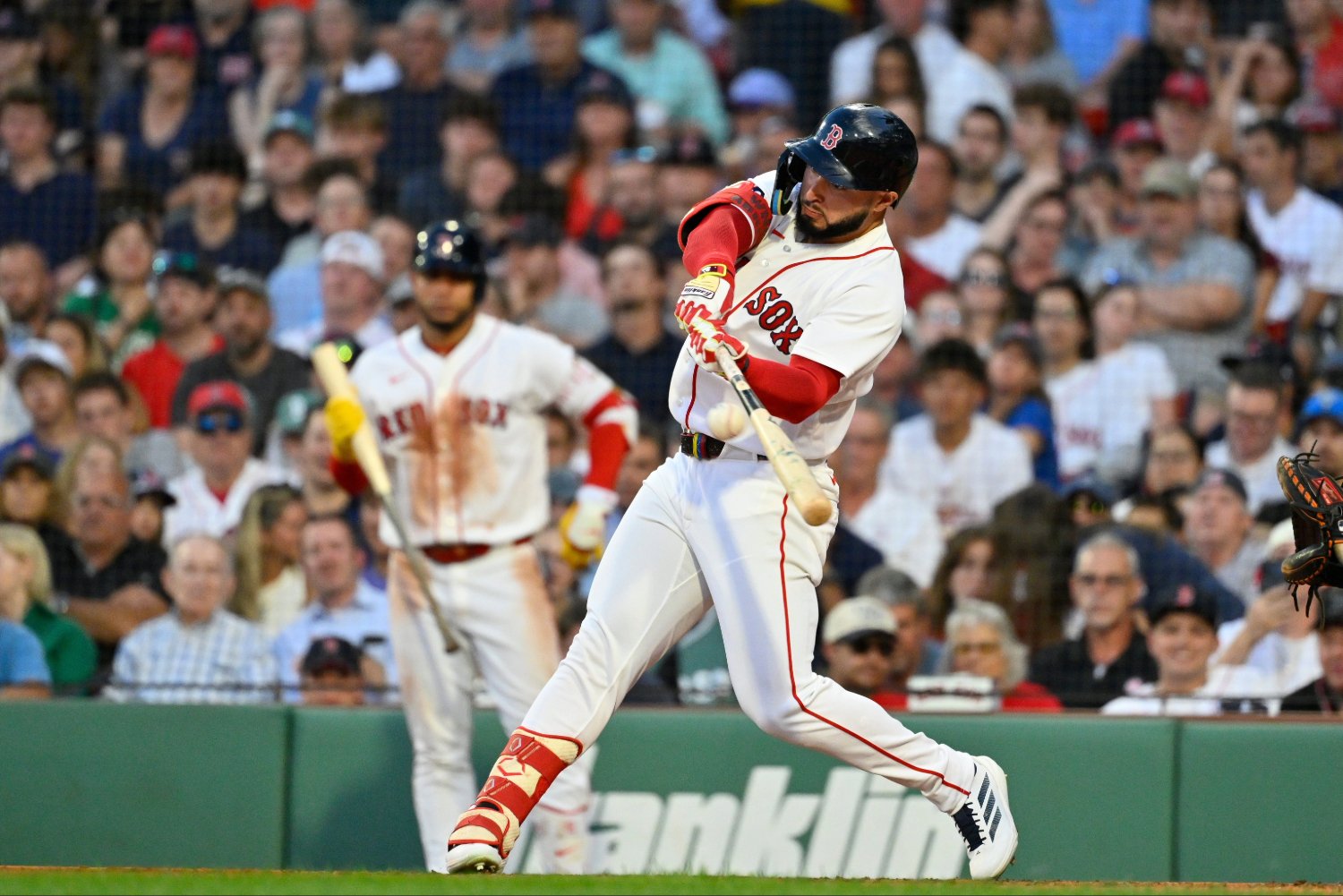 Wilyer Abreu has reached a plane of existence previously unexplored. Since July 10, he’s posted a 1.372 OPS (4th) and an absurd .586 ISO (3rd). His hot bat helped drive the Boston Red Sox's impossible recent winning streak. Throughout his career, Abreu has been a fairly streaky player, and I held reservations about his hot start in March/April (.855 OPS). He regressed in May (.695 OPS) and June (.741 OPS), but I’m more optimistic about his recent power surge because it’s coming from meaningful adjustments at the plate. Abreu’s Achilles heel was scorching fastballs up in the zone. At 5’10”, 215 pounds, Abreu resembles a fire hydrant, and I always thought his raw power would be enough for him to catch up to these pitches. He’s recorded above-average bat speeds through his career, averaging 73.8 mph (69th percentile) in 2026 Wilyer Abreu vs High Cheese Year Pitch % SLG xSLG wOBA xwOBA Whiff% 2024 11.2% .290 .263 .249 .227 48.3% 2025 12.2% .061 .198 .191 .242 36.8% 2026 12.2% .484 .244 .336 .209 22.2% This year, his numbers are especially encouraging. He’s slugging .484 and has cut his whiff rate against pitches in the upper third of the strike zone (Gameday Zones 1, 2, 3, 11, and 12) at 95+ mph. The one caveat is that his expected stats show a sharp drop-off. His actual production outpaces what his quality of contact supports, so some regression is likely for those specific pitches. That’s not ignoring his other improvements. Zooming out, his expected batting average nearly doubled from the 34th to 67th percentile, and his expected slugging percentage climbed from the 78th to 84th percentile. Abreu’s swing and batting stance haven’t changed dramatically. His swing length is almost the same (7.1 feet in 2025, 7.2 feet in 2026). He’s standing a smidge farther back in the box (30.5 inches in July) compared to last season (29.8 inches), and he’s implementing a wider stance (34.2 inches between his feet in July). The biggest change is his timing at the plate. Last year, Abreu’s intercept point averaged 3.5 inches in front of the plate. In July, his intercept point is -3.2 inches, double what it was at the start of the season. He’s allowing pitches, specifically faster ones, to travel deeper before making hard contact. He had previously attacked high-velocity pitches out front to achieve the same effect. Squared-up rate shows how a hitter maximizes their exit velocity based on their swing speed and pitch velocity. Abreu has increased his squared-up rate from 21.9% (16th percentile) to 24.6% (47th percentile). That initially doesn’t sound like a huge difference; most sluggers don’t need to optimize their quality of contact, and a hitter can be successful with a low or high squared-up rate. The metric includes swings and misses, so a guy with a high whiff rate and sheer power like Kyle Schwarber generates a 16.7% squared-up rate that grades in the 1st percentile. On the other hand, Luis Arraez, a patient hitter who rarely whiffs, records a 42% squared-up rate, the highest in the league. For Abreu, squaring up the ball consistently allows him to convert his improved timing into contact quality. Hitters want to connect with the ball in front of the plate to increase their launch angle. Abreu’s still making contact there, just not as far out as he previously was. A larger share of his hard-hit balls now come at or past the plate than they did a year ago, which in theory should work against him. Except, it hasn’t. The sweet spot range spans from 8 to 32 degrees. Balls hit within this window yield higher averages, slugging percentages, and weighted on base averages. Abreu’s launch angle sweet spot rate has catapulted from 31.9% (19th percentile) to 36.6% (75th percentile). The GIF below shows his 2025 and 2026 launch angle spray charts, courtesy of Statcast. You can see his hits this year spike between 10 and 20 degrees, the optimal window for hitting line drives. Abreu’s adjustments have been gradual year-to-year. Last year, he started to lay off breaking balls. This year, he’s improved his timing, allowing him to do damage on high-velocity pitches. He’s also gotten better hitting lefties, albeit at the expense of hitting righties. The fun thing is that this evolution isn't complete yet; I still don’t think he’s a finished product, and there’s a ton of upside at the plate going forward.
 -
Bon matin! Since @Alex Mayes is away over the weekend, I’m posting the weekly podcast question thread. Drop ‘em below! We’re recording a little later this week, and the cutoff is Tuesday, July 14th at 2:00 pm CST.
-
No need to apologize! We welcome all types of questions. I always joke that I'm a baseball fan first, and the Red Sox just happen to be my favorite team.
-
Franklin AriasAnthony EyansonMarcus PhillipsHenry GodboutKyson WitherspoonJustin GonzalesJuan ValeraJake BennettMikey RomeroDorian SotoYophery RodriguezTyler UberstineYoeilin CespedesJohn HolobetzEnddy AzocarMiguel BleisJohanfran GarciaHayden MullinsConrad CasonNelly Taylor
-
Franklin AriasAnthony EyansonMarcus PhillipsHenry GodboutKyson WitherspoonJustin GonzalesJuan ValeraJake BennettMikey RomeroDorian SotoYophery RodriguezTyler UberstineYoeilin CespedesJohn HolobetzEnddy AzocarMiguel BleisJohanfran GarciaHayden MullinsConrad CasonNelly Taylor
-
@mvp 78 We appreciate the support and everything you do for the website!
-
My ERA Academia: Are the Red Sox’s Left-Handed Relievers Overperforming?
Maddie Landis posted an article in Red Sox
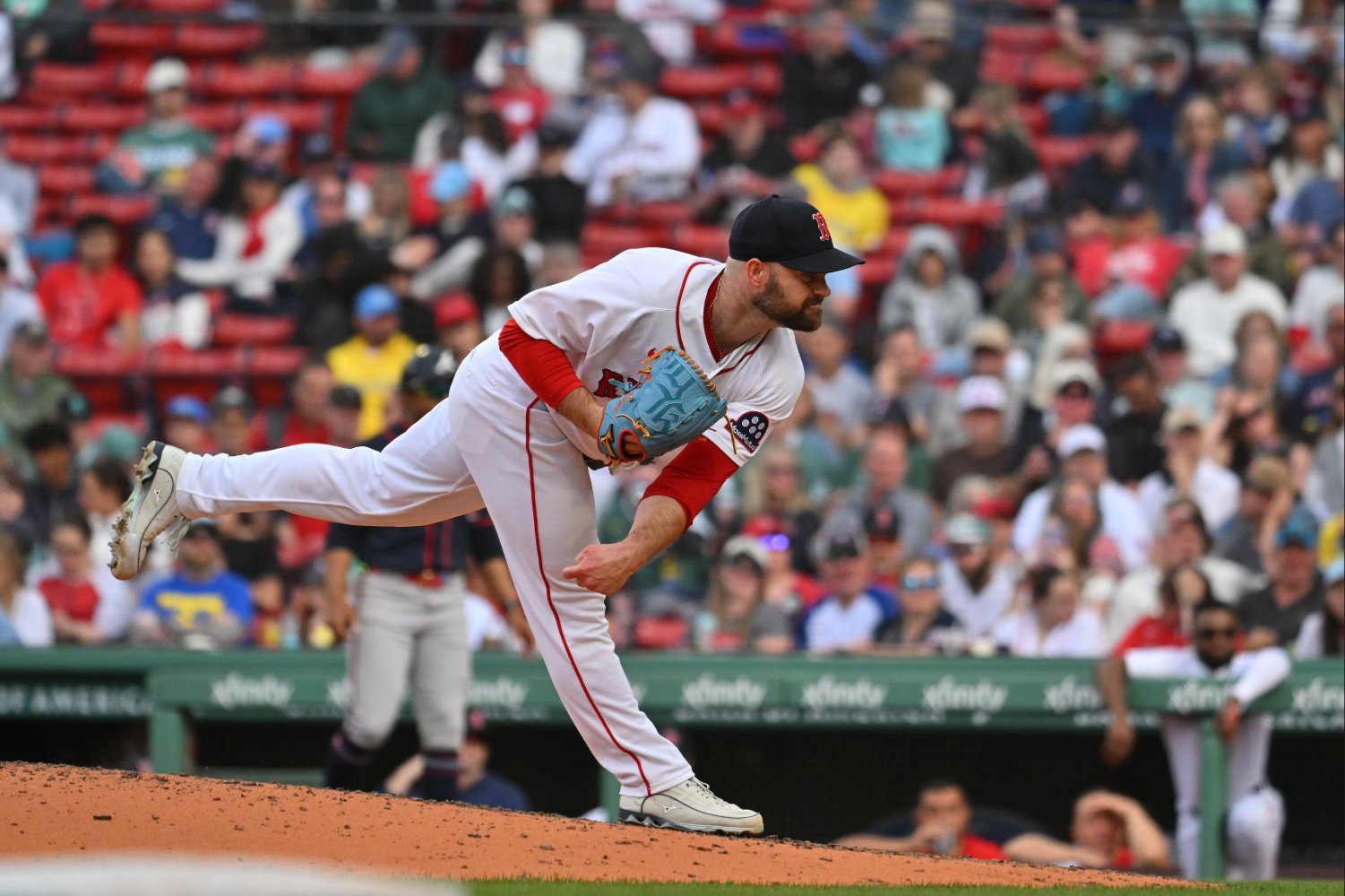 Most of your traditional baseball statistics are descriptive. They tell you what has already happened. Earned run average (ERA) shows how many runs a pitcher allows across nine innings. ERA tends to ruffle some because it fails to consider factors outside of a pitcher’s control, like team defense. A pitcher with a low ERA could be blessed with a strong defense behind him, whereas a pitcher with a high ERA might not be getting bailed out by luck or good gloves. Fielding independent pitching (FIP) was created to isolate a pitcher’s performance. It measures events that pitchers have control over — strikeouts, walks, hit-by-pitches, and home runs — and removes outcomes outside a pitcher’s control. Expected statistics attempt to measure what “should” have happened. Anything with an “x” before it is an expected stat. xERA converts xwOBA to the ERA scale. xwOBA factors how much contact (hits, strikeouts, walks, and hit-by-pitches) and the quality of contact (launch angle, exit velocity, and hard-hit rate) to determine what a player’s wOBA should’ve been. xFIP uses the same equation as FIP, but swaps out the actual number of home runs allowed for the number of fly balls multiplied by the league average home-run-to-fly-ball rate. Expected statistics are not predictive by any means, but including them in our analysis helps us paint a clearer picture of how effective a pitcher was at preventing runs, separate from what happened around them. Among left-handed relievers, the Red Sox have posted a 2.01 ERA, the lowest in the majors. Their 3.38 FIP ranks tenth. Thanks to their strong defense, more balls in play are being converted to outs than expected. Willson Contreras has been phenomenal at first (3 DRS), and Caleb Durbin is one of the best defensive third basemen in the American League. .batable { border-collapse: collapse; font-family: sans-serif; font-size: 14px; width: 100%; } .batable th { background-color: #0d2b5e !important; color: #fff !important; text-align: left; padding: 10px 14px; font-weight: 700; border: 1px solid #000; } .batable td { padding: 9px 14px; border: 1px solid #000; color: #000; } .batable col:first-child { width: 160px; } Player IP K-BB% ERA xERA FIP xFIP Aroldis Chapman 17.2 23.5% 0.51 3.09 1.82 2.94 Jovani Morán 26.2 15.5% 2.03 2.69 3.89 4.17 Tyler Samaniego 17.1 8.3% 1.04 4.89 3.87 4.42 Danny Coulombe 10.0 2.20% 7.20 4.54 5.06 5.46 Boston’s lefty relievers' -1.35 ERA-xERA differential is the lowest in baseball, meaning their ERA is outpacing their expected ERA (3.38) by a considerable margin. Looking ahead, there’s bound to be some regression for the group. Aroldis Chapman (-2.58) and Tyler Samaniego (-3.85) hold the two highest ERA-xERA differentials. Last year, Chapman outperformed his expected stats, and unlike Samaniego, he’s posted the 7th highest strikeout-minus-walk rate in the American League this year. I’m more concerned about Chapman’s drop in velocity, which has been a glaring issue since Opening Day. Jovani Morán has looked sharp, though I feel bad that he’s being charged for runs as the sacrificial lamb opener during Brayan Bello’s starts. Danny Coulombe dealt with an injury (cervical spasms) earlier this year. His 2.20% K-BB% is concerning, and he hasn’t shown an ability to strike guys out or induce ground balls. The team’s minus -0.59 FIP-xFIP differential isn’t as substantial, and the team’s defense has been one of the bright spots in an otherwise not-so-great season. I just threw a ton of numbers at you. (I can’t help it; I’m a mathlete!) What does this all mean? So far, the Red Sox’s left-handed relievers have been outperforming, and they’re bound for some regression. How much is the real question. Expected stats are fun, but no single equation should carry all the weight in an analysis. Despite Trevor Story’s injury, the team’s infield defense is stronger without him, and I think that it will hold up better than expected. Sox fans have witnessed a revolving door of relievers toss in games, but among the qualified players, lefties only account for three of the seven pitchers, and Justin Slaten’s return bolsters the bullpen. Even if one of the lefties regresses, he should help them pick up the slack.
 -
Most of your traditional baseball statistics are descriptive. They tell you what has already happened. Earned run average (ERA) shows how many runs a pitcher allows across nine innings. ERA tends to ruffle some because it fails to consider factors outside of a pitcher’s control, like team defense. A pitcher with a low ERA could be blessed with a strong defense behind him, whereas a pitcher with a high ERA might not be getting bailed out by luck or good gloves. Fielding independent pitching (FIP) was created to isolate a pitcher’s performance. It measures events that pitchers have control over — strikeouts, walks, hit-by-pitches, and home runs — and removes outcomes outside a pitcher’s control. Expected statistics attempt to measure what “should” have happened. Anything with an “x” before it is an expected stat. xERA converts xwOBA to the ERA scale. xwOBA factors how much contact (hits, strikeouts, walks, and hit-by-pitches) and the quality of contact (launch angle, exit velocity, and hard-hit rate) to determine what a player’s wOBA should’ve been. xFIP uses the same equation as FIP, but swaps out the actual number of home runs allowed for the number of fly balls multiplied by the league average home-run-to-fly-ball rate. Expected statistics are not predictive by any means, but including them in our analysis helps us paint a clearer picture of how effective a pitcher was at preventing runs, separate from what happened around them. Among left-handed relievers, the Red Sox have posted a 2.01 ERA, the lowest in the majors. Their 3.38 FIP ranks tenth. Thanks to their strong defense, more balls in play are being converted to outs than expected. Willson Contreras has been phenomenal at first (3 DRS), and Caleb Durbin is one of the best defensive third basemen in the American League. .batable { border-collapse: collapse; font-family: sans-serif; font-size: 14px; width: 100%; } .batable th { background-color: #0d2b5e !important; color: #fff !important; text-align: left; padding: 10px 14px; font-weight: 700; border: 1px solid #000; } .batable td { padding: 9px 14px; border: 1px solid #000; color: #000; } .batable col:first-child { width: 160px; } Player IP K-BB% ERA xERA FIP xFIP Aroldis Chapman 17.2 23.5% 0.51 3.09 1.82 2.94 Jovani Morán 26.2 15.5% 2.03 2.69 3.89 4.17 Tyler Samaniego 17.1 8.3% 1.04 4.89 3.87 4.42 Danny Coulombe 10.0 2.20% 7.20 4.54 5.06 5.46 Boston’s lefty relievers' -1.35 ERA-xERA differential is the lowest in baseball, meaning their ERA is outpacing their expected ERA (3.38) by a considerable margin. Looking ahead, there’s bound to be some regression for the group. Aroldis Chapman (-2.58) and Tyler Samaniego (-3.85) hold the two highest ERA-xERA differentials. Last year, Chapman outperformed his expected stats, and unlike Samaniego, he’s posted the 7th highest strikeout-minus-walk rate in the American League this year. I’m more concerned about Chapman’s drop in velocity, which has been a glaring issue since Opening Day. Jovani Morán has looked sharp, though I feel bad that he’s being charged for runs as the sacrificial lamb opener during Brayan Bello’s starts. Danny Coulombe dealt with an injury (cervical spasms) earlier this year. His 2.20% K-BB% is concerning, and he hasn’t shown an ability to strike guys out or induce ground balls. The team’s minus -0.59 FIP-xFIP differential isn’t as substantial, and the team’s defense has been one of the bright spots in an otherwise not-so-great season. I just threw a ton of numbers at you. (I can’t help it; I’m a mathlete!) What does this all mean? So far, the Red Sox’s left-handed relievers have been outperforming, and they’re bound for some regression. How much is the real question. Expected stats are fun, but no single equation should carry all the weight in an analysis. Despite Trevor Story’s injury, the team’s infield defense is stronger without him, and I think that it will hold up better than expected. Sox fans have witnessed a revolving door of relievers toss in games, but among the qualified players, lefties only account for three of the seven pitchers, and Justin Slaten’s return bolsters the bullpen. Even if one of the lefties regresses, he should help them pick up the slack. View full article
-
- 1
-

-
- aroldis chapman
- tyler samaniego
- (and 2 more)
-
In theory, speed is a means to manufacture runs. Speed puts pressure on the opposing defense, stretches singles into doubles, and helps runners steal bases. The implication is that you have to get on base to take advantage of speed, which the 2026 Boston Red Sox haven’t been doing. Despite a paltry .313 OBP (23rd), they lead the American League in baserunning runs (5). Baseball is a unique sport for many reasons, one of them being that the defense controls the ball. Because of this, it’s harder to quantify speed’s offensive value. Baserunning outcomes depend on a myriad of context-based factors, like the runner’s sprint speed, their instincts, which base they’re on, their ability to make decisions under pressure, not to mention the opposing defense and where the ball was hit. You can see where things start to get messy. Hitting and pitching are easier to quantify because they can be isolated. A hitter's outcomes can be grouped into their contact quality and plate discipline. FIP isolates fielding from pitching by honing in on events pitchers directly control (strikeouts, walks, hit-by-pitches, and home runs). Sprint speed is a metric runners own, but by itself, it doesn’t tell you much (not unlike Craig Breslow’s press conferences). The Red Sox’s average sprint speed clocks at 27.6 feet per second, placing them at fifth overall, but they’ve posted a 71.43% stolen base percentage, ranked 19th. At some point, their steal attempts start costing more runs than they create. For a team that’s scored an eye-popping five runs in the past week, the Red Sox can’t afford to be careless on the basepaths. Overall, a stolen base’s value is marginal. They’re exciting to see, but I equate them to eating Taco Bell. It’s initially exciting and releases some endorphins, but doesn’t reap many benefits in the long run. Timing the pitcher’s release and getting a good jump are important factors that go into basestealing. Neither can be quantified. Slow-moving players like Josh Naylor rack up stolen bases because they have good baserunning instincts. On the other hand, you have speedier guys like Ceddanne Rafaela (28.7 ft/s, 90th percentile) posting a 40% stolen base rate. Marginal differences matter, especially in baseball, but a team shouldn’t be entirely dependent on speed and contact to manufacture runs. A roster built for October baseball needs to be well-rounded. Power produces runs. A home run guarantees at least one run is driven home. A stolen base might yield one. The Yankees are a lethargic team (I’d bet my cat is faster than most of the guys in their lineup), but they lead the American League with 223 runs and boast the highest ISO in the sport (.199). The Red Sox are often compared to the Brewers for their contact-and-baserunning approach. I’d say they’re the Brewers’ Waluigi. They want to emulate the Brewers, but they don’t have the plate discipline to work counts or the ability to hit the ball in the gaps. Instead, the team leans hard into bat speed and exit velocity. As such, speed alone won’t save the Red Sox. They’re stuck with who they have (unless Breslow miraculously pulls off a godfather trade for one or two sluggers). Despite their 18-24 record, the team still has a shot of reaching the playoffs, but they face an identity crisis. They’re built as a contact-first squad, but constantly swing for the fences. If the Red Sox want to succeed, they need to play to their strengths. Contact first, then wreak havoc on the basepaths. View full article
-
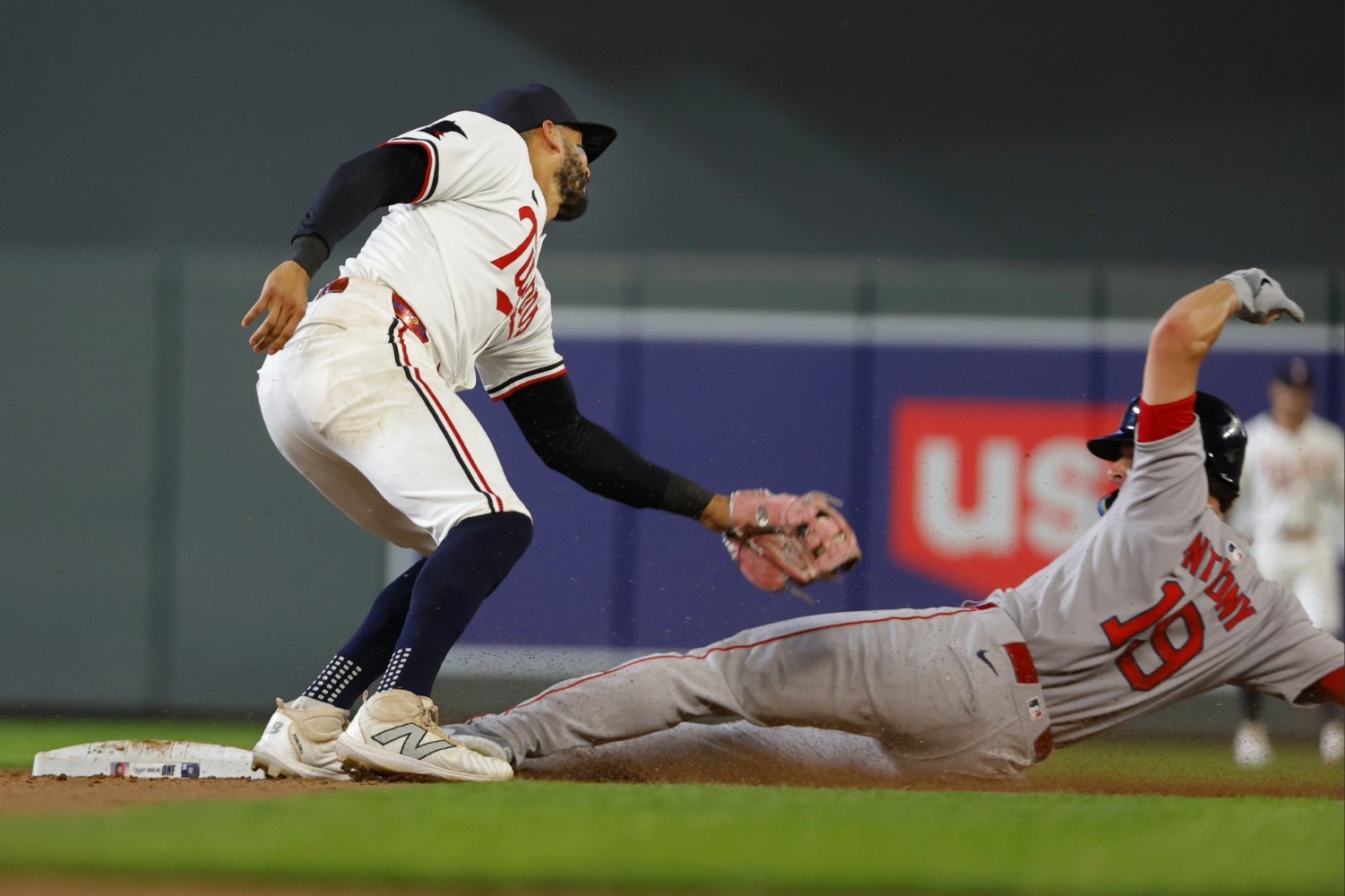 In theory, speed is a means to manufacture runs. Speed puts pressure on the opposing defense, stretches singles into doubles, and helps runners steal bases. The implication is that you have to get on base to take advantage of speed, which the 2026 Boston Red Sox haven’t been doing. Despite a paltry .313 OBP (23rd), they lead the American League in baserunning runs (5). Baseball is a unique sport for many reasons, one of them being that the defense controls the ball. Because of this, it’s harder to quantify speed’s offensive value. Baserunning outcomes depend on a myriad of context-based factors, like the runner’s sprint speed, their instincts, which base they’re on, their ability to make decisions under pressure, not to mention the opposing defense and where the ball was hit. You can see where things start to get messy. Hitting and pitching are easier to quantify because they can be isolated. A hitter's outcomes can be grouped into their contact quality and plate discipline. FIP isolates fielding from pitching by honing in on events pitchers directly control (strikeouts, walks, hit-by-pitches, and home runs). Sprint speed is a metric runners own, but by itself, it doesn’t tell you much (not unlike Craig Breslow’s press conferences). The Red Sox’s average sprint speed clocks at 27.6 feet per second, placing them at fifth overall, but they’ve posted a 71.43% stolen base percentage, ranked 19th. At some point, their steal attempts start costing more runs than they create. For a team that’s scored an eye-popping five runs in the past week, the Red Sox can’t afford to be careless on the basepaths. Overall, a stolen base’s value is marginal. They’re exciting to see, but I equate them to eating Taco Bell. It’s initially exciting and releases some endorphins, but doesn’t reap many benefits in the long run. Timing the pitcher’s release and getting a good jump are important factors that go into basestealing. Neither can be quantified. Slow-moving players like Josh Naylor rack up stolen bases because they have good baserunning instincts. On the other hand, you have speedier guys like Ceddanne Rafaela (28.7 ft/s, 90th percentile) posting a 40% stolen base rate. Marginal differences matter, especially in baseball, but a team shouldn’t be entirely dependent on speed and contact to manufacture runs. A roster built for October baseball needs to be well-rounded. Power produces runs. A home run guarantees at least one run is driven home. A stolen base might yield one. The Yankees are a lethargic team (I’d bet my cat is faster than most of the guys in their lineup), but they lead the American League with 223 runs and boast the highest ISO in the sport (.199). The Red Sox are often compared to the Brewers for their contact-and-baserunning approach. I’d say they’re the Brewers’ Waluigi. They want to emulate the Brewers, but they don’t have the plate discipline to work counts or the ability to hit the ball in the gaps. Instead, the team leans hard into bat speed and exit velocity. As such, speed alone won’t save the Red Sox. They’re stuck with who they have (unless Breslow miraculously pulls off a godfather trade for one or two sluggers). Despite their 18-24 record, the team still has a shot of reaching the playoffs, but they face an identity crisis. They’re built as a contact-first squad, but constantly swing for the fences. If the Red Sox want to succeed, they need to play to their strengths. Contact first, then wreak havoc on the basepaths.
 -
Payton TolleFranklin AriasAnthony EyansonHenry GodboutKyson WitherspoonJuan ValeraYoeilin CespedesMikey RomeroJustin GonzalesMarcus PhillipsDorian SotoMiguel BleisJake BennettJohanfran GarciaYophery RodriguezTyler UberstineNelly TaylorConrad CasonJohn HolobetzEnddy Azocar
-
@drewski6 Thank you! 🙂 That grill looks awesome. You can do a lot with its temperature range. I got a Weber Genesis. I had a Spirit, but it flipped over and broke during a bad storm last fall. Bregman was reportedly a huge advocate for the group of fired coaches. It makes you wonder if Breslow’s refusal to add the NTC was deliberate.
-
 My Saturday morning started great. I woke up early, biked to the gym, and bought a new grill at my local hardware store. It felt like a productive start to the day, yet something felt off. My intuition proved right. After the Boston Red Sox pounded the Orioles in a 17-1 win, Craig Breslow abruptly fired manager Alex Cora and five members of their coaching staff. Look, it was obvious the Red Sox needed a semblance of change. They’ve gotten off to one of the worst starts in franchise history. The offense is tepid and can’t hit fastballs if their lives depended on it. But it’s atypical to see almost the entire team’s coaching staff let go early in the season. At the very least, my money was on just hitting coach Pete Fatse getting sacked. Baseball is full of bizarre storylines. (In recent years, the recurring theme for the Red Sox is petty drama.) Alas, some teams have parted ways with their managers and still reached the playoffs. Let’s take a look at them. In-Season Manager Changes Followed by a Playoff Run Year Team Manager Date Fired Replacement Record Rest of the Season Postseason Result 2022 TOR Charlie Montoyo 7/13/22 John Schneider 46-42 45-29 Lost in WC (SEA) 2022 PHL Joe Girardi 6/3/22 Rob Thomson 22-29 65-46 Lost in the WS (HOU) 2009 COL Clint Hurdle 5/29/09 Jim Tracy 18-28 74-42 Lost in NLDS (PHI) 2008 MIL Ned Yost 9/15/08 Dale Sveum 83-67 7-5 Lost in NLDS (PHI) 2022 Toronto Blue Jays On July 13, 2022, the Blue Jays let go of Charlie Montoyo and handed the keys to bench coach John Schneider for the interim. Overall, the team held a 46-42 record and the third wild-card berth, but they started July with a lackluster 3-9 record. Toronto finished the season with a 45-29 record (ranked third in the American League) and held onto its wild-card berth, snapping a six-year postseason drought. Schneider was promoted to full-time manager in October 2022. 2022 Philadelphia Phillies On June 3, 2022, the Phillies fired Joe Girardi. At the time, things looked dire for the Phillies. They were third in the National League East with a 22-29 record and 5.5 games behind a wild-card berth. Led by former bench coach Rob Thomson, the team finished the season with an 87-75 record (third in their division). They clinched the final NL wild-card spot and danced to their first World Series appearance since 2009. Like Schneider, Thomson took over as full-time manager in October. 2009 Colorado Rockies On May 29, 2009, the Rockies parted ways with Clint Hurdle. Colorado was 14.5 games behind the Dodgers with an 18-28 record (fifth in the National League West). Hurdle’s replacement was bench coach Jim Tracy, the father of the Red Sox’s new skipper, Chad Tracy. The senior Tracy pulled the Rockies out of the basement. They ended the season with a 92-70 record, ranked second in their division. To this day, the Rockies’ 2009 record stands as the best in the franchise’s 33-year history. The team reached the National League Division Series. Come November, Tracy was named full-time manager. 2008 Brewers On September 15, 2008, the Brewers fired Ned Yost. The team held an 83-67 record and were tied with the Phillies for the wild-card, which sounds fine, except they entered September with a 5.5-game lead over the Phillies and were 3-11 in the first two weeks. Third base coach Dale Sveum managed the team for the remaining 12 games and the postseason. They lost to the Phillies (who went on to win the World Series) in the National League Division Series. Sveum’s managerial stint with the Brewers was short, but he’d later manage the Cubs. Could the Red Sox sneak into the postseason this year? History says so, but there’s a fundamental difference in the aforementioned teams and the 2026 Red Sox. Managers do their best with the rosters that the front office hands them. The 2022 Blue Jays had four All-Stars. The 2022 Phillies had Bryce Harper, fresh off his 2021 MVP season. J.T. Realmuto and Aaron Nola were still in their prime. The 2009 Rockies had Troy Tulowitzki just reaching his peak and a future Hall of Famer in Todd Helton. The 2008 Brewers had two All-Stars and a core of burgeoning young talent. The 2026 Red Sox will be lucky to have more than one player represent the team at the All-Star Game in Philadelphia. Cora wasn’t given the optimal roster to manage. President of Baseball Operations Craig Breslow repeatedly echoed that the team needed a power bat, but neglected to sign any marquee free agents, instead trading for 33-year-old veteran Willson Contreras. To Contreras’ credit, he’s done well in Boston, but more often than not, there’s nobody on base when he goes deep. Despite the team’s surplus of outfielders, none of them were traded in the offseason, leaving Cora to juggle all five. The bullpen was the red-headed stepchild of the offseason. Breslow traded workhorse reliever Brennan Bernardino for Braiden Ward, a speedy outfielder, who profiled as redundant given that the team already had utility player Nate Eaton stashed away in Worcester. Cora himself wasn’t perfect. Like most people, he falls into the ambiguous grey area. At his worst, he played favorites, his bullpen usage was questionable, he was a slave to the platoon, players seemed to lack fundamentals, the defense committed egregious errors, and runners looked lost on the basepaths. I’m saying this as a huge Cora fan. Astute leaders don’t surround themselves with yes-men. They recognize the importance of healthy tension and constructive criticism. They understand there isn’t one way to solve a problem. They learn from their mistakes. Breslow hasn’t demonstrated any of these qualities. In the wake of the Rafael Devers trade last June, Breslow acknowledged, “We want people to feel valued. We want people to feel like the work that they’re doing matters, that their voices are heard. And I think there’s an opportunity for me to do a better job making sure that everybody in this organization knows that.” Sunday morning, after Cora was fired, Breslow addressed the clubhouse in a brief “five or six” minute meeting. Players didn’t have the chance to, in Breslow’s words, “have their voices heard.” Reliever Garrett Whitlock told reporters, “They made it very clear that we get paid to play baseball, and we need to just focus on playing baseball.” That same morning, Breslow and President Sam Kennedy held a press conference where Breslow emphasized the human element of the game: “On a human level, on a personal level, it's incredibly difficult. These are people that you build close relationships over multiple years. They are really, really good people, good fathers, good husbands. You know, I think we tend to think about only the professional aspect of this, but you know, the human side makes it just unbelievably difficult. You know, you wrestle with these things. But when you get to the point where you feel like this is the best decision for the organization and the best decision for the players, no matter how difficult you have to do it.” For someone with a Mensa-level EQ, Breslow has a strange way of showing that he’s attuned to the human side of baseball operations. The Red Sox reportedly didn’t offer Alex Bregman a full no-trade clause – which was a reasonable ask – considering the organization’s history. Since 2018, the Red Sox front office has been a revolving door, but I took comfort in knowing that the team had one of the best managers. Cora had a feel for the game, something Breslow seems to lack despite spending 12 years in the majors. Breslow seemingly cares more about his computer models being correct than what’s actually unfolding on the field. He doesn’t recognize what leadership looks like. Why? Because it can’t be quantified. George Washington took the green French officer, Marquis de Lafayette, under his wing during the Revolutionary War. Plato tutored Aristotle. Gandalf guided Bilbo and Frodo through Middle Earth. David Ortiz mentored Xander Bogaerts and Mookie Betts. The Red Sox could’ve had their leader in Bregman, Kyle Schwarber, or Pete Alonso. Maybe Breslow’s model advised him not to overpay them. Roman Anthony is only 22 years old, and he’s expected to carry the weight of the team on his back and address the media when veteran players refuse to. I know it’s early, and there’s a lot of baseball to be played, but the odds aren’t in the Red Sox’s favor. PECOTA projects that the team has a 15.1% chance of making the playoffs and a 1.0% chance of winning the division. Teams that pulled off an in-season managerial change had front offices that constructed rosters that were worth saving. Right now, the Red Sox are a sinking ship. body { font-family: Arial, Helvetica, sans-serif; margin: 20px; } table { border-collapse: collapse; font-family: Arial, Helvetica, sans-serif; font-size: 14px; } th, td { border: 1px solid #000; padding: 8px 12px; white-space: nowrap; vertical-align: middle; } thead th { background-color: #001f3f; color: #ffffff; font-weight: bold; } .title { text-align: center; } /* Centered columns: Year, Team */ .center { text-align: center; } /* Left-aligned columns: Manager, Date Fired, Replacement, Record, Rest of the Season, Postseason Result */ .left { text-align: left; } /* Widths */ .w-narrow { width: 60px; } .w-rest { width: 70px; white-space: normal; } .w-wide { width: 140px; }
 -
My Saturday morning started great. I woke up early, biked to the gym, and bought a new grill at my local hardware store. It felt like a productive start to the day, yet something felt off. My intuition proved right. After the Boston Red Sox pounded the Orioles in a 17-1 win, Craig Breslow abruptly fired manager Alex Cora and five members of their coaching staff. Look, it was obvious the Red Sox needed a semblance of change. They’ve gotten off to one of the worst starts in franchise history. The offense is tepid and can’t hit fastballs if their lives depended on it. But it’s atypical to see almost the entire team’s coaching staff let go early in the season. At the very least, my money was on just hitting coach Pete Fatse getting sacked. Baseball is full of bizarre storylines. (In recent years, the recurring theme for the Red Sox is petty drama.) Alas, some teams have parted ways with their managers and still reached the playoffs. Let’s take a look at them. In-Season Manager Changes Followed by a Playoff Run Year Team Manager Date Fired Replacement Record Rest of the Season Postseason Result 2022 TOR Charlie Montoyo 7/13/22 John Schneider 46-42 45-29 Lost in WC (SEA) 2022 PHL Joe Girardi 6/3/22 Rob Thomson 22-29 65-46 Lost in the WS (HOU) 2009 COL Clint Hurdle 5/29/09 Jim Tracy 18-28 74-42 Lost in NLDS (PHI) 2008 MIL Ned Yost 9/15/08 Dale Sveum 83-67 7-5 Lost in NLDS (PHI) 2022 Toronto Blue Jays On July 13, 2022, the Blue Jays let go of Charlie Montoyo and handed the keys to bench coach John Schneider for the interim. Overall, the team held a 46-42 record and the third wild-card berth, but they started July with a lackluster 3-9 record. Toronto finished the season with a 45-29 record (ranked third in the American League) and held onto its wild-card berth, snapping a six-year postseason drought. Schneider was promoted to full-time manager in October 2022. 2022 Philadelphia Phillies On June 3, 2022, the Phillies fired Joe Girardi. At the time, things looked dire for the Phillies. They were third in the National League East with a 22-29 record and 5.5 games behind a wild-card berth. Led by former bench coach Rob Thomson, the team finished the season with an 87-75 record (third in their division). They clinched the final NL wild-card spot and danced to their first World Series appearance since 2009. Like Schneider, Thomson took over as full-time manager in October. 2009 Colorado Rockies On May 29, 2009, the Rockies parted ways with Clint Hurdle. Colorado was 14.5 games behind the Dodgers with an 18-28 record (fifth in the National League West). Hurdle’s replacement was bench coach Jim Tracy, the father of the Red Sox’s new skipper, Chad Tracy. The senior Tracy pulled the Rockies out of the basement. They ended the season with a 92-70 record, ranked second in their division. To this day, the Rockies’ 2009 record stands as the best in the franchise’s 33-year history. The team reached the National League Division Series. Come November, Tracy was named full-time manager. 2008 Brewers On September 15, 2008, the Brewers fired Ned Yost. The team held an 83-67 record and were tied with the Phillies for the wild-card, which sounds fine, except they entered September with a 5.5-game lead over the Phillies and were 3-11 in the first two weeks. Third base coach Dale Sveum managed the team for the remaining 12 games and the postseason. They lost to the Phillies (who went on to win the World Series) in the National League Division Series. Sveum’s managerial stint with the Brewers was short, but he’d later manage the Cubs. Could the Red Sox sneak into the postseason this year? History says so, but there’s a fundamental difference in the aforementioned teams and the 2026 Red Sox. Managers do their best with the rosters that the front office hands them. The 2022 Blue Jays had four All-Stars. The 2022 Phillies had Bryce Harper, fresh off his 2021 MVP season. J.T. Realmuto and Aaron Nola were still in their prime. The 2009 Rockies had Troy Tulowitzki just reaching his peak and a future Hall of Famer in Todd Helton. The 2008 Brewers had two All-Stars and a core of burgeoning young talent. The 2026 Red Sox will be lucky to have more than one player represent the team at the All-Star Game in Philadelphia. Cora wasn’t given the optimal roster to manage. President of Baseball Operations Craig Breslow repeatedly echoed that the team needed a power bat, but neglected to sign any marquee free agents, instead trading for 33-year-old veteran Willson Contreras. To Contreras’ credit, he’s done well in Boston, but more often than not, there’s nobody on base when he goes deep. Despite the team’s surplus of outfielders, none of them were traded in the offseason, leaving Cora to juggle all five. The bullpen was the red-headed stepchild of the offseason. Breslow traded workhorse reliever Brennan Bernardino for Braiden Ward, a speedy outfielder, who profiled as redundant given that the team already had utility player Nate Eaton stashed away in Worcester. Cora himself wasn’t perfect. Like most people, he falls into the ambiguous grey area. At his worst, he played favorites, his bullpen usage was questionable, he was a slave to the platoon, players seemed to lack fundamentals, the defense committed egregious errors, and runners looked lost on the basepaths. I’m saying this as a huge Cora fan. Astute leaders don’t surround themselves with yes-men. They recognize the importance of healthy tension and constructive criticism. They understand there isn’t one way to solve a problem. They learn from their mistakes. Breslow hasn’t demonstrated any of these qualities. In the wake of the Rafael Devers trade last June, Breslow acknowledged, “We want people to feel valued. We want people to feel like the work that they’re doing matters, that their voices are heard. And I think there’s an opportunity for me to do a better job making sure that everybody in this organization knows that.” Sunday morning, after Cora was fired, Breslow addressed the clubhouse in a brief “five or six” minute meeting. Players didn’t have the chance to, in Breslow’s words, “have their voices heard.” Reliever Garrett Whitlock told reporters, “They made it very clear that we get paid to play baseball, and we need to just focus on playing baseball.” That same morning, Breslow and President Sam Kennedy held a press conference where Breslow emphasized the human element of the game: “On a human level, on a personal level, it's incredibly difficult. These are people that you build close relationships over multiple years. They are really, really good people, good fathers, good husbands. You know, I think we tend to think about only the professional aspect of this, but you know, the human side makes it just unbelievably difficult. You know, you wrestle with these things. But when you get to the point where you feel like this is the best decision for the organization and the best decision for the players, no matter how difficult you have to do it.” For someone with a Mensa-level EQ, Breslow has a strange way of showing that he’s attuned to the human side of baseball operations. The Red Sox reportedly didn’t offer Alex Bregman a full no-trade clause – which was a reasonable ask – considering the organization’s history. Since 2018, the Red Sox front office has been a revolving door, but I took comfort in knowing that the team had one of the best managers. Cora had a feel for the game, something Breslow seems to lack despite spending 12 years in the majors. Breslow seemingly cares more about his computer models being correct than what’s actually unfolding on the field. He doesn’t recognize what leadership looks like. Why? Because it can’t be quantified. George Washington took the green French officer, Marquis de Lafayette, under his wing during the Revolutionary War. Plato tutored Aristotle. Gandalf guided Bilbo and Frodo through Middle Earth. David Ortiz mentored Xander Bogaerts and Mookie Betts. The Red Sox could’ve had their leader in Bregman, Kyle Schwarber, or Pete Alonso. Maybe Breslow’s model advised him not to overpay them. Roman Anthony is only 22 years old, and he’s expected to carry the weight of the team on his back and address the media when veteran players refuse to. I know it’s early, and there’s a lot of baseball to be played, but the odds aren’t in the Red Sox’s favor. PECOTA projects that the team has a 15.1% chance of making the playoffs and a 1.0% chance of winning the division. Teams that pulled off an in-season managerial change had front offices that constructed rosters that were worth saving. Right now, the Red Sox are a sinking ship. body { font-family: Arial, Helvetica, sans-serif; margin: 20px; } table { border-collapse: collapse; font-family: Arial, Helvetica, sans-serif; font-size: 14px; } th, td { border: 1px solid #000; padding: 8px 12px; white-space: nowrap; vertical-align: middle; } thead th { background-color: #001f3f; color: #ffffff; font-weight: bold; } .title { text-align: center; } /* Centered columns: Year, Team */ .center { text-align: center; } /* Left-aligned columns: Manager, Date Fired, Replacement, Record, Rest of the Season, Postseason Result */ .left { text-align: left; } /* Widths */ .w-narrow { width: 60px; } .w-rest { width: 70px; white-space: normal; } .w-wide { width: 140px; } View full article
-
The Red Sox Still Have A Trevor Story Problem
Maddie Landis replied to Alex Mayes's topic in Talk Sox Front Page News
Story’s offensive stats were inflated by the Coors elevation. From 2016-2021, Story held a 124 wRC+ at home versus a 99 wRC+ on the road. In just his second major league season (2017), he led all of baseball in strikeouts (191). As a member of the Red Sox (2022-present), he’s posted an 83 wRC+ at Fenway versus a 79 wRC+ on the road. Defensively, he's never won a GG and was nominated only once in 2019. -
On Wednesday, MLB notified teams of their bonus pool and pick values for the 2026 Draft. The Red Sox rank 23rd with a total of $8,219,000 across nine picks. Their first round selection (20th overall) accounts for more than half of that value ($4,373,900). Round Pick Slot Value 1 20 $4,373,900 CB-B 67 $1,317,300 3 96 $815,700 5 156 $454,100 6 185 $352,900 7 214 $278,700 8 244 $227,200 9 274 $205,400 10 304 $194,000 As a brief refresher, two of the Red Sox’s offseason moves impacted their spending power. The Red Sox received the 67th pick in the supplemental second round (CB-B) in the Caleb Durbin and Kyle Harrison trade. After signing Ranger Suarez five-year, $150 million contract, they lost their second and fifth picks and $1 million from their international bonus pool. The 2026 MLB Draft is scheduled for July 11 to 13. View full rumor
-
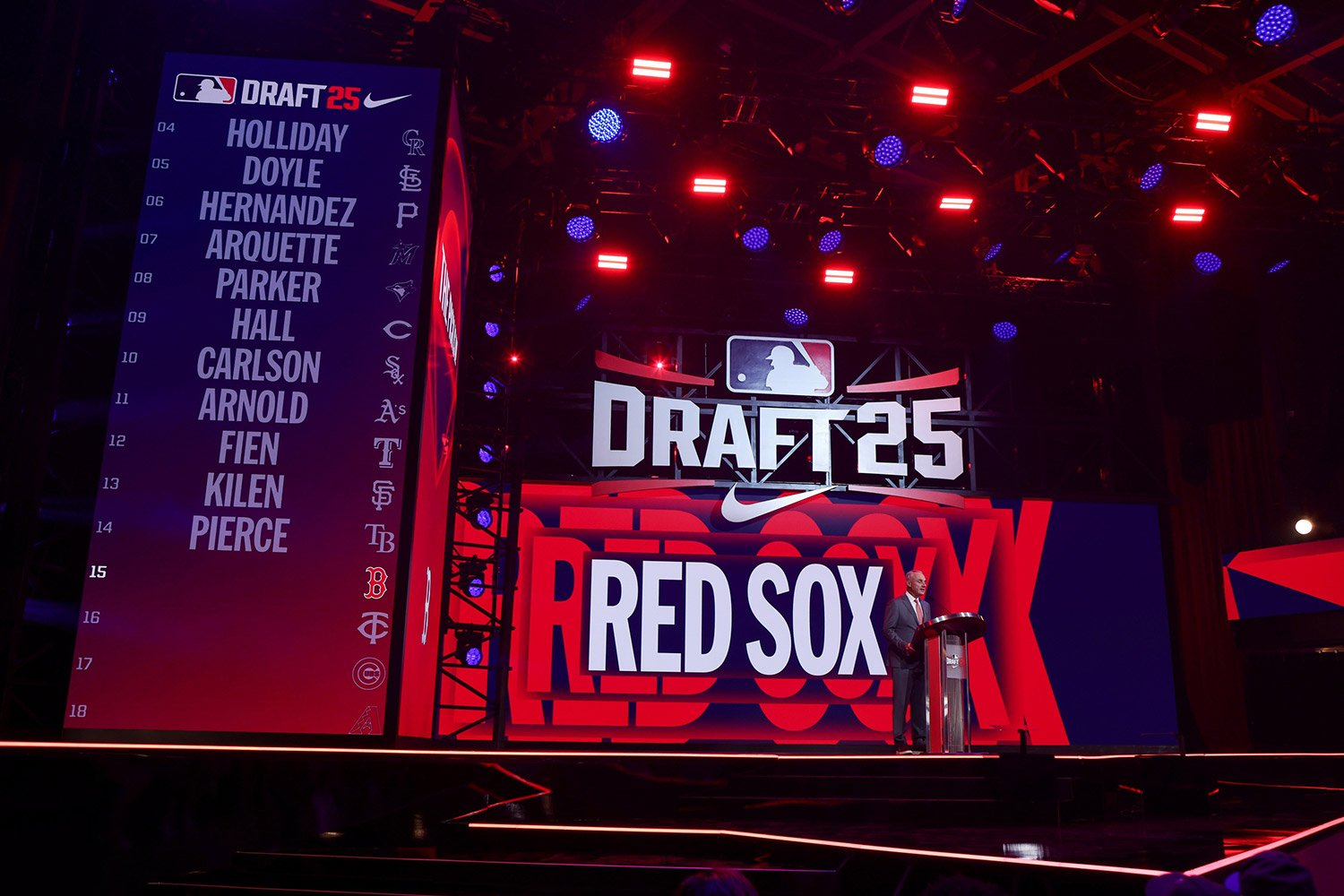 On Wednesday, MLB notified teams of their bonus pool and pick values for the 2026 Draft. The Red Sox rank 23rd with a total of $8,219,000 across nine picks. Their first round selection (20th overall) accounts for more than half of that value ($4,373,900). Round Pick Slot Value 1 20 $4,373,900 CB-B 67 $1,317,300 3 96 $815,700 5 156 $454,100 6 185 $352,900 7 214 $278,700 8 244 $227,200 9 274 $205,400 10 304 $194,000 As a brief refresher, two of the Red Sox’s offseason moves impacted their spending power. The Red Sox received the 67th pick in the supplemental second round (CB-B) in the Caleb Durbin and Kyle Harrison trade. After signing Ranger Suarez five-year, $150 million contract, they lost their second and fifth picks and $1 million from their international bonus pool. The 2026 MLB Draft is scheduled for July 11 to 13.
 -
 Every hidden nook, cranny, and secret value at the Boston Red Sox ballpark. By the fans, for the fans. (Updated for 2026!) Welcome! This is the definitive guide to Boston's Fenway Park, by the fans and for the fans. These recommendations were assembled by Talk Sox writers and community members who frequent the ballpark and have uncovered the best views, values, and secrets to share with you. Former Red Sox pitcher, Bill “Spaceman” Lee, once said, “Fenway Park is a shrine. People go there to worship." Lee’s statement rings true. Attending a baseball game at Fenway Park is a transcendental experience - it’s a living, breathing museum. Whether you’re visiting for the first time or are a lifelong Bostonian, this is a definitive guide to Fenway Park to help maximize your experience. Table of Contents (click to jump to section) Fenway Park Facts and Specs Best Places to Stay Around Fenway Park How to Get To & Park Around Fenway Park Best Seats at Fenway Park Best Food at Fenway Park Best Bars at Fenway Park Best Restaurants Around Fenway Park Secret Gems of Fenway Park Self-Guided Fenway Park Walking Tour Fenway Park Fan FAQs Fenway Park at a Glance Address: 4 Jersey St, Boston, MA 02215 Opened: April 12th, 1912 Capacity: 37,755 Dimensions Left field: 310 feet Left center field: 379 feet Center field: 420 feet Right field: 380 feet Where to Stay Around Fenway Park The Arcadian: The Arcadian is a newer hotel located in the quaint neighborhood of Brookline. It’s about 15 minutes away from downtown Boston, perfect for visitors looking for a quieter, yet accessible location to the city. Fenway Park is either a 15-minute T ride or a 24-minute walk away from the Arcadian. The Saint Paul Street Station on the Green Line is located right outside the hotel. Courtyard Boston Brookline: Terry Francona resided at the Courtyard Boston Brookline during part of his managerial tenure in Boston! The hotel is about a block up from the Arcadian. Nightly rates are slightly more expensive than the Arcadian, but since it’s a larger chain hotel, you can utilize Marriott Rewards Points, credit card rewards, etc., to get a discounted rate on your stay. Unlike the Arcadian, the hotel has a parking garage ($50 daily fee) that’s connected to the hotel. The Verb Hotel: The Verb Hotel is a newer boutique hotel in the Fenway neighborhood. It has a rock and roll theme with room decorations featuring band and concert posters. If you’re looking for unique accommodation, you can stay in a Backstage trailer! Note: the on-site hotel parking is limited on a first-come, first-served basis. Hotel Commonwealth: Hotel Commonwealth is the Official Hotel of the Boston Red Sox. Depending on the time of the year you’re visiting Boston, Hotel Commonwealth is the most expensive accommodation on this list. It offers several Red Sox packages with opportunities to meet players and watch batting practice from a specially designated area. Some rooms offer a view of Fenway Park, and baseball decor and memorabilia are on display throughout the hotel. I highly recommend the hotel; it’s a definite bucket list item for any Red Sox fan. A couple of summers ago, I snagged a deal on Expedia for a 3-night stay at the Hotel Commonwealth. The staff was friendly and helpful, my room was quiet despite the view of the Massachusetts Turnpike, and the location (only a 5-minute walk to Fenway) is superb for a game. 2004 and 2007 World Series memorabilia are on display in the lobby. Elevator wall signed by various baseball personnel - who can you spot? As the team’s official hotel, it accommodates both former and current players. During my stay, I ran into Jonathan Papelbon in the lobby. (I also think I saw Triston Casas while waiting for the elevator... though this is unconfirmed). How to Get to and Park Around Fenway Park Boston traffic, especially around Kenmore during rush hour or before a game, can delay your arrival, so be sure to add some float time for your ETA. This map shows some parking garages and lots around Fenway Park. Parking spaces can be purchased in advance on Spot Angels at most locations. MASCO Parking Garage: If you’re looking to avoid pre-game or post-game traffic and don’t mind walking, the Masco Parking Garage is located about a mile away (20-minute walk) from Fenway Park. Spots can be pre-purchased online via SpotHero. Hynes Auditorium Garage: The Hynes Auditorium Garage is another option for fans looking to avoid traffic before or after the game. It also utilizes Spot Angels. The biggest difference between the Masco Parking Garage and the Hynes Auditorium Garage is their highway access. The Hynes Garage provides more convenient access to I-90 and I-93. Public Transportation To Fenway Park I'm a huge public transportation advocate, and the T (Boston's subway) offers the easiest and quickest method to get to the ballpark. The closest station to Fenway Park is Kenmore via the Green Line. It’s about a 5-10 minute walk from Kenmore Station to Gate E on Lansdowne Street. Visit the MBTA website for more information. Rideshare options like Uber and Lyft are available in Boston. The Red Sox also have a Fenway Park Bike Valet Program with Bluebikes. Check out Bluebikes’ website for their station map with bike locations and dock availability. Seating Options at Fenway Park Shaded Seats has a chart of the sun’s direction with Fenway Park’s seats. This is a helpful tool to keep in mind if you don’t want to spend your entire game roasting in the sun. The Red Sox have a Fenway Park 3D Seat Map listed on their website. To get a feel for your seat, I recommend checking out a View From My Seat, which features real photos that aren't computer-generated. Note: If you're a visiting fan, the visitor's dugout is situated behind third base. Everyone has different budgets and differing ranges for how much money they want to allocate toward tickets. Here, we’ve divided seat options into three categories: I’m John W. Henry (Money is no object) I’m willing to spend more money on seats I’m here for the vibes and a good time I’m John W. Henry These are premium seat options. Since Fenway is an older ballpark, it doesn’t have the stereotypical underground club seats that many newer stadiums feature for premium seat options. Most club areas are located on the second level of the ballpark. Aura Pavilion: AP01-AP1 The Aura Pavilion has padded shaded seats with access to the climate-controlled Aura Club. They’re located on the upper level of the stadium along the first and third baselines. The latter has the best view of the Boston Skyline, accentuated by the Prudential Tower, John Hancock Tower, and One Dalton. For an additional fee, the Aura Club has a buffet, and food can be delivered to your seat. Pavilion Club seats also provide early access to the ballpark. Dugout Box: FBC39 to FBC50 - Rows A1-3, FBC29 to FBC38 - Rows 1-2, and FBC17 to FBC20 - Rows 1-2 The Dugout Boxes are the closest seats to the field at Fenway Park. They’re padded with additional legroom. TV monitors are located in the first row of these sections. These tickets provide access to the Ford Clubhouse Lounge with a private entrance to the stadium, private restrooms, and a bar. Dell Technologies Club: EMC1 to EMC6 Located behind home plate above the second-level grandstand, the Dell Technologies Club's padded seats feature extra legroom. The club has a restaurant with premium food options. Green Monster Seats: M1 to M9 Avoid these seats if you have a fear of heights! For anyone looking for a one-of-a-kind experience, you can sit on the famous Green Monster. These seats aren’t cheap. Since the sections only have three rows, seating is limited. Unlike traditional grandstand seats, the Green Monster offers barstool seats with a bar to place your food, beer, etc. Book in advance if you want to sit here. Note: your view of left field will be limited. I’m willing to spend more money on seats The happy medium between premium options and nosebleeds. Field Box Seats: F9-F82 The Field Box seats run from first base to third base in the lower bowl at Fenway. These are the favorite seats at Fenway Park because they offer a view of the entire field. Right Field Lower Box Seats: B1 to B8 The Right Lower Box seats are situated around Pesky’s Pole. If you want a direct view of the Green Monster, scoreboard, and left and right field, these are the seats for you. Right Field Box 1 is directly next to the visitor’s bullpen, so you can watch pitchers warming up. Green Monster Standing Room Only If you want the experience of catching a game on the Green Monster but don’t want to spend an excessive amount on tickets, you can purchase standing-room-only tickets. These tickets provide you with a bar to place your belongings, sans a designated seat. Loge Box Seats: B87 to B165 The Loge Box seats run parallel to the Field Boxes on the lower level. They’re cheaper than the Field Box seats and are slightly elevated from the field. I’m here for the vibes and a good time Self-explanatory. Right Field Bleachers: L40 to L4 The Right Field Bleachers are positioned behind the home and visitor’s bullpen. Row 1 is a mixture of handicapped and grandstand seats, and Row 3 has extra legroom in these sections. As you move farther away from the field, seat prices decrease in these sections. Ted Williams’ famous Red Seat rests in Section 42, Row 37, Seat 21. Note: Be careful around the bleacher stairs. These can serve as a tripping hazard if you're not paying close attention. Centerfield Bleachers: L34 to L3 The Center Field Bleachers are another reasonably priced option in the outfield. Section 38 has a slightly obstructed view of the center field triangle. Standing Room Only Fenway Park has several SRO options: Lower Level Standing Room: Located behind the grandstands. Some areas are obstructed by poles. Pavilion Level Standing Room: Located on the upper level behind the Aura Pavilion Club. Coke Deck Standing Room: Located underneath the Coca-Cola sign in the left field foul territory. Sam Deck Standing Room: Located underneath the Samuel Adams sign in right field. Bleacher Overlook Standing Room: Located behind the right field bleachers. Sections to Avoid Fenway is notably a smaller ballpark. One can argue there’s no such thing as a bad seat in the stadium, but I try to avoid the infield and outfield grandstand seats. The upper rows of these sections are far from the field, and some sections have slightly obstructed views. The seats aren’t positioned toward the field, so you have to sit at an angle during the game. Whenever I’ve sat in the grandstand, I felt disconnected since I was farther from the field. The seats are also notably smaller than the Loge and Field Boxes (which are already tight). Gems of Fenway Park Green Monster If you’re at Fenway Park, you can’t miss the Green Monster. The quirky structure was originally built to prevent curious passersby from watching games for free. Over time, it's undergone various renovations. Seats were added to the top in 2003. The manual scoreboard is operated by a small team, adding to Fenway’s old-timey feel. Red Seat Located in Section 42, Row 37, Seat 21, the Red Seat immediately catches the eye amid the wave of green bleacher seats in right field. The seat commemorates Ted Williams’ alleged 502-foot homerun. For etiquette, I recommend arriving at the stadium early so you have ample time to see the Red Seat and other gems and to ensure you don’t disturb fans during the game. Pesky’s Pole Named after the Red Sox shortstop, Johnny Pesky, Pesky’s Pole marks the end of the right field foul line in shallow right field. Situated 302 feet away from home plate (the shortest distance in the league), it accentuates the unique dimensions at Fenway Park. Before the game, you often see fans and visiting players signing the pole. Boston Skyline Head up to the third base side of the upper deck and take in the view of the Boston skyline from Fenway. Sweet Caroline Neil Diamond’s 1969 single “Sweet Caroline” plays in the middle of the eighth inning at every home Red Sox game. Other sports teams (ahem, the Premier League) have tried to appropriate the song, but it will always be the Red Sox’s anthem. Don’t miss it! Self-Guided Fenway Park Walking Tour Much like the Louvre, it's easy to feel overwhelmed by the rich history that surrounds you at Fenway. Are you not sure where to start? Here’s a self-guided walking tour of the stadium, highlighting what to see before the first pitch. Start at Gate B and snap a couple of photos with The Teammates Statue, Carl Yastrzemski Statue, and Ted Williams Statue. Head west down Van Ness Street and turn right on Jersey Street. Depending on how early you arrive, you might see some players entering the stadium along Van Ness Street. Walk up Jersey Street and admire the World Series and American League Champion banners hanging on the right side of the street. Stop by the Jersey Street Team Store and stock up on Red Sox gear. For a quick detour, turn left onto David Ortiz Drive and see the life-size retired numbers in front of the Kenmore Lot. Turn right onto Brookline Avenue, and then turn right onto Lansdowne Street and enter the stadium via Gate C. Walk up the stairs to the Green Monster, and watch the last bit of the Red Sox’s batting practice. After you’re finished on the Green Monster, make your way to the right field bleachers and walk up to Section 42, Row 37, Seat 21 to see the Red Sox. Maneuver down to the right field foul territory and snap a picture of Peksy’s Pole. Along the third base/home plate concourse, there are old World Series logos painted on the wall. Head up to the Pavilion Deck, take a photo of the Boston Skyline, and marvel at baseball's best stadium backdrop. After you see everything, grab a bite, find your seat, and watch the game! Best Food at Fenway Park The Sausage Guy: The Sausage Guy sells mouthwatering grilled sausages with peppers and onions. In my opinion, it’s better than anything sold in the stadium. I recommend grabbing one either before or after the game. Location: 49 Lansdowne St, Boston, MA 02215 (outside the parking garage on Lansdowne Street) Luke’s Lobster: Luke’s serves lobster bisque, New England Clam Chowder, and buttery lobster and crab rolls. “Chain seafood restaurant” is usually a red flag, but Luke’s places an emphasis on sustainability and the traceability of their seafood. Locations: Jersey Street, Right Field Concourse Savenor's Cheesesteak: Sliced grilled beef with peppers and onions, topped with American cheese. Locations: Jersey Street, Right Field Concourse Boston Crème Pie: Boston Crème Pie is two layers of vanilla cake sandwiched by pastry cream and topped with a chocolate ganache glaze. Locations: Big Concourse, Bleacher Concourse Cowboy Up! Burger: Named after Kevin Millar's slogan from the team's 2004 Red Sox World Series run, the burger features cheddar cheese, bacon, brisket, onion rings, and barbecue sauce on a brioche bun. Locations: Home Plate Concourse, Sam Deck, Angry Orchard Terrace Churros: Crispy fried dough (slightly larger than steak fries) coated in sugar and cinnamon Location: Kids Concourse El Tiante Cuban Sandwich: Luis Tiant, the late pitching legend, used to serve authentic Cuban sandwiches topped with sliced pork and ham, mustard, and pickles on Jersey Street. Though he passed away in October 2024, the stand carries on his enduring legacy. Locations: Jersey Street, Sam Deck, Angry Orchard Terrace Lobstah Poutine: Fenway's version swaps the gravy and cheese curds for clam chowder and Luke's Lobster meat, and adds bacon. Locations: Big Concourse, Angry Orchard Terrace, Sam Deck Monster Cookie: Enjoy a freshly-baked chocolate chip cookie on your own (or to share). Locations: Big Concourse, Gate E Concourse Surf & Turf Dog: Want something different (and more expensive) than a traditional hot dog? Nestled in a brioche bun, The Surf & Turf Dog is made with Kobe beef -- a variant of Japanese wagyu -- garnished with Luke's Lobster meat, bacon, and chives. Locations: Clubs Standard Ballpark Fare: If you’re looking for traditional ballpark food (you can't go wrong with a Fenway Frank), the Red Sox’s official concession guide lists where these items are sold throughout the stadium. Fenway Food also posts photos of stadium food on Instagram. Moreover, Eater releases their annual stadium food guide before the season starts, so be sure to check that out. Best Bars Around Fenway Park The Bullpen is a hidden dive bar with its own entrance to Fenway Park. While Google Maps lists its address as 19 Jersey Street, it's best to enter the bar via Arthur's Way. If you're visiting during a game and don't have a ticket, you can still access the bar. Plus, you can come and go as you please throughout the game. The menu features classic sports bar fare along with a unique selection of cocktails. Bleacher Bar is a one-of-a-kind bar located beneath the center field bleachers at Fenway Park. The bar offers a glimpse of center field. The venue gets busy before games. Reservations can be made in advance. Cask ‘N Flagon is one of the many sports bars located on Lawnsdowne Street. It’s a great spot to pregame or catch a drink after the game. Game On is situated on the corner of Lawnsdowne and Jersey Street. For special events, they feature bar games such as cornhole, ping pong, and Jenga. If you’re a New England IPA enthusiast (like me), stop by Trillium’s Fenway location. The outdoor patio is a prime spot to hang out in the summer. It’s a family-friendly venue, and outside food is permitted. Time Out Market is located next door to satisfy any cravings. Trillium also gives tours at its flagship distillery in Canton. Best Restaurants Around Fenway Park Time Out Market Boston is a large dining hall with various eateries, including Union Square Doughnuts, Cuasser’s Roast Beef & Seafood, and Taqueria El Barrio. If your group has a diverse palate and can’t agree on a dining venue, Time Out Market lets you choose from a variety of options, ensuring everyone in your party is satisfied. Eastern Standard Kitchen and Drinks is an upscale American restaurant within a short walk of Fenway Park. If the weather permits, you can sit on their patio and dine with a view of Fenway Park. Try their Grilled Bavette Steak Frites. Mighty Squirrel is located below Eastern Standard. The restaurant has several New England-style IPAs on tap and offers a quieter dining experience than some of the raucous sports bars on Lansdowne Street. Looking for seafood? Eventide Fenway is an oyster bar within walking distance of Fenway. The venue offers classic New England seafood dishes like lobster rolls and New England clam chowder, as well as modern options such as tuna tartare and a fish charcuterie board. Blue Ribbon Sushi is located adjacent to Hotel Commonwealth. As its name suggests, the restaurant serves sushi in addition to Japanese dishes such as miso soup, miso cod, and wagyu gyoza. Red Sox first baseman Triston Casas has been noted as a frequent patron. Quick Bites Around Fenway Park Tasty Burger is a late-night spot for hot dogs, burgers, fries, milkshakes, or chicken. It’s open until 2:00 am seven days a week. If you want a quick coffee before the game, Tatte Bakery & Cafe and Caffè Nero are solid options. As for chain restaurants, Chipotle, Blaze Pizza, Honeygrow, and Starbucks have locations near the ballpark. Fenway Park Fan FAQs What is Fenway Park's bag policy? In recent years, MLB stadiums' bag policies have gotten progressively stricter. Fenway Park is no exception. To avoid any potential headaches, I'd advise against bringing a bag. Check out Fenway Park’s A-Z Guide for more information. Allowed A single-compartment bag no larger than 12”x12”x6” Clear bags are recommended to facilitate faster entry to the ballpark, but are not required Not Allowed Backpacks, large purses, duffle bags, and multi-compartment bags Exceptions are made for medical bags and diaper bags Clear backpacks are not permitted inside the stadium Can I watch batting practice at the ballpark? Yes, gates open 90 minutes before the game starts. This allows fans to catch the tail end of the visiting team’s batting practice. If you want to watch the Red Sox’s batting practice, you’ll have to purchase a Red Sox Nation membership, which costs $21.95. Membership provides early entry for you and one adult guest 2.5 hours before the first pitch. Children’s access (ages 18 and under) is covered by the membership. Additional Red Sox Nation benefits include 10% off at the Jersey Street Store and Red Sox Online Shop for the 2026 season, plus a $10 eCash bonus, redeemable in-person at the Jersey Street Store. Whether you live in Boston or you’re an out-of-towner, the membership is worth it alone for entering the stadium early. Moreover, if you’re attending a game with a giveaway, you’re guaranteed to receive the item with early entry. Can I bring outside food or drinks into Fenway Park? You can’t bring outside food into the stadium except for one sealed 16-ounce plastic bottle of water. Can I tour Fenway Park? Yes! The Red Sox offer a variety of tours, including a "Cultures of the Clubhouse" tour, an 8 AM Field Level tour, and a quick 15-minute tour. Visit their website for a detailed breakdown and to book your tour. Miscellaneous Boston Attractions Outside of Fenway Park, Boston has a ton of attractions that are worth visiting. Here’s an overview of them. Boston Duck Tours: Get the duckboats ready... for a Boston sightseeing tour! The Red Sox, Patriots, and Celtics have used the Boston Duck Tours vehicles in various championship parades. Tours aren’t too long (roughly an hour and a half) and offer a relaxing overview of the city and the Charles River. They depart from three locations: the Museum of Science, the Prudential Center, and the New England Aquarium. Faneuil Hall: Faneuil Hall is a historic building where the Founding Fathers deliberated and advocated for independence from Great Britain. Admission is free, and it’s worth stopping by for a quick visit. The Fanueil Hall Marketplace is also located across the street from Fanueil Hall. Boston Public Library: The Boston Public Library is an architectural marvel. Admission is free. The building is easily accessible and is within walking distance of Newbury Street. For any long-distance runners, it’s also located next to the Boston Marathon Finish Line. Newbury Street: Newbury Street spans eight blocks filled with shopping and restaurants. Premium stores are located on the western side closest to the Public Garden. On the eastern end (closest to Fenway), you can find cafes, comic book stores, and vintage clothing stores. Rick Walker's is my go-to for vintage concert shirts. Museum of Fine Arts Boston: The Museum of Fine Arts (MFA) has an impressive selection of contemporary and Old Masters artwork. Isabella Stewart Gardner Museum: If you have time to visit just one art museum, I highly recommend the Isabella Stewart Gardner Museum. Housed in a Venetian-style palazzo, the museum was built to showcase Gardner’s private collection. Unlike typical art museums, it doesn’t feature wall labels next to the artworks. Let us know in the comments if you have any recommendations to enhance your experience at Fenway! Note: With the ongoing Fenway Corners development project, new restaurants and attractions will be added to the neighborhood, and this guide will reflect these changes! Be sure to re-review this guide as construction continues.
 -
Professional athletes are just like us! They fib about their height. (For reference, I’m 5’6” on a good day.) Using data courtesy of Sox Stats, we can see which Red Sox players have shrunk (spoiler: most of them) or have grown. Ceddanne Rafaela, Justin Gonzalez, and Nelly Taylor are the only three players in the organization who have grown over the past two seasons. All three players are on the younger side, so a late growth spurt isn’t shocking. The biggest takeaway is that position players' heights have fluctuated the most, not pitchers. Are pitchers more secure in their height? Red Sox Chief Baseball Officer Craig Breslow – who’s listed at 6’0” – clearly has a type that he likes to target in pitching acquisitions. (AKA: Tall and muscular guys, which I don’t blame him for.) Sonny Gray (5’10”) is an outlier as the team’s “shortest” pitcher. Does height even matter? No, not really. One of my favorite aspects of baseball is that players come in all different shapes and sizes. Unlike other sports, there isn’t a secret formula to build the perfect player. Over the past eight seasons, the heights of American League MVPs spread by over a foot from Jose Altuve (5’6”, 2017) to Aaron Judge (6’7”, 2025). Former Red Sox second baseman Dustin Pedroia (5’9”) didn’t let his stature limit him, and many smaller players, like newcomer Caleb Durbin, cite him as an inspiration. So, the next time you tell a little white lie about your height, just remember you’re in good company. View full article
-
Red Sox Heights: Which Players Got Taller or Shorter This Season?
Maddie Landis posted an article in Red Sox
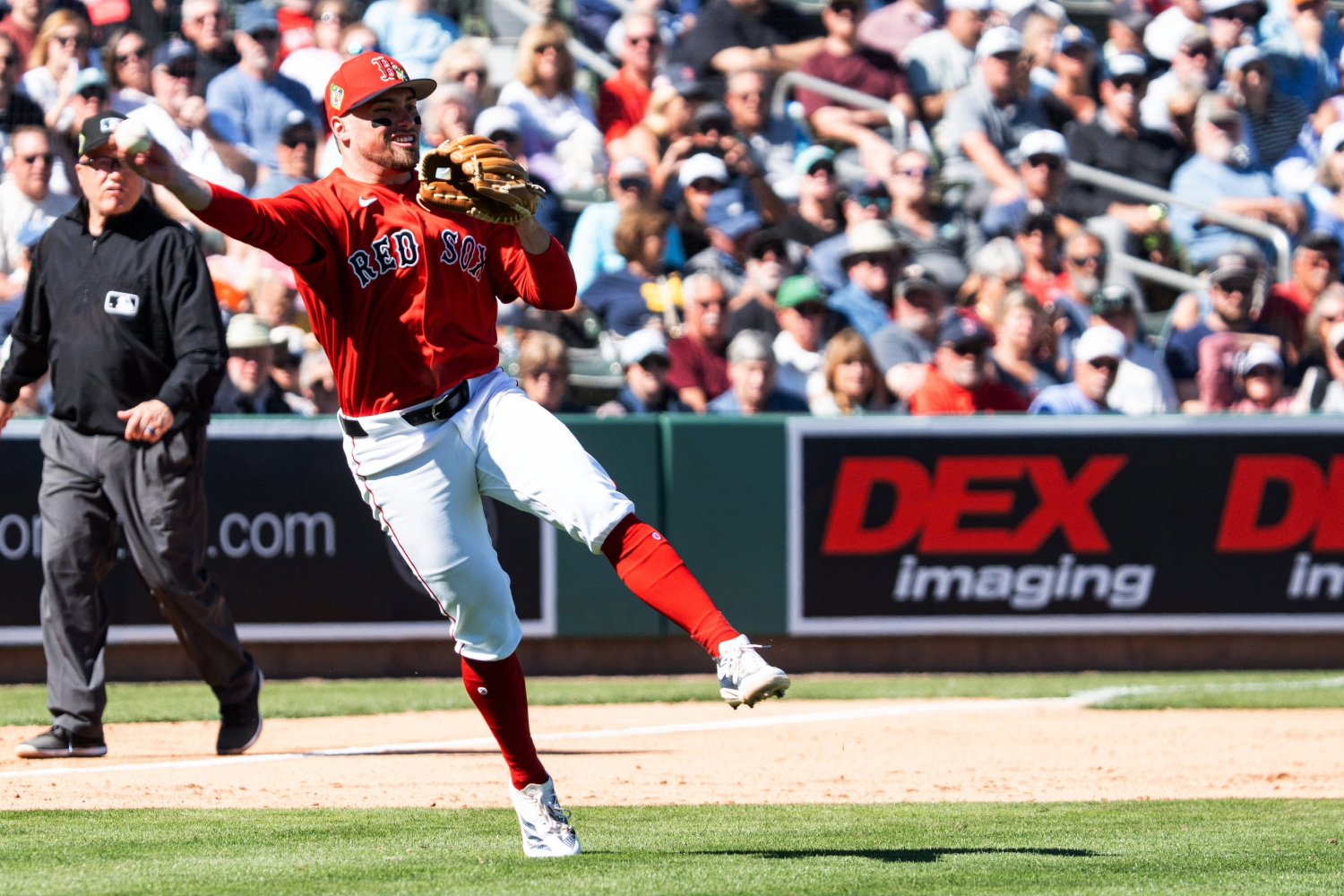 Professional athletes are just like us! They fib about their height. (For reference, I’m 5’6” on a good day.) Using data courtesy of Sox Stats, we can see which Red Sox players have shrunk (spoiler: most of them) or have grown. Ceddanne Rafaela, Justin Gonzalez, and Nelly Taylor are the only three players in the organization who have grown over the past two seasons. All three players are on the younger side, so a late growth spurt isn’t shocking. The biggest takeaway is that position players' heights have fluctuated the most, not pitchers. Are pitchers more secure in their height? Red Sox Chief Baseball Officer Craig Breslow – who’s listed at 6’0” – clearly has a type that he likes to target in pitching acquisitions. (AKA: Tall and muscular guys, which I don’t blame him for.) Sonny Gray (5’10”) is an outlier as the team’s “shortest” pitcher. Does height even matter? No, not really. One of my favorite aspects of baseball is that players come in all different shapes and sizes. Unlike other sports, there isn’t a secret formula to build the perfect player. Over the past eight seasons, the heights of American League MVPs spread by over a foot from Jose Altuve (5’6”, 2017) to Aaron Judge (6’7”, 2025). Former Red Sox second baseman Dustin Pedroia (5’9”) didn’t let his stature limit him, and many smaller players, like newcomer Caleb Durbin, cite him as an inspiration. So, the next time you tell a little white lie about your height, just remember you’re in good company.
 -
Alex and Maddie sit down with Corbin from Red Seat Radio to discuss the start of spring training, whether they are already worried about the lockout, and their predictions for where the Red Sox will finish in the AL East. They talk through the logjam at DH and what an eventual Triston Casas return could mean for the position. Listen on Apple Podcasts: https://podcasts.apple.com/us/podcast/the-talk-sox-podcast/id1783204104 Listen on Spotify: https://open.spotify.com/show/3qPrPXEngu0CxgTmlf0ynm Listen on iHeartRadio: https://www.iheart.com/podcast/263-the-talk-sox-podcast-244591331/ Listen on Pocket Casts: https://pca.st/4tmd121v Watch on YouTube: https://www.youtube.com/@talksox View full article