


Red Sox Video
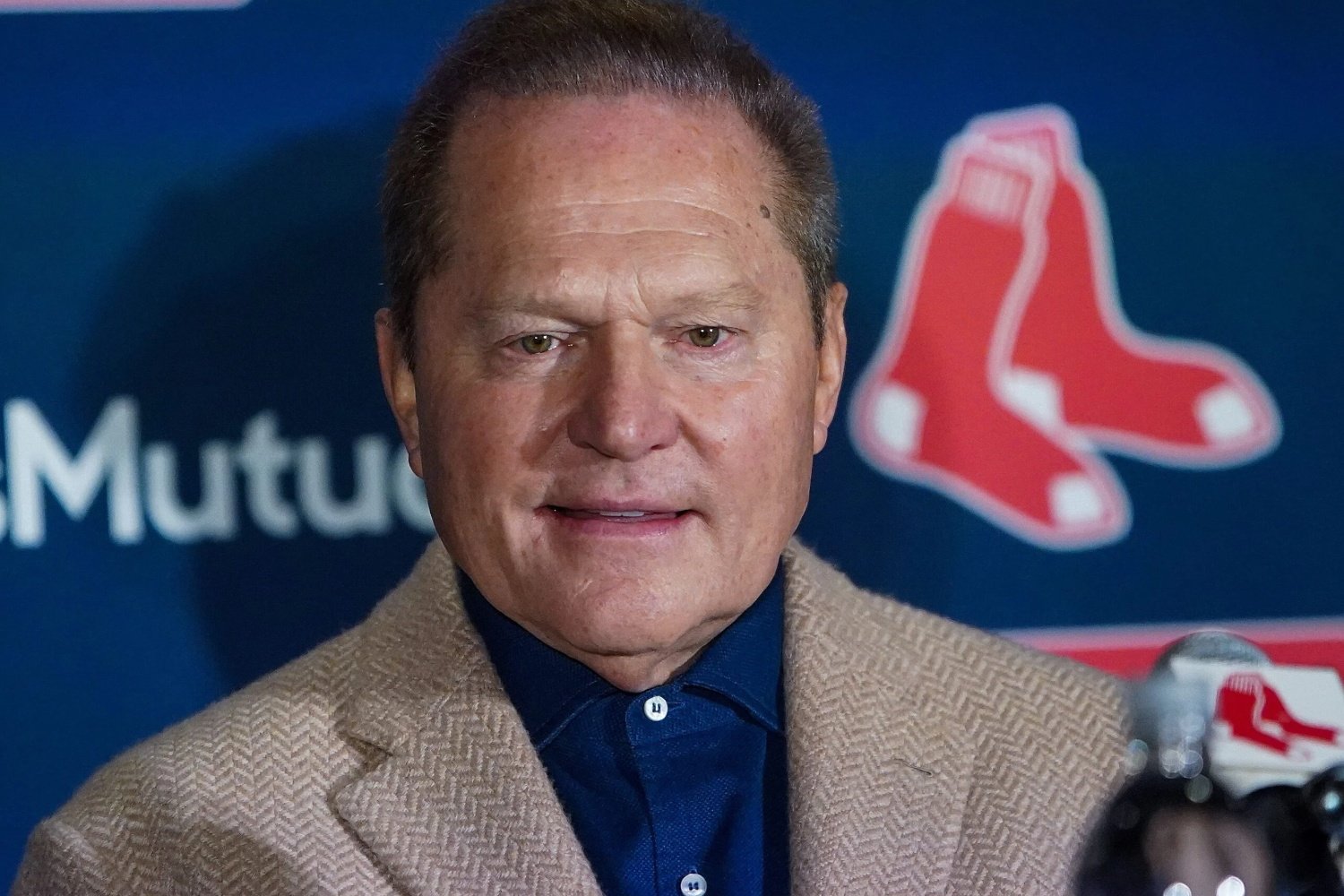
Dubbed “The Most Powerful Sports Agent in the World” by Forbes, long-time agent Scott Boras has a history of negotiating record-breaking contracts for his clients. Has he hit a cold streak?
Over the past two weeks, several teams announced extensions with their young players. Among the six players and teams, Boras advised only one player, Vladimir Guerrero Jr., who signed the most expensive extension. Kristian Campbell (Beverly Hill Sports Council), Ketel Marte (QC Sports), Jackson Merrill (KHG Sports Management), Garrett Crochet (CAA Sports), and Cal Raleigh (Excel Sports Management) are represented by different agencies. Looking beyond 2025, other team-friendly extensions were negotiated by agents not named Scott Boras.
As the phrasing suggests, team-friendly extensions tend to favor the team, paying below a player’s market value. Young players sign pre-arbitration contracts for a myriad of reasons, such as guaranteed financial security and loyalty to the team that drafted them. Teams offer the deals in order to save money.
| Team | Player | Agent | Date | Value | Length | AAV |
| TOR | Vladimir Guerrero Jr. | Boras Corporation | April 2025 | 500 | 14 | 35.7 |
| BOS | Kristian Campbell | Beverly Hill Sports Council | April 2025 | 60 | 8 | 7.5 |
| ARI | Ketel Marte | QC Sports | April 2025 | 116.5 | 6 | 19.4 |
| SDP | Jackson Merrill | KHG Sports Management | April 2025 | 135 | 9 | 15 |
| BOS | Garrett Crochet | CAA Sports | April 2025 | 170 | 6 | 28.3 |
| SEA | Cal Raleigh | Excel Sports Management | March 2025 | 105 | 6 | 17.5 |
| KCR | Bobby Witt Jr. | Octagon Baseball | February 2024 | 288.8 | 11 | 26.3 |
| MIL | Jackson Chourio | Beverly Hill Sports Council | December 2023 | 82 | 8 | 10.3 |
| CIN | Hunter Greene | CAA Sports | April 2023 | 53 | 6 | 8.8 |
| ARI | Corbin Carroll | CAA Sports | March 2023 | 111 | 8 | 13.9 |
| SEA | Julio Rodríguez | Octagon Baseball | August 2022 | 209.3 | 12 | 17.4 |
| CLE | Emmanuel Clase | Nova Sports Agency | April 2022 | 20 | 5 | 4 |
The collective bargaining agreement’s looming expiration date (December 1st, 2026) is a catalyst for the recent wave of team-friendly extensions. MLB’s league minimum salary ($760,000) is the lowest among professional U.S. sports leagues (NBA: $1,157,153, NFL: $840,000, and NHL: $775,000). NBA rosters are significantly smaller than NFL or MLB rosters. However, MLB plays the most games, so baseball players earn less money per game over a longer season. Previous lockouts resulted in the loss of regular-season games (162 scheduled).
- 1972 season: 153-56 games
- 1981 season: 102-111 games
- 1994 season: 112-117 games
- 1995 season: 144 games
MLB players are paid in monthly or semi-monthly installments, meaning they miss out on paychecks during lockouts. Players still earn signing bonuses and deferred payments when a lockout occurs. See the following recent signing bonuses:
- Vladimir Guerrero Jr.: $325 million
- Kristian Campbell: $2 million
- Jackson Merrill: $10 million
- Garrett Crochet: $4 million
- Cal Raleigh: $10 million
With no current limits on contracts or team salaries, players are eager to take advantage of the free market while they can. If they don't, they might regret passing up the opportunity to secure generational wealth.
Extensions tend to buy out young players' arbitration years , when they're making more than the league-minimum salary but still woefully underpaid. Players make the minimum ($760,000 this season) until they have three years of service time. After that, the player and the club present salary offers and typically agree on a number, bypassing the need for an actual arbitration hearing. This past offseason, the Red Sox avoided arbitration with Garrett Crochet, Tanner Houck, Kutter Crawford, and Jarren Duran.
However, if the two sides can't agree, they meet before a panel of three neutral arbitrators to present their arguments in an arbitration hearing. According to the 2022-26 MLB CBA, admissible evidence includes, “the quality of the Player’s contribution to his Club during the past season (including but not limited to his overall performance, special qualities of leadership and public appeal), the length and consistency of his career contribution, the record of the Player’s past compensation, comparative baseball salaries, the existence of any physical or mental defects on the part of the Player, and the recent performance record of the Club including but not limited to its League standing and attendance as an indication of public acceptance.” Afterward, both sides submit rebuttals, and the panel concludes by ruling in favor of either the player or the club’s number. This is typically announced within a day.
Baseball’s salary arbitration process is unique. It can lead to strained relationships between players and the front office. Blue Jays shortstop Bo Bichette voiced his opinion on baseball’s arbitration process: “Arbitration is an incredibly flawed process, one that isn't very good for the game. There's no reason to pit owners and executives against players. Just no reason. I just don't think that’s a good position for relationships… As players and as owners we should be striving to have a good relationship between boss and employee.” Teams win roughly about 57% of salary arbitration hearings. Various studies indicate that the number of MLB arbitration salary hearings has declined in recent years.
If a team’s roster is loaded with expensive free agents, the front office will announce that it has little financial flexibility to make further improvements. I’ll pick on the Phillies here. After splurging in previous offseasons, they had limited spending power heading into the 2024-25 offseason. Phillies GM Dave Dombrowski shares a close relationship with agent Boras, who represents several key players on the team, including Bryce Harper, Nick Castellanos, Alec Bohm, Bryson Stott, Garrett Stubbs, and Ranger Suárez. Unlike the Orioles or Tigers, the Phillies don’t have a robust homegrown core. However, they've also been one of the best teams in baseball over the past three seasons.
Dombrowski and Boras represent a roster construction method that has fallen out of favor in recent years. When Dombrowski took the helm in Boston, the organization had a top farm system, ownership that was willing to spend, and top-to-bottom talent. The stars were perfectly aligned for his all-in, win-now mindset. His strategies the Red Sox earned a World Series ring, and I will always be thankful for that. The rub is that Dombrowski’s strategies only work if your team wins a World Series. The Phillies have not done so yet. Their young players (Bohm: -8 wRC+, Marsh: 38 wRC+, and Stott: 101 wRC+) are underperforming, and the rest of their roster is filled with aging, underperforming players (Turner: 93 wRC+ and Realmuto: 78 wRC+) signed to multimillion-dollar contracts. That said, Kyle Schwarber and Bryce Harper are blue-chip players who will always rake. Andrew Painter is a bright spot in the farm system, and I think he’ll develop into a top-of-the-rotation arm. Still, it remains to be seen whether Dombrowski’s win-now approach can succeed in the long run, especially when compared to executives like Alex Anthopolous, David Stearns, and Andrew Friedman, who have emphasize building sustainable, successful franchises (though Sterns and Friedman, done establishing their ability to win on a shoestrong, now represent the game's two highest-spending teams).
The Red Sox recently locked up Garrett Crochet and Kristian Campbell. Crochet agreed to a six-year, $160 million deal and Campbell signed an eight-year, $60 million contract. Crochet's deal is closer to his actual market value, while Campbell's is much lower. The Red Sox bought out Crochet’s prime years and his final arbitration year. Sixty million dollars is life-changing money for a young 22-year-old like Campbell. Although Campbell's deal does drastically lower the ceiling of his future earning potential, it does include escalators that could increase the deal to $100 million. If Crochet and Campbell were Boras’ clients, they almost certainly wouldn't have agreed to these extensions.
Super-agents like Boras, not to mention the MLBPA, balk when players sign team-friendly deals. Bob Nightengale disclosed that attorneys from the union encouraged Jackson Merrill to reject the Padres’ nine-year, $135 million offer. Scott Boras loves to offer his opinion on virtually every aspect of baseball. Boras fixated on the partial no-trade clause in Merrill’s contract, “If a player signs a contract for team relationship purposes, the key provision is a full no-trade... Without it, the likelihood of remaining with one team is highly improbable, as the business of baseball supersedes all player preferences.”
On the other hand, Merrill expressed his excitement about the deal, saying, “I think just hearing the opportunity to sign with the San Diego Padres was enough for me… You can't just sign for $700 million and expect everything to be perfect.” Not every player can wait six years to bet on themselves in free agency like Juan Soto, Bryce Harper, or Shohei Ohtani. For some players, team-friendly extensions might be their only real shot at securing life-changing money and future financial stability. These days, it's rare to see players stick with one team.
Players can’t predict the future; injuries or a dip in performance can derail an athlete’s career at any time. At the time he signed it, Ronald Acuña Jr.’s eight-year, $100 million extension appeared to be a borderline expoitative underpay for a superstar-in-the-making. When healthy, Acuña is arguably the best player in the league. However, he’s torn the ACLs in both of his knees. He missed the second half of the 2021 season and was limited to just 49 games in 2024. If Acuña hadn’t signed an extension with the Braves in 2019, he would be a free agent in the upcoming offseason. Since Acuña’s skillset relies on his speed and the toll his injuries have taken (see his drop in sprint speed from 2021 to 2024), he likely wouldn’t have commanded the money he once expected in free agency, meaning that his deal wasn't quite as much of an underpay as it initially appeared.
So far, I’ve written about positive team extensions. That’s not to say there aren’t any bad team-friendly extensions. After a monster 2018 spring training performance, the Phillies signed infielder (later a utility player) Scott Kingery to a six-year, $24 million contract. Matt Klentak, the Phillies GM, was supposedly inspired to extend him after he read an article titled, “Top Phillies Prospect Scott Kingery Is MLB's Next Dustin Pedroia.” Between 2018 and 2022, Kingery played in 325 games for the Phillies and amassed 0.1 WAR. In August 2014, Rusney Castillo agreed to a seven-year, $72.5 million deal, only for him to spend most of his contract marinating at McCoy Stadium. Wander Franco is another example of an extension aging poorly, not for performance reasons, but because was charged with sexual abuse and human trafficking. Twenty-something players are a volatile stock. Their performance on the field is just one facet of their overall development. Male brains finish developing at age 30. Conducting due diligence on the potential face of a franchise is a pivotal step in long-term contract negotiations. In the Rays' case, omitting this step has led to monetary losses, a public relations scandal, and a blow to their team’s reputation. Intangibles are just as important, if not more important than a player’s pedigree and performance. A headstrong, pompous, five-tool high school prospect can evolve into an aggressive, emotionally immature player who is a clubhouse cancer. Conversely, a modest, teachable under-the-radar prospect who lacks a certain tool, say power, could flourish in an organization that teaches him how to tap into his power. While Wander Franco hasn’t deterred other teams from extending their young players, they will be more mindful of a player’s maturity going forward.
Boras implied there’s a commonality among players and their agents who broker team-friendly extensions: Front offices 'look for agencies that are new or have few clients and are in need of money," he said. This leaves club executives “often surprised early, well-below market contracts are accepted.” While this has seemed like a pattern in some cases, especially for Anthopoulos and the Braves, it's not true for everyone. Established in 1984, the Beverly Hill Sports Council (Kristian Campbell and Jackson Chourio) has represented esteemed Hall of Famers including George Brett, Mike Piazza, and Trevor Hoffman. CAA (Garrett Crochet, Corbin Carroll, and Hunter Greene) is another powerhouse agency.
Another point: some players remain loyal to their original agents, who work at smaller agencies. These firms agree to team-friendly extensions not for their financial gain, but because they’re focused on their clients' best interests. More professional athletes than you might think are motivated by factors beyond money. Some players just want to focus on their sport. Others might prefer to stay with the team that drafted them, where they feel most comfortable. In the free market, players have the freedom to choose any agency to represent them. Baseball players understand the terms when they decide to work with Boras.
Boras’s clients are notoriously reluctant to sign team-friendly deals, as he encourages them to test free agency, which usually maximizes a player’s value. As a result, these players rarely return to their original teams.
The Boras Four
In the 2023-24 offseason, Boras clients Blake Snell, Cody Bellinger, Matt Chapman, and Jordan Montgomery, also known as the “Boras Four,” signed late after not getting the large deals they expected to land, and their performances suffered. Snell, the incumbent National League Cy Young Award winner, signed a two-year, $62 million deal with the Giants just nine days before Opening Day. Snell dealt with injuries during the first half of the season. He only pitched 104 innings, posting a 3.12 ERA (3.1 WAR) for the season. However, he found his groove in the second half.
| Half | IP | ERA | K% | BB% | FIP |
| First | 35.2 | 6.31 | 26.6 | 10.8 | 3.78 |
| Second | 68.1 | 1.45 | 39.6 | 10.4 | 1.72 |
Snell’s story has a happy ending. The following offseason, Snell opted out of his contract and inked a five-year, $182 million contract with the Dodgers.
Cody Bellinger, the Dodgers' former wunderkind, reportedly targeted a deal “in excess of $250 million.” On February 27, 2024, about two weeks after position players arrived at camp, Bellinger agreed to a three-year, $80 million deal with the Cubs. Following his comeback season, Bellinger dealt with various injuries. He spent about a month on the IL and slashed .266/.325/.426 slash line with 18 home runs (109 wRC+, 2.2 WAR) in 2024.
Before signing a three-year, $54 million contract with the Giants in the middle of spring training, Matt Chapman had previously declined two extension offers from the Athletics (10 years, $150 million) and Blue Jays (6 years, $120 million). Come September, Chapman’s contract evolved into a six-year, $151 million extension. He delivered the strongest performance among the Boras four, yielding 5.4 WAR and earning his fifth Gold Glove Award in 2024.
Jordan Montgomery sought to cash in after helping the Rangers win their first World Series. In his initial asking price, he reportedly was “aiming to top the $172 million that Aaron Nola received from the Phillies.” Comparing Montgomery to Aaron Nola was a questionable decision in itself. (Many Phillies fans believe Nola’s contract is an overpay, which I agree with. Living in the heart of Phillies territory, I catch their games now and then. Nola’s disastrous fourth innings are his Achilles' heel.) Teams weren’t biting, and Montgomery remained a free agent after spring training had concluded. He eventually signed a one-year, $25 million deal with the Diamondbacks two days after Opening Day.
Was Montgomery doomed from the start of his tenure with the Diamondbacks? Pitchers benefit from spring training, arriving earlier than position players, to get themselves acclimated to the marathon baseball season. Before his Diamondbacks debut (April 19th, 2024), he only pitched in one simulated game and made two starts with the Diamondbacks’ Triple-A affiliate. During this time, he also fired Scott Boras.
Montgomery would go on to have a disastrous season. In early July, he was placed on the 15-day IL with right knee inflammation. The following month, he was demoted to the bullpen. His ERA jumped to 6.23 (3.20 ERA in 2023), and his strikeout rate dropped to 15.6% (21.4% in 2024). Montgomery’s tumultuous season can’t be solely blamed for the lack of spring training.
Red Sox fans recall that the organization pursued Jordan Montgomery. The Red Sox needed a left-handed pitcher in their starting rotation, and Montgomery’s wife resided in Boston for her dermatology residency. As a former Yankees pitcher, he was accustomed to pitching the American League East. The Red Sox and Montgomery felt like a perfect match. After an initial Zoom call, conversations between the Red Sox and Montgomery stalled. On March 28, the day before Montgomery signed with the Diamondbacks, Jon Heyman wrote “Montgomery didn’t love the Red Sox because he wants to win.” Later in the season, when the Diamondbacks were visiting Boston, Montgomery lamented over his unlucky offseason. His direct statement contradicts Heyman’s quote: “I had a Zoom call with (the Red Sox), that’s really all I know. It went good,” Montgomery said. “I don’t know, obviously Boras kind of butchered it, so I’m just trying to move on from the offseason and try to forget it.”
The Red Sox (rightfully) faced criticism for their inactivity during the 2023–24 offseason. However, Montgomery didn’t blame the team for the deal falling through. He pointed the finger at Scott Boras. To be fair, Montgomery could have agreed to the team's offer. Boras might have suggested that other teams were willing to pay him more money and encouraged him to hold out. Who knows?
The 2024-25 Offseason
Boras’s most recent offseason produced better results for his clients. Juan Soto signed a record-breaking 15-year, $765 million contract with the Mets. Snell finally received his big payday with the Dodgers. Corbin Burnes agreed to a six-year, $210 million contract with the Diamondbacks. Alex Bregman’s three-year, $120 million deal with the Red Sox is tied for the sixth-largest contract by AAV and features added value in the form of two opt-ous.
This brings us to Pete Alonso. In May 2023, just one year before Alonso hit free agency, the Mets offered him a seven-year, $158 million extension. When this offer was made, Alonso was represented by Apex Baseball. He hired Boras during the 2023 offseason. Later, reports emerged that Alonso was targeting at least $200 million. He wound up with a two-year, $54 million contract with the Mets. Alonso is off to a hot start for the season. He’s ranked second in the league for barrel rate and he lowered his strikeout rate. Given his strong performance and desire to stay with the Mets, I wouldn’t be surprised to see Alonso’s contract reworked sometime during the season.
Outmaneuvering Boras
Earlier this year, I wrote about the Red Sox modeling the Braves’ strategy to extend their young core. Per Baseball-Reference, the Braves notably do not have any players represented by Boras Corporation. This roster construction strategy begs the question: Do some teams avoid Boras clients entirely? Ken Rosenthal tackled this question over a year ago and the short answer is yes. Since Rosenthal’s article was published, the Dodgers now have three Boras clients on their team: Brudsar Graterol, Michael Conforto, and Blake Snell.
Baseball’s elite players are no longer solely represented by Boras. Looking at the top ten hitters and catchers ranked by fWAR since 2022, only five players are Boras’ clients. Four (Dylan Cease, Zac Gallen, Tarik Skubal, and Corbin Burnes) are pitchers with Juan Soto being the only hitter. Shohei Ohtani, the face of baseball, is represented by Nez Balelo of CAA.
| Fangraphs WAR Leaders 2022-Present | |||||
| Hitters | Pitchers | ||||
| Player | Agent | WAR | Player | Agent | WAR |
| Aaron Judge | PSI Sports Management | 28.2 | Zack Wheeler | Wasserman | 15.9 |
| Francisco Lindor | Sportsmeter, LLC | 20 | Logan Webb | ACES | 14.3 |
| Shohei Ohtani | CAA Sports | 19.9 | Kevin Gausman | Klutch Sports | 13.9 |
| Bobby Witt Jr. | Octagon Baseball | 19.2 | Aaron Nola | Paragon Sports International | 13.2 |
| Mookie Betts | VC Sports Group | 18.8 | Dylan Cease | Boras Corporation | 13.2 |
| Freddie Freeman | Self-Represented | 18.7 | Framber Valdez | Octagon Baseball | 12.6 |
| Juan Soto | Boras Corporation | 18.2 | Zac Gallen | Boras Corporation | 12.3 |
| José Ramírez | Republik Sports | 17.4 | Tarik Skubal | Boras Corporation | 12.2 |
| Dansby Swanson | Excel Sports Management | 16.3 | Sonny Gray | Bo McKinnis | 11.7 |
| Julio Rodríguez | Octagon Baseball | 16 | Corbin Burnes | Boras Corporation | 11.7 |
Corbin Burnes, 30, is off to a rocky start with the Diamondbacks. Dylan Cease and Zac Gallen will enter free agency at age 30 during the 2024–25 offseason, while Tarik Skubal will reach free agency at the same age in 2027. According to FanGraphs, pitchers’ velocity peaks in their early 20s and declines after they turn 26. Starting pitching remains a premium, sought-after position for teams. Unless Cease, Gallen, and Skubal turn into pumpkins before they hit free agency, they’re likely to land massive contracts that will secure financial stability for themselves and their great-great-grandchildren.

In the past, teams were more willing to hand out nine-figure contracts based on a player's past performance. Today, with the help of data analytics and hordes of nerds (including some former players), organizations use predictive models to estimate a player's future performance and assign a corresponding dollar value. Still, signing any player to a long-term deal is a risk.
Signing Boras clients doesn’t always produce the most efficient return on investment. Consider the following contracts, which are broken down by value in millions and the production the player provided both before and after signing their deal. I’m not going to delve into the specifics of each contract, but it’s clear that injuries and underperformance can limit any player's value, regardless of the contract they sign.
| Player | Signed | Value | Length | fWAR Before | fWAR After |
| Anthony Rendon | 2020 | 245 | 7 | 30 | 3.8 |
| Stephen Strasburg | 2020 | 245 | 7 | 36.6 | 0 |
| Javier Báez | 2021 | 140 | 6 | 21.6 | 2.2 |
| Xander Bogaerts | 2022 | 280 | 11 | 34 | 6.8 |
| Kris Bryant | 2022 | 182 | 7 | 31 | -1.7 |
| *Trevor Story | 2022 | 140 | 6 | 20.3 | 3.6 |
| Masataka Yoshida | 2022 | 90 | 5 | N/A | 1.4 |
| Carlos Rodón | 2022 | 162 | 6 | 18.2 | 1.8 |
| *Nick Castellanos | 2022 | 100 | 5 | 13.3 | 1.8 |
*Player dropped Boras after signing.
Almost all the players listed above are hitters. As with pitchers, Father Time isn’t on their side, and their performance drops after their age-30 season, which is when they become free agents. Organizations are certainly aware of this trend for both hitters and pitchers. This is by design; players can't get paid what their worth during the years when they're worth the most.

Boras represents four key Detroit Tigers: Tarik Skubal, the reigning American League Cy Young Award winner, Jackson Jobe, Jace Jung, and surging Spencer Torkelson. The Tigers are currently leading the AL Central and managed to sneak into the 2024 postseason because of strong performances from their young core. If they keep playing well, fans will be pushing to extend these players. This brings me to my final question.
Is Scott Boras a deterrent in the draft?
With the second pick in the 1997 draft, the Phillies selected right fielder J.D. Drew. He was represented by Boras, who had explicitly stated Drew wouldn’t sign with any team unless he received $10 million. Nonetheless, the Phillies picked him and were firm on their offer of $3 million. The Phillies kept their offer on the table, thinking Drew would fold. Drew ended up playing a year of independent ball with the St. Paul Saints. The following year, he entered the draft again. He was selected by the Cardinals as the fifth pick, signing for $7 million. To this day, J.D. Drew remains a villain in Phillies lore. Luke Hochevar, Pedro Alvarez, Alex Rodriguez, and Jason Varitek are other examples of Boras clients who held out of the draft because they didn’t like the initial offer from the team that drafted them.
High school baseball players who are drafted are allowed to have agents negotiate on their behalf without jeopardizing their NCAA eligibility. However, agents are not permitted to directly negotiate with MLB teams for college players. They can only advise student-athletes. Because of these rules, it’s almost impossible to discern who Boras could advise in the 2025 MLB Draft.
I’ll admit that I don’t follow the high school/college baseball or the MLB draft closely as I should. While conducting research for this article, I learned about the Boras Classic. Beginning in 2013, the Boras Classic is an annual free high school baseball tournament held in northern and southern California, Arizona, and Texas. According to its website, over 300 MLB draftees and 1,200 Division 1 commits have played in the tournament. Its Instagram regularly posts photos from tournament games. High schooler, Ethan Holliday, the younger brother of Jackson Holliday is projected to be the first pick in the MLB Draft. One can assume that he’ll follow in his brother and father’s footsteps and have Boras represent him. Another potential top pick, Seth Hernandez, participated in the Boras Classic. However, playing in the Boras Classic doesn’t necessarily mean a prospect will be advised by Boras. The website lists Paul Skenes as a participant, but he Skenes represented by ISE Baseball.

 ISE Baseball (@isebaseball) • Instagram photo
From a business perspective, the Boras Classic creates a yearly opportunity for Scott Boras to connect with up-and-coming high school baseball players. As Boras’ clients age and retire, the tournament is a steady pipeline for new clients to emerge.
While expensive prep baseball programs gain popularity, participation in Little League Baseball is dwindling. Once a cherished tradition for high school student-athletes, many now forgo playing baseball for their school, choosing to play exclusively for their private clubs. Three (Mater Dei, Oak Ridge, Chaparral, and Corona del Sol) out of the five high schools that host the Boras Classic are public schools, which reinforces the tournament’s mission to create opportunities for all youth and high school baseball players, no matter their socioeconomic background.
Regardless of an organization’s stance on Scott Boras, avoiding drafting prospects associated with him is an extreme oversight. In a worst-case scenario, teams only have control over said player for up to six very underpaid years (if the prospect even makes it to the major leagues), before they lose them to free agency. A team could also trade a Boras client after failing to agree to an extension. This strategy worked well for the Nationals and Padres with Juan Soto.
Whether you like him or not, Scott Boras does his job very, very well. At age 72, he’s showing no signs of slowing down. During the 2024-25 offseason, Boras negotiated contracts that totaled nearly $1.7 billion, a new record for an agent’s haul in a single offseason. As for Boras’ next mega contracts? He advises the Reds' speedster Elly de la Cruz, Gunnar Henderson, Jackson Holliday, and the four productive Tigers players. Team-friendly extensions are unlikely to be his forte, and that's perfectly fine. Year after year, Boras will continue to secure at least one A-list client a $100+ million contract, solidifying his place as one of the most influential agents in baseball.







Recommended Comments
There are no comments to display.
Create an account or sign in to comment
You need to be a member in order to leave a comment
Create an account
Sign up for a new account in our community. It's easy!
Register a new accountSign in
Already have an account? Sign in here.
Sign In Now