Jump to content
Talk Sox
  • Create Account

Recommended Posts

Posted
Conversely I never said streaks were solely a function of randomness, a term on which wr do not agree on the definition.


However over the large scale of a season, yes there will very likely be a random element that clusters the streak together. But I have noticed that typically for many cold streak there is an equalizing hot streak (and the reverse is also true).


So if this the case, then players typically play up to (or down to) their talent level. And whether they go 12 for 25 and follow it up with 0 for 15, or they go 12 for 40 getting exactly 3 hits every 10 at-bats, is usually a function of randomness...

So, you acknowledge that streaks involve factors other than randomness, but you think there is a lot of randomness? Is that your position? Can you prove or quantify that streaks involve largely randomness?

  • Replies 1.5k
  • Created
  • Last Reply

Top Posters In This Topic

Posted
'Mostly' due to randomness. This is the problem. It's a fuzzy statement. You're allowing for the possibility of other factors and yet by categorically denying the existence of the hot hand, you're dismissing the other factors. That's the way it reads to me, anyway.
That is how I read it. An absolute statement that the hot hand doesn't exist with a fuzzy qualifying statement.
Posted
'Mostly' due to randomness. This is the problem. It's a fuzzy statement. You're allowing for the possibility of other factors and yet by categorically denying the existence of the hot hand, you're dismissing the other factors. That's the way it reads to me, anyway.


A link I posted several pages ago explains it well. Bill James said that he is 100% sure that other factors are in play. He also stated that the other factors must be a very small %, otherwise they would show up statistically. He put randomness at 95 to 99% of the reason behind most streaks. Even with the 1 to 5% of streaks being other factors, the hot hand does not exist.

Posted
Where we differ is that you think hot and cold streaks are due to randomness. I do not agree. You have been unable to prove or quantify that hypothesis. I think that there streaks are LARGELY due to mechanical adjustments, and other physical and mental explanations. And now we are going in circles.


Actually, Bill James and other stat geeks have quantified it, but you dismissed it as nonsense.

Posted

We are going around in circles here. As I posted several pages ago, I know I'm not going to convince anyone otherwise. I also have posted more than once that I have difficulty convincing myself of the argument. It goes against human nature to accept that there might be no reason for the patterns that we see.


But I do think baseball is far more random than people will accept it to be.

Posted
A link I posted several pages ago explains it well. Bill James said that he is 100% sure that other factors are in play. He also stated that the other factors must be a very small %, otherwise they would show up statistically.


What exactly does this mean? How would the other factors 'show up'?

Posted
What exactly does this mean? How would the other factors 'show up'?


It's the same question you asked me before, when I said the factors would show up in the data, even if they were intangible factors. Not the specific factors, but the fact that there are factors besides randomness.


There is no statistical difference between the data of actual player streaks and streaks that are randomly generated using the same player data. If the actual streaks were different than the random streaks, the data would show that.

Posted
It's the same question you asked me before, when I said the factors would show up in the data, even if they were intangible factors. Not the specific factors, but the fact that there are factors besides randomness.


There is no statistical difference between the data of actual player streaks and streaks that are randomly generated using the same player data. If the actual streaks were different than the random streaks, the data would show that.

That doesn't answer Bell's question.
Posted


There's a difference between saying streaks are a function solely of randomness and that the hot hand doesn't exist.


Correct me if I have this wrong - your argument is streaks are the product of a brief period of elevated talent due to mechanical changes, hard work, etc. Like an adrenalin rush.


The counterargument is that streaks are the product of luck (which enhances existing skill) but their very continuance is not dependent on their existence (i.e. the coin flipping analogy). So just because a player is 0 for 20 or 10 for 20 really has no impact on that 21st at bat.


Do I have this right?

Posted (edited)
There's a difference between saying streaks are a function solely of randomness and that the hot hand doesn't exist.


Correct me if I have this wrong - your argument is streaks are the product of a brief period of elevated talent due to mechanical changes, hard work, etc. Like an adrenalin rush.


The counterargument is that streaks are the product of luck (which enhances existing skill) but their very continuance is not dependent on their existence (i.e. the coin flipping analogy). So just because a player is 0 for 20 or 10 for 20 really has no impact on that 21st at bat.


Do I have this right?

They are not flipping coins. The data output gives a random appearance but there is very little that is random when athletes compete against each other. There is a randomness factor, but I think it is not significant. I really can't state it any more clearly. Edited by a700hitter
Posted
The counterargument is that streaks are the product of luck (which enhances existing skill) but their very continuance is not dependent on their existence (i.e. the coin flipping analogy). So just because a player is 0 for 20 or 10 for 20 really has no impact on that 21st at bat.


Do I have this right?

I don't understand this at all. Luck which enhances exististing skill?
Posted
JBJ should be the poster child for this discussion. JBJ always posted an OPS >.800 (except for one 14 game stint in Pawtucket in 2014) when he was in the minors. Yet when he came to Boston in 2014 he put up an OPS of <.550 in almost ab something changed. maybe it was the transition from minors to majors he put too much pressure on himself and thereby self-defeating his efforts improve because spent time tinkering with everything point where lost what works for him. we don know.. but something. other than>


But then he went on his month-long tear, and something changed there that caused it, too. To attribute that streak to randomness implies that he would have had the same offensive output at the end of the year regardless of when it happened - and there's no way I can buy into that. I watched ever game of it and the guy was on fire. The ball as it was coming in must have looked like it was the size of a beach ball, and he felt he could do anything he wanted to with it.


In the entire picture I do believe that there are random variations in a player's performance. Obviously a .300 hitter doesn't have 3 hits in each 10 AB's and a player with 20 HR's doesn't hit but one in every 8 games and the the 8 game cycle starts over. That's random.


At the same time there are inexplicable streaks - like the ones JBJ had - that are causal, and the fact that we (or even the player!) don't understand the cause doesn't mean that there is no cause.


Bradley drastically altered his swing by removing a preceding toe tap. This extremely minor change allowed him to start the physical bat movement portion of his swing mere fractions of a second earlier, with major changes to his productivity.


But when Bradley was struggling, his BABIP was roughly equal to his xBABIP. He was not the victim of bad luck.


He still has occasional hot and cold steaks, but these just seem to be normal variations around his new career norms.


What Bradley needed to do was listen to his hitting coaches who tried to get him to eliminate that leading toe tap two years earlier. ..

Posted
Bradley drastically altered his swing by removing a preceding toe tap. This extremely minor change allowed him to start the physical bat movement portion of his swing mere fractions of a second earlier, with major changes to his productivity.


But when Bradley was struggling, his BABIP was roughly equal to his xBABIP. He was not the victim of bad luck.


He still has occasional hot and cold steaks, but these just seem to be normal variations around his new career norms.


What Bradley needed to do was listen to his hitting coaches who tried to get him to eliminate that leading toe tap two years earlier. ..

Bradley is an extreme case. It is very rare for a player to turn it around after a prolonged period of terrible failure. He was slow to adjust and he had obvious mechanical flaws. Most mechanical flaws are subtle and imperceptible to the observer.

Posted
Bradley is an extreme case. It is very rare for a player to turn it around after a prolonged period of terrible failure. He was slow to adjust and he had obvious mechanical flaws. Most mechanical flaws are subtle and imperceptible to the observer.


Or, he's just an overly streaky hitter that will always have short to long ups and short to long downs.... like Mike Napoli.

Posted
Or, he's just an overly streaky hitter that will always have short to long ups and short to long downs.... like Mike Napoli.
That may be the case going forward, but initially, his prolonged period of failure was a very bad indicator for the prospect of turning things around. Going forward, he may be like Brian Daubach with lengthy hot and cold streaks. Dauber could look like a batting champion for a month putting everything on play hit hard spraying hits to all fields. When he was cold, he looked helpless-- like he had been struck blind.
Posted
He put randomness at 95 to 99% of the reason behind most streaks. Even with the 1 to 5% of streaks being other factors, the hot hand does not exist.


Things that happen 1% to 5% of the time do exist.

Posted
That may be the case going forward, but initially, his prolonged period of failure was a very bad indicator for the prospect of turning things around. Going forward, he may be like Brian Daubach with lengthy hot and cold streaks. Dauber could look like a batting champion for a month putting everything on play hit hard spraying hits to all fields. When he was cold, he looked helpless-- like he had been struck blind.


I try not to put much stock into a player's first 200-600 or so PAs in the bigs. It's a big adjustment to go from the farm to MLB.


He always had enough BBs to compensate for a rather high K rate in the minors, so I always felt that would improve or "get fixed". It might have taken longer for JBJ than many other players brought up at age 23 and 24 after 1000 or so farm PAs, but I was never really that worried about his offense.


I wasn't expecting some of the flaming red hot numbers he's put up for various stretches over the past 1.5 seasons either. I suspect he will become more consistent from month to month. His season OPS has been almost equal over the past two years (.832 and .835). His early struggles caused his career OPS to be .726, and I feel pretty safe in thinking his seasonal OPS should never dip below .725 until old age kicks in, but I also see his hot streaks as a "window" of what might occur more often and maybe a couple or more .900+ OPS seasons await us in the near future.

Posted
Bradley is an extreme case. It is very rare for a player to turn it around after a prolonged period of terrible failure. He was slow to adjust and he had obvious mechanical flaws. Most mechanical flaws are subtle and imperceptible to the observer.


Rare, but not unheard of. It is probably more common among defensively talented players, because their defense keeps them in the MLB level sometimes...

Posted
Rare, but not unheard of. It is probably more common among defensively talented players, because their defense keeps them in the MLB level sometimes...


Makes you wonder how many players were cut due to poor initial performance, but might have gone on to have good or great careers.

Posted
Makes you wonder how many players were cut due to poor initial performance, but might have gone on to have good or great careers.


Hey, they should have learned to field.


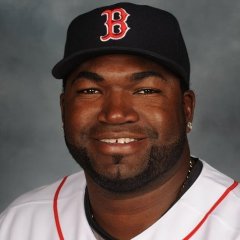
Although, plenty of late bloomers get given up on by one team (or more) and go on to great careers. David Ortiz leaps to mind.


I mean, seriously, Papi might have been the single greatest free agent ever acquired by the Red Sox. But was anyone excited at all when he was signed? I can admit I was more excited about Jeremy Giambi that off-season...

Posted
Hey, they should have learned to field.


Although, plenty of late bloomers get given up on by one team (or more) and go on to great careers. David Ortiz leaps to mind.


I mean, seriously, Papi might have been the single greatest free agent ever acquired by the Red Sox. But was anyone excited at all when he was signed? I can admit I was more excited about Jeremy Giambi that off-season...

I was familiar. With him, but didn't see a lot of him with the Twins. He impressed me with a scorched low liner grounder that went through the infield and outfield in a flash for a triple against the Yankees. I thought he was a pretty strong kid. the it wasn't a long time after he first appeared in a Red Sox uniform that I was glad Gianni went down with an injury.
Posted (edited)
Hey, they should have learned to field.


Although, plenty of late bloomers get given up on by one team (or more) and go on to great careers. David Ortiz leaps to mind.


I mean, seriously, Papi might have been the single greatest free agent ever acquired by the Red Sox. But was anyone excited at all when he was signed? I can admit I was more excited about Jeremy Giambi that off-season...


I remember looking at his numbers at MN over his last 2 seasons and thinking 38 HRs in 715 PAs was damn good, and maybe in Fenway, he could hit 40 in 650 PAs.


I was hopeful he could be more than a platoon DH/1Bman, but I certainly didn't foresee what was to come.


All 4 of his season in MN with over 345 PAs saw him have an OPS at .799 or better. 6 seasons or partial seasons in MN was a long time.

Edited by moonslav59
Community Moderator
Posted
I remember looking at his numbers at MN over his last 2 seasons and thinking 38 HRs in 715 PAs was damn good, and maybe in Fenway, he could hit 40


It never works out that way, unfortunately.

Posted
It never works out that way, unfortunately.


Actually, it did this once anyways.


Papi hit 31 in 448 PAs year 1 and went over 40 the next 3 years.

Posted
Things that happen 1% to 5% of the time do exist.


Well I'm not saying that non random factors do not exist. I'm saying that the hot hand does not exist. Even though non random factors account for some of the streak, the streak has no predictive ability, hence the statement that the hot hand does not exist.

Posted
I have also read that a batter's better than normal success against a particular pitcher is mostly random. In other words, a manager putting a certain hitter into the lineup because he has good numbers against the opposing pitcher is probably mostly for naught. I will spare you the small sample size argument.
Posted
I have also read that a batter's better than normal success against a particular pitcher is mostly random. In other words, a manager putting a certain hitter into the lineup because he has good numbers against the opposing pitcher is probably mostly for naught. I will spare you the small sample size argument.


Certainly the lefty-righty aspect is a major factor, and I suspect good fastball hitters will usually do better against mainly fastball pitchers.


There are certain specific skills that tweak the "randomness" to some extent.

Create an account or sign in to comment

You need to be a member in order to leave a comment

Create an account

Sign up for a new account in our community. It's easy!

Register a new account

Sign in

Already have an account? Sign in here.

Sign In Now
The Talk Sox Caretaker Fund

You all care about this site. The next step is caring for it. We’re asking you to caretake this site so it can remain the premier Red Sox community on the internet.

×
×
  • Create New...