


Red Sox Video
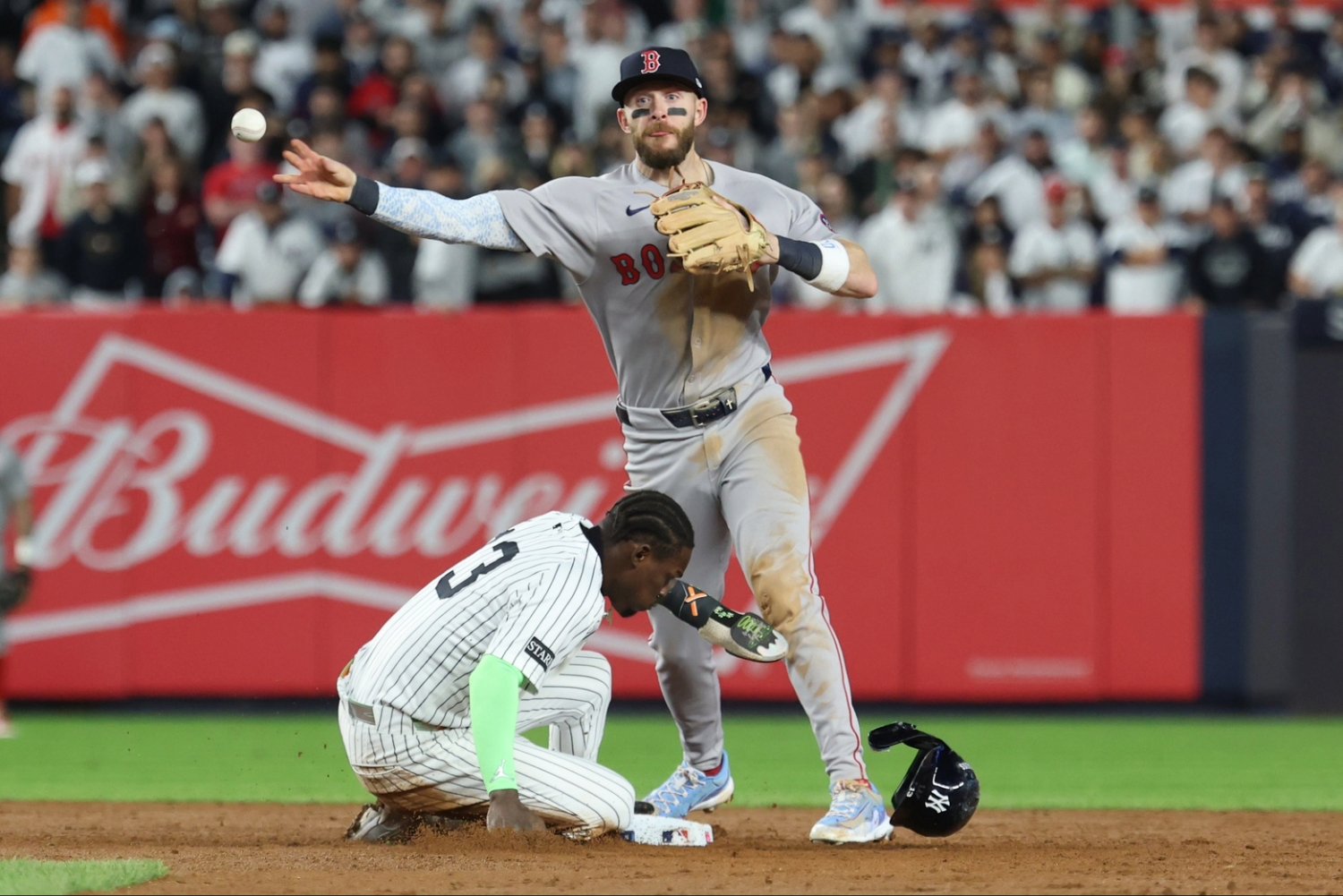
The 2025 season for the Red Sox has ended not with a bang, but with a whimper. The highs that the team, and the fanbase, were riding after Garrett Crochet’s dominant Game 1 outing were squashed on Wednesday night, and then got grounded into a fine powder under the heel of the Yankees on Thursday. The Wild Card series showed just how thin of a rotation the team finished the season with, and highlighted a few other areas where the team needs to improve as we now turn our attention toward the offseason.
Instead of going game by game for the series breakdown (our @Nick John already did a fine job of that throughout the series), I want to highlight the positive takeaway, as well as the negatives that ultimately sunk the Red Sox.
Positive: Garrett Crochet is an ace
As I wrote earlier this week, Garrett Crochet’s performance in Game 1 should have set the tone for the series. Outside of a badly placed sinker that Anthony Volpe deposited over the wall in right field, Crochet was dominant. He fired 117 pitches, touching triple digits on the last pitch of the night. He walked into the Thunder Dome that was Yankee Stadium and tamed the crowd. In the biggest game of his career, he showed up and showed out. The Red Sox traded for and then extended Crochet for these moments and he rewarded that trust. He is the anchor of this rotation moving forward, but he needs help.
Negative: Lack of starting pitching depth
For as dominant as Crochet was in Game 1, Brayan Bello was the complete opposite. We talked on the Game 1 postgame stream how Bello would likely be on a short leash Wednesday night, but no one expected him to only go 2 1/3 innings while giving up four hits and two earned runs with one walk and no strikeouts. Bello had been shaky all of September, but there was hope that his dominance against the Yankees would return when it mattered most. Unfortunately, Ben Rice made sure that Bello wouldn’t be long for the game.
On the other hand, Connelly Early performed fairly well until the wheels fell off in the fourth inning. On the radio call, Will Flemming correctly stated that every Yankees hitter that stepped to the plate in that inning ‘looked incredibly comfortable’ as they were taking their at-bats. It’s well documented that the Yankees are a league leader in picking up on and communicating tipped pitches, so there’s a chance this could have been occurring. But it’s also just as likely that Early and Carlos Narvaez fell into a predictable pattern as the former’s pitch count began to climb. Early was left in too long, and it came back to bite the Red Sox quickly.
Either way, the Red Sox needed Early to go more than 3 2/3 innings to have a chance in Game 3. The rookie was charged with three earned runs on the night, but the lack of defense behind him is more to blame for those than he is. His ERA for the game may have been 7.36, but his FIP was an incredible 0.68. Had his defense bailed him out as they were expected to, we may be having a different conversation about this series.
Negative: Shaky bullpen management in Game 2
The Red Sox have counted all season on a bullpen anchored by Aroldis Chapman and Garrett Whitlock to ensure that they either stayed in or won games. On Tuesday, Chapman put us all on the edges of our seats but ultimately pitched his way out of it. On Wednesday, Alex Cora seemingly hung Whitlock out to dry by allowing him to throw multiple innings. Yes, Whitlock was penciled in as the multi-inning relief option to open the season, but that didn’t work out. For the bulk of the campaign, Whitlock was a one-inning specialist and he should have operated as such in Game 2.
Also, why go to Payton Tolle after Whitlock when you could have flipped them on the depth chart and had Whitlock follow Tolle? You tasked Whitlock with throwing over 40 pitches but limit Tolle to just seven for the series. This was the hardest that Whitlock had been pushed since 2021, and he hasn’t been truly stretched out to be a multi-inning reliever after he assumed the role of set-up man earlier this season. Tolle has been an effective starter far more recently than Whitlock, so turning to him in that situation would have made more sense. Typically, Alex Cora is the master of pushing all the right buttons in do-or-die situations, but this Game 2 mismanagement was a factor in Early being hung out to dry in Game 3.
Negative: Lack of heads-up baseball
So far, we’ve talked a lot about Game 2 because honestly, the series should have ended there. The Yankees didn’t play clean baseball in that contest at all. First, Kyle Hudson’s lack of awareness on the throw from Jazz Chisholm to Ben Rice may be the most egregious error of the game. He immediately throws up the stop sign to Nate Eaton as Eaton rounds third when Masataka Yoshida is diving into first base to beat an errant throw. Jose Flores, from first, is signaling for Eaton to keep running while Hudson is doing the opposite. Sure, a veteran player likely blows through that stop sign and continues to try and score but, in that situation, when there are two outs already on the board, why not send the runner? At worst, Eaton is gunned down at the plate as he’s attempting to score. At best, Rice tries to recover and throw to third as Duran advances, likely throwing the ball away and allowing Duran to score as well. By the way, Rice’s arm strength (per Baseball Savant) is in the first percentile. If the Red Sox kept the same baserunning pressure in Game 2 that they showed in Game 1, the series likely ends on Wednesday night and the team is battling the Toronto Blue Jays right now.
Additionally, Ceddanne Rafaela’s poor attempt at bunting against a split-finger specialist made zero sense. Of course the ball is going to be weakly popped up right back to the pitcher when Rafaela is throwing the head of the bat at a ball in the opposite batter’s box. Also, the two men on base were the fastest guys on the team. Take your chances with a double steal with no outs over Rafaela attempting to lay down a bunt when he’s been mostly unsuccessful with it during the regular season. Give me a competitive strikeout over that weak pop up; at least it would make the pitcher work harder.
Finally, Jarren Duran’s defense in left field likely cost the Red Sox the game. Him clanging that fly ball off of his thumb directly led to the run that put the Yankees in a position to secure the win. He then admitted that he’s had trouble getting reads on balls hit to left field all season. If Duran can’t read a fly ball off the bat when it’s hit to him, he doesn’t need to be in the field. Last season, the Red Sox had one of the best defensive outfields in baseball, anchored by both Duran and Rafaela at times. This year, though, Duran has looked lost in left more often than not. It reared its ugly head at the wrong time on Wednesday night.
The disappointment across Red Sox Nation is palpable, and it’s likely to hang around for the remainder of October. That being said, there’s a lot to look forward to as we turn our attention to the offseason and the improvements that need to be made for 2026 and beyond. This series loss hurts, no question about it, but Game 1 gave us a glimpse of what’s to come in the very near future. As long as improvements are made, expect the Red Sox to be a constant presence in October for years to come.





Recommended Comments
Create an account or sign in to comment
You need to be a member in order to leave a comment
Create an account
Sign up for a new account in our community. It's easy!
Register a new accountSign in
Already have an account? Sign in here.
Sign In Now