


Davy Andrews
-
Posts
196 -
Joined
-
Last visited
Davy Andrews's Achievements


-
 How badly can one team's catchers possibly hit? The Red Sox are doing their best to find out. So I had this hunch. I'm going to tell you about it. The other day, MassLive’s Chris Cotillo wrote that even after signing Yasmani Grandal, the Red Sox might still be exploring other catcher options. I was advocating for the Red Sox to sign Grandal basically since the 2024 season ended, so I’m psyched about the move, but he’s no longer young, and the fact that he was one of the best options available in free agency is no guarantee that he’ll actually produce this season. But still, I had this nagging hunch. Here’s the hunch I had: maybe the Red Sox have been the worst organization in baseball when it comes to catching this season. I don’t mean to say that the Red Sox have the worst catcher situation in baseball. Connor Wong was due for regression this season, but he was still a perfectly reasonable starting catcher. Likewise, backup options like Carlos Narváez, Blake Sabol, and Seby Zavala, while not exciting, all seemed like adequate options. It hurt not to have Kyle Teel bound for Boston, but at the very least, the Red Sox had adequate depth. The situation wasn’t dire. The performance, on the other hand, has been rough. Wong got off to a terrible start with the bat, then went down with a broken pinky, Narváez has cooled off after a short hot start, and Blake Sabol has hit, well, about as well as we expected Blake Sabol to hit. Zavala is hitting .129 in Worcester. You can see where I got my hunch, right? So I decided to crunch the numbers. Let’s start in the majors. Here’s how the team’s three catchers have hit. Name PA HR AVG OBP SLG wRC+ WAR Blake Sabol 7 0 .167 .143 .167 -31 -0.1 Connor Wong 26 0 .087 .192 .087 -16 -0.1 Carlos Narváez 48 0 .182 .250 .250 42 -0.2 Yeesh. Narváez has the best batting average at .182. He also has the best wRC+ at 42, meaning that he’s 58% worse than an average hitter. All three catchers have been below replacement level so far. As a whole, the Red Sox are getting a 16 wRC+ and -0.4 from the catcher position this season. No team has hit worse or put up less value in the catcher spot. The biggest bright spot I can find? Boston’s catchers are hitting .143, which is only second-worst in baseball (behind the Rays catchers, who are hitting a shocking .086, but who have at least hit one home run). But I didn’t stop there, my friends. I pulled every minor league number too. Across all levels of the minors, Red Sox catchers are batting .178 with a 52 wRC+. The only team that’s been worse is the Reds, who are batting .161 with a 43 wRC+. But here’s the thing. At the major league level, the Reds are absolutely crushing it at the catcher spot. They’re batting .298 with a 135 wRC+. Jose Trevino and Austin Wynns look like absolute rock stars in Cincinnati. So when you combine all levels, here’s what you get. The entire Red Sox organization has a .170 batting average and a 43 wRC+ from the catcher spot. Both of those are the worst in baseball. The Reds, with their 59 wRC+ and .186 batting average, aren't even close. Hunch proven. Now, we're obviously talking about very small sample sizes here. The season has barely started, and we have no idea who will get hot and who will cool off. But still, it's enough to make you miss Kyle Teel. Maybe the Red Sox should indeed do a little more looking around to reinforce the catcher position. View full article
 -
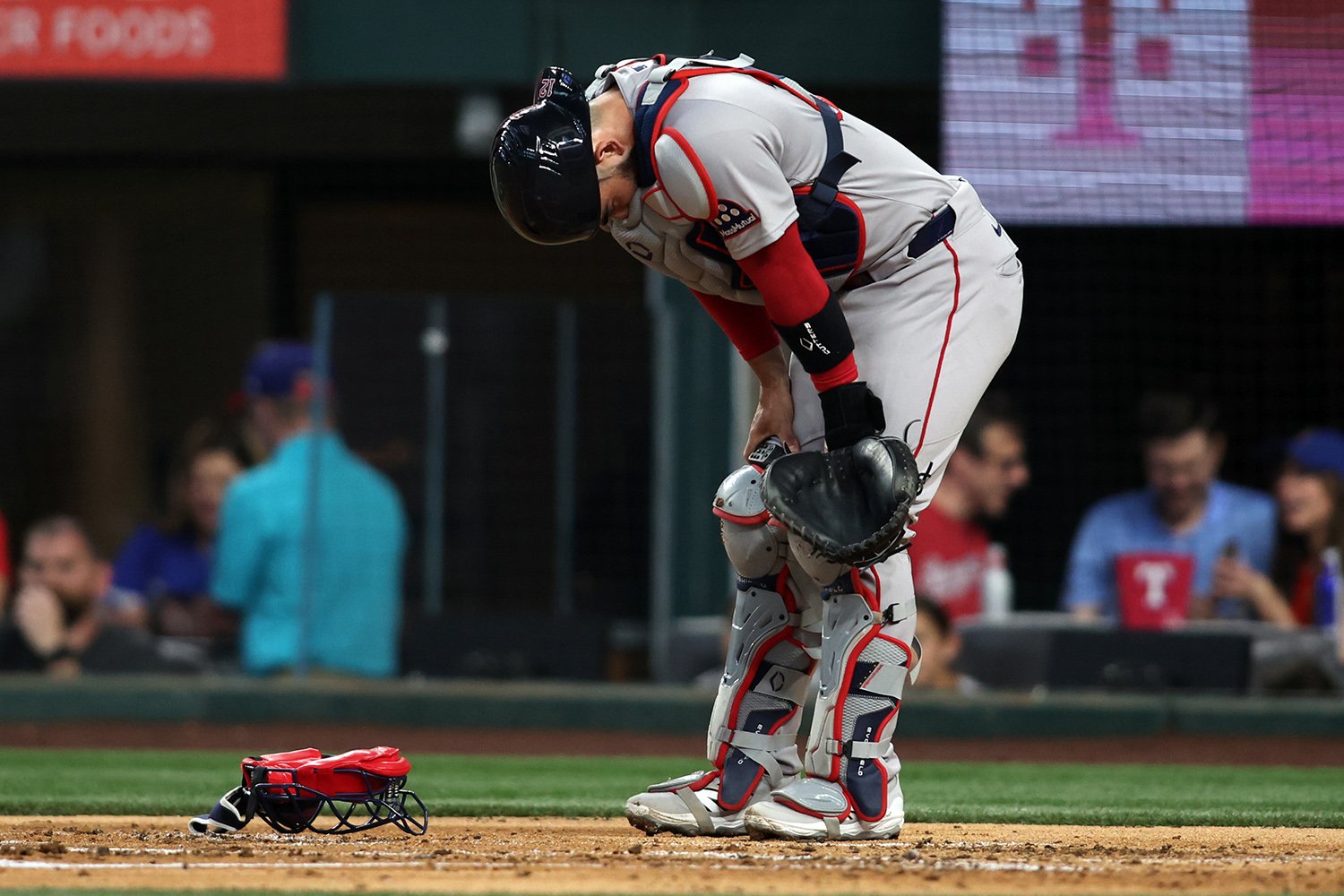 So I had this hunch. I'm going to tell you about it. The other day, MassLive’s Chris Cotillo wrote that even after signing Yasmani Grandal, the Red Sox might still be exploring other catcher options. I was advocating for the Red Sox to sign Grandal basically since the 2024 season ended, so I’m psyched about the move, but he’s no longer young, and the fact that he was one of the best options available in free agency is no guarantee that he’ll actually produce this season. But still, I had this nagging hunch. Here’s the hunch I had: maybe the Red Sox have been the worst organization in baseball when it comes to catching this season. I don’t mean to say that the Red Sox have the worst catcher situation in baseball. Connor Wong was due for regression this season, but he was still a perfectly reasonable starting catcher. Likewise, backup options like Carlos Narváez, Blake Sabol, and Seby Zavala, while not exciting, all seemed like adequate options. It hurt not to have Kyle Teel bound for Boston, but at the very least, the Red Sox had adequate depth. The situation wasn’t dire. The performance, on the other hand, has been rough. Wong got off to a terrible start with the bat, then went down with a broken pinky, Narváez has cooled off after a short hot start, and Blake Sabol has hit, well, about as well as we expected Blake Sabol to hit. Zavala is hitting .129 in Worcester. You can see where I got my hunch, right? So I decided to crunch the numbers. Let’s start in the majors. Here’s how the team’s three catchers have hit. Name PA HR AVG OBP SLG wRC+ WAR Blake Sabol 7 0 .167 .143 .167 -31 -0.1 Connor Wong 26 0 .087 .192 .087 -16 -0.1 Carlos Narváez 48 0 .182 .250 .250 42 -0.2 Yeesh. Narváez has the best batting average at .182. He also has the best wRC+ at 42, meaning that he’s 58% worse than an average hitter. All three catchers have been below replacement level so far. As a whole, the Red Sox are getting a 16 wRC+ and -0.4 from the catcher position this season. No team has hit worse or put up less value in the catcher spot. The biggest bright spot I can find? Boston’s catchers are hitting .143, which is only second-worst in baseball (behind the Rays catchers, who are hitting a shocking .086, but who have at least hit one home run). But I didn’t stop there, my friends. I pulled every minor league number too. Across all levels of the minors, Red Sox catchers are batting .178 with a 52 wRC+. The only team that’s been worse is the Reds, who are batting .161 with a 43 wRC+. But here’s the thing. At the major league level, the Reds are absolutely crushing it at the catcher spot. They’re batting .298 with a 135 wRC+. Jose Trevino and Austin Wynns look like absolute rock stars in Cincinnati. So when you combine all levels, here’s what you get. The entire Red Sox organization has a .170 batting average and a 43 wRC+ from the catcher spot. Both of those are the worst in baseball. The Reds, with their 59 wRC+ and .186 batting average, aren't even close. Hunch proven. Now, we're obviously talking about very small sample sizes here. The season has barely started, and we have no idea who will get hot and who will cool off. But still, it's enough to make you miss Kyle Teel. Maybe the Red Sox should indeed do a little more looking around to reinforce the catcher position.
 -
The Red Sox came into the season with enviable starting pitching depth, but a rash of injuries has forced them to use just about all of it in the first two weeks of the season. On Sunday, the Red Sox announced that they had moved rookie starter Richard Fitts on the 15-day injured list due to a mild right pectoral strain. To take his spot on the roster, the Red Sox called up Michael Fulmer, who signed a two-year minor league deal in February 2024, to take Fitts spot on the roster. Fitts was dealing against the White Sox on Saturday, allowing just two hits and a walk to the White Sox over five scoreless innings, but the injury forced him to leave the game in the sixth inning. At the time, he seemed to grab the area under his shoulder the injury was described as “right shoulder pain.” Shoulder injuries are particularly dreaded, so the news that Fitts has only strained a muscle comes as something as a relief. Although he hasn’t notched a win yet, Fitts has a 3.18 ERA and 3.88 FIP over three starts. Yesterday, the Red Sox announced that an MRI revealed that the strain was mild. “So it’s not as bad as what we thought,” Alex Cora told reporters on Monday afternoon. “Obviously timetable, we don’t know yet. But out of the bad news, it’s the best possible result.” According to Baseball Prospectus’s recovery dashboard, over the past nine seasons, pitchers who have suffered a pectoral strain miss an average of 34 days, with the median absence being 28 days. If Fitts' recovery follows that general pattern, then the team should expect him back in mid-May. Fitts was one of the team’s more exciting stories during spring training. He excelled during a cup of coffee last season, then came into camp with increased velocity and a completely revamped repertoire. He earned a spot in the starting rotation coming out of camp, and the team’s recent trade of Quinn Priester seemed to solidify Fitts’ roster spot further. However, at this point, it’s not necessarily a guarantee that he’ll end up back in the rotation when he returns. Brayan Bello and Lucas Giolito have both started rehab assignments in Worcester and will be back in Boston well before mid-May unless they undergo some sort of setback. Current indications are that Bello has one more rehab start coming and Giolito will start tonight and then require one more start after that. With Garrett Crochet, Walker Buehler, and Tanner Houck already healthy, Bello and Giolito could round out the five-man rotation, relegating Fitts to a bullpen role or even back to Worcester. There have been very few updates about the knee discomfort that has kept Kutter Crawford out, but Patrick Sandoval is also expected to return from his internal brace procedure at some point during the second half. The Red Sox came into the season with enviable starting pitching depth, and they’ve had to avail themselves of it early and often. Giving significant innings to Sean Newcomb and Hunter Dobbins definitely wasn’t the plan. Newcomb's 4.97 ERA leaves a lot be desired, but his 2.53 FIP is surprisingly good. The team has indicated that Fulmer will start out in a long relief role, and he got his first taste of that during Monday's brutal loss to the Rays, allowing three earned runs over 2 2/3 innings. If he pitches well, he could end up starting too. Fulmer missed the entire 2024 surgery after undergoing Tommy John revision surgery in October 2023, and he hasn’t pitched regularly as a starter since 2020. Over three starts in Worcester this season, he’s run a 3.09 ERA and 3.33 FIP. His 37.5% strikeout rate is excellent, but his 12.5% walk rate is far from ideal, and he has allowed a worrisome 56.5% hard-hit rate. His four-seamer has also averaged 92.4 mph, a big step down from the 94.3 mph he averaged before he got hurt in 2023, but that could just be a result of switching from a max-effort relief role to a starting role in which he’s expected to pitch deeper into games. Fulmer's four-seamer averaged 93 mph on Monday. This is why teams invest in pitching depth, and if players like Fulmer, Newcomb, and Dobbins can help keep the team afloat until the cavalry arrives, the Red Sox should have a real chance at a division title. Entering Monday's games, they sat in third place, 1 1/2 games back of the Blue Jays, despite not getting a single appearance out of three of their best starting pitchers. It's a long season, and the Red Sox won't be the only team to have their depth tested like this. In the meantime, the Red Sox have yet to announce a starter for Wednesday's game or for Friday's game, which would be Fitts' spot in the rotation. View full article
-
Richard Fitts’ Injury Pushes Red Sox Pitching Depth Even Further
Davy Andrews posted an article in Red Sox
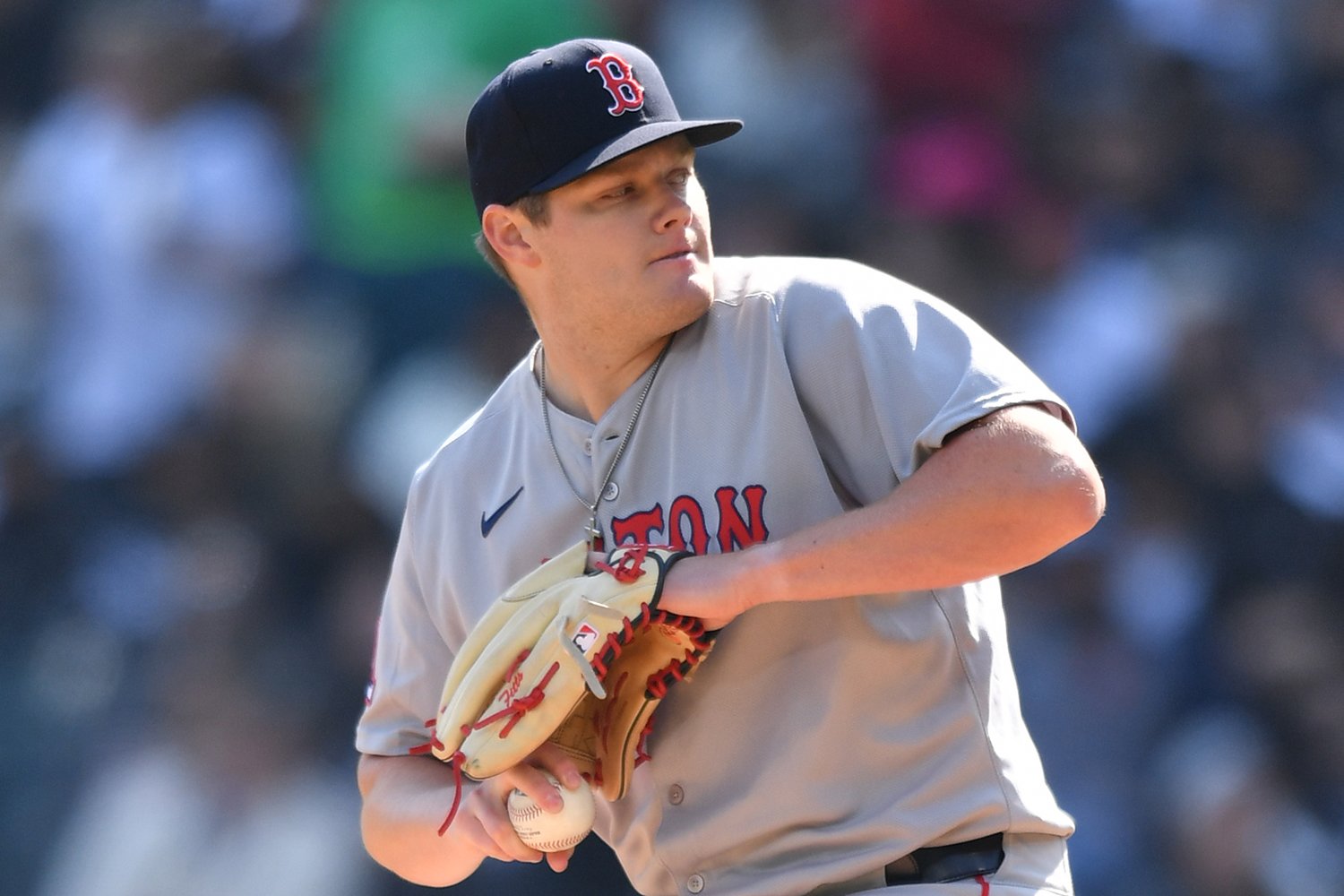 On Sunday, the Red Sox announced that they had moved rookie starter Richard Fitts on the 15-day injured list due to a mild right pectoral strain. To take his spot on the roster, the Red Sox called up Michael Fulmer, who signed a two-year minor league deal in February 2024, to take Fitts spot on the roster. Fitts was dealing against the White Sox on Saturday, allowing just two hits and a walk to the White Sox over five scoreless innings, but the injury forced him to leave the game in the sixth inning. At the time, he seemed to grab the area under his shoulder the injury was described as “right shoulder pain.” Shoulder injuries are particularly dreaded, so the news that Fitts has only strained a muscle comes as something as a relief. Although he hasn’t notched a win yet, Fitts has a 3.18 ERA and 3.88 FIP over three starts. Yesterday, the Red Sox announced that an MRI revealed that the strain was mild. “So it’s not as bad as what we thought,” Alex Cora told reporters on Monday afternoon. “Obviously timetable, we don’t know yet. But out of the bad news, it’s the best possible result.” According to Baseball Prospectus’s recovery dashboard, over the past nine seasons, pitchers who have suffered a pectoral strain miss an average of 34 days, with the median absence being 28 days. If Fitts' recovery follows that general pattern, then the team should expect him back in mid-May. Fitts was one of the team’s more exciting stories during spring training. He excelled during a cup of coffee last season, then came into camp with increased velocity and a completely revamped repertoire. He earned a spot in the starting rotation coming out of camp, and the team’s recent trade of Quinn Priester seemed to solidify Fitts’ roster spot further. However, at this point, it’s not necessarily a guarantee that he’ll end up back in the rotation when he returns. Brayan Bello and Lucas Giolito have both started rehab assignments in Worcester and will be back in Boston well before mid-May unless they undergo some sort of setback. Current indications are that Bello has one more rehab start coming and Giolito will start tonight and then require one more start after that. With Garrett Crochet, Walker Buehler, and Tanner Houck already healthy, Bello and Giolito could round out the five-man rotation, relegating Fitts to a bullpen role or even back to Worcester. There have been very few updates about the knee discomfort that has kept Kutter Crawford out, but Patrick Sandoval is also expected to return from his internal brace procedure at some point during the second half. The Red Sox came into the season with enviable starting pitching depth, and they’ve had to avail themselves of it early and often. Giving significant innings to Sean Newcomb and Hunter Dobbins definitely wasn’t the plan. Newcomb's 4.97 ERA leaves a lot be desired, but his 2.53 FIP is surprisingly good. The team has indicated that Fulmer will start out in a long relief role, and he got his first taste of that during Monday's brutal loss to the Rays, allowing three earned runs over 2 2/3 innings. If he pitches well, he could end up starting too. Fulmer missed the entire 2024 surgery after undergoing Tommy John revision surgery in October 2023, and he hasn’t pitched regularly as a starter since 2020. Over three starts in Worcester this season, he’s run a 3.09 ERA and 3.33 FIP. His 37.5% strikeout rate is excellent, but his 12.5% walk rate is far from ideal, and he has allowed a worrisome 56.5% hard-hit rate. His four-seamer has also averaged 92.4 mph, a big step down from the 94.3 mph he averaged before he got hurt in 2023, but that could just be a result of switching from a max-effort relief role to a starting role in which he’s expected to pitch deeper into games. Fulmer's four-seamer averaged 93 mph on Monday. This is why teams invest in pitching depth, and if players like Fulmer, Newcomb, and Dobbins can help keep the team afloat until the cavalry arrives, the Red Sox should have a real chance at a division title. Entering Monday's games, they sat in third place, 1 1/2 games back of the Blue Jays, despite not getting a single appearance out of three of their best starting pitchers. It's a long season, and the Red Sox won't be the only team to have their depth tested like this. In the meantime, the Red Sox have yet to announce a starter for Wednesday's game or for Friday's game, which would be Fitts' spot in the rotation.
 -
Happy Monday. We're keeping track of every time the Red Sox slam a ball into the Green Monster. If there’s one thing I love about watching the Red Sox, it’s seeing, and especially hearing, a hard-hit ball banging off the Green Monster. Baseball is a rich text, a game of endless nuance. If you can’t find something to be fascinated by during a baseball game, that’s on you. But at the same time, sometimes you don’t have to search for it at all; sometimes the fun is as simple as it gets. A big, strong man hits a ball and that ball hits a big, green wall with a satisfying clunk. It’s a feast for the senses. What more could you need? That’s why I decided to spend the first homestand of the year watching for that one thing in particular. By my count, the Red Sox banged seven balls off the Green Monster during that first homestand, which ended on Thursday. Their opponents hit some balls of the Monster as well, but I have decided not to care about those. We’re in it for the Sox and the Sox only. In fact not only did I keep count of all the balls that came off the Monster, I tracked them methodically. I have standings. I have charts. I have strong opinions. I noted this ball off the bat of Romy Gonzalez that would have banged off the wall if not for the efforts of Toronto’s Alan Roden. Gonzalez hit it hard and deep, but I award him no points. He didn’t earn any points on this double off Ryan Helsley either, because it short-hopped the wall rather than hitting it on the fly. Once again, no points, and may God have mercy on his soul. Romy Gonzalez is going to have to try a little harder if he wants to crack the list. After the first homestand of the season, he’s sitting at a nice round zero. On the other hand, Rafael Devers has the hardest-hit ball off the wall so far this season, a rocket that left the bat at 109.2 mph. He earns full marks for this blast. Also earning full marks, this lilting Carlos Narváez fly ball, which floated into the Monster on a rainbow and a gentle Boston breeze. Even better, because it crashed into the scoreboard, it resulted in the most satisfying clang of the season so far. That ball left the bat at just 86 mph. It had an expected batting average of .049, which means that based on its exit velocity and launch angle, it should result in a hit less than once every 20 times. Sometimes it’s nice to be a hitter at Fenway Park. And with that, let’s get to the leaderboard, which features no Romy Gonzalez whatsoever. Players Monster Balls Alex Bregman 2 Triston Casas 2 Carlos Narvaez 1 Rafael Devers 1 Wilyer Abreu 1 As I mentioned earlier, the Red Sox have bopped seven balls that bonked off the Green Monster. Alex Bregman and Triston Casas sit atop the list with two each. Bregman’s presence at the top is especially unsurprising, given his well-noted passion for doing damage by way of pulled fly balls. I’ll leave you with a breakdown of every ball that hit the Green Monster during the first homestand of the season. Hopefully, we can keep you updated as the season progresses. View full article
-
The Red Sox Hit Seven Monster Balls During Their First Homestand
Davy Andrews posted an article in Red Sox
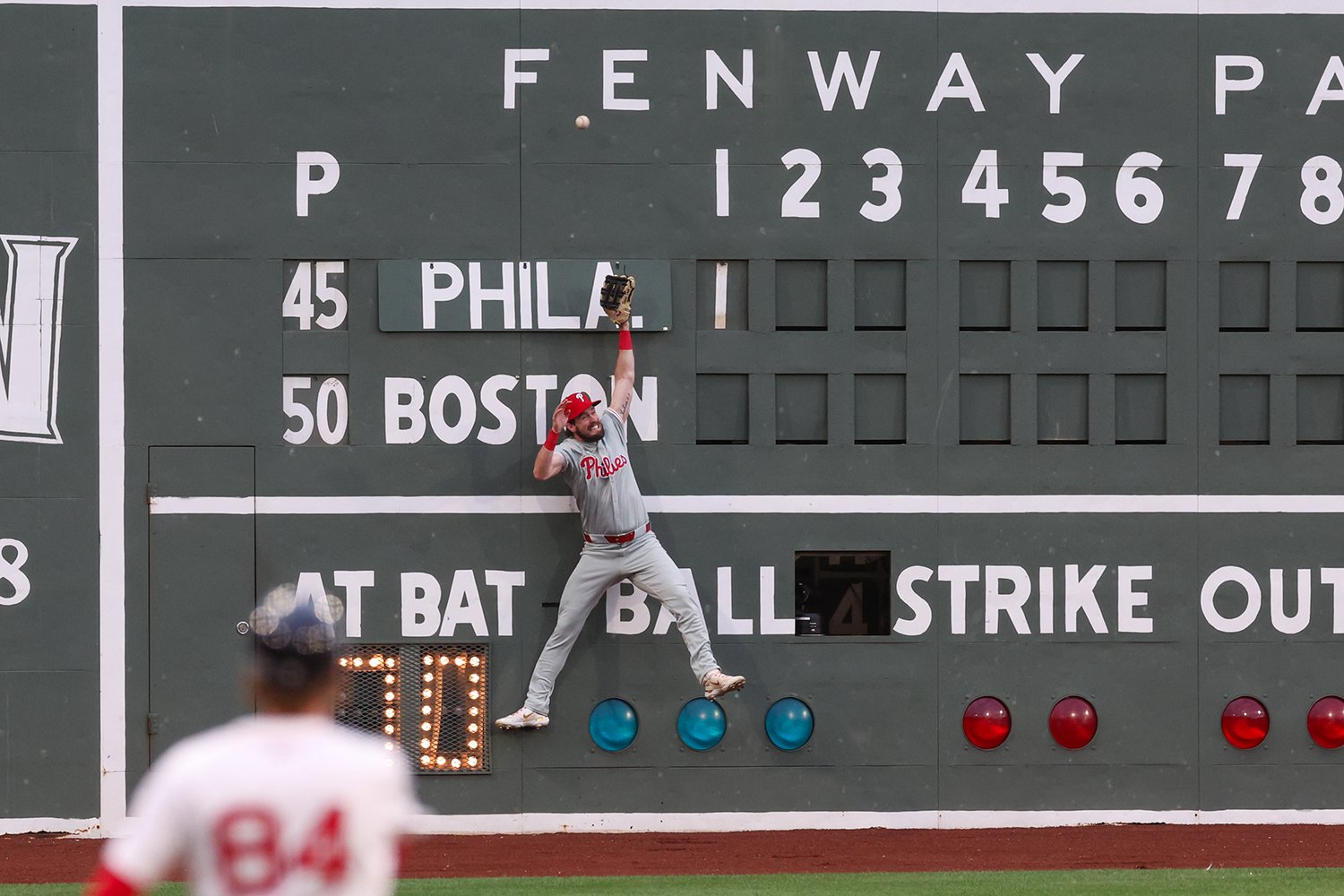 If there’s one thing I love about watching the Red Sox, it’s seeing, and especially hearing, a hard-hit ball banging off the Green Monster. Baseball is a rich text, a game of endless nuance. If you can’t find something to be fascinated by during a baseball game, that’s on you. But at the same time, sometimes you don’t have to search for it at all; sometimes the fun is as simple as it gets. A big, strong man hits a ball and that ball hits a big, green wall with a satisfying clunk. It’s a feast for the senses. What more could you need? That’s why I decided to spend the first homestand of the year watching for that one thing in particular. By my count, the Red Sox banged seven balls off the Green Monster during that first homestand, which ended on Thursday. Their opponents hit some balls of the Monster as well, but I have decided not to care about those. We’re in it for the Sox and the Sox only. In fact not only did I keep count of all the balls that came off the Monster, I tracked them methodically. I have standings. I have charts. I have strong opinions. I noted this ball off the bat of Romy Gonzalez that would have banged off the wall if not for the efforts of Toronto’s Alan Roden. Gonzalez hit it hard and deep, but I award him no points. He didn’t earn any points on this double off Ryan Helsley either, because it short-hopped the wall rather than hitting it on the fly. Once again, no points, and may God have mercy on his soul. Romy Gonzalez is going to have to try a little harder if he wants to crack the list. After the first homestand of the season, he’s sitting at a nice round zero. On the other hand, Rafael Devers has the hardest-hit ball off the wall so far this season, a rocket that left the bat at 109.2 mph. He earns full marks for this blast. Also earning full marks, this lilting Carlos Narváez fly ball, which floated into the Monster on a rainbow and a gentle Boston breeze. Even better, because it crashed into the scoreboard, it resulted in the most satisfying clang of the season so far. That ball left the bat at just 86 mph. It had an expected batting average of .049, which means that based on its exit velocity and launch angle, it should result in a hit less than once every 20 times. Sometimes it’s nice to be a hitter at Fenway Park. And with that, let’s get to the leaderboard, which features no Romy Gonzalez whatsoever. Players Monster Balls Alex Bregman 2 Triston Casas 2 Carlos Narvaez 1 Rafael Devers 1 Wilyer Abreu 1 As I mentioned earlier, the Red Sox have bopped seven balls that bonked off the Green Monster. Alex Bregman and Triston Casas sit atop the list with two each. Bregman’s presence at the top is especially unsurprising, given his well-noted passion for doing damage by way of pulled fly balls. I’ll leave you with a breakdown of every ball that hit the Green Monster during the first homestand of the season. Hopefully, we can keep you updated as the season progresses.
 -
 Well, the Red Sox are clearly concerned about the catcher situation after Connor Wong's fractured pinkie. According to Robert Murray of FanSided, they've agreed to a minor league deal with Yasmani Grandal, who, despite his age, was one of the better catchers on the free agent market this offseason, but never got signed. The team has Carlos Narváez taking over the starting role for Wong, and they called Blake Sabol up Blake Sabol to serve as the backup. The team also has Seby Zavala in Triple-A, but they clearly feel that the position could use reinforcement. Grandal put up 2.0 fWAR with the Pirates in 2024, which was tied for 16th-best among catchers. We'll have more on this move first thing on Friday.
 -
Well, the Red Sox are clearly concerned about the catcher situation after Connor Wong's fractured pinkie. According to Robert Murray of FanSided, they've agreed to a minor league deal with Yasmani Grandal, who, despite his age, was one of the better catchers on the free agent market this offseason, but never got signed. The team has Carlos Narváez taking over the starting role for Wong, and they called Blake Sabol up Blake Sabol to serve as the backup. The team also has Seby Zavala in Triple-A, but they clearly feel that the position could use reinforcement. Grandal put up 2.0 fWAR with the Pirates in 2024, which was tied for 16th-best among catchers. We'll have more on this move first thing on Friday. View full rumor
-
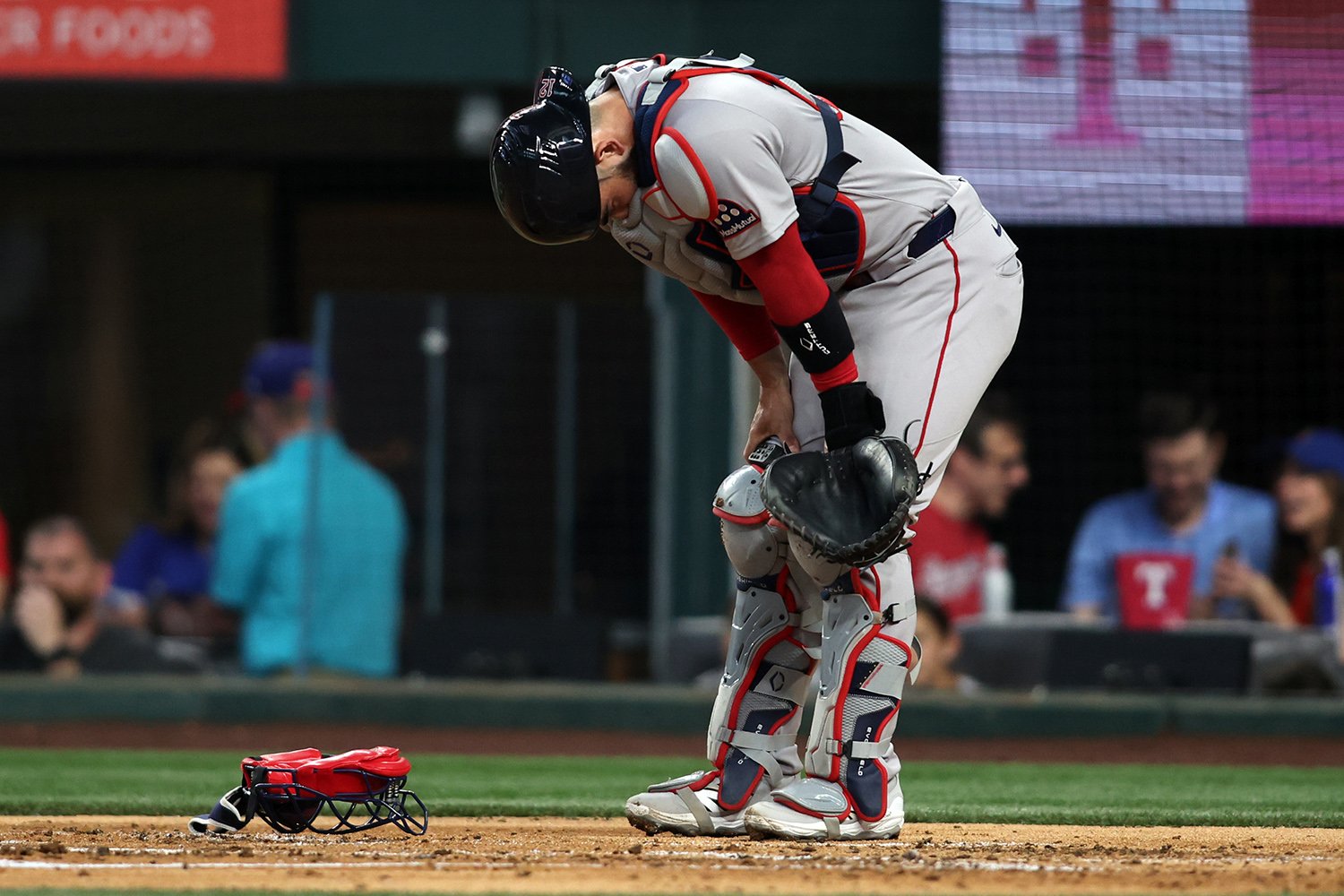 Monday night's gloomy 6-2 loss to the Blue Jays cost the Red Sox much more than a game. On a high first-inning slider from Richard Fitts, outfielder George Springer clipped Wong's glove and fractured his pinky finger. Wong remained in the game to finish the inning but reported swelling and numbness and did not return for the second inning, replaced by Carlos Narváez. After the game, the Red Sox placed Wong on the 15-day injured list with a fractured left pinky finger and called up Blake Sabol from Triple-A Worcester to take his place on the roster. The team has not set a timetable for Wong's return yet, but Baseball Prospectus's recovery dashboard indicates that the average player returns after 42 days, or six weeks, from a break or fracture to the hand. Catcher interference has been growing more common in recent years because of the increased emphasis on catcher framing. Reaching out and catching the ball earlier allows catchers to present the ball to umpires when it's closest to the strike zone, but it also puts their hands in harm's way. “That’s a tough play,” Fitts told reporters after the game. “He’s trying to steal strikes for me and he’s trying to do whatever he can. So I hope the best for him.” Wong explained the situation using a common refrain from catchers, that framing is less about stealing strikes and more about keeping them strikes. “I feel like on that one, it was more so just saving a strike,” he said. “I set up down and away on a breaking ball and saw it pop up there and wanted to make sure I was able to catch it and stick it. Maybe late reaction, and he caught me.” Wong put up a breakout offensive campaign in 2024, but the underlying numbers indicated that he was the benefit of some major batted ball luck. Meanwhile, his defensive numbers, specifically his pitch framing grades, took a huge step back. Wong spent much of the offseason working on his framing and bulking up in order to give himself a better chance to withstand the grind of a long season. Over the first week and change of the season, the defensive work appeared to be paying off. Although he was batting just.089, framing numbers from Basball Savant and Baseball Prospectus rated Wong as above average behind the plate, a huge step forward from last season's marks. In Wong's absence, Narváez appears set to step up as the primary catcher, sharing time with Blake Sabol. The Red Sox acquired Narváez in an offseason trade with the Yankees, The team raved about his defense, and although pitch framing metrics aren't available in the minors, he did appear to be one of the best framers at the Triple-A level over the past two seasons. However, Narváez has a total of just 10 major league games under his belt, four of them coming this year, and he will now be thrust into the primary role for a club with World Series aspirations and expectations. It will be a huge challenge for the 26-year-old rookie. So far this season, his offense has been a pleasant surprise. He's currently 6-for-14 with three doubles and four walks. The left-handed swinging Sabol also came to via an offseason trade. He came up with the Pirates and spent the last two seasons in the Giants organization. Sabol has 121 games of major league experience. He has run a 95 wRC+ over that time, slightly below the league-average but solid for a catcher. However, his defense has not graded out particularly well. His reputation as a bat-first catcher also had him playing corner outfield occasionally, and he's putting up an above-average offensive line in Worcester so far this season. If he's going to contribute in Boston, it's more likely to be with the bat than with the glove. Behind Sabol, the Red Sox still have Seby Zavala in Worcester. Zavala signed a minor league deal over the winter, and when he didn't make the club out of camp, he had the chance to look for a roster spot elsewhere, but ended up accepting the assignment to Triple-A. Beyond that, it's possible that the Red Sox will look to pad their depth with external candidates like the recently DFA'd Chadwick Tromp, but the team has expressed nothing but faith in Narváez, so at least for now, it appears unlikely that they go out and look for another big league catcher in trade. With Wong likely to be out for most of the first half, Narváez will have a big say in the team's performance. If he can continue hitting or provide the defensive value that the team has praised over the last few months, he can help keep the Red Sox, who currently sit just half a game behind the Yankees for the division lead, in the hunt. If he should experience growing pains during his first extended stint at the big league level, it could be a real blow to the team's playoff chances.
 -
The Red Sox will need to lean on offseason trade acquisitions Carlos Narváez and Blake Sabol much more than they hoped to this early in the season. Monday night's gloomy 6-2 loss to the Blue Jays cost the Red Sox much more than a game. On a high first-inning slider from Richard Fitts, outfielder George Springer clipped Wong's glove and fractured his pinky finger. Wong remained in the game to finish the inning but reported swelling and numbness and did not return for the second inning, replaced by Carlos Narváez. After the game, the Red Sox placed Wong on the 15-day injured list with a fractured left pinky finger and called up Blake Sabol from Triple-A Worcester to take his place on the roster. The team has not set a timetable for Wong's return yet, but Baseball Prospectus's recovery dashboard indicates that the average player returns after 42 days, or six weeks, from a break or fracture to the hand. Catcher interference has been growing more common in recent years because of the increased emphasis on catcher framing. Reaching out and catching the ball earlier allows catchers to present the ball to umpires when it's closest to the strike zone, but it also puts their hands in harm's way. “That’s a tough play,” Fitts told reporters after the game. “He’s trying to steal strikes for me and he’s trying to do whatever he can. So I hope the best for him.” Wong explained the situation using a common refrain from catchers, that framing is less about stealing strikes and more about keeping them strikes. “I feel like on that one, it was more so just saving a strike,” he said. “I set up down and away on a breaking ball and saw it pop up there and wanted to make sure I was able to catch it and stick it. Maybe late reaction, and he caught me.” Wong put up a breakout offensive campaign in 2024, but the underlying numbers indicated that he was the benefit of some major batted ball luck. Meanwhile, his defensive numbers, specifically his pitch framing grades, took a huge step back. Wong spent much of the offseason working on his framing and bulking up in order to give himself a better chance to withstand the grind of a long season. Over the first week and change of the season, the defensive work appeared to be paying off. Although he was batting just.089, framing numbers from Basball Savant and Baseball Prospectus rated Wong as above average behind the plate, a huge step forward from last season's marks. In Wong's absence, Narváez appears set to step up as the primary catcher, sharing time with Blake Sabol. The Red Sox acquired Narváez in an offseason trade with the Yankees, The team raved about his defense, and although pitch framing metrics aren't available in the minors, he did appear to be one of the best framers at the Triple-A level over the past two seasons. However, Narváez has a total of just 10 major league games under his belt, four of them coming this year, and he will now be thrust into the primary role for a club with World Series aspirations and expectations. It will be a huge challenge for the 26-year-old rookie. So far this season, his offense has been a pleasant surprise. He's currently 6-for-14 with three doubles and four walks. The left-handed swinging Sabol also came to via an offseason trade. He came up with the Pirates and spent the last two seasons in the Giants organization. Sabol has 121 games of major league experience. He has run a 95 wRC+ over that time, slightly below the league-average but solid for a catcher. However, his defense has not graded out particularly well. His reputation as a bat-first catcher also had him playing corner outfield occasionally, and he's putting up an above-average offensive line in Worcester so far this season. If he's going to contribute in Boston, it's more likely to be with the bat than with the glove. Behind Sabol, the Red Sox still have Seby Zavala in Worcester. Zavala signed a minor league deal over the winter, and when he didn't make the club out of camp, he had the chance to look for a roster spot elsewhere, but ended up accepting the assignment to Triple-A. Beyond that, it's possible that the Red Sox will look to pad their depth with external candidates like the recently DFA'd Chadwick Tromp, but the team has expressed nothing but faith in Narváez, so at least for now, it appears unlikely that they go out and look for another big league catcher in trade. With Wong likely to be out for most of the first half, Narváez will have a big say in the team's performance. If he can continue hitting or provide the defensive value that the team has praised over the last few months, he can help keep the Red Sox, who currently sit just half a game behind the Yankees for the division lead, in the hunt. If he should experience growing pains during his first extended stint at the big league level, it could be a real blow to the team's playoff chances. View full article
-
Red Sox Trade Quinn Priester to Brewers for Yophery Rodriguez and More
Davy Andrews posted an article in Red Sox
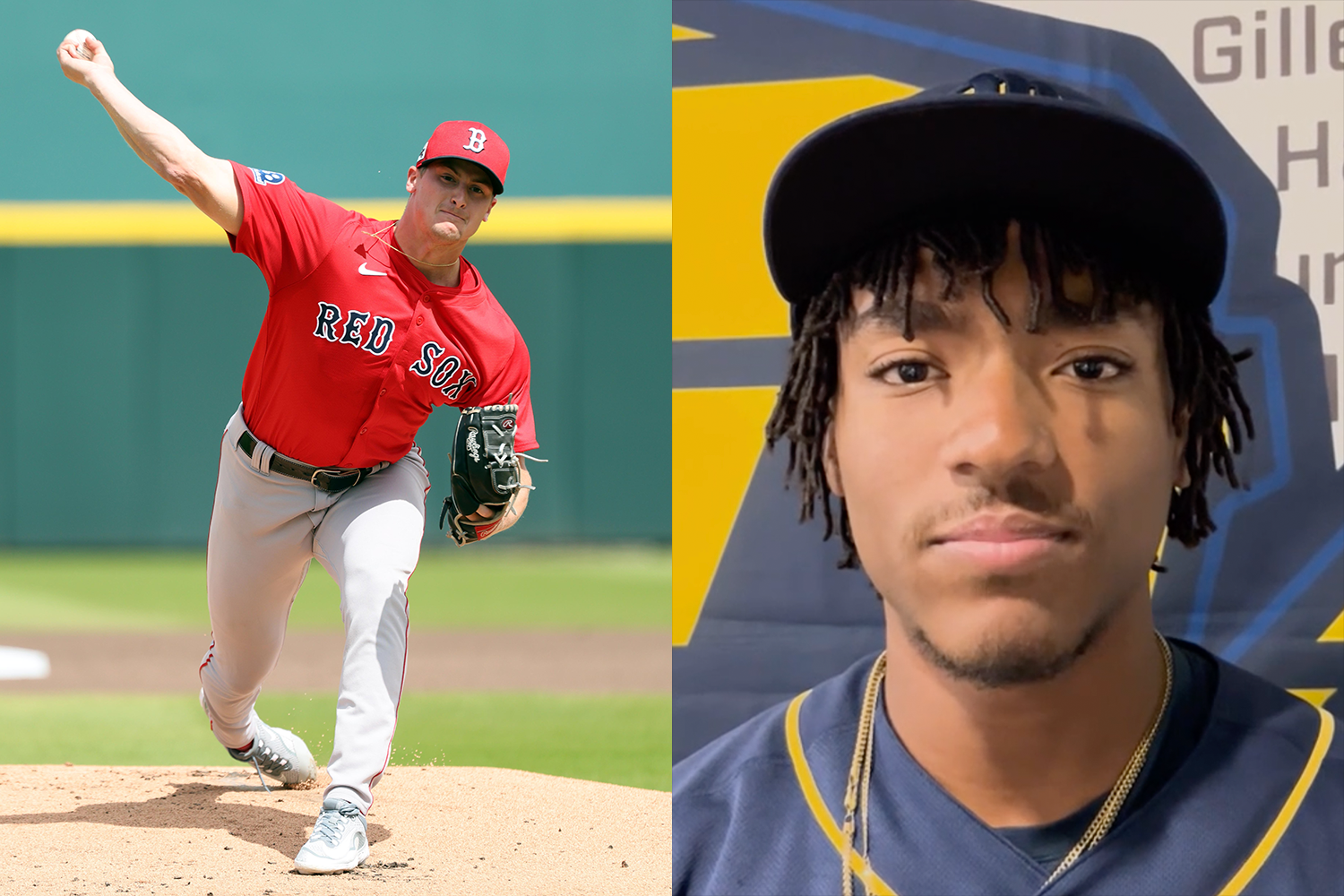 Quinn Priester is on the move again. The Red Sox traded Nick Yorke to the Pirates for the right-handed starter on July 29. Just eight months later, Hunter Noll reports that Priester is headed to the Brewers in exchange for outfield prospect Yophery Rodriguez, a Competitive Balance Round A draft pick, a player to be named later, and cash. The Competitive Balance pick will be the 33rd pick in the 2025 draft. Priester has had high expectations for years now, but he has a career 6.23 ERA over 21 career appearances, and he ran a 5.40 ERA in Triple-A Worcester after the trade (though his 3.75 FIP was much more promising). He was in consideration to make the starting rotation deep into camp, but instead started the season in Worcester. In his one start there, he allowed two earned runs over four innings while striking out six batters. The Red Sox can afford to make this move because they have packed their 40-man roster with pitching depth, and the move clearly indicates that the team has faith in less certain options like Richard Fitts, Sean Newcomb, and Hunter Dobbins. On the other hand, one could argue that the Brewers can’t afford not to make the move. With multiple injuries derailing their rotation, the Brewers are desperate for starting pitching, and it appears that the Red Sox are getting a premium for an arm that has flashed potential but hasn’t lived up to it just yet. Priester may well turn out to be the great pitcher so many have predicted, and Milwaukee could end up being the perfect place for him. He is still just 24 years old, and the Brewers are renowned for their pitching development, running a 3.71 ERA since 2021, fifth-best in baseball over that period. Still, it’s not encouraging that the Red Sox decided to give up on Priester, who at this point may be best described as a project despite his pedigree. As for the return, the Dominican Rodriguez is just 19 years old, and the Brewers have been very aggressive in promoting him. He was the team’s biggest international signing in 2023, going for $1.5 million. He ran a 125 wRC+ as a 17-year-old in the Dominican Summer League in 2023, then ran a 117 wRC+ over 110 games in Low-A in 2024. He’s now in High-A as a 19-year-old, more than three years below the average player at that level. MLB Pipeline had Rodriguez ranked eighth in the Milwaukee system, with a 50 overall grade, and 50 or better in each of the five tool categories. In other words, Rodriguez is very promising, and the Brewers are trading from a position of strength. Young outfielders like Jackson Chourio, Garrett Mitchell, and Sal Frelick, and Luis Lara, mean that the team is not hurting for young outfielders. At FanGraphs, Eric Longenhagen put a 40+ grade on Rodriguez last July, noting his combination of plate discipline and power. Although Longenhagen did indicate that Rodriguez could stick in center, he did note that he “isn’t as rangy and projectable as most high-upside teenage hitters, and he’s a little stiff as an athlete.” All of this is to say despite Rodriguez’s youth, the Red Sox aren’t just getting a lottery ticket here. They’re getting a genuine prospect who’s likely to slot into the organization’s top 20 or even top 10, along with a draft pick and the PTBNL and money. It’s a long season, and it's entirely possible that injuries will bedevil the Boston rotation to the point where they regret letting go of Priester. All the same, it certainly looks like they got the most they possibly could for him.
 -
Just weeks after Priester looked like he was in line to break camp as part of Boston's starting rotation, he's headed to a pitching-hungry Brewers team in exchange for an exciting, young prospect, a draft pick, and more. Quinn Priester is on the move again. The Red Sox traded Nick Yorke to the Pirates for the right-handed starter on July 29. Just eight months later, Hunter Noll reports that Priester is headed to the Brewers in exchange for outfield prospect Yophery Rodriguez, a Competitive Balance Round A draft pick, a player to be named later, and cash. The Competitive Balance pick will be the 33rd pick in the 2025 draft. Priester has had high expectations for years now, but he has a career 6.23 ERA over 21 career appearances, and he ran a 5.40 ERA in Triple-A Worcester after the trade (though his 3.75 FIP was much more promising). He was in consideration to make the starting rotation deep into camp, but instead started the season in Worcester. In his one start there, he allowed two earned runs over four innings while striking out six batters. The Red Sox can afford to make this move because they have packed their 40-man roster with pitching depth, and the move clearly indicates that the team has faith in less certain options like Richard Fitts, Sean Newcomb, and Hunter Dobbins. On the other hand, one could argue that the Brewers can’t afford not to make the move. With multiple injuries derailing their rotation, the Brewers are desperate for starting pitching, and it appears that the Red Sox are getting a premium for an arm that has flashed potential but hasn’t lived up to it just yet. Priester may well turn out to be the great pitcher so many have predicted, and Milwaukee could end up being the perfect place for him. He is still just 24 years old, and the Brewers are renowned for their pitching development, running a 3.71 ERA since 2021, fifth-best in baseball over that period. Still, it’s not encouraging that the Red Sox decided to give up on Priester, who at this point may be best described as a project despite his pedigree. As for the return, the Dominican Rodriguez is just 19 years old, and the Brewers have been very aggressive in promoting him. He was the team’s biggest international signing in 2023, going for $1.5 million. He ran a 125 wRC+ as a 17-year-old in the Dominican Summer League in 2023, then ran a 117 wRC+ over 110 games in Low-A in 2024. He’s now in High-A as a 19-year-old, more than three years below the average player at that level. MLB Pipeline had Rodriguez ranked eighth in the Milwaukee system, with a 50 overall grade, and 50 or better in each of the five tool categories. In other words, Rodriguez is very promising, and the Brewers are trading from a position of strength. Young outfielders like Jackson Chourio, Garrett Mitchell, and Sal Frelick, and Luis Lara, mean that the team is not hurting for young outfielders. At FanGraphs, Eric Longenhagen put a 40+ grade on Rodriguez last July, noting his combination of plate discipline and power. Although Longenhagen did indicate that Rodriguez could stick in center, he did note that he “isn’t as rangy and projectable as most high-upside teenage hitters, and he’s a little stiff as an athlete.” All of this is to say despite Rodriguez’s youth, the Red Sox aren’t just getting a lottery ticket here. They’re getting a genuine prospect who’s likely to slot into the organization’s top 20 or even top 10, along with a draft pick and the PTBNL and money. It’s a long season, and it's entirely possible that injuries will bedevil the Boston rotation to the point where they regret letting go of Priester. All the same, it certainly looks like they got the most they possibly could for him. View full article
-
 Tonight, Garrett Crochet will make his third start in a Red Sox uniform. He was absolutely lights-out during the first two, allowing just two earned runs for a 1.38 ERA and 1.79 FIP. However, if you’re a serious pitching nerd, you might have noticed that he has looked a bit different than he did last season. The first thing I noticed was Crochet’s velocity. It’s down. In 2024, the pitch averaged 97.1 mph, but it’s averaging 96.3 so far this season. That doesn’t sound like a good thing. That’s still plenty fast, especially for a left-handed pitcher, but it’s enough to be notable, even this early in the season. What caught me off guard was that Stuff+, the advanced metric that gives every pitch a grade based on its characteristics, actually thinks that Crochet’s four-seamer is better this season than last season, improving from 112 from 116. That made me curious, so I dug into the specifics. I won’t drag you along for my whole journey through Crochet’s stats. Here’s the bottom line: Garrett Crochet has dropped his arm angle in a major way this season. Not that it’s the first time. It’s actually a continuation of a trend that’s been going on since his first full season in 2021. The Baseball Savant images below paint a very clear picture. Over the past four seasons, Crochet’s arm angle has dropped an enormous 25 degrees, from 56 in 2021 to 31 in 2025. In 2021, he had an extremely over-the-top arm angle. In 2023 and 2024, he was pretty close to a standard three-quarters delivery. This season’s change was a big one. It officially made him a sidearm guy. That alone is enough to explain the drop-off in velocity, as pitchers are generally able to throw harder from higher arm slots, but there’s more going on. Crochet’s extension is also much lower, going from 7.1 feet to 6.8 feet, a drop of roughly 3.6 inches. Crochet’s not reaching toward home plate the way he used to, and because the ball has to travel slightly farther to home plate, the drop-off in perceived velocity is even bigger than the actual drop-off. However, I’m more concerned about the overall effect. In the GIF below, the difference in arm angle is obvious. What I want you to watch is Crochet’s right foot. These frames are both from Texas in order to make sure that they’re from the same camera angle. In 2024, when Crochet’s in a White Sox jersey, you can just barely see the toe of his right cleat sticking out from behind his left leg. In 2025, you can see the whole front of his foot. He’s planting further toward the first base side and throwing across his body more. When you put the lower arm angle, the lower extension, and the crossfire action together, there’s a clear takeaway. Crochet is less linear – that is, moving down the mound and toward home plate – and more rotational – whipping his arm around his body – than he was last year. None of this happens by accident. The Red Sox have placed a huge emphasis on pitching development, and they clearly think this is the best version of Crochet. His fastball is getting two more inches of horizontal break and slightly more rise. He’s throwing his cutter more often and it’s getting even more cut than it did last year. This is a new model of Crochet, with a new look, a tweaked pitch mix, and new movement. It’s worth noting that Crochet’s strikeout rate is down a full 10 percentage points from last year, falling from 35% to 25%. Likewise, his whiff rate and chase rate have taken big steps back. That’s definitely something to keep an eye on both tonight and as we get further into the season. In Fenway, Crochet has just moved into an extreme hitter’s park, and he’ll need as many strikeouts as he can get. Still, for the moment, it’s good enough that the stuff metrics like this new version of him and the top-line results are as good as you could ask for. I'll leave you with a slightly spurious point. If all these changes Crochet has made sound familiar, that’s because they are. In August, Chris Sale was on the mound against the Mets for the Braves, and Sean Manaea, watching from the New York dugout, decided that maybe he should try pitching more like Sale. He dropped his arm angle down, moved closer to the first base side of the rubber, focused on his four-seamer and sweeper, and went on an absolute tear to close the season. Crochet’s arm angle is nowhere near that low, yet anyway. Still, this new change sort of makes it look like not long after a regrettable trade that sent Sale to Atlanta, the Red Sox have just decided to make a brand new Chris Sale.
 -
Garrett Crochet seems to have made some serious mechanical adjustments this season. Luckily, his dominance over big league hitters hasn't changed. Tonight, Garrett Crochet will make his third start in a Red Sox uniform. He was absolutely lights-out during the first two, allowing just two earned runs for a 1.38 ERA and 1.79 FIP. However, if you’re a serious pitching nerd, you might have noticed that he has looked a bit different than he did last season. The first thing I noticed was Crochet’s velocity. It’s down. In 2024, the pitch averaged 97.1 mph, but it’s averaging 96.3 so far this season. That doesn’t sound like a good thing. That’s still plenty fast, especially for a left-handed pitcher, but it’s enough to be notable, even this early in the season. What caught me off guard was that Stuff+, the advanced metric that gives every pitch a grade based on its characteristics, actually thinks that Crochet’s four-seamer is better this season than last season, improving from 112 from 116. That made me curious, so I dug into the specifics. I won’t drag you along for my whole journey through Crochet’s stats. Here’s the bottom line: Garrett Crochet has dropped his arm angle in a major way this season. Not that it’s the first time. It’s actually a continuation of a trend that’s been going on since his first full season in 2021. The Baseball Savant images below paint a very clear picture. Over the past four seasons, Crochet’s arm angle has dropped an enormous 25 degrees, from 56 in 2021 to 31 in 2025. In 2021, he had an extremely over-the-top arm angle. In 2023 and 2024, he was pretty close to a standard three-quarters delivery. This season’s change was a big one. It officially made him a sidearm guy. That alone is enough to explain the drop-off in velocity, as pitchers are generally able to throw harder from higher arm slots, but there’s more going on. Crochet’s extension is also much lower, going from 7.1 feet to 6.8 feet, a drop of roughly 3.6 inches. Crochet’s not reaching toward home plate the way he used to, and because the ball has to travel slightly farther to home plate, the drop-off in perceived velocity is even bigger than the actual drop-off. However, I’m more concerned about the overall effect. In the GIF below, the difference in arm angle is obvious. What I want you to watch is Crochet’s right foot. These frames are both from Texas in order to make sure that they’re from the same camera angle. In 2024, when Crochet’s in a White Sox jersey, you can just barely see the toe of his right cleat sticking out from behind his left leg. In 2025, you can see the whole front of his foot. He’s planting further toward the first base side and throwing across his body more. When you put the lower arm angle, the lower extension, and the crossfire action together, there’s a clear takeaway. Crochet is less linear – that is, moving down the mound and toward home plate – and more rotational – whipping his arm around his body – than he was last year. None of this happens by accident. The Red Sox have placed a huge emphasis on pitching development, and they clearly think this is the best version of Crochet. His fastball is getting two more inches of horizontal break and slightly more rise. He’s throwing his cutter more often and it’s getting even more cut than it did last year. This is a new model of Crochet, with a new look, a tweaked pitch mix, and new movement. It’s worth noting that Crochet’s strikeout rate is down a full 10 percentage points from last year, falling from 35% to 25%. Likewise, his whiff rate and chase rate have taken big steps back. That’s definitely something to keep an eye on both tonight and as we get further into the season. In Fenway, Crochet has just moved into an extreme hitter’s park, and he’ll need as many strikeouts as he can get. Still, for the moment, it’s good enough that the stuff metrics like this new version of him and the top-line results are as good as you could ask for. I'll leave you with a slightly spurious point. If all these changes Crochet has made sound familiar, that’s because they are. In August, Chris Sale was on the mound against the Mets for the Braves, and Sean Manaea, watching from the New York dugout, decided that maybe he should try pitching more like Sale. He dropped his arm angle down, moved closer to the first base side of the rubber, focused on his four-seamer and sweeper, and went on an absolute tear to close the season. Crochet’s arm angle is nowhere near that low, yet anyway. Still, this new change sort of makes it look like not long after a regrettable trade that sent Sale to Atlanta, the Red Sox have just decided to make a brand new Chris Sale. View full article
-
 Brock Beauchamp reacted to a post in a topic:
Article: With Kristian Campbell Locked Down, Is Second Base Locked Down Too?
Brock Beauchamp reacted to a post in a topic:
Article: With Kristian Campbell Locked Down, Is Second Base Locked Down Too?
-
With an 8-4 victory over the Orioles, the Red Sox offense looked like it has finally awakened. Alex Bregman was the star of the show. Coming into Thursday’s getaway day game against the Orioles, Alex Bregman was running a .231 batting average and a measly 38 wRC+, meaning he was 62% worse than the average hitter. The $120-million man had yet to notch even one extra-base hit. For all the talk of Bregman’s incredible track record while hitting at Fenway Park, he looked set to enter Friday's home opener on a cold streak. However, the signs of life were always there. Despite the lack of extra-base hits, Bregman was smashing the ball, running an excellent 95.9 mph average exit velocity and 55% hard-hit rate. Furthermore, after going 0-for-4 on Opening Day, Bregman was sitting on a five-game hitting streak. Here’s a fun fact: so far this season, Bregman has a 101.3 mph average exit velocity on his six singles. Among players with at least five singles this season, that trails only Jordan Walker of the Cardinals at 102.2. It was just a matter of time before all those scalded singles turned into something bigger. The time came on Thursday. The game was full of good news. The Red Sox jumped out to a 2-0 lead over the Orioles in the first inning, and although starter Tanner Houck looked shaky, that lead was never in question. Kristian Campbell contributed two hits, including his second home run of the season, pulling a ball over the Formerly-Great Wall of Baltimore. The struggling Triston Casas also contributed two hits, including his first home run of the season, and Rafael Devers notched yet another hit of his own. The Red Sox ended up with an 8-4 victory and a series victory, but the day belonged to Bregman. Bregman batted third, and four of the 18 pitches he saw over the course of the game were located in the middle third of the plate. Bregman fouled off one of those four pitches, and and smashed the other three for extra bases. In the top of the first, with Devers on base, Baltimore starter Charlie Morton started the third baseman off with a 92-mph fastball that was about as middle-middle as you’ll ever see. Bregman knew just where to put it. The 103.8-mph blast traveled 397 feet and would have made it out even before the Orioles moved the walls back in. This is exactly why the Red Sox nabbed Bregman in the first place. Bregman is one of the game’s best hitters at pulling the ball in the air, where batters can make the most of their power. It served him well when he could target those balls at the Crawford Boxes in Houston and it will suit him just as well when he’s launching them at and over the Green Monster. Bregman struck out in his next two plate appearances but returned to the plate in the seventh inning out for vengeance. Reliever Keegan Akin challenged Bregman with a 1-1 four-seamer up in the zone, and Bregman was all over it, meeting the pitch out in front and ripping it down the line at 100.4 mph for a double. Bregman would return with another double in the ninth inning. This time, Matt Bowman came after him with a high cutter, once again located right over the middle third of the plate. As the pit cut away from him, Bregman went with it, driving a 99.3-mph liner into the right field gap and knocking in Bregman for the second time. If you're keeping score at home, Bregman went 3-for-5 with two doubles, a homer, and three RBI. The big day extended Bregman's hit streak to six games, lifting his batting average to .290 and his overall offensive line to a 117 wRC+. It's still very early in the season, but after crushing the ball and not having much to show for it over the first six games of the season, Bregman is finally getting results and looking every bit the star the Red Sox hoped they'd landed. With Casas and Devers beginning to find their strokes as well, we might get our first glimpse at what the newly constructed offense can do. The Red Sox pulled themselves to 3-4 with the win and have the chance to get back to .500 with another victory over the Cardinals today. View full article
