


Nick John
-
Posts
799 -
Joined
-
Last visited
-
Days Won
1
Content Type
Profiles
Boston Red Sox Videos
2026 Boston Red Sox Top Prospects Ranking
Boston Red Sox Free Agent & Trade Rumors, Notes, & Tidbits
Guides & Resources
2025 Boston Red Sox Draft Pick Tracker
News
2026 Boston Red Sox Draft Tracker: Picks & Bonuses
Forums
Blogs
Events
Store
Downloads
Gallery
Everything posted by Nick John
-
Breaking Down The Two Young Pitchers Traded For Sonny Gray
Nick John posted an article in Minor Leagues
 Tuesday afternoon, the Boston Red Sox surprised everyone by making a trade with the St. Louis Cardinals. In a move that saw the Red Sox improve their major league pitching, they were forced to sacrifice some depth and a previously touted prospect for Sonny Gray. But did the Red Sox really give up a lot for Gray? When you really look at it, it seems that the Red Sox managed to steal Gray for two pitchers they may not have had much interest in anymore. The official deal between the Red Sox and Cardinals saw Gray and $20 million shipped to the Red Sox in return for Richard Fitts and Brandon Clarke. Of course, the first reaction to this trade is wondering why Craig Breslow would be willing to move on from Clarke after just one season, especially after he had made Baseball America’s Top 100 prospect list during the season. Clarke, however, was a huge risk of becoming nothing more than a reliever the further into the season he pitched. Clarke spent time with both Salem and Greenville in 2025, along with a few stints on the injured list. Making 14 starts, Clarke finished the year 0-3 with a 4.03 ERA in 38 innings. The key to his prospect billing was the fastball-slider combination, which paired a triple-digit fastball with a slider that showed considerable bat-missing ability. This led him to strike out 60 batters. However, with Clarke, his biggest issues (and the ones that have deemed him a high risk of ending up as a reliever) were his lack of control and stamina. Despite throwing just 38 innings, Clarke issued 27 walks, hit 12 batters, and allowed 14 wild pitches. Of his 14 starts, he recorded more than 12 outs in only four starts. From June 26 until his final start on August 8, Clarke did not make it out of the third inning one time. Clarke’s command needs work because no matter how fast you throw, if you can’t throw strikes, you won’t last long in organized baseball. Clarke’s final three starts saw him throw one, 1/3, and 2 1/3 innings, respectively. In those starts, he threw 35, 37, and 59 pitches. He struggled to get outs early in the count, and during his July 25 start with Greenville, all but one batter (the first one) worked an at-bat of at least five pitches. That start was the perfect representation of Clarke: a pitcher who could strike batters out but struggled to work counts to get quick outs while walking batters. In that game, Clarke pitched one inning and allowed two hits, two earned runs, two walks, and struck out three batters while throwing a wild pitch. There’s no denying that Clarke is talented, but right now, as the Red Sox view their window as beginning to open, they decided they couldn’t wait and hope he figures things out. Instead, they decided to move on instead of being burned. Remember, not every prospect pans out. If they had, the Red Sox would have looked very different during the 2010s and early 2020s. Instead, Breslow decided to pull the trigger to bring in a veteran arm who performed better than his stats showed. Joining Clarke in the Cardinals organization is Fitts, the first big move that Breslow made after getting hired. 2025 was an up-and-down year, both on and off the field, as Fitts saw himself shuttled between Boston and Worcester in between stints on the injured list. Opening the season in the Red Sox Rotation, Fitts pitched well through his first three starts on the mound until an injury in his third start halted his momentum. Placed on the 15-day injured list with a right pectoral strain, Fitts would see himself out of action until late May. During that span, the Red Sox saw Hunter Dobbins leap ahead of Fitts on the depth chart, but with the team still in need of pitching, they brought Fitts back early against Milwaukee, having him pitch on limited innings. The outing went well as he tossed three scoreless innings, but after that, things went downhill for the right-hander. Fitts would see himself be shelled by the Los Angeles Angels, allowing three home runs in the first on his way to a six-run, five-earned outing that saw him optioned back to Worcester after. Fitts again saw a mix of success, making three starts but only making it past the fourth inning once (though his outing on July 1 was cut short due to a rain cancellation). After that, Fitts saw himself bouncing between Boston and Worcester, making two appearances in late July before being sent back to Worcester and recalled in late August for one appearance out of the bullpen, where he tossed four innings and allowed three runs. He would end up injured, this time with right-arm neuritis, which ended his season. While Fitts dealt with injuries and inconsistency, the Red Sox noted how several of their young pitchers were developing. Payton Tolle and Connelly Early both made their major league debuts and pitched well enough to make the postseason roster. Hunter Dobbins pitched well until his season-ending injury, and prospects in the minors continued to develop as several pitchers leapfrogged Fitts on the depth chart. He had become expendable in a trade without hurting the team’s overall depth too much. And so, Breslow pulled the trigger on the trade to send a lottery prospect and a depth pitcher for a middle-of-the-rotation arm. He showed that the Red Sox are serious about next season, all while keeping Gray only on the books for next season. He didn’t take on additional money that could affect the team, given a likely lockout in 2027. Breslow found a way to focus on 2026 and 2026 alone. And with the money coming back from St. Louis, the trade looks even better. This is a trade that a team looking to win makes. Breslow knew it, and he didn’t falter in negotiations.
 -
Tuesday afternoon, the Boston Red Sox surprised everyone by making a trade with the St. Louis Cardinals. In a move that saw the Red Sox improve their major league pitching, they were forced to sacrifice some depth and a previously touted prospect for Sonny Gray. But did the Red Sox really give up a lot for Gray? When you really look at it, it seems that the Red Sox managed to steal Gray for two pitchers they may not have had much interest in anymore. The official deal between the Red Sox and Cardinals saw Gray and $20 million shipped to the Red Sox in return for Richard Fitts and Brandon Clarke. Of course, the first reaction to this trade is wondering why Craig Breslow would be willing to move on from Clarke after just one season, especially after he had made Baseball America’s Top 100 prospect list during the season. Clarke, however, was a huge risk of becoming nothing more than a reliever the further into the season he pitched. Clarke spent time with both Salem and Greenville in 2025, along with a few stints on the injured list. Making 14 starts, Clarke finished the year 0-3 with a 4.03 ERA in 38 innings. The key to his prospect billing was the fastball-slider combination, which paired a triple-digit fastball with a slider that showed considerable bat-missing ability. This led him to strike out 60 batters. However, with Clarke, his biggest issues (and the ones that have deemed him a high risk of ending up as a reliever) were his lack of control and stamina. Despite throwing just 38 innings, Clarke issued 27 walks, hit 12 batters, and allowed 14 wild pitches. Of his 14 starts, he recorded more than 12 outs in only four starts. From June 26 until his final start on August 8, Clarke did not make it out of the third inning one time. Clarke’s command needs work because no matter how fast you throw, if you can’t throw strikes, you won’t last long in organized baseball. Clarke’s final three starts saw him throw one, 1/3, and 2 1/3 innings, respectively. In those starts, he threw 35, 37, and 59 pitches. He struggled to get outs early in the count, and during his July 25 start with Greenville, all but one batter (the first one) worked an at-bat of at least five pitches. That start was the perfect representation of Clarke: a pitcher who could strike batters out but struggled to work counts to get quick outs while walking batters. In that game, Clarke pitched one inning and allowed two hits, two earned runs, two walks, and struck out three batters while throwing a wild pitch. There’s no denying that Clarke is talented, but right now, as the Red Sox view their window as beginning to open, they decided they couldn’t wait and hope he figures things out. Instead, they decided to move on instead of being burned. Remember, not every prospect pans out. If they had, the Red Sox would have looked very different during the 2010s and early 2020s. Instead, Breslow decided to pull the trigger to bring in a veteran arm who performed better than his stats showed. Joining Clarke in the Cardinals organization is Fitts, the first big move that Breslow made after getting hired. 2025 was an up-and-down year, both on and off the field, as Fitts saw himself shuttled between Boston and Worcester in between stints on the injured list. Opening the season in the Red Sox Rotation, Fitts pitched well through his first three starts on the mound until an injury in his third start halted his momentum. Placed on the 15-day injured list with a right pectoral strain, Fitts would see himself out of action until late May. During that span, the Red Sox saw Hunter Dobbins leap ahead of Fitts on the depth chart, but with the team still in need of pitching, they brought Fitts back early against Milwaukee, having him pitch on limited innings. The outing went well as he tossed three scoreless innings, but after that, things went downhill for the right-hander. Fitts would see himself be shelled by the Los Angeles Angels, allowing three home runs in the first on his way to a six-run, five-earned outing that saw him optioned back to Worcester after. Fitts again saw a mix of success, making three starts but only making it past the fourth inning once (though his outing on July 1 was cut short due to a rain cancellation). After that, Fitts saw himself bouncing between Boston and Worcester, making two appearances in late July before being sent back to Worcester and recalled in late August for one appearance out of the bullpen, where he tossed four innings and allowed three runs. He would end up injured, this time with right-arm neuritis, which ended his season. While Fitts dealt with injuries and inconsistency, the Red Sox noted how several of their young pitchers were developing. Payton Tolle and Connelly Early both made their major league debuts and pitched well enough to make the postseason roster. Hunter Dobbins pitched well until his season-ending injury, and prospects in the minors continued to develop as several pitchers leapfrogged Fitts on the depth chart. He had become expendable in a trade without hurting the team’s overall depth too much. And so, Breslow pulled the trigger on the trade to send a lottery prospect and a depth pitcher for a middle-of-the-rotation arm. He showed that the Red Sox are serious about next season, all while keeping Gray only on the books for next season. He didn’t take on additional money that could affect the team, given a likely lockout in 2027. Breslow found a way to focus on 2026 and 2026 alone. And with the money coming back from St. Louis, the trade looks even better. This is a trade that a team looking to win makes. Breslow knew it, and he didn’t falter in negotiations. View full article
-
The Boston Red Sox made an intra-division trade Tuesday afternoon, shipping previously-designated-for-assignment Luis Guerrero to Tampa Bay. In return, the Red Sox received 29-year-old utility player Tristan Gray. Gray appeared in 30 games last season after the Tampa Bay Rays acquired him in a trade with the Chicago White Sox. He would go on to hit .231/.282/.410 with five doubles, three home runs, and nine RBIs. Gray profiles as a depth option with the Red Sox, the utility player having spent time at all infield positions in 2025 with most of his games played in the majors being at first base. Should Gray make it through the offseason and enter spring training with the Red Sox, he would be competing against the likes of Nick Sogard, Nate Eaton and David Hamilton for an end-of-bench role. Though, in all likelihood, should Gray still be with the team by the end of spring training, he would open the season with Triple-A Worcester, providing a veteran depth option for the organization on a cheap contract. Gray as a hitter is a rather interesting figure. Offensively, he may not make contact often (based on a 28.6% strikeout rate in his short career) and will chase pitches as shown by a 27.6% chase rate last season (not to mention a whiff rate of 31.9%), but when he does make contact, he doesn’t miss out. Gray hits the ball hard, as evidenced by his average exit velocity for 2025 being 91.4 mph along with his max velocity being 110.6 mph. Of the balls he did hit this past season, nearly half of them were considered hard-hit as well, his rate being 44.3% in the 30 games he played. One other interesting trait of his offense is his bat speed. In 2025, it averaged 74.4 mph. As written by our very own @Jack Lindsay earlier this offseason, the Blue Jays focused on improving their bat speed so that when they fell into disadvantageous counts, they could still put together a powerful, controlled swing on the baseball. Of the Red Sox players in 2025, only Triston Casas, Jarren Duran and Roman Anthony had bat speeds higher than Gray’s. The Red Sox are clearly interested in pumping up their lineup's bat speed, and Gray follows that trend, especially for someone on the bench. Unfortunately, it doesn’t matter what your bat speed is if you fail to make contact. His zone-contact rate last season was only 75.4%, an increase from his 2024 numbers but still below what many consider to be average (roughly 85-87%). Also of note, while he showed he could handle fastballs, Gray struggled against off-speed pitches and whiffed more against breaking pitches, especially at Triple-A. And while he has struck out at a 28.7% rate for his career, his walk rate of 7.4% isn’t high enough to make up for the lack of contact. Defensively, Gray’s versatility is of interest. The fact he can play not just one or two infield positions but all four makes him extremely valuable for depth purposes. Last year, Nick Sogard was in a similar role, where he could be called up from Worcester to cover the loss of a player for a week or two and be plugged into the lineup in a wide variety of positions. Gray fills a similar need as thanks to his one remaining option year; he could be shuttled back and forth from Worcester to Boston as the team needs a body, giving Alex Cora someone who can be inserted into the lineup anywhere on the infield dirt. He doesn’t stand out with the glove at any one position, though he's competent at each, making one error at each of first base, second base and third base while accruing an Outs Above Average of one at shortstop last season. He very much fits the mold of end-of-the-roster players that the Red Sox have brought in over the past few seasons and have managed to turn into contributors at the major-league level. Guys like Rob Refsnyder, Romy González, and Nate Eaton were all castoffs from their previous teams who are now core depth pieces on the roster. While that’s no guarantee Gray will continue that trend, the Red Sox's track record with similar players suggests a brighter future than most may expect from the now-former Ray. View full article
-
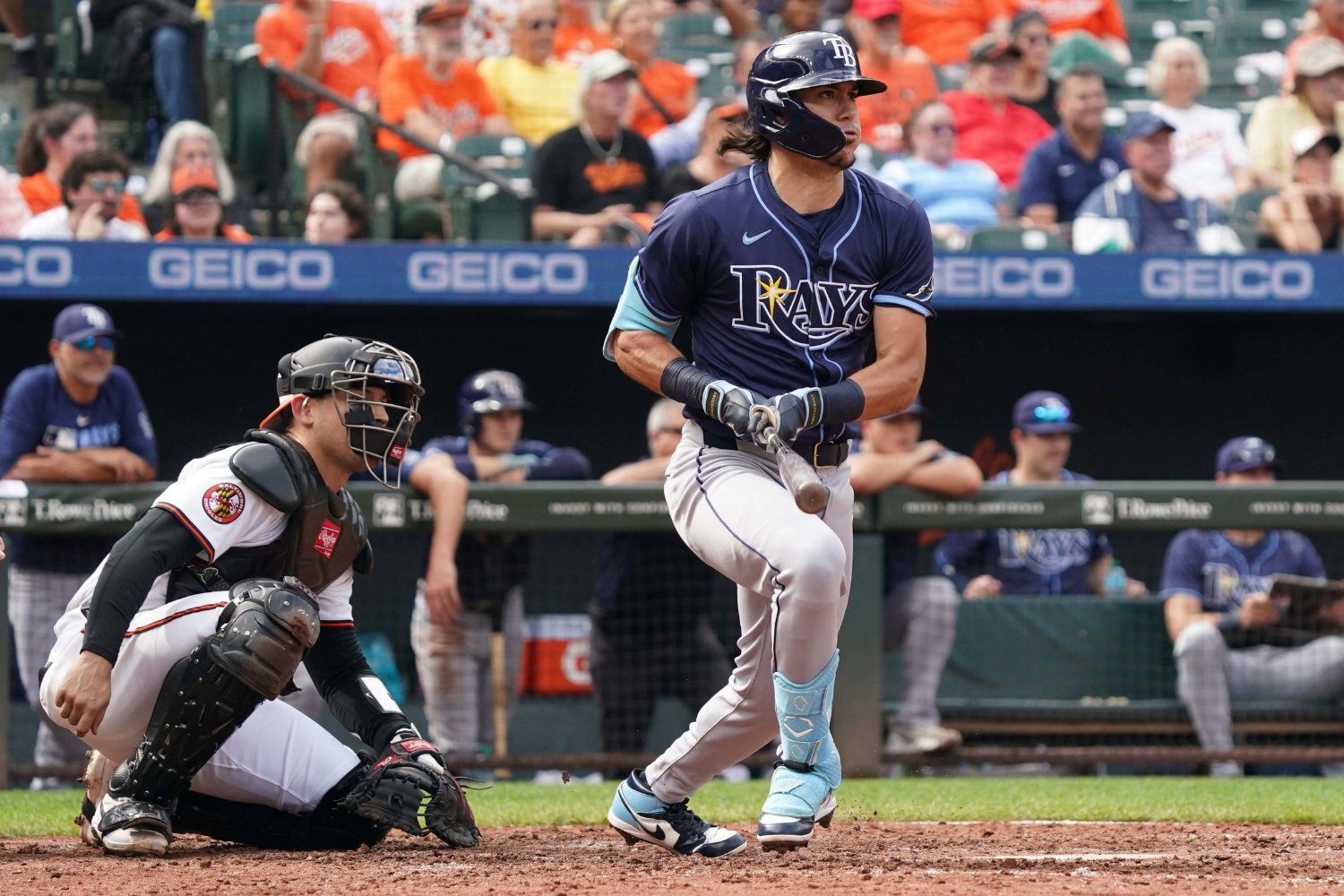 The Boston Red Sox made an intra-division trade Tuesday afternoon, shipping previously-designated-for-assignment Luis Guerrero to Tampa Bay. In return, the Red Sox received 29-year-old utility player Tristan Gray. Gray appeared in 30 games last season after the Tampa Bay Rays acquired him in a trade with the Chicago White Sox. He would go on to hit .231/.282/.410 with five doubles, three home runs, and nine RBIs. Gray profiles as a depth option with the Red Sox, the utility player having spent time at all infield positions in 2025 with most of his games played in the majors being at first base. Should Gray make it through the offseason and enter spring training with the Red Sox, he would be competing against the likes of Nick Sogard, Nate Eaton and David Hamilton for an end-of-bench role. Though, in all likelihood, should Gray still be with the team by the end of spring training, he would open the season with Triple-A Worcester, providing a veteran depth option for the organization on a cheap contract. Gray as a hitter is a rather interesting figure. Offensively, he may not make contact often (based on a 28.6% strikeout rate in his short career) and will chase pitches as shown by a 27.6% chase rate last season (not to mention a whiff rate of 31.9%), but when he does make contact, he doesn’t miss out. Gray hits the ball hard, as evidenced by his average exit velocity for 2025 being 91.4 mph along with his max velocity being 110.6 mph. Of the balls he did hit this past season, nearly half of them were considered hard-hit as well, his rate being 44.3% in the 30 games he played. One other interesting trait of his offense is his bat speed. In 2025, it averaged 74.4 mph. As written by our very own @Jack Lindsay earlier this offseason, the Blue Jays focused on improving their bat speed so that when they fell into disadvantageous counts, they could still put together a powerful, controlled swing on the baseball. Of the Red Sox players in 2025, only Triston Casas, Jarren Duran and Roman Anthony had bat speeds higher than Gray’s. The Red Sox are clearly interested in pumping up their lineup's bat speed, and Gray follows that trend, especially for someone on the bench. Unfortunately, it doesn’t matter what your bat speed is if you fail to make contact. His zone-contact rate last season was only 75.4%, an increase from his 2024 numbers but still below what many consider to be average (roughly 85-87%). Also of note, while he showed he could handle fastballs, Gray struggled against off-speed pitches and whiffed more against breaking pitches, especially at Triple-A. And while he has struck out at a 28.7% rate for his career, his walk rate of 7.4% isn’t high enough to make up for the lack of contact. Defensively, Gray’s versatility is of interest. The fact he can play not just one or two infield positions but all four makes him extremely valuable for depth purposes. Last year, Nick Sogard was in a similar role, where he could be called up from Worcester to cover the loss of a player for a week or two and be plugged into the lineup in a wide variety of positions. Gray fills a similar need as thanks to his one remaining option year; he could be shuttled back and forth from Worcester to Boston as the team needs a body, giving Alex Cora someone who can be inserted into the lineup anywhere on the infield dirt. He doesn’t stand out with the glove at any one position, though he's competent at each, making one error at each of first base, second base and third base while accruing an Outs Above Average of one at shortstop last season. He very much fits the mold of end-of-the-roster players that the Red Sox have brought in over the past few seasons and have managed to turn into contributors at the major-league level. Guys like Rob Refsnyder, Romy González, and Nate Eaton were all castoffs from their previous teams who are now core depth pieces on the roster. While that’s no guarantee Gray will continue that trend, the Red Sox's track record with similar players suggests a brighter future than most may expect from the now-former Ray.
 -
The Arizona Fall League has officially come to a close as the Surprise Saguaros defeated the Peoria Javelinas 9-4 in the championship game. For fans of the Boston Red Sox, no one really cares about that if we're being honest. The prospects from the organization finished playing on November 12. Three games were played in the final week by the Salt River Rafters as the prospects got their final game action until spring training. Across the week, the Rafters went 2-1, with Red Sox prospects getting some limited action. From a pitching standpoint, only two pitchers from the Red Sox saw any action. Jay Allmer pitched in one game, throwing 1/3 of an inning where he tossed 11 pitches. In that 1/3 of an inning, Allmer faced two batters, walking one and striking out the other. The lone strikeout was on a 79.4 mph slider. For his efforts, Allmer was credited with the win after the Rafters took the lead in the bottom of the fifth inning. Allmer finished his fall league season with a 10.80 ERA in seven games. In that span, he won one game and allowed six earned runs across five innings on four hits and nine walks. He also struck out three. The only other pitcher to see action was Brandon Neely, who struggled in his final appearance. Tossing one inning, Neely allowed three runs to score on two walks and a hit. That lone hit was a home run. He also struck out one batter. Neely entered the game in the fifth inning and immediately walked his first batter. To his benefit, he managed to get the next two batters out on a fly ball to center field and then a strikeout where he managed to get Cole Mathis to chase a slider down in the dirt. It would fall apart after that, as the second walk of the inning was followed by a double steal before Owen Ayers took a 2-2 curveball and deposited it 426 feet deep into right-center. Neely got out of the inning thanks to a groundout, but the damage was already done. Neely finished his fall league season appearing in five games and making one start. He tossed 10 innings and allowed 12 earned runs on 16 hits and eight walks. He also managed to strike out 11 batters. Luis Perales did not pitch this week, bringing his season to a close with six starts where he threw a combined 11 1/3 innings. In that span, he allowed 14 runs, 13 earned, on 16 hits and 11 walks. However, despite the inconsistency, Perales flashed potential as he generated several whiffs on his way to 19 strikeouts thanks in part to a fastball he managed to throw over 100 mph. Perales’ season culminated in a Fall-Star selection. Jojo Ingrassia was another pitcher who finished his season in the previous week, pitching in five games and making two starts. The left-hander tossed 10 innings and allowed 11 runs, 10 earned on 14 hits and nine walks. He also managed to strike out 13 batters as he worked to make up for a very short minor league season this year. Prior to his time in Arizona, Ingrassia only tossed 17 innings for Greenville. Isaac Stebens is the final pitcher on the River Rafters from the organization, and he also did not get any game action this week. His season concluded with eight appearances where he threw just seven innings. After a dominating year with Greenville, Stebens may have put together the most consistent fall season as he allowed just five runs, three earned, on eight hits and six walks. While his WHIP of 2.00 could have been lower, Stebens showed an ability to limit runners on base from scoring against him. [Editor's Note: None of the pitchers had particularly "great" fall seasons, but the AFL is an offense-first league. More pitchers had an ERA above 7.00 than those that had a sub-3.00 ERA this year.] Offensively, all three position players got into games during the shortened week. Nelly Taylor played the least, appearing in just one game in the last week when he played center field. The seldom-used outfielder would go 0-for-3 in his lone appearance, striking out twice. The performance brought his fall league season to an end as he appeared in 13 games, hitting just .139/.289/.139 with two RBIs and seven stolen bases. Johanfran Garcia played in all three games, suiting up at catcher just once as he was the team’s designated hitter for the other two. Across the three games Garcia went 2-for-9 with a double, one RBI, and two strikeouts. Overall, it was a good fall season for the 20-year-old catcher, as he continued to get regular reps. Despite a stat line of just .224/.350/.388, Garcia put up an OPS of .738 thanks in part to his 12 walks, five doubles and two home runs. He also drove in 10 runs across his 19 games played. Defensively, he caught 84 innings behind the plate without committing a single error. He did, however, allow two passed balls and only threw out 18% of base stealers, allowing 27 successful steals. Finally, Stanley Tucker appeared in all three games at second base and went 2-for-9 with one strikeout. Tucker also stole one base to bring his final total up to 13 steals. Tucker was the most consistent prospect sent by the Red Sox and played well throughout his stay in Arizona, shown by the fact he appeared in 24 games for the Rafters. Across the season, he ended up hitting .278/.374/.316 but had an OPS of just .690 due to a lack of slugging; he hit just three doubles while the remainder of his hits were all singles. Despite that, he managed to drive in 15 runs and, as previously mentioned, stole 13 bases. Due to his stellar play, Tucker was a Fall-Star. The 2025 Arizona Fall League is officially over. While the season may not have gone perfectly for every Red Sox prospect, it gave these players a chance to make up for lost time and continue their development with live game action. Now, they’ll have to take the lessons they learned and use them to improve even further as players in 2026 and beyond. View full article
-
 The Arizona Fall League has officially come to a close as the Surprise Saguaros defeated the Peoria Javelinas 9-4 in the championship game. For fans of the Boston Red Sox, no one really cares about that if we're being honest. The prospects from the organization finished playing on November 12. Three games were played in the final week by the Salt River Rafters as the prospects got their final game action until spring training. Across the week, the Rafters went 2-1, with Red Sox prospects getting some limited action. From a pitching standpoint, only two pitchers from the Red Sox saw any action. Jay Allmer pitched in one game, throwing 1/3 of an inning where he tossed 11 pitches. In that 1/3 of an inning, Allmer faced two batters, walking one and striking out the other. The lone strikeout was on a 79.4 mph slider. For his efforts, Allmer was credited with the win after the Rafters took the lead in the bottom of the fifth inning. Allmer finished his fall league season with a 10.80 ERA in seven games. In that span, he won one game and allowed six earned runs across five innings on four hits and nine walks. He also struck out three. The only other pitcher to see action was Brandon Neely, who struggled in his final appearance. Tossing one inning, Neely allowed three runs to score on two walks and a hit. That lone hit was a home run. He also struck out one batter. Neely entered the game in the fifth inning and immediately walked his first batter. To his benefit, he managed to get the next two batters out on a fly ball to center field and then a strikeout where he managed to get Cole Mathis to chase a slider down in the dirt. It would fall apart after that, as the second walk of the inning was followed by a double steal before Owen Ayers took a 2-2 curveball and deposited it 426 feet deep into right-center. Neely got out of the inning thanks to a groundout, but the damage was already done. Neely finished his fall league season appearing in five games and making one start. He tossed 10 innings and allowed 12 earned runs on 16 hits and eight walks. He also managed to strike out 11 batters. Luis Perales did not pitch this week, bringing his season to a close with six starts where he threw a combined 11 1/3 innings. In that span, he allowed 14 runs, 13 earned, on 16 hits and 11 walks. However, despite the inconsistency, Perales flashed potential as he generated several whiffs on his way to 19 strikeouts thanks in part to a fastball he managed to throw over 100 mph. Perales’ season culminated in a Fall-Star selection. Jojo Ingrassia was another pitcher who finished his season in the previous week, pitching in five games and making two starts. The left-hander tossed 10 innings and allowed 11 runs, 10 earned on 14 hits and nine walks. He also managed to strike out 13 batters as he worked to make up for a very short minor league season this year. Prior to his time in Arizona, Ingrassia only tossed 17 innings for Greenville. Isaac Stebens is the final pitcher on the River Rafters from the organization, and he also did not get any game action this week. His season concluded with eight appearances where he threw just seven innings. After a dominating year with Greenville, Stebens may have put together the most consistent fall season as he allowed just five runs, three earned, on eight hits and six walks. While his WHIP of 2.00 could have been lower, Stebens showed an ability to limit runners on base from scoring against him. [Editor's Note: None of the pitchers had particularly "great" fall seasons, but the AFL is an offense-first league. More pitchers had an ERA above 7.00 than those that had a sub-3.00 ERA this year.] Offensively, all three position players got into games during the shortened week. Nelly Taylor played the least, appearing in just one game in the last week when he played center field. The seldom-used outfielder would go 0-for-3 in his lone appearance, striking out twice. The performance brought his fall league season to an end as he appeared in 13 games, hitting just .139/.289/.139 with two RBIs and seven stolen bases. Johanfran Garcia played in all three games, suiting up at catcher just once as he was the team’s designated hitter for the other two. Across the three games Garcia went 2-for-9 with a double, one RBI, and two strikeouts. Overall, it was a good fall season for the 20-year-old catcher, as he continued to get regular reps. Despite a stat line of just .224/.350/.388, Garcia put up an OPS of .738 thanks in part to his 12 walks, five doubles and two home runs. He also drove in 10 runs across his 19 games played. Defensively, he caught 84 innings behind the plate without committing a single error. He did, however, allow two passed balls and only threw out 18% of base stealers, allowing 27 successful steals. Finally, Stanley Tucker appeared in all three games at second base and went 2-for-9 with one strikeout. Tucker also stole one base to bring his final total up to 13 steals. Tucker was the most consistent prospect sent by the Red Sox and played well throughout his stay in Arizona, shown by the fact he appeared in 24 games for the Rafters. Across the season, he ended up hitting .278/.374/.316 but had an OPS of just .690 due to a lack of slugging; he hit just three doubles while the remainder of his hits were all singles. Despite that, he managed to drive in 15 runs and, as previously mentioned, stole 13 bases. Due to his stellar play, Tucker was a Fall-Star. The 2025 Arizona Fall League is officially over. While the season may not have gone perfectly for every Red Sox prospect, it gave these players a chance to make up for lost time and continue their development with live game action. Now, they’ll have to take the lessons they learned and use them to improve even further as players in 2026 and beyond.
 -
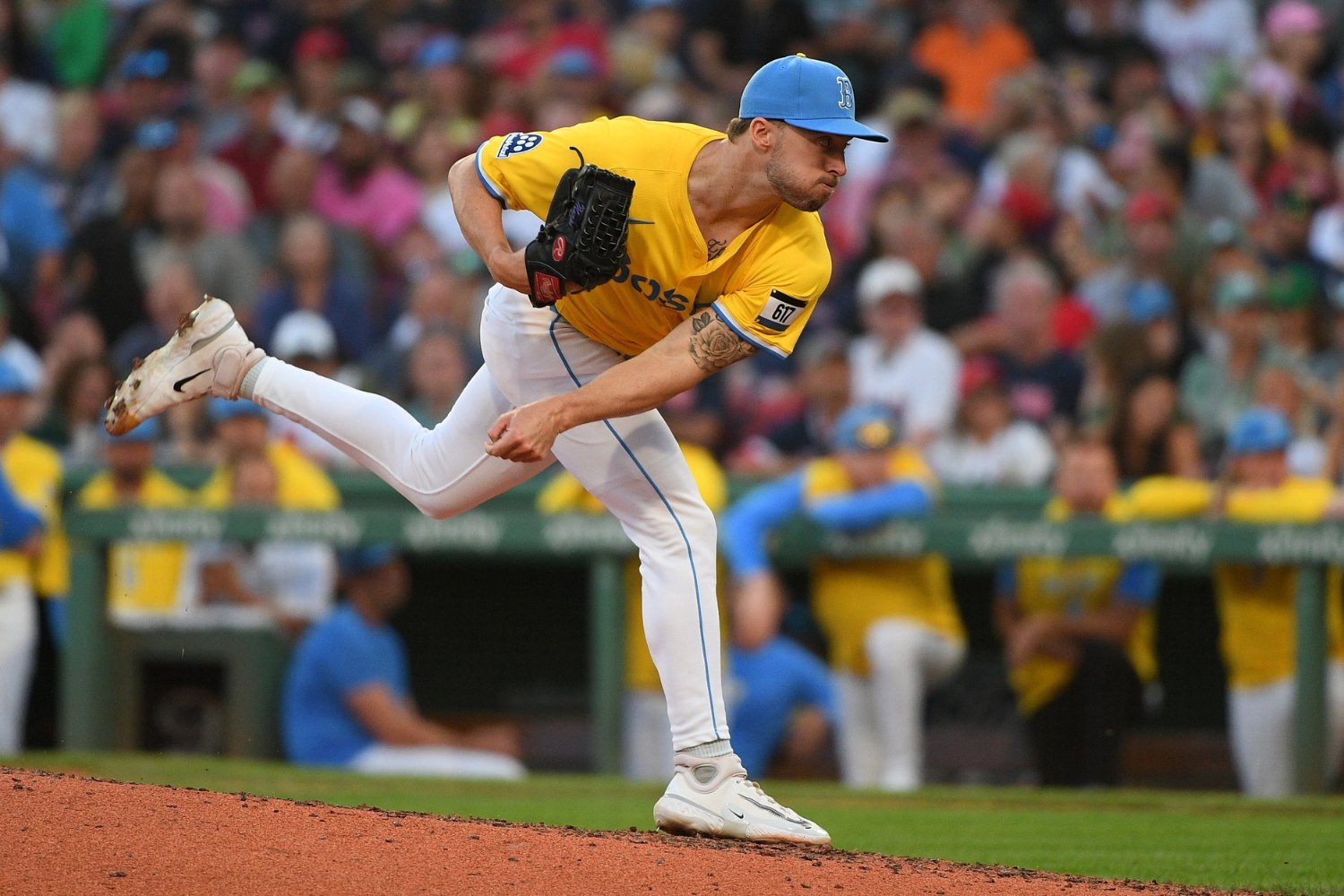 The Boston Red Sox made a bevy of roster moves Tuesday afternoon in the lead-up to the deadline of being able to protect players from the Rule 5 Draft. Entering the day, the Red Sox 40-man roster was full as it was expected for the team to make some room to open a spot for pitcher David Sandlin. Instead, the team began the flurry of roster moves by trading Luis Guerrero to the Tampa Bay Rays for infielder Tristan Gray, per MassLive's Chris Cotillo. Guerrero, who had been previously designated for assignment and went unclaimed, didn’t open any roster spot but instead put the team at 41 players on the 40-man roster. The need for an opening led the Red Sox to designate Nathaniel Lowe for assignment. The first baseman joined Boston in August after being released by the Washington Nationals. He helped to provide stability at first base after the team had relied on a combination of Abraham Toro and Romy González. Appearing in 34 games, Lowe hit .280/.370/.420 with six doubles, a triple, two home runs, and 16 RBIs. Projected to earn around $13.5 million in arbitration, Lowe was viewed as a non-tender candidate, so the announcement of being DFA’d was not much of a surprise. The team followed the roster turnover by designating Josh Winckowski for assignment. Winckowski, the last remaining player in the system from the Andrew Benintendi trade, was viewed as another non-tender candidate due to other relievers having passed him on the depth chart. After a surprise campaign in 2023 that saw him become a trusted option in Alex Cora’s bullpen, Winckowski was never able to repeat that success as he struggled in 2024 before a flexor strain in his right elbow limited him to six games with Boston in 2025. Winckowski pitched in 121 games during his four seasons in Boston, making 21 starts. The right-hander went 13-14 with five saves and a 4.20 ERA in 242 1/3 innings pitched. With those moves, Boston saw their 40-man roster drop to 39, leaving room to add at least one player. But the team wasn’t finished; they would move another reliever a few hours later. With 33 minutes until the deadline to protect players, the Red Sox shipped left-hander Chris Murphy to the Chicago White Sox, according to USA Today's Bob Nightengale. In return, the Red Sox received catcher Ronny Hernandez. Murphy made his debut with Boston in 2023, where the left-hander appeared in 20 games for the team. Through July, he pitched well, allowing just five earned runs across 28 1/3 innings, suggesting he could be a key bullpen piece if the team hoped to overcome injuries to its starting pitchers. Unfortunately, he fell off in August from possibly being overused, allowing 17 earned runs in 14 1/3 innings before only tossing five innings in September. Murphy would miss the 2024 season after undergoing Tommy John surgery in April of 2024. He would return in 2025, appearing in 23 games and going 3-0 with a 3.12 ERA in 34 2/3 innings. For his career, Murphy pitched in 43 games for Boston and had a 4.15 ERA in 82 1/3 innings. Hernandez is 21 years old and spent the 2025 season with Single-A Kannapolis, where he hit .251/.344/.336 with 12 doubles, one triple, four home runs, and 34 RBIs. Hernandez signed with the White Sox at 17 in 2022, and he immediately played in the DSL, throwing out 51% of base stealers. In 2025, he appeared in 64 games behind the plate, committing 10 errors in 622 defensive chances. He also threw out 24% of base stealers, up from 14% in 2024. Now down to 38 players on the 40-man roster, David Sandlin was added to the roster as reported by SoxProspects’ Andrew Parker. Sandlin was the one prospect everyone expected to be added to the roster, but it ended up being that he wasn’t alone. Chris Cotillo soon added that both Shane Drohan and Tyler Uberstine were also to be added, the two pitchers having previously been viewed as candidates, but it was unclear whether they would be added. Both spent most of the 2025 season in Worcester, pitching well enough to gain the attention of the front office to protect them from the Rule 5 Draft. With Worcester, Drohan appeared in 12 games, making 11 starts and going 5-1 with a 2.27 ERA in 47 2/3 innings pitched. What stuck out for him was his 67 strikeouts in that span. Uberstine made 19 appearances for Worcester, going 6-4 with a 3.56 ERA in 91 innings. He also struck out 102 batters. With the 40-man roster back up to 41 players, the Red Sox made one more trade to bring it back down to 40 players as they shipped left-handed reliever Brennan Bernardino to Colorado for minor leaguer Braiden Ward, as first reported by Beyond the Monster’s Hunter Noll. Bernardino joined the Red Sox back in 2023 after the team claimed him off waivers from Seattle, and he immediately became one of Cora’s most-used relievers during his tenure with the team. In three seasons with Boston, Bernardino appeared in 169 games, making 12 starts as an opener and going 10-8 with a 3.47 ERA across 155 2/3 innings. During that time, he struck out 157 batters and walked 68 while allowing just 11 home runs. Ward, who plays center field, left field, and second base, split last season between Double-A and Triple-A, where he hit a combined .290/.395/.391 with 17 doubles, four triples, two home runs, and 37 RBIs in 97 games. Most of Ward’s playing time in 2025 came in the outfield, playing 78 of his 97 games between left field and center field. He did play six games at second base and three at third base. Center field appears to be his best position defensively, as he’s made just four errors there in 456 defensive chances in his career. Boston finished the day by trading pitcher Alex Hoppe to the Seattle Mariners for catcher Luke Heyman, per Tim Healey of the Boston Globe. Hoppe, who was drafted by the Red Sox in 2022, split 2025 between Portland and Worcester, appearing in 44 games. The right-hander tossed 61 1/3 innings, striking out 73 batters and walking 34. He also had a 4.55 ERA. Hoppe was best known for his fastball, which could reach triple digits, and his slider, which, when he was on, could make batters look silly. Hoppe appeared in 123 games with the Boston organization, tossing 176 innings and striking out 203 batters. Heyman was Seattle’s 14th-round pick in this year’s draft, having played three years of college baseball for the University of Florida. In 2025, Heyman played in 49 games, hitting .301/.397/.578 with seven doubles, one triple, 13 home runs, and 44 RBIs. He did not play in any professional games after being drafted. Craig Breslow had a busy Tuesday as he overhauled the backend of the 40-man roster while adding prospects into the system. The offseason has only been in session for a few weeks, but Breslow seems willing to make moves, and it should make for an interesting offseason.
 -
The Rule 5 Draft Approaches: Who Should the Red Sox Protect?
Nick John replied to Nick John's topic in Boston Red Sox Talk
That's why I said he'll be taken by another team. Someone will pull the same move the Jays did last year with Bastardo and draft him only to stash him away on the 60-day IL. -
The Boston Red Sox made a bevy of roster moves Tuesday afternoon in the lead-up to the deadline of being able to protect players from the Rule 5 Draft. Entering the day, the Red Sox 40-man roster was full as it was expected for the team to make some room to open a spot for pitcher David Sandlin. Instead, the team began the flurry of roster moves by trading Luis Guerrero to the Tampa Bay Rays for infielder Tristan Gray, per MassLive's Chris Cotillo. Guerrero, who had been previously designated for assignment and went unclaimed, didn’t open any roster spot but instead put the team at 41 players on the 40-man roster. The need for an opening led the Red Sox to designate Nathaniel Lowe for assignment. The first baseman joined Boston in August after being released by the Washington Nationals. He helped to provide stability at first base after the team had relied on a combination of Abraham Toro and Romy González. Appearing in 34 games, Lowe hit .280/.370/.420 with six doubles, a triple, two home runs, and 16 RBIs. Projected to earn around $13.5 million in arbitration, Lowe was viewed as a non-tender candidate, so the announcement of being DFA’d was not much of a surprise. The team followed the roster turnover by designating Josh Winckowski for assignment. Winckowski, the last remaining player in the system from the Andrew Benintendi trade, was viewed as another non-tender candidate due to other relievers having passed him on the depth chart. After a surprise campaign in 2023 that saw him become a trusted option in Alex Cora’s bullpen, Winckowski was never able to repeat that success as he struggled in 2024 before a flexor strain in his right elbow limited him to six games with Boston in 2025. Winckowski pitched in 121 games during his four seasons in Boston, making 21 starts. The right-hander went 13-14 with five saves and a 4.20 ERA in 242 1/3 innings pitched. With those moves, Boston saw their 40-man roster drop to 39, leaving room to add at least one player. But the team wasn’t finished; they would move another reliever a few hours later. With 33 minutes until the deadline to protect players, the Red Sox shipped left-hander Chris Murphy to the Chicago White Sox, according to USA Today's Bob Nightengale. In return, the Red Sox received catcher Ronny Hernandez. Murphy made his debut with Boston in 2023, where the left-hander appeared in 20 games for the team. Through July, he pitched well, allowing just five earned runs across 28 1/3 innings, suggesting he could be a key bullpen piece if the team hoped to overcome injuries to its starting pitchers. Unfortunately, he fell off in August from possibly being overused, allowing 17 earned runs in 14 1/3 innings before only tossing five innings in September. Murphy would miss the 2024 season after undergoing Tommy John surgery in April of 2024. He would return in 2025, appearing in 23 games and going 3-0 with a 3.12 ERA in 34 2/3 innings. For his career, Murphy pitched in 43 games for Boston and had a 4.15 ERA in 82 1/3 innings. Hernandez is 21 years old and spent the 2025 season with Single-A Kannapolis, where he hit .251/.344/.336 with 12 doubles, one triple, four home runs, and 34 RBIs. Hernandez signed with the White Sox at 17 in 2022, and he immediately played in the DSL, throwing out 51% of base stealers. In 2025, he appeared in 64 games behind the plate, committing 10 errors in 622 defensive chances. He also threw out 24% of base stealers, up from 14% in 2024. Now down to 38 players on the 40-man roster, David Sandlin was added to the roster as reported by SoxProspects’ Andrew Parker. Sandlin was the one prospect everyone expected to be added to the roster, but it ended up being that he wasn’t alone. Chris Cotillo soon added that both Shane Drohan and Tyler Uberstine were also to be added, the two pitchers having previously been viewed as candidates, but it was unclear whether they would be added. Both spent most of the 2025 season in Worcester, pitching well enough to gain the attention of the front office to protect them from the Rule 5 Draft. With Worcester, Drohan appeared in 12 games, making 11 starts and going 5-1 with a 2.27 ERA in 47 2/3 innings pitched. What stuck out for him was his 67 strikeouts in that span. Uberstine made 19 appearances for Worcester, going 6-4 with a 3.56 ERA in 91 innings. He also struck out 102 batters. With the 40-man roster back up to 41 players, the Red Sox made one more trade to bring it back down to 40 players as they shipped left-handed reliever Brennan Bernardino to Colorado for minor leaguer Braiden Ward, as first reported by Beyond the Monster’s Hunter Noll. Bernardino joined the Red Sox back in 2023 after the team claimed him off waivers from Seattle, and he immediately became one of Cora’s most-used relievers during his tenure with the team. In three seasons with Boston, Bernardino appeared in 169 games, making 12 starts as an opener and going 10-8 with a 3.47 ERA across 155 2/3 innings. During that time, he struck out 157 batters and walked 68 while allowing just 11 home runs. Ward, who plays center field, left field, and second base, split last season between Double-A and Triple-A, where he hit a combined .290/.395/.391 with 17 doubles, four triples, two home runs, and 37 RBIs in 97 games. Most of Ward’s playing time in 2025 came in the outfield, playing 78 of his 97 games between left field and center field. He did play six games at second base and three at third base. Center field appears to be his best position defensively, as he’s made just four errors there in 456 defensive chances in his career. Boston finished the day by trading pitcher Alex Hoppe to the Seattle Mariners for catcher Luke Heyman, per Tim Healey of the Boston Globe. Hoppe, who was drafted by the Red Sox in 2022, split 2025 between Portland and Worcester, appearing in 44 games. The right-hander tossed 61 1/3 innings, striking out 73 batters and walking 34. He also had a 4.55 ERA. Hoppe was best known for his fastball, which could reach triple digits, and his slider, which, when he was on, could make batters look silly. Hoppe appeared in 123 games with the Boston organization, tossing 176 innings and striking out 203 batters. Heyman was Seattle’s 14th-round pick in this year’s draft, having played three years of college baseball for the University of Florida. In 2025, Heyman played in 49 games, hitting .301/.397/.578 with seven doubles, one triple, 13 home runs, and 44 RBIs. He did not play in any professional games after being drafted. Craig Breslow had a busy Tuesday as he overhauled the backend of the 40-man roster while adding prospects into the system. The offseason has only been in session for a few weeks, but Breslow seems willing to make moves, and it should make for an interesting offseason. View full article
-
The Rule 5 Draft Approaches: Who Should the Red Sox Protect?
Nick John replied to Nick John's topic in Boston Red Sox Talk
Angel Bastatdo was coming off of a major injury and was projected to miss all of 2025 but was still taken. If a team likes Monegro they'll take him regardless of injury. They're not losing anything by taking him and then stashing him on the 60-day IL. As for Uberstine, there's a reason it's a coin toss for him. He's still young but older than all our other pitching prospects. Unless the Sox feel he's going to take a huge leap next year they'll leave him off the roster.- 116 replies
-
- 1
-

-
- david sandlin
- yordanny monegro
- (and 1 more)
-
The offseason is officially in full swing, and the free agent and trade markets will begin to heat up as teams finalize their in-house talents. One final area regarding the 40-man roster that will need to be decided upon by tonight is protecting prospects Rule 5 Draft. For those who may not know, the Rule 5 Draft is a draft where MLB organizations can select players who are not on another team’s 40-man roster. However, players selected in this draft have to remain on the active roster for the entire season, barring time on the injured list. Players who were signed at 18 years old or younger are eligible for the draft after five seasons, and players who signed at 19 years old or older are eligible after four seasons. There is also a minor league phase where players in Double-A or lower can be drafted for $24,000 per player to play for the drafting organization’s Triple-A team. Last offseason, the Red Sox added two players to the 40-man to protect them: pitcher Hunter Dobbins and outfielder Jhostynxon Garcia. Both players wound up playing in the majors with Boston during the 2025 season. The Red Sox have likewise been benefactors from this draft, as two key members of their bullpen were acquired in such a fashion. Garrett Whitlock was taken during the 2020 Rule 5 Draft from the New York Yankees, while Justin Slaten was taken in the Rule 5 Draft by the New York Mets from the Texas Rangers and was immediately traded to Boston. Boston has also seen various prospects lost over the years, including the loss of Angel Bastardo, a pitching prospect taken in the 2024 Rule 5 Draft by the Toronto Blue Jays. Currently, the Red Sox's 40-man roster is full due to the addition of players who had ended the season on the 60-day injured list. For the Red Sox to protect any of their eligible prospects, they would need to open up a roster spot. And they may need to clear up a few spots just like last season. As it stands, the team has 42 prospects eligible for the draft, though most won't be considerations during the major league portion. It isn’t ideal to develop prospects and have them taken by another team, but fortunately for the Red Sox, most of their top prospects have either graduated to the big league club or have been packaged in trades for talent. However, there are still a few names that bring into question whether the Red Sox should protect them or not. We’re going to break down these players and see why they may not want to be lost. Likely To Be Added: Unlike last season, there is really only one player who is likely to be added to the 40-man roster this time around. RHP David Sandlin (MLB Pipeline #9 Red Sox Prospect) Sandlin came over to the Red Sox in a spring training trade with the Royals in 2024, turning a surplus in middle relievers into an interesting pitching prospect. His first season had its share of ups and downs as he split the year between High-A and Double-A, finishing with some less than ideal stats. Despite starting 18 games, Sandlin only managed to toss 57 1/3 innings in that span. What did impress, however, was his ability to generate strikeouts, as he got 82 batters to fan. While he wasn’t going deep into games, Sandlin’s stuff did flash the potential of an impact reliever thanks to his fastball. The 2025 campaign yielded a step forward, Sandlin cruising in Portland for most of the season. Through his first 17 appearances, he had tossed 82 1/3 innings with an ERA that was nearly two runs lower than his final 2024 number at 3.61. While his strikeouts took a step back (only 86 in those 82 1/3 innings), Sandlin was beginning to look more like a professional pitcher who could locate his stuff and pitch to contact when necessary. This change in demeanor had many wondering if the Red Sox would bring him up to Boston for the stretch run to help out in some form. The idea was floated around as the team transitioned him to the bullpen upon his promotion to Triple-A. Unfortunately, he struggled with the transition, allowing 19 earned runs in 18 2/3 innings out of the Worcester bullpen. Despite his struggles, Sandlin has showcased the potential of a major league arm and will only be 25 at the start of spring training. It wouldn’t be a surprise if another team took a flier on him if he were available. The Red Sox would be wise to protect him from being poached by another team. Coin Flips Besides Sandlin, there isn’t a definite player that seems to be a lock to be taken in the Rule 5 Draft. While no team wants their developed prospects pilfered, the Red Sox wouldn’t be losing much should another team want to take a risk. However, there are a couple players that the team may want to protect just to play it safe after how their 2025 seasons went. RHP Tyler Uberstine Uberstine was a 19th-round selection back in the 2021 MLB Draft and hadn’t done much to write home about prior to 2025. His first season in 2022 saw him finish the year with seven starts with High-A Greenville where he flashed some potential thanks in part to 35 strikeouts in 33 1/3 innings pitched. Unfortunately, he would go on to miss all of 2023 and most of 2024 due to Tommy John surgery, making 2025 his first full season since his debut year. Despite that prolonged layoff, Uberstine pitched rather well, finishing this year with a 6-5 record in 25 games between Portland and Worcester. Tossing 120 1/3 innings, he also blew past his previous career-high workload while striking out 137 batters. That strikeout per nine figure of 10.1 will intrigue a lot of teams this winter. The Red Sox have many other pitching prospects ahead of Uberstine on the depth chart, and because of that, it’s unlikely they’ll add him to the 40-man roster. A team looking for a young, cost-controlled pitcher might take a risk on him due to his strikeout numbers alone, and the Red Sox probably wouldn’t worry too much unless there’s something in his underlying metrics they really love. RHP Yordanny Monegro (MLB Pipeline’s #27 Red Sox Prospect) Much like with Uberstine, Monegro is below a few pitchers on the depth chart and will miss most, if not all of 2026 after undergoing Tommy John surgery near the end of August. That alone is why he might be at high risk of being picked in the Rule 5 Draft, as another talented Red Sox arm was taken in this manner in 2024 (Bastardo) knowing that he could be stashed on the 60-day injured list all season. Monegro is young, as he won’t turn 24 until next October and while his ceiling right now looks like a middle reliever, he flashed potential during his time in the rotation in 2024 and in 2025 before his injury. Despite making just nine appearances in 2025, the right-hander tossed 33 2/3 innings and struck out 49 batters while walking just eight, good for a walk to strikeout ratio of 2.14 and a strikeout per nine of 13.10. Monegro's best pitch is his slider, which averages between 85-88 mph and is thrown more than any other of his pitches. His fastball, on the other, hand seems to be a work in progress, as his four-seam sits between 94 and 96 mph but he lacks proper command and control of it. Because of the elbow surgery, Monegro is a prime draft-and-stash candidate for a few teams who might be interested in seeing how he develops, especially as they wouldn’t need to keep him on the 26-man active roster unlike other Rule 5 picks. And because he would make it through the 2026 season without being demoted, whatever team takes him would then be free to send him to the minors in 2027 to continue his development without worry of having to send him back to his original organization. The Red Sox could do the same, placing him on the 40-man roster to protect him and then placing him on the 60-Day injured list the moment it’s possible. Though, that would require them to use a 40-man spot on him all offseason. There’s a good chance they take a risk and leave him unprotected. Again, the Red Sox have a total of 42 prospects who are eligible for the Rule 5 Draft, but unlike past seasons, there aren’t many names who stand out as likely candidates to be selected. Beyond Sandlin, the team may comfortable leaving everyone else unprotected. View full article
-
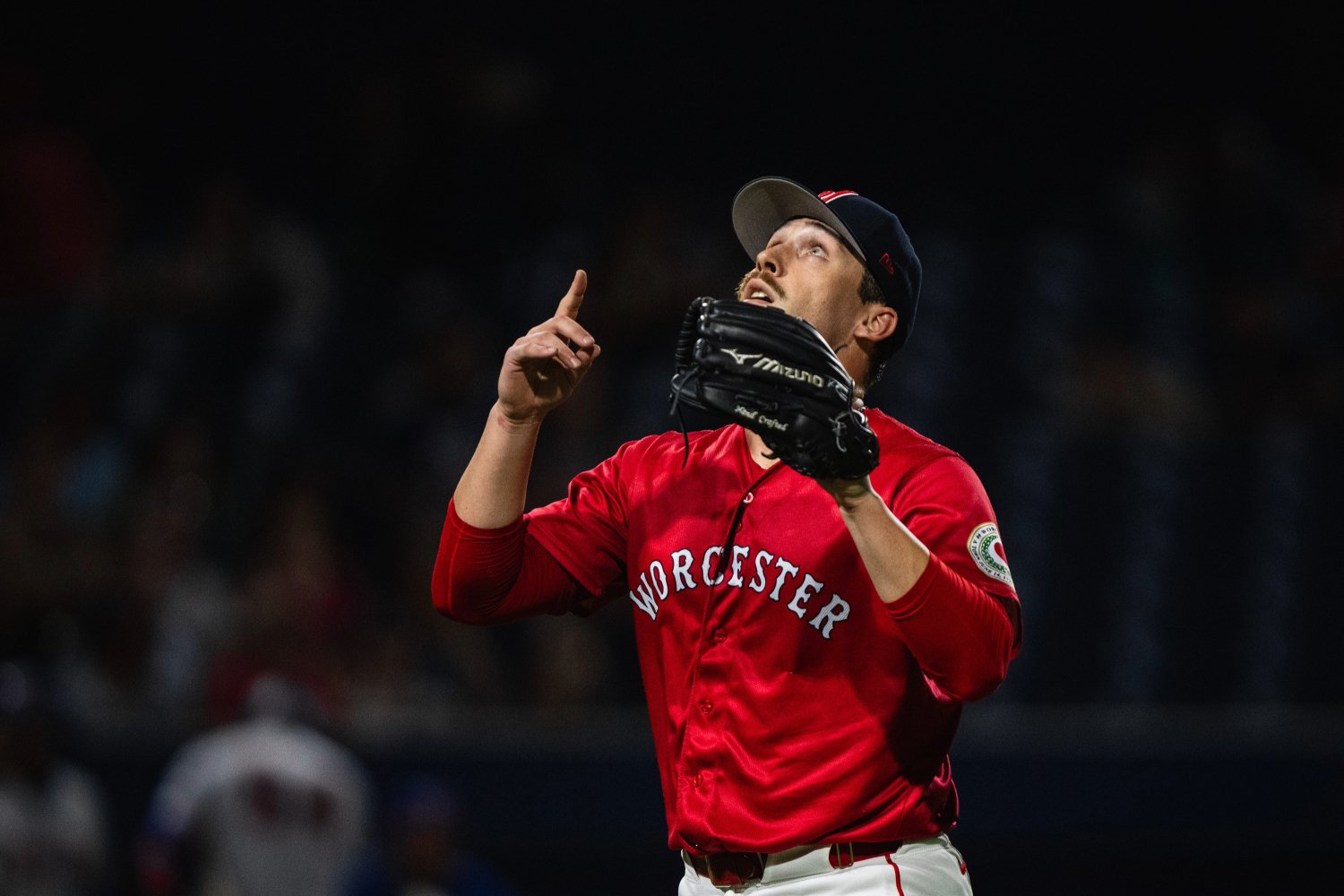 The offseason is officially in full swing, and the free agent and trade markets will begin to heat up as teams finalize their in-house talents. One final area regarding the 40-man roster that will need to be decided upon by tonight is protecting prospects Rule 5 Draft. For those who may not know, the Rule 5 Draft is a draft where MLB organizations can select players who are not on another team’s 40-man roster. However, players selected in this draft have to remain on the active roster for the entire season, barring time on the injured list. Players who were signed at 18 years old or younger are eligible for the draft after five seasons, and players who signed at 19 years old or older are eligible after four seasons. There is also a minor league phase where players in Double-A or lower can be drafted for $24,000 per player to play for the drafting organization’s Triple-A team. Last offseason, the Red Sox added two players to the 40-man to protect them: pitcher Hunter Dobbins and outfielder Jhostynxon Garcia. Both players wound up playing in the majors with Boston during the 2025 season. The Red Sox have likewise been benefactors from this draft, as two key members of their bullpen were acquired in such a fashion. Garrett Whitlock was taken during the 2020 Rule 5 Draft from the New York Yankees, while Justin Slaten was taken in the Rule 5 Draft by the New York Mets from the Texas Rangers and was immediately traded to Boston. Boston has also seen various prospects lost over the years, including the loss of Angel Bastardo, a pitching prospect taken in the 2024 Rule 5 Draft by the Toronto Blue Jays. Currently, the Red Sox's 40-man roster is full due to the addition of players who had ended the season on the 60-day injured list. For the Red Sox to protect any of their eligible prospects, they would need to open up a roster spot. And they may need to clear up a few spots just like last season. As it stands, the team has 42 prospects eligible for the draft, though most won't be considerations during the major league portion. It isn’t ideal to develop prospects and have them taken by another team, but fortunately for the Red Sox, most of their top prospects have either graduated to the big league club or have been packaged in trades for talent. However, there are still a few names that bring into question whether the Red Sox should protect them or not. We’re going to break down these players and see why they may not want to be lost. Likely To Be Added: Unlike last season, there is really only one player who is likely to be added to the 40-man roster this time around. RHP David Sandlin (MLB Pipeline #9 Red Sox Prospect) Sandlin came over to the Red Sox in a spring training trade with the Royals in 2024, turning a surplus in middle relievers into an interesting pitching prospect. His first season had its share of ups and downs as he split the year between High-A and Double-A, finishing with some less than ideal stats. Despite starting 18 games, Sandlin only managed to toss 57 1/3 innings in that span. What did impress, however, was his ability to generate strikeouts, as he got 82 batters to fan. While he wasn’t going deep into games, Sandlin’s stuff did flash the potential of an impact reliever thanks to his fastball. The 2025 campaign yielded a step forward, Sandlin cruising in Portland for most of the season. Through his first 17 appearances, he had tossed 82 1/3 innings with an ERA that was nearly two runs lower than his final 2024 number at 3.61. While his strikeouts took a step back (only 86 in those 82 1/3 innings), Sandlin was beginning to look more like a professional pitcher who could locate his stuff and pitch to contact when necessary. This change in demeanor had many wondering if the Red Sox would bring him up to Boston for the stretch run to help out in some form. The idea was floated around as the team transitioned him to the bullpen upon his promotion to Triple-A. Unfortunately, he struggled with the transition, allowing 19 earned runs in 18 2/3 innings out of the Worcester bullpen. Despite his struggles, Sandlin has showcased the potential of a major league arm and will only be 25 at the start of spring training. It wouldn’t be a surprise if another team took a flier on him if he were available. The Red Sox would be wise to protect him from being poached by another team. Coin Flips Besides Sandlin, there isn’t a definite player that seems to be a lock to be taken in the Rule 5 Draft. While no team wants their developed prospects pilfered, the Red Sox wouldn’t be losing much should another team want to take a risk. However, there are a couple players that the team may want to protect just to play it safe after how their 2025 seasons went. RHP Tyler Uberstine Uberstine was a 19th-round selection back in the 2021 MLB Draft and hadn’t done much to write home about prior to 2025. His first season in 2022 saw him finish the year with seven starts with High-A Greenville where he flashed some potential thanks in part to 35 strikeouts in 33 1/3 innings pitched. Unfortunately, he would go on to miss all of 2023 and most of 2024 due to Tommy John surgery, making 2025 his first full season since his debut year. Despite that prolonged layoff, Uberstine pitched rather well, finishing this year with a 6-5 record in 25 games between Portland and Worcester. Tossing 120 1/3 innings, he also blew past his previous career-high workload while striking out 137 batters. That strikeout per nine figure of 10.1 will intrigue a lot of teams this winter. The Red Sox have many other pitching prospects ahead of Uberstine on the depth chart, and because of that, it’s unlikely they’ll add him to the 40-man roster. A team looking for a young, cost-controlled pitcher might take a risk on him due to his strikeout numbers alone, and the Red Sox probably wouldn’t worry too much unless there’s something in his underlying metrics they really love. RHP Yordanny Monegro (MLB Pipeline’s #27 Red Sox Prospect) Much like with Uberstine, Monegro is below a few pitchers on the depth chart and will miss most, if not all of 2026 after undergoing Tommy John surgery near the end of August. That alone is why he might be at high risk of being picked in the Rule 5 Draft, as another talented Red Sox arm was taken in this manner in 2024 (Bastardo) knowing that he could be stashed on the 60-day injured list all season. Monegro is young, as he won’t turn 24 until next October and while his ceiling right now looks like a middle reliever, he flashed potential during his time in the rotation in 2024 and in 2025 before his injury. Despite making just nine appearances in 2025, the right-hander tossed 33 2/3 innings and struck out 49 batters while walking just eight, good for a walk to strikeout ratio of 2.14 and a strikeout per nine of 13.10. Monegro's best pitch is his slider, which averages between 85-88 mph and is thrown more than any other of his pitches. His fastball, on the other, hand seems to be a work in progress, as his four-seam sits between 94 and 96 mph but he lacks proper command and control of it. Because of the elbow surgery, Monegro is a prime draft-and-stash candidate for a few teams who might be interested in seeing how he develops, especially as they wouldn’t need to keep him on the 26-man active roster unlike other Rule 5 picks. And because he would make it through the 2026 season without being demoted, whatever team takes him would then be free to send him to the minors in 2027 to continue his development without worry of having to send him back to his original organization. The Red Sox could do the same, placing him on the 40-man roster to protect him and then placing him on the 60-Day injured list the moment it’s possible. Though, that would require them to use a 40-man spot on him all offseason. There’s a good chance they take a risk and leave him unprotected. Again, the Red Sox have a total of 42 prospects who are eligible for the Rule 5 Draft, but unlike past seasons, there aren’t many names who stand out as likely candidates to be selected. Beyond Sandlin, the team may comfortable leaving everyone else unprotected.
 -
“Each year, it’s been a development of pitches, and it’s been what’s allowing me to have the success I’ve been having this past season,” Dalton Rogers told me as he spoke about his time with the Boston Red Sox. The left-hander finished the 2025 season in Double-A Portland, going 4-5 with a 3.52 ERA in 18 games with the Sea Dogs. More than anything, he showcased his development with a whopping 101 strikeouts in just 84 1/3 innings. Before making his Double-A debut, the pitcher had spent some time in Greenville, originally getting called up from Salem in 2023. “The pitching coach there, Bob Kipper, was like, 'You’re showing some really good changeups,'” Rogers reminisced about his time in Greenville. Rogers, who was drafted in the third round of the 2022 draft, has experienced quite the road to professional baseball as he lost his first season of college ball due to injury. He also changed his style of pitching once he got into professional baseball; Rogers was mainly a fastball pitcher in college, but has since undergone a drastic change in his pitch usage upon joining the Red Sox organization. “In college I was 80% fastball,” Rogers explained. “Obviously, being in pro ball, you can’t throw fastballs every time.” His changeup is viewed by members of the organization as possessing great potential, partly due to his similar arm release height and extension between his fastball and the off-speed offering. He spent his first full season focusing on developing his changeup, and upon entering his second full season in the pros, the focus shifted to a new pitch to compliment the two in his arsenal. “We worked on a slider. To help compliment a changeup that goes arm side and a fastball that carries, a slider that goes glove side [is key],” Rogers said, discussing his three main pitches. A key takeaway as mentioned by Rogers is that he now had three quadrants of the zone covered thanks his primary offerings. While working on them, he also began to improve a curveball that he had previously used. The pitch becoming more of a focus in 2025 as he continued to improve his three main ones. Rogers' development has not been with an eye on relief. Having pitched out of the bullpen his final season in college, Rogers saw a return to the rotation in his first season with the Red Sox. Across his first two full seasons, he appeared in 44 games making 42 starts. The 2025 campaign saw that plan change slightly, especially while with Greenville. To open the season Rogers appeared in five games at High-A, starting just one. “The Red Sox incorporated a piggyback. It allowed guys to have set days. Instead of a five-man rotation, you could have an eight-man with two starters throwing together,” Rogers explained. “How we do it is, we have pitch counts. To start the year, we were at about 60 pitches, and so Payton Tolle would start and I would come in behind him, We would have communications. He’s at about 50 pitches, I would get ready. I would treat it like I was starting. His last inning was my pre-game bullpen.” With the offseason in full swing now, Rogers is preparing for 2026 after taking some time off from having his wisdom teeth removed. The left-handed pitcher will look to continue his great pitching from 2025 into next year, where it is likely that he'll make it to Triple-A Worcester at some point. Taking everything that he’s worked on since being drafted, Rogers continues to put the pieces together as one of the most intriguing pitching prospects in the farm system. View full article
-
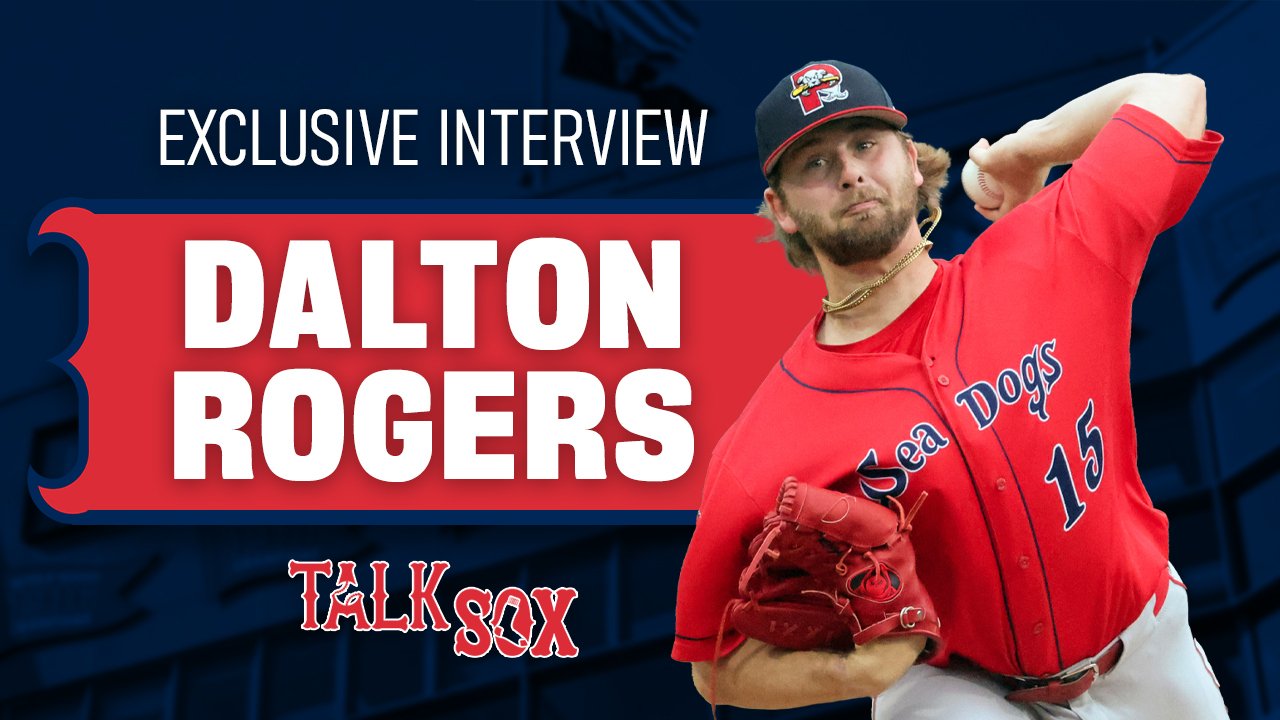 “Each year, it’s been a development of pitches, and it’s been what’s allowing me to have the success I’ve been having this past season,” Dalton Rogers told me as he spoke about his time with the Boston Red Sox. The left-hander finished the 2025 season in Double-A Portland, going 4-5 with a 3.52 ERA in 18 games with the Sea Dogs. More than anything, he showcased his development with a whopping 101 strikeouts in just 84 1/3 innings. Before making his Double-A debut, the pitcher had spent some time in Greenville, originally getting called up from Salem in 2023. “The pitching coach there, Bob Kipper, was like, 'You’re showing some really good changeups,'” Rogers reminisced about his time in Greenville. Rogers, who was drafted in the third round of the 2022 draft, has experienced quite the road to professional baseball as he lost his first season of college ball due to injury. He also changed his style of pitching once he got into professional baseball; Rogers was mainly a fastball pitcher in college, but has since undergone a drastic change in his pitch usage upon joining the Red Sox organization. “In college I was 80% fastball,” Rogers explained. “Obviously, being in pro ball, you can’t throw fastballs every time.” His changeup is viewed by members of the organization as possessing great potential, partly due to his similar arm release height and extension between his fastball and the off-speed offering. He spent his first full season focusing on developing his changeup, and upon entering his second full season in the pros, the focus shifted to a new pitch to compliment the two in his arsenal. “We worked on a slider. To help compliment a changeup that goes arm side and a fastball that carries, a slider that goes glove side [is key],” Rogers said, discussing his three main pitches. A key takeaway as mentioned by Rogers is that he now had three quadrants of the zone covered thanks his primary offerings. While working on them, he also began to improve a curveball that he had previously used. The pitch becoming more of a focus in 2025 as he continued to improve his three main ones. Rogers' development has not been with an eye on relief. Having pitched out of the bullpen his final season in college, Rogers saw a return to the rotation in his first season with the Red Sox. Across his first two full seasons, he appeared in 44 games making 42 starts. The 2025 campaign saw that plan change slightly, especially while with Greenville. To open the season Rogers appeared in five games at High-A, starting just one. “The Red Sox incorporated a piggyback. It allowed guys to have set days. Instead of a five-man rotation, you could have an eight-man with two starters throwing together,” Rogers explained. “How we do it is, we have pitch counts. To start the year, we were at about 60 pitches, and so Payton Tolle would start and I would come in behind him, We would have communications. He’s at about 50 pitches, I would get ready. I would treat it like I was starting. His last inning was my pre-game bullpen.” With the offseason in full swing now, Rogers is preparing for 2026 after taking some time off from having his wisdom teeth removed. The left-handed pitcher will look to continue his great pitching from 2025 into next year, where it is likely that he'll make it to Triple-A Worcester at some point. Taking everything that he’s worked on since being drafted, Rogers continues to put the pieces together as one of the most intriguing pitching prospects in the farm system.
 -
The Red Sox are in need of some starting pitching, and while there is some depth in the free agent market, Dylan Cease, Tatsuya Imai, and Zac Gallen are three of the more interesting names to consider.
-
The Red Sox are in need of some starting pitching, and while there is some depth in the free agent market, Dylan Cease, Tatsuya Imai, and Zac Gallen are three of the more interesting names to consider. View full video
-
Red Sox Arizona Fall League Week In Review: Nearing the End
Nick John posted an article in Minor Leagues
 The Arizona Fall League is reaching its annual conclusion, as the penultimate week was a shortened one. The Salt River Rafters played just four games as they began to wind their season down. While the season may not have ended in a championship (the Rafters being on the outside looking in at the playoffs at the time of this writing), there was still plenty to be proud of as the prospects sent by the Red Sox got plenty of work in. This was important, as most who were sent either missed a good portion of the season or the entire thing, giving them a chance to make up for lost time. In addition, two Red Sox prospects were named to the American League Fall-Stars team: Luis Perales and Stanley Tucker. The Rafters would go on to finish the week 1-3, good for fifth in the standings. But, as we’ve gotten used to hearing, you’re not here for that. Let's review how the Red Sox's prospects did. Perales made one start this week while also being named to the AFL Fall-Star team for the American League. While he didn’t get into the Fall-Star Game, he pitched sparingly in his lone start. Throwing just one inning, Perales allowed two runs on a walk and two hits while also striking out three batters. His fastball would top out at 100.4 mph in what was his final outing in Arizona. Jay Allmer managed to get into one game during the week, only going 1/3 of an inning as he was charged with a blown save. Allmer allowed the tying run to score in the sixth when he came on with two outs in the inning. Joining the list of pitchers who made one outing was Brandon Neely, the relief pitcher tossing 1 2/3 innings while allowing two runs on four hits and two walks. He also struck out a pair as he threw 48 pitches. Despite the four hits allowed, Neely managed to generate six whiffs in the outing. He was also charged with a blown save. Jojo Ingrassia managed to escape damage in his lone inning for the week. Making it through the outing without a run despite walking two batters, Ingrassia also got a strikeout as he threw 23 pitches but only eight for strikes. He generated two whiffs while struggling badly with his command. The final Red Sox pitcher in the AFL, Isaac Stebens, pitched well as he tossed one scoreless inning, needing just 14 pitches to get through the outing. Unfortunately, only six of them were for strikes as he got one groundout and two fly outs. Offensively, it was more of the same from the position players as Fall-Star Tucker went 4-for-15 as he continued to cool off after his scintillating start. Tucker also had three RBIs while striking out four times. He also had two more stolen bases bringing his total up to 12. Notably, he was the only player from the Red Sox to get into all four games this week, and he lso came in as a substitution in the Fall-Stars game, going 0-for-2 with a strikeout. Johanfran Garcia appeared in two games this week, getting a hit in both as he went 2-for 7 with a double, one walk, one RBI and two strikeouts. He split the two games between catcher and designated hitter as well. Garcia’s double came in the bottom of the second off of a 93.7 mph fastball at the top of the zone. Garcia drove it out to right with an exit velocity of 100.9 mph, bringing home the first run of that game. As has been the trend all season, Nelly Taylor appeared in just one game this week, playing center field and going 1-for-3 with two strikeouts. His lone hit came off of a 95.1 mph fastball right down the middle of the plate that he hit to right field. The ball had an exit velocity of 90.6 mph. Following the conclusion of this week, there are only three games remaining in the AFL regular season. As the last few games are played, it’ll be the end of organized professional baseball in the United States until February, when spring training arrives.
 -
The Arizona Fall League is reaching its conclusion as the second to last week was a shortened one. In the penultimate week, the Salt River Rafters played four games as the Red Sox prospects sent to the AFL looked to finish the season strong. While the season may not have ended in a championship (the Rafters being on the outside looking in at the playoffs at the time of this writing), there was still plenty to be proud of as the prospects sent by the Red Sox got plenty of work in. This was important as most who were sent either missed a good portion of the season or the entire thing, giving them a chance to make up for the lost playing time. Along with that, two Red Sox prospects were named to the American League Fall-Stars team as Luis Perales and Stanley Tucker were recognized. The Rafters would go on to finish the week 1-3, being fifth in the standings. But, as we’ve gotten used to hearing: you’re not here for that. Now onto how the Red Sox prospects did. Perales made one start this week while also being named to the AFL Fall-Star team for the American League. While he didn’t get into the Fall Star game, he pitched sparingly in his lone start. Throwing just one inning, Perales allowed two runs on a walk and two hits while also striking out three batters. His fastball would top out at 100.4 mph in what was his final outing in Arizona. Jay Allmer managed to get into one game during the week, only going 1/3 of an inning as he was charged with a blown save. Allmer allowed the tying run to score in the sixth when he came on with two outs in the inning. His final stat line for the game was 1/3 of an inning while allowing one run on a hit and a walk. Joining the list of pitchers who made one outing was Brandon Neely, the relief pitcher tossing 1 2/3 innings while allowing two runs on four hits and two walks. He also struck out a pair as he threw 48 pitches. Despite the four hits allowed, Neely managed to generate six whiffs on the outing. He was also charged with a blown save. Jojo Ingrassia managed to pitch well in his lone inning for the week. Making it through the outing without a run despite walking two batters, Ingrassia also got a strikeout as he threw 23 pitches but only eight for strikes as he struggled with his command. Despite that he still generated two whiffs. The final Red Sox pitcher, Isaac Stebens, pitched well as he tossed one scoreless inning as he needed just 14 pitches to get through the outing. Unfortunately, only six of them were for strikes as he got one groundout and two fly balls. Offensively it was more of the same from the position players as Fall-Star Tucker went 4-for-15 as he continued to cool off after his hot season. Tucker also had three RBIs while striking out four times. He also had two more stolen bases bringing his total up to 12. Tucker was the only player from the Red Sox to get into all four games this week. Also came in as a substitution in the Fall-Stars game and went 0-for-2 with a strikeout. Johanfran Garcia appeared in two games this week, getting a hit in both as he went 2-for 7 with a double, one walk, one RBI and two strikeouts. He split the two games between catcher and designated hitter as well. Garcia’s double came in the bottom of the second off of a 93.7 mph fastball at the top of the zone. Garcia drove it out to right with an exit velocity of 100.9 mph, bringing home the first run of that game. As has been the trend all season, Nelly Taylor appeared in just one game this week, playing center field and going 1-for-3 with two strikeouts. His lone hit came off of a 95.1 mph fastball right down the middle of the plate that he hit to right field. The ball had an exit velocity of 90.6 mph. Following the conclusion of this week there are only three games remaining for the AFL as all the prospects taking part in it have deserved a rest following their time playing. As the last few games are played, it’ll be the last bit of organized professional baseball in the United States until February and spring training arrives. View full article
-
Since the start of the 2023 season, the Boston Red Sox have operated under the belief that Triston Casas was their first baseman of the present and future. Unfortunately, injuries in 2024 and 2025 have raised doubt, and the team now appears unwilling to commit to Casas in 2026 as he rehabs from a torn left patellar tendon. With there being more than a few options available on the free-agent market this offseason, it would be wise for the Red Sox to at least do some perfunctory checking in with various players. Admittedly, however, when you look at the list of available first basemen, it gets rather thin after the top shelf. While the obvious big catch of all first basemen will be New York Mets slugger Pete Alonso, the other big names that stand out are Josh Naylor, Munetaka Murakami, and Cody Bellinger. Beyond them, there is a vastly different option available—one who is viewed as one of the more divisive players in baseball as his style of play feels more and more archaic by the year. Known for his lack of power and low exit velocities, contact-maven Luis Arráez could be in play for Boston depending on how the market falls. With a potential bidding war looming for Alonso along with Seattle already planning to go all-in on retaining Naylor, Arráez could be a cheaper option for the Red Sox to plug in at first (and, potentially, second base). The Good: Right away, we can immediately state that Arráez is not someone to miss time. Since making his major league debut in 2019 (and excluding the COVID shortened 2020 season), there have only been two seasons where he has played less than 140 games: 2019 and 2021. Since 2022, he has played the following amount of games each season; 144, 147, 150, and 154 this past year. This would be an improvement alone, as the Red Sox have dealt with injuries across their infield these past few seasons, especially at first base with Casas. And along with playing first base, Arráez has also played quite a bit of second base in his career, making the All-Star team in 2023 with the Miami Marlins as a second baseman. Such versatility would allow the Red Sox to mix and match their lineup depending on the starting pitcher by plugging Arráez in at either position depending on the need. Where he would be most useful, however, is at the plate. Despite having one of the lowest exit velocities in the game and impossibly-low barrel rates, Arráez rarely misses when he swings. His ability to put the ball in play nearly every at-bat is something that could be extremely useful, especially during a low-scoring playoff series. In 2025, his whiff rate sat at just 5.3% and his strikeout rate was 3.1%, numbers that placed him in the 100th percentile league-wide. It gets even more impressive when you look at his career. In 3244 career at-bats, Arráez has struck out only 215 times, a feat that feels almost impossible with the way pitchers can rack up strikeouts in today’s game. The left-handed hitter has also displayed some slugging capabilities, though more in the sense of gap-to-gap thanks in part to his 30 doubles this past season. And while he may not hit the ball hard, Arráez possesses perhaps the best bat control in all of baseball—his squared-up percentage in 2025 was 42.6%, also placing him in the 100th percentile. Currently, Arráez is projected to earn a contract worth around $25 million over a period of two years, according to MLB Trade Rumors and The Athletic. There's no doubt there will be teams who will look to him as a starting first base option, especially once Alonso, Naylor and Ryan O’Hearn sign elsewhere. If the Red Sox could convince him to come to the east coast, he could provide a steady presence in the lineup. The Bad: Let’s discuss the biggest issue right away. Despite an incredible bat-to-ball skillset, Arráez has a clear lack of power when it comes to his game. While the first baseman can provide doubles and the occasional home run (he had six last season), when you think of a first baseman you think of a power hitter. Of course, should he slide back to second base, the amount of power you need is more negotiable, but it's still more than what he provides. As mentioned previously, Arráez ranked near the bottom of the league in exit velocity, barrel percentage and hard-hit rate, the latter two sitting in the lowest percentile at 1.1% and 16.7%, respectively. His bat speed was also nonexistent, averaging 62.6 mph this past season, the slowest swing speed in the sport. And despite a season that ended a stat line of .292/.327/.392, Arráez saw his OPS drop for the third straight season as it went from .861 in 2023 to .739 in 2024 down to .719 this past season. He also finished with an OPS+ of 99, the first time in his career it was ever below 100. There is a chance that a ballpark change could see a slight increase in power for Arráez, as in his career, he’s driven balls in the air to the opposite field 25% of the time and could pepper the Green Monster with his hits. In 2025 alone, he went to the opposite field on all batted balls 38.2% of the time. Despite that, his already low home run numbers would drop even more. Had Arráez played every game at Fenway Park this season, he'd have produced just two home runs. Of course, he would only play 81 games at home and there’s no telling how many home runs he could hit away from Fenway, but the expectation for Arráez would be more towards putting the ball in play and aiming for doubles. Defensively, he also just isn’t very good. He had one of the lowest Outs Above Average at the position at -9 and his Fielding Run Value was at -5 this season. While he only committed one error at first base this season, he isn’t the defensive stalwart the team would like to have manning first base. The Verdict: Personally, I like a player who can get on base and not strike out. Despite the importance of having high-OPS guys in the middle of lineups, I still feel a team needs one or two guys who put the ball in play often and produce high averages. Unfortunately for Arráez, I don’t think he would work out as a first baseman with the Red Sox. As mentioned before, first basemen are expected to be power hitters and Arráez clearly does not fit that mold. And even if you were to slot him in at second base instead, $12-15 million a year for a second baseman is a lot when you could realistically split the position between Marcelo Mayer and Romy González for a lot less money. With guys like Alonso and Naylor available who have shown the ability to hit for a lote more power in their careers, it would make more sense for the Red Sox to try and sign one of them first, and should they fail in that endeavor have Arráez as their backup plan. If the Red Sox could get him to sign a pillow contract—maybe a one-year deal with a mutual option—to prove he’s better than the hitter he was in 2025 (first time in his career he would be considered below league average), I don’t see why they shouldn’t offer it, especially if they invest the money they saved into upgrading other parts of the lineup. But for right now, with bigger names available and the options currently in-house, it doesn’t make a lot of sense for the Red Sox to invest a lot of money into a league-average hitter who’s really good at just putting the ball in play. Despite his contact skills, it isn’t worth the price he’s going likely to command, especially after the Red Sox lacked power in their lineup for most of 2025. View full article
-
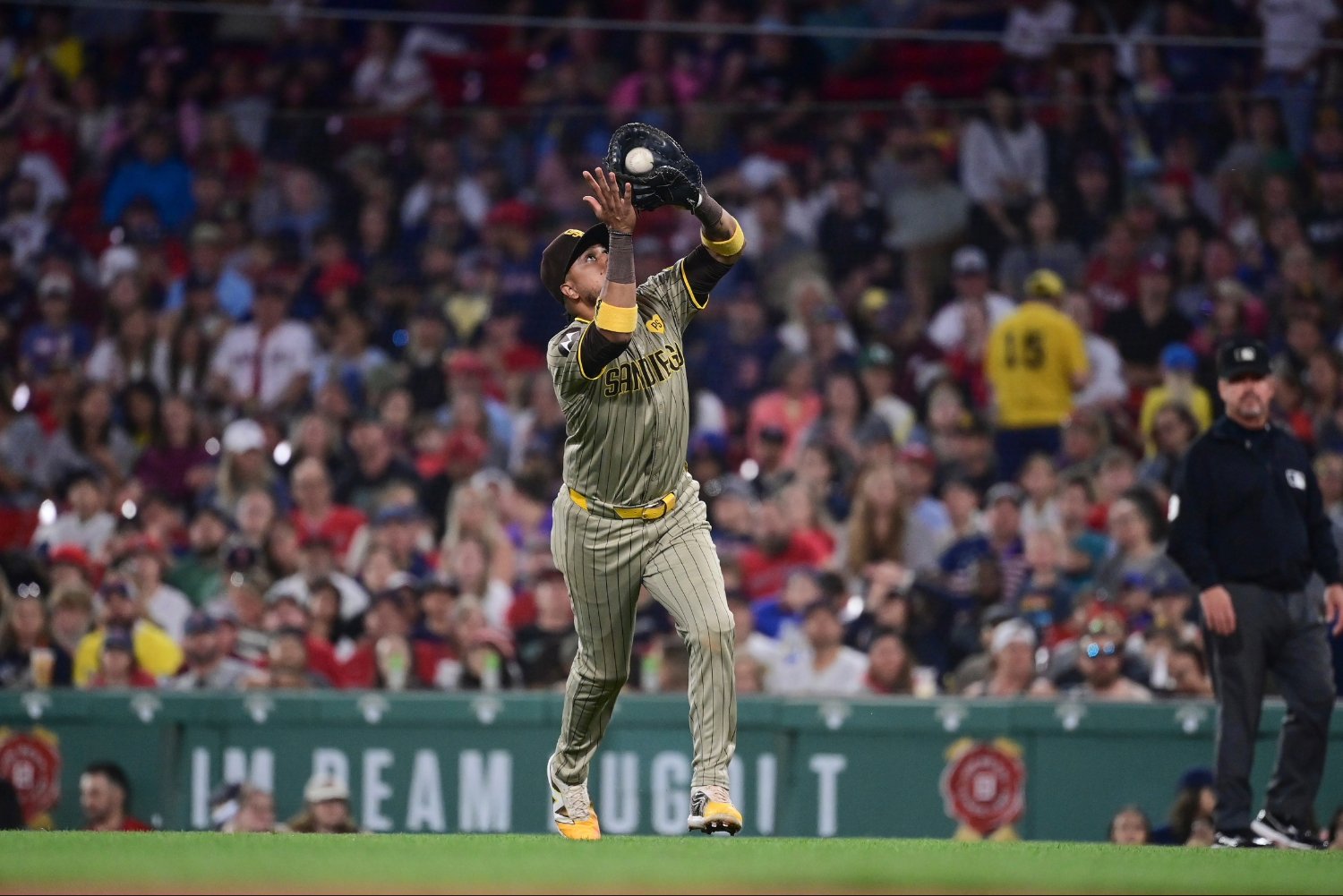 Since the start of the 2023 season, the Boston Red Sox have operated under the belief that Triston Casas was their first baseman of the present and future. Unfortunately, injuries in 2024 and 2025 have raised doubt, and the team now appears unwilling to commit to Casas in 2026 as he rehabs from a torn left patellar tendon. With there being more than a few options available on the free-agent market this offseason, it would be wise for the Red Sox to at least do some perfunctory checking in with various players. Admittedly, however, when you look at the list of available first basemen, it gets rather thin after the top shelf. While the obvious big catch of all first basemen will be New York Mets slugger Pete Alonso, the other big names that stand out are Josh Naylor, Munetaka Murakami, and Cody Bellinger. Beyond them, there is a vastly different option available—one who is viewed as one of the more divisive players in baseball as his style of play feels more and more archaic by the year. Known for his lack of power and low exit velocities, contact-maven Luis Arráez could be in play for Boston depending on how the market falls. With a potential bidding war looming for Alonso along with Seattle already planning to go all-in on retaining Naylor, Arráez could be a cheaper option for the Red Sox to plug in at first (and, potentially, second base). The Good: Right away, we can immediately state that Arráez is not someone to miss time. Since making his major league debut in 2019 (and excluding the COVID shortened 2020 season), there have only been two seasons where he has played less than 140 games: 2019 and 2021. Since 2022, he has played the following amount of games each season; 144, 147, 150, and 154 this past year. This would be an improvement alone, as the Red Sox have dealt with injuries across their infield these past few seasons, especially at first base with Casas. And along with playing first base, Arráez has also played quite a bit of second base in his career, making the All-Star team in 2023 with the Miami Marlins as a second baseman. Such versatility would allow the Red Sox to mix and match their lineup depending on the starting pitcher by plugging Arráez in at either position depending on the need. Where he would be most useful, however, is at the plate. Despite having one of the lowest exit velocities in the game and impossibly-low barrel rates, Arráez rarely misses when he swings. His ability to put the ball in play nearly every at-bat is something that could be extremely useful, especially during a low-scoring playoff series. In 2025, his whiff rate sat at just 5.3% and his strikeout rate was 3.1%, numbers that placed him in the 100th percentile league-wide. It gets even more impressive when you look at his career. In 3244 career at-bats, Arráez has struck out only 215 times, a feat that feels almost impossible with the way pitchers can rack up strikeouts in today’s game. The left-handed hitter has also displayed some slugging capabilities, though more in the sense of gap-to-gap thanks in part to his 30 doubles this past season. And while he may not hit the ball hard, Arráez possesses perhaps the best bat control in all of baseball—his squared-up percentage in 2025 was 42.6%, also placing him in the 100th percentile. Currently, Arráez is projected to earn a contract worth around $25 million over a period of two years, according to MLB Trade Rumors and The Athletic. There's no doubt there will be teams who will look to him as a starting first base option, especially once Alonso, Naylor and Ryan O’Hearn sign elsewhere. If the Red Sox could convince him to come to the east coast, he could provide a steady presence in the lineup. The Bad: Let’s discuss the biggest issue right away. Despite an incredible bat-to-ball skillset, Arráez has a clear lack of power when it comes to his game. While the first baseman can provide doubles and the occasional home run (he had six last season), when you think of a first baseman you think of a power hitter. Of course, should he slide back to second base, the amount of power you need is more negotiable, but it's still more than what he provides. As mentioned previously, Arráez ranked near the bottom of the league in exit velocity, barrel percentage and hard-hit rate, the latter two sitting in the lowest percentile at 1.1% and 16.7%, respectively. His bat speed was also nonexistent, averaging 62.6 mph this past season, the slowest swing speed in the sport. And despite a season that ended a stat line of .292/.327/.392, Arráez saw his OPS drop for the third straight season as it went from .861 in 2023 to .739 in 2024 down to .719 this past season. He also finished with an OPS+ of 99, the first time in his career it was ever below 100. There is a chance that a ballpark change could see a slight increase in power for Arráez, as in his career, he’s driven balls in the air to the opposite field 25% of the time and could pepper the Green Monster with his hits. In 2025 alone, he went to the opposite field on all batted balls 38.2% of the time. Despite that, his already low home run numbers would drop even more. Had Arráez played every game at Fenway Park this season, he'd have produced just two home runs. Of course, he would only play 81 games at home and there’s no telling how many home runs he could hit away from Fenway, but the expectation for Arráez would be more towards putting the ball in play and aiming for doubles. Defensively, he also just isn’t very good. He had one of the lowest Outs Above Average at the position at -9 and his Fielding Run Value was at -5 this season. While he only committed one error at first base this season, he isn’t the defensive stalwart the team would like to have manning first base. The Verdict: Personally, I like a player who can get on base and not strike out. Despite the importance of having high-OPS guys in the middle of lineups, I still feel a team needs one or two guys who put the ball in play often and produce high averages. Unfortunately for Arráez, I don’t think he would work out as a first baseman with the Red Sox. As mentioned before, first basemen are expected to be power hitters and Arráez clearly does not fit that mold. And even if you were to slot him in at second base instead, $12-15 million a year for a second baseman is a lot when you could realistically split the position between Marcelo Mayer and Romy González for a lot less money. With guys like Alonso and Naylor available who have shown the ability to hit for a lote more power in their careers, it would make more sense for the Red Sox to try and sign one of them first, and should they fail in that endeavor have Arráez as their backup plan. If the Red Sox could get him to sign a pillow contract—maybe a one-year deal with a mutual option—to prove he’s better than the hitter he was in 2025 (first time in his career he would be considered below league average), I don’t see why they shouldn’t offer it, especially if they invest the money they saved into upgrading other parts of the lineup. But for right now, with bigger names available and the options currently in-house, it doesn’t make a lot of sense for the Red Sox to invest a lot of money into a league-average hitter who’s really good at just putting the ball in play. Despite his contact skills, it isn’t worth the price he’s going likely to command, especially after the Red Sox lacked power in their lineup for most of 2025.
 -
Red Sox pitching prospect Dalton Rogers talks about his time in college, going from a two-way player to strictly a pitcher, along with how his time in the Red Sox organization has been since getting drafted. Discussing the use of a piggyback system to allow the many starters in the organization to get their innings in, and also discussing how the Red Sox help work on developing pitches.
-
Red Sox pitching prospect Dalton Rogers talks about his time in college, going from a two-way player to strictly a pitcher, along with how his time in the Red Sox organization has been since getting drafted. Discussing the use of a piggyback system to allow the many starters in the organization to get their innings in, and also discussing how the Red Sox help work on developing pitches. View full video
-
The Red Sox were able to make the playoffs in 2025 thanks in part to their deep carousel of starting pitchers. Despite losing quite a few to the injured list, the team was able to replace them with their depth right up to the end of the season. However, with the team likely needing to replace a few spots in the rotation for 2026, they may need to explore the free agent market to find a replacement. Last offseason, the Red Sox brought in three pitchers to join their rotation in the form of Garrett Crochet, Walker Buehler, and Patrick Sandoval. Of the three, only Sandoval failed to get into a game in 2025. Buehler did not make it through the season with the Red Sox, however, being released at the end of August due to poor performance. While the rotation will have Crochet and Brayan Bello in it to begin 2026, the three remaining spots are up for grabs, as it’s likely Lucas Giolito will leave in free agency, and it isn’t certain that young pitchers Payton Tolle or Connelly Early will be able to win a job out of spring training. Options like Kutter Crawford and Sandoval also remain, but there’s no guarantee when they could get into games that matter after their respective injuries. Because of that, the Red Sox may have to turn their attention to the free-agent market to bring in a veteran to replace the innings provided by Giolito. In the same way that they signed Giolito to a two-year deal after he struggled in 2023, the Red Sox could replicate that with another former All-Star and Cy Young contender in Zac Gallen. Gallen, 30, will be two years older than Giolito when the Red Sox originally signed the former White Sox pitcher. In his age-29 season, there is no debate that Gallen struggled mightily, as he went 13-15 with a 4.83 ERA in 33 starts. In that span, he threw 192 innings and allowed 31 home runs while striking out 175 batters. In Giolito’s age-28 season before coming to Boston, he went 8-15 with a 4.88 ERA in 33 starts. The right-hander tossed 184 1/3 innings while allowing 41 home runs. He did, however, strike out 204 batters. The similarities are there, and it could be an interesting discussion for the Red Sox to attempt to sign Gallen to a deal similar to Giolito’s. A two-year deal with a third-year mutual option might entice the right-hander after a rough 2025 may have lowered his value. With that, let’s look at how Gallen could be a fit for the Red Sox rotation in 2026. The Good: Right away, Gallen gives you innings. Since 2022, Gallen has tossed at least 184 innings every year except for his 2024 season where he missed starts. And in 2023, he crossed the 200-inning threshold. A former All-Star and Cy Young contender, Gallen could be the perfect number three or four in the rotation to go out and provide six to seven innings each night while affording the team a chance to win. When it comes to his pitch arsenal, Gallen meets a quality that @Brandon Glick mentioned in his article on the Freddy Peralta and the Red Sox. In it, he mentions about Andrew Bailey and Craig Breslow valuing pitch-tunneling (the ability to hide your pitch while having late movement to force a batter to change their eye level late during the pitch). This can also be created through shape and movement of pitches. Gallen himself has unique movement on all his pitches except for when it comes to his slider and cutter, two pitchers he uses sparingly. His three main pitches are his fastball, curveball and changeup, a similar smattering of offerings to Giolito, who relied on a fastball, slider and changeup. In Gallen’s case, his main three pitches force hitters to change eye level often in an at-bat, and it wouldn’t be a bad idea for the Red Sox to try and alter the shape of Gallen’s slider or cutter to take on a more sweeper shape to help create more horizontal movement. While 2025 was rough for Gallen, the right-hander previously was one of the best starters in the National League from 2022-2024, when he was a two-time top-5 Cy Young Award finisher and received MVP votes while leading the Arizona Diamondbacks to the World Series in 2023. Along with that, Gallen’s ERA and FIP were both higher than expected in 2025, showing that he may have gotten unlucky at times. His expected ERA was 4.39, nearly half a run lower than his 4.83 ERA, and his expected FIP was 4.12, a whole 0.38 lower than his 4.50 FIP. Should Gallen increase his ground-ball rate form 44.4% and lower the amount of home runs he allows, he could see a closer return to his previous performance. The Bad: Simply put, Gallen did not look like the pitcher he had been in prior years. He gave up a career high in home runs, earned runs and walks while having the lowest ERA+ of his career at 89, suggesting that he was a below-average pitcher in 2025. The 31 home runs may have been the worst aspect, as he had a 14.6% home run to fly ball rate (HR/FB) while allowing almost 38% of his batted balls to be fly balls. To get back to his old self, he would need to limit the long ball, especially in a stadium like Fenway Park. Fortunately, Giolito is a template for how the Sox managed to turn a pitcher who allowed a ton of home runs into a more modest amount, going from 41 home runs in 2023 to just 17 in 2025. In a league where velocity is also important, Gallen’s fastball averaged just 93.5 mph with batters slugging .413 off of it. The bigger issue is how his sinker and cutter were hit even harder, as batters hit .294 and .370 and slugged .529 and .761 against the two offerings, respectively. If the Red Sox were to bring him in to join the rotation, it would be important to rework those pitches in his arsenal or to even drop them completely. Beyond all that, Gallen just wasn’t very good at any one thing last season. His strikeout rate of 21.5% was the lowest of his career and led to a career-low strikeout-to-walk ratio of 13.4%. Likewise, he had the worst ERA- of his career at 114, a huge increase from 2024’s being just 88 (the lower the number the better when it comes to ERA-). Of all qualified pitchers on FanGraphs' rankings, Gallen ranked 45th in ERA-. Of all pitchers with at least 100 innings pitched, he would rank 98th. Again, it doesn’t tell the entire story, as Giolito also had an ERA- of 114 before rebounding with Boston in 2025 to the tune of an ERA- of 80. Gallen is someone who could benefit from the same coaching that Giolito went through in 2025. The Verdict: Gallen checks off a lot of boxes that the Red Sox would like to have in a veteran to help the backend of the rotation. He gives you innings, has been mostly healthy throughout his entire career and has postseason experience to help guide the young pitchers. It would be crazy to not check in with Gallen’s camp during the offseason, especially with the uncertainty surrounding Giolito’s return to Boston. The Red Sox do need a true number two to pair with Crochet and while Gallen may no longer fit that profile, signing him would allow the team to then turn its focus to the trade market. While the likes of Joe Ryan, Hunter Greene, and Freddy Peralta are more exciting names, Gallen is also someone who could provide a huge boost if he rebounds from a tough 2025 season. Currently, MLB Trade Rumors has Gallen's value pegged at four years and $80 million, with most experts expecting him to stay on the West Coast. I don’t think it makes much sense to sign Gallen to more than two (guaranteed) seasons given how his 2025 season looked. As mentioned previously, if you can get him on a contract similar to Giolito, it could turn into a steal. Given that he rejected a qualifying offer from the Diamondbacks, his market could drop to a level the Red Sox are comfortable with, especially if they are willing to offer him a short-term deal with a high AAV that would allow him to return to free agency if he bounces back from his recent struggles. View full article
-
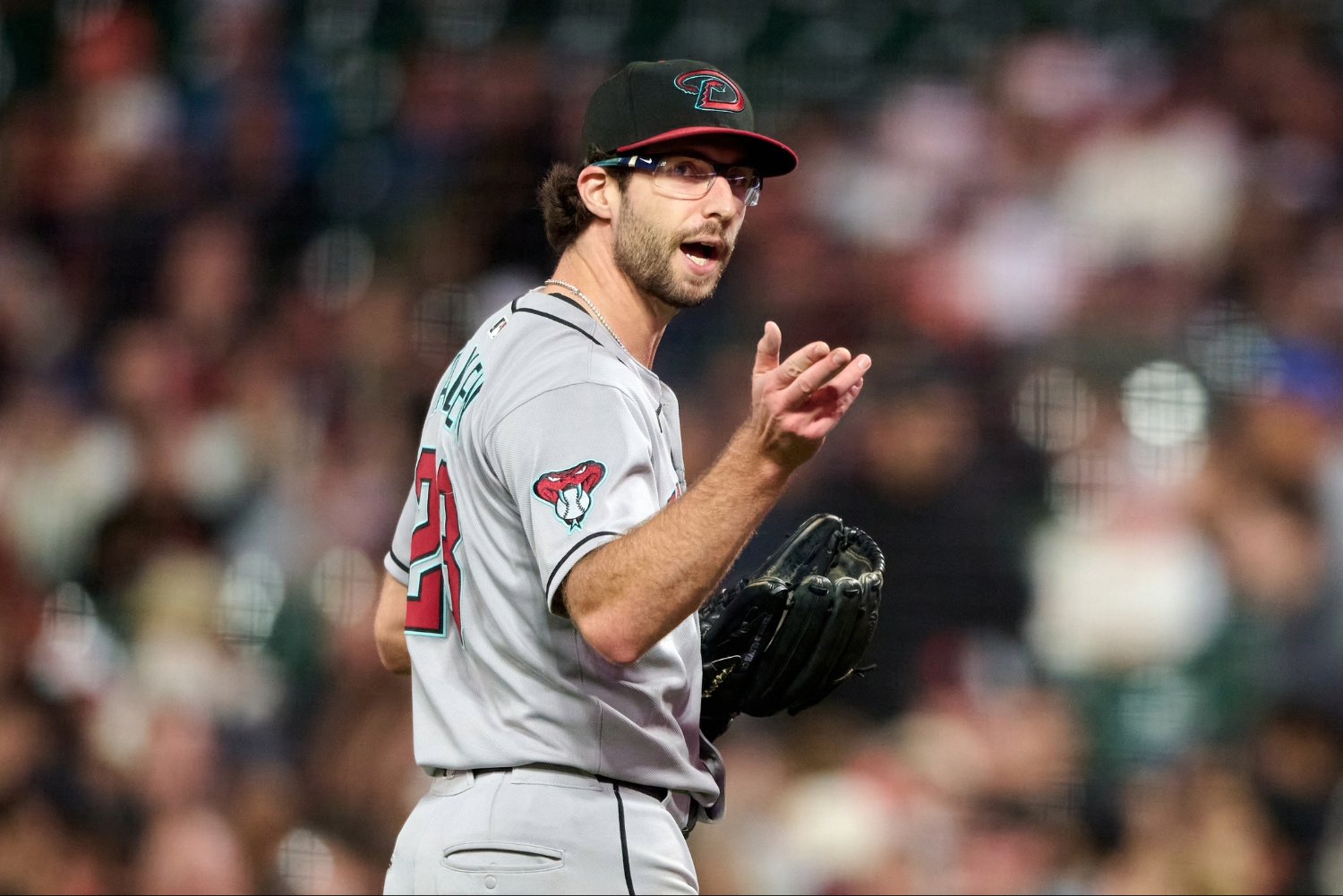 The Red Sox were able to make the playoffs in 2025 thanks in part to their deep carousel of starting pitchers. Despite losing quite a few to the injured list, the team was able to replace them with their depth right up to the end of the season. However, with the team likely needing to replace a few spots in the rotation for 2026, they may need to explore the free agent market to find a replacement. Last offseason, the Red Sox brought in three pitchers to join their rotation in the form of Garrett Crochet, Walker Buehler, and Patrick Sandoval. Of the three, only Sandoval failed to get into a game in 2025. Buehler did not make it through the season with the Red Sox, however, being released at the end of August due to poor performance. While the rotation will have Crochet and Brayan Bello in it to begin 2026, the three remaining spots are up for grabs, as it’s likely Lucas Giolito will leave in free agency, and it isn’t certain that young pitchers Payton Tolle or Connelly Early will be able to win a job out of spring training. Options like Kutter Crawford and Sandoval also remain, but there’s no guarantee when they could get into games that matter after their respective injuries. Because of that, the Red Sox may have to turn their attention to the free-agent market to bring in a veteran to replace the innings provided by Giolito. In the same way that they signed Giolito to a two-year deal after he struggled in 2023, the Red Sox could replicate that with another former All-Star and Cy Young contender in Zac Gallen. Gallen, 30, will be two years older than Giolito when the Red Sox originally signed the former White Sox pitcher. In his age-29 season, there is no debate that Gallen struggled mightily, as he went 13-15 with a 4.83 ERA in 33 starts. In that span, he threw 192 innings and allowed 31 home runs while striking out 175 batters. In Giolito’s age-28 season before coming to Boston, he went 8-15 with a 4.88 ERA in 33 starts. The right-hander tossed 184 1/3 innings while allowing 41 home runs. He did, however, strike out 204 batters. The similarities are there, and it could be an interesting discussion for the Red Sox to attempt to sign Gallen to a deal similar to Giolito’s. A two-year deal with a third-year mutual option might entice the right-hander after a rough 2025 may have lowered his value. With that, let’s look at how Gallen could be a fit for the Red Sox rotation in 2026. The Good: Right away, Gallen gives you innings. Since 2022, Gallen has tossed at least 184 innings every year except for his 2024 season where he missed starts. And in 2023, he crossed the 200-inning threshold. A former All-Star and Cy Young contender, Gallen could be the perfect number three or four in the rotation to go out and provide six to seven innings each night while affording the team a chance to win. When it comes to his pitch arsenal, Gallen meets a quality that @Brandon Glick mentioned in his article on the Freddy Peralta and the Red Sox. In it, he mentions about Andrew Bailey and Craig Breslow valuing pitch-tunneling (the ability to hide your pitch while having late movement to force a batter to change their eye level late during the pitch). This can also be created through shape and movement of pitches. Gallen himself has unique movement on all his pitches except for when it comes to his slider and cutter, two pitchers he uses sparingly. His three main pitches are his fastball, curveball and changeup, a similar smattering of offerings to Giolito, who relied on a fastball, slider and changeup. In Gallen’s case, his main three pitches force hitters to change eye level often in an at-bat, and it wouldn’t be a bad idea for the Red Sox to try and alter the shape of Gallen’s slider or cutter to take on a more sweeper shape to help create more horizontal movement. While 2025 was rough for Gallen, the right-hander previously was one of the best starters in the National League from 2022-2024, when he was a two-time top-5 Cy Young Award finisher and received MVP votes while leading the Arizona Diamondbacks to the World Series in 2023. Along with that, Gallen’s ERA and FIP were both higher than expected in 2025, showing that he may have gotten unlucky at times. His expected ERA was 4.39, nearly half a run lower than his 4.83 ERA, and his expected FIP was 4.12, a whole 0.38 lower than his 4.50 FIP. Should Gallen increase his ground-ball rate form 44.4% and lower the amount of home runs he allows, he could see a closer return to his previous performance. The Bad: Simply put, Gallen did not look like the pitcher he had been in prior years. He gave up a career high in home runs, earned runs and walks while having the lowest ERA+ of his career at 89, suggesting that he was a below-average pitcher in 2025. The 31 home runs may have been the worst aspect, as he had a 14.6% home run to fly ball rate (HR/FB) while allowing almost 38% of his batted balls to be fly balls. To get back to his old self, he would need to limit the long ball, especially in a stadium like Fenway Park. Fortunately, Giolito is a template for how the Sox managed to turn a pitcher who allowed a ton of home runs into a more modest amount, going from 41 home runs in 2023 to just 17 in 2025. In a league where velocity is also important, Gallen’s fastball averaged just 93.5 mph with batters slugging .413 off of it. The bigger issue is how his sinker and cutter were hit even harder, as batters hit .294 and .370 and slugged .529 and .761 against the two offerings, respectively. If the Red Sox were to bring him in to join the rotation, it would be important to rework those pitches in his arsenal or to even drop them completely. Beyond all that, Gallen just wasn’t very good at any one thing last season. His strikeout rate of 21.5% was the lowest of his career and led to a career-low strikeout-to-walk ratio of 13.4%. Likewise, he had the worst ERA- of his career at 114, a huge increase from 2024’s being just 88 (the lower the number the better when it comes to ERA-). Of all qualified pitchers on FanGraphs' rankings, Gallen ranked 45th in ERA-. Of all pitchers with at least 100 innings pitched, he would rank 98th. Again, it doesn’t tell the entire story, as Giolito also had an ERA- of 114 before rebounding with Boston in 2025 to the tune of an ERA- of 80. Gallen is someone who could benefit from the same coaching that Giolito went through in 2025. The Verdict: Gallen checks off a lot of boxes that the Red Sox would like to have in a veteran to help the backend of the rotation. He gives you innings, has been mostly healthy throughout his entire career and has postseason experience to help guide the young pitchers. It would be crazy to not check in with Gallen’s camp during the offseason, especially with the uncertainty surrounding Giolito’s return to Boston. The Red Sox do need a true number two to pair with Crochet and while Gallen may no longer fit that profile, signing him would allow the team to then turn its focus to the trade market. While the likes of Joe Ryan, Hunter Greene, and Freddy Peralta are more exciting names, Gallen is also someone who could provide a huge boost if he rebounds from a tough 2025 season. Currently, MLB Trade Rumors has Gallen's value pegged at four years and $80 million, with most experts expecting him to stay on the West Coast. I don’t think it makes much sense to sign Gallen to more than two (guaranteed) seasons given how his 2025 season looked. As mentioned previously, if you can get him on a contract similar to Giolito, it could turn into a steal. Given that he rejected a qualifying offer from the Diamondbacks, his market could drop to a level the Red Sox are comfortable with, especially if they are willing to offer him a short-term deal with a high AAV that would allow him to return to free agency if he bounces back from his recent struggles.
 -
The Boston Red Sox made a move Thursday afternoon to clear a spot on the 40-man roster, as they needed to reinstate several players from the 60-day injured list. To open up room on the roster, the team designed right-handed pitcher Luis Guerrero for assignment, per MassLive's Chris Cotillo. Guerrero, a 17th-round draft pick in 2021, spent parts of two seasons in the majors with the Red Sox, appearing in 22 games and throwing 27 1/3 innings to a 2.63 ERA. Despite having some of the best raw stuff of anyone in the system, his command and control along with inconsistency held him back during his time in Boston. In his 27 1/3 innings pitched, Guerrero had allowed 16 walks. The 2025 season was when his inconsistency issues were at their worst, as he allowed 14 walks in 17 1/3 innings across 13 games. Guerrero last pitched for Boston on June 27 against Toronto, when he went 1/3 of an inning and allowed two runs on a walk and two hits. He would be placed on the 15-day injured list the next day for a right elbow strain before being transferred to the 60-day injured list on August 2. With the DFA of Guerrero along with previous cuts of Isaiah Campbell and José De León, the Red Sox 40-man roster currently sits at 40. View full rumor

