


Nick John
-
Posts
799 -
Joined
-
Last visited
-
Days Won
1
Content Type
Profiles
Boston Red Sox Videos
2026 Boston Red Sox Top Prospects Ranking
Boston Red Sox Free Agent & Trade Rumors, Notes, & Tidbits
Guides & Resources
2025 Boston Red Sox Draft Pick Tracker
News
2026 Boston Red Sox Draft Tracker: Picks & Bonuses
Forums
Blogs
Events
Store
Downloads
Gallery
Everything posted by Nick John
-
Boston Red Sox 2026 Top Prospects Rankings: Mikey Romero (No. 6)
Nick John posted an article in Minor Leagues
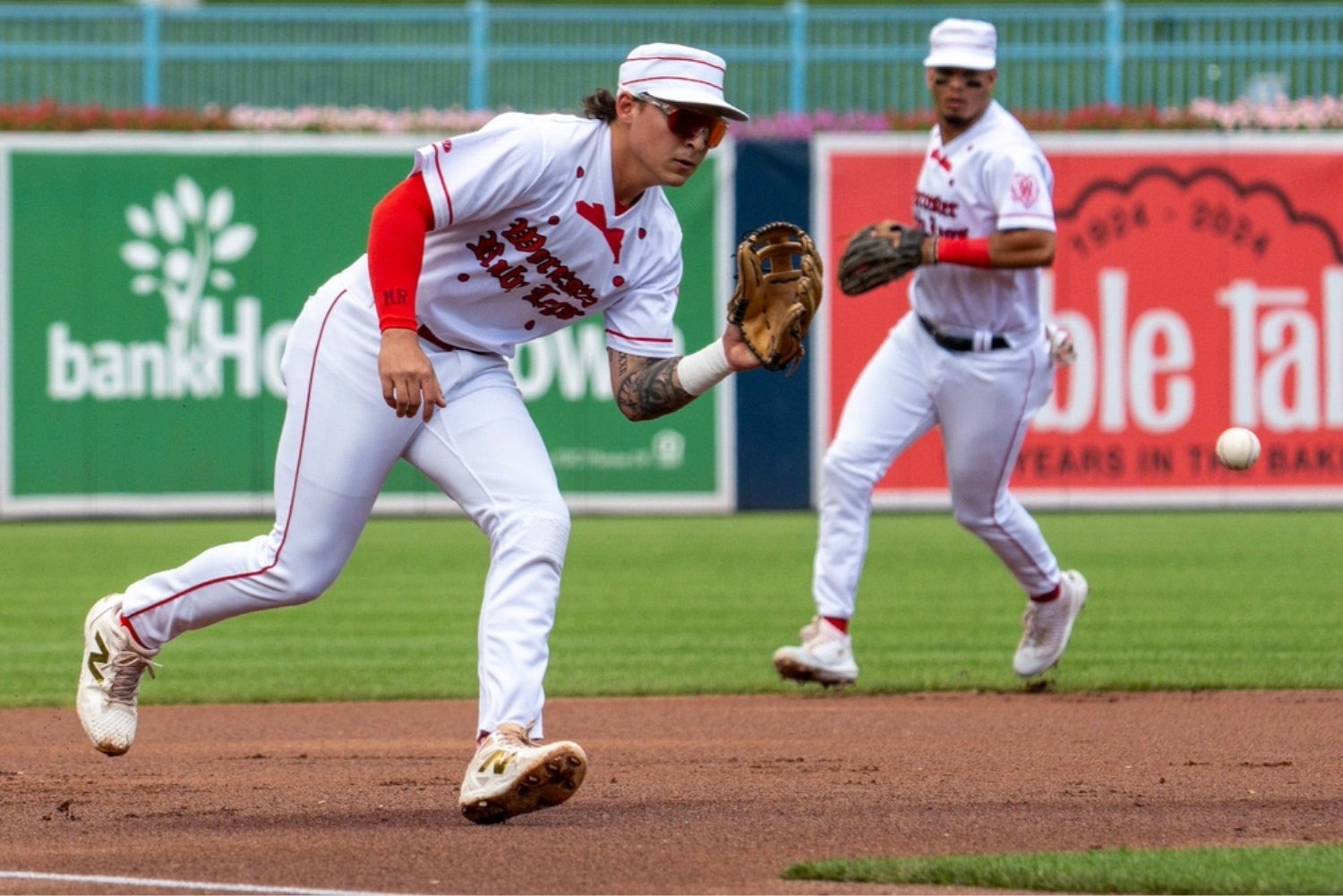 Talk Sox's top prospect rankings have reached their latter half, now focusing on the Boston Red Sox's top 10 prospects heading into the 2026 season. Be sure to check out our previous rankings here: Part 1 (Nos. 16-20) Part 2 (Nos. 11-15) Part 3 (No. 10) Part 4 (No. 9) Part 5 (No. 8) Part 6 (No. 7) Boston Red Sox Top Prospects: No. 6 Mikey Romero It’s been a long and hard road for Mikey Romero since being a first-round pick by the Red Sox back in 2022. The infielder, who was drafted as a shortstop, only got to play in 19 games after getting drafted, finishing red hot for the Salem Red Sox with a .349/.364/.581 stat line along with four doubles, three triples and 11 RBIs. The 2023 season wouldn’t go as well for the infielder, as he suffered a back injury heading into spring training that would end up becoming a stress fracture and cost him nearly the entire season. In total, he would only appear in 34 games between the Florida Complex League, Low-A Salem and High-A Greenville, where he hit a combined .214/.294/.286 with five doubles, two triples and 13 RBIs. Then, 2024 began in much the same fashion, with Romero opening the year on the injured list before beginning to look like a first-round prospect. He hit .271/.312/.509 in 78 games between the Complex League, High-A Greenville and Double-A Portland. He also finally showcased his power potential with 24 doubles and 16 home runs. Now, after a 2025 season that saw Romero appear in a career-high 111 games where he hit a combined .245/.300/.452 between Portland and Worcester, he is knocking on the door of the majors. Offensively, Romero is an aggressive swinger who tries to hunt fastballs early in the count while also occasionally chasing secondary pitches. He needs to work on limiting his chase rate. However, he’s been able to make solid contact despite his aggressive approach, especially against right-handed pitching. His hit tool could improve with a better approach, but he'll likely never be an annual .300 hitter. Power wise, Romero had been described as having “sneaky power," though after back-to-back seasons of 16 and 17 home runs (all while playing no more than 111 games), that “sneaky” title may need to be removed from the description of his game. The strength he added prior to 2025 also helped him tap into his power as he hit a career-high 33 doubles. He can really drive the ball when he manages to pull it; a larger focus on ideal launch angles and elevation will be key for him to jump into the 20-homer tier of prospect. Defensively, Romero has not had the cleanest of developments in the minor leagues. While drafted as a shortstop, due to his average hands and fringy range along with a barely average arm, he was moved off of shortstop while with Portland. Since then, he’s split time at second base and third base, with they keystone being his most likely final destination due to his arm being more passable there. It also doesn't help that his speed is below average, but he can get around it due to his great baserunning instincts. With this being his first non-roster invite to spring training, Romero will have plenty of time to make an impact with the major-league coaching staff, especially with a large portion of the major league team having left for the World Baseball Classic. However, as has been shown with many talented players, the issue will be if Romero can stay on the field for large portions of the season. Already he’s missed time in spring training due to back tightness, but he returned to game action as of March 8. Romero may not be the player many envisioned when he was drafted, but the talent is still there for him to be a bat-first second baseman who can give you double digit home runs on an annual basis. He just needs to remain healthy. Romero, barring a string of injuries to the major-league roster, will open the season with Triple-A Worcester. He'll get plenty of playing time between second base and third base, and unless he's traded, will likely make his major-league debut at some point this season. Romero provides the team with quality infield depth that they'll be able to call upon when either an injury or poor performance strikes the major-league team.
 -
Boston Red Sox 2026 Top Prospects Rankings: Justin Gonzales (No. 7)
Nick John posted an article in Minor Leagues
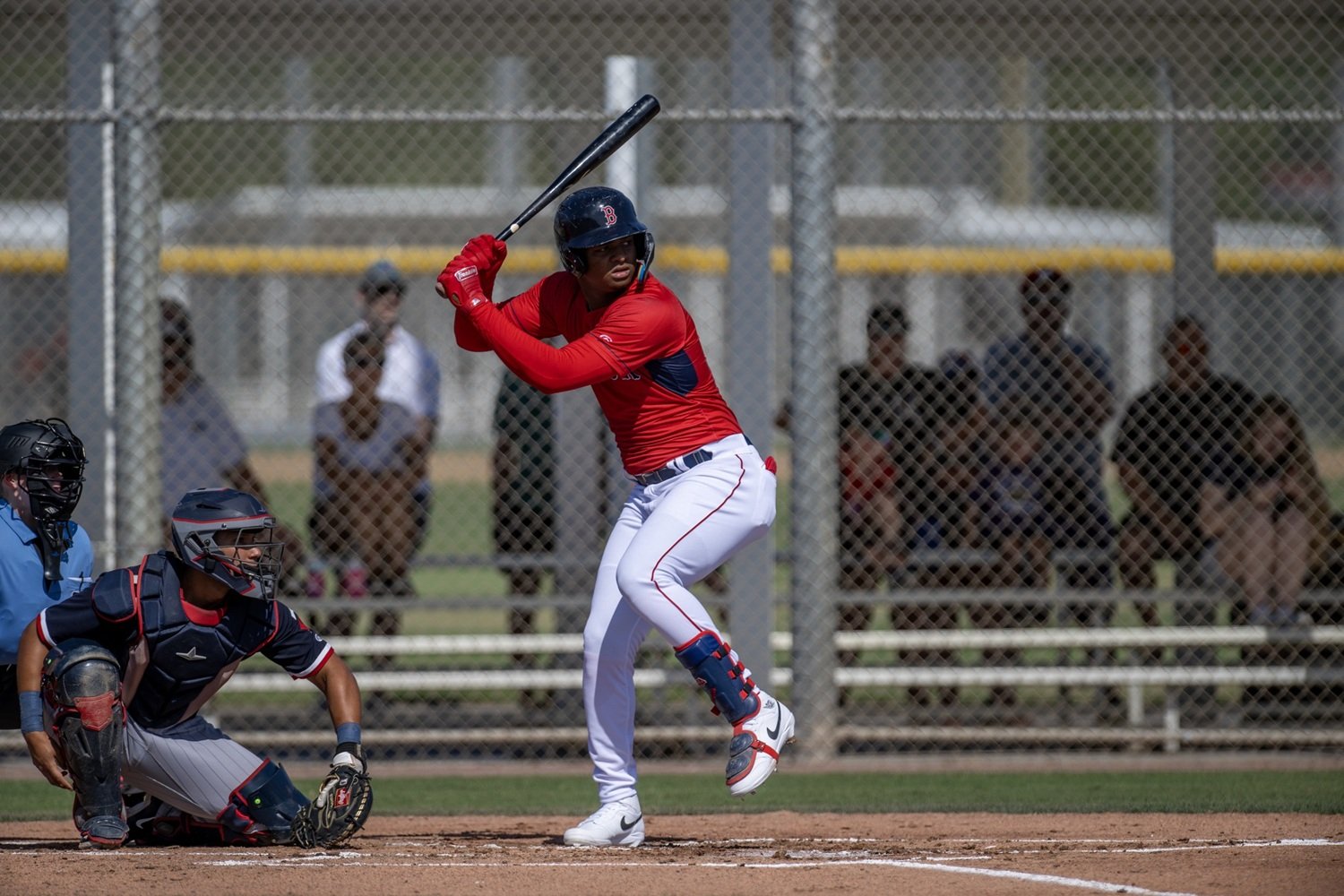 Talk Sox's top prospect rankings have reached their latter half, now focusing on the Boston Red Sox's top 10 prospects heading into the 2026 season. Be sure to check out our previous rankings here: Part 1 (Nos. 16-20) Part 2 (Nos. 11-15) Part 3 (No. 10) Part 4 (No. 9) Part 5 (No. 8) Boston Red Sox Top Prospects: No. 7 Justin Gonzales Saying that Justin Gonzales is a physical specimen is an understatement. Entering spring training this season, Gonzales was measured at 6-foot-6 and 277 pounds. That was after being last measured at 6-foot-4 and 210 pounds. While the previous weight may have been outdated, it’s still fascinating to see the 19-year-old continue to grow, even stating that his goal is “to be like Aaron Judge." Gonzales was part of the team’s 2024 international free agent class and in his first professional season at the Dominican Summer League, he put on a show offensively by hitting .320/.391/.517 with four doubles, five triples, five home runs and 29 RBIs in 47 games. He would come stateside for 2025, when after just one game in the Florida Complex League, he would be promoted to Low-A Salem and play in 81 games. He went on to hit .298/.381/.423 with 23 doubles, two triples, four home runs and 27 RBIs in that stretch before finishing the season with 11 games in Greenville. Offensively, there is no doubt that Gonzales is one of the organization’s best prospects. He has a quick bat and has solid barrel control for his size. His 90th percentile exit velocity was 107 mph and his highest was 113 mph. Thanks to an advanced approach at the plate, he’s able to let a pitch come in to him deep and send it the other way to right field instead of just trying to pull everything. With a good understanding of the strike zone, he doesn’t strike out too much, though he does struggle to recognize secondary pitches. Despite being just 19 years old, he's already impressing in spring training. On March 2, he was called up to play in a Red Sox spring training game and had a single with an exit velocity of 117.3 mph. It would have been the 12th-hardest exit velocity in Major League Baseball in 2025. His power is really impressive as it’s viewed as being easily above average by scouts. With his size and swing, he generates easy pop as the baseball jumps off his bat and he can drive the ball to all parts of the field. Unfortunately, he doesn’t take full advantage of it due to a 57% groundball rate. If Gonzales can improve his bat path and launch angle, he could really tap into his power and become an offensive beast. Defensively, Gonzales has spent time at first base and all three outfield positions. In 2025, he spent the entire season split between the three outfield positions, though due to his size he will likely play either first base or a corner outfield position as he continues to advance through the minor leagues. He showcased good range in the outfield but struggled when it came to his jumps and routes. Despite that, his arm is considered above average and would play well at either corner outfield position. Gonzales’ speed is also below average, though he moves well for someone his size. While he won’t steal many bags, he won’t clog up the basepaths and should be able to go from first to third or second to home on outfield hits. Gonzales will look to continue his impressive start to his professional career in 2026. He’ll be entering his first full season (having only played 93 games in 2025) and it’ll be a good chance to see how he holds up across a full stateside campaign. Should Gonzales continue to develop at the plate, there’s a chance he could be up with Boston by 2028. Unfortunately, with an All-Star ceiling comes a low floor, making him one of the bigger boom-or-bust prospects in the system. Gonzales will open the season with High-A Greenville after appearing in just 11 games there last season. The Red Sox have been aggressive the past few seasons with promoting their top players, and should Gonzales avoid any prolonged struggles, he should be able to make it to Double-A Portland before the end of 2026.
 -
In an exclusive interview with Talk Sox, 2025 10th-round pick Maximus Martin talks about how his first spring training has gone, his time in college, and his first moments as a professional baseball player. He also talks about how he played for multiple teams during his time in college. View full video
-
In an exclusive interview with Talk Sox, 2025 10th-round pick Maximus Martin talks about how his first spring training has gone, his time in college, and his first moments as a professional baseball player. He also talks about how he played for multiple teams during his time in college.
-
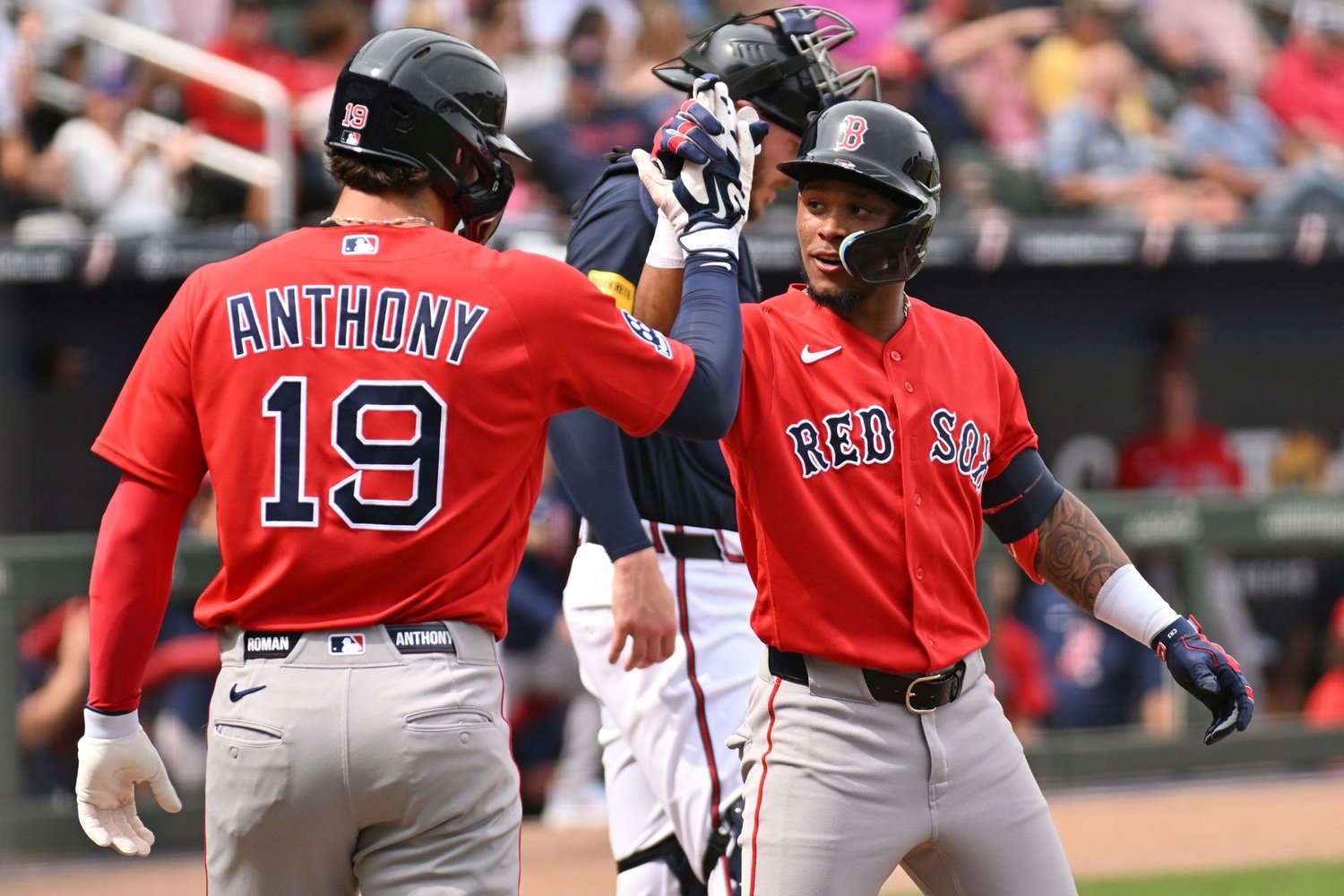 Ceddanne Rafaela had an impressive 2025 that was filled with ups and downs, as the phenomenal defender won his first of what should be many Gold Gloves in center field. However, there were times that let fans rather upset with his inconsistency at the plate. With the loss of Alex Bregman, Rafaela is expected to pick up some of the offense slack as he looks to build off of his 2025 season. Just how much should the fanbase look towards him for anything more than sterling defense? There is no denying that Rafaela is a very streaky hitter when it comes to his offensive capabilities, an effect of his sometimes overly aggressive approach at the plate. While able to cut back on the strikeouts from his rookie season into his sophomore year, Rafaela also managed to increase his walks, even if it was only from 15 to 28 total free passes. Rafaela is one of the freest swingers in all of baseball, putting up a chase rate of 42.2% last season, putting him in the second percentile league-wide. If Rafaela wants to swing, he’s going to. In some at-bats, it will frustrate fans as he’ll sometimes put himself into a hole he can't climb out of. But that streakiness comes with some upside too. Rafaela was one of the best hitters for Boston in June and July as he had 12 doubles, a triple, 11 home runs and 29 RBIs across 49 games. The offensive spark helped keep the offense afloat as they dealt with an injury to Alex Bregman and the surprise Father’s Day trade of Rafael Devers. Unfortunately, this was the peak of his offensive season, as he appeared to tire down the stretch. In 28 games in August, he hit just .208/.266/.317 with eight doubles, one home run and seven RBIs. Realistically, it might not be best to expect the production Rafaela supplied in June and July for a full season. Last season, it was reported that during the season Rafaela was struggling to keep weight on which could have been a cause of his August drop-off. Should he be able to avoid a similar situation in 2026, the Red Sox centerfielder could possibly be in line for his first 20-20 season in his young career, which would be more than enough to supplement his brilliant glove work. Then again, that's probably a best-case scenario given his tendencies at the plate; while Rafaela could run into huge hot streaks, he has the odds of going on just as long cold spells as showcased across his first two seasons. Should he cut back on his chase rate and continue to improve his patience at the plate, perhaps those numbers could increase even more. Defensively, this is a different story. Fans should expect nothing less than Rafaela’s usual defensive capabilities. The outfielder is just entering his prime, as this will be his age-25 season after posting 22 Outs Above Average and a 22 Fielding Run Value last year, the former being in the 99th percentile. Everything about Rafaela is a positive when it comes to his glove, being near the top of the league in all defensive metrics. Fans should expect the same defensive highlights from him manning center field as his defense will help save games. Rafaela still has some growth and maturity to achieve, but right now he’s in a good situation of being able to bat near the bottom of the order and provide the team with a streaky yet serviceable bat. Fans should expect to see more of the same from Rafaela this time around, with the hope that he improves upon the marginal chase rate improvement (46.4% to 42.2%) he made in 2025. At the very least, there’s no denying that Rafaela is a clutch hitter, as he delivered key hits down the stretch for the Red Sox. Though he may never be an All-Star without a well-timed hot streak, Red Sox fans know a thing or two about the importance of having one of the best defensive center fielders in the game. Rafaela enters 2026 firmly in that camp.
 -
Talk Sox's top prospect rankings have reached their latter half, now focusing on the Boston Red Sox's top 10 prospects heading into the 2026 season. Be sure to check out our previous rankings here: Part 1 (Nos. 16-20) Part 2 (Nos. 11-15) Part 3 (No. 10) Part 4 (No. 9) Boston Red Sox Top Prospects: No. 8 Dorian Soto Signing with the Boston Red Sox as an international free agent in 2025, Dorian Soto received the highest bonus of their entire class. Thanks to his ability to play shortstop and penchant for producing solid contact, many viewed Soto as a rising prospect before he signed. The 18-year-old played his first professional season in the Dominican Summer League last year, appearing in 47 games and showcasing his tremendous bat. In that span, he managed to hit .307/.362/.428 with 10 doubles, two triples, two home runs and 18 RBIs. As a hitter, Soto bats from both sides of the plate and displays solid bat speed along with strong barrel control for someone of his age. Scouts have viewed Soto’s swing decisions as being quite advanced, while his contact skills remain one of his premier skills. Soto’s 90th percentile exit velocity reached 102 mph as a 17-year-old thanks in part to his ability to generate bat speed with a sometimes long swing. While aggressive, the shortstop has strong bat-to-ball ability which allowed him to have a strikeout rate of just 16% despite being aggressive at the plate. Though he's a true switch hitter, Soto showed better results as a left-handed batter as he slashed .311/.372/.432 compared to a stat line of .294/.324/.412 as a right-handed batter. Whether a wrist injury that limited his ability to bat from the right side of the plate had an effect on his production is yet to be known. Soto has shown average raw power in his first season, though scouts expect that to inflate as he grows older. His 6-foot-3 frame is impressive, and he still has room to grow and fill out, which will add more power to his game. Defensively, Soto is primarily a shortstop, but it is unknown if he will be able to stick there considering he’s already 6-foot-3 and still growing. Last season, he showcased natural movements at shortstop but also saw some time at both third base and second base. Should he be moved off of shortstop, third base seems to be his likely landing point due to his strong arm and potential power. The only real negative about Soto at the moment appears to be his speed, as it’s been viewed as his worst tool that could drop to below-average territory as he continues to grow. Soto is very young and it’s hard to project what he could end up as, but his potential is through the roof. In a best-case scenario, he'll be batting in the middle of the Red Sox's lineup in a few years. Of course, that all depends on how he develops over the next few seasons. Soto will begin 2026 in the Florida Complex League as he adjusts to playing stateside for the first time in his career. The young infielder could very well follow in Justin Gonzales’ footsteps of playing very briefly (Gonzales played exactly one game) in the Complex League before heading to Low-A Salem. View full article
-
Boston Red Sox 2026 Top Prospects Rankings: Dorian Soto (No. 8)
Nick John posted an article in Minor Leagues
 Talk Sox's top prospect rankings have reached their latter half, now focusing on the Boston Red Sox's top 10 prospects heading into the 2026 season. Be sure to check out our previous rankings here: Part 1 (Nos. 16-20) Part 2 (Nos. 11-15) Part 3 (No. 10) Part 4 (No. 9) Boston Red Sox Top Prospects: No. 8 Dorian Soto Signing with the Boston Red Sox as an international free agent in 2025, Dorian Soto received the highest bonus of their entire class. Thanks to his ability to play shortstop and penchant for producing solid contact, many viewed Soto as a rising prospect before he signed. The 18-year-old played his first professional season in the Dominican Summer League last year, appearing in 47 games and showcasing his tremendous bat. In that span, he managed to hit .307/.362/.428 with 10 doubles, two triples, two home runs and 18 RBIs. As a hitter, Soto bats from both sides of the plate and displays solid bat speed along with strong barrel control for someone of his age. Scouts have viewed Soto’s swing decisions as being quite advanced, while his contact skills remain one of his premier skills. Soto’s 90th percentile exit velocity reached 102 mph as a 17-year-old thanks in part to his ability to generate bat speed with a sometimes long swing. While aggressive, the shortstop has strong bat-to-ball ability which allowed him to have a strikeout rate of just 16% despite being aggressive at the plate. Though he's a true switch hitter, Soto showed better results as a left-handed batter as he slashed .311/.372/.432 compared to a stat line of .294/.324/.412 as a right-handed batter. Whether a wrist injury that limited his ability to bat from the right side of the plate had an effect on his production is yet to be known. Soto has shown average raw power in his first season, though scouts expect that to inflate as he grows older. His 6-foot-3 frame is impressive, and he still has room to grow and fill out, which will add more power to his game. Defensively, Soto is primarily a shortstop, but it is unknown if he will be able to stick there considering he’s already 6-foot-3 and still growing. Last season, he showcased natural movements at shortstop but also saw some time at both third base and second base. Should he be moved off of shortstop, third base seems to be his likely landing point due to his strong arm and potential power. The only real negative about Soto at the moment appears to be his speed, as it’s been viewed as his worst tool that could drop to below-average territory as he continues to grow. Soto is very young and it’s hard to project what he could end up as, but his potential is through the roof. In a best-case scenario, he'll be batting in the middle of the Red Sox's lineup in a few years. Of course, that all depends on how he develops over the next few seasons. Soto will begin 2026 in the Florida Complex League as he adjusts to playing stateside for the first time in his career. The young infielder could very well follow in Justin Gonzales’ footsteps of playing very briefly (Gonzales played exactly one game) in the Complex League before heading to Low-A Salem.
 -
The injury bug has struck another member of the Boston Red Sox organization: Isaac Stebens will spend the season on the injured list. As first reported by SoxProspects’ Andrew Parker, Stebens will miss the entire 2026 season after undergoing Tommy John surgery in early March. Stebens was drafted out of Oklahoma State in the 16th round of the 2023 draft and split 2024 between Salem and Greenville. In 2025, the right-hander spent the entire season with Greenville where he appeared in 38 games and tossed 50 1/3 innings. After the season concluded Stebens, was one of the Red Sox representatives for the Arizona Fall League where he appeared in eight games and tossed seven innings. Stebens was one of Greenville’s most dominant relief arms and had a good chance of opening the season with Double-A Portland. Instead, he will look to recuperate from his surgery before attempting to rehabilitate from his injury. View full rumor
-
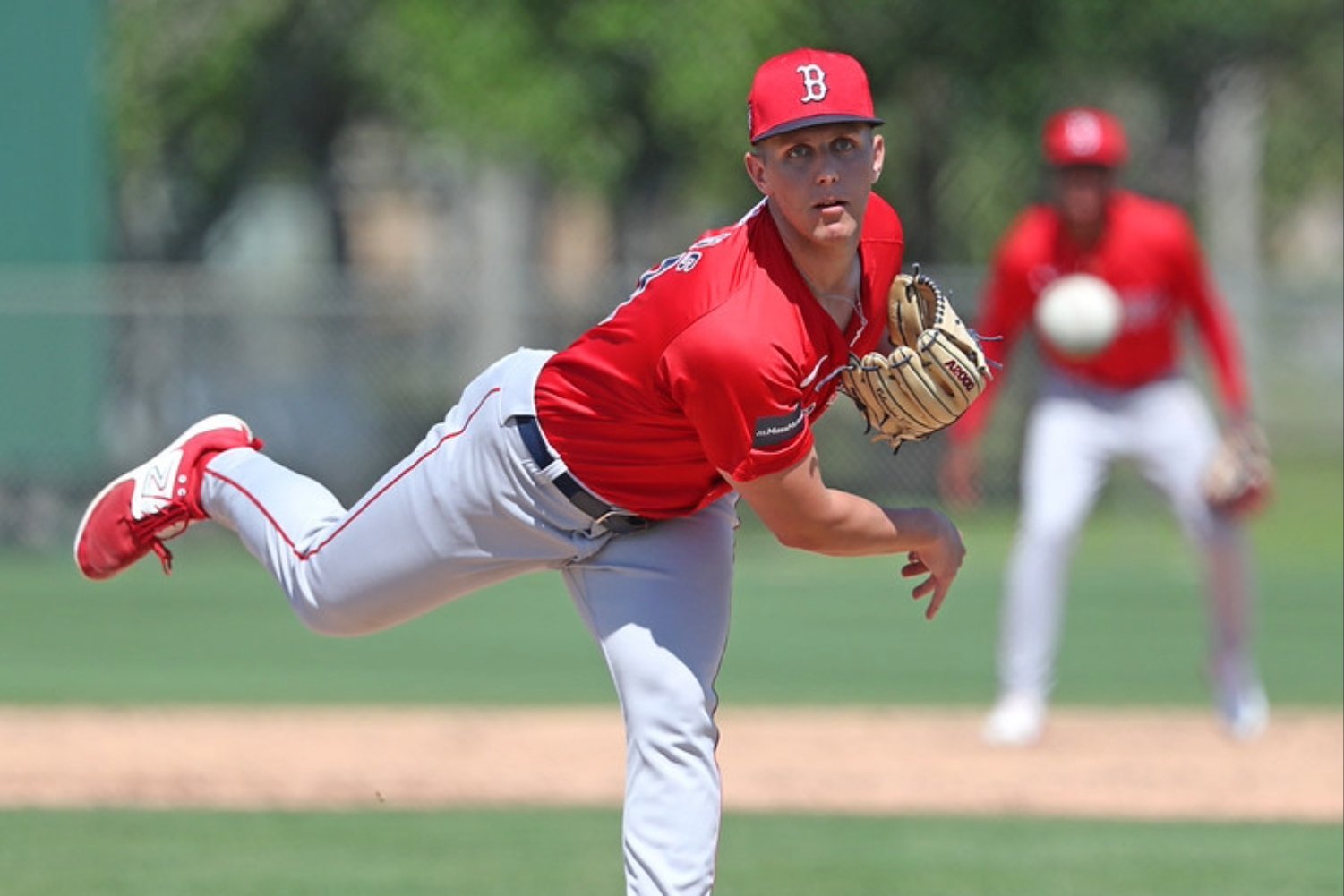 The injury bug has struck another member of the Boston Red Sox organization: Isaac Stebens will spend the season on the injured list. As first reported by SoxProspects’ Andrew Parker, Stebens will miss the entire 2026 season after undergoing Tommy John surgery in early March. Stebens was drafted out of Oklahoma State in the 16th round of the 2023 draft and split 2024 between Salem and Greenville. In 2025, the right-hander spent the entire season with Greenville where he appeared in 38 games and tossed 50 1/3 innings. After the season concluded Stebens, was one of the Red Sox representatives for the Arizona Fall League where he appeared in eight games and tossed seven innings. Stebens was one of Greenville’s most dominant relief arms and had a good chance of opening the season with Double-A Portland. Instead, he will look to recuperate from his surgery before attempting to rehabilitate from his injury.
 -
Talk Sox's top prospect rankings have reached their latter half, now focusing on the Boston Red Sox's top 10 prospects heading into the 2026 season. Be sure to check out our previous rankings here: Part 1 (Nos. 16-20) Part 2 (Nos. 11-15) Part 3 (No. 10) Part 4 (No. 9) Part 5 (No. 8) Boston Red Sox Top Prospects: No. 7 Justin Gonzales Saying that Justin Gonzales is a physical specimen is an understatement. Entering spring training this season, Gonzales was measured at 6-foot-6 and 277 pounds. That was after being last measured at 6-foot-4 and 210 pounds. While the previous weight may have been outdated, it’s still fascinating to see the 19-year-old continue to grow, even stating that his goal is “to be like Aaron Judge”. Gonzales was part of the team’s 2024 international free agent class and in his first professional season at the Dominican Summer League he put on a show offensively by hitting .320/.391/.517 with four doubles, five triples, five home runs and 29 RBIs in 47 games. He would come stateside for 2025 where after just one game in the Florida Complex League he would be promoted to Low-A Salem and play in 81 games. He would go on to hit .298/.381/.423 with 23 doubles, two triples, four home runs and 27 RBIs in that stretch before finishing the season with 11 games in Greenville. Offensively there is no doubt that Gonzales is one of the organization’s best prospects. He has a quick bat and has solid barrel control for his size. His 90th percentile exit velocity was 107 mph and his highest was 113 mph. Thanks to an advanced approach at the plate, he’s able to let a pitch come in to him deep and send it the other way to right field instead of just trying to pull everything. With a good understanding of the strike zone, he doesn’t strike out too much but will struggle to recognize secondary pitches. Despite being just 19-years-old, he's already impressing in spring training. On March 2, he was called up to play in a Red Sox spring training game and had a single with an exit velocity of 117.3 mph. It would have been the 12th-hardest Max exit velocity in major league baseball in 2025. His power is really impressive as it’s viewed as being above average for his raw power. With his size and swing he generates easy power as the baseball jumps off his bat and he can drive the ball to all parts of the field. Unfortunately, he doesn’t take full advantage of it due to a 57% groundball rate. If Gonzales can improve his bat path and get the ball into the air more often, he could really tap into his power and become an offensive beast. Defensively Gonzales has spent time at first base and all three outfield positions. In 2025 he spent the entire season split between the three outfield positions though due to his size will likely play either first base or a corner outfield position as he continues to advance through the minor leagues. He showcased good range in the outfield but struggled when it came to his jumps and routes. Despite that, his arm is considered above average and would play well at either corner outfield position. Gonzales’ speed is also below average but moves well for someone his size. While he won’t steal many bases, he won’t clog up the bases and should be able to go from first to third or second to home on outfield hits. Gonzales will look to continue his impressive start to his professional career in 2026. He’ll be entering his first full season (having only played 93 games in 2025) and it’ll be a good chance to see how he holds up across an entire season. Should Gonzales continue to develop as he has, there’s a chance he could be up with Boston by 2028. His bat alone would be enough to get him to Boston so long as it develops. Unfortunately, for as many possibilities of being an All-Star slugger, there’s just as many of him being a high-contact hitter who struggles to hit for power. Gonzales will open the season with High-A Greenville after appearing in just 11 games there last season. The Red Sox have been aggressive the past few seasons with promoting players and should Gonzales avoid any prolonged struggles should be able to make it to Double-A Portland before the end of the season. View full article
-
Ceddanne Rafaela had an impressive 2025 that was filled with ups and downs as the phenomenal defender won his first of what should be many Gold Gloves. However, there were times that let fans rather upset with the inconsistency at the plate. With the loss of Alex Bregman, Rafaela is expected to pick up some of the offense as he looks to build off of his 2025 season. Though, just how much should the fanbase look towards him for an offensive output? There is no denying that Rafaela is a very streaky hitter when it comes to his offensive capabilities, an effect of his sometimes overly aggressive approach at the plate. While able to cut back on the strikeouts from his rookie season into his sophomore year, Rafaela also managed to increase his walks even if it was only from 15 to 28 free passes. Rafaela is one of the freest swingers in all of baseball, putting up a chase rate of 42.2% last season, putting him in the second percentile in all of baseball. If Rafaela wants to swing, he’s going to and in some at-bats it will frustrate fans as he’ll sometimes put himself into a hole. Despite that, Rafaela was one of the best hitters for Boston in June and July as he had 12 doubles, a triple, 11 home runs and 29 RBIs across 49 games. The offensive spark helped keep the offense afloat as they dealt with an injury to Alex Bregman and the surprise Father’s Day trade of Rafael Devers. Unfortunately, this was the peak of his offensive season as he appeared to tire down the stretch. In 28 games in August, he hit just .208/.266/.317 with eight doubles, one home run and seven RBIs. Realistically it might not be best to expect the production Rafaela supplied in June and July for the full season due to the defensive production he provides. Last season it was reported that during the season Rafaela was struggling to keep weight on which could have been a cause of his August drop off. Should he be able to avoid a similar situation in 2026, the Red Sox centerfielder could possibly be in line for his first 20-20 season in his young career. Fans shouldn’t expect much more on the offensive end than a 20-20 season for Rafaela primarily due to his streaky tendencies and high chase rate at this point in his career. While Rafaela could run into huge hot streaks, he has the odds of going on just as long cold spells as showcased across his first two seasons. Should he cut back on his chase rate and continue to improve his walk rate, perhaps those numbers could increase even more. Defensively is a different story. Fans should expect nothing less than Rafaela’s usual defensive capabilities. The outfielder is just entering his prime as this will be his age-25 season after posting 22 Outs Above Average and a 22 Fielding Run Value, the former being in the 99th percentile. Everything about Rafaela is a positive when it comes to his glove, being near the top of the league in defensive metrics. Fans should expect the same defensive highlights from him manning center field as his defense will help save games. Rafaela still has some growth to go through, but right now he’s in a good situation of being able to bat near the bottom of the order and provide the team with a streaky yet serviceable bat. This is due to his game altering defense as the defensive runs he saves makes up for his cold spells at the plate. Fans should expect to see more of the same from Rafaela as he showed in both 2024 and 2025 with the hope that he improves upon the marginal chase rate improvement (46.4% to 42.2%). Though, there’s no denying that Rafaela is a clutch hitter for the Red Sox as he delivered key hits down the stretch for the Red Sox. Overall, Rafaela should continue to be a highlight reel in centerfield while going on both hot and cold streaks on offense. He’ll be a joy to watch as he helps the pitching staff out on both sides of the baseball and could make a run for an All-Star appearance if he goes on an impressive hot streak at the right time. View full article
-
Talk Sox's top prospect rankings continue into the latter half, focusing on the Boston Red Sox's top 10 prospects. Be sure to check out our previous rankings here: Part 1 (Nos. 16-20) Part 2 (Nos. 11-15) Part 3 (No. 10): Anthony Eyanson Boston Red Sox Top Prospects: No. 9 Marcus Phillips The Red Sox had a plan in mind when they entered the 2025 draft, and that was showcased by taking three talented pitchers within their first four picks. Phillips, who was selected by the team with their Competitive Balance pick that was acquired in the Quinn Priester deal, follows the blueprint of pitchers that Craig Breslow is after. Thanks to his size, power and athleticism, along with an aptitude that allowed him to improve significantly in college, Phillips has a chance to be something special with help from the Red Sox pitching lab. Standing 6-foot-4 and weighing 245 pounds, Marcus Phillips also has great extension, which currently reaches 6.43 feet. His delivery also ends in a very low release height that, when paired with his stuff and extension, should lead to positive results on the mound. The right-hander pitched his sophomore and junior seasons for Tennessee; in the latter year, he made 17 starts as the team’s Saturday starter. He finished the season going 4-5 with a 3.90 ERA in 83 innings along with 98 strikeouts and 34 walks. Phillips works with three pitches: a fastball, slider and changeup. All three are rated positively by scouts, with most suggesting each should at least by average by the time he reaches the majors. The fastball averaged 96-99 mph in college and would occasionally reach 101 mph. Unfortunately, it plays below its velocity at times and his control is still a work in progress. The slider averaged between 84-88 mph in college, having more horizontal shape with a high spin rate. It's perhaps his most consistent pitch in terms of missing bats. His changeup is his weakest pitch but will be necessary to develop if he hopes to remain in the rotation. The pitch was thrown in the low-90s in college and can generate the most whiffs, but also is the one he struggles to control the most. Beyond that control, another area he may look to work on is adding a fourth pitch to his repertoire such as a cutter (a pitch the Red Sox have worked with many young pitchers on). Phillips could very well be a boom-or-bust prospect based on how his feel develops over the next few years. His delivery and inability to consistently throw strikes has made scouts wonder if the bullpen is where he is best suited, thanks to a fastball that could end up averaging 100 mph in shorter stints. Should Phillips reach his potential and improve upon his strike-throwing ability, he could end up as a middle-of-the-rotation arm. Where Phillips opens the 2026 season is up in the air. While it’s likely he could begin the season with High-A Greenville, there’s also the possibility that the organization chooses to send him to Low-A Salem to work on a few things before getting a May promotion to the next level. Though, with his stuff, there’s a chance he finishes the season at Double-A regardless of where he opens the year. View full article
-
Boston Red Sox 2026 Top Prospects Rankings: Marcus Phillips (No. 9)
Nick John posted an article in Minor Leagues
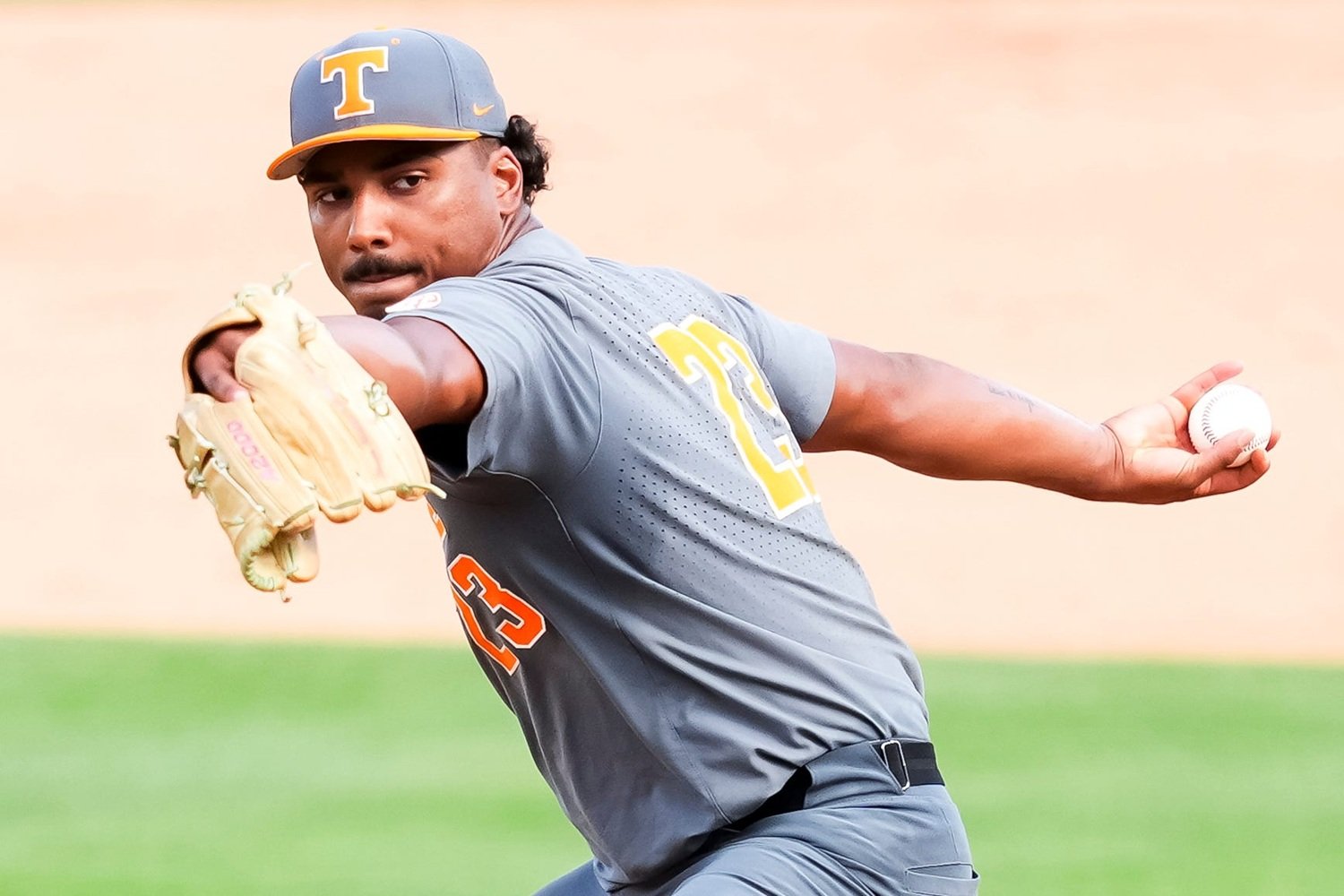 Talk Sox's top prospect rankings continue into the latter half, focusing on the Boston Red Sox's top 10 prospects. Be sure to check out our previous rankings here: Part 1 (Nos. 16-20) Part 2 (Nos. 11-15) Part 3 (No. 10): Anthony Eyanson Boston Red Sox Top Prospects: No. 9 Marcus Phillips The Red Sox had a plan in mind when they entered the 2025 draft, and that was showcased by taking three talented pitchers within their first four picks. Phillips, who was selected by the team with their Competitive Balance pick that was acquired in the Quinn Priester deal, follows the blueprint of pitchers that Craig Breslow is after. Thanks to his size, power and athleticism, along with an aptitude that allowed him to improve significantly in college, Phillips has a chance to be something special with help from the Red Sox pitching lab. Standing 6-foot-4 and weighing 245 pounds, Marcus Phillips also has great extension, which currently reaches 6.43 feet. His delivery also ends in a very low release height that, when paired with his stuff and extension, should lead to positive results on the mound. The right-hander pitched his sophomore and junior seasons for Tennessee; in the latter year, he made 17 starts as the team’s Saturday starter. He finished the season going 4-5 with a 3.90 ERA in 83 innings along with 98 strikeouts and 34 walks. Phillips works with three pitches: a fastball, slider and changeup. All three are rated positively by scouts, with most suggesting each should at least by average by the time he reaches the majors. The fastball averaged 96-99 mph in college and would occasionally reach 101 mph. Unfortunately, it plays below its velocity at times and his control is still a work in progress. The slider averaged between 84-88 mph in college, having more horizontal shape with a high spin rate. It's perhaps his most consistent pitch in terms of missing bats. His changeup is his weakest pitch but will be necessary to develop if he hopes to remain in the rotation. The pitch was thrown in the low-90s in college and can generate the most whiffs, but also is the one he struggles to control the most. Beyond that control, another area he may look to work on is adding a fourth pitch to his repertoire such as a cutter (a pitch the Red Sox have worked with many young pitchers on). Phillips could very well be a boom-or-bust prospect based on how his feel develops over the next few years. His delivery and inability to consistently throw strikes has made scouts wonder if the bullpen is where he is best suited, thanks to a fastball that could end up averaging 100 mph in shorter stints. Should Phillips reach his potential and improve upon his strike-throwing ability, he could end up as a middle-of-the-rotation arm. Where Phillips opens the 2026 season is up in the air. While it’s likely he could begin the season with High-A Greenville, there’s also the possibility that the organization chooses to send him to Low-A Salem to work on a few things before getting a May promotion to the next level. Though, with his stuff, there’s a chance he finishes the season at Double-A regardless of where he opens the year.
 -
Following an impressive 2024 season that saw Matt Duffy dominate in Salem during his first full professional season, the Boston Red Sox expected for the young pitcher to take the next step forward last year as a pitching prospect. Instead, an injury occurred that derailed his entire season. Duffy, who was selected in the fourth round of the 2023 draft, made 22 appearances for Low-A Salem. In that span, he tossed 98 2/3 innings with a 2.83 ERA while striking out 100 batters. The right-hander also managed to limit walks, allowing only 27 free passes throughout the entire season. The thought of playing in 2025 was quickly wiped away when he tore his UCL in February, requiring elbow surgery. “Before I got hurt I was slated to go to Greenville. But I know when I finish my rehab I’ll go back to Salem for probably one or two starts,” Duffy explained when asked about the plan for 2026. “But I don’t really know what the plan is cause it’s kind of far away from now.” Duffy is one of many young Red Sox pitchers working his way back from injury. While he may not be the highest on the depth chart or prospect lists, as a command-oriented pitcher who has seen his velocity increase from the high-80s to around 93 or 94 mph is an interesting arm to keep an eye on. Should he continue to increase the velocity on his fastball once healthy, he could become another success story for the Red Sox's pitching lab down the road. Along with Duffy, Conrad Cason has been working his way back from injury. Drafted in 2024, the two-way player didn’t get a chance to play much in his first professional season as he appeared in just three games, one as a pitcher and the other two on the positional side. In total, Cason tossed two innings and struck out five batters while offensively he went one-for-four with an RBI. Cason’s season would be cut short when he underwent Tommy John surgery much like Duffy, only his came in August. In an offseason interview with Cason, the two-way player stated that he was doing well in his rehab and that the next step was seeing how his arm would respond during the beginning of spring training. In the first week of spring training, he appeared to be doing well, playing long toss to test out his arm along with taking batting practice like everyone else. The most encouraging sign for his arm was the fact Cason was taking infield grounders with other minor-league players at both shortstop and second base. After fielding, he would throw across the diamond showing no issues with his arm. Cason himself said that he felt great and that his arm felt great after throwing, but he would not be pitching in 2026 because of the surgery. He will be playing as a positional player, getting a chance to develop on that side of baseball while he waits for his return to the mound. Despite losing a year of pitching, the team isn’t ready to give up on having him throw off a mound and will look to 2027 to see if he’ll continue as a two-way player or focus on just one aspect of baseball instead. These two young players will continue to work their way back onto a baseball field as they look to move onto the next step of their careers. While things haven’t gone as planned for either of them, their resilience and talent portends a bright future for both Duffy and Cason. View full article
-
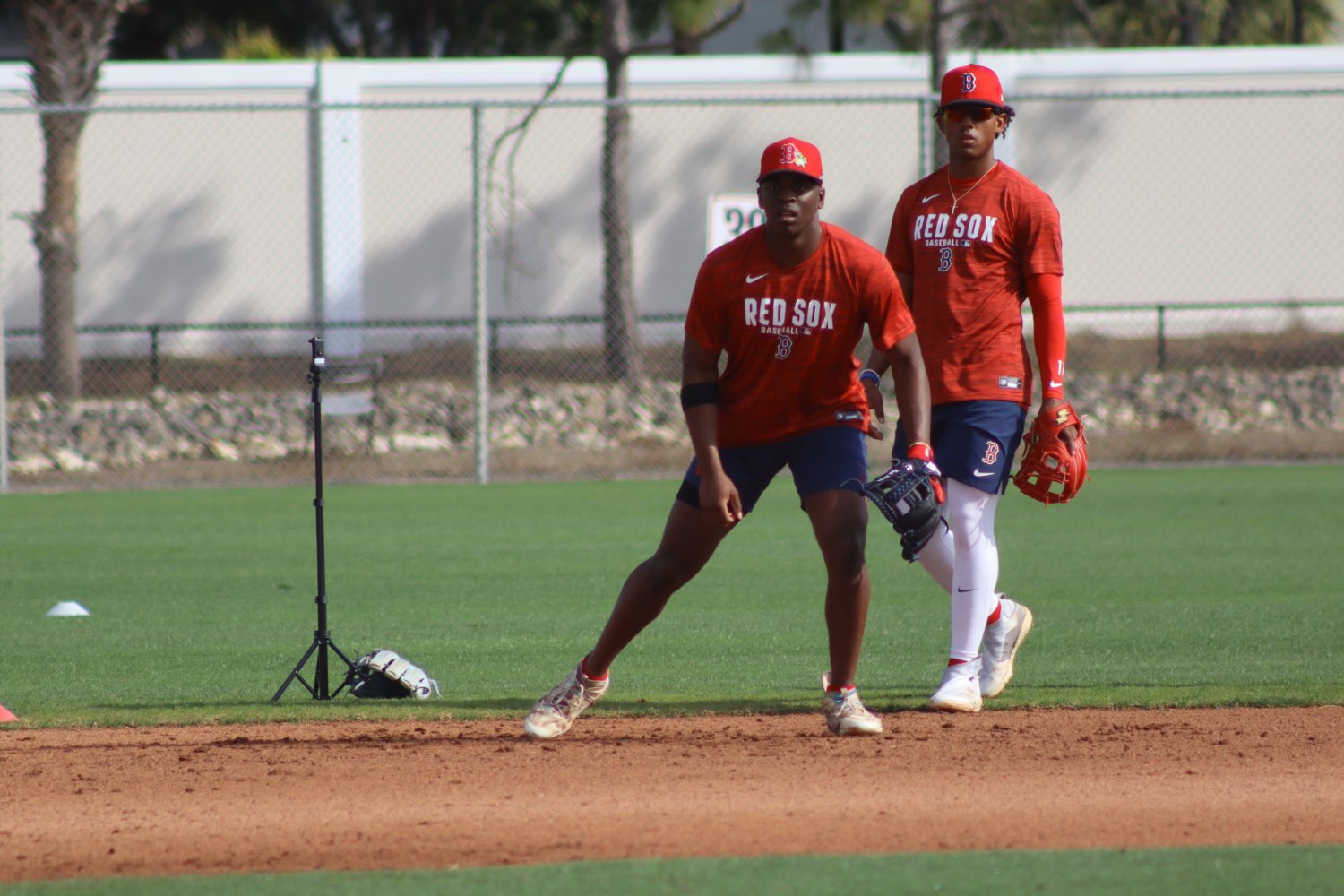 Following an impressive 2024 season that saw Matt Duffy dominate in Salem during his first full professional season, the Boston Red Sox expected for the young pitcher to take the next step forward last year as a pitching prospect. Instead, an injury occurred that derailed his entire season. Duffy, who was selected in the fourth round of the 2023 draft, made 22 appearances for Low-A Salem. In that span, he tossed 98 2/3 innings with a 2.83 ERA while striking out 100 batters. The right-hander also managed to limit walks, allowing only 27 free passes throughout the entire season. The thought of playing in 2025 was quickly wiped away when he tore his UCL in February, requiring elbow surgery. “Before I got hurt I was slated to go to Greenville. But I know when I finish my rehab I’ll go back to Salem for probably one or two starts,” Duffy explained when asked about the plan for 2026. “But I don’t really know what the plan is cause it’s kind of far away from now.” Duffy is one of many young Red Sox pitchers working his way back from injury. While he may not be the highest on the depth chart or prospect lists, as a command-oriented pitcher who has seen his velocity increase from the high-80s to around 93 or 94 mph is an interesting arm to keep an eye on. Should he continue to increase the velocity on his fastball once healthy, he could become another success story for the Red Sox's pitching lab down the road. Along with Duffy, Conrad Cason has been working his way back from injury. Drafted in 2024, the two-way player didn’t get a chance to play much in his first professional season as he appeared in just three games, one as a pitcher and the other two on the positional side. In total, Cason tossed two innings and struck out five batters while offensively he went one-for-four with an RBI. Cason’s season would be cut short when he underwent Tommy John surgery much like Duffy, only his came in August. In an offseason interview with Cason, the two-way player stated that he was doing well in his rehab and that the next step was seeing how his arm would respond during the beginning of spring training. In the first week of spring training, he appeared to be doing well, playing long toss to test out his arm along with taking batting practice like everyone else. The most encouraging sign for his arm was the fact Cason was taking infield grounders with other minor-league players at both shortstop and second base. After fielding, he would throw across the diamond showing no issues with his arm. Cason himself said that he felt great and that his arm felt great after throwing, but he would not be pitching in 2026 because of the surgery. He will be playing as a positional player, getting a chance to develop on that side of baseball while he waits for his return to the mound. Despite losing a year of pitching, the team isn’t ready to give up on having him throw off a mound and will look to 2027 to see if he’ll continue as a two-way player or focus on just one aspect of baseball instead. These two young players will continue to work their way back onto a baseball field as they look to move onto the next step of their careers. While things haven’t gone as planned for either of them, their resilience and talent portends a bright future for both Duffy and Cason.
 -
Talk Sox's top prospect rankings have reached their latter half, now focusing on the Boston Red Sox's top 10 prospects heading into the 2026 season. Be sure to check out our previous rankings here: Part 1 (Nos. 16-20) Part 2 (Nos. 11-15) Boston Red Sox Top Prospects: No. 10 Anthony Eyanson Selected in the third round of the 2025 draft out of Louisiana State University, Anthony Eyanson may end up being one of the biggest steals for the Boston Red Sox in recent years. Eyanson completed his junior season at LSU by winning the national championship, ultimately garnering attention as a top-50 draft prospect. As the Saturday starter for LSU, Eyanson made 20 appearances, 18 of them starts, and went 12-2 with two saves across 108 innings. He was dominant on the mound, allowing just 36 earned runs. Things would not work out perfectly for Eyanson, however, as the right-hander slid to the third round, where the Red Sox selected him at the 87th pick. Eyanson is a very intriguing pitching prospect, one who continues to fit in with Craig Breslow’s desire to acquire pitchers who are big (he stands 6-foot-2 and weighs 210 pounds) and have good extension (6.41 feet). The right-hander has a polished arsenal made up of a fastball, slider, curveball and changeup, and he's got strong control of each of those offerings. His fastball routinely sat between 92 and 94 mph in college, occasionally topping out at around 97 mph. However, in his first week of spring training, the right-hander managed to get it up to 98 mph. His slider has more vertical break to it instead of horizontal (i.e., more traditional power slider than a modern sweeper) and despite a lower spin rate, it can miss bats. It also manages to generate a high chase rate despite not landing in the zone all that often. In college, the slider managed to produce a 52% whiff rate and could become his main "out pitch" in professional baseball. Eyanson’s curveball is thrown competitively, but despite a good amount of vertical depth, it fails to miss as many bats as would be expected. It is used more often against left-handed batters. Finally, his changeup may be his weakest pitch, as he fails to consistently land it in the strike zone, and he may need to adjust the low-80s offering as he graduates various levels in the system. In college, Eyanson showed an ability to rack up strikeouts, finishing the 2025 season with 152 in just 108 innings. There is no reason to believe that should change once he gets his first taste of minor league baseball thanks to his fastball, slider and curveball. Early on in spring training, he has looked good on the backfields while throwing live at-bats. One of Eyanson’s best traits is his ability to limit free passes. While his strikeouts were well documented (33.9% rate), he managed to walk just 36 batters with LSU, good for an 8.0% walk rate. Thanks to this, Eyanson already has a high floor and comes with little reliever risk. Should he manage to maintain the increased velocity he’s showing with his fastball across the entire season, he would project as a mid-rotation arm. Eyanson is likely to open the year in High-A Greenville, but thanks to his strike-throwing ability along with his already-polished arsenal of pitches, he could be promoted to the upper levels of the organization quickly. The right-hander is confident in his own abilities and is entering 2026 with a determination to prove he should have been taken within the first two rounds of the draft. He’ll be an interesting pitcher to watch, especially if he can find an arm-side pitch to throw to left-handed hitters. View full article
-
Boston Red Sox 2026 Top Prospects Rankings: Anthony Eyanson (No. 10)
Nick John posted an article in Minor Leagues
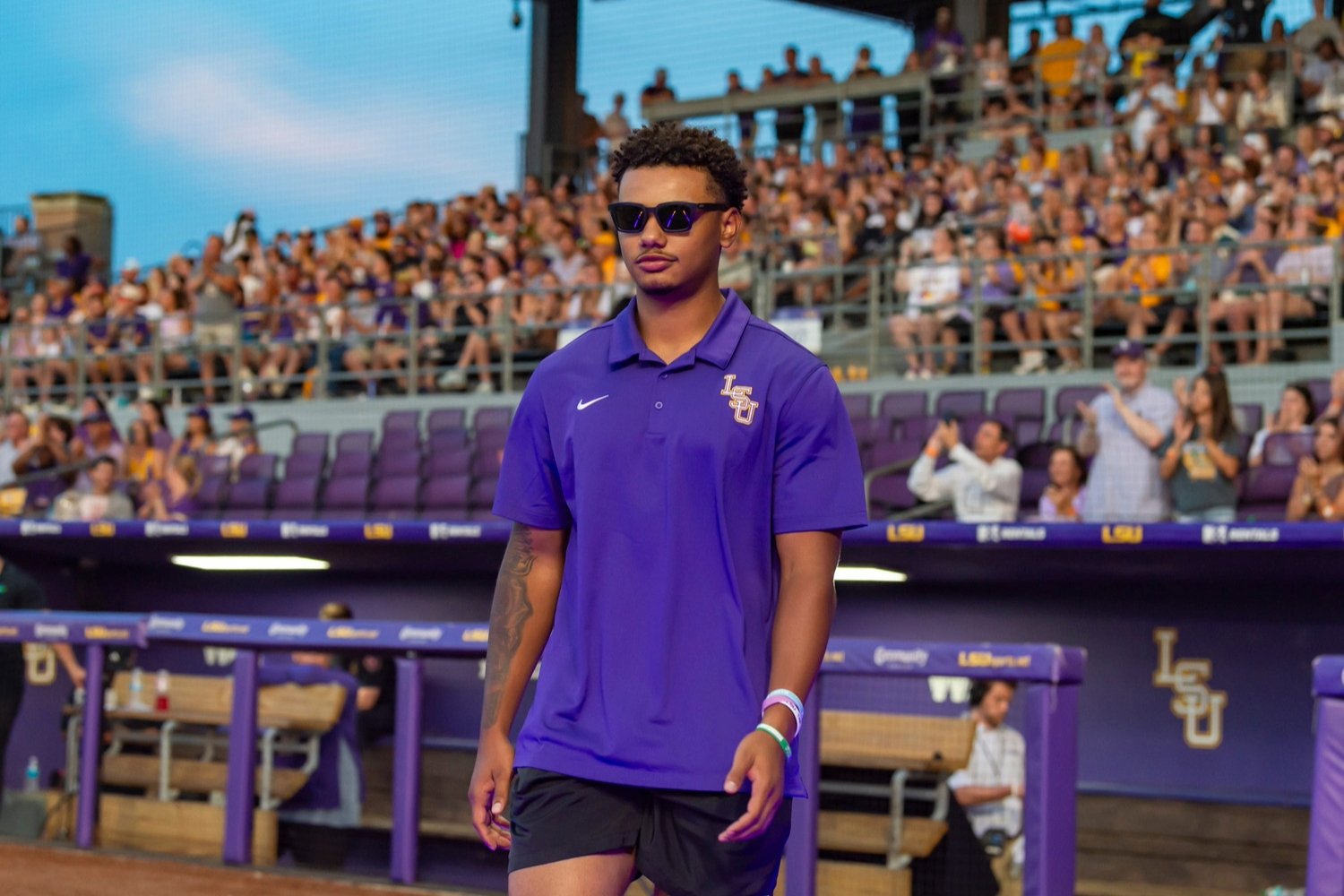 Talk Sox's top prospect rankings have reached their latter half, now focusing on the Boston Red Sox's top 10 prospects heading into the 2026 season. Be sure to check out our previous rankings here: Part 1 (Nos. 16-20) Part 2 (Nos. 11-15) Boston Red Sox Top Prospects: No. 10 Anthony Eyanson Selected in the third round of the 2025 draft out of Louisiana State University, Anthony Eyanson may end up being one of the biggest steals for the Boston Red Sox in recent years. Eyanson completed his junior season at LSU by winning the national championship, ultimately garnering attention as a top-50 draft prospect. As the Saturday starter for LSU, Eyanson made 20 appearances, 18 of them starts, and went 12-2 with two saves across 108 innings. He was dominant on the mound, allowing just 36 earned runs. Things would not work out perfectly for Eyanson, however, as the right-hander slid to the third round, where the Red Sox selected him at the 87th pick. Eyanson is a very intriguing pitching prospect, one who continues to fit in with Craig Breslow’s desire to acquire pitchers who are big (he stands 6-foot-2 and weighs 210 pounds) and have good extension (6.41 feet). The right-hander has a polished arsenal made up of a fastball, slider, curveball and changeup, and he's got strong control of each of those offerings. His fastball routinely sat between 92 and 94 mph in college, occasionally topping out at around 97 mph. However, in his first week of spring training, the right-hander managed to get it up to 98 mph. His slider has more vertical break to it instead of horizontal (i.e., more traditional power slider than a modern sweeper) and despite a lower spin rate, it can miss bats. It also manages to generate a high chase rate despite not landing in the zone all that often. In college, the slider managed to produce a 52% whiff rate and could become his main "out pitch" in professional baseball. Eyanson’s curveball is thrown competitively, but despite a good amount of vertical depth, it fails to miss as many bats as would be expected. It is used more often against left-handed batters. Finally, his changeup may be his weakest pitch, as he fails to consistently land it in the strike zone, and he may need to adjust the low-80s offering as he graduates various levels in the system. In college, Eyanson showed an ability to rack up strikeouts, finishing the 2025 season with 152 in just 108 innings. There is no reason to believe that should change once he gets his first taste of minor league baseball thanks to his fastball, slider and curveball. Early on in spring training, he has looked good on the backfields while throwing live at-bats. One of Eyanson’s best traits is his ability to limit free passes. While his strikeouts were well documented (33.9% rate), he managed to walk just 36 batters with LSU, good for an 8.0% walk rate. Thanks to this, Eyanson already has a high floor and comes with little reliever risk. Should he manage to maintain the increased velocity he’s showing with his fastball across the entire season, he would project as a mid-rotation arm. Eyanson is likely to open the year in High-A Greenville, but thanks to his strike-throwing ability along with his already-polished arsenal of pitches, he could be promoted to the upper levels of the organization quickly. The right-hander is confident in his own abilities and is entering 2026 with a determination to prove he should have been taken within the first two rounds of the draft. He’ll be an interesting pitcher to watch, especially if he can find an arm-side pitch to throw to left-handed hitters.
 -
 The Boston Red Sox saw quite a few top prospects make their way to the majors last season, including the number one prospect in all of baseball, Roman Anthony. Despite the graduations of Anthony, Marcelo Mayer and Kristian Campbell, the team still boasts a farm system that is currently ranked near the middle of the league; with some breakouts this year, it could rise once more. Between players taking a leap from the 2025 season and new acquisitions from last year’s draft, there are many names worth monitoring heading into the season. Let’s take a look at the first installment of TalkSox’s Top 20 prospects. These rankings were voted on by the writers. No. 20: John Holobetz (Greenville Drive/Portland Seadogs) Holobetz was the player to be named later in the Quinn Priester trade and immediately made an impact, beginning with High-A Greenville. Making 12 appearances there, Holobetz showcased an ability to keep walks limited as he allowed only 10 free passes in 63 innings of work. He also managed to strike out 62 batters in that same span. He would end up being promoted to Double-A Portland where he would finish the season, appearing in six games and tossing 37 2/3 innings to a 2.39 ERA. During that same span Holobetz looked even better, walking just five batters and allowing just one home run. Holobetz starts on the first base side of the rubber and has a deceptive delivery, as he manages to hide the ball well. His repertoire is a fastball that can top out at 96 mph and has shown bat-missing ability and he’s comfortable using it at the top of the strike zone. He also has a slider that is his weakest pitch due to inconsistent feel. Entering spring training in 2026, he’s tweaked it to become more of a bullet slider. The 23-year-old also has a curveball that he struggles to land in the strike zone consistently and a changeup that has some two-seamer action to it. Both pitches are viewed as being potentially average pitches with enough development. Holobetz will begin 2026 back with Portland but should he do well to open the season and the Red Sox are forced to call up their starting pitching depth from Worcester, he could see a promotion to Triple-A by the middle of the season. Despite a decent fastball and an improved slider, Holobetz’s ceiling is likely that of a middle reliever unless he can develop a third reliable offering. No. 19: Conrad Cason (Florida Complex League) Cason was a highly touted prospect when drafted back in 2024 thanks in part to his potential as a two-way player. Coming out of high school, his fastball was already capable of hitting the high-90s, and in the field he showed an ability to be an athletic defender along with the potential to develop power at the plate as he continued to grow. Unfortunately for Cason, his first experience playing professional baseball was mixed. While he managed to make appear in three games (one as a pitcher and two as a hitter), an injury shut him down for the season. On August 14, 2025, he underwent Tommy John surgery, which will cost him his 2026 season as a pitcher. His lone appearance as a pitcher was impressive, however, tossing two innings of hitless baseball and striking out five batters while walking just one. Cason has been working out as a fielder since arriving at spring training, taking ground balls with other minor-league infielders at shortstop and tossing it across the diamond to first base. He’s stated that his arm feels good, and it seems like once he gets back into action, he’ll play either second base or shortstop to see how his arm is holding up. From a pitching standpoint, he has a fastball that has topped out at 98 mph and is arguably his best pitch. He also has a breaking ball that is inconsistent as it can look like either a curveball or a slider depending on spin rate. His final pitch is a changeup that currently sits in the low-80s. Offensively, he has quick hands and a solid understanding of the strike zone but needs to work on recognizing pitches. Has average power, though that should improve as he continues to grow physically and his speed is viewed as being above average. Defensively, he’s an athletic fielder that could easily move to center field thanks to his great arm. Despite being a two-way player, he’s viewed as being better as a pitcher and should he struggle at the plate, the team could transition him full time to the mound. Due to his age and the lost experience in 2025, Cason will likely open the season in the Florida Complex League. Playing in his age-19 season, we’ll likely see him make it to Salem before the end of the season so long as he suffers no setbacks. No. 18: Nelly Taylor (Greenville Drive) Taylor, who was drafted in the 11th round of the 2023 draft, enters camp after playing in the Arizona Fall League over the offseason. Most of his value comes from his speed and defense, as his bat is currently his weakest aspect of his game. Taylor got into 108 games with Greenville in 2025, where he managed to hit .216/.355/.349 with 24 doubles, three triples, seven home runs and 41 RBIs. He also managed to steal 29 bases and walked 81 times. Offensively, he has a quick bat, but his swing can get long at times and can often miss pitches in the zone. He struggles against off-speed and breaking pitches but manages to see a lot of pitches per at-bat. Due to his struggles against left-handed pitching at the lower minor-league levels, he’s very likely to be a platoon bat at his best. His power is viewed as being potentially league average especially when he pulls the ball and against right-handed pitchers, but it will all be determined by how he develops as an overall hitter. His speed is a huge quality of his profile, and he has great baserunning instincts that allow him to put pressure on the defense when he’s on base. Defensively, he has good instincts and above-average range in the outfield and is likely to stick in center field long term thanks to his athleticism while his arm is viewed as being above-average. With the need to continue working on his offensive game, Taylor will likely begin the season in Greenville and could spend most of the season there dependent on his development at the plate. Should he be a league-average hitter with Greenville in 2026, he could see a promotion to Portland some time near the end of July or early August depending on how the trade deadline goes. There’s also the possibility that he puts everything together and the team promotes him earlier than that, though it’s less likely at this point in time. No. 17: Tyler Uberstine (Portland Seadogs/Worcester Red Sox) Uberstine is an interesting prospect based on his career path so far. Drafted in the 19th round of the 2021 draft, Uberstine would make 26 appearances for the organization across the Florida Complex League, Low-A Salem and High-A Greenville from 2021 to 2022 before missing all of the 2023 season after undergoing Tommy John surgery. He would also miss most of 2024, appearing in just three games and tossing 4 2/3 innings. Despite that, Uberstine put together an excellent season in his first taste of Double-A and Triple-A in 2025 as a 26-year-old. After just six starts and 29 2/3 innings with Portland, Uberstine was promoted to Worcester where he was a constant in the ever-changing pitching staff. Making 19 appearances, Uberstine tossed 91 innings and struck out 102 batters while recording a 3.56 ERA. In what may have been a surprise for many, Uberstine was added to the 40-man roster over the offseason following his performance in Triple-A. With Worcester, he had a 26.9% strikeout rate and walked batters at a 9.5% rate. As a pitcher, Uberstine starts on the first base side of the rubber and does a good job of repeating his mechanics while hiding the ball well. His pitches include a fastball that tops out at 95 mph. His velocity is pretty much the same as it was prior to the surgery and the pitch has shown an ability to miss bats. It has some arm-side run. He also has a sinker that has shown good sink down in the zone. His other pitches include a slider that sits in the mid-80s and should he manage to land it in the zone, it could be an average pitch. His changeup sits in the low to mid-80s that has shown drop. His cutter has been an effective pitch against lefties and a curveball that he has rarely thrown since 2024. Uberstine will open the year in Triple-A while serving as an up-and-down arm for the Red Sox either in the rotation or bullpen depending on what the big-league team needs. Should his secondary pitches fail to become league average offerings, he could end up in the bullpen full time thanks to his fastball and cutter. No. 16: Yophery Rodriguez (Greenville Drive) Rodriguez was one of the key pieces in the Quinn Priester trade back in April of 2025, and at 19-years-old was assigned to Greenville. His season had its ups and downs offensively, as he went through hot streaks and cold streaks as shown by a May that saw him hit .155/.276/.262 with 21 strikeouts in 22 games after hitting .257/.409/.414 in April while split between the Red Sox and Brewers organizations. Offensively, Rodriguez has average bat speed and a short, choppy swing while struggling with velocity up in the zone. Due to his swing, he can get underneath the ball and will make weak contact on fly balls. Despite that, he makes contact on pitches in the zone and will use all fields making his hit tool potentially average down the line. His power is viewed as below-average as he produces below-average exit velocities and lacks loft in his swing to be able to tap into his raw power. He also is viewed as having average speed and is not a premier stolen base threat. He also lacks instincts on the basepaths to make up for his lack of top-end speed. Defensively, he’s likely to end up in a corner outfield position due to inconsistent routes and subpar instincts while in center field. His range is considered average, and he is not a standout defender at any of the outfield positions. Rodriguez currently profiles to be a solid upper-minors depth piece with the ceiling of a emergency major league outfielder due to the lack of a carrying tool. Should his hit tool develop — and with serious improvement defensively as a corner outfielder — he could be a fourth or fifth outfielder for a major-league team. Rodriguez’s starting location for 2026 could be a tossup between Portland or Greenville depending on his spring performance. What stands out from the 16-20 in this list? Let us know your thoughts in the comments!
 -
The Boston Red Sox saw quite a few top prospects make their way to the majors last season, including the number one prospect in all of baseball, Roman Anthony. Despite the graduations for Anthony, Marcelo Mayer and Kristian Campbell, the team still boasts a farm system that is currently ranked near the middle of the league but with some breakouts this year could rise once more. Between players taking a leap from the 2025 season and new acquisitions from last year’s draft there are some names to look at heading into the season. Let’s take a look at the first installment of TalkSox’s Top 20 prospects as we dive into the prospects ranked 16-20 as voted on by the TalkSox writers. No. 20: John Holobetz (Greenville Drive/Portland Seadogs) Holobetz was the player to be named later in the Quinn Priester trade and immediately made an impact on the Red Sox minor league pitching depth as the team had him begin with High-A Greenville. Making 12 appearances there, Holobetz showcased an ability to keep walks limited as he allowed only 10 free passes in 63 innings of work. He also managed to strike out 62 batters in that same span. He would end up being promoted to Double-A Portland where he would finish the season appearing in six games and tossing 37 2/3 innings to a 2.39 ERA. During that same span Holobetz looked even better, walking just five batters and allowing just one home run. His strikeouts did drop to just 27, however. Holobetz starts on the first base side of the rubber and appears to have a deceptive delivery as he manages to hide the ball well. His repertoire is a fastball that can top out at 96 mph and has shown bat-missing ability and he’s comfortable using it at the top of the strike zone. Along with the fastball he has a slider that is his weakest pitch due to an inconsistent feel for it. Entering spring training in 2026 he’s tweaked it to become more of a bullet slider. A bullet slider is where the pitch is supposed to spin gyroscopically making it more difficult to pick up and finger pressure from the index-finger is key in creating movement. Holobetz also has a curveball that he struggles to land in the strike zone consistently and a changeup that has some two-seamer action to it. Both pitches are viewed as being potentially below-average pitches. Holobetz will begin 2026 back with Portland but should he do well to open the season and the Red Sox are forced to call up their starting pitching depth from Worcester, he could see a promotion to Triple-A before the middle of the season. Despite a decent fastball and an improved slider, Holobetz’s ceiling is likely that of a middle reliever unless he can develop a third average offering. No. 19: Conrad Cason (Florida Complex League) Cason was a highly touted prospect when drafted back in 2024 thanks in part to his potential as a Two-Way player. Coming out of high school his fastball was already capable of hitting the high-90s and in the field he showed an ability to be an athletic defender along with the potential to develop power at the plate as he continued to grow. Unfortunately for Cason, his first experience playing professional baseball was mixed. While he managed to make appear in three games (one as a pitcher and two as a hitter), that was all he managed to do get into before an injury shut him down for the season. On August 14, 2025, he underwent Tommy John surgery and will cost him his 2026 season as a pitcher. His lone appearance as a pitcher was impressive, however, tossing two innings of hitless baseball and striking out five batters while walking just one. Cason has been working out as a fielder since arriving at spring training, taking ground balls with other minor league infielders at shortstop and tossing it across the diamond to first base. He’s stated that his arm feels good, and it seems like once he gets back into action he’ll play either second base or shortstop to see how his arm is. From a pitching standpoint he has a fastball that has topped out at 98 mph and is arguably his best pitch. Along with it he also has a breaking ball that is inconsistent as it can look like either a curveball or a slider due to his need to find a feel for spin. His final pitch is a changeup that currently sits in the low-80s. Offensively he has quick hands and a solid understanding of the strike zone but needs to work on recognizing pitches. Has average power but it should increase as he continues to grow physically and his speed is viewed as being above average. Defensively he’s an athletic fielder that should he be unable to stick at shortstop or second base, could easily move to center field while also having a great arm. Despite being a two-way player, he’s viewed as being better as a pitcher and should he struggle hitting the team could transition him full time as a pitcher once his arm has fully recovered from the surgery. Due to his age and the lost experience in 2025, Cason will likely open the season in the Florida Complex League, and the team will likely take it slow with him. Playing in his age-19 season, we’ll likely see him make it to Salem before the end of the season so long as he suffers no setbacks. No. 18: Nelly Taylor (Greenville Drive) Taylor, who was drafted in the 11th round of the 2023 draft, enters camp after playing in the Arizona Fall League over the offseason. Taylor very much has most of his value thanks to his speed and defense as his bat is currently his weakest aspect of his game. Taylor got into 108 games with Greenville in 2025 where he managed to hit .216/.355/.349 with 24 doubles, three triples, seven home runs and 41 RBIs. He also managed to steal 29 bases and walked 81 times. Offensively he has a quick bat, but his swing can get long at times and can often miss pitches in the zone. He struggles against off-speed and breaking pitches but manages to see a lot of pitches per at-bat. Due to his struggles against left-handed pitching at the lower minor league levels, he’s very likely to be a platoon bat at his best. His power is viewed as being potentially league average especially when he pulls the ball and against right-handed pitchers, but it will all be determined by how he develops as an overall hitter. His speed is a huge quality of his and he has great baserunning instincts that allow him to put pressure on the defense when he’s on base. Defensively he has good instincts and above-average range in the outfield and is likely to stick in center field long term thanks to his athleticism while his arm is viewed as being above-average. Despite that, he doesn’t make the best throws all the time, but when he does the ball will move fast. With the need to continue working on his offensive game Taylor will likely begin the season in Greenville and could spend most of the season there dependent on his development at the plate. Should he be a league-average hitter with Greenville in 2026, he could see a promotion to Portland some time near the end of July or early August depending on how the trade deadline goes. There’s also the possibility that he puts everything together and the team promotes him earlier than that, though it’s less likely at this point in time. No. 17: Tyler Uberstine (Portland Seadogs/Worcester Red Sox) Uberstine is an interesting prospect based on his career path so far. Drafted in the 19th round of the 2021 draft, Uberstine would make 26 appearances for the organization across the Florida Complex League, Low-A Salem and High-A Greenville from 2021 to 2022 before missing all of the 2023 season after undergoing Tommy John surgery in June of 2023. He would also miss most of 2024, appearing in just three games and tossing 4 2/3 innings. Despite that, Uberstine put together an excellent season in his first taste of Double-A and Triple-A in 2025 as a 26-year-old. After just six starts and 29 2/3 innings with Portland, Uberstine was promoted to Worcester where he was a consistent in the ever-changing pitching staff. Making 19 appearances, Uberstine tossed 91 innings and struck out 102 batters while having a 3.56 ERA. In what may have been a surprise for many, Uberstine was added to the 40-man roster over the offseason following his performance in Triple-A. With Worcester he had a 26.9% strikeout rate and walked batters at a 9.5% rate. As a pitcher, Uberstine starts on the first base side of the rubber and does a good job of repeating his mechanics while hiding the ball well. His pitches include a fastball that tops out at 95 mph. His velocity is pretty much the same as it was prior to the surgery and the pitch has shown an ability to miss bats. It has some arm-side run. He also has a sinker that has shown good sink down in the zone. His other pitches include a slider that sits in the mid-80s and should he manage to land it in the zone it could be an average pitch. His changeup sits in the low to mid-80s that has shown drop. His cutter has been an effective pitch against lefties and a curveball that he has rarely thrown since 2024. Uberstine will open the year in Triple-A while serving as an up-and-down arm for the Red Sox either in the rotation or bullpen depending on what the team needs. Should his secondary pitches fail to become league average offerings he could end up in the bullpen full time due to his fastball and cutter. No. 16: Yophery Rodriguez (Greenville Drive) Rodriguez was one of the key pieces in the Quinn Priester trade back in April of 2025 and at 19-years-old was assigned to Greenville. His season had its ups and downs offensively as he went through hot streaks and cold streaks as shown by a May that saw him hit .155/.276/.262 with 21 strikeouts in 22 games after hitting .257/.409/.414 in April while split between the Red Sox and Brewers organizations. Offensively Rodriguez has average bat speed and a short, choppy swing while struggling with velocity up in the zone. Due to his swing, he can get underneath the ball and will make weak contact. Despite that, he makes contact on pitches in the zone and will use all fields making his hit tool potentially average should he make better contact. His power is viewed as below-average as he produces below-average exit velocities and lacks loft in his swing to be able to tap into his raw power. He also is viewed as having at-best average speed and is not viewed as a stolen base threat. He also lacks instincts on the base path to make up for his speed. Defensively he’s likely to end up in a corner outfield position due to inconsistent routes to the ball and not great instincts while in center field. His range is considered average and is not a standout defender at any of the outfield positions. He could end up being average as a defender in left field but is viewed as a below-average defender in center field. He also has average arm strength that plays best in left field. Rodriguez currently profiles to be a solid upper-minors depth piece with the ceiling of a emergency major league outfielder due to the lack of a carrying tool. Should his hit tool develop and improve defensively as a corner outfielder he could be a fourth or fifth outfielder for a major league team. Rodriguez’s starting location for 2026 could be a tossup between Portland or Greenville depending on the team’s feelings towards him. If they want to get other players more reps in Greenville he could open in Portland as right now they could use a corner outfielder. If they think he isn’t ready for Double-A pitching he could start in Greenville but should he open the season well enough he could be moved up to Portland. What stands out from the 16-20 in this list? Let us know your thoughts in the comments! View full article
-
Could These Prospects Form The Red Sox's Next Big Four?
Nick John replied to Nick John's topic in Red Sox Minor League Talk
Phillips is the Nick Yorke of the group from the previous Big Four (Yorke, Teel, Mayer, Anthony) where he's the biggest risk of the four. With it, I wanted to do a parallel of the four from 2024 with a new quartet entering 2026 but remaining with just arms. -
It seems that the Red Sox's infield depth has already taken a massive blow before the season has even begun. On Wednesday morning, it was revealed by Romy Gonzalez that the infielder will likely not be ready for Opening Day, a revelation many were not surprised by, considering the infielder's current situation. Dealing with a shoulder he aggravated back in January after originally injuring it near the end of the 2025 season, González has yet to get into any regimen during spring training. González had previously undergone a PRP (Platelet-Rich Plasma) injection in late January, but things have not progressed to the point he had hoped. Per MassLive’ Christopher Smith, González said on Wednesday morning “at this point, I think the ramp-up would be a little too quick and it’d be a disservice I feel like to myself and the team if I’m not ready to roll and have a good build up.” González will have an evaluation done by the training staff next Friday, but the infielder feels he won’t be able to begin hitting by then. With González likely headed to the injured list to begin the season, a battle for the utility infield spot on the roster is likely to come down between Nick Sogard and Andruw Monasterio, with the latter having earned praise from manager Alex Cora. View full rumor
-
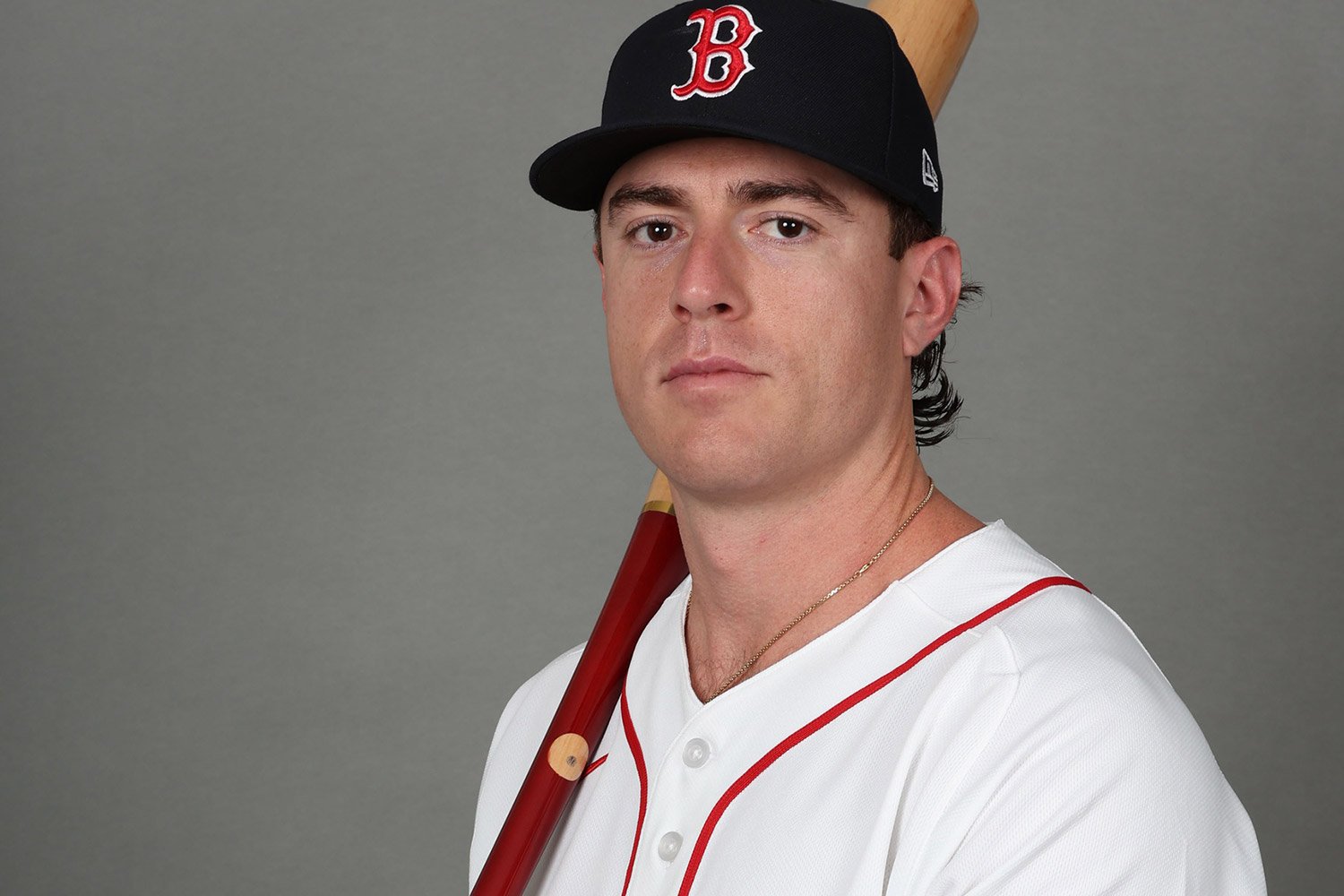 It seems that the Red Sox's infield depth has already taken a massive blow before the season has even begun. On Wednesday morning, it was revealed by Romy Gonzalez that the infielder will likely not be ready for Opening Day, a revelation many were not surprised by, considering the infielder's current situation. Dealing with a shoulder he aggravated back in January after originally injuring it near the end of the 2025 season, González has yet to get into any regimen during spring training. González had previously undergone a PRP (Platelet-Rich Plasma) injection in late January, but things have not progressed to the point he had hoped. Per MassLive’ Christopher Smith, González said on Wednesday morning “at this point, I think the ramp-up would be a little too quick and it’d be a disservice I feel like to myself and the team if I’m not ready to roll and have a good build up.” González will have an evaluation done by the training staff next Friday, but the infielder feels he won’t be able to begin hitting by then. With González likely headed to the injured list to begin the season, a battle for the utility infield spot on the roster is likely to come down between Nick Sogard and Andruw Monasterio, with the latter having earned praise from manager Alex Cora.
 -
Prior to the 2024 season, the Boston Red Sox were marketing the future through a collective group of prospects that had the public excited. Roman Anthony, Kyle Teel, Marcelo Mayer, and Nick Yorke (with Kristian Campbell replacing him during the season) were being advertised as the “core four”; in a sense, being seen as the future of the organization. Fast forward two seasons, and while they aren’t being marketed in the same vein, the Red Sox may have their next quartet, but this time from a pitching standpoint instead of hitters. Since taking over, Craig Breslow has revamped the Red Sox pitching development system and, through the drafts, has focused on pitching as 28 of his draft selections have been pitchers. The team has used the influx of pitchers to completely overhaul its depth, and the surplus of pitching has allowed it to move multiple pitchers to improve its major league roster. Despite that, both Breslow and the Red Sox have decided upon four pitchers that are seemingly high on their list. Of the four, three of them were taken in last year’s draft. Kyson Witherspoon, Anthony Eyanson, and Marcus Phillips were taken with three of the first four Red Sox picks. The final member of the quartet, Juan Valera, was signed as an international free agent back in 2023. Together, these four have the potential to become the team’s next “Big Four” once Payton Tolle and Connelly Early graduate from prospect status. Though that’s not to say they haven’t already been making headlines for themselves within the first week of spring training. Kyson Witherspoon Witherspoon, viewed highly by the organization, has already turned heads since the offseason began, thanks in part to his work ethic. Having spent time with Driveline over the winter, Witherspoon was able to learn a sweeper to add to his arsenal. What makes his new sweeper fascinating is that he was able to get 20” of horizontal break on it, something that no other Red Sox prospect was able to do in 2025. Along with that, there were fewer than 10 pitchers in all of minor league baseball who had a sweeper with at least 20” of horizontal movement. Add to it a fastball that averages in the mid to upper 90s, and Witherspoon could fly through the minors in a way similar to Tolle. So far in spring training, Witherspoon has thrown live at-bats twice, getting his fastball up to 97 mph in the first session back on February 13 and hitting 98 mph on February 20. In the latter, he pitched against Roman Anthony, getting him to ground out. Now, spring training is still young, and it makes sense for pitchers to be ahead of hitters, but the Red Sox are high on him. As reported by Alex Speier, there’s a real possibility that Witherspoon could start the season in Double-A instead of High-A like most first-round picks with the Red Sox. Witherspoon is viewed as a Top 100 prospect for several publications, and his work ethic and growth in just under a year with the organization are remarkable. Juan Valera Joining Witherspoon in conversations about dominant, intriguing, young pitchers is Valera. Valera, who won’t turn 20 until the middle of May, has been viewed as one of the better Red Sox pitching prospects since 2024, when he made his stateside debut in the Florida Complex League. After throwing 40 1/3 innings with a 1.79 ERA, he was promoted to Salem, where his dominance continued with 28 strikeouts in 23 innings. The team was impressed with his performance across the two levels and was slated to open 2025 with Greenville. Unfortunately, Valera struggled at times to pitch deep into games, making it into the fifth inning only three times. Despite that, he was dominant at times and only allowed more than two earned runs twice. The hard-throwing right-hander missed most of the season after dealing with elbow soreness in May. Despite that, Valera showed up to spring training ready to show what he could do. Backed with one of the hardest sweepers in all of minor league baseball (thanks to it having a spin rate over 2,700 rpm and a fastball that can top out at 100 mph, Valera has two deadly pitches to work with. Much like Witherspoon, Valera has also cracked some Top 100 prospect lists, ranking 90th in ESPN’s selections. Valera is a prospect whose value will be tied to his health. Through his first three professional seasons, the right-hander’s max number of innings thrown was 63 1/3 in 2024. How he handles a full season’s workload will help tell what kind of pitcher he could end up becoming. Currently, though, it’s one with extreme talent, as backed by Anthony. Much like with Witherspoon, Valera faced Anthony in a live at-bat. In it, Valera attempted to attack Anthony, and while the outfielder managed to make contact and foul a pitch off, he would eventually be struck out while looking at strike three. After the at-bat, he asked SoxProspects’ Andrew Parker what level Valera was at, eventually saying, “This kid is really good”. For him to reach his potential, however, it’ll be about going deeper into games. Already, he’s shown an ability to strike batters out and generate whiffs, but he needs to learn how to get batters to hit for soft contact instead of attempting to strike everyone out. Marcus Phillips The third member of the quartet may be the biggest boom-or-bust prospect of the group, as Phillips has a high ceiling thanks to his size and athleticism paired with his fastball’s velocity. Drafted with the pick acquired in the Quinn Priester trade, Phillips already topped out at close to 101 mph in college. The right-hander demonstrated two potentially above-average pitches in college with his fastball and slider, while his changeup could potentially be an average pitch. Unfortunately for Phillips, the biggest issue with his delivery that could see him become a bullpen arm is his ability to throw strikes. Despite those concerns, Phillips had a walk rate of 9% in his first season as a starter in 2025, and his build alone will lead the Red Sox to begin his development in the starting rotation. Standing at 6-foot-4 and weighing 245 pounds, he is another big and strong pitcher that Breslow has craved since overhauling the organizational pitching development. 2026 will be huge for Phillips to determine the path the Red Sox decide to take with him. Phillips very likely could be the equivalent of Nick Yorke in this scenario and end up traded due to others passing him on the organizational depth chart, or he could end up being the best of the four pitchers. Anthony Eyanson The final member, Eyanson, could end up being the best because teams overlooked him at the draft. Taken by the Red Sox in the third round, there’s no debate that Eyanson could have been a first-round pick with his potential, especially after finishing third in Division I in strikeouts and previously being a consensus top 50 prospect before falling to the Red Sox in the third round. While it can be argued that Eyanson could very well be a high-floor, low-ceiling pitcher, his attitude to improve and his chip on his shoulder after falling in the draft could lead him to push past those projections. Last week, Eyanson threw a live at-bat on Friday, February 20, and in that session, he was told he topped out at 98.4 mph. When he was in college, he was averaging 92-94 mph, already showing improvement in his velocity. From a visual standpoint, he also looks stronger, having put on muscle since being drafted, as he aims to prove all the doubters wrong. His pitch arsenal alone seems to have three potentially above-average pitches in his fastball, slider, and curveball, while his changeup could end up being an average pitch at the major league level. Eyanson is likely to stick in the rotation thanks to his athletic frame, strong makeup, and his tendency to be a hard worker. The Red Sox have managed to surround their lower levels of the minors with intriguing pitchers who could very well help the major league team as soon as the 2027 season, depending on their development. Over the last few years, fans were able to watch minor league hitters with excitement, and now it’s flipped to the pitching side as the team very likely has its new Big Four. It’ll be a fun season watching these four pitchers develop and move through the minor leagues, as fans can’t help but visualize a pitching staff featuring them. View full article
-
Could These Prospects Form The Red Sox's Next Big Four?
Nick John posted an article in Minor Leagues
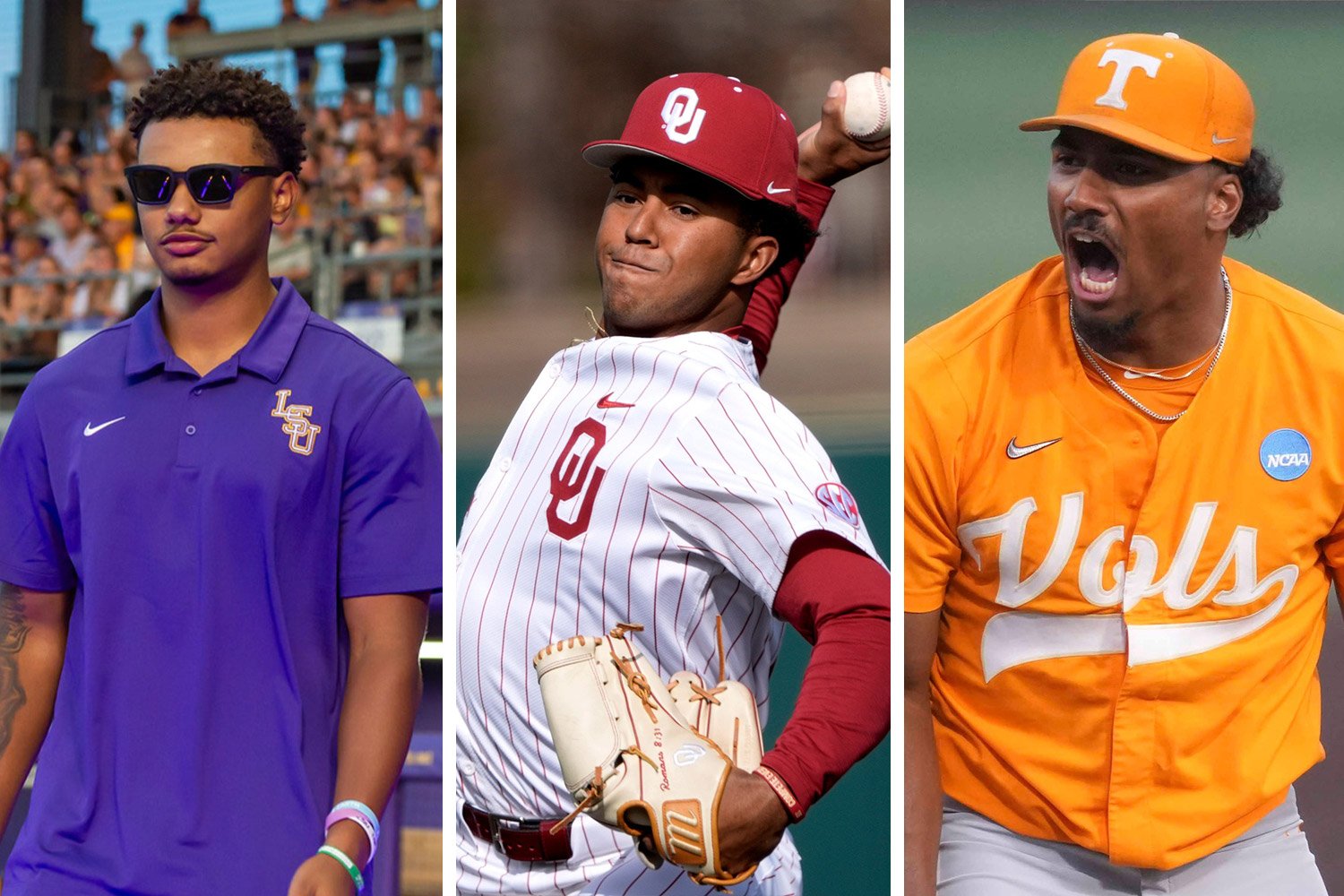 Prior to the 2024 season, the Boston Red Sox were marketing the future through a collective group of prospects that had the public excited. Roman Anthony, Kyle Teel, Marcelo Mayer, and Nick Yorke (with Kristian Campbell replacing him during the season) were being advertised as the “core four”; in a sense, being seen as the future of the organization. Fast forward two seasons, and while they aren’t being marketed in the same vein, the Red Sox may have their next quartet, but this time from a pitching standpoint instead of hitters. Since taking over, Craig Breslow has revamped the Red Sox pitching development system and, through the drafts, has focused on pitching as 28 of his draft selections have been pitchers. The team has used the influx of pitchers to completely overhaul its depth, and the surplus of pitching has allowed it to move multiple pitchers to improve its major league roster. Despite that, both Breslow and the Red Sox have decided upon four pitchers that are seemingly high on their list. Of the four, three of them were taken in last year’s draft. Kyson Witherspoon, Anthony Eyanson, and Marcus Phillips were taken with three of the first four Red Sox picks. The final member of the quartet, Juan Valera, was signed as an international free agent back in 2023. Together, these four have the potential to become the team’s next “Big Four” once Payton Tolle and Connelly Early graduate from prospect status. Though that’s not to say they haven’t already been making headlines for themselves within the first week of spring training. Kyson Witherspoon Witherspoon, viewed highly by the organization, has already turned heads since the offseason began, thanks in part to his work ethic. Having spent time with Driveline over the winter, Witherspoon was able to learn a sweeper to add to his arsenal. What makes his new sweeper fascinating is that he was able to get 20” of horizontal break on it, something that no other Red Sox prospect was able to do in 2025. Along with that, there were fewer than 10 pitchers in all of minor league baseball who had a sweeper with at least 20” of horizontal movement. Add to it a fastball that averages in the mid to upper 90s, and Witherspoon could fly through the minors in a way similar to Tolle. So far in spring training, Witherspoon has thrown live at-bats twice, getting his fastball up to 97 mph in the first session back on February 13 and hitting 98 mph on February 20. In the latter, he pitched against Roman Anthony, getting him to ground out. Now, spring training is still young, and it makes sense for pitchers to be ahead of hitters, but the Red Sox are high on him. As reported by Alex Speier, there’s a real possibility that Witherspoon could start the season in Double-A instead of High-A like most first-round picks with the Red Sox. Witherspoon is viewed as a Top 100 prospect for several publications, and his work ethic and growth in just under a year with the organization are remarkable. Juan Valera Joining Witherspoon in conversations about dominant, intriguing, young pitchers is Valera. Valera, who won’t turn 20 until the middle of May, has been viewed as one of the better Red Sox pitching prospects since 2024, when he made his stateside debut in the Florida Complex League. After throwing 40 1/3 innings with a 1.79 ERA, he was promoted to Salem, where his dominance continued with 28 strikeouts in 23 innings. The team was impressed with his performance across the two levels and was slated to open 2025 with Greenville. Unfortunately, Valera struggled at times to pitch deep into games, making it into the fifth inning only three times. Despite that, he was dominant at times and only allowed more than two earned runs twice. The hard-throwing right-hander missed most of the season after dealing with elbow soreness in May. Despite that, Valera showed up to spring training ready to show what he could do. Backed with one of the hardest sweepers in all of minor league baseball (thanks to it having a spin rate over 2,700 rpm and a fastball that can top out at 100 mph, Valera has two deadly pitches to work with. Much like Witherspoon, Valera has also cracked some Top 100 prospect lists, ranking 90th in ESPN’s selections. Valera is a prospect whose value will be tied to his health. Through his first three professional seasons, the right-hander’s max number of innings thrown was 63 1/3 in 2024. How he handles a full season’s workload will help tell what kind of pitcher he could end up becoming. Currently, though, it’s one with extreme talent, as backed by Anthony. Much like with Witherspoon, Valera faced Anthony in a live at-bat. In it, Valera attempted to attack Anthony, and while the outfielder managed to make contact and foul a pitch off, he would eventually be struck out while looking at strike three. After the at-bat, he asked SoxProspects’ Andrew Parker what level Valera was at, eventually saying, “This kid is really good”. For him to reach his potential, however, it’ll be about going deeper into games. Already, he’s shown an ability to strike batters out and generate whiffs, but he needs to learn how to get batters to hit for soft contact instead of attempting to strike everyone out. Marcus Phillips The third member of the quartet may be the biggest boom-or-bust prospect of the group, as Phillips has a high ceiling thanks to his size and athleticism paired with his fastball’s velocity. Drafted with the pick acquired in the Quinn Priester trade, Phillips already topped out at close to 101 mph in college. The right-hander demonstrated two potentially above-average pitches in college with his fastball and slider, while his changeup could potentially be an average pitch. Unfortunately for Phillips, the biggest issue with his delivery that could see him become a bullpen arm is his ability to throw strikes. Despite those concerns, Phillips had a walk rate of 9% in his first season as a starter in 2025, and his build alone will lead the Red Sox to begin his development in the starting rotation. Standing at 6-foot-4 and weighing 245 pounds, he is another big and strong pitcher that Breslow has craved since overhauling the organizational pitching development. 2026 will be huge for Phillips to determine the path the Red Sox decide to take with him. Phillips very likely could be the equivalent of Nick Yorke in this scenario and end up traded due to others passing him on the organizational depth chart, or he could end up being the best of the four pitchers. Anthony Eyanson The final member, Eyanson, could end up being the best because teams overlooked him at the draft. Taken by the Red Sox in the third round, there’s no debate that Eyanson could have been a first-round pick with his potential, especially after finishing third in Division I in strikeouts and previously being a consensus top 50 prospect before falling to the Red Sox in the third round. While it can be argued that Eyanson could very well be a high-floor, low-ceiling pitcher, his attitude to improve and his chip on his shoulder after falling in the draft could lead him to push past those projections. Last week, Eyanson threw a live at-bat on Friday, February 20, and in that session, he was told he topped out at 98.4 mph. When he was in college, he was averaging 92-94 mph, already showing improvement in his velocity. From a visual standpoint, he also looks stronger, having put on muscle since being drafted, as he aims to prove all the doubters wrong. His pitch arsenal alone seems to have three potentially above-average pitches in his fastball, slider, and curveball, while his changeup could end up being an average pitch at the major league level. Eyanson is likely to stick in the rotation thanks to his athletic frame, strong makeup, and his tendency to be a hard worker. The Red Sox have managed to surround their lower levels of the minors with intriguing pitchers who could very well help the major league team as soon as the 2027 season, depending on their development. Over the last few years, fans were able to watch minor league hitters with excitement, and now it’s flipped to the pitching side as the team very likely has its new Big Four. It’ll be a fun season watching these four pitchers develop and move through the minor leagues, as fans can’t help but visualize a pitching staff featuring them.
 -
When the Boston Red Sox completed their trade with the Milwaukee Brewers, Caleb Durbin was the centerpiece. In return for a young, controllable pitcher like Kyle Harrison, a young, intriguing arm like Shane Drohan, and a speedy infielder in David Hamilton, the Red Sox acquired someone who should make an immediate impact at second or third base in 2026. However, they acquired more than just Durbin, as both Andruw Monasterio and Anthony Seigler along with a Competitive Balance Round B pick were sent to Boston to complete the trade. Durbin's place on this team has been discussed previously by our @Jack Lindsay, and now the remainder of the trade is going to be looked at to see how they might fit into the roster. When the pick was first announced, the exact spot in the draft was unknown. However, that has since changed. With the Arizona Diamondbacks bringing back Zac Gallen, it locks the pick in at No. 67 overall. This pick reasonably replaces the team’s second-round selection they lost for signing Ranger Suárez. In the 2025 draft, the value for the 67th pick was $1.28 million. For comparison, the Red Sox held the 75 overall pick last year and the team took Henry Godbout. The infielder signed for the slot value of just under $1.1 million. This pick brings the Red Sox to three picks in the top 100 after previously only having selections at Nos. 20 and 96. As for actual players, the team acquired two utility infielders in Monasterio and Seigler, one seemingly more valuable than the other. Monasterio, who won’t turn 29 until the end of May, played parts of three seasons with Milwaukee. Appearing in a total of 219 games, the infielder hit .250/.321/.351 with 28 doubles, one triple, eight home runs, and 59 RBIs. Monasterio has hit lefties rather well for his career, slashing .255/.352/.375 with 10 doubles, four home runs, and 24 RBIs in 109 games. With Romy González likely to open the season on the injured list after it was revealed there’s a slight tear in his injured shoulder, Monasterio should have a good chance at getting the first crack at handling his duties as a utility man/lefty masher. The original plan was to have González platoon with Marcelo Mayer. This would allow the young infielder to be protected against left-handed pitching and allow González the opportunity to continue his great hitting against southpaws. Now, it might be Monasterio who fills that role while González is out of commission. While his numbers against left-handed pitching are not as good as González’s, the utility infielder has shown himself to be capable against them. Add to it his ability to play multiple positions (appearing at every infield position at least eight times in 2025) and he seems destined for a utility role, even if his stay in Boston is only temporary. Monasterio has taken the opportunity for reps during spring training with the group that consists of starters and those likely to crack the Opening Day roster, as he’s caught the eye of Alex Cora early on in camp. The Red Sox manager has described him as a “great athlete” and has said “you see him from afar, whatever. But then you see him here, it’s like oh shoot he can move, he’s versatile, he can hit lefties, he’s got some pop,” according to Christopher Smith of MassLive. The final piece to come over from the Brewers, Seigler, seems to be the least impactful and will likely be in Triple-A as an emergency depth option. Drafted by the New York Yankees back in 2018, Seigler never made it to Triple-A with the Yankees and would join the Brewers organization in 2025. The infielder did have an impressive season with Triple-A Nashville, hitting .285/.414/.478 with 16 doubles, four triples, eight home runs, and 39 RBIs. He also displayed a great understanding of the strike zone, walking 52 times compared to striking out in 59 at-bats. That led to his MLB debut in Milwaukee, but he struggled badly in his cup of coffee; in 34 games, the infielder hit .194/.292/.210 with one double, and five RBIs. Seigler can play multiple positions, having been drafted as a catcher before being moved to second base in 2024. While with the Brewers organization, he appeared at second base, third base and catcher while in Triple-A but only at third base (excluding one inning at catcher and one inning as a pitcher) upon being called up. Even while playing winter ball. he split time at second base and third base. During the first week of spring training, the infielder did not work with catchers but remained with the infielders. Specifically with the second group, or the non-roster invites, as he took reps at second base and third base. With the team having someone like Nick Sogard on the 40-man already and someone like Brendan Rodgers in camp, Seigler is unlikely to crack the Opening Day roster. Likewise, due to the previously mentioned players, it would not come as a surprise if he were to be designated for assignment at some point (though the team would likely DFA Mickey Gasper or Tsung-Che Cheng first) if they needed a roster spot. For now, Seigler serves his role within the organization: A player who, if needed, could be called up and provide defensive versatility while the team awaits a starter to return from an injury. His bat at the major-league level has not proven capable of handling the best pitchers in he world. If that changes, Seigler's outlook will as well. Overall, the Red Sox did rather well in the trade. On top of Durbin, they were able to get another pick within the top 100 along with a serviceable infielder and a quality depth option, and all they really gave up was a starter who had no path to the rotation in Boston. View full article

