


Nick John
-
Posts
799 -
Joined
-
Last visited
-
Days Won
1
Content Type
Profiles
Boston Red Sox Videos
2026 Boston Red Sox Top Prospects Ranking
Boston Red Sox Free Agent & Trade Rumors, Notes, & Tidbits
Guides & Resources
2025 Boston Red Sox Draft Pick Tracker
News
2026 Boston Red Sox Draft Tracker: Picks & Bonuses
Forums
Blogs
Events
Store
Downloads
Gallery
Everything posted by Nick John
-
When the Red Sox traded Rafael Devers back in mid-June to the San Francisco Giants, the original consensus on the return package was that the Sox got a less-than-ideal haul for their superstar. Returning to Boston was 2024 first-round pick James Tibbs III and three pitchers: Jordan Hicks, Jose Bello and Kyle Harrison. Since then, the trade has still looked underwhelming, as the Red Sox shipped Tibbs to the Dodgers as part of the return for Dustin May at the trade deadline. Bello has been pitching for Single-A Salem, while Hicks has been frustrating to watch with the Red Sox. Luckily, Harrison appears to have become the most intriguing of them all. especially as he gets more comfortable with the tweaks that the Red Sox have made since he came over from the Giants. While fans thought he might have been in consideration for joining the rotation upon his arrival, the team instead kept him in Triple-A to work on a few things. Harrison, a former Top 100 prospect on lists such as Baseball America and MLB Pipeline, struggled with the Giants this season as he bounced between the bullpen and rotation while appearing in eight games (four starts) and pitching just 23 2/3 innings to a 4.56 ERA before being optioned to Triple-A. Justin Willard, the Red Sox's Director of Pitching, feels that the focal point for Harrison will be his fastball, as it averaged 95.1 mph during his short time in the majors in 2025. The team wants to build the arsenal around the fastball and find what could help elevate it. Two pitches that were a main focus for Harrison to work on were the sinker and cutter, while also changing the grip on his changeup. Prior to coming to the Red Sox, Harrison mainly relied upon three pitches: his fastball, a slurve that at times was confused for a slow, lofty curveball, and a changeup. Despite working on it behind the scenes, Harrison and the Red Sox decided to ditch the sinker after using it just once in his first start with Worcester, instead focusing more on the altered changeup, the new cutter (which at times has been confused for a slider due to its break) and his slurve. Overall, Harrison is leading with his fastball as was always planned, using it just under 51% of the time (50.9%) while his cutter and slurve are used 18.2% and 19.3% of the time, respectively. His changeup remains his least used offering at 11.7%, though the usage is up from his 9.8% during his time with San Francisco. When looking at his pitches with the Red Sox compared to his last appearance with the Giants, you can see some noticeable differences. His changeup grip has been altered significantly to alter its spin rate. In his final appearance with the Giants, the changeup had an average spin rate of 2065 rpms; compared to his latest start with the Red Sox, that number fell to an average of 1253 rpms. In effect, his changeup is dropping more as it went from an average induced vertical break of plus two inches in his last appearance with the Giants to now seeing it drop an average of -2 inches with Worcester, while also increasing its horizontal break from 13 inches to 15 inches on average. The change in his pitches doesn’t end there, with his slurve gaining an average of four inches of horizontal break between his time with the Giants and the Red Sox, again due in part to a change in spin rate (from 2131 rpms on average to 2085 rpms). The cutter appears to be the most changed pitch, having such a sharp horizontal break (three inches on average in his last start). It seems to be a weapon to challenge right-handed batters in with, being tossed to a left-hander just five times since joining the Red Sox organization. Mainly thrown in the upper-two-thirds of the zone, the small movement helps to make batters late on his fastball. The slight tweaks to his pitches have allowed his fastball to play even better now, having generated seven whiffs along with seven called strikes in his last start on August 7. The batters’ timing is off as well, fouling off the pitch 10 times and only managing to put the fastball in play seven times across the start. What might be most promising is the fact that his average exit velocity for his fastball was just 79.2 mph, showing that he is limiting hard contact by mixing his new pitch arsenal around the fastball. This follows a trend of his overall average exit velocity seeing a drop from 92.8 mph with the Giants down to 87.9 mph, along with his hard-hit rate dropping down from 48.5% to 28.3% with Worcester. With 99 pitches in his last start, Harrison may be closer to being called up than people realize. And with the rotation having two large question marks in May and Walker Buehler, Harrison may be needed to provide some quality innings down the stretch as the team continues to fight for a playoff spot. While the return for Devers may have seemed underwhelming at first, Harrison could change perceptions around the deal in a hurry. View full article
-
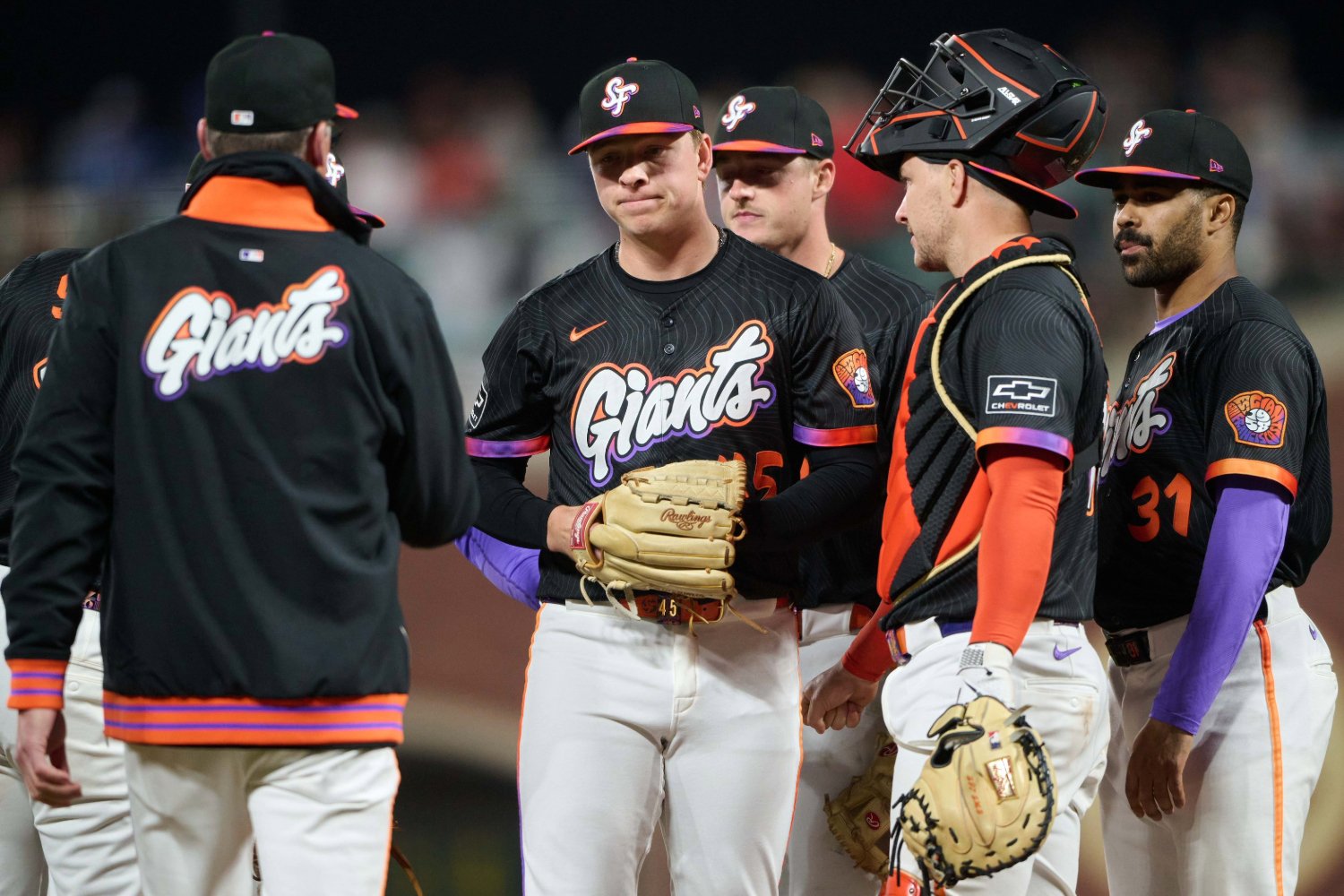 When the Red Sox traded Rafael Devers back in mid-June to the San Francisco Giants, the original consensus on the return package was that the Sox got a less-than-ideal haul for their superstar. Returning to Boston was 2024 first-round pick James Tibbs III and three pitchers: Jordan Hicks, Jose Bello and Kyle Harrison. Since then, the trade has still looked underwhelming, as the Red Sox shipped Tibbs to the Dodgers as part of the return for Dustin May at the trade deadline. Bello has been pitching for Single-A Salem, while Hicks has been frustrating to watch with the Red Sox. Luckily, Harrison appears to have become the most intriguing of them all. especially as he gets more comfortable with the tweaks that the Red Sox have made since he came over from the Giants. While fans thought he might have been in consideration for joining the rotation upon his arrival, the team instead kept him in Triple-A to work on a few things. Harrison, a former Top 100 prospect on lists such as Baseball America and MLB Pipeline, struggled with the Giants this season as he bounced between the bullpen and rotation while appearing in eight games (four starts) and pitching just 23 2/3 innings to a 4.56 ERA before being optioned to Triple-A. Justin Willard, the Red Sox's Director of Pitching, feels that the focal point for Harrison will be his fastball, as it averaged 95.1 mph during his short time in the majors in 2025. The team wants to build the arsenal around the fastball and find what could help elevate it. Two pitches that were a main focus for Harrison to work on were the sinker and cutter, while also changing the grip on his changeup. Prior to coming to the Red Sox, Harrison mainly relied upon three pitches: his fastball, a slurve that at times was confused for a slow, lofty curveball, and a changeup. Despite working on it behind the scenes, Harrison and the Red Sox decided to ditch the sinker after using it just once in his first start with Worcester, instead focusing more on the altered changeup, the new cutter (which at times has been confused for a slider due to its break) and his slurve. Overall, Harrison is leading with his fastball as was always planned, using it just under 51% of the time (50.9%) while his cutter and slurve are used 18.2% and 19.3% of the time, respectively. His changeup remains his least used offering at 11.7%, though the usage is up from his 9.8% during his time with San Francisco. When looking at his pitches with the Red Sox compared to his last appearance with the Giants, you can see some noticeable differences. His changeup grip has been altered significantly to alter its spin rate. In his final appearance with the Giants, the changeup had an average spin rate of 2065 rpms; compared to his latest start with the Red Sox, that number fell to an average of 1253 rpms. In effect, his changeup is dropping more as it went from an average induced vertical break of plus two inches in his last appearance with the Giants to now seeing it drop an average of -2 inches with Worcester, while also increasing its horizontal break from 13 inches to 15 inches on average. The change in his pitches doesn’t end there, with his slurve gaining an average of four inches of horizontal break between his time with the Giants and the Red Sox, again due in part to a change in spin rate (from 2131 rpms on average to 2085 rpms). The cutter appears to be the most changed pitch, having such a sharp horizontal break (three inches on average in his last start). It seems to be a weapon to challenge right-handed batters in with, being tossed to a left-hander just five times since joining the Red Sox organization. Mainly thrown in the upper-two-thirds of the zone, the small movement helps to make batters late on his fastball. The slight tweaks to his pitches have allowed his fastball to play even better now, having generated seven whiffs along with seven called strikes in his last start on August 7. The batters’ timing is off as well, fouling off the pitch 10 times and only managing to put the fastball in play seven times across the start. What might be most promising is the fact that his average exit velocity for his fastball was just 79.2 mph, showing that he is limiting hard contact by mixing his new pitch arsenal around the fastball. This follows a trend of his overall average exit velocity seeing a drop from 92.8 mph with the Giants down to 87.9 mph, along with his hard-hit rate dropping down from 48.5% to 28.3% with Worcester. With 99 pitches in his last start, Harrison may be closer to being called up than people realize. And with the rotation having two large question marks in May and Walker Buehler, Harrison may be needed to provide some quality innings down the stretch as the team continues to fight for a playoff spot. While the return for Devers may have seemed underwhelming at first, Harrison could change perceptions around the deal in a hurry.
 -
Something the Red Sox have prioritized building over the last few seasons is the ability to have quality depth to call upon over the course of a 162-game campaign. This season, that need for depth has been put on full display, as several players have been shuttled back and forth between Boston and Worcester with injuries mounting in both the lineup and pitching staff. Now, with the season entering the home stretch, depth will play an important role. Below is a list of players likely to play a role down the stretch for Boston as they continue their pursuit of their first playoff appearance since 2021. Cooper Criswell – Pitcher Criswell has been an interesting case since signing with Boston prior to the 2024 season. Last year, he was a surprise staple in the rotation, as he made 18 starts with the Red Sox while appearing in 26 games in total. Seen as emergency depth, Criswell won five games for the Red Sox while tossing 85 innings with a 3.49 ERA. 2025 saw him begin the season out of the bullpen with Boston, struggling at times before being optioned to Worcester. Upon returning to Worcester, Criswell pitched as part of the rotation between being called up to Boston multiple times as pitching depth when the bullpen was thin. His latest stint in Boston, however, reminded people of how well he was as a starting pitcher in 2024. In what was a huge game to win, Criswell dominated the Houston Astros by allowing just one run across seven innings pitched. In a time where clutch pitching is needed, Criswell could see himself back up in Boston should members of the rotation (such as Walker Buehler or Dustin May) struggle down the stretch. Criswell's stuff plays better in a starting role (career 3.54 ERA vs 6.05 ERA out of the bullpen), but his ability to be a swingman and pitch either in the rotation or bullpen could make him valuable depth down the stretch. David Sandlin – Pitcher Sandlin spent the entire season being developed as a starter, making all his appearances either as a starter or serving in the piggyback role where he would go four or five innings out of the bullpen. Now, with roughly a month and a half left in the season, plans seemed to have changed. Thanks in part to his impressive fastball, the Red Sox are transitioning Sandlin to the bullpen for the remainder of the year in case they decide to bring him up to Boston. If he were to be called up, Sandlin would pitch exclusively out of the bullpen where his dominant fastball would have him form a powerful bullpen alongside the likes of Aroldis Chapman, Garrett Whitlock, Justin Wilson and (hopefully) Justin Slaten. Sandlin has already made two appearances out of the bullpen as he begins the adjustment, tossing 3 1/3 innings while allowing three runs and striking out four batters. Should he get called up to Boston, he could truly transform the Red Sox's bullpen into one of the strongest in the league during the playoff chase. Nick Sogard – Utility Sogard has spent some time in Boston over the past two seasons, though the majority of that run came in 2024. Sogard would be an interesting piece to help out Boston thanks in part to his ability to play all over the field. Since 2023, Sogard has spent time at every position in the field except for catcher and center field. His ability to handle nearly any position could be a valuable asset for the Red Sox in late-game defensive situations. Across 75 games this season, Sogard has made eight errors, but with the Red Sox lacking middle-infield depth, he could get a chance if something should happen. While his speed isn’t as promising as David Hamilton's, he could prove to be of higher value when it comes to offense and defense. While Sogard's bat isn’t as good as others, he can still make quality contact and put the ball in play. His power wouldn’t be nearly as important (his career OPS across 151 plate appearances is just .655), but an ability to put the ball in play and move runners over is another late game quality needed for a playoff run. Add to it that he has a great eye at the plate (209 walks in 348 Triple-A games), and there's a case for him to be a primary bench piece down the stretch. Zack Kelly – Pitcher Kelly, another pitcher who has been up and down with Boston this season, was just optioned to Triple-A Worcester on August 2 after completing his rehab assignment after returning from an oblique injury he suffered at the start of July. In 17 games this season with Boston, Kelly has had mixed results leading to 5.56 ERA across just 22 2/3 innings. However, despite the high ERA, Kelly has allowed just two home runs while striking out 25 batters thanks in part to a fastball that averages 96 mph. He mixes in a cutter, sinker, slider and changeup to keep hitters off balance. Kelly has been a recipient of bad luck this season, as his FIP is down to 3.64 on the season and he's fighting through a .344 BABIP. Given that he’s striking out nearly 10 batters per nine innings, a proper turn of luck could turn him into a strikeout-throwing, home-run-limiting option out of the bullpen, two attributes that would be valuable in the playoffs. Kristian Campbell – Infielder Campbell erupted onto the scene in April where he hit .301/.407/.495 with eight doubles, four home runs and 12 RBIs as he looked like an early favorite for AL Rookie of the Year. Campbell struggled after that, however, and was optioned to Triple-A Worcester on June 20. Since going to Worcester, Campbell has worked on two parts of his game: pulling the ball with more power, and learning how to play first base. There's good news to report on both fronts, as Campbell has started to look like his old self again, hitting .268/.402/.428 with five home runs and 20 RBIs while looking more and more comfortable at first base with each passing game. Currently, the Red Sox don’t have a need for Campbell and would prefer to let him continue to work on some parts of his game in Worcester, but should Abraham Toro continue to struggle at the plate, there’s a chance the team could look to Campbell to help out at first base alongside Romy González. Jhostynxon Garcia – Outfielder While the Red Sox themselves don’t need an outfielder with six of them on the roster currently (even if Rafaela has been playing second base more often than the outfield since Marcelo Mayer’s injury), Garcia might be too good to leave in Worcester. Offensively, he has shown that despite being just 22 years old, he’s more than capable against Triple-A pitching. In 59 games with Worcester this season, the outfielder is hitting .303/370/.581 with 11 doubles, three triples, 16 home runs and 49 RBIs, all while playing solid defense across all three outfield positions. What might help expedite his arrival in Boston is the fact he’s now learning how to play first base as well. While he has yet to get any game action at first base, Garcia has been learning the position and could begin playing there within the next week or so. Should he handle the position well enough, there is a good chance he could be brought up to Boston largely for his impressive bat and immense power. And unlike most prospects, Garcia is already on the 40-man roster, so the only corresponding move needed would be someone optioned to Worcester to clear up a spot. The possibility of this young slugger being in Boston by September appears to be climbing. View full article
- 1 reply
-
- 1
-

-
- jhostynxon garcia
- kristian campbell
- (and 4 more)
-
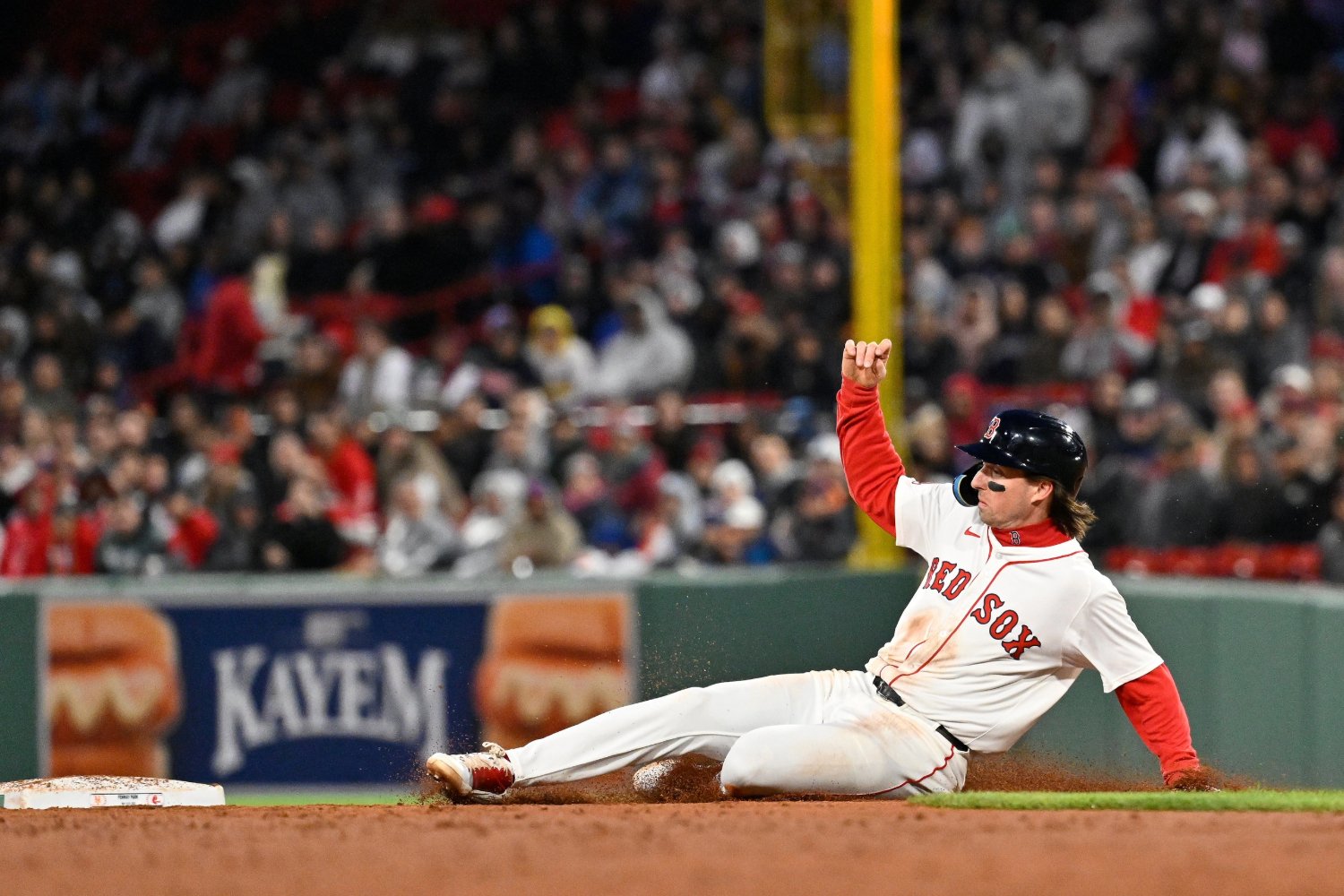 Something the Red Sox have prioritized building over the last few seasons is the ability to have quality depth to call upon over the course of a 162-game campaign. This season, that need for depth has been put on full display, as several players have been shuttled back and forth between Boston and Worcester with injuries mounting in both the lineup and pitching staff. Now, with the season entering the home stretch, depth will play an important role. Below is a list of players likely to play a role down the stretch for Boston as they continue their pursuit of their first playoff appearance since 2021. Cooper Criswell – Pitcher Criswell has been an interesting case since signing with Boston prior to the 2024 season. Last year, he was a surprise staple in the rotation, as he made 18 starts with the Red Sox while appearing in 26 games in total. Seen as emergency depth, Criswell won five games for the Red Sox while tossing 85 innings with a 3.49 ERA. 2025 saw him begin the season out of the bullpen with Boston, struggling at times before being optioned to Worcester. Upon returning to Worcester, Criswell pitched as part of the rotation between being called up to Boston multiple times as pitching depth when the bullpen was thin. His latest stint in Boston, however, reminded people of how well he was as a starting pitcher in 2024. In what was a huge game to win, Criswell dominated the Houston Astros by allowing just one run across seven innings pitched. In a time where clutch pitching is needed, Criswell could see himself back up in Boston should members of the rotation (such as Walker Buehler or Dustin May) struggle down the stretch. Criswell's stuff plays better in a starting role (career 3.54 ERA vs 6.05 ERA out of the bullpen), but his ability to be a swingman and pitch either in the rotation or bullpen could make him valuable depth down the stretch. David Sandlin – Pitcher Sandlin spent the entire season being developed as a starter, making all his appearances either as a starter or serving in the piggyback role where he would go four or five innings out of the bullpen. Now, with roughly a month and a half left in the season, plans seemed to have changed. Thanks in part to his impressive fastball, the Red Sox are transitioning Sandlin to the bullpen for the remainder of the year in case they decide to bring him up to Boston. If he were to be called up, Sandlin would pitch exclusively out of the bullpen where his dominant fastball would have him form a powerful bullpen alongside the likes of Aroldis Chapman, Garrett Whitlock, Justin Wilson and (hopefully) Justin Slaten. Sandlin has already made two appearances out of the bullpen as he begins the adjustment, tossing 3 1/3 innings while allowing three runs and striking out four batters. Should he get called up to Boston, he could truly transform the Red Sox's bullpen into one of the strongest in the league during the playoff chase. Nick Sogard – Utility Sogard has spent some time in Boston over the past two seasons, though the majority of that run came in 2024. Sogard would be an interesting piece to help out Boston thanks in part to his ability to play all over the field. Since 2023, Sogard has spent time at every position in the field except for catcher and center field. His ability to handle nearly any position could be a valuable asset for the Red Sox in late-game defensive situations. Across 75 games this season, Sogard has made eight errors, but with the Red Sox lacking middle-infield depth, he could get a chance if something should happen. While his speed isn’t as promising as David Hamilton's, he could prove to be of higher value when it comes to offense and defense. While Sogard's bat isn’t as good as others, he can still make quality contact and put the ball in play. His power wouldn’t be nearly as important (his career OPS across 151 plate appearances is just .655), but an ability to put the ball in play and move runners over is another late game quality needed for a playoff run. Add to it that he has a great eye at the plate (209 walks in 348 Triple-A games), and there's a case for him to be a primary bench piece down the stretch. Zack Kelly – Pitcher Kelly, another pitcher who has been up and down with Boston this season, was just optioned to Triple-A Worcester on August 2 after completing his rehab assignment after returning from an oblique injury he suffered at the start of July. In 17 games this season with Boston, Kelly has had mixed results leading to 5.56 ERA across just 22 2/3 innings. However, despite the high ERA, Kelly has allowed just two home runs while striking out 25 batters thanks in part to a fastball that averages 96 mph. He mixes in a cutter, sinker, slider and changeup to keep hitters off balance. Kelly has been a recipient of bad luck this season, as his FIP is down to 3.64 on the season and he's fighting through a .344 BABIP. Given that he’s striking out nearly 10 batters per nine innings, a proper turn of luck could turn him into a strikeout-throwing, home-run-limiting option out of the bullpen, two attributes that would be valuable in the playoffs. Kristian Campbell – Infielder Campbell erupted onto the scene in April where he hit .301/.407/.495 with eight doubles, four home runs and 12 RBIs as he looked like an early favorite for AL Rookie of the Year. Campbell struggled after that, however, and was optioned to Triple-A Worcester on June 20. Since going to Worcester, Campbell has worked on two parts of his game: pulling the ball with more power, and learning how to play first base. There's good news to report on both fronts, as Campbell has started to look like his old self again, hitting .268/.402/.428 with five home runs and 20 RBIs while looking more and more comfortable at first base with each passing game. Currently, the Red Sox don’t have a need for Campbell and would prefer to let him continue to work on some parts of his game in Worcester, but should Abraham Toro continue to struggle at the plate, there’s a chance the team could look to Campbell to help out at first base alongside Romy González. Jhostynxon Garcia – Outfielder While the Red Sox themselves don’t need an outfielder with six of them on the roster currently (even if Rafaela has been playing second base more often than the outfield since Marcelo Mayer’s injury), Garcia might be too good to leave in Worcester. Offensively, he has shown that despite being just 22 years old, he’s more than capable against Triple-A pitching. In 59 games with Worcester this season, the outfielder is hitting .303/370/.581 with 11 doubles, three triples, 16 home runs and 49 RBIs, all while playing solid defense across all three outfield positions. What might help expedite his arrival in Boston is the fact he’s now learning how to play first base as well. While he has yet to get any game action at first base, Garcia has been learning the position and could begin playing there within the next week or so. Should he handle the position well enough, there is a good chance he could be brought up to Boston largely for his impressive bat and immense power. And unlike most prospects, Garcia is already on the 40-man roster, so the only corresponding move needed would be someone optioned to Worcester to clear up a spot. The possibility of this young slugger being in Boston by September appears to be climbing.
 -
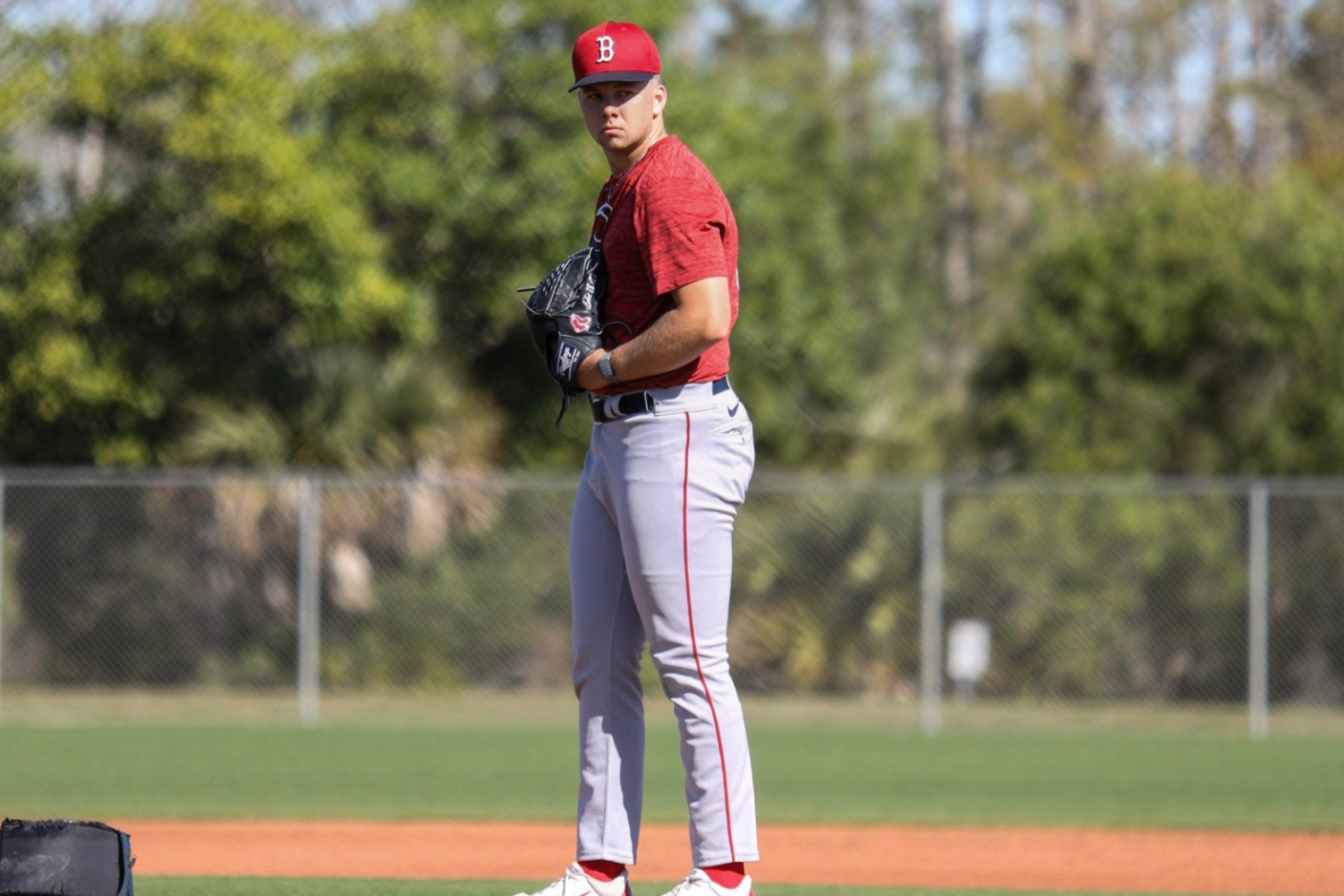 The Boston Red Sox have taken a new approach to their farm system under Craig Breslow. Whereas Chaim Bloom overhauled the hitting infrastructure and developed position players first and foremost, Breslow has instead focused on drafting and developing pitchers, as shown through his first two drafts in charge. Because of this change in philosophy, the team has managed to fill their system with talented pitchers, like Payton Tolle and Brandon Clarke. Now, it seems that there may be another pitcher ready to join their ranks. Drafted in the sixth round of the 2024 MLB Draft out of Kennesaw State University, Blake Aita has been an impressive find by Breslow. Aita, a 22-year-old right-handed pitcher, stands 6’4”, continuing the trend set by Breslow on drafting tall pitchers who have yet to fill out their frames. Case in point: His fastball can now reach 95 mph after sitting 89-92 mph in college. Aita opened his professional career with Low-A Salem where he made 10 appearances, nine starts, and went 2-3 with a 4.24 ERA in 51 innings pitched. In that time, he showcased his great control, walking only nine batters and striking out 45. Since then, the team wasted little time in promoting him to Greenville, as he got the call on June 9 to head to High-A Upon joining Greenville, Aita has been even better in eight starts for the Drive. In that span, he’s gone 3-3 with a 3.06 ERA in 47 innings pitched, walking only 13 batters and striking out 41. Between the two levels, he’s pitched to a 3.67 ERA across 98 innings. At the time of this writing, those 98 frames pitched lead all Red Sox pitchers in the minor leagues. From a pitching standpoint, Aita starts from the first base side of the rubber and throws from a high three-quarters arm slot where his arm swings behind him before coming to the plate, and due to the angle, can allow him to hide the ball well. Pitch-wise, he has four main offerings, those being his fastball, sweeper, cutter, and changeup. The fastball, as mentioned before, now reaches 95 mph while maintaining high spin rates and solid command and control, giving him an above-average pitch to build his foundation on. His best pitch, however, may be his sweeper that averages 80-82 mph with a long, horizontal break thanks in part to a high spin rate. So far, he’s shown a good feel for the pitch, and it’s demonstrated strong bat-missing ability that has allowed him to use it against both right-handed and left-handed batters. The cutter, meanwhile, averages around 86-89 mph, while his changeup is 85-89 mph and is mainly used against left-handed hitters thanks to its "diving" characteristics. On the season, Aita’s success has primarily come from his ability to limit opponents from being on base, as he has a walk rate of just 5.6% and batters are hitting just .209, leading to a WHIP of 1.00 across the two levels (opponents are hitting just .176 against him in Greenville). And while he isn't overly reliant on strikeouts, he still gets them when it matters, posting a solid 22.1% K-rate on the year. Aita uses his pitch mix to his advantage, getting batters to swing at nearly half of all his pitches thrown (currently 49.8% of his thrown pitches are swung at), while 75.9% of those swings end up connecting with the pitch. Should the batter make contact, Aita has managed to limit damage thanks in part to a 43.8% ground ball rate (though it has dropped to 34.5% with Greenville). There’s still some work to go, as his fly ball rate has jumped to 46% in High-A, but he’s limiting it from leading to danger as he’s only allowed nine home runs across his 98 innings. There is a chance for slight regression with Aita—his FIP sits at 4.02 in Greenville, which is league average—who is currently rocking an absurd .202 BABIP at his current level. That's sure to regress to the mean at some point. However, it can’t go without saying how he buckles down when runners do reach against him, as he’s stranded 63.5% of runners on base (something that has increased to 69.3% with Greenville). Aita is an interesting prospect, as he limits walks and baserunners while also giving up a small number of home runs. Having already shown an ability to increase his velocity as well, he could develop an impressive arsenal thanks to his high-spin breaking pitches. Should Aita continue his masterful work this season and into next year, he should be able to push his name into the conversation around the top Red Sox's pitching prospects
 -
The Boston Red Sox have taken a new approach to their farm system under Craig Breslow. Whereas Chaim Bloom overhauled the hitting infrastructure and developed position players first and foremost, Breslow has instead focused on drafting and developing pitchers, as shown through his first two drafts in charge. Because of this change in philosophy, the team has managed to fill their system with talented pitchers, like Payton Tolle and Brandon Clarke. Now, it seems that there may be another pitcher ready to join their ranks. Drafted in the sixth round of the 2024 MLB Draft out of Kennesaw State University, Blake Aita has been an impressive find by Breslow. Aita, a 22-year-old right-handed pitcher, stands 6’4”, continuing the trend set by Breslow on drafting tall pitchers who have yet to fill out their frames. Case in point: His fastball can now reach 95 mph after sitting 89-92 mph in college. Aita opened his professional career with Low-A Salem where he made 10 appearances, nine starts, and went 2-3 with a 4.24 ERA in 51 innings pitched. In that time, he showcased his great control, walking only nine batters and striking out 45. Since then, the team wasted little time in promoting him to Greenville, as he got the call on June 9 to head to High-A Upon joining Greenville, Aita has been even better in eight starts for the Drive. In that span, he’s gone 3-3 with a 3.06 ERA in 47 innings pitched, walking only 13 batters and striking out 41. Between the two levels, he’s pitched to a 3.67 ERA across 98 innings. At the time of this writing, those 98 frames pitched lead all Red Sox pitchers in the minor leagues. From a pitching standpoint, Aita starts from the first base side of the rubber and throws from a high three-quarters arm slot where his arm swings behind him before coming to the plate, and due to the angle, can allow him to hide the ball well. Pitch-wise, he has four main offerings, those being his fastball, sweeper, cutter, and changeup. The fastball, as mentioned before, now reaches 95 mph while maintaining high spin rates and solid command and control, giving him an above-average pitch to build his foundation on. His best pitch, however, may be his sweeper that averages 80-82 mph with a long, horizontal break thanks in part to a high spin rate. So far, he’s shown a good feel for the pitch, and it’s demonstrated strong bat-missing ability that has allowed him to use it against both right-handed and left-handed batters. The cutter, meanwhile, averages around 86-89 mph, while his changeup is 85-89 mph and is mainly used against left-handed hitters thanks to its "diving" characteristics. On the season, Aita’s success has primarily come from his ability to limit opponents from being on base, as he has a walk rate of just 5.6% and batters are hitting just .209, leading to a WHIP of 1.00 across the two levels (opponents are hitting just .176 against him in Greenville). And while he isn't overly reliant on strikeouts, he still gets them when it matters, posting a solid 22.1% K-rate on the year. Aita uses his pitch mix to his advantage, getting batters to swing at nearly half of all his pitches thrown (currently 49.8% of his thrown pitches are swung at), while 75.9% of those swings end up connecting with the pitch. Should the batter make contact, Aita has managed to limit damage thanks in part to a 43.8% ground ball rate (though it has dropped to 34.5% with Greenville). There’s still some work to go, as his fly ball rate has jumped to 46% in High-A, but he’s limiting it from leading to danger as he’s only allowed nine home runs across his 98 innings. There is a chance for slight regression with Aita—his FIP sits at 4.02 in Greenville, which is league average—who is currently rocking an absurd .202 BABIP at his current level. That's sure to regress to the mean at some point. However, it can’t go without saying how he buckles down when runners do reach against him, as he’s stranded 63.5% of runners on base (something that has increased to 69.3% with Greenville). Aita is an interesting prospect, as he limits walks and baserunners while also giving up a small number of home runs. Having already shown an ability to increase his velocity as well, he could develop an impressive arsenal thanks to his high-spin breaking pitches. Should Aita continue his masterful work this season and into next year, he should be able to push his name into the conversation around the top Red Sox's pitching prospects View full article
-
Today, the Boston Red Sox signed rookie sensation Roman Anthony to an eight-year, $130 million contract that could increase to $230 million based on various escalators within the contract. The deal itself means that Anthony should remain a Boston Red Sox through the 2033 season, with a club option to keep him through 2034. While everyone is celebrating the huge moment (rightfully so), there seems to be an avoidance of the possible downsides of this contract should anything go wrong. From a fanbase viewpoint, no one wants to think of such an outcome, but there’s a reason a lot of these contracts for young players are signed early in their careers instead of waiting to cash in once they get to free agency. Typically, it's to make sure the young player gets guaranteed money before a possible injury occurs; sometimes, they’re leaving money on the table, and other times it works out. An example would be David Wright of the New York Mets, a former superstar who saw injuries derail his career. The former third baseman originally signed a six-year, $55 million extension in August of 2006 and played up to that contract. It was the following extension that proved to be the bad gamble. Coming off of a season that saw Wright hit .306/.391/.492 with 41 doubles, two triples, 21 home runs and 93 RBIs, the Mets not only picked up the option for the 2013 season but also added on seven years and $122 million through an extension. After 2013 when that extension kicked in, Wright would go on to only play 211 games between 2014 and 2018, including missing all of the 2017 season. Wright would be released from the contract following 2018 and retired. Wright made his debut at 21 years old in 2004, playing in 69 games where he hit .293/.332/.525 with 17 doubles, a triple, 14 home runs and 40 RBIs. From 2005 through 2013, he was a force in the lineup, only failing to hit 20 or more home runs in 2009. Notably, 2011 and 2013 which were the only seasons he failed to play in more than 150 games before his huge extension kicked in. He had five seasons of over 100 RBIs, four straight years of 40 or more doubles, and not only won two Silver Slugger awards but also two Gold Gloves and made the All-Star team seven times. The Red Sox hope Anthony can become a player like Wright was before his unfortunate string of injuries. But there’s no denying that with an extension like that comes to the worry of a potential injury (or underperformance) derailing a season or even more. Fortunately, Anthony has shown no signs of injury concern so far in his career both in the minor leagues and with Boston, and should remain healthy in the outfield compared to the more physically demanding position of third base that Wright previously played. Of course, there’s also the chance of Anthony just not working out. This probability seems very unlikely based on how Anthony has looked and performed so far, but there’s always that chance. A team signs a player to a long-term extension in hopes of locking them up for the future and instead are left with an awful contract. This happened to the Philadelphia Phillies back in 2018 when they signed Scott Kingery to a six-year, $24 million contract that included three options that would have brought the deal up to $65 million. All of that was awarded because of his unbelievable 2017 season between Double-A and Triple-A before hitting close to .400 in spring training and winning a big league roster spot. It didn’t work out in the end for the Phillies as Kingly struggled. In fact, from 2018-22, he played in just 325 games (273 of those were in his first two seasons), and he spent most of 2021, 2022 and all of 2023 either hurt or playing in Triple-A. Eloy Jiménez is another example of a contract that didn’t really work out for various reasons. Jiménez signed a six-year, $43 million contract before playing a single game in the major leagues. It quickly looked like a smart investment, as he hit .267/.315/.513 with 18 doubles, two triples, 31 home runs and 79 RBIs in his rookie season. Unfortunately, he never played more than 122 games in a season again. Ignoring the Covid-shortened 2020 campaign, Jiménez only appeared in more than 100 games one more time during the span of that contract in 2023, where in 120 games he hit .272/.317/.441 with 23 doubles, 18 home runs and 64 RBIs, a rather league-average offensive showing. Right now, Jiménez isn’t even in major league baseball at the moment, instead a free agent after playing for Triple-A Durham in the Tampa Bay organization before getting released on July 12. He might have to settle for another minor league deal for next season or attempt to rebuild his value overseas in either the NPB or KBO. That's a rather length preamble to this whole conversation, but it's important to remind ourselves that even the most surefire deals don't always work out. That being said, despite all the aforementioned issues with long-term extensions for young players, especially those who were mostly unproven, there really shouldn’t be much concern for Anthony. Unlike the other players, his metrics back up how well he’s played. It isn’t like he’s gotten extremely lucky at the plate; he's actually performing very similar to his minor league self. He isn’t being overwhelmed by major league pitching and is staying true to himself; working counts and getting the pitch he wants to swing at. Anthony hasn’t tried to sell out for more power in the majors despite showcasing some of the hardest hit baseballs in the league thanks to impressive bat speed and the ability to square up the baseball at high rates. Offensively, he’s shown he is exactly the kind of player you would invest this amount of money into, as his numbers are very similar if not higher than Rafael Devers following his 2022 season (the one before he signed the extension). In fact, at this point in time, Anthony has a higher xwOBA, average exit velocity, hard-hit rate, launch angle sweet spot, bat speed, squared-up rate, chase rate and walk rate than Devers had before his extension. And everyone knew the kind of offensive player that Devers was, so there should be no worries in regard to the gamble the Red Sox just took on with Anthony. If anything, it might be a steal considering the type of player Anthony is projected to become. The Red Sox have wagered that this is all going to work out, and things right now point to the fact that Anthony should continue progressing into a middle-of-the-order, All-Star-caliber hitter who plays great defense. He’s exactly the type of player you should want to gamble on, because his floor is just so high. Obviously, if all goes according to plan, peak Anthony will make this extension a bargain, but even if it doesn't, he should still play well enough throughout his 20s to justify this kind of expenditure. In today’s game where locking up young players is becoming more common, the Red Sox may have just gambled on their scouts and development system. Anthony was under team control for another five or six years at relatively cheap rates. If his early success is to be believed, though, Boston just secured its future at an extremely affordable price. View full article
-
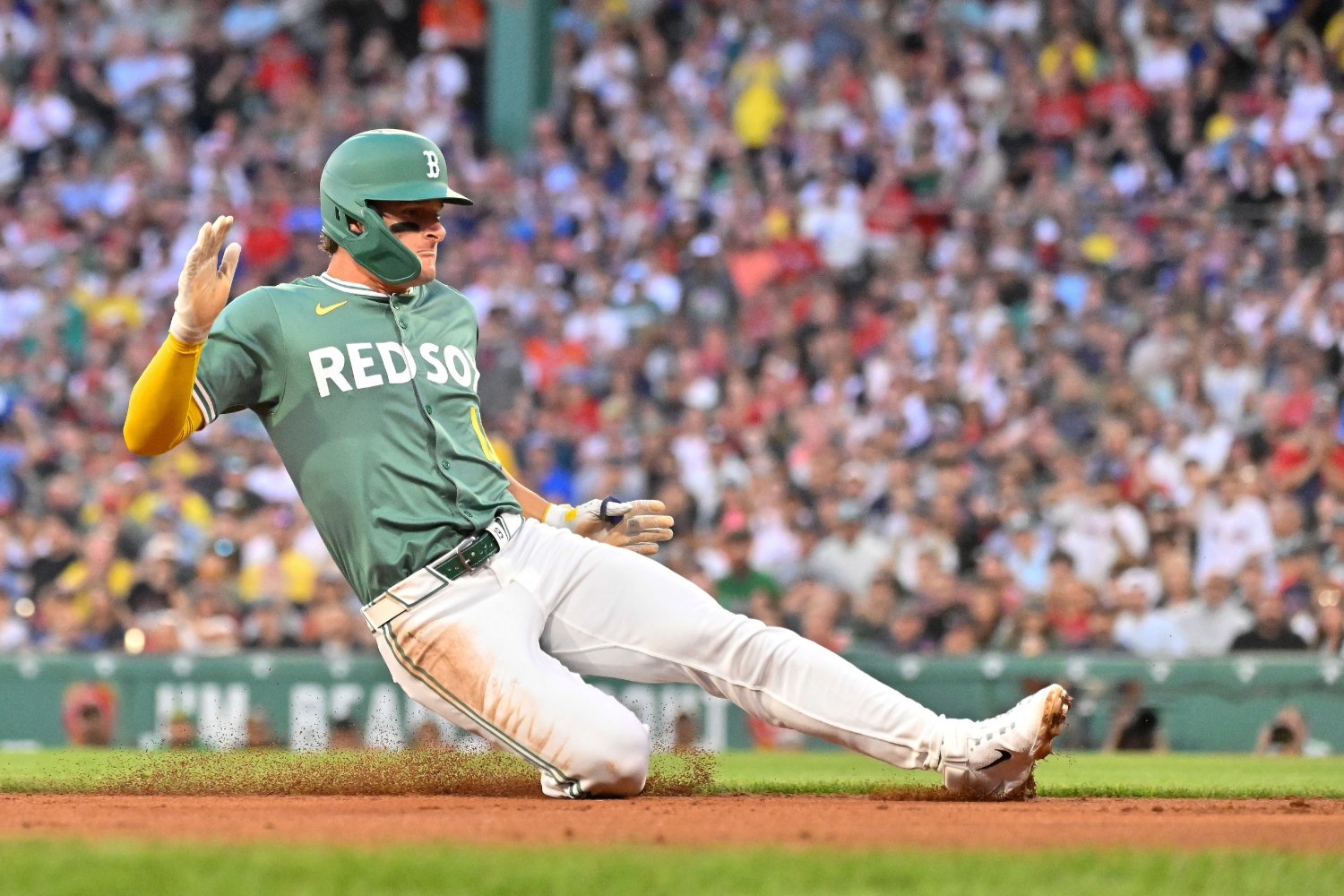 Today, the Boston Red Sox signed rookie sensation Roman Anthony to an eight-year, $130 million contract that could increase to $230 million based on various escalators within the contract. The deal itself means that Anthony should remain a Boston Red Sox through the 2033 season, with a club option to keep him through 2034. While everyone is celebrating the huge moment (rightfully so), there seems to be an avoidance of the possible downsides of this contract should anything go wrong. From a fanbase viewpoint, no one wants to think of such an outcome, but there’s a reason a lot of these contracts for young players are signed early in their careers instead of waiting to cash in once they get to free agency. Typically, it's to make sure the young player gets guaranteed money before a possible injury occurs; sometimes, they’re leaving money on the table, and other times it works out. An example would be David Wright of the New York Mets, a former superstar who saw injuries derail his career. The former third baseman originally signed a six-year, $55 million extension in August of 2006 and played up to that contract. It was the following extension that proved to be the bad gamble. Coming off of a season that saw Wright hit .306/.391/.492 with 41 doubles, two triples, 21 home runs and 93 RBIs, the Mets not only picked up the option for the 2013 season but also added on seven years and $122 million through an extension. After 2013 when that extension kicked in, Wright would go on to only play 211 games between 2014 and 2018, including missing all of the 2017 season. Wright would be released from the contract following 2018 and retired. Wright made his debut at 21 years old in 2004, playing in 69 games where he hit .293/.332/.525 with 17 doubles, a triple, 14 home runs and 40 RBIs. From 2005 through 2013, he was a force in the lineup, only failing to hit 20 or more home runs in 2009. Notably, 2011 and 2013 which were the only seasons he failed to play in more than 150 games before his huge extension kicked in. He had five seasons of over 100 RBIs, four straight years of 40 or more doubles, and not only won two Silver Slugger awards but also two Gold Gloves and made the All-Star team seven times. The Red Sox hope Anthony can become a player like Wright was before his unfortunate string of injuries. But there’s no denying that with an extension like that comes to the worry of a potential injury (or underperformance) derailing a season or even more. Fortunately, Anthony has shown no signs of injury concern so far in his career both in the minor leagues and with Boston, and should remain healthy in the outfield compared to the more physically demanding position of third base that Wright previously played. Of course, there’s also the chance of Anthony just not working out. This probability seems very unlikely based on how Anthony has looked and performed so far, but there’s always that chance. A team signs a player to a long-term extension in hopes of locking them up for the future and instead are left with an awful contract. This happened to the Philadelphia Phillies back in 2018 when they signed Scott Kingery to a six-year, $24 million contract that included three options that would have brought the deal up to $65 million. All of that was awarded because of his unbelievable 2017 season between Double-A and Triple-A before hitting close to .400 in spring training and winning a big league roster spot. It didn’t work out in the end for the Phillies as Kingly struggled. In fact, from 2018-22, he played in just 325 games (273 of those were in his first two seasons), and he spent most of 2021, 2022 and all of 2023 either hurt or playing in Triple-A. Eloy Jiménez is another example of a contract that didn’t really work out for various reasons. Jiménez signed a six-year, $43 million contract before playing a single game in the major leagues. It quickly looked like a smart investment, as he hit .267/.315/.513 with 18 doubles, two triples, 31 home runs and 79 RBIs in his rookie season. Unfortunately, he never played more than 122 games in a season again. Ignoring the Covid-shortened 2020 campaign, Jiménez only appeared in more than 100 games one more time during the span of that contract in 2023, where in 120 games he hit .272/.317/.441 with 23 doubles, 18 home runs and 64 RBIs, a rather league-average offensive showing. Right now, Jiménez isn’t even in major league baseball at the moment, instead a free agent after playing for Triple-A Durham in the Tampa Bay organization before getting released on July 12. He might have to settle for another minor league deal for next season or attempt to rebuild his value overseas in either the NPB or KBO. That's a rather length preamble to this whole conversation, but it's important to remind ourselves that even the most surefire deals don't always work out. That being said, despite all the aforementioned issues with long-term extensions for young players, especially those who were mostly unproven, there really shouldn’t be much concern for Anthony. Unlike the other players, his metrics back up how well he’s played. It isn’t like he’s gotten extremely lucky at the plate; he's actually performing very similar to his minor league self. He isn’t being overwhelmed by major league pitching and is staying true to himself; working counts and getting the pitch he wants to swing at. Anthony hasn’t tried to sell out for more power in the majors despite showcasing some of the hardest hit baseballs in the league thanks to impressive bat speed and the ability to square up the baseball at high rates. Offensively, he’s shown he is exactly the kind of player you would invest this amount of money into, as his numbers are very similar if not higher than Rafael Devers following his 2022 season (the one before he signed the extension). In fact, at this point in time, Anthony has a higher xwOBA, average exit velocity, hard-hit rate, launch angle sweet spot, bat speed, squared-up rate, chase rate and walk rate than Devers had before his extension. And everyone knew the kind of offensive player that Devers was, so there should be no worries in regard to the gamble the Red Sox just took on with Anthony. If anything, it might be a steal considering the type of player Anthony is projected to become. The Red Sox have wagered that this is all going to work out, and things right now point to the fact that Anthony should continue progressing into a middle-of-the-order, All-Star-caliber hitter who plays great defense. He’s exactly the type of player you should want to gamble on, because his floor is just so high. Obviously, if all goes according to plan, peak Anthony will make this extension a bargain, but even if it doesn't, he should still play well enough throughout his 20s to justify this kind of expenditure. In today’s game where locking up young players is becoming more common, the Red Sox may have just gambled on their scouts and development system. Anthony was under team control for another five or six years at relatively cheap rates. If his early success is to be believed, though, Boston just secured its future at an extremely affordable price.
 -
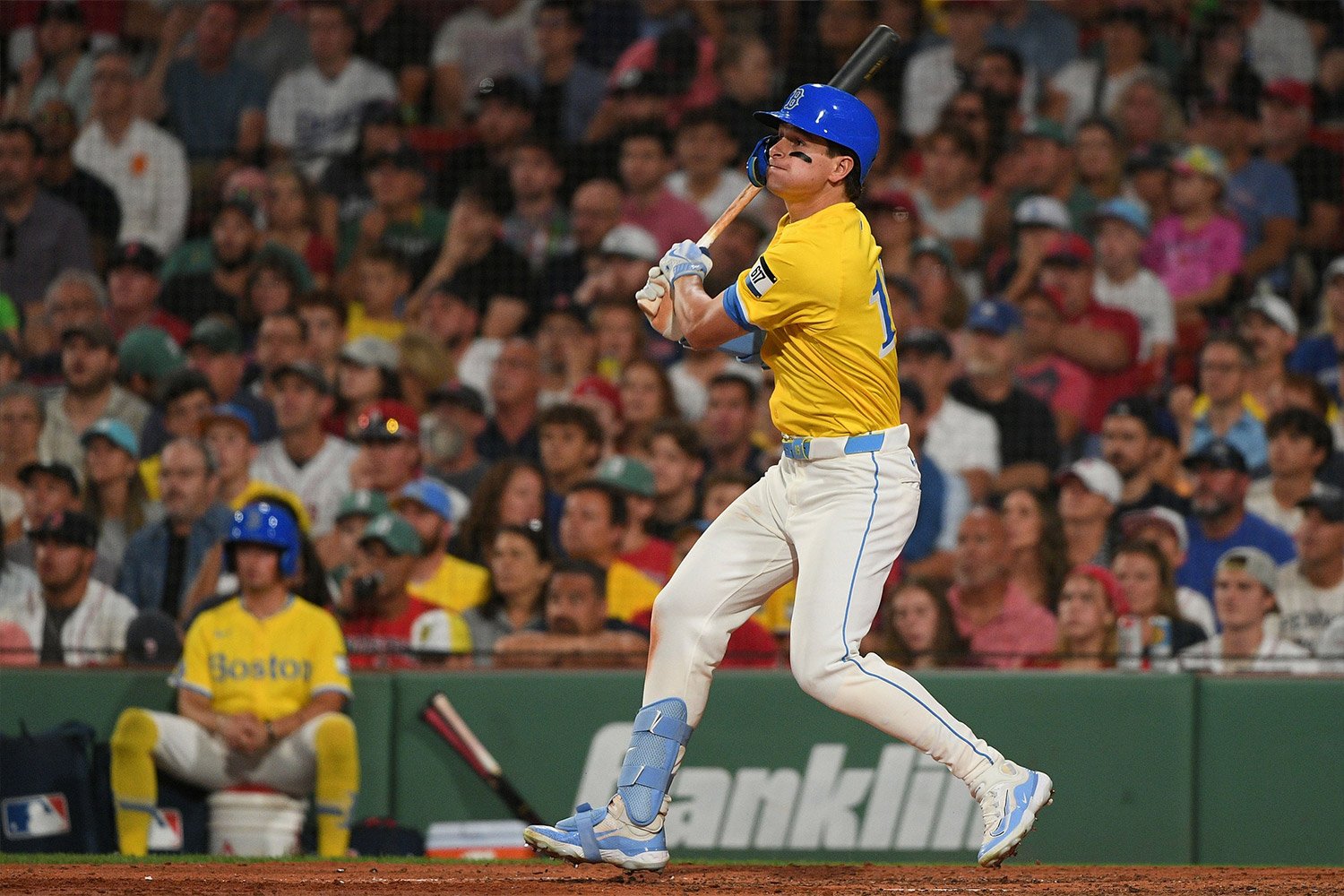 The Boston Red Sox continue to lock up their young talent as Roman Anthony has agreed to an eight-year, $130 million contract extension per Jeff Passan of ESPN. Anthony, the former number one prospect in baseball, has been a key contributor for the Red Sox since his promotion back in early June, hitting .283/.400/.428 in 46 games. One of the best young talents in the game, Anthony is now locked in with Boston through at least the 2034 season. The contract also includes a club option and will begin in the 2026 season. While the deal is originally worth $130 million, it includes significant escalators that could nearly double the original value of the contract for Anthony up to $230 million. With this contract, the Red Sox will buy out either three or four years of Anthony’s free agency, depending on where he finishes in the AL Rookie of the Year race. Should Anthony finish in the top two, the Red Sox may have won massively with this contract, as it would buy out four years of free agency instead of three. Anthony has been a leader on the field since being called up in June and has been a key component of the Red Sox turnaround on the season. Since his promotion, the Red Sox have won 32 games and helped increase their record to 64-51, good for the top Wild Card spot and second in the AL East. There is no denying his impact and the Red Sox were wise to lock him up quickly. Anthony is now the third contract extension completed by the team this season, joining Garrett Crochet and Kristian Campbell. The club option mentioned above is for the 2034 season which will be Anthony’s age-31 season. Anthony, who was drafted in the second round of the 2022 draft, rose through the minor leagues, making it up to Triple-A Worcester less than two years after getting selected. He opened the 2025 season with Worcester despite a spring training where he showed he was ready for Boston. Instead of getting down on himself, he worked on a few minor things until the team felt he was ready. He was finally called following an injury to right fielder Wilyer Abreu a few months ago. Since then, Anthony has mainly played right field but has bounced between left field and designated hitter as well in an attempt to get everyone into the lineup. Despite the movement between the corner outfield positions, he has shown no issues handling either of them. Since being promoted, Anthony has been not just one of the top players in Boston, but around the league based on his metrics. His bat speed, exit velocity and hard-hit rate of 74.4 mph, 94.1 mph and 58% respectively would all be near the top if he had enough at-bats to qualify. His chase rate and walk rates of 19.3% and 13.7% respectively would be near the top as well despite being just 21 years old. Showcasing a great understanding of the strike zone already, Anthony is poised to continue growing into an even brighter star once he starts to hit for a little more power. Case in point: FanGraphs has calculated that in his 46 career games, Anthony has already generated 1.6 WAR. One thing is for certain with Boston these days: they want to keep their young stars in town for as long as they can. Between Anthony, Crochet and Campbell, the team has guaranteed $360 million to those three players, with it possibly going up to $500 million based on escalators and options between that trio. The Red Sox are starting to resemble the team the front office promised for years.
 -
The Boston Red Sox continue to lock up their young talent as Roman Anthony has agreed to an eight-year, $130 million contract extension per Jeff Passan of ESPN. Anthony, the former number one prospect in baseball, has been a key contributor for the Red Sox since his promotion back in early June, hitting .283/.400/.428 in 46 games. One of the best young talents in the game, Anthony is now locked in with Boston through at least the 2034 season. The contract also includes a club option and will begin in the 2026 season. While the deal is originally worth $130 million, it includes significant escalators that could nearly double the original value of the contract for Anthony up to $230 million. With this contract, the Red Sox will buy out either three or four years of Anthony’s free agency, depending on where he finishes in the AL Rookie of the Year race. Should Anthony finish in the top two, the Red Sox may have won massively with this contract, as it would buy out four years of free agency instead of three. Anthony has been a leader on the field since being called up in June and has been a key component of the Red Sox turnaround on the season. Since his promotion, the Red Sox have won 32 games and helped increase their record to 64-51, good for the top Wild Card spot and second in the AL East. There is no denying his impact and the Red Sox were wise to lock him up quickly. Anthony is now the third contract extension completed by the team this season, joining Garrett Crochet and Kristian Campbell. The club option mentioned above is for the 2034 season which will be Anthony’s age-31 season. Anthony, who was drafted in the second round of the 2022 draft, rose through the minor leagues, making it up to Triple-A Worcester less than two years after getting selected. He opened the 2025 season with Worcester despite a spring training where he showed he was ready for Boston. Instead of getting down on himself, he worked on a few minor things until the team felt he was ready. He was finally called following an injury to right fielder Wilyer Abreu a few months ago. Since then, Anthony has mainly played right field but has bounced between left field and designated hitter as well in an attempt to get everyone into the lineup. Despite the movement between the corner outfield positions, he has shown no issues handling either of them. Since being promoted, Anthony has been not just one of the top players in Boston, but around the league based on his metrics. His bat speed, exit velocity and hard-hit rate of 74.4 mph, 94.1 mph and 58% respectively would all be near the top if he had enough at-bats to qualify. His chase rate and walk rates of 19.3% and 13.7% respectively would be near the top as well despite being just 21 years old. Showcasing a great understanding of the strike zone already, Anthony is poised to continue growing into an even brighter star once he starts to hit for a little more power. Case in point: FanGraphs has calculated that in his 46 career games, Anthony has already generated 1.6 WAR. One thing is for certain with Boston these days: they want to keep their young stars in town for as long as they can. Between Anthony, Crochet and Campbell, the team has guaranteed $360 million to those three players, with it possibly going up to $500 million based on escalators and options between that trio. The Red Sox are starting to resemble the team the front office promised for years. View full article
-
 July was an interesting month for the Red Sox minor league players, as many prospects broke out. However, there was one who really stood above the others to the point where there were questions around him not being recalled to Boston when Marcelo Mayer went on the injured list in late July. For his phenomenal month of July, which may have been his best since joining the Red Sox organization, Vaughn Grissom is TalkSox’s Minor League Hitter of the Month. Known for being the player the Red Sox got in return for the Chris Sale trade during the 2024 offseason, many have felt he’s underwhelmed. However, July was anything but underwhelming for the infielder. Playing in 18 games in the month almost made it a hard choice of selecting him as other players appeared in more games such as Kristian Campbell and the recently-traded Blaze Jordan. Outfielders Justin Gonzales and Yophery Rodriguez were also in consideration. However, the numbers put up by Grissom made the choice easier. In those 18 games, Grissom hit .324/.351/.606 with five doubles, five home runs and 17 RBIs. He also walked four times and struck out in eight plate appearances. Of Red Sox minor leaguers who appeared in at least 14 games, only Rodriguez, Gonzales and catcher Ronald Rosario had higher batting averages than Grissom. And when you look at Grissom’s OPS of .957, that mark was only beaten by Rosario’s 1.048 in 14 games. Grissom led the farm system in home runs and RBIs as well. While Grissom is no longer a prospect, having exceeded his rookie status in 2022, he is still a young, versatile player. At 24 year old, there may be a team out there interested in the infielder, especially as the Red Sox have gotten him used to playing every position in the infield. Unfortunately for Grissom, the team views him as a solid high-minors depth option who would be an emergency call-up, something that wasn’t the case when they traded for him. Should he continue to play well in Triple-A, there’s a chance some team may call in the offseason looking to trade for him and take a chance developing him into a big league contributor. Grissom’s path to Boston is currently blocked, like many prospects in the system. Originally viewed as the starting second baseman of the future, he’s been leapfrogged on the depth chart by Campbell, David Hamilton, Marcelo Mayer and even Nick Sogard, leaving him without a clear path to Fenway. Nevertheless, Grissom is improving in Worcester as shown by this season’s 8.2% walk rate. He's also cut back from a 19.2% strikeout rate in 2024 to a 17% rate this season. It is weird that the team wouldn’t look to give him a chance considering his metrics are at their best this season. His exit velocity and hard-hit rate are at career highs, and along with the fact that he’s pulling the ball nearly 40% of the time, someone should be curious to see how Grissom might take advantage of the Green Monster. Overall, Grissom is a player who isn’t letting a frustrating situation get the better of him. Instead, he continues to put the effort in each and every time he steps out on the field, and should the Red Sox not see a need for him, hopefully another team does. The least the Red Sox could do is recoup some value for a player whose trajectory with the team has changed so much in just under two seasons.
 -
July was an interesting month for the Red Sox minor league players, as many prospects broke out. However, there was one who really stood above the others to the point where there were questions around him not being recalled to Boston when Marcelo Mayer went on the injured list in late July. For his phenomenal month of July, which may have been his best since joining the Red Sox organization, Vaughn Grissom is TalkSox’s Minor League Hitter of the Month. Known for being the player the Red Sox got in return for the Chris Sale trade during the 2024 offseason, many have felt he’s underwhelmed. However, July was anything but underwhelming for the infielder. Playing in 18 games in the month almost made it a hard choice of selecting him as other players appeared in more games such as Kristian Campbell and the recently-traded Blaze Jordan. Outfielders Justin Gonzales and Yophery Rodriguez were also in consideration. However, the numbers put up by Grissom made the choice easier. In those 18 games, Grissom hit .324/.351/.606 with five doubles, five home runs and 17 RBIs. He also walked four times and struck out in eight plate appearances. Of Red Sox minor leaguers who appeared in at least 14 games, only Rodriguez, Gonzales and catcher Ronald Rosario had higher batting averages than Grissom. And when you look at Grissom’s OPS of .957, that mark was only beaten by Rosario’s 1.048 in 14 games. Grissom led the farm system in home runs and RBIs as well. While Grissom is no longer a prospect, having exceeded his rookie status in 2022, he is still a young, versatile player. At 24 year old, there may be a team out there interested in the infielder, especially as the Red Sox have gotten him used to playing every position in the infield. Unfortunately for Grissom, the team views him as a solid high-minors depth option who would be an emergency call-up, something that wasn’t the case when they traded for him. Should he continue to play well in Triple-A, there’s a chance some team may call in the offseason looking to trade for him and take a chance developing him into a big league contributor. Grissom’s path to Boston is currently blocked, like many prospects in the system. Originally viewed as the starting second baseman of the future, he’s been leapfrogged on the depth chart by Campbell, David Hamilton, Marcelo Mayer and even Nick Sogard, leaving him without a clear path to Fenway. Nevertheless, Grissom is improving in Worcester as shown by this season’s 8.2% walk rate. He's also cut back from a 19.2% strikeout rate in 2024 to a 17% rate this season. It is weird that the team wouldn’t look to give him a chance considering his metrics are at their best this season. His exit velocity and hard-hit rate are at career highs, and along with the fact that he’s pulling the ball nearly 40% of the time, someone should be curious to see how Grissom might take advantage of the Green Monster. Overall, Grissom is a player who isn’t letting a frustrating situation get the better of him. Instead, he continues to put the effort in each and every time he steps out on the field, and should the Red Sox not see a need for him, hopefully another team does. The least the Red Sox could do is recoup some value for a player whose trajectory with the team has changed so much in just under two seasons. View full article
-
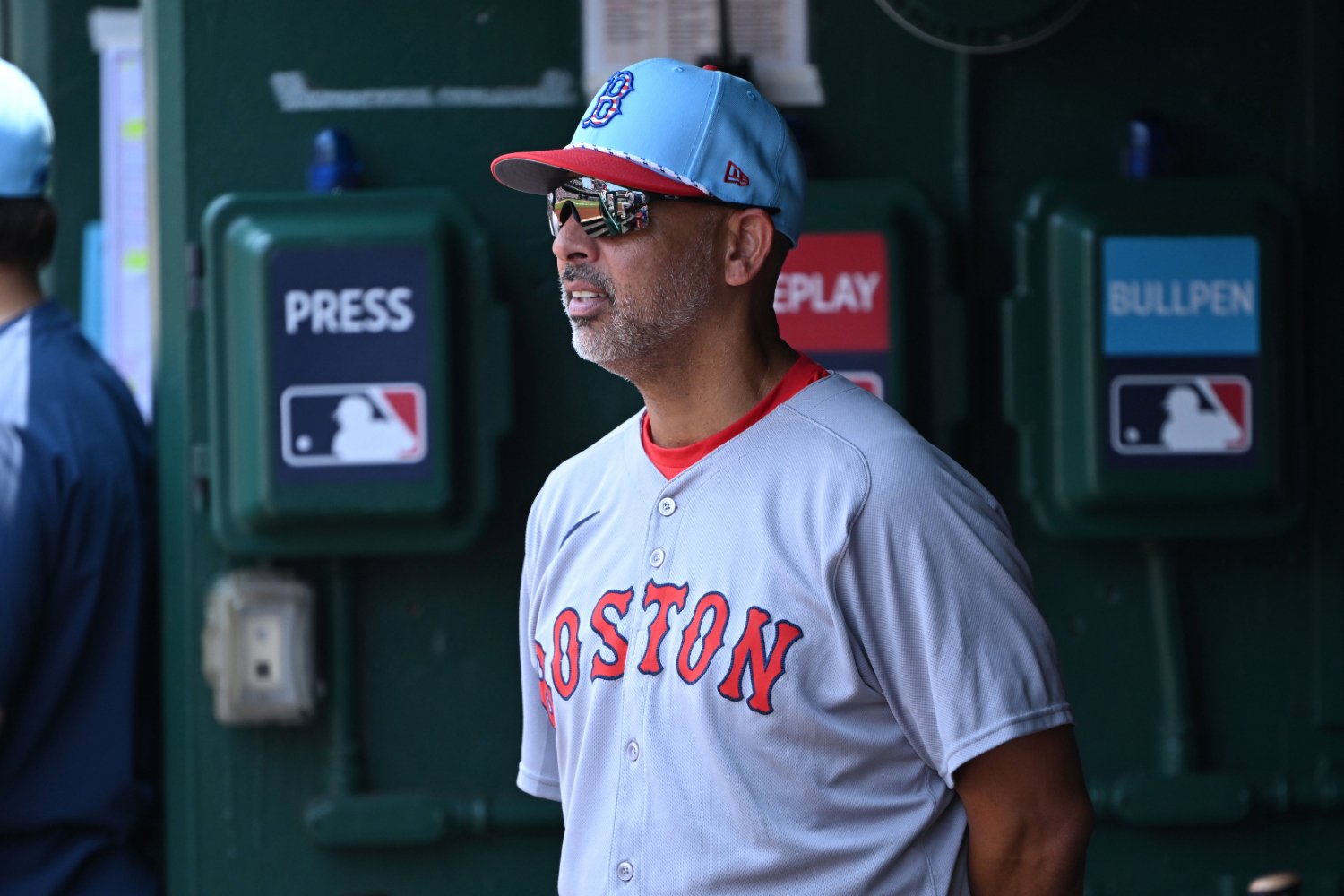 The trade deadline has come and gone, and with it, many Red Sox fans feel underwhelmed. While they had their eyes set on bigger names, the team instead brought in Steven Matz and Dustin May to help improve their pitching staff. Many felt that the team should have brought in more firepower to help this team fight for a playoff run. However, many forget that the team can still add players from now until the end of August and have them be eligible for the postseason. It isn’t how things used to work before 2019, where big names could get traded, but there are still players eligible to be traded after the deadline. Prior to 2019, a team could place a player on revocable waivers, where if a player was claimed you could either negotiate a trade or pull the player back off the waivers. Remember the trade in 2012 that sent Adrian Gonzalez, Carl Crawford, Josh Beckett and Nick Punto to the Dodgers to get money off the books? That was an August waiver trade. Unfortunately, stuff like that can’t happen now, as players who can be traded in August must meet three criteria: They must be signed to a minor league contract They have not been on a 40-man roster all season They have not been on the MLB injured list at any point of the season The new rules really limit the quality of players who can be traded now, but it isn’t out of the question to see key contributors packaged in an August trade. The Red Sox did it twice in 2021 for extra depth, though neither player really moved the needle much. First acquiring outfielder Delino DeShields from Texas (only to eventually trade him to Cincinnati near the end of the month) and then trading for Brad Peacock on August 30. Peacock would provide 5 1/3 innings across two appearances when the team was dealing with a COVID-19 outbreak. This season, there aren’t too many names that really stand out as possible key additions, though there are two players the team could look into as depth for August and September: first baseman and outfielder Joey Meneses and pitcher Josh Fleming. Meneses, who is 33 years old, last played in the majors in 2024 with the Washington Nationals, where he struggled to a .231/.291/.302 slash line in 76 games. The year before, however, he played in 154 games and hit .275/.321/.401 with 36 doubles, a triple, 13 home runs and 89 RBIs. Add to it that this season with the Syracuse Mets, he’s hitting a respectable .282/.333/.451 with 31 doubles, a triple, seven home runs and 47 RBIs, it might not hurt to take a chance as a depth option. Fleming, on the other hand, is a 29-year-old left-handed pitcher who has dealt with injuries in 2022 and 2023 while also putting up less-than-ideal numbers in 2024. This season, he’s pitching for the Tacoma Rainers in Triple-A, where he’s appeared in 33 games and produced a 4-2 record. In 59 1/3 innings, he has a 4.40 ERA while only striking out 34 batters. Again, these players are not typically in high demand and serve more as extra depth, something that the Sox may need at first base with their belief that Kristian Campbell has more work to do and Abraham Toro having regressed since July. Another way to bring players in is through waivers. Where in the past you could pull a player off waivers if they were claimed in August, that is no longer the case. Now, you can only place them on outright waivers (if you want to clear a 40-man roster spot) or release waivers (to release a player) and if they get claimed, that’s it. Usually, this move is seen as a salary dump as the team receiving the player takes on the salary owed, but it doesn’t mean impact players can’t be acquired. Just last season, outfielders Tommy Pham (who looks to be a candidate for this again this season) and Robbie Grossman were moved in this way, as were infielders Emmanuel Rivera and Amed Rosario. This season, there are a few names that could be interesting for teams, but maybe not the Red Sox with how their current team is built. One such player that the Red Sox may hope to see placed on waivers is Josh Bell. Bell, a 32-year-old first baseman playing for the Washington Nationals, is having a very mediocre season. In 94 games he’s hitting .228/.322/.386 with 10 doubles, a triple, 13 home runs and 40 RBIs. However, when you look deeper, you'll realize his struggles may be due to bad luck. His batting average on balls in play is .249, and when you realize his expected batting average, on-base percentage and slugging are all higher than his actual numbers (.252/.345/.445), you can’t help but wonder what his numbers would look like if a few more hits dropped in. He also walks at an 11.1% rate and barrels the ball up at a 10.5% rate, which might entice a few teams to take a chance at him if he becomes available. The last way of adding players is really the most obvious: signing free agents. The Red Sox did this in 2021 with Jose Iglesias, as he took over at second base in September and went on a tear. Unfortunately, he wasn’t eligible for the playoffs as he signed after the deadline to add eligible players, but without him, there’s a good chance the 2021 team misses the playoffs. All Iglesias did in 23 games that September was hit .356/.406/.508 with four doubles, a triple, one home run and seven RBIs. He also played his standard top notch defense between second base (18 games) and shortstop (five games), where he only committed a single error between the two positions. There aren’t many interesting names in this regard either, and of those available, none really fit what the Red Sox need... at least at the moment. There’s always a chance another team releases a struggling player to open up a roster spot, but the addition may not move the needle much. The trade deadline may be the last chance to add a bona fide impact player, but it isn’t the last time that teams can add to their rosters. It all comes down to what minor league players are available and who in the majors is placed on waivers. Honestly, it’s all about luck with these moves, but sometimes, there is a player or two who can still be an impactful addition. The Red Sox made the moves they did, and unless they pull off a minor league deal between now and the end of August, there aren’t any other reinforcements coming that aren’t already in the organization. The team has depth, but the question is how that depth will compete against the best teams in the league. Regardless of how you feel about the trade deadline, the Red Sox have put themselves in a position where if they miss the postseason, they have no one to blame but themselves.
 -
The trade deadline has come and gone, and with it, many Red Sox fans feel underwhelmed. While they had their eyes set on bigger names, the team instead brought in Steven Matz and Dustin May to help improve their pitching staff. Many felt that the team should have brought in more firepower to help this team fight for a playoff run. However, many forget that the team can still add players from now until the end of August and have them be eligible for the postseason. It isn’t how things used to work before 2019, where big names could get traded, but there are still players eligible to be traded after the deadline. Prior to 2019, a team could place a player on revocable waivers, where if a player was claimed you could either negotiate a trade or pull the player back off the waivers. Remember the trade in 2012 that sent Adrian Gonzalez, Carl Crawford, Josh Beckett and Nick Punto to the Dodgers to get money off the books? That was an August waiver trade. Unfortunately, stuff like that can’t happen now, as players who can be traded in August must meet three criteria: They must be signed to a minor league contract They have not been on a 40-man roster all season They have not been on the MLB injured list at any point of the season The new rules really limit the quality of players who can be traded now, but it isn’t out of the question to see key contributors packaged in an August trade. The Red Sox did it twice in 2021 for extra depth, though neither player really moved the needle much. First acquiring outfielder Delino DeShields from Texas (only to eventually trade him to Cincinnati near the end of the month) and then trading for Brad Peacock on August 30. Peacock would provide 5 1/3 innings across two appearances when the team was dealing with a COVID-19 outbreak. This season, there aren’t too many names that really stand out as possible key additions, though there are two players the team could look into as depth for August and September: first baseman and outfielder Joey Meneses and pitcher Josh Fleming. Meneses, who is 33 years old, last played in the majors in 2024 with the Washington Nationals, where he struggled to a .231/.291/.302 slash line in 76 games. The year before, however, he played in 154 games and hit .275/.321/.401 with 36 doubles, a triple, 13 home runs and 89 RBIs. Add to it that this season with the Syracuse Mets, he’s hitting a respectable .282/.333/.451 with 31 doubles, a triple, seven home runs and 47 RBIs, it might not hurt to take a chance as a depth option. Fleming, on the other hand, is a 29-year-old left-handed pitcher who has dealt with injuries in 2022 and 2023 while also putting up less-than-ideal numbers in 2024. This season, he’s pitching for the Tacoma Rainers in Triple-A, where he’s appeared in 33 games and produced a 4-2 record. In 59 1/3 innings, he has a 4.40 ERA while only striking out 34 batters. Again, these players are not typically in high demand and serve more as extra depth, something that the Sox may need at first base with their belief that Kristian Campbell has more work to do and Abraham Toro having regressed since July. Another way to bring players in is through waivers. Where in the past you could pull a player off waivers if they were claimed in August, that is no longer the case. Now, you can only place them on outright waivers (if you want to clear a 40-man roster spot) or release waivers (to release a player) and if they get claimed, that’s it. Usually, this move is seen as a salary dump as the team receiving the player takes on the salary owed, but it doesn’t mean impact players can’t be acquired. Just last season, outfielders Tommy Pham (who looks to be a candidate for this again this season) and Robbie Grossman were moved in this way, as were infielders Emmanuel Rivera and Amed Rosario. This season, there are a few names that could be interesting for teams, but maybe not the Red Sox with how their current team is built. One such player that the Red Sox may hope to see placed on waivers is Josh Bell. Bell, a 32-year-old first baseman playing for the Washington Nationals, is having a very mediocre season. In 94 games he’s hitting .228/.322/.386 with 10 doubles, a triple, 13 home runs and 40 RBIs. However, when you look deeper, you'll realize his struggles may be due to bad luck. His batting average on balls in play is .249, and when you realize his expected batting average, on-base percentage and slugging are all higher than his actual numbers (.252/.345/.445), you can’t help but wonder what his numbers would look like if a few more hits dropped in. He also walks at an 11.1% rate and barrels the ball up at a 10.5% rate, which might entice a few teams to take a chance at him if he becomes available. The last way of adding players is really the most obvious: signing free agents. The Red Sox did this in 2021 with Jose Iglesias, as he took over at second base in September and went on a tear. Unfortunately, he wasn’t eligible for the playoffs as he signed after the deadline to add eligible players, but without him, there’s a good chance the 2021 team misses the playoffs. All Iglesias did in 23 games that September was hit .356/.406/.508 with four doubles, a triple, one home run and seven RBIs. He also played his standard top notch defense between second base (18 games) and shortstop (five games), where he only committed a single error between the two positions. There aren’t many interesting names in this regard either, and of those available, none really fit what the Red Sox need... at least at the moment. There’s always a chance another team releases a struggling player to open up a roster spot, but the addition may not move the needle much. The trade deadline may be the last chance to add a bona fide impact player, but it isn’t the last time that teams can add to their rosters. It all comes down to what minor league players are available and who in the majors is placed on waivers. Honestly, it’s all about luck with these moves, but sometimes, there is a player or two who can still be an impactful addition. The Red Sox made the moves they did, and unless they pull off a minor league deal between now and the end of August, there aren’t any other reinforcements coming that aren’t already in the organization. The team has depth, but the question is how that depth will compete against the best teams in the league. Regardless of how you feel about the trade deadline, the Red Sox have put themselves in a position where if they miss the postseason, they have no one to blame but themselves. View full article
-
The Boston Red Sox stayed busy Sunday afternoon after sweeping the Houston Astros as they promoted their top pitching prospect Payton Tolle to Triple-A Worcester per Beyond The Monster’s Andrew Parker. Tolle is Boston’s top pitching prospect and has pitched for both Greenville and Portland. Now he will face the highest level of minor league baseball with the possibility of being added to Boston’s roster at some point in September. In six games since his promotion to Portland, Tolle made five starts and pitched out of the pen in a piggyback role once. He tossed 27 innings and had a 1.67 ERA to go along with 37 strikeouts to just seven walks Drafted in the fourth round of the 2024 MLB Draft, Tolle throws four pitches: a fastball, cutter, slider and changeup. He is also currently ranked 49th on Baseball America’s Top 100 prospect list. Do you think it’s too early for Tolle to be promoted? Should he have just been promoted alongside fellow pitchers David Sandlin and Connelly Early last week? Could he make it to Boston before the end of the year? Leave your thoughts down below in the comments. View full rumor
-
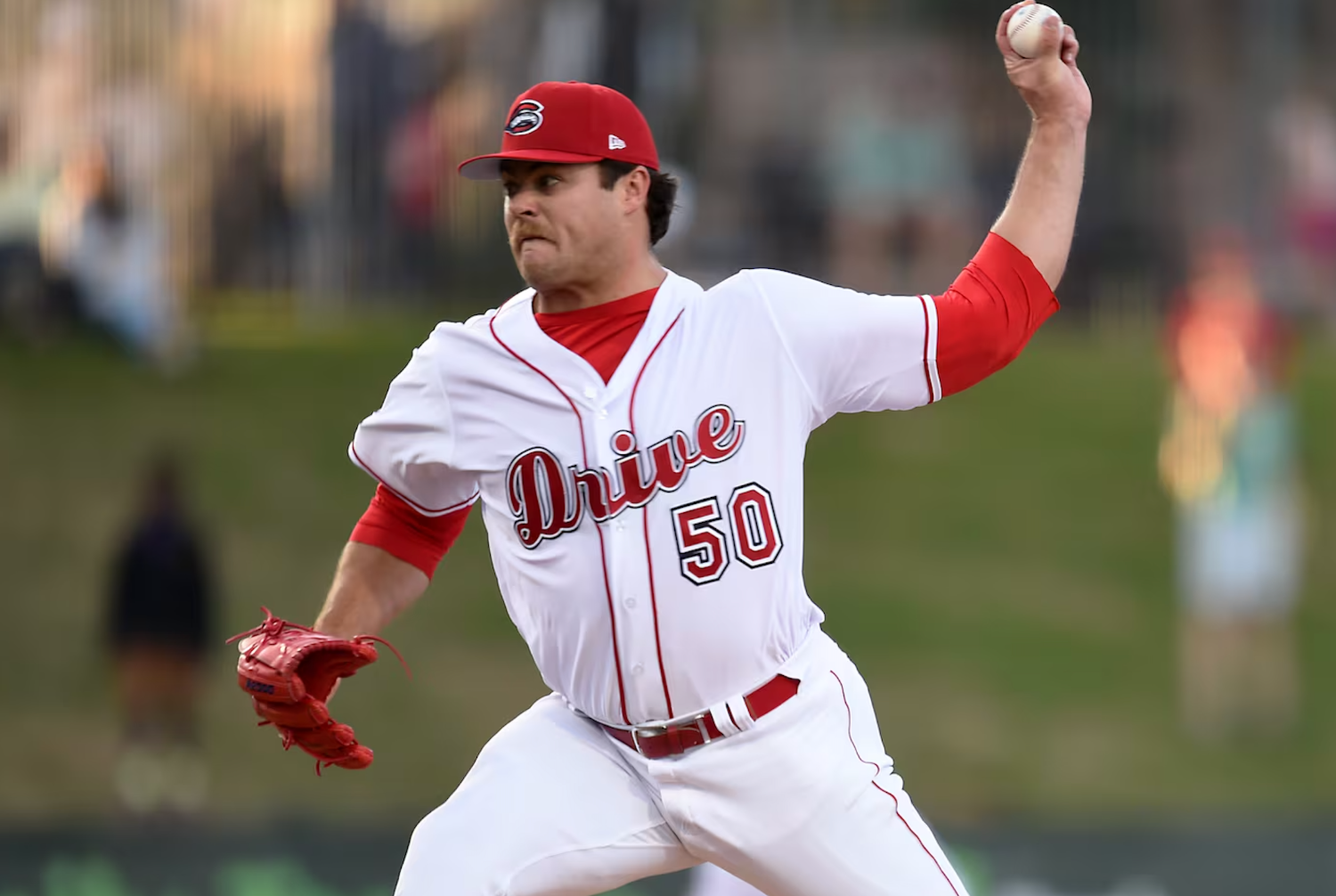 The Boston Red Sox stayed busy Sunday afternoon after sweeping the Houston Astros as they promoted their top pitching prospect Payton Tolle to Triple-A Worcester per Beyond The Monster’s Andrew Parker. Tolle is Boston’s top pitching prospect and has pitched for both Greenville and Portland. Now he will face the highest level of minor league baseball with the possibility of being added to Boston’s roster at some point in September. In six games since his promotion to Portland, Tolle made five starts and pitched out of the pen in a piggyback role once. He tossed 27 innings and had a 1.67 ERA to go along with 37 strikeouts to just seven walks Drafted in the fourth round of the 2024 MLB Draft, Tolle throws four pitches: a fastball, cutter, slider and changeup. He is also currently ranked 49th on Baseball America’s Top 100 prospect list. Do you think it’s too early for Tolle to be promoted? Should he have just been promoted alongside fellow pitchers David Sandlin and Connelly Early last week? Could he make it to Boston before the end of the year? Leave your thoughts down below in the comments.
 -
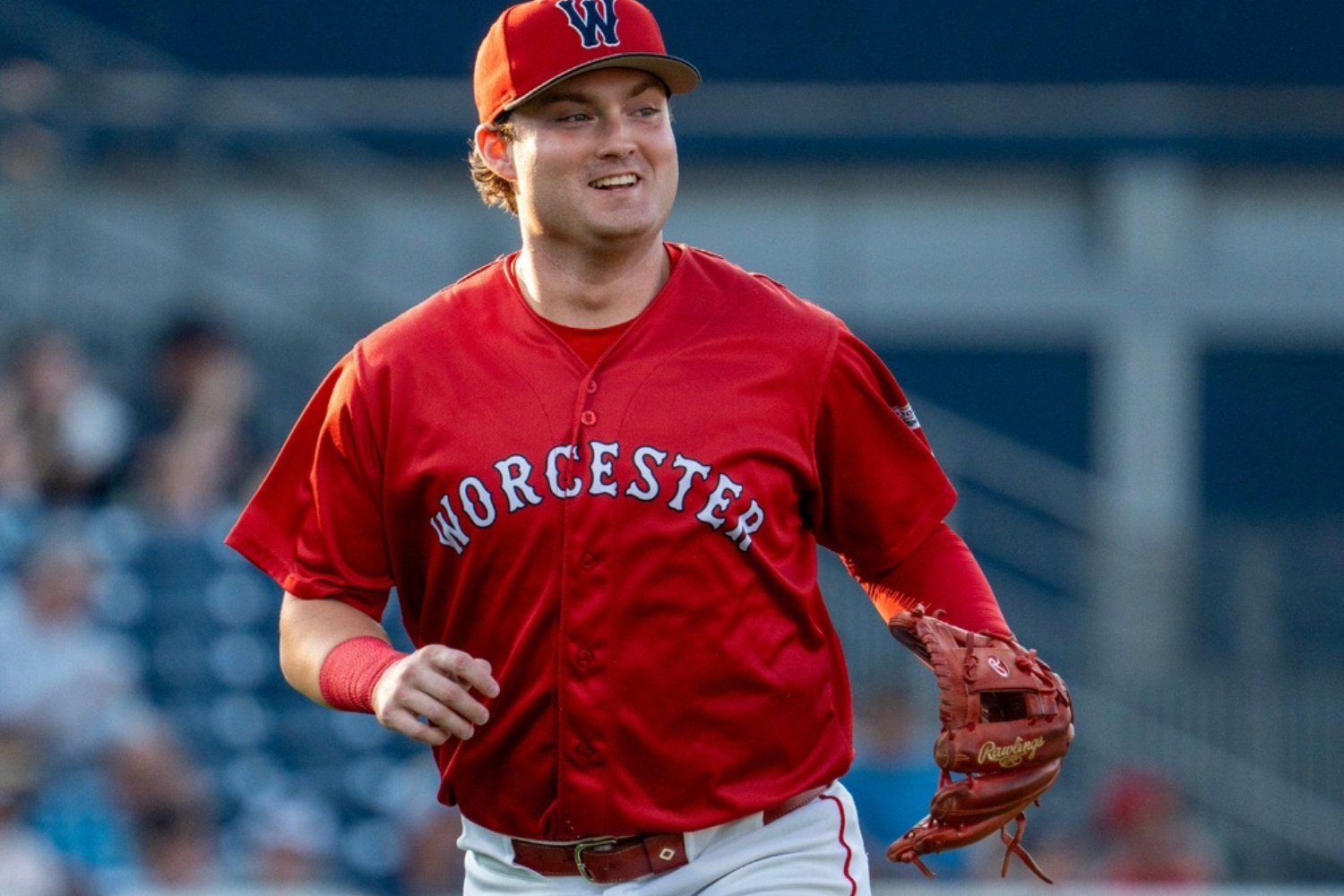 The trade deadline has officially passed, as the Boston Red Sox made two moves to bolster their pitching staff. Bringing in left-handed reliever Steven Matz and right-handed starter Dustin May, the team made moves that they felt will help the roster continue its pursuit of the playoffs. But, as everyone knows, in order to get a player, you need to give something up as well. With the team reluctant to trade any player on the current 26-man roster, Craig Breslow and the rest of the front office turned towards the team’s minor league system for players to trade. Of course, sometimes, fans feel that certain players shouldn’t have been included in a deal or that maybe a player who was traded could have got the team back someone better. For that concern, we’re going to look at the prospects that were traded away. In total, the Red Sox traded out three prospects before the 6 p.m. trade deadline on Thursday. All three of the players were ranked within MLB Pipeline’s Top 30 prospects within the system, with the highest ranked player being outfielder James Tibbs III who was fifth on that list. OF James Tibbs III Originally acquired as the “centerpiece” of the Rafael Devers’ trade on June 15, Tibbs was viewed as an already-expendable prospect. His lack of defensive versatility made it a lock that, should he make it to Fenway, he would be stuck playing left field and the occasional first base, positions that would be blocked for him by players already ahead of him on the depth chart, especially if you believe in Kristian Campbell's transition to the cold corner. To make matters worse, his best tool that was supposed to make him valuable to teams in a potential trade (his hit tool) seemed to take a step back upon being promoted to Double-A Portland once he came over from the San Francisco Giants. In the short amount of time he was in the organization, the outfielder played in 29 games where he hit .205/.321/.268 with two doubles, a triple, one home run and seven RBIs. He also struck out 37 times (compared to drawing just 19 walks). During his time in Boston, Tibbs made it as high as fifth on MLB Pipeline’s rankings for the team's farm system. Yet, despite the high ranking, it seemed that Boston may not have been impressed with the display Tibbs put on since arriving in mid-June. Deciding to move him to the Dodgers as one of two prospects in the deal for May, the team may have moved him while his value was at its lowest out of worry it could drop even more. OF Zach Ehrhard Drafted twice by Boston—the first time in the 13th round of the 2021 draft, the second time being in the fourth round of the 2024 draft out of Oklahoma State—Ehrhard worked his way into the top-30 of Boston’s prospect rankings after a struggle in his first professional games in 2024. By the time of the trade, Ehrhard made his way up to being Boston’s 27th-ranked prospect on Pipeline's list. This season, he showed an improvement in his offensive game, splitting time between High-A Greenville and Double-A Portland. In 88 games before being traded, Ehrhard hit .270/.371/.434 with 23 doubles, one triple, nine home runs and 45 RBIs. He also stole 23 bases, while walking 46 times and striking out 75 times. But, just like with Tibbs, his path to Boston was blocked by a loaded outfield along with top prospect Jhostynxon Garcia ahead of him on the depth chart. Because of that, he was easy enough to move in a trade, though many were surprised to see him included as the second piece of the Dustin May deal considering many thought that Tibbs should have had enough value on his own for a rental pitcher like May. INF Blaze Jordan The third and final prospect moved at this year’s deadline was one who had been in the system the longest. Drafted in the third round of the 2020 draft, Jordan had become a staple in the organization, making his way up to being the 17th-ranked prospect in the Sox system by MLB Pipeline. Already, he’s been ranked as the Cardinals’ 19th-best prospect. It comes as no surprise that Jordan was moved at the deadline, the biggest reason being that he was Rule 5 Draft eligible this offseason. The Red Sox did not seem to think too highly of him either, considering their lack of desire to give him a try up in Boston despite their first base issues and his quality hitting across the entire season. There was a very high probability that some team would take him in the Rule 5 Draft and take a shot on him over the offseason (assuming the Red Sox left him unprotected off the 40-man roster). Instead, the team moved him for Steven Matz to help their bullpen. With the absurd market conditions for relievers at the deadline, being able to get Matz for just one superfluous player may end up being a steal based on how he pitches for Boston. The Sox were likely to lose Jordan for nothing in the offseason, so instead, they were able to make a deal work where they got someone back for him. In 88 games split between Portland and Worcester, Jordan hit .308/.377/.495 with 22 doubles, one triple, 12 home runs and 62 RBIs. He also walked 33 times and struck out just 38 times.
 -
The trade deadline has officially passed, as the Boston Red Sox made two moves to bolster their pitching staff. Bringing in left-handed reliever Steven Matz and right-handed starter Dustin May, the team made moves that they felt will help the roster continue its pursuit of the playoffs. But, as everyone knows, in order to get a player, you need to give something up as well. With the team reluctant to trade any player on the current 26-man roster, Craig Breslow and the rest of the front office turned towards the team’s minor league system for players to trade. Of course, sometimes, fans feel that certain players shouldn’t have been included in a deal or that maybe a player who was traded could have got the team back someone better. For that concern, we’re going to look at the prospects that were traded away. In total, the Red Sox traded out three prospects before the 6 p.m. trade deadline on Thursday. All three of the players were ranked within MLB Pipeline’s Top 30 prospects within the system, with the highest ranked player being outfielder James Tibbs III who was fifth on that list. OF James Tibbs III Originally acquired as the “centerpiece” of the Rafael Devers’ trade on June 15, Tibbs was viewed as an already-expendable prospect. His lack of defensive versatility made it a lock that, should he make it to Fenway, he would be stuck playing left field and the occasional first base, positions that would be blocked for him by players already ahead of him on the depth chart, especially if you believe in Kristian Campbell's transition to the cold corner. To make matters worse, his best tool that was supposed to make him valuable to teams in a potential trade (his hit tool) seemed to take a step back upon being promoted to Double-A Portland once he came over from the San Francisco Giants. In the short amount of time he was in the organization, the outfielder played in 29 games where he hit .205/.321/.268 with two doubles, a triple, one home run and seven RBIs. He also struck out 37 times (compared to drawing just 19 walks). During his time in Boston, Tibbs made it as high as fifth on MLB Pipeline’s rankings for the team's farm system. Yet, despite the high ranking, it seemed that Boston may not have been impressed with the display Tibbs put on since arriving in mid-June. Deciding to move him to the Dodgers as one of two prospects in the deal for May, the team may have moved him while his value was at its lowest out of worry it could drop even more. OF Zach Ehrhard Drafted twice by Boston—the first time in the 13th round of the 2021 draft, the second time being in the fourth round of the 2024 draft out of Oklahoma State—Ehrhard worked his way into the top-30 of Boston’s prospect rankings after a struggle in his first professional games in 2024. By the time of the trade, Ehrhard made his way up to being Boston’s 27th-ranked prospect on Pipeline's list. This season, he showed an improvement in his offensive game, splitting time between High-A Greenville and Double-A Portland. In 88 games before being traded, Ehrhard hit .270/.371/.434 with 23 doubles, one triple, nine home runs and 45 RBIs. He also stole 23 bases, while walking 46 times and striking out 75 times. But, just like with Tibbs, his path to Boston was blocked by a loaded outfield along with top prospect Jhostynxon Garcia ahead of him on the depth chart. Because of that, he was easy enough to move in a trade, though many were surprised to see him included as the second piece of the Dustin May deal considering many thought that Tibbs should have had enough value on his own for a rental pitcher like May. INF Blaze Jordan The third and final prospect moved at this year’s deadline was one who had been in the system the longest. Drafted in the third round of the 2020 draft, Jordan had become a staple in the organization, making his way up to being the 17th-ranked prospect in the Sox system by MLB Pipeline. Already, he’s been ranked as the Cardinals’ 19th-best prospect. It comes as no surprise that Jordan was moved at the deadline, the biggest reason being that he was Rule 5 Draft eligible this offseason. The Red Sox did not seem to think too highly of him either, considering their lack of desire to give him a try up in Boston despite their first base issues and his quality hitting across the entire season. There was a very high probability that some team would take him in the Rule 5 Draft and take a shot on him over the offseason (assuming the Red Sox left him unprotected off the 40-man roster). Instead, the team moved him for Steven Matz to help their bullpen. With the absurd market conditions for relievers at the deadline, being able to get Matz for just one superfluous player may end up being a steal based on how he pitches for Boston. The Sox were likely to lose Jordan for nothing in the offseason, so instead, they were able to make a deal work where they got someone back for him. In 88 games split between Portland and Worcester, Jordan hit .308/.377/.495 with 22 doubles, one triple, 12 home runs and 62 RBIs. He also walked 33 times and struck out just 38 times. View full article
-
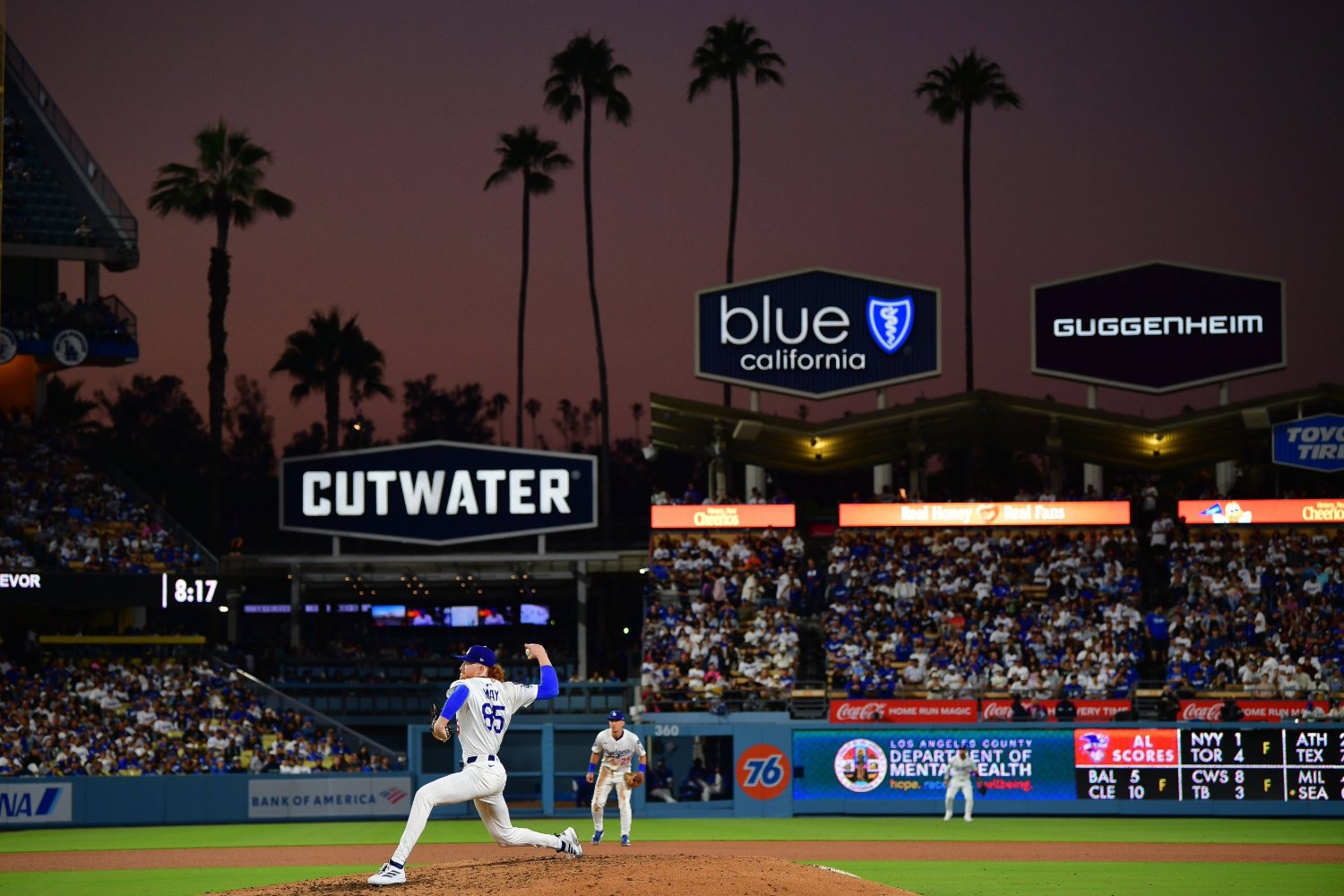 The trade deadline has come and gone as the Red Sox only made two moves in an attempt to help improve their roster. Acquiring Steven Matz of the St. Louis Cardinals and Dustin May of the Los Angeles Dodgers, it seems they planned to beef up their pitching. And while it wasn’t the deadline many were hoping for, there may be a silver lining when it comes to Dustin May. May, a former top prospect of the Dodgers and a talented, yet oft-injured pitcher, was the only rotation help that arrived at the deadline. Just 27 years old, May hasn’t reached his prime just yet. but injuries have left him with limited time on the field as he missed most of 2021 from requiring Tommy John surgery and then pitched in six games in 2022 after rehabbing only to have his season end on September 24 due to lower back tightness. The 2023 campaign was more of the same, needing a Tommy John revision surgery in early July after being on the injured list since mid-May. He would only make nine starts that season and go on to miss the entire 2024 season due to injury rehab and then later needing surgery for an esophageal tear. The 2025 season has seen May at his healthiest since 2020, and he has pitched to mixed results. In 19 appearances, May has gone 6-7 with a 4.85 ERA in 104 innings pitched. In that span, he’s walked 43 batters for a 9.5% walk rate and has struck out 97 batters for a 21.5% strikeout rate. May has not been a big-time strikeout pitcher, with a strikeout per nine innings of 8.39 on the season. Despite that number looking rather pedestrian, it is actually considered to be above average. In fact, it would actually be the second-highest out of all Red Sox starters, just behind Garrett Crochet. Compared to the rest of the American League, it would also place him just behind Max Fried’s 8.40 mark. Looking at his walks per nine innings, May would immediately be the second-worst out of all starters on the staff with a 3.72. The only starter he would be better than would be Walker Buehler. However, despite having a high walk rate, opponents hitting .243 against him and a WHIP of 1.35, May has managed to strand runners at a 70.1% rate. This has been, in part, due to May’s ability to get ground balls while needed. On the season. May has gotten opposing batters to hit the ball on the ground 43.8% of the time, which is unfortunately a career-worst for the pitcher, but a promising floor for such an important metric. On the opposite end, he’s allowing fly balls at a career-high 37.8% rate and has given up 16 home runs on the season. In his previous five seasons pitching combined, he had only given up 19 home runs. One thing is for certain with May: he will need to get the ball more on the ground at Fenway than he did pitching with the Dodgers, especially as he’s allowing a hard-hit rate of 35% and an average exit velocity of 90.8 mph. Batters have hit him hard when they make contact. One positive to build off of for May is his four-seam fastball, as batters are hitting just .111/.168/.206 against it on the season. While Red Sox pitching coach Andrew Bailey seems to like movement more than straight gas, May might benefit from relying more on a four-seamer that averages around 95.5 mph. It has also been his second-best pitch in terms of generating whiffs, with opposing batters whiffing at a 26.2% rate against the offering, so an increase in its usage could result in more swings and misses in his game. One pitcher who has seen an improvement this season when relying more on his fastball is May’s new teammate Brayan Bello, who has looked like a different pitcher after honing in on his fastball usage. Plus, another similarity between the two is the two pitchers rely on similar pitches, as two of Bello's top three most-used pitches are his sinker and sweeper, just like May. The other three pitches in May’s arsenal this year are his cutter, sinker and sweeper (though FanGraphs has it listed as a slider). May dropped his curveball and changeup rates this season and altered his pitch usage. The sweeper is his main pitch now, being tossed 41.1% of the time, while his sinker has been his second-most used pitch at 36.1%. The four-seam fastball has been used 16.1%, and finally the cutter has been tossed just 6.7% of the time, a downgrade from the 14.8% usage it saw in 2023. That may be for the best, as his cutter has been his worst pitch this season, opponents hitting .520/.406/.840 against it. In the same vein, May has also seen trouble with his sinker, as opponents have a slash line of .285/.347/.589 to go along with 10 of May’s 16 home runs allowed being from the sinker. That's not to say either pitch is a lost cause, but if the Red Sox would like to streamline his effectiveness for the season's second half, they could encourage May to deploy a heavier fastball-sweeper mix. May is very much a rental starter, expected to fill in the back-end of the rotation from now until the end of the season in a better manner than Richard Fitts or Walker Buehler has done so far. Likely to slot in as the team’s number four pitcher, May will just be expected to go out there and provide five or six competitive innings as the team looks to make the playoffs. It isn’t a bad upgrade to the rotation, but when it’s the only upgrade, it can look bad. Had the Red Sox acquired a second starting pitcher to go along with him, fans may have looked at this move in a better light. And, if he can improve his sinker even slightly, there’s a chance the Red Sox might have got an exciting young pitcher they could attempt to re-sign for cheap. If it doesn’t work out, then they can let him walk in the offseason. Should the Red Sox tap into the potential and skill that had him renowned as a top prospect before injuries, this trade could age extremely well. If not... well, let's hope James Tibbs gets crowded out of a busy Dodgers' roster, too.
 -
The trade deadline has come and gone as the Red Sox only made two moves in an attempt to help improve their roster. Acquiring Steven Matz of the St. Louis Cardinals and Dustin May of the Los Angeles Dodgers, it seems they planned to beef up their pitching. And while it wasn’t the deadline many were hoping for, there may be a silver lining when it comes to Dustin May. May, a former top prospect of the Dodgers and a talented, yet oft-injured pitcher, was the only rotation help that arrived at the deadline. Just 27 years old, May hasn’t reached his prime just yet. but injuries have left him with limited time on the field as he missed most of 2021 from requiring Tommy John surgery and then pitched in six games in 2022 after rehabbing only to have his season end on September 24 due to lower back tightness. The 2023 campaign was more of the same, needing a Tommy John revision surgery in early July after being on the injured list since mid-May. He would only make nine starts that season and go on to miss the entire 2024 season due to injury rehab and then later needing surgery for an esophageal tear. The 2025 season has seen May at his healthiest since 2020, and he has pitched to mixed results. In 19 appearances, May has gone 6-7 with a 4.85 ERA in 104 innings pitched. In that span, he’s walked 43 batters for a 9.5% walk rate and has struck out 97 batters for a 21.5% strikeout rate. May has not been a big-time strikeout pitcher, with a strikeout per nine innings of 8.39 on the season. Despite that number looking rather pedestrian, it is actually considered to be above average. In fact, it would actually be the second-highest out of all Red Sox starters, just behind Garrett Crochet. Compared to the rest of the American League, it would also place him just behind Max Fried’s 8.40 mark. Looking at his walks per nine innings, May would immediately be the second-worst out of all starters on the staff with a 3.72. The only starter he would be better than would be Walker Buehler. However, despite having a high walk rate, opponents hitting .243 against him and a WHIP of 1.35, May has managed to strand runners at a 70.1% rate. This has been, in part, due to May’s ability to get ground balls while needed. On the season. May has gotten opposing batters to hit the ball on the ground 43.8% of the time, which is unfortunately a career-worst for the pitcher, but a promising floor for such an important metric. On the opposite end, he’s allowing fly balls at a career-high 37.8% rate and has given up 16 home runs on the season. In his previous five seasons pitching combined, he had only given up 19 home runs. One thing is for certain with May: he will need to get the ball more on the ground at Fenway than he did pitching with the Dodgers, especially as he’s allowing a hard-hit rate of 35% and an average exit velocity of 90.8 mph. Batters have hit him hard when they make contact. One positive to build off of for May is his four-seam fastball, as batters are hitting just .111/.168/.206 against it on the season. While Red Sox pitching coach Andrew Bailey seems to like movement more than straight gas, May might benefit from relying more on a four-seamer that averages around 95.5 mph. It has also been his second-best pitch in terms of generating whiffs, with opposing batters whiffing at a 26.2% rate against the offering, so an increase in its usage could result in more swings and misses in his game. One pitcher who has seen an improvement this season when relying more on his fastball is May’s new teammate Brayan Bello, who has looked like a different pitcher after honing in on his fastball usage. Plus, another similarity between the two is the two pitchers rely on similar pitches, as two of Bello's top three most-used pitches are his sinker and sweeper, just like May. The other three pitches in May’s arsenal this year are his cutter, sinker and sweeper (though FanGraphs has it listed as a slider). May dropped his curveball and changeup rates this season and altered his pitch usage. The sweeper is his main pitch now, being tossed 41.1% of the time, while his sinker has been his second-most used pitch at 36.1%. The four-seam fastball has been used 16.1%, and finally the cutter has been tossed just 6.7% of the time, a downgrade from the 14.8% usage it saw in 2023. That may be for the best, as his cutter has been his worst pitch this season, opponents hitting .520/.406/.840 against it. In the same vein, May has also seen trouble with his sinker, as opponents have a slash line of .285/.347/.589 to go along with 10 of May’s 16 home runs allowed being from the sinker. That's not to say either pitch is a lost cause, but if the Red Sox would like to streamline his effectiveness for the season's second half, they could encourage May to deploy a heavier fastball-sweeper mix. May is very much a rental starter, expected to fill in the back-end of the rotation from now until the end of the season in a better manner than Richard Fitts or Walker Buehler has done so far. Likely to slot in as the team’s number four pitcher, May will just be expected to go out there and provide five or six competitive innings as the team looks to make the playoffs. It isn’t a bad upgrade to the rotation, but when it’s the only upgrade, it can look bad. Had the Red Sox acquired a second starting pitcher to go along with him, fans may have looked at this move in a better light. And, if he can improve his sinker even slightly, there’s a chance the Red Sox might have got an exciting young pitcher they could attempt to re-sign for cheap. If it doesn’t work out, then they can let him walk in the offseason. Should the Red Sox tap into the potential and skill that had him renowned as a top prospect before injuries, this trade could age extremely well. If not... well, let's hope James Tibbs gets crowded out of a busy Dodgers' roster, too. View full article
-
The Red Sox continued their post-deadline trend of promoting prospects, as outfielder Miguel Bleis is on his way to Portland per Beyond The Monster’s Andrew Parker. Bleis, who is 21 years old, signed as an international free agent in January of 2021 and received the largest bonus that year. His potential was viewed so highly that, entering 2023, he was a Top-100 prospect on several prospect lists despite only playing in the Florida Complex League. Since signing, he has dealt with several injuries that cost him time in 2022, 2023, 2024 and 2025. but the potential he showcases at times helps to explain what the Red Sox and scouts saw in him back in 2021. Bleis is currently ranked 12th on MLB Pipeline’s Top 30 Red Sox prospects (19th on TalkSox) and will look to showcase his potential in Portland while aiming to play in a career high number of games. So far in 77 games, Bleis is hitting .226/.314/.422 with 15 doubles, a triple, 13 home runs and 41 RBIs. The outfielder is incredibly talented yet very inconsistent. He will be Rule 5 Draft eligible this offseason, and so his time in Portland could also serve as a showcase for teams who might be interested in his skills. View full rumor
-
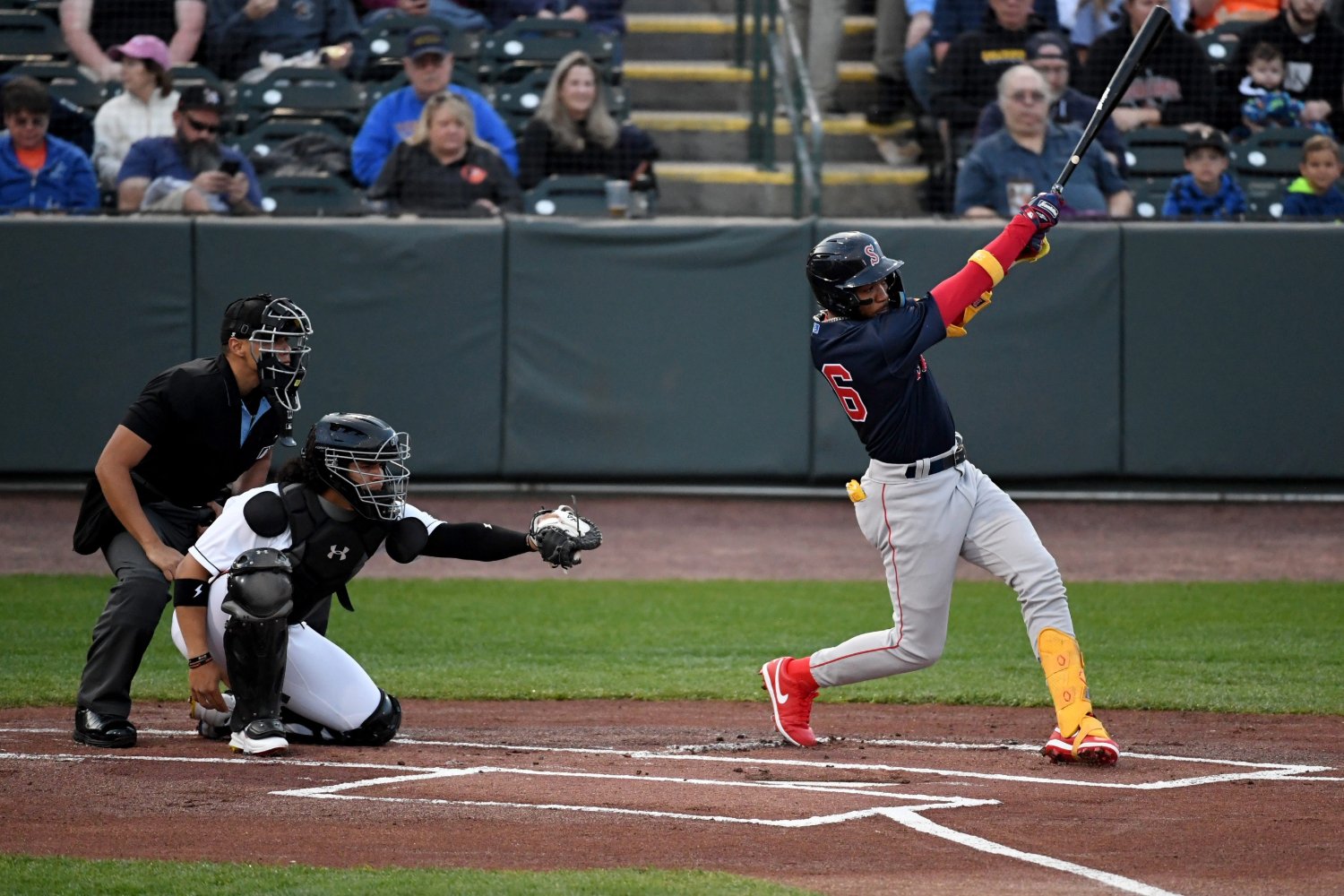 The Red Sox continued their post-deadline trend of promoting prospects, as outfielder Miguel Bleis is on his way to Portland per Beyond The Monster’s Andrew Parker. Bleis, who is 21 years old, signed as an international free agent in January of 2021 and received the largest bonus that year. His potential was viewed so highly that, entering 2023, he was a Top-100 prospect on several prospect lists despite only playing in the Florida Complex League. Since signing, he has dealt with several injuries that cost him time in 2022, 2023, 2024 and 2025. but the potential he showcases at times helps to explain what the Red Sox and scouts saw in him back in 2021. Bleis is currently ranked 12th on MLB Pipeline’s Top 30 Red Sox prospects (19th on TalkSox) and will look to showcase his potential in Portland while aiming to play in a career high number of games. So far in 77 games, Bleis is hitting .226/.314/.422 with 15 doubles, a triple, 13 home runs and 41 RBIs. The outfielder is incredibly talented yet very inconsistent. He will be Rule 5 Draft eligible this offseason, and so his time in Portland could also serve as a showcase for teams who might be interested in his skills.
 -
Following the trade deadline, the Red Sox are promoting one of their top prospects to Worcester. As reported by Beyond the Monster’s Andrew Parker, the Red Sox are promoting infielder Mikey Romero to Triple-A Worcester. Romero, a former first-round draft pick, is likely being promoted to fill the roster spot left by traded corner infielder Blaze Jordan. Romero, who was initially drafted as a shortstop has seen his time in the field split between third base, second base and shortstop. He has also spent time as the designated hitter. Known for his offensive potential, Romero appeared in 65 games for Portland, where he hit .250/.313/.436 with 17 doubles, four triples, eight home runs, and 39 RBIs. What may be most impressive for Romero is the fact that he’s on pace to play in the most games of his professional career, beating the 78 games played last season. Romero will likely see the majority of his playing time come at third base and shortstop as the team sees how he can handle the increased level of play. View full rumor
-
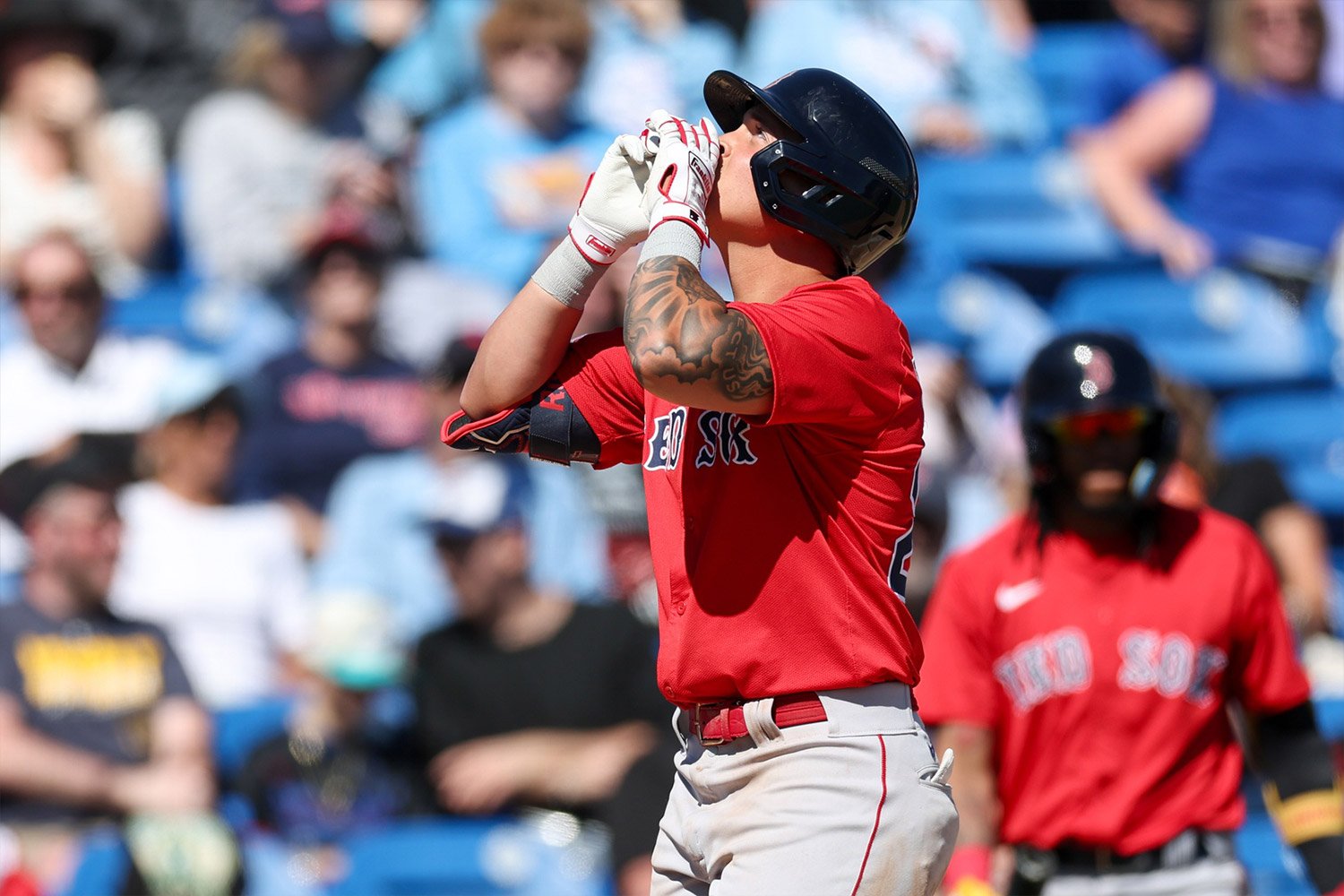 Following the trade deadline, the Red Sox are promoting one of their top prospects to Worcester. As reported by Beyond the Monster’s Andrew Parker, the Red Sox are promoting infielder Mikey Romero to Triple-A Worcester. Romero, a former first-round draft pick, is likely being promoted to fill the roster spot left by traded corner infielder Blaze Jordan. Romero, who was initially drafted as a shortstop has seen his time in the field split between third base, second base and shortstop. He has also spent time as the designated hitter. Known for his offensive potential, Romero appeared in 65 games for Portland, where he hit .250/.313/.436 with 17 doubles, four triples, eight home runs, and 39 RBIs. What may be most impressive for Romero is the fact that he’s on pace to play in the most games of his professional career, beating the 78 games played last season. Romero will likely see the majority of his playing time come at third base and shortstop as the team sees how he can handle the increased level of play.
 -
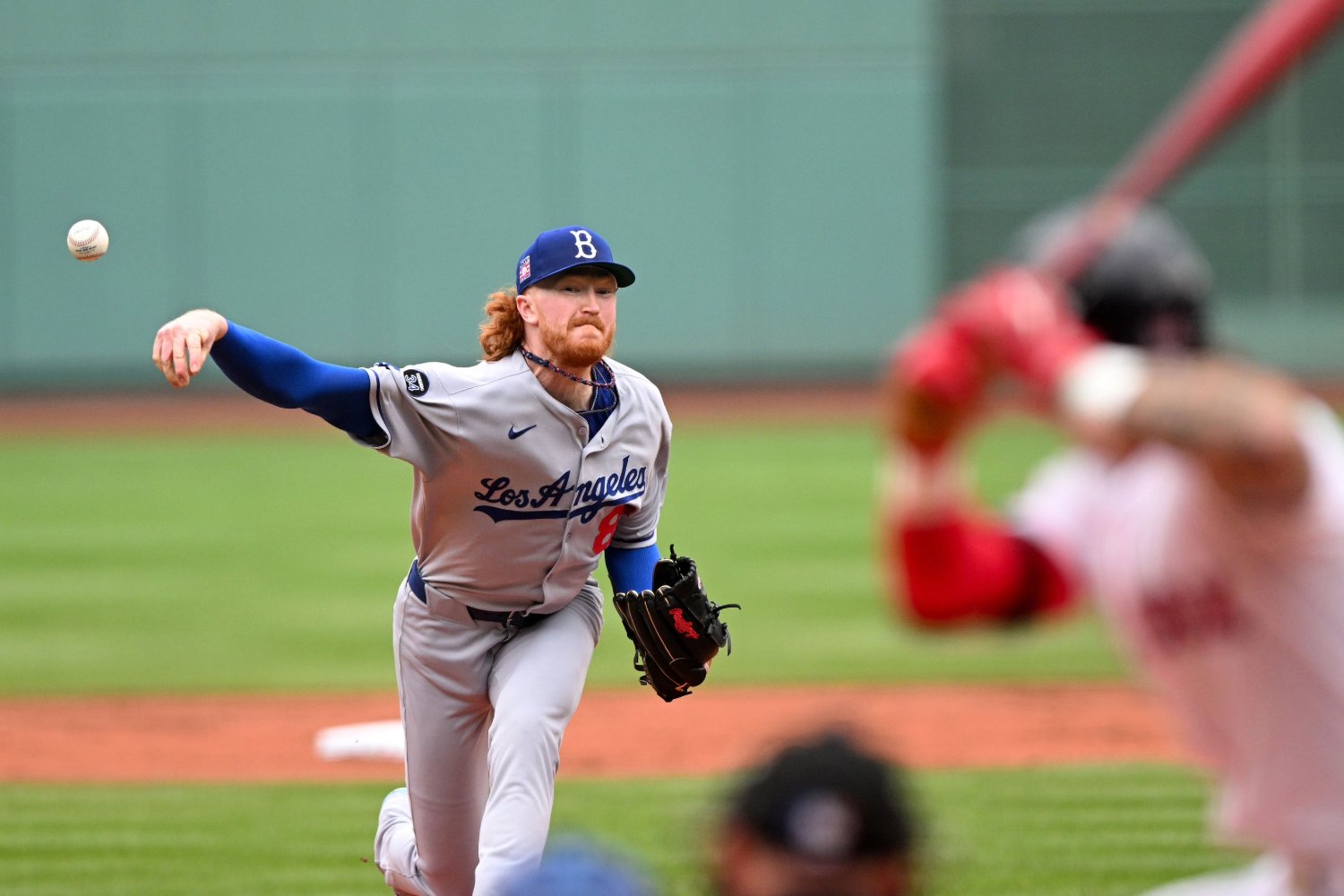 The Boston Red Sox acquired right-handed pitcher Dustin May from the Los Angeles Dodgers per Jeff Passan. After missing out on Merrill Kelly earlier in the day, the Red Sox managed to acquire May and add the young pitcher to their rotation. In 19 games this season, May has gone 6-7 with a 4.85 ERA in 104 innings pitched. May was a former top prospect with the Dodgers and will help provide innings after the Sox have seen injuries affect their pitching depth. May, who missed all of 2024 recovering from Tommy John surgery and undergoing surgery for an esophageal tear, has been a mixed bag of performances. A free agent after the season, May is entirely a rental for the remainder of the season. This is a pure buy-low opportunity on someone the team may have wanted to sign over the offseason; better to get him in the system now and try to work on an extension than compete with 29 other teams in free agency. Despite his numbers looking rather pedestrian, batters are only hitting .111 against his four-seamer on the season, the second-lowest mark in the majors this season. The 27-year-old pitcher has a 21.5% strikeout rate thanks in part to that fastball, which has averaged 95 mph on the season. What may work out the best for May with the Red Sox is his 44.6% ground ball rate, thanks in part to the infield defense led by Alex Bregman, Trevor Story and (upon his return) Marcelo Mayer. Batters are currently hitting .243 against May on the season with an average exit velocity of 90.8 mph on balls put in play. He's giving up a career-high barrel rate at 8.6% and a career-high hard-hit rate of 43.6%. As first reported by Robert Murray of FanSided, the Red Sox sent outfield prospect James Tibbs III as the main piece back to the Dodgers. Tibbs was acquired back on Father's Day as part of the Rafael Devers trade with the San Francisco Giants. He was considered the "centerpiece" prospect at the time, but he was heavily blocked in the outfield by the major league roster and top prospect Jhostynxon Garcia. Joining him to the Dodgers will be 2024 fourth-round pick Zach Ehrhard as reported by MassLive's Christopher Smith. Ehrhard is another outfielder who has split the 2025 season between Greenville and Portland. Another player blocked in the outfield by the major league roster and Garcia, he will now have an opportunity to make it to the majors in a similarly-loaded Dodgers system.

