


Daniel Fox
-
Posts
72 -
Joined
-
Last visited
Daniel Fox's Achievements


-
 JimEd reacted to a post in a topic:
Dwight Evans Is Overdue for a Date With Cooperstown
JimEd reacted to a post in a topic:
Dwight Evans Is Overdue for a Date With Cooperstown
-
However you feel about the Rafael Devers saga and who is at fault, there is no getting around the massive hole he leaves in the lineup. In each of the Red Sox’s first 73 games this season, Alex Cora has slotted Devers into the second slot in the lineup, and after a historically awful start, Devers has been one of the best hitters in baseball. Though he is in the midst of a 14-for-74 stretch that coincided with not having Alex Bregman batting behind him, Devers still ranks third in MLB in RBIs while placing seventh in OBP and 12th in OPS. Simply put, there is nobody in the Red Sox lineup that is capable of replicating Devers' combination of power and patience — at least not yet. The trade of Devers thrusts the Red Sox's “Big 3” farther into the spotlight, something the organization explicitly said they didn’t want to do. While Roman Anthony, Marcelo Mayer, and Kristian Campbell (once he returns from the minors) will be given clear runway to everyday at-bats, they do so with the pressure of having to propel a weak supporting cast. The lineup was already thin when Devers was still here, and now it is downright abysmal. Unsurprisingly, the Red Sox scored just five runs in the Mariners series after dealing Devers (though they did win two games). However, there is a pathway for the Red Sox to remain at least a top-10 offense for the rest of the season. Here are four things that could help the Red Sox survive the departure of Devers. 1. The kids need to grow up fast The only hope the Red Sox have lies in their collection of 24-and-under youngsters. The Red Sox are going to give Ceddanne Rafaela, Roman Anthony, Kristian Campbell and Marcelo Mayer free runway to play every day at the big-league level, and how quickly they turn their raw talent into on-field production will likely be the difference between the Red Sox staying in the race and their fourth straight postseason miss. The Red Sox can only hope that the Big 3 learns as quickly as Rafaela, who, despite a chase rate still over 43%, has taken strides in every facet of his offensive game: Walk Rate 2024: 2.6% (1st percentile) 2025: 5.4% (19th percentile) Strikeout Rate 2024: 26.4 % (22nd percentile) 2025: 21.2% (54th percentile) Whiff Rate 2024: 33% (9th percentile) 2025: 27.6% (30th percentile) Average Exit Velocity 2024: 86.6 mph (12th percentile) 2025: 90.4 mph (56th percentile) Hard Hit Percentage 2024: 36.9% (31st percentile) 2025: 44.9% (59th percentile) While there is still a lot of work to do, Rafaela is no longer the automatic out he was during long stretches of the 2024 season. He now looks like an average offensive performer which, along with his platinum-level glove, makes him an extremely valuable player. The same cannot be said about Campbell, who has not only been one of the worst defenders in baseball at -8 Outs Above Average, but has been among the worst hitters as well. Since April 30, Campbell has posted a dismal .157/.241/.220 slash line as pitchers have attacked his glaring weaknesses. The 22-year-old has been overmatched by off-speed pitches (.160 batting average, 45% whiff rate) and breaking pitches (.181 batting average, 35.6% whiff rate) while getting tormented by inside sinkers. During his meteoric prospect rise that earned 2024 Minor League Hitter of the Year, Campbell was lauded for his ability to drive the ball to the opposite field with authority, but it is becoming clear that what was working for him in the minor leagues isn’t working in the majors. Among 250 qualified hitters, Campbell has the second-highest opposite field ground ball rate and 12th-highest overall ground ball rate while ranking in the bottom 10% in both pull and pull air percentage. What’s worse is the fact that Campbell has not shown any signs of making an adjustment, as his last pull-side extra-base hit came on April 16. The good news for Campbell and the Red Sox is that, even in the midst of a prolonged struggle period, his swing decisions are still well above-average and borderline elite for a rookie. His 11.2% walk rate ranks in the 75th percentile while his 23.4% chase percentage is in the 77th percentile. Unlike many young players, Campbell’s problem isn’t with selectivity but rather doing damage with the pitches he does choose to swing at. Though his .269/.406/.423 line over his last ten games may spark optimism of a turnaround, Campbell is never going to be a consistent offensive performer until he is able to pull the ball with authority, and he has shown no signs of turning the corner in that aspect. The best the Red Sox can hope for is that he continues to work deep counts and draw walks as he refines his approach, but it is clear that he has a long way to go. The second of the Big 3 to arrive in the majors this season, Mayer, is almost the complete opposite of Campbell. While Campbell’s violent swing is reminiscent of a young Hunter Pence, Mayer is as smooth as they come. It’s easy to see why he was the fourth overall pick of the 2021 draft; when he is hot, such as his two-homer game against the Tampa Bay Rays last week, it seems like the sky's the limit. Mayer is the kind of player who even looks good striking out, but unfortunately, he has been doing quite a lot of that in his first month in the major leagues. His 31.1% rate would rank near the bottom of the league if he had enough at-bats to qualify, and he has major swing-and-miss problems against off-speed (46.4% whiff rate) and breaking pitches (54.8%). Given that he only stuck out around 20% of the time in Triple-A, we can expect each of that number to drop as he gets more comfortable with big-league pitching, but it’s clear there will need to be an adjustment period for a guy who had only 193 career at-bats at the Triple-A level. Each of the three players I have mentioned thus far has shown flashes of star potential but has enough warts in their game that their expectations for the rest of the 2025 season should be tempered. The same cannot be said about Anthony, the last of the Big 3 to be called up and the one with the greatest chance of being an immediate difference-maker. While you can nitpick certain things Anthony should improve on, such as being more aggressive in the zone and pulling the ball in the air, his flaws pale in comparison to Rafaela, Campbell and Mayer. The 21-year-old walked nearly as much as he struck out in Triple-A while posting an OPS over .900 against fellow left-handed pitchers and showing no susceptible to breaking or off-speed stuff. Though he has begun his career in a 2-for-25 stretch, there have already been signs of special things to come from Anthony. He hit his first MLB home run on Monday on a perfectly executed up-and-away sinker from Logan Gilbert, one of the best pitchers in baseball. His first career hit was a two-run double against Ryan Pepiot in which he flicked a down-and-away changeup, a pitch that opposing batters hold a .198 average against, down the left-field line. And though his batting average and OPS would suggest otherwise, Anthony has been far from overmatched: His 93.0 mph average exit velocity and 35.5% squared-up percentage would rank near the top of the league, while his 25% chase rate is also solidly above-average. While Anthony is sure to go through his ups and downs, his polished approach and top-end exit velocities make him less susceptible to prolonged dry spells like his fellow youngsters. If Anthony is able to be an above-average hitter out of the gate, it will take some of the pressure off the volatile Mayer, Rafaela and Campbell, allowing them to work through their struggles and hopefully become better hitters by the end of the season than they were at the beginning of the season. 2. Continued production from surprise breakouts You would have won a lot of money if you bet that Abraham Toro and Carlos Narvaez would be batting 3-4 in the Red Sox order by the middle of June. Though this is mostly due to a combination of injuries, trade, and ineffectiveness, the two have been a pleasant surprise in what has been an extremely frustrating offense. The 28-year-old Toro was called up from Triple-A following the Triston Casas injury and has arguably been the Red Sox's best bat over that span. He is currently batting .308 with five home runs in 106 plate appearances, proving especially effective against right-handed pitching (.321/.360/.593). His track record, average batted ball metrics, lack of plate discipline, and .333 BABIP point to incoming regression, but even if he doesn’t hit .300 for the rest of the season, he can still provide value at the strong side of a first base platoon thanks to his elite bat-to-ball skills. Even more surprising than Toro has been the performance of Carlos Narvaez. Acquired from the Yankees to be a glove-first back-up catcher, Narvaez has not only proved to be one of the best defensive catchers in baseball, but he has been the Red Sox’s second-best right-handed hitter behind Bregman. With a .277 batting average and six home runs, Narvaez is making a strong case to be the American League reserve catcher in the All-Star game, an incredible development for a 26-year-old with 13 career at-bats entering this season. Even more shocking is that all of this looks sustainable: He ranks in the 85th percentile in average exit velocity while turning in a 12% walk rate and an acceptable 24% strikeout rate. The Red Sox look to have struck gold, and the only question is whether he will wear down from the largest workload of his career. Neither player should be counted on to maintain their current level of production, but both have proven capable of stringing together quality at-bats and putting the ball in play, two traits that are desperately needed in this lineup. 3. Key contributions from returning injured players While the current Red Sox lineup may be difficult to fathom, it’s important to note that this is not going to be their starting nine forever. The Red Sox will hopefully get three players back in the coming weeks that could immediately slot into the middle of the order and provide an instant boost to an unproven and inconsistent offense. The first player expected to return is Wilyer Abreu, who is set to be activated off the injured list on Friday after missing the previous seven games with an oblique strain. Now, Abreu is far from a perfect player: He struggles mightily against velocity, he is a non-factor against left-handers, and he goes through prolonged slumps, such as the 10-for-62 stretch he was in before his injury. With all that being said, his power-patience combination from the left side is desperately needed in the wake of Devers trade, as despite his recent slide, Abreu was still on pace for a 30-homer season to go along with a walk rate over 10%. Moreover, Abreu has shown signs of progress in his second full MLB season, most notably cutting his strikeout rate by nearly five percent and his whiff rate by over eight percent. Abreu has shown the capability of carrying an offense when he is truly locked in, but even if he just performs as he did for the first 64 games of the season, he will provide a much-needed lift for a lineup that does not currently have a single player with over 10 home runs. The second impact player expected to return is Alex Bregman, whose recovery from a quad strain on May 24 has reportedly been ahead of schedule and could be back before the All-Star game. There is no understated how good Bregman was before he got injured: With a .299 batting average, 11 home runs, and a .938 OPS to go along with Gold Glove defense, Bregman was probably the second most valuable player in the American League behind Aaron Judge. Putting aside what Bregman’s return would mean from a leadership and defensive perspective, it has almost been forgotten just how spectacular Bregman was at the plate in his first two months with the Red Sox. Thanks to some tweaks made by Pete Fatse and the coaching staff, Bregman was able to boost his average exit velocity by three miles per hour and his hard-hit percentage by eight points while maintaining his top-end chase and whiff rates. Even if Bregman takes a while to regain his form upon his return from the injured list, he will immediately become the Red Sox’s best hitter and, at the very least, drag the offense back to the point it was right before Devers was dealt. The final player set to return is a guy who most Red Sox fans have completely forgotten about: Masataka Yoshida. There is simply no other way to describe Yoshida’s Red Sox tenure than a rollercoaster, from his second-half swoon and defensive struggles in 2023 to his mysterious thumb injury in 2024 to his bizarre recovery from shoulder surgery this season. Through it all, however, Yoshida has proven that he can handle major-league pitching: In two full seasons, Yoshida has batted .285/.343/.443 (112 OPS+), ranking among the best in baseball in strikeout and whiff rates. And, despite dealing with a shoulder injury through most of last year, Yoshida still managed to improve both his walk and strikeout rate while adding seven percentage points to his sweet-spot percentage. Due to his ill-advised contract, much of the focus on Yoshida will always center around what he can’t do, but what he can do should not be overlooked. The Red Sox currently rank 28th in MLB with 687 strikeouts, a figure that should only continue to climb with all the rookies who will now be receiving everyday at-bats. Adding a hitter with one of the lowest strikeout rates in baseball will be a tremendous change of pace, and the Red Sox can further maximize his value by limiting him to only facing righties, who he has a career .300/.351/.459 slash line against. Perhaps none of these players alone will replace the production of Devers, but there is no denying the impact of adding three above-average hitters to the middle of the order in a span of a month. How quickly these players can return and find their form could be the key difference in how effectively the Red Sox can withstand the loss of Devers. 4. Some outside reinforcements Even if all the first three pillars hit — even if the rookies continue to grow, the surprises continue to exceed expectations, and the injured players return to form — it probably won’t be enough, specifically in the power department. Devers was the only Red Sox player with over 15 home runs, and while Abreu and Bregman weren’t far behind, they have combined for just two 30 home-run seasons, both by Bregman in the juiced ball days of 2018 and 2019. With how much the Red Sox strike out, they can’t afford to have so little power in their lineup. Therefore, if they are serious about making a playoff push, they will need to add some thump. One name I have been keyed in for a while is first baseman Ryan O’Hearn. With the Orioles sporting a 31-42 record and O’Hearn set to be a free agent after the 2025 season, he could be a perfect solution for the Red Sox at a reasonable price. Not only does he rank in the top 20% of the league in xSLG and hard hit percentage, O’Hearn also has well above-average strikeout and walk rates and plays a terrific first base. Though he is pretty abysmal against lefties, that wouldn’t be a problem for the Red Sox with Romy Gonzalez, and it would allow them to transition Abraham Toro to a utility infield role that he could play far more effectively than David Hamilton. Even if the Red Sox don’t acquire O’Hearn, they still need to be at the forefront of the market for a power hitter. Maybe the Diamondbacks fall out of the race and are willing to move Josh Naylor or Eugenio Suarez. Maybe the Guardians are willing to pull the plug on Carlos Santana. Maybe the Brewers put Rhys Hoskins on the market. As long as they are serious about making a playoff push, which they should be in a weak American League, adding a legitimate power threat to this lineup is a must. View full article
-
Where Will Red Sox Get Their Offense From After Rafael Devers Trade?
Daniel Fox posted an article in Red Sox
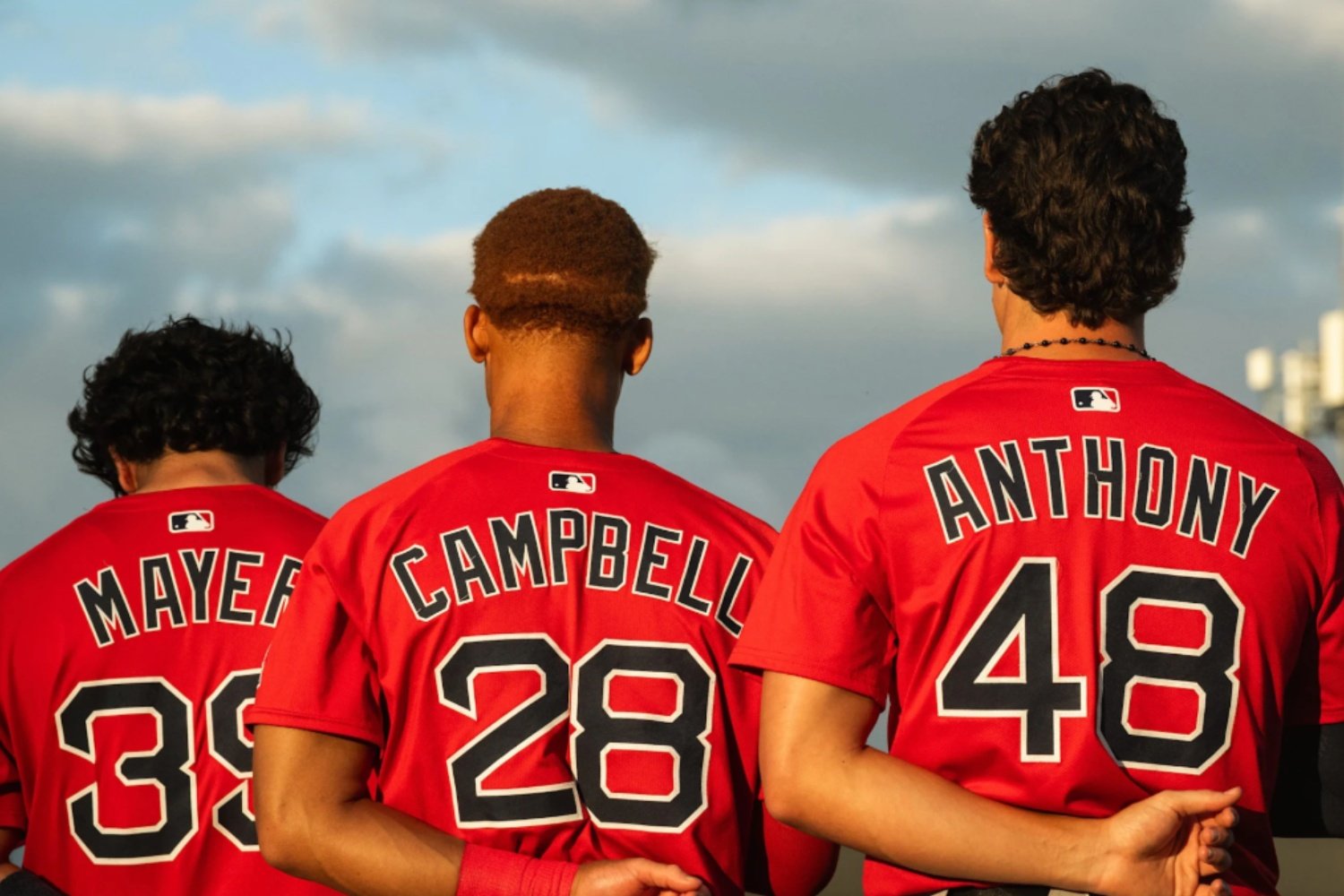 However you feel about the Rafael Devers saga and who is at fault, there is no getting around the massive hole he leaves in the lineup. In each of the Red Sox’s first 73 games this season, Alex Cora has slotted Devers into the second slot in the lineup, and after a historically awful start, Devers has been one of the best hitters in baseball. Though he is in the midst of a 14-for-74 stretch that coincided with not having Alex Bregman batting behind him, Devers still ranks third in MLB in RBIs while placing seventh in OBP and 12th in OPS. Simply put, there is nobody in the Red Sox lineup that is capable of replicating Devers' combination of power and patience — at least not yet. The trade of Devers thrusts the Red Sox's “Big 3” farther into the spotlight, something the organization explicitly said they didn’t want to do. While Roman Anthony, Marcelo Mayer, and Kristian Campbell (once he returns from the minors) will be given clear runway to everyday at-bats, they do so with the pressure of having to propel a weak supporting cast. The lineup was already thin when Devers was still here, and now it is downright abysmal. Unsurprisingly, the Red Sox scored just five runs in the Mariners series after dealing Devers (though they did win two games). However, there is a pathway for the Red Sox to remain at least a top-10 offense for the rest of the season. Here are four things that could help the Red Sox survive the departure of Devers. 1. The kids need to grow up fast The only hope the Red Sox have lies in their collection of 24-and-under youngsters. The Red Sox are going to give Ceddanne Rafaela, Roman Anthony, Kristian Campbell and Marcelo Mayer free runway to play every day at the big-league level, and how quickly they turn their raw talent into on-field production will likely be the difference between the Red Sox staying in the race and their fourth straight postseason miss. The Red Sox can only hope that the Big 3 learns as quickly as Rafaela, who, despite a chase rate still over 43%, has taken strides in every facet of his offensive game: Walk Rate 2024: 2.6% (1st percentile) 2025: 5.4% (19th percentile) Strikeout Rate 2024: 26.4 % (22nd percentile) 2025: 21.2% (54th percentile) Whiff Rate 2024: 33% (9th percentile) 2025: 27.6% (30th percentile) Average Exit Velocity 2024: 86.6 mph (12th percentile) 2025: 90.4 mph (56th percentile) Hard Hit Percentage 2024: 36.9% (31st percentile) 2025: 44.9% (59th percentile) While there is still a lot of work to do, Rafaela is no longer the automatic out he was during long stretches of the 2024 season. He now looks like an average offensive performer which, along with his platinum-level glove, makes him an extremely valuable player. The same cannot be said about Campbell, who has not only been one of the worst defenders in baseball at -8 Outs Above Average, but has been among the worst hitters as well. Since April 30, Campbell has posted a dismal .157/.241/.220 slash line as pitchers have attacked his glaring weaknesses. The 22-year-old has been overmatched by off-speed pitches (.160 batting average, 45% whiff rate) and breaking pitches (.181 batting average, 35.6% whiff rate) while getting tormented by inside sinkers. During his meteoric prospect rise that earned 2024 Minor League Hitter of the Year, Campbell was lauded for his ability to drive the ball to the opposite field with authority, but it is becoming clear that what was working for him in the minor leagues isn’t working in the majors. Among 250 qualified hitters, Campbell has the second-highest opposite field ground ball rate and 12th-highest overall ground ball rate while ranking in the bottom 10% in both pull and pull air percentage. What’s worse is the fact that Campbell has not shown any signs of making an adjustment, as his last pull-side extra-base hit came on April 16. The good news for Campbell and the Red Sox is that, even in the midst of a prolonged struggle period, his swing decisions are still well above-average and borderline elite for a rookie. His 11.2% walk rate ranks in the 75th percentile while his 23.4% chase percentage is in the 77th percentile. Unlike many young players, Campbell’s problem isn’t with selectivity but rather doing damage with the pitches he does choose to swing at. Though his .269/.406/.423 line over his last ten games may spark optimism of a turnaround, Campbell is never going to be a consistent offensive performer until he is able to pull the ball with authority, and he has shown no signs of turning the corner in that aspect. The best the Red Sox can hope for is that he continues to work deep counts and draw walks as he refines his approach, but it is clear that he has a long way to go. The second of the Big 3 to arrive in the majors this season, Mayer, is almost the complete opposite of Campbell. While Campbell’s violent swing is reminiscent of a young Hunter Pence, Mayer is as smooth as they come. It’s easy to see why he was the fourth overall pick of the 2021 draft; when he is hot, such as his two-homer game against the Tampa Bay Rays last week, it seems like the sky's the limit. Mayer is the kind of player who even looks good striking out, but unfortunately, he has been doing quite a lot of that in his first month in the major leagues. His 31.1% rate would rank near the bottom of the league if he had enough at-bats to qualify, and he has major swing-and-miss problems against off-speed (46.4% whiff rate) and breaking pitches (54.8%). Given that he only stuck out around 20% of the time in Triple-A, we can expect each of that number to drop as he gets more comfortable with big-league pitching, but it’s clear there will need to be an adjustment period for a guy who had only 193 career at-bats at the Triple-A level. Each of the three players I have mentioned thus far has shown flashes of star potential but has enough warts in their game that their expectations for the rest of the 2025 season should be tempered. The same cannot be said about Anthony, the last of the Big 3 to be called up and the one with the greatest chance of being an immediate difference-maker. While you can nitpick certain things Anthony should improve on, such as being more aggressive in the zone and pulling the ball in the air, his flaws pale in comparison to Rafaela, Campbell and Mayer. The 21-year-old walked nearly as much as he struck out in Triple-A while posting an OPS over .900 against fellow left-handed pitchers and showing no susceptible to breaking or off-speed stuff. Though he has begun his career in a 2-for-25 stretch, there have already been signs of special things to come from Anthony. He hit his first MLB home run on Monday on a perfectly executed up-and-away sinker from Logan Gilbert, one of the best pitchers in baseball. His first career hit was a two-run double against Ryan Pepiot in which he flicked a down-and-away changeup, a pitch that opposing batters hold a .198 average against, down the left-field line. And though his batting average and OPS would suggest otherwise, Anthony has been far from overmatched: His 93.0 mph average exit velocity and 35.5% squared-up percentage would rank near the top of the league, while his 25% chase rate is also solidly above-average. While Anthony is sure to go through his ups and downs, his polished approach and top-end exit velocities make him less susceptible to prolonged dry spells like his fellow youngsters. If Anthony is able to be an above-average hitter out of the gate, it will take some of the pressure off the volatile Mayer, Rafaela and Campbell, allowing them to work through their struggles and hopefully become better hitters by the end of the season than they were at the beginning of the season. 2. Continued production from surprise breakouts You would have won a lot of money if you bet that Abraham Toro and Carlos Narvaez would be batting 3-4 in the Red Sox order by the middle of June. Though this is mostly due to a combination of injuries, trade, and ineffectiveness, the two have been a pleasant surprise in what has been an extremely frustrating offense. The 28-year-old Toro was called up from Triple-A following the Triston Casas injury and has arguably been the Red Sox's best bat over that span. He is currently batting .308 with five home runs in 106 plate appearances, proving especially effective against right-handed pitching (.321/.360/.593). His track record, average batted ball metrics, lack of plate discipline, and .333 BABIP point to incoming regression, but even if he doesn’t hit .300 for the rest of the season, he can still provide value at the strong side of a first base platoon thanks to his elite bat-to-ball skills. Even more surprising than Toro has been the performance of Carlos Narvaez. Acquired from the Yankees to be a glove-first back-up catcher, Narvaez has not only proved to be one of the best defensive catchers in baseball, but he has been the Red Sox’s second-best right-handed hitter behind Bregman. With a .277 batting average and six home runs, Narvaez is making a strong case to be the American League reserve catcher in the All-Star game, an incredible development for a 26-year-old with 13 career at-bats entering this season. Even more shocking is that all of this looks sustainable: He ranks in the 85th percentile in average exit velocity while turning in a 12% walk rate and an acceptable 24% strikeout rate. The Red Sox look to have struck gold, and the only question is whether he will wear down from the largest workload of his career. Neither player should be counted on to maintain their current level of production, but both have proven capable of stringing together quality at-bats and putting the ball in play, two traits that are desperately needed in this lineup. 3. Key contributions from returning injured players While the current Red Sox lineup may be difficult to fathom, it’s important to note that this is not going to be their starting nine forever. The Red Sox will hopefully get three players back in the coming weeks that could immediately slot into the middle of the order and provide an instant boost to an unproven and inconsistent offense. The first player expected to return is Wilyer Abreu, who is set to be activated off the injured list on Friday after missing the previous seven games with an oblique strain. Now, Abreu is far from a perfect player: He struggles mightily against velocity, he is a non-factor against left-handers, and he goes through prolonged slumps, such as the 10-for-62 stretch he was in before his injury. With all that being said, his power-patience combination from the left side is desperately needed in the wake of Devers trade, as despite his recent slide, Abreu was still on pace for a 30-homer season to go along with a walk rate over 10%. Moreover, Abreu has shown signs of progress in his second full MLB season, most notably cutting his strikeout rate by nearly five percent and his whiff rate by over eight percent. Abreu has shown the capability of carrying an offense when he is truly locked in, but even if he just performs as he did for the first 64 games of the season, he will provide a much-needed lift for a lineup that does not currently have a single player with over 10 home runs. The second impact player expected to return is Alex Bregman, whose recovery from a quad strain on May 24 has reportedly been ahead of schedule and could be back before the All-Star game. There is no understated how good Bregman was before he got injured: With a .299 batting average, 11 home runs, and a .938 OPS to go along with Gold Glove defense, Bregman was probably the second most valuable player in the American League behind Aaron Judge. Putting aside what Bregman’s return would mean from a leadership and defensive perspective, it has almost been forgotten just how spectacular Bregman was at the plate in his first two months with the Red Sox. Thanks to some tweaks made by Pete Fatse and the coaching staff, Bregman was able to boost his average exit velocity by three miles per hour and his hard-hit percentage by eight points while maintaining his top-end chase and whiff rates. Even if Bregman takes a while to regain his form upon his return from the injured list, he will immediately become the Red Sox’s best hitter and, at the very least, drag the offense back to the point it was right before Devers was dealt. The final player set to return is a guy who most Red Sox fans have completely forgotten about: Masataka Yoshida. There is simply no other way to describe Yoshida’s Red Sox tenure than a rollercoaster, from his second-half swoon and defensive struggles in 2023 to his mysterious thumb injury in 2024 to his bizarre recovery from shoulder surgery this season. Through it all, however, Yoshida has proven that he can handle major-league pitching: In two full seasons, Yoshida has batted .285/.343/.443 (112 OPS+), ranking among the best in baseball in strikeout and whiff rates. And, despite dealing with a shoulder injury through most of last year, Yoshida still managed to improve both his walk and strikeout rate while adding seven percentage points to his sweet-spot percentage. Due to his ill-advised contract, much of the focus on Yoshida will always center around what he can’t do, but what he can do should not be overlooked. The Red Sox currently rank 28th in MLB with 687 strikeouts, a figure that should only continue to climb with all the rookies who will now be receiving everyday at-bats. Adding a hitter with one of the lowest strikeout rates in baseball will be a tremendous change of pace, and the Red Sox can further maximize his value by limiting him to only facing righties, who he has a career .300/.351/.459 slash line against. Perhaps none of these players alone will replace the production of Devers, but there is no denying the impact of adding three above-average hitters to the middle of the order in a span of a month. How quickly these players can return and find their form could be the key difference in how effectively the Red Sox can withstand the loss of Devers. 4. Some outside reinforcements Even if all the first three pillars hit — even if the rookies continue to grow, the surprises continue to exceed expectations, and the injured players return to form — it probably won’t be enough, specifically in the power department. Devers was the only Red Sox player with over 15 home runs, and while Abreu and Bregman weren’t far behind, they have combined for just two 30 home-run seasons, both by Bregman in the juiced ball days of 2018 and 2019. With how much the Red Sox strike out, they can’t afford to have so little power in their lineup. Therefore, if they are serious about making a playoff push, they will need to add some thump. One name I have been keyed in for a while is first baseman Ryan O’Hearn. With the Orioles sporting a 31-42 record and O’Hearn set to be a free agent after the 2025 season, he could be a perfect solution for the Red Sox at a reasonable price. Not only does he rank in the top 20% of the league in xSLG and hard hit percentage, O’Hearn also has well above-average strikeout and walk rates and plays a terrific first base. Though he is pretty abysmal against lefties, that wouldn’t be a problem for the Red Sox with Romy Gonzalez, and it would allow them to transition Abraham Toro to a utility infield role that he could play far more effectively than David Hamilton. Even if the Red Sox don’t acquire O’Hearn, they still need to be at the forefront of the market for a power hitter. Maybe the Diamondbacks fall out of the race and are willing to move Josh Naylor or Eugenio Suarez. Maybe the Guardians are willing to pull the plug on Carlos Santana. Maybe the Brewers put Rhys Hoskins on the market. As long as they are serious about making a playoff push, which they should be in a weak American League, adding a legitimate power threat to this lineup is a must.
 -
Why The Red Sox Pitching Staff Still Gives Them A Fighting Chance In 2025
Daniel Fox posted an article in Red Sox
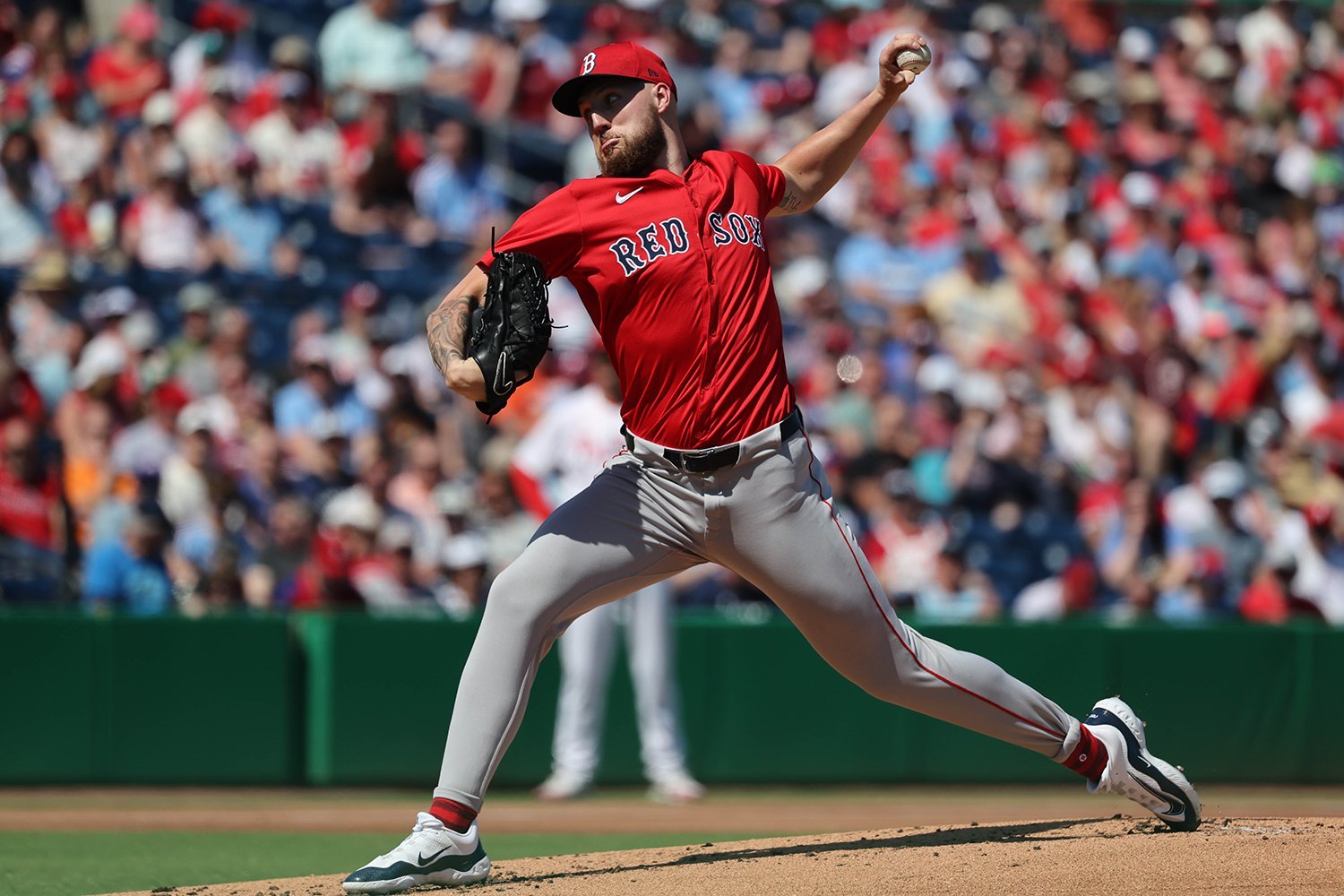 It’s hard to believe that the afternoon of June 15, 2025, could have been considered one of the highest points of Red Sox baseball in the past four years. After stumbling through the first two months of the season and suffering through a brutal and humiliating May, the Red Sox finally caught fire at the beginning of June. After taking the final two contests in Yankee Stadium and winning a series against the Tampa Bay Rays, the Red Sox played their best baseball of the season on this fateful weekend against the first-place New York Yankees. The starting pitchers combined to allow just one run over 20 ⅓ innings, the bullpen and defense were nearly flawless, and the offense did just enough to scratch out three wins against their archrivals. The Red Sox’s eighth win in their last ten games pushed them into a tie for the third Wild Card spot, and with Alex Bregman, Wilyer Abreu, and Justin Slaten set to return in the coming weeks, the club looked primed for a playoff push. Yet, in one tweet from Robert Murray, every bit of optimism and good vibes disappeared, buried beneath the circus that has become the Red Sox front office. In one of the most shocking trades in recent sports memory, the Red Sox traded superstar Rafael Devers to the San Francisco Giants for right-handed reliever Jordan Hicks, left-handed starter Kyle Harrison, outfield prospect James Tibbs, and pitching prospect Jose Bello. Much of the past day has been spent trying to evaluate what went wrong in this saga and where to assign the blame (something I dove into in my article earlier this week), but as difficult as it may seem to believe, the Red Sox still have 88 games left to play in 2025. Losing Devers is a crushing blow and a slap in the face to the fanbase, but it does not mean that all is lost for the 2025 Red Sox. Now, I’m not going to go full Craig Breslow and say the Red Sox are a better team without Devers. An unproven 23-year-old starting pitcher and an oft-injured volatile reliever are not going to replace a top-ten hitter in the sport. What I will tell you, however, is that all hope is not lost, and that has a lot to do with their pitching staff. This last turn through the rotation (prior to Buehler's start against the Mariners) has displayed what the Red Sox are capable of, as Lucas Giolito, Walker Buehler, Garrett Crochet, Hunter Dobbins, and Brayan Bello combined to allow five runs in 40.1 innings (1.32 ERA). The headliner, of course, is Garrett Crochet, who has given the Red Sox an ace they haven’t had since the days of prime Chris Sale. Friday night may have been his finest hour, as he bullied the Yankees for 8 1/3 frames before Aaron Judge finally ran into a 100 mph fastball. While Crochet’s near shutout of the Yankees was the most impressive outing of the weekend, don’t overlook the significance of Bello’s seven scoreless frames. Besides just the box score, Bello finally looked like the guy the Red Sox thought they were getting when they signed him to a six-year extension before the 2024 season. He threw his new-look cutter more than any other pitch and finally found a feel for his once-dominant changeup, allowing him to neutralize the Yankees' lefty-heavy lineup. Even with some maddeningly frustrating starts, Bello now has a career-low 3.49 ERA through his first 11 starts, and his re-worked pitch mix provides hope that the best may be yet to come. While Bello has often seemed weighed down by the massive expectations thrust upon his shoulders, Dobbins has exceeded even the most optimistic of projections in 2025. Once thought to be an up-and-down depth starter, Dobbins has excelled this season due to his ability to throw strikes with all five of his pitches. His 4.8 BB% ranks in the 92nd percentile among all qualified starters, and though his strikeout rate is below average, his 3.74 ERA has been exactly what the Red Sox needed, and his 3.67 FIP shows that it might be sustainable. Perhaps overshadowed by the three under-26 members of the rotation, the veteran Giolito and Buehler both bounced back from recent disasters to turn in quality starts against the Rays (though Buehler did just get lit up again by the Mariners). Though neither should be expected to recapture the dominance of yesteryear, they each displayed a pathway to being productive mid-rotation starters. For Giolito, his rebound start was buoyed by better command of his slider and changeup, which allowed him to get better results off his fastball. He continued his dominance into his start against the Mariners, bullying them with a resurgent fastball and finishing off his 10 strikeouts with an array of wipeout sliders and changeups. Buehler, meanwhile, threw his sinker more often than ever before, a wise decision considering it has held batters to a .116 batting average and a .140 slugging percentage. Though both pitchers have a propensity to give up loud contact, their ability to adapt gives them a fighting chance despite their stuff not being as good as it has been in recent years. And as good as the rotation has been in the last week, it is the bullpen that truly gives me hope that this team can stay in the playoff race. Not since 2017 have the Red Sox had such a deep and versatile bullpen, and like that 2017 team, the relief corps is led by a Hall-of-Fame closer having one of his best seasons. At age 37, Aroldis Chapman has posted a career-low 2.8 BB/9 while still regularly hitting triple-digits with his fastball. Like Craig Kimbrel, Chapman's newfound strike-throwing ability has made him nearly unhittable, as he has converted 12 of 13 save opportunities to go along with a 1.55 ERA. Though not quite as flashy as Chapman, the performance of the middle relief corps has proved invaluable to the Red Sox's recent stretch of winning tight, low-scoring games. Greg Weissert has taken on the primary set-up man in the absence of Justin Slaten and has allowed just three runs in his last 15 appearances. Garrett Whitlock, meanwhile, has turned a corner after a disastrous stretch at the beginning of May, allowing just a single run over his last 16 innings. Finally, Justin Wilson has settled in nicely to the second-lefty role, posting a 2.25 ERA with 30 strikeouts in just 24 innings. Even more encouraging is the fact that there is a pathway for the pitching staff to get even better. With Harrison now in the mix and Tanner Houck set for his first rehab start, the Red Sox will have options should one of their starters succumb to injuries or ineffectiveness. And while Hicks has failed to make the leap from reliever to starter, he still has the stuff to be effective in a one-inning role. Adding Hicks and eventually Slaten to a bullpen led by Weissert, Wilson, Chapman, and Slaten has a chance to give the Red Sox one of the deepest groups of relievers in the game. The past half-decade of Red Sox baseball has been defined by a potent offense trying desperately to overcome a weak pitching staff. Though overshadowed by the Devers saga and the call-up of the Big 3, the Andrew Bailey and Craig Breslow renewed focus on pitching has finally begun to pay dividends. The Red Sox's 3.96 team ERA is their lowest mark since 2018, and there are signs that the best may be yet to come. The Devers trade is a massive blow to the team’s offensive production and postseason chances, but there is simply too much good on the pitching side of the ball to throw in the towel on the 2025 Red Sox.
 -
It’s hard to believe that the afternoon of June 15, 2025, could have been considered one of the highest points of Red Sox baseball in the past four years. After stumbling through the first two months of the season and suffering through a brutal and humiliating May, the Red Sox finally caught fire at the beginning of June. After taking the final two contests in Yankee Stadium and winning a series against the Tampa Bay Rays, the Red Sox played their best baseball of the season on this fateful weekend against the first-place New York Yankees. The starting pitchers combined to allow just one run over 20 ⅓ innings, the bullpen and defense were nearly flawless, and the offense did just enough to scratch out three wins against their archrivals. The Red Sox’s eighth win in their last ten games pushed them into a tie for the third Wild Card spot, and with Alex Bregman, Wilyer Abreu, and Justin Slaten set to return in the coming weeks, the club looked primed for a playoff push. Yet, in one tweet from Robert Murray, every bit of optimism and good vibes disappeared, buried beneath the circus that has become the Red Sox front office. In one of the most shocking trades in recent sports memory, the Red Sox traded superstar Rafael Devers to the San Francisco Giants for right-handed reliever Jordan Hicks, left-handed starter Kyle Harrison, outfield prospect James Tibbs, and pitching prospect Jose Bello. Much of the past day has been spent trying to evaluate what went wrong in this saga and where to assign the blame (something I dove into in my article earlier this week), but as difficult as it may seem to believe, the Red Sox still have 88 games left to play in 2025. Losing Devers is a crushing blow and a slap in the face to the fanbase, but it does not mean that all is lost for the 2025 Red Sox. Now, I’m not going to go full Craig Breslow and say the Red Sox are a better team without Devers. An unproven 23-year-old starting pitcher and an oft-injured volatile reliever are not going to replace a top-ten hitter in the sport. What I will tell you, however, is that all hope is not lost, and that has a lot to do with their pitching staff. This last turn through the rotation (prior to Buehler's start against the Mariners) has displayed what the Red Sox are capable of, as Lucas Giolito, Walker Buehler, Garrett Crochet, Hunter Dobbins, and Brayan Bello combined to allow five runs in 40.1 innings (1.32 ERA). The headliner, of course, is Garrett Crochet, who has given the Red Sox an ace they haven’t had since the days of prime Chris Sale. Friday night may have been his finest hour, as he bullied the Yankees for 8 1/3 frames before Aaron Judge finally ran into a 100 mph fastball. While Crochet’s near shutout of the Yankees was the most impressive outing of the weekend, don’t overlook the significance of Bello’s seven scoreless frames. Besides just the box score, Bello finally looked like the guy the Red Sox thought they were getting when they signed him to a six-year extension before the 2024 season. He threw his new-look cutter more than any other pitch and finally found a feel for his once-dominant changeup, allowing him to neutralize the Yankees' lefty-heavy lineup. Even with some maddeningly frustrating starts, Bello now has a career-low 3.49 ERA through his first 11 starts, and his re-worked pitch mix provides hope that the best may be yet to come. While Bello has often seemed weighed down by the massive expectations thrust upon his shoulders, Dobbins has exceeded even the most optimistic of projections in 2025. Once thought to be an up-and-down depth starter, Dobbins has excelled this season due to his ability to throw strikes with all five of his pitches. His 4.8 BB% ranks in the 92nd percentile among all qualified starters, and though his strikeout rate is below average, his 3.74 ERA has been exactly what the Red Sox needed, and his 3.67 FIP shows that it might be sustainable. Perhaps overshadowed by the three under-26 members of the rotation, the veteran Giolito and Buehler both bounced back from recent disasters to turn in quality starts against the Rays (though Buehler did just get lit up again by the Mariners). Though neither should be expected to recapture the dominance of yesteryear, they each displayed a pathway to being productive mid-rotation starters. For Giolito, his rebound start was buoyed by better command of his slider and changeup, which allowed him to get better results off his fastball. He continued his dominance into his start against the Mariners, bullying them with a resurgent fastball and finishing off his 10 strikeouts with an array of wipeout sliders and changeups. Buehler, meanwhile, threw his sinker more often than ever before, a wise decision considering it has held batters to a .116 batting average and a .140 slugging percentage. Though both pitchers have a propensity to give up loud contact, their ability to adapt gives them a fighting chance despite their stuff not being as good as it has been in recent years. And as good as the rotation has been in the last week, it is the bullpen that truly gives me hope that this team can stay in the playoff race. Not since 2017 have the Red Sox had such a deep and versatile bullpen, and like that 2017 team, the relief corps is led by a Hall-of-Fame closer having one of his best seasons. At age 37, Aroldis Chapman has posted a career-low 2.8 BB/9 while still regularly hitting triple-digits with his fastball. Like Craig Kimbrel, Chapman's newfound strike-throwing ability has made him nearly unhittable, as he has converted 12 of 13 save opportunities to go along with a 1.55 ERA. Though not quite as flashy as Chapman, the performance of the middle relief corps has proved invaluable to the Red Sox's recent stretch of winning tight, low-scoring games. Greg Weissert has taken on the primary set-up man in the absence of Justin Slaten and has allowed just three runs in his last 15 appearances. Garrett Whitlock, meanwhile, has turned a corner after a disastrous stretch at the beginning of May, allowing just a single run over his last 16 innings. Finally, Justin Wilson has settled in nicely to the second-lefty role, posting a 2.25 ERA with 30 strikeouts in just 24 innings. Even more encouraging is the fact that there is a pathway for the pitching staff to get even better. With Harrison now in the mix and Tanner Houck set for his first rehab start, the Red Sox will have options should one of their starters succumb to injuries or ineffectiveness. And while Hicks has failed to make the leap from reliever to starter, he still has the stuff to be effective in a one-inning role. Adding Hicks and eventually Slaten to a bullpen led by Weissert, Wilson, Chapman, and Slaten has a chance to give the Red Sox one of the deepest groups of relievers in the game. The past half-decade of Red Sox baseball has been defined by a potent offense trying desperately to overcome a weak pitching staff. Though overshadowed by the Devers saga and the call-up of the Big 3, the Andrew Bailey and Craig Breslow renewed focus on pitching has finally begun to pay dividends. The Red Sox's 3.96 team ERA is their lowest mark since 2018, and there are signs that the best may be yet to come. The Devers trade is a massive blow to the team’s offensive production and postseason chances, but there is simply too much good on the pitching side of the ball to throw in the towel on the 2025 Red Sox. View full article
-
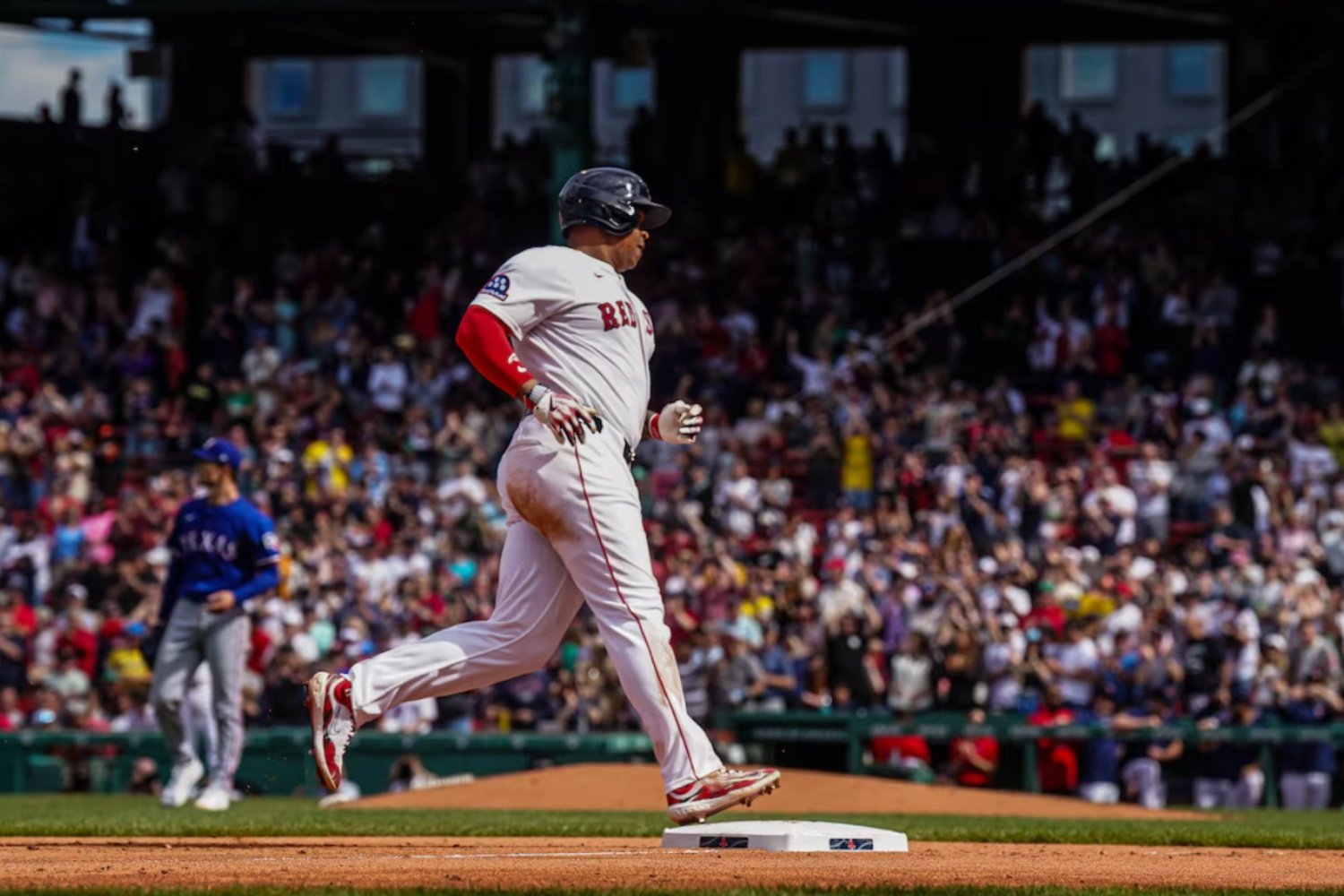 It wasn’t supposed to end like this. After trading Mookie Betts to the Los Angeles Dodgers and refusing to match the insane contract the San Diego Padres gave to Xander Bogaerts, the Red Sox finally paid up for a franchise cornerstone. By giving Rafael Devers a 10-year, $313.5 million contract extension, the club ensured that at least one of the pillars of the 2018 championship team would remain intact. It wasn’t hard to imagine Devers anchoring the Red Sox lineup for the next decade, leading the Red Sox to more postseason glory, reaching the 500 home run milestone, and possibly entering Cooperstown in a Red Sox hat. Less than two and half years later, he's gone, traded unceremoniously to the Giants for a couple of intriguing-but-uncertain pieces, none of which will replace the gaping hole in the Red Sox's order. Though the end was abrupt and shocking, it was a culmination of a series of events that strained the relationship between team and superstar to the point of no return. Every time there is a divorce of this magnitude, fans and media are quick to point the finger at one side. While I do ultimately believe that Craig Breslow and Co. brutally mismanaged this situation, Devers is not without blame. The way that he handled both the move to designated hitter and the request to move to first base after the Triston Casas injury was deplorable. Let’s start with the DH move. It is no secret that Devers is a poor defensive third baseman. He certainly has the talent to make every play, but he became the symbol of the Red Sox’s defensive ineptitude of the last four seasons with his inconsistency and propensity to make routine errors. From 2021-2024, Devers led all third basemen with 67 errors, accumulating a dismal -29 Outs Above Average during that spend. It seemed to be a forgone conclusion that the signing of Alex Bregman, the reigning American League Gold Glove winner at the hot corner, would result in Devers shifting to designated hitter and making the Red Sox a far better defensive unit. Yet, that’s not how Devers saw it, and he spent his first media availability of spring training stubbornly claiming, “I’m a third baseman.” Devers eventually relented, and after a historically brutal start, he began to post some of the best offensive numbers of his career. All seemed to be have been forgiven and forgotten until Casas suffered his season-ending knee injury, leaving a gaping hole at first base. As any general manager would have done in the situation, Breslow approached Devers and asked him about the idea of moving to first base. Yet, rather than quietly decline the offer, let alone agree to take reps at first, Devers again went to the media, this time blasting Breslow by saying, “I’m not certain what his issue is with me.” This kicked the circus back into high gear, and though Devers eventually quieted the controversy with a dominant month of May, it is now clear that the relationship was beyond repair. With Wilyer Abreu and Masataka Yoshida set to return in the coming weeks, the situation had reached a breaking point, and a deal was struck. Now, are there players who would have swallowed their egos and done what the team asked them to without complaint? Of course there are. Bryce Harper moved from right field to first base when Rhys Hoskins left the Philadelphia Phillies. Miguel Cabrera moved from third base to first base and back to third base when the Detroit Tigers signed Prince Fielder and eventually realized he wasn’t the answer. Yet, Rafael Devers, for better or worse, isn’t that kind of player. He prided himself on being a third baseman, and thinking that he would be okay with being told to move to DH a week before the season was a gross miscalculation from the Red Sox front office. Regardless of who you want to blame, there is no denying that this is a truly dark day for the organization. No team should trade their best hitter in the middle of the playoff race, let alone a franchise cornerstone who has been one of the most consistent bats in baseball for almost a decade. What makes it worse is that it was entirely of their own doing. Yes, Devers could have handled things better, but a complete disregard for the person rather than the player led to an unsalvageable situation. I remain steadfast in the belief that Breslow has done a lot of good things since he became Chief Baseball Officer, and that the organization as a whole is in a far better place than the day Chaim Bloom got fired. Yet, while the Garrett Crochet and Carlos Narvaez trades were huge wins and the Chris Sale trade was a massive loss, this trade and what Breslow does with all the added financial flexibility will ultimately define his legacy and perhaps the next decade of Red Sox baseball.
 -
It wasn’t supposed to end like this. After trading Mookie Betts to the Los Angeles Dodgers and refusing to match the insane contract the San Diego Padres gave to Xander Bogaerts, the Red Sox finally paid up for a franchise cornerstone. By giving Rafael Devers a 10-year, $313.5 million contract extension, the club ensured that at least one of the pillars of the 2018 championship team would remain intact. It wasn’t hard to imagine Devers anchoring the Red Sox lineup for the next decade, leading the Red Sox to more postseason glory, reaching the 500 home run milestone, and possibly entering Cooperstown in a Red Sox hat. Less than two and half years later, he's gone, traded unceremoniously to the Giants for a couple of intriguing-but-uncertain pieces, none of which will replace the gaping hole in the Red Sox's order. Though the end was abrupt and shocking, it was a culmination of a series of events that strained the relationship between team and superstar to the point of no return. Every time there is a divorce of this magnitude, fans and media are quick to point the finger at one side. While I do ultimately believe that Craig Breslow and Co. brutally mismanaged this situation, Devers is not without blame. The way that he handled both the move to designated hitter and the request to move to first base after the Triston Casas injury was deplorable. Let’s start with the DH move. It is no secret that Devers is a poor defensive third baseman. He certainly has the talent to make every play, but he became the symbol of the Red Sox’s defensive ineptitude of the last four seasons with his inconsistency and propensity to make routine errors. From 2021-2024, Devers led all third basemen with 67 errors, accumulating a dismal -29 Outs Above Average during that spend. It seemed to be a forgone conclusion that the signing of Alex Bregman, the reigning American League Gold Glove winner at the hot corner, would result in Devers shifting to designated hitter and making the Red Sox a far better defensive unit. Yet, that’s not how Devers saw it, and he spent his first media availability of spring training stubbornly claiming, “I’m a third baseman.” Devers eventually relented, and after a historically brutal start, he began to post some of the best offensive numbers of his career. All seemed to be have been forgiven and forgotten until Casas suffered his season-ending knee injury, leaving a gaping hole at first base. As any general manager would have done in the situation, Breslow approached Devers and asked him about the idea of moving to first base. Yet, rather than quietly decline the offer, let alone agree to take reps at first, Devers again went to the media, this time blasting Breslow by saying, “I’m not certain what his issue is with me.” This kicked the circus back into high gear, and though Devers eventually quieted the controversy with a dominant month of May, it is now clear that the relationship was beyond repair. With Wilyer Abreu and Masataka Yoshida set to return in the coming weeks, the situation had reached a breaking point, and a deal was struck. Now, are there players who would have swallowed their egos and done what the team asked them to without complaint? Of course there are. Bryce Harper moved from right field to first base when Rhys Hoskins left the Philadelphia Phillies. Miguel Cabrera moved from third base to first base and back to third base when the Detroit Tigers signed Prince Fielder and eventually realized he wasn’t the answer. Yet, Rafael Devers, for better or worse, isn’t that kind of player. He prided himself on being a third baseman, and thinking that he would be okay with being told to move to DH a week before the season was a gross miscalculation from the Red Sox front office. Regardless of who you want to blame, there is no denying that this is a truly dark day for the organization. No team should trade their best hitter in the middle of the playoff race, let alone a franchise cornerstone who has been one of the most consistent bats in baseball for almost a decade. What makes it worse is that it was entirely of their own doing. Yes, Devers could have handled things better, but a complete disregard for the person rather than the player led to an unsalvageable situation. I remain steadfast in the belief that Breslow has done a lot of good things since he became Chief Baseball Officer, and that the organization as a whole is in a far better place than the day Chaim Bloom got fired. Yet, while the Garrett Crochet and Carlos Narvaez trades were huge wins and the Chris Sale trade was a massive loss, this trade and what Breslow does with all the added financial flexibility will ultimately define his legacy and perhaps the next decade of Red Sox baseball. View full article
-
The Red Sox Are Awful In One-Run Games. How Can They Fix It?
Daniel Fox posted an article in Red Sox
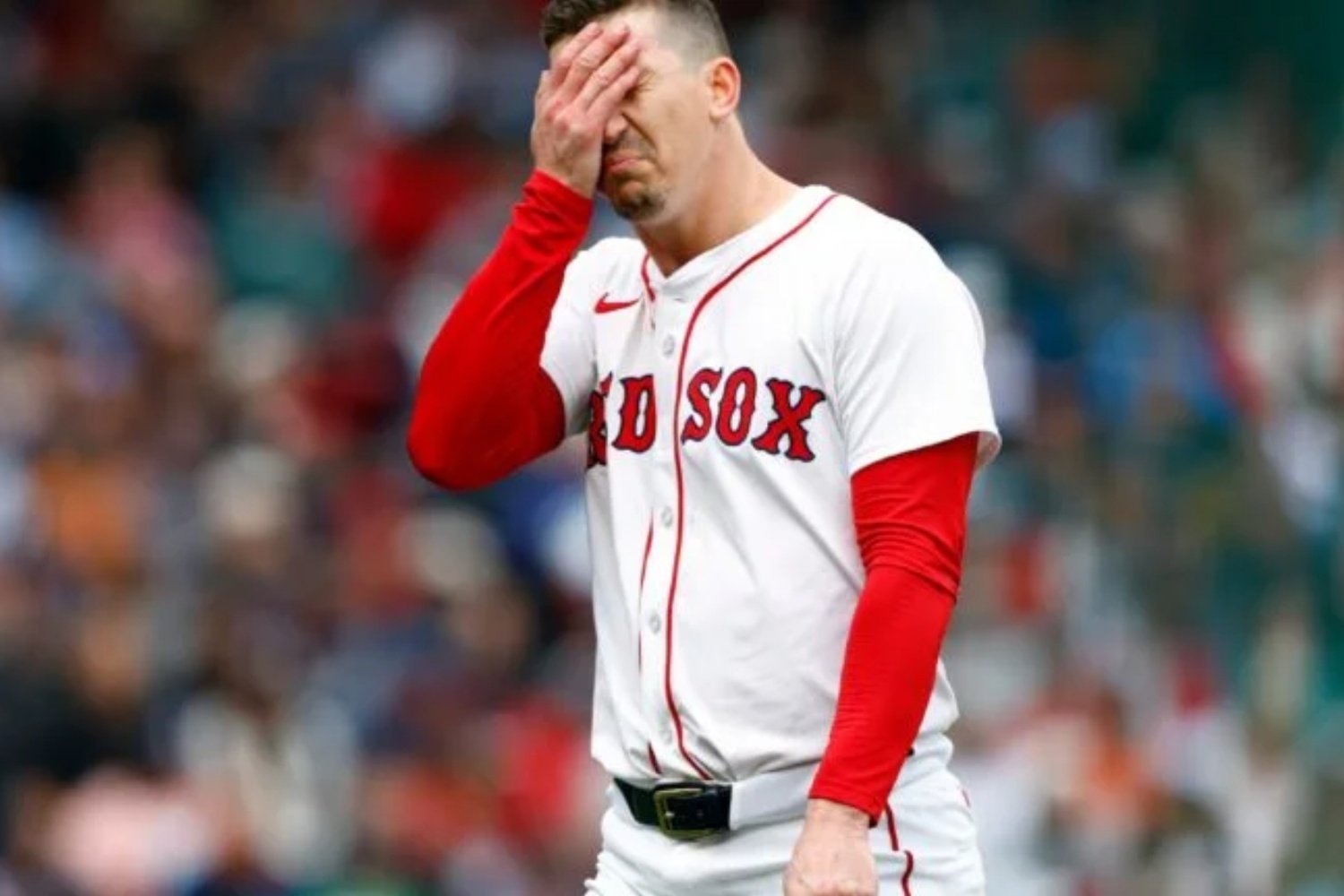 My old baseball coach used to say that the team that didn’t do the little things would lose 2-1. Unsurprisingly, that is something that has come to my mind a lot while watching the 2025 Boston Red Sox, a team that, it feels like, will always find some way to lose. A runner stranded on second after a leadoff double. A throwing error that allows the winning run to move into scoring position. A leadoff walk to an eight-hole hitter that will inevitably come around to score. And so on and so forth. Going 28-31 with 15 one-run losses seems almost unbelievable, but it’s the best way to sum up an underachieving team that doesn’t know how to close out games. Game after game after game, the Red Sox have come up a hair short, not because of talent, but because of a lack of execution. A lack of attention to detail. A mistake made in the sixth or seventh inning that comes around to burn them in the ninth. Take these games for example: April 9: Blue Jays 2, Red Sox 1 (Final/10) After Greg Weissert pitched a scoreless 10th inning, the Red Sox had a prime chance to walk it off in the bottom of the tenth with the ghost runner on second and nobody out. Triston Casas did his job by moving the runner to third with a ground ball to second, leaving the winning run 90 feet away with Trevor Story coming to the plate. In what would be an unfortunate sign of things to come, Story would foul off two pitches over the heart of the plate before chasing a Jeff Hoffman slider well off the plate for strike three. After a Wilyer Abreu intentional walk, Kristian Campbell would also go down on strikes, blowing a golden opportunity to end the game right there. Despite this, the Red Sox still had an opportunity to win the game in the bottom of the 11th after Josh Winckowski held the Blue Jays to just one run in the top half. Yet once again, David Hamilton failed to advance the runner and Rob Refsnyder and Jarren Duran would go down easily to end a heartbreaking 2-1 final. April 12: White Sox 3, Red Sox 2 Holding a 2-0 lead in the sixth inning, what looked like an easy win was turned on its head when Richard Fitts had to exit with a pec injury. Zack Kelly promptly allowed a two-run home run to the second batter he faced, and the game would remain tied 2-2 heading into the ninth inning. Of course, the Red Sox blew an opportunity to take the lead in the seventh, when after a Ceddanne Rafaela single and stolen base put a runner on second base with nobody out, the top of the Red Sox order would go down in order without even moving Rafaela over 90 feet. Aroldis Chapman entered in the bottom of the ninth to try and send the game to extras, but things would escalate rather quickly, thanks to a leadoff walk to Luis Robert Jr., who had a measly .536 OPS even after his earlier homer. Robert would steal second off to the slow-to-the-plate Chapman, and Brooks Baldwin would win the game with a line drive down the left field line. April 26: Guardians 5, Red Sox 4 After scoring four runs in the first two-plus innings, the Red Sox went scoreless in the last seven frames, though they had plenty of chances. Alex Bregman followed Rafael Devers’ game-tying homer with a double in the third, but Story couldn’t advance the runner and went down on strikes. The Red Sox got the first two runners on in the fourth, but Rafaela flew out, Duran grounded out, and Devers flew out without even moving the runner to third. Finally, in the ninth, the Red Sox got the tying run to second base with nobody out, but a Devers lineout, a Bregman flyout, and a Story strikeout ended things rather quickly. It should be noted that the Guardians scored the go-ahead run on a Will Wilson hit-by-pitch (.533 OPS), an Angel Martinez should-be double play ball that glanced off Brennan Bernardino’s glove for a single, and a bloop single by Steven Kwan that glanced off Story’s outstretched glove. April 30: Blue Jays 7, Red Sox 6 Trailing 6-0 in the sixth inning, the Blue Jays cut the deficit in half on a pair of home runs, and Anthony Santander tied the game on a three-run home run off a middle-middle, 2-0 Garrett Whitlock changeup. The Red Sox once again failed to move the ghost runner up in the top of the tenth, and the Blue Jays scored their ghost runner in the bottom half. May 1: Blue Jays 4, Red Sox 2 With a 2-1 lead in the bottom of the eighth, Justin Slaten hung a 1-2 sweeper to Bo Bichette (18th percentile chase rate) that was lifted deep to right field. Wilyer Abreu took a bad route, and the ball just glanced off his outstretched glove. Vladimir Guerrrero Jr. followed with a three-run home run, and that was that. May 3: Twins 4, Red Sox 3 With runners on first and second and one out in the eighth, Connor Wong negated what would have been a sure double steal with a foul ball. He grounded into a double play on the next pitch, and the Red Sox wouldn’t score in the bottom of the ninth. May 4: Twins 5, Red Sox 4 With a 3-1 lead in the top of the seventh, Whitlock walked Harrison Bader after being ahead 0-2, then threw a middle-middle slider to Ryan Jeffers with two outs and first base open that was rifled into the left-field corner for a game-tying two-run double. May 9: Royals 2, Red Sox 1 In a game where the Red Sox went 0-for-12 with runners in scoring position, the Red Sox failed to advance the ghost runner in the 10th and 12th. The 10th inning was particularly costly, as Chapman would extend the game with a scoreless bottom half. Duran had an opportunity to end the game even earlier in the fifth but he struck out with Rafaela on third and one out against Michael Lorenzen (19% K rate). May 13: Tigers 10, Red Sox 9 With two outs and a man on second in the sixth and possessing a 4-3 lead, Whitlock would hit Jace Jung (.111 hitter, since optioned to minors) and hang a sweeper to Javier Baez that was hammered for a three-run home run. Greg Weissert would do the same thing in the bottom of the tenth, leaving the Red Sox with a loss in a game they scored nine runs on 14 hits. Oh, almost forgot. The Red Sox had a chance to extend their 4-3 lead in the top of the sixth with the bases loaded and one out, but both Rafaela and Duran struck out against Brant Hurter, whose fastball averages 92.2 miles per hour. May 14: Tigers 6, Red Sox 5 Trailing 5-2 in the top of the seventh, the Red Sox railed to tie the game against Tarik Skubal but failed to take the lead when Abreu grounded into a double play with one out and the bases loaded. The Red Sox would again have a chance to take the lead in the ninth inning but Rafael Devers struck out with first and third and one out. The game would be lost in the ninth inning when Chapman walked Andy Ibanez (.706 OPS), allowed him to steal second and advance to third on a Wong throwing error, and scored on a Justyn-Henry Malloy single. May 16: Braves 4, Red Sox 2 Despite facing a dominant Chris Sale, the Red Sox had multiple opportunities to break the game open against him. In the third inning, Bregman struck out looking with runners on first and third and one out, and Rafael Devers got caught stealing with lefty killer Rob Refsnyder up. In the sixth, Duran was caught stealing with Refsnyder up as the tying run, and he would lead off the seventh with a home run that cut the deficit in half. Trailing by one in the bottom of the eighth, the Red Sox got the tying run to second with nobody out, but Rafaela failed to advance him when he grounded out to short, and Duran and Devers would go down quietly. Red Sox relievers would then walk five batters in the top of the ninth, including two with the bases loaded, preventing them from tying the game on a rare Story Single RBI single in the bottom of the ninth. May 24: Orioles 2, Red Sox 1 After getting shut out through the first seven innings, the Red Sox finally mustered a rally in the bottom of the eighth when Sogard led off with a single and Wong drew a walk to bring Rafaela to the plate with runners on first and second and nobody out. In an obvious bunt situation, Rafaela fouled off a pitch about two feet inside for strike one, then fouled off a bunt attempt for strike two. With the bunt now off, Rafaela chased a bad 0-2 pitch and lifted a lazy fly ball to right field that failed to advance the runners. Orioles reliever Seranthony Dominguez then struck out Duran and got Devers to pop up, squandering the Red Sox's only real rally of the game. May 26: Brewers 3, Red Sox 2 After the Red Sox cut the Brewers lead in half with a run in the top of the eighth, Whitlock failed to produce a shutdown inning in the bottom of the eighth. With two outs and runners on the corners, Whitlock pitched around Caleb Durbin (.577 OPS) to load the bases, and Eric Hasse made him pay with a swinging bunt RBI single. The Red Sox would score another run in the top of the ninth, but Wong popped up with the bases loaded to end the game. May 27: Brewers 5, Red Sox 1 After Aroldis Chapman blew his first save of the season, the Red Sox had an opportunity to blow the game open in the top of the 10th. With a first and third nobody out, Rafaela and Duran struck out and Devers flew out. The game was essentially at that point, but Christian Yelich provided the exclamation point with a walk-off grand slam. May 28: Brewers 6, Red Sox 5 The Red Sox had opportunities on both sides of the ball to prevent this game from going to extra innings. On offense, a careless mistake from Rafaela resulted in both him and Wong standing on third base and prevented a two-run rally from being even bigger. On defense, Duran couldn’t coral a sinker liner from Brice Turang, turning what should have been an inning-ending groundout from Jackson Chourio into an RBI. Despite these crucial mistakes, the Red Sox still could have won the game in the bottom of the tenth. Clinging to a one-run lead, Nick Sogard cut off a ground ball to second base rather than covering first, again turning what should have been the first out of the inning into a first and third, nobody out situation. The next batter hit a weak ground ball to Campbell, who made the decision to throw home even though the runner was probably safe anyway. The throw sailed wildly, allowing the winning run to advance to third with nobody out. Caleb Durbin followed with a sacrifice fly, finishing off the third devastating loss in three days. Wow. It’s hard to believe all those games occurred in just the first two months. In my opinion, the Red Sox's struggles in one-run games boil down to four key flaws: 1. Too much swing-and-miss in the lineup After finishing third in MLB in strikeouts in 2024, there was some optimism that the Red Sox would improve in the category in 2025 after swapping out Tyler O’Neill (33.6% K rate) for Bregman (13.6%). Yet, here we are at the end of May, and the Red Sox are once again third in the majors in strikeouts, and that’s even with Abreu and Rafaela making substantially more contact. Those changes, however, have been offset by the additions of Story (30%) and Campell (27%), leaving the Red Sox lineup just as whiff-prone as ever. The problem only grows worse in big moments. No team in baseball has struck out more with runners in scoring position than the Red Sox, who have fanned a whopping 154 times in 630 plate appearances. There have been so many times over these first two months where a Red Sox hitter has failed to put a ball in play at a time when a ground ball to the right side would suffice. When the margin of defeat has so often been one or two runs, this lack of situational hitting has frequently been the difference between wins and losses. 2. A group of relievers who are reluctant to attack with their fastball Let’s take a look at some of the most disastrous pitches of the 2025 Red Sox season: A hanging changeup by Whitlock to Santander (Game-tying three-run homer) A hanging sweeper by Slaten to Bichette (Double to move tying run to third) A hanging curve by Slaten to Guerrero (Three-run home run) A hanging sweeper by Whitlock to France (Game-tying two-run double) A hanging sweeper by Whitlock to Baez (Go-ahead homer) A hanging changeup by Weissert to Trey Sweeney (Game-tying single) A hanging sweeper by Weissert to Javy Baez (Walk-off homer) Notice a pattern? The Red Sox have built a bullpen around relievers who rely on their secondary stuff over their fastball, and while the bullpen has mostly been effective this season, they have a terrible habit of throwing their worst breaking pitches at the worst possible time. It has been well known that the Andrew Bailey method utilizes more breaking pitches in favor of fastballs, and in year two of his tenure with the Red Sox, it feels like batters are beginning to catch on. They know these pitchers are going to get with their secondary pitches in big spots, and they have been ready for it. Take the Baez walk-off home run for example. You don’t put that good a swing on a first-pitch breaking ball unless you go up to the plate sitting on the pitch. If you are going to get beat, you want to get beat by your best pitch, and with Weissert and Slaten in particular, that just hasn’t been the case: Weissert: Opponents WOBA vs Four-seamer: .150 Opponents WOBA vs Sinker: .250 Opponents WOBA vs Sweeper: .621 Slaten: Opponents WOBA vs Four-seamer: .160 Opponents WOBA vs Cutter: .139 Opponents WOBA vs Curveball: .321 The league has made an adjustment to the Red Sox’s pitching philosophy. It’s time for the Red Sox to adjust back. 3. Inexperience and youth coming into play I believe this is the underrated storyline of the Red Sox season. Take a look, for example, at the Red Sox's lineup from May 25: LF Jarren Duran (MLB Experience: 410 games) DH Rafael Devers (MLB Experience: 1,038 games) LF Wilyer Abreu (MLB Experience: 215 games) C Carlos Narvaez (MLB Experience: 42 games) 2B Kristian Campbell (MLB Experience: 49 games) SS Marcelo Mayer (MLB Experience: 5 games) 1B Abraham Toro (MLB Experience: 380 games) PH Nick Sogard (MLB Experience: 45 games) SS David Hamilton (MLB Experience: 33 games) CF Ceddanne Rafaela (MLB Experience: 233 games) That is seven out of ten players who appeared in a game with less than two years of MLB experience. It is really hard to win baseball games at the big league level when your lineup consists so heavily of players who are still in the beginning stages of learning the game. This inexperience shows itself not just in the silly baserunning mistakes or careless defensive errors, but in how they handle adversity. How many times this season has a bad loss spiraled into a three-or-four-game losing streak? How many times has a 0-for-4 day spiraled into a 2-for-20 stretch? How many times has a player pressed and expanded the zone in a key moment? Take Abreu, for example. There is no question that Abreu is having a great season, as he currently possesses a .842 OPS while making massive strides in his strikeout and walk rates. He has also played a tremendous right field, already registered four Outs Above Average in just 55 games. At the same time, however, there are still plenty of signs of his inexperience: A .665 OPS with men on base compared to .998 with nobody on Dinstinct stretches of 6-for-44 (.136), 5-for-30 (.167), and 7-for-42 (.167) Four fielding errors (second-most among outfielders) In many ways, Abreu's play this season is emblematic of the Red Sox as a whole. The talent is evident, and there are flashes of true stardom, but the struggles in big moments, the drastic ups-and-downs, and the careless errors have overshadowed much of the progress. Baseball is not like other sports. In football and basketball, you can draft a guy right out of college and have him be an All-Star or Pro Bowler right out of the gate. The making of a great baseball player takes time, and very few players are anything close to a finished product by the time they arrive in the major leagues. Headed into this season, we expected there to be a learning curve for guys like Campbell, Rafaela, and Abreu, but the injury to Bregman and the complete ineffectiveness of Story has led to an over-reliance on the young players and a spotlight being shown on their struggles. 4. An organization that is failing to translate young talent into big league wins It’s hard not to draw a contrast between the Red Sox and the Tigers, especially after watching the series a few weeks ago. Despite being every bit as young as the Red Sox, Detroit doesn't have the same issues as the Red Sox. While the Red Sox have made the second-most errors in the league, the Tigers have made the seventh-fewest. While the Red Sox are 6-15 in one-run games, the Tigers are 10-5. While the Red Sox have a .237 batting average and 24.4 strikeout rate with runners in scoring position, the Tigers have a .268 batting average and 20.4% strikeout rate. So no, youth cannot be the only explanation. There is something deeper going on, and it requires a serious evaluation of every aspect of the Red Sox organization. Are they preparing their prospects correctly to contribute at the big league level? Is their scouting department prioritizing the correct traits in players they acquire and draft? Is the current big league staff equipped for the development of talented but young players? Having six prospects in the MLB Top 100 is great, but it doesn’t mean anything if those players can’t successfully translate their talent into big league success. And yes, while the Red Sox have received major wins with the development of Duran, Abreu and others, the same issues continue to pop up again. The careless errors. The strikeouts. The lack of good situational baseball. At a certain point, you can’t just chalk everything up to inexperience. The Red Sox have spent four years trying to integrate young players into the big leagues, from Casas and Brayan Bello in 2022 to Rafaela and Abreu in 2023 to Campbell, Narvaez and Mayer this season, and they have still not been able to build a consistent winner. That begs the question as to whether the culture instilled at both the minor and major league level is ill-suited for success. Obviously, it’s still May, and I don’t believe we have seen the best of Campbell, Mayer and Roman Anthony. But, if the Red Sox continue to give away games and continue to play this brand of sloppy, undisciplined baseball, I think it’s fair to question whether a major organizational shift is needed, whether that be in philosophy or personnel.
 -
My old baseball coach used to say that the team that didn’t do the little things would lose 2-1. Unsurprisingly, that is something that has come to my mind a lot while watching the 2025 Boston Red Sox, a team that, it feels like, will always find some way to lose. A runner stranded on second after a leadoff double. A throwing error that allows the winning run to move into scoring position. A leadoff walk to an eight-hole hitter that will inevitably come around to score. And so on and so forth. Going 28-31 with 15 one-run losses seems almost unbelievable, but it’s the best way to sum up an underachieving team that doesn’t know how to close out games. Game after game after game, the Red Sox have come up a hair short, not because of talent, but because of a lack of execution. A lack of attention to detail. A mistake made in the sixth or seventh inning that comes around to burn them in the ninth. Take these games for example: April 9: Blue Jays 2, Red Sox 1 (Final/10) After Greg Weissert pitched a scoreless 10th inning, the Red Sox had a prime chance to walk it off in the bottom of the tenth with the ghost runner on second and nobody out. Triston Casas did his job by moving the runner to third with a ground ball to second, leaving the winning run 90 feet away with Trevor Story coming to the plate. In what would be an unfortunate sign of things to come, Story would foul off two pitches over the heart of the plate before chasing a Jeff Hoffman slider well off the plate for strike three. After a Wilyer Abreu intentional walk, Kristian Campbell would also go down on strikes, blowing a golden opportunity to end the game right there. Despite this, the Red Sox still had an opportunity to win the game in the bottom of the 11th after Josh Winckowski held the Blue Jays to just one run in the top half. Yet once again, David Hamilton failed to advance the runner and Rob Refsnyder and Jarren Duran would go down easily to end a heartbreaking 2-1 final. April 12: White Sox 3, Red Sox 2 Holding a 2-0 lead in the sixth inning, what looked like an easy win was turned on its head when Richard Fitts had to exit with a pec injury. Zack Kelly promptly allowed a two-run home run to the second batter he faced, and the game would remain tied 2-2 heading into the ninth inning. Of course, the Red Sox blew an opportunity to take the lead in the seventh, when after a Ceddanne Rafaela single and stolen base put a runner on second base with nobody out, the top of the Red Sox order would go down in order without even moving Rafaela over 90 feet. Aroldis Chapman entered in the bottom of the ninth to try and send the game to extras, but things would escalate rather quickly, thanks to a leadoff walk to Luis Robert Jr., who had a measly .536 OPS even after his earlier homer. Robert would steal second off to the slow-to-the-plate Chapman, and Brooks Baldwin would win the game with a line drive down the left field line. April 26: Guardians 5, Red Sox 4 After scoring four runs in the first two-plus innings, the Red Sox went scoreless in the last seven frames, though they had plenty of chances. Alex Bregman followed Rafael Devers’ game-tying homer with a double in the third, but Story couldn’t advance the runner and went down on strikes. The Red Sox got the first two runners on in the fourth, but Rafaela flew out, Duran grounded out, and Devers flew out without even moving the runner to third. Finally, in the ninth, the Red Sox got the tying run to second base with nobody out, but a Devers lineout, a Bregman flyout, and a Story strikeout ended things rather quickly. It should be noted that the Guardians scored the go-ahead run on a Will Wilson hit-by-pitch (.533 OPS), an Angel Martinez should-be double play ball that glanced off Brennan Bernardino’s glove for a single, and a bloop single by Steven Kwan that glanced off Story’s outstretched glove. April 30: Blue Jays 7, Red Sox 6 Trailing 6-0 in the sixth inning, the Blue Jays cut the deficit in half on a pair of home runs, and Anthony Santander tied the game on a three-run home run off a middle-middle, 2-0 Garrett Whitlock changeup. The Red Sox once again failed to move the ghost runner up in the top of the tenth, and the Blue Jays scored their ghost runner in the bottom half. May 1: Blue Jays 4, Red Sox 2 With a 2-1 lead in the bottom of the eighth, Justin Slaten hung a 1-2 sweeper to Bo Bichette (18th percentile chase rate) that was lifted deep to right field. Wilyer Abreu took a bad route, and the ball just glanced off his outstretched glove. Vladimir Guerrrero Jr. followed with a three-run home run, and that was that. May 3: Twins 4, Red Sox 3 With runners on first and second and one out in the eighth, Connor Wong negated what would have been a sure double steal with a foul ball. He grounded into a double play on the next pitch, and the Red Sox wouldn’t score in the bottom of the ninth. May 4: Twins 5, Red Sox 4 With a 3-1 lead in the top of the seventh, Whitlock walked Harrison Bader after being ahead 0-2, then threw a middle-middle slider to Ryan Jeffers with two outs and first base open that was rifled into the left-field corner for a game-tying two-run double. May 9: Royals 2, Red Sox 1 In a game where the Red Sox went 0-for-12 with runners in scoring position, the Red Sox failed to advance the ghost runner in the 10th and 12th. The 10th inning was particularly costly, as Chapman would extend the game with a scoreless bottom half. Duran had an opportunity to end the game even earlier in the fifth but he struck out with Rafaela on third and one out against Michael Lorenzen (19% K rate). May 13: Tigers 10, Red Sox 9 With two outs and a man on second in the sixth and possessing a 4-3 lead, Whitlock would hit Jace Jung (.111 hitter, since optioned to minors) and hang a sweeper to Javier Baez that was hammered for a three-run home run. Greg Weissert would do the same thing in the bottom of the tenth, leaving the Red Sox with a loss in a game they scored nine runs on 14 hits. Oh, almost forgot. The Red Sox had a chance to extend their 4-3 lead in the top of the sixth with the bases loaded and one out, but both Rafaela and Duran struck out against Brant Hurter, whose fastball averages 92.2 miles per hour. May 14: Tigers 6, Red Sox 5 Trailing 5-2 in the top of the seventh, the Red Sox railed to tie the game against Tarik Skubal but failed to take the lead when Abreu grounded into a double play with one out and the bases loaded. The Red Sox would again have a chance to take the lead in the ninth inning but Rafael Devers struck out with first and third and one out. The game would be lost in the ninth inning when Chapman walked Andy Ibanez (.706 OPS), allowed him to steal second and advance to third on a Wong throwing error, and scored on a Justyn-Henry Malloy single. May 16: Braves 4, Red Sox 2 Despite facing a dominant Chris Sale, the Red Sox had multiple opportunities to break the game open against him. In the third inning, Bregman struck out looking with runners on first and third and one out, and Rafael Devers got caught stealing with lefty killer Rob Refsnyder up. In the sixth, Duran was caught stealing with Refsnyder up as the tying run, and he would lead off the seventh with a home run that cut the deficit in half. Trailing by one in the bottom of the eighth, the Red Sox got the tying run to second with nobody out, but Rafaela failed to advance him when he grounded out to short, and Duran and Devers would go down quietly. Red Sox relievers would then walk five batters in the top of the ninth, including two with the bases loaded, preventing them from tying the game on a rare Story Single RBI single in the bottom of the ninth. May 24: Orioles 2, Red Sox 1 After getting shut out through the first seven innings, the Red Sox finally mustered a rally in the bottom of the eighth when Sogard led off with a single and Wong drew a walk to bring Rafaela to the plate with runners on first and second and nobody out. In an obvious bunt situation, Rafaela fouled off a pitch about two feet inside for strike one, then fouled off a bunt attempt for strike two. With the bunt now off, Rafaela chased a bad 0-2 pitch and lifted a lazy fly ball to right field that failed to advance the runners. Orioles reliever Seranthony Dominguez then struck out Duran and got Devers to pop up, squandering the Red Sox's only real rally of the game. May 26: Brewers 3, Red Sox 2 After the Red Sox cut the Brewers lead in half with a run in the top of the eighth, Whitlock failed to produce a shutdown inning in the bottom of the eighth. With two outs and runners on the corners, Whitlock pitched around Caleb Durbin (.577 OPS) to load the bases, and Eric Hasse made him pay with a swinging bunt RBI single. The Red Sox would score another run in the top of the ninth, but Wong popped up with the bases loaded to end the game. May 27: Brewers 5, Red Sox 1 After Aroldis Chapman blew his first save of the season, the Red Sox had an opportunity to blow the game open in the top of the 10th. With a first and third nobody out, Rafaela and Duran struck out and Devers flew out. The game was essentially at that point, but Christian Yelich provided the exclamation point with a walk-off grand slam. May 28: Brewers 6, Red Sox 5 The Red Sox had opportunities on both sides of the ball to prevent this game from going to extra innings. On offense, a careless mistake from Rafaela resulted in both him and Wong standing on third base and prevented a two-run rally from being even bigger. On defense, Duran couldn’t coral a sinker liner from Brice Turang, turning what should have been an inning-ending groundout from Jackson Chourio into an RBI. Despite these crucial mistakes, the Red Sox still could have won the game in the bottom of the tenth. Clinging to a one-run lead, Nick Sogard cut off a ground ball to second base rather than covering first, again turning what should have been the first out of the inning into a first and third, nobody out situation. The next batter hit a weak ground ball to Campbell, who made the decision to throw home even though the runner was probably safe anyway. The throw sailed wildly, allowing the winning run to advance to third with nobody out. Caleb Durbin followed with a sacrifice fly, finishing off the third devastating loss in three days. Wow. It’s hard to believe all those games occurred in just the first two months. In my opinion, the Red Sox's struggles in one-run games boil down to four key flaws: 1. Too much swing-and-miss in the lineup After finishing third in MLB in strikeouts in 2024, there was some optimism that the Red Sox would improve in the category in 2025 after swapping out Tyler O’Neill (33.6% K rate) for Bregman (13.6%). Yet, here we are at the end of May, and the Red Sox are once again third in the majors in strikeouts, and that’s even with Abreu and Rafaela making substantially more contact. Those changes, however, have been offset by the additions of Story (30%) and Campell (27%), leaving the Red Sox lineup just as whiff-prone as ever. The problem only grows worse in big moments. No team in baseball has struck out more with runners in scoring position than the Red Sox, who have fanned a whopping 154 times in 630 plate appearances. There have been so many times over these first two months where a Red Sox hitter has failed to put a ball in play at a time when a ground ball to the right side would suffice. When the margin of defeat has so often been one or two runs, this lack of situational hitting has frequently been the difference between wins and losses. 2. A group of relievers who are reluctant to attack with their fastball Let’s take a look at some of the most disastrous pitches of the 2025 Red Sox season: A hanging changeup by Whitlock to Santander (Game-tying three-run homer) A hanging sweeper by Slaten to Bichette (Double to move tying run to third) A hanging curve by Slaten to Guerrero (Three-run home run) A hanging sweeper by Whitlock to France (Game-tying two-run double) A hanging sweeper by Whitlock to Baez (Go-ahead homer) A hanging changeup by Weissert to Trey Sweeney (Game-tying single) A hanging sweeper by Weissert to Javy Baez (Walk-off homer) Notice a pattern? The Red Sox have built a bullpen around relievers who rely on their secondary stuff over their fastball, and while the bullpen has mostly been effective this season, they have a terrible habit of throwing their worst breaking pitches at the worst possible time. It has been well known that the Andrew Bailey method utilizes more breaking pitches in favor of fastballs, and in year two of his tenure with the Red Sox, it feels like batters are beginning to catch on. They know these pitchers are going to get with their secondary pitches in big spots, and they have been ready for it. Take the Baez walk-off home run for example. You don’t put that good a swing on a first-pitch breaking ball unless you go up to the plate sitting on the pitch. If you are going to get beat, you want to get beat by your best pitch, and with Weissert and Slaten in particular, that just hasn’t been the case: Weissert: Opponents WOBA vs Four-seamer: .150 Opponents WOBA vs Sinker: .250 Opponents WOBA vs Sweeper: .621 Slaten: Opponents WOBA vs Four-seamer: .160 Opponents WOBA vs Cutter: .139 Opponents WOBA vs Curveball: .321 The league has made an adjustment to the Red Sox’s pitching philosophy. It’s time for the Red Sox to adjust back. 3. Inexperience and youth coming into play I believe this is the underrated storyline of the Red Sox season. Take a look, for example, at the Red Sox's lineup from May 25: LF Jarren Duran (MLB Experience: 410 games) DH Rafael Devers (MLB Experience: 1,038 games) LF Wilyer Abreu (MLB Experience: 215 games) C Carlos Narvaez (MLB Experience: 42 games) 2B Kristian Campbell (MLB Experience: 49 games) SS Marcelo Mayer (MLB Experience: 5 games) 1B Abraham Toro (MLB Experience: 380 games) PH Nick Sogard (MLB Experience: 45 games) SS David Hamilton (MLB Experience: 33 games) CF Ceddanne Rafaela (MLB Experience: 233 games) That is seven out of ten players who appeared in a game with less than two years of MLB experience. It is really hard to win baseball games at the big league level when your lineup consists so heavily of players who are still in the beginning stages of learning the game. This inexperience shows itself not just in the silly baserunning mistakes or careless defensive errors, but in how they handle adversity. How many times this season has a bad loss spiraled into a three-or-four-game losing streak? How many times has a 0-for-4 day spiraled into a 2-for-20 stretch? How many times has a player pressed and expanded the zone in a key moment? Take Abreu, for example. There is no question that Abreu is having a great season, as he currently possesses a .842 OPS while making massive strides in his strikeout and walk rates. He has also played a tremendous right field, already registered four Outs Above Average in just 55 games. At the same time, however, there are still plenty of signs of his inexperience: A .665 OPS with men on base compared to .998 with nobody on Dinstinct stretches of 6-for-44 (.136), 5-for-30 (.167), and 7-for-42 (.167) Four fielding errors (second-most among outfielders) In many ways, Abreu's play this season is emblematic of the Red Sox as a whole. The talent is evident, and there are flashes of true stardom, but the struggles in big moments, the drastic ups-and-downs, and the careless errors have overshadowed much of the progress. Baseball is not like other sports. In football and basketball, you can draft a guy right out of college and have him be an All-Star or Pro Bowler right out of the gate. The making of a great baseball player takes time, and very few players are anything close to a finished product by the time they arrive in the major leagues. Headed into this season, we expected there to be a learning curve for guys like Campbell, Rafaela, and Abreu, but the injury to Bregman and the complete ineffectiveness of Story has led to an over-reliance on the young players and a spotlight being shown on their struggles. 4. An organization that is failing to translate young talent into big league wins It’s hard not to draw a contrast between the Red Sox and the Tigers, especially after watching the series a few weeks ago. Despite being every bit as young as the Red Sox, Detroit doesn't have the same issues as the Red Sox. While the Red Sox have made the second-most errors in the league, the Tigers have made the seventh-fewest. While the Red Sox are 6-15 in one-run games, the Tigers are 10-5. While the Red Sox have a .237 batting average and 24.4 strikeout rate with runners in scoring position, the Tigers have a .268 batting average and 20.4% strikeout rate. So no, youth cannot be the only explanation. There is something deeper going on, and it requires a serious evaluation of every aspect of the Red Sox organization. Are they preparing their prospects correctly to contribute at the big league level? Is their scouting department prioritizing the correct traits in players they acquire and draft? Is the current big league staff equipped for the development of talented but young players? Having six prospects in the MLB Top 100 is great, but it doesn’t mean anything if those players can’t successfully translate their talent into big league success. And yes, while the Red Sox have received major wins with the development of Duran, Abreu and others, the same issues continue to pop up again. The careless errors. The strikeouts. The lack of good situational baseball. At a certain point, you can’t just chalk everything up to inexperience. The Red Sox have spent four years trying to integrate young players into the big leagues, from Casas and Brayan Bello in 2022 to Rafaela and Abreu in 2023 to Campbell, Narvaez and Mayer this season, and they have still not been able to build a consistent winner. That begs the question as to whether the culture instilled at both the minor and major league level is ill-suited for success. Obviously, it’s still May, and I don’t believe we have seen the best of Campbell, Mayer and Roman Anthony. But, if the Red Sox continue to give away games and continue to play this brand of sloppy, undisciplined baseball, I think it’s fair to question whether a major organizational shift is needed, whether that be in philosophy or personnel. View full article
-
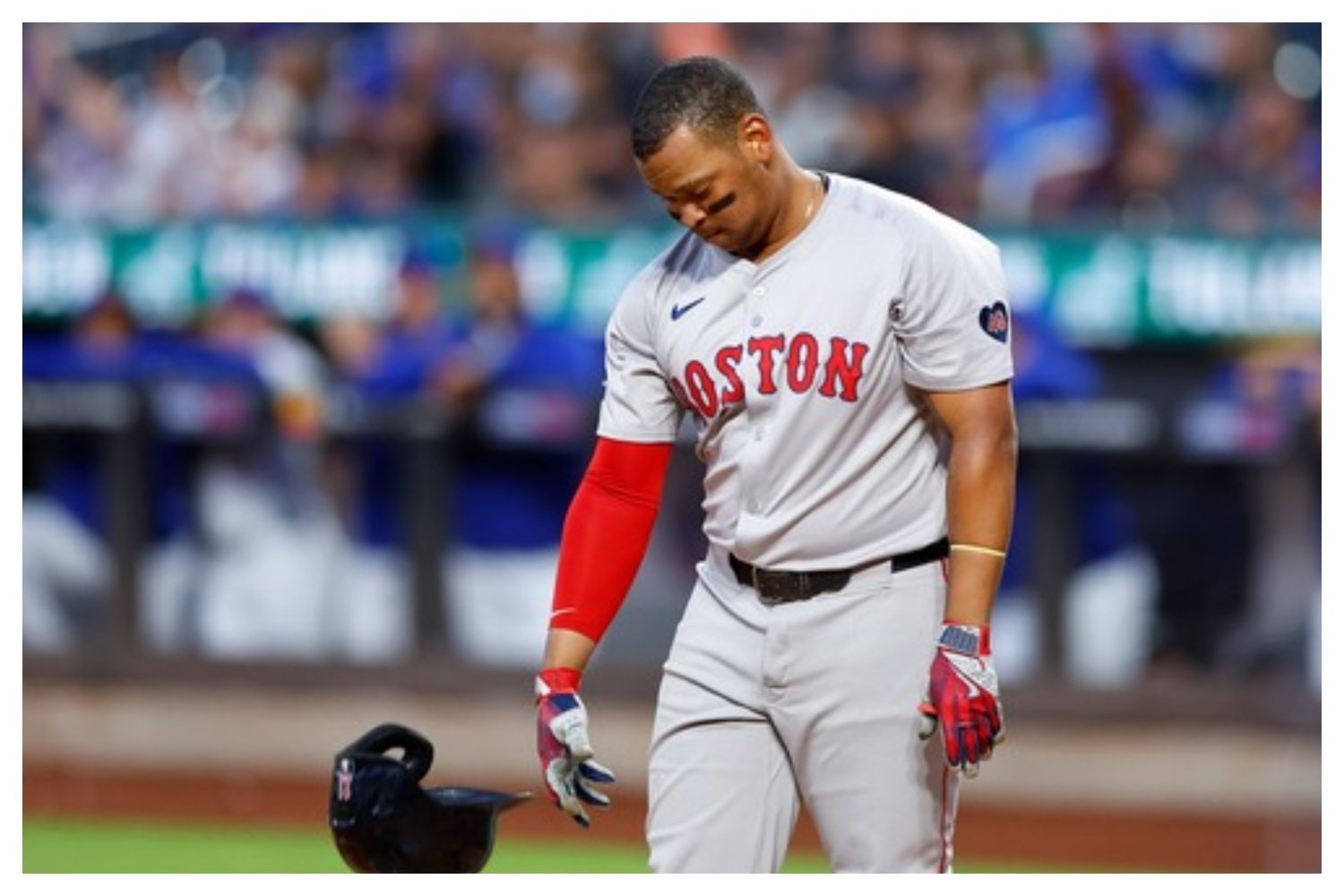 The best way to describe the 2025 Boston Red Sox construction is that of a Jenga tower. The holes throughout the roster were both obvious and numerous, whether it be young players going through inevitable and drastic ups and downs or veterans struggling to retain their prior form after returning from injuries. Yet, due to the sheer talent of their superstars, the Red Sox were able to stay afloat for the first month and a half. Much like a Jenga tower, however, this situation was fragile, and when Alex Bregman’s quad gave out while rounding first base on May 23, so too did the team. If anyone had any doubt that Bregman, who was slashing .299/.385/.553 at the time of the injury while playing Gold Glove defense, was one of the most valuable players in the American League, one only has to look at the Red Sox’s performance during his absence. In the five games since Bregman was officially placed on the injured list, the Red Sox have gone 0-5, lost three more contests by a single run and another in extra innings, and have scored just 10 total runs. Just looking around the diamond, it’s hard to see how the Red Sox can pull themselves out of this rut. As pleasant a surprise as Carlos Narvaez has been, he should not be hitting third for a team with postseason aspirations. The fact that he is Bregman’s de facto replacement in the order speaks to the drastic underperformance of the other three right-handed hitters in the Red Sox order. If you want to know how a lineup with a red-hot Jarren Duran (.377/.433/.623 since May 16), a dominant Rafael Devers (AL-best 50 RBI, MLB-best 45 walks), and a vastly improved Wilyer Abreu can be so ineffective, you only have to look at the recent performance of Ceddanne Rafaela, Trevor Story and Kristian Campbell: Campbell: .114/.167/.152 since April 30 Rafaela: 4-for-36 from May 14 to May 27 Story: .131/.191/.164 since April 21 Of these three players, Rafaela is the clear outlier in that his struggles have been the least drastic and the least costly. As one of the best defensive center fielders in baseball, Rafaela does not need to be an elite offense player to validate his spot in the starting lineup, and to his credit, he has actually taken steps forward offensively this year. While his chase rate is still a comically bad 42.2%, that is a four-point drop from 2024, and it has allowed him to double his walk rate 2.6% to 5.2%. He has also shaved six-and-a-half points from his strikeout rate and made similar improvements in his batted ball metrics: Barrel %: Raised from 7.5% (46th percentile) to 13.4% (79th percentile) Hard Hit Percentage: Raised from 36.9% (31st percentile) to 47.2% (72nd percentile) Average Exit Velocity: Raised from 86.6 (12th percentile) to 90.6% (62nd percentile) If the rest of the Red Sox lineup was meeting expectations, we would be celebrating Rafaela’s improvement while still acknowledging that he needs to be more consistent. But, because of the struggles of the rest of the Red Sox lineup, it’s hard to accept giving everyday at-bats to a guy with a .639 OPS. This brings us to Campbell, an early frontrunner for Rookie of the Year who has since been mired in one of the most miserable slumps in recent memory. As someone who began the 2024 season in High-A, nobody should be surprised that Campbell is going through a prolonged adjustment period, but the sheer level of ineffectiveness, especially considering his red-hot start, has been jarring. In this era of high strikeouts and low batting averages, pulling the ball in the air has become the meta, helping maximize the power output of players like Alex Bregman, Mookie Betts, and Isaac Paredes, none of whom have particularly spectacular exit velocities. Campbell, however, has the opposite problem: His bat speed and top-end exit velocity are well above average, but he just isn’t maximizing his contact. His 7.7% rate of hitting his launch angle sweet spot is 220th out of 256 hitters with at least 60 batted balls events, and his pull percentage (231st) and pulled air percentage (210th) are similarly dismal. On the other hand, only seven hitters hit opposite field ground balls more often, a list that consists mostly of speedsters like Chandler Simpson, Jacob Young, and Steven Kwan. All of these numbers are not to say that Campbell is a lost cause who can’t hit major league pitching. His minor-league pedigree speaks for itself, and his walk percentage (11.8%, 79th percentile) and chase rate (23.4%, 76th percentile) still speaks to a guy who is doing a lot of things right at the plate. What needs to happen is not a complete swing overhaul but rather a change of philosophy, but that is, unfortunately, something that is going to take time. Headed into this season, we knew that Rafaela was going to be hot and cold at the plate and that Campbell might take time to turn his raw offensive skills into statistical production. The old saying is that progress isn’t linear, and the adjustment between Triple-A and Major Leagues has never been harder. This is why it would be unfair to expect Marcelo Mayer, the consensus top-10 prospect who was called up upon Bregman’s placement on the injured list, to be a lineup savior right away, especially considering he has still had his struggles against same-sided pitching and breaking stuff. The pressure on these players to be prime contributors is far higher than it should be, and it really boils down to two reasons. One is the injuries to Triston Casas and Bregman, the Opening Day three and four-hole hitter. Secondly, of course, is the complete ineffectiveness of Trevor Story. As difficult and frustrating as it may be to admit, years of injuries and missed time have not only sapped Story of his elite defense but have turned him into one of the worst everyday hitters in baseball. And while there are positives to point to with Campbell and Rafaela, it’s hard to find a way out for Story, whose Baseball Savant page points to a player who is completely overwhelmed at the plate: Chase Rate: 36.5% (9th percentile) Strikeout Rate: 29.8% (7th percentile) Walk Rate: 4.4% (11th percentile) Story was never particularly adept at hitting breaking pitches, but he was always able to damage on fastballs. That skill has completely eroded in 2025, as he has just .179 with a single extra-base hit against heaters this season. Couple that with a 35% whiff rate against breaking pitches and a 41% whiff rate against off-speed pitches, and it just feels like there are unlimited ways for opposing pitchers to fearlessly attack him. The scariest part of Story’s struggles, however, is that he may not even be the worst hitter on the Red Sox right now. Utility infielder David Hamilton is hitting a measly .184 with a .505 OPS, striking out 22 times against just two walks. Backup catcher Connor Wong is still looking for his first extra-base hit and RBI of the season, going just 8-for-51 and rightfully losing his starting job to Carlos Narvaez. And while Nick Sogard’s .245 batting average isn’t exactly terrible, he has produced just seven extra-base hits (all doubles) in his first 139 big-league plate appearances, good for a .608 OPS. The fact of the matter is that there are simply not enough big-league caliber hitters on the team right now, especially on the days Narvaez is on the bench. With a 27-31 record, there needs to be a severe sense of urgency around this team, which, in my mind, leads to the following three decisions: 1. Call Up Roman Anthony: Compared to the rest of the Red Sox fanbase, I was not as demanding for Anthony’s call-up for the first month and a half of the season. With Rafaela showing such notable underlying improvements, Duran and Abreu playing at borderline All-Star levels, and Devers occupying the DH role, there was no clear pathway to everyday playing time. The Red Sox were also among the American League leaders in run scored, and it felt like a bigger priority to keep Rafaela and his glove in center field every day to aid a struggling pitching staff than adjust the defense to squeeze Anthony in. Those days have now passed. With Bregman going down and the offense scuffling, you simply cannot justify keeping a bat like Anthony in the minor leagues anymore. As I said earlier, it’s unreasonable to expect any rookie to be a savior of an offense, but Anthony is as good a bet as any minor leaguer in recent memory to handle big-league pitching from day one. The 21-year-old is currently slashing .309/.441/.514 with 44 walks against just 45 strikeouts and posting exit velocities that rival some of the best in the major leagues this season. Regardless of whether there is a perfect fit on the big-league team for Anthony right now, it is malpractice to have a prospect so clearly ready for the big leagues wasting time in Triple-A while your big-league team is struggling so mightily to score runs. As much as we can acknowledge Rafaela’s improvement, his bat is not at the point where he needs to be in the lineup every single day. His versatility and experience in the middle infield should be viewed as an asset, something that allows him to still develop as a big-leaguer even if he is not playing center field every day. Though Campbell has been the one who has been moving around the diamond the most this season, Rafaela’s athleticism makes him better equipped to handle different positions. And it’s not like he doesn’t have experience at the big-league level — he spent time at both second and short last season when Story went down in April, and I believe this situation calls for similar amounts of urgency. The corresponding move to calling up Anthony will be to send down Hamilton. Hamilton exceeded expectations as a rookie last season, but it’s clear that his lack of playing time has prevented him from getting into any sort or rhythm at the plate. He has been a fine second defensive second baseman, but once Gonzalez gets activated (more on him in a second), the Red Sox will have at least five players on their roster who can capably play second base. Hamilton’s only really unique skill to the Red Sox is his top-end speed and ability as a base-stealer, but having a de facto designated pinch runner is a luxury that teams in the Red Sox’s position can afford. 2. Re-insert Romy Gonzalez as the everyday first baseman Somewhat overshadowed by the more significant Casas injury, Romy Gonzalez’s quad strain, suffered in a freak collision at first base, halted what was looking like a career-best campaign. Through his first 17 games, Gonzalez was hitting a robust .308 with six doubles and cut his strikeout rate by over 6%. His average exit velocity, hard hit percentage, and bat speed were all among the best in baseball, a stark contrast to his replacements, Abraham Toro and Nick Sogard. While Gonzalez shouldn’t be expected to hit over .300, his ability to hit left-handed pitching would be an immediate and major boost to the lefty-heavy Red Sox. Though he was actually better against right-handers this year, he justified his spot on the roster last season by slashing .302/.362/.517 with all six of his home runs against southpaws. Replacing Bregman is an impossible task, but having Gonzalez and Rob Refsynder (1.079 OPS vs lefties) in the middle of the order will at least give the Red Sox a fighting chance. The decision between whether to send Toro or Sogard down is a difficult one, but I think it has to be Sogard. Toro has been hot the last week and currently has a .850 OPS vs righties, and unlike Sogard, he is currently out of minor-league options. 3. Begin to phase out Trevor Story As much as some fans are rooting for it, Story is (probably) not getting DFA’d anytime soon, at least not until Bregman comes back. The Red Sox are not going to just eat the remaining two-and-a-half years on his $140 million contract, especially considering how short they are on healthy infielders. What they can do, however, is begin to decrease his playing time. With Mayer now in the fold, Gonzalez on the way back, and Rafaela theoretically moving to a utility role, the Red Sox can run out infield combinations that don’t involve Story: 1B Gonzalez 2B Rafaela 3B Toro SS Mayer ---- 1B Gonzalez 2B Campbell 3B Toro SS Mayer ---- 1B Campbell 2B Rafaela 3B Gonzalez SS Mayer ---- 1B Gonzalez 2B Campbell 3B Mayer SS Rafaela Through two months of watching Story, it has become clear how overmatched he is against hard-throwing right-handers with decent breaking balls. Limiting his at-bats to left-handers and soft-tossing righties could help him at least begin to find his swing and prevent the Red Sox from having what feels like an automatic out in the middle of the order. Though these three ideas could help the Red Sox begin to dig themselves out of the offensive hole created by the Bregman injury, there are real questions that need to be asked about the offensive coaching staff and coaching philosophy. At a time when the Red Sox are integrating so many young hitters to the big-league level, it is vital that they have a coaching staff capable of helping them integrate them into the big-league level. While players like Rafaela, Abreu and Narvaez have taken varying levels of steps forward this year, the prolonged struggles of Triston Casas before his injury and Campbell this past month raise some concerns about whether the Red Sox are effectively preparing these players for their big-league careers and have the ability to help them make adjustments when the inevitable struggles occur. Given that the Red Sox are still somehow sixth in MLB in runs scored, there is no justification for firing hitting coach Pete Fatse right now, but if Campbell and company continue to struggle well into the summer, there may be some difficult discussions that need to be made.
 -
The best way to describe the 2025 Boston Red Sox construction is that of a Jenga tower. The holes throughout the roster were both obvious and numerous, whether it be young players going through inevitable and drastic ups and downs or veterans struggling to retain their prior form after returning from injuries. Yet, due to the sheer talent of their superstars, the Red Sox were able to stay afloat for the first month and a half. Much like a Jenga tower, however, this situation was fragile, and when Alex Bregman’s quad gave out while rounding first base on May 23, so too did the team. If anyone had any doubt that Bregman, who was slashing .299/.385/.553 at the time of the injury while playing Gold Glove defense, was one of the most valuable players in the American League, one only has to look at the Red Sox’s performance during his absence. In the five games since Bregman was officially placed on the injured list, the Red Sox have gone 0-5, lost three more contests by a single run and another in extra innings, and have scored just 10 total runs. Just looking around the diamond, it’s hard to see how the Red Sox can pull themselves out of this rut. As pleasant a surprise as Carlos Narvaez has been, he should not be hitting third for a team with postseason aspirations. The fact that he is Bregman’s de facto replacement in the order speaks to the drastic underperformance of the other three right-handed hitters in the Red Sox order. If you want to know how a lineup with a red-hot Jarren Duran (.377/.433/.623 since May 16), a dominant Rafael Devers (AL-best 50 RBI, MLB-best 45 walks), and a vastly improved Wilyer Abreu can be so ineffective, you only have to look at the recent performance of Ceddanne Rafaela, Trevor Story and Kristian Campbell: Campbell: .114/.167/.152 since April 30 Rafaela: 4-for-36 from May 14 to May 27 Story: .131/.191/.164 since April 21 Of these three players, Rafaela is the clear outlier in that his struggles have been the least drastic and the least costly. As one of the best defensive center fielders in baseball, Rafaela does not need to be an elite offense player to validate his spot in the starting lineup, and to his credit, he has actually taken steps forward offensively this year. While his chase rate is still a comically bad 42.2%, that is a four-point drop from 2024, and it has allowed him to double his walk rate 2.6% to 5.2%. He has also shaved six-and-a-half points from his strikeout rate and made similar improvements in his batted ball metrics: Barrel %: Raised from 7.5% (46th percentile) to 13.4% (79th percentile) Hard Hit Percentage: Raised from 36.9% (31st percentile) to 47.2% (72nd percentile) Average Exit Velocity: Raised from 86.6 (12th percentile) to 90.6% (62nd percentile) If the rest of the Red Sox lineup was meeting expectations, we would be celebrating Rafaela’s improvement while still acknowledging that he needs to be more consistent. But, because of the struggles of the rest of the Red Sox lineup, it’s hard to accept giving everyday at-bats to a guy with a .639 OPS. This brings us to Campbell, an early frontrunner for Rookie of the Year who has since been mired in one of the most miserable slumps in recent memory. As someone who began the 2024 season in High-A, nobody should be surprised that Campbell is going through a prolonged adjustment period, but the sheer level of ineffectiveness, especially considering his red-hot start, has been jarring. In this era of high strikeouts and low batting averages, pulling the ball in the air has become the meta, helping maximize the power output of players like Alex Bregman, Mookie Betts, and Isaac Paredes, none of whom have particularly spectacular exit velocities. Campbell, however, has the opposite problem: His bat speed and top-end exit velocity are well above average, but he just isn’t maximizing his contact. His 7.7% rate of hitting his launch angle sweet spot is 220th out of 256 hitters with at least 60 batted balls events, and his pull percentage (231st) and pulled air percentage (210th) are similarly dismal. On the other hand, only seven hitters hit opposite field ground balls more often, a list that consists mostly of speedsters like Chandler Simpson, Jacob Young, and Steven Kwan. All of these numbers are not to say that Campbell is a lost cause who can’t hit major league pitching. His minor-league pedigree speaks for itself, and his walk percentage (11.8%, 79th percentile) and chase rate (23.4%, 76th percentile) still speaks to a guy who is doing a lot of things right at the plate. What needs to happen is not a complete swing overhaul but rather a change of philosophy, but that is, unfortunately, something that is going to take time. Headed into this season, we knew that Rafaela was going to be hot and cold at the plate and that Campbell might take time to turn his raw offensive skills into statistical production. The old saying is that progress isn’t linear, and the adjustment between Triple-A and Major Leagues has never been harder. This is why it would be unfair to expect Marcelo Mayer, the consensus top-10 prospect who was called up upon Bregman’s placement on the injured list, to be a lineup savior right away, especially considering he has still had his struggles against same-sided pitching and breaking stuff. The pressure on these players to be prime contributors is far higher than it should be, and it really boils down to two reasons. One is the injuries to Triston Casas and Bregman, the Opening Day three and four-hole hitter. Secondly, of course, is the complete ineffectiveness of Trevor Story. As difficult and frustrating as it may be to admit, years of injuries and missed time have not only sapped Story of his elite defense but have turned him into one of the worst everyday hitters in baseball. And while there are positives to point to with Campbell and Rafaela, it’s hard to find a way out for Story, whose Baseball Savant page points to a player who is completely overwhelmed at the plate: Chase Rate: 36.5% (9th percentile) Strikeout Rate: 29.8% (7th percentile) Walk Rate: 4.4% (11th percentile) Story was never particularly adept at hitting breaking pitches, but he was always able to damage on fastballs. That skill has completely eroded in 2025, as he has just .179 with a single extra-base hit against heaters this season. Couple that with a 35% whiff rate against breaking pitches and a 41% whiff rate against off-speed pitches, and it just feels like there are unlimited ways for opposing pitchers to fearlessly attack him. The scariest part of Story’s struggles, however, is that he may not even be the worst hitter on the Red Sox right now. Utility infielder David Hamilton is hitting a measly .184 with a .505 OPS, striking out 22 times against just two walks. Backup catcher Connor Wong is still looking for his first extra-base hit and RBI of the season, going just 8-for-51 and rightfully losing his starting job to Carlos Narvaez. And while Nick Sogard’s .245 batting average isn’t exactly terrible, he has produced just seven extra-base hits (all doubles) in his first 139 big-league plate appearances, good for a .608 OPS. The fact of the matter is that there are simply not enough big-league caliber hitters on the team right now, especially on the days Narvaez is on the bench. With a 27-31 record, there needs to be a severe sense of urgency around this team, which, in my mind, leads to the following three decisions: 1. Call Up Roman Anthony: Compared to the rest of the Red Sox fanbase, I was not as demanding for Anthony’s call-up for the first month and a half of the season. With Rafaela showing such notable underlying improvements, Duran and Abreu playing at borderline All-Star levels, and Devers occupying the DH role, there was no clear pathway to everyday playing time. The Red Sox were also among the American League leaders in run scored, and it felt like a bigger priority to keep Rafaela and his glove in center field every day to aid a struggling pitching staff than adjust the defense to squeeze Anthony in. Those days have now passed. With Bregman going down and the offense scuffling, you simply cannot justify keeping a bat like Anthony in the minor leagues anymore. As I said earlier, it’s unreasonable to expect any rookie to be a savior of an offense, but Anthony is as good a bet as any minor leaguer in recent memory to handle big-league pitching from day one. The 21-year-old is currently slashing .309/.441/.514 with 44 walks against just 45 strikeouts and posting exit velocities that rival some of the best in the major leagues this season. Regardless of whether there is a perfect fit on the big-league team for Anthony right now, it is malpractice to have a prospect so clearly ready for the big leagues wasting time in Triple-A while your big-league team is struggling so mightily to score runs. As much as we can acknowledge Rafaela’s improvement, his bat is not at the point where he needs to be in the lineup every single day. His versatility and experience in the middle infield should be viewed as an asset, something that allows him to still develop as a big-leaguer even if he is not playing center field every day. Though Campbell has been the one who has been moving around the diamond the most this season, Rafaela’s athleticism makes him better equipped to handle different positions. And it’s not like he doesn’t have experience at the big-league level — he spent time at both second and short last season when Story went down in April, and I believe this situation calls for similar amounts of urgency. The corresponding move to calling up Anthony will be to send down Hamilton. Hamilton exceeded expectations as a rookie last season, but it’s clear that his lack of playing time has prevented him from getting into any sort or rhythm at the plate. He has been a fine second defensive second baseman, but once Gonzalez gets activated (more on him in a second), the Red Sox will have at least five players on their roster who can capably play second base. Hamilton’s only really unique skill to the Red Sox is his top-end speed and ability as a base-stealer, but having a de facto designated pinch runner is a luxury that teams in the Red Sox’s position can afford. 2. Re-insert Romy Gonzalez as the everyday first baseman Somewhat overshadowed by the more significant Casas injury, Romy Gonzalez’s quad strain, suffered in a freak collision at first base, halted what was looking like a career-best campaign. Through his first 17 games, Gonzalez was hitting a robust .308 with six doubles and cut his strikeout rate by over 6%. His average exit velocity, hard hit percentage, and bat speed were all among the best in baseball, a stark contrast to his replacements, Abraham Toro and Nick Sogard. While Gonzalez shouldn’t be expected to hit over .300, his ability to hit left-handed pitching would be an immediate and major boost to the lefty-heavy Red Sox. Though he was actually better against right-handers this year, he justified his spot on the roster last season by slashing .302/.362/.517 with all six of his home runs against southpaws. Replacing Bregman is an impossible task, but having Gonzalez and Rob Refsynder (1.079 OPS vs lefties) in the middle of the order will at least give the Red Sox a fighting chance. The decision between whether to send Toro or Sogard down is a difficult one, but I think it has to be Sogard. Toro has been hot the last week and currently has a .850 OPS vs righties, and unlike Sogard, he is currently out of minor-league options. 3. Begin to phase out Trevor Story As much as some fans are rooting for it, Story is (probably) not getting DFA’d anytime soon, at least not until Bregman comes back. The Red Sox are not going to just eat the remaining two-and-a-half years on his $140 million contract, especially considering how short they are on healthy infielders. What they can do, however, is begin to decrease his playing time. With Mayer now in the fold, Gonzalez on the way back, and Rafaela theoretically moving to a utility role, the Red Sox can run out infield combinations that don’t involve Story: 1B Gonzalez 2B Rafaela 3B Toro SS Mayer ---- 1B Gonzalez 2B Campbell 3B Toro SS Mayer ---- 1B Campbell 2B Rafaela 3B Gonzalez SS Mayer ---- 1B Gonzalez 2B Campbell 3B Mayer SS Rafaela Through two months of watching Story, it has become clear how overmatched he is against hard-throwing right-handers with decent breaking balls. Limiting his at-bats to left-handers and soft-tossing righties could help him at least begin to find his swing and prevent the Red Sox from having what feels like an automatic out in the middle of the order. Though these three ideas could help the Red Sox begin to dig themselves out of the offensive hole created by the Bregman injury, there are real questions that need to be asked about the offensive coaching staff and coaching philosophy. At a time when the Red Sox are integrating so many young hitters to the big-league level, it is vital that they have a coaching staff capable of helping them integrate them into the big-league level. While players like Rafaela, Abreu and Narvaez have taken varying levels of steps forward this year, the prolonged struggles of Triston Casas before his injury and Campbell this past month raise some concerns about whether the Red Sox are effectively preparing these players for their big-league careers and have the ability to help them make adjustments when the inevitable struggles occur. Given that the Red Sox are still somehow sixth in MLB in runs scored, there is no justification for firing hitting coach Pete Fatse right now, but if Campbell and company continue to struggle well into the summer, there may be some difficult discussions that need to be made. View full article
-
Maddie Landis reacted to an article:
Red Sox Week in Review: 10 Spring Training Takeaways
-
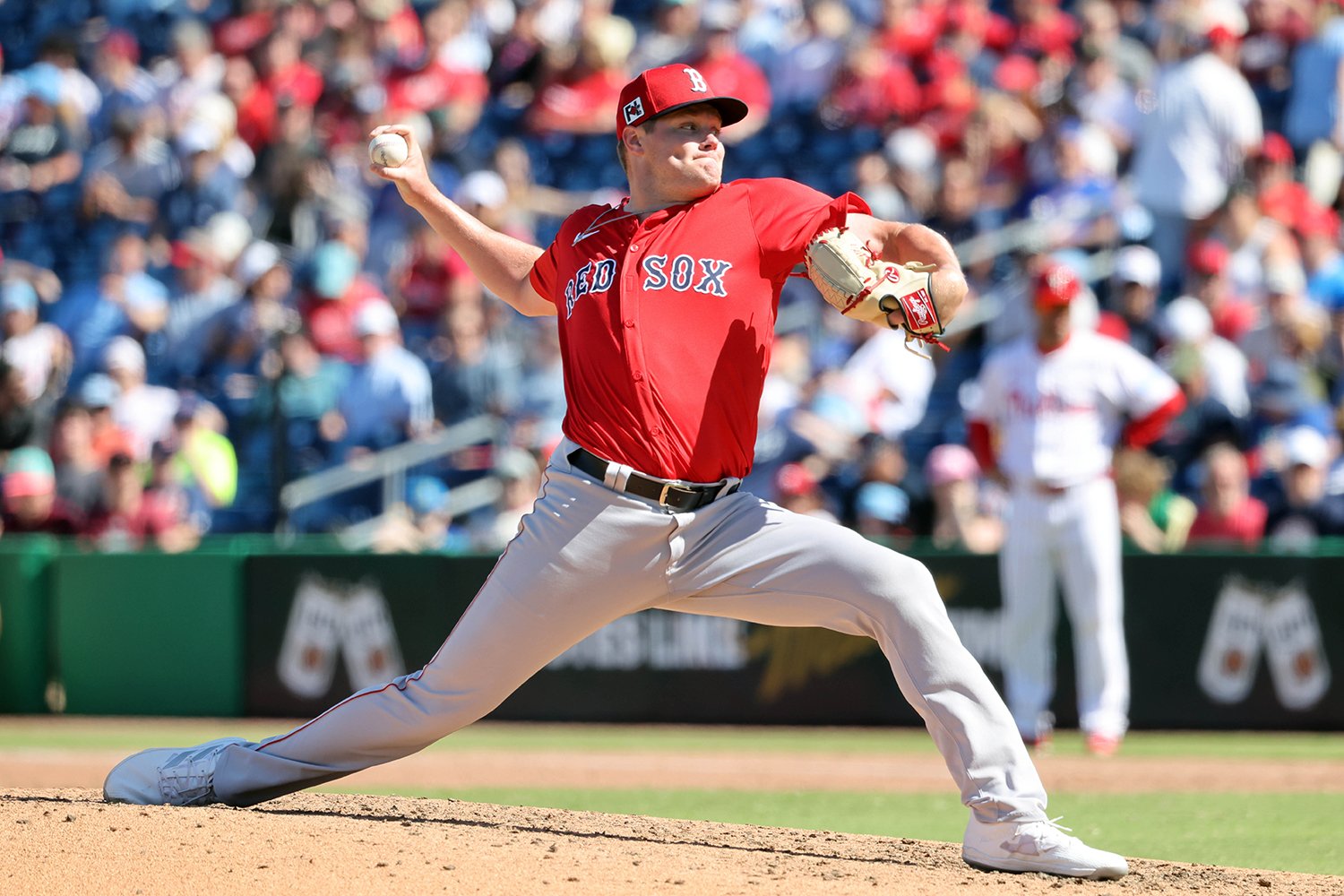 We are now a week and a half into spring training, and with a few notable exceptions, we have had the chance to see most of the players in contention for a roster spot. Now, just to be clear, I do not care about spring training roster spots, but that doesn’t mean we can’t learn things in these exhibition games. From a new stance to a reworked pitch, spring training is the first place where players can display what they have focused on in the off-season. Here are my ten biggest takeaways for the first quarter of spring training action. 1. The player who has stood out the most to me so far is Ceddanne Rafaela. This isn’t because he’s 5-for-11 with a home run, but rather because of his approach at the plate. I was happy to hear that both Rafaela and the coaching staff made it a point of emphasis this offseason, and the early results have been eye-opening. There were two at-bats on Saturday in particular that really emphasized the new approach. Facing left-hander Danny Coulombe in the fourth inning, Rafaela took two pitches out of the zone before getting a fastball down the middle and lining it down the left-field line. Then in the sixth, he was able to lay off a 2-2 slider in the dirt to earn a more hittable slider that he was able to poke into center field. Yes, this is only spring training, but these were things that we just weren’t seeing from Rafaela last season. For the first time, it looks like he is taking pitches because he knows he can’t do anything with them rather then just taking pitches for the sake of taking them. Being more selective at the plate won’t just earn him more walks but allow him to get more hittable pitches once he gets in count leverage, which in turn will allow him to hit for more power. Much of the focus will rightfully be on the middle of the order, but if Rafaela is able to provide even average production out of the number nine spot, this lineup will be a nightmare for opposing pitchers. 2. On the pitching side, the clear standout so far has been Richard Fitts. When the Red Sox acquired Fitts from the Yankees, he pretty much only had a mid-90s fastball and a solid slider, but he has continued to develop his splitter as a third pitch while adding velocity to his fastball and break to his slider. The total package was enough to earn him a cup of coffee at the end of the 2024 season, where he posted solid surface-level results despite some concerning underlying numbers. What we saw on Friday, however, was a completely different version of Fitts than anything we had seen before. His velocity on all his pitches was significantly up, including three miles per hour each on both his fastball and slider. His splitter, meanwhile, was up 2.7 miles per hour and had an average spin rate 116 RPMs higher than his 2024 average. Throughout his career, Fitts has always been thought of as a potential back-end innings-eater due to his solid strike-throwing ability and his 6-foot-2, 230-pound frame. And while two spring training innings aren’t going to change that, a pitcher who can touch 99 with a plus slider and an improving splitter is someone to keep your eye on, especially when they can command each of those pitches. With Lucas Giolito and Brayan Bello’s opening day status still up in the air, Fitts is making a strong case to be the next man up in the Red Sox rotation. 3. It’s already really clear how having Alex Bregman in the two or three spot is going to change the lineup. Unlike the other right-handed batters on this team, Bregman has very little swing-and-miss in his game and will not get beat with elite velocity. He homered in his very first at-bat in a Red Sox uniform, then nearly missed another one in the fourth inning when he turned on a high fastball and sent it off the very top of the fake Monster. Whether he bats in between Jarren Duran and Rafael Devers or between Devers and Triston Casas, Bregman’s ability to break up the premier lefties in the order will be worth its weight in gold this season, as will his ability to ease the pressure of being the only right-handed threat in the lineup for Trevor Story. 4. It’s time to really start paying attention to David Hamilton. He has already gotten the plurality of starts at second base, and he is looking the part. Not only is Hamilton playing solid defense to go along with elite speed, but he arrived at camp noticeably stronger, and it is showing in the way he is impacting the baseball. His home run last week left the bat at 108.2 miles per hour, just a tick below his high of 108.8 last season. Even with all the competition in the infield, Hamilton looks like a lock to make the roster, especially considering his ability to mix into the outfield as well. 5. Josh Winckowski has gotten hit hard this spring, and it continues to be the same story. All his pitches come in between 85 and 96 miles per hour, and none generate whiffs. It’s disappointing that Winckowski hasn’t taken to the new pitching program better, and with so many other right-handed relievers in camp, it’s hard to see a pathway for him to get time at the MLB level this season. 6. Speaking of right-handed depth: Luis Guerrero continues to impress. He hasn’t appeared in any game with Statcast tracking, but he has picked up right where he left off during his brief MLB stint last season, overwhelming hitters with his upper-90s fastball and wipeout slider and mixing in his changeup for good measure. On top of the impressive three-pitch mix, Guerrero only walked two batters in ten innings last fall and has walked only one batter in his first three appearances this spring. And it’s not like Guerrero is dominating against minor leaguers: His six strikeout victims have included Austin Riley, Jarred Kelenic, Jose Caballero, Brandon Lowe, and Eloy Jimenez. The question is no longer whether Guerrero will make the team but rather how high-leverage his role will be. 7. Connor Wong's framing really does look different. The Athletic’s Jen McCaffrey came out with a great article this week on the work Wong and new catching instructor Parker Guinn have done this offseason to improve his defense, especially working on his bottom-of-the-barrel framing. Statcast had Wong in the ninth percentile with -7 framing runs, and he debuted some significant changes on Saturday to improve that number. His stance is lower than it was in 2023, and his glove movement is much more simplified and direct. Guinn has a great track record with the Yankees, working with Austin Wells and Jose Trevino, and we’ll see if he can work similar magic with Wong. 8. It’s been nice to see Marcelo Mayer get off to a good start this spring after an injury-plagued 2024 season. If you didn’t know any better, you would think he was already a major leaguer just by the way he carries himself and the smoothness of his game. He still needs to check off a few boxes at Triple A, such as facing left-handed pitchers and recognizing breaking ball balls, but he is back to looking like one of the best prospects in baseball. 9. Though not quite as smooth as Mayer, Roman Anthony has also looked the part of a big leaguer this spring. Anthony has reached base in all six games he has played. Perhaps most impressively, Anthony has drawn four walks against just one strikeout, looking completely at ease with pitchers of both handedness. In fact, there are times when I would like to see him be even more aggressive, especially in situations where he has count leverage. Regardless, it’s clear the Red Sox have a special hitter on their hands, and the conversation is going to get really interesting if Wilyer Abreu is not ready for Opening Day. 10. Of the so-called Big Three prospects, there’s no doubt Kristian Campbell has gotten off to the slowest start. He’s currently 0-for-11 with eight strikeouts, frequently getting beat by fastballs above the zone and sinkers inside. Just to be clear, my concern level with Campbell is zero, as many of these struggles can likely be attributed to early-spring timing issues and the pressure of trying to do too much to try and win an Opening Day job. Yet with some uncertainty surrounding his defensive readiness and the other quality options the Red Sox have, it would take an explosive spring training for Campbell to win the second base job, and it doesn’t look like we are going to get that. Not everybody is Jackson Chourio or Jackson Merrill, and with just 19 triple-A games under his belt, it could be worthwhile for Campbell to return to Worcester to tighten up the finer points of his game.
- 6 comments
-
- 1
-
-
- richard fitts
- ceddanne rafaela
- (and 7 more)
-
With the first spring training games in the books, Ceddanne Rafaela looks more patient, Richard Fitts looks nastier, Alex Bregman looks like Alex Bregman, and more. With the first spring training games in the books, Ceddanne Rafaela looks more patient, Richard Fitts looks nastier, Alex Bregman looks like Alex Bregman, and more. We are now a week and a half into spring training, and with a few notable exceptions, we have had the chance to see most of the players in contention for a roster spot. Now, just to be clear, I do not care about spring training roster spots, but that doesn’t mean we can’t learn things in these exhibition games. From a new stance to a reworked pitch, spring training is the first place where players can display what they have focused on in the off-season. Here are my ten biggest takeaways for the first quarter of spring training action. 1. The player who has stood out the most to me so far is Ceddanne Rafaela. This isn’t because he’s 5-for-11 with a home run, but rather because of his approach at the plate. I was happy to hear that both Rafaela and the coaching staff made it a point of emphasis this offseason, and the early results have been eye-opening. There were two at-bats on Saturday in particular that really emphasized the new approach. Facing left-hander Danny Coulombe in the fourth inning, Rafaela took two pitches out of the zone before getting a fastball down the middle and lining it down the left-field line. Then in the sixth, he was able to lay off a 2-2 slider in the dirt to earn a more hittable slider that he was able to poke into center field. Yes, this is only spring training, but these were things that we just weren’t seeing from Rafaela last season. For the first time, it looks like he is taking pitches because he knows he can’t do anything with them rather then just taking pitches for the sake of taking them. Being more selective at the plate won’t just earn him more walks but allow him to get more hittable pitches once he gets in count leverage, which in turn will allow him to hit for more power. Much of the focus will rightfully be on the middle of the order, but if Rafaela is able to provide even average production out of the number nine spot, this lineup will be a nightmare for opposing pitchers. 2. On the pitching side, the clear standout so far has been Richard Fitts. When the Red Sox acquired Fitts from the Yankees, he pretty much only had a mid-90s fastball and a solid slider, but he has continued to develop his splitter as a third pitch while adding velocity to his fastball and break to his slider. The total package was enough to earn him a cup of coffee at the end of the 2024 season, where he posted solid surface-level results despite some concerning underlying numbers. What we saw on Friday, however, was a completely different version of Fitts than anything we had seen before. His velocity on all his pitches was significantly up, including three miles per hour each on both his fastball and slider. His splitter, meanwhile, was up 2.7 miles per hour and had an average spin rate 116 RPMs higher than his 2024 average. Throughout his career, Fitts has always been thought of as a potential back-end innings-eater due to his solid strike-throwing ability and his 6-foot-2, 230-pound frame. And while two spring training innings aren’t going to change that, a pitcher who can touch 99 with a plus slider and an improving splitter is someone to keep your eye on, especially when they can command each of those pitches. With Lucas Giolito and Brayan Bello’s opening day status still up in the air, Fitts is making a strong case to be the next man up in the Red Sox rotation. 3. It’s already really clear how having Alex Bregman in the two or three spot is going to change the lineup. Unlike the other right-handed batters on this team, Bregman has very little swing-and-miss in his game and will not get beat with elite velocity. He homered in his very first at-bat in a Red Sox uniform, then nearly missed another one in the fourth inning when he turned on a high fastball and sent it off the very top of the fake Monster. Whether he bats in between Jarren Duran and Rafael Devers or between Devers and Triston Casas, Bregman’s ability to break up the premier lefties in the order will be worth its weight in gold this season, as will his ability to ease the pressure of being the only right-handed threat in the lineup for Trevor Story. 4. It’s time to really start paying attention to David Hamilton. He has already gotten the plurality of starts at second base, and he is looking the part. Not only is Hamilton playing solid defense to go along with elite speed, but he arrived at camp noticeably stronger, and it is showing in the way he is impacting the baseball. His home run last week left the bat at 108.2 miles per hour, just a tick below his high of 108.8 last season. Even with all the competition in the infield, Hamilton looks like a lock to make the roster, especially considering his ability to mix into the outfield as well. 5. Josh Winckowski has gotten hit hard this spring, and it continues to be the same story. All his pitches come in between 85 and 96 miles per hour, and none generate whiffs. It’s disappointing that Winckowski hasn’t taken to the new pitching program better, and with so many other right-handed relievers in camp, it’s hard to see a pathway for him to get time at the MLB level this season. 6. Speaking of right-handed depth: Luis Guerrero continues to impress. He hasn’t appeared in any game with Statcast tracking, but he has picked up right where he left off during his brief MLB stint last season, overwhelming hitters with his upper-90s fastball and wipeout slider and mixing in his changeup for good measure. On top of the impressive three-pitch mix, Guerrero only walked two batters in ten innings last fall and has walked only one batter in his first three appearances this spring. And it’s not like Guerrero is dominating against minor leaguers: His six strikeout victims have included Austin Riley, Jarred Kelenic, Jose Caballero, Brandon Lowe, and Eloy Jimenez. The question is no longer whether Guerrero will make the team but rather how high-leverage his role will be. 7. Connor Wong's framing really does look different. The Athletic’s Jen McCaffrey came out with a great article this week on the work Wong and new catching instructor Parker Guinn have done this offseason to improve his defense, especially working on his bottom-of-the-barrel framing. Statcast had Wong in the ninth percentile with -7 framing runs, and he debuted some significant changes on Saturday to improve that number. His stance is lower than it was in 2023, and his glove movement is much more simplified and direct. Guinn has a great track record with the Yankees, working with Austin Wells and Jose Trevino, and we’ll see if he can work similar magic with Wong. 8. It’s been nice to see Marcelo Mayer get off to a good start this spring after an injury-plagued 2024 season. If you didn’t know any better, you would think he was already a major leaguer just by the way he carries himself and the smoothness of his game. He still needs to check off a few boxes at Triple A, such as facing left-handed pitchers and recognizing breaking ball balls, but he is back to looking like one of the best prospects in baseball. 9. Though not quite as smooth as Mayer, Roman Anthony has also looked the part of a big leaguer this spring. Anthony has reached base in all six games he has played. Perhaps most impressively, Anthony has drawn four walks against just one strikeout, looking completely at ease with pitchers of both handedness. In fact, there are times when I would like to see him be even more aggressive, especially in situations where he has count leverage. Regardless, it’s clear the Red Sox have a special hitter on their hands, and the conversation is going to get really interesting if Wilyer Abreu is not ready for Opening Day. 10. Of the so-called Big Three prospects, there’s no doubt Kristian Campbell has gotten off to the slowest start. He’s currently 0-for-11 with eight strikeouts, frequently getting beat by fastballs above the zone and sinkers inside. Just to be clear, my concern level with Campbell is zero, as many of these struggles can likely be attributed to early-spring timing issues and the pressure of trying to do too much to try and win an Opening Day job. Yet with some uncertainty surrounding his defensive readiness and the other quality options the Red Sox have, it would take an explosive spring training for Campbell to win the second base job, and it doesn’t look like we are going to get that. Not everybody is Jackson Chourio or Jackson Merrill, and with just 19 triple-A games under his belt, it could be worthwhile for Campbell to return to Worcester to tighten up the finer points of his game. View full article
-
After an offseason of complaining about the Red Sox front office, it's time to give credit where credit is due. After an offseason of complaining about the Red Sox front office, it's time to give credit where credit is due. In the end, Craig Breslow played his cards perfectly. It would have been really easy for him to give in to the pressure. For a month and a half, all Red Sox Nation could talk about was how cheap the team was. About how John Henry was a disinterested fraudster and how Sam Kennedy had once again misled the fanbase by saying the luxury tax threshold would not be an issue and that the club intended to build a team to win the AL East. The easy move for Breslow would have been to just cave into Alex Bregman's demands. Bregman was exactly what the team needed: a proven winner, a right-handed bat with plus contact skills, and an elite defender. The problem, however, was that Bregman wanted a six- or seven-year deal. Such a contract would have kept Bregman well into his mid-30s, a point where he would not be nearly the same hitter or defender. With Kristian Campbell and Marcelo Mayer already knocking on the door of the majors, signing Bregman into the 2030s would do nothing but clog an already crowded infield. Yet because Red Sox fans were bored, because the narrative that the front office and ownership don’t care is so widespread, Breslow was deemed a fool for not offering such a deal. But Breslow knew all along that Bregman wanted to play in Boston and that longer deals with the Tigers and Blue Jays simply weren’t enticing to him. Breslow made the bet that Bregman and agent Scott Boras would blink first, and he won big. Bregman will now be in Boston from ages 31 to 33, when he can still be expected to be a four-win player and a vocal presence on a team that needs to learn how to win. I know that there are fans who will complain about the $40 million AAV (closer to $30 million when you factor in the present value after deferrals), and while it is certain that Bregman is not in the same class as the other MLB players who make that salary, fixating on the salary misses the point. The Red Sox needed to overpay to get Bregman on the contract they wanted. I would rather pay Bregman $120 million for three years than for six years, because the first three years are where the real value is going to come from. This is what big-market teams are supposed to do: Use their financial muscle to bully other teams and get the player they want on the deal they want. In addition, even if Bregman goes out and has a Story-esque three seasons, it will not decimate the roster. The Red Sox have the depth to pick up the slack if the bottom falls out, and one bad three-year contract is not going to sink a club. And that’s the worst-case scenario. Even a middle-case scenario has Bregman as a valuable presence both on and off the field to help guide a team with the pieces to contend in 2025 and beyond. Before we get to what Bregman will bring to the Red Sox, I believe some apologies are in order (Not from me, but from everyone else). First, to Craig Breslow. If there was anybody out there who still thought that there was no real distinction between Chaim Bloom and Breslow, you now have your answer. Not only did Breslow rebuild the pitching infrastructure with immediate results, not only did he pull the trigger on a high-risk trade that involved multiple top prospects, but now he has added a perfectly executed, big-name free-agent signing to his resume. Time will tell if the moves pay off, but Breslow delivered on Kennedy’s promise of building a team that can contend for a division title. Let’s talk about Kennedy a little bit more, because despite not owning the team or running the front office, he has been the scapegoat for everything that is wrong with the Red Sox. Yet now that the offseason is actually over, we can see that everything he said at the beginning of the offseason was true. The Red Sox got their right-handed bat. They upgraded their defense. They got their front-of-the-rotation arm. And no, the Luxury Tax threshold did not prove to be an issue; as per Red Sox Payroll in my Twitter replies, the Red Sox are expected to be around $10 to $15 million over the first tax. Yes, the last two offseasons were rough, and there are things that the Red Sox could and should have done differently, but at least in terms of 2024-2025, they delivered. Finally, we have to talk about John Henry. Look, I’m not going to sit here and tell you that Henry is the perfect owner, that he is justified in refusing to talk to the media, or even that he cares as much as he used to. What I will tell you, though, is that there is a reason that Henry has four World Series rings. He knows what it takes to win, and though he doesn’t consistently run the payrolls of the Dodgers, Yankees, or Mets, he will pay for premier talent when the time is right. Bregman now joins a list of free agents from Keith Foulke to J.D. Martinez who were deemed worthy of a financial investment from Henry. Okay, let’s talk about Bregman, starting with what he brings to the offense. Though his OPS+ has declined in three straight seasons, you really couldn’t draw up a better two-hole hitter. He ranked in the 94th percentile in strikeout rate in 2024 and walked more than he struck out in both 2022 and 2023. He will never post elite exit velocities, but he knows how to pull the ball with authority, and with the Green Monster as his friend, you can pencil him in for at least 30 doubles and 20 home runs. The key factor for Bregman and the Red Sox will be his success versus left-handers. Bregman has a career .862 OPS against them over his career, but has oddly had reverse platoon splits in each of the last three seasons. There’s nothing really to explain this phenomenon, and he had a nearly 1:1 strikeout-to-walk ratio against them last season, so there is a possibility that this can just be chalked up to a small sample size and poor batted-ball luck. With Jarren Duran, Rafael Devers, and Triston Casas slotted in around him, Bregman is going to face more than his fair share of southpaws, and his ability to do damage against them will have a huge impact on the sluggers around him. On the defensive side of the ball, Bregman will reportedly shift from third base, where he was in the 91st percentile in Outs Above Average, to second base, where he has barely played in his major-league career. Now, there are a lot of factors for this move, including Devers’ ego and Masataka Yoshida’s presence and lack of versatility, but for 2025 at least, it appears Bregman will be manning the keystone full time. The most important aspect of this move is whether Bregman buys in, which he reportedly does. It’s been well-known that Bregman’s role model was Dustin Pedroia, so maybe second base was the position he always wanted to play. I wouldn’t be surprised if there were growing pains in the finer points of the position, such as turning double plays and cut-offs, but giving a defender like Bregman more time to react to a ball is not a bad thing. If nothing else, Bregman should be an upgrade from the carousel that roamed the position last season, which will help out sinker-ballers Tanner Houck and Brayan Bello. Before Bregman signed with the Red Sox, I still felt good about the team, but I felt they would be in the range of 87 or so wins and unlikely to compete for a division title. Though Bregman is more a contributing player than a true superstar, his skillset and leadership fit so precisely into what the Red Sox need that it’s impossible to say that this doesn’t make them significantly better. If the Crochet trade signaled that the Red Sox were willing to start thinking about the present, then the Bregman signing shows that they don’t just hope to make the playoffs but expect to. They may not be quite as good as the Yankees, but the Red Sox now go into 2025 with their strongest roster in years and are well-positioned for a fun summer and intense October. View full article
-
 In the end, Craig Breslow played his cards perfectly. It would have been really easy for him to give in to the pressure. For a month and a half, all Red Sox Nation could talk about was how cheap the team was. About how John Henry was a disinterested fraudster and how Sam Kennedy had once again misled the fanbase by saying the luxury tax threshold would not be an issue and that the club intended to build a team to win the AL East. The easy move for Breslow would have been to just cave into Alex Bregman's demands. Bregman was exactly what the team needed: a proven winner, a right-handed bat with plus contact skills, and an elite defender. The problem, however, was that Bregman wanted a six- or seven-year deal. Such a contract would have kept Bregman well into his mid-30s, a point where he would not be nearly the same hitter or defender. With Kristian Campbell and Marcelo Mayer already knocking on the door of the majors, signing Bregman into the 2030s would do nothing but clog an already crowded infield. Yet because Red Sox fans were bored, because the narrative that the front office and ownership don’t care is so widespread, Breslow was deemed a fool for not offering such a deal. But Breslow knew all along that Bregman wanted to play in Boston and that longer deals with the Tigers and Blue Jays simply weren’t enticing to him. Breslow made the bet that Bregman and agent Scott Boras would blink first, and he won big. Bregman will now be in Boston from ages 31 to 33, when he can still be expected to be a four-win player and a vocal presence on a team that needs to learn how to win. I know that there are fans who will complain about the $40 million AAV (closer to $30 million when you factor in the present value after deferrals), and while it is certain that Bregman is not in the same class as the other MLB players who make that salary, fixating on the salary misses the point. The Red Sox needed to overpay to get Bregman on the contract they wanted. I would rather pay Bregman $120 million for three years than for six years, because the first three years are where the real value is going to come from. This is what big-market teams are supposed to do: Use their financial muscle to bully other teams and get the player they want on the deal they want. In addition, even if Bregman goes out and has a Story-esque three seasons, it will not decimate the roster. The Red Sox have the depth to pick up the slack if the bottom falls out, and one bad three-year contract is not going to sink a club. And that’s the worst-case scenario. Even a middle-case scenario has Bregman as a valuable presence both on and off the field to help guide a team with the pieces to contend in 2025 and beyond. Before we get to what Bregman will bring to the Red Sox, I believe some apologies are in order (Not from me, but from everyone else). First, to Craig Breslow. If there was anybody out there who still thought that there was no real distinction between Chaim Bloom and Breslow, you now have your answer. Not only did Breslow rebuild the pitching infrastructure with immediate results, not only did he pull the trigger on a high-risk trade that involved multiple top prospects, but now he has added a perfectly executed, big-name free-agent signing to his resume. Time will tell if the moves pay off, but Breslow delivered on Kennedy’s promise of building a team that can contend for a division title. Let’s talk about Kennedy a little bit more, because despite not owning the team or running the front office, he has been the scapegoat for everything that is wrong with the Red Sox. Yet now that the offseason is actually over, we can see that everything he said at the beginning of the offseason was true. The Red Sox got their right-handed bat. They upgraded their defense. They got their front-of-the-rotation arm. And no, the Luxury Tax threshold did not prove to be an issue; as per Red Sox Payroll in my Twitter replies, the Red Sox are expected to be around $10 to $15 million over the first tax. Yes, the last two offseasons were rough, and there are things that the Red Sox could and should have done differently, but at least in terms of 2024-2025, they delivered. Finally, we have to talk about John Henry. Look, I’m not going to sit here and tell you that Henry is the perfect owner, that he is justified in refusing to talk to the media, or even that he cares as much as he used to. What I will tell you, though, is that there is a reason that Henry has four World Series rings. He knows what it takes to win, and though he doesn’t consistently run the payrolls of the Dodgers, Yankees, or Mets, he will pay for premier talent when the time is right. Bregman now joins a list of free agents from Keith Foulke to J.D. Martinez who were deemed worthy of a financial investment from Henry. Okay, let’s talk about Bregman, starting with what he brings to the offense. Though his OPS+ has declined in three straight seasons, you really couldn’t draw up a better two-hole hitter. He ranked in the 94th percentile in strikeout rate in 2024 and walked more than he struck out in both 2022 and 2023. He will never post elite exit velocities, but he knows how to pull the ball with authority, and with the Green Monster as his friend, you can pencil him in for at least 30 doubles and 20 home runs. The key factor for Bregman and the Red Sox will be his success versus left-handers. Bregman has a career .862 OPS against them over his career, but has oddly had reverse platoon splits in each of the last three seasons. There’s nothing really to explain this phenomenon, and he had a nearly 1:1 strikeout-to-walk ratio against them last season, so there is a possibility that this can just be chalked up to a small sample size and poor batted-ball luck. With Jarren Duran, Rafael Devers, and Triston Casas slotted in around him, Bregman is going to face more than his fair share of southpaws, and his ability to do damage against them will have a huge impact on the sluggers around him. On the defensive side of the ball, Bregman will reportedly shift from third base, where he was in the 91st percentile in Outs Above Average, to second base, where he has barely played in his major-league career. Now, there are a lot of factors for this move, including Devers’ ego and Masataka Yoshida’s presence and lack of versatility, but for 2025 at least, it appears Bregman will be manning the keystone full time. The most important aspect of this move is whether Bregman buys in, which he reportedly does. It’s been well-known that Bregman’s role model was Dustin Pedroia, so maybe second base was the position he always wanted to play. I wouldn’t be surprised if there were growing pains in the finer points of the position, such as turning double plays and cut-offs, but giving a defender like Bregman more time to react to a ball is not a bad thing. If nothing else, Bregman should be an upgrade from the carousel that roamed the position last season, which will help out sinker-ballers Tanner Houck and Brayan Bello. Before Bregman signed with the Red Sox, I still felt good about the team, but I felt they would be in the range of 87 or so wins and unlikely to compete for a division title. Though Bregman is more a contributing player than a true superstar, his skillset and leadership fit so precisely into what the Red Sox need that it’s impossible to say that this doesn’t make them significantly better. If the Crochet trade signaled that the Red Sox were willing to start thinking about the present, then the Bregman signing shows that they don’t just hope to make the playoffs but expect to. They may not be quite as good as the Yankees, but the Red Sox now go into 2025 with their strongest roster in years and are well-positioned for a fun summer and intense October.
 -
We close out this series with the third installment of the honorable mentions, this time focusing on the period spanning from 2016 to 2024. Though this span included the greatest Red Sox team of all time, it is undoubtedly the weakest of the three time periods covered in the honorable mentions. The Red Sox only won a playoff series in two of the nine years and finished in last place three times. Still, many great players rolled through Boston during this time, including the last year of David Ortiz’s career and the prime of Mookie Betts. Let’s see who earned an honorable mention. We close out this series with the third installment of the honorable mentions, this time focusing on the period spanning from 2016 to 2024. Though this span included the greatest Red Sox team of all time, it is undoubtedly the weakest of the three time periods covered in the honorable mentions. The Red Sox only won a playoff series in two of the nine years and finished in last place three times. Still, many great players rolled through Boston during this time, including the last year of David Ortiz’s career and the prime of Mookie Betts. Let’s see who earned an honorable mention. This series focuses on the best Red Sox single-season performances of this century. To read previous installments, click the links below. Part One | Part Two | Part Three | Part Four | Part Five | Part Six | Part Seven 2016 Dustin Pedroia Stats: 154 G 5.4 WAR 117 OPS+ .318/.376/.449 15 HR 74 RBI In what would unfortunately be his last great season, Dustin Pedroia remained a key cog in the Red Sox’s league-leading offense and put up his best numbers since 2011. His .318 batting average ranked third in the American League, spurred by his first 200-hit campaign since his 2011 season. The highlight of Pedroia's campaign came in late August when he collected a hit in twelve straight at-bats, which was one shy of the major league record. While his offensive numbers rivaled the best of his career, he took a step back on defense, as FanGraphs rated him in the negatives for the first time in his career. After backing into the playoffs by dropping five of their final six games, the Red Sox were swiftly swept by the Indians, with Pedroia going just 2-for-12 in the series. 2016 Jackie Bradley Jr. Stats: 156 G 5.8 WAR 116 OPS+ .267/.349/.486 26 HR 87 RBI All-Star After looking completely overmatched in his first two and a half seasons at the major-league level, Jackie Bradley Jr. returned from a minor-league stint in the second half of 2015 looking like a completely different hitter. From August 6 to September 7, Bradley hit an incredible .424/.480/.880, which included a two-homer game off Felix Hernandez. Bradley’s hot streak earned him the starting job on the 2016 team, where he continued to rake at unprecedented levels. A .296/.337/.540 first half, which featured a franchise-record 29-game hit streak, earned him his first and only All-Star appearance, where he started in center field alongside three of his teammates. Though he came back to earth in the second half (.234/.315/.413), Bradley’s 116 OPS+ and elite defense resulted in a 5.8 WAR, nearly two-and-a-half wins more than any other season in his 11-year career. 2016 David Ortiz Stats: 151 G 5.2 WAR 164 OPS+ .315/.401/.620 38 HR 127 RBI All-Star MVP-6 It’s been nearly a decade since this season, and I still can’t wrap my head around it. Having recently turned 40 and announced his retirement at the end of the season, Big Papi went out and put together the best farewell season in sports history. There’s a very good argument that Ortiz was the best hitter in baseball in 2016, as he led the majors with 48 doubles, a .620 slugging percentage, and a 1.021 OPS. Factor in the distraction of a season-long retirement tour and the constant maintenance of a lingering achilles injury, and this might be the single most impressive season of Ortiz’s Hall-of-Fame career. Alas, Ortiz looked a little worn down by all the fanfare in the postseason, as he managed just one hit in the three-game sweep at the hands of the Indians. 2016 David Price Stats: 35 GS 230 IP 2.9 WAR 17-9 3.99 ERA 1.20 WHIP 228 K On the surface, this might not seem like an impressive season, especially considering this was the first year of David Price’s record-setting seven-year deal. Fans certainly weren’t happy seeing his ERA jump a run and a half from 2015 and even less so after his blowup in the ALDS. But this season deserves an honorable mention because there is no chance the Red Sox win the AL East without him. Price led the majors with 35 games started and 230 innings pitched, living up to his reputation as a workhorse in a rotation decimated by injuries. In addition, Price was very good after a rocky first month of adjusting to Boston, posting a 3.39 ERA in his final 28 starts. So yes, Price’s inclusion in this list may not be very popular, but his durability and consistency deserve recognition. 2018 David Price Stats: 30 GS 176 IP 3.7 WAR 16-7 3.58 ERA 1.14 WHIP 177 K Now, here’s a Price season that everyone can get behind. After a tumultuous 2017 season that included IL stints, a fight with Dennis Eckersley, and a move to the bullpen, Price rebounded in 2018 with a solid season for the best team in Red Sox history. His was particularly effective when Chris Sale got injured in the second half, pitching to a 2.25 ERA over his final 11 starts. Of course, Price’s regular season would be meaningless if he couldn’t exorcise his postseason demons. After a disaster against the Yankees and a mediocre performance against the Astros, Price finally got the monkey off his back. He threw six shutout innings in the ALCS clincher, then allowed just three runs in 13 World Series innings, making a strong case for series MVP. Price’s Red Sox tenure would quickly go downhill after this, but his 2018 run made the massive investment the Red Sox paid worth it. 2018 Andrew Benintendi Stats: 148 G 4.8 WAR 123 OPS+ .290/.366/.465 16 HR 87 RBI 21-24 SB While Andrew Benintendi’s Red Sox tenure can only be described as underwhelming, 2018 was the season it all came together for himself and the team. He paired an elite, all-field approach with excellent baserunning and above-average defense (although playing shallow in front of the Monster helped hide his weak arm), culminating in a 4.8 WAR that is still easily a career-high. While his offensive production dipped in the postseason, his diving catch on a sinking Alex Bregman liner in Game 4 of the ALCS was the most important play of the entire postseason run. 2019 Mookie Betts Stats: 150 G 7.3 WAR 134 OPS+.295/.391/.524 29 HR 80 RBI 16-19 SB GG All-Star MVP-8 In the context of his 2018 MVP campaign, 2019 represented something of a disappointment for Mookie Betts, as he “only” finished eighth in the voting in 2019. Yet, if you take the season in isolation, it was another phenomenal season for the right fielder, as he racked up 7.3 WAR with superb hitting, savvy baserunning, and Gold Glove defense. The unfortunate part is that Betts’ worst stretch (.237/.370/.414) came when the Red Sox pitching staff was still reasonably competent, and his best numbers came after the staff imploded and the club fell out of the race. 2019 J.D Martinez Stats: 146 G 3.5 WAR 139 OPS+ .304/.383/.557 36 HR 105 RBI All-Star MVP-21 Martinez’s WAR is nerfed a bit by the high run-scoring environment of 2019 and his poor defense, but don’t let that fool you into thinking he wasn’t a monster at the plate. The slugger finished top ten in the league in home runs (36) and RBI (105), earning his second-straight All-Star appearance and down-ballot MVP votes. This season capped a monstrous three-year run for Martinez in which he posted a .313/.388/.619 line and averaged 41 home runs and 113 RBI a season, making a strong case for the best pure hitter in baseball. 2019 Eduardo Rodriguez 34 GS 203.1 IP 5.5 WAR 19-6 3.81 ERA 1.33 WHIP 213 K 128 ERA+ CYA-6 As a top prospect acquired for Andrew Miller, Eduardo Rodriguez’s Red Sox career was hardly a failure, but he always left you wanting more. Injuries limited him to just two seasons with over 25 starts, and in only one of those seasons, he finished with an ERA under 4.50. That came in 2019 when Rodriguez surprisingly threw over 200 innings and came within a whisker of winning 20 games. Like much of his career, control was a problem with Rodriguez, as he led the league with 75 walks but made up for it with 213 strikeouts. Even if it didn’t result in a postseason performance, Rodriguez's performance was critical for a rotation that saw Rick Porcello get battered and Nathan Eovaldi, Chris Sale, and David Price go down with injuries. 2019 Brandon Workman Stats: 73 G 71.2 IP 3.1 WAR 10-1 1.88 ERA 16 SV 1.03 WHIP 104 K With Craig Kimbrel departing in free agency, the Red Sox entered the 2019 season without a proven closer. Matt Barnes and Ryan Brasier got the first shot, but eventually, Alex Cora turned to Brandon Workman, who had entered the season without a big league save. Workman quickly proved to be the answer, posting a 1.88 ERA and striking out 104 batters in 71.2 innings. A 5.7 BB/9, however, foreshadowed trouble, and Workman would never again finish a season with an ERA under 5.46. 2021 Xander Bogaerts Stats: 144 G 5.0 WAR 129 OPS+ .295/.370/.493 23 HR 79 RB All-Star MVP-12 2021 was another typical Xander Bogaerts season: A 5.0 WAR, an average approaching .300, 20-25 home runs, and an OPS+ around 130. It looked like it could be a career year for a while, but a stint on the Covid-IL and a 5-for-32 finish to the season slowed his momentum. Unlike in 2018, where Bogaerts was mostly a supporting character, Bogaerts provided some big hits during the Red Sox postseason runs, the most notable being a first-inning home run off Gerrit Cole in the Wild Card game. The magic would run out in the ALCS, as Bogaerts went 0-for-8 in the final two games, and the Red Sox lost to the Astros in six. 2021 Rafael Devers Stats: 156 G 3.7 WAR 134 OPS+ .279/.352/.538 38 HR 113 RBI All-Star MVP-11 Though not quite as good an all-around season as 2019, 2021 was the first season Devers truly became the face of the franchise. His 38 home runs remain a career-high, none bigger than the two Devers hit on Game 162 to send the Red Sox to the postseason. The clutch performances continued into the postseason, as Devers hit .295/.392/.636 with five home runs in 11 games. Though Devers deserves credit for taking the field 156 times in a year when many regulars went down with injuries, his WAR takes a hit due to his -13 Outs Above Average (though FanGraphs is far kinder). 2021 Garrett Whitlock Stats: 46 G 73.1 IP 2.8 WAR 8-4 1.96 ERA 1.10 WHIP 81 K Garrett Whitlock began the season as an unknown Rule 5 pick and ended it pitching critical innings during the Red Sox postseason run. In between, Whitlock established himself as Alex Cora’s most trusted reliever thanks to his incredible strike-throwing ability and lethal sinker/slider combination. Whitlock’s relief in the ALDS against the Rays set the stage for a pair of walk-off wins, but the tide would turn in the ALCS. Just six outs away from taking a commanding 3-1 series lead, Whitlock hung a slider to Jose Altuve that the former MVP sent over the Green Monster, tying the game at two and completely flipping the momentum of the series. 2021 Kiké Hernández Stats: 134 G 5.0 WAR 108 OPS+ .250/.337/.449 20 HR 60 RBI It seems hard to believe now, but Kiké Hernández began his Red Sox tenure as a fan favorite. Thanks to elite center-field defense and 20 home runs, Hernández accumulated 5.0 WAR despite landing on the IL with both a hamstring strain and Covid. Already regarded as a big-time postseason player during his time with the Dodgers, Hernández took it to another level in 2021 with a .408/.423/.837 line, including five home runs in just 11 games. Injuries and disastrous shortstop play would soon derail Hernández’s Red Sox tenure, but his one-year deal before the start of the 2021 season proved to be one of Chaim Bloom’s best moves. 2023 Chris Martin Stats: 55 G 51.1 IP 3.2 WAR 4-1 1.05 ERA 1.03 WHIP 46 K CYA-12 Other than Koji Uehara’s 2013 season, Martin might have been the most consistent reliever in this century of Red Sox baseball. Though he didn’t post gaudy strikeout numbers, Martin used a five-pitch mix and impeccable control to induce weak contact and keep runs off the board. Martin’s performance over the final four months is simply laughable: 37 games, one run, six walks, and 32 strikeouts. The only downside is that Martin didn’t get a chance to build on his performance in October, as the rest of the pitching staff collapsed in the second half. 2024 Tanner Houck Stats: 30 GS 178.2 IP 3.5 WAR 9-10 3.12 ERA 1.14 WHIP 154 K All-Star Entering spring training appearing to be the odd man out in the Red Sox rotation, Tanner Houck won the fifth spot after an injury to Lucas Giolito. Thanks to the work of Andrew Bailey and co., Houck looked like a different pitcher right out of the gate, displaying improved control and confidence in his splitter. His dominant first half earned him an All-Star appearance, but the massive weight the Red Sox placed on his shoulders eventually caught up to him: He had a 4.42 ERA over his final 14 starts and pitched just nine innings after September 4. View full article
