


Maddie Landis
-
Posts
268 -
Joined
Content Type
Profiles
Boston Red Sox Videos
2026 Boston Red Sox Top Prospects Ranking
Boston Red Sox Free Agent & Trade Rumors, Notes, & Tidbits
Guides & Resources
2025 Boston Red Sox Draft Pick Tracker
News
2026 Boston Red Sox Draft Tracker: Picks & Bonuses
Forums
Blogs
Events
Store
Downloads
Gallery
Everything posted by Maddie Landis
-
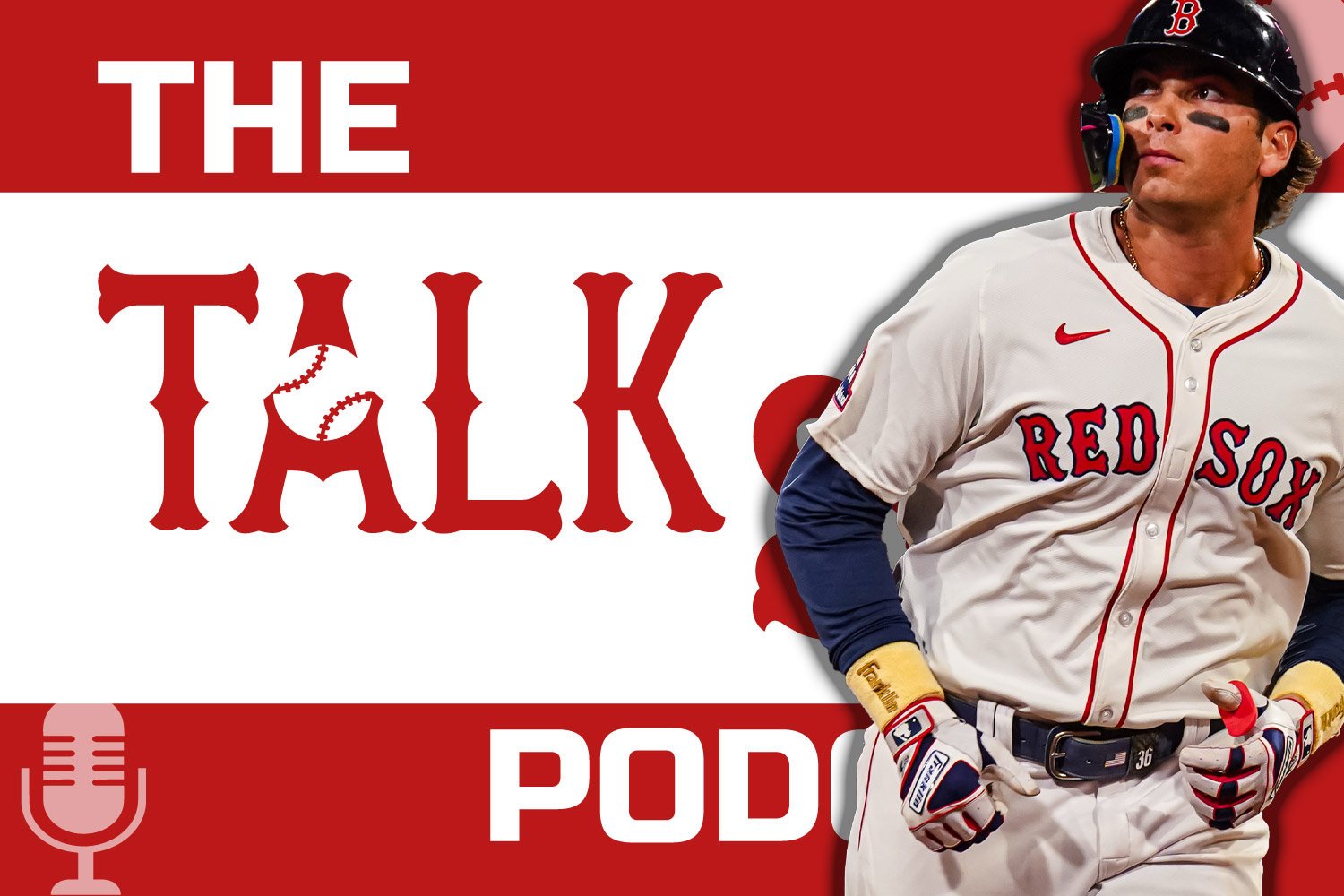 Alex and Maddie sit down with Corbin from Red Seat Radio to discuss the start of spring training, whether they are already worried about the lockout, and their predictions for where the Red Sox will finish in the AL East. They talk through the logjam at DH and what an eventual Triston Casas return could mean for the position. Listen on Apple Podcasts: https://podcasts.apple.com/us/podcast/the-talk-sox-podcast/id1783204104 Listen on Spotify: https://open.spotify.com/show/3qPrPXEngu0CxgTmlf0ynm Listen on iHeartRadio: https://www.iheart.com/podcast/263-the-talk-sox-podcast-244591331/ Listen on Pocket Casts: https://pca.st/4tmd121v Watch on YouTube: https://www.youtube.com/@talksox
 -
As one of the oldest franchises in Major League Baseball, the Boston Red Sox are deeply embedded in the sport’s history. The organization has stepped into the limelight at various points over the past 125 years, more often than not for trading the face of their franchise. Each seismic move significantly impacted the Red Sox, creating a ripple effect. If you believe in alternate timelines, imagine if: Babe Ruth wasn’t sent to the New York Yankees to help finance former owner Harry Frazee’s Broadway musical Billy Beane accepted the Red Sox's 5-year, $12.5 million general manager contract offer The team kept Anthony Rizzo Mookie Betts wasn’t traded to the Los Angeles Dodgers in a salary dump Signing Rafael Devers to a 10-year, $313.5 million contract, the largest in franchise history, supposedly washed away the remorse of trading Mookie Betts. Devers was a homegrown player. A World Series Champion. The last man standing from the 2018 core. Nonetheless, history repeated itself. Following an exhilarating home sweep of the Yankees in mid-June of 2025, the Red Sox parted ways with Devers, sending him across the country to the San Francisco Giants. The move’s fallout has curdled faster than milk. The Red Sox received four players from the Giants: reliever Jordan Hicks, bulk reliever Kyle Harrison, outfield prospect James Tibbs, and pitching prospect Jose Bello. Come February 2026, Harrison and Bello are the only remaining pieces from the trade. The team quickly parted with Tibbs at the trade deadline, sending him to the Dodgers for Dustin May. Hicks is now the Chicago White Sox's problem. Trading the face of your franchise to appease Alex Bregman — who ended up being a one-year rental on a pillow contract — is a tough pill to swallow. Quantifying the move’s damage is even more brutal. Between Hicks, Harrison, and May, the Red Sox acquired a total of 5.9 fWAR. Sending Devers to San Francisco gave up 27.8 fWAR. The net loss sits at -21.9 fWAR. These totals reflect what players produced with their former teams. Their actual contributions with the Red Sox were much worse. When trading an established contributor, you should expect a decent return, not a bag of peanuts. Hicks’ 18.2 innings for the Red Sox featured -0.4 fWAR, 8.20 ERA, 6.19 FIP, and a ghastly 3.1% K-BB%. He continually forgot the strike zone existed and blew leads. Harrison, the more immediate bright spot from the trade, is under control through the 2030 season. Baseball America ranked him as the Giants’ #1 prospect in 2024. He tinkered with his pitch mix in Triple-A Worcester by adding a cutter and altering his changeup grip. The results point in a positive direction: 3.00 ERA, 2.47 FIP, 14.3% K-BB%, and 0.4 fWAR. With two remaining MiLB options, Harrison will likely start the 2026 season in Worcester. In the aftermath of the Joe Ryan debacle at the 2025 trade deadline, Red Sox fans were left with Dustin May as a consolation prize. Oh well, oh well. The Mayday Parade limped to a dismal 5.40 ERA, 5.39 FIP, 9.8% K-BB%, and -0.1 fWAR. Bello only tossed 23.1 innings at Single-A Salem last year. Entering his age-21 season, he could develop into a solid arm, but it’s too soon to tell. @Nick John broke down newcomer Gage Ziehl. Like Bello, he is a low-level prospect. Some of the organization’s pitching prospects have sped through the minors, so that we might see Bello and/or Ziehl in Triple-A Worcester by the end of the season. Other blockbuster trades in recent memory just haven’t aged this poorly so quickly. Hicks, Harrison, and May have combined for -0.1 WAR with the Red Sox. Meanwhile, Devers accumulated 1.3 fWAR on the West Coast (3.3 total). I’ll acknowledge that Devers’ contract won’t hold up over time. The extension was an orchestrated PR move to restore the team’s reputation and appease the fanbase after the departures of Betts and Xander Bogaerts. It occurred less than a month after Bogaerts was lured to the Padres on an 11-year, $280 million contract. Devers was never going to contend for a Gold Glove at third. His value came from his bat, tearing the seams off the ball from the two-hole. The Red Sox knew this. The trade wasn’t inevitable. It was the product of poor roster management, short-term thinking, and egos run unchecked. Comparison Trade Tree On the surface, Juan Soto and Rafael Devers share similar profiles. Both are bat-first players with questionable defense. The circumstances of their trades were vastly different. Soto was 23 years old when the Nationals traded him, earning $17.1 million under arbitration for the 2022 season. He had two years of team control before he hit free agency. Devers was 28, earning $29.66 million in AAV with about 8.5 years left on his 11-year, $331 million extension. The Nationals sold high on a young player they couldn’t retain instead of letting him walk for nothing. The Red Sox traded a franchise cornerstone owed $250+ million on a long-term deal because egos in the clubhouse and front office couldn’t be managed properly. After Soto rejected a 15-year, $440 million extension offer, the Nationals decided to cash out, shipping him to the Padres for a king’s ransom. Less than two years later, the Padres flipped Soto to the Yankees in his final year of arbitration. The move that emptied their farm system ended up replenishing it. Upon an initial review of the Soto trade tree, it looks like the Nationals were fleeced. But, the fWAR displayed reflects each player's value with their original team before being traded. It doesn’t account for any post-trade production, as prospects without any major league playing time do not initially register any value. From the draft until the majors, baseball prospects take time to develop. Most don’t pan out. However, the Nationals struck gold on their return of starter Mackenzie Gore, outfielder James Wood, shortstop CJ Abrams, and outfielder Robert Hassell III. Pitching for a team that’s finished at (or near) the bottom of the National League East over the past three seasons, Gore tossed 462.1 innings for a 4.15 ERA, 4.01 FIP, 16.6% K-BB%, and 7.3 fWAR. Wood, as a 22-year-old rookie, has amassed 4.6 fWAR and a 125 wRC+. His peripherals are outstanding, and he’s an exciting player to watch. Coming off a career-high season of 3.1 WAR (7.0 total), Abrams is more of a bat-first shortstop. He’s marked -18 OAA since 2023, the worst among qualified shortstops, and a .250/.307/.417 slash line and 99 wRC+ with the Nats. Hassell III (-0.5 fWAR) has struggled at the plate (.572 OPS). On the field, his defense passes the eye test. These players have generated a combined 18.4 fWAR. The Nationals have already broken even with at least two more seasons of Wood and Abrams. Soto posted 18.1 fWAR from 2022-24, before hitting free agency. The Soto trade tree continues to bear fruit. This offseason, the Nationals swapped Gore to the Rangers for another group of prospects. While these players aren’t knocking on the door yet, Paul Toboni, the Nationals’ newly minted President of Baseball Operations, has shown a knack for acquiring and developing young talent. Soto’s stint with the Padres was short. He slashed .265/.405/.488 across 936 PA in 214 games for a 148 wRC+ and 7.3 WAR. Realizing that they couldn’t retain Soto amid a bloated payroll, the Padres shipped him back to the East Coast, this time to the Yankees. In exchange, they received starters Michael King, Drew Thrope, and Randy Vásquez, reliever Jhony Brito, and catcher Kyle Higashioka. King’s career splits with the Yankees and Padres are nearly identical. When healthy, he’s a dominant pitcher. He put up 3.9 WAR in 2024 and 0.8 WAR across 15 games in 2025. This offseason, he signed a three-year, $75 million extension with the Padres. Brito posted 0.3 fWAR in 2024. He underwent an internal UCL brace surgery and missed the 2025 season. Heading into the 2026 season, his role is uncertain. Vásquez stepped up when injuries plagued the Padres rotation. Though his performance was a mixed bag in 2025, netting 0.8 fWAR. Higashioka (1.6 fWAR) was a serviceable catcher during his single season with the Padres. As a Red Sox fan, there’s schadenfreude in watching the Yankees trade a boatload of talent for a one-year Juan Soto rental. All told, the Padres’ return of 7.4 WAR falls just short of Soto’s 8.3 fWAR with the Yankees in 2025. If King stays healthy and Vásquez and Brito don’t regress, that gap could break even as soon as this season. The Other Awful Red Sox Trade Chaim Bloom’s tenure with the Red Sox was marred by the Mookie Betts trade. Six years later, rehashing this move is beating a dead horse, so I’m not going into too much detail here. The Dodgers’ return and its resulting moves have accumulated 7.9 fWAR for the Red Sox: OF Alex Verdugo: 6.0 fWAR INF Jeter Downs: - 0.4 fWAR RP Greg Weissert: 1.2 fWAR C Connor Wong: 0.9 fWAR SP Richard Fitts: 0.2 fWAR This total is fluid, as Sonny Gray hasn’t stepped on the mound in a Red Sox uniform yet. Barring him turning into a pumpkin, the number should climb, though it still won’t come anywhere close to Betts’ performance (28.0 WAR) with the Dodgers. You can chalk up one bad return to bad luck. Prospects are volatile. But two franchise players, traded under different GMs, both yielding dismal returns, point to a deeper issue. If you’re trading a generational talent, you should at least receive proven talent in return. Reclamation projects are a huge gamble. Craig Breslow flew too close to the sun and thought he could fix Jordan Hicks and Dustin May. He did not. After the Betts trade, the Red Sox found themselves in limbo, stuck between fully committing to a rebuild and attempting to compete. With the Devers trade behind them, the team is in a different place with a young, controllable core. Reinvesting the $250 million owed to Devers into Garrett Crochet, Roman Anthony, and Ranger Suárez signals they want to turn a new leaf. Whether the Red Sox have learned from their past mistakes remains to be seen. Mookie Betts was strike one. Rafael Devers was strike two. One more swing-and-miss and they’re out. View full article
-
Eight Months Later, the Rafael Devers Trade Tree Is Rotting
Maddie Landis posted an article in Red Sox
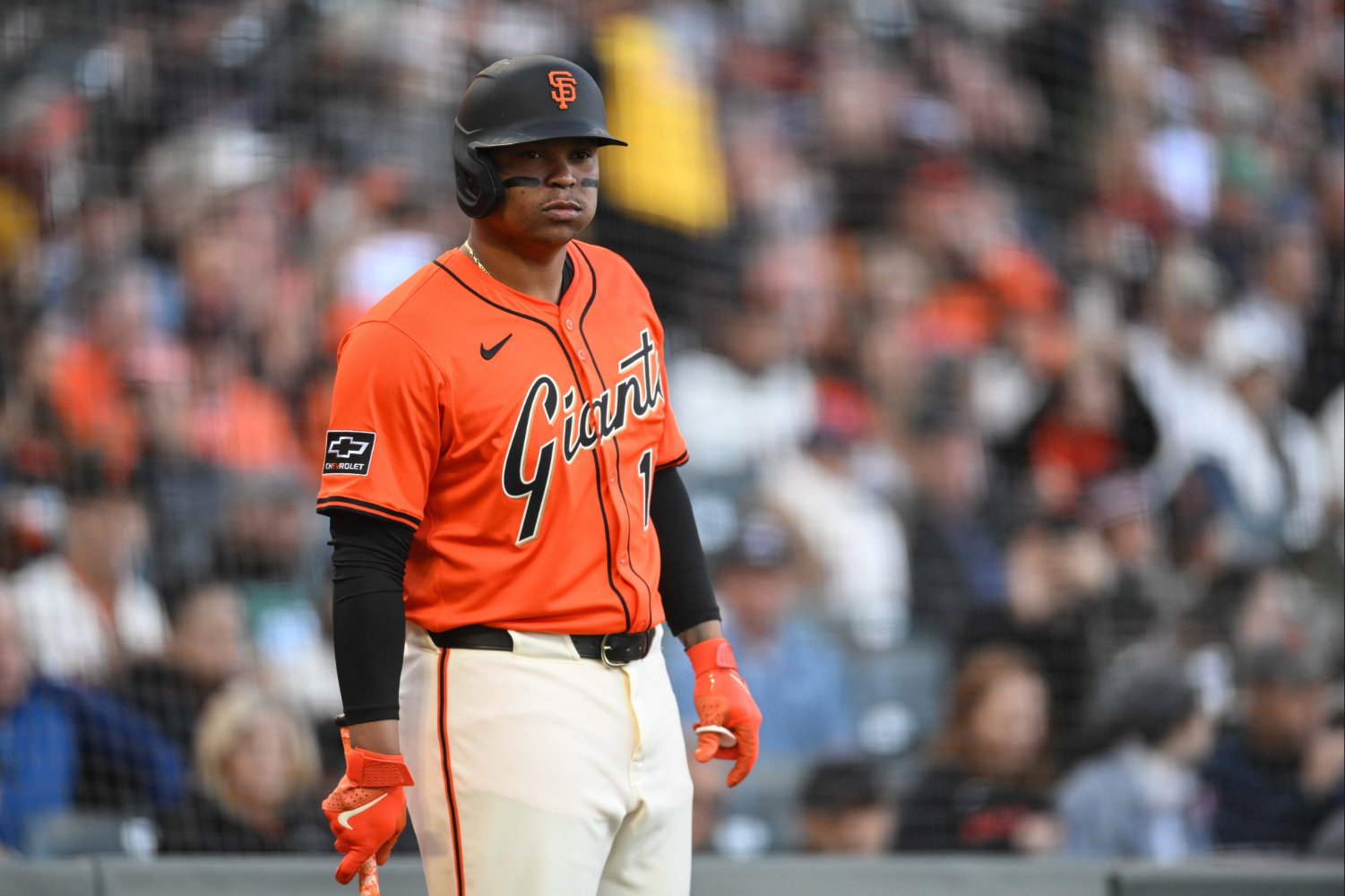 As one of the oldest franchises in Major League Baseball, the Boston Red Sox are deeply embedded in the sport’s history. The organization has stepped into the limelight at various points over the past 125 years, more often than not for trading the face of their franchise. Each seismic move significantly impacted the Red Sox, creating a ripple effect. If you believe in alternate timelines, imagine if: Babe Ruth wasn’t sent to the New York Yankees to help finance former owner Harry Frazee’s Broadway musical Billy Beane accepted the Red Sox's 5-year, $12.5 million general manager contract offer The team kept Anthony Rizzo Mookie Betts wasn’t traded to the Los Angeles Dodgers in a salary dump Signing Rafael Devers to a 10-year, $313.5 million contract, the largest in franchise history, supposedly washed away the remorse of trading Mookie Betts. Devers was a homegrown player. A World Series Champion. The last man standing from the 2018 core. Nonetheless, history repeated itself. Following an exhilarating home sweep of the Yankees in mid-June of 2025, the Red Sox parted ways with Devers, sending him across the country to the San Francisco Giants. The move’s fallout has curdled faster than milk. The Red Sox received four players from the Giants: reliever Jordan Hicks, bulk reliever Kyle Harrison, outfield prospect James Tibbs, and pitching prospect Jose Bello. Come February 2026, Harrison and Bello are the only remaining pieces from the trade. The team quickly parted with Tibbs at the trade deadline, sending him to the Dodgers for Dustin May. Hicks is now the Chicago White Sox's problem. Trading the face of your franchise to appease Alex Bregman — who ended up being a one-year rental on a pillow contract — is a tough pill to swallow. Quantifying the move’s damage is even more brutal. Between Hicks, Harrison, and May, the Red Sox acquired a total of 5.9 fWAR. Sending Devers to San Francisco gave up 27.8 fWAR. The net loss sits at -21.9 fWAR. These totals reflect what players produced with their former teams. Their actual contributions with the Red Sox were much worse. When trading an established contributor, you should expect a decent return, not a bag of peanuts. Hicks’ 18.2 innings for the Red Sox featured -0.4 fWAR, 8.20 ERA, 6.19 FIP, and a ghastly 3.1% K-BB%. He continually forgot the strike zone existed and blew leads. Harrison, the more immediate bright spot from the trade, is under control through the 2030 season. Baseball America ranked him as the Giants’ #1 prospect in 2024. He tinkered with his pitch mix in Triple-A Worcester by adding a cutter and altering his changeup grip. The results point in a positive direction: 3.00 ERA, 2.47 FIP, 14.3% K-BB%, and 0.4 fWAR. With two remaining MiLB options, Harrison will likely start the 2026 season in Worcester. In the aftermath of the Joe Ryan debacle at the 2025 trade deadline, Red Sox fans were left with Dustin May as a consolation prize. Oh well, oh well. The Mayday Parade limped to a dismal 5.40 ERA, 5.39 FIP, 9.8% K-BB%, and -0.1 fWAR. Bello only tossed 23.1 innings at Single-A Salem last year. Entering his age-21 season, he could develop into a solid arm, but it’s too soon to tell. @Nick John broke down newcomer Gage Ziehl. Like Bello, he is a low-level prospect. Some of the organization’s pitching prospects have sped through the minors, so that we might see Bello and/or Ziehl in Triple-A Worcester by the end of the season. Other blockbuster trades in recent memory just haven’t aged this poorly so quickly. Hicks, Harrison, and May have combined for -0.1 WAR with the Red Sox. Meanwhile, Devers accumulated 1.3 fWAR on the West Coast (3.3 total). I’ll acknowledge that Devers’ contract won’t hold up over time. The extension was an orchestrated PR move to restore the team’s reputation and appease the fanbase after the departures of Betts and Xander Bogaerts. It occurred less than a month after Bogaerts was lured to the Padres on an 11-year, $280 million contract. Devers was never going to contend for a Gold Glove at third. His value came from his bat, tearing the seams off the ball from the two-hole. The Red Sox knew this. The trade wasn’t inevitable. It was the product of poor roster management, short-term thinking, and egos run unchecked. Comparison Trade Tree On the surface, Juan Soto and Rafael Devers share similar profiles. Both are bat-first players with questionable defense. The circumstances of their trades were vastly different. Soto was 23 years old when the Nationals traded him, earning $17.1 million under arbitration for the 2022 season. He had two years of team control before he hit free agency. Devers was 28, earning $29.66 million in AAV with about 8.5 years left on his 11-year, $331 million extension. The Nationals sold high on a young player they couldn’t retain instead of letting him walk for nothing. The Red Sox traded a franchise cornerstone owed $250+ million on a long-term deal because egos in the clubhouse and front office couldn’t be managed properly. After Soto rejected a 15-year, $440 million extension offer, the Nationals decided to cash out, shipping him to the Padres for a king’s ransom. Less than two years later, the Padres flipped Soto to the Yankees in his final year of arbitration. The move that emptied their farm system ended up replenishing it. Upon an initial review of the Soto trade tree, it looks like the Nationals were fleeced. But, the fWAR displayed reflects each player's value with their original team before being traded. It doesn’t account for any post-trade production, as prospects without any major league playing time do not initially register any value. From the draft until the majors, baseball prospects take time to develop. Most don’t pan out. However, the Nationals struck gold on their return of starter Mackenzie Gore, outfielder James Wood, shortstop CJ Abrams, and outfielder Robert Hassell III. Pitching for a team that’s finished at (or near) the bottom of the National League East over the past three seasons, Gore tossed 462.1 innings for a 4.15 ERA, 4.01 FIP, 16.6% K-BB%, and 7.3 fWAR. Wood, as a 22-year-old rookie, has amassed 4.6 fWAR and a 125 wRC+. His peripherals are outstanding, and he’s an exciting player to watch. Coming off a career-high season of 3.1 WAR (7.0 total), Abrams is more of a bat-first shortstop. He’s marked -18 OAA since 2023, the worst among qualified shortstops, and a .250/.307/.417 slash line and 99 wRC+ with the Nats. Hassell III (-0.5 fWAR) has struggled at the plate (.572 OPS). On the field, his defense passes the eye test. These players have generated a combined 18.4 fWAR. The Nationals have already broken even with at least two more seasons of Wood and Abrams. Soto posted 18.1 fWAR from 2022-24, before hitting free agency. The Soto trade tree continues to bear fruit. This offseason, the Nationals swapped Gore to the Rangers for another group of prospects. While these players aren’t knocking on the door yet, Paul Toboni, the Nationals’ newly minted President of Baseball Operations, has shown a knack for acquiring and developing young talent. Soto’s stint with the Padres was short. He slashed .265/.405/.488 across 936 PA in 214 games for a 148 wRC+ and 7.3 WAR. Realizing that they couldn’t retain Soto amid a bloated payroll, the Padres shipped him back to the East Coast, this time to the Yankees. In exchange, they received starters Michael King, Drew Thrope, and Randy Vásquez, reliever Jhony Brito, and catcher Kyle Higashioka. King’s career splits with the Yankees and Padres are nearly identical. When healthy, he’s a dominant pitcher. He put up 3.9 WAR in 2024 and 0.8 WAR across 15 games in 2025. This offseason, he signed a three-year, $75 million extension with the Padres. Brito posted 0.3 fWAR in 2024. He underwent an internal UCL brace surgery and missed the 2025 season. Heading into the 2026 season, his role is uncertain. Vásquez stepped up when injuries plagued the Padres rotation. Though his performance was a mixed bag in 2025, netting 0.8 fWAR. Higashioka (1.6 fWAR) was a serviceable catcher during his single season with the Padres. As a Red Sox fan, there’s schadenfreude in watching the Yankees trade a boatload of talent for a one-year Juan Soto rental. All told, the Padres’ return of 7.4 WAR falls just short of Soto’s 8.3 fWAR with the Yankees in 2025. If King stays healthy and Vásquez and Brito don’t regress, that gap could break even as soon as this season. The Other Awful Red Sox Trade Chaim Bloom’s tenure with the Red Sox was marred by the Mookie Betts trade. Six years later, rehashing this move is beating a dead horse, so I’m not going into too much detail here. The Dodgers’ return and its resulting moves have accumulated 7.9 fWAR for the Red Sox: OF Alex Verdugo: 6.0 fWAR INF Jeter Downs: - 0.4 fWAR RP Greg Weissert: 1.2 fWAR C Connor Wong: 0.9 fWAR SP Richard Fitts: 0.2 fWAR This total is fluid, as Sonny Gray hasn’t stepped on the mound in a Red Sox uniform yet. Barring him turning into a pumpkin, the number should climb, though it still won’t come anywhere close to Betts’ performance (28.0 WAR) with the Dodgers. You can chalk up one bad return to bad luck. Prospects are volatile. But two franchise players, traded under different GMs, both yielding dismal returns, point to a deeper issue. If you’re trading a generational talent, you should at least receive proven talent in return. Reclamation projects are a huge gamble. Craig Breslow flew too close to the sun and thought he could fix Jordan Hicks and Dustin May. He did not. After the Betts trade, the Red Sox found themselves in limbo, stuck between fully committing to a rebuild and attempting to compete. With the Devers trade behind them, the team is in a different place with a young, controllable core. Reinvesting the $250 million owed to Devers into Garrett Crochet, Roman Anthony, and Ranger Suárez signals they want to turn a new leaf. Whether the Red Sox have learned from their past mistakes remains to be seen. Mookie Betts was strike one. Rafael Devers was strike two. One more swing-and-miss and they’re out.
 -
Two weeks before pitchers and catchers report, the Boston Red Sox still have a hole at second base. Their solution might already be on the roster. Catchers are a stalwart presence behind the plate. When I think of catchers, players with sturdier builds — Johnny Bench, Carlton Fisk, and Jason Varitek — immediately come to mind. Listed at 5’10”, 190 lbs, Connor Wong is not built like your typical catcher. Why? His original position in college (University of Houston) was shortstop. He transitioned to a catcher during his sophomore year. Wong’s performance hasn’t been the tour de force that was expected from one of the key pieces of the Mookie Betts trade. His defense and bat have never flourished concurrently. In 2024, he outperformed his expected offensive stats (.051 BA-xBA, .063 SLG-xSLG, and .039 wOBA-xWOBA), but his defense was subpar (-13 Blocks Above Average and -8 Framing Runs). The next year, things flipped. In 2025, Wong’s defense initially improved before a hand injury cut his playing time early in the season. Upon his return, Carlos Narváez’s breakout performance relegated him to a backup role. Wong finished the season with a .190 BA, .500 OPS, and a 39 wRC+. With less than two weeks until pitchers and catchers report, the Red Sox have a glaring hole at second base. Since Dustin Pedroia’s abrupt career-ending knee injury, second base depth has been the red-headed stepchild for the Red Sox’s roster construction. (You can also argue the same for catcher since Christian Vázquez was moved at the 2022 trade deadline.) External paths forward are limited. Ketel Marte is staying with the Diamondbacks. Nico Hoerner’s asking price is too high. If the Phillies had signed Bo Bichette, I would’ve loved a trade for Bryson Stott, but that’s wistful thinking. I’ve been beating the “Trade Jarren Duran” drum throughout the offseason, though I’d rather keep him than ship him off to Houston in a trade for Isaac Paredes. As for the other spots in the infield, shortstop is veteran Trevor Story’s position (if he can stay healthy for a second consecutive season), and Marcelo Mayer will likely start at third base, potentially sharing a platoon with Romy Gonzalez and/or Nick Sogard. The remaining depth of Gonzalez, Sogard, David Hamilton, and Nate Eaton doesn’t instill much confidence as an everyday player at second. Yet, the Red Sox’s solution might already be on the roster. Wong’s development has been zero-sum; every gain, whether defensive or offensive, has come at the other’s expense. What if the problem isn’t Wong, but his position? What happens to his production when he’s not catching? The Case for Connor Wong at Second Wong has logged a whopping total of 29 innings at second base. At catcher, he’s a career .250 hitter with a 90 wRC+ across 1,059 PA. At second, he’s yielded a .364 average with a 109 wRC+ across 11 plate appearances, a notable improvement, albeit in a very small sample size. To Wong’s credit, his offensive stats aren’t terrible; they’re average. Last year was an anomaly with injuries tanking his production. .wong-splits-wrapper { max-width: 1100px; width: 100%; margin: 0 auto; text-align: center; } .wong-splits-wrapper .table-container { background: transparent; border-radius: 12px; overflow: hidden; display: inline-block; } .wong-splits-wrapper table { width: 100%; border-collapse: separate; border-spacing: 0; font-family: -apple-system, BlinkMacSystemFont, 'Segoe UI', Roboto, sans-serif; border-radius: 12px; overflow: hidden; } .wong-splits-wrapper .title-row th { background: #0d2240; color: #fff; padding: 14px 12px; text-align: center; font-weight: 600; font-size: 0.95rem; letter-spacing: 0.5px; } .wong-splits-wrapper .header-row th { background: #1a3a5c; color: #fff; padding: 14px 12px; text-align: center; font-weight: 600; font-size: 0.95rem; letter-spacing: 0.5px; } .wong-splits-wrapper .header-row th:first-child { text-align: left; padding-left: 20px; } .wong-splits-wrapper td { padding: 14px 12px; text-align: center; font-size: 0.85rem; border-bottom: 1px solid #e8e8e8; color: #333; } .wong-splits-wrapper td:first-child { text-align: left; padding-left: 20px; font-weight: 600; color: #0d2240; } .wong-splits-wrapper tr:last-child td { border-bottom: none; } .wong-splits-wrapper tbody tr { background: #fff; } .wong-splits-wrapper tbody tr:hover { background: #f8f9fa; } Connor Wong Career Splits by Position Position G PA BB% K% AVG OPS ISO BABIP wOBA wRC+ C 290 1059 6.5% 27.1% .250 .695 .136 .332 .304 90 1B 10 31 6.5% 32.3% .241 .670 .138 .368 .292 85 2B 6 11 0.0% 18.2% .364 .727 .000 .444 .321 109 LF 1 1 0.0% 0.0% .000 .000 .000 .000 .000 -100 DH 9 27 0.0% 29.6% .120 .305 .000 .176 .151 -13 Wong’s defense at second base is marginally below average, posting a minus-1 OAA and a FRV of -1 in 29 innings, but his skillset and raw athleticism suggest his floor is higher than his numbers indicate. .position-comps-wrapper { max-width: 800px; width: 100%; margin: 0 auto; text-align: center; } .position-comps-wrapper .table-container { background: transparent; border-radius: 12px; overflow: hidden; display: inline-block; } .position-comps-wrapper table { width: 100%; border-collapse: separate; border-spacing: 0; font-family: -apple-system, BlinkMacSystemFont, 'Segoe UI', Roboto, sans-serif; border-radius: 12px; overflow: hidden; } .position-comps-wrapper .title-row th { background: #0d2240; color: #fff; padding: 14px 12px; text-align: center; font-weight: 600; font-size: 0.95rem; letter-spacing: 0.5px; } .position-comps-wrapper .header-row th { background: #1a3a5c; color: #fff; padding: 14px 12px; text-align: center; font-weight: 600; font-size: 0.95rem; letter-spacing: 0.5px; } .position-comps-wrapper .header-row th:first-child { text-align: left; padding-left: 20px; } .position-comps-wrapper td { padding: 14px 12px; text-align: center; font-size: 0.85rem; border-bottom: 1px solid #e8e8e8; color: #333; } .position-comps-wrapper td:first-child { text-align: left; padding-left: 20px; font-weight: 600; color: #0d2240; } .position-comps-wrapper tr:last-child td { border-bottom: none; } .position-comps-wrapper tbody tr { background: #fff; } .position-comps-wrapper tbody tr:hover { background: #f8f9fa; } .position-comps-wrapper .section-break td { padding: 8px; background: #bd3039; border-bottom: 1px solid #e8e8e8; } Career Position Comps Player Position Innings DRS OAA FRV Romy Gonzalez 2B 836.0 -4 -2 -2 Nick Sogard 2B 164.0 -1 0 0 David Hamilton 2B 679.1 16 6 4 Connor Wong 2B 29.0 -1 -1 -1 Modern catchers are more athletic than ever, but they display a different kind of athleticism that factors in blocking, framing, and throwing. Wong’s atypical build fails him in his blocking ability. Since 2023, he’s recorded -25 Blocks Above Average, the second-worst in baseball, and his framing is unremarkable (-15 Framing Runs). Wong’s injury history reflects the physical toll catching has taken on his body: March 2023: Left hamstring injury April 2025: Left pinky fracture 2025 offseason: Right-hand carpal boss excision Arm strength matters less at second compared to shortstop or third, but Wong’s is more than adequate. In 2024, Wong posted a 1.95 average pop time to second base (63rd percentile). Injuries slowed that to 1.97 in 2025 (39th percentile). Wong pairs quick transfer with throwing accuracy, finishing in the top 30% of CS Above Average (+3). His catcher arm strength graded at 81.4 mph in 2025. For comparison, Nico Hoerner’s sits at 75.5 mph and Brice Turang's at 80.1 mph. The common thread between catcher and second is making quick, targeted throws under pressure in awkward positions. Behind the plate, that means hitting the fielder’s glove at second from over 127 ft away while a runner barrels towards the bag. At second, turning a 4-6-3 double play requires fast hands, clean transfer, arm strength, and accuracy. Wong’s best defensive plays highlight this skillset and the instincts of a middle infielder, not a catcher. Most catchers aren’t expected to wreak havoc on the basepaths. They’re not usually built for it, and crouching for over two hours drains their battery. Wong, however, possesses elite sprint speed. A move to second would give him more opportunities to use it. That’s not to say there isn’t a downside. Moving Wong to second fixes one problem, but creates another at his old position. The remaining free-agent catchers won’t move the needle. Narváez struggled in the second half of his rookie season and is coming off meniscus surgery. Backup catcher could be a critical role, and moving Wong would strain the team’s already limited catching depth. My suggestion? Let Wong take reps at second in spring training. It’s a low-risk environment to explore whether both sides of his game can coexist away from catching. What is there to lose? View full article
-
Is Connor Wong a Viable Solution at Second Base for the Red Sox?
Maddie Landis posted an article in Red Sox
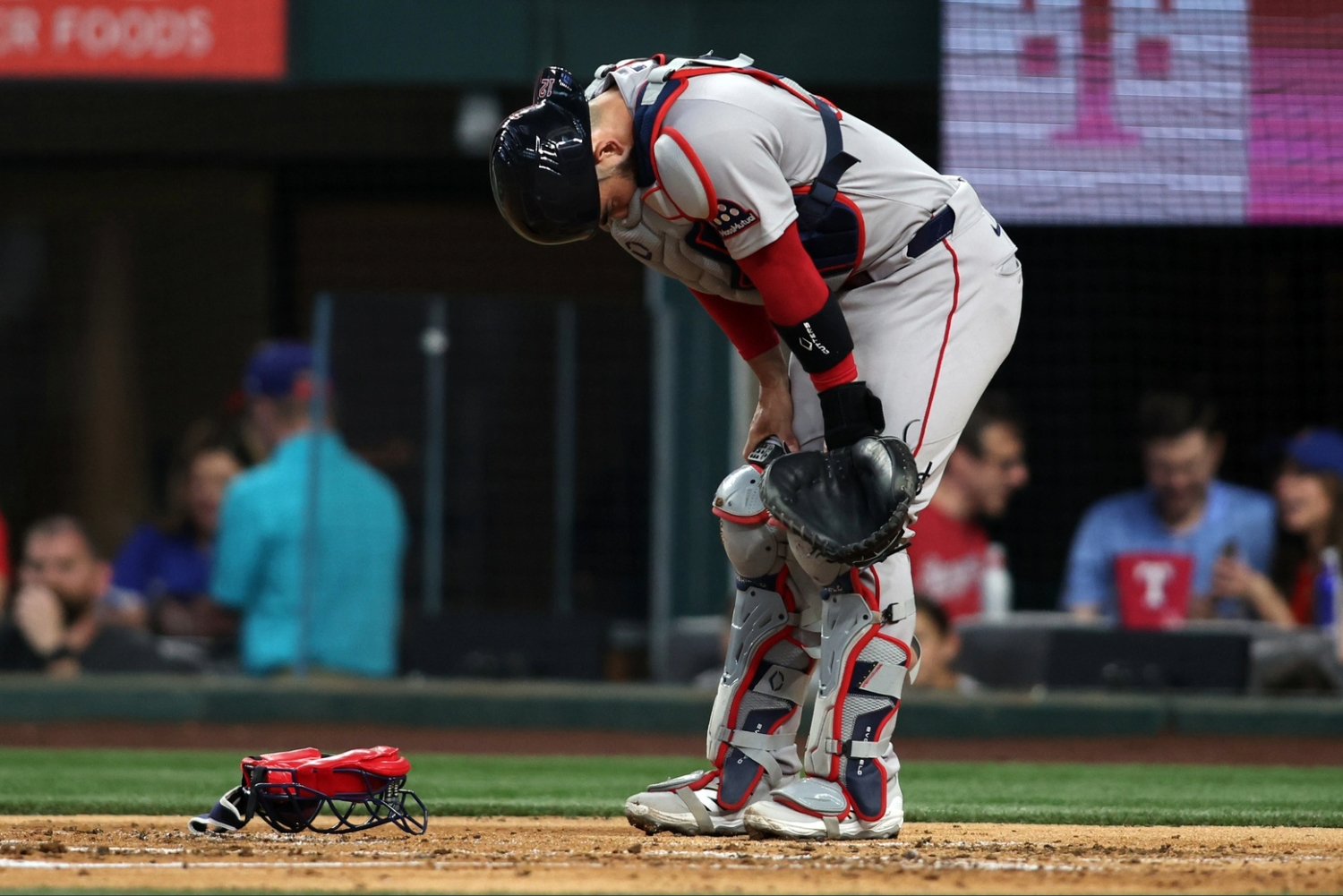 Two weeks before pitchers and catchers report, the Boston Red Sox still have a hole at second base. Their solution might already be on the roster. Catchers are a stalwart presence behind the plate. When I think of catchers, players with sturdier builds — Johnny Bench, Carlton Fisk, and Jason Varitek — immediately come to mind. Listed at 5’10”, 190 lbs, Connor Wong is not built like your typical catcher. Why? His original position in college (University of Houston) was shortstop. He transitioned to a catcher during his sophomore year. Wong’s performance hasn’t been the tour de force that was expected from one of the key pieces of the Mookie Betts trade. His defense and bat have never flourished concurrently. In 2024, he outperformed his expected offensive stats (.051 BA-xBA, .063 SLG-xSLG, and .039 wOBA-xWOBA), but his defense was subpar (-13 Blocks Above Average and -8 Framing Runs). The next year, things flipped. In 2025, Wong’s defense initially improved before a hand injury cut his playing time early in the season. Upon his return, Carlos Narváez’s breakout performance relegated him to a backup role. Wong finished the season with a .190 BA, .500 OPS, and a 39 wRC+. With less than two weeks until pitchers and catchers report, the Red Sox have a glaring hole at second base. Since Dustin Pedroia’s abrupt career-ending knee injury, second base depth has been the red-headed stepchild for the Red Sox’s roster construction. (You can also argue the same for catcher since Christian Vázquez was moved at the 2022 trade deadline.) External paths forward are limited. Ketel Marte is staying with the Diamondbacks. Nico Hoerner’s asking price is too high. If the Phillies had signed Bo Bichette, I would’ve loved a trade for Bryson Stott, but that’s wistful thinking. I’ve been beating the “Trade Jarren Duran” drum throughout the offseason, though I’d rather keep him than ship him off to Houston in a trade for Isaac Paredes. As for the other spots in the infield, shortstop is veteran Trevor Story’s position (if he can stay healthy for a second consecutive season), and Marcelo Mayer will likely start at third base, potentially sharing a platoon with Romy Gonzalez and/or Nick Sogard. The remaining depth of Gonzalez, Sogard, David Hamilton, and Nate Eaton doesn’t instill much confidence as an everyday player at second. Yet, the Red Sox’s solution might already be on the roster. Wong’s development has been zero-sum; every gain, whether defensive or offensive, has come at the other’s expense. What if the problem isn’t Wong, but his position? What happens to his production when he’s not catching? The Case for Connor Wong at Second Wong has logged a whopping total of 29 innings at second base. At catcher, he’s a career .250 hitter with a 90 wRC+ across 1,059 PA. At second, he’s yielded a .364 average with a 109 wRC+ across 11 plate appearances, a notable improvement, albeit in a very small sample size. To Wong’s credit, his offensive stats aren’t terrible; they’re average. Last year was an anomaly with injuries tanking his production. .wong-splits-wrapper { max-width: 1100px; width: 100%; margin: 0 auto; text-align: center; } .wong-splits-wrapper .table-container { background: transparent; border-radius: 12px; overflow: hidden; display: inline-block; } .wong-splits-wrapper table { width: 100%; border-collapse: separate; border-spacing: 0; font-family: -apple-system, BlinkMacSystemFont, 'Segoe UI', Roboto, sans-serif; border-radius: 12px; overflow: hidden; } .wong-splits-wrapper .title-row th { background: #0d2240; color: #fff; padding: 14px 12px; text-align: center; font-weight: 600; font-size: 0.95rem; letter-spacing: 0.5px; } .wong-splits-wrapper .header-row th { background: #1a3a5c; color: #fff; padding: 14px 12px; text-align: center; font-weight: 600; font-size: 0.95rem; letter-spacing: 0.5px; } .wong-splits-wrapper .header-row th:first-child { text-align: left; padding-left: 20px; } .wong-splits-wrapper td { padding: 14px 12px; text-align: center; font-size: 0.85rem; border-bottom: 1px solid #e8e8e8; color: #333; } .wong-splits-wrapper td:first-child { text-align: left; padding-left: 20px; font-weight: 600; color: #0d2240; } .wong-splits-wrapper tr:last-child td { border-bottom: none; } .wong-splits-wrapper tbody tr { background: #fff; } .wong-splits-wrapper tbody tr:hover { background: #f8f9fa; } Connor Wong Career Splits by Position Position G PA BB% K% AVG OPS ISO BABIP wOBA wRC+ C 290 1059 6.5% 27.1% .250 .695 .136 .332 .304 90 1B 10 31 6.5% 32.3% .241 .670 .138 .368 .292 85 2B 6 11 0.0% 18.2% .364 .727 .000 .444 .321 109 LF 1 1 0.0% 0.0% .000 .000 .000 .000 .000 -100 DH 9 27 0.0% 29.6% .120 .305 .000 .176 .151 -13 Wong’s defense at second base is marginally below average, posting a minus-1 OAA and a FRV of -1 in 29 innings, but his skillset and raw athleticism suggest his floor is higher than his numbers indicate. .position-comps-wrapper { max-width: 800px; width: 100%; margin: 0 auto; text-align: center; } .position-comps-wrapper .table-container { background: transparent; border-radius: 12px; overflow: hidden; display: inline-block; } .position-comps-wrapper table { width: 100%; border-collapse: separate; border-spacing: 0; font-family: -apple-system, BlinkMacSystemFont, 'Segoe UI', Roboto, sans-serif; border-radius: 12px; overflow: hidden; } .position-comps-wrapper .title-row th { background: #0d2240; color: #fff; padding: 14px 12px; text-align: center; font-weight: 600; font-size: 0.95rem; letter-spacing: 0.5px; } .position-comps-wrapper .header-row th { background: #1a3a5c; color: #fff; padding: 14px 12px; text-align: center; font-weight: 600; font-size: 0.95rem; letter-spacing: 0.5px; } .position-comps-wrapper .header-row th:first-child { text-align: left; padding-left: 20px; } .position-comps-wrapper td { padding: 14px 12px; text-align: center; font-size: 0.85rem; border-bottom: 1px solid #e8e8e8; color: #333; } .position-comps-wrapper td:first-child { text-align: left; padding-left: 20px; font-weight: 600; color: #0d2240; } .position-comps-wrapper tr:last-child td { border-bottom: none; } .position-comps-wrapper tbody tr { background: #fff; } .position-comps-wrapper tbody tr:hover { background: #f8f9fa; } .position-comps-wrapper .section-break td { padding: 8px; background: #bd3039; border-bottom: 1px solid #e8e8e8; } Career Position Comps Player Position Innings DRS OAA FRV Romy Gonzalez 2B 836.0 -4 -2 -2 Nick Sogard 2B 164.0 -1 0 0 David Hamilton 2B 679.1 16 6 4 Connor Wong 2B 29.0 -1 -1 -1 Modern catchers are more athletic than ever, but they display a different kind of athleticism that factors in blocking, framing, and throwing. Wong’s atypical build fails him in his blocking ability. Since 2023, he’s recorded -25 Blocks Above Average, the second-worst in baseball, and his framing is unremarkable (-15 Framing Runs). Wong’s injury history reflects the physical toll catching has taken on his body: March 2023: Left hamstring injury April 2025: Left pinky fracture 2025 offseason: Right-hand carpal boss excision Arm strength matters less at second compared to shortstop or third, but Wong’s is more than adequate. In 2024, Wong posted a 1.95 average pop time to second base (63rd percentile). Injuries slowed that to 1.97 in 2025 (39th percentile). Wong pairs quick transfer with throwing accuracy, finishing in the top 30% of CS Above Average (+3). His catcher arm strength graded at 81.4 mph in 2025. For comparison, Nico Hoerner’s sits at 75.5 mph and Brice Turang's at 80.1 mph. The common thread between catcher and second is making quick, targeted throws under pressure in awkward positions. Behind the plate, that means hitting the fielder’s glove at second from over 127 ft away while a runner barrels towards the bag. At second, turning a 4-6-3 double play requires fast hands, clean transfer, arm strength, and accuracy. Wong’s best defensive plays highlight this skillset and the instincts of a middle infielder, not a catcher. Most catchers aren’t expected to wreak havoc on the basepaths. They’re not usually built for it, and crouching for over two hours drains their battery. Wong, however, possesses elite sprint speed. A move to second would give him more opportunities to use it. That’s not to say there isn’t a downside. Moving Wong to second fixes one problem, but creates another at his old position. The remaining free-agent catchers won’t move the needle. Narváez struggled in the second half of his rookie season and is coming off meniscus surgery. Backup catcher could be a critical role, and moving Wong would strain the team’s already limited catching depth. My suggestion? Let Wong take reps at second in spring training. It’s a low-risk environment to explore whether both sides of his game can coexist away from catching. What is there to lose?
 -
Alex and Maddie sit down with MassLive.com's Chris Cotillo to talk through the Red Sox offseason so far, his roster projection, and get a few behind-the-scenes travel stories. They wrap up with an overview of which Red Sox players are participating in the World Baseball Classic. Listen on Apple Podcasts: https://podcasts.apple.com/us/podcast/the-talk-sox-podcast/id1783204104 Listen on Spotify: https://open.spotify.com/show/3qPrPXEngu0CxgTmlf0ynm Listen on iHeartRadio: https://www.iheart.com/podcast/263-the-talk-sox-podcast-244591331/ Listen on Pocket Casts: https://pca.st/4tmd121v Watch on YouTube: https://www.youtube.com/@talksox View full article
-
 Alex and Maddie sit down with MassLive.com's Chris Cotillo to talk through the Red Sox offseason so far, his roster projection, and get a few behind-the-scenes travel stories. They wrap up with an overview of which Red Sox players are participating in the World Baseball Classic. Listen on Apple Podcasts: https://podcasts.apple.com/us/podcast/the-talk-sox-podcast/id1783204104 Listen on Spotify: https://open.spotify.com/show/3qPrPXEngu0CxgTmlf0ynm Listen on iHeartRadio: https://www.iheart.com/podcast/263-the-talk-sox-podcast-244591331/ Listen on Pocket Casts: https://pca.st/4tmd121v Watch on YouTube: https://www.youtube.com/@talksox
 -
@mvp 78 Thank you! 😊 The internet today can be a pretty combative place for any kind of discourse. I’m grateful to have a corner where I can discuss baseball respectfully and intelligently, which is a testament to the work you and the other mods do to support and grow the community.
-
As a lefty, it’s easy to spot other left-handers in the wild. We wear watches on our right wrist and typically have ink/pencil smudges on the outside of our left hand. In baseball, the tell is a bit more obvious — you just need to look at a player’s throwing arm. Following the acquisition of Ranger Suárez, the Boston Red Sox have a plethora of left-handed starters on their roster: Garrett Crochet Ranger Suárez Payton Tolle Connelly Early Patrick Sandoval Kyle Harrison That’s six lefties, before factoring in right-handers Sonny Gray, Brayan Bello, and Kutter Crawford. Crochet, Suárez, Gray, and Bello are guaranteed rotation spots (barring a potential Bello trade). It begs the question: how rare are lefty-heavy rotations? To avoid repeating myself, a lefty-heavy rotation is defined as one with three or more left-handed starters who have started at least 20 games. Data spans from 2010 to 2025. Since 2010, only 26 teams have featured lefty-heavy rotations. The White Sox ran one over four consecutive seasons (2013-2016), the longest streak in the dataset. The Red Sox followed with three straight from 2017 to 2019. Season Left-Handed Starters Lefty fWAR Rotation Rank 2017 Chris Sale, Drew Pomeranz, Eduardo Rodriguez 12.5 4th 2018 Chris Sale, David Price, Eduardo Rodriguez 10.6 8th 2019 Chris Sale, David Price, Eduardo Rodriguez 9.6 13th *David Price (1.1 fWAR) was part of the 2017 rotation, but injuries limited him to just 11 starts. Do southpaw-heavy rotations actually perform better? From our sample, such rotations do have a small edge. They average 2.5 more fWAR and a 55.3% win rate compared to 52.1% for the rest of the league. The average rotation has just 1.1 lefty starters with 20+ starts. Fielding three is almost triple the norm. The primary advantage lies in pitching depth, not pitcher handedness. Having three quality starters is rare. The Dodgers, Red Sox, and White Sox didn't just wake up one day with them. Their rotations were already headlined by Chris Sale and Clayton Kershaw in their primes. Group Teams Avg fWAR Avg Win % 0-2 Lefties 423 9.0 51.9% 3+ Lefties 26 11.5 55.3% Duke Wheeler, a former reliever who briefly pitched for the Pirates in 2008, emphasized, "If everybody is effective and everybody is a little different, it can work out. If you have five quality starters, it really doesn't matter if it's right-handed or left-handed." The 2011 Phillies' rotation proves Wheeler's point. Their fabled Four Aces (and Joe Blanton) accumulated the highest fWAR in history (27.0) with just two lefties, Cole Hamels and Cliff Lee, alongside righties Roy Halladay, Roy Oswalt, and Blanton. Rotations with four lefties are even rarer. There have only been four rotations in MLB history that featured four left-handed pitchers with at least 20 starts. body { font-family: -apple-system, BlinkMacSystemFont, 'Segoe UI', Roboto, sans-serif; padding: 20px; background: #f5f5f5; } table { border-collapse: collapse; width: 100%; max-width: 900px; background: white; box-shadow: 0 2px 8px rgba(0,0,0,0.1); border-radius: 8px; overflow: hidden; } th { background: #1a1a2e; color: white; padding: 12px 16px; text-align: left; font-weight: 600; } td { padding: 12px 16px; border-bottom: 1px solid #eee; } tr:last-child td { border-bottom: none; } tr:hover { background: #f8f9fa; } .season { font-weight: 600; } .team { font-weight: 600; color: #2563eb; } .war { text-align: center; font-weight: 600; color: #059669; } .record { text-align: center; } .names { font-size: 0.9em; color: #555; } Season Team Record Left-Handed Starters 1954 WSH 41-44 Mickey McDermott, Johnny Schmitz, Chuck Stobbs, Dean Stone 2013 CHW 28-42 José Quintana, Chris Sale, Héctor Santiago, John Danks 2015 CHW 38-42 José Quintana, Chris Sale, John Danks, Carlos Rodón 2017 LAD 50-24 Clayton Kershaw, Rich Hill, Alex Wood, Hyun Jin Ryu Lefty-heavy rotation outcomes vary. Teams need a well-rounded roster to make a deep run in the postseason. The White Sox appear in the top 10 three times (2014, 2015, and 2016), but finished towards the bottom of the American League Central each year. The other seven teams played in October, but their performance varied due to roster construction. The 2011 Rangers had power hitters Josh Hamilton, Adrian Beltre, and Ian Kinsler slug the team to the World Series. The Red Sox’s exit in the 2017 American League Division Series highlighted that they needed a power bat. The next season, J.D. Martinez and Steve Pearce provided thump to their lineup, and the team came out on top with a World Series title. Righty Nathan Eovaldi was also a key contributor on the mound. Then, there’s the 2025 Phillies. Their pitching was strong, but their offense ultimately came up short in a gut-wrenching National League Division Series loss. The 2026 Red Sox are hoping to avoid a similar fate. body { font-family: -apple-system, BlinkMacSystemFont, 'Segoe UI', Roboto, sans-serif; padding: 20px; background: #f5f5f5; } table { border-collapse: collapse; width: auto; background: white; box-shadow: 0 2px 8px rgba(0,0,0,0.1); border-radius: 8px; overflow: hidden; } th, td { padding: 14px 16px; text-align: left; } th { background: #1a1a2e; color: white; font-weight: 600; } td { border-bottom: 1px solid #eee; } tr:last-child td { border-bottom: none; } tr:hover { background: #f8f9fa; } .season { width: 60px; } td.season { font-weight: 600; } .team { width: 50px; } .rank { text-align: center; width: 80px; } .count { text-align: center; width: 55px; } .war { text-align: center; width: 65px; } th.war { text-align: center; } .names { font-size: 0.95em; } td.team { } td.war { text-align: center; } td.names { color: #000; } Top 10 Lefty-Heavy Rotations (2010-2025) Season Team Rotation Rank Lefties Lefty fWAR Pitchers 2025 PHI 1st 3 15.8 Jesús Luzardo, Cristopher Sánchez, Ranger Suárez 2015 CHW 8th 4 13.0 José Quintana, Chris Sale, John Danks, Carlos Rodón 2016 CHW 9th 3 12.9 Chris Sale, José Quintana, Carlos Rodón 2017 BOS 4th 3 12.5 Chris Sale, Drew Pomeranz, Eduardo Rodriguez 2011 TEX 3rd 3 12.2 C.J. Wilson, Derek Holland, Matt Harrison 2013 LAD 2nd 3 12.1 Clayton Kershaw, Hyun Jin Ryu, Chris Capuano 2022 LAD 5th 3 10.9 Julio Urías, Tyler Anderson, Clayton Kershaw 2018 BOS 8th 3 10.6 David Price, Chris Sale, Eduardo Rodriguez 2014 CHW 17th 3 10.5 John Danks, José Quintana, Chris Sale 2017 LAD 5th 4 10.1 Clayton Kershaw, Rich Hill, Alex Wood, Hyun Jin Ryu With Suárez in the fold, FanGraphs projects the Red Sox to have the best starting rotation in baseball. Garrett Crochet and Suárez anchor the top of the rotation. Payton Tolle and Connelly Early will likely start the season in Triple-A Worcester. When an inevitable injury hits, one of them will be called up. If either reaches 20 starts, the Red Sox could field its first lefty-heavy rotation in six years. Pitching depth alone doesn’t win titles. At the plate, the Red Sox rank 21st in FanGraphs projected batting WAR (21.8), and they must strengthen their infield before Opening Day. However, it's clear that this team has built up an inherent advantage by accruing so many arms from the left side — now they need to capitalize upon it. body { font-family: -apple-system, BlinkMacSystemFont, 'Segoe UI', Roboto, sans-serif; padding: 20px; background: #f5f5f5; } table { border-collapse: collapse; width: auto; background: white; box-shadow: 0 2px 8px rgba(0,0,0,0.1); border-radius: 8px; overflow: hidden; } th, td { padding: 14px 18px; text-align: left; } th { background: #1a1a2e; color: white; font-weight: 600; } td { border-bottom: 1px solid #eee; } tr:last-child td { border-bottom: none; } tr:hover { background: #f8f9fa; } .season { font-weight: 600; } .num { text-align: center; } .names { font-size: 0.95em; color: #444; } body { font-family: -apple-system, BlinkMacSystemFont, 'Segoe UI', Roboto, sans-serif; padding: 20px; background: #f5f5f5; } table { border-collapse: collapse; width: auto; background: white; box-shadow: 0 2px 8px rgba(0,0,0,0.1); border-radius: 8px; overflow: hidden; } th, td { padding: 14px 16px; text-align: left; } th { background: #1a1a2e; color: white; font-weight: 600; } td { border-bottom: 1px solid #eee; } tr:last-child td { border-bottom: none; } tr:hover { background: #f8f9fa; } .season { width: 60px; } td.season { font-weight: 600; } .team { width: 50px; } .rank { text-align: center; width: 80px; } .count { text-align: center; width: 55px; } .war { text-align: center; width: 65px; } th.war { text-align: center; } .names { font-size: 0.95em; } td.team { } td.war { text-align: center; } td.names { color: #000; } body { font-family: -apple-system, BlinkMacSystemFont, 'Segoe UI', Roboto, sans-serif; padding: 20px; background: #f5f5f5; } table { border-collapse: collapse; width: auto; background: white; box-shadow: 0 2px 8px rgba(0,0,0,0.1); border-radius: 8px; overflow: hidden; } th, td { padding: 14px 18px; text-align: left; } th { background: #1a1a2e; color: white; font-weight: 600; } td { border-bottom: 1px solid #eee; } tr:last-child td { border-bottom: none; } tr:hover { background: #f8f9fa; } .group { font-weight: 600; } .num { text-align: center; } View full article
-
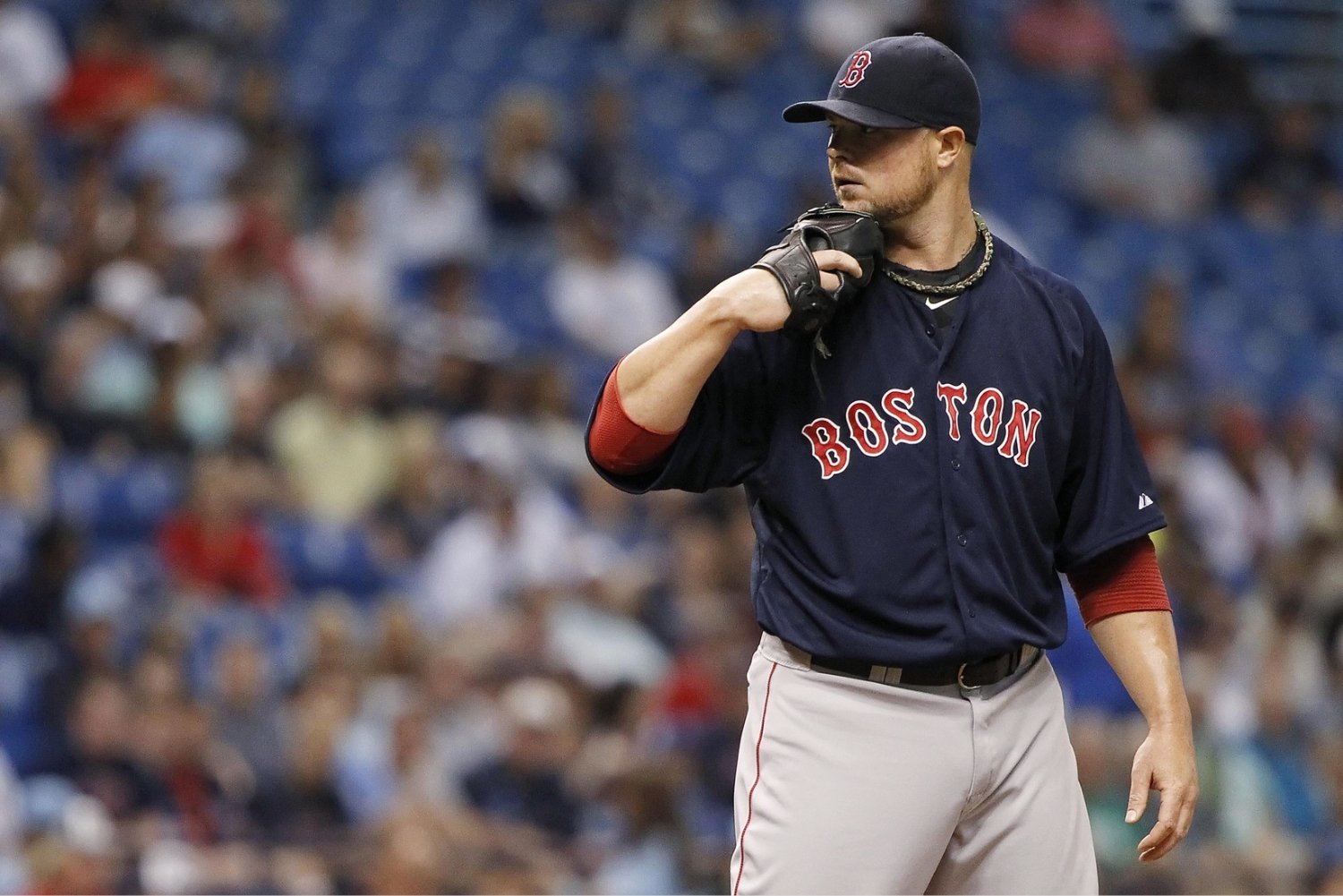 As a lefty, it’s easy to spot other left-handers in the wild. We wear watches on our right wrist and typically have ink/pencil smudges on the outside of our left hand. In baseball, the tell is a bit more obvious — you just need to look at a player’s throwing arm. Following the acquisition of Ranger Suárez, the Boston Red Sox have a plethora of left-handed starters on their roster: Garrett Crochet Ranger Suárez Payton Tolle Connelly Early Patrick Sandoval Kyle Harrison That’s six lefties, before factoring in right-handers Sonny Gray, Brayan Bello, and Kutter Crawford. Crochet, Suárez, Gray, and Bello are guaranteed rotation spots (barring a potential Bello trade). It begs the question: how rare are lefty-heavy rotations? To avoid repeating myself, a lefty-heavy rotation is defined as one with three or more left-handed starters who have started at least 20 games. Data spans from 2010 to 2025. Since 2010, only 26 teams have featured lefty-heavy rotations. The White Sox ran one over four consecutive seasons (2013-2016), the longest streak in the dataset. The Red Sox followed with three straight from 2017 to 2019. Season Left-Handed Starters Lefty fWAR Rotation Rank 2017 Chris Sale, Drew Pomeranz, Eduardo Rodriguez 12.5 4th 2018 Chris Sale, David Price, Eduardo Rodriguez 10.6 8th 2019 Chris Sale, David Price, Eduardo Rodriguez 9.6 13th *David Price (1.1 fWAR) was part of the 2017 rotation, but injuries limited him to just 11 starts. Do southpaw-heavy rotations actually perform better? From our sample, such rotations do have a small edge. They average 2.5 more fWAR and a 55.3% win rate compared to 52.1% for the rest of the league. The average rotation has just 1.1 lefty starters with 20+ starts. Fielding three is almost triple the norm. The primary advantage lies in pitching depth, not pitcher handedness. Having three quality starters is rare. The Dodgers, Red Sox, and White Sox didn't just wake up one day with them. Their rotations were already headlined by Chris Sale and Clayton Kershaw in their primes. Group Teams Avg fWAR Avg Win % 0-2 Lefties 423 9.0 51.9% 3+ Lefties 26 11.5 55.3% Duke Wheeler, a former reliever who briefly pitched for the Pirates in 2008, emphasized, "If everybody is effective and everybody is a little different, it can work out. If you have five quality starters, it really doesn't matter if it's right-handed or left-handed." The 2011 Phillies' rotation proves Wheeler's point. Their fabled Four Aces (and Joe Blanton) accumulated the highest fWAR in history (27.0) with just two lefties, Cole Hamels and Cliff Lee, alongside righties Roy Halladay, Roy Oswalt, and Blanton. Rotations with four lefties are even rarer. There have only been four rotations in MLB history that featured four left-handed pitchers with at least 20 starts. body { font-family: -apple-system, BlinkMacSystemFont, 'Segoe UI', Roboto, sans-serif; padding: 20px; background: #f5f5f5; } table { border-collapse: collapse; width: 100%; max-width: 900px; background: white; box-shadow: 0 2px 8px rgba(0,0,0,0.1); border-radius: 8px; overflow: hidden; } th { background: #1a1a2e; color: white; padding: 12px 16px; text-align: left; font-weight: 600; } td { padding: 12px 16px; border-bottom: 1px solid #eee; } tr:last-child td { border-bottom: none; } tr:hover { background: #f8f9fa; } .season { font-weight: 600; } .team { font-weight: 600; color: #2563eb; } .war { text-align: center; font-weight: 600; color: #059669; } .record { text-align: center; } .names { font-size: 0.9em; color: #555; } Season Team Record Left-Handed Starters 1954 WSH 41-44 Mickey McDermott, Johnny Schmitz, Chuck Stobbs, Dean Stone 2013 CHW 28-42 José Quintana, Chris Sale, Héctor Santiago, John Danks 2015 CHW 38-42 José Quintana, Chris Sale, John Danks, Carlos Rodón 2017 LAD 50-24 Clayton Kershaw, Rich Hill, Alex Wood, Hyun Jin Ryu Lefty-heavy rotation outcomes vary. Teams need a well-rounded roster to make a deep run in the postseason. The White Sox appear in the top 10 three times (2014, 2015, and 2016), but finished towards the bottom of the American League Central each year. The other seven teams played in October, but their performance varied due to roster construction. The 2011 Rangers had power hitters Josh Hamilton, Adrian Beltre, and Ian Kinsler slug the team to the World Series. The Red Sox’s exit in the 2017 American League Division Series highlighted that they needed a power bat. The next season, J.D. Martinez and Steve Pearce provided thump to their lineup, and the team came out on top with a World Series title. Righty Nathan Eovaldi was also a key contributor on the mound. Then, there’s the 2025 Phillies. Their pitching was strong, but their offense ultimately came up short in a gut-wrenching National League Division Series loss. The 2026 Red Sox are hoping to avoid a similar fate. body { font-family: -apple-system, BlinkMacSystemFont, 'Segoe UI', Roboto, sans-serif; padding: 20px; background: #f5f5f5; } table { border-collapse: collapse; width: auto; background: white; box-shadow: 0 2px 8px rgba(0,0,0,0.1); border-radius: 8px; overflow: hidden; } th, td { padding: 14px 16px; text-align: left; } th { background: #1a1a2e; color: white; font-weight: 600; } td { border-bottom: 1px solid #eee; } tr:last-child td { border-bottom: none; } tr:hover { background: #f8f9fa; } .season { width: 60px; } td.season { font-weight: 600; } .team { width: 50px; } .rank { text-align: center; width: 80px; } .count { text-align: center; width: 55px; } .war { text-align: center; width: 65px; } th.war { text-align: center; } .names { font-size: 0.95em; } td.team { } td.war { text-align: center; } td.names { color: #000; } Top 10 Lefty-Heavy Rotations (2010-2025) Season Team Rotation Rank Lefties Lefty fWAR Pitchers 2025 PHI 1st 3 15.8 Jesús Luzardo, Cristopher Sánchez, Ranger Suárez 2015 CHW 8th 4 13.0 José Quintana, Chris Sale, John Danks, Carlos Rodón 2016 CHW 9th 3 12.9 Chris Sale, José Quintana, Carlos Rodón 2017 BOS 4th 3 12.5 Chris Sale, Drew Pomeranz, Eduardo Rodriguez 2011 TEX 3rd 3 12.2 C.J. Wilson, Derek Holland, Matt Harrison 2013 LAD 2nd 3 12.1 Clayton Kershaw, Hyun Jin Ryu, Chris Capuano 2022 LAD 5th 3 10.9 Julio Urías, Tyler Anderson, Clayton Kershaw 2018 BOS 8th 3 10.6 David Price, Chris Sale, Eduardo Rodriguez 2014 CHW 17th 3 10.5 John Danks, José Quintana, Chris Sale 2017 LAD 5th 4 10.1 Clayton Kershaw, Rich Hill, Alex Wood, Hyun Jin Ryu With Suárez in the fold, FanGraphs projects the Red Sox to have the best starting rotation in baseball. Garrett Crochet and Suárez anchor the top of the rotation. Payton Tolle and Connelly Early will likely start the season in Triple-A Worcester. When an inevitable injury hits, one of them will be called up. If either reaches 20 starts, the Red Sox could field its first lefty-heavy rotation in six years. Pitching depth alone doesn’t win titles. At the plate, the Red Sox rank 21st in FanGraphs projected batting WAR (21.8), and they must strengthen their infield before Opening Day. However, it's clear that this team has built up an inherent advantage by accruing so many arms from the left side — now they need to capitalize upon it. body { font-family: -apple-system, BlinkMacSystemFont, 'Segoe UI', Roboto, sans-serif; padding: 20px; background: #f5f5f5; } table { border-collapse: collapse; width: auto; background: white; box-shadow: 0 2px 8px rgba(0,0,0,0.1); border-radius: 8px; overflow: hidden; } th, td { padding: 14px 18px; text-align: left; } th { background: #1a1a2e; color: white; font-weight: 600; } td { border-bottom: 1px solid #eee; } tr:last-child td { border-bottom: none; } tr:hover { background: #f8f9fa; } .season { font-weight: 600; } .num { text-align: center; } .names { font-size: 0.95em; color: #444; } body { font-family: -apple-system, BlinkMacSystemFont, 'Segoe UI', Roboto, sans-serif; padding: 20px; background: #f5f5f5; } table { border-collapse: collapse; width: auto; background: white; box-shadow: 0 2px 8px rgba(0,0,0,0.1); border-radius: 8px; overflow: hidden; } th, td { padding: 14px 16px; text-align: left; } th { background: #1a1a2e; color: white; font-weight: 600; } td { border-bottom: 1px solid #eee; } tr:last-child td { border-bottom: none; } tr:hover { background: #f8f9fa; } .season { width: 60px; } td.season { font-weight: 600; } .team { width: 50px; } .rank { text-align: center; width: 80px; } .count { text-align: center; width: 55px; } .war { text-align: center; width: 65px; } th.war { text-align: center; } .names { font-size: 0.95em; } td.team { } td.war { text-align: center; } td.names { color: #000; } body { font-family: -apple-system, BlinkMacSystemFont, 'Segoe UI', Roboto, sans-serif; padding: 20px; background: #f5f5f5; } table { border-collapse: collapse; width: auto; background: white; box-shadow: 0 2px 8px rgba(0,0,0,0.1); border-radius: 8px; overflow: hidden; } th, td { padding: 14px 18px; text-align: left; } th { background: #1a1a2e; color: white; font-weight: 600; } td { border-bottom: 1px solid #eee; } tr:last-child td { border-bottom: none; } tr:hover { background: #f8f9fa; } .group { font-weight: 600; } .num { text-align: center; }
-
- 1
-

-
- garrett crochet
- ranger suarez
- (and 1 more)
-
The Boston Red Sox avoided arbitration hearings with their seven arbitration-eligible players this offseason. On Thursday, Triston Casas, Tanner Houck, Johan Oviedo, and Romy González each signed a one-year contract covering the 2026 season. @Alex Mayes and @Nick John previously wrote about Jarren Duran and Kutter Crawford’s deals, two of the team’s other arbitration-eligible players. Connor Wong also reached a $1.375 million agreement in November. body { font-family: -apple-system, BlinkMacSystemFont, 'Segoe UI', Roboto, sans-serif; padding: 20px; background-color: #f5f5f5; } table { border-collapse: collapse; background-color: white; box-shadow: 0 2px 8px rgba(0, 0, 0, 0.1); border-radius: 8px; overflow: hidden; } thead { background-color: #0d2b56; color: white; } th { padding: 14px 16px; text-align: center; font-weight: 600; font-size: 14px; } th:first-child { text-align: left; } td { padding: 12px 16px; border-bottom: 1px solid #e0e0e0; font-size: 15px; text-align: center; } td:first-child { text-align: left; font-weight: 500; } tbody tr:last-child td { border-bottom: none; } tbody tr:hover { background-color: #f8f9fa; } Player Position Service Time (Years) Salary Tanner Houck SP 4.100 $4.15 million Johan Oviedo SP 4.078 $1.55 million Romy González UTIL 3.083 $1.60 million Triston Casas 1B 3.031 $1.61 million I’m not too shocked at any of these numbers. Tanner Houck and Johan Oviedo are in their second year of arbitration. Houck’s salary increased from $3.95 million in 2025 to $4.15 million in 2026, though he’s unlikely to see playing time as he recovers from Tommy John surgery. Depending on how Johan Oviedo fares with the Red Sox, his contract could end up looking like a bargain. Romy González is a competent bench piece with positional versatility. Triston Casas, who was injured for much of 2025, is expected to return at some point during the 2026 season. You often hear claims online that players don’t want to sign with the Red Sox because their front office treats players poorly. It’s a gray area for the team, which has traded away franchise cornerstones like Mookie Betts and Rafael Devers. But judging solely by the arbitration process, the Red Sox have treated players fairly by consistently avoiding hearings in recent years. The last time the organization went to a hearing was six years ago, when Eduardo Rodríguez sought $8.675 million in salary, but lost his case and was awarded $8.3 million. Before that, Mookie Betts beat the team in 2018, earning $10.5 million, the highest salary the Red Sox have awarded through an arbitration hearing. Betts holds records for the highest salaries for a player in their second ($20 million in 2019) and third year of arbitration ($27 million in 2020), both of which were settled without a hearing. With these four salaries settled, the Red Sox are roughly $4 million under the first CBT threshold of $244 million. Should free agent third baseman Alex Bregman accept the team’s reportedly aggressive offer, it would push the team well beyond it. View full article
-
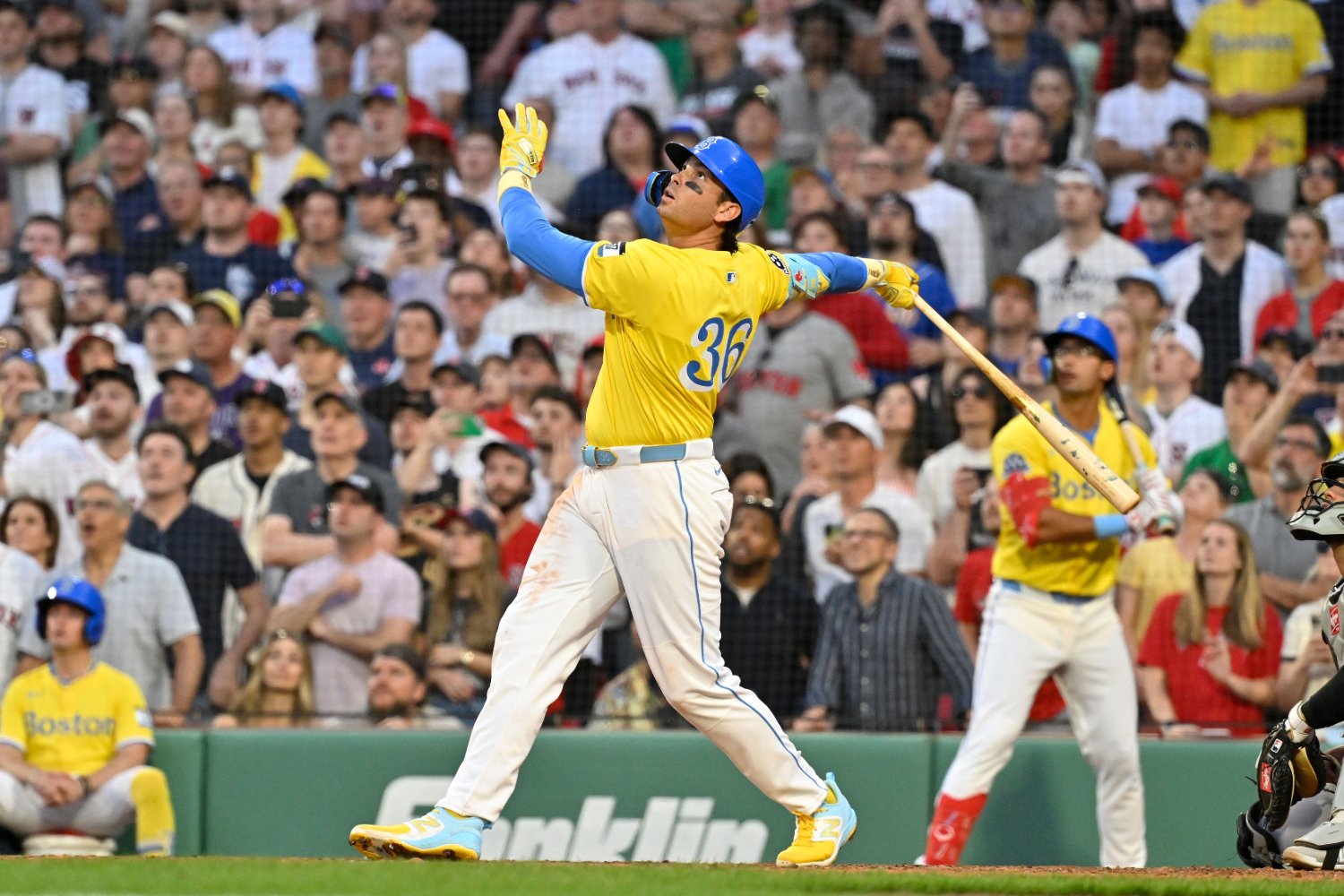 The Boston Red Sox avoided arbitration hearings with their seven arbitration-eligible players this offseason. On Thursday, Triston Casas, Tanner Houck, Johan Oviedo, and Romy González each signed a one-year contract covering the 2026 season. @Alex Mayes and @Nick John previously wrote about Jarren Duran and Kutter Crawford’s deals, two of the team’s other arbitration-eligible players. Connor Wong also reached a $1.375 million agreement in November. body { font-family: -apple-system, BlinkMacSystemFont, 'Segoe UI', Roboto, sans-serif; padding: 20px; background-color: #f5f5f5; } table { border-collapse: collapse; background-color: white; box-shadow: 0 2px 8px rgba(0, 0, 0, 0.1); border-radius: 8px; overflow: hidden; } thead { background-color: #0d2b56; color: white; } th { padding: 14px 16px; text-align: center; font-weight: 600; font-size: 14px; } th:first-child { text-align: left; } td { padding: 12px 16px; border-bottom: 1px solid #e0e0e0; font-size: 15px; text-align: center; } td:first-child { text-align: left; font-weight: 500; } tbody tr:last-child td { border-bottom: none; } tbody tr:hover { background-color: #f8f9fa; } Player Position Service Time (Years) Salary Tanner Houck SP 4.100 $4.15 million Johan Oviedo SP 4.078 $1.55 million Romy González UTIL 3.083 $1.60 million Triston Casas 1B 3.031 $1.61 million I’m not too shocked at any of these numbers. Tanner Houck and Johan Oviedo are in their second year of arbitration. Houck’s salary increased from $3.95 million in 2025 to $4.15 million in 2026, though he’s unlikely to see playing time as he recovers from Tommy John surgery. Depending on how Johan Oviedo fares with the Red Sox, his contract could end up looking like a bargain. Romy González is a competent bench piece with positional versatility. Triston Casas, who was injured for much of 2025, is expected to return at some point during the 2026 season. You often hear claims online that players don’t want to sign with the Red Sox because their front office treats players poorly. It’s a gray area for the team, which has traded away franchise cornerstones like Mookie Betts and Rafael Devers. But judging solely by the arbitration process, the Red Sox have treated players fairly by consistently avoiding hearings in recent years. The last time the organization went to a hearing was six years ago, when Eduardo Rodríguez sought $8.675 million in salary, but lost his case and was awarded $8.3 million. Before that, Mookie Betts beat the team in 2018, earning $10.5 million, the highest salary the Red Sox have awarded through an arbitration hearing. Betts holds records for the highest salaries for a player in their second ($20 million in 2019) and third year of arbitration ($27 million in 2020), both of which were settled without a hearing. With these four salaries settled, the Red Sox are roughly $4 million under the first CBT threshold of $244 million. Should free agent third baseman Alex Bregman accept the team’s reportedly aggressive offer, it would push the team well beyond it.
 -
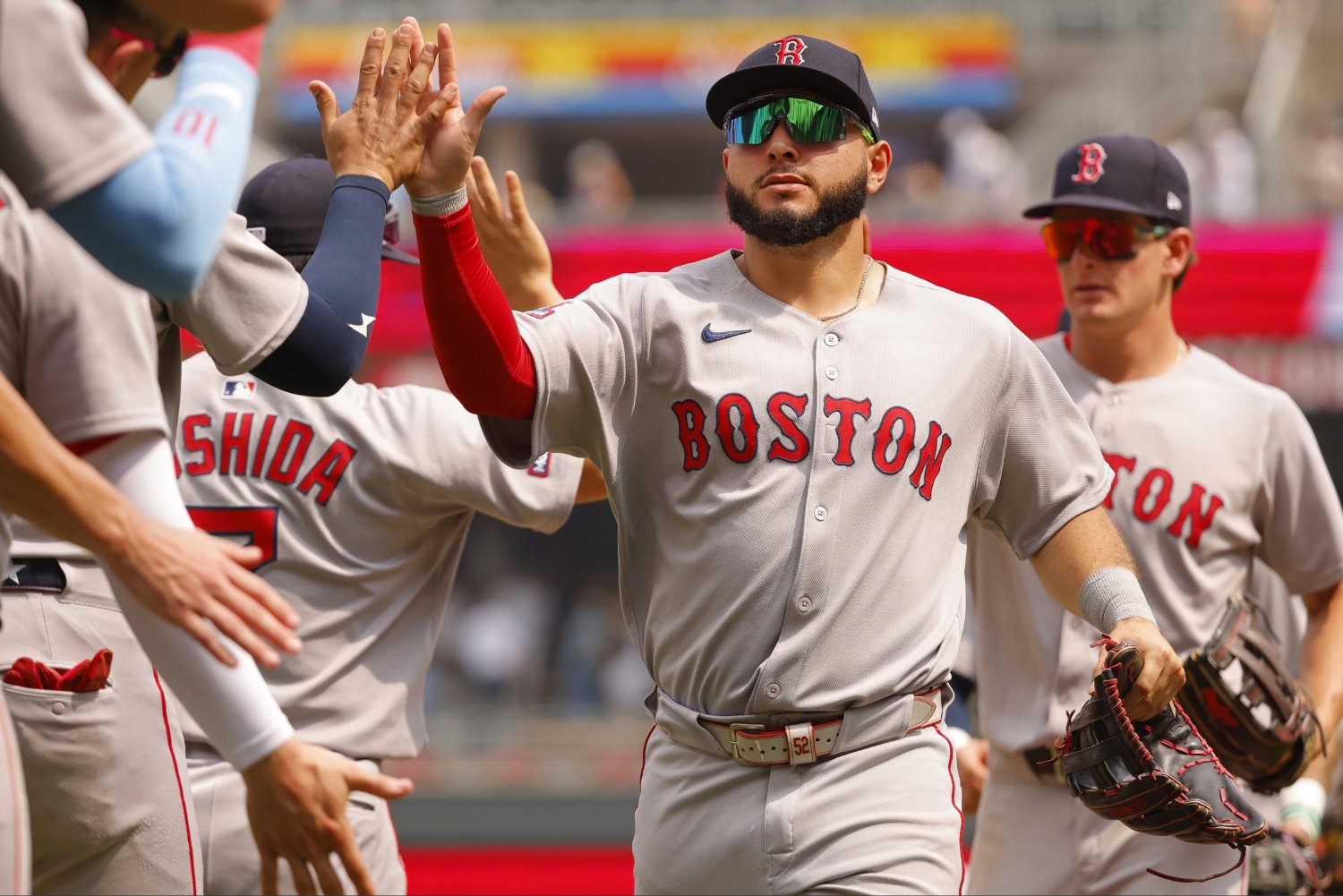 Baseball has become an international sport. In 2025, internationally born players made up 27.8% of players on Opening Day rosters across Major League Baseball. The Dominican Republic led the way with 100 players, followed by Venezuela with 63 players. You can read more about the situation in Venezuela and its impact on Major League Baseball here. The Red Sox have four Venezuelan players in the organization: the new kid on the block, first baseman Willson Contreras, catcher Carlos Narváez, right fielder Wilyer Abreu, and shortstop prospect Franklin Arias. Beat writer Marcos Grunfeld reported that the Red Sox are “monitoring the situation” in Venezuela and have confirmed that their players, families, and staff in the country are safe. Pete Abraham of the Boston Globe shared an updated list of players attending Fenway Fest this past Saturday. Of the team’s four Venezuelan players, all except Contreras are set to appear. Contreras’s absence caught my attention, especially given the current geopolitical situation. But on Monday morning, Contreras posted an Instagram Story of Cerro El Casupo, a park in Valencia, Venezuela (which I found after a quick reverse Google Image search), so he appears to be doing well. For reference, Valencia is approximately 103.77 miles away from Caracas, the Venezuelan capital and target of U.S. strikes on January 3. Safe travels to players (and any family joining them) traveling to Boston this weekend, and to Contreras ahead of spring training.
 -
Baseball has become an international sport. In 2025, internationally born players made up 27.8% of players on Opening Day rosters across Major League Baseball. The Dominican Republic led the way with 100 players, followed by Venezuela with 63 players. You can read more about the situation in Venezuela and its impact on Major League Baseball here. The Red Sox have four Venezuelan players in the organization: the new kid on the block, first baseman Willson Contreras, catcher Carlos Narváez, right fielder Wilyer Abreu, and shortstop prospect Franklin Arias. Beat writer Marcos Grunfeld reported that the Red Sox are “monitoring the situation” in Venezuela and have confirmed that their players, families, and staff in the country are safe. Pete Abraham of the Boston Globe shared an updated list of players attending Fenway Fest this past Saturday. Of the team’s four Venezuelan players, all except Contreras are set to appear. Contreras’s absence caught my attention, especially given the current geopolitical situation. But on Monday morning, Contreras posted an Instagram Story of Cerro El Casupo, a park in Valencia, Venezuela (which I found after a quick reverse Google Image search), so he appears to be doing well. For reference, Valencia is approximately 103.77 miles away from Caracas, the Venezuelan capital and target of U.S. strikes on January 3. Safe travels to players (and any family joining them) traveling to Boston this weekend, and to Contreras ahead of spring training. View full article
-
 Alex and Maddie discuss the Willson Contreras trade and the impact it may have on Triston Casas. They go through the remaining free agent options for both second and third base before moving on to the starting pitching market. They close the episode discussing possible trade scenarios and give their takes on whether the Red Sox will sign either Tatsuya Imai or Kazuma Okamoto. Listen on Apple Podcasts: https://podcasts.apple.com/us/podcast/the-talk-sox-podcast/id1783204104 Listen on Spotify: https://open.spotify.com/show/3qPrPXEngu0CxgTmlf0ynm Listen on Pocket Casts: https://pca.st/4tmd121v Watch on YouTube: https://www.youtube.com/@talksox
 -
Alex and Maddie discuss the Willson Contreras trade and the impact it may have on Triston Casas. They go through the remaining free agent options for both second and third base before moving on to the starting pitching market. They close the episode discussing possible trade scenarios and give their takes on whether the Red Sox will sign either Tatsuya Imai or Kazuma Okamoto. Listen on Apple Podcasts: https://podcasts.apple.com/us/podcast/the-talk-sox-podcast/id1783204104 Listen on Spotify: https://open.spotify.com/show/3qPrPXEngu0CxgTmlf0ynm Listen on Pocket Casts: https://pca.st/4tmd121v Watch on YouTube: https://www.youtube.com/@talksox View full article
-
 For baseball fans, we’re fortunate to have a plethora of projection models to review. There’s Jared Cross’ Steamer, Tom Tango’s Marcel the Monkey Forecasting System (Marcel), Nate Silver’s Player Empirical Comparison and Optimization Test Algorithm (PECOTA), Brian Cartwright’s Oliver, and Dan Szymborski’s Zymborski Projection System (ZiPS). Each projection system has its own merits — one isn’t necessarily better than another. Are they 100% accurate? No, which is perfectly fine. Predicting the future is tough. However, they are fun to look at, and reviewing Szymborski’s projections helps the offseason progress a little faster! Just before Christmas, he dropped the Red Sox’s 2026 ZiPS projection. How does the model think the team will fare next year? Garrett Crochet, Sonny Gray, and the Rest of the Rotation Is ZiPS secretly rooting for the Red Sox? It loves Garrett Crochet (don’t we all?), who is projected to generate 5.3 WAR, the second most among pitchers, trailing Tarik Skubal (6.0 WAR). Sonny Gray is currently viewed as the team’s number two starter. Compared to last season’s gap between Crochet and the rest of the rotation, ZiPS is high on Gray, projecting a 112 ERA+ across 154.0 IP. It’s also optimistic about Brayan Bello (104 ERA+). @Alex Mayes and I have talked heavily about Bello’s future on the Talk Sox Podcast. The team’s starting pitching success depends on Brayan Bello, the bridge to the front and back of the rotation. Despite notching three full seasons under his belt, the right-hander's future remains uncertain Has he reached his full ceiling? Can he live up to his true potential? Moreover, what is his true potential? Could he be traded? Between Patrick Sandoval, Kutter Crawford, Connelly Early, Payton Tolle, and Kyle Harrison, the team has more than enough options to fill at the backend of the rotation. Regardless of the depth behind Bello, the rotation’s ceiling and stability hinges on whether he can emerge as a reliable anchor. The Big, Beautiful Bullpen Meanwhile, the bullpen looks great, aside from Zack Kelly. Aroldis Chapman is expected to have another successful season (143 ERA+, the team’s second-best mark, and a 2.74 FIP). After a strong season as a full-time reliever, ZiPS is keen on Garrett Whitlock, projecting a 132 ERA+ and 3.05 FIP. Holes at 3B, 2B, and Catcher It’s almost 2026. Following the Rafael Devers trade, Alex Bregman’s injury, and his eventual opt-out come the offseason, I feel like a broken record saying the Red Sox need infield depth. Fortunately, the Willson Contreras trade addressed depth at first base. However, for the rest of the infield, help is required. ZiPS views Marcelo Mayer as a third baseman, rather than a second baseman (where he played 57 innings in 2025). Excluding first base, Mayer can play wherever he’s needed in the infield. Ceddanne Rafaela and Romy González are projected to net the most playing time at second. Free agents Alex Bregman, Bo Bichette, and Kazuma Okamoto are unsigned and could help fill holes at second or third, so Rafaela can man center field on a full-time basis. Bench players like Romy González (projected .266/.307/.426, 102 OPS+, 0.9 WAR) and David Hamilton (projected .228/.298/.359, 83 0PS+, 1.8 WAR) are valuable contributors to the team, but when injuries forced them into full-time roles, their overall performance suffered. The team must add an everyday player at either second or third and deploy the González and Hamilton as depth when needed, rather than expect them to carry the workloads of starters. The catching group is projected to be around average. ZiPS is pessimistic about Carlos Narváez, projecting him to slash .224/.307/.362 with an 87 OPS+ and 1.6 WAR across 418 plate appearances. It expects Connor Wong’s bat to bounce back, though, slashing .248/.309/.386 with a 93 OPS+ and 0.6 WAR over 351 plate appearances. Maybe this is why the Red Sox have reportedly checked in on free-agent catcher J.T. Realmuto? After an emotionally turbulent season that featured the team’s first playoff appearance since 2021, the Red Sox are looking to build upon their success. ZiPS highlights areas of need in the roster, but overall is optimistic about the team’s future trajectory: Now, it’s up to Craig Breslow and the front office to fill the roster’s outstanding needs.
 -
For baseball fans, we’re fortunate to have a plethora of projection models to review. There’s Jared Cross’ Steamer, Tom Tango’s Marcel the Monkey Forecasting System (Marcel), Nate Silver’s Player Empirical Comparison and Optimization Test Algorithm (PECOTA), Brian Cartwright’s Oliver, and Dan Szymborski’s Zymborski Projection System (ZiPS). Each projection system has its own merits — one isn’t necessarily better than another. Are they 100% accurate? No, which is perfectly fine. Predicting the future is tough. However, they are fun to look at, and reviewing Szymborski’s projections helps the offseason progress a little faster! Just before Christmas, he dropped the Red Sox’s 2026 ZiPS projection. How does the model think the team will fare next year? Garrett Crochet, Sonny Gray, and the Rest of the Rotation Is ZiPS secretly rooting for the Red Sox? It loves Garrett Crochet (don’t we all?), who is projected to generate 5.3 WAR, the second most among pitchers, trailing Tarik Skubal (6.0 WAR). Sonny Gray is currently viewed as the team’s number two starter. Compared to last season’s gap between Crochet and the rest of the rotation, ZiPS is high on Gray, projecting a 112 ERA+ across 154.0 IP. It’s also optimistic about Brayan Bello (104 ERA+). @Alex Mayes and I have talked heavily about Bello’s future on the Talk Sox Podcast. The team’s starting pitching success depends on Brayan Bello, the bridge to the front and back of the rotation. Despite notching three full seasons under his belt, the right-hander's future remains uncertain Has he reached his full ceiling? Can he live up to his true potential? Moreover, what is his true potential? Could he be traded? Between Patrick Sandoval, Kutter Crawford, Connelly Early, Payton Tolle, and Kyle Harrison, the team has more than enough options to fill at the backend of the rotation. Regardless of the depth behind Bello, the rotation’s ceiling and stability hinges on whether he can emerge as a reliable anchor. The Big, Beautiful Bullpen Meanwhile, the bullpen looks great, aside from Zack Kelly. Aroldis Chapman is expected to have another successful season (143 ERA+, the team’s second-best mark, and a 2.74 FIP). After a strong season as a full-time reliever, ZiPS is keen on Garrett Whitlock, projecting a 132 ERA+ and 3.05 FIP. Holes at 3B, 2B, and Catcher It’s almost 2026. Following the Rafael Devers trade, Alex Bregman’s injury, and his eventual opt-out come the offseason, I feel like a broken record saying the Red Sox need infield depth. Fortunately, the Willson Contreras trade addressed depth at first base. However, for the rest of the infield, help is required. ZiPS views Marcelo Mayer as a third baseman, rather than a second baseman (where he played 57 innings in 2025). Excluding first base, Mayer can play wherever he’s needed in the infield. Ceddanne Rafaela and Romy González are projected to net the most playing time at second. Free agents Alex Bregman, Bo Bichette, and Kazuma Okamoto are unsigned and could help fill holes at second or third, so Rafaela can man center field on a full-time basis. Bench players like Romy González (projected .266/.307/.426, 102 OPS+, 0.9 WAR) and David Hamilton (projected .228/.298/.359, 83 0PS+, 1.8 WAR) are valuable contributors to the team, but when injuries forced them into full-time roles, their overall performance suffered. The team must add an everyday player at either second or third and deploy the González and Hamilton as depth when needed, rather than expect them to carry the workloads of starters. The catching group is projected to be around average. ZiPS is pessimistic about Carlos Narváez, projecting him to slash .224/.307/.362 with an 87 OPS+ and 1.6 WAR across 418 plate appearances. It expects Connor Wong’s bat to bounce back, though, slashing .248/.309/.386 with a 93 OPS+ and 0.6 WAR over 351 plate appearances. Maybe this is why the Red Sox have reportedly checked in on free-agent catcher J.T. Realmuto? After an emotionally turbulent season that featured the team’s first playoff appearance since 2021, the Red Sox are looking to build upon their success. ZiPS highlights areas of need in the roster, but overall is optimistic about the team’s future trajectory: Now, it’s up to Craig Breslow and the front office to fill the roster’s outstanding needs. View full article
-
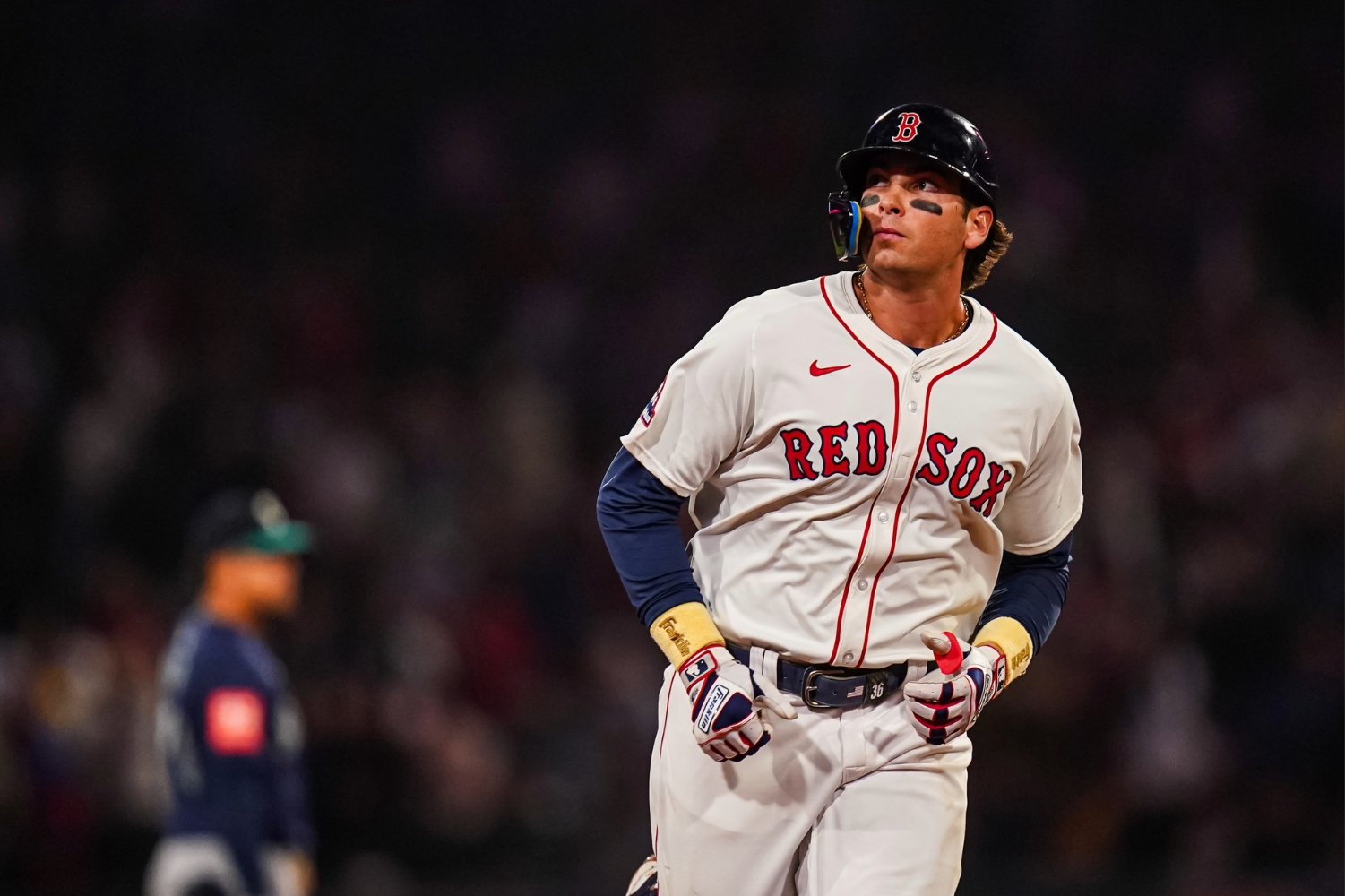 For a contending team, it wouldn’t have been pragmatic for the Boston Red Sox to go into the 2026 season without additional depth at first base, a position that has been a glaring weakness over the past three years. Moreover, first base seemed to be the obvious place to acquire a desperately-needed power bat. Following the acquisition of Willson Contreras from the St. Louis Cardinals, Triston Casas faces an uncertain path to playing time in 2026. Let me start with this: I’m a vocal Triston Casas fan. In college, I took a break from following the Red Sox closely as my studies (and extracurricular activities) took precedence. After graduation, I started watching the team again, largely drawn back to baseball by Casas’ rookie season. As someone who’s also been labeled as quirky throughout my whole life, it was refreshing to see an MLB player with a similar personality on my favorite team. Growing up during the boring era of baseball personalities, Casas was like a shot of espresso. I love that Casas is unapologetically himself, from his adherence to routines (I also eat strawberries daily) to his love for sushi, and most importantly, his ability to demolish the ball. After finishing third in the 2023 American League Rookie of the Year voting, it looked like Triston Casas was going to be the Red Sox’s middle-of-the-order power bat for the future. In 2024, a rib cartilage tear sidelined him for most of the season. In 2025, a torn patellar tendon abruptly cut his season short. Due to Casas’ extensive injury history, Chief Baseball Officer Craig Breslow was reluctant to name him as the team’s starting first baseman in 2026. Year PA BB% K% AVG OPS wOBA wRC+ WAR 2023 502 13.9% 25.1% .263 .856 .367 131 1.8 2024 243 12.3% 31.7% .241 .800 .342 120 0.6 2025 112 9.8% 24.1% .182 .580 .256 56 -0.6 Casas’ value comes from his bat, which peaked during his rookie season. His defense at first has been subpar, posting -9 Outs Above Average (OAA) in his 2023 rookie season, -2 OAA in 2024, and -3 OAA in 2025. On the other hand, Contreras is a plus defender at first, recording +6 OAA in his first full season manning the position. Back in June, Casas said he aims to be ready by Opening Day. The addition of Contreras alleviates the pressure on Casas to rush his recovery and return Notably, he has three remaining minor league options and could start the season in Triple-A Worcester. When fully healthy, Casas, as a left-handed bat, could work out some platoon with Contreras between designated hitter and first base. Figuring out what to do with Masataka Yoshida, the team’s designated hitter, is a bridge to cross later in this possible future. If Casas obliterates the ball in spring training, releasing Yoshida could be an option; the former NPB phenom has never provided much value defensively, and he’s a square peg in a round hole as a designated hitter. He profiles more as a contact hitter than the power bat that teams want from the position. Considering the uncertainty surrounding Casas’ health and questions about his performance returning from consecutive substantial injuries, however, cutting ties with Yoshida now would be premature. The Red Sox finally have depth at first base, a position that has only accumulated 1.4 fWAR for the team since 2022 (24th in baseball). Contreras himself brings his own history of injuries, albeit most of them were related to catching. Trading or releasing Casas when his value is at an all-time low would be short-sighted. At just 26 years old next season (his birthday is in early January), he remains controllable and won’t reach arbitration until after 2026. Take it from Breslow, who summed up the team’s approach: “(It’s an) opportunity to keep everybody fresh, to keep everybody involved and engaged at the same time. As we sit here in late December with Triston coming off of a season-ending injury, to get too far ahead of ourselves probably doesn’t make a ton of sense. To have right-handed impact, left-handed impact, both guys that can hit the ball out of the park, it’s going to make us better.” For now, patience is the best strategy. The Red Sox can afford to let the situation unfold.
 -
For a contending team, it wouldn’t have been pragmatic for the Boston Red Sox to go into the 2026 season without additional depth at first base, a position that has been a glaring weakness over the past three years. Moreover, first base seemed to be the obvious place to acquire a desperately-needed power bat. Following the acquisition of Willson Contreras from the St. Louis Cardinals, Triston Casas faces an uncertain path to playing time in 2026. Let me start with this: I’m a vocal Triston Casas fan. In college, I took a break from following the Red Sox closely as my studies (and extracurricular activities) took precedence. After graduation, I started watching the team again, largely drawn back to baseball by Casas’ rookie season. As someone who’s also been labeled as quirky throughout my whole life, it was refreshing to see an MLB player with a similar personality on my favorite team. Growing up during the boring era of baseball personalities, Casas was like a shot of espresso. I love that Casas is unapologetically himself, from his adherence to routines (I also eat strawberries daily) to his love for sushi, and most importantly, his ability to demolish the ball. After finishing third in the 2023 American League Rookie of the Year voting, it looked like Triston Casas was going to be the Red Sox’s middle-of-the-order power bat for the future. In 2024, a rib cartilage tear sidelined him for most of the season. In 2025, a torn patellar tendon abruptly cut his season short. Due to Casas’ extensive injury history, Chief Baseball Officer Craig Breslow was reluctant to name him as the team’s starting first baseman in 2026. Year PA BB% K% AVG OPS wOBA wRC+ WAR 2023 502 13.9% 25.1% .263 .856 .367 131 1.8 2024 243 12.3% 31.7% .241 .800 .342 120 0.6 2025 112 9.8% 24.1% .182 .580 .256 56 -0.6 Casas’ value comes from his bat, which peaked during his rookie season. His defense at first has been subpar, posting -9 Outs Above Average (OAA) in his 2023 rookie season, -2 OAA in 2024, and -3 OAA in 2025. On the other hand, Contreras is a plus defender at first, recording +6 OAA in his first full season manning the position. Back in June, Casas said he aims to be ready by Opening Day. The addition of Contreras alleviates the pressure on Casas to rush his recovery and return Notably, he has three remaining minor league options and could start the season in Triple-A Worcester. When fully healthy, Casas, as a left-handed bat, could work out some platoon with Contreras between designated hitter and first base. Figuring out what to do with Masataka Yoshida, the team’s designated hitter, is a bridge to cross later in this possible future. If Casas obliterates the ball in spring training, releasing Yoshida could be an option; the former NPB phenom has never provided much value defensively, and he’s a square peg in a round hole as a designated hitter. He profiles more as a contact hitter than the power bat that teams want from the position. Considering the uncertainty surrounding Casas’ health and questions about his performance returning from consecutive substantial injuries, however, cutting ties with Yoshida now would be premature. The Red Sox finally have depth at first base, a position that has only accumulated 1.4 fWAR for the team since 2022 (24th in baseball). Contreras himself brings his own history of injuries, albeit most of them were related to catching. Trading or releasing Casas when his value is at an all-time low would be short-sighted. At just 26 years old next season (his birthday is in early January), he remains controllable and won’t reach arbitration until after 2026. Take it from Breslow, who summed up the team’s approach: “(It’s an) opportunity to keep everybody fresh, to keep everybody involved and engaged at the same time. As we sit here in late December with Triston coming off of a season-ending injury, to get too far ahead of ourselves probably doesn’t make a ton of sense. To have right-handed impact, left-handed impact, both guys that can hit the ball out of the park, it’s going to make us better.” For now, patience is the best strategy. The Red Sox can afford to let the situation unfold. View full article
-
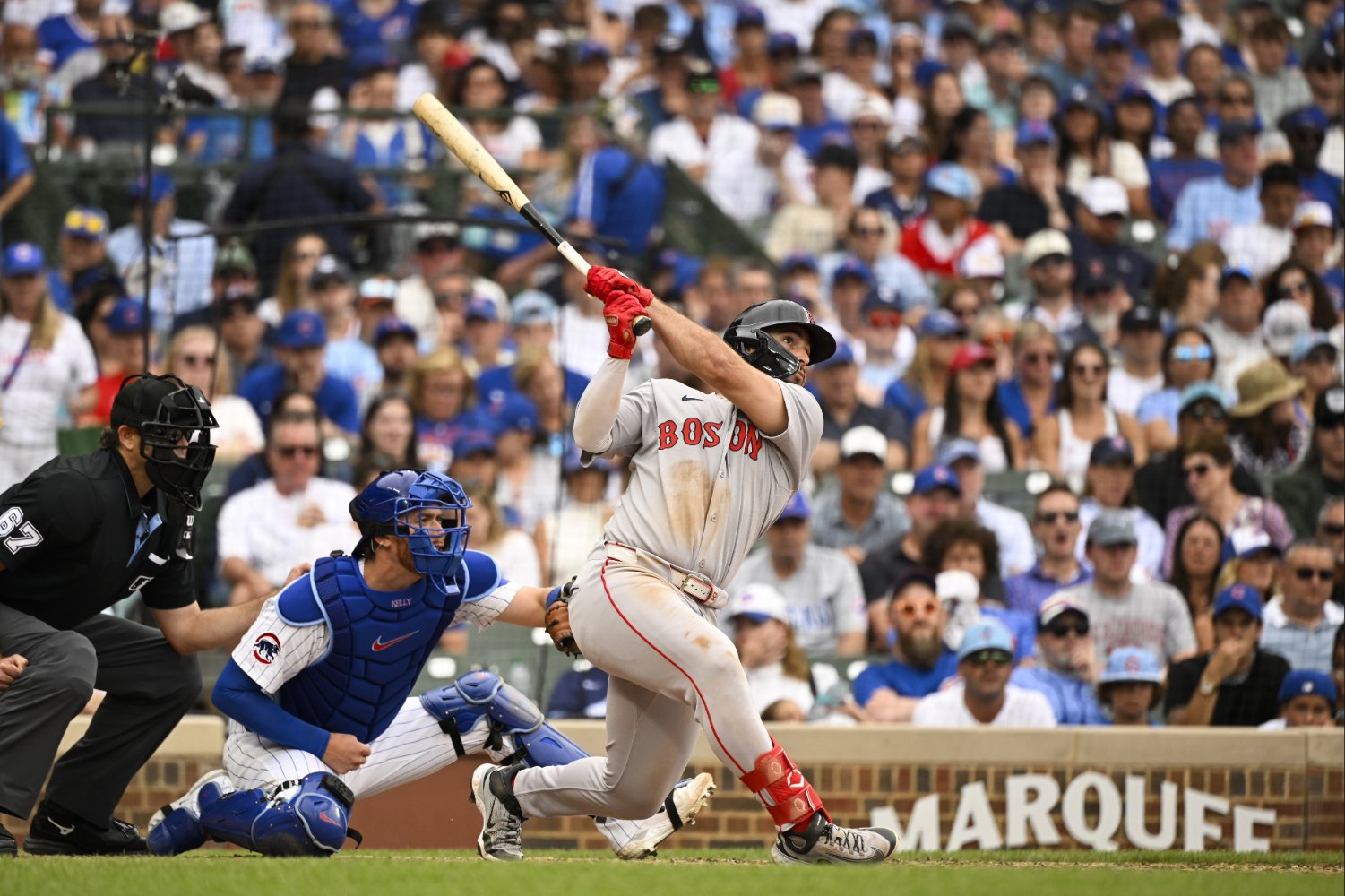 The 2022-26 MLB Collective Bargaining Agreement (CBA) expires on December 1, 2026, at 11:59 p.m. ET. For anyone unfamiliar with the sprawling 442-page contract, the CBA outlines how Major League Baseball operates. It addresses spring training allowances, revenue-sharing guidelines, minimum salaries, deferred contracts, and more. Tony Clark, the Executive Director of the Major League Baseball Players Association (MLBPA), and MLB commissioner Robert Manfred have both indicated that they anticipate a lockout after the current CBA expires. Manfred even went as far as to state: Competitive parity in MLB and the potential implementation of a salary cap, which the MLBPA vehemently opposes, are already being discussed. Other major topics include the international draft, integrity protections with the rise of gambling, and combating service time manipulation. Manfred has been gearing up for a potential lockout. In 2023, he launched the Commissioner’s Ambassador Program (CAP) to “represent the game at MLB events and support the league's international growth, among other responsibilities”. This past season, Manfred toured MLB clubhouses, sometimes bringing CAP members. Historically, the MLBPA has been the bridge between players and the commissioner’s office. CAP however, is leapfrogging union reps and player agents to directly advise players under the guidance of the commissioner’s office, fueling further tension. *Picture of the chart taken during a recent visit to the Baseball Hall of Fame The Los Angeles Dodgers’ back-to-back World Series titles, achieved with top-three payrolls in both seasons, have intensified discussions about a salary cap. Their spending frenzy last offseason led to a record-breaking $582.25 million luxury tax payroll in 2025. While World Series runner-ups are often afterthoughts in the history books, the Dodgers’ victories came against other high-payroll teams, the New York Yankees in 2024 ($389.17 million) and the Toronto Blue Jays in 2025 ($288.60 million). For once, I agree with Bryce Harper. Whining about the Dodgers’ spending is not worth the attention. The Dodgers are a well-oiled machine. Besides consistently signing quality free agents, they have one of, if not the largest, analytics departments across all professional sports. The other 29 teams in the league could beef up their analytics staff and allocate more revenue towards their payroll, but they choose not to. Why should the Dodgers be held liable for the Pirates allocating only 32.4% ($105.67 million) of their revenue towards their payroll in 2025? It’s absolutely asinine for the rest of the league to bemoan the willingness of the Dodgers’ ownership to invest in the team and not match their moves. Every team had the financial resources to offer Shohei Ohtani a 10-year $700 million contract with its mind-boggling deferrals. Any organization could have signed Blake Snell, a two-time Cy Young Award winner, to a long-term deal, despite concerns about his injury history. These moves, and many more, have consistently worked in the Dodgers' favor. Luck certainly plays a role in the Dodgers' player acquisitions, but the decisive factor in their success is their willingness to act when other teams won’t. Sources: Forbes, Cots Contracts In an attempt to mitigate disparity, the CBA penalizes excessive spenders with the Competitive Balance Tax (CBT). If a team's 40-man roster payroll exceeds the set yearly CBT threshold, it is taxed on the overages, with rates increasing for consecutive seasons of overspending. This past year, the CBT threshold was $241 million, and in 2026, it increases to $244 million. The CBA lays out MLB’s revenue-sharing model. Teams contribute to a shared pool, determined by a fixed percentage of net local revenue (the club’s local revenue minus actual stadium expenses), which is then distributed evenly to all 30 clubs. The exact percentage has fluctuated over the years, and it’s currently set at 48%. Jake McKibbin from Talk Sox’s sister site, Brewer Fanatic, notes MLB’s current model has two glaring loopholes: Some teams have managed to avoid paying what they should owe; and The revenues shared are then distributed equally, rather than on a meritocratic basis. That disincentivizes some teams from trying to win and improve the on-field product. Many teams have partial ownership of local/regional sports networks. As long as its accounting adheres to the generally accepted accounting principles, it has flexibility in how profits are allocated. McKibbin further outlines the loophole, stating: “While revenue from local TV rights is subject to sharing across the league, profits generated through ownership stakes in the broadcasting networks are not. Instead, they are treated as a subsidiary/investment earning.” The current landscape of the free-agent market highlights how teams are preparing for the lockout. The Angels signed former player Kurt Suzuki as a manager to an unusual one-year deal. Shifting from previous years, four players accepted qualifying offers. Shane Bieber and Jack Flaherty surprisingly opted in with their respective teams instead of hitting free agency. While teams like the Dodgers, Phillies, and Blue Jays continue to spend aggressively to contend, the Cubs and Red Sox have each adopted different approaches to roster construction amid the uncertainty of a potential lockout. Both organizations reflect the character of their cities and the legacy of their longstanding franchises. Theo Epstein shepherded the Red Sox out of their 86-year championship drought and the Cubs out of their 108-year championship drought. Their respective owners, the Ricketts Family and Fenway Sports Group, rejected proposals to relocate each team from the two oldest ballparks in baseball. The Cubs invested nearly $1 billion to revamp the neighborhood surrounding Wrigley Field, while the $1.6 billion Fenway Corners development project is underway for the Red Sox. Craig Counsell (five-year, $40 million contract signed in November 2023) and Alex Cora (three-year, $21.75 million contract covering 2025-27) are two of the sport’s most respected and highest-paid managers. In recent years, they have struggled to advance to the postseason and make a deep playoff run. There’s also a history of personnel flow between the organizations’ front offices. Red Sox Chief Baseball Officer Craig Breslow is a disciple of the Cubs President of Baseball Operations, Jed Hoyer, who, in turn, was mentored by Theo Epstein. Hoyer (who could pass as Anderson Cooper's brother) held the following roles with the Red Sox: Assistant to the General Manager (2002), Assistant General Manager (2005-09), Co-General Manager (2005-06). Ryan Otero, the Cubs’ Director of Pitching, was recently hired as a special assistant to Breslow. Despite netting $584 million in revenue, the third-highest in baseball, the Cubs’ 39.5% payroll-to-revenue ratio ranked 25th. The Cubs have mostly steered clear of long-term deals for frontline talent in recent years. Ten years ago, Hoyer, then general manager under Theo Epstein, oversaw the Cubs’ largest contract ever: Jayson Heyward’s eight-year, $184-million deal. Excluding Dansby Swanson’s seven-year, $177 million deal, most of the Cubs' acquisitions since have been geared towards short-term deals; think Shota Imanaga’s original four-year, $53 million deal, signed in 2024, and Seiya Suzuki’s five-year, $85 million deal, signed in 2022. Homegrown players Nico Hoerner and Ian Happ were signed to three-year extensions in 2024. This past offseason, the Cubs offered Alex Bregman a four-year, $115 million contract that looked paltry in comparison to Detroit’s six-year, $171.5 million offer and the Astros’ six-year, $156 million offer. Bregman ultimately landed with the Red Sox on a three-year, $120 million contract. In Hoyer’s defense, he does his best with a limited budget imposed by ownership. He’s not afraid to jump the gun and make seismic deals, as evidenced by the Cubs’ blockbuster trade for Kyle Tucker. Most alarming is that numerous key Cubs players enter free agency after the 2027 season, including left fielder Ian Happ, designated hitter/outfielder Seiya Suzuki, starter Jameson Taillon, second baseman Nico Hoerner, and catcher Carson Kelly. Looking beyond 2027, the Cubs’ list of free agents snowballs with each passing year. Entering the 2027 season, shortstop Dansby Swanson and reliever Phil Maton are currently the only two Cubs players with guaranteed salaries. With the Cubs set to lose a large portion of their roster after next year and the limited spending, fans have suggested the team is “clean books” strategy to prepare for the impending lockout. The Cubs have developed a solid core of position players without spending heavily on free-agent talent. Cot’s Contracts projects that they can spend $46.12 million before hitting the first CB threshold. Their rotation needs an upgrade, and starters Framber Valdez, Ranger Suarez, and Michael King are potential targets. Extensions for homegrown talent, e.g. Pete Crow-Armstrong, are another avenue to build long-term roster stability. Moreover, the organization has been successful at recruiting Japanese talent to the team. Signing flamethrower Tatsuya Imai to a contract would assuage the “clean books” talks. The Red Sox allocated 43.8% ($251.47 million) of their previous year’s revenue ($574 million, the fourth-highest total in the league) towards their 2025 payroll. Red Sox Chief Baseball Officer Craig Breslow is a former protege of Hoyer. Like the Cubs, the Red Sox tend to avoid long-term free-agent contracts. They’re one of the four remaining teams that haven’t signed a free agent to a major-league contract this offseason. The difference between the Cubs and the Red Sox’s roster construction is that the Red Sox have extended their homegrown players beyond 2027: Bryan Bello: 6 years, $55 million (2024-29), 2030 club option Kristian Campbell: 8 years, $60 million (2025-32), 2033-34 club options Ceddanne Rafaela: 8 years, $50 million (2024-31), 2032 club option Garrett Crochet: 6 years, $170 million (2026-31) Roman Anthony: 8 years, $130 million (2026-33), 2034 club option Teams do their best to accurately value the risk of free-agent contracts. Execution is equally as important as evaluation, and Breslow’s primary area of weakness has been acquiring free agents to supplement the roster. Looking at FanGraphs’ “We Tried Tracker” from last year, the Red Sox whiffed on almost all of their free-agent targets. Who was the most “notable” free agent that they acquired during the 2024-25 offseason, besides Bregman? Walker Buehler? Andrew Friedman, the Dodgers’ President of Baseball Operations, warned, “If you’re always rational about every free agent, you will finish third on every free agent”. Post-Winter Meetings, Kyle Schwarber and Pete Alonso, two of the available biggest bats, are off the table. While Schwarber always seemed primed to return to the Phillies, the Cubs and Red Sox reportedly met with Alonso. The latter had concerns with Alonso’s age (he just turned 31), defense, and baserunning. Sometimes, you have to bite the bullet and take on the risk of a free agent contract, future projections be damned. Before the 2018 season, the Red Sox signed the 30-year-old J.D. Martinez to a five-year, $110 million deal. He generated 13.3 total fWAR through his tenure with the Red Sox. Roughly three-quarters of his WAR output came in 2018 (5.9) and 2019 (4.0). Towards the end of his contract, his performance declined, but it wasn’t a complete wash. With that being said, Martinez was, arguably, the linchpin of the 2018 team’s World Series run. The Red Sox’s homegrown core of Mookie Betts, Xander Bogaerts, Rafael Devers, Jackie Bradley Jr., and Andrew Benintendi desperately needed a power bat to supplement the lineup. Martinez was that solution. Other teams weren’t willing to bite, and the Red Sox took the risk of signing him. Would the current Red Sox front office sign Martinez? I think not. A club with a substantial record of failed free-agent signings gains nothing by creating excuses about feigned concerns with a player’s profile or adding an extra year for a marginal sum when it sits at the top of the league in revenue. I’m not saying the Red Sox should necessarily overpay for free-agent contracts that don’t align with their current needs (take the Padres hoarding infielders on long-term contracts). Likewise, signing Kyle Tucker would just exacerbate the team’s outfield logjam. Still, adherence to strict rationalism won’t bolster their roster and doesn’t match the realities of the free-agent market. As the offseason progresses, MLB organizations will continue to navigate the implications of the new collective bargaining agreement. The Red Sox have committed to a young core; whether they choose to supplement the roster further is up for question. The Cubs seemingly have built their roster around the lockout, with significant money coming off the books after the 2026 season. At the end of the day, the uncertainty surrounding the future payroll should not dictate roster-building decision-making. MLB free agency remains a free market, and teams must stay committed to putting the best possible roster on the field. Both the Cubs and Red Sox’s futures are bright, but failing to make significant upgrades through free agency will make it more challenging for each team to compete if or when they reach the playoffs.
 -
The 2022-26 MLB Collective Bargaining Agreement (CBA) expires on December 1, 2026, at 11:59 p.m. ET. For anyone unfamiliar with the sprawling 442-page contract, the CBA outlines how Major League Baseball operates. It addresses spring training allowances, revenue-sharing guidelines, minimum salaries, deferred contracts, and more. Tony Clark, the Executive Director of the Major League Baseball Players Association (MLBPA), and MLB commissioner Robert Manfred have both indicated that they anticipate a lockout after the current CBA expires. Manfred even went as far as to state: Competitive parity in MLB and the potential implementation of a salary cap, which the MLBPA vehemently opposes, are already being discussed. Other major topics include the international draft, integrity protections with the rise of gambling, and combating service time manipulation. Manfred has been gearing up for a potential lockout. In 2023, he launched the Commissioner’s Ambassador Program (CAP) to “represent the game at MLB events and support the league's international growth, among other responsibilities”. This past season, Manfred toured MLB clubhouses, sometimes bringing CAP members. Historically, the MLBPA has been the bridge between players and the commissioner’s office. CAP however, is leapfrogging union reps and player agents to directly advise players under the guidance of the commissioner’s office, fueling further tension. *Picture of the chart taken during a recent visit to the Baseball Hall of Fame The Los Angeles Dodgers’ back-to-back World Series titles, achieved with top-three payrolls in both seasons, have intensified discussions about a salary cap. Their spending frenzy last offseason led to a record-breaking $582.25 million luxury tax payroll in 2025. While World Series runner-ups are often afterthoughts in the history books, the Dodgers’ victories came against other high-payroll teams, the New York Yankees in 2024 ($389.17 million) and the Toronto Blue Jays in 2025 ($288.60 million). For once, I agree with Bryce Harper. Whining about the Dodgers’ spending is not worth the attention. The Dodgers are a well-oiled machine. Besides consistently signing quality free agents, they have one of, if not the largest, analytics departments across all professional sports. The other 29 teams in the league could beef up their analytics staff and allocate more revenue towards their payroll, but they choose not to. Why should the Dodgers be held liable for the Pirates allocating only 32.4% ($105.67 million) of their revenue towards their payroll in 2025? It’s absolutely asinine for the rest of the league to bemoan the willingness of the Dodgers’ ownership to invest in the team and not match their moves. Every team had the financial resources to offer Shohei Ohtani a 10-year $700 million contract with its mind-boggling deferrals. Any organization could have signed Blake Snell, a two-time Cy Young Award winner, to a long-term deal, despite concerns about his injury history. These moves, and many more, have consistently worked in the Dodgers' favor. Luck certainly plays a role in the Dodgers' player acquisitions, but the decisive factor in their success is their willingness to act when other teams won’t. Sources: Forbes, Cots Contracts In an attempt to mitigate disparity, the CBA penalizes excessive spenders with the Competitive Balance Tax (CBT). If a team's 40-man roster payroll exceeds the set yearly CBT threshold, it is taxed on the overages, with rates increasing for consecutive seasons of overspending. This past year, the CBT threshold was $241 million, and in 2026, it increases to $244 million. The CBA lays out MLB’s revenue-sharing model. Teams contribute to a shared pool, determined by a fixed percentage of net local revenue (the club’s local revenue minus actual stadium expenses), which is then distributed evenly to all 30 clubs. The exact percentage has fluctuated over the years, and it’s currently set at 48%. Jake McKibbin from Talk Sox’s sister site, Brewer Fanatic, notes MLB’s current model has two glaring loopholes: Some teams have managed to avoid paying what they should owe; and The revenues shared are then distributed equally, rather than on a meritocratic basis. That disincentivizes some teams from trying to win and improve the on-field product. Many teams have partial ownership of local/regional sports networks. As long as its accounting adheres to the generally accepted accounting principles, it has flexibility in how profits are allocated. McKibbin further outlines the loophole, stating: “While revenue from local TV rights is subject to sharing across the league, profits generated through ownership stakes in the broadcasting networks are not. Instead, they are treated as a subsidiary/investment earning.” The current landscape of the free-agent market highlights how teams are preparing for the lockout. The Angels signed former player Kurt Suzuki as a manager to an unusual one-year deal. Shifting from previous years, four players accepted qualifying offers. Shane Bieber and Jack Flaherty surprisingly opted in with their respective teams instead of hitting free agency. While teams like the Dodgers, Phillies, and Blue Jays continue to spend aggressively to contend, the Cubs and Red Sox have each adopted different approaches to roster construction amid the uncertainty of a potential lockout. Both organizations reflect the character of their cities and the legacy of their longstanding franchises. Theo Epstein shepherded the Red Sox out of their 86-year championship drought and the Cubs out of their 108-year championship drought. Their respective owners, the Ricketts Family and Fenway Sports Group, rejected proposals to relocate each team from the two oldest ballparks in baseball. The Cubs invested nearly $1 billion to revamp the neighborhood surrounding Wrigley Field, while the $1.6 billion Fenway Corners development project is underway for the Red Sox. Craig Counsell (five-year, $40 million contract signed in November 2023) and Alex Cora (three-year, $21.75 million contract covering 2025-27) are two of the sport’s most respected and highest-paid managers. In recent years, they have struggled to advance to the postseason and make a deep playoff run. There’s also a history of personnel flow between the organizations’ front offices. Red Sox Chief Baseball Officer Craig Breslow is a disciple of the Cubs President of Baseball Operations, Jed Hoyer, who, in turn, was mentored by Theo Epstein. Hoyer (who could pass as Anderson Cooper's brother) held the following roles with the Red Sox: Assistant to the General Manager (2002), Assistant General Manager (2005-09), Co-General Manager (2005-06). Ryan Otero, the Cubs’ Director of Pitching, was recently hired as a special assistant to Breslow. Despite netting $584 million in revenue, the third-highest in baseball, the Cubs’ 39.5% payroll-to-revenue ratio ranked 25th. The Cubs have mostly steered clear of long-term deals for frontline talent in recent years. Ten years ago, Hoyer, then general manager under Theo Epstein, oversaw the Cubs’ largest contract ever: Jayson Heyward’s eight-year, $184-million deal. Excluding Dansby Swanson’s seven-year, $177 million deal, most of the Cubs' acquisitions since have been geared towards short-term deals; think Shota Imanaga’s original four-year, $53 million deal, signed in 2024, and Seiya Suzuki’s five-year, $85 million deal, signed in 2022. Homegrown players Nico Hoerner and Ian Happ were signed to three-year extensions in 2024. This past offseason, the Cubs offered Alex Bregman a four-year, $115 million contract that looked paltry in comparison to Detroit’s six-year, $171.5 million offer and the Astros’ six-year, $156 million offer. Bregman ultimately landed with the Red Sox on a three-year, $120 million contract. In Hoyer’s defense, he does his best with a limited budget imposed by ownership. He’s not afraid to jump the gun and make seismic deals, as evidenced by the Cubs’ blockbuster trade for Kyle Tucker. Most alarming is that numerous key Cubs players enter free agency after the 2027 season, including left fielder Ian Happ, designated hitter/outfielder Seiya Suzuki, starter Jameson Taillon, second baseman Nico Hoerner, and catcher Carson Kelly. Looking beyond 2027, the Cubs’ list of free agents snowballs with each passing year. Entering the 2027 season, shortstop Dansby Swanson and reliever Phil Maton are currently the only two Cubs players with guaranteed salaries. With the Cubs set to lose a large portion of their roster after next year and the limited spending, fans have suggested the team is “clean books” strategy to prepare for the impending lockout. The Cubs have developed a solid core of position players without spending heavily on free-agent talent. Cot’s Contracts projects that they can spend $46.12 million before hitting the first CB threshold. Their rotation needs an upgrade, and starters Framber Valdez, Ranger Suarez, and Michael King are potential targets. Extensions for homegrown talent, e.g. Pete Crow-Armstrong, are another avenue to build long-term roster stability. Moreover, the organization has been successful at recruiting Japanese talent to the team. Signing flamethrower Tatsuya Imai to a contract would assuage the “clean books” talks. The Red Sox allocated 43.8% ($251.47 million) of their previous year’s revenue ($574 million, the fourth-highest total in the league) towards their 2025 payroll. Red Sox Chief Baseball Officer Craig Breslow is a former protege of Hoyer. Like the Cubs, the Red Sox tend to avoid long-term free-agent contracts. They’re one of the four remaining teams that haven’t signed a free agent to a major-league contract this offseason. The difference between the Cubs and the Red Sox’s roster construction is that the Red Sox have extended their homegrown players beyond 2027: Bryan Bello: 6 years, $55 million (2024-29), 2030 club option Kristian Campbell: 8 years, $60 million (2025-32), 2033-34 club options Ceddanne Rafaela: 8 years, $50 million (2024-31), 2032 club option Garrett Crochet: 6 years, $170 million (2026-31) Roman Anthony: 8 years, $130 million (2026-33), 2034 club option Teams do their best to accurately value the risk of free-agent contracts. Execution is equally as important as evaluation, and Breslow’s primary area of weakness has been acquiring free agents to supplement the roster. Looking at FanGraphs’ “We Tried Tracker” from last year, the Red Sox whiffed on almost all of their free-agent targets. Who was the most “notable” free agent that they acquired during the 2024-25 offseason, besides Bregman? Walker Buehler? Andrew Friedman, the Dodgers’ President of Baseball Operations, warned, “If you’re always rational about every free agent, you will finish third on every free agent”. Post-Winter Meetings, Kyle Schwarber and Pete Alonso, two of the available biggest bats, are off the table. While Schwarber always seemed primed to return to the Phillies, the Cubs and Red Sox reportedly met with Alonso. The latter had concerns with Alonso’s age (he just turned 31), defense, and baserunning. Sometimes, you have to bite the bullet and take on the risk of a free agent contract, future projections be damned. Before the 2018 season, the Red Sox signed the 30-year-old J.D. Martinez to a five-year, $110 million deal. He generated 13.3 total fWAR through his tenure with the Red Sox. Roughly three-quarters of his WAR output came in 2018 (5.9) and 2019 (4.0). Towards the end of his contract, his performance declined, but it wasn’t a complete wash. With that being said, Martinez was, arguably, the linchpin of the 2018 team’s World Series run. The Red Sox’s homegrown core of Mookie Betts, Xander Bogaerts, Rafael Devers, Jackie Bradley Jr., and Andrew Benintendi desperately needed a power bat to supplement the lineup. Martinez was that solution. Other teams weren’t willing to bite, and the Red Sox took the risk of signing him. Would the current Red Sox front office sign Martinez? I think not. A club with a substantial record of failed free-agent signings gains nothing by creating excuses about feigned concerns with a player’s profile or adding an extra year for a marginal sum when it sits at the top of the league in revenue. I’m not saying the Red Sox should necessarily overpay for free-agent contracts that don’t align with their current needs (take the Padres hoarding infielders on long-term contracts). Likewise, signing Kyle Tucker would just exacerbate the team’s outfield logjam. Still, adherence to strict rationalism won’t bolster their roster and doesn’t match the realities of the free-agent market. As the offseason progresses, MLB organizations will continue to navigate the implications of the new collective bargaining agreement. The Red Sox have committed to a young core; whether they choose to supplement the roster further is up for question. The Cubs seemingly have built their roster around the lockout, with significant money coming off the books after the 2026 season. At the end of the day, the uncertainty surrounding the future payroll should not dictate roster-building decision-making. MLB free agency remains a free market, and teams must stay committed to putting the best possible roster on the field. Both the Cubs and Red Sox’s futures are bright, but failing to make significant upgrades through free agency will make it more challenging for each team to compete if or when they reach the playoffs. View full article
-
Red Sox May Not Have Unlimited Financial Wiggle Room This Offseason
Maddie Landis posted an article in Red Sox
 Sean McAdam of MassLive indicated the Red Sox are willing to spend beyond the first CBT threshold ($244 million) in 2026, “which would translate to them absorbing a modest financial loss. But with anything beyond that, there’s a reluctance to incur bigger deficits”. Cot’s Contracts estimates that the team’s 2026 payroll is currently $27.13 million below the first CBT threshold. Claiming that the Red Sox, who generated the fourth-highest revenue in baseball and have a dedicated national fanbase, are in financial distress is a tough pill to swallow. The Red Sox own majority stakes (80%) in New England Sports Network (NESN) and have one of the more lucrative local TV deals in the sport, further allowing them to mitigate revenue sharing protocols. Last week, when asked if the New York Yankees operated at a profit in 2025, owner Hal Steinbrenner responded, “I don’t want to get into. But that’s not a fair statement or an accurate statement.” The timing of McAdam's statement about the Red Sox and Steinbrenner’s comments isn’t a coincidence; if anything, it’s posturing ahead of the next CBA negotiations. Yes, free-agent contracts carry risk. Players typically enter free agency between the ages of 30-32, sometimes with their best years behind them. Teams pay for future performance with the uncertainty of injury risks and potential performance decline. However, spending money for the sake of spending limits roster and payroll flexibility for future needs. Sustainable competitiveness requires balancing homegrown talent with select free agent and trade acquisitions. The Red Sox's young core of Ceddanne Rafaela, Roman Anthony, and Garrett Crochet are signed to long-term extensions. They just traded for Sonny Gray (and Johan Oviedo), which helps strengthen their rotation, but the team still has room to upgrade in the lineup and pitching staff. The AL East is currently in the midst of an arms race. After almost winning the World Series, the Blue Jays are eager to carry their momentum into next season, signing Dylan Cease to a seven-year $210 million contract. Despite injuries to key players, the Red Sox fielded a competitive team in 2025. They ended their three-year playoff drought but were overmatched by the Yankees in the AL Wild Card series, a team that spent $139 million more in luxury tax payroll. This disparity was evident in their pitching rotations. While the Yankees were led by aces Max Fried and Carlos Rodón, the Red Sox only had Garrett Crochet and had to turn to Brayan Bello and newcomer Connelly Early in Games 2 and 3. Granted, it’s only December, and top free agent targets like Pete Alonso, Alex Bregman, and Kyle Schwarber remain on the market. The Red Sox’s future is bright, but failing to make significant upgrades through free agency will make it more challenging for the team to compete should they reach the playoffs.
 -
Sean McAdam of MassLive indicated the Red Sox are willing to spend beyond the first CBT threshold ($244 million) in 2026, “which would translate to them absorbing a modest financial loss. But with anything beyond that, there’s a reluctance to incur bigger deficits”. Cot’s Contracts estimates that the team’s 2026 payroll is currently $27.13 million below the first CBT threshold. Claiming that the Red Sox, who generated the fourth-highest revenue in baseball and have a dedicated national fanbase, are in financial distress is a tough pill to swallow. The Red Sox own majority stakes (80%) in New England Sports Network (NESN) and have one of the more lucrative local TV deals in the sport, further allowing them to mitigate revenue sharing protocols. Last week, when asked if the New York Yankees operated at a profit in 2025, owner Hal Steinbrenner responded, “I don’t want to get into. But that’s not a fair statement or an accurate statement.” The timing of McAdam's statement about the Red Sox and Steinbrenner’s comments isn’t a coincidence; if anything, it’s posturing ahead of the next CBA negotiations. Yes, free-agent contracts carry risk. Players typically enter free agency between the ages of 30-32, sometimes with their best years behind them. Teams pay for future performance with the uncertainty of injury risks and potential performance decline. However, spending money for the sake of spending limits roster and payroll flexibility for future needs. Sustainable competitiveness requires balancing homegrown talent with select free agent and trade acquisitions. The Red Sox's young core of Ceddanne Rafaela, Roman Anthony, and Garrett Crochet are signed to long-term extensions. They just traded for Sonny Gray (and Johan Oviedo), which helps strengthen their rotation, but the team still has room to upgrade in the lineup and pitching staff. The AL East is currently in the midst of an arms race. After almost winning the World Series, the Blue Jays are eager to carry their momentum into next season, signing Dylan Cease to a seven-year $210 million contract. Despite injuries to key players, the Red Sox fielded a competitive team in 2025. They ended their three-year playoff drought but were overmatched by the Yankees in the AL Wild Card series, a team that spent $139 million more in luxury tax payroll. This disparity was evident in their pitching rotations. While the Yankees were led by aces Max Fried and Carlos Rodón, the Red Sox only had Garrett Crochet and had to turn to Brayan Bello and newcomer Connelly Early in Games 2 and 3. Granted, it’s only December, and top free agent targets like Pete Alonso, Alex Bregman, and Kyle Schwarber remain on the market. The Red Sox’s future is bright, but failing to make significant upgrades through free agency will make it more challenging for the team to compete should they reach the playoffs. View full article
-
Alex and Maddie celebrate the one-year anniversary of the Talk Sox Podcast by analyzing why Cole Ragans makes a lot of sense for the Red Sox. They then talk through whether the team is overvaluing Jarren Duran and discuss whether he should be traded over Wilyer Abreu. Finally, they talk through the latest news, connecting the team to Ketel Marte. Thanks to everyone who has made this last year a success here on the Talk Sox Podcast! Listen on Apple Podcasts: https://podcasts.apple.com/us/podcast/the-talk-sox-podcast/id1783204104 Listen on Spotify: https://open.spotify.com/show/3qPrPXEngu0CxgTmlf0ynm Listen on iHeartRadio: https://www.iheart.com/podcast/263-the-talk-sox-podcast-244591331/ Listen on Pocket Casts: https://pca.st/4tmd121v Watch on YouTube: https://www.youtube.com/@talksox View full article
