Nick John
-
Posts
799 -
Joined
-
Last visited
-
Days Won
1
Content Type
Profiles
Boston Red Sox Videos
2026 Boston Red Sox Top Prospects Ranking
Boston Red Sox Free Agent & Trade Rumors, Notes, & Tidbits
Guides & Resources
2025 Boston Red Sox Draft Pick Tracker
News
2026 Boston Red Sox Draft Tracker: Picks & Bonuses
Forums
Blogs
Events
Store
Downloads
Gallery
Everything posted by Nick John
-
The Boston Red Sox acquired right-handed pitcher Dustin May from the Los Angeles Dodgers per Jeff Passan. After missing out on Merrill Kelly earlier in the day, the Red Sox managed to acquire May and add the young pitcher to their rotation. In 19 games this season, May has gone 6-7 with a 4.85 ERA in 104 innings pitched. May was a former top prospect with the Dodgers and will help provide innings after the Sox have seen injuries affect their pitching depth. May, who missed all of 2024 recovering from Tommy John surgery and undergoing surgery for an esophageal tear, has been a mixed bag of performances. A free agent after the season, May is entirely a rental for the remainder of the season. This is a pure buy-low opportunity on someone the team may have wanted to sign over the offseason; better to get him in the system now and try to work on an extension than compete with 29 other teams in free agency. Despite his numbers looking rather pedestrian, batters are only hitting .111 against his four-seamer on the season, the second-lowest mark in the majors this season. The 27-year-old pitcher has a 21.5% strikeout rate thanks in part to that fastball, which has averaged 95 mph on the season. What may work out the best for May with the Red Sox is his 44.6% ground ball rate, thanks in part to the infield defense led by Alex Bregman, Trevor Story and (upon his return) Marcelo Mayer. Batters are currently hitting .243 against May on the season with an average exit velocity of 90.8 mph on balls put in play. He's giving up a career-high barrel rate at 8.6% and a career-high hard-hit rate of 43.6%. As first reported by Robert Murray of FanSided, the Red Sox sent outfield prospect James Tibbs III as the main piece back to the Dodgers. Tibbs was acquired back on Father's Day as part of the Rafael Devers trade with the San Francisco Giants. He was considered the "centerpiece" prospect at the time, but he was heavily blocked in the outfield by the major league roster and top prospect Jhostynxon Garcia. Joining him to the Dodgers will be 2024 fourth-round pick Zach Ehrhard as reported by MassLive's Christopher Smith. Ehrhard is another outfielder who has split the 2025 season between Greenville and Portland. Another player blocked in the outfield by the major league roster and Garcia, he will now have an opportunity to make it to the majors in a similarly-loaded Dodgers system. View full article
-
Article: What are the Red Sox's Prospects Actually Worth?
Nick John replied to Nick John's topic in Talk Sox Front Page News
Outfield is locked for the next half decade with Anthony, Rafaela and Abrue. Not to mention who knows what happens with Duran. By the time you need to worry about the outfield again you'll have younger guys making their way through the system again. -
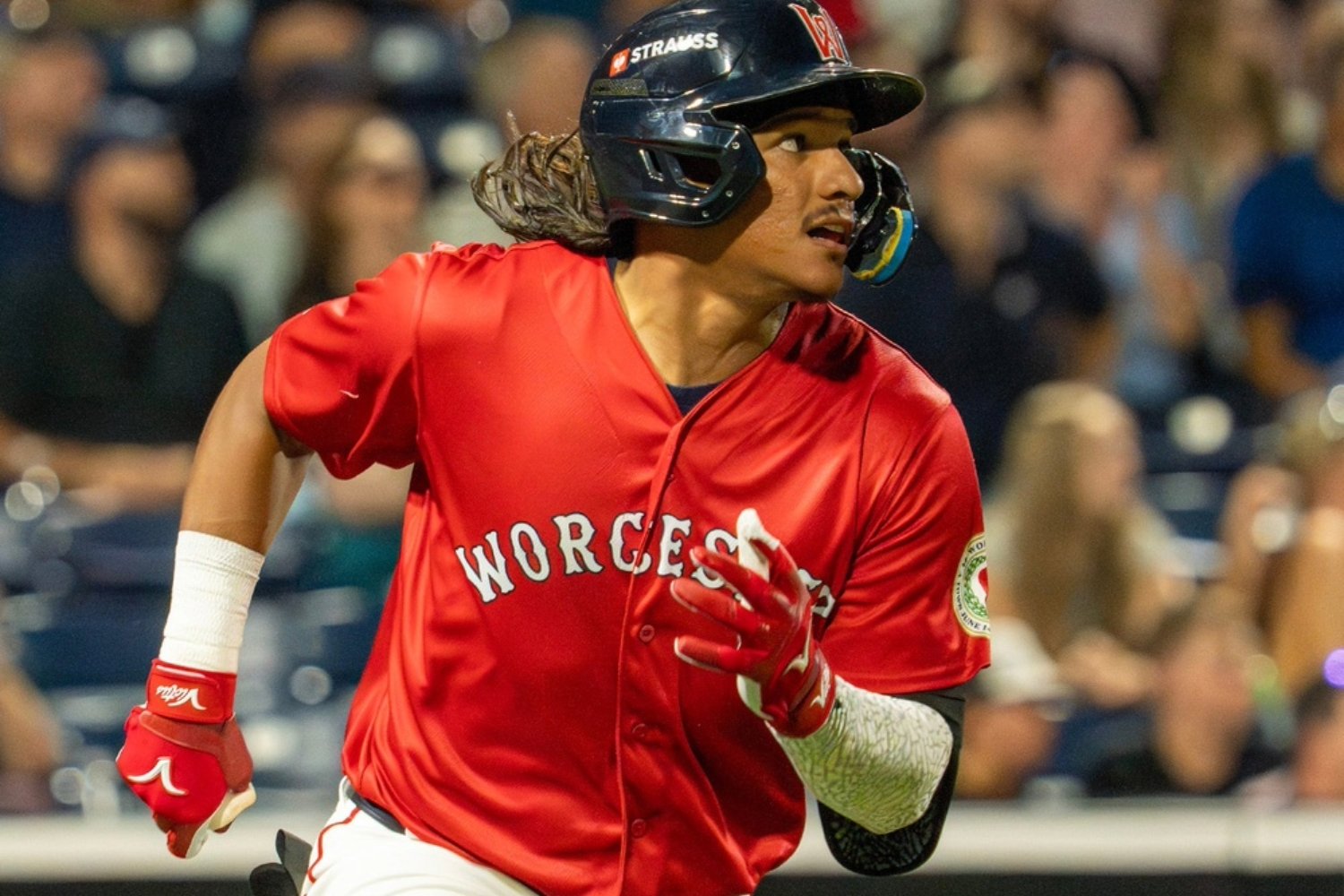 The MLB trade deadline is today! The Red Sox appear to be in the middle of most rumors as they attempt to acquire talent that will help get them back into the playoffs for the first time since 2021. With a loaded farm system, they have plenty of pieces to move, but realistically, what might each of their top prospects be worth? We’ll be looking at three prospects who could be shipped out by the end of the trade deadline and what similar players were able to get back in a trade. For the sake of simplicity, I will being using the MLB Pipeline rankings when it comes to the prospects discussed. Jhostynxon Garcia, OF, Red Sox #2 Prospect Why He Should be Traded Garcia is a talented young outfielder who is blocked from playing in Boston. He’s a Top-100 prospect on MLB Pipeline and with the Red Sox outfield being set for presumably the next half-decade, there’s no reason to not make him available in the right trade. 2024 was a bit of a coming out party for Garcia as he played well at three different stops in the minor leagues, to the point he was added to the 40-man roster to protect him from the Rule 5 Draft. 2025 has been more of the same, as he’s shown he’s capable of handling Triple-A pitching just fine. The only issue is there’s no room for him in Boston. It would only make sense to move someone of his caliber while his value is at its (likely) highest. As they say, “You have to give something to get something,” and well, Garcia might be the best piece they could give up in a trade, depending on who you ask. Recent Trade Comparison: Pete Crow-Armstrong for Javier Báez and Trevor Williams (2021) In no way am I saying Garcia is going to be the next Armstrong, but the two players are similar when it comes to their prospect rankings near the deadline. Armstrong was the Mets’ fifth-ranked prospect in 2021 and wasn’t even a Top-100 prospect at the time of the trade (though that was due to a serious injury). Garcia himself is a fringe Top-100 prospect (MLB Pipeline has him as one, but other prospect lists don’t). The Mets were able to turn their fifth-best prospect in 2021 into a two-time All-Star who, at the time, had 22 home runs, and a pitcher in Williams who gave them 32 1/3 innings of 3.06 ERA baseball between the bullpen and rotation. A power-hitting bat and a steady relief arm are two things the Red Sox currently need, and if Garcia could deliver them all by himself, it would be a fair trade. Mikey Romero, SS, Red Sox #8 Prospect Why He Should be Traded Romero was drafted back in 2022 and was viewed as one of the best hitters in that draft’s high school class, and he’s shown it when healthy. The problem is his health, as he’s missed time in every season of his professional career due to various injuries. This year, he’s currently on pace to play the most games in his career while also improving his walk rate. This is a situation where a player's talent is being held back by availability. If you can move him in a deal while his value is rather high (he’s in Boston’s top 10) and improve the major league roster, you must do it. There’s no guarantee his body will hold up. Add to it that the infield at the major league level is packed for the time being, and Romero may not see a chance to reach the majors here. Recent Trade Comparison: Nick Yorke traded for Quinn Priester (2024) We don’t need to look far to see a trade that could fit something similar for Romero. Nick Yorke was Boston’s sixth-ranked prospect last year but had no path to the majors. He had put up a decent season in 2024 up to the trade deadline and the Red Sox, not wanting to risk losing him in the Rule 5 Draft, decided to move him. In the deal, they got a former first-round pick back in Quinn Priester, someone who had previously been a Top-100 prospect but had struggled in the majors with Pittsburgh. The Red Sox acquired him with the thought of retooling his pitch selection and having him be starting pitching depth for the remainder of the 2024 season. The only difference here is that that Yorke had played more games than Romero, and he had a better offensive campaign up to the trade deadline last season. James Tibbs III, OF, Red Sox #5 Prospect Why He Should be Traded Tibbs, being one of the main returning pieces for Rafael Devers, makes it odd to think that the Sox only acquired him to trade him. Well, much like Garcia. he has no path to the majors in Boston. as he’s expected to be limited defensively to left field and possibly first base. Because of that, it would make sense for Boston to move him before he loses value. A first-round pick last season, he was viewed as having one of the best combinations of swing decisions and hard contact in the draft. Since coming to the Red Sox organization, he hasn’t been as good, putting up only a .609 OPS in 28 games. The Red Sox would be wise to move him in a deal, even if he's unlikely to be the centerpiece in a blockbuster. Tibbs is still full of potential, and it’s likely that another team would love to add him to their system and tap into that potential. Recent Trade Comparison: Greg Deichmann and Daniel Palencia traded for Andrew Chafin 2021 While the trade was a two-for-one, the main piece was Deichmann, who was the A’s ninth-ranked prospect in 2021 and was having a better offensive season than Tibbs has had with Portland so far. The A’s were able to get, at the time, a valuable left-handed pitcher who had been working as a set-up man in Chicago. Of course, Palencia was a fireballer who has turned into a star closer for the Cubs, highlighting the risk of trading prospects in deals like these.
 -
The MLB trade deadline is today! The Red Sox appear to be in the middle of most rumors as they attempt to acquire talent that will help get them back into the playoffs for the first time since 2021. With a loaded farm system, they have plenty of pieces to move, but realistically, what might each of their top prospects be worth? We’ll be looking at three prospects who could be shipped out by the end of the trade deadline and what similar players were able to get back in a trade. For the sake of simplicity, I will being using the MLB Pipeline rankings when it comes to the prospects discussed. Jhostynxon Garcia, OF, Red Sox #2 Prospect Why He Should be Traded Garcia is a talented young outfielder who is blocked from playing in Boston. He’s a Top-100 prospect on MLB Pipeline and with the Red Sox outfield being set for presumably the next half-decade, there’s no reason to not make him available in the right trade. 2024 was a bit of a coming out party for Garcia as he played well at three different stops in the minor leagues, to the point he was added to the 40-man roster to protect him from the Rule 5 Draft. 2025 has been more of the same, as he’s shown he’s capable of handling Triple-A pitching just fine. The only issue is there’s no room for him in Boston. It would only make sense to move someone of his caliber while his value is at its (likely) highest. As they say, “You have to give something to get something,” and well, Garcia might be the best piece they could give up in a trade, depending on who you ask. Recent Trade Comparison: Pete Crow-Armstrong for Javier Báez and Trevor Williams (2021) In no way am I saying Garcia is going to be the next Armstrong, but the two players are similar when it comes to their prospect rankings near the deadline. Armstrong was the Mets’ fifth-ranked prospect in 2021 and wasn’t even a Top-100 prospect at the time of the trade (though that was due to a serious injury). Garcia himself is a fringe Top-100 prospect (MLB Pipeline has him as one, but other prospect lists don’t). The Mets were able to turn their fifth-best prospect in 2021 into a two-time All-Star who, at the time, had 22 home runs, and a pitcher in Williams who gave them 32 1/3 innings of 3.06 ERA baseball between the bullpen and rotation. A power-hitting bat and a steady relief arm are two things the Red Sox currently need, and if Garcia could deliver them all by himself, it would be a fair trade. Mikey Romero, SS, Red Sox #8 Prospect Why He Should be Traded Romero was drafted back in 2022 and was viewed as one of the best hitters in that draft’s high school class, and he’s shown it when healthy. The problem is his health, as he’s missed time in every season of his professional career due to various injuries. This year, he’s currently on pace to play the most games in his career while also improving his walk rate. This is a situation where a player's talent is being held back by availability. If you can move him in a deal while his value is rather high (he’s in Boston’s top 10) and improve the major league roster, you must do it. There’s no guarantee his body will hold up. Add to it that the infield at the major league level is packed for the time being, and Romero may not see a chance to reach the majors here. Recent Trade Comparison: Nick Yorke traded for Quinn Priester (2024) We don’t need to look far to see a trade that could fit something similar for Romero. Nick Yorke was Boston’s sixth-ranked prospect last year but had no path to the majors. He had put up a decent season in 2024 up to the trade deadline and the Red Sox, not wanting to risk losing him in the Rule 5 Draft, decided to move him. In the deal, they got a former first-round pick back in Quinn Priester, someone who had previously been a Top-100 prospect but had struggled in the majors with Pittsburgh. The Red Sox acquired him with the thought of retooling his pitch selection and having him be starting pitching depth for the remainder of the 2024 season. The only difference here is that that Yorke had played more games than Romero, and he had a better offensive campaign up to the trade deadline last season. James Tibbs III, OF, Red Sox #5 Prospect Why He Should be Traded Tibbs, being one of the main returning pieces for Rafael Devers, makes it odd to think that the Sox only acquired him to trade him. Well, much like Garcia. he has no path to the majors in Boston. as he’s expected to be limited defensively to left field and possibly first base. Because of that, it would make sense for Boston to move him before he loses value. A first-round pick last season, he was viewed as having one of the best combinations of swing decisions and hard contact in the draft. Since coming to the Red Sox organization, he hasn’t been as good, putting up only a .609 OPS in 28 games. The Red Sox would be wise to move him in a deal, even if he's unlikely to be the centerpiece in a blockbuster. Tibbs is still full of potential, and it’s likely that another team would love to add him to their system and tap into that potential. Recent Trade Comparison: Greg Deichmann and Daniel Palencia traded for Andrew Chafin 2021 While the trade was a two-for-one, the main piece was Deichmann, who was the A’s ninth-ranked prospect in 2021 and was having a better offensive season than Tibbs has had with Portland so far. The A’s were able to get, at the time, a valuable left-handed pitcher who had been working as a set-up man in Chicago. Of course, Palencia was a fireballer who has turned into a star closer for the Cubs, highlighting the risk of trading prospects in deals like these. View full article
-
The platoon of Romy/Abe right now, plus the fact that they're teaching Campbell first who they just signed to that extension, plus Casas will be back some point next season. He was never going to play in Boston
-
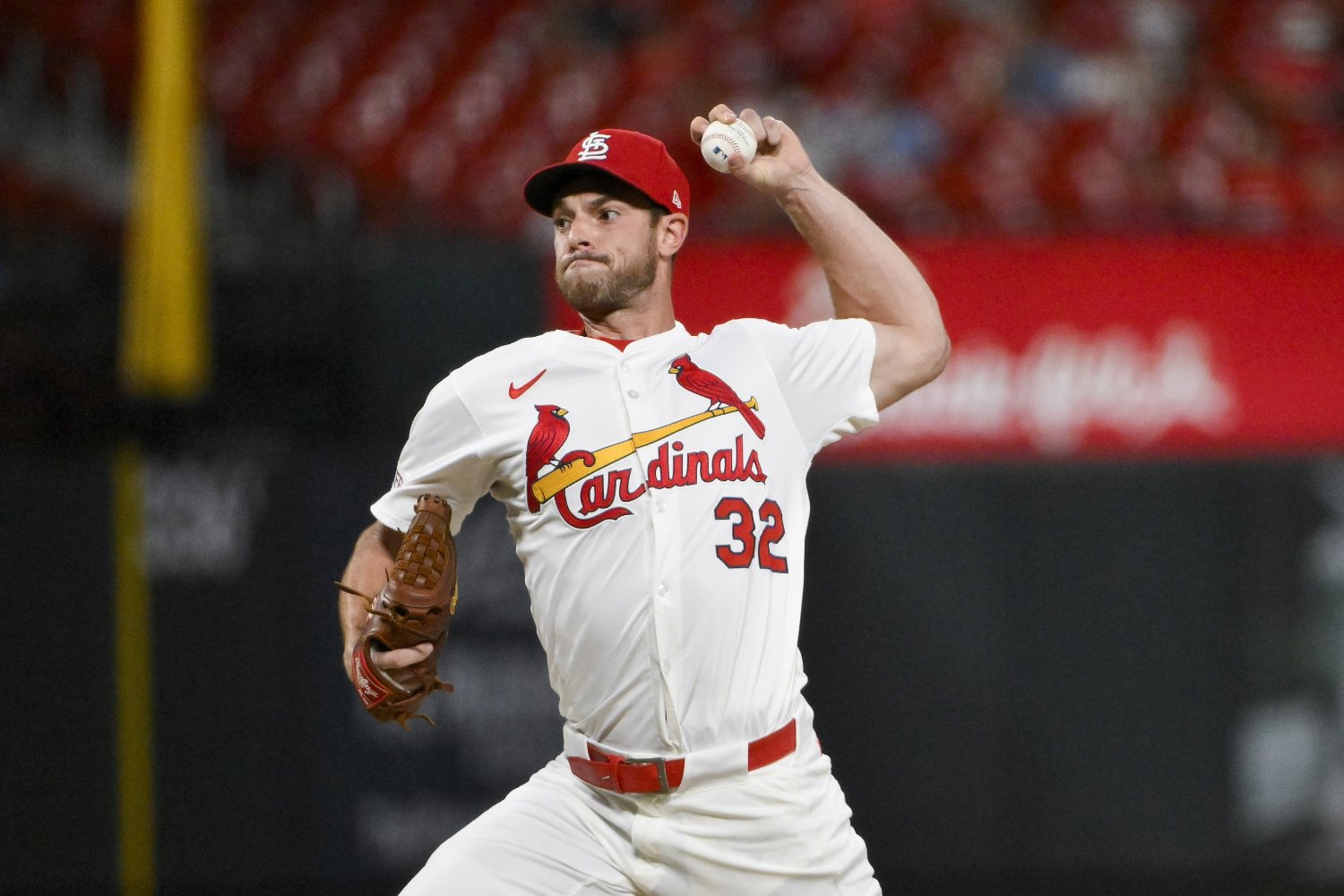 The trade deadline is roughly 18 hours away, and the Red Sox have made their first trade in the wee hours of Thursday morning. In a deal with the St. Louis Cardinals, the Red Sox are finalizing a trade to acquire left-handed reliever Steven Matz. The deal is currently agreed to and is pending medical review to be finalized as first reported by ESPN’s Jeff Passan: The return for Matz is corner infielder Blaze Jordan as first reported by Alex Speier of the Boston Globe. Jordan, a former third-round pick in the 2020 draft, had made it to Triple-A Worcester this season after opening the year with Double-A Portland. Jordan was the Red Sox's 17th-ranked prospect on MLB Pipeline, though an adjustment was surely due after his strong campaign. In 87 games this season Jordan was hitting .304/.374/.494 with 22 doubles, a triple, 12 home runs and 61 RBIs. His promotion to Boston seemed unlikely, blocked at both first base and third base, and he was set to be Rule 5 Draft eligible for his second consecutive winter. Instead, the Red Sox get a left-handed reliever that has kept left-handed batters to a stat line of .179/.216/.226 in 89 plate appearances this season. Given Chaim Bloom's scheduled takeover of the Cardinals' front office this coming offseason, it's no surprise he targeted one of his former picks in Boston. Matz has made 172 starts in his MLB career, though he's thrived as a reliever over the last 12 months in St. Louis. Expect the Red Sox to keep him in the bullpen for the second half. More to come...
 -
The trade deadline is roughly 18 hours away, and the Red Sox have made their first trade in the wee hours of Thursday morning. In a deal with the St. Louis Cardinals, the Red Sox are finalizing a trade to acquire left-handed reliever Steven Matz. The deal is currently agreed to and is pending medical review to be finalized as first reported by ESPN’s Jeff Passan: The return for Matz is corner infielder Blaze Jordan as first reported by Alex Speier of the Boston Globe. Jordan, a former third-round pick in the 2020 draft, had made it to Triple-A Worcester this season after opening the year with Double-A Portland. Jordan was the Red Sox's 17th-ranked prospect on MLB Pipeline, though an adjustment was surely due after his strong campaign. In 87 games this season Jordan was hitting .304/.374/.494 with 22 doubles, a triple, 12 home runs and 61 RBIs. His promotion to Boston seemed unlikely, blocked at both first base and third base, and he was set to be Rule 5 Draft eligible for his second consecutive winter. Instead, the Red Sox get a left-handed reliever that has kept left-handed batters to a stat line of .179/.216/.226 in 89 plate appearances this season. Given Chaim Bloom's scheduled takeover of the Cardinals' front office this coming offseason, it's no surprise he targeted one of his former picks in Boston. Matz has made 172 starts in his MLB career, though he's thrived as a reliever over the last 12 months in St. Louis. Expect the Red Sox to keep him in the bullpen for the second half. More to come... View full article
-
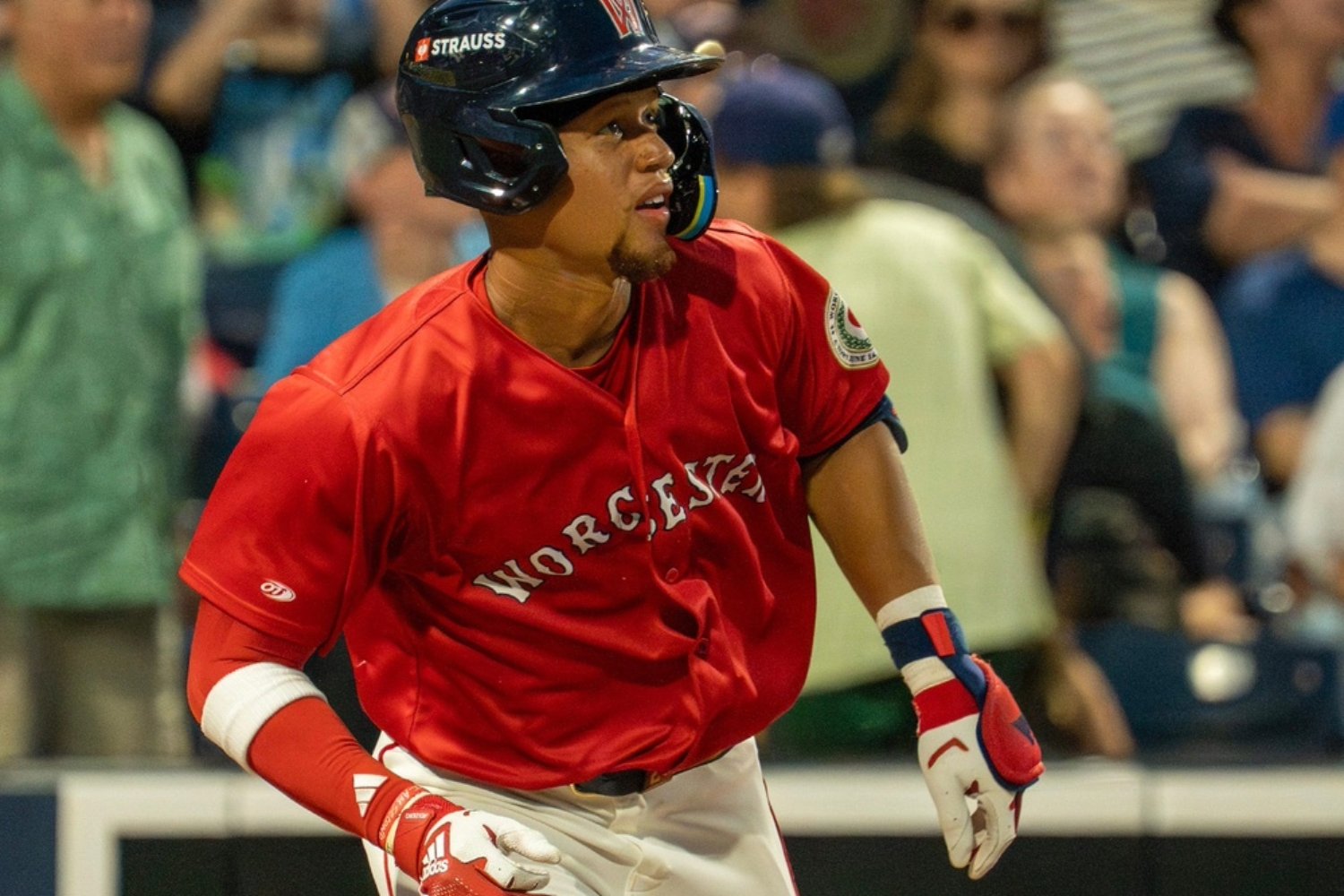 It’s been an interesting season for Kristian Campbell, as the rookie broke camp with the Red Sox and opened the season on a hot streak that had fans picturing him as the Rookie of the Year just two weeks into the season. He even received a massive extension, signifying his place as a core piece of the future. It's been all downhill from there, as Campbell struggled mightily after April, hitting just .134/.184/.171 in the month of May. In June, Campbell was sent down to Triple-A Worcester to work on some things offensively and to get work at first base as he was one of the worst, if not the worst, defender in the major leagues while at second base with -14 defensive runs saved. Since going down to Worcester, Campbell has finally started to look like himself while learning a new position. In 28 games since his demotion, Campbell is hitting .267/.398/.438 with four doubles, a triple, four home runs and 14 RBIs. But when we take a deeper look into it, is Campbell improving on the issues he faced at the major leagues? One of his biggest issues was an inability to pull inside pitches, mostly hitting them to the opposite field for easy outs or striking out (not including that home run in Detroit that he just muscled out to right field). Before his demotion on June 20, Campbell had an exit velocity of 88.6 mph while only barreling up the ball at a 5.1% rate. To go with that, he was chasing pitches outside of the zone at a 23.4% rate (a rather good number as he was in the 76th percentile), but whiffing on 27.3% of pitches he swung at in general and striking out at a 27.4% rate. What really hurt him was that he was only pulling balls at a 28.7% rate, going to the opposite field at a 33.8% clip and back up the middle at 37.6% of the time. Those numbers have slightly changed in the time he’s been in Worcester. It hasn’t come easy, as Campbell began his return to Worcester going just 9-for-45 in his first nine games. However, in the span from July 19 to July 27, he has been on fire, seemingly getting back on track to being the hitter that made him a top prospect. In that nine game stretch, he hit .407/.484/.667 with a 13% walk rate and a 23% strikeout rate in 31 plate appearances. This included Campbell crushing a home run to left at 104.3 mph. Since his demotion, Campbell has actually improved upon pulling the ball with Worcester, now up to a 47.8% rate. That does come with the caveat that he's rarely hitting the ball up the middle (16.4%), while going to the opposite field 35.8% of the time. His timing remains a work in progress, hence why he's still hitting the ball on the ground so often. With Worcester, he's hitting groundballs 51.5% of the time and line drives at a 28.8% rate. Unfortunately, his fly balls have dropped to a paltry 19.7% clip. He still needs to work on getting the ball in the air and pulling it to left more, something that would allow him to take advantage of the Green Monster in Boston. It’s been a slow improvement, but when learning a whole new position while working on your hitting mechanics, things are rarely going to be smooth. It's promising that his .171 ISO is a big jump over his number in Boston (.122), and his 127 wRC+ with Worcester paints a promising picture for the future. Could Campbell return to the team after the trade deadline if they fail to acquire a first baseman? Defensively, Campbell has only played 16 games at first base, but in that span, he’s yet to make an error in the 133 2/3 innings he’s played in the field. It’s a small group of data, but with the Red Sox needing first production as Abraham Toro has fallen off in July, the team may decide to give Campbell another opportunity in the majors, this time at the cold corner. Doing so would also allow them to save prospects and other resources to use in a trade to improve their rotation and/or bullpen. He’s young, this being his age-23 season, and is still learning. People need to remember he went through High-A, Double-A and Triple-A last season before making his major league debut on Opening Day this year. Campbell is smart and he’s showing he can make the adjustments when given time; it shouldn't be long before he’s back in Boston helping the team.
 -
It’s been an interesting season for Kristian Campbell, as the rookie broke camp with the Red Sox and opened the season on a hot streak that had fans picturing him as the Rookie of the Year just two weeks into the season. He even received a massive extension, signifying his place as a core piece of the future. It's been all downhill from there, as Campbell struggled mightily after April, hitting just .134/.184/.171 in the month of May. In June, Campbell was sent down to Triple-A Worcester to work on some things offensively and to get work at first base as he was one of the worst, if not the worst, defender in the major leagues while at second base with -14 defensive runs saved. Since going down to Worcester, Campbell has finally started to look like himself while learning a new position. In 28 games since his demotion, Campbell is hitting .267/.398/.438 with four doubles, a triple, four home runs and 14 RBIs. But when we take a deeper look into it, is Campbell improving on the issues he faced at the major leagues? One of his biggest issues was an inability to pull inside pitches, mostly hitting them to the opposite field for easy outs or striking out (not including that home run in Detroit that he just muscled out to right field). Before his demotion on June 20, Campbell had an exit velocity of 88.6 mph while only barreling up the ball at a 5.1% rate. To go with that, he was chasing pitches outside of the zone at a 23.4% rate (a rather good number as he was in the 76th percentile), but whiffing on 27.3% of pitches he swung at in general and striking out at a 27.4% rate. What really hurt him was that he was only pulling balls at a 28.7% rate, going to the opposite field at a 33.8% clip and back up the middle at 37.6% of the time. Those numbers have slightly changed in the time he’s been in Worcester. It hasn’t come easy, as Campbell began his return to Worcester going just 9-for-45 in his first nine games. However, in the span from July 19 to July 27, he has been on fire, seemingly getting back on track to being the hitter that made him a top prospect. In that nine game stretch, he hit .407/.484/.667 with a 13% walk rate and a 23% strikeout rate in 31 plate appearances. This included Campbell crushing a home run to left at 104.3 mph. Since his demotion, Campbell has actually improved upon pulling the ball with Worcester, now up to a 47.8% rate. That does come with the caveat that he's rarely hitting the ball up the middle (16.4%), while going to the opposite field 35.8% of the time. His timing remains a work in progress, hence why he's still hitting the ball on the ground so often. With Worcester, he's hitting groundballs 51.5% of the time and line drives at a 28.8% rate. Unfortunately, his fly balls have dropped to a paltry 19.7% clip. He still needs to work on getting the ball in the air and pulling it to left more, something that would allow him to take advantage of the Green Monster in Boston. It’s been a slow improvement, but when learning a whole new position while working on your hitting mechanics, things are rarely going to be smooth. It's promising that his .171 ISO is a big jump over his number in Boston (.122), and his 127 wRC+ with Worcester paints a promising picture for the future. Could Campbell return to the team after the trade deadline if they fail to acquire a first baseman? Defensively, Campbell has only played 16 games at first base, but in that span, he’s yet to make an error in the 133 2/3 innings he’s played in the field. It’s a small group of data, but with the Red Sox needing first production as Abraham Toro has fallen off in July, the team may decide to give Campbell another opportunity in the majors, this time at the cold corner. Doing so would also allow them to save prospects and other resources to use in a trade to improve their rotation and/or bullpen. He’s young, this being his age-23 season, and is still learning. People need to remember he went through High-A, Double-A and Triple-A last season before making his major league debut on Opening Day this year. Campbell is smart and he’s showing he can make the adjustments when given time; it shouldn't be long before he’s back in Boston helping the team. View full article
-
The trade deadline is now 26 hours away, and the Red Sox are attempting to upgrade their roster. Their biggest need appears to be starting pitching, as the team has been linked to starters Mitch Keller and Dylan Cease. Now, Rob Bradford of WEEI reports that the Red Sox have shown interest in pitchers Zac Gallen and Merrill Kelly of the Arizona Diamondbacks. Along with that, Francys Romero of BeisbolFR reports that the Red Sox have been monitoring Sandy Alcantara of the Miami Marlins. All three starters are likely to be moved before the deadline and have the potential to upgrade the Red Sox rotation based on past pedigree. What do you think? Should the Red Sox pursue any of these three? Is there a different starter they should go after? Leave your thoughts in the comments down below. View full rumor
-
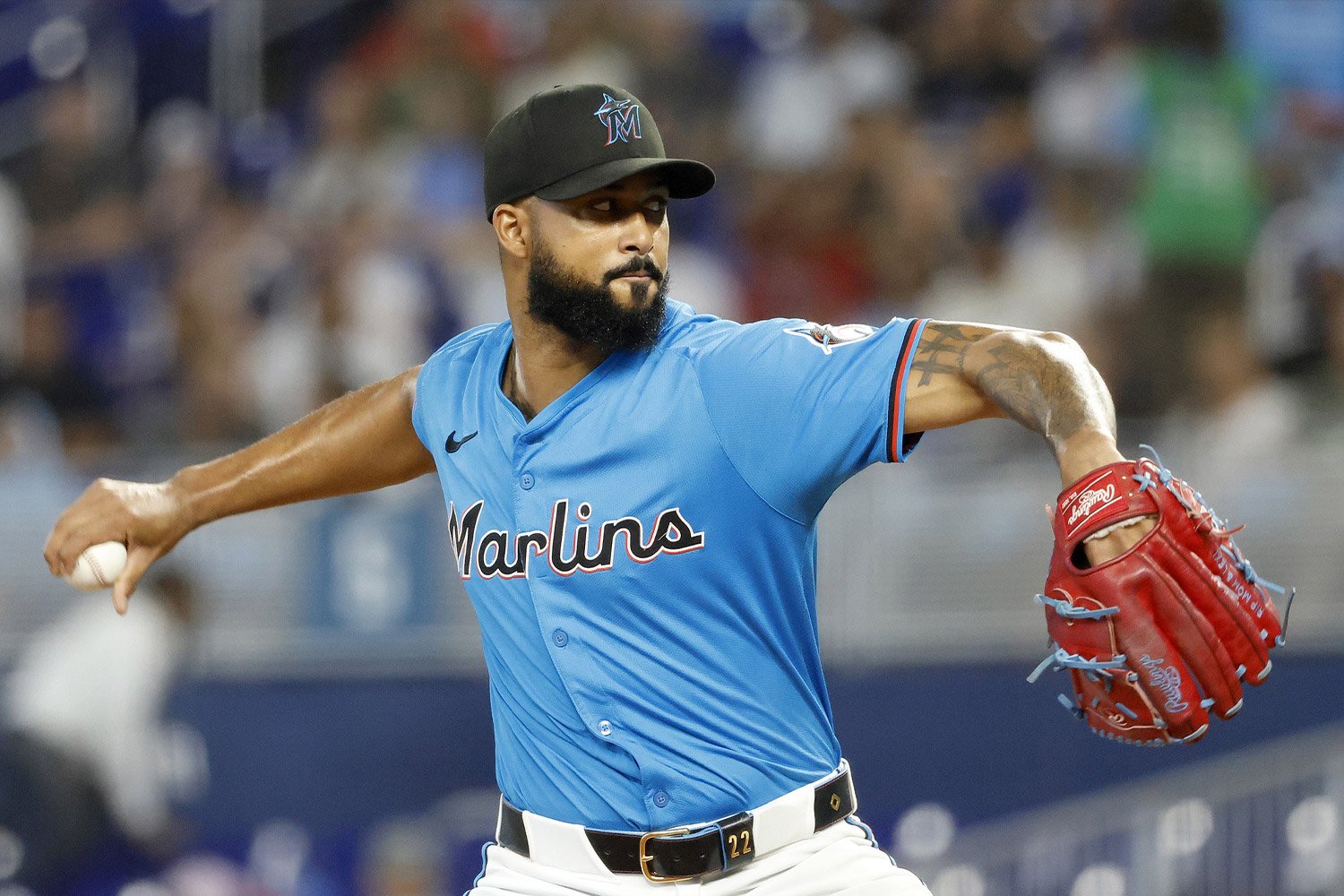 The trade deadline is now 26 hours away, and the Red Sox are attempting to upgrade their roster. Their biggest need appears to be starting pitching, as the team has been linked to starters Mitch Keller and Dylan Cease. Now, Rob Bradford of WEEI reports that the Red Sox have shown interest in pitchers Zac Gallen and Merrill Kelly of the Arizona Diamondbacks. Along with that, Francys Romero of BeisbolFR reports that the Red Sox have been monitoring Sandy Alcantara of the Miami Marlins. All three starters are likely to be moved before the deadline and have the potential to upgrade the Red Sox rotation based on past pedigree. What do you think? Should the Red Sox pursue any of these three? Is there a different starter they should go after? Leave your thoughts in the comments down below.
 -
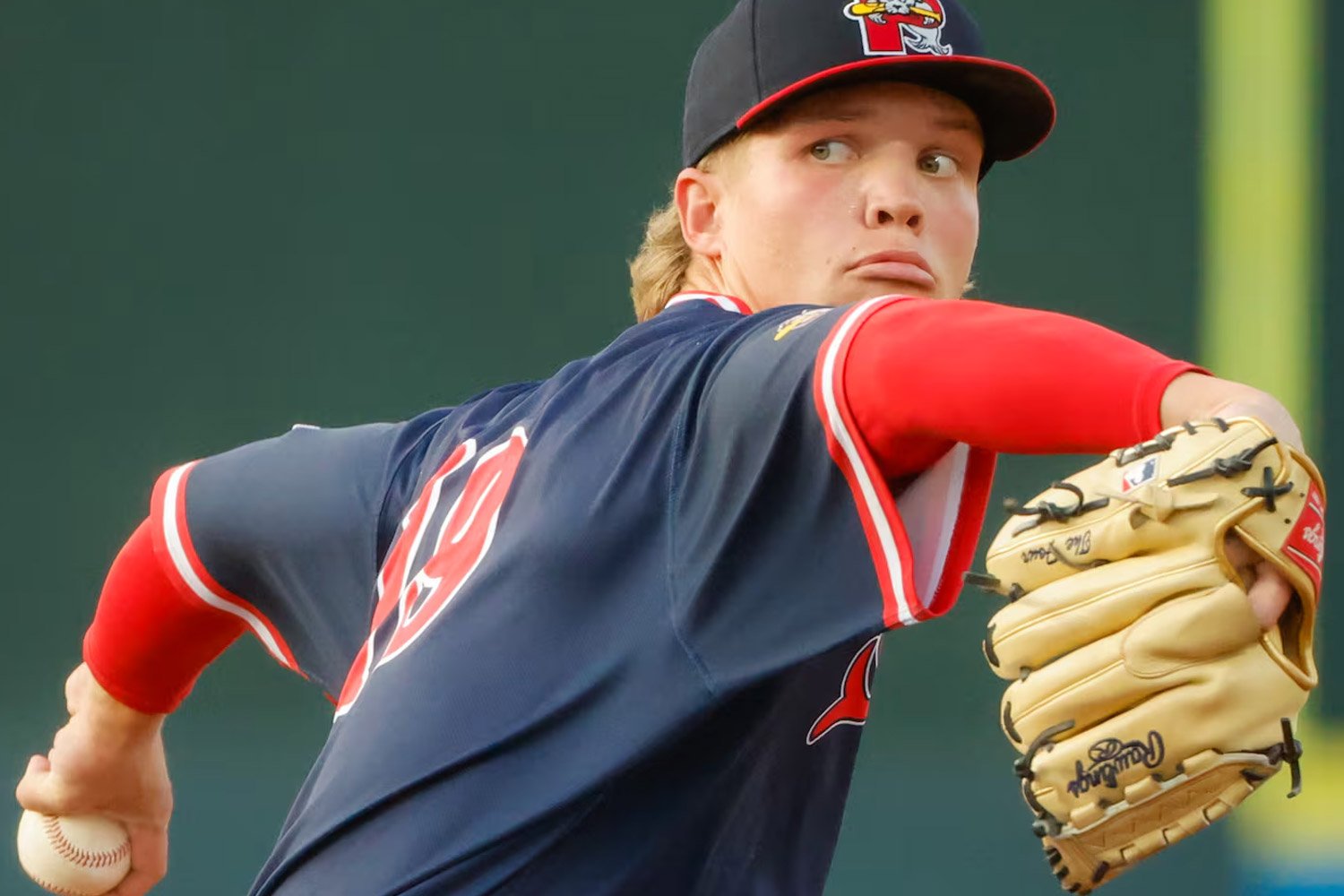 The Boston Red Sox made a few promotions Sunday night as pitchers Connelly Early and David Sandlin are being promoted to Triple-A Worcester per Beyond The Monster’s Andrew Parker. The duo is seen as two of Boston’s top pitching prospects, with Early being ranked as the Sox’s sixth-best prospect and Sandlin the 12th on MLB Pipeline. Both starters opened the season with Double-A Portland, and it was viewed as a matter of time until they were called up to Worcester. Early, drafted in the fifth round of the 2023 draft, has made incredible strides this season after ending 2024 with Portland. In 15 games this season, 12 starts, Early has gone 7-2 with a 2.51 ERA in 71 2/3 innings. In that span, he struck out 96 batters and only walked 29 for a strikeout per walk rate of 3.31. So far this season, Early has a strikeout rate of 32.3% and a walk rate of 9.8%, while limiting opposing hitters to a .198 batting average. Sandlin was acquired by the Kansas City Royals in February 2024, just as spring training was beginning for John Schreiber. Much like Early, Sandlin has also shown great improvement this season as he’s managed to go deeper into outings and limit his walks. In 17 games this season, 13 starts, Sandlin has gone 5-4 with a 3.61 ERA in 82 1/3 innings pitched (a career high). He’s also struck out 86 batters while walking just 27. While his strikeout rate is down this season, Sandlin has instead focused on allowing batters to put the ball in play when a strikeout isn’t necessary. His strikeout rate has dropped to 25.4% from 33.2% last season, and his walk rate is 8.0%. Opponents are also hitting just .226 against the right-hander while his FIP is at a career low of 3.29. The two will likely continue to pitch in both the rotation and as long men out of the bullpen through the remainder of the season. If they continue to impress in Worcester, there’s a chance one or both could be called up to Boston as reinforcements. What do you think about the promotions? Too soon? Should they have been earlier in the season? Do either of them make it to Boston this year? Leave your thoughts in the comments below.
 -
The Boston Red Sox made a few promotions Sunday night as pitchers Connelly Early and David Sandlin are being promoted to Triple-A Worcester per Beyond The Monster’s Andrew Parker. The duo is seen as two of Boston’s top pitching prospects, with Early being ranked as the Sox’s sixth-best prospect and Sandlin the 12th on MLB Pipeline. Both starters opened the season with Double-A Portland, and it was viewed as a matter of time until they were called up to Worcester. Early, drafted in the fifth round of the 2023 draft, has made incredible strides this season after ending 2024 with Portland. In 15 games this season, 12 starts, Early has gone 7-2 with a 2.51 ERA in 71 2/3 innings. In that span, he struck out 96 batters and only walked 29 for a strikeout per walk rate of 3.31. So far this season, Early has a strikeout rate of 32.3% and a walk rate of 9.8%, while limiting opposing hitters to a .198 batting average. Sandlin was acquired by the Kansas City Royals in February 2024, just as spring training was beginning for John Schreiber. Much like Early, Sandlin has also shown great improvement this season as he’s managed to go deeper into outings and limit his walks. In 17 games this season, 13 starts, Sandlin has gone 5-4 with a 3.61 ERA in 82 1/3 innings pitched (a career high). He’s also struck out 86 batters while walking just 27. While his strikeout rate is down this season, Sandlin has instead focused on allowing batters to put the ball in play when a strikeout isn’t necessary. His strikeout rate has dropped to 25.4% from 33.2% last season, and his walk rate is 8.0%. Opponents are also hitting just .226 against the right-hander while his FIP is at a career low of 3.29. The two will likely continue to pitch in both the rotation and as long men out of the bullpen through the remainder of the season. If they continue to impress in Worcester, there’s a chance one or both could be called up to Boston as reinforcements. What do you think about the promotions? Too soon? Should they have been earlier in the season? Do either of them make it to Boston this year? Leave your thoughts in the comments below. View full rumor
-
When you think of the Red Sox and Yankees, it's usually about their historic rivalry, but it could be slightly different due in part to the trade deadline. Per Joel Sherman of the New York Post, the Yankees are interested in David Hamilton. Hamilton would be an interesting trade to the Yankees. While just 27 years old, he has had a rough offensive season. Hitting just .179/.229/.276 with three doubles, three home runs, and 12 RBIs in 133 plate appearances. His most promising skill is his speed. So far in 176 career games, he's stolen 50 bases while being caught just eight times. This season, Hamilton has seen a drop-off in performance and was recently demoted to Triple-A Worcester before being recalled due to Marcelo Mayer's wrist injury. With the ability to play both second base and shortstop, along with his speed, making him a valuable late-game pinch runner, the Red Sox may be hesitant to trade him to a division rival. Should the Red Sox entertain a phone call with their rivals? Should they refuse to trade him to New York? Leave your thoughts down below in the comments. View full rumor
-
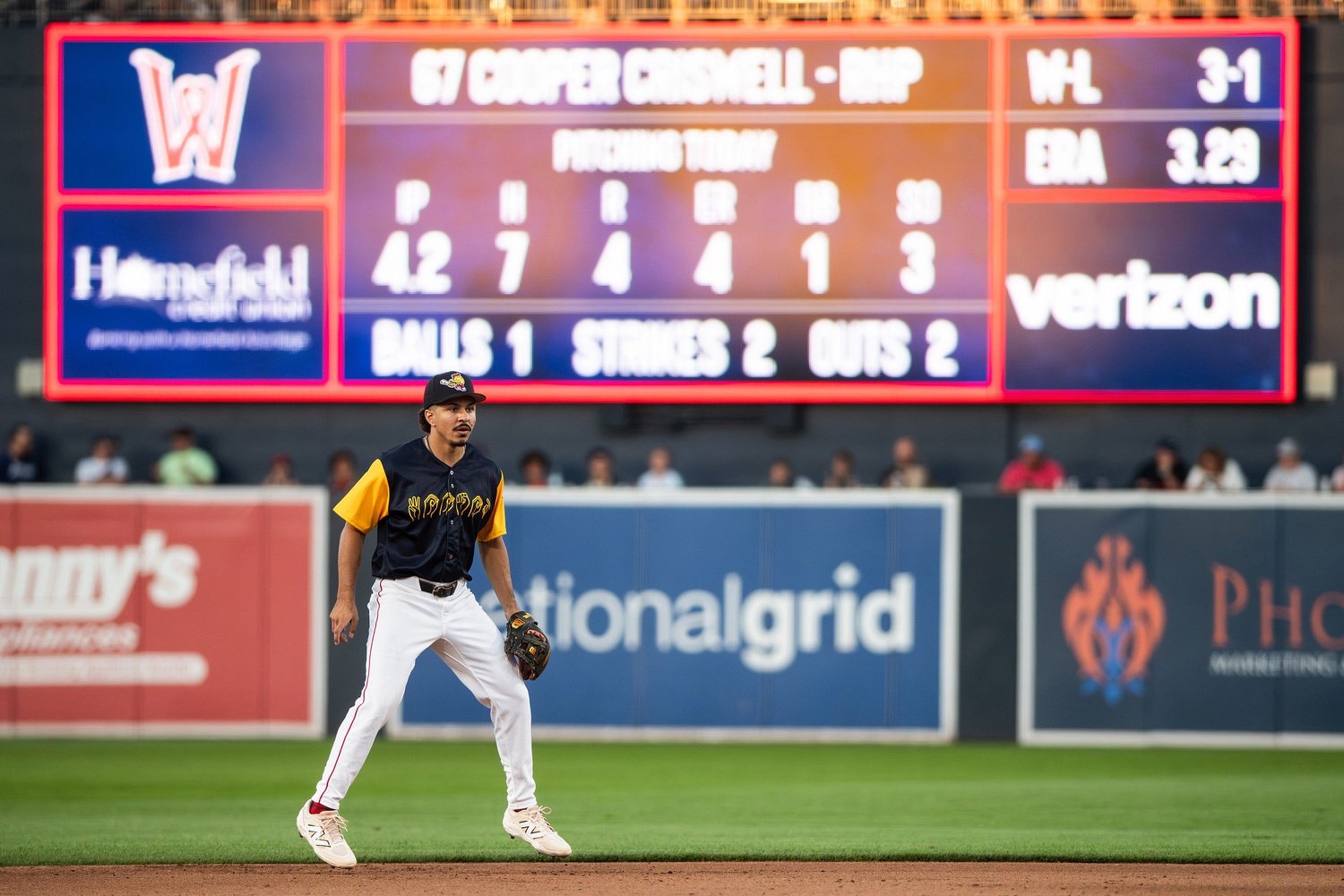 When you think of the Red Sox and Yankees, it's usually about their historic rivalry, but it could be slightly different due in part to the trade deadline. Per Joel Sherman of the New York Post, the Yankees are interested in David Hamilton. Hamilton would be an interesting trade to the Yankees. While just 27 years old, he has had a rough offensive season. Hitting just .179/.229/.276 with three doubles, three home runs, and 12 RBIs in 133 plate appearances. His most promising skill is his speed. So far in 176 career games, he's stolen 50 bases while being caught just eight times. This season, Hamilton has seen a drop-off in performance and was recently demoted to Triple-A Worcester before being recalled due to Marcelo Mayer's wrist injury. With the ability to play both second base and shortstop, along with his speed, making him a valuable late-game pinch runner, the Red Sox may be hesitant to trade him to a division rival. Should the Red Sox entertain a phone call with their rivals? Should they refuse to trade him to New York? Leave your thoughts down below in the comments.
 -
Just as the Boston Red Sox were seemingly getting back to full health, they were struck by injury once more. This time the team will be without rookie Marcelo Mayer as he hits the 10-day injured list with a right wrist sprain. Mayer was forced to leave the Red Sox's latest game, being seen on camera pointing to his wrist. Mayer did say that it was only a sprain and not hamate or broken bone related. In 44 games, Mayer was hitting .228/.272/.402 with eight doubles, a triple, four home runs and 10 RBIs. Mayer's greatest production was defensively as he bounced between second base and third base and played excellent defense despite coming up through the system as a shortstop. The severity of the injury isn’t known but in response to the injury, David Hamilton was recalled from Worcester. Alex Cora also said that Ceddanne Rafaela will play more second base for the time being. The move to the middle infield for Rafaela will clear up the outfield logjam and will likely make the starting outfield be Roman Anthony in left field, Jarren Duran in center field and Wilyer Abreu in right field. Do you think this is just a minor injury and Mayer will be back quickly? Could it be a longer absence? Should Rafaela be in center field regardless? Leave your thoughts below in the comments. View full rumor
-
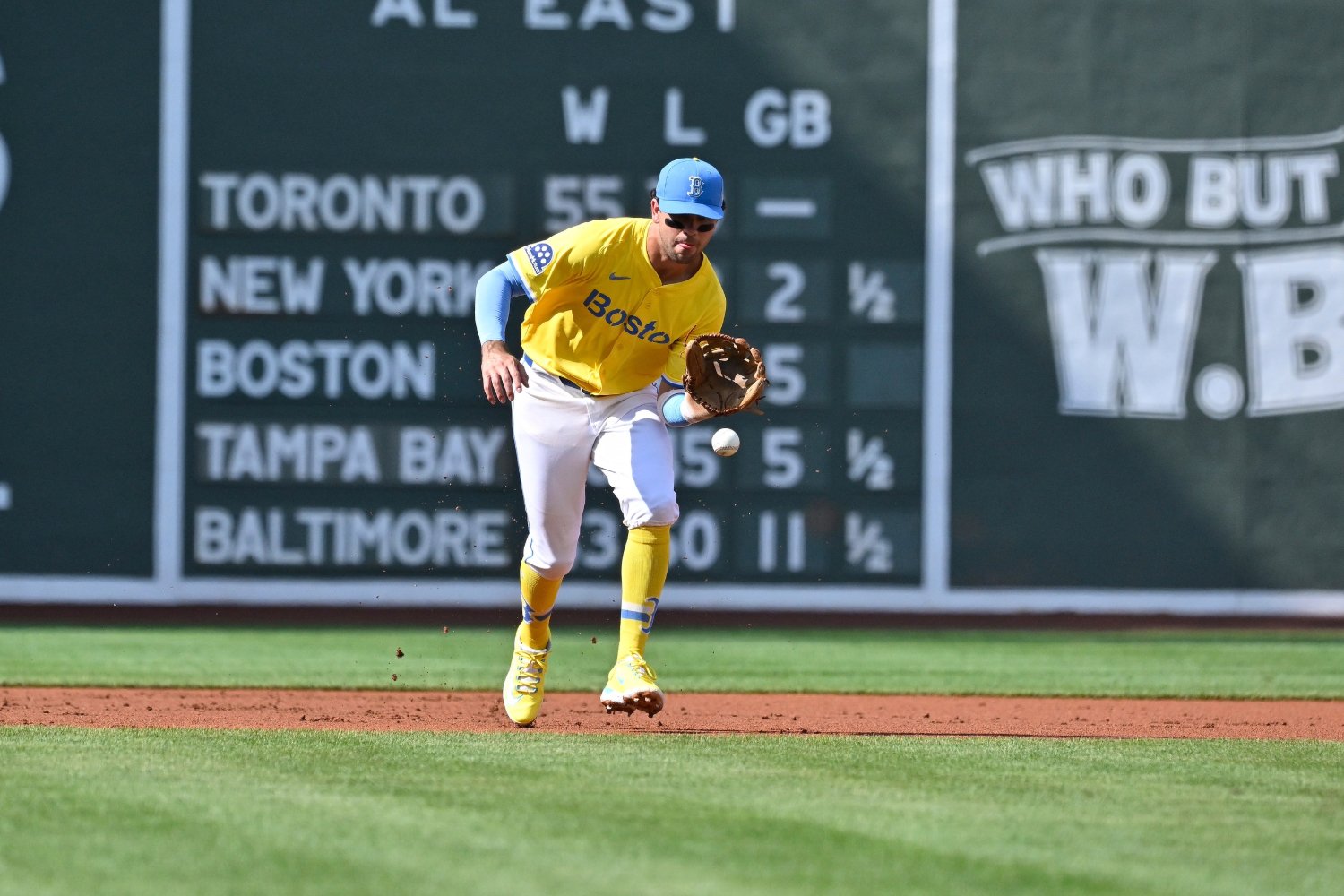 Just as the Boston Red Sox were seemingly getting back to full health, they were struck by injury once more. This time the team will be without rookie Marcelo Mayer as he hits the 10-day injured list with a right wrist sprain. Mayer was forced to leave the Red Sox's latest game, being seen on camera pointing to his wrist. Mayer did say that it was only a sprain and not hamate or broken bone related. In 44 games, Mayer was hitting .228/.272/.402 with eight doubles, a triple, four home runs and 10 RBIs. Mayer's greatest production was defensively as he bounced between second base and third base and played excellent defense despite coming up through the system as a shortstop. The severity of the injury isn’t known but in response to the injury, David Hamilton was recalled from Worcester. Alex Cora also said that Ceddanne Rafaela will play more second base for the time being. The move to the middle infield for Rafaela will clear up the outfield logjam and will likely make the starting outfield be Roman Anthony in left field, Jarren Duran in center field and Wilyer Abreu in right field. Do you think this is just a minor injury and Mayer will be back quickly? Could it be a longer absence? Should Rafaela be in center field regardless? Leave your thoughts below in the comments.
 -
Payton TolleFranklin AriasLuis PeralesJhostynxon GarciaJames Tibbs IIIBrandon ClarkeKyson WitherspoonConnelly EarlyJuan ValeraMikey RomeroDorian SotoDavid SandlinAnthony EyansonMiguel BleisJustin GonzalesJedixson PaezYoeilin CespedesMarcus PhillipsBlaze JordanHenry Godbout
-
Payton TolleFranklin AriasLuis PeralesJhostynxon GarciaJames Tibbs IIIBrandon ClarkeKyson WitherspoonConnelly EarlyJuan ValeraMikey RomeroDorian SotoDavid SandlinAnthony EyansonMiguel BleisJustin GonzalesJedixson PaezYoeilin CespedesMarcus PhillipsBlaze JordanHenry Godbout
-
5 Red Sox Prospects To Keep An Eye On During The Second Half
Nick John posted an article in Minor Leagues
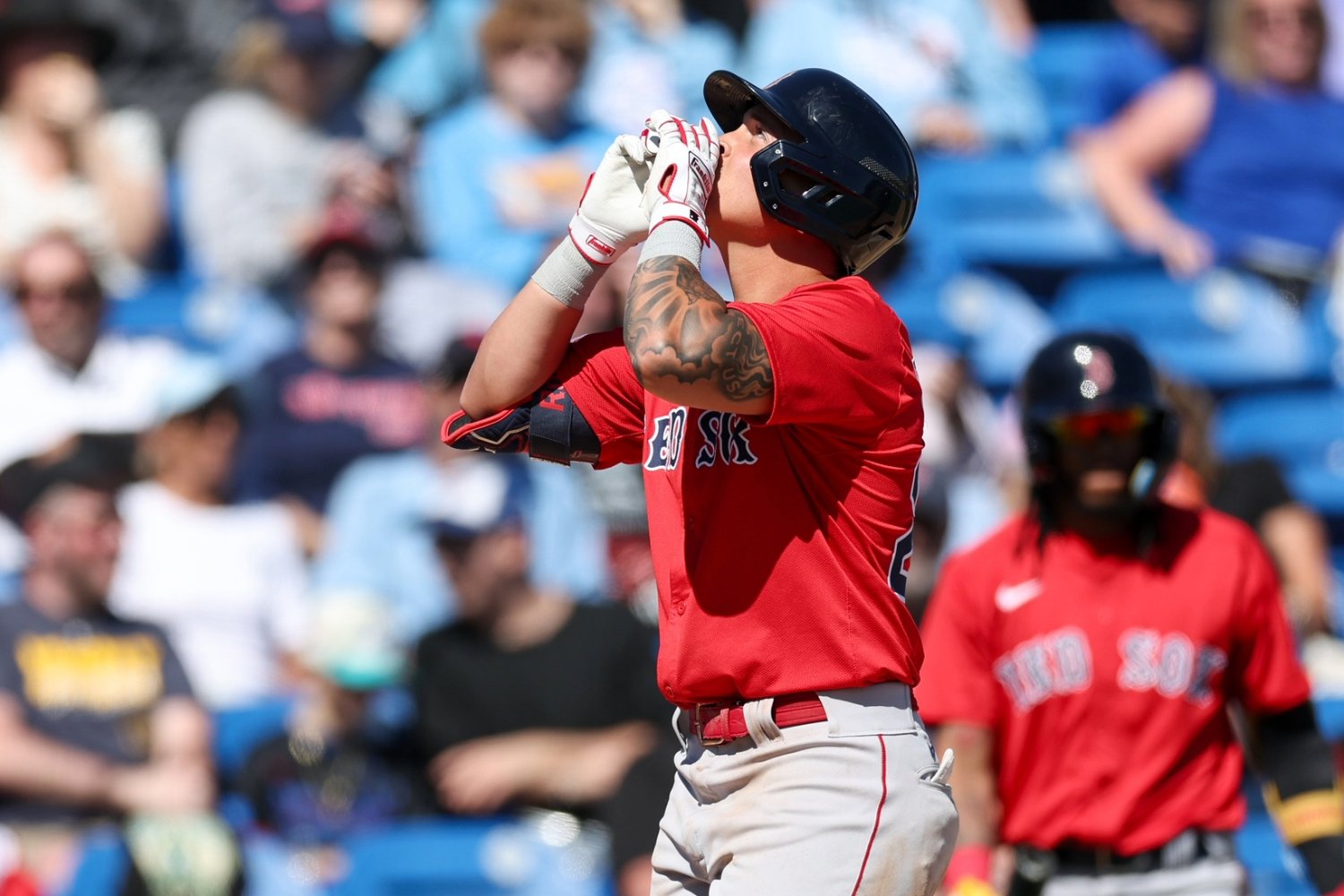 While the Boston Red Sox look to make the playoffs for the first time since 2021, the rest of the organization is looking to continue their development to help contribute to the big league roster. From the minor league perspective, there are several interesting stories for the remainder of the season, especially towards some of the top prospects in the organization. Below, we’re going to look at five prospects that should have interesting second halves. 5) Yoeilin Cespedes Cespedes entered the season alongside fellow prospect Franklin Arias as an exciting, young prospect who dominated in the Florida Complex League in 2024. After hitting .319/.400/.615 with 10 doubles, a triple, five home runs and 24 RBIs, Cespedes was promoted to Salem in late June but missed the rest of 2024 with a broken hamate bone that he had surgery on. Cespedes, who is known for impressive bad speed (he has one of the quickest bats in the entire system), has excellent hand-eye coordination and was expected by fans to continue his hitting in Salem in 2025. That hasn’t happened so far. In 71 games at Salem, the right-handed hitter has struggled to a stat line of .214/.266/.349 with 15 doubles, four triples, five home runs and 33 RBIs. He’s also struck out 68 times, 25 times more than his first two years in the system combined. Despite the low batting average and high strikeouts, Cespedes has shown his plus raw power thanks to his solid exit velocities and hard-hit rates even on balls that haven’t landed for hits. With the way that Carilion Clinic Field’s dimensions are, there is the possibility that if he gets promoted to Greenville before the end of the season, he could showcase more pop thanks in part to his in-game power mostly being to the pull side and Fluor Field being 310 feet out to left. Despite the rough season (including a July that has seen him hit .104/.157/.146 in 52 plate appearances), there’s a reason the Red Sox gave him the largest bonus in the team’s January 2023 international free agent class. He won’t turn 20 until early September and some prospects take a little longer to develop than others. One who has his offensive potential should come around sooner than later. 4) Mikey Romero Since being drafted in 2022, it’s been one thing after another with Romero, as he suffered a back injury in the 2022-23 offseason that ended up becoming a stress fracture and made him miss most of 2023. He would also miss time in 2024 rehabbing from the injury and ended up playing in 78 games (a career high), where he hit .271/.312/.509 with 24 doubles, four triples, 16 home runs and 53 RBIs across the Florida Complex League, Greenville and Portland. Now (mostly) healthy in 2025, Romero has showcased the offensive potential that made him a first-round pick in 2022. In 58 games this season, Romero is hitting .275/.332/.485 with 17 doubles, four triples, eight home runs and 38 RBIs. The infielder has also worked on being more patient at the plate, having walked 19 times, which is a career high since being drafted. The two big things to pay attention to regarding Romero the rest of the season are whether he can stay healthy, and if he stays with the Red Sox at the trade deadline. Already this season, Romero has missed around a month between May and June due to arm fatigue. This year, he’s looked better and entered the year looking more physical as he filled out his lower half and strengthened his upper body, but now he needs to prove he can play a whole season. Of course, that truly only matters if he fits with the team’s future plans. At the moment, their infield and outfield appear to be set for the future, and with his offensive skills, he might be more useful as a trade piece than as a future major leaguer with the Sox. 3) Miguel Bleis Bleis is very much the definition of a prospect who may not work out as intended. Having received the highest bonus in the Red Sox January 2021 international free agent class, Bleis flew up prospect charts and rankings as he was viewed as being a possible future star. In his first games stateside, Bleis played in the Florida Complex League in 2022 and appeared in 40 games where he hit .301/.353/.542 with 14 doubles, four triples, five home runs and 27 RBIs. A lower back issue kept him from being promoted that year. Injuries have been a recurring theme with Bleis, though when he has stayed healthy, he’s showcased the skill that put him as such a highly-ranked prospect. His 2023 season was limited to just 31 games because of a left shoulder subluxation that required surgery and 2024 saw him miss time with several minor injuries. Even 2025 saw him open the season dealing with a quad injury. Now healthy and on pace to play in the most games in his professional career, Bleis has put up a solid yet mixed season. In 67 games, he’s managed to hit .230/.316/.429 with 12 doubles, a triple, 12 home runs and 40 RBIs. Hi biggest issue has been consistency. After a slow start to the year, Bleis turned it on in May and looked to be possibly returning to the former top-100 prospect he had been viewed as. Unfortunately, in June, he managed just a .220/.312/.415 slash line where he hit four doubles, four home runs and had eight RBIs. While the average was down, Bleis still managed to get on base at a nice rate thanks to ten walks. July has been more of the same, however, as through his first 11 games, he’s hit .216/.310/.432 with two doubles, two home runs and two RBIs. Still only 21 years old, Bleis has time to showcase the talent that made him a top-100 prospect, but it’s starting to look like he’ll be yet another fast, defensive outfielder who can hit for power but will strike out often. 2) Franklin Arias Arias entered the Sox system after receiving the second-highest bonus in their 2023 international free agent class thanks in part to his great defense. Since then, he’s only climbed up the prospect rankings due to strong underlying batted ball data and a breakout in the first half of the 2025 season with Salem and Greenville. Arias is expected to become the top prospect in the Sox's farm system upon Roman Anthony’s graduation from prospect status. To say Arias exploded onto the scene in 2025 wouldn’t be an exaggeration. After hitting .257/.331/.378 with nine doubles, three home runs and 26 RBIs in 36 games in Salem in 2024, Arias showed in 2025 he was more than ready for a promotion. In 19 games in 2025 with Salem, Arias slashed .346/.407/.397 with four doubles and nine RBIs. He was quickly promoted to High-A Greenville, where he continued hitting well up until June, where he slumped for the first time this season. That month, Arias struggled to the tune of a .169/.228/.265 batting line with two doubles, two home runs and ten RBIs. It seems to have been a case of just not having hits fall in, as he only struck out six times in 83 at-bats. July has been slightly better, but still not up to his usual standards, as he’s only hit .233/.298/.349 with five doubles and six RBIs in his first 12 games. Overall on the season, Arias is hitting .272/.321/.401 with 16 doubles, a triple, four home runs and 35 RBIs in 56 games for Greenville. Not turning 20 until after the season, Arias is the team’s best positional prospect at the moment that isn't on the MLB roster. The remainder of the season for him will be vital, as a late promotion to Double-A is still on the table. 1) Payton Tolle Tolle has been a welcome surprise for the Red Sox organization, as he looks poised to be their first fully-developed starter they have drafted in quite some time, and likely to become the true number one prospect in the organization following Anthony’s graduation based on various rankings. Just 22 years old, Tolle has made it to Double-A Portland in just his first professional season since being drafted in the second round in 2024. Armed with a fastball that has seen a jump in velocity (sat 90-91 mph in college) that averages 94-97 mph and tops out around 99 mph, a slider that shows depth and bite down in the zone and a changeup that can have late dive downward and out of the zone, Tolle seems to be destined to be a top-of-the-rotation star if he puts it all together. And if his 2025 season is anything to go by, Tolle seems to be on that track. After just 11 games at Greenville (10 starts) where he went 1-3 with a 3.62 ERA in 49 2/3 innings with 79 strikeouts, Tolle was promoted to Portland where he has continued to look just as impressive. Having pitched in four games at Double-A, Tolle has made three starts and is 0-1 with a 2.00 ERA in 18 innings. In that span he’s struck out 27 batters and only walked four. What really stands out for Tolle across his entire season has been his ridiculous strikeout rate. At this point in the year, it’s currently sitting at 39.0% and 40.9% since being promoted to Portland. Add to it that batters are not hitting him well, and there could be a chance he might see Triple-A Worcester by the end of the season. In Portland, opponents are hitting just .164 against him with a .250 batting average on balls in play. Add in a 6.1% walk rate, and he just isn’t dealing with much traffic on the basepaths as he mows down lineups multiple times through the order. The rest of the season should help to show why Tolle could be the next developed star pitcher for the Red Sox, and it’ll be fun to follow along through the last couple months.
 -
While the Boston Red Sox look to make the playoffs for the first time since 2021, the rest of the organization is looking to continue their development to help contribute to the big league roster. From the minor league perspective, there are several interesting stories for the remainder of the season, especially towards some of the top prospects in the organization. Below, we’re going to look at five prospects that should have interesting second halves. 5) Yoeilin Cespedes Cespedes entered the season alongside fellow prospect Franklin Arias as an exciting, young prospect who dominated in the Florida Complex League in 2024. After hitting .319/.400/.615 with 10 doubles, a triple, five home runs and 24 RBIs, Cespedes was promoted to Salem in late June but missed the rest of 2024 with a broken hamate bone that he had surgery on. Cespedes, who is known for impressive bad speed (he has one of the quickest bats in the entire system), has excellent hand-eye coordination and was expected by fans to continue his hitting in Salem in 2025. That hasn’t happened so far. In 71 games at Salem, the right-handed hitter has struggled to a stat line of .214/.266/.349 with 15 doubles, four triples, five home runs and 33 RBIs. He’s also struck out 68 times, 25 times more than his first two years in the system combined. Despite the low batting average and high strikeouts, Cespedes has shown his plus raw power thanks to his solid exit velocities and hard-hit rates even on balls that haven’t landed for hits. With the way that Carilion Clinic Field’s dimensions are, there is the possibility that if he gets promoted to Greenville before the end of the season, he could showcase more pop thanks in part to his in-game power mostly being to the pull side and Fluor Field being 310 feet out to left. Despite the rough season (including a July that has seen him hit .104/.157/.146 in 52 plate appearances), there’s a reason the Red Sox gave him the largest bonus in the team’s January 2023 international free agent class. He won’t turn 20 until early September and some prospects take a little longer to develop than others. One who has his offensive potential should come around sooner than later. 4) Mikey Romero Since being drafted in 2022, it’s been one thing after another with Romero, as he suffered a back injury in the 2022-23 offseason that ended up becoming a stress fracture and made him miss most of 2023. He would also miss time in 2024 rehabbing from the injury and ended up playing in 78 games (a career high), where he hit .271/.312/.509 with 24 doubles, four triples, 16 home runs and 53 RBIs across the Florida Complex League, Greenville and Portland. Now (mostly) healthy in 2025, Romero has showcased the offensive potential that made him a first-round pick in 2022. In 58 games this season, Romero is hitting .275/.332/.485 with 17 doubles, four triples, eight home runs and 38 RBIs. The infielder has also worked on being more patient at the plate, having walked 19 times, which is a career high since being drafted. The two big things to pay attention to regarding Romero the rest of the season are whether he can stay healthy, and if he stays with the Red Sox at the trade deadline. Already this season, Romero has missed around a month between May and June due to arm fatigue. This year, he’s looked better and entered the year looking more physical as he filled out his lower half and strengthened his upper body, but now he needs to prove he can play a whole season. Of course, that truly only matters if he fits with the team’s future plans. At the moment, their infield and outfield appear to be set for the future, and with his offensive skills, he might be more useful as a trade piece than as a future major leaguer with the Sox. 3) Miguel Bleis Bleis is very much the definition of a prospect who may not work out as intended. Having received the highest bonus in the Red Sox January 2021 international free agent class, Bleis flew up prospect charts and rankings as he was viewed as being a possible future star. In his first games stateside, Bleis played in the Florida Complex League in 2022 and appeared in 40 games where he hit .301/.353/.542 with 14 doubles, four triples, five home runs and 27 RBIs. A lower back issue kept him from being promoted that year. Injuries have been a recurring theme with Bleis, though when he has stayed healthy, he’s showcased the skill that put him as such a highly-ranked prospect. His 2023 season was limited to just 31 games because of a left shoulder subluxation that required surgery and 2024 saw him miss time with several minor injuries. Even 2025 saw him open the season dealing with a quad injury. Now healthy and on pace to play in the most games in his professional career, Bleis has put up a solid yet mixed season. In 67 games, he’s managed to hit .230/.316/.429 with 12 doubles, a triple, 12 home runs and 40 RBIs. Hi biggest issue has been consistency. After a slow start to the year, Bleis turned it on in May and looked to be possibly returning to the former top-100 prospect he had been viewed as. Unfortunately, in June, he managed just a .220/.312/.415 slash line where he hit four doubles, four home runs and had eight RBIs. While the average was down, Bleis still managed to get on base at a nice rate thanks to ten walks. July has been more of the same, however, as through his first 11 games, he’s hit .216/.310/.432 with two doubles, two home runs and two RBIs. Still only 21 years old, Bleis has time to showcase the talent that made him a top-100 prospect, but it’s starting to look like he’ll be yet another fast, defensive outfielder who can hit for power but will strike out often. 2) Franklin Arias Arias entered the Sox system after receiving the second-highest bonus in their 2023 international free agent class thanks in part to his great defense. Since then, he’s only climbed up the prospect rankings due to strong underlying batted ball data and a breakout in the first half of the 2025 season with Salem and Greenville. Arias is expected to become the top prospect in the Sox's farm system upon Roman Anthony’s graduation from prospect status. To say Arias exploded onto the scene in 2025 wouldn’t be an exaggeration. After hitting .257/.331/.378 with nine doubles, three home runs and 26 RBIs in 36 games in Salem in 2024, Arias showed in 2025 he was more than ready for a promotion. In 19 games in 2025 with Salem, Arias slashed .346/.407/.397 with four doubles and nine RBIs. He was quickly promoted to High-A Greenville, where he continued hitting well up until June, where he slumped for the first time this season. That month, Arias struggled to the tune of a .169/.228/.265 batting line with two doubles, two home runs and ten RBIs. It seems to have been a case of just not having hits fall in, as he only struck out six times in 83 at-bats. July has been slightly better, but still not up to his usual standards, as he’s only hit .233/.298/.349 with five doubles and six RBIs in his first 12 games. Overall on the season, Arias is hitting .272/.321/.401 with 16 doubles, a triple, four home runs and 35 RBIs in 56 games for Greenville. Not turning 20 until after the season, Arias is the team’s best positional prospect at the moment that isn't on the MLB roster. The remainder of the season for him will be vital, as a late promotion to Double-A is still on the table. 1) Payton Tolle Tolle has been a welcome surprise for the Red Sox organization, as he looks poised to be their first fully-developed starter they have drafted in quite some time, and likely to become the true number one prospect in the organization following Anthony’s graduation based on various rankings. Just 22 years old, Tolle has made it to Double-A Portland in just his first professional season since being drafted in the second round in 2024. Armed with a fastball that has seen a jump in velocity (sat 90-91 mph in college) that averages 94-97 mph and tops out around 99 mph, a slider that shows depth and bite down in the zone and a changeup that can have late dive downward and out of the zone, Tolle seems to be destined to be a top-of-the-rotation star if he puts it all together. And if his 2025 season is anything to go by, Tolle seems to be on that track. After just 11 games at Greenville (10 starts) where he went 1-3 with a 3.62 ERA in 49 2/3 innings with 79 strikeouts, Tolle was promoted to Portland where he has continued to look just as impressive. Having pitched in four games at Double-A, Tolle has made three starts and is 0-1 with a 2.00 ERA in 18 innings. In that span he’s struck out 27 batters and only walked four. What really stands out for Tolle across his entire season has been his ridiculous strikeout rate. At this point in the year, it’s currently sitting at 39.0% and 40.9% since being promoted to Portland. Add to it that batters are not hitting him well, and there could be a chance he might see Triple-A Worcester by the end of the season. In Portland, opponents are hitting just .164 against him with a .250 batting average on balls in play. Add in a 6.1% walk rate, and he just isn’t dealing with much traffic on the basepaths as he mows down lineups multiple times through the order. The rest of the season should help to show why Tolle could be the next developed star pitcher for the Red Sox, and it’ll be fun to follow along through the last couple months. View full article
-
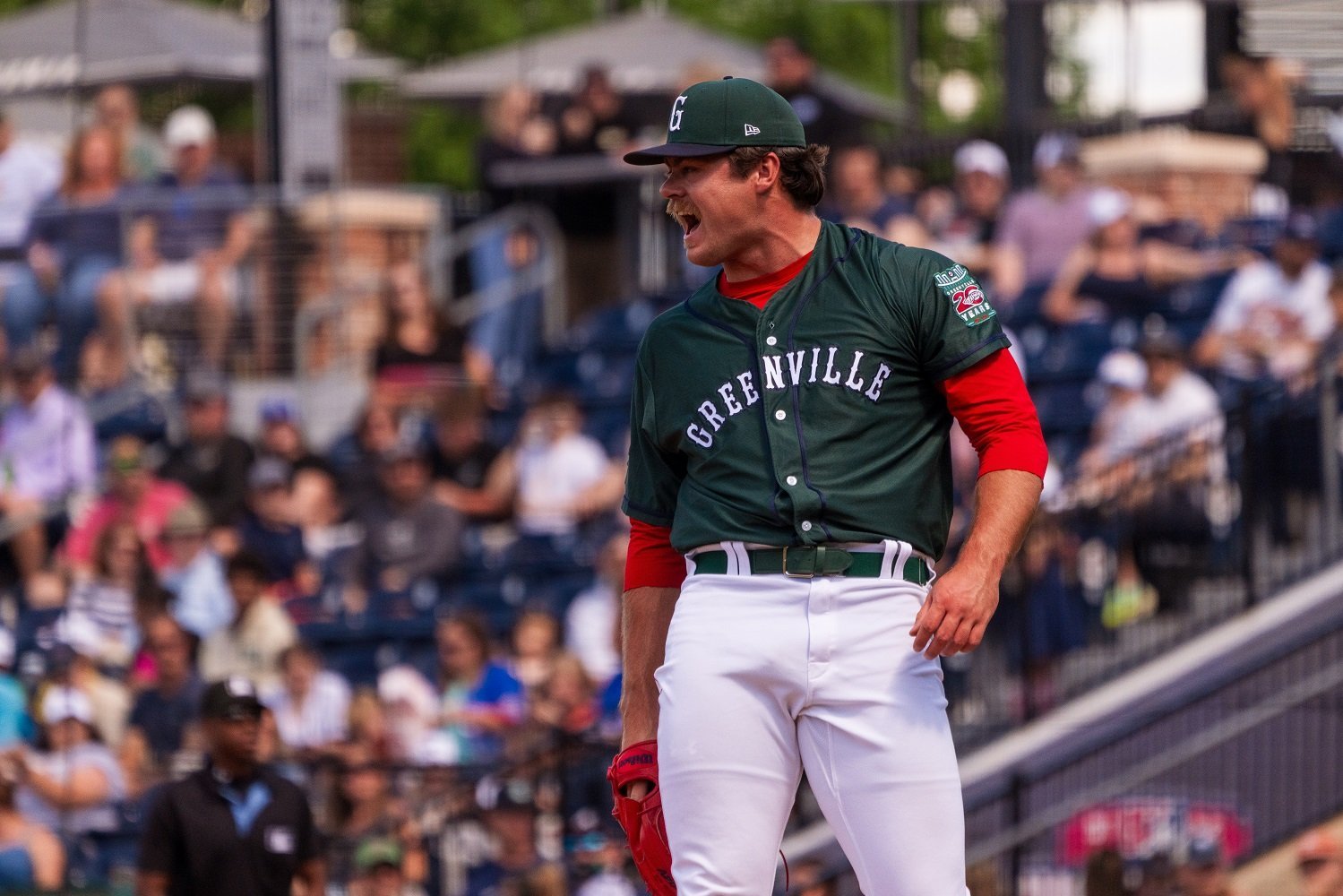 Trade season is upon us, and the Red Sox will look to upgrade their team as they fight for a playoff spot. With a deep farm system, the Red Sox seem to be a pristine trade partner for many sellers. However, despite the ability to make a myriad of trades, the team shouldn't willingly surrender its best talent. One player who should be deemed untouchable is Payton Tolle. With a report by USA Today’s Bob Nightengale stating that the Red Sox have sent scouts to watch Diamondbacks pitchers Zac Gallen and Merrill Kelly, along with Arizona’s desire to receive young pitching in return for any of their available players, the Red Sox seem like a natural match thanks to their crop of young pitchers. Add to it remarks that the Diamondbacks had a scout at the Portland Sea Dogs over the weekend where both Payton Tolle and David Sandlin pitched, two of the team’s better pitching prospects. While Sandlin could be moved in the right deal, Tolle should be off limits. The left-handed pitcher continues to impress in his first professional season, as he’s pitched in 15 games across two levels of minor league baseball. Making 13 starts in that span, Tolle has gone 1-4 with a 3.19 ERA in 67 2/3 innings pitched. His strikeouts per nine is 14.10 ,which is thanks in part to his increased velocity on his fastball. After averaging 90-91 mph in college, his fastball now can reach 99 mph and has showcased premium bat-missing ability. Even at its new peak, the heater can appear faster than it is thanks in part to his extension towards the plate that is near the top of all pitchers in pro ball. His second-best pitch may be his changeup due to its late dive downward out of the strike zone, which helps to create a difference in speed between it and his fastball. Thanks to its break, the changeup also generates weak contact. His cutter also helps to make his fastball look better as the two pitches play off each other and forces batters to change their eye level. When you look at Tolle’s other stats, you can see why the young left-hander should be untouchable. In Double-A this season, he has a 40.9% strikeout rate while walking hitters at just a 6.1% rate. It isn’t only strikeouts either, as batters are just not hitting him well. In Double-A, opponents are hitting .164 against him, and for the entire season that number is just .215 (and even that's inflated thanks in part to a batting average on balls in play being .336 for the season). It isn’t like he’s getting lucky either, as evidenced by his 2.74 FIP on the season. And even that is higher than it should be if you go by his expected FIP of 2.28. Considering that a FIP of 4.00 is considered league average pitching, the fact that Tolle is under 3.00 should be viewed as excellent or elite. Tolle currently is ranked 48th on Baseball America’s latest Top 100 prospects list and SoxProspects has him currently ranked third in the organization, though he’ll become number one once Roman Anthony and Marcelo Mayer graduate from prospect status. Considering that Tolle did not solely focus on pitching until his junior year at TCU, the year the Red Sox drafted him, his emergence this season should be viewed as a baseline, not an abberation. Originally unknown if he could stick as a starter due to his high fastball usage (around 75%) and a lack of a secondary pitch in college, Tolle has already helped to end those qualms thanks to his development since signing with Boston. Simply put, Boston would be crazy to trade someone like Tolle right now, especially for a rental. Should they genuinely be willing to deal Tolle, it has to be part of a package for a player that elevates the MLB roster to greatness right away. Otherwise, the top prospect needs to stay put.
 -
Tanner Houck’s season is now in jeopardy after being shut down indefinitely following a lengthy rehab assignment, according to Tim Healey of the Boston Globe. Originally placed on the injured list back in Mid-May due to a right flexor pronator strain, Houck began his rehab on June 18th in Worcester and appeared in five games between Worcester and Portland. Now it appears that his flexor soreness has returned, leaving his season status uncertain. While surgery has been ruled out at the moment, the team is unsure of what to do next. “We gotta go to step one, I guess,” Alex Cora said when asked about Houck’s status for the remainder of the season. Houck’s rehab assignment had concluded, and the team was required to either activate him and add him to the major league roster or option him to Triple-A Worcester. Instead, he will remain on the injured list as he attempts to work his way back once more. The potential loss of Houck for the season could force the Red Sox to up their efforts in trading for a starter leading up to the trade deadline, especially with fellow starter Hunter Dobbins out for the remainder of the year. Do you think Houck will make it back before the end of the year? Might surgery be the best option and have him come back at 100% next season? Does his setback make acquiring a starter the team's top priority? Leave your thoughts below down in the comments. View full rumor
-
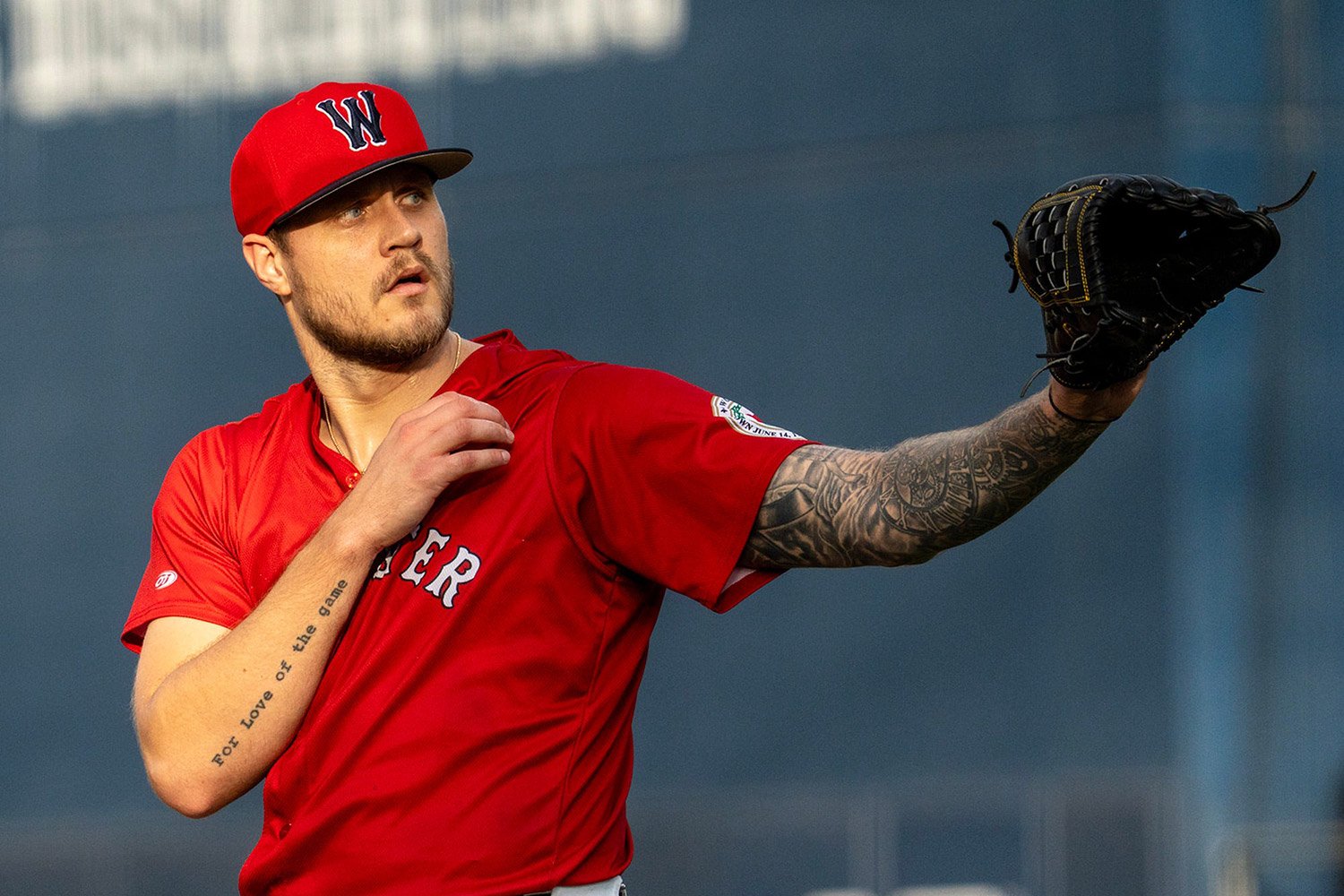 Tanner Houck’s season is now in jeopardy after being shut down indefinitely following a lengthy rehab assignment, according to Tim Healey of the Boston Globe. Originally placed on the injured list back in Mid-May due to a right flexor pronator strain, Houck began his rehab on June 18th in Worcester and appeared in five games between Worcester and Portland. Now it appears that his flexor soreness has returned, leaving his season status uncertain. While surgery has been ruled out at the moment, the team is unsure of what to do next. “We gotta go to step one, I guess,” Alex Cora said when asked about Houck’s status for the remainder of the season. Houck’s rehab assignment had concluded, and the team was required to either activate him and add him to the major league roster or option him to Triple-A Worcester. Instead, he will remain on the injured list as he attempts to work his way back once more. The potential loss of Houck for the season could force the Red Sox to up their efforts in trading for a starter leading up to the trade deadline, especially with fellow starter Hunter Dobbins out for the remainder of the year. Do you think Houck will make it back before the end of the year? Might surgery be the best option and have him come back at 100% next season? Does his setback make acquiring a starter the team's top priority? Leave your thoughts below down in the comments.
 -
As the trade deadline quickly approaches, the Red Sox are being considered among the buyers in Major League Baseball. As the club looks to upgrade specific positions, ESPN’s Jeff Passan has released his Top 50 trade deadline candidates, and the Red Sox are being considered a “best fit” for several players. Both rental and long-term assets are being considered, as the list contains exciting names. Among the rentals that Boston is considered as a potential “best fit” are first basemen Ryan O’Hearn and Josh Naylor and pitcher Merrill Kelly. Those three players would likely cost less than the others on the list due to their impending free agency. Those who would be under contract for more than the remainder of this season include pitchers Sandy Alcantara, Kris Bubic, Mitch Keller, Taj Bradley, and Edward Cabrera. OF this group, Alcantara and Bubic could become free agents after next season. Alcantara also has a $21 million team option for the 2027 season but can be bought out for $2 million. Both Cabrera and Keller would be under team control through the 2028 season, the former through arbitration and the latter having signed an extension with the Pittsburgh Pirates through the 2028 season. Of the batch, Bradley may be the most expensive. Not arbitration eligible until after the 2026 season. If traded for Bradley would come back to Boston with four more years of control. What do you think? Of the players listed, who do you want the most? Or are you not interested in any of them? Leave your thoughts below in the comments. View full rumor