


Nick John
-
Posts
799 -
Joined
-
Last visited
-
Days Won
1
Content Type
Profiles
Boston Red Sox Videos
2026 Boston Red Sox Top Prospects Ranking
Boston Red Sox Free Agent & Trade Rumors, Notes, & Tidbits
Guides & Resources
2025 Boston Red Sox Draft Pick Tracker
News
2026 Boston Red Sox Draft Tracker: Picks & Bonuses
Forums
Blogs
Events
Store
Downloads
Gallery
Everything posted by Nick John
-
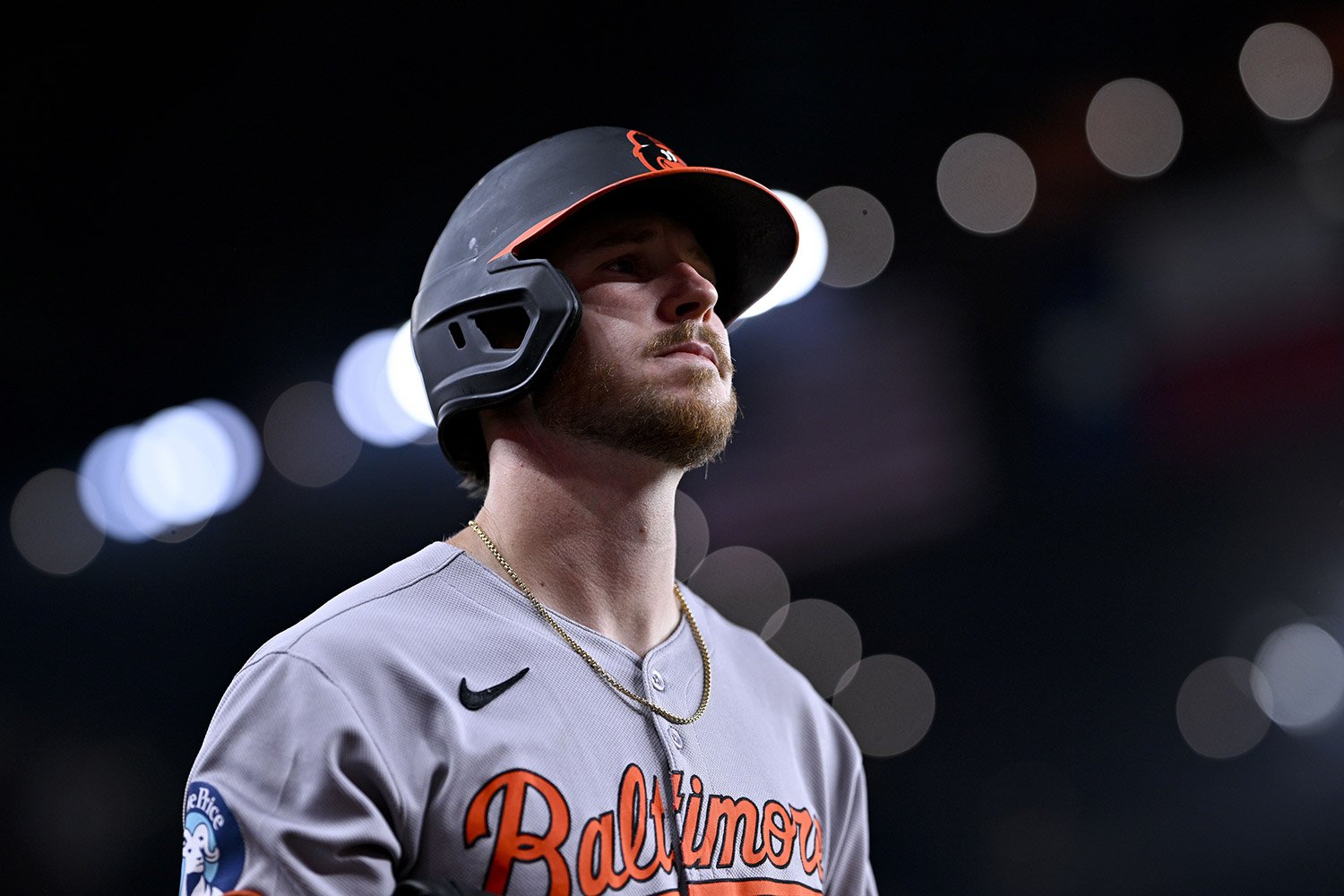 As the trade deadline quickly approaches, the Red Sox are being considered among the buyers in Major League Baseball. As the club looks to upgrade specific positions, ESPN’s Jeff Passan has released his Top 50 trade deadline candidates, and the Red Sox are being considered a “best fit” for several players. Both rental and long-term assets are being considered, as the list contains exciting names. Among the rentals that Boston is considered as a potential “best fit” are first basemen Ryan O’Hearn and Josh Naylor and pitcher Merrill Kelly. Those three players would likely cost less than the others on the list due to their impending free agency. Those who would be under contract for more than the remainder of this season include pitchers Sandy Alcantara, Kris Bubic, Mitch Keller, Taj Bradley, and Edward Cabrera. OF this group, Alcantara and Bubic could become free agents after next season. Alcantara also has a $21 million team option for the 2027 season but can be bought out for $2 million. Both Cabrera and Keller would be under team control through the 2028 season, the former through arbitration and the latter having signed an extension with the Pittsburgh Pirates through the 2028 season. Of the batch, Bradley may be the most expensive. Not arbitration eligible until after the 2026 season. If traded for Bradley would come back to Boston with four more years of control. What do you think? Of the players listed, who do you want the most? Or are you not interested in any of them? Leave your thoughts below in the comments.
 -
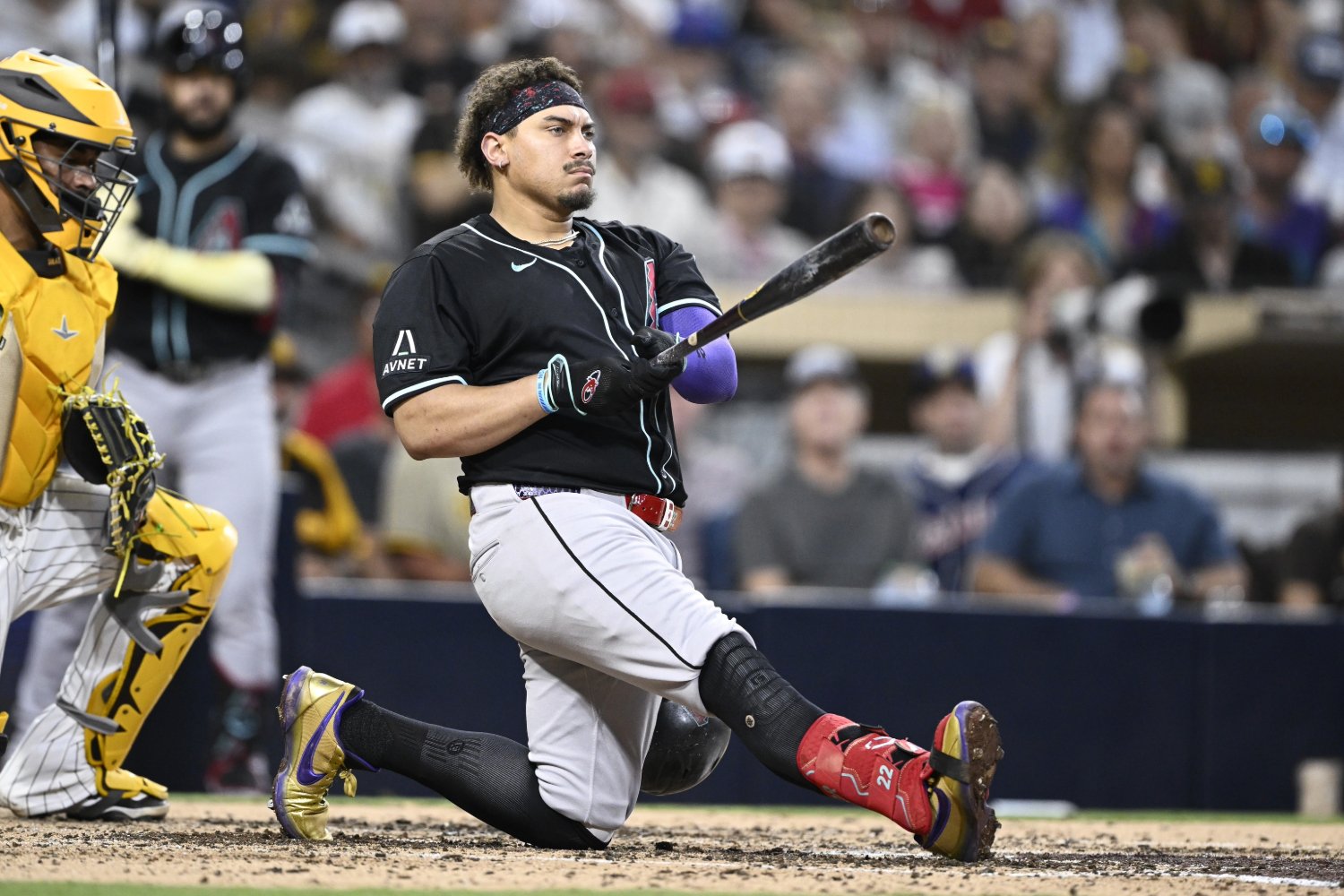 As a unit, Red Sox first basemen are currently hitting .240/.299/.388 with 23 doubles, one triple, 10 home runs and 44 RBIs. To go along with that, they’ve walked 26 times while striking out in 81 at-bats. It isn’t awful production, but at such a valuable offensive position, the team could use an upgrade for the stretch run. One team that could match up in a trade would be the Arizona Diamondbacks, as the team is currently 48-50, 10 games out of the NL West and 4 ½ games out of a wild card spot. With a franchise-record payroll hovering around $190 million, it’s likely they’ll look to shed some payroll. Bob Nightengale of USA Today reports that rival executives believe the Diamondbacks will sell off players who will be free agents in hopes of getting young pitching back in return. In his last season before free agency, Josh Naylor is making just under $11 million for the team and it’s unlikely the team looks to re-sign him with around $112 million tied up in just ten players for the 2026 season. Arizona will be looking for a way to round out their roster without spending more than they did this season, and the Red Sox would line up perfectly as a trade partner to get cheap, young talent. Naylor himself is having another strong season, slashing .294/.361/.456 with 18 doubles, a triple, 11 home runs and 58 RBIs. Though what may be most impressive this season is the way he’s cut back on striking out, that number down to just 46 as of this writing. Naylor is a veteran bat that can provide power from the left side of the plate, something the Sox have missed with the loss of Triston Casas and the trade of Rafael Devers. His ISO this season is sitting at .162, the lowest figure since he became a full-time player in 2022, but it's not like he's sacrificed a ton of in-game power for his current production. This is also shown in his career low home run percentage of just 3.0%, a number that should increase if he stops playing his home games at Chase Field. The dimensions of the two parks are slightly different, as Fenway is well known for its Green Monster and rather weird dimensions around the park. Where right field is 335 feet at Chase Field, the shortest distance in Fenway for right field would only be 302 feet and right-center is 380 feet compared to Chase Field’s 376 feet. Continuing the difference, Fenway has the triangle in right-center as well, measuring out to 420 feet while the furthest distance is 413 at Chase Field. This is where it starts to change. Straight away at Fenway is only 390 feet, a whole 17 feet shorter for someone like Naylor who has hit the ball this season to center at a 48.8%. Unfortunately, Naylor has only gone opposite field on 12.3% of his batted balls this season, preferring to either pull or go straight back to the middle of the field, meaning he may not get to take a ton of advantage of the Green Monster if he joins the Red Sox. When looking at his spray chart, it seems he’s very much a more right-center or left-center hitter instead of straight away. Should he manage to hit the ball more on a line drive or in a manner where it wouldn’t hang up in the outfield, Naylor could see many doubles be hit across the outfield grass at Fenway. What’s also another positive of Naylor is his consistency when hitting the ball hard. Since becoming a full-time player, Naylor has never had an exit velocity under 89 mph, that trend continues in 2025 as he’s hitting balls at 89.1 mph and for a hard hit rate of 41.5%, the highest since his 2022 season in Cleveland. Likewise, he doesn’t strike out much as his season number is just 12.5% of his at-bats while also walking at a career high 9.5% of his at-bats. To put his strikeout rate into consideration, it would be the best on the team when not including Masataka Yoshida who has only appeared in five games on the season. Add to it that he does something that is very important for a playoff run: hits with runners in scoring position. In 105 plate appearances in the first half, he hit .303 with runners in scoring position, that number increased to .306 with two outs. Add to it that he has some playoff experience while with Cleveland, and he could be a valuable addition to the offense just from his experience alone. However, despite his continued success, there are questions surrounding Naylor. His home run pace has dropped significantly from hitting 31 last season to now being on pace for around 18 home runs, to how his barrel percentage and chase rates are worse this season. Despite that, I think he would benefit from coming to Boston and working in the same hitting lab that developed Roman Anthony into the number one prospect in all of baseball along with revitalizing the careers of Rob Refsnyder and Romy González and transformed Ceddanne Rafaela from a free-swinging, first-pitch-chasing batter into one of the most clutch hitters in all of baseball for the past two months. Working under Pete Fatse and the rest of the Sox hitting department could help Naylor increase his bat speed and tweak his launch angle to help bring back some of his power that is missing this season. In doing so, the team would manage to find their cleanup hitter for the remainder of the season, something they have clearly lacked all year, and lengthen their lineup even more by sliding Carlos Narváez further down the lineup. While González and Abraham Toro have handled the position admirably following the loss of Casas for the season, both players should not be relied upon to handle full time at-bats to this degree. González has shown to hit both right-handed and left-handed pitching this season but the question surrounding him is whether his body can hold up. Already, he’s missed around a month after a freak collision with Josh Smith of the Texas Rangers and heading into the All-Star break was “banged up” according to manager Alex Cora. González may also be better suited for an infield super-utility role where he could spell either Alex Bregman or Marcelo Mayer at third base or second base while also being slotted into the starting lineup against left-handed pitchers to protect the rookie Mayer. The addition of Naylor would take the need of González at first base away and allow the infielder to provide support to the entire infield. Toro, on the other hand, started hot for the Red Sox but in his last 21 games played before the All-Star break he hit .214/.291/.257 with three doubles and seven RBIs. Offensively, he hasn’t brought much to the team and in his last 33 at-bats is just 6-for-33, good for a .182 batting average entering the second half. He has been extremely lucky at the plate, boasting a .299 batting average for balls in play despite providing the second lowest exit velocity of his career since the 2021 season at 86.4 mph. Though unqualified due to a lack of at-bats, Toro would rank near the bottom when it comes to exit velocity, barrel percentage, hard hit rate, bat speed and chase percentage, all of which Naylor would be an improvement over. With only half a season remaining on his contract too, Naylor could be had for cheap when it comes to prospect capital. During the offseason he was acquired from Cleveland for Slade Cecconi who entered the 2024 season was the Diamondbacks’ 17th-ranked prospect according to MLB Pipeline. A former first-round pick in the 2020 MLB draft, Cecconi pitched in 27 games across parts of two seasons, making 17 starts for Arizona. He would struggle, allowing 70 earned runs in 104 innings pitched for a 6.06 ERA and only striking out 84 batters in that span. The Diamondbacks may regret trading him as he’s figured things out this season in Cleveland as he sports a 4-4 record in 10 starts, tossing 55 innings and having a 3.44 ERA. With there being question marks surrounding the rotation after this season for Arizona, he could have been a key piece in the coming seasons. Looking at the starting pitchers currently under contract for the 2026 season, the Diamondbacks don’t have many. Without including those who are arbitration eligible, Arizona only has three starters on their roster for 2026; Corbin Burnes, Eduardo Rodríguez, and Brandon Pfaadt, who will combine for $55.2 million in salary. And to make it worse, Burnes is likely to miss a good portion of the 2026 season as he recovers from Tommy John surgery he had back in June. Ryne Nelson is going to slot into the rotation as well, but he’s still pre-arbitration. So, how does this line up with the Red Sox being a good trade partner for Arizona? The Red Sox have a lot of young pitching that is close to being ready for the major leagues if not already ready. While their current Triple-A pitching staff may not be enticing in a trade, if you look at Portland, there are two pitchers the Red Sox could possibly be willing to move in a trade. David Sandlin and Connelly Early are young pitchers who have risen up the Red Sox prospect rankings, but following the development of their 2024 draft prospects and the many pitching selections they made in the 2025 draft, one or even both may become expendable, and Arizona may have interest in one of them to hold down a rotation spot in 2026 for them. Looking at the original deal Arizona made for Naylor, would it seem out of place to offer up Sandlin in a straight one-for-one trade? Sandlin may lack the major league experience that Cecconi had, but he’s shown this season to have a lively arm that has struck out 81 batters in 74 1/3 innings. With a fastball that can top out at 99 mph in game and paired with a slider that is viewed as potentially being a plus offering, Arizona could view him as either a mid to backend rotation arm or a key bullpen piece on an extremely cheap contract Should the Diamondbacks want more than just a single pitcher back for Naylor, the Red Sox could offer a trade of multiple arms they may not have much desire to keep around. Could Arizona possibly be swayed into accepting something along the lines of Tyler Uberstine and Hayden Mullins? The pair are the 21st and 23rd-ranked prospects in the system by SoxProspects. Given his status as a rental bat, that could be enough to get the deal done. Though one thing is certain, if the Diamondbacks want young arms back in return for Naylor, the Red Sox have plenty of young arms they could offer from their system, especially after drafting 15 pitchers in this year’s draft. If the Red Sox want to make the playoffs, they have to upgrade certain positions and first base is one of them. Craig Breslow has shown he’s not afraid to make a trade, and if he thinks Naylor is right for the team, then you can bet he'll be in contact with Arizona’s front office leading up to the trade deadline.
 -
As a unit, Red Sox first basemen are currently hitting .240/.299/.388 with 23 doubles, one triple, 10 home runs and 44 RBIs. To go along with that, they’ve walked 26 times while striking out in 81 at-bats. It isn’t awful production, but at such a valuable offensive position, the team could use an upgrade for the stretch run. One team that could match up in a trade would be the Arizona Diamondbacks, as the team is currently 48-50, 10 games out of the NL West and 4 ½ games out of a wild card spot. With a franchise-record payroll hovering around $190 million, it’s likely they’ll look to shed some payroll. Bob Nightengale of USA Today reports that rival executives believe the Diamondbacks will sell off players who will be free agents in hopes of getting young pitching back in return. In his last season before free agency, Josh Naylor is making just under $11 million for the team and it’s unlikely the team looks to re-sign him with around $112 million tied up in just ten players for the 2026 season. Arizona will be looking for a way to round out their roster without spending more than they did this season, and the Red Sox would line up perfectly as a trade partner to get cheap, young talent. Naylor himself is having another strong season, slashing .294/.361/.456 with 18 doubles, a triple, 11 home runs and 58 RBIs. Though what may be most impressive this season is the way he’s cut back on striking out, that number down to just 46 as of this writing. Naylor is a veteran bat that can provide power from the left side of the plate, something the Sox have missed with the loss of Triston Casas and the trade of Rafael Devers. His ISO this season is sitting at .162, the lowest figure since he became a full-time player in 2022, but it's not like he's sacrificed a ton of in-game power for his current production. This is also shown in his career low home run percentage of just 3.0%, a number that should increase if he stops playing his home games at Chase Field. The dimensions of the two parks are slightly different, as Fenway is well known for its Green Monster and rather weird dimensions around the park. Where right field is 335 feet at Chase Field, the shortest distance in Fenway for right field would only be 302 feet and right-center is 380 feet compared to Chase Field’s 376 feet. Continuing the difference, Fenway has the triangle in right-center as well, measuring out to 420 feet while the furthest distance is 413 at Chase Field. This is where it starts to change. Straight away at Fenway is only 390 feet, a whole 17 feet shorter for someone like Naylor who has hit the ball this season to center at a 48.8%. Unfortunately, Naylor has only gone opposite field on 12.3% of his batted balls this season, preferring to either pull or go straight back to the middle of the field, meaning he may not get to take a ton of advantage of the Green Monster if he joins the Red Sox. When looking at his spray chart, it seems he’s very much a more right-center or left-center hitter instead of straight away. Should he manage to hit the ball more on a line drive or in a manner where it wouldn’t hang up in the outfield, Naylor could see many doubles be hit across the outfield grass at Fenway. What’s also another positive of Naylor is his consistency when hitting the ball hard. Since becoming a full-time player, Naylor has never had an exit velocity under 89 mph, that trend continues in 2025 as he’s hitting balls at 89.1 mph and for a hard hit rate of 41.5%, the highest since his 2022 season in Cleveland. Likewise, he doesn’t strike out much as his season number is just 12.5% of his at-bats while also walking at a career high 9.5% of his at-bats. To put his strikeout rate into consideration, it would be the best on the team when not including Masataka Yoshida who has only appeared in five games on the season. Add to it that he does something that is very important for a playoff run: hits with runners in scoring position. In 105 plate appearances in the first half, he hit .303 with runners in scoring position, that number increased to .306 with two outs. Add to it that he has some playoff experience while with Cleveland, and he could be a valuable addition to the offense just from his experience alone. However, despite his continued success, there are questions surrounding Naylor. His home run pace has dropped significantly from hitting 31 last season to now being on pace for around 18 home runs, to how his barrel percentage and chase rates are worse this season. Despite that, I think he would benefit from coming to Boston and working in the same hitting lab that developed Roman Anthony into the number one prospect in all of baseball along with revitalizing the careers of Rob Refsnyder and Romy González and transformed Ceddanne Rafaela from a free-swinging, first-pitch-chasing batter into one of the most clutch hitters in all of baseball for the past two months. Working under Pete Fatse and the rest of the Sox hitting department could help Naylor increase his bat speed and tweak his launch angle to help bring back some of his power that is missing this season. In doing so, the team would manage to find their cleanup hitter for the remainder of the season, something they have clearly lacked all year, and lengthen their lineup even more by sliding Carlos Narváez further down the lineup. While González and Abraham Toro have handled the position admirably following the loss of Casas for the season, both players should not be relied upon to handle full time at-bats to this degree. González has shown to hit both right-handed and left-handed pitching this season but the question surrounding him is whether his body can hold up. Already, he’s missed around a month after a freak collision with Josh Smith of the Texas Rangers and heading into the All-Star break was “banged up” according to manager Alex Cora. González may also be better suited for an infield super-utility role where he could spell either Alex Bregman or Marcelo Mayer at third base or second base while also being slotted into the starting lineup against left-handed pitchers to protect the rookie Mayer. The addition of Naylor would take the need of González at first base away and allow the infielder to provide support to the entire infield. Toro, on the other hand, started hot for the Red Sox but in his last 21 games played before the All-Star break he hit .214/.291/.257 with three doubles and seven RBIs. Offensively, he hasn’t brought much to the team and in his last 33 at-bats is just 6-for-33, good for a .182 batting average entering the second half. He has been extremely lucky at the plate, boasting a .299 batting average for balls in play despite providing the second lowest exit velocity of his career since the 2021 season at 86.4 mph. Though unqualified due to a lack of at-bats, Toro would rank near the bottom when it comes to exit velocity, barrel percentage, hard hit rate, bat speed and chase percentage, all of which Naylor would be an improvement over. With only half a season remaining on his contract too, Naylor could be had for cheap when it comes to prospect capital. During the offseason he was acquired from Cleveland for Slade Cecconi who entered the 2024 season was the Diamondbacks’ 17th-ranked prospect according to MLB Pipeline. A former first-round pick in the 2020 MLB draft, Cecconi pitched in 27 games across parts of two seasons, making 17 starts for Arizona. He would struggle, allowing 70 earned runs in 104 innings pitched for a 6.06 ERA and only striking out 84 batters in that span. The Diamondbacks may regret trading him as he’s figured things out this season in Cleveland as he sports a 4-4 record in 10 starts, tossing 55 innings and having a 3.44 ERA. With there being question marks surrounding the rotation after this season for Arizona, he could have been a key piece in the coming seasons. Looking at the starting pitchers currently under contract for the 2026 season, the Diamondbacks don’t have many. Without including those who are arbitration eligible, Arizona only has three starters on their roster for 2026; Corbin Burnes, Eduardo Rodríguez, and Brandon Pfaadt, who will combine for $55.2 million in salary. And to make it worse, Burnes is likely to miss a good portion of the 2026 season as he recovers from Tommy John surgery he had back in June. Ryne Nelson is going to slot into the rotation as well, but he’s still pre-arbitration. So, how does this line up with the Red Sox being a good trade partner for Arizona? The Red Sox have a lot of young pitching that is close to being ready for the major leagues if not already ready. While their current Triple-A pitching staff may not be enticing in a trade, if you look at Portland, there are two pitchers the Red Sox could possibly be willing to move in a trade. David Sandlin and Connelly Early are young pitchers who have risen up the Red Sox prospect rankings, but following the development of their 2024 draft prospects and the many pitching selections they made in the 2025 draft, one or even both may become expendable, and Arizona may have interest in one of them to hold down a rotation spot in 2026 for them. Looking at the original deal Arizona made for Naylor, would it seem out of place to offer up Sandlin in a straight one-for-one trade? Sandlin may lack the major league experience that Cecconi had, but he’s shown this season to have a lively arm that has struck out 81 batters in 74 1/3 innings. With a fastball that can top out at 99 mph in game and paired with a slider that is viewed as potentially being a plus offering, Arizona could view him as either a mid to backend rotation arm or a key bullpen piece on an extremely cheap contract Should the Diamondbacks want more than just a single pitcher back for Naylor, the Red Sox could offer a trade of multiple arms they may not have much desire to keep around. Could Arizona possibly be swayed into accepting something along the lines of Tyler Uberstine and Hayden Mullins? The pair are the 21st and 23rd-ranked prospects in the system by SoxProspects. Given his status as a rental bat, that could be enough to get the deal done. Though one thing is certain, if the Diamondbacks want young arms back in return for Naylor, the Red Sox have plenty of young arms they could offer from their system, especially after drafting 15 pitchers in this year’s draft. If the Red Sox want to make the playoffs, they have to upgrade certain positions and first base is one of them. Craig Breslow has shown he’s not afraid to make a trade, and if he thinks Naylor is right for the team, then you can bet he'll be in contact with Arizona’s front office leading up to the trade deadline. View full article
-
The $112M doesn't include arbitration numbers either. And of that $112M, $30M goes to Burnes who will miss most of the 1st half next season. I think they move their big free agents to restock the major league roster and high minors with cheap, major league ready talent. A team like Arizona can't compete with Dodgers or Giants if they try to match them in spending. They tried that after making the world series in 2023 and are now dealing with having to trade players. I don't think the Sox go after Gallen but should look into Naylor or Suarez.
- 33 replies
-
- 1
-

-
- ceddanne rafaela
- brayan bello
- (and 2 more)
-
Arizona seems inclined to trade their soon to be free agents due to budget reasons. They're at $190M this season (a team record) and around $112M next year for just 10 players. They need young pitching and we have it. See if any of our young pitchers (Sandlin?) could entice them.
-
Personally I want the team to go out and get either Josh Naylor (I expect him to be available) or Yandy Diaz (if the Rays decide to move him) to take care of 1st for the remainder of the season.
-
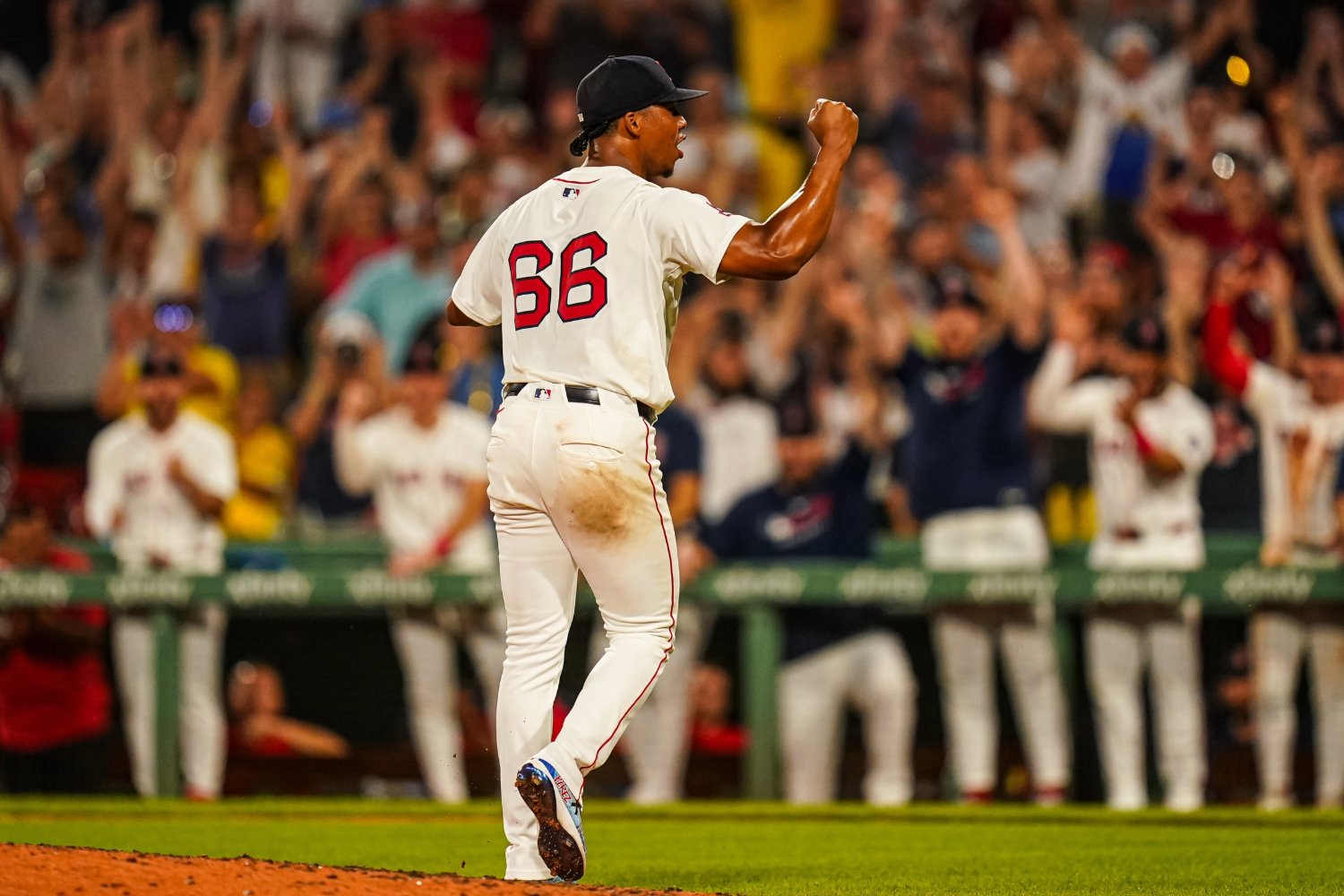 With the second half of the baseball season about to kick off on Friday, it’s a good time to look back on the first half for the Boston Red Sox. A season that was filled with so much hope and expectations at the onset has instead gone through a lot of twists and turns. The team once looked dead in the water before catching fire in June, only to then trade their face of the franchise, Rafael Devers. Since then, however, the team has been one of the best in baseball and is now in a playoff position, showing that anything is possible in a sport where 162 games are played. So, in what's been a season full of surprises, let's reflect on some of the most surprising performances from the roster in the first half. 1) First base didn’t become a black hole offensively after Triston Casas was lost for the season. Everyone remembers the moment on May 2 when Casas went down, rupturing his left patellar tendon as he sprinted to first base. His season was lost, and the Red Sox now faced a hole at a position where they lacked much depth. On the roster was Romy González, the team’s de facto backup first baseman who had mainly played third base or either of the middle infield positions in prior years. Joining him as what many thought would be a temporary basis at first was Abraham Toro. Toro had been signed to a minor league contract and attended spring training with the Sox, but had been killing it with Worcester at the time of his contract being selected. The two found themselves in a planned platoon where it seemed González would start against left-handed pitchers and Toro would start against right-handed pitchers. It didn’t last for long, as González found himself on the injured list shortly after on May 7 due to a left quad contusion after colliding with Josh Smith of the Texas Rangers at first base. In his absence, Toro and Nick Sogard stepped up, where the latter appeared in 17 games in May, hitting .296/.296/.537 with four doubles, three home runs and five RBIs. Toro’s hot hitting continued into June where he continued to play well, splitting time between first and third base following an injury to Alex Bregman and the return of González. In 25 games in June, Toro slashed .279/.354/.407 with five doubles, two home runs and 11 RBIs. In that same span, González also caught fire at the plate, as he hit .300/.333/.583 with six doubles, a triple, three home runs and 13 RBIs in 18 games. In July, however, Toro has started to fall off a little, as his production has dipped to a slash line of .216/.275/.270 with two doubles and four RBIs. The dip in production, however, has been covered by González, as he’s only gotten hotter once the calendar flipped. In nine games in July, he’s hitting .414/.424/.862 with three doubles, two triples, two home runs and nine RBIs. The platoon may not be perfect, but given the Red Sox were in early May with injuries leaving them scrambling for a first baseman, the team has done well with the combination of Toro and González handling the position. 2) Brayan Bello and Lucas Giolito turned their seasons around after rough starts to the year. Entering the season, there were a lot of question marks surrounding the rotation after Garrett Crochet. No one knew if Tanner Houck would replicate his All-Star season or if Kutter Crawford was going to be ready as he dealt with a knee issue in spring training. There were even concerns over which Walker Buehler the team was going to get, the one who struggled in the regular season or who had three decent outings in the playoffs. Though, what may have been the biggest question marks were Bello and Giolito, as both were behind schedule in spring training and were set to open the season on the injured list. Upon their returns, neither was much to write home about; Bello pitched twice in April, managing to avoid painful innings as he worked around runners on base, while Giolito only pitched once, a six-inning, three-run performance which anyone would take after he missed all of 2024. However, it seemed to be deceiving for both, as Bello would then start six games in May, his ERA for the month finishing at 4.03 along with a 1.69 WHIP thanks in part to 33 hits and 16 walks in only 29 innings. His worst outing came against the Atlanta Braves, where he allowed seven earned runs on ten hits and five walks in only 4 1/3 innings. Giolito wasn’t much better in May, starting five games but posting an ERA of 4.85 as he allowed 14 runs on 31 hits and eight walks. Giolito's issues were more about inconsistency, as he would have a good outing followed by a rough one, the worst of the season being on June 4 where he lasted just 1 2/3 innings and allowed seven earned runs on eight hits. His ERA on the season ballooned to 6.42 after the start. Since those two rough outings for both pitchers, they’ve seen incredible turn arounds. For Bello, he really seemed to catch fire on June 3 against the Los Angeles Angels where he went six innings and allowed only three runs. Since then, he’s gone at least six innings in every game, including a complete game against the Colorado Rockies on July 8 (the exception to that was when he pitched five innings out of the bullpen for a game being resumed in the fourth inning after being suspended due to rain). Since the start of June, Bello has seen his ERA drop from 3.91 all the way to 3.14, while his FIP has also dropped from 4.82 down to 4.21 as he’s severely cut down on the free passes he allows. Across June and July, Bello walked a combined 12 batters; in May, that number was 16. Giolito has also seen an increase in performance, being tied to his increase in fastball usage. Since his blowup on June 4, Giolito has gone at least six innings every start, having not allowed more than two earned runs in any of them. His ERA dropped from 6.42 at the start of June down to 3.36 heading into the second half, while he also lowered his FIP from 4.78 down to 3.62. Much like Bello, Giolito is limiting baserunners, as he’s only walked more than one batter in a start just three times, the most being three batters. Likewise, the most hits he’s given up has been six. Since his disastrous outing against the Angels, Giolito has only allowed three earned runs across 38 2/3 innings, and he’s cemented himself as one of the top pitchers in the rotation. With Bello and Giolito pitching to their potential, it helps strengthen a rotation that has seen injuries to several pitchers, including losing Hunter Dobbins for the season to a torn ACL. 3) Ceddanne Rafaela may get some down-ballot MVP love. Everyone knew Rafaela was a defensive phenomenon out in center field, making impossible plays look routine. However, his bat was always more of a question mark, as he was a streaky hitter that would be overly aggressive at the plate, swinging at the first pitch or chasing often out of the strike zone. That suddenly changed for Rafaela after a road trip in Milwaukee that left the center fielder hitting .232/.283/.356 on the season. The final game of that series saw Rafaela go 3-for-5 with a home run and was the second game of an eight-game hitting streak. It concluded with a walk-off home run that is the shortest in the history of the Statcast era (303 feet off the Pesky Pole) that saw his numbers rise to .252/.296/.411 on the season. The key difference is the manner in which he’s hitting the ball. Since the end of May, the team wanted him to start pulling the ball more in the air and because of it, he’s exploded. In 26 June games, he would go on to hit .283/.327/.543 with six doubles, six home runs and 13 RBI. Those numbers only increased in 11 July games (so far) where he’s hit .390/.405/.902 with six doubles, five home runs and 15 RBIs to go along with his usual stellar defense. Manager Alex Cora also had gotten on Rafaela about pulling the ball more, saying to MassLive's Sean McAdams “In this ballpark, especially, he needs to pull the ball. I used to joke around about Mookie (Betts) – there was a year when he was crushing the ball to right-center. It looked awesome, pretty, but it was an out. Kind of like the same thing with (Rafaela) – he can crush the ball to right-center, but in this venue (you don’t get rewarded).” Rafaela, however, doesn’t think that pulling it is the reason for his success, saying “It’s not really pulling the ball more. It’s just that when I hit it to the pull side, I elevate the ball in the air. I stay with my approach to the middle of the field and I let it happen by itself.” With this new approach, Rafaela has become a spark plug in the lineup and has won the team a few games with two walk-offs, one against the Angels and another just recently against the Rays in the final series of the first half. His offensive explosion has been a positive addition to a Red Sox team that has gone good lengths this season struggling to score runs. And, with the team beginning to get healthy again, he could have plenty of RBI opportunities with runners on base ahead of him. Should his productive hitting continue, Rafaela may earn some lower-end MVP votes in a similar fashion to how Jarren Duran earned them at the end of 2024 where he finished eighth. The 2025 season hasn’t gone exactly as Red Sox fans hoped it would so far, but the team wrapped up the first half on a hot stretch. With the trade deadline on the horizon, Boston may be gearing up for its best season in quite some time.
 -
With the second half of the baseball season about to kick off on Friday, it’s a good time to look back on the first half for the Boston Red Sox. A season that was filled with so much hope and expectations at the onset has instead gone through a lot of twists and turns. The team once looked dead in the water before catching fire in June, only to then trade their face of the franchise, Rafael Devers. Since then, however, the team has been one of the best in baseball and is now in a playoff position, showing that anything is possible in a sport where 162 games are played. So, in what's been a season full of surprises, let's reflect on some of the most surprising performances from the roster in the first half. 1) First base didn’t become a black hole offensively after Triston Casas was lost for the season. Everyone remembers the moment on May 2 when Casas went down, rupturing his left patellar tendon as he sprinted to first base. His season was lost, and the Red Sox now faced a hole at a position where they lacked much depth. On the roster was Romy González, the team’s de facto backup first baseman who had mainly played third base or either of the middle infield positions in prior years. Joining him as what many thought would be a temporary basis at first was Abraham Toro. Toro had been signed to a minor league contract and attended spring training with the Sox, but had been killing it with Worcester at the time of his contract being selected. The two found themselves in a planned platoon where it seemed González would start against left-handed pitchers and Toro would start against right-handed pitchers. It didn’t last for long, as González found himself on the injured list shortly after on May 7 due to a left quad contusion after colliding with Josh Smith of the Texas Rangers at first base. In his absence, Toro and Nick Sogard stepped up, where the latter appeared in 17 games in May, hitting .296/.296/.537 with four doubles, three home runs and five RBIs. Toro’s hot hitting continued into June where he continued to play well, splitting time between first and third base following an injury to Alex Bregman and the return of González. In 25 games in June, Toro slashed .279/.354/.407 with five doubles, two home runs and 11 RBIs. In that same span, González also caught fire at the plate, as he hit .300/.333/.583 with six doubles, a triple, three home runs and 13 RBIs in 18 games. In July, however, Toro has started to fall off a little, as his production has dipped to a slash line of .216/.275/.270 with two doubles and four RBIs. The dip in production, however, has been covered by González, as he’s only gotten hotter once the calendar flipped. In nine games in July, he’s hitting .414/.424/.862 with three doubles, two triples, two home runs and nine RBIs. The platoon may not be perfect, but given the Red Sox were in early May with injuries leaving them scrambling for a first baseman, the team has done well with the combination of Toro and González handling the position. 2) Brayan Bello and Lucas Giolito turned their seasons around after rough starts to the year. Entering the season, there were a lot of question marks surrounding the rotation after Garrett Crochet. No one knew if Tanner Houck would replicate his All-Star season or if Kutter Crawford was going to be ready as he dealt with a knee issue in spring training. There were even concerns over which Walker Buehler the team was going to get, the one who struggled in the regular season or who had three decent outings in the playoffs. Though, what may have been the biggest question marks were Bello and Giolito, as both were behind schedule in spring training and were set to open the season on the injured list. Upon their returns, neither was much to write home about; Bello pitched twice in April, managing to avoid painful innings as he worked around runners on base, while Giolito only pitched once, a six-inning, three-run performance which anyone would take after he missed all of 2024. However, it seemed to be deceiving for both, as Bello would then start six games in May, his ERA for the month finishing at 4.03 along with a 1.69 WHIP thanks in part to 33 hits and 16 walks in only 29 innings. His worst outing came against the Atlanta Braves, where he allowed seven earned runs on ten hits and five walks in only 4 1/3 innings. Giolito wasn’t much better in May, starting five games but posting an ERA of 4.85 as he allowed 14 runs on 31 hits and eight walks. Giolito's issues were more about inconsistency, as he would have a good outing followed by a rough one, the worst of the season being on June 4 where he lasted just 1 2/3 innings and allowed seven earned runs on eight hits. His ERA on the season ballooned to 6.42 after the start. Since those two rough outings for both pitchers, they’ve seen incredible turn arounds. For Bello, he really seemed to catch fire on June 3 against the Los Angeles Angels where he went six innings and allowed only three runs. Since then, he’s gone at least six innings in every game, including a complete game against the Colorado Rockies on July 8 (the exception to that was when he pitched five innings out of the bullpen for a game being resumed in the fourth inning after being suspended due to rain). Since the start of June, Bello has seen his ERA drop from 3.91 all the way to 3.14, while his FIP has also dropped from 4.82 down to 4.21 as he’s severely cut down on the free passes he allows. Across June and July, Bello walked a combined 12 batters; in May, that number was 16. Giolito has also seen an increase in performance, being tied to his increase in fastball usage. Since his blowup on June 4, Giolito has gone at least six innings every start, having not allowed more than two earned runs in any of them. His ERA dropped from 6.42 at the start of June down to 3.36 heading into the second half, while he also lowered his FIP from 4.78 down to 3.62. Much like Bello, Giolito is limiting baserunners, as he’s only walked more than one batter in a start just three times, the most being three batters. Likewise, the most hits he’s given up has been six. Since his disastrous outing against the Angels, Giolito has only allowed three earned runs across 38 2/3 innings, and he’s cemented himself as one of the top pitchers in the rotation. With Bello and Giolito pitching to their potential, it helps strengthen a rotation that has seen injuries to several pitchers, including losing Hunter Dobbins for the season to a torn ACL. 3) Ceddanne Rafaela may get some down-ballot MVP love. Everyone knew Rafaela was a defensive phenomenon out in center field, making impossible plays look routine. However, his bat was always more of a question mark, as he was a streaky hitter that would be overly aggressive at the plate, swinging at the first pitch or chasing often out of the strike zone. That suddenly changed for Rafaela after a road trip in Milwaukee that left the center fielder hitting .232/.283/.356 on the season. The final game of that series saw Rafaela go 3-for-5 with a home run and was the second game of an eight-game hitting streak. It concluded with a walk-off home run that is the shortest in the history of the Statcast era (303 feet off the Pesky Pole) that saw his numbers rise to .252/.296/.411 on the season. The key difference is the manner in which he’s hitting the ball. Since the end of May, the team wanted him to start pulling the ball more in the air and because of it, he’s exploded. In 26 June games, he would go on to hit .283/.327/.543 with six doubles, six home runs and 13 RBI. Those numbers only increased in 11 July games (so far) where he’s hit .390/.405/.902 with six doubles, five home runs and 15 RBIs to go along with his usual stellar defense. Manager Alex Cora also had gotten on Rafaela about pulling the ball more, saying to MassLive's Sean McAdams “In this ballpark, especially, he needs to pull the ball. I used to joke around about Mookie (Betts) – there was a year when he was crushing the ball to right-center. It looked awesome, pretty, but it was an out. Kind of like the same thing with (Rafaela) – he can crush the ball to right-center, but in this venue (you don’t get rewarded).” Rafaela, however, doesn’t think that pulling it is the reason for his success, saying “It’s not really pulling the ball more. It’s just that when I hit it to the pull side, I elevate the ball in the air. I stay with my approach to the middle of the field and I let it happen by itself.” With this new approach, Rafaela has become a spark plug in the lineup and has won the team a few games with two walk-offs, one against the Angels and another just recently against the Rays in the final series of the first half. His offensive explosion has been a positive addition to a Red Sox team that has gone good lengths this season struggling to score runs. And, with the team beginning to get healthy again, he could have plenty of RBI opportunities with runners on base ahead of him. Should his productive hitting continue, Rafaela may earn some lower-end MVP votes in a similar fashion to how Jarren Duran earned them at the end of 2024 where he finished eighth. The 2025 season hasn’t gone exactly as Red Sox fans hoped it would so far, but the team wrapped up the first half on a hot stretch. With the trade deadline on the horizon, Boston may be gearing up for its best season in quite some time. View full article
-
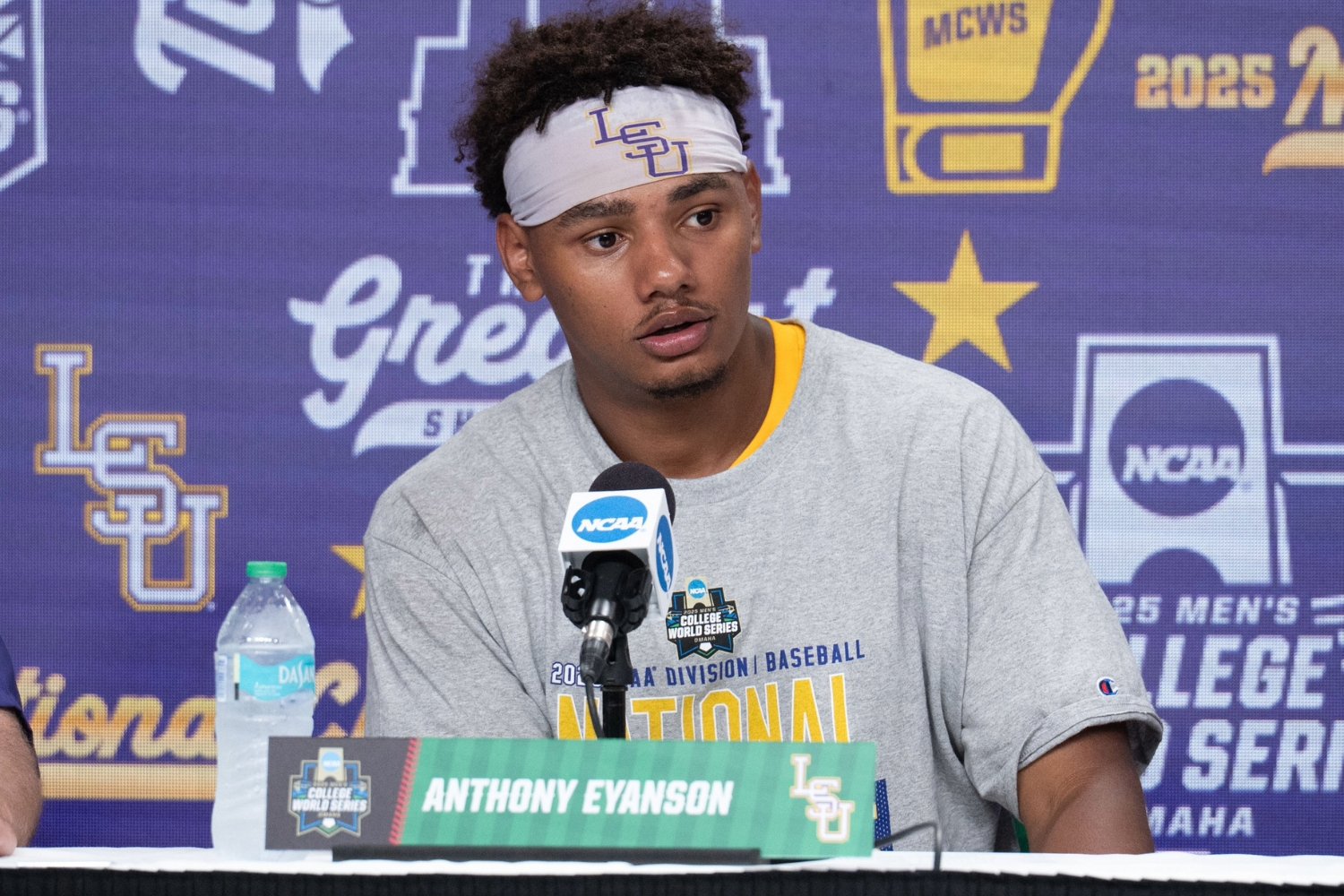 The Red Sox selected Anthony Eyanson with the 87th overall pick in the MLB Draft. Eyanson was ranked 40th overall on the TalkSox draft board. Eyanson has checked so many boxes as a starter; solid track record at UCSD, a good performance for the US Collegiate National Team, a strong stint on the Cape. All that before shoving for LSU in what will be his lone season in the SEC prior to being drafted. Eyanson has a good frame at 6'2, 200 and an easy, repeatable delivery. It's a fastball that sits in the 93-96 mph range typically with good riding life at the top of the zone. His slider has become a plus pitch. It sits in the low to mid 80s with a ton of drop and generates plenty of miss both in and out of the zone. There's a curveball with hood depth too, and a changeup, which is more of a developmental pitch. All of this is underpinned by really solid strike throwing. Eyanson was a huge part of LSU’s stretch run in the CWS and along with Gage Wood is one of the sharpest late season risers among college starting pitching profiles. He finished the season with a 2.49 FIP, 33.9 K%, and a 8 BB%. Much like their previous two pitchers selected on day one, Eyanson follows what Breslow likes: big pitchers who can throw hard thanks in part to his fastball that can top out at 97 mph. Though currently his best pitch is his slider. In his lone season with LSU Eyanson won 12 games while pitching in 20. He threw 108 innings, striking out 152. He also allowed 36 earned runs on 88 hits and 36 walks for a 3.00 ERA. What may be most impressive for the right-hander is the fact that he had a whiff rate of 34.7% with LSU to go along with a chase rate of 32.4%. Eyanson also has experience pitching for Team USA and in the Cape Cod League with Cotuit. Thanks to his fastball, slider and curveball, Eyanson could potentially end up with three pitches he could use to get outs. Should his changeup improve he could really become an interesting pitching prospect that could change the entire outlook of the Red Sox pitching depth. Should his pitches be unable to develop to their potential, he could end up as a reliever who relies on his breaking pitches.
 -
The Red Sox selected Anthony Eyanson with the 87th overall pick in the MLB Draft. Eyanson was ranked 40th overall on the TalkSox draft board. Eyanson has checked so many boxes as a starter; solid track record at UCSD, a good performance for the US Collegiate National Team, a strong stint on the Cape. All that before shoving for LSU in what will be his lone season in the SEC prior to being drafted. Eyanson has a good frame at 6'2, 200 and an easy, repeatable delivery. It's a fastball that sits in the 93-96 mph range typically with good riding life at the top of the zone. His slider has become a plus pitch. It sits in the low to mid 80s with a ton of drop and generates plenty of miss both in and out of the zone. There's a curveball with hood depth too, and a changeup, which is more of a developmental pitch. All of this is underpinned by really solid strike throwing. Eyanson was a huge part of LSU’s stretch run in the CWS and along with Gage Wood is one of the sharpest late season risers among college starting pitching profiles. He finished the season with a 2.49 FIP, 33.9 K%, and a 8 BB%. Much like their previous two pitchers selected on day one, Eyanson follows what Breslow likes: big pitchers who can throw hard thanks in part to his fastball that can top out at 97 mph. Though currently his best pitch is his slider. In his lone season with LSU Eyanson won 12 games while pitching in 20. He threw 108 innings, striking out 152. He also allowed 36 earned runs on 88 hits and 36 walks for a 3.00 ERA. What may be most impressive for the right-hander is the fact that he had a whiff rate of 34.7% with LSU to go along with a chase rate of 32.4%. Eyanson also has experience pitching for Team USA and in the Cape Cod League with Cotuit. Thanks to his fastball, slider and curveball, Eyanson could potentially end up with three pitches he could use to get outs. Should his changeup improve he could really become an interesting pitching prospect that could change the entire outlook of the Red Sox pitching depth. Should his pitches be unable to develop to their potential, he could end up as a reliever who relies on his breaking pitches. View full article
-
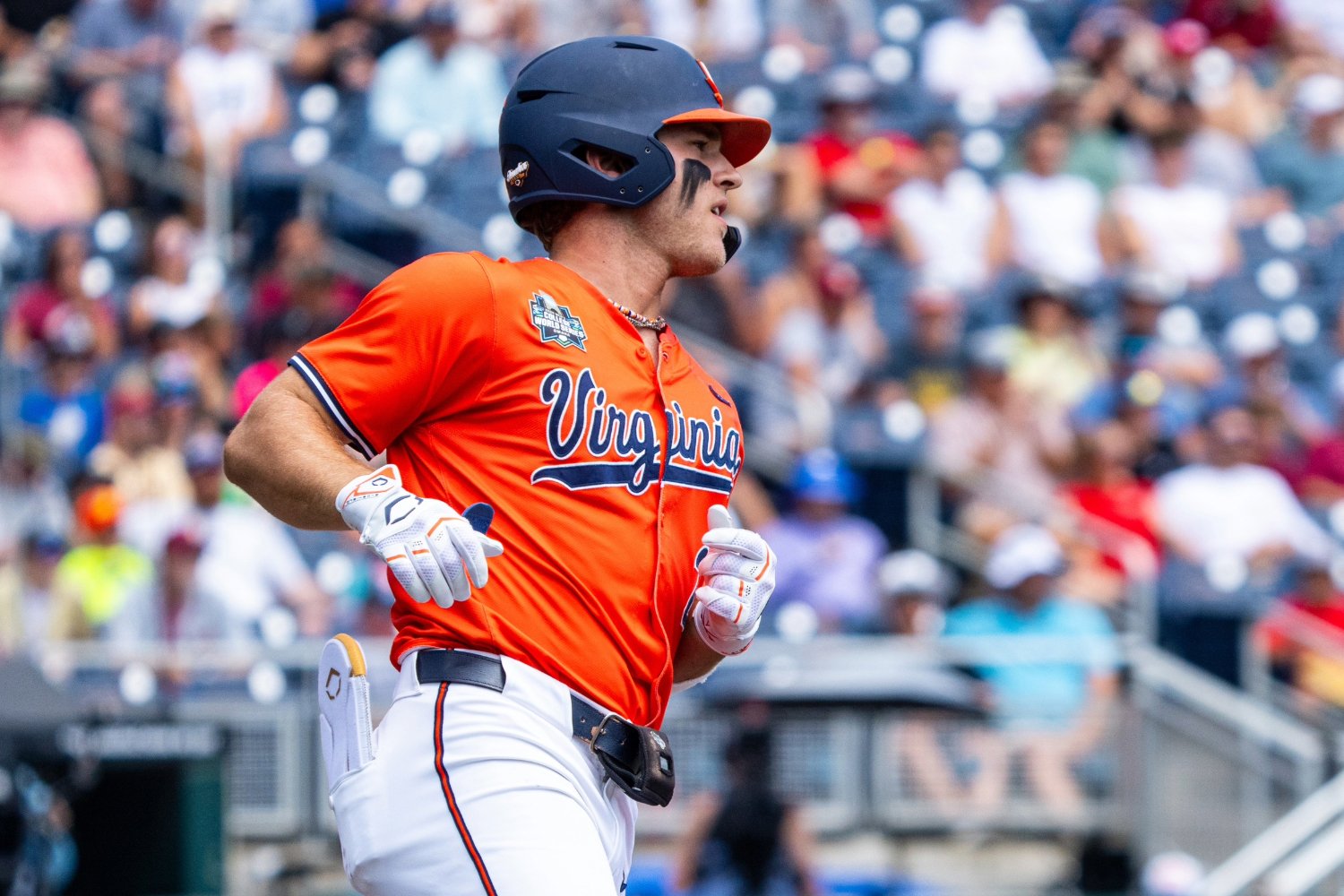 With the 75th overall pick in the 2025 draft, the Red Sox selected shortstop Henry Godbout out of the University of Virginia. Godbout was ranked 72nd on the TalkSox draft board. Godbout is an infield prospect whose draft stock has fallen some in 2025 after a disappointing season at the plate. Godbout entered the season with an in-zone contact rate in the 90s, but, much like the majority of the Virginia lineup, struggled mightily out of the gate. He's been an average hitter by wRC+ (98 compared to 138 in 2024) as we near the end of April. It's an offensive profile carried by a plus hit tool. It's a simple setup and quick hands in the box, with limited raw or usable in game power. He's a second baseman long term, with a solid enough glove, but no outstanding range or athleticism to speak of. There's average speed and an average arm there too. Godbout is likely to be carried by his plus hit tool though Red Sox fans shouldn't be worried about his limited power as the organization previously took another middle infielder from the ACC with limited power and turned him into a top prospect. Sox fans know him as Kristian Campbell. While there is no guarantee that Godbout turns into another Campbell, it is a sign that the Red Sox feel comfortable in their ability to develop offensive tools in players. Godbout is viewed as a solid all-around player with tools that could play up thanks to a high baseball IQ. A right-handed hitter, he doesn't chase or swing-and-miss much. In 50 games this season with Virginia, the 21-year-old slashed .309/.397/.497 with 10 doubles, a triple, eight home runs and 37 RBIs. He also walked 26 times while only striking out 19 times. Whether Godbout develops more power in the organization could determine his overall potential, but at the worst he could be a high contact and on-base second baseman. Should he be able to be able to play passable defense at second base and he could be a serviceable player for the Red Sox. And the best part of this pick is he grew up a Red Sox fan.
 -
With the 75th overall pick in the 2025 draft, the Red Sox selected shortstop Henry Godbout out of the University of Virginia. Godbout was ranked 72nd on the TalkSox draft board. Godbout is an infield prospect whose draft stock has fallen some in 2025 after a disappointing season at the plate. Godbout entered the season with an in-zone contact rate in the 90s, but, much like the majority of the Virginia lineup, struggled mightily out of the gate. He's been an average hitter by wRC+ (98 compared to 138 in 2024) as we near the end of April. It's an offensive profile carried by a plus hit tool. It's a simple setup and quick hands in the box, with limited raw or usable in game power. He's a second baseman long term, with a solid enough glove, but no outstanding range or athleticism to speak of. There's average speed and an average arm there too. Godbout is likely to be carried by his plus hit tool though Red Sox fans shouldn't be worried about his limited power as the organization previously took another middle infielder from the ACC with limited power and turned him into a top prospect. Sox fans know him as Kristian Campbell. While there is no guarantee that Godbout turns into another Campbell, it is a sign that the Red Sox feel comfortable in their ability to develop offensive tools in players. Godbout is viewed as a solid all-around player with tools that could play up thanks to a high baseball IQ. A right-handed hitter, he doesn't chase or swing-and-miss much. In 50 games this season with Virginia, the 21-year-old slashed .309/.397/.497 with 10 doubles, a triple, eight home runs and 37 RBIs. He also walked 26 times while only striking out 19 times. Whether Godbout develops more power in the organization could determine his overall potential, but at the worst he could be a high contact and on-base second baseman. Should he be able to be able to play passable defense at second base and he could be a serviceable player for the Red Sox. And the best part of this pick is he grew up a Red Sox fan. View full article
-
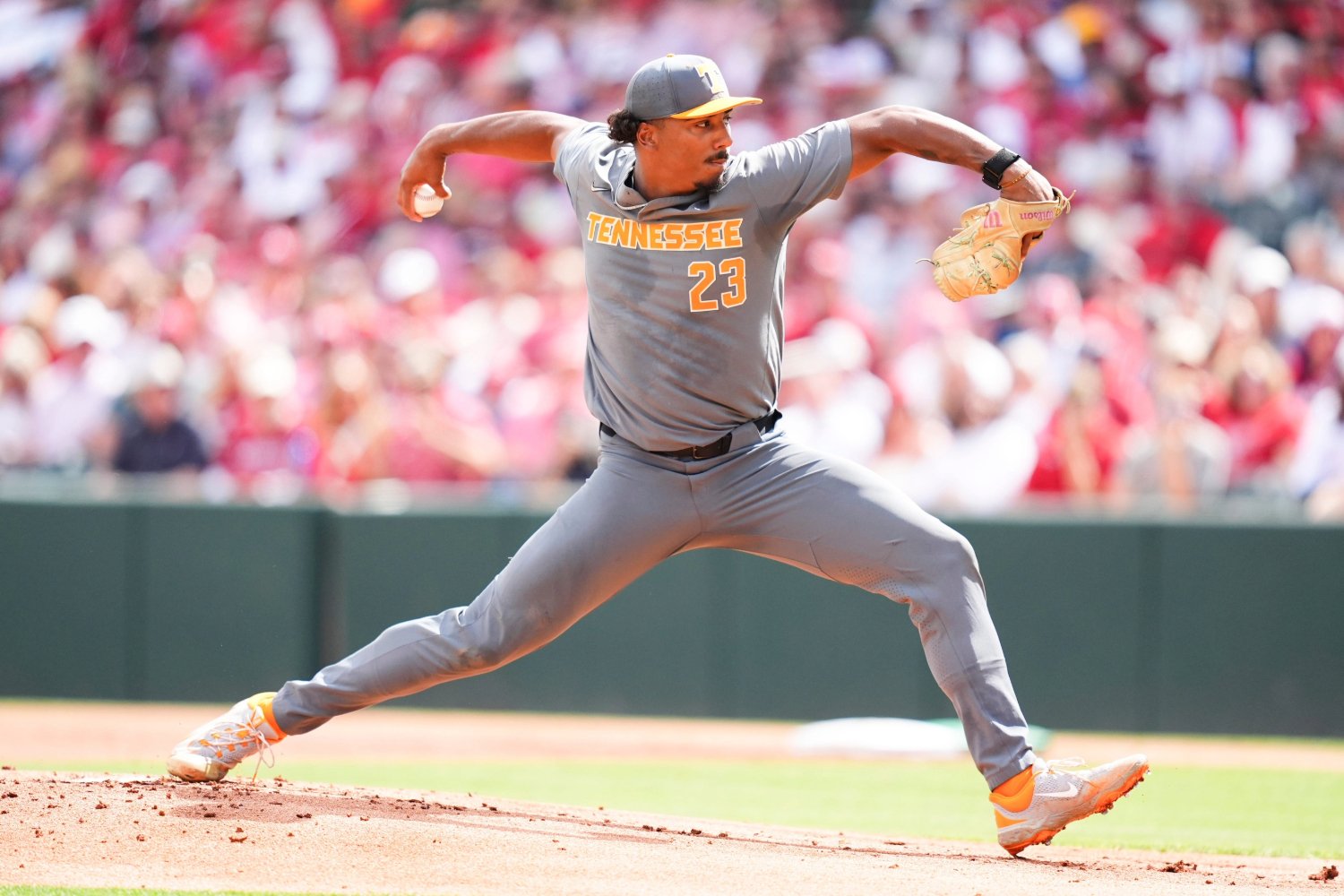 The Red Sox selected Marcus Phillips with the 33rd overall pick in the MLB Draft. Phillips was ranked 53rd overall on the TalkSox draft board. Phillips worked primarily as a reliever in his first two seasons at Tennessee before transitioning into a starting role in 2025. The fastball is tough. He can get a run and ride heater up to 100 mph, sitting at 97 mph with good extension from a lower release height. His breaking pitch is a power slider, with good horizontal break, that he throws in the 88-92 mph range, something that pro teams will covet. There's also the makings of a good changeup, with a ton of horizontal break, but he throws it incredibly hard (92 mph) and there might not be enough velo separation from the fastball there. In 2025 he struck out more hitters and walked less. The strike throwing had been a little spotty entering 2025. He finished the season with a 4.08 FIP, 27.3 K%, and a 9.5 BB%. It’s elite arm talent and nasty stuff, with command issues and reliever risk. Phillips follows a trend by Craig Breslow, who has drafted 16 pitchers in his first 22 picks since being named Red Sox Chief Baseball Officer. Phillips, who measures at 6'4" and 246 lbs, also follows the trend of the Red Sox drafting large players who can throw hard after they took pitchers Payton Tolle, Brandon Clarke, and Brandon Neely all of whom are at least 6'3" tall and their fastballs can reach at least 97 mph. For Tennessee in the 2025 season, Phillips had a 3.90 ERA in 83 innings across 17 starts where he struck out 98 batters. Prior to joining the Vols in 2024, he was a reliever his freshman season for Iowa Western Community College. Phillips is the second SEC arm the Sox have drafted in the 2025 draft after taking Kyson Witherspoon with their first-round pick at 15th overall. The pick used to draft Phillips was acquired as part of an April trade with Milwaukee that saw right-handed pitcher Quinn Priester shipped to the Brewers. Should Phillips continue to improve upon his command issues and see his walk rate continue to drop, he could be another pitching prospect that turns what used to be a dearth for the Red Sox into a surplus. At worst, he could turn into a reliever who relies on a fastball-slider combination that could rack up strikeouts while also walking his fair share of batters. Unlike Witherspoon, Phillips could take a little longer to move through the system depending on his ability to limit walks. Should he show an ability to locate his fastball, however, Phillips could breeze through the lower levels of the minors. What do you think of the Red Sox's second first-round pick? Let us know in the comments!
 -
The Red Sox selected Marcus Phillips with the 33rd overall pick in the MLB Draft. Phillips was ranked 53rd overall on the TalkSox draft board. Phillips worked primarily as a reliever in his first two seasons at Tennessee before transitioning into a starting role in 2025. The fastball is tough. He can get a run and ride heater up to 100 mph, sitting at 97 mph with good extension from a lower release height. His breaking pitch is a power slider, with good horizontal break, that he throws in the 88-92 mph range, something that pro teams will covet. There's also the makings of a good changeup, with a ton of horizontal break, but he throws it incredibly hard (92 mph) and there might not be enough velo separation from the fastball there. In 2025 he struck out more hitters and walked less. The strike throwing had been a little spotty entering 2025. He finished the season with a 4.08 FIP, 27.3 K%, and a 9.5 BB%. It’s elite arm talent and nasty stuff, with command issues and reliever risk. Phillips follows a trend by Craig Breslow, who has drafted 16 pitchers in his first 22 picks since being named Red Sox Chief Baseball Officer. Phillips, who measures at 6'4" and 246 lbs, also follows the trend of the Red Sox drafting large players who can throw hard after they took pitchers Payton Tolle, Brandon Clarke, and Brandon Neely all of whom are at least 6'3" tall and their fastballs can reach at least 97 mph. For Tennessee in the 2025 season, Phillips had a 3.90 ERA in 83 innings across 17 starts where he struck out 98 batters. Prior to joining the Vols in 2024, he was a reliever his freshman season for Iowa Western Community College. Phillips is the second SEC arm the Sox have drafted in the 2025 draft after taking Kyson Witherspoon with their first-round pick at 15th overall. The pick used to draft Phillips was acquired as part of an April trade with Milwaukee that saw right-handed pitcher Quinn Priester shipped to the Brewers. Should Phillips continue to improve upon his command issues and see his walk rate continue to drop, he could be another pitching prospect that turns what used to be a dearth for the Red Sox into a surplus. At worst, he could turn into a reliever who relies on a fastball-slider combination that could rack up strikeouts while also walking his fair share of batters. Unlike Witherspoon, Phillips could take a little longer to move through the system depending on his ability to limit walks. Should he show an ability to locate his fastball, however, Phillips could breeze through the lower levels of the minors. What do you think of the Red Sox's second first-round pick? Let us know in the comments! View full article
-
 With the Red Sox beginning to get back to full health with the additions of Masataka Yoshida and Alex Bregman, the roster is beginning to feel overcrowded. To help deal with it, the versatility of many players will be important down the stretch to not just give some players rest but to also get others into the lineup outside of their main position. Per MassLive’s Chris Cotillo, Alex Cora said on Friday before game two of a four game series against the Tampa Bay Rays that rookie Marcelo Mayer will play a lot of games at second base while still getting some time at third base on days Bregman doesn’t play. If Bregman sticks to the current plan, he will play in two games in each of the next three series against Tampa Bay, the Chicago Cubs and Philadelphia Phillies. Ceddanne Rafaela is another player who will be moved around with the roster currently having six outfielders on it. Cora also said that Rafaela will be looked at to play second base at least once or twice a week. The Red Sox look to end the first half on an impressive run as they go for their eighth straight win tonight. Does the plan to rotate Mayer between second and third seem like a good one? Should Rafaela remain in center field only? Leave your thoughts down below.
 -
With the Red Sox beginning to get back to full health with the additions of Masataka Yoshida and Alex Bregman, the roster is beginning to feel overcrowded. To help deal with it, the versatility of many players will be important down the stretch to not just give some players rest but to also get others into the lineup outside of their main position. Per MassLive’s Chris Cotillo, Alex Cora said on Friday before game two of a four game series against the Tampa Bay Rays that rookie Marcelo Mayer will play a lot of games at second base while still getting some time at third base on days Bregman doesn’t play. If Bregman sticks to the current plan, he will play in two games in each of the next three series against Tampa Bay, the Chicago Cubs and Philadelphia Phillies. Ceddanne Rafaela is another player who will be moved around with the roster currently having six outfielders on it. Cora also said that Rafaela will be looked at to play second base at least once or twice a week. The Red Sox look to end the first half on an impressive run as they go for their eighth straight win tonight. Does the plan to rotate Mayer between second and third seem like a good one? Should Rafaela remain in center field only? Leave your thoughts down below. View full rumor
-
The MLB trade deadline is less than a month away as the Red Sox look to push themselves into the buyer’s market thanks in part to a six-game winning streak. The offense has come alive over the past few weeks, and the rotation is stepping up as they’ve delivered quality starts. One area of weakness for the team, however, appears to be their bullpen. In the month of June, the relief corps was very middle of the pack, pitching 93 2/3 innings and allowing 36 earned runs on 73 hits, six of them home runs, and 52 walks for an ERA of 3.46. While the bullpen struggled in June with walks, leading the league in not only walks per nine innings (5.00) but also walk percentage (13.1%) the bullpen was constantly dealing with runners on base. Fortunately, hitters managed only a .213 batting average against them, and when it was put in play, they managed to keep most batted balls on the ground with a 45.6% ground ball rate. They also struck out 97 batters for a strikeout rate of 24.4%. Led by Aroldis Chapman, the bullpen saved 10 games while blowing three save opportunities. Despite the subtraction of arms like Zack Kelly, Luis Guerrero and Liam Hendriks, the bullpen’s numbers have not improved that much as in 29 innings pitched in July, the bullpen has allowed 11 earned runs on 24 hits, three home runs, and nine walks. This month, they’ve struck out 21 batters for a strikeout rate of 17.1%. While their strikeout rate has dropped, so too has their walk rate (down to 7.3%), and their walks per nine dropped significantly to 2.79. The small improvement is questionable to last, as several arms in the bullpen have been overused and the results have shown as both Brennan Bernardino and Greg Weissert have not been as dominant as they were in their early season performances. The loss of Justin Slaten to the injured list on June 1 has hurt the bullpen. Out with right shoulder inflammation, Slaten has been making slow progress and has yet to throw off a mound. Due to that, the team transferred him to the 60-day injured list at the end of June. In 24 games before going down, Slaten tossed 23 1/3 innings while allowing nine earned runs on 14 hits, one home run, and seven walks. He had also struck out 16 batters and earned three saves. Of those nine runs, four were allowed in his third appearance of the year. Since that blowup in Baltimore, Slaten had gone 21 1/3 innings while allowing just five earned runs. To help provide relief to the bullpen and supply it with another flamethrower to compliment Chapman, Jordan Hicks and Garrett Whitlock in the back of the pen, the Red Sox could make a trade with a team they were linked to all offseason. Instead of trading for Nolan Arenado, however, it would be to acquire their soon-to-be-free-agent closer Ryan Helsley. While the right-hander hasn’t been as dominant in his age-30 season when compared to the past three years, he’s still one of the top closers in baseball that would completely transform the current bullpen from being in the middle of the pack to potentially one of the strongest in all of baseball. Armed with a fastball that averages 99.2 mph and a slider that breaks 3.9 inches away from a right-handed batter, Helsley could dominate for the Red Sox. He’s got one of the best chase percentages in all of baseball right now at 33.6%, and he’s getting batters to whiff at an impressive 30.1% rate. Numbers like that would put him near the top of relief pitchers in the Red Sox's bullpen. In 31 games this season, Helsley has tossed 31 innings and allowed 11 earned runs on 30 hits, four home runs, and 13 walks. He’s also struck out 35 batters for a strikeout rate of 25.9%. A lot of Helsley’s struggles this season appear to be from his fastball being hit at a higher rate than any previous campaign. So far in 2025, it’s been thrown 238 times across 69 plate appearances, where batters have hit .414 against it. The fastball has seen a slight drop in velocity from 99.7 mph in 2023 to 99.6 mph in 2024 to now 99.2 mph this year. However, it might be the slight loss of movement that has hurt Helsley the most with it. In 2024, his fastball tailed at 3.4 inches in on right-handed batters; this season that movement has dropped to 2.2 inches. If anyone could help fix his fastball, there’s a good chance it would be Red Sox pitching coach Andrew Bailey, as shown with the improvement of Brayan Bello’s fastball since the two started working together. In 2023, the last year Bello was throwing with Dave Bush as the pitching coach, his fastball was hit at a .310 rate. In 2024, he originally moved away from throwing it before bringing it back in the second half to which batters hit .120 against it. This season, the four-seamer has been a key piece to Bello’s arsenal where he’s thrown it 221 times and batters are hitting just .174 against it thanks in part to improvements with his sinker and slider under Bailey. The Cardinals are also unlikely to re-sign Helsley this offseason as they enter a rebuilding phase. During this past offseason, they tried to unload Nolan Arenado’s contract off the books and seemed willing to listen on other players who were not viewed as pieces for the future. Currently, they are 49-44, just 5.5 games out of first place in the NL Central and just 1.5 games out of a Wild Card spot. However, should the Cardinals enter a slide as they get closer to the trade deadline, it wouldn’t be a surprise to see them sell off key pieces. Helsley would be one of their most valuable trade assets despite the season he’s having. He has playoff experience and still reaches 100 mph, something that as shown in the postseason every year, plays. If the Red Sox managed to make the playoffs with a bullpen consisting of three pitchers who could reach 100 mph in Chapman, Hicks and Helsley, it would be a nightmare for opposing lineups once you got past six innings. Though what may tip the scale in the Red Sox favor for a Helsley trade is the fact that the former Chief Baseball Officer of the Red Sox, Chaim Bloom, now works for St. Louis and will succeed Mozeliak as the team’s president of baseball operations after this season. He has a great understanding of the prospects in the Red Sox's system, as many are guys he previously drafted. The Red Sox would hopefully not pay a premium price of prospects, but seeing how Craig Breslow hasn’t been afraid to toss prospects around in the past (trading four for Garrett Crochet plus the deals he made at the 2024 trade deadline), it wouldn’t be a surprise if Breslow traded two or three prospects that Bloom is interested in if it meant the Red Sox could get into the playoffs. If the Red Sox acquired him, they could also work out an extension to keep the flamethrower around for multiple seasons, as following the Rafael Devers’ trade, they have quite a bit of money freed up. Not to mention how many other contracts like Buehler and Chapman will be expired by the end of year freeing up even more money for an extension. For a team looking to make the playoffs for the first time since 2021, acquiring Helsley is just the boost to the bullpen the team needs. He would be a veteran presence that could provide both on field support and a mental boost to a team that lacks playoff experience. Jeff Passan of ESPN also sees this as the best match for the Red Sox bullpen. If I were Breslow, I would at least call and see what the Cardinals would ask for as a starting point. If the price is too steep, pivot to a different relief option that, while not as impressive, could still provide quality innings for a bullpen that has been overworked so far in the season. The Cardinals are looking towards the future, and the Red Sox have a deep pool of prospects that are close to the majors they could trade from. It just feels like this is an obvious pairing just waiting to be made. View full article
-
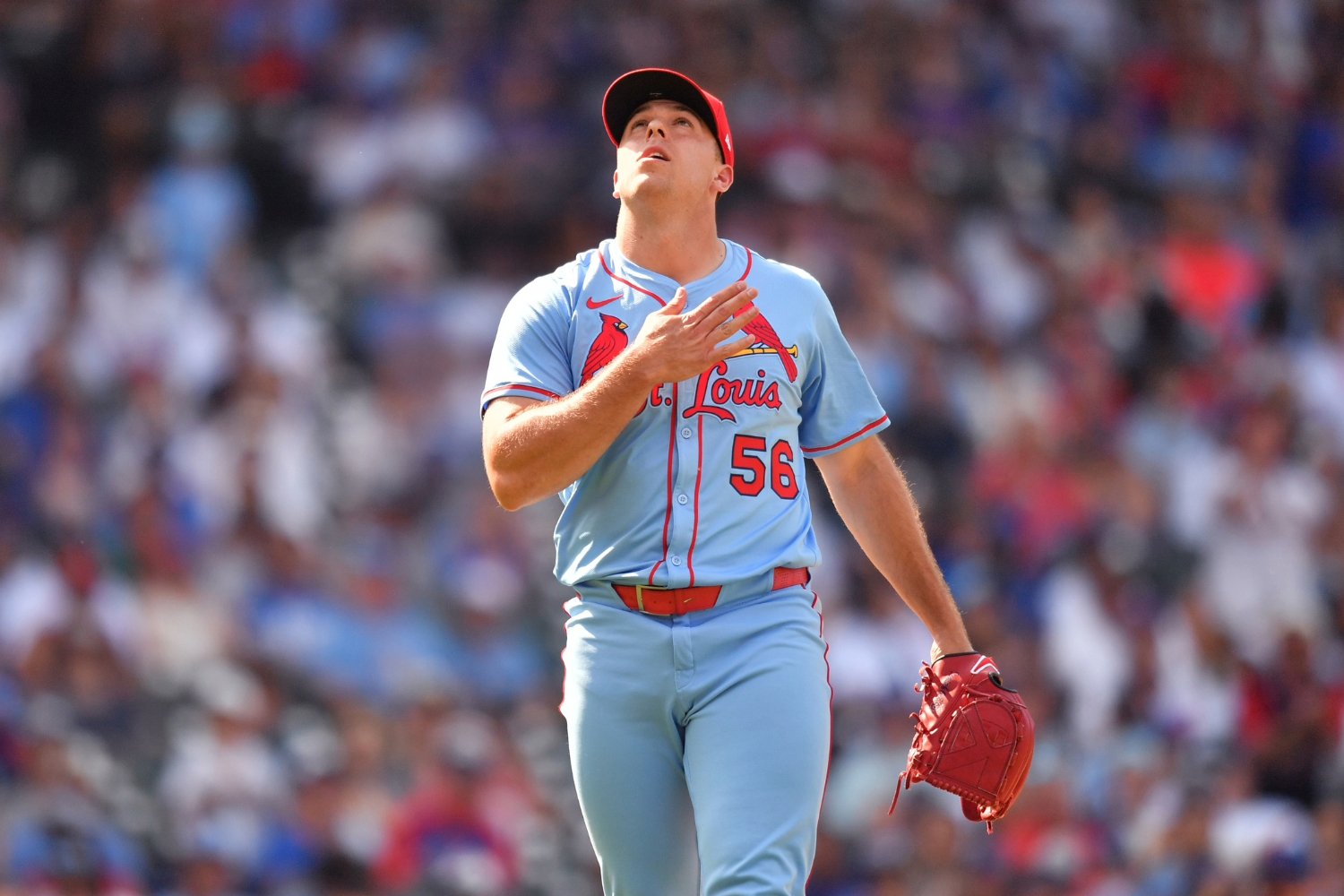 The MLB trade deadline is less than a month away as the Red Sox look to push themselves into the buyer’s market thanks in part to a six-game winning streak. The offense has come alive over the past few weeks, and the rotation is stepping up as they’ve delivered quality starts. One area of weakness for the team, however, appears to be their bullpen. In the month of June, the relief corps was very middle of the pack, pitching 93 2/3 innings and allowing 36 earned runs on 73 hits, six of them home runs, and 52 walks for an ERA of 3.46. While the bullpen struggled in June with walks, leading the league in not only walks per nine innings (5.00) but also walk percentage (13.1%) the bullpen was constantly dealing with runners on base. Fortunately, hitters managed only a .213 batting average against them, and when it was put in play, they managed to keep most batted balls on the ground with a 45.6% ground ball rate. They also struck out 97 batters for a strikeout rate of 24.4%. Led by Aroldis Chapman, the bullpen saved 10 games while blowing three save opportunities. Despite the subtraction of arms like Zack Kelly, Luis Guerrero and Liam Hendriks, the bullpen’s numbers have not improved that much as in 29 innings pitched in July, the bullpen has allowed 11 earned runs on 24 hits, three home runs, and nine walks. This month, they’ve struck out 21 batters for a strikeout rate of 17.1%. While their strikeout rate has dropped, so too has their walk rate (down to 7.3%), and their walks per nine dropped significantly to 2.79. The small improvement is questionable to last, as several arms in the bullpen have been overused and the results have shown as both Brennan Bernardino and Greg Weissert have not been as dominant as they were in their early season performances. The loss of Justin Slaten to the injured list on June 1 has hurt the bullpen. Out with right shoulder inflammation, Slaten has been making slow progress and has yet to throw off a mound. Due to that, the team transferred him to the 60-day injured list at the end of June. In 24 games before going down, Slaten tossed 23 1/3 innings while allowing nine earned runs on 14 hits, one home run, and seven walks. He had also struck out 16 batters and earned three saves. Of those nine runs, four were allowed in his third appearance of the year. Since that blowup in Baltimore, Slaten had gone 21 1/3 innings while allowing just five earned runs. To help provide relief to the bullpen and supply it with another flamethrower to compliment Chapman, Jordan Hicks and Garrett Whitlock in the back of the pen, the Red Sox could make a trade with a team they were linked to all offseason. Instead of trading for Nolan Arenado, however, it would be to acquire their soon-to-be-free-agent closer Ryan Helsley. While the right-hander hasn’t been as dominant in his age-30 season when compared to the past three years, he’s still one of the top closers in baseball that would completely transform the current bullpen from being in the middle of the pack to potentially one of the strongest in all of baseball. Armed with a fastball that averages 99.2 mph and a slider that breaks 3.9 inches away from a right-handed batter, Helsley could dominate for the Red Sox. He’s got one of the best chase percentages in all of baseball right now at 33.6%, and he’s getting batters to whiff at an impressive 30.1% rate. Numbers like that would put him near the top of relief pitchers in the Red Sox's bullpen. In 31 games this season, Helsley has tossed 31 innings and allowed 11 earned runs on 30 hits, four home runs, and 13 walks. He’s also struck out 35 batters for a strikeout rate of 25.9%. A lot of Helsley’s struggles this season appear to be from his fastball being hit at a higher rate than any previous campaign. So far in 2025, it’s been thrown 238 times across 69 plate appearances, where batters have hit .414 against it. The fastball has seen a slight drop in velocity from 99.7 mph in 2023 to 99.6 mph in 2024 to now 99.2 mph this year. However, it might be the slight loss of movement that has hurt Helsley the most with it. In 2024, his fastball tailed at 3.4 inches in on right-handed batters; this season that movement has dropped to 2.2 inches. If anyone could help fix his fastball, there’s a good chance it would be Red Sox pitching coach Andrew Bailey, as shown with the improvement of Brayan Bello’s fastball since the two started working together. In 2023, the last year Bello was throwing with Dave Bush as the pitching coach, his fastball was hit at a .310 rate. In 2024, he originally moved away from throwing it before bringing it back in the second half to which batters hit .120 against it. This season, the four-seamer has been a key piece to Bello’s arsenal where he’s thrown it 221 times and batters are hitting just .174 against it thanks in part to improvements with his sinker and slider under Bailey. The Cardinals are also unlikely to re-sign Helsley this offseason as they enter a rebuilding phase. During this past offseason, they tried to unload Nolan Arenado’s contract off the books and seemed willing to listen on other players who were not viewed as pieces for the future. Currently, they are 49-44, just 5.5 games out of first place in the NL Central and just 1.5 games out of a Wild Card spot. However, should the Cardinals enter a slide as they get closer to the trade deadline, it wouldn’t be a surprise to see them sell off key pieces. Helsley would be one of their most valuable trade assets despite the season he’s having. He has playoff experience and still reaches 100 mph, something that as shown in the postseason every year, plays. If the Red Sox managed to make the playoffs with a bullpen consisting of three pitchers who could reach 100 mph in Chapman, Hicks and Helsley, it would be a nightmare for opposing lineups once you got past six innings. Though what may tip the scale in the Red Sox favor for a Helsley trade is the fact that the former Chief Baseball Officer of the Red Sox, Chaim Bloom, now works for St. Louis and will succeed Mozeliak as the team’s president of baseball operations after this season. He has a great understanding of the prospects in the Red Sox's system, as many are guys he previously drafted. The Red Sox would hopefully not pay a premium price of prospects, but seeing how Craig Breslow hasn’t been afraid to toss prospects around in the past (trading four for Garrett Crochet plus the deals he made at the 2024 trade deadline), it wouldn’t be a surprise if Breslow traded two or three prospects that Bloom is interested in if it meant the Red Sox could get into the playoffs. If the Red Sox acquired him, they could also work out an extension to keep the flamethrower around for multiple seasons, as following the Rafael Devers’ trade, they have quite a bit of money freed up. Not to mention how many other contracts like Buehler and Chapman will be expired by the end of year freeing up even more money for an extension. For a team looking to make the playoffs for the first time since 2021, acquiring Helsley is just the boost to the bullpen the team needs. He would be a veteran presence that could provide both on field support and a mental boost to a team that lacks playoff experience. Jeff Passan of ESPN also sees this as the best match for the Red Sox bullpen. If I were Breslow, I would at least call and see what the Cardinals would ask for as a starting point. If the price is too steep, pivot to a different relief option that, while not as impressive, could still provide quality innings for a bullpen that has been overworked so far in the season. The Cardinals are looking towards the future, and the Red Sox have a deep pool of prospects that are close to the majors they could trade from. It just feels like this is an obvious pairing just waiting to be made.
 -
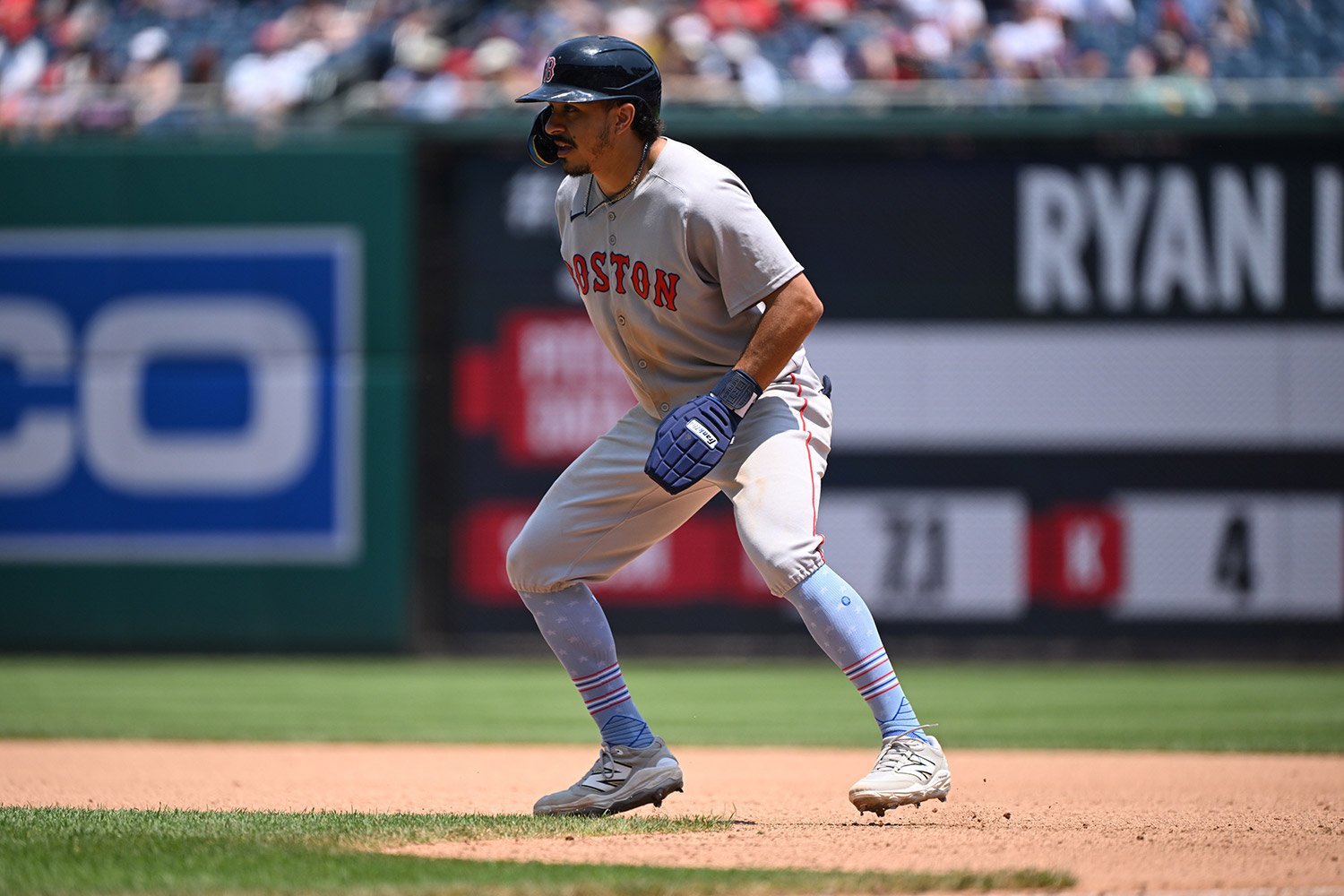 With the need to open up a roster spot for the eventual activation of Alex Bregman from the injured list, the Boston Red Sox are optioning David Hamilton to Worcester per MassLive’s Chris Cotillo. Hamilton, who has appeared in 61 games this season has struggled at the plate after putting up a respectable 2024 season that was cut short by injury. This season the speedy infielder has managed to hit only .179/.229/.276 in 123 at-bats. He also has three doubles, three home runs and 12 RBIs to go along with 15 stolen bases in 18 attempts. With Bregman likely being activated for Friday night’s game against the Tampa Bay Rays it seemed that either Hamilton or rookie infielder Marcelo Mayer were going to be optioned back to Worcester. In the end the team decided to hold onto Mayer due to his fantastic defense at third base, shortstop and second base along with his timely hitting. Bregman’s addition will be a huge addition to an offense that has been on a roll and helped propel Boston onto a seven-game winning stream and having won nine of their last 10 games. Do you think the Red Sox optioned the right player? Should Mayer be in Worcester getting everyday at-bats? Leave your thoughts below in the comments.
 -
With the need to open up a roster spot for the eventual activation of Alex Bregman from the injured list, the Boston Red Sox are optioning David Hamilton to Worcester per MassLive’s Chris Cotillo. Hamilton, who has appeared in 61 games this season has struggled at the plate after putting up a respectable 2024 season that was cut short by injury. This season the speedy infielder has managed to hit only .179/.229/.276 in 123 at-bats. He also has three doubles, three home runs and 12 RBIs to go along with 15 stolen bases in 18 attempts. With Bregman likely being activated for Friday night’s game against the Tampa Bay Rays it seemed that either Hamilton or rookie infielder Marcelo Mayer were going to be optioned back to Worcester. In the end the team decided to hold onto Mayer due to his fantastic defense at third base, shortstop and second base along with his timely hitting. Bregman’s addition will be a huge addition to an offense that has been on a roll and helped propel Boston onto a seven-game winning stream and having won nine of their last 10 games. Do you think the Red Sox optioned the right player? Should Mayer be in Worcester getting everyday at-bats? Leave your thoughts below in the comments. View full rumor
-
Sox had him today doing some first base drills in front of the dugout today.
-
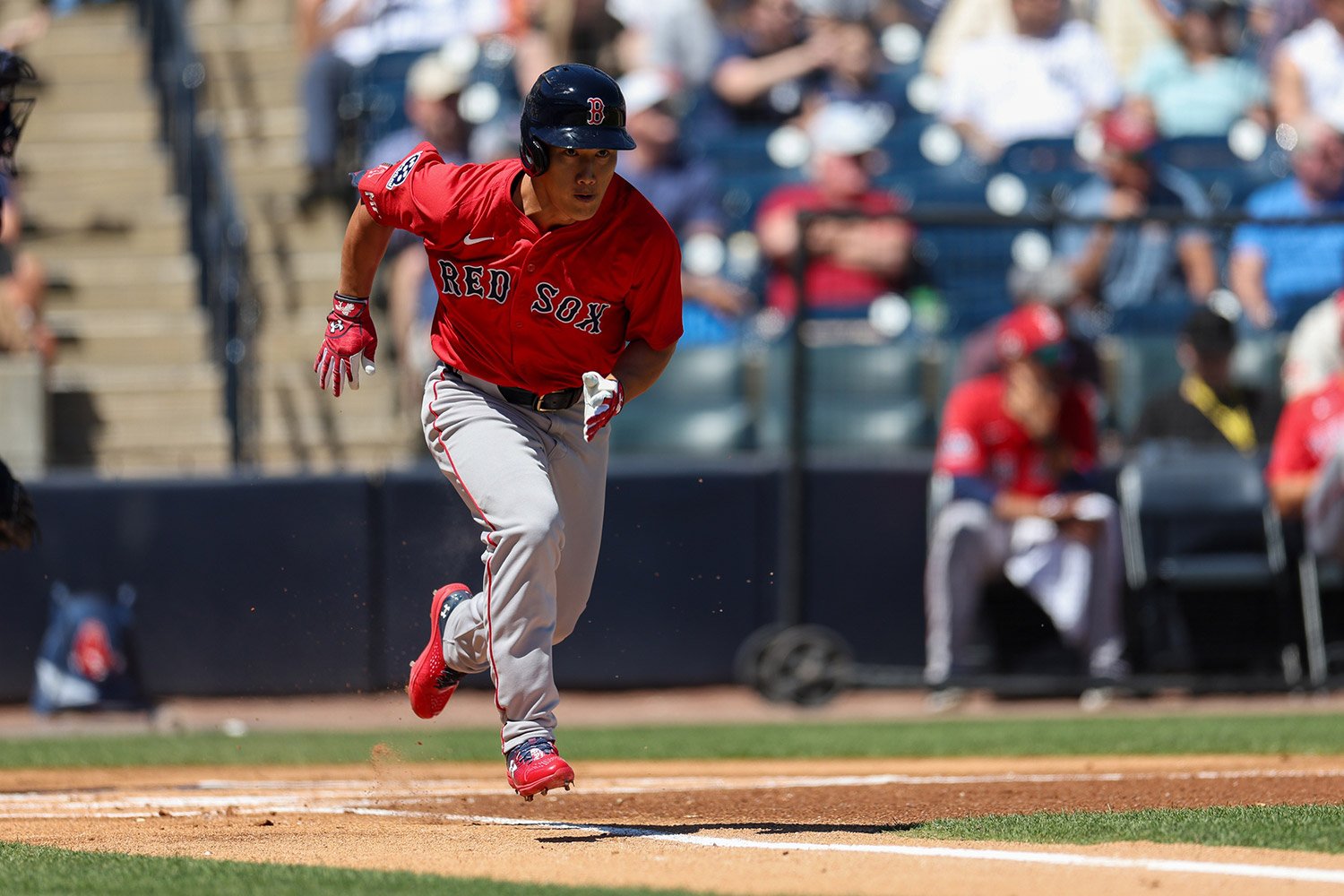 The Boston Red Sox made a roster move ahead of Wednesday’s finale against the Colorado Rockies as they sent Nate Eaton down to Triple-A Worcester to make room for the return of Masataka Yoshida, according to MassLive's Chris Cotillo. To make room on the 40-man roster, the Red Sox moved right-handed pitcher Nick Burdi from the 15-day injured list to the 60-day injured list. Yoshida has missed all of 2025 so far as he recovered from offseason shoulder surgery, but is finally healthy and will be in the lineup tonight as the designated hitter. The left-handed hitter looks to be an addition to a lineup that has been on fire recently. Eaton, who was called up to the Red Sox after the Rafael Devers trade, appeared in 14 games, hitting .250/.296/.333 to go along with two doubles, an RBI, and three stolen bases. He split his time between third base and the outfield and had been the team’s leadoff hitter for the previous four games. Burdi, who was placed on the injured list June 3rd due to a right foot contusion, has pitched in four games for Boston, tossing 5 1/3 innings while not allowing a run to score. He had made two rehab outings for Triple-A Worcester in the middle of June but suffered a setback when he felt discomfort in his hip. With Yoshida officially back what are your predictions for him for the remainder of the season? Join the conversation in the comments.
 -
The Boston Red Sox made a roster move ahead of Wednesday’s finale against the Colorado Rockies as they sent Nate Eaton down to Triple-A Worcester to make room for the return of Masataka Yoshida, according to MassLive's Chris Cotillo. To make room on the 40-man roster, the Red Sox moved right-handed pitcher Nick Burdi from the 15-day injured list to the 60-day injured list. Yoshida has missed all of 2025 so far as he recovered from offseason shoulder surgery, but is finally healthy and will be in the lineup tonight as the designated hitter. The left-handed hitter looks to be an addition to a lineup that has been on fire recently. Eaton, who was called up to the Red Sox after the Rafael Devers trade, appeared in 14 games, hitting .250/.296/.333 to go along with two doubles, an RBI, and three stolen bases. He split his time between third base and the outfield and had been the team’s leadoff hitter for the previous four games. Burdi, who was placed on the injured list June 3rd due to a right foot contusion, has pitched in four games for Boston, tossing 5 1/3 innings while not allowing a run to score. He had made two rehab outings for Triple-A Worcester in the middle of June but suffered a setback when he felt discomfort in his hip. With Yoshida officially back what are your predictions for him for the remainder of the season? Join the conversation in the comments. View full rumor
-
 Trade season is upon us as rumors have been circulating the internet lately especially as it relates to the Boston Red Sox. Just a few days ago it was reported that there were roughly 12 teams interested in acquiring Jarren Duran in a trade. However, it seems things might have changed as Alex Speier of the Boston Globe now reports that it’s believed the Red Sox are not shopping Duran or Wilyer Abreu but the duo are available and the Red Sox will listen. Speier states that due to the talent and control of both players the Red Sox are unlikely to trade either of them unless they can get an impact big leaguer in return. Though, it seems they won’t accept just any player in return as they would want someone under contract for multiple seasons and who will address a roster need. It seems like a matter of time before Boston deals one of its outfielders due to its roster crunch. As of Wednesday with the return of Masataka Yoshida, they will have six outfielders on the roster fighting for four positions in the lineup each night. To maintain the roster flexibility they love someone will have to be moved soon. What do you think about Speier’s statement? Do you think it’s true or are the Red Sox just telling other teams this in hopes they increase their offers? Sound off in the comments below.
 -
Trade season is upon us as rumors have been circulating the internet lately especially as it relates to the Boston Red Sox. Just a few days ago it was reported that there were roughly 12 teams interested in acquiring Jarren Duran in a trade. However, it seems things might have changed as Alex Speier of the Boston Globe now reports that it’s believed the Red Sox are not shopping Duran or Wilyer Abreu but the duo are available and the Red Sox will listen. Speier states that due to the talent and control of both players the Red Sox are unlikely to trade either of them unless they can get an impact big leaguer in return. Though, it seems they won’t accept just any player in return as they would want someone under contract for multiple seasons and who will address a roster need. It seems like a matter of time before Boston deals one of its outfielders due to its roster crunch. As of Wednesday with the return of Masataka Yoshida, they will have six outfielders on the roster fighting for four positions in the lineup each night. To maintain the roster flexibility they love someone will have to be moved soon. What do you think about Speier’s statement? Do you think it’s true or are the Red Sox just telling other teams this in hopes they increase their offers? Sound off in the comments below. View full rumor
