


Nick John
-
Posts
799 -
Joined
-
Last visited
-
Days Won
1
Content Type
Profiles
Boston Red Sox Videos
2026 Boston Red Sox Top Prospects Ranking
Boston Red Sox Free Agent & Trade Rumors, Notes, & Tidbits
Guides & Resources
2025 Boston Red Sox Draft Pick Tracker
News
2026 Boston Red Sox Draft Tracker: Picks & Bonuses
Forums
Blogs
Events
Store
Downloads
Gallery
Everything posted by Nick John
-
Article: Where Should Rafael Devers Play?
Nick John replied to Nick John's topic in Talk Sox Front Page News
Honestly at this point I feel it's too late to move Devers to first base for this season. It isn't so easy for a player to suddenly pick up a new position (yes, Bregman might end up at 2nd but the longer ST goes and he's yet to get game time there I doubt it happens) and throwing Devers onto first I feel could lead to an injury for him. Remember how Christian Arroyo ended up getting injured when we tried him at 1st in 2021? I feel that Devers will split the season between 3rd and DH to keep his body from breaking down near the end of the season. -
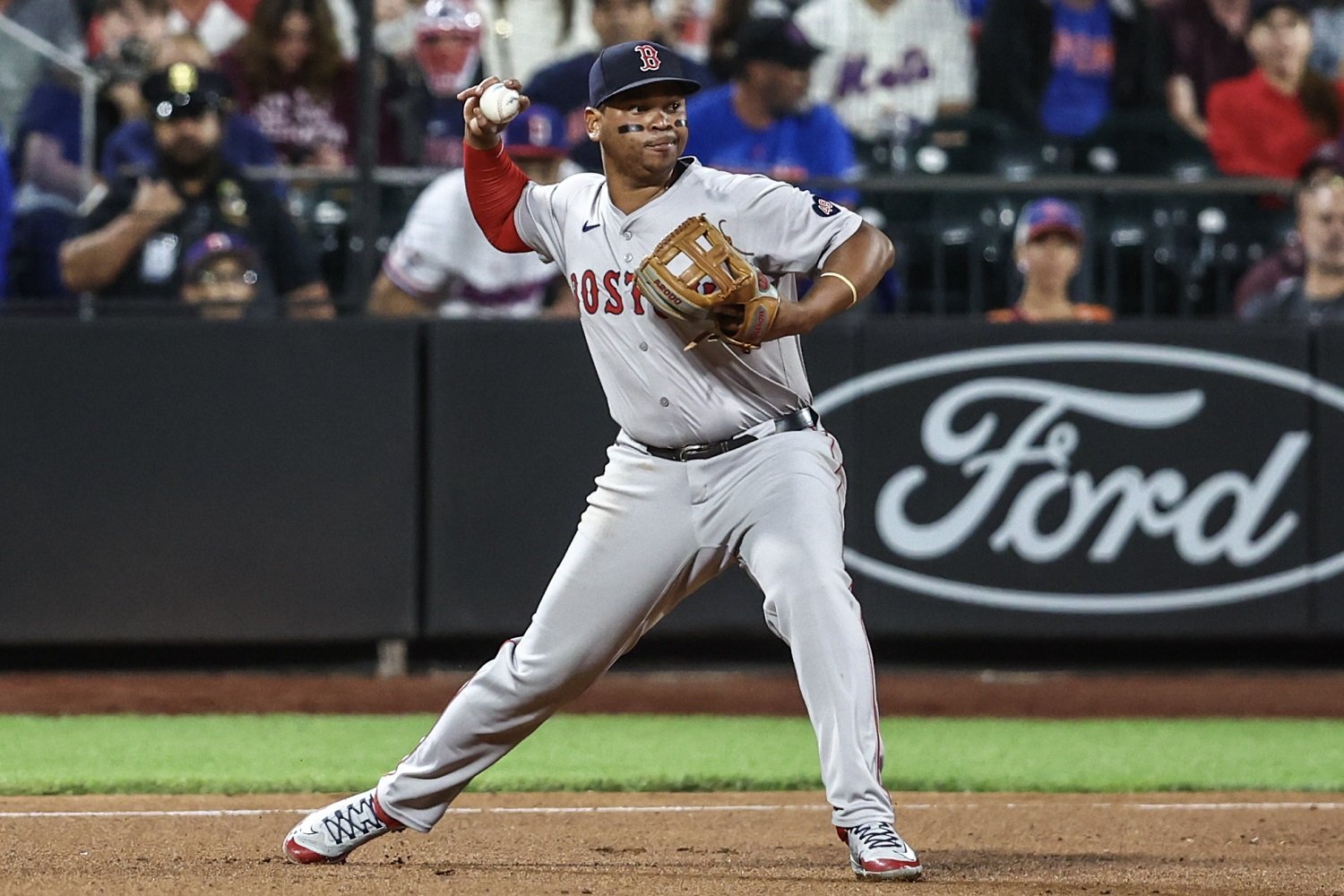 Spring Training games have begun and with it came the debate over where certain players should play for the Boston Red Sox. The most prominent being where Alex Bregman and Rafael Devers will play. Devers will be entering his age-28 season, the third since signing his franchise record 11-year, $331 million contract. The deal will keep him in Boston through the 2033 season and created the assumption at the time that Devers would be the starting third baseman for the foreseeable future. That has changed with the signing of Alex Bregman. All offseason, it was stated that Bregman would be the starting second baseman if he signed with Boston. You had Alex Cora stating that he envisioned Bregman as a Gold Glove second baseman. But now with spring training in full swing, there’s been a debate as to where Devers and Bregman will play and what would be best for the team in the long run. Fans would argue that the best lineup for the Red Sox would be Devers at designated hitter, Bregman playing third base and top prospect Kristian Campbell making the team as the starting second baseman. Defensively this makes the most sense, Bregman is already a Gold Glove defender at third, having won the award this past season while Devers is considered one of the worst defensive third basemen in the game. Last season alone, Devers recorded a minus-6 Outs Above Average. To put that in perspective, that was tied for 36th out of the 43 qualified third basemen last season. Since 2020, Devers has compiled a minus-34 Outs Above Average, ranking as the worst among all qualified third basemen in that span. And despite that, Devers wants to stay at third base. While talking to the media back on February 17th, Devers was asked if he was willing to move off third base to allow new teammate Alex Bregman, his response was simple and he repeated it often. “No. I play third.” This single quote and its repetition by Devers has led to a division among Red Sox fans, some believing that Devers should give up the position and move to being a designated hitter to both preserve his body and to allow the Red Sox to field their best defensive lineup. However, others have pointed out that if Devers quickly relinquished the position he would have been viewed as lazy or ready to just hit now that he has signed his contract. And while even ignoring Devers’ defensive woes, it may not be in the best interest of the team to make Devers a permanent designated hitter. The thought would be that the team would be best with Devers at designated hitter, Bregman as the starting third baseman and top prospect Campbell as the starting second baseman, however, that belief has a few issues. The first would be that Campbell is an unproven rookie. Yes, he vaulted up the prospect rankings last season and finished the year in triple-A Worcester, but as shown from the early games of spring training he’s still a young player who’s learning. The second issue would be the benching of current designated hitter Masataka Yoshida. The left-handed hitter was moved from left field to designated hitter heading into the 2024 season, much to his displeasure. And despite putting up with injuries across the season he still managed to slash a decent .280/.349/.415 with 10 home runs and 56 runs batted in despite dealing with thumb and shoulder injuries. The latter resulted in offseason surgery. If Devers is the new designated hitter, Yoshida would be without a position as the outfield is filled and his bat is too valuable to lose, especially if he’s fully healthy this season. While his numbers may not jump out at you, Yoshida’s OPS+ was 112, putting him as a slightly above average hitter. Add to it his incredibly low whiff and strikeout percentages and he’s a rather valuable member of the lineup when it comes to putting the ball in play. The third and final dilemma is the fact that many players perform worse as the designated hitter. There's a even a name for this phenomenon: The Designated Hitter Penalty. For many players, they need the time in the field to keep them in rhythm when they finally get up to bat. It gives them a chance to think about other aspects of the game besides just hitting and allows them to move on from a poor at-bat. Doing nothing but hitting and then sitting in the dugout thinking about your next at-bat while your teammates field can be mentally draining for players, especially ones like Devers, who have never played anything but one position, and clearly want to remain there. To be a truly great designated hitter you need to be mentally strong and be able to handle the tolls of slumps, otherwise they might drag themselves down and into a longer rut. Not everyone is a David Ortiz or Edgar Martinez who can just slot in as a designated hitter and handle it without issues. Even with the Red Sox they have had players in the past wish to play the field. Probably the most prominent duo being J.D .Martinez and Masataka Yoshida. Martinez signed with the Red Sox in 2018 and helped them win the World Series that season, but before that had shown some desire to remain in the outfield and not just hit. He was at a similar point in his career as Devers is now, just two years older than Devers is, Martinez wanted to play the field. His exact reason at the time when asked about wanting to play the outfield was “because I’m 30 years old”. Likewise, Martinez had an interesting split when he played the field vs when he didn’t in 2018. As the Red Sox outfield was loaded with young, homegrown stars Andrew Benintendi, Jackie Bradley Jr. and Mookie Betts, Martinez only played the outfield in 57 games that season. However, his bat exploded when he played in the field. In 57 games played in the outfield, Martinez managed to hit .383 in 219 at bats and got on base at a .450 clip. In 93 games as the designated hitter Martinez had 350 at-bats and saw his average drop to .297 and his on base percentage also drop to .373. His power was more prevalent while being the designated hitter, hitting 27 of them compared to 16 while playing in the outfield. Overall though, it shows just how playing in the field kept Martinez locked in. It’s been the same for his entire career, as between playing as the left fielder, right fielder or designated hitter, Martinez’s numbers have been lowest while playing as the designated hitter. Yoshida is a similar case when you compare his stats based on his position. In 86 career games in left field, Yoshida has slashed .308/.350/.480 with 12 home runs and 60 runs batted in. He also struck out only 41 times in that span totaling 344 at-bats. As a designated hitter, however, those numbers drop. In 150 games as the designated hitter, Yoshida saw his numbers drop to a stat line of .273/.338/.407 along with 13 home runs and 68 runs batted in across 560 at-bats. It's yet to be seen if Devers is someone who could handle the mounting pressure of being the team’s designated hitter, especially with calls for him to give up his starting position at third base. Based on a small sample size from last season when he was hurt, Devers hit rather well. But his line of .353/.371/.618 was only across eight games, not a large enough sample size to give us an idea of how he would do across a full season. If the Red Sox and Devers decide it’s best for the team for him to slide off of third base, I feel the best-case scenario for him would be similar to how they handled J.D. Martinez in 2018: play roughly a third of his games in the field to give him a break from the mental strains of being the designated hitter. Despite the defensive woes that Devers has at times, it would be best for the team in the long run to allow him time on the field, time to clear his head and give him a chance to reset at the plate by focusing on his defense. Though this question has been a thing since the start of spring training, this issue is a good one. The fact that we’re arguing over where multiple all-star players should play is something we haven’t been able to do for a few years now. Wherever Devers and Bregman end up playing, one thing is for certain: this team will be enjoyable to watch.
 -
With Rafael Devers sidelined to start spring training, Red Sox fans may not know what the "regular" infield makeup will be until Opening Day. Spring Training games have begun and with it came the debate over where certain players should play for the Boston Red Sox. The most prominent being where Alex Bregman and Rafael Devers will play. Devers will be entering his age-28 season, the third since signing his franchise record 11-year, $331 million contract. The deal will keep him in Boston through the 2033 season and created the assumption at the time that Devers would be the starting third baseman for the foreseeable future. That has changed with the signing of Alex Bregman. All offseason, it was stated that Bregman would be the starting second baseman if he signed with Boston. You had Alex Cora stating that he envisioned Bregman as a Gold Glove second baseman. But now with spring training in full swing, there’s been a debate as to where Devers and Bregman will play and what would be best for the team in the long run. Fans would argue that the best lineup for the Red Sox would be Devers at designated hitter, Bregman playing third base and top prospect Kristian Campbell making the team as the starting second baseman. Defensively this makes the most sense, Bregman is already a Gold Glove defender at third, having won the award this past season while Devers is considered one of the worst defensive third basemen in the game. Last season alone, Devers recorded a minus-6 Outs Above Average. To put that in perspective, that was tied for 36th out of the 43 qualified third basemen last season. Since 2020, Devers has compiled a minus-34 Outs Above Average, ranking as the worst among all qualified third basemen in that span. And despite that, Devers wants to stay at third base. While talking to the media back on February 17th, Devers was asked if he was willing to move off third base to allow new teammate Alex Bregman, his response was simple and he repeated it often. “No. I play third.” This single quote and its repetition by Devers has led to a division among Red Sox fans, some believing that Devers should give up the position and move to being a designated hitter to both preserve his body and to allow the Red Sox to field their best defensive lineup. However, others have pointed out that if Devers quickly relinquished the position he would have been viewed as lazy or ready to just hit now that he has signed his contract. And while even ignoring Devers’ defensive woes, it may not be in the best interest of the team to make Devers a permanent designated hitter. The thought would be that the team would be best with Devers at designated hitter, Bregman as the starting third baseman and top prospect Campbell as the starting second baseman, however, that belief has a few issues. The first would be that Campbell is an unproven rookie. Yes, he vaulted up the prospect rankings last season and finished the year in triple-A Worcester, but as shown from the early games of spring training he’s still a young player who’s learning. The second issue would be the benching of current designated hitter Masataka Yoshida. The left-handed hitter was moved from left field to designated hitter heading into the 2024 season, much to his displeasure. And despite putting up with injuries across the season he still managed to slash a decent .280/.349/.415 with 10 home runs and 56 runs batted in despite dealing with thumb and shoulder injuries. The latter resulted in offseason surgery. If Devers is the new designated hitter, Yoshida would be without a position as the outfield is filled and his bat is too valuable to lose, especially if he’s fully healthy this season. While his numbers may not jump out at you, Yoshida’s OPS+ was 112, putting him as a slightly above average hitter. Add to it his incredibly low whiff and strikeout percentages and he’s a rather valuable member of the lineup when it comes to putting the ball in play. The third and final dilemma is the fact that many players perform worse as the designated hitter. There's a even a name for this phenomenon: The Designated Hitter Penalty. For many players, they need the time in the field to keep them in rhythm when they finally get up to bat. It gives them a chance to think about other aspects of the game besides just hitting and allows them to move on from a poor at-bat. Doing nothing but hitting and then sitting in the dugout thinking about your next at-bat while your teammates field can be mentally draining for players, especially ones like Devers, who have never played anything but one position, and clearly want to remain there. To be a truly great designated hitter you need to be mentally strong and be able to handle the tolls of slumps, otherwise they might drag themselves down and into a longer rut. Not everyone is a David Ortiz or Edgar Martinez who can just slot in as a designated hitter and handle it without issues. Even with the Red Sox they have had players in the past wish to play the field. Probably the most prominent duo being J.D .Martinez and Masataka Yoshida. Martinez signed with the Red Sox in 2018 and helped them win the World Series that season, but before that had shown some desire to remain in the outfield and not just hit. He was at a similar point in his career as Devers is now, just two years older than Devers is, Martinez wanted to play the field. His exact reason at the time when asked about wanting to play the outfield was “because I’m 30 years old”. Likewise, Martinez had an interesting split when he played the field vs when he didn’t in 2018. As the Red Sox outfield was loaded with young, homegrown stars Andrew Benintendi, Jackie Bradley Jr. and Mookie Betts, Martinez only played the outfield in 57 games that season. However, his bat exploded when he played in the field. In 57 games played in the outfield, Martinez managed to hit .383 in 219 at bats and got on base at a .450 clip. In 93 games as the designated hitter Martinez had 350 at-bats and saw his average drop to .297 and his on base percentage also drop to .373. His power was more prevalent while being the designated hitter, hitting 27 of them compared to 16 while playing in the outfield. Overall though, it shows just how playing in the field kept Martinez locked in. It’s been the same for his entire career, as between playing as the left fielder, right fielder or designated hitter, Martinez’s numbers have been lowest while playing as the designated hitter. Yoshida is a similar case when you compare his stats based on his position. In 86 career games in left field, Yoshida has slashed .308/.350/.480 with 12 home runs and 60 runs batted in. He also struck out only 41 times in that span totaling 344 at-bats. As a designated hitter, however, those numbers drop. In 150 games as the designated hitter, Yoshida saw his numbers drop to a stat line of .273/.338/.407 along with 13 home runs and 68 runs batted in across 560 at-bats. It's yet to be seen if Devers is someone who could handle the mounting pressure of being the team’s designated hitter, especially with calls for him to give up his starting position at third base. Based on a small sample size from last season when he was hurt, Devers hit rather well. But his line of .353/.371/.618 was only across eight games, not a large enough sample size to give us an idea of how he would do across a full season. If the Red Sox and Devers decide it’s best for the team for him to slide off of third base, I feel the best-case scenario for him would be similar to how they handled J.D. Martinez in 2018: play roughly a third of his games in the field to give him a break from the mental strains of being the designated hitter. Despite the defensive woes that Devers has at times, it would be best for the team in the long run to allow him time on the field, time to clear his head and give him a chance to reset at the plate by focusing on his defense. Though this question has been a thing since the start of spring training, this issue is a good one. The fact that we’re arguing over where multiple all-star players should play is something we haven’t been able to do for a few years now. Wherever Devers and Bregman end up playing, one thing is for certain: this team will be enjoyable to watch. View full article
-
Vaughn Grissom was previously a top prospect with the Braves, having been ranked as high as seventh in Atlanta's organization. If he reaches his potential, Grissom could be a key piece to the Red Sox lineup for 2025. Two days before the year of 2024 was ushered in, the Red Sox made a surprising trade as they shipped Chris Sale off to Atlanta. In return, they acquired a former top prospect in Vaughn Grissom. Grissom had played in parts of two seasons with the Braves where he slashed .287/.339/.407 across 64 games split between second base and shortstop. Fast forward to 2025, and now there are questions if Grissom will even break camp with the major league club due to the likes of Alex Bregman and Kristian Campbell both ahead of him on the depth chart. Grissom fell short of expectations in 2024, and if he wants to play in Boston this season, he’ll have to prove last year was lost from injuries. What Went Wrong in 2024? The easy answer is injuries. Grissom started the year hurt, suffering a left hamstring strain during spring training that delayed his availability for the start of the season. The injury bug continued to affect Grissom throughout the season, as he would end up coming down with the flu right before he was to be activated. His bout with the flu was so bad that manager Alex Cora stated that Grissom lost 14 pounds from being sick. Once recovered from the flu, Grissom finally got his shot in Boston as he was activated from the Injured List on May 3, 2024, though his time in Boston was short lived as he would exit the game on June 1 following a groundout. It was revealed that he strained his hamstring, this time the right hamstring. In 22 games played prior to the injury. Grissom was struggling with the bat, slashing an awful .150/.209/.163 across 86 plate appearances. Grissom would remain on the Injured List until the end of July, when he was sent on a rehab assignment to Worcester and would remain there upon being activated from the IL on August 8, which was immediately followed with him being optioned to Worcester. Grissom would remain at Triple-A until September 20, when he was recalled to Boston and played in eight games to finish the season. Grissom looked like a different hitter upon his return, slashing .333/.370/.417. For the season, Grissom slashed .190/.246/.219 in 114 plate appearances. What Can Go Right in 2025? Grissom may have been leapt in the depth chart by Kristian Campbell and Alex Bregman, but he is still a former top prospect and one who has a solid hit tool. Grissom’s potential with the bat is enough to keep him in conversation for a spot on the roster. After last season, the Red Sox could use the offensive potential his bat carries along with him being a right-handed hitter that would help balance out the lefty-heavy lineup they currently have. If Grissom can stay healthy and prove that he’s closer to the player they saw in eight games towards the end of the season instead of the 22 he played during May, Grissom will be able to make the Sale trade look a little more digestible for Boston. There is less pressure on Grissom this season now with Campbell being thrown into the spotlight and Bregman being the big signing of the offseason. Should Grissom showcase the preternatural hit tool that made him a top prospect, it’ll put the Red Sox in a tough but enviable position to have so many quality offensive contributors on the roster. How Will This Impact the Red Sox? If Grissom can put up a successful year, he’ll improve the depth of the lineup, especially in the middle infield. Should he put his name into the starting second baseman conversation, Grissom will create quite the positive problem as the team will look to get not only his bat but also Campbell’s into the everyday lineup. Such a rebound by Grissom gives the Red Sox a dynamic batting order that mixes contact, power and speed to give them a varied offensive attack. Grissom would lengthen the lineup as he could bat in the bottom third and take pressure off of players like Connor Wong and Ceddanne Rafaela to produce. Or, should the Red Sox choose to focus on offense over defense, it could lead to Kristian Campbell playing left field and Jarren Duran sliding over from left field to center field and forcing Rafaela to the bench. A healthy and productive Grissom gives the Red Sox a new weapon that helps transform the roster in multiple ways. And, let's be honest: it would be nice to see some ROI on the Sale trade after the southpaw's Cy Young season last year. View full article
-
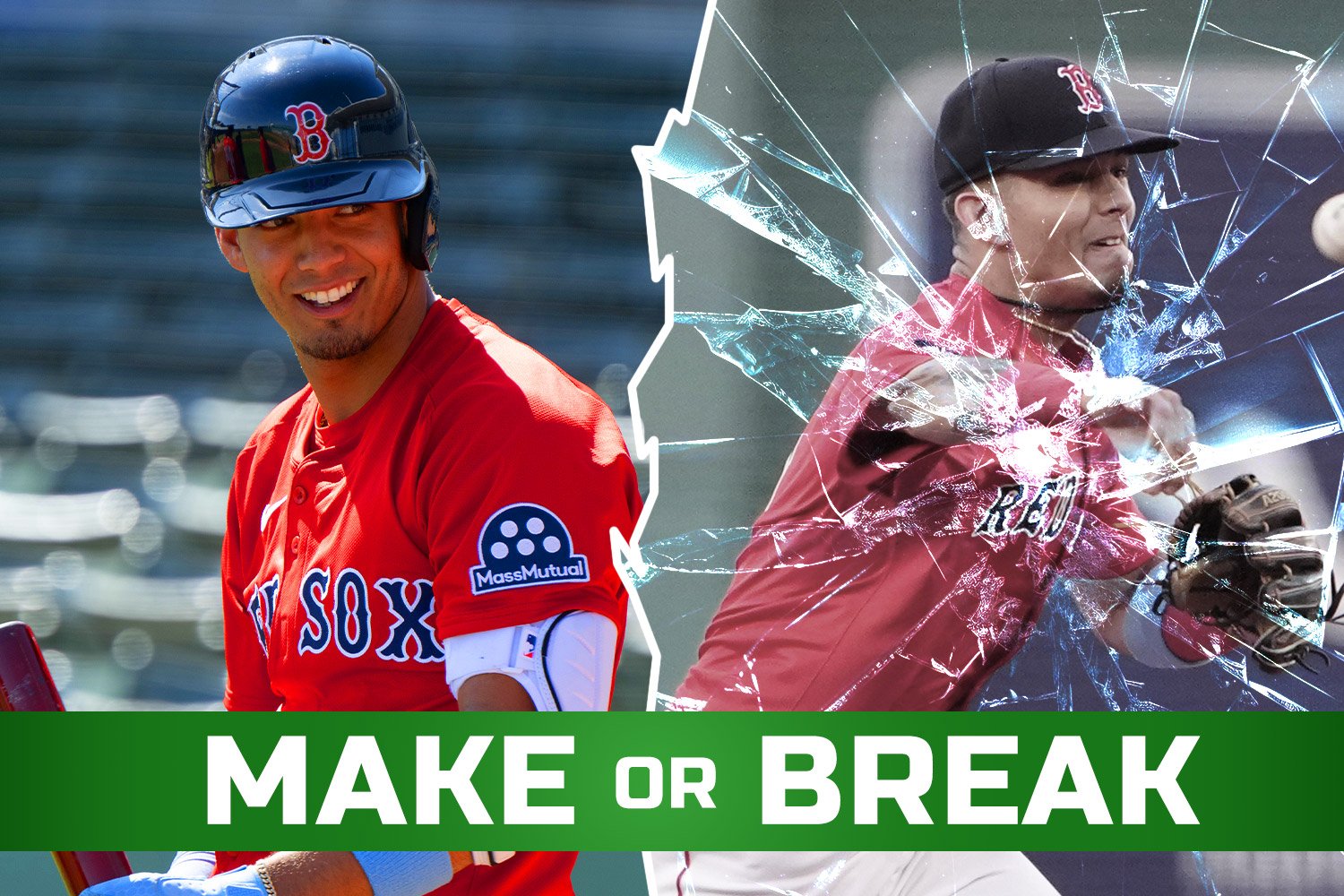 Two days before the year of 2024 was ushered in, the Red Sox made a surprising trade as they shipped Chris Sale off to Atlanta. In return, they acquired a former top prospect in Vaughn Grissom. Grissom had played in parts of two seasons with the Braves where he slashed .287/.339/.407 across 64 games split between second base and shortstop. Fast forward to 2025, and now there are questions if Grissom will even break camp with the major league club due to the likes of Alex Bregman and Kristian Campbell both ahead of him on the depth chart. Grissom fell short of expectations in 2024, and if he wants to play in Boston this season, he’ll have to prove last year was lost from injuries. What Went Wrong in 2024? The easy answer is injuries. Grissom started the year hurt, suffering a left hamstring strain during spring training that delayed his availability for the start of the season. The injury bug continued to affect Grissom throughout the season, as he would end up coming down with the flu right before he was to be activated. His bout with the flu was so bad that manager Alex Cora stated that Grissom lost 14 pounds from being sick. Once recovered from the flu, Grissom finally got his shot in Boston as he was activated from the Injured List on May 3, 2024, though his time in Boston was short lived as he would exit the game on June 1 following a groundout. It was revealed that he strained his hamstring, this time the right hamstring. In 22 games played prior to the injury. Grissom was struggling with the bat, slashing an awful .150/.209/.163 across 86 plate appearances. Grissom would remain on the Injured List until the end of July, when he was sent on a rehab assignment to Worcester and would remain there upon being activated from the IL on August 8, which was immediately followed with him being optioned to Worcester. Grissom would remain at Triple-A until September 20, when he was recalled to Boston and played in eight games to finish the season. Grissom looked like a different hitter upon his return, slashing .333/.370/.417. For the season, Grissom slashed .190/.246/.219 in 114 plate appearances. What Can Go Right in 2025? Grissom may have been leapt in the depth chart by Kristian Campbell and Alex Bregman, but he is still a former top prospect and one who has a solid hit tool. Grissom’s potential with the bat is enough to keep him in conversation for a spot on the roster. After last season, the Red Sox could use the offensive potential his bat carries along with him being a right-handed hitter that would help balance out the lefty-heavy lineup they currently have. If Grissom can stay healthy and prove that he’s closer to the player they saw in eight games towards the end of the season instead of the 22 he played during May, Grissom will be able to make the Sale trade look a little more digestible for Boston. There is less pressure on Grissom this season now with Campbell being thrown into the spotlight and Bregman being the big signing of the offseason. Should Grissom showcase the preternatural hit tool that made him a top prospect, it’ll put the Red Sox in a tough but enviable position to have so many quality offensive contributors on the roster. How Will This Impact the Red Sox? If Grissom can put up a successful year, he’ll improve the depth of the lineup, especially in the middle infield. Should he put his name into the starting second baseman conversation, Grissom will create quite the positive problem as the team will look to get not only his bat but also Campbell’s into the everyday lineup. Such a rebound by Grissom gives the Red Sox a dynamic batting order that mixes contact, power and speed to give them a varied offensive attack. Grissom would lengthen the lineup as he could bat in the bottom third and take pressure off of players like Connor Wong and Ceddanne Rafaela to produce. Or, should the Red Sox choose to focus on offense over defense, it could lead to Kristian Campbell playing left field and Jarren Duran sliding over from left field to center field and forcing Rafaela to the bench. A healthy and productive Grissom gives the Red Sox a new weapon that helps transform the roster in multiple ways. And, let's be honest: it would be nice to see some ROI on the Sale trade after the southpaw's Cy Young season last year.
 -
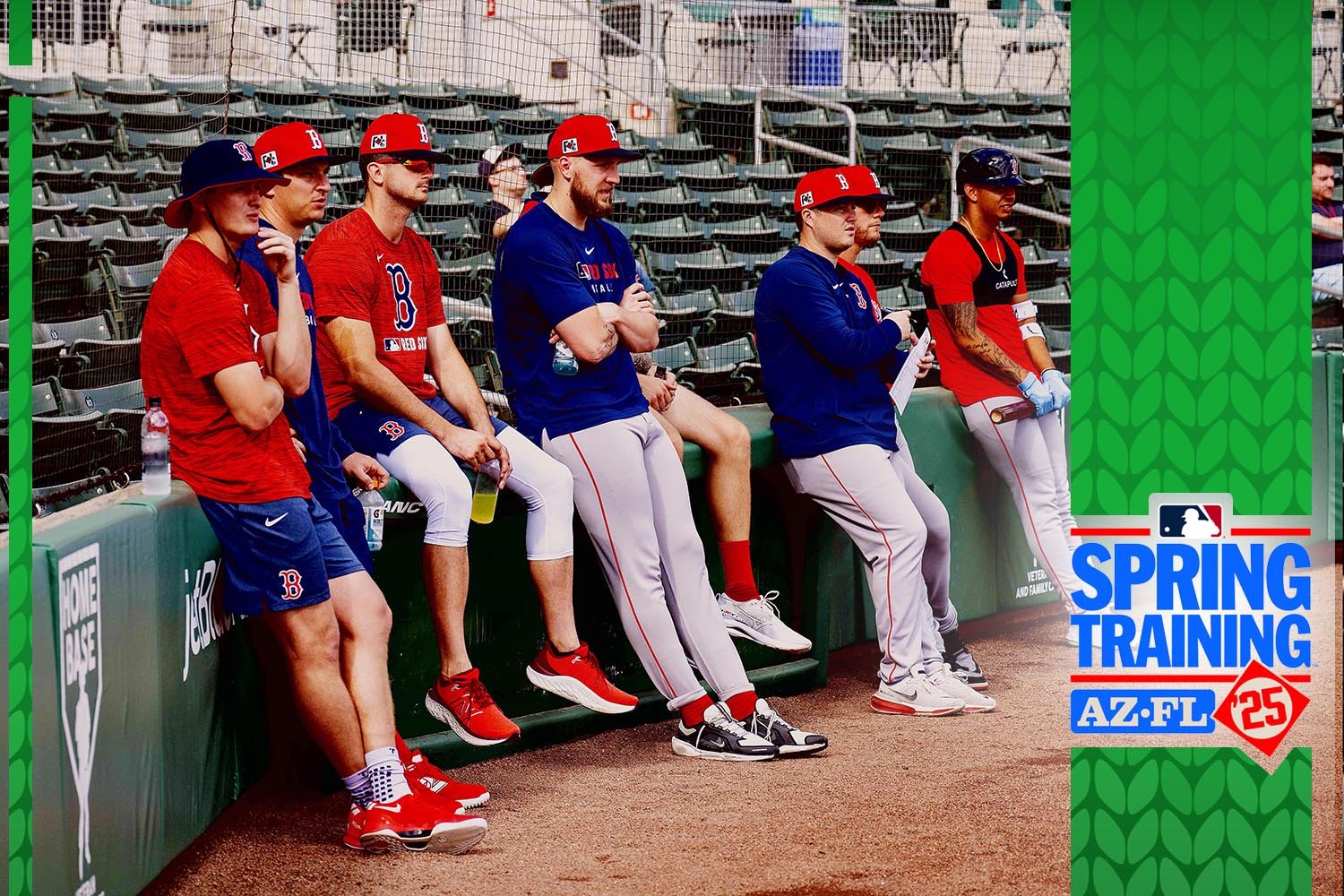 Spring Training officially began this week for the Boston Red Sox as the full team began practicing on Monday. I figured it would be a good idea to go over the various non-roster invitees who will be battling it out to try and earn one of the last spots on the roster. Pitchers Michael Fulmer: The 2016 AL Rookie of the Year signed a two-year minor league deal with Boston last season as he recovered from surgery. Fulmer has mostly pitched out of the bullpen since 2021, but it’s believed that the Red Sox will look to stretch him out back into a starter in Worcester as depth. Austin Adams: Adams has pitched for four teams across parts of eight seasons. A right-handed reliever, he pitched in 56 games for the Oakland Athletics in 2024. He was a decent bullpen arm for them, running a 3.92 ERA, though he allowed 23 walks in only 41 1/3 innings. Sean Newcomb: A former starter while with the Braves, Newcomb is hoping to rediscover his form from 2017-2019, when he ran a 3.87 ERA over 105 games and 53 starts. Since then, he’s struggled, including in 2024 where he pitched in seven games for the Oakland Athletics. In those seven games he pitched 10 innings and gave up seven runs. Bryan Mata: A former top prospect with the Red Sox, Mata could never stay healthy throughout his various stops across the minor leagues. Designated for assignment in November, he signed a minor league deal to return to the organization hours later. Mata pitched in 11 games last year, making seven starts. In total he threw 22 2/3 innings. Robert Stock: Stock has had a long journey. spent parts of four seasons with four teams, including 10 games in 2020 with Boston. After 2021, he bounced between various leagues, pitching in Korea, Triple A for Milwaukee, in the Independent League and just recently in the Mexican League, where he radically changed his mechanics. After impressing in the Mexican Pacific Winter League with a 1.60 ERA in 84 1/3 innings pitched, Stock signed a minor league deal with the Red Sox. Jovani Moran: Acquired in a trade from Minnesota for Mickey Gasper on Christmas Eve, Moran has pitched in 79 games across the 2021-2023 seasons. Moran missed the entire 2024 season recovering from Tommy John surgery. His best season was 2022, when he pitched in 31 games, throwing 40 2/3 innings to a 2.21 ERA and striking out 54 batters. Brian Van Belle: Van Belle went undrafted out of Miami as a senior due to the shortened five-round draft and became one of the most sought-after seniors in the undrafted free agent class. Van Belle had been a starter in Boston’s organization until 2024, when he was moved to the bullpen in Worcester. In 30 games, he threw 93 2/3 innings and struck out 87 batters. Over the winter,r he pitched for Criollos de Caguas in the Puerto Rican Winter League, appearing in seven games and making four starts. Jacob Webb: Drafted by the Red Sox in the 14th round of the 2021 draft, Webb made it up to Worcester by the end of the 2024 season. The right-hander appeared in four games at the end of the season for Worcester, throwing 3 2/3 innings while surrendering eight runs. Noah Davis: A former 11th-round draft pick in 2018 by the Cincinnati Reds, Davis was traded to the Colorado Rockies and pitched in parts of three seasons for them before signing a minor league contract with Boston in December 2024. He pitched in nine games last season, throwing 20 1/3 innings. The past three offseasons, he has worked out at Driveline. Isaiah Campbell: Acquired by Boston before the 2024 season in hopes of improving their bullpen, Campbell was unable to replicate his 2023 season. Pitching in eight games, Campbell threw 6 2/3 innings between an IL stint and a rehab stint before being shut down for the season in mid-July. He was non-tendered in November of 2024 but resigned on a minor league contract. Yovanny Cruz: Cruz pitched in the Chicago Cubs organization for seven seasons, missing the 2020 season due to Covid and 2021 due to injury. He signed a minor league deal with the Padres for the 2024 season, when he pitched for double-A San Antonio. Cruz pitched in 23 games, throwing 29 2/3 innings. Wyatt Mills: Mills spent parts of two seasons split between the Seattle Mariners and Kansas City Royals before being traded to Boston before the 2023 season. Mills has not pitched since 2022, as he missed the entire 2023 season due to injury before having Tommy John surgery in July 2023. He was non-tendered following the season and signed a two-year minor league contract with he Red Sox before the 2024 season. Mills did not pitch in 2024 as he rehabbed from his surgery. Catchers Seby Zavala: There are defense-first catchers, and then there's Seby Zavala. According to FanGraphs, over parts of five major-league seasons, Zavala's defense has earned his teams 26.2 runs, while his offense has earned -22.5. He made his major league debut in 2019 with the Chicago White Sox after being in their system since 2015. He was in their organization until the Arizona Diamondbacks claimed him off waivers in September 2023 before trading him to Seattle two months later. Zavala played in 33 games at triple-A Tacoma, where he slashed .188/.325/.376. Zavala also played in 18 games for Seattle. Zavala signed a minor league deal with Boston in November of 2024. Mark Kolozsvary: Kolozsvary spent six seasons in the Cincinnati Reds’ organization, making his major-league debut in 2022. He played in 10 games. Kolozsvary split 2023 between the Baltimore Orioles organization and the Minnesota Twins organization, playing for both of their triple-A teams. He would spend 2024 playing in 27 games for triple-A Worcester in the Red Sox organization. He spent a good portion of the season on the development list. Nathan Hickey: Drafted in the fifth round of the 2021 draft by the Red Sox, Hickey opened the 2024 season in Worcester. He appeared in 86 games but struggled to a .210/.340/.397 slash line before being demoted to Portland. Hickey continued to struggle in Portland, playing in 26 games but only slashing .207/.387/.329. Infielders Kristian Campbell: The Red Sox' number two prospect behind Roman Anthony, Campbell burst onto the scene in 2024. Drafted in the fourth round of the 2023 draft, Campbell split the 2024 season between Greenville, Portland and Worcester. Overall, he slashed .330/.439/.558 across 115 games. Campbell has also shown an ability to play multiple positions, appearing at second base, third base, center field, and shortstop. Marcelo Mayer: A first-round pick in the 2021 draft, Mayer has made his way throughout the Red Sox minor league levels. He spent most of 2024 in Portland, appearing in 77 games and slashing .307/.370/.480. Mayer ended the 2024 season in Worcester but did not play a single game due to yet another injury. Abraham Toro: Toro spent six seasons in the Houston Astros organization, including stints in the majors for parts of three seasons before getting traded to Seattle in 2021. He remained in Seattle until the end of the 2022 season, when he was traded to Milwaukee, and played the 2023 season for them. Toro spent the 2024 season with the Oakland Athletics after being traded to them by Milwaukee. He signed a minor league deal with Boston in January of 2025. Nate Eaton: A former 21st-round pick in the 2018 draft by Kansas City, Eaton made it to the major leagues for them in 2022. Eaton would spend part of 2023 in the majors as well before spending the entire 2024 season in Triple-A Omaha. He signed a minor league contract with the Red Sox in November of 2024. Eaton has never quite figured out the offensive side of things, running a career wRC+ of just 51. Howver, he's got one of the strongest arms in baseball, and touched 94.9 mph on the radar gun when pitching during garbage time. One of these years, we might end up putting him in the pitching section of this article. Outfielders Roman Anthony: You don't need to be introduced to Roman Anthony. The top prospect in baseball, Anthony was drafted in the compensation round following the second round of the 2022 draft. He made it to triple-A Worcester by the age of 20 during the 2024 season and showed that he was ready for the major leagues after slashing .344/.463/.519 in 35 games.
 -
With spring training officially getting underway, you'll be hearing a lot of new names for the next few months. Here's an introduction to all the Red Sox non-roster invitees, from the longshots to the Big Three. Spring Training officially began this week for the Boston Red Sox as the full team began practicing on Monday. I figured it would be a good idea to go over the various non-roster invitees who will be battling it out to try and earn one of the last spots on the roster. Pitchers Michael Fulmer: The 2016 AL Rookie of the Year signed a two-year minor league deal with Boston last season as he recovered from surgery. Fulmer has mostly pitched out of the bullpen since 2021, but it’s believed that the Red Sox will look to stretch him out back into a starter in Worcester as depth. Austin Adams: Adams has pitched for four teams across parts of eight seasons. A right-handed reliever, he pitched in 56 games for the Oakland Athletics in 2024. He was a decent bullpen arm for them, running a 3.92 ERA, though he allowed 23 walks in only 41 1/3 innings. Sean Newcomb: A former starter while with the Braves, Newcomb is hoping to rediscover his form from 2017-2019, when he ran a 3.87 ERA over 105 games and 53 starts. Since then, he’s struggled, including in 2024 where he pitched in seven games for the Oakland Athletics. In those seven games he pitched 10 innings and gave up seven runs. Bryan Mata: A former top prospect with the Red Sox, Mata could never stay healthy throughout his various stops across the minor leagues. Designated for assignment in November, he signed a minor league deal to return to the organization hours later. Mata pitched in 11 games last year, making seven starts. In total he threw 22 2/3 innings. Robert Stock: Stock has had a long journey. spent parts of four seasons with four teams, including 10 games in 2020 with Boston. After 2021, he bounced between various leagues, pitching in Korea, Triple A for Milwaukee, in the Independent League and just recently in the Mexican League, where he radically changed his mechanics. After impressing in the Mexican Pacific Winter League with a 1.60 ERA in 84 1/3 innings pitched, Stock signed a minor league deal with the Red Sox. Jovani Moran: Acquired in a trade from Minnesota for Mickey Gasper on Christmas Eve, Moran has pitched in 79 games across the 2021-2023 seasons. Moran missed the entire 2024 season recovering from Tommy John surgery. His best season was 2022, when he pitched in 31 games, throwing 40 2/3 innings to a 2.21 ERA and striking out 54 batters. Brian Van Belle: Van Belle went undrafted out of Miami as a senior due to the shortened five-round draft and became one of the most sought-after seniors in the undrafted free agent class. Van Belle had been a starter in Boston’s organization until 2024, when he was moved to the bullpen in Worcester. In 30 games, he threw 93 2/3 innings and struck out 87 batters. Over the winter,r he pitched for Criollos de Caguas in the Puerto Rican Winter League, appearing in seven games and making four starts. Jacob Webb: Drafted by the Red Sox in the 14th round of the 2021 draft, Webb made it up to Worcester by the end of the 2024 season. The right-hander appeared in four games at the end of the season for Worcester, throwing 3 2/3 innings while surrendering eight runs. Noah Davis: A former 11th-round draft pick in 2018 by the Cincinnati Reds, Davis was traded to the Colorado Rockies and pitched in parts of three seasons for them before signing a minor league contract with Boston in December 2024. He pitched in nine games last season, throwing 20 1/3 innings. The past three offseasons, he has worked out at Driveline. Isaiah Campbell: Acquired by Boston before the 2024 season in hopes of improving their bullpen, Campbell was unable to replicate his 2023 season. Pitching in eight games, Campbell threw 6 2/3 innings between an IL stint and a rehab stint before being shut down for the season in mid-July. He was non-tendered in November of 2024 but resigned on a minor league contract. Yovanny Cruz: Cruz pitched in the Chicago Cubs organization for seven seasons, missing the 2020 season due to Covid and 2021 due to injury. He signed a minor league deal with the Padres for the 2024 season, when he pitched for double-A San Antonio. Cruz pitched in 23 games, throwing 29 2/3 innings. Wyatt Mills: Mills spent parts of two seasons split between the Seattle Mariners and Kansas City Royals before being traded to Boston before the 2023 season. Mills has not pitched since 2022, as he missed the entire 2023 season due to injury before having Tommy John surgery in July 2023. He was non-tendered following the season and signed a two-year minor league contract with he Red Sox before the 2024 season. Mills did not pitch in 2024 as he rehabbed from his surgery. Catchers Seby Zavala: There are defense-first catchers, and then there's Seby Zavala. According to FanGraphs, over parts of five major-league seasons, Zavala's defense has earned his teams 26.2 runs, while his offense has earned -22.5. He made his major league debut in 2019 with the Chicago White Sox after being in their system since 2015. He was in their organization until the Arizona Diamondbacks claimed him off waivers in September 2023 before trading him to Seattle two months later. Zavala played in 33 games at triple-A Tacoma, where he slashed .188/.325/.376. Zavala also played in 18 games for Seattle. Zavala signed a minor league deal with Boston in November of 2024. Mark Kolozsvary: Kolozsvary spent six seasons in the Cincinnati Reds’ organization, making his major-league debut in 2022. He played in 10 games. Kolozsvary split 2023 between the Baltimore Orioles organization and the Minnesota Twins organization, playing for both of their triple-A teams. He would spend 2024 playing in 27 games for triple-A Worcester in the Red Sox organization. He spent a good portion of the season on the development list. Nathan Hickey: Drafted in the fifth round of the 2021 draft by the Red Sox, Hickey opened the 2024 season in Worcester. He appeared in 86 games but struggled to a .210/.340/.397 slash line before being demoted to Portland. Hickey continued to struggle in Portland, playing in 26 games but only slashing .207/.387/.329. Infielders Kristian Campbell: The Red Sox' number two prospect behind Roman Anthony, Campbell burst onto the scene in 2024. Drafted in the fourth round of the 2023 draft, Campbell split the 2024 season between Greenville, Portland and Worcester. Overall, he slashed .330/.439/.558 across 115 games. Campbell has also shown an ability to play multiple positions, appearing at second base, third base, center field, and shortstop. Marcelo Mayer: A first-round pick in the 2021 draft, Mayer has made his way throughout the Red Sox minor league levels. He spent most of 2024 in Portland, appearing in 77 games and slashing .307/.370/.480. Mayer ended the 2024 season in Worcester but did not play a single game due to yet another injury. Abraham Toro: Toro spent six seasons in the Houston Astros organization, including stints in the majors for parts of three seasons before getting traded to Seattle in 2021. He remained in Seattle until the end of the 2022 season, when he was traded to Milwaukee, and played the 2023 season for them. Toro spent the 2024 season with the Oakland Athletics after being traded to them by Milwaukee. He signed a minor league deal with Boston in January of 2025. Nate Eaton: A former 21st-round pick in the 2018 draft by Kansas City, Eaton made it to the major leagues for them in 2022. Eaton would spend part of 2023 in the majors as well before spending the entire 2024 season in Triple-A Omaha. He signed a minor league contract with the Red Sox in November of 2024. Eaton has never quite figured out the offensive side of things, running a career wRC+ of just 51. Howver, he's got one of the strongest arms in baseball, and touched 94.9 mph on the radar gun when pitching during garbage time. One of these years, we might end up putting him in the pitching section of this article. Outfielders Roman Anthony: You don't need to be introduced to Roman Anthony. The top prospect in baseball, Anthony was drafted in the compensation round following the second round of the 2022 draft. He made it to triple-A Worcester by the age of 20 during the 2024 season and showed that he was ready for the major leagues after slashing .344/.463/.519 in 35 games. View full article
-
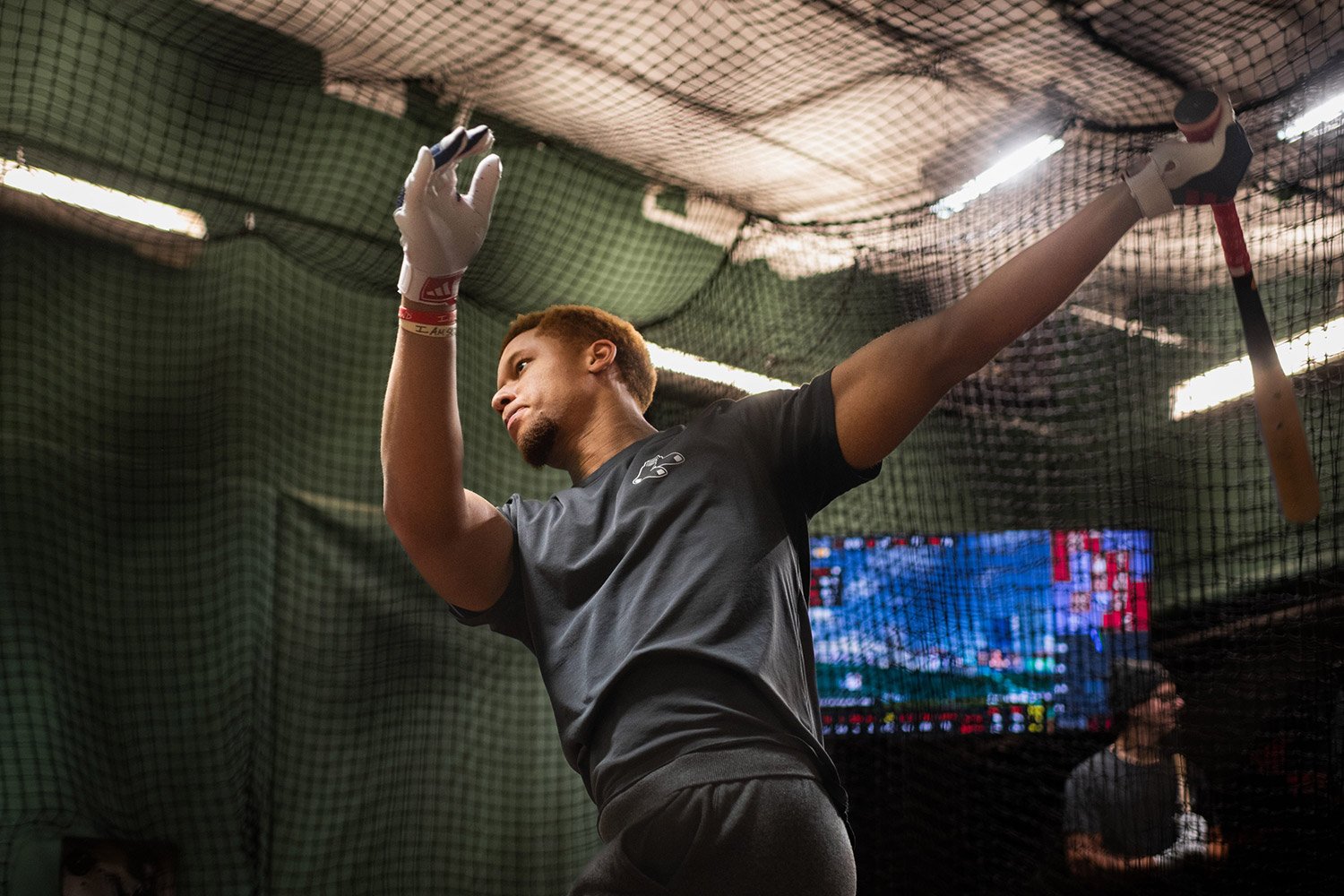 One thing to note, however, is that I’m going into this under the assumption everyone remains healthy throughout the spring. It’s tough to expect but necessary for this roster projection. Lineup & Batting Order 1. Jarren Duran – LF (L): Duran broke out in 2024, making his first All-Star Game. Leading the Red Sox in games played, hits, doubles, triples, stolen bases, and batting average, he was a key piece of the lineup. In 2024, he opened the season as the left fielder before moving to center as Ceddanne Rafaela moved to the infield following Trevor Story’s injury. There’s a chance he could see a drop in some stats, though it’s safe to assume he’ll be a key piece of this lineup again. 2. Rafael Devers – 3B (L): Devers opened 2024 as the second hitter in the lineup before injuries and a need to drive in runs forced Cora to slide him to the cleanup spot. While batting cleanup may be where he ends up by the end of the season, I could see Cora placing him here to begin the season. His ability to hit for power, drive in runners, and get on base means he needs as many at-bats as possible each game. And with Duran hitting before him, it’ll lead to plenty of RBI opportunities in the beginning and late portions of the game. 3. Triston Casas – 1B (L): Casas missed most of the 2024 season due to injuries, but he was an important factor in the lineup when he played. In only 63 games, he hit 13 home runs and walked 30 times. With his power, there is hope that he could hit 30 or more home runs and provide an option to deter pitchers from walking Devers late in the game. However, with a lefty on the mound, I’m not surprised if Story and Casas swap spots in the lineup. 4 Trevor Story – SS (R): Breaking up the string of lefties early in the lineup is Story. The oft-injured shortstop will look to bounce back from another lost season. With the hope that Story will remain healthy for a full season, there is no reason to doubt his ability to return to a 20 to 25 home run pace with a patient approach at the plate. Ten of his 26 games in 2024 were spent batting either third or fourth in the lineup, barring a last-minute addition to the team; there’s a good chance he’ll be hitting in the top half of the lineup again. 5. Wilyer Abreu – RF (L): Coming off of a great rookie season that saw him take home a Gold Glove, Abreu will look to build off of it and cement himself as a key piece of this team’s future. Last season, I saw Abreu bat mostly in the two-hole, but if he is fully healthy, I could see his ability to drive the ball be useful with runners on base. His 125 strikeouts in only 399 at-bats are why I feel he may bat lower in the lineup this season if everyone is healthy. 6. Kristian Campbell – 2B (R): The first shakeup of the lineup, Campbell will report to camp as a non-roster invite. After his fantastic 2024 season and how highly the team speaks of him, I wouldn’t be surprised if Campbell breaks camp with the Red Sox. Spring training will see a battle between Campbell, Vaughn Grissom, and David Hamilton for the starting second base position, and barring a tough spring, I think Campbell will win it. A combination of bat-to-ball skills, power, and speed will make him an exciting rookie who could also help with the lineup being primarily left-handed. 7. Masataka Yoshida – DH (L): Yoshida is an interesting player. Last season, Cora did not like using him against left-handed pitching unless it was unavoidable. Following the season, it was revealed that he needed surgery. The team has said they plan to use him in the outfield again this season, though his real value is in his bat. Yoshida does not strike out much and showcased some power with 10 home runs and 21 doubles in 108 games. I wouldn’t be surprised if Cora tried to protect him against lefties again this season. 8. Connor Wong – C (R): Wong spent 2024 as his second straight season as the primary catcher on the team. Playing in 126 games, he managed a .280/.333/.425 stat line to go along with 13 home runs and 52 RBI. With no real competition for the starting catcher position, it’s easy to see Wong slotting back into that role to begin 2025. 9. Ceddanne Rafaela – CF (R): Rafaela had an up-and-down rookie campaign, bouncing around the field as needed. He split most of his 152 games between center field and shortstop, though with a healthy Trevor Story, he will remain in center field where his glove will allow him to shine. His bat still needs work, though Rafaela’s aggressive batting will likely stay here. Still, the potential for the last hitter in your lineup to have a 20-20 season is enough to get him at-bats. However, the fact he only had five walks from July until the end of the season is a bit worrying. *Update: Following the signing of Alex Bregman, I feel there is a slight change in the lineup. The following is my new projected 1.0 lineup. 1) Jarren Duran - LF (L) 2) Rafael Devers - DH (L) 3) Alex Bregman - 3B (R) 4) Triston Casas - 1B (L) 5) Trevor Story - SS (R) 6) Kristian Campbell - 2B (R) 7) Wilyer Abreu - RF (L) 8) Connor Wong - C (R) 9) Ceddanne Rafaela - CF (R) The Bench Rob Refsnyder – OF/DH (R): Refsnyder has been a key bat for the Red Sox since joining the organization in 2022, and he’ll be expected to play a key role again in 2025. The outfielder plays best when he is a lefty crusher, slashing .302/.393/.548 with eight home runs in 126 at-bats in 2024. Refsnyder will get into the lineup on days that a left-handed pitcher is on the mound, either for Abreu or Yoshida and will also be used in pinch-hit situations late in the game against lefties. His power output was a surprise last season, as his 11 home runs were almost half his entire career. Carlos Narvaez – C (R): Narvaez was acquired this winter from the Yankees in a trade during the Winter Meetings. A defensive catcher, Narvaez has a total of 13 at-bats at the major league level and will be looked to as the backup catcher to Wong. His main competition in spring training will be Blake Sabol, though Narvaez’s defensive abilities will likely give him the edge in this competition. Vaughn Grissom – 2B (R): Grissom did not see his Red Sox career start well. Injured in Spring Training, the righty took a while to get going as he struggled to stay healthy. Upon returning from one hamstring injury, he ended up hurting the other. However, his performance across eight September games showed the kind of healthy player he could be. I believe that potential alone will guarantee him a spot on the opening-day roster. Should Campbell struggle, I see second being Grissom's to lose. Romy Gonzalez – 1B/2B/SS/3B/OF (R): I was tempted to give David Hamilton the last spot on the bench as the speedy player would give the Sox a stolen base threat off the bench. However, I feel Gonzalez’s defensive versatility (having played every position for the Red Sox except catcher and pitcher) makes him a bigger piece to keep. Also, being a right-handed hitter will allow Cora to mix and match the lineup based on the opposing team’s pitcher. Gonzalez played better against lefties than righties, slashing .302/.362/.517 vs .217/.221/.277. Starting Rotation 1. Garrett Crochet (LHP): Acquired at the Winter Meetings in a deal headlined by prospect Kyle Teel, Crochet gives the Red Sox a bona fide ace. Having already announced that there are no plans for an innings limit, it’ll be exciting to see what the lefty can do across an entire season. He looks to lead a revamped pitching staff. 2. Tanner Houck (RHP): Coming off of an All-Star season, Houck will look to build off of it. The righty led the Sox rotation in ERA and WAR and threw the only complete game out of all the starters in 2024. The biggest point of interest for Houck will be his ability to push through late-season fatigue, as August saw him hit a rough patch before bouncing back. 3. Walker Buehler (RHP): Buehler was the last major free agent the Sox have signed as of this write-up, coming to Boston on a one-year deal. The righty returned to the mound in 2024 after missing almost two years. His return was unexpected, appearing in 16 games and struggling at times. However, he seemed to have discovered something in the playoffs as he surrendered six runs in 15 innings (all six runs being in his first appearance). He’ll look to build off of that postseason and return to his pre-injury form. 4. Brayan Bello (RHP): Last year’s Opening Day starter sees himself as the number four starter in this rotation. Last season, Bello saw some ups and downs, as he had a great April before struggling in May and June. Fortunately, Bello looked to round a corner in the second half, starting 13 games and having a 3.47 ERA across 72 2/3 innings pitched. He also lowered the number of home runs he allowed to just five in the second half. 5. Lucas Giolito (RHP): Signed last offseason to be a key addition to the 2024 rotation, Giolito got injured in his second Spring Training start and needed Tommy John surgery. Now healthy, he insists he’s ready to work and help the team. As he comes back from injury, there’s a chance the Red Sox may limit his workload to begin the season despite what he insists. 6. Kutter Crawford (RHP): Crawford rounds out the rumored six-man rotation in what will be a swingman role. Starting or providing long relief as needed by the team. Like Houck and Bello, Crawford saw improvements in 2024 and rough patches. The righty led the team with 33 starts and 183 2/3 innings pitched, but he also led all major league baseball with 34 home runs surrendered. If Crawford wants to remain in the rotation, he must limit the number of home runs he allows. Bullpen Aroldis Chapman (LHP): The key reliever brought in this offseason, Chapman will look to be a shutdown reliever for the team. He’s no longer the star reliever from the mid-2010s, but he’s still a capable pitcher. Appearing in 68 games last season for the Pittsburgh Pirates, Chapman saved 14 games and struck out 98 batters in 61 2/3 innings pitched. His fastball still plays and should allow him to be a key piece of Cora’s bullpen. Justin Slaten (RHP): Slaten proved himself early in his rookie season as a dependable arm in the bullpen. Now, he’ll be looked to step up even more with Kenley Jansen's and Chris Martin's departures. What might be his most valuable stat that the Red Sox hope he repeats is the lack of home runs he surrendered, only giving up four in 55 1/3 innings. Liam Hendriks (RHP): Hendriks signed last season right as spring training began with the expectation that he would return to the mound at some point near the end of August or early September. That didn’t happen as he struggled to bounce back as expected in his rehab stint in Worcester. With a healthy offseason to rest, Hendriks and the Red Sox hope he can return close to the level he was at from 2019 through 2022, where he was one of the best closers in the game. Justin Wilson (LHP): This was a confusing signing as he struggled down the stretch in Cincinnati, which saw him finish the season with a 5.59 ERA in 46 2/3 innings pitched. There is a chance that his workload caught up to him and led to his brutal August and September (14 earned runs allowed in 17 2/3 innings) compared to his July, which saw him pitch rather decently. As the second lefty in the bullpen, Wilson might be viewed as coming in to get a batter or two to end an inning instead of looking to get length out of the 37-year-old. But if he struggles early, I’m not surprised if he’s let go for more promising arms in Worcester. Greg Weissert (RHP): Weissert had an up-and-down first season in Boston but still finished with a tidy 3.13 ERA in 63 1/3 innings pitched. Weissert started the season well and ended the season on a roll as he did not allow an earned run across 17 2/3 innings pitched in August and September. The righty is better served in low or medium leverage and could serve the role well. Just don’t use him in high-leverage situations, as batters slashed .357/.427/.518 against him in those situations. Every team needs a low-leverage arm to pitch the sixth or seventh inning, and Weissert can fill that role. Don’t be surprised if he’s optioned once Garrett Whitlock is healthy. Zack Kelly (RHP): Kelly has spent parts of three seasons in Boston, though 2024 was his biggest role with the club. Appearing in 49 games, Kelly pitched 56 2/3 innings and struck out 61, ending the season with the biggest moment of the season was getting out of a no-out, bases-loaded jam against the Yankees on Sunday Night Baseball. After being one of the best arms in the bullpen for the first half, Kelly struggled in the second half. Cooper Criswell (RHP): Criswell did whatever he was asked to do last year, whether starting or coming out of the bullpen. Appearing in 26 games, the righty won six games while throwing 99 1/3 innings. Criswell won’t be needed to start this season and could see himself optioned at times to Worcester to bring up a fresh arm, but to begin the year; it wouldn’t be surprising to see him in a role similar to the one Chase Anderson held last season. Pitch when you’re either up by a lot or losing by a lot to preserve the bullpen in either situation. Josh Winckowski could win a long reliever role in spring training, one of the arms listed above, to begin the year in Worcester. Still, I feel the Red Sox view him as more valuable as a starter in Worcester alongside the likes of Quinn Priester, Hunter Dobbins, and Richard Fitts. Garrett Whitlock was someone I initially projected to make the opening day roster, but I changed it as we don’t know where he currently is in his rehab. Depending on how spring training goes for him, there’s a chance he’ll open the season in Worcester. My last tough choice was Brennan Bernardino, a staple in the Red Sox bullpen the past two seasons. With Chapman being the number one lefty in the bullpen and the signing of Justin Wilson to a major league deal, I don’t think there’s much space for Bernardino. However, if an injury happens, he'll likely be the first arm called up.
 -
Despite a relatively slow offseason by the Boston Red Sox, spring training is almost upon us as pitchers and catchers report to Fort Myers next week. With that, it’s time to see how a potential opening day roster looks before the first spring session begins. One thing to note, however, is that I’m going into this under the assumption everyone remains healthy throughout the spring. It’s tough to expect but necessary for this roster projection. Lineup & Batting Order 1. Jarren Duran – LF (L): Duran broke out in 2024, making his first All-Star Game. Leading the Red Sox in games played, hits, doubles, triples, stolen bases, and batting average, he was a key piece of the lineup. In 2024, he opened the season as the left fielder before moving to center as Ceddanne Rafaela moved to the infield following Trevor Story’s injury. There’s a chance he could see a drop in some stats, though it’s safe to assume he’ll be a key piece of this lineup again. 2. Rafael Devers – 3B (L): Devers opened 2024 as the second hitter in the lineup before injuries and a need to drive in runs forced Cora to slide him to the cleanup spot. While batting cleanup may be where he ends up by the end of the season, I could see Cora placing him here to begin the season. His ability to hit for power, drive in runners, and get on base means he needs as many at-bats as possible each game. And with Duran hitting before him, it’ll lead to plenty of RBI opportunities in the beginning and late portions of the game. 3. Triston Casas – 1B (L): Casas missed most of the 2024 season due to injuries, but he was an important factor in the lineup when he played. In only 63 games, he hit 13 home runs and walked 30 times. With his power, there is hope that he could hit 30 or more home runs and provide an option to deter pitchers from walking Devers late in the game. However, with a lefty on the mound, I’m not surprised if Story and Casas swap spots in the lineup. 4 Trevor Story – SS (R): Breaking up the string of lefties early in the lineup is Story. The oft-injured shortstop will look to bounce back from another lost season. With the hope that Story will remain healthy for a full season, there is no reason to doubt his ability to return to a 20 to 25 home run pace with a patient approach at the plate. Ten of his 26 games in 2024 were spent batting either third or fourth in the lineup, barring a last-minute addition to the team; there’s a good chance he’ll be hitting in the top half of the lineup again. 5. Wilyer Abreu – RF (L): Coming off of a great rookie season that saw him take home a Gold Glove, Abreu will look to build off of it and cement himself as a key piece of this team’s future. Last season, I saw Abreu bat mostly in the two-hole, but if he is fully healthy, I could see his ability to drive the ball be useful with runners on base. His 125 strikeouts in only 399 at-bats are why I feel he may bat lower in the lineup this season if everyone is healthy. 6. Kristian Campbell – 2B (R): The first shakeup of the lineup, Campbell will report to camp as a non-roster invite. After his fantastic 2024 season and how highly the team speaks of him, I wouldn’t be surprised if Campbell breaks camp with the Red Sox. Spring training will see a battle between Campbell, Vaughn Grissom, and David Hamilton for the starting second base position, and barring a tough spring, I think Campbell will win it. A combination of bat-to-ball skills, power, and speed will make him an exciting rookie who could also help with the lineup being primarily left-handed. 7. Masataka Yoshida – DH (L): Yoshida is an interesting player. Last season, Cora did not like using him against left-handed pitching unless it was unavoidable. Following the season, it was revealed that he needed surgery. The team has said they plan to use him in the outfield again this season, though his real value is in his bat. Yoshida does not strike out much and showcased some power with 10 home runs and 21 doubles in 108 games. I wouldn’t be surprised if Cora tried to protect him against lefties again this season. 8. Connor Wong – C (R): Wong spent 2024 as his second straight season as the primary catcher on the team. Playing in 126 games, he managed a .280/.333/.425 stat line to go along with 13 home runs and 52 RBI. With no real competition for the starting catcher position, it’s easy to see Wong slotting back into that role to begin 2025. 9. Ceddanne Rafaela – CF (R): Rafaela had an up-and-down rookie campaign, bouncing around the field as needed. He split most of his 152 games between center field and shortstop, though with a healthy Trevor Story, he will remain in center field where his glove will allow him to shine. His bat still needs work, though Rafaela’s aggressive batting will likely stay here. Still, the potential for the last hitter in your lineup to have a 20-20 season is enough to get him at-bats. However, the fact he only had five walks from July until the end of the season is a bit worrying. *Update: Following the signing of Alex Bregman, I feel there is a slight change in the lineup. The following is my new projected 1.0 lineup. 1) Jarren Duran - LF (L) 2) Rafael Devers - DH (L) 3) Alex Bregman - 3B (R) 4) Triston Casas - 1B (L) 5) Trevor Story - SS (R) 6) Kristian Campbell - 2B (R) 7) Wilyer Abreu - RF (L) 8) Connor Wong - C (R) 9) Ceddanne Rafaela - CF (R) The Bench Rob Refsnyder – OF/DH (R): Refsnyder has been a key bat for the Red Sox since joining the organization in 2022, and he’ll be expected to play a key role again in 2025. The outfielder plays best when he is a lefty crusher, slashing .302/.393/.548 with eight home runs in 126 at-bats in 2024. Refsnyder will get into the lineup on days that a left-handed pitcher is on the mound, either for Abreu or Yoshida and will also be used in pinch-hit situations late in the game against lefties. His power output was a surprise last season, as his 11 home runs were almost half his entire career. Carlos Narvaez – C (R): Narvaez was acquired this winter from the Yankees in a trade during the Winter Meetings. A defensive catcher, Narvaez has a total of 13 at-bats at the major league level and will be looked to as the backup catcher to Wong. His main competition in spring training will be Blake Sabol, though Narvaez’s defensive abilities will likely give him the edge in this competition. Vaughn Grissom – 2B (R): Grissom did not see his Red Sox career start well. Injured in Spring Training, the righty took a while to get going as he struggled to stay healthy. Upon returning from one hamstring injury, he ended up hurting the other. However, his performance across eight September games showed the kind of healthy player he could be. I believe that potential alone will guarantee him a spot on the opening-day roster. Should Campbell struggle, I see second being Grissom's to lose. Romy Gonzalez – 1B/2B/SS/3B/OF (R): I was tempted to give David Hamilton the last spot on the bench as the speedy player would give the Sox a stolen base threat off the bench. However, I feel Gonzalez’s defensive versatility (having played every position for the Red Sox except catcher and pitcher) makes him a bigger piece to keep. Also, being a right-handed hitter will allow Cora to mix and match the lineup based on the opposing team’s pitcher. Gonzalez played better against lefties than righties, slashing .302/.362/.517 vs .217/.221/.277. Starting Rotation 1. Garrett Crochet (LHP): Acquired at the Winter Meetings in a deal headlined by prospect Kyle Teel, Crochet gives the Red Sox a bona fide ace. Having already announced that there are no plans for an innings limit, it’ll be exciting to see what the lefty can do across an entire season. He looks to lead a revamped pitching staff. 2. Tanner Houck (RHP): Coming off of an All-Star season, Houck will look to build off of it. The righty led the Sox rotation in ERA and WAR and threw the only complete game out of all the starters in 2024. The biggest point of interest for Houck will be his ability to push through late-season fatigue, as August saw him hit a rough patch before bouncing back. 3. Walker Buehler (RHP): Buehler was the last major free agent the Sox have signed as of this write-up, coming to Boston on a one-year deal. The righty returned to the mound in 2024 after missing almost two years. His return was unexpected, appearing in 16 games and struggling at times. However, he seemed to have discovered something in the playoffs as he surrendered six runs in 15 innings (all six runs being in his first appearance). He’ll look to build off of that postseason and return to his pre-injury form. 4. Brayan Bello (RHP): Last year’s Opening Day starter sees himself as the number four starter in this rotation. Last season, Bello saw some ups and downs, as he had a great April before struggling in May and June. Fortunately, Bello looked to round a corner in the second half, starting 13 games and having a 3.47 ERA across 72 2/3 innings pitched. He also lowered the number of home runs he allowed to just five in the second half. 5. Lucas Giolito (RHP): Signed last offseason to be a key addition to the 2024 rotation, Giolito got injured in his second Spring Training start and needed Tommy John surgery. Now healthy, he insists he’s ready to work and help the team. As he comes back from injury, there’s a chance the Red Sox may limit his workload to begin the season despite what he insists. 6. Kutter Crawford (RHP): Crawford rounds out the rumored six-man rotation in what will be a swingman role. Starting or providing long relief as needed by the team. Like Houck and Bello, Crawford saw improvements in 2024 and rough patches. The righty led the team with 33 starts and 183 2/3 innings pitched, but he also led all major league baseball with 34 home runs surrendered. If Crawford wants to remain in the rotation, he must limit the number of home runs he allows. Bullpen Aroldis Chapman (LHP): The key reliever brought in this offseason, Chapman will look to be a shutdown reliever for the team. He’s no longer the star reliever from the mid-2010s, but he’s still a capable pitcher. Appearing in 68 games last season for the Pittsburgh Pirates, Chapman saved 14 games and struck out 98 batters in 61 2/3 innings pitched. His fastball still plays and should allow him to be a key piece of Cora’s bullpen. Justin Slaten (RHP): Slaten proved himself early in his rookie season as a dependable arm in the bullpen. Now, he’ll be looked to step up even more with Kenley Jansen's and Chris Martin's departures. What might be his most valuable stat that the Red Sox hope he repeats is the lack of home runs he surrendered, only giving up four in 55 1/3 innings. Liam Hendriks (RHP): Hendriks signed last season right as spring training began with the expectation that he would return to the mound at some point near the end of August or early September. That didn’t happen as he struggled to bounce back as expected in his rehab stint in Worcester. With a healthy offseason to rest, Hendriks and the Red Sox hope he can return close to the level he was at from 2019 through 2022, where he was one of the best closers in the game. Justin Wilson (LHP): This was a confusing signing as he struggled down the stretch in Cincinnati, which saw him finish the season with a 5.59 ERA in 46 2/3 innings pitched. There is a chance that his workload caught up to him and led to his brutal August and September (14 earned runs allowed in 17 2/3 innings) compared to his July, which saw him pitch rather decently. As the second lefty in the bullpen, Wilson might be viewed as coming in to get a batter or two to end an inning instead of looking to get length out of the 37-year-old. But if he struggles early, I’m not surprised if he’s let go for more promising arms in Worcester. Greg Weissert (RHP): Weissert had an up-and-down first season in Boston but still finished with a tidy 3.13 ERA in 63 1/3 innings pitched. Weissert started the season well and ended the season on a roll as he did not allow an earned run across 17 2/3 innings pitched in August and September. The righty is better served in low or medium leverage and could serve the role well. Just don’t use him in high-leverage situations, as batters slashed .357/.427/.518 against him in those situations. Every team needs a low-leverage arm to pitch the sixth or seventh inning, and Weissert can fill that role. Don’t be surprised if he’s optioned once Garrett Whitlock is healthy. Zack Kelly (RHP): Kelly has spent parts of three seasons in Boston, though 2024 was his biggest role with the club. Appearing in 49 games, Kelly pitched 56 2/3 innings and struck out 61, ending the season with the biggest moment of the season was getting out of a no-out, bases-loaded jam against the Yankees on Sunday Night Baseball. After being one of the best arms in the bullpen for the first half, Kelly struggled in the second half. Cooper Criswell (RHP): Criswell did whatever he was asked to do last year, whether starting or coming out of the bullpen. Appearing in 26 games, the righty won six games while throwing 99 1/3 innings. Criswell won’t be needed to start this season and could see himself optioned at times to Worcester to bring up a fresh arm, but to begin the year; it wouldn’t be surprising to see him in a role similar to the one Chase Anderson held last season. Pitch when you’re either up by a lot or losing by a lot to preserve the bullpen in either situation. Josh Winckowski could win a long reliever role in spring training, one of the arms listed above, to begin the year in Worcester. Still, I feel the Red Sox view him as more valuable as a starter in Worcester alongside the likes of Quinn Priester, Hunter Dobbins, and Richard Fitts. Garrett Whitlock was someone I initially projected to make the opening day roster, but I changed it as we don’t know where he currently is in his rehab. Depending on how spring training goes for him, there’s a chance he’ll open the season in Worcester. My last tough choice was Brennan Bernardino, a staple in the Red Sox bullpen the past two seasons. With Chapman being the number one lefty in the bullpen and the signing of Justin Wilson to a major league deal, I don’t think there’s much space for Bernardino. However, if an injury happens, he'll likely be the first arm called up. View full article
-
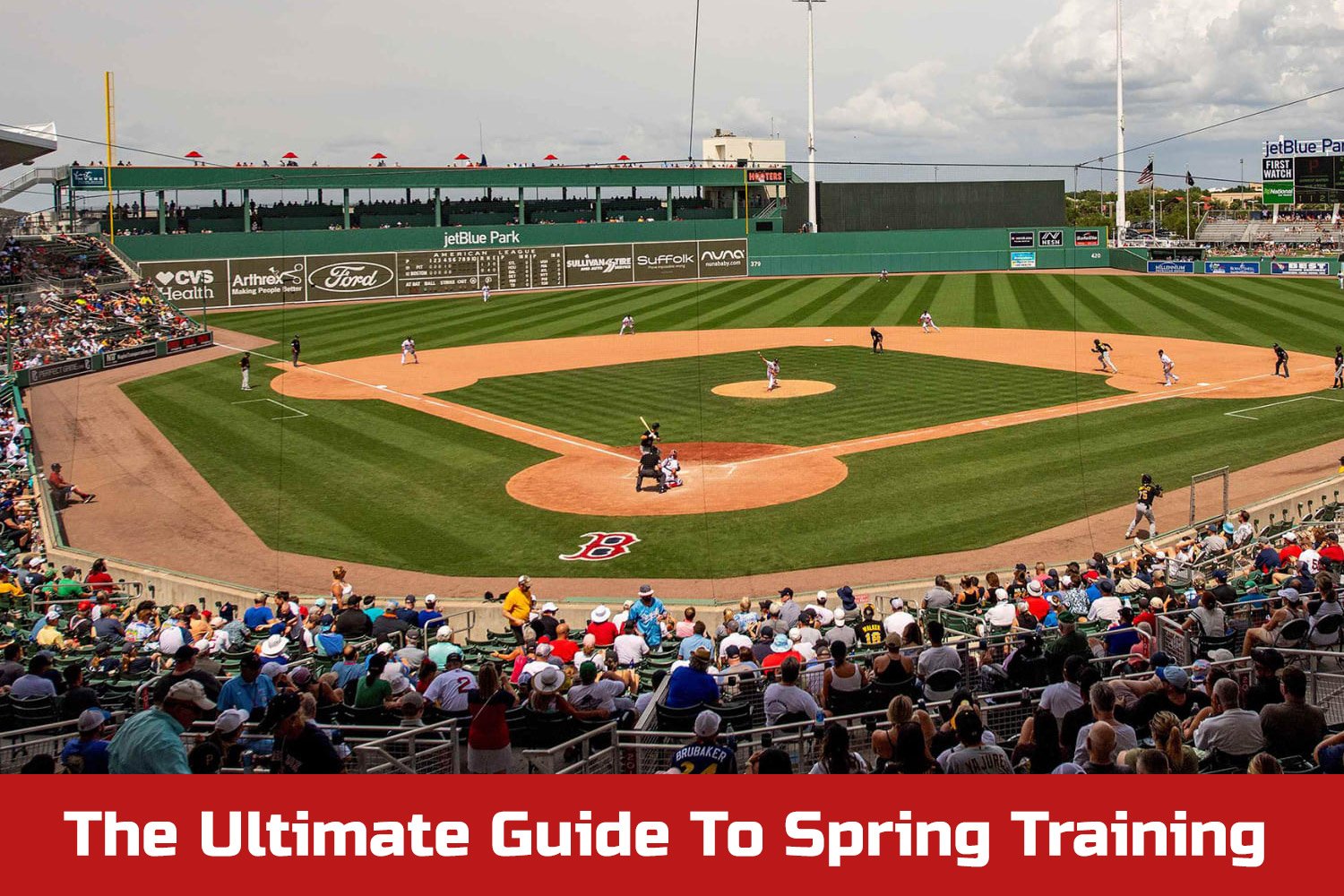 Everything you need to know about Boston Red Sox Spring Training in Florida, and probably even more. By the fans, for the fans. (Updated for the 2026 season!) Have you ever wanted to go see spring training but weren’t sure where to start? Well, we’ve got you covered. This guide will help you through every step of a Boston Red Sox spring training experience in Fort Myers. If you have any additional recommendations or suggestions, please leave a comment below this article. Enjoy, and have a great time at spring training! Pitchers & Catchers Report: February 10th Position Players Report: February 15th The First Spring Training Game (Minnesota Twins): February 21st Table of Contents (click to jump to section) Should I Go to Red Sox Spring Training? When Should I Visit Red Sox Spring Training? The Best Things To Do and Places To Go at Red Sox Spring Training Best Seats at Red Sox Spring Training Games Best Food and Drink at Red Sox Spring Training Games Special Events During Red Sox Spring Training Best Other Things To Do in Fort Myers Best Places to Eat & Drink in Fort Myers Red Sox Spring Training FAQ Should I Go to Red Sox Spring Training? Yes. If you’re a fan of baseball and the Red Sox you should try to head to spring training at least once. Not only does it let you escape the cold winter of New England, it’ll help bridge the gap between Fenway Fest and Opening Day. The experience alone is one that you’ll enjoy, considering how much of the team’s practice you can see split between six backfields and after practice most players will sign or take pictures with fans unless they need to be elsewhere at the park. When Should I Visit Red Sox Spring Training? The days during spring training tend to all be the same. If you want to feel that first day of spring feeling, you want to attend during the first week. During this time practices tend to be broken up into fielding and hitting while pitchers either throw bullpens, do pitching fielding plays or throw live at bats to various players. As the week progresses, so too does the drills as the team will practice run downs, situational fielding, pickoffs and every other kind of drill. As these drills occur, you can hear the jokes between the players and coaches and even see the competition within the drills that occur between players. However, if you want to see the minor league spring training as well, you’ll want to come a few weeks in. Prospects will practice on the backfields during the same time as the regular spring training, but if you want the full minor league experience you’ll have to wait a few weeks until late February or early March. If you want to have an idea as to what the opening day roster will look like, visit near the middle or end of March as most roster cuts have been made and the players who take part in the games are now battling it out for the last few spots on the roster. If you prefer to see the prospects play in the games, head down for late February as they’ll get plenty of game experience. The Best Things To Do and Places To Go at Red Sox Spring Training Spring training takes place at JetBlue Park. Address: 11500 Fenway South Drive, Fort Myers, FL 33913 At Red Sox Spring Training there are seven different areas of the complex that can be accessed by the public but only six are free. But before we get into that, you’ll need to park. There are two different lots that you can park in, one located opposite JetBlue Park itself and the other located near the backfields. Both are grassy lots that are free to park in with the exception of days there are games. Later in the year when games are being played on the backlots for the Florida Complex League you’ll have to pay, but by then spring training has wrapped up. 1. See Red Sox Players Visiting the Red Sox complex to see players up close is a morning activity. Access to the backfields usually opens around 9 AM, sometimes 9:30 AM if players won’t be out at 9 AM. The players tend to break off into groups based on position at that point, infielders, outfielders and pitchers breaking off to stretch and then do group drills. Typically the six backfields are broken up between these different groups with those groups also being broken down into smaller groups. Most of the time those on the major league roster will practice together while the non-roster invites or players expected to open the season in Triple-A will practice together. Some times these groups will mix it up though. You’ll also be lucky to have prospects practicing on one of the two backfields located closer to the entrance of the complex. If you keep your eyes open you’ll also see them walking around the complex, going unnoticed as fans pay attention to the players on the field. If talked to they’ll stop and sign or take a picture before heading off to their next location. If the reason you want to see the players is for autographs, you’ll have to be patient and figure out where the player you’re looking for is. As explained, they break up into smaller groups and when they finish their drills is the best time to attempt an autograph from the major league squad. Each field has small openings for the players to leave from, these being gated off to keep fans from following them. However, you can stand right up to the exit and ask for autographs. Unless they’re in a rush, most players will stop and sign for a little. Though you have to be aware of the fact that nothing is organized and it’ll be first come, first serve as everyone is trying to get an autograph. If you want to see batting practice, typically they’re held on three different fields at the complex. Fields 1, 2 and 3 are usually where batting practice takes place, Field 1 itself being similar in shape to Fenway Park. This is the field where live batting practice takes place as pitchers will throw up and downs during the last thirty to forty-five minutes of practice. The action for the day tends to finish up by noon, as players from the major league spring training will head inside for meetings, media or individual workouts in the private batting cages or weight room. Minor league players will spread across the six backfields at that point, though from personal experience the staff will ask you to leave the backfields at that point, going so far as to begin roping off areas. 2. Scouting Red Sox Prospects Any prospect on the Red Sox 40-man roster is with the major league club at the start of spring training. And some top prospects who aren’t part of the 40-man roster just yet are included as non-roster invitees. So it would be a good idea to check the spring training roster to see who will be practicing with the parent club. However, if you’re more into the prospects who won’t be with the major league team, then you’ll want to attend spring training around the second week of March as that’s when minor league camp officially begins. If you’d like to see an unorganized version, the minor league players will be practicing on the unused fields located at the complex. 3. Taking a Tour of JetBlue Park Starting in early February, you can take a tour of JetBlue Park. Depending on when you take the tour, you can gain access to the seventh and final complex at the field which is JetBlue Park itself. In previous years the Red Sox have had their outfielders take fielding practice inside the stadium due to it having the same dimensions as Fenway Park. Other than through the tour, there is no entrance to JetBlue Park on days where there are no games. The tour itself provides an up close and behind the scenes experience for fans as they learn about the history of the stadium and why it was designed as it was (hint, it’s to survive hurricane level winds). The price for tours fluctuate depending on if it’s a game day or not. Non-game days are $10 for adults and free for children 12 and under. On game days the price is $40 for adults and $15 for children 12 and under. 4. Watching Red Sox Spring Training Games Starting with the last weekend of February you’ll have real baseball most days with prices that are a little pricy depending on where you sit but still cheaper than what you would pay at Fenway Park. Most games are during the day while a few may be at night with there being a game almost every day. Also, if the Red Sox are on the road, Fort Myers is home to another team as the Minnesota Twins’ park is only a few miles away. You can also take a road trip to follow the Red Sox with the games being between one to three hours away. Best Seats at Red Sox Spring Training Games JetBlue Park may have the same dimensions as Fenway Park when it comes to the field, but unlike the regular season home of the Boston Red Sox, this one does not have any obstructions when it comes to the view. Though, with the games being mostly during the day, some games will get rather hot depending on where you sit. If the heat and sun doesn’t bother you, then you’ll be fine. But if you’d prefer to stay in the shade, then sitting on the first base side of the field or in the Third Base or Left Field Grandstands would be best. The Green Monster also has shade, though do not sit in the first row as you’ll have the sun baking right on you throughout most of the game. Lawn Seating: Out in right field behind the bullpens is a section of grass where you can sit down on a towel and enjoy the view of the park. It’s also an open space for those with children who might find it hard to stay still for the entire game and gives them room to get up and run around. Cost: $19 Standing Room: There are a few different parts of JetBlue Park that feature standing room sections. All of them provide an excellent view of not just the park itself but if you look behind you can see the entire complex and the six backfields where the team practices during the day. The standing room sections are found in left field, on the upper level of the stadium and then two different sections of the Green Monster. The first is behind the upper deck of the Green Monster, this section getting rather hot during the day games as there’s no shade. You’re at the highest point of any seat at JetBlue Park and the sun will be shining down on you. The view however is amazing. The other part of the Green Monster that has standing room is the lower level, this section being covered and providing you with shade throughout the entire game. The Left Field standing room also has drink railings available to place your drinks atop and lean against while watching the game. Cost: $25-30 Reserved Seats: If you prefer a traditional seat, well you’re in luck. JetBlue Park has a beautiful view of the field wherever you’re seated. There are four grandstand sections, being made up of First Base, Right Field, Third Base and Left Field. During the day the first base side will have more shade but you should be able to get some shade in the Third Base and Left Field Grandstands. Other sections include Box Seats that stretch from right field all the way around into left field. Of course, prices will be determined with how close you are to the field, though if you’re worried about missing something because you’re a bit further back, you shouldn’t be. Cost: $42-60 Sun, Shade and Weather Conditions at JetBlue Park With spring training taking place in Florida you never know what the weather will be like as storms can pass through an area quickly. It’s best to come prepared. On average the temperature in Fort Myers during February and March tends to be in the upper 70s but can reach into the 90s during the day. Along with the heat there will be humidity so it’ll feel even warmer on some days. One thing to remember when you come to the field is your sunscreen every day. If you forget it, the team store sells small bottles of it. Also, make sure you’ve got plenty of water. Though, when the sun goes down so too will the temperature. The average low at night tends to be in the 60s and you’ll feel it after being in the sun all day. You may think it’s crazy, but make sure you pack a sweatshirt or light jacket before heading to Fort Myers. It might seem unnecessary but the temperature drop will make it feel colder than it actually is. When it comes to sun and shade at JetBlue Park, you can expect the following for most days: · The top of the Green Monster and the first row of seats in the Green Monster will always be in the sun. So too will the bleachers and lawn in right field. · The grandstand spanning from first base down to right field will always be shady. There might be some sun that pokes through but for the most part the seats will be in the shade. · The grandstand that spans from third base to left field is the same, mostly shady with the small patches of sunlight. · The third base and left field box seats will be in the sun for most of the game. From my own experience, it tends to get some shade around the sixth or seventh inning of a 1 PM game. · The first base and right field box seats will be mostly in the shade as well. Just like with the grandstand there will be some parts that have sun. Best Food and Drink at Red Sox Spring Training Games The food at JetBlue Park is similar to that which you would find at Fenway Park or any other ballpark when you visit. The lower concourse has a few areas to purchase food such as hotdogs, hamburgers, slices of pizza and popcorn. There are also souvenir soda cups that are sold or just smaller beverages as well. On the outer concourse there are other food vendors where pulled pork or pulled chicken sandwiches are sold. And of course alcohol beverages are sold within the park. With the exception of unopened water, no outside food or drinks are allowed within the park. Special Events During Red Sox Spring Training JetBlue Park Open House: On the first Saturday after pitchers and catchers report the Red Sox open up JetBlue Park to the public. Concessions are available at a discounted price. Fans are welcome to have an on field experience, walking around the infield warning track and even getting to sit in the home and visitor dugouts. Fans are allowed on the outfield grass where different activities are set up for kids to enjoy. Though if you want to meet players, the Red Sox typically have two different sessions of meet and greets where three players will sign autographs on the Green Monster. The players are unknown until they arrive and after an hour will swap out with three more players. Northeastern Game: As has been tradition for years, the Red Sox play their first game of the spring against the Northeastern Huskies baseball team. The game is shorter than usual as it only lasts seven innings and the players for the Red Sox tend to be non-roster invites and prospects from the minor leagues but it’s a fun time to see. Best Other Things To Do in Fort Myers The Beach: The Place To Go in Fort Myers is none other than Fort Myers Beach. The area is still under rebuilding efforts following Hurricane Ian and because of it, a lot has changed. Complete buildings have been ripped down and many businesses still haven’t reopened. Back in 2023 I took a drive through Fort Myers Beach and what I saw surprised me with just how bad it was. Buildings were ripped apart and in one spot I saw a car sitting in what had been an area without water but the car was now submerged. If you want to stay there, it will be expensive due to the location. Most likely around $400-500/night if not more for most of the locations open. Some of these places are still under construction so they may be without full services so it’s important that you call and understand their current situation. Ask that they tell you exactly what the situation is like so you’re not surprised by what you walk into. If you’re only visiting for a day or the afternoon then you’ll have to pay to park. The easiest way to do so is to take a right immediately off the bridge, another immediate right at the business district and find a spot in the nearby lots. There is also parking to the left of the bridge, down along the island, but it is going to be very hit-and-miss. Businesses are still returning slowly but it is the food industry that has bounced back faster. Though the highlight of the day is the sunset across the Gulf of Mexico. Even if all you do is park, explore the area and watch the sun set into the ocean, it’ll be a good day. Sanibel/Captiva: Some of the best sunsets in the world can be viewed from these islands. Plenty of beaches are there and an abundance of shopping and eating spots. However, to reach the islands you’ll have to pay a toll to cross the bridge. It’s around $6 for one way. Also there is still construction occurring from Hurricane Ian so you may hit traffic depending on the time you decide to head there, so plan accordingly. Minnesota Twins Spring Training Game: Fort Myers is home to two spring training complexes, the only city in the Grapefruit League to have as such. Six miles up the road from JetBlue Park is Hammond Stadium, the home of the Minnesota Twins. The Red Sox play there multiple times during spring training and the Twins tend to have home games when the Red Sox are on the road. The prices for the tickets will be a bit cheaper when compared to the Red Sox too. (For more info on the Minnesota Twins’ spring training, head on over to Twins Daily) The Edison Ford Estate: The Edison Ford Estate offers a chance to look into the lives of two of America’s greatest inventors, Thomas Edison and Henry Ford. The historic estate showcases the beautifully preserves homes, lush gardens and an array of impressive inventions and artifacts from the early 20th century. If touring the estate isn’t for you, make sure to visit the serene botanical gardens with exotic plants and towering banyan trees. It’ll be worth an afternoon visit if you’re a history enthusiast, a nature lover or just trying to kill time in Fort Myers. Downtown Fort Myers: The title might be deceiving a little, as when they talk about “downtown” for Fort Myers, they’re talking closer to a small town instead of something like downtown Boston or even downtown Worcester. This can be a positive, however, as it boasts a mix of historic charm and modern amenities including art galleries, boutiques, restaurants and cultural attractions. The River District offers a lively atmosphere with its bustling nightlife and live entertainment. If you are there in mid-February you could even see the Edison Festival of Light. Six Mile Cypress Slough Preserve: As the name implies, this is six miles of pristine and tranquil cypress swamp in middle of Fort Myers. Walking along an elevated boardwalk, you can take in the nature and spot a wide variety of wildlife including birds, alligators, turtles and more, all in their natural habitat. The lush flora and serene surroundings make it a nice, little getaway from Florida’s urban sprawl. Best Places to Eat and Drink in Fort Myers Fort Myers is a big area with lots of fun choices for food and refreshments. Here are some of our writers’ favorites: Fort Myers Restaurants Pattinella’s Chicken Grille: It’s a few minutes’ drive from the Red Sox spring training complex down Plantation Road and in a strip mall. Chicken or sausage over rice and vegetables of your choice, plus some really good pita bread. So good! And hey, you never know when you’ll see some current players walk through the door as well. It’s right next to Rib City, which is also incredible! - Seth Stohs Fancy’s Southern Cafe: One day, I got to the ballpark early and watched the workouts. I stayed busy and didn’t grab anything to eat before the minor-league games started. By 4 pm, I was absolutely starving. I asked Tommy Watkins (Mr. Fort Myers!) for a recommendation. He encouraged me to go to Fancy’s. So, I did. Again, a great atmosphere and an incredible menu. I believe I had meatloaf, mashed potatoes, and green beans. I didn’t order the frog legs or the crawfish - I am not that courageous -but I am told they are quite good. - Seth Stohs Pinchers: I have been to the Edison & Ford Winter Estates three or four times over the years. I love the history. However, just down the road from the museum is Pinchers. It is a great seafood place right on the Caloosahatchee River. - Seth Stohs Seth is right. It's pretty commercial - think Joe's Crab Shack - but has incredible views of the sunsets, as it's on the third floor of its building. Plus, 2-for-1 drinks all day, every day. Pro tip: if you want to eat there, check with them online before you leave. You can get on their waiting list, and check-in when you get there, saving you some time to wait for a table - John Bonnes Iguana Mia: Such good Mexican food. - Seth Stohs Sun Harvest Citrus: A one-stop shop. Get your Southwest Florida trinkets and souvenirs. Buy some fresh fruit. And everyone talks about the ice cream cones. - Seth Stohs Deep Lagoon: It’s a little higher-end seafood place, right on a marina on the Caloosahatchee River, with a good happy hour, fresh seafood, good steaks, and solid service. - John Bonnes Oxbow: It's also a little higher end, is right on the river, and has all the ingredients for a very solid date night. You can make reservations, so reserve a table about an hour before sunset (or as close as you can get), order some appetizers and a bottle of wine, and settle in for a nice night out. - John Bonnes Beacon Social Drinkery - Watch the sunset over the river from a 12th-floor balcony in the Luminary Hotel downtown; it's mostly a cocktail bar with appetizers, but they're very good, though you'll pay for the view. It's worth it. Mucky Duck: It’s almost an hour's drive from Fort Meyers, on the tip of Captiva Island, but that’s what makes it ideal for watching the sunset over the ocean. It also has a fun patio and good seafood, making it a must-go for me every year. (Yeah, parking is likely going to be a problem. If there is no room in the lot, go past it, down to the public beach parking, pay the fee because they WILL check, and then walk back to it along the beach. There are worse hells.) - John Bonnes Cantina Laredo: Located by the Bell Tower Mall in Fort Myers, this is corporate higher-end Mexican food, but it’s delicious corporate higher-end Mexican food and usually pretty crowded. You won’t be disappointed. - John Bonnes DaRuma: A full service hibachi experience. - Seth Stohs Lah De Dah: It's a beachside restaurant and bar in the new massive Margaritaville Resort on Estero Island, but you don't need to stay there to dine there. It has outdoor seating that overlooks the gulf and provides a perfect place to watch the sunset. Like most sunset dining options, it's a little spendy, and the food is solid rather than exceptional, but you'll still have a memorable evening - John Bonnes License to Chill - This is also part of Margaritaville Resort, but this is on a second-floor outdoor deck, across the street from Fort Myers Beach. It can be crowded,, and the drinks are no bargain. But the servers care, and it's an excellent view of the sunset over the gulf. Wahoo Willies: Located on Estero Island, it feels like a cross between a tiki bar and a diner, but has solid food, a small bar, and usually live entertainment. - John Bonnes Snug Harbor Waterfront: Also on Estero Island but on the bay side, it features slightly upscale food, a great happy hour, and the bar overlooks a small harbor where dolphins make semi-regular appearances. - John Bonnes Fort Myers Bars Potts Sports Bar: There are TVs playing sports all over (usually NCAA Basketball tournament games). It’s bar food, but it is a great atmosphere. - Seth Stohs RonDao’s Pizzeria & Sports Bar: Is it a sports bar? A pizza place? A dive bar? Don't be fooled by the 1975-Pizza-Hut vibe the outside and inside give. There's a reason this place is often filled up with locals. The food is excellent, the drinks are reasonable, the bar is long, and they take care of you. But mostly, they have absolutely all the games you would ever want to get on their 30+ TVs, which is worth something when you’re away from your local TV market. Would I take my family there? Yes. Do I have friends who would probably balk at taking their family there? Yes, but they’re the kind of friends I’m gradually losing touch with. - John Bonnes Shoeless Joe’s: Attached to a Doubletree Hotel near Bell Tower Mall, it's a good sports bar about a mile from the stadium. - Seth Stohs Fort Myers Breweries Fort Myers Brewing: This seems like the most popular brewery in Fort Myers, partly because it’s located near the Red Sox and Twins ballparks. But it’s also popular because it is very good. There are always at least a dozen of their quality beers on tap that range from light to dark to sour. It has indoor and outdoor seating, but bring bug spray at night. Finally, they also have a very popular trivia contest on Tuesday night. - John Bonnes Coastal Dayz Brewery: Within walking distance of downtown Fort Myers, Coastal Days also has indoor and outdoor seating, with a wide selection of their beers, again covering the full range of your tastes. It’s a smaller, cozier venue, more in the city, and well worth checking out. - John Bonnes Palm City Brewing Company: Don’t get freaked out that Palm City is kind of deep into an office park; it’s worth tracking it down, especially if you like your hazy IPAs. They seemingly specialize in IPAs, but like everything else on this list, they also have a wide range of their other beers. Also like everything else on this list, you can usually find a food truck planted beside them to help take care of your munchies. - John Bonnes Point Ybel Brewing Company: If you’re looking for craft beers closer to the beach and Estero Island, Point Ybel is probably worth stopping by. It’s in a strip mall, but that also makes it a bit easier to find than some of the others on this list. - John Bonnes Millenial Brewing: Located downtown, Millenial seems to specialize in offbeat styles, but they turn out pretty tasty. Our visit included a Peanut Butter Blonde and a Macadamia Nut White Stout, and honestly, I liked them both. - John Bonnes Scotty's Bierwerks: Located across the river in Cape Corral, you'll find their (excellent) Hazy IPA in bars throughout Fort Myers. The rest of their lineup at the taproom is also on point, though the newer corporate development they're in doesn't have a lot of atmosphere. Red Sox Spring Training FAQ Coming soon!
 -
With enviable depth options, and experienced swingman, and several stretches without off days, especially at the start of the season, a six-man rotation makes a lot of sense. The five-man rotation has been a staple in baseball going as far back as the 1960s, when teams began to move away from the four-man rotation. While its adoption wasn't widespread until the early 1970s, the thought of not using a five-man rotation is a foreign one to most modern baseball fans. And yet, the use of the rotation has been evolving over the years. We’ve seen the implementation of an opener who throws an inning before a bulk reliever goes three to five innings. Likewise, the usage of bullpen games has been rising after being heavily used by the Tampa Bay Rays over this decade and the previous one. The six-man rotation isn't unheard of, but it's fast becoming more common. At this moment, there are two teams considering the use of a six-man rotation heading into the 2025 season: the Red Sox and the Dodgers. After bringing in Garrett Crochet, Walker Buehler, and Patrick Sandoval, and getting Lucas Giolito and Garrett Whitlock back from injury, Boston's rotation has plenty of depth, but is also packed with pitchers who have had Tommy John surgery in recent years. Giving them an extra day of rest makes a world of sense. The Dodgers used a six-man rotation at times in 2024 and they are considering it once more to protect pitchers Yoshinobu Yamamoto and Shohei Ohtani, who pitched in a six-man rotation during their time in Japan. The six-man rotation is common in the Nippon Professional Baseball league, or NPB, where pitchers will start once a week and are expected to go deeper into games, as a typical NPB week sees each team play six games and get one rest day. This style of schedule is not much different from how Triple A now operates. Since the 2021 season, teams play a six-game series from Tuesday to Sunday resting on Monday. In America, though, many pitchers want to pitch as often as they can, showcasing their how good they truly are. The newest addition to the Red Sox rotation, Buehler, summed it up well:. “For me, you go to a six-man if you have the talent to do it, if you have six guys that are ready to take the ball every day in the big leagues and I think we certainly do. If that’s something they want to go to, I’m obviously open to it, or kind of accustomed to it. But, there’s also some pride in trying to go and make 32 starts and threw 200 innings. I know given my injury history, that that’s kind of a different deal, but I have done that. And that was something that I’m really proud of and something I would love to do again. So, I think there’s pros and cons to both”. A six-man rotation may very well prove useful for the Red Sox, at least early on in the season. The projected five-man rotation of Crochet, Tanner Houck, Brayan Bello, Giolito, Buehler has pitchers coming off of a career-high in innings, and the other two are coming off injuries. While Giolito and Crochet have both stated that they’re ready to go pitch without limitations, it would still be wise to ramp them up as the season progresses, Houck just shattered his career-high in innings pitched, and Buehler pitched for the first time in 2024 after missing over a year and a half. With plenty of depth available for a sixth member of the rotation, it would make sense for Kutter Crawford or Richard Fitts to fill in as that sixth man, with the possibility of moving into the bullpen if needed. There’s no need to keep the six-man rotation for the whole season, either. Looking at the start of the season, the Red Sox play five games before they get an off day, the sixth man in the rotation could be skipped that turn through. After that, whoever is the Opening Day starter against Texas would take their usual scheduled turn on April 2 in Baltimore, before the six-man rotation officially is needed, as the team plays 15 straight games before the next off day on April 17. The team then closes out April by playing 12 games over 13 days, and the sixth man in the rotation could help to lighten the load. After that, the sixth man could return to the bullpen for the first half of May, allowing the team to return to the traditional five-man rotation until May 16, when there's a stretch of 15 games in 16 days. In June, however, the sixth man would not be needed as the Red Sox get four days off in the month, all of them somehow landing on Thursday. The rotation would not need extra help through July as the Red Sox have six days off, providing enough of a rest. If a spot start were needed, it would occur between July 4 and 14, when the Red Sox don't have any days off. After that, the six-man rotation would really only be extremely useful one more time: from August 21 to September 3, when the Red Sox have 14 games in 14 days. In a sense, a six-man rotation is a luxury, an addition to an already mighty rotation, as this sixth starting pitcher allows the other five to keep their strength for the stretch run of July and August without sacrificing April and May. If the Red Sox didn’t have the depth to provide such an option, it wouldn’t be an interesting idea to contemplate. Kutter Crawford is no stranger to a swingman role, and that comfort switching between the rotation and the bullpen could be aboon. While Crawford has stated publicly that he considers himself a starter, there is no denying that he looks like the odd man out of the rotation, barring a phenomenal spring. But it’s not just Crawford that makes this plan possible. In fact, the Red Sox have ten pitchers who could step in and start for them on the 40-man roster. And that’s not including, Patrick Sandoval, who will return at some point during the second half, or players who have started before in the past like Josh Winckowski or Whitlock. The team has so much starting pitching depth that it would be foolish to not at least consider the possibility of a temporary six-man rotation, at least to open the season. View full article
-
 The five-man rotation has been a staple in baseball going as far back as the 1960s, when teams began to move away from the four-man rotation. While its adoption wasn't widespread until the early 1970s, the thought of not using a five-man rotation is a foreign one to most modern baseball fans. And yet, the use of the rotation has been evolving over the years. We’ve seen the implementation of an opener who throws an inning before a bulk reliever goes three to five innings. Likewise, the usage of bullpen games has been rising after being heavily used by the Tampa Bay Rays over this decade and the previous one. The six-man rotation isn't unheard of, but it's fast becoming more common. At this moment, there are two teams considering the use of a six-man rotation heading into the 2025 season: the Red Sox and the Dodgers. After bringing in Garrett Crochet, Walker Buehler, and Patrick Sandoval, and getting Lucas Giolito and Garrett Whitlock back from injury, Boston's rotation has plenty of depth, but is also packed with pitchers who have had Tommy John surgery in recent years. Giving them an extra day of rest makes a world of sense. The Dodgers used a six-man rotation at times in 2024 and they are considering it once more to protect pitchers Yoshinobu Yamamoto and Shohei Ohtani, who pitched in a six-man rotation during their time in Japan. The six-man rotation is common in the Nippon Professional Baseball league, or NPB, where pitchers will start once a week and are expected to go deeper into games, as a typical NPB week sees each team play six games and get one rest day. This style of schedule is not much different from how Triple A now operates. Since the 2021 season, teams play a six-game series from Tuesday to Sunday resting on Monday. In America, though, many pitchers want to pitch as often as they can, showcasing their how good they truly are. The newest addition to the Red Sox rotation, Buehler, summed it up well:. “For me, you go to a six-man if you have the talent to do it, if you have six guys that are ready to take the ball every day in the big leagues and I think we certainly do. If that’s something they want to go to, I’m obviously open to it, or kind of accustomed to it. But, there’s also some pride in trying to go and make 32 starts and threw 200 innings. I know given my injury history, that that’s kind of a different deal, but I have done that. And that was something that I’m really proud of and something I would love to do again. So, I think there’s pros and cons to both”. A six-man rotation may very well prove useful for the Red Sox, at least early on in the season. The projected five-man rotation of Crochet, Tanner Houck, Brayan Bello, Giolito, Buehler has pitchers coming off of a career-high in innings, and the other two are coming off injuries. While Giolito and Crochet have both stated that they’re ready to go pitch without limitations, it would still be wise to ramp them up as the season progresses, Houck just shattered his career-high in innings pitched, and Buehler pitched for the first time in 2024 after missing over a year and a half. With plenty of depth available for a sixth member of the rotation, it would make sense for Kutter Crawford or Richard Fitts to fill in as that sixth man, with the possibility of moving into the bullpen if needed. There’s no need to keep the six-man rotation for the whole season, either. Looking at the start of the season, the Red Sox play five games before they get an off day, the sixth man in the rotation could be skipped that turn through. After that, whoever is the Opening Day starter against Texas would take their usual scheduled turn on April 2 in Baltimore, before the six-man rotation officially is needed, as the team plays 15 straight games before the next off day on April 17. The team then closes out April by playing 12 games over 13 days, and the sixth man in the rotation could help to lighten the load. After that, the sixth man could return to the bullpen for the first half of May, allowing the team to return to the traditional five-man rotation until May 16, when there's a stretch of 15 games in 16 days. In June, however, the sixth man would not be needed as the Red Sox get four days off in the month, all of them somehow landing on Thursday. The rotation would not need extra help through July as the Red Sox have six days off, providing enough of a rest. If a spot start were needed, it would occur between July 4 and 14, when the Red Sox don't have any days off. After that, the six-man rotation would really only be extremely useful one more time: from August 21 to September 3, when the Red Sox have 14 games in 14 days. In a sense, a six-man rotation is a luxury, an addition to an already mighty rotation, as this sixth starting pitcher allows the other five to keep their strength for the stretch run of July and August without sacrificing April and May. If the Red Sox didn’t have the depth to provide such an option, it wouldn’t be an interesting idea to contemplate. Kutter Crawford is no stranger to a swingman role, and that comfort switching between the rotation and the bullpen could be aboon. While Crawford has stated publicly that he considers himself a starter, there is no denying that he looks like the odd man out of the rotation, barring a phenomenal spring. But it’s not just Crawford that makes this plan possible. In fact, the Red Sox have ten pitchers who could step in and start for them on the 40-man roster. And that’s not including, Patrick Sandoval, who will return at some point during the second half, or players who have started before in the past like Josh Winckowski or Whitlock. The team has so much starting pitching depth that it would be foolish to not at least consider the possibility of a temporary six-man rotation, at least to open the season.
 -
He wasn't though, considering that when we wrote pieces for each of the top 20 starting on October 26th, he wasn't in included at all. 10th was Garcia aka The Password, 9th was Fitts, 8th was Cespedes and 7th was Perales. The full rankings for prospects in the Top 20 on October 26th were: 1) Anthony 2) Campbell 3) Mayer 4) Teel 5) Montgomery 6) Arias 7) Perales 8) Cespedes 9) Fitts 10) Garcia 11) Sandlin 12) Meidroth 13) Tolle 14) Romero 15) Rodriguez-Cruz 16) Johanfran Garcia 17) Gonzalez 18) Dobbins 19) Monegro 20) Valera
-
I could be wrong but I don't think he made it into the top 20 somehow. Mainly because when you go to the top prospects link under the forums, it shows this: Notice how Bleis is unranked while the Password shows he was previously 10th but now 8th.
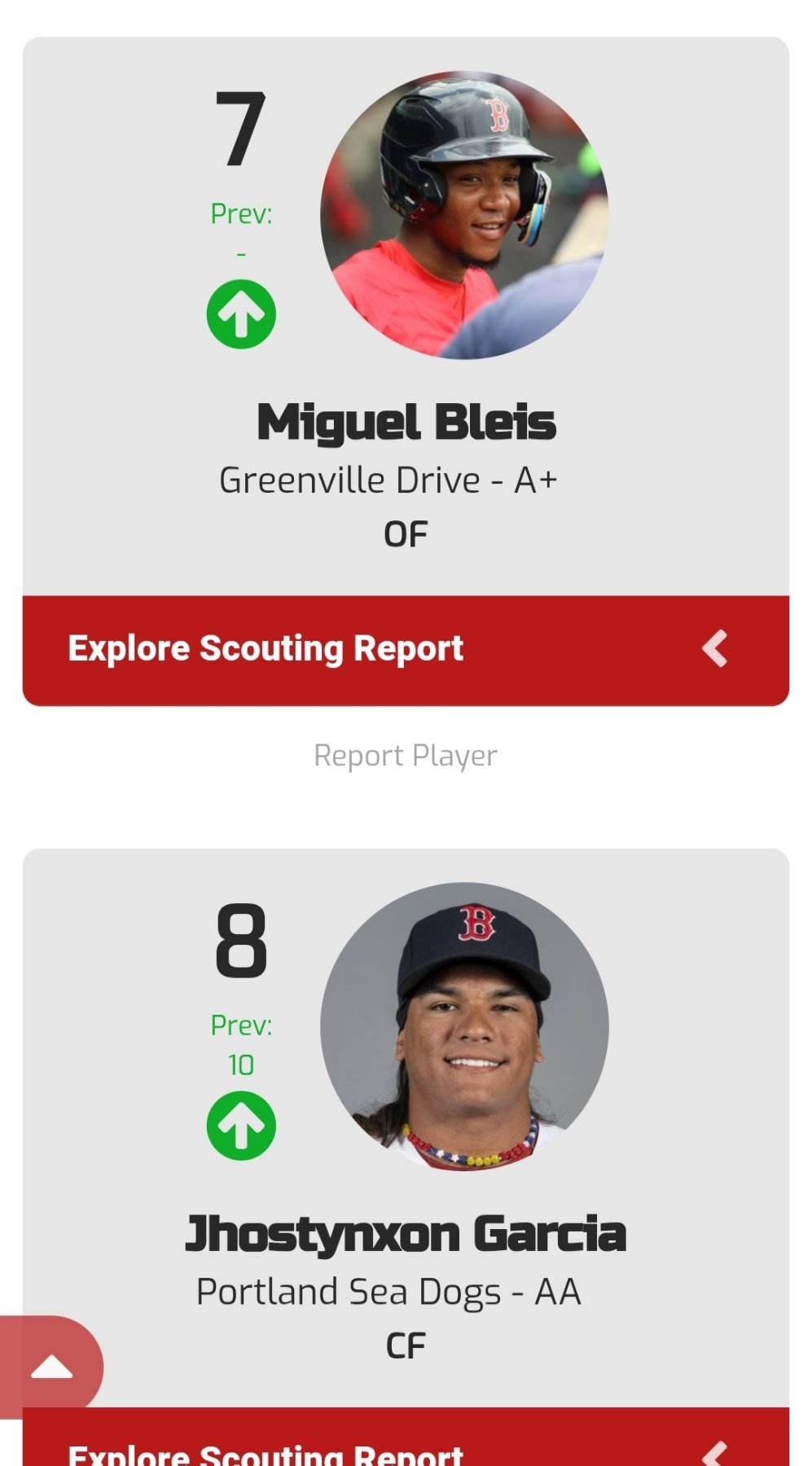
-
 With our top three not changing, we saw Franklin Arias, Luis Perales, and Yoeilin Cespedes jump two spots each, now sitting at fourth, fifth, and sixth, respectively. That isn’t where the changes ended, as newcomers were officially added. Making one of the largest jumps was Miguel Bleis, skyrocketing from 21st to seventh. To correspond with the changes, we will briefly review each of the new additions. #7 OF Miguel Bleis (Salem Red Sox, Greenville Drive) Appearing in a career-high 95 games across two levels of the minor leagues, Bleis showcased why many are high on his potential. His game centers around speed, defense, and some power, which was on display as he swiped 38 bases to go along with 11 home runs on the season. His defense has allowed him to be profiled as a plus defender in center field thanks to his good instincts and reads along with plus range. Regarding his hitting, Bleis expands the strike zone against off-speed pitches but will sometimes lay off to take a walk. However, when he’s ahead in the count, he will be aggressive and hunt fastballs. Bleis has plus raw power and is viewed as potentially gaining even more as he physically matures. He has the potential for above-average game power at his peak if he can figure it all out. Unfortunately, injuries have slowed him down the past few seasons. In 2022, he was held back from receiving a promotion to Salem due to lower back issues and would miss time in May and June of 2023 with a left shoulder subluxation before undergoing season-ending surgery in June. While he didn’t have a major injury in 2024, he still missed time with minor injuries such as a root canal and a finger sprain. If he can stay healthy, Bleis has the ceiling of an everyday regular in the outfield. #13 P Luis Guerrero (Worcester Red Sox, Boston Red Sox) Another newcomer to the Top 20, Guerrero previously ranked 22nd on Talk Sox’s prospect rankings. Drafted in the 17th round of the 2021 Draft, Guerrero made his major league debut in 2024 and pitched in nine games, only surrendering a single unearned run. Guerrero possessed six pitches while in college, though after signing, the Red Sox asked him to mainly focus on his fastball, splitter, and slider, though he replaced his splitter with a changeup. Guerrero’s fastball sits around 96-98 mph but will top out at 100 mph. His fastball will show life up in the zone, but at the moment, his command and control of it is erratic. If he can refine his command, it can be a plus pitch. His slider sits around 83-86 mph and, while inconsistent, has improved as he’s moved up the minor league levels and shown bat-missing potential. Guerrero’s splitter also sits around 83-86 mph and used to be his primary out pitch, but he shelved it in mid-May of 2024 after struggling to throw it for strikes. His changeup is now his go-to out pitch, and he is thrown between 87-89 mph. This pitch has premium bat-missing ability, and he has shown a better feel for the pitch as he has flashed the ability to throw it in the strike zone or use it to get batters to chase. Guerrero can potentially be a middle-inning reliever and the ceiling of a late-inning reliever used in high-leverage situations. He’s viewed as having some of the best raw stuff of any relief arm in the system, but he needs to improve his command to reach his full potential. #17 P Connelly Early (Greenville Drive, Portland Sea Dogs) Early, Boston’s 5th-round pick in the 2023 draft, busted onto the scene as a 22-year-old this past season. Early pitched in 23 games and threw 103 2/3 innings with a 3.99 ERA, splitting the year between High-A and Double-A. However, his 138 strikeouts, alongside only 39 walks, might be most impressive. Early possesses five pitches, relying on a fastball, changeup, slider, sweeper, and curveball. His changeup is seen as his pitch with the best potential, currently having a plus offering. He has an advanced feel and confidence in it. At its best, the pitch shows the ability to pull the string on it, and it falls down and out of the zone. His fastball is viewed as a potential average offering, though, as it sits at 91-94 mph, and there is room for added velocity as he physically matures. Early has a solid command of his fastball. His other three pitches all profile as potentially fringe-average at best. His slider can hit 86 mph, and he can land it in the zone thanks to a solid feel. The sweeper is viewed as a work in progress and an area of focus for him during the 2024-2025 offseason. Meanwhile, his curveball is a mix; some pitches will be snapped well, and others will be loose and roll to the plate. Early has the potential of a depth starter and the ceiling of a fourth starter currently. If he can get a second pitch that is above average or a plus offering, he could profile higher than a depth starter, especially with his durability. #19 P/SS Conrad Cason (Greater Atlanta Christian HS) The 18-year-old Cason was drafted in the 8th round in the 2024 draft after committing to Mississippi State to play baseball. The Gatorade Georgia high school player of the year, Cason, was viewed by most teams as a pitcher exclusively, but the Red Sox view him as a potential two-way player. Cason focuses on three pitches as a pitcher: a fastball that averages 92-95 mph and can top out at 98 mph, a breaking pitch that is inconsistent to the point that it sometimes becomes a curveball or slider, and a changeup that shows a late drop when he is on. In the field, Cason is a fluid, athletic defender with solid range that will allow him to move to center field should he be unable to stick at shortstop. At the plate, he has quick hands and whips the bat through the zone, but his swing can get long at times. Despite knowing the strike zone, his pitch recognition is a work in progress. #20 P Dalvinson Reyes (Dominican Summer League Red Sox) Signed as an International free agent in January of 2024, Reyes is an 18-year-old pitcher who received the highest bonus of any pitcher in the Red Sox 2024 IFA class. Focusing on three pitches, Reyes throws a fastball between 89-93 mph that has already seen an uptick in velocity since he signed. It is easy to see that increasing more as he matures. The pitch shows arm-side run and sink at times. His slider sits between 84-86 mph and has already flashed bat-missing ability. His changeup is a solid offering, being thrown between 84-87 mph while showing late fade. Reyes started five games last year, throwing 17 innings and not allowing a single run. However, he missed seven weeks during the season to focus on strength training after experiencing fatigue. Reyes is a high-upside arm with high potential due to the fact he checks off all the boxes you look for in a teenage starting pitching prospect. Due to his ability to throw strikes and have a feel for his secondary pitches, Reyes could see his stock jump if he continues his current developmental path.
 -
Following the trades for Garrett Crochet and Carlos Narváez, there has been a change in the Talk Sox Top 20 Prospect rankings. With quite a few of our Top 20 members being shipped out, a new ranking was voted on and compiled to replace the since-traded players. With our top three not changing, we saw Franklin Arias, Luis Perales, and Yoeilin Cespedes jump two spots each, now sitting at fourth, fifth, and sixth, respectively. That isn’t where the changes ended, as newcomers were officially added. Making one of the largest jumps was Miguel Bleis, skyrocketing from 21st to seventh. To correspond with the changes, we will briefly review each of the new additions. #7 OF Miguel Bleis (Salem Red Sox, Greenville Drive) Appearing in a career-high 95 games across two levels of the minor leagues, Bleis showcased why many are high on his potential. His game centers around speed, defense, and some power, which was on display as he swiped 38 bases to go along with 11 home runs on the season. His defense has allowed him to be profiled as a plus defender in center field thanks to his good instincts and reads along with plus range. Regarding his hitting, Bleis expands the strike zone against off-speed pitches but will sometimes lay off to take a walk. However, when he’s ahead in the count, he will be aggressive and hunt fastballs. Bleis has plus raw power and is viewed as potentially gaining even more as he physically matures. He has the potential for above-average game power at his peak if he can figure it all out. Unfortunately, injuries have slowed him down the past few seasons. In 2022, he was held back from receiving a promotion to Salem due to lower back issues and would miss time in May and June of 2023 with a left shoulder subluxation before undergoing season-ending surgery in June. While he didn’t have a major injury in 2024, he still missed time with minor injuries such as a root canal and a finger sprain. If he can stay healthy, Bleis has the ceiling of an everyday regular in the outfield. #13 P Luis Guerrero (Worcester Red Sox, Boston Red Sox) Another newcomer to the Top 20, Guerrero previously ranked 22nd on Talk Sox’s prospect rankings. Drafted in the 17th round of the 2021 Draft, Guerrero made his major league debut in 2024 and pitched in nine games, only surrendering a single unearned run. Guerrero possessed six pitches while in college, though after signing, the Red Sox asked him to mainly focus on his fastball, splitter, and slider, though he replaced his splitter with a changeup. Guerrero’s fastball sits around 96-98 mph but will top out at 100 mph. His fastball will show life up in the zone, but at the moment, his command and control of it is erratic. If he can refine his command, it can be a plus pitch. His slider sits around 83-86 mph and, while inconsistent, has improved as he’s moved up the minor league levels and shown bat-missing potential. Guerrero’s splitter also sits around 83-86 mph and used to be his primary out pitch, but he shelved it in mid-May of 2024 after struggling to throw it for strikes. His changeup is now his go-to out pitch, and he is thrown between 87-89 mph. This pitch has premium bat-missing ability, and he has shown a better feel for the pitch as he has flashed the ability to throw it in the strike zone or use it to get batters to chase. Guerrero can potentially be a middle-inning reliever and the ceiling of a late-inning reliever used in high-leverage situations. He’s viewed as having some of the best raw stuff of any relief arm in the system, but he needs to improve his command to reach his full potential. #17 P Connelly Early (Greenville Drive, Portland Sea Dogs) Early, Boston’s 5th-round pick in the 2023 draft, busted onto the scene as a 22-year-old this past season. Early pitched in 23 games and threw 103 2/3 innings with a 3.99 ERA, splitting the year between High-A and Double-A. However, his 138 strikeouts, alongside only 39 walks, might be most impressive. Early possesses five pitches, relying on a fastball, changeup, slider, sweeper, and curveball. His changeup is seen as his pitch with the best potential, currently having a plus offering. He has an advanced feel and confidence in it. At its best, the pitch shows the ability to pull the string on it, and it falls down and out of the zone. His fastball is viewed as a potential average offering, though, as it sits at 91-94 mph, and there is room for added velocity as he physically matures. Early has a solid command of his fastball. His other three pitches all profile as potentially fringe-average at best. His slider can hit 86 mph, and he can land it in the zone thanks to a solid feel. The sweeper is viewed as a work in progress and an area of focus for him during the 2024-2025 offseason. Meanwhile, his curveball is a mix; some pitches will be snapped well, and others will be loose and roll to the plate. Early has the potential of a depth starter and the ceiling of a fourth starter currently. If he can get a second pitch that is above average or a plus offering, he could profile higher than a depth starter, especially with his durability. #19 P/SS Conrad Cason (Greater Atlanta Christian HS) The 18-year-old Cason was drafted in the 8th round in the 2024 draft after committing to Mississippi State to play baseball. The Gatorade Georgia high school player of the year, Cason, was viewed by most teams as a pitcher exclusively, but the Red Sox view him as a potential two-way player. Cason focuses on three pitches as a pitcher: a fastball that averages 92-95 mph and can top out at 98 mph, a breaking pitch that is inconsistent to the point that it sometimes becomes a curveball or slider, and a changeup that shows a late drop when he is on. In the field, Cason is a fluid, athletic defender with solid range that will allow him to move to center field should he be unable to stick at shortstop. At the plate, he has quick hands and whips the bat through the zone, but his swing can get long at times. Despite knowing the strike zone, his pitch recognition is a work in progress. #20 P Dalvinson Reyes (Dominican Summer League Red Sox) Signed as an International free agent in January of 2024, Reyes is an 18-year-old pitcher who received the highest bonus of any pitcher in the Red Sox 2024 IFA class. Focusing on three pitches, Reyes throws a fastball between 89-93 mph that has already seen an uptick in velocity since he signed. It is easy to see that increasing more as he matures. The pitch shows arm-side run and sink at times. His slider sits between 84-86 mph and has already flashed bat-missing ability. His changeup is a solid offering, being thrown between 84-87 mph while showing late fade. Reyes started five games last year, throwing 17 innings and not allowing a single run. However, he missed seven weeks during the season to focus on strength training after experiencing fatigue. Reyes is a high-upside arm with high potential due to the fact he checks off all the boxes you look for in a teenage starting pitching prospect. Due to his ability to throw strikes and have a feel for his secondary pitches, Reyes could see his stock jump if he continues his current developmental path. View full article
- 8 replies
-
- 1
-

-
- miguel bleis
- luis guerrero
- (and 3 more)
-
In the fifth and final installment of the series, we examine a reliever swap that paid big dividends for the Red Sox in 2024. Welcome back for one last time. In the first four installments of this series, we looked at Theo Epstein and the Adrián González trade, Ben Cherington and the Eduardo Rodríguez trade, Dave Dombrowski and the Chris Sale trade, and Chaim Bloom's acquisition of Wilyer Abreu. We're now up to current President of Baseball Operations Craig Breslow. Breslow has had his fair share of trades despite being in the job for just over a year. Before we dive in, I should mention that I won’t discuss any trades made during this offseason, as we haven't had any time to analyze how they turned out. That means Garrett Crochet is off the table. Instead, we'll look at a trade that I feel may prove valuable in the long run, involving a 2023 draft pick and a current member of the Red Sox bullpen. On December 6, 2023, the Red Sox made a deal with the Mets that looked at the time to be a simple case of acquiring a depth piece for the bullpen. The Mets had selected the pitcher in the Rule 5 Draft, so the stakes were low: if he had a good spring, he could break camp with the Red Sox, and if not, they could just send him right back to Texas. That pitcher was Justin Slaten. Slaten was coming off an impressive minor league season in 2023. The majority of his games were with double-A Frisco, where he pitched in 35 games and to a 3.16 ERA of 3.16 while striking out 76 batters in 51 1/3 innings. The strikeouts were nothing new, as he'd struck out more than 10 batters per inning in ever stop of his professional career (except for a one-appearance stop in rookie ball). All those K's hadn't necessarily turned into results, though, and he ended up as a Met when Texas chose not to protect him prior to the Rule 5 Draft. Slaten wasn’t meant to be a Met for long, however. He got shipped to Boston for left-handed pitcher Ryan Ammons. Ammons was Boston's 10th-round draft pick in 2023, after pitching for four years at Clemson. Ammons never threw a single inning for the Red Sox after being drafted. It's still early, but so far this trade looks like a win for both organizations. Ammons shined in his first season with the Mets organization, running a 2.18 ERA in 32 appearances across Low A and High A while striking out nearly 12 batters per nine innings. He really turned it up a notch once he was promoted to high-A Brooklyn. In 14 games, he threw 20 1/3 innings and struck out 25 batters with an ERA of 1.33. He surrendered just six hits and his WHIP was below 1.00. The Red Sox shouldn’t be too worried about what they gave up, however. Slaten showed himself to be a dominant arm in Boston. After making the team out of spring training, Slaten spent the entire season in Boston (except for a single appearance in Portland as part of a rehab assignment after a stint on the IL). Appearing in 44 games in his rookie season, Slaten immediately proved himself a key piece of the bullpen. He ran a 2.93 ERA over 55 1/3 innings, striking out 58 batters and only walking nine. He went 6-2 with two saves, and the advanced stats liked him even better. His 2.61 FIP and 1.5 fWAR led all Sox relievers. He was especially dominant at home, running a 1.78 ERA in 19 games at Fenway over 25 1/3 innings. He also pitched well down the stretch, appearing in 13 games across August and September and running a 1.42 ERA in 12 2/3 innings. Going into 2025, Slaten is already a key piece of manager Alex Cora’s bullpen, alongside veterans Liam Hendriks and Aroldis Chapman. While Breslow has so far frustrated Red Sox fans with his lack of big moves (with the obvious exception of the Crochet trade), he has succeeded in acquiring talent through what look at first blush like small moves, and then finding a way to maximize it. Slaten is just one example of that, and hopefully there are more to come. View full article
-
 Welcome back for one last time. In the first four installments of this series, we looked at Theo Epstein and the Adrián González trade, Ben Cherington and the Eduardo Rodríguez trade, Dave Dombrowski and the Chris Sale trade, and Chaim Bloom's acquisition of Wilyer Abreu. We're now up to current President of Baseball Operations Craig Breslow. Breslow has had his fair share of trades despite being in the job for just over a year. Before we dive in, I should mention that I won’t discuss any trades made during this offseason, as we haven't had any time to analyze how they turned out. That means Garrett Crochet is off the table. Instead, we'll look at a trade that I feel may prove valuable in the long run, involving a 2023 draft pick and a current member of the Red Sox bullpen. On December 6, 2023, the Red Sox made a deal with the Mets that looked at the time to be a simple case of acquiring a depth piece for the bullpen. The Mets had selected the pitcher in the Rule 5 Draft, so the stakes were low: if he had a good spring, he could break camp with the Red Sox, and if not, they could just send him right back to Texas. That pitcher was Justin Slaten. Slaten was coming off an impressive minor league season in 2023. The majority of his games were with double-A Frisco, where he pitched in 35 games and to a 3.16 ERA of 3.16 while striking out 76 batters in 51 1/3 innings. The strikeouts were nothing new, as he'd struck out more than 10 batters per inning in ever stop of his professional career (except for a one-appearance stop in rookie ball). All those K's hadn't necessarily turned into results, though, and he ended up as a Met when Texas chose not to protect him prior to the Rule 5 Draft. Slaten wasn’t meant to be a Met for long, however. He got shipped to Boston for left-handed pitcher Ryan Ammons. Ammons was Boston's 10th-round draft pick in 2023, after pitching for four years at Clemson. Ammons never threw a single inning for the Red Sox after being drafted. It's still early, but so far this trade looks like a win for both organizations. Ammons shined in his first season with the Mets organization, running a 2.18 ERA in 32 appearances across Low A and High A while striking out nearly 12 batters per nine innings. He really turned it up a notch once he was promoted to high-A Brooklyn. In 14 games, he threw 20 1/3 innings and struck out 25 batters with an ERA of 1.33. He surrendered just six hits and his WHIP was below 1.00. The Red Sox shouldn’t be too worried about what they gave up, however. Slaten showed himself to be a dominant arm in Boston. After making the team out of spring training, Slaten spent the entire season in Boston (except for a single appearance in Portland as part of a rehab assignment after a stint on the IL). Appearing in 44 games in his rookie season, Slaten immediately proved himself a key piece of the bullpen. He ran a 2.93 ERA over 55 1/3 innings, striking out 58 batters and only walking nine. He went 6-2 with two saves, and the advanced stats liked him even better. His 2.61 FIP and 1.5 fWAR led all Sox relievers. He was especially dominant at home, running a 1.78 ERA in 19 games at Fenway over 25 1/3 innings. He also pitched well down the stretch, appearing in 13 games across August and September and running a 1.42 ERA in 12 2/3 innings. Going into 2025, Slaten is already a key piece of manager Alex Cora’s bullpen, alongside veterans Liam Hendriks and Aroldis Chapman. While Breslow has so far frustrated Red Sox fans with his lack of big moves (with the obvious exception of the Crochet trade), he has succeeded in acquiring talent through what look at first blush like small moves, and then finding a way to maximize it. Slaten is just one example of that, and hopefully there are more to come.
 -
Welcome back once again to our small series looking back on one major trade from each GM in the John Henry era. After leaving off with Dealing Dave Dombrowski, we move into a new era for the Red Sox. The new era even came with a new title: enter Chief Baseball Officer Chaim Bloom. It's no secret that Chaim Bloom was hired to perform some unpleasant tasks. After the Red Sox brought in Dave Dombrowski to go all out for championships, Bloom was tasked with rebuilding the farm system and doing the unthinkable: trading Mookie Betts. However, I feel that we've talked about that particular tragedy enough over the years, so instead, we’ll be looking at what might have been Bloom’s best trade: a deadline deal in 2022 that saw the Sox ship long-time catcher Christian Vázquez to the Astros for prospects Wilyer Abreu and Enmanuel Valdéz. The trade came as a surprise not just to fans, but Vázquez himself. The catcher was being interviewed on the field during batting practice, and only found out about the trade when a reporter asked him how it felt to be traded. It's hard to imagine the emotions that must have been running through Vázquez as he got blindsided by the question live on camera. At the time, the reception to the move was mixed. Fans understood the need to move Vázquez. The Red Sox didn't look like contenders and he was a 31-year-old catcher on an expiring contract. The problem was Vázquez was a fan favorite and was one of the team’s better players that season. Vázquez spent eight seasons in Boston, appearing in 698 games and slashing .262/.311/.389. While he was never a strong hitter, he knocked 54 home runs and was a part of the 2018 World Series team. He called a god game and pitchers enjoyed working with him. The Red Sox were going nowhere, and the Astros were in a playoff race looking to upgrade their catching position. It was a natural fit. Unfortunately, Vázquez wouldn’t play much in Houston. He appeared in only 35 games after being traded, as the Astros chose to play the light-hitting Martin Maldonado over him during the playoffs. Fortunately for Vázquez, the Astros won the World Series, earning him his second championship ring before he hit free agency. The catcher got a payday from the Twins, signing a three-year $30-million contract after the 2022 season. He's now rumored to be on the trading block. The Red Sox made out in the trade. Considered one of Bloom’s best moves during his tenure in Boston, the Sox brought in two interesting prospects in the form of Abreu and Valdéz. Considering how their time in Boston ended up, it is a little bit ironic that Valdéz was the one considered the more valuable at the time, having reached Triple A by the age of 23. Valdéz was generally viewed as having a great bat but no real position, due to defensive struggles. He holds a career .806 OPS in the minor leagues. The Astros had tried him all over the field in order to keep his bat in the lineup, but after the trade, the Red Sox mainly played Valdéz at second base. In 44 games in Worcester, Valdez continued to flash his power with seven home runs to end the 2022 season. Despite defensive limitations, he impressed the team enough to be added to the 40-man roster after the season. Valdez would go on to split the next two seasons between Boston and Worcester, often being the first position player recalled to the majors when the team needed body. Despite his continued defensive struggles, Valdéz would continue to get chances due to his potential bat. 2023 showed flashes of it, slashing .266/.311/.453 across 49 games for a 102 wRC+. However, Valdéz struggled throughout 2024. He ran into some bad batted-ball luck that resulted in a 72 wRC+ in Boston, and his Worcester stats weren't particularly impressive either. In December, Valdéz was designated for assignment to make room on the 40-man roster, then traded to the Pirates right-handed pitcher Joe Vogatsky, who has yet to throw a pitch as a professional. Abreu, on the other hand, has so far turned out better than anyone could have expected. When the Red Sox acquired him, he was viewed as an on-base threat with a bit of pop and a great glove. After the trade, he spent the remainder of 2022 in Portland, where he played in 40 games and put up an impressive 120 wRC+. Just like Valdéz, Abreu impressed enough to be placed on the 40-man roster that offseason. That turned out to be a good move, as Abreu kept right on hitting in 2023. Opening the season as a 24-year-old in Worcester, Abreu played in 86 games and ran a 130 wRC+ with 22 home runs to go along with outstanding defense. He continued to impress during a 28-game cup of coffee at the end of the season, slashing .317/.388/.474 with two home runs. Abreu had earned the chance to win the starting right field position in spring training. and he would do just that, becoming the starter and playing in 132 games. He had to adjust to a full season of major league pitching, and the Red Sox kept him from facing left-handed pitching as much as they could, but he had an outstanding season. His final slash line of .253/.322/.459 was good for a 114 wRC+. He hit 15 homers and racked up value on the basepaths and in the outfield. Abreu would finish sixth in the Rookie of the Year voting and brought home a well-deserved Gold Glove award. He also had the dirtiest uniform in the league. Chaim Bloom has become something of a rebuilder for hire. After working his way up with the Rays, the Boston job was his first as the person in charge, and he wasn't hired to do the fun stuff like Dave Dombrowski. He was hired to make unpleasant decisions that could make the team better in the long run, and then he was dismissed before he could enjoy the fruits of that labor. He is now working for the Cardinals, and is set to take over for John Mozeliak as president of baseball operations after the season. He'll have a tough rebuild ahead of him there. This trade is likely the best Bloom ever negotiated during his time in Boston. Letting Vázquez find out about the trade the way he did was criminal and the Valdéz portion didn't work out, the Red Sox still managed to acquire a talented, outfielder on a rookie contract who should keep performing for many years. With the amount of young talent ready to break onto the scene in Boston, whether Abreu remains with the club or ends up packaged in a trade, having him puts the Red Sox in an excellent spot. View full article
-
 It's no secret that Chaim Bloom was hired to perform some unpleasant tasks. After the Red Sox brought in Dave Dombrowski to go all out for championships, Bloom was tasked with rebuilding the farm system and doing the unthinkable: trading Mookie Betts. However, I feel that we've talked about that particular tragedy enough over the years, so instead, we’ll be looking at what might have been Bloom’s best trade: a deadline deal in 2022 that saw the Sox ship long-time catcher Christian Vázquez to the Astros for prospects Wilyer Abreu and Enmanuel Valdéz. The trade came as a surprise not just to fans, but Vázquez himself. The catcher was being interviewed on the field during batting practice, and only found out about the trade when a reporter asked him how it felt to be traded. It's hard to imagine the emotions that must have been running through Vázquez as he got blindsided by the question live on camera. At the time, the reception to the move was mixed. Fans understood the need to move Vázquez. The Red Sox didn't look like contenders and he was a 31-year-old catcher on an expiring contract. The problem was Vázquez was a fan favorite and was one of the team’s better players that season. Vázquez spent eight seasons in Boston, appearing in 698 games and slashing .262/.311/.389. While he was never a strong hitter, he knocked 54 home runs and was a part of the 2018 World Series team. He called a god game and pitchers enjoyed working with him. The Red Sox were going nowhere, and the Astros were in a playoff race looking to upgrade their catching position. It was a natural fit. Unfortunately, Vázquez wouldn’t play much in Houston. He appeared in only 35 games after being traded, as the Astros chose to play the light-hitting Martin Maldonado over him during the playoffs. Fortunately for Vázquez, the Astros won the World Series, earning him his second championship ring before he hit free agency. The catcher got a payday from the Twins, signing a three-year $30-million contract after the 2022 season. He's now rumored to be on the trading block. The Red Sox made out in the trade. Considered one of Bloom’s best moves during his tenure in Boston, the Sox brought in two interesting prospects in the form of Abreu and Valdéz. Considering how their time in Boston ended up, it is a little bit ironic that Valdéz was the one considered the more valuable at the time, having reached Triple A by the age of 23. Valdéz was generally viewed as having a great bat but no real position, due to defensive struggles. He holds a career .806 OPS in the minor leagues. The Astros had tried him all over the field in order to keep his bat in the lineup, but after the trade, the Red Sox mainly played Valdéz at second base. In 44 games in Worcester, Valdez continued to flash his power with seven home runs to end the 2022 season. Despite defensive limitations, he impressed the team enough to be added to the 40-man roster after the season. Valdez would go on to split the next two seasons between Boston and Worcester, often being the first position player recalled to the majors when the team needed body. Despite his continued defensive struggles, Valdéz would continue to get chances due to his potential bat. 2023 showed flashes of it, slashing .266/.311/.453 across 49 games for a 102 wRC+. However, Valdéz struggled throughout 2024. He ran into some bad batted-ball luck that resulted in a 72 wRC+ in Boston, and his Worcester stats weren't particularly impressive either. In December, Valdéz was designated for assignment to make room on the 40-man roster, then traded to the Pirates right-handed pitcher Joe Vogatsky, who has yet to throw a pitch as a professional. Abreu, on the other hand, has so far turned out better than anyone could have expected. When the Red Sox acquired him, he was viewed as an on-base threat with a bit of pop and a great glove. After the trade, he spent the remainder of 2022 in Portland, where he played in 40 games and put up an impressive 120 wRC+. Just like Valdéz, Abreu impressed enough to be placed on the 40-man roster that offseason. That turned out to be a good move, as Abreu kept right on hitting in 2023. Opening the season as a 24-year-old in Worcester, Abreu played in 86 games and ran a 130 wRC+ with 22 home runs to go along with outstanding defense. He continued to impress during a 28-game cup of coffee at the end of the season, slashing .317/.388/.474 with two home runs. Abreu had earned the chance to win the starting right field position in spring training. and he would do just that, becoming the starter and playing in 132 games. He had to adjust to a full season of major league pitching, and the Red Sox kept him from facing left-handed pitching as much as they could, but he had an outstanding season. His final slash line of .253/.322/.459 was good for a 114 wRC+. He hit 15 homers and racked up value on the basepaths and in the outfield. Abreu would finish sixth in the Rookie of the Year voting and brought home a well-deserved Gold Glove award. He also had the dirtiest uniform in the league. Chaim Bloom has become something of a rebuilder for hire. After working his way up with the Rays, the Boston job was his first as the person in charge, and he wasn't hired to do the fun stuff like Dave Dombrowski. He was hired to make unpleasant decisions that could make the team better in the long run, and then he was dismissed before he could enjoy the fruits of that labor. He is now working for the Cardinals, and is set to take over for John Mozeliak as president of baseball operations after the season. He'll have a tough rebuild ahead of him there. This trade is likely the best Bloom ever negotiated during his time in Boston. Letting Vázquez find out about the trade the way he did was criminal and the Valdéz portion didn't work out, the Red Sox still managed to acquire a talented, outfielder on a rookie contract who should keep performing for many years. With the amount of young talent ready to break onto the scene in Boston, whether Abreu remains with the club or ends up packaged in a trade, having him puts the Red Sox in an excellent spot.
 -
Continuing our small series on major trades by Red Sox general managers during the John Henry era, we move on to Dave Dombrowski and a move that started out so brilliantly that it made the long, sad end worth it. Welcome back to another entry in our short look back upon major trades from recent Red Sox GMs. After reviewing Ben Cherington’s trade for Eduardo Rodríguez, we move on to one of the game's most famous traders. You might know him as Dealing Dave Dombrowski, who ran baseball operations for the Red Sox from August 18, 2015, until September 9, 2019. Throughout his highly decorated career, Dombrowski has earned a reputation as a win-now GM and an owner whisperer, convincing ownership to authorize major moves to improve the major-league squad, often at great cost in terms of both money and prospects. He built the World Series champion 1997 Marlins, the Tigers team that went to three American League Championship Series and one World Series between 2011 and 2013, the 2018 World Series champion Red Sox, and the current Phillies squad that has been to three NLDS, an NLCS, and a World Series over the past three seasons. He lived up to his reputation when he took the reins in Boston, trading away much of the farm system to bring in All-Star caliber players. Although he made several major trades during his tenure, the move I want to look back on should come as no surprise: Chris Sale trade. Following a loss to Cleveland in the 2016 ALDS, the Red Sox and Dombrowski looked at ways to improve the team and get past the first round of the playoffs. While the front of the rotation was led by David Price and Cy Young Award winner Rick Porcello, the back end struggled. Clay Buchholz ran a 5.01 ERA as a starter and was demoted to the bullpen, Eduardo Rodríguez took a step back after an impressive rookie season in 2015, and deadline acquisition Drew Pomeranz regressed after coming over from San Diego. Dombrowski went after the right pitcher. Left-hander Chris Sale had spent the first seven seasons of his career with the White Sox. He had two dominant years as a reliever, then spent five as a starter, during which he earned five straight All-Star selections and never finished worse than sixth in the Cy Young voting. In both 2015 and 2016, he earned MVP votes. He had a career 3.00 ERA and a record of 74 wins and 50 losses in 1110 innings pitched. Over those last five years, his 25.4 fWAR trailed only future Hall of Famers Max Scherzer and Clayton Kershaw (and ranked just one spot above David Price). Still only 27 years old at the end of 2016, he was a no-brainer for a Red Sox team ready to go all in on a championship run. On December 6, 2016, that deal was finalized. In return for Sale, the White Sox received highly-touted prospects Michael Kopech and Yoán Moncada, along with Victor Diaz and Luis Alexander Basabe. The Red Sox won the four-for-one trade easily, as Sale picked up right where he'd left off in Chicago. His streak of All-Star selections, top-six Cy Young finishes and MVP votes would continue for two more years. In 2017, Sale finished as the runner-up for the AL Cy Young Award and helped the Red Sox win their second consecutive AL East title. Across 32 starts and an MLB-leading 214 1/3 innings, he went 17-8 with a 2.90 ERA and an MLB-best 2.45 FIP. But what may be most impressive was his career high of 308 strikeouts and a (then) career-high 12.9 strikeouts per nine innings. Both marks were the highest in baseball. Sale was everything the Sox could have hoped for, anchoring a rotation plagued by inconsistency and injury. Unfortunately, the Red Sox would fall to the eventual World Series champs, the Astros, in the ALDS. Sale’s continued dealing during the 2018 season. He was once again was tasked with leading the rotation. Alongside David Price and midseason acquisition Nathan Eovaldi, he did just that, winning 12 games and only losing four. He did so in just 27 games, as shoulder inflammation forced him onto the IL in both August and September. Despite the injury, Sale still threw 158 innings and struck out 237 while making another All-Star game and finishing fourth in the Cy Young voting. Over three postseason starts and two relief appearances, he ran a 4.11 ERA, but that was likely due more to bad luck than anything else, as he struck out a jaw-dropping 14.1 batters per nine innings. He appeared to be healthy in the ALDS, pitching in two games against the Yankees, but following that, he was not his usually effective self. In the ALCS, he made a single appearance, allowing two earned in four innings, before starting game one of the World Series. When it mattered the most, the ball was in Sale's hand. With the Red Sox up, 5-1, in Game 5, Sale blew the Dodgers away in the bottom of the ninth, striking out Justin Turner, Enrique Hernandez, and Manny Machado swinging to clinch the championship. Sale signed a five-year, $145-million extension with the Red Sox prior to the 2019 season, but it didn’t work out too well. In the five seasons that followed his injury in 2018, Sale’s body could not keep up. After throwing the sixth-most innings in baseball from 2012 to 2018, he underwent Tommy John surgery in 2020. From 2019 to 2013, he he pitched in just 56 games with a 4.16 ERA. Following the 2023 season, the Red Sox would be trade Sale to Atlanta for infielder Vaughn Grissom. He would immediately make the Red Sox regret the move, bouncing back to claim his first Cy Young Award and returning to the All-Star game for the first time since 2018. As for the players the Red Sox gave up in the Chris Sale trade, things never really seemed to work out for the White Sox. Yoán Moncada and Michael Kopech headline the move. Both players showcased flashes of brilliance — Moncada put up excellent 2019 and 2021 seasons, and Kopech was solid in 2021 and 2022, but inconsistency and injuries kept them from reaching their potential Moncada was a roughly league-average hitter in his first two full seasons with the White Sox, and 2019 looked like it should have been his breakthrough campaign. Moncada played in 132 games and put up 5.2 fWAR, slashing .315/.367/.548 to go with 25 home runs. He was also propped up by an absurdly high .406 BABIP, the highest among all qualified players. Unfortunately, that was as good as it would get for Moncada. In 2021, he ran a 120 wRC+ and hit 14 home runs, but that was the last time he would look like a star. Over the past three seasons, injuries have limited him to just 208 games. He only played 12 games in 2024. Now a free agent and the White Sox rebuilding once more, it’s unlikely he returns to Chicago. Kopech is already gone, having been traded to the Dodgers at the 2024 trade deadline for Miguel Vargas, Alexander Albertus, and Jeral Perez. In 2018, Kopech made four starts for the White Sox before undergoing Tommy John surgery in September. He would go on to miss all of the 2019 season and sit out the 2020 season due to the COVID-19 pandemic, choosing to get his body right rather than playing in the shortened 60-game season without any buildup through rehab assignments. Kopech was then moved to the bullpen to help limit his innings. He performed well, running a 3.50 ERA over 44 appearances. Kopech returned to the rotation where in 2022, but despite his shiny 3.54 ERA, the numbers under the hood were concerning. His walk and strikeout numbers went in the wrong directions, resulting in a 4.50 ERA. The bill came due in 2023, when he ran a 5.43 ERA. The White Sox moved Kopech back to the bullpen in 2024, and he pitched in 43 games before being traded to the Dodgers. Prior to the trade, he ran an ERA of 4.74 and a WHIP of 1.35, but with the Dodgers, his ERA dropped to 1.13 and his WHIP to 0.79. He got into 10 postseason games, running a 3.00 ERA. As for the other two players in the trade, Victor Diaz only appeared in 14 games in the low levels of the White Sox organization, making it up to high-A Winston-Salem before being released in 2017. Luis Alexander Basabe never made it to the majors with the White Sox, making it as high as Double A in 2019 before having his contract purchased by the San Francisco Giants in 2020. The outfielder would play nine games in San Francisco before spending 2021 in the minor leagues once more. He signed a minor league deal with the White Sox for the 2022 season but was released in May and hasn’t played professional baseball since. In the end, Dombrowski got his wish for an ace who could anchor the rotation through difficulties. While the extension didn't work out to anyone's satisfaction (save maybe the Braves), Sale did what he came to Boston to do: win a championship. It may be hard to separate the trade from the extension, but in those first three seasons, Sale continued to be one of the premier pitchers in all of baseball. Combine that with the fact that the prospects Boston coughed up for him never truly panned out, and the move is an easy victory for the Red Sox. View full article
-
 Welcome back to another entry in our short look back upon major trades from recent Red Sox GMs. After reviewing Ben Cherington’s trade for Eduardo Rodríguez, we move on to one of the game's most famous traders. You might know him as Dealing Dave Dombrowski, who ran baseball operations for the Red Sox from August 18, 2015, until September 9, 2019. Throughout his highly decorated career, Dombrowski has earned a reputation as a win-now GM and an owner whisperer, convincing ownership to authorize major moves to improve the major-league squad, often at great cost in terms of both money and prospects. He built the World Series champion 1997 Marlins, the Tigers team that went to three American League Championship Series and one World Series between 2011 and 2013, the 2018 World Series champion Red Sox, and the current Phillies squad that has been to three NLDS, an NLCS, and a World Series over the past three seasons. He lived up to his reputation when he took the reins in Boston, trading away much of the farm system to bring in All-Star caliber players. Although he made several major trades during his tenure, the move I want to look back on should come as no surprise: Chris Sale trade. Following a loss to Cleveland in the 2016 ALDS, the Red Sox and Dombrowski looked at ways to improve the team and get past the first round of the playoffs. While the front of the rotation was led by David Price and Cy Young Award winner Rick Porcello, the back end struggled. Clay Buchholz ran a 5.01 ERA as a starter and was demoted to the bullpen, Eduardo Rodríguez took a step back after an impressive rookie season in 2015, and deadline acquisition Drew Pomeranz regressed after coming over from San Diego. Dombrowski went after the right pitcher. Left-hander Chris Sale had spent the first seven seasons of his career with the White Sox. He had two dominant years as a reliever, then spent five as a starter, during which he earned five straight All-Star selections and never finished worse than sixth in the Cy Young voting. In both 2015 and 2016, he earned MVP votes. He had a career 3.00 ERA and a record of 74 wins and 50 losses in 1110 innings pitched. Over those last five years, his 25.4 fWAR trailed only future Hall of Famers Max Scherzer and Clayton Kershaw (and ranked just one spot above David Price). Still only 27 years old at the end of 2016, he was a no-brainer for a Red Sox team ready to go all in on a championship run. On December 6, 2016, that deal was finalized. In return for Sale, the White Sox received highly-touted prospects Michael Kopech and Yoán Moncada, along with Victor Diaz and Luis Alexander Basabe. The Red Sox won the four-for-one trade easily, as Sale picked up right where he'd left off in Chicago. His streak of All-Star selections, top-six Cy Young finishes and MVP votes would continue for two more years. In 2017, Sale finished as the runner-up for the AL Cy Young Award and helped the Red Sox win their second consecutive AL East title. Across 32 starts and an MLB-leading 214 1/3 innings, he went 17-8 with a 2.90 ERA and an MLB-best 2.45 FIP. But what may be most impressive was his career high of 308 strikeouts and a (then) career-high 12.9 strikeouts per nine innings. Both marks were the highest in baseball. Sale was everything the Sox could have hoped for, anchoring a rotation plagued by inconsistency and injury. Unfortunately, the Red Sox would fall to the eventual World Series champs, the Astros, in the ALDS. Sale’s continued dealing during the 2018 season. He was once again was tasked with leading the rotation. Alongside David Price and midseason acquisition Nathan Eovaldi, he did just that, winning 12 games and only losing four. He did so in just 27 games, as shoulder inflammation forced him onto the IL in both August and September. Despite the injury, Sale still threw 158 innings and struck out 237 while making another All-Star game and finishing fourth in the Cy Young voting. Over three postseason starts and two relief appearances, he ran a 4.11 ERA, but that was likely due more to bad luck than anything else, as he struck out a jaw-dropping 14.1 batters per nine innings. He appeared to be healthy in the ALDS, pitching in two games against the Yankees, but following that, he was not his usually effective self. In the ALCS, he made a single appearance, allowing two earned in four innings, before starting game one of the World Series. When it mattered the most, the ball was in Sale's hand. With the Red Sox up, 5-1, in Game 5, Sale blew the Dodgers away in the bottom of the ninth, striking out Justin Turner, Enrique Hernandez, and Manny Machado swinging to clinch the championship. Sale signed a five-year, $145-million extension with the Red Sox prior to the 2019 season, but it didn’t work out too well. In the five seasons that followed his injury in 2018, Sale’s body could not keep up. After throwing the sixth-most innings in baseball from 2012 to 2018, he underwent Tommy John surgery in 2020. From 2019 to 2013, he he pitched in just 56 games with a 4.16 ERA. Following the 2023 season, the Red Sox would be trade Sale to Atlanta for infielder Vaughn Grissom. He would immediately make the Red Sox regret the move, bouncing back to claim his first Cy Young Award and returning to the All-Star game for the first time since 2018. As for the players the Red Sox gave up in the Chris Sale trade, things never really seemed to work out for the White Sox. Yoán Moncada and Michael Kopech headline the move. Both players showcased flashes of brilliance — Moncada put up excellent 2019 and 2021 seasons, and Kopech was solid in 2021 and 2022, but inconsistency and injuries kept them from reaching their potential Moncada was a roughly league-average hitter in his first two full seasons with the White Sox, and 2019 looked like it should have been his breakthrough campaign. Moncada played in 132 games and put up 5.2 fWAR, slashing .315/.367/.548 to go with 25 home runs. He was also propped up by an absurdly high .406 BABIP, the highest among all qualified players. Unfortunately, that was as good as it would get for Moncada. In 2021, he ran a 120 wRC+ and hit 14 home runs, but that was the last time he would look like a star. Over the past three seasons, injuries have limited him to just 208 games. He only played 12 games in 2024. Now a free agent and the White Sox rebuilding once more, it’s unlikely he returns to Chicago. Kopech is already gone, having been traded to the Dodgers at the 2024 trade deadline for Miguel Vargas, Alexander Albertus, and Jeral Perez. In 2018, Kopech made four starts for the White Sox before undergoing Tommy John surgery in September. He would go on to miss all of the 2019 season and sit out the 2020 season due to the COVID-19 pandemic, choosing to get his body right rather than playing in the shortened 60-game season without any buildup through rehab assignments. Kopech was then moved to the bullpen to help limit his innings. He performed well, running a 3.50 ERA over 44 appearances. Kopech returned to the rotation where in 2022, but despite his shiny 3.54 ERA, the numbers under the hood were concerning. His walk and strikeout numbers went in the wrong directions, resulting in a 4.50 ERA. The bill came due in 2023, when he ran a 5.43 ERA. The White Sox moved Kopech back to the bullpen in 2024, and he pitched in 43 games before being traded to the Dodgers. Prior to the trade, he ran an ERA of 4.74 and a WHIP of 1.35, but with the Dodgers, his ERA dropped to 1.13 and his WHIP to 0.79. He got into 10 postseason games, running a 3.00 ERA. As for the other two players in the trade, Victor Diaz only appeared in 14 games in the low levels of the White Sox organization, making it up to high-A Winston-Salem before being released in 2017. Luis Alexander Basabe never made it to the majors with the White Sox, making it as high as Double A in 2019 before having his contract purchased by the San Francisco Giants in 2020. The outfielder would play nine games in San Francisco before spending 2021 in the minor leagues once more. He signed a minor league deal with the White Sox for the 2022 season but was released in May and hasn’t played professional baseball since. In the end, Dombrowski got his wish for an ace who could anchor the rotation through difficulties. While the extension didn't work out to anyone's satisfaction (save maybe the Braves), Sale did what he came to Boston to do: win a championship. It may be hard to separate the trade from the extension, but in those first three seasons, Sale continued to be one of the premier pitchers in all of baseball. Combine that with the fact that the prospects Boston coughed up for him never truly panned out, and the move is an easy victory for the Red Sox.
 -
Continuing our small series on trades performed by the various Red Sox General Managers under John Henry, we will move on to his second GM, Ben Cherington. Last time, we covered Theo Epstein and his move to acquire Adrián González, which technically did not end positively. Now, we’ll continue down memory lane as we discuss a move by Cherington. One move I would like to mention as an honorable mention would be Cherington trading for Josh Beckett, Mike Lowell, and Guillermo Mota in November of 2005. During this time, Cherington was technically the co-GM of the team alongside Jed Hoyer, as Epstein had resigned after October 2005, and in return for those three, Cherington and Hoyer sent top prospect Hanley Ramírez along with pitchers Aníbal Sánchez, Harvey García, and Jesus Delgado to the Florida Marlins. As everyone knows, Beckett and Lowell were key pieces for the 2007 team that won a World Series. Delgado and García didn’t amount to much for the Marlins, while Ramírez and Sánchez would be key pieces for the team before both being traded in 2012. The Ben Cherington move I would like to dive into has had a lasting effect on the organization since. In 2014, the Red Sox were struggling; heading into the trade deadline, they recorded 48 wins and 60 losses. While not officially eliminated from the playoffs, they were unlikely to return there and had already made moves to trade away key players like Jake Peavy and Jon Lester. Then Cherington moved a player to a division rival who had started to come into his own in Boston. Andrew Miller had been acquired by Theo Epstein before the 2011 season and struggled as a starter. In 2012, they tried him as a reliever, where he succeeded before showing his potential in 2013 with a 2.64 ERA and 48 strikeouts in 30 2/3 innings pitched. 2014 saw him take another step forward. In 50 games with the Red Sox before being traded, Miller had a record of three wins, five losses, and an ERA of 2.34 in 42 1/3 innings pitched. He had 69 strikeouts, and teams in contention would love a hard-throwing left-handed reliever for the playoffs. That was when the Orioles became a match when they agreed to ship off one of their top prospects, left-handed pitcher Eduardo Rodríguez. The trade was a straight-up swap of lefties and both sides came out as winners. The Orioles got their lefty for their bullpen as Miller would pitch in 23 games down the stretch to the tune of a 1.35 ERA in 20 innings. He would also strike out 34 batters in that stretch. The Red Sox, however, got a young, left-handed pitcher who they ended up slotting into their rotation in mid-2015. The 2014 season was lost, and the Red Sox were looking towards the future and got that in Rodríguez, who wound up winning 10 games his rookie season, starting 21 games and throwing 121 2/3 innings in 2015. Although his time in Boston was filled with ups and downs, Rodríguez pitched six seasons for Boston, winning 64 games and making 159 appearances, 153 of them starts. He threw 856 2/3 innings while in Boston and was a key member of the 2018 championship team. But it was his leaving Boston that made this trade so influential. Following the 2021 season, which saw Rodríguez win 13 games and lose eight, pitching in 32 games and throwing 157 2/3 innings, he became a free agent. The Red Sox and Rodríguez tried to work out a deal during the season, but neither side could find something that worked for them. Instead, Chaim Bloom extended a qualifying offer to Rodríguez at the end of the season. It was declined as expected, and he would go on to sign a five-year deal worth $77 million with the Detroit Tigers. The Red Sox, in return, received a compensation pick that would be awarded following the second round of the 2022 draft. That pick could potentially be franchise-altering as it turned into their current top prospect, Roman Anthony. Anthony was taken with the 79th pick, and the compensation pick was awarded to the Sox after they lost Rodríguez. With Anthony expected to play a role in Boston sometime in 2025, this is a case where a trade could have an impact nearly a decade later. While Ben Cherington stepped down as GM in August 2015, his trade for Rodríguez was a case in which no one knew how the future might unfold. No one would have thought we could have acquired a franchise player a decade after acquiring Rodríguez, and yet, it was an amazing accident that it occurred. View full article
-
 One move I would like to mention as an honorable mention would be Cherington trading for Josh Beckett, Mike Lowell, and Guillermo Mota in November of 2005. During this time, Cherington was technically the co-GM of the team alongside Jed Hoyer, as Epstein had resigned after October 2005, and in return for those three, Cherington and Hoyer sent top prospect Hanley Ramírez along with pitchers Aníbal Sánchez, Harvey García, and Jesus Delgado to the Florida Marlins. As everyone knows, Beckett and Lowell were key pieces for the 2007 team that won a World Series. Delgado and García didn’t amount to much for the Marlins, while Ramírez and Sánchez would be key pieces for the team before both being traded in 2012. The Ben Cherington move I would like to dive into has had a lasting effect on the organization since. In 2014, the Red Sox were struggling; heading into the trade deadline, they recorded 48 wins and 60 losses. While not officially eliminated from the playoffs, they were unlikely to return there and had already made moves to trade away key players like Jake Peavy and Jon Lester. Then Cherington moved a player to a division rival who had started to come into his own in Boston. Andrew Miller had been acquired by Theo Epstein before the 2011 season and struggled as a starter. In 2012, they tried him as a reliever, where he succeeded before showing his potential in 2013 with a 2.64 ERA and 48 strikeouts in 30 2/3 innings pitched. 2014 saw him take another step forward. In 50 games with the Red Sox before being traded, Miller had a record of three wins, five losses, and an ERA of 2.34 in 42 1/3 innings pitched. He had 69 strikeouts, and teams in contention would love a hard-throwing left-handed reliever for the playoffs. That was when the Orioles became a match when they agreed to ship off one of their top prospects, left-handed pitcher Eduardo Rodríguez. The trade was a straight-up swap of lefties and both sides came out as winners. The Orioles got their lefty for their bullpen as Miller would pitch in 23 games down the stretch to the tune of a 1.35 ERA in 20 innings. He would also strike out 34 batters in that stretch. The Red Sox, however, got a young, left-handed pitcher who they ended up slotting into their rotation in mid-2015. The 2014 season was lost, and the Red Sox were looking towards the future and got that in Rodríguez, who wound up winning 10 games his rookie season, starting 21 games and throwing 121 2/3 innings in 2015. Although his time in Boston was filled with ups and downs, Rodríguez pitched six seasons for Boston, winning 64 games and making 159 appearances, 153 of them starts. He threw 856 2/3 innings while in Boston and was a key member of the 2018 championship team. But it was his leaving Boston that made this trade so influential. Following the 2021 season, which saw Rodríguez win 13 games and lose eight, pitching in 32 games and throwing 157 2/3 innings, he became a free agent. The Red Sox and Rodríguez tried to work out a deal during the season, but neither side could find something that worked for them. Instead, Chaim Bloom extended a qualifying offer to Rodríguez at the end of the season. It was declined as expected, and he would go on to sign a five-year deal worth $77 million with the Detroit Tigers. The Red Sox, in return, received a compensation pick that would be awarded following the second round of the 2022 draft. That pick could potentially be franchise-altering as it turned into their current top prospect, Roman Anthony. Anthony was taken with the 79th pick, and the compensation pick was awarded to the Sox after they lost Rodríguez. With Anthony expected to play a role in Boston sometime in 2025, this is a case where a trade could have an impact nearly a decade later. While Ben Cherington stepped down as GM in August 2015, his trade for Rodríguez was a case in which no one knew how the future might unfold. No one would have thought we could have acquired a franchise player a decade after acquiring Rodríguez, and yet, it was an amazing accident that it occurred.
 -
In what will be a short series, we’re going to look into each of the Red Sox heads of baseball operations since John Henry and the rest of Fenway Sports Group took over the team (though we won’t be including interim General Manager Michael D. Port as he was only there for 2002). We’ll look at one trade each of the General Managers, Chief Baseball Officer, or President of Baseball Operations did and how it affected the season it was made and worked out for future seasons. Of course, we can’t start something like this without John Henry’s first hire as a GM for the Red Sox: Theo Epstein. Promoted to General Manager on November 25th, 2002, it’s easy to pick a trade like Curt Schilling or the one that shipped Nomar Garciaparra to the Cubs and brought in Orlando Cabrera and Doug Mientkiewicz, but there’s a different trade I’ll be looking into. And no, it isn’t Josh Beckett since Epstein was not the GM at the time. This trade may not have worked out for either side in the long run. On December 5th, 2010, the Red Sox made a huge trade. Theo Epstein hammered out the details that saw All-Star first baseman Adrián González come to Boston. In return, they shipped three prospects and a player to be named later to San Diego: outfielder Rey Fuentes, pitcher Casey Kelly, and first baseman Anthony Rizzo. The fourth player wound up being Eric Patterson. González was viewed as a massive acquisition for Boston. The left-handed slugger would be entering his age-29 season in 2011, and he cemented himself as both a force in the lineup and an excellent defender. In his five seasons with the Padres, he had slashed .288/.374/.514 and 161 home runs while playing half of his games at Petco Park. He was destined to slide immediately into the middle of the lineup and take over first base, while Kevin Youkilis would slide across the diamond and fill the hole at third base left by Adrian Beltre. While we all know 2011 to be a disappointing season due to the collapse in September, it wasn’t due to González. In 159 games in 2011, González slashed .338/.410/.548 with 27 home runs and 117 RBI, along with 45 doubles. Despite his offensive production, the Red Sox would miss the playoffs after being in a position to make it for the majority of the season. The infamous collapse would lead to changes in the team as both manager Terry Francona and GM Theo Epstein would leave, being replaced by Bobby Valentine and Ben Cherington, respectively. González’s time in Boston wouldn’t last long either, only making it until August 2012 before being shipped out in another mega trade. 2012 saw a lot of issues with the team, but González was once again not one of them. Despite having the worst record since John Henry bought the team, González slashed .300/.343/.469 with 15 home runs and 86 RBI across 123 games. But by August, it was clear things had to change. In what was a shocking move at the time, the Red Sox and Dodgers agreed to a trade that saw the Dodgers acquire not just González but also Carl Crawford, Josh Beckett, and Nick Punto, which took a lot of money off the books for the Red Sox. This trade would clear up money for the Red Sox to sign players such as Shane Victorino, Mike Napoli, Jonny Gomes, and Ryan Dempster in the following offseason. All players would serve crucial roles for the 2013 team winning the World Series. And while González did not last long in Boston, the players the Red Sox gave up for him didn’t hurt too badly. Casey Kelly pitched in nine games with eight starts between 2012 and 2015 for the Padres before bouncing around the league. He eventually played in the Korea Baseball Organization for the LG Twins from 2019 until July 2024. Kelly recently returned to the majors in 2024, pitching in two games for Cincinnati. For his career, the 35-year-old has a record of 2-11 in 28 games, 12 of which were starts. He fared much better in Korea with a record of 73 wins and 48 losses in 168 starts with a 3.31 ERA in over 1,000 innings pitched. Rey Fuentes did not fare much better, appearing in 23 games with the Padres during the 2013 season. In 33 at-bats, he slashed .152/.222/.152 with a single RBI. He would split 2014 between Triple-A and Double-A, playing in a total of 88 games before being traded to the Kansas City Royals in November. For his career, Fuentes played in 100 games split between the Padres, Royals, and Arizona Diamondbacks, slashing .238/.286/.310 for his career. Following the 2018 season, where he played in Triple-A, Fuentes has played in foreign winter leagues such as the Puerto Rican Winter League or the Atlantic League for the Long Island Ducks. In the end, the biggest loss of the trade was Anthony Rizzo. The first baseman never had a chance to show his potential for the Padres as he was traded after a tough 2011 season. In 49 games, he struggled, hitting just .141/.281/.242 with one home run and nine RBIs. After the season, he was traded to the Cubs, where he managed to break out as a key piece in the organization. In 10 seasons with the Cubs, Rizzo would make three All-Star teams, finish in the top 10 for MVP voting three times, and win a Silver Slugger and four Gold Gloves. He would also be part of the franchise’s first world series in 107 years. In his career with the Cubs, Rizzo slashed .272/.372/.489 with 242 home runs and 784 RBI before being traded to the Yankees in 2021. And all the Padres got in return was minor league player Kyung-Min Na, who didn’t play for their organization after 2012, and Andrew Cashner, who pitched for them from 2012 until he was traded in 2016. For his career, Rizzo has hit .261/.361/.467 in 1,727 games with 303 home runs and 965 RBI. He undoubtedly hurt the most to give up in the long run for González. Overall, the González trade shows that sometimes a big move like that could be something that doesn’t end up with a positive or negative outcome. While González wasn’t a part of the World Series champion team of 2013, his presence on the team allowed them to make a move that moved money off the books. Of course, the main purpose was to have him lead the offense to a championship, which could be seen as a failure due to his early exit. I guess you could argue that if the González trade didn’t end up as a failure, then the Sox may not have won the 2013 World Series. View full article
