Nick John
-
Posts
801 -
Joined
-
Last visited
-
Days Won
1
Content Type
Profiles
Boston Red Sox Videos
2026 Boston Red Sox Top Prospects Ranking
Boston Red Sox Free Agent & Trade Rumors, Notes, & Tidbits
Guides & Resources
2025 Boston Red Sox Draft Pick Tracker
News
2026 Boston Red Sox Draft Tracker: Picks & Bonuses
Forums
Blogs
Events
Store
Downloads
Gallery
Everything posted by Nick John
-
The Red Sox were able to make the playoffs in 2025 thanks in part to their deep carousel of starting pitchers. Despite losing quite a few to the injured list, the team was able to replace them with their depth right up to the end of the season. However, with the team likely needing to replace a few spots in the rotation for 2026, they may need to explore the free agent market to find a replacement. Last offseason, the Red Sox brought in three pitchers to join their rotation in the form of Garrett Crochet, Walker Buehler, and Patrick Sandoval. Of the three, only Sandoval failed to get into a game in 2025. Buehler did not make it through the season with the Red Sox, however, being released at the end of August due to poor performance. While the rotation will have Crochet and Brayan Bello in it to begin 2026, the three remaining spots are up for grabs, as it’s likely Lucas Giolito will leave in free agency, and it isn’t certain that young pitchers Payton Tolle or Connelly Early will be able to win a job out of spring training. Options like Kutter Crawford and Sandoval also remain, but there’s no guarantee when they could get into games that matter after their respective injuries. Because of that, the Red Sox may have to turn their attention to the free-agent market to bring in a veteran to replace the innings provided by Giolito. In the same way that they signed Giolito to a two-year deal after he struggled in 2023, the Red Sox could replicate that with another former All-Star and Cy Young contender in Zac Gallen. Gallen, 30, will be two years older than Giolito when the Red Sox originally signed the former White Sox pitcher. In his age-29 season, there is no debate that Gallen struggled mightily, as he went 13-15 with a 4.83 ERA in 33 starts. In that span, he threw 192 innings and allowed 31 home runs while striking out 175 batters. In Giolito’s age-28 season before coming to Boston, he went 8-15 with a 4.88 ERA in 33 starts. The right-hander tossed 184 1/3 innings while allowing 41 home runs. He did, however, strike out 204 batters. The similarities are there, and it could be an interesting discussion for the Red Sox to attempt to sign Gallen to a deal similar to Giolito’s. A two-year deal with a third-year mutual option might entice the right-hander after a rough 2025 may have lowered his value. With that, let’s look at how Gallen could be a fit for the Red Sox rotation in 2026. The Good: Right away, Gallen gives you innings. Since 2022, Gallen has tossed at least 184 innings every year except for his 2024 season where he missed starts. And in 2023, he crossed the 200-inning threshold. A former All-Star and Cy Young contender, Gallen could be the perfect number three or four in the rotation to go out and provide six to seven innings each night while affording the team a chance to win. When it comes to his pitch arsenal, Gallen meets a quality that @Brandon Glick mentioned in his article on the Freddy Peralta and the Red Sox. In it, he mentions about Andrew Bailey and Craig Breslow valuing pitch-tunneling (the ability to hide your pitch while having late movement to force a batter to change their eye level late during the pitch). This can also be created through shape and movement of pitches. Gallen himself has unique movement on all his pitches except for when it comes to his slider and cutter, two pitchers he uses sparingly. His three main pitches are his fastball, curveball and changeup, a similar smattering of offerings to Giolito, who relied on a fastball, slider and changeup. In Gallen’s case, his main three pitches force hitters to change eye level often in an at-bat, and it wouldn’t be a bad idea for the Red Sox to try and alter the shape of Gallen’s slider or cutter to take on a more sweeper shape to help create more horizontal movement. While 2025 was rough for Gallen, the right-hander previously was one of the best starters in the National League from 2022-2024, when he was a two-time top-5 Cy Young Award finisher and received MVP votes while leading the Arizona Diamondbacks to the World Series in 2023. Along with that, Gallen’s ERA and FIP were both higher than expected in 2025, showing that he may have gotten unlucky at times. His expected ERA was 4.39, nearly half a run lower than his 4.83 ERA, and his expected FIP was 4.12, a whole 0.38 lower than his 4.50 FIP. Should Gallen increase his ground-ball rate form 44.4% and lower the amount of home runs he allows, he could see a closer return to his previous performance. The Bad: Simply put, Gallen did not look like the pitcher he had been in prior years. He gave up a career high in home runs, earned runs and walks while having the lowest ERA+ of his career at 89, suggesting that he was a below-average pitcher in 2025. The 31 home runs may have been the worst aspect, as he had a 14.6% home run to fly ball rate (HR/FB) while allowing almost 38% of his batted balls to be fly balls. To get back to his old self, he would need to limit the long ball, especially in a stadium like Fenway Park. Fortunately, Giolito is a template for how the Sox managed to turn a pitcher who allowed a ton of home runs into a more modest amount, going from 41 home runs in 2023 to just 17 in 2025. In a league where velocity is also important, Gallen’s fastball averaged just 93.5 mph with batters slugging .413 off of it. The bigger issue is how his sinker and cutter were hit even harder, as batters hit .294 and .370 and slugged .529 and .761 against the two offerings, respectively. If the Red Sox were to bring him in to join the rotation, it would be important to rework those pitches in his arsenal or to even drop them completely. Beyond all that, Gallen just wasn’t very good at any one thing last season. His strikeout rate of 21.5% was the lowest of his career and led to a career-low strikeout-to-walk ratio of 13.4%. Likewise, he had the worst ERA- of his career at 114, a huge increase from 2024’s being just 88 (the lower the number the better when it comes to ERA-). Of all qualified pitchers on FanGraphs' rankings, Gallen ranked 45th in ERA-. Of all pitchers with at least 100 innings pitched, he would rank 98th. Again, it doesn’t tell the entire story, as Giolito also had an ERA- of 114 before rebounding with Boston in 2025 to the tune of an ERA- of 80. Gallen is someone who could benefit from the same coaching that Giolito went through in 2025. The Verdict: Gallen checks off a lot of boxes that the Red Sox would like to have in a veteran to help the backend of the rotation. He gives you innings, has been mostly healthy throughout his entire career and has postseason experience to help guide the young pitchers. It would be crazy to not check in with Gallen’s camp during the offseason, especially with the uncertainty surrounding Giolito’s return to Boston. The Red Sox do need a true number two to pair with Crochet and while Gallen may no longer fit that profile, signing him would allow the team to then turn its focus to the trade market. While the likes of Joe Ryan, Hunter Greene, and Freddy Peralta are more exciting names, Gallen is also someone who could provide a huge boost if he rebounds from a tough 2025 season. Currently, MLB Trade Rumors has Gallen's value pegged at four years and $80 million, with most experts expecting him to stay on the West Coast. I don’t think it makes much sense to sign Gallen to more than two (guaranteed) seasons given how his 2025 season looked. As mentioned previously, if you can get him on a contract similar to Giolito, it could turn into a steal. Given that he rejected a qualifying offer from the Diamondbacks, his market could drop to a level the Red Sox are comfortable with, especially if they are willing to offer him a short-term deal with a high AAV that would allow him to return to free agency if he bounces back from his recent struggles. View full article
-
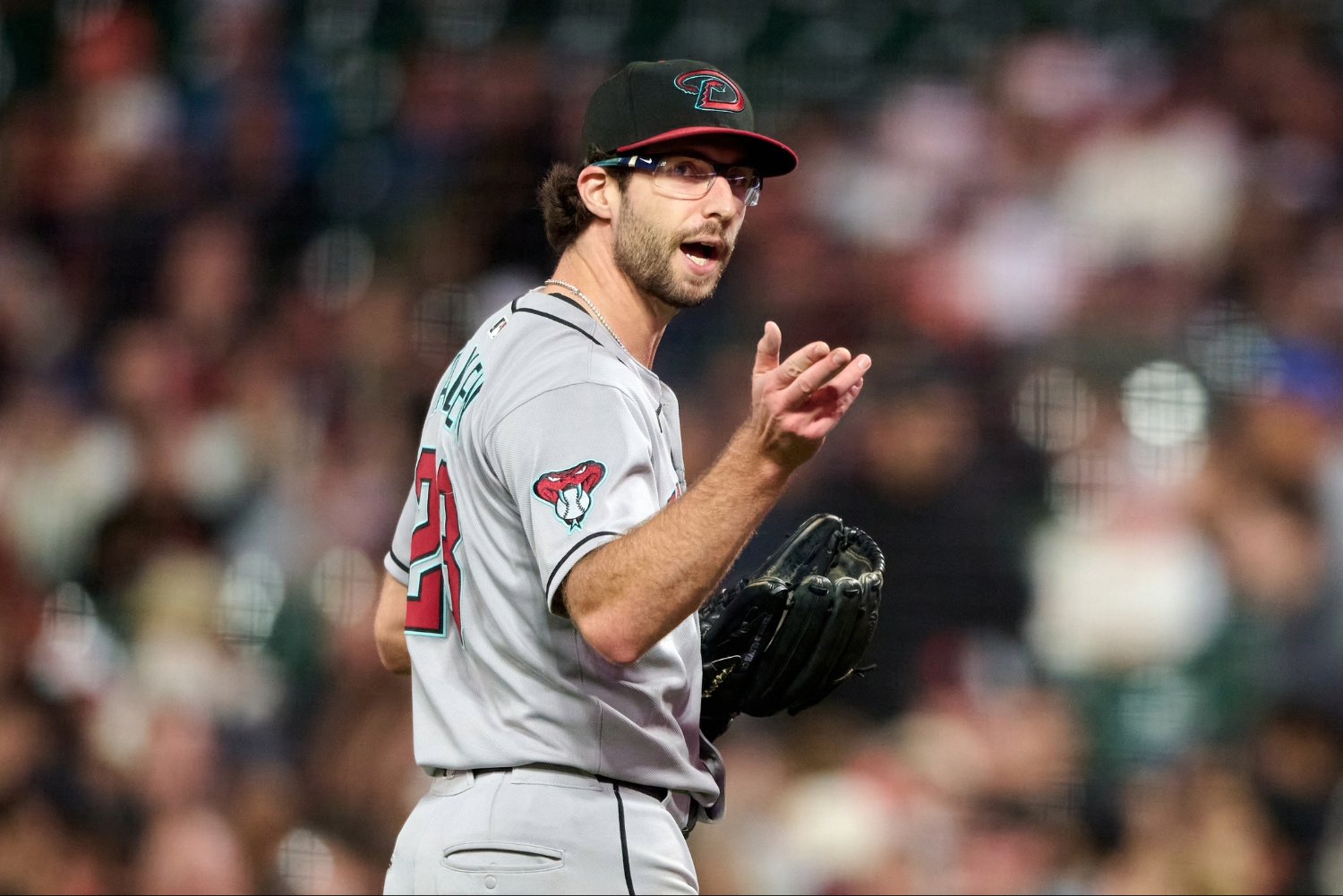 The Red Sox were able to make the playoffs in 2025 thanks in part to their deep carousel of starting pitchers. Despite losing quite a few to the injured list, the team was able to replace them with their depth right up to the end of the season. However, with the team likely needing to replace a few spots in the rotation for 2026, they may need to explore the free agent market to find a replacement. Last offseason, the Red Sox brought in three pitchers to join their rotation in the form of Garrett Crochet, Walker Buehler, and Patrick Sandoval. Of the three, only Sandoval failed to get into a game in 2025. Buehler did not make it through the season with the Red Sox, however, being released at the end of August due to poor performance. While the rotation will have Crochet and Brayan Bello in it to begin 2026, the three remaining spots are up for grabs, as it’s likely Lucas Giolito will leave in free agency, and it isn’t certain that young pitchers Payton Tolle or Connelly Early will be able to win a job out of spring training. Options like Kutter Crawford and Sandoval also remain, but there’s no guarantee when they could get into games that matter after their respective injuries. Because of that, the Red Sox may have to turn their attention to the free-agent market to bring in a veteran to replace the innings provided by Giolito. In the same way that they signed Giolito to a two-year deal after he struggled in 2023, the Red Sox could replicate that with another former All-Star and Cy Young contender in Zac Gallen. Gallen, 30, will be two years older than Giolito when the Red Sox originally signed the former White Sox pitcher. In his age-29 season, there is no debate that Gallen struggled mightily, as he went 13-15 with a 4.83 ERA in 33 starts. In that span, he threw 192 innings and allowed 31 home runs while striking out 175 batters. In Giolito’s age-28 season before coming to Boston, he went 8-15 with a 4.88 ERA in 33 starts. The right-hander tossed 184 1/3 innings while allowing 41 home runs. He did, however, strike out 204 batters. The similarities are there, and it could be an interesting discussion for the Red Sox to attempt to sign Gallen to a deal similar to Giolito’s. A two-year deal with a third-year mutual option might entice the right-hander after a rough 2025 may have lowered his value. With that, let’s look at how Gallen could be a fit for the Red Sox rotation in 2026. The Good: Right away, Gallen gives you innings. Since 2022, Gallen has tossed at least 184 innings every year except for his 2024 season where he missed starts. And in 2023, he crossed the 200-inning threshold. A former All-Star and Cy Young contender, Gallen could be the perfect number three or four in the rotation to go out and provide six to seven innings each night while affording the team a chance to win. When it comes to his pitch arsenal, Gallen meets a quality that @Brandon Glick mentioned in his article on the Freddy Peralta and the Red Sox. In it, he mentions about Andrew Bailey and Craig Breslow valuing pitch-tunneling (the ability to hide your pitch while having late movement to force a batter to change their eye level late during the pitch). This can also be created through shape and movement of pitches. Gallen himself has unique movement on all his pitches except for when it comes to his slider and cutter, two pitchers he uses sparingly. His three main pitches are his fastball, curveball and changeup, a similar smattering of offerings to Giolito, who relied on a fastball, slider and changeup. In Gallen’s case, his main three pitches force hitters to change eye level often in an at-bat, and it wouldn’t be a bad idea for the Red Sox to try and alter the shape of Gallen’s slider or cutter to take on a more sweeper shape to help create more horizontal movement. While 2025 was rough for Gallen, the right-hander previously was one of the best starters in the National League from 2022-2024, when he was a two-time top-5 Cy Young Award finisher and received MVP votes while leading the Arizona Diamondbacks to the World Series in 2023. Along with that, Gallen’s ERA and FIP were both higher than expected in 2025, showing that he may have gotten unlucky at times. His expected ERA was 4.39, nearly half a run lower than his 4.83 ERA, and his expected FIP was 4.12, a whole 0.38 lower than his 4.50 FIP. Should Gallen increase his ground-ball rate form 44.4% and lower the amount of home runs he allows, he could see a closer return to his previous performance. The Bad: Simply put, Gallen did not look like the pitcher he had been in prior years. He gave up a career high in home runs, earned runs and walks while having the lowest ERA+ of his career at 89, suggesting that he was a below-average pitcher in 2025. The 31 home runs may have been the worst aspect, as he had a 14.6% home run to fly ball rate (HR/FB) while allowing almost 38% of his batted balls to be fly balls. To get back to his old self, he would need to limit the long ball, especially in a stadium like Fenway Park. Fortunately, Giolito is a template for how the Sox managed to turn a pitcher who allowed a ton of home runs into a more modest amount, going from 41 home runs in 2023 to just 17 in 2025. In a league where velocity is also important, Gallen’s fastball averaged just 93.5 mph with batters slugging .413 off of it. The bigger issue is how his sinker and cutter were hit even harder, as batters hit .294 and .370 and slugged .529 and .761 against the two offerings, respectively. If the Red Sox were to bring him in to join the rotation, it would be important to rework those pitches in his arsenal or to even drop them completely. Beyond all that, Gallen just wasn’t very good at any one thing last season. His strikeout rate of 21.5% was the lowest of his career and led to a career-low strikeout-to-walk ratio of 13.4%. Likewise, he had the worst ERA- of his career at 114, a huge increase from 2024’s being just 88 (the lower the number the better when it comes to ERA-). Of all qualified pitchers on FanGraphs' rankings, Gallen ranked 45th in ERA-. Of all pitchers with at least 100 innings pitched, he would rank 98th. Again, it doesn’t tell the entire story, as Giolito also had an ERA- of 114 before rebounding with Boston in 2025 to the tune of an ERA- of 80. Gallen is someone who could benefit from the same coaching that Giolito went through in 2025. The Verdict: Gallen checks off a lot of boxes that the Red Sox would like to have in a veteran to help the backend of the rotation. He gives you innings, has been mostly healthy throughout his entire career and has postseason experience to help guide the young pitchers. It would be crazy to not check in with Gallen’s camp during the offseason, especially with the uncertainty surrounding Giolito’s return to Boston. The Red Sox do need a true number two to pair with Crochet and while Gallen may no longer fit that profile, signing him would allow the team to then turn its focus to the trade market. While the likes of Joe Ryan, Hunter Greene, and Freddy Peralta are more exciting names, Gallen is also someone who could provide a huge boost if he rebounds from a tough 2025 season. Currently, MLB Trade Rumors has Gallen's value pegged at four years and $80 million, with most experts expecting him to stay on the West Coast. I don’t think it makes much sense to sign Gallen to more than two (guaranteed) seasons given how his 2025 season looked. As mentioned previously, if you can get him on a contract similar to Giolito, it could turn into a steal. Given that he rejected a qualifying offer from the Diamondbacks, his market could drop to a level the Red Sox are comfortable with, especially if they are willing to offer him a short-term deal with a high AAV that would allow him to return to free agency if he bounces back from his recent struggles.
 -
The Boston Red Sox made a move Thursday afternoon to clear a spot on the 40-man roster, as they needed to reinstate several players from the 60-day injured list. To open up room on the roster, the team designed right-handed pitcher Luis Guerrero for assignment, per MassLive's Chris Cotillo. Guerrero, a 17th-round draft pick in 2021, spent parts of two seasons in the majors with the Red Sox, appearing in 22 games and throwing 27 1/3 innings to a 2.63 ERA. Despite having some of the best raw stuff of anyone in the system, his command and control along with inconsistency held him back during his time in Boston. In his 27 1/3 innings pitched, Guerrero had allowed 16 walks. The 2025 season was when his inconsistency issues were at their worst, as he allowed 14 walks in 17 1/3 innings across 13 games. Guerrero last pitched for Boston on June 27 against Toronto, when he went 1/3 of an inning and allowed two runs on a walk and two hits. He would be placed on the 15-day injured list the next day for a right elbow strain before being transferred to the 60-day injured list on August 2. With the DFA of Guerrero along with previous cuts of Isaiah Campbell and José De León, the Red Sox 40-man roster currently sits at 40. View full rumor
-
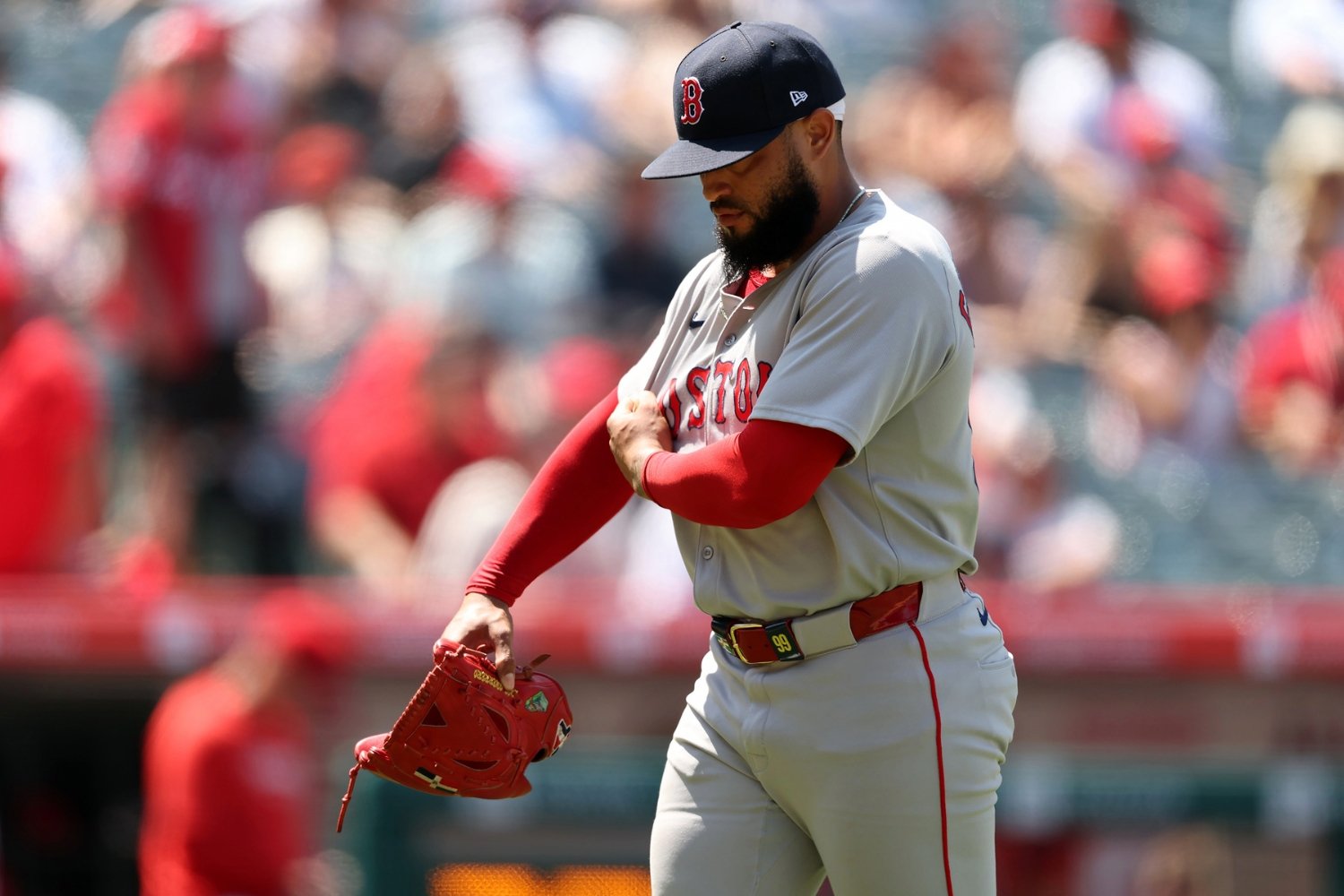 The Boston Red Sox made a move Thursday afternoon to clear a spot on the 40-man roster, as they needed to reinstate several players from the 60-day injured list. To open up room on the roster, the team designed right-handed pitcher Luis Guerrero for assignment, per MassLive's Chris Cotillo. Guerrero, a 17th-round draft pick in 2021, spent parts of two seasons in the majors with the Red Sox, appearing in 22 games and throwing 27 1/3 innings to a 2.63 ERA. Despite having some of the best raw stuff of anyone in the system, his command and control along with inconsistency held him back during his time in Boston. In his 27 1/3 innings pitched, Guerrero had allowed 16 walks. The 2025 season was when his inconsistency issues were at their worst, as he allowed 14 walks in 17 1/3 innings across 13 games. Guerrero last pitched for Boston on June 27 against Toronto, when he went 1/3 of an inning and allowed two runs on a walk and two hits. He would be placed on the 15-day injured list the next day for a right elbow strain before being transferred to the 60-day injured list on August 2. With the DFA of Guerrero along with previous cuts of Isaiah Campbell and José De León, the Red Sox 40-man roster currently sits at 40.
 -
The Arizona Fall League has now completed one month of games, with less than two weeks remaining in the season. For the prospects, it may be a welcome thought as they deal with the Arizona heat on a daily basis, all while playing baseball six times a week. For the Red Sox, they should feel good as an organization for how the season has gone. While it has been a month of ups and downs, the players have continued to put in the hard work to improve their games and get in the extra playing time they may have lost due to injuries throughout the regular minor league season. And while some things have looked ugly, there are still parts of the season that should have fans and the organization alike happy. Unfortunately for the Salt River Rafters, they lost all six games last week and are currently out of a playoff spot. Things are looking more and more likely that the team will fail to advance to the playoffs, though, just as I’ve said every week in these reviews: you’re not here for that. Now onto how the prospects did last week. Jay Allmer made his return to the mound this week after missing the entirety of week three with an injury. During the week, the right-hander threw two innings as he walked and struck out a batter in his first appearance. In the outing, Allmer saw his sinker reach 93.1 mph while also generating two swings and misses. In his second appearance, Allmer tossed one inning and allowed one hit. Also pitching out of the bullpen was Isaac Stebens, who pitched twice during the week. In a combined 2 1/3 innings, Stebens allowed four hits and a walk as an unearned run scored. He also managed to strike out one batter on a 94.9 mph sinker. Top pitching prospect Luis Perales had a mixed outing this week as he threw 55 pitches in 2 1/3 innings. Perales stated before the fall league began that he hoped to reach four innings by the end of the season. That has yet to happen, though he has been able to get close to 60 pitches in his last couple of outings as he continues to build up stamina following his return from Tommy John surgery. In the outing, Perales looked in control through the first two innings as the first pitch of the game was a 100.6 mph fastball. In the first inning, he would strike out two and work around a two-out single. His second inning was more of the same, getting three strikeouts as a base hit was sandwiched between the first and second out of the inning. It was his third inning where he began to tire as the first four batters reached on a double, walk, triple, and then another walk before Perales got the first out on a sac fly that scored the runner from third base. The next batter would take Perales deep and end his day on the mound with a stat line of 2 1/3 innings, five hits, five earned runs, two walks, and five strikeouts. He also managed to induce 10 whiffs while his fastball topped out at 100.9 mph. In his lone appearance this week, Jojo Ingrassia pitched rather well despite being stuck with a blown save. Tossing three innings out of the bullpen, the left-handed pitcher allowed just one run on four hits and a walk. Pitching in the fifth, Ingrassia worked around a one-out walk and a double that placed runners on second and third. While the next batter tied the game with a single, Ingrassia buckled down and got the next two outs. In the final two innings, he would only allow two hits. Over the three innings, he managed to generate nine whiffs. Of all the Red Sox pitchers this week, Brandon Neely may have had the roughest outing. Appearing in just one game, Neely threw 1 2/3 innings while allowing three runs on three hits and two walks. He also struck out three. However, the young pitcher needed 44 pitches to not even get through two innings. His first inning was rather promising, though, getting two strikeouts, both with his cutter. Much like Perales, it was his final inning that did him in as he opened it with a groundout before the next four hitters reached base and made the game 9-1. Neely would strike out his final hitter on a 94.2 mph sinker before being replaced. Offensively, it was a struggle again as even the previously red-hot Stanley Tucker saw his hitting cool off. Tucker, who had been one of the better hitters in the fall league, appeared in four games and went 1-for-12 with four strikeouts and three walks. He also stole one base during the week, bringing his total to 10. At the end of the week, Tucker was hitting .276 with a .728 OPS. Joining Tucker with a rough week offensively was Nelly Taylor, the outfielder who appeared in just two games during the week and failed to collect a hit. In total, he went 0-for-5 with three strikeouts, three walks, and a run scored. He also stole two bases to bring his season total to seven. Taylor, who has played sparingly, has seen the least amount of playing time out of the three position players sent by the Red Sox. The final position player, Johanfran Garcia, appeared in four games, split between catcher and designated hitter, as he showed some signs offensively. Across his four appearances, Garcia went 2-for-11 with his second home run of the season. In the eighth inning of the November 2 game, Garcia took a slider up in the zone and deposited it into center field to make it a one-run game. The ball had an exit velocity of 108.6 mph. To go along with the home run, Garcia doubled earlier in the week. He also walked five times and struck out four times. Garcia also drove in three runs during the week. The season is quickly coming to a close, with only one full week remaining before the AFL prepares for the last few games, the All-Star game, and the playoffs. Hopefully, the players sent by the Red Sox continue to show signs of improvement despite less-than-ideal stat lines. View full article
-
Red Sox Arizona Fall League Week In Review: One Month Down
Nick John posted an article in Minor Leagues
 The Arizona Fall League has now completed one month of games, with less than two weeks remaining in the season. For the prospects, it may be a welcome thought as they deal with the Arizona heat on a daily basis, all while playing baseball six times a week. For the Red Sox, they should feel good as an organization for how the season has gone. While it has been a month of ups and downs, the players have continued to put in the hard work to improve their games and get in the extra playing time they may have lost due to injuries throughout the regular minor league season. And while some things have looked ugly, there are still parts of the season that should have fans and the organization alike happy. Unfortunately for the Salt River Rafters, they lost all six games last week and are currently out of a playoff spot. Things are looking more and more likely that the team will fail to advance to the playoffs, though, just as I’ve said every week in these reviews: you’re not here for that. Now onto how the prospects did last week. Jay Allmer made his return to the mound this week after missing the entirety of week three with an injury. During the week, the right-hander threw two innings as he walked and struck out a batter in his first appearance. In the outing, Allmer saw his sinker reach 93.1 mph while also generating two swings and misses. In his second appearance, Allmer tossed one inning and allowed one hit. Also pitching out of the bullpen was Isaac Stebens, who pitched twice during the week. In a combined 2 1/3 innings, Stebens allowed four hits and a walk as an unearned run scored. He also managed to strike out one batter on a 94.9 mph sinker. Top pitching prospect Luis Perales had a mixed outing this week as he threw 55 pitches in 2 1/3 innings. Perales stated before the fall league began that he hoped to reach four innings by the end of the season. That has yet to happen, though he has been able to get close to 60 pitches in his last couple of outings as he continues to build up stamina following his return from Tommy John surgery. In the outing, Perales looked in control through the first two innings as the first pitch of the game was a 100.6 mph fastball. In the first inning, he would strike out two and work around a two-out single. His second inning was more of the same, getting three strikeouts as a base hit was sandwiched between the first and second out of the inning. It was his third inning where he began to tire as the first four batters reached on a double, walk, triple, and then another walk before Perales got the first out on a sac fly that scored the runner from third base. The next batter would take Perales deep and end his day on the mound with a stat line of 2 1/3 innings, five hits, five earned runs, two walks, and five strikeouts. He also managed to induce 10 whiffs while his fastball topped out at 100.9 mph. In his lone appearance this week, Jojo Ingrassia pitched rather well despite being stuck with a blown save. Tossing three innings out of the bullpen, the left-handed pitcher allowed just one run on four hits and a walk. Pitching in the fifth, Ingrassia worked around a one-out walk and a double that placed runners on second and third. While the next batter tied the game with a single, Ingrassia buckled down and got the next two outs. In the final two innings, he would only allow two hits. Over the three innings, he managed to generate nine whiffs. Of all the Red Sox pitchers this week, Brandon Neely may have had the roughest outing. Appearing in just one game, Neely threw 1 2/3 innings while allowing three runs on three hits and two walks. He also struck out three. However, the young pitcher needed 44 pitches to not even get through two innings. His first inning was rather promising, though, getting two strikeouts, both with his cutter. Much like Perales, it was his final inning that did him in as he opened it with a groundout before the next four hitters reached base and made the game 9-1. Neely would strike out his final hitter on a 94.2 mph sinker before being replaced. Offensively, it was a struggle again as even the previously red-hot Stanley Tucker saw his hitting cool off. Tucker, who had been one of the better hitters in the fall league, appeared in four games and went 1-for-12 with four strikeouts and three walks. He also stole one base during the week, bringing his total to 10. At the end of the week, Tucker was hitting .276 with a .728 OPS. Joining Tucker with a rough week offensively was Nelly Taylor, the outfielder who appeared in just two games during the week and failed to collect a hit. In total, he went 0-for-5 with three strikeouts, three walks, and a run scored. He also stole two bases to bring his season total to seven. Taylor, who has played sparingly, has seen the least amount of playing time out of the three position players sent by the Red Sox. The final position player, Johanfran Garcia, appeared in four games, split between catcher and designated hitter, as he showed some signs offensively. Across his four appearances, Garcia went 2-for-11 with his second home run of the season. In the eighth inning of the November 2 game, Garcia took a slider up in the zone and deposited it into center field to make it a one-run game. The ball had an exit velocity of 108.6 mph. To go along with the home run, Garcia doubled earlier in the week. He also walked five times and struck out four times. Garcia also drove in three runs during the week. The season is quickly coming to a close, with only one full week remaining before the AFL prepares for the last few games, the All-Star game, and the playoffs. Hopefully, the players sent by the Red Sox continue to show signs of improvement despite less-than-ideal stat lines.
 -
In what was an expected outcome, the Boston Red Sox have declined Liam Hendriks' $12 million option for the 2026 season. Hendriks will instead receive a $2 million buyout. Chris Cotillo of MassLive reported the news first. Hendriks, who signed with the Red Sox as spring training was beginning in 2024, was rehabbing from surgery. While he started a rehab assignment in the second half of the season, Hendriks did not pitch in the majors in 2024. 2025 was more of the same when it came to Hendriks staying healthy as he opened the season on the injured list die to right elbow inflammation before being activated on April 19. Hendriks would end up back on the injured list with right hip inflammation on May 30 before being transferred to the 60-Day injured list in early July. When healthy, Hendriks struggled with the Red Sox, appearing in 14 games and going 0-2 with a 6.59 ERA in 13 2/3 innings. Hendriks, entering his age-37 season will look to sign with another team an in attempt to continue his career. View full rumor
-
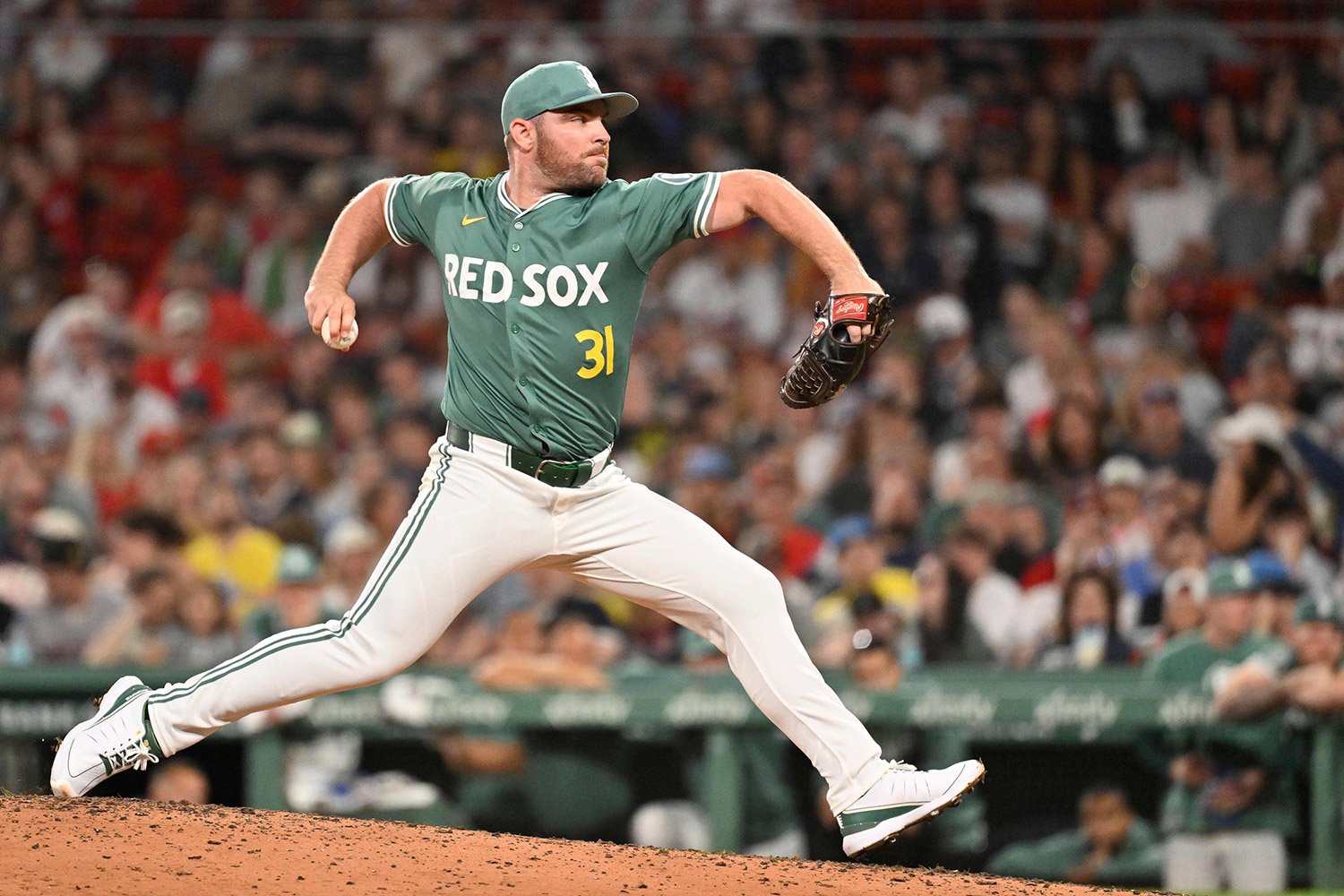 In what was an expected outcome, the Boston Red Sox have declined Liam Hendriks' $12 million option for the 2026 season. Hendriks will instead receive a $2 million buyout. Chris Cotillo of MassLive reported the news first. Hendriks, who signed with the Red Sox as spring training was beginning in 2024, was rehabbing from surgery. While he started a rehab assignment in the second half of the season, Hendriks did not pitch in the majors in 2024. 2025 was more of the same when it came to Hendriks staying healthy as he opened the season on the injured list die to right elbow inflammation before being activated on April 19. Hendriks would end up back on the injured list with right hip inflammation on May 30 before being transferred to the 60-Day injured list in early July. When healthy, Hendriks struggled with the Red Sox, appearing in 14 games and going 0-2 with a 6.59 ERA in 13 2/3 innings. Hendriks, entering his age-37 season will look to sign with another team an in attempt to continue his career.
 -
I feel the same. He played two games last year. The team is high on him for a good reason so we need to give him time.
-
Growing up in Georgia, Conrad Cason saw no shortage of competitive sports teams. From high school to college to professional sports, the quality of play on the field was always top-notch. Always wanting to stay busy as someone who loved the outdoors, sports became a perfect outlet for Cason. “Baseball was always the number one, but I like to keep myself busy, so I ended up playing a bunch of other sports. “In middle school and high school, you kind of just want to be around your friends as much as possible,” Cason stated in an exclusive interview with me. “So, I played football and basketball and ran track for sort of those reasons. To keep me busy and really keep me in shape for baseball.” With that, he solely focused on baseball during his sophomore year, having played football as well earlier in high school. Things changed as he “hit the ground running” and dedicated himself to his craft on the diamond. And, when he wasn’t playing it, Cason was cheering on the Atlanta Braves, where he got to watch them win the 2021 World Series before a franchise icon and one of his favorite players left in free agency. As Freddie Freeman left the Braves for the Dodgers, Cason learned about the business aspect of the sport early on. “Yeah, when he left, I had a couple tears.” Good times or bad times, he watched through both as he rooted for the Braves and the Atlanta Falcons through the years. Though, it wasn’t just professional sports, as Georgia is filled with highly successful collegiate programs across a variety of disciplines. High school sports were important to the community, and college was especially so. “Whatever season sport was in, that was the sport we were rooting for and cheering for. Growing up in Georgia, they’re part of the big three for almost every sport. Especially at the high school level. 100% at the college level, you can’t really say Georgia’s out of it in any sport.” And after working hard throughout his high school career, Cason is now a professional within the Boston Red Sox organization after getting drafted in 2024. Taken in the eighth round, Cason was drafted as a two-way player, which means the team plans to develop him both as a pitcher and as a hitter, with his professional debut being one he cherishes. “It was a fun day. It was a good day, it was a good outing. I think I started with five straight strikeouts, and I walked the one batter, then I got a groundball to end it or a pop fly, something like that. “I loved it. It was electric, the environment was awesome. And all the guys down there in Fort Myers on that rookie ball team were amazing,” Cason reminisced. While the young two-way player only got into two games in 2025, he did manage to get both his first professional strikeout as a pitcher and his first professional hit He says he still has the balls for both events with him at home. Cason’s season concluded after those two games, being shut down before finally going under the knife in August for Tommy John surgery. Since then, it’s been 11 weeks as Cason has continues to rehab and prepare for spring training. The main focus for him right now is to get healthy for camp and get back out on the field, to make sure he hasn’t regressed in any areas during his rehab. Though he remains early on in his recovery process, the young prospect assured me he remains positive about his outlook. “Right now, I can tell you that everything has been going well... [I'm] on track really to be where I am and get to throwing and be on programs and swinging a bat.” Cason also stated that he has been able to begin working out again, and that he feels good while doing so. And while this has been a grind and a long process for him, one thing is for certain: He isn't backing down from the challenge. From a former four-sport athlete to playing professional baseball, Cason has been around competition his entire life. This latest injury won’t hold him back as he fights to get back on the field at some point in 2026. View full article
-
 Growing up in Georgia, Conrad Cason saw no shortage of competitive sports teams. From high school to college to professional sports, the quality of play on the field was always top-notch. Always wanting to stay busy as someone who loved the outdoors, sports became a perfect outlet for Cason. “Baseball was always the number one, but I like to keep myself busy, so I ended up playing a bunch of other sports. “In middle school and high school, you kind of just want to be around your friends as much as possible,” Cason stated in an exclusive interview with me. “So, I played football and basketball and ran track for sort of those reasons. To keep me busy and really keep me in shape for baseball.” With that, he solely focused on baseball during his sophomore year, having played football as well earlier in high school. Things changed as he “hit the ground running” and dedicated himself to his craft on the diamond. And, when he wasn’t playing it, Cason was cheering on the Atlanta Braves, where he got to watch them win the 2021 World Series before a franchise icon and one of his favorite players left in free agency. As Freddie Freeman left the Braves for the Dodgers, Cason learned about the business aspect of the sport early on. “Yeah, when he left, I had a couple tears.” Good times or bad times, he watched through both as he rooted for the Braves and the Atlanta Falcons through the years. Though, it wasn’t just professional sports, as Georgia is filled with highly successful collegiate programs across a variety of disciplines. High school sports were important to the community, and college was especially so. “Whatever season sport was in, that was the sport we were rooting for and cheering for. Growing up in Georgia, they’re part of the big three for almost every sport. Especially at the high school level. 100% at the college level, you can’t really say Georgia’s out of it in any sport.” And after working hard throughout his high school career, Cason is now a professional within the Boston Red Sox organization after getting drafted in 2024. Taken in the eighth round, Cason was drafted as a two-way player, which means the team plans to develop him both as a pitcher and as a hitter, with his professional debut being one he cherishes. “It was a fun day. It was a good day, it was a good outing. I think I started with five straight strikeouts, and I walked the one batter, then I got a groundball to end it or a pop fly, something like that. “I loved it. It was electric, the environment was awesome. And all the guys down there in Fort Myers on that rookie ball team were amazing,” Cason reminisced. While the young two-way player only got into two games in 2025, he did manage to get both his first professional strikeout as a pitcher and his first professional hit He says he still has the balls for both events with him at home. Cason’s season concluded after those two games, being shut down before finally going under the knife in August for Tommy John surgery. Since then, it’s been 11 weeks as Cason has continues to rehab and prepare for spring training. The main focus for him right now is to get healthy for camp and get back out on the field, to make sure he hasn’t regressed in any areas during his rehab. Though he remains early on in his recovery process, the young prospect assured me he remains positive about his outlook. “Right now, I can tell you that everything has been going well... [I'm] on track really to be where I am and get to throwing and be on programs and swinging a bat.” Cason also stated that he has been able to begin working out again, and that he feels good while doing so. And while this has been a grind and a long process for him, one thing is for certain: He isn't backing down from the challenge. From a former four-sport athlete to playing professional baseball, Cason has been around competition his entire life. This latest injury won’t hold him back as he fights to get back on the field at some point in 2026.
 -
While the Boston Red Sox weren’t the World Series champions in 2025, the team still managed to bring home some hardware in the form of two Gold Glove awards thanks to some amazing defense from their outfield. Winning his second consecutive Gold Glove award in right field was Wilyer Abreu, as the outfielder managed to put on a defensive display despite being limited to just 104 games in right field this season. In 847 1/3 innings, Abreu wound up with 215 putouts and seven outfield assists. He also started three double plays. In total, he finished the season with a .978 fielding percentage while putting up 15 Defensive Runs Saved, eight Outs Above Average, and a Fielding Run Value of eight. Of all right fielders in the majors, Abreu’s DRS was tied for second, his OAA was tied for second, and his FRV was second. He also led all right fielders with a 5.8 FanGraphs' defensive value. Joining Abreu is Ceddanne Rafaela, as the center fielder won his first Gold Glove after appearing in 141 games at the position. In 1167 1/3 innings, the walking highlight reel made 319 putouts while also earning eight assists. For the season he finished with a .985 fielding percentage at the position. Though, that may be an understatement of just how good he was in center. Out of all center fielders, Rafaela led all of the majors with 20 DRS, a good five runs above second place which belonged to Pete Crow-Armstrong of the Cubs. His 22 OAA just barely allowed him to pass Crow-Armstrong for first, as did his Fielding Run Value of 22. Rafaela also led all center fielders with a defensive value of 18.7. Rafaela had previously been named the 2025 Fielding Bible Award winner for center field back near the end of October, being the first-ever Red Sox center fielder to win the award, though Abreu had won it in 2024 for right field. Carlos Narváez was also a finalist for a Gold Glove award for catchers, but the award instead went to Dillon Dingler of the Detroit Tigers Part of the Red Sox's success in 2025 was due in part to the great defensive effort of the outfield, and now two of the main contributors to that are being recognized with their rightfully owed awards. View full rumor
-
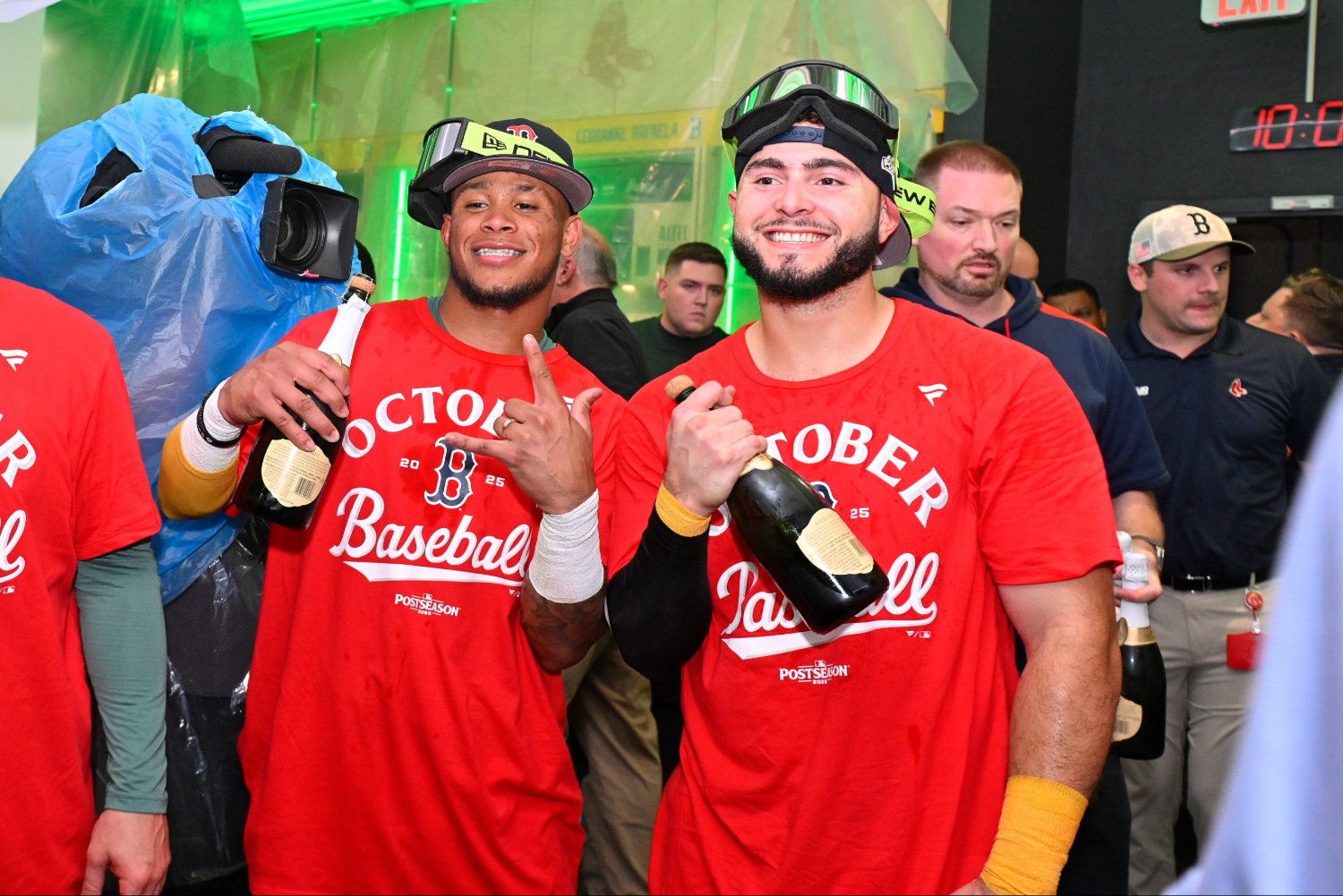 While the Boston Red Sox weren’t the World Series champions in 2025, the team still managed to bring home some hardware in the form of two Gold Glove awards thanks to some amazing defense from their outfield. Winning his second consecutive Gold Glove award in right field was Wilyer Abreu, as the outfielder managed to put on a defensive display despite being limited to just 104 games in right field this season. In 847 1/3 innings, Abreu wound up with 215 putouts and seven outfield assists. He also started three double plays. In total, he finished the season with a .978 fielding percentage while putting up 15 Defensive Runs Saved, eight Outs Above Average, and a Fielding Run Value of eight. Of all right fielders in the majors, Abreu’s DRS was tied for second, his OAA was tied for second, and his FRV was second. He also led all right fielders with a 5.8 FanGraphs' defensive value. Joining Abreu is Ceddanne Rafaela, as the center fielder won his first Gold Glove after appearing in 141 games at the position. In 1167 1/3 innings, the walking highlight reel made 319 putouts while also earning eight assists. For the season he finished with a .985 fielding percentage at the position. Though, that may be an understatement of just how good he was in center. Out of all center fielders, Rafaela led all of the majors with 20 DRS, a good five runs above second place which belonged to Pete Crow-Armstrong of the Cubs. His 22 OAA just barely allowed him to pass Crow-Armstrong for first, as did his Fielding Run Value of 22. Rafaela also led all center fielders with a defensive value of 18.7. Rafaela had previously been named the 2025 Fielding Bible Award winner for center field back near the end of October, being the first-ever Red Sox center fielder to win the award, though Abreu had won it in 2024 for right field. Carlos Narváez was also a finalist for a Gold Glove award for catchers, but the award instead went to Dillon Dingler of the Detroit Tigers Part of the Red Sox's success in 2025 was due in part to the great defensive effort of the outfield, and now two of the main contributors to that are being recognized with their rightfully owed awards.
 -
Five Red Sox Prospects That Exceeded Expectations In 2025
Nick John posted an article in Minor Leagues
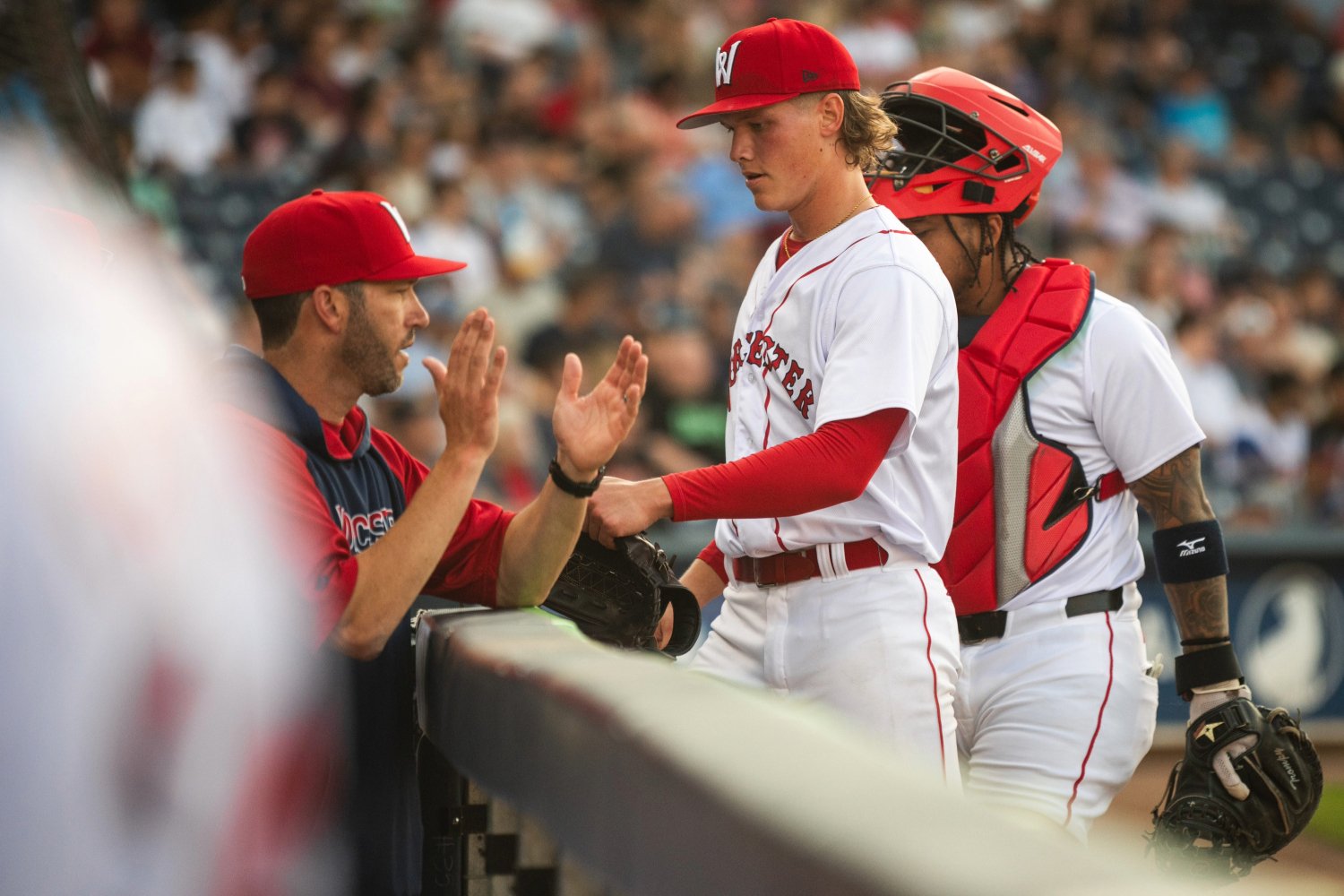 Expectations are a finicky thing when it comes to baseball prospects. Development is far from linear in this sport, and most players are one injury away from exiting the minds of prospect gurus. On the same note, some players are just one strong season away from emerging as Top 100 mainstays. It's never been easy to fully know which side of the ledger a prospect will fall on, but it is easy to celebrate those who live up to the hype, and in some cases exceed it. Here are five Red Sox prospects who exceeded expectations this season. 5) Blaze Jordan, 1B/3B, Portland/Worcester Before being traded near the deadline to St. Louis for Steven Matz, Jordan was putting together a season that could have changed some future plans in Boston. In 88 games, Jordan was performing as one of the best offensive players in the entire system, as he was hitting .308/.377/.495 with an OPS of .872. He also had 22 doubles, a triple, 12 home runs and 62 RBIs. Given that production, fans wondered if there was a chance he could have made it up to Boston by the end of the season. What really stood out for Jordan was his increased ability to walk while lowering his strikeout rate. At the time of his promotion from Portland to Worcester, he was walking 12.5% of the time, a number that dropped in Worcester but was still higher than his usual career numbers. His strikeout rate was also the lowest of his career, sitting at just 10.4% with Worcester. Defensively, he split time between first and third base, committing just one error at first in 42 games between Double-A and Triple-A. At third base he was even better, not committing a single error in 41 games between the two levels. Of course, he now resides in the Cardinals' system, and odds are Jordan will never wear a Red Sox uniform. Still, his first half is worth celebrating, even if he was traded for a rental reliever. 4) Hayden Mullins, SP, Greenville/Portland Mullins, drafted in the 12th round of the 2022 MLB Draft, really broke out in 2025. After barely pitching in 2023 and then having an average season in 2024 with Greenville, Mullins started strong and continued to pitch well through the entire season. Opening the season with Greenville, Mullins was not long for South Carolina as he pitched in four games, three of them starts, tossing 17 innings while allowing just two runs on 11 hits. Most impressively, he secured 27 strikeouts while walking just three batters. Upon being promoted to Portland, his hot streak continued, as he started 18 games in Double-A and went 7-2. Across those 18 games, he wound up throwing 84 2/3 innings, allowing 26 runs, 23 of them earned, on 51 hits. He also struck out 96 batters and didn’t look bothered by the increased competition. Mullins, who has long been viewed as a big league reliever, may have changed the narrative in 2025. He will be pitching in his age-25 season next year and will be eligible for the Rule 5 Draft this winter, so there is a chance a team could take a flier on him due to his fastball-slider combination having shown great bat-missing ability this season. Expect the Red Sox to protect him if they believe in his ability to stick as a starter as he climbs the ranks. 3) Connelly Early, SP, Portland/Worcester/Boston To say Early exceeded expectations this season is an understatement. Opening the year with Portland, he would finish out the season by starting Game 3 of the Red Sox's Wild Card series against the Yankees. While he didn’t get the win, the young left-hander pitched better than his final stat line would suggest. Across the regular season, Early pitched in 25 games across three levels, making 18 starts. During his time in the minors, Early finished the year 10-3 with a 2.60 ERA in 100 1/3 innings while striking out 132 batters. While Early was viewed as a top pitching prospect with the Red Sox, no one quite expected him to make the jump to the majors and play such a key role in their playoff hopes. With Boston, Early made four starts down the stretch as the Red Sox fought for a playoff spot. In those four starts, Early would toss 19 1/3 innings while allowing just six runs, five of them earned. More impressive for the southpaw were his 29 strikeouts to just four walks, a rather impressive display against the best hitters in the world. With the rotation needing a few additions for next season, it would not be a surprise if Early opens 2026 as part of Alex Cora's five-man group. 2) Payton Tolle, SP, Greenville/Portland/Worcester/Boston It isn’t often a player advances four levels within one year. It’s even rarer for it to be a pitcher. Tolle managed to do that and all in just his second year focusing exclusively on just pitching, which is what makes it so impressive. Drafted in the second round of the 2024 draft, the southpaw was immediately viewed as a top prospect by those within the organization and found himself ranked as a Top 100 prospect by May of 2025. Tolle, who was on an innings limit by the end of the season, appeared in 20 minor league games and seven in the majors for a total of 27. Of those, he made 21 starts. During his time in the minors, Tolle impressed with his powerful fastball as he struck out 133 batters in just 91 2/3 innings. However, his secondaries lack polish and that was on display in the majors when he allowed 11 earned runs in just 16 1/3 innings, including five home runs. His ability to rack up strikeouts remained, though, as he notched 19 in that limited major league run. Tolle will likely compete for a spot in the rotation during the 2026 spring training, though he is just as likely to open the year in Triple-A to work on his secondary offerings. 1) Yhoiker Fajardo, SP, Florida Complex League/Salem Fajardo was a huge surprise for the farm system after getting him from the White Sox for Cam Booser. Despite being a Dominican Summer League All-Star in 2024, it’s hard to say anyone expected this performance from the right-hander in his stateside debut. In six games in the FCL, Fajardo threw 20 2/3 innings and allowed just one earned run on nine hits. He also struck out 24 and walked seven in that same span before getting a promotion to Salem for the remainder of the season. In 13 starts there, Fajardo continued to impress at the age of 18. In 51 1/3 innings, he allowed 21 runs, 17 of them earned, while also striking out 59 batters. Fajardo is an interesting prospect thanks in part to already having a four-pitch mix that includes two secondary pitches in his changeup and slider that already look to be at least an average offerings. Both of his secondaries also showcase bat-missing ability that allows his two fastballs to work better. To add to his pedigree this year, multiple scouts stated he was the best pitcher on the Red Sox FCL team in the 2025 season. Because of how well he handled the competition with Salem for a good portion of the campaign, it wouldn’t be out of the question to see a quick promotion to Greenville for the teenage phenom.
 -
In an exclusive interview with Talk Sox, Red Sox 2024 8th-round pick Conrad Cason talks about growing up playing sports, his favorite players growing up, and his professional debut in 2025. The young two-way player also talks about how his rehab process has gone and is looking forward to spring training. View full video
-
In an exclusive interview with Talk Sox, Red Sox 2024 8th-round pick Conrad Cason talks about growing up playing sports, his favorite players growing up, and his professional debut in 2025. The young two-way player also talks about how his rehab process has gone and is looking forward to spring training.
-
The third week of the Arizona Fall League has wrapped up, and like always, there were some solid performances, as well as many that left something to be desired. Unlike the week before, Boston Red Sox pitchers did not get into many games, yet some still managed to show some improvement. From an offensive standpoint, the status quo mostly went untouched. Across the week, the Salt River Rafters played six games and went 3-3 to bring their record on the season to 8-8 at the end of the third week. The team is still in the middle of the standings and fighting to make the playoffs. But here at Talk Sox, we’re more interested in how the Red Sox prospects did. After making two starts last week, top prospect Luis Perales made just one start where he nearly made it through three innings. The outing was the longest of the fall season for Perales, as he tossed 2 2/3 innings, allowing three runs, two earned, on five hits and a walk. Perales also struck out two batters. The right-hander finished the day with 54 pitches, tossing 33 of them for strikes. His toughest inning was the second where he allowed two hits and a walk while both of his earned runs scored. After allowing the first three batters to reach base and watching the score grow to 3-0, Perales buckled down and picked off Miguel Ugueto before getting a groundout from Patrick Clohisy and a fly out from Nacho Alvarez Jr. His fastball topped out at 100.5 mph. Also in the one-start club last week was Jojo Ingrassia, though his outing didn't go as well. Ingrassia struggled as he was pulled after 57 pitches in under two innings. In total, Ingrassia tossed 1 2/3 innings, allowing four earned runs on four hits and two walks. He also managed to strike out three batters. His first inning was fine enough, working around a single, error and walk to escape the jam without allowing a run. It was the second inning where things got messy for the young pitcher. After striking out Ugueto to lead off the inning, he allowed a single, walk and then an RBI double. A fielder’s choice followed that up to make it 2-1 before a wild pitch made it 3-1. A second double in the inning drove in the fourth run of the outing and after getting one more out, he was replaced with Isaac Stebens. Speaking of, Stebens appeared in two games this week, tossing 1 1/3 innings between the two outings and recording his first win. In his first outing, Stebens pitched one inning, working around a hit and a walk while throwing 16 pitches. His second outing came in relief of Ingrassia, getting one out and earning the win. Brandon Neely appeared in just one game this week as he tossed two scoreless innings. Across those frames, he allowed two hits and a walk while striking out three batters. He also needed 35 pitches to get through the outing with 21 of them being thrown for strikes. Neely came on in relief in the fifth inning, promptly allowing a single to his first batter before getting three straight outs. The sixth inning started much like the fifth, with Neely allowing a leadoff single before buckling down. Neely struck out his next two batters before a stolen base, balk and a walk had runners at the corners. Neely then got out of the jam by striking out Cole Mathis with a 94.9 mph sinker. Jay Allmer did not pitch this week after leaving his last appearance with an injury. Offensively, the position players mostly struggled with the exception of Stanley Tucker. The utility player has been a surprise in Arizona as he’s been one of the better offensive players when in the Rafters' lineup. During his third week, Tucker would go 7-for-18 in five games played. In that span he had two doubles, four RBIs and five strikeouts while walking once. He also stole three bases to bring his total on the season to nine. The bigger name in Johanfran Garcia struggled however, as he went just 4-for-17 with an RBI in four games played this week. In those 17 at-bats, the catching prospect struck out four times and walked once. Though, the biggest moment of the week for Garcia came in a 5-4 extra inning loss where he homered in the bottom of the sixth inning to give the Rafters a 3-2 lead. After falling behind 0-2 in the count, Garcia swung at a sweeper that covered the inside of the plate, depositing it into left field for his first home run in Arizona. The ball had an exit velocity of 98.4 mph. The final Red Sox player to get into any games was Nelly Taylor, who had a better week offensively than in the past, though his overall numbers remain lacking. Appearing in three games, Taylor went 2-for-9 with two RBIs, three walks and three strikeouts. He also stole two bases to bring his season total to five. Defensively, Taylor split time between center field and left field. The third week was much of the same as the previous two, as the team's prospects continue to shake off rust and work through development curves. With the Arizona Fall League roughly halfway through, it’ll be interesting to see how they hold up for the few remaining weeks. View full article
-
 The third week of the Arizona Fall League has wrapped up, and like always, there were some solid performances, as well as many that left something to be desired. Unlike the week before, Boston Red Sox pitchers did not get into many games, yet some still managed to show some improvement. From an offensive standpoint, the status quo mostly went untouched. Across the week, the Salt River Rafters played six games and went 3-3 to bring their record on the season to 8-8 at the end of the third week. The team is still in the middle of the standings and fighting to make the playoffs. But here at Talk Sox, we’re more interested in how the Red Sox prospects did. After making two starts last week, top prospect Luis Perales made just one start where he nearly made it through three innings. The outing was the longest of the fall season for Perales, as he tossed 2 2/3 innings, allowing three runs, two earned, on five hits and a walk. Perales also struck out two batters. The right-hander finished the day with 54 pitches, tossing 33 of them for strikes. His toughest inning was the second where he allowed two hits and a walk while both of his earned runs scored. After allowing the first three batters to reach base and watching the score grow to 3-0, Perales buckled down and picked off Miguel Ugueto before getting a groundout from Patrick Clohisy and a fly out from Nacho Alvarez Jr. His fastball topped out at 100.5 mph. Also in the one-start club last week was Jojo Ingrassia, though his outing didn't go as well. Ingrassia struggled as he was pulled after 57 pitches in under two innings. In total, Ingrassia tossed 1 2/3 innings, allowing four earned runs on four hits and two walks. He also managed to strike out three batters. His first inning was fine enough, working around a single, error and walk to escape the jam without allowing a run. It was the second inning where things got messy for the young pitcher. After striking out Ugueto to lead off the inning, he allowed a single, walk and then an RBI double. A fielder’s choice followed that up to make it 2-1 before a wild pitch made it 3-1. A second double in the inning drove in the fourth run of the outing and after getting one more out, he was replaced with Isaac Stebens. Speaking of, Stebens appeared in two games this week, tossing 1 1/3 innings between the two outings and recording his first win. In his first outing, Stebens pitched one inning, working around a hit and a walk while throwing 16 pitches. His second outing came in relief of Ingrassia, getting one out and earning the win. Brandon Neely appeared in just one game this week as he tossed two scoreless innings. Across those frames, he allowed two hits and a walk while striking out three batters. He also needed 35 pitches to get through the outing with 21 of them being thrown for strikes. Neely came on in relief in the fifth inning, promptly allowing a single to his first batter before getting three straight outs. The sixth inning started much like the fifth, with Neely allowing a leadoff single before buckling down. Neely struck out his next two batters before a stolen base, balk and a walk had runners at the corners. Neely then got out of the jam by striking out Cole Mathis with a 94.9 mph sinker. Jay Allmer did not pitch this week after leaving his last appearance with an injury. Offensively, the position players mostly struggled with the exception of Stanley Tucker. The utility player has been a surprise in Arizona as he’s been one of the better offensive players when in the Rafters' lineup. During his third week, Tucker would go 7-for-18 in five games played. In that span he had two doubles, four RBIs and five strikeouts while walking once. He also stole three bases to bring his total on the season to nine. The bigger name in Johanfran Garcia struggled however, as he went just 4-for-17 with an RBI in four games played this week. In those 17 at-bats, the catching prospect struck out four times and walked once. Though, the biggest moment of the week for Garcia came in a 5-4 extra inning loss where he homered in the bottom of the sixth inning to give the Rafters a 3-2 lead. After falling behind 0-2 in the count, Garcia swung at a sweeper that covered the inside of the plate, depositing it into left field for his first home run in Arizona. The ball had an exit velocity of 98.4 mph. The final Red Sox player to get into any games was Nelly Taylor, who had a better week offensively than in the past, though his overall numbers remain lacking. Appearing in three games, Taylor went 2-for-9 with two RBIs, three walks and three strikeouts. He also stole two bases to bring his season total to five. Defensively, Taylor split time between center field and left field. The third week was much of the same as the previous two, as the team's prospects continue to shake off rust and work through development curves. With the Arizona Fall League roughly halfway through, it’ll be interesting to see how they hold up for the few remaining weeks.
 -
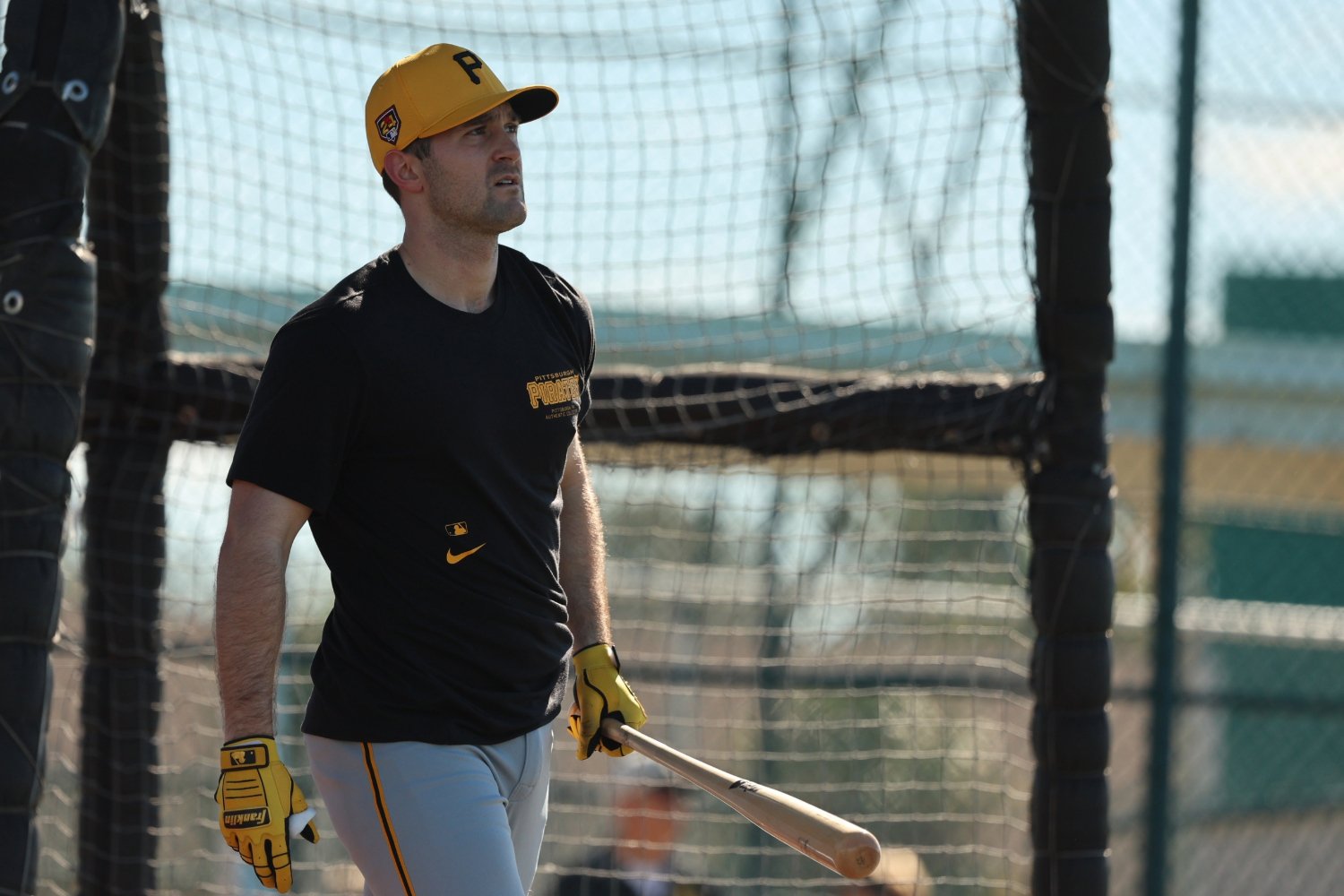 While the Toronto Blue Jays and Los Angeles Dodgers continue to battle it out in the World Series, the Boston Red Sox have begun to build up depth for the 2026 season. Late Sunday night, the team came to an agreement with free agent catcher Jason Delay on a minor league deal according to MassLive's Chris Cotillo. It was first reported by Just Baseball Media's Aram Leighton. Delay, who has played parts of three seasons in the majors, will immediately slot in as the third catcher on the depth chart behind Carlos Narváez and Connor Wong. Delay will turn 31 in March and was drafted in the fourth round of the 2017 draft by the Pittsburgh Pirates. He would go on to make his major league debut in 2022 and play in 134 games between then and 2024. Across that span, he hit .231/.295/.315 with 20 doubles, one triple, two home runs and 35 RBIs. In 2025, he split time with Atlanta‘s Double-A and Triple-A teams. In truth, Delay's glove is what he's better known for, as he was a strong framer in 2022 and 2023 while also throwing out 16 baserunners during his time in the majors. While the details of the contract are currently unknown, it is likely Delay has received a non-roster invite to spring training. The move, however, is more about acquiring depth at Triple-A in the event of a potential injury.
 -
While the Toronto Blue Jays and Los Angeles Dodgers continue to battle it out in the World Series, the Boston Red Sox have begun to build up depth for the 2026 season. Late Sunday night, the team came to an agreement with free agent catcher Jason Delay on a minor league deal according to MassLive's Chris Cotillo. It was first reported by Just Baseball Media's Aram Leighton. Delay, who has played parts of three seasons in the majors, will immediately slot in as the third catcher on the depth chart behind Carlos Narváez and Connor Wong. Delay will turn 31 in March and was drafted in the fourth round of the 2017 draft by the Pittsburgh Pirates. He would go on to make his major league debut in 2022 and play in 134 games between then and 2024. Across that span, he hit .231/.295/.315 with 20 doubles, one triple, two home runs and 35 RBIs. In 2025, he split time with Atlanta‘s Double-A and Triple-A teams. In truth, Delay's glove is what he's better known for, as he was a strong framer in 2022 and 2023 while also throwing out 16 baserunners during his time in the majors. While the details of the contract are currently unknown, it is likely Delay has received a non-roster invite to spring training. The move, however, is more about acquiring depth at Triple-A in the event of a potential injury. View full rumor
-
1B Triston Casas Age on Opening Day 2026: 26 years old Service Time: 3 years, 32 days 2023 Salary: $723,500 2024 Salary: $760,000 2025 Salary: $774,000 2026 Salary (Projection): $1,700,000 Background: If you’ve followed the Red Sox since the early 2020's, you know who Triston Casas is. Taken 26th overall in the first round of the 2018 MLB Draft, Casas immediately became the fourth ranked prospect in the system less than a month after being drafted. By July of 2019,, he was the number one ranked prospect in the system and remained there until July of 2022, when he was replaced by Marcelo Mayer. Casas was always viewed as a potential middle-of-the-order bat thanks to his discipline, control and understanding of the strike zone, as well as his power. However, injuries have made it difficult for him to remain on the field since 2021, when he was limited to 86 games. In 2022 ,that number elevated to 103 games between the minor leagues and with Boston. The 2023 campaign saw him buck that trend by playing in 132 games before injuries derailed his 2024 and 2025 seasons once again, playing a combined 92 games across those two seasons. 2025 Season: This year was viewed as a potential make-or-break season for Casas following an injury-plagued 2024, and possibly his last chance to prove he was the first baseman of the present and future for the franchise. Unfortunately, things didn’t work out all too well. Playing in just 29 games before his season ended on May 2 due to a ruptured left patellar tendon, Casas struggled at the plate. Hitting just .182/.277/.303, Casas saw his usual power seemingly vanish before the injury, as he had just six extra-base hits (three doubles and three home runs), though he was still getting on base thanks in part to his 11 walks. Despite hitting .455/.500/.909 against left-handed pitching, Casas saw himself mostly found himself sitting versus southpaws as Romy González would start at first. In total, Casas had 11 at-bats against left-handed pitching in 2025. 2025 Stats: 29 G, 112 PA, .182/.277/.303 .580 OPS, 3 2B, 3 HR, 11 RBI, 9.8 BB%, 24.1 K% Red Sox Depth at First Base: Romy González: 40-man roster Nathaniel Lowe: 40-man roster Nick Sogard: 40-man roster Triple-A: Nathan Hickey Double-A: Brooks Brannon, Tyler Miller Summary: A big issue with the 2025 Red Sox was the lack of first base depth even before Casas went down. That issue only became bigger after his injury, as most of the playing time was split between González and minor league free agent Abraham Toro. Sogard got a few games at first base as well, but he’s more comfortable elsewhere in the infield. In August, the Red Sox picked up Lowe and he performed well during his time in Boston, but there’s no guarantee he will be back in 2026 as he’s projected to make $13.5M in arbitration himself. Currently, the farm system doesn't offer many solutions either, as Hickey was a catcher up until last season and Brannon is also a catcher who is more suited for first base. Why the Red Sox Should Offer Him a Contract: Despite injuries and an extremely rough 2025 season, Casas is still young and has a lot of potential offensively. Should he stay healthy, there is still a 30-homer season within his bat that the Red Sox very much could use after ending 2025 without a single hitter reaching that number. It’s also only been two seasons since Casas hit 24 home runs and had an .856 OPS as a 23-year-old rookie. There’s no denying his bat could help carry the offense, but the issue is whether he can stay in the lineup every day at this point of his career. At his best, Casas has looked like the middle-of-the-order bat the team desperately needs right now. Why the Red Sox Should Not Offer Him a Contract: The easy answer is his health issues. In every season since 2021, he has missed a good portion of the season, including in 2023 when he spent most of September on the injured list. Some of the injuries he’s had since being in the organization include his ruptured left patellar tendon, a torn rib cartilage, shoulder inflammation, and a sprained ankle that saw him miss nearly two months. Also, the team has already said they believe it’s too early in the offseason to commit to anyone as their first baseman. Casas’ inability to stay on the field has put the team into a bind for back-to-back seasons now, and it would be wise to look at all their options before going into 2026 with the plan of Casas as their starting first baseman. Projection: There are not many outcomes where the team will non-tender Casas; in fact, you could realistically say there is no chance it happens. With the potential in his bat, it makes sense to offer him a contract for around $1.7M, especially if he stays healthy and has a season similar to 2023. He isn’t too far removed from that season, and he will only be 26 years old in 2026, so he’ll be just entering the beginning of his prime. He should have plenty of great seasons in him if he can just stay on the field. Of course, even if they offer him arbitration, that doesn’t mean the team wouldn’t look to trade him like they attempted to in previous offseasons. Should he miss a lot of time in 2026 due to injuries again, it wouldn’t come as a surprise for the team to non-tender him then, especially if his value is next to nothing. What do you think? Is it a foregone conclusion that Casas is back for 2026, or do you think the slugging first baseman could be shipped off to a new team? Leave your thoughts in the comments below. View full article
-
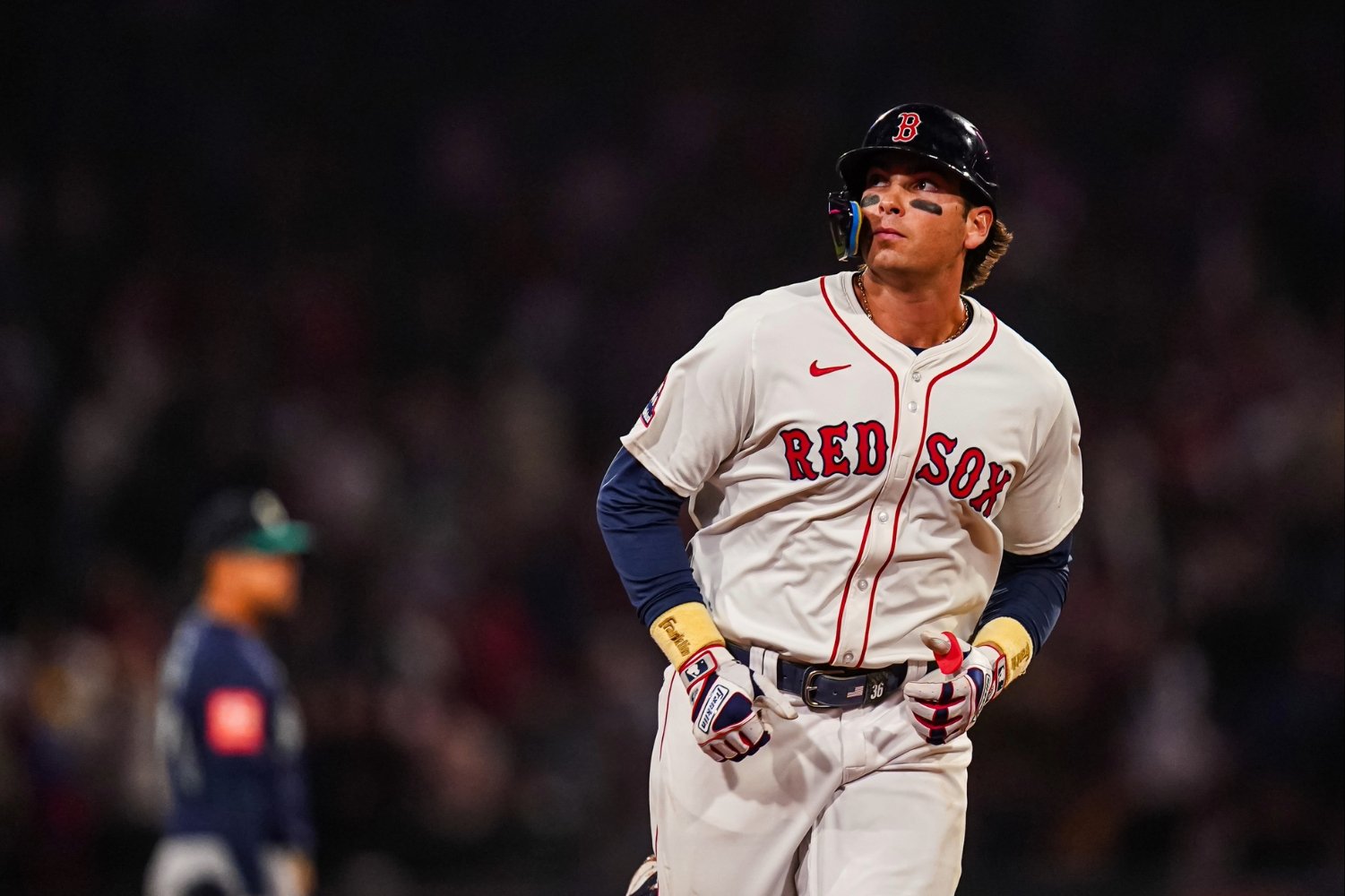 1B Triston Casas Age on Opening Day 2026: 26 years old Service Time: 3 years, 32 days 2023 Salary: $723,500 2024 Salary: $760,000 2025 Salary: $774,000 2026 Salary (Projection): $1,700,000 Background: If you’ve followed the Red Sox since the early 2020's, you know who Triston Casas is. Taken 26th overall in the first round of the 2018 MLB Draft, Casas immediately became the fourth ranked prospect in the system less than a month after being drafted. By July of 2019,, he was the number one ranked prospect in the system and remained there until July of 2022, when he was replaced by Marcelo Mayer. Casas was always viewed as a potential middle-of-the-order bat thanks to his discipline, control and understanding of the strike zone, as well as his power. However, injuries have made it difficult for him to remain on the field since 2021, when he was limited to 86 games. In 2022 ,that number elevated to 103 games between the minor leagues and with Boston. The 2023 campaign saw him buck that trend by playing in 132 games before injuries derailed his 2024 and 2025 seasons once again, playing a combined 92 games across those two seasons. 2025 Season: This year was viewed as a potential make-or-break season for Casas following an injury-plagued 2024, and possibly his last chance to prove he was the first baseman of the present and future for the franchise. Unfortunately, things didn’t work out all too well. Playing in just 29 games before his season ended on May 2 due to a ruptured left patellar tendon, Casas struggled at the plate. Hitting just .182/.277/.303, Casas saw his usual power seemingly vanish before the injury, as he had just six extra-base hits (three doubles and three home runs), though he was still getting on base thanks in part to his 11 walks. Despite hitting .455/.500/.909 against left-handed pitching, Casas saw himself mostly found himself sitting versus southpaws as Romy González would start at first. In total, Casas had 11 at-bats against left-handed pitching in 2025. 2025 Stats: 29 G, 112 PA, .182/.277/.303 .580 OPS, 3 2B, 3 HR, 11 RBI, 9.8 BB%, 24.1 K% Red Sox Depth at First Base: Romy González: 40-man roster Nathaniel Lowe: 40-man roster Nick Sogard: 40-man roster Triple-A: Nathan Hickey Double-A: Brooks Brannon, Tyler Miller Summary: A big issue with the 2025 Red Sox was the lack of first base depth even before Casas went down. That issue only became bigger after his injury, as most of the playing time was split between González and minor league free agent Abraham Toro. Sogard got a few games at first base as well, but he’s more comfortable elsewhere in the infield. In August, the Red Sox picked up Lowe and he performed well during his time in Boston, but there’s no guarantee he will be back in 2026 as he’s projected to make $13.5M in arbitration himself. Currently, the farm system doesn't offer many solutions either, as Hickey was a catcher up until last season and Brannon is also a catcher who is more suited for first base. Why the Red Sox Should Offer Him a Contract: Despite injuries and an extremely rough 2025 season, Casas is still young and has a lot of potential offensively. Should he stay healthy, there is still a 30-homer season within his bat that the Red Sox very much could use after ending 2025 without a single hitter reaching that number. It’s also only been two seasons since Casas hit 24 home runs and had an .856 OPS as a 23-year-old rookie. There’s no denying his bat could help carry the offense, but the issue is whether he can stay in the lineup every day at this point of his career. At his best, Casas has looked like the middle-of-the-order bat the team desperately needs right now. Why the Red Sox Should Not Offer Him a Contract: The easy answer is his health issues. In every season since 2021, he has missed a good portion of the season, including in 2023 when he spent most of September on the injured list. Some of the injuries he’s had since being in the organization include his ruptured left patellar tendon, a torn rib cartilage, shoulder inflammation, and a sprained ankle that saw him miss nearly two months. Also, the team has already said they believe it’s too early in the offseason to commit to anyone as their first baseman. Casas’ inability to stay on the field has put the team into a bind for back-to-back seasons now, and it would be wise to look at all their options before going into 2026 with the plan of Casas as their starting first baseman. Projection: There are not many outcomes where the team will non-tender Casas; in fact, you could realistically say there is no chance it happens. With the potential in his bat, it makes sense to offer him a contract for around $1.7M, especially if he stays healthy and has a season similar to 2023. He isn’t too far removed from that season, and he will only be 26 years old in 2026, so he’ll be just entering the beginning of his prime. He should have plenty of great seasons in him if he can just stay on the field. Of course, even if they offer him arbitration, that doesn’t mean the team wouldn’t look to trade him like they attempted to in previous offseasons. Should he miss a lot of time in 2026 due to injuries again, it wouldn’t come as a surprise for the team to non-tender him then, especially if his value is next to nothing. What do you think? Is it a foregone conclusion that Casas is back for 2026, or do you think the slugging first baseman could be shipped off to a new team? Leave your thoughts in the comments below.
 -
 The second week of the Arizona Fall League is officially over, as Boston Red Sox players continued to take advantage of the opportunity to continue their seasons. Unfortunately, just like with the first week, while there were highs for players, there were also serious lows. Over the past week, the Salt River Rafters played six games, going 4-2 and bringing their record to 5-5 on the season. After two weeks of games, the team is now in fourth place, just two games back of the first place Scottsdale Scorpions. But you’re not interested in that, so let’s get into how the prospects did this week. Luis Perales made two starts on the week as he continued on his return from Tommy John surgery. Unlike his first start, the right-hander managed to make it through two innings, looking a bit more like the top prospect he was before getting injured in 2024. Across those two hitless innings, he allowed just one earned run on a single walk while striking out four. In total, he needed 31 pitches to get through the two frames. Perales also had his fastball clocked at 100.7 mph, his fastest of the day, on his third-to-last pitch of the outing. His second outing wasn’t as dominant; Perales again lasted two innings, but his pitch count got up to 51 pitches on the day. Of those 51 pitches, only 29 were thrown for strikes as the right-hander struggled with command. In his two innings, Perales allowed three earned runs on three hits and three walks. He also struck out three batters. Elsewhere, 2024 draft pick Brandon Neely didn’t fare much better in his lone outing of the week. Tossing 51 pitches, 24 of them for strikes, Neely failed to make it through the second inning as he only tossed 1 2/3 innings. Neely would allow seven earned runs (though one came around to score after he had been pulled) on four hits and three walks. He did manage to strike out two batters, however. The second inning was his downfall, as it opened with a walk, hit by pitch and then two more walks to make it a 3-0 deficit after allowing two runs in the first. He nearly got out of it without much more damage thanks to a double play, but that was followed by a two-run single and a double making it 6-0, leading to Neely's quick hook. The trend of pitching struggling this week continued with Jojo Ingrassia, who appeared in one game and tossed 2 2/3 innings in relief. In that span, he allowed five runs, four of them earned, on three hits and two walks. He also struck out four. Despite the stat line being rather ugly, Ingrassia had a strong fifth inning as he struck out two batters in the frame. Overall, he tossed 51 pitches, 25 of them for strikes across the outing. For the remaining two pitchers the Red Sox sent to Arizona, it was a week they would like to forget. While Isaac Stebens had a great outing in his first appearance, getting three strikeouts while pitching around a hit and walk in his lone inning, his second appearance is one he should probably burn the tape from. Pitching in his second game of the week, Stebens struggled mightily, only able to get one out as he allowed four runs, three of them earned, in one-third of an inning. His usual command wasn’t there as he walked two batters and only got one strikeout. Much like Stebens, Jay Allmer is looking to forget his latest outing in the AFL, as he failed to even record a single out. Instead, he walked two batters, throwing 10 pitches and only getting two strikes before an injury forced him to leave the game. Both of his runners would score, causing them to be attributed to his ERA, which now sits at an unsightly 19.29. Offensively, there wasn’t much to be proud about either, as top prospect Johanfran Garcia struggled mightily. Appearing in four games, the catcher and designated hitter went 1-for-15 with three RBIs. The right-handed hitter also walked four times but struck out four times as well. His lone hit of the week was a double to right field that came off a 94.8 mph fastball that got too much of the plate. Fortunately for Garcia, that lone hit exited his bat at 104.5 mph, a promising sign for his future. Last week’s surprise performer Stanley Tucker fared better than the other Red Sox position players. Appearing in five games, the utility player went 3-for-13 with his first double of the season. He also drove in two runs while walking six times. He also struck out four times, though he managed to steal three bases to bring his total up to six. Defensively, Tucker only appeared at second base. And much like last week, Nelly Taylor did not receive much playing time. The outfielder appeared in four games, but two of them were as a pinch runner late in the game (where he remained as a defensive substitution). In the two games he did start, Taylor appeared in center field and went 1-for-8 offensively. Taylor struck out four times and walked once while also stealing one base to bring his season total up to three. Hopefully, the third week of the Arizona Fall League will see this group of prospects put together a little more consistent outcomes. While the league is meant to work on certain skills and develop players beyond the scope of the regular MiLB season, it would still look nice to see consistent results from players such as Perales and Garcia. Regardless, you can’t help but be glad to see players who missed so much time in 2025 now getting a chance to catch up on their development.
 -
The second week of the Arizona Fall League is officially over, as Boston Red Sox players continued to take advantage of the opportunity to continue their seasons. Unfortunately, just like with the first week, while there were highs for players, there were also serious lows. Over the past week, the Salt River Rafters played six games, going 4-2 and bringing their record to 5-5 on the season. After two weeks of games, the team is now in fourth place, just two games back of the first place Scottsdale Scorpions. But you’re not interested in that, so let’s get into how the prospects did this week. Luis Perales made two starts on the week as he continued on his return from Tommy John surgery. Unlike his first start, the right-hander managed to make it through two innings, looking a bit more like the top prospect he was before getting injured in 2024. Across those two hitless innings, he allowed just one earned run on a single walk while striking out four. In total, he needed 31 pitches to get through the two frames. Perales also had his fastball clocked at 100.7 mph, his fastest of the day, on his third-to-last pitch of the outing. His second outing wasn’t as dominant; Perales again lasted two innings, but his pitch count got up to 51 pitches on the day. Of those 51 pitches, only 29 were thrown for strikes as the right-hander struggled with command. In his two innings, Perales allowed three earned runs on three hits and three walks. He also struck out three batters. Elsewhere, 2024 draft pick Brandon Neely didn’t fare much better in his lone outing of the week. Tossing 51 pitches, 24 of them for strikes, Neely failed to make it through the second inning as he only tossed 1 2/3 innings. Neely would allow seven earned runs (though one came around to score after he had been pulled) on four hits and three walks. He did manage to strike out two batters, however. The second inning was his downfall, as it opened with a walk, hit by pitch and then two more walks to make it a 3-0 deficit after allowing two runs in the first. He nearly got out of it without much more damage thanks to a double play, but that was followed by a two-run single and a double making it 6-0, leading to Neely's quick hook. The trend of pitching struggling this week continued with Jojo Ingrassia, who appeared in one game and tossed 2 2/3 innings in relief. In that span, he allowed five runs, four of them earned, on three hits and two walks. He also struck out four. Despite the stat line being rather ugly, Ingrassia had a strong fifth inning as he struck out two batters in the frame. Overall, he tossed 51 pitches, 25 of them for strikes across the outing. For the remaining two pitchers the Red Sox sent to Arizona, it was a week they would like to forget. While Isaac Stebens had a great outing in his first appearance, getting three strikeouts while pitching around a hit and walk in his lone inning, his second appearance is one he should probably burn the tape from. Pitching in his second game of the week, Stebens struggled mightily, only able to get one out as he allowed four runs, three of them earned, in one-third of an inning. His usual command wasn’t there as he walked two batters and only got one strikeout. Much like Stebens, Jay Allmer is looking to forget his latest outing in the AFL, as he failed to even record a single out. Instead, he walked two batters, throwing 10 pitches and only getting two strikes before an injury forced him to leave the game. Both of his runners would score, causing them to be attributed to his ERA, which now sits at an unsightly 19.29. Offensively, there wasn’t much to be proud about either, as top prospect Johanfran Garcia struggled mightily. Appearing in four games, the catcher and designated hitter went 1-for-15 with three RBIs. The right-handed hitter also walked four times but struck out four times as well. His lone hit of the week was a double to right field that came off a 94.8 mph fastball that got too much of the plate. Fortunately for Garcia, that lone hit exited his bat at 104.5 mph, a promising sign for his future. Last week’s surprise performer Stanley Tucker fared better than the other Red Sox position players. Appearing in five games, the utility player went 3-for-13 with his first double of the season. He also drove in two runs while walking six times. He also struck out four times, though he managed to steal three bases to bring his total up to six. Defensively, Tucker only appeared at second base. And much like last week, Nelly Taylor did not receive much playing time. The outfielder appeared in four games, but two of them were as a pinch runner late in the game (where he remained as a defensive substitution). In the two games he did start, Taylor appeared in center field and went 1-for-8 offensively. Taylor struck out four times and walked once while also stealing one base to bring his season total up to three. Hopefully, the third week of the Arizona Fall League will see this group of prospects put together a little more consistent outcomes. While the league is meant to work on certain skills and develop players beyond the scope of the regular MiLB season, it would still look nice to see consistent results from players such as Perales and Garcia. Regardless, you can’t help but be glad to see players who missed so much time in 2025 now getting a chance to catch up on their development. View full article
-
Despite the 2025 season having ended for the Red Sox, there are still players within the organization who are spending time getting into games and working on improving. Last week, on October 7, the players selected from the Red Sox to play in the Arizona Fall League began their fall season as the Salt River Rafters played against the Glendale Desert Dogs. Within the first week of play, the Rafters played four games, going 1-3 as their games on Saturday and Sunday were cancelled. The stats found here are eligible through those first games (other games have been played since, but we'll recap those in a future—and more timely [editor's fault]—week in review). As we’ve discussed previously, the Red Sox sent eight players to the AFL this season, with a late switch being that Jonathan Brand was replaced on the roster with Jay Allmer. Allmer, a 23-year-old undrafted free agent who signed with Boston in April of 2025, appeared in 29 games between Salem and Greenville where he went a combined 6-1 with a 2.85 ERA in 53 2/3 innings. Now to check in on how the Red Sox prospects did in their first week: Red Sox top prospect Luis Perales got the nod in the season opener for the Rafters but was still pitching on a pitch count. Tossing 1 1/3 innings on 33 pitches, Perales showed that he was still lacking command just like in his final Triple-A appearance of the season. Of those 33 pitches, Perales threw just 17 strikes and allowed a hit to go along with three walks. On the positive side, Perales struck out two batters and managed to hit over 100 mph on his fastball in the outing. The pitcher stated before the start that he would like to get up to four innings in an outing before the end of the AFL season. The Red Sox saw two more pitchers throw in the opener, as 2024 third-round pick Brandon Neely made his professional debut, tossing three innings. Neely looked comfortable on the mound, tossing a clean 1-2-3 inning to open his outing. His second inning saw him work around trouble as a leadoff single and a one-out hit by pitch led to him facing former Sox prospect Cutter Coffey with two on. Neely managed to get Coffey to ground into a double play with a curveball low in the zone. It was his third inning of work that went off the rails, due to poor defense behind Neely. An error opened the inning, but the runner would be erased on a fielder’s choice before a single put two runners on. A second fielder’s choice placed runners on the corners with two outs, but Neely couldn’t get out unscathed as a stolen base by Sam Antonacci had two in scoring position for a Jim Jarvis single to make it a 3-2 game. Neely did buckle down and got the next batter to fly out to center field to end the inning. In total, Neely tossed 42 pitches, 27 strikes, across three innings where he allowed three hits and two unearned runs while striking out a batter. He managed to hit 96 mph during the outing. The final pitcher in the opener was Allmer, tossing one inning and allowing one hit while striking out a batter. In total, the inning took just 14 pitches to complete. Allmer would pitch in a second game in that first week, though the outing wasn't as clean; he allowed three earned runs in just 1 1/3 innings. In that time, he allowed just one hit but walked four batters. He tossed 38 pitches in his second outing, just 17 of them for strikes. In the second game of the season, the Rafters sent Red Sox prospect Jojo Ingrassia to the mound to open the game. Unlike Perales, Ingrassia did not make it through his outing unscathed. Instead, the left-handed pitcher would be lifted in the second inning after tossing 47 pitches, 23 of them for strikes. Ingrassia had an interesting first inning where he managed to work around runners on base to get out of it scoreless. A one-out double by Seaver King was followed by a wild pitch that now had Ingrassia dealing with a runner on third with just one out. A walk followed that before Ingrassia got a swinging strikeout with an 84.8 mph slider down and out of the zone. A second walk followed that before Ingrassia got his second strikeout of the game with another slider that was even further out of the zone. Having been given the lead after the Rafters scored in the top of the second, Ingrassia could not hold on, as a single followed by a fielder’s choice and Ingrassia’s second wild pitch had him dealing with another runner in scoring position. A hit by pitch followed that up before Ingrassia allowed an RBI single to Joseph Sullivan that tied the game and placed runners on the corners. Facing his final batter, Ingrassia got King to strike out on a slider extremely down in the zone. Overall, he threw 1 2/3 innings and allowed three hits, one earned run, two walks and three strikeouts. The Red Sox saw their fifth and final pitcher get into a game during the Rafters’ third game of the season, as Isaac Stebens would pitch the sixth inning in a 10-9 loss to the Mesa Solar Sox. After a strong season with High-A Greenville, Stebens threw a scoreless inning. In his lone inning he allowed one walk and one strikeout, tossing 16 pitches with nine of them going for strikes. However, Stebens didn’t have as clean an inning as his stat line shows. He hit the first batter he faced, who promptly stole second base. Then, he walked his second batter as they attempted a double steal. Coby Morales was thrown out trying to steal third base as part of it before Stebens got PJ Morlando to line out for the second out. He ended the inning with a strikeout on a 93.1 mph fastball up in the zone. Offensively, the Red Sox have seen production from their position players as well; both Johanfran Garcai and Stanley Tucker performed well in the first week, while Nelly Taylor only got into two games. In his first week playing, Garcia appeared in three games, getting 12 at-bats and getting four hits in that span. All four of his hits were singles, and he drove in one run. He also walked once and struck out twice. Defensively, Garcia struggled in his first game, as the opposing team stole three bases on him during his five innings behind the plate. He also allowed two passed balls in that same span. Besides catching, Garcia has also seen time spent as the team’s designated hitter. Stanley Tucker has been a welcome surprise with his production in the AFL so far. Having missed all of the 2025 minor league season due to injury, Tucker got off on the right foot in his first game. In his first at-bat of the entire season, Tucker delivered with two on and two outs, swinging on the first pitch to go opposite field and hit a 95.3 mph ground ball into right field to drive in both runners. Tucker would finish the game 2-for-3 with a walk to go along with his two RBIs. Tucker would go on to play in all four games of the first week, playing second base in each game. He hit a collective 5-for-15 with all of his hits being singles. He would also drive in six runs in that span and walk twice while striking out three times. The final player sent by the Red Sox, Taylor, didn't play much, going a combined 1-for-8 in his two appearances, with his lone hit being a single. In those eight at-bats, he struck out five times and walked only once. While on defense, Taylor has spent his time in center field. View full article