


Alex Mayes
-
Posts
814 -
Joined
-
Last visited
Content Type
Profiles
Boston Red Sox Videos
2026 Boston Red Sox Top Prospects Ranking
Boston Red Sox Free Agent & Trade Rumors, Notes, & Tidbits
Guides & Resources
2025 Boston Red Sox Draft Pick Tracker
News
2026 Boston Red Sox Draft Tracker: Picks & Bonuses
Forums
Blogs
Events
Store
Downloads
Gallery
Everything posted by Alex Mayes
-
The Boston Red Sox have made it clear that they are content with their high-leverage set up in the bullpen. They signed Aroldis Chapman to a team-friendly extension in September and have his set-up man, Garrett Whitlock, locked down through the end of this season with club options for both 2027 and 2028. The latter has been incredibly valuable to the organization since he was taken in the 2020 Rule 5 draft; although he’s bounced from the bullpen to the rotation, he’s become an anchor at the end of games the team knows it can depend on. What those club options likely signal is that Whitlock is waiting in the wings to take over the closer role should Chapman falter or get injured during this season, and more likely once he’s gone in 2027. I’ve long championed for Whitlock to be the closer of the Red Sox but after seeing a handful of All-Star caliber closers sign during the winter, it’s not a far reach to wonder if the Red Sox should have been more involved in that market to help shore up the role through, potentially, the end of the decade. There’s an injury risk with Whitlock that seems to rear its ugly head on an almost-yearly basis. In 2019, he underwent his first Tommy John surgery that kept him out through the shortened 2020 season. He was healthy in 2021, injured his hip requiring surgery in 2022, was limited by right elbow ulnar neuritis and right elbow inflammation in 2023, strained his oblique in April of 2024, then tore his UCL in May of the same year, requiring an internal bracing procedure. He was then placed permanently in the bullpen for 2025 and he thrived in the role again. It did come out after the season that Whitlock was pitching through a calf injury for most of the second half, but it was never bad enough to require time on the injured list and could be managed with his regular workload. His injury risk should be mitigated as he works out of the bullpen, but it’s something to keep in mind as he’s trusted with more high-leverage spots as the team prepares for a post-Chapman world. More importantly, the injury history is about the only negative mark you could give Whitlock. As a reliever, he’s been absolutely dominant on the mound. He proved that there was never a game or situation too big for him when he made his debut with the Red Sox in 2021 and stuck on the big league club for the entire season. Even after his hip surgery in '22, he was rewarded with an extension to keep him around for four more years. If we look at his numbers from 2025, we can see a pitcher who has finally come into his own and feels comfortable in his late-inning role. He threw 72 innings over 62 games with a 31.1% strikeout percentage, an 8.2% walk rate, a 2.25 ERA, 2.18 FIP, and a 2.2 fWAR. Taking the injury-shortened seasons out, he posted the lowest hard-hit rate of his career at 36.4% and his ERA is the lowest it has been since 2021’s mark of 1.96. On top of all of that, his Baseball Savant page is on fire. Whitlock has proven to be a steady hand as a set-up man and will likely show the same confidence and poise when he transitions to the closer role. Could the Red Sox have benefitted from signing Edwin Diaz, Devin Williams, or even Ryan Helsley? Absolutely. You can never have too many big time arms at the back of your bullpen. But signing any of them could have hamstrung the finances in a way that may have prevented the trades for Sonny Gray and Willson Contreras or blocked the path to signing free agent Ranger Suarez. Sometimes, you have to trust the arms you have. This is a situation that bears monitoring going forward, especially if the Red Sox find themselves in a lot of tight games and don't want to burn out Chapman in his age-38 season. A trade deadline blockbuster can't be ruled off the table. But, insofar as he's healthy, Garrett Whitlock has been preparing to take over the closer role since last offseason and will reward the team’s patience with him whenever his number is called. View full article
-
Garrett Whitlock Is More Than Just Aroldis Chapman's Understudy
Alex Mayes posted an article in Red Sox
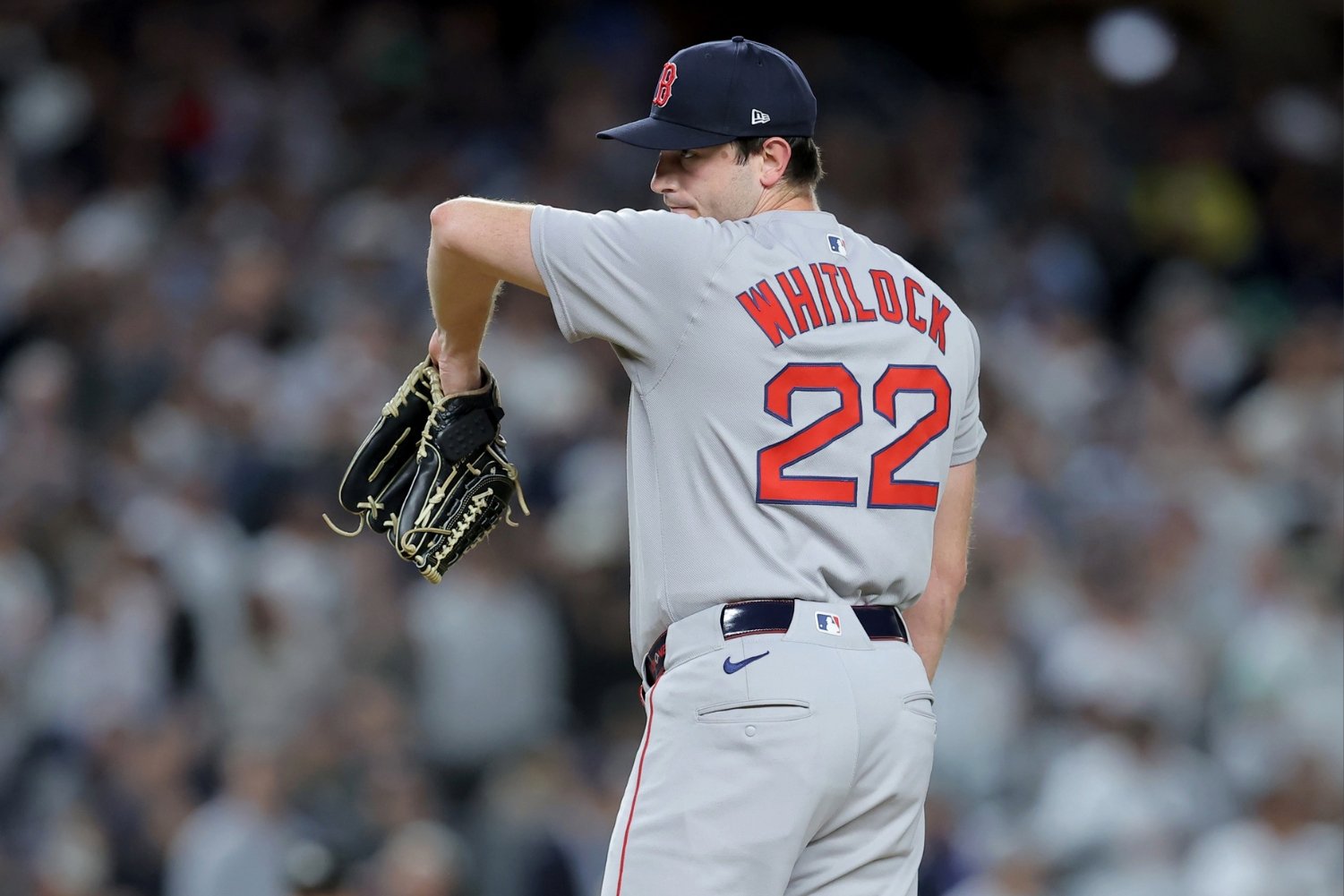 The Boston Red Sox have made it clear that they are content with their high-leverage set up in the bullpen. They signed Aroldis Chapman to a team-friendly extension in September and have his set-up man, Garrett Whitlock, locked down through the end of this season with club options for both 2027 and 2028. The latter has been incredibly valuable to the organization since he was taken in the 2020 Rule 5 draft; although he’s bounced from the bullpen to the rotation, he’s become an anchor at the end of games the team knows it can depend on. What those club options likely signal is that Whitlock is waiting in the wings to take over the closer role should Chapman falter or get injured during this season, and more likely once he’s gone in 2027. I’ve long championed for Whitlock to be the closer of the Red Sox but after seeing a handful of All-Star caliber closers sign during the winter, it’s not a far reach to wonder if the Red Sox should have been more involved in that market to help shore up the role through, potentially, the end of the decade. There’s an injury risk with Whitlock that seems to rear its ugly head on an almost-yearly basis. In 2019, he underwent his first Tommy John surgery that kept him out through the shortened 2020 season. He was healthy in 2021, injured his hip requiring surgery in 2022, was limited by right elbow ulnar neuritis and right elbow inflammation in 2023, strained his oblique in April of 2024, then tore his UCL in May of the same year, requiring an internal bracing procedure. He was then placed permanently in the bullpen for 2025 and he thrived in the role again. It did come out after the season that Whitlock was pitching through a calf injury for most of the second half, but it was never bad enough to require time on the injured list and could be managed with his regular workload. His injury risk should be mitigated as he works out of the bullpen, but it’s something to keep in mind as he’s trusted with more high-leverage spots as the team prepares for a post-Chapman world. More importantly, the injury history is about the only negative mark you could give Whitlock. As a reliever, he’s been absolutely dominant on the mound. He proved that there was never a game or situation too big for him when he made his debut with the Red Sox in 2021 and stuck on the big league club for the entire season. Even after his hip surgery in '22, he was rewarded with an extension to keep him around for four more years. If we look at his numbers from 2025, we can see a pitcher who has finally come into his own and feels comfortable in his late-inning role. He threw 72 innings over 62 games with a 31.1% strikeout percentage, an 8.2% walk rate, a 2.25 ERA, 2.18 FIP, and a 2.2 fWAR. Taking the injury-shortened seasons out, he posted the lowest hard-hit rate of his career at 36.4% and his ERA is the lowest it has been since 2021’s mark of 1.96. On top of all of that, his Baseball Savant page is on fire. Whitlock has proven to be a steady hand as a set-up man and will likely show the same confidence and poise when he transitions to the closer role. Could the Red Sox have benefitted from signing Edwin Diaz, Devin Williams, or even Ryan Helsley? Absolutely. You can never have too many big time arms at the back of your bullpen. But signing any of them could have hamstrung the finances in a way that may have prevented the trades for Sonny Gray and Willson Contreras or blocked the path to signing free agent Ranger Suarez. Sometimes, you have to trust the arms you have. This is a situation that bears monitoring going forward, especially if the Red Sox find themselves in a lot of tight games and don't want to burn out Chapman in his age-38 season. A trade deadline blockbuster can't be ruled off the table. But, insofar as he's healthy, Garrett Whitlock has been preparing to take over the closer role since last offseason and will reward the team’s patience with him whenever his number is called.
 -
The Boston Red Sox are still looking for help somewhere in the infield as spring training gets closer and closer. They are rumored to be in discussions with a number of clubs, including the Astros and Craig Breslow’s favorite trade partner, the Cardinals, but as of this writing there is very little movement that has been made known to the public. While it’s entirely possible a trade could be completed before spring training begins, we also have to prepare for the possibility that this is the roster that will be on the field come Opening Day. It’s a shame that there’s one team that makes all the sense in the world for the Red Sox to make a trade with, but due to financial concerns on both sides, it’s incredibly unlikely that anything will get done. The San Diego Padres match up so well to get a deal done, but there’s just not a financial way to make any trade make sense. The Padres are ripe with infield talent, and likely would be willing to part with one of them to acquire a young, controllable starting pitcher. The Sox are arguably the deepest team in the league when it comes to that side of the deal. Both teams though, are looking to make deals to lessen their payroll and tax bill for this season. Should the Red Sox be interested in someone like Jake Cronenworth? Absolutely. He plays solid defense, logged time at three infield positions in 2025, doesn’t strike out a ton, and walks even more. The downside? He’s about halfway through a seven-year extension with the Padres and would add money to a payroll that already appears to be at its limit. We’d all love to see Xander Bogaerts back in Boston, but if you’ve forgotten, he’s signed through 2033 and has an AAV of $25.3 million. Sure, the Padres could be convinced to pay some of that down to sweeten the deal — GM AJ Preller has long coveted Jarren Duran — but their budget constraints are even worse than the Red Sox's, and if Breslow made a deal like that, then it’s likely John Henry and the rest of Fenway Sports Group would be searching for yet another President of Baseball Operations. What about Manny Machado to man the hot corner? Aside from the level of vitriol that still pours out of most Sox fans when his name is spoken, his contract is nuts. He’s also signed through 2033 with an AAV of $31.82 million. There’s just no way to pay either of those deals down enough or add enough pieces from the Padres’ already-depleted farm system to make any kind of trade make sense. The Red Sox are heading into a crucial season. The 2026 team is likely better than its 2025 counterpart due to the fact that the rotation has been upgraded so extensively. Willson Contreras is an upgrade at first base, but a lateral move (at best) in the lineup after the loss of Alex Bregman. Making a deal for an infielder is going to get tougher as we get closer to spring training, without a doubt. It’s a shame that the financial side of things can’t match up with the Padres, because they have a few options that would make the Red Sox objectively better this season. View full article
-
Red Sox & Padres Are Perfect, But Impossible, Trade Partners
Alex Mayes posted an article in Red Sox
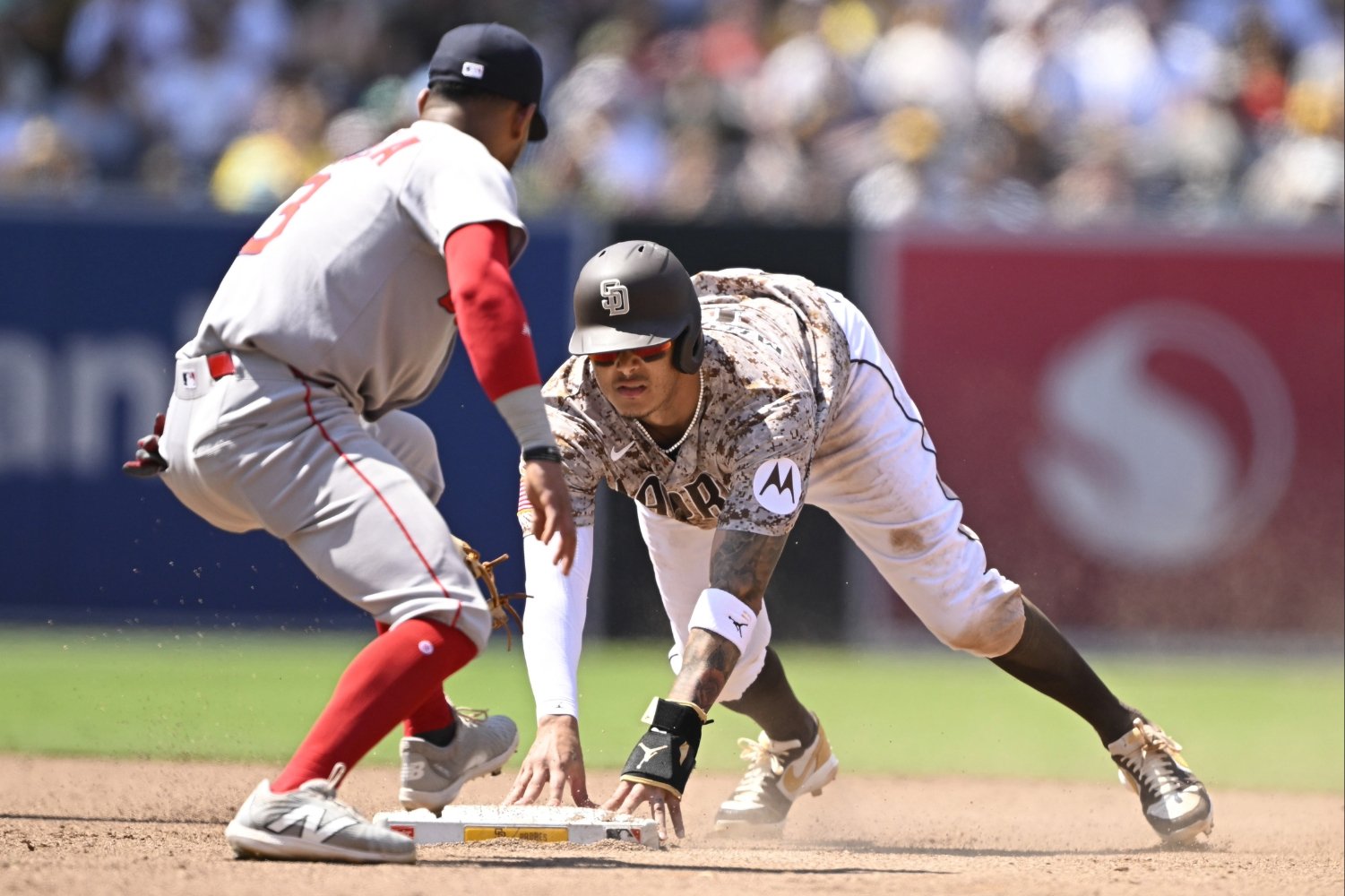 The Boston Red Sox are still looking for help somewhere in the infield as spring training gets closer and closer. They are rumored to be in discussions with a number of clubs, including the Astros and Craig Breslow’s favorite trade partner, the Cardinals, but as of this writing there is very little movement that has been made known to the public. While it’s entirely possible a trade could be completed before spring training begins, we also have to prepare for the possibility that this is the roster that will be on the field come Opening Day. It’s a shame that there’s one team that makes all the sense in the world for the Red Sox to make a trade with, but due to financial concerns on both sides, it’s incredibly unlikely that anything will get done. The San Diego Padres match up so well to get a deal done, but there’s just not a financial way to make any trade make sense. The Padres are ripe with infield talent, and likely would be willing to part with one of them to acquire a young, controllable starting pitcher. The Sox are arguably the deepest team in the league when it comes to that side of the deal. Both teams though, are looking to make deals to lessen their payroll and tax bill for this season. Should the Red Sox be interested in someone like Jake Cronenworth? Absolutely. He plays solid defense, logged time at three infield positions in 2025, doesn’t strike out a ton, and walks even more. The downside? He’s about halfway through a seven-year extension with the Padres and would add money to a payroll that already appears to be at its limit. We’d all love to see Xander Bogaerts back in Boston, but if you’ve forgotten, he’s signed through 2033 and has an AAV of $25.3 million. Sure, the Padres could be convinced to pay some of that down to sweeten the deal — GM AJ Preller has long coveted Jarren Duran — but their budget constraints are even worse than the Red Sox's, and if Breslow made a deal like that, then it’s likely John Henry and the rest of Fenway Sports Group would be searching for yet another President of Baseball Operations. What about Manny Machado to man the hot corner? Aside from the level of vitriol that still pours out of most Sox fans when his name is spoken, his contract is nuts. He’s also signed through 2033 with an AAV of $31.82 million. There’s just no way to pay either of those deals down enough or add enough pieces from the Padres’ already-depleted farm system to make any kind of trade make sense. The Red Sox are heading into a crucial season. The 2026 team is likely better than its 2025 counterpart due to the fact that the rotation has been upgraded so extensively. Willson Contreras is an upgrade at first base, but a lateral move (at best) in the lineup after the loss of Alex Bregman. Making a deal for an infielder is going to get tougher as we get closer to spring training, without a doubt. It’s a shame that the financial side of things can’t match up with the Padres, because they have a few options that would make the Red Sox objectively better this season.
 -
MassLive’s Chris Cotillo has reported that the Boston Red Sox have announced a rather large group of non-roster invitees to spring training this year. INF Mikey Romero could be pushing for playing time in Boston later in 2026, so it’s not surprising to see his name included here nor is it shocking to see so many catching options. The team has long been rumored to still be looking for a way to upgrade the backup catching position this offseason so putting their top-level catching options through their paces at spring training makes sense. On the pitching side, Noah Song is the name that should jump out the most to Sox fans. Song has a very interesting path to the majors and finally looked like a contributing member of the organization during his quick rise to Triple-A Worcester last season. Once he arrived there, he left quite a bit to be desired but it was his first full, healthy season in pro ball since he finished his military commitment. These 14 guys are being given a chance to stake their claim at big league camp. It will be interesting to watch how they perform. Other names are likely to be added as non-roster invitees as we get closer to pitchers and catchers reporting to Fort Myers on February 10. View full rumor
-
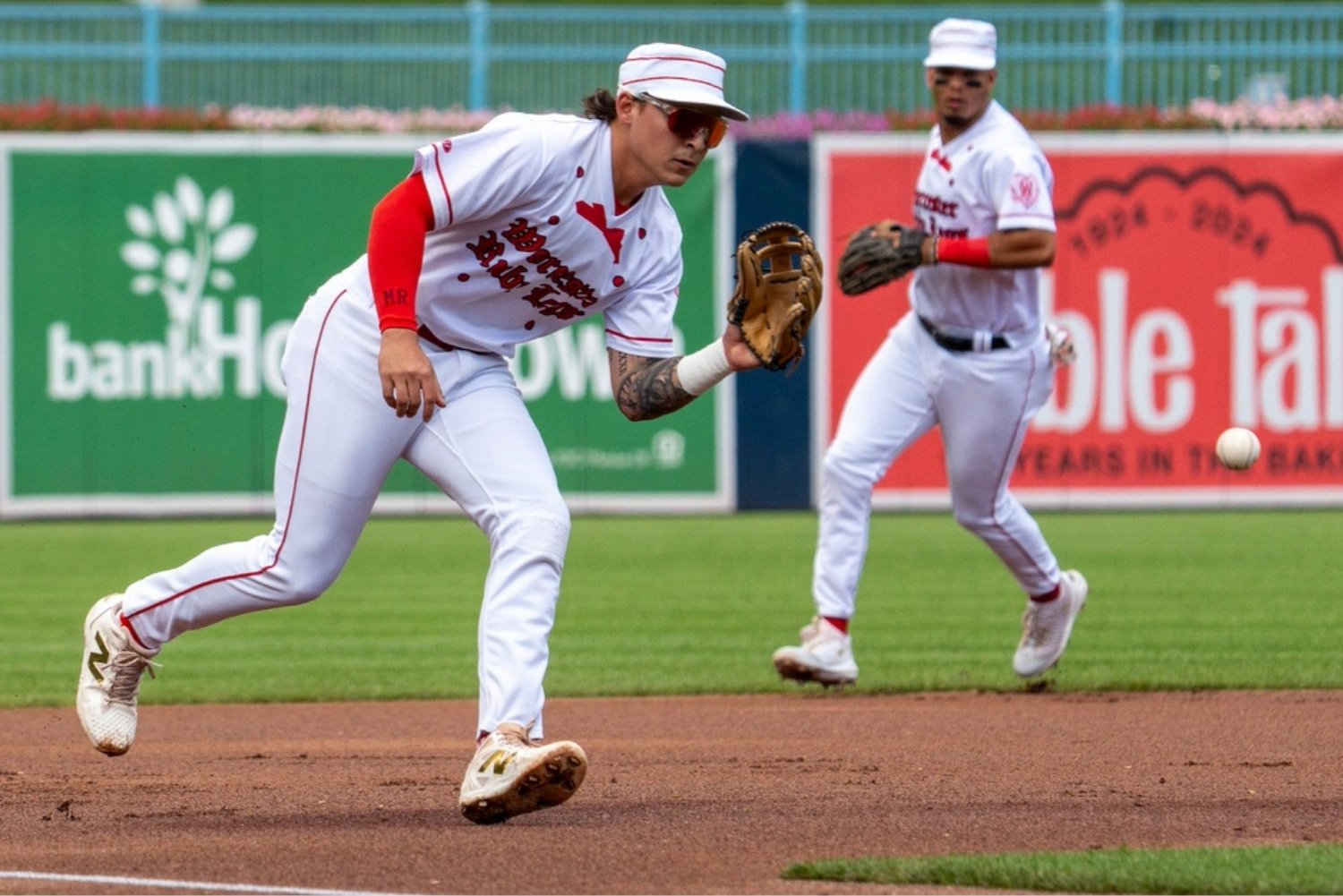 MassLive’s Chris Cotillo has reported that the Boston Red Sox have announced a rather large group of non-roster invitees to spring training this year. INF Mikey Romero could be pushing for playing time in Boston later in 2026, so it’s not surprising to see his name included here nor is it shocking to see so many catching options. The team has long been rumored to still be looking for a way to upgrade the backup catching position this offseason so putting their top-level catching options through their paces at spring training makes sense. On the pitching side, Noah Song is the name that should jump out the most to Sox fans. Song has a very interesting path to the majors and finally looked like a contributing member of the organization during his quick rise to Triple-A Worcester last season. Once he arrived there, he left quite a bit to be desired but it was his first full, healthy season in pro ball since he finished his military commitment. These 14 guys are being given a chance to stake their claim at big league camp. It will be interesting to watch how they perform. Other names are likely to be added as non-roster invitees as we get closer to pitchers and catchers reporting to Fort Myers on February 10.
 -
The Boston Red Sox still have a roster addition or two to make before spring training begins. And I don't just mean the bullpen, which does require another leverage arm, particularly from the left-hand side. The area of bigger concern is the infield. After losing out on Alex Bregman, the team has open spots at both second and third base that need to be addressed. MassLive’s Chris Cotillo tweeted that the team is involved in multiple discussions regarding improving the infield defense. That isn’t a shock to anyone who has been paying attention. After the addition of Ranger Suarez, the team pivoted to combing the trade market for an impact addition at an infield spot. We all expect a trade to happen, we just don’t know when. So, what if the team waits until the trade deadline during the summer? It's unlikely, but if prices are too exorbitant right now, the team could opt to go rental hunting in July. If that’s the case, the team will turn to internal options to man both positions. While we already have a bit of inclination on which way the team may be leaning, let’s take a look at those options. Third Base Marcelo Mayer The former top prospect is in line for the bulk of playing time at either position. The Athletic’s Jen McCaffrey noted that she was told by a team source that the preferred option is for Mayer to man third as he waits in the wings to take over at shortstop in a post-Trevor Story world in 2028, so it’s likely safe to pencil him in at the hot corner for now. Mayer has been bitten by the injury bug every season of his professional baseball career and is looking to stay healthy in 2027. The team believes that his added weight in the offseason, around 15 pounds, will help alleviate some of those injury concerns and keep him on the field. If that does happen, Mayer could be next in line to take a big jump this season. He has Gold Glove potential at third base and even a decent offensive showing from him would mean that the team has put their faith in the right guy. Nate Eaton Nate Eaton made his presence known during the Wild Card series and likely earned a bench spot for the Red Sox had Bregman returned to the lineup. Now, though? He’s a name to watch as a potential platoon partner at third with Mayer. He’s not the flashiest name and doesn’t come with the former top-prospect pedigree that Mayer has, but he could prove to be incredibly useful off the bench and in spot starts at third. His defensive versatility likely gives him an edge over other names as he can play all over the field when needed. Mikey Romero Mikey Romero seems to be a forgotten draft pick for the team even though he has been making large strides in minor league baseball. He’s on track to start the season as the starting third baseman for the WooSox and could be looking to push to the major-league roster at some point down the stretch. The former first-round pick isn’t a huge kid, 6’0” and 175 pounds, but he produced a 104 wRC+ and has played both second and third base as recently as last year. He could be someone that moves between both positions depending on what the lineup needs day in and day out at Worcester. Second Base Romy Gonzalez Gonzalez is currently penciled in as the Opening Day starter at second base. That’s not great. He works great in a platoon role as a lefty masher, but if the team is starting him on day one with the intent to make him an every day player this season, they are setting themselves up for disappointment. He plays a very specific role on this team and can move between first and second base as necessary, but he’s not a 150-game regular. Unless a deal is reached before the season starts, though, he’s likely going to get the bulk of playing time up the middle. David Hamilton Hamilton brings speed and decent defense to the table, but that’s about it. When he’s at the plate, he’s as close to a guaranteed out as you can get. He may run into a home run or two, but there’s little to be desired in his offensive game. The team works best when he’s a late-inning pinch runner and not being counted on in offensive situations, making him a less-than-ideal starter come Opening Day. Ceddanne Rafaela Seeing Rafaela at second base would drive a large portion of the fan base insane, but I fully believe it’s an option the team is strongly considering to start the year. It’s a bad option, but an option. I have faith that he could be an excellent second baseman if given the time to practice it during the offseason and spring training. Then again, his natural position, center field, is far more important to the organization and he’s already won a Gold Glove there. The team needs to keep him roaming center and figure out another option at second, but this is a realistic scenario if the goal is to get him and, Roman Anthony, Wilyer Abreu, and Jarren Duran into the lineup at the same time. Franklin Arias This is a bit far out there, but Franklin Arias is likely going to progress quickly through the minor-league system in 2026. He’s the number two rated prospect here on Talk Sox and for good reason: he’s young and already has shown a ton of potential. It’s unlikely that he’ll start the year with the big-league club, but stranger things have happened before (see: Kristian Campbell in 2025). If he shows out in big-league camp during spring training, it’s entirely possible we could see an early season call-up to help solidify the defense at second. It would be an outside-the-box solution, but the team is leaning heavily into a youth movement already so it wouldn’t be shocking. View full article
-
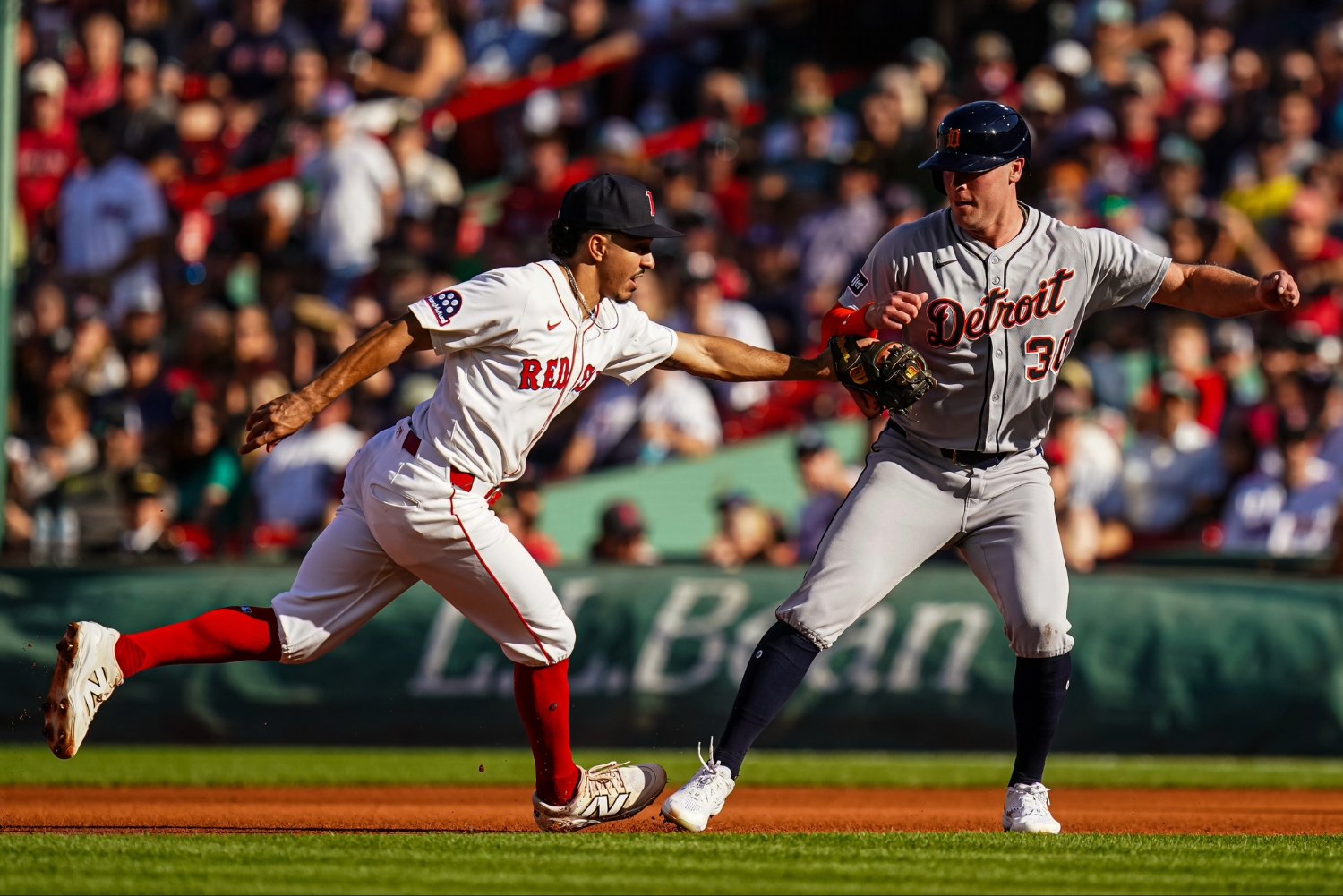 The Boston Red Sox still have a roster addition or two to make before spring training begins. And I don't just mean the bullpen, which does require another leverage arm, particularly from the left-hand side. The area of bigger concern is the infield. After losing out on Alex Bregman, the team has open spots at both second and third base that need to be addressed. MassLive’s Chris Cotillo tweeted that the team is involved in multiple discussions regarding improving the infield defense. That isn’t a shock to anyone who has been paying attention. After the addition of Ranger Suarez, the team pivoted to combing the trade market for an impact addition at an infield spot. We all expect a trade to happen, we just don’t know when. So, what if the team waits until the trade deadline during the summer? It's unlikely, but if prices are too exorbitant right now, the team could opt to go rental hunting in July. If that’s the case, the team will turn to internal options to man both positions. While we already have a bit of inclination on which way the team may be leaning, let’s take a look at those options. Third Base Marcelo Mayer The former top prospect is in line for the bulk of playing time at either position. The Athletic’s Jen McCaffrey noted that she was told by a team source that the preferred option is for Mayer to man third as he waits in the wings to take over at shortstop in a post-Trevor Story world in 2028, so it’s likely safe to pencil him in at the hot corner for now. Mayer has been bitten by the injury bug every season of his professional baseball career and is looking to stay healthy in 2027. The team believes that his added weight in the offseason, around 15 pounds, will help alleviate some of those injury concerns and keep him on the field. If that does happen, Mayer could be next in line to take a big jump this season. He has Gold Glove potential at third base and even a decent offensive showing from him would mean that the team has put their faith in the right guy. Nate Eaton Nate Eaton made his presence known during the Wild Card series and likely earned a bench spot for the Red Sox had Bregman returned to the lineup. Now, though? He’s a name to watch as a potential platoon partner at third with Mayer. He’s not the flashiest name and doesn’t come with the former top-prospect pedigree that Mayer has, but he could prove to be incredibly useful off the bench and in spot starts at third. His defensive versatility likely gives him an edge over other names as he can play all over the field when needed. Mikey Romero Mikey Romero seems to be a forgotten draft pick for the team even though he has been making large strides in minor league baseball. He’s on track to start the season as the starting third baseman for the WooSox and could be looking to push to the major-league roster at some point down the stretch. The former first-round pick isn’t a huge kid, 6’0” and 175 pounds, but he produced a 104 wRC+ and has played both second and third base as recently as last year. He could be someone that moves between both positions depending on what the lineup needs day in and day out at Worcester. Second Base Romy Gonzalez Gonzalez is currently penciled in as the Opening Day starter at second base. That’s not great. He works great in a platoon role as a lefty masher, but if the team is starting him on day one with the intent to make him an every day player this season, they are setting themselves up for disappointment. He plays a very specific role on this team and can move between first and second base as necessary, but he’s not a 150-game regular. Unless a deal is reached before the season starts, though, he’s likely going to get the bulk of playing time up the middle. David Hamilton Hamilton brings speed and decent defense to the table, but that’s about it. When he’s at the plate, he’s as close to a guaranteed out as you can get. He may run into a home run or two, but there’s little to be desired in his offensive game. The team works best when he’s a late-inning pinch runner and not being counted on in offensive situations, making him a less-than-ideal starter come Opening Day. Ceddanne Rafaela Seeing Rafaela at second base would drive a large portion of the fan base insane, but I fully believe it’s an option the team is strongly considering to start the year. It’s a bad option, but an option. I have faith that he could be an excellent second baseman if given the time to practice it during the offseason and spring training. Then again, his natural position, center field, is far more important to the organization and he’s already won a Gold Glove there. The team needs to keep him roaming center and figure out another option at second, but this is a realistic scenario if the goal is to get him and, Roman Anthony, Wilyer Abreu, and Jarren Duran into the lineup at the same time. Franklin Arias This is a bit far out there, but Franklin Arias is likely going to progress quickly through the minor-league system in 2026. He’s the number two rated prospect here on Talk Sox and for good reason: he’s young and already has shown a ton of potential. It’s unlikely that he’ll start the year with the big-league club, but stranger things have happened before (see: Kristian Campbell in 2025). If he shows out in big-league camp during spring training, it’s entirely possible we could see an early season call-up to help solidify the defense at second. It would be an outside-the-box solution, but the team is leaning heavily into a youth movement already so it wouldn’t be shocking.
 -
In a whirlwind 24 hours, the top two free agents of the offseason signed with National League teams. If you missed it, outfielder Kyler Tucker signed a massive contract with the Dodgers, and Bo Bichette followed suit with the Mets in an eerily similar deal to that of what 2025 Alex Bregman got with the Boston Red Sox. As we all know by now, Tucker had been tied nearly all offseason to the Blue Jays and the prevailing thought was that once he passed on their 10-year offer, they may pivot to bringing Bichette back into the fold. Neither came to fruition, though, and those signings, or non-signings depending on how you look at it, bust a wide open hole in the AL East for 2026. I’m not going to gloss over the fact that the Blue Jays were two outs away from winning a World Series title last year and added Dylan Cease to their rotation. They are an objectively great team who should be competing for championships for years to come, but baseball is a fickle game. Bichette was the co-face of the team with Vladimir Guerrero Jr. and his absence will loom large for a club that is planning on returning to dominance in 2026. He wasn’t their big bopper, but he got on base and was able to hit anywhere in the first five spots of the lineup. When he returned for the playoffs and moved to second base, he gave the Jays a spark that nearly allowed them to overcome the mighty Dodgers in the World Series. Losing out on him makes the team worse, even if they are still an incredibly talented ball club. Losing out on Tucker though? That stings for Toronto. He would have made that lineup something that opposing pitchers feared on a nightly basis. His presence behind Vladdy alone would mean the big man would see far more competitive at-bats. Tucker would have been the way for the Jays to ensure that no one in the AL East, or the entire AL for that matter, could out-slug them. They would have the second-most feared lineup in the league, behind the Dodgers. Suddenly, though, Tucker wasn’t interested in being in Toronto for 10 years and signed with those very same Dodgers. He now slots in as, like, the fifth-best player on that team and can embrace his quiet demeanor in L.A. knowing that he’s not going to be the guy the media comes to on a nightly basis anymore. What this all means for the Red Sox is a little nebulous, but it's pretty clear that they are the second-best team in the AL East and with an addition at second or third base, they could give the Jays a run for their money. The signing of Ranger Suarez gives the Sox the most potent rotation in the American League and puts them in the running for the best rotation in all of baseball. Even if the team makes a trade of someone like Brayan Bello in the near future (and they should), their starting rotation is deep and talented. If Roman Anthony returns to form after he finished last season injured? Forget about it. That doesn’t even account for Wilyer Abreu getting the training wheels taken off him against left-handed pitching, Willson Contreras manning first, or Ceddanne Rafaela’s knack for giant clutch hits when it matters most. The Yankees have done next to nothing this offseason, the Orioles have added pieces but lack the pitching depth to be truly competitive, and the Rays seem to be taking a ‘we’ll just wait and see’ approach to this season. The Blue Jays are going to be good, no doubt about it, but losing out on both Kyle Tucker and Bo Bichette is going to cause a pretty big ripple in the division. The Red Sox are going to be lying in wait to take advantage of it. We all got a small taste of playoff baseball in 2025 but in 2026, the fanbase is ready for more. With the majority of star free agents jumping ship to the NL (including Bregman!), the Red Sox have been gifted an opportunity to stake their claim as one of the league's best teams this year. View full article
-
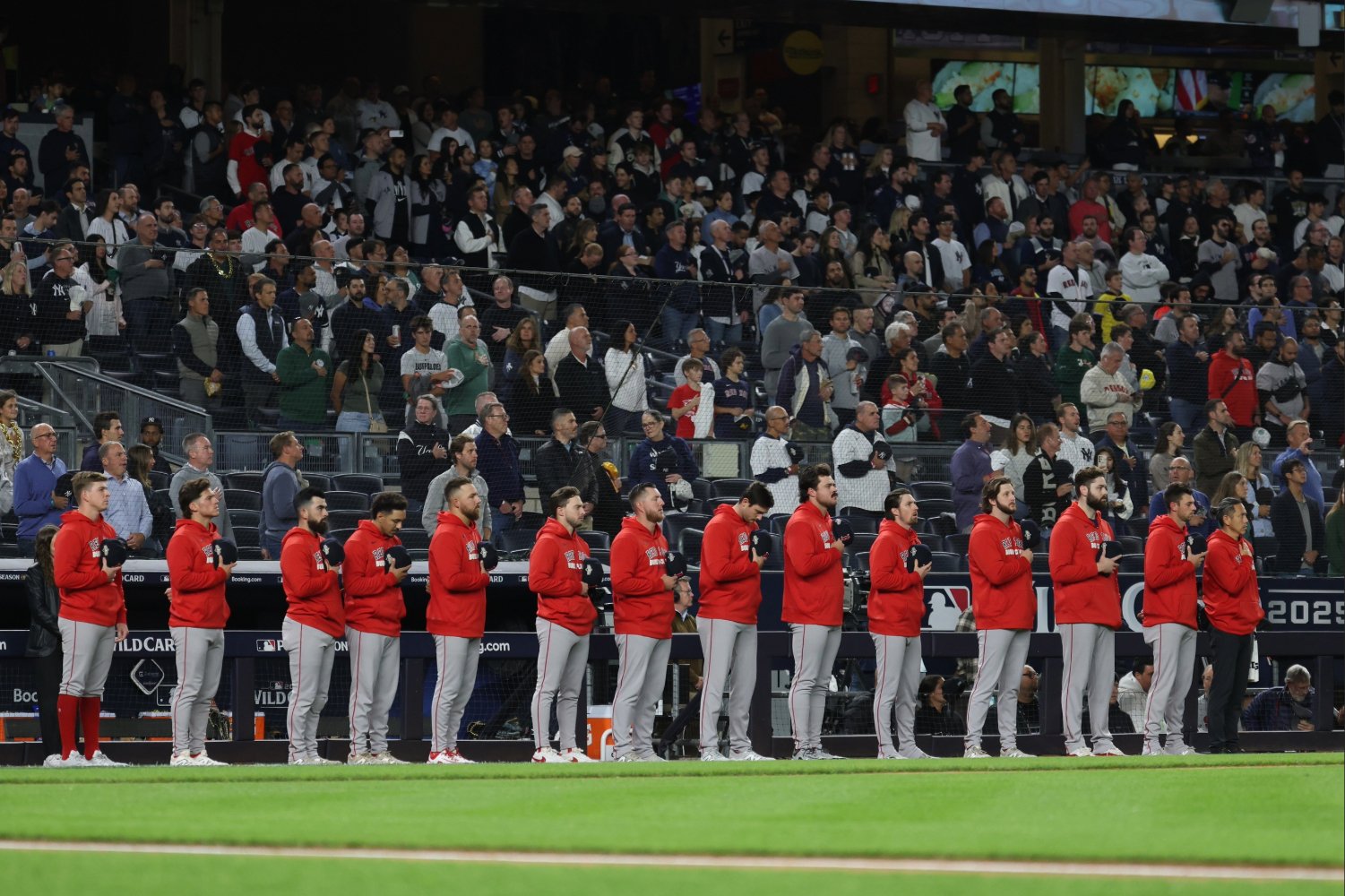 In a whirlwind 24 hours, the top two free agents of the offseason signed with National League teams. If you missed it, outfielder Kyler Tucker signed a massive contract with the Dodgers, and Bo Bichette followed suit with the Mets in an eerily similar deal to that of what 2025 Alex Bregman got with the Boston Red Sox. As we all know by now, Tucker had been tied nearly all offseason to the Blue Jays and the prevailing thought was that once he passed on their 10-year offer, they may pivot to bringing Bichette back into the fold. Neither came to fruition, though, and those signings, or non-signings depending on how you look at it, bust a wide open hole in the AL East for 2026. I’m not going to gloss over the fact that the Blue Jays were two outs away from winning a World Series title last year and added Dylan Cease to their rotation. They are an objectively great team who should be competing for championships for years to come, but baseball is a fickle game. Bichette was the co-face of the team with Vladimir Guerrero Jr. and his absence will loom large for a club that is planning on returning to dominance in 2026. He wasn’t their big bopper, but he got on base and was able to hit anywhere in the first five spots of the lineup. When he returned for the playoffs and moved to second base, he gave the Jays a spark that nearly allowed them to overcome the mighty Dodgers in the World Series. Losing out on him makes the team worse, even if they are still an incredibly talented ball club. Losing out on Tucker though? That stings for Toronto. He would have made that lineup something that opposing pitchers feared on a nightly basis. His presence behind Vladdy alone would mean the big man would see far more competitive at-bats. Tucker would have been the way for the Jays to ensure that no one in the AL East, or the entire AL for that matter, could out-slug them. They would have the second-most feared lineup in the league, behind the Dodgers. Suddenly, though, Tucker wasn’t interested in being in Toronto for 10 years and signed with those very same Dodgers. He now slots in as, like, the fifth-best player on that team and can embrace his quiet demeanor in L.A. knowing that he’s not going to be the guy the media comes to on a nightly basis anymore. What this all means for the Red Sox is a little nebulous, but it's pretty clear that they are the second-best team in the AL East and with an addition at second or third base, they could give the Jays a run for their money. The signing of Ranger Suarez gives the Sox the most potent rotation in the American League and puts them in the running for the best rotation in all of baseball. Even if the team makes a trade of someone like Brayan Bello in the near future (and they should), their starting rotation is deep and talented. If Roman Anthony returns to form after he finished last season injured? Forget about it. That doesn’t even account for Wilyer Abreu getting the training wheels taken off him against left-handed pitching, Willson Contreras manning first, or Ceddanne Rafaela’s knack for giant clutch hits when it matters most. The Yankees have done next to nothing this offseason, the Orioles have added pieces but lack the pitching depth to be truly competitive, and the Rays seem to be taking a ‘we’ll just wait and see’ approach to this season. The Blue Jays are going to be good, no doubt about it, but losing out on both Kyle Tucker and Bo Bichette is going to cause a pretty big ripple in the division. The Red Sox are going to be lying in wait to take advantage of it. We all got a small taste of playoff baseball in 2025 but in 2026, the fanbase is ready for more. With the majority of star free agents jumping ship to the NL (including Bregman!), the Red Sox have been gifted an opportunity to stake their claim as one of the league's best teams this year.
 -
In their first free-agent signing of the offseason, the Boston Red Sox have picked up southpaw Ranger Suarez on a 5-year, $130 million contract. As we’ve already noted here on Talk Sox, this breaks the free-agent curse hanging over the Red Sox this offseason and starts to paint a clearer picture of the team in a post-Alex Bregman world. While I think I can speak for the vast majority of fans when I say that we’re relieved that Craig Breslow and company have done something now, the signing of Suárez signals that the team may be gearing up to move on from some established pitching depth, with far more players than spots available. There’s one name that, unfortunately, makes the most sense out of all of them. Brayan Bello, it feels like your time with the Red Sox is quickly drawing to a close. I’ve talked at length about my love for Bello while also highlighting the fact that he is quite likely the most underrated trade chip the team currently possess. I won’t rehash that entire article, but he’s young, controllable, and has a high floor with a high-ceiling upside. When he’s on, he’s one of the best groundball pitchers in the game and it seemed that he learned to control his emotions on the mound far better in 2025 than he had in previous seasons. As the rotation is currently constructed, he’s the fourth-best pitcher on the team at best and could easily be passed up by either Connelly Early or Payton Tolle at some point during the 2026 season. While all of that is incredibly positive and reason enough for him to stick around Boston, it’s the exact reason the team can sell high on him and target their biggest need at the moment, an infielder to play either second or third. Bello, thanks to his existing team control, might be enough on his own to bring back a quality infielder. Building a package around him and some members of the farm system could net the Red Sox an even bigger name on the trade market, and certainly one better than any free agent still currently available. I floated Bello as a potential name in a deal for Ketel Marte on a recent episode of the Talk Sox Podcast, but if GM Mike Hazen is to be believed, he’s no longer an option to be traded at this point in the offseason. It’s no secret that Craig Breslow likes to work the trade market and can get creative for the right return package. If a team is looking to upgrade their rotation, and maybe outfield at the same time, they could do a lot worse than calling and asking about Bello alongside one of the multitude of outfielders the Red Sox employ. There’s an argument to be made that trading away someone like Tolle or Early would net the Red Sox a bigger returning player than a deal centered around Bello, but from everything that has come out of Fenway Fest, it seems like the team is incredibly high on both young lefties and would need to be absolutely blown away by a return to consider moving them. Bello and Suárez fill similar niches as shorter, groundball-heavy pitchers, and their recent commitment to the latter makes it easier to move on from their commitment to the former. There’s still work to be done for Craig Breslow, but don’t be shocked to start seeing Bello’s name popping up in more and more rumors as we get closer to spring training. The front office knows there’s a lot of negativity being directed at the club right now, and Ranger Suarez goes a long way to proving the team is serious about making significant improvements, but unless they are going to pony up for Bo Bichette to play up the middle, the team is going to have to turn back to the trade market to find anything close to a suitable replacement for Bregman. Brayan Bello is a homegrown pitcher with an established floor of a mid-rotation starter, but that's a valuable profile on the trade market as well. With Suárez signed up, it may be time to field some offers for the newfound pitching surplus in Boston. View full article
-
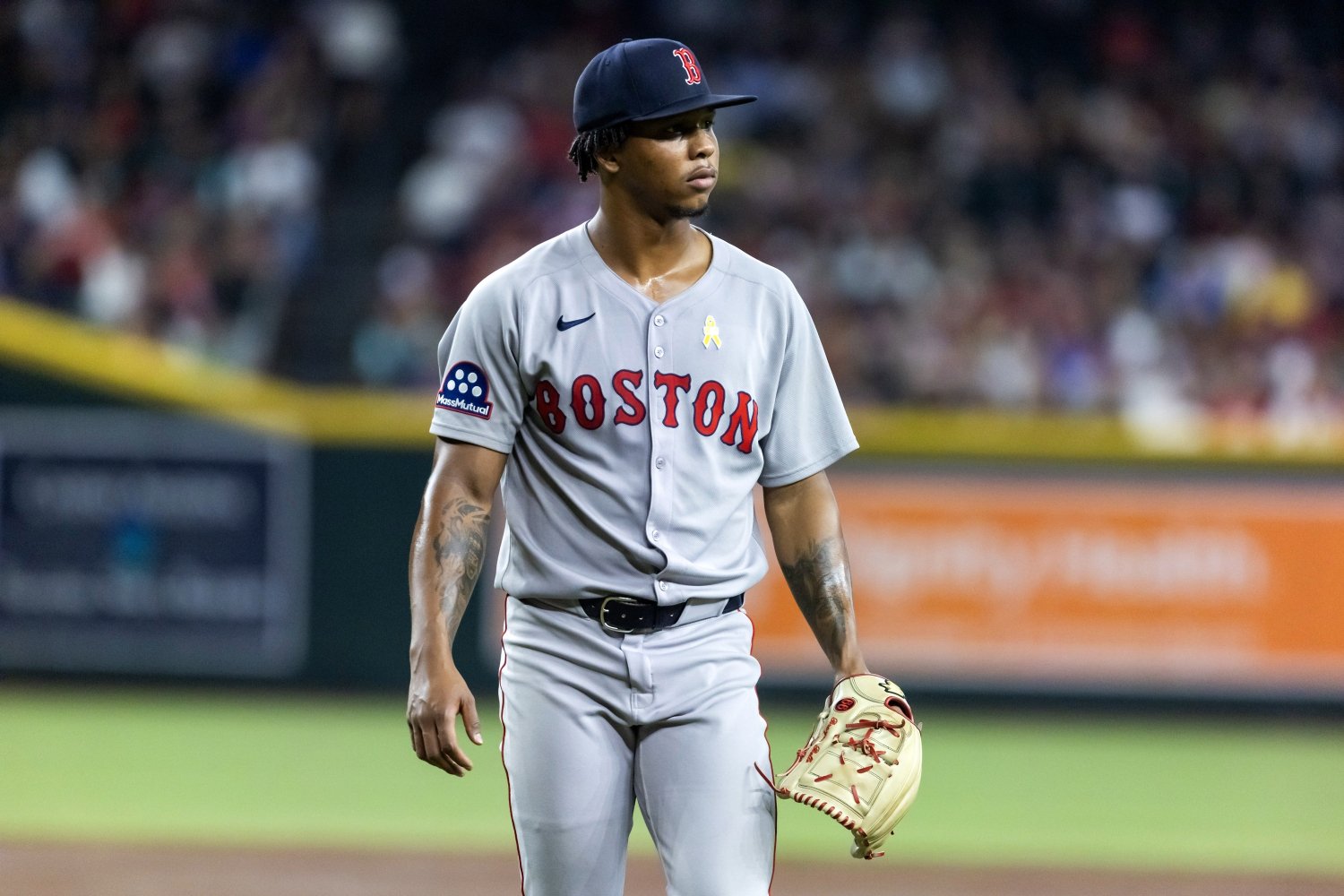 In their first free-agent signing of the offseason, the Boston Red Sox have picked up southpaw Ranger Suarez on a 5-year, $130 million contract. As we’ve already noted here on Talk Sox, this breaks the free-agent curse hanging over the Red Sox this offseason and starts to paint a clearer picture of the team in a post-Alex Bregman world. While I think I can speak for the vast majority of fans when I say that we’re relieved that Craig Breslow and company have done something now, the signing of Suárez signals that the team may be gearing up to move on from some established pitching depth, with far more players than spots available. There’s one name that, unfortunately, makes the most sense out of all of them. Brayan Bello, it feels like your time with the Red Sox is quickly drawing to a close. I’ve talked at length about my love for Bello while also highlighting the fact that he is quite likely the most underrated trade chip the team currently possess. I won’t rehash that entire article, but he’s young, controllable, and has a high floor with a high-ceiling upside. When he’s on, he’s one of the best groundball pitchers in the game and it seemed that he learned to control his emotions on the mound far better in 2025 than he had in previous seasons. As the rotation is currently constructed, he’s the fourth-best pitcher on the team at best and could easily be passed up by either Connelly Early or Payton Tolle at some point during the 2026 season. While all of that is incredibly positive and reason enough for him to stick around Boston, it’s the exact reason the team can sell high on him and target their biggest need at the moment, an infielder to play either second or third. Bello, thanks to his existing team control, might be enough on his own to bring back a quality infielder. Building a package around him and some members of the farm system could net the Red Sox an even bigger name on the trade market, and certainly one better than any free agent still currently available. I floated Bello as a potential name in a deal for Ketel Marte on a recent episode of the Talk Sox Podcast, but if GM Mike Hazen is to be believed, he’s no longer an option to be traded at this point in the offseason. It’s no secret that Craig Breslow likes to work the trade market and can get creative for the right return package. If a team is looking to upgrade their rotation, and maybe outfield at the same time, they could do a lot worse than calling and asking about Bello alongside one of the multitude of outfielders the Red Sox employ. There’s an argument to be made that trading away someone like Tolle or Early would net the Red Sox a bigger returning player than a deal centered around Bello, but from everything that has come out of Fenway Fest, it seems like the team is incredibly high on both young lefties and would need to be absolutely blown away by a return to consider moving them. Bello and Suárez fill similar niches as shorter, groundball-heavy pitchers, and their recent commitment to the latter makes it easier to move on from their commitment to the former. There’s still work to be done for Craig Breslow, but don’t be shocked to start seeing Bello’s name popping up in more and more rumors as we get closer to spring training. The front office knows there’s a lot of negativity being directed at the club right now, and Ranger Suarez goes a long way to proving the team is serious about making significant improvements, but unless they are going to pony up for Bo Bichette to play up the middle, the team is going to have to turn back to the trade market to find anything close to a suitable replacement for Bregman. Brayan Bello is a homegrown pitcher with an established floor of a mid-rotation starter, but that's a valuable profile on the trade market as well. With Suárez signed up, it may be time to field some offers for the newfound pitching surplus in Boston.
 -
Reportedly, the Red Sox and Astros are involved in discussions centered around Isaac Paredes in recent days. According to Matt Couture on Twitter. The Astros are intrigued by both Brayan Bello and Jarren Duran, both names that have been floated in countless trade rumors since the beginning of the offseason. For a deal of that magnitude, though, the Red Sox are looking for more in return than just a two-for-one swap. Paredes makes a lot of sense as a target for the Sox and would fill a couple of different holes for the team. He’s a right-handed hitter and can play both third and second base. Either position needs to be addressed before spring training begins so Marcelo Mayer can begin working full-time at the other spot in the infield. It’s worth wondering who else the Red Sox may be targeting from the Astros to help facilitate a deal involving both Duran and Bello. What do you think? Should the Red Sox swing for a potential blockbuster deal by including Brayan Bello and Jarren Duran for a return headlined by Isaac Paredes? Sound off in the comments below! View full rumor
-
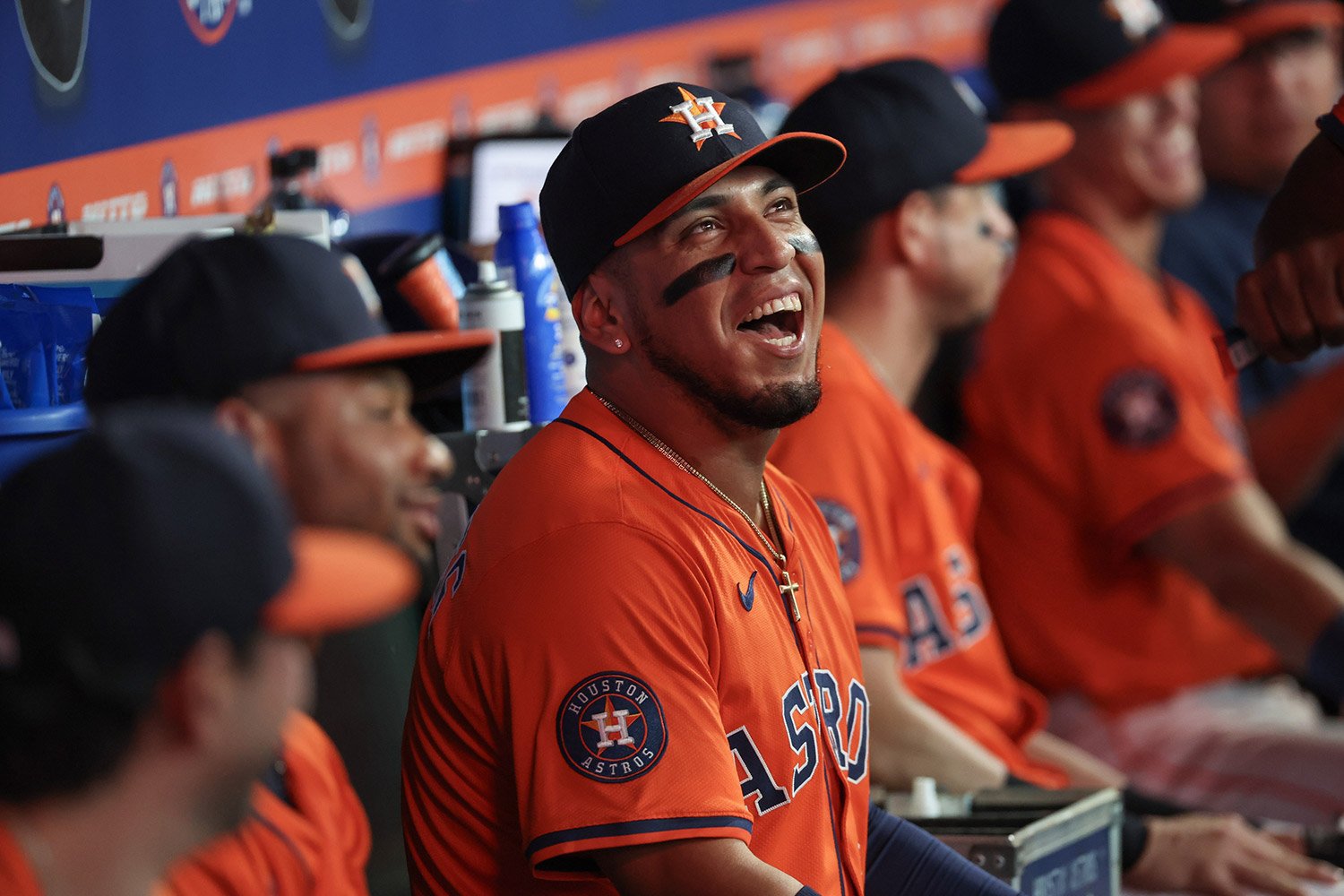 Reportedly, the Red Sox and Astros are involved in discussions centered around Isaac Paredes in recent days. According to Matt Couture on Twitter. The Astros are intrigued by both Brayan Bello and Jarren Duran, both names that have been floated in countless trade rumors since the beginning of the offseason. For a deal of that magnitude, though, the Red Sox are looking for more in return than just a two-for-one swap. Paredes makes a lot of sense as a target for the Sox and would fill a couple of different holes for the team. He’s a right-handed hitter and can play both third and second base. Either position needs to be addressed before spring training begins so Marcelo Mayer can begin working full-time at the other spot in the infield. It’s worth wondering who else the Red Sox may be targeting from the Astros to help facilitate a deal involving both Duran and Bello. What do you think? Should the Red Sox swing for a potential blockbuster deal by including Brayan Bello and Jarren Duran for a return headlined by Isaac Paredes? Sound off in the comments below!
 -
Alex and Maddie say goodbye to Alex Bregman and welcome the newest member of the Boston Red Sox, Ranger Suarez, to the team. They talk through 2026 roster projections and make some predictions on how the rest of the offseason will play out by focusing on some outside-the-box trade targets to fix the hole at second base. Listen on Apple Podcasts: https://podcasts.apple.com/us/podcast/the-talk-sox-podcast/id1783204104 Listen on Spotify: https://open.spotify.com/show/3qPrPXEngu0CxgTmlf0ynm Listen on iHeartRadio: https://www.iheart.com/podcast/263-the-talk-sox-podcast-244591331/ Listen on Pocket Casts: https://pca.st/4tmd121v Watch on YouTube: https://www.youtube.com/@talksox View full article
-
 Alex and Maddie say goodbye to Alex Bregman and welcome the newest member of the Boston Red Sox, Ranger Suarez, to the team. They talk through 2026 roster projections and make some predictions on how the rest of the offseason will play out by focusing on some outside-the-box trade targets to fix the hole at second base. Listen on Apple Podcasts: https://podcasts.apple.com/us/podcast/the-talk-sox-podcast/id1783204104 Listen on Spotify: https://open.spotify.com/show/3qPrPXEngu0CxgTmlf0ynm Listen on iHeartRadio: https://www.iheart.com/podcast/263-the-talk-sox-podcast-244591331/ Listen on Pocket Casts: https://pca.st/4tmd121v Watch on YouTube: https://www.youtube.com/@talksox
 -
Alex Bregman is no longer a member of the Boston Red Sox. While there's a lot to discuss in terms of the impact of him signing with the Chicago Cubs, there’s still reason for optimism as we inch our way toward the start of spring training. Bregman leaving this organization isn’t the end of the world, even though some fans and analysts would have you believe it is. Bregman turns 32 during the 2026 season and has been a steady (if not declining) offensive player over the last few years. His quad injury in 2025, an injury he also sustained earlier in his career, doesn’t paint the picture of health that a team looking to invest long-term in a player is likely looking for. Especially a team who has the most recent medicals on that individual. Maybe I’m grasping at straws here, but I don’t like this deal for the Cubs and I’m glad the Red Sox didn’t go to that number to retain Bregman’s services for the next five years. None of that is the reason for optimism though. That comes in the form of the free agents still available. Both Kyle Tucker and Bo Bichette remain in the pool as of this writing. Section 10 Podcast’s Coley Mick posted this interesting bit of information the morning after Bregman’s signing was announced: Well, that’s certainly something. Like Coley, I’m not expecting Tucker to the Red Sox to be announced any time soon, or at all really. There’s been nothing connecting Tucker to Boston all that tangibly, so it would be incredibly shocking to have him land with the Red Sox, especially after Craig Breslow made comments at Fenway Fest indicating a trade of an outfielder wasn’t incredibly likely. Just in case though, let’s take a look at both Bichette and Tucker to see what impacts they could offer to the Red Sox in 2026 and beyond. First, Tucker is a year older, 28, than Bichette, 27. Both are looking for long-term contracts that will keep them in whatever city they sign with for the bulk of their career. You’d have to imagine that both will likely also look for an opt-out or two with a limited or no-trade clause built into this deal. Positionally, they couldn’t be more different. Bichette is a shortstop who is open to moving to second base as quickly as this season, whereas Tucker is an outfielder who could slot in either corner outfield spots with ease in Boston, although he played right field exclusively for the Cubs last season. Both would provide stability at their respective positions, but Bichette’s skill set is much more needed in Boston than Tucker’s, even though the latter is a far superior defender. Following Bregman’s exit, there are now two open holes in the infield for Boston: second and third base. Marcelo Mayer will take one of them over, without a doubt, but that still leaves an opening. Signing Bichette to play second and shifting Mayer to third makes a lot of sense for the organization. Offensively, both players offer upgrades. They both played roughly the same amount of games in '25, 136 for Bichette and 139 for Tucker. Tucker slashed .266/.377/.464 with a 136 wRC+ and a 4.5 fWAR. Bichette slashed .311/.357/.483 with a 134 wRC+ and a 3.8 fWAR. Both of these free agents would provide positive offensive impacts for the Red Sox. Bichette comes with the pedigree of leading the league in hits twice in his career, but Tucker offers more power. The Red Sox are surely counting on another productive season from the likes of Trevor Story while hoping that Roman Anthony becomes the superstar he is destined to be. They'll also crossing their fingers that Carlos Narvaez, Ceddanne Rafaela, Willson Contreras, and eventually Triston Casas all have impactful seasons. Adding either Bichette or Tucker to that lineup makes them even deeper and gives the team a legitimate threat to get on base every time they are at the plate. Notably, Boston is left-handed heavy (Anthony, Casas, Mayer, Wilyer Abreu, Jarren Duran, Masataka Yoshida), which could give an edge to Bichette. ESPN’s Kylie McDaniel has drastically different contract projections for Bichette and Tucker. His most recent projections, where he absolutely nailed the Bregman contract, has Tucker receiving a contract of $418 million over 11 years, with potential deferrals. After the Bregman signing, I still think this number could be in play for Tucker. I really don’t see the Red Sox doing anything like this, but the closer we get to spring training without Tucker signing could mean he’s willing to take a short-term, high AAV pillow deal to reenter free agency in the next few seasons (á la what Bregman did last year). For Bichette, McDaniel projects $150 million over five years. To be frank, there’s no way this is the number anymore. Bichette should push well past the $200 million mark now that Bregman has signed for $175 million. The best hope that the Red Sox have for Bichette is that their deferral plan pays more up front than on the back end, thus making it more enticing for the player. A $200+ million dollar player in Boston shouldn’t be a rarity, but Breslow has yet to prove he can get a long-term deal done for a marquee free agent. Both Bichette and Tucker check those boxes, so we’re now just waiting to see if the Red Sox are actual players in the deep end of the pool. I’ve been pretty vocal here on Talk Sox for the Red Sox to pivot away from Bregman and sign Bichette for a while. Now, Bregman is forcing them to do that by signing with the Cubs. I would love to see someone of Kyle Tucker’s caliber in Boston but there’s already a big enough logjam in the outfield as we speak, so bringing him in on a long-term deal would be tricky in multiple ways. But in either case, the Red Sox now have to dive in with both feet to prove to the fan base that they actually want to compete in a loaded American League East, lest they will just tread water and waste the peak years of youngsters Garrett Crochet and Roman Anthony. Let's hope that's an unacceptable outcome for the front office. View full article
-
Bo Bichette vs. Kyle Tucker: Which Free Agent Best Fits in Boston?
Alex Mayes posted an article in Red Sox
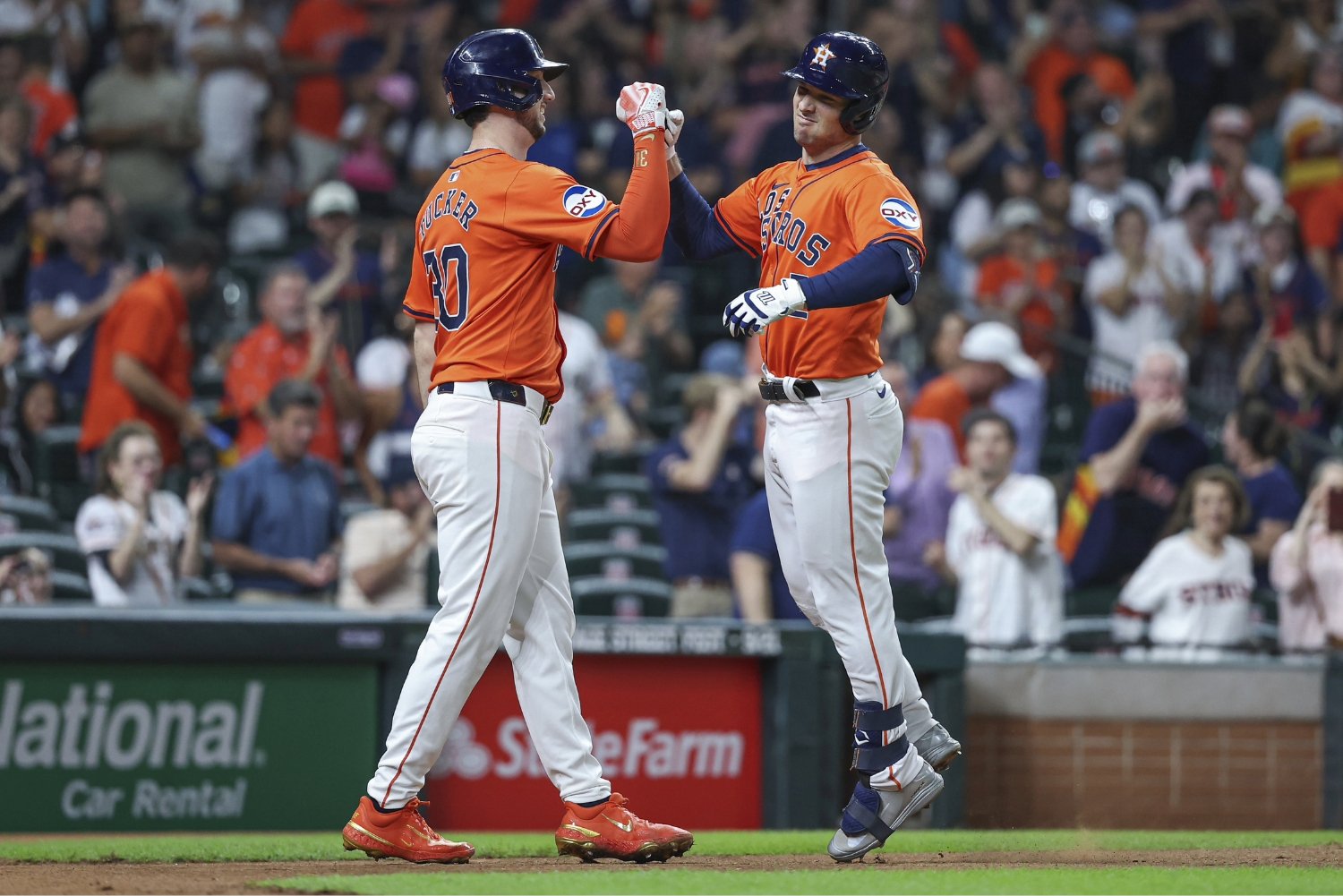 Alex Bregman is no longer a member of the Boston Red Sox. While there's a lot to discuss in terms of the impact of him signing with the Chicago Cubs, there’s still reason for optimism as we inch our way toward the start of spring training. Bregman leaving this organization isn’t the end of the world, even though some fans and analysts would have you believe it is. Bregman turns 32 during the 2026 season and has been a steady (if not declining) offensive player over the last few years. His quad injury in 2025, an injury he also sustained earlier in his career, doesn’t paint the picture of health that a team looking to invest long-term in a player is likely looking for. Especially a team who has the most recent medicals on that individual. Maybe I’m grasping at straws here, but I don’t like this deal for the Cubs and I’m glad the Red Sox didn’t go to that number to retain Bregman’s services for the next five years. None of that is the reason for optimism though. That comes in the form of the free agents still available. Both Kyle Tucker and Bo Bichette remain in the pool as of this writing. Section 10 Podcast’s Coley Mick posted this interesting bit of information the morning after Bregman’s signing was announced: Well, that’s certainly something. Like Coley, I’m not expecting Tucker to the Red Sox to be announced any time soon, or at all really. There’s been nothing connecting Tucker to Boston all that tangibly, so it would be incredibly shocking to have him land with the Red Sox, especially after Craig Breslow made comments at Fenway Fest indicating a trade of an outfielder wasn’t incredibly likely. Just in case though, let’s take a look at both Bichette and Tucker to see what impacts they could offer to the Red Sox in 2026 and beyond. First, Tucker is a year older, 28, than Bichette, 27. Both are looking for long-term contracts that will keep them in whatever city they sign with for the bulk of their career. You’d have to imagine that both will likely also look for an opt-out or two with a limited or no-trade clause built into this deal. Positionally, they couldn’t be more different. Bichette is a shortstop who is open to moving to second base as quickly as this season, whereas Tucker is an outfielder who could slot in either corner outfield spots with ease in Boston, although he played right field exclusively for the Cubs last season. Both would provide stability at their respective positions, but Bichette’s skill set is much more needed in Boston than Tucker’s, even though the latter is a far superior defender. Following Bregman’s exit, there are now two open holes in the infield for Boston: second and third base. Marcelo Mayer will take one of them over, without a doubt, but that still leaves an opening. Signing Bichette to play second and shifting Mayer to third makes a lot of sense for the organization. Offensively, both players offer upgrades. They both played roughly the same amount of games in '25, 136 for Bichette and 139 for Tucker. Tucker slashed .266/.377/.464 with a 136 wRC+ and a 4.5 fWAR. Bichette slashed .311/.357/.483 with a 134 wRC+ and a 3.8 fWAR. Both of these free agents would provide positive offensive impacts for the Red Sox. Bichette comes with the pedigree of leading the league in hits twice in his career, but Tucker offers more power. The Red Sox are surely counting on another productive season from the likes of Trevor Story while hoping that Roman Anthony becomes the superstar he is destined to be. They'll also crossing their fingers that Carlos Narvaez, Ceddanne Rafaela, Willson Contreras, and eventually Triston Casas all have impactful seasons. Adding either Bichette or Tucker to that lineup makes them even deeper and gives the team a legitimate threat to get on base every time they are at the plate. Notably, Boston is left-handed heavy (Anthony, Casas, Mayer, Wilyer Abreu, Jarren Duran, Masataka Yoshida), which could give an edge to Bichette. ESPN’s Kylie McDaniel has drastically different contract projections for Bichette and Tucker. His most recent projections, where he absolutely nailed the Bregman contract, has Tucker receiving a contract of $418 million over 11 years, with potential deferrals. After the Bregman signing, I still think this number could be in play for Tucker. I really don’t see the Red Sox doing anything like this, but the closer we get to spring training without Tucker signing could mean he’s willing to take a short-term, high AAV pillow deal to reenter free agency in the next few seasons (á la what Bregman did last year). For Bichette, McDaniel projects $150 million over five years. To be frank, there’s no way this is the number anymore. Bichette should push well past the $200 million mark now that Bregman has signed for $175 million. The best hope that the Red Sox have for Bichette is that their deferral plan pays more up front than on the back end, thus making it more enticing for the player. A $200+ million dollar player in Boston shouldn’t be a rarity, but Breslow has yet to prove he can get a long-term deal done for a marquee free agent. Both Bichette and Tucker check those boxes, so we’re now just waiting to see if the Red Sox are actual players in the deep end of the pool. I’ve been pretty vocal here on Talk Sox for the Red Sox to pivot away from Bregman and sign Bichette for a while. Now, Bregman is forcing them to do that by signing with the Cubs. I would love to see someone of Kyle Tucker’s caliber in Boston but there’s already a big enough logjam in the outfield as we speak, so bringing him in on a long-term deal would be tricky in multiple ways. But in either case, the Red Sox now have to dive in with both feet to prove to the fan base that they actually want to compete in a loaded American League East, lest they will just tread water and waste the peak years of youngsters Garrett Crochet and Roman Anthony. Let's hope that's an unacceptable outcome for the front office.
 -
The Red Sox have a Masataka Yoshida-sized elephant in their lineup. As currently constructed, the team has five outfielders on the major-league roster: Roman Anthony, Ceddanne Rafaela, Wilyer Abreu, Jarren Duran, and Yoshida. That doesn’t count bench options Nick Sogard and Nate Eaton, either. We can pencil in some combination of Anthony, Rafaela, Abreu, and Duran into the starting outfield spots on a game-by-game basis, but that leaves Yoshida as the primary DH option as we get closer to the start of spring training. It’s a role he’s familiar with after he was finally taken off the injured list in 2025, but it’s not a role he thrived in. Yoshida appeared in 55 games last season and slashed .266/.307/.388 with four home runs, 26 RBIs, an 88 wRC+, and a -0.1 fWAR. When he was signed before the 2023 season, we were pitched on one of the better power hitters in the NPB and told that once he settled into the style of American baseball, his power would follow. So far, though, it has yet to materialize in any meaningful way. He can put the bat to the ball, but that’s not what you want from your primary DH. If there was a right-handed hitter who could platoon in the DH role with him then you could start to make a case for keeping Yoshida around, but that'd be a questionable use of roster space and resources. The Red Sox are going to have to figure out the Yoshida problem sooner rather than later. The problem at DH will only get worse if Triston Casas is healthy and playing well early in the season. There are question marks all over Casas, and rightfully so, but he has the biggest potential to bring 30+ home run power to this lineup as soon as this season. Maybe he'll start the year with Triple-A Worcester, but if he plays well, he'll be on the first bus back to Boston. They’ve traded for Willson Contreras to be the solution at first base this season, which should pencil Casas in as the primary DH when he returns to the lineup. He could be a passable first baseman in the future, but his path to playing time, and likely his path to success here in Boston, will come at the DH spot in the lineup in 2026. Having Yoshida around makes it all the more difficult to figure that out. It's telling that Craig Breslow has made two trades with the person who signed Yoshida to a deal in Boston, Chaim Bloom and the Cardinals, and instead of taking even part of Yoshida’s contract back in a trade, they’ve opted to send money to the Red Sox instead. There is no actual market for Yoshida in professional baseball right now, unless the Red Sox move him in a pure salary dump by attaching a decent prospect to him. That’s possible, but the organization has fewer of those high ranked prospects after the trades with the Cardinals (and Pirates) earlier in the offseason. What will likely happen is that the Red Sox are going to pay Masataka Yoshida $18 million over the next two seasons to sit on the bench. In 2026, don’t be surprised if Yoshida plays once per week, and perhaps less if the quartet of starting outfielders are all hot at the same time. Breslow has said that he’d like to rotate players through the DH spot in the lineup and having four starting-caliber outfielders allows for Alex Cora to do just that on a matchup specific basis. Yoshida is a popular guy in the clubhouse and with the fans, but he’s a roadblock to the team being able to operate at full capacity. View full article
-
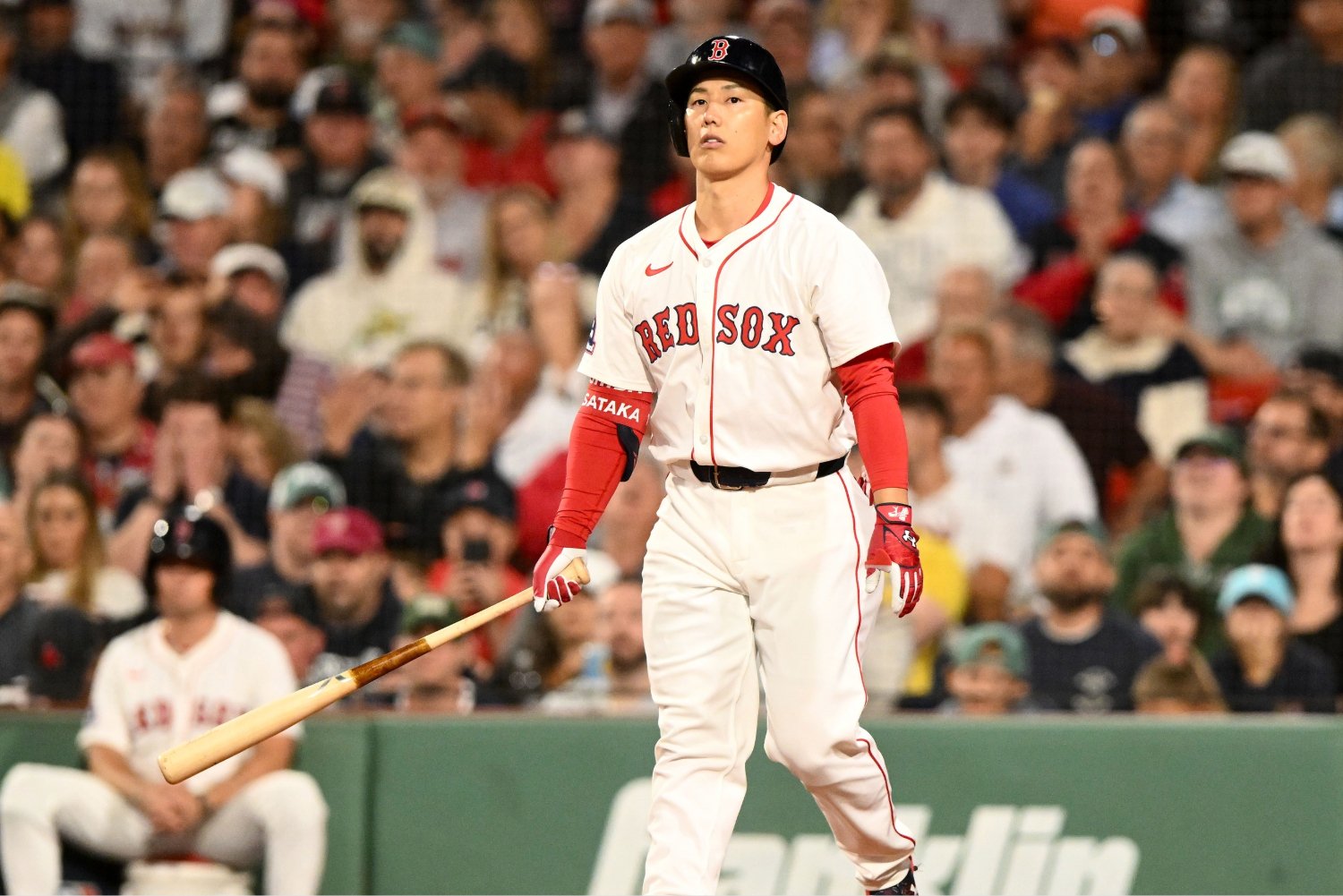 The Red Sox have a Masataka Yoshida-sized elephant in their lineup. As currently constructed, the team has five outfielders on the major-league roster: Roman Anthony, Ceddanne Rafaela, Wilyer Abreu, Jarren Duran, and Yoshida. That doesn’t count bench options Nick Sogard and Nate Eaton, either. We can pencil in some combination of Anthony, Rafaela, Abreu, and Duran into the starting outfield spots on a game-by-game basis, but that leaves Yoshida as the primary DH option as we get closer to the start of spring training. It’s a role he’s familiar with after he was finally taken off the injured list in 2025, but it’s not a role he thrived in. Yoshida appeared in 55 games last season and slashed .266/.307/.388 with four home runs, 26 RBIs, an 88 wRC+, and a -0.1 fWAR. When he was signed before the 2023 season, we were pitched on one of the better power hitters in the NPB and told that once he settled into the style of American baseball, his power would follow. So far, though, it has yet to materialize in any meaningful way. He can put the bat to the ball, but that’s not what you want from your primary DH. If there was a right-handed hitter who could platoon in the DH role with him then you could start to make a case for keeping Yoshida around, but that'd be a questionable use of roster space and resources. The Red Sox are going to have to figure out the Yoshida problem sooner rather than later. The problem at DH will only get worse if Triston Casas is healthy and playing well early in the season. There are question marks all over Casas, and rightfully so, but he has the biggest potential to bring 30+ home run power to this lineup as soon as this season. Maybe he'll start the year with Triple-A Worcester, but if he plays well, he'll be on the first bus back to Boston. They’ve traded for Willson Contreras to be the solution at first base this season, which should pencil Casas in as the primary DH when he returns to the lineup. He could be a passable first baseman in the future, but his path to playing time, and likely his path to success here in Boston, will come at the DH spot in the lineup in 2026. Having Yoshida around makes it all the more difficult to figure that out. It's telling that Craig Breslow has made two trades with the person who signed Yoshida to a deal in Boston, Chaim Bloom and the Cardinals, and instead of taking even part of Yoshida’s contract back in a trade, they’ve opted to send money to the Red Sox instead. There is no actual market for Yoshida in professional baseball right now, unless the Red Sox move him in a pure salary dump by attaching a decent prospect to him. That’s possible, but the organization has fewer of those high ranked prospects after the trades with the Cardinals (and Pirates) earlier in the offseason. What will likely happen is that the Red Sox are going to pay Masataka Yoshida $18 million over the next two seasons to sit on the bench. In 2026, don’t be surprised if Yoshida plays once per week, and perhaps less if the quartet of starting outfielders are all hot at the same time. Breslow has said that he’d like to rotate players through the DH spot in the lineup and having four starting-caliber outfielders allows for Alex Cora to do just that on a matchup specific basis. Yoshida is a popular guy in the clubhouse and with the fans, but he’s a roadblock to the team being able to operate at full capacity.
 -
Trevor Story is hosting his informal “Story Camp” this week, and some familiar faces have joined the shortstop in Texas. Roman Anthony, Marcelo Mayer, Connor Wong, Jarren Duran, Triston Casas, and Mikey Romero appear in all of the social media posts surrounding the event. When the first Story Camp was announced a few seasons ago, it seemed like a way for the veteran shortstop to connect with and mentor younger players while he was rehabbing from injury. Now though, it seems to be transforming into something different. With Duran, Wong, and Casas all being present. it showcases them putting in the extra work to improve on down or lost seasons in 2025. It also gives them more opportunities to work with members of the young core in Anthony and Mayer. Romero is penciled in to be the starting shortstop for the WooSox this season and working with Story can only help him improve at the position. Should Story go down with an injury, it’s likely Romero will be one of the first names called up to the big-league roster. Story Camp is a way for Trevor Story to further mentor the up-and-coming talent in the system. We can all hope that this extra time together will translate to positive results on the field in 2026. View full rumor
-
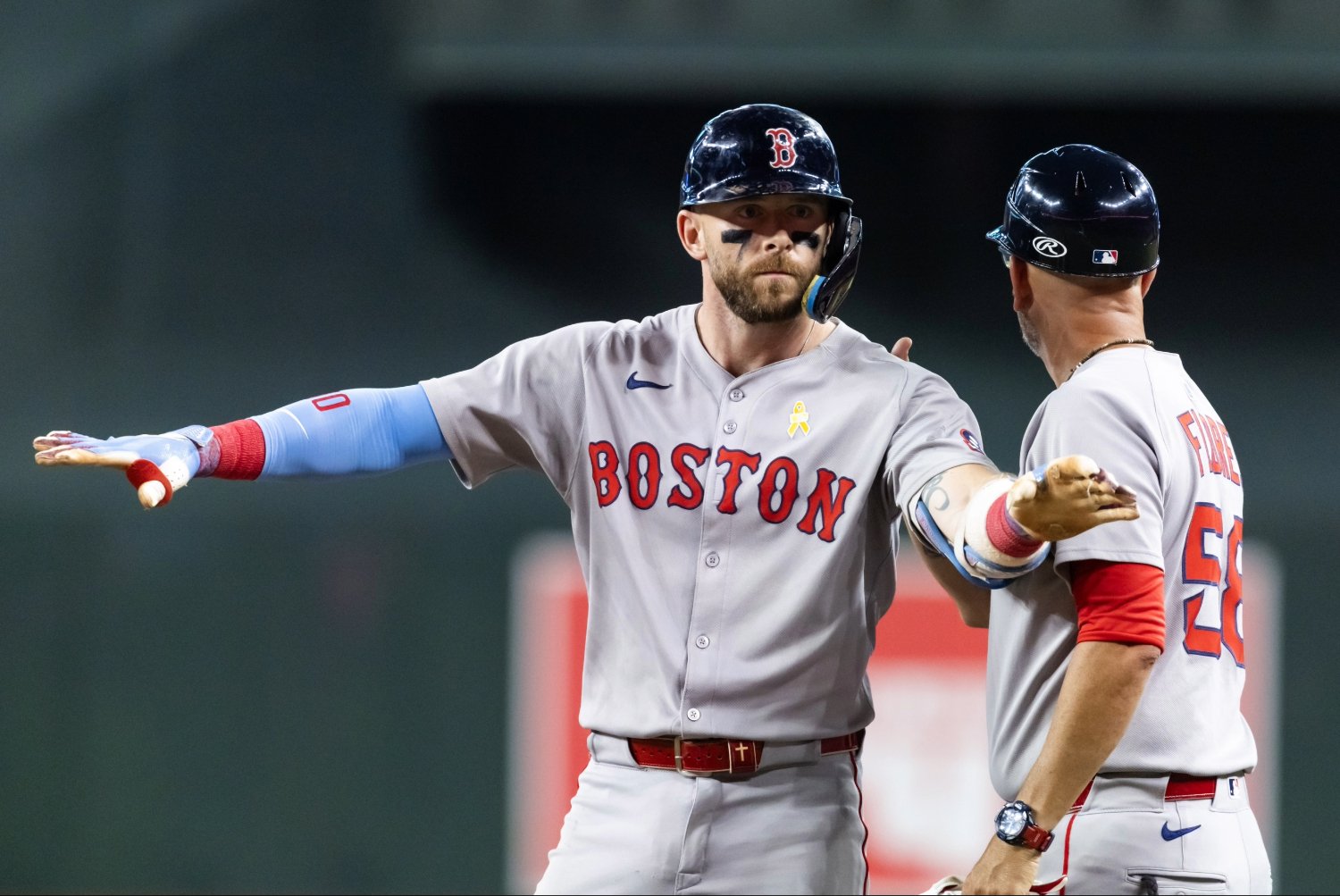 Trevor Story is hosting his informal “Story Camp” this week, and some familiar faces have joined the shortstop in Texas. Roman Anthony, Marcelo Mayer, Connor Wong, Jarren Duran, Triston Casas, and Mikey Romero appear in all of the social media posts surrounding the event. When the first Story Camp was announced a few seasons ago, it seemed like a way for the veteran shortstop to connect with and mentor younger players while he was rehabbing from injury. Now though, it seems to be transforming into something different. With Duran, Wong, and Casas all being present. it showcases them putting in the extra work to improve on down or lost seasons in 2025. It also gives them more opportunities to work with members of the young core in Anthony and Mayer. Romero is penciled in to be the starting shortstop for the WooSox this season and working with Story can only help him improve at the position. Should Story go down with an injury, it’s likely Romero will be one of the first names called up to the big-league roster. Story Camp is a way for Trevor Story to further mentor the up-and-coming talent in the system. We can all hope that this extra time together will translate to positive results on the field in 2026.
 -
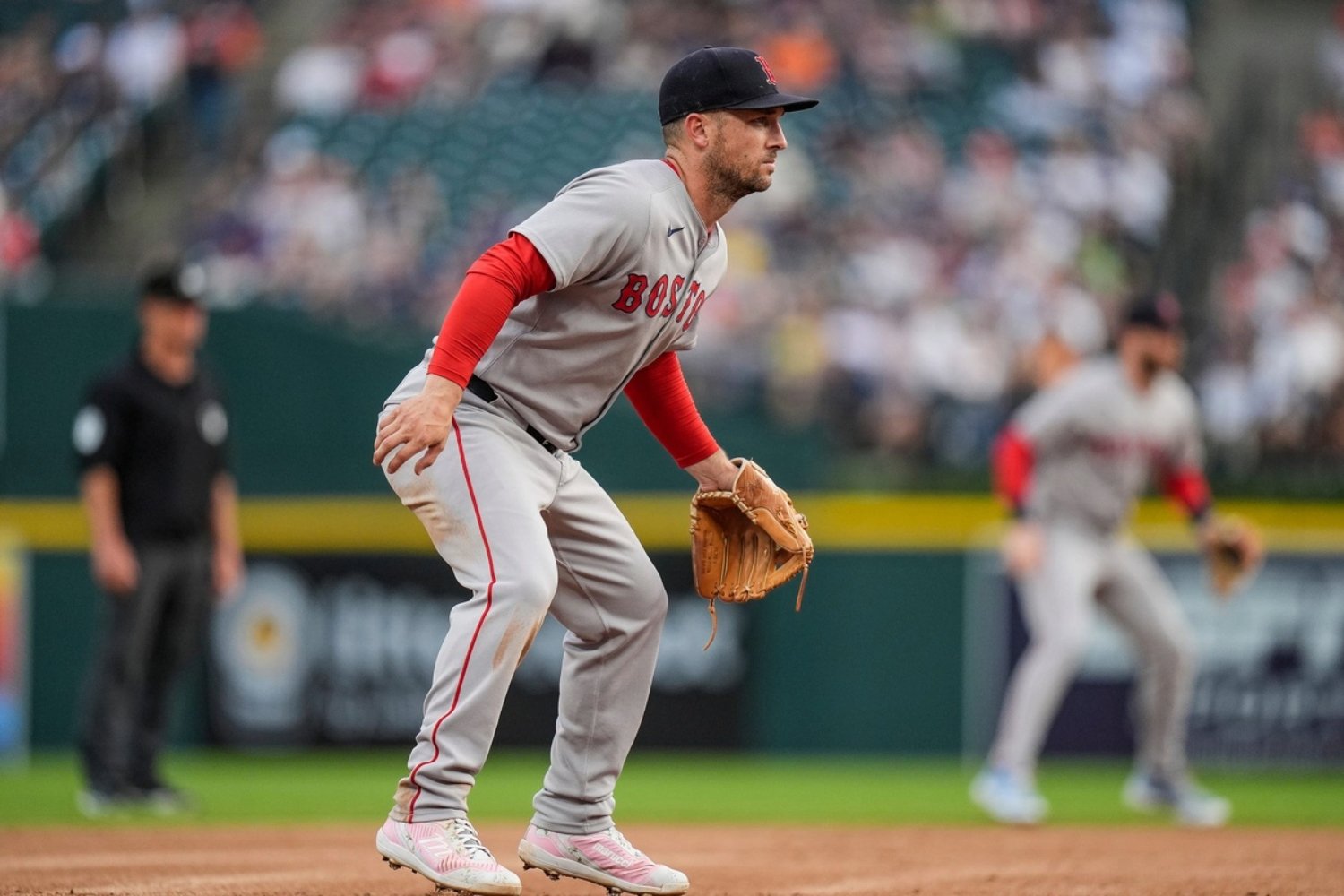 The Athletic’s Jen McCaffrey has verified that the Boston Red Sox have a contract offer on the table for Alex Bregman. She has reached out to the source that spoke to ESPN’s Buster Olney last week and confirmed that the offer is indeed “aggressive”. The full details of the offer are unknown at this point, and aggressive likely means different things to all parties involved. What this does show is that the Red Sox are still actively trying to improve the team and have at least some amount of comfort with handing out multi-year offers to free agents. The ball is in Bregman’s court, though, as the Red Sox are far from the only team currently vying for his services. Speculation all offseason has had him returning to Boston, but it’s far from a sure thing, even with this offer in hand. Bregman is represented by mega-agent Scott Boras, so this offer is likely being used to leverage other teams while attempting to gauge if this is actually the best offer Boston will make. Until we know more, we’re all playing the waiting game together.
 -
The Athletic’s Jen McCaffrey has verified that the Boston Red Sox have a contract offer on the table for Alex Bregman. She has reached out to the source that spoke to ESPN’s Buster Olney last week and confirmed that the offer is indeed “aggressive”. The full details of the offer are unknown at this point, and aggressive likely means different things to all parties involved. What this does show is that the Red Sox are still actively trying to improve the team and have at least some amount of comfort with handing out multi-year offers to free agents. The ball is in Bregman’s court, though, as the Red Sox are far from the only team currently vying for his services. Speculation all offseason has had him returning to Boston, but it’s far from a sure thing, even with this offer in hand. Bregman is represented by mega-agent Scott Boras, so this offer is likely being used to leverage other teams while attempting to gauge if this is actually the best offer Boston will make. Until we know more, we’re all playing the waiting game together. View full rumor
-
2026 Boston Red Sox Opening Day Roster Projection
Alex Mayes replied to Alex Mayes's topic in Talk Sox Front Page News
100% agree about the bullpen. I have Casas starting in Worcester solely because we don't know if he'll even be ready by Opening Day. If he is, you can make the case for him to be on the roster but I think they'd opt for him to get regular playing time with the WooSox over platooning him at first. DHing him would make a lot of sense if Masa and Duran weren't in the picture.
