


Alex Mayes
-
Posts
844 -
Joined
-
Last visited
Content Type
Profiles
Boston Red Sox Videos
2026 Boston Red Sox Top Prospects Ranking
Boston Red Sox Free Agent & Trade Rumors, Notes, & Tidbits
Guides & Resources
2025 Boston Red Sox Draft Pick Tracker
News
2026 Boston Red Sox Draft Tracker: Picks & Bonuses
Forums
Blogs
Events
Store
Downloads
Gallery
Everything posted by Alex Mayes
-
Rafael Devers Is Gone, But The Red Sox Have A Bright Present And Future
Alex Mayes posted an article in Red Sox
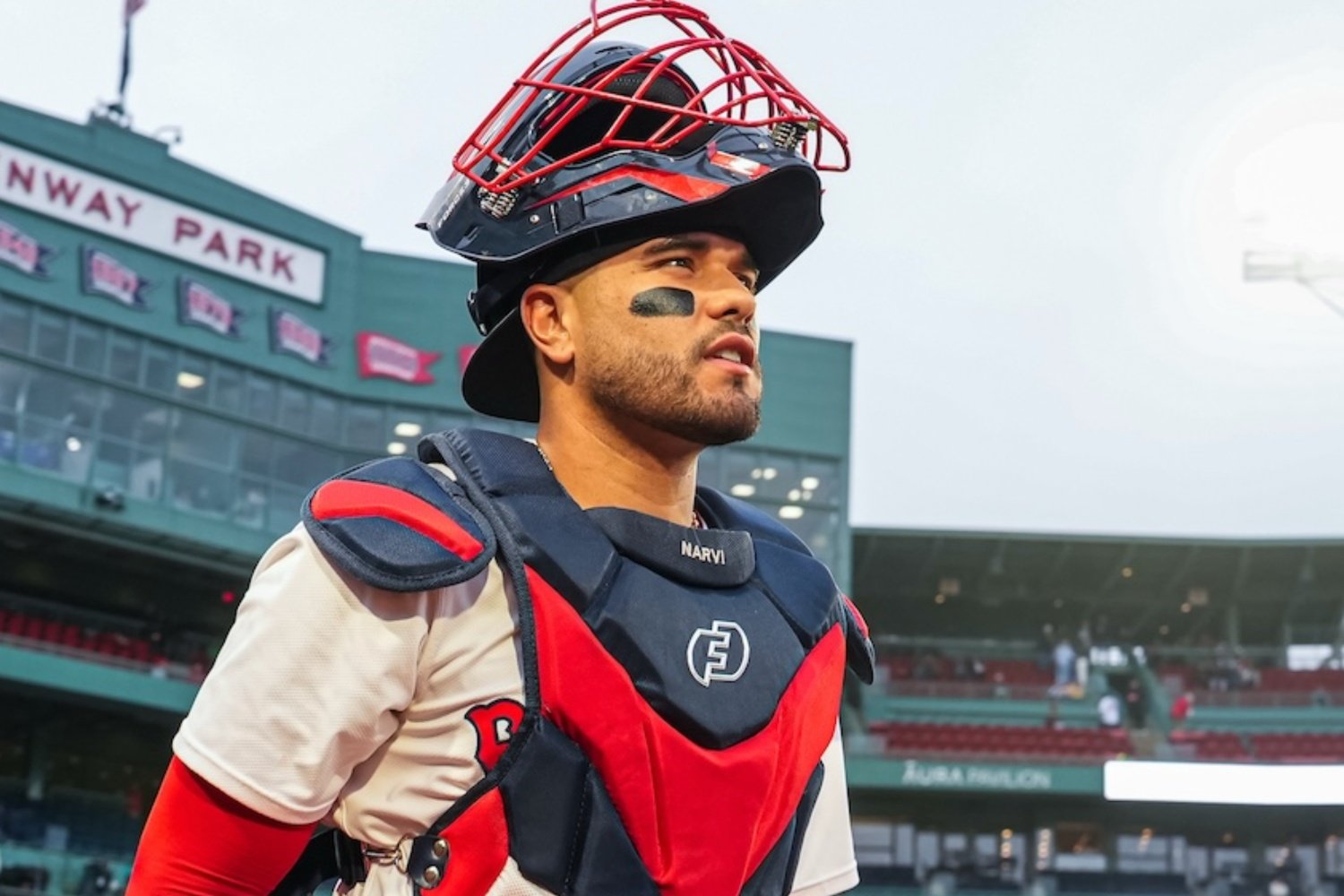 While the Rafael Devers trade has dominated the headlines, lost in all the noise is that the Boston Red Sox have been playing fantastic baseball. This team has clawed their way back from below mediocrity to take five of six games from the AL East-leading Yankees, took the series against the Tampa Bay Rays, are experiencing a stellar run of starting pitching, and have a bullpen that looks settled and is anchored by a closer having a career resurgence, all while Carlos Narvaez is making us forget about Kyle Teel andthe entire Big Three plays together in the majors. There’s a lot to be happy about as a fan of the Red Sox right now if you take a breath to pause from the media chaos. Let’s take a look at each aspect and break down why it paints a crystal-clear picture for the future of the franchise. Big Series Wins Against Good Teams It seemed most fans and analysts had penciled in the Red Sox to lose the first series against the Yankees in New York. After a loss in the first game, it seemed like that could come to fruition. Then, Garrett Crochet turned in his worst outing of the season, but the offense picked him up and the bullpen limited the damage. The Red Sox looked like they were hungry for a win. Then, on Sunday Night Baseball, the Sox got after Carlos Rodon in a way that hadn’t really happened all season and took the series. They turned their attention to the Rays and the momentum continued to build as they took two of three from a team leading them in the standings. The Yankees came to Fenway Park on Friday, June 13 hoping to overpower the Red Sox in their home ballpark. The Red Sox responded by sweeping the Yankees with contributions from all over the roster. Carlos Narvaez walked the game off on Friday night, Trevor Story and Romy Gonzalez knocked in RBIs to extend the lead early in the Saturday game, and the team proved Sunday they could win a game with less than three runs scored. The Starting Pitching Has Been Lights Out, literally Just looking at the Yankees home series, the Red Sox starters threw 21 1/3 innings, giving up seven hits, one earned run, five walks, and 20 strikeouts. Going back further to the last full turn through the rotation, Lucas Giolito went six innings pitched with zero earned runs, Walker Buehler went seven innings pitched with three earned runs, Garrett Crochet went eight and-a-third innings pitched with one earned run, Hunter Dobbins went six innings pitchers with zero earned runs, and Brayan Bello went seven shutout innings! Most recently, Giolito went six shutout innings against the Mariners. That's four earned runs in six starts. What more could you want from your rotation? I’d like to focus on Bello for just a second though, as he’s been cited as the most disappointing starter in the rotation. He faced a Yankees team trying to avoid a sweep that included a visibly frustrated Aaron Judge, who just had back-to-back down series against the Red Sox. Bello tossed seven innings, allowed three hits, three walks, and eight strikeouts. When Judge came up to the plate, Bello threw him pitches that didn’t sniff the zone and Judge chased each of them for swinging strikes. The moment never got too big for him, even when he was only clinging onto a one-run lead for five innings. The Bullpen Looks Good and Aroldis Chapman Seems Reinvented During the losing skid, the bullpen was overworked and tired. They looked listless each time they jogged from the pen to the mound. Now, though? They look rejuvenated and have been playing like a brand new group. Garrett Whitlock has been nails, Greg Weissert has worked himself into some jams and then pitched his way out, and Justin Wilson has been better than advertised. The shining star, though, is quite obviously Aroldis Chapman. He’s having a career year right now with the Red Sox, as hard as that may be to believe. He’s thrown 30 innings, sports a 1.50 ERA and 0.833 WHIP with 13 saves, a 36.5% strikeout rate, and a 7.8% walk rate. When he was brought in during the offseason, many fans, myself included, rolled their eyes and assumed he was just going to be the same pitcher he had been throughout the last few seasons as he bounced around from team to team. Coming to Boston seems to have allowed him to shift into a new gear and become the elite closer we knew him to be during his tenure with the Reds and Yankees. Carlos Narvaez Is An Absolute Stud On Offense and Defense The trade for Carlos Narvaez barely caused a blip on most people’s radars, but it proves that Craig Breslow has his good days too. He swapped a prospect in Elmer Rodriguez-Cruz that had upside for a catcher that I’d wager most Yankees fans had barely heard about. We assumed he could function as a backup catcher behind Connor Wong, potentially serving as a bridge to the team's next great catcher after losing Kyle Teel in the Crochet trade. Well, Wong’s season never got going — he got hurt, and has been a shell of himself since returning. All Narvaez has done is step into the spotlight and shine. He’s currently slashing .282/.366/.457 with six home runs, including walking off his former team to secure the victory on Friday, June 13. On defense, he's been just as brilliant. Just look at the catching stats from his Baseball Savant page. If Cal Raleigh wasn’t having the incredible season he’s having in Seattle, Narvaez is likely the starting catcher for the AL All-Star team come July. The Big Three Is Here and They Shouldn’t Be Going Anywhere It’s been a bit of a slow start for Roman Anthony, Marcelo Mayer, and Kristian Campbell. That’s okay, though. They are rookies, and we should be celebrating that The Big Three are together once again. Is it just a coincidence that once Roman Anthony joined the club, Marcelo Mayer found his power stroke? Or that Kristian Campbell’s swings started to look like they did when he was lighting the world on fire to start the season? I don’t think so. Having the band back together gives each guy a valuable support group to lean on. These guys are friends on and off the field, and having them together with the big league club, along with Narvaez, really helps showcase just how bright the future is in Boston. Give the kids some time to learn and contribute when they can, because they’ll reward you with outstanding production as they get their feet under them as the season carries on. I know it’s tough for some people to be a fan right now and that’s okay. What should help is that this team, your team, is playing fantastic baseball and seems primed to continue to make a run at a playoff spot. As hard as it may be to see, there’s a plan in place, and it’s going to be interesting to see what happens between right now and the trade deadline, but this team still deserve praise for the run its gone on in recent weeks. There's 26 men on this roster, and they all want to win. It’s always darkest before the dawn, and I think I can see the sun starting to break the horizon off in the distance.
 -
 Alex and Maddie discuss the fallout of the shocking Rafael Devers trade and discuss why maybe the front office made the right call after all. They dive into the exciting call-ups of Marcelo Mayer and Roman Anthony, plus make the pitch for Carlos Narvaez to win AL Rookie of the Year. Listen on Apple Podcasts: https://podcasts.apple.com/us/podcast/the-talk-sox-podcast/id1783204104 Listen on Spotify: https://open.spotify.com/show/3qPrPXEngu0CxgTmlf0ynm Listen on iHeartRadio: https://www.iheart.com/podcast/263-the-talk-sox-podcast-244591331/ Listen on Pocket Casts: https://pca.st/4tmd121v Watch on YouTube: https://www.youtube.com/@talksox
 -
Alex and Maddie discuss the fallout of the shocking Rafael Devers trade and discuss why maybe the front office made the right call after all. They dive into the exciting call-ups of Marcelo Mayer and Roman Anthony, plus make the pitch for Carlos Narvaez to win AL Rookie of the Year. Listen on Apple Podcasts: https://podcasts.apple.com/us/podcast/the-talk-sox-podcast/id1783204104 Listen on Spotify: https://open.spotify.com/show/3qPrPXEngu0CxgTmlf0ynm Listen on iHeartRadio: https://www.iheart.com/podcast/263-the-talk-sox-podcast-244591331/ Listen on Pocket Casts: https://pca.st/4tmd121v Watch on YouTube: https://www.youtube.com/@talksox View full article
- 1 reply
-
- 1
-

-
- rafael devers
- jordan hicks
- (and 6 more)
-
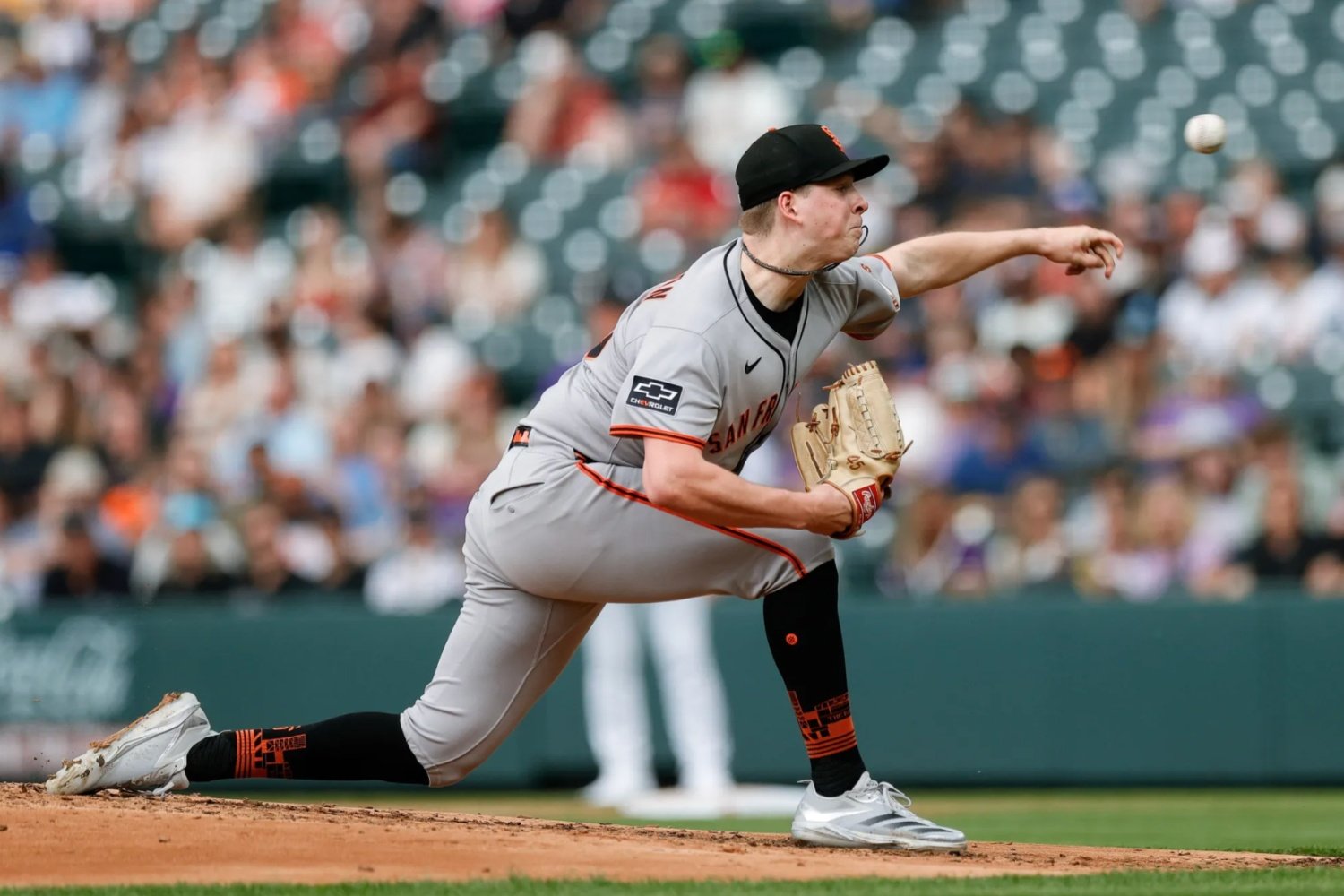
In what is likely the most shocking trade in the history of the Red Sox — or, at least the last five years of the Red Sox — superstar DH Rafael Devers has been traded to the San Francisco Giants. The Giants assume the entirety of Devers’ $254 million contract. In return, the Red Sox are receiving RHP Jordan Hicks, LHP Kyle Harrison, OF James Tibbs III, and RHP Jose Bello. In lieu of an opinion piece, which will absolutely come later, let’s discuss the newest members of the Boston Red Sox’s organization. RHP Jordan Hicks Hicks is currently on the injured list with a toe injury, but prior to the ailment, he amassed a 6.47 ERA, 1.54 WHIP, with 43 strikeouts over 48.2 innings pitched this year. Hicks was somewhat of a coveted free agent before he signed with the Giants in free agency before the 2024 season. He features a four-pitch mix: a sinker that averages 97.3 MPH, a sweeper that averages 82.4 MPH, a four-seam fastball that averages 97.2 MPH, and a splitter that averages 89 MPH. He was a supplemental pick by the St. Louis Cardinals in 2015 and featured flashes of elite stuff before he leveled off and was shuttled between their starting rotation and bullpen. He looks to bounce back with the Red Sox once he returns from injury as a member of the starting rotation, though a future in the bullpen shouldn't be counted out if the team wants a long-ish term closing option in place before dealing Aroldis Chapman at the trade deadline. LHP Kyle Harrison Harrison is likely viewed as the prize in this deal, though the next player may have something to say about that. He’s already been assigned to Triple-A Worcester, which shouldn’t be much of a shock. The pitching coaches in Boston will want to tinker with his mechanics to get him game ready, but he should see time at the major league level sooner than later. He likely will slot in as a starting pitcher for the Sox once Boston helps him stretch back out into a starter. In the majors this year he has a 4.56 ERA, 1.27 WHIP, with 25 strikeouts over 23.2 innings pitched. He features a three-pitch mix: a four-seam fastball that averages at 95.1 MPH, a slurve that averages 83.1 MPH, and a change-up that averages 87 MPH. He’s not a pitcher that will blow you away by any means, but there’s enough under the hood that warrants some attention. Harrison was Baseball America’s 26 overall prospect and MLB Pipeline’s 23rd overall prospect entering 2024. He has graduated from prospect status but has the pedigree to be a big contributor once he figures out the big leagues. OF James Tibbs III Tibbs comes to the organization from the Giants’ High-A affiliate, the Eugene Emeralds. He’s a power-first outfielder who is slashing .246/.478/.857. He has 12 homers and three stolen bases in 207 at-bats. He rose to High-A fairly quickly in 2024 and looks to make the same move up once he arrives in Greenville. He was the 13th overall pick in the 2024 draft out of Florida State. He was the fourth-ranked prospect in the Giants’ system, and should ascend to a similar status once the Big Three graduate. Where he has shined so far is his walk rate (16.3%); he shows great discipline for a young prospect. He will be one to watch as he progresses through the system. RHP Jose Bello Bello was signed as an international free agent in 2023 by the Giants. He is currently assigned to their Rookie-level affiliate where he has a 1-0 record, 2.00 ERA, two saves, a 0.72 WHIP, and 28 strikeouts over 18 innings pitched. He has floated around the low levels of the Giants’ system since signing and has not been ranked within the Giants’ top 30 prospects during his time in the system, per MassLive. However, FanGraphs did have him up at 22 in San Francisco's system. The biggest thing the Red Sox did by dealing Rafael Devers was clear the remainder of his salary off the books. They have saved $254 million by having the Giants agree to take on the entirety of his contract, lessening the return. The biggest question that remains now is: What does the front office hope to do with that money? Your guess is as good as mine. Only time will tell if the Red Sox can stomach trading another franchise superstar within the decade. View full article
-
 In what is likely the most shocking trade in the history of the Red Sox — or, at least the last five years of the Red Sox — superstar DH Rafael Devers has been traded to the San Francisco Giants. The Giants assume the entirety of Devers’ $254 million contract. In return, the Red Sox are receiving RHP Jordan Hicks, LHP Kyle Harrison, OF James Tibbs III, and RHP Jose Bello. In lieu of an opinion piece, which will absolutely come later, let’s discuss the newest members of the Boston Red Sox’s organization. RHP Jordan Hicks Hicks is currently on the injured list with a toe injury, but prior to the ailment, he amassed a 6.47 ERA, 1.54 WHIP, with 43 strikeouts over 48.2 innings pitched this year. Hicks was somewhat of a coveted free agent before he signed with the Giants in free agency before the 2024 season. He features a four-pitch mix: a sinker that averages 97.3 MPH, a sweeper that averages 82.4 MPH, a four-seam fastball that averages 97.2 MPH, and a splitter that averages 89 MPH. He was a supplemental pick by the St. Louis Cardinals in 2015 and featured flashes of elite stuff before he leveled off and was shuttled between their starting rotation and bullpen. He looks to bounce back with the Red Sox once he returns from injury as a member of the starting rotation, though a future in the bullpen shouldn't be counted out if the team wants a long-ish term closing option in place before dealing Aroldis Chapman at the trade deadline. LHP Kyle Harrison Harrison is likely viewed as the prize in this deal, though the next player may have something to say about that. He’s already been assigned to Triple-A Worcester, which shouldn’t be much of a shock. The pitching coaches in Boston will want to tinker with his mechanics to get him game ready, but he should see time at the major league level sooner than later. He likely will slot in as a starting pitcher for the Sox once Boston helps him stretch back out into a starter. In the majors this year he has a 4.56 ERA, 1.27 WHIP, with 25 strikeouts over 23.2 innings pitched. He features a three-pitch mix: a four-seam fastball that averages at 95.1 MPH, a slurve that averages 83.1 MPH, and a change-up that averages 87 MPH. He’s not a pitcher that will blow you away by any means, but there’s enough under the hood that warrants some attention. Harrison was Baseball America’s 26 overall prospect and MLB Pipeline’s 23rd overall prospect entering 2024. He has graduated from prospect status but has the pedigree to be a big contributor once he figures out the big leagues. OF James Tibbs III Tibbs comes to the organization from the Giants’ High-A affiliate, the Eugene Emeralds. He’s a power-first outfielder who is slashing .246/.478/.857. He has 12 homers and three stolen bases in 207 at-bats. He rose to High-A fairly quickly in 2024 and looks to make the same move up once he arrives in Greenville. He was the 13th overall pick in the 2024 draft out of Florida State. He was the fourth-ranked prospect in the Giants’ system, and should ascend to a similar status once the Big Three graduate. Where he has shined so far is his walk rate (16.3%); he shows great discipline for a young prospect. He will be one to watch as he progresses through the system. RHP Jose Bello Bello was signed as an international free agent in 2023 by the Giants. He is currently assigned to their Rookie-level affiliate where he has a 1-0 record, 2.00 ERA, two saves, a 0.72 WHIP, and 28 strikeouts over 18 innings pitched. He has floated around the low levels of the Giants’ system since signing and has not been ranked within the Giants’ top 30 prospects during his time in the system, per MassLive. However, FanGraphs did have him up at 22 in San Francisco's system. The biggest thing the Red Sox did by dealing Rafael Devers was clear the remainder of his salary off the books. They have saved $254 million by having the Giants agree to take on the entirety of his contract, lessening the return. The biggest question that remains now is: What does the front office hope to do with that money? Your guess is as good as mine. Only time will tell if the Red Sox can stomach trading another franchise superstar within the decade.
 -
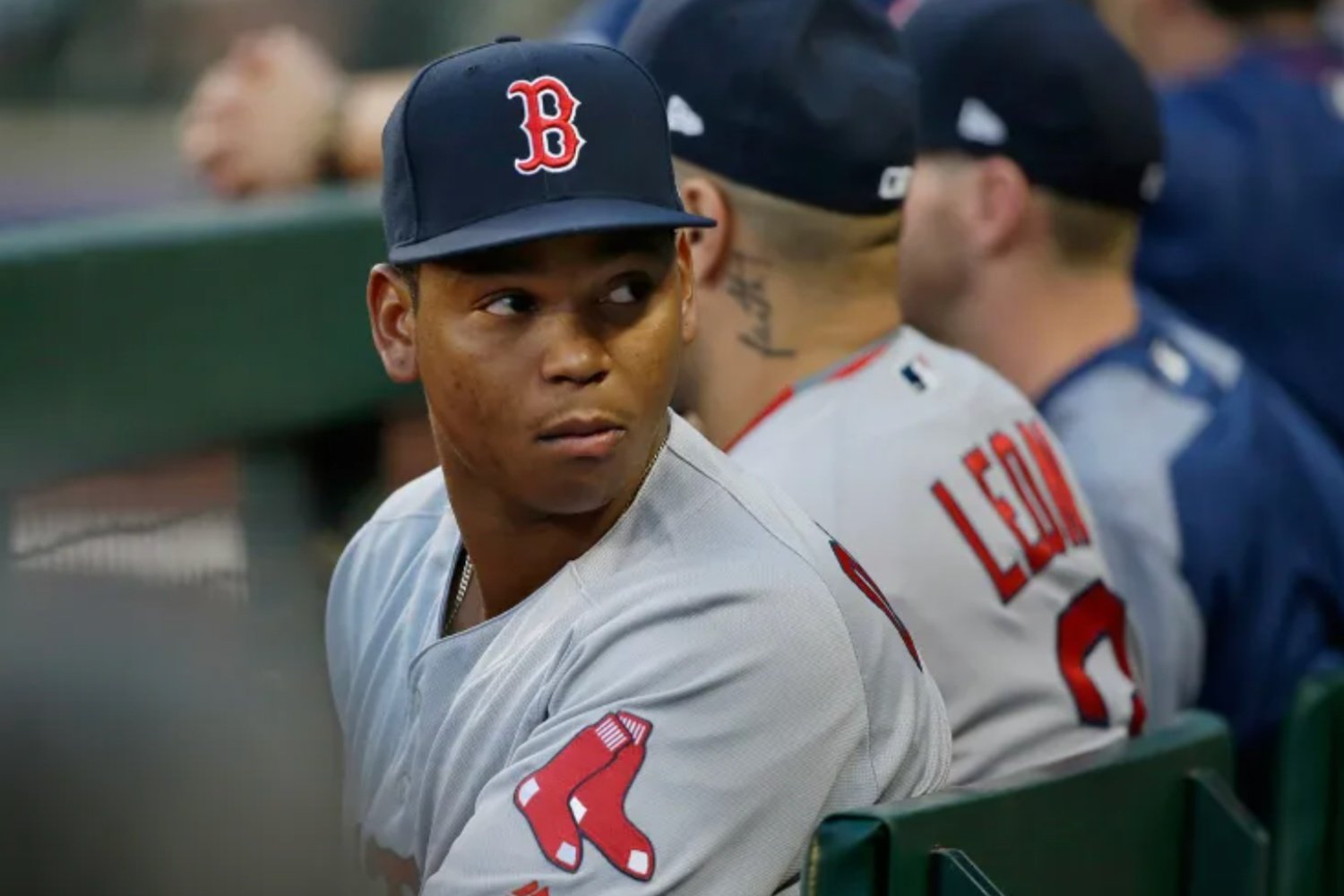 Jim Bowden of The Athletic posted an article detailing 20 things he was hearing and watching regarding the MLB trade deadline. Most peculiarly, he pointed out that the Red Sox, although struggling to remain in playoff contention currently, will be buyers at the deadline, with an eye towards improving the current on-field product. He specifically mentions Boston trading one of their current outfielders for starting pitching help, and an upgrade at first base. As we all know, the rotation has mostly underperformed and Abraham Toro has played incredibly well since joining the big league club in the wake of Triston Casas’ season-ending knee injury, but it’s probably a safe bet that Toro is going to come back down to earth, and Romy Gonzalez is best suited for a utility bench role. While it’s unfortunate that the Red Sox sit so far out of the AL East picture at the moment, the fact that Craig Breslow and company are looking to improve the current product is another sign that he’s settling into his role as President of Baseball Operations. He fleeced the Yankees for Carlos Narvaez, he traded for Justin Slaten from the Mets after the 2023 Rule 5 Draft, and he traded for and locked up Garrett Crochet to a long-term deal. He has taken steps to prove that he’s serious about putting a winning product on the field. Being buyers at the deadline can further reinforce that stance. Even if the Red Sox miss the postseason this year, aggressively trying to win in the second half can only help the team's culture heading into 2026. Roman Anthony, Marcelo Mayer, Carlos Narvaez, and Kristian Campbell are the future core of this organization. They’ll go through growing pains during this season — we’re currently seeing it with Campbell, and should expect the other three to experience them at some point as well. Bringing in a legitimate first base option and another frontline starter will help ease some of the weight that these four young players are currently shouldering. Being buyers with an eye toward 2026, when the team’s contention window likely actually opens, is a very smart play. As it stands, we’ve heard rumblings about Jarren Duran and Wilyer Abreu both being available for trades and that would make sense. Either should fetch another frontline starter as the central piece of a trade package. A name that should be floated in deals for a first baseman is Jhostynxon Garcia. He’s currently tearing up Triple-A, but he’s blocked at every turn in the majors. Even if someone like Rob Refsnyder were to retire at the end of the season, something he considered going into the 2025 season, you wouldn’t want to waste the talent of "The Password" by just stashing him on the bench of the major league club. If he’s a Refsnyder type, holding a bench role and starting occasionally, then the team needs to capitalize on his current run and flip him in a package deal for first base help. Mikey Romero is likely going to get some trade buzz as well, since he’s blocked at his natural positions in the majors as well. You could probably include Yoelin Cespedes in that group, too.. A package of two of them with some other additions could likely net the Red Sox the first baseman they are looking for. The Red Sox are loaded with talent at positions of need for other teams, and most of that minor league talent is blocked at the major league level. The front office needs to clear space in the minors, much like they did with Nick Yorke last year, and add to the major league team in a way that helps for the rest of the 2025 season and the seasons beyond. In a down season, it’s a bit surprising to see the Red Sox are going to be buyers, but it’s understandable. The season isn’t lost yet, and there’s space atop the American League if they can get there. If not, using the rest of 2025 as a learning year for their top prospects while eyeing 2026 as the first year of true contention is the next best thing. Adding another frontline starter and a proven first baseman is a huge step in the right direction for either scenario. Craig Breslow seems like he's not running away from trading household names just because they are popular. Being able to do that and navigate the turbulent seas for a bit after the trade is going to be his next big test. I'm confident he can pass that test with flying colors, and the Red Sox will greatly benefit from it.
 -
Jim Bowden of The Athletic posted an article detailing 20 things he was hearing and watching regarding the MLB trade deadline. Most peculiarly, he pointed out that the Red Sox, although struggling to remain in playoff contention currently, will be buyers at the deadline, with an eye towards improving the current on-field product. He specifically mentions Boston trading one of their current outfielders for starting pitching help, and an upgrade at first base. As we all know, the rotation has mostly underperformed and Abraham Toro has played incredibly well since joining the big league club in the wake of Triston Casas’ season-ending knee injury, but it’s probably a safe bet that Toro is going to come back down to earth, and Romy Gonzalez is best suited for a utility bench role. While it’s unfortunate that the Red Sox sit so far out of the AL East picture at the moment, the fact that Craig Breslow and company are looking to improve the current product is another sign that he’s settling into his role as President of Baseball Operations. He fleeced the Yankees for Carlos Narvaez, he traded for Justin Slaten from the Mets after the 2023 Rule 5 Draft, and he traded for and locked up Garrett Crochet to a long-term deal. He has taken steps to prove that he’s serious about putting a winning product on the field. Being buyers at the deadline can further reinforce that stance. Even if the Red Sox miss the postseason this year, aggressively trying to win in the second half can only help the team's culture heading into 2026. Roman Anthony, Marcelo Mayer, Carlos Narvaez, and Kristian Campbell are the future core of this organization. They’ll go through growing pains during this season — we’re currently seeing it with Campbell, and should expect the other three to experience them at some point as well. Bringing in a legitimate first base option and another frontline starter will help ease some of the weight that these four young players are currently shouldering. Being buyers with an eye toward 2026, when the team’s contention window likely actually opens, is a very smart play. As it stands, we’ve heard rumblings about Jarren Duran and Wilyer Abreu both being available for trades and that would make sense. Either should fetch another frontline starter as the central piece of a trade package. A name that should be floated in deals for a first baseman is Jhostynxon Garcia. He’s currently tearing up Triple-A, but he’s blocked at every turn in the majors. Even if someone like Rob Refsnyder were to retire at the end of the season, something he considered going into the 2025 season, you wouldn’t want to waste the talent of "The Password" by just stashing him on the bench of the major league club. If he’s a Refsnyder type, holding a bench role and starting occasionally, then the team needs to capitalize on his current run and flip him in a package deal for first base help. Mikey Romero is likely going to get some trade buzz as well, since he’s blocked at his natural positions in the majors as well. You could probably include Yoelin Cespedes in that group, too.. A package of two of them with some other additions could likely net the Red Sox the first baseman they are looking for. The Red Sox are loaded with talent at positions of need for other teams, and most of that minor league talent is blocked at the major league level. The front office needs to clear space in the minors, much like they did with Nick Yorke last year, and add to the major league team in a way that helps for the rest of the 2025 season and the seasons beyond. In a down season, it’s a bit surprising to see the Red Sox are going to be buyers, but it’s understandable. The season isn’t lost yet, and there’s space atop the American League if they can get there. If not, using the rest of 2025 as a learning year for their top prospects while eyeing 2026 as the first year of true contention is the next best thing. Adding another frontline starter and a proven first baseman is a huge step in the right direction for either scenario. Craig Breslow seems like he's not running away from trading household names just because they are popular. Being able to do that and navigate the turbulent seas for a bit after the trade is going to be his next big test. I'm confident he can pass that test with flying colors, and the Red Sox will greatly benefit from it. View full article
-
Entering the game on Friday, June 13, the Boston Red Sox face a crossroads. After Alex Bregman's injury in May, the team hit a downward slide that seemed like it might be too much for them to recover from. The rotation fell apart outside of Garrett Crochet, the bullpen was overworked to the point of exhaustion, and the offense looked mostly listless. We are considering the possibility of a fire sale as the trade deadline approaches. We’re not out of the clear yet, the team has a record below .500 and is fourth in the AL East. Things turned around when the calendar flipped to June, though. We’re approaching the halfway mark, and the Red Sox have a winning record by a thin margin. The starters have looked like the rotation they were expected to be before the season began, the bullpen has gotten some much-needed rest, and the offense is starting to show just how powerful it can be. The team took a back-to-back series against the Yankees and Rays. Things seem to be trending in the right direction with reinforcements on the way. As we outlined here on Talk Sox earlier in the week, Tanner Houck is throwing bullpens, Chris Murphy looks primed to join the bullpen sometime in July, and Alex Bregman is recovering faster than expected with an eye towards an early July return from the injured list. These roster members, and others mentioned in Nick’s piece, will be returning to a team that should be making a push towards the third Wild Card spot at the very least. That’s why this mid-June weekend series against the Yankees is so important. The Red Sox proved in their first meeting with the teams that they are capable of beating the second-best team in the American League, and that trend has to continue as the Red Sox enter play for the second Yankees series in a week. The Red Sox will see two pitchers they saw in the first series, Ryan Yarbrough and Carlos Rodon. The team teed off on both of them and should look to continue to do that in front of the home fans. For the Sunday game, the Sox will see Max Fried for the first time since he joined the Yankees. Fried is sporting a 9-1 record with a 1.84 ERA and 81 strikeouts. He’s going to be tough, but he’s beatable. The Sox have lined up against multiple teams’ top starters a few times this season and have played well against them. There’s precedent here for the Red Sox to win this series. The starters have to show up, the bullpen has to be nails, and the offense needs to hang crooked numbers on the starters every night. But it’s so doable. This team is better than they have shown this season. If the Red Sox can take two of three games, or even figure out a way to sweep, it puts the rest of the league on notice. It shows that the Red Sox are playing without their best lineup on the field, and they can scratch and claw their way to wins against teams that are current World Series favorites. If we recall 2024, the season turned around when the Red Sox beat the Yankees and Phillies in back-to-back series. Going into the middle of June with three series wins under their belts, the postseason is in play. If they can ride a hot streak until the middle of July or the trade deadline, I believe the AL East is in play. I’ve said since before the season that the Yankees don’t scare me. They are a good team, but they aren’t the world beaters they’ve been made out to be. The Red Sox have a prime opportunity to fully turn their season around with this mid-June Yankees series. It’s time to prove that they put their money where their mouth is and show the rest of the league that even though it has been a rough start to the season, you shouldn’t count the Red Sox out just yet. View full article
-
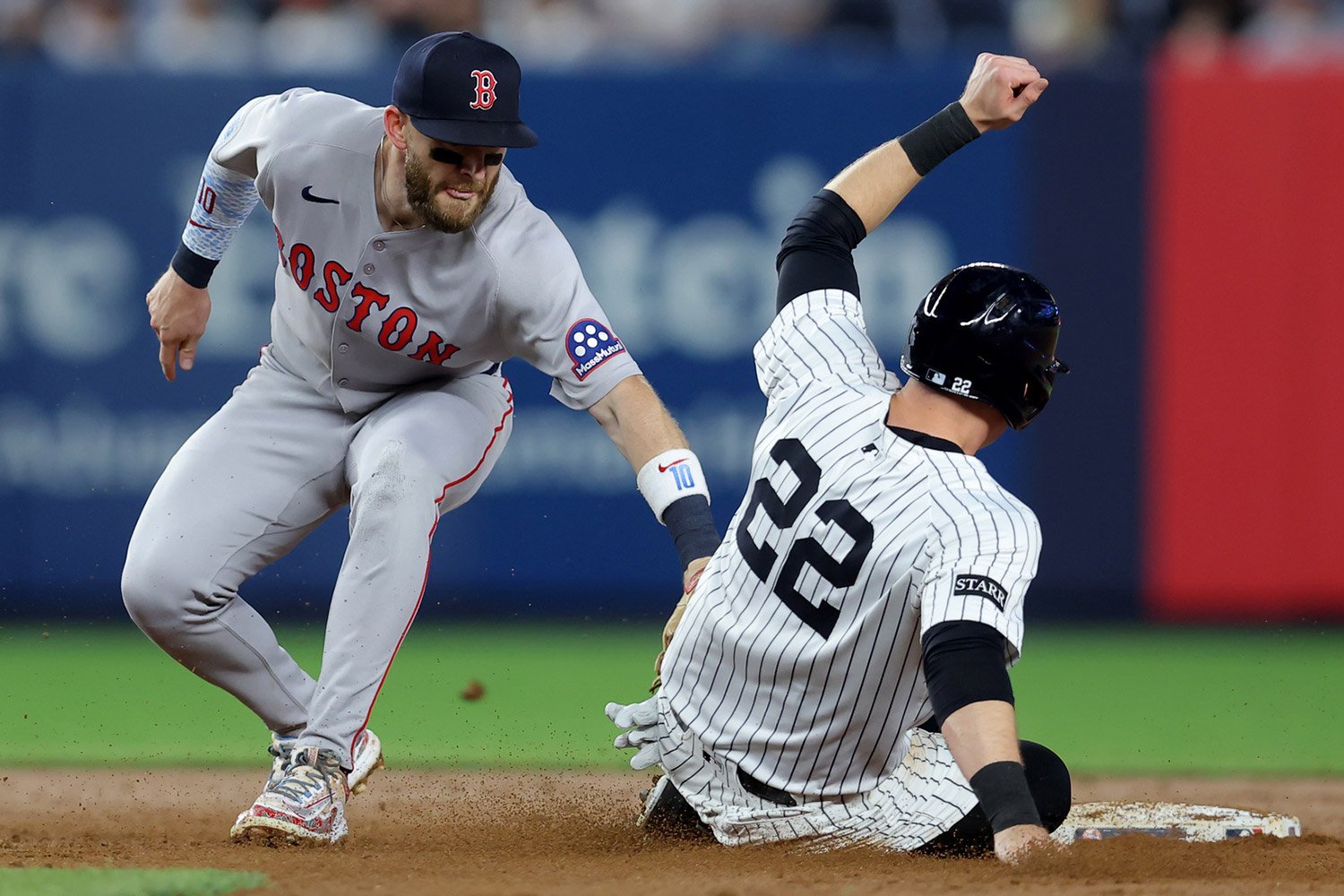 Entering the game on Friday, June 13, the Boston Red Sox face a crossroads. After Alex Bregman's injury in May, the team hit a downward slide that seemed like it might be too much for them to recover from. The rotation fell apart outside of Garrett Crochet, the bullpen was overworked to the point of exhaustion, and the offense looked mostly listless. We are considering the possibility of a fire sale as the trade deadline approaches. We’re not out of the clear yet, the team has a record below .500 and is fourth in the AL East. Things turned around when the calendar flipped to June, though. We’re approaching the halfway mark, and the Red Sox have a winning record by a thin margin. The starters have looked like the rotation they were expected to be before the season began, the bullpen has gotten some much-needed rest, and the offense is starting to show just how powerful it can be. The team took a back-to-back series against the Yankees and Rays. Things seem to be trending in the right direction with reinforcements on the way. As we outlined here on Talk Sox earlier in the week, Tanner Houck is throwing bullpens, Chris Murphy looks primed to join the bullpen sometime in July, and Alex Bregman is recovering faster than expected with an eye towards an early July return from the injured list. These roster members, and others mentioned in Nick’s piece, will be returning to a team that should be making a push towards the third Wild Card spot at the very least. That’s why this mid-June weekend series against the Yankees is so important. The Red Sox proved in their first meeting with the teams that they are capable of beating the second-best team in the American League, and that trend has to continue as the Red Sox enter play for the second Yankees series in a week. The Red Sox will see two pitchers they saw in the first series, Ryan Yarbrough and Carlos Rodon. The team teed off on both of them and should look to continue to do that in front of the home fans. For the Sunday game, the Sox will see Max Fried for the first time since he joined the Yankees. Fried is sporting a 9-1 record with a 1.84 ERA and 81 strikeouts. He’s going to be tough, but he’s beatable. The Sox have lined up against multiple teams’ top starters a few times this season and have played well against them. There’s precedent here for the Red Sox to win this series. The starters have to show up, the bullpen has to be nails, and the offense needs to hang crooked numbers on the starters every night. But it’s so doable. This team is better than they have shown this season. If the Red Sox can take two of three games, or even figure out a way to sweep, it puts the rest of the league on notice. It shows that the Red Sox are playing without their best lineup on the field, and they can scratch and claw their way to wins against teams that are current World Series favorites. If we recall 2024, the season turned around when the Red Sox beat the Yankees and Phillies in back-to-back series. Going into the middle of June with three series wins under their belts, the postseason is in play. If they can ride a hot streak until the middle of July or the trade deadline, I believe the AL East is in play. I’ve said since before the season that the Yankees don’t scare me. They are a good team, but they aren’t the world beaters they’ve been made out to be. The Red Sox have a prime opportunity to fully turn their season around with this mid-June Yankees series. It’s time to prove that they put their money where their mouth is and show the rest of the league that even though it has been a rough start to the season, you shouldn’t count the Red Sox out just yet.
 -
With Roman Anthony now (finally) on the major league roster, there are questions surrounding the future of the outfield. It’s unlikely that Anthony has been called up just to be sent back down once Wilyer Abreu comes back from the injured list. He has nothing else to prove at Triple-A Worcester and deserves to be playing for the big league club. As I wrote on the day Anthony made his debut, there’s going to be some difficult roster decisions coming in the next few weeks. That likely means that either Jarren Duran or Abreu will be moved in a trade at some point in the near future. Abreu was surrounded by trade rumors all offseason, and teams like the Padres are already inquiring about Duran. The Red Sox are fortunate to have depth in the outfield and should be able to capitalize on that as we begin to approach the trade deadline. Let’s take a look at four different teams that make sense as suitors for either Jarren Duran or Wilyer Abreu. Seattle Mariners The Mariners need a spark. They are sitting at .500 as of this writing and are second in the AL West after recently being passed by the Houston Astros. They have the face of their franchise, Julio Rodriguez, manning center field but both of their corner outfield positions could use an upgrade. Randy Arozarena has been lackluster so far in 2025, slashing.232/.346/.401. He’s also a liability in left field, which would be the perfect chance for Duran to come in and add some stability. The big upgrade possibility in Seattle, though, is right field. Both Duran and Abreu could slot into right field for the Mariners the day of the trade and be an instant upgrade over anyone else they’ve trotted out to that position so far this season. Luke Raley leads the team in games played in right, but he's currently hurt and rocking below-average defensive metrics. The Mariners lack a true right fielder, so trading for either Duran or Abreu, but likely Abreu, makes a lot of sense. While Jerry Dipoto hasn’t been known to overpay, the AL West is fairly weak this season, and adding someone like Abreu could do wonders for a team scratching at the division title. Kansas City Royals The Royals are a team that should be competing for the AL Central title due to their pitching staff and Bobby Witt Jr., but the team kind of peters out after him. They’ve called up Jac Caglianone to try and help give the team some more firepower, but left field is still a glaring issue for the team. With Caglianone slated for right field and Kyle Isbel playing a respectable center, upgrading the final corner outfield spot with the likes of Jarren Duran seems like a deal the front office in Kansas City would be chomping at the bit to do. Duran is a better offensive player than current starter Drew Waters. On defense, Waters is currently posting a -0.4 DWAR, while Duran is just a tick above average at 0.1. That doesn’t seem like a huge upgrade, but as we’ve seen since Duran went on his tear in 2024, he can provide a spark necessary to push a team to where it needs to go. Duran would slot in as an instant leader in the clubhouse in Kansas City, and the move would take off some of the pressure the Boston media market puts on players, which could help him unlock a new level of his game. Philadelphia Phillies This is relative, but the Phillies are underperforming right now, thanks in large part to an injury bug that has bitten some of their superstar players. They’ve gone on a downhill slide the last couple of weeks and need a shot in the arm to get them back in the race with the NL East-leading Mets. Their outfield could stand for a huge upgrade in right field. Currently, Nick Castellanos mans right for the Phillies, and that’s a fairly big problem for them. He’s sitting at a -1.2 DWAR, and his slash line is fairly similar to Duran’s: .271/.326/.420 for Duran and .287/.327/.425 for Castellanos. Abreu’s batting line is worse than Duran’s, but he slides right into his natural position as a huge defensive upgrade. If the Phillies didn't want to displace Castellanos' bat from their lineup, they could easily look for an upgrade over Max Kepler in left field. Either way, both players would immediately slot into as starting role in Philly and be a legit addition for a team that is pushing to go back to another World Series. St. Louis Cardinals While they are not the most conventional pick here, I think the Cardinals and Red Sox stack up well for a deal to send either Duran or Abreu to the Gateway City. Lars Nootbaar is getting closer and closer to free agency (2027), and Jordan Walker seems like he’s a shell of himself in right field after being moved around the field and shuttled between Triple-A and the majors last season. I’ve pitched Walker as a reclamation project for the Red Sox before, because I think a simple change of scenery will do him wonders. With his underperformance and Nootbaar's uncertain long-term status, there’s a couple of holes opening up in the Redbirds’ outfield (though Alec Burlson's emergence could fill one of those gaps). Enter Boston. There’s already a relationship between front offices after Craig Breslow brought in Tyler O’Neill before the 2024 season, so we know that there’s at least some lines of communication open there. Both Duran and Abreu would be immediate upgrades over Walker in right field or either of them could slot into left field and let Nootbaar shift to right. Busch Stadium is a very pitcher-friendly park, so both Duran and Abreu would be able to flash the leather and likely put their name back into contention for the Gold Glove award. There are other teams that also make a bit of sense for either Jarren Duran or Wilyer Abreu, but they don’t match up quite like the four teams here. Each team has the mix of MLB talent and upper-level prospects to make a deal for younger, controllable pieces like Boston's outfield tandem. Even if the Red Sox light the world on fire between now and the trade deadline, someone in that outfield logjam is going to have to be traded, because it’s simply not possible for a team to play so many bodies in just three positions. Could the front office shock us all and trade someone like Rob Refsnyder instead? Sure, but the return would be minimal compared to what Duran or Abreu could bring back. It's never easy to let go of homegrown players, but when someone like Roman Anthony is making his case for playing time, you accommodate him first, and figure out the rest later. View full article
-
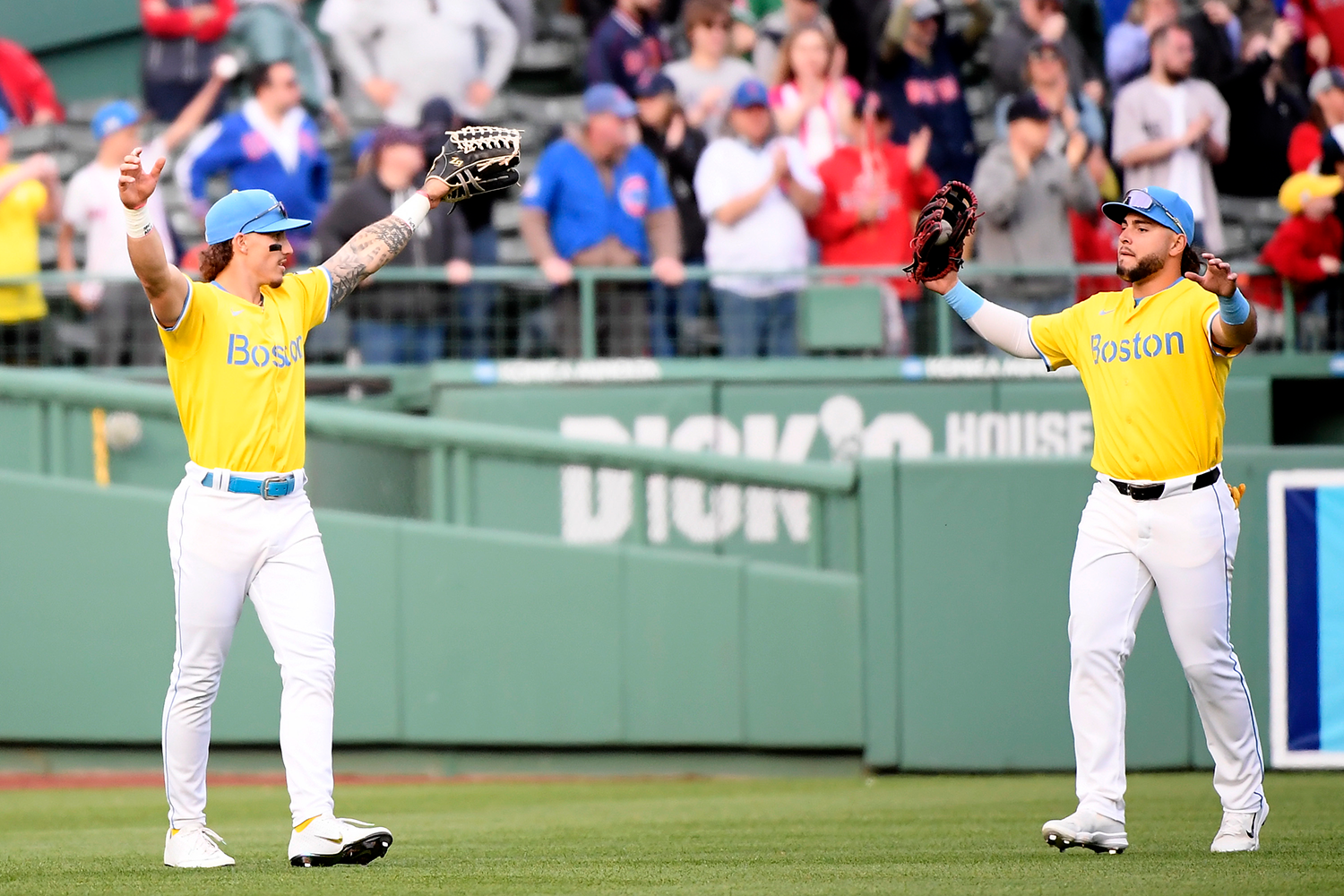 With Roman Anthony now (finally) on the major league roster, there are questions surrounding the future of the outfield. It’s unlikely that Anthony has been called up just to be sent back down once Wilyer Abreu comes back from the injured list. He has nothing else to prove at Triple-A Worcester and deserves to be playing for the big league club. As I wrote on the day Anthony made his debut, there’s going to be some difficult roster decisions coming in the next few weeks. That likely means that either Jarren Duran or Abreu will be moved in a trade at some point in the near future. Abreu was surrounded by trade rumors all offseason, and teams like the Padres are already inquiring about Duran. The Red Sox are fortunate to have depth in the outfield and should be able to capitalize on that as we begin to approach the trade deadline. Let’s take a look at four different teams that make sense as suitors for either Jarren Duran or Wilyer Abreu. Seattle Mariners The Mariners need a spark. They are sitting at .500 as of this writing and are second in the AL West after recently being passed by the Houston Astros. They have the face of their franchise, Julio Rodriguez, manning center field but both of their corner outfield positions could use an upgrade. Randy Arozarena has been lackluster so far in 2025, slashing.232/.346/.401. He’s also a liability in left field, which would be the perfect chance for Duran to come in and add some stability. The big upgrade possibility in Seattle, though, is right field. Both Duran and Abreu could slot into right field for the Mariners the day of the trade and be an instant upgrade over anyone else they’ve trotted out to that position so far this season. Luke Raley leads the team in games played in right, but he's currently hurt and rocking below-average defensive metrics. The Mariners lack a true right fielder, so trading for either Duran or Abreu, but likely Abreu, makes a lot of sense. While Jerry Dipoto hasn’t been known to overpay, the AL West is fairly weak this season, and adding someone like Abreu could do wonders for a team scratching at the division title. Kansas City Royals The Royals are a team that should be competing for the AL Central title due to their pitching staff and Bobby Witt Jr., but the team kind of peters out after him. They’ve called up Jac Caglianone to try and help give the team some more firepower, but left field is still a glaring issue for the team. With Caglianone slated for right field and Kyle Isbel playing a respectable center, upgrading the final corner outfield spot with the likes of Jarren Duran seems like a deal the front office in Kansas City would be chomping at the bit to do. Duran is a better offensive player than current starter Drew Waters. On defense, Waters is currently posting a -0.4 DWAR, while Duran is just a tick above average at 0.1. That doesn’t seem like a huge upgrade, but as we’ve seen since Duran went on his tear in 2024, he can provide a spark necessary to push a team to where it needs to go. Duran would slot in as an instant leader in the clubhouse in Kansas City, and the move would take off some of the pressure the Boston media market puts on players, which could help him unlock a new level of his game. Philadelphia Phillies This is relative, but the Phillies are underperforming right now, thanks in large part to an injury bug that has bitten some of their superstar players. They’ve gone on a downhill slide the last couple of weeks and need a shot in the arm to get them back in the race with the NL East-leading Mets. Their outfield could stand for a huge upgrade in right field. Currently, Nick Castellanos mans right for the Phillies, and that’s a fairly big problem for them. He’s sitting at a -1.2 DWAR, and his slash line is fairly similar to Duran’s: .271/.326/.420 for Duran and .287/.327/.425 for Castellanos. Abreu’s batting line is worse than Duran’s, but he slides right into his natural position as a huge defensive upgrade. If the Phillies didn't want to displace Castellanos' bat from their lineup, they could easily look for an upgrade over Max Kepler in left field. Either way, both players would immediately slot into as starting role in Philly and be a legit addition for a team that is pushing to go back to another World Series. St. Louis Cardinals While they are not the most conventional pick here, I think the Cardinals and Red Sox stack up well for a deal to send either Duran or Abreu to the Gateway City. Lars Nootbaar is getting closer and closer to free agency (2027), and Jordan Walker seems like he’s a shell of himself in right field after being moved around the field and shuttled between Triple-A and the majors last season. I’ve pitched Walker as a reclamation project for the Red Sox before, because I think a simple change of scenery will do him wonders. With his underperformance and Nootbaar's uncertain long-term status, there’s a couple of holes opening up in the Redbirds’ outfield (though Alec Burlson's emergence could fill one of those gaps). Enter Boston. There’s already a relationship between front offices after Craig Breslow brought in Tyler O’Neill before the 2024 season, so we know that there’s at least some lines of communication open there. Both Duran and Abreu would be immediate upgrades over Walker in right field or either of them could slot into left field and let Nootbaar shift to right. Busch Stadium is a very pitcher-friendly park, so both Duran and Abreu would be able to flash the leather and likely put their name back into contention for the Gold Glove award. There are other teams that also make a bit of sense for either Jarren Duran or Wilyer Abreu, but they don’t match up quite like the four teams here. Each team has the mix of MLB talent and upper-level prospects to make a deal for younger, controllable pieces like Boston's outfield tandem. Even if the Red Sox light the world on fire between now and the trade deadline, someone in that outfield logjam is going to have to be traded, because it’s simply not possible for a team to play so many bodies in just three positions. Could the front office shock us all and trade someone like Rob Refsnyder instead? Sure, but the return would be minimal compared to what Duran or Abreu could bring back. It's never easy to let go of homegrown players, but when someone like Roman Anthony is making his case for playing time, you accommodate him first, and figure out the rest later.
 -
Roman Anthony is headed to Boston. After what feels like ten forevers, the top prospect in baseball is finally making his major league debut on June 9 against the Rays. This is a joyous occasion for Red Sox fans, but it comes with a bit of intrigue as well. The reason Anthony has been called up is because Wilyer Abreu is headed to the injured list. As of this writing, we aren’t sure why Abreu is being placed on the IL or for how long, but we do know that once he’s cleared to return then there’s going to be another logjam in the outfield for the three starting positions. Should Anthony come up and mash like he’s expected to, some difficult decisions and conversations are going to need to be had. Let’s take a look at a couple of different scenarios that could happen once the outfield is fully healthy again. Scenario #1: Jarren Duran is traded I’ve advocated for this more than once here on Talk Sox, but Anthony’s call up presents the perfect opportunity to trade Jarren Duran before his value decreases even more. There have already been reports that the team would entertain moving him and Abreu, and the Padres have long been rumored to be interested in bringing Duran to San Diego. He’s going to be one of the most asked about players on the team as we approach the trade deadline, and with the Red Sox hurtling towards a pure youth movement, he’s the odd man out. Anthony could man both center and right field at Fenway Park, but moving Duran opens up left field for him as well. Ceddanne Rafaela and Abreu have far more experience in the two most demanding outfield positions and both are Gold Glove-caliber outfielders. The same can’t be said for Duran. Yes, he has experience in left field, but his defense is subpar and slowly declining. At this point, he is solely a left fielder. Opening up his spot for Anthony allows for the entire outfield to be able to shift to each position instead of having someone just stuck in left. Trade packages for Duran would likely net the Red Sox both controllable MLB talent and more prospects to add to their farm system. It’s a win all around. Scenario #2: Wilyer Abreu returns, is promptly traded After a scorching start to the season, Abreu has cooled off significantly leading up to his injury. He’s slashing .245/.321/.471 with 13 home runs, 32 RBIS, and a .792 OPS. He’s shown a more consistent power stroke at the plate, almost eclipsing his home run total from last season by the start of June. He’s already won a Gold Glove in right field and is likely going to be in the running for the award again this year, even if he’s already committed five errors on the season. The sticking point with Abreu is that he’s still viewed as a platoon right fielder in the system. For better or worse, the coaching staff seems averse to letting left0handed rookies hit against left-handed pitchers. If a lefty is on the mound of the opposition, Abreu is sitting in favor of Rob Refsnyder. This hurts his trade value a decent amount unless another team believes that the Red Sox are being too cautious with Abreu and he can play against lefties. In that case, they may be willing to offer a significant package for him. Scenario #3: Anthony struggles and is sent back down Maybe this is the actual least likely scenario now that I’ve typed it out, but there’s a chance that Anthony breaks into the majors and falls flat. There’s a history of top prospects doing just that. Both Mike Trout and Jackson Holliday were sent back down to Triple-A to figure things out when they struggled after their initial call up. From what we’ve seen, there’s little reason to believe Anthony will struggle mightily now that he's on the big league roster, but the chance is still there. Should he be optioned back to Worcester, it’s not an indictment on his talent or a knock against him. It would likely be a quick trip back to the minors before he’s brought back up to make another impact on the big league roster. I’m sure that people will wonder why I haven’t included a scenario with Ceddanne Rafaela on this list. It’s fairly simple: the team seems to value his defense far more than anything else, and that makes him safe from either being traded or sent down. We lived with Jackie Bradley Jr.’s hot and cold streaks because he was an incredible center fielder. We’ll be doing the same with Rafaela. Yes, he’s had some mental mistakes this season and has room to grow, but Alex Cora has spoken with him about those throwing issues and his at-bats have been more major league quality as of late. He’s likely going to be in Boston no matter what, so it’s time to face the facts that either Duran or Abreu will be the odd man out in the outfield now. It’s an exciting time in Boston after the shocking news that Roman Anthony is joining the other members of the Big Three in the big leagues. While we’re all awaiting what he can do on this stage, we need to remember that he’s just a kid and he’s been placed on maybe the highest pedestal a prospect can be placed on. His success likely means one of our favorite outfielders is on his way out of Boston during or after the season. While that can and will sting, it will help pave the way for the future of the organization. Roman Anthony is going to be an impactful member of the roster for years to come, and sometimes that means trading fan favorite players to clear the path. View full article
-
Roman Anthony Is Going to Force Some Difficult Red Sox Roster Decisions
Alex Mayes posted an article in Red Sox
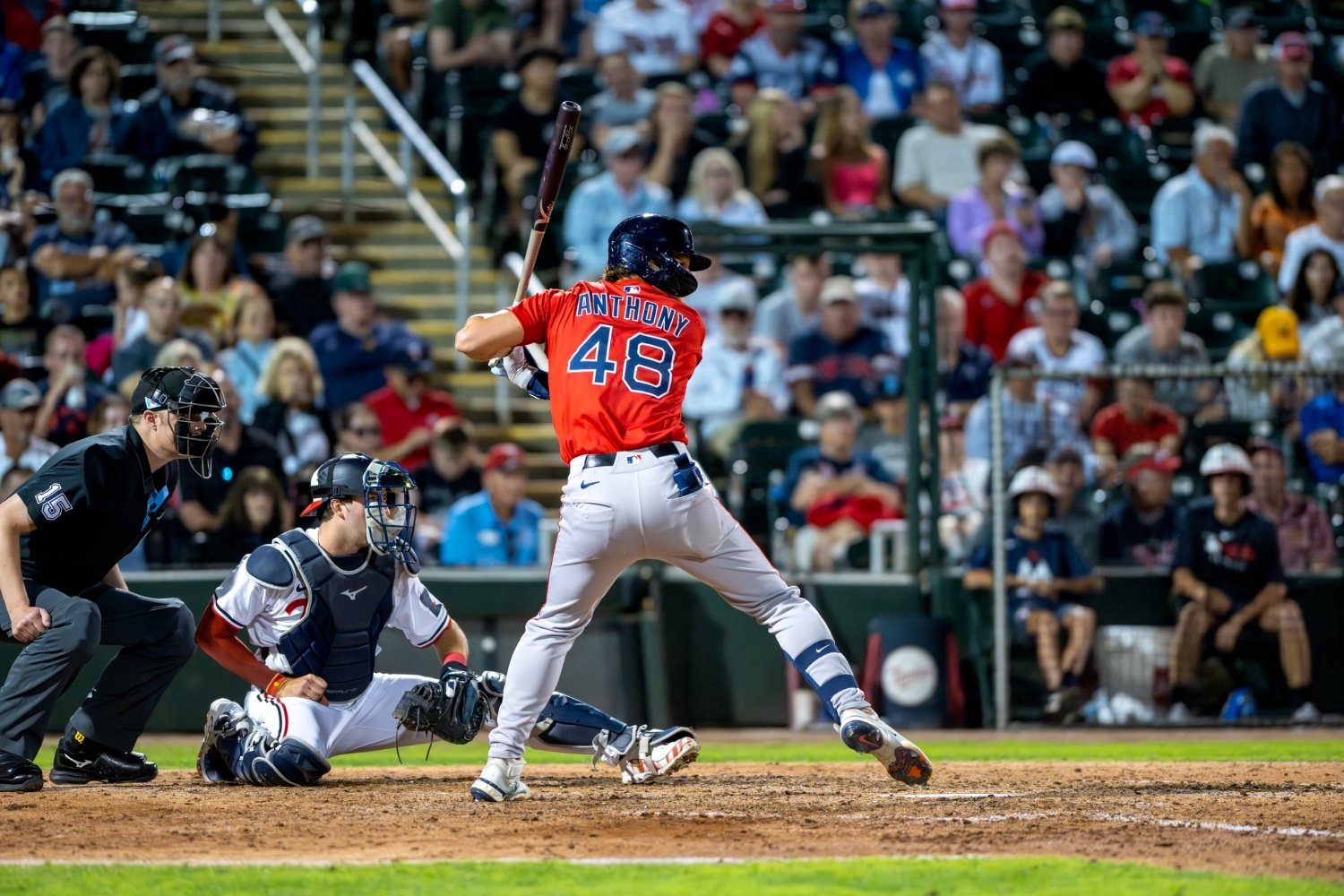 Roman Anthony is headed to Boston. After what feels like ten forevers, the top prospect in baseball is finally making his major league debut on June 9 against the Rays. This is a joyous occasion for Red Sox fans, but it comes with a bit of intrigue as well. The reason Anthony has been called up is because Wilyer Abreu is headed to the injured list. As of this writing, we aren’t sure why Abreu is being placed on the IL or for how long, but we do know that once he’s cleared to return then there’s going to be another logjam in the outfield for the three starting positions. Should Anthony come up and mash like he’s expected to, some difficult decisions and conversations are going to need to be had. Let’s take a look at a couple of different scenarios that could happen once the outfield is fully healthy again. Scenario #1: Jarren Duran is traded I’ve advocated for this more than once here on Talk Sox, but Anthony’s call up presents the perfect opportunity to trade Jarren Duran before his value decreases even more. There have already been reports that the team would entertain moving him and Abreu, and the Padres have long been rumored to be interested in bringing Duran to San Diego. He’s going to be one of the most asked about players on the team as we approach the trade deadline, and with the Red Sox hurtling towards a pure youth movement, he’s the odd man out. Anthony could man both center and right field at Fenway Park, but moving Duran opens up left field for him as well. Ceddanne Rafaela and Abreu have far more experience in the two most demanding outfield positions and both are Gold Glove-caliber outfielders. The same can’t be said for Duran. Yes, he has experience in left field, but his defense is subpar and slowly declining. At this point, he is solely a left fielder. Opening up his spot for Anthony allows for the entire outfield to be able to shift to each position instead of having someone just stuck in left. Trade packages for Duran would likely net the Red Sox both controllable MLB talent and more prospects to add to their farm system. It’s a win all around. Scenario #2: Wilyer Abreu returns, is promptly traded After a scorching start to the season, Abreu has cooled off significantly leading up to his injury. He’s slashing .245/.321/.471 with 13 home runs, 32 RBIS, and a .792 OPS. He’s shown a more consistent power stroke at the plate, almost eclipsing his home run total from last season by the start of June. He’s already won a Gold Glove in right field and is likely going to be in the running for the award again this year, even if he’s already committed five errors on the season. The sticking point with Abreu is that he’s still viewed as a platoon right fielder in the system. For better or worse, the coaching staff seems averse to letting left0handed rookies hit against left-handed pitchers. If a lefty is on the mound of the opposition, Abreu is sitting in favor of Rob Refsnyder. This hurts his trade value a decent amount unless another team believes that the Red Sox are being too cautious with Abreu and he can play against lefties. In that case, they may be willing to offer a significant package for him. Scenario #3: Anthony struggles and is sent back down Maybe this is the actual least likely scenario now that I’ve typed it out, but there’s a chance that Anthony breaks into the majors and falls flat. There’s a history of top prospects doing just that. Both Mike Trout and Jackson Holliday were sent back down to Triple-A to figure things out when they struggled after their initial call up. From what we’ve seen, there’s little reason to believe Anthony will struggle mightily now that he's on the big league roster, but the chance is still there. Should he be optioned back to Worcester, it’s not an indictment on his talent or a knock against him. It would likely be a quick trip back to the minors before he’s brought back up to make another impact on the big league roster. I’m sure that people will wonder why I haven’t included a scenario with Ceddanne Rafaela on this list. It’s fairly simple: the team seems to value his defense far more than anything else, and that makes him safe from either being traded or sent down. We lived with Jackie Bradley Jr.’s hot and cold streaks because he was an incredible center fielder. We’ll be doing the same with Rafaela. Yes, he’s had some mental mistakes this season and has room to grow, but Alex Cora has spoken with him about those throwing issues and his at-bats have been more major league quality as of late. He’s likely going to be in Boston no matter what, so it’s time to face the facts that either Duran or Abreu will be the odd man out in the outfield now. It’s an exciting time in Boston after the shocking news that Roman Anthony is joining the other members of the Big Three in the big leagues. While we’re all awaiting what he can do on this stage, we need to remember that he’s just a kid and he’s been placed on maybe the highest pedestal a prospect can be placed on. His success likely means one of our favorite outfielders is on his way out of Boston during or after the season. While that can and will sting, it will help pave the way for the future of the organization. Roman Anthony is going to be an impactful member of the roster for years to come, and sometimes that means trading fan favorite players to clear the path.
 -
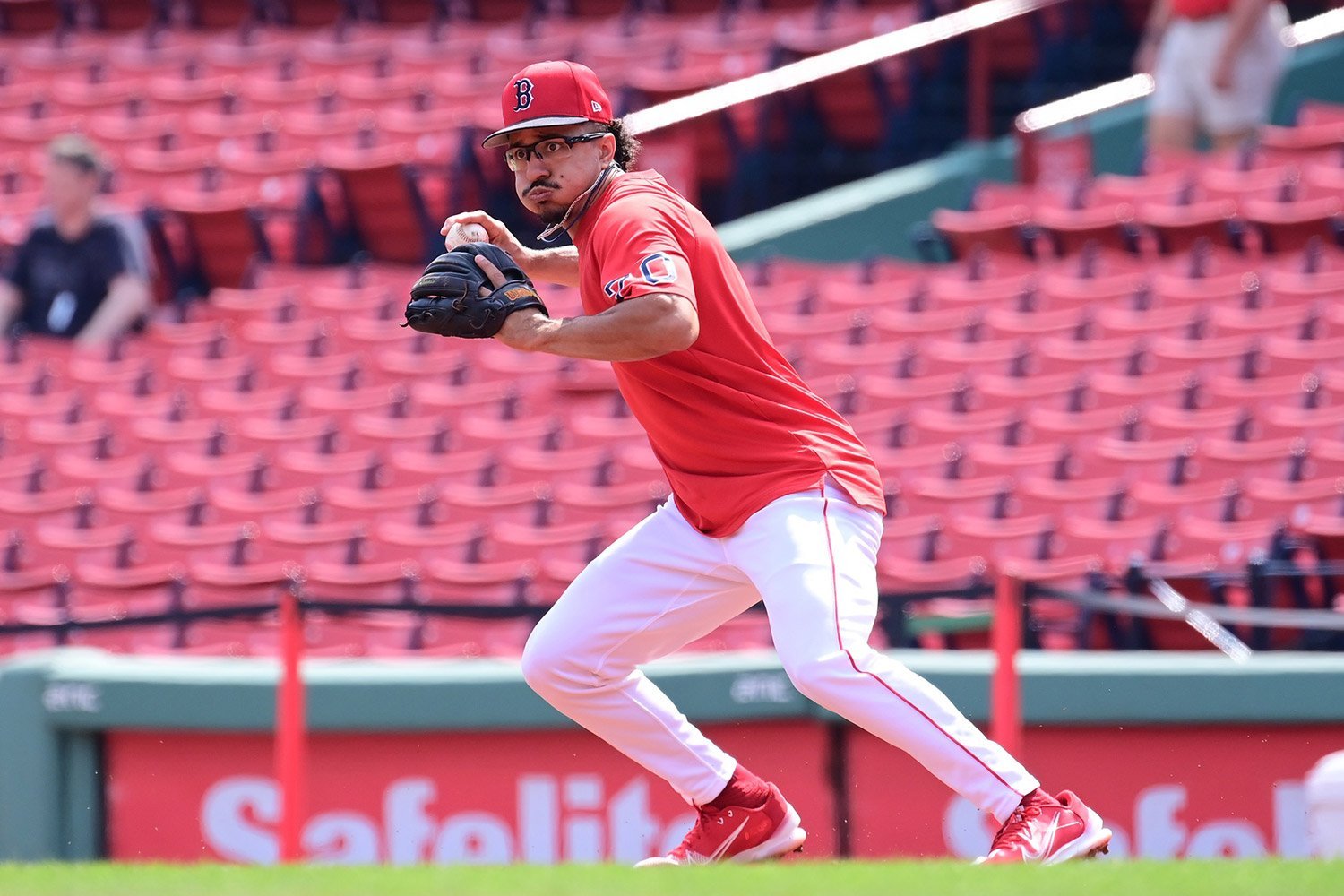 David Hamilton is a speedster on the base paths. When he’s on, he’s likely going to steal the base in front of him. He’s always attempting to put himself in scoring position. The problem? David Hamilton is rarely on base. He’s currently slashing .193/.221/301. In 2024, Alex Cora let Hamilton play his way through struggles, through necessity, and Hamilton was a contributing member of the team until an injury shut his season down in August. Last year, the team could afford to let Hamilton fight his way out of a struggle. This year, though? There are already guys in the lineup who are struggling, so Hamilton sits on the bench, hoping to come in as a pinch runner in a close game situation. His slash line is abysmal, but his underlying numbers should give you even more pause for concern. He’s working with a 28.4% strikeout rate and a 2.3% walk rate. That’s not a typo — he’s walking less than three percent of the time while hitting below the Mendoza line. There’s no confidence when he’s in the starting line up at any position because he’s almost an automatic out right now. His only hope to show off that speed is as a pinch runner, but at this moment, there’s no need for a speedy base stealer who does nothing else on the roster. Hamilton seems to be someone that Cora is fond of, so a DFA is likely not happening until and unless a 40-man spot is needed, but a demotion to Worcester should be in the cards for him. That begs the question: who could replace him on the 26-man roster? Enter Blaze Jordan. I know what you’re thinking: Jordan has only been in Worcester for less than a week. That’s fine. He plays a position of need in Boston, and if the team is comfortable letting Kristian Campbell figure things out at the big league level, then they should let Jordan do the same. Jordan plays a solid first base, something the Red Sox are currently lacking, and allows for Romy Gonzalez to shift around the diamond more. Giving Gonzalez the ability to play second and third gives the Red Sox more depth, which will let the team give Campbell some days off to further figure things out on both offense and defense. Jordan provides more than just first base depth though. He seems to have grown quite a bit as a hitter entering the 2025 season and has started to tap into the power potential he showcased when he was drafted. He’s currently sitting at a 35.7% hard hit percentage and slugging an incredible .938. That slugging percentage won’t last forever, but it’s a very positive sign that he’s finally tapping into that power. The other side of this is that the Red Sox drafted Jordan in the third round in 2020. You typically don’t think of a third-round pick that needs to prove his worth, but the team paid him a $1.75 million bonus, significantly above his slot value of $667,990. That bonus is what pushed Jordan to sign with the team over going to Mississippi State, the college team he had committed to during high school. Give him a shot on the main roster to see if that further unlocks something, or at least offers another first base option so the team isn’t counting on Gonzalez and Abraham Toro to shuffle between first and third. David Hamilton could be a valuable piece to this team if his offense picked up, but it’s looking more and more likely that he’s just a one-dimensional player who should only be used in specific late-game circumstances. Sending him back to Worcester and calling up Blaze Jordan would allow the Red Sox to continue to focus on youth talent with upside, while giving Hamilton a place to figure out the offensive side of the game again.
 -
David Hamilton is a speedster on the base paths. When he’s on, he’s likely going to steal the base in front of him. He’s always attempting to put himself in scoring position. The problem? David Hamilton is rarely on base. He’s currently slashing .193/.221/301. In 2024, Alex Cora let Hamilton play his way through struggles, through necessity, and Hamilton was a contributing member of the team until an injury shut his season down in August. Last year, the team could afford to let Hamilton fight his way out of a struggle. This year, though? There are already guys in the lineup who are struggling, so Hamilton sits on the bench, hoping to come in as a pinch runner in a close game situation. His slash line is abysmal, but his underlying numbers should give you even more pause for concern. He’s working with a 28.4% strikeout rate and a 2.3% walk rate. That’s not a typo — he’s walking less than three percent of the time while hitting below the Mendoza line. There’s no confidence when he’s in the starting line up at any position because he’s almost an automatic out right now. His only hope to show off that speed is as a pinch runner, but at this moment, there’s no need for a speedy base stealer who does nothing else on the roster. Hamilton seems to be someone that Cora is fond of, so a DFA is likely not happening until and unless a 40-man spot is needed, but a demotion to Worcester should be in the cards for him. That begs the question: who could replace him on the 26-man roster? Enter Blaze Jordan. I know what you’re thinking: Jordan has only been in Worcester for less than a week. That’s fine. He plays a position of need in Boston, and if the team is comfortable letting Kristian Campbell figure things out at the big league level, then they should let Jordan do the same. Jordan plays a solid first base, something the Red Sox are currently lacking, and allows for Romy Gonzalez to shift around the diamond more. Giving Gonzalez the ability to play second and third gives the Red Sox more depth, which will let the team give Campbell some days off to further figure things out on both offense and defense. Jordan provides more than just first base depth though. He seems to have grown quite a bit as a hitter entering the 2025 season and has started to tap into the power potential he showcased when he was drafted. He’s currently sitting at a 35.7% hard hit percentage and slugging an incredible .938. That slugging percentage won’t last forever, but it’s a very positive sign that he’s finally tapping into that power. The other side of this is that the Red Sox drafted Jordan in the third round in 2020. You typically don’t think of a third-round pick that needs to prove his worth, but the team paid him a $1.75 million bonus, significantly above his slot value of $667,990. That bonus is what pushed Jordan to sign with the team over going to Mississippi State, the college team he had committed to during high school. Give him a shot on the main roster to see if that further unlocks something, or at least offers another first base option so the team isn’t counting on Gonzalez and Abraham Toro to shuffle between first and third. David Hamilton could be a valuable piece to this team if his offense picked up, but it’s looking more and more likely that he’s just a one-dimensional player who should only be used in specific late-game circumstances. Sending him back to Worcester and calling up Blaze Jordan would allow the Red Sox to continue to focus on youth talent with upside, while giving Hamilton a place to figure out the offensive side of the game again. View full article
-
I’ve been advocating for getting rid of Story for quite some time. I think I’m up to five articles on it. I didn’t include him on this list because he had zero value and this was focused on trades, not cuts. Sure, you likely could get someone to take him on if he’s attached to one of these names the Sox pay the majority of the contract but you’d get more in return by not including him in any capacity.
- 11 replies
-
- 1
-
-
- aroldis chapman
- walker buehler
- (and 3 more)
-
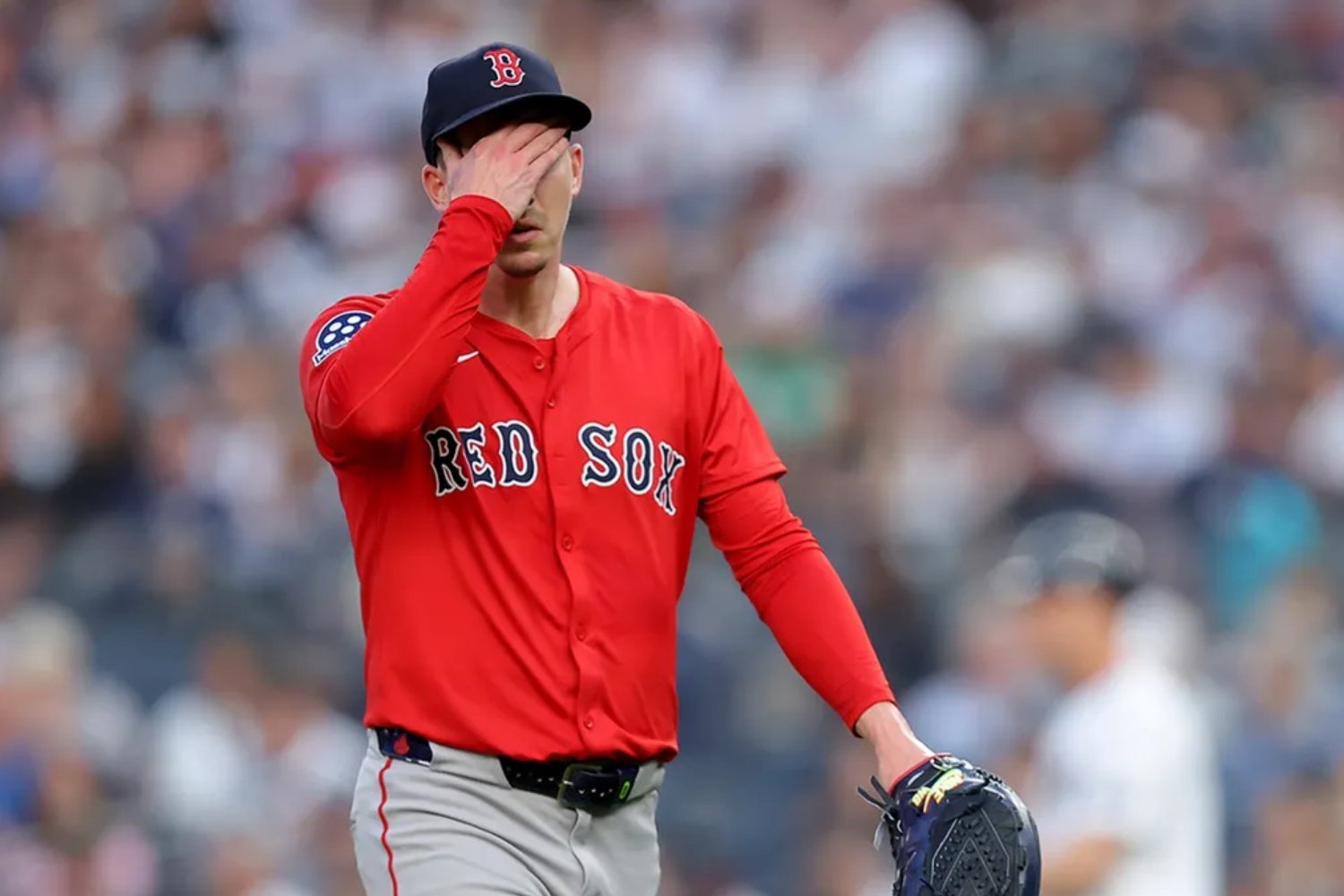 Walker Buehler was looking forward to returning to Yankee Stadium on Friday, June 6. He was finally taking part in one of the biggest rivalries in baseball and had recent success in that stadium when he closed out the 2024 World Series for the Dodgers. While it was likely foolish to expect him to dominate one of the hottest lineups in the majors, most people expected him to at least put together a solid outing. Things didn’t go as planned. Buehler lasted two innings, just six outs. He gave up seven runs (five earned), seven hits, two strikeouts and two walks. He was his typical self after the game, using expletives to describe his performance and being traditionally hard on himself. Both of those things were warranted after how he’s performed since returning to the rotation following a stint on the injured list. There was something else in those comments that caught my attention, though. “I don’t want to dig too deep into it. Obviously, I’m throwing a lot of sliders. I’m throwing a lot of (the) two-seamer,” he said. “Those traditionally haven’t been what I do very often. And I think when the sweeper is never in the zone like it hasn’t been, the curveball’s gonna get hit more than it has, the cutter’s gonna get hit more than it has.” This really feels like a thinly veiled shot at the pitching plan and coaching overall. It has been a common talking point during his recent starts that Buehler has swapped his traditional change-up for his slider, and he’s featuring a cutter almost as much as his traditional four-seam offering. Through those comments, it seems like there’s a directive from someone in the coaching staff, likely Andrew Bailey or Jason Varitek, to alter his pitch mix, and he’s unhappy with the decisions being made. If we look at the underlying numbers on these four pitches, we can see that he has a case to be made. He’s thrown his four-seam 22.9% of the time, his cutter 17.3%, his slider 11.2%, and his change-up 9.4%. He’s getting more strikeouts on his change-up than the other three, the pitching sitting at a 23.8% strikeout rate. The change-up also holds the lowest walk rate of the three at a flat zero, though that's because his lacking command of the pitch means he refrains from throwing it on three-ball counts. Where the numbers really support part of his argument is how opposing hitters are faring against each offering. His four-seamer has allowed a .323/.405/.710 slash line,, his cutter is at .406/.472/.688, his slider is at .304/.333/.348, and his change-up is at .263/.286/.263. When you look at that, you can start to agree with his complaints. He needs to be throwing his change-up more — it’s been a trusted pitch of his for years and yields the lowest opposing production out of his offerings. The cutter is also getting annihilated, and the slider isn’t much better. Buehler features one pitch that hasn’t gotten a ton of talk and it’s performing better than all of the other ones mentioned so far. His sinker has been lights out. He owns a 23.3% strikeout rate and is sitting on a .139/.279/.167 slash line against. It sits around the same velocity as his four-seamer — 93.6 mph for the sinker and 93.8 mph for the four-seamer — and it seems to be a pitch he trusts enough to throw 17% of the time. It stands to reason that bumping the usage of both the change-up and sinker up while decreasing the usage of the cutter and slider would benefit Buehler and the team as a whole. The game planning coordinator and pitching coach, Jason Varitek and Andrew Bailey respectively, seem to disagree though. At the end of the day, Walker Buehler needs to continue to own his bad outings, but there’s blame to be placed on the game and pitching plans. It regularly feels like teams are adjusting to what the Red Sox are doing, while the Red Sox are standing pat on what they developed before the series started, even when it’s not been working. The Red Sox have entered the toughest stretch of their schedule so far, and if the coaching staff is unwilling to alter game plans when it’s obvious that the current plan isn’t working, then it’s going to be obvious sooner than later that the team has no hope of turning things around.
 -
Walker Buehler was looking forward to returning to Yankee Stadium on Friday, June 6. He was finally taking part in one of the biggest rivalries in baseball and had recent success in that stadium when he closed out the 2024 World Series for the Dodgers. While it was likely foolish to expect him to dominate one of the hottest lineups in the majors, most people expected him to at least put together a solid outing. Things didn’t go as planned. Buehler lasted two innings, just six outs. He gave up seven runs (five earned), seven hits, two strikeouts and two walks. He was his typical self after the game, using expletives to describe his performance and being traditionally hard on himself. Both of those things were warranted after how he’s performed since returning to the rotation following a stint on the injured list. There was something else in those comments that caught my attention, though. “I don’t want to dig too deep into it. Obviously, I’m throwing a lot of sliders. I’m throwing a lot of (the) two-seamer,” he said. “Those traditionally haven’t been what I do very often. And I think when the sweeper is never in the zone like it hasn’t been, the curveball’s gonna get hit more than it has, the cutter’s gonna get hit more than it has.” This really feels like a thinly veiled shot at the pitching plan and coaching overall. It has been a common talking point during his recent starts that Buehler has swapped his traditional change-up for his slider, and he’s featuring a cutter almost as much as his traditional four-seam offering. Through those comments, it seems like there’s a directive from someone in the coaching staff, likely Andrew Bailey or Jason Varitek, to alter his pitch mix, and he’s unhappy with the decisions being made. If we look at the underlying numbers on these four pitches, we can see that he has a case to be made. He’s thrown his four-seam 22.9% of the time, his cutter 17.3%, his slider 11.2%, and his change-up 9.4%. He’s getting more strikeouts on his change-up than the other three, the pitching sitting at a 23.8% strikeout rate. The change-up also holds the lowest walk rate of the three at a flat zero, though that's because his lacking command of the pitch means he refrains from throwing it on three-ball counts. Where the numbers really support part of his argument is how opposing hitters are faring against each offering. His four-seamer has allowed a .323/.405/.710 slash line,, his cutter is at .406/.472/.688, his slider is at .304/.333/.348, and his change-up is at .263/.286/.263. When you look at that, you can start to agree with his complaints. He needs to be throwing his change-up more — it’s been a trusted pitch of his for years and yields the lowest opposing production out of his offerings. The cutter is also getting annihilated, and the slider isn’t much better. Buehler features one pitch that hasn’t gotten a ton of talk and it’s performing better than all of the other ones mentioned so far. His sinker has been lights out. He owns a 23.3% strikeout rate and is sitting on a .139/.279/.167 slash line against. It sits around the same velocity as his four-seamer — 93.6 mph for the sinker and 93.8 mph for the four-seamer — and it seems to be a pitch he trusts enough to throw 17% of the time. It stands to reason that bumping the usage of both the change-up and sinker up while decreasing the usage of the cutter and slider would benefit Buehler and the team as a whole. The game planning coordinator and pitching coach, Jason Varitek and Andrew Bailey respectively, seem to disagree though. At the end of the day, Walker Buehler needs to continue to own his bad outings, but there’s blame to be placed on the game and pitching plans. It regularly feels like teams are adjusting to what the Red Sox are doing, while the Red Sox are standing pat on what they developed before the series started, even when it’s not been working. The Red Sox have entered the toughest stretch of their schedule so far, and if the coaching staff is unwilling to alter game plans when it’s obvious that the current plan isn’t working, then it’s going to be obvious sooner than later that the team has no hope of turning things around. View full article
-
As of this writing, the Boston Red Sox sit at a record of 30-34, putting them nine and a half games back of the AL East-leading Yankees, and four games out of the Wild Card race. Although they walked off the Angels to avoid a sweep, it inspired very little confidence in the team, and they have now been thrusted into a crucial series against the Yankees. This series isn’t make or break, but it’s close to it. At the conclusion of Sunday’s game. we will be about one month out from the All-Star break, and unless the play on the field picks up significantly, then we are likely looking at the team being sellers at the deadline. This could be Craig Breslow’s first big test as the President of Baseball Operations. Chaim Bloom struggled navigating the trade deadline during his tenure in Boston, choosing to both buy and sell while failing to reset the luxury tax penalties when it was clear the team was out of contention. Ultimately, I believe that was one of the main things that cost Bloom the job in Boston. Breslow will look to avoid doing that, even if it means participating in a fire sale of flippable pieces. Let’s take a look at who is most likely to be moved in that type of situation. Aroldis Chapman, 1 year/$10.75 million In the event of a fire sale, Chapman will be the first man out the door. Tyler Milliken reported on Episode 551 of Section 10 that teams are already hovering around the Red Sox waiting for Chapman to be made available. It makes sense, given that Chapman has had a career resurgence since signing with Boston in the offseason. He’s sitting on a 1.80 ERA, a 33.3% strikeout rate, and a 9.1% walk rate. He only has one blown save on the season to go with nine saves and one hold. Chapman has been traded three times in his career; from the Reds to the Yankees (2016), the Yankees to the Cubs (2016), then the Royals to the Rangers (2023). Each time, he has netted the club trading him away MLB caliber talent, which the Red Sox will need as they gear up for 2026. Walker Buehler, 1 year/$21.05 million with a 2026 mutual option While Buehler hasn’t blown anyone away, he has been a dependable arm for the Boston Red Sox. He’s currently sporting a 4.44 ERA in 46.2 innings with 42 strikeouts. He’s not the flamethrower he used to be, but his expansive pitch mix typically keeps him in games through the sixth inning. In Boston, he’s the de facto number two pitcher in the rotation, but on a competitive team he would slot in as a fourth or fifth option, where he would thrive. A deal for Buehler would likely center around minor league pieces with upside instead of MLB-ready players, but he would likely command a decent haul if dealt. If the Red Sox fall completely out of the Wild Card race, Buehler would be a very popular rental option on the market. Jarren Duran, 1 year/$3.85 with a 2026 club option The Padres are already sniffing around Duran this season. As I outlined a few days ago, a trade to San Diego doesn’t make a ton of sense unless the Padres are willing to let go of one of their elite talents, and even then, it’s a tough sell, as the two pitchers the Red Sox would likely be interested in would only be rentals for the 2025 season. Duran is currently slashing .274/.323/.423, numbers that don’t match his All-Star 2024 season but are still impressive. Bleacher Report has compiled a list of ten possible trade packages for Duran, and while some make more sense than others, it’s a solid place to start when looking at potential values. Duran to Seattle makes a lot of sense to me, and they have the pieces to get a trade done fairly quickly. Alex Bregman, 3 years/$120 million Although currently injured, Bregman seems to be returning from his strained quad quicker than anticipated. This could put him back in game action well before the trade deadline. If the Red Sox don’t believe that Bregman will return for the 2026 season, they could look to move him to a contender as well. It would leaving a gaping hole in both the defense and lineup, but at the time of his injury Bregman was slashing .299/.385/.553. He hasn’t approached those numbers since 2019, and teams are going to want to add that kind of offense to their postseason push. With his contract having multiple player options included (that he'll certainly opt out of at this rate), then the return won't be as impressive as some are hoping (rental position players rarely net elite talent in sell-side trades), but I wouldn’t rule out a trade of Bregman if things keep going down hill. Wilyer Abreu, 1 year/$780k (arbitration eligible in 2027) I think an Abreu trade is the least likely on this list, but Jeff Passan did write that the Sox could entertain moving both him and Duran. Abreu has cooled way off since his scorching hot start to the season but he is young, controllable, and has a high ceiling. He should command a large return package made up of both MLB-ready players with control and young prospects. Any deal that involves Abreu, a Gold Glove winner, will further weaken the lineup and defense, but if the team is out of contention by the deadline, it won’t be such a hard pill to swallow at that point. Most people had incredibly high hopes for the 2025 Boston Red Sox, and those hopes haven’t been reached. If the team continues to tailspin down the standings in June, then some players that fans like are going to have to be traded away as the team eyes a 2026 contention window. This isn’t the season we hoped for, but it’s going to be up to Craig Breslow to make some tough decisions and put the future teams at the forefront of his decision-making. If the 2025 Red Sox aren’t going to be competitive, a fire sale may be unavoidable. View full article
-
If A Red Sox Fire Sale Happens, These Players Could Be on the Move
Alex Mayes posted an article in Red Sox
 As of this writing, the Boston Red Sox sit at a record of 30-34, putting them nine and a half games back of the AL East-leading Yankees, and four games out of the Wild Card race. Although they walked off the Angels to avoid a sweep, it inspired very little confidence in the team, and they have now been thrusted into a crucial series against the Yankees. This series isn’t make or break, but it’s close to it. At the conclusion of Sunday’s game. we will be about one month out from the All-Star break, and unless the play on the field picks up significantly, then we are likely looking at the team being sellers at the deadline. This could be Craig Breslow’s first big test as the President of Baseball Operations. Chaim Bloom struggled navigating the trade deadline during his tenure in Boston, choosing to both buy and sell while failing to reset the luxury tax penalties when it was clear the team was out of contention. Ultimately, I believe that was one of the main things that cost Bloom the job in Boston. Breslow will look to avoid doing that, even if it means participating in a fire sale of flippable pieces. Let’s take a look at who is most likely to be moved in that type of situation. Aroldis Chapman, 1 year/$10.75 million In the event of a fire sale, Chapman will be the first man out the door. Tyler Milliken reported on Episode 551 of Section 10 that teams are already hovering around the Red Sox waiting for Chapman to be made available. It makes sense, given that Chapman has had a career resurgence since signing with Boston in the offseason. He’s sitting on a 1.80 ERA, a 33.3% strikeout rate, and a 9.1% walk rate. He only has one blown save on the season to go with nine saves and one hold. Chapman has been traded three times in his career; from the Reds to the Yankees (2016), the Yankees to the Cubs (2016), then the Royals to the Rangers (2023). Each time, he has netted the club trading him away MLB caliber talent, which the Red Sox will need as they gear up for 2026. Walker Buehler, 1 year/$21.05 million with a 2026 mutual option While Buehler hasn’t blown anyone away, he has been a dependable arm for the Boston Red Sox. He’s currently sporting a 4.44 ERA in 46.2 innings with 42 strikeouts. He’s not the flamethrower he used to be, but his expansive pitch mix typically keeps him in games through the sixth inning. In Boston, he’s the de facto number two pitcher in the rotation, but on a competitive team he would slot in as a fourth or fifth option, where he would thrive. A deal for Buehler would likely center around minor league pieces with upside instead of MLB-ready players, but he would likely command a decent haul if dealt. If the Red Sox fall completely out of the Wild Card race, Buehler would be a very popular rental option on the market. Jarren Duran, 1 year/$3.85 with a 2026 club option The Padres are already sniffing around Duran this season. As I outlined a few days ago, a trade to San Diego doesn’t make a ton of sense unless the Padres are willing to let go of one of their elite talents, and even then, it’s a tough sell, as the two pitchers the Red Sox would likely be interested in would only be rentals for the 2025 season. Duran is currently slashing .274/.323/.423, numbers that don’t match his All-Star 2024 season but are still impressive. Bleacher Report has compiled a list of ten possible trade packages for Duran, and while some make more sense than others, it’s a solid place to start when looking at potential values. Duran to Seattle makes a lot of sense to me, and they have the pieces to get a trade done fairly quickly. Alex Bregman, 3 years/$120 million Although currently injured, Bregman seems to be returning from his strained quad quicker than anticipated. This could put him back in game action well before the trade deadline. If the Red Sox don’t believe that Bregman will return for the 2026 season, they could look to move him to a contender as well. It would leaving a gaping hole in both the defense and lineup, but at the time of his injury Bregman was slashing .299/.385/.553. He hasn’t approached those numbers since 2019, and teams are going to want to add that kind of offense to their postseason push. With his contract having multiple player options included (that he'll certainly opt out of at this rate), then the return won't be as impressive as some are hoping (rental position players rarely net elite talent in sell-side trades), but I wouldn’t rule out a trade of Bregman if things keep going down hill. Wilyer Abreu, 1 year/$780k (arbitration eligible in 2027) I think an Abreu trade is the least likely on this list, but Jeff Passan did write that the Sox could entertain moving both him and Duran. Abreu has cooled way off since his scorching hot start to the season but he is young, controllable, and has a high ceiling. He should command a large return package made up of both MLB-ready players with control and young prospects. Any deal that involves Abreu, a Gold Glove winner, will further weaken the lineup and defense, but if the team is out of contention by the deadline, it won’t be such a hard pill to swallow at that point. Most people had incredibly high hopes for the 2025 Boston Red Sox, and those hopes haven’t been reached. If the team continues to tailspin down the standings in June, then some players that fans like are going to have to be traded away as the team eyes a 2026 contention window. This isn’t the season we hoped for, but it’s going to be up to Craig Breslow to make some tough decisions and put the future teams at the forefront of his decision-making. If the 2025 Red Sox aren’t going to be competitive, a fire sale may be unavoidable.
 -
At the start of the 2025 season, rookie Kristian Campbell lit the league on fire. Through March and April, Campbell slashed .301/3407/.495. Once the calendar changed to May, though, Campbell began his downward slide. In May, he slashed .134/.184/.171. His early June numbers are slightly better, .182/.250/.273, but it’s obvious he’s still struggling. Where Campbell shined early in the season was being able to take walks, 19 combined in March and April, good for a 15.4% walk rate. He was patient, and that allowed for him to work with his plate discipline and get into hitter’s counts. In May, Campbell worked a 5.7% walk rate with only five walks in the month. His strikeout rate also jumped up from 26% to begin the season to 31% in May. He was the worst qualified hitter in the sport for May in batting average (.134), OBP (.184), slugging .171), OPS (.355), BABIP (.185), wRC+ (-5), and WAR (-0.9). Woof. Campbell was penciled in by some as a likely Rookie of the Year candidate, and with a hot June and July, he could be back in the conversation, but the month of May has done a lot of damage to that campaign. It likely doesn’t help that Campbell has played three different positions so far this season: second base, center field, and left field. He has been preparing to play first base as well, and was scheduled to make his debut there on June 1 until Alex Cora announced before the game that he would be starting Abraham Toro at first again to keep his bat in the lineup. Campbell likely wouldn’t see time there in the near future with Romy Gonzalez activated off the injured list as well. That has to make trying to figure your way out of a slump difficult. Maybe the Red Sox should turn to Craig Breslow’s former team for some inspiration for what to do with Campbell. The Cubs’ top prospect Matt Shaw was expected to be the starting third baseman in Chicago for the 2025 season. Shaw was demoted after 68 plate appearances, slashing just .172/.294/.241 with a 26.5% strikeout rate. Those numbers seem incredibly similar to Campbell’s current stretch. Shaw was sent to Triple-A Iowa in mid-April to try and figure things out. It seemed to have worked. Once he was brought back to Chicago in May, he slashed .359/.419/.487. That’s a stark improvement. Like Campbell, Shaw was expected to adjust to the majors quickly and he struggled. The path for Campbell’s return to being a daily contributing member of the team seems pretty clear. If the Red Sox were to send Campbell back to Triple-A Worcester, something Alex Cora kept the door open for (despite remaining committed to keeping him in the majors), then it would allow the rookie to do a mental reset. He'll be able to slow the game down at a level he should confidently dominate. Polar Park is a hitter’s dream, so playing there should allow him to rediscover his power swing and give him more confidence when he gets called back up. Unrelated to offense, sending him back to Worcester for a while would let him refocus on playing second base. The Red Sox touted Campbell as the second baseman of the future and then moved him around the field while putting him at different spots in the lineup. It’s no wonder that he began to struggle quickly — he didn’t know where he was playing or hitting from game to game. Baseball is already a hard game, and it's made even more difficult when you’re not able to hold a typical pre-game routine for the position you’re supposed to be playing. Kristian Campbell is still a rookie, and all rookies go through growing pains. There’s no shame in having to go back to Triple-A to figure things back out. It worked wonders for Matt Shaw this season, and we saw it do the same for Jackson Holliday in 2024. If Campbell is going to step into his everyday role that the front office expects of him, he likely needs some more time in the minors to figure everything back out. As the Red Sox continue to spiral down, there’s no reason to further discourage him. Send him down, let him grow away from the spotlight and call him back up so he can finish the season strong. View full article
-
 At the start of the 2025 season, rookie Kristian Campbell lit the league on fire. Through March and April, Campbell slashed .301/3407/.495. Once the calendar changed to May, though, Campbell began his downward slide. In May, he slashed .134/.184/.171. His early June numbers are slightly better, .182/.250/.273, but it’s obvious he’s still struggling. Where Campbell shined early in the season was being able to take walks, 19 combined in March and April, good for a 15.4% walk rate. He was patient, and that allowed for him to work with his plate discipline and get into hitter’s counts. In May, Campbell worked a 5.7% walk rate with only five walks in the month. His strikeout rate also jumped up from 26% to begin the season to 31% in May. He was the worst qualified hitter in the sport for May in batting average (.134), OBP (.184), slugging .171), OPS (.355), BABIP (.185), wRC+ (-5), and WAR (-0.9). Woof. Campbell was penciled in by some as a likely Rookie of the Year candidate, and with a hot June and July, he could be back in the conversation, but the month of May has done a lot of damage to that campaign. It likely doesn’t help that Campbell has played three different positions so far this season: second base, center field, and left field. He has been preparing to play first base as well, and was scheduled to make his debut there on June 1 until Alex Cora announced before the game that he would be starting Abraham Toro at first again to keep his bat in the lineup. Campbell likely wouldn’t see time there in the near future with Romy Gonzalez activated off the injured list as well. That has to make trying to figure your way out of a slump difficult. Maybe the Red Sox should turn to Craig Breslow’s former team for some inspiration for what to do with Campbell. The Cubs’ top prospect Matt Shaw was expected to be the starting third baseman in Chicago for the 2025 season. Shaw was demoted after 68 plate appearances, slashing just .172/.294/.241 with a 26.5% strikeout rate. Those numbers seem incredibly similar to Campbell’s current stretch. Shaw was sent to Triple-A Iowa in mid-April to try and figure things out. It seemed to have worked. Once he was brought back to Chicago in May, he slashed .359/.419/.487. That’s a stark improvement. Like Campbell, Shaw was expected to adjust to the majors quickly and he struggled. The path for Campbell’s return to being a daily contributing member of the team seems pretty clear. If the Red Sox were to send Campbell back to Triple-A Worcester, something Alex Cora kept the door open for (despite remaining committed to keeping him in the majors), then it would allow the rookie to do a mental reset. He'll be able to slow the game down at a level he should confidently dominate. Polar Park is a hitter’s dream, so playing there should allow him to rediscover his power swing and give him more confidence when he gets called back up. Unrelated to offense, sending him back to Worcester for a while would let him refocus on playing second base. The Red Sox touted Campbell as the second baseman of the future and then moved him around the field while putting him at different spots in the lineup. It’s no wonder that he began to struggle quickly — he didn’t know where he was playing or hitting from game to game. Baseball is already a hard game, and it's made even more difficult when you’re not able to hold a typical pre-game routine for the position you’re supposed to be playing. Kristian Campbell is still a rookie, and all rookies go through growing pains. There’s no shame in having to go back to Triple-A to figure things back out. It worked wonders for Matt Shaw this season, and we saw it do the same for Jackson Holliday in 2024. If Campbell is going to step into his everyday role that the front office expects of him, he likely needs some more time in the minors to figure everything back out. As the Red Sox continue to spiral down, there’s no reason to further discourage him. Send him down, let him grow away from the spotlight and call him back up so he can finish the season strong.
 -
How Well Do The Red Sox And Padres Match Up On A Jarren Duran Trade?
Alex Mayes posted an article in Red Sox
 Early on Monday morning, Dennis Lin of The Athletic published a piece stating that the San Diego Padres have interest in trading for Jarren Duran. This isn’t a new idea for the Padres’ front office — they looked into acquiring Duran prior to the 2024 season as well. This time, though, they have been bitten by the injury bug and Duran would slide perfectly into their suddenly-empty outfield. Would the trade make sense from both sides though? Let’s take a look. From the Padres’ Perspective: The Padres would be trading for a player in Duran who can play multiple outfield positions, fields relatively well, has handled the bat well in recent campaigns, and is a speed demon on the basepaths. It would inject their offense with some much-needed new blood. The Padres currently are slashing .249/.316/.385 as a team. Not great, but passable. Jackson Merrill, Manny Machado, and Fernando Tatis Jr. have all played well this season, but the roster takes a pretty significant nosedive after those three players. Adding Duran would at least give them another hitter who could be counted on most at-bats and help to take some pressure off the bottom half of the lineup. On top of that, Duran is controllable. He signed an extension taking him through 2027 but he will re-enter the arbitration process in 2028. It gives the Padres another semi-young talent to grow with Merrill. The flip side here is that even though the Padres play in the toughest division in baseball, they had been holding their own until recently. The package to land someone of Duran’s caliber would be fairly large, and reasonably so. The Red Sox would likely look to have a high-level starting pitcher included in the deal, and that conversation would probably center around either Michael King and Dylan Cease. Both pitchers are currently on the injured list though. If the Padres believe they can at least compete for a wildcard position, why would they want to ship out one of the top two arms in their rotation for Duran? It doesn’t make a ton of sense if that’s a sticking point for the Red Sox, and it should be. From the Red Sox’s Perspective: Jarren Duran is the oldest member of the foundational core at 28 years old. If you’re a listener to The Talk Sox Podcast, where I actually brought this trade up on Episode 12, you’ll know that I’ve been pounding the drum that the weird extension Duran signed in the offseason signaled that the Red Sox don’t actually view him as a long-term member of the team. Why only buy out two of his three arbitration years and then send him back through the process at age 31? It doesn’t make sense and, to me, signals that he’s a moveable piece in any deal that nets the Red Sox another big roster addition. While he’s having a down season, he is a year removed from his 2024 All-Star MVP award and has shown glimpses of finding his stride again. If the Red Sox truly think he isn’t someone to build around, then there’s likely not going to be a better time to trade Duran than this season. They should have traded him during the offseason when his value was highest, but this trade deadline could be the next best thing, especially if Boston is still falling out of contention. Who would the Red Sox look to get back in a deal for Duran? They’d likely want to add another playoff caliber starter to the rotation, but the Padres would want to steer them towards prospects to make up the bulk of the trade. To get a relative sense of his value, I studied Duran’s Baseball Savant page and pitted him against similar players (in terms of recent production). Out of those, I picked three names who were traded fairly recently and analyzed the return package. Before we dive into those, note that I’m not comparing Duran to these players or suggesting he's on their level. I’m just trying to get a baseline for what a deal could look like. Deal #1: Fransisco Lindor In 2021, the then-Cleveland Indians packaged their phenom shortstop in a deal with an aging pitcher to land a haul of prospects. Cleveland traded Lindor and Carlos Carrasco for INF Amed Rosario, INF Andres Gimenez, RHP Josh Wolf, and OF Isaiah Greene. Wolf and Greene were the Mets’ ninth and tenth ranked prospects at the time, while Rosario and Gimenez were big league contributors. The Mets won this trade handily. Wolf is now playing for the Giants’ High-A affiliate, while Greene was released from Cleveland’s High-A affiliate in March. Rosario has bounced around the league and is currently with the Nationals, while Gimenez is with Toronto. Lindor was playing out his last season before he could reach free agency when he was traded and signed a monster extension to remain in Queens. Deal #2: Trea Turner Like Lindor, Turner was packaged with an aging All-Star pitcher to increase the return of the trade. Turner and Max Scherzer were dealt to the Dodgers for C Kiebert Ruiz, RHP Josiah Gray, RHP Gerardo Carrillo, and OF Donovan Casey. At the time, Ruiz was the third-ranked prospect in the system, Gray was the number one prospect, and Carrillo was the Dodgers’ 17th-ranked prospect. Ruiz and Gray have both made it to the majors while Carrillo is currently in the Rangers’ Double-A system, and Casey is playing professional baseball in Mexico. Turner had one more season of control before he hit free agency. Deal #3: Javier Baez After the Mets made a move for Lindor, they brought in Javy Baez and Trevor Williams to help try and push them over the edge. The Cubs traded Baez and Williams to the Mets for Pete Crow-Armstrong, who was the fifth-ranked prospect in the Mets’ system at the time of the trade. This is the one deal of the three that worked out best for the team trading the big name player away, as PCA seems to be on his way to becoming a superstar in Chicago. Baez was playing his final half-season before free agency when he was traded. So, if we use these three deals as a foundational piece for a Duran trade to the Padres, there’s a ton of risk involved from Boston’s side. If the Red Sox had to attach a starter to Duran in the deal, would they even consider it? They want to add to their pitching depth, not subtract from it. It’s probably safe to assume that the Padres’ top two prospects, SS Leo De Vries and C Ethan Salas, would be off the table and neither are close enough to the majors to make a whole lot of sense from Boston’s side. Looking further down their prospect list, there really isn’t a match there at all. Wnless the Padres are willing to package a top-tier major league starter with a collection of minor leaguers, then Duran may just be a pipe dream for them. I still believe that Jarren Duran should be traded from the Boston Red Sox, I just don’t think the Padres match up very well as a prospective trade partner. Remember, we still have all of June and July before we get to the trade deadline. It’s entirely possible the Padres could rebound and be one left fielder away from true title contention. Unless that occurs, though, I wouldn’t bank on Duran teaming up with Xander Bogaerts again anytime soon.
 -
Early on Monday morning, Dennis Lin of The Athletic published a piece stating that the San Diego Padres have interest in trading for Jarren Duran. This isn’t a new idea for the Padres’ front office — they looked into acquiring Duran prior to the 2024 season as well. This time, though, they have been bitten by the injury bug and Duran would slide perfectly into their suddenly-empty outfield. Would the trade make sense from both sides though? Let’s take a look. From the Padres’ Perspective: The Padres would be trading for a player in Duran who can play multiple outfield positions, fields relatively well, has handled the bat well in recent campaigns, and is a speed demon on the basepaths. It would inject their offense with some much-needed new blood. The Padres currently are slashing .249/.316/.385 as a team. Not great, but passable. Jackson Merrill, Manny Machado, and Fernando Tatis Jr. have all played well this season, but the roster takes a pretty significant nosedive after those three players. Adding Duran would at least give them another hitter who could be counted on most at-bats and help to take some pressure off the bottom half of the lineup. On top of that, Duran is controllable. He signed an extension taking him through 2027 but he will re-enter the arbitration process in 2028. It gives the Padres another semi-young talent to grow with Merrill. The flip side here is that even though the Padres play in the toughest division in baseball, they had been holding their own until recently. The package to land someone of Duran’s caliber would be fairly large, and reasonably so. The Red Sox would likely look to have a high-level starting pitcher included in the deal, and that conversation would probably center around either Michael King and Dylan Cease. Both pitchers are currently on the injured list though. If the Padres believe they can at least compete for a wildcard position, why would they want to ship out one of the top two arms in their rotation for Duran? It doesn’t make a ton of sense if that’s a sticking point for the Red Sox, and it should be. From the Red Sox’s Perspective: Jarren Duran is the oldest member of the foundational core at 28 years old. If you’re a listener to The Talk Sox Podcast, where I actually brought this trade up on Episode 12, you’ll know that I’ve been pounding the drum that the weird extension Duran signed in the offseason signaled that the Red Sox don’t actually view him as a long-term member of the team. Why only buy out two of his three arbitration years and then send him back through the process at age 31? It doesn’t make sense and, to me, signals that he’s a moveable piece in any deal that nets the Red Sox another big roster addition. While he’s having a down season, he is a year removed from his 2024 All-Star MVP award and has shown glimpses of finding his stride again. If the Red Sox truly think he isn’t someone to build around, then there’s likely not going to be a better time to trade Duran than this season. They should have traded him during the offseason when his value was highest, but this trade deadline could be the next best thing, especially if Boston is still falling out of contention. Who would the Red Sox look to get back in a deal for Duran? They’d likely want to add another playoff caliber starter to the rotation, but the Padres would want to steer them towards prospects to make up the bulk of the trade. To get a relative sense of his value, I studied Duran’s Baseball Savant page and pitted him against similar players (in terms of recent production). Out of those, I picked three names who were traded fairly recently and analyzed the return package. Before we dive into those, note that I’m not comparing Duran to these players or suggesting he's on their level. I’m just trying to get a baseline for what a deal could look like. Deal #1: Fransisco Lindor In 2021, the then-Cleveland Indians packaged their phenom shortstop in a deal with an aging pitcher to land a haul of prospects. Cleveland traded Lindor and Carlos Carrasco for INF Amed Rosario, INF Andres Gimenez, RHP Josh Wolf, and OF Isaiah Greene. Wolf and Greene were the Mets’ ninth and tenth ranked prospects at the time, while Rosario and Gimenez were big league contributors. The Mets won this trade handily. Wolf is now playing for the Giants’ High-A affiliate, while Greene was released from Cleveland’s High-A affiliate in March. Rosario has bounced around the league and is currently with the Nationals, while Gimenez is with Toronto. Lindor was playing out his last season before he could reach free agency when he was traded and signed a monster extension to remain in Queens. Deal #2: Trea Turner Like Lindor, Turner was packaged with an aging All-Star pitcher to increase the return of the trade. Turner and Max Scherzer were dealt to the Dodgers for C Kiebert Ruiz, RHP Josiah Gray, RHP Gerardo Carrillo, and OF Donovan Casey. At the time, Ruiz was the third-ranked prospect in the system, Gray was the number one prospect, and Carrillo was the Dodgers’ 17th-ranked prospect. Ruiz and Gray have both made it to the majors while Carrillo is currently in the Rangers’ Double-A system, and Casey is playing professional baseball in Mexico. Turner had one more season of control before he hit free agency. Deal #3: Javier Baez After the Mets made a move for Lindor, they brought in Javy Baez and Trevor Williams to help try and push them over the edge. The Cubs traded Baez and Williams to the Mets for Pete Crow-Armstrong, who was the fifth-ranked prospect in the Mets’ system at the time of the trade. This is the one deal of the three that worked out best for the team trading the big name player away, as PCA seems to be on his way to becoming a superstar in Chicago. Baez was playing his final half-season before free agency when he was traded. So, if we use these three deals as a foundational piece for a Duran trade to the Padres, there’s a ton of risk involved from Boston’s side. If the Red Sox had to attach a starter to Duran in the deal, would they even consider it? They want to add to their pitching depth, not subtract from it. It’s probably safe to assume that the Padres’ top two prospects, SS Leo De Vries and C Ethan Salas, would be off the table and neither are close enough to the majors to make a whole lot of sense from Boston’s side. Looking further down their prospect list, there really isn’t a match there at all. Wnless the Padres are willing to package a top-tier major league starter with a collection of minor leaguers, then Duran may just be a pipe dream for them. I still believe that Jarren Duran should be traded from the Boston Red Sox, I just don’t think the Padres match up very well as a prospective trade partner. Remember, we still have all of June and July before we get to the trade deadline. It’s entirely possible the Padres could rebound and be one left fielder away from true title contention. Unless that occurs, though, I wouldn’t bank on Duran teaming up with Xander Bogaerts again anytime soon. View full article
-
oh man, that would be a tough one to write. Maybe me saying he stinks right now would do it?
