


Red Sox Video
For much of the last two decades, the Boston Red Sox built offenses that punished the smallest mistake. A poorly located fastball at Fenway Park could change a game in seconds. A routine fly ball could turn into a double off the Monster. A seemingly quiet inning could suddenly explode.
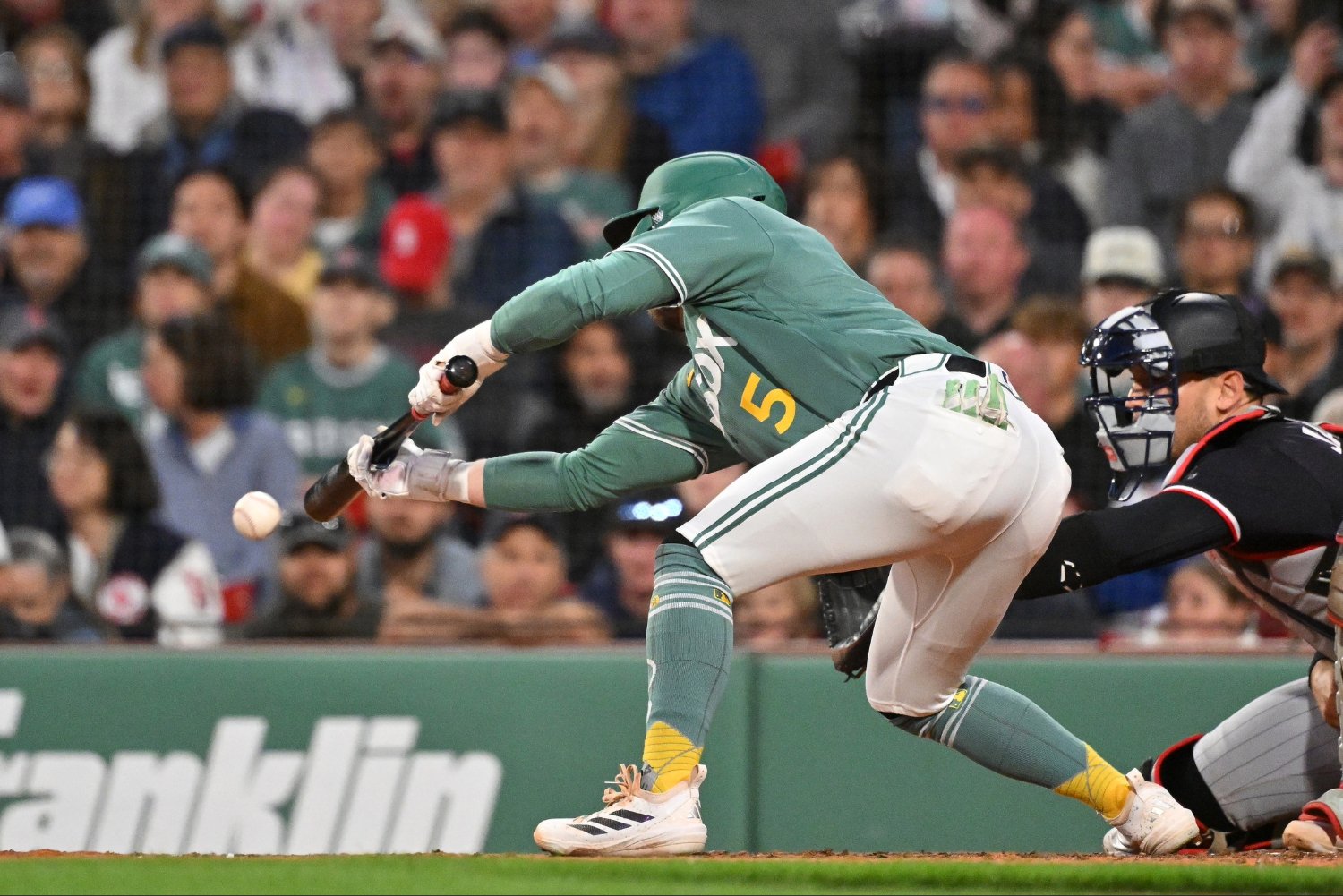
These 2026 Red Sox are the exact opposite. Through their first 51 games, Boston owns a 22-29 record and ranks near the bottom of MLB in nearly every important offensive category: 29th in runs per game (3.71), 29th in home runs (36), 29th in slugging percentage (.362), and 27th in OPS (.676).
The strange part is not simply the statistical decline. The strange part is the type of offense Boston has become: a lineup that still collects hits, but almost never creates real damage. One of the team’s new additions, first baseman Willson Contreras, leads the lineup with 10 of the club’s 36 home runs. That represents 28% of the team’s total power production, the second-highest share in MLB behind Kyle Schwarber, who has hit 20 home runs—32% of the Philadelphia Phillies’ 62 total homers. Boston’s pitching staff has shined in many areas early this season, but the lack of offensive impact and game-changing swings has become one of the defining problems of this Red Sox club.
Let’s dig deeper into some of the most pressing issues facing this lineup through the first 50 games of the season.
The Worst Lineup in MLB Against Fastballs
Modern baseball revolves around a simple truth: elite offenses destroy four-seam fastballs. Boston does not.
The Red Sox own MLB’s worst ISO against four-seamers (.118), and that number probably summarizes their entire offensive crisis better than any other metric.
Red Sox vs. Four-Seam Fastballs
|
Metric |
Boston |
MLB Context |
|
AVG |
.252 |
Acceptable |
|
OBP |
.357 |
Good |
|
SLG |
.371 |
Very poor |
|
ISO |
.118 |
Worst in MLB |
|
HR |
8 |
Extremely low |
|
Whiff% |
21.10% |
Near league average |
|
Average EV |
89.3 mph |
Barely average |
|
Barrel% |
8.30% |
Mediocre |
|
Launch Angle |
16.8° |
Too little loft |
|
xSLG |
0.377 |
Nearly identical to actual SLG |
There lies the central contradiction of this offense: Boston is not getting overwhelmed by velocity. They are not striking out excessively. They are not constantly swinging through pitches. They just simply do not do damage.
While the New York Yankees, Atlanta Braves, Los Angeles Dodgers, and San Diego Padres turn fastballs into massive slugging production, Boston converts too many heaters into relatively harmless singles. And the most concerning part is that there are not many signs of bad luck. After the departures of Rafael Devers and Alex Bregman, combined with the injuries and inconsistency of Trevor Story, Boston’s power production has collapsed. Even after leaving midway through 2025, no Red Sox hitter has surpassed the .401 OBP, .504 slugging percentage, and .905 OPS that Devers posted over his first 73 games last season.
One of Boston’s new acquisitions, Caleb Durbin, is hitting .166/.244/.241/.485 with one home run and 16 RBIs through his first 162 plate appearances. His swing was never expected to generate much power. Durbin’s xSLG sits at .286, well below the current league average (.400).
Jarren Duran posted a .727 OPS through his first 50 games last season. This year, he has fallen to .612 through 46 games. Wilyer Abreu has pulled the ball 7.6% less frequently compared to last season. He is striking out less and making more contact against fastballs, but his power output has diminished significantly.
The expected slugging numbers for Red Sox hitters almost perfectly mirror their actual slugging percentages. That means the issue is not hard-hit balls finding gloves. The problem runs much deeper: the quality of damage simply does not exist.
Boston is producing exactly the kind of contact modern pitchers want to induce: shallow fly balls, line drives without elite authority, manageable air contact, and very few truly destructive swings.
Fenway Park No Longer Amplifies Power
The strangest transformation of these Red Sox may be showing up in their fly balls.
For years, Fenway Park functioned like an extra-base machine. Boston built lineups specifically designed to exploit that environment: pull-heavy swings, loft, and airborne power.
In 2026, those fly balls no longer scare anyone.
Boston’s Evolution in Air Damage
|
Season |
SLG en Fly Balls |
OPS en Fly Balls |
|
2019 |
.852 |
1.123 |
|
2020 |
.620 |
.836 |
|
2021 |
.739 |
.973 |
|
2022 |
.675 |
.909 |
|
2023 |
.690 |
.931 |
|
2024 |
.754 |
1.003 |
|
2025 |
.679 |
.903 |
|
2026 |
.546 |
.756 |
Boston is still lifting the baseball. The problem is that those fly balls are no longer turning into home runs. And that reveals one of the most fascinating offensive oddities in baseball: the Red Sox still hit reasonably well on fly balls, but they generate dramatically less damage than teams with similar—or even worse—profiles.
Boston is generating the worst kind of fly ball in modern baseball: survivable fly balls.
Balls hit just hard enough to fall for hits. But not violently enough to change games.
That ties directly into the four-seam fastball problem. Modern four-seamers are specifically designed to induce this type of contact: shallow fly balls, routine center-field outs, and “playable” air contact. The Red Sox are falling completely into the trap.
The Lineup Lost Its Slugging Transformers
Once you examine the individual decline within the lineup, the problem begins to look even more structural.
Through the first 50 games of 2025, Alex Bregman, Rafael Devers, and Wilyer Abreu accounted for much of the team’s airborne damage. Together, the trio had combined for 33 home runs.
This season, Abreu has just six, while Devers and Bregman are no longer part of the offense. That completely changed the geometry of the lineup. Bregman was almost a perfect Fenway prototype: compact swing, natural loft, and the ability to punish fastballs toward the Monster. Devers brought pure violence against velocity. Abreu complemented the group with legitimate left-handed power.
Outside of Contreras’ power production, Boston now looks filled with functional hitters—but very few finishers.
Jarren Duran has only six home runs in 202 plate appearances. Ceddanne Rafaela has four in 182 plate appearances. Trevor Story owns a .303 slugging percentage. Roman Anthony has only one homer in 130 plate appearances. Masataka Yoshida has yet to homer in 106 plate appearances.
This is a lineup with contact, speed, and some doubles. But very little collective intimidation. And that forces Boston to manufacture runs the hardest way possible: plate discipline and long strings of consecutive hits.
In modern baseball, that is an extremely fragile formula. Elite offenses survive because one swing changes entire innings. These Red Sox need long sequences of singles and situational contact to produce what other teams generate with one well-struck fly ball.
The Most Concerning Stat: They Don’t Even Punish Mistakes
The best offenses destroy middle-middle pitches. Boston no longer does.
Red Sox vs. Middle-Middle Pitches
|
Temporada |
SLG |
xSLG |
HR |
Hard Hit% |
Barrel% |
|
2022 |
.645 |
.671 |
43 |
53.8 |
18.7 |
|
2023 |
.574 |
.590 |
33 |
49.2 |
14.9 |
|
2024 |
.671 |
.673 |
40 |
55.1 |
19.8 |
|
2025 |
.616 |
.641 |
51 |
51.4 |
17.6 |
|
2026 |
.462 |
.550 |
5 |
41.7 |
6.9 |
That may be the most alarming signal in the entire offense. Boston still makes contact: a .308 batting average, just a 7.2% whiff rate, and only 14 strikeouts in 213 plate appearances. But the damage vanished.
The barrel rate has fallen from nearly 20% in 2024 to just 6.9%. The hard-hit rate dropped more than 13 points. And the five home runs against middle-middle pitches are an absurdly low total—the worst in baseball—for a franchise historically built around punishing mistakes.
MLB Comparison: Contact vs. Damage
(Bottom 10 teams in slugging vs. middle-middle pitches)
|
Equipo |
AVG |
SLG |
HR |
Hard Hit% |
Barrel% |
|
BOS |
.308 |
.462 |
5 |
41.7 |
6.9 |
|
SD |
.308 |
.626 |
12 |
55.8 |
18.3 |
|
MIN |
.319 |
.569 |
9 |
51.6 |
14.1 |
|
BAL |
.320 |
.558 |
10 |
53.1 |
15.9 |
|
SF |
.321 |
.591 |
8 |
54.7 |
16.4 |
Among the league’s weakest slugging teams against middle-middle pitches, Boston produces contact. The other teams produce destruction.
And that completely changes how pitchers can attack them. When a lineup stops punishing fastballs and middle-middle mistakes, pitchers no longer feel pressure to escape toward sliders or changeups. They can live aggressively in the strike zone. They can attack up in the zone. They can throw early-count fastballs without fear of serious consequences.
And perhaps that leads to the most uncomfortable question for Boston: is this just a slump—or a new offensive identity?
Because many offensive crises usually hide signs of recovery. A high xSLG. Plenty of hard contact without results. A lineup full of hitters underperforming their expected numbers. But these Red Sox do not show many signs of an imminent rebound.
Their expected metrics almost always validate the real results. The problem does not appear circumstantial. As many suspected, it looks structural. Boston still has useful players. It has speed. It has discipline. It has contact. It even has a pitching staff capable of keeping them competitive most nights.
But it lost something that defined the great offenses of Fenway Park for years: the ability to create fear. And in today’s MLB, that changes everything. When opponents no longer fear the fastball in the zone, the entire game tilts toward the pitcher. Counts change. Aggression changes. The way teams attack the lineup changes. The Red Sox no longer dictate at-bats. Now they react to them.
Maybe Boston finds adjustments. Perhaps Roman Anthony eventually develops the power that still appears latent. Maybe Trevor Story recaptures some of his impact. Maybe more airborne damage arrives during the summer. But through 50 plus games, the evidence points toward an uncomfortable reality: The Red Sox no longer hit like a dangerous offense.







Recommended Comments
Create an account or sign in to comment
You need to be a member in order to leave a comment
Create an account
Sign up for a new account in our community. It's easy!
Register a new accountSign in
Already have an account? Sign in here.
Sign In Now