Nick John
-
Posts
799 -
Joined
-
Last visited
-
Days Won
1
Content Type
Profiles
Boston Red Sox Videos
2026 Boston Red Sox Top Prospects Ranking
Boston Red Sox Free Agent & Trade Rumors, Notes, & Tidbits
Guides & Resources
2025 Boston Red Sox Draft Pick Tracker
News
2026 Boston Red Sox Draft Tracker: Picks & Bonuses
Forums
Blogs
Events
Store
Downloads
Gallery
Everything posted by Nick John
-
Bello we could see back up in Boston sooner than anyone thought due to the Early injury. He's looked decent in Worcester but of course the level of talent between AAA and the majors is different. Campbell I think we won't see until next season at the earliest. I've said it all season but let him get back to how he was in 2024 before throwing anything else at him. Of course, a major injury or trade at the major league level could change that.
-
Worcester, MA — “It was awesome. Obviously, kind of a dream growing up to pitch in the big leagues, so to do that and pitch for the Boston Red Sox is an awesome experience.” Tyler Uberstine made his major-league debut back on April 5, pitching at Fenway Park. However, it’s been a long journey to make it back. One that involves disappointment and setbacks. Always being told he was not good enough, Uberstine was forced to prove himself time and time again. Entering college, the right-hander failed to make any team as a freshman. After working as hard as he could at USC, he was still cut during his sophomore year. And so, he began to look elsewhere, eventually landing at Northwestern. The rest is history. Drafted in the 19th round in 2021, Uberstine immediately got to work, making five appearances in the FCL where he tossed 7 2/3 innings and allowed just one earned run. The 2022 season was a big one, as he opened the year in Salem before looking rather dominant in High-A. Going 5-5 with a 3.83 ERA in 91 2/3 innings across 21 games, Uberstine showed to those who doubted him before that he could pitch in professional baseball. Unfortunately, injury struck Uberstine in 2023, as the right-hander would miss the entire season. It would get worse, as on June 14 of that year, he went under the knife and had Tommy John surgery. He would go on to miss most of the 2024 season, but showcased promise, striking out six batters in 4 2/3 innings before going to the Arizona Fall League to make up for lost time. It wasn’t until 2025 that Uberstine truly broke out and made a name for himself in the organization. Fully back from injury, Uberstine opened the season with Double-A Portland where he would provide quality innings for the rotation while pitching competitively each time he stepped on the mound. Making six appearances, he tossed 29 2/3 innings while striking out 35 batters and allowing just 12 earned runs. But much like every minor-league season, injuries at the major-league level forced a shuffling of players. In need of pitching, Uberstine was promoted to Worcester on what was supposed to be a temporary basis and ended up pitching so well he remained there for the remainder of the season. He would go on to appear in 19 games, tossing 91 huge innings with a 3.56 ERA for the team while striking out 102 batters. To honor his pitching performance, Uberstine was named the Co-Pitcher of the Year, all while creating discussion surrounding his future with the organization. The right-hander would be Rule 5 eligible in the coming offseason and there was debate surrounding whether the Red Sox would protect him or not. The team had quite a few young pitchers, but Uberstine performed well at Triple-A and it would be a waste to not see what they had. And so, in November, the organization added him to the 40-man roster. After being cut and told he wasn’t good enough for most of his career, Uberstine had proven them all wrong. Thus, we get to his debut, when he tossed 2 2/3 innings of relief on April 5 for the Red Sox. While he would be the losing pitcher of record, the outing was one full of success for the right-hander. Not only did he make his debut, but he also got his first career strikeout. Upon being optioned back to Worcester, Uberstine’s season got sidetracked again due to injury. After pitching on April 9 and April 14, Uberstine wound up missing over a month due to right shoulder soreness. He began his rehab process with the Greenville Drive at the end of May and has since pitched twice for the WooSox out of the bullpen, a role he’s content with. “The other night was a good two-inning stint. Before that was four innings. Just doing all different types of rolls out of the 'pen, whether it’s bulk, short, long, I’m good. As long as I feel healthy and feel good, I’m good,” Uberstine explained about his usage. For a player who has surpassed many expectations set by others, the right-hander is willing to do whatever it takes to get back up to Boston. “It was good to see him back out there,” acting manager Iggy Suarez stated. Suarez has been with Uberstine in each minor-league season he's pitched in since 2022, having been the manager of the Greenville Drive until the end of the 2024 season. Last year, he was a coach in Worcester when Uberstine came up. “To be able to go out and get two innings and then be able to go out there. He’s very aware of how he’s feeling. “When guys come back on the mound for me, I’m always looking at any little move. Does he usually do that? Does he move this way, move that way? I’m like, alright, make sure cause I’m pumped for guys to be out there but I want them to feel 100 percent. And he felt good. [Uberstine] being on the 40-man, he wants to be in a position where he wants to get back to the big leagues and you don’t want to stop that." For Uberstine, that path back to the majors has resumed. Given everything he's shown us thus far, it should surprise no one to see him get another chance in Boston this year. View full article
-
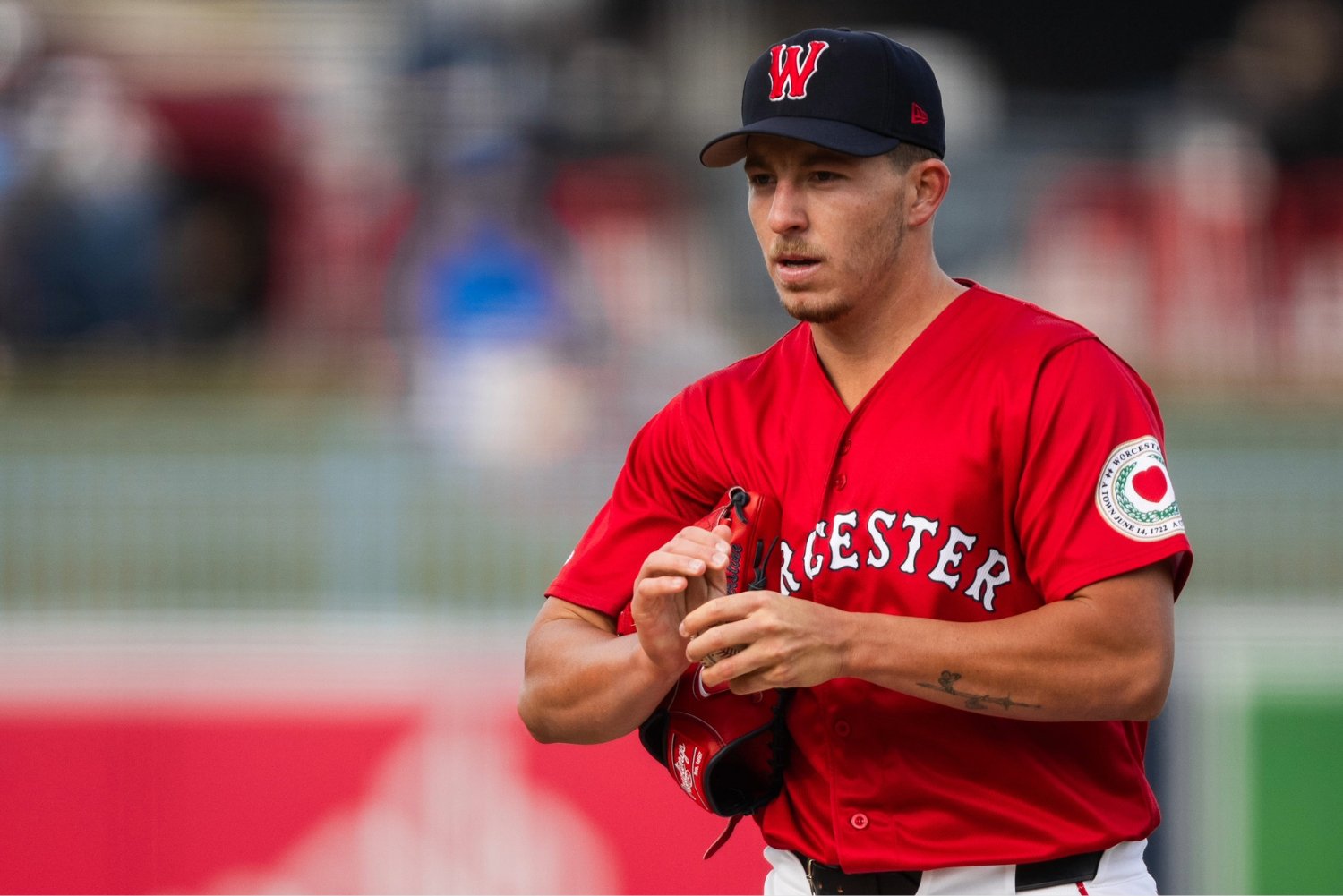 Worcester, MA — “It was awesome. Obviously, kind of a dream growing up to pitch in the big leagues, so to do that and pitch for the Boston Red Sox is an awesome experience.” Tyler Uberstine made his major-league debut back on April 5, pitching at Fenway Park. However, it’s been a long journey to make it back. One that involves disappointment and setbacks. Always being told he was not good enough, Uberstine was forced to prove himself time and time again. Entering college, the right-hander failed to make any team as a freshman. After working as hard as he could at USC, he was still cut during his sophomore year. And so, he began to look elsewhere, eventually landing at Northwestern. The rest is history. Drafted in the 19th round in 2021, Uberstine immediately got to work, making five appearances in the FCL where he tossed 7 2/3 innings and allowed just one earned run. The 2022 season was a big one, as he opened the year in Salem before looking rather dominant in High-A. Going 5-5 with a 3.83 ERA in 91 2/3 innings across 21 games, Uberstine showed to those who doubted him before that he could pitch in professional baseball. Unfortunately, injury struck Uberstine in 2023, as the right-hander would miss the entire season. It would get worse, as on June 14 of that year, he went under the knife and had Tommy John surgery. He would go on to miss most of the 2024 season, but showcased promise, striking out six batters in 4 2/3 innings before going to the Arizona Fall League to make up for lost time. It wasn’t until 2025 that Uberstine truly broke out and made a name for himself in the organization. Fully back from injury, Uberstine opened the season with Double-A Portland where he would provide quality innings for the rotation while pitching competitively each time he stepped on the mound. Making six appearances, he tossed 29 2/3 innings while striking out 35 batters and allowing just 12 earned runs. But much like every minor-league season, injuries at the major-league level forced a shuffling of players. In need of pitching, Uberstine was promoted to Worcester on what was supposed to be a temporary basis and ended up pitching so well he remained there for the remainder of the season. He would go on to appear in 19 games, tossing 91 huge innings with a 3.56 ERA for the team while striking out 102 batters. To honor his pitching performance, Uberstine was named the Co-Pitcher of the Year, all while creating discussion surrounding his future with the organization. The right-hander would be Rule 5 eligible in the coming offseason and there was debate surrounding whether the Red Sox would protect him or not. The team had quite a few young pitchers, but Uberstine performed well at Triple-A and it would be a waste to not see what they had. And so, in November, the organization added him to the 40-man roster. After being cut and told he wasn’t good enough for most of his career, Uberstine had proven them all wrong. Thus, we get to his debut, when he tossed 2 2/3 innings of relief on April 5 for the Red Sox. While he would be the losing pitcher of record, the outing was one full of success for the right-hander. Not only did he make his debut, but he also got his first career strikeout. Upon being optioned back to Worcester, Uberstine’s season got sidetracked again due to injury. After pitching on April 9 and April 14, Uberstine wound up missing over a month due to right shoulder soreness. He began his rehab process with the Greenville Drive at the end of May and has since pitched twice for the WooSox out of the bullpen, a role he’s content with. “The other night was a good two-inning stint. Before that was four innings. Just doing all different types of rolls out of the 'pen, whether it’s bulk, short, long, I’m good. As long as I feel healthy and feel good, I’m good,” Uberstine explained about his usage. For a player who has surpassed many expectations set by others, the right-hander is willing to do whatever it takes to get back up to Boston. “It was good to see him back out there,” acting manager Iggy Suarez stated. Suarez has been with Uberstine in each minor-league season he's pitched in since 2022, having been the manager of the Greenville Drive until the end of the 2024 season. Last year, he was a coach in Worcester when Uberstine came up. “To be able to go out and get two innings and then be able to go out there. He’s very aware of how he’s feeling. “When guys come back on the mound for me, I’m always looking at any little move. Does he usually do that? Does he move this way, move that way? I’m like, alright, make sure cause I’m pumped for guys to be out there but I want them to feel 100 percent. And he felt good. [Uberstine] being on the 40-man, he wants to be in a position where he wants to get back to the big leagues and you don’t want to stop that." For Uberstine, that path back to the majors has resumed. Given everything he's shown us thus far, it should surprise no one to see him get another chance in Boston this year.
 -
The Worcester Red Sox currently have $125 million tied between to two players on the roster, as both Brayan Bello and Kristian Campbell play in Triple-A instead of Boston. When both signed their extensions, they were seen as steals by the organization as both players looked like cornerstones for the franchise. Now, there is concern that the team will be forced to eat that sum of money as both players have struggled mightily over parts of the past two seasons. “He’ll have a good start and then you can see he gets into some traffic. I think being able to handle himself through that, you know, because that seems like what he’s been dealing with all year. And you can see it kind of snowball a little bit but when you see him stay under control mentally and being able to get himself out of it, I think that’s a positive thing to see,” acting WooSox manager Iggy Suarez stated about Bello prior to Tuesday’s game against the Toledo Mudhens. The 2026 campaign has been a disaster for the young right-hander. Coming off of his best season in 2025 where he tossed 166 2/3 innings with a 3.35 ERA while looking like a true number two starter in the rotation, expectations were high for Bello. Instead, his 2026 season has seen him demoted to Triple-A Worcester to work on some issues. In 12 appearances in Boston (eight of them starts), Bello tossed 61 innings and allowed 43 earned runs. His biggest issue? The first inning. In eight first innings this season, Bello has been unable to pitch well. Whether a mental issue or teams just having his number, Bello has allowed opposing teams to hit .442/.520/.837 with five doubles, four home runs and 15 runs scored against him in the opening frame. For a starter, that is unacceptable. To circumvent these issues, the Red Sox looked to have Bello begin his outings in the second inning and turned to an opener. In his four appearances as a bulk reliever, Bello looked like a different pitcher, tossing 25 1/3 innings in four outings and allowing just two earned runs. Unfortunately, he couldn't explain why that was the case. “Honestly, I don’t know. It isn’t much of a difference mentality wise when it comes to starting versus coming out of the bullpen. I just go out there with the same mindset and plan of attack,” Bello explained through translator Daveson Pérez at Polar Park. Unfortunately for the Red Sox, their openers also struggled and in most cases, Bello entered the game with the Red Sox already losing. For both the right-hander and the team, it was not possible for them to succeed with Bello being unable to pitch the first inning. Ultimately it led to his demotion on June 4 after allowing eight runs in five innings against the Baltimore Orioles. “He’s going to have to work on some stuff. I want him to be comfortable with us. It’s going to be an adjustment for him for sure,” Suarez explained back on June 5 after the news of Bello’s optioning had settled. Bello himself knew that he had work to do if he wanted to be a major-league pitcher again. “Get better with my locations, pitches and on the mental side of the game,” the right-hander told media during a media session on his first day back in Worcester. “I’m ready to put the work in down here so whenever it’s my time or whatever role they give me at the big=league level, I’m able to take full advantage of it.” For Bello, it was necessary to make it through the first inning without allowing teams to take the lead while also working on some of his pitches. His fastball, while only thrown 65 times, had ended up being hit by opponents at a .563 average. His sinker and cutter weren’t much better, as they were hit by opponents at averages of .316 and .361 respectively. Since joining Worcester’s rotation, Bello has seen some improvement as his fastball has an expected batting average of .253, though his sinker and cutter are still being hit hard with expected batting averages of .334 and .385 respectively. The cutter has seen an increase in usage since being optioned, going from being used 16% of the time with Boston up to 27.4% of the time with Worcester. Despite opponents hitting the pitch well, it is also generating a 52.4% whiff rate; location of pitch could be the biggest difference here. In Worcester, he’s been throwing the pitch more often than not down and in to right-handed hitters or down and away for a backdoor pitch to left-handed hitters. For Bello to return to his dominant self, he needs his cutter to return to its 2025 self where opponents managed to hit just .230 against it and whiffed on the pitch nearly a quarter of the time it was thrown. Despite his struggles, Bello isn’t ready to give up and wants the fans to know that. “One thing that is never missing is how hard I work. The amount of work I’ve put in is super important to me and to the fans, I’m looking forward to doing what I have to do down here [Worcester] to go back up there and continue having the fun times we’ve had in the past.” Since then, Bello has made three starts with Worcester, tossing 13 2/3 innings while allowing six earned runs and striking out 16 batters. “We don’t expect him to come down here and just go put up zeros and three up, three down. Let’s see how he reacts to some trouble out there and he’s been handling himself pretty well. So that’s one thing we’ve seen too,” Suarez explained about Bello’s performance so far since joining Worcester’s rotation. “You want to have good results, want to have positive results so you want him to go out there and succeed right out of the gate. The issue was the first inning for him has always been the thing. So, when you see him get through a first inning and then the second inning well, you’re like, okay, this is awesome. Then when you get to traffic on the bases, let’s see how he handles himself here. You want to navigate both. You want to have him in situations where we want him to work, but if it doesn’t line up that way then maybe that’s a good thing. Then if he does get into a situation, it’s like, here we go. This is something he’s been working on, let’s see how he reacts.” For Campbell, things have been much different. “He’s taken steps, right? He’s handling himself better in between at-bats. Staying focused on what the adjustments are and not the results. Some days are going to be good; some are going to be bad. We’re taking steps, we’re not all the way there,” former Worcester manager Chad Tracy explained back in mid-April. Campbell, who was once viewed as the future second baseman of the Boston Red Sox when he signed his extension with the team, has now spent the past year in Triple-A where he has played more than 125 games, bouncing between first base, second base and the outfield. This year, he’s exclusively played the outfield. While his defense at second base was bad (he had a Fielding Run Value of -10), it was his bat that seemingly vanished over his final two months in the majors, leading to a greater concern. Even if his defense isn't elite, with a bat that produced a stat line of .301/.407/.495 with eight doubles, four home runs and 12 RBIs in his first month in the big leagues, you could find a place to hide his glove. However, since rejoining Worcester, Campbell has seemingly lost the power that previously wowed individuals; he’s hit just 10 home runs and 20 doubles in that span. And in his 62 games in 2026, his offensive production has continued to wane. The outfielder has hit just .212/.342/.286 while striking out 85 times. And the frustration is starting to become visible. “I think you can see it in him of how he’s performing because I think he expects a lot of himself. And I think you see the frustration when he’s not going well, and rightly so. I’ve had him in the past and I’ve seen the success and the skyrocket. He’s a good player,” Suarez said of Campbell. “Now, it’s been inconsistent and you can see the frustration that he’s going through. You just try to be there for him. It’s not like he’s not putting the work in, so you try to help him maintain the confidence of the day-to-day.” Campbell is dealing with the process of reworking his mechanics since being optioned last June and it has been an up-and-down experience. As the organization has constantly said, it’s about the process and not the results as Campbell gets more comfortable with the new mechanics. Still, he needs to cut down on the strikeouts and start hitting the ball with more authority. At this point in the season, Campbell’s strikeout rate of 31.5% is too high in Triple-A for a player who hopes to rejoin the major leagues. He is walking at a 15.2% rate, offsetting some concern, though this all comes back to his swing decisions. Through roughly three months of play, Campbell’s in-zone swing percentage is just 58.8%, while he is swinging at just 40.6% of the pitches thrown to him in general. While patience is a great trait, Campbell may be putting himself in a hole by allowing too many pitches to pass by him in an at-bat, especially as he only swings and misses on just under 12% of his swings. Despite the ups and downs Campbell has endured, his manager believes he’s capable of overcoming them. What he’s experiencing is a part of baseball that everyone deals with at some point in time. For Campbell, it just happened to come when he made the major leagues. “I’ve seen it personally when I had him, I saw what he can do. Not just at the A-ball level, he went to Double-A, Triple-A and MiLB Player of the Year. I don’t think that was a fluke. He’s a good player," Suarez said, reaffirming his belief in on the team's most lucrative investments. "There’s a reason he got what he got [for an extension] and I think it’s still in there." View full article
-
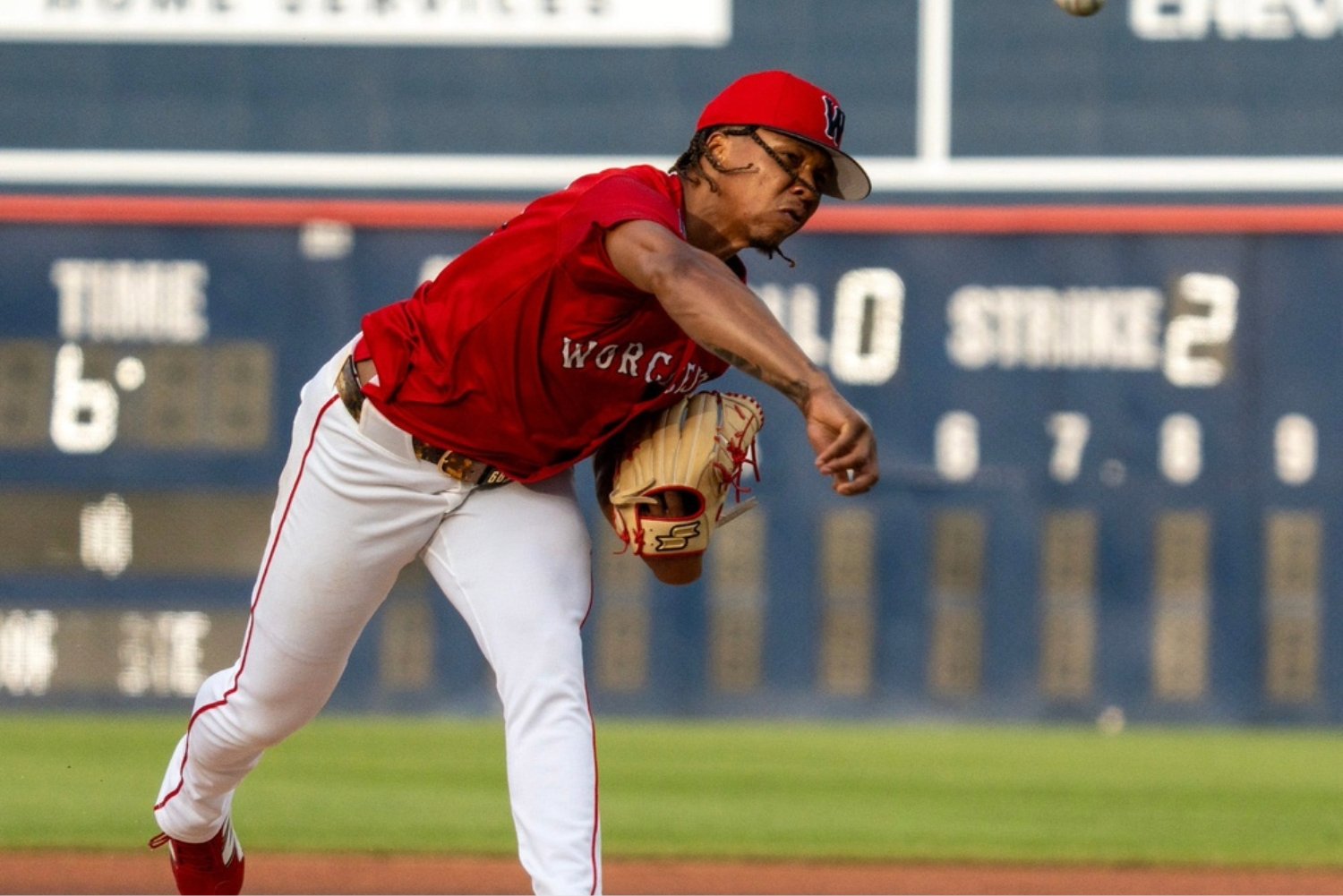 The Worcester Red Sox currently have $125 million tied between to two players on the roster, as both Brayan Bello and Kristian Campbell play in Triple-A instead of Boston. When both signed their extensions, they were seen as steals by the organization as both players looked like cornerstones for the franchise. Now, there is concern that the team will be forced to eat that sum of money as both players have struggled mightily over parts of the past two seasons. “He’ll have a good start and then you can see he gets into some traffic. I think being able to handle himself through that, you know, because that seems like what he’s been dealing with all year. And you can see it kind of snowball a little bit but when you see him stay under control mentally and being able to get himself out of it, I think that’s a positive thing to see,” acting WooSox manager Iggy Suarez stated about Bello prior to Tuesday’s game against the Toledo Mudhens. The 2026 campaign has been a disaster for the young right-hander. Coming off of his best season in 2025 where he tossed 166 2/3 innings with a 3.35 ERA while looking like a true number two starter in the rotation, expectations were high for Bello. Instead, his 2026 season has seen him demoted to Triple-A Worcester to work on some issues. In 12 appearances in Boston (eight of them starts), Bello tossed 61 innings and allowed 43 earned runs. His biggest issue? The first inning. In eight first innings this season, Bello has been unable to pitch well. Whether a mental issue or teams just having his number, Bello has allowed opposing teams to hit .442/.520/.837 with five doubles, four home runs and 15 runs scored against him in the opening frame. For a starter, that is unacceptable. To circumvent these issues, the Red Sox looked to have Bello begin his outings in the second inning and turned to an opener. In his four appearances as a bulk reliever, Bello looked like a different pitcher, tossing 25 1/3 innings in four outings and allowing just two earned runs. Unfortunately, he couldn't explain why that was the case. “Honestly, I don’t know. It isn’t much of a difference mentality wise when it comes to starting versus coming out of the bullpen. I just go out there with the same mindset and plan of attack,” Bello explained through translator Daveson Pérez at Polar Park. Unfortunately for the Red Sox, their openers also struggled and in most cases, Bello entered the game with the Red Sox already losing. For both the right-hander and the team, it was not possible for them to succeed with Bello being unable to pitch the first inning. Ultimately it led to his demotion on June 4 after allowing eight runs in five innings against the Baltimore Orioles. “He’s going to have to work on some stuff. I want him to be comfortable with us. It’s going to be an adjustment for him for sure,” Suarez explained back on June 5 after the news of Bello’s optioning had settled. Bello himself knew that he had work to do if he wanted to be a major-league pitcher again. “Get better with my locations, pitches and on the mental side of the game,” the right-hander told media during a media session on his first day back in Worcester. “I’m ready to put the work in down here so whenever it’s my time or whatever role they give me at the big=league level, I’m able to take full advantage of it.” For Bello, it was necessary to make it through the first inning without allowing teams to take the lead while also working on some of his pitches. His fastball, while only thrown 65 times, had ended up being hit by opponents at a .563 average. His sinker and cutter weren’t much better, as they were hit by opponents at averages of .316 and .361 respectively. Since joining Worcester’s rotation, Bello has seen some improvement as his fastball has an expected batting average of .253, though his sinker and cutter are still being hit hard with expected batting averages of .334 and .385 respectively. The cutter has seen an increase in usage since being optioned, going from being used 16% of the time with Boston up to 27.4% of the time with Worcester. Despite opponents hitting the pitch well, it is also generating a 52.4% whiff rate; location of pitch could be the biggest difference here. In Worcester, he’s been throwing the pitch more often than not down and in to right-handed hitters or down and away for a backdoor pitch to left-handed hitters. For Bello to return to his dominant self, he needs his cutter to return to its 2025 self where opponents managed to hit just .230 against it and whiffed on the pitch nearly a quarter of the time it was thrown. Despite his struggles, Bello isn’t ready to give up and wants the fans to know that. “One thing that is never missing is how hard I work. The amount of work I’ve put in is super important to me and to the fans, I’m looking forward to doing what I have to do down here [Worcester] to go back up there and continue having the fun times we’ve had in the past.” Since then, Bello has made three starts with Worcester, tossing 13 2/3 innings while allowing six earned runs and striking out 16 batters. “We don’t expect him to come down here and just go put up zeros and three up, three down. Let’s see how he reacts to some trouble out there and he’s been handling himself pretty well. So that’s one thing we’ve seen too,” Suarez explained about Bello’s performance so far since joining Worcester’s rotation. “You want to have good results, want to have positive results so you want him to go out there and succeed right out of the gate. The issue was the first inning for him has always been the thing. So, when you see him get through a first inning and then the second inning well, you’re like, okay, this is awesome. Then when you get to traffic on the bases, let’s see how he handles himself here. You want to navigate both. You want to have him in situations where we want him to work, but if it doesn’t line up that way then maybe that’s a good thing. Then if he does get into a situation, it’s like, here we go. This is something he’s been working on, let’s see how he reacts.” For Campbell, things have been much different. “He’s taken steps, right? He’s handling himself better in between at-bats. Staying focused on what the adjustments are and not the results. Some days are going to be good; some are going to be bad. We’re taking steps, we’re not all the way there,” former Worcester manager Chad Tracy explained back in mid-April. Campbell, who was once viewed as the future second baseman of the Boston Red Sox when he signed his extension with the team, has now spent the past year in Triple-A where he has played more than 125 games, bouncing between first base, second base and the outfield. This year, he’s exclusively played the outfield. While his defense at second base was bad (he had a Fielding Run Value of -10), it was his bat that seemingly vanished over his final two months in the majors, leading to a greater concern. Even if his defense isn't elite, with a bat that produced a stat line of .301/.407/.495 with eight doubles, four home runs and 12 RBIs in his first month in the big leagues, you could find a place to hide his glove. However, since rejoining Worcester, Campbell has seemingly lost the power that previously wowed individuals; he’s hit just 10 home runs and 20 doubles in that span. And in his 62 games in 2026, his offensive production has continued to wane. The outfielder has hit just .212/.342/.286 while striking out 85 times. And the frustration is starting to become visible. “I think you can see it in him of how he’s performing because I think he expects a lot of himself. And I think you see the frustration when he’s not going well, and rightly so. I’ve had him in the past and I’ve seen the success and the skyrocket. He’s a good player,” Suarez said of Campbell. “Now, it’s been inconsistent and you can see the frustration that he’s going through. You just try to be there for him. It’s not like he’s not putting the work in, so you try to help him maintain the confidence of the day-to-day.” Campbell is dealing with the process of reworking his mechanics since being optioned last June and it has been an up-and-down experience. As the organization has constantly said, it’s about the process and not the results as Campbell gets more comfortable with the new mechanics. Still, he needs to cut down on the strikeouts and start hitting the ball with more authority. At this point in the season, Campbell’s strikeout rate of 31.5% is too high in Triple-A for a player who hopes to rejoin the major leagues. He is walking at a 15.2% rate, offsetting some concern, though this all comes back to his swing decisions. Through roughly three months of play, Campbell’s in-zone swing percentage is just 58.8%, while he is swinging at just 40.6% of the pitches thrown to him in general. While patience is a great trait, Campbell may be putting himself in a hole by allowing too many pitches to pass by him in an at-bat, especially as he only swings and misses on just under 12% of his swings. Despite the ups and downs Campbell has endured, his manager believes he’s capable of overcoming them. What he’s experiencing is a part of baseball that everyone deals with at some point in time. For Campbell, it just happened to come when he made the major leagues. “I’ve seen it personally when I had him, I saw what he can do. Not just at the A-ball level, he went to Double-A, Triple-A and MiLB Player of the Year. I don’t think that was a fluke. He’s a good player," Suarez said, reaffirming his belief in on the team's most lucrative investments. "There’s a reason he got what he got [for an extension] and I think it’s still in there."
 -
It’s that time of the year again, when TalkSox updates our Top 20 prospect rankings for the Boston Red Sox. Both staff and readers voted and after tabulating the votes, the reveal of the list is now ready. The Top 20 saw some changes from the one released in May, which we will break down. While one prospect graduated, one fell off and two new additions replaced both. Let’s jump into it below. Boston Red Sox Top 20 Prospect List Franklin Arias SS AA (previously #2) Anthony Eyanson RHP AA (previously #4) Kyson Witherspoon RHP A+ (previously #3) Justin Gonzales OF/1B A+ (previously #5) Henry Godbout 2B/SS A+ (previously #11) Jake Bennett LHP MLB (40-man) (previously #7) Marcus Phillips RHP A+ (previously #9) Juan Valera RHP A+ (previously #6) Enddy Azocar OF A+ (previously #15) Dorian Soto INF FCL (previously #10) Yoeilin Cespedes 2B/SS A+ (previously #13) Mikey Romero INF AAA (previously #8) Tyler Uberstine RHP AAA (40-man) (previously #12) Sadbiel Delzine RHP FCL (previously unranked) John Holobetz RHP AA (previously #14) Yophery Rodriguez OF A+ (previously #17) Franklin Primera C FCL (previously unranked) Hayden Mullins LHP AA (previously #19) Johanfran Garcia C AA (previously #18) Miguel Bleis OF AA (previously #16) The list retained most of the previous Top 20 with only Payton Tolle and Conrad Cason dropping off of the list. Tolle’s removal due to his graduation from prospect status thanks to his stay in the majors with Boston, while Cason fell off after appearing in just four games in the Florida Complex League before being shut down due to injury. In his limited play time of 15 at-bats, the two-way player hit .267/.313/.733 with a double, two home runs and two RBIs as he works his way back from Tommy John surgery. The biggest rank improvements belonged primarily to position players, as Henry Godbout and Enddy Azocar both rose six placements and broke into the top 10. Along with them, Justin Gonzales continued his rise on the list, going from 5th to 4th and Yoeilin Cespedes continued his resurgence to go from 13th to 11th. Meanwhile, on the pitching side, Anthony Eyanson, Jake Bennett, Marcus Phillips and Hayden Mullins all improved in the rankings. Eyanson is now the 2nd ranked prospect, while Bennett rose one spot to 6th and Phillips bumped up from 9th to 7th. Mullins rose quietly from 19th on the list to 18th. The biggest rank decreases belonged to Mikey Romero, who went from 8th down to 12th, falling out of the top 10, and Miguel Bleis, who continued to slide as he went from 16th down to 20th. Romero has seen his ups and downs in 2026, as he opened the year as one of the hottest hitters in all of baseball before a stretch of roughly six weeks where hits simply wouldn't fall. The month of May saw the infielder hit just .179/.222/.310 while striking out 20 times. The month of June has seen more positive results, as Romero looks to stay on track for the remainder of the season. Bleis, on the other hand, just can't find the consistency his talent deserves. So far on the season, he’s hitting .216/.286/.324 with eight doubles, four home runs and 19 RBIs. Much like Romero, he’s starting to heat up, having hit .257/.278/.329 in May followed by a line of .245/.333/.396 in June. For Bleis, the talent is there, it’s just a matter of having it show up each night. The ranking continues to be dominated in two specific areas much like the previous update. Nine of the top 20 are pitchers, while half of the top 10 is comprised of pitchers even after Tolle’s graduation. Thanks to that, the new top pitching prospect is 2025 third-round pick Anthony Eyanson, who has dominated this season with a 1.00 ERA in 11 starts and 45 innings between High-A and Double-A. In that span, he’s managed to strike out 62 batters while walking just 16. The area that made up the second most on the list would be infielders with five of them including two within the top 10 (technically three if we count Gonzales’ one game at first base). The second area that dominates this list is that once again, Greenville makes up the majority of the players on the list with eight (including six in the top 10). The High-A organization is a team that many should keep an eye on during the second half of the minor league baseball season to see what the future of the franchise might look like. Offensively, the team is led by Azocar, Cespedes and Gonzales. Godbout was also putting together a fine season before it was derailed with the need for hand surgery. Portland finished second once more with six players including the top two players on the list in Arias and Eyanson. The FCL came in third with three players including the two new additions to the list, while Worcester had two players on the list in mainstays Romero and Tyler Uberstine. Finally, Boston, who has had Bennett with them for the last couple weeks, had one lone prospect. Let’s review the two new additions to our list to round things out. Sadbiel Delzine, RHP (FCL Red Sox): No. 14 Delzine has shot up prospect rankings this season, as he went unlisted on not just the TalkSox list but nearly every major prospect ranking coming into 2026. That quickly changed once the FCL season began in early May, as he has put on a show with his pitching. A strong, tall right-hander, Delzine stands at a towering 6-foot-5 on the mound and still has room to grow as he enters his late teens (he won’t turn 19 until 2027). In his first taste of stateside baseball, Delzine has dominated in his seven appearances. Tossing 27 1/3 innings, he’s allowed just seven runs, six of them earned, while striking out 32 batters. Delzine, who signed with the Red Sox in January of 2025, is already viewed as a high-upside arm throughout the system thanks to his size and athleticism that he’s shown during his time in Florida. Even before this season, the Red Sox were high on him, as the right-hander received the largest bonus of any pitcher signed by the Red Sox in their 2025 international free agent class. On the mound, Delzine starts on the first base side of the rubber before throwing from a three-quarters arm slot. With a high leg kick and a quick arm, Delzine has shown an ability to repeat his delivery early on in his career. Thanks to his large body and the belief he’ll only grow more, Delzine has the body of a starter and will be developed as such. He already has a four-pitch arsenal, with three of them already in game-ready form. His best pitch is his fastball, while he uses a changeup and curveball to supplement it. Delzine also has a slider, but it’s behind his other two secondaries. The fastball averages around the low-90s, topping out as high as 94 mph at times and is viewed as having room to add velocity as he grows. Despite being his best pitch so far in his career, it might be his changeup that becomes his best pitch in the future thanks to the bat-missing ability it’s already showcasing. His curveball is one that breaks 11-to-5 and some have said that at its best, it showcases a tight rotation that allows him to bury it down in the zone and can throw it away from right-handed batters. There isn’t much on his slider, as it’s still being developed. Overall, he’s viewed as a high-upside prospect that should be able to handle the strain of starting games along with having the mental aspect needed due to his competitive nature. Should Delzine develop consistently and avoid injuries, there may be a new arm joining the likes of Eyanson, Witherspoon and Phillips when it comes to the most hype in the system. Franklin Primera, C (FCL Red Sox): No. 17 Whereas Delzine was signed in January of 2025, Primera was signed by the Red Sox out of Venezuela in September of 2024 and was sent to the Dominican Summer League in 2025 at the age of 18. The young catcher immediately dominated the league, as he slashed .333/.465/.430 with 10 doubles, one home run and 27 RBIs while being added to the All-Star Game as an injury replacement. Primera would go on to win the game’s MVP after hitting a home run in his lone at-bat. Following his great season, the team had him play in the 2026 Spring Breakout game along with being on the roster for their annual Futures at Fenway South game. The team then decided he was ready for the FCL and had him open the season in Florida instead of spending more time in the DSL. Through his first 27 games this season, Primera has made that decision look smart, as he’s hit .464/.589/.821 with six doubles, eight home runs and 28 RBIs all while playing outstanding defense. Measured at 6-foot-0, Primera still has some room to grow, especially in his upper body, but he should manage to stick behind the plate without worry about his size. He does, however, need to get stronger if he wants to improve various aspects of his game. As a hitter, Primera has a compact swing that is short and allows him to find the barrel consistently. However, he does not see many pitches as he will look to attack early in the count, something that more advanced pitchers could take advantage of as he moves up the minor-league levels. He will need to work on developing how he attacks pitchers along with recognizing different pitches. He has pull-side power, but if he wants to really tap into it, he’ll have to add strength so that he can impact the ball with higher exit velocities. His speed is well below average, however, and should not be viewed as a part of his game. Defensively, he is strong and should remain behind the dish barring a major injury. His ability to block baseballs in the dirt is great thanks to his ability to move well behind the plate. He also has plus receiving and framing skills despite being just 19 years old. His arm is also viewed as above average and should only increase as he improves his strength and conditioning. Overall, there’s a lot to like about Primera, as his defensive upside alone should give him a quicker path to the majors than most backstops. His ceiling and floor will all be based on how his hit tool develops, and he could either be a serious catching prospect or nothing more than upper-minors depth. Despite that, the Red Sox have a fun prospect to keep an eye on for the next couple seasons as the organization tries to figure out what they have in their catching department. View full article
-
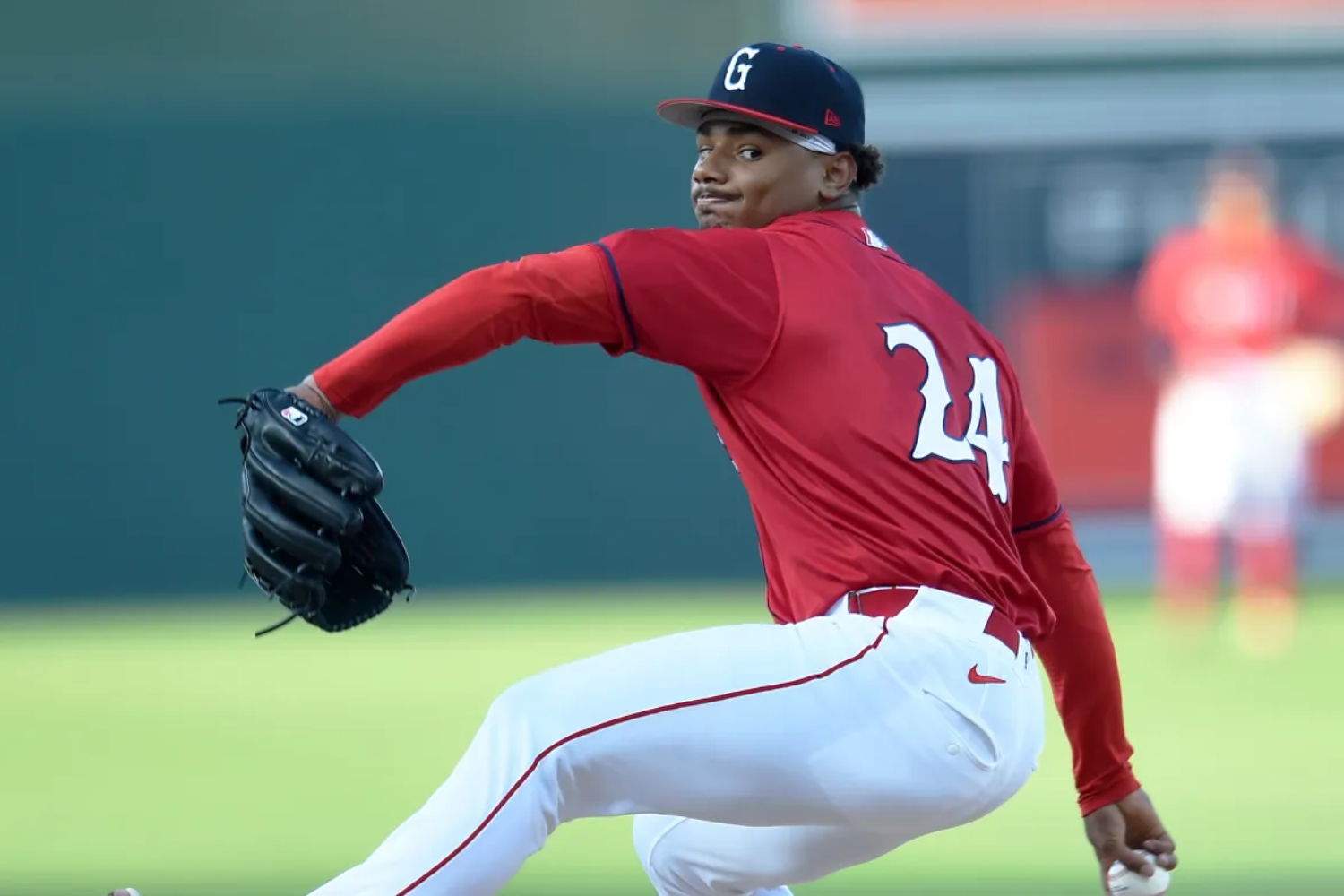 It’s that time of the year again, when TalkSox updates our Top 20 prospect rankings for the Boston Red Sox. Both staff and readers voted and after tabulating the votes, the reveal of the list is now ready. The Top 20 saw some changes from the one released in May, which we will break down. While one prospect graduated, one fell off and two new additions replaced both. Let’s jump into it below. Boston Red Sox Top 20 Prospect List Franklin Arias SS AA (previously #2) Anthony Eyanson RHP AA (previously #4) Kyson Witherspoon RHP A+ (previously #3) Justin Gonzales OF/1B A+ (previously #5) Henry Godbout 2B/SS A+ (previously #11) Jake Bennett LHP MLB (40-man) (previously #7) Marcus Phillips RHP A+ (previously #9) Juan Valera RHP A+ (previously #6) Enddy Azocar OF A+ (previously #15) Dorian Soto INF FCL (previously #10) Yoeilin Cespedes 2B/SS A+ (previously #13) Mikey Romero INF AAA (previously #8) Tyler Uberstine RHP AAA (40-man) (previously #12) Sadbiel Delzine RHP FCL (previously unranked) John Holobetz RHP AA (previously #14) Yophery Rodriguez OF A+ (previously #17) Franklin Primera C FCL (previously unranked) Hayden Mullins LHP AA (previously #19) Johanfran Garcia C AA (previously #18) Miguel Bleis OF AA (previously #16) The list retained most of the previous Top 20 with only Payton Tolle and Conrad Cason dropping off of the list. Tolle’s removal due to his graduation from prospect status thanks to his stay in the majors with Boston, while Cason fell off after appearing in just four games in the Florida Complex League before being shut down due to injury. In his limited play time of 15 at-bats, the two-way player hit .267/.313/.733 with a double, two home runs and two RBIs as he works his way back from Tommy John surgery. The biggest rank improvements belonged primarily to position players, as Henry Godbout and Enddy Azocar both rose six placements and broke into the top 10. Along with them, Justin Gonzales continued his rise on the list, going from 5th to 4th and Yoeilin Cespedes continued his resurgence to go from 13th to 11th. Meanwhile, on the pitching side, Anthony Eyanson, Jake Bennett, Marcus Phillips and Hayden Mullins all improved in the rankings. Eyanson is now the 2nd ranked prospect, while Bennett rose one spot to 6th and Phillips bumped up from 9th to 7th. Mullins rose quietly from 19th on the list to 18th. The biggest rank decreases belonged to Mikey Romero, who went from 8th down to 12th, falling out of the top 10, and Miguel Bleis, who continued to slide as he went from 16th down to 20th. Romero has seen his ups and downs in 2026, as he opened the year as one of the hottest hitters in all of baseball before a stretch of roughly six weeks where hits simply wouldn't fall. The month of May saw the infielder hit just .179/.222/.310 while striking out 20 times. The month of June has seen more positive results, as Romero looks to stay on track for the remainder of the season. Bleis, on the other hand, just can't find the consistency his talent deserves. So far on the season, he’s hitting .216/.286/.324 with eight doubles, four home runs and 19 RBIs. Much like Romero, he’s starting to heat up, having hit .257/.278/.329 in May followed by a line of .245/.333/.396 in June. For Bleis, the talent is there, it’s just a matter of having it show up each night. The ranking continues to be dominated in two specific areas much like the previous update. Nine of the top 20 are pitchers, while half of the top 10 is comprised of pitchers even after Tolle’s graduation. Thanks to that, the new top pitching prospect is 2025 third-round pick Anthony Eyanson, who has dominated this season with a 1.00 ERA in 11 starts and 45 innings between High-A and Double-A. In that span, he’s managed to strike out 62 batters while walking just 16. The area that made up the second most on the list would be infielders with five of them including two within the top 10 (technically three if we count Gonzales’ one game at first base). The second area that dominates this list is that once again, Greenville makes up the majority of the players on the list with eight (including six in the top 10). The High-A organization is a team that many should keep an eye on during the second half of the minor league baseball season to see what the future of the franchise might look like. Offensively, the team is led by Azocar, Cespedes and Gonzales. Godbout was also putting together a fine season before it was derailed with the need for hand surgery. Portland finished second once more with six players including the top two players on the list in Arias and Eyanson. The FCL came in third with three players including the two new additions to the list, while Worcester had two players on the list in mainstays Romero and Tyler Uberstine. Finally, Boston, who has had Bennett with them for the last couple weeks, had one lone prospect. Let’s review the two new additions to our list to round things out. Sadbiel Delzine, RHP (FCL Red Sox): No. 14 Delzine has shot up prospect rankings this season, as he went unlisted on not just the TalkSox list but nearly every major prospect ranking coming into 2026. That quickly changed once the FCL season began in early May, as he has put on a show with his pitching. A strong, tall right-hander, Delzine stands at a towering 6-foot-5 on the mound and still has room to grow as he enters his late teens (he won’t turn 19 until 2027). In his first taste of stateside baseball, Delzine has dominated in his seven appearances. Tossing 27 1/3 innings, he’s allowed just seven runs, six of them earned, while striking out 32 batters. Delzine, who signed with the Red Sox in January of 2025, is already viewed as a high-upside arm throughout the system thanks to his size and athleticism that he’s shown during his time in Florida. Even before this season, the Red Sox were high on him, as the right-hander received the largest bonus of any pitcher signed by the Red Sox in their 2025 international free agent class. On the mound, Delzine starts on the first base side of the rubber before throwing from a three-quarters arm slot. With a high leg kick and a quick arm, Delzine has shown an ability to repeat his delivery early on in his career. Thanks to his large body and the belief he’ll only grow more, Delzine has the body of a starter and will be developed as such. He already has a four-pitch arsenal, with three of them already in game-ready form. His best pitch is his fastball, while he uses a changeup and curveball to supplement it. Delzine also has a slider, but it’s behind his other two secondaries. The fastball averages around the low-90s, topping out as high as 94 mph at times and is viewed as having room to add velocity as he grows. Despite being his best pitch so far in his career, it might be his changeup that becomes his best pitch in the future thanks to the bat-missing ability it’s already showcasing. His curveball is one that breaks 11-to-5 and some have said that at its best, it showcases a tight rotation that allows him to bury it down in the zone and can throw it away from right-handed batters. There isn’t much on his slider, as it’s still being developed. Overall, he’s viewed as a high-upside prospect that should be able to handle the strain of starting games along with having the mental aspect needed due to his competitive nature. Should Delzine develop consistently and avoid injuries, there may be a new arm joining the likes of Eyanson, Witherspoon and Phillips when it comes to the most hype in the system. Franklin Primera, C (FCL Red Sox): No. 17 Whereas Delzine was signed in January of 2025, Primera was signed by the Red Sox out of Venezuela in September of 2024 and was sent to the Dominican Summer League in 2025 at the age of 18. The young catcher immediately dominated the league, as he slashed .333/.465/.430 with 10 doubles, one home run and 27 RBIs while being added to the All-Star Game as an injury replacement. Primera would go on to win the game’s MVP after hitting a home run in his lone at-bat. Following his great season, the team had him play in the 2026 Spring Breakout game along with being on the roster for their annual Futures at Fenway South game. The team then decided he was ready for the FCL and had him open the season in Florida instead of spending more time in the DSL. Through his first 27 games this season, Primera has made that decision look smart, as he’s hit .464/.589/.821 with six doubles, eight home runs and 28 RBIs all while playing outstanding defense. Measured at 6-foot-0, Primera still has some room to grow, especially in his upper body, but he should manage to stick behind the plate without worry about his size. He does, however, need to get stronger if he wants to improve various aspects of his game. As a hitter, Primera has a compact swing that is short and allows him to find the barrel consistently. However, he does not see many pitches as he will look to attack early in the count, something that more advanced pitchers could take advantage of as he moves up the minor-league levels. He will need to work on developing how he attacks pitchers along with recognizing different pitches. He has pull-side power, but if he wants to really tap into it, he’ll have to add strength so that he can impact the ball with higher exit velocities. His speed is well below average, however, and should not be viewed as a part of his game. Defensively, he is strong and should remain behind the dish barring a major injury. His ability to block baseballs in the dirt is great thanks to his ability to move well behind the plate. He also has plus receiving and framing skills despite being just 19 years old. His arm is also viewed as above average and should only increase as he improves his strength and conditioning. Overall, there’s a lot to like about Primera, as his defensive upside alone should give him a quicker path to the majors than most backstops. His ceiling and floor will all be based on how his hit tool develops, and he could either be a serious catching prospect or nothing more than upper-minors depth. Despite that, the Red Sox have a fun prospect to keep an eye on for the next couple seasons as the organization tries to figure out what they have in their catching department.
 -
Franklin AriasAnthony EyansonKyson WitherspoonJustin GonzalesJake BennettEnddy AzocarJuan ValeraHenry GodboutMarcus PhillipsDorian SotoSadbiel DelzineYoeilin CespedesJohn HolobetzMikey RomeroTyler UberstineFranklin PrimeraHector RamosBlake WehuntHayden MullinsGerardo Rodriguez
-
Franklin AriasAnthony EyansonKyson WitherspoonJustin GonzalesJake BennettEnddy AzocarJuan ValeraHenry GodboutMarcus PhillipsDorian SotoSadbiel DelzineYoeilin CespedesJohn HolobetzMikey RomeroTyler UberstineFranklin PrimeraHector RamosBlake WehuntHayden MullinsGerardo Rodriguez
-
Worcester, MA — Things moved quick for infielder Anthony Seigler on Tuesday night. Not long after being a part of a walk-off win, Seigler was celebrating for a different reason: being called back up to the major leagues “It was kind of quick,” acting manager Iggy Suarez explained before Thursday night’s game against the Buffalo Bisons. “We got the phone call from Abes [Brian Abraham], who let us know that was going to be the move. Good thing he hadn’t left the ballpark yet, so he was still here, he was pumped. He probably had an idea with being called into the office.” Seigler, who was acquired as part of the Caleb Durbin-Kyle Harrison trade, had a rough start to his Boston Red Sox career. The former first-round pick was injured early in spring training, miss the entirety of it with left knee patellar tendinopathy. The injury followed into the regular season, having the start of his year halted until April 9 when he began a rehab assignment. Without a proper ramp-up period, Seigler got off to a slow start, appearing in just 11 games while slashing .222/.364/.361 with three doubles, a triple and seven RBIs. The slow start didn’t go unnoticed by Suarez or the WooSox coaching staff. “He didn’t have a spring training, so now a month in, that’s spring training for him. Now, he’s getting into the swing of things and getting his rhythm back. I think having that month under his belt when he was a month behind helps a lot," Worcester's skipper said. To say Seigler turned a corner in May would be an understatement. Appearing in 18 games across the month, the infielder was a force on offense for a team that lost two of its best hitters in Nick Sogard and Mickey Gasper. During that time, Seigler became a consistent bat in the lineup for Suarez, hitting .344/.468/.531 with three doubles, three home runs and 14 RBIs while playing both second base and third base. His production didn’t go unnoticed. With the major-league club in need of another infielder after placing Sogard on the injured list, his name was called. Seigler, who originally was a fringe 40-man roster player when he was acquired, had transformed his value within the organization over the span of a month. Now, he’s up in the majors for the second time in his career after appearing in 34 games last year with Milwaukee. The promotion was well deserved as Seigler will now look to provide as a left-handed bat off the bench while providing defensive versatility for the infield. “You kind of see his eyes light up and everything,” Suarez said of Seigler's reaction to the news. “The first time’s always good, but I think anytime you hear that, going back up to the big leagues, they’re gonna have a cool reaction so he was pumped about it. Well deserved man, he’s at a point where he’s swinging it. That’s opportunities that come up. You hate to see someone like Sogie go on the IL but again, it’s an opportunity he was ready for. I think it’s a good time for him to go up there.” The loss of Sogard won’t be easy for the Red Sox to manage, as he had appeared in 12 games since being promoted on May 16. The utility player managed to hit .257/.350/.371 with two doubles, one triple and two RBIs while appearing at all four infield positions at least once. His versatility was important for manager Chad Tracy along with his production from the left-handed side of the batter’s box. A sore side kept him from hitting as a left-handed batter and ultimately led to his placement on the injured list. After the infielder was told of the news Tuesday night, he returned to Polar Park Wednesday morning during the WooSox’s morning game to gather his belongings. With equipment now in tow, Seigler departed Polar Park and the Heart of the Commonwealth as he made the trip up the Masspike to Boston. Come Thursday afternoon, he got into his first action with the Boston Red Sox, coming off the bench to pinch hit in the seventh inning for Andruw Monasterio. His at-bat concluded with a lineout to left field before playing the final two innings at second base. Now, Seigler will look to step into the role Sogard previously filled. It’ll be a lot to ask of the former first-round pick immediately, but he proved in May that he's more than capable of living up to the task. View full article
-
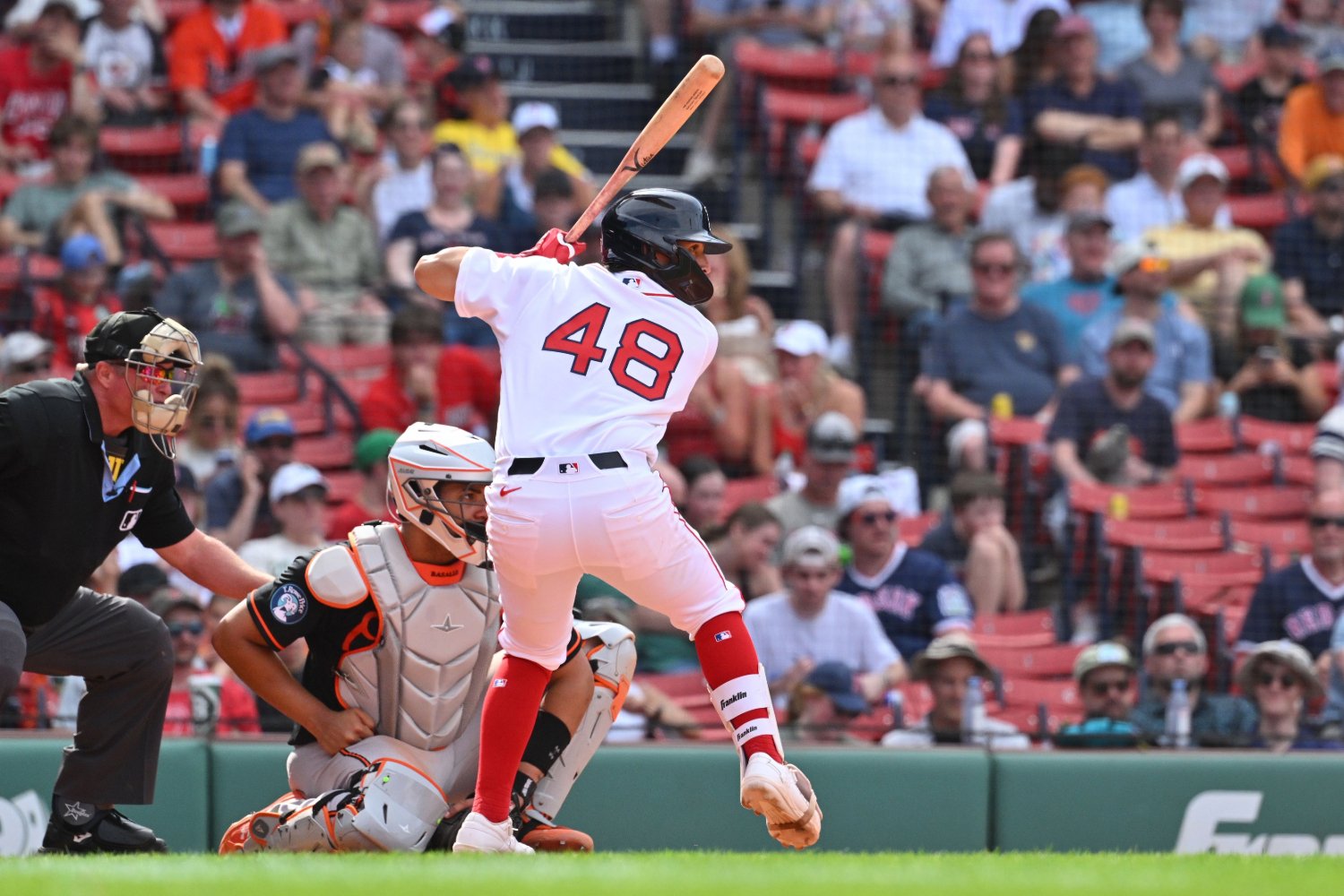 Worcester, MA — Things moved quick for infielder Anthony Seigler on Tuesday night. Not long after being a part of a walk-off win, Seigler was celebrating for a different reason: being called back up to the major leagues “It was kind of quick,” acting manager Iggy Suarez explained before Thursday night’s game against the Buffalo Bisons. “We got the phone call from Abes [Brian Abraham], who let us know that was going to be the move. Good thing he hadn’t left the ballpark yet, so he was still here, he was pumped. He probably had an idea with being called into the office.” Seigler, who was acquired as part of the Caleb Durbin-Kyle Harrison trade, had a rough start to his Boston Red Sox career. The former first-round pick was injured early in spring training, miss the entirety of it with left knee patellar tendinopathy. The injury followed into the regular season, having the start of his year halted until April 9 when he began a rehab assignment. Without a proper ramp-up period, Seigler got off to a slow start, appearing in just 11 games while slashing .222/.364/.361 with three doubles, a triple and seven RBIs. The slow start didn’t go unnoticed by Suarez or the WooSox coaching staff. “He didn’t have a spring training, so now a month in, that’s spring training for him. Now, he’s getting into the swing of things and getting his rhythm back. I think having that month under his belt when he was a month behind helps a lot," Worcester's skipper said. To say Seigler turned a corner in May would be an understatement. Appearing in 18 games across the month, the infielder was a force on offense for a team that lost two of its best hitters in Nick Sogard and Mickey Gasper. During that time, Seigler became a consistent bat in the lineup for Suarez, hitting .344/.468/.531 with three doubles, three home runs and 14 RBIs while playing both second base and third base. His production didn’t go unnoticed. With the major-league club in need of another infielder after placing Sogard on the injured list, his name was called. Seigler, who originally was a fringe 40-man roster player when he was acquired, had transformed his value within the organization over the span of a month. Now, he’s up in the majors for the second time in his career after appearing in 34 games last year with Milwaukee. The promotion was well deserved as Seigler will now look to provide as a left-handed bat off the bench while providing defensive versatility for the infield. “You kind of see his eyes light up and everything,” Suarez said of Seigler's reaction to the news. “The first time’s always good, but I think anytime you hear that, going back up to the big leagues, they’re gonna have a cool reaction so he was pumped about it. Well deserved man, he’s at a point where he’s swinging it. That’s opportunities that come up. You hate to see someone like Sogie go on the IL but again, it’s an opportunity he was ready for. I think it’s a good time for him to go up there.” The loss of Sogard won’t be easy for the Red Sox to manage, as he had appeared in 12 games since being promoted on May 16. The utility player managed to hit .257/.350/.371 with two doubles, one triple and two RBIs while appearing at all four infield positions at least once. His versatility was important for manager Chad Tracy along with his production from the left-handed side of the batter’s box. A sore side kept him from hitting as a left-handed batter and ultimately led to his placement on the injured list. After the infielder was told of the news Tuesday night, he returned to Polar Park Wednesday morning during the WooSox’s morning game to gather his belongings. With equipment now in tow, Seigler departed Polar Park and the Heart of the Commonwealth as he made the trip up the Masspike to Boston. Come Thursday afternoon, he got into his first action with the Boston Red Sox, coming off the bench to pinch hit in the seventh inning for Andruw Monasterio. His at-bat concluded with a lineout to left field before playing the final two innings at second base. Now, Seigler will look to step into the role Sogard previously filled. It’ll be a lot to ask of the former first-round pick immediately, but he proved in May that he's more than capable of living up to the task.
 -
The baseball season is now roughly one-third of the way finished, and many prospects have showcased their skills this year. For the Boston Red Sox, there have been a plethora of minor-league players who have broken out with the bat. Some players were so good in May that they even earned an early season promotion. Overall, it’s been a fun season to follow the Red Sox minor-league teams to watch their prospects develop. With that, we’ve narrowed this award down to the six best hitters in the Boston Red Sox’s minor-league system from last month. Ranking Red Sox's Best Minor-League Hitters in May Honorable Mention: Nick Sogard (Triple-A Worcester) Sogard would have been in contention for the actual award had he remained in Worcester for the entire month. Instead, he only played 11 games for Triple-A prior to being recalled to Boston. Sogard made a statement during those 11 games however, hitting .310/.404/.548 with four doubles, two home runs and nine RBIs. Sogard as a hitter has been consistent during his time in Worcester since first making it to the highest level of minor league baseball back in 2022. A familiar face in the lineup, Sogard was a player that Iggy Suarez was able to rely on for the month of May, both at the plate and in the clubhouse. Sogard has since remained in Boston, appearing in 12 games and hitting .257/.350/.371 with two doubles, one triple and two RBIs. Honorable Mention: Yoeilin Cespedes (High-A Greenville) Last month. Cespedes was the second-best offensive prospect for TalkSox’s award. This month, he's an honorable mention not because he had worse month than April, but because of the production from the rest of the competition. In 20 games, Cespedes put up a stat line of .315/.333/.494 with four doubles, four home runs and 14 RBIs. Through his first two months with Greenville, he’s managed to shed a lot of the worry that he would be a bust after a down 2025 season with Salem. Though, there is a lot of strikeout concern for the infielder as he struck out 27 times in the month. Add to it just four walks, and the gap between the two was one reason he was left out of the top three. Should Cespedes continue to hit as he has, conversation about promoting him to Portland should start to heat up, especially once there is room for an infielder to join the Double-A team. Honorable Mention: Brooks Brannon (Double-A Portland) While Brannon started the season on the IL, he’s been an offensive force since returning from it. Now playing first base, he’s been able to stay on the field, and his bat has been very crucial to the Portland offense. In 20 games, Brannon has hit .308/.389/.603 with six doubles, a triple, five home runs and 19 RBIs. His power has been for real and while there is some strikeout concern in his game (27 strikeouts in May), he manages to get on base at a high enough clip that it shouldn’t be too big of a red flag. With Brannon, the importance with his bat is taking advantage of his power to drive runners in, which he did last month by leading the team with 19 RBIs. It’s starting to look like it’s just a matter of time until Brannon gets the promotion to Worcester, especially with their lack of first base depth. #3: Anthony Seigler (Triple-A Worcester/MLB) Seigler has increased his organizational value thanks to his outstanding month of May. Viewed as a depth piece that was acquired in the Kyle Harrison-Caleb Durbin trade, Seigler got injured in spring training and had to play catch up. That was shown in April when he struggled, but once the calendar flipped to May, he seemed to turn a corner. In 18 games, Seigler was Worcester’s most important hitter as he slashed .344/.468/.531 with three doubles, three home runs and 14 RBIs. The infielder came up with several key hits over the month as the WooSox seemed to be desperate for offense some nights after the promotions of Mickey Gasper and Sogard. Now, Seigler has turned himself into an MLB bench piece in Boston. #2: Mason White (High-A Greenville) Making White the number two offensive prospect this month was tough. If anyone was deserving of the top spot, it would have been him, as the infielder continued to showcase the power he had in college. Last season, he did not have much time to fully showcase his power, hitting just five doubles in 26 games. Now in 2026, he’s had plenty of chances to show why the Red Sox drafted him. Appearing in 21 games in May, White would hit .342/.425/.618 with four doubles, one triple, five home runs and a team-leading 17 RBIs. The ball was flying off his bat while playing for Greenville, and now there is some discussion as to whether he should be given a shot in Portland. His scorching hot May helped bring his numbers on the season to an impressive .299/.386/.569 with eight doubles, one triple, nine home runs and 25 RBIs. #1: Jack Winnay (High-A Greenville) In a system that was filled with offensive talent for the month of May, it was the Belmont, MA native who was named the top offensive player. Winnay, who was a 13th-round pick in 2025, was known for his power as a college prospect, and after a slow April managed to showcase it. Appearing in 21 games, Winnay hit .290/.490/.623 good for an organization-leading OPS of 1.113. He hit two doubles and led the team with seven home runs, averaging one for every three games played. He also drove in 14 runs while walking 26 times. With a combination of power and patience, Winnay could develop into a middle-of-the-order bat for the Boston Red Sox. It’ll all come down to how his power grows once he leaves the hitter-friendly confines Fleur Field in Greenville. Though his ability to put the ball in play and walk will help mitigate any potential loss of power with a move to a different ballpark. View full article
-
Boston Red Sox Minor League Hitters of the Month: May 2026
Nick John posted an article in Minor Leagues
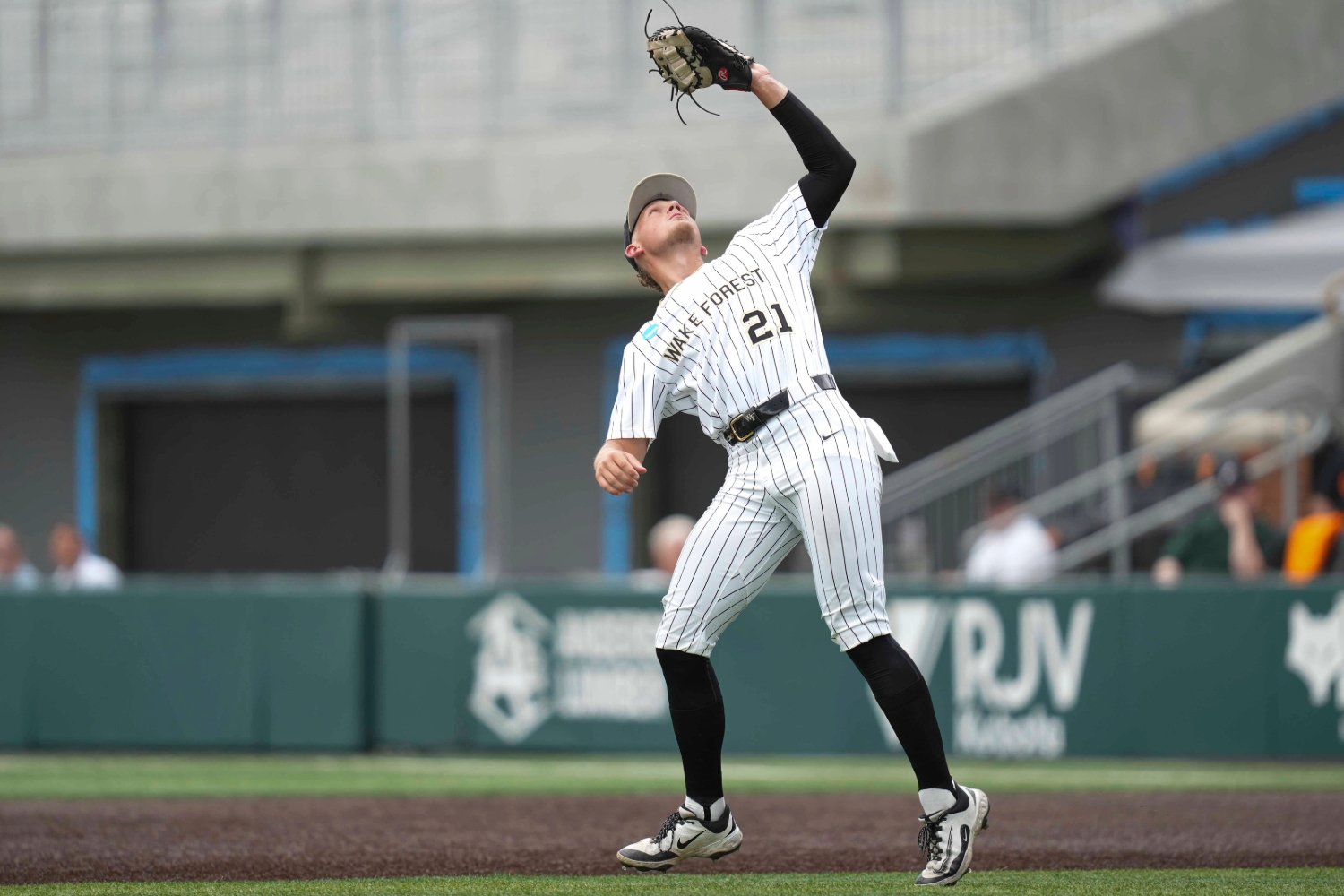 The baseball season is now roughly one-third of the way finished, and many prospects have showcased their skills this year. For the Boston Red Sox, there have been a plethora of minor-league players who have broken out with the bat. Some players were so good in May that they even earned an early season promotion. Overall, it’s been a fun season to follow the Red Sox minor-league teams to watch their prospects develop. With that, we’ve narrowed this award down to the six best hitters in the Boston Red Sox’s minor-league system from last month. Ranking Red Sox's Best Minor-League Hitters in May Honorable Mention: Nick Sogard (Triple-A Worcester) Sogard would have been in contention for the actual award had he remained in Worcester for the entire month. Instead, he only played 11 games for Triple-A prior to being recalled to Boston. Sogard made a statement during those 11 games however, hitting .310/.404/.548 with four doubles, two home runs and nine RBIs. Sogard as a hitter has been consistent during his time in Worcester since first making it to the highest level of minor league baseball back in 2022. A familiar face in the lineup, Sogard was a player that Iggy Suarez was able to rely on for the month of May, both at the plate and in the clubhouse. Sogard has since remained in Boston, appearing in 12 games and hitting .257/.350/.371 with two doubles, one triple and two RBIs. Honorable Mention: Yoeilin Cespedes (High-A Greenville) Last month. Cespedes was the second-best offensive prospect for TalkSox’s award. This month, he's an honorable mention not because he had worse month than April, but because of the production from the rest of the competition. In 20 games, Cespedes put up a stat line of .315/.333/.494 with four doubles, four home runs and 14 RBIs. Through his first two months with Greenville, he’s managed to shed a lot of the worry that he would be a bust after a down 2025 season with Salem. Though, there is a lot of strikeout concern for the infielder as he struck out 27 times in the month. Add to it just four walks, and the gap between the two was one reason he was left out of the top three. Should Cespedes continue to hit as he has, conversation about promoting him to Portland should start to heat up, especially once there is room for an infielder to join the Double-A team. Honorable Mention: Brooks Brannon (Double-A Portland) While Brannon started the season on the IL, he’s been an offensive force since returning from it. Now playing first base, he’s been able to stay on the field, and his bat has been very crucial to the Portland offense. In 20 games, Brannon has hit .308/.389/.603 with six doubles, a triple, five home runs and 19 RBIs. His power has been for real and while there is some strikeout concern in his game (27 strikeouts in May), he manages to get on base at a high enough clip that it shouldn’t be too big of a red flag. With Brannon, the importance with his bat is taking advantage of his power to drive runners in, which he did last month by leading the team with 19 RBIs. It’s starting to look like it’s just a matter of time until Brannon gets the promotion to Worcester, especially with their lack of first base depth. #3: Anthony Seigler (Triple-A Worcester/MLB) Seigler has increased his organizational value thanks to his outstanding month of May. Viewed as a depth piece that was acquired in the Kyle Harrison-Caleb Durbin trade, Seigler got injured in spring training and had to play catch up. That was shown in April when he struggled, but once the calendar flipped to May, he seemed to turn a corner. In 18 games, Seigler was Worcester’s most important hitter as he slashed .344/.468/.531 with three doubles, three home runs and 14 RBIs. The infielder came up with several key hits over the month as the WooSox seemed to be desperate for offense some nights after the promotions of Mickey Gasper and Sogard. Now, Seigler has turned himself into an MLB bench piece in Boston. #2: Mason White (High-A Greenville) Making White the number two offensive prospect this month was tough. If anyone was deserving of the top spot, it would have been him, as the infielder continued to showcase the power he had in college. Last season, he did not have much time to fully showcase his power, hitting just five doubles in 26 games. Now in 2026, he’s had plenty of chances to show why the Red Sox drafted him. Appearing in 21 games in May, White would hit .342/.425/.618 with four doubles, one triple, five home runs and a team-leading 17 RBIs. The ball was flying off his bat while playing for Greenville, and now there is some discussion as to whether he should be given a shot in Portland. His scorching hot May helped bring his numbers on the season to an impressive .299/.386/.569 with eight doubles, one triple, nine home runs and 25 RBIs. #1: Jack Winnay (High-A Greenville) In a system that was filled with offensive talent for the month of May, it was the Belmont, MA native who was named the top offensive player. Winnay, who was a 13th-round pick in 2025, was known for his power as a college prospect, and after a slow April managed to showcase it. Appearing in 21 games, Winnay hit .290/.490/.623 good for an organization-leading OPS of 1.113. He hit two doubles and led the team with seven home runs, averaging one for every three games played. He also drove in 14 runs while walking 26 times. With a combination of power and patience, Winnay could develop into a middle-of-the-order bat for the Boston Red Sox. It’ll all come down to how his power grows once he leaves the hitter-friendly confines Fleur Field in Greenville. Though his ability to put the ball in play and walk will help mitigate any potential loss of power with a move to a different ballpark.
 -
You Asked, We Answered: WooSox Forum AMA Recap
Nick John posted a topic in Red Sox Minor League Talk
Our loyal Talk Sox readers took part in a brand-new idea courtesy of @Brock Beauchamp of doing an AMA on the TalkSox forums. For those who may not know, an AMA ("ask me anything") is a collaborative effort in which users ask a question and a writer or someone of expertise will answer. In the first take at doing this, we covered the Worcester Red Sox, due to my media credentials with the team. Now is where we answer the questions our readers have left. @mvp 78 asked: What does Mikey Romero need to do differently at the plate to get back to the success he had last year? Mikey Romero has had an interesting season. He opened the year extremely hot with many predicting he would be in Boston before July with how he was playing. Since then, he’s cooled off considerably. In his last 17 games, he’s hitting just .181/.231/.333 but has two doubles, a triple, two home runs and nine RBIs. Honestly with Romero, what’s been tough for him has just been having balls land in for hits. He’s striking out in only 21.5% of his at-bats (though his walk rate is a low 7.3%) and is putting the ball in play. And with Romero, when he makes contact, he’s making loud contact as his exit velocity this year is 93.1 mph and his hard-hit rate is sitting at 46.9%. Both Chad Tracy and Iggy Suarez aren’t concerned about the lack of hits as they both feel that he’s making good contact and not pressing too much. For a 22-year-old, he’s showing maturity with how he’s handling this slump. Really he just needs to keep putting the ball in play and the hits will start to drop eventually. Though personally I’d also like to see him not chase as much (28.6% rate) and pull the ball more to take advantage of the Worcester Wall. Maybe also be a little more patient, but that seems to be a thing for the entire organization this year. @moonslav59 asked: Does Anthony Seigler have a legit chance to be a difference maker at the big league level? Anthony Seigler is someone who has convinced me he will have an impact if another injury happens. So far in Worcester, he’s mainly played third base and designated hitter, but he has experience at second base. He’s also played catcher, but from the sound of it, the organization has no plans of putting him behind the plate unless it’s an absolute emergency. Offensively, he has impressed me since the start of May; in 18 games last month, he turned himself from a fringe 40-man roster player to someone the team could utilize as a genuine depth option. Over that span, he hit .344/.468/.531 with three doubles, three home runs and 14 RBIs. However, he has struggled against left-handed pitching this season, going just 2-for-17 against them, so I’d imagine he would be a platoon bat if Boston needed him. As for how much of a difference maker you’re looking for, he won’t strike out, he’ll get on base, and he could be a valuable bench piece against right-handed pitchers. A role that many teams need players to fill, but I wouldn’t expect him to be a starter that could ignite the offense every night. Editor's Note: Seigler is being called up on the date of publishing. @notin asked: Is Braiden Ward taking infield practice? During my time at Worcester, I have not seen Braiden Ward take infield practice. Fun guy who’s very approachable, but the only time I’ve seen him on the infield is during batting practice or baserunning drills. @urban cowboy asked: Is Kristian Campbell showing any signs of "recovery?" Kristian Campbell’s season has been a roller coaster. He opened the year on a cold streak, went on a tear for the rest of April, and then cooled off in May. The power that he displayed in 2024 hasn’t been there for him, as he’s slugging just .329 this season and only has 10 extra-base hits, but the exit velocities have been encouraging. It’s currently sitting at 90 mph (which is higher than his time in Worcester in 2024, at 88.2 mph). While the numbers are down, his metrics look much better as he’s walking nearly 16% of the time and has a hard-hit rate of 45.7%. The team is constantly stating that with Campbell right now, it’s about the process and not the results (though he got those in April, when he hit .294/.394/.365 in 23 games). It’ll be a continuous road for Campbell and right now, I think barring a major trade or injury we won’t see him in Boston until 2027. @Yaz Fan Since 67 asked: After seeing so many of our top prospects fail to deliver in the Bigs I am struggling to get excited at our players in the minors. It’s fair to not get excited with the recent track record of our top prospects. However, you need to put it into perspective that many of them were rushed to the majors. Campbell only had 19 games at Triple-A, Roman Anthony had 93 games, and Marcelo Mayer had 43 games. Even Payton Tolle and Connelly Early had little time in Worcester. However, right now, most of the top prospects aren’t in Worcester and besides Anthony Eyanson, they seem to be taking their time with moving them through the system. When it comes to prospects you can try to predict their future, but you never know what can alter the plans of a franchise. @Old Red asked: How’s Noah Song looking? I know he had 1 real bad game in April that bloated his stats. Noah Song has been a pleasant surprise. While his overall stat line may not be exciting (5.14 ERA, 18 walks and 27 strikeouts in 28 innings), he looked much better in the month of May. In his last seven appearances, Song has given the team 12 innings allowed just three earned runs while striking out 13 batters. He isn’t the pitcher that the team drafted and the projections from then are long gone. But he’s still striking out batters at a 21.6% rate and limiting them to a .214 batting average. Much like in spring training, his slider has been his go-to pitch over his fastball now, using it 45.8% of the time and batters are hitting just .233 against it. He's also clearly courted favor with Iggy Suarez, who speaks highly of Song whenever asked. Thank you to everyone who asked questions. If you want to take part next time, watch out for another announcement in the forums. View full article -
 Our loyal Talk Sox readers took part in a brand-new idea courtesy of @Brock Beauchamp of doing an AMA on the TalkSox forums. For those who may not know, an AMA ("ask me anything") is a collaborative effort in which users ask a question and a writer or someone of expertise will answer. In the first take at doing this, we covered the Worcester Red Sox, due to my media credentials with the team. Now is where we answer the questions our readers have left. @mvp 78 asked: What does Mikey Romero need to do differently at the plate to get back to the success he had last year? Mikey Romero has had an interesting season. He opened the year extremely hot with many predicting he would be in Boston before July with how he was playing. Since then, he’s cooled off considerably. In his last 17 games, he’s hitting just .181/.231/.333 but has two doubles, a triple, two home runs and nine RBIs. Honestly with Romero, what’s been tough for him has just been having balls land in for hits. He’s striking out in only 21.5% of his at-bats (though his walk rate is a low 7.3%) and is putting the ball in play. And with Romero, when he makes contact, he’s making loud contact as his exit velocity this year is 93.1 mph and his hard-hit rate is sitting at 46.9%. Both Chad Tracy and Iggy Suarez aren’t concerned about the lack of hits as they both feel that he’s making good contact and not pressing too much. For a 22-year-old, he’s showing maturity with how he’s handling this slump. Really he just needs to keep putting the ball in play and the hits will start to drop eventually. Though personally I’d also like to see him not chase as much (28.6% rate) and pull the ball more to take advantage of the Worcester Wall. Maybe also be a little more patient, but that seems to be a thing for the entire organization this year. @moonslav59 asked: Does Anthony Seigler have a legit chance to be a difference maker at the big league level? Anthony Seigler is someone who has convinced me he will have an impact if another injury happens. So far in Worcester, he’s mainly played third base and designated hitter, but he has experience at second base. He’s also played catcher, but from the sound of it, the organization has no plans of putting him behind the plate unless it’s an absolute emergency. Offensively, he has impressed me since the start of May; in 18 games last month, he turned himself from a fringe 40-man roster player to someone the team could utilize as a genuine depth option. Over that span, he hit .344/.468/.531 with three doubles, three home runs and 14 RBIs. However, he has struggled against left-handed pitching this season, going just 2-for-17 against them, so I’d imagine he would be a platoon bat if Boston needed him. As for how much of a difference maker you’re looking for, he won’t strike out, he’ll get on base, and he could be a valuable bench piece against right-handed pitchers. A role that many teams need players to fill, but I wouldn’t expect him to be a starter that could ignite the offense every night. Editor's Note: Seigler is being called up on the date of publishing. @notin asked: Is Braiden Ward taking infield practice? During my time at Worcester, I have not seen Braiden Ward take infield practice. Fun guy who’s very approachable, but the only time I’ve seen him on the infield is during batting practice or baserunning drills. @urban cowboy asked: Is Kristian Campbell showing any signs of "recovery?" Kristian Campbell’s season has been a roller coaster. He opened the year on a cold streak, went on a tear for the rest of April, and then cooled off in May. The power that he displayed in 2024 hasn’t been there for him, as he’s slugging just .329 this season and only has 10 extra-base hits, but the exit velocities have been encouraging. It’s currently sitting at 90 mph (which is higher than his time in Worcester in 2024, at 88.2 mph). While the numbers are down, his metrics look much better as he’s walking nearly 16% of the time and has a hard-hit rate of 45.7%. The team is constantly stating that with Campbell right now, it’s about the process and not the results (though he got those in April, when he hit .294/.394/.365 in 23 games). It’ll be a continuous road for Campbell and right now, I think barring a major trade or injury we won’t see him in Boston until 2027. @Yaz Fan Since 67 asked: After seeing so many of our top prospects fail to deliver in the Bigs I am struggling to get excited at our players in the minors. It’s fair to not get excited with the recent track record of our top prospects. However, you need to put it into perspective that many of them were rushed to the majors. Campbell only had 19 games at Triple-A, Roman Anthony had 93 games, and Marcelo Mayer had 43 games. Even Payton Tolle and Connelly Early had little time in Worcester. However, right now, most of the top prospects aren’t in Worcester and besides Anthony Eyanson, they seem to be taking their time with moving them through the system. When it comes to prospects you can try to predict their future, but you never know what can alter the plans of a franchise. @Old Red asked: How’s Noah Song looking? I know he had 1 real bad game in April that bloated his stats. Noah Song has been a pleasant surprise. While his overall stat line may not be exciting (5.14 ERA, 18 walks and 27 strikeouts in 28 innings), he looked much better in the month of May. In his last seven appearances, Song has given the team 12 innings allowed just three earned runs while striking out 13 batters. He isn’t the pitcher that the team drafted and the projections from then are long gone. But he’s still striking out batters at a 21.6% rate and limiting them to a .214 batting average. Much like in spring training, his slider has been his go-to pitch over his fastball now, using it 45.8% of the time and batters are hitting just .233 against it. He's also clearly courted favor with Iggy Suarez, who speaks highly of Song whenever asked. Thank you to everyone who asked questions. If you want to take part next time, watch out for another announcement in the forums.
 -
Worcester, MA — “When you’re a big lefty, the physical presence on its own it’s kind of big. And then be able to have that low demeanor on the mound, those pitchers are dangerous because you have no idea if you’ve gotten to them or not,” acting Worcester Red Sox manager Iggy Suarez stated back on May 20 about pitcher Jake Bennett. Back in mid-December when Craig Breslow pulled the trigger on a trade with the Washington Nationals for Bennett, there were mixed reactions. On the surface, Bennett looked exactly like the kind of pitcher Breslow coveted: Tall, great extension, and left-handed. Despite that, the fact that the Red Sox relinquished Luis Perales, who (despite being frequently injured) was one of their top prospects and armed with a fastball that could hit triple digits, was a difficult reality to swallow. The thought was that the Red Sox were moving Perales, a pitcher with an injury history and who had signs of being a bullpen arm in the big leagues, for Bennett, a pitcher with a higher floor as a guaranteed starting pitcher. And yet, no one expected Bennett to pitch as great as he has this season. The left-hander entered 2026 with only 10 career games at the Double-A level. but that didn’t stop Breslow and the Red Sox from sending him to Triple-A to open the season. Despite that lack of experience facing batters in the upper minors, he looked like he belonged in Triple-A from his first outing. Starting the season opener against the Syracuse Mets, Bennett pitched on a limited pitch count, wherein he tossed three innings and allowed just two hits and one unearned run while striking out five and generating seven whiffs. He was in command and that has only continued throughout the season. As of the end of May, Bennett has made seven starts for Worcester, tossing 29 1/3 innings while allowing just eight runs, six earned, walking five while striking out 30. In his last two outings, he's struck out 18 combined batters. When Bennett was promoted to the major leagues on May 1, there was some concern that he was being rushed. At that time, he had made just five starts in Triple-A, but the Red Sox were in need of pitching. The 25-year-old managed to provide just that, winning his debut by pitching five innings, allowing just one run despite constant traffic on the bases. His second outing saw him battle into the sixth inning, only to leave with a runner on base. That runner would come around to score, bringing his final stat line to 5 1/3 innings with six hits and four runs allowed. Following the outing, he was optioned back to Worcester as the team needed a fresh arm to assist the bullpen. With Bennett being optioned for the first time, Suarez knew how to handle any disappointment the pitcher may have been feeling. “You let him know that he’s got the talent to get there and to stay there. It’s just more of a spot that they need and it’s not anything of him being demoted from the way he pitched. It’s not because you didn’t do well that outing [against the Rays] and you need to work on stuff. There’s a reason why we got you in the trade and got you up there. It shows you can hang with those guys,” Suarez explained to the media following Bennett being sent back to Worcester. “He’s a strike thrower. First [start] was better than the second one, but it’s the big leagues man, that’s gonna happen. How you deal with it is how you stay up there and how you last in this game.” Bennett’s first game back was a little rough, lasting just 3 1/3 innings against a hot Buffalo Bisons team. He pitched around seven hits, allowing just four runs to score despite the constant traffic on the bases, something that Suarez pointed out. “He’s good at controlling his emotions, being able to get in the zone consistently when he’ll get some soft contact because that’s what happened in Buffalo. He fell victim to that [soft contact], swinging bunts and it’s like, you look at the line score and it’s like he had a bad outing. Not really, maybe one [instance of] hard contact, that was about it.” Bennett would follow up that outing with what may have been his two best outings as a professional. Pitching on May 20 against his former organization, the Rochester Red Wings, Bennett threw a masterclass as he made just one mistake, that being a solo home run in the second inning. Facing players that he had come up with and played with since being drafted, the hulking southpaw tossed five innings where he worked around seven hits on his way to striking out 11 batters and generating 15 whiffs. Whether it was the warm temperature on the night or the adrenaline of facing his old teammates, Bennett also saw an uptick in his velocity as every pitch sat at least 1.5 mph faster than his season average, including a fastball that topped out at 95.6 mph. In his final inning of the evening, Bennett appeared to be in a dangerous situation as the Red Wings loaded the bases against him to start the inning. Instead, he managed to stop their offense by striking out the next three batters, a detail that stood out to Suarez. “What impressed me was getting out of that bases-loaded jam and how he walked off the mound like it was ‘okay’. I’m pretty sure inside he was amped up. Doesn’t get rattled. To be able to look up after that outing and look at the numbers and go holy crap he punched out 11. And it wasn’t like he was blowing doors, he was pitching. I think he’s starting to realize that’s what big league pitchers do. In moments like that [bases loaded jam] there’s no panic, there’s a way for him to slow the game down and get out of stuff like that. He’s showing why he’s a big-league pitcher,” Suarez explained. Entering the game, Rochester was one of the hottest teams in the International League, filled with a lineup of players who all seemed to be on hot streaks upon their arrival to Worcester. That didn’t intimidate Bennett. Bennett didn’t lose the momentum of that game either. Making his next start against Scranton on May 27, he continued his dominance as he allowed just one run across five innings again. This time it was on a solo home run to Yankee’s top prospect George Lombard Jr. to lead off the game. After that, he allowed just three more hits for the entire game while striking out seven batters and getting 16 whiffs, leading Worcester to an 8-1 win. With each outing Bennett seems to continue his growth as a pitcher, showcasing the potential that the front office saw in him when they targeted him this past offseason. While growth in baseball is never linear, each successive start is making Bennett look better. At his current level of production, there should be no arguments over him being called up to start in place of an injured starter. If anything, Bennett is helping to rebuild trust in the starting pitching depth that has been torn to shreds due to multiple early season injuries in Boston. View full article
-
Jake Bennett Is Restoring Faith In Red Sox's Pitching Depth
Nick John posted an article in Minor Leagues
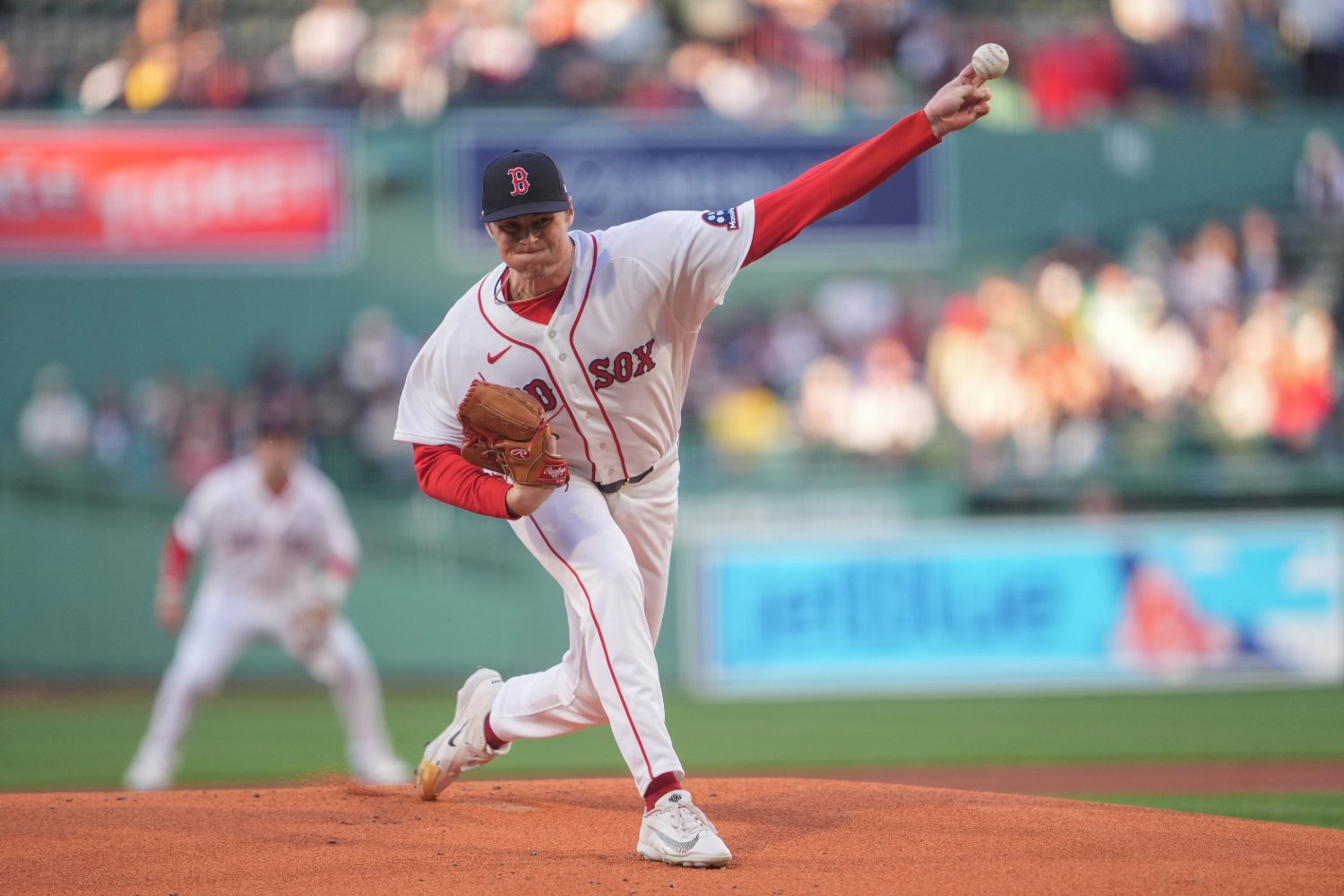 Worcester, MA — “When you’re a big lefty, the physical presence on its own it’s kind of big. And then be able to have that low demeanor on the mound, those pitchers are dangerous because you have no idea if you’ve gotten to them or not,” acting Worcester Red Sox manager Iggy Suarez stated back on May 20 about pitcher Jake Bennett. Back in mid-December when Craig Breslow pulled the trigger on a trade with the Washington Nationals for Bennett, there were mixed reactions. On the surface, Bennett looked exactly like the kind of pitcher Breslow coveted: Tall, great extension, and left-handed. Despite that, the fact that the Red Sox relinquished Luis Perales, who (despite being frequently injured) was one of their top prospects and armed with a fastball that could hit triple digits, was a difficult reality to swallow. The thought was that the Red Sox were moving Perales, a pitcher with an injury history and who had signs of being a bullpen arm in the big leagues, for Bennett, a pitcher with a higher floor as a guaranteed starting pitcher. And yet, no one expected Bennett to pitch as great as he has this season. The left-hander entered 2026 with only 10 career games at the Double-A level. but that didn’t stop Breslow and the Red Sox from sending him to Triple-A to open the season. Despite that lack of experience facing batters in the upper minors, he looked like he belonged in Triple-A from his first outing. Starting the season opener against the Syracuse Mets, Bennett pitched on a limited pitch count, wherein he tossed three innings and allowed just two hits and one unearned run while striking out five and generating seven whiffs. He was in command and that has only continued throughout the season. As of the end of May, Bennett has made seven starts for Worcester, tossing 29 1/3 innings while allowing just eight runs, six earned, walking five while striking out 30. In his last two outings, he's struck out 18 combined batters. When Bennett was promoted to the major leagues on May 1, there was some concern that he was being rushed. At that time, he had made just five starts in Triple-A, but the Red Sox were in need of pitching. The 25-year-old managed to provide just that, winning his debut by pitching five innings, allowing just one run despite constant traffic on the bases. His second outing saw him battle into the sixth inning, only to leave with a runner on base. That runner would come around to score, bringing his final stat line to 5 1/3 innings with six hits and four runs allowed. Following the outing, he was optioned back to Worcester as the team needed a fresh arm to assist the bullpen. With Bennett being optioned for the first time, Suarez knew how to handle any disappointment the pitcher may have been feeling. “You let him know that he’s got the talent to get there and to stay there. It’s just more of a spot that they need and it’s not anything of him being demoted from the way he pitched. It’s not because you didn’t do well that outing [against the Rays] and you need to work on stuff. There’s a reason why we got you in the trade and got you up there. It shows you can hang with those guys,” Suarez explained to the media following Bennett being sent back to Worcester. “He’s a strike thrower. First [start] was better than the second one, but it’s the big leagues man, that’s gonna happen. How you deal with it is how you stay up there and how you last in this game.” Bennett’s first game back was a little rough, lasting just 3 1/3 innings against a hot Buffalo Bisons team. He pitched around seven hits, allowing just four runs to score despite the constant traffic on the bases, something that Suarez pointed out. “He’s good at controlling his emotions, being able to get in the zone consistently when he’ll get some soft contact because that’s what happened in Buffalo. He fell victim to that [soft contact], swinging bunts and it’s like, you look at the line score and it’s like he had a bad outing. Not really, maybe one [instance of] hard contact, that was about it.” Bennett would follow up that outing with what may have been his two best outings as a professional. Pitching on May 20 against his former organization, the Rochester Red Wings, Bennett threw a masterclass as he made just one mistake, that being a solo home run in the second inning. Facing players that he had come up with and played with since being drafted, the hulking southpaw tossed five innings where he worked around seven hits on his way to striking out 11 batters and generating 15 whiffs. Whether it was the warm temperature on the night or the adrenaline of facing his old teammates, Bennett also saw an uptick in his velocity as every pitch sat at least 1.5 mph faster than his season average, including a fastball that topped out at 95.6 mph. In his final inning of the evening, Bennett appeared to be in a dangerous situation as the Red Wings loaded the bases against him to start the inning. Instead, he managed to stop their offense by striking out the next three batters, a detail that stood out to Suarez. “What impressed me was getting out of that bases-loaded jam and how he walked off the mound like it was ‘okay’. I’m pretty sure inside he was amped up. Doesn’t get rattled. To be able to look up after that outing and look at the numbers and go holy crap he punched out 11. And it wasn’t like he was blowing doors, he was pitching. I think he’s starting to realize that’s what big league pitchers do. In moments like that [bases loaded jam] there’s no panic, there’s a way for him to slow the game down and get out of stuff like that. He’s showing why he’s a big-league pitcher,” Suarez explained. Entering the game, Rochester was one of the hottest teams in the International League, filled with a lineup of players who all seemed to be on hot streaks upon their arrival to Worcester. That didn’t intimidate Bennett. Bennett didn’t lose the momentum of that game either. Making his next start against Scranton on May 27, he continued his dominance as he allowed just one run across five innings again. This time it was on a solo home run to Yankee’s top prospect George Lombard Jr. to lead off the game. After that, he allowed just three more hits for the entire game while striking out seven batters and getting 16 whiffs, leading Worcester to an 8-1 win. With each outing Bennett seems to continue his growth as a pitcher, showcasing the potential that the front office saw in him when they targeted him this past offseason. While growth in baseball is never linear, each successive start is making Bennett look better. At his current level of production, there should be no arguments over him being called up to start in place of an injured starter. If anything, Bennett is helping to rebuild trust in the starting pitching depth that has been torn to shreds due to multiple early season injuries in Boston.
 -
Worcester, MA – “It’s cool having his kids in here and then walking out you can hear his kid, one of his kids, saying ‘you going to the big leagues’ in Spanish. So, that was like, right out of a movie. And I was like, this is cool,” Iggy Suarez explained to media when asked about the team’s latest promotion to Boston. For Tyron Guerrero (formally Tayron due to a clerical error), making it back to the major leagues has been an arduous journey that’s seen him toil away in the minor leagues, various winter leagues, the Mexican League and in Japan for the Chiba Lotte Marines. It was never a question of how much he wanted it, as he gave it his all at every stop. All for the opportunity to pitch in the majors. And when that opportunity came, he didn’t believe it. Sitting in Suarez’s room with his two sons by his side, he finally realized his dream. “You could see it, like a ‘really?’ and in my head I was like, well have you seen the numbers you’ve put up? But really you could see, it was almost like a finally or this is awesome. It seemed like it was the first time he’s heard that [being promoted],” Suarez said. Guerrero, who didn’t begin playing baseball until he was 16 years old after falling in love with the sport thanks to the 2007 Red Sox team, last played in the majors in 2019. He was still a 28-year-old coming off 60 appearances with the Miami Marlins that year. Then, 2019 saw him appear in 52 games, but it was a struggle. Tossing 46 innings, he ended the season with an ERA of 6.26 and allowed 36 walks while striking out 43 batters. After the season, he would be designated for assignment on December 2 and was claimed off waivers by the Chicago White Sox four days later. The right-hander would bounce around, being released by the White Sox and spending 2022 in Japan. He would return stateside on a minor-league contract with the Cincinnati Reds for 2023 but would struggle and was released by mid-June. He would be forced to finish the season pitching in Mexico. This saga continued for Guerrero, spending 2024 in the Los Angeles Angels organization before heading overseas to Japan once more. Then, he got a chance with the Boston Red Sox. “He’s been great, really great,” current Red Sox manager Chad Tracy said back when he managed Guerrero in Worcester. It’s been no secret that Tracy liked Guerrero as a pitcher, constantly talking highly about him during their time together in Triple-A. “He’s been pretty lock down for us. Throwing hard, 100 miles an hour and all spring and here [Worcester] he’s in the zone. He’s thrown nothing but strikes since I placed eyes on him. He’s been awfully good.” Good was an understatement for Guerrero during his time in Worcester, as he appeared in 15 games and tossed 19 2/3 innings while allowing just two earned runs. That's good for a 0.92 ERA. Known for having a walk issue in his career, he managed to limit those to just six while striking out 22 batters. Opponents hit just .191 against him and slugged just .235. He was a leader in the bullpen and now he’s getting his chance to pitch for the team that got him into baseball to begin with. As a pitcher, Guerrero is known for his fastball-slider combination that combines a 100+ mph fastball with sink and arm-side run with a mid-80s slider that can be unhittable when thrown for strikes. When he’s on, the right-hander is capable of being a shutdown reliever who can easily rack up strikeouts. Unfortunately, the one major issue for Guerrero throughout his career has been his poor command and control. Entering the season, the reliever has walked 5.7 walks per nine innings for his career. Until he can show that the adjustments he made with Worcester are permanent, he will likely serve as a middle-innings reliever. Guerrero made his Boston Red Sox debut Friday, May 22, pitching one inning as he entered with the bases loaded and nobody out. The right-hander walked one run in but managed to not allow another runner to cross home plate. Since his promotion, the right-hander has appeared in three games, tossing 3 2/3 innings while allowing four runs and striking out seven compared to just one free pass. Guerrero worked extremely hard to get back to the major leagues, and his former manager Suarez agreed that no one deserves this opportunity more than him. “Those journeymen guys, 35 [years old] and on the older side. Playing overseas and coming here and putting up the numbers that he has and to be selected to the roster, like that’s still awesome. When he said the ‘really’ part I was like, yeah man, you’ve earned it.” View full article
-
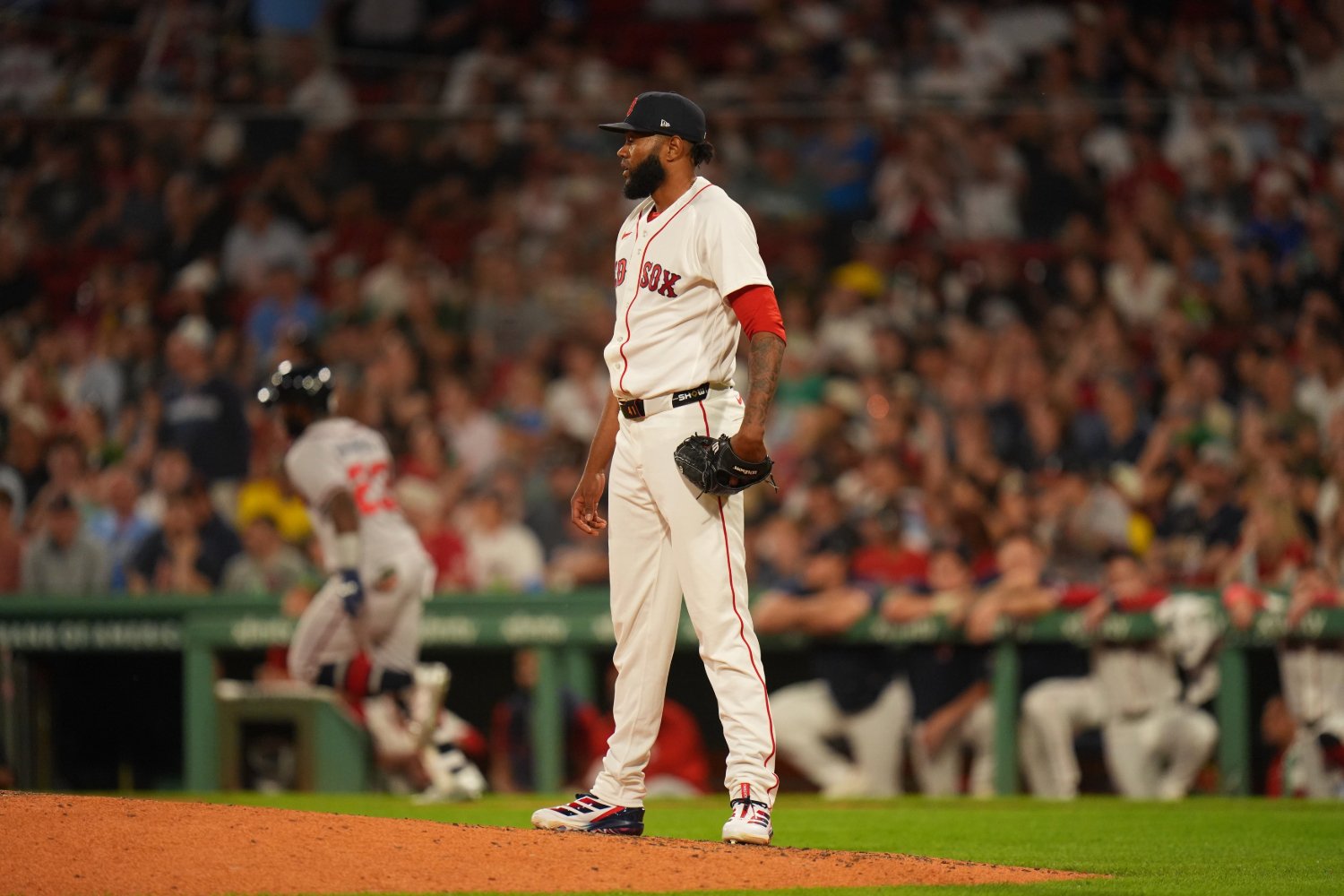 Worcester, MA – “It’s cool having his kids in here and then walking out you can hear his kid, one of his kids, saying ‘you going to the big leagues’ in Spanish. So, that was like, right out of a movie. And I was like, this is cool,” Iggy Suarez explained to media when asked about the team’s latest promotion to Boston. For Tyron Guerrero (formally Tayron due to a clerical error), making it back to the major leagues has been an arduous journey that’s seen him toil away in the minor leagues, various winter leagues, the Mexican League and in Japan for the Chiba Lotte Marines. It was never a question of how much he wanted it, as he gave it his all at every stop. All for the opportunity to pitch in the majors. And when that opportunity came, he didn’t believe it. Sitting in Suarez’s room with his two sons by his side, he finally realized his dream. “You could see it, like a ‘really?’ and in my head I was like, well have you seen the numbers you’ve put up? But really you could see, it was almost like a finally or this is awesome. It seemed like it was the first time he’s heard that [being promoted],” Suarez said. Guerrero, who didn’t begin playing baseball until he was 16 years old after falling in love with the sport thanks to the 2007 Red Sox team, last played in the majors in 2019. He was still a 28-year-old coming off 60 appearances with the Miami Marlins that year. Then, 2019 saw him appear in 52 games, but it was a struggle. Tossing 46 innings, he ended the season with an ERA of 6.26 and allowed 36 walks while striking out 43 batters. After the season, he would be designated for assignment on December 2 and was claimed off waivers by the Chicago White Sox four days later. The right-hander would bounce around, being released by the White Sox and spending 2022 in Japan. He would return stateside on a minor-league contract with the Cincinnati Reds for 2023 but would struggle and was released by mid-June. He would be forced to finish the season pitching in Mexico. This saga continued for Guerrero, spending 2024 in the Los Angeles Angels organization before heading overseas to Japan once more. Then, he got a chance with the Boston Red Sox. “He’s been great, really great,” current Red Sox manager Chad Tracy said back when he managed Guerrero in Worcester. It’s been no secret that Tracy liked Guerrero as a pitcher, constantly talking highly about him during their time together in Triple-A. “He’s been pretty lock down for us. Throwing hard, 100 miles an hour and all spring and here [Worcester] he’s in the zone. He’s thrown nothing but strikes since I placed eyes on him. He’s been awfully good.” Good was an understatement for Guerrero during his time in Worcester, as he appeared in 15 games and tossed 19 2/3 innings while allowing just two earned runs. That's good for a 0.92 ERA. Known for having a walk issue in his career, he managed to limit those to just six while striking out 22 batters. Opponents hit just .191 against him and slugged just .235. He was a leader in the bullpen and now he’s getting his chance to pitch for the team that got him into baseball to begin with. As a pitcher, Guerrero is known for his fastball-slider combination that combines a 100+ mph fastball with sink and arm-side run with a mid-80s slider that can be unhittable when thrown for strikes. When he’s on, the right-hander is capable of being a shutdown reliever who can easily rack up strikeouts. Unfortunately, the one major issue for Guerrero throughout his career has been his poor command and control. Entering the season, the reliever has walked 5.7 walks per nine innings for his career. Until he can show that the adjustments he made with Worcester are permanent, he will likely serve as a middle-innings reliever. Guerrero made his Boston Red Sox debut Friday, May 22, pitching one inning as he entered with the bases loaded and nobody out. The right-hander walked one run in but managed to not allow another runner to cross home plate. Since his promotion, the right-hander has appeared in three games, tossing 3 2/3 innings while allowing four runs and striking out seven compared to just one free pass. Guerrero worked extremely hard to get back to the major leagues, and his former manager Suarez agreed that no one deserves this opportunity more than him. “Those journeymen guys, 35 [years old] and on the older side. Playing overseas and coming here and putting up the numbers that he has and to be selected to the roster, like that’s still awesome. When he said the ‘really’ part I was like, yeah man, you’ve earned it.”
 -
Worcester, MA — They say baseball can be like a whirlwind. It's a hectic sport than can change on a dime A prime example is how the WooSox had a player go from not being on the active roster to being the pitcher of record in the same day. In the span of a few hours, acting manager Iggy Suarez had to quickly alter his game plan; starting the day, the Worcester Red Sox had activated Matt Lloyd off of the injured list and in response moved Nathan Hickey to the development list. That was quickly changed as Roman Anthony was placed on the injured list by Boston. Needing a bat, the organization recalled Mickey Gasper to the big-league club and opened a roster spot once more for Hickey. “It happened quick. I mean, that move was made earlier and then we go out for B.P [batting practice] and the Mickey move happened. We had the [roster] spot so Hickey comes back,” Suarez explained. The acting manager admitted that right away he deals with the admin part of the roster when this happens, as the farm director had to get league approval to activate Hickey off the developmental list. It’s been a long season for Boston Red Sox prospect Nathan Hickey. The former catcher turned first baseman has not played often on the team due to a crowded infield that has forced Nick Sogard and Mickey Gasper over to the cold corner (prior to their promotions). And with Matt Lloyd off the injured list playing time is still hard to come by. The former fifth-round pick out of the University of Florida has made it into 18 games, hitting just .200/.327/.422 with a double, three home runs and six RBIs. In 2025, Hickey was a big piece in the lineup for Worcester, as his 17 home runs were second on the team while leading the offense with 75 RBIs. But with the prior need to keep 40-man roster guys such as Sogard and Gasper in the lineup, he has often been the odd-man out. Despite that, he’s found a way to stay ready while unlocking a new and unexpected part of his game: emergency pitcher. With the WooSox always in need of pitching help, the team has turned to position player pitching when the game has either gotten out of control or the team has run out of available pitchers for the game. In both situations, it’s been Hickey who has stepped up and pitched. So far in 2026, he’s pitched in four games, giving the team 3 1/3 innings while allowing just one run on three hits and two walks. He also struck out one batter. In Hickey’s latest outing, he pitched the 12th inning of the May 7 game against Scranton, earning the win. Hickey has found enjoyment out of pitching, having offered to go in and pitch when the team needed help. But despite being a position player, Hickey doesn’t pitch like one. So far on the season, he’s topped out at 87 mph and hasn’t thrown the usual eephus pitch like others in his situation; he genuinely tries to sequence his way through opposing lineups. “I was just flicking it. In high school I’m pretty sure I was up to 95 [mph] so I can get it up there. But I’m not, it’s been cold, so I’m out there shivering. I’m trying to throw the ball,” Hickey admitted with a laugh. “I’m not trying to throw it by anybody. Just get it in the zone and if I throw it too soft, I feel like I won’t have any idea where it’s going.” It isn’t often that teams turn to a position player to pitch. It’s even rarer when both teams are forced to use a position player. In his lone inning Hickey out-dueled Edinson Duran to claim the win. Hickey, however, didn’t even realize it, as the thought of winning was more important than earning the win. “[Not] until the game was over and then like four guys came out and were like ‘Hey bro, you got the win’ and I was like, oh, that’s fine. I mean it was cool,” Hickey admitted with a smile. To say it hasn’t been the season Hickey predicted it would is fair. However, his importance to the team is well known, whether on the mound or at-bat. Especially for Suarez as he handles the current roster crunch. “He’s like, ‘Hey, so what’s the plan today?’ I was like you. Are you ready? How’s the arm feel? Good, he’s throwing. Always an option, he knows that,” Suarez joked when asked before the May 22 game if Hickey would be available for innings if needed. Despite the consistent presence as an emergency pitcher, Suarez still makes it a priority to give him a heads up before the game. “Seriously, like, just be ready in case. If things get sideways and we mess around with a tied game late and we got no more, you know, you’re gonna be the guy. Again, we don’t want to ambush those guys all of a sudden by going ‘Hey, Hickey, warm up’. So, he’s following along to the game, and we realize we’re running out of pitching. He’ll start loosening.” But despite that, there’s always one consistent with Hickey’s pitching and the team. “He’s always available,” Suarez admitted with a large smile. View full article
-
 Worcester, MA — They say baseball can be like a whirlwind. It's a hectic sport than can change on a dime A prime example is how the WooSox had a player go from not being on the active roster to being the pitcher of record in the same day. In the span of a few hours, acting manager Iggy Suarez had to quickly alter his game plan; starting the day, the Worcester Red Sox had activated Matt Lloyd off of the injured list and in response moved Nathan Hickey to the development list. That was quickly changed as Roman Anthony was placed on the injured list by Boston. Needing a bat, the organization recalled Mickey Gasper to the big-league club and opened a roster spot once more for Hickey. “It happened quick. I mean, that move was made earlier and then we go out for B.P [batting practice] and the Mickey move happened. We had the [roster] spot so Hickey comes back,” Suarez explained. The acting manager admitted that right away he deals with the admin part of the roster when this happens, as the farm director had to get league approval to activate Hickey off the developmental list. It’s been a long season for Boston Red Sox prospect Nathan Hickey. The former catcher turned first baseman has not played often on the team due to a crowded infield that has forced Nick Sogard and Mickey Gasper over to the cold corner (prior to their promotions). And with Matt Lloyd off the injured list playing time is still hard to come by. The former fifth-round pick out of the University of Florida has made it into 18 games, hitting just .200/.327/.422 with a double, three home runs and six RBIs. In 2025, Hickey was a big piece in the lineup for Worcester, as his 17 home runs were second on the team while leading the offense with 75 RBIs. But with the prior need to keep 40-man roster guys such as Sogard and Gasper in the lineup, he has often been the odd-man out. Despite that, he’s found a way to stay ready while unlocking a new and unexpected part of his game: emergency pitcher. With the WooSox always in need of pitching help, the team has turned to position player pitching when the game has either gotten out of control or the team has run out of available pitchers for the game. In both situations, it’s been Hickey who has stepped up and pitched. So far in 2026, he’s pitched in four games, giving the team 3 1/3 innings while allowing just one run on three hits and two walks. He also struck out one batter. In Hickey’s latest outing, he pitched the 12th inning of the May 7 game against Scranton, earning the win. Hickey has found enjoyment out of pitching, having offered to go in and pitch when the team needed help. But despite being a position player, Hickey doesn’t pitch like one. So far on the season, he’s topped out at 87 mph and hasn’t thrown the usual eephus pitch like others in his situation; he genuinely tries to sequence his way through opposing lineups. “I was just flicking it. In high school I’m pretty sure I was up to 95 [mph] so I can get it up there. But I’m not, it’s been cold, so I’m out there shivering. I’m trying to throw the ball,” Hickey admitted with a laugh. “I’m not trying to throw it by anybody. Just get it in the zone and if I throw it too soft, I feel like I won’t have any idea where it’s going.” It isn’t often that teams turn to a position player to pitch. It’s even rarer when both teams are forced to use a position player. In his lone inning Hickey out-dueled Edinson Duran to claim the win. Hickey, however, didn’t even realize it, as the thought of winning was more important than earning the win. “[Not] until the game was over and then like four guys came out and were like ‘Hey bro, you got the win’ and I was like, oh, that’s fine. I mean it was cool,” Hickey admitted with a smile. To say it hasn’t been the season Hickey predicted it would is fair. However, his importance to the team is well known, whether on the mound or at-bat. Especially for Suarez as he handles the current roster crunch. “He’s like, ‘Hey, so what’s the plan today?’ I was like you. Are you ready? How’s the arm feel? Good, he’s throwing. Always an option, he knows that,” Suarez joked when asked before the May 22 game if Hickey would be available for innings if needed. Despite the consistent presence as an emergency pitcher, Suarez still makes it a priority to give him a heads up before the game. “Seriously, like, just be ready in case. If things get sideways and we mess around with a tied game late and we got no more, you know, you’re gonna be the guy. Again, we don’t want to ambush those guys all of a sudden by going ‘Hey, Hickey, warm up’. So, he’s following along to the game, and we realize we’re running out of pitching. He’ll start loosening.” But despite that, there’s always one consistent with Hickey’s pitching and the team. “He’s always available,” Suarez admitted with a large smile.
 -
Justin Gonzales has been something special since signing with the Boston Red Sox. In his first year with the organization, he was named the 2024 Red Sox Minor League Latin Program Position Player of the year after hitting .320/.391/.517 in the Dominican Summer League. Impressed, the front office decided to bring him stateside, having him start in the Florida Complex League. That wasn’t for long, as after just one game, Gonzales was on his way to Salem. Standing at 6-foot-7, the then-18-year-old would go on to hit .298/.381/.423 with 23 doubles, two triples, four home runs and 27 RBIs before earning a late season promotion to Greenville. It's important to remember that Salem plays in the pitcher-friendly Carolina League. In fact, out of all batters with 300 or more plate appearances, Gonzales’ 131 wRC+ ranked sixth and only one player his age had a better one. Gonzales’ stock continued to rise in 2026 as he entered the season as TalkSox’s seventh ranked prospect (and is now the fifth ranked) while also making it into Baseball America’s Top 100 prospect list (he’s currently 96th) after a May update to the list. The level of play has helped cement Gonzales’ placement on many top prospect lists as he’s slashed .315/.405/.521 with eight doubles, two triples, six home runs and 25 RBIs in just 34 games with High-A Greenville. His rise was not a surprise, as he had already garnered discussion about being the next Red Sox star prospect at the start of spring training. Defensively he has been just as impressive, mostly playing the outfield, though he has seen limited time at first base. This season, Gonzales has appeared in 29 games in right field, and many teams are starting to learn not to run on one of the strongest arms in High-A. Through 260 innings in the field, Gonzales has thrown out five runners while committing just one error. His range has been average and hasn’t hurt the cause, but his arm is a legitimate run prevention tool from the outfield. His time in Salem showed he had quite impressive raw power to go along with plate discipline skills and consistent production, and his start to the 2026 season has only enforced it. As he’s shown he can handle the pitching in Greenville, fans have clamored for a promotion to Portland to see how he handles a tougher level of competition. However, there are still aspects of his game he needs to work on to fully ensure his promotion to Portland and his overall growth as a player. The first would be on the defensive side of his game. While his arm is above average and has opposing teams fearing it, he needs to improve his overall glove work. As mentioned above, his range is average, but his routes need work, especially seeing as he isn’t the most fluid outfielder. Should the outfield not work out, the team could look to move him to first base where he has limited experience. Since 2025, he’s played just one game there (coming in 2026) after playing first base 32 times in 2024. With the lack of depth at first base in the Red Sox organization, that could be a possible direction they take especially as they have a lot of outfielders, especially in the upper minors. Yet, his biggest issue stems actually from how he hits the ball. Despite having amazing exit velocities that show he crushes pitching when he makes contact, how he attacks the baseball needs to change. Coming into 2026, there was discussion surrounding how Gonzales may hit the ball too often into the ground. For the 2025 season, he had a 57.4% ground ball rate, an increase from his 2024 number of 46.9%. Though 2026 has seen his ground ball rate get closer to his 2024 number as it’s currently at 49.1%, that number is still too high for someone with his power. Realistically, you would like to see Gonzales lifting the ball in the air in well over 50% of his batted ball events. Should he learn to lift the ball consistently, it would only elevate his game by allowing him to be a true power threat in the middle of a lineup. The final thing the 19-year-old needs to work on is his discipline, especially where it pertains to pitches out of the strike zone. While he has a good understanding of the strike zone, he can be very aggressive at times leading to him chasing a pitch that would have been a ball. Thanks to an advanced approach, he’s been able to hit well despite his tendencies to be overly aggressive. So far on the season he’s struck out just 26 times in 168 plate appearances, good for a 15.5% strikeout rate. Gonzales isn’t far from a promotion to Portland, that much is certain. The organization may just be waiting until these minor issues are worked on a bit more against lower-level competition. The last thing the organization would want is to rush Gonzales and have his issues taken advantage of by more advanced pitching. It makes sense to allow Gonzales enough time to prove he’s ready, instead of rushing him and dealing with the fallout of any potential struggles. View full article
-
What More Does Justin Gonzales Need to Do to Get Promoted?
Nick John posted an article in Minor Leagues
 Justin Gonzales has been something special since signing with the Boston Red Sox. In his first year with the organization, he was named the 2024 Red Sox Minor League Latin Program Position Player of the year after hitting .320/.391/.517 in the Dominican Summer League. Impressed, the front office decided to bring him stateside, having him start in the Florida Complex League. That wasn’t for long, as after just one game, Gonzales was on his way to Salem. Standing at 6-foot-7, the then-18-year-old would go on to hit .298/.381/.423 with 23 doubles, two triples, four home runs and 27 RBIs before earning a late season promotion to Greenville. It's important to remember that Salem plays in the pitcher-friendly Carolina League. In fact, out of all batters with 300 or more plate appearances, Gonzales’ 131 wRC+ ranked sixth and only one player his age had a better one. Gonzales’ stock continued to rise in 2026 as he entered the season as TalkSox’s seventh ranked prospect (and is now the fifth ranked) while also making it into Baseball America’s Top 100 prospect list (he’s currently 96th) after a May update to the list. The level of play has helped cement Gonzales’ placement on many top prospect lists as he’s slashed .315/.405/.521 with eight doubles, two triples, six home runs and 25 RBIs in just 34 games with High-A Greenville. His rise was not a surprise, as he had already garnered discussion about being the next Red Sox star prospect at the start of spring training. Defensively he has been just as impressive, mostly playing the outfield, though he has seen limited time at first base. This season, Gonzales has appeared in 29 games in right field, and many teams are starting to learn not to run on one of the strongest arms in High-A. Through 260 innings in the field, Gonzales has thrown out five runners while committing just one error. His range has been average and hasn’t hurt the cause, but his arm is a legitimate run prevention tool from the outfield. His time in Salem showed he had quite impressive raw power to go along with plate discipline skills and consistent production, and his start to the 2026 season has only enforced it. As he’s shown he can handle the pitching in Greenville, fans have clamored for a promotion to Portland to see how he handles a tougher level of competition. However, there are still aspects of his game he needs to work on to fully ensure his promotion to Portland and his overall growth as a player. The first would be on the defensive side of his game. While his arm is above average and has opposing teams fearing it, he needs to improve his overall glove work. As mentioned above, his range is average, but his routes need work, especially seeing as he isn’t the most fluid outfielder. Should the outfield not work out, the team could look to move him to first base where he has limited experience. Since 2025, he’s played just one game there (coming in 2026) after playing first base 32 times in 2024. With the lack of depth at first base in the Red Sox organization, that could be a possible direction they take especially as they have a lot of outfielders, especially in the upper minors. Yet, his biggest issue stems actually from how he hits the ball. Despite having amazing exit velocities that show he crushes pitching when he makes contact, how he attacks the baseball needs to change. Coming into 2026, there was discussion surrounding how Gonzales may hit the ball too often into the ground. For the 2025 season, he had a 57.4% ground ball rate, an increase from his 2024 number of 46.9%. Though 2026 has seen his ground ball rate get closer to his 2024 number as it’s currently at 49.1%, that number is still too high for someone with his power. Realistically, you would like to see Gonzales lifting the ball in the air in well over 50% of his batted ball events. Should he learn to lift the ball consistently, it would only elevate his game by allowing him to be a true power threat in the middle of a lineup. The final thing the 19-year-old needs to work on is his discipline, especially where it pertains to pitches out of the strike zone. While he has a good understanding of the strike zone, he can be very aggressive at times leading to him chasing a pitch that would have been a ball. Thanks to an advanced approach, he’s been able to hit well despite his tendencies to be overly aggressive. So far on the season he’s struck out just 26 times in 168 plate appearances, good for a 15.5% strikeout rate. Gonzales isn’t far from a promotion to Portland, that much is certain. The organization may just be waiting until these minor issues are worked on a bit more against lower-level competition. The last thing the organization would want is to rush Gonzales and have his issues taken advantage of by more advanced pitching. It makes sense to allow Gonzales enough time to prove he’s ready, instead of rushing him and dealing with the fallout of any potential struggles.
 -
Following the 2024 Rule 5 Draft, there was little hope for Angel Bastardo to return to the Boston Red Sox organization. Despite having Tommy John surgery in June of 2024 and expected to miss all of 2025, the Blue Jays still took a flier on the right-hander. It was a surprise to some, as Bastardo had struggled since being promoted to Portland near the end of the 2023 season, having gone 0-6 with a 5.28 ERA in 13 starts between 2023 and 2024. The Blue Jays planned to have him potentially be in the bullpen for 2026, but after a spring training where he flashed potential but couldn’t quite put it all together for the defending American League champions, the team decided to return him to the Red Sox on April 1 after designating him for assignment. On April 21, he finally made his return to the mound as a member of the Red Sox. The right-hander tossed one inning out of the bullpen, walking two while striking out three batters. There were some moments of wildness from the pitcher, and by the end of the outing he had thrown 27 pitches. “The ball just jumps out of his hand, so I was pretty excited,” former Worcester manager Chad Tracy explained when asked if anything really stood out during Bastardo’s Triple-A debut. “The first hitter I was seeing a bunch of 97 [miles per hour]. I’m like, this is a great looking arm.” It wasn’t all positives for Bastardo, however, as rust was prevalent for the pitcher as noted by Tracy. Of the 27 pitches he threw, 12 of them were balls and he did end up throwing some non-competitive pitches. “He did lose some balls, like up arm side for some non-competitive fastballs. I mostly attribute that to it being his first outing, so we got to keep an eye on that as we go forward,” Tracy continued to explain about the young pitcher. In the outing, there were multiple opportunities to get out of the inning sooner than he did, but the young pitcher still managed to escape the frame without allowing a run to score. The Worcester manager was overall impressed with the outing, especially from a stuff standpoint along with the way the ball. If Bastardo can consistently throw strikes and have his stuff look as it did in his debut on a regular basis, there is a real shot he could make it to the major leagues one day. Despite it being over a year since he had his surgery, the team will be cautious with Bastardo. “He threw one inning [on Tuesday], Saturday we got him scheduled for a couple innings. I don’t think it’s gonna be 45 pitches or anything, but he will. We’re looking for multiple ups. I don’t have the full thing but I know initially a lot of his outings will be picked and scripted out, rather than like most of my bullpen where if they’re up we can use them whenever. We’ll lay out his [Bastardo’s] days right now,” Tracy detailed on April 24 when asked what the plan might be for Bastardo as he builds up his pitch count and gets stretched out. Don't expect him to immediately go back to starting, as Tracy turned down the idea. At least for right now. “I don’t know. I haven’t talked to our front office about that like, I think that could be possible, but I don’t think it’s in the immediate plans right now. It’s mostly just stretching out outings as a reliever and getting built up appropriately before we say now you can just be used as a normal reliever." Overall on the season, the young right-hander has appeared in five games, tossing 8 2/3 innings while allowing four earned runs. Over that span, he's struck out 13 batters while walking six. As a pitcher, Bastardo relies on a four-pitch mix with his four-seam fastball making up over half of his pitch usage at 52.3%. His changeup is used 32.6% of the time while the slider is used 12.8% and his curveball makes up the remaining 2.3%. Of the four pitches, his changeup may be his best pitch; through his first few outings this year, batters had a .187 xwOBA and a .150 xSLG against it. Despite making just a few appearances thus far while working back to full strength, Bastardo could be a valuable piece for the Worcester bullpen as they deal with a fluctuating roster. Should Bastardo continue to thrive in Triple-A while rediscovering the form that made him a Rule 5 pick in the first place, he could quickly be on the radar of Tracy in Boston. View full article
-
 Following the 2024 Rule 5 Draft, there was little hope for Angel Bastardo to return to the Boston Red Sox organization. Despite having Tommy John surgery in June of 2024 and expected to miss all of 2025, the Blue Jays still took a flier on the right-hander. It was a surprise to some, as Bastardo had struggled since being promoted to Portland near the end of the 2023 season, having gone 0-6 with a 5.28 ERA in 13 starts between 2023 and 2024. The Blue Jays planned to have him potentially be in the bullpen for 2026, but after a spring training where he flashed potential but couldn’t quite put it all together for the defending American League champions, the team decided to return him to the Red Sox on April 1 after designating him for assignment. On April 21, he finally made his return to the mound as a member of the Red Sox. The right-hander tossed one inning out of the bullpen, walking two while striking out three batters. There were some moments of wildness from the pitcher, and by the end of the outing he had thrown 27 pitches. “The ball just jumps out of his hand, so I was pretty excited,” former Worcester manager Chad Tracy explained when asked if anything really stood out during Bastardo’s Triple-A debut. “The first hitter I was seeing a bunch of 97 [miles per hour]. I’m like, this is a great looking arm.” It wasn’t all positives for Bastardo, however, as rust was prevalent for the pitcher as noted by Tracy. Of the 27 pitches he threw, 12 of them were balls and he did end up throwing some non-competitive pitches. “He did lose some balls, like up arm side for some non-competitive fastballs. I mostly attribute that to it being his first outing, so we got to keep an eye on that as we go forward,” Tracy continued to explain about the young pitcher. In the outing, there were multiple opportunities to get out of the inning sooner than he did, but the young pitcher still managed to escape the frame without allowing a run to score. The Worcester manager was overall impressed with the outing, especially from a stuff standpoint along with the way the ball. If Bastardo can consistently throw strikes and have his stuff look as it did in his debut on a regular basis, there is a real shot he could make it to the major leagues one day. Despite it being over a year since he had his surgery, the team will be cautious with Bastardo. “He threw one inning [on Tuesday], Saturday we got him scheduled for a couple innings. I don’t think it’s gonna be 45 pitches or anything, but he will. We’re looking for multiple ups. I don’t have the full thing but I know initially a lot of his outings will be picked and scripted out, rather than like most of my bullpen where if they’re up we can use them whenever. We’ll lay out his [Bastardo’s] days right now,” Tracy detailed on April 24 when asked what the plan might be for Bastardo as he builds up his pitch count and gets stretched out. Don't expect him to immediately go back to starting, as Tracy turned down the idea. At least for right now. “I don’t know. I haven’t talked to our front office about that like, I think that could be possible, but I don’t think it’s in the immediate plans right now. It’s mostly just stretching out outings as a reliever and getting built up appropriately before we say now you can just be used as a normal reliever." Overall on the season, the young right-hander has appeared in five games, tossing 8 2/3 innings while allowing four earned runs. Over that span, he's struck out 13 batters while walking six. As a pitcher, Bastardo relies on a four-pitch mix with his four-seam fastball making up over half of his pitch usage at 52.3%. His changeup is used 32.6% of the time while the slider is used 12.8% and his curveball makes up the remaining 2.3%. Of the four pitches, his changeup may be his best pitch; through his first few outings this year, batters had a .187 xwOBA and a .150 xSLG against it. Despite making just a few appearances thus far while working back to full strength, Bastardo could be a valuable piece for the Worcester bullpen as they deal with a fluctuating roster. Should Bastardo continue to thrive in Triple-A while rediscovering the form that made him a Rule 5 pick in the first place, he could quickly be on the radar of Tracy in Boston.