


Nick John
-
Posts
799 -
Joined
-
Last visited
-
Days Won
1
Content Type
Profiles
Boston Red Sox Videos
2026 Boston Red Sox Top Prospects Ranking
Boston Red Sox Free Agent & Trade Rumors, Notes, & Tidbits
Guides & Resources
2025 Boston Red Sox Draft Pick Tracker
News
2026 Boston Red Sox Draft Tracker: Picks & Bonuses
Forums
Blogs
Events
Store
Downloads
Gallery
Everything posted by Nick John
-
Boston Red Sox Minor League Hitters of the Month: August 2026
Nick John posted an article in Minor Leagues
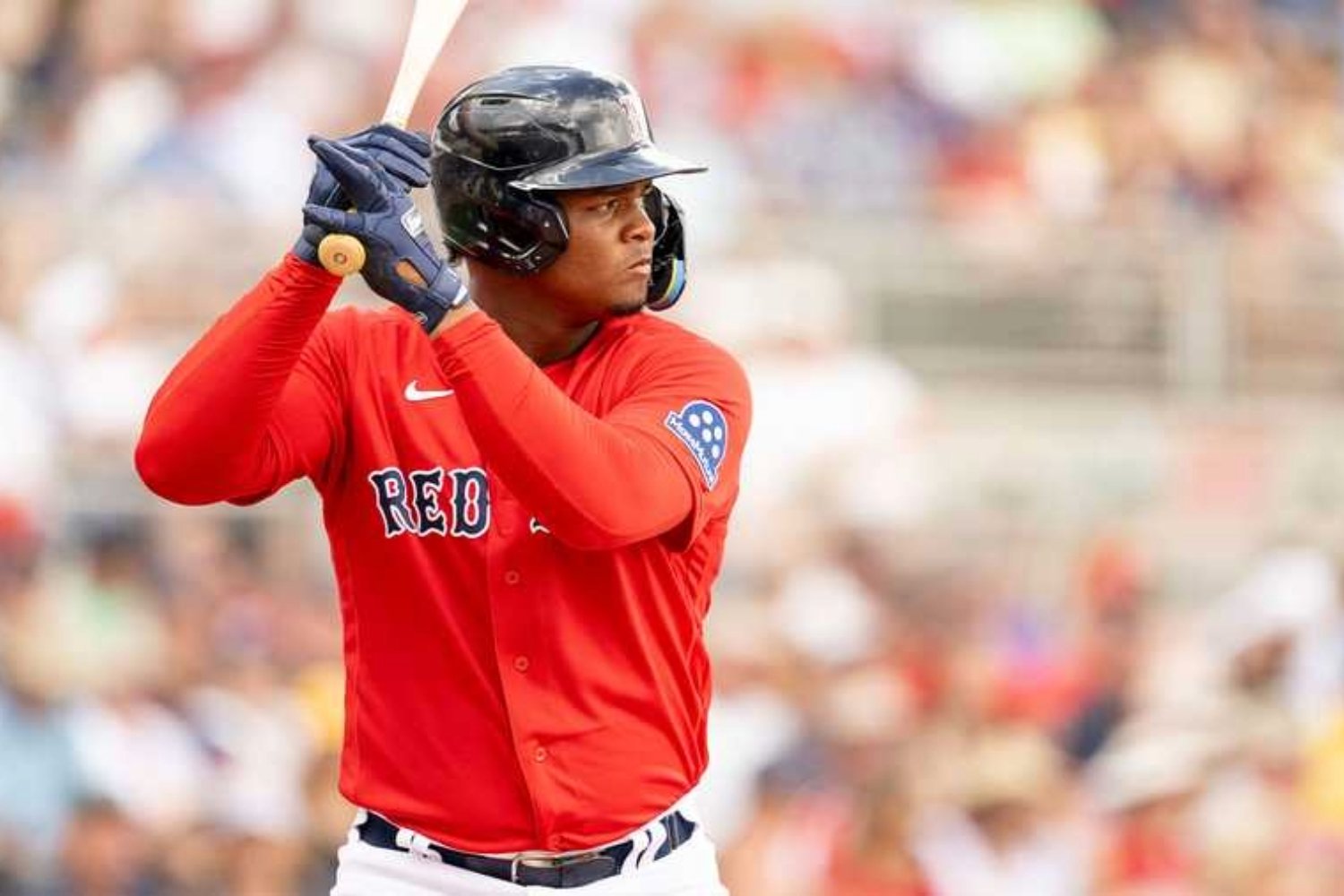 With the minor-league season reaching its conclusion in just a few weeks, players will be looking to finish their respective campaigns strong. August was a kind one for players within the Boston Red Sox organization as multiple hitters put up great numbers. Each of the four affiliate teams were also in playoff contention throughout the month, adding to the fun of watching their individual showcases. With that, we’ve managed to narrow the award this month down to the four best hitters in the Boston Red Sox minor-league system from last month despite several worthy candidates. Ranking Red Sox’s Best Minor-League Hitters in August Honorable Mention: Louis Andujar (Low-A Salem) It was a slow start for Andujar as he struggled in his first month in Salem, but since the calendar flipped to July, he has impressed with his bat. That continued into August, as the infielder showed that his hot summer is no fluke. Appearing in 17 games, Andujar slashed .305/.468/.525 with four doubles, three home runs and 9 RBIs. He also walked 12 times while striking out just 14 times. In the month, he also put together two hitting streaks—one of five games and the other three games long. During his first taste of affiliate ball, Andujar has been one of the best to adapting to the Red Sox's offensive philosophy under Craig Breslow. Through his first 62 games with Salem, the infielder has a pull-air rate of 21.6%, a stat to pay attention to should he be promoted to High-A Greenville in 2027. The right-handed hitter could become an exciting prospect with power for the Red Sox soon enough. #3: Owen Hull (High-A Greenville) There’s no denying that Hull has burst onto the scene in Greenville. Through his first 22 professional games, he’s hitting .326/.422/.533. In August alone, he hit .338/.447/.532 with nine doubles, two home runs, 15 RBIs and walked 15 times while striking out in 13 at-bats. The outfielder has shown an ability to put the ball in play constantly, striking out in just 15.4% of his plate appearances. The outfielder has also demonstrated an ability to be patient at the plate and not expand the strike zone as he waits for a pitch he likes. Already 22 years old, Hull has still managed to produce against older competition as he has hit .308/.421/.462 against some advanced pitching. In his short, professional career, Hull has immediately flashed the potential that made him a top-70 pick in this year's draft. #2: Franklin Primera (Low-A Salem) Primera has put together a fantastic first showing in affiliated ball despite being just 19 years old. Across 45 games with Salem, the catcher hit .331/.468/.500 with 10 doubles, a triple, five home runs and 24 RBIs. In August, he only got better, as he slashed .382/.535/.592 with five doubles, a triple, three home runs and 15 RBIs. More impressive, however, was his patience at the plate as he walked 16 times compared to eight strikeouts. The young catcher has garnered a lot of hype and interest from fans thanks in part to his early season breakout in the FCL. Once he reached Salem and his performance continued to be impressive for a player of his age, his prospect stock began to climb. Primera put on a show as the RidgeYaks made a playoff push, and despite the team falling out of contention, the catcher continued to carry the offense across the month and into the last few days of the season. #1: Justin Gonzales (High-A Greenville/Double-A Portland) After the month that Gonzales just put together, there shouldn't be any doubt that he's the top hitter in the Red Sox's minor-league system. Playing across two different levels in the month, the level of competition didn’t matter for the slugging outfielder. Appearing in 21 games between High-A Greenville and Double-A Portland, Gonzales hit a combined .337/.438/.558 along with five doubles, one triple, four home runs and 23 RBIs. When you look at what he did in just Portland, you really get an idea of just how good he was. In nine contests, he posted a robust .375/.457/.625 line with two doubles, one triple, two home runs and 10 RBIs. Despite being nearly five years younger than the average player in Double-A, Gonzales completely blitzed every pitcher he saw. There’s no denying that Gonzales is a very special player—August only highlighted that. The next steps in his development will involve getting him ready for Triple-A action sooner rather than later.
 -
“I’m just an ultra-competitor. Not going to try and blow up a radar gun, but I do have pretty good velocity. Kind of like an old-school pitcher, looking for ways to get people out.” Alex Kranzler is the latest pitcher to be drafted by Craig Breslow, having been taken in the 17th round of the 2026 MLB Draft. A 21-year-old right-hander out of Vanderbilt, Kranzler has a history of being a reliable arm out of the bullpen. Despite sporting a 6.18 ERA his junior season with Vanderbilt, Kranzler stepped up when it mattered most for his team. During the first round of the SEC Baseball Tournament, Kranzler entered the game with two outs in the fifth inning with his team trailing 4-1. His job was simple: keep the game close enough until his team could get going offensively. And he did just that, pitching 3 2/3 innings before allowing a runner to reach base as Vanderbilt scored seven unanswered runs to win the game. “Execute one pitch at a time,” Kranzler admitted when asked what was going through his mind during that outing. “Just be where your feet are, be in the moment. Trying not to look at the scoreboard, trying not to look at pretty much anything other than who’s at the plate, what the count is and what pitch am I going to throw. I trusted the offense; I knew if I could just keep the score there, we were going to find a way to score enough runs to win it. Just try to do my part, do my job and compete.” He's also had sustained periods of success, having tossed 14 2/3 innings in the month of May while allowing just one run on four hits. While his former coach Tim Corbin joked that Kranzler has always taken his game to the next level the deeper the NCAA season gets, the right-hander feels it isn’t the month but rather the situation. “I’ve always been a guy that runs on adrenaline. When the moment’s higher, I typically pitch better. Just getting into a playoff atmosphere kind of gets the juices flowing.” Kranzler is currently in a rare situation since the draft moved to July, actually pitching in affiliated ball in the same season he was selected. The right-hander was added to Salem’s roster on August 19, just the fifth pitcher under Craig Breslow to make his debut in the same season he was drafted. He joins a small list that is made up by 2025 draft class member Patrick Galle and 2024 draft class members Griffin Kilander, Cole Tolbert, and Calvin Bickerstaff. While he hasn’t made many appearances so far (just three games and 5 1/3 innings), the right-hander has flashed some potential in his short professional career. On the mound, he’s looking to do whatever he can to help the team win regardless of his role or what the situation is. “I think my average fastball last year was right around 93 and a half,” Kranzler said about his pitch mix. “The slider is definitely my bread and butter. That’s been my go-to pitch for as long as I can remember. On top of that, a cutter, splitter and occasionally a curveball. But the sinker, slider, cutter and splitter is the main mix.” The right-hander admitted that leading up to the draft itself, there were no conversations with the Red Sox. In fact, he didn’t know he was going to be a member of the organization until the pick was made. What might have helped him land with the organization may have been his play in the MLB Draft League. Pitching with the Trenton Thunder, Kranzler made five starts, tossing 23 innings and striking out 23 batters while allowing just six earned runs. Outside of the performance, the right-hander stated it might have been some of the most fun he ever had on a baseball field while also helping prepare him for what pro ball would be like. While he’s had a mix of usage between starting and relieving since his first year pitching for Vanderbilt, the Red Sox have used him out of the bullpen for his first three professional outings so far. So long as he sticks to his philosophy on the mound, he should have success in that role. “Just attack hitters no matter who’s in the box. [It's] A fearless approach looking to do whatever I can to help my team win." View full article
-
![More information about "Alex Kranzler Brings An SEC Mentality to Red Sox Organization [Exclusive]"](//d1mqtyoopj0gsc.cloudfront.net/monthly_2026_09/alexkranzler.jpg.c9b817501133de63595c9e9a22f6d97b.jpg) “I’m just an ultra-competitor. Not going to try and blow up a radar gun, but I do have pretty good velocity. Kind of like an old-school pitcher, looking for ways to get people out.” Alex Kranzler is the latest pitcher to be drafted by Craig Breslow, having been taken in the 17th round of the 2026 MLB Draft. A 21-year-old right-hander out of Vanderbilt, Kranzler has a history of being a reliable arm out of the bullpen. Despite sporting a 6.18 ERA his junior season with Vanderbilt, Kranzler stepped up when it mattered most for his team. During the first round of the SEC Baseball Tournament, Kranzler entered the game with two outs in the fifth inning with his team trailing 4-1. His job was simple: keep the game close enough until his team could get going offensively. And he did just that, pitching 3 2/3 innings before allowing a runner to reach base as Vanderbilt scored seven unanswered runs to win the game. “Execute one pitch at a time,” Kranzler admitted when asked what was going through his mind during that outing. “Just be where your feet are, be in the moment. Trying not to look at the scoreboard, trying not to look at pretty much anything other than who’s at the plate, what the count is and what pitch am I going to throw. I trusted the offense; I knew if I could just keep the score there, we were going to find a way to score enough runs to win it. Just try to do my part, do my job and compete.” He's also had sustained periods of success, having tossed 14 2/3 innings in the month of May while allowing just one run on four hits. While his former coach Tim Corbin joked that Kranzler has always taken his game to the next level the deeper the NCAA season gets, the right-hander feels it isn’t the month but rather the situation. “I’ve always been a guy that runs on adrenaline. When the moment’s higher, I typically pitch better. Just getting into a playoff atmosphere kind of gets the juices flowing.” Kranzler is currently in a rare situation since the draft moved to July, actually pitching in affiliated ball in the same season he was selected. The right-hander was added to Salem’s roster on August 19, just the fifth pitcher under Craig Breslow to make his debut in the same season he was drafted. He joins a small list that is made up by 2025 draft class member Patrick Galle and 2024 draft class members Griffin Kilander, Cole Tolbert, and Calvin Bickerstaff. While he hasn’t made many appearances so far (just three games and 5 1/3 innings), the right-hander has flashed some potential in his short professional career. On the mound, he’s looking to do whatever he can to help the team win regardless of his role or what the situation is. “I think my average fastball last year was right around 93 and a half,” Kranzler said about his pitch mix. “The slider is definitely my bread and butter. That’s been my go-to pitch for as long as I can remember. On top of that, a cutter, splitter and occasionally a curveball. But the sinker, slider, cutter and splitter is the main mix.” The right-hander admitted that leading up to the draft itself, there were no conversations with the Red Sox. In fact, he didn’t know he was going to be a member of the organization until the pick was made. What might have helped him land with the organization may have been his play in the MLB Draft League. Pitching with the Trenton Thunder, Kranzler made five starts, tossing 23 innings and striking out 23 batters while allowing just six earned runs. Outside of the performance, the right-hander stated it might have been some of the most fun he ever had on a baseball field while also helping prepare him for what pro ball would be like. While he’s had a mix of usage between starting and relieving since his first year pitching for Vanderbilt, the Red Sox have used him out of the bullpen for his first three professional outings so far. So long as he sticks to his philosophy on the mound, he should have success in that role. “Just attack hitters no matter who’s in the box. [It's] A fearless approach looking to do whatever I can to help my team win."
“I’m just an ultra-competitor. Not going to try and blow up a radar gun, but I do have pretty good velocity. Kind of like an old-school pitcher, looking for ways to get people out.” Alex Kranzler is the latest pitcher to be drafted by Craig Breslow, having been taken in the 17th round of the 2026 MLB Draft. A 21-year-old right-hander out of Vanderbilt, Kranzler has a history of being a reliable arm out of the bullpen. Despite sporting a 6.18 ERA his junior season with Vanderbilt, Kranzler stepped up when it mattered most for his team. During the first round of the SEC Baseball Tournament, Kranzler entered the game with two outs in the fifth inning with his team trailing 4-1. His job was simple: keep the game close enough until his team could get going offensively. And he did just that, pitching 3 2/3 innings before allowing a runner to reach base as Vanderbilt scored seven unanswered runs to win the game. “Execute one pitch at a time,” Kranzler admitted when asked what was going through his mind during that outing. “Just be where your feet are, be in the moment. Trying not to look at the scoreboard, trying not to look at pretty much anything other than who’s at the plate, what the count is and what pitch am I going to throw. I trusted the offense; I knew if I could just keep the score there, we were going to find a way to score enough runs to win it. Just try to do my part, do my job and compete.” He's also had sustained periods of success, having tossed 14 2/3 innings in the month of May while allowing just one run on four hits. While his former coach Tim Corbin joked that Kranzler has always taken his game to the next level the deeper the NCAA season gets, the right-hander feels it isn’t the month but rather the situation. “I’ve always been a guy that runs on adrenaline. When the moment’s higher, I typically pitch better. Just getting into a playoff atmosphere kind of gets the juices flowing.” Kranzler is currently in a rare situation since the draft moved to July, actually pitching in affiliated ball in the same season he was selected. The right-hander was added to Salem’s roster on August 19, just the fifth pitcher under Craig Breslow to make his debut in the same season he was drafted. He joins a small list that is made up by 2025 draft class member Patrick Galle and 2024 draft class members Griffin Kilander, Cole Tolbert, and Calvin Bickerstaff. While he hasn’t made many appearances so far (just three games and 5 1/3 innings), the right-hander has flashed some potential in his short professional career. On the mound, he’s looking to do whatever he can to help the team win regardless of his role or what the situation is. “I think my average fastball last year was right around 93 and a half,” Kranzler said about his pitch mix. “The slider is definitely my bread and butter. That’s been my go-to pitch for as long as I can remember. On top of that, a cutter, splitter and occasionally a curveball. But the sinker, slider, cutter and splitter is the main mix.” The right-hander admitted that leading up to the draft itself, there were no conversations with the Red Sox. In fact, he didn’t know he was going to be a member of the organization until the pick was made. What might have helped him land with the organization may have been his play in the MLB Draft League. Pitching with the Trenton Thunder, Kranzler made five starts, tossing 23 innings and striking out 23 batters while allowing just six earned runs. Outside of the performance, the right-hander stated it might have been some of the most fun he ever had on a baseball field while also helping prepare him for what pro ball would be like. While he’s had a mix of usage between starting and relieving since his first year pitching for Vanderbilt, the Red Sox have used him out of the bullpen for his first three professional outings so far. So long as he sticks to his philosophy on the mound, he should have success in that role. “Just attack hitters no matter who’s in the box. [It's] A fearless approach looking to do whatever I can to help my team win." -
“I got the call and I told him [Opata’s agent] I wanted to be a Red Sox. Best decision I ever made.” Since signing with the Boston Red Sox, Andrews Opata has shown that their investment was a good one. Through his first 96 professional games, the undrafted free agent has put together a well-rounded season, hitting .256/.370/.396 with 13 doubles, three triples, 10 home runs and 53 RBIs. He also has stolen 49 bases, a team record that is only growing with each swiped bag. Speed is a big part of his game, so it was only natural that he set (and continues to increase) a single-season record. “It was an awesome feeling. Honestly, I didn’t even know until 30, 45 minutes after the game when I looked at my phone. It was definitely a cool thing to say that I accomplished. I take pride in my speed and base running because I think being able to create a lot of runs for our team is really special to me,” Opata explained about his record setting season. The outfielder isn’t only interested in stolen bases, however, instead looking to make smart decisions and place himself in positions where the rest of the lineup can drive him in. He’s managed to do just that, having been driven in 76 times on the season. Despite his overwhelming speed, Opata admitted that it takes more than just that to succeed on the basepath. Especially against professional pitchers. “I go into the game knowing the pitcher’s time to the plate. Usually 1.3, 1.4 [seconds]. Knowing the arm behind the plate. Whether it’s better to stay at first base. I take into account a lot of different things and really steal when I know there’s like a 95% chance I’ll be safe. I’ll just stay at first and let the game play out,” Opata admitted. His cautious approach with his speed was on display during his time in college, as he went 85 for 91 in stolen base attempts. Since becoming a professional, he’s gone 49 for 56. But despite his plus speed and baserunning instincts, Opata didn’t enter draft day with the thought of being selected. Rather, he went into it with the thought he could be drafted or return to school, hoping that everything would work out. While he didn’t get drafted, Opata still received the call from his agent. His first professional experience involved flying down to Fort Myers and after signing his contract, he managed to play in a few bridge league games before going home until a week before Thanksgiving. Upon returning to the complex in Fort Myers, he got back to work as he lifted, hit and did defensive drills. It was, in a sense, a precursor to spring training and allowed him to get acclimated to the system and get familiar with how things would be when he returned to Fort Myers in January for actual spring training. Then, during his first pro spring, he got into a few games as a late-game replacement, a special experience for the outfielder. But it wasn’t until he finally played in Salem that it was a truly special situation. “I haven’t ever played in an environment like that with a bunch of fans. It was fun. The first night I didn’t get a hit, but I remember coming home and was like it was super fun and knew every night it’s going to be similar to that. So I was just really excited to see how the season went.” Despite his success during his first season, there have still been some learning moments for Opata. Since his junior year of high school, his main position was center field. But in 2026, he’s mainly played the corner outfield positions for Salem. The transition back to the corners was a little tough for the outfielder at first due to a combination of factors that included how the ball would spin different towards left or right field compared to center field. Opata had to learn and adjust to the change in angles the ball would come at him and the routes he would need to take—that a fly ball to the corners might have some slice or hook to them. He would take time to learn the best position to be in based on the hitter at the plate and how Salem’s pitchers would attack them. But eventually, it became easier as he put in consistent work every day. Offensively, he quickly learned that the quality of pitching was different than what he faced in college. While he had previously faced pitchers who threw hard, now he had to deal with pitchers who not only had a good fastball, but also quality command of it along with movement on their pitches. Once he adjusted to it, however, he has been a quality offensive weapon for a Salem team fighting for a playoff spot. Despite the ups and downs, it’s been a season he’s valued deeply. “I’ve learned a lot this season about what it takes to be a professional baseball player. There’s the struggles that come and go and you just have to ride the wave. You’ll have good weeks and bad weeks, but if you just stay as consistent as possible, you’ll be in a pretty good spot.” View full article
-
![More information about "Red Sox Speedster Andrews Opata Is Leaving His Mark In Salem [Exclusive]"](//d1mqtyoopj0gsc.cloudfront.net/monthly_2026_08/andrewsopata.jpg.c3eeb065a540c777485d4b38c49e7469.jpg) “I got the call and I told him [Opata’s agent] I wanted to be a Red Sox. Best decision I ever made.” Since signing with the Boston Red Sox, Andrews Opata has shown that their investment was a good one. Through his first 96 professional games, the undrafted free agent has put together a well-rounded season, hitting .256/.370/.396 with 13 doubles, three triples, 10 home runs and 53 RBIs. He also has stolen 49 bases, a team record that is only growing with each swiped bag. Speed is a big part of his game, so it was only natural that he set (and continues to increase) a single-season record. “It was an awesome feeling. Honestly, I didn’t even know until 30, 45 minutes after the game when I looked at my phone. It was definitely a cool thing to say that I accomplished. I take pride in my speed and base running because I think being able to create a lot of runs for our team is really special to me,” Opata explained about his record setting season. The outfielder isn’t only interested in stolen bases, however, instead looking to make smart decisions and place himself in positions where the rest of the lineup can drive him in. He’s managed to do just that, having been driven in 76 times on the season. Despite his overwhelming speed, Opata admitted that it takes more than just that to succeed on the basepath. Especially against professional pitchers. “I go into the game knowing the pitcher’s time to the plate. Usually 1.3, 1.4 [seconds]. Knowing the arm behind the plate. Whether it’s better to stay at first base. I take into account a lot of different things and really steal when I know there’s like a 95% chance I’ll be safe. I’ll just stay at first and let the game play out,” Opata admitted. His cautious approach with his speed was on display during his time in college, as he went 85 for 91 in stolen base attempts. Since becoming a professional, he’s gone 49 for 56. But despite his plus speed and baserunning instincts, Opata didn’t enter draft day with the thought of being selected. Rather, he went into it with the thought he could be drafted or return to school, hoping that everything would work out. While he didn’t get drafted, Opata still received the call from his agent. His first professional experience involved flying down to Fort Myers and after signing his contract, he managed to play in a few bridge league games before going home until a week before Thanksgiving. Upon returning to the complex in Fort Myers, he got back to work as he lifted, hit and did defensive drills. It was, in a sense, a precursor to spring training and allowed him to get acclimated to the system and get familiar with how things would be when he returned to Fort Myers in January for actual spring training. Then, during his first pro spring, he got into a few games as a late-game replacement, a special experience for the outfielder. But it wasn’t until he finally played in Salem that it was a truly special situation. “I haven’t ever played in an environment like that with a bunch of fans. It was fun. The first night I didn’t get a hit, but I remember coming home and was like it was super fun and knew every night it’s going to be similar to that. So I was just really excited to see how the season went.” Despite his success during his first season, there have still been some learning moments for Opata. Since his junior year of high school, his main position was center field. But in 2026, he’s mainly played the corner outfield positions for Salem. The transition back to the corners was a little tough for the outfielder at first due to a combination of factors that included how the ball would spin different towards left or right field compared to center field. Opata had to learn and adjust to the change in angles the ball would come at him and the routes he would need to take—that a fly ball to the corners might have some slice or hook to them. He would take time to learn the best position to be in based on the hitter at the plate and how Salem’s pitchers would attack them. But eventually, it became easier as he put in consistent work every day. Offensively, he quickly learned that the quality of pitching was different than what he faced in college. While he had previously faced pitchers who threw hard, now he had to deal with pitchers who not only had a good fastball, but also quality command of it along with movement on their pitches. Once he adjusted to it, however, he has been a quality offensive weapon for a Salem team fighting for a playoff spot. Despite the ups and downs, it’s been a season he’s valued deeply. “I’ve learned a lot this season about what it takes to be a professional baseball player. There’s the struggles that come and go and you just have to ride the wave. You’ll have good weeks and bad weeks, but if you just stay as consistent as possible, you’ll be in a pretty good spot.”
“I got the call and I told him [Opata’s agent] I wanted to be a Red Sox. Best decision I ever made.” Since signing with the Boston Red Sox, Andrews Opata has shown that their investment was a good one. Through his first 96 professional games, the undrafted free agent has put together a well-rounded season, hitting .256/.370/.396 with 13 doubles, three triples, 10 home runs and 53 RBIs. He also has stolen 49 bases, a team record that is only growing with each swiped bag. Speed is a big part of his game, so it was only natural that he set (and continues to increase) a single-season record. “It was an awesome feeling. Honestly, I didn’t even know until 30, 45 minutes after the game when I looked at my phone. It was definitely a cool thing to say that I accomplished. I take pride in my speed and base running because I think being able to create a lot of runs for our team is really special to me,” Opata explained about his record setting season. The outfielder isn’t only interested in stolen bases, however, instead looking to make smart decisions and place himself in positions where the rest of the lineup can drive him in. He’s managed to do just that, having been driven in 76 times on the season. Despite his overwhelming speed, Opata admitted that it takes more than just that to succeed on the basepath. Especially against professional pitchers. “I go into the game knowing the pitcher’s time to the plate. Usually 1.3, 1.4 [seconds]. Knowing the arm behind the plate. Whether it’s better to stay at first base. I take into account a lot of different things and really steal when I know there’s like a 95% chance I’ll be safe. I’ll just stay at first and let the game play out,” Opata admitted. His cautious approach with his speed was on display during his time in college, as he went 85 for 91 in stolen base attempts. Since becoming a professional, he’s gone 49 for 56. But despite his plus speed and baserunning instincts, Opata didn’t enter draft day with the thought of being selected. Rather, he went into it with the thought he could be drafted or return to school, hoping that everything would work out. While he didn’t get drafted, Opata still received the call from his agent. His first professional experience involved flying down to Fort Myers and after signing his contract, he managed to play in a few bridge league games before going home until a week before Thanksgiving. Upon returning to the complex in Fort Myers, he got back to work as he lifted, hit and did defensive drills. It was, in a sense, a precursor to spring training and allowed him to get acclimated to the system and get familiar with how things would be when he returned to Fort Myers in January for actual spring training. Then, during his first pro spring, he got into a few games as a late-game replacement, a special experience for the outfielder. But it wasn’t until he finally played in Salem that it was a truly special situation. “I haven’t ever played in an environment like that with a bunch of fans. It was fun. The first night I didn’t get a hit, but I remember coming home and was like it was super fun and knew every night it’s going to be similar to that. So I was just really excited to see how the season went.” Despite his success during his first season, there have still been some learning moments for Opata. Since his junior year of high school, his main position was center field. But in 2026, he’s mainly played the corner outfield positions for Salem. The transition back to the corners was a little tough for the outfielder at first due to a combination of factors that included how the ball would spin different towards left or right field compared to center field. Opata had to learn and adjust to the change in angles the ball would come at him and the routes he would need to take—that a fly ball to the corners might have some slice or hook to them. He would take time to learn the best position to be in based on the hitter at the plate and how Salem’s pitchers would attack them. But eventually, it became easier as he put in consistent work every day. Offensively, he quickly learned that the quality of pitching was different than what he faced in college. While he had previously faced pitchers who threw hard, now he had to deal with pitchers who not only had a good fastball, but also quality command of it along with movement on their pitches. Once he adjusted to it, however, he has been a quality offensive weapon for a Salem team fighting for a playoff spot. Despite the ups and downs, it’s been a season he’s valued deeply. “I’ve learned a lot this season about what it takes to be a professional baseball player. There’s the struggles that come and go and you just have to ride the wave. You’ll have good weeks and bad weeks, but if you just stay as consistent as possible, you’ll be in a pretty good spot.” -
If hitting was easy I'd still be playing after graduating high school instead of writing about baseball.
-
When the Boston Red Sox traded for Adley Rutschman, excitement was high throughout the fanbase as the team decided to go all-in and acquire a genuine All-Star in hopes of increasing their championship odds. There were some concerns, however; namely, Rutschman was on the injured list at the time with left wrist inflammation. It was his third time on the injured list this year after previous stints with left ankle inflammation and a concussion. Add to it that his OPS was just .671 from the beginning of May until he went on the injured list in July, and you had a recipe with a decent chance of turning out something inedible. Now with the Red Sox, Rutschman’s offense has yet to come back around as he’s hitting .146/.255/.244 since being traded. That's an OPS below .500 and and a 43 wRC+. He’s gotten just six hits, with four of them being singles while one was a double and the other was a home run. He’s also struck out 12 times. When you trade three of your top five prospects along with another who was in the top 20, not to mention starting catcher Carlos Narváez (even if his struggles have continued with Baltimore), you would hope for better production. Instead the team has gotten a backstop who has turned in the lowest exit velocities of his career (84.5 mph on average), has the lowest hard-hit rate of his career (34.5%) and has struck out at a career-high rate (25.5%) since being acquired. And yet, I'm here to tell you that it’s too early to worry. There are several factors leading to these issues that can be fixed, and there are others showing that he’ll be just fine. The biggest issue was that Rutschman was rushed back to Boston. When acquired at the deadline, he had last played in a professional game on July 18 before being placed on the injured list two days later with wrist inflammation. Upon joining the Red Sox organization, the team wasn’t sure when he would be ready for a rehab appearance but knew he was close. On August 8, five days after being acquired, he was sent on a rehab stint with the Worcester Red Sox where he would play two games. Overall, Rutschman got seven plate appearances across those two games, going just 1-for-5 with a double, two RBIs, two walks and a strikeout. Feeling he was ready, the team brought him up. It made sense; he was their big trade deadline acquisition, and they wanted him in Boston as soon as possible to help them win games. But they had already seen what happened when they rushed Romy González back to the majors when they needed his offensive help. The results are rarely positive when that happens. Rutschman was very much the same case. In his first game, the catcher would go 1-for-3 before going hitless in his next 14 at-bats, including eight strikeouts. His timing was off and it was clear he needed more time to be back to his usual self. After that 0-for-14 stretch, the catcher has begun to look like the player Boston traded for. Going 5-for-14 over his next four games, Rutschman improved in all areas offensively as he only struck out once. Putting the ball in play more, his exit velocities have increased. Since the August 17 game against Arizona, Rutschman has 11 batted balls that have an exit velocity registered 90 mph or faster; of those, eight would be considered a hard-hit ball (95 mph or faster). In that span, he had 21 batted balls that were put in play, giving him a hard-hit rate of 38.1%. That's still down from his season average of 41.1%, but it shows improvement. Unfortunately, they haven’t all landed in for hits as his batting average for balls in play is a very unlucky .179. Prior to the trade, it was .265. For context, the average BABIP in major league baseball hovers between .290 and .300. Per Fangraphs, a BABIP of .230 is considered atypical for a hitter. For his career prior to the 2026 season, Rutschman’s BABIP sat at .280. With such a low BABIP with Boston, it’s only a matter of time before there’s a positive regression back to the mean. It isn’t what the Red Sox or their fans wanted immediately, but Rutschman is slowly getting back to the hitter everyone envisioned. The most important thing right now is patience. Yes, in a playoff race, patience is not something everyone has. But, given time, people will come to quickly forget the slow start to his tenure in Boston. View full article
-
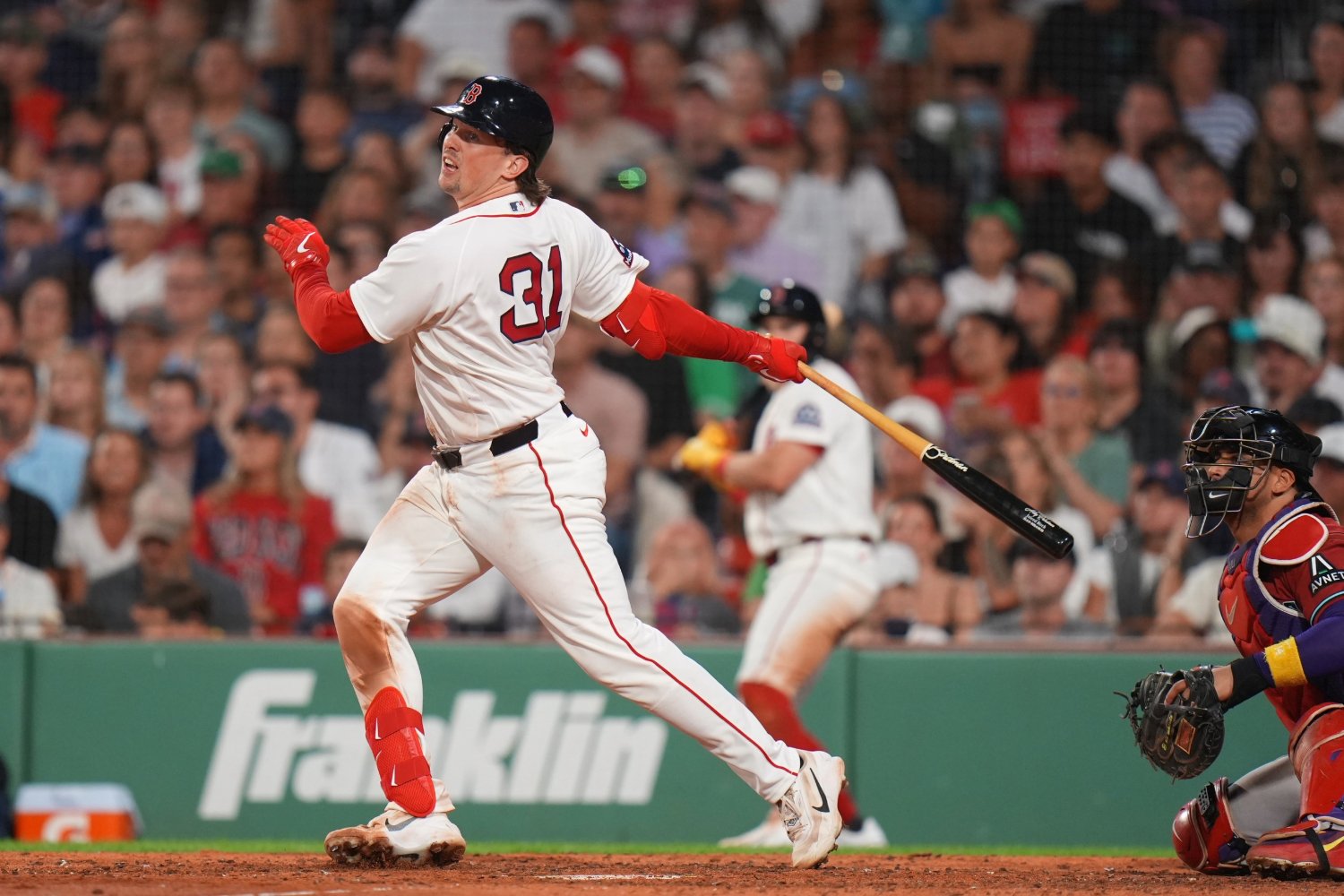 When the Boston Red Sox traded for Adley Rutschman, excitement was high throughout the fanbase as the team decided to go all-in and acquire a genuine All-Star in hopes of increasing their championship odds. There were some concerns, however; namely, Rutschman was on the injured list at the time with left wrist inflammation. It was his third time on the injured list this year after previous stints with left ankle inflammation and a concussion. Add to it that his OPS was just .671 from the beginning of May until he went on the injured list in July, and you had a recipe with a decent chance of turning out something inedible. Now with the Red Sox, Rutschman’s offense has yet to come back around as he’s hitting .146/.255/.244 since being traded. That's an OPS below .500 and and a 43 wRC+. He’s gotten just six hits, with four of them being singles while one was a double and the other was a home run. He’s also struck out 12 times. When you trade three of your top five prospects along with another who was in the top 20, not to mention starting catcher Carlos Narváez (even if his struggles have continued with Baltimore), you would hope for better production. Instead the team has gotten a backstop who has turned in the lowest exit velocities of his career (84.5 mph on average), has the lowest hard-hit rate of his career (34.5%) and has struck out at a career-high rate (25.5%) since being acquired. And yet, I'm here to tell you that it’s too early to worry. There are several factors leading to these issues that can be fixed, and there are others showing that he’ll be just fine. The biggest issue was that Rutschman was rushed back to Boston. When acquired at the deadline, he had last played in a professional game on July 18 before being placed on the injured list two days later with wrist inflammation. Upon joining the Red Sox organization, the team wasn’t sure when he would be ready for a rehab appearance but knew he was close. On August 8, five days after being acquired, he was sent on a rehab stint with the Worcester Red Sox where he would play two games. Overall, Rutschman got seven plate appearances across those two games, going just 1-for-5 with a double, two RBIs, two walks and a strikeout. Feeling he was ready, the team brought him up. It made sense; he was their big trade deadline acquisition, and they wanted him in Boston as soon as possible to help them win games. But they had already seen what happened when they rushed Romy González back to the majors when they needed his offensive help. The results are rarely positive when that happens. Rutschman was very much the same case. In his first game, the catcher would go 1-for-3 before going hitless in his next 14 at-bats, including eight strikeouts. His timing was off and it was clear he needed more time to be back to his usual self. After that 0-for-14 stretch, the catcher has begun to look like the player Boston traded for. Going 5-for-14 over his next four games, Rutschman improved in all areas offensively as he only struck out once. Putting the ball in play more, his exit velocities have increased. Since the August 17 game against Arizona, Rutschman has 11 batted balls that have an exit velocity registered 90 mph or faster; of those, eight would be considered a hard-hit ball (95 mph or faster). In that span, he had 21 batted balls that were put in play, giving him a hard-hit rate of 38.1%. That's still down from his season average of 41.1%, but it shows improvement. Unfortunately, they haven’t all landed in for hits as his batting average for balls in play is a very unlucky .179. Prior to the trade, it was .265. For context, the average BABIP in major league baseball hovers between .290 and .300. Per Fangraphs, a BABIP of .230 is considered atypical for a hitter. For his career prior to the 2026 season, Rutschman’s BABIP sat at .280. With such a low BABIP with Boston, it’s only a matter of time before there’s a positive regression back to the mean. It isn’t what the Red Sox or their fans wanted immediately, but Rutschman is slowly getting back to the hitter everyone envisioned. The most important thing right now is patience. Yes, in a playoff race, patience is not something everyone has. But, given time, people will come to quickly forget the slow start to his tenure in Boston.
 -
“I’m taking it super day-by-day. There’s no plan, there’s no ‘you gotta be ready by this time’. For me it’s about taking one pitch at a time and we’ll reassess how I feel after tonight. There’s no plan, no flight that’s booked or anything like that,” Roman Anthony explained to the media prior to making his latest rehab appearance at Polar Park. The Boston Red Sox have been one of the hottest teams in baseball, and they’ve been doing it without a handful of players who were meant to contribute in key roles for the club. Now, as the team prepares for a key weekend series against their dreaded rivals, the New York Yankees, they might be getting reinforcements. Prior to Tuesday night’s game, Anthony had his rehab stint reassigned to Worcester after playing the previous week in Portland. The star outfielder, who has been out of action since being placed on the injured list on May 7, has looked comfortable in his return to action as he’s gone 5-for-19 across six games including two huge home runs. With Anthony, the biggest hurdle to getting back on the field was trying to be pain free while swinging a bat and making contact especially against high velocity. Now, there doesn’t seem to be any issue. He’s been able to take good swings, bad swings and check his swing without any issues occurring over the past few days in Portland and Worcester. Despite having no set plan for when he would be activated, the outfielder admitted he was to play back-to-back games in Worcester and play the field for nine innings before assessing how he was doing. Following Wednesday night’s game, it was the first time he played back-to-back full games in the outfield since early in the season. “I’m feeling good, just gotta make sure that everything is really good and where it needs to be before we make a decision and kind of go from there. As far as right now, everything’s good again just trying to continue to get back into that rhythm in the box, the outfield and the bases as a complete player. “We’re in a situation now where, when that decision is to come back and play with the team it’s full-go and we’re in a great situation as a team. I want to get back up there as fast as I possibly can. All three of us want to do that. But I think there’s part of that, that has to make sure we are going and leaving no doubts at least leaving our rehab assignments.” Anthony wasn’t the only rehabber in Worcester, as both Trevor Story and Isiah Kiner-Falefa have been working their way back from their respective injuries. Both have been rehabbing for roughly the same amount of time as Anthony, but have remained just in Worcester as they traveled to Syracuse with the team. For Kiner-Falefa, while he wants to get back to the majors and help the club with the playoff race, he also knows that taking his time to be in the best shape would be most important. “I feel like I could be sharper. I feel good right now, I don’t feel at my best and with the amount of time I’ve taken off. I need the at-bats. I want the at-bats, and I want to come back and contribute. It’s not my decision, but the extra games would help a lot. Another week would be nice, but it’s not my decision,” Kiner-Falefa explained following Tuesday night’s game. In it, he wound up going 1-for-3 with two walks while playing at second base. Overall in his rehab process, the infielder has gone 2-for-18 with one RBI in six games. He also admitted that his timing is not quite there, but he feels close. He described it as being close to how he felt last season when he played with Toronto during their run in the playoffs. The goal for him is to win a World Series and if it means taking extra time rehabbing to be able to contribute when it matters most, he’s willing to do just that. Injury-wise. Kiner-Falefa stated he felt healthy and that he’s focusing on the baseball side of his progression. The main thing that Kiner-Falefa is looking to work on is his consistency, going as far as to say that his at-bats in Syracuse were terrible and weren’t close to where he wanted to be. However, after Tuesday's game he felt he was heading in the right direction as he saw the ball well. He did admit that he was still late on his swing and wanted to improve his timing. The final member of the rehabbing trio, Story, has had the toughest go of things. In eight games with Worcester, he’s gone 4-for-29 with two RBIs and 10 strikeouts. The shortstop has been out of action since May 14 as he recovered from his sports hernia surgery. While defensively he’s looked fine, it’s his work at the plate that has been questionable. After starting his rehab going 3-for-9, he has since gone 1-for-20 including six strikeouts in his last 12 at-bats. The right-handed hitter has shown a tendency in his latest rehab appearances to chase pitches that are away, especially down and away. On Tuesday, he either struck out or made a groundout on a pitch that would be on the outer portion of the plate, along with being at around his knees or lower. Wednesday’s game was more of the same as he struck out three times, including twice on pitches that were down and away. There was a moment Wednesday night where there might have been some concern, as Story made a diving attempt on a ground ball before coming up slowly. “First dive [since rehabbing] and kind of the belt buckle landed on the scars. It was the first time so it just kind of dug in a little bit.” He would remain in the game after the play, with there being no real concern and the team taking it as an expected reaction from such a landing. Despite the slow start in his rehab process, Story still has his sights set on rejoining the team in New York. “We haven’t decided yet [on the next step], we’re going to talk about it tonight [Wednesday night], all the possibilities are open still. Some point in New York is the goal. Like I said, I gotta reconvene with the boys and talk it out.” As of now, Story isn’t sure if he’ll have a day off on Thursday or play for Worcester. Whatever the decision is, Story feels good and says he's ready to go when the big-league club comes calling. View full article
-
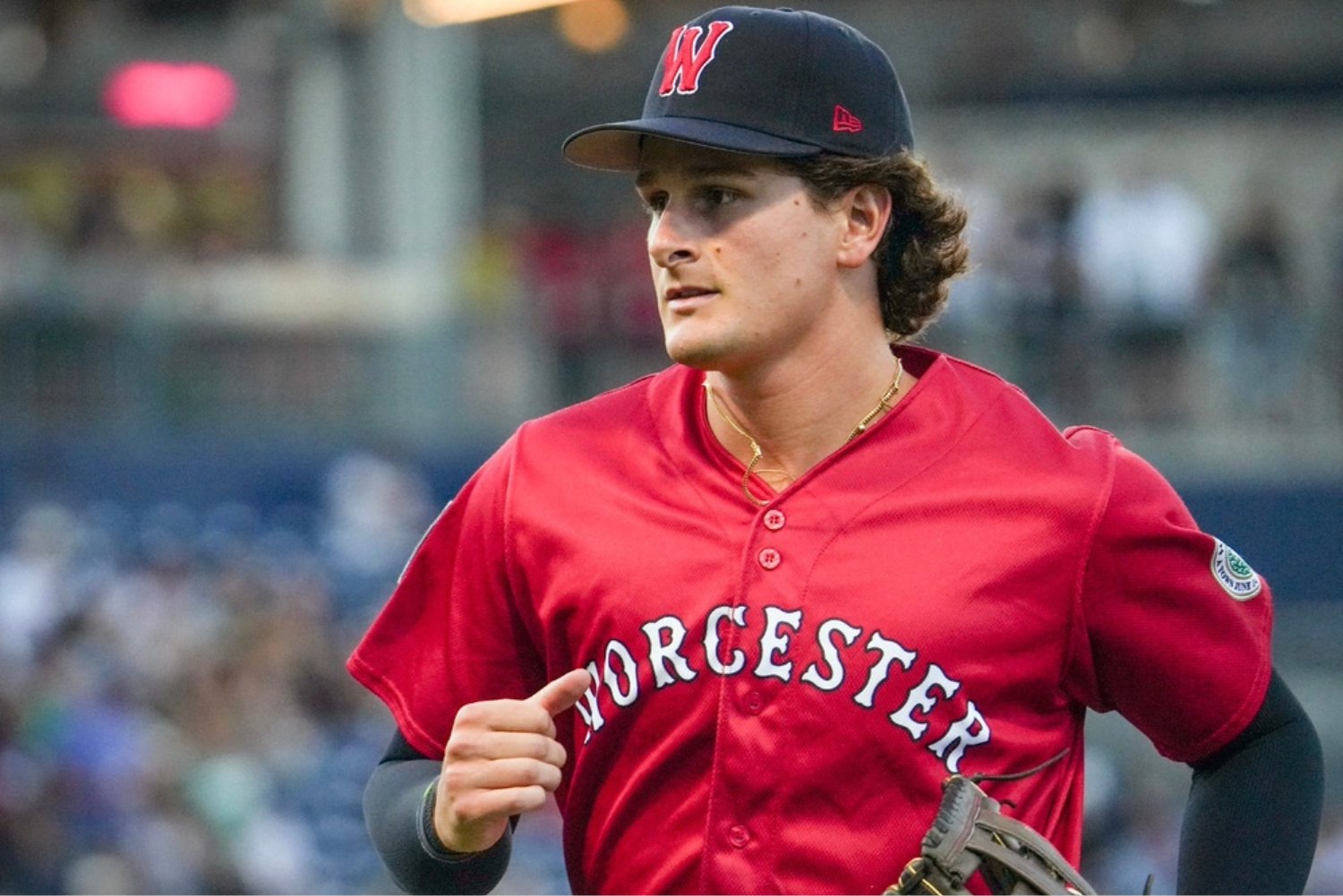 “I’m taking it super day-by-day. There’s no plan, there’s no ‘you gotta be ready by this time’. For me it’s about taking one pitch at a time and we’ll reassess how I feel after tonight. There’s no plan, no flight that’s booked or anything like that,” Roman Anthony explained to the media prior to making his latest rehab appearance at Polar Park. The Boston Red Sox have been one of the hottest teams in baseball, and they’ve been doing it without a handful of players who were meant to contribute in key roles for the club. Now, as the team prepares for a key weekend series against their dreaded rivals, the New York Yankees, they might be getting reinforcements. Prior to Tuesday night’s game, Anthony had his rehab stint reassigned to Worcester after playing the previous week in Portland. The star outfielder, who has been out of action since being placed on the injured list on May 7, has looked comfortable in his return to action as he’s gone 5-for-19 across six games including two huge home runs. With Anthony, the biggest hurdle to getting back on the field was trying to be pain free while swinging a bat and making contact especially against high velocity. Now, there doesn’t seem to be any issue. He’s been able to take good swings, bad swings and check his swing without any issues occurring over the past few days in Portland and Worcester. Despite having no set plan for when he would be activated, the outfielder admitted he was to play back-to-back games in Worcester and play the field for nine innings before assessing how he was doing. Following Wednesday night’s game, it was the first time he played back-to-back full games in the outfield since early in the season. “I’m feeling good, just gotta make sure that everything is really good and where it needs to be before we make a decision and kind of go from there. As far as right now, everything’s good again just trying to continue to get back into that rhythm in the box, the outfield and the bases as a complete player. “We’re in a situation now where, when that decision is to come back and play with the team it’s full-go and we’re in a great situation as a team. I want to get back up there as fast as I possibly can. All three of us want to do that. But I think there’s part of that, that has to make sure we are going and leaving no doubts at least leaving our rehab assignments.” Anthony wasn’t the only rehabber in Worcester, as both Trevor Story and Isiah Kiner-Falefa have been working their way back from their respective injuries. Both have been rehabbing for roughly the same amount of time as Anthony, but have remained just in Worcester as they traveled to Syracuse with the team. For Kiner-Falefa, while he wants to get back to the majors and help the club with the playoff race, he also knows that taking his time to be in the best shape would be most important. “I feel like I could be sharper. I feel good right now, I don’t feel at my best and with the amount of time I’ve taken off. I need the at-bats. I want the at-bats, and I want to come back and contribute. It’s not my decision, but the extra games would help a lot. Another week would be nice, but it’s not my decision,” Kiner-Falefa explained following Tuesday night’s game. In it, he wound up going 1-for-3 with two walks while playing at second base. Overall in his rehab process, the infielder has gone 2-for-18 with one RBI in six games. He also admitted that his timing is not quite there, but he feels close. He described it as being close to how he felt last season when he played with Toronto during their run in the playoffs. The goal for him is to win a World Series and if it means taking extra time rehabbing to be able to contribute when it matters most, he’s willing to do just that. Injury-wise. Kiner-Falefa stated he felt healthy and that he’s focusing on the baseball side of his progression. The main thing that Kiner-Falefa is looking to work on is his consistency, going as far as to say that his at-bats in Syracuse were terrible and weren’t close to where he wanted to be. However, after Tuesday's game he felt he was heading in the right direction as he saw the ball well. He did admit that he was still late on his swing and wanted to improve his timing. The final member of the rehabbing trio, Story, has had the toughest go of things. In eight games with Worcester, he’s gone 4-for-29 with two RBIs and 10 strikeouts. The shortstop has been out of action since May 14 as he recovered from his sports hernia surgery. While defensively he’s looked fine, it’s his work at the plate that has been questionable. After starting his rehab going 3-for-9, he has since gone 1-for-20 including six strikeouts in his last 12 at-bats. The right-handed hitter has shown a tendency in his latest rehab appearances to chase pitches that are away, especially down and away. On Tuesday, he either struck out or made a groundout on a pitch that would be on the outer portion of the plate, along with being at around his knees or lower. Wednesday’s game was more of the same as he struck out three times, including twice on pitches that were down and away. There was a moment Wednesday night where there might have been some concern, as Story made a diving attempt on a ground ball before coming up slowly. “First dive [since rehabbing] and kind of the belt buckle landed on the scars. It was the first time so it just kind of dug in a little bit.” He would remain in the game after the play, with there being no real concern and the team taking it as an expected reaction from such a landing. Despite the slow start in his rehab process, Story still has his sights set on rejoining the team in New York. “We haven’t decided yet [on the next step], we’re going to talk about it tonight [Wednesday night], all the possibilities are open still. Some point in New York is the goal. Like I said, I gotta reconvene with the boys and talk it out.” As of now, Story isn’t sure if he’ll have a day off on Thursday or play for Worcester. Whatever the decision is, Story feels good and says he's ready to go when the big-league club comes calling.
 -
Not everyone has the same path to professional baseball. While some will end up drafted, others will find out in the wildest of ways that their dream gets to continue. For Boston Red Sox prospect Calvin Bickerstaff, calling his draft experience unique would be an understatement. “I talked to a few teams throughout my senior year and nothing too crazy [came of it], so I was unsure going into the [draft], but had a feeling. I had a workout leading up to it and the day before the first day of the draft my college coach called me and said ‘We’re going to send you out to the Cape [Cape Cod] League to finish out the summer.' So, I was like, when do I need to be there and was told to be there in two days,” Bickerstaff explained. During the hectic travels, he admitted that communication was often bare when it came to the draft. The trip to play in the Cape Cod League was one nobody never would have imagined playing out how it did. “Drove out during the first day [of the draft] and finished the drive on the second day. On the third day my team had an off day so my dad who drove out with me, we were going to watch another Kent State player pitch. “I had never talked to the Boston Red Sox. I didn’t talk to them in high school, didn’t talk to them junior year or senior year. And we’re on the way [to the game] and my agent calls and says the Red Sox might take you. There’s one guy ahead of you, if they don’t take him, they’re going to take you. They ended up taking him and he [the agent] called me back and said they still want to take you.” While it was a 10-hour drive to get to Cape Cod and Bickerstaff never got to pitch even an inning, the drive back was easy. Even going as far as to describe his feelings as “being on cloud nine” during the ride back home. The rest for Bickerstaff was history. After pitching three seasons for Kent State that saw him appear in 56 games and tossing 122 2/3 innings, the right-hander was a professional athlete. Signing as an undrafted free agent, he would eventually make his professional debut for the then Salem Red Sox in 2024. Tossing 6 1/3 innings, the right-hander struck out seven batters. It had been a long journey, one that had helped to shape him into the pitcher he is today. He continued to grow, after his senior year in high school was cut short due to Covid-19; the former high school senior that was thrown off of baseball fields during the spring and summer of 2020 would go on to turn himself into a prospect after his college career. “The main thing was trying to figure out a way to stay in ready. We couldn’t use baseball fields in our community. I got kicked off of two different fields because I couldn’t even access my high school field, it was a college field for Franciscan University of Steubenville,” Bickerstaff reminisced about the end of his high school career. “They had the whole facility locked, but I would hop the fence of local high schools with a catcher. Next thing you know somebody was there to kick me out.” Fortunately, the right-hander had already committed to Kent State during his sophomore season and did not have to worry about the pandemic taking away his chance to pitch in college. But since signing with Boston following the 2024 draft, Bickerstaff quickly learned there was a difference between the college level and professional baseball. “It was everything I expected. It was great. I finished the month in Salem, Single-A, it was great. The days in pro ball were a bit different. It’s like practice every day and if you’re available, then you’re playing. It was a little different but awesome. I’m lifting, running, eating well, and then throwing.” Since signing with the Red Sox, Bickerstaff has spent time at four different levels, pitching in the Florida Complex League briefly in 2025 and making it all the way to Portland for a brief stay in 2026. Most of his time in the system has been spent with High-A Greenville. Overall, he’s appeared in 55 games and tossed 121 innings with a 4.31 ERA and 110 strikeouts. For someone who has bounced between the bullpen and rotation since high school, he admits that there is a difference in mindset if he knows he’s going to start or relieve, but he revels in being a flexible pitcher. “The biggest difficulty was going from high school as a starter to the bullpen in college. I would take my time, as much as I needed—15 minutes throwing a pregame bullpen, looking back I was throwing way more than I should have. That first year in the bullpen, I’d go in the first or second inning due to trouble and it’s like I got to figure this out because I don’t feel prepared. But I eventually figured it out." The right-hander continued to explain how his mindset also shifted depending on his role. If he were starting, Bickerstaff knew he needed to pace himself, planning not just for the current inning, but for what laid ahead for the rest of his outing. Since moving back to the bullpen after getting drafted, he’s viewed throwing each pitch as if “it’s the ninth inning”. In 2026, he’s appeared in 28 games so far, making one appearance for Salem, one for Portland, and 26 for Greenville. He’s given the organization 68 2/3 innings with a 4.33 ERA, striking out 53 and walking 22. The next step for Bickerstaff is to make it back to Portland as a permanent promotion, though even that is just a stepping stone on his unlikely journey all the way to the big leagues. View full article
-
![More information about "Calvin Bickerstaff's Unique Path to Professional Baseball Has Him Ready to Succeed With Red Sox [Exclusive]"](//d1mqtyoopj0gsc.cloudfront.net/monthly_2026_08/Bickerstaff.jpg.04c1ed4b0a80509f9895ed727266e43a.jpg) Not everyone has the same path to professional baseball. While some will end up drafted, others will find out in the wildest of ways that their dream gets to continue. For Boston Red Sox prospect Calvin Bickerstaff, calling his draft experience unique would be an understatement. “I talked to a few teams throughout my senior year and nothing too crazy [came of it], so I was unsure going into the [draft], but had a feeling. I had a workout leading up to it and the day before the first day of the draft my college coach called me and said ‘We’re going to send you out to the Cape [Cape Cod] League to finish out the summer.' So, I was like, when do I need to be there and was told to be there in two days,” Bickerstaff explained. During the hectic travels, he admitted that communication was often bare when it came to the draft. The trip to play in the Cape Cod League was one nobody never would have imagined playing out how it did. “Drove out during the first day [of the draft] and finished the drive on the second day. On the third day my team had an off day so my dad who drove out with me, we were going to watch another Kent State player pitch. “I had never talked to the Boston Red Sox. I didn’t talk to them in high school, didn’t talk to them junior year or senior year. And we’re on the way [to the game] and my agent calls and says the Red Sox might take you. There’s one guy ahead of you, if they don’t take him, they’re going to take you. They ended up taking him and he [the agent] called me back and said they still want to take you.” While it was a 10-hour drive to get to Cape Cod and Bickerstaff never got to pitch even an inning, the drive back was easy. Even going as far as to describe his feelings as “being on cloud nine” during the ride back home. The rest for Bickerstaff was history. After pitching three seasons for Kent State that saw him appear in 56 games and tossing 122 2/3 innings, the right-hander was a professional athlete. Signing as an undrafted free agent, he would eventually make his professional debut for the then Salem Red Sox in 2024. Tossing 6 1/3 innings, the right-hander struck out seven batters. It had been a long journey, one that had helped to shape him into the pitcher he is today. He continued to grow, after his senior year in high school was cut short due to Covid-19; the former high school senior that was thrown off of baseball fields during the spring and summer of 2020 would go on to turn himself into a prospect after his college career. “The main thing was trying to figure out a way to stay in ready. We couldn’t use baseball fields in our community. I got kicked off of two different fields because I couldn’t even access my high school field, it was a college field for Franciscan University of Steubenville,” Bickerstaff reminisced about the end of his high school career. “They had the whole facility locked, but I would hop the fence of local high schools with a catcher. Next thing you know somebody was there to kick me out.” Fortunately, the right-hander had already committed to Kent State during his sophomore season and did not have to worry about the pandemic taking away his chance to pitch in college. But since signing with Boston following the 2024 draft, Bickerstaff quickly learned there was a difference between the college level and professional baseball. “It was everything I expected. It was great. I finished the month in Salem, Single-A, it was great. The days in pro ball were a bit different. It’s like practice every day and if you’re available, then you’re playing. It was a little different but awesome. I’m lifting, running, eating well, and then throwing.” Since signing with the Red Sox, Bickerstaff has spent time at four different levels, pitching in the Florida Complex League briefly in 2025 and making it all the way to Portland for a brief stay in 2026. Most of his time in the system has been spent with High-A Greenville. Overall, he’s appeared in 55 games and tossed 121 innings with a 4.31 ERA and 110 strikeouts. For someone who has bounced between the bullpen and rotation since high school, he admits that there is a difference in mindset if he knows he’s going to start or relieve, but he revels in being a flexible pitcher. “The biggest difficulty was going from high school as a starter to the bullpen in college. I would take my time, as much as I needed—15 minutes throwing a pregame bullpen, looking back I was throwing way more than I should have. That first year in the bullpen, I’d go in the first or second inning due to trouble and it’s like I got to figure this out because I don’t feel prepared. But I eventually figured it out." The right-hander continued to explain how his mindset also shifted depending on his role. If he were starting, Bickerstaff knew he needed to pace himself, planning not just for the current inning, but for what laid ahead for the rest of his outing. Since moving back to the bullpen after getting drafted, he’s viewed throwing each pitch as if “it’s the ninth inning”. In 2026, he’s appeared in 28 games so far, making one appearance for Salem, one for Portland, and 26 for Greenville. He’s given the organization 68 2/3 innings with a 4.33 ERA, striking out 53 and walking 22. The next step for Bickerstaff is to make it back to Portland as a permanent promotion, though even that is just a stepping stone on his unlikely journey all the way to the big leagues.
Not everyone has the same path to professional baseball. While some will end up drafted, others will find out in the wildest of ways that their dream gets to continue. For Boston Red Sox prospect Calvin Bickerstaff, calling his draft experience unique would be an understatement. “I talked to a few teams throughout my senior year and nothing too crazy [came of it], so I was unsure going into the [draft], but had a feeling. I had a workout leading up to it and the day before the first day of the draft my college coach called me and said ‘We’re going to send you out to the Cape [Cape Cod] League to finish out the summer.' So, I was like, when do I need to be there and was told to be there in two days,” Bickerstaff explained. During the hectic travels, he admitted that communication was often bare when it came to the draft. The trip to play in the Cape Cod League was one nobody never would have imagined playing out how it did. “Drove out during the first day [of the draft] and finished the drive on the second day. On the third day my team had an off day so my dad who drove out with me, we were going to watch another Kent State player pitch. “I had never talked to the Boston Red Sox. I didn’t talk to them in high school, didn’t talk to them junior year or senior year. And we’re on the way [to the game] and my agent calls and says the Red Sox might take you. There’s one guy ahead of you, if they don’t take him, they’re going to take you. They ended up taking him and he [the agent] called me back and said they still want to take you.” While it was a 10-hour drive to get to Cape Cod and Bickerstaff never got to pitch even an inning, the drive back was easy. Even going as far as to describe his feelings as “being on cloud nine” during the ride back home. The rest for Bickerstaff was history. After pitching three seasons for Kent State that saw him appear in 56 games and tossing 122 2/3 innings, the right-hander was a professional athlete. Signing as an undrafted free agent, he would eventually make his professional debut for the then Salem Red Sox in 2024. Tossing 6 1/3 innings, the right-hander struck out seven batters. It had been a long journey, one that had helped to shape him into the pitcher he is today. He continued to grow, after his senior year in high school was cut short due to Covid-19; the former high school senior that was thrown off of baseball fields during the spring and summer of 2020 would go on to turn himself into a prospect after his college career. “The main thing was trying to figure out a way to stay in ready. We couldn’t use baseball fields in our community. I got kicked off of two different fields because I couldn’t even access my high school field, it was a college field for Franciscan University of Steubenville,” Bickerstaff reminisced about the end of his high school career. “They had the whole facility locked, but I would hop the fence of local high schools with a catcher. Next thing you know somebody was there to kick me out.” Fortunately, the right-hander had already committed to Kent State during his sophomore season and did not have to worry about the pandemic taking away his chance to pitch in college. But since signing with Boston following the 2024 draft, Bickerstaff quickly learned there was a difference between the college level and professional baseball. “It was everything I expected. It was great. I finished the month in Salem, Single-A, it was great. The days in pro ball were a bit different. It’s like practice every day and if you’re available, then you’re playing. It was a little different but awesome. I’m lifting, running, eating well, and then throwing.” Since signing with the Red Sox, Bickerstaff has spent time at four different levels, pitching in the Florida Complex League briefly in 2025 and making it all the way to Portland for a brief stay in 2026. Most of his time in the system has been spent with High-A Greenville. Overall, he’s appeared in 55 games and tossed 121 innings with a 4.31 ERA and 110 strikeouts. For someone who has bounced between the bullpen and rotation since high school, he admits that there is a difference in mindset if he knows he’s going to start or relieve, but he revels in being a flexible pitcher. “The biggest difficulty was going from high school as a starter to the bullpen in college. I would take my time, as much as I needed—15 minutes throwing a pregame bullpen, looking back I was throwing way more than I should have. That first year in the bullpen, I’d go in the first or second inning due to trouble and it’s like I got to figure this out because I don’t feel prepared. But I eventually figured it out." The right-hander continued to explain how his mindset also shifted depending on his role. If he were starting, Bickerstaff knew he needed to pace himself, planning not just for the current inning, but for what laid ahead for the rest of his outing. Since moving back to the bullpen after getting drafted, he’s viewed throwing each pitch as if “it’s the ninth inning”. In 2026, he’s appeared in 28 games so far, making one appearance for Salem, one for Portland, and 26 for Greenville. He’s given the organization 68 2/3 innings with a 4.33 ERA, striking out 53 and walking 22. The next step for Bickerstaff is to make it back to Portland as a permanent promotion, though even that is just a stepping stone on his unlikely journey all the way to the big leagues. -
Drafted in the 17th round of the 2026 Draft out of Vanderbilt, Alex Kranzler is another exciting pitcher entering Craig Breslow's pitching lab. Sitting down with Talk Sox's Nick John, Kranzler discusses his time at Vanderbilt and pitching in the MLB Draft League for the Trenton Thunder, along with the preparations happening at Fort Myers to get not just himself but his fellow draft class members ready for professional baseball. View full video
-
Drafted in the 17th round of the 2026 Draft out of Vanderbilt, Alex Kranzler is another exciting pitcher entering Craig Breslow's pitching lab. Sitting down with Talk Sox's Nick John, Kranzler discusses his time at Vanderbilt and pitching in the MLB Draft League for the Trenton Thunder, along with the preparations happening at Fort Myers to get not just himself but his fellow draft class members ready for professional baseball.
-
“Our color broadcaster, Braden Schneck, pointed out it out to me before my first start this year. It was 610 days in between my starts. I don’t think I’ve went that long of a stretch in my life without playing baseball. It feels really good to be in a uniform, be in the clubhouse, just to be back at the field every day.” Selected in the 18th round of the 2024 Draft, it’s been a long road back for Cole Tolbert. A right-hander taken out of the University of Mississippi, Tolbert has missed most of the past two seasons with injury. Thankfully, unlike most pitchers drafted by the Red Sox in the last few years, Tolbert managed to get into a few affiliate games after being picked, making five appearances for the then Salem Red Sox. In his first taste of professional baseball, he wound up tossing 11 1/3 innings, allowing seven runs on 11 hits and six walks while also striking out 14 batters. Then, his career would end up hitting a standstill, as Tolbert would need Tommy John surgery in March of 2025. The injury and subsequent recovery process prevented him from pitching in a game until May 9, 2026. Because of that, Tolbert treasures his professional debut. “When I showed, the Red Sox knew I had been throwing over the summer. Coming in they knew that I was built up and ready to go. I feel like it gave me a good insight of getting to spend that last five or six weeks in Salem,” Tolbert explained about his post-draft process. The right-hander admitted that for him, the pros were completely different from college. Whereas he once had class in the morning and then practice in the afternoon, with pro ball he would be arriving at the field around noon and staying there until almost midnight. The attention to detail was another major difference for him, no longer dealing with homework or studying and instead just showing up to the field, putting his uniform on and going to work. There’s more care for the body and recovery than when he pitched in college. He attributes a lot of his success in 2026 from that time learning about the flow of professional baseball. “If I didn’t get to go play in ’24, I would have been a pro ball player for 18 months and never set foot on a field.” The right-hander didn’t find his competitive spirit dwindling despite the injury keeping him from the mound. Rather, he found other ways to keep the mindset needed as a pitcher while also tuning it up to a new level. He attributes that to Nick Murray, the rehab pitching coach in Fort Myers, for creating such a competitive environment for the rehabbing pitchers. Tolbert wasn’t alone in his rehab process, joined by Matt Duffy, a member of the 2023 draft class. “I had surgery the same day as Matt Duffy, so we threw with each other near about every day. Right down to your simple catch play, we tried to compete." The duo would attempt to see how many times they could hit each other in the chest while warming up before moving the competition into other areas of their rehab. Of course, even while creating their own competitions, Tolbert admitted that there was nothing that could recreate standing on the pitcher’s mound in a game. The stretch of time from when he underwent surgery until he could officially start throwing again was the roughest part for the right-hander. During that window, he reminisced of how it would be six days of just lifting, running and not being able to touch or even look at a baseball. To Tolbert, that stretch of rehab felt like “an eternity” as he worked his way back onto the field. He did admit that once he got a ball back into his hand and was able to start throwing again, things began to speed up for him. In 2026, Tolbert has returned to the mound where he’s made 13 appearances and given Salem 39 innings either as a starting pitcher or in a piggyback role. He struck out 43 batters in that span while allowing just 14 earned runs, good for a 3.23 ERA. Even more impressive is the fact opponents are hitting just .199 against him on the season and slugging just .287. He attributes the success to attacking his strengths. “Getting in the zone early. Hitting’s one of the hardest things to do in professional sports so why not make it harder by starting 0-1, 0-2, 1-2 to guys? In college, coach Bianco [Mike Bianco] at Ole Miss showed a stat to us. I won’t be perfect on this [number], but batters who start 0-1 hits in the low-.100s and batters who start 1-0 hits in the mid-.300s. The first pitch strike is a major role in pitching. Attack the zone early,” Tolbert explained. And yet, regardless of the success he's having, the best part of 2026 for Tolbert has been his ability to get back out there and play the sport he’s always loved. “I’m a baseball lover. The day I stop playing baseball, I’ll never stop watching it. I’m a fan of the game in itself. Just being back at the ballpark, again I spent 610 days away from the game. When you love it as much as I do, that can be really tough. Just being back, every day to day at the ballpark has been the highlight of mine.” View full article
-
![More information about "After Tommy John Surgery, Cole Tolbert's Competitive Spirit Burns Bright [Exclusive]"](//d1mqtyoopj0gsc.cloudfront.net/monthly_2026_08/Tolbert.png.2176d10f8a8c11b74cf7772abac349ab.png) “Our color broadcaster, Braden Schneck, pointed out it out to me before my first start this year. It was 610 days in between my starts. I don’t think I’ve went that long of a stretch in my life without playing baseball. It feels really good to be in a uniform, be in the clubhouse, just to be back at the field every day.” Selected in the 18th round of the 2024 Draft, it’s been a long road back for Cole Tolbert. A right-hander taken out of the University of Mississippi, Tolbert has missed most of the past two seasons with injury. Thankfully, unlike most pitchers drafted by the Red Sox in the last few years, Tolbert managed to get into a few affiliate games after being picked, making five appearances for the then Salem Red Sox. In his first taste of professional baseball, he wound up tossing 11 1/3 innings, allowing seven runs on 11 hits and six walks while also striking out 14 batters. Then, his career would end up hitting a standstill, as Tolbert would need Tommy John surgery in March of 2025. The injury and subsequent recovery process prevented him from pitching in a game until May 9, 2026. Because of that, Tolbert treasures his professional debut. “When I showed, the Red Sox knew I had been throwing over the summer. Coming in they knew that I was built up and ready to go. I feel like it gave me a good insight of getting to spend that last five or six weeks in Salem,” Tolbert explained about his post-draft process. The right-hander admitted that for him, the pros were completely different from college. Whereas he once had class in the morning and then practice in the afternoon, with pro ball he would be arriving at the field around noon and staying there until almost midnight. The attention to detail was another major difference for him, no longer dealing with homework or studying and instead just showing up to the field, putting his uniform on and going to work. There’s more care for the body and recovery than when he pitched in college. He attributes a lot of his success in 2026 from that time learning about the flow of professional baseball. “If I didn’t get to go play in ’24, I would have been a pro ball player for 18 months and never set foot on a field.” The right-hander didn’t find his competitive spirit dwindling despite the injury keeping him from the mound. Rather, he found other ways to keep the mindset needed as a pitcher while also tuning it up to a new level. He attributes that to Nick Murray, the rehab pitching coach in Fort Myers, for creating such a competitive environment for the rehabbing pitchers. Tolbert wasn’t alone in his rehab process, joined by Matt Duffy, a member of the 2023 draft class. “I had surgery the same day as Matt Duffy, so we threw with each other near about every day. Right down to your simple catch play, we tried to compete." The duo would attempt to see how many times they could hit each other in the chest while warming up before moving the competition into other areas of their rehab. Of course, even while creating their own competitions, Tolbert admitted that there was nothing that could recreate standing on the pitcher’s mound in a game. The stretch of time from when he underwent surgery until he could officially start throwing again was the roughest part for the right-hander. During that window, he reminisced of how it would be six days of just lifting, running and not being able to touch or even look at a baseball. To Tolbert, that stretch of rehab felt like “an eternity” as he worked his way back onto the field. He did admit that once he got a ball back into his hand and was able to start throwing again, things began to speed up for him. In 2026, Tolbert has returned to the mound where he’s made 13 appearances and given Salem 39 innings either as a starting pitcher or in a piggyback role. He struck out 43 batters in that span while allowing just 14 earned runs, good for a 3.23 ERA. Even more impressive is the fact opponents are hitting just .199 against him on the season and slugging just .287. He attributes the success to attacking his strengths. “Getting in the zone early. Hitting’s one of the hardest things to do in professional sports so why not make it harder by starting 0-1, 0-2, 1-2 to guys? In college, coach Bianco [Mike Bianco] at Ole Miss showed a stat to us. I won’t be perfect on this [number], but batters who start 0-1 hits in the low-.100s and batters who start 1-0 hits in the mid-.300s. The first pitch strike is a major role in pitching. Attack the zone early,” Tolbert explained. And yet, regardless of the success he's having, the best part of 2026 for Tolbert has been his ability to get back out there and play the sport he’s always loved. “I’m a baseball lover. The day I stop playing baseball, I’ll never stop watching it. I’m a fan of the game in itself. Just being back at the ballpark, again I spent 610 days away from the game. When you love it as much as I do, that can be really tough. Just being back, every day to day at the ballpark has been the highlight of mine.”
“Our color broadcaster, Braden Schneck, pointed out it out to me before my first start this year. It was 610 days in between my starts. I don’t think I’ve went that long of a stretch in my life without playing baseball. It feels really good to be in a uniform, be in the clubhouse, just to be back at the field every day.” Selected in the 18th round of the 2024 Draft, it’s been a long road back for Cole Tolbert. A right-hander taken out of the University of Mississippi, Tolbert has missed most of the past two seasons with injury. Thankfully, unlike most pitchers drafted by the Red Sox in the last few years, Tolbert managed to get into a few affiliate games after being picked, making five appearances for the then Salem Red Sox. In his first taste of professional baseball, he wound up tossing 11 1/3 innings, allowing seven runs on 11 hits and six walks while also striking out 14 batters. Then, his career would end up hitting a standstill, as Tolbert would need Tommy John surgery in March of 2025. The injury and subsequent recovery process prevented him from pitching in a game until May 9, 2026. Because of that, Tolbert treasures his professional debut. “When I showed, the Red Sox knew I had been throwing over the summer. Coming in they knew that I was built up and ready to go. I feel like it gave me a good insight of getting to spend that last five or six weeks in Salem,” Tolbert explained about his post-draft process. The right-hander admitted that for him, the pros were completely different from college. Whereas he once had class in the morning and then practice in the afternoon, with pro ball he would be arriving at the field around noon and staying there until almost midnight. The attention to detail was another major difference for him, no longer dealing with homework or studying and instead just showing up to the field, putting his uniform on and going to work. There’s more care for the body and recovery than when he pitched in college. He attributes a lot of his success in 2026 from that time learning about the flow of professional baseball. “If I didn’t get to go play in ’24, I would have been a pro ball player for 18 months and never set foot on a field.” The right-hander didn’t find his competitive spirit dwindling despite the injury keeping him from the mound. Rather, he found other ways to keep the mindset needed as a pitcher while also tuning it up to a new level. He attributes that to Nick Murray, the rehab pitching coach in Fort Myers, for creating such a competitive environment for the rehabbing pitchers. Tolbert wasn’t alone in his rehab process, joined by Matt Duffy, a member of the 2023 draft class. “I had surgery the same day as Matt Duffy, so we threw with each other near about every day. Right down to your simple catch play, we tried to compete." The duo would attempt to see how many times they could hit each other in the chest while warming up before moving the competition into other areas of their rehab. Of course, even while creating their own competitions, Tolbert admitted that there was nothing that could recreate standing on the pitcher’s mound in a game. The stretch of time from when he underwent surgery until he could officially start throwing again was the roughest part for the right-hander. During that window, he reminisced of how it would be six days of just lifting, running and not being able to touch or even look at a baseball. To Tolbert, that stretch of rehab felt like “an eternity” as he worked his way back onto the field. He did admit that once he got a ball back into his hand and was able to start throwing again, things began to speed up for him. In 2026, Tolbert has returned to the mound where he’s made 13 appearances and given Salem 39 innings either as a starting pitcher or in a piggyback role. He struck out 43 batters in that span while allowing just 14 earned runs, good for a 3.23 ERA. Even more impressive is the fact opponents are hitting just .199 against him on the season and slugging just .287. He attributes the success to attacking his strengths. “Getting in the zone early. Hitting’s one of the hardest things to do in professional sports so why not make it harder by starting 0-1, 0-2, 1-2 to guys? In college, coach Bianco [Mike Bianco] at Ole Miss showed a stat to us. I won’t be perfect on this [number], but batters who start 0-1 hits in the low-.100s and batters who start 1-0 hits in the mid-.300s. The first pitch strike is a major role in pitching. Attack the zone early,” Tolbert explained. And yet, regardless of the success he's having, the best part of 2026 for Tolbert has been his ability to get back out there and play the sport he’s always loved. “I’m a baseball lover. The day I stop playing baseball, I’ll never stop watching it. I’m a fan of the game in itself. Just being back at the ballpark, again I spent 610 days away from the game. When you love it as much as I do, that can be really tough. Just being back, every day to day at the ballpark has been the highlight of mine.” -
Drafted in the 12th round of the 2026 MLB Draft out of Oak Hills High School, Jacob Webster is a prospect full of potential. Sitting down with Talk Sox's Nick John, Webster talks about his draft experience, along with how things are going down in Fort Myers since officially signing with the Boston Red Sox. View full video
-
Drafted in the 12th round of the 2026 MLB Draft out of Oak Hills High School, Jacob Webster is a prospect full of potential. Sitting down with Talk Sox's Nick John, Webster talks about his draft experience, along with how things are going down in Fort Myers since officially signing with the Boston Red Sox.
-
The Boston Red Sox received some injury updates Tuesday afternoon before the second game of their three-game series against the Arizona Diamondbacks. Following the injuries to outfielder Masataka Yoshida and pitchers Garrett Whitlock and Justin Slaten, the three were scheduled for MRIs. Only two of them came back positive. As first reported by MassLive's Chris Cotillo, both Whitlock and Slaten received good news as there was no structural damage, just inflammation, found in both of their MRIs. The two key pitchers of the Red Sox bullpen will remain shut down for now with the length of their downtime unknown. Yoshida, on the other hand, received tough news as his injury turned out to be significant with there being a chance he misses the remainder of the regular season. The loss of Yoshida's bat is a major blow to the Red Sox as they look to make it back to the postseason. In his last 22 games, the outfielder was hitting .292/.361/.403 with five doubles, one home run and 10 RBIs. The Red Sox also gave an update on Tanner Houck, stating that he threw a live bullpen session in Fort Myers and that it is now possible he could return this season. The right-hander underwent Tommy John surgery on August 18, 2025. View full rumor
-
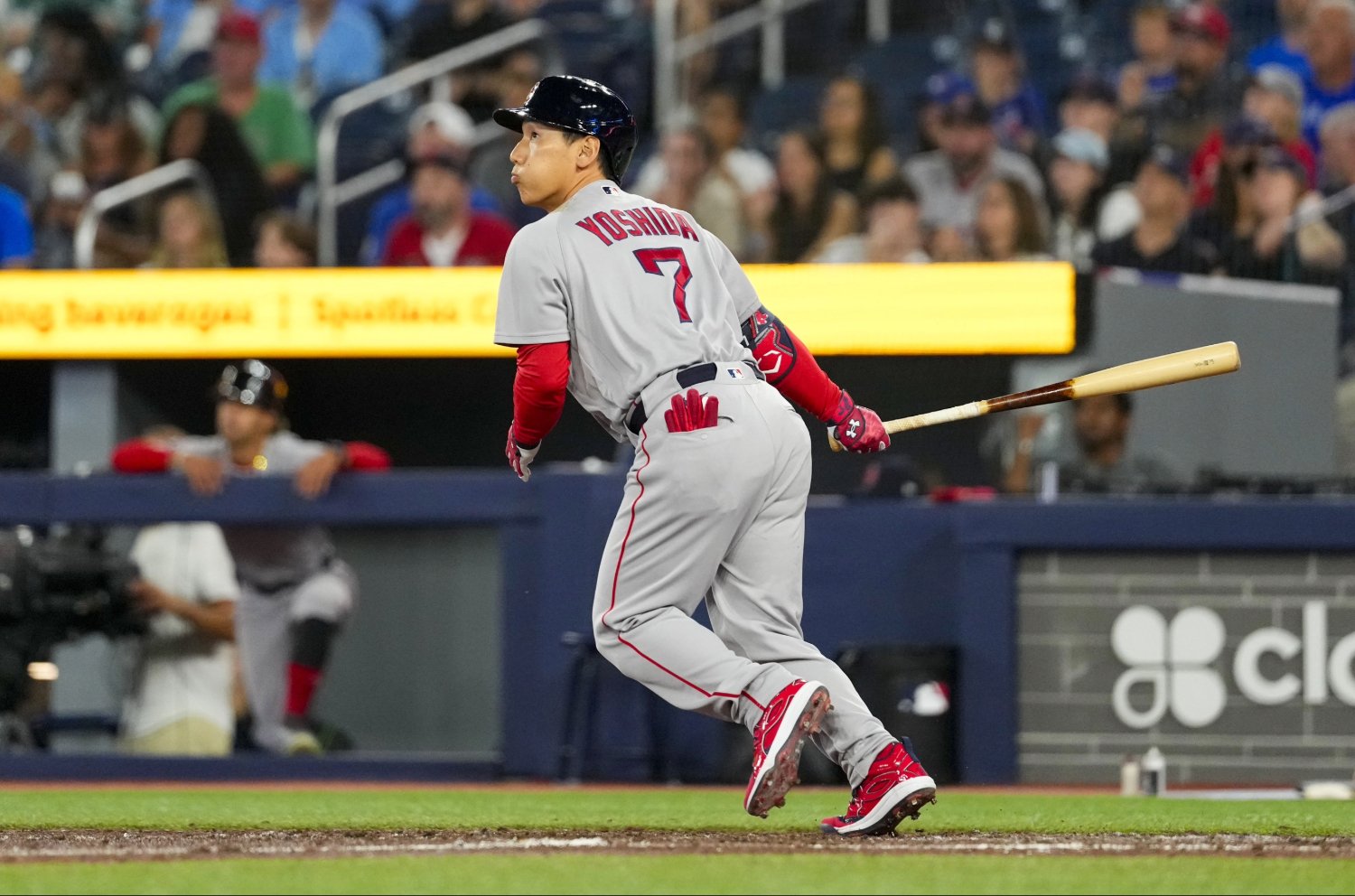 The Boston Red Sox received some injury updates Tuesday afternoon before the second game of their three-game series against the Arizona Diamondbacks. Following the injuries to outfielder Masataka Yoshida and pitchers Garrett Whitlock and Justin Slaten, the three were scheduled for MRIs. Only two of them came back positive. As first reported by MassLive's Chris Cotillo, both Whitlock and Slaten received good news as there was no structural damage, just inflammation, found in both of their MRIs. The two key pitchers of the Red Sox bullpen will remain shut down for now with the length of their downtime unknown. Yoshida, on the other hand, received tough news as his injury turned out to be significant with there being a chance he misses the remainder of the regular season. The loss of Yoshida's bat is a major blow to the Red Sox as they look to make it back to the postseason. In his last 22 games, the outfielder was hitting .292/.361/.403 with five doubles, one home run and 10 RBIs. The Red Sox also gave an update on Tanner Houck, stating that he threw a live bullpen session in Fort Myers and that it is now possible he could return this season. The right-hander underwent Tommy John surgery on August 18, 2025.
 -
Following the MLB Draft and trade deadline, the Boston Red Sox's farm system looks completely different. While a new draft class has joined the organization, the front office also shipped out quite a few high-ranking prospects in their pursuit of Adley Rutschman. With things having settled down, a new top-20 has been voted upon by both contributors and readers of the site. This new list looks very different from where things were prior to the deadline. Let’s jump into it below. Boston Red Sox Top-20 Prospect List (August 2026) Franklin Arias SS AAA (previously #1) Justin Gonzales OF/1B A+ (previously #5) Franklin Primera C A- (previously #14) Henry Godbout 2B/SS AA (previously #6) Juan Valera RHP A+ (previously #9) Sadbiel Delzine RHP A- (previously #12) Yoeilin Cespedes 2B/SS AA (previously #10) John Holobetz RHP AAA (previously #20) Marcus Phillips RHP A+ (previously #8) Jake Schaffner SS A+ (previously #16) Dorian Soto SS/2B FCL (previously #11) Johanfran Garcia C AA (previously #15) Blake Wehunt RHP AAA (previously unranked) Owen Hull OF A+ (previously #19) Mikey Romero 2B/3B AAA (previously #13) Hayden Mullins LHP AA (previously unranked) Jack Winnay 3B/1B AA (previously unranked) Gerardo Rodriguez C A+ (previously unranked) Yophery Rodriguez OF A+ (previously #17) Luke Heyman C A+ (previously unranked) The list is vastly different from when the month of August began. First off, top prospects Anthony Eyanson, Kyson Witherspoon, Enddy Azocar and Tyler Uberstine are off the list due to their trades to the Baltimore Orioles and Atlanta Braves, respectively. Along with them, Jake Bennett graduated from prospect status and was removed from the list. To fill their vacated spots, pitchers Blake Wehunt and Hayden Mullins joined the ranks at Nos. 13 and 16, respectively. The latter rejoins the list after previously falling out of the top 20 altogether. Catchers Gerardo Rodriguez and Luke Heyman make their debuts on the top 20 at ranks 18 and 20, respectively, while infielder Jack Winnay also makes his debut at rank 17. The biggest ranked improvements belonged to John Holobetz and Franklin Primera as they jumped 12 and 11 spots, respectively. Sadbiel Delzine also saw a significant rise as he went from the 12th-ranked prospect all the way up to sixth. Along with them, Justin Gonzales, Henry Godbout, Juan Valera and Jake Schaffner were a few players that saw their rank improve, the latter going from 16th all the way to 10th. The biggest decrease in ranks belonged to Mikey Romero and Yophery Rodriguez, both of whom dropped two spots respectively. Romero went from being the 13th-ranked prospect down to 15th as his tough season continues. Despite a strong month of June, Romero suffered a rough July. In a small sample size in August, though, he’s looking better, with the highlight being the first-ever six-hit game in Worcester history. For Rodriguez, after a hot start, he fell off with tough months of May and June before a resurgence was seen in July. The outfielder’s biggest area to work on is his consistency as he will go on hot stretches only to fall into longer cold streaks. The rankings this time around are dominated differently than in the past. Whereas pitching was typically near the top of the rankings (headlined by Eyanson and Witherspoon), this time around the top four spots belong to position players and of the top 10, six of them are hitters. Overall, the top-20 list contains certainly favors that type; 14 of the players present are of the position-playing variety. More specifically, middle infield makes up six of those 14, while four catchers are also present on the list. It shows the organization’s focus on developing catchers after not having much minor-league depth at the position last season. One area that the list has remained the same is that Greenville continues to dominate. The High-A organization has eight representatives on the list. Portland is second with five representatives including a couple that were recently promoted from Greenville in Godbout and Cespedes. Worcester has four representatives, while Salem follows behind them with two and the FCL has just one player on the list. Let's wrap things up with our newest additions. Jake Schaffner, SS (High-A Greenville): No. 10 Schaffner is an infielder who played shortstop for North Carolina in 2026 after spending his first two collegiate seasons at NDSU. He's carried over an impressively similar level of production in 2026 against much stiffer opposition. Schaffner hits from the left side. It's an offensive profile predicated on exceptional bat-to-ball skills. His overall contact rate in 2026 sits at ~88%, with a 94% rate in zone. There's some pop in the profile, with six home runs and 42 extra-base hits. All of this is backed up by a strong approach, as Schaffner doesn't chase much and has walked over 13% of the time in 2026. He is a good up-the-middle defender. There's an average arm in there, and while he may move off shortstop eventually, he should be able to stick on the dirt, most likely at second base. Throw in above-average speed and savvy as a baserunner (25 stolen bases in 2026), and there's a promising infield utility profile. Blake Wehunt, RHP (Triple-A Worcester): No. 13 Wehunt has increased his prospect stock this season after showing that his struggles from last season were mostly injury related. Having made just 17 appearances in 2025, Wehunt put up numbers that were inflated from a few bad appearances, namely a 5.68 ERA in just 63 1/3 innings. So far in 2026, though, it’s been a different story. Wehunt has shown an ability to generate strikeouts thanks in part to a four-pitch arsenal made up of a fastball, cutter, sweeper and splitter. Through 17 starts this season, he’s tossed 68 2/3 innings while striking out 82 batters. Pitching from the first base side of the rubber, he throws from a three-quarters arm slot. There is some effort in his delivery but despite that, he seems to repeat it more often than not. He also has plus extension, giving his high-90s fastball a little extra life at the top of the zone. Owen Hull, OF (High-A Greenville): No. 14 Owen Hull is a sharp riser on the college side of the draft after an impressive postseason run as part of North Carolina’s CWS squad. After spending his first two collegiate seasons at George Mason, the 6’4 outfielder made the transition to the ACC look seamless, and set himself up as a day-one pick. Hull hits from the left side, and has a bit of an unorthodox looking swing. There is some swing and miss in the profile, but the damage on contact is impressive. He controls his at-bats well and takes plenty of walks, rarely expanding the zone in collegiate ball. He has a chance to stick in center field with plus speed. It’s a fringe-average arm, but the range and glove will play in center, at least during the onset of his professional career. Hull hit .393/.500/.615 with nine home runs (38 extra-base hits), a 14.8 BB%, a 15.1 K%, and a 146 wRC+ in 2026. Hayden Mullins, LHP (Double-A Portland): No. 16 Entering the Rule 5 Draft, there was a lot of concern that Mullins could be selected after his 2025 season, especially as many felt that his stuff could play well out of the bullpen a role. Instead, he was not selected and returned to the Boston organization for the 2026 season, and he’s looked rather good so far including being part of a no-hitter on April 26. Through 19 appearances (including a Triple-A debut), Mullins has tossed 73 innings and struck out 107 batters. Unfortunately, his control has been an issue as he’s walked 48. Mullins throws from a three-quarters slot and starts on the third base side of the rubber. His motion tends to involve a high leg kick and rotates his hips. He’s also viewed as having good extension, which we all know Craig Breslow loves. He has a five-pitch arsenal that is made up of a four-seam fastball, slider, sweeper, changeup and cutter. Jack Winnay, 3B/1B (Double-A Portland): No. 17 The team’s 13th-round pick in 2025, Winnay was viewed as a corner infielder with power after hitting 35 home runs for Wake Forest in his last two years. A native of Newton, Massachusetts, it seemed to make a nice story. However, he’s broken out in 2026 faster than people may have expected. After 56 games with Greenville where he hit .255/.434/.457 and had more walks than strikeouts (53 to 51), he was promoted to Portland. Overall on the season, he’s hitting .259/.408/.439 with 12 doubles, 15 home runs, 42 RBIs and 70 walks to 83 strikeouts in 93 games. Winnay as a hitter starts with his hands high and likes to extend his arms and pull the ball, especially in the air. The style of hitting he does fits with the model that Craig Breslow wants. So far, he’s showcased solid contact skills and can recognize pitches including secondary offerings. There is some concern when it comes to velocity. His power is where most of his value comes from thanks to above-average raw power to the pull side. Since joining the organization, he’s put it on display in Greenville and then showed no decline when he got promoted to Portland When it comes to defense, he mainly played first base and outfield in college but the Red Sox have been using him at third base since the start of the season with some occasional time at the cold corner. His average arm strength allows him to move back and forth between the corner infield positions. Gerardo Rodriguez, C (High-A Greenville): No. 18 Signed as an international free agent in 2023, Rodriguez played well enough as a 17-year-old in the Dominican Summer League to be brought stateside as an 18-year-old. That season, he mainly played in the Florida Complex League before a late season promotion to end the year with Salem. The 2025 campaign was more of the same, as he split time with Salem and the FCL where he hit a combined .285/.344/.421 with 20 doubles, one triple, three home runs and 43 RBIs in 69 games. The 2026 season has been his breakout year, as he’s played a career high 76 games for High-A Greenville and has hit .254/.332/.363 with 10 doubles, one triple, seven home runs and 35 RBIs while mainly playing catcher and some first base. Offensively he has solid bat speed that goes with a shorter swing path that has allowed for good contact ability. Currently, he’s more of a gap hitter but has shown some power for someone of his size. Defense is Rodriguez’s carrying tool. as he’s shown to be a capable receiver and is good at blocking pitches. He moves well behind the plate and with a strong arm has been able to control the run game thanks to a quick release and great pop times. Luke Heyman, C (High-A Greenville): No. 20 Acquired in an offseason trade with the Seattle Mariners, Heyman is an intriguing prospect due to his bat alone. So far, he’s split the season between Salem and Greenville, appearing in 88 games and hitting .228/.357/.431 with 13 doubles, one triple, 16 home runs and 54 RBIs. He’s also shown an ability to walk, with 61 of them on the season. The real question for him is whether he will remain at catcher or be moved to a different position down the road. Offensively, he has above-average bat speed and when he swings he gets his whole body into it. He improved as a hitter across his college career and continued that improvement into professional ball. Most of his value comes from his power, which will be key if he winds up at first base down the road. View full article
- 1 reply
-
- 2
-

-
- jake schaffner
- blake wehunt
- (and 5 more)
-
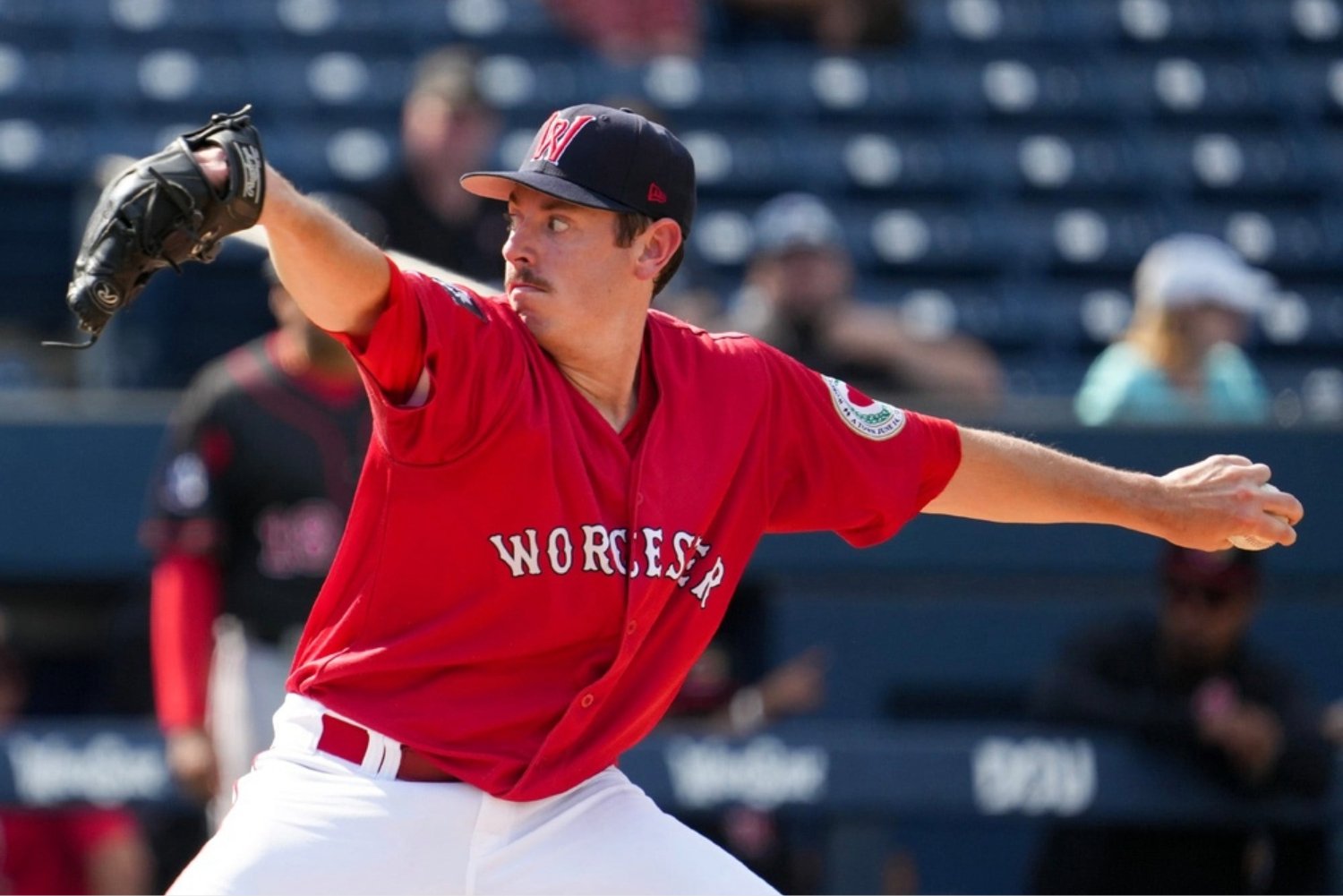 Following the MLB Draft and trade deadline, the Boston Red Sox's farm system looks completely different. While a new draft class has joined the organization, the front office also shipped out quite a few high-ranking prospects in their pursuit of Adley Rutschman. With things having settled down, a new top-20 has been voted upon by both contributors and readers of the site. This new list looks very different from where things were prior to the deadline. Let’s jump into it below. Boston Red Sox Top-20 Prospect List (August 2026) Franklin Arias SS AAA (previously #1) Justin Gonzales OF/1B A+ (previously #5) Franklin Primera C A- (previously #14) Henry Godbout 2B/SS AA (previously #6) Juan Valera RHP A+ (previously #9) Sadbiel Delzine RHP A- (previously #12) Yoeilin Cespedes 2B/SS AA (previously #10) John Holobetz RHP AAA (previously #20) Marcus Phillips RHP A+ (previously #8) Jake Schaffner SS A+ (previously #16) Dorian Soto SS/2B FCL (previously #11) Johanfran Garcia C AA (previously #15) Blake Wehunt RHP AAA (previously unranked) Owen Hull OF A+ (previously #19) Mikey Romero 2B/3B AAA (previously #13) Hayden Mullins LHP AA (previously unranked) Jack Winnay 3B/1B AA (previously unranked) Gerardo Rodriguez C A+ (previously unranked) Yophery Rodriguez OF A+ (previously #17) Luke Heyman C A+ (previously unranked) The list is vastly different from when the month of August began. First off, top prospects Anthony Eyanson, Kyson Witherspoon, Enddy Azocar and Tyler Uberstine are off the list due to their trades to the Baltimore Orioles and Atlanta Braves, respectively. Along with them, Jake Bennett graduated from prospect status and was removed from the list. To fill their vacated spots, pitchers Blake Wehunt and Hayden Mullins joined the ranks at Nos. 13 and 16, respectively. The latter rejoins the list after previously falling out of the top 20 altogether. Catchers Gerardo Rodriguez and Luke Heyman make their debuts on the top 20 at ranks 18 and 20, respectively, while infielder Jack Winnay also makes his debut at rank 17. The biggest ranked improvements belonged to John Holobetz and Franklin Primera as they jumped 12 and 11 spots, respectively. Sadbiel Delzine also saw a significant rise as he went from the 12th-ranked prospect all the way up to sixth. Along with them, Justin Gonzales, Henry Godbout, Juan Valera and Jake Schaffner were a few players that saw their rank improve, the latter going from 16th all the way to 10th. The biggest decrease in ranks belonged to Mikey Romero and Yophery Rodriguez, both of whom dropped two spots respectively. Romero went from being the 13th-ranked prospect down to 15th as his tough season continues. Despite a strong month of June, Romero suffered a rough July. In a small sample size in August, though, he’s looking better, with the highlight being the first-ever six-hit game in Worcester history. For Rodriguez, after a hot start, he fell off with tough months of May and June before a resurgence was seen in July. The outfielder’s biggest area to work on is his consistency as he will go on hot stretches only to fall into longer cold streaks. The rankings this time around are dominated differently than in the past. Whereas pitching was typically near the top of the rankings (headlined by Eyanson and Witherspoon), this time around the top four spots belong to position players and of the top 10, six of them are hitters. Overall, the top-20 list contains certainly favors that type; 14 of the players present are of the position-playing variety. More specifically, middle infield makes up six of those 14, while four catchers are also present on the list. It shows the organization’s focus on developing catchers after not having much minor-league depth at the position last season. One area that the list has remained the same is that Greenville continues to dominate. The High-A organization has eight representatives on the list. Portland is second with five representatives including a couple that were recently promoted from Greenville in Godbout and Cespedes. Worcester has four representatives, while Salem follows behind them with two and the FCL has just one player on the list. Let's wrap things up with our newest additions. Jake Schaffner, SS (High-A Greenville): No. 10 Schaffner is an infielder who played shortstop for North Carolina in 2026 after spending his first two collegiate seasons at NDSU. He's carried over an impressively similar level of production in 2026 against much stiffer opposition. Schaffner hits from the left side. It's an offensive profile predicated on exceptional bat-to-ball skills. His overall contact rate in 2026 sits at ~88%, with a 94% rate in zone. There's some pop in the profile, with six home runs and 42 extra-base hits. All of this is backed up by a strong approach, as Schaffner doesn't chase much and has walked over 13% of the time in 2026. He is a good up-the-middle defender. There's an average arm in there, and while he may move off shortstop eventually, he should be able to stick on the dirt, most likely at second base. Throw in above-average speed and savvy as a baserunner (25 stolen bases in 2026), and there's a promising infield utility profile. Blake Wehunt, RHP (Triple-A Worcester): No. 13 Wehunt has increased his prospect stock this season after showing that his struggles from last season were mostly injury related. Having made just 17 appearances in 2025, Wehunt put up numbers that were inflated from a few bad appearances, namely a 5.68 ERA in just 63 1/3 innings. So far in 2026, though, it’s been a different story. Wehunt has shown an ability to generate strikeouts thanks in part to a four-pitch arsenal made up of a fastball, cutter, sweeper and splitter. Through 17 starts this season, he’s tossed 68 2/3 innings while striking out 82 batters. Pitching from the first base side of the rubber, he throws from a three-quarters arm slot. There is some effort in his delivery but despite that, he seems to repeat it more often than not. He also has plus extension, giving his high-90s fastball a little extra life at the top of the zone. Owen Hull, OF (High-A Greenville): No. 14 Owen Hull is a sharp riser on the college side of the draft after an impressive postseason run as part of North Carolina’s CWS squad. After spending his first two collegiate seasons at George Mason, the 6’4 outfielder made the transition to the ACC look seamless, and set himself up as a day-one pick. Hull hits from the left side, and has a bit of an unorthodox looking swing. There is some swing and miss in the profile, but the damage on contact is impressive. He controls his at-bats well and takes plenty of walks, rarely expanding the zone in collegiate ball. He has a chance to stick in center field with plus speed. It’s a fringe-average arm, but the range and glove will play in center, at least during the onset of his professional career. Hull hit .393/.500/.615 with nine home runs (38 extra-base hits), a 14.8 BB%, a 15.1 K%, and a 146 wRC+ in 2026. Hayden Mullins, LHP (Double-A Portland): No. 16 Entering the Rule 5 Draft, there was a lot of concern that Mullins could be selected after his 2025 season, especially as many felt that his stuff could play well out of the bullpen a role. Instead, he was not selected and returned to the Boston organization for the 2026 season, and he’s looked rather good so far including being part of a no-hitter on April 26. Through 19 appearances (including a Triple-A debut), Mullins has tossed 73 innings and struck out 107 batters. Unfortunately, his control has been an issue as he’s walked 48. Mullins throws from a three-quarters slot and starts on the third base side of the rubber. His motion tends to involve a high leg kick and rotates his hips. He’s also viewed as having good extension, which we all know Craig Breslow loves. He has a five-pitch arsenal that is made up of a four-seam fastball, slider, sweeper, changeup and cutter. Jack Winnay, 3B/1B (Double-A Portland): No. 17 The team’s 13th-round pick in 2025, Winnay was viewed as a corner infielder with power after hitting 35 home runs for Wake Forest in his last two years. A native of Newton, Massachusetts, it seemed to make a nice story. However, he’s broken out in 2026 faster than people may have expected. After 56 games with Greenville where he hit .255/.434/.457 and had more walks than strikeouts (53 to 51), he was promoted to Portland. Overall on the season, he’s hitting .259/.408/.439 with 12 doubles, 15 home runs, 42 RBIs and 70 walks to 83 strikeouts in 93 games. Winnay as a hitter starts with his hands high and likes to extend his arms and pull the ball, especially in the air. The style of hitting he does fits with the model that Craig Breslow wants. So far, he’s showcased solid contact skills and can recognize pitches including secondary offerings. There is some concern when it comes to velocity. His power is where most of his value comes from thanks to above-average raw power to the pull side. Since joining the organization, he’s put it on display in Greenville and then showed no decline when he got promoted to Portland When it comes to defense, he mainly played first base and outfield in college but the Red Sox have been using him at third base since the start of the season with some occasional time at the cold corner. His average arm strength allows him to move back and forth between the corner infield positions. Gerardo Rodriguez, C (High-A Greenville): No. 18 Signed as an international free agent in 2023, Rodriguez played well enough as a 17-year-old in the Dominican Summer League to be brought stateside as an 18-year-old. That season, he mainly played in the Florida Complex League before a late season promotion to end the year with Salem. The 2025 campaign was more of the same, as he split time with Salem and the FCL where he hit a combined .285/.344/.421 with 20 doubles, one triple, three home runs and 43 RBIs in 69 games. The 2026 season has been his breakout year, as he’s played a career high 76 games for High-A Greenville and has hit .254/.332/.363 with 10 doubles, one triple, seven home runs and 35 RBIs while mainly playing catcher and some first base. Offensively he has solid bat speed that goes with a shorter swing path that has allowed for good contact ability. Currently, he’s more of a gap hitter but has shown some power for someone of his size. Defense is Rodriguez’s carrying tool. as he’s shown to be a capable receiver and is good at blocking pitches. He moves well behind the plate and with a strong arm has been able to control the run game thanks to a quick release and great pop times. Luke Heyman, C (High-A Greenville): No. 20 Acquired in an offseason trade with the Seattle Mariners, Heyman is an intriguing prospect due to his bat alone. So far, he’s split the season between Salem and Greenville, appearing in 88 games and hitting .228/.357/.431 with 13 doubles, one triple, 16 home runs and 54 RBIs. He’s also shown an ability to walk, with 61 of them on the season. The real question for him is whether he will remain at catcher or be moved to a different position down the road. Offensively, he has above-average bat speed and when he swings he gets his whole body into it. He improved as a hitter across his college career and continued that improvement into professional ball. Most of his value comes from his power, which will be key if he winds up at first base down the road.
 -
Winners of 16 of their last 20 games, Worcester is playing some of their best baseball at exactly the right time. Since traveling to Syracuse at the end of June, the WooSox have gone 24-10, vaulting themselves up the standings and into the conversation of being the potential second-half winners of the International League. In Triple-A, the season has been broken into two halves since 2022. In the International League, the team that has the best record between the two divisions at the end of each half secures a playoff spot. The Memphis Cardinals were this season’s first-half champions, securing home field for a best-of-three series to determine the league champion; the winner of that gets to play in Las Vegas against the Pacific Coast League’s champion to determine a Triple-A champion. Following a 2-1 win on August 12, the team sits just half a game back of Indianapolis for first place. The WooSox have put themselves into a situation where they have a shot to compete for their first championship since they moved to Worcester and the playoff format changed. To say that the thought of a playoff race isn’t on the team’s mind would be wrong. “I’m not gonna say I’m not thinking about it, cause I’d be lying if I wasn’t,” acting manager Iggy Suarez admitted to the media back when the team was two games back of first. “You look at the standings and kind of see where you are. You don’t scoreboard watch too much, you look where you are after games. But you can’t help to check. “We’re not talking about it around here. It’s like, we just gotta do what we do and whatever happens, happens. That’s all we can do." This isn’t the first time Suarez has been involved in a playoff chase. When he was a player back in 2006 with the Portland Sea Dogs, he was called up from the Wilmington Blue Rocks to help the team as they were competing for the Double-A championship. The team would go on to capture the franchise’s first Eastern League Championship that season. It wouldn’t be the only time Suarez was involved in a playoff race, as he was the manager of the Greenville Drive when they swept the South Atlantic Championship Series in 2023 with a roster that had a few guys who are now in Worcester. “It’s a cool time to be in. I’ve been fortunate enough as a player to do it, 2006 in Portland. I’ve done it as a manager, we won in ’23 [in Greenville]. The players know. Let’s keep playing our game and what we do.” Worcester’s season has been defined by not just one player carrying the team, but thanks in part to everyone stepping up at different times. Early in the season, they lost key players such as Payton Tolle, Jake Bennett, Mickey Gasper and Nick Sogard to the parent club. Despite that, the team hovered around .500 thanks to the contributions of guys like Allan Castro, Anthony Seigler, Raymond Burgos and Vinny Capra. Even when Seigler was promoted to Boston and the team lost a key offensive piece, others stepped up as Tyler McDonough and Max Ferguson were brought up from Portland and contributed immediately. Now in the second half, that playstyle has evolved. Since traveling to Syracuse at the end of June, the offense has been rolling. In the month of July, the team had 10 position players with an OPS over .700. Castro just missed that with an OPS of .690. Eight players had at least nine RBIs for the month and Brett Harris and Capra were tied for the team lead with 14. On the pitching side, the bullpen has stepped up all season. Without more than one available starting pitcher until late July, the team was constantly throwing bullpen games, sometimes four times a week as they navigated a lack of arms. Innings have been tough to cover, but the bullpen led by Angel Bastardo, Wyatt Olds, Seth Martinez, Eduardo Rivera and recently traded reliever Tyler Uberstine held down the fort in the month of July. Then, reinforcements from Double-A came in the form of Blake Wehunt, John Holobetz and Gage Ziehl. “When I got the text from Dan [Delucia] and it’s not all TBDs, when you see actual names, I was like is it for real. It’s a breath of fresh air. I bet the bullpen is pumping their fist in the ‘pen, give them a little bit of rest,” Suarez joked when the topic of the new starters was approached. The heavy reliance on the bullpen hasn’t gone unnoticed; following the August 12 game against Buffalo, Worcester has deployed 31 bullpen games. Overall, their record has been 19-12 across those games, a sign of how dominant their bullpen has been. “Before, we were asking a lot out of them and I think they understand the situation. They’ve stepped up. It’s not an easy thing to do, especially doing it as many times as we’ve done this year. I think it’s a mindset they’ve grown accustomed to and they’ve been getting better at. I’ve never seen this many like we’ve had this year, but again it’s a testament to how they prepare and are able to give us good outings.” For most of the season, the team would have four, sometimes five pitchers available each night. The plan was to navigate outs rather than plan innings. Most pitchers would deliver two innings a night, and some such as Noah Song and Hobie Harris have been able to provide length and give three innings. The hope was that the team would make it through each game with the four arms. If not, it was likely a position player such as Juan Montero or Nathan Hickey who would take the mound. “It’s a breath of fresh air. There’s still some hiccups that can happen here and there, but to be able to have starters that can give us three or four innings in the beginning of the game to go into the bullpen as opposed to going into the bullpen first and then Hickey’s coming in the seventh.” And now with everything starting to click for Worcester, the potential the team always had is now being shown. The players who kept the season alive are still thriving, but now with assistance from the next wave of incoming prospects. The roster has mostly stayed the same, but the latest additions that have been optioned from Boston and promoted from Portland has allowed the team to flourish. Each time it seemed they were out of a game during the second half, the team has fought back in and managed to win. Against Jacksonville on July 22 the team was trailing 7-0 and then 10-4 in a seven-inning game before eventually walking them off 13-12. “There’s an energy in the dugout knowing that if we’re within striking distance we’ll have a chance even if we’re behind. I think any kind of lead, we don’t panic. It’s just a matter of just giving ourselves good at-bats. Again, you feel the energy whether it’s in the dugout with our bats or coming from the bullpen and our pitchers on the mound. Once you have that energy and that mentality there’s no doubt we’ll be in it,” Suarez explained about the team’s recent hot streak. Worcester has never had a losing season since moving from Pawtucket, but this season has a different feel to it. The team has been a cohesive unit all year despite the roster being in a constant state of change. Led by players such as Arias, Campbell, Castro and Capra on the field, Worcester is now riding high and aiming for a trip to Las Vegas. View full article
-
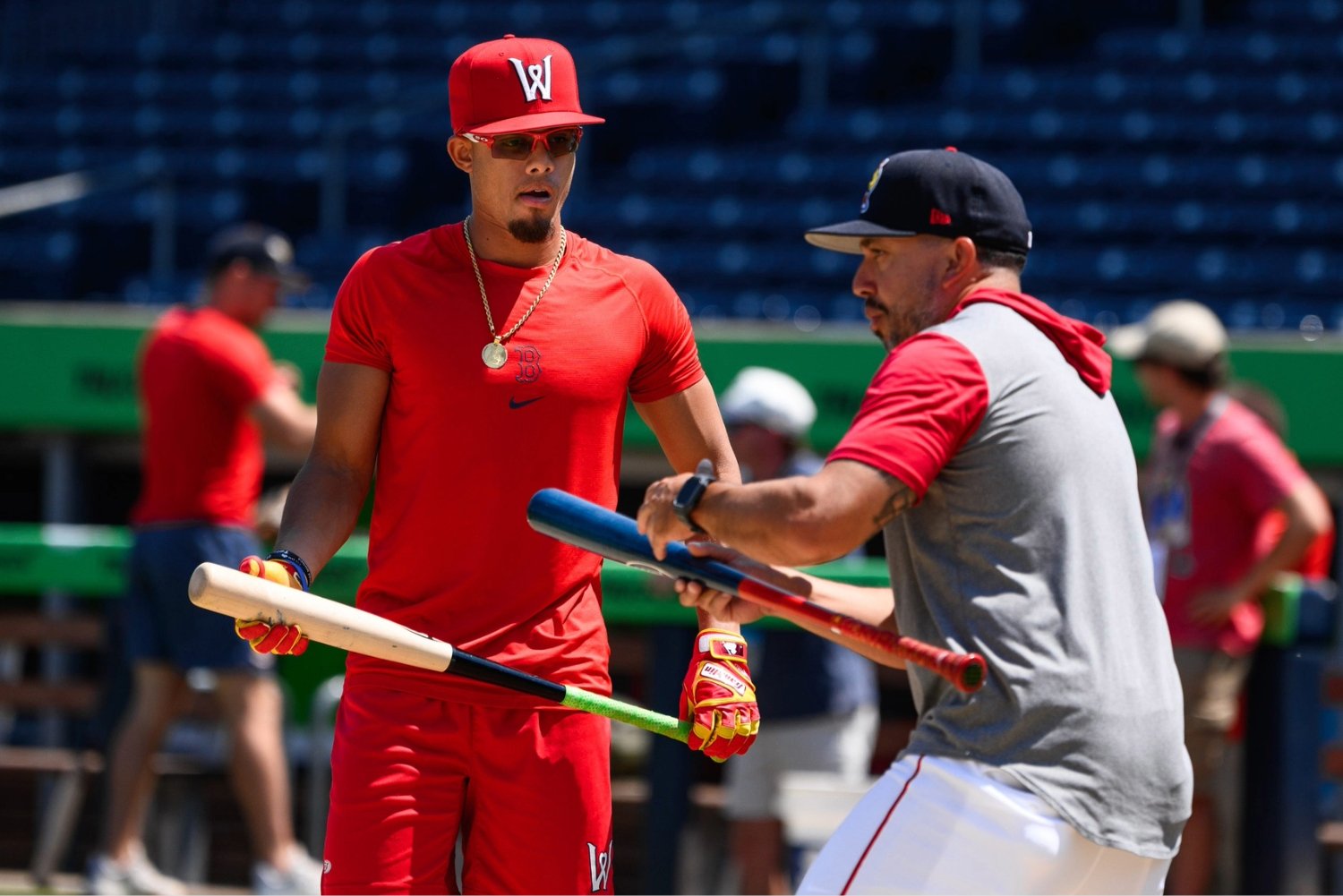 Winners of 16 of their last 20 games, Worcester is playing some of their best baseball at exactly the right time. Since traveling to Syracuse at the end of June, the WooSox have gone 24-10, vaulting themselves up the standings and into the conversation of being the potential second-half winners of the International League. In Triple-A, the season has been broken into two halves since 2022. In the International League, the team that has the best record between the two divisions at the end of each half secures a playoff spot. The Memphis Cardinals were this season’s first-half champions, securing home field for a best-of-three series to determine the league champion; the winner of that gets to play in Las Vegas against the Pacific Coast League’s champion to determine a Triple-A champion. Following a 2-1 win on August 12, the team sits just half a game back of Indianapolis for first place. The WooSox have put themselves into a situation where they have a shot to compete for their first championship since they moved to Worcester and the playoff format changed. To say that the thought of a playoff race isn’t on the team’s mind would be wrong. “I’m not gonna say I’m not thinking about it, cause I’d be lying if I wasn’t,” acting manager Iggy Suarez admitted to the media back when the team was two games back of first. “You look at the standings and kind of see where you are. You don’t scoreboard watch too much, you look where you are after games. But you can’t help to check. “We’re not talking about it around here. It’s like, we just gotta do what we do and whatever happens, happens. That’s all we can do." This isn’t the first time Suarez has been involved in a playoff chase. When he was a player back in 2006 with the Portland Sea Dogs, he was called up from the Wilmington Blue Rocks to help the team as they were competing for the Double-A championship. The team would go on to capture the franchise’s first Eastern League Championship that season. It wouldn’t be the only time Suarez was involved in a playoff race, as he was the manager of the Greenville Drive when they swept the South Atlantic Championship Series in 2023 with a roster that had a few guys who are now in Worcester. “It’s a cool time to be in. I’ve been fortunate enough as a player to do it, 2006 in Portland. I’ve done it as a manager, we won in ’23 [in Greenville]. The players know. Let’s keep playing our game and what we do.” Worcester’s season has been defined by not just one player carrying the team, but thanks in part to everyone stepping up at different times. Early in the season, they lost key players such as Payton Tolle, Jake Bennett, Mickey Gasper and Nick Sogard to the parent club. Despite that, the team hovered around .500 thanks to the contributions of guys like Allan Castro, Anthony Seigler, Raymond Burgos and Vinny Capra. Even when Seigler was promoted to Boston and the team lost a key offensive piece, others stepped up as Tyler McDonough and Max Ferguson were brought up from Portland and contributed immediately. Now in the second half, that playstyle has evolved. Since traveling to Syracuse at the end of June, the offense has been rolling. In the month of July, the team had 10 position players with an OPS over .700. Castro just missed that with an OPS of .690. Eight players had at least nine RBIs for the month and Brett Harris and Capra were tied for the team lead with 14. On the pitching side, the bullpen has stepped up all season. Without more than one available starting pitcher until late July, the team was constantly throwing bullpen games, sometimes four times a week as they navigated a lack of arms. Innings have been tough to cover, but the bullpen led by Angel Bastardo, Wyatt Olds, Seth Martinez, Eduardo Rivera and recently traded reliever Tyler Uberstine held down the fort in the month of July. Then, reinforcements from Double-A came in the form of Blake Wehunt, John Holobetz and Gage Ziehl. “When I got the text from Dan [Delucia] and it’s not all TBDs, when you see actual names, I was like is it for real. It’s a breath of fresh air. I bet the bullpen is pumping their fist in the ‘pen, give them a little bit of rest,” Suarez joked when the topic of the new starters was approached. The heavy reliance on the bullpen hasn’t gone unnoticed; following the August 12 game against Buffalo, Worcester has deployed 31 bullpen games. Overall, their record has been 19-12 across those games, a sign of how dominant their bullpen has been. “Before, we were asking a lot out of them and I think they understand the situation. They’ve stepped up. It’s not an easy thing to do, especially doing it as many times as we’ve done this year. I think it’s a mindset they’ve grown accustomed to and they’ve been getting better at. I’ve never seen this many like we’ve had this year, but again it’s a testament to how they prepare and are able to give us good outings.” For most of the season, the team would have four, sometimes five pitchers available each night. The plan was to navigate outs rather than plan innings. Most pitchers would deliver two innings a night, and some such as Noah Song and Hobie Harris have been able to provide length and give three innings. The hope was that the team would make it through each game with the four arms. If not, it was likely a position player such as Juan Montero or Nathan Hickey who would take the mound. “It’s a breath of fresh air. There’s still some hiccups that can happen here and there, but to be able to have starters that can give us three or four innings in the beginning of the game to go into the bullpen as opposed to going into the bullpen first and then Hickey’s coming in the seventh.” And now with everything starting to click for Worcester, the potential the team always had is now being shown. The players who kept the season alive are still thriving, but now with assistance from the next wave of incoming prospects. The roster has mostly stayed the same, but the latest additions that have been optioned from Boston and promoted from Portland has allowed the team to flourish. Each time it seemed they were out of a game during the second half, the team has fought back in and managed to win. Against Jacksonville on July 22 the team was trailing 7-0 and then 10-4 in a seven-inning game before eventually walking them off 13-12. “There’s an energy in the dugout knowing that if we’re within striking distance we’ll have a chance even if we’re behind. I think any kind of lead, we don’t panic. It’s just a matter of just giving ourselves good at-bats. Again, you feel the energy whether it’s in the dugout with our bats or coming from the bullpen and our pitchers on the mound. Once you have that energy and that mentality there’s no doubt we’ll be in it,” Suarez explained about the team’s recent hot streak. Worcester has never had a losing season since moving from Pawtucket, but this season has a different feel to it. The team has been a cohesive unit all year despite the roster being in a constant state of change. Led by players such as Arias, Campbell, Castro and Capra on the field, Worcester is now riding high and aiming for a trip to Las Vegas.
 -
Boston Red Sox to Recall Left-Hander Alec Gamboa
Nick John replied to Nick John's topic in Boston Red Sox Talk
I wouldn't say he's behind Burgos and Martinez on the depth chart. Burgos was called up because the Sox wanted someone who could give them "starter's innings out of the bullpen". Not sure on Martinez though I will say that Samaniego was lucky at times in Boston. His underlying metrics showed regression was likely.
![More information about "Alex Kranzler Brings An SEC Mentality to Red Sox Organization [Exclusive]"](http://d1mqtyoopj0gsc.cloudfront.net/monthly_2026_09/alexkranzler.jpg.c9b817501133de63595c9e9a22f6d97b.jpg)
![More information about "Red Sox Speedster Andrews Opata Is Leaving His Mark In Salem [Exclusive]"](http://d1mqtyoopj0gsc.cloudfront.net/monthly_2026_08/andrewsopata.jpg.c3eeb065a540c777485d4b38c49e7469.jpg)
![More information about "Calvin Bickerstaff's Unique Path to Professional Baseball Has Him Ready to Succeed With Red Sox [Exclusive]"](http://d1mqtyoopj0gsc.cloudfront.net/monthly_2026_08/Bickerstaff.jpg.04c1ed4b0a80509f9895ed727266e43a.jpg)
![More information about "After Tommy John Surgery, Cole Tolbert's Competitive Spirit Burns Bright [Exclusive]"](http://d1mqtyoopj0gsc.cloudfront.net/monthly_2026_08/Tolbert.png.2176d10f8a8c11b74cf7772abac349ab.png)
