


Nick John
-
Posts
799 -
Joined
-
Last visited
-
Days Won
1
Content Type
Profiles
Boston Red Sox Videos
2026 Boston Red Sox Top Prospects Ranking
Boston Red Sox Free Agent & Trade Rumors, Notes, & Tidbits
Guides & Resources
2025 Boston Red Sox Draft Pick Tracker
News
2026 Boston Red Sox Draft Tracker: Picks & Bonuses
Forums
Blogs
Events
Store
Downloads
Gallery
Everything posted by Nick John
-
“Just be ready.” Those were the words former Worcester manager Chad Tracy kept telling Payton Tolle as he waited to step on the mound again. The last time the young left-hander had pitched was April 12 when he tossed five shutout innings against the Columbus Clippers. In that game Tolle was dominant, tossing five shutout innings while striking out six. The left-hander being a force in Triple-A was nothing new, but how he’s handled his secondary pitches showed he was a different pitcher from 2025. “He landed his off-speed for strikes and when he lands his off-speed for strikes and then runs it up to 98 with that big extension, he’s very difficult to deal with. That was the biggest focus with Dan and Noah [pitching and bullpen coaches]. Let’s not get too fine about it, let’s land it, it’s like we need the breaking ball over the plate for a strike. We need the changeup in the zone for a strike. And then it plays even more and they can’t just sit on a fastball,” Tracy explained when asked on April 21 about when asked by the media what Tolle had shown to begin the season for a call-up to make sense. Tolle would indeed be recalled on April 23 to pitch against the New York Yankees and showed he was ready. While the Red Sox would ultimately lose the game 4-2, Tolle gave the team everything he had by pitching six innings and allowing just one earned run on three hits and a walk. He also struck out 11 batters including five straight to begin his outing. His fastball topped out at 99.5 mph during the outing, and he managed to generate 18 whiffs. The Yankees as a team have handled fastballs extremely well in 2026 with Ben Rice, Aaron Judge, Cody Bellinger and Austin Wells all having a run value of three or greater. Run Value is a metric that helps measure the impact a hitter has on run scoring with a positive value indicating runs created. Rice, who leads the team against fastballs with a Run Value of nine, has a .400 batting average and a 1.240 slugging percentage against fastballs in 2026. Against Tolle he went 1-for-3, his lone hit coming off of the sinker while being struck out on a fastball. And just as Tracy had stated about what made Tolle ready for the major leagues, the left-hander went out and did just that. Leading with his fastball for 49% of his pitches, his best weapon was supplemented by mainly his sinker and curveball as the latter generated seven whiffs and was a strike 80% of the time it was thrown. Thanks to that, Tolle was able to get eight whiffs with his fastball, the pitch being put in play just five times while only one ended up as a hit. The sinker was just as useful despite not generating any whiffs. Instead, Tolle was able to land it for a strike 61% of the time including for five first pitch strikes. His cutter was just as effective, using it 12% of the time and getting two whiffs on it while landing it for a strike 73% of the time. The pitch was used against both right-handed and left-handed batters. Overall, he tossed 93 pitches on the evening with 68% of them going for strikes. But unlike in 2025 where his first start was his best performance, Tolle continued to pitch well and in his third start against the Detroit Tigers, the left-hander dominated even when mother nature looked to create chaos. Tossing seven innings, Tolle cruised against the Tigers’ lineup as he allowed just one hit and one walk to the Tigers offense while striking out eight. He also allowed two unearned runs to score during a very wet sixth inning. Tolle’s night began by retiring the first 12 batters he faced until Riley Greene led off the fifth inning with a double. Then the sixth inning came. As the weather worsened and fans were told to take shelter, Tolle remained on the mound throughout the downpour. The weather situation played a role in a rough sixth inning as Tolle hit the first batter and with one out allowed his lone walk of the evening. With two on and one out, Carlos Narváez attempted to pick off the runner on first base only to throw the baseball into right field and allow both runners to advance. Then Matt Vierling stepped to the plate and hit a ground ball at Andruw Monasterio at third base who attempted to throw home. It was offline and got past Narváez, allowing both runners to score. Despite that, Tolle remained poised on the mound, striking out the next two batters and getting the team out of the inning without any more damage being done. When looking at the pitch usage, it was very similar to the Yankees outing where he led with his four-seam fastball with a 36% usage rate while the sinker and curveball both supplemented it as they were used 23% and 18%, respectively. His cutter and changeup saw a tick in increased usage at 16% and 7%. Overall Tolle managed to generate nine whiffs, with eight of them coming between the fastball and curveball. Just like with the Yankees, Tolle was often in the strike zone, getting a strike with his fastball 77% of the time including six first-pitch strikes. And just like the Yankees, the Tigers are also a good fastball hitting team with seven players having a Run Value of at least one, with three of them having a value of three. Of those seven players, only Spencer Torkelson, Riley Greene, and Dillon Dingler were in the lineup. The three of them went a combined 1-for-9 against Tolle and the only hit was off a sinker. Since returning to the majors, Tolle has been throwing strikes and utilizing the strike zone with all of his pitches. His fastball has mostly been in the upper-two-thirds of the strike zone or in the bottom left of the strike zone from the catcher’s perspective. Compared to 2025 where it was mainly located on the upper half of the strike zone and towards the left-handed batter’s box, the pitch has been located better. The curveball has also seen an improvement, not just in pitch usage but where he’s landing it. During his time in the majors last season, Tolle used it just 18 times with it mostly landing on the upper inside portion of the plate if you were a left-handed batter. Now, the pitch has a more varied location. Most of the time Tolle seems to be landing it in the upper third of the strike zone or at the bottom of the zone with it occasionally hitting the inside corner of the left-handed batter’s box. It has seen a vast improvement in missing bats, being whiffed on 52.4% of the time. His sinker on the other hand has the most varied locations when you look at his pitch contour. The pitch has had a few locations he frequents with it, being mostly the inside portion of the plate to left-handed hitters. The pitch has mostly been up and in or down and in with the occasional down and away from the left-handed batter’s box (though if you’re to look at it from the right-handed box it would be the opposite). With his sinker and curveball able to change the vertical eye level of a hitter, Tolle has been able to make hitters guess with his cutter. When thrown up in the zone, the pitch has been in a similar location to the curveball only a bit more inside if you’re a right-handed hitter. The pitch has also been thrown down and away from left-handed hitters (or down and inside to a right-handed hitter), helping him to generate a chase rate of 29.7% All of this has allowed his fastball to be even better. So far in 2026, the pitch has been thrown 113 times and batters are hitting .063 against it and slugging just .156 and whiffing on it 30.5% of the time. Batters are just 2-for-32 against the pitch this season, having struck out 15 times against it. Prior to his most recent start against the Tampa Bay Rays, Tolle had yet to give up a hit with his cutter, curveball and changeup as batters are a combined 0-for-16 against them. In 2025 batters, went 4-for-11 against those same three pitches. The Red Sox will now be faced with a difficult decision once the rotation returns to full strength: Do they option Tolle back to Triple-A to gain an extra year of control, or do they keep him in the rotation? Should the team want to win every night and get back into playoff contention, the answer should be obvious after Tolle’s display of dominance during his time in the majors. Since being recalled, he’s looked like the ace many envisioned, having allowed just seven earned runs across his 22 2/3 innings. View full article
-
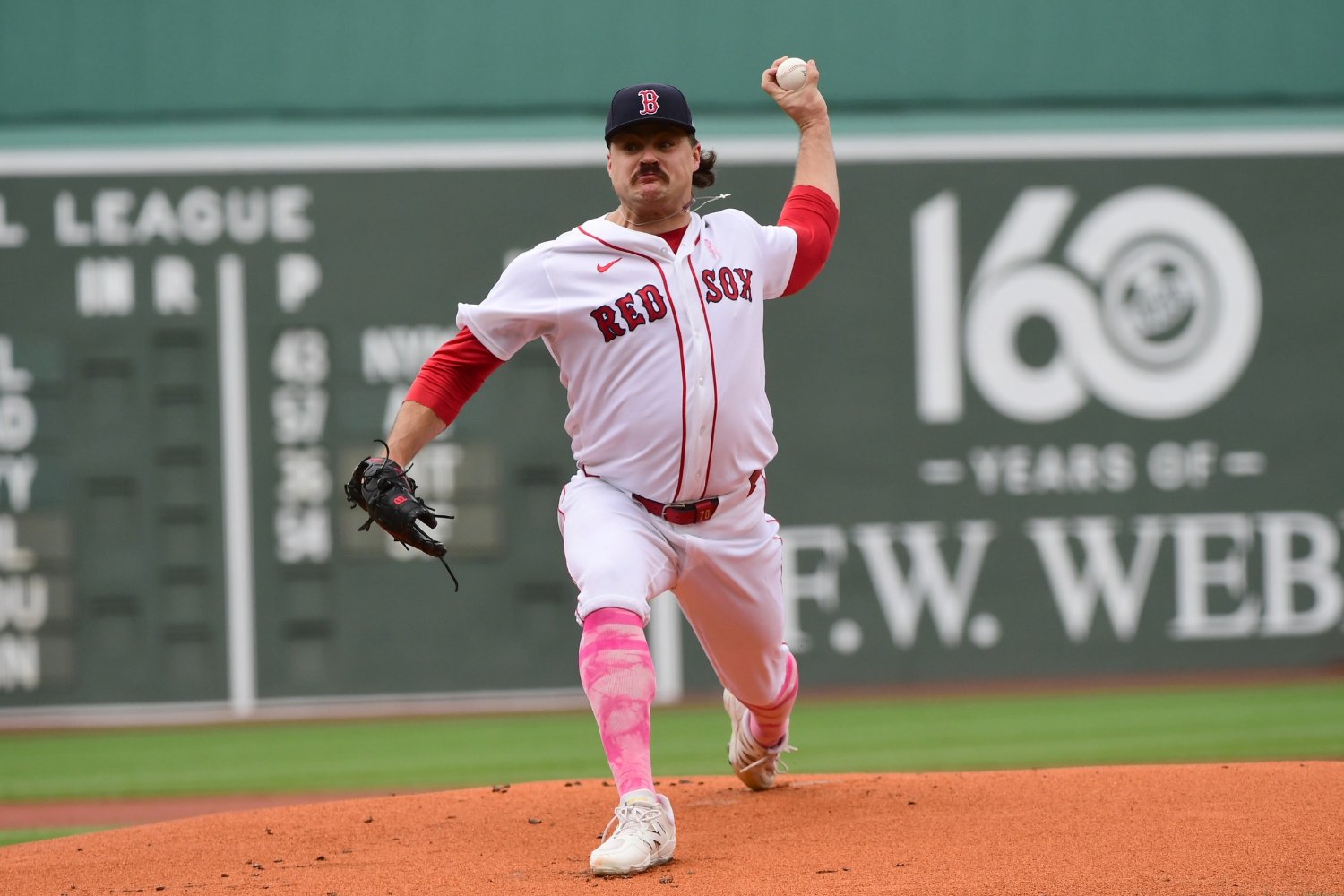 “Just be ready.” Those were the words former Worcester manager Chad Tracy kept telling Payton Tolle as he waited to step on the mound again. The last time the young left-hander had pitched was April 12 when he tossed five shutout innings against the Columbus Clippers. In that game Tolle was dominant, tossing five shutout innings while striking out six. The left-hander being a force in Triple-A was nothing new, but how he’s handled his secondary pitches showed he was a different pitcher from 2025. “He landed his off-speed for strikes and when he lands his off-speed for strikes and then runs it up to 98 with that big extension, he’s very difficult to deal with. That was the biggest focus with Dan and Noah [pitching and bullpen coaches]. Let’s not get too fine about it, let’s land it, it’s like we need the breaking ball over the plate for a strike. We need the changeup in the zone for a strike. And then it plays even more and they can’t just sit on a fastball,” Tracy explained when asked on April 21 about when asked by the media what Tolle had shown to begin the season for a call-up to make sense. Tolle would indeed be recalled on April 23 to pitch against the New York Yankees and showed he was ready. While the Red Sox would ultimately lose the game 4-2, Tolle gave the team everything he had by pitching six innings and allowing just one earned run on three hits and a walk. He also struck out 11 batters including five straight to begin his outing. His fastball topped out at 99.5 mph during the outing, and he managed to generate 18 whiffs. The Yankees as a team have handled fastballs extremely well in 2026 with Ben Rice, Aaron Judge, Cody Bellinger and Austin Wells all having a run value of three or greater. Run Value is a metric that helps measure the impact a hitter has on run scoring with a positive value indicating runs created. Rice, who leads the team against fastballs with a Run Value of nine, has a .400 batting average and a 1.240 slugging percentage against fastballs in 2026. Against Tolle he went 1-for-3, his lone hit coming off of the sinker while being struck out on a fastball. And just as Tracy had stated about what made Tolle ready for the major leagues, the left-hander went out and did just that. Leading with his fastball for 49% of his pitches, his best weapon was supplemented by mainly his sinker and curveball as the latter generated seven whiffs and was a strike 80% of the time it was thrown. Thanks to that, Tolle was able to get eight whiffs with his fastball, the pitch being put in play just five times while only one ended up as a hit. The sinker was just as useful despite not generating any whiffs. Instead, Tolle was able to land it for a strike 61% of the time including for five first pitch strikes. His cutter was just as effective, using it 12% of the time and getting two whiffs on it while landing it for a strike 73% of the time. The pitch was used against both right-handed and left-handed batters. Overall, he tossed 93 pitches on the evening with 68% of them going for strikes. But unlike in 2025 where his first start was his best performance, Tolle continued to pitch well and in his third start against the Detroit Tigers, the left-hander dominated even when mother nature looked to create chaos. Tossing seven innings, Tolle cruised against the Tigers’ lineup as he allowed just one hit and one walk to the Tigers offense while striking out eight. He also allowed two unearned runs to score during a very wet sixth inning. Tolle’s night began by retiring the first 12 batters he faced until Riley Greene led off the fifth inning with a double. Then the sixth inning came. As the weather worsened and fans were told to take shelter, Tolle remained on the mound throughout the downpour. The weather situation played a role in a rough sixth inning as Tolle hit the first batter and with one out allowed his lone walk of the evening. With two on and one out, Carlos Narváez attempted to pick off the runner on first base only to throw the baseball into right field and allow both runners to advance. Then Matt Vierling stepped to the plate and hit a ground ball at Andruw Monasterio at third base who attempted to throw home. It was offline and got past Narváez, allowing both runners to score. Despite that, Tolle remained poised on the mound, striking out the next two batters and getting the team out of the inning without any more damage being done. When looking at the pitch usage, it was very similar to the Yankees outing where he led with his four-seam fastball with a 36% usage rate while the sinker and curveball both supplemented it as they were used 23% and 18%, respectively. His cutter and changeup saw a tick in increased usage at 16% and 7%. Overall Tolle managed to generate nine whiffs, with eight of them coming between the fastball and curveball. Just like with the Yankees, Tolle was often in the strike zone, getting a strike with his fastball 77% of the time including six first-pitch strikes. And just like the Yankees, the Tigers are also a good fastball hitting team with seven players having a Run Value of at least one, with three of them having a value of three. Of those seven players, only Spencer Torkelson, Riley Greene, and Dillon Dingler were in the lineup. The three of them went a combined 1-for-9 against Tolle and the only hit was off a sinker. Since returning to the majors, Tolle has been throwing strikes and utilizing the strike zone with all of his pitches. His fastball has mostly been in the upper-two-thirds of the strike zone or in the bottom left of the strike zone from the catcher’s perspective. Compared to 2025 where it was mainly located on the upper half of the strike zone and towards the left-handed batter’s box, the pitch has been located better. The curveball has also seen an improvement, not just in pitch usage but where he’s landing it. During his time in the majors last season, Tolle used it just 18 times with it mostly landing on the upper inside portion of the plate if you were a left-handed batter. Now, the pitch has a more varied location. Most of the time Tolle seems to be landing it in the upper third of the strike zone or at the bottom of the zone with it occasionally hitting the inside corner of the left-handed batter’s box. It has seen a vast improvement in missing bats, being whiffed on 52.4% of the time. His sinker on the other hand has the most varied locations when you look at his pitch contour. The pitch has had a few locations he frequents with it, being mostly the inside portion of the plate to left-handed hitters. The pitch has mostly been up and in or down and in with the occasional down and away from the left-handed batter’s box (though if you’re to look at it from the right-handed box it would be the opposite). With his sinker and curveball able to change the vertical eye level of a hitter, Tolle has been able to make hitters guess with his cutter. When thrown up in the zone, the pitch has been in a similar location to the curveball only a bit more inside if you’re a right-handed hitter. The pitch has also been thrown down and away from left-handed hitters (or down and inside to a right-handed hitter), helping him to generate a chase rate of 29.7% All of this has allowed his fastball to be even better. So far in 2026, the pitch has been thrown 113 times and batters are hitting .063 against it and slugging just .156 and whiffing on it 30.5% of the time. Batters are just 2-for-32 against the pitch this season, having struck out 15 times against it. Prior to his most recent start against the Tampa Bay Rays, Tolle had yet to give up a hit with his cutter, curveball and changeup as batters are a combined 0-for-16 against them. In 2025 batters, went 4-for-11 against those same three pitches. The Red Sox will now be faced with a difficult decision once the rotation returns to full strength: Do they option Tolle back to Triple-A to gain an extra year of control, or do they keep him in the rotation? Should the team want to win every night and get back into playoff contention, the answer should be obvious after Tolle’s display of dominance during his time in the majors. Since being recalled, he’s looked like the ace many envisioned, having allowed just seven earned runs across his 22 2/3 innings.
 -
It’s that time of the year again, when TalkSox updates our Top 20 prospect rankings for the Boston Red Sx. Both staff and readers voted and after tabulating the votes, the reveal of the list is now ready. The Top 20 saw some notable changes from the preseason, including the addition of two new prospects which we will break down. Let’s jump into it below. Boston Red Sox Top 20 Prospect List Payton Tolle LHP MLB (40-man) (previously #1) Franklin Arias SS AA (previously #3) Kyson Witherspoon RHP A+ (previously #4) Anthony Eyanson RHP AA (previously #10) Justin Gonzales OF/1B A+ (previously #7) Juan Valera RHP A+ (previously #5) Jake Bennett LHP AAA (40-man) (previously #12) Mikey Romero INF AAA (previously #6) Marcus Phillips RHP A+ (previously #9) Dorian Soto INF FCL (previously #8) Henry Godbout 2B/SS A+ (previously #14) Tyler Uberstine RHP AAA (40-man) (previously #17) Yoeilin Cespedes 2B/SS A+ (previously #15) John Holobetz RHP AA (previously #20) Enddy Azocar OF A (previously unranked) Miguel Bleis OF AA (previously #11) Yophery Rodriguez OF A+ (previously #16) Johanfran Garcia C AA (previously #13) Hayden Mullins LHP AA (previously unranked) Conrad Cason TWP FCL (previously #19) The list retains many players from the previous Top 20, with Connelly Early and Nelly Taylor Jr. being the only players removed — Early due to his graduation from prospect status, while Taylor has struggled mightily in Double-A with Portland to the tune of a stat line of .098/.202/.195. The biggest rank improvements belong to Anthony Eyanson who went from 10th to 4th, Jake Bennett climbing from 12th to 7th, Tyler Uberstine rising from 17th to 12th, and John Holobetz who went from 20th to 14th. Their rise is a sign of the improvements that Craig Breslow made on the pitching development side of things. Though, it wasn’t just pitching that improved, as both Justin Gonzales and Henry Godbout saw their rankings improve, as well as the addition of Enddy Azocar to the Top 20. The biggest rank decreases belonged to catcher Johanfran Garcia falling from 13th to 18th and Miguel Bleis who went from being just outside of the top 10 at 11th down to 16th. Both players have shown flashes of their talent that has generated buzz and hope that they can reach their potential, but a combination of injuries and inconsistency has stifled the duo. The ranking is dominated in two specific areas. The first being that pitching very much makes up most of the Top 10 on the list. Of the 10 players, six are pitchers, including number one prospect Payton Tolle and the big three pitching prospects of Eyanson, Kyson Witherspoon, and Marcus Phillips all whom were drafted in 2025. Eyanson specifically has generated comparisons to a Tolle-esque season thanks to his hot start in Greenville (20 1/3 innings, seven hits, one earned run, three walks, 34 strikeouts) that led to a promotion to Portland after just five starts. The second area that dominates this list is that Greenville makes up the most players on the list with seven prospects. Portland finished second with six prospects, while Salem had the least with just a single prospect. Greenville at the start of the season was viewed as an exciting, young, team that could be showcasing the future of the franchise thanks to its pitching staff containing the likes of Eyanson, Witherspoon, Phillips, and Juan Valera along with their offense containing players like Rodriguez, Gonzales and Godbout. Yoeilin Cespedes’ great start to the season was a welcomed surprise too, as he’s beginning to showcase the offensive production that once made him a top prospect within the organization. Let's review the two new additions to our list to round things out. Enddy Azocar, OF (Single-A Salem): No. 15 Azocar is an interesting prospect, as he’s just 19 years old and breaking out in Salem. When signed as an amateur, Azocar was viewed as having good contact skills along with projections viewing him as eventually being a good hitter. However, he struggled in 2024 with just three extra-base hits while moving from the infield to the outfield full time. Entering 2025, the outfielder put on 25 pounds of muscle and increased his quality of contact which led to a quick promotion to Single-A where he was one of the youngest players in the league. If you looked at just his stats, you would think that there wasn’t much to like with Azocar, as he hit just .202/.273/.314 in 71 games. In that same span he had nine doubles, a triple, six home runs and 26 RBIs. Despite those numbers, there was a lot to like in the underlying data, including 90th percentile exit velocity. In the majors, a 90th exit velocity of 107 mph or higher is considered elite. Azocar’s 105.4 mph was the highest for all players of his age across the minors. To add to his power, he also showcased solid contact ability thanks to an in-zone whiff rate of just 18%. Azocar starts with a leg lift timing device while hitting and has showcased average bat speed so far in his young career. He can be aggressive at times but will make contact with pitches in the zone and does not chase often. He still needs to work on developing his pitch recognition for secondary pitches, but should that happen, he should take off as a prospect. He currently has average raw power, but as he fills out as he ages that should increase, as shown in 2026 (six home runs through 28 games vs. six home runs in 71 games in 2025). Azocar has been viewed as having slightly above average speed which helps in the outfield when paired with his plus range in center field. Often, he shows solid instincts on balls hit to the outfield while taking good routes to the ball. While he is likely capable of playing all three outfield positions at an above-average level, he is likely to stick in center field long term. His arm is also viewed as being above-average, which will only help his development. Overall, he should be viewed as an athletic, defensive outfielder with power potential. At the moment, his hit tool is what will determine if he truly breaks out into a great prospect or not, but the improvements have been seen so far in 2026. His outcome is anywhere from a starting outfielder to a minor-league bench role, a huge range laden with tantalizing upside. Hayden Mullins, LHP (Double-A Portland): No. 19 For some, it’s a surprise that Mullins remained in the organization after his 2025 season that saw him go 8-2 with a 2.21 ERA in 22 games (21 starts) between Greenville and Portland. He tossed 101 2/3 innings while striking out 123 batters. For his dominance, (7-2 record, 2.44 ERA, 84 2/3 innings, 96 strikeouts), he was named the 2025 Portland Sea Dogs Pitcher of the Year. Entering the Rule 5 Draft, there was a lot of concern that Mullins could be selected after his 2025 season, especially as many felt that his stuff could play well out of the bullpen a role. Instead, he was not selected and returned to the Boston organization for the 2026 season where he’s looked rather good so far including being part of a no-hitter on April 26. Mullins throws from a three-quarters slot and starts on the third base side of the rubber. His motion tends to involve a high leg kick and rotates his hips. He’s also viewed as having good extension, which we all know Craig Breslow loves. He has a five-pitch arsenal that is made up of a four-seam fastball, slider, sweeper, changeup and cutter. His fastball tends to average around 92 to 95 mph and can show life up in the zone. It’s been shown to have bat-missing ability so far through his minor-league career despite the command and control still being a work in progress. If he were in the bullpen, the velocity could potentially increase for shorter outings, which would place it in plus territory. The slider tends to be between 81 and 85 mph with a high spin rate. He has an advanced feel for it and when at a lower velocity, it sometimes takes on a shape similar to a sweeper. He can land it in the zone or throw it down and outside of the zone if he is hoping to get the batter to chase. The sweeper averages between 77 and 80 mph and has been a work in progress for Mullins. In 2025, he managed to make it more into its own pitch and has shown bat missing ability. The changeup and cutter are his weakest pitches, as the changeup sits between 81 and 83 mph. When the changeup is on, it flashes a late drop and thrown with an arm speed that makes it deceptive. When it isn’t on, the pitch doesn’t work as well and because of that it’s viewed as very inconsistent. The cutter is a pitch that he hasn’t used as much since 2024 but is viewed as having average traits. Mullins has battled injuries in his career, and even before his career started as he was drafted shortly after having Tommy John surgery. As such, being drafted in 2022, he would not make his organizational debut until August of 2023 and that would take place in the Florida Complex League. Last year, he also deal with a bout of shoulder fatigue that had him miss most of May. Due to the injury concerns and his command issues, there is belief he could work best out of the bullpen in a one- or two-inning role, especially if he focuses on a fastball/slider combination. However, due to a deep arsenal that can work against both left-handed and right-handed hitters, the organization will look to develop him as a starter until he struggles in that role. View full article
-
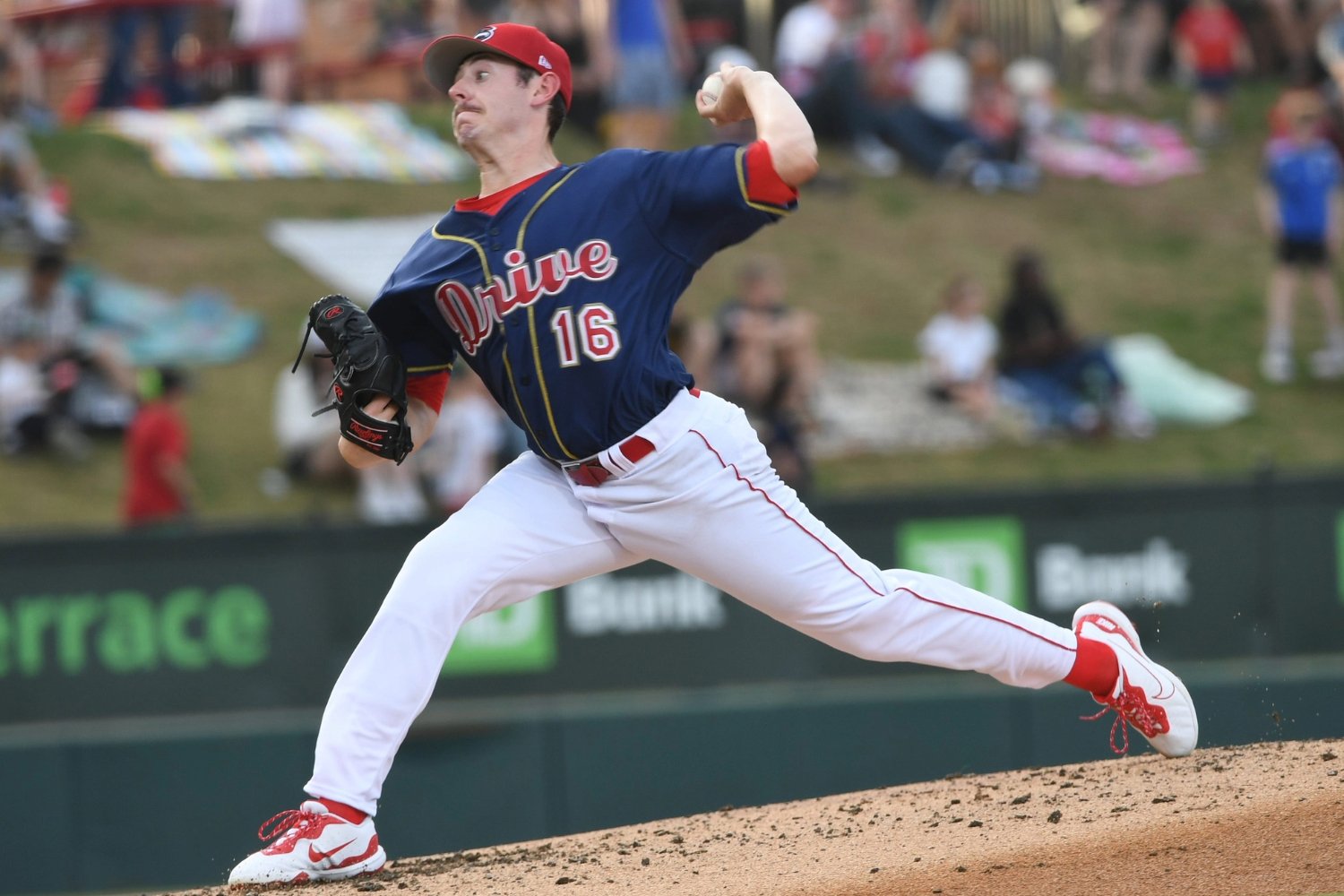 It’s that time of the year again, when TalkSox updates our Top 20 prospect rankings for the Boston Red Sx. Both staff and readers voted and after tabulating the votes, the reveal of the list is now ready. The Top 20 saw some notable changes from the preseason, including the addition of two new prospects which we will break down. Let’s jump into it below. Boston Red Sox Top 20 Prospect List Payton Tolle LHP MLB (40-man) (previously #1) Franklin Arias SS AA (previously #3) Kyson Witherspoon RHP A+ (previously #4) Anthony Eyanson RHP AA (previously #10) Justin Gonzales OF/1B A+ (previously #7) Juan Valera RHP A+ (previously #5) Jake Bennett LHP AAA (40-man) (previously #12) Mikey Romero INF AAA (previously #6) Marcus Phillips RHP A+ (previously #9) Dorian Soto INF FCL (previously #8) Henry Godbout 2B/SS A+ (previously #14) Tyler Uberstine RHP AAA (40-man) (previously #17) Yoeilin Cespedes 2B/SS A+ (previously #15) John Holobetz RHP AA (previously #20) Enddy Azocar OF A (previously unranked) Miguel Bleis OF AA (previously #11) Yophery Rodriguez OF A+ (previously #16) Johanfran Garcia C AA (previously #13) Hayden Mullins LHP AA (previously unranked) Conrad Cason TWP FCL (previously #19) The list retains many players from the previous Top 20, with Connelly Early and Nelly Taylor Jr. being the only players removed — Early due to his graduation from prospect status, while Taylor has struggled mightily in Double-A with Portland to the tune of a stat line of .098/.202/.195. The biggest rank improvements belong to Anthony Eyanson who went from 10th to 4th, Jake Bennett climbing from 12th to 7th, Tyler Uberstine rising from 17th to 12th, and John Holobetz who went from 20th to 14th. Their rise is a sign of the improvements that Craig Breslow made on the pitching development side of things. Though, it wasn’t just pitching that improved, as both Justin Gonzales and Henry Godbout saw their rankings improve, as well as the addition of Enddy Azocar to the Top 20. The biggest rank decreases belonged to catcher Johanfran Garcia falling from 13th to 18th and Miguel Bleis who went from being just outside of the top 10 at 11th down to 16th. Both players have shown flashes of their talent that has generated buzz and hope that they can reach their potential, but a combination of injuries and inconsistency has stifled the duo. The ranking is dominated in two specific areas. The first being that pitching very much makes up most of the Top 10 on the list. Of the 10 players, six are pitchers, including number one prospect Payton Tolle and the big three pitching prospects of Eyanson, Kyson Witherspoon, and Marcus Phillips all whom were drafted in 2025. Eyanson specifically has generated comparisons to a Tolle-esque season thanks to his hot start in Greenville (20 1/3 innings, seven hits, one earned run, three walks, 34 strikeouts) that led to a promotion to Portland after just five starts. The second area that dominates this list is that Greenville makes up the most players on the list with seven prospects. Portland finished second with six prospects, while Salem had the least with just a single prospect. Greenville at the start of the season was viewed as an exciting, young, team that could be showcasing the future of the franchise thanks to its pitching staff containing the likes of Eyanson, Witherspoon, Phillips, and Juan Valera along with their offense containing players like Rodriguez, Gonzales and Godbout. Yoeilin Cespedes’ great start to the season was a welcomed surprise too, as he’s beginning to showcase the offensive production that once made him a top prospect within the organization. Let's review the two new additions to our list to round things out. Enddy Azocar, OF (Single-A Salem): No. 15 Azocar is an interesting prospect, as he’s just 19 years old and breaking out in Salem. When signed as an amateur, Azocar was viewed as having good contact skills along with projections viewing him as eventually being a good hitter. However, he struggled in 2024 with just three extra-base hits while moving from the infield to the outfield full time. Entering 2025, the outfielder put on 25 pounds of muscle and increased his quality of contact which led to a quick promotion to Single-A where he was one of the youngest players in the league. If you looked at just his stats, you would think that there wasn’t much to like with Azocar, as he hit just .202/.273/.314 in 71 games. In that same span he had nine doubles, a triple, six home runs and 26 RBIs. Despite those numbers, there was a lot to like in the underlying data, including 90th percentile exit velocity. In the majors, a 90th exit velocity of 107 mph or higher is considered elite. Azocar’s 105.4 mph was the highest for all players of his age across the minors. To add to his power, he also showcased solid contact ability thanks to an in-zone whiff rate of just 18%. Azocar starts with a leg lift timing device while hitting and has showcased average bat speed so far in his young career. He can be aggressive at times but will make contact with pitches in the zone and does not chase often. He still needs to work on developing his pitch recognition for secondary pitches, but should that happen, he should take off as a prospect. He currently has average raw power, but as he fills out as he ages that should increase, as shown in 2026 (six home runs through 28 games vs. six home runs in 71 games in 2025). Azocar has been viewed as having slightly above average speed which helps in the outfield when paired with his plus range in center field. Often, he shows solid instincts on balls hit to the outfield while taking good routes to the ball. While he is likely capable of playing all three outfield positions at an above-average level, he is likely to stick in center field long term. His arm is also viewed as being above-average, which will only help his development. Overall, he should be viewed as an athletic, defensive outfielder with power potential. At the moment, his hit tool is what will determine if he truly breaks out into a great prospect or not, but the improvements have been seen so far in 2026. His outcome is anywhere from a starting outfielder to a minor-league bench role, a huge range laden with tantalizing upside. Hayden Mullins, LHP (Double-A Portland): No. 19 For some, it’s a surprise that Mullins remained in the organization after his 2025 season that saw him go 8-2 with a 2.21 ERA in 22 games (21 starts) between Greenville and Portland. He tossed 101 2/3 innings while striking out 123 batters. For his dominance, (7-2 record, 2.44 ERA, 84 2/3 innings, 96 strikeouts), he was named the 2025 Portland Sea Dogs Pitcher of the Year. Entering the Rule 5 Draft, there was a lot of concern that Mullins could be selected after his 2025 season, especially as many felt that his stuff could play well out of the bullpen a role. Instead, he was not selected and returned to the Boston organization for the 2026 season where he’s looked rather good so far including being part of a no-hitter on April 26. Mullins throws from a three-quarters slot and starts on the third base side of the rubber. His motion tends to involve a high leg kick and rotates his hips. He’s also viewed as having good extension, which we all know Craig Breslow loves. He has a five-pitch arsenal that is made up of a four-seam fastball, slider, sweeper, changeup and cutter. His fastball tends to average around 92 to 95 mph and can show life up in the zone. It’s been shown to have bat-missing ability so far through his minor-league career despite the command and control still being a work in progress. If he were in the bullpen, the velocity could potentially increase for shorter outings, which would place it in plus territory. The slider tends to be between 81 and 85 mph with a high spin rate. He has an advanced feel for it and when at a lower velocity, it sometimes takes on a shape similar to a sweeper. He can land it in the zone or throw it down and outside of the zone if he is hoping to get the batter to chase. The sweeper averages between 77 and 80 mph and has been a work in progress for Mullins. In 2025, he managed to make it more into its own pitch and has shown bat missing ability. The changeup and cutter are his weakest pitches, as the changeup sits between 81 and 83 mph. When the changeup is on, it flashes a late drop and thrown with an arm speed that makes it deceptive. When it isn’t on, the pitch doesn’t work as well and because of that it’s viewed as very inconsistent. The cutter is a pitch that he hasn’t used as much since 2024 but is viewed as having average traits. Mullins has battled injuries in his career, and even before his career started as he was drafted shortly after having Tommy John surgery. As such, being drafted in 2022, he would not make his organizational debut until August of 2023 and that would take place in the Florida Complex League. Last year, he also deal with a bout of shoulder fatigue that had him miss most of May. Due to the injury concerns and his command issues, there is belief he could work best out of the bullpen in a one- or two-inning role, especially if he focuses on a fastball/slider combination. However, due to a deep arsenal that can work against both left-handed and right-handed hitters, the organization will look to develop him as a starter until he struggles in that role.
 -
Payton TolleFranklin AriasAnthony EyansonKyson WitherspoonJuan ValeraJustin GonzalesJake BennettDorian SotoMikey RomeroMarcus PhillipsHenry GodboutEnddy AzocarJohn HolobetzTyler UberstineYophery RodriguezHayden MullinsYoeilin CespedesAllan CastroBlake WehuntAngel Bastardo
-
Worcester, MA — After missing nearly, a month due to a right oblique strain, right-handed pitcher Justin Slaten is on the path to returning to the Boston Red Sox. His rehab assignment began in Portlandm wgere tossed one inning while allowing one hit and striking out a pair of batters. His next stop was Worcester, where he made his second appearance as he works his way back to Boston. The Red Sox, who are in need of high-leverage pitching, are awaiting the return of Slaten to provide that help. Prior to going down with injury, the relief pitcher had appeared in four games, tossing 3 1/3 innings for the team. During that span, he allowed one unearned run while surrendering two hits and two walks. He also struck out five batters. In his rehab appearance in Worcester, Slaten started the game and tossed one inning, allowing one hit and one walk while striking out two batters. After the game, Slaten was asked about his the progress in his rehab assignment: “I feel really good. I mean, obviously it’s up to them you know. I’m gonna do whatever they tell me to do, they have my best interest in mind and want me to be healthy and compete up there. But yeah, I feel really good about where I’m at.” For the outing, Slaten tossed 18 pitches with 11 strikes. Leading with the four-seam fastball, he mixed in a cutter, sweeper and curveball multiples times each as he worked through his entire arsenal. With his fastball and cutter, he was able to generate three whiffs. The lone hit of the game was an infield dribbler that came off of his sweeper. His fastball managed to top out at 97.1 mph, a fact that surprised even Slaten, who said “I was shocked. Early morning [game], so it’s hard to get up and get going. I was pretty pumped, saw the velos out there and obviously feeling good about how the body feels, how the arm feels and how the oblique feels. I think we’re in a very good spot." Despite the talent Slaten has shown since making the major-league roster back in 2024, injuries have seemingly slowed him down each season. That fact hasn’t been lost on the right-hander, who told the media “Obviously you don’t want to be seen as someone who’s injury prone. But you know, it is what it is, you can’t feel bad for yourself. You just have to attack it, keep the positive mindset of like it is what it is, I gotta get back healthy as soon as possible." It's no wonder that Slaten has been eager to get back to Boston and help his teammates as they deal with a coaching overhaul and an attempt to claw their way back into playoff conversation. The 28-year-old doesn’t care that it’s only the beginning of May, admitting that it’s starting to get too late into the season to keep saying it’s early. “At the end of the day, I know we’re running out of time to say it’s early, but you know you look at the standings. It’s not like we’ve dug ourselves in so deep of a hole, and so for me, it’s just like how can I get back and how can I help us win games as fast as possible.” View full article
-
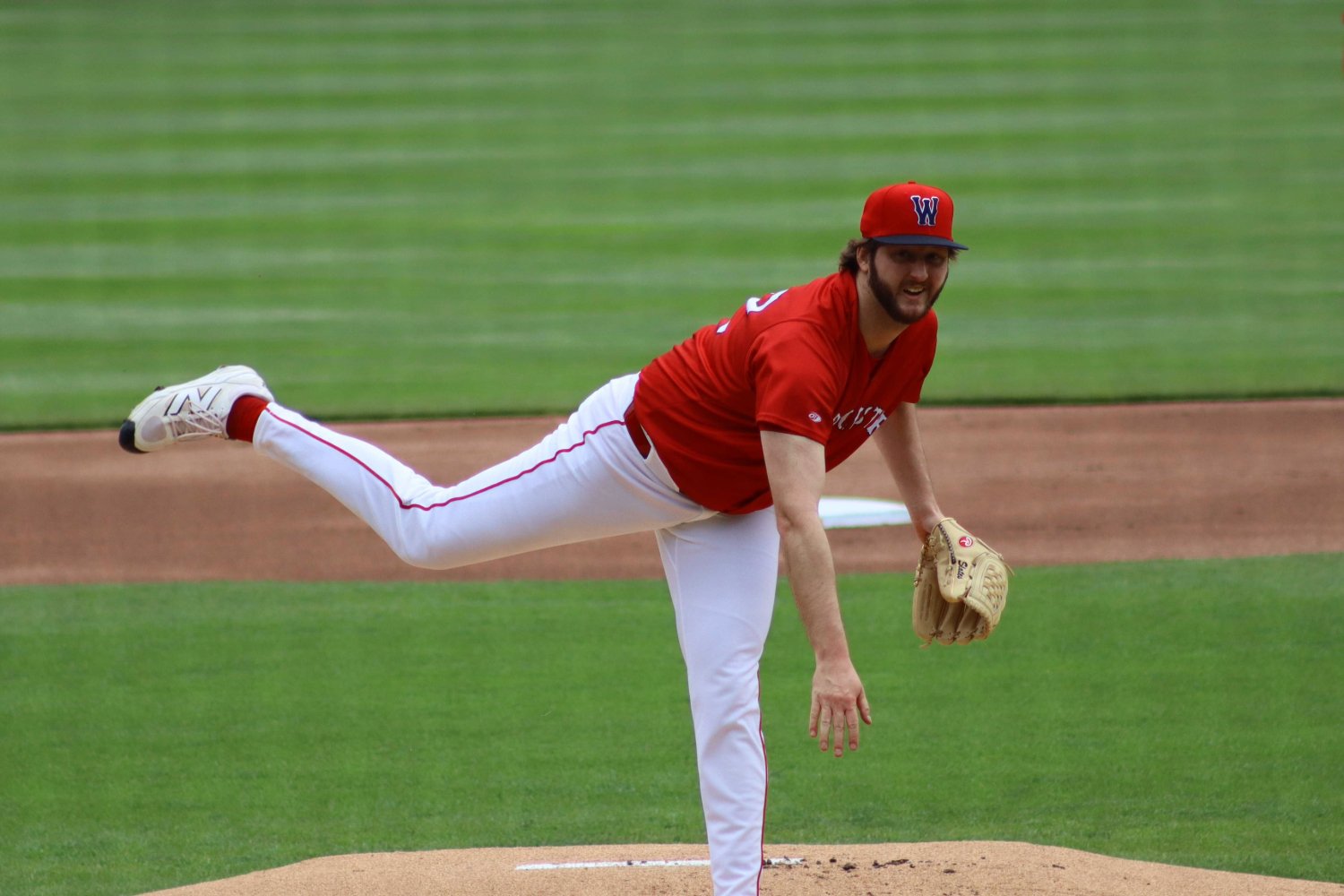 Worcester, MA — After missing nearly, a month due to a right oblique strain, right-handed pitcher Justin Slaten is on the path to returning to the Boston Red Sox. His rehab assignment began in Portlandm wgere tossed one inning while allowing one hit and striking out a pair of batters. His next stop was Worcester, where he made his second appearance as he works his way back to Boston. The Red Sox, who are in need of high-leverage pitching, are awaiting the return of Slaten to provide that help. Prior to going down with injury, the relief pitcher had appeared in four games, tossing 3 1/3 innings for the team. During that span, he allowed one unearned run while surrendering two hits and two walks. He also struck out five batters. In his rehab appearance in Worcester, Slaten started the game and tossed one inning, allowing one hit and one walk while striking out two batters. After the game, Slaten was asked about his the progress in his rehab assignment: “I feel really good. I mean, obviously it’s up to them you know. I’m gonna do whatever they tell me to do, they have my best interest in mind and want me to be healthy and compete up there. But yeah, I feel really good about where I’m at.” For the outing, Slaten tossed 18 pitches with 11 strikes. Leading with the four-seam fastball, he mixed in a cutter, sweeper and curveball multiples times each as he worked through his entire arsenal. With his fastball and cutter, he was able to generate three whiffs. The lone hit of the game was an infield dribbler that came off of his sweeper. His fastball managed to top out at 97.1 mph, a fact that surprised even Slaten, who said “I was shocked. Early morning [game], so it’s hard to get up and get going. I was pretty pumped, saw the velos out there and obviously feeling good about how the body feels, how the arm feels and how the oblique feels. I think we’re in a very good spot." Despite the talent Slaten has shown since making the major-league roster back in 2024, injuries have seemingly slowed him down each season. That fact hasn’t been lost on the right-hander, who told the media “Obviously you don’t want to be seen as someone who’s injury prone. But you know, it is what it is, you can’t feel bad for yourself. You just have to attack it, keep the positive mindset of like it is what it is, I gotta get back healthy as soon as possible." It's no wonder that Slaten has been eager to get back to Boston and help his teammates as they deal with a coaching overhaul and an attempt to claw their way back into playoff conversation. The 28-year-old doesn’t care that it’s only the beginning of May, admitting that it’s starting to get too late into the season to keep saying it’s early. “At the end of the day, I know we’re running out of time to say it’s early, but you know you look at the standings. It’s not like we’ve dug ourselves in so deep of a hole, and so for me, it’s just like how can I get back and how can I help us win games as fast as possible.”
 -
While the major-league club struggled offensively throughout the month of April, the organization saw great performances across their minor league levels. While the young players may still be a year or two away from contributing at the big-league level, their performances were still invigorating and showed what fans have to look forward to in the years to come. The hope is that these players can now build off of a great April and have a strong May before finishing the season in a positive manner. With that, we’ve narrowed this award down to the five best hitters in the Boston Red Sox’s minor-league system. Honorable Mention: Enddy Azocar (Single-A Salem) Azocar is an interesting player as he made his Single-A debut last season and played 71 games, but if you looked at just the stats, it would have appeared that he struggled. However, looking at the fact he was one of the youngest players in the league combined with an impressive 90th percentile exit velocity that rivaled some of the best in the majors, there was a lot to like about Azocar. Now 19 years old and getting his second chance against Single-A pitching, Azocar is showing just how great of a hitter he can potentially become. In 22 games across the month of April, the outfielder slashed .293/.347/.522 with a team-leading seven doubles, four home runs and 15 RBIs. He’s also showcased some speed as he’s stolen three bases in the month. The young outfielder is making a case for a promotion to Greenville once an opening becomes available thanks to his strong play. Honorable Mention: Justin Gonzales (High-A Greenville) Gonzales is well known by fans for his tremendous power. While he didn’t tap into it much in 2025 (just four home runs in 93 games), he’s looked different this season as he’s lifting the ball slightly more, up to 23.1% compared to the 21.6% fly-ball rate he had last year. While small, the improvement along with playing in a more hitter’s friendly ballpark has allowed Gonzales to showcase his potential power more. In 20 April games, the outfielder hit .318/.394/.511 with five doubles, four home runs and 18 RBIs. So far, Gonzales has shown an ability to put the ball in play quite often, causing problems for the defense and providing scoring chances for the Drive. #3: Yophery Rodriguez (High-A Greenville) One of the main pieces in the Quinn Priester trade in 2025, it seemed like Rodriguez was going to need a lot of time to develop and adjust to High-A pitching. In 101 games with Greenville last year, the outfielder hit .214/.312/.331 with 81 strikeouts, though he showcased a great eye with 52 walks. That eye remains dominant for Rodriguez in 2026, and now he’s looking like the player that Craig Breslow and the Red Sox traded for just over a year ago. In 19 April games, the outfielder was as hot as a player could be, hitting .310/.380/.662 with seven doubles and being tied for the team lead in home runs with six. He also drove in 12 runs in that span and swiped a base. Rodriguez has showcased good bat to ball skills along with great power that is being taken advantage of with a 43.9% fly-ball rate, along with pulling the ball at a 47.4% rate. He’s also managed to put the ball in play quite often thanks to whiffing on just under 12% of pitches he swings at. Should this play continue throughout 2026, the Priester trade may turn into a steal for Breslow and the Red Sox. #2: Yoeilin Cespedes (High-A Greenville) After spending a year with the then Salem Red Sox and facing affiliate-level baseball for the first time, Cespedes saw his value as a prospect tank. In 110 games last season he hit just .227/.292/.376, which isn’t what you want from a top prospect. There were legitimate concerns with Cespedes and how he might develop, while others thought that the ballpark factors played a role in his struggles. Now in 2026, Cespedes has begun to put any worries about being a bust aside and hitting like the prospect many thought he could be. Through 22 April games with Greenville, Cespedes led the team in multiple categories such as batting average, on-base percentage, doubles, home runs and RBIs and was second in walks. Overall, he hit .319/.394/.637 with 11 doubles, six home runs and 20 RBIs. At just 20 years old, Cespedes has started to put his name back in the conversation regarding top prospects in the system. Now in a more hitter-friendly park, he’s been able to showcase his above-average power by producing many hard-hit baseballs. #1: Franklin Arias (Double-A Portland) There should be no surprise with who the top hitter in the organization was, unless you’ve been under a rock. Arias, who exploded onto the scene last season by going from Salem all the way to Portland despite being one of the youngest players in each league he appeared in, has only gotten better. Appearing in 20 games across April, Arias hit .375/.432/.764 with four doubles and a team-leading eight home runs and 20 RBIs. He also put the ball into play quite often, striking out in just nine at-bats. When he was signed, Arias was always viewed as a defense-first shortstop who could put the ball in play. That much was true during his first few seasons in the organization, but in 2026, he’s managed to tap into newfound power and change his game. Still, Arias hasn’t sold out at the plate and has continued to showcase excellent bat-to-ball skills, offering hope for a true five-tool profile. Where Arias finishes 2026 is yet to be known, but should the young infielder continue hitting as he did in April, he could very well be knocking at the door of the major leagues by the end of the season. View full article
-
Boston Red Sox Minor League Hitters of the Month: April 2026
Nick John posted an article in Minor Leagues
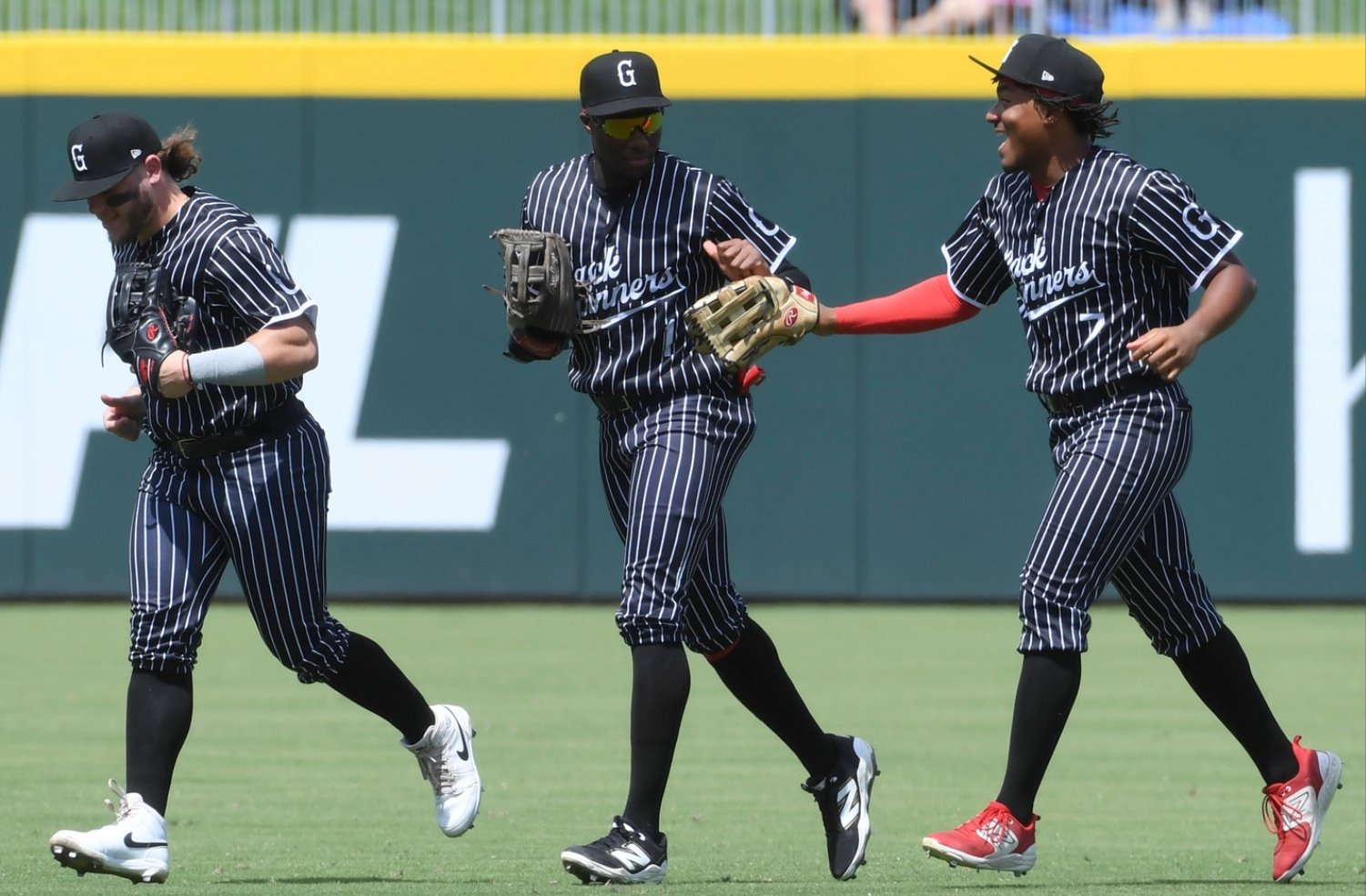 While the major-league club struggled offensively throughout the month of April, the organization saw great performances across their minor league levels. While the young players may still be a year or two away from contributing at the big-league level, their performances were still invigorating and showed what fans have to look forward to in the years to come. The hope is that these players can now build off of a great April and have a strong May before finishing the season in a positive manner. With that, we’ve narrowed this award down to the five best hitters in the Boston Red Sox’s minor-league system. Honorable Mention: Enddy Azocar (Single-A Salem) Azocar is an interesting player as he made his Single-A debut last season and played 71 games, but if you looked at just the stats, it would have appeared that he struggled. However, looking at the fact he was one of the youngest players in the league combined with an impressive 90th percentile exit velocity that rivaled some of the best in the majors, there was a lot to like about Azocar. Now 19 years old and getting his second chance against Single-A pitching, Azocar is showing just how great of a hitter he can potentially become. In 22 games across the month of April, the outfielder slashed .293/.347/.522 with a team-leading seven doubles, four home runs and 15 RBIs. He’s also showcased some speed as he’s stolen three bases in the month. The young outfielder is making a case for a promotion to Greenville once an opening becomes available thanks to his strong play. Honorable Mention: Justin Gonzales (High-A Greenville) Gonzales is well known by fans for his tremendous power. While he didn’t tap into it much in 2025 (just four home runs in 93 games), he’s looked different this season as he’s lifting the ball slightly more, up to 23.1% compared to the 21.6% fly-ball rate he had last year. While small, the improvement along with playing in a more hitter’s friendly ballpark has allowed Gonzales to showcase his potential power more. In 20 April games, the outfielder hit .318/.394/.511 with five doubles, four home runs and 18 RBIs. So far, Gonzales has shown an ability to put the ball in play quite often, causing problems for the defense and providing scoring chances for the Drive. #3: Yophery Rodriguez (High-A Greenville) One of the main pieces in the Quinn Priester trade in 2025, it seemed like Rodriguez was going to need a lot of time to develop and adjust to High-A pitching. In 101 games with Greenville last year, the outfielder hit .214/.312/.331 with 81 strikeouts, though he showcased a great eye with 52 walks. That eye remains dominant for Rodriguez in 2026, and now he’s looking like the player that Craig Breslow and the Red Sox traded for just over a year ago. In 19 April games, the outfielder was as hot as a player could be, hitting .310/.380/.662 with seven doubles and being tied for the team lead in home runs with six. He also drove in 12 runs in that span and swiped a base. Rodriguez has showcased good bat to ball skills along with great power that is being taken advantage of with a 43.9% fly-ball rate, along with pulling the ball at a 47.4% rate. He’s also managed to put the ball in play quite often thanks to whiffing on just under 12% of pitches he swings at. Should this play continue throughout 2026, the Priester trade may turn into a steal for Breslow and the Red Sox. #2: Yoeilin Cespedes (High-A Greenville) After spending a year with the then Salem Red Sox and facing affiliate-level baseball for the first time, Cespedes saw his value as a prospect tank. In 110 games last season he hit just .227/.292/.376, which isn’t what you want from a top prospect. There were legitimate concerns with Cespedes and how he might develop, while others thought that the ballpark factors played a role in his struggles. Now in 2026, Cespedes has begun to put any worries about being a bust aside and hitting like the prospect many thought he could be. Through 22 April games with Greenville, Cespedes led the team in multiple categories such as batting average, on-base percentage, doubles, home runs and RBIs and was second in walks. Overall, he hit .319/.394/.637 with 11 doubles, six home runs and 20 RBIs. At just 20 years old, Cespedes has started to put his name back in the conversation regarding top prospects in the system. Now in a more hitter-friendly park, he’s been able to showcase his above-average power by producing many hard-hit baseballs. #1: Franklin Arias (Double-A Portland) There should be no surprise with who the top hitter in the organization was, unless you’ve been under a rock. Arias, who exploded onto the scene last season by going from Salem all the way to Portland despite being one of the youngest players in each league he appeared in, has only gotten better. Appearing in 20 games across April, Arias hit .375/.432/.764 with four doubles and a team-leading eight home runs and 20 RBIs. He also put the ball into play quite often, striking out in just nine at-bats. When he was signed, Arias was always viewed as a defense-first shortstop who could put the ball in play. That much was true during his first few seasons in the organization, but in 2026, he’s managed to tap into newfound power and change his game. Still, Arias hasn’t sold out at the plate and has continued to showcase excellent bat-to-ball skills, offering hope for a true five-tool profile. Where Arias finishes 2026 is yet to be known, but should the young infielder continue hitting as he did in April, he could very well be knocking at the door of the major leagues by the end of the season.
 -
While the month of April may not have been as memorable for the Boston Red Sox as fans had hoped for, there was more to be hopeful of in the minor leagues. The pitching development infrastructure, which saw an overhaul by Craig Breslow since his hiring following the 2023 season, showed its progress last season, but 2026 has been a whole different animal. Triple-A Worcester alone has seen several of its pitchers get off to great starts that led to promotions to the major-league squad, while the other levels of the organization have seen their own pitchers get off to incredible starts. With that, we’ve narrowed this award down to the three best pitchers in the Red Sox's minor-league system. Special Mention: Portland Sea Dogs No-Hitter On Sunday, April 26, the entire Red Sox organization was dealing with the fallout of the coaching layoffs that had occurred the day prior. Despite the mass changes in staff across all levels of the organization, the Sea Dogs made sure that Kyle Sasala’s first day as acting manager was as special one. Led by Hayden Mullins who tossed five hitless innings, the Sea Dogs went on to pitch a no-hitter and win 3-2. Mullins started the game and allowed two unearned runs that came around to score on a third inning error. Across his entire start he walked five and struck out five before giving way to the bullpen. Caleb Bolden was the first to come on in relief, pitching two hitless innings and striking out three before handing the ball over to Reidis Sena who concluded the no-hitter as he tossed the final two innings. The no-hitter was the ninth in the history of the Portland Sea Dogs. #3: Devin Futrell (Single-A Salem/High-A Greenville) Futrell has been on the receiving end of Boston’s pitching depth across the minor leagues, and not in a positive way. Opening the season with the Salem RidgeYaks due to a lack of room in Greenville, Futrell forced his way up to the Drive after just two appearances in Salem. Since the promotion, his time with Greenville has been just as dominant. Having split April between the two levels, the left-hander made four appearances and tossed 17 2/3 innings as he allowed just one run on six hits and three walks. He also struck out 18 batters. Futrell opened the season on a 13-inning scoreless streak. Futrell has been an arm of interest since his professional debut in 2025, but after holding opposing batters to a .115 batting average and striking them out at a 27.7% rate, he’s continued to show that he is ready for a chance against tougher competition. #2: Jake Bennett (Triple-A Worcester) Bennett had a stellar April with the organization that, when mixed with unforeseen injuries to the major-league squad, led to the left-hander making his major league debut sooner than anyone expected. Pitching in four games, Bennett absolutely was in control as he limited opposing batters to a .161 batting average across 18 innings. During that time, he allowed just two earned runs on 10 hits and three walks while striking out 11. What really stood out for Bennett in the month of April was his ability to limit the hard contact. Utilizing a five-pitch mix, Bennett typically led the way with his sinker and four-seam fastball, using the two pitches for 51.7% of his pitches. It led to opposing batters getting a hard hit just 25.5% of the time with an expected slugging percentage of just .198. #1: Anthony Eyanson (High-A Greenville) It goes without saying that Eyanson would be the top pitching prospect for the month of April. Anyone who watched him throughout the month should have had an idea, especially as he put the baseball world on notice with the start to his professional career. Making four starts in April, the third-round pick pitched in a manner befitting of a first-rounder as he allowed just six hits and one earned run across 16 2/3 innings pitched. In that same span he struck out 27 batters while walking none. Following his first professional outing, Eyanson allowed two or fewer hits in each of his outings, including 4 1/3 no-hit innings in his second start. Overall, Eyanson struck out 48% of the batters he faced in April while his strikeouts to walk ratio was infinity thanks in part to his excellent command. On top of that, when batters did manage to put the ball in play against him, Eyanson found a way to keep it on the ground, as he had a 59.4% ground ball rate. The right-hander is now being promoted to Double-A Portland after a fantastic start to his career as first reported by Chase Ford of MiLB Central. View full article
- 2 replies
-
- 1
-

-
- devin futrell
- jake bennett
- (and 1 more)
-
Boston Red Sox Minor League Pitchers of the Month: April 2026
Nick John posted an article in Minor Leagues
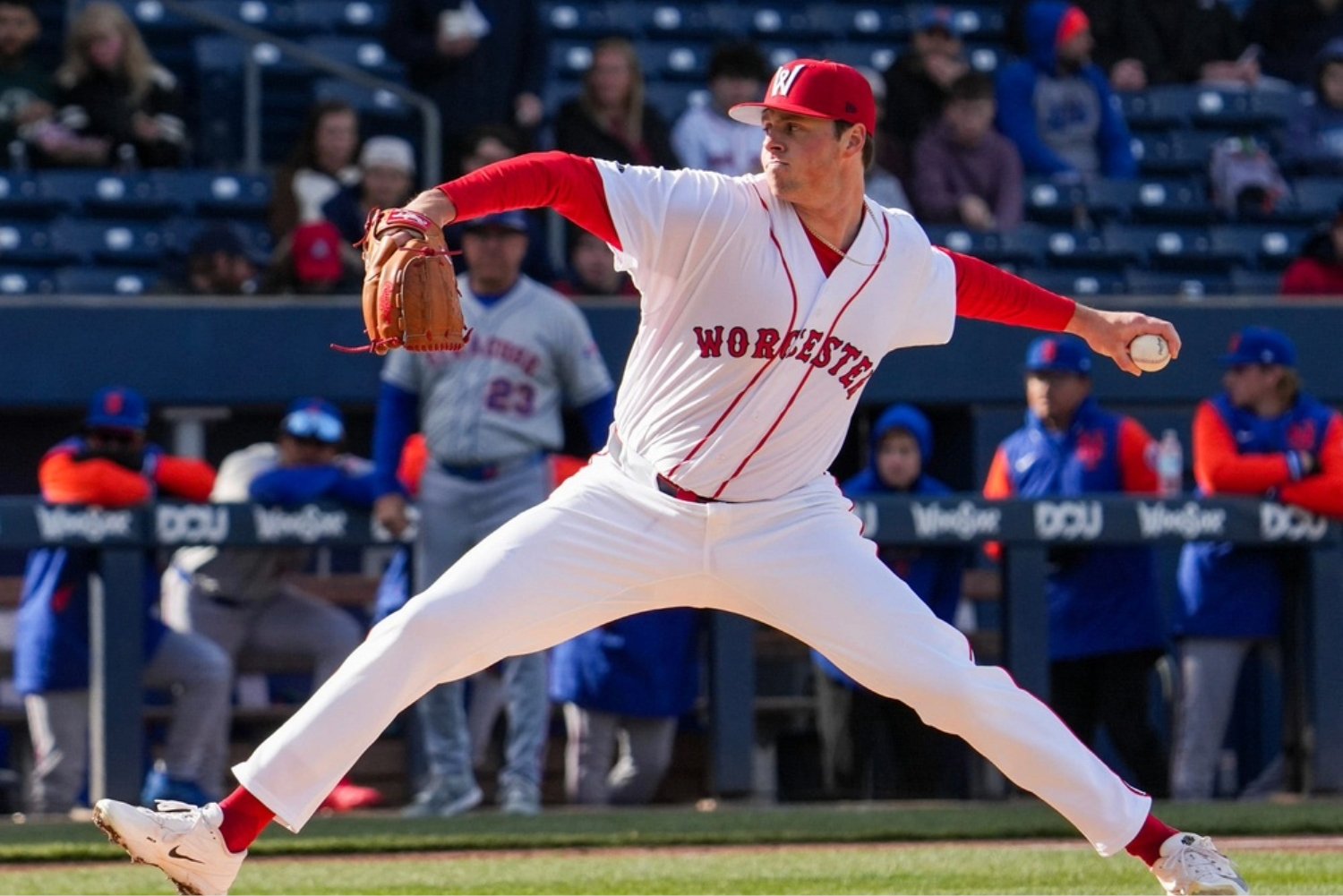 While the month of April may not have been as memorable for the Boston Red Sox as fans had hoped for, there was more to be hopeful of in the minor leagues. The pitching development infrastructure, which saw an overhaul by Craig Breslow since his hiring following the 2023 season, showed its progress last season, but 2026 has been a whole different animal. Triple-A Worcester alone has seen several of its pitchers get off to great starts that led to promotions to the major-league squad, while the other levels of the organization have seen their own pitchers get off to incredible starts. With that, we’ve narrowed this award down to the three best pitchers in the Red Sox's minor-league system. Special Mention: Portland Sea Dogs No-Hitter On Sunday, April 26, the entire Red Sox organization was dealing with the fallout of the coaching layoffs that had occurred the day prior. Despite the mass changes in staff across all levels of the organization, the Sea Dogs made sure that Kyle Sasala’s first day as acting manager was as special one. Led by Hayden Mullins who tossed five hitless innings, the Sea Dogs went on to pitch a no-hitter and win 3-2. Mullins started the game and allowed two unearned runs that came around to score on a third inning error. Across his entire start he walked five and struck out five before giving way to the bullpen. Caleb Bolden was the first to come on in relief, pitching two hitless innings and striking out three before handing the ball over to Reidis Sena who concluded the no-hitter as he tossed the final two innings. The no-hitter was the ninth in the history of the Portland Sea Dogs. #3: Devin Futrell (Single-A Salem/High-A Greenville) Futrell has been on the receiving end of Boston’s pitching depth across the minor leagues, and not in a positive way. Opening the season with the Salem RidgeYaks due to a lack of room in Greenville, Futrell forced his way up to the Drive after just two appearances in Salem. Since the promotion, his time with Greenville has been just as dominant. Having split April between the two levels, the left-hander made four appearances and tossed 17 2/3 innings as he allowed just one run on six hits and three walks. He also struck out 18 batters. Futrell opened the season on a 13-inning scoreless streak. Futrell has been an arm of interest since his professional debut in 2025, but after holding opposing batters to a .115 batting average and striking them out at a 27.7% rate, he’s continued to show that he is ready for a chance against tougher competition. #2: Jake Bennett (Triple-A Worcester) Bennett had a stellar April with the organization that, when mixed with unforeseen injuries to the major-league squad, led to the left-hander making his major league debut sooner than anyone expected. Pitching in four games, Bennett absolutely was in control as he limited opposing batters to a .161 batting average across 18 innings. During that time, he allowed just two earned runs on 10 hits and three walks while striking out 11. What really stood out for Bennett in the month of April was his ability to limit the hard contact. Utilizing a five-pitch mix, Bennett typically led the way with his sinker and four-seam fastball, using the two pitches for 51.7% of his pitches. It led to opposing batters getting a hard hit just 25.5% of the time with an expected slugging percentage of just .198. #1: Anthony Eyanson (High-A Greenville) It goes without saying that Eyanson would be the top pitching prospect for the month of April. Anyone who watched him throughout the month should have had an idea, especially as he put the baseball world on notice with the start to his professional career. Making four starts in April, the third-round pick pitched in a manner befitting of a first-rounder as he allowed just six hits and one earned run across 16 2/3 innings pitched. In that same span he struck out 27 batters while walking none. Following his first professional outing, Eyanson allowed two or fewer hits in each of his outings, including 4 1/3 no-hit innings in his second start. Overall, Eyanson struck out 48% of the batters he faced in April while his strikeouts to walk ratio was infinity thanks in part to his excellent command. On top of that, when batters did manage to put the ball in play against him, Eyanson found a way to keep it on the ground, as he had a 59.4% ground ball rate. The right-hander is now being promoted to Double-A Portland after a fantastic start to his career as first reported by Chase Ford of MiLB Central.
 -
Worcester, Ma – “We joked on Sunday how we got his pitch count extended to 18 [pitches]”. Former Worcester manager Chad Tracy sat in his office talking about his old pitching staff, especially as the WooSox were dealing with being shorthanded due to a mixture of promotions to Boston and injuries. One man who remained available and has been a consistent force out of the bullpen for Tracy has been right-handed reliever Tayron Guerrero. Guerrero, who signed a minor-league deal with an invite to spring training, last pitched in the majors way back in 2019, though that hasn’t stopped him from attempting to get back there. Now 35 years old, he’s fighting to get called up as he dominates the competition at Triple-A with a fastball that has hit triple digits. Having appeared in nine games, Guerrero has tossed 10 innings and allowed just one run on seven hits and three walks. In that span he struck out 11 batters and unofficially claimed the closer’s role for himself by earning three saves and finishing off five games. His dominance has been that good that it’s been tough to stretch him out. “In the five outings before that he had thrown 13 pitches and 11 pitches. He’s been pretty dominant. So, he’s been pretty locked down for us,” Tracy explained when talking about Guerrero’s pitch counts. In his last outing with Tracy as his manager, the right-hander pitched multiple innings for the first time all year, tossing 29 pitches. “He looks great, throwing hard and all spring and here he’s in the [strike] zone. He’s thrown nothing but strikes since I laid eyes on him.” The Red Sox could use an arm like his in the bullpen. While Triple-A competition is not the same as that in the major leagues, the lack of middle inning relievers has hurt the Red Sox throughout April. What helps Guerrero is when you pair his 100 mph fastball with his slider, he’s been able to not just strikeout batters at a 28.2% rate but also get them to chase at one of the highest marks in all of Triple-A, generating a chase rate of 37.68%. The only downside to Guerrero is his lack of options, meaning that should the Red Sox select his contract, they would need to either keep him on the roster for the remainder of the season or hope they could sneak the flamethrowing right-hander through waivers. That doesn’t seem to be an issue for Tracy, however. “I think he’s definitely in the conversation. There’s no doubt. All of our guys here are, but with his [Guerrero’s] stuff, I know it’s not a situation where they want to bring him up for a day, you know? It’s a good arm. I’m sure at some point a lane will present where they feel like he can contribute for an extended period of time,” Tracy explained just before his own promotion to Boston. The Red Sox have already tapped into their minor-league depth, adding two players to the 40-man roster to provide length in the bullpen. Right-hander Jack Anderson and left-hander Eduardo Rivera both made their major league debuts last month and provided innings for an otherwise-depleted bullpen. Anderson, who was acquired in the minor-league portion of the Rule 5 draft, made three appearances before being optioned back to Triple-A for a fresh arm. In his appearances he was mainly used during mop-up duty, being asked to pitch multiple innings when the game seemed out of hand or if Alex Cora needed to save his bullpen for another day. The right-hander flashed some impressive stuff, tossing eight innings and striking out six batters. The transformation for Anderson has been due to a slight increase in velocity along with a splitter that he added to his arsenal. “I don’t think it was in his [Anderson’s] wildest dreams or mine that Jack was going to be called up to the big leagues that quick. But I think the reason he was called up was he gets in the zone. He throws a lot of strikes and has the ability to get quick outs. The outings we’ve seen here, he gets in the zone and he’s in the zone often,” Tracy said. Much like Anderson, Rivera was called up (and replaced Anderson) when the Red Sox needed an extra arm. The left-hander had just been called up to Worcester when that same night he was given the news of being promoted once more to Boston before throwing even a single pitch in Triple-A. Upon joining Boston, there was uncertainty if he would pitch out of the bullpen or be a spot starter in the Yankees series as starter Brayan Bello was pushed back to Friday. In the end that was decided when the 6-foot-7 left-hander came on in relief during the April 22 game. Armed with a fastball that can top out at 99 mph, Rivera dominated in relief as he tossed 3 1/3 scoreless innings while allowing just one hit. The left-hander’s time in Boston was short, however, being sent back down to Worcester so that the team could promote Payton Tolle. Despite that, the left-hander who has a three-pitch mix led by his powerful fastball should see his name called once more when needed. Just 22 years old, he was going to be Rule 5 eligible after this season, and the team would have needed to make a decision on him sooner or later. Now. they’ll have plenty of opportunities to see what he can do. The Red Sox also have another other option they could turn to for relief help in the form of veteran right-hander Seth Martinez. Martinez has had an interesting season, as his numbers have been hurt by the long ball; having tossed 20 innings, the right-hander has a 4.95 ERA thanks in part to six home runs he’s allowed. Despite that, opponents are hitting just .194 against him and he limits walks as well as anyone in Worcester. Despite the home run problems, he’s also managed to limit hard hits, allowing them at just under 32% of the time. There’s no denying that the bullpen was the weakest area of the team entering the season and while it has cost the team a few games, it’s never too early to try and improve. The Red Sox have options waiting at Triple-A to come up and help, it’s just a matter of Craig Breslow making the call. View full article
-
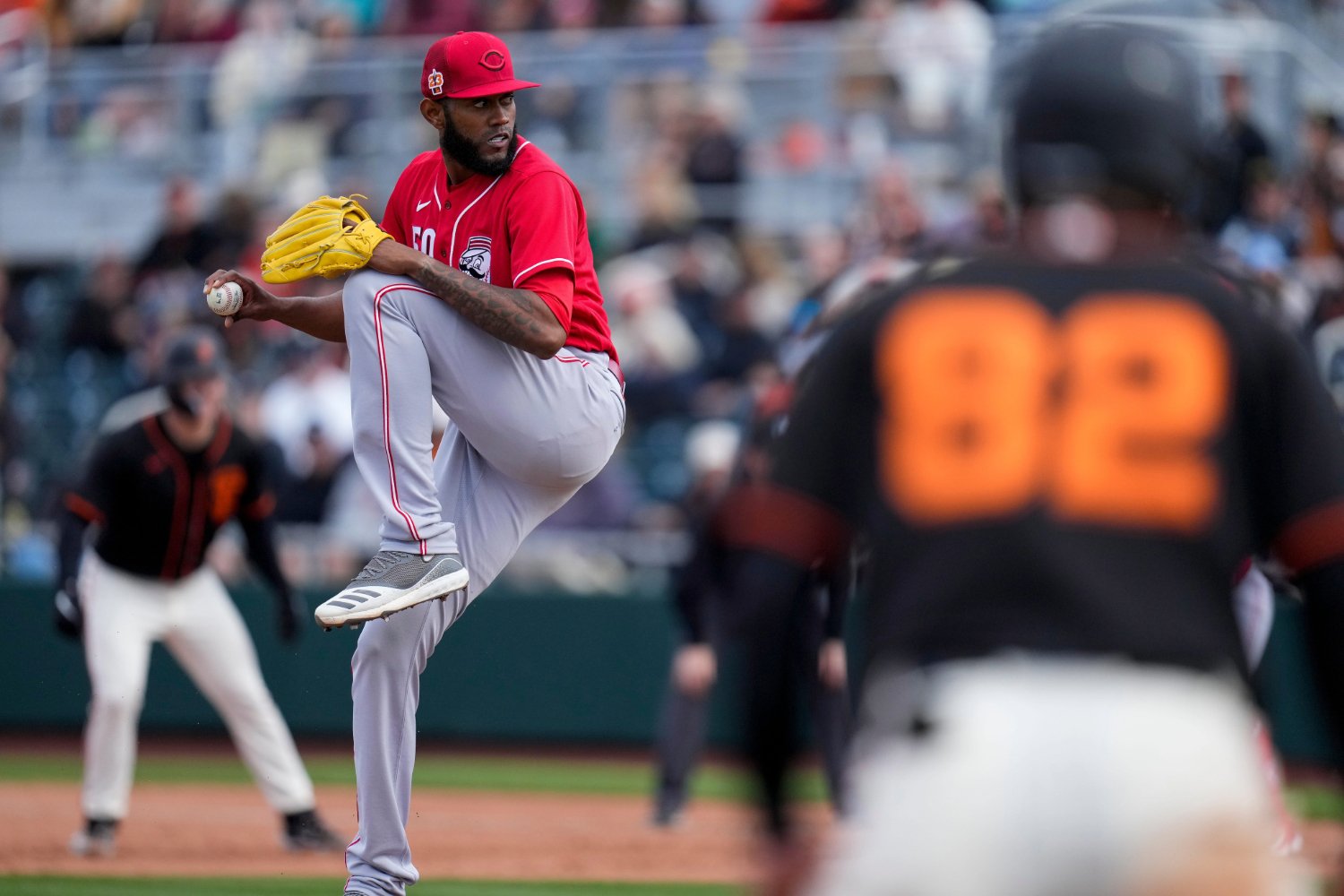 Worcester, Ma – “We joked on Sunday how we got his pitch count extended to 18 [pitches]”. Former Worcester manager Chad Tracy sat in his office talking about his old pitching staff, especially as the WooSox were dealing with being shorthanded due to a mixture of promotions to Boston and injuries. One man who remained available and has been a consistent force out of the bullpen for Tracy has been right-handed reliever Tayron Guerrero. Guerrero, who signed a minor-league deal with an invite to spring training, last pitched in the majors way back in 2019, though that hasn’t stopped him from attempting to get back there. Now 35 years old, he’s fighting to get called up as he dominates the competition at Triple-A with a fastball that has hit triple digits. Having appeared in nine games, Guerrero has tossed 10 innings and allowed just one run on seven hits and three walks. In that span he struck out 11 batters and unofficially claimed the closer’s role for himself by earning three saves and finishing off five games. His dominance has been that good that it’s been tough to stretch him out. “In the five outings before that he had thrown 13 pitches and 11 pitches. He’s been pretty dominant. So, he’s been pretty locked down for us,” Tracy explained when talking about Guerrero’s pitch counts. In his last outing with Tracy as his manager, the right-hander pitched multiple innings for the first time all year, tossing 29 pitches. “He looks great, throwing hard and all spring and here he’s in the [strike] zone. He’s thrown nothing but strikes since I laid eyes on him.” The Red Sox could use an arm like his in the bullpen. While Triple-A competition is not the same as that in the major leagues, the lack of middle inning relievers has hurt the Red Sox throughout April. What helps Guerrero is when you pair his 100 mph fastball with his slider, he’s been able to not just strikeout batters at a 28.2% rate but also get them to chase at one of the highest marks in all of Triple-A, generating a chase rate of 37.68%. The only downside to Guerrero is his lack of options, meaning that should the Red Sox select his contract, they would need to either keep him on the roster for the remainder of the season or hope they could sneak the flamethrowing right-hander through waivers. That doesn’t seem to be an issue for Tracy, however. “I think he’s definitely in the conversation. There’s no doubt. All of our guys here are, but with his [Guerrero’s] stuff, I know it’s not a situation where they want to bring him up for a day, you know? It’s a good arm. I’m sure at some point a lane will present where they feel like he can contribute for an extended period of time,” Tracy explained just before his own promotion to Boston. The Red Sox have already tapped into their minor-league depth, adding two players to the 40-man roster to provide length in the bullpen. Right-hander Jack Anderson and left-hander Eduardo Rivera both made their major league debuts last month and provided innings for an otherwise-depleted bullpen. Anderson, who was acquired in the minor-league portion of the Rule 5 draft, made three appearances before being optioned back to Triple-A for a fresh arm. In his appearances he was mainly used during mop-up duty, being asked to pitch multiple innings when the game seemed out of hand or if Alex Cora needed to save his bullpen for another day. The right-hander flashed some impressive stuff, tossing eight innings and striking out six batters. The transformation for Anderson has been due to a slight increase in velocity along with a splitter that he added to his arsenal. “I don’t think it was in his [Anderson’s] wildest dreams or mine that Jack was going to be called up to the big leagues that quick. But I think the reason he was called up was he gets in the zone. He throws a lot of strikes and has the ability to get quick outs. The outings we’ve seen here, he gets in the zone and he’s in the zone often,” Tracy said. Much like Anderson, Rivera was called up (and replaced Anderson) when the Red Sox needed an extra arm. The left-hander had just been called up to Worcester when that same night he was given the news of being promoted once more to Boston before throwing even a single pitch in Triple-A. Upon joining Boston, there was uncertainty if he would pitch out of the bullpen or be a spot starter in the Yankees series as starter Brayan Bello was pushed back to Friday. In the end that was decided when the 6-foot-7 left-hander came on in relief during the April 22 game. Armed with a fastball that can top out at 99 mph, Rivera dominated in relief as he tossed 3 1/3 scoreless innings while allowing just one hit. The left-hander’s time in Boston was short, however, being sent back down to Worcester so that the team could promote Payton Tolle. Despite that, the left-hander who has a three-pitch mix led by his powerful fastball should see his name called once more when needed. Just 22 years old, he was going to be Rule 5 eligible after this season, and the team would have needed to make a decision on him sooner or later. Now. they’ll have plenty of opportunities to see what he can do. The Red Sox also have another other option they could turn to for relief help in the form of veteran right-hander Seth Martinez. Martinez has had an interesting season, as his numbers have been hurt by the long ball; having tossed 20 innings, the right-hander has a 4.95 ERA thanks in part to six home runs he’s allowed. Despite that, opponents are hitting just .194 against him and he limits walks as well as anyone in Worcester. Despite the home run problems, he’s also managed to limit hard hits, allowing them at just under 32% of the time. There’s no denying that the bullpen was the weakest area of the team entering the season and while it has cost the team a few games, it’s never too early to try and improve. The Red Sox have options waiting at Triple-A to come up and help, it’s just a matter of Craig Breslow making the call.
 -
 Worcester, Ma — “That’s one I’ll definitely keep for sure,” Iggy Suarez said as he pointed to the lineup card from Worcester’s 6-2 victory over the Syracuse Mets on April 26. It was Worcester’s 15th win of the season, but more importantly, it was Suarez’s first since being named interim manager of the Worcester Red Sox. To say that the last 24 hours had been crazy for Suarez would be an understatement. Everything moved quickly not just for him, but also for Chad Tracy as he got ready to fly to Baltimore to take over the major-league club. As things were happening behind the scenes and Tracy vanishing from the dugout, Suarez was the one who took over as he so often did whenever his predecessor was called away into the clubhouse. But this time it was different, and he had a feeling something was up as Tracy vanished around the third inning but never returned for the remainder of the game. That was when he knew something big happened. “I’m coming in from coaching third and kind of a little bit of craziness is going on in the tunnel where Trace is being pulled in the direction where he had to be on a phone call. And that half inning ends, I go out and coach third and I realize Trace is not in the dugout yet. I’m like okay, maybe it’s a long conversation,” Suarez explained to the media gathered at his first meeting as interim manager. “After a couple innings, I ran in there [the clubhouse] real quick to kind and see what was going on and got the cliff-note version of what had happened. Trace let me know really quick, and quick hug and had to run back out here because there was a game I had to finish managing. “It was a whirlwind to kind of realize what was happening. And it was tough to process it at that point, the last couple innings were kind of a blur and a little bit of a haze." Suarez joined Tracy’s coaching staff in 2025 after serving as the manager of Greenville from 2018 through 2024. It was a long road for Suarez, but he was now managing at the same level he last played professional baseball in for the very same organization he now worked for. Born and raised in Queens, New York, Suarez was drafted in the 24th round in 2003 by the Boston Red Sox. He would go on to play for them through the 2009 season, making it all the way to Pawtucket. During his time in the organization, Suarez played a total of 730 games, hitting .243/.318/.321 while splitting time between shortstop, second base and third base. He would retire shortly after leaving the Red Sox system after 2009, playing from 2010 until 2013 in independent baseball. Then, in 2014, he returned to the team he started his professional career with the Lowell Spinners, but this time as a coach. After two years, he was named the manager of the Spinners. In his first season, he led the short-season squad to 47 wins and a playoff appearance. Suarez would only manage the Spinners for two years before being named the next manager of the Greenville Drive. He managed the team for six seasons, winning 365 games there until he was moved to Worcester to serve under Tracy as his defensive and third base coach. “I’m glad we had a quick game today, it’s an earlier game. To get back into the routine because I want to keep these guys moving.” And yes, Suarez still coached third today even after his promotion to interim manager. In his first game managing at the Triple-A level, the WooSox played great as starter Jack Anderson tossed four shutout innings before giving way to a relay of pitchers that included Eduardo Rivera, Jacob Webb and Tommy Kahnle to close it out. Offensively, the team was led by a three-hit performance from Nate Eaton that included a three-run home run to left field. Kristian Campbell, Vinny Capra and Matt Thaiss also drove in runs while the team as a whole walked six times. “I was hoping I was gonna get it. Right out of the gate, yeah? It was cool, still a different environment right, still gotta adjust to it,” Suarez said after the game in his office when asked by media about the win. It was all smiles, Suarez sitting in what would become his office, though he refused to have Tracy’s stuff removed. He wanted his predecessor to have a moment to breath first and have some time before they changed anything. Though, on the television in the office was none other than Tracy as he went to the mound and called on Zack Kelly to get the final out of the seventh inning in Baltimore. “I’m pretty sure he’s feeling the same way where it’s like, let’s get this game going. Let’s get the rhythm of the game and that’s where we’re comfortable." Just as Tracy had previously coached players now on the Red Sox, the situation is the same for Suarez as he previously coached players such as Kristian Campbell, Nick Sogard, Nathan Hickey and Mikey Romero when they were with the Greenville Drive earlier in their respective careers. “I’ve played under him as a manager before in High-A and we had a great year that year. I’d expect it to be very similar to the program that Trace was running and just keep this thing going,” Sogard explained when asked by the media about his relationship with Worcester's new interim manager. “I’m an intense guy. I’ll be in there with the players the same way Trace was. I’ll be going about it the way I’ve been going about it. Try to be the same, nothing is going to change. I may have a little more serious look on my face during games,” Suarez stated to media Sunday morning. Much like how the Red Sox are in good hands with Chad Tracy, the WooSox appear to be in the trusted care of Suarez. The former Boston farmhand will now continue what he does best, working with and developing the next generation of Red Sox stars.
 -
Worcester, Ma — “That’s one I’ll definitely keep for sure,” Iggy Suarez said as he pointed to the lineup card from Worcester’s 6-2 victory over the Syracuse Mets. It was Worcester’s 15th win of the season but more importantly it was Suarez’s first since being named interim manager of the Worcester Red Sox. To say that the last 24 hours had been crazy for Suarez would be an understatement as everything moved quickly not just for himself but also for Chad Tracy as he got ready to fly to Baltimore. As things were happening behind the scenes and Tracy vanishing from the dugout, Suarez was the one who took over as he so often did whenever his predecessor was called away into the clubhouse. But this time it was different, and he had a feeling something was up as Tracy vanished around the third inning but never returned for the remainder of the game. That was when he knew something big happened. “I’m coming in from coaching third and kind of a little bit of craziness is going on in the tunnel where Trace is being pulled in the direction where he had to be on a phone call. And that half inning ends, I go out and coach third and I realize Trace is not in the dugout yet. I’m like okay, maybe it’s a long conversation,” Suarez explained to the media about the events leading up to Tracy’s exit and promotion to Boston. Suarez joined Tracy’s coaching staff in 2025 after serving as the manager of Greenville from 2018 through 2024. “After a couple innings, I ran in there [the clubhouse] real quick to kind and see what was going on and got the cliff note version of what had happened. Trace let me know really quick, and quick hug and had to run back out here because there was a game I had to finish managing. “It was a whirlwind to kind of realize what was happening. And it was tough to process it at that point, the last couple innings were kind of a blur and a little bit of a haze,” Suarez explained to the media gathered at his first meeting as interim manager. That was the thought of Worcester’s interim manager Iggy Suarez in regard to Saturday’s news of his predecessor Chad Tracy being named the interim manager of the Boston Red Sox. It had been a long road for Suarez, but he was now managing at the same level he last played professional baseball in for the very same organization he now worked for. Born and raised in Queens, New York, Suarez would be drafted in the 24th round of the 2003 Draft by the Boston Red Sox where he would go on to play for them through the 2009 season, making it all the way to Pawtucket. During his time in the organization, Suarez played a total of 730 games, hitting .243/.318/.321 while splitting time between shortstop, second base and third base. He would retire shortly after leaving the Red Sox system after 2009, playing from 2010 until 2013 in independent baseball. Then, in 2014 he returned to the team he started his professional career with the Lowell Spinners, but this time as a coach. After two years, he was named the manager of the Spinners where in his first season he led the short season team to 47 wins and a playoff appearance. Suarez would only manage the Spinners for two years before being named the next manager of the Greenville Drive. He managed the team for six seasons, winning 365 games there until he was moved to Worcester to serve under Tracy as his defensive and third base coach. “I’m glad we had a quick game today, it’s an earlier game. To get back into the routine because I want to keep these guys moving.” And yes, Suarez still coached third today even after his promotion to interim manager. In his first game managing at the Triple-A level, the Woosox played great as starter Jack Anderson tossed four shutout innings before giving way to a relay of pitchers that included Eduardo Rivera, Jacob Webb and Tommy Kahnle to close it out. Offensively the team was led by a three-hit performance from Nate Eaton that included a three-run home run to left field. Kristian Campbell, Vinny Capra and Matt Thaiss also drove in runs while the team as a whole walked six times. “I was hoping I was gonna get it. Right out of the gate, yeah? It was cool, still a different environment right, still gotta adjust to it,” Suarez said after the game in his office when asked by media about the win. It was all smiles, Suarez sitting in what would be his office now though he refused to have Tracy’s stuff removed. He wanted his predecessor to have a moment to breath first and have some time before they changed anything. Though, on the television in the office was none other than Tracy as he went to the mound and called on Zack Kelly to get the final out of the seventh inning. “I’m pretty sure he’s feeling the same way where it’s like, let’s get this game going. Let’s get the rhythm of the game and that’s where we’re comfortable,” Suarez admitted. Just as Tracy had previously coached players now on the Red Sox, the situation is the same for Suarez as he previously coached players such as Kristian Campbell, Nick Sogard, Nathan Hickey and Mikey Romero when they were with the Greenville Drive earlier in their respective careers. “I’ve played under him as a manager before in High-A and we had a great year that year. I’d expect it to be very similar to the program that Trace was running and just keep this thing going,” Sogard explained when asked by the media about what kind of manager Suarez was like. “I’m an intense guy. I’ll be in there with the players the same way Trace was. I’ll be going about it the way I’ve been going about it. Try to be the same, nothing is going to change. I may have a little more serious look on my face during games,” Suarez stated to media Sunday morning. Much like the Red Sox are in good hands with Chad Tracy, the Woosox appear to be in trusted hands with Suarez. The former Red Sox farmhand will now continue what he does best, working with and developing the next generation of Red Sox stars. View full article
-
Worcester, MA — Following a 17-1 victory over the Baltimore Orioles, the Boston Red Sox organization shockingly relieved Alex Cora and several members of his coaching staff of their duties. Among the changes in the coaching staff, Worcester manager Chad Tracy was promoted to interim manager of the Boston Red Sox. While Tracy was managing the Red Sox to a 5-3 victory on Sunday that clinched not just his first major-league win but also his 500th career managerial win, players both past and present gave their thoughts about the newest Red Sox manager. “He’s more than ready to be a big-league manager. I think those guys are gonna be pumped to have him and ready to play their asses off for him,” former Red Sox pitcher David Sandlin stated when asked about his former manager getting the promotion to Boston. “Trace is the man. He’s a player’s manager, just a guy that doesn’t have an ego and knows how to get the most out of his players. For me, he was a really calming voice when all the alarm bells were going off during the relieving experiment last year.” Sandlin, who only played for Tracy and Worcester for the final two months of the 2025 season, is hardly the only former Sox player with fond things to say of Tracy. “[He] holds guys accountable and knows how to encourage the guys to put in the work,” former Red Sox pitcher Hunter Dobbins explained. Dobbins spent parts of two seasons in Worcester, getting to spend plenty of time with Tracy, especially in 2025 when he bounced between Worcester and Boston. “Couldn’t be happier for him to get this shot and [Chad] Epperson as well.” Tracy is no stranger to the Boston organization, having managed their Triple-A team since the 2022 season. A former ball player himself, the new Red Sox manager spent eight years playing in the Rockies, Rangers and Royals organizations where he hit .265/.336/453 in 857 games. After being let go by the Royals organization in 2013, he spent the remainder of 2013 and all of 2014 with the York Revolution of the Atlantic League before retiring. Following his retirement as a player, Tracy began his coaching career in the Los Angeles Angels' system. First as the manager of the Class-A Burlington Bees in 2015 before managing the High-A Inland Empire 66ers from 2016 to 2017. Following the 2017 season, Tracy was the minor-league field coordinator for four seasons before being named Worcester's manager for 2022. Since joining the Red Sox organization, Tracy had been a consistent figure in Triple-A, as he led the WooSox to a winning season every year, including back-to-back 79-win seasons in 2023 and 2024. And just as Tracy is no stranger to the organization, the players in Boston are no strangers to him either. Of the active roster, half of them have spent time developing under him. Including rehab assignments, 16 of the players currently in Boston at the time of his promotion have played for him. And that’s not even taking into account his presence during spring training and being an important member of the staff in major-league camp. “He’s the ultimate professional. I think he commands the respect of everyone in the room and he’s a really smart baseball mind,” Nick Sogard explained Sunday while talking to the media. Sogard has ample experience with Tracy, having played 387 games under him. “I had a lot of good relationships with the guys that got fired, so that was a bummer for me personally. But I’m really happy for Trace.” For someone like Tracy, a former third-round pick who made it to Triple-A as a player, this has been a call he’s been waiting for. An experience that even the players knew was special. “I’ve seen over the course of the years here, so many players get called up. They pack all their stuff in the cart, so it’s kind of unique to see that with the manager and hitting coach. That felt like a unique experience and was cool to see someone I care about a lot fulfilling a lifelong dream,” Sogard told the media when asked about the emotions of seeing Tracy off after Saturday’s victory in Worcester. In the moment of it all, the players knew they had a game to play, but the outside noise was creeping into the back of their minds. They couldn’t help but wonder what was going on, especially after Tracy left the dugout. Instead, he never returned for the remainder of the game. Defensive and third base coach Iggy Suarez instead handled the remainder of the game, and he'll now serve as the interim replacement in Worcester. “We didn’t know if a trade was happening, but we just tried to win the game it was all we could worry about. So, we were focused on that. Then we got back in, he was in street clothes already. So, then it was like, oh, all right. He was like ‘hey guys, you know, stuff happened and they asked me to go up and be an interim manager’. We were all like, dude you deserve it,” Nathan Hickey explained. Hickey had spent parts of three seasons under Tracy, playing a total of 224 games for him. Boston will be in good hands with Tracy at the helm, a baseball lifer that has a track record of holding the respect of all within a room. He’s the right man to replace Cora following a disastrous start to the season. With the season looking grim and a roster filled with young talent and veterans alike, Tracy will now be tasked with continuing what he managed to do in Worcester for so long: help develop players while holding the team to a respectable standard of winning. View full article
-
 Worcester, MA — Following a 17-1 victory over the Baltimore Orioles, the Boston Red Sox organization shockingly relieved Alex Cora and several members of his coaching staff of their duties. Among the changes in the coaching staff, Worcester manager Chad Tracy was promoted to interim manager of the Boston Red Sox. While Tracy was managing the Red Sox to a 5-3 victory on Sunday that clinched not just his first major-league win but also his 500th career managerial win, players both past and present gave their thoughts about the newest Red Sox manager. “He’s more than ready to be a big-league manager. I think those guys are gonna be pumped to have him and ready to play their asses off for him,” former Red Sox pitcher David Sandlin stated when asked about his former manager getting the promotion to Boston. “Trace is the man. He’s a player’s manager, just a guy that doesn’t have an ego and knows how to get the most out of his players. For me, he was a really calming voice when all the alarm bells were going off during the relieving experiment last year.” Sandlin, who only played for Tracy and Worcester for the final two months of the 2025 season, is hardly the only former Sox player with fond things to say of Tracy. “[He] holds guys accountable and knows how to encourage the guys to put in the work,” former Red Sox pitcher Hunter Dobbins explained. Dobbins spent parts of two seasons in Worcester, getting to spend plenty of time with Tracy, especially in 2025 when he bounced between Worcester and Boston. “Couldn’t be happier for him to get this shot and [Chad] Epperson as well.” Tracy is no stranger to the Boston organization, having managed their Triple-A team since the 2022 season. A former ball player himself, the new Red Sox manager spent eight years playing in the Rockies, Rangers and Royals organizations where he hit .265/.336/453 in 857 games. After being let go by the Royals organization in 2013, he spent the remainder of 2013 and all of 2014 with the York Revolution of the Atlantic League before retiring. Following his retirement as a player, Tracy began his coaching career in the Los Angeles Angels' system. First as the manager of the Class-A Burlington Bees in 2015 before managing the High-A Inland Empire 66ers from 2016 to 2017. Following the 2017 season, Tracy was the minor-league field coordinator for four seasons before being named Worcester's manager for 2022. Since joining the Red Sox organization, Tracy had been a consistent figure in Triple-A, as he led the WooSox to a winning season every year, including back-to-back 79-win seasons in 2023 and 2024. And just as Tracy is no stranger to the organization, the players in Boston are no strangers to him either. Of the active roster, half of them have spent time developing under him. Including rehab assignments, 16 of the players currently in Boston at the time of his promotion have played for him. And that’s not even taking into account his presence during spring training and being an important member of the staff in major-league camp. “He’s the ultimate professional. I think he commands the respect of everyone in the room and he’s a really smart baseball mind,” Nick Sogard explained Sunday while talking to the media. Sogard has ample experience with Tracy, having played 387 games under him. “I had a lot of good relationships with the guys that got fired, so that was a bummer for me personally. But I’m really happy for Trace.” For someone like Tracy, a former third-round pick who made it to Triple-A as a player, this has been a call he’s been waiting for. An experience that even the players knew was special. “I’ve seen over the course of the years here, so many players get called up. They pack all their stuff in the cart, so it’s kind of unique to see that with the manager and hitting coach. That felt like a unique experience and was cool to see someone I care about a lot fulfilling a lifelong dream,” Sogard told the media when asked about the emotions of seeing Tracy off after Saturday’s victory in Worcester. In the moment of it all, the players knew they had a game to play, but the outside noise was creeping into the back of their minds. They couldn’t help but wonder what was going on, especially after Tracy left the dugout. Instead, he never returned for the remainder of the game. Defensive and third base coach Iggy Suarez instead handled the remainder of the game, and he'll now serve as the interim replacement in Worcester. “We didn’t know if a trade was happening, but we just tried to win the game it was all we could worry about. So, we were focused on that. Then we got back in, he was in street clothes already. So, then it was like, oh, all right. He was like ‘hey guys, you know, stuff happened and they asked me to go up and be an interim manager’. We were all like, dude you deserve it,” Nathan Hickey explained. Hickey had spent parts of three seasons under Tracy, playing a total of 224 games for him. Boston will be in good hands with Tracy at the helm, a baseball lifer that has a track record of holding the respect of all within a room. He’s the right man to replace Cora following a disastrous start to the season. With the season looking grim and a roster filled with young talent and veterans alike, Tracy will now be tasked with continuing what he managed to do in Worcester for so long: help develop players while holding the team to a respectable standard of winning.
 -
 The Boston Red Sox dismembered their coaching staff on the heels of a 17-1 win over the Baltimore Orioles. Manager Alex Cora was relieved of his duties. Along with him, bench coach Ramón Vázquez, third-base coach Kyle Hudson, assistant hitting coach Dillon Lawson, hitting coach Peter Fatse and hitting strategy coach Joe Cronin were also fired. Also, Game Planning and Run Prevention Coach Jason Varitek will be reassigned from his position as planning and run prevention coach to a new, currently unannounced position. Cora was in the middle of his three-year extension he negotiated in the second half of 2024. He won 620 games during his time as manager of the Boston Red Sox with 108 of them coming in his first season in 2018. That season culminated in an AL East title along with a World Series championship. Teams under Cora never reached that same level again, missing the playoffs in 2019 before he was suspended for all of 2020 due to his involvement in the Houston Astros cheating scandal. Upon his return in 2021, Cora led the Red Sox to the American League Championship Series. After that, the team suffered three consecutive losing seasons before making the playoffs in 2025. After a 10-17 start in 2026, the organization decided it was best to part ways with the manager and most of his coaching staff. Worcester Red Sox manager Chad Tracy will take over as interim manager of the Boston Red Sox. Tracy had been the manager of the Triple-A Worcester Red Sox since 2022 and has been viewed as a great up-and-coming manager who is excellent with young players. During his time in Worcester, Tracy managed several of the young players currently on the Red Sox roster including both Roman Anthony and Marcelo Mayer and had been voted the best managerial prospect in both 2023 and 2024. Entering the 2026 season, Tracy had won 309 games as the WooSox manager and had a winning season in each year. So far in 2026 the Worcester Red Sox had a record of 13-11 under him. Prior to joining the Boston organization, Tracy worked in the Los Angeles Angels organization from 2015 through 2021. He also played eight professional seasons in the Rangers, Rockies and Royals organizations. Joining Tracy in Boston will be Chad Epperson as the interim third base coach. Epperson has been the manager of the Portland Sea Dogs since 2022. Collin Hetzler will join the major league hitting staff after being the hitting coach in Worcester since 2025. With this move, the Red Sox appear to be looking to have a manager with a history of developing young players to now handle a roster that is mixed with both young, up-and-coming talent and veteran leadership. What are your thoughts? Is this the right decision? Is it better to do it now, or would it have been better to wait?
- 1 comment
-
- 1
-
-
- alex cora
- craig breslow
- (and 5 more)
-
The Boston Red Sox dismembered their coaching staff on the heels of a 17-1 win over the Baltimore Orioles. Manager Alex Cora was relieved of his duties. Along with him, bench coach Ramón Vázquez, third-base coach Kyle Hudson, assistant hitting coach Dillon Lawson, hitting coach Peter Fatse and hitting strategy coach Joe Cronin were also fired. Also, Game Planning and Run Prevention Coach Jason Varitek will be reassigned from his position as planning and run prevention coach to a new, currently unannounced position. Cora was in the middle of his three-year extension he negotiated in the second half of 2024. He won 620 games during his time as manager of the Boston Red Sox with 108 of them coming in his first season in 2018. That season culminated in an AL East title along with a World Series championship. Teams under Cora never reached that same level again, missing the playoffs in 2019 before he was suspended for all of 2020 due to his involvement in the Houston Astros cheating scandal. Upon his return in 2021, Cora led the Red Sox to the American League Championship Series. After that, the team suffered three consecutive losing seasons before making the playoffs in 2025. After a 10-17 start in 2026, the organization decided it was best to part ways with the manager and most of his coaching staff. Worcester Red Sox manager Chad Tracy will take over as interim manager of the Boston Red Sox. Tracy had been the manager of the Triple-A Worcester Red Sox since 2022 and has been viewed as a great up-and-coming manager who is excellent with young players. During his time in Worcester, Tracy managed several of the young players currently on the Red Sox roster including both Roman Anthony and Marcelo Mayer and had been voted the best managerial prospect in both 2023 and 2024. Entering the 2026 season, Tracy had won 309 games as the WooSox manager and had a winning season in each year. So far in 2026 the Worcester Red Sox had a record of 13-11 under him. Prior to joining the Boston organization, Tracy worked in the Los Angeles Angels organization from 2015 through 2021. He also played eight professional seasons in the Rangers, Rockies and Royals organizations. Joining Tracy in Boston will be Chad Epperson as the interim third base coach. Epperson has been the manager of the Portland Sea Dogs since 2022. Collin Hetzler will join the major league hitting staff after being the hitting coach in Worcester since 2025. With this move, the Red Sox appear to be looking to have a manager with a history of developing young players to now handle a roster that is mixed with both young, up-and-coming talent and veteran leadership. What are your thoughts? Is this the right decision? Is it better to do it now, or would it have been better to wait? View full article
-
When the Boston Red Sox signed Ranger Suárez over the offseason, the plan was simple: pair him alongside Garrett Crochet to form one of the strongest one-two punches in all of baseball. After failing to acquire a true number two at the trade deadline, the Red Sox managed to get their guy in Suárez. However, things did not go as planned right out of the gates. Making three starts in spring training, Suárez only lasted nine innings while allowing 11 runs on 14 hits, three of them being home runs. While it was a batch of exhibition contests and you can’t put too much stock into those numbers, it worried fans. The last time the team spent big on a free-agent pitcher, they had to use Mookie Betts to offload the contract. The last thing anyone wanted was for Suárez to be a bust. Then came the news that, due to the World Baseball Classic, Suárez was lagging behind and continuing to ramp. For your new $130 million pitcher, that wasn’t ideal. How his season debut against the Houston Astros went was even less ideal. Failing to get out of the fifth inning, Suárez allowed four runs on a walk and seven hits including two home runs. His pitches lacked their usual sharpness, as the left-hander allowed seven hard-hit balls into play and struggled to get coax batters into chasing outside the zone. His second start against San Diego may have been worse. Given a 4-0 lead heading entering the fourth inning, Suárez promptly surrendered it, allowing four earned on six hits and two walks in four-plus innings. Not what you wanted from the man who was supposed to be your number two starter. His plan of attack appeared to change completely as well. Whereas in his first start he relied heavily on his cutter, against the Padres he led with his changeup. And yet, just like against Houston, he was pummeled, allowing seven hard-hit balls to a middling lineup. After two rough starts, people wondered if Suárez was entering his decline phase. A 30-year-old with subpar velocity is hardly working with a big margin for error; perhaps the Red Sox had simply bought in at the wrong time. Fortunately, Suárez managed to squash those qualms the next time out. Pitching in St. Louis, Suárez dominated a better-than-expected Cardinals team. With six shutout innings, Suárez kept the Redbirds at bay until the offense finally woke up. Much like his first two starts, his pitch usage changed against the Cardinals as well. This time the sinker was his go-to pitch, tossing it a whopping 46% of the time. For comparison, he had thrown it just 16% of the time in his previous outing. The pitch worked, generating a chase rate of 35% by itself and only allowing two hard-hit balls. Batters were just 1-for-9 against the pitch, and it allowed him to use the rest of his repertoire to keep opposing batters off balance. But it wasn’t until his latest start where Suárez truly showed what he can do. Finding himself in a pitcher’s duel with Casey Mize of the Detroit Tigers, Suárez out-pitched the former No. 1 overall pick by tossing eight shutout innings. He really set the tone in the first inning, as he allowed two hits and had a runner on third base. Once he settled down and got out of it, the game was on. Following the first inning, the Tigers only had one more baserunner via a walk in the fourth inning; after that, Detroit would not have another batter reach base until after Suárez left. Saying it was a dominant performance would be an understatement, as Suárez yet again continued to hold the opponent down while giving his team plenty of attempts to score. The story behind that start was the same as the others: a change in pitch usage. Suárez relied on a mix of his sinker and changeup, using the two pitches 28% and 27% of the time, respectively. The two pitches worked well, as opponents hit just 1-for-12 against them while whiffing 32% of the time they swung. As someone who has never won with velocity or elite stuff, Suárez will continue to tinker with his game plan depending on the opponent. Should he continue to pitch as he did against St. Louis and Detroit, the rotation will be in good hands until it can get back to full strength. The Red Sox were missing someone like Suárez last season when injuries struck the rotation, and the team was forced to rely on rookies to help get them into the playoffs. Now, the team has a veteran with ample experience to help guide the pitching staff through this treacherous stretch. View full article
-
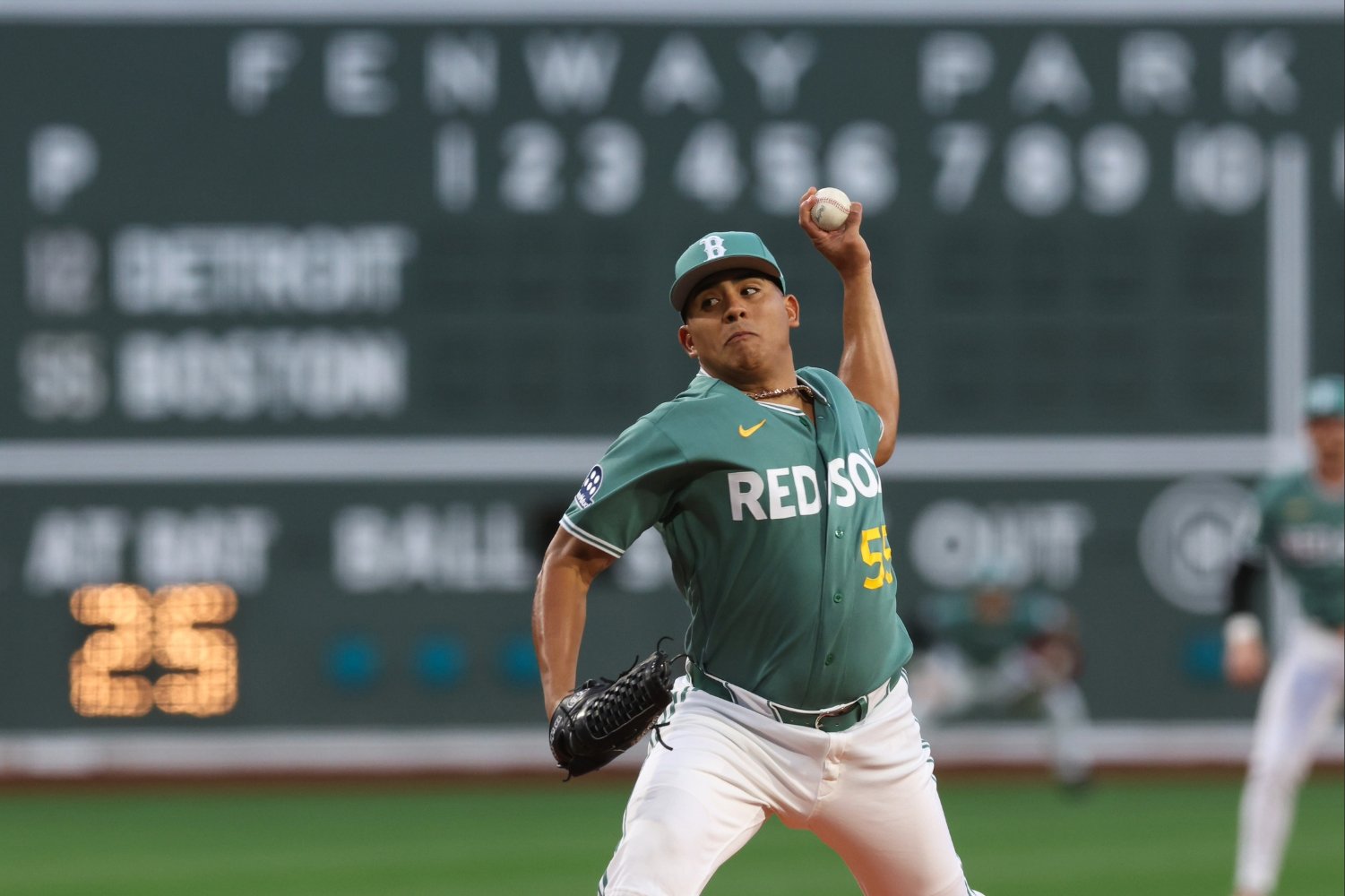 When the Boston Red Sox signed Ranger Suárez over the offseason, the plan was simple: pair him alongside Garrett Crochet to form one of the strongest one-two punches in all of baseball. After failing to acquire a true number two at the trade deadline, the Red Sox managed to get their guy in Suárez. However, things did not go as planned right out of the gates. Making three starts in spring training, Suárez only lasted nine innings while allowing 11 runs on 14 hits, three of them being home runs. While it was a batch of exhibition contests and you can’t put too much stock into those numbers, it worried fans. The last time the team spent big on a free-agent pitcher, they had to use Mookie Betts to offload the contract. The last thing anyone wanted was for Suárez to be a bust. Then came the news that, due to the World Baseball Classic, Suárez was lagging behind and continuing to ramp. For your new $130 million pitcher, that wasn’t ideal. How his season debut against the Houston Astros went was even less ideal. Failing to get out of the fifth inning, Suárez allowed four runs on a walk and seven hits including two home runs. His pitches lacked their usual sharpness, as the left-hander allowed seven hard-hit balls into play and struggled to get coax batters into chasing outside the zone. His second start against San Diego may have been worse. Given a 4-0 lead heading entering the fourth inning, Suárez promptly surrendered it, allowing four earned on six hits and two walks in four-plus innings. Not what you wanted from the man who was supposed to be your number two starter. His plan of attack appeared to change completely as well. Whereas in his first start he relied heavily on his cutter, against the Padres he led with his changeup. And yet, just like against Houston, he was pummeled, allowing seven hard-hit balls to a middling lineup. After two rough starts, people wondered if Suárez was entering his decline phase. A 30-year-old with subpar velocity is hardly working with a big margin for error; perhaps the Red Sox had simply bought in at the wrong time. Fortunately, Suárez managed to squash those qualms the next time out. Pitching in St. Louis, Suárez dominated a better-than-expected Cardinals team. With six shutout innings, Suárez kept the Redbirds at bay until the offense finally woke up. Much like his first two starts, his pitch usage changed against the Cardinals as well. This time the sinker was his go-to pitch, tossing it a whopping 46% of the time. For comparison, he had thrown it just 16% of the time in his previous outing. The pitch worked, generating a chase rate of 35% by itself and only allowing two hard-hit balls. Batters were just 1-for-9 against the pitch, and it allowed him to use the rest of his repertoire to keep opposing batters off balance. But it wasn’t until his latest start where Suárez truly showed what he can do. Finding himself in a pitcher’s duel with Casey Mize of the Detroit Tigers, Suárez out-pitched the former No. 1 overall pick by tossing eight shutout innings. He really set the tone in the first inning, as he allowed two hits and had a runner on third base. Once he settled down and got out of it, the game was on. Following the first inning, the Tigers only had one more baserunner via a walk in the fourth inning; after that, Detroit would not have another batter reach base until after Suárez left. Saying it was a dominant performance would be an understatement, as Suárez yet again continued to hold the opponent down while giving his team plenty of attempts to score. The story behind that start was the same as the others: a change in pitch usage. Suárez relied on a mix of his sinker and changeup, using the two pitches 28% and 27% of the time, respectively. The two pitches worked well, as opponents hit just 1-for-12 against them while whiffing 32% of the time they swung. As someone who has never won with velocity or elite stuff, Suárez will continue to tinker with his game plan depending on the opponent. Should he continue to pitch as he did against St. Louis and Detroit, the rotation will be in good hands until it can get back to full strength. The Red Sox were missing someone like Suárez last season when injuries struck the rotation, and the team was forced to rely on rookies to help get them into the playoffs. Now, the team has a veteran with ample experience to help guide the pitching staff through this treacherous stretch.
 -
The 2026 season has been a rollercoaster of a ride for the Boston Red Sox. Their offense has been anemic at times, and their pitching has been wildly inconsistent. Of course, there's always a few bright spots to highlight, including a particular duo in the bullpen. The front office did little to mess with a (mostly) successful formula over the offseason, and the results have been mixed. There have been some disastrous outings (ahem, Greg Weissert), but the group has also been the most stable unit on the team thus far. Specifically, Alex Cora has been able to turn to Jovani Morán and Garrett Whitlock when needed, and more often than not, they’ve come through for him. Of course, with anything in life, there are moments where a sure thing falters, but with the current state of the Red Sox's bullpen, these two may be Cora’s most trusted relievers, save for Aroldis Chapman, who continues to handle the ninth inning during save opportunities. Whitlock's success is hardly surprising. In 2025, he was Cora’s best option out of the pen after struggling early in the season. By the end of the year he was lights out, tossing 72 innings and striking out 91 batters. So far in 2026, the strikeout numbers are even more impressive, as he's punched out 35.3% of opposing hitters while only allowing five hits and two earned runs. The right-hander has kept batters at bay despite having a career high 14.7% walk rate. That’s thanks in part to holding opponents to a .172 batting average. He's especially succeeding terms of contact quality. Over half of the balls in play against him have been on the ground this year, and less than 30% of that contact has been of the hard variety. His sudden inability to get hitters to chase outside the zone has led to the aforementioned spike in his walk rate, but even this less-whiff-heavy version of Whitlock has proven capable of dominating. As for Morán, the left-hander entered the season as a huge question mark, as he spent 2025 recovering from surgery. While he did make a cameo with Boston, Morán was not a certainty to make the Opening Day roster. And after winning one, he’s continued to excel out of the bullpen for Boston. In six outings, Morán has provided length for the Red Sox, as he’s tossed 13 1/3 innings and allowed just two runs on five hits and six walks. He’s also struck out 15 batters thanks to his five-pitch arsenal (with three of them being his main pitches). Tossing a fastball, changeup, cutter, sweeper and curveball, Morán has been able to keep batters guessing and away from hard contact. Entering the week, Moran ranks near the top of major league baseball (93rd percentile) in whiff rate at 36.8% and is in the 91st percentile when it comes to hard-hit rate at 26.7%, hence how he's keeping opposing batters to a minuscule .111 batting average. His FIP is nearly two runs higher than his ERA (1.35) at 3.20, so it can be questioned if he’s been getting a little lucky so far in the season. Then again, he’s still striking opposing batters out at a 29.4% rate, so whatever good fortune he's getting is at least somewhat earned. Having a closer as sturdy as Chapman is valuable for the most obvious reasons. It's the bridge guys who have to keep games close in the middle and late innings that are often the unsung heroes of a win. The presence of Whitlock and Morán in the bullpen is a huge one as the team continues to navigate the loss of Justin Slaten and inconsistency from not just Weissert, but also Ryan Watson and Zack Kelly. View full article
-
 The 2026 season has been a rollercoaster of a ride for the Boston Red Sox. Their offense has been anemic at times, and their pitching has been wildly inconsistent. Of course, there's always a few bright spots to highlight, including a particular duo in the bullpen. The front office did little to mess with a (mostly) successful formula over the offseason, and the results have been mixed. There have been some disastrous outings (ahem, Greg Weissert), but the group has also been the most stable unit on the team thus far. Specifically, Alex Cora has been able to turn to Jovani Morán and Garrett Whitlock when needed, and more often than not, they’ve come through for him. Of course, with anything in life, there are moments where a sure thing falters, but with the current state of the Red Sox's bullpen, these two may be Cora’s most trusted relievers, save for Aroldis Chapman, who continues to handle the ninth inning during save opportunities. Whitlock's success is hardly surprising. In 2025, he was Cora’s best option out of the pen after struggling early in the season. By the end of the year he was lights out, tossing 72 innings and striking out 91 batters. So far in 2026, the strikeout numbers are even more impressive, as he's punched out 35.3% of opposing hitters while only allowing five hits and two earned runs. The right-hander has kept batters at bay despite having a career high 14.7% walk rate. That’s thanks in part to holding opponents to a .172 batting average. He's especially succeeding terms of contact quality. Over half of the balls in play against him have been on the ground this year, and less than 30% of that contact has been of the hard variety. His sudden inability to get hitters to chase outside the zone has led to the aforementioned spike in his walk rate, but even this less-whiff-heavy version of Whitlock has proven capable of dominating. As for Morán, the left-hander entered the season as a huge question mark, as he spent 2025 recovering from surgery. While he did make a cameo with Boston, Morán was not a certainty to make the Opening Day roster. And after winning one, he’s continued to excel out of the bullpen for Boston. In six outings, Morán has provided length for the Red Sox, as he’s tossed 13 1/3 innings and allowed just two runs on five hits and six walks. He’s also struck out 15 batters thanks to his five-pitch arsenal (with three of them being his main pitches). Tossing a fastball, changeup, cutter, sweeper and curveball, Morán has been able to keep batters guessing and away from hard contact. Entering the week, Moran ranks near the top of major league baseball (93rd percentile) in whiff rate at 36.8% and is in the 91st percentile when it comes to hard-hit rate at 26.7%, hence how he's keeping opposing batters to a minuscule .111 batting average. His FIP is nearly two runs higher than his ERA (1.35) at 3.20, so it can be questioned if he’s been getting a little lucky so far in the season. Then again, he’s still striking opposing batters out at a 29.4% rate, so whatever good fortune he's getting is at least somewhat earned. Having a closer as sturdy as Chapman is valuable for the most obvious reasons. It's the bridge guys who have to keep games close in the middle and late innings that are often the unsung heroes of a win. The presence of Whitlock and Morán in the bullpen is a huge one as the team continues to navigate the loss of Justin Slaten and inconsistency from not just Weissert, but also Ryan Watson and Zack Kelly.
 -
Each of the Boston Red Sox's affiliates have officially played at least a full series now, with Portland having played the least number of games at eight as of the beginning of this week. While Boston has been playing inconsistently, the four minor-league affiliates have allowed fans a chance to enjoy winning baseball while providing a window into the future. With that said, we’re going to look into three of the best players across the organization since the start of the minor-league season, and three players who have been playing less than optimally. Red Sox's Farm System Standouts Anthony Eyanson, Pitcher (7 1/3 innings, 3 hits, 1 run, 13 strikeouts) To say Eyanson is one of the best prospects in the system two weeks into his professional career may not be an understatement. Drafted in the third round of the 2025 draft, the young right-hander is shaping up to be a steal for the Red Sox. Besides his great stat line from his first two starts, Eyanson is also coming off of a perfect outing. In his latest appearance, the pitcher threw 4 1/3 innings without allowing a runner to reach base while striking out seven batters. While it’s only a matter of time before he surrenders his first walk, Eyanson is currently sitting on a phenomenal strikeout rate of 52% rate without any free passes under his belt. Likewise, batters are only making contact on 53.1% of his pitches while whiffing on roughly 22% of his pitches. If a batter does manage to make contact, they’ve mostly been hitting them into the ground, as seven of the 12 balls put into play have turned into ground balls. The lone fly ball surrendered by Eyanson did turn into a home run, however. While Eyanson is being slowly built up as a pitcher, he’s showing just how dominant he truly can be while holding opposing batters to a .120 batting average. If he continues to pitch like this, it’s only a matter of time until he’s promoted to Portland. Franklin Arias, Shortstop (.588/.636/.706, 2 doubles, 5 RBIs) Arias truly broke onto the scene as a top prospect last season when he hit a combined .278/.335/.388 between Salem, Greenville and Portland. This season, he’s started off even hotter through his first six games. Despite being just 20 years old, the shortstop is not being intimidated by the more advanced pitching in Double-A. Arias is flexing a well-rounded plate approach, walking at a 9.1% rate that matches his strikeout rate. He's a dangerous weapon for any offense looking to put pressure on the defense. When he's putting the ball in play, he’s begun the year hitting it less on the ground. With a ground ball rate of 31.3%, that’s equal to the number of baseballs he’s hitting as fly balls. It’s his line drive percentage that has improved to 37.5%. The change in approach and launch angle could help Arias hit for extra bases despite his lack of over-the-fence power. Though one thing to be weary of is his pull-heavy approach early on. Arias is currently pulling balls to the left side of the field at a career-high 62.5% rate. Whether this is a change in approach or just how opposing teams are pitching him is currently unknown but should be watched as the season continues. Tsung-Che Cheng, Infielder (.316/.447/.711, 2 doubles, 2 triples, 3 home runs, 6 RBIs) Cheng has surprised many this season with his play on both sides of the ball. Defensively, he’s always been a solid defender between second base, shortstop and third base and that has continued with Worcester as he’s split time at the former two. In 11 games between the two positions, he’s committed just one error. It’s his offense that has been a surprise, however. The infielder wowed everyone at Polar Park on April 10 when he hit for the first cycle in WooSox history. Based on how he hit last year (.207/.305/.267), no one could have predicted this hot start to the season. Though, one thing that has helped him out is his high walk percentage. So far on the young season, he’s walking nearly 18% of the time while striking out in just under 21% of his at-bats. His numbers have stayed roughly in line with his career for ground ball to fly balls with the young infielder putting the ball on the ground 42.9% of the time, a small drop from his 52.9% rate in 2025. He’s also used the entire field as he’s pulled the ball 32.1% of the time while going the other way on 39.3% of his batted balls. This is the kind of profile that will succeed in the big leagues, so more of the same from Cheng would go a long way toward helping his prospect stock. Red Sox's Farm System Disappointments Jorge Juan, Pitcher (1 2/3 innings, 1 hit, 5 runs, 5 walks, 1 strikeout) Juan is an interesting player who joined Portland after the 2025 season began. He made 22 appearances and wasn’t too bad (4.78 ERA in 32 innings), but he also wasn’t too impressive. Coming into 2026 he hoped to break out, but that hasn't been the case just yet. Making two appearances, Juan struggled in his first outing as he failed to get a single out. Instead, he allowed five earned runs without allowing a hit. He also walked three batters and hit another two. It was a very ugly debut to a season for the pitcher. Fortunately, his second appearance went better, as he tossed 1 2/3 scoreless innings. Unfortunately, that’s been it for the right-handed reliever as he was placed on the injured list. His timetable for a return is currently unknown and by the time he comes back, there may not be room for him depending on how the roster in Greenville looks. Antonio Anderson, Infielder (.067/.211/.067, 2 RBIs) In what is a big year for Anderson, the former third-round pick has struggled to get going. In five games, he’s gone 1-for-15 and been leapfrogged on the team’s depth chart. After starting the two of the first three games of the season, Anderson did not play again until April 9. Anderson is currently striking out at the same rate he walks at, a 15.8% rate. He’s shown an ability to understand the strike zone but has struggled to get base hits on the balls he puts into play (.077 BABIP). That may just be a sign of horrendous luck, but he needs to get going if he wants to continue getting playing time. The good news is he’s been hitting the ball on a line drive more often, representing 30.8% of his batted balls compared to 23.3% in 2025. Unfortunately, it’s led to little success for Anderson. Defensively, it hasn’t gone much better as the infielder has played one game at third base and committed two errors. He’s had better success at first base, but playing time there may be hard to come by with Freili Encarnacion also on the roster. Frederik Jimenez, Utility (.000/.294/.000, 2 RBIs) Jimenez has had a rough start to the season. The only player in the Red Sox organization who’s played that’s yet to get a hit, Jimenez is currently 0-for-11 with eight strikeouts. The young utility player is in his age-21 season and hasn’t appeared to improve much from an offensively challenged 2025 season. Despite a 47.1% strikeout rate, Jimenez is also walking at nearly a 30% rate, though it does little to counteract his lack of hits. Of his batted balls, none have been on the ground, with 66.7% of them being fly balls. The remaining 33.3% were line drives. He’s also had a hard time pulling ball, only doing so 25% of the time while only making contact with the baseball on 48.5% of his swings. Defensively, he’s appeared at first base in all four games he played in. He’s been fine on that side of the ball, making 23 outs and turning three double plays while only committing one error, but his bat needs to get going lest he get quickly lost in the shuffle. View full article
-
Red Sox Farm System Overview: 3 Stars and 3 Busts Through Mid-April
Nick John posted an article in Minor Leagues
 Each of the Boston Red Sox's affiliates have officially played at least a full series now, with Portland having played the least number of games at eight as of the beginning of this week. While Boston has been playing inconsistently, the four minor-league affiliates have allowed fans a chance to enjoy winning baseball while providing a window into the future. With that said, we’re going to look into three of the best players across the organization since the start of the minor-league season, and three players who have been playing less than optimally. Red Sox's Farm System Standouts Anthony Eyanson, Pitcher (7 1/3 innings, 3 hits, 1 run, 13 strikeouts) To say Eyanson is one of the best prospects in the system two weeks into his professional career may not be an understatement. Drafted in the third round of the 2025 draft, the young right-hander is shaping up to be a steal for the Red Sox. Besides his great stat line from his first two starts, Eyanson is also coming off of a perfect outing. In his latest appearance, the pitcher threw 4 1/3 innings without allowing a runner to reach base while striking out seven batters. While it’s only a matter of time before he surrenders his first walk, Eyanson is currently sitting on a phenomenal strikeout rate of 52% rate without any free passes under his belt. Likewise, batters are only making contact on 53.1% of his pitches while whiffing on roughly 22% of his pitches. If a batter does manage to make contact, they’ve mostly been hitting them into the ground, as seven of the 12 balls put into play have turned into ground balls. The lone fly ball surrendered by Eyanson did turn into a home run, however. While Eyanson is being slowly built up as a pitcher, he’s showing just how dominant he truly can be while holding opposing batters to a .120 batting average. If he continues to pitch like this, it’s only a matter of time until he’s promoted to Portland. Franklin Arias, Shortstop (.588/.636/.706, 2 doubles, 5 RBIs) Arias truly broke onto the scene as a top prospect last season when he hit a combined .278/.335/.388 between Salem, Greenville and Portland. This season, he’s started off even hotter through his first six games. Despite being just 20 years old, the shortstop is not being intimidated by the more advanced pitching in Double-A. Arias is flexing a well-rounded plate approach, walking at a 9.1% rate that matches his strikeout rate. He's a dangerous weapon for any offense looking to put pressure on the defense. When he's putting the ball in play, he’s begun the year hitting it less on the ground. With a ground ball rate of 31.3%, that’s equal to the number of baseballs he’s hitting as fly balls. It’s his line drive percentage that has improved to 37.5%. The change in approach and launch angle could help Arias hit for extra bases despite his lack of over-the-fence power. Though one thing to be weary of is his pull-heavy approach early on. Arias is currently pulling balls to the left side of the field at a career-high 62.5% rate. Whether this is a change in approach or just how opposing teams are pitching him is currently unknown but should be watched as the season continues. Tsung-Che Cheng, Infielder (.316/.447/.711, 2 doubles, 2 triples, 3 home runs, 6 RBIs) Cheng has surprised many this season with his play on both sides of the ball. Defensively, he’s always been a solid defender between second base, shortstop and third base and that has continued with Worcester as he’s split time at the former two. In 11 games between the two positions, he’s committed just one error. It’s his offense that has been a surprise, however. The infielder wowed everyone at Polar Park on April 10 when he hit for the first cycle in WooSox history. Based on how he hit last year (.207/.305/.267), no one could have predicted this hot start to the season. Though, one thing that has helped him out is his high walk percentage. So far on the young season, he’s walking nearly 18% of the time while striking out in just under 21% of his at-bats. His numbers have stayed roughly in line with his career for ground ball to fly balls with the young infielder putting the ball on the ground 42.9% of the time, a small drop from his 52.9% rate in 2025. He’s also used the entire field as he’s pulled the ball 32.1% of the time while going the other way on 39.3% of his batted balls. This is the kind of profile that will succeed in the big leagues, so more of the same from Cheng would go a long way toward helping his prospect stock. Red Sox's Farm System Disappointments Jorge Juan, Pitcher (1 2/3 innings, 1 hit, 5 runs, 5 walks, 1 strikeout) Juan is an interesting player who joined Portland after the 2025 season began. He made 22 appearances and wasn’t too bad (4.78 ERA in 32 innings), but he also wasn’t too impressive. Coming into 2026 he hoped to break out, but that hasn't been the case just yet. Making two appearances, Juan struggled in his first outing as he failed to get a single out. Instead, he allowed five earned runs without allowing a hit. He also walked three batters and hit another two. It was a very ugly debut to a season for the pitcher. Fortunately, his second appearance went better, as he tossed 1 2/3 scoreless innings. Unfortunately, that’s been it for the right-handed reliever as he was placed on the injured list. His timetable for a return is currently unknown and by the time he comes back, there may not be room for him depending on how the roster in Greenville looks. Antonio Anderson, Infielder (.067/.211/.067, 2 RBIs) In what is a big year for Anderson, the former third-round pick has struggled to get going. In five games, he’s gone 1-for-15 and been leapfrogged on the team’s depth chart. After starting the two of the first three games of the season, Anderson did not play again until April 9. Anderson is currently striking out at the same rate he walks at, a 15.8% rate. He’s shown an ability to understand the strike zone but has struggled to get base hits on the balls he puts into play (.077 BABIP). That may just be a sign of horrendous luck, but he needs to get going if he wants to continue getting playing time. The good news is he’s been hitting the ball on a line drive more often, representing 30.8% of his batted balls compared to 23.3% in 2025. Unfortunately, it’s led to little success for Anderson. Defensively, it hasn’t gone much better as the infielder has played one game at third base and committed two errors. He’s had better success at first base, but playing time there may be hard to come by with Freili Encarnacion also on the roster. Frederik Jimenez, Utility (.000/.294/.000, 2 RBIs) Jimenez has had a rough start to the season. The only player in the Red Sox organization who’s played that’s yet to get a hit, Jimenez is currently 0-for-11 with eight strikeouts. The young utility player is in his age-21 season and hasn’t appeared to improve much from an offensively challenged 2025 season. Despite a 47.1% strikeout rate, Jimenez is also walking at nearly a 30% rate, though it does little to counteract his lack of hits. Of his batted balls, none have been on the ground, with 66.7% of them being fly balls. The remaining 33.3% were line drives. He’s also had a hard time pulling ball, only doing so 25% of the time while only making contact with the baseball on 48.5% of his swings. Defensively, he’s appeared at first base in all four games he played in. He’s been fine on that side of the ball, making 23 outs and turning three double plays while only committing one error, but his bat needs to get going lest he get quickly lost in the shuffle.
