


Alex Mayes
-
Posts
814 -
Joined
-
Last visited
Content Type
Profiles
Boston Red Sox Videos
2026 Boston Red Sox Top Prospects Ranking
Boston Red Sox Free Agent & Trade Rumors, Notes, & Tidbits
Guides & Resources
2025 Boston Red Sox Draft Pick Tracker
News
2026 Boston Red Sox Draft Tracker: Picks & Bonuses
Forums
Blogs
Events
Store
Downloads
Gallery
Everything posted by Alex Mayes
-
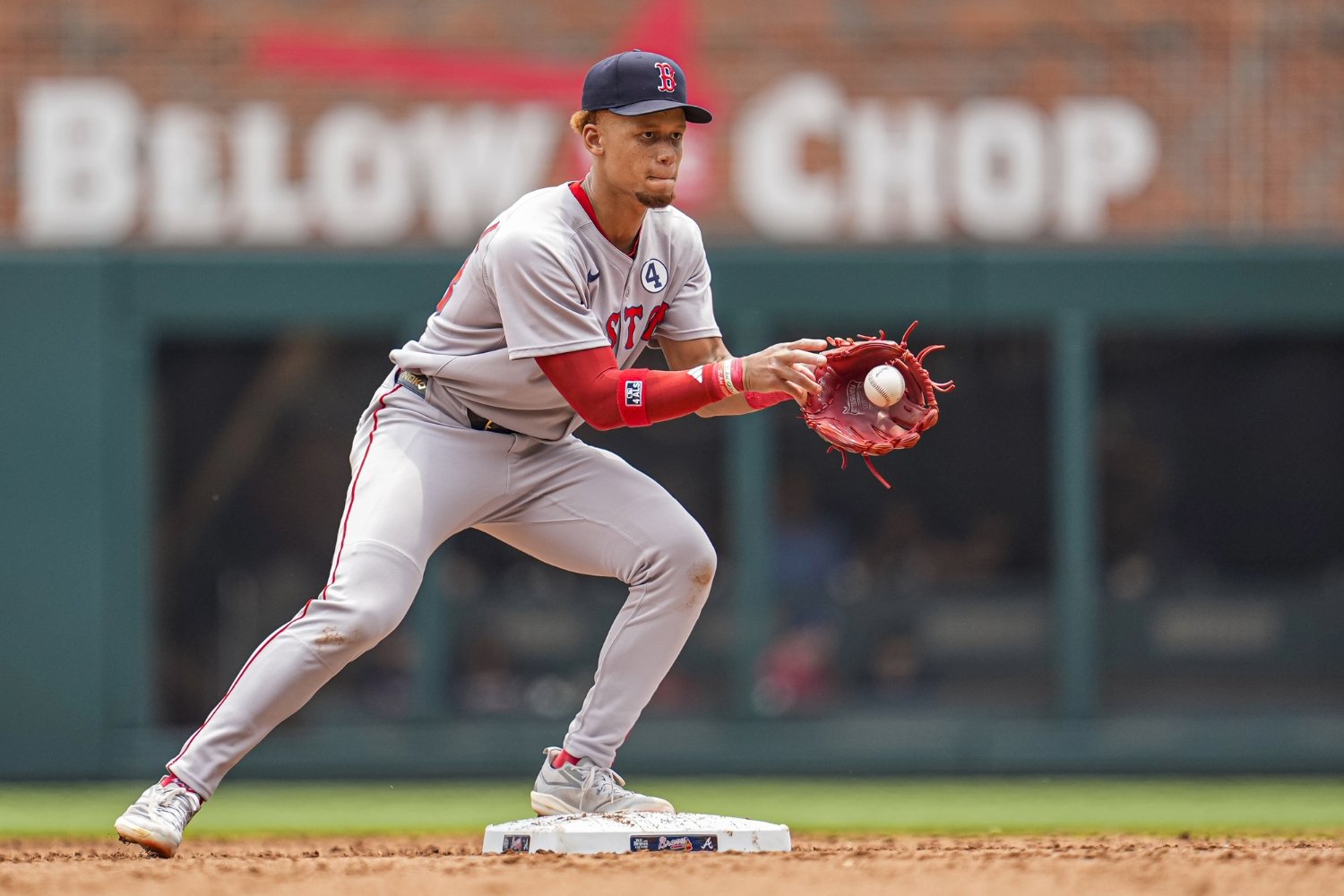 Kristian Campbell broke came with the Boston Red Sox and was the starting second baseman on Opening Day. For the first month of the season, he lit the league on fire, winning AL Rookie of the Month honors. Then, the floor fell out from underneath him and he struggled to find his footing again with the big-league club. He was preparing to play first base in the wake of the injury to Triston Casas, but that never came to fruition. Soon after that report leaked, he went sent down to Triple-A Worcester, where he remained for the rest of the season. With the WooSox, Campbell bounced from position to position. He registered 59 games at second base, seven in center field, and two in left field. At the GM Meetings in Las Vegas, President of Baseball Operations Craig Breslow said that the team was seeking ‘stability and certainty’ with Campbell as the calendar marches toward the 2026 season. The team has acknowledged, at least privately, that left field is likely the best fit for Campbell as he grows into a big-league hitter. While that stability in a position will like boost his performance on both sides of the ball, forcing him into an already crowded outfield isn’t the path forward here. Sure, it adds another layer of depth to the group in the instance of one or more starters being traded, but this feels needlessly complicated. The biggest defensive need for the Red Sox is at first base, and that is where Campbell should be preparing to play as long as he’s in the Red Sox’s system. By shifting him to a full-time outfield role, and one who profiles as a left fielder specifically, the team is putting themselves in a position that could hamstring them before spring training even gets started. We can take Roman Anthony out of this equation; he’s guaranteed a starting outfield spot for 2026. If we look at the other three outfielders though, we see three proven, MLB-quality starters. Would you take Campbell over Jarren Duran, Ceddanne Rafaela, or Wilyer Abreu? Absolutely not, at least at this point in time. Rafaela and Abreu are coming off Gold Glove-winning seasons and Duran is only one season removed from an outstanding 2024. Why replace a known entity with something that is a total unknown in the middle of a contention window? It just doesn’t make sense. Campbell should turn into a solid major leaguer at some point soon, but forcing him to find his footing within the Red Sox’s outfield seems shortsighted. Unless, of course, the front office is planning to trade two outfielders this offseason in an attempt to add another top of the rotation starter to slot in behind Garrett Crochet. On the surface, it makes sense. The team has more outfielders than spots available, especially if they are serious about Campbell making the switch to the outfield. That doesn’t even consider the distinct possibility that the team brings back veteran clubhouse leader Rob Refsnyder. And don’t forget, Masataka Yoshida is technically a left fielder, too. This team is ripe with outfield talent, and adding Campbell to that group would make it an even deeper positional depth chart. But even then, in the instance of the team planning on trading two current outfielders, you’d want them to be in the market for either Kyle Tucker or Cody Bellinger to fill one of those holes. Not an unproven second-year player. I’m not here to bash Campbell in any way. I think he can be a valuable member of the Red Sox -- he was a top prospect as of this time a year ago -- but this move makes zero sense as the roster is currently constructed. He’s bulked up, according to Breslow, and has already been spending time in Fort Myers with the hitting coaches to hopefully allow him to tap into the offensive production we saw when he first broke onto the scene. He’s best suited to do that from first base, though. If he’s adding weight and can hit for power, he’s the prototypical first baseman that the Red Sox have been missing for years. Bulky outfielders can work, but the Red Sox need no help in that department. If the team trots Campbell out to left field to begin spring training, that should mean that some combination of Duran, Rafaela, and Abreu have been traded. That, to me, would be cutting off their nose to spite their face. Campbell can be a special player on both sides of the ball, but shoehorning him into an already-crowded situation likely sets him up for failure more than it pushes him to be the best version of himself.
 -
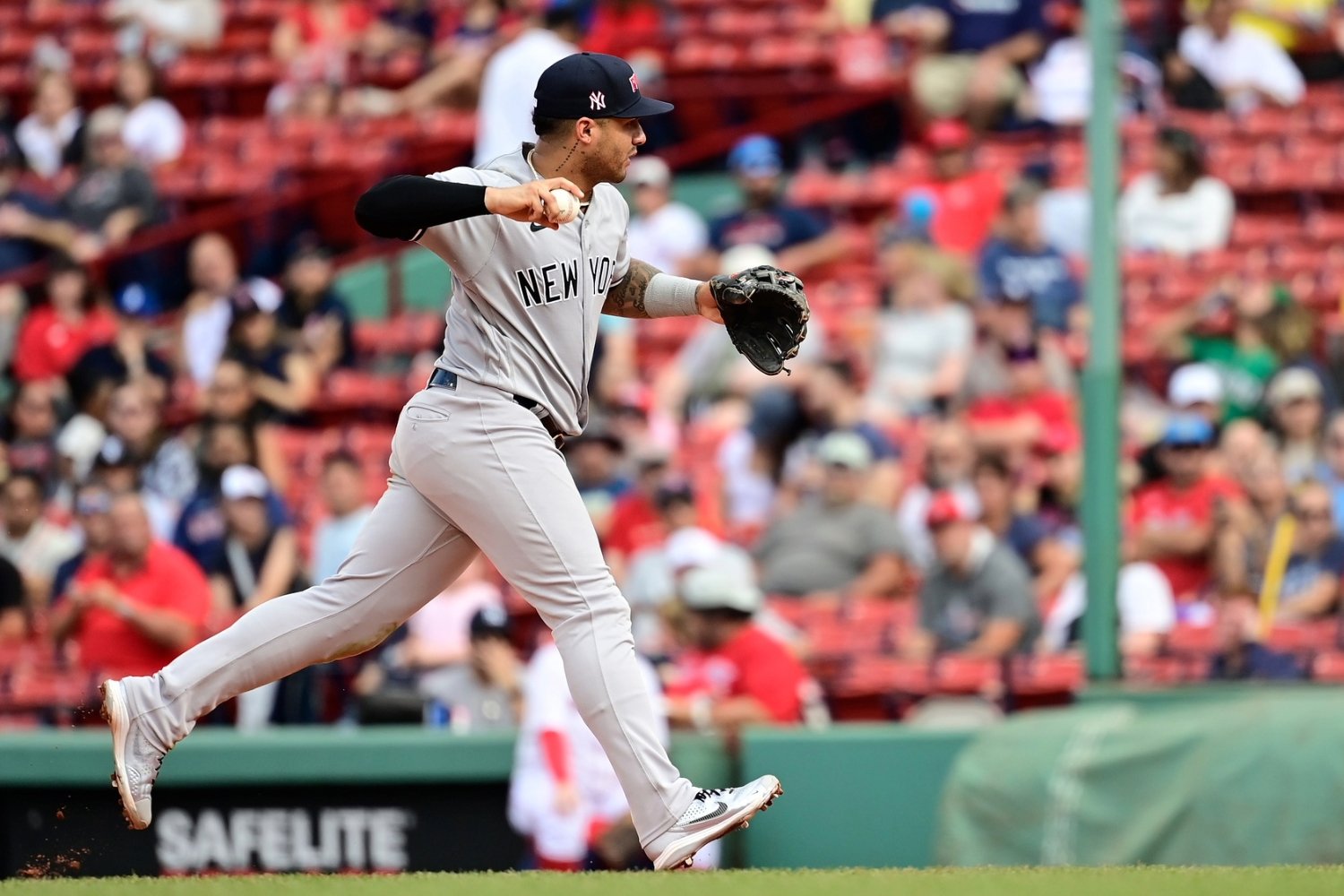 It seems as though the second base position has been cursed for the Boston Red Sox ever since Manny Machado slid spikes up into Dustin Pedroia’s knee, effectively ending his career. In the ensuing years, the position has been a revolving door for the team. There was some hope that Kristian Campbell would be able to step in and become the second baseman of the future after he broke camp with the big league club for the 2025 season, but that experiment lasted around a month before major league pitching caught up with him and he finished his season in Triple-A Worcester. Even if there's hope that his bat will turn around, his defense was so putrid that it's hard to rely on him to run away with the job in 2026. There’s some hope that Marcelo Mayer could be the person to solidify the position, but he’s better suited for shortstop or third base, and his struggles to stay healthy give a bit of pause for concern. Trevor Story could slide to second to play Mayer at his natural position, but would the team do that to a veteran player coming off such a strong season? Probably not, unless Story himself advocated for the position switch. On top of that, President of Baseball Operations Craig Breslow confirmed that Story would be the shortstop moving forward. That leaves us scouring the free-agent market to see just who could plug into second base for at least the 2026 season and offer more than just a warm body to the Red Sox. Get ready, because the second base market is about as shallow as the wading section at your local pool. Gleyber Torres (29, 2.6 fWAR) Projected Contract Analyst Length AAV Total Jim Bowden 4-years $13 million $52 million Kiley McDaniel 3-years $19 million $57 million Torres had a rebound season in Detroit after signing a one-year, prove-it contract before the 2025 season. He slashed .256/.358/.387 with 16 home runs, 74 RBIs, and a 113 wRC+. He played 134 games at second this season while committing five errors with a .990 fielding percentage. He’s earned a longer-term contract than he had going into the 2025 season, but he leaves a lot to be desired from a consistency standpoint. He's streaky, just a year removed from the worst season of his career where he was almost a walking strikeout. If this is the best the team can do, they may be better off hoping an internal option presents itself during spring training instead. He also has a qualifying offer attached to him, and that could keep the Red Sox from being interested in the former Yankee. Jorge Polanco (32, 2.6 fWAR) Projected Contract Analyst Length AAV Total Jim Bowden 2-years $13 million $26 million Kiley McDaniel 2-years $13 million $26 million Ben Clemens 2-years $15 million $30 million Much like Torres above, Polanco had his best statistical season in ages in 2025. He slashed .265/.326/.495 with 26 home runs, 78 RBIs, and posted a 132 wRC+. He had the potential to be a playoff hero for the Mariners until a cold spell slowed him down in the ALCS. The biggest issue here is that Polanco is 32 and he saw more time at DH (88 games) than second base (38 games). He can’t be trusted to take on a full season at second anymore and still produce those kinds of offensive numbers. He’s likely in line for a two-year deal and paying someone who is a bat-first second baseman doesn’t make sense for the Red Sox. who can turn to Kristian Campbell for the same purpose. It’s telling that the Mariners opted to not extend a qualifying offer to Polanco, as his age and lack of positional versatility are working against him in a weak market. Ha-Seong Kim (30, 0.3 fWAR) Projected Contract Analyst Length AAV Total Jim Bowden 3-years $13 million $39 million Kiley McDaniel 1-year $16 million $16 million Tim Britton 3-years $16.7 million $50 million Kim only played in 48 games this season, so take his stats with a grain of salt. He slashed .234/.304/.345 with five home runs, 17 RBIs, six stolen bases, and posted an 82 wRC+. He’s a shortstop first, so we have to get a bit creative here, but if he would shift to second it would take strain off his him throwing arm and hopefully allow him to get back to where he was pre-injury. I’m struggling to see a multi-year deal for Kim, though, and I think he’s going to have to sign a one-year, prove-it deal. He declined a player option with the Braves for $16 million, so he will likely be looking to get above that, but he may end up settling for less when push comes to shove. That’s a pretty thin market if you ask me. There are other names out there like Luis Rengifo, who has all the tools to be a successful second baseman now that he’s moved there full time, but he’s been unable to put it together so far. Luis Arraez is another second baseman that technically checks the boxes for the Red Sox, and he could be a buy-low candidate after a tough season, but it’s hard to see the team handing him a multi-year contract at this point in his career when he played just 14 games out of 154 at second base in 2025. He profiles as a first baseman now, but one without pop. Given the state of the market, the Red Sox are likely going to have to hope that an internal name breaks out as their next second baseman, or make a trade that no one sees coming to fill the glaring hole up the middle. Can I interest anyone in Ketel Marte?
 -
It seems as though the second base position has been cursed for the Boston Red Sox ever since Manny Machado slid spikes up into Dustin Pedroia’s knee, effectively ending his career. In the ensuing years, the position has been a revolving door for the team. There was some hope that Kristian Campbell would be able to step in and become the second baseman of the future after he broke camp with the big league club for the 2025 season, but that experiment lasted around a month before major league pitching caught up with him and he finished his season in Triple-A Worcester. Even if there's hope that his bat will turn around, his defense was so putrid that it's hard to rely on him to run away with the job in 2026. There’s some hope that Marcelo Mayer could be the person to solidify the position, but he’s better suited for shortstop or third base, and his struggles to stay healthy give a bit of pause for concern. Trevor Story could slide to second to play Mayer at his natural position, but would the team do that to a veteran player coming off such a strong season? Probably not, unless Story himself advocated for the position switch. On top of that, President of Baseball Operations Craig Breslow confirmed that Story would be the shortstop moving forward. That leaves us scouring the free-agent market to see just who could plug into second base for at least the 2026 season and offer more than just a warm body to the Red Sox. Get ready, because the second base market is about as shallow as the wading section at your local pool. Gleyber Torres (29, 2.6 fWAR) Projected Contract Analyst Length AAV Total Jim Bowden 4-years $13 million $52 million Kiley McDaniel 3-years $19 million $57 million Torres had a rebound season in Detroit after signing a one-year, prove-it contract before the 2025 season. He slashed .256/.358/.387 with 16 home runs, 74 RBIs, and a 113 wRC+. He played 134 games at second this season while committing five errors with a .990 fielding percentage. He’s earned a longer-term contract than he had going into the 2025 season, but he leaves a lot to be desired from a consistency standpoint. He's streaky, just a year removed from the worst season of his career where he was almost a walking strikeout. If this is the best the team can do, they may be better off hoping an internal option presents itself during spring training instead. He also has a qualifying offer attached to him, and that could keep the Red Sox from being interested in the former Yankee. Jorge Polanco (32, 2.6 fWAR) Projected Contract Analyst Length AAV Total Jim Bowden 2-years $13 million $26 million Kiley McDaniel 2-years $13 million $26 million Ben Clemens 2-years $15 million $30 million Much like Torres above, Polanco had his best statistical season in ages in 2025. He slashed .265/.326/.495 with 26 home runs, 78 RBIs, and posted a 132 wRC+. He had the potential to be a playoff hero for the Mariners until a cold spell slowed him down in the ALCS. The biggest issue here is that Polanco is 32 and he saw more time at DH (88 games) than second base (38 games). He can’t be trusted to take on a full season at second anymore and still produce those kinds of offensive numbers. He’s likely in line for a two-year deal and paying someone who is a bat-first second baseman doesn’t make sense for the Red Sox. who can turn to Kristian Campbell for the same purpose. It’s telling that the Mariners opted to not extend a qualifying offer to Polanco, as his age and lack of positional versatility are working against him in a weak market. Ha-Seong Kim (30, 0.3 fWAR) Projected Contract Analyst Length AAV Total Jim Bowden 3-years $13 million $39 million Kiley McDaniel 1-year $16 million $16 million Tim Britton 3-years $16.7 million $50 million Kim only played in 48 games this season, so take his stats with a grain of salt. He slashed .234/.304/.345 with five home runs, 17 RBIs, six stolen bases, and posted an 82 wRC+. He’s a shortstop first, so we have to get a bit creative here, but if he would shift to second it would take strain off his him throwing arm and hopefully allow him to get back to where he was pre-injury. I’m struggling to see a multi-year deal for Kim, though, and I think he’s going to have to sign a one-year, prove-it deal. He declined a player option with the Braves for $16 million, so he will likely be looking to get above that, but he may end up settling for less when push comes to shove. That’s a pretty thin market if you ask me. There are other names out there like Luis Rengifo, who has all the tools to be a successful second baseman now that he’s moved there full time, but he’s been unable to put it together so far. Luis Arraez is another second baseman that technically checks the boxes for the Red Sox, and he could be a buy-low candidate after a tough season, but it’s hard to see the team handing him a multi-year contract at this point in his career when he played just 14 games out of 154 at second base in 2025. He profiles as a first baseman now, but one without pop. Given the state of the market, the Red Sox are likely going to have to hope that an internal name breaks out as their next second baseman, or make a trade that no one sees coming to fill the glaring hole up the middle. Can I interest anyone in Ketel Marte? View full article
-
 Alex and Maddie are back after the World Series to give an offseason primer and talk about just why this free agent class could be considered lackluster. They speculate what Triston Casas could be talking about in his most recent, very cryptic, Instagram post, and then talk through pitching trade ideas. They wrap up talking about the still-clogged outfield and what the remedy for that situation could be. Listen on Apple Podcasts: https://podcasts.apple.com/us/podcast/the-talk-sox-podcast/id1783204104 Listen on Spotify: https://open.spotify.com/show/3qPrPXEngu0CxgTmlf0ynm Listen on iHeartRadio: https://www.iheart.com/podcast/263-the-talk-sox-podcast-244591331/ Listen on Pocket Casts: https://pca.st/4tmd121v Watch on YouTube: https://www.youtube.com/@talksox
 -
Alex and Maddie are back after the World Series to give an offseason primer and talk about just why this free agent class could be considered lackluster. They speculate what Triston Casas could be talking about in his most recent, very cryptic, Instagram post, and then talk through pitching trade ideas. They wrap up talking about the still-clogged outfield and what the remedy for that situation could be. Listen on Apple Podcasts: https://podcasts.apple.com/us/podcast/the-talk-sox-podcast/id1783204104 Listen on Spotify: https://open.spotify.com/show/3qPrPXEngu0CxgTmlf0ynm Listen on iHeartRadio: https://www.iheart.com/podcast/263-the-talk-sox-podcast-244591331/ Listen on Pocket Casts: https://pca.st/4tmd121v Watch on YouTube: https://www.youtube.com/@talksox View full article
-
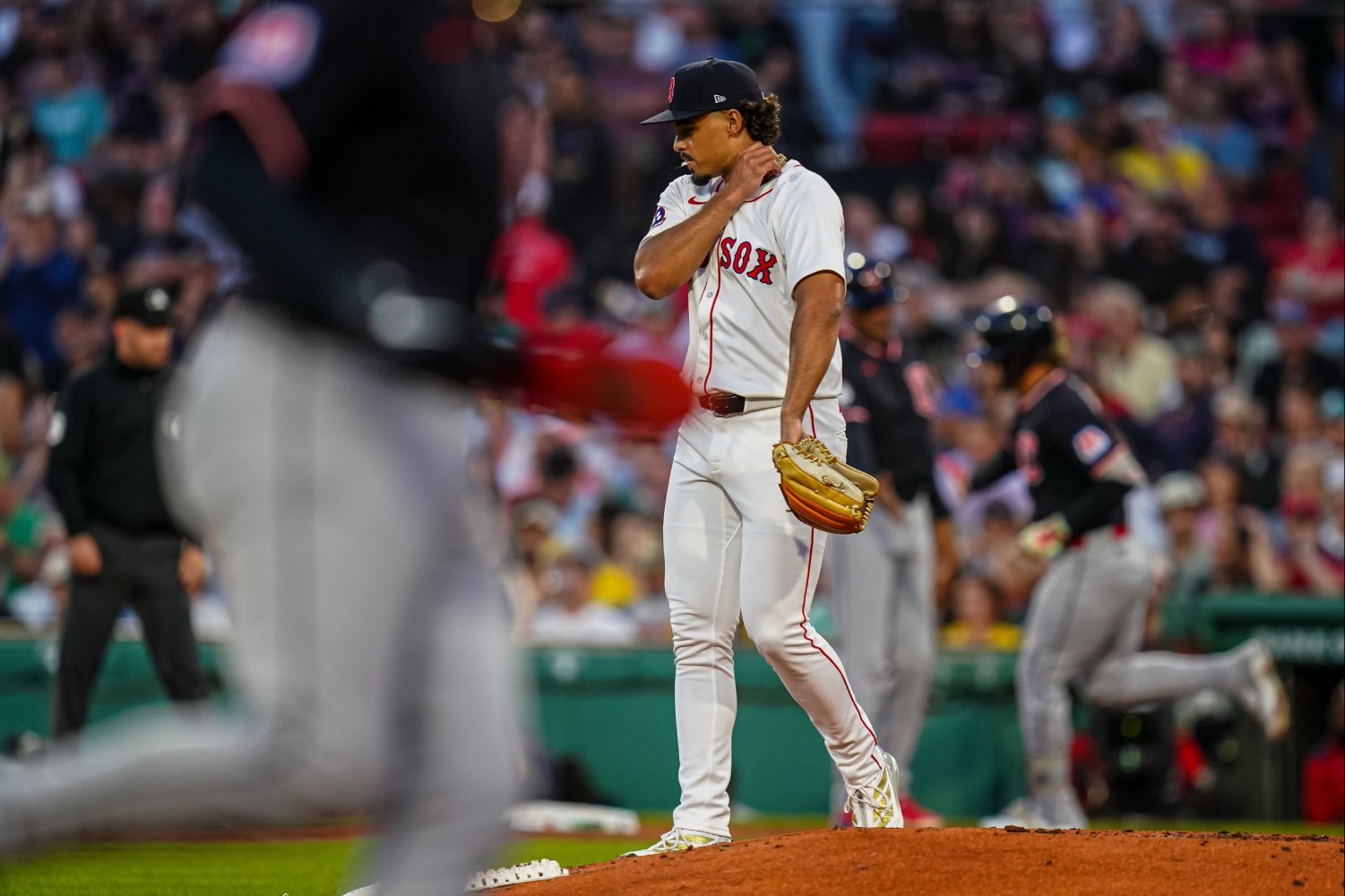 The Boston Red Sox are about to be faced with some tough decisions as the offseason kicks off now that the World Series has concluded. Since the season is over, every name on the 60-day injured list has to be added back to the 40-man roster during the offseason. These names include: Tanner Houck, Liam Hendriks, Kutter Crawford, Hunter Dobbins, and Triston Casas. All but one (Hendriks) are under team control through 2026. Hendriks held a mutual option with the club, but the team turned down their side of the deal, making Hendriks a free agent. Once the club adds all of those other players to the 40-man roster, their total will sit at 41. Thus, there will be at least one player on the 40-man that will need to be cleared, and certainly more once the Sox begin to add players and protect prospects from the Rule 5 Draft. Let’s take a look at who some of those candidates could be. Vaughn Grissom This seems like the most obvious name to be let go during the upcoming 40-man crunch. Grissom was acquired when the Red Sox sent Chris Sale to Atlanta. The hope was that Grissom would slot in as the second baseman of the future since he carried a high draft pedigree and showed in the Braves’ minor league system that he could be a solid contributor on both sides of the ball. Grissom failed to get going though, and the relationship with the team soured over the next two years. Most recently, he was unwilling to discuss what changes he was making in his offensive approach with media members because he “will probably be playing against them soon.” That doesn’t sound like someone who is long for the Red Sox. He was passed over for David Hamilton when Marcelo Mayer went down with a season-ending injury, so that should tell you everything you need to know about Grissom’s standing within the organization. Josh Winckowski Arguably the second most obvious name to be let go once the roster crunch begins, Winckowski was barely an afterthought during the 2025 season. He appeared in six games for the Red Sox in 2025. He was then placed on the 60-day injured list in June due to a right elbow flexor strain. The last update we received was in July, when he was reported to have begun his throwing progression. He’s bounced between the starting rotation and bullpen in the past but was penciled in as a low-leverage reliever for 2025 before the injury happened. Effectively, he’s lost his spot in the bullpen because the Red Sox were able to replace him rather quickly. Don’t be shocked to see Winckowski’s name hit the DFA list sooner rather than later this offseason. Jovani Moran Moran came over in a trade with the Twins during December of 2024. The Sox received Moran for Mickey Gasper. It was a deal that didn’t cause much commotion in the world of the Red Sox, but Moran did end up making two appearances for the team in 2025. He threw four innings, struck out five, and worked a 2.00 WHIP and an ERA of 6.75. He’s quite possibly the most expendable pitcher on the 40-man roster and will probably be the first player released once the Red Sox make their first addition of the offseason. He’s a left-handed reliever in a bullpen full of lefties that are miles better than he is. Sometimes, the low-hanging fruit is the correct pick for a reason. Moran may return to the Red Sox on a minor-league deal, but he’s taking up a valuable 40-man spot until then. Jordan Hicks Just kidding. But seriously… There are other possible candidates on the 40-man that could be cleared to make room for all the names that will need to be added during the offseason. Craig Breslow has a great staff around him, which could be growing if his search for an assistant general manager proves fruitful. The first couple of names to purge from the roster seem obvious, but the conversation will grow far more difficult as the winter drags on.
 -
The Boston Red Sox are about to be faced with some tough decisions as the offseason kicks off now that the World Series has concluded. Since the season is over, every name on the 60-day injured list has to be added back to the 40-man roster during the offseason. These names include: Tanner Houck, Liam Hendriks, Kutter Crawford, Hunter Dobbins, and Triston Casas. All but one (Hendriks) are under team control through 2026. Hendriks held a mutual option with the club, but the team turned down their side of the deal, making Hendriks a free agent. Once the club adds all of those other players to the 40-man roster, their total will sit at 41. Thus, there will be at least one player on the 40-man that will need to be cleared, and certainly more once the Sox begin to add players and protect prospects from the Rule 5 Draft. Let’s take a look at who some of those candidates could be. Vaughn Grissom This seems like the most obvious name to be let go during the upcoming 40-man crunch. Grissom was acquired when the Red Sox sent Chris Sale to Atlanta. The hope was that Grissom would slot in as the second baseman of the future since he carried a high draft pedigree and showed in the Braves’ minor league system that he could be a solid contributor on both sides of the ball. Grissom failed to get going though, and the relationship with the team soured over the next two years. Most recently, he was unwilling to discuss what changes he was making in his offensive approach with media members because he “will probably be playing against them soon.” That doesn’t sound like someone who is long for the Red Sox. He was passed over for David Hamilton when Marcelo Mayer went down with a season-ending injury, so that should tell you everything you need to know about Grissom’s standing within the organization. Josh Winckowski Arguably the second most obvious name to be let go once the roster crunch begins, Winckowski was barely an afterthought during the 2025 season. He appeared in six games for the Red Sox in 2025. He was then placed on the 60-day injured list in June due to a right elbow flexor strain. The last update we received was in July, when he was reported to have begun his throwing progression. He’s bounced between the starting rotation and bullpen in the past but was penciled in as a low-leverage reliever for 2025 before the injury happened. Effectively, he’s lost his spot in the bullpen because the Red Sox were able to replace him rather quickly. Don’t be shocked to see Winckowski’s name hit the DFA list sooner rather than later this offseason. Jovani Moran Moran came over in a trade with the Twins during December of 2024. The Sox received Moran for Mickey Gasper. It was a deal that didn’t cause much commotion in the world of the Red Sox, but Moran did end up making two appearances for the team in 2025. He threw four innings, struck out five, and worked a 2.00 WHIP and an ERA of 6.75. He’s quite possibly the most expendable pitcher on the 40-man roster and will probably be the first player released once the Red Sox make their first addition of the offseason. He’s a left-handed reliever in a bullpen full of lefties that are miles better than he is. Sometimes, the low-hanging fruit is the correct pick for a reason. Moran may return to the Red Sox on a minor-league deal, but he’s taking up a valuable 40-man spot until then. Jordan Hicks Just kidding. But seriously… There are other possible candidates on the 40-man that could be cleared to make room for all the names that will need to be added during the offseason. Craig Breslow has a great staff around him, which could be growing if his search for an assistant general manager proves fruitful. The first couple of names to purge from the roster seem obvious, but the conversation will grow far more difficult as the winter drags on. View full article
-
Boston Red Sox Arbitration Decisions & Projections: Nathaniel Lowe
Alex Mayes posted an article in Red Sox
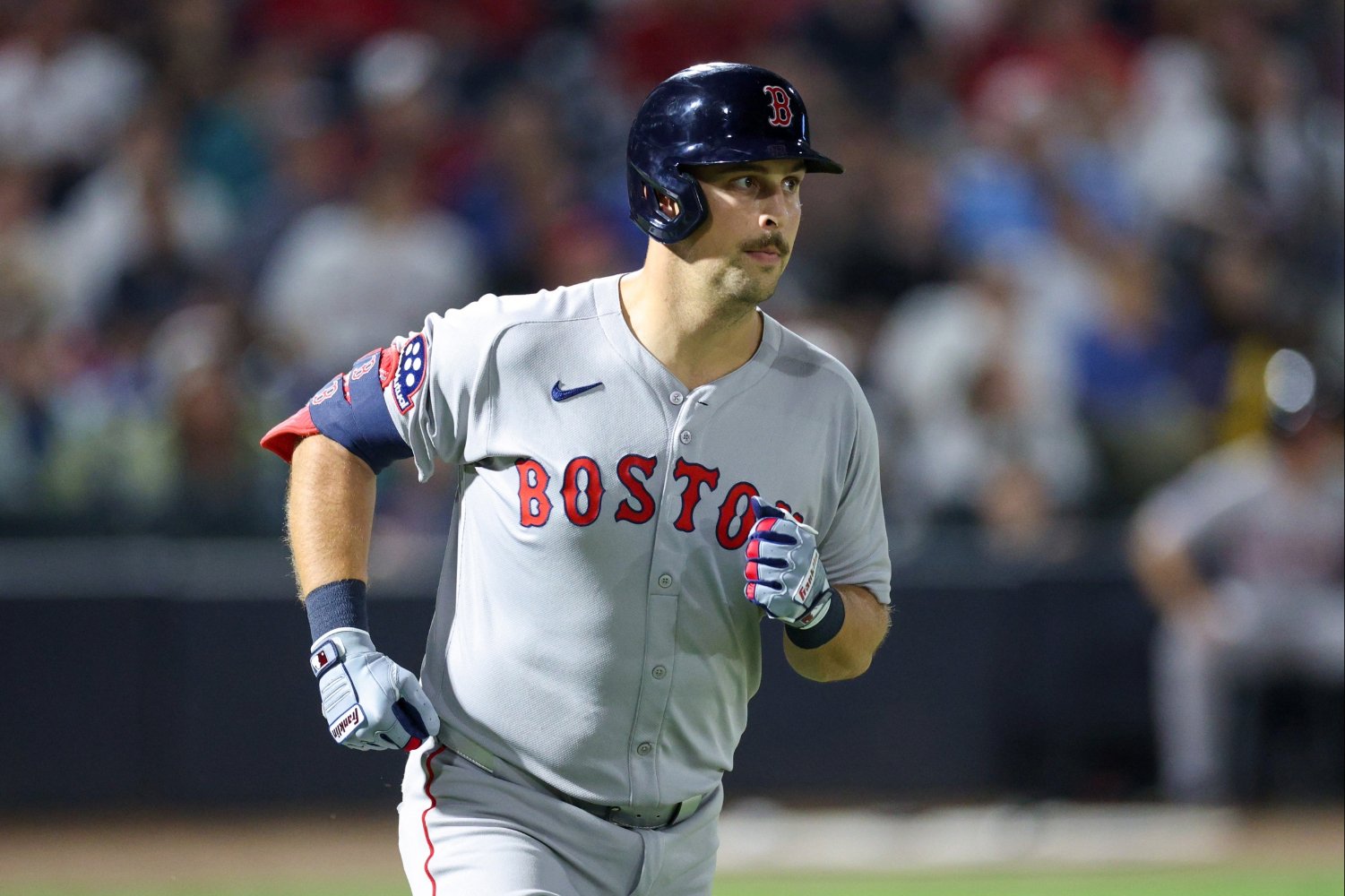 1B Nathaniel Lowe Age on Opening Day 2026: 30 Service Time: 4.145 2023 Salary: $4.05M 2024 Salary: $7.5M 2025 Salary: $10.3M 2026 Salary (Projection): $13.5M Background Nathaniel Lowe was acquired as a free agent in August of 2025 after he was placed on waivers by the Washington Nationals. The belief was that he would be the go-to first baseman for the Boston Red Sox after they spent the bulk of the season revolving multiple players through the position in the wake of Triston Casas' injury. He’s played for four teams since his debut in 2019 and was a World Series champion with the Texas Rangers in 2023. He won a Gold Glove at first base in 2023 with the Rangers and the 2022 AL Silver Slugger Award for first baseman. He brought the pedigree of these awards to the clubhouse in Boston after his signing, but little else after a hot start. 2025 Season Lowe had a down season in 2025, and failed to live up to the expectations of a front office that was hoping to rescue him from the Nationals. He started off hot after landing in Boston, then spent time on the paternity list at the end of August. Unfortunately, he really failed to get going after that. His Baseball Savant page is ice blue, minus two categories. He ranked in the 76th percentile of chase percentage (24%) and in the 72nd percentile in walk rate (10.2%). He didn’t provide the spark the team had hoped he would, but he did help to settle first base down the stretch. 2025 Stats: 153 G, 609 PA, .228/.307/.381, .689 OPS, 23 2B, 3 3B, 18 HR, 84 RBI, 10.2% BB%, 26.1% K% Red Sox Depth at First Base MLB: Triston Casas, Nathaniel Lowe, Romy Gonzalez AAA: Nathan Hickey Why the Red Sox Should Offer Him a Contract The pedigree is still there for Lowe. He’s been a solid contributor on both sides of the ball as recently as 2024. First base is still a giant question mark moving forward for the team as well. Triston Casas is dangerously flirting with the ‘injury-prone’ label and although Romy Gonzalez played well at the position, he’s more suited as a super-utility infielder who gets spot starts against left-handed pitching. Even with a down offensive season, Lowe’s 18 home runs had him tied for third-most on the team with Alex Bregman. As he settles in throughout the offseason and gets to work with the Red Sox’s coaching staff throughout spring training, he’s bound to unlock more power and start taking better aim at the unique dimensions of Fenway Park. Why the Red Sox Should Not Offer Him a Contract Admittedly, $13.5 million dollars is a ton of money for a potential backup first baseman. Even if you take Casas out of the equation, the Red Sox match up well with free agent Pete Alonso, who would command the bulk of starts at the position. There are trades that will be made that could also land the Red Sox an upper-echelon first baseman as well. Lowe’s offensive (and defensive, if we’re being honest) downturn was unexpected, and he seemed to struggle to find his footing all season. Some attempted to blame playing for the lowly Washington Nationals for his struggles, but once he came to Boston and had something to actually play for, things didn’t really get much better for Lowe. Those millions could be invested elsewhere. Projection Expect the Red Sox to make Lowe an offer, but it will be a lowball number that's not all too close to his projected salary. His play last season hurt his ability to argue that he had an impact on the team and that will be used against him. Look for Lowe to balk at the number and head to an arbitration hearing to plead his case. He doesn’t have much of a leg to stand on, but he will argue that he’s worth more than whatever number the Red Sox throw his way. If an addition like Alonso or someone else is brought in though, the Sox will likely move on from Lowe in some fashion.
 -
1B Nathaniel Lowe Age on Opening Day 2026: 30 Service Time: 4.145 2023 Salary: $4.05M 2024 Salary: $7.5M 2025 Salary: $10.3M 2026 Salary (Projection): $13.5M Background Nathaniel Lowe was acquired as a free agent in August of 2025 after he was placed on waivers by the Washington Nationals. The belief was that he would be the go-to first baseman for the Boston Red Sox after they spent the bulk of the season revolving multiple players through the position in the wake of Triston Casas' injury. He’s played for four teams since his debut in 2019 and was a World Series champion with the Texas Rangers in 2023. He won a Gold Glove at first base in 2023 with the Rangers and the 2022 AL Silver Slugger Award for first baseman. He brought the pedigree of these awards to the clubhouse in Boston after his signing, but little else after a hot start. 2025 Season Lowe had a down season in 2025, and failed to live up to the expectations of a front office that was hoping to rescue him from the Nationals. He started off hot after landing in Boston, then spent time on the paternity list at the end of August. Unfortunately, he really failed to get going after that. His Baseball Savant page is ice blue, minus two categories. He ranked in the 76th percentile of chase percentage (24%) and in the 72nd percentile in walk rate (10.2%). He didn’t provide the spark the team had hoped he would, but he did help to settle first base down the stretch. 2025 Stats: 153 G, 609 PA, .228/.307/.381, .689 OPS, 23 2B, 3 3B, 18 HR, 84 RBI, 10.2% BB%, 26.1% K% Red Sox Depth at First Base MLB: Triston Casas, Nathaniel Lowe, Romy Gonzalez AAA: Nathan Hickey Why the Red Sox Should Offer Him a Contract The pedigree is still there for Lowe. He’s been a solid contributor on both sides of the ball as recently as 2024. First base is still a giant question mark moving forward for the team as well. Triston Casas is dangerously flirting with the ‘injury-prone’ label and although Romy Gonzalez played well at the position, he’s more suited as a super-utility infielder who gets spot starts against left-handed pitching. Even with a down offensive season, Lowe’s 18 home runs had him tied for third-most on the team with Alex Bregman. As he settles in throughout the offseason and gets to work with the Red Sox’s coaching staff throughout spring training, he’s bound to unlock more power and start taking better aim at the unique dimensions of Fenway Park. Why the Red Sox Should Not Offer Him a Contract Admittedly, $13.5 million dollars is a ton of money for a potential backup first baseman. Even if you take Casas out of the equation, the Red Sox match up well with free agent Pete Alonso, who would command the bulk of starts at the position. There are trades that will be made that could also land the Red Sox an upper-echelon first baseman as well. Lowe’s offensive (and defensive, if we’re being honest) downturn was unexpected, and he seemed to struggle to find his footing all season. Some attempted to blame playing for the lowly Washington Nationals for his struggles, but once he came to Boston and had something to actually play for, things didn’t really get much better for Lowe. Those millions could be invested elsewhere. Projection Expect the Red Sox to make Lowe an offer, but it will be a lowball number that's not all too close to his projected salary. His play last season hurt his ability to argue that he had an impact on the team and that will be used against him. Look for Lowe to balk at the number and head to an arbitration hearing to plead his case. He doesn’t have much of a leg to stand on, but he will argue that he’s worth more than whatever number the Red Sox throw his way. If an addition like Alonso or someone else is brought in though, the Sox will likely move on from Lowe in some fashion. View full article
-
Boston Red Sox Arbitration Decisions & Projections: Connor Wong
Alex Mayes posted an article in Red Sox
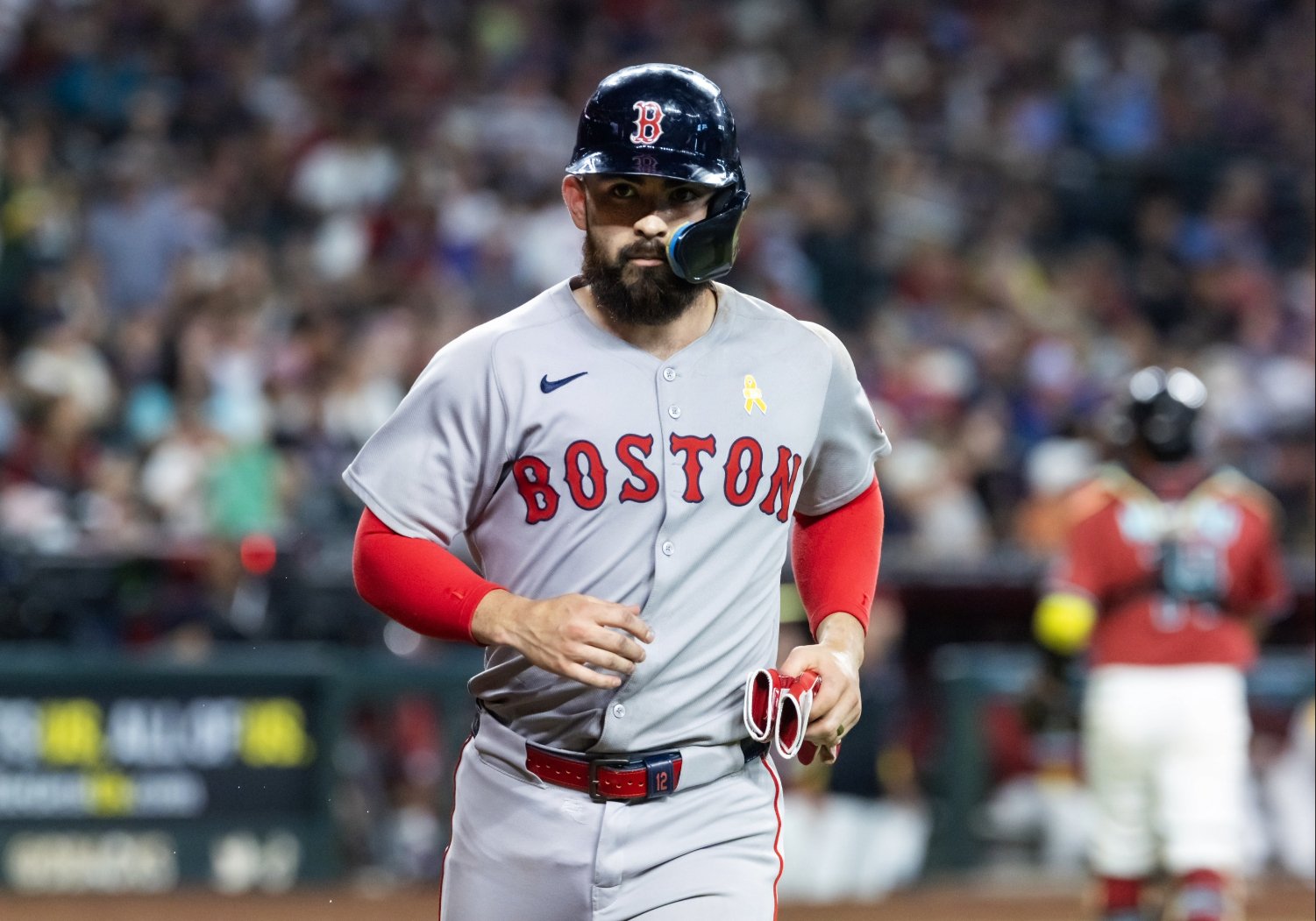 C Connor Wong Age on Opening Day: 29 2023 Salary: $720,000 2024 Salary: $760,000 2025 Salary: $790,000 2026 Salary (Projected): $1,600,000 Background Connor Wong is the lone piece leftover from the Mookie Betts trade. After a breakout 2024 season, Wong was seen as the potential catcher of the future for the Red Sox. He made his debut with the club in 2021 and took over the full-time catching role in 2023, the first full season after veteran catcher Christian Vazquez was traded to the Astros. He slugged 13 home runs in 2024 and there was a lot of hope entering the 2025 season that another uptick in power was coming. Unfortunately, that didn’t come to pass for the now-veteran backstop. 2025 Season The 2025 season was one to forget for Connor Wong. He fractured his hand on a catcher interference call early in the season and then subsequently lost his starting job to rookie phenom Carlos Narvaez. Once Wong returned to the roster as a backup and Brayan Bello’s personal catcher, he struggled mightily on offense. For the season, Wong slashed .190/.262/.238 with only eight extra-base hits. He posted a 39 wRC+ to go along with an abysmal -0.7 WAR. Defensively, Wong showed promise behind the dish to kick off the season. His framing was better thanks to a new stance he worked on during the offseason and his defensive metrics all saw improvement. Then, as the season began to wane, so did Wong’s defensive metrics. His once all-red defensive Baseball Savant page turned an icy blue to close the season. Organizational Catching Depth MLB: Carlos Narvaez, Connor Wong AAA: Nathan Hickey, Enderso Lira, Chadwick Tromp, Seby Zavala, Jason Delay Summary: The glaring issue with the catching position for the Red Sox is that, behind Narvaez, the depth is paper thin. Wong makes the most sense out of all the names currently on the roster, including recently-signed free agent Jason Delay. He knows the pitching staff and the hope throughout the organization has to be that 2025 was an anomaly in his career and not the start of a dramatic downturn. Wong getting a start every five days isn’t the worst scenario for the Red Sox, but he was pretty much a guaranteed out every time he stepped up to the plate at the bottom of the order. The fact that he didn’t catch Bello’s lone playoff appearance is more telling than not; he doesn’t have the trust of the coaching staff. Why the Red Sox Should Offer Him a Contract: Positional depth, that’s it. Connor Wong will likely never be the catcher many had once hoped he was, but he makes for a passable backup to Narvaez. He will be cheap since he’s in his first year of arbitration—just $1.6 million according to MLB Trade Rumors. There’s still untapped potential in his bat, and if his defensive metrics improve and sustain throughout an entire season, then he’s worth the minimal salary he will possibly receive. Why the Red Sox Should Not Offer Him a Contract Just take a look at those numbers from the 2025 season above. In short, Wong stunk all season. He hit at the bottom of the lineup and, somehow, seemed to regularly find his way to the plate in meaningful situations where he would either strikeout or ground into a rally-killing double play. There’s bound to be better catchers on the open market who would come at similar prices to Wong’s projected arbitration salary. If the Red Sox are actually in ‘win-now’ mode, trotting Wong out every five days puts them in a position to play from behind when he’s on the field. Projection I’m not totally convinced the Red Sox will even get to arbitration with Connor Wong this offseason. While $1.6 million isn’t a ton of money in Major League Baseball, it could be better served to be spent elsewhere on the roster. I think there's at least some likelihood that Connor Wong will be non-tendered and will seek employment with another organization for 2026 and beyond. He’s not far removed from his breakout performance in 2024, but his 2025 campaign was so terrible that the team appears to have lost almost all faith in him. Simply put, Wong doesn’t have much value to this organization, especially as they eye another playoff run in 2026.
 -
C Connor Wong Age on Opening Day: 29 2023 Salary: $720,000 2024 Salary: $760,000 2025 Salary: $790,000 2026 Salary (Projected): $1,600,000 Background Connor Wong is the lone piece leftover from the Mookie Betts trade. After a breakout 2024 season, Wong was seen as the potential catcher of the future for the Red Sox. He made his debut with the club in 2021 and took over the full-time catching role in 2023, the first full season after veteran catcher Christian Vazquez was traded to the Astros. He slugged 13 home runs in 2024 and there was a lot of hope entering the 2025 season that another uptick in power was coming. Unfortunately, that didn’t come to pass for the now-veteran backstop. 2025 Season The 2025 season was one to forget for Connor Wong. He fractured his hand on a catcher interference call early in the season and then subsequently lost his starting job to rookie phenom Carlos Narvaez. Once Wong returned to the roster as a backup and Brayan Bello’s personal catcher, he struggled mightily on offense. For the season, Wong slashed .190/.262/.238 with only eight extra-base hits. He posted a 39 wRC+ to go along with an abysmal -0.7 WAR. Defensively, Wong showed promise behind the dish to kick off the season. His framing was better thanks to a new stance he worked on during the offseason and his defensive metrics all saw improvement. Then, as the season began to wane, so did Wong’s defensive metrics. His once all-red defensive Baseball Savant page turned an icy blue to close the season. Organizational Catching Depth MLB: Carlos Narvaez, Connor Wong AAA: Nathan Hickey, Enderso Lira, Chadwick Tromp, Seby Zavala, Jason Delay Summary: The glaring issue with the catching position for the Red Sox is that, behind Narvaez, the depth is paper thin. Wong makes the most sense out of all the names currently on the roster, including recently-signed free agent Jason Delay. He knows the pitching staff and the hope throughout the organization has to be that 2025 was an anomaly in his career and not the start of a dramatic downturn. Wong getting a start every five days isn’t the worst scenario for the Red Sox, but he was pretty much a guaranteed out every time he stepped up to the plate at the bottom of the order. The fact that he didn’t catch Bello’s lone playoff appearance is more telling than not; he doesn’t have the trust of the coaching staff. Why the Red Sox Should Offer Him a Contract: Positional depth, that’s it. Connor Wong will likely never be the catcher many had once hoped he was, but he makes for a passable backup to Narvaez. He will be cheap since he’s in his first year of arbitration—just $1.6 million according to MLB Trade Rumors. There’s still untapped potential in his bat, and if his defensive metrics improve and sustain throughout an entire season, then he’s worth the minimal salary he will possibly receive. Why the Red Sox Should Not Offer Him a Contract Just take a look at those numbers from the 2025 season above. In short, Wong stunk all season. He hit at the bottom of the lineup and, somehow, seemed to regularly find his way to the plate in meaningful situations where he would either strikeout or ground into a rally-killing double play. There’s bound to be better catchers on the open market who would come at similar prices to Wong’s projected arbitration salary. If the Red Sox are actually in ‘win-now’ mode, trotting Wong out every five days puts them in a position to play from behind when he’s on the field. Projection I’m not totally convinced the Red Sox will even get to arbitration with Connor Wong this offseason. While $1.6 million isn’t a ton of money in Major League Baseball, it could be better served to be spent elsewhere on the roster. I think there's at least some likelihood that Connor Wong will be non-tendered and will seek employment with another organization for 2026 and beyond. He’s not far removed from his breakout performance in 2024, but his 2025 campaign was so terrible that the team appears to have lost almost all faith in him. Simply put, Wong doesn’t have much value to this organization, especially as they eye another playoff run in 2026. View full article
-
It's time to move on to the starting pitching corps in our grading series of the 2025 Boston Red Sox's roster. You can probably guess who comes out on top among this group, though a number of starters besides the staff ace had impressive years worth analyzing. For this exercise, starters had to make at least three starts to qualify for a grade. Also note that minor league stats weren't factored in here–these grades are based purely on each pitcher's major league performance this season. You can see our grades for catchers here, infielders here, and outfielders here. Garrett Crochet: A+ Garrett Crochet was the anchor of the starting rotation and was as advertised throughout the entire season. We've gassed him up plenty over the season here at Talk Sox, so I won’t spend a ton of time doing it here, but he pitched to a 2.59 ERA over 205 1/3 innings in 2025. He had a record of 18-5 and posted 6.3 WAR. He was the best pitcher on the team by a mile and will likely finish second in American League Cy Young voting. He’s an absolute hoss—a war pig. He’s going to be the face of this rotation for years to come. Brayan Bello: B+ Brayan Bello, for the most part, had a career year in 2025. He posted a 3.35 ERA over 166 2/3 innings pitched with 6.74 strikeouts per nine and 3.23 walks per nine. He showed adaptability by changing his pitch mix during the season, even advocating to throw his fastball more often and reintroducing his changeup. His demeanor on the mound improved this season as well. He was able to pitch himself out of jams and remain poised. He likely would have been bumped up to the next letter grade had his September and postseason not tanked the second half of his season. He didn’t completely fall apart, but he looked far more beatable than he had for most of the season. Bello was forced to be this team’s number two starter this season, and he mostly thrived in that role. Should he continue on this trajectory next season, he will be one of the more fearsome No. 3 starters in the American League (assuming the Red Sox add a true co-ace for Crochet). Lucas Giolito: B- Lucas Giolito was a dependable third starter in 2025. He fulfilled the second year of a two-year contract after having an internal bracing procedure in 2024. He pitched to a record of 10-4 with an ERA of 3.41. Like Bello above, Giolito began to falter as the season drew to a close. A re-aggravation of his elbow injury caused him to be unavailable for entirety of the playoffs and more than likely is making the team think long and hard about if they should pick up their side of his mutual option. Giolito would be a steady, veteran presence on next year’s staff, but the potential for his elbow to flare up again may keep the team from being all in on a final year of his services. Walker Buehler: F We’ll keep this one short and sweet. Walker Buehler was awful during his time with the Red Sox. He was the least dependable starter in the rotation, pitching his way to a 5.45 ERA with, somehow, a record of 7-7. He gave up hard contact often and was incredibly dramatic while on the mound, typically when he didn’t need to be. He was DFA’d as the team was entering their stretch run to the playoffs, and the Red Sox arguably got stronger because of it. Dustin May: F Like Buehler above, we won’t spend a ton of time rehashing Dustin May’s brief stint with the Red Sox. He was brought in at the trade deadline and never found his footing in Boston. He posted a 5.40 ERA over 28 1/3 innings with the club, finishing the season on the injured list. He was throwing in Fort Myers by the end of the year, but he was never really considered for a spot on the postseason roster, which should tell you everything you need to know about his time with the team. Connelly Early: A- Connelly Early was called up late in the season and performed admirably. He finished the campaign with a 2.33 ERA over 19 1/3 innings and made the biggest start of his career in Game 3 of the Wild Card round. He flashed a ton of potential and will be in contention for a starting rotation spot in 2026. He features a plus fastball with solid secondary options, and so far, hasn’t met a moment too big for him. His 13.50 strikeouts per nine technically puts him above Crochet, but it’s a much smaller sample size. Connelly has the makings of a breakout pitcher in 2026, and his cup of coffee in the majors this season should have every one excited for the next phase of his career. Hunter Dobbins: B- Undone by an ACL tear in July, Hunter Dobbins was making a case of be a mainstay of the rotation before his injury. His 4.13 ERA wasn’t ideal, but his FIP was a steadier 3.87. He got hosed by the defense behind him from time to time and that inflated his overall numbers. His ACL injury will keep him on the shelf for at least part of next season, but he will be much-needed depth later on in 2026. Richard Fitts: D+ Richard Fitts was expected to compete for a back-end rotation spot in 2025, but injuries limited his effectiveness. He had a 5.00 ERA on the season over 45.0 innings pitched. His 2.20 home runs per nine ranked second-worst on the team, a trend that he needs to shake. He likely won’t factor into the rotation plans moving forward unless injuries begin to pile up, though it never hurts to have a guy who can eat up bulk innings lingering around in the organization. Payton Tolle: C+ The second rookie on this list, Payton Tolle was a mixed bag as a starter. His first start was electric and showed that he has the potential to be a mainstay starter at some point soon. The rest of his starts, though, showed a pitcher who only featured one true pitch with secondaries that aren’t ready for MLB-caliber hitters. He was moved to the bullpen to close the season and stuck there throughout the team’s brief playoff run. In his 16 1/3 innings with the Red Sox, Tolle surrendered a 6.06 ERA, though a 4.50 xERA points to brighter days ahead. Tanner Houck: F Much like Buehler and May's sections, we’ll keep this short and sweet. Tanner Houck’s season was abysmal. He made nine starts with a 0-3 record to show for them. His ERA was 8.04 over 43 2/3 innings pitched. He underwent Tommy John surgery in August of this year and will likely miss the entirety of the 2026 season. It’s easy to play the ‘what-if’ game with Houck after his dominant first half of 2024, but there are lingering questions about his fit on the team as he recovers from surgery. Craig Breslow’s focus on adding pitching helped propel the Red Sox to their most successful season in recent years, but there is still work to be done. With Garrett Crochet anchoring the rotation, adding a second top-of-the-rotation pitcher is of the utmost importance this offseason for the front office. View full article
-
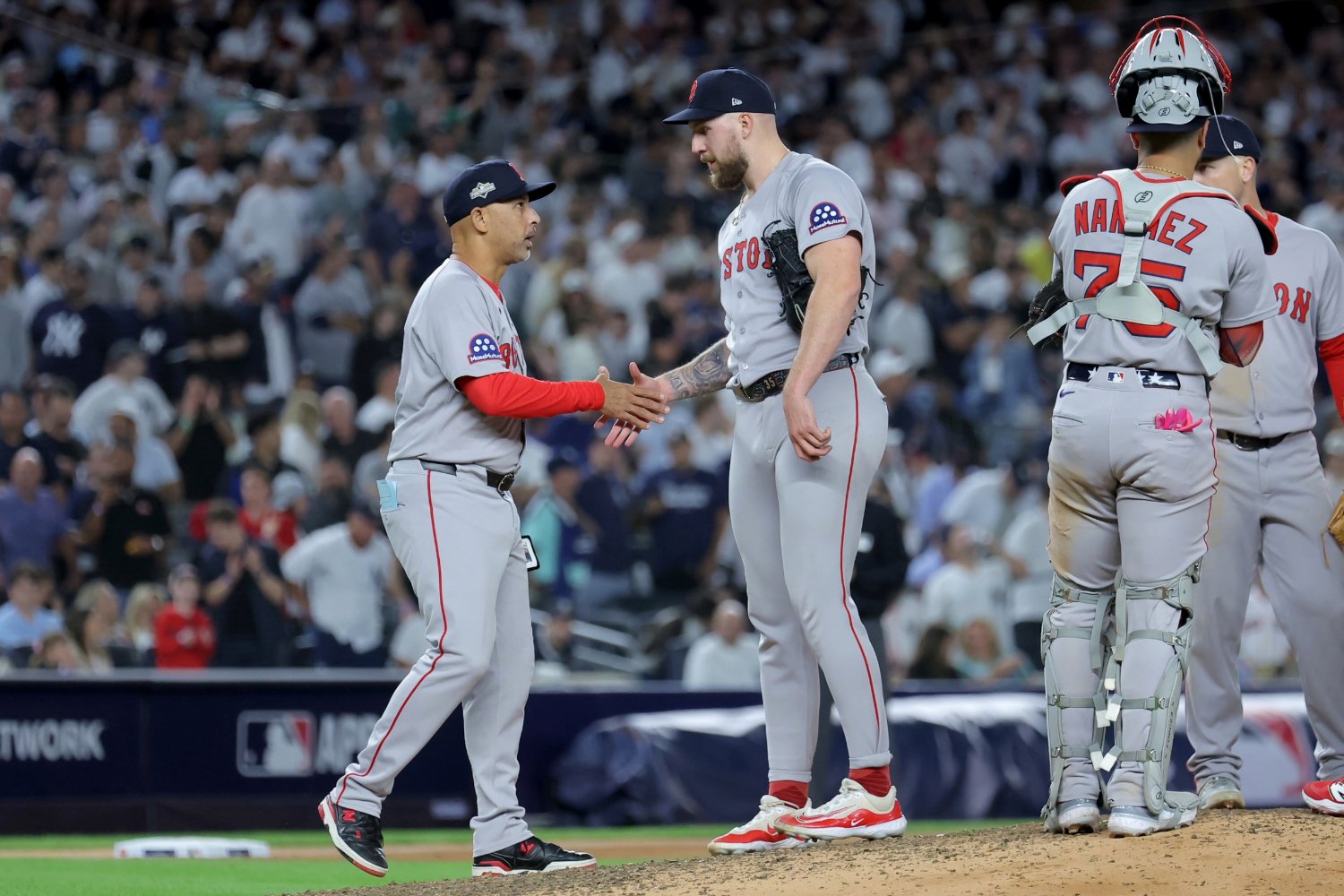 It's time to move on to the starting pitching corps in our grading series of the 2025 Boston Red Sox's roster. You can probably guess who comes out on top among this group, though a number of starters besides the staff ace had impressive years worth analyzing. For this exercise, starters had to make at least three starts to qualify for a grade. Also note that minor league stats weren't factored in here–these grades are based purely on each pitcher's major league performance this season. You can see our grades for catchers here, infielders here, and outfielders here. Garrett Crochet: A+ Garrett Crochet was the anchor of the starting rotation and was as advertised throughout the entire season. We've gassed him up plenty over the season here at Talk Sox, so I won’t spend a ton of time doing it here, but he pitched to a 2.59 ERA over 205 1/3 innings in 2025. He had a record of 18-5 and posted 6.3 WAR. He was the best pitcher on the team by a mile and will likely finish second in American League Cy Young voting. He’s an absolute hoss—a war pig. He’s going to be the face of this rotation for years to come. Brayan Bello: B+ Brayan Bello, for the most part, had a career year in 2025. He posted a 3.35 ERA over 166 2/3 innings pitched with 6.74 strikeouts per nine and 3.23 walks per nine. He showed adaptability by changing his pitch mix during the season, even advocating to throw his fastball more often and reintroducing his changeup. His demeanor on the mound improved this season as well. He was able to pitch himself out of jams and remain poised. He likely would have been bumped up to the next letter grade had his September and postseason not tanked the second half of his season. He didn’t completely fall apart, but he looked far more beatable than he had for most of the season. Bello was forced to be this team’s number two starter this season, and he mostly thrived in that role. Should he continue on this trajectory next season, he will be one of the more fearsome No. 3 starters in the American League (assuming the Red Sox add a true co-ace for Crochet). Lucas Giolito: B- Lucas Giolito was a dependable third starter in 2025. He fulfilled the second year of a two-year contract after having an internal bracing procedure in 2024. He pitched to a record of 10-4 with an ERA of 3.41. Like Bello above, Giolito began to falter as the season drew to a close. A re-aggravation of his elbow injury caused him to be unavailable for entirety of the playoffs and more than likely is making the team think long and hard about if they should pick up their side of his mutual option. Giolito would be a steady, veteran presence on next year’s staff, but the potential for his elbow to flare up again may keep the team from being all in on a final year of his services. Walker Buehler: F We’ll keep this one short and sweet. Walker Buehler was awful during his time with the Red Sox. He was the least dependable starter in the rotation, pitching his way to a 5.45 ERA with, somehow, a record of 7-7. He gave up hard contact often and was incredibly dramatic while on the mound, typically when he didn’t need to be. He was DFA’d as the team was entering their stretch run to the playoffs, and the Red Sox arguably got stronger because of it. Dustin May: F Like Buehler above, we won’t spend a ton of time rehashing Dustin May’s brief stint with the Red Sox. He was brought in at the trade deadline and never found his footing in Boston. He posted a 5.40 ERA over 28 1/3 innings with the club, finishing the season on the injured list. He was throwing in Fort Myers by the end of the year, but he was never really considered for a spot on the postseason roster, which should tell you everything you need to know about his time with the team. Connelly Early: A- Connelly Early was called up late in the season and performed admirably. He finished the campaign with a 2.33 ERA over 19 1/3 innings and made the biggest start of his career in Game 3 of the Wild Card round. He flashed a ton of potential and will be in contention for a starting rotation spot in 2026. He features a plus fastball with solid secondary options, and so far, hasn’t met a moment too big for him. His 13.50 strikeouts per nine technically puts him above Crochet, but it’s a much smaller sample size. Connelly has the makings of a breakout pitcher in 2026, and his cup of coffee in the majors this season should have every one excited for the next phase of his career. Hunter Dobbins: B- Undone by an ACL tear in July, Hunter Dobbins was making a case of be a mainstay of the rotation before his injury. His 4.13 ERA wasn’t ideal, but his FIP was a steadier 3.87. He got hosed by the defense behind him from time to time and that inflated his overall numbers. His ACL injury will keep him on the shelf for at least part of next season, but he will be much-needed depth later on in 2026. Richard Fitts: D+ Richard Fitts was expected to compete for a back-end rotation spot in 2025, but injuries limited his effectiveness. He had a 5.00 ERA on the season over 45.0 innings pitched. His 2.20 home runs per nine ranked second-worst on the team, a trend that he needs to shake. He likely won’t factor into the rotation plans moving forward unless injuries begin to pile up, though it never hurts to have a guy who can eat up bulk innings lingering around in the organization. Payton Tolle: C+ The second rookie on this list, Payton Tolle was a mixed bag as a starter. His first start was electric and showed that he has the potential to be a mainstay starter at some point soon. The rest of his starts, though, showed a pitcher who only featured one true pitch with secondaries that aren’t ready for MLB-caliber hitters. He was moved to the bullpen to close the season and stuck there throughout the team’s brief playoff run. In his 16 1/3 innings with the Red Sox, Tolle surrendered a 6.06 ERA, though a 4.50 xERA points to brighter days ahead. Tanner Houck: F Much like Buehler and May's sections, we’ll keep this short and sweet. Tanner Houck’s season was abysmal. He made nine starts with a 0-3 record to show for them. His ERA was 8.04 over 43 2/3 innings pitched. He underwent Tommy John surgery in August of this year and will likely miss the entirety of the 2026 season. It’s easy to play the ‘what-if’ game with Houck after his dominant first half of 2024, but there are lingering questions about his fit on the team as he recovers from surgery. Craig Breslow’s focus on adding pitching helped propel the Red Sox to their most successful season in recent years, but there is still work to be done. With Garrett Crochet anchoring the rotation, adding a second top-of-the-rotation pitcher is of the utmost importance this offseason for the front office.
 -
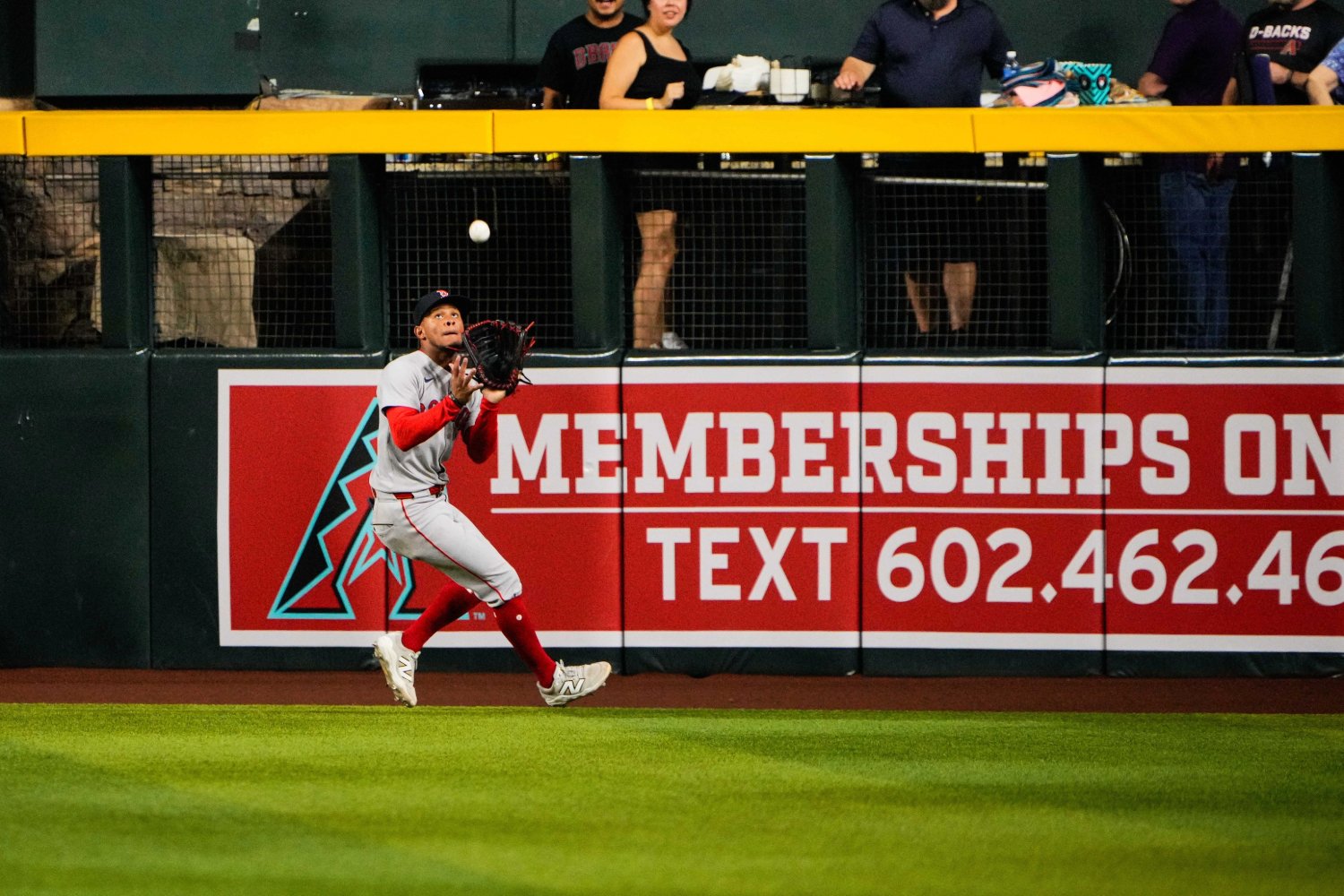 Three members of the Boston Red Sox have been named as 2025 Rawlings Gold Glove finalists. They are catcher Carlos Narvaez, center fielder Ceddanne Rafaela, and right fielder Wilyer Abreu. This nomination marks the second year in a row that Abreu has been nominated, and he hopes to take home the award in back-to-back years. The calf injury that kept him out towards the end of the season could hamper his chances, but he still put together an incredible season while on the field. Narvaez led all catchers in the league in runners caught stealing with 24, good for a 29% clip. He was one of the best defensive catchers in all of baseball, but his catcher interference calls could work against him to a point. Finally, Rafaela is up for his first nomination after a stellar year in, mostly, center field. He logged enough hours at his primary position to be considered for the award this year and the sheer amount of highlight reel catches he made in 2025 should make him an overall favorite to bring home the hardware. The Red Sox are showing they have an eye for above-average defensive talent at a few key positions. These three names should continue to show up on these nomination lists for years to come. Gold Glove winners will be announced on Sunday, Nov. 2.
 -
Three members of the Boston Red Sox have been named as 2025 Rawlings Gold Glove finalists. They are catcher Carlos Narvaez, center fielder Ceddanne Rafaela, and right fielder Wilyer Abreu. This nomination marks the second year in a row that Abreu has been nominated, and he hopes to take home the award in back-to-back years. The calf injury that kept him out towards the end of the season could hamper his chances, but he still put together an incredible season while on the field. Narvaez led all catchers in the league in runners caught stealing with 24, good for a 29% clip. He was one of the best defensive catchers in all of baseball, but his catcher interference calls could work against him to a point. Finally, Rafaela is up for his first nomination after a stellar year in, mostly, center field. He logged enough hours at his primary position to be considered for the award this year and the sheer amount of highlight reel catches he made in 2025 should make him an overall favorite to bring home the hardware. The Red Sox are showing they have an eye for above-average defensive talent at a few key positions. These three names should continue to show up on these nomination lists for years to come. Gold Glove winners will be announced on Sunday, Nov. 2. View full rumor
- 22 replies
-
- 1
-

-
- carlos narvaez
- ceddanne rafaela
- (and 1 more)
-
Article: Grading the 2025 Boston Red Sox: Outfielders
Alex Mayes replied to Alex Mayes's topic in Talk Sox Front Page News
I honestly struggled with Ceddanne and Duran's grades. I ended up going the same based on Ceddy's offensive downturn in the second half, but you're 100% correct.- 16 replies
-
- 1
-
-
- roman anthony
- jarren duran
- (and 3 more)
-
The Boston Red Sox's season-ending loss to the Yankees got their offseason started prematurely, though this extra time to prepare for a crucial winter could prove beneficial. Like the front office is surely doing at this juncture, we figured we'd review the seasons of each player on the roster and grade their performance. We've already taken a look at catchers here, and like the backstop grades, there won't be too many surprises with the outfielders. Just about everyone involved the mix played well, and the starting quartet was one of the strongest units on the team this season. Let's dive into each individual player's 2025 performance. Roman Anthony: A- The young gun was as advertised for the Red Sox. He slashed .292/.396/.463 on the season while posting a 2.7 fWAR and a 140 wRC+. He was arguably the brightest spot in the outfield and was an absolute game-changer after his call-up. He suffered a few rookie errors early on, but his glove came around fairly quickly. We’re still waiting for him to find his power stroke at the plate, but it looked like it was starting to show up around the time of his oblique injury. What keeps him from a perfect A+ lies out of his control: the oblique injury ending his season early, and the fact that he didn’t get called up until June. Had he been on the roster since Opening Day, like he should have been, we’re likely looking at a legitimate Rookie of the Year candidate. Ceddanne Rafaela: B Rafaela shuffled between center field and second base more than he should have this season, but he was still a plus defender. He posted a 22 Fielding Run Value in center field while accruing only five errors at the position. Offensively, he slashed .249/.295/.414, good for 3.8 fWAR and a 91 wRC+. What keeps him from an A grade, though, is the fact that he still swings at anything that sniffs the strike zone, and some things that don’t (42.2% chase rate, second percentile among qualified hitters). He had mental lapses in the playoffs that you’d expect him to be too mature for, as well. Still, his web gems are things of beauty, and he often makes difficult catches look routine. He needs to be in center field on a nightly basis for the remainder of his contract. Jarren Duran: B Duran had a mixed bag of a season. Offensively, he was sneakily good, batting .256/.332/.442 with 3.9 fWAR and a 111 wRC+. He was second on the team in stolen bases with 24 and was a clubhouse leader as the team made its postseason push. The offense seemed to follow his lead for the summer months, when he was hot everything fired on all cylinders. Defensively though, Duran was less than ideal. His seven errors on the season are probably a generous way of describing his glove in 2025. His dropped pop-fly in Game 2 of the Wild Card series may have cost the Red Sox a chance to win that game. His 2024 peak may not be on the menu anymore, but his nightly contributions make him a key contributor to this team. Wilyer Abreu: B Like Anthony above, Abreu’s grade could be higher if he didn’t miss significant time with a quad injury toward the end of the season. He was a shell of himself upon his return and didn’t make much of an impact at all. Before that injury, though, Abreu was his typical steady self. He slashed .247/.317/.469 with a 2.4 fWAR and a 110 wRC+, all while being platooned in right field. Even with the time missed due to injury, he was second on the team in home runs with 22. He had five errors on the season and will likely be in contention for another Gold Glove. He’s primed for a true breakout year in 2026 and could potentially shed his platoon status (.676 OPS vs. lefties this year) if he continues his upward trajectory. Rob Refsnyder: B- Refsnyder did his job well, for the most part. He was Abreu’s platoon partner and then took over right field duties once Abreu hit the injured list. He slashed .269/.354/.484 on the season with a 1.0 fWAR and a 128 wRC+. He dominated left-handed pitching as he was expected to and was, somewhat surprisingly, a vocal presence for the team. He had only one error on the season. Time will tell if Refsnyder is back with the club next year. He’s going to be a free agent and toyed with the idea of retirement as recently as last winter. Should he decide to hang them up, he will one day be a valuable coach to a franchise. View full article
-
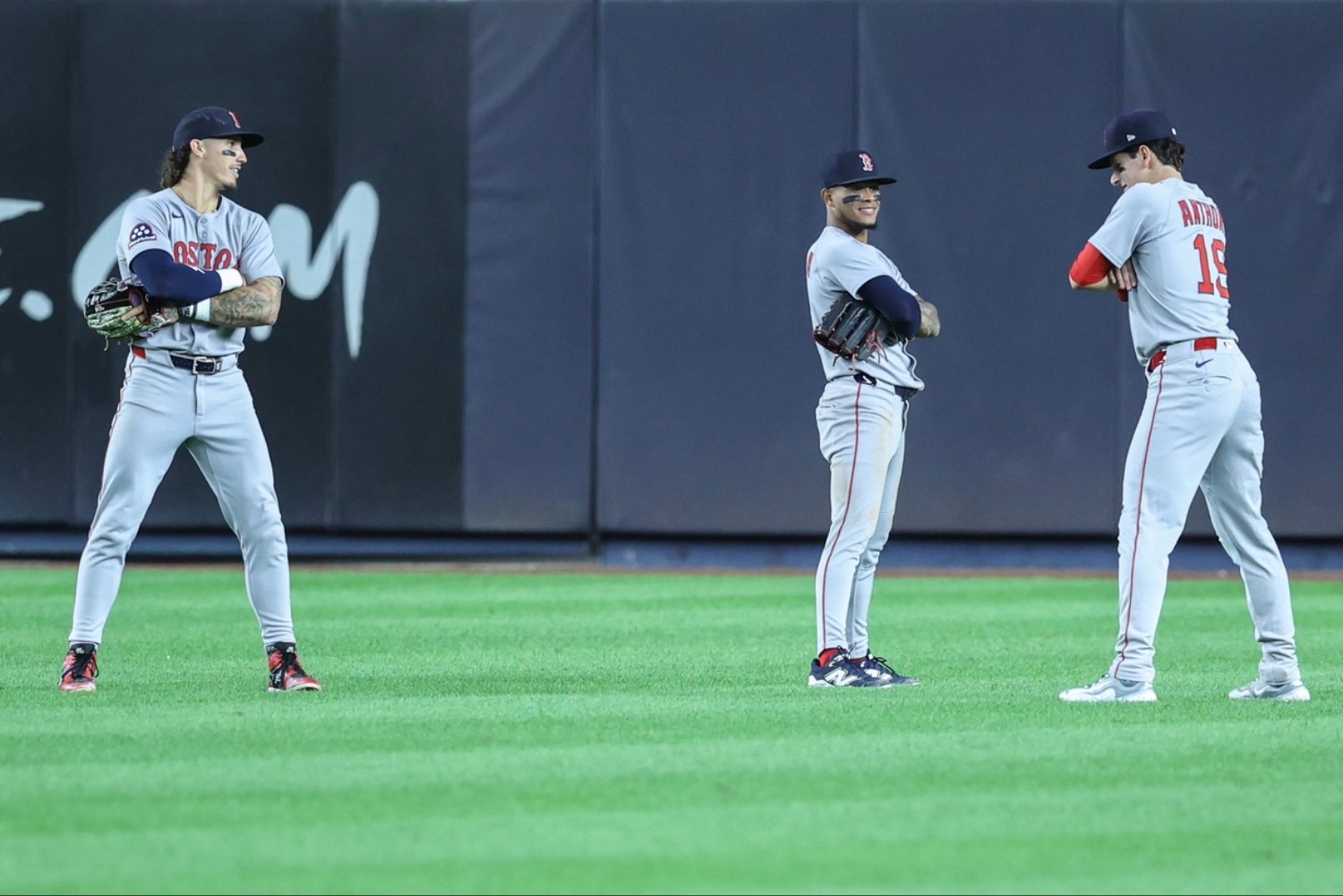 The Boston Red Sox's season-ending loss to the Yankees got their offseason started prematurely, though this extra time to prepare for a crucial winter could prove beneficial. Like the front office is surely doing at this juncture, we figured we'd review the seasons of each player on the roster and grade their performance. We've already taken a look at catchers here, and like the backstop grades, there won't be too many surprises with the outfielders. Just about everyone involved the mix played well, and the starting quartet was one of the strongest units on the team this season. Let's dive into each individual player's 2025 performance. Roman Anthony: A- The young gun was as advertised for the Red Sox. He slashed .292/.396/.463 on the season while posting a 2.7 fWAR and a 140 wRC+. He was arguably the brightest spot in the outfield and was an absolute game-changer after his call-up. He suffered a few rookie errors early on, but his glove came around fairly quickly. We’re still waiting for him to find his power stroke at the plate, but it looked like it was starting to show up around the time of his oblique injury. What keeps him from a perfect A+ lies out of his control: the oblique injury ending his season early, and the fact that he didn’t get called up until June. Had he been on the roster since Opening Day, like he should have been, we’re likely looking at a legitimate Rookie of the Year candidate. Ceddanne Rafaela: B Rafaela shuffled between center field and second base more than he should have this season, but he was still a plus defender. He posted a 22 Fielding Run Value in center field while accruing only five errors at the position. Offensively, he slashed .249/.295/.414, good for 3.8 fWAR and a 91 wRC+. What keeps him from an A grade, though, is the fact that he still swings at anything that sniffs the strike zone, and some things that don’t (42.2% chase rate, second percentile among qualified hitters). He had mental lapses in the playoffs that you’d expect him to be too mature for, as well. Still, his web gems are things of beauty, and he often makes difficult catches look routine. He needs to be in center field on a nightly basis for the remainder of his contract. Jarren Duran: B Duran had a mixed bag of a season. Offensively, he was sneakily good, batting .256/.332/.442 with 3.9 fWAR and a 111 wRC+. He was second on the team in stolen bases with 24 and was a clubhouse leader as the team made its postseason push. The offense seemed to follow his lead for the summer months, when he was hot everything fired on all cylinders. Defensively though, Duran was less than ideal. His seven errors on the season are probably a generous way of describing his glove in 2025. His dropped pop-fly in Game 2 of the Wild Card series may have cost the Red Sox a chance to win that game. His 2024 peak may not be on the menu anymore, but his nightly contributions make him a key contributor to this team. Wilyer Abreu: B Like Anthony above, Abreu’s grade could be higher if he didn’t miss significant time with a quad injury toward the end of the season. He was a shell of himself upon his return and didn’t make much of an impact at all. Before that injury, though, Abreu was his typical steady self. He slashed .247/.317/.469 with a 2.4 fWAR and a 110 wRC+, all while being platooned in right field. Even with the time missed due to injury, he was second on the team in home runs with 22. He had five errors on the season and will likely be in contention for another Gold Glove. He’s primed for a true breakout year in 2026 and could potentially shed his platoon status (.676 OPS vs. lefties this year) if he continues his upward trajectory. Rob Refsnyder: B- Refsnyder did his job well, for the most part. He was Abreu’s platoon partner and then took over right field duties once Abreu hit the injured list. He slashed .269/.354/.484 on the season with a 1.0 fWAR and a 128 wRC+. He dominated left-handed pitching as he was expected to and was, somewhat surprisingly, a vocal presence for the team. He had only one error on the season. Time will tell if Refsnyder is back with the club next year. He’s going to be a free agent and toyed with the idea of retirement as recently as last winter. Should he decide to hang them up, he will one day be a valuable coach to a franchise.
 -
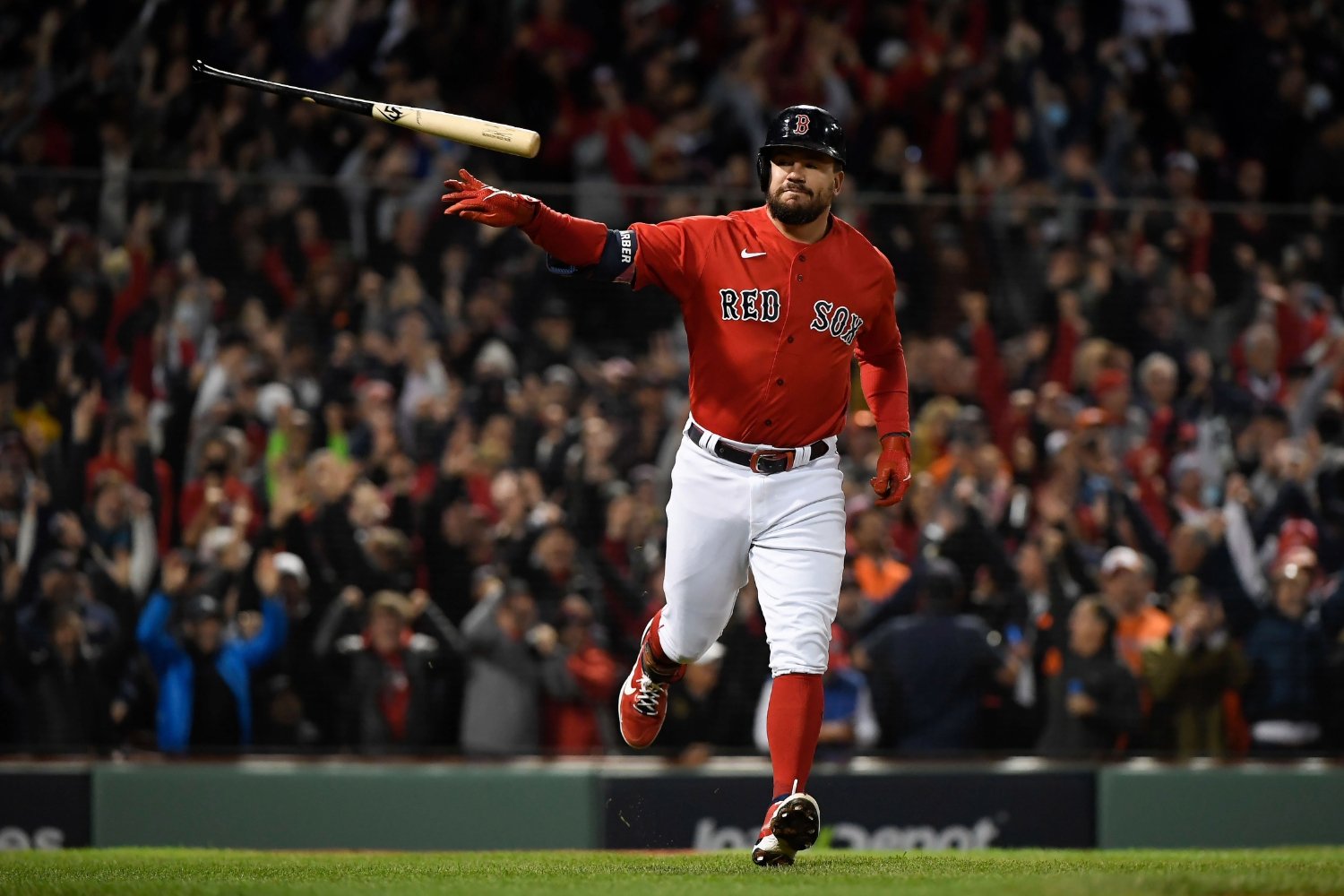 The Boston Red Sox will have to get creative this offseason in order to address all the items on their shopping list. They have many holes to fill before the likes of Alex Bregman and Trevor Story decide if they will be opting out for next season or not. Obviously, the team needs more starting pitching. They attempted to trade for Joe Ryan at the deadline and landed Dustin May in a trade that didn’t do much for the rotation. There will be a ton of focus on the free agent starting pitchers and those available through trades, and we’ll have a lot to say about that here at Talk Sox during the coming months. Perhaps even more pressing for the team, though, is their lack of power on the offensive side of the baseball. The Red Sox were good but underwhelming in most offensive categories this past season. They slashed .254/.324/.421 as a team and posted a 103 wRC+ and 25.2 WAR. That .254 average was good for fourth in the entire league, but their slugging rank drops to ninth overall. Not a bad spot to be in, but the Red Sox teams that have been world-beaters and championship contenders have always featured a solid amount of thump in the lineup. Sure, a full season with Roman Anthony likely helps get the team over the hump, and hopefully Triston Casas returns to pre-injury form, but counting on him right out of the gate seems irresponsible. There’s a chance Casas could lose the first base competition during spring training to Nathaniel Lowe or even Romy Gonzalez. Considering that Story led the team with just 25 home runs in 2025, what the Red Sox need to do is add a power hitter to the middle of the lineup, even if Alex Bregman returns next season. The issue though, is that the free agent options are paper thin. There are a good handful of potential free agents that could be considered power hitters; Pete Alonso, Josh Naylor, Eugenio Suarez, Max Muncy, Tyler O’Neill, Kyle Tucker, Kyle Schwarber, and Marcell Ozuna. Yet, there are really only two names on this list that make sense for the Red Sox: Kyle Schwarber and Pete Alonso. Schwarber would assume the full-time DH role and is already incredibly familiar with the organization. Alex Cora even seemed to be thinking ahead to this offseason when he made some comments about Schwarber during a media availability session. He’d be welcomed back with open arms by teammates and fans alike. The sticking point with Schwarber, though, is that he'd clog up the designated hitter spot, which is antithetical to the plug-and-play approach the Sox had after trading Rafael Devers. Also, the Phillies are likely going to overextend to keep him around. They have an aging roster, so letting him walk could be in their best interest, but he’s part of the lifeblood of that franchise. Alonso is much more intriguing, since he would solve the issue of the revolving door at first base. Yes, this means the team would likely punting on Casas, but at this point, that may be the best path forward for both parties. We’ve talked on the Talk Sox Podcast about how it’s entirely possible Casas has played his final out for the Red Sox due to his injury history, and signing Alonso would almost guarantee that to be the case. I don't need to tell you how salivating it would be to see Alonso take aim at the Green Monster; instead, I'll let your imagination do the talking. Either of these names would be day one impact players for the 2026 season, but neither of them are locks to head to Boston as free agency unfurls. The trade market provides some potentially intriguing names, but unless Craig Breslow suddenly becomes bold enough to dip deep into his farm system coffers, that could be a convoluted path forward as well. Either way, the Red Sox have to add an impact power bat this offseason in order to lengthen the lineup and create more avenues for run-scoring opportunities.
 -
The Boston Red Sox will have to get creative this offseason in order to address all the items on their shopping list. They have many holes to fill before the likes of Alex Bregman and Trevor Story decide if they will be opting out for next season or not. Obviously, the team needs more starting pitching. They attempted to trade for Joe Ryan at the deadline and landed Dustin May in a trade that didn’t do much for the rotation. There will be a ton of focus on the free agent starting pitchers and those available through trades, and we’ll have a lot to say about that here at Talk Sox during the coming months. Perhaps even more pressing for the team, though, is their lack of power on the offensive side of the baseball. The Red Sox were good but underwhelming in most offensive categories this past season. They slashed .254/.324/.421 as a team and posted a 103 wRC+ and 25.2 WAR. That .254 average was good for fourth in the entire league, but their slugging rank drops to ninth overall. Not a bad spot to be in, but the Red Sox teams that have been world-beaters and championship contenders have always featured a solid amount of thump in the lineup. Sure, a full season with Roman Anthony likely helps get the team over the hump, and hopefully Triston Casas returns to pre-injury form, but counting on him right out of the gate seems irresponsible. There’s a chance Casas could lose the first base competition during spring training to Nathaniel Lowe or even Romy Gonzalez. Considering that Story led the team with just 25 home runs in 2025, what the Red Sox need to do is add a power hitter to the middle of the lineup, even if Alex Bregman returns next season. The issue though, is that the free agent options are paper thin. There are a good handful of potential free agents that could be considered power hitters; Pete Alonso, Josh Naylor, Eugenio Suarez, Max Muncy, Tyler O’Neill, Kyle Tucker, Kyle Schwarber, and Marcell Ozuna. Yet, there are really only two names on this list that make sense for the Red Sox: Kyle Schwarber and Pete Alonso. Schwarber would assume the full-time DH role and is already incredibly familiar with the organization. Alex Cora even seemed to be thinking ahead to this offseason when he made some comments about Schwarber during a media availability session. He’d be welcomed back with open arms by teammates and fans alike. The sticking point with Schwarber, though, is that he'd clog up the designated hitter spot, which is antithetical to the plug-and-play approach the Sox had after trading Rafael Devers. Also, the Phillies are likely going to overextend to keep him around. They have an aging roster, so letting him walk could be in their best interest, but he’s part of the lifeblood of that franchise. Alonso is much more intriguing, since he would solve the issue of the revolving door at first base. Yes, this means the team would likely punting on Casas, but at this point, that may be the best path forward for both parties. We’ve talked on the Talk Sox Podcast about how it’s entirely possible Casas has played his final out for the Red Sox due to his injury history, and signing Alonso would almost guarantee that to be the case. I don't need to tell you how salivating it would be to see Alonso take aim at the Green Monster; instead, I'll let your imagination do the talking. Either of these names would be day one impact players for the 2026 season, but neither of them are locks to head to Boston as free agency unfurls. The trade market provides some potentially intriguing names, but unless Craig Breslow suddenly becomes bold enough to dip deep into his farm system coffers, that could be a convoluted path forward as well. Either way, the Red Sox have to add an impact power bat this offseason in order to lengthen the lineup and create more avenues for run-scoring opportunities. View full article
-
Following a disappointing and short-lived postseason trip, the Boston Red Sox have turned their attention to the offseason. As @Brandon Glick has highlighted here, there are a handful of departing free agents that the team can make another run at, if they choose to, or the players can walk away from the team in free agency and test the waters in hopes of signing a deal somewhere else for next season. In addition to those departing free agents, there are four players with options, both player and mutual, that have to make decisions for their own futures. Let’s take a look at those names and see if we can glean some insight into their futures in Boston. Alex Bregman – Player Option I figured we’d start with the most obvious name on this list. Alex Bregman signed a three-year deal with the Red Sox right before spring training that gives him opt-outs after the 2025 and 2026 seasons. Bregman’s fit on the Red Sox was noticeable from the minute he set foot in camp. He helped lock down the left side of the infield with Trevor Story and added much-needed right-handed thump to the lineup. His quad injury forced him to miss significant time over the summer, though, and he fought to return to form as the season came to a close. Overall, he slashed .273/.360/.462 with a 125 wRC+, but he had a rough second half. There was some speculation, and hope, that his second half would convince him to opt-in for at least one additional year with the Red Sox, but he seems slated to reach free agency. If I were a betting man, I’d wager that Bregman opts out and tests free agency but gives the Red Sox a solid chance to retain his services on a new contract. Regardless of which teams signs him, expect him to prioritize a long-term deal at a slightly lesser AAV (it was $40 million in 2025). Trevor Story – Player Option Trevor Story’s upcoming opt-out had long been viewed as a near-guarantee to not be exercised. I even wrote about how he’s guaranteed to opt-in and why that’s a good thing for the team earlier this season. Now though, I’m less convinced. He was far and away the best offensive player on the team by the end of the campaign, even though he went through one of the worst cold streaks in memory to kick off the season. He slashed .263/.308/.433 on the season, led the team in home runs (25) and stolen bases (31), and provided a mostly steady presence in the lineup on a nightly basis. He proved that he is still able to play high-level defense while contributing offensively. This free agent class is incredibly weak after the elite options, so it may be very tempting for Story to test the waters with an opt-out, but comments he’s made about how he wants to contribute in Boston make me lean towards him opting-in and remaining with the club next season. Worth noting: The Red Sox can void his opt-out by picking up a $25 million team option for the 2028 season. I wouldn't expect them to commit that kind of money to a 35-year-old Story, but that gives him a mark to beat (i.e., three years and $75 million) on the open market if he does test free agency. Lucas Giolito – Mutual Option Much like Story above, I wrote earlier this season about how both Lucas Giolito and the Red Sox should be interested in picking up the mutual option built into his contract. At that point, the wheels hadn’t totally fallen off for Giolito, and the re-aggravation of his elbow injury hadn’t reared its ugly head yet. Giolito was mostly solid this season, pitching his way to a 3.41 ERA. He was a dependable third starter, especially as the starting rotation began to be decimated by injuries late in the season. What’s troubling, though, is his xERA sat at 5.01. Giolito got lucky a lot this season; his Baseball Savant page is bluer than the sea. The elbow injury that kept him off of the postseason roster gave rookie Connelly Early a chance to prove his worth on the biggest stage he’s ever been on, and he did so admirably. With the emergence of Early and Kyle Harrison, plus the likely return of Kutter Crawford and Patrick Sandoval, expect the Red Sox to decline their part of the mutual option this offseason, returning Giolito to the open market. Liam Hendriks – Mutual Option We can make this one quick and easy. The Red Sox should have no desire to bring back Liam Hendriks next season. He was a shell of himself and has potentially thrown his last innings as a professional baseball player. He's a beloved teammate and renowned comeback story, so there is something going for the veteran reliever. As such, there may be a team, like the Rockies or White Sox, who give him a phone call over the winter, but expect the Red Sox to decline their side of the option. Technically, Jarren Duran has a team option as well, but his contract is a bit convoluted and it’s more likely than not that the Red Sox are going to exercise that option, so he was left off of this list. Out of the four names listed, above expect the Red Sox to make a strong push for Alex Bregman and Trevor Story, should both of them opt-out in the coming weeks. It’s possible Lucas Giolito will be brought back next season on a one-year, prove-it type of contract after he fell off hard to end the season, but the Red Sox have enough arms waiting in the wings to be okay should he move on somewhere else. This offseason is a crucial one for the future of this Red Sox era, and it'll begin with decisions for two of the most important offensive players in the organization. View full article
-
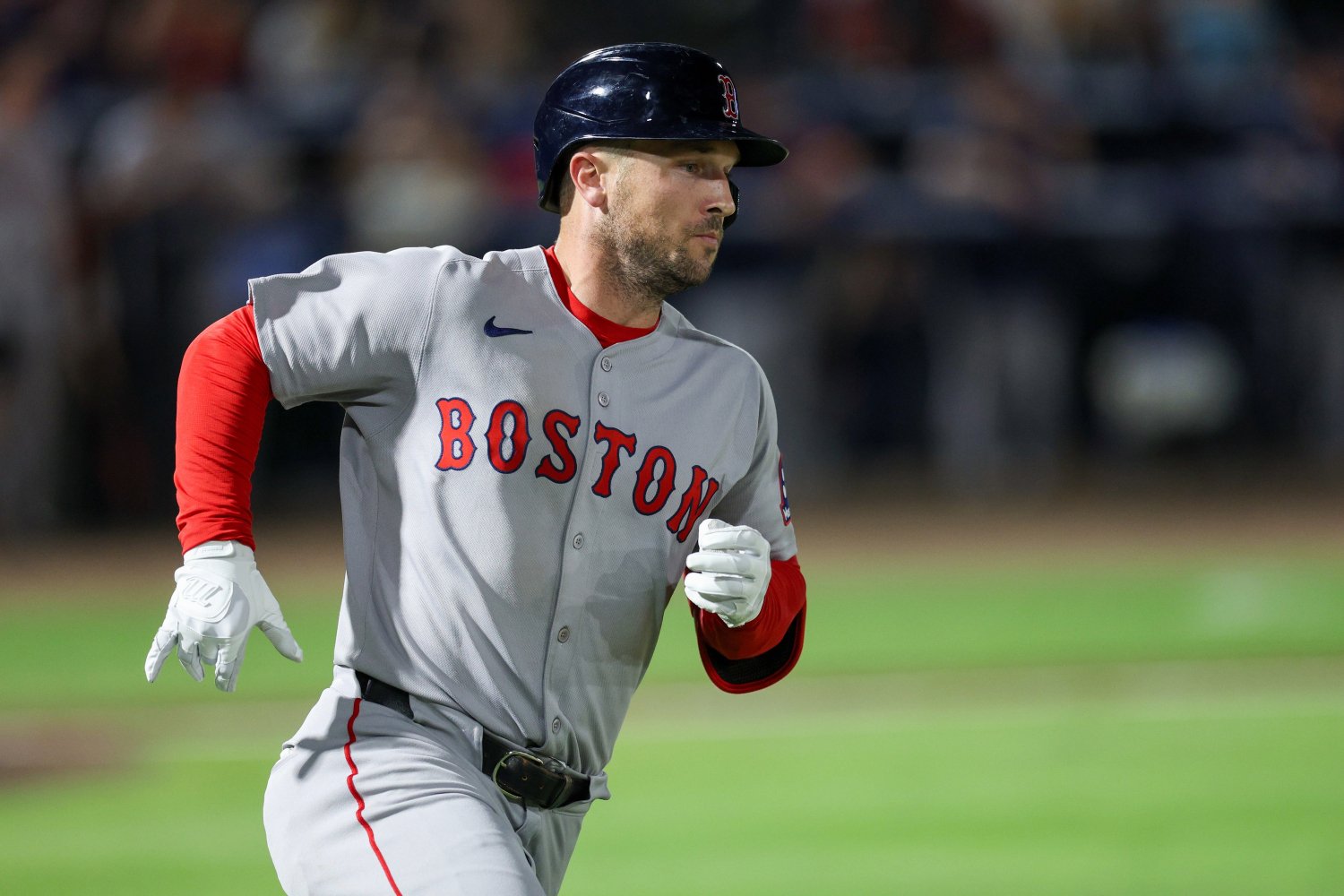 Following a disappointing and short-lived postseason trip, the Boston Red Sox have turned their attention to the offseason. As @Brandon Glick has highlighted here, there are a handful of departing free agents that the team can make another run at, if they choose to, or the players can walk away from the team in free agency and test the waters in hopes of signing a deal somewhere else for next season. In addition to those departing free agents, there are four players with options, both player and mutual, that have to make decisions for their own futures. Let’s take a look at those names and see if we can glean some insight into their futures in Boston. Alex Bregman – Player Option I figured we’d start with the most obvious name on this list. Alex Bregman signed a three-year deal with the Red Sox right before spring training that gives him opt-outs after the 2025 and 2026 seasons. Bregman’s fit on the Red Sox was noticeable from the minute he set foot in camp. He helped lock down the left side of the infield with Trevor Story and added much-needed right-handed thump to the lineup. His quad injury forced him to miss significant time over the summer, though, and he fought to return to form as the season came to a close. Overall, he slashed .273/.360/.462 with a 125 wRC+, but he had a rough second half. There was some speculation, and hope, that his second half would convince him to opt-in for at least one additional year with the Red Sox, but he seems slated to reach free agency. If I were a betting man, I’d wager that Bregman opts out and tests free agency but gives the Red Sox a solid chance to retain his services on a new contract. Regardless of which teams signs him, expect him to prioritize a long-term deal at a slightly lesser AAV (it was $40 million in 2025). Trevor Story – Player Option Trevor Story’s upcoming opt-out had long been viewed as a near-guarantee to not be exercised. I even wrote about how he’s guaranteed to opt-in and why that’s a good thing for the team earlier this season. Now though, I’m less convinced. He was far and away the best offensive player on the team by the end of the campaign, even though he went through one of the worst cold streaks in memory to kick off the season. He slashed .263/.308/.433 on the season, led the team in home runs (25) and stolen bases (31), and provided a mostly steady presence in the lineup on a nightly basis. He proved that he is still able to play high-level defense while contributing offensively. This free agent class is incredibly weak after the elite options, so it may be very tempting for Story to test the waters with an opt-out, but comments he’s made about how he wants to contribute in Boston make me lean towards him opting-in and remaining with the club next season. Worth noting: The Red Sox can void his opt-out by picking up a $25 million team option for the 2028 season. I wouldn't expect them to commit that kind of money to a 35-year-old Story, but that gives him a mark to beat (i.e., three years and $75 million) on the open market if he does test free agency. Lucas Giolito – Mutual Option Much like Story above, I wrote earlier this season about how both Lucas Giolito and the Red Sox should be interested in picking up the mutual option built into his contract. At that point, the wheels hadn’t totally fallen off for Giolito, and the re-aggravation of his elbow injury hadn’t reared its ugly head yet. Giolito was mostly solid this season, pitching his way to a 3.41 ERA. He was a dependable third starter, especially as the starting rotation began to be decimated by injuries late in the season. What’s troubling, though, is his xERA sat at 5.01. Giolito got lucky a lot this season; his Baseball Savant page is bluer than the sea. The elbow injury that kept him off of the postseason roster gave rookie Connelly Early a chance to prove his worth on the biggest stage he’s ever been on, and he did so admirably. With the emergence of Early and Kyle Harrison, plus the likely return of Kutter Crawford and Patrick Sandoval, expect the Red Sox to decline their part of the mutual option this offseason, returning Giolito to the open market. Liam Hendriks – Mutual Option We can make this one quick and easy. The Red Sox should have no desire to bring back Liam Hendriks next season. He was a shell of himself and has potentially thrown his last innings as a professional baseball player. He's a beloved teammate and renowned comeback story, so there is something going for the veteran reliever. As such, there may be a team, like the Rockies or White Sox, who give him a phone call over the winter, but expect the Red Sox to decline their side of the option. Technically, Jarren Duran has a team option as well, but his contract is a bit convoluted and it’s more likely than not that the Red Sox are going to exercise that option, so he was left off of this list. Out of the four names listed, above expect the Red Sox to make a strong push for Alex Bregman and Trevor Story, should both of them opt-out in the coming weeks. It’s possible Lucas Giolito will be brought back next season on a one-year, prove-it type of contract after he fell off hard to end the season, but the Red Sox have enough arms waiting in the wings to be okay should he move on somewhere else. This offseason is a crucial one for the future of this Red Sox era, and it'll begin with decisions for two of the most important offensive players in the organization.
 -
The 2025 season brought many highs and lows for the Boston Red Sox, especially on offense. Torrid cold streaks lead to some of the hottest hitting in the league, rookies stormed onto the scene and proved that they are actually the future of the organization, and then some hitters didn’t show up until the summer and failed to produce any meaningful at-bats until the season was on the line in September. The offense was a mixed bag for much of the season, ultimately finishing seventh in runs scored (786). With the year now over, let’s take a look at the top offensive players for the Boston Red Sox for the 2025 season. Note that this only includes regular season stats; the playoff series versus the Yankees didn't factor into our rankings. Honorable Mention: Roman Anthony The rookie phenom likely would have commanded one of the spots on this list had an oblique injury not ended his season in early September. He was on an absolute tear after getting moved to the leadoff position in the lineup. He slashed .292/.396/.463 on the season with eight home runs and 32 RBIs. His command of the strike zone allowed him to work walks even when under immense pressure to produce at the plate. Most fans anticipated more power from Anthony, but that typically down the road as players fully adjust to major league pitching. Had Anthony been called up earlier in the season, he may have discovered his power stroke before the year was out, and he certainly would have been in contention with Nick Kurtz for AL Rookie of the Year. Roman Anthony is a building block for this team—maybe even the cornerstone piece. Expect to see him lead lists like this throughout his entire tenure with the Red Sox. #3: Ceddanne Rafaela Rafaela may not have the flashiest numbers, but he produced all season long. He played in 156 games and slashed .249/.295/.414 with a .708 OPS and 4.8 WAR. It’s absolutely true that his plate discipline is not great, but he made improvements where it mattered. When he slumped as the season drew to a close, we saw him chasing more unhittable pitches as he was trying anything to contribute. He lands at third on this list because is there wasn't a more clutch hitter on this roster. Rafaela was the big hit, walk-off guy for this club. When he stepped to the plate with the game on the line, the energy was different. Much like he touts in his celebration, he developed ice in his veins and never saw a moment too big for him. His confidence and swagger when he would answer questions with ‘I was trying to go deep’ can’t be replicated. Would it be nice to see some more week-to-week consistency from him? Sure, but 99% of fans will take a .250 average to go along with the biggest clutch gene on the team while he plays Platinum Glove caliber defense. #2: Jarren Duran Duran has had a sneaky good year in 2025. He’s been much maligned by writers, including me, for how he seemingly doesn’t fit on the roster as the outfield mix continues to grow, but he put together a season that helped propel the team to the postseason. He slashed .256/.332/.442 with 16 home runs, 84 RBIs, and 24 stolen bases. He put his speed to good use as he also hit 13 triples on the season. That being said, this was far from the season everyone expected from Duran. While a repeat of his 2024 season was likely always out of reach, this campaign feels like somewhat of a disappointment for the outfielder. He contributed, no doubt, but constant tinkering with his swing led to him taking longer to find his offensive stride. He developed more swing and miss this season than he seemed to have had since his initial call up in 2021. Still though, his offensive performance helped the Red Sox reach the Wild Card Riybd. The team seemed to go as he went on offense, at least between the periods when Anthony was healthy and in the big leagues. When he was hot, so was the rest of the lineup. When he slumped, the team struggled to find their footing. Duran was a crucial part of the 2025 team, even if his numbers fell from last season. #1: Trevor Story I know, here we are again. As the conductor of the ‘Trevor Story Shouldn’t be in Boston’ train for the bulk of the season, I can acknowledge that without him, this team would have been in deep trouble. He slashed .263/.308/.433 on the season with 25 home runs, 96 RBIs, and 31 stolen bases. The 2025 campaign was his first fully healthy season since signing in Boston and he made the most of it. Yes, he’s going to swing on low and away sliders like his life depends on it, but more often than not, you feel good when he’s at the plate (which is a far cry from how things felt in May, speaking to his incredible turnaround). His ability to swipe bags with ease makes him dangerous if he gets on first, and he still has the motor to go first to third on a single to right field. Offensively, this year he has been as promised for the Red Sox. To end the season, he moved up to the number two slot in the lineup and he performed incredibly well there. Keeping Story healthy and allowing him to contribute even when multiple people were calling for his demotion was paramount for success in Boston in 2025. Honestly, we could rank the entire lineup here and have mainly positive things to say about each and every one of the players. Without these four, though, there’s little chance this team would have gotten to the postseason at all. I never thought I’d credit Trevor Story with being the biggest offensive presence for the Red Sox, but I’m glad to have been proven wrong. Each one of these names made it possible for fans to enjoy meaningful baseball in September (and a few games in October). View full article
- 1 reply
-
- 1
-
-
- ceddanne rafaela
- trevor story
- (and 1 more)
-
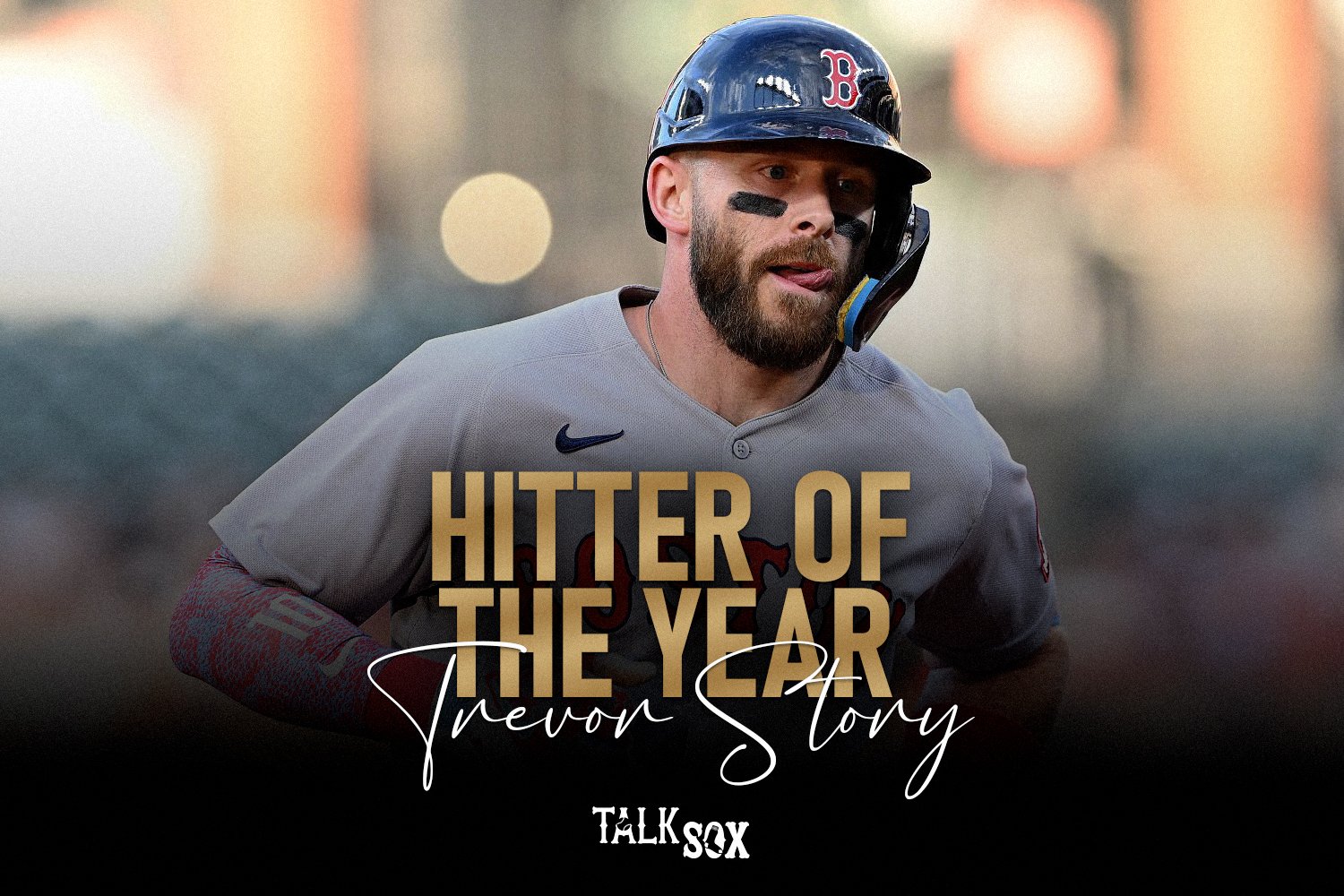 The 2025 season brought many highs and lows for the Boston Red Sox, especially on offense. Torrid cold streaks lead to some of the hottest hitting in the league, rookies stormed onto the scene and proved that they are actually the future of the organization, and then some hitters didn’t show up until the summer and failed to produce any meaningful at-bats until the season was on the line in September. The offense was a mixed bag for much of the season, ultimately finishing seventh in runs scored (786). With the year now over, let’s take a look at the top offensive players for the Boston Red Sox for the 2025 season. Note that this only includes regular season stats; the playoff series versus the Yankees didn't factor into our rankings. Honorable Mention: Roman Anthony The rookie phenom likely would have commanded one of the spots on this list had an oblique injury not ended his season in early September. He was on an absolute tear after getting moved to the leadoff position in the lineup. He slashed .292/.396/.463 on the season with eight home runs and 32 RBIs. His command of the strike zone allowed him to work walks even when under immense pressure to produce at the plate. Most fans anticipated more power from Anthony, but that typically down the road as players fully adjust to major league pitching. Had Anthony been called up earlier in the season, he may have discovered his power stroke before the year was out, and he certainly would have been in contention with Nick Kurtz for AL Rookie of the Year. Roman Anthony is a building block for this team—maybe even the cornerstone piece. Expect to see him lead lists like this throughout his entire tenure with the Red Sox. #3: Ceddanne Rafaela Rafaela may not have the flashiest numbers, but he produced all season long. He played in 156 games and slashed .249/.295/.414 with a .708 OPS and 4.8 WAR. It’s absolutely true that his plate discipline is not great, but he made improvements where it mattered. When he slumped as the season drew to a close, we saw him chasing more unhittable pitches as he was trying anything to contribute. He lands at third on this list because is there wasn't a more clutch hitter on this roster. Rafaela was the big hit, walk-off guy for this club. When he stepped to the plate with the game on the line, the energy was different. Much like he touts in his celebration, he developed ice in his veins and never saw a moment too big for him. His confidence and swagger when he would answer questions with ‘I was trying to go deep’ can’t be replicated. Would it be nice to see some more week-to-week consistency from him? Sure, but 99% of fans will take a .250 average to go along with the biggest clutch gene on the team while he plays Platinum Glove caliber defense. #2: Jarren Duran Duran has had a sneaky good year in 2025. He’s been much maligned by writers, including me, for how he seemingly doesn’t fit on the roster as the outfield mix continues to grow, but he put together a season that helped propel the team to the postseason. He slashed .256/.332/.442 with 16 home runs, 84 RBIs, and 24 stolen bases. He put his speed to good use as he also hit 13 triples on the season. That being said, this was far from the season everyone expected from Duran. While a repeat of his 2024 season was likely always out of reach, this campaign feels like somewhat of a disappointment for the outfielder. He contributed, no doubt, but constant tinkering with his swing led to him taking longer to find his offensive stride. He developed more swing and miss this season than he seemed to have had since his initial call up in 2021. Still though, his offensive performance helped the Red Sox reach the Wild Card Riybd. The team seemed to go as he went on offense, at least between the periods when Anthony was healthy and in the big leagues. When he was hot, so was the rest of the lineup. When he slumped, the team struggled to find their footing. Duran was a crucial part of the 2025 team, even if his numbers fell from last season. #1: Trevor Story I know, here we are again. As the conductor of the ‘Trevor Story Shouldn’t be in Boston’ train for the bulk of the season, I can acknowledge that without him, this team would have been in deep trouble. He slashed .263/.308/.433 on the season with 25 home runs, 96 RBIs, and 31 stolen bases. The 2025 campaign was his first fully healthy season since signing in Boston and he made the most of it. Yes, he’s going to swing on low and away sliders like his life depends on it, but more often than not, you feel good when he’s at the plate (which is a far cry from how things felt in May, speaking to his incredible turnaround). His ability to swipe bags with ease makes him dangerous if he gets on first, and he still has the motor to go first to third on a single to right field. Offensively, this year he has been as promised for the Red Sox. To end the season, he moved up to the number two slot in the lineup and he performed incredibly well there. Keeping Story healthy and allowing him to contribute even when multiple people were calling for his demotion was paramount for success in Boston in 2025. Honestly, we could rank the entire lineup here and have mainly positive things to say about each and every one of the players. Without these four, though, there’s little chance this team would have gotten to the postseason at all. I never thought I’d credit Trevor Story with being the biggest offensive presence for the Red Sox, but I’m glad to have been proven wrong. Each one of these names made it possible for fans to enjoy meaningful baseball in September (and a few games in October).
 -
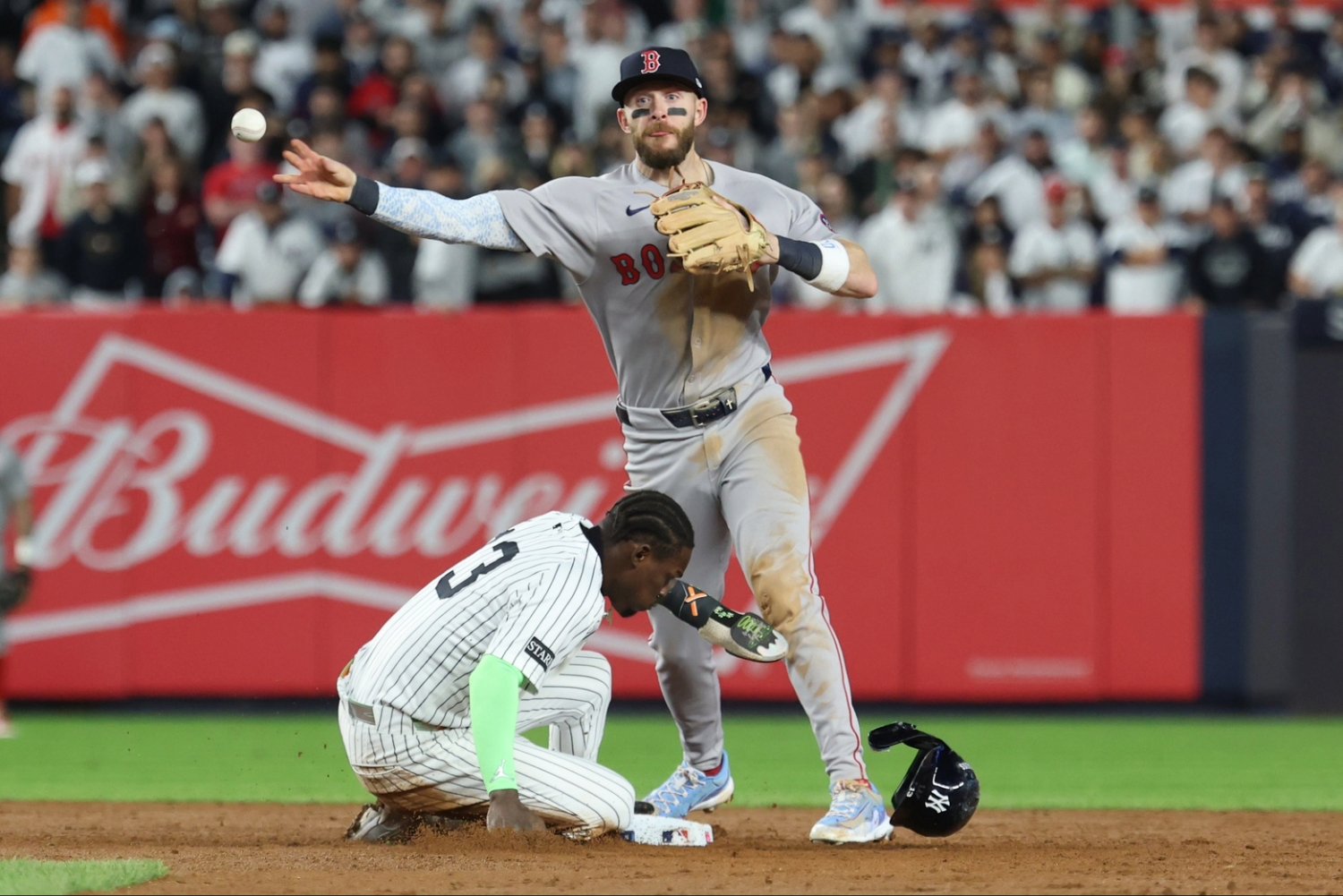 The 2025 season for the Red Sox has ended not with a bang, but with a whimper. The highs that the team, and the fanbase, were riding after Garrett Crochet’s dominant Game 1 outing were squashed on Wednesday night, and then got grounded into a fine powder under the heel of the Yankees on Thursday. The Wild Card series showed just how thin of a rotation the team finished the season with, and highlighted a few other areas where the team needs to improve as we now turn our attention toward the offseason. Instead of going game by game for the series breakdown (our @Nick John already did a fine job of that throughout the series), I want to highlight the positive takeaway, as well as the negatives that ultimately sunk the Red Sox. Positive: Garrett Crochet is an ace As I wrote earlier this week, Garrett Crochet’s performance in Game 1 should have set the tone for the series. Outside of a badly placed sinker that Anthony Volpe deposited over the wall in right field, Crochet was dominant. He fired 117 pitches, touching triple digits on the last pitch of the night. He walked into the Thunder Dome that was Yankee Stadium and tamed the crowd. In the biggest game of his career, he showed up and showed out. The Red Sox traded for and then extended Crochet for these moments and he rewarded that trust. He is the anchor of this rotation moving forward, but he needs help. Negative: Lack of starting pitching depth For as dominant as Crochet was in Game 1, Brayan Bello was the complete opposite. We talked on the Game 1 postgame stream how Bello would likely be on a short leash Wednesday night, but no one expected him to only go 2 1/3 innings while giving up four hits and two earned runs with one walk and no strikeouts. Bello had been shaky all of September, but there was hope that his dominance against the Yankees would return when it mattered most. Unfortunately, Ben Rice made sure that Bello wouldn’t be long for the game. On the other hand, Connelly Early performed fairly well until the wheels fell off in the fourth inning. On the radio call, Will Flemming correctly stated that every Yankees hitter that stepped to the plate in that inning ‘looked incredibly comfortable’ as they were taking their at-bats. It’s well documented that the Yankees are a league leader in picking up on and communicating tipped pitches, so there’s a chance this could have been occurring. But it’s also just as likely that Early and Carlos Narvaez fell into a predictable pattern as the former’s pitch count began to climb. Early was left in too long, and it came back to bite the Red Sox quickly. Either way, the Red Sox needed Early to go more than 3 2/3 innings to have a chance in Game 3. The rookie was charged with three earned runs on the night, but the lack of defense behind him is more to blame for those than he is. His ERA for the game may have been 7.36, but his FIP was an incredible 0.68. Had his defense bailed him out as they were expected to, we may be having a different conversation about this series. Negative: Shaky bullpen management in Game 2 The Red Sox have counted all season on a bullpen anchored by Aroldis Chapman and Garrett Whitlock to ensure that they either stayed in or won games. On Tuesday, Chapman put us all on the edges of our seats but ultimately pitched his way out of it. On Wednesday, Alex Cora seemingly hung Whitlock out to dry by allowing him to throw multiple innings. Yes, Whitlock was penciled in as the multi-inning relief option to open the season, but that didn’t work out. For the bulk of the campaign, Whitlock was a one-inning specialist and he should have operated as such in Game 2. Also, why go to Payton Tolle after Whitlock when you could have flipped them on the depth chart and had Whitlock follow Tolle? You tasked Whitlock with throwing over 40 pitches but limit Tolle to just seven for the series. This was the hardest that Whitlock had been pushed since 2021, and he hasn’t been truly stretched out to be a multi-inning reliever after he assumed the role of set-up man earlier this season. Tolle has been an effective starter far more recently than Whitlock, so turning to him in that situation would have made more sense. Typically, Alex Cora is the master of pushing all the right buttons in do-or-die situations, but this Game 2 mismanagement was a factor in Early being hung out to dry in Game 3. Negative: Lack of heads-up baseball So far, we’ve talked a lot about Game 2 because honestly, the series should have ended there. The Yankees didn’t play clean baseball in that contest at all. First, Kyle Hudson’s lack of awareness on the throw from Jazz Chisholm to Ben Rice may be the most egregious error of the game. He immediately throws up the stop sign to Nate Eaton as Eaton rounds third when Masataka Yoshida is diving into first base to beat an errant throw. Jose Flores, from first, is signaling for Eaton to keep running while Hudson is doing the opposite. Sure, a veteran player likely blows through that stop sign and continues to try and score but, in that situation, when there are two outs already on the board, why not send the runner? At worst, Eaton is gunned down at the plate as he’s attempting to score. At best, Rice tries to recover and throw to third as Duran advances, likely throwing the ball away and allowing Duran to score as well. By the way, Rice’s arm strength (per Baseball Savant) is in the first percentile. If the Red Sox kept the same baserunning pressure in Game 2 that they showed in Game 1, the series likely ends on Wednesday night and the team is battling the Toronto Blue Jays right now. Additionally, Ceddanne Rafaela’s poor attempt at bunting against a split-finger specialist made zero sense. Of course the ball is going to be weakly popped up right back to the pitcher when Rafaela is throwing the head of the bat at a ball in the opposite batter’s box. Also, the two men on base were the fastest guys on the team. Take your chances with a double steal with no outs over Rafaela attempting to lay down a bunt when he’s been mostly unsuccessful with it during the regular season. Give me a competitive strikeout over that weak pop up; at least it would make the pitcher work harder. Finally, Jarren Duran’s defense in left field likely cost the Red Sox the game. Him clanging that fly ball off of his thumb directly led to the run that put the Yankees in a position to secure the win. He then admitted that he’s had trouble getting reads on balls hit to left field all season. If Duran can’t read a fly ball off the bat when it’s hit to him, he doesn’t need to be in the field. Last season, the Red Sox had one of the best defensive outfields in baseball, anchored by both Duran and Rafaela at times. This year, though, Duran has looked lost in left more often than not. It reared its ugly head at the wrong time on Wednesday night. The disappointment across Red Sox Nation is palpable, and it’s likely to hang around for the remainder of October. That being said, there’s a lot to look forward to as we turn our attention to the offseason and the improvements that need to be made for 2026 and beyond. This series loss hurts, no question about it, but Game 1 gave us a glimpse of what’s to come in the very near future. As long as improvements are made, expect the Red Sox to be a constant presence in October for years to come.
