


Alex Mayes
-
Posts
844 -
Joined
-
Last visited
Content Type
Profiles
Boston Red Sox Videos
2026 Boston Red Sox Top Prospects Ranking
Boston Red Sox Free Agent & Trade Rumors, Notes, & Tidbits
Guides & Resources
2025 Boston Red Sox Draft Pick Tracker
News
2026 Boston Red Sox Draft Tracker: Picks & Bonuses
Forums
Blogs
Events
Store
Downloads
Gallery
Everything posted by Alex Mayes
-
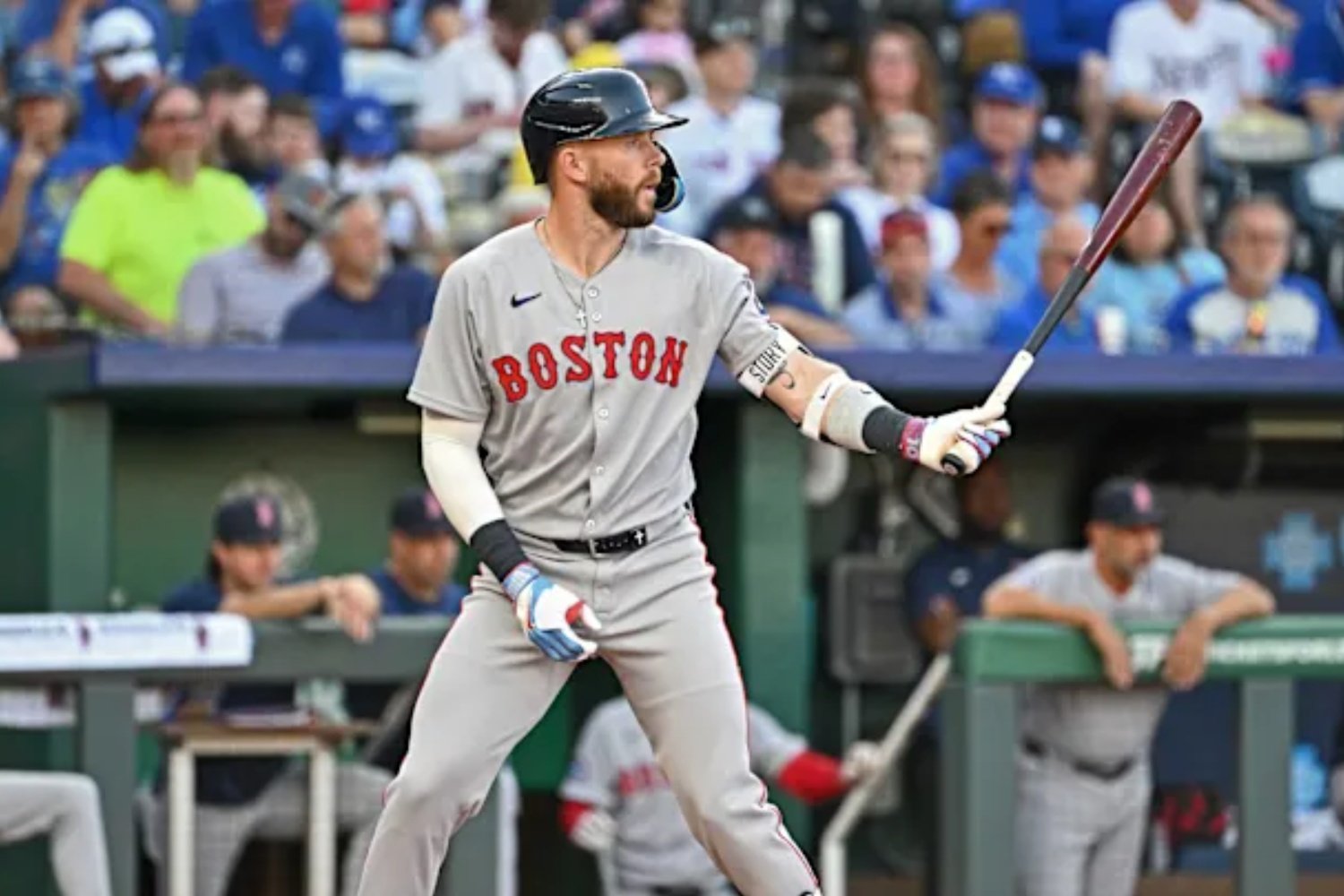 Since I started writing here at Talk Sox, I think I’ve written more about Trevor Story than any other player on the roster. My first article detailed my desire to see him traded, my second wondered if he could contribute in 2025, and my third stated he wasn’t passing the eye test. That’s a lot for a player that hasn’t yet played a full season in Boston. But, here we are again, wondering exactly what Trevor Story’s role on this team is. The issue now is that he’s effectively blocking Marcelo Mayer from getting the big league call-up that he deserves. Yes, Mayer got off to a slow start during his first taste of Triple-A, but he’s been red-hot ever since, to the point that some scouts are saying that Mayer is more ready for MLB action than Roman Anthony. While there are arguments to be made that the front office is engaging in some service time manipulation for both Mayer and Anthony, the Red Sox are missing thump in their lineup, and Mayer could be just what the team needs to stop getting walked-off every other night. Just look at what he did on May 13 for Worcester. You’re telling me the Red Sox couldn’t use that type of hitting right now? Of course they could. Oh, but Mayer plays shortstop. You know, the position currently held by Trevor Story. Let’s look at Story’s batting line so far: .234/.277/.353. Is he the worst hitter on the team? No, but he’s not really contributing either. The biggest issue I still have with Story being the starting shortstop for the Boston Red Sox is when he comes up to the plate with runners on, he’s awful. He’s seen 254 pitches in this situation (that’s 36% of all the pitches he’s stood at the plate for). He has 15 hits, two walks, and 18 strikeouts. If we get a bit more specific and look at just when he is at the plate with runners in scoring position, it gets worse. He has nine hits, two walks, and 17 strikeouts. Want it even worse? With two outs and runners in scoring position, he has three hits, one walk and 10 strikeouts. He’s sporting a slash line of .167/.211/.389. What are we doing here? I understand that Trevor Story is a veteran and has gone through so much since coming to Boston, but he’s holding this team back. At this point, he either needs to regulated to the bench or counted as a loss and DFA’d. Of the two options, I believe he should be on the bench. He’s got excellent veteran presence and is still useful in multiple ways as someone who doesn’t contribute on the field every day. Story understands that at the end of the day baseball is a business as much as it is a game — the Rockies let him walk for nothing after he propped them up for years on his shoulders. He knows he’s blocking one of the most exciting prospects to come through Boston’s system in years. At some point, he’s going to have to look in the mirror and realize what we’ve all known for a few seasons now: he’s no longer the player he was signed to be. His contract is an albatross on the front office and it’s almost guaranteed he won’t opt out at the end of the year. None of this means he'd take a benching lightly (we've all seen how much a shift in plans can cause commotion with Rafael Devers), but what's in the best interest of the team isn't always in the best interest of your veteran players. Craig Breslow didn’t sign Story. Chaim Bloom did. Breslow needs to fix Bloom’s mistake and get Marcelo Mayer up to the big leagues sooner than later. After that, either put Story on the bench to have him spell Mayer every now and then, or cut bait and run. Unfortunately, the Boston Red Sox are a better team with him not getting regular at bats. It’s time to quit stalling and replace Story in the starting lineup.
 -
Alex Cora's Seat Should Be Getting Warm, But He Needs More Time
Alex Mayes posted an article in Red Sox
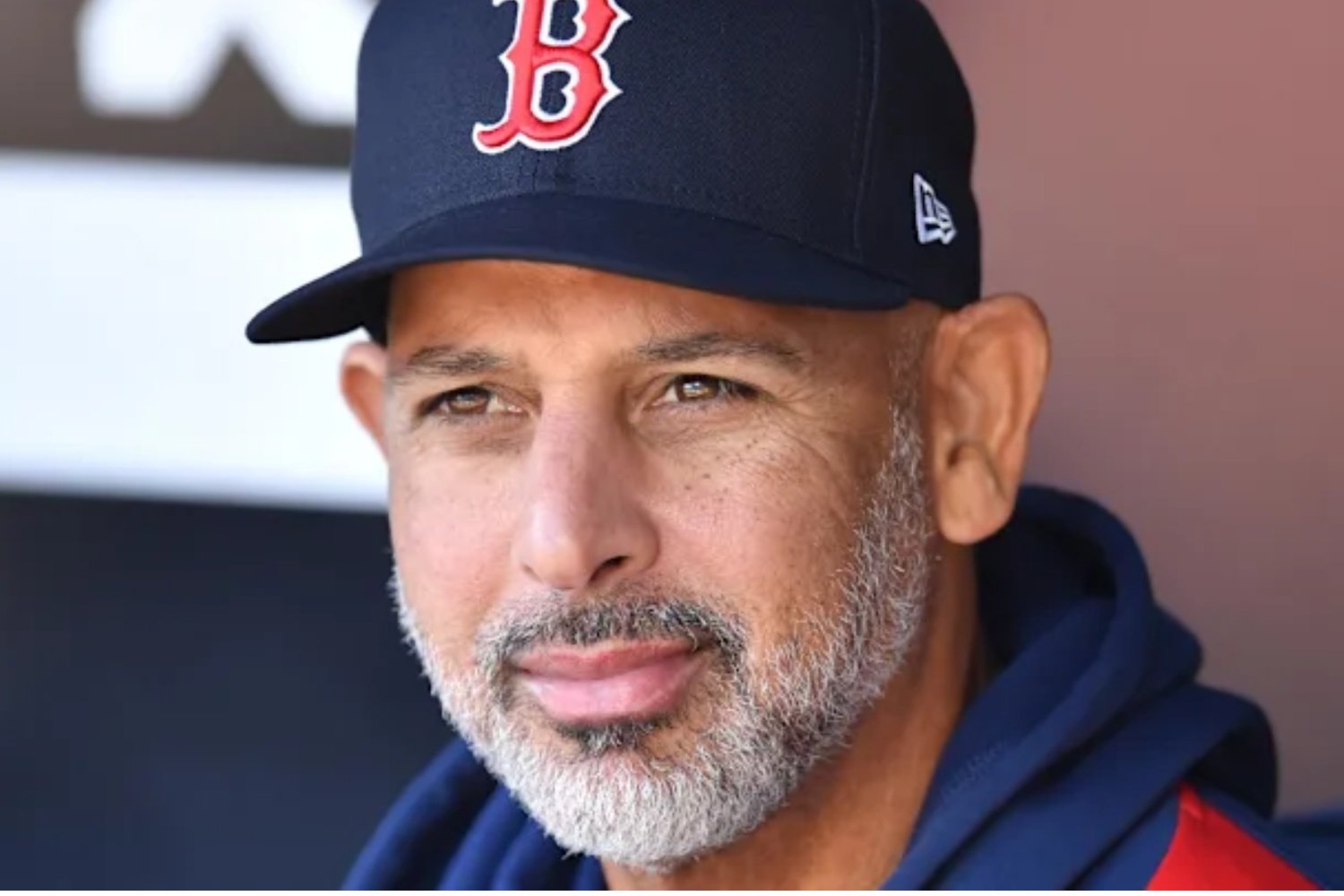 There’s some validity to the thought that Alex Cora’s seat should be getting hotter and hotter by the day. He’s managing a team that should have a record well above .500. The team made significant improvements in the offseason by bringing in Garrett Crochet, Walker Buehler, Aroldis Chapman, and Alex Bregman. There were signs that homegrown players were taking a step forward, pitchers that had spent the last season on the injured list were poised to return, and there were some positive early returns. Then, the wheels fell off the moment the calendar flipped from April to May. Justin Slaten’s nasty curveball stopped being nasty; Triston Casas suffered a catastrophic, season-ending injury; Garrett Whitlock imploded time and time again, and his four blown saves on the season now lead the majors (Justin Wilson sits in second with three); Jarren Duran has fallen off; and the team has angered Rafael Devers once again. That’s a lot in half a month. That being said, Cora’s job should be safe through the end of the season. I wasn’t a fan of extending Cora during the series in Colorado last season because I felt that while he is a great manager of individual players, he’s not a great game manager. Just look at the loss in that second game against Detroit again. Aroldis Chapman threw 10 pitches. Do we want Chapman going for multiple innings frequently? No, but in a game that is winnable with him on the mound, it’s worth it to push him there, especially after Whitlock hadn’t had a decent outing since the start of the month. The bigger issue with letting Cora go right now is there is no one that can feasibly replace him. Sure, Jason Varitek and Andrew Bailey are currently part of the coaching staff, but neither seem like actual replacements right now, Yes, Varitek has interviewed for managing positions around the league, but he seems to have little interest in managing the Red Sox. In a now deleted tweet, Jason’s wife Catherine said, “I don’t think Boston will ever be an option, but I see him bringing home a trophy as manager elsewhere for sure one day.” While things could certainly change, Tek is a legend in Boston and a lot of times legendary players struggle to manage the teams that hold them in high regard. I’d love to see him as a manager anywhere in the league—he’s one of my all-time favorite players and one of the biggest reasons I became a fan of the Red Sox—but living up to the on-field legacy while managing the team is incredibly difficult. Andrew Bailey probably has the inside track to replace Cora should he be relieved of his duties, but Bailey's focus should remain on the pitching staff and trying to figure out exactly what’s going wrong with the bulk of the bullpen. Bailey has the tools to be a great manager, but a mid-year shift in focus could send the Red Sox into a tailspin. There are a few external options that the front office could explore. The Rockies recently parted ways with longtime manager Bud Black, the Pirates let Derick Shelton go, and Skip Schumaker is working as a front office executive with the Rangers but is likely itching to get back in the dugout. Black offers a lot of experience, and was let go after the Rockies lost to the Padres by a score of 21-0, but I fully believe that his firing has less to do with his managerial abilities and more to do with the ineptitude of the front office in Colorado. The same can be said for Shelton. It’s fairly easy to argue that both managers, when paired with a competent front office that want to win, would be successful anywhere they wanted to go, and that includes Boston. Black is 67 years old though, and an old-school management style may not fly as well with the current roster. Shelton is still young, relatively speaking, and could thrive with a talented group around him. Shumaker was who I wanted the front office to look at when Cora was brought back following his suspension. I championed for him again when it looked like Cora would be a free agent after the 2024 season. I still think he could be an effective manager in Boston should the role open up. It’s unlikely that any of those options would be interested in taking over the team during the season on an interim basis, though. Alex Cora has his faults, and if the team winds up with a record around or below .500 again this season, then I think we could see the remaining years of his contract ripped up and him relieved of his managerial duties. Right now, though, it just doesn’t make sense to move on from Cora when there’s no clear path to success with someone else at the helm.
 -
There’s some validity to the thought that Alex Cora’s seat should be getting hotter and hotter by the day. He’s managing a team that should have a record well above .500. The team made significant improvements in the offseason by bringing in Garrett Crochet, Walker Buehler, Aroldis Chapman, and Alex Bregman. There were signs that homegrown players were taking a step forward, pitchers that had spent the last season on the injured list were poised to return, and there were some positive early returns. Then, the wheels fell off the moment the calendar flipped from April to May. Justin Slaten’s nasty curveball stopped being nasty; Triston Casas suffered a catastrophic, season-ending injury; Garrett Whitlock imploded time and time again, and his four blown saves on the season now lead the majors (Justin Wilson sits in second with three); Jarren Duran has fallen off; and the team has angered Rafael Devers once again. That’s a lot in half a month. That being said, Cora’s job should be safe through the end of the season. I wasn’t a fan of extending Cora during the series in Colorado last season because I felt that while he is a great manager of individual players, he’s not a great game manager. Just look at the loss in that second game against Detroit again. Aroldis Chapman threw 10 pitches. Do we want Chapman going for multiple innings frequently? No, but in a game that is winnable with him on the mound, it’s worth it to push him there, especially after Whitlock hadn’t had a decent outing since the start of the month. The bigger issue with letting Cora go right now is there is no one that can feasibly replace him. Sure, Jason Varitek and Andrew Bailey are currently part of the coaching staff, but neither seem like actual replacements right now, Yes, Varitek has interviewed for managing positions around the league, but he seems to have little interest in managing the Red Sox. In a now deleted tweet, Jason’s wife Catherine said, “I don’t think Boston will ever be an option, but I see him bringing home a trophy as manager elsewhere for sure one day.” While things could certainly change, Tek is a legend in Boston and a lot of times legendary players struggle to manage the teams that hold them in high regard. I’d love to see him as a manager anywhere in the league—he’s one of my all-time favorite players and one of the biggest reasons I became a fan of the Red Sox—but living up to the on-field legacy while managing the team is incredibly difficult. Andrew Bailey probably has the inside track to replace Cora should he be relieved of his duties, but Bailey's focus should remain on the pitching staff and trying to figure out exactly what’s going wrong with the bulk of the bullpen. Bailey has the tools to be a great manager, but a mid-year shift in focus could send the Red Sox into a tailspin. There are a few external options that the front office could explore. The Rockies recently parted ways with longtime manager Bud Black, the Pirates let Derick Shelton go, and Skip Schumaker is working as a front office executive with the Rangers but is likely itching to get back in the dugout. Black offers a lot of experience, and was let go after the Rockies lost to the Padres by a score of 21-0, but I fully believe that his firing has less to do with his managerial abilities and more to do with the ineptitude of the front office in Colorado. The same can be said for Shelton. It’s fairly easy to argue that both managers, when paired with a competent front office that want to win, would be successful anywhere they wanted to go, and that includes Boston. Black is 67 years old though, and an old-school management style may not fly as well with the current roster. Shelton is still young, relatively speaking, and could thrive with a talented group around him. Shumaker was who I wanted the front office to look at when Cora was brought back following his suspension. I championed for him again when it looked like Cora would be a free agent after the 2024 season. I still think he could be an effective manager in Boston should the role open up. It’s unlikely that any of those options would be interested in taking over the team during the season on an interim basis, though. Alex Cora has his faults, and if the team winds up with a record around or below .500 again this season, then I think we could see the remaining years of his contract ripped up and him relieved of his managerial duties. Right now, though, it just doesn’t make sense to move on from Cora when there’s no clear path to success with someone else at the helm. View full article
-
Boston, we have a problem. That problem? Tanner Houck. Sure, there have been flashes of the pitcher from early 2024 that dominated and befuddled opposing hitters, but the proof is in the pudding: Houck is pitching his was into obscurity. After the second time this season that he gave up at least 10 runs in less than three innings of work, it’s time to have some serious discussions about Houck’s role on this team. We briefly talked about Houck to close Episode 11 of the Talk Sox Podcast, and that conversation caused me to keep thinking about his situation throughout the rest of the night. As I stated on the podcast, I’m a fan of Houck’s. He’s a semi-local guy and I want to see him do well for the team I root for. I just don’t think we’re going to see that as long as he’s in the starting rotation. After the second implosion this season, Houck currently sports an 8.04 ERA, 6.13 FIP, and a -0.4 WAR. He’s a liability in every sense of the word. When he steps to the mound, you assume that the Red Sox will lose that game. It doesn’t help that the offense continues to not show up in his outings. but his Baseball Savant page is ice cold. Just look for yourself. But, hey, at least he's generating a lot of groundballs. That’s… something? The elephant in the room is that moving Houck around isn’t the simplest thing. Right now, there are too many pitchers on the injured list for him to be replaced in the rotation. Walker Buehler should be back the week of May 18th, but that’s not a guarantee. Richard Fitts has thrown two bullpen sessions and is projected to return to the rotation at the end of May or beginning of June. Kutter Crawford is currently throwing bullpen sessions, but there’s been no real time table established for his return to the big league club. Once these starters begin to return though, tough questions have to be answered. Houck has two minor league options left, and though his performance has validated such a (potential) move, it’s not hard to imagine that Houck would view this as a major demotion that could further disrupt his waning confidence. That being said, time in the minor leagues may be just the thing he needs to return to form. I don’t think that the front office will designate him for assignment yet, as he still has some value to the organization, even just in name recognition. While there was a time when I thought Houck could be an elite closer for this team, that ship has sailed too. A move to the bullpen likely wouldn’t be well received by Houck, and there’s really not an arm in there that you would want to replace with him, so it becomes even more convoluted if the team decides to take that option. It’s fair to wonder if there’s something mechanically wrong, maybe even an elbow or arm issue that hasn’t fully reared its ugly head. Houck is still averaging more than two inches less of break on his sweeper than he was in 2024. It looks like it just doesn’t snap out of his hand like it used to, and hitters are mashing it. We saw the Blue Jays take a similar approach with Alek Manoah last season. He’s currently still in their minor league system, but he’s nearing a return to the rotation. Now, I’m not saying that Houck’s situation is as dire as Manoah’s was but it’s worth considering all options get Houck back to being a big league-caliber starter. There was a lot of expectations placed on Tanner Houck, even after a lackluster second half of 2024. The front office wanted him to step into the number two role in the rotation, but until and unless he rights the flaws in his game, he could be on the outside looking in. Houck can and should be a vital member of this rotation, but if his starts continue to look like they have thus far in 2025, a "serious" Red Sox team has to shorten the leash. View full article
-
Tanner Houck May Be Pitching His Way Out of the Red Sox's Rotation
Alex Mayes posted an article in Red Sox
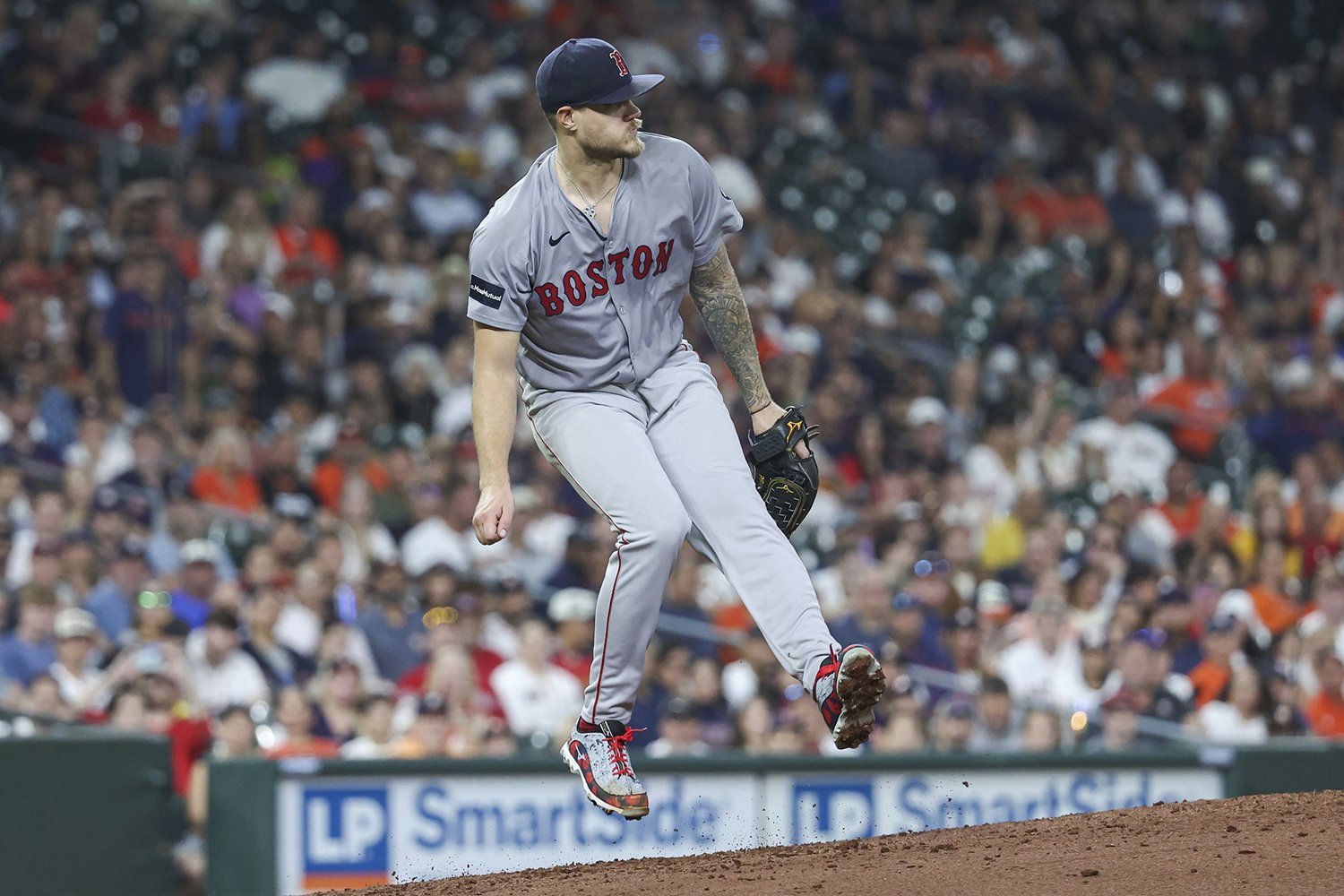 Boston, we have a problem. That problem? Tanner Houck. Sure, there have been flashes of the pitcher from early 2024 that dominated and befuddled opposing hitters, but the proof is in the pudding: Houck is pitching his was into obscurity. After the second time this season that he gave up at least 10 runs in less than three innings of work, it’s time to have some serious discussions about Houck’s role on this team. We briefly talked about Houck to close Episode 11 of the Talk Sox Podcast, and that conversation caused me to keep thinking about his situation throughout the rest of the night. As I stated on the podcast, I’m a fan of Houck’s. He’s a semi-local guy and I want to see him do well for the team I root for. I just don’t think we’re going to see that as long as he’s in the starting rotation. After the second implosion this season, Houck currently sports an 8.04 ERA, 6.13 FIP, and a -0.4 WAR. He’s a liability in every sense of the word. When he steps to the mound, you assume that the Red Sox will lose that game. It doesn’t help that the offense continues to not show up in his outings. but his Baseball Savant page is ice cold. Just look for yourself. But, hey, at least he's generating a lot of groundballs. That’s… something? The elephant in the room is that moving Houck around isn’t the simplest thing. Right now, there are too many pitchers on the injured list for him to be replaced in the rotation. Walker Buehler should be back the week of May 18th, but that’s not a guarantee. Richard Fitts has thrown two bullpen sessions and is projected to return to the rotation at the end of May or beginning of June. Kutter Crawford is currently throwing bullpen sessions, but there’s been no real time table established for his return to the big league club. Once these starters begin to return though, tough questions have to be answered. Houck has two minor league options left, and though his performance has validated such a (potential) move, it’s not hard to imagine that Houck would view this as a major demotion that could further disrupt his waning confidence. That being said, time in the minor leagues may be just the thing he needs to return to form. I don’t think that the front office will designate him for assignment yet, as he still has some value to the organization, even just in name recognition. While there was a time when I thought Houck could be an elite closer for this team, that ship has sailed too. A move to the bullpen likely wouldn’t be well received by Houck, and there’s really not an arm in there that you would want to replace with him, so it becomes even more convoluted if the team decides to take that option. It’s fair to wonder if there’s something mechanically wrong, maybe even an elbow or arm issue that hasn’t fully reared its ugly head. Houck is still averaging more than two inches less of break on his sweeper than he was in 2024. It looks like it just doesn’t snap out of his hand like it used to, and hitters are mashing it. We saw the Blue Jays take a similar approach with Alek Manoah last season. He’s currently still in their minor league system, but he’s nearing a return to the rotation. Now, I’m not saying that Houck’s situation is as dire as Manoah’s was but it’s worth considering all options get Houck back to being a big league-caliber starter. There was a lot of expectations placed on Tanner Houck, even after a lackluster second half of 2024. The front office wanted him to step into the number two role in the rotation, but until and unless he rights the flaws in his game, he could be on the outside looking in. Houck can and should be a vital member of this rotation, but if his starts continue to look like they have thus far in 2025, a "serious" Red Sox team has to shorten the leash.
 -
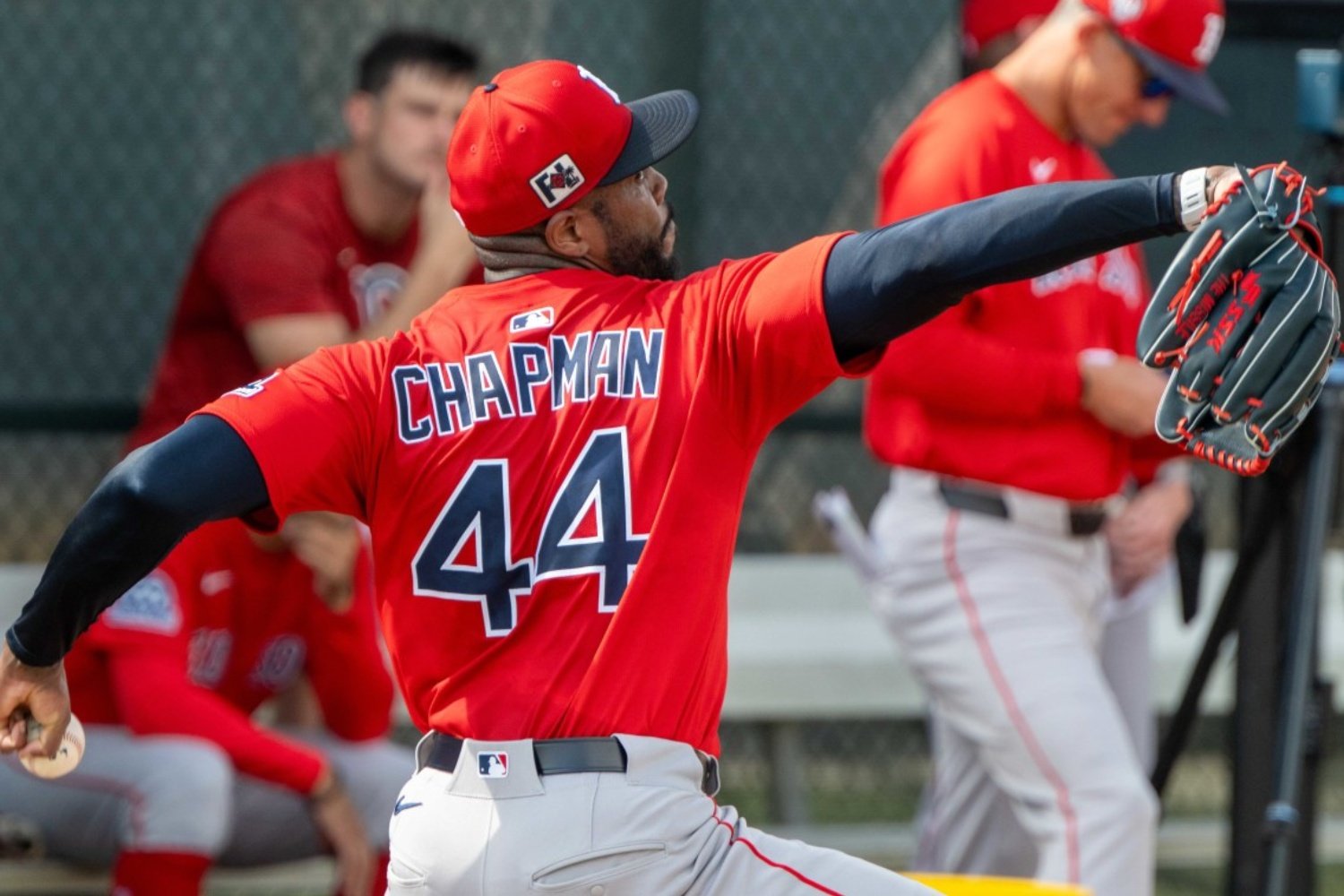 When the Red Sox signed Aroldis Chapman during the offseason, it was met with quite a bit of skepticism. Over the last handful of years, he had shown signs of aging and was no longer the lights out closer that so many knew him to be. He’s been in the league for an impressive 16 seasons, and many figured he would factor into the back-end of the bullpen, but there was no expectation that he'd be used much in high-leverage situations due to his recent "meh" campaigns. Once he got to Boston though, things changed. Chapman has been trusted to take the ball in late game situations in both the 8th and 9th innings this season. He’s worked in a closer platoon role alongside Justin Slaten. Slaten has struggled to begin the month, so Alex Cora seems to have trusted Chapman to take over more closing duties than just whenever the opposing teams have left-handed hitters coming up in closing situations. The most interesting thing about Chapman this season hasn’t been his ability to lock down the end of games though; it’s the fact that his four-seam fastball is back with a vengeance. During the last two seasons, Chapman featured his four-seam fastball less than half of the time. Instead of just blowing people away, he featured a sinker and slider more prominently in his pitch mix in an effort to try and keep hitters off balance. It didn’t seem to work very well for him. He posted ERAs of 3.09 and 3.79 in 2023 and 2024. While that’s not awful by any stretch of the imagination, you don’t want your go-to closer living in that realm when he’s supposed to be getting the final three outs in a close game. This season though, he’s sporting a 1.88 ERA thanks, in large part, to that four-seam fastball. Last year, Andrew Bailey put a focus on off-speed pitches for the entire Red Sox staff, so it was expected that Chapman would have to lean on his secondary offerings more again this year, but things seem to have changed. He’s currently featuring his four-seam fastball 53% of the time, and it’s averaging 98.5 mph, almost a full tick faster than last season. His four-seamer is also rising more this year than in previous years. Currently, the pitch is getting almost three more inches of rise than all other fastballs thrown by left-handed pitchers. That rise doesn’t help with Chapman’s control issues, something he’s always struggled with during his time in the majors, but it does allow for his sinker to be his true strikeout pitch now, given that he's throwing it harder and with as much rise as the four-seamer. It's not that uncommon for a pitcher to have rise on their sinker, but Chapman's is almost unnatural. For reference, Marcus Stroman, long known for his sinker, averages about four inches of rise on the offering — Chapman is at almost 17.5 inches of rise this year! Aroldis Chapman seems to have rediscovered a pitch mix that has allowed him to be the most successful reliever he’s been in quite some time. Until he proves otherwise, he should be the closer for the Red Sox in 2025. While there is youth in the system behind him, he’s shown that he can be trusted to take the ball in clutch late game situations. That’s something that every successful organization has to have. It’s time to hand Chapman the full-time closer role and let him thrive.
 -
When the Red Sox signed Aroldis Chapman during the offseason, it was met with quite a bit of skepticism. Over the last handful of years, he had shown signs of aging and was no longer the lights out closer that so many knew him to be. He’s been in the league for an impressive 16 seasons, and many figured he would factor into the back-end of the bullpen, but there was no expectation that he'd be used much in high-leverage situations due to his recent "meh" campaigns. Once he got to Boston though, things changed. Chapman has been trusted to take the ball in late game situations in both the 8th and 9th innings this season. He’s worked in a closer platoon role alongside Justin Slaten. Slaten has struggled to begin the month, so Alex Cora seems to have trusted Chapman to take over more closing duties than just whenever the opposing teams have left-handed hitters coming up in closing situations. The most interesting thing about Chapman this season hasn’t been his ability to lock down the end of games though; it’s the fact that his four-seam fastball is back with a vengeance. During the last two seasons, Chapman featured his four-seam fastball less than half of the time. Instead of just blowing people away, he featured a sinker and slider more prominently in his pitch mix in an effort to try and keep hitters off balance. It didn’t seem to work very well for him. He posted ERAs of 3.09 and 3.79 in 2023 and 2024. While that’s not awful by any stretch of the imagination, you don’t want your go-to closer living in that realm when he’s supposed to be getting the final three outs in a close game. This season though, he’s sporting a 1.88 ERA thanks, in large part, to that four-seam fastball. Last year, Andrew Bailey put a focus on off-speed pitches for the entire Red Sox staff, so it was expected that Chapman would have to lean on his secondary offerings more again this year, but things seem to have changed. He’s currently featuring his four-seam fastball 53% of the time, and it’s averaging 98.5 mph, almost a full tick faster than last season. His four-seamer is also rising more this year than in previous years. Currently, the pitch is getting almost three more inches of rise than all other fastballs thrown by left-handed pitchers. That rise doesn’t help with Chapman’s control issues, something he’s always struggled with during his time in the majors, but it does allow for his sinker to be his true strikeout pitch now, given that he's throwing it harder and with as much rise as the four-seamer. It's not that uncommon for a pitcher to have rise on their sinker, but Chapman's is almost unnatural. For reference, Marcus Stroman, long known for his sinker, averages about four inches of rise on the offering — Chapman is at almost 17.5 inches of rise this year! Aroldis Chapman seems to have rediscovered a pitch mix that has allowed him to be the most successful reliever he’s been in quite some time. Until he proves otherwise, he should be the closer for the Red Sox in 2025. While there is youth in the system behind him, he’s shown that he can be trusted to take the ball in clutch late game situations. That’s something that every successful organization has to have. It’s time to hand Chapman the full-time closer role and let him thrive. View full article
-
It was easy to see when the Red Sox traded for Carlos Narvaez that the team was putting a focus on defensive catchers. We all started to wonder what this could mean for Connor Wong in the long run, as defensive ability had never been his strong suit. He was a catcher that showcased far more offensive potential than defensive. It was fair to wonder if Narvaez would supplant Wong as the starting catcher in 2025, especially after Wong broke his pinky on a catcher’s interference call in early April. At least in the early returns, though, Wong seems determined to prove everyone wrong. The catching portion of his Baseball Savant page isn’t on fire, but it is plenty red. If we compare that with his 2024 catching page, we see some significant differences. These improvements can be linked to a change in Wong’s offseason training program. The Red Sox hired Parker Guinn as the new catching instructor and bullpen catcher. Guinn ended up working with Wong for a couple of days a week during the offseason. With the help of game coordinator and Red Sox catching legend Jason Varitek, Guinn and Wong came up with an offseason program that put a renewed focus on the defensive side of the position. What ended up happening was Wong altered his stance behind the plate. His legs sit in virtually the same positions as they did in previous years, but he’s angled his chest more forward and sits lower in his squat than he has before. This allows him knock down or block balls that would end up as passed balls or wild pitches. It also allows him to frame pitches with far more success than he has in the past. By sitting lower in the squat, Wong is able to frame pitches that miss down and off either corner as pitches that clip the zone. This allows him to get more calls for the pitchers throwing to him, which, in a non-strike zone challenge world, is as valuable of a skill that a backstop can have. He’s able to give his pitching staff a sense of confidence when he’s behind the plate. We’re working with a limited number of starts so far in 2025, but it seems like Connor Wong may have figured out the defensive side of catching this season. The offensive side has to come around for it to make sense for him to keep getting starts over Narvaez, but he’s proven in the past that he’s capable of making offensive adjustments when necessary. If both sides of the game start to click for Wong soon, then the Red Sox have a great problem on their hands. (h/t Jen McCaffrey) View full article
-
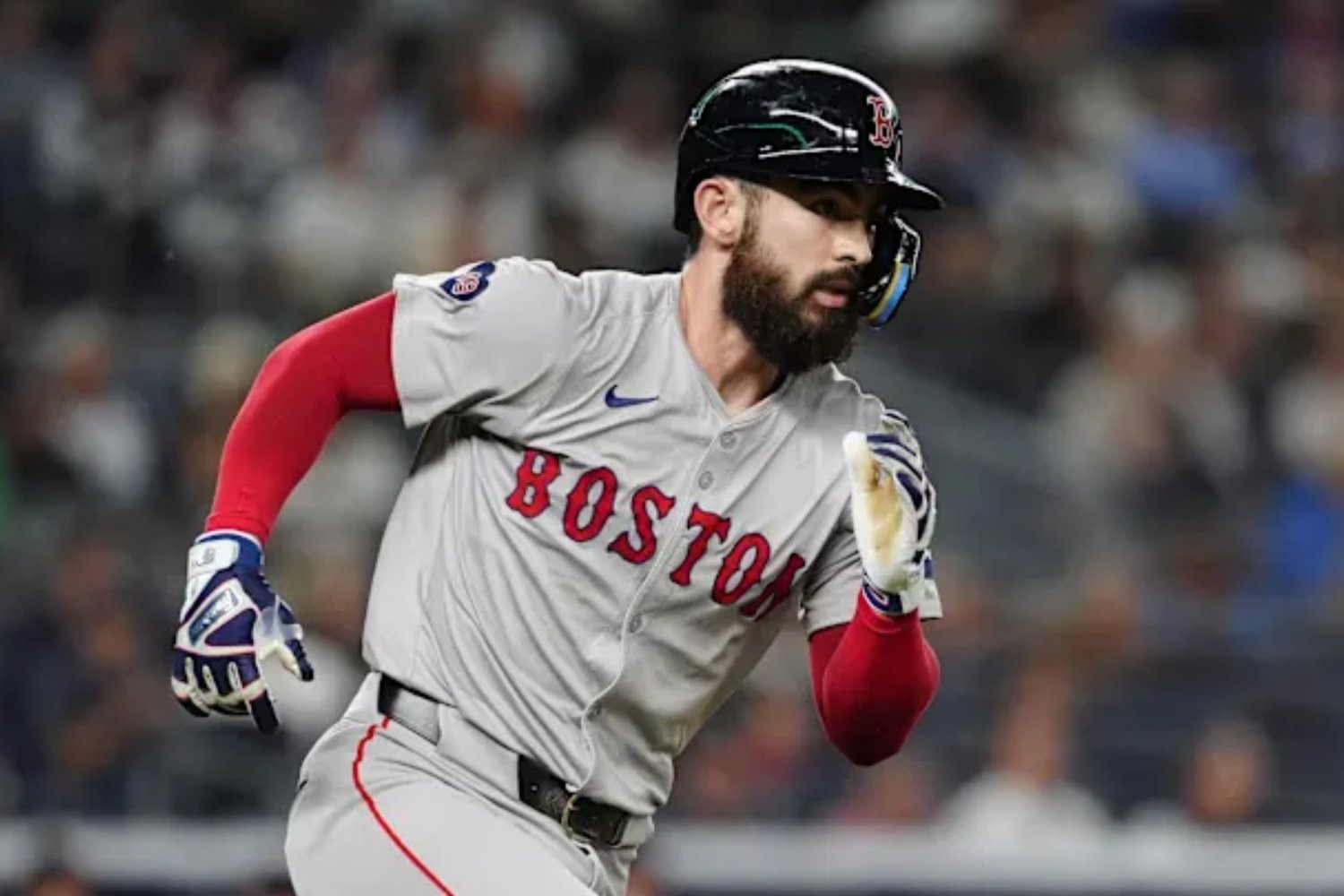 It was easy to see when the Red Sox traded for Carlos Narvaez that the team was putting a focus on defensive catchers. We all started to wonder what this could mean for Connor Wong in the long run, as defensive ability had never been his strong suit. He was a catcher that showcased far more offensive potential than defensive. It was fair to wonder if Narvaez would supplant Wong as the starting catcher in 2025, especially after Wong broke his pinky on a catcher’s interference call in early April. At least in the early returns, though, Wong seems determined to prove everyone wrong. The catching portion of his Baseball Savant page isn’t on fire, but it is plenty red. If we compare that with his 2024 catching page, we see some significant differences. These improvements can be linked to a change in Wong’s offseason training program. The Red Sox hired Parker Guinn as the new catching instructor and bullpen catcher. Guinn ended up working with Wong for a couple of days a week during the offseason. With the help of game coordinator and Red Sox catching legend Jason Varitek, Guinn and Wong came up with an offseason program that put a renewed focus on the defensive side of the position. What ended up happening was Wong altered his stance behind the plate. His legs sit in virtually the same positions as they did in previous years, but he’s angled his chest more forward and sits lower in his squat than he has before. This allows him knock down or block balls that would end up as passed balls or wild pitches. It also allows him to frame pitches with far more success than he has in the past. By sitting lower in the squat, Wong is able to frame pitches that miss down and off either corner as pitches that clip the zone. This allows him to get more calls for the pitchers throwing to him, which, in a non-strike zone challenge world, is as valuable of a skill that a backstop can have. He’s able to give his pitching staff a sense of confidence when he’s behind the plate. We’re working with a limited number of starts so far in 2025, but it seems like Connor Wong may have figured out the defensive side of catching this season. The offensive side has to come around for it to make sense for him to keep getting starts over Narvaez, but he’s proven in the past that he’s capable of making offensive adjustments when necessary. If both sides of the game start to click for Wong soon, then the Red Sox have a great problem on their hands. (h/t Jen McCaffrey)
 -
Before the start of the game on Wednesday, May 7th, Alex Cora went on his weekly appearance on “WEEI Afternoons” and was once again asked about Rafael Devers taking over first base in the wake of the injury to Triston Casas. Up to this point, Cora has remained steadfast that Devers would not play first. On Wednesday though, his tone changed. Cora told WEEI, “I’m not saying we’ll never have that conversation but I think for right now, where we’re at, I like Raffy as a DH.” Then, in the pregame media session Cora was asked about those comments. He said, “I think right now the most important thing is he’s very comfortable where he’s at and we’re very comfortable with what he’s doing. His production is really good. Coming into the season, that was the red flag. Everybody was talking about is he gonna get used to it? Can he DH because he’s not playing third base? ... He doesn’t need to play third base or first base to hit … He’s hitting the ball hard. And he’s producing. So for now I keep saying, he’s my DH and I’m very happy with that.” These quotes are a pretty decent departure from the firm ‘no’ that he has offered to date. Cora went on to say that recent call up Abraham Toro and Romy Gonzalez offered positives to the team and that he wants to “let Raffy be Raffy.” I think, for now, that letting "Raffy be Raffy" makes sense. Devers is still learning to be a full-time DH and having him change his routine again so early in the season doesn’t seem like it would be beneficial. We already know that Devers wasn’t thrilled about the first position change, then going 0-19 to start the season, and having to reach out to guys like JD Martinez and David Ortiz to figure out how to adapt to his new, offense-only role. However, there may come a time soon when Devers is needed to play first on a regular basis. There are veteran players who think he could transition to first quickly and play well, with Lou Merloni being one of the more vocal of them. There’s even precedent in the AL East for this to happen, as the Blue Jays did it with Vladimir Guerrero Jr. in 2020. Now, that position change happened early in Vlad’s career, after his first rookie season, while Devers has gotten years of play time at third until this season. We know that Devers is proud of playing the field and getting him back out there on a daily basis could help fix some of his offensive woes that still plague his season to this point. I don’t anticipate this being a legitimate conversation until Masataka Yoshida is ready to rejoin the big league club — and that could be months away, depending on how his shoulder feels while he throws as he progresses through his rehab program and prepares to return to baseball. When Yoshida is ready, playing him at DH on a daily basis and planting Devers at first likely puts the best lineup on the field day in and day out. At the end of the day, shouldn’t that be the goal of the organization? View full article
-
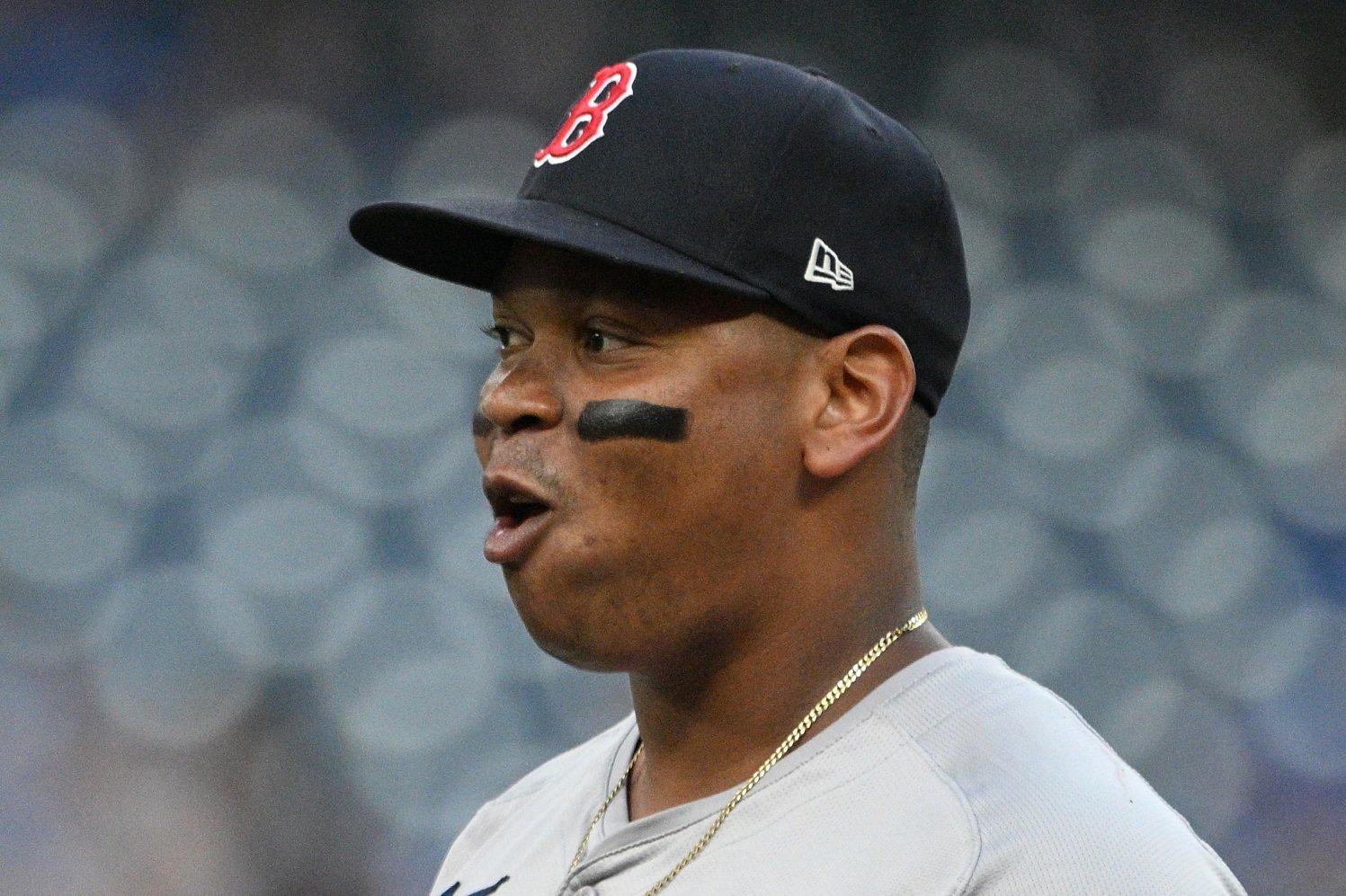 Before the start of the game on Wednesday, May 7th, Alex Cora went on his weekly appearance on “WEEI Afternoons” and was once again asked about Rafael Devers taking over first base in the wake of the injury to Triston Casas. Up to this point, Cora has remained steadfast that Devers would not play first. On Wednesday though, his tone changed. Cora told WEEI, “I’m not saying we’ll never have that conversation but I think for right now, where we’re at, I like Raffy as a DH.” Then, in the pregame media session Cora was asked about those comments. He said, “I think right now the most important thing is he’s very comfortable where he’s at and we’re very comfortable with what he’s doing. His production is really good. Coming into the season, that was the red flag. Everybody was talking about is he gonna get used to it? Can he DH because he’s not playing third base? ... He doesn’t need to play third base or first base to hit … He’s hitting the ball hard. And he’s producing. So for now I keep saying, he’s my DH and I’m very happy with that.” These quotes are a pretty decent departure from the firm ‘no’ that he has offered to date. Cora went on to say that recent call up Abraham Toro and Romy Gonzalez offered positives to the team and that he wants to “let Raffy be Raffy.” I think, for now, that letting "Raffy be Raffy" makes sense. Devers is still learning to be a full-time DH and having him change his routine again so early in the season doesn’t seem like it would be beneficial. We already know that Devers wasn’t thrilled about the first position change, then going 0-19 to start the season, and having to reach out to guys like JD Martinez and David Ortiz to figure out how to adapt to his new, offense-only role. However, there may come a time soon when Devers is needed to play first on a regular basis. There are veteran players who think he could transition to first quickly and play well, with Lou Merloni being one of the more vocal of them. There’s even precedent in the AL East for this to happen, as the Blue Jays did it with Vladimir Guerrero Jr. in 2020. Now, that position change happened early in Vlad’s career, after his first rookie season, while Devers has gotten years of play time at third until this season. We know that Devers is proud of playing the field and getting him back out there on a daily basis could help fix some of his offensive woes that still plague his season to this point. I don’t anticipate this being a legitimate conversation until Masataka Yoshida is ready to rejoin the big league club — and that could be months away, depending on how his shoulder feels while he throws as he progresses through his rehab program and prepares to return to baseball. When Yoshida is ready, playing him at DH on a daily basis and planting Devers at first likely puts the best lineup on the field day in and day out. At the end of the day, shouldn’t that be the goal of the organization?
 -
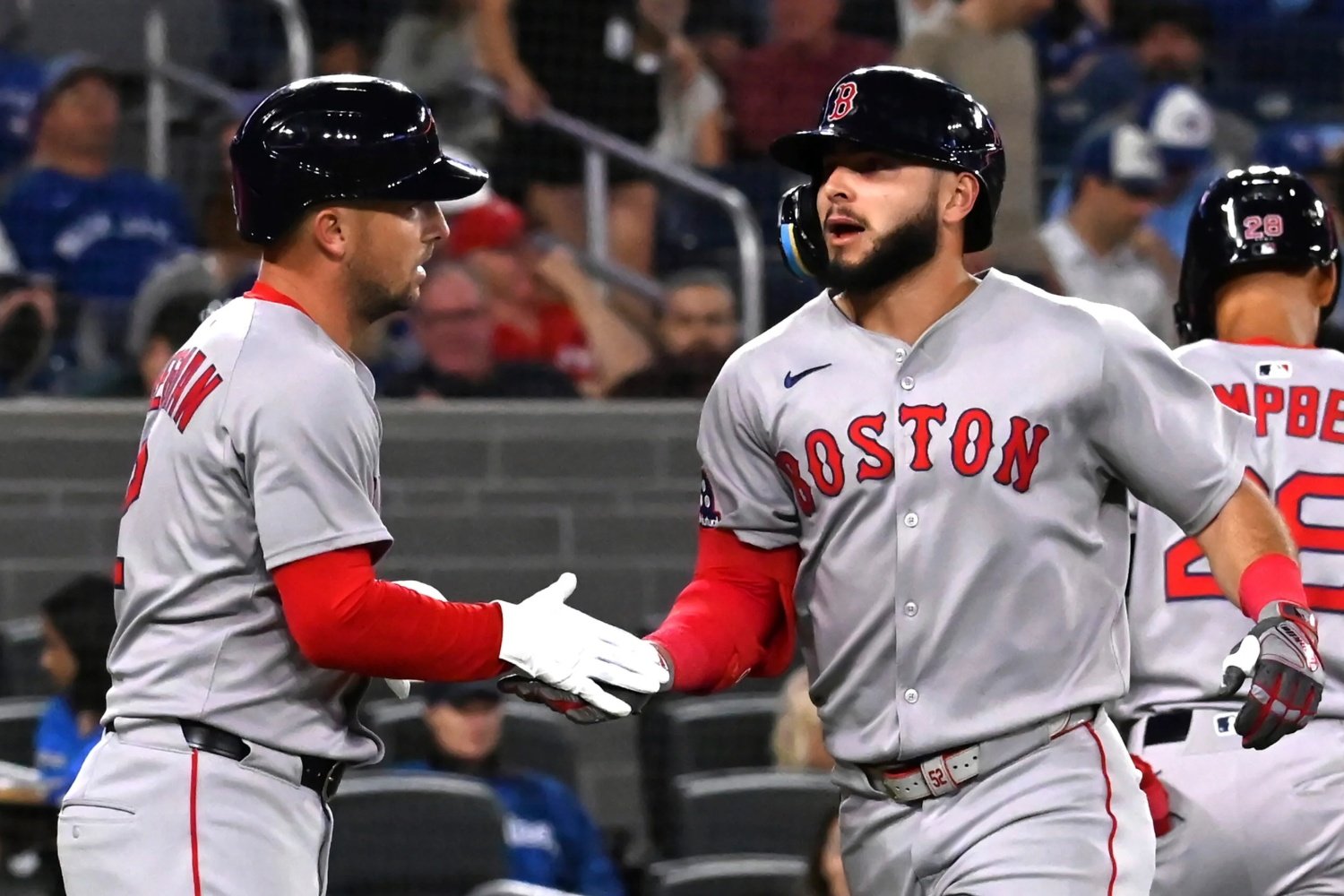 We’re over one month into the season now, typically a time when teams begin to show their true colors. So far, the Red Sox could define themselves a few different ways, The team that leads the American League in stolen bases. The team with the most three-run home runs in the majors. The team that struggles to score runs past the sixth inning. The team that can’t close games. The team with the most blown saves. You likely have your own phrase to define how the season has gone so far too. With so many available options, it’s fair to wonder just who the Red Sox actually are this season. The Red Sox are young The average age of the Red Sox roster is slightly deceiving. It comes in at just about 29 years old, but is pretty heavily influenced by Justin Wilson, Aroldis Chapman, and Rob Refsnyder who are 37, 37, and 34, respectivelly. None of the starting outfielders are older than 28, Alex Bregman and Trevor Story are 31 and 32, respectively, while the rest of the infield is 28 or younger, both catchers are 28 or younger, and the entire starting rotation is 30 or younger. Roman Anthony and Marcelo Mayer are expected to make their big league debuts sometime this season, and they are 20 and 22. There’s a youth movement in Boston that should set the team up for seasons to come, but with that young movement comes inexperience. These young players have to learn to win at the big league level. It takes time to get there, but the expectation in 2025 was that the Red Sox would be far better than they have been the previous three seasons. Luckily, the entire American League is middling and right there with Boston, so there isn’t much reason to panic yet. However, the youth movement needs to get going quickly. The Red Sox are wasting quality starts Boston leads the league in quality starts with 16. How many wins do they have on the season? 18. If we break that quality start total down by pitcher we start to see a trend. Garrett Crochet has four quality starts, one win. Walker Buehler has three quality starts, four wins. Tanner Houck has three quality starts, no wins. Brayan Bello has two quality starts, two wins. Richard Fitts has two quality starts, no wins. Lucas Giolito has one quality start, no wins. If we compare that to the blown saves total for the bullpen, we see what’s happening. Justin Wilson has three blown saves, Garrett Whitlock has two, Zack Kelly has one, Greg Weissert has one, and Justin Slaten has one. Relievers are coming into games with a chance to close them out and they are blowing leads, sometimes in short order. The bullpen was a constant discussion all offseason and it looks like more reinforcements are needed. The Red Sox are world beaters... in the first three innings As of May 5, the Red Sox have scored 179 runs in total. Through the first three innings they’ve scored 79, or 45%, of those runs. In innings four through six, they've scored 45 (25%) of their runs. In innings seven through nine, they're at 51 (29%) runs. Scoring less later in games isn’t a new thing in baseball. You’re typically seeing specialty relievers who throw upper 90s with consistency or pitchers that feature absolute filthy breaking balls. Those pitchers are typically harder to hit than a starter who has to mix at least three pitches into his repertoire. However, when you’re dealing with a bullpen that struggles to maintain even six-run leads, the offense needs to be productive throughout the entire game. The Red Sox are a comedy of errors The Red Sox lead the Major League in errors with 30. This, unfortunately, isn’t a new thing for the team. There was hope that Trevor Story being healthy and signing Alex Bregman to play third would help to alleviate the problem, but, so far, they are first and second on the team in errors. Bregman leads the charge with five, Story close behind him at four. Surprisingly, Jarren Duran own three errors on the season already as well. As fans, we expected all three of them to be sure-handed and likely be in contention for Gold Gloves at their positions but through the early part of the season, they’ve proven to be liabilities on defense. It doesn’t help that Alex Cora continues to give David Hamilton looks at shortstop and second base when he’s struggling to make basic defensive plays. He technically only has one error on the season, but watching most of his starts will show you that he’s benefitting from balls in play being scored as hits when he should have been given errors instead. The defense has to get better—leading the league in errors is effectively giving games away, especially when you can point to one or two miscues in a game that resulted in runs scoring. Honestly, there are quite a few other ways to define the Red Sox, and not all of them are negative. If this team wants to live up to its potential, some major concerns must be addressed in short order. The American League is wide open this season, and there’s no reason for the Red Sox to be hovering around .500 again. Massive upgrades have been made to the starting rotation, and the offense has shown incredible firepower in spurts. Eventually, the elite starting pitching and offensive prowess needs to line up for a run of games so the Red Sox can start to pull away from the rest of the league in win totals. The bullpen is still a giant question mark, but hopefully some reinforcements are coming to town sooner than later.
 -
Defining who exactly the 2025 Red Sox are is a bit of a challenge so far, but the negatives outweigh the positives. We’re over one month into the season now, typically a time when teams begin to show their true colors. So far, the Red Sox could define themselves a few different ways, The team that leads the American League in stolen bases. The team with the most three-run home runs in the majors. The team that struggles to score runs past the sixth inning. The team that can’t close games. The team with the most blown saves. You likely have your own phrase to define how the season has gone so far too. With so many available options, it’s fair to wonder just who the Red Sox actually are this season. The Red Sox are young The average age of the Red Sox roster is slightly deceiving. It comes in at just about 29 years old, but is pretty heavily influenced by Justin Wilson, Aroldis Chapman, and Rob Refsnyder who are 37, 37, and 34, respectivelly. None of the starting outfielders are older than 28, Alex Bregman and Trevor Story are 31 and 32, respectively, while the rest of the infield is 28 or younger, both catchers are 28 or younger, and the entire starting rotation is 30 or younger. Roman Anthony and Marcelo Mayer are expected to make their big league debuts sometime this season, and they are 20 and 22. There’s a youth movement in Boston that should set the team up for seasons to come, but with that young movement comes inexperience. These young players have to learn to win at the big league level. It takes time to get there, but the expectation in 2025 was that the Red Sox would be far better than they have been the previous three seasons. Luckily, the entire American League is middling and right there with Boston, so there isn’t much reason to panic yet. However, the youth movement needs to get going quickly. The Red Sox are wasting quality starts Boston leads the league in quality starts with 16. How many wins do they have on the season? 18. If we break that quality start total down by pitcher we start to see a trend. Garrett Crochet has four quality starts, one win. Walker Buehler has three quality starts, four wins. Tanner Houck has three quality starts, no wins. Brayan Bello has two quality starts, two wins. Richard Fitts has two quality starts, no wins. Lucas Giolito has one quality start, no wins. If we compare that to the blown saves total for the bullpen, we see what’s happening. Justin Wilson has three blown saves, Garrett Whitlock has two, Zack Kelly has one, Greg Weissert has one, and Justin Slaten has one. Relievers are coming into games with a chance to close them out and they are blowing leads, sometimes in short order. The bullpen was a constant discussion all offseason and it looks like more reinforcements are needed. The Red Sox are world beaters... in the first three innings As of May 5, the Red Sox have scored 179 runs in total. Through the first three innings they’ve scored 79, or 45%, of those runs. In innings four through six, they've scored 45 (25%) of their runs. In innings seven through nine, they're at 51 (29%) runs. Scoring less later in games isn’t a new thing in baseball. You’re typically seeing specialty relievers who throw upper 90s with consistency or pitchers that feature absolute filthy breaking balls. Those pitchers are typically harder to hit than a starter who has to mix at least three pitches into his repertoire. However, when you’re dealing with a bullpen that struggles to maintain even six-run leads, the offense needs to be productive throughout the entire game. The Red Sox are a comedy of errors The Red Sox lead the Major League in errors with 30. This, unfortunately, isn’t a new thing for the team. There was hope that Trevor Story being healthy and signing Alex Bregman to play third would help to alleviate the problem, but, so far, they are first and second on the team in errors. Bregman leads the charge with five, Story close behind him at four. Surprisingly, Jarren Duran own three errors on the season already as well. As fans, we expected all three of them to be sure-handed and likely be in contention for Gold Gloves at their positions but through the early part of the season, they’ve proven to be liabilities on defense. It doesn’t help that Alex Cora continues to give David Hamilton looks at shortstop and second base when he’s struggling to make basic defensive plays. He technically only has one error on the season, but watching most of his starts will show you that he’s benefitting from balls in play being scored as hits when he should have been given errors instead. The defense has to get better—leading the league in errors is effectively giving games away, especially when you can point to one or two miscues in a game that resulted in runs scoring. Honestly, there are quite a few other ways to define the Red Sox, and not all of them are negative. If this team wants to live up to its potential, some major concerns must be addressed in short order. The American League is wide open this season, and there’s no reason for the Red Sox to be hovering around .500 again. Massive upgrades have been made to the starting rotation, and the offense has shown incredible firepower in spurts. Eventually, the elite starting pitching and offensive prowess needs to line up for a run of games so the Red Sox can start to pull away from the rest of the league in win totals. The bullpen is still a giant question mark, but hopefully some reinforcements are coming to town sooner than later. View full article
-
Triston Casas suffered a “significant knee injury” in the bottom of the second inning on Friday night. He remained on the ground for quite a while as the team doctor attended to him, finally calling for the cart to take him off the field. After the game, Alex Cora informed the media that Casas was still at the hospital and that the team would know more on Saturday. Although Casas wasn’t having the season most had hoped, he seemed to be turning the corner and figuring things out at the plate. As such, he’s going to be difficult to replace in the lineup. Let’s take a look at where the Red Sox could turn to cover first base. Internal Candidates Romy Gonzalez The obvious answer here is the other half of the first base platoon. Gonzalez is currently slashing .279/.340/.419 in 14 games. He’s played well this season in limited action, mostly against left-handed pitching, and will likely get the majority of reps at first unless a move is made to bring in a big-name first baseman. Connor Wong The Red Sox have long touted Wong’s defensive versatility, but after six games at first last year, he wasn’t even in the discussion for a platoon role there this year. Don’t expect to see Wong at the cold corner unless things have gone off the rails. Rob Refsnyder Refsnyder, also used in a platoon against left-handed pitching, has logged 227 career innings at first and could potentially see some time there, though he hasn’t played the position since 2020. Carlos Narvaez Narvaez worked at first base while in Triple-A with the Yankees last year, so it’s possible the Red Sox could look his way. That being said, so far, Boston hasn't had him play there in any capacity. Vaughn Grissom Grissom has been getting work in at first base down in Triple-A Worcester — only four games so far — but he’s been hitting well. I don’t really believe that his offensive outburst at Worcester will translate to the big leagues, but I’d love to be proven wrong. His numbers likely give him the edge to be the next man up. He’s currently slashing .287/.369/.444 with three home runs. Nick Sogard Sogard looked good in limited action once called up to the big leagues last season. He brings a lot of defensive versatility to the roster, and he’s played five different positions at Triple-A so far this season. Abraham Toro Toro looked solid in spring training and has been playing well at Worcester, slashing .310/.403/.480 with an .883 OPS. He was a dark horse to make the Opening Day roster and could be in line for a call-up sooner rather than later. External Candidates Dominic Smith Currently on a minor league deal with the Yankees, Smith is a fan favorite but likely wouldn’t offer much in terms of offense. He’s familiar with the system, though, and would likely be welcomed back with open arms. Christian Arroyo Another former Red Sox player on a minor league deal, Arroyo has only played nine games this season. His numbers look good, .351/.385/.703, but he’s coming off a hamstring injury and it seems unlikely that the Phillies would be inclined to get rid of him at the moment. Anthony Rizzo This is more of a pipe dream for Rizzo, who had almost no attention as a free agent during the offseason. He’s 35 and has been rapidly declining since a concussion in 2023. At the very least, he was drafted by the organization in 2007, so maybe he would want to finish his career in Boston as a bench piece. You’ll notice that Rafael Devers, Masataka Yoshida, and Roman Anthony don’t appear on the list, and for good reason. Cora has made it clear that he doesn’t want Devers in the field. It would likely do more harm than good to try and force Devers to learn a new position on the fly as he finally seems to be settling into his role as the full-time designated hitter. Yoshida doesn’t have the frame to play first and we don’t know when he will be back with the major league club. Anthony’s defensive abilities would be wasted at first base — he profiles as a potential Gold Glove outfielder. There are trades that could happen, and Craig Breslow has proven he’s not afraid to make deals when they benefit the team, but we’re still just a month into the season, and most organizations would be unlikely to start trading major league pieces this early. Nolan Arenado said he would move to first base in the right situation, but he hasn’t been a bright spot on a middling Cardinals roster. An intriguing name on that same team that I’ve written about before though, is Jordan Walker. Walker came up through the Cardinals system as a third/first baseman and has looked lost since the team shuffled him into the outfield mix. Getting him away from St. Louis and back to a position he’s actually comfortable with could do wonders for him. Are there any other options you’d consider? Leave them in the comments and let’s discuss! View full article
-
Where Do the Red Sox Turn in the Wake of the Triston Casas Injury?
Alex Mayes posted an article in Red Sox
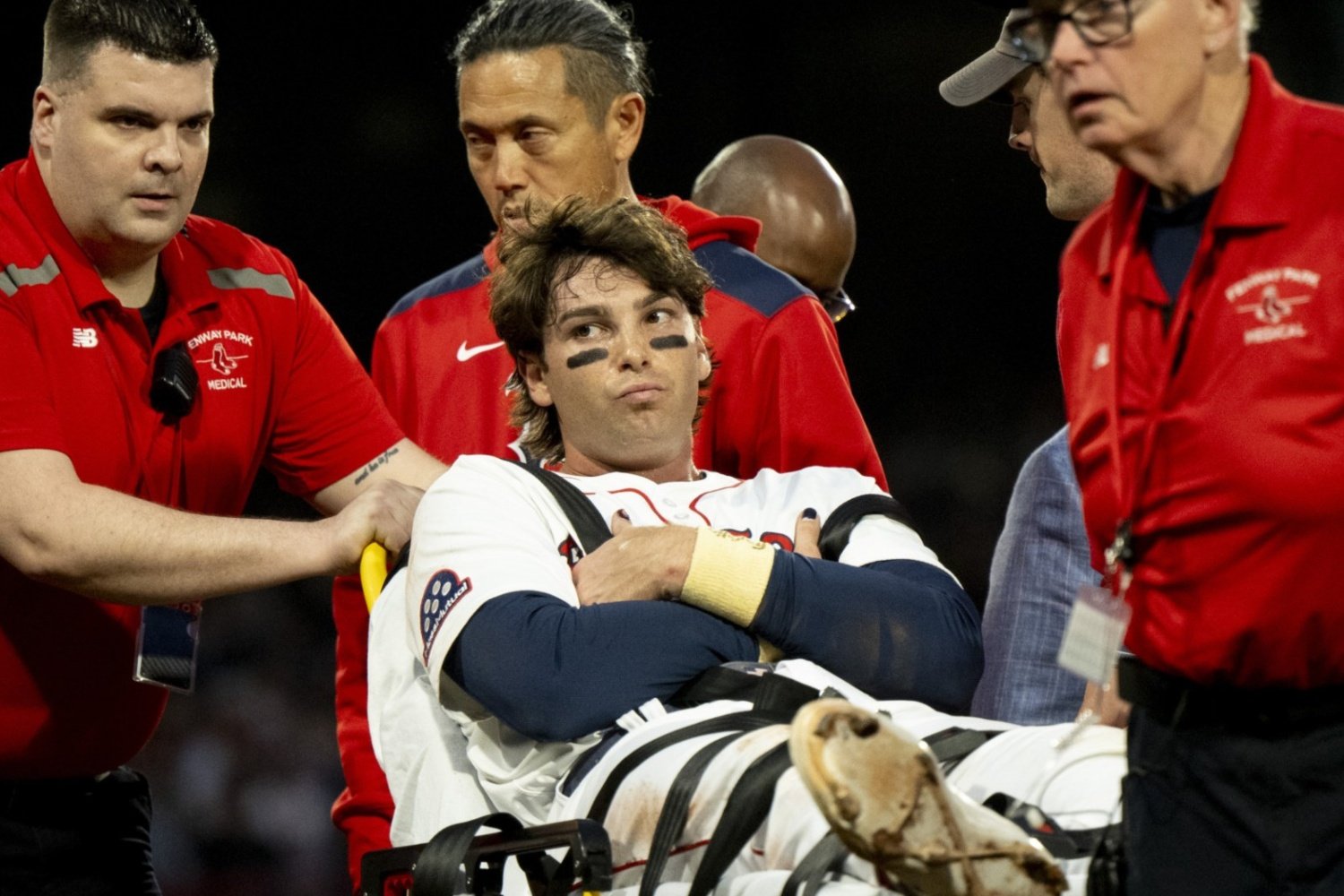 Triston Casas suffered a “significant knee injury” in the bottom of the second inning on Friday night. He remained on the ground for quite a while as the team doctor attended to him, finally calling for the cart to take him off the field. After the game, Alex Cora informed the media that Casas was still at the hospital and that the team would know more on Saturday. Although Casas wasn’t having the season most had hoped, he seemed to be turning the corner and figuring things out at the plate. As such, he’s going to be difficult to replace in the lineup. Let’s take a look at where the Red Sox could turn to cover first base. Internal Candidates Romy Gonzalez The obvious answer here is the other half of the first base platoon. Gonzalez is currently slashing .279/.340/.419 in 14 games. He’s played well this season in limited action, mostly against left-handed pitching, and will likely get the majority of reps at first unless a move is made to bring in a big-name first baseman. Connor Wong The Red Sox have long touted Wong’s defensive versatility, but after six games at first last year, he wasn’t even in the discussion for a platoon role there this year. Don’t expect to see Wong at the cold corner unless things have gone off the rails. Rob Refsnyder Refsnyder, also used in a platoon against left-handed pitching, has logged 227 career innings at first and could potentially see some time there, though he hasn’t played the position since 2020. Carlos Narvaez Narvaez worked at first base while in Triple-A with the Yankees last year, so it’s possible the Red Sox could look his way. That being said, so far, Boston hasn't had him play there in any capacity. Vaughn Grissom Grissom has been getting work in at first base down in Triple-A Worcester — only four games so far — but he’s been hitting well. I don’t really believe that his offensive outburst at Worcester will translate to the big leagues, but I’d love to be proven wrong. His numbers likely give him the edge to be the next man up. He’s currently slashing .287/.369/.444 with three home runs. Nick Sogard Sogard looked good in limited action once called up to the big leagues last season. He brings a lot of defensive versatility to the roster, and he’s played five different positions at Triple-A so far this season. Abraham Toro Toro looked solid in spring training and has been playing well at Worcester, slashing .310/.403/.480 with an .883 OPS. He was a dark horse to make the Opening Day roster and could be in line for a call-up sooner rather than later. External Candidates Dominic Smith Currently on a minor league deal with the Yankees, Smith is a fan favorite but likely wouldn’t offer much in terms of offense. He’s familiar with the system, though, and would likely be welcomed back with open arms. Christian Arroyo Another former Red Sox player on a minor league deal, Arroyo has only played nine games this season. His numbers look good, .351/.385/.703, but he’s coming off a hamstring injury and it seems unlikely that the Phillies would be inclined to get rid of him at the moment. Anthony Rizzo This is more of a pipe dream for Rizzo, who had almost no attention as a free agent during the offseason. He’s 35 and has been rapidly declining since a concussion in 2023. At the very least, he was drafted by the organization in 2007, so maybe he would want to finish his career in Boston as a bench piece. You’ll notice that Rafael Devers, Masataka Yoshida, and Roman Anthony don’t appear on the list, and for good reason. Cora has made it clear that he doesn’t want Devers in the field. It would likely do more harm than good to try and force Devers to learn a new position on the fly as he finally seems to be settling into his role as the full-time designated hitter. Yoshida doesn’t have the frame to play first and we don’t know when he will be back with the major league club. Anthony’s defensive abilities would be wasted at first base — he profiles as a potential Gold Glove outfielder. There are trades that could happen, and Craig Breslow has proven he’s not afraid to make deals when they benefit the team, but we’re still just a month into the season, and most organizations would be unlikely to start trading major league pieces this early. Nolan Arenado said he would move to first base in the right situation, but he hasn’t been a bright spot on a middling Cardinals roster. An intriguing name on that same team that I’ve written about before though, is Jordan Walker. Walker came up through the Cardinals system as a third/first baseman and has looked lost since the team shuffled him into the outfield mix. Getting him away from St. Louis and back to a position he’s actually comfortable with could do wonders for him. Are there any other options you’d consider? Leave them in the comments and let’s discuss!
 -
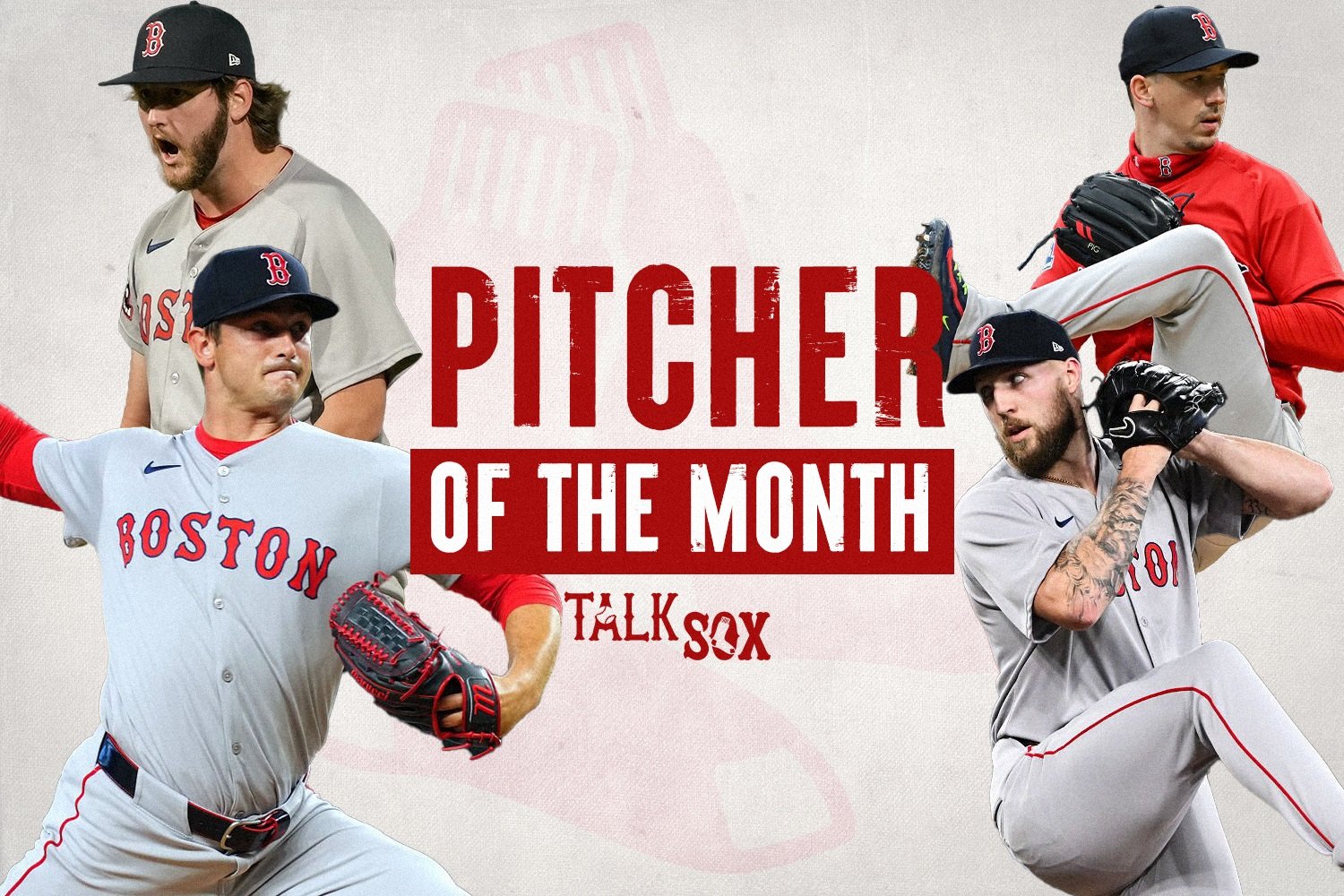 With the first full month of the 2025 MLB season completed, we’re handing out awards for March and April. I’m taking a look at the top three pitchers on the MLB roster, with a bonus honorable mention for extra fun. Without further ado, onto the awards! Honorable Mention: Garrett Whitlock Garrett Whitlock appears here, despite giving up a three-run home run to tie the game on the final day of April, because he seems to be regaining his 2021 dominance after he requested to move to the bullpen full time before this season. He has the makings of an elite set-up reliever and should be someone Alex Cora can turn to every couple of days to shut down opposing offenses, his final appearance in April notwithstanding. Whitlock is a valuable piece of the bullpen and will likely climb from honorable mention to the top three a handful of times this season, especially if he builds on his 3.06 ERA (137 ERA+). #3: Walker Buehler After two less-than-stellar starts to the season, Buehler has claimed the number two spot in the starting rotation. Much like Garrett Crochet, you feel confident that the Red Sox are going to win when he’s on the mound. His ERA is a bit deceiving, as he’s pitched far better than his 4.28 mark would indicate. Buehler has admitted that he’s no longer the type of pitcher to blow you away with his velocity, but his success is coming from his expansive pitch mix. So far this season, Buehler has shown a four-seam fastball, cutter, sinker, sweeper, knuckle curve, changeup, and slider. Hitters are guessing more often than not as to which pitch they are about to see. While it’s unfair to ever expect Buehler to become the pitcher he was before his injuries, this version fills a need perfectly for the Red Sox and they would be smart to lock him into a longer-term contract. #2: Justin Slaten I debated a bit about which closer to give the nod to for the first month of the season but settled on Slaten because he has a higher ceiling than Aroldis Chapman now. Realistically, Slaten is the closer of the future in Boston and should take the role over at some point during the 2025 season. He’s currently sporting a 3.48 ERA in 10 1/3 innings pitched with nine strikeouts. The other thing that gives Slaten the edge over any other reliever is that he has altered his pitch mix to make him a more effective strikeout pitcher. His curveball is devastating so far this season and hitters are struggling mightily against it. As Slaten grows as a pitcher, it won’t be shocking to see him show up consistently on these lists moving forward. Pitcher of the Month: LH SP Garrett Crochet This was pretty cut and dry, as Crochet has been as advertised since arriving in Boston. He closes out April with a 3-2 record, 2.05 ERA, 50 strikeouts, and a 1.05 WHIP. Those 50 punchouts rank him second in the AL, only behind Carlos Rodon, who has 52. His Baseball Savant page is fiery red and projects to remain that way all season. Every time Crochet toes the rubber, you expect the Red Sox to win that game—he’s that dependable. And yet, he's still looking to improve. He’s been quoted as wanting to get back to his up-and-in fastball instead of trying to nibble on the edges of the zone. As he returns to mid-season form, look for Crochet to win his fair share of monthly MLB awards. What do you think about our list? Who would get your vote?
 -
With the first full month of the season completed, we’re handing out awards for March and April. I’m taking a look at the top three pitchers on the MLB roster, with a bonus honorable mention for extra fun. Without further ado, onto the awards! Honorable Mention: Garrett Whitlock Garrett Whitlock appears here, despite giving up a three run home run to tie the game on the final day of April, because he seems to be regaining his 2021 dominance after he requested to move to the bullpen full time before this season. He has the makings of an elite set-up reliever and should be someone Alex Cora can turn to every couple of days to shut down opposing offenses, his final appearance in April notwithstanding. Whitlock is a valuable piece of the bullpen and will likely climb from honorable mention to top three a handful of times this season. #3: Walker Buehler After two less than stellar starts to the season, Buehler has claimed the number two spot in the starting rotation. Much like Crochet, you feel confident that the Red Sox are going to win when he’s on the mound. His ERA is deceiving a bit, as he’s pitched far better than his 4.28 would indicate. Buehler has admitted that he’s no longer the type of pitcher to blow you away with his velocity, but his success is coming from his expansive pitch mix. So far this season Buehler has shown a four-seam fastball, cutter, sinker, sweeper, knuckle curve, changeup, and slider. Hitters are guessing more often than not as to which pitch they are about to see. While it’s likely unfair to ever expect Buehler to become the pitcher he was before his injuries, this version fills a need perfectly for the Red Sox and they would be smart to lock him into a longer term contract. #2: Justin Slaten I debated a bit about which closer to give the nod to for the first month of the season but settled on Slaten because he has a higher ceiling than Aroldis Chapman now. Realistically, Slaten is the closer of the future in Boston and should take the role over at some point during the 2025 season. He’s currently sporting a 3.48 ERA with 10 1/3 innings pitched and nine strikeouts. The other thing that gave Slaten the edge over any other reliever was that he has altered his pitch mix to make him a more effective strikeout pitcher. His curveball is devastating so far this season and hitters are struggling mightily against it. As Slaten grows as a pitcher, it won’t be shocking to see him show up consistently on these lists moving forward. Pitcher of the Month: LH SP Garrett Crochet This was pretty cut and dry as Crochet has been as advertised since arriving in Boston. He closes out April with a three and two record, 2.05 ERA, 50 strikeouts, and a 1.05 WHIP. 50 strikeouts rank him second in the AL, only behind Carlos Rodon who has 52. His Baseball Savant page is fiery red and projects to remain that way all season. Every time Crochet toes the rubber you expect the Red Sox to win that game, he’s that dependable. After his two rougher outings this season, he has looked inward and realized what went wrong for him. He’s been quoted as wanting to get back to his fastball instead of trying to nibble on the edges of the zone. As he returns to mid-season form, look for Crochet to win his fair share of monthly MLB awards. What do you think? Who would get your vote? View full article
-
Yeeeeeeeah. I stand by it though. Every reliever has a bad game.
-
The Red Sox seem to have a knack for identifying relievers who can contribute on the big league roster in the Rule 5 draft. First, Garrett Whitlock dazzled us in 2021. Now, Justin Slaten looks like the closer of the future in Boston. So far this season, Slaten has been working in tandem with Aroldis Chapman in the closer role, but if he continues to dominate like he has been, there’s no reason to believe that he won’t fully take over the ninth inning gig at some point during the 2025 season. Let’s take a look at the underlying factors that have made him so dominant this year. First, Slaten has favored his four-seamer over his cutter so far in 2025. In 2024, Slaten featured a cutter 38% of the time and a four-seamer 29% of the time. This year, though, he’s essentially flipped those pitches. He’s throwing his four-seamer 39% of the time and his cutter 28% of the time. He’s throwing both offerings with a bit more speed, too, as the four-seamer is up from 96.4 mph to 97 mph and the cutter is up from 91.5 mph to 92.8 mph. The benefit here is that these pitches tunnel out of the exact same spot and it’s incredibly difficult to pick up the movement on the ball until it’s too late. What’s more interesting though, is that in 2024, both versions of the fastball were pitches that he would go to when he was ahead in the count. He was spotting the pitches in different locations and having a ton of success with his fastball offerings. This season though, his off-speed offerings have become his bread and butter. Last year, Slaten threw his sweeper 25% of the time, while his curveball barely saw any usage, sitting at just nine percent. As aforementioned, though, he's made a pretty big change this season. His curveball has jumped to a 21% usage, and his sweeper has fallen to nine percent. Part of this can be explained by the shape of the sweeper. So far this season, his sweeper features more rise than it did last year. Typically, sweepers that rise in the zone get knocked around fairly easily by major league hitters. Maybe this was a purposeful, mechanical change, or perhaps it was an error in his delivery. Regardless, the righty has made a conscious choice to focus on his curveball, and that has proved to be the key to his early season success. Slaten's hammer is absolutely nasty. It’s averaging 6.3” more vertical drop than other right-handed pitchers in 2025. When hitters swing at it, they flail at something that is virtually unhittable. Just take a look at this tweet from Rob Friedman to see how much Slaten's curve moves. That's just downright unfair. The eye test may not be as valuable as it once was, but as a baseball fan, it's still a fun thing to watch such a ridiculous pitch. Slaten has already gotten five whiffs on the curveball, almost half of his total from last season with the offering (11). He hasn’t allowed a hit on the curveball this season, and if it keeps moving like it has been, it could be a long time before someone makes solid contact with it. Justin Slaten has arguably been the best reliever in the bullpen since last season and he looks to continue his dominance in 2025. As he proves to be an elite reliever with a fluid pitch mix, look for him to secure the closer’s job as the season continues. View full article
-
Justin Slaten's Success Comes From A Uniquely Altered Pitch Mix
Alex Mayes posted an article in Red Sox
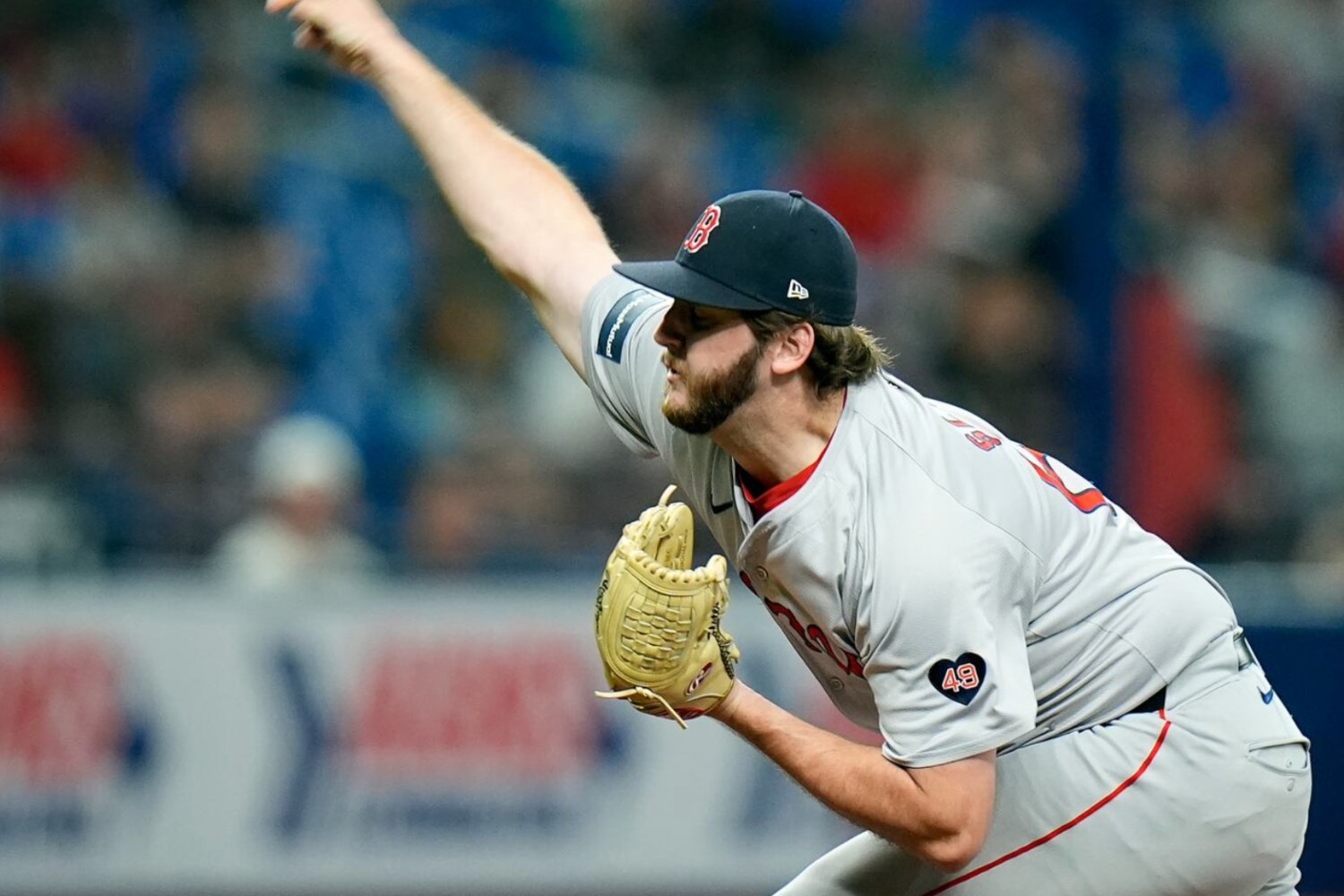 The Red Sox seem to have a knack for identifying relievers who can contribute on the big league roster in the Rule 5 draft. First, Garrett Whitlock dazzled us in 2021. Now, Justin Slaten looks like the closer of the future in Boston. So far this season, Slaten has been working in tandem with Aroldis Chapman in the closer role, but if he continues to dominate like he has been, there’s no reason to believe that he won’t fully take over the ninth inning gig at some point during the 2025 season. Let’s take a look at the underlying factors that have made him so dominant this year. First, Slaten has favored his four-seamer over his cutter so far in 2025. In 2024, Slaten featured a cutter 38% of the time and a four-seamer 29% of the time. This year, though, he’s essentially flipped those pitches. He’s throwing his four-seamer 39% of the time and his cutter 28% of the time. He’s throwing both offerings with a bit more speed, too, as the four-seamer is up from 96.4 mph to 97 mph and the cutter is up from 91.5 mph to 92.8 mph. The benefit here is that these pitches tunnel out of the exact same spot and it’s incredibly difficult to pick up the movement on the ball until it’s too late. What’s more interesting though, is that in 2024, both versions of the fastball were pitches that he would go to when he was ahead in the count. He was spotting the pitches in different locations and having a ton of success with his fastball offerings. This season though, his off-speed offerings have become his bread and butter. Last year, Slaten threw his sweeper 25% of the time, while his curveball barely saw any usage, sitting at just nine percent. As aforementioned, though, he's made a pretty big change this season. His curveball has jumped to a 21% usage, and his sweeper has fallen to nine percent. Part of this can be explained by the shape of the sweeper. So far this season, his sweeper features more rise than it did last year. Typically, sweepers that rise in the zone get knocked around fairly easily by major league hitters. Maybe this was a purposeful, mechanical change, or perhaps it was an error in his delivery. Regardless, the righty has made a conscious choice to focus on his curveball, and that has proved to be the key to his early season success. Slaten's hammer is absolutely nasty. It’s averaging 6.3” more vertical drop than other right-handed pitchers in 2025. When hitters swing at it, they flail at something that is virtually unhittable. Just take a look at this tweet from Rob Friedman to see how much Slaten's curve moves. That's just downright unfair. The eye test may not be as valuable as it once was, but as a baseball fan, it's still a fun thing to watch such a ridiculous pitch. Slaten has already gotten five whiffs on the curveball, almost half of his total from last season with the offering (11). He hasn’t allowed a hit on the curveball this season, and if it keeps moving like it has been, it could be a long time before someone makes solid contact with it. Justin Slaten has arguably been the best reliever in the bullpen since last season and he looks to continue his dominance in 2025. As he proves to be an elite reliever with a fluid pitch mix, look for him to secure the closer’s job as the season continues.
 -
I'd much rather have Rafaela roaming center. He's a Platinum Glove candidate in my opinion.
-
If Duran could play passable center field defense, I'd disagree with you and would never bring up trading him again. It looks like he can't though, so it makes the most sense to sell high and get as much value back as possible.
-
I hadn't seen that when I wrote mine. Glad to see some similar thoughts somewhere else on the internet. Thanks for sharing!
- 71 replies
-
- 1
-

-
- triston casas
- jarren duran
- (and 1 more)
-
He's not having a great start to the season but he sure is fun to watch! Maddie, Alex, and Adam reflect on an exciting series in Cleveland that included Jarren Duran stealing home and being heckled by fans. They look ahead to Lucas Giolito's return and what that means for the Red Sox rotation. Listen on Apple Podcasts: https://podcasts.apple.com/us/podcast/the-talk-sox-podcast/id1783204104 Listen on Spotify: https://open.spotify.com/show/3qPrPXEngu0CxgTmlf0ynm Listen on iHeartRadio: https://www.iheart.com/podcast/263-the-talk-sox-podcast-244591331/ Listen on Pocket Casts: https://pca.st/4tmd121v Watch on YouTube: https://www.youtube.com/@talksox View full article
-
 Maddie, Alex, and Adam reflect on an exciting series in Cleveland that included Jarren Duran stealing home and being heckled by fans. They look ahead to Lucas Giolito's return and what that means for the Red Sox rotation. Listen on Apple Podcasts: https://podcasts.apple.com/us/podcast/the-talk-sox-podcast/id1783204104 Listen on Spotify: https://open.spotify.com/show/3qPrPXEngu0CxgTmlf0ynm Listen on iHeartRadio: https://www.iheart.com/podcast/263-the-talk-sox-podcast-244591331/ Listen on Pocket Casts: https://pca.st/4tmd121v Watch on YouTube: https://www.youtube.com/@talksox
