


Red Sox Video
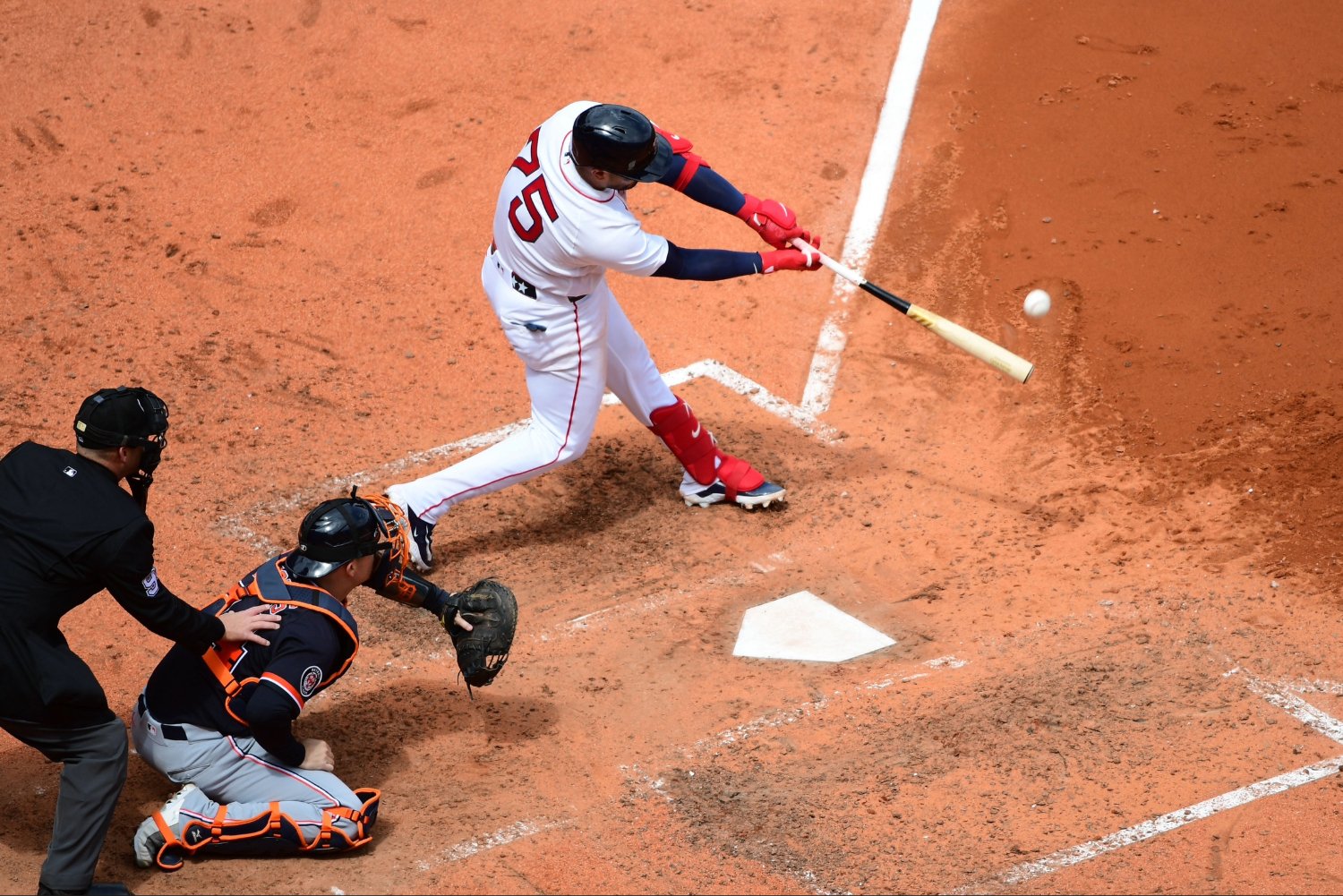
Carlos Narváez was expected to serve as a placeholder for the Boston Red Sox after catcher Connor Wong fractured his pinky finger last season. Acquired from the New York Yankees for minor-league pitcher Elmer Rodriguez-Cruz, Narváez emerged as a defensive specialist and a solid bat in the lineup. Last season, the rookie backstop hit .241/.306/.419 with a .726 OPS, eventually taking the starting role from Wong in the process. However, in his first season as the primary option, Narváez has struggled to replicate his production from his breakout year, starting 2026 by hitting .234/.265/.277, good for a .542 OPS.
Due to his lack of offensive production, Narváez has produced a -0.4 bWAR and a 49 wRC+, leading to a move to the ninth spot in the lineup. While his defensive value still ranks toward the top of the league, Wong has had his own strong start to the season and puts more pressure on Narváez each day to figure out his swing.
So, what going on? To put it simply: Narvaez's regression can be tied to his struggles against fastballs.
Against fastballs this season, Narváez has produced -3 run value (zero is average) with a .192 wOBA, all while whiffing at one in every four he swings at. His batting average and slugging percentage against fastballs sit at just .172 each, a drop off from his expected figures of .221 and .358. With fastballs accounting for nearly 60% of the pitches he sees, Narváez needs to figure out a way to fix his approach immediately. However, the issue may not be mechanical, but rather related to timing and the contact point.
This season, his average launch angle has dropped from 13.2 degrees to 6.9, indicating a downward trend in his swing path. That observation is supported by a sharp increase in his topped-ball rate, which has risen from 29.1% to 35.3%, along with a decrease in balls that he gets underneath (falling from 26.7% to 14.3%). Narváez has yet to record a single pull-side ball in the air against fastballs, further indicating he is failing to hit the ball out front. Instead, his batted-ball distribution suggests that he is consistently letting pitches travel too deep.
Nevertheless, the Red Sox can take some relief in knowing Narváez’s underlying tools haven’t disappeared.
While much of his offensive profile has declined, he still ranks among the league's top percentiles in average exit velocity and hard-hit rate. This data backs the claim that his raw abilities haven’t diminished, but rather they are being watered down by poor timing, leading to hard contact at unfavorable launch angles.
Although his production against fastballs has been poor, he has been producing against off-speed pitching, though those results may be due to a bit of good luck rather than a better approach. As it stands, Narváez's delayed timing at the plate is limiting his ability to execute against the pitch he sees the most, even as it occasionally puts him in better positions against off-speed options.
The tools are still there, but the margin for error is shrinking. If Narváez can make the necessary timing adjustments against fastballs, his production should follow. If not, pitchers will continue to exploit the gap.






Recommended Comments
Create an account or sign in to comment
You need to be a member in order to leave a comment
Create an account
Sign up for a new account in our community. It's easy!
Register a new accountSign in
Already have an account? Sign in here.
Sign In Now