


Red Sox Video
When the Red Sox traded Rafael Devers back in mid-June to the San Francisco Giants, the original consensus on the return package was that the Sox got a less-than-ideal haul for their superstar. Returning to Boston was 2024 first-round pick James Tibbs III and three pitchers: Jordan Hicks, Jose Bello and Kyle Harrison. Since then, the trade has still looked underwhelming, as the Red Sox shipped Tibbs to the Dodgers as part of the return for Dustin May at the trade deadline. Bello has been pitching for Single-A Salem, while Hicks has been frustrating to watch with the Red Sox.
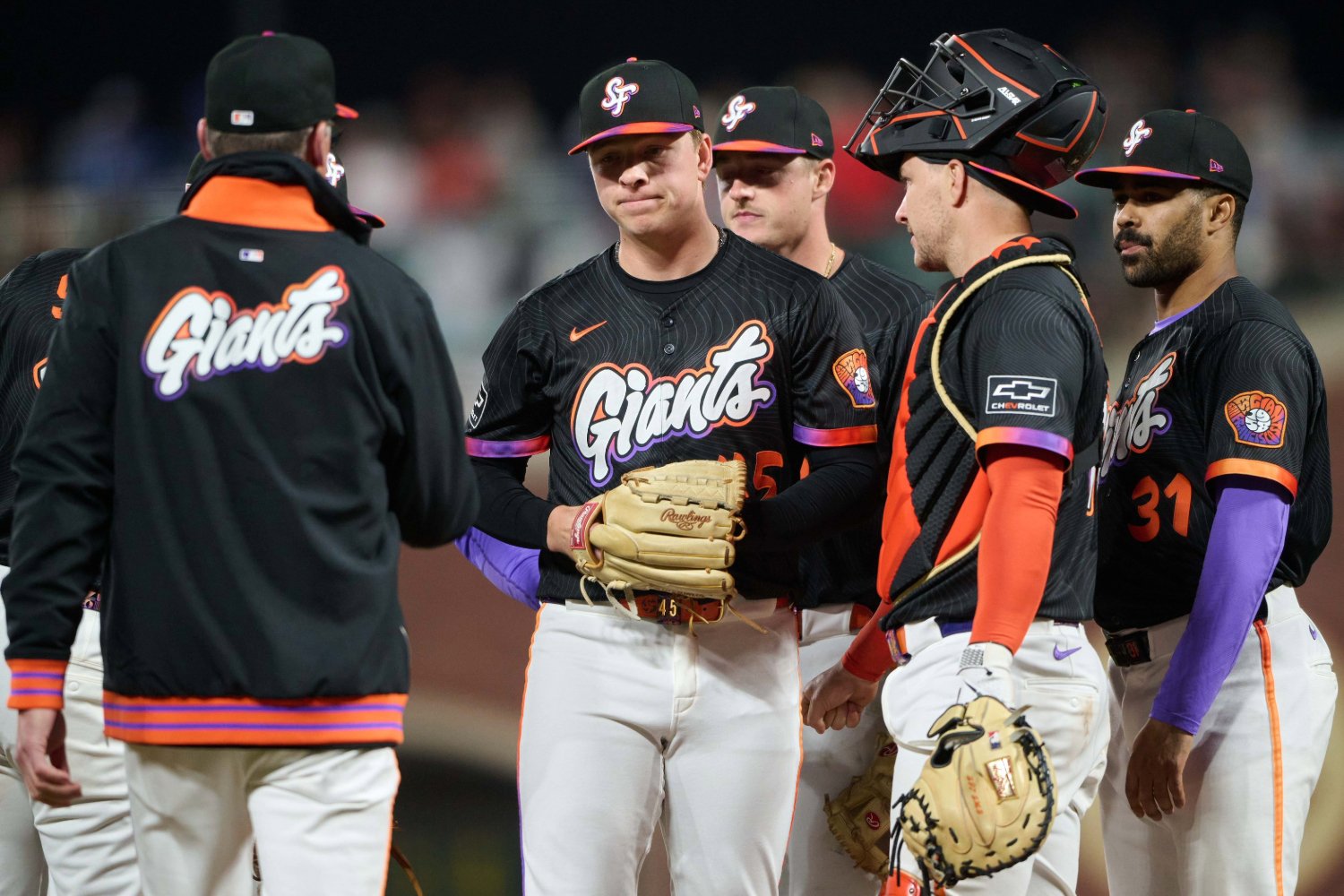
Luckily, Harrison appears to have become the most intriguing of them all. especially as he gets more comfortable with the tweaks that the Red Sox have made since he came over from the Giants. While fans thought he might have been in consideration for joining the rotation upon his arrival, the team instead kept him in Triple-A to work on a few things. Harrison, a former Top 100 prospect on lists such as Baseball America and MLB Pipeline, struggled with the Giants this season as he bounced between the bullpen and rotation while appearing in eight games (four starts) and pitching just 23 2/3 innings to a 4.56 ERA before being optioned to Triple-A.
Justin Willard, the Red Sox's Director of Pitching, feels that the focal point for Harrison will be his fastball, as it averaged 95.1 mph during his short time in the majors in 2025. The team wants to build the arsenal around the fastball and find what could help elevate it.
Two pitches that were a main focus for Harrison to work on were the sinker and cutter, while also changing the grip on his changeup. Prior to coming to the Red Sox, Harrison mainly relied upon three pitches: his fastball, a slurve that at times was confused for a slow, lofty curveball, and a changeup. Despite working on it behind the scenes, Harrison and the Red Sox decided to ditch the sinker after using it just once in his first start with Worcester, instead focusing more on the altered changeup, the new cutter (which at times has been confused for a slider due to its break) and his slurve.
Overall, Harrison is leading with his fastball as was always planned, using it just under 51% of the time (50.9%) while his cutter and slurve are used 18.2% and 19.3% of the time, respectively. His changeup remains his least used offering at 11.7%, though the usage is up from his 9.8% during his time with San Francisco.
When looking at his pitches with the Red Sox compared to his last appearance with the Giants, you can see some noticeable differences. His changeup grip has been altered significantly to alter its spin rate. In his final appearance with the Giants, the changeup had an average spin rate of 2065 rpms; compared to his latest start with the Red Sox, that number fell to an average of 1253 rpms. In effect, his changeup is dropping more as it went from an average induced vertical break of plus two inches in his last appearance with the Giants to now seeing it drop an average of -2 inches with Worcester, while also increasing its horizontal break from 13 inches to 15 inches on average.
The change in his pitches doesn’t end there, with his slurve gaining an average of four inches of horizontal break between his time with the Giants and the Red Sox, again due in part to a change in spin rate (from 2131 rpms on average to 2085 rpms).
The cutter appears to be the most changed pitch, having such a sharp horizontal break (three inches on average in his last start). It seems to be a weapon to challenge right-handed batters in with, being tossed to a left-hander just five times since joining the Red Sox organization. Mainly thrown in the upper-two-thirds of the zone, the small movement helps to make batters late on his fastball.
The slight tweaks to his pitches have allowed his fastball to play even better now, having generated seven whiffs along with seven called strikes in his last start on August 7. The batters’ timing is off as well, fouling off the pitch 10 times and only managing to put the fastball in play seven times across the start. What might be most promising is the fact that his average exit velocity for his fastball was just 79.2 mph, showing that he is limiting hard contact by mixing his new pitch arsenal around the fastball. This follows a trend of his overall average exit velocity seeing a drop from 92.8 mph with the Giants down to 87.9 mph, along with his hard-hit rate dropping down from 48.5% to 28.3% with Worcester.
With 99 pitches in his last start, Harrison may be closer to being called up than people realize. And with the rotation having two large question marks in May and Walker Buehler, Harrison may be needed to provide some quality innings down the stretch as the team continues to fight for a playoff spot. While the return for Devers may have seemed underwhelming at first, Harrison could change perceptions around the deal in a hurry.






Recommended Comments
Create an account or sign in to comment
You need to be a member in order to leave a comment
Create an account
Sign up for a new account in our community. It's easy!
Register a new accountSign in
Already have an account? Sign in here.
Sign In Now