Brandon Glick
-
Posts
587 -
Joined
-
Last visited
Content Type
Profiles
Boston Red Sox Videos
2026 Boston Red Sox Top Prospects Ranking
Boston Red Sox Free Agent & Trade Rumors, Notes, & Tidbits
Guides & Resources
2025 Boston Red Sox Draft Pick Tracker
News
2026 Boston Red Sox Draft Tracker: Picks & Bonuses
Forums
Blogs
Events
Store
Downloads
Gallery
Everything posted by Brandon Glick
-
Despite graduating their Big Three prospects earlier in the year, the Red Sox were well represented in the mid-season Top 100 list from MLB Pipeline.
-
To no one's surprise, Aroldis Chapman leads the Red Sox's bullpen in most notable categories this season, including fWAR (1.8). The man directly behind him on that list, Garrett Whitlock, is also the longest-tenured member of the relief crew, having been acquired via the Rule 5 Draft from the New York Yankees in 2020. In fact, the only reliever on the 40-man roster who has been in Boston longer than Whitlock is Chris Murphy, who is just one of two relievers with a 40-man spot that was actually drafted by the organization (the other being Luis Guerrero). While that organizational philosophy on how to build a bullpen warrants its own deep-dive in the future—it's emblematic of the way the Cubs, Craig Breslow's old stomping grounds, continue to turn their bullpen over on a yearly basis—Whitlock is the one who will be cast into the spotlight today. The 29-year-old right-hander is the owner of a tidy 2.77 ERA and even more impressive 2.48 FIP through 55 1/3 innings this season, hence his 1.4 fWAR. Whitlock's 46 appearances ties his career high that he set in his rookie campaign back in 2021, the only other season of his career in which he's exclusively been a reliever. That last point is important, because it's clear that Whitlock is better in a bullpen role. He's started 23 games in his career, all coming between 2022-24, and he's been relatively solid in those games: 109.0 innings, 4.29 ERA, 1.27 WHIP, 102 strikeouts against 23 walks, and a .217/.313/.450 batting line allowed. Those are the numbers of a passable No. 5 starter, though averaging just 4.8 innings per start hardly qualifies Whitlock the starter as anything more. Now, turn your attention to his stats as a reliever: 188.0 innings, 2.68 ERA, 1.07 WHIP, 218 strikeouts against 50 walks, and a .217/.275/.335 batting line allowed. Those are the numbers of a really good set-up man, and it's worth considering that the OPS+ of opposing hitters falls by more than 40 points when Whitlock comes out of the bullpen as opposed to starting the game on the mound. He's also allowed the same number of home runs (16) in nearly 80 more innings as a reliever. The first place your mind should go when hearing that a pitcher is having more success in the bullpen is velocity, and that instinct is very much correct. In 2021, Whitlock's sinker averaged 95.9 mph. That velocity dropped a tick in 2022, and in 2023-24, his sinker averaged less than 94 mph. He did make most of his appearances out of the bullpen in those years, but it's clear that a starter's workload (and some injuries) limited the capacity of his arm. Back to his full-time relief duties in 2025, Whitlock's sinker is once again at its fastest point, averaging nearly 96 mph. That's certainly a big reason why Whitlock has been more effective as a reliever, but it's not the only one. In fact, he's made some noticeable changes in 2025 that point to systematic changes in his approach on the mound. I won't toss five scatter plots in your face right now, but take a look at Whitlock's movement profile from 2021 to 2023 to 2025 (courtesy of Baseball Savant). That's a pretty drastic difference, created mostly by turning his sinker into a faux four-seamer (more riser and less run) and getting some much-needed drop on his changeup. The numbers don't lie: in 2023, Whitlock's sinker averaged 12.8 inches of rise and 15.4 inches of run. Those numbers in 2025 are at 14.9 inches of rise and 13.2 inches of run. That's a sizable difference in both directions, and it's turned his sinker into a genuine primary fastball again, allowing him to ditch the four-seamer that rarely, if ever, was worthwhile to throw. It also helps that he's finally settled on throwing both a sweeper and a slider after years of trading one off for the other; the sweeper, on average, gets nearly seven more inches of break than his slider, which in turn functions like a "power breaker" thanks to its tighter break and faster velocity. These aren't revolutionary changes, but creating a distinction in his movement profile has allowed Whitlock to be more purposeful with his pitches. No longer are there offerings tossed in there to simply throw the hitter off balance—every pitch is thrown with intention. So, what's the takeaway here? Well, Whitlock's case is a reminder that some guys are simply just better coming out of the bullpen; pitching short spurts is often an easier task than having to reserve bullets for the third time through an order, and allows for a pitcher to condense their arsenal to their best pitches, rather than having to reach for subpar offerings. It's also a self-evident truth that diversification in a pitch mix is extremely important, and it's a testament to both the Red Sox and Whitlock that they've been able to hone in on the spin and movement of his pitches in order to tailor the perfect combination. None of this is to say what Whitlock has done is easily repeatable—quite the opposite. It's hard work for a pitcher who is around the MLB average as a starter (which is still one of the best players in the world!) to try something different and accept a "demotion" in their role to the bullpen. Credit to him for making the most of this situation, and turning into one of the most valuable members of the Red Sox's pitching staff. View full article
-
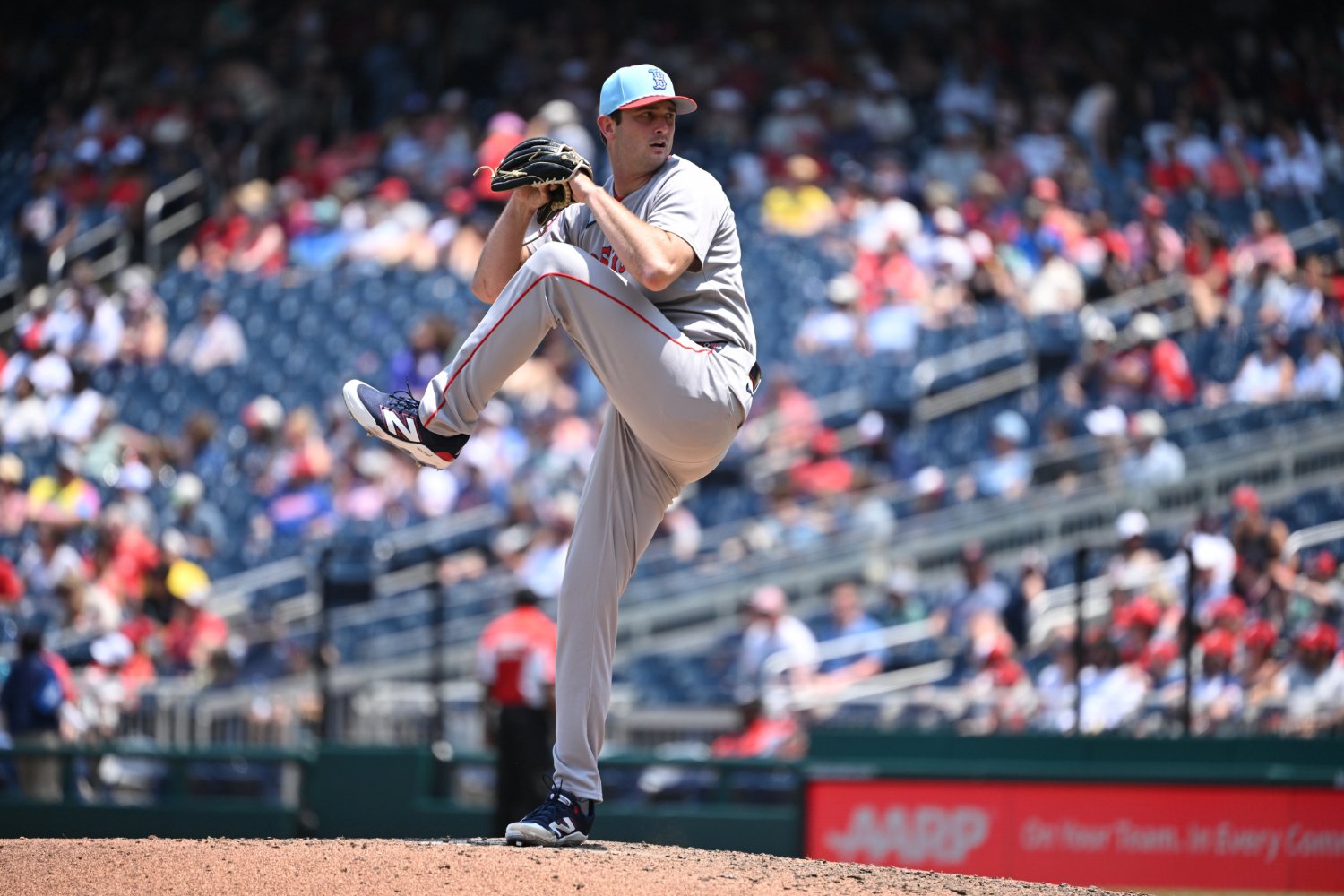 To no one's surprise, Aroldis Chapman leads the Red Sox's bullpen in most notable categories this season, including fWAR (1.8). The man directly behind him on that list, Garrett Whitlock, is also the longest-tenured member of the relief crew, having been acquired via the Rule 5 Draft from the New York Yankees in 2020. In fact, the only reliever on the 40-man roster who has been in Boston longer than Whitlock is Chris Murphy, who is just one of two relievers with a 40-man spot that was actually drafted by the organization (the other being Luis Guerrero). While that organizational philosophy on how to build a bullpen warrants its own deep-dive in the future—it's emblematic of the way the Cubs, Craig Breslow's old stomping grounds, continue to turn their bullpen over on a yearly basis—Whitlock is the one who will be cast into the spotlight today. The 29-year-old right-hander is the owner of a tidy 2.77 ERA and even more impressive 2.48 FIP through 55 1/3 innings this season, hence his 1.4 fWAR. Whitlock's 46 appearances ties his career high that he set in his rookie campaign back in 2021, the only other season of his career in which he's exclusively been a reliever. That last point is important, because it's clear that Whitlock is better in a bullpen role. He's started 23 games in his career, all coming between 2022-24, and he's been relatively solid in those games: 109.0 innings, 4.29 ERA, 1.27 WHIP, 102 strikeouts against 23 walks, and a .217/.313/.450 batting line allowed. Those are the numbers of a passable No. 5 starter, though averaging just 4.8 innings per start hardly qualifies Whitlock the starter as anything more. Now, turn your attention to his stats as a reliever: 188.0 innings, 2.68 ERA, 1.07 WHIP, 218 strikeouts against 50 walks, and a .217/.275/.335 batting line allowed. Those are the numbers of a really good set-up man, and it's worth considering that the OPS+ of opposing hitters falls by more than 40 points when Whitlock comes out of the bullpen as opposed to starting the game on the mound. He's also allowed the same number of home runs (16) in nearly 80 more innings as a reliever. The first place your mind should go when hearing that a pitcher is having more success in the bullpen is velocity, and that instinct is very much correct. In 2021, Whitlock's sinker averaged 95.9 mph. That velocity dropped a tick in 2022, and in 2023-24, his sinker averaged less than 94 mph. He did make most of his appearances out of the bullpen in those years, but it's clear that a starter's workload (and some injuries) limited the capacity of his arm. Back to his full-time relief duties in 2025, Whitlock's sinker is once again at its fastest point, averaging nearly 96 mph. That's certainly a big reason why Whitlock has been more effective as a reliever, but it's not the only one. In fact, he's made some noticeable changes in 2025 that point to systematic changes in his approach on the mound. I won't toss five scatter plots in your face right now, but take a look at Whitlock's movement profile from 2021 to 2023 to 2025 (courtesy of Baseball Savant). That's a pretty drastic difference, created mostly by turning his sinker into a faux four-seamer (more riser and less run) and getting some much-needed drop on his changeup. The numbers don't lie: in 2023, Whitlock's sinker averaged 12.8 inches of rise and 15.4 inches of run. Those numbers in 2025 are at 14.9 inches of rise and 13.2 inches of run. That's a sizable difference in both directions, and it's turned his sinker into a genuine primary fastball again, allowing him to ditch the four-seamer that rarely, if ever, was worthwhile to throw. It also helps that he's finally settled on throwing both a sweeper and a slider after years of trading one off for the other; the sweeper, on average, gets nearly seven more inches of break than his slider, which in turn functions like a "power breaker" thanks to its tighter break and faster velocity. These aren't revolutionary changes, but creating a distinction in his movement profile has allowed Whitlock to be more purposeful with his pitches. No longer are there offerings tossed in there to simply throw the hitter off balance—every pitch is thrown with intention. So, what's the takeaway here? Well, Whitlock's case is a reminder that some guys are simply just better coming out of the bullpen; pitching short spurts is often an easier task than having to reserve bullets for the third time through an order, and allows for a pitcher to condense their arsenal to their best pitches, rather than having to reach for subpar offerings. It's also a self-evident truth that diversification in a pitch mix is extremely important, and it's a testament to both the Red Sox and Whitlock that they've been able to hone in on the spin and movement of his pitches in order to tailor the perfect combination. None of this is to say what Whitlock has done is easily repeatable—quite the opposite. It's hard work for a pitcher who is around the MLB average as a starter (which is still one of the best players in the world!) to try something different and accept a "demotion" in their role to the bullpen. Credit to him for making the most of this situation, and turning into one of the most valuable members of the Red Sox's pitching staff.
 -
The Blue Jays' hot streak may keep the Red Sox from claiming the AL East, though Boston appears to be in good position to claim one of three Wild Card spots in the junior circuit.
-
The Blue Jays' hot streak may keep the Red Sox from claiming the AL East, though Boston appears to be in good position to claim one of three Wild Card spots in the junior circuit. View full video
-
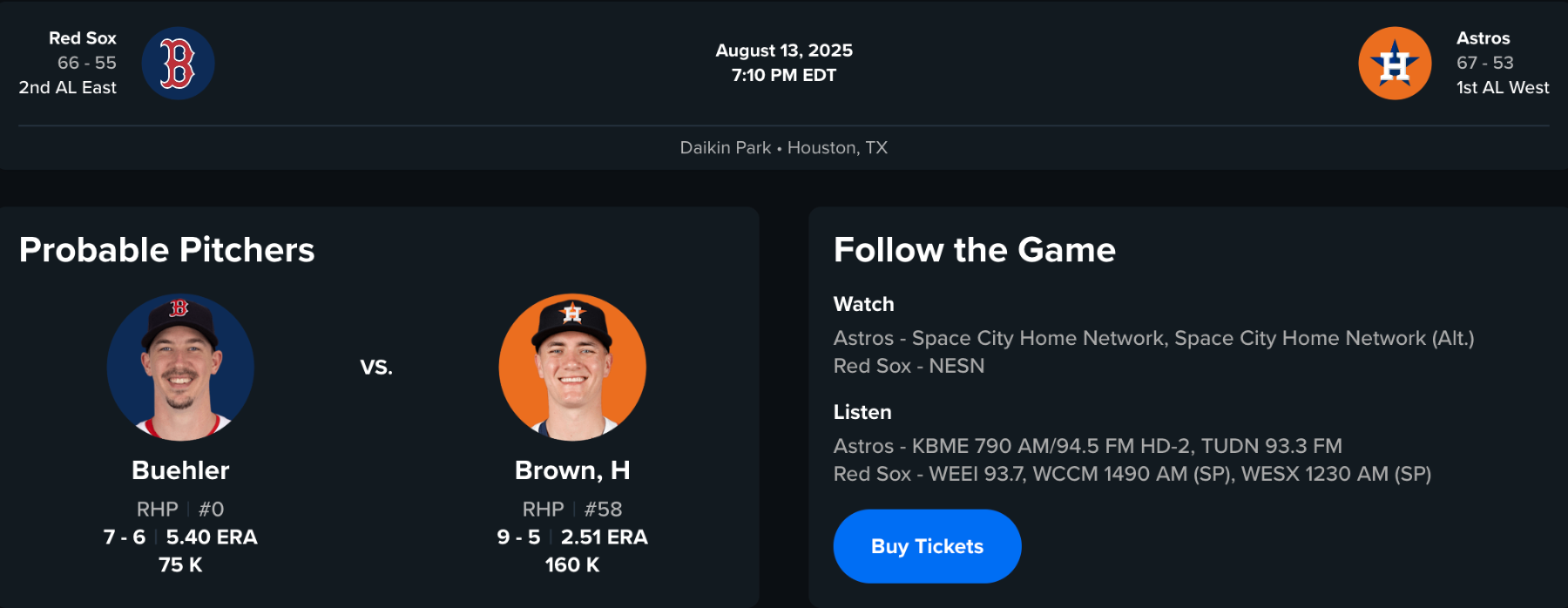
Hunter Brown is really good, guys. Red Sox by 20.
-
The Boston Red Sox executed a series of roster moves prior to their series against the Houston Astros. Nick Burdi's DFA stands as the most impactful of the bunch by default since it opens up a 40-man roster spot, which was subsequently claimed by catcher Ali Sanchez, who was claimed off waivers from the Toronto Blue Jays earlier in the week. Reliever Chris Murphy was also demoted for Jovani Morani. The transaction I want to focus on here, though, is the demotion of David Hamilton. We've had varying opinions on this site about Hamilton from out writers—though most have leaned negative in recent months—and I'm here to lay the hammer down on this topic. I don't think he should ever suit up for the big league Boston Red Sox ever again. I know that sounds harsh, especially since Hamilton is a player who derives a lot of his value from the "less glamorous" parts of baseball. He's a great runner, having stolen 50 bases in less than 500 plate appearances over the past two seasons combined. That success on the basepaths is due, in part, to his top-notch sprint speed, as he routinely grades out as one of the fastest top-end runners in the sport. Billy Hamilton he is not, though a mighty pinch runner who can get from first to third in a hurry is still a valuable archetype to have in a vacuum. You know what else is valuable about Hamilton? He's versatile. The 27-year-old has played 575.0 innings at second base and 581 2/3 innings at shortstop over the course of his career (to go along with one solitary frame at third base earlier this season), and he's generally rated as a strong defender at both spots. He's been worth five Outs Above Average (one this year) and 15 Defensive Runs Saved (seven this year) at the keystone, and he's accrued -6 OAA (-1 this year) and -2 DRS (one this year) at the considerably more difficult shortstop position. To have an average shortstop who can play an above-average second base just roaming on your bench is a luxury for any manager, especially one as inclined to give rest to his youngsters and veterans as Alex Cora. So, by those accounts, it's clear that Hamilton fills his niche pretty well. But, it's at this point we must turn our attention to the batter's box, and rest assured, it's going to get ugly. In 69 games (143 plate appearances) in 2025, Hamilton is slashing .174/.227/.265, which is good for a .492 OPS and 31 wRC+. If you've followed baseball at all in the last 20 years, you don't need me to tell you how bad those latter two figures are, and if you've ever watched a baseball game in your life, you don't need me to tell you how bad that hitting line is. With all due respect to the spectacularly awful season backstop Connor Wong is having at the plate, it's hard not to say Hamilton has been the worst hitter to step into the batter's box for the Red Sox this year. His batting average (.174), slugging percentage (.265), and wOBA (.221) are all second-worst on the team this season ahead of only Wong, though the catcher has the better of him in on-base percentage, as well as the expected versions of average and wOBA. Though he doesn't have enough at-bats to technically qualify, Hamilton ranks among the worst hitters in nearly every notable batted ball and plate approach metric. According to Baseball Savant, Hamilton would be in the bottom ten percent among all MLB hitters in the following categories: expected wOBA, expected batting average, expected slugging percentage, average exit velocity, hard-hit rate, and barrel rate. I mean, that's simply untenable. Not every hitter needs to be an. 850 OPS guy who routinely posts a wRC+ in the 130 range, but there's a threshold between "bad" and "un-rosterable". Hamilton has been the latter this season. Despite his aforementioned positive contributions on both defense and the basepaths, he's been worth -0.4 fWAR this season. WAR is a deeply flawed stat that rarely tells the whole story, but it's telling that even a cumulative metric with favorability toward defense pegs Hamilton as a net-negative contributor thanks to his struggles at the plate. Sure, you could point to the fact that Hamilton was much better last year, producing a .697 OPS and 94 wRC+ in more than double the plate appearances. But even those numbers are below average. Hamilton has never been known for his bat, but that's what makes his bottoming out all the more painful—there's no real floor to his struggles here. In fact, do you know the only batting metric Hamilton has improved in this year? How often he swings. I'm not kidding. Take a look for yourself. His overall swing rate is up by a meager 0.2%, which comes from a bump in both his in-zone swing rate (good) and out-of-zone swing rate (bad). By literally every other statistic (and the eye test, for what it's worth), Hamilton has gotten worse in 2025. In the middle of a pennant race, that's not exactly the kind of player you want to be rostering, hence why the Red Sox sent him down to Triple-A Worcester to work on some things with his plate approach. It's possible we see Hamilton return when rosters expand in September, though if everyone is healthy, I'd wager a return from Kristian Campbell (better bat, can play first base) is more likely. Either way, Hamilton's place on the roster will be in serious jeopardy this offseason, when 40-man roster spots are at a premium. Unless the team truly believes his defensive versatility in the middle infield is valuable enough to justify his porous production at the plate, it seems exceedingly possible that we've seen the last of David Hamilton in a Red Sox uniform. View full article
-
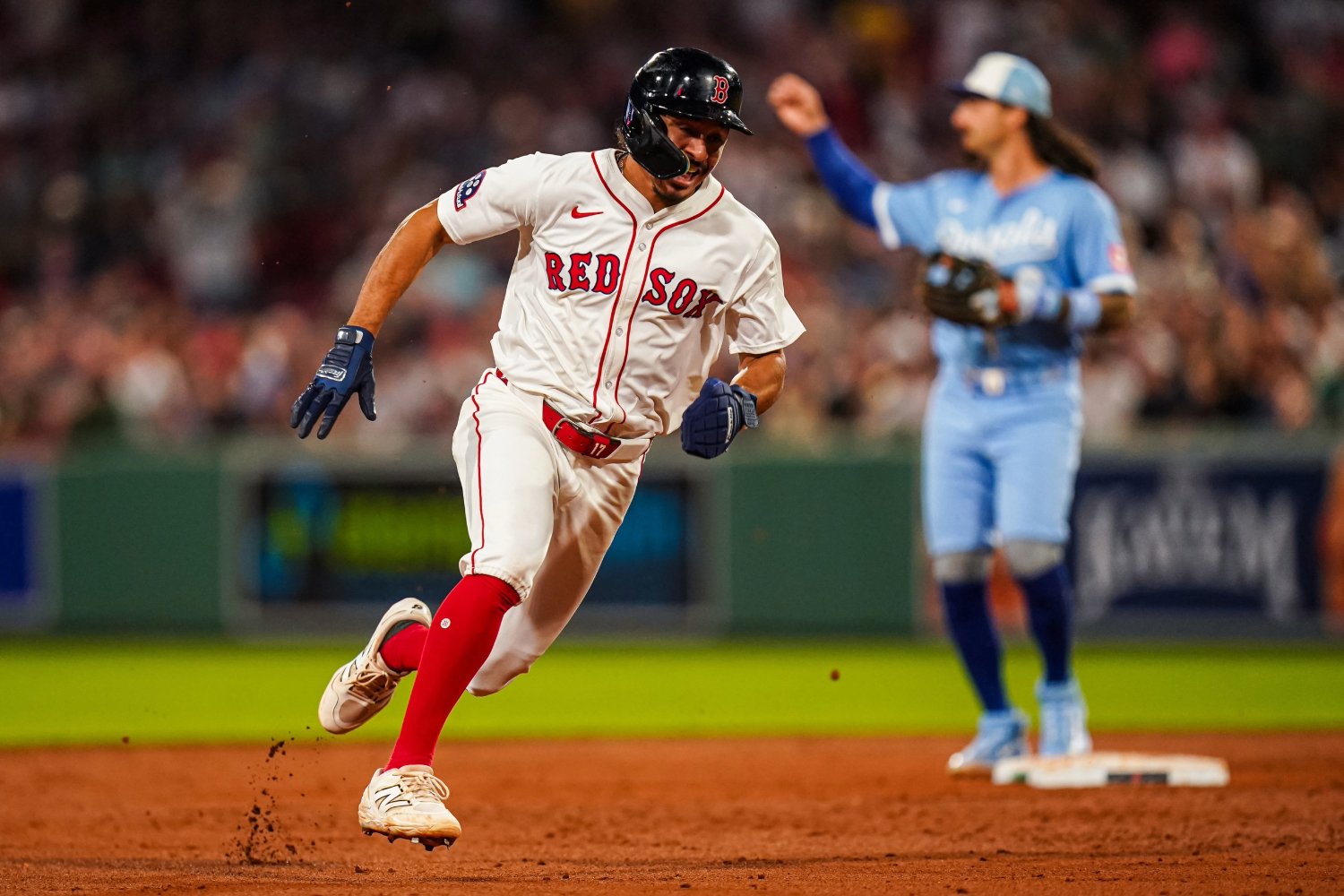 The Boston Red Sox executed a series of roster moves prior to their series against the Houston Astros. Nick Burdi's DFA stands as the most impactful of the bunch by default since it opens up a 40-man roster spot, which was subsequently claimed by catcher Ali Sanchez, who was claimed off waivers from the Toronto Blue Jays earlier in the week. Reliever Chris Murphy was also demoted for Jovani Morani. The transaction I want to focus on here, though, is the demotion of David Hamilton. We've had varying opinions on this site about Hamilton from out writers—though most have leaned negative in recent months—and I'm here to lay the hammer down on this topic. I don't think he should ever suit up for the big league Boston Red Sox ever again. I know that sounds harsh, especially since Hamilton is a player who derives a lot of his value from the "less glamorous" parts of baseball. He's a great runner, having stolen 50 bases in less than 500 plate appearances over the past two seasons combined. That success on the basepaths is due, in part, to his top-notch sprint speed, as he routinely grades out as one of the fastest top-end runners in the sport. Billy Hamilton he is not, though a mighty pinch runner who can get from first to third in a hurry is still a valuable archetype to have in a vacuum. You know what else is valuable about Hamilton? He's versatile. The 27-year-old has played 575.0 innings at second base and 581 2/3 innings at shortstop over the course of his career (to go along with one solitary frame at third base earlier this season), and he's generally rated as a strong defender at both spots. He's been worth five Outs Above Average (one this year) and 15 Defensive Runs Saved (seven this year) at the keystone, and he's accrued -6 OAA (-1 this year) and -2 DRS (one this year) at the considerably more difficult shortstop position. To have an average shortstop who can play an above-average second base just roaming on your bench is a luxury for any manager, especially one as inclined to give rest to his youngsters and veterans as Alex Cora. So, by those accounts, it's clear that Hamilton fills his niche pretty well. But, it's at this point we must turn our attention to the batter's box, and rest assured, it's going to get ugly. In 69 games (143 plate appearances) in 2025, Hamilton is slashing .174/.227/.265, which is good for a .492 OPS and 31 wRC+. If you've followed baseball at all in the last 20 years, you don't need me to tell you how bad those latter two figures are, and if you've ever watched a baseball game in your life, you don't need me to tell you how bad that hitting line is. With all due respect to the spectacularly awful season backstop Connor Wong is having at the plate, it's hard not to say Hamilton has been the worst hitter to step into the batter's box for the Red Sox this year. His batting average (.174), slugging percentage (.265), and wOBA (.221) are all second-worst on the team this season ahead of only Wong, though the catcher has the better of him in on-base percentage, as well as the expected versions of average and wOBA. Though he doesn't have enough at-bats to technically qualify, Hamilton ranks among the worst hitters in nearly every notable batted ball and plate approach metric. According to Baseball Savant, Hamilton would be in the bottom ten percent among all MLB hitters in the following categories: expected wOBA, expected batting average, expected slugging percentage, average exit velocity, hard-hit rate, and barrel rate. I mean, that's simply untenable. Not every hitter needs to be an. 850 OPS guy who routinely posts a wRC+ in the 130 range, but there's a threshold between "bad" and "un-rosterable". Hamilton has been the latter this season. Despite his aforementioned positive contributions on both defense and the basepaths, he's been worth -0.4 fWAR this season. WAR is a deeply flawed stat that rarely tells the whole story, but it's telling that even a cumulative metric with favorability toward defense pegs Hamilton as a net-negative contributor thanks to his struggles at the plate. Sure, you could point to the fact that Hamilton was much better last year, producing a .697 OPS and 94 wRC+ in more than double the plate appearances. But even those numbers are below average. Hamilton has never been known for his bat, but that's what makes his bottoming out all the more painful—there's no real floor to his struggles here. In fact, do you know the only batting metric Hamilton has improved in this year? How often he swings. I'm not kidding. Take a look for yourself. His overall swing rate is up by a meager 0.2%, which comes from a bump in both his in-zone swing rate (good) and out-of-zone swing rate (bad). By literally every other statistic (and the eye test, for what it's worth), Hamilton has gotten worse in 2025. In the middle of a pennant race, that's not exactly the kind of player you want to be rostering, hence why the Red Sox sent him down to Triple-A Worcester to work on some things with his plate approach. It's possible we see Hamilton return when rosters expand in September, though if everyone is healthy, I'd wager a return from Kristian Campbell (better bat, can play first base) is more likely. Either way, Hamilton's place on the roster will be in serious jeopardy this offseason, when 40-man roster spots are at a premium. Unless the team truly believes his defensive versatility in the middle infield is valuable enough to justify his porous production at the plate, it seems exceedingly possible that we've seen the last of David Hamilton in a Red Sox uniform.
 -
I admit it, I jinxed it yesterday. My bad, everyone. Today, all I will say is that I think it would be a good thing if the Red Sox won. Like, objectively good. The Platonic form of good.

-
With Roman Anthony locked in for the next eight years, will the Red Sox look to extend any more players among their current core of young stars? View full video
-
With Roman Anthony locked in for the next eight years, will the Red Sox look to extend any more players among their current core of young stars?
-
Superstar rookie Roman Anthony signed an eight-year, $130 million extension with the Red Sox to become the new face of the franchise. The team appears prepared to move forward with an in-house first mentality. View full video
-
Superstar rookie Roman Anthony signed an eight-year, $130 million extension with the Red Sox to become the new face of the franchise. The team appears prepared to move forward with an in-house first mentality.
-
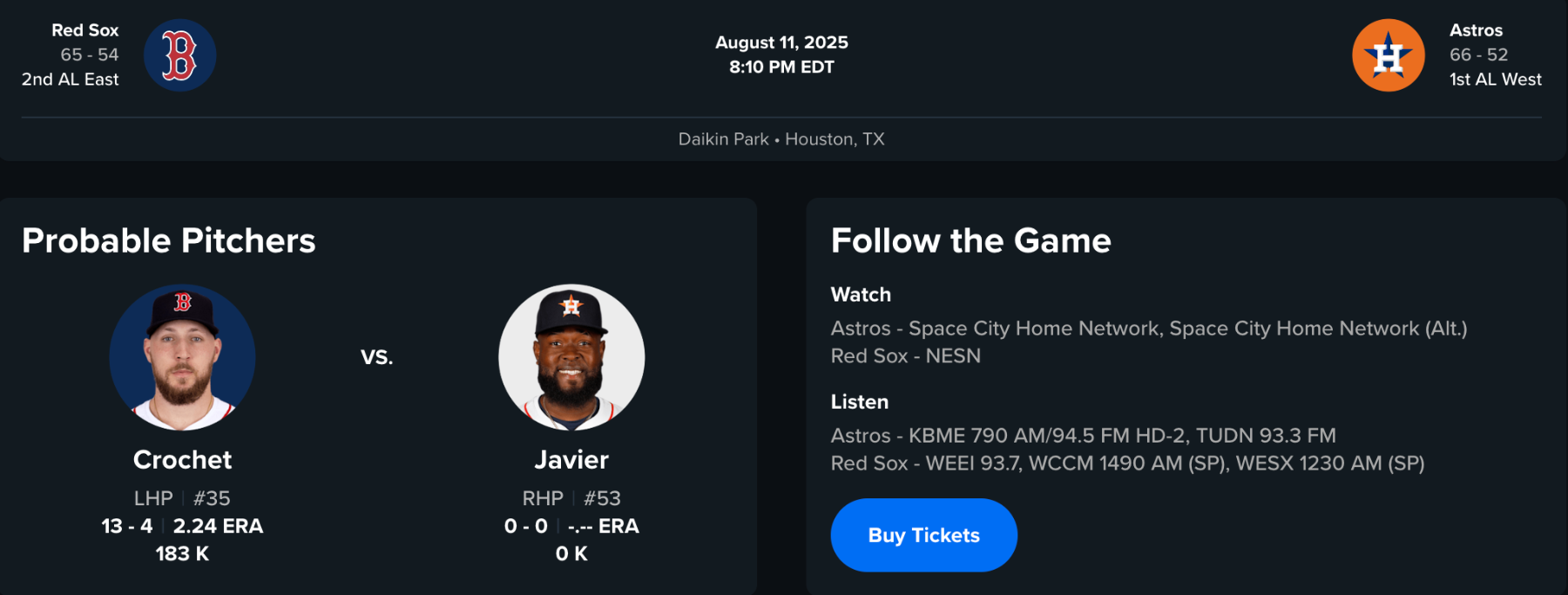
This is about as favorable of a pitching matchup as you'll ever see. Christian Javier has been out 14 months with Tommy John surgery, and he walked 15 guys in 14 innings on his rehab assignment.
-
On July 9, Masataka Yoshida returned to the Boston Red Sox's lineup following a long, first-half-spanning hiatus due to an involved offseason shoulder surgery. There were rumors last offseason that the team was looking to trade him, with the intention of both freeing up payroll and an outfield spot in anticipation of Roman Anthony's debut. Obviously, that trade didn't come to fruition thanks to the shoulder injury. So, for at least the next few months, Yoshida is set to be a semi-regular staple in the lineup, and the good news is he looks more or less exactly like the player we've come to expect over the past few seasons. Since signing a five-year, $90-million contract in December 2022, Yoshida hasn't quite delivered on the great ceiling that his seven-year run in the NPB with the Orix Buffaloes portended: a .327/.421/.539 slash line with 133 home runs. Over his first two seasons with the Red Sox, the designated hitter played in 248 of a possible 324 games, accrued 2.8 WAR, posted an OPS of .775 and wRC+ of 112, and produced 82 extra-base hits. Through 18 games in 2025 (not including his 0-for-3 performance on Sunday), Yoshida is slashing .258/.288/.419, good for an 89 wRC+. A slight setback in production, to be sure, but add the usual small sample caveats to the fact that he's still knocking off the rust from his extended break, and he's generally performing in line with expectations. The underlying numbers generally tell the same story. By negligible margins, his batting average is down from last year but his expected batting average is up, and the opposite his true for his slugging. His wOBA has trended down since his rookie year in 2023, though he's hitting the ball harder than ever this season (42.3% hard-hit rate, 91.0 mph average exit velocity). He's barreling up more balls than he has in the past and he's chasing less, but he's whiffing and striking out more while walking less. Add it all up, and you get a guy who, for all intents and purposes, is Masataka Yoshida. Hardly groundbreaking analysis, I know, but that's sort of the point. Given the data we have thus far, all we can really say about the Japanese outfielder is that the shoulder injury hasn't impacted his approach or talents too much. If you want something to pinpoint as the reason for his minor struggles since returning, it's clear that Yoshida's timing is off. His in-zone and out-of-zone (chase) contact rates have always been leagues better than the MLB average thanks to his exceptional bat control, though that also means that, in certain circumstances, he gets punished for poor timing more than most. It's one thing to be late on a fastball and swing and miss at it (or weakly foul it off); it's another thing to be late on a fastball and punch a weak ground out to third base because your bat stays in the zone for so long. Unfortunately, as is wont to happen with players returning from long layoffs, Yoshida's timing is still a work in progress. Fastballs have long been his bread and butter—.445 wOBA against such pitches in 2023, .371 wOBA in 2024—but he's down to a below-average .306 wOBA against heaters in 2025. Consider that his hard-hit rate against fastballs is actually up to 53.8% this year (a career high), and you have a relatively clear picture of a guy who can still crush them when he guesses right... but it's clear that he's doing just that: guessing. Again, the sample sizes are so small for other offerings that it's impossible to draw relevant conclusions for them, but he is hitting sliders, splitters, and sweepers better this year, suggesting that he may just be a bit late in his swing process right now, hence why he's hitting slow stuff better and hard stuff worse. Beyond the batter's box, he's played all of two games in the outfield thus far, which is also to be expected following shoulder surgery. It was actually in 2024 that he became the Red Sox's full-time designated hitter (following his rookie season in which he provided -8 Outs Above Average in more than 700 innings), so even a healthy shoulder isn't going to get Yoshida playing time in Boston's crowded outfield glut. As a designated hitter who can fill in somewhat capably as a fourth or fifth outfielder, his value on defense will always come from his ability to give other guys a day of rest without having to maneuver the 26-man roster around. And... that's about it with Yoshida. He's never been a particularly good baserunner, his home and road splits aren't drastic enough to bear mentioning (his career OPS is 50 points higher at Fenway), and while he seems to be well-liked in the clubhouse, he certainly isn't one of the leaders on the team. He is what he is: a solid left-handed hitter who can play a passable left or right field in a pinch. It's nice to see that he's still capable of producing at his usual rate following a serious shoulder injury. But, for anyone hoping he'd evolve into something more than he's previously shown, it's probably time to divert that optimism elsewhere. View full article
-
Masataka Yoshida's Return to Red Sox Has Gone Exactly as Expected
Brandon Glick posted an article in Red Sox
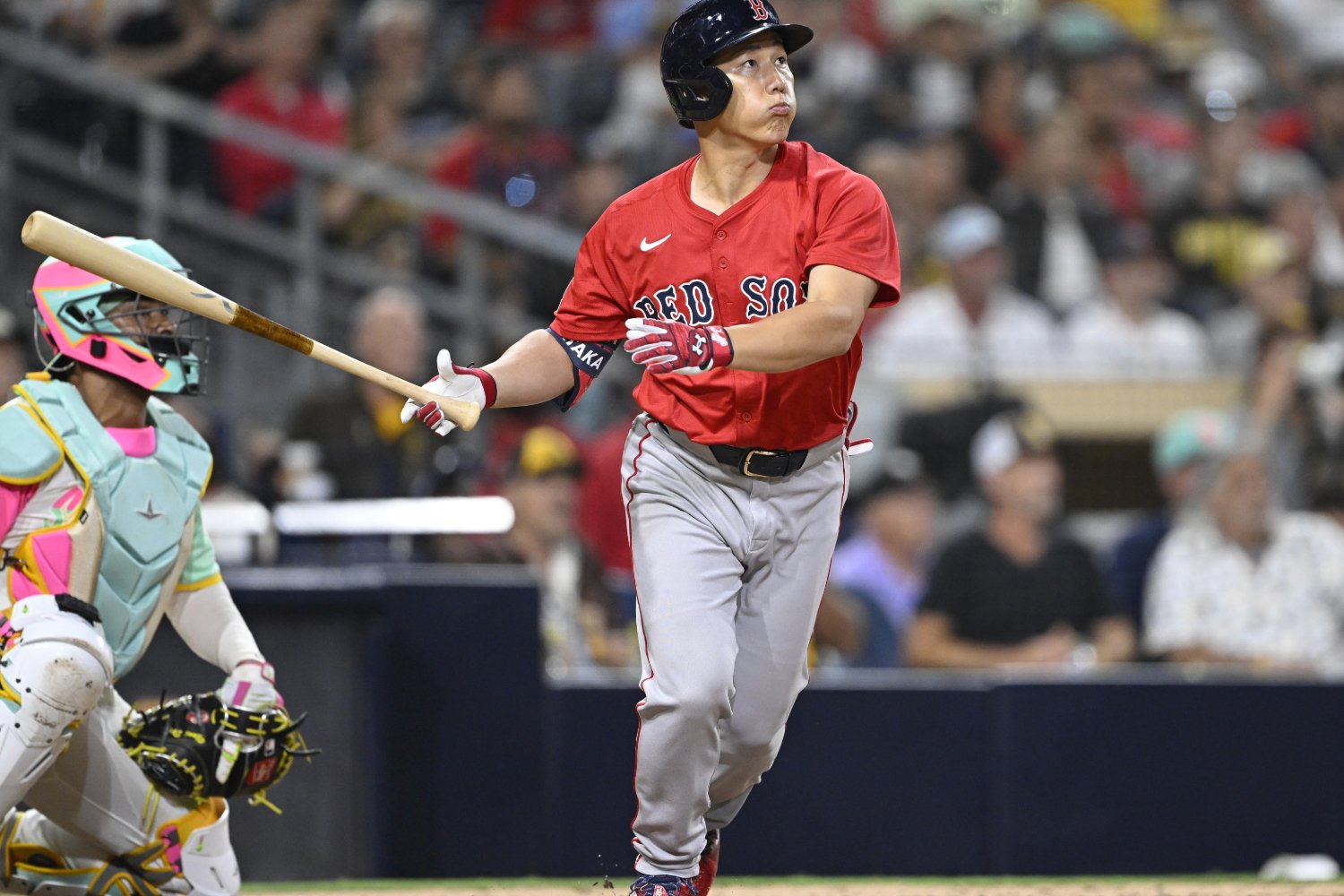 On July 9, Masataka Yoshida returned to the Boston Red Sox's lineup following a long, first-half-spanning hiatus due to an involved offseason shoulder surgery. There were rumors last offseason that the team was looking to trade him, with the intention of both freeing up payroll and an outfield spot in anticipation of Roman Anthony's debut. Obviously, that trade didn't come to fruition thanks to the shoulder injury. So, for at least the next few months, Yoshida is set to be a semi-regular staple in the lineup, and the good news is he looks more or less exactly like the player we've come to expect over the past few seasons. Since signing a five-year, $90-million contract in December 2022, Yoshida hasn't quite delivered on the great ceiling that his seven-year run in the NPB with the Orix Buffaloes portended: a .327/.421/.539 slash line with 133 home runs. Over his first two seasons with the Red Sox, the designated hitter played in 248 of a possible 324 games, accrued 2.8 WAR, posted an OPS of .775 and wRC+ of 112, and produced 82 extra-base hits. Through 18 games in 2025 (not including his 0-for-3 performance on Sunday), Yoshida is slashing .258/.288/.419, good for an 89 wRC+. A slight setback in production, to be sure, but add the usual small sample caveats to the fact that he's still knocking off the rust from his extended break, and he's generally performing in line with expectations. The underlying numbers generally tell the same story. By negligible margins, his batting average is down from last year but his expected batting average is up, and the opposite his true for his slugging. His wOBA has trended down since his rookie year in 2023, though he's hitting the ball harder than ever this season (42.3% hard-hit rate, 91.0 mph average exit velocity). He's barreling up more balls than he has in the past and he's chasing less, but he's whiffing and striking out more while walking less. Add it all up, and you get a guy who, for all intents and purposes, is Masataka Yoshida. Hardly groundbreaking analysis, I know, but that's sort of the point. Given the data we have thus far, all we can really say about the Japanese outfielder is that the shoulder injury hasn't impacted his approach or talents too much. If you want something to pinpoint as the reason for his minor struggles since returning, it's clear that Yoshida's timing is off. His in-zone and out-of-zone (chase) contact rates have always been leagues better than the MLB average thanks to his exceptional bat control, though that also means that, in certain circumstances, he gets punished for poor timing more than most. It's one thing to be late on a fastball and swing and miss at it (or weakly foul it off); it's another thing to be late on a fastball and punch a weak ground out to third base because your bat stays in the zone for so long. Unfortunately, as is wont to happen with players returning from long layoffs, Yoshida's timing is still a work in progress. Fastballs have long been his bread and butter—.445 wOBA against such pitches in 2023, .371 wOBA in 2024—but he's down to a below-average .306 wOBA against heaters in 2025. Consider that his hard-hit rate against fastballs is actually up to 53.8% this year (a career high), and you have a relatively clear picture of a guy who can still crush them when he guesses right... but it's clear that he's doing just that: guessing. Again, the sample sizes are so small for other offerings that it's impossible to draw relevant conclusions for them, but he is hitting sliders, splitters, and sweepers better this year, suggesting that he may just be a bit late in his swing process right now, hence why he's hitting slow stuff better and hard stuff worse. Beyond the batter's box, he's played all of two games in the outfield thus far, which is also to be expected following shoulder surgery. It was actually in 2024 that he became the Red Sox's full-time designated hitter (following his rookie season in which he provided -8 Outs Above Average in more than 700 innings), so even a healthy shoulder isn't going to get Yoshida playing time in Boston's crowded outfield glut. As a designated hitter who can fill in somewhat capably as a fourth or fifth outfielder, his value on defense will always come from his ability to give other guys a day of rest without having to maneuver the 26-man roster around. And... that's about it with Yoshida. He's never been a particularly good baserunner, his home and road splits aren't drastic enough to bear mentioning (his career OPS is 50 points higher at Fenway), and while he seems to be well-liked in the clubhouse, he certainly isn't one of the leaders on the team. He is what he is: a solid left-handed hitter who can play a passable left or right field in a pinch. It's nice to see that he's still capable of producing at his usual rate following a serious shoulder injury. But, for anyone hoping he'd evolve into something more than he's previously shown, it's probably time to divert that optimism elsewhere.
 -
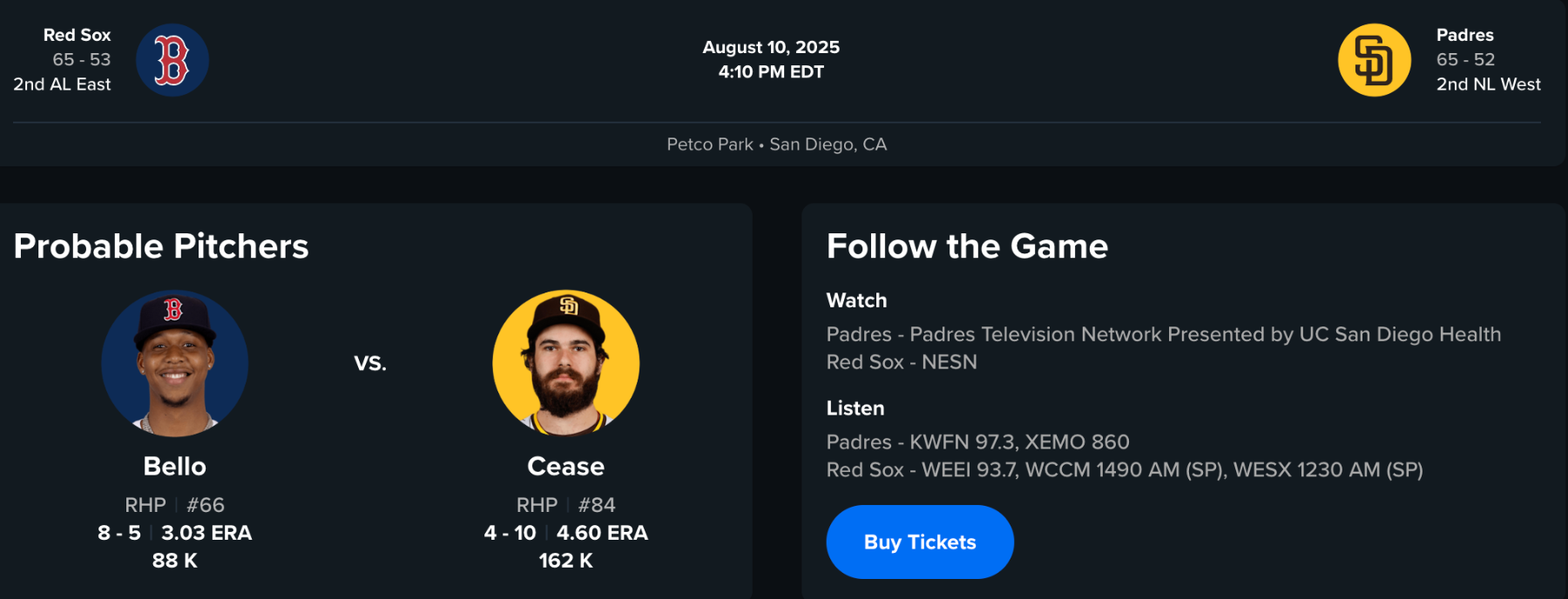
Hopefully, Cease doesn't make the Sox regret not trading for him today.
-
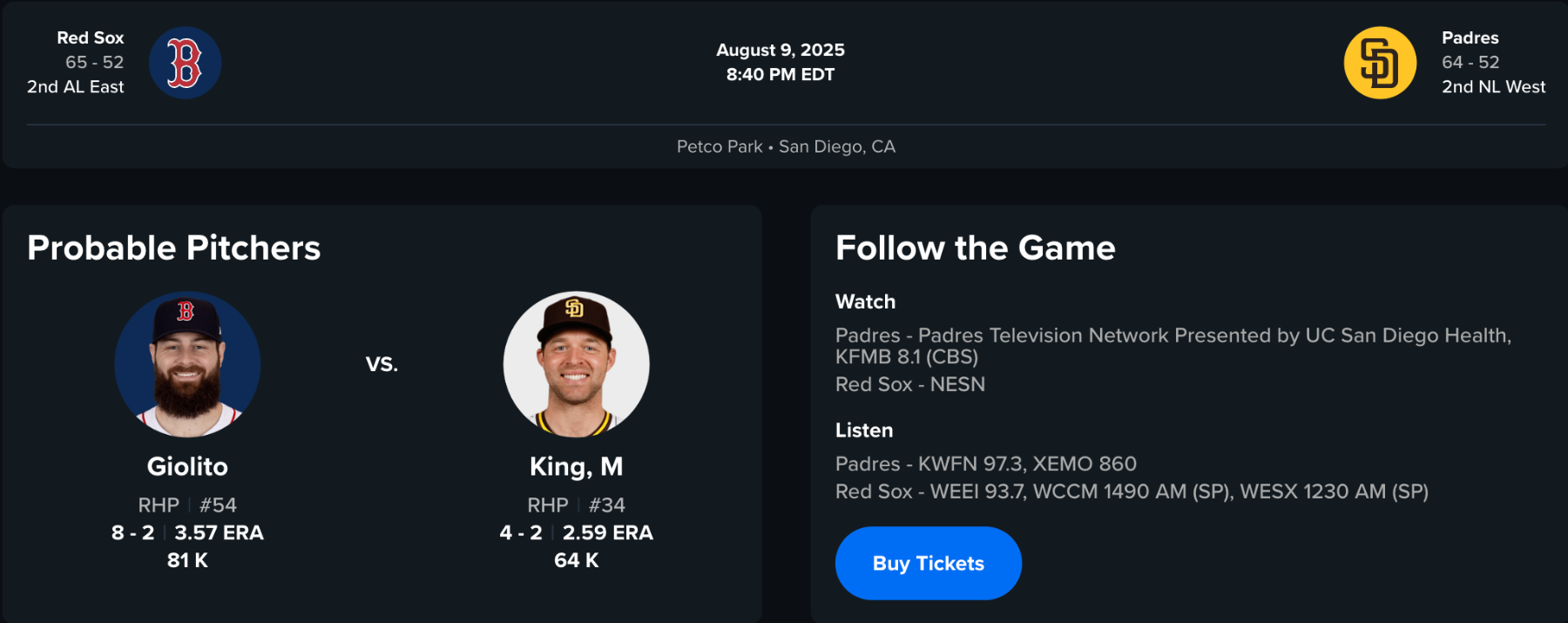
Connor Wong has a 1.000 OPS against King (in five at-bats)... season-changing performance incoming?
-
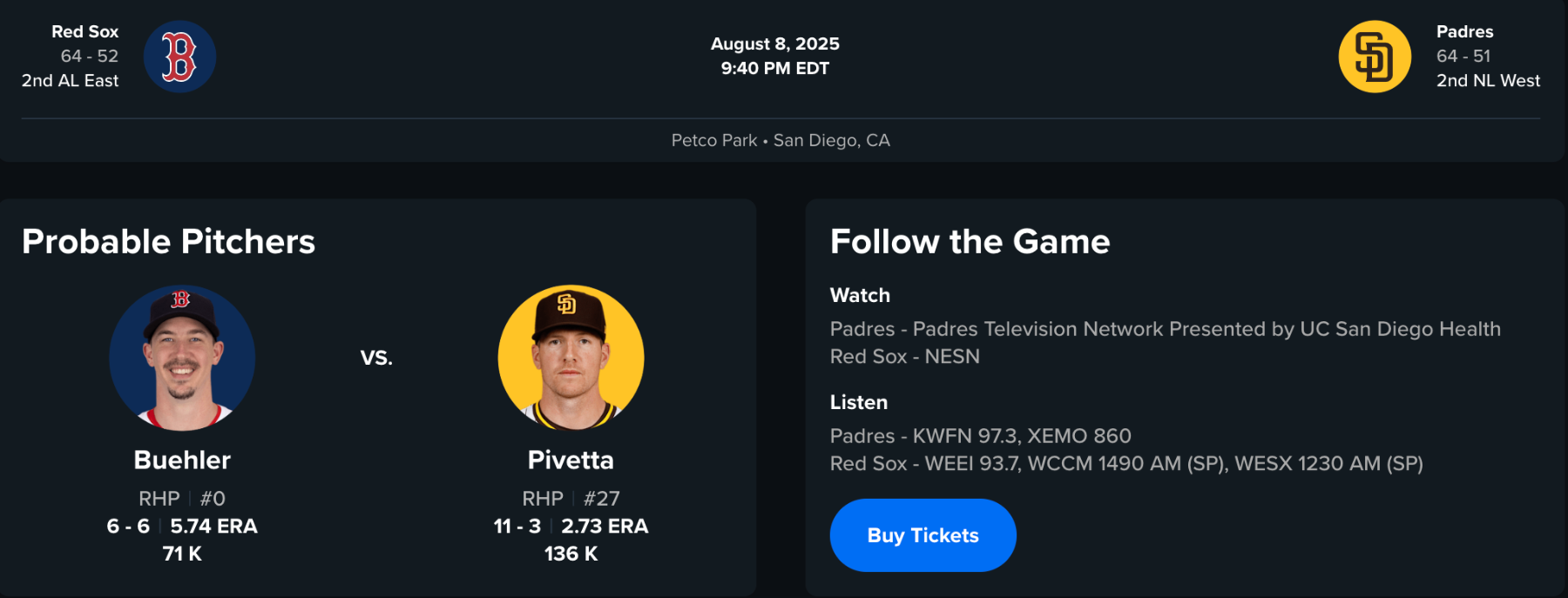
Whichever one of you had "Nick Pivetta leaves Red Sox after stunningly declining QO and becomes Cy Young contender instantly in San Diego" on your bingo card, please come claim your prize.
-
They've bottomed out in 2025, but it wasn't too long ago that the Atlanta Braves were the talk of the baseball world. The 2021 World Series champions went on to win 205 combined games over the next two seasons, ultimately falling short in the NLDS against the Philadelphia Phillies in both campaigns. In conjunction with their recent performance, that's put a damper on what was once MLB's most exciting core of young stars, though the foundation of that winning culture remains intact. Ronald Acuna Jr., Michael Harris II, Matt Olson, Austin Riley, Spencer Strider, Sean Murphy, and Ozzie Albies. A veritable list of All-Stars, MVP winners and Cy Young candidates. Those are the core players who signed long-term, team-friendly extensions that greased the wheels for the Braves' run of dominance, as they facilitated external moves like the signing of Marcell Ozuna or the trade for Chris Sale. Of course, those deals weren't always "team-friendly". The players had to perform well enough to justify that classification. A long-term injury here, or a breakdown in mechanics there could have derailed any one of those deals, which could have sent the whole organization into a tailspin. Spending $21 million per season on Austin Riley at third base is a bargain; spending $36 million combined on, say, Ryan McMahon to cover for an injured Austin Riley at third base is how windows of contention get slammed shut. That "Braves Model" that was the talk of the town a few years ago never really caught on elsewhere despite the franchise's success because, well, it's not really a model you can just choose to follow. It requires organizational buy-in at every level, from players and coaches to scouts and executives, to execute properly. Look at the Chicago White Sox circa 2021—they won 93 games and the AL Central behind a great farm system and a group of extended youngsters (chiefly Eloy Jimenez and Luis Robert Jr.). Then, they finished 81-81 the next season, and the franchise completely collapsed behind horrid front office decisions, poor managing, and a host of nonstop injuries to their young core. Well, leave it to the Red Sox to take that cautionary tale and brush it aside. The team took the savings from the widely-panned Rafael Devers trade and spent a chunk of them on Roman Anthony, inking the superstar rookie to an eight-year, $130 million extension. Anthony's contract is by the far the largest of the Red Sox's new core, and the third-largest ever signed by an outfielder under 22 years old (we'll have more on that topic from the excellent @Braden Ramsey later this week). He is now thrust into the face of the franchise role that Acuña assumed with the Braves when he inked his own nine-digit extension as a 21-year-old, and one can only hope he lives up to the MVP and World Series path that Acuña has forged. As a reminder, in Craig Breslow's tenure, the Red Sox have extended the following pre-arb players: Roman Anthony: eight years and $130 million (begins in 2026, club option for 2034) Brayan Bello: six years and $55 million (began in 2024, club option for 2030) Kristian Campbell: eight years and $60 million (began in 2025, club options for 2033 and 2034) Ceddanne Rafaela: eight years and $50 million (began in 2024, club option for 2032) That list doesn't include ace Garrett Crochet, who signed in arbitration after being acquired via trade. His contract is for six years and $170 million, and comes equipped with a player option for 2031. So, that's an ace pitcher, a star outfielder, a solid mid-rotation pitcher, a big-hitting infielder, and a stellar defensive center fielder. That's a pretty solid core to build the future of the team around—they are all under contract through the end of the decade at least—and mirrors the Braves' extensions remarkably well. The team has identified the players it plans to build around, and a few others (Wilyer Abreu, Marcelo Mayer, Carlos Narváez) have proven worthy of being added to this growing list of foundational Red Sox players. If you didn't believe it before, the Anthony extension (and preceding trade deadline) are loud statements from the organization: This era of Boston baseball will be built from within, and the players who check off the internal development boxes will be rewarded. That's certainly not to say there aren't outside additions coming—Crochet himself is proof that the team will splurge where it deems fit to do so—but it is a commitment to what Craig Breslow and company have been building since they stepped foot inside the front office. There's no telling how this will all pan out. The Braves were unstoppable until they weren't. The White Sox never even got off the ground. Last year's World Series participants (the Yankees and Dodgers) got there primarily from the contributions of big trade acquisitions and free-agent splurges. It isn't as flashy as what the Dodgers or Yankees do, but the Red Sox are going for something different—something more sustainable (or, at least, more sustainable than the Yankees; the Dodgers are a one-off freak show in terms of consistent dominance). With Anthony now set to lead the charge, it's hard not to start getting excited about what this new era of Red Sox baseball could look like. View full article
-
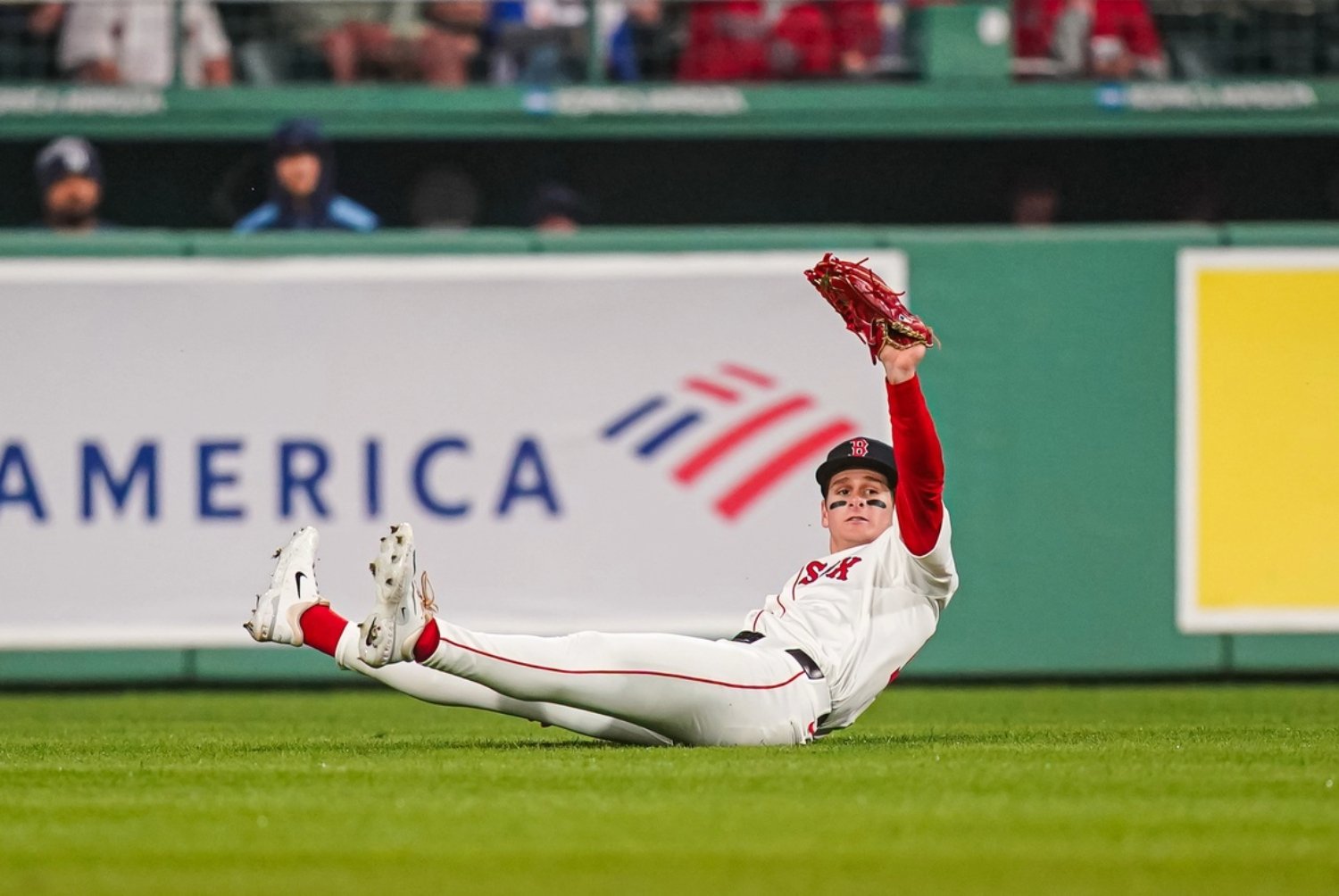 They've bottomed out in 2025, but it wasn't too long ago that the Atlanta Braves were the talk of the baseball world. The 2021 World Series champions went on to win 205 combined games over the next two seasons, ultimately falling short in the NLDS against the Philadelphia Phillies in both campaigns. In conjunction with their recent performance, that's put a damper on what was once MLB's most exciting core of young stars, though the foundation of that winning culture remains intact. Ronald Acuna Jr., Michael Harris II, Matt Olson, Austin Riley, Spencer Strider, Sean Murphy, and Ozzie Albies. A veritable list of All-Stars, MVP winners and Cy Young candidates. Those are the core players who signed long-term, team-friendly extensions that greased the wheels for the Braves' run of dominance, as they facilitated external moves like the signing of Marcell Ozuna or the trade for Chris Sale. Of course, those deals weren't always "team-friendly". The players had to perform well enough to justify that classification. A long-term injury here, or a breakdown in mechanics there could have derailed any one of those deals, which could have sent the whole organization into a tailspin. Spending $21 million per season on Austin Riley at third base is a bargain; spending $36 million combined on, say, Ryan McMahon to cover for an injured Austin Riley at third base is how windows of contention get slammed shut. That "Braves Model" that was the talk of the town a few years ago never really caught on elsewhere despite the franchise's success because, well, it's not really a model you can just choose to follow. It requires organizational buy-in at every level, from players and coaches to scouts and executives, to execute properly. Look at the Chicago White Sox circa 2021—they won 93 games and the AL Central behind a great farm system and a group of extended youngsters (chiefly Eloy Jimenez and Luis Robert Jr.). Then, they finished 81-81 the next season, and the franchise completely collapsed behind horrid front office decisions, poor managing, and a host of nonstop injuries to their young core. Well, leave it to the Red Sox to take that cautionary tale and brush it aside. The team took the savings from the widely-panned Rafael Devers trade and spent a chunk of them on Roman Anthony, inking the superstar rookie to an eight-year, $130 million extension. Anthony's contract is by the far the largest of the Red Sox's new core, and the third-largest ever signed by an outfielder under 22 years old (we'll have more on that topic from the excellent @Braden Ramsey later this week). He is now thrust into the face of the franchise role that Acuña assumed with the Braves when he inked his own nine-digit extension as a 21-year-old, and one can only hope he lives up to the MVP and World Series path that Acuña has forged. As a reminder, in Craig Breslow's tenure, the Red Sox have extended the following pre-arb players: Roman Anthony: eight years and $130 million (begins in 2026, club option for 2034) Brayan Bello: six years and $55 million (began in 2024, club option for 2030) Kristian Campbell: eight years and $60 million (began in 2025, club options for 2033 and 2034) Ceddanne Rafaela: eight years and $50 million (began in 2024, club option for 2032) That list doesn't include ace Garrett Crochet, who signed in arbitration after being acquired via trade. His contract is for six years and $170 million, and comes equipped with a player option for 2031. So, that's an ace pitcher, a star outfielder, a solid mid-rotation pitcher, a big-hitting infielder, and a stellar defensive center fielder. That's a pretty solid core to build the future of the team around—they are all under contract through the end of the decade at least—and mirrors the Braves' extensions remarkably well. The team has identified the players it plans to build around, and a few others (Wilyer Abreu, Marcelo Mayer, Carlos Narváez) have proven worthy of being added to this growing list of foundational Red Sox players. If you didn't believe it before, the Anthony extension (and preceding trade deadline) are loud statements from the organization: This era of Boston baseball will be built from within, and the players who check off the internal development boxes will be rewarded. That's certainly not to say there aren't outside additions coming—Crochet himself is proof that the team will splurge where it deems fit to do so—but it is a commitment to what Craig Breslow and company have been building since they stepped foot inside the front office. There's no telling how this will all pan out. The Braves were unstoppable until they weren't. The White Sox never even got off the ground. Last year's World Series participants (the Yankees and Dodgers) got there primarily from the contributions of big trade acquisitions and free-agent splurges. It isn't as flashy as what the Dodgers or Yankees do, but the Red Sox are going for something different—something more sustainable (or, at least, more sustainable than the Yankees; the Dodgers are a one-off freak show in terms of consistent dominance). With Anthony now set to lead the charge, it's hard not to start getting excited about what this new era of Red Sox baseball could look like.
 -
Oh absolutely. His approach is a true all-fields one, and though it'll dampen his power numbers, it's certainly not hurting his overall production. He might never evolve beyond what he is right now—a pure platoon threat—but that's still a rather valuable player to have on the roster, especially if Refsnyder rides off into the sunset this winter.
-
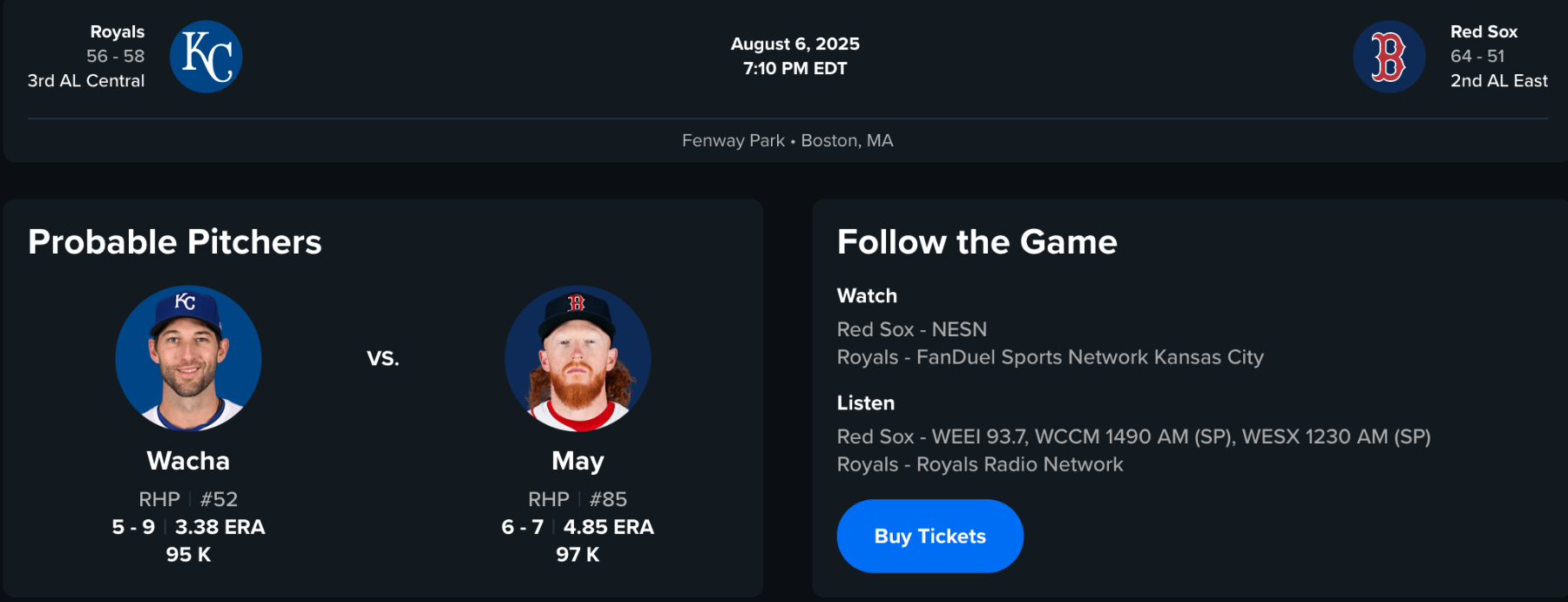
Dustin May debut. His last start? On July 27, when the Red Sox got to him for four runs in five innings.
-
 In part two of our analysis of the Red Sox's short-side platoon success, I figured it'd be fun to directly compare today's subject, Romy Gonzalez, with Rob Refsnyder (our topic of conversation yesterday). I won't rehash what we spoke about in the Refsnyder piece, but it's worth noting up top that he's deriving most of his success from pulling the ball, while also sacrificing some production against off-speed pitches to better prepare for fastballs and breaking balls. Like Gonzalez, Refsnyder plays primarily against southpaws; Gonzalez draws 53.4% of his plate appearances against lefties, compared to 72.3% for Refsnyder. Here are their stats in those situations: Refsnyder: .287/.384/.521, 144 wRC+, five home runs, 25.0% strikeout rate, 13.4% walk rate Gonzalez: .337/.392/.663, 184 wRC+, six home runs, 26.4% strikeout rate, 8.5% walk rate We've already spoken at length about what Gonzalez does to left-handed pitching, but it's fascinating to compare him to the team's designated lefty destroyer and see just how good he's gotten at the job. His 1.063 OPS against southpaws this season ranks fourth in all of baseball, behind only Aaron Judge (1.281), Paul Goldschmidt (1.181), and Cal Raleigh (1.082). His .323 ISO ranks fifth, his slugging percentage ranks fourth, and his on-base percentage ranks just outside the top ten. By all accounts, he is one of the five-to-ten best hitters against left-handed pitchers in baseball this season. Let's dig a bit deeper. Among qualified hitters against left-handed pitchers, he ranks tied for second in BABIP (.429). That's kind of a "yikes" stat in a vacuum, but consider that he's also spreading the ball to all fields pretty well—his 31.9% opposite field batted ball rate is 23rd in baseball against southpaws—and owns the sixth-highest hard-hit rate (46.4%). Plain and simple, he owns lefties, and whatever "luck" he gets is well deserved given his quality of contact. Unlike Refsnyder, Gonzalez is hitting every pitch type better this year, but he's experienced a drastic uptick in production against breaking balls. His wOBA this season against the breaking stuff is at .441, more than doubling his .215 mark a year ago. To put that into context, Nick Kurtz ranks second in baseball with a .430 wOBA, and LaMonte Wade Jr. ranks last with a .242 mark. Gonzalez's xwOBA against such pitches (.331) betrays that a little bit, but he's still more than tightened up the most problematic hole in his approach. For what it's worth, Gonzalez is actually still pretty bad at pulling the ball in the air (13.2%), which is problematic considering that he plays half his games in Fenway Park. If he can improve upon his plate discipline—his chase (33.4%) and whiff rates (32.3%) are in the bottom-quartile among all hitters this year—he can probably drive a few more of those balls to left, rather than punching them weakly to right. Nevertheless, you'll live with some of that swing and miss if he can continue to attack lefties in his preferred manner. Overall, the Red Sox have two of the very best hitters in baseball against left-handed pitchers. Considering that first base and designated hitter remain fluid in Alex Cora's lineup, that's a valuable thing to have when trying to play the platoon advantage, especially off the bench late in games. The presence of Gonzalez (and Refsnyder) shouldn't preclude the front office from trying to make a permanent upgrade over the offseason, but the Red Sox's offense has been thriving this year thanks to the versatility of its myriad pieces. Without the two "lefty mashers", it's hard to think the story would be the same.
 -
In part two of our analysis of the Red Sox's short-side platoon success, I figured it'd be fun to directly compare today's subject, Romy Gonzalez, with Rob Refsnyder (our topic of conversation yesterday). I won't rehash what we spoke about in the Refsnyder piece, but it's worth noting up top that he's deriving most of his success from pulling the ball, while also sacrificing some production against off-speed pitches to better prepare for fastballs and breaking balls. Like Gonzalez, Refsnyder plays primarily against southpaws; Gonzalez draws 53.4% of his plate appearances against lefties, compared to 72.3% for Refsnyder. Here are their stats in those situations: Refsnyder: .287/.384/.521, 144 wRC+, five home runs, 25.0% strikeout rate, 13.4% walk rate Gonzalez: .337/.392/.663, 184 wRC+, six home runs, 26.4% strikeout rate, 8.5% walk rate We've already spoken at length about what Gonzalez does to left-handed pitching, but it's fascinating to compare him to the team's designated lefty destroyer and see just how good he's gotten at the job. His 1.063 OPS against southpaws this season ranks fourth in all of baseball, behind only Aaron Judge (1.281), Paul Goldschmidt (1.181), and Cal Raleigh (1.082). His .323 ISO ranks fifth, his slugging percentage ranks fourth, and his on-base percentage ranks just outside the top ten. By all accounts, he is one of the five-to-ten best hitters against left-handed pitchers in baseball this season. Let's dig a bit deeper. Among qualified hitters against left-handed pitchers, he ranks tied for second in BABIP (.429). That's kind of a "yikes" stat in a vacuum, but consider that he's also spreading the ball to all fields pretty well—his 31.9% opposite field batted ball rate is 23rd in baseball against southpaws—and owns the sixth-highest hard-hit rate (46.4%). Plain and simple, he owns lefties, and whatever "luck" he gets is well deserved given his quality of contact. Unlike Refsnyder, Gonzalez is hitting every pitch type better this year, but he's experienced a drastic uptick in production against breaking balls. His wOBA this season against the breaking stuff is at .441, more than doubling his .215 mark a year ago. To put that into context, Nick Kurtz ranks second in baseball with a .430 wOBA, and LaMonte Wade Jr. ranks last with a .242 mark. Gonzalez's xwOBA against such pitches (.331) betrays that a little bit, but he's still more than tightened up the most problematic hole in his approach. For what it's worth, Gonzalez is actually still pretty bad at pulling the ball in the air (13.2%), which is problematic considering that he plays half his games in Fenway Park. If he can improve upon his plate discipline—his chase (33.4%) and whiff rates (32.3%) are in the bottom-quartile among all hitters this year—he can probably drive a few more of those balls to left, rather than punching them weakly to right. Nevertheless, you'll live with some of that swing and miss if he can continue to attack lefties in his preferred manner. Overall, the Red Sox have two of the very best hitters in baseball against left-handed pitchers. Considering that first base and designated hitter remain fluid in Alex Cora's lineup, that's a valuable thing to have when trying to play the platoon advantage, especially off the bench late in games. The presence of Gonzalez (and Refsnyder) shouldn't preclude the front office from trying to make a permanent upgrade over the offseason, but the Red Sox's offense has been thriving this year thanks to the versatility of its myriad pieces. Without the two "lefty mashers", it's hard to think the story would be the same. View full article