


Brandon Glick
-
Posts
587 -
Joined
-
Last visited
Content Type
Profiles
Boston Red Sox Videos
2026 Boston Red Sox Top Prospects Ranking
Boston Red Sox Free Agent & Trade Rumors, Notes, & Tidbits
Guides & Resources
2025 Boston Red Sox Draft Pick Tracker
News
2026 Boston Red Sox Draft Tracker: Picks & Bonuses
Forums
Blogs
Events
Store
Downloads
Gallery
Everything posted by Brandon Glick
-
Hello all! For the 366th day in a row, I welcome you to the renewed Talk Sox website. Today is a special one, as it marks the one-year anniversary of the site's relaunch! It's hard to believe we're already here, but time flies when you're having fun. Thank you all so much for your support over the past year. There's been a lot of changes to the site and our content team over the last 12 months, so we thought it would be wise to do a "meet the staff" piece to get our readers acquainted with our writers again. This isn't an exhaustive list of the contributors on the site (participation was not mandatory for this activity), but it will include the names and bylines you see most often. Of course, I'd be remiss not to give huge shoutouts to @Davy Andrews, our original managing editor who supplied us with top-of-the-line coverage as we got things off the ground, and @Brock Beauchamp, our fearless leader who probably knows too much about too many baseball teams at this point. Without further ado, lets's (re)introduce the staff! @Brandon Glick Title: Site Manager (DiamondCentric), Interim Managing Editor (Talk Sox) Favorite Team Besides Red Sox: Cubs Favorite Piece at Talk Sox: Thank You, Jarren Duran I am a Site Manager across the DiamondCentric suite of sites, which now covers seven teams across Major League Baseball. Talk Sox was the fifth addition to that family (fourth wholly owned and operated by DC), and it’s hard to believe it’s already been a year since the site was relaunched under that banner! I have been a Red Sox fan for quite some time, despite growing up in the New Jersey/New York area. My father is a die-hard Yankees fan, so we squabble quite a bit over the rivalry. We do tend to agree that Aaron Boone is a dunce, though. As many of you may remember, the great Davy Andrews was our managing editor during the early stages of our relaunch, and when he moved to FanGraphs full time, I stepped in as the de facto lead editor at Talk Sox. Most every piece you see on the site has passed by my eyes at least once, so please continue to call me out anytime I let a usage of “the MLB” slip past me. In recent months, I have moved into a quasi-interim managing editor role, though fret not, the search for a true replacement for Davy remains ongoing. Beyond my writing and editing duties on the site, you’ve likely seen my videos with my good friend Ethan Staple, and you’ve surely been annoyed by my presence in the forums, game threads, and blogs at some point or another. When I'm not writing about baseball (or football), I'm generally working in a creative field. I've written and directed two short films (you can check out the first one here), and my first-ever novel is being published next month, exclusively on Amazon and Kindle. Thank you all so much for sticking with us through this first year of the new Talk Sox, and continuing to believe in the work we’re doing. Engaging with all of you on a professional level is a privilege, and the intelligence of Red Sox fans remains unmatched relative to other fanbases. We are excited to continue expanding our coverage and community in Year Two! @Nick John Title: Contributing Writer (Talk Sox) Favorite Team Besides Red Sox: Pittsburgh Pirates Favorite Piece at Talk Sox: 5 Prospects the Red Sox Could Trade if They Decide to be Trade Deadline Buyers I joined the Talk Sox team back in late September of 2024, but didn’t start writing until the end of October. I've written countless articles on both the major league team in Boston and the various prospects across the minor league system. It’s been an enjoyable year working alongside so many talented individuals, and I look forward to continue contributing however I can. I’ve been a Red Sox fan for as long as I can remember, being born in Massachusetts and playing baseball from the time that I could play in my town’s Tee-ball league. Of course, my extreme fascination and need to follow every little thing with the team didn’t truly start until I was around 11 and in fifth grade. My friends and family knew me as a huge Red Sox fan to the point I practically wore Red Sox shirts almost every day to school from sixth to tenth grade. I have so many memories from watching the Red Sox both in person and at home that I could probably write an entire book about them, but that’s what makes baseball so great; you never know what might happen any night. This season, I took my first trip down to Greenville to watch the Drive and it was a fun (but extremely hot) time. The entire Drive organization put on a great experience. Since 2021, I’ve been a season ticket holder for the Worcester Red Sox, so if you go to any games, there’s a good chance you’ve unknowingly seen me there. Outside of baseball and writing for Talk Sox, I work as a history teacher, previously for middle school but now entering my second year of teaching high school. @Alex Mayes Title: Contributing Writer, Co-Host of the Talk Sox Podcast Favorite Team Besides Red Sox: Seattle Mariners Favorite Piece at Talk Sox: It’s Time to Give Brayan Bello His Flowers I’m a Missouri born-and-raised baseball fan, but I have no allegiance to the Cardinals or Royals. Although, my biggest baseball claim to fame was that I was sitting not far behind home plate when Mark McGwire hit his 62nd home run against Sammy Sosa’s Cubs. My love for the Red Sox started when I began to take baseball seriously as a player, but that career didn’t last much past Junior Babe Ruth. I was a catcher for almost every team I played summer ball for, and I sought out catchers to pattern myself after. Enter Jason Varitek. I fell in love with how he handled his pitching staff, called each game, and was an ever-looming presence any time he stepped on the field. Plus, the A-Rod fight was awesome. As a catcher I wanted to be like Tek, so I watched as many Red Sox games as possible, which was difficult in the late 90s and early 2000s. Then, in 2004, my Red Sox showed up the Cardinals in the World Series to break the curse and I became public nuisance number one at school for the remainder of the semester. My love for the Red Sox only grew from there. In my day-to-day life, I’m a Pre-AP/Honors ELA teacher at my local high school. Interestingly enough, my now-best-friend emailed me the first day of my first year and said 'So, you’re a Sox fan too huh?’ and our friendship was born over a love of all things Boston. I’m very grateful for the opportunity to cover the team I love through Talk Sox. The community we’ve built over the last year has been impressive and I enjoy interacting with everyone in the comment sections on each article I can. I had been out of the journalism game for a few years and jumped at the chance to finally chase down a bucket list item of mine, writing about the Red Sox for other people to read. Outside of baseball, I’m a father, teacher, and musician. I enjoy cooking pretty much every night for my family, especially when I can fire up the smoker and make way too much BBQ for everyone. My wife and I consider ourselves to be ‘foodies’ and we often plan vacations around what restaurants we will be going to during the trip before anything else. Our favorite vacation spot is Las Vegas, but we’re currently planning a trip to Boston next summer to finally experience some games at Fenway Park. @Maddie Landis Title: Contributing Writer, Co-Host on the Talk Sox Podcast Favorite Team Besides Red Sox: Wherever Spencer Strider and Shohei Ohtani are playing Favorite Piece at Talk Sox: The Power of Scott Boras, Team-Friendly Extensions, & The Changing Dynamics Of Baseball Business I’ve lived in Pennsylvania for most of my life. As a baby, I was adopted from China. Although we’re not biologically related, my parents have bestowed many of their beliefs and values upon me. Much to their dismay, they couldn’t pass their love for the Phillies onto me. Growing up, I’d visit my relatives in Brookline every summer. In the early 2000s, the Red Sox were right in the heart of Boston, and their presence was felt in every corner of the city. I savored freshly baked Red Sox sugar cookies from Cheryl Ann’s Bakey, which was located across the street from my aunt and uncle’s old home. Coming from rural Pennsylvania, I admired the walkability of Brookline. My uncle and cousin watched the Red Sox every night in their living room. As a young, eager-to-impress child, I wanted to follow along when they talked about baseball, so I joined them. The American League expanded my knowledge of the baseball world. Pitchers didn’t bat; teams had a designated hitter. Jason Varitek fought Alex Rodriguez! Fenway Park had a green 37-foot wall in left field and a cute mascot that lived in it! Immediately, I was hooked. I’m super grateful for the opportunity to be a part of the talented team at Talk Sox. The notion of publishing Red Sox articles on the internet with my name attached to them was very daunting. Reading some of the initial positive feedback from the Talk Sox community was encouraging, and it buried my initial anxieties. I’ll admit my interests outside of baseball support the nerdy baseball fan stereotype. Surprisingly, there’s a frequent amount of overlap between Pokémon fans and baseball fans, so maybe the stereotype has some truth. I love Japanese, Italian, and Dutch culture. In my free time, I enjoy smoking and grilling meat, visiting art museums, biking, and landscape photography. I currently work at a construction management firm. @Jordan Leandre Title: Contributing Writer Favorite Team Besides Red Sox: Diamondbacks Favorite Piece at Talk Sox: Nathaniel Lowe, Recently DFA'd Former World Series Champion, Makes A Lot of Sense for the Red Sox I recently joined the team at Talk Sox in August as a contributing writer and am eager to fit in and contribute to this talented group. My journey to becoming a Red Sox fan was turbulent, yet a super short path at that. My older brother and father actually both grew up Yankees fans—my brother still has a ton of Derek Jeter and Alfonso Soriano memorabilia at his house to this day! However, when I was two years old, I got diagnosed with Ewing’s Sarcoma and thus began my history at the Jimmy Fund. During my treatment, my family and I witnessed firsthand the level of commitment the Red Sox organization had to the Boston community and, in particular, children like myself at the time. That moment made me a Red Sox fan for life and even converted the rest of my family and we’ve never wavered since that day. By the time I reached college, I’d already embarked on a lifetime’s worth of memorable moments at Fenway Park that are both famous and infamous to many—look no further than my ceremonial first pitch in 2017 that hit a photographer in a sensitive area. Writing became a passion of mine in high school, and more so when I realized my only future in baseball would be through covering the sport. This game, and team, has given me so much in my life and my mission in life is to give back to the game through storytelling as best I can. @Jack Lindsay Title: Contributing Writer Favorite Team Besides Red Sox: San Diego Padres Favorite Piece at Talk Sox: Dustin May 2.0: Why the Cutter Could Define His Red Sox Career I’ve been born and raised in the Boston area and played baseball all my life. I currently pitch at Wheaton College and I’m entering my senior year. I’ve always been a Red Sox fan, but I would say I really fell in love with the Sox once an up and coming prospect named Mookie Betts joined the team and have been following with a passion since then. My first Red Sox memory was receiving a Trot Nixon bobblehead for Christmas from my uncle, and my first game was a Sox v. Brewers game at Fenway where the Red Sox smoked them 12-3. I remember my Dad waking me up for the last out of the 2013 World Series, and being able to watch Koji close it out was really special. I just got started here a few weeks ago, but I’m thrilled to be on board. I’ve always had an affinity for writing but never really knew how to use that enjoyment or how to share it with others. When the folks at DiamondCentric reached out, it felt like the perfect opportunity to jump aboard a growing and passionate platform. I’m excited to share my insights with you all and continue to hone my abilities as a writer. Outside of the Sox, I currently pitch at Wheaton College (IL), and I’m entering my senior year as a Communications major with a Media Studies focus. I try to dabble in cooking and refine my abilities on that front, inspired by my mom who is an excellent chef. I also love to play video games and my all-time favorite has got to be Red Dead Redemption 2. As always, we'd love for you all to participate in the comments. Let us know about your Red Sox fandom, other favorite teams, baseball fun facts, and more! Have questions for anyone on the staff? Tag us and we'll respond! View full article
-
If the team is going to deal Campbell, it won't be this offseason. His value is at its lowest and he's about to start that eight-year extension. My guess is he'll get first crack at first base in ST, with the backup plan being to DH him if that doesn't work. I know with certainty the team would love to trade Yoshida and get his salary of the books, but they may to package him with someone else (Duran, Garcia, Sandlin, etc.) to get someone to eat his remaining two years. I actually think the best plan for Campbell is to treat him like a poor man's Ben Zobrist. Let him play a super-super utility role while shielding him from particularly bad pitching matchups. A guy who can play 1B, 2B, and all three outfield spots, even if he plays them somewhat poorly, is still valuable, especially if he can hit.
-
Campbell is a really interesting case I haven't been able to solve (Anthony is easier to analyze because, frankly, he's just so damn good at everything). Campbell was a disaster at Fenway, and actually really quite good on the road (.470 OPS vs .847 OPS). He also, peculiarly, struggled against left-handed relievers: Versus lefties (total stats): .207/.365/.310, .675 OPS Versus left-handed starters: .206/.367/.349, .716 OPS That's a 40-point drop in his OPS when you fold in his performance against relievers. Makes me think, as you point out, that it's a preparation thing. Which makes me wonder if it would be better to have him up with the big league club watching guys like Bregman go about their business. Will be fascinating to see what happens when rosters expand in Sept.
-
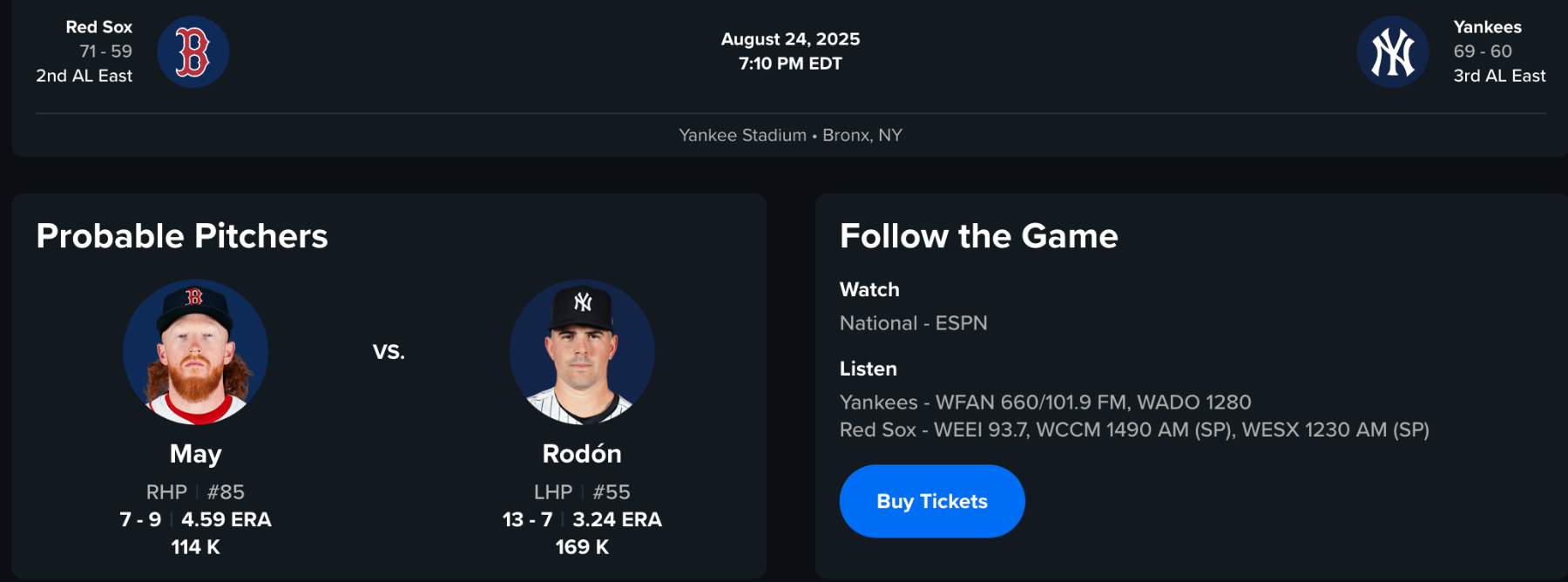
A sweep on Sunday Night Baseball? To embarrass the Yankees on a national stage? And take further control of the AL Wild Card race? Dustin May, don't fail us now.
-
Technically, Roman Anthony had already drawn nine at-bats against the New York Yankees in his brief yet stunning major league career when he stepped to the plate in the ninth inning of Thursday night's affair. Five came in the last meeting between the two teams -- shortly after Anthony was called up in mid-June -- none of which had resulted in a hit for the young phenom. Four more came on that night (August 21), and Anthony finally took advantage in the sixth inning, notching an RBI single that squared the game up at three apiece. But, when you play your first game in Yankee Stadium as the newly-minted "Face of the Red Sox Franchise", a game-tying single hardly registers as a "signature moment". Anthony needed a stage far more grand for something like that. At DiamondCentric, we've done quite a few 'anatomy of an at-bat' type articles across our suite of sites. I'd love to do one for this Anthony bomb, but the issue is that there wasn't much of an-bat to speak of. That home run came on the first pitch of the plate appearance, which itself is noteworthy. Following that Thursday night game, Anthony had taken 210 at-bats in his career (252 plate appearances). He swung at the first pitch in just 38 of them, instead opting to take the initial offering more than 80% of the time. By itself, that isn't too surprising, especially considering Anthony is working a ridiculous 14.7% walk rate that would rank among the best hitters in baseball if he had enough trips to the plate to qualify. What is startling is just how much better Anthony is when he's agressive. Here are his stats following that Thursday night home run, split by when he chose to take or swing at the first pitch: Swung at first pitch: .395/.439/.684, six extra-base hits (two home runs), .464 BABIP Took first pitch: .262/.398/.395, 17 extra-base hits (three home runs), .372 BABIP Your eyes will naturally navigate to those absurd BABIP numbers, but it's actually the figure in the 'took' split that stands out as more likely for regressions; as Anthony's other stats show, when he swings at a first pitch, he tends to maul it. It's worth noting that those numbers aren't exclusively his stats against first pitches, but rather his stats in plate appearances where he swung at the first pitch. As such, that 330-point jump in his OPS is a rather persuasive argument for the camp that wants Anthony to be more aggressive, but you haven't actually seen anything yet. I did a larger breakdown of tOPS+ and sOPS+ in an article over at North Side Baseball, but here's what you need to know for our purposes: tOPS+ tells you how good a player is relative to their own performance in a specific situation. sOPS+ tells you how good a player is relative to the rest of the league in a specific situation. 100 is the "average" for both; a number below 100 is "below average" and a number above 100 is "above average". Apply those metrics to Anthony's first-pitch split, and our picture starts to grow crystal clear: Swung at first pitch: 161 tOPS+, 210 sOPS+ Took first pitch: 86 tOPS+, 123 sOPS+ Holy cow, right? Anthony is more than twice as good as the average hitter in the league when swinging at the first pitch, and he's 61% better than his overall performance in the same situation. That he's still better than the league average when taking the first offering is a telltale sign of his overarching talent, but it's pretty evident that when he decides to swing early, he's as formidable as anyone in the batter's box. That home run against Yerry De los Santos -- which came in a high-leverage moment with two outs in the ninth inning and a one-run lead -- wasn't just impressive because of the result. Anthony, a 21-year-old rookie, bucked his own trend in order to swing at that first pitch, and he was rewarded in style. To have that kind of clarity at the plate at his age is special, and perhaps the foremost example of why the front office was willing to invest $130 million into him. So, should Anthony be more aggressive at the plate? Well, yes, but it's not quite that simple. His discerning eye is one of his best traits, and his ability to lay off even borderline pitches is why his batted ball metrics are so outstanding. If he were too patient in all situations, then sure, there'd be a problem. But, he's proven willing to take the bat off his shoulders when he needs to, and that he seems capable of making that decision as the pitch is being thrown is downright salivating. There are only a handful of human beings that can pair that kind of mental fluidity with his eye-hand coordination. In time, as Anthony grows more accustomed to facing the best pitchers in the world, he'll be able to parlay that chosen aggression into a more serious threat. For now, he's able to catch pitchers napping, and it's a grand sight to see when it works (as it so often has). If his introduction to Yankee Stadium is anything to go on, there's something really special brewing in Boston's outfield right now. View full article
-
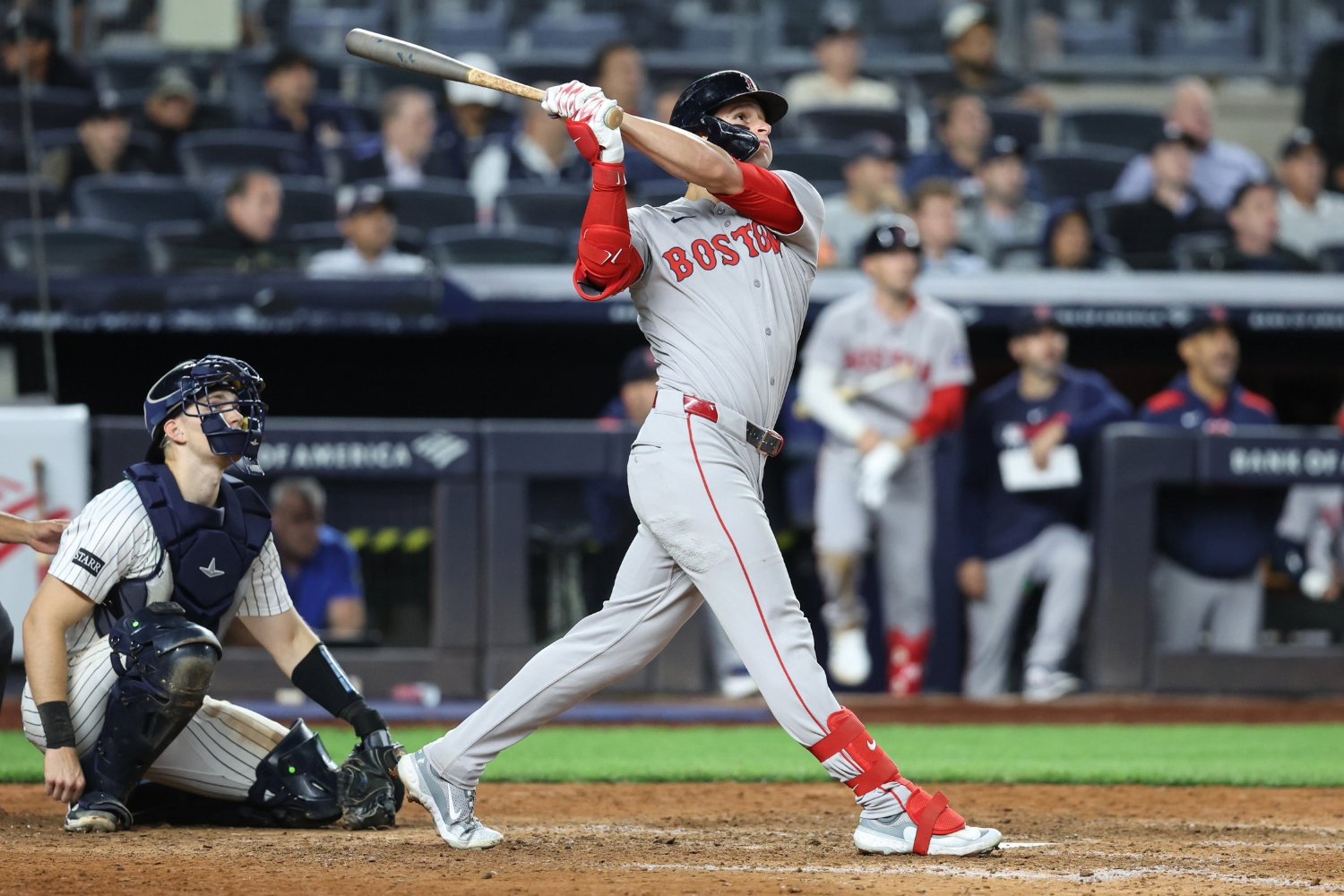 Technically, Roman Anthony had already drawn nine at-bats against the New York Yankees in his brief yet stunning major league career when he stepped to the plate in the ninth inning of Thursday night's affair. Five came in the last meeting between the two teams -- shortly after Anthony was called up in mid-June -- none of which had resulted in a hit for the young phenom. Four more came on that night (August 21), and Anthony finally took advantage in the sixth inning, notching an RBI single that squared the game up at three apiece. But, when you play your first game in Yankee Stadium as the newly-minted "Face of the Red Sox Franchise", a game-tying single hardly registers as a "signature moment". Anthony needed a stage far more grand for something like that. At DiamondCentric, we've done quite a few 'anatomy of an at-bat' type articles across our suite of sites. I'd love to do one for this Anthony bomb, but the issue is that there wasn't much of an-bat to speak of. That home run came on the first pitch of the plate appearance, which itself is noteworthy. Following that Thursday night game, Anthony had taken 210 at-bats in his career (252 plate appearances). He swung at the first pitch in just 38 of them, instead opting to take the initial offering more than 80% of the time. By itself, that isn't too surprising, especially considering Anthony is working a ridiculous 14.7% walk rate that would rank among the best hitters in baseball if he had enough trips to the plate to qualify. What is startling is just how much better Anthony is when he's agressive. Here are his stats following that Thursday night home run, split by when he chose to take or swing at the first pitch: Swung at first pitch: .395/.439/.684, six extra-base hits (two home runs), .464 BABIP Took first pitch: .262/.398/.395, 17 extra-base hits (three home runs), .372 BABIP Your eyes will naturally navigate to those absurd BABIP numbers, but it's actually the figure in the 'took' split that stands out as more likely for regressions; as Anthony's other stats show, when he swings at a first pitch, he tends to maul it. It's worth noting that those numbers aren't exclusively his stats against first pitches, but rather his stats in plate appearances where he swung at the first pitch. As such, that 330-point jump in his OPS is a rather persuasive argument for the camp that wants Anthony to be more aggressive, but you haven't actually seen anything yet. I did a larger breakdown of tOPS+ and sOPS+ in an article over at North Side Baseball, but here's what you need to know for our purposes: tOPS+ tells you how good a player is relative to their own performance in a specific situation. sOPS+ tells you how good a player is relative to the rest of the league in a specific situation. 100 is the "average" for both; a number below 100 is "below average" and a number above 100 is "above average". Apply those metrics to Anthony's first-pitch split, and our picture starts to grow crystal clear: Swung at first pitch: 161 tOPS+, 210 sOPS+ Took first pitch: 86 tOPS+, 123 sOPS+ Holy cow, right? Anthony is more than twice as good as the average hitter in the league when swinging at the first pitch, and he's 61% better than his overall performance in the same situation. That he's still better than the league average when taking the first offering is a telltale sign of his overarching talent, but it's pretty evident that when he decides to swing early, he's as formidable as anyone in the batter's box. That home run against Yerry De los Santos -- which came in a high-leverage moment with two outs in the ninth inning and a one-run lead -- wasn't just impressive because of the result. Anthony, a 21-year-old rookie, bucked his own trend in order to swing at that first pitch, and he was rewarded in style. To have that kind of clarity at the plate at his age is special, and perhaps the foremost example of why the front office was willing to invest $130 million into him. So, should Anthony be more aggressive at the plate? Well, yes, but it's not quite that simple. His discerning eye is one of his best traits, and his ability to lay off even borderline pitches is why his batted ball metrics are so outstanding. If he were too patient in all situations, then sure, there'd be a problem. But, he's proven willing to take the bat off his shoulders when he needs to, and that he seems capable of making that decision as the pitch is being thrown is downright salivating. There are only a handful of human beings that can pair that kind of mental fluidity with his eye-hand coordination. In time, as Anthony grows more accustomed to facing the best pitchers in the world, he'll be able to parlay that chosen aggression into a more serious threat. For now, he's able to catch pitchers napping, and it's a grand sight to see when it works (as it so often has). If his introduction to Yankee Stadium is anything to go on, there's something really special brewing in Boston's outfield right now.
 -
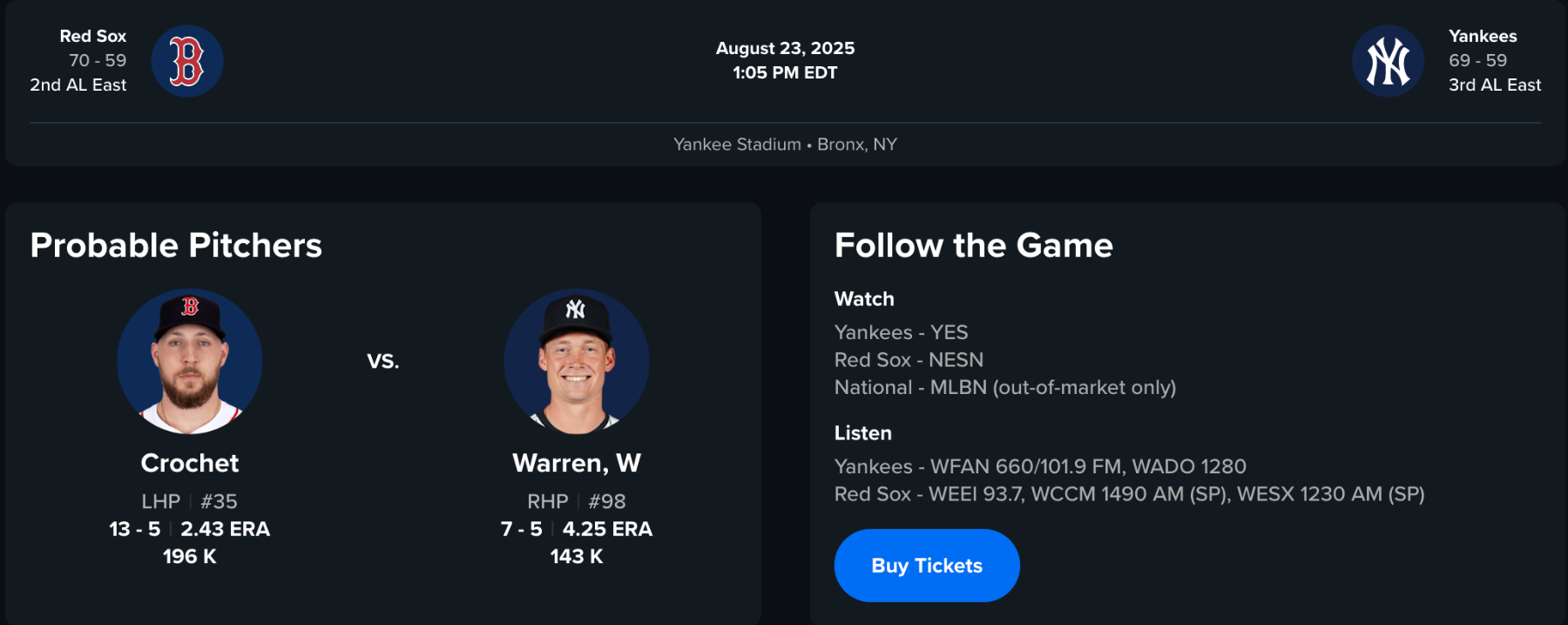
Welcome (back) to second place in the AL East, everyone.
-
It's funny because I've gotten so used to calling him "Password" that it's almost like Jhostynxon is his nickname to me now. A bit of a Batman/Bruce Wayne "which one is the real mask" kind of vibe
-
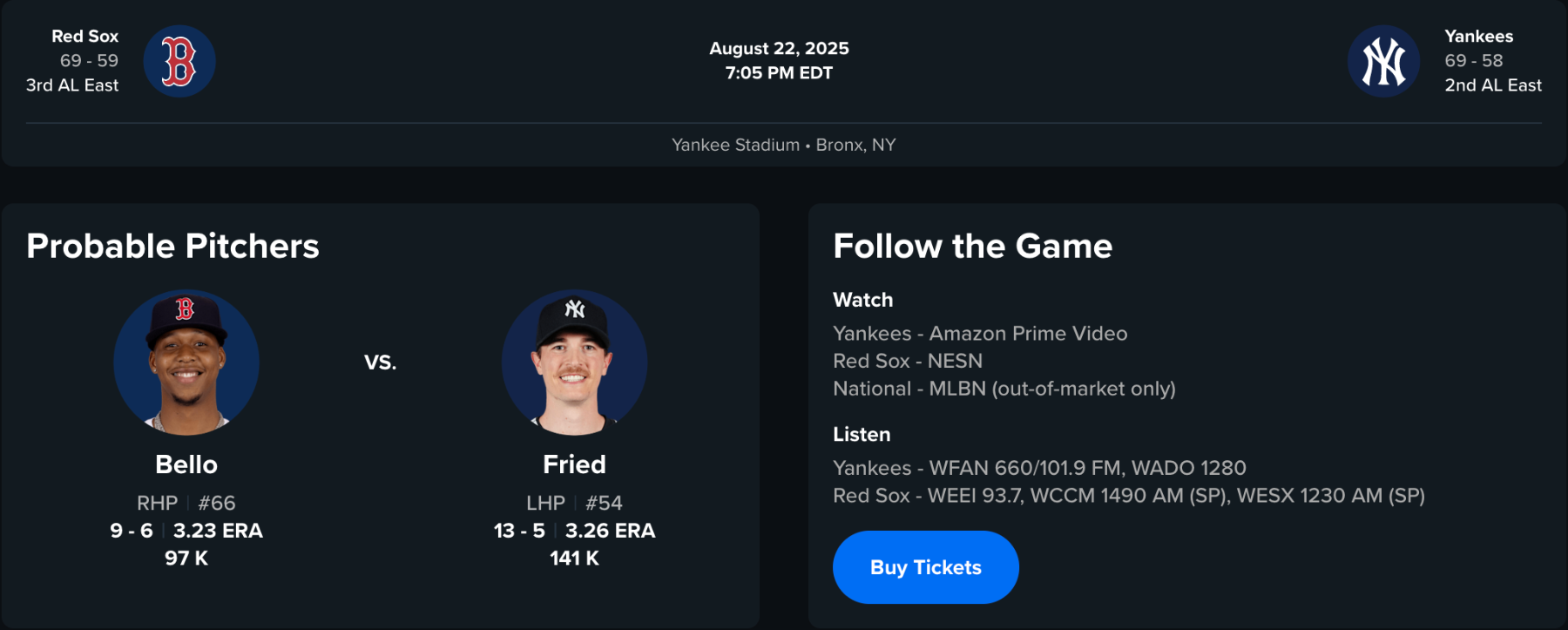
Something something "Roman Empire", something something "Max Fried is cooked", something something "Friday night baseball".
-
The Red Sox have a new first baseman, but can Nathaniel Lowe finally fill the hole opened up by Triston Casas' knee injury?
-
The Red Sox have a new first baseman, but can Nathaniel Lowe finally fill the hole opened up by Triston Casas' knee injury? View full video
-
There has rarely been a player with a nickname more apt than Jhostynxon Garcia. The Red Sox's third-best prospect is finally on his way to the big leagues, though ask anyone to spell or pronounce (Yos-TIN-son) his first name, and you'll likely be met with a lot of shrugs or botched attempts that sound like random syllables woven together (the worst I've ever heard was "Ja-HOST-ee-nix-on", which, in fairness, is in the ballpark of how it looks phonetically). Thus, "The Password" was born, and it's stuck with Garcia as he's climbed the minor league ranks. Now a major league ballplayer, Garcia will be hard-pressed to carve out a permanent role in Boston. Though he's replacing the injured Wilyer Abreu in the present, the team's outfield picture is still absurdly crowded moving forward. Roman Anthony and Ceddanne Rafaela are on long-term extensions and are pencilled in as the starters in left and center field, respectively, for the foreseeable future. Abreu, when healthy, is the starter in right, and Jarren Duran is a darn good fourth outfielder who hits like a designated hitter when he's on. Add to them Masataka Yoshida and Rob Refsnyder -- two capable outfielders who are better suited for DH duties at this point in their respective careers -- and you've got six players for three spots when everyone is healthy. With Garcia added to the mix, make it seven. The outfield crowding was so severe that the front office dumped James Tibbs III -- the best prospect returned in the Rafael Devers trade -- at the trade deadline in the deal for Dustin May. Garcia, however, was (surprisingly) kept in the organization, and now Red Sox fans will have a chance to see why the franchise thinks so highly of the 22-year-old Venezuelan. He's more or less had a gradual rise since signing as an amateur free agent in 2019, first making his debut in the organization in 2021 after the Covid-19 pandemic shut down all minor league activity during the 2020 calendar year. He walked more than he struck out during his 45-game debut in the DSL as an 18-year-old, and he took off from there, ascending at least one level each year before his Double-A to MLB rise this season. Across his 99 games and 433 plate appearances with the WooSox and Sea Dogs this season, Garcia is slashing .289/.363/.512 with 20 home runs and 71 RBIs, as well as a 9.9% walk rate and 25.4% strikeout rate, all totaling up to a 133 wRC+. He was actually better in Triple-A than Double-A, hitting nearly six times as many homers in just twice as many games. His wRC+ (+23), wOBA (+0.056), and ISO (+0.124) all saw significant spikes after he got his promotion to Worcester. He's worked hard on his plate approach, going from a 54.3% swing percentage in the DSL to a 48.5% swing rate during his stint in Triple-A. While that's helped him maintain strong walk rates, his contact skills are still a big question mark. He whiffs a whopping 33.4% of the time, which has led to a really bad 75.2% in-zone contact rate (i.e., the tenth-percentile among all Triple-A hitters, per TJStats). He also swings a bunch at pitches outside the zone, which, in conjunction with his low overall swing rate, means he watches a bunch of strikes. There's a balance to be had with his patience, which seems more born out of a desire to work counts than an actually discerning eye at the plate. Nevertheless, this approach makes Garcia a bit of an old-school slugger, the likes of which the Red Sox don't really have in the outfield currently (Roman Anthony somewhat fits that profile, but he's so good at everything that he hardly qualifies for the same distinction). He pulls the ball in the air quite often (18.3% of batted ball events), which will obviously play at Fenway Park for a right-handed hitter. He's also elite in terms of barreling the ball (12.0%), which means he's hitting fly balls at ideal launch angles more often than most. What this all translates to is a guy who should feast at Fenway... if he can limit his bad swings. His gap between his 90th-percentile exit velocity (106.1 mph) and average exit velocity (86.8 mph) is huge, a result of his inability to lay off of pitches outside the zone. That's something that can hopefully be fixed with many reps against the best pitchers in the world, but there have been a lot of exceptionally talented players who haven't been able to clear that hurdle. With Devers long gone, Garcia instantly becomes the biggest 30-homer threat on the roster, besides maybe Alex Bregman and Anthony. That kind of power is important to have, especially when the only player on the team with more than 20 home runs this season (Abreu) is the player Garcia is effectively replacing. Though this will likely just be a cup of coffee until Abreu is healthy again, Garcia has a chance to prove his worth to the Red Sox, even in the league's most crowded outfield picture. View full article
-
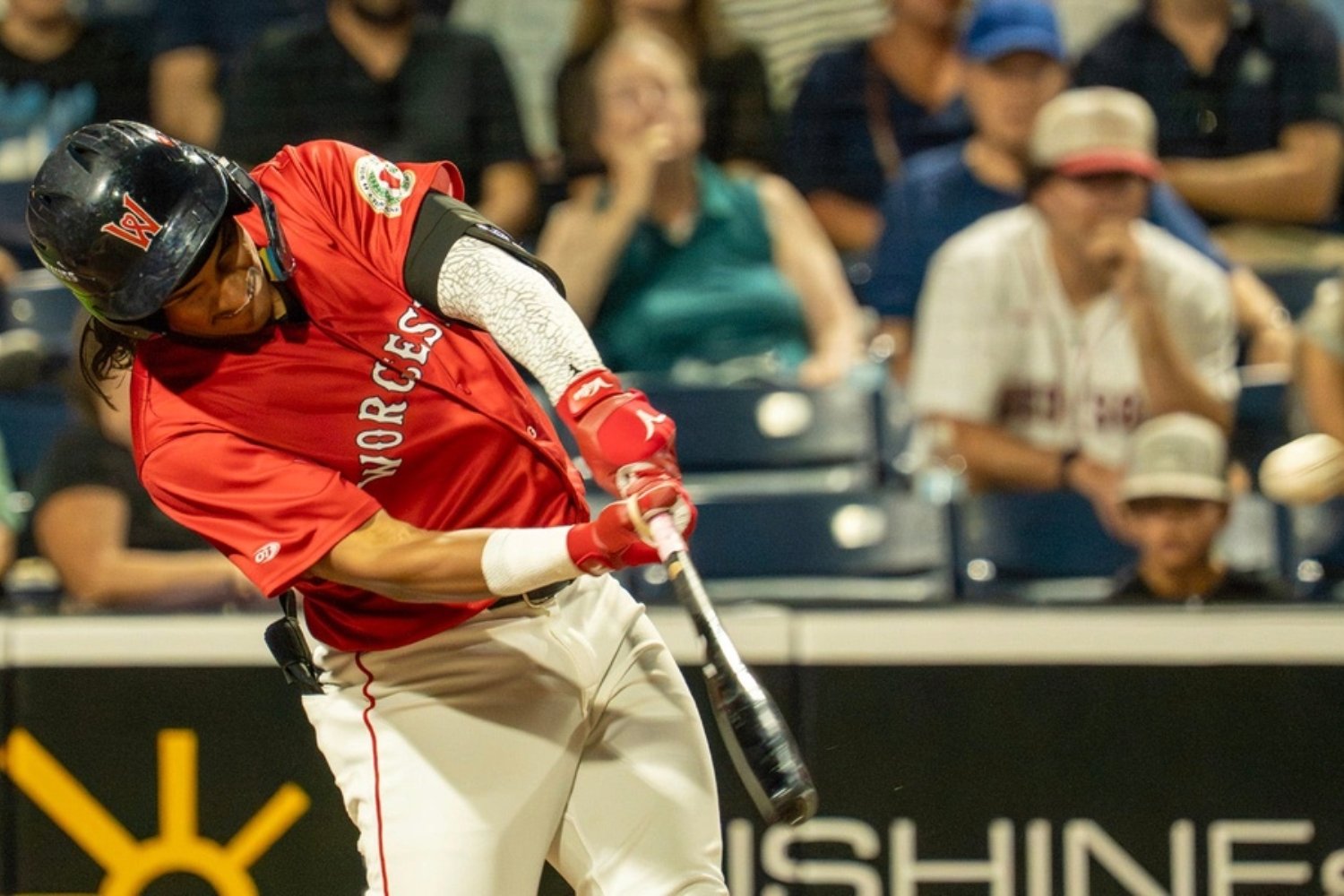 There has rarely been a player with a nickname more apt than Jhostynxon Garcia. The Red Sox's third-best prospect is finally on his way to the big leagues, though ask anyone to spell or pronounce (Yos-TIN-son) his first name, and you'll likely be met with a lot of shrugs or botched attempts that sound like random syllables woven together (the worst I've ever heard was "Ja-HOST-ee-nix-on", which, in fairness, is in the ballpark of how it looks phonetically). Thus, "The Password" was born, and it's stuck with Garcia as he's climbed the minor league ranks. Now a major league ballplayer, Garcia will be hard-pressed to carve out a permanent role in Boston. Though he's replacing the injured Wilyer Abreu in the present, the team's outfield picture is still absurdly crowded moving forward. Roman Anthony and Ceddanne Rafaela are on long-term extensions and are pencilled in as the starters in left and center field, respectively, for the foreseeable future. Abreu, when healthy, is the starter in right, and Jarren Duran is a darn good fourth outfielder who hits like a designated hitter when he's on. Add to them Masataka Yoshida and Rob Refsnyder -- two capable outfielders who are better suited for DH duties at this point in their respective careers -- and you've got six players for three spots when everyone is healthy. With Garcia added to the mix, make it seven. The outfield crowding was so severe that the front office dumped James Tibbs III -- the best prospect returned in the Rafael Devers trade -- at the trade deadline in the deal for Dustin May. Garcia, however, was (surprisingly) kept in the organization, and now Red Sox fans will have a chance to see why the franchise thinks so highly of the 22-year-old Venezuelan. He's more or less had a gradual rise since signing as an amateur free agent in 2019, first making his debut in the organization in 2021 after the Covid-19 pandemic shut down all minor league activity during the 2020 calendar year. He walked more than he struck out during his 45-game debut in the DSL as an 18-year-old, and he took off from there, ascending at least one level each year before his Double-A to MLB rise this season. Across his 99 games and 433 plate appearances with the WooSox and Sea Dogs this season, Garcia is slashing .289/.363/.512 with 20 home runs and 71 RBIs, as well as a 9.9% walk rate and 25.4% strikeout rate, all totaling up to a 133 wRC+. He was actually better in Triple-A than Double-A, hitting nearly six times as many homers in just twice as many games. His wRC+ (+23), wOBA (+0.056), and ISO (+0.124) all saw significant spikes after he got his promotion to Worcester. He's worked hard on his plate approach, going from a 54.3% swing percentage in the DSL to a 48.5% swing rate during his stint in Triple-A. While that's helped him maintain strong walk rates, his contact skills are still a big question mark. He whiffs a whopping 33.4% of the time, which has led to a really bad 75.2% in-zone contact rate (i.e., the tenth-percentile among all Triple-A hitters, per TJStats). He also swings a bunch at pitches outside the zone, which, in conjunction with his low overall swing rate, means he watches a bunch of strikes. There's a balance to be had with his patience, which seems more born out of a desire to work counts than an actually discerning eye at the plate. Nevertheless, this approach makes Garcia a bit of an old-school slugger, the likes of which the Red Sox don't really have in the outfield currently (Roman Anthony somewhat fits that profile, but he's so good at everything that he hardly qualifies for the same distinction). He pulls the ball in the air quite often (18.3% of batted ball events), which will obviously play at Fenway Park for a right-handed hitter. He's also elite in terms of barreling the ball (12.0%), which means he's hitting fly balls at ideal launch angles more often than most. What this all translates to is a guy who should feast at Fenway... if he can limit his bad swings. His gap between his 90th-percentile exit velocity (106.1 mph) and average exit velocity (86.8 mph) is huge, a result of his inability to lay off of pitches outside the zone. That's something that can hopefully be fixed with many reps against the best pitchers in the world, but there have been a lot of exceptionally talented players who haven't been able to clear that hurdle. With Devers long gone, Garcia instantly becomes the biggest 30-homer threat on the roster, besides maybe Alex Bregman and Anthony. That kind of power is important to have, especially when the only player on the team with more than 20 home runs this season (Abreu) is the player Garcia is effectively replacing. Though this will likely just be a cup of coffee until Abreu is healthy again, Garcia has a chance to prove his worth to the Red Sox, even in the league's most crowded outfield picture.
 -
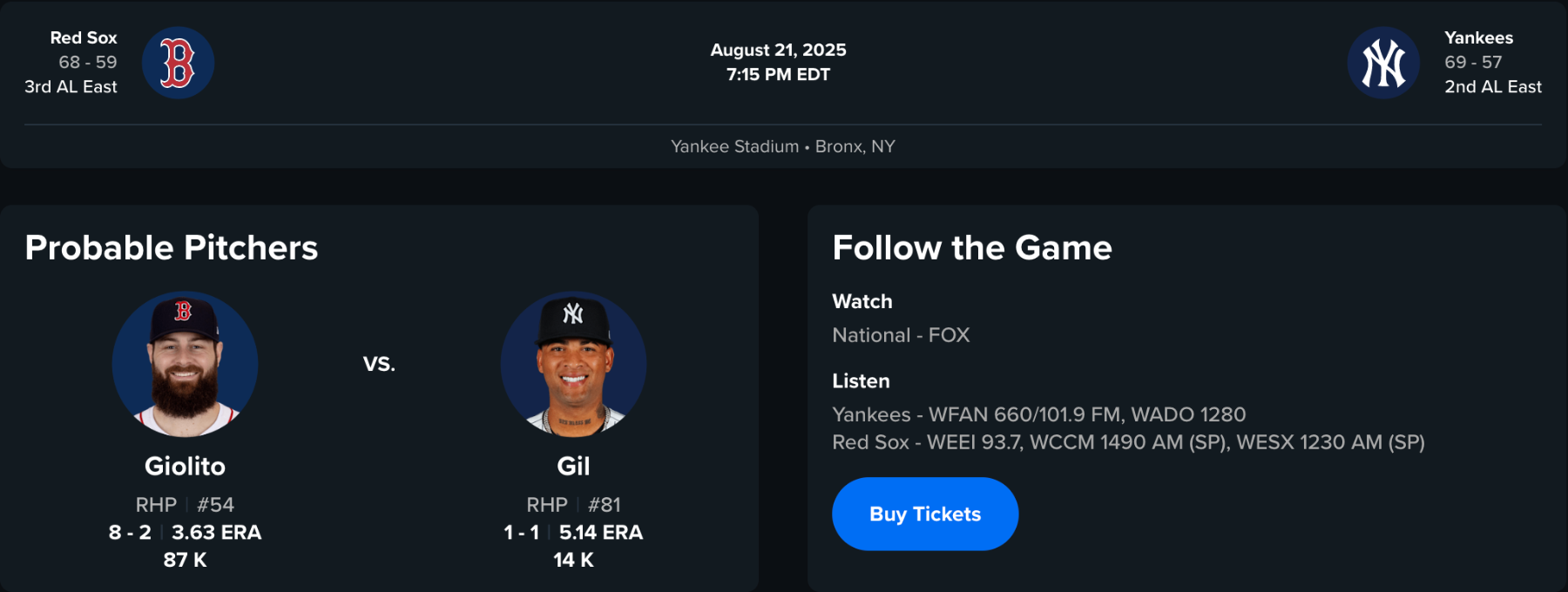
After the incredibly bizarre Wednesday off-day yesterday, the Red Sox enter arguably their most crucial series of the season. The first AL Wild Card and second place in the AL East are both up for grabs.
-
The lone member of the Red Sox's Big Three without an extension, Marcelo Mayer's wrist surgery could cause Boston to deviate from its current plans on the infield.
-
The lone member of the Red Sox's Big Three without an extension, Marcelo Mayer's wrist surgery could cause Boston to deviate from its current plans on the infield. View full video
-
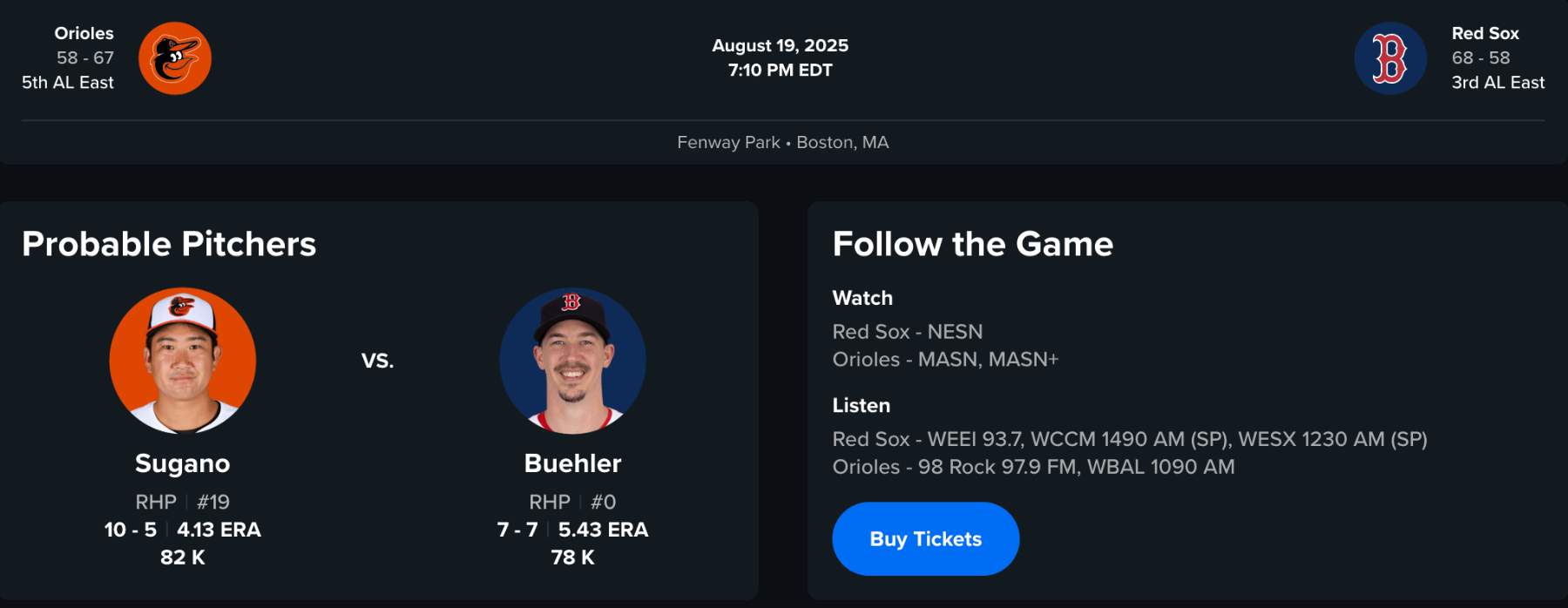
Hi. Please don't get (mini) swept by the Orioles before a four-game series with the Yankees. Thank you.
-
Nathaniel Lowe has arrived in Boston, and the Red Sox, despite completely ignoring the position at the trade deadline, have landed their first baseman for the postseason push. Let's get the bad out of the way up top. Lowe, 30, is suffering through the worst season of his career by most notable metrics, hence why the Nationals released him via waivers after being unable to find a taker at the deadline. Lowe's 86 wRC+ is the worst he's ever produced by a country mile (he's never been below 100 in a season before), and the same is true of his .665 OPS and .293 wOBA. And, after winning a Gold Glove just two years ago, he's slipped back into being a poor defender (-5 Outs Above Average and -5 Defensive Runs Saved). At this point you're probably wondering how exactly Lowe is an "upgrade" at first base. Sure, Abraham Toro has been his own brand of dumpster fire recently (.538 OPS, 43 wRC+ since the All-Star break), but replacing a train wreck with a car wreck does not a good team make. First base has been a sore spot all season—especially since Triston Casas went down for the count, but even he was struggling before his season-ending knee injury—and Lowe, despite his World Series and Silver Slugger credentials, hardly qualifies as the kind of "big swing" fans were hoping for leading up to July 31. First, I need to give credit to our @Jordan Leandre who very accurately predicted a Sox-Lowe union once the Nationals officially made the cold corner slugger available. Jordan accurately pointed out that Lowe continues to hit right-handed pitching well (.732 OPS, 104 wRC+), and it just so happens that the Red Sox have two of the best southpaw-crushers in the business in Rob Refsnyder and Romy Gonzalez. Let Lowe wreak havoc in the strong side of a platoon while covering for his weakness against left-handed pitchers (.516 OPS, 45 wRC+) with one of those two, and you're golden. Simple, right? Well, sort of. Lowe has only been league average against righties this year (101 sOPS+), and he's still striking out against them an uncomfortable amount of the time (24.6%) for someone whose sole job it will be to hit against them. Lowe's walk and strikeout rates are both down this year, brought on by a 3.6% jump in his whiff rate. He's swinging more often than he has in years past, despite the fact that his swing rate on first pitches (of a plate appearance) is down by 5.0% from last year. So, what can the Red Sox do to sort him out? The obvious answer is to preach patience—Lowe's chase rate is up to 24.1%, a sizable jump from his career-best season in 2023 (20.8%). That alone could restore him to his former high-floor form, though it won't fix the biggest issue in his profile. The first baseman's bat speed is down a whole 1.4 mph from 2023, from 74.1 mph to 72.7. In other words, Lowe has gone from swinging as fast (on average) as 2025 Wilyer Abreu to 2025 Paul Goldschmidt. Thus, you may not be surprised to learn that his performance against fastballs (.355 slugging percentage, .314 wOBA) is way down from his 2023 peak (.470 slug, .391 wOBA). He's whiffing on the pitch 5.4% more of the time over that span (and 6.5% more often than he did in 2024), and pitchers are peppering him with four-seamers as a result (38.1% usage). There's not much the team can do to literally propel his bat faster through space, but there are changes they can introduce to his approach to help offset this new weakness. Encouraging faster swing decisions could also solve a longstanding problem of Lowe's, that being his relative inability to pull the ball in the air. Yes, his all-fields approach should pay dividends in Fenway Park, but as he ages, he'll need to pull the ball more often in order to access his 25-homer power. Given the brevity of time the Red Sox will have to work with Lowe—the six remaining weeks in the regular season, and then however long the team lasts in October—more major changes would have to wait for the offseason, and that's only if Boston enjoys its fling with him enough to re-sign him. As it stands now, Lowe is a solid platoon partner at first base for Romy Gonzalez and a certain upgrade over Abraham Toro. With a few tweaks, he could be the missing piece of the puzzle in the Red Sox's lineup. View full article
-
Nathaniel Lowe is the Exact Kind of Mess the Red Sox Can Afford to Fix
Brandon Glick posted an article in Red Sox
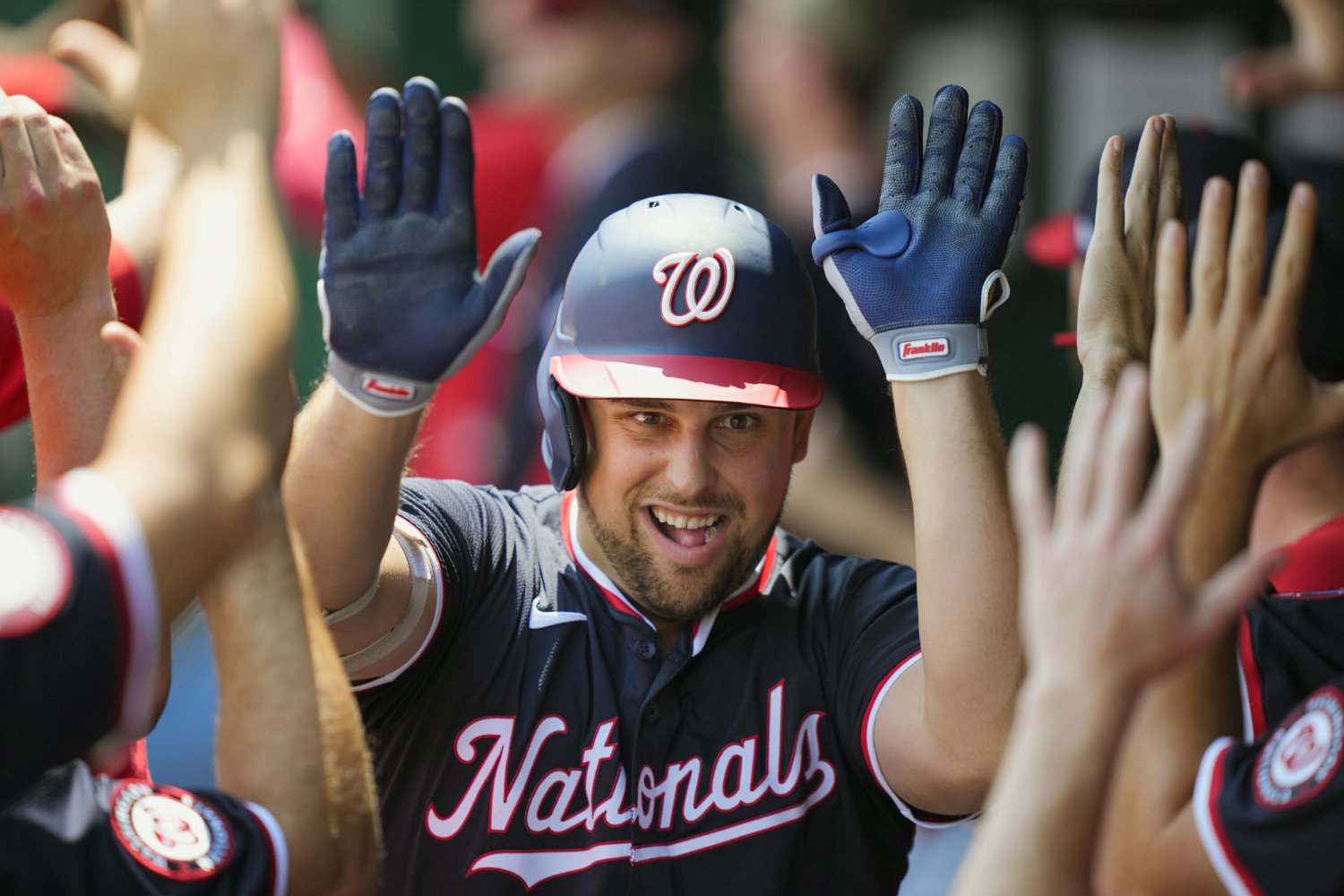 Nathaniel Lowe has arrived in Boston, and the Red Sox, despite completely ignoring the position at the trade deadline, have landed their first baseman for the postseason push. Let's get the bad out of the way up top. Lowe, 30, is suffering through the worst season of his career by most notable metrics, hence why the Nationals released him via waivers after being unable to find a taker at the deadline. Lowe's 86 wRC+ is the worst he's ever produced by a country mile (he's never been below 100 in a season before), and the same is true of his .665 OPS and .293 wOBA. And, after winning a Gold Glove just two years ago, he's slipped back into being a poor defender (-5 Outs Above Average and -5 Defensive Runs Saved). At this point you're probably wondering how exactly Lowe is an "upgrade" at first base. Sure, Abraham Toro has been his own brand of dumpster fire recently (.538 OPS, 43 wRC+ since the All-Star break), but replacing a train wreck with a car wreck does not a good team make. First base has been a sore spot all season—especially since Triston Casas went down for the count, but even he was struggling before his season-ending knee injury—and Lowe, despite his World Series and Silver Slugger credentials, hardly qualifies as the kind of "big swing" fans were hoping for leading up to July 31. First, I need to give credit to our @Jordan Leandre who very accurately predicted a Sox-Lowe union once the Nationals officially made the cold corner slugger available. Jordan accurately pointed out that Lowe continues to hit right-handed pitching well (.732 OPS, 104 wRC+), and it just so happens that the Red Sox have two of the best southpaw-crushers in the business in Rob Refsnyder and Romy Gonzalez. Let Lowe wreak havoc in the strong side of a platoon while covering for his weakness against left-handed pitchers (.516 OPS, 45 wRC+) with one of those two, and you're golden. Simple, right? Well, sort of. Lowe has only been league average against righties this year (101 sOPS+), and he's still striking out against them an uncomfortable amount of the time (24.6%) for someone whose sole job it will be to hit against them. Lowe's walk and strikeout rates are both down this year, brought on by a 3.6% jump in his whiff rate. He's swinging more often than he has in years past, despite the fact that his swing rate on first pitches (of a plate appearance) is down by 5.0% from last year. So, what can the Red Sox do to sort him out? The obvious answer is to preach patience—Lowe's chase rate is up to 24.1%, a sizable jump from his career-best season in 2023 (20.8%). That alone could restore him to his former high-floor form, though it won't fix the biggest issue in his profile. The first baseman's bat speed is down a whole 1.4 mph from 2023, from 74.1 mph to 72.7. In other words, Lowe has gone from swinging as fast (on average) as 2025 Wilyer Abreu to 2025 Paul Goldschmidt. Thus, you may not be surprised to learn that his performance against fastballs (.355 slugging percentage, .314 wOBA) is way down from his 2023 peak (.470 slug, .391 wOBA). He's whiffing on the pitch 5.4% more of the time over that span (and 6.5% more often than he did in 2024), and pitchers are peppering him with four-seamers as a result (38.1% usage). There's not much the team can do to literally propel his bat faster through space, but there are changes they can introduce to his approach to help offset this new weakness. Encouraging faster swing decisions could also solve a longstanding problem of Lowe's, that being his relative inability to pull the ball in the air. Yes, his all-fields approach should pay dividends in Fenway Park, but as he ages, he'll need to pull the ball more often in order to access his 25-homer power. Given the brevity of time the Red Sox will have to work with Lowe—the six remaining weeks in the regular season, and then however long the team lasts in October—more major changes would have to wait for the offseason, and that's only if Boston enjoys its fling with him enough to re-sign him. As it stands now, Lowe is a solid platoon partner at first base for Romy Gonzalez and a certain upgrade over Abraham Toro. With a few tweaks, he could be the missing piece of the puzzle in the Red Sox's lineup.
 -
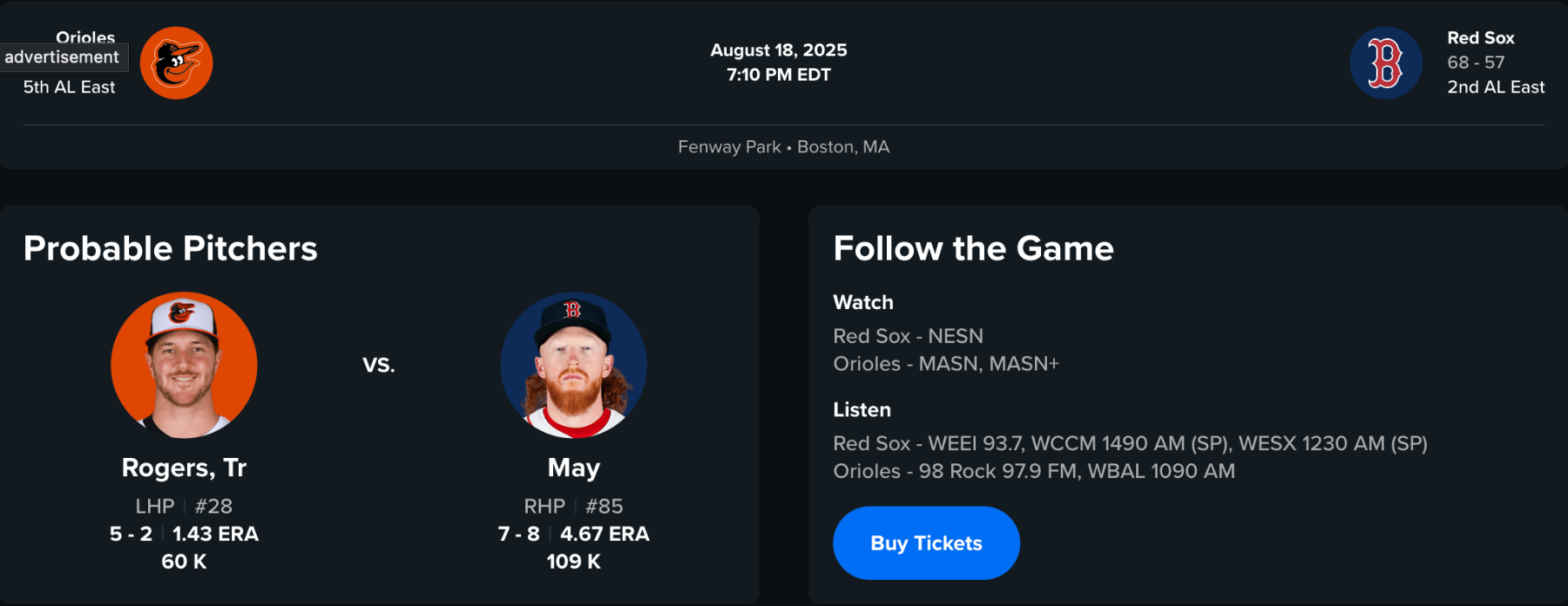
The next 10 games are against division rivals. First up: the Orioles' ace.
-
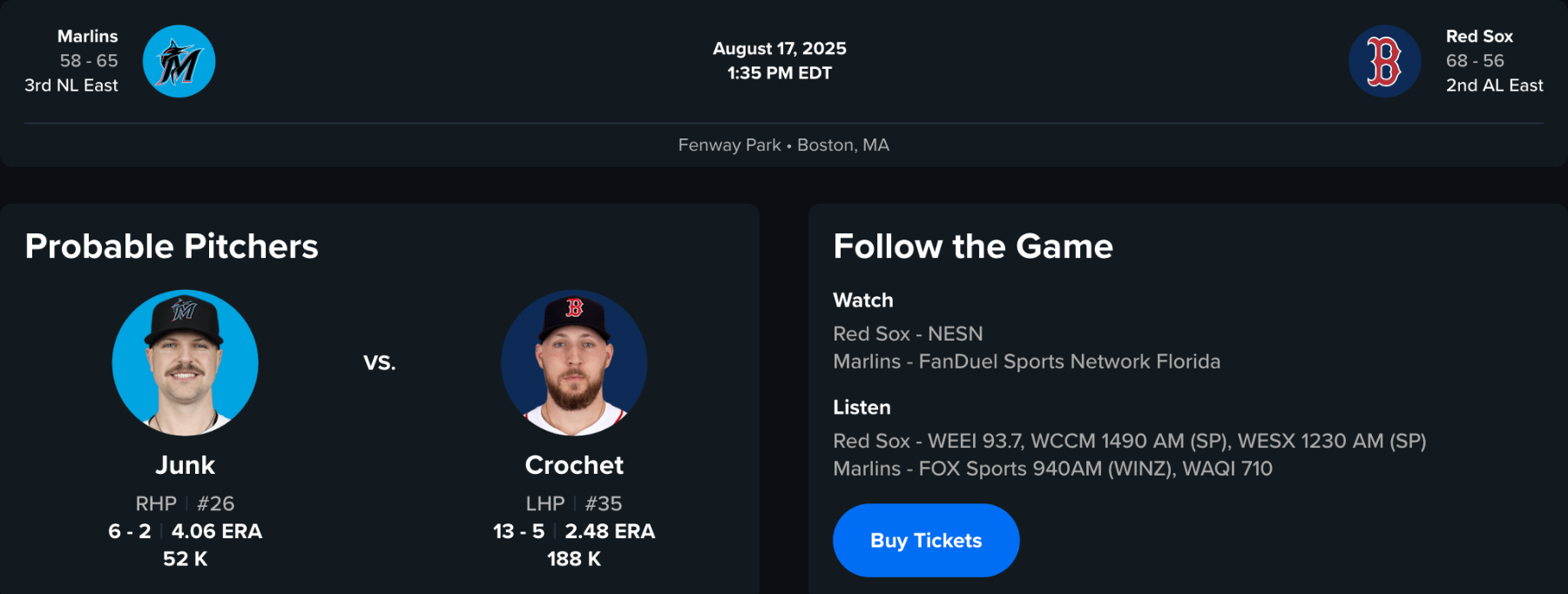
In my most profound analysis yet, I will say that I like the Red Sox's chances today.
-
I yearn for the days of Theo Epstein more than you could possibly imagine. I don't know what I did to deserve Jed Hoyer, but I beg for forgiveness.
-
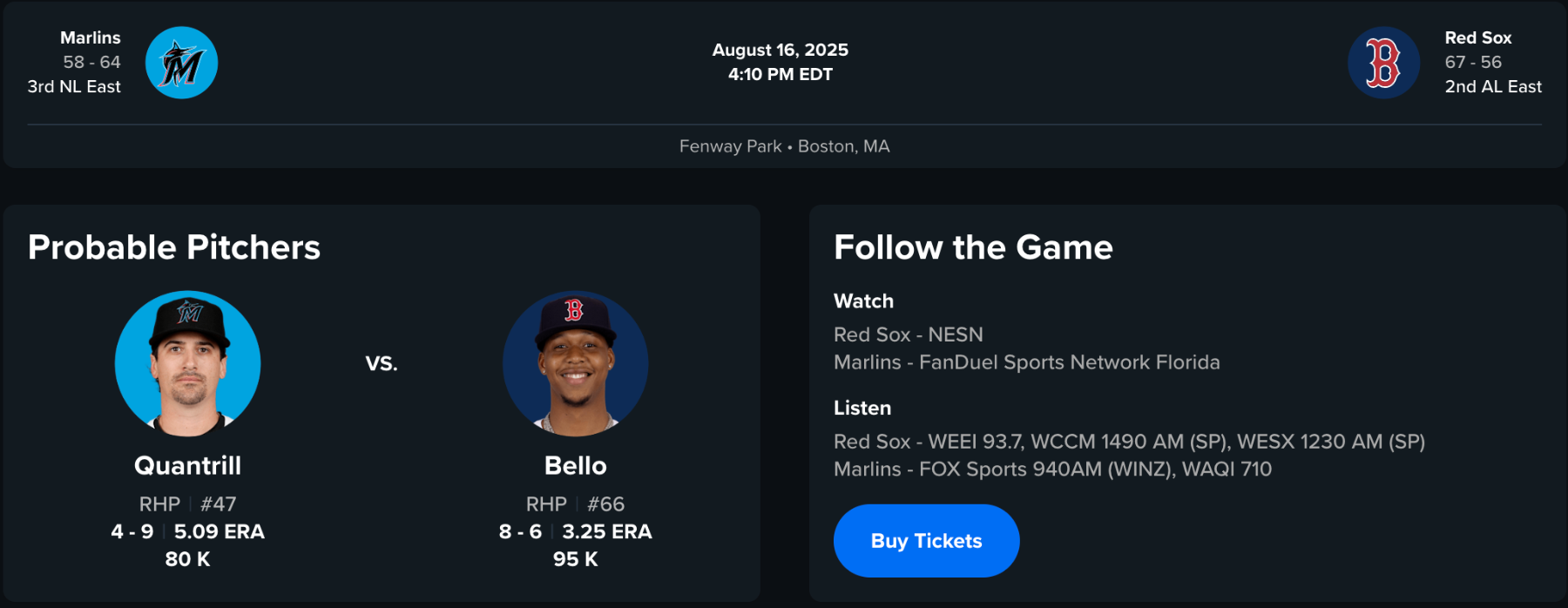
Besides the Red Sox, I am also a Cubs fan (and cover them for a living). And, oh boy, let me tell you how grateful I am for the Red Sox right now.
-
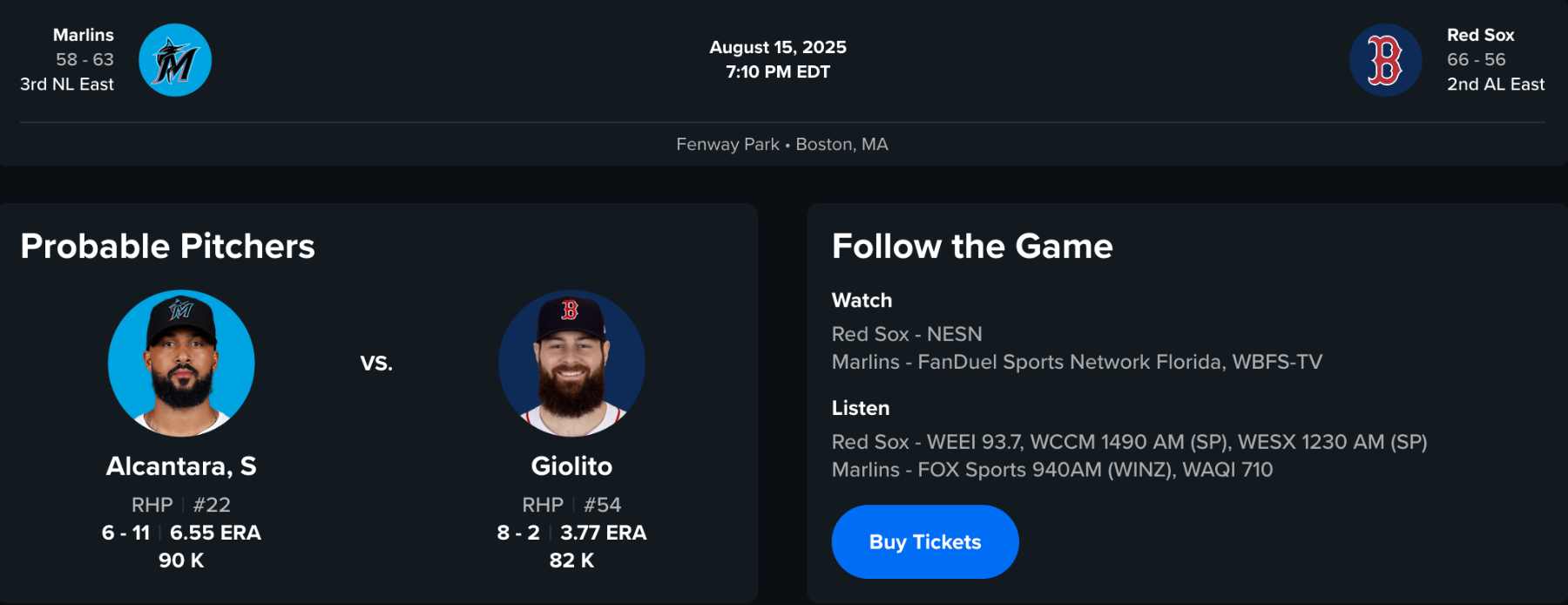
Sandy Alcantara: long time trade target, first time opposing pitcher (since 2023).
-
Despite graduating their Big Three prospects earlier in the year, the Red Sox were well represented in the mid-season Top 100 list from MLB Pipeline. View full video
