


Daniel Fox
-
Posts
72 -
Joined
-
Last visited
Content Type
Profiles
Boston Red Sox Videos
2026 Boston Red Sox Top Prospects Ranking
Boston Red Sox Free Agent & Trade Rumors, Notes, & Tidbits
Guides & Resources
2025 Boston Red Sox Draft Pick Tracker
News
2026 Boston Red Sox Draft Tracker: Picks & Bonuses
Forums
Blogs
Events
Store
Downloads
Gallery
Everything posted by Daniel Fox
-
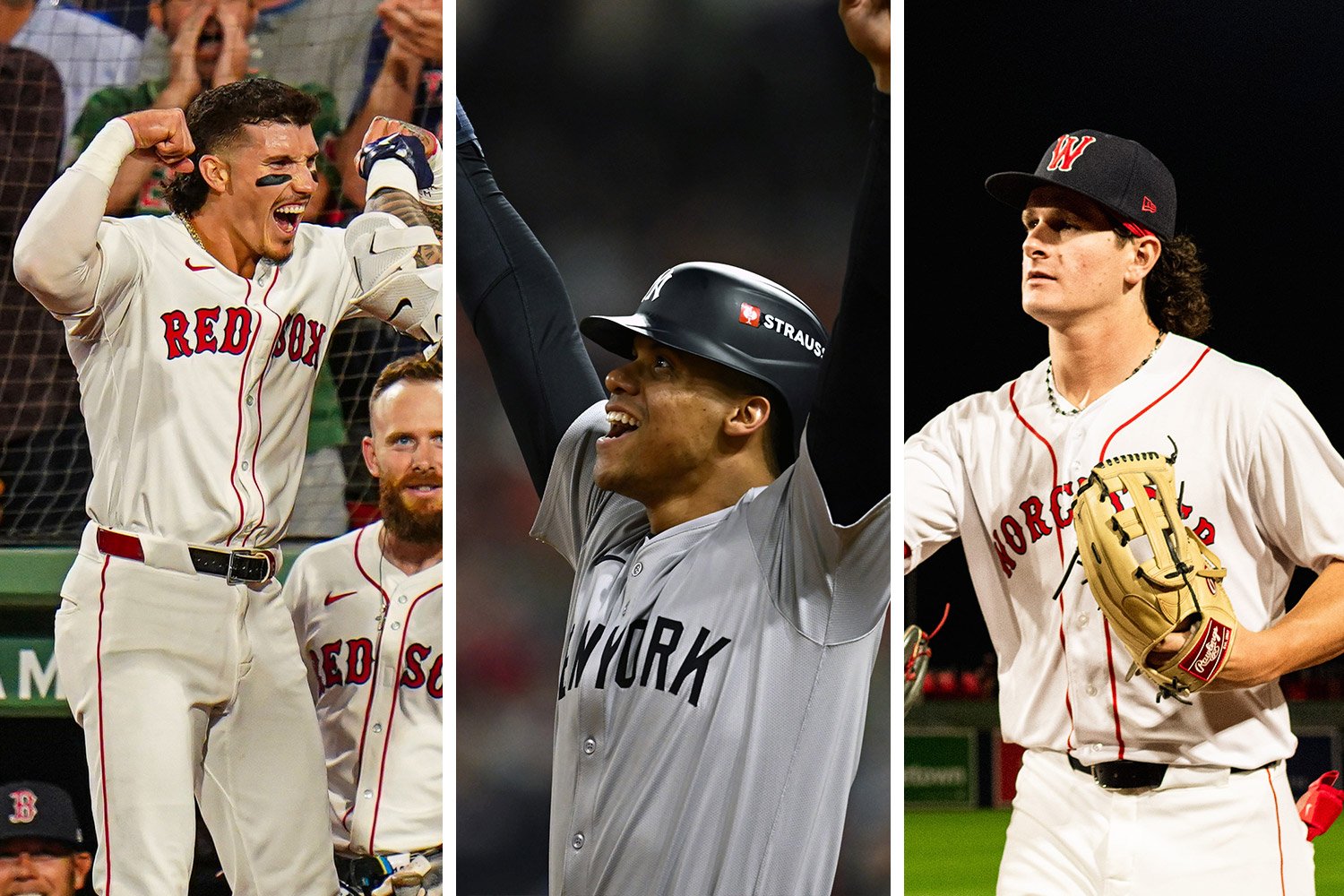 The recent rumors circulating baseball circles have whipped Red Sox fans into a frenzy, creating an expectation of an offensive spending spree not seen in over a decade. The buzz began in the first few weeks of the offseason, as national reporters like Ken Rosenthal and Jeff Passan declared that the Red Sox were laying the groundwork for a big offseason. The general expectation was that this meant the club was going to go after one of the available free-agent aces, but then came a Friday report that really got people going: This past week has been an avalanche of good vibes, culminating in Sam Kennedy’s comments that the Red Sox would aim for 90-95 wins in 2025 and could blow past the luxury tax threshold. However, the more cautious among us have pointed to similar optimism from last offseason, particularly a “full throttle” comment from chairman Tom Werner that has since become a running joke. Are we just setting ourselves up for more disappointment? At the risk of ending this offseason with egg on my face, I say no. I firmly believe the Red Sox will do something big this offseason, and you should, too. The cynical fans who roam Red Sox Twitter may scoff at the statement, but anyone who has paid attention to this team for the last five years can see that the tides are changing. Let’s take a step back to this time last season. The Red Sox had just come off a second consecutive 78-84 season that cost Chaim Bloom his job, and Craig Breslow had been brought in just a couple of weeks before last season. As much as we might not have wanted to admit it then, Breslow was inheriting a team that didn’t have much to work with. The lineup had Rafael Devers, but Jarren Duran and Triston Casas just had season-ending injuries, Story had been awful in 50 games after returning from elbow surgery, and Ceddanne Rafaela and Wilyer Abreu had just a month of major league experience under their belt. The pitching staff, meanwhile, was in even worse shape. Garrett Whitlock had just had another injury-plagued season. Tanner Houck was a disaster. Chris Sale felt like a $30 million ticking time bomb, and Nick Pivetta had been so bad as a starter that he was banished to the bullpen in May. The only real positives were that Brayan Bello had broken out, and veteran relievers Kenley Jansen and Chris Martin stabilized the bullpen. Still, the pitching infrastructure was so broken that it would take more than one year or one pitcher to flip the script. Upon evaluation of his new club, Breslow made the assessment that the club was not in a position to go all-in for 2024. Instead, he added at the margins. He traded some excess arms for Tyler O’Neill. He flipped Sale for promising infielder Vaughn Grissom. He signed veteran Lucas Giolito to a short-term deal and made savvy pick-ups in Justin Slaten and Cooper Criswell. Behind the scenes, he completely overhauled the pitching development staff, led by new pitching coach Andrew Bailey. The 2024 Red Sox team could have seriously competed had everything gone right, and it became clear from the outset that would not be the case. Giolito blew out his elbow in March, Casas and Story missed months after freak injuries in April, and Whitlock was again lost for the season in May. The Red Sox exceeded expectations in the first half, but the lack of depth eventually caught up to them in the second half, and they finished 81-81. Though 2024 did not bring the Red Sox a playoff spot, it gave Breslow something almost as valuable: answers. The picture of the next great Red Sox team is so much clearer than it was at this time last season. Duran emerged as a potential building block next to Casas and Devers. Kutter Crawford and Houck proved they could stick in the rotation long-term, giving the Red Sox three homegrown starters after so many years of having zero. Slaten looks like a potential diamond-in-the-rough in the bullpen, and Abreu won a Gold Glove in right field while posting a 114 OPS+ as a rookie. While plenty of positives emerged last season, Breslow and co. also got a better idea of which players could not be counted on. Whitlock got hurt again after four starts, seemingly eliminating him from future rotation consideration. Grissom was plagued by injury and inconsistency after winning the second base job in spring training and appeared to have been passed over on the depth chart by several high-upside minor-leaguers. Catcher Connor Wong wore down on offense and saw his already-poor defense take a step back, setting the stage for him to be replaced by prized prospect Kyle Teel (more on him later) or even a stop-gap veteran. Finally, while Rafaela wowed on defense and flashed some impressive power, his league-worst 46% chase rate indicates he may be best suited as a utility player. As the true building blocks began to separate at the big-league level, a group of star prospects did the same in the minors. The Big Three of Teel, Marcelo Mayer, and Roman Anthony met or exceeded expectations and were promoted to Triple-A in August. They were joined a week later by utility man Kristian Campbell, a 2023 third-round pick who exploded onto the prospect scene and took home MLB.com’s Minor League Player of the Year. The quartet now sits inside MLB’s Top 25 Prospect Rankings, a feat particularly unheard of from four players so close to the majors. Though not as flashy, the Red Sox also saw progress from a more unheralded group of prospects. Hunter Dobbins and Richard Fitts became key beneficiaries of the overhauled pitching infrastructure and will begin 2025 as valuable Triple-A depth. Franklin Arias made his full-season debut and performed well enough to enter some Top 100 lists. Chase Miedroth posted a .437 on-base percentage in Triple-A, Jhostynkon “The Password” Garcia played well enough to be added to the 40-man roster, and David Sandlin, Yoelin Cespedes, and Miguel Bleis continued to flash loud tools even if their final stat lines were unimpressive. All of this is to say that the Red Sox are in a completely different spot as an organization than last season. While the 2023 squad had more holes than a sponge, the checklist to make the 2025 Red Sox a contender is relatively short. First and foremost, they need an ace. The Red Sox haven’t had a true stopper since the days of prime Sale, and the absence of one became evident when the young starters wore down after the All-Star break. Secondly, they need a right-handed bat to complement Devers, Casas, and Duran. Having a (presumably) healthy Story will help, but he is currently the only legitimate right-handed threat under contract now that Tyler O’Neill is a free agent. And while not as critical, the Sox could also use another left-handed reliever in the bullpen and a catcher that can provide better defense than Wong. Whether through trade or free agency, the Red Sox have so many more options to address these needs than last year. While fans were clamoring for the Red Sox to trade for a controllable starter like the Mariners’ Logan Gilbert, the farm system wasn’t in a position to make such a move. Now, not only is the prospect pool able to withstand the loss of a few prized prospects but there is also a ready-made partner in Garrett Crochet and the Chicago White Sox. Coming off the worst season in MLB history and with little major or minor league talent, the White Sox will almost certainly deal with their homegrown ace. Though teams like the Orioles and the Dodgers figure to be in the bidding as well, the White Sox are reportedly interested in a package headlined by Abreu. This should be music to the Red Sox’s ears, as Anthony is ready to take over in right field, perhaps as soon as Opening Day. Throw in a few second-tier prospects and perhaps Kutter Crawford, and there is a good chance the Red Sox can get their white whale without sacrificing any key members of the next great Red Sox team. The free-agent market, meanwhile, is just as promising. Last year, the Red Sox took a big swing-and-a-miss on Yoshinobu Yamamoto, earning a meeting with the 25-year-old phenom but not seriously competing for his services. They also went after mid-tier options like Seth Lugo, Shota Imanaga, and postseason hero Jordan Montgomery but lost out on all three. The message was clear: The Red Sox were willing to spend big on a young star like Yamamoto but understood their limit on the 30-year-old options who profiled more as number two or threes. This year, however, has presented a clear change, not just because the Red Sox are displaying more aggressiveness but because the quality of free-agent starters has been raised to another level. Corbin Burnes and Max Fried enter free agency history after years of consistent, ace-level production, something that could not be said of last year’s crop. The Red Sox are reportedly in the mix for each ace and two-time Cy Young winner Blake Snell, who re-enters the free-agent market after a one-year stint with the Giants. The Red Sox never seriously considered the left-hander last season. Still, Ken Rosenthal has reported that the club has already met with the all-time strikeouts-per-nine-innings leader, the clearest indication yet of the change of philosophy from last offseason to this one. The free-agent market for hitters is not as strong as the one for pitchers, but once again, the Red Sox are already in the mix for all the big names. They have once again linked to slugger Teoscar Hernandez after a half-hearted effort last season, and there are one of three teams Jon Heyman connected to longtime Astros star Alex Bregman. Then there is Juan Soto, the generational superstar for whom the Red Sox are firmly in the mix. The team earned the second meeting with Soto in his get-to-you-know sessions, and though there are doubts about whether the Sox can compete with billionaire Steve Cohen, the fact that they sat down with a player who could earn a $600 million contract shows a willingness to meet the moment. Look, I understand the eye-rolling and cynicism that comes with reports of “interest” and “meetings.” But from my experience following baseball, there is just not this much smoke without a fire. Everything points to a shift in philosophy spurred by the optimism that the team may be only a piece or two away from seriously contending. So be it if you are still burned from the last couple of years of broken promises. That just leaves more fun for the rest of us.
 -
It is a question being asked in every corner of New England, at every Dunkin line and 99 table, from Windham to Somerville to Hartford and beyond: Are the Sox back? It is a question being asked in every corner of New England, at every Dunkin line and 99 table, from Windham to Somerville to Hartford and beyond: Are the Sox back? The recent rumors circulating baseball circles have whipped Red Sox fans into a frenzy, creating an expectation of an offensive spending spree not seen in over a decade. The buzz began in the first few weeks of the offseason, as national reporters like Ken Rosenthal and Jeff Passan declared that the Red Sox were laying the groundwork for a big offseason. The general expectation was that this meant the club was going to go after one of the available free-agent aces, but then came a Friday report that really got people going: This past week has been an avalanche of good vibes, culminating in Sam Kennedy’s comments that the Red Sox would aim for 90-95 wins in 2025 and could blow past the luxury tax threshold. However, the more cautious among us have pointed to similar optimism from last offseason, particularly a “full throttle” comment from chairman Tom Werner that has since become a running joke. Are we just setting ourselves up for more disappointment? At the risk of ending this offseason with egg on my face, I say no. I firmly believe the Red Sox will do something big this offseason, and you should, too. The cynical fans who roam Red Sox Twitter may scoff at the statement, but anyone who has paid attention to this team for the last five years can see that the tides are changing. Let’s take a step back to this time last season. The Red Sox had just come off a second consecutive 78-84 season that cost Chaim Bloom his job, and Craig Breslow had been brought in just a couple of weeks before last season. As much as we might not have wanted to admit it then, Breslow was inheriting a team that didn’t have much to work with. The lineup had Rafael Devers, but Jarren Duran and Triston Casas just had season-ending injuries, Story had been awful in 50 games after returning from elbow surgery, and Ceddanne Rafaela and Wilyer Abreu had just a month of major league experience under their belt. The pitching staff, meanwhile, was in even worse shape. Garrett Whitlock had just had another injury-plagued season. Tanner Houck was a disaster. Chris Sale felt like a $30 million ticking time bomb, and Nick Pivetta had been so bad as a starter that he was banished to the bullpen in May. The only real positives were that Brayan Bello had broken out, and veteran relievers Kenley Jansen and Chris Martin stabilized the bullpen. Still, the pitching infrastructure was so broken that it would take more than one year or one pitcher to flip the script. Upon evaluation of his new club, Breslow made the assessment that the club was not in a position to go all-in for 2024. Instead, he added at the margins. He traded some excess arms for Tyler O’Neill. He flipped Sale for promising infielder Vaughn Grissom. He signed veteran Lucas Giolito to a short-term deal and made savvy pick-ups in Justin Slaten and Cooper Criswell. Behind the scenes, he completely overhauled the pitching development staff, led by new pitching coach Andrew Bailey. The 2024 Red Sox team could have seriously competed had everything gone right, and it became clear from the outset that would not be the case. Giolito blew out his elbow in March, Casas and Story missed months after freak injuries in April, and Whitlock was again lost for the season in May. The Red Sox exceeded expectations in the first half, but the lack of depth eventually caught up to them in the second half, and they finished 81-81. Though 2024 did not bring the Red Sox a playoff spot, it gave Breslow something almost as valuable: answers. The picture of the next great Red Sox team is so much clearer than it was at this time last season. Duran emerged as a potential building block next to Casas and Devers. Kutter Crawford and Houck proved they could stick in the rotation long-term, giving the Red Sox three homegrown starters after so many years of having zero. Slaten looks like a potential diamond-in-the-rough in the bullpen, and Abreu won a Gold Glove in right field while posting a 114 OPS+ as a rookie. While plenty of positives emerged last season, Breslow and co. also got a better idea of which players could not be counted on. Whitlock got hurt again after four starts, seemingly eliminating him from future rotation consideration. Grissom was plagued by injury and inconsistency after winning the second base job in spring training and appeared to have been passed over on the depth chart by several high-upside minor-leaguers. Catcher Connor Wong wore down on offense and saw his already-poor defense take a step back, setting the stage for him to be replaced by prized prospect Kyle Teel (more on him later) or even a stop-gap veteran. Finally, while Rafaela wowed on defense and flashed some impressive power, his league-worst 46% chase rate indicates he may be best suited as a utility player. As the true building blocks began to separate at the big-league level, a group of star prospects did the same in the minors. The Big Three of Teel, Marcelo Mayer, and Roman Anthony met or exceeded expectations and were promoted to Triple-A in August. They were joined a week later by utility man Kristian Campbell, a 2023 third-round pick who exploded onto the prospect scene and took home MLB.com’s Minor League Player of the Year. The quartet now sits inside MLB’s Top 25 Prospect Rankings, a feat particularly unheard of from four players so close to the majors. Though not as flashy, the Red Sox also saw progress from a more unheralded group of prospects. Hunter Dobbins and Richard Fitts became key beneficiaries of the overhauled pitching infrastructure and will begin 2025 as valuable Triple-A depth. Franklin Arias made his full-season debut and performed well enough to enter some Top 100 lists. Chase Miedroth posted a .437 on-base percentage in Triple-A, Jhostynkon “The Password” Garcia played well enough to be added to the 40-man roster, and David Sandlin, Yoelin Cespedes, and Miguel Bleis continued to flash loud tools even if their final stat lines were unimpressive. All of this is to say that the Red Sox are in a completely different spot as an organization than last season. While the 2023 squad had more holes than a sponge, the checklist to make the 2025 Red Sox a contender is relatively short. First and foremost, they need an ace. The Red Sox haven’t had a true stopper since the days of prime Sale, and the absence of one became evident when the young starters wore down after the All-Star break. Secondly, they need a right-handed bat to complement Devers, Casas, and Duran. Having a (presumably) healthy Story will help, but he is currently the only legitimate right-handed threat under contract now that Tyler O’Neill is a free agent. And while not as critical, the Sox could also use another left-handed reliever in the bullpen and a catcher that can provide better defense than Wong. Whether through trade or free agency, the Red Sox have so many more options to address these needs than last year. While fans were clamoring for the Red Sox to trade for a controllable starter like the Mariners’ Logan Gilbert, the farm system wasn’t in a position to make such a move. Now, not only is the prospect pool able to withstand the loss of a few prized prospects but there is also a ready-made partner in Garrett Crochet and the Chicago White Sox. Coming off the worst season in MLB history and with little major or minor league talent, the White Sox will almost certainly deal with their homegrown ace. Though teams like the Orioles and the Dodgers figure to be in the bidding as well, the White Sox are reportedly interested in a package headlined by Abreu. This should be music to the Red Sox’s ears, as Anthony is ready to take over in right field, perhaps as soon as Opening Day. Throw in a few second-tier prospects and perhaps Kutter Crawford, and there is a good chance the Red Sox can get their white whale without sacrificing any key members of the next great Red Sox team. The free-agent market, meanwhile, is just as promising. Last year, the Red Sox took a big swing-and-a-miss on Yoshinobu Yamamoto, earning a meeting with the 25-year-old phenom but not seriously competing for his services. They also went after mid-tier options like Seth Lugo, Shota Imanaga, and postseason hero Jordan Montgomery but lost out on all three. The message was clear: The Red Sox were willing to spend big on a young star like Yamamoto but understood their limit on the 30-year-old options who profiled more as number two or threes. This year, however, has presented a clear change, not just because the Red Sox are displaying more aggressiveness but because the quality of free-agent starters has been raised to another level. Corbin Burnes and Max Fried enter free agency history after years of consistent, ace-level production, something that could not be said of last year’s crop. The Red Sox are reportedly in the mix for each ace and two-time Cy Young winner Blake Snell, who re-enters the free-agent market after a one-year stint with the Giants. The Red Sox never seriously considered the left-hander last season. Still, Ken Rosenthal has reported that the club has already met with the all-time strikeouts-per-nine-innings leader, the clearest indication yet of the change of philosophy from last offseason to this one. The free-agent market for hitters is not as strong as the one for pitchers, but once again, the Red Sox are already in the mix for all the big names. They have once again linked to slugger Teoscar Hernandez after a half-hearted effort last season, and there are one of three teams Jon Heyman connected to longtime Astros star Alex Bregman. Then there is Juan Soto, the generational superstar for whom the Red Sox are firmly in the mix. The team earned the second meeting with Soto in his get-to-you-know sessions, and though there are doubts about whether the Sox can compete with billionaire Steve Cohen, the fact that they sat down with a player who could earn a $600 million contract shows a willingness to meet the moment. Look, I understand the eye-rolling and cynicism that comes with reports of “interest” and “meetings.” But from my experience following baseball, there is just not this much smoke without a fire. Everything points to a shift in philosophy spurred by the optimism that the team may be only a piece or two away from seriously contending. So be it if you are still burned from the last couple of years of broken promises. That just leaves more fun for the rest of us. View full article
- 1 reply
-
- 1
-

-
- juan soto
- jarren duran
- (and 4 more)
-
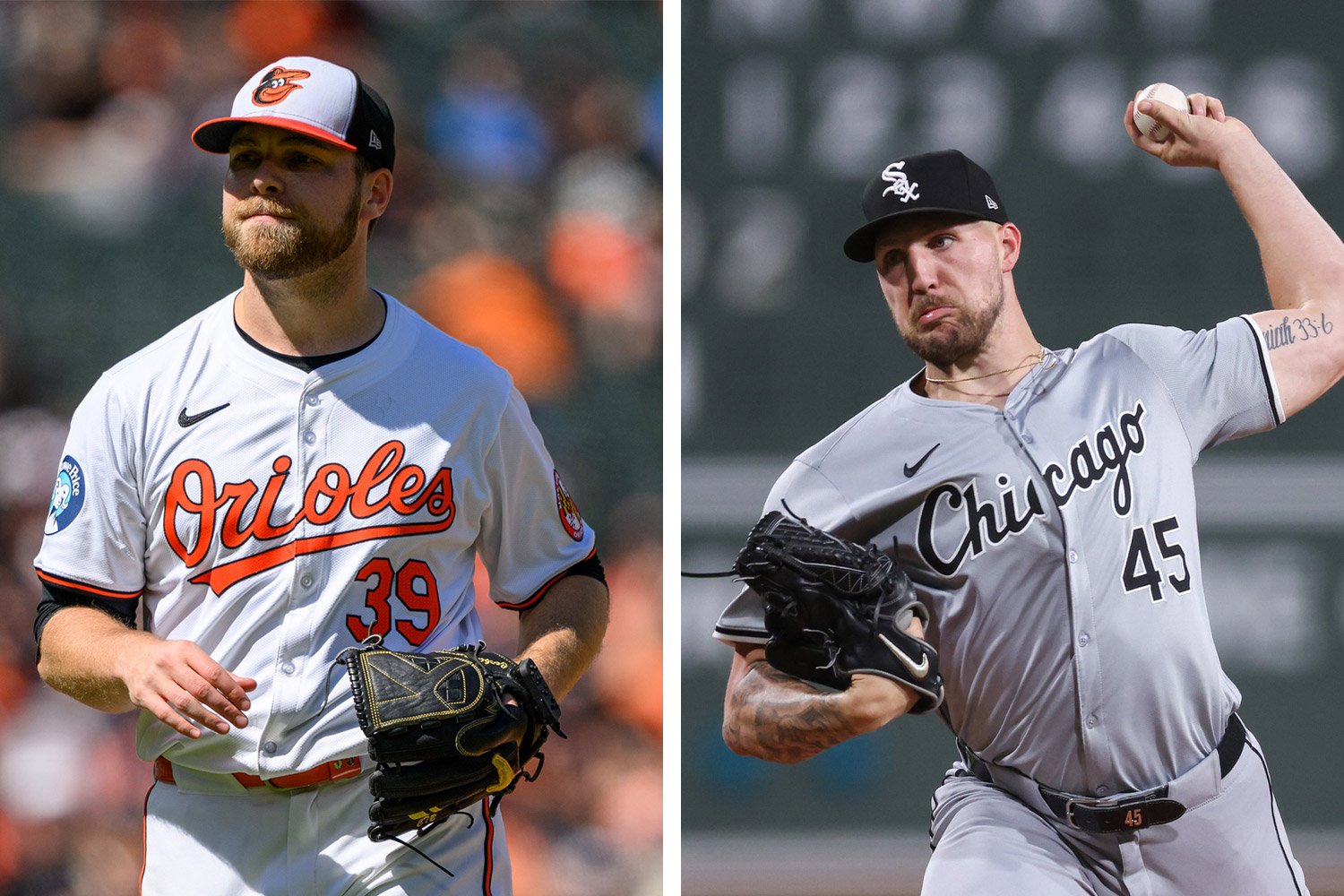 This series of articles is a primer for the release of our new "You're The Red Sox GM!" tool, where you play the role of Craig Breslow and build your own Red Sox offseason. Please visit the tool here and join in on the fun! I am ready to be hurt again. Like many of you, I am still recovering from a 2023 offseason full of broken promises. The infamous “full throttle” comment, the swings-and-misses on All-Stars Seth Lugo, Shota Imanaga, and Teoscar Hernandez, and the failed Yoshinobu Yamamoto pursuit. All the hype ended in one free-agent signing: A one-year deal with Lucas Giolito, who would blow out his elbow before ever throwing a pitch in a Red Sox uniform. Yet here we are 12 months later, and I am right back into the fray. If proven wrong, I will take full responsibility, but this year feels different. The Red Sox were a better team in 2024 than either 2022 or 2023, a credit to steps forward taken by young players and a vastly improved pitching staff. The team is in a new era, not thinking about how to win three or four years down the road but instead trying to compete for championships in 2025. This is reflected not just in the increased urgency in comments made by Sam Kennedy and Craig Breslow but in the confidence projected by reporters like Jeff Passan that the Red Sox will spend big this offseason. So, with all that said, here is my mock Red Sox offseason, based on early offseason rumors and my personal beliefs about the best moves for the team. Lineup CF Jarren Duran DH Gleyber Torres 3B Rafael Devers 1B Triston Casas SS Trevor Story RF Roman Anthony C Kyle Higashioka 2B Vaughn Grissom CF Cedanne Rafaela Bench C/UT Connor Wong INF David Hamilton OF Rob Refsnyder DH/PH Masataka Yoshida I will try to run through everything because some unconventional moves are here. Let's start with Gleyber Torres, a player that the Red Sox have had an interest in in the past. From watching him over his seven years in New York, we all know that Torres is a flawed player, and nobody would ever confuse him for a superstar. Yet, as he showed in the postseason, Torres has an elite understanding of the strike zone, ranking in the 92nd percentile in chase rate and 70th percentile in walk rate. He also does damage against left-handed pitching, posting a .811 OPS versus southpaws compared to a .674 mark against righties. Torres may not be a traditional DH, but he can fill it at both second and third and slot in between lefties Jarren Duran and Rafael Devers. I am a firm believer in putting your best 26-man roster on the field at all times. Roman Anthony is not just one of the Red Sox's 26 best players; he has the potential to be one of their best hitters as soon as next year. Last year, the Red Sox put Ceddanne Rafaela on the Opening Day roster and stuck with him as he tried to learn the MLB strike zone on the fly. If they are willing to ride the growing pains with Rafaela, they should be fine letting Anthony, a much more advanced hitter, get everyday at-bats as a rookie. I have talked ad nauseam about Connor Wong’s defensive struggles and how the Red Sox can’t expect their pitching staff to take steps forward if they have one of the league’s worst catchers. With his above-average framing abilities, veteran experience, and surprising right-handed power, Kyle Higashioka could be the perfect stop-gap until Kyle Teel is ready. Speaking of stop-gaps, I am fine giving Vaughn Grissom the first crack at second base until Marcelo Mayer or Krisitan Campbell forces the issue. The Red Sox aren’t going to give up on a guy they traded Chris Sale for after one season, and he showed enough at the end of the minor league season and during his last week in the majors to provide optimism heading into 2025. And if Grissom doesn’t work out, it won’t cost the Red Sox anything, and they could either give Torres more time at second base or roll with one of their top prospects. The bottom line is that you must see what you have in Grissom. I don’t believe Ceddanne Rafaela will ever be an average major-league hitter. The only player in baseball to chase even close to as often as Rafaela is Javier Baez, and we all know how that is working out. But much like Grissom, you have to see what you have in Rafaela, and even if he never posts an OPS above .700, you are still getting a premium defender in center field. The bench roles are mostly self-explanatory, with Connor Wong doing the backup catching and filling in around the infield, David Hamilton providing speed and a solid left bat, and Rob Refsndyer being the designated southpaw masher. The one notable player here is Masataka Yoshida. In an ideal world, he would be traded, but his lack of versatility, contract, and recent shoulder surgery will make that nearly impossible. The only thing for the Red Sox to do is give him 400 or so at-bats against right-handed pitching and hope he rebuilds his value enough to move him next off-season. Starting Rotation Corbin Burnes Tanner Houck Garrett Crochet Brayan Bello Lucas Giolito There is a reason I stuck only with short-term free-agent deals for the offense. This is where the Red Sox start spending money, and it will start with Corbin Burnes. I am aware of Burnes's warning signs, namely a strikeout rate that has declined for four straight years. Nevertheless, multiple reports have connected Burnes to the Red Sox, and he remains the best bet for the true ace they so desperately need. He may never strike out 250 batters in a season again, but there are few better bets today to deliver 200 elite innings. I am not here to tell you that Crochet solves all the Red Sox problems. I don’t even love the player all that much. For one, he has thrown 219 innings in the last five years and only had one MLB rotation season. I am also concerned with Crotchet’s comments at the trade deadline last season, where he claimed he would refuse to pitch in the postseason unless they gave him a contract extension. Even with all that being said, Crochet makes too much sense for the Red Sox to pass up. The two things the Red Sox lack in their starting rotation are left-handers and true swing-and-miss stuff, and Crochet fits both categories. He reminds me of another dominant left-hander who flourished under pitching coach Andrew Bailey: Carlos Rodon. The other worry surrounding Crochet is the prospect capital it will take to acquire him, as the Red Sox will reportedly compete with the Dodgers and Orioles for his services. While both teams have an elite farm system, the Red Sox can offer a combination of established, controllable players and high-upside prospects. I envision a package headlined by Kutter Crawford and Wilyer Abreu, along with prospects in their system's 5-10 range, such as Franklin Arias or David Sandlin. Bullpen RHP Garrett Whitlock RHP Justin Slaten RHP Liam Hendriks RHP Michael Fulmer RHP Luis Guerrero RHP Chris Martin LHP Tanner Scott LHP Zach Penrod Like the rotation, the Red Sox bullpen is desperately short on left-handed pitching and swing-and-miss ability. Enter Tanner Scott and his high-90s fastball. His inconsistent command may raise the heart rate of Red Sox fans a little too often, but nobody on either the trade or free-agent markets can provide what Scott can. Chris Martin is the one current Red Sox free agent I would re-sign. He caught a lot of flack last season due to some BABIP-fueled blow-ups, but his walk and strikeout rates were better than they were during his unhittable 2023 season. Nothing in the numbers indicates the 38-year-old Martin has slipped, and there is no risk in bringing him back for a one-year deal. It may be surprising that I only have one new addition to the Red Sox bullpen, but that just speaks to how impressed I was by Luis Guerrero and Zach Penrod during their September auditions. Guerrero, in particular, is a no-doubter after ten scoreless innings to begin his major league career, as the high-octane stuff matches the results. Penrod was slightly more shaky during his seven appearances, but I believe his upside far exceeds that of Brennan Bernardino or Bailey Horn. Three spots on this list are reserved for under-contract veterans returning from injury. The Red Sox signed Michael Fulmer and Liam Hendriks to multi-year deals, knowing they would be unlikely to pitch until 2025, and nothing has happened to change that plan. After three failed attempts at immersing him into the rotation, it is time for the Red Sox to give up the Garrett-Whitlock starter experiment and let him be the elite multi-inning reliever he was during his memorable rookie season. Though Whitlock, Hendriks, and Scott all have varying degrees of experience in the closer’s role, I am giving the first opportunity as the job to Justin Slaten. I can count on one hand the number of times Slaten appeared fazed during his rookie season, which is a quality I want in a closer. He also has demonstrated elite strike-throwing ability and true swing-and-miss stuff. There is a chance that Hendriks forces Alex Cora’s hand by looking like his old self, but I trust Slaten to get the three most important outs over a 36-year-old who hasn’t pitched in three years. Another point about the bullpen: The Red Sox will have more MLB-quality depth in Triple-A than in some time. Rather than turning to Kaleb Ort or Justin Garza, the Red Sox will have Zack Kelly, Josh Winckowski, and Greg Weissert waiting in the wings, all of whom had dominant stretches in the majors last season. Full Transaction Recap Sign SP Corbin Burnes to a 6-year/$190 million deal Trade OF Wilyer Abreu, SP Kutter Crawford, SS Franklin Arias, and SP David Sandlin to the White Sox for SP Garrett Crochet Sign RP Tanner Scott to a 4-year/$60 million deal Sign 2B Gleyber Torres to a 2-year/$35 million deal Sign C Kyle Higashioka to a 1-year/$10 million deal Re-sign RP Chris Martin to a 1-year/$12 million deal What do you think of this offseason plan? Do you think you can do better? Then build your own Red Sox roster and hit the button below! Start Your Payroll Blueprint Now
 -
If the Red Sox want to compete in the American League East in 2025, they need to go big on starting pitching. If the Red Sox want to compete in the American League East in 2025, they need to go big on starting pitching. This series of articles is a primer for the release of our new "You're The Red Sox GM!" tool, where you play the role of Craig Breslow and build your own Red Sox offseason. Please visit the tool here and join in on the fun! I am ready to be hurt again. Like many of you, I am still recovering from a 2023 offseason full of broken promises. The infamous “full throttle” comment, the swings-and-misses on All-Stars Seth Lugo, Shota Imanaga, and Teoscar Hernandez, and the failed Yoshinobu Yamamoto pursuit. All the hype ended in one free-agent signing: A one-year deal with Lucas Giolito, who would blow out his elbow before ever throwing a pitch in a Red Sox uniform. Yet here we are 12 months later, and I am right back into the fray. If proven wrong, I will take full responsibility, but this year feels different. The Red Sox were a better team in 2024 than either 2022 or 2023, a credit to steps forward taken by young players and a vastly improved pitching staff. The team is in a new era, not thinking about how to win three or four years down the road but instead trying to compete for championships in 2025. This is reflected not just in the increased urgency in comments made by Sam Kennedy and Craig Breslow but in the confidence projected by reporters like Jeff Passan that the Red Sox will spend big this offseason. So, with all that said, here is my mock Red Sox offseason, based on early offseason rumors and my personal beliefs about the best moves for the team. Lineup CF Jarren Duran DH Gleyber Torres 3B Rafael Devers 1B Triston Casas SS Trevor Story RF Roman Anthony C Kyle Higashioka 2B Vaughn Grissom CF Cedanne Rafaela Bench C/UT Connor Wong INF David Hamilton OF Rob Refsnyder DH/PH Masataka Yoshida I will try to run through everything because some unconventional moves are here. Let's start with Gleyber Torres, a player that the Red Sox have had an interest in in the past. From watching him over his seven years in New York, we all know that Torres is a flawed player, and nobody would ever confuse him for a superstar. Yet, as he showed in the postseason, Torres has an elite understanding of the strike zone, ranking in the 92nd percentile in chase rate and 70th percentile in walk rate. He also does damage against left-handed pitching, posting a .811 OPS versus southpaws compared to a .674 mark against righties. Torres may not be a traditional DH, but he can fill it at both second and third and slot in between lefties Jarren Duran and Rafael Devers. I am a firm believer in putting your best 26-man roster on the field at all times. Roman Anthony is not just one of the Red Sox's 26 best players; he has the potential to be one of their best hitters as soon as next year. Last year, the Red Sox put Ceddanne Rafaela on the Opening Day roster and stuck with him as he tried to learn the MLB strike zone on the fly. If they are willing to ride the growing pains with Rafaela, they should be fine letting Anthony, a much more advanced hitter, get everyday at-bats as a rookie. I have talked ad nauseam about Connor Wong’s defensive struggles and how the Red Sox can’t expect their pitching staff to take steps forward if they have one of the league’s worst catchers. With his above-average framing abilities, veteran experience, and surprising right-handed power, Kyle Higashioka could be the perfect stop-gap until Kyle Teel is ready. Speaking of stop-gaps, I am fine giving Vaughn Grissom the first crack at second base until Marcelo Mayer or Krisitan Campbell forces the issue. The Red Sox aren’t going to give up on a guy they traded Chris Sale for after one season, and he showed enough at the end of the minor league season and during his last week in the majors to provide optimism heading into 2025. And if Grissom doesn’t work out, it won’t cost the Red Sox anything, and they could either give Torres more time at second base or roll with one of their top prospects. The bottom line is that you must see what you have in Grissom. I don’t believe Ceddanne Rafaela will ever be an average major-league hitter. The only player in baseball to chase even close to as often as Rafaela is Javier Baez, and we all know how that is working out. But much like Grissom, you have to see what you have in Rafaela, and even if he never posts an OPS above .700, you are still getting a premium defender in center field. The bench roles are mostly self-explanatory, with Connor Wong doing the backup catching and filling in around the infield, David Hamilton providing speed and a solid left bat, and Rob Refsndyer being the designated southpaw masher. The one notable player here is Masataka Yoshida. In an ideal world, he would be traded, but his lack of versatility, contract, and recent shoulder surgery will make that nearly impossible. The only thing for the Red Sox to do is give him 400 or so at-bats against right-handed pitching and hope he rebuilds his value enough to move him next off-season. Starting Rotation Corbin Burnes Tanner Houck Garrett Crochet Brayan Bello Lucas Giolito There is a reason I stuck only with short-term free-agent deals for the offense. This is where the Red Sox start spending money, and it will start with Corbin Burnes. I am aware of Burnes's warning signs, namely a strikeout rate that has declined for four straight years. Nevertheless, multiple reports have connected Burnes to the Red Sox, and he remains the best bet for the true ace they so desperately need. He may never strike out 250 batters in a season again, but there are few better bets today to deliver 200 elite innings. I am not here to tell you that Crochet solves all the Red Sox problems. I don’t even love the player all that much. For one, he has thrown 219 innings in the last five years and only had one MLB rotation season. I am also concerned with Crotchet’s comments at the trade deadline last season, where he claimed he would refuse to pitch in the postseason unless they gave him a contract extension. Even with all that being said, Crochet makes too much sense for the Red Sox to pass up. The two things the Red Sox lack in their starting rotation are left-handers and true swing-and-miss stuff, and Crochet fits both categories. He reminds me of another dominant left-hander who flourished under pitching coach Andrew Bailey: Carlos Rodon. The other worry surrounding Crochet is the prospect capital it will take to acquire him, as the Red Sox will reportedly compete with the Dodgers and Orioles for his services. While both teams have an elite farm system, the Red Sox can offer a combination of established, controllable players and high-upside prospects. I envision a package headlined by Kutter Crawford and Wilyer Abreu, along with prospects in their system's 5-10 range, such as Franklin Arias or David Sandlin. Bullpen RHP Garrett Whitlock RHP Justin Slaten RHP Liam Hendriks RHP Michael Fulmer RHP Luis Guerrero RHP Chris Martin LHP Tanner Scott LHP Zach Penrod Like the rotation, the Red Sox bullpen is desperately short on left-handed pitching and swing-and-miss ability. Enter Tanner Scott and his high-90s fastball. His inconsistent command may raise the heart rate of Red Sox fans a little too often, but nobody on either the trade or free-agent markets can provide what Scott can. Chris Martin is the one current Red Sox free agent I would re-sign. He caught a lot of flack last season due to some BABIP-fueled blow-ups, but his walk and strikeout rates were better than they were during his unhittable 2023 season. Nothing in the numbers indicates the 38-year-old Martin has slipped, and there is no risk in bringing him back for a one-year deal. It may be surprising that I only have one new addition to the Red Sox bullpen, but that just speaks to how impressed I was by Luis Guerrero and Zach Penrod during their September auditions. Guerrero, in particular, is a no-doubter after ten scoreless innings to begin his major league career, as the high-octane stuff matches the results. Penrod was slightly more shaky during his seven appearances, but I believe his upside far exceeds that of Brennan Bernardino or Bailey Horn. Three spots on this list are reserved for under-contract veterans returning from injury. The Red Sox signed Michael Fulmer and Liam Hendriks to multi-year deals, knowing they would be unlikely to pitch until 2025, and nothing has happened to change that plan. After three failed attempts at immersing him into the rotation, it is time for the Red Sox to give up the Garrett-Whitlock starter experiment and let him be the elite multi-inning reliever he was during his memorable rookie season. Though Whitlock, Hendriks, and Scott all have varying degrees of experience in the closer’s role, I am giving the first opportunity as the job to Justin Slaten. I can count on one hand the number of times Slaten appeared fazed during his rookie season, which is a quality I want in a closer. He also has demonstrated elite strike-throwing ability and true swing-and-miss stuff. There is a chance that Hendriks forces Alex Cora’s hand by looking like his old self, but I trust Slaten to get the three most important outs over a 36-year-old who hasn’t pitched in three years. Another point about the bullpen: The Red Sox will have more MLB-quality depth in Triple-A than in some time. Rather than turning to Kaleb Ort or Justin Garza, the Red Sox will have Zack Kelly, Josh Winckowski, and Greg Weissert waiting in the wings, all of whom had dominant stretches in the majors last season. Full Transaction Recap Sign SP Corbin Burnes to a 6-year/$190 million deal Trade OF Wilyer Abreu, SP Kutter Crawford, SS Franklin Arias, and SP David Sandlin to the White Sox for SP Garrett Crochet Sign RP Tanner Scott to a 4-year/$60 million deal Sign 2B Gleyber Torres to a 2-year/$35 million deal Sign C Kyle Higashioka to a 1-year/$10 million deal Re-sign RP Chris Martin to a 1-year/$12 million deal What do you think of this offseason plan? Do you think you can do better? Then build your own Red Sox roster and hit the button below! Start Your Payroll Blueprint Now View full article
-
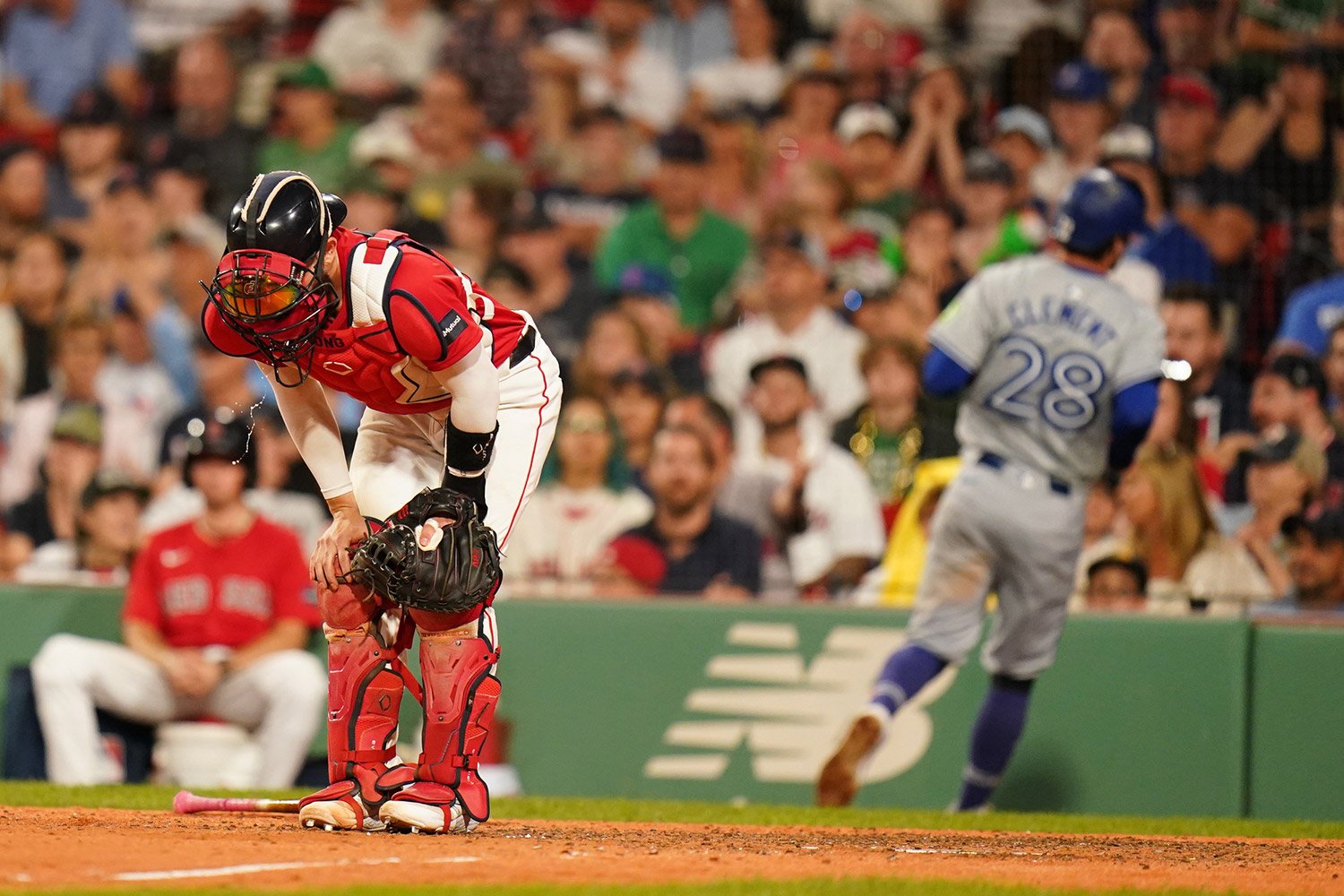 Red Sox fans love to complain. Spend five minutes on X, and you’ll hear about everything wrong with the club, from John Henry’s indifference to Alex Cora’s decision-making to Triston Casas’ pregame routine. Yet, during all my time on the app, one issue isn’t talked about enough: Connor Wong’s defense. I was stunned to see the results from the RedSoxStats Twitter survey that only 7% of fans want Wong to be replaced as the starting catcher, and I think the reason is that it's hard to truly appreciate the impact of catcher framing. It’s much easier to measure offense, as anyone can tell you what a good batting average or home run total is. It’s also become easier to measure defense, as Statcast’s Outs Above Average puts a digestible numerical value on defensive value. But framing? Does that even matter? It feels much easier just to blame the umpire for missing calls. Framing does matter, and Wong’s inability to assist his pitchers actively costs the team runs. He rated 57th out of 59 catchers last season with -7 framing runs. That might not seem like a lot, but consider the type of pitchers the Red Sox have on their staff. Besides Nick Pivetta, the Red Sox rotation consisted entirely of sinkerballers who rely on command rather than overpowering hitters. They are also a largely inexperienced staff, with Tanner Houck, Brayan Bello, and Kutter Crawford all in their first or second full seasons in an MLB rotation. They would have benefited tremendously from a catcher they could have confidence in, but instead they got one who cost them strikes regularly. As much as Wong struggled with framing, his blocking is worse. Only Francisco Alvarez and Shea Langeliers were worse than Wong’s -12 Blocks Above Average, with the former being an elite framer and the latter being an Oakland Athletic. To put it another way, no team with any kind of postseason aspirations trotted out a catcher as bad as Wong every day. You might think, “Well, Wong is still young and getting used to catching. Maybe he will improve next season.” The issue with that line of thinking is that Wong actually regressed from his rookie season to 2024. He went from -5 framing runs to -7 and from -7 Blocks Above Average to -12. He also took a major step back in throwing out runners, going from the 92nd percentile in Caught Stealing Above Average to the middle of the pack. Another point one might argue is that Connor Wong was one of the best offensive catchers in baseball, which is technically true on the surface but doesn’t tell the whole story. For one, he is one of the many hitters on the Red Sox with a plate approach issue, striking out 114 times against just 28 walks. If you look at Wong’s Baseball Savant page, you would never guess that he had a 110 OPS+: As you can see, every single under-the-hood metric indicates that Wong is a well-below-average hitter. He doesn’t hit the ball hard, doesn’t square up the ball consistently, swings and misses far too often, and frequently expands the zone. The difference between his batting average (.280) and the expected batting average based on the quality of contact (.233) was the second-highest in all of baseball. Every indication is that Wong was exceptionally lucky and is unlikely to post another above-average offensive season unless he alters his approach. If we’re being honest with ourselves, and I try to be when writing these articles, I couldn't care less about how a catcher hits. Sandy Leon, the primary catcher for the greatest Red Sox team ever, had a .511 OPS on the year. Did that matter? Of course not. What mattered was that he was a great defensive catcher and that the pitchers loved throwing to him. With that in mind, let me propose a new starting catcher for the 2025 Red Sox, and no, it’s not Kyle Teel. The 2022 first-round pick is the unquestioned catcher of the future, but the future is not right now. There is still more work to be done, such as making more frequent and harder contact and being more consistent on defense. No, the catcher I want the Red Sox to sign is Kyle Higashioka. The soon-to-be free agent checks all the boxes I’m looking for to help reshape the pitching staff. As Gerrit Cole’s former personal catcher and the starting backstop on a great Padres team this year, Higashioka knows how to control a pitching staff and earn the trust of veteran pitchers. He has been anywhere from an above-average to an elite framer throughout his career. Though he took a step back with his throwing and blocking in 2024, he has usually graded at least average in both categories. He is also far from a zero from the plate, homering 17 times in only 84 games and having a swing made for Fenway Park. I understand that suggesting replacing a 29-year-old catcher in his prime with a 35-year-old journeyman may be unpopular, but Wong’s defense over the past two years hasn’t been good enough. It's hard to hear the organization talk about the “Run Prevention Unit” and trot out a catcher who actively hurts their pitchers defensively. Simply put, the Red Sox pitching staff needs to improve and an easy way to accomplish that goal is to improve defensively behind the dish.
 -
Connor Wong had a nice offensive season in 2024 but his defense is hurting the Red Sox pitching staff. Connor Wong had a nice offensive season in 2024 but his defense is hurting the Red Sox pitching staff. Red Sox fans love to complain. Spend five minutes on X, and you’ll hear about everything wrong with the club, from John Henry’s indifference to Alex Cora’s decision-making to Triston Casas’ pregame routine. Yet, during all my time on the app, one issue isn’t talked about enough: Connor Wong’s defense. I was stunned to see the results from the RedSoxStats Twitter survey that only 7% of fans want Wong to be replaced as the starting catcher, and I think the reason is that it's hard to truly appreciate the impact of catcher framing. It’s much easier to measure offense, as anyone can tell you what a good batting average or home run total is. It’s also become easier to measure defense, as Statcast’s Outs Above Average puts a digestible numerical value on defensive value. But framing? Does that even matter? It feels much easier just to blame the umpire for missing calls. Framing does matter, and Wong’s inability to assist his pitchers actively costs the team runs. He rated 57th out of 59 catchers last season with -7 framing runs. That might not seem like a lot, but consider the type of pitchers the Red Sox have on their staff. Besides Nick Pivetta, the Red Sox rotation consisted entirely of sinkerballers who rely on command rather than overpowering hitters. They are also a largely inexperienced staff, with Tanner Houck, Brayan Bello, and Kutter Crawford all in their first or second full seasons in an MLB rotation. They would have benefited tremendously from a catcher they could have confidence in, but instead they got one who cost them strikes regularly. As much as Wong struggled with framing, his blocking is worse. Only Francisco Alvarez and Shea Langeliers were worse than Wong’s -12 Blocks Above Average, with the former being an elite framer and the latter being an Oakland Athletic. To put it another way, no team with any kind of postseason aspirations trotted out a catcher as bad as Wong every day. You might think, “Well, Wong is still young and getting used to catching. Maybe he will improve next season.” The issue with that line of thinking is that Wong actually regressed from his rookie season to 2024. He went from -5 framing runs to -7 and from -7 Blocks Above Average to -12. He also took a major step back in throwing out runners, going from the 92nd percentile in Caught Stealing Above Average to the middle of the pack. Another point one might argue is that Connor Wong was one of the best offensive catchers in baseball, which is technically true on the surface but doesn’t tell the whole story. For one, he is one of the many hitters on the Red Sox with a plate approach issue, striking out 114 times against just 28 walks. If you look at Wong’s Baseball Savant page, you would never guess that he had a 110 OPS+: As you can see, every single under-the-hood metric indicates that Wong is a well-below-average hitter. He doesn’t hit the ball hard, doesn’t square up the ball consistently, swings and misses far too often, and frequently expands the zone. The difference between his batting average (.280) and the expected batting average based on the quality of contact (.233) was the second-highest in all of baseball. Every indication is that Wong was exceptionally lucky and is unlikely to post another above-average offensive season unless he alters his approach. If we’re being honest with ourselves, and I try to be when writing these articles, I couldn't care less about how a catcher hits. Sandy Leon, the primary catcher for the greatest Red Sox team ever, had a .511 OPS on the year. Did that matter? Of course not. What mattered was that he was a great defensive catcher and that the pitchers loved throwing to him. With that in mind, let me propose a new starting catcher for the 2025 Red Sox, and no, it’s not Kyle Teel. The 2022 first-round pick is the unquestioned catcher of the future, but the future is not right now. There is still more work to be done, such as making more frequent and harder contact and being more consistent on defense. No, the catcher I want the Red Sox to sign is Kyle Higashioka. The soon-to-be free agent checks all the boxes I’m looking for to help reshape the pitching staff. As Gerrit Cole’s former personal catcher and the starting backstop on a great Padres team this year, Higashioka knows how to control a pitching staff and earn the trust of veteran pitchers. He has been anywhere from an above-average to an elite framer throughout his career. Though he took a step back with his throwing and blocking in 2024, he has usually graded at least average in both categories. He is also far from a zero from the plate, homering 17 times in only 84 games and having a swing made for Fenway Park. I understand that suggesting replacing a 29-year-old catcher in his prime with a 35-year-old journeyman may be unpopular, but Wong’s defense over the past two years hasn’t been good enough. It's hard to hear the organization talk about the “Run Prevention Unit” and trot out a catcher who actively hurts their pitchers defensively. Simply put, the Red Sox pitching staff needs to improve and an easy way to accomplish that goal is to improve defensively behind the dish. View full article
-
 Last week, the great Red Sox Stats conducted its annual offseason survey on Twitter, asking about everything from lineup construction to uniform choices. Over 2,300 diehard fans responded, giving us the best data we'll get on how the fanbase thinks about its team. I took a look at the results and determined what they say about the state of the Red Sox, as well as offering my own two cents about what should be done this offseason. Will the Red Sox enter the regular season with a payroll higher than $241 million (The first CBT threshold)? Yes: 14% No: 86% My Vote: No This tells you everything you need to know about the confidence in the team’s willingness to spend big this offseason. The Red Sox currently sit $60 million below that threshold, which means it would take a serious spending spree to exceed that total. I believe that the Red Sox will increase payroll, but won't exceed the first CBT threshold. I think they sign one mid-level starting pitcher and one right-handed bat and come in around $235 million, which gives them some room to maneuver during the trade deadline. Which best fits your ideal plan for the Red Sox offseason? Just spend money on pitching and keep all the position players: 41% Make painful, blockbuster trade investments into pitching: 32% Make smaller trades for pitching and spend to the CBT: 21% One-year deals in free agency and keep developing: 1% Want something totally different from listed options: 5% My Vote: Make painful, blockbuster trade investments into pitching It’s interesting that spending money on pitching was the highest-voted answer here, as it seems to directly contradict the first question. As I said before, I think the Red Sox do sign a free-agent starting pitcher, but from the Severino-Flaherty-Kikuchi tier rather than a proven number one like Corbin Burnes or Max Fried. However, I think we all need to brace ourselves for the possibility of a risky, painful trade. It doesn’t make sense to hold on to all the position players the Red Sox have in the upper minors and majors. There aren’t enough at-bats to go around, especially when you consider the overwhelming left-handedness of the lineup. I personally believe that Abreu will be on the move (which wouldn’t exactly be painful to me), but I wouldn’t be surprised if Mayer, Campbell, or even Duran are on the trading block this offseason. A qualifying offer is projected to be $21.2 million this offseason. Who would you give the qualifying offer to? Tyler O’Neill: 60% Yes Nick Pivetta: 22% Yes My Vote: No to both Yeah, I don’t get this one. First off, Nick Pivetta is not getting a QO. Nobody is paying $21.05 million for a soon-to-be 32-year-old who has never posted an ERA below 4.00. I don’t understand what 22% of fans are thinking here. Tyler O’Neill is a more complicated matter, and I can see where fans are coming from. The Red Sox need a right-handed bat, and O’Neill was one of the best in all of baseball against left-handed pitchers last year. I just can’t get over the strikeout and the injuries. Making more contact needs to be a priority for the Red Sox, who finished third in the majors last year in punchouts, and re-signing a guy who struck out in 33% of his plate appearances is a bad place to start. Moreover, O’Neill has not shown an ability to stay on the field consistently. The 113 games O’Neill played last year were actually the second-highest total of his career, but he missed time with a concussion, knee soreness, a knee infection, and back tightness. The Red Sox need more consistency up and down the lineup, and though his highs were really high, O’Neill showed last year that could not be counted on for 162 games. There is a chance that O'Neill will decline the offer in search of a multi-year deal, giving the Red Sox a compensatory draft pick, but I wouldn't take the risk of him accepting it. I would much rather go after a guy like Anthony Santander, who has just as much power but has played in 150 games in each of the last three seasons and strikes out only 19.2% of the time. Thoughts on Masataka Yoshida? Doesn’t fit the roster: 42% Should be the Red Sox DH: 15% Indifferent: 43% My vote: Doesn’t fit the roster If you've read anything I've written, you know that indifference is never an option. This is especially true when it comes to Masataka Yoshida, on whom I have very strong opinions. I like the guy and he’s had some fun stretches, but his presence on the big-league roster actively hurts the Red Sox. They already have far too many left-handed batters and far too many guys who could use time at DH. In 2023, the Red Sox had Justin Turner as the full-time DH, but what made it work was that he could also play first or third. Yoshida’s inability to play the field (at least in the eyes of management) forced Tyler O’Neill to play left field every day and Rafael Devers to play third base every day, which actively hurt the Red Sox defense. That might have been acceptable had Yoshida been hitting like Yordan Alvarez, but we have enough data from the last two seasons to conclude that Yoshida is only a slightly above-average hitter. I get there are still Chaim fans out there who will defend his every move to their last day, but it’s okay to admit he got this wrong; $90 million is a gross overpay for a decent hitter with no defensive value. You don’t need to read between the lines to understand that Craig Breslow feels the same way. His comments about wanting defensive versatility directly don't line up with Yoshida’s skillset. Even if it means eating some money, it would be in both the team's and the player's best interest for the marriage to end this offseason. Who should be the Red Sox DH? Right-handed slugger: 47% Rafael Devers: 20% Yoshida: 11% Shuffled through the spot: 17% Other: 5% My Vote: Right-handed slugger My vote here is slightly misleading because I would actually vote for two of the options. As I stated earlier, I would go after a right-handed slugger who would get the majority of at-bats at DH but also can play the field, letting other players shuffle in. This could be Anthony Santander or Teoscar Hernández, both of whom can field well enough to spend time in left field, or even Gleyber Torres, who can play in the middle infield. I want to address the 20% of votes that went to Rafael Devers. The fact of the matter is that once you move Devers to designated hitter, you can never put him back at third. That means that you are paying $30 million a year for a designated hitter, which is not the best use of your resources. I understand the frustration with Devers’ defense over the last few years, and I am in favor of having him play some DH to keep him healthy for 162 games, but there’s no doubt he can play the position. Most of his errors come on routine plays, which speaks more to focus issues rather than a talent issue. I also believe having Story at shortstop for a full season will be a tremendous help, as Devers is worst at moving to his left. The time will come for Devers to move down the defensive spectrum, but we are not there yet. What should be done with Connor Wong? Starting catcher: 67% Tandem with Teel: 23% Replaced with a different starting catcher: 7% Teel should be the starter: 3% My Vote: Replaced with a different starting catcher I’m going to make this as clear as I can: Connor Wong is a really bad defensive catcher, and he has cost the Red Sox countless runs this season. Being in the third percentile in blocking and the 11th percentile in framing is completely unacceptable, and it blows my mind that more fans aren’t upset about this. That mark actually represents a step back from 2023, so the argument that he will get better with experience doesn’t make sense. It’s nice that Wong had a decent offensive season, but defense is more important for a catcher than offense. If the Red Sox are serious about improving their pitching staff and defense, they would sign someone like Kyle Higashioka, who boasts 61st percentile framing. With Wong’s versatility and ability to hit left-handed pitching, he still provides plenty of value to a big-league team. Just don’t tell me he’s an everyday catcher. What should be done with Ceddanne Rafaela? Full-time center fielder: 59% Non-starting utility role: 30% Traded: 7% Minor leagues/infield: 4% My Vote: Non-starting utility role Rafaela is not getting traded. It would be an absolute embarrassment to sign someone to an eight-year extension only to turn around and trade him. I have written and tweeted about Rafaela enough over the past two months, so I’ll try to keep this quick. It is impossible to be a successful big-league hitter with a 46% chase rate. To put things in perspective, that number is worse than Javier Báez in all but his absolute worst season. Towards the end of the season, pitchers realized they didn’t have to throw anything near the strike zone to Rafaela, and his chase rate ballooned to over 56% in September. As we’ve seen this postseason, the most successful offenses are the ones that grind out at-bats and wear pitchers down. A .270 on-base percentage is just unacceptable for an everyday player, and based on his minor-league history and progression through the course of the 2024 season, I don’t see that total improving much. The good news about Rafaela, however, is that he is an elite defender in center and and could potentially be an above-average one in the middle infield. With Trevor Story’s injury history and the uncertainty surrounding Vaughn Grissom, Rafaela’s ability to fill in at both second and shortstop, as well as to provide Gold-Glove defense in the center, will make him a valuable player even if he never figures out how to control the strike zone. Who should be the Red Sox closer? Justin Slaten: 40% Liam Hendriks: 38% Garrett Whitlock: 16% My vote: Justin Slaten This is a very underrated storyline headed into the 2025 season. Kenley Jansen is already out the door, which means that next year will likely be the first time since 2021 that the Red Sox will enter spring training without a set closer. Of course, Liam Hendriks was the definition of a proven closer during his time with the Chicago White Sox and Oakland Athletics, but that was two years and one Tommy John surgery ago. You can’t go into a season intending to compete while trusting a 36-year-old to be the same shutdown fireman he was during his prime. My personal preference would be to bring in someone who closed games in 2024, but the free-agent market doesn’t appear to hold the answers. Other than Kenley Jansen, who will assuredly not be coming back, the only free-agent closers are Paul Sewald and Clay Homes, who were each demoted from the role with their respective teams, and Tanner Scott, who will likely command a bidding war outside the team's ideal price range. That leaves the internal options, and of all the relievers currently on the Red Sox roster, Justin Slaten profiles the best as a closer. The 26-year-old Rule 5 pick was unfazed during his rookie season, pitching high-leverage innings immediately and walking only nine batters in 55 innings. With an upper-90s fastball and a wipeout sweeper that generated a 35.6% whiff rate, Slaten has the stuff to get the hardest three outs in the game. That doesn’t mean he will be the closer all season long, but he has earned the first look. I understand the thinking behind wanting Garrett Whitlock to return to the closer role, as memories of the 2021 playoffs haven’t quite faded from our minds. Personally, I would rather have him in a multi-inning role like the one he dominated in as a rookie. I am also curious to see how his velocity bounces back after a season-ending injury in 2024. Finally, don’t forget about Luis Guerrero. He dominated as Worcester's closer last season and proved he belonged during a September call-up. I could see him getting a look should he continue to excel in 2025. Which of the Big 4 would you be most willing to trade? Marcelo Mayer: 50% Kristian Campbell/Kyle Teel: 25-ish% Roman Anthony: Handful of votes My Vote: Marcelo Mayer This was a process of elimination for me. First, the only player I would move Roman Anthony for is Tarik Skubal. You don’t trade guys who dominate Triple A as a 20-year-old like Anthony did. Given what we saw from Connor Wong behind the plate this year, I would also be very reluctant to move Kyle Teel. The tools aren’t nearly as flashy as the other three, but Teel’s floor may be the highest. There are so few standout catchers in today’s game, and even if Teel only becomes a .270-average, 15-homer hitter, that would be extremely valuable should he continue improving his defense. There is certainly an argument for moving Kristian Campbell, as there are still questions about how his unique swing will translate to the show, but I couldn’t do it. His performance this year was just too special to trade for anything other than a proven ace. I want to be clear here: I do not want to trade Marcelo Mayer. I still feel confident that he can be a first-division regular at the game’s premier position. However, there are a couple of things working against him: He is a left-handed hitter, which, if you’re sensing a theme here, the Red Sox already have too many of. The middle-infield is a place of depth for the Red Sox, with Trevor Story, Vaughn Grissom, Kristian Campbell, Nick Sogard, and Chase Meidroth likely in the mix for a big-league spot next season, and Franklin Arias and Yoelin Cespedes developing in the lower-minors. For the second year in a row, Mayer ended the season on the IL, and he has still never topped 100 games in a season. None of this means that Mayer needs to be moved, but it does raise enough questions about his future on the big-league team. So if an ace is available and a team is asking for one of the Big Four, I slightly lean towards including Mayer to finish the deal. If the Big Four are still in the organization, how many are opening with the big-league club? All start in minors: 32% More than one: 31% Only Anthony: 21% Only Campbell: 11% My Vote: Only Anthony In 2024, a 20-year-old Jackson Chourio, then the number three prospect in baseball, surprised everybody by making the Brewers opening-day roster. After some early struggles, he helped lead the team to a division title. Anthony will enter 2025 spring training at the same age and with the same prospect pedigree, and is even more of a polished product than Chourio was. There is nothing left for Anthony to prove at the Triple-A level, and I believe that the Red Sox will make room for him this offseason by trading Abreu. I can see the argument for Campbell, but I think his September slump and season-ending injury will necessitate him needing a little more time in Worcester. The same goes for Kyle Teel, as I would much rather sign a defense-first veteran to compliment Wong than rush Teel to the big leagues. As for Marcelo Mayer, there is almost no chance the Red Sox put him on the Opening-Day roster without any time at Triple A. Average Grade of Craig Breslow Average Vote: 5.1 My Vote: 5.0 I think Red Sox fans are spot-on with this one. Breslow deserves tons of credit for a pitching staff that lowered its ERA by half a run and savvy acquisitions like Greg Weissert, Richard Fitts, Justin Slaten, and Tyler O’Neill. I also believe that Lucas Giolito would have been a great signing had he not gotten injured in spring training, something Breslow couldn’t have seen coming. At the end of the day, however, it’s a results-oriented business, and 81-81 just isn’t good enough. Though things might change down the road, the early returns on the Vaughn Grissom-Chris Sale trade are not pretty. The trade deadline was also an unmitigated disaster, with none of the four MLB players acquired contributing positive value. The real answer to a question like this is that it is too early to tell, but given the mixed results so far through the first year, I think 5 is a perfectly fine rating for Mr. Breslow. Dave O’Brien NESN Rating Average Vote: 5.3 My Vote: 4 I actually think Dave O’Brien’s calls are pretty good, but vastly overrated by people who think the only way to be a good announcer is to scream. My issue with him is that his chemistry with his color guys isn’t great and he can be super vanilla. Would you swap out Dave O’Brien for Mike Monoco as NESN’s play-by-play man? Yes: 68% No: 8% Indifferent: 24% My Vote: Yes This is a pretty damning indictment of the NESN broadcast. Monaco is simply the better broadcaster who connects more with the younger fans. A year removed from the Chaim Bloom era, where do you stand now? Though it was good, looks better now: 27% Thought it was good, still thinks the same: 31% Thought it was good, now a bit worse: 3% Thought it was bad, now looks a bit better: 21% Thought it was bad, still think the same: 9% Thought it was bad, now looks a little worse: 1% My Vote: Thought it was good, now a bit worse I presume the reason nearly half of the respondents said they think higher of Bloom’s tenure is the step forward the farm system took this season. The way I look at it, I can’t give Bloom too much credit for Teel and Mayer falling into their laps, and I give most of the credit for Anthony and Campbell’s progression to scouting director Devin Pearson and the minor league development team. A GM (or Chief Baseball Officer, or whatever you'd like to call it) should be judged most harshly on their trades and free agent signings, and the past year has not been kind to Bloom in that respect. The big issue I have is with the Yoshida signing. This past season offered more evidence that Bloom wildly miscalculated Yoshida’s value, and I just don’t understand why Bloom thought that signing was a good idea with so many other left-handed hitting outfielders in the system. The bottom line is that Breslow’s job was made much harder by Bloom’s mistake, as he is now forced to pay $18 million a year to a light-hitting DH. Then there are the trades, or rather, the lack thereof. How much better would the 2024 Red Sox have been if Bloom had pulled the trigger on a J.D. Martinez or Chris Sale trade at the 2022 deadline or picked a direction during the 2023 season? If you want to know why it seems like the Red Sox have been spinning in place for the last two years, you have to start by looking at the CBO who couldn’t make up his mind. Should Wilyer Abreu be used in trade offers this winter? Yes: 72% No: 28% My vote: Yes The Red Sox' two biggest offensive issues in 2024 were an inability to hit left-handed pitching and a propensity for striking out. Well, Abreu struck out in over 30% of his plate appearances and had a .532 OPS against southpaws. This isn’t to say that Abreu isn’t a very good player. Most teams would kill for a 3.5 WAR season from a rookie. He’s just not the right player for this Red Sox team, and with Roman Anthony seemingly ready to go by Opening Day, Abreu should be at the forefront of deals to acquire starting pitching and balance the lineup. Should the Red Sox offer a $200 Million+ mega-contract to Corbin Burnes? Yes: 28% No: 62% My Vote: No Look, we all agree that the Red Sox need an ace, and there are few more dependable pitchers than Corbin Burnes. Over the last four seasons, Burnes has posted a 2.94 ERA while averaging 189 innings and 214 strikeouts per season. The warning signs, however, are already there for the soon-to-be 30-year-old. His strikeout rate has dropped in each of the last four seasons, and though he will likely finish as runner-up for the AL Cy Young this year, he struck out a career-low 8.4 batters per inning and allowed a career-high 7.6 hits per nine innings. I don’t have any doubt that he can continue to be an ace-level pitcher for the next few years, but there are just too many red flags to commit to a David Price-level contract. How would you describe your passion for the Red Sox? As strong as it ever was: 36% Strong, but not near previous levels: 43% Fading slowly and steadily: 12% Level of apathy settling in: 6% My vote: As strong as it ever was The takeaway here should not be that I am as passionate as I ever was. I am in too deep. The bigger story should be that over 60% of fans say that their fandom is declining. These aren’t casual fans either: These are diehards who took the time to respond to a survey on a Red Sox fan account. If you lose these fans, there is nobody left. Something needs to change. Triston Casas is four years away from free agency. Would you try to extend him? Yes: 79% No: 21% My vote: Yes Should Triston Casas be used in trades for starting pitching? Yes: 16% No: 84% My vote: No I am a firm believer that the best way to build an offense is to acquire and develop hitters who understand the strike zone. More than any other player in the Red Sox lineup, Triston Casas fits that description. Even when he was slumping after returning from injury, Casas never gave away an at-bat and never deviated from his plan at the plate. That is the kind of hitter you want to build your offense around. Unlike Abreu and Duran, the Red Sox don't have in-house options to replace Casas. The Red Sox don’t have anybody else on the major-league roster or any highly-rated prospects that can start every day at first base, and they certainly don’t have anybody who can match his combination of power and patience. If the Red Sox believe they can acquire a pitcher who is an ace, or soon could be an ace, would you be ok with trading Jarren Duran? Yes, that makes sense for the team: 37% Hesitant yes: 36% Probably no: 19% Unavailable in Trade: 8% My Vote: Probably No I think fans are underestimating how hard it is to develop a homegrown, controllable position player that is capable of an 8 WAR season. Since the turn of the century, the Red Sox have had just three such players: Jacoby Ellsbury, Mookie Betts, and Duran. I feel far more certain about Duran’s ability to maintain his elite production than Abreu or Rafaela. If the trade isn’t for a current, proven ace like Logan Gilbert, I am not pulling the trigger. Ken Rosenthal suggested the Red Sox should trade Triston Casas and sign Alex Bregman. Like the Idea: 9% Hate the Idea: 91% My Vote: Hate the idea A couple quick reasons why this is a bad idea: Triston Casas is a special hitter and a clubhouse leader. Alex Bregman doesn’t solve the Red Sox problems against lefties because he is actually better against righties. Bregman has not had a great offensive season since 2019. There is no guarantee that Rafael Devers will be a good defensive first baseman. You risk alienating Devers by signing someone to take his place. Bregman has a big personality that might not mesh in the Red Sox clubhouse. The Red Sox should devote their free-agent focus to pitching.
 -
What does Red Sox Nation think about the state of the franchise? And is it right or wrong? What does Red Sox Nation think about the state of the franchise? And is it right or wrong? Last week, the great Red Sox Stats conducted its annual offseason survey on Twitter, asking about everything from lineup construction to uniform choices. Over 2,300 diehard fans responded, giving us the best data we'll get on how the fanbase thinks about its team. I took a look at the results and determined what they say about the state of the Red Sox, as well as offering my own two cents about what should be done this offseason. Will the Red Sox enter the regular season with a payroll higher than $241 million (The first CBT threshold)? Yes: 14% No: 86% My Vote: No This tells you everything you need to know about the confidence in the team’s willingness to spend big this offseason. The Red Sox currently sit $60 million below that threshold, which means it would take a serious spending spree to exceed that total. I believe that the Red Sox will increase payroll, but won't exceed the first CBT threshold. I think they sign one mid-level starting pitcher and one right-handed bat and come in around $235 million, which gives them some room to maneuver during the trade deadline. Which best fits your ideal plan for the Red Sox offseason? Just spend money on pitching and keep all the position players: 41% Make painful, blockbuster trade investments into pitching: 32% Make smaller trades for pitching and spend to the CBT: 21% One-year deals in free agency and keep developing: 1% Want something totally different from listed options: 5% My Vote: Make painful, blockbuster trade investments into pitching It’s interesting that spending money on pitching was the highest-voted answer here, as it seems to directly contradict the first question. As I said before, I think the Red Sox do sign a free-agent starting pitcher, but from the Severino-Flaherty-Kikuchi tier rather than a proven number one like Corbin Burnes or Max Fried. However, I think we all need to brace ourselves for the possibility of a risky, painful trade. It doesn’t make sense to hold on to all the position players the Red Sox have in the upper minors and majors. There aren’t enough at-bats to go around, especially when you consider the overwhelming left-handedness of the lineup. I personally believe that Abreu will be on the move (which wouldn’t exactly be painful to me), but I wouldn’t be surprised if Mayer, Campbell, or even Duran are on the trading block this offseason. A qualifying offer is projected to be $21.2 million this offseason. Who would you give the qualifying offer to? Tyler O’Neill: 60% Yes Nick Pivetta: 22% Yes My Vote: No to both Yeah, I don’t get this one. First off, Nick Pivetta is not getting a QO. Nobody is paying $21.05 million for a soon-to-be 32-year-old who has never posted an ERA below 4.00. I don’t understand what 22% of fans are thinking here. Tyler O’Neill is a more complicated matter, and I can see where fans are coming from. The Red Sox need a right-handed bat, and O’Neill was one of the best in all of baseball against left-handed pitchers last year. I just can’t get over the strikeout and the injuries. Making more contact needs to be a priority for the Red Sox, who finished third in the majors last year in punchouts, and re-signing a guy who struck out in 33% of his plate appearances is a bad place to start. Moreover, O’Neill has not shown an ability to stay on the field consistently. The 113 games O’Neill played last year were actually the second-highest total of his career, but he missed time with a concussion, knee soreness, a knee infection, and back tightness. The Red Sox need more consistency up and down the lineup, and though his highs were really high, O’Neill showed last year that could not be counted on for 162 games. There is a chance that O'Neill will decline the offer in search of a multi-year deal, giving the Red Sox a compensatory draft pick, but I wouldn't take the risk of him accepting it. I would much rather go after a guy like Anthony Santander, who has just as much power but has played in 150 games in each of the last three seasons and strikes out only 19.2% of the time. Thoughts on Masataka Yoshida? Doesn’t fit the roster: 42% Should be the Red Sox DH: 15% Indifferent: 43% My vote: Doesn’t fit the roster If you've read anything I've written, you know that indifference is never an option. This is especially true when it comes to Masataka Yoshida, on whom I have very strong opinions. I like the guy and he’s had some fun stretches, but his presence on the big-league roster actively hurts the Red Sox. They already have far too many left-handed batters and far too many guys who could use time at DH. In 2023, the Red Sox had Justin Turner as the full-time DH, but what made it work was that he could also play first or third. Yoshida’s inability to play the field (at least in the eyes of management) forced Tyler O’Neill to play left field every day and Rafael Devers to play third base every day, which actively hurt the Red Sox defense. That might have been acceptable had Yoshida been hitting like Yordan Alvarez, but we have enough data from the last two seasons to conclude that Yoshida is only a slightly above-average hitter. I get there are still Chaim fans out there who will defend his every move to their last day, but it’s okay to admit he got this wrong; $90 million is a gross overpay for a decent hitter with no defensive value. You don’t need to read between the lines to understand that Craig Breslow feels the same way. His comments about wanting defensive versatility directly don't line up with Yoshida’s skillset. Even if it means eating some money, it would be in both the team's and the player's best interest for the marriage to end this offseason. Who should be the Red Sox DH? Right-handed slugger: 47% Rafael Devers: 20% Yoshida: 11% Shuffled through the spot: 17% Other: 5% My Vote: Right-handed slugger My vote here is slightly misleading because I would actually vote for two of the options. As I stated earlier, I would go after a right-handed slugger who would get the majority of at-bats at DH but also can play the field, letting other players shuffle in. This could be Anthony Santander or Teoscar Hernández, both of whom can field well enough to spend time in left field, or even Gleyber Torres, who can play in the middle infield. I want to address the 20% of votes that went to Rafael Devers. The fact of the matter is that once you move Devers to designated hitter, you can never put him back at third. That means that you are paying $30 million a year for a designated hitter, which is not the best use of your resources. I understand the frustration with Devers’ defense over the last few years, and I am in favor of having him play some DH to keep him healthy for 162 games, but there’s no doubt he can play the position. Most of his errors come on routine plays, which speaks more to focus issues rather than a talent issue. I also believe having Story at shortstop for a full season will be a tremendous help, as Devers is worst at moving to his left. The time will come for Devers to move down the defensive spectrum, but we are not there yet. What should be done with Connor Wong? Starting catcher: 67% Tandem with Teel: 23% Replaced with a different starting catcher: 7% Teel should be the starter: 3% My Vote: Replaced with a different starting catcher I’m going to make this as clear as I can: Connor Wong is a really bad defensive catcher, and he has cost the Red Sox countless runs this season. Being in the third percentile in blocking and the 11th percentile in framing is completely unacceptable, and it blows my mind that more fans aren’t upset about this. That mark actually represents a step back from 2023, so the argument that he will get better with experience doesn’t make sense. It’s nice that Wong had a decent offensive season, but defense is more important for a catcher than offense. If the Red Sox are serious about improving their pitching staff and defense, they would sign someone like Kyle Higashioka, who boasts 61st percentile framing. With Wong’s versatility and ability to hit left-handed pitching, he still provides plenty of value to a big-league team. Just don’t tell me he’s an everyday catcher. What should be done with Ceddanne Rafaela? Full-time center fielder: 59% Non-starting utility role: 30% Traded: 7% Minor leagues/infield: 4% My Vote: Non-starting utility role Rafaela is not getting traded. It would be an absolute embarrassment to sign someone to an eight-year extension only to turn around and trade him. I have written and tweeted about Rafaela enough over the past two months, so I’ll try to keep this quick. It is impossible to be a successful big-league hitter with a 46% chase rate. To put things in perspective, that number is worse than Javier Báez in all but his absolute worst season. Towards the end of the season, pitchers realized they didn’t have to throw anything near the strike zone to Rafaela, and his chase rate ballooned to over 56% in September. As we’ve seen this postseason, the most successful offenses are the ones that grind out at-bats and wear pitchers down. A .270 on-base percentage is just unacceptable for an everyday player, and based on his minor-league history and progression through the course of the 2024 season, I don’t see that total improving much. The good news about Rafaela, however, is that he is an elite defender in center and and could potentially be an above-average one in the middle infield. With Trevor Story’s injury history and the uncertainty surrounding Vaughn Grissom, Rafaela’s ability to fill in at both second and shortstop, as well as to provide Gold-Glove defense in the center, will make him a valuable player even if he never figures out how to control the strike zone. Who should be the Red Sox closer? Justin Slaten: 40% Liam Hendriks: 38% Garrett Whitlock: 16% My vote: Justin Slaten This is a very underrated storyline headed into the 2025 season. Kenley Jansen is already out the door, which means that next year will likely be the first time since 2021 that the Red Sox will enter spring training without a set closer. Of course, Liam Hendriks was the definition of a proven closer during his time with the Chicago White Sox and Oakland Athletics, but that was two years and one Tommy John surgery ago. You can’t go into a season intending to compete while trusting a 36-year-old to be the same shutdown fireman he was during his prime. My personal preference would be to bring in someone who closed games in 2024, but the free-agent market doesn’t appear to hold the answers. Other than Kenley Jansen, who will assuredly not be coming back, the only free-agent closers are Paul Sewald and Clay Homes, who were each demoted from the role with their respective teams, and Tanner Scott, who will likely command a bidding war outside the team's ideal price range. That leaves the internal options, and of all the relievers currently on the Red Sox roster, Justin Slaten profiles the best as a closer. The 26-year-old Rule 5 pick was unfazed during his rookie season, pitching high-leverage innings immediately and walking only nine batters in 55 innings. With an upper-90s fastball and a wipeout sweeper that generated a 35.6% whiff rate, Slaten has the stuff to get the hardest three outs in the game. That doesn’t mean he will be the closer all season long, but he has earned the first look. I understand the thinking behind wanting Garrett Whitlock to return to the closer role, as memories of the 2021 playoffs haven’t quite faded from our minds. Personally, I would rather have him in a multi-inning role like the one he dominated in as a rookie. I am also curious to see how his velocity bounces back after a season-ending injury in 2024. Finally, don’t forget about Luis Guerrero. He dominated as Worcester's closer last season and proved he belonged during a September call-up. I could see him getting a look should he continue to excel in 2025. Which of the Big 4 would you be most willing to trade? Marcelo Mayer: 50% Kristian Campbell/Kyle Teel: 25-ish% Roman Anthony: Handful of votes My Vote: Marcelo Mayer This was a process of elimination for me. First, the only player I would move Roman Anthony for is Tarik Skubal. You don’t trade guys who dominate Triple A as a 20-year-old like Anthony did. Given what we saw from Connor Wong behind the plate this year, I would also be very reluctant to move Kyle Teel. The tools aren’t nearly as flashy as the other three, but Teel’s floor may be the highest. There are so few standout catchers in today’s game, and even if Teel only becomes a .270-average, 15-homer hitter, that would be extremely valuable should he continue improving his defense. There is certainly an argument for moving Kristian Campbell, as there are still questions about how his unique swing will translate to the show, but I couldn’t do it. His performance this year was just too special to trade for anything other than a proven ace. I want to be clear here: I do not want to trade Marcelo Mayer. I still feel confident that he can be a first-division regular at the game’s premier position. However, there are a couple of things working against him: He is a left-handed hitter, which, if you’re sensing a theme here, the Red Sox already have too many of. The middle-infield is a place of depth for the Red Sox, with Trevor Story, Vaughn Grissom, Kristian Campbell, Nick Sogard, and Chase Meidroth likely in the mix for a big-league spot next season, and Franklin Arias and Yoelin Cespedes developing in the lower-minors. For the second year in a row, Mayer ended the season on the IL, and he has still never topped 100 games in a season. None of this means that Mayer needs to be moved, but it does raise enough questions about his future on the big-league team. So if an ace is available and a team is asking for one of the Big Four, I slightly lean towards including Mayer to finish the deal. If the Big Four are still in the organization, how many are opening with the big-league club? All start in minors: 32% More than one: 31% Only Anthony: 21% Only Campbell: 11% My Vote: Only Anthony In 2024, a 20-year-old Jackson Chourio, then the number three prospect in baseball, surprised everybody by making the Brewers opening-day roster. After some early struggles, he helped lead the team to a division title. Anthony will enter 2025 spring training at the same age and with the same prospect pedigree, and is even more of a polished product than Chourio was. There is nothing left for Anthony to prove at the Triple-A level, and I believe that the Red Sox will make room for him this offseason by trading Abreu. I can see the argument for Campbell, but I think his September slump and season-ending injury will necessitate him needing a little more time in Worcester. The same goes for Kyle Teel, as I would much rather sign a defense-first veteran to compliment Wong than rush Teel to the big leagues. As for Marcelo Mayer, there is almost no chance the Red Sox put him on the Opening-Day roster without any time at Triple A. Average Grade of Craig Breslow Average Vote: 5.1 My Vote: 5.0 I think Red Sox fans are spot-on with this one. Breslow deserves tons of credit for a pitching staff that lowered its ERA by half a run and savvy acquisitions like Greg Weissert, Richard Fitts, Justin Slaten, and Tyler O’Neill. I also believe that Lucas Giolito would have been a great signing had he not gotten injured in spring training, something Breslow couldn’t have seen coming. At the end of the day, however, it’s a results-oriented business, and 81-81 just isn’t good enough. Though things might change down the road, the early returns on the Vaughn Grissom-Chris Sale trade are not pretty. The trade deadline was also an unmitigated disaster, with none of the four MLB players acquired contributing positive value. The real answer to a question like this is that it is too early to tell, but given the mixed results so far through the first year, I think 5 is a perfectly fine rating for Mr. Breslow. Dave O’Brien NESN Rating Average Vote: 5.3 My Vote: 4 I actually think Dave O’Brien’s calls are pretty good, but vastly overrated by people who think the only way to be a good announcer is to scream. My issue with him is that his chemistry with his color guys isn’t great and he can be super vanilla. Would you swap out Dave O’Brien for Mike Monoco as NESN’s play-by-play man? Yes: 68% No: 8% Indifferent: 24% My Vote: Yes This is a pretty damning indictment of the NESN broadcast. Monaco is simply the better broadcaster who connects more with the younger fans. A year removed from the Chaim Bloom era, where do you stand now? Though it was good, looks better now: 27% Thought it was good, still thinks the same: 31% Thought it was good, now a bit worse: 3% Thought it was bad, now looks a bit better: 21% Thought it was bad, still think the same: 9% Thought it was bad, now looks a little worse: 1% My Vote: Thought it was good, now a bit worse I presume the reason nearly half of the respondents said they think higher of Bloom’s tenure is the step forward the farm system took this season. The way I look at it, I can’t give Bloom too much credit for Teel and Mayer falling into their laps, and I give most of the credit for Anthony and Campbell’s progression to scouting director Devin Pearson and the minor league development team. A GM (or Chief Baseball Officer, or whatever you'd like to call it) should be judged most harshly on their trades and free agent signings, and the past year has not been kind to Bloom in that respect. The big issue I have is with the Yoshida signing. This past season offered more evidence that Bloom wildly miscalculated Yoshida’s value, and I just don’t understand why Bloom thought that signing was a good idea with so many other left-handed hitting outfielders in the system. The bottom line is that Breslow’s job was made much harder by Bloom’s mistake, as he is now forced to pay $18 million a year to a light-hitting DH. Then there are the trades, or rather, the lack thereof. How much better would the 2024 Red Sox have been if Bloom had pulled the trigger on a J.D. Martinez or Chris Sale trade at the 2022 deadline or picked a direction during the 2023 season? If you want to know why it seems like the Red Sox have been spinning in place for the last two years, you have to start by looking at the CBO who couldn’t make up his mind. Should Wilyer Abreu be used in trade offers this winter? Yes: 72% No: 28% My vote: Yes The Red Sox' two biggest offensive issues in 2024 were an inability to hit left-handed pitching and a propensity for striking out. Well, Abreu struck out in over 30% of his plate appearances and had a .532 OPS against southpaws. This isn’t to say that Abreu isn’t a very good player. Most teams would kill for a 3.5 WAR season from a rookie. He’s just not the right player for this Red Sox team, and with Roman Anthony seemingly ready to go by Opening Day, Abreu should be at the forefront of deals to acquire starting pitching and balance the lineup. Should the Red Sox offer a $200 Million+ mega-contract to Corbin Burnes? Yes: 28% No: 62% My Vote: No Look, we all agree that the Red Sox need an ace, and there are few more dependable pitchers than Corbin Burnes. Over the last four seasons, Burnes has posted a 2.94 ERA while averaging 189 innings and 214 strikeouts per season. The warning signs, however, are already there for the soon-to-be 30-year-old. His strikeout rate has dropped in each of the last four seasons, and though he will likely finish as runner-up for the AL Cy Young this year, he struck out a career-low 8.4 batters per inning and allowed a career-high 7.6 hits per nine innings. I don’t have any doubt that he can continue to be an ace-level pitcher for the next few years, but there are just too many red flags to commit to a David Price-level contract. How would you describe your passion for the Red Sox? As strong as it ever was: 36% Strong, but not near previous levels: 43% Fading slowly and steadily: 12% Level of apathy settling in: 6% My vote: As strong as it ever was The takeaway here should not be that I am as passionate as I ever was. I am in too deep. The bigger story should be that over 60% of fans say that their fandom is declining. These aren’t casual fans either: These are diehards who took the time to respond to a survey on a Red Sox fan account. If you lose these fans, there is nobody left. Something needs to change. Triston Casas is four years away from free agency. Would you try to extend him? Yes: 79% No: 21% My vote: Yes Should Triston Casas be used in trades for starting pitching? Yes: 16% No: 84% My vote: No I am a firm believer that the best way to build an offense is to acquire and develop hitters who understand the strike zone. More than any other player in the Red Sox lineup, Triston Casas fits that description. Even when he was slumping after returning from injury, Casas never gave away an at-bat and never deviated from his plan at the plate. That is the kind of hitter you want to build your offense around. Unlike Abreu and Duran, the Red Sox don't have in-house options to replace Casas. The Red Sox don’t have anybody else on the major-league roster or any highly-rated prospects that can start every day at first base, and they certainly don’t have anybody who can match his combination of power and patience. If the Red Sox believe they can acquire a pitcher who is an ace, or soon could be an ace, would you be ok with trading Jarren Duran? Yes, that makes sense for the team: 37% Hesitant yes: 36% Probably no: 19% Unavailable in Trade: 8% My Vote: Probably No I think fans are underestimating how hard it is to develop a homegrown, controllable position player that is capable of an 8 WAR season. Since the turn of the century, the Red Sox have had just three such players: Jacoby Ellsbury, Mookie Betts, and Duran. I feel far more certain about Duran’s ability to maintain his elite production than Abreu or Rafaela. If the trade isn’t for a current, proven ace like Logan Gilbert, I am not pulling the trigger. Ken Rosenthal suggested the Red Sox should trade Triston Casas and sign Alex Bregman. Like the Idea: 9% Hate the Idea: 91% My Vote: Hate the idea A couple quick reasons why this is a bad idea: Triston Casas is a special hitter and a clubhouse leader. Alex Bregman doesn’t solve the Red Sox problems against lefties because he is actually better against righties. Bregman has not had a great offensive season since 2019. There is no guarantee that Rafael Devers will be a good defensive first baseman. You risk alienating Devers by signing someone to take his place. Bregman has a big personality that might not mesh in the Red Sox clubhouse. The Red Sox should devote their free-agent focus to pitching. View full article
-
 First, we should commend Kutter Crawford for what he did this season. With Lucas Giolito going down, the Red Sox needed someone to take the ball every fifth day and pitch league-average innings. Crawford did exactly that. He made 33 starts this season, tied for the most in baseball, and pitched 183 2/3 league-average innings. Kudos to him for that. The issue, however, is that Giolito will be back next season, and no rotation needs two Lucas Giolitos. By nearly every measure, Crawford was the epitome of average. His fastball velocity is pedestrian. His strikeout rate is in the 51st percentile. His walk rate is in the 68th percentile. Crawford is a middle-of-the-road starter, which is fine if you try to be a middle-of-the-road team. But after three years of .500 baseball, it’s time for the Red Sox to aim higher. Oh wait, I almost forgot. There is one thing that Crawford is definitely not league average at doing. If you have watched him at all this season, you know that he loves giving up home runs. Nobody served up more round trippers than Crawford, who has watched his opponents circle the bases a whopping 34 times. Of course, you don’t allow a league-leading amount of home runs by accident. There are a myriad of reasons for Crawford’s homer-happy ways, from poor command to a high fly-ball rate to a fastball and cutter that lack movement. Because Crawford is so average in many other aspects of pitching, it’s hard to see a way for him to offset his home-run tendencies. The pattern that played out this season is one that I fear will repeat for years. When the weather was cool and the ball wasn’t carrying, Crawford was one of the best pitchers in baseball. Over his first ten starts through May 18, Crawford had a 2.17 ERA and allowed only three home runs over 58 innings. Over his final 23 starts, however, Crawford has a 5.37 ERA and has allowed 30 home runs over 113.2 innings. The amazing thing is that Crawford had a lower batting average against in that second span but the frequent hard contact he was allowing left the ballpark rather than falling for singles and doubles. In a different, more spacious ballpark, maybe there is a chance that Crawford could be at least a mid-rotation starter. But as long as the Red Sox play in Fenway Park, which I heard they will be doing next year, Crawford will struggle to be more than league average. That brings us to where he fits into next year’s rotation. In my mind, the Red Sox have three starters locked into next year’s rotation: Tanner Houck doesn’t quite have the strikeout rate of a front-line starter but proved this year he is a more-than-capable number three. Brayan Bello, whose contract extension necessitates that he be given every chance to be a starter, showed this season that he is far too inconsistent to be counted on as anything more than a number four. Lucas Giolito almost certainly will pick up his player option but cannot be counted on to be any more than a back-end starter in his first year after elbow surgery. If you are keeping track at home, that means that the last three spots of the rotation are filled out. If the Red Sox are serious about competing in 2025, they cannot have Crawford take up a fourth. This is not a team that is one established starter away from competing. In a perfect world, they would add one big-name free agent and one controllable starter through a trade. Locking Crawford into a rotation spot would prevent at least one of those from becoming a possibility. This leaves two options as to what to do. The first is to move Crawford to the bullpen, a place where Crawford succeeded in 2023, and that allows his stuff to play up. The issue with that, however, is that the Red Sox bullpen is already crowded, and I don’t think Crawford would take too kindly to being moved to a relief role after making 33 starts in 2024. So here’s what I propose. Use Crawford as a package for a front-line starter. Send him to a big West Coast ballpark where the ball doesn’t travel. Crawford has proven that he can be an effective big-league starter, but the Red Sox aren’t looking for another pitcher who is just “serviceable.” The Red Sox need an ace, and attaching Crawford to an intriguing prospect package may be the way to do it.
 -
Kutter Crawford was a serviceable innings-eating for the 2024 Boston Red Sox. Yet after three years of lacking a true, front-line starting pitcher, the Red Sox should aim higher than yet another back-end arm. Kutter Crawford was a serviceable innings-eating for the 2024 Boston Red Sox. Yet after three years of lacking a true, front-line starting pitcher, the Red Sox should aim higher than yet another back-end arm. First, we should commend Kutter Crawford for what he did this season. With Lucas Giolito going down, the Red Sox needed someone to take the ball every fifth day and pitch league-average innings. Crawford did exactly that. He made 33 starts this season, tied for the most in baseball, and pitched 183 2/3 league-average innings. Kudos to him for that. The issue, however, is that Giolito will be back next season, and no rotation needs two Lucas Giolitos. By nearly every measure, Crawford was the epitome of average. His fastball velocity is pedestrian. His strikeout rate is in the 51st percentile. His walk rate is in the 68th percentile. Crawford is a middle-of-the-road starter, which is fine if you try to be a middle-of-the-road team. But after three years of .500 baseball, it’s time for the Red Sox to aim higher. Oh wait, I almost forgot. There is one thing that Crawford is definitely not league average at doing. If you have watched him at all this season, you know that he loves giving up home runs. Nobody served up more round trippers than Crawford, who has watched his opponents circle the bases a whopping 34 times. Of course, you don’t allow a league-leading amount of home runs by accident. There are a myriad of reasons for Crawford’s homer-happy ways, from poor command to a high fly-ball rate to a fastball and cutter that lack movement. Because Crawford is so average in many other aspects of pitching, it’s hard to see a way for him to offset his home-run tendencies. The pattern that played out this season is one that I fear will repeat for years. When the weather was cool and the ball wasn’t carrying, Crawford was one of the best pitchers in baseball. Over his first ten starts through May 18, Crawford had a 2.17 ERA and allowed only three home runs over 58 innings. Over his final 23 starts, however, Crawford has a 5.37 ERA and has allowed 30 home runs over 113.2 innings. The amazing thing is that Crawford had a lower batting average against in that second span but the frequent hard contact he was allowing left the ballpark rather than falling for singles and doubles. In a different, more spacious ballpark, maybe there is a chance that Crawford could be at least a mid-rotation starter. But as long as the Red Sox play in Fenway Park, which I heard they will be doing next year, Crawford will struggle to be more than league average. That brings us to where he fits into next year’s rotation. In my mind, the Red Sox have three starters locked into next year’s rotation: Tanner Houck doesn’t quite have the strikeout rate of a front-line starter but proved this year he is a more-than-capable number three. Brayan Bello, whose contract extension necessitates that he be given every chance to be a starter, showed this season that he is far too inconsistent to be counted on as anything more than a number four. Lucas Giolito almost certainly will pick up his player option but cannot be counted on to be any more than a back-end starter in his first year after elbow surgery. If you are keeping track at home, that means that the last three spots of the rotation are filled out. If the Red Sox are serious about competing in 2025, they cannot have Crawford take up a fourth. This is not a team that is one established starter away from competing. In a perfect world, they would add one big-name free agent and one controllable starter through a trade. Locking Crawford into a rotation spot would prevent at least one of those from becoming a possibility. This leaves two options as to what to do. The first is to move Crawford to the bullpen, a place where Crawford succeeded in 2023, and that allows his stuff to play up. The issue with that, however, is that the Red Sox bullpen is already crowded, and I don’t think Crawford would take too kindly to being moved to a relief role after making 33 starts in 2024. So here’s what I propose. Use Crawford as a package for a front-line starter. Send him to a big West Coast ballpark where the ball doesn’t travel. Crawford has proven that he can be an effective big-league starter, but the Red Sox aren’t looking for another pitcher who is just “serviceable.” The Red Sox need an ace, and attaching Crawford to an intriguing prospect package may be the way to do it. View full article
-
The Red Sox offense is a major problem. The Red Sox offense is a major problem. This statement would have seemed ridiculous two months ago when the Red Sox ranked near the top of the league in most offensive categories, and it was their bullpen, not their lineup, costing the team wins. Yet their offensive performance of the season's last thirty or so days was so disastrous, so spectacularly inept, that it can not be shrugged off as just “one of the stretches.” A team does not face plant that hard for an entire month unless fundamental issues lie beneath the surface. Of course, when you have a team-wide slump this bad for this long, there will be more than one thing to point your finger at. From Jarren Duran running out of gas to Rafael Devers playing through an obvious injury to Triston Casas and Trevor Story struggling to find timing as they worked their way back to the lineup, there was plenty of blame to go around. I have already written articles about the limitations of Ceddanne Rafaela and Masataka Yoshida, who contributed practically nothing in September. Today, however, I want to focus on Wilyer Abreu because his offensive performance embodies what is wrong with the way this lineup is constructed and why things need to change if they are looking to compete next year. Abreu, in fairness, had a fine enough rookie year. Before the season, I predicted he would slash .253/.346/.442 with 16 home runs and 62 RBI. Despite missing three weeks with a freak ankle injury, he batted .253/.322/.459 with 15 home runs and 58 RBI. On the surface, he has been as good as you can ask for offensively, and that’s not even considering his elite defense in the right field. There is no doubt that Abreu will have a very solid MLB career, but I believe it is best for all parties if that career happens somewhere other than Boston. The two main problems with the Red Sox lineup are that they strike out too much and can’t hit lefties, and Abreu embodies both of those issues. His whiff rate and strikeout rate are both in the bottom 15th percentile of all MLB hitters, and he has hit just .180/.254/.279 against left-handed pitching this season. Much like Rafaela, his problems only gott worse as the season went along, as he slashed .208/.281/.317 with one home run and 30 strikeouts after August 16. This kind of struggle - inability to hit same-sided pitching, wearing down in September - is not uncommon with rookies, but the issue with Abreu is that these are not new issues for him. He has struggled with strikeouts and hitting lefties at every level of his career, so he was never a highly-rated prospect. Even more concerning is that his plate discipline, his calling card as a minor leaguer, has not translated to The Show, as his 8.9% walk rate was about half of his rate from his days in Portland and Worcester. None of this says Abreu cannot be a good big-league baseball player. I would not be surprised if Abreu has a Jay-Bruce-type career: great outfield defense, 20-25 home runs, and a 120-130 OPS+. The issue for Abreu, which is completely outside his control, is that someone who can be even better is waiting in his footsteps. Let’s call it how it is: Roman Anthony will be a better player than Wilyer Abreu. There’s a reason he is the number-one prospect in baseball, while Abreu was never ranked in the top 100. He hits for more power, is more athletic, and is a better pure hitter. The tools, however, are only part of the story. Let’s compare each player’s plate discipline numbers and ability to hit lefties. Anthony in 2024 vs lefties: .316/.414/.490 Abreu in 2024 vs lefties: .180/.254/.279 Anthony K/BB ratio: 127 K/ 73 BB Abreu K/BB ratio: 125 K/ 40 BB Obviously, this comparison is slightly unfair, given that Anthony was in the minors and Abreu was in the majors. Still, the numbers Anthony has put up far exceed anything Abreu did at the minor-league level, and Anthony did this all at age 20. When Roman Anthony arrives at Spring Training in 2025, two things will be true: he will be ready for an everyday big-league role and a better player than Wilyer Abreu. Unfortunately for Abreu, it simply becomes a number game. With Jarren Duran in left field, Ceddane Rafaela in center, Anthony in right, and preferably the DH spot going to a right-handed hitter, there aren’t enough at-bats to go around. Abreu’s crime is being a left-handed hitter with strikeout issues on a team that is already too left-handed and strikes out too much. The good news is that many teams would pay a hefty price to have a controllable young outfielder who has proven he could succeed at the big-league level. The Red Sox must take advantage of this opportunity to address their shortcoming on the pitching staff and with right-handed hitters. View full article
-
 This statement would have seemed ridiculous two months ago when the Red Sox ranked near the top of the league in most offensive categories, and it was their bullpen, not their lineup, costing the team wins. Yet their offensive performance of the season's last thirty or so days was so disastrous, so spectacularly inept, that it can not be shrugged off as just “one of the stretches.” A team does not face plant that hard for an entire month unless fundamental issues lie beneath the surface. Of course, when you have a team-wide slump this bad for this long, there will be more than one thing to point your finger at. From Jarren Duran running out of gas to Rafael Devers playing through an obvious injury to Triston Casas and Trevor Story struggling to find timing as they worked their way back to the lineup, there was plenty of blame to go around. I have already written articles about the limitations of Ceddanne Rafaela and Masataka Yoshida, who contributed practically nothing in September. Today, however, I want to focus on Wilyer Abreu because his offensive performance embodies what is wrong with the way this lineup is constructed and why things need to change if they are looking to compete next year. Abreu, in fairness, had a fine enough rookie year. Before the season, I predicted he would slash .253/.346/.442 with 16 home runs and 62 RBI. Despite missing three weeks with a freak ankle injury, he batted .253/.322/.459 with 15 home runs and 58 RBI. On the surface, he has been as good as you can ask for offensively, and that’s not even considering his elite defense in the right field. There is no doubt that Abreu will have a very solid MLB career, but I believe it is best for all parties if that career happens somewhere other than Boston. The two main problems with the Red Sox lineup are that they strike out too much and can’t hit lefties, and Abreu embodies both of those issues. His whiff rate and strikeout rate are both in the bottom 15th percentile of all MLB hitters, and he has hit just .180/.254/.279 against left-handed pitching this season. Much like Rafaela, his problems only gott worse as the season went along, as he slashed .208/.281/.317 with one home run and 30 strikeouts after August 16. This kind of struggle - inability to hit same-sided pitching, wearing down in September - is not uncommon with rookies, but the issue with Abreu is that these are not new issues for him. He has struggled with strikeouts and hitting lefties at every level of his career, so he was never a highly-rated prospect. Even more concerning is that his plate discipline, his calling card as a minor leaguer, has not translated to The Show, as his 8.9% walk rate was about half of his rate from his days in Portland and Worcester. None of this says Abreu cannot be a good big-league baseball player. I would not be surprised if Abreu has a Jay-Bruce-type career: great outfield defense, 20-25 home runs, and a 120-130 OPS+. The issue for Abreu, which is completely outside his control, is that someone who can be even better is waiting in his footsteps. Let’s call it how it is: Roman Anthony will be a better player than Wilyer Abreu. There’s a reason he is the number-one prospect in baseball, while Abreu was never ranked in the top 100. He hits for more power, is more athletic, and is a better pure hitter. The tools, however, are only part of the story. Let’s compare each player’s plate discipline numbers and ability to hit lefties. Anthony in 2024 vs lefties: .316/.414/.490 Abreu in 2024 vs lefties: .180/.254/.279 Anthony K/BB ratio: 127 K/ 73 BB Abreu K/BB ratio: 125 K/ 40 BB Obviously, this comparison is slightly unfair, given that Anthony was in the minors and Abreu was in the majors. Still, the numbers Anthony has put up far exceed anything Abreu did at the minor-league level, and Anthony did this all at age 20. When Roman Anthony arrives at Spring Training in 2025, two things will be true: he will be ready for an everyday big-league role and a better player than Wilyer Abreu. Unfortunately for Abreu, it simply becomes a number game. With Jarren Duran in left field, Ceddane Rafaela in center, Anthony in right, and preferably the DH spot going to a right-handed hitter, there aren’t enough at-bats to go around. Abreu’s crime is being a left-handed hitter with strikeout issues on a team that is already too left-handed and strikes out too much. The good news is that many teams would pay a hefty price to have a controllable young outfielder who has proven he could succeed at the big-league level. The Red Sox must take advantage of this opportunity to address their shortcoming on the pitching staff and with right-handed hitters.
 -
Let's start with the positives because things are going to be really negative really quickly. Let's start with the positives because things are going to be really negative really quickly. The Red Sox were better in 2024 than they were in either 2022 or 2023. They won more games and didn't suffer the embarrassment of finishing last. They cut their team ERA by over half a run. They saw core players like Jarren Duran and Tanner Houck take significant steps forward. They gave fewer at-bats to Quad-A veterans and instead rounded out their roster with interesting young players looking to establish themselves in the big leagues. This season was more fun, competitive, and hopeful than the last two campaigns. However, there is no getting around the fact that the Red Sox should be preparing to go to Baltimore right now. The Tigers and the Royals are not better than them, and it is frankly embarrassing that the Red Sox will be on their couch in October while Michael Massey and Colt Keith bat third in a postseason lineup. Their second-half performance, which as of right now has them at 27-36, is unacceptable, and they have no one to blame for missing the postseason but themselves. When you miss a postseason by a few games, it is easy to look back at a moment or two that could have changed the season had it gone differently, but I'm going to resist the urge to single out any player or game. Instead, I'm going to identify three stretches that sunk them in their pursuit of October: A 4-10 stretch in the middle of May in which an offense missing Trevor Story, Triston Casas, and Masataka Yoshida simply couldn't score any runs. A 2-7 stretch coming out of the All-Star break in which a bullpen missing Chris Martin and Justin Slaten imploded on a nightly basis. A 3-12 stretch at the end of August/beginning of September in which their offense was abysmal. Each disaster came at a different point of the season, but they all tell a similar tale: There wasn't enough MLB-quality depth to step up when guys got hurt. When Casas got injured, the Red Sox scrambled the waiver wire for Garrett Cooper and Dominic Smith. When Martin and Slaten went down, the Red Sox were forced to trot out career minor leaguers Cam Booser, Bailey Horn, and Zack Kelly in high-leverage spots. And when the Red Sox's inept offense was causing their season to slip away, there was nobody to turn to to pick up the slack. The shortcomings in the season were a direct result of indifference in the offseason. The Red Sox signed exactly one player who played on the major league team in 2024: Cooper Criswell, who signed for a whopping $1 million and was serviceable in a swingman role. The Red Sox backed themselves into a hole where everything had to go perfectly for them to have a chance to compete, and when even a couple of players went down, nobody was qualified to step up. There are myriad other things to unpack with the 2025 Boston Red Sox, such as Connor Wong's defense, Rafael Devers' immaturity, and Brayan Bello's inconsistencies, but I will save all of that for another day. For now, let's look ahead to 2025. I'm going to start by saying this: The Red Sox could do absolutely nothing this offseason, and with the return of Garrett Whitlock and Lucas Giolito and full seasons from Casas and Story, they could be a better team heading into next year. But that isn't good enough. Four major issues that need to be addressed moving forward: Cutting down on the third-worst strikeout rate in baseball More lefty-righty balance in the lineup A true number-one pitcher Another lefty reliever With the resources and talent at the major league and minor league levels, there is no reason the Red Sox can't address every need. All it will take is a little commitment from ownership and a desire from management to add to the current roster rather than wait for their young players to develop. My worst fear for this offseason, which was hinted at by Craig Breslow in his most recent comments, is that the Red Sox are so confident in their young players that they feel they don't need to spend in free agency or aggressively pursue the trade market. I am reminded of a quote in Alex Speier's book "Homegrown" from Dave Dombrowski when he took over as President of Baseball Operations in 2015. Dombrowski praised the team's young players but pointedly told the Red Sox front office staff that they couldn't have been that good if they finished last in back-to-back years. The same ideology applies nearly a decade later. You cannot bank on Ceddanne Rafaela cutting down on his 45% chase rate, Wilyer Abreu magically being able to hit lefties, or Connor Wong not being the worst framer in the league. Three straight playoff misses are unacceptable, and the over-reliance on young, flawed players is a major reason for that. In his first offseason, Dombrowski acquired Craig Kimbrel and David Price, two players instrumental in their AL East title in 2016 and World Series Championship in 2018. It is that same sort of aggressiveness that Breslow needs to have this offseason. Overall, as frustrating as the last three seasons have been, I am optimistic about the future of the organization. Anyone who claims that the Red Sox are not close to seriously contending just did not watch this season, and that doesn't factor in the four Top-25 prospects at Triple-A. It will be a fascinating offseason as Breslow decides which players will be part of the next great team and which are expendable, and I look forward to breaking it all down. View full article
-
A Postmortem On The 2024 Red Sox: Work Needs To Be Done But Hope Exists
Daniel Fox posted an article in Red Sox
 The Red Sox were better in 2024 than they were in either 2022 or 2023. They won more games and didn't suffer the embarrassment of finishing last. They cut their team ERA by over half a run. They saw core players like Jarren Duran and Tanner Houck take significant steps forward. They gave fewer at-bats to Quad-A veterans and instead rounded out their roster with interesting young players looking to establish themselves in the big leagues. This season was more fun, competitive, and hopeful than the last two campaigns. However, there is no getting around the fact that the Red Sox should be preparing to go to Baltimore right now. The Tigers and the Royals are not better than them, and it is frankly embarrassing that the Red Sox will be on their couch in October while Michael Massey and Colt Keith bat third in a postseason lineup. Their second-half performance, which as of right now has them at 27-36, is unacceptable, and they have no one to blame for missing the postseason but themselves. When you miss a postseason by a few games, it is easy to look back at a moment or two that could have changed the season had it gone differently, but I'm going to resist the urge to single out any player or game. Instead, I'm going to identify three stretches that sunk them in their pursuit of October: A 4-10 stretch in the middle of May in which an offense missing Trevor Story, Triston Casas, and Masataka Yoshida simply couldn't score any runs. A 2-7 stretch coming out of the All-Star break in which a bullpen missing Chris Martin and Justin Slaten imploded on a nightly basis. A 3-12 stretch at the end of August/beginning of September in which their offense was abysmal. Each disaster came at a different point of the season, but they all tell a similar tale: There wasn't enough MLB-quality depth to step up when guys got hurt. When Casas got injured, the Red Sox scrambled the waiver wire for Garrett Cooper and Dominic Smith. When Martin and Slaten went down, the Red Sox were forced to trot out career minor leaguers Cam Booser, Bailey Horn, and Zack Kelly in high-leverage spots. And when the Red Sox's inept offense was causing their season to slip away, there was nobody to turn to to pick up the slack. The shortcomings in the season were a direct result of indifference in the offseason. The Red Sox signed exactly one player who played on the major league team in 2024: Cooper Criswell, who signed for a whopping $1 million and was serviceable in a swingman role. The Red Sox backed themselves into a hole where everything had to go perfectly for them to have a chance to compete, and when even a couple of players went down, nobody was qualified to step up. There are myriad other things to unpack with the 2025 Boston Red Sox, such as Connor Wong's defense, Rafael Devers' immaturity, and Brayan Bello's inconsistencies, but I will save all of that for another day. For now, let's look ahead to 2025. I'm going to start by saying this: The Red Sox could do absolutely nothing this offseason, and with the return of Garrett Whitlock and Lucas Giolito and full seasons from Casas and Story, they could be a better team heading into next year. But that isn't good enough. Four major issues that need to be addressed moving forward: Cutting down on the third-worst strikeout rate in baseball More lefty-righty balance in the lineup A true number-one pitcher Another lefty reliever With the resources and talent at the major league and minor league levels, there is no reason the Red Sox can't address every need. All it will take is a little commitment from ownership and a desire from management to add to the current roster rather than wait for their young players to develop. My worst fear for this offseason, which was hinted at by Craig Breslow in his most recent comments, is that the Red Sox are so confident in their young players that they feel they don't need to spend in free agency or aggressively pursue the trade market. I am reminded of a quote in Alex Speier's book "Homegrown" from Dave Dombrowski when he took over as President of Baseball Operations in 2015. Dombrowski praised the team's young players but pointedly told the Red Sox front office staff that they couldn't have been that good if they finished last in back-to-back years. The same ideology applies nearly a decade later. You cannot bank on Ceddanne Rafaela cutting down on his 45% chase rate, Wilyer Abreu magically being able to hit lefties, or Connor Wong not being the worst framer in the league. Three straight playoff misses are unacceptable, and the over-reliance on young, flawed players is a major reason for that. In his first offseason, Dombrowski acquired Craig Kimbrel and David Price, two players instrumental in their AL East title in 2016 and World Series Championship in 2018. It is that same sort of aggressiveness that Breslow needs to have this offseason. Overall, as frustrating as the last three seasons have been, I am optimistic about the future of the organization. Anyone who claims that the Red Sox are not close to seriously contending just did not watch this season, and that doesn't factor in the four Top-25 prospects at Triple-A. It will be a fascinating offseason as Breslow decides which players will be part of the next great team and which are expendable, and I look forward to breaking it all down.
 -
Friday, September 13, 2024. The Red Sox had a 4-0 lead against the Yankees headed into the bottom of the seventh. Though their bullpen was shorthanded and had used Justin Slaten to finish off the sixth, the Red Sox were in perfect position to even the series. All they needed to do was get nine outs before the Yankees scored five runs. Friday, September 13, 2024. The Red Sox had a 4-0 lead against the Yankees headed into the bottom of the seventh. Though their bullpen was shorthanded and had used Justin Slaten to finish off the sixth, the Red Sox were in perfect position to even the series. All they needed to do was get nine outs before the Yankees scored five runs. They couldn’t even get one. Zack Kelly imploded on the mound, walking eight-hitter Anthony Volpe and nine-hitter Alex Verdugo and allowing a single to Gleyber Torres. Cam Booser came in to clean up the mess but instead walked Juan Soto on four pitches, fell behind Aaron Judge 2-0, then threw him the cookies to end all cookies that were blasted for a game-winning grand slam to give the Yankees a 5-4 win. This September implosion was a direct result of the Red Sox's failure to invest in bullpen depth in the offseason. Credit where credit is due: Craig Breslow found a gem in Justin Slaten, who has posted a 3.16 ERA and 2.76 FIP in his rookie season. He also acquired a solid depth arm in Greg Weissert, who had a rocky middle of the season but still has a solid 3.45 ERA. Those two pitchers, however, came through trades, and the Red Sox didn’t sign a single reliever to a major league contract. That really hurt, as did the failed acquisition of Isaiah Campbell. Hopes were high for Campbell after he posted a 2.70 ERA with the Mariners last season, but he lasted just two weeks before succumbing to a shoulder injury, spent two months on the IL, got lit up by the Blue Jays in his first appearance back, then got placed on the 60-day IL once again. While Campbell was an unmitigated disaster, Breslow’s in-season acquisitions were hardly better. Over the course of the season, Breslow brought in Yohan Ramirez, Trey Wingenter, Bailey Horn, Lucas Sims, Brad Keller, and Luis Garcia. They all posted an ERA of at least 5.84, and only Horn is still on the roster. The Red Sox were able to mitigate the lack of depth over the first half of the season, but things quickly spiraled when Slaten and Chris Martin went down with injuries in July. For the first few weeks of the second half, the Red Sox were forced to rely heavily on Zack Kelly, a 29-year-old career minor leaguer with terrible walk and home-run problems, and Cam Booser, a 32-year-old career minor leaguer with terrible walk and home run problems. The results were predictable. The Red Sox lost three games at the end of July, when their opponent was down to their last two outs, and went just 2-7 in a stretch where their offense scored six or more runs seven times. The trade deadline acquisitions of James Paxton, Danny Jansen, Sims, and Garcia are a topic for another day, but the point here is more about the process than the results. When you don’t invest in pitching, you will come up short. Craig Breslow chose to fix holes by acquiring guys from the White Sox Triple-A team, but surprisingly, a pitcher who is not good enough to make the worst MLB team of all time will not be a very good pitcher. It is also malpractice to not invest in left-handed pitching. Brennan Bernadino was excellent at the beginning of the season, but his pedigree and underwhelming stuff showed it wouldn’t last. Joely Rodriguez is a shell of his former self, Booser is unproven, and Horn isn’t an MLB-caliber pitcher. When you play in a division with Gunnar Henderson and Juan Soto, you need good left-handed relievers, and the Red Sox haven’t even tried to get one. The two relievers the Red Sox invested money in, Chris Martin and Kenley Jansen, aren’t just the two best arms in their bullpen, but they are also a blueprint for how the Red Sox should go after relievers this offseason. They need proven commodities, not minor-league journeymen. You get what you pay for, and the Red Sox can’t afford to cheap out on building a bullpen again. View full article
-
 They couldn’t even get one. Zack Kelly imploded on the mound, walking eight-hitter Anthony Volpe and nine-hitter Alex Verdugo and allowing a single to Gleyber Torres. Cam Booser came in to clean up the mess but instead walked Juan Soto on four pitches, fell behind Aaron Judge 2-0, then threw him the cookies to end all cookies that were blasted for a game-winning grand slam to give the Yankees a 5-4 win. This September implosion was a direct result of the Red Sox's failure to invest in bullpen depth in the offseason. Credit where credit is due: Craig Breslow found a gem in Justin Slaten, who has posted a 3.16 ERA and 2.76 FIP in his rookie season. He also acquired a solid depth arm in Greg Weissert, who had a rocky middle of the season but still has a solid 3.45 ERA. Those two pitchers, however, came through trades, and the Red Sox didn’t sign a single reliever to a major league contract. That really hurt, as did the failed acquisition of Isaiah Campbell. Hopes were high for Campbell after he posted a 2.70 ERA with the Mariners last season, but he lasted just two weeks before succumbing to a shoulder injury, spent two months on the IL, got lit up by the Blue Jays in his first appearance back, then got placed on the 60-day IL once again. While Campbell was an unmitigated disaster, Breslow’s in-season acquisitions were hardly better. Over the course of the season, Breslow brought in Yohan Ramirez, Trey Wingenter, Bailey Horn, Lucas Sims, Brad Keller, and Luis Garcia. They all posted an ERA of at least 5.84, and only Horn is still on the roster. The Red Sox were able to mitigate the lack of depth over the first half of the season, but things quickly spiraled when Slaten and Chris Martin went down with injuries in July. For the first few weeks of the second half, the Red Sox were forced to rely heavily on Zack Kelly, a 29-year-old career minor leaguer with terrible walk and home-run problems, and Cam Booser, a 32-year-old career minor leaguer with terrible walk and home run problems. The results were predictable. The Red Sox lost three games at the end of July, when their opponent was down to their last two outs, and went just 2-7 in a stretch where their offense scored six or more runs seven times. The trade deadline acquisitions of James Paxton, Danny Jansen, Sims, and Garcia are a topic for another day, but the point here is more about the process than the results. When you don’t invest in pitching, you will come up short. Craig Breslow chose to fix holes by acquiring guys from the White Sox Triple-A team, but surprisingly, a pitcher who is not good enough to make the worst MLB team of all time will not be a very good pitcher. It is also malpractice to not invest in left-handed pitching. Brennan Bernadino was excellent at the beginning of the season, but his pedigree and underwhelming stuff showed it wouldn’t last. Joely Rodriguez is a shell of his former self, Booser is unproven, and Horn isn’t an MLB-caliber pitcher. When you play in a division with Gunnar Henderson and Juan Soto, you need good left-handed relievers, and the Red Sox haven’t even tried to get one. The two relievers the Red Sox invested money in, Chris Martin and Kenley Jansen, aren’t just the two best arms in their bullpen, but they are also a blueprint for how the Red Sox should go after relievers this offseason. They need proven commodities, not minor-league journeymen. You get what you pay for, and the Red Sox can’t afford to cheap out on building a bullpen again.
 -
Where The Red Sox Went Wrong: Ceddanne Rafaela's Plate "Discipline"
Daniel Fox posted an article in Red Sox
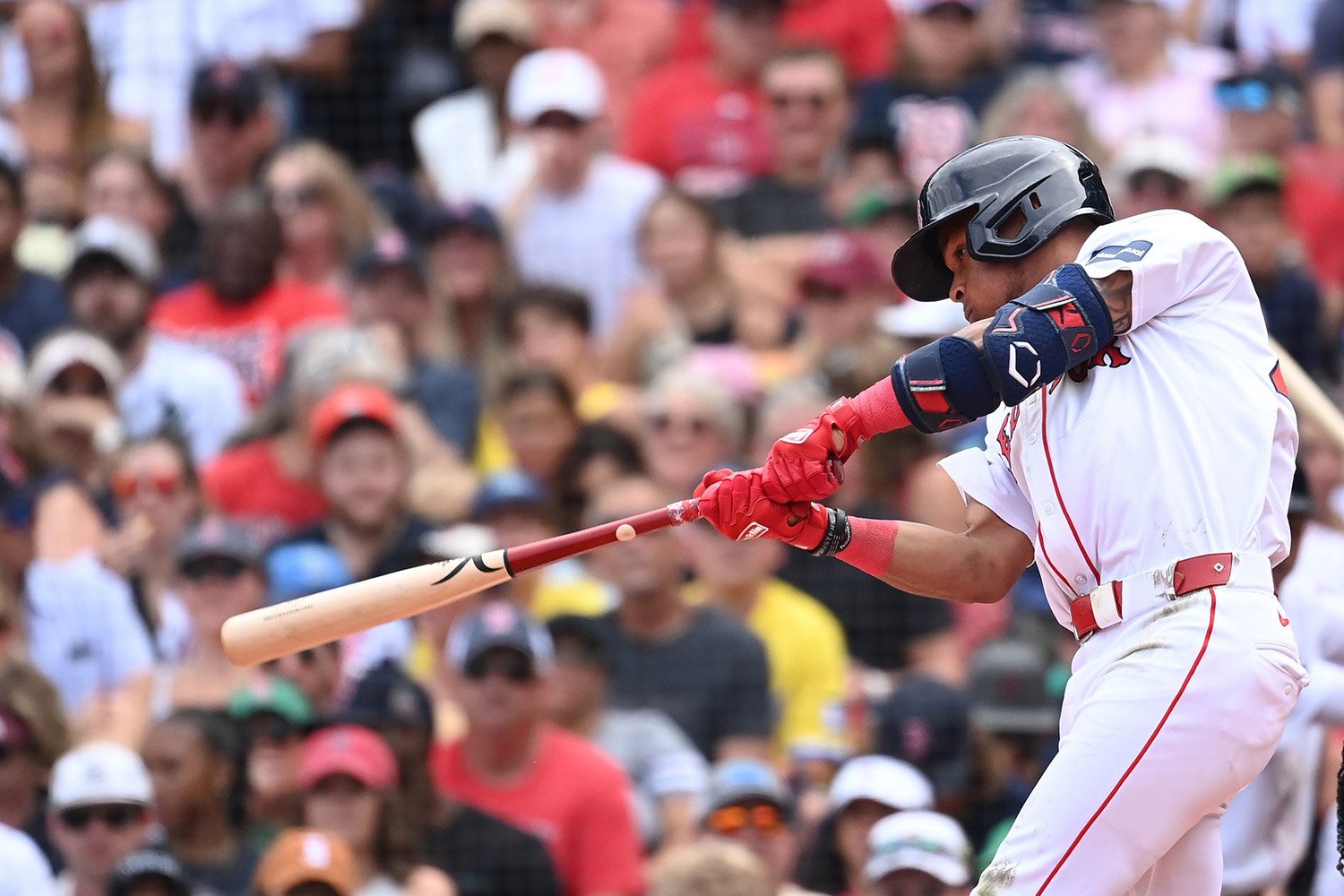 In the first installment of this series, we broke down what went wrong with the 2024 Red Sox. We looked at Masataka Yoshida's predicament, diving deep into what to do with a guy whose only real skill is making contact, yet is making $18 million. I don’t want it to seem like I hate Ceddanne Rafaela. He is incredibly fun to watch. He is an easy guy to root for. His speed, defense, and solid power give him a floor of at least a second-division regular. At the same time, however, we need to be honest and realistic about his performance this year and moving forward. His 45.6% chase rate isn’t just bad; it is the “worst season of Javier Baez” bad. He has somehow walked only 15 times in 528 plate appearances, leading to a putrid on-base percentage of .281. Even when he can put the bat on the ball, he doesn’t do enough damage: his hard-hit percentage is only in the 31st percentile, and his average exit velocity is only in the 13th percentile. What makes all this especially worrisome is that Rafaela hasn’t just improved his plate discipline as the season has gone along; he has actually gotten worse. Since his last walk on August 10 (today is September 13), Rafaela has struck out 31 times while slashing .226/.233./.353. As bad as those numbers are, the anecdotal evidence might somehow be worse: What I fear with Rafaela is that pitchers are just not going to throw him strikes, and let him get himself out. After all, there’s a reason why there are no hitters in baseball who chase as frequently and walk as infrequently. Pitchers are smart, and if you have a glaring weakness, you can bet they are going to expose it. It only took a couple years for pitchers to realize you didn’t need to throw Javier Baez a strike, and he went from an perennial All-Star to arguably the worst hitter in baseball. Of course, these worries would be a lot less urgent if not for the eight-year, $50 million contract extension he signed in April. There was absolutely no reason to make such a risky investment, because the chances that a flawed player like Rafaela, who only really has average offensive upside, is good enough that a $13 million a year salary ends up as a steal is extremely small. The bigger issue, however, is that the contract forces you to lock Rafaela into your starting lineup for the next eight years. No sending him down to the minors, no using him as a utility player, and most importantly, no trading him. The fact that the Red Sox are committed to paying him $13 million a year seven years from now means that he’s going to be in the starting lineup no matter what, because anything else would be admitting the contract was a mistake. The issue with this is that the best Red Sox lineup moving forward, in my opinion, does not include Rafaela. Contracts notwithstanding, I would roll with Roman Anthony in left field, Jarren Duran in center field, and Wilyer Abreu in right field. Three young outfielders with solid power, plus defense, and decent plate discipline. Yet the need to commit to Rafaela means that one of those guys is not going to be an everyday player next year. So what can the Sox do now? The good news is that Rafaela can be as good a center fielder as there is in the game, and there will always be a place for him on a major league roster. From an offensive standpoint, Rafaela has enough power to not be a complete zero at the bottom of the order, but his lack of plate discipline becomes a bigger issue when the rest of the lineup is striking out more than anyone in the league besides the Mariners and the Athletics. If the Red Sox are going to commit to Rafaela playing every day, then they need to acquire more players elsewhere in the lineup that will put together quality at-bats. In that case, they can rely less on Rafaela to provide production and allow him to develop his plate discipline from “historically bad” to just “regular bad.”
 -
Today, we will look at a young outfielder who has all the tools in the world but is held back by a complete lack of plate discipline. Let’s take a deep dive into Ceddanne Rafaela. Today, we will look at a young outfielder who has all the tools in the world but is held back by a complete lack of plate discipline. Let’s take a deep dive into Ceddanne Rafaela. In the first installment of this series, we broke down what went wrong with the 2024 Red Sox. We looked at Masataka Yoshida's predicament, diving deep into what to do with a guy whose only real skill is making contact, yet is making $18 million. I don’t want it to seem like I hate Ceddanne Rafaela. He is incredibly fun to watch. He is an easy guy to root for. His speed, defense, and solid power give him a floor of at least a second-division regular. At the same time, however, we need to be honest and realistic about his performance this year and moving forward. His 45.6% chase rate isn’t just bad; it is the “worst season of Javier Baez” bad. He has somehow walked only 15 times in 528 plate appearances, leading to a putrid on-base percentage of .281. Even when he can put the bat on the ball, he doesn’t do enough damage: his hard-hit percentage is only in the 31st percentile, and his average exit velocity is only in the 13th percentile. What makes all this especially worrisome is that Rafaela hasn’t just improved his plate discipline as the season has gone along; he has actually gotten worse. Since his last walk on August 10 (today is September 13), Rafaela has struck out 31 times while slashing .226/.233./.353. As bad as those numbers are, the anecdotal evidence might somehow be worse: What I fear with Rafaela is that pitchers are just not going to throw him strikes, and let him get himself out. After all, there’s a reason why there are no hitters in baseball who chase as frequently and walk as infrequently. Pitchers are smart, and if you have a glaring weakness, you can bet they are going to expose it. It only took a couple years for pitchers to realize you didn’t need to throw Javier Baez a strike, and he went from an perennial All-Star to arguably the worst hitter in baseball. Of course, these worries would be a lot less urgent if not for the eight-year, $50 million contract extension he signed in April. There was absolutely no reason to make such a risky investment, because the chances that a flawed player like Rafaela, who only really has average offensive upside, is good enough that a $13 million a year salary ends up as a steal is extremely small. The bigger issue, however, is that the contract forces you to lock Rafaela into your starting lineup for the next eight years. No sending him down to the minors, no using him as a utility player, and most importantly, no trading him. The fact that the Red Sox are committed to paying him $13 million a year seven years from now means that he’s going to be in the starting lineup no matter what, because anything else would be admitting the contract was a mistake. The issue with this is that the best Red Sox lineup moving forward, in my opinion, does not include Rafaela. Contracts notwithstanding, I would roll with Roman Anthony in left field, Jarren Duran in center field, and Wilyer Abreu in right field. Three young outfielders with solid power, plus defense, and decent plate discipline. Yet the need to commit to Rafaela means that one of those guys is not going to be an everyday player next year. So what can the Sox do now? The good news is that Rafaela can be as good a center fielder as there is in the game, and there will always be a place for him on a major league roster. From an offensive standpoint, Rafaela has enough power to not be a complete zero at the bottom of the order, but his lack of plate discipline becomes a bigger issue when the rest of the lineup is striking out more than anyone in the league besides the Mariners and the Athletics. If the Red Sox are going to commit to Rafaela playing every day, then they need to acquire more players elsewhere in the lineup that will put together quality at-bats. In that case, they can rely less on Rafaela to provide production and allow him to develop his plate discipline from “historically bad” to just “regular bad.” View full article
-
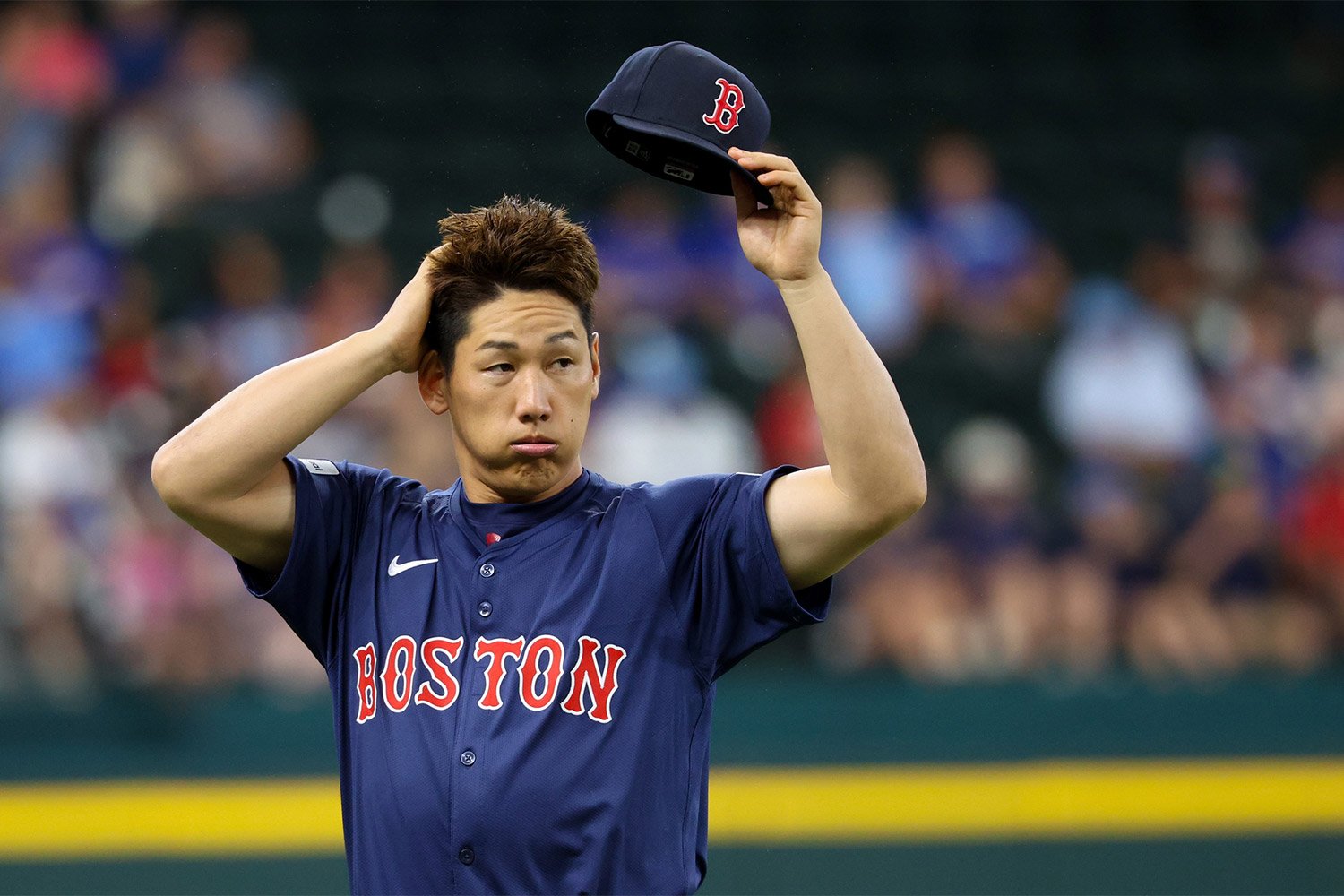 Welp, it’s (almost) over. After a summer filled with hope and surprisingly competent play, the 2024 Red Sox have come crashing back down to earth with a genuinely pitiful second-half performance. As we approach what is almost certainly a third straight season without October baseball, I will attempt to pick up the pieces and try my best to answer two simple questions: What went wrong, and what can the Red Sox do about it? Each piece will focus on a different shortcoming in the roster, management, or front-office decisions that have contributed to the mediocrity. We will begin with a much-maligned free agency signing who has thus far proved his critics right. Masataka Yoshida’s Shortcomings When former CBO Chaim Bloom inked Japanese superstar Masataka Yoshida to a 5-year, $90 million deal, the public reaction to the deal was swift and decisive. Many who had seen Yoshida play in Japan did not doubt his elite bat-to-ball skills but viewed him as a massive overpay due to his lack of power, poor speed, and defensive limitations. Keith Law described him as a fourth outfielder, while rival executives said things such as “I have no words” and “We thought he was worth around half of that.” As we near the end of his second MLB season with nearly 1000 MLB at-bats, it is clear that the critics' concerns were warranted. As expected, Yoshida has been one of the best contact hitters in the league, striking out in just 13.6% of his plate appearances and posting a solid .287 batting average. He is a competent, above-average major-league hitter, and many teams would love to have a 110 OPS+ bat with excellent plate discipline numbers. The issue, however, is that Yoshida’s aforementioned skill set is a terrible fit with the current Red Sox roster. The lineup is overloaded with competent left-handed bats, often running out six or even seven lefties on a single night. Yoshida’s decent production adds little value to a lineup that has many better options, especially considering that Yoshida is completely neutralized against fellow southpaws (.218/.289/.310). With his strengths seemingly unneeded, Yoshida’s weaknesses are thrown into the spotlight, and there are many to choose from. He doesn’t hit the ball especially hard, evidenced by both the surface-level numbers (24 career homers in 232 games) and the advanced ones (28th percentile average exit velocity, 29th percentile hard-hit percentage). His 19th-percentile sprint speed renders him a non-factor on the basepaths, and his left-field defense was so poor in his rookie season that the Red Sox have not put him in the field this season. For a team that has struggled to hit left-handed pitching, values speed and chaos on the bases, and has multiple players who could benefit from the occasional DH day, Yoshida’s skillset is disastrous. In trying to imagine the 2025 Red Sox roster, I have yet to imagine a scenario where Yoshida is a part of it. This team is desperate for a right-handed bat, and first base, third base, and at least two outfield spots will already be committed to lefties. In addition, having the option to play Rafael Devers at DH occasionally would help him stay healthy deeper into the season and allow the Red Sox to put their best defensive alignment on the field more often. Yoshida’s presence makes both of those tasks much harder. One of the hardest things for a baseball executive is to admit when a contract is a mistake. Nobody wants to deal with the fact that they just committed millions of dollars to a player who wasn’t worth the money. Yet the task should be easier for Craig Breslow, considering he was not the one who made the ill-fated decision, and he should be smart enough to realize that Yoshida is ill-fitted for the roster he is trying to build. Even if it requires eating a portion of the 3-years, $54 million remaining on the contract, the Red Sox need to move on from Yoshida if they are serious about building the best roster for 2025.
 -
In the first of a series of pieces, we examine what went wrong with the 2024 Boston Red Sox. First up is a look at outfielder and designated hitter Masataka Yoshida. In the first of a series of pieces, we examine what went wrong with the 2024 Boston Red Sox. First up is a look at outfielder and designated hitter Masataka Yoshida. Welp, it’s (almost) over. After a summer filled with hope and surprisingly competent play, the 2024 Red Sox have come crashing back down to earth with a genuinely pitiful second-half performance. As we approach what is almost certainly a third straight season without October baseball, I will attempt to pick up the pieces and try my best to answer two simple questions: What went wrong, and what can the Red Sox do about it? Each piece will focus on a different shortcoming in the roster, management, or front-office decisions that have contributed to the mediocrity. We will begin with a much-maligned free agency signing who has thus far proved his critics right. Masataka Yoshida’s Shortcomings When former CBO Chaim Bloom inked Japanese superstar Masataka Yoshida to a 5-year, $90 million deal, the public reaction to the deal was swift and decisive. Many who had seen Yoshida play in Japan did not doubt his elite bat-to-ball skills but viewed him as a massive overpay due to his lack of power, poor speed, and defensive limitations. Keith Law described him as a fourth outfielder, while rival executives said things such as “I have no words” and “We thought he was worth around half of that.” As we near the end of his second MLB season with nearly 1000 MLB at-bats, it is clear that the critics' concerns were warranted. As expected, Yoshida has been one of the best contact hitters in the league, striking out in just 13.6% of his plate appearances and posting a solid .287 batting average. He is a competent, above-average major-league hitter, and many teams would love to have a 110 OPS+ bat with excellent plate discipline numbers. The issue, however, is that Yoshida’s aforementioned skill set is a terrible fit with the current Red Sox roster. The lineup is overloaded with competent left-handed bats, often running out six or even seven lefties on a single night. Yoshida’s decent production adds little value to a lineup that has many better options, especially considering that Yoshida is completely neutralized against fellow southpaws (.218/.289/.310). With his strengths seemingly unneeded, Yoshida’s weaknesses are thrown into the spotlight, and there are many to choose from. He doesn’t hit the ball especially hard, evidenced by both the surface-level numbers (24 career homers in 232 games) and the advanced ones (28th percentile average exit velocity, 29th percentile hard-hit percentage). His 19th-percentile sprint speed renders him a non-factor on the basepaths, and his left-field defense was so poor in his rookie season that the Red Sox have not put him in the field this season. For a team that has struggled to hit left-handed pitching, values speed and chaos on the bases, and has multiple players who could benefit from the occasional DH day, Yoshida’s skillset is disastrous. In trying to imagine the 2025 Red Sox roster, I have yet to imagine a scenario where Yoshida is a part of it. This team is desperate for a right-handed bat, and first base, third base, and at least two outfield spots will already be committed to lefties. In addition, having the option to play Rafael Devers at DH occasionally would help him stay healthy deeper into the season and allow the Red Sox to put their best defensive alignment on the field more often. Yoshida’s presence makes both of those tasks much harder. One of the hardest things for a baseball executive is to admit when a contract is a mistake. Nobody wants to deal with the fact that they just committed millions of dollars to a player who wasn’t worth the money. Yet the task should be easier for Craig Breslow, considering he was not the one who made the ill-fated decision, and he should be smart enough to realize that Yoshida is ill-fitted for the roster he is trying to build. Even if it requires eating a portion of the 3-years, $54 million remaining on the contract, the Red Sox need to move on from Yoshida if they are serious about building the best roster for 2025. View full article
