


Daniel Fox
-
Posts
72 -
Joined
-
Last visited
Content Type
Profiles
Boston Red Sox Videos
2026 Boston Red Sox Top Prospects Ranking
Boston Red Sox Free Agent & Trade Rumors, Notes, & Tidbits
Guides & Resources
2025 Boston Red Sox Draft Pick Tracker
News
2026 Boston Red Sox Draft Tracker: Picks & Bonuses
Forums
Blogs
Events
Store
Downloads
Gallery
Everything posted by Daniel Fox
-
Jacoby Ellsbury was unstoppable in 2011. Jacoby Ellsbury was unstoppable in 2011. This series focuses on the best Red Sox single-season performances of this century. To read previous installments, click the links below. Part One | Part Two | Part Three | Part Four 10. 2005 David Ortiz Stats: 159 GP 5.2 WAR 158 OPS+ .300/.397/.604 47 HR 148 RBI All-Star MVP-2 The 2005 Red Sox were not a very good baseball team. Many key members from the historic ‘03 and ‘04 offenses, such as Kevin Millar, Bill Mueller, Trot Nixon, and Mark Bellhorn, took significant steps back. The pitching staff was a disaster, as Curt Schilling missed nearly the entire first half of the season with recurring ankle issues and was thrust into closer duties upon his return to clean up Keith Foulke’s mess. There is no way the Red Sox should have been anywhere near 95 wins, but that’s just how good and clutch David Ortiz was. Playing in 159 games, Big Papi posted a 1.001 OPS, 47 home runs, and an MLB-leading 148 RBI. This is how Ortiz came within a whisker of becoming the first designated hitter to win MVP, narrowly losing out to Alex Rodriguez. Though Ortiz had better statistical seasons in 2006 and 2016, his impact on willing the Sox into the postseason earns 2005 the first of two Ortiz seasons on this list. 9. 2007 Josh Beckett Stats: 30 GS 200.2 IP 6.5 WAR 20-7 3.27 ERA 145 ERA+ 1.14 WHIP 194 K AS CYA-2 After a disappointing 2006 debut with the Red Sox, Josh Beckett looked like a man on a mission in 2007. Though much of the attention back then was on his 20 wins, Beckett also led the league with a 6.5 WAR and 3.08 FIP while ranking in the top 10 in strikeouts and ERA. Only C.C. Sabathia could prevent Beckett from taking home the Cy Young award, but unlike Sabathia, Beckett came up huge in the postseason. Though sweeps in the ALCS and World Series limited him to just four total starts, Beckett allowed just four runs while posting a phenomenal 35:2 strikeout-to-walk ratio. His Game 5 performance against the Indians, in particular, will go down in Boston lore, as he outdueled Sabathia with seven innings of one-run ball, punching out 11 along the way. Though his regular season may not be quite as strong as the players ahead of him on this list, his immortal postseason run more than earns him a spot inside the top 10. 8. 2018 Chris Sale Stats: 27 GS 158.0 IP 6.5 WAR 12-4 2.11 ERA 0.86 WHIP 237 K All-Star CYA-4 Though he ranks only eighth on the list, I would argue that the best singular talent of any Red Sox player in the past century was Chris Sale in 2018. He was a Hall-of-Fame player at the height of powers: He regularly touched 100 with his fastball, his slider was practically unhittable, and he could seemingly put the ball wherever he wanted. His six-game stretch from June 24 to July 27 was among the best in baseball history: 39 innings, one run, six walks, and 67 strikeouts. In case you were wondering, that resulted in a laughable 0.42 FIP. Unfortunately, Sale’s arm could only handle so much greatness, as he made just five regular-season starts over the final two months, none of which lasted more than two months. He was also more of a side character during the Red Sox’s World Series run, as despite recording the final out in Game 5, he took a back seat to the heroics of David Price, Nathan Eovaldi, and even Rick Porcello. Still, Sale was so unfathomably good that he earned a spot in the top 10 based on the first four months alone. 7. 2018 J.D Martinez Stats: 150 G 6.7 WAR 173 OPS+ .330/.402/.629 43 HR 130 RBI All-Star MVP-4 After signing a five-year deal with the Red Sox late in the offseason, Martinez proved worth the wait with a magical 2018 campaign. First came a dominant regular season: he hit a career-high .330, blasted 43 home runs, and led the majors with 130 RBI. His performance was so good that he earned the Silver Slugger positions at designated hitter and outfield. He was also the Red Sox's most consistent hitter during the postseason, posting a .303/.403/.520 line with three home runs in 14 games. The only thing that hurts him is that he was a poor outfielder, which has him slotted behind some of the more dynamic players on this list. 6. 2011 Jacoby Ellsbury Stats: 158 G 8.3 WAR 146 OPS+ .321/.376/.552 32 HR 105 RBI 39-54 SB GG All-Star MVP-2 Jacoby Ellsbury was my first-ever favorite player, and even I couldn’t believe the season he turned in in 2011. Not only did he play his usual Gold-Glove caliber defense and swipe 39 bags, but he posted an incredible .321 average and obliterated his career high with 32 home runs. In nearly any other year, this would have been good enough for an MVP plaque, but a generational Justin Verlander season forced Ellsbury to settle for second despite leading the majors with an 8.3 WAR. Of course, the September collapse puts a stain on the legacy of this season, but don’t point the finger at Ellsbury: He still hit .358/.400/.667 in the season’s final month. View full article
-
When was the last time you thought about just how good Keith Foulke was in 2004? When was the last time you thought about just how good Keith Foulke was in 2004? This is an ongoing series focusing on the best Red Sox single-season performances of this century. To read previous installments, click the links below. Part One | Part Two | Part Three 15. 2017 Chris Sale Stats: 32 GS 214.1 IP 5.9 WAR 17-8 2.90 ERA 157 ERA+ 0.97 WHIP 308 K AS CYA-2 MVP-9 For the first five months of the 2017 season, it appeared that Chris Sale would challenge Pedro Martinez for the best Red Sox pitching season of this century. He parlayed a dominant first half into his second consecutive All-Star game start and looked well on his way to his first-ever Cy Young win. However, a 4.09 ERA over the final two months caused him to fall behind Corey Kluber, and he was rocked in his only postseason start against the Astros. Though his 309 strikeouts were a historic achievement, his regression down the stretch is what is often most remembered about this season. 14. 2004 Keith Foulke Stats: 72 G 83.0 IP 3.5 WAR 32 SV 2.17 ERA 223 ERA+ 0.94 WHIP 79 K Watching old Keith Foulke highlights these days is a hilarious endeavor. His windup was more reminiscent of a dart thrower than an MLB pitcher. His fastball sat around 90 miles per hour, and his secondary pitch of choice was not a wipeout curveball or slider but rather a bugs-bunny changeup. You would never find a pitcher like him in an MLB bullpen today, but in the early 2000s, there were few better closers in the game. This was especially true in 2004, his first year after the Red Sox signed him to be the answer to Mariano Rivera. The right-hander delivered with a consistent and durable regular season, but he truly became a Boston legend in the postseason. Despite pitching nearly every single day in the most high-leverage situations imaginable, Foulke allowed just one run in fourteen innings that October, highlighted by three straight scoreless outings against the Yankees in Games 4-6 of the ALCS. Foulke’s career and Red Sox tenure quickly went off the rails the following season, but we will always have that magical 2004 run. 13. 2004 Curt Schilling Stats: 32 GS 226.2 IP 7.8 WAR 21-6 3.26 ERA 148 ERA+ 1.06 WHIP 203 K AS CYA-2 Like Sale and Foulke, the Red Sox brought in Curt Schilling the previous offseason to help them get over the hump and bring home a World Series title. Though he entered the season at 37 years old, Schilling lived up to his workhorse reputation, tossing 226 ⅔ superb innings and leading the league with 21 victories. Of course, Schilling’s 2004 season is defined by his postseason heroics, most notably his Game 6 “Bloody Sock” game in which he held the Yankees to just one run over seven innings to force a seventh game. Though his numbers aren’t quite to the standard of some of the other pitchers on this list, Schilling’s impact on the 2004 Red Sox was topped perhaps only by David Ortiz, which easily earns him a spot within the top 15 seasons this century. 12. 2024 Jarren Duran Stats: 160 G 8.7 WAR 129 OPS+ .285/.343/.492 21 HR 75 RBI 34-41 SB AS MVP-8 Is this the most surprising season on this list? After a breakout 2023 season that was cut short by a toe injury, Duran took his game to even higher levels in 2024. He set career-highs in nearly every category, including leading the league with 48 doubles and 14 triples, and parlayed Platinum-Glove level defense into an 8.7 WAR. In most seasons, Duran could have seriously contended for the MVP award, but thanks to generational seasons from Bobby Witt Jr. and Aaron Judge and the Red Sox missing the playoffs, Duran had to settle for eighth. 11. 2013 Koji Uehara Stats: 73 G 74.1 IP 3.5 WAR 21 SV 1.09 ERA 379 ERA+ 0.56 WHIP 79 K CYA-7 MVP-19 Besides a certain David Ortiz season, perhaps no singular year brings up more warm and fuzzy memories for Red Sox fans than Koji Uehara’s magical 2013 run. Originally an afterthought in the Red Sox bullpen, Uehara stepped into the closer’s role after injuries to Andrew Bailey and Joel Hanrahan and overwhelmed hitters with his impeccable control and devastating splitter. From July 2 to Sept 13, Uehara did not allow an earned run in 33.2 innings while posting a mind-blowing 45-2 strikeout-to-walk ratio. He was just as valuable during the postseason, allowing just one run during 13 appearances (although he was the losing pitcher in the infamous Obstruction Game). Had he started the season in the closer’s role, Uehara might have cracked the top five, but he is still the unquestioned owner of the best Red Sox reliever season of the last 25 years. View full article
-
The Best Individual Red Sox Seasons of the Century: Part Four, #15-11
Daniel Fox posted an article in History
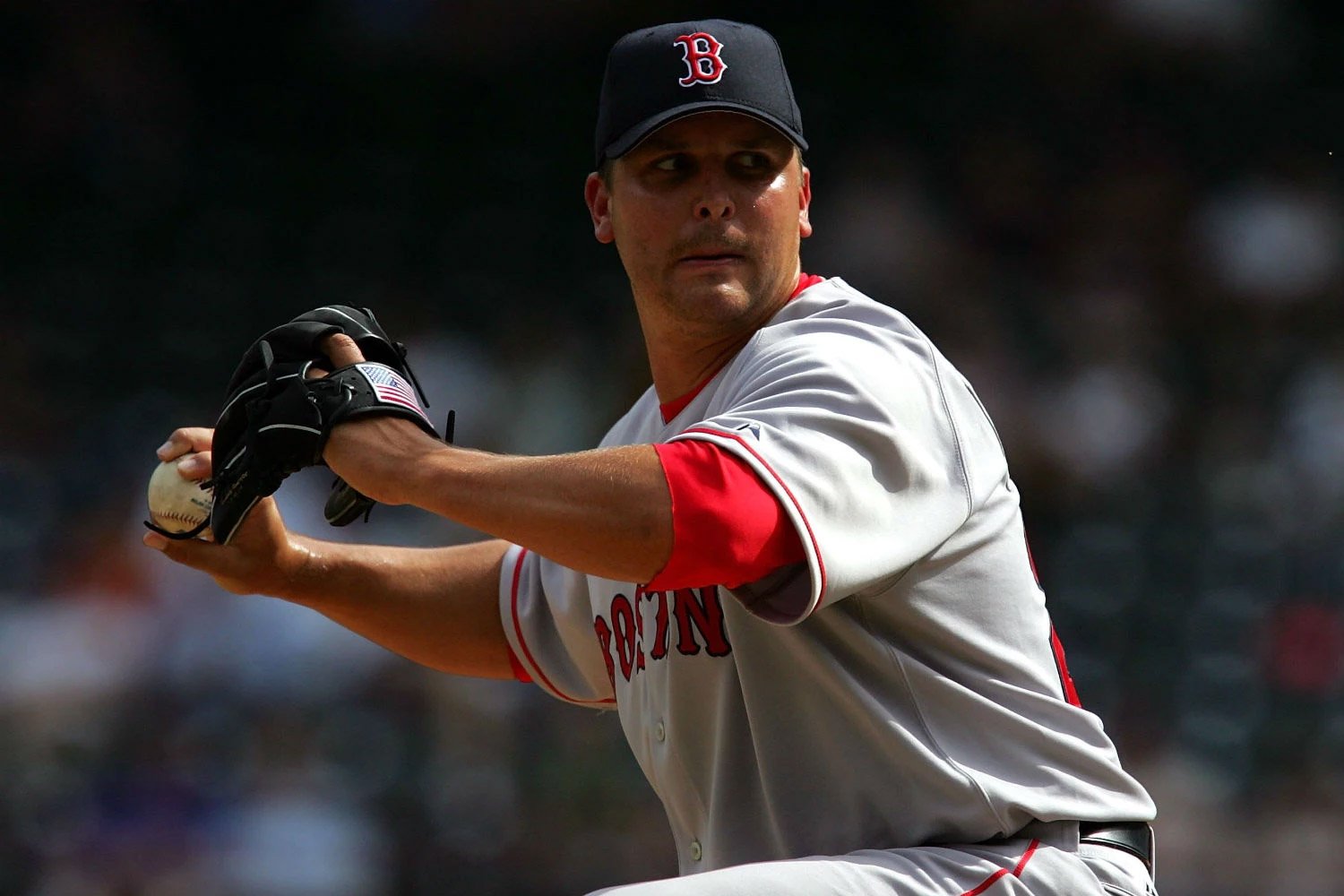 This is an ongoing series focusing on the best Red Sox single-season performances of this century. To read previous installments, click the links below. Part One | Part Two | Part Three 15. 2017 Chris Sale Stats: 32 GS 214.1 IP 5.9 WAR 17-8 2.90 ERA 157 ERA+ 0.97 WHIP 308 K AS CYA-2 MVP-9 For the first five months of the 2017 season, it appeared that Chris Sale would challenge Pedro Martinez for the best Red Sox pitching season of this century. He parlayed a dominant first half into his second consecutive All-Star game start and looked well on his way to his first-ever Cy Young win. However, a 4.09 ERA over the final two months caused him to fall behind Corey Kluber, and he was rocked in his only postseason start against the Astros. Though his 309 strikeouts were a historic achievement, his regression down the stretch is what is often most remembered about this season. 14. 2004 Keith Foulke Stats: 72 G 83.0 IP 3.5 WAR 32 SV 2.17 ERA 223 ERA+ 0.94 WHIP 79 K Watching old Keith Foulke highlights these days is a hilarious endeavor. His windup was more reminiscent of a dart thrower than an MLB pitcher. His fastball sat around 90 miles per hour, and his secondary pitch of choice was not a wipeout curveball or slider but rather a bugs-bunny changeup. You would never find a pitcher like him in an MLB bullpen today, but in the early 2000s, there were few better closers in the game. This was especially true in 2004, his first year after the Red Sox signed him to be the answer to Mariano Rivera. The right-hander delivered with a consistent and durable regular season, but he truly became a Boston legend in the postseason. Despite pitching nearly every single day in the most high-leverage situations imaginable, Foulke allowed just one run in fourteen innings that October, highlighted by three straight scoreless outings against the Yankees in Games 4-6 of the ALCS. Foulke’s career and Red Sox tenure quickly went off the rails the following season, but we will always have that magical 2004 run. 13. 2004 Curt Schilling Stats: 32 GS 226.2 IP 7.8 WAR 21-6 3.26 ERA 148 ERA+ 1.06 WHIP 203 K AS CYA-2 Like Sale and Foulke, the Red Sox brought in Curt Schilling the previous offseason to help them get over the hump and bring home a World Series title. Though he entered the season at 37 years old, Schilling lived up to his workhorse reputation, tossing 226 ⅔ superb innings and leading the league with 21 victories. Of course, Schilling’s 2004 season is defined by his postseason heroics, most notably his Game 6 “Bloody Sock” game in which he held the Yankees to just one run over seven innings to force a seventh game. Though his numbers aren’t quite to the standard of some of the other pitchers on this list, Schilling’s impact on the 2004 Red Sox was topped perhaps only by David Ortiz, which easily earns him a spot within the top 15 seasons this century. 12. 2024 Jarren Duran Stats: 160 G 8.7 WAR 129 OPS+ .285/.343/.492 21 HR 75 RBI 34-41 SB AS MVP-8 Is this the most surprising season on this list? After a breakout 2023 season that was cut short by a toe injury, Duran took his game to even higher levels in 2024. He set career-highs in nearly every category, including leading the league with 48 doubles and 14 triples, and parlayed Platinum-Glove level defense into an 8.7 WAR. In most seasons, Duran could have seriously contended for the MVP award, but thanks to generational seasons from Bobby Witt Jr. and Aaron Judge and the Red Sox missing the playoffs, Duran had to settle for eighth. 11. 2013 Koji Uehara Stats: 73 G 74.1 IP 3.5 WAR 21 SV 1.09 ERA 379 ERA+ 0.56 WHIP 79 K CYA-7 MVP-19 Besides a certain David Ortiz season, perhaps no singular year brings up more warm and fuzzy memories for Red Sox fans than Koji Uehara’s magical 2013 run. Originally an afterthought in the Red Sox bullpen, Uehara stepped into the closer’s role after injuries to Andrew Bailey and Joel Hanrahan and overwhelmed hitters with his impeccable control and devastating splitter. From July 2 to Sept 13, Uehara did not allow an earned run in 33.2 innings while posting a mind-blowing 45-2 strikeout-to-walk ratio. He was just as valuable during the postseason, allowing just one run during 13 appearances (although he was the losing pitcher in the infamous Obstruction Game). Had he started the season in the closer’s role, Uehara might have cracked the top five, but he is still the unquestioned owner of the best Red Sox reliever season of the last 25 years.
 -
Pedro was robbed. Pedro was robbed. 20. 2021 Nathan Eovaldi Stats: 4.3 WAR 11-9 3.75 ERA 32 GS 182.1 IP 195 K 9.6 K/9 125 ERA+ 1.19 WHIP 2.79 FIP AS CYA-4 MVP-15 One of the more underrated pitching seasons of the past century, Eovaldi stepped up huge for a rotation that saw Eduardo Rodriguez take a step back and Chris Sale miss the first four months of action. The veteran right-hander finished fourth in Cy Young voting while leading the American League with 32 starts and a 2.79 FIP. Though he got rocked in a crucial regular season game against the Yankees, he rebounded to collect the win against them in the Wild Card, then turned in three more impressive starts against the Rays and the Astros. It wasn’t the most flashy season, but Eovaldi proved invaluable during the Red Sox's run to the ALCS with his consistency and reliability. 19. 2007 Jonathan Papelbon Stats: 3.1 WAR 1.85 ERA 37 SV 58.1 IP 84 K 13.0 K/9 257 ERA+ 2.45 FIP 0.77 WHIP AS After his aforementioned dominant 2006 season, the Red Sox flirted with the idea of having Jonathan Papelbon move to the starting rotation in spring training but ultimately decided to keep him in the starting rotation. That proved to be a wise choice, as Papelbon made his second straight All-Star team and covered what would be a career-high 41 saves. From a run-prevention standpoint, Papelbon wasn’t quite as good as the previous season, but he made up the difference with a lockdown postseason. He didn’t allow a run in any of his six outings and recorded more than three outs six times. The reason he isn’t higher on this list isn’t exactly his fault: The Red Sox were so dominant in the ALDS, World Series, and final three games of the ALCS that Papelbon’s role wasn’t as vital as, say, Keith Foulke in 2004. 18. 2003 Pedro Martinez Stats: 8.0 WAR 14-4 2.22 ERA 29 GS 3 CG 0 SO 186.2 IP 206 K 9.9 K/9 211 ERA+ 1.039 WHIP CYA-3 Voter fatigue is real, folks. Despite leading the league in ERA, K/9, WHIP, FIP, HR/9, and H/9, Pedro Martinez lost out on his fourth Cy Young to Roy Halladay, who had an ERA more than a run higher than Pedro and struck out fewer batters in 80 more innings. The only real advantage Halladay had was that he won eight more games, but that’s only because the Red Sox's porous bullpen blew at least a half-dozen of Pedro’s wins. Regardless, it was another masterful regular season for Martinez, who carried a pitching staff that didn’t have another starting pitcher with an ERA under 4.00 and whose bullpen was a literal dumpster fire. Unfortunately, Martinez gets dinged a bit here for a mediocre postseason performance. He was fine in his two ALDS starts against the Athletics but got roughed up in the Don Zimmer game against the Yankees in the ALCS, then blew a 5-2 lead in the Game 7 loss. Of course, most of the blame has to go on Grady Little, but Pedro was the one out there making the pitches, and since this list takes into account postseason performance, I had to move him back a few spots for failing to stop the Yankees onslaught. (Editors Note: I couldn’t find a YouTube video of 2003 Pedro Martinez that wasn’t him throwing Don Zimmer to the ground or the Yankees Game 7 rally, so please enjoy this masterpiece from the 2004 World Series) 17. 2000 Nomar Garciaparra Stats: 140 GP 7.4 WAR .372/.434/.599 21 HR 96 RBI 1.033 OPS 156 OPS+ AS MVP-9 This was Nomar at the height of his powers, as his .372 batting average was the highest of any right-handed hitter since World War II. He flirted with a .400 average well into June, and though he slipped a bit down the stretch, he still became the first right-handed hitter to win back-to-back batting titles since Joe DiMaggio. He was even excellent in the field, as FanGraphs measured him at +15 Defensive Runs Saved. Just about the only criticisms you can make is that he only played in 140 games and the Red Sox failed to make their third straight postseason. 16. 2005 Manny Ramirez Stats: 152 G 4.4 WAR 153 OPS+ .292/.388/.594 45 HR 144 RBI All-Star MVP-4 After a tumultuous offseason in which he was nearly traded for Alex Rodriguez, Manny Ramirez arrived in spring training seemingly indifferent to the off-field circus and proceeded to have the best season of his Red Sox tenure. He led the American League with 43 home runs, a .613 slugging percentage, and a 1.009 OPS, helping him finish in the top-three in MVP voting for what would be the only time in his eight years with the club. Though he had little impact in the 3-0 comeback over the Yankees, somehow going seven games without an RBI, Manny made up for it and then some in the World Series. The slugger took home series MVP honors with .412/.500/.588 slash line and even made a crucial assist of Larry Walker at home plate in the first inning of Game 3. Because his woeful defense limited him to just a 4.1 WAR, Ramirez won’t be able to crack the top 15, but this season alone made all the distractions, antics and “Manny being Manny” episodes worth it. View full article
-
The Best Individual Red Sox Seasons of the Century: Part Three, #20-16
Daniel Fox posted an article in History
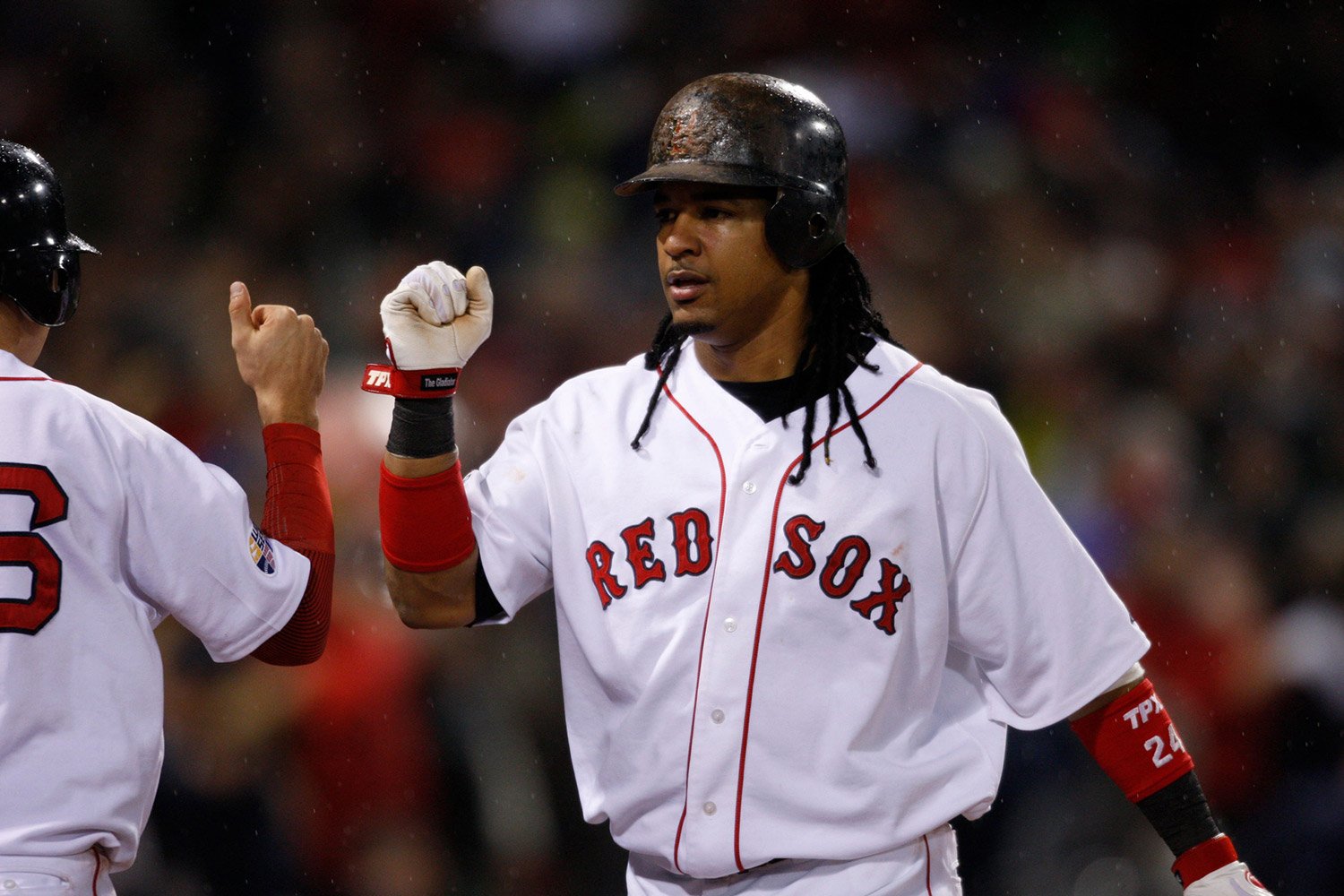 20. 2021 Nathan Eovaldi Stats: 4.3 WAR 11-9 3.75 ERA 32 GS 182.1 IP 195 K 9.6 K/9 125 ERA+ 1.19 WHIP 2.79 FIP AS CYA-4 MVP-15 One of the more underrated pitching seasons of the past century, Eovaldi stepped up huge for a rotation that saw Eduardo Rodriguez take a step back and Chris Sale miss the first four months of action. The veteran right-hander finished fourth in Cy Young voting while leading the American League with 32 starts and a 2.79 FIP. Though he got rocked in a crucial regular season game against the Yankees, he rebounded to collect the win against them in the Wild Card, then turned in three more impressive starts against the Rays and the Astros. It wasn’t the most flashy season, but Eovaldi proved invaluable during the Red Sox's run to the ALCS with his consistency and reliability. 19. 2007 Jonathan Papelbon Stats: 3.1 WAR 1.85 ERA 37 SV 58.1 IP 84 K 13.0 K/9 257 ERA+ 2.45 FIP 0.77 WHIP AS After his aforementioned dominant 2006 season, the Red Sox flirted with the idea of having Jonathan Papelbon move to the starting rotation in spring training but ultimately decided to keep him in the starting rotation. That proved to be a wise choice, as Papelbon made his second straight All-Star team and covered what would be a career-high 41 saves. From a run-prevention standpoint, Papelbon wasn’t quite as good as the previous season, but he made up the difference with a lockdown postseason. He didn’t allow a run in any of his six outings and recorded more than three outs six times. The reason he isn’t higher on this list isn’t exactly his fault: The Red Sox were so dominant in the ALDS, World Series, and final three games of the ALCS that Papelbon’s role wasn’t as vital as, say, Keith Foulke in 2004. 18. 2003 Pedro Martinez Stats: 8.0 WAR 14-4 2.22 ERA 29 GS 3 CG 0 SO 186.2 IP 206 K 9.9 K/9 211 ERA+ 1.039 WHIP CYA-3 Voter fatigue is real, folks. Despite leading the league in ERA, K/9, WHIP, FIP, HR/9, and H/9, Pedro Martinez lost out on his fourth Cy Young to Roy Halladay, who had an ERA more than a run higher than Pedro and struck out fewer batters in 80 more innings. The only real advantage Halladay had was that he won eight more games, but that’s only because the Red Sox's porous bullpen blew at least a half-dozen of Pedro’s wins. Regardless, it was another masterful regular season for Martinez, who carried a pitching staff that didn’t have another starting pitcher with an ERA under 4.00 and whose bullpen was a literal dumpster fire. Unfortunately, Martinez gets dinged a bit here for a mediocre postseason performance. He was fine in his two ALDS starts against the Athletics but got roughed up in the Don Zimmer game against the Yankees in the ALCS, then blew a 5-2 lead in the Game 7 loss. Of course, most of the blame has to go on Grady Little, but Pedro was the one out there making the pitches, and since this list takes into account postseason performance, I had to move him back a few spots for failing to stop the Yankees onslaught. (Editors Note: I couldn’t find a YouTube video of 2003 Pedro Martinez that wasn’t him throwing Don Zimmer to the ground or the Yankees Game 7 rally, so please enjoy this masterpiece from the 2004 World Series) 17. 2000 Nomar Garciaparra Stats: 140 GP 7.4 WAR .372/.434/.599 21 HR 96 RBI 1.033 OPS 156 OPS+ AS MVP-9 This was Nomar at the height of his powers, as his .372 batting average was the highest of any right-handed hitter since World War II. He flirted with a .400 average well into June, and though he slipped a bit down the stretch, he still became the first right-handed hitter to win back-to-back batting titles since Joe DiMaggio. He was even excellent in the field, as FanGraphs measured him at +15 Defensive Runs Saved. Just about the only criticisms you can make is that he only played in 140 games and the Red Sox failed to make their third straight postseason. 16. 2005 Manny Ramirez Stats: 152 G 4.4 WAR 153 OPS+ .292/.388/.594 45 HR 144 RBI All-Star MVP-4 After a tumultuous offseason in which he was nearly traded for Alex Rodriguez, Manny Ramirez arrived in spring training seemingly indifferent to the off-field circus and proceeded to have the best season of his Red Sox tenure. He led the American League with 43 home runs, a .613 slugging percentage, and a 1.009 OPS, helping him finish in the top-three in MVP voting for what would be the only time in his eight years with the club. Though he had little impact in the 3-0 comeback over the Yankees, somehow going seven games without an RBI, Manny made up for it and then some in the World Series. The slugger took home series MVP honors with .412/.500/.588 slash line and even made a crucial assist of Larry Walker at home plate in the first inning of Game 3. Because his woeful defense limited him to just a 4.1 WAR, Ramirez won’t be able to crack the top 15, but this season alone made all the distractions, antics and “Manny being Manny” episodes worth it.
 -
Let's dive into some of the best Red Sox single seasons of the 21st century! Let's dive into some of the best Red Sox single seasons of the 21st century! With offseason activities seemingly grinding to a halt, I thought I would try something a little bit different while we wait for the last free agents to come off the board. With 25 seasons of twenty-first-century Red Sox baseball in the books, I decided that it was time rank the 25 best individual seasons of the 2000s. This is part two. You can read part one here. I’ve done a couple of rankings like this before, but this may have been the hardest. There were just so many good seasons to choose from. To make it a little bit easier for myself, I came up with a couple of rules: I decided to limit each player to their two best seasons. Without this rule, the list would consist of David Ortiz, Pedro Martinez, Manny Ramirez, and Mookie Betts. These rankings are focused mainly on regular-season performance, but I did factor in postseason performance. There are players on this list who didn’t make the postseason, but there aren't any who excelled in the postseason but had poor regular seasons (2004 Derek Lowe, 2021 Enrique Hernández) 25. 2017 Craig Kimbrel Stats: 3.6 WAR 1.43 ERA 35 SV 69 IP 126 K 16.4 K/9 319 ERA+ 1.42 FIP 0.68 WHIP 1.42 FIP AS CYA-6 The Craig Kimbrel Red Sox experience was bookended by wildness, first in a disappointing 2016 season in which he battled a knee injury and then in the 2018 postseason when he became downright unusable. In between, however, was one of the most dominant seasons we’ve ever seen from a closer. His 1.8 BB/9 was easily the lowest of his career, and he somehow managed to strike out 126 batters in just 69 innings. Right-handed batters in particular had practically no chance against Kimbrel’s lethal fastball/power-curve combination, as he held them to a microscopic .103 batting average. The postseason, however, would be a different story, as Kimbrel allowed the go-ahead hit in Game 4 of the ALDS against the Astros. It’s hard to be too mad at that, though, because there was approximately a 0% chance the Red Sox were going to beat the 2017 Astros in Minute Maid Park with Drew Pomeranz. 24. 2019 Rafael Devers Stats: 5.4 WAR 156 G .311/.361/.555 129 R 201 H 54 2B 4 3B 32 HR 115 RBI .916 OPS 132 OPS+ MVP-12 It may seem hard to believe, but it’s very possible that the best version we’ve seen of Rafael Devers came during his age-22 season. In just his second full MLB campaign, Devers posted what are still-career highs in hits (201), batting average (.311), RBI (115), and OPS (.916) while leading the league with 54 doubles. He even somehow finished in the 99th percentile in Statcast’s Outs Above Average (though this seems more like a fluke every year). Though Devers' performance was undoubtedly aided by the juiced ball, he has still not matched his 5.4 WAR from 2019, leaving observers with the constant feeling that there is still more left in the tank. 23. 2006 Jonathan Papelbon Stats:5.0 WAR 1.85 ERA 37 SV 58.1 IP 84 K 13.0 K/9 257 ERA+ 2.45 FIP 0.77 WHIP AS No pitcher on this list, not Keith Foulke, Craig Kimbrel, Koji Uehara, Chris Sale or even Pedro Martinez, was better on a per-inning basis than Jonathan Papelbon was in 2006. In his first full season in the closer’s role after beating out Keith Foulke in spring training, Papelbon allowed just one run over his first 38 innings and ultimately finished with a dazzling 0.92 ERA on the season. So why is he so low on this list? Unlike other closers on this list who performed in both the regular season and postseason, Papelbon was shut down with a shoulder injury in September, and the Red Sox missed the postseason for the first time in four years. 22. 2019 Xander Bogaerts Stats: 6.3 WAR 155 G .309/.384/.555 33 HR 117 RBI .939 OPS 139 OPS+ AS MVP-5 I knew I had to find a way to put at least one Xander Bogaerts season on this list, and though his impact on the 2018 team was a strong contender, it’s clear that the best version of Bogaerts in a Red Sox uniform came in 2019. Fresh off inking a five-year extension, the shortstop set career highs in home runs (33), RBI (117), and OPS (.939), earning him a top-five finish in the AL MVP voting. Though FanGraphs had him about average defensively, his offensive excellence was still good enough for a career-high 6.3 WAR. It’s too bad the Red Sox pitching staff was such a disaster that season because Bogaerts could have climbed even higher in the rankings with a strong playoff performance. 21. 2016 Rick Porcello Stats: 4.7 WAR 22-4 3.15 ERA 33 GS 3 CG 223 IP 189 K 7.6 K/9 142 ERA+ 1.01 WHIP 3.40 FIP CYA-1 It may seem surprising to see a Cy Young winner this low in the rankings, but Rick Porcello’s 2016 award-winning season was largely a result of having the support of the league’s best offense. His 22 wins were the most of any Red Sox pitcher this century, but his 3.12 ERA pales in comparison to the best of Chris Sale and Pedro Martinez, and his 189 strikeouts was just the eight-best mark in the American League. It also doesn’t help his case that he got rocked in his only postseason start against the Indians, which set the tone for a disheartening three-game sweep. Regardless of his shortcomings, Porcello’s ability to eat up quality innings and take the ball every fifth day was invaluable for the Red Sox during their division title, making it more than worthy of a spot on this list. View full article
-
The Best Individual Red Sox Seasons of the Century: Part Two, #25-21
Daniel Fox posted an article in History
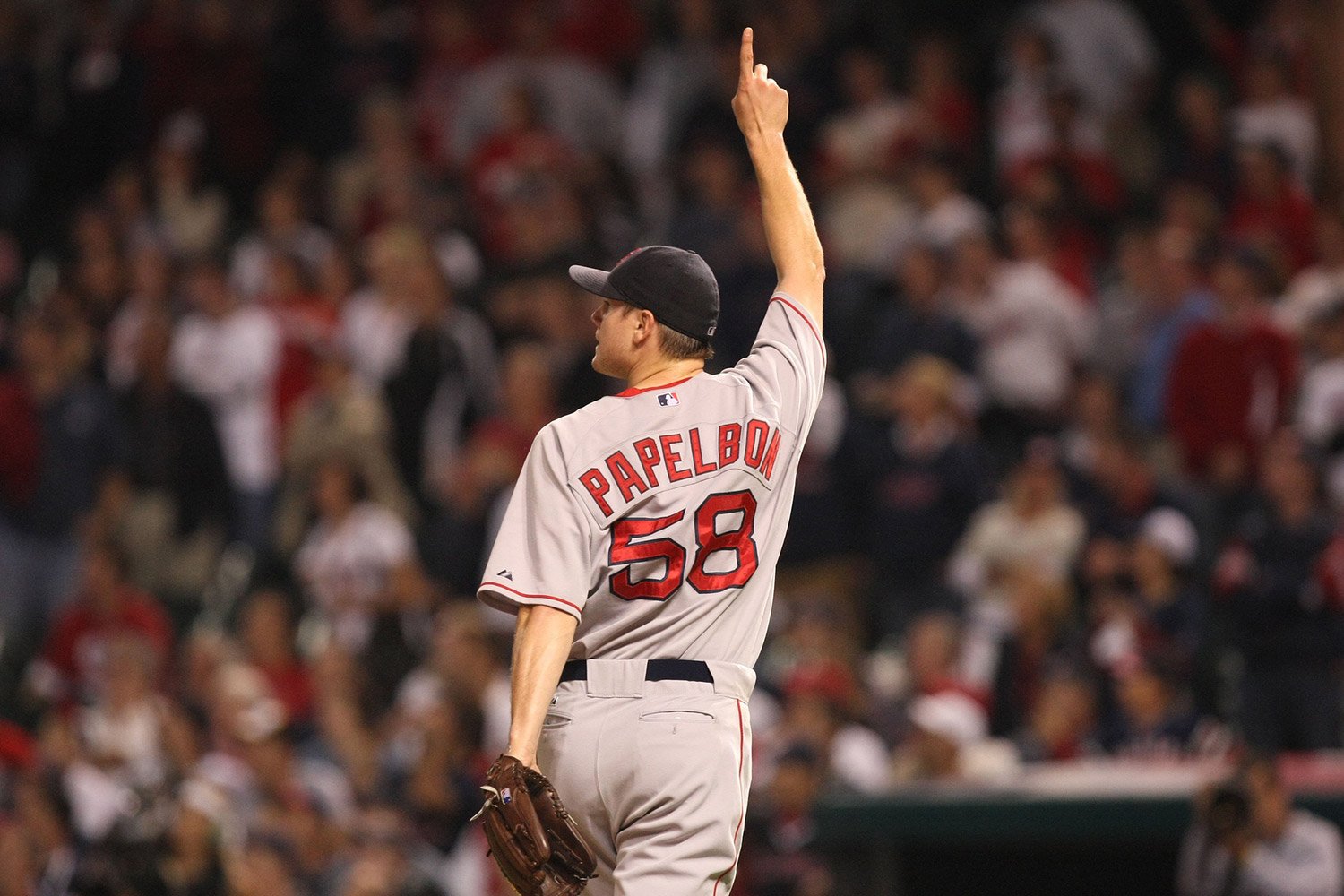 With offseason activities seemingly grinding to a halt, I thought I would try something a little bit different while we wait for the last free agents to come off the board. With 25 seasons of twenty-first-century Red Sox baseball in the books, I decided that it was time rank the 25 best individual seasons of the 2000s. This is part two. You can read part one here. I’ve done a couple of rankings like this before, but this may have been the hardest. There were just so many good seasons to choose from. To make it a little bit easier for myself, I came up with a couple of rules: I decided to limit each player to their two best seasons. Without this rule, the list would consist of David Ortiz, Pedro Martinez, Manny Ramirez, and Mookie Betts. These rankings are focused mainly on regular-season performance, but I did factor in postseason performance. There are players on this list who didn’t make the postseason, but there aren't any who excelled in the postseason but had poor regular seasons (2004 Derek Lowe, 2021 Enrique Hernández) 25. 2017 Craig Kimbrel Stats: 3.6 WAR 1.43 ERA 35 SV 69 IP 126 K 16.4 K/9 319 ERA+ 1.42 FIP 0.68 WHIP 1.42 FIP AS CYA-6 The Craig Kimbrel Red Sox experience was bookended by wildness, first in a disappointing 2016 season in which he battled a knee injury and then in the 2018 postseason when he became downright unusable. In between, however, was one of the most dominant seasons we’ve ever seen from a closer. His 1.8 BB/9 was easily the lowest of his career, and he somehow managed to strike out 126 batters in just 69 innings. Right-handed batters in particular had practically no chance against Kimbrel’s lethal fastball/power-curve combination, as he held them to a microscopic .103 batting average. The postseason, however, would be a different story, as Kimbrel allowed the go-ahead hit in Game 4 of the ALDS against the Astros. It’s hard to be too mad at that, though, because there was approximately a 0% chance the Red Sox were going to beat the 2017 Astros in Minute Maid Park with Drew Pomeranz. 24. 2019 Rafael Devers Stats: 5.4 WAR 156 G .311/.361/.555 129 R 201 H 54 2B 4 3B 32 HR 115 RBI .916 OPS 132 OPS+ MVP-12 It may seem hard to believe, but it’s very possible that the best version we’ve seen of Rafael Devers came during his age-22 season. In just his second full MLB campaign, Devers posted what are still-career highs in hits (201), batting average (.311), RBI (115), and OPS (.916) while leading the league with 54 doubles. He even somehow finished in the 99th percentile in Statcast’s Outs Above Average (though this seems more like a fluke every year). Though Devers' performance was undoubtedly aided by the juiced ball, he has still not matched his 5.4 WAR from 2019, leaving observers with the constant feeling that there is still more left in the tank. 23. 2006 Jonathan Papelbon Stats:5.0 WAR 1.85 ERA 37 SV 58.1 IP 84 K 13.0 K/9 257 ERA+ 2.45 FIP 0.77 WHIP AS No pitcher on this list, not Keith Foulke, Craig Kimbrel, Koji Uehara, Chris Sale or even Pedro Martinez, was better on a per-inning basis than Jonathan Papelbon was in 2006. In his first full season in the closer’s role after beating out Keith Foulke in spring training, Papelbon allowed just one run over his first 38 innings and ultimately finished with a dazzling 0.92 ERA on the season. So why is he so low on this list? Unlike other closers on this list who performed in both the regular season and postseason, Papelbon was shut down with a shoulder injury in September, and the Red Sox missed the postseason for the first time in four years. 22. 2019 Xander Bogaerts Stats: 6.3 WAR 155 G .309/.384/.555 33 HR 117 RBI .939 OPS 139 OPS+ AS MVP-5 I knew I had to find a way to put at least one Xander Bogaerts season on this list, and though his impact on the 2018 team was a strong contender, it’s clear that the best version of Bogaerts in a Red Sox uniform came in 2019. Fresh off inking a five-year extension, the shortstop set career highs in home runs (33), RBI (117), and OPS (.939), earning him a top-five finish in the AL MVP voting. Though FanGraphs had him about average defensively, his offensive excellence was still good enough for a career-high 6.3 WAR. It’s too bad the Red Sox pitching staff was such a disaster that season because Bogaerts could have climbed even higher in the rankings with a strong playoff performance. 21. 2016 Rick Porcello Stats: 4.7 WAR 22-4 3.15 ERA 33 GS 3 CG 223 IP 189 K 7.6 K/9 142 ERA+ 1.01 WHIP 3.40 FIP CYA-1 It may seem surprising to see a Cy Young winner this low in the rankings, but Rick Porcello’s 2016 award-winning season was largely a result of having the support of the league’s best offense. His 22 wins were the most of any Red Sox pitcher this century, but his 3.12 ERA pales in comparison to the best of Chris Sale and Pedro Martinez, and his 189 strikeouts was just the eight-best mark in the American League. It also doesn’t help his case that he got rocked in his only postseason start against the Indians, which set the tone for a disheartening three-game sweep. Regardless of his shortcomings, Porcello’s ability to eat up quality innings and take the ball every fifth day was invaluable for the Red Sox during their division title, making it more than worthy of a spot on this list.
 -
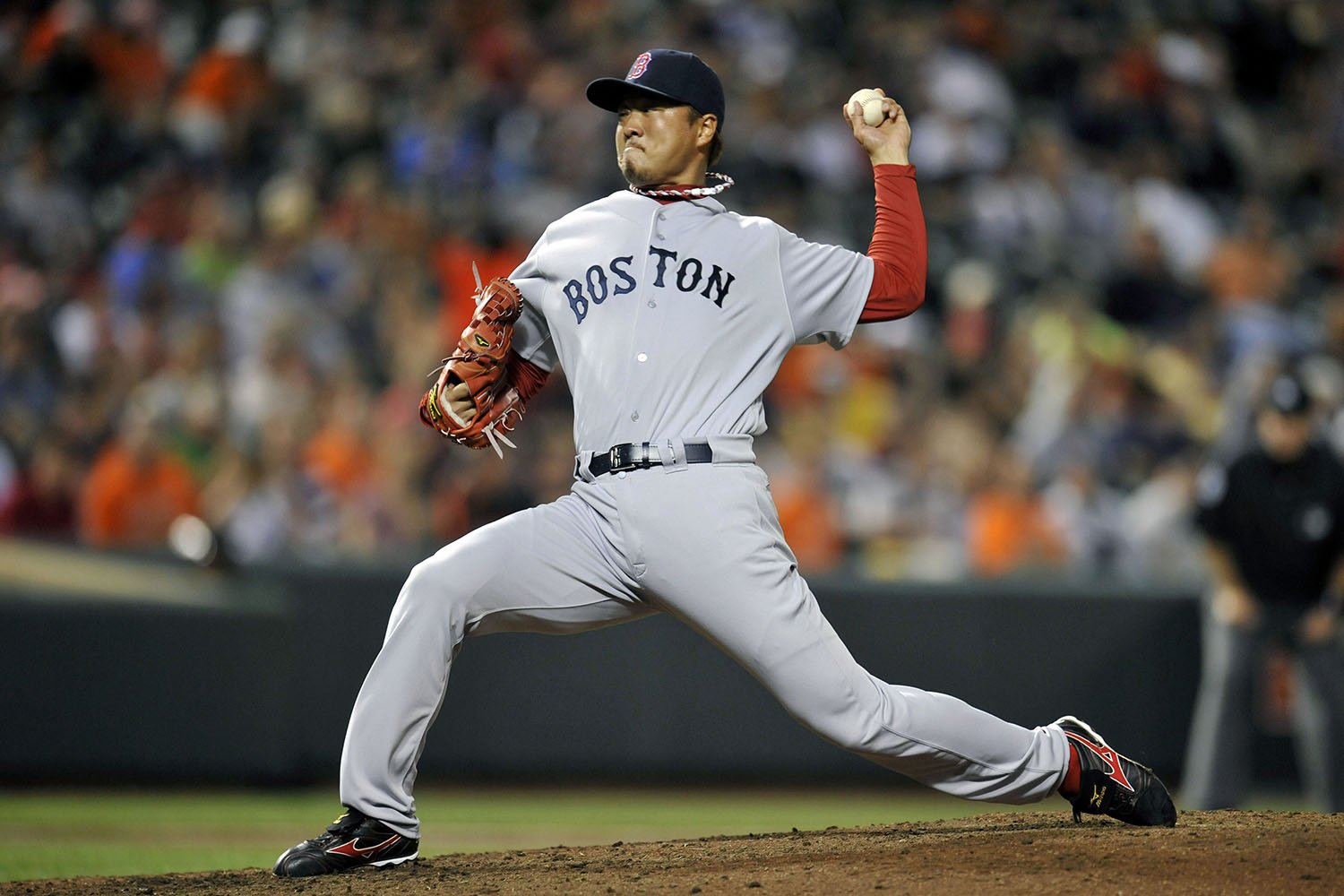 With offseason activities seemingly grinding to a halt, I thought I would try something a little bit different while we wait for the last free agents to come off the board. With 25 seasons of twenty-first-century Red Sox baseball in the books, I decided that it was time rank the 25 best individual seasons of the 2000s. This is part one. I’ve done a couple of rankings like this before, but this may have been the hardest. There were just so many good seasons to choose from. To make it a little bit easier for myself, I came up with a couple of rules: I decided to limit each player to their two best seasons. Without this rule, the list would pretty much consist entirely of David Ortiz, Pedro Martinez, Manny Ramirez and Mookie Betts. These rankings are focused mainly on regular season performance, but I did factor in postseason performance. There are players on this list who didn’t make the postseason, but there aren't any who excelled in the postseason but had poor regular seasons (2004 Derek Lowe, 2021 Enrique Hernández) Because I am a giant nerd, I couldn’t in good conscience leave off some of my favorite Red Sox seasons. Here is the first batch of honorable mentions, ranging from 2000 to 2007: 2001 Manny Ramirez Stats: 142 Games, 5.2 WAR, 162 OPS+, .306/.405/.609, 41 HR, 125 RBI, All-Star, MVP-9 Fresh off signing an eight-year, $160-million deal, Ramirez proved to be every bit the generational hitter that the Red Sox thought they were getting. No one is going to complain about 41 home runs and 125 RBI, but his season ended on a sour note due to a relatively poor second-half performance (.260/.367/.543) that mirrored the Red Sox' collapse in the standings. 2002 Nomar Garciaparra Stats: 156 Games, 6.8 WAR, 127 OPS+, .310/.352/.528, 24 HR, 120 RBI, All-Star, MVP-11 After an injury-riddled 2001 campaign, Nomar showed no ill effects from his season-ending wrist surgery. The franchise icon played in 156 games and led the league with 56 doubles. This season wasn’t quite up to his 1999-2000 standards, as his 127 OPS+ was actually his lowest in a full season since his rookie campaign, but it is surely worthy of an honorable mention. 2002 Manny Ramirez Stats: 120 Games, 6.0 WAR, 184 OPS+, .349/.359/.647, 33 HR, 107 RBI, All-Star, MVP-9 This should have been the pinnacle of Manny's illustrious career. His 184 OPS+ turned out to be the best he'd ever put up, and his .349 average resulted in his only batting title. Alas, a hamstring injury limited Ramirez to just 120 games, and I just couldn’t put him on this list over guys who played full seasons. 2002 Pedro Martinez Stats: 30 GS, 199.1 IP, 6.5 WAR, 20-4, 2.26 ERA, 0.92 WHIP, 239 K, All-Star CYA-2 Like Nomar, Pedro rebounded quite nicely from an injury-plagued 2001 season. Though he no longer possessed his upper-90s fastball, Martinez was still able to capture his fifth ERA title and lead the league with 239 strikeouts. Had there not been a two-season-per-player limit, I probably would have found a spot for this Pedro season, but I chose to go with two other masterpieces instead. 2002 Derek Lowe Stats: 32 GS, 219.2 IP, 7.2 WAR, 21-8 2.58 ERA, 0.97 WHIP, 127 K All-Star, CYA-3 Who remembers Derek Lowe starting an All-Star game? A year after losing the closer job, Lowe returned to the rotation and rode 21 wins and a 2.58 ERA to a third-place Cy Young finish. This might have been the toughest omission, but some middling underlying numbers (3.34 FIP, 5.2 K/9) and the fact that he didn’t get to build on his numbers in the postseason caused him to just miss the list. 2002 Tim Wakefield Stats: 45 G, 15 GS, 1631 IP, 3.9 WAR, 11-5, 2.81 ERA, 1.05 WHIP, 134 K Lost in the shuffle of Lowe and Martinez’s brilliance was a career-best season from Tim Wakefield. Bouncing between the rotation and bullpen, Wakefield excelled in whatever role the Red Sox put him in, posting a career-low 2.81 ERA. Side note: I still can’t believe a team with a healthy Manny Ramirez and Nomar Garciaparra and three starting pitchers with sub-three ERAs missed the postseason. 2003 Bill Mueller Stats: 146 Games, 5.6 WAR, 140 OPS+, .326/.394/.540, 19 HR, 85 RBI, MVP-12 Ok, maybe you remember Derek Lowe starting an All-Star game. But do you remember Bill Mueller winning a batting title? Picked up off the scrap heap by wunderkind Theo Epstein, Mueller barely edged out teammate Manny Ramirez with a .326 average, part of a fearsome Red Sox attack that set an MLB record for slugging percentage. Though his 5.6 WAR wasn't spectacular, Mueller’s career renaissance was one of the best parts of an entertaining Red Sox season. 2003 Manny Ramirez Stats: 154 Games, 5.4 WAR, 160 OPS+, .325/.427/.587, 37 HR, 104 RBI All-Star, MVP-6 Unfortunately, Manny’s usual excellence at the plate (1.014 OPS) isn’t what is remembered most from this season. It’s his absence from a critical August series against the Yankees, claiming he had an illness despite being seen at the hotel bar with Enrique Wilson. Ramirez appeared on the track for redemption with a strong start to the postseason, including a clutch home run in the ALDS Game 5 clincher, but he hit just .208 over the final six games of the ALCS as the Red Sox fell in seven games. 2003 Trot Nixon Stats: 134 Games, 5.1 WAR, 149 OPS+, .306/.396/.578, 28 HR, 87 RBI Throughout his decade in Boston, Nixon became a fan favorite due to his hard-nosed style of play and ability to grind out at-bats. He was mostly a role player rather than a star, but 2003 proved to be the exception. Nixon set career-highs in nearly every category, including home runs (28), on-base percentage (.396), slugging percentage (.578), OPS (.975) and WAR (5.1). Nixon continued to rake right into the postseason, posting a 1.061 OPS in 11 games and hitting a series-saving, walk-off home run in Game 3 of the ALDS. It’s unfortunate that Nixon’s career-best season tends to get lost in the shuffle of one of the greatest offenses of all time, because he was legitimately one of the best outfielders in the American League that season. 2004 Jason Varitek Stats: 137 Games, 4.0 WAR, 121 OPS+, .296/.390/.482, 18 HR, 73 RBI, 10 SB Varitek’s value to the 2004 Red Sox goes far beyond the numbers. Sure, he hit a career-best .296 and posted a phenomenal 121 OPS+ for a catcher, but his most impressive feat was how he managed the pitching staff. This is especially true in the ALCS, where he caught every inning in the draining, seven-game affair and managed to survive Tim Wakefield’s dancing knuckleball in the extra innings of Game 5. Much like Nixon, Varitek’s impact often flies under the radar when we remember the heroics of the 2004 squad, but there is no chance the Red Sox break the curse without him. 2004 Johnny Damon Stats: 150 Games, 4.3 WAR, 117 OPS+, .304/.380/.477, 20 HR, 94 RBI As good as the 2003 Red Sox offense was, they could have been even better. Johnny Damon posted easily the worst numbers of his four-year Red Sox tenure, batting just .273 with a meager 94 OPS+. Fortunately, Damon returned to form in 2004, raising his average to .304 and notching his first 20-homer season. After a red-hot ALDS, Damon fell into a terrible 3-for-29 slump over the first six games of the ALCS, but made up for it and then some with a two-homer, six-RBI masterclass in Game 7. He also came up huge in the World Series clincher over the Cardinals, blasting a leadoff homer off Jason Marquis to give Derek Lowe all the run support he would need. 2005 Manny Ramirez Stats: 152 Games, 4.4 WAR, 153 OPS+, .292/.388/.594, 45 HR, 144 RBI, 112 R, All-Star, MVP-4 2005 was another typical, productive Manny Ramirez season, as he tied a career-high with 45 home runs and collected 144 RBIs, the most of his eight years in Boston. What is more surprising is that his .292 batting average was actually his lowest mark since 1994, which speaks more to how great a hitter he was than any real drop in effectiveness. Though the Red Sox were swiftly bounced from the postseason by the White Sox, Manny gifted us with one of the coldest home run celebrations of all time in which he started taking off his batting gloves before even leaving the batter's box. 2006 Manny Ramirez Stats: 130 Games, 4.5 WAR, 165 OPS+, .321/.439/.619, 35 HR, 102 RBI I feel like every Manny season is worthy of a mention, but 2006 was tracking to be his best. His 1.058 OPS was his highest since 2002, and his 100 walks ended up being the highest total of his career. Much like 2002, however, Ramirez's season was derailed by injury, as right knee soreness limited him to just seven games after August 26. 2006 David Ortiz Stats: 151 Games, 5.8 WAR, 161 OPS+, .287/.413/.636 54 HR, 139 RBI Choosing the best David Ortiz seasons is a nearly impossible task. There are the postseason heroics of 2004 and 2013, the gaudy all-around numbers of 2007 and 2016, and, of course, this record-setting 2006 campaign. Big Papi’s home run off Johan Santana on September 21 set a new Red Sox franchise mark with his 51st round-tripper of the season, breaking a 68-year-old record held by Hall of Famer Jimmie Foxx. The only reason this season doesn’t crack the top 25 is because of the two-season-per-player limit and the fact that the Red Sox missed the postseason. 2007 Mike Lowell Stats: 154 Games, 5.0 WAR, 124 OPS+, .324/.378/.501, 21 HR, 120 RBI All-Star, MVP-5 Originally considered a throw-in in the Josh Beckett/Hanley Ramirez trade of 2005, Mike Lowell emerged as the perfect complement to protect Ortiz and Ramirez. His 5.0 WAR and 120 RBI easily set his career highs, with the latter mark ranking seventh in the American League. Lowell continued to rake right onto the postseason, batting .353/.410/.608 and taking home World Series MVP honors. Much like Lowell’s career as a whole, this wasn’t the most flashy season, but one that is certainly worthy of an honorable mention. 2007 David Ortiz Stats: 149 Games, 6.4 WAR, 171 OPS+, .332/.445/.621 35 HR, 117 RBI, All-Star, MVP-4 In most cases, one’s home run total declining by 19 from the previous season would qualify as a disappointment. Yet there is a very strong argument that Ortiz was actually a better hitter in 2007 than in his record-setting home-run barrage of 2006. His 111 walks and .445 on-base percentage paced the American League while his .332 batting average and 1.066 OPS were career-highs. He continued to rake right on into the postseason, though certainly not on the level of his 2004 and 2013 heroics. This is where I once again tap the “two-seasons-per-player” sign. 2007 Hideki Okajima Stats: 66 G, 2.9 WAR, 2.22 ERA, 0.97 WHIP, 69 IP, 63 K, All-Star In terms of pure awesomeness, this season has to rank inside the top 10. With his one-of-a-kind wind-up and epic entrance music (worth checking out on YouTube), Okajima quickly became a fan favorite, but don’t be mistaken: This guy could really pitch. In his first MLB season, he quickly emerged as the premier set-up man and became the Red Sox's sixth All-Star after winning the final vote. With the Eric Gagne acquisition going up in flames, Okajima took an even bigger role down the stretch and into the postseason before running out of gas in the World Series. Okajima’s career quickly teetered off after a few seasons, but his 2007 heroics alone make his Red Sox tenure a massive success.
 -
In the first of this five-part series, we reveal the campaigns that just fell short of the top 25. In the first of this five-part series, we reveal the campaigns that just fell short of the top 25. With offseason activities seemingly grinding to a halt, I thought I would try something a little bit different while we wait for the last free agents to come off the board. With 25 seasons of twenty-first-century Red Sox baseball in the books, I decided that it was time rank the 25 best individual seasons of the 2000s. This is part one. I’ve done a couple of rankings like this before, but this may have been the hardest. There were just so many good seasons to choose from. To make it a little bit easier for myself, I came up with a couple of rules: I decided to limit each player to their two best seasons. Without this rule, the list would pretty much consist entirely of David Ortiz, Pedro Martinez, Manny Ramirez and Mookie Betts. These rankings are focused mainly on regular season performance, but I did factor in postseason performance. There are players on this list who didn’t make the postseason, but there aren't any who excelled in the postseason but had poor regular seasons (2004 Derek Lowe, 2021 Enrique Hernández) Because I am a giant nerd, I couldn’t in good conscience leave off some of my favorite Red Sox seasons. Here is the first batch of honorable mentions, ranging from 2000 to 2007: 2001 Manny Ramirez Stats: 142 Games, 5.2 WAR, 162 OPS+, .306/.405/.609, 41 HR, 125 RBI, All-Star, MVP-9 Fresh off signing an eight-year, $160-million deal, Ramirez proved to be every bit the generational hitter that the Red Sox thought they were getting. No one is going to complain about 41 home runs and 125 RBI, but his season ended on a sour note due to a relatively poor second-half performance (.260/.367/.543) that mirrored the Red Sox' collapse in the standings. 2002 Nomar Garciaparra Stats: 156 Games, 6.8 WAR, 127 OPS+, .310/.352/.528, 24 HR, 120 RBI, All-Star, MVP-11 After an injury-riddled 2001 campaign, Nomar showed no ill effects from his season-ending wrist surgery. The franchise icon played in 156 games and led the league with 56 doubles. This season wasn’t quite up to his 1999-2000 standards, as his 127 OPS+ was actually his lowest in a full season since his rookie campaign, but it is surely worthy of an honorable mention. 2002 Manny Ramirez Stats: 120 Games, 6.0 WAR, 184 OPS+, .349/.359/.647, 33 HR, 107 RBI, All-Star, MVP-9 This should have been the pinnacle of Manny's illustrious career. His 184 OPS+ turned out to be the best he'd ever put up, and his .349 average resulted in his only batting title. Alas, a hamstring injury limited Ramirez to just 120 games, and I just couldn’t put him on this list over guys who played full seasons. 2002 Pedro Martinez Stats: 30 GS, 199.1 IP, 6.5 WAR, 20-4, 2.26 ERA, 0.92 WHIP, 239 K, All-Star CYA-2 Like Nomar, Pedro rebounded quite nicely from an injury-plagued 2001 season. Though he no longer possessed his upper-90s fastball, Martinez was still able to capture his fifth ERA title and lead the league with 239 strikeouts. Had there not been a two-season-per-player limit, I probably would have found a spot for this Pedro season, but I chose to go with two other masterpieces instead. 2002 Derek Lowe Stats: 32 GS, 219.2 IP, 7.2 WAR, 21-8 2.58 ERA, 0.97 WHIP, 127 K All-Star, CYA-3 Who remembers Derek Lowe starting an All-Star game? A year after losing the closer job, Lowe returned to the rotation and rode 21 wins and a 2.58 ERA to a third-place Cy Young finish. This might have been the toughest omission, but some middling underlying numbers (3.34 FIP, 5.2 K/9) and the fact that he didn’t get to build on his numbers in the postseason caused him to just miss the list. 2002 Tim Wakefield Stats: 45 G, 15 GS, 1631 IP, 3.9 WAR, 11-5, 2.81 ERA, 1.05 WHIP, 134 K Lost in the shuffle of Lowe and Martinez’s brilliance was a career-best season from Tim Wakefield. Bouncing between the rotation and bullpen, Wakefield excelled in whatever role the Red Sox put him in, posting a career-low 2.81 ERA. Side note: I still can’t believe a team with a healthy Manny Ramirez and Nomar Garciaparra and three starting pitchers with sub-three ERAs missed the postseason. 2003 Bill Mueller Stats: 146 Games, 5.6 WAR, 140 OPS+, .326/.394/.540, 19 HR, 85 RBI, MVP-12 Ok, maybe you remember Derek Lowe starting an All-Star game. But do you remember Bill Mueller winning a batting title? Picked up off the scrap heap by wunderkind Theo Epstein, Mueller barely edged out teammate Manny Ramirez with a .326 average, part of a fearsome Red Sox attack that set an MLB record for slugging percentage. Though his 5.6 WAR wasn't spectacular, Mueller’s career renaissance was one of the best parts of an entertaining Red Sox season. 2003 Manny Ramirez Stats: 154 Games, 5.4 WAR, 160 OPS+, .325/.427/.587, 37 HR, 104 RBI All-Star, MVP-6 Unfortunately, Manny’s usual excellence at the plate (1.014 OPS) isn’t what is remembered most from this season. It’s his absence from a critical August series against the Yankees, claiming he had an illness despite being seen at the hotel bar with Enrique Wilson. Ramirez appeared on the track for redemption with a strong start to the postseason, including a clutch home run in the ALDS Game 5 clincher, but he hit just .208 over the final six games of the ALCS as the Red Sox fell in seven games. 2003 Trot Nixon Stats: 134 Games, 5.1 WAR, 149 OPS+, .306/.396/.578, 28 HR, 87 RBI Throughout his decade in Boston, Nixon became a fan favorite due to his hard-nosed style of play and ability to grind out at-bats. He was mostly a role player rather than a star, but 2003 proved to be the exception. Nixon set career-highs in nearly every category, including home runs (28), on-base percentage (.396), slugging percentage (.578), OPS (.975) and WAR (5.1). Nixon continued to rake right into the postseason, posting a 1.061 OPS in 11 games and hitting a series-saving, walk-off home run in Game 3 of the ALDS. It’s unfortunate that Nixon’s career-best season tends to get lost in the shuffle of one of the greatest offenses of all time, because he was legitimately one of the best outfielders in the American League that season. 2004 Jason Varitek Stats: 137 Games, 4.0 WAR, 121 OPS+, .296/.390/.482, 18 HR, 73 RBI, 10 SB Varitek’s value to the 2004 Red Sox goes far beyond the numbers. Sure, he hit a career-best .296 and posted a phenomenal 121 OPS+ for a catcher, but his most impressive feat was how he managed the pitching staff. This is especially true in the ALCS, where he caught every inning in the draining, seven-game affair and managed to survive Tim Wakefield’s dancing knuckleball in the extra innings of Game 5. Much like Nixon, Varitek’s impact often flies under the radar when we remember the heroics of the 2004 squad, but there is no chance the Red Sox break the curse without him. 2004 Johnny Damon Stats: 150 Games, 4.3 WAR, 117 OPS+, .304/.380/.477, 20 HR, 94 RBI As good as the 2003 Red Sox offense was, they could have been even better. Johnny Damon posted easily the worst numbers of his four-year Red Sox tenure, batting just .273 with a meager 94 OPS+. Fortunately, Damon returned to form in 2004, raising his average to .304 and notching his first 20-homer season. After a red-hot ALDS, Damon fell into a terrible 3-for-29 slump over the first six games of the ALCS, but made up for it and then some with a two-homer, six-RBI masterclass in Game 7. He also came up huge in the World Series clincher over the Cardinals, blasting a leadoff homer off Jason Marquis to give Derek Lowe all the run support he would need. 2005 Manny Ramirez Stats: 152 Games, 4.4 WAR, 153 OPS+, .292/.388/.594, 45 HR, 144 RBI, 112 R, All-Star, MVP-4 2005 was another typical, productive Manny Ramirez season, as he tied a career-high with 45 home runs and collected 144 RBIs, the most of his eight years in Boston. What is more surprising is that his .292 batting average was actually his lowest mark since 1994, which speaks more to how great a hitter he was than any real drop in effectiveness. Though the Red Sox were swiftly bounced from the postseason by the White Sox, Manny gifted us with one of the coldest home run celebrations of all time in which he started taking off his batting gloves before even leaving the batter's box. 2006 Manny Ramirez Stats: 130 Games, 4.5 WAR, 165 OPS+, .321/.439/.619, 35 HR, 102 RBI I feel like every Manny season is worthy of a mention, but 2006 was tracking to be his best. His 1.058 OPS was his highest since 2002, and his 100 walks ended up being the highest total of his career. Much like 2002, however, Ramirez's season was derailed by injury, as right knee soreness limited him to just seven games after August 26. 2006 David Ortiz Stats: 151 Games, 5.8 WAR, 161 OPS+, .287/.413/.636 54 HR, 139 RBI Choosing the best David Ortiz seasons is a nearly impossible task. There are the postseason heroics of 2004 and 2013, the gaudy all-around numbers of 2007 and 2016, and, of course, this record-setting 2006 campaign. Big Papi’s home run off Johan Santana on September 21 set a new Red Sox franchise mark with his 51st round-tripper of the season, breaking a 68-year-old record held by Hall of Famer Jimmie Foxx. The only reason this season doesn’t crack the top 25 is because of the two-season-per-player limit and the fact that the Red Sox missed the postseason. 2007 Mike Lowell Stats: 154 Games, 5.0 WAR, 124 OPS+, .324/.378/.501, 21 HR, 120 RBI All-Star, MVP-5 Originally considered a throw-in in the Josh Beckett/Hanley Ramirez trade of 2005, Mike Lowell emerged as the perfect complement to protect Ortiz and Ramirez. His 5.0 WAR and 120 RBI easily set his career highs, with the latter mark ranking seventh in the American League. Lowell continued to rake right onto the postseason, batting .353/.410/.608 and taking home World Series MVP honors. Much like Lowell’s career as a whole, this wasn’t the most flashy season, but one that is certainly worthy of an honorable mention. 2007 David Ortiz Stats: 149 Games, 6.4 WAR, 171 OPS+, .332/.445/.621 35 HR, 117 RBI, All-Star, MVP-4 In most cases, one’s home run total declining by 19 from the previous season would qualify as a disappointment. Yet there is a very strong argument that Ortiz was actually a better hitter in 2007 than in his record-setting home-run barrage of 2006. His 111 walks and .445 on-base percentage paced the American League while his .332 batting average and 1.066 OPS were career-highs. He continued to rake right on into the postseason, though certainly not on the level of his 2004 and 2013 heroics. This is where I once again tap the “two-seasons-per-player” sign. 2007 Hideki Okajima Stats: 66 G, 2.9 WAR, 2.22 ERA, 0.97 WHIP, 69 IP, 63 K, All-Star In terms of pure awesomeness, this season has to rank inside the top 10. With his one-of-a-kind wind-up and epic entrance music (worth checking out on YouTube), Okajima quickly became a fan favorite, but don’t be mistaken: This guy could really pitch. In his first MLB season, he quickly emerged as the premier set-up man and became the Red Sox's sixth All-Star after winning the final vote. With the Eric Gagne acquisition going up in flames, Okajima took an even bigger role down the stretch and into the postseason before running out of gas in the World Series. Okajima’s career quickly teetered off after a few seasons, but his 2007 heroics alone make his Red Sox tenure a massive success. View full article
-
 Happy New Year, Red Sox Nation! I don't know about you, but the best thing about watching that ball drop at midnight was the ability to wash away the disappointment of the 2024 baseball season. This year brings with it a new chance for the Boston Red Sox, and with a stacked farm system, emerging young core, and brand-new ace, it should be a memorable season for the Old Towne Team. Here are 25 predictions for the 2025 Red Sox: The Red Sox add at least one more back-end reliever. While the starting pitcher and first base market have been depleted through the first two months of free agency, the late-inning reliever market has barely been touched. I think the Red Sox succeed in their choice to wait out the market and an experienced reliever falls into their lap. I don’t think it will be Tanner Scott, who is reported to be looking for a four-year, $80-million contract, but I expect them to land one of either Kirby Yates, Carlos Estevez, or Jeff Hoffman. The right-handed bat addition is very underwhelming. There is no question that the Red Sox are going to add a right-handed bat. Pretty much every time Craig Breslow talks, he mentions how they need to balance the lineup that is overflowing with left-handed bats. However, based on the remaining free agent options and their reported lukewarm interest in Alex Bregman, I don’t think people are going to be happy with who is coming to town. The two names I think make the most sense are (unfortunately) Taylor Ward and Randall Grichuk. Vaughn Grissom wins the Opening Day second base job. Part of the reason the Red Sox haven’t been aggressive enough to add more offense is their belief in their existing core of unproven youngsters. Whether it turns out to be justified, the Red Sox still think highly of Vaughn Grissom, and though his first season in Boston was mostly a disaster, he did impress during his final week with the big league club. I think he comes into spring training healthy and motivated and shows enough to win the second base job for opening day. What to do with Kutter Crawford becomes the major spring training storyline. It’s a bizarre feeling for the Red Sox to seemingly have too much starting pitching, but with the emergence of young arms like Quinn Presiter and Richard Fitts and the additions of Garrett Crochet and Walker Buehler, the Red Sox suddenly have a very crowded rotation. Once it becomes evident to everyone that Lucas Giolito will be ready for opening day, all eyes will turn to Kutter Crawford. Though he won’t be happy about it, he is going to be the odd man out of the rotation and begin the season in the bullpen Garrett Crochet signs a long-term extension. Last spring, the Red Sox signed both Ceddanne Rafaela and Brayan Bello to long-term deals, both of which I viewed as unnecessary at the time (as well as one year later). This spring, however, the Red Sox will make the correct move and sign Garrett Crochet to a long-term deal. They've already invested so much prospect capital into the acquisition that it only makes sense to go all-in financially as well, even if he carries injury risk. Let’s call it a back-loaded 8-year, $150-million deal that carries him through his age-33 season. Justin Slaten wins the closer job; Liam Hendriks disappoints. As much as I hate to admit it, one player I believe will disappoint in 2025 is Liam Hendriks. It’s extremely difficult for any player to return to form after missing nearly two full years, and that's even more true for a 36-year-old. Once it becomes clear Hendriks no longer possesses top-tier stuff, the Red Sox will give Justin Slaten the first shot at the closer’s role, and he should excel in the role with his upper-90s fastball and excellent control. Roman Anthony arrives in May. Though there will be plenty of voices clamoring to put Roman Anthony on the Opening Day roster, I think the Red Sox play it safe and send him down to Triple A for a little more seasoning. After a month, however, it will become clear that Anthony is simply too good for minor-league pitching. The Red Sox will have no choice but to promote him at the beginning of May, at which time he will become the everyday left fielder. Ceddanne Rafaela settles into a utility role. Ceddanne Rafaela’s defense has never been in question, but a .270 on-base percentage as a rookie raised serious doubts about his ability to be an everyday big leaguer. After a slow start in 2025, the Red Sox will transition him to a utility role upon Anthony’s call-up. He will still be a below-average hitter, but his defensive versatility will allow him to be a valuable contributor to the team and generate around 2.0 WAR. Brayan Bello takes a step forward; Tanner Houck takes a step back. After a fantastic 2023 season, a spring training extension, and an Opening Day starting nod, hopes were high for Brayan Bello in the 2024 season. Yet while he showed flashes of brilliance, Bello struggled with spotty command and ended with a 4.49 ERA. If there is any reason for optimism, it is that he was considerably better down the stretch, with a 3.66 mark over the last three months and a solid 89/35 strikeout-to-walk-ratio. As he enters his age 26 season and his second year under the tutelage of Andrew Bailey, I predict that Bello will carry over the progress he made in the second half and have a career-best year. On the flip side, I think that Tanner Houck will take a small step backward. I still believe he will be a quality major-league starter, but expecting him to repeat a 3.12 ERA seems unrealistic. His mediocre control and middling strikeout numbers point more to a mid-rotation starter than one who can lead a rotation. I think the 4.11 ERA he had after June 6 is closer to the production we can expect to move forward. We are all thankful for the rotation depth. It didn’t take long for the Red Sox rotation depth, or lack thereof, to be exposed in 2024. With Lucas Giolito lost for the year in spring training and Nick Pivetta, Brayan Bello, and Garrett Whitlock going down in April, the Red Sox were forced to give starts to the likes of Josh Winckowski and Chase Anderson, which turned out about as well as anybody could have expected. Here’s a secret: The Red Sox are going to have starters on the injured list this year. No team has ever gone through an MLB season with all five guys making 33 starts. Yet unlike in previous seasons, the Red Sox are prepared for the inevitable injuries due to their deep collection of upper minors pitching depth. Whether it be intriguing young hurlers like Quinn Priester, Hunter Dobbins, and Richard Fitts or experienced veterans like Cooper Criswell or Patrick Sandoval, the Red Sox will finally have acceptable major league alternatives to turn to, and we will all be grateful for it. The All-Stars: Triston Casas, Rafael Devers, Garrett Crochet, Brayan Bello. For the first time since 2021, the Red Sox will send four players to the Midsummer Classic in Atlanta. From the offense, Rafael Devers will get the start for the American League at third base in his fourth All-Star selection, and Triston Casas will make his first All-Star team as Vladimir Guerrero’s backup. On the pitching side, Garrett Crochet will make his second straight All-Star team in his first season with the Red Sox, while Brayan Bello’s aforementioned breakout season will result in a surprise All-Star selection. One other note: I wanted to fit Trevor Story on this squad as well, but as long as Gunnar Henderson and Bobby Witt Jr. still play in the American League, it’s going to be an uphill battle. Wilyer Abreu gets traded at the deadline. With the team's abundance of both left-handed hitters and outfielders, Wilyer Abreu was a prime trade candidate entering this offseason, but with the club able to obtain their ace by dealing only minor leaguers, it now seems that Abreu will at least start the season on the big league roster. This prediction is far less an indictment of Abreu than a numbers game: Once Anthony comes up, the Red Sox will have four outfielders (five if you count Campbell) for three spots. It’s not every day that a controllable, Gold-Glove outfielder with an above-average bat is available on the market, and I predict that the Red Sox will use Abreu to address one of their other needs. Kristian Campbell is an everyday player in the second half...in left field. Though some people believe that Kristian Campbell will start the year in the big leagues, I think it’s important to remember that this is a guy who started 2024 in High A and had his season cut short by injury. He will start the season getting a little more experience at Triple A, but like Roman Anthony, he will quickly prove too good for the minor leagues. The above trade of Wilyer Abreu will not only create a clear path for everyday at-bats for Anthony but also free up a spot in left field for Campbell. Trevor Story plays 150 games, wins a Gold Glove. It’s been a disastrous first three years in Boston for Story, with almost comically bad injury luck, but that is going to end in 2025. Barring any wayward pitches breaking his hand or shoulders popping out of sockets on a routine dive for a ground ball, Story is going to re-esablish himself as the leader of both the team and the infield. Though Bobby Witt Jr. is an incredible defender, the difference in the Red Sox defense from 2024 to 2025 will be too noticeable to deny Story his first Gold Glove. Triston Casas and Rafael Devers combine for 65 home runs and 220 RBIs. Due to a variety of injuries, ailments, and slumps, we’ve only gotten a glimpse of what these two sluggers can do back-to-back in the order. As one of the industry's foremost Triston Casas believers, I think he has the potential to put up a stat line like prime Anthony Rizzo: 30 to 35 home runs, over 100 RBIs, and an on-base percentage of around .380. This will take the pressure off Devers and give him more pitches to hit, and with a pair of healthy shoulders, he will post a season similar to 2021 (.279/.352/.538 38 HR 113 RBI). Marcelo Mayer debuts in September, platoons with Grissom. Of the remaining Big Three, Marcelo Mayer is unquestionably the farthest from the major leagues. With no experience above Double A and an extensive injury history, Mayer will spend the majority of the season at Triple A, where he will impress but not quite force his way to the majors. Much like Triston Casas in 2022 and Ceddanne Rafaela in 2023, the Red Sox will call him up when rosters expand in September and ease him in by platooning him with Grissom. The number one prospect in the system at the end of 2025? Franklin Arias. With Mayer, Campbell, and Anthony in the majors and Kyle Teel and Braden Montgomery in Chicago, there will be a new face at the top of the Red Sox prospects rankings by the end of the 2025 season. Though Miguel Bleis and Yoelin Cespedes will also have a strong case, I’m going to roll with Franklin Arias, who broke out as a borderline top-100 prospect by hitting .355 in FCL and holding his own as an 18-year-old in Salem. I would not be surprised to see Arias make a Campbell-esque leap and end the season as a top-25 prospect. Johanfran Gracia is the breakout prospect of the year. It was, all in all, a relatively healthy 2024 season for the Red Sox farm system, but the one major exception was catching prospect Johanfran Garcia. After scorching low-A pitching to the tune of a .385/.467/.596 line in 19 games, Garcia suffered a torn ACL in May while rounding first base, prematurely ending what looked to be a special season for the 19-year-old. With a full offseason to recover, Garcia will make a leap similar to the one his brother Jhostyxon Garcia made in 2024 and end 2025 as the consensus best-hitting prospect in the system. Luis Guerrero emerges as a premier setup man. Luis Guerrero was a breath of fresh air for a decimated and inconsistent Red Sox bullpen, tossing 10 scoreless innings while walking just two batters in a September cup of coffee in 2025. Though new additions and the return of Garrett Whitlock may force him back to Triple-A to start the season, Guerrero will get his chance at some point this season and seize the opportunity. With his high-octane stuff and solid control, Guerrero will quickly move into Alex Cora’s circle of trust and toss critical innings down the stretch. The Red Sox win 88 games and claim the first Wild Card spot. The Red Sox are far from a perfect team, and there will undoubtedly be growing pains with so many young hitters in their lineup. Fortunately for them, they play in an American League that doesn’t have a great team besides the Yankees. The Orioles have no dependable starting pitchers, the Guardians got worse this offseason, the Tigers and Royals will come back down to earth, the Astros lost two pieces of their core, the Rangers are old and injury-prone, and the Mariners still can’t figure out their offense. The door is open for the Red Sox, and I think they’ll secure the first wild card spot on the back of their pitching depth. Walker Buehler has a big postseason moment. I haven’t talked yet about Walker Buehler, which is mostly due to the fact that I think he is going to have a solid-but-unspectacular season. One thing we all know about Buehler, however, is that he is at his best when the lights are the brightest. He was brought in in large part due to his postseason experience and veteran moxie, and both will shine through in the opening round. I’m thinking seven innings of one-run ball in a Game 3 clincher to send the Red Sox to the ALDS. Red Sox come up short in the postseason…because of their offense. While a Wild Card series victory may have fans dreaming of another miraculous postseason run, the train will end in the ALDS. Surprisingly, it will be the offense that leads to their downfall, as the struggles against left-handed pitching and propensity for strikeouts will stick out like a sore thumb. The Red Sox will steal Game 1 in New York when they knock out Gerrit Cole in the third inning, but Max Fried and Carlos Rodon will throw gems in Games 2 and 3, and though the Red Sox will send the series back to New York, Fried will put the nail in the coffin with another masterpiece in Game 5. Masataka Yoshida gets traded early in the 2025 offseason. It’s no secret that the Red Sox want to trade Masataka Yoshida, but with three years left on his contract and offseason shoulder surgery, they have been unable to find any takers. I think that Yoshida will have a fine enough season (120 OPS+, .290 batting average) but will still be expendable due to his left-handedness and defensive limitations. The Red Sox will find that teams are much more willing to pay for two years of Yoshida rather than three, especially after a healthy season, and they will finally be able to find a suitor. Triston Casas gets a long-term extension. Fortuently for all of us, this will be the last offseason where we are subjugated to the nonsense of Triston Casas trade rumors. After a healthy, dominant season in 2025, the Red Sox will break open the bank to lock in Casas in the middle of their order for the foreseeable future. I envision a contract similar to the 8-year, $168-million contract Matt Olson received fro, the Atlanta Braves back in 2022. The Red Sox don’t sign any of the big free agent pitchers (again), bring in Marcell Ozuna on a one-year deal. After the Red Sox missed out on Burnes, Fried, and Snell, I've already seen some people talk about next year’s free-agent class, which is headlined by Framber Valdez and Dylan Cease. I think that we as a fanbase need to accept that after getting burned by David Price and Chris Sale, John Henry is going to be extremely reluctant to hand out long-term deals to pitchers in their 30s. I also think that the aforementioned Tristan Casas extension will take them out of the Vladimir Guerrero Jr. sweepstakes. The Red Sox instead will bring in slugger Marcell Ozuna on a one-year deal and slot him into the DH spot that was vacated by the Masataka Yoshida trade.
 -
Actually, it's more like 30 predictions once you count all the two-parters. Actually, it's more like 30 predictions once you count all the two-parters. Happy New Year, Red Sox Nation! I don't know about you, but the best thing about watching that ball drop at midnight was the ability to wash away the disappointment of the 2024 baseball season. This year brings with it a new chance for the Boston Red Sox, and with a stacked farm system, emerging young core, and brand-new ace, it should be a memorable season for the Old Towne Team. Here are 25 predictions for the 2025 Red Sox: The Red Sox add at least one more back-end reliever. While the starting pitcher and first base market have been depleted through the first two months of free agency, the late-inning reliever market has barely been touched. I think the Red Sox succeed in their choice to wait out the market and an experienced reliever falls into their lap. I don’t think it will be Tanner Scott, who is reported to be looking for a four-year, $80-million contract, but I expect them to land one of either Kirby Yates, Carlos Estevez, or Jeff Hoffman. The right-handed bat addition is very underwhelming. There is no question that the Red Sox are going to add a right-handed bat. Pretty much every time Craig Breslow talks, he mentions how they need to balance the lineup that is overflowing with left-handed bats. However, based on the remaining free agent options and their reported lukewarm interest in Alex Bregman, I don’t think people are going to be happy with who is coming to town. The two names I think make the most sense are (unfortunately) Taylor Ward and Randall Grichuk. Vaughn Grissom wins the Opening Day second base job. Part of the reason the Red Sox haven’t been aggressive enough to add more offense is their belief in their existing core of unproven youngsters. Whether it turns out to be justified, the Red Sox still think highly of Vaughn Grissom, and though his first season in Boston was mostly a disaster, he did impress during his final week with the big league club. I think he comes into spring training healthy and motivated and shows enough to win the second base job for opening day. What to do with Kutter Crawford becomes the major spring training storyline. It’s a bizarre feeling for the Red Sox to seemingly have too much starting pitching, but with the emergence of young arms like Quinn Presiter and Richard Fitts and the additions of Garrett Crochet and Walker Buehler, the Red Sox suddenly have a very crowded rotation. Once it becomes evident to everyone that Lucas Giolito will be ready for opening day, all eyes will turn to Kutter Crawford. Though he won’t be happy about it, he is going to be the odd man out of the rotation and begin the season in the bullpen Garrett Crochet signs a long-term extension. Last spring, the Red Sox signed both Ceddanne Rafaela and Brayan Bello to long-term deals, both of which I viewed as unnecessary at the time (as well as one year later). This spring, however, the Red Sox will make the correct move and sign Garrett Crochet to a long-term deal. They've already invested so much prospect capital into the acquisition that it only makes sense to go all-in financially as well, even if he carries injury risk. Let’s call it a back-loaded 8-year, $150-million deal that carries him through his age-33 season. Justin Slaten wins the closer job; Liam Hendriks disappoints. As much as I hate to admit it, one player I believe will disappoint in 2025 is Liam Hendriks. It’s extremely difficult for any player to return to form after missing nearly two full years, and that's even more true for a 36-year-old. Once it becomes clear Hendriks no longer possesses top-tier stuff, the Red Sox will give Justin Slaten the first shot at the closer’s role, and he should excel in the role with his upper-90s fastball and excellent control. Roman Anthony arrives in May. Though there will be plenty of voices clamoring to put Roman Anthony on the Opening Day roster, I think the Red Sox play it safe and send him down to Triple A for a little more seasoning. After a month, however, it will become clear that Anthony is simply too good for minor-league pitching. The Red Sox will have no choice but to promote him at the beginning of May, at which time he will become the everyday left fielder. Ceddanne Rafaela settles into a utility role. Ceddanne Rafaela’s defense has never been in question, but a .270 on-base percentage as a rookie raised serious doubts about his ability to be an everyday big leaguer. After a slow start in 2025, the Red Sox will transition him to a utility role upon Anthony’s call-up. He will still be a below-average hitter, but his defensive versatility will allow him to be a valuable contributor to the team and generate around 2.0 WAR. Brayan Bello takes a step forward; Tanner Houck takes a step back. After a fantastic 2023 season, a spring training extension, and an Opening Day starting nod, hopes were high for Brayan Bello in the 2024 season. Yet while he showed flashes of brilliance, Bello struggled with spotty command and ended with a 4.49 ERA. If there is any reason for optimism, it is that he was considerably better down the stretch, with a 3.66 mark over the last three months and a solid 89/35 strikeout-to-walk-ratio. As he enters his age 26 season and his second year under the tutelage of Andrew Bailey, I predict that Bello will carry over the progress he made in the second half and have a career-best year. On the flip side, I think that Tanner Houck will take a small step backward. I still believe he will be a quality major-league starter, but expecting him to repeat a 3.12 ERA seems unrealistic. His mediocre control and middling strikeout numbers point more to a mid-rotation starter than one who can lead a rotation. I think the 4.11 ERA he had after June 6 is closer to the production we can expect to move forward. We are all thankful for the rotation depth. It didn’t take long for the Red Sox rotation depth, or lack thereof, to be exposed in 2024. With Lucas Giolito lost for the year in spring training and Nick Pivetta, Brayan Bello, and Garrett Whitlock going down in April, the Red Sox were forced to give starts to the likes of Josh Winckowski and Chase Anderson, which turned out about as well as anybody could have expected. Here’s a secret: The Red Sox are going to have starters on the injured list this year. No team has ever gone through an MLB season with all five guys making 33 starts. Yet unlike in previous seasons, the Red Sox are prepared for the inevitable injuries due to their deep collection of upper minors pitching depth. Whether it be intriguing young hurlers like Quinn Priester, Hunter Dobbins, and Richard Fitts or experienced veterans like Cooper Criswell or Patrick Sandoval, the Red Sox will finally have acceptable major league alternatives to turn to, and we will all be grateful for it. The All-Stars: Triston Casas, Rafael Devers, Garrett Crochet, Brayan Bello. For the first time since 2021, the Red Sox will send four players to the Midsummer Classic in Atlanta. From the offense, Rafael Devers will get the start for the American League at third base in his fourth All-Star selection, and Triston Casas will make his first All-Star team as Vladimir Guerrero’s backup. On the pitching side, Garrett Crochet will make his second straight All-Star team in his first season with the Red Sox, while Brayan Bello’s aforementioned breakout season will result in a surprise All-Star selection. One other note: I wanted to fit Trevor Story on this squad as well, but as long as Gunnar Henderson and Bobby Witt Jr. still play in the American League, it’s going to be an uphill battle. Wilyer Abreu gets traded at the deadline. With the team's abundance of both left-handed hitters and outfielders, Wilyer Abreu was a prime trade candidate entering this offseason, but with the club able to obtain their ace by dealing only minor leaguers, it now seems that Abreu will at least start the season on the big league roster. This prediction is far less an indictment of Abreu than a numbers game: Once Anthony comes up, the Red Sox will have four outfielders (five if you count Campbell) for three spots. It’s not every day that a controllable, Gold-Glove outfielder with an above-average bat is available on the market, and I predict that the Red Sox will use Abreu to address one of their other needs. Kristian Campbell is an everyday player in the second half...in left field. Though some people believe that Kristian Campbell will start the year in the big leagues, I think it’s important to remember that this is a guy who started 2024 in High A and had his season cut short by injury. He will start the season getting a little more experience at Triple A, but like Roman Anthony, he will quickly prove too good for the minor leagues. The above trade of Wilyer Abreu will not only create a clear path for everyday at-bats for Anthony but also free up a spot in left field for Campbell. Trevor Story plays 150 games, wins a Gold Glove. It’s been a disastrous first three years in Boston for Story, with almost comically bad injury luck, but that is going to end in 2025. Barring any wayward pitches breaking his hand or shoulders popping out of sockets on a routine dive for a ground ball, Story is going to re-esablish himself as the leader of both the team and the infield. Though Bobby Witt Jr. is an incredible defender, the difference in the Red Sox defense from 2024 to 2025 will be too noticeable to deny Story his first Gold Glove. Triston Casas and Rafael Devers combine for 65 home runs and 220 RBIs. Due to a variety of injuries, ailments, and slumps, we’ve only gotten a glimpse of what these two sluggers can do back-to-back in the order. As one of the industry's foremost Triston Casas believers, I think he has the potential to put up a stat line like prime Anthony Rizzo: 30 to 35 home runs, over 100 RBIs, and an on-base percentage of around .380. This will take the pressure off Devers and give him more pitches to hit, and with a pair of healthy shoulders, he will post a season similar to 2021 (.279/.352/.538 38 HR 113 RBI). Marcelo Mayer debuts in September, platoons with Grissom. Of the remaining Big Three, Marcelo Mayer is unquestionably the farthest from the major leagues. With no experience above Double A and an extensive injury history, Mayer will spend the majority of the season at Triple A, where he will impress but not quite force his way to the majors. Much like Triston Casas in 2022 and Ceddanne Rafaela in 2023, the Red Sox will call him up when rosters expand in September and ease him in by platooning him with Grissom. The number one prospect in the system at the end of 2025? Franklin Arias. With Mayer, Campbell, and Anthony in the majors and Kyle Teel and Braden Montgomery in Chicago, there will be a new face at the top of the Red Sox prospects rankings by the end of the 2025 season. Though Miguel Bleis and Yoelin Cespedes will also have a strong case, I’m going to roll with Franklin Arias, who broke out as a borderline top-100 prospect by hitting .355 in FCL and holding his own as an 18-year-old in Salem. I would not be surprised to see Arias make a Campbell-esque leap and end the season as a top-25 prospect. Johanfran Gracia is the breakout prospect of the year. It was, all in all, a relatively healthy 2024 season for the Red Sox farm system, but the one major exception was catching prospect Johanfran Garcia. After scorching low-A pitching to the tune of a .385/.467/.596 line in 19 games, Garcia suffered a torn ACL in May while rounding first base, prematurely ending what looked to be a special season for the 19-year-old. With a full offseason to recover, Garcia will make a leap similar to the one his brother Jhostyxon Garcia made in 2024 and end 2025 as the consensus best-hitting prospect in the system. Luis Guerrero emerges as a premier setup man. Luis Guerrero was a breath of fresh air for a decimated and inconsistent Red Sox bullpen, tossing 10 scoreless innings while walking just two batters in a September cup of coffee in 2025. Though new additions and the return of Garrett Whitlock may force him back to Triple-A to start the season, Guerrero will get his chance at some point this season and seize the opportunity. With his high-octane stuff and solid control, Guerrero will quickly move into Alex Cora’s circle of trust and toss critical innings down the stretch. The Red Sox win 88 games and claim the first Wild Card spot. The Red Sox are far from a perfect team, and there will undoubtedly be growing pains with so many young hitters in their lineup. Fortunately for them, they play in an American League that doesn’t have a great team besides the Yankees. The Orioles have no dependable starting pitchers, the Guardians got worse this offseason, the Tigers and Royals will come back down to earth, the Astros lost two pieces of their core, the Rangers are old and injury-prone, and the Mariners still can’t figure out their offense. The door is open for the Red Sox, and I think they’ll secure the first wild card spot on the back of their pitching depth. Walker Buehler has a big postseason moment. I haven’t talked yet about Walker Buehler, which is mostly due to the fact that I think he is going to have a solid-but-unspectacular season. One thing we all know about Buehler, however, is that he is at his best when the lights are the brightest. He was brought in in large part due to his postseason experience and veteran moxie, and both will shine through in the opening round. I’m thinking seven innings of one-run ball in a Game 3 clincher to send the Red Sox to the ALDS. Red Sox come up short in the postseason…because of their offense. While a Wild Card series victory may have fans dreaming of another miraculous postseason run, the train will end in the ALDS. Surprisingly, it will be the offense that leads to their downfall, as the struggles against left-handed pitching and propensity for strikeouts will stick out like a sore thumb. The Red Sox will steal Game 1 in New York when they knock out Gerrit Cole in the third inning, but Max Fried and Carlos Rodon will throw gems in Games 2 and 3, and though the Red Sox will send the series back to New York, Fried will put the nail in the coffin with another masterpiece in Game 5. Masataka Yoshida gets traded early in the 2025 offseason. It’s no secret that the Red Sox want to trade Masataka Yoshida, but with three years left on his contract and offseason shoulder surgery, they have been unable to find any takers. I think that Yoshida will have a fine enough season (120 OPS+, .290 batting average) but will still be expendable due to his left-handedness and defensive limitations. The Red Sox will find that teams are much more willing to pay for two years of Yoshida rather than three, especially after a healthy season, and they will finally be able to find a suitor. Triston Casas gets a long-term extension. Fortuently for all of us, this will be the last offseason where we are subjugated to the nonsense of Triston Casas trade rumors. After a healthy, dominant season in 2025, the Red Sox will break open the bank to lock in Casas in the middle of their order for the foreseeable future. I envision a contract similar to the 8-year, $168-million contract Matt Olson received fro, the Atlanta Braves back in 2022. The Red Sox don’t sign any of the big free agent pitchers (again), bring in Marcell Ozuna on a one-year deal. After the Red Sox missed out on Burnes, Fried, and Snell, I've already seen some people talk about next year’s free-agent class, which is headlined by Framber Valdez and Dylan Cease. I think that we as a fanbase need to accept that after getting burned by David Price and Chris Sale, John Henry is going to be extremely reluctant to hand out long-term deals to pitchers in their 30s. I also think that the aforementioned Tristan Casas extension will take them out of the Vladimir Guerrero Jr. sweepstakes. The Red Sox instead will bring in slugger Marcell Ozuna on a one-year deal and slot him into the DH spot that was vacated by the Masataka Yoshida trade. View full article
-
With offensive options dwindling and frustrations mounting, a trade for the Cubs' Seiya Suzuki could be the move that saves the Red Sox' offseason. With offensive options dwindling and frustrations mounting, a trade for the Cubs' Seiya Suzuki could be the move that saves the Red Sox' offseason. The boggart is one of the most peculiar creatures in the wizarding world of Harry Potter. The boggart loves to hide in dark, enclosed spaces, but nobody knows exactly what it looks like, for it takes the shape of whatever the person looking at fears the most. For Ron Weasley, it’s a spider. For Neville Longbottom, it’s Professor Severus Snape. The point is that everyone, no matter how brave, has a boggart, as the creature’s sole purpose is petrifying the daylights out of whoever dares to come near it. My boggart is the September 2024 Boston Red Sox offense. It’s true. Sometimes, when I close my eyes, I can still see Ceddanne Rafaela chasing three curveballs out of the zone. I can still see Wilyer Abreu getting blown away by a 93-mph fastball. I can still see Tyler O’Neill waving helplessly at a well-executed right-handed slider. I can even see Connor Wong popping up to third with a runner on third. Though a shallow bullpen and the lack of a true ace get most of the attention for causing the downfall of the 2024 Boston Red Sox, it was the offense’s horrific slump that put the nail in the coffin. In September and October, they batted just .224 and ran a wRC+ of 81. The roots of the dying tree were obvious: The lineup was too left-handed, and it struck out far too often. Going into the offseason, addressing both issues was paramount if the Red Sox were serious about contending in 2025. Yet here we are on January 7, and the only change to the lineup has been the departure of O’Neill to the division-rival Baltimore Orioles. To be fair, I was strongly in the camp that the Red Sox should let O’Neill walk based on his 37% strikeout rate last season and his lengthy injury history. But 31 home runs just walked out the door in the form of the second-best qualified hitter in all of baseball against lefties. While O’Neill’s exodus might not end up being a needle-mover, it is hard not to get worried about seeing potential fits land elsewhere. Teoscar Hernández re-upped with the Dodgers, Gleyber Torres went to the Tigers, and Willy Adames signed a mega-deal with the Giants — all while the Red Sox sat on their hands. Yes, the Red Sox have been successful in rebuilding the rotation, but it’s hard to take them seriously as contenders when their best right-handed bats are Trevor Story, Rob Refsnyder, and Wong. Even more troubling are the remaining options on the free agent and trade markets. The best bat available is switch-hitter Anthony Santander, who is coming of a 44 home-run season but whose batted ball metrics point to looming regression. Randall Grichuk has been the name linked most to the Red Sox, but he is essentially just a carbon copy of Rob Refsnyder. Nolan Arenado is the biggest name out there, and the Cardinals are desperate to move him, but his bloated contract and declining metrics indicate future disaster, not to mention the fact that he plays the same position as franchise cornerstone Rafael Devers. The name that has been whispered the most is longtime Astros third baseman Alex Bregman. The appeal is obvious: He is an excellent defender, possesses top-of-the-charts bat-to-ball skills, and would provide veteran leadership and postseason experience that has been sorely lacking in the Red Sox lineup in recent years. It’s worth noting, however, that not only would Bregman be a messy fit, given that he would require a position change to second base and potentially block top prospects Marcelo Mayer and Kristian Campbell, but he hardly qualifies as a Tyler O’Neill replacement. He posted a meager .224/.287/.424 line against left-handed pitching last year, his third straight campaign with drastic reverse platoon splits, and with middling batted ball metrics, there are some doubts about whether he can sustain his 25-homer power without the aid of the Crawford Boxes. Alas, the industry consensus is that the Tigers and the Blue Jays are the favorites for Bregman’s services, so all of these hypotheticals are likely a moot point. I always try to be honest with you all, and I’m not going to sugarcoat it: The situation is bleak. The Red Sox are running out of time and options, and there is a decent chance they will enter 2025 banking on a healthy Story and an emerging Campbell for their right-handed production. However, there is still one option remaining, someone who would be an absolutely perfect fit to turn this B or C offseason into an A. Let’s talk about Seiya Suzuki. Whether due to the Cubs failure to make the playoffs or his nagging injuries, Suzuki’s excellence in his first three MLB seasons has flown under the radar. Yet not only has he been a well above-average hitter since arriving in the league in 2022, he has continually gotten better each season. 2024 saw his post career-highs in WAR (3.5), home runs (21), stolen bases (16), on-base percentage (.366), and OPS+ (138). And while he’ll never get mistaken for Jackie Bradley Jr. in the field, he is at least playable in an outfield corner. The only other drawback to Suzuki's game is a relatively high strikeout rate, but while a 27.4% mark is less than ideal, it is still 10 percentage points lower than the one O’Neill ran last year. Moreover, Suzuki ranked in the 92nd percentile in chase rate and 80th percentile in walk rate, indicating an elite understanding of the strike zone. Suzuki also possesses a career .843 OPS against southpaws, making him a perfect candidate to slot in between Rafael Devers and Triston Casas. The biggest question isn’t whether he would be a good fit on the Red Sox but whether the Cubs would trade a player of his caliber. The club clearly thinks it has a strong chance to win the weak NL Central in 2025, a point made crystal clear by their trade for the expiring contract of Kyle Tucker. Why would they trade one of their best hitters? The Cubs are a tricky team to figure out, but one thing that has been readily apparent is that they don’t wish to get into bidding wars with the big-market clubs. The days of spending big money for the likes of Jon Lester and Jason Heyward seem to be a thing of the past, as they haven't been even remotely involved in the sweepstakes for Aaron Judge, Juan Soto, and the other top free agents. They haven’t even been motivated to keep their own homegrown stars, as they conducted an everything-must-go sale on Anthony Rizzo, Javier Baez, and Kris Bryant rather than extend their contracts (which turned out to be a wise decision.) Despite their history, you would have to think that Kyle Tucker would be the exception to their stinginess, given both his status as one of the game’s elite players and the trade capital they used to acquire him. If the Cubs are thinking about readying a mega-contract for Tucker, which could approach the $500-million mark, it would make sense to start freeing up some money now. They already sent Cody Bellinger to the Yankees in a de facto salary dump, but they could create even more financial flexibility by dealing Suzuki, who has two years and $38 million left on the initial five-year, $85-million contract he signed before the 2022 season. For their troubles, the Cubs would receive a package back from the Red Sox that is headlined by Wilyer Abreu. I have written extensively about my desire for Abreu to be moved, but in summation, his left-handedness, drastic platoon splits, and strikeout propensity is a bad fit for the current roster, not to mention the presence of a younger and more talented replacement in Roman Anthony. None of this is to say that Abreu is a bad player, and I think that he would be a great fit with the Cubs. Adding a Gold Glover who can play all three outfield positions would allow them to give Tucker, who is coming off a serious shin injury, time at DH and take the pressure off of Pete Crow-Armstrong, who struggled mightily at the plate his rookie season. Abreu can also add some punch to a team that finished just 20th in the league in home runs last season, while give the team a long-term left-handed slugger in the event they lose Tucker or Ian Happ, who is a free agent after 2026. Of course, I am not in the Cubs front office, and there is a chance that they are not interested in Abreu. After all, they do have a similar archetype in 34th overall prospect Owen Cassie, who reached Triple A at the end of last season. That is the tricky thing about mock trades: We have no idea how each team values each player. What I do know, however, is that the Red Sox need a player exactly like Suzuki to balance the lineup and add some more thump in the middle of the order. Whether through Abreu or another young, controllable asset, the Red Sox should do whatever they can to bring him to Boston. View full article
-
 The boggart is one of the most peculiar creatures in the wizarding world of Harry Potter. The boggart loves to hide in dark, enclosed spaces, but nobody knows exactly what it looks like, for it takes the shape of whatever the person looking at fears the most. For Ron Weasley, it’s a spider. For Neville Longbottom, it’s Professor Severus Snape. The point is that everyone, no matter how brave, has a boggart, as the creature’s sole purpose is petrifying the daylights out of whoever dares to come near it. My boggart is the September 2024 Boston Red Sox offense. It’s true. Sometimes, when I close my eyes, I can still see Ceddanne Rafaela chasing three curveballs out of the zone. I can still see Wilyer Abreu getting blown away by a 93-mph fastball. I can still see Tyler O’Neill waving helplessly at a well-executed right-handed slider. I can even see Connor Wong popping up to third with a runner on third. Though a shallow bullpen and the lack of a true ace get most of the attention for causing the downfall of the 2024 Boston Red Sox, it was the offense’s horrific slump that put the nail in the coffin. In September and October, they batted just .224 and ran a wRC+ of 81. The roots of the dying tree were obvious: The lineup was too left-handed, and it struck out far too often. Going into the offseason, addressing both issues was paramount if the Red Sox were serious about contending in 2025. Yet here we are on January 7, and the only change to the lineup has been the departure of O’Neill to the division-rival Baltimore Orioles. To be fair, I was strongly in the camp that the Red Sox should let O’Neill walk based on his 37% strikeout rate last season and his lengthy injury history. But 31 home runs just walked out the door in the form of the second-best qualified hitter in all of baseball against lefties. While O’Neill’s exodus might not end up being a needle-mover, it is hard not to get worried about seeing potential fits land elsewhere. Teoscar Hernández re-upped with the Dodgers, Gleyber Torres went to the Tigers, and Willy Adames signed a mega-deal with the Giants — all while the Red Sox sat on their hands. Yes, the Red Sox have been successful in rebuilding the rotation, but it’s hard to take them seriously as contenders when their best right-handed bats are Trevor Story, Rob Refsnyder, and Wong. Even more troubling are the remaining options on the free agent and trade markets. The best bat available is switch-hitter Anthony Santander, who is coming of a 44 home-run season but whose batted ball metrics point to looming regression. Randall Grichuk has been the name linked most to the Red Sox, but he is essentially just a carbon copy of Rob Refsnyder. Nolan Arenado is the biggest name out there, and the Cardinals are desperate to move him, but his bloated contract and declining metrics indicate future disaster, not to mention the fact that he plays the same position as franchise cornerstone Rafael Devers. The name that has been whispered the most is longtime Astros third baseman Alex Bregman. The appeal is obvious: He is an excellent defender, possesses top-of-the-charts bat-to-ball skills, and would provide veteran leadership and postseason experience that has been sorely lacking in the Red Sox lineup in recent years. It’s worth noting, however, that not only would Bregman be a messy fit, given that he would require a position change to second base and potentially block top prospects Marcelo Mayer and Kristian Campbell, but he hardly qualifies as a Tyler O’Neill replacement. He posted a meager .224/.287/.424 line against left-handed pitching last year, his third straight campaign with drastic reverse platoon splits, and with middling batted ball metrics, there are some doubts about whether he can sustain his 25-homer power without the aid of the Crawford Boxes. Alas, the industry consensus is that the Tigers and the Blue Jays are the favorites for Bregman’s services, so all of these hypotheticals are likely a moot point. I always try to be honest with you all, and I’m not going to sugarcoat it: The situation is bleak. The Red Sox are running out of time and options, and there is a decent chance they will enter 2025 banking on a healthy Story and an emerging Campbell for their right-handed production. However, there is still one option remaining, someone who would be an absolutely perfect fit to turn this B or C offseason into an A. Let’s talk about Seiya Suzuki. Whether due to the Cubs failure to make the playoffs or his nagging injuries, Suzuki’s excellence in his first three MLB seasons has flown under the radar. Yet not only has he been a well above-average hitter since arriving in the league in 2022, he has continually gotten better each season. 2024 saw his post career-highs in WAR (3.5), home runs (21), stolen bases (16), on-base percentage (.366), and OPS+ (138). And while he’ll never get mistaken for Jackie Bradley Jr. in the field, he is at least playable in an outfield corner. The only other drawback to Suzuki's game is a relatively high strikeout rate, but while a 27.4% mark is less than ideal, it is still 10 percentage points lower than the one O’Neill ran last year. Moreover, Suzuki ranked in the 92nd percentile in chase rate and 80th percentile in walk rate, indicating an elite understanding of the strike zone. Suzuki also possesses a career .843 OPS against southpaws, making him a perfect candidate to slot in between Rafael Devers and Triston Casas. The biggest question isn’t whether he would be a good fit on the Red Sox but whether the Cubs would trade a player of his caliber. The club clearly thinks it has a strong chance to win the weak NL Central in 2025, a point made crystal clear by their trade for the expiring contract of Kyle Tucker. Why would they trade one of their best hitters? The Cubs are a tricky team to figure out, but one thing that has been readily apparent is that they don’t wish to get into bidding wars with the big-market clubs. The days of spending big money for the likes of Jon Lester and Jason Heyward seem to be a thing of the past, as they haven't been even remotely involved in the sweepstakes for Aaron Judge, Juan Soto, and the other top free agents. They haven’t even been motivated to keep their own homegrown stars, as they conducted an everything-must-go sale on Anthony Rizzo, Javier Baez, and Kris Bryant rather than extend their contracts (which turned out to be a wise decision.) Despite their history, you would have to think that Kyle Tucker would be the exception to their stinginess, given both his status as one of the game’s elite players and the trade capital they used to acquire him. If the Cubs are thinking about readying a mega-contract for Tucker, which could approach the $500-million mark, it would make sense to start freeing up some money now. They already sent Cody Bellinger to the Yankees in a de facto salary dump, but they could create even more financial flexibility by dealing Suzuki, who has two years and $38 million left on the initial five-year, $85-million contract he signed before the 2022 season. For their troubles, the Cubs would receive a package back from the Red Sox that is headlined by Wilyer Abreu. I have written extensively about my desire for Abreu to be moved, but in summation, his left-handedness, drastic platoon splits, and strikeout propensity is a bad fit for the current roster, not to mention the presence of a younger and more talented replacement in Roman Anthony. None of this is to say that Abreu is a bad player, and I think that he would be a great fit with the Cubs. Adding a Gold Glover who can play all three outfield positions would allow them to give Tucker, who is coming off a serious shin injury, time at DH and take the pressure off of Pete Crow-Armstrong, who struggled mightily at the plate his rookie season. Abreu can also add some punch to a team that finished just 20th in the league in home runs last season, while give the team a long-term left-handed slugger in the event they lose Tucker or Ian Happ, who is a free agent after 2026. Of course, I am not in the Cubs front office, and there is a chance that they are not interested in Abreu. After all, they do have a similar archetype in 34th overall prospect Owen Cassie, who reached Triple A at the end of last season. That is the tricky thing about mock trades: We have no idea how each team values each player. What I do know, however, is that the Red Sox need a player exactly like Suzuki to balance the lineup and add some more thump in the middle of the order. Whether through Abreu or another young, controllable asset, the Red Sox should do whatever they can to bring him to Boston.
 -
 Since my very first days writing about baseball, I have always had a fascination with the Hall of Fame. As someone who loves a good argument, the idea of using analytics with a dash of subjective opinion to decide who is bestowed with baseball’s greatest honor was as good as it gets. Before writing my mock ballot this year, I went back to 2019 and took a look at my very first Hall of Fame article. Here are the 10 players I selected: Mariano Rivera Edgar Martinez Curt Schilling Mike Mussina Fred McGriff Roy Halladay Larry Walker Jeff Kent Barry Bonds Roger Clemens That’s a pretty fun list, and by the way, I still think Jeff Kent should get his due. One thing you may notice is that I filled all 10 spots on the ballot, but that is not a necessity for me. If there are not 10 players who are worthy of the Hall of Fame in my eyes, I am not going to fill all 10 spots for the sake of “keeping players on the ballot for future discussions.” This year, for instance, I only put seven players on my ballot because I only considered seven players worthy of induction. That doesn’t mean, however, that I am not open to changing my mind. The great thing about Hall of Fame discourse is how fluid is. Your vote for one year does not leave you beholden to that player the following year, as there are constantly new points and comparisons made that can change your viewpoint on a player. To go back to that original ballot, two players who didn’t crack my top 10 are getting my vote six years later. The statistics of these retired stars may not be changing, but the way we think and talk about them are. Alright, enough yapping. Here is my 2025 Hall of Fame ballot: OF Ichiro Suzuki, Year 1 Current Tracking: 100% We’ll kick things off with the most obvious first-ballot selection since Derek Jeter. I’m not going to waste a ton of time here: We all know that Ichiro is a Hall of Famer. His first decade in Seattle will never again be replicated, from his MVP debut in 2001 to his record 262 hits in 2004 to his 10 consecutive Gold Gloves in his first 10 seasons. Whether it was watching him poke a seemingly unhittable pitch over the third baseman’s head or seeing him gun down a foolish baserunner attempting to advance to third, you knew you were experiencing greatness every time Ichiro took the field. The only real question around Ichiro’s candidacy is whether he will be the first unanimous position-player Hall of Famer. I fear there is one cranky old writer who looks at his relatively meager 107 career OPS+ or his 60.0 career WAR and says he falls short of Hall of Famer standards. This, of course, would be absolutely ridiculous, not just because Ichiro spent a number of his prime years in Japan but because numbers fail to tell the whole story of Ichiro. There is no quantifying just how miserable he made opposing pitchers or how much fear he put in opposing baserunners. I love baseball statistics as much as anyone, but there is simply no way to tell the story of Ichiro solely through numbers. Regardless, it is not up to me to determine whether or not every single writer will check off Ichiro’s name on his ballot. I know he’s a Hall of Famer, and you do, too. Let’s move on. SP CC Sabathia, Year 1 Current Tracking: 90.8% Think back through the last quarter-century of baseball. If you had to give the ball to one player in a game you had to win, who would it be? The first name to come to mind may be Justin Verlander, the two-time champion who has delivered in countless big spots for the Tigers and Astros. Then, of course, there is Madison Bumgarner, whose 0.25 World Series ERA is the lowest of all time. Yet while he may not have the trophy case like Verlander or the raw numbers like Bumgarner, CC Sabathia epitomized the modern workhorse for nearly two decades, and his performances down the stretch in 2008 and in the 2009 postseason were among the best and the most clutch of any pitcher in recent memory. Let’s backtrack a bit, however, because Sabathia’s career had a number of different stages. He debuted with in Cleveland in 2001, and though he made a pair of All-Star teams in 2003 and 2004, his 4.10 ERA through his first five seasons hardly indicated a Hall of Famer. It took until 2006 for Sabathia to have his first truly special season, as he posted a 3.22 ERA and led the league with six complete games. He would take it to another level in 2007, capturing his first and only Cy Young win by leading the league with 241 innings pitched and striking out over 200 batters for the first time. His time in Cleveland, however, would end on a sour note, as he got rocked by the Red Sox in the 2007 ALCS and took a step back in the first half of 2008. Looking to spur their own playoff run, the Milwaukee Brewers acquired him on July 7, and Sabathia would deliver beyond their wildest imaginations. The big lefty completed seven of his 17 starts, posting a 1.65 ERA in that stretch and earning 11 crucial wins. His last start of the regular season may have been his best, as his complete-game four-hitter clinched the Brewers' first postseason appearance since 1982. Though he finally ran out of gas in his lone postseason appearance, his fourth consecutive outing on three days’ rest, his remarkable second half helped him earn a seven-year/$162 million contract with the Yankees. It’s hard to imagine a better first season for Sabathia in pinstripes than the one he turned in 2009. He once again finished in the top five in Cy Young voting thanks to a league-leading 19 wins and a 3.37 ERA, but unlike the previous two campaigns, Sabathia also came up huge in the postseason. He kicked off the Yankees ALDS sweep of the Twins by allowing just one run over 6.2 innings before overwhelming the Angels in the ALCS to the tune of two runs in 16 innings. A pair of Chase Utley home runs made him the tough-luck loser in the World Series opener, but he bounced back in Game 4 with 6.2 strong innings to give the Yankees a commanding 3-1 series lead. In total, Sabathia posted a 1.98 during the Yankees championship run, averaging over seven innings a start and striking out 32 batters against just nine walks. The next three seasons would be more of the same for Sabathia, as he tossed over 200 innings in each campaign and collected three more All-Star appearances. Though injuries limited him to a career-low 28 starts in 2012, Sabathia more than made up for in the postseason, almost single-handedly dragging the Yankees past the Orioles in the ALDS. This included a complete-game masterpiece in the decisive Game 5 in which he allowed just one run and struck out nine. Unfortunately for Sabathia, his injuries in 2012 would foreshadow his steady decline, as his performance began to slip the following year. He led the league in earned runs in 2013 and was limited to just eight miserable starts in 2014. It appeared all those innings had finally taken their toll, but to his credit, Sabathia began to reinvent himself, transforming from a power pitcher to a control artist. From 2016-2018, Sabathia made at least 27 starts and posted a sub-4.00, remaining a key cog in the Yankees rotation. He would gut out one more injury-plagued campaign in 2019 before calling it a career at the age of 38. ‘ As much as there is to like about Sabathia’s resume, one thing that might hurt him in the eyes of the voters is his 3.74 ERA. The only Hall of Famers with a higher mark are Red Ruffing, who pitched during the offensive-explosion 1930s, and Jack Morris, who needed the Veterans Committee to earn election. Like these two pitchers, however, Sabathia also played in a hitter-friendly era with the added challenge of spending over half of his career in the ultra-competitive AL East. A much better indicator of Sabathia’s performance is ERA+, which factors into the offensive environment of the time. His mark of 116 is actually ahead of Hall of Famers Jim Bunning, Steve Carlton, and Ferguson Jenkins, despite each pitcher having a much lower raw ERA. What Sabathia lacks in run prevention, he makes up for in longevity. Among pitchers who debuted after 1980, only Randy Johnson, Greg Maddux, Jamie Moyer, and Roger Clemens threw more than Sabathia’s 3,577 innings. This allowed him to pile up the punchouts and help him become just the eighth pitcher this century to reach the 3,000-strikeout milestone. That’s a good sign for Sabathia, as 16 of the other 18 members of the club are in Cooperstown, with the only exceptions being the steroid-using Roger Clemens and the controversial Curt Schilling. Far from being a stat compiler, Sabathia’s peak is right up there with the Hall of Fame standards. From 2006 to 2012, Sabathia never posted an ERA above 3.38 while averaging 32 starts a season and placing in the top five in Cy Young voting five times. His 39.4 WAR during that period is ahead of 17 Hall of Famers, including the recently elected Morris and John Smoltz. Sabathia may not have as clear-cut a case as Johnson, Maddux, or Martinez, but if you are only willing to elect the perfect pitchers, you are going to have a very small Hall of Fame. This has been reflected in the recent Hall of Fame voting, as only two starting pitchers have been elected by the writers since 2015. With the increased attention paid to pitch counts and personalized relievers, the reliance on starting pitchers has never been lower, and starting pitchers are struggling to meet the traditional thresholds that once were deemed necessary for Hall of Fame induction. Though this might seem contradictory to what I just said, it is because of that decreased valuation of starting pitchers that Sabathia has such a strong case. He was a workhorse in every sense of the word, a throwback to the traditional aces of yesterday. When pitchers were looking over their shoulders at the 100-pitch mark, Sabathia was still working into the eighth and ninth innings. His numbers should tell the story of a surefire Hall of Famer, but an even bigger indication of how special he was was how much the Indians, Brewers, and Yankees relied on them with their season on the line. He checks every box that you could want in a number one pitcher, and hopefully enough writers check his box to elect him into Cooperstown on the first ballot. OF Carlos Beltrán, Year 3 Last Year: 57.1% Current Tracking: 78.5% (+11 net votes) Carlos Beltrán entered the Hall of Fame ballot in 2023 as one of the biggest unknowns in recent memories. On the field, he was one of the most talented players of his era, but he spent many of his most dynamic years out of the spotlight in Kansas City, and his seven years in New York, though excellent, were defined mostly by injuries and postseason disappointment. He finally got his ring with the Houston Astros in 2017, but became one of the ringleaders of a cheating scandal that ultimately cost him a gig as New York Mets manager. With a divisive Cooperstown candidacy, Beltrán appeared to be a long shot to be a first-ballot Hall-of-Famer, but his debut-year vote total would be a key indicator of his eventual chances of getting elected. It was therefore a terrific sign when he garnered 46.5% of the vote in 2023 before climbing to 57.1% in 2024. With eight remaining years of eligibility and the ballot finally beginning to clear out, Beltrán seems like a sure bet to reach the 75% plateau necessary for election. The difficult part of evaluating Beltrán’s career is that it almost feels...underwhelming. This might seem crazy to say, given his career 435 home runs and 70.1 WAR, but considering how talented he was in every phase of the game and his miraculous three-month run with the 2004 Astros, you feel like he should have more than one top-five MVP finish. Yet I believe that most of the narratives surrounding Beltrán throughout his career were unjust and created a perception of his abilities that was reflected in MVP voting and his status among the game’s elite players. Beltrán’s rollercoaster of a career began in Kansas City where, after winning the Rookie of the Year in 1999, he had the sophomore slump to end all sophomore slumps. Injuries limited him to just 98 games, in which he hit just seven home runs and posted a 69 OPS+. He bounced back with three straight fantastic seasons, averaging 26 home runs and 36 stolen bases a year, but he failed to make a single All-Star team. The Royals never seriously contended for the playoffs in any of those seasons, and those who weren’t watching Beltrán still viewed him as a talented underperformer. Beltrán would finally get his shot at a postseason chase in 2004, and he would deliver beyond even the most optimistic expectations. He was traded to the Astros at midseason and helped them capture the NL Wild Card by hitting 23 home runs and converting on all 28 stolen base attempts in just 90 games. He somehow took his game to another level in the postseason, homering eight times in just 12 games and nearly willing the Astros to their first-ever World Series. This performance earned him a seven-year, $119-million contract with the New York Mets, thrusting him into the national spotlight for a team on the rise. They say first impressions are everything, and Beltran’s 2005 season was a disaster. Though he stayed healthy enough to play 151 games, he saw his home run total decrease from 38 to 16, and his 97 OPS+ was the second-lowest mark of his career. He became the main scapegoat for the Mets' disappointing third-place finish, and he would struggle to ever get the fans back on his side. Take 2006, for example. Beltrán had a phenomenal bounce-back campaign, setting career-highs with 41 home runs and 116 RBI during an 8.2-win season. His performance helped the Mets win their first division title since 1988, and he continued to produce into October with three home runs and a .978 OPS. Yet the defining moment of that season, and ultimately his Mets career, wasn’t any of those big hits. It was the image of his bat glued to his shoulder on an Adam Wainwright curveball that stranded the bases loaded and clinched the NL pennant for the Cardinals. Beltrán would put together two more excellent campaigns in 2007 and 2008, but both would again be overshadowed by the Mets collapsing down the stretch and missing the playoffs. Beltrán was becoming the face of the Mets' talented-yet-disappointing teams of the mid-2000s, and injuries in 2009 and 2010 didn’t help the narrative. Beltrán got off to a strong start in 2011, but by then the Mets were getting ready to rebuild, and they shipped him to the Giants at the trade deadline. Though not as graceful and speedy as he was in his youth, Beltrán remained a solid player through the end of his career. Bouncing between the Cardinals, Yankees, and Rangers, Beltrán averaged 22 home runs and posted a 118 OPS+ from 2012-2016, making a pair of All-Star teams along the way. He finished his career as a veteran leader on the infamous 2017 Astros team, earning his first ring in dubious fashion. Although Beltrán ’s career had so many twists and turns that it is hard to put a finger on what kind of player he really was, the cumulative stats show a player who is clearly Hall of Fame worthy. His 70.1 WAR is just a tick below the average HOF standard, but that total can be a bit misleading because Ty Cobb, Tris Speaker, Willie Mays, and Ty Cobb are so far above everyone else. In terms of center fielders who played entirely in the expansion era (post-1961), Beltrán trails only Ken Griffey Jr. and is ahead of both Andre Dawson and Kirby Puckett. The picture gets even rosier if you move over to right field, as Beltrán exceeds the career marks of Tony Gwynn (69.2), Dave Winfield (64.2), and Vladimir Guerrero Jr. (59.5). While Beltrán may not have had a true standout tool like Gwynn’s bat-to-ball ability, Winfield’s power, or Vlad’s arm, his combination of skills puts him in elite company. Only four other players have collected over 500 doubles, 400 homers, and 300 steals, a group that includes the aforementioned Mays and Dawson as well as Alex Rodriguez and Barry Bonds. Beltrán was also a remarkably efficient baserunner, as his 86.4% stolen base percentage is the highest of any player with over 200 stolen bases. Of course, you can’t tell Beltrán ’s story without mentioning the 2017 Astros cheating scandal, but there are a couple of reasons why it doesn’t influence me as much as, say, the repeated steroid use of Alex Rodriguez and Manny Ramirez. For one, it was a collective violation, and while Beltrán may have been the leader in the clubhouse, it’s difficult to assess how much of the blame he should receive. It also had no effect on his on-field performance, especially considering it came during the last year of his career when he was relegated to part-time duty. Finally, I would argue that Beltrán has already been punished more than any other member of that team, as he has still not managed a game despite A.J Hinch and Alex Cora, the manager and bench coach of that team, returning after year-long suspensions. So yes, Beltrán’s career was undoubtedly noisier than most, but all of that distracts from what was one of the truly great talents of his generation. It may take a few more years, but Beltrán will soon earn his rightful place in Cooperstown. OF Andruw Jones, Year 8 Last Year: 61.6% This Year: 72.3% (+4) With every passing year, the Cooperstown Case for Andruw Jones becomes more clear. He debuted on a 2018 ballot that had nine future Hall of Famers on it, and he received just 7.3% of the vote. His candidacy looked cooked when his vote total climbed just 0.2% in 2019, but as the ballot began to clear out, Jones started to pick up some momentum. He jumped up to 19.4% in 2020 and has steadily climbed each year, reaching a high-water mark of 61.6% in 2024. With three years remaining on the ballot, it looks more probable than not that Jones will be elected by the BBWAA. So what happened? I believe when Jones first came on the ballot, voters were put off by his sharp drop-off after age 30. The decline began in his last season with the Braves in 2007, which saw him post career-lows in average (.222), slugging percentage (.313), and WAR (3.0). Jones was still able to sign a hefty two-year deal with the Dodgers, but he would only last one year in Chavez Revine after a disastrous -1.6 WAR season. He would stick around the league for four more seasons as a semi-productive platoon player, but he would never again play more than 107 games in a season. In total, Jones accumulated just 1.7 WAR after his age-30 season while batting just .210. There is no doubt that this unprecedented drop-off scared off Hall of Fame voters, as did his career .254 average. Since the dead-ball era, only Harmon Killebrew has been elected to the Hall of Fame with an average below .260, and he played in the pitcher-dominated 1960s. Jones, meanwhile, played in the heart of the steroid era, yet he only batted over .275 one time. These two factors help explain why Jones failed to gain traction early on, but as time went on and more analytically-minded writers entered the fray, the focus began to shift from what he couldn’t do to what he could do. Jones may have never been the same all-around hitter as some of his peers, but he possessed a combination of lethal power and elite defense not seen for decades. Don’t believe me? Here’s the list of players with 10 Gold Gloves and over 450 home runs: Mike Schmidt, Willie Mays , and Andruw Jones. While Gold Gloves can sometimes be a popularity contest, there is no questioning Jones’ defensive prowess. Despite the aforementioned decline in his 30s, the center fielder accumulated 24.4 defensive WAR in his career, more than any outfielder in MLB history. Any way you slice it, Jones is one of the greatest defenders in the history of baseball. On the strength of his defense alone, Jones would have a solid Hall of Fame case. Defensive wizards like Brooks Robinson and Ozzie Smith breezed into Cooperstown despite unimpressive offensive numbers. Yet not only was Jones not a zero with his bat, he was one of the best power hitters of his era. From 1998-2006, only seven players hit more home runs than Jones’ 319 home runs and only five players had more than 30 home-run seasons. And despite Jones being out of the league at 35, the only non-steroid connected players with more career home runs who aren’t in the Hall of Fame are Carlos Delgado, Adam Dunn, Dave Kingman, and Paul Konerko, each of whom were poor defenders limited to first base. The Hall of Fame is and should be about greatness. I would much rather see a player who was at the top of his craft for ten years than one who compiled stats over a multi-decade career without truly being dominant. Yes, Jones may not have the longevity of the average Hall of Famer, but from the time he entered the league at age 19 to his last year in Atlanta at age 30, there was no more dynamic outfielder in the game. He was truly the best of the best, and those types of players deserve to be in Cooperstown. RP Billy Wagner, Year 9 Last Year: 73.8% Current Tracking: 89.2% (+5) It is a travesty that we have even gotten to this point with Billy Wagner. Despite spending a decade-and-a-half as one of the most dominant pitchers of all time on a rate basis, Wagner will have just two more chances to reach the 75% threshold necessary for election before falling off the ballot. Fortunately, Wagner fell just five votes short in 2024, and given that Ryan Thibodaux’s Hall of Fame tracker already has him picking up five votes, he is just about a sure thing to get inducted this go-around. But why did it take this long? The most obvious and simple reason is that he isn’t Trevor Hoffman or Mariano Rivera. Both pitchers were icons, registered over 600 saves, and breezed into the Hall of Fame (although Hoffman somehow took three years). Wagner, on the other hand, bounced around five teams, tallied only 421 saves, and has needed to fight for every vote. The problem with comparing Wagner to Hoffman and Rivera, however, is that the threshold for election should not be matching the two unquestioned best closers of all time. A number of other closers have earned election, all of whom Wagner matches up against very favorably. One prime example is Lee Smith, who was recently elected by the Today’s Games Committee. When you stack the two pitchers against each other, the numbers aren’t even really that close: Player IP ERA ERA+ K BB WHIP WAR Lee Smith 1,289.1 3.03 132 1,251 486 1.26 28.9 Billy Wagner 903 2.31 187 1,196 300 0.99 27.7 The one distinct advantage Smith has is that he threw nearly 400 more innings than Wagner, which is another common point people use against Wagner’s candidacy. Some people just can’t get behind voting for a pitcher who has less than 1,000 career innings. Yet the reason I’ve never really understood that argument is that it isn’t Wagner’s fault he threw so few innings. This isn’t a Johan Santana situation, whose seemingly Hall-of-Fame career was upended by injuries. Wagner’s job was to come in for one inning at a time, and he did that as well as anybody in the history of baseball. No, that is not hyperbole. For the 903 innings he threw, Wagner was arguably the most dominant pitcher in the history of baseball. Among pitchers in the live ball era with as many innings pitched, only Mariano Rivera has a lower ERA, only Jacob Degrom has a lower WHIP, and no one can top his 11.9 strikeouts per nine innings. Simply put, if you had to pick one pitcher to give you one inning in a game you had to win, you would not be foolish to choose Billy Wagner. The other reason I don’t get the “he didn’t throw enough innings" argument is that the same people who use that reasoning also hold Wagner’s postseason performance against him. Yet even though Wagner appeared in seven separate postseasons, he only threw a combined 10 1/3innings. That is simply not enough of a sample size to make a declaration about one’s performance. The more important thing, in my opinion, is that he was a valuable enough player to be part of seven different playoff teams with four different organizations. There’s a lot to marvel about with Wagner’s career, but above all else might be his remarkable consistency. Other than an injury-plagued 2000 campaign, Wagner posted an ERA below 3.00 in every season of his career. He even posted a 1.43 ERA as a 38-year-old in 2010, and might have continued to be an effective late-inning reliever had he not suffered an oblique injury in that year’s playoffs. No matter the team, no matter the role, Wagner delivered year in and year out, and that’s why he will be elected into Cooperstown this January. 6. SP Félix Hernández, Y ear 1 Current Tracking: 27.7% In all likelihood, Félix Hernández will not be a Hall of Famer. His 49.7 career WAR ranks just 114th all-time among starting pitchers, surrounded by the likes of Jamie Moyer, Jimmy Key, and Roy Oswalt. His 169 wins are woefully short of Hall of Fame standards, as are most of his other counting statistics. Based on Ryan Thibodeaux’s tracker, Hernández currently sits at just 27.7%, a figure that will likely drop once private ballots are revealed. Ten years ago, that sentiment would have been unthinkable. Hernández had just wrapped up a tremendous 2014 season in which he finished second in the AL Cy Young voting, capping a historically dominant seven-year peak. From 2008-2014, Hernández posted a 2.82 ERA while striking out an average of 219 batters per season. He made five All-Star teams, placed in the top five of Cy Young voting four times, and captured the award in 2010. It looked like Hernández just needed a few more solid years to be a Hall of Fame lock, and though he took a step back in 2015, he still threw over 200 innings and finished seventh in Cy Young voting. He took another step back in 2016 with a career-low 1.3 WAR, but that steady drip of decline would turn into a waterfall in 2017. Injuries limited Hernández to just 16 starts in which he posted a 4.36 ERA, his highest in over a decade. That number would explode to 5.55 in 2018, and after posting a 6.40 ERA in an injury-plagued 2019 season, he was out of the league at just 33 years old. The fact that Hernández only had around 10 successful seasons may scare off some voters, but based on recent Hall of Fame elections, it really shouldn’t. Take Roy Halladay for example, who was the last starting pitcher elected by the baseball writers. The Doc breezed into the Hall of Fame on his first try with over 90% of the vote, but his numbers are eerily similar to Hernández's: Player W-L IP ERA WHIP All-Star ERA Titles Top-5 CYA WAR Roy Halladay 203-105 2,749.1 3.38 1.18 8x 0 6 64.2 Félix Hernández 169-136 2,728.20 3.42 1.2 6x 2 4 49.7 The biggest difference between the two candidates is the win-loss record, but that is hardly Hernández’s fault. While Halladay was supported by great offenses in Philadelphia and Toronto, Hernández was dealt some of the worst offenses in MLB history. It’s also not Hernández ’s fault that Halladay got to boost his candidacy in the postseason while Hernández sat at home every October. The Hall of Fame is entirely an individual honor, and Hernandez was every bit as good as a guy who easily earned induction on the first ballot. If there’s one constant to this ballot, it’s that I value a strong peak over a stat compiler. That’s why I voted for Jones, who fell off tremendously after age 30 but was arguably the best center fielder of his era during his prime. That’s why I didn’t vote for Jimmy Rollins, who compiled 2,455 hits but only made three All-Star teams and only had two seasons with a WAR above 5.0. The Hall of Fame should be about greatness, not who could play the longest. Félix Hernández ’s career wasn’t fair. He played out of the national spotlight for a team that never contended. He got terrible run support and had his career ruined by injuries. Yet for nearly a decade, Hernandez ate up more innings and allowed fewer runs than nearly anybody in baseball. All the stuff out of his control doesn’t matter. He is a Hall of Famer. 2B Chase Utley, Year 2 Last Year: 28.8% Current Tracking: 49.2% (+3) I was a bit surprised when Chase Utley garnered 28% of the vote in his 2024 debut on the Hall of Fame ballot. In my head, I had always considered him a Hall of Very Good player: someone who was durable, consistent, and a key part of some excellent Phillies teams, but never among the true top-tier players in the game. But 28% is a terrific indicator for future Hall of Fame induction, which prompted me to take a deeper look into his case. What I found was a player who never posted gaudy, video-game numbers but who spent nearly a decade as the best second baseman in MLB due to his wide-ranging and dynamic skillset. It took a while for Utley to truly grow into his full potential. He didn’t debut until the 2003 season at age 24, and he didn’t get his everyday opportunity until the Phillies traded Placido Polanco in the middle of the 2005 season. Once Utley got the chance to play every day, however, he took off. From 2005-2010, Utley averaged 29 home runs and 101 RBI a season, posted a .301/.388/.535 slash line, made four All-Star teams, and helped the Phillies claim two National League pennants. His 45.5 cumulative WAR during that period was second only to Albert Pujols among MLB position players. Yet like many other players on this list, Utley never got the credit he deserved during his playing days. He never hit 50 home runs like his teammate Ryan Howard or stole 40 bases like his double-play partner Jimmy Rollins. The only statistic he consistently led the league in was hit-by-pitches, which helped him post such tremendous on-base percentages. He never won a Gold Glove despite placing seventh all-time in second-base fielding runs, and he never finished higher than seventh in the MVP rating despite four different seasons in the top three in NL WAR. Sometimes, it takes a little revisionist history to recognize a player’s true greatness, and we can see now that Utley had a Hall-of-Fame-worthy peak. His 49.3 total WAR from his best seven seasons is five higher than the Hall of Fame average for second baseman and ahead of the likes of Roberto Alomar, Craig Biggio, and Ryan Sandberg. Let’s talk a little bit more about Alomar and Biggio specifically, the only second baseman elected since 2010. Both players are certainly Hall of Fame worthy, and while Utley may not have the longevity of either of them, his rate metrics measure up quite well: Craig Biggio: 3.7 162-game WAR, 112 OPS+ Roberto Alomar: 4.6 162-game WAR, 116 OPS+ Chase Utley: 5.4 162-game WAR, 117 OPS+ The cruel thing about Utley is that what made him so great during his peak is what ultimately cost him towards the end. Utley played so hard for so many years that his body just started to give out. He was still a productive player and managed to hang on until age 39, but he only played more than 138 games once in his final nine seasons. These injuries, combined with a late start to his career, are the primary reason why he failed to register 2,000 career hits, a traditionally necessary plateau for Hall of Fame induction. Utley may have a hard time winning over the old-school voters who dismiss him because of his lack of hardware and low counting numbers, but one thing that could help is his fantastic postseason resume. The overall slash line (.224/.364/.410) is largely unimpressive, but that total is watered down by his end-of-career stint with the Dodgers. Though Cole Hamels and Howard may get much of the attention for the Phillies 2008 championship run, Utley was every bit as vital, getting on-base at a .391 clip and throwing out the tying run at home plate in the Game 5 clincher. Though the Phillies failed to repeat as World Series champions the following year, it was by no fault of Utley. He practically willed the series to six games by connecting on five home runs, including a pair of blasts against future Hall of Fame C.C Sabathia in the series opener. Had he got just a little more help from his friends, Utley’s performance would have been remembered as an all-time run rather than just a footnote in the Yankees' 27th World Series title. I, on the other hand, am not an old-school voter (Well, I’m not even a voter, but that’s beside the point.) 50 years ago, Utley may have fallen off the ballot after a year or so because he “didn’t have enough hits” or whatever, but we have new measures of greatness now. Whether by WAR or OPS+ or fielding runs, it’s clear that Utley was one of the best keystoners this century, and that should be enough to get him a plaque in Cooperstown. Under Consideration 2B Dustin Pedroia (Year 1, Current Tracking 13.8%)/David Wright (Year 2, Current Tracking 10.8%) Sigh. This is going to be tough. I love both of these players, and if things got even slightly different in their careers, we would be talking about them not just as borderline candidates but potentially inner-circle Hall of Famers. Yet even though my vote counts about as much as an NBA in-season tournament trophy, I’m still going to try to be unbiased, and unfortunately, both of these players come up a little bit short. Let’s start with David Wright. A beloved figure in Mets lore, Wright was a truly gifted hitter during his first nine years with the Mets, batting .302 with a 138 OPS+ from 2005-2013. Those numbers are even more impressive considering the Mets moved to the spacious Citi Field in 2009, which completely neutralized his power: he ran a .533 slugging percentage in the four years before the move, and a .497 mark in the four years after it. Despite the declining of power, there is no denying Wright's talent as a pure hitter. There are, however, questions about his defense. Though he won two Gold Gloves, Fangraphs has his career defensive run value at -8.6, and even in his prime, he alternated above-average seasons with below-average ones. Though I think those numbers may be a little harsh, he was certainly not in the same class as the other premier defensive third baseman of his day, namely the recently-elected Adrian Beltré a nd Scott Rolen. Still, Wright was such an excellent hitter that he entered his 30s needing just a couple more All-Star caliber seasons to be in good position for induction. Instead, a case of spinal stenosis limited him to just 211 games from 2014 to 2018 and forced an early retirement at age 35. It was a sad ending to one of the era’s most beloved players, and if his 6.2% debut on the 2024 Hall of Fame ballot was any indication, it likely cost him a shot at the Hall of Fame. While Wright’s time in a Mets uniform was coming to a disheartening conclusion, another franchise icon was also having his career wrecked by injuries. Going into the 2017 season, Dustin Pedroia already possessed a stacked resume: A Rookie of the Year, an MVP, four All-Star appearances, four Gold Gloves, and a pair of World Series rings. Though he was now 33, Pedroia was coming off a 5.4 WAR 2016 season in which he posted a .318 batting average that was his highest since 2008. It seemed like only a catastrophe could knock Pedroia off the Hall of Fame path, and unfortunately, that is exactly what happened. Attempting to break up a double-play ball, Manny Machado slid hard and high into the second base bag and connected squarely with Pedroia’s knee. The injury would ultimately limit Pedroia to 105 games that season and completely change the trajectory of his career. Surgery to repair the knee in the offseason ultimately proved unsuccessful, and after brief comeback attempts in 2018 and 2018, Pedroia called it a career at just 36 years old. He underwent a knee replacement before he turned 40. By traditional metrics, neither Wright nor Pedroia is close to meeting the standard. Both have less than 2,000 hits, both played around 1,500 games, and both have career WARs that are well below the average at their positions. Yet because each of their careers was cut short not by poor performance but by freak injuries, I am willing to overlook their premature exits if their peaks were Hall-of-Fame worthy. Let’s once again look at Wright first. He had what I would quantify as three Hall-of-Fame caliber seasons: An 8.3 WAR performance in 2007 where he batted .325 and finished fourth in the MVP, a 6.9 WAR performance in 2008 in which he drove in 124 and hit a career-high 33 home runs, and a 7.1 WAR performance in 2012 in which he posted a 144 OPS+ finished sixth in the MVP. In between, however, was a three-year stretch in which he totaled just 8.1 WAR. Because of this, in addition to some good-not-great seasons to kick off his career, Wright’s seven-year peak WAR of 39.5 is only 23rd all-time among third basemen, trailing the likes of Evan Longoria, Josh Donaldson, Sal Bando, and Graig Nettles. The story is similar with Pedroia, who also had three seasons that stand out above the rest. There was his 7.0 WAR MVP season in 2008, his 8.0 WAR 2011 campaign in which he hit 21 home runs with a career 131 OPS+, and his 6.1 WAR 2013 season in which he led the league in at-bats and hit over .300. Though he had a number of other All-Star caliber seasons, a combination of untimely injuries and OPS+ hovering around 110 kept him from running up the WAR count. Though his total of 41.0 is higher than Wright and fairly close to the second-base Hall-of-Fame average, it would still be the lowest peak of any elected second baseman in the last 50 years. This here lies the distinction between Félix Hernández and Pedroia and Wright. Hernández might have fallen off even earlier, but he had at least five seasons as a top-five pitcher in baseball. Wright and Pedroia each had a few special campaigns, but not enough for me to overlook the shortcomings later in their career. Maybe I will re-evaluate next year, but for now, they are on the outside looking in. OF Bobby Abreu, 6th Year Last Year: 14.8% Current Tracking: 23.1% (+2) Bobby Abreu has become an analytical darling as his candidacy has picked up steam. There’s a lot to like about his career, from 13 consecutive seasons with at least 150 games played to a .395 career on-base percentage to a 128 OPS+ that is higher than inner-circle Hall of Famers Rickey Henderson and Johnny Bench. His 60.2 WAR, meanwhile, sits smack in between Cooperstown right fielders Dave Winfield and Vladimir Guerrero, proving that his case is one that we should take seriously. With all that being said, there is one number that I can’t seem to get out of my head: Zero. That’s how many times Abreu finished in the top-10 MVP in his league. Now, I do think that number can be a bit misleading, as award voters often can’t seem to get out of their own way. Take 2004, for example, when Abreu slashed a terrific .301/.428/.544 with 30 home runs and 40 stolen bases but finished just 23rd NL MVP voting. Hell, he even finished behind Steve Finley, who had an OPS over 150 points lower than him. Even if Abreu, like Utley and Beltran, deserved better from the voters, I do think the MVP results indicate that he was closer to being a very good player than a Hall of Famer. Besides working walks, Abreu wasn’t exceptional at anything. He topped 20 home runs nine times but never finished inside the ten. He drove in more than 100 runs eight times but never finished inside the top eight. He hit over .300 six times but only finished in the top ten in the league once. He stole over 30 bases six times but only finished in the top five twice. As much as I appreciate stats, there has to be a human element to Hall of Fame voting. An important question to ask is whether the people who watched Abreu play believed they were watching a Hall of Famer. We already discussed the MVP voting, but Abreu also only made two All-Star teams in his career and only took home one Silver Slugger. Even more startling is that he did all that while playing the vast majority of his career in major markets like Philadelphia, New York, and Los Angeles. He got plenty of time in the spotlight, and the consensus from those who saw him most was that he wasn’t a Hall of Famer. SS Jimmy Rollins, 4th Year Last Year: 14.8% This Year: 16.9% (+5) Jimmy Rollins came awfully close to earning one of my votes. He fits many of the criteria I look for in a Hall of Famer: Durability, a strong peak, an MVP award, and excellent defense and baserunning. The big question for me with Rollins is whether he was simply a very good player or a Hall of Famer, and besides his 2007 season, I would argue that Rollins was never one of the league’s truly elite players. Let’s dive a little more into that 2007 season because it was truly exceptional. Rollins played in all 162 games, registering 20 triples, 30 home runs, 41 stolen bases, a .296 batting average, and a .875 OPS. Phenomenal. If Rollins put together three or four seasons like that, he would probably be a Hall of Famer. Unfortunately, he never reached those heights again. His next highest OPS total was a .811 mark the previous year, and he failed to reach the six-win plateau again. 2007 was also the only year he finished even inside the top 10 in MVP, a reflection that during his playing days, he wasn’t thought of as one of the best players in baseball. While Rollins captured three Gold Gloves and stole over 400 bases, his offensive production is what ultimately holds me back. He has a career 95 OPS+ and was only an above-average hitter in 5 of his 17 seasons. He didn’t hit for high averages, rarely walked, and only possessed moderate power. It takes a certain level of defensive wizardry to make up for such offensive inefficiency, and I don’t believe Rollins meets the threshold of a Brooks Robinson or an Ozzie Smith. Though WAR is not the be-all, end-all, it is pretty jarring to see the story it paints for Rollins. His career 47.6 WAR is over 20 points lower than the average Hall of Fame shortstop and would be the lowest of any live-ball Hall of Famer besides Phil Rizzuto. His 32.6 WAR, meanwhile, would be behind every live-ball Hall-of-Fame shortstop and trails even Hanley Ramirez and Troy Tulowitzki. I can keep throwing more and more numbers at you, but they all tell the same story. Rollins was a very good player with one legendary season, but the Hall of Fame is and always should be for the best of the best. Rollins just doesn’t meet that criteria. SP Andy Pettitte, Year 7 Last Year: 13.5% This Year: 33.8% (+10) While more and more deserving players are finally getting their Cooperstown due, there is still a noticeable lack of starting pitchers elected this century. Among starting pitchers who pitched the majority of their career in the 2000s, only Pedro Martinez and Halladay have been elected to Cooperstown (though Sabathia will soon be joining them). On the other hand, there have been 11 different Hall-of-Fame hitters elected in the last decade to play most of their career this century. So yes, we need more Hall of Fame starting pitchers from this era, and Pettitte doesn’t necessarily have a bad case. He was an integral part of five championship teams and was one of the best big-game pitchers of his era. He was effective and durable despite pitching nearly all of his career in the steroid era and in the American League East, which helped him compile 256 career wins. That total would be the most of any non Hall-of-Fame live-ball pitcher besides Roger Clemens, whose chances were ruined by steroid use, and Jamie Moyer and Tommy John, who only reached that total because they pitched forever. Twenty-five years ago, that might have been enough to get Pettitte elected. But this is a different era of player evaluation, and since I didn’t penalize Félix Hernández for his low win total because he played for lousy offenses, I can’t reward Pettitte too much for benefiting from some historically great Yankees teams. Run prevention is a far more important attribute, and Pettitte simply wasn’t that good at it. Only twice in his career did he make at least 25 starts while posting an ERA below 3.50, and he never finished inside the top five in strikeouts. Yes, he did finish inside the top five in Cy-Young voting four times, but that was mainly due to his gaudy win totals, as voters were not as analytically minded as they are today. To be a Hall of Fame pitcher, you need to be consistently be among the best, if not the best, pitchers in the league. Not only was Pettitte rarely among the best pitchers in his league, but he was rarely the best pitcher on his own team. Whether it be because of Mike Mussina, Clemens, or Sabathia, there's a reason that Pettitte was always starting Games 2 and 3 rather than Game 1. At the end of the day, I would much rather vote for a pitcher like Johan Santana or Felix Hernandez, who had a short period of absolute brilliance, than a pitcher like Andy Pettitte, who only had three five-win seasons. RP Francisco Rodríguez, Year 3 Last Year: 7.8% Current Tracking: 12.3% (+1) By this point of the article, you should realize that I love statistics. WAR, OPS+, ERA+/-, I’ll take ‘em all. But I am not a robot. There is a human element in baseball, and players can’t be defined solely by a set of numbers. A big question I always like to ask is Did this player FEEL like a Hall of Famer? So with that in mind, let’s dive into Francisco Rodríguez. I’ll be honest, I was surprised at how impressive Rodríguez Rodriguez’s resume is. He led the league in saves three times, including a record 62 in 2008, and finished with a total of 437. He earned five All-Star selections with three different teams, and finished in the top five in Cy Young voting three times. He was also extremely consistent: From 2004-2016, he appeared in at least 60 games 11 times and finished with a sub-3.00 ERA nine times. There is no question that K-Rod was a very good closer. But Hall of Fame? I don’t know about that. He is clearly a level below Hoffman and Rivera, and he wasn’t nearly as dominant as Wagner. The pitcher he reminds me the most of is actually Joe Nathan, who fell off the ballot after just one year: Player SV ERA IP WAR Francisco Rodríguez 437 2.9 967 26.4 Joe Nathan 377 2.85 923 24.2 Now, is there an argument to be made that Nathan should have stayed on the ballot longer? Absolutely. But I think the lack of support for each closer speaks to the general vibe surrounding their career. When Hoffman and Rivera entered the game, it felt like the game was over. It felt like you were witnessing one of the greatest closers to ever live. With Nathan and Rodríguez, it never felt like that. Both of them felt human, and besides a few anomaly seasons, neither were ever as dominant as Hoffman, Rivera, or Wagner. Is this a dumb argument? Maybe. The threshold for Hall of Fame closers has changed so much over time that it might be the most subjective position in Hall of Fame discourse. It’s also a very fluid position. K-Rod should be on the ballot for at least a couple more years, and I am more than happy to re-evaluate once Wagner gets his due. Quick Hits On Other Notable Players 3B Alex Rodriguez, Year 4 (Current Tracking: 46.2%)/ OF Manny Ramirez, Year 9 (Current Tracking: 44.6%) Despite Bonds and Clemens leaving the ballot, we are unfortunately not done with the steroid issue. Both Rodriguez and Ramirez have been slowly trudging their way up the ballot, topping out at around 30% in 2024. Each player is likely a long shot to be elected by the writers, but they have garnered enough support that their candidacy must be taken seriously. Every baseball fan has their own way of tackling the unanswerable steroid issue, and my belief has always been that players who were suspended for PED use should be ineligible for the Hall of Fame. It’s one thing to take steroids during the Wild West days of the 1990s, but it’s a whole separate problem when you get busted after the MLB put rules in place. Seeing that both A-Rod and Manny were suspended multiple times despite playing most of their careers prior to the Mitchell Report, and that both Bonds and Clemens failed to get elected despite never getting suspended, I can’t consider them for the Hall of Fame. OF Torii Hunter, Year 5 Last Year: 7.3% Current Tracking: 0% The statistics do a disservice to how awesome of a career Torii Hunter had. In his prime, Hunter was a spectacular defender and a legitimate power threat for some really good Angels, Twins, and Tigers teams. The issue is that he never had a season with over 6.0 WAR, possesses a mediocre 110 career OPS+, and failed to ever finish inside the top 15 in MVP voting. That’s not a Hall of Famer. SP Mark Buehrle, Year 6 Last Year: 8.3% Current Tracking: 9.2% (+3) Mark Buehrle is a lot like Pettitte, but without the postseason resume. He was almost unfathomably durable, with 14 straight innings with 200 innings pitched, and was also one of the best defensive pitchers ever. Those innings, however, were a little too close to average for my liking, and he only received Cy Young votes in one season.
 -
The 2025 Hall of Fame ballot is out, and some burning questions need answers. Will Ichiro Suzuki join Mariano Rivera as the only unanimously elected Hall of Famers? Is this finally the year for Billy Wagner? Which franchise second baseman should get the call? Should CC Sabathia get in on the first ballot? The 2025 Hall of Fame ballot is out, and some burning questions need answers. Will Ichiro Suzuki join Mariano Rivera as the only unanimously elected Hall of Famers? Is this finally the year for Billy Wagner? Which franchise second baseman should get the call? Should CC Sabathia get in on the first ballot? Since my very first days writing about baseball, I have always had a fascination with the Hall of Fame. As someone who loves a good argument, the idea of using analytics with a dash of subjective opinion to decide who is bestowed with baseball’s greatest honor was as good as it gets. Before writing my mock ballot this year, I went back to 2019 and took a look at my very first Hall of Fame article. Here are the 10 players I selected: Mariano Rivera Edgar Martinez Curt Schilling Mike Mussina Fred McGriff Roy Halladay Larry Walker Jeff Kent Barry Bonds Roger Clemens That’s a pretty fun list, and by the way, I still think Jeff Kent should get his due. One thing you may notice is that I filled all 10 spots on the ballot, but that is not a necessity for me. If there are not 10 players who are worthy of the Hall of Fame in my eyes, I am not going to fill all 10 spots for the sake of “keeping players on the ballot for future discussions.” This year, for instance, I only put seven players on my ballot because I only considered seven players worthy of induction. That doesn’t mean, however, that I am not open to changing my mind. The great thing about Hall of Fame discourse is how fluid is. Your vote for one year does not leave you beholden to that player the following year, as there are constantly new points and comparisons made that can change your viewpoint on a player. To go back to that original ballot, two players who didn’t crack my top 10 are getting my vote six years later. The statistics of these retired stars may not be changing, but the way we think and talk about them are. Alright, enough yapping. Here is my 2025 Hall of Fame ballot: OF Ichiro Suzuki, Year 1 Current Tracking: 100% We’ll kick things off with the most obvious first-ballot selection since Derek Jeter. I’m not going to waste a ton of time here: We all know that Ichiro is a Hall of Famer. His first decade in Seattle will never again be replicated, from his MVP debut in 2001 to his record 262 hits in 2004 to his 10 consecutive Gold Gloves in his first 10 seasons. Whether it was watching him poke a seemingly unhittable pitch over the third baseman’s head or seeing him gun down a foolish baserunner attempting to advance to third, you knew you were experiencing greatness every time Ichiro took the field. The only real question around Ichiro’s candidacy is whether he will be the first unanimous position-player Hall of Famer. I fear there is one cranky old writer who looks at his relatively meager 107 career OPS+ or his 60.0 career WAR and says he falls short of Hall of Famer standards. This, of course, would be absolutely ridiculous, not just because Ichiro spent a number of his prime years in Japan but because numbers fail to tell the whole story of Ichiro. There is no quantifying just how miserable he made opposing pitchers or how much fear he put in opposing baserunners. I love baseball statistics as much as anyone, but there is simply no way to tell the story of Ichiro solely through numbers. Regardless, it is not up to me to determine whether or not every single writer will check off Ichiro’s name on his ballot. I know he’s a Hall of Famer, and you do, too. Let’s move on. SP CC Sabathia, Year 1 Current Tracking: 90.8% Think back through the last quarter-century of baseball. If you had to give the ball to one player in a game you had to win, who would it be? The first name to come to mind may be Justin Verlander, the two-time champion who has delivered in countless big spots for the Tigers and Astros. Then, of course, there is Madison Bumgarner, whose 0.25 World Series ERA is the lowest of all time. Yet while he may not have the trophy case like Verlander or the raw numbers like Bumgarner, CC Sabathia epitomized the modern workhorse for nearly two decades, and his performances down the stretch in 2008 and in the 2009 postseason were among the best and the most clutch of any pitcher in recent memory. Let’s backtrack a bit, however, because Sabathia’s career had a number of different stages. He debuted with in Cleveland in 2001, and though he made a pair of All-Star teams in 2003 and 2004, his 4.10 ERA through his first five seasons hardly indicated a Hall of Famer. It took until 2006 for Sabathia to have his first truly special season, as he posted a 3.22 ERA and led the league with six complete games. He would take it to another level in 2007, capturing his first and only Cy Young win by leading the league with 241 innings pitched and striking out over 200 batters for the first time. His time in Cleveland, however, would end on a sour note, as he got rocked by the Red Sox in the 2007 ALCS and took a step back in the first half of 2008. Looking to spur their own playoff run, the Milwaukee Brewers acquired him on July 7, and Sabathia would deliver beyond their wildest imaginations. The big lefty completed seven of his 17 starts, posting a 1.65 ERA in that stretch and earning 11 crucial wins. His last start of the regular season may have been his best, as his complete-game four-hitter clinched the Brewers' first postseason appearance since 1982. Though he finally ran out of gas in his lone postseason appearance, his fourth consecutive outing on three days’ rest, his remarkable second half helped him earn a seven-year/$162 million contract with the Yankees. It’s hard to imagine a better first season for Sabathia in pinstripes than the one he turned in 2009. He once again finished in the top five in Cy Young voting thanks to a league-leading 19 wins and a 3.37 ERA, but unlike the previous two campaigns, Sabathia also came up huge in the postseason. He kicked off the Yankees ALDS sweep of the Twins by allowing just one run over 6.2 innings before overwhelming the Angels in the ALCS to the tune of two runs in 16 innings. A pair of Chase Utley home runs made him the tough-luck loser in the World Series opener, but he bounced back in Game 4 with 6.2 strong innings to give the Yankees a commanding 3-1 series lead. In total, Sabathia posted a 1.98 during the Yankees championship run, averaging over seven innings a start and striking out 32 batters against just nine walks. The next three seasons would be more of the same for Sabathia, as he tossed over 200 innings in each campaign and collected three more All-Star appearances. Though injuries limited him to a career-low 28 starts in 2012, Sabathia more than made up for in the postseason, almost single-handedly dragging the Yankees past the Orioles in the ALDS. This included a complete-game masterpiece in the decisive Game 5 in which he allowed just one run and struck out nine. Unfortunately for Sabathia, his injuries in 2012 would foreshadow his steady decline, as his performance began to slip the following year. He led the league in earned runs in 2013 and was limited to just eight miserable starts in 2014. It appeared all those innings had finally taken their toll, but to his credit, Sabathia began to reinvent himself, transforming from a power pitcher to a control artist. From 2016-2018, Sabathia made at least 27 starts and posted a sub-4.00, remaining a key cog in the Yankees rotation. He would gut out one more injury-plagued campaign in 2019 before calling it a career at the age of 38. ‘ As much as there is to like about Sabathia’s resume, one thing that might hurt him in the eyes of the voters is his 3.74 ERA. The only Hall of Famers with a higher mark are Red Ruffing, who pitched during the offensive-explosion 1930s, and Jack Morris, who needed the Veterans Committee to earn election. Like these two pitchers, however, Sabathia also played in a hitter-friendly era with the added challenge of spending over half of his career in the ultra-competitive AL East. A much better indicator of Sabathia’s performance is ERA+, which factors into the offensive environment of the time. His mark of 116 is actually ahead of Hall of Famers Jim Bunning, Steve Carlton, and Ferguson Jenkins, despite each pitcher having a much lower raw ERA. What Sabathia lacks in run prevention, he makes up for in longevity. Among pitchers who debuted after 1980, only Randy Johnson, Greg Maddux, Jamie Moyer, and Roger Clemens threw more than Sabathia’s 3,577 innings. This allowed him to pile up the punchouts and help him become just the eighth pitcher this century to reach the 3,000-strikeout milestone. That’s a good sign for Sabathia, as 16 of the other 18 members of the club are in Cooperstown, with the only exceptions being the steroid-using Roger Clemens and the controversial Curt Schilling. Far from being a stat compiler, Sabathia’s peak is right up there with the Hall of Fame standards. From 2006 to 2012, Sabathia never posted an ERA above 3.38 while averaging 32 starts a season and placing in the top five in Cy Young voting five times. His 39.4 WAR during that period is ahead of 17 Hall of Famers, including the recently elected Morris and John Smoltz. Sabathia may not have as clear-cut a case as Johnson, Maddux, or Martinez, but if you are only willing to elect the perfect pitchers, you are going to have a very small Hall of Fame. This has been reflected in the recent Hall of Fame voting, as only two starting pitchers have been elected by the writers since 2015. With the increased attention paid to pitch counts and personalized relievers, the reliance on starting pitchers has never been lower, and starting pitchers are struggling to meet the traditional thresholds that once were deemed necessary for Hall of Fame induction. Though this might seem contradictory to what I just said, it is because of that decreased valuation of starting pitchers that Sabathia has such a strong case. He was a workhorse in every sense of the word, a throwback to the traditional aces of yesterday. When pitchers were looking over their shoulders at the 100-pitch mark, Sabathia was still working into the eighth and ninth innings. His numbers should tell the story of a surefire Hall of Famer, but an even bigger indication of how special he was was how much the Indians, Brewers, and Yankees relied on them with their season on the line. He checks every box that you could want in a number one pitcher, and hopefully enough writers check his box to elect him into Cooperstown on the first ballot. OF Carlos Beltrán, Year 3 Last Year: 57.1% Current Tracking: 78.5% (+11 net votes) Carlos Beltrán entered the Hall of Fame ballot in 2023 as one of the biggest unknowns in recent memories. On the field, he was one of the most talented players of his era, but he spent many of his most dynamic years out of the spotlight in Kansas City, and his seven years in New York, though excellent, were defined mostly by injuries and postseason disappointment. He finally got his ring with the Houston Astros in 2017, but became one of the ringleaders of a cheating scandal that ultimately cost him a gig as New York Mets manager. With a divisive Cooperstown candidacy, Beltrán appeared to be a long shot to be a first-ballot Hall-of-Famer, but his debut-year vote total would be a key indicator of his eventual chances of getting elected. It was therefore a terrific sign when he garnered 46.5% of the vote in 2023 before climbing to 57.1% in 2024. With eight remaining years of eligibility and the ballot finally beginning to clear out, Beltrán seems like a sure bet to reach the 75% plateau necessary for election. The difficult part of evaluating Beltrán’s career is that it almost feels...underwhelming. This might seem crazy to say, given his career 435 home runs and 70.1 WAR, but considering how talented he was in every phase of the game and his miraculous three-month run with the 2004 Astros, you feel like he should have more than one top-five MVP finish. Yet I believe that most of the narratives surrounding Beltrán throughout his career were unjust and created a perception of his abilities that was reflected in MVP voting and his status among the game’s elite players. Beltrán’s rollercoaster of a career began in Kansas City where, after winning the Rookie of the Year in 1999, he had the sophomore slump to end all sophomore slumps. Injuries limited him to just 98 games, in which he hit just seven home runs and posted a 69 OPS+. He bounced back with three straight fantastic seasons, averaging 26 home runs and 36 stolen bases a year, but he failed to make a single All-Star team. The Royals never seriously contended for the playoffs in any of those seasons, and those who weren’t watching Beltrán still viewed him as a talented underperformer. Beltrán would finally get his shot at a postseason chase in 2004, and he would deliver beyond even the most optimistic expectations. He was traded to the Astros at midseason and helped them capture the NL Wild Card by hitting 23 home runs and converting on all 28 stolen base attempts in just 90 games. He somehow took his game to another level in the postseason, homering eight times in just 12 games and nearly willing the Astros to their first-ever World Series. This performance earned him a seven-year, $119-million contract with the New York Mets, thrusting him into the national spotlight for a team on the rise. They say first impressions are everything, and Beltran’s 2005 season was a disaster. Though he stayed healthy enough to play 151 games, he saw his home run total decrease from 38 to 16, and his 97 OPS+ was the second-lowest mark of his career. He became the main scapegoat for the Mets' disappointing third-place finish, and he would struggle to ever get the fans back on his side. Take 2006, for example. Beltrán had a phenomenal bounce-back campaign, setting career-highs with 41 home runs and 116 RBI during an 8.2-win season. His performance helped the Mets win their first division title since 1988, and he continued to produce into October with three home runs and a .978 OPS. Yet the defining moment of that season, and ultimately his Mets career, wasn’t any of those big hits. It was the image of his bat glued to his shoulder on an Adam Wainwright curveball that stranded the bases loaded and clinched the NL pennant for the Cardinals. Beltrán would put together two more excellent campaigns in 2007 and 2008, but both would again be overshadowed by the Mets collapsing down the stretch and missing the playoffs. Beltrán was becoming the face of the Mets' talented-yet-disappointing teams of the mid-2000s, and injuries in 2009 and 2010 didn’t help the narrative. Beltrán got off to a strong start in 2011, but by then the Mets were getting ready to rebuild, and they shipped him to the Giants at the trade deadline. Though not as graceful and speedy as he was in his youth, Beltrán remained a solid player through the end of his career. Bouncing between the Cardinals, Yankees, and Rangers, Beltrán averaged 22 home runs and posted a 118 OPS+ from 2012-2016, making a pair of All-Star teams along the way. He finished his career as a veteran leader on the infamous 2017 Astros team, earning his first ring in dubious fashion. Although Beltrán ’s career had so many twists and turns that it is hard to put a finger on what kind of player he really was, the cumulative stats show a player who is clearly Hall of Fame worthy. His 70.1 WAR is just a tick below the average HOF standard, but that total can be a bit misleading because Ty Cobb, Tris Speaker, Willie Mays, and Ty Cobb are so far above everyone else. In terms of center fielders who played entirely in the expansion era (post-1961), Beltrán trails only Ken Griffey Jr. and is ahead of both Andre Dawson and Kirby Puckett. The picture gets even rosier if you move over to right field, as Beltrán exceeds the career marks of Tony Gwynn (69.2), Dave Winfield (64.2), and Vladimir Guerrero Jr. (59.5). While Beltrán may not have had a true standout tool like Gwynn’s bat-to-ball ability, Winfield’s power, or Vlad’s arm, his combination of skills puts him in elite company. Only four other players have collected over 500 doubles, 400 homers, and 300 steals, a group that includes the aforementioned Mays and Dawson as well as Alex Rodriguez and Barry Bonds. Beltrán was also a remarkably efficient baserunner, as his 86.4% stolen base percentage is the highest of any player with over 200 stolen bases. Of course, you can’t tell Beltrán ’s story without mentioning the 2017 Astros cheating scandal, but there are a couple of reasons why it doesn’t influence me as much as, say, the repeated steroid use of Alex Rodriguez and Manny Ramirez. For one, it was a collective violation, and while Beltrán may have been the leader in the clubhouse, it’s difficult to assess how much of the blame he should receive. It also had no effect on his on-field performance, especially considering it came during the last year of his career when he was relegated to part-time duty. Finally, I would argue that Beltrán has already been punished more than any other member of that team, as he has still not managed a game despite A.J Hinch and Alex Cora, the manager and bench coach of that team, returning after year-long suspensions. So yes, Beltrán’s career was undoubtedly noisier than most, but all of that distracts from what was one of the truly great talents of his generation. It may take a few more years, but Beltrán will soon earn his rightful place in Cooperstown. OF Andruw Jones, Year 8 Last Year: 61.6% This Year: 72.3% (+4) With every passing year, the Cooperstown Case for Andruw Jones becomes more clear. He debuted on a 2018 ballot that had nine future Hall of Famers on it, and he received just 7.3% of the vote. His candidacy looked cooked when his vote total climbed just 0.2% in 2019, but as the ballot began to clear out, Jones started to pick up some momentum. He jumped up to 19.4% in 2020 and has steadily climbed each year, reaching a high-water mark of 61.6% in 2024. With three years remaining on the ballot, it looks more probable than not that Jones will be elected by the BBWAA. So what happened? I believe when Jones first came on the ballot, voters were put off by his sharp drop-off after age 30. The decline began in his last season with the Braves in 2007, which saw him post career-lows in average (.222), slugging percentage (.313), and WAR (3.0). Jones was still able to sign a hefty two-year deal with the Dodgers, but he would only last one year in Chavez Revine after a disastrous -1.6 WAR season. He would stick around the league for four more seasons as a semi-productive platoon player, but he would never again play more than 107 games in a season. In total, Jones accumulated just 1.7 WAR after his age-30 season while batting just .210. There is no doubt that this unprecedented drop-off scared off Hall of Fame voters, as did his career .254 average. Since the dead-ball era, only Harmon Killebrew has been elected to the Hall of Fame with an average below .260, and he played in the pitcher-dominated 1960s. Jones, meanwhile, played in the heart of the steroid era, yet he only batted over .275 one time. These two factors help explain why Jones failed to gain traction early on, but as time went on and more analytically-minded writers entered the fray, the focus began to shift from what he couldn’t do to what he could do. Jones may have never been the same all-around hitter as some of his peers, but he possessed a combination of lethal power and elite defense not seen for decades. Don’t believe me? Here’s the list of players with 10 Gold Gloves and over 450 home runs: Mike Schmidt, Willie Mays , and Andruw Jones. While Gold Gloves can sometimes be a popularity contest, there is no questioning Jones’ defensive prowess. Despite the aforementioned decline in his 30s, the center fielder accumulated 24.4 defensive WAR in his career, more than any outfielder in MLB history. Any way you slice it, Jones is one of the greatest defenders in the history of baseball. On the strength of his defense alone, Jones would have a solid Hall of Fame case. Defensive wizards like Brooks Robinson and Ozzie Smith breezed into Cooperstown despite unimpressive offensive numbers. Yet not only was Jones not a zero with his bat, he was one of the best power hitters of his era. From 1998-2006, only seven players hit more home runs than Jones’ 319 home runs and only five players had more than 30 home-run seasons. And despite Jones being out of the league at 35, the only non-steroid connected players with more career home runs who aren’t in the Hall of Fame are Carlos Delgado, Adam Dunn, Dave Kingman, and Paul Konerko, each of whom were poor defenders limited to first base. The Hall of Fame is and should be about greatness. I would much rather see a player who was at the top of his craft for ten years than one who compiled stats over a multi-decade career without truly being dominant. Yes, Jones may not have the longevity of the average Hall of Famer, but from the time he entered the league at age 19 to his last year in Atlanta at age 30, there was no more dynamic outfielder in the game. He was truly the best of the best, and those types of players deserve to be in Cooperstown. RP Billy Wagner, Year 9 Last Year: 73.8% Current Tracking: 89.2% (+5) It is a travesty that we have even gotten to this point with Billy Wagner. Despite spending a decade-and-a-half as one of the most dominant pitchers of all time on a rate basis, Wagner will have just two more chances to reach the 75% threshold necessary for election before falling off the ballot. Fortunately, Wagner fell just five votes short in 2024, and given that Ryan Thibodaux’s Hall of Fame tracker already has him picking up five votes, he is just about a sure thing to get inducted this go-around. But why did it take this long? The most obvious and simple reason is that he isn’t Trevor Hoffman or Mariano Rivera. Both pitchers were icons, registered over 600 saves, and breezed into the Hall of Fame (although Hoffman somehow took three years). Wagner, on the other hand, bounced around five teams, tallied only 421 saves, and has needed to fight for every vote. The problem with comparing Wagner to Hoffman and Rivera, however, is that the threshold for election should not be matching the two unquestioned best closers of all time. A number of other closers have earned election, all of whom Wagner matches up against very favorably. One prime example is Lee Smith, who was recently elected by the Today’s Games Committee. When you stack the two pitchers against each other, the numbers aren’t even really that close: Player IP ERA ERA+ K BB WHIP WAR Lee Smith 1,289.1 3.03 132 1,251 486 1.26 28.9 Billy Wagner 903 2.31 187 1,196 300 0.99 27.7 The one distinct advantage Smith has is that he threw nearly 400 more innings than Wagner, which is another common point people use against Wagner’s candidacy. Some people just can’t get behind voting for a pitcher who has less than 1,000 career innings. Yet the reason I’ve never really understood that argument is that it isn’t Wagner’s fault he threw so few innings. This isn’t a Johan Santana situation, whose seemingly Hall-of-Fame career was upended by injuries. Wagner’s job was to come in for one inning at a time, and he did that as well as anybody in the history of baseball. No, that is not hyperbole. For the 903 innings he threw, Wagner was arguably the most dominant pitcher in the history of baseball. Among pitchers in the live ball era with as many innings pitched, only Mariano Rivera has a lower ERA, only Jacob Degrom has a lower WHIP, and no one can top his 11.9 strikeouts per nine innings. Simply put, if you had to pick one pitcher to give you one inning in a game you had to win, you would not be foolish to choose Billy Wagner. The other reason I don’t get the “he didn’t throw enough innings" argument is that the same people who use that reasoning also hold Wagner’s postseason performance against him. Yet even though Wagner appeared in seven separate postseasons, he only threw a combined 10 1/3innings. That is simply not enough of a sample size to make a declaration about one’s performance. The more important thing, in my opinion, is that he was a valuable enough player to be part of seven different playoff teams with four different organizations. There’s a lot to marvel about with Wagner’s career, but above all else might be his remarkable consistency. Other than an injury-plagued 2000 campaign, Wagner posted an ERA below 3.00 in every season of his career. He even posted a 1.43 ERA as a 38-year-old in 2010, and might have continued to be an effective late-inning reliever had he not suffered an oblique injury in that year’s playoffs. No matter the team, no matter the role, Wagner delivered year in and year out, and that’s why he will be elected into Cooperstown this January. 6. SP Félix Hernández, Y ear 1 Current Tracking: 27.7% In all likelihood, Félix Hernández will not be a Hall of Famer. His 49.7 career WAR ranks just 114th all-time among starting pitchers, surrounded by the likes of Jamie Moyer, Jimmy Key, and Roy Oswalt. His 169 wins are woefully short of Hall of Fame standards, as are most of his other counting statistics. Based on Ryan Thibodeaux’s tracker, Hernández currently sits at just 27.7%, a figure that will likely drop once private ballots are revealed. Ten years ago, that sentiment would have been unthinkable. Hernández had just wrapped up a tremendous 2014 season in which he finished second in the AL Cy Young voting, capping a historically dominant seven-year peak. From 2008-2014, Hernández posted a 2.82 ERA while striking out an average of 219 batters per season. He made five All-Star teams, placed in the top five of Cy Young voting four times, and captured the award in 2010. It looked like Hernández just needed a few more solid years to be a Hall of Fame lock, and though he took a step back in 2015, he still threw over 200 innings and finished seventh in Cy Young voting. He took another step back in 2016 with a career-low 1.3 WAR, but that steady drip of decline would turn into a waterfall in 2017. Injuries limited Hernández to just 16 starts in which he posted a 4.36 ERA, his highest in over a decade. That number would explode to 5.55 in 2018, and after posting a 6.40 ERA in an injury-plagued 2019 season, he was out of the league at just 33 years old. The fact that Hernández only had around 10 successful seasons may scare off some voters, but based on recent Hall of Fame elections, it really shouldn’t. Take Roy Halladay for example, who was the last starting pitcher elected by the baseball writers. The Doc breezed into the Hall of Fame on his first try with over 90% of the vote, but his numbers are eerily similar to Hernández's: Player W-L IP ERA WHIP All-Star ERA Titles Top-5 CYA WAR Roy Halladay 203-105 2,749.1 3.38 1.18 8x 0 6 64.2 Félix Hernández 169-136 2,728.20 3.42 1.2 6x 2 4 49.7 The biggest difference between the two candidates is the win-loss record, but that is hardly Hernández’s fault. While Halladay was supported by great offenses in Philadelphia and Toronto, Hernández was dealt some of the worst offenses in MLB history. It’s also not Hernández ’s fault that Halladay got to boost his candidacy in the postseason while Hernández sat at home every October. The Hall of Fame is entirely an individual honor, and Hernandez was every bit as good as a guy who easily earned induction on the first ballot. If there’s one constant to this ballot, it’s that I value a strong peak over a stat compiler. That’s why I voted for Jones, who fell off tremendously after age 30 but was arguably the best center fielder of his era during his prime. That’s why I didn’t vote for Jimmy Rollins, who compiled 2,455 hits but only made three All-Star teams and only had two seasons with a WAR above 5.0. The Hall of Fame should be about greatness, not who could play the longest. Félix Hernández ’s career wasn’t fair. He played out of the national spotlight for a team that never contended. He got terrible run support and had his career ruined by injuries. Yet for nearly a decade, Hernandez ate up more innings and allowed fewer runs than nearly anybody in baseball. All the stuff out of his control doesn’t matter. He is a Hall of Famer. 2B Chase Utley, Year 2 Last Year: 28.8% Current Tracking: 49.2% (+3) I was a bit surprised when Chase Utley garnered 28% of the vote in his 2024 debut on the Hall of Fame ballot. In my head, I had always considered him a Hall of Very Good player: someone who was durable, consistent, and a key part of some excellent Phillies teams, but never among the true top-tier players in the game. But 28% is a terrific indicator for future Hall of Fame induction, which prompted me to take a deeper look into his case. What I found was a player who never posted gaudy, video-game numbers but who spent nearly a decade as the best second baseman in MLB due to his wide-ranging and dynamic skillset. It took a while for Utley to truly grow into his full potential. He didn’t debut until the 2003 season at age 24, and he didn’t get his everyday opportunity until the Phillies traded Placido Polanco in the middle of the 2005 season. Once Utley got the chance to play every day, however, he took off. From 2005-2010, Utley averaged 29 home runs and 101 RBI a season, posted a .301/.388/.535 slash line, made four All-Star teams, and helped the Phillies claim two National League pennants. His 45.5 cumulative WAR during that period was second only to Albert Pujols among MLB position players. Yet like many other players on this list, Utley never got the credit he deserved during his playing days. He never hit 50 home runs like his teammate Ryan Howard or stole 40 bases like his double-play partner Jimmy Rollins. The only statistic he consistently led the league in was hit-by-pitches, which helped him post such tremendous on-base percentages. He never won a Gold Glove despite placing seventh all-time in second-base fielding runs, and he never finished higher than seventh in the MVP rating despite four different seasons in the top three in NL WAR. Sometimes, it takes a little revisionist history to recognize a player’s true greatness, and we can see now that Utley had a Hall-of-Fame-worthy peak. His 49.3 total WAR from his best seven seasons is five higher than the Hall of Fame average for second baseman and ahead of the likes of Roberto Alomar, Craig Biggio, and Ryan Sandberg. Let’s talk a little bit more about Alomar and Biggio specifically, the only second baseman elected since 2010. Both players are certainly Hall of Fame worthy, and while Utley may not have the longevity of either of them, his rate metrics measure up quite well: Craig Biggio: 3.7 162-game WAR, 112 OPS+ Roberto Alomar: 4.6 162-game WAR, 116 OPS+ Chase Utley: 5.4 162-game WAR, 117 OPS+ The cruel thing about Utley is that what made him so great during his peak is what ultimately cost him towards the end. Utley played so hard for so many years that his body just started to give out. He was still a productive player and managed to hang on until age 39, but he only played more than 138 games once in his final nine seasons. These injuries, combined with a late start to his career, are the primary reason why he failed to register 2,000 career hits, a traditionally necessary plateau for Hall of Fame induction. Utley may have a hard time winning over the old-school voters who dismiss him because of his lack of hardware and low counting numbers, but one thing that could help is his fantastic postseason resume. The overall slash line (.224/.364/.410) is largely unimpressive, but that total is watered down by his end-of-career stint with the Dodgers. Though Cole Hamels and Howard may get much of the attention for the Phillies 2008 championship run, Utley was every bit as vital, getting on-base at a .391 clip and throwing out the tying run at home plate in the Game 5 clincher. Though the Phillies failed to repeat as World Series champions the following year, it was by no fault of Utley. He practically willed the series to six games by connecting on five home runs, including a pair of blasts against future Hall of Fame C.C Sabathia in the series opener. Had he got just a little more help from his friends, Utley’s performance would have been remembered as an all-time run rather than just a footnote in the Yankees' 27th World Series title. I, on the other hand, am not an old-school voter (Well, I’m not even a voter, but that’s beside the point.) 50 years ago, Utley may have fallen off the ballot after a year or so because he “didn’t have enough hits” or whatever, but we have new measures of greatness now. Whether by WAR or OPS+ or fielding runs, it’s clear that Utley was one of the best keystoners this century, and that should be enough to get him a plaque in Cooperstown. Under Consideration 2B Dustin Pedroia (Year 1, Current Tracking 13.8%)/David Wright (Year 2, Current Tracking 10.8%) Sigh. This is going to be tough. I love both of these players, and if things got even slightly different in their careers, we would be talking about them not just as borderline candidates but potentially inner-circle Hall of Famers. Yet even though my vote counts about as much as an NBA in-season tournament trophy, I’m still going to try to be unbiased, and unfortunately, both of these players come up a little bit short. Let’s start with David Wright. A beloved figure in Mets lore, Wright was a truly gifted hitter during his first nine years with the Mets, batting .302 with a 138 OPS+ from 2005-2013. Those numbers are even more impressive considering the Mets moved to the spacious Citi Field in 2009, which completely neutralized his power: he ran a .533 slugging percentage in the four years before the move, and a .497 mark in the four years after it. Despite the declining of power, there is no denying Wright's talent as a pure hitter. There are, however, questions about his defense. Though he won two Gold Gloves, Fangraphs has his career defensive run value at -8.6, and even in his prime, he alternated above-average seasons with below-average ones. Though I think those numbers may be a little harsh, he was certainly not in the same class as the other premier defensive third baseman of his day, namely the recently-elected Adrian Beltré a nd Scott Rolen. Still, Wright was such an excellent hitter that he entered his 30s needing just a couple more All-Star caliber seasons to be in good position for induction. Instead, a case of spinal stenosis limited him to just 211 games from 2014 to 2018 and forced an early retirement at age 35. It was a sad ending to one of the era’s most beloved players, and if his 6.2% debut on the 2024 Hall of Fame ballot was any indication, it likely cost him a shot at the Hall of Fame. While Wright’s time in a Mets uniform was coming to a disheartening conclusion, another franchise icon was also having his career wrecked by injuries. Going into the 2017 season, Dustin Pedroia already possessed a stacked resume: A Rookie of the Year, an MVP, four All-Star appearances, four Gold Gloves, and a pair of World Series rings. Though he was now 33, Pedroia was coming off a 5.4 WAR 2016 season in which he posted a .318 batting average that was his highest since 2008. It seemed like only a catastrophe could knock Pedroia off the Hall of Fame path, and unfortunately, that is exactly what happened. Attempting to break up a double-play ball, Manny Machado slid hard and high into the second base bag and connected squarely with Pedroia’s knee. The injury would ultimately limit Pedroia to 105 games that season and completely change the trajectory of his career. Surgery to repair the knee in the offseason ultimately proved unsuccessful, and after brief comeback attempts in 2018 and 2018, Pedroia called it a career at just 36 years old. He underwent a knee replacement before he turned 40. By traditional metrics, neither Wright nor Pedroia is close to meeting the standard. Both have less than 2,000 hits, both played around 1,500 games, and both have career WARs that are well below the average at their positions. Yet because each of their careers was cut short not by poor performance but by freak injuries, I am willing to overlook their premature exits if their peaks were Hall-of-Fame worthy. Let’s once again look at Wright first. He had what I would quantify as three Hall-of-Fame caliber seasons: An 8.3 WAR performance in 2007 where he batted .325 and finished fourth in the MVP, a 6.9 WAR performance in 2008 in which he drove in 124 and hit a career-high 33 home runs, and a 7.1 WAR performance in 2012 in which he posted a 144 OPS+ finished sixth in the MVP. In between, however, was a three-year stretch in which he totaled just 8.1 WAR. Because of this, in addition to some good-not-great seasons to kick off his career, Wright’s seven-year peak WAR of 39.5 is only 23rd all-time among third basemen, trailing the likes of Evan Longoria, Josh Donaldson, Sal Bando, and Graig Nettles. The story is similar with Pedroia, who also had three seasons that stand out above the rest. There was his 7.0 WAR MVP season in 2008, his 8.0 WAR 2011 campaign in which he hit 21 home runs with a career 131 OPS+, and his 6.1 WAR 2013 season in which he led the league in at-bats and hit over .300. Though he had a number of other All-Star caliber seasons, a combination of untimely injuries and OPS+ hovering around 110 kept him from running up the WAR count. Though his total of 41.0 is higher than Wright and fairly close to the second-base Hall-of-Fame average, it would still be the lowest peak of any elected second baseman in the last 50 years. This here lies the distinction between Félix Hernández and Pedroia and Wright. Hernández might have fallen off even earlier, but he had at least five seasons as a top-five pitcher in baseball. Wright and Pedroia each had a few special campaigns, but not enough for me to overlook the shortcomings later in their career. Maybe I will re-evaluate next year, but for now, they are on the outside looking in. OF Bobby Abreu, 6th Year Last Year: 14.8% Current Tracking: 23.1% (+2) Bobby Abreu has become an analytical darling as his candidacy has picked up steam. There’s a lot to like about his career, from 13 consecutive seasons with at least 150 games played to a .395 career on-base percentage to a 128 OPS+ that is higher than inner-circle Hall of Famers Rickey Henderson and Johnny Bench. His 60.2 WAR, meanwhile, sits smack in between Cooperstown right fielders Dave Winfield and Vladimir Guerrero, proving that his case is one that we should take seriously. With all that being said, there is one number that I can’t seem to get out of my head: Zero. That’s how many times Abreu finished in the top-10 MVP in his league. Now, I do think that number can be a bit misleading, as award voters often can’t seem to get out of their own way. Take 2004, for example, when Abreu slashed a terrific .301/.428/.544 with 30 home runs and 40 stolen bases but finished just 23rd NL MVP voting. Hell, he even finished behind Steve Finley, who had an OPS over 150 points lower than him. Even if Abreu, like Utley and Beltran, deserved better from the voters, I do think the MVP results indicate that he was closer to being a very good player than a Hall of Famer. Besides working walks, Abreu wasn’t exceptional at anything. He topped 20 home runs nine times but never finished inside the ten. He drove in more than 100 runs eight times but never finished inside the top eight. He hit over .300 six times but only finished in the top ten in the league once. He stole over 30 bases six times but only finished in the top five twice. As much as I appreciate stats, there has to be a human element to Hall of Fame voting. An important question to ask is whether the people who watched Abreu play believed they were watching a Hall of Famer. We already discussed the MVP voting, but Abreu also only made two All-Star teams in his career and only took home one Silver Slugger. Even more startling is that he did all that while playing the vast majority of his career in major markets like Philadelphia, New York, and Los Angeles. He got plenty of time in the spotlight, and the consensus from those who saw him most was that he wasn’t a Hall of Famer. SS Jimmy Rollins, 4th Year Last Year: 14.8% This Year: 16.9% (+5) Jimmy Rollins came awfully close to earning one of my votes. He fits many of the criteria I look for in a Hall of Famer: Durability, a strong peak, an MVP award, and excellent defense and baserunning. The big question for me with Rollins is whether he was simply a very good player or a Hall of Famer, and besides his 2007 season, I would argue that Rollins was never one of the league’s truly elite players. Let’s dive a little more into that 2007 season because it was truly exceptional. Rollins played in all 162 games, registering 20 triples, 30 home runs, 41 stolen bases, a .296 batting average, and a .875 OPS. Phenomenal. If Rollins put together three or four seasons like that, he would probably be a Hall of Famer. Unfortunately, he never reached those heights again. His next highest OPS total was a .811 mark the previous year, and he failed to reach the six-win plateau again. 2007 was also the only year he finished even inside the top 10 in MVP, a reflection that during his playing days, he wasn’t thought of as one of the best players in baseball. While Rollins captured three Gold Gloves and stole over 400 bases, his offensive production is what ultimately holds me back. He has a career 95 OPS+ and was only an above-average hitter in 5 of his 17 seasons. He didn’t hit for high averages, rarely walked, and only possessed moderate power. It takes a certain level of defensive wizardry to make up for such offensive inefficiency, and I don’t believe Rollins meets the threshold of a Brooks Robinson or an Ozzie Smith. Though WAR is not the be-all, end-all, it is pretty jarring to see the story it paints for Rollins. His career 47.6 WAR is over 20 points lower than the average Hall of Fame shortstop and would be the lowest of any live-ball Hall of Famer besides Phil Rizzuto. His 32.6 WAR, meanwhile, would be behind every live-ball Hall-of-Fame shortstop and trails even Hanley Ramirez and Troy Tulowitzki. I can keep throwing more and more numbers at you, but they all tell the same story. Rollins was a very good player with one legendary season, but the Hall of Fame is and always should be for the best of the best. Rollins just doesn’t meet that criteria. SP Andy Pettitte, Year 7 Last Year: 13.5% This Year: 33.8% (+10) While more and more deserving players are finally getting their Cooperstown due, there is still a noticeable lack of starting pitchers elected this century. Among starting pitchers who pitched the majority of their career in the 2000s, only Pedro Martinez and Halladay have been elected to Cooperstown (though Sabathia will soon be joining them). On the other hand, there have been 11 different Hall-of-Fame hitters elected in the last decade to play most of their career this century. So yes, we need more Hall of Fame starting pitchers from this era, and Pettitte doesn’t necessarily have a bad case. He was an integral part of five championship teams and was one of the best big-game pitchers of his era. He was effective and durable despite pitching nearly all of his career in the steroid era and in the American League East, which helped him compile 256 career wins. That total would be the most of any non Hall-of-Fame live-ball pitcher besides Roger Clemens, whose chances were ruined by steroid use, and Jamie Moyer and Tommy John, who only reached that total because they pitched forever. Twenty-five years ago, that might have been enough to get Pettitte elected. But this is a different era of player evaluation, and since I didn’t penalize Félix Hernández for his low win total because he played for lousy offenses, I can’t reward Pettitte too much for benefiting from some historically great Yankees teams. Run prevention is a far more important attribute, and Pettitte simply wasn’t that good at it. Only twice in his career did he make at least 25 starts while posting an ERA below 3.50, and he never finished inside the top five in strikeouts. Yes, he did finish inside the top five in Cy-Young voting four times, but that was mainly due to his gaudy win totals, as voters were not as analytically minded as they are today. To be a Hall of Fame pitcher, you need to be consistently be among the best, if not the best, pitchers in the league. Not only was Pettitte rarely among the best pitchers in his league, but he was rarely the best pitcher on his own team. Whether it be because of Mike Mussina, Clemens, or Sabathia, there's a reason that Pettitte was always starting Games 2 and 3 rather than Game 1. At the end of the day, I would much rather vote for a pitcher like Johan Santana or Felix Hernandez, who had a short period of absolute brilliance, than a pitcher like Andy Pettitte, who only had three five-win seasons. RP Francisco Rodríguez, Year 3 Last Year: 7.8% Current Tracking: 12.3% (+1) By this point of the article, you should realize that I love statistics. WAR, OPS+, ERA+/-, I’ll take ‘em all. But I am not a robot. There is a human element in baseball, and players can’t be defined solely by a set of numbers. A big question I always like to ask is Did this player FEEL like a Hall of Famer? So with that in mind, let’s dive into Francisco Rodríguez. I’ll be honest, I was surprised at how impressive Rodríguez Rodriguez’s resume is. He led the league in saves three times, including a record 62 in 2008, and finished with a total of 437. He earned five All-Star selections with three different teams, and finished in the top five in Cy Young voting three times. He was also extremely consistent: From 2004-2016, he appeared in at least 60 games 11 times and finished with a sub-3.00 ERA nine times. There is no question that K-Rod was a very good closer. But Hall of Fame? I don’t know about that. He is clearly a level below Hoffman and Rivera, and he wasn’t nearly as dominant as Wagner. The pitcher he reminds me the most of is actually Joe Nathan, who fell off the ballot after just one year: Player SV ERA IP WAR Francisco Rodríguez 437 2.9 967 26.4 Joe Nathan 377 2.85 923 24.2 Now, is there an argument to be made that Nathan should have stayed on the ballot longer? Absolutely. But I think the lack of support for each closer speaks to the general vibe surrounding their career. When Hoffman and Rivera entered the game, it felt like the game was over. It felt like you were witnessing one of the greatest closers to ever live. With Nathan and Rodríguez, it never felt like that. Both of them felt human, and besides a few anomaly seasons, neither were ever as dominant as Hoffman, Rivera, or Wagner. Is this a dumb argument? Maybe. The threshold for Hall of Fame closers has changed so much over time that it might be the most subjective position in Hall of Fame discourse. It’s also a very fluid position. K-Rod should be on the ballot for at least a couple more years, and I am more than happy to re-evaluate once Wagner gets his due. Quick Hits On Other Notable Players 3B Alex Rodriguez, Year 4 (Current Tracking: 46.2%)/ OF Manny Ramirez, Year 9 (Current Tracking: 44.6%) Despite Bonds and Clemens leaving the ballot, we are unfortunately not done with the steroid issue. Both Rodriguez and Ramirez have been slowly trudging their way up the ballot, topping out at around 30% in 2024. Each player is likely a long shot to be elected by the writers, but they have garnered enough support that their candidacy must be taken seriously. Every baseball fan has their own way of tackling the unanswerable steroid issue, and my belief has always been that players who were suspended for PED use should be ineligible for the Hall of Fame. It’s one thing to take steroids during the Wild West days of the 1990s, but it’s a whole separate problem when you get busted after the MLB put rules in place. Seeing that both A-Rod and Manny were suspended multiple times despite playing most of their careers prior to the Mitchell Report, and that both Bonds and Clemens failed to get elected despite never getting suspended, I can’t consider them for the Hall of Fame. OF Torii Hunter, Year 5 Last Year: 7.3% Current Tracking: 0% The statistics do a disservice to how awesome of a career Torii Hunter had. In his prime, Hunter was a spectacular defender and a legitimate power threat for some really good Angels, Twins, and Tigers teams. The issue is that he never had a season with over 6.0 WAR, possesses a mediocre 110 career OPS+, and failed to ever finish inside the top 15 in MVP voting. That’s not a Hall of Famer. SP Mark Buehrle, Year 6 Last Year: 8.3% Current Tracking: 9.2% (+3) Mark Buehrle is a lot like Pettitte, but without the postseason resume. He was almost unfathomably durable, with 14 straight innings with 200 innings pitched, and was also one of the best defensive pitchers ever. Those innings, however, were a little too close to average for my liking, and he only received Cy Young votes in one season. View full article
-
What does the starting rotation look like with Walker Buehler and Patrick Sandoval signed to short-term deals? What does the starting rotation look like with Walker Buehler and Patrick Sandoval signed to short-term deals? Over the past three middling seasons, the starting rotations of the Boston Red Sox shared two commonalities. The first was the lack of a true ace, as injuries to Nathan Eovaldi and Chris Sale, as well as the inevitable growing pains of young starters like Brayan Bello and Tanner Houck, have left the team without a true stopper during its most critical stretches. The second was a lack of depth, which combined with injuries to force the team into disastrous alternatives: unproven youngsters like Connor Seabold, an over-the-hill James Paxton, and far too frequent use of openers. On Monday morning, the Red Sox agreed to terms with Walker Buehler, a pitcher who has the potential to solve both of those issues. The addition of Buehler, coupled with last week's signing of a rehabbing Patrick Sandoval, gives the Red Sox quality options for August and September. Buehler possessed arguably the highest upside of any remaining free agent starter. His dominant postseason run provides hope that Andrew Bailey and company can help him rediscover his form, allowing him to slot in alongside Garrett Crochet and Tanner Houck to form a dominant top-of-the-rotation. Let’s go back in time for a second, specifically to Game 3 of the 2018 World Series. Many fans may remember this as the Nathan Eovaldi-Max Muncy 18-inning extravaganza, but what often gets lost in the shuffle is the performance of a 23-year-old Buehler. With his Dodgers trailing, 2-0, and their backs against the wall, Buehler completely overmatched the greatest Red Sox team of all time, punching out seven and allowing just two hits over seven scoreless innings. Though Kenley Jansen blew the save in the eighth, Buehler thrust himself into the national spotlight and looked ready to take the baton from Clayton Kershaw as the next great Dodgers ace. Over the next three years, Buehler delivered two All-Star campaigns and a fourth-place Cy Young finish. Everything seemed to be going according to plan, but Buehler came out of the gate slowly in 2022, displaying decreased life and velocity on his fastball. In June, he underwent his second Tommy John surgery, wiping out the rest of the season and the entirety of 2023. Buehler was finally healthy enough to return to Chavez Ravine in 2024, but the results were a mess. He looked nothing like his former self, posting a career-low 7.6 strikeouts per nine innings and a career-high 5.38 ERA. Things ultimately got so bad that he was sent to a private sports facility in July to work out by himself. More by necessity than performance, Buehler earned a spot in the Dodgers postseason rotation. His NLDS performance did little to inspire hope, as he was pounded by the Padres to the tune of six runs over five innings. Yet just when it seemed to be falling apart for Buehler, he suddenly rediscovered something like his pre-surgery form. He shut out the Mets over four innings in the NLCS before tossing five shutout innings on the road against the Yankees in Game 3 of the World Series. A pitcher who looked like he might get bounced from the playoff roster had earned so much trust from manager Dave Roberts that he was brought in on one day's rest in the Game 5 clincher, tossing a perfect ninth inning to secure his second World Series championship. It is now up to the Red Sox pitching development team to figure out how to help Buehler pitch like he did in the postseason rather than the regular season. Davy Andrews broke down Buehler's performance on Monday, but the biggest difference between Buehler's 2021 and 2024 seasons was his four-seam fastball. The pitch went from having a .201 batting average and a .365 slugging percentage to a whopping .342 average against and .696 slugging. It only lost a tick of velocity, so the difference resulted almost entirely from its new movement profile and Buehler's changed arm angle. Buehler will need to rely on his soft stuff more going forward, as he did during his dominant postseason run. And look, we can sit here all day and talk about pitch shapes and optimization, but that’s not what gets me excited about Buehler. I keep going back to the the Red Sox' September 13 heartbreaker against the Yankees. With a 4-0 lead in the seventh inning, Zack Kelly and Cam Booser completely imploded, giving up a single and three walks before an Aaron Judge grand slam gave the Yankees a 5-4 lead. With their playoff chances hanging by a thread, the Red Sox were forced to turn two guys who, frankly, were not up to such moment. Through his ups and downs, Buehler has also delivered in the big spots. He has a sparkling 3.04 ERA in 19 postseason starts, a stretch that includes the aforementioned World Series masterpieces against the Red Sox and Yankees, as well as two dominant performances in the 2019 NLDS against the Nationals, in which he allowed just one run in 12 2/3 innings. If the Red Sox want to get into the postseason and make a deep run, they need guys like Buehler who have been there before and will not be intimidated by the big stage. While the Buehler signing ensures the Red Sox will have at least one big-game pitcher in their 2025 rotation, it also seemingly puts the finishing touches on their starting pitcher splurge. Though we all expected the Red Sox to land one of the big fish — Blake Snell, Corbin Burnes, or Max Fried — they ultimately accomplished their stated goal of adding two starting pitchers and raising the ceiling of the rotation. Crochet and Buehler don’t have the track record or the health of those three, but signing them allowed the Red Sox to stick to their long-held preference of avoiding long-term contracts to pitchers over 30, while still getting pitchers who can help them contend in 2025. I still believe they should have just given the eighth year to Fried if they thought so highly of him, but overall, I am happy with the two guys they got. With the additions of Crochet, Sandoval, and Buehler, as well as the impending return of Lucas Giolito, the Red Sox suddenly have a very crowded rotation. The biggest remaining question is not whether they will continue to add but whether they will subtract. The most obvious candidate is Kutter Crawford, who is coming off a productive, durable season but appears to be the odd man out when everyone is healthy. The Red Sox could move him to the bullpen, where he had success in the past, but it is fair to wonder how a guy who made 33 starts will feel about such a demotion. With so many teams in the market for controllable starting pitching, it would make a lot of sense for the Red Sox to use their sudden surplus to address other needs. They might even be able to pair Crawford with Masataka Yoshida to get a team to take on his contract. You can obviously never have too much starting pitching, but Craig Breslow now has the opportunity to get creative on the trade market. The Red Sox already have more depth than they have had in years, and Sandoval should be return to return in the second half. Should Giolito be healthy enough to claim the fifth and final rotation spot behind Crochet, Buehler, Houck, and Bello, the Worcester rotation will presumably look something like this: Cooper Criswell Josh Wincowski Quinn Priester Richard Fitts Hunter Dobbins That list includes two swingmen who have had periods of success in the big leagues, a 24-year-old former first-round pick who still flashes premium stuff, and two highly-regarded prospects who have the build and pitch profile of back-end starters. As Red Sox fans have seen over the past few years, not many teams have this kind of luxury sitting in the minors. Having so many options in Boston and Worcester takes the pressure off of Buehler. He doesn't need to come in and immediately be the ace: That's what Crochet was brought in to do. The Red Sox are looking for veteran leadership and mid-rotation production, and if Buehler can carry over what he did in the postseason, he should be more than capable of fulfilling that responsibility. The Red Sox have made a big dent in their stated offseason goals, but there is still a lot of work to do. They're still roughly $9 million short of their 2024 payroll and $30 million short of the first luxury tax threshold. While they can check two starting pitchers and a left-handed reliever off their list, they still need a right-handed bat and one more late-inning reliever to seriously pose a threat to the Yankees at the top of the American League East. So far they've essentially replace Kenley Jansen, Chris Martin, and Cam Booser with Liam Hendriks, Aroldis Chapman, and Justin Wilson. If that's an improvement, it's a very small one. One of Teoscar Hernández or Alex Bregman and a proven reliever like Jeff Hoffman would be a great holiday gift to Red Sox Nation and a major signal to the league that the team is ready to make a run in 2025. View full article
-
 Over the past three middling seasons, the starting rotations of the Boston Red Sox shared two commonalities. The first was the lack of a true ace, as injuries to Nathan Eovaldi and Chris Sale, as well as the inevitable growing pains of young starters like Brayan Bello and Tanner Houck, have left the team without a true stopper during its most critical stretches. The second was a lack of depth, which combined with injuries to force the team into disastrous alternatives: unproven youngsters like Connor Seabold, an over-the-hill James Paxton, and far too frequent use of openers. On Monday morning, the Red Sox agreed to terms with Walker Buehler, a pitcher who has the potential to solve both of those issues. The addition of Buehler, coupled with last week's signing of a rehabbing Patrick Sandoval, gives the Red Sox quality options for August and September. Buehler possessed arguably the highest upside of any remaining free agent starter. His dominant postseason run provides hope that Andrew Bailey and company can help him rediscover his form, allowing him to slot in alongside Garrett Crochet and Tanner Houck to form a dominant top-of-the-rotation. Let’s go back in time for a second, specifically to Game 3 of the 2018 World Series. Many fans may remember this as the Nathan Eovaldi-Max Muncy 18-inning extravaganza, but what often gets lost in the shuffle is the performance of a 23-year-old Buehler. With his Dodgers trailing, 2-0, and their backs against the wall, Buehler completely overmatched the greatest Red Sox team of all time, punching out seven and allowing just two hits over seven scoreless innings. Though Kenley Jansen blew the save in the eighth, Buehler thrust himself into the national spotlight and looked ready to take the baton from Clayton Kershaw as the next great Dodgers ace. Over the next three years, Buehler delivered two All-Star campaigns and a fourth-place Cy Young finish. Everything seemed to be going according to plan, but Buehler came out of the gate slowly in 2022, displaying decreased life and velocity on his fastball. In June, he underwent his second Tommy John surgery, wiping out the rest of the season and the entirety of 2023. Buehler was finally healthy enough to return to Chavez Ravine in 2024, but the results were a mess. He looked nothing like his former self, posting a career-low 7.6 strikeouts per nine innings and a career-high 5.38 ERA. Things ultimately got so bad that he was sent to a private sports facility in July to work out by himself. More by necessity than performance, Buehler earned a spot in the Dodgers postseason rotation. His NLDS performance did little to inspire hope, as he was pounded by the Padres to the tune of six runs over five innings. Yet just when it seemed to be falling apart for Buehler, he suddenly rediscovered something like his pre-surgery form. He shut out the Mets over four innings in the NLCS before tossing five shutout innings on the road against the Yankees in Game 3 of the World Series. A pitcher who looked like he might get bounced from the playoff roster had earned so much trust from manager Dave Roberts that he was brought in on one day's rest in the Game 5 clincher, tossing a perfect ninth inning to secure his second World Series championship. It is now up to the Red Sox pitching development team to figure out how to help Buehler pitch like he did in the postseason rather than the regular season. Davy Andrews broke down Buehler's performance on Monday, but the biggest difference between Buehler's 2021 and 2024 seasons was his four-seam fastball. The pitch went from having a .201 batting average and a .365 slugging percentage to a whopping .342 average against and .696 slugging. It only lost a tick of velocity, so the difference resulted almost entirely from its new movement profile and Buehler's changed arm angle. Buehler will need to rely on his soft stuff more going forward, as he did during his dominant postseason run. And look, we can sit here all day and talk about pitch shapes and optimization, but that’s not what gets me excited about Buehler. I keep going back to the the Red Sox' September 13 heartbreaker against the Yankees. With a 4-0 lead in the seventh inning, Zack Kelly and Cam Booser completely imploded, giving up a single and three walks before an Aaron Judge grand slam gave the Yankees a 5-4 lead. With their playoff chances hanging by a thread, the Red Sox were forced to turn two guys who, frankly, were not up to such moment. Through his ups and downs, Buehler has also delivered in the big spots. He has a sparkling 3.04 ERA in 19 postseason starts, a stretch that includes the aforementioned World Series masterpieces against the Red Sox and Yankees, as well as two dominant performances in the 2019 NLDS against the Nationals, in which he allowed just one run in 12 2/3 innings. If the Red Sox want to get into the postseason and make a deep run, they need guys like Buehler who have been there before and will not be intimidated by the big stage. While the Buehler signing ensures the Red Sox will have at least one big-game pitcher in their 2025 rotation, it also seemingly puts the finishing touches on their starting pitcher splurge. Though we all expected the Red Sox to land one of the big fish — Blake Snell, Corbin Burnes, or Max Fried — they ultimately accomplished their stated goal of adding two starting pitchers and raising the ceiling of the rotation. Crochet and Buehler don’t have the track record or the health of those three, but signing them allowed the Red Sox to stick to their long-held preference of avoiding long-term contracts to pitchers over 30, while still getting pitchers who can help them contend in 2025. I still believe they should have just given the eighth year to Fried if they thought so highly of him, but overall, I am happy with the two guys they got. With the additions of Crochet, Sandoval, and Buehler, as well as the impending return of Lucas Giolito, the Red Sox suddenly have a very crowded rotation. The biggest remaining question is not whether they will continue to add but whether they will subtract. The most obvious candidate is Kutter Crawford, who is coming off a productive, durable season but appears to be the odd man out when everyone is healthy. The Red Sox could move him to the bullpen, where he had success in the past, but it is fair to wonder how a guy who made 33 starts will feel about such a demotion. With so many teams in the market for controllable starting pitching, it would make a lot of sense for the Red Sox to use their sudden surplus to address other needs. They might even be able to pair Crawford with Masataka Yoshida to get a team to take on his contract. You can obviously never have too much starting pitching, but Craig Breslow now has the opportunity to get creative on the trade market. The Red Sox already have more depth than they have had in years, and Sandoval should be return to return in the second half. Should Giolito be healthy enough to claim the fifth and final rotation spot behind Crochet, Buehler, Houck, and Bello, the Worcester rotation will presumably look something like this: Cooper Criswell Josh Wincowski Quinn Priester Richard Fitts Hunter Dobbins That list includes two swingmen who have had periods of success in the big leagues, a 24-year-old former first-round pick who still flashes premium stuff, and two highly-regarded prospects who have the build and pitch profile of back-end starters. As Red Sox fans have seen over the past few years, not many teams have this kind of luxury sitting in the minors. Having so many options in Boston and Worcester takes the pressure off of Buehler. He doesn't need to come in and immediately be the ace: That's what Crochet was brought in to do. The Red Sox are looking for veteran leadership and mid-rotation production, and if Buehler can carry over what he did in the postseason, he should be more than capable of fulfilling that responsibility. The Red Sox have made a big dent in their stated offseason goals, but there is still a lot of work to do. They're still roughly $9 million short of their 2024 payroll and $30 million short of the first luxury tax threshold. While they can check two starting pitchers and a left-handed reliever off their list, they still need a right-handed bat and one more late-inning reliever to seriously pose a threat to the Yankees at the top of the American League East. So far they've essentially replace Kenley Jansen, Chris Martin, and Cam Booser with Liam Hendriks, Aroldis Chapman, and Justin Wilson. If that's an improvement, it's a very small one. One of Teoscar Hernández or Alex Bregman and a proven reliever like Jeff Hoffman would be a great holiday gift to Red Sox Nation and a major signal to the league that the team is ready to make a run in 2025.
 -
 It’s hard to describe how low the vibes were on Tuesday night. The Red Sox had just watched reported top target Max Fried depart to the hated Yankees, just two days after learning Juan Soto would be joining the New York Mets. Then came a series of reports that sparked widespread panic, the most ominous of which was an article from MLB.com’s Mark Fiensand that stated that the Blue Jays and Giants were the favorites for Corbin Burnes, the last available big-name free-agent starter, and the Red Sox might instead seek a reunion with Nick Pivetta. I’ll admit, I was pretty furious on Wednesday morning. Furious that the Red Sox did not put their foot down and refuse to be outbid for Fried. Furious that Craig Breslow appeared to be going down the same path as his predecessor, Chaim Bloom, a smart baseball mind whose indecision ultimately cost him his job. Furious that we had once again been duped into thinking this was the offseason where the Red Sox would go back to being the Red Sox instead of settling for reclamation projects and second-tier targets. With one tweet from the Boston Globe’s Julian McWilliams, that all went out the window. In the most significant trade of his Red Sox tenure, Breslow made the high-risk, high-reward trade that Bloom never could, acquiring White Sox ace Garrett Crochet in exchange for the club’s last two first-round picks, catcher Kyle Teel and outfielder Braden Montgomery, as well as infielder Chase Meidroth and right-handed pitcher Wikelman Gonzalez. Crochet was undoubtedly the best available starting pitcher on the trade market, a 25-year-old with premium stuff and two years of control. The left-hander will provide a perfect compliment to right-handers Brayan Bello and Tanner Houck, two sinkerballers with elite ground ball rates that offset middling strikeout rates. Crochet, however, does not come without his concerns. For one, he has thrown only 219 major-league innings and has spent just one year in a big-league rotation. He has dealt with a number of arm injuries, including Tommy John surgery in 2022, and has a cross-body delivery that could lead to more ailments. Believing in Crochet requires believing in the pitching development and medical staff, and fortunately for both Crochet and Red Sox fans, the left-handed will be in good hands with Breslow, pitching coach Andrew Bailey, and Driveline Baseball mastermind Kyle Bodde. Everyone knew that acquiring a pitcher of Crochet’s caliber would be costly, and sure enough, the Red Sox were required to send a package of minor leaguers that would make any prospect enthusiast like myself shudder. However, upon a deeper examination of the future organizational outlook, it is understandable why the Red Sox chose to part ways with this particular collection of talent, even if one or more of them become quality major leaguers. Let’s start with Gonzalez. Once thought of among the best pitching prospects in the organization, it was becoming more and more evident that a spot in a future big-league rotation was a long shot. His 2024 season can only be considered as a disappointment, as Gonzalez spent the entire year in double-A Portland, bouncing between the rotation and bullpen and walking nearly five batters per nine innings. Still just 22 years old, there is still plenty of time for him to put it all together, but with a high-effort delivery and spotty command, the odds appear stacked against him. A tip of the cap to the White Sox pitching development if they can figure it out. While the difference between Gonzalez’s ceiling and floor is the size of the Grand Canyon, Meidroth’s polished approach and defensive versatility should earn him plenty of big-league opportunities. The 22-year-old walked an incredible 105 times in just 558 triple-A plate appearances, to go along with a robust .293 average. The issue, however, is that besides an 80-grade batting eye, Meidroth doesn’t have any other standout tools, and his exit velocities can best be described as middling. My fear, and I presume the organization's fear as well, is that major league pitchers are going to challenge him in the zone and dare him to hit their best stuff, preventing him from running the elite walk rates he did in the minors and domming him to a life as a utility-man. With Vaughn Grissom, David Hamilton, Marcelo Mayer, and Trevor Story clogging the Red Sox infield for the foreseeable future, there was no real pathway for playing time for Meidroth with the Red Sox, and I am happy he will get his opportunity with the White Sox. Once thought of as the team’s catcher of the future, the inclusion of Teel, MLB.com’s 25th-ranked prospect, will be a difficult pill to swallow. With an advanced approach, decent power, and terrific athleticism for a catcher, I have no doubt that Teel will have a decade-long career as a big-league regular. Yet much like Meidroth, Teel’s value comes from his collection of skills rather than one standout tool. He doesn’t possess the ceiling of Marcelo Mayer, Kristian Campbell, or Roman Anthony, as Soxprospects projects he will post a solid average and around 15-20 home runs. His defense, meanwhile, projects to be above average but has frequently been described as inconsistent, indicating that he might be a few years from being able to handle a contender’s pitching staff. Franchise catchers are becoming harder to find in today’s game, and Connor Wong is far from a long-term solution for the Red Sox, but I don’t believe Teel has the elite tools necessary to be a cornerstone. I think the Red Sox will be able to live with themselves if Teel becomes a two- to three-WAR player with slightly above average offensive production. Though Teel was the best-known and highest-ranked prospect, I believe that if one prospect will come back to burn the Red Sox, it will be Montgomery. The 2024 first-round pick fell to the Red Sox after suffering a broken ankle at Texas A&M, an injury that prevented him from ever taking the field for the Red Sox. Montgomery’s raw skills are off the charts. He possesses legit 30-homer power and a bazooka of an arm that was given a 70 grade by MLB.com. Though there are some swing-and-miss concerns, Montgomery's ability to draw walks should allow him to post solid on-base percentages even if his batting average never gets much higher than the .250s. Simply put, Montgomery has the kind of raw tools that you don’t want to ever give up, but there are a couple of reasons why it makes sense from a Red Sox perspective. For one, we have yet to see Montgomery play a professional inning, meaning that the best data we have on him is against SEC competition. There are still questions as to how his bat will transfer to the professional level, particularly against breaking balls, making him possibly the biggest lottery ticket of this entire prospect package. In addition, Montgomery was going to have a difficult time navigating his way up the Red Sox outfielder depth chart, especially considering that he is a switch-hitter who is much better from the left side. The three spots on the MLB roster are already set, with All-Star Jarren Duran in left, Gold Glover Wilyer Abreu in right, and the promising Ceddanne Rafaela, who signed an eight-year extension last spring, in center. Then there is number one prospect Roman Anthony waiting in the wings at Triple A, Jhostynxon Garcia coming off a breakout season in Double A, and the uber-talented Miguel Bleis in High A. Montgomery was by no means expendable, but given how much outfield talent there is in the organization, it was understandable that the Red Sox would put him on the table. The reality of the situation is that there was no way for the Red Sox to obtain a frontline starting pitcher without taking on some risk. Either they were going to commit seven or eight years to a pitcher on the wrong side of 30 like Fried or Corbin Burnes, or they were going to have to dip into their deep prospect pool. For Breslow to get a pitcher of Crochet's caliber without giving up Anthony, Mayer, Kristian Campbell or Triston Casas is a win in my book, and it puts them in position to continue to supplement the big-league roster. So what comes next? The addition of Crochet no means closes the chapter on the offseason, especially considering the urgent need for a right-handed bat and relief help. What it does do, however, is take the pressure off for future rotation acquisitions. Before Crochet, I would have said that signing Burnes was an absolute necessity. With an ace now in hand, the Red Sox have more options at their disposal. They could trade for an established starter like Luis Castillo or Dylan Cease, sign a second-tier pitcher like Jack Flaherty, or even take a one-year flier on a guy like Walker Buehler. Adding a second starter is still a priority, but the threshold for said arm has been lowered significantly. The acquisition of Crochet is by no means a slam dunk. There is no guarantee that Crochet will ever be as successful as he was in 2024, nor than any of the four prospects dealt won’t come back to burn the Red Sox. What it does do, however, is indicate that a new era of Red Sox baseball is upon us. No longer are we to be fed the promise of single-A and double-A prospects. The window of contention is now, and with a couple more additions, the Red Sox can be well-positioned to battle American League contenders for years to come.
 -
In the most significant trade of his Red Sox tenure, Breslow made the high-risk, high-reward trade that Chaim Bloom never could, acquiring White Sox ace Garrett Crochet in exchange for the four significant prospects. Crochet was undoubtedly the best available starter on the trade market. What made the Red Sox pull the trigger, and what happens next? In the most significant trade of his Red Sox tenure, Breslow made the high-risk, high-reward trade that Chaim Bloom never could, acquiring White Sox ace Garrett Crochet in exchange for the four significant prospects. Crochet was undoubtedly the best available starter on the trade market. What made the Red Sox pull the trigger, and what happens next? It’s hard to describe how low the vibes were on Tuesday night. The Red Sox had just watched reported top target Max Fried depart to the hated Yankees, just two days after learning Juan Soto would be joining the New York Mets. Then came a series of reports that sparked widespread panic, the most ominous of which was an article from MLB.com’s Mark Fiensand that stated that the Blue Jays and Giants were the favorites for Corbin Burnes, the last available big-name free-agent starter, and the Red Sox might instead seek a reunion with Nick Pivetta. I’ll admit, I was pretty furious on Wednesday morning. Furious that the Red Sox did not put their foot down and refuse to be outbid for Fried. Furious that Craig Breslow appeared to be going down the same path as his predecessor, Chaim Bloom, a smart baseball mind whose indecision ultimately cost him his job. Furious that we had once again been duped into thinking this was the offseason where the Red Sox would go back to being the Red Sox instead of settling for reclamation projects and second-tier targets. With one tweet from the Boston Globe’s Julian McWilliams, that all went out the window. In the most significant trade of his Red Sox tenure, Breslow made the high-risk, high-reward trade that Bloom never could, acquiring White Sox ace Garrett Crochet in exchange for the club’s last two first-round picks, catcher Kyle Teel and outfielder Braden Montgomery, as well as infielder Chase Meidroth and right-handed pitcher Wikelman Gonzalez. Crochet was undoubtedly the best available starting pitcher on the trade market, a 25-year-old with premium stuff and two years of control. The left-hander will provide a perfect compliment to right-handers Brayan Bello and Tanner Houck, two sinkerballers with elite ground ball rates that offset middling strikeout rates. Crochet, however, does not come without his concerns. For one, he has thrown only 219 major-league innings and has spent just one year in a big-league rotation. He has dealt with a number of arm injuries, including Tommy John surgery in 2022, and has a cross-body delivery that could lead to more ailments. Believing in Crochet requires believing in the pitching development and medical staff, and fortunately for both Crochet and Red Sox fans, the left-handed will be in good hands with Breslow, pitching coach Andrew Bailey, and Driveline Baseball mastermind Kyle Bodde. Everyone knew that acquiring a pitcher of Crochet’s caliber would be costly, and sure enough, the Red Sox were required to send a package of minor leaguers that would make any prospect enthusiast like myself shudder. However, upon a deeper examination of the future organizational outlook, it is understandable why the Red Sox chose to part ways with this particular collection of talent, even if one or more of them become quality major leaguers. Let’s start with Gonzalez. Once thought of among the best pitching prospects in the organization, it was becoming more and more evident that a spot in a future big-league rotation was a long shot. His 2024 season can only be considered as a disappointment, as Gonzalez spent the entire year in double-A Portland, bouncing between the rotation and bullpen and walking nearly five batters per nine innings. Still just 22 years old, there is still plenty of time for him to put it all together, but with a high-effort delivery and spotty command, the odds appear stacked against him. A tip of the cap to the White Sox pitching development if they can figure it out. While the difference between Gonzalez’s ceiling and floor is the size of the Grand Canyon, Meidroth’s polished approach and defensive versatility should earn him plenty of big-league opportunities. The 22-year-old walked an incredible 105 times in just 558 triple-A plate appearances, to go along with a robust .293 average. The issue, however, is that besides an 80-grade batting eye, Meidroth doesn’t have any other standout tools, and his exit velocities can best be described as middling. My fear, and I presume the organization's fear as well, is that major league pitchers are going to challenge him in the zone and dare him to hit their best stuff, preventing him from running the elite walk rates he did in the minors and domming him to a life as a utility-man. With Vaughn Grissom, David Hamilton, Marcelo Mayer, and Trevor Story clogging the Red Sox infield for the foreseeable future, there was no real pathway for playing time for Meidroth with the Red Sox, and I am happy he will get his opportunity with the White Sox. Once thought of as the team’s catcher of the future, the inclusion of Teel, MLB.com’s 25th-ranked prospect, will be a difficult pill to swallow. With an advanced approach, decent power, and terrific athleticism for a catcher, I have no doubt that Teel will have a decade-long career as a big-league regular. Yet much like Meidroth, Teel’s value comes from his collection of skills rather than one standout tool. He doesn’t possess the ceiling of Marcelo Mayer, Kristian Campbell, or Roman Anthony, as Soxprospects projects he will post a solid average and around 15-20 home runs. His defense, meanwhile, projects to be above average but has frequently been described as inconsistent, indicating that he might be a few years from being able to handle a contender’s pitching staff. Franchise catchers are becoming harder to find in today’s game, and Connor Wong is far from a long-term solution for the Red Sox, but I don’t believe Teel has the elite tools necessary to be a cornerstone. I think the Red Sox will be able to live with themselves if Teel becomes a two- to three-WAR player with slightly above average offensive production. Though Teel was the best-known and highest-ranked prospect, I believe that if one prospect will come back to burn the Red Sox, it will be Montgomery. The 2024 first-round pick fell to the Red Sox after suffering a broken ankle at Texas A&M, an injury that prevented him from ever taking the field for the Red Sox. Montgomery’s raw skills are off the charts. He possesses legit 30-homer power and a bazooka of an arm that was given a 70 grade by MLB.com. Though there are some swing-and-miss concerns, Montgomery's ability to draw walks should allow him to post solid on-base percentages even if his batting average never gets much higher than the .250s. Simply put, Montgomery has the kind of raw tools that you don’t want to ever give up, but there are a couple of reasons why it makes sense from a Red Sox perspective. For one, we have yet to see Montgomery play a professional inning, meaning that the best data we have on him is against SEC competition. There are still questions as to how his bat will transfer to the professional level, particularly against breaking balls, making him possibly the biggest lottery ticket of this entire prospect package. In addition, Montgomery was going to have a difficult time navigating his way up the Red Sox outfielder depth chart, especially considering that he is a switch-hitter who is much better from the left side. The three spots on the MLB roster are already set, with All-Star Jarren Duran in left, Gold Glover Wilyer Abreu in right, and the promising Ceddanne Rafaela, who signed an eight-year extension last spring, in center. Then there is number one prospect Roman Anthony waiting in the wings at Triple A, Jhostynxon Garcia coming off a breakout season in Double A, and the uber-talented Miguel Bleis in High A. Montgomery was by no means expendable, but given how much outfield talent there is in the organization, it was understandable that the Red Sox would put him on the table. The reality of the situation is that there was no way for the Red Sox to obtain a frontline starting pitcher without taking on some risk. Either they were going to commit seven or eight years to a pitcher on the wrong side of 30 like Fried or Corbin Burnes, or they were going to have to dip into their deep prospect pool. For Breslow to get a pitcher of Crochet's caliber without giving up Anthony, Mayer, Kristian Campbell or Triston Casas is a win in my book, and it puts them in position to continue to supplement the big-league roster. So what comes next? The addition of Crochet no means closes the chapter on the offseason, especially considering the urgent need for a right-handed bat and relief help. What it does do, however, is take the pressure off for future rotation acquisitions. Before Crochet, I would have said that signing Burnes was an absolute necessity. With an ace now in hand, the Red Sox have more options at their disposal. They could trade for an established starter like Luis Castillo or Dylan Cease, sign a second-tier pitcher like Jack Flaherty, or even take a one-year flier on a guy like Walker Buehler. Adding a second starter is still a priority, but the threshold for said arm has been lowered significantly. The acquisition of Crochet is by no means a slam dunk. There is no guarantee that Crochet will ever be as successful as he was in 2024, nor than any of the four prospects dealt won’t come back to burn the Red Sox. What it does do, however, is indicate that a new era of Red Sox baseball is upon us. No longer are we to be fed the promise of single-A and double-A prospects. The window of contention is now, and with a couple more additions, the Red Sox can be well-positioned to battle American League contenders for years to come. View full article
-
 Welp. In the end, the outcome we had all feared and the one that made the most sense was the one that came to fruition. Juan Soto is going to be a New York Met for the rest of his major league career. He will win MVPs, reach the 500 home run club, and enter Cooperstown wearing the orange and blue. In all likelihood, he will go down as the greatest player in the history of the 50-year-old franchise. There are no participation trophies in free agency, and the Red Sox don’t get credit for coming in third place. Their pursuit of Soto will go down as a footnote in baseball history, but it is one that we should not gloss over. After years of sitting on the sideline, the Red Sox went after the generational slugger with the kind of intensity we haven’t seen from them in years. They met with Soto in Los Angeles, sent David Ortiz and Rafael Devers as recruiters, and offered him the largest contract in big-league history. In the end, however, they were always swimming upstream. They had to compete with the incumbent Yankees, who were desperate to re-sign him after they sent a hefty package to the Padres for one year of his services, as well as Steve Cohen’s Mets, who had the ability to outbid anybody in baseball and were desperate for a middle-of-the-order bat. The Red Sox gave it their best shot, but it was always a long shot. One thing that is certain is that there is no point in dwelling on this loss. The Winter Meetings are finally underway, and the Red Sox have a lot of work to do. The strange thing about the pursuit of Soto is that he didn’t fit any of the team’s needs. Throughout September and October, the general consensus was that the Red Sox needed a right-handed bat, at least one top-end starting pitcher, and a late-inning reliever. Though you can argue that Aroldis Chapman may fit the last category, I would argue that the Red Sox have yet to check any of the necessary boxes. The path forward is quite clear. For starters, the Red Sox need to sign either Corbin Burnes or Max Fried. Each has a proven track record of sustained, consistent success and would anchor the team’s rotation for at least the next half a decade. On the offensive side, the Red Sox should be in the mix for a Teoscar Hernández. The former Dodger is coming off a 33-homer season, and his infatuation with Alex Cora and Fenway Park is well-documented. The Red Sox are also reportedly in the mix for former Orioles slugger Anthony Santander as well as longtime Astros stalwart Alex Bregman. Ironically, the team the Red Sox appear to be competing with the most for these players is the other team that lost out on Juan Soto. The Yankees reportedly had meetings with both Corbin Burnes and Max Fried and they need a big bat to replace Soto and protect Aaron Judge. The deciding factor on who ends up with these players may be who can most effectively pivot their attention from Soto to the other big names on the market. Now, recent history may indicate that the Yankees have the upper hand in this competition, given that they have closed the deal with Gerrit Cole, Judge, and Carlos Rodón, but I firmly believe the tides are changing. For one, the Red Sox’s aggressive pursuit of Soto showed they are in a different stage of team building, one where they are focused on contending for championships in 2025 rather than 2026 or 2027. This indicates that they will be far more willing to sign players in their late 20s and early 30s than they were in the previous few years. The team's ability to match the Yankees dollar-for-dollar is critical because it have a clear advantage when it comes to secondary factors. With Soto in Queens, the Yankees look a lot like the 2023 club that won just 82 games, and their future is clouded by a weak farm system and a core built around aging stars. The Red Sox, meanwhile, are objectively a team on the rise, with a present that at least matches the Yankees' and a future that exceeds it. For a player thinking about committing six or seven years to an organization, a clear pathway to perennial contention could make all the difference. Look, missing out on Soto is disappointing. I am not going to try to convince you otherwise. A generational hitter, one who has been frequently dubbed the next Ted Williams, was within the Red Sox's grasp, and they failed to close the deal. But the offseason is not over. Plenty of big names remain, and the Red Sox will have ample opportunity to fit every one of their needs. The stakes are high, the window of opportunity is tight, but I have faith that Craig Breslow and Co. will find a way to significantly upgrade the big-league roster.
 -
Although they came up short, it's encouraging that the Red Sox went all-out for a marquee player. How they'll handle things going forward. Although they came up short, it's encouraging that the Red Sox went all-out for a marquee player. How they'll handle things going forward. Welp. In the end, the outcome we had all feared and the one that made the most sense was the one that came to fruition. Juan Soto is going to be a New York Met for the rest of his major league career. He will win MVPs, reach the 500 home run club, and enter Cooperstown wearing the orange and blue. In all likelihood, he will go down as the greatest player in the history of the 50-year-old franchise. There are no participation trophies in free agency, and the Red Sox don’t get credit for coming in third place. Their pursuit of Soto will go down as a footnote in baseball history, but it is one that we should not gloss over. After years of sitting on the sideline, the Red Sox went after the generational slugger with the kind of intensity we haven’t seen from them in years. They met with Soto in Los Angeles, sent David Ortiz and Rafael Devers as recruiters, and offered him the largest contract in big-league history. In the end, however, they were always swimming upstream. They had to compete with the incumbent Yankees, who were desperate to re-sign him after they sent a hefty package to the Padres for one year of his services, as well as Steve Cohen’s Mets, who had the ability to outbid anybody in baseball and were desperate for a middle-of-the-order bat. The Red Sox gave it their best shot, but it was always a long shot. One thing that is certain is that there is no point in dwelling on this loss. The Winter Meetings are finally underway, and the Red Sox have a lot of work to do. The strange thing about the pursuit of Soto is that he didn’t fit any of the team’s needs. Throughout September and October, the general consensus was that the Red Sox needed a right-handed bat, at least one top-end starting pitcher, and a late-inning reliever. Though you can argue that Aroldis Chapman may fit the last category, I would argue that the Red Sox have yet to check any of the necessary boxes. The path forward is quite clear. For starters, the Red Sox need to sign either Corbin Burnes or Max Fried. Each has a proven track record of sustained, consistent success and would anchor the team’s rotation for at least the next half a decade. On the offensive side, the Red Sox should be in the mix for a Teoscar Hernández. The former Dodger is coming off a 33-homer season, and his infatuation with Alex Cora and Fenway Park is well-documented. The Red Sox are also reportedly in the mix for former Orioles slugger Anthony Santander as well as longtime Astros stalwart Alex Bregman. Ironically, the team the Red Sox appear to be competing with the most for these players is the other team that lost out on Juan Soto. The Yankees reportedly had meetings with both Corbin Burnes and Max Fried and they need a big bat to replace Soto and protect Aaron Judge. The deciding factor on who ends up with these players may be who can most effectively pivot their attention from Soto to the other big names on the market. Now, recent history may indicate that the Yankees have the upper hand in this competition, given that they have closed the deal with Gerrit Cole, Judge, and Carlos Rodón, but I firmly believe the tides are changing. For one, the Red Sox’s aggressive pursuit of Soto showed they are in a different stage of team building, one where they are focused on contending for championships in 2025 rather than 2026 or 2027. This indicates that they will be far more willing to sign players in their late 20s and early 30s than they were in the previous few years. The team's ability to match the Yankees dollar-for-dollar is critical because it have a clear advantage when it comes to secondary factors. With Soto in Queens, the Yankees look a lot like the 2023 club that won just 82 games, and their future is clouded by a weak farm system and a core built around aging stars. The Red Sox, meanwhile, are objectively a team on the rise, with a present that at least matches the Yankees' and a future that exceeds it. For a player thinking about committing six or seven years to an organization, a clear pathway to perennial contention could make all the difference. Look, missing out on Soto is disappointing. I am not going to try to convince you otherwise. A generational hitter, one who has been frequently dubbed the next Ted Williams, was within the Red Sox's grasp, and they failed to close the deal. But the offseason is not over. Plenty of big names remain, and the Red Sox will have ample opportunity to fit every one of their needs. The stakes are high, the window of opportunity is tight, but I have faith that Craig Breslow and Co. will find a way to significantly upgrade the big-league roster. View full article
-
After weeks of speculation and buildup, the resurgent Red Sox finally pounced on Tuesday and closed the deal with their first free-agent acquisition of the winter. It could not have been more disappointing. After weeks of speculation and buildup, the resurgent Red Sox finally pounced on Tuesday and closed the deal with their first free-agent acquisition of the winter. It could not have been more disappointing. Rather than agreeing to terms with a frontline starting pitcher, a big right-handed bat, or even J*** S***, the Red Sox signed left-handed reliever Aroldis Chapman to a one-year, $10.7 million deal. While the seven-time All-Star still possesses a blazing fastball, he also brings more red flags than an F1 race. The most concerning of which, of course, is a 2015 domestic violence incident that resulted in a 30-game suspension the following year. As is undoubtedly the case with many die-hard fans, it is important to me to have players I can and want to root for on my favorite baseball team. It is, therefore, extremely disheartening that Aroldis Chapman will be representing the organization this coming year. However, I do not call the shots in the team’s baseball operations department (yet), so I will begrudgingly root for his on-field success as long as he wears a Red Sox uniform. With that being said, let’s talk about the player. All offseason long, I have been saying that the Red Sox must prioritize adding a left-handed reliever with true swing-and-miss stuff, and Chapman meets both criteria. Even at 36, Chapman still struck out 98 batters in 61.2 innings and ranked in the 99th percentile with a 37.1 strikeout percentage. Though his fastball dropped a tick from 2023, he still averaged 97.8 miles per hour and could reach back for a little extra when he needed it. The most interesting part of Chapman’s 2024 campaign was his increased reliance on his secondary pitches. He threw his four-seamer only 34.2 percent of the time, a more than 50% decrease from just three years ago. In exchange, Chapman has ratcheted up his sinker usage to a career-high 27.2 percent, a pitch that limited hitters to a .198 batting average. Add a wipeout slider and a splitter with a nearly 50% whiff rate, and Chapman has the repertoire to succeed even if his fastball now sits in the high 90s instead of the low triple digits. Of course, Chapman's ability to generate swings and misses has never been a concern. Since entering the league in 2010, the Cuban left-hander has been one of the wildest relievers in the game, a problem that has seemingly gotten worse with age. In the last four seasons, Chapman has walked over 5.5 batters per nine innings, putting him in the first or second percentile in each campaign. For every day where Chapman strikes out the side with blazing heat, there will be a day where he simply can’t find the strike zone and will require a quick hook. While Chapman’s lows will be mind-numbingly frustrating, the reality of this free-agent market is that there weren’t many left-hander options that could match his upside. Danny Coulombe and Hoby Milner can barely touch 90 with their fastball. A.J. Minter has seen his strikeout rate drop for three straight seasons and is coming off a season-ending injury. Will Smith was a disaster for the Royals last season, and Brooks Raley is a 36-year-old coming off Tommy John surgery. Tanner Scott is the only left-handed free agent who can top Chapman’s upside and recent success. Like Chapman, the former Oriole always had elite stuff, but he seemed destined to a life in low-leverage relief due to spotty command. It took until 2023 for Scott to finally get his control in order, and over the past two seasons, he has posted a 2.04 ERA and struck out 188 batters in just 150 innings. After a 4.0-win campaign in 2024, Scott is hitting free agency at the perfect time, setting him up for a massive payday. With so many teams in the market for late-inning relief help, there is no guarantee that the Red Sox win the bidding for his services, and it would have been malpractice had the Red Sox gone into 2025 without improving their left-handed relieving depth. With the addition of Chapman, coupled with Justin Wilson and Zach Penrod's emergence, Boston has significantly upgraded from Bailey Horn, Joely Rodriguez, and Brennan Bernardino. This doesn’t mean that they shouldn’t still go after Scott, but it does mean that they have a higher floor no matter what else happens this offseason. Look, nothing about having Aroldis Chapman on your favorite baseball team is ideal. He is inconsistent and volatile on the field and even more problematic off it. This is undoubtedly a poor way to kick off an offseason, and no part of me will enjoy seeing him trot in from the bullpen. Yet this is the situation we’re in, and as much as it might hurt to admit it, Chapman does make the Red Sox better. In a bullpen that lacks premium stuff, Chapman will present a different look that will pair well with the dependability of Justin Slaten, Liam Hendriks, and Garrett Whitlock, three pitchers who excel at pounding the zone but don’t have any true swing-and-miss pitches. The other aspect of this is that this signing is relatively low-risk. Contrary to what some people say, Chapman is not being brought in to be the closer. He’s not that guy anymore, and it seems there is a near-certainty that Slaten and/or Hendriks will get the first crack at the ninth inning. Chapman’s role will be matching up against lefties in the middle innings, and since he is only on a one-year deal, the Red Sox will have no issue pulling the plug if he doesn’t work out. The point here is that everyone needs to take a deep breath. This is not a make-or-break deal for the Sox, and I can guarantee there will be bigger moves down the road that are a lot more popular. It will be bizarre and dissatisfying to see Chapman in a Red Sox uniform, but from an on-field perspective, there are worse things than adding a fireballing lefty for $10 million. View full article
-
 Rather than agreeing to terms with a frontline starting pitcher, a big right-handed bat, or even J*** S***, the Red Sox signed left-handed reliever Aroldis Chapman to a one-year, $10.7 million deal. While the seven-time All-Star still possesses a blazing fastball, he also brings more red flags than an F1 race. The most concerning of which, of course, is a 2015 domestic violence incident that resulted in a 30-game suspension the following year. As is undoubtedly the case with many die-hard fans, it is important to me to have players I can and want to root for on my favorite baseball team. It is, therefore, extremely disheartening that Aroldis Chapman will be representing the organization this coming year. However, I do not call the shots in the team’s baseball operations department (yet), so I will begrudgingly root for his on-field success as long as he wears a Red Sox uniform. With that being said, let’s talk about the player. All offseason long, I have been saying that the Red Sox must prioritize adding a left-handed reliever with true swing-and-miss stuff, and Chapman meets both criteria. Even at 36, Chapman still struck out 98 batters in 61.2 innings and ranked in the 99th percentile with a 37.1 strikeout percentage. Though his fastball dropped a tick from 2023, he still averaged 97.8 miles per hour and could reach back for a little extra when he needed it. The most interesting part of Chapman’s 2024 campaign was his increased reliance on his secondary pitches. He threw his four-seamer only 34.2 percent of the time, a more than 50% decrease from just three years ago. In exchange, Chapman has ratcheted up his sinker usage to a career-high 27.2 percent, a pitch that limited hitters to a .198 batting average. Add a wipeout slider and a splitter with a nearly 50% whiff rate, and Chapman has the repertoire to succeed even if his fastball now sits in the high 90s instead of the low triple digits. Of course, Chapman's ability to generate swings and misses has never been a concern. Since entering the league in 2010, the Cuban left-hander has been one of the wildest relievers in the game, a problem that has seemingly gotten worse with age. In the last four seasons, Chapman has walked over 5.5 batters per nine innings, putting him in the first or second percentile in each campaign. For every day where Chapman strikes out the side with blazing heat, there will be a day where he simply can’t find the strike zone and will require a quick hook. While Chapman’s lows will be mind-numbingly frustrating, the reality of this free-agent market is that there weren’t many left-hander options that could match his upside. Danny Coulombe and Hoby Milner can barely touch 90 with their fastball. A.J. Minter has seen his strikeout rate drop for three straight seasons and is coming off a season-ending injury. Will Smith was a disaster for the Royals last season, and Brooks Raley is a 36-year-old coming off Tommy John surgery. Tanner Scott is the only left-handed free agent who can top Chapman’s upside and recent success. Like Chapman, the former Oriole always had elite stuff, but he seemed destined to a life in low-leverage relief due to spotty command. It took until 2023 for Scott to finally get his control in order, and over the past two seasons, he has posted a 2.04 ERA and struck out 188 batters in just 150 innings. After a 4.0-win campaign in 2024, Scott is hitting free agency at the perfect time, setting him up for a massive payday. With so many teams in the market for late-inning relief help, there is no guarantee that the Red Sox win the bidding for his services, and it would have been malpractice had the Red Sox gone into 2025 without improving their left-handed relieving depth. With the addition of Chapman, coupled with Justin Wilson and Zach Penrod's emergence, Boston has significantly upgraded from Bailey Horn, Joely Rodriguez, and Brennan Bernardino. This doesn’t mean that they shouldn’t still go after Scott, but it does mean that they have a higher floor no matter what else happens this offseason. Look, nothing about having Aroldis Chapman on your favorite baseball team is ideal. He is inconsistent and volatile on the field and even more problematic off it. This is undoubtedly a poor way to kick off an offseason, and no part of me will enjoy seeing him trot in from the bullpen. Yet this is the situation we’re in, and as much as it might hurt to admit it, Chapman does make the Red Sox better. In a bullpen that lacks premium stuff, Chapman will present a different look that will pair well with the dependability of Justin Slaten, Liam Hendriks, and Garrett Whitlock, three pitchers who excel at pounding the zone but don’t have any true swing-and-miss pitches. The other aspect of this is that this signing is relatively low-risk. Contrary to what some people say, Chapman is not being brought in to be the closer. He’s not that guy anymore, and it seems there is a near-certainty that Slaten and/or Hendriks will get the first crack at the ninth inning. Chapman’s role will be matching up against lefties in the middle innings, and since he is only on a one-year deal, the Red Sox will have no issue pulling the plug if he doesn’t work out. The point here is that everyone needs to take a deep breath. This is not a make-or-break deal for the Sox, and I can guarantee there will be bigger moves down the road that are a lot more popular. It will be bizarre and dissatisfying to see Chapman in a Red Sox uniform, but from an on-field perspective, there are worse things than adding a fireballing lefty for $10 million.
 -
What can the Red Sox offer to Juan Soto that none of their competitors can match? What can the Red Sox offer to Juan Soto that none of their competitors can match? Let me preface this by saying that I do not expect the Red Sox to win the Juan Soto sweepstakes. As much as we hate to admit it, money almost always wins in free agency, and the Red Sox simply don’t have the financial firepower to compete with an all-in Steve Cohen. If Soto’s decision comes down entirely to dollars and cents, there’s a good chance that the superstar right-fielder will wear a Mets uniform come Opening Day. But let’s say for the sake of this exercise that the Red Sox are able to match the Mets’ offer. Maybe the Fenway Sports Group has more muscle than they are letting on. Maybe the Mets are more focused on improving a depleted pitching staff and don’t want to throw $700 million at one player. How can the Red Sox lure Soto away from Cohen’s squad, as well as the incumbent Yankees, the super-team Dodgers, and any other potential competitors? Though there are reportedly eight or so teams in on Soto, several should not be taken seriously. The Phillies are headed for financial disaster with massive amounts of money tied up in aging stars Trea Turner, Aaron Nola, and Bryce Harper. The Giants have yet to sign a marquee free agent despite being in on practically every big name of the last decade, and I doubt Soto wants to spend the rest of his career in one of the league’s most pitcher-friendly parks. And though there are some rumblings that the Rays may be interested in a meeting, they are probably too preoccupied dealing with their stadium situation to dish out their first free-agent deal worth over $50 million. That leaves us with five teams: The Mets, the Dodgers, the Yankees, and the Blue Jays. Let’s start with the easiest one. Jon Heyman can talk all he wants about the Blue Jays being all-in on Soto, but this doesn’t pass the sniff test. They are coming off a 74-win season, have one of the worst farm systems in baseball, and are in danger of losing franchise icon Vladimir Guerrero Jr. to free agency. The Blue Jays are a team in free-fall, and I can’t imagine Soto choosing such a dysfunctional organization over the other options he will have at his fingertips. The appeal with the Dodgers, on the other hand, could not be more obvious. The defending champions can pitch Soto on being part of one of the greatest MLB teams of all time. With Shohei Ohtani and Mookie Betts batting in front of him and Freddie Freeman behind him, Soto would get even more pitches to hit than he did when he teamed up with Aaron Judge this last season. The Dodgers have also shown they are not afraid of dishing out a big contract, and Ohtani’s deferrals should theoretically allow them plenty of room for Soto. But is that really what Soto wants? It’s hard to imagine a player who thrives in the spotlight committing to spending his entire career in the shadow of the greatest player who ever lived. As long as Ohtani is around, Soto will never be the face of the franchise. He might not even get to be second fiddle, as Freeman and Betts are also beloved future Hall-of-Famers who helped lead the Dodgers to a World Series title. Should Soto commit to Los Angeles, he would just be another star in a galaxy full of them. This is where the Red Sox can draw the contrast. Though they might not have the same level of talent as the Dodgers (nobody does), they can offer Soto the opportunity to be the centerpiece of an emerging young core. The mantle of clubhouse leader is wide open in Boston. Rafael Devers does not seem interested in it and Trevor Story has not played enough over his first three seasons to warrant such a title. The Red Sox would immediately become Soto’s team, and he could help shape the next decade of one of the most historic franchises in baseball. Let’s move on to the Yankees, who have seemed to be losing steam in the Soto chase. To state the obvious, there is no team more desperate than the Bronx Bombers. They made the risky choice to send a huge package to San Diego for Soto’s services, a decision made even more bittersweet by Michael King’s emergence as a frontline starter. The Yankees did not pay such a hefty price for Soto to leave after one season, and you only have to look at their remarkable 2024 turnaround to see how much he meant to the team. Here’s the hard truth about the Yankees, however: Their future just isn’t that promising. Gerrit Cole, Aaron Judge, Carlos Rodon, and Giancarlo Stanton are all on the wrong side of 30 and eating up massive salaries, and the farm system doesn’t appear to be offering much relief. With Spencer Jones having a 200-strikeout season in Double A, the Yankees farm system has fallen to 18th in MLB.com’s August rankings, and only Jasson Dominguez is ranked inside the top 100. Now, I’m sure Yankees fans will push back about Rookie of the Year Luis Gil and promising young players Austin Wells, Anthony Volpe, and Clarke Schmidt, but each of those players has warts that cap their upside. Gil has had significant control issues at every level, Schmidt has yet to have a healthy, above-average season in the rotation, Wells' performance cratered in the second half of last season, and Volpe has a .661 OPS through two major league seasons. None of this is to say that these guys can’t be productive major league players, but they all fall into the bucket of supporting players rather than co-stars. We know from multiple reports that Soto has been asking teams about their farm systems and the direction of the franchise. While the Red Sox may not have Aaron Judge, they can simply blow the Yankees out of the water with their minor leaguers. In Roman Anthony, Kristian Campbell, Kyle Teel, and Marcelo Mayer, the Red Sox have four of the top 25 prospects in baseball sitting at Triple A. Once those players get the call to the show, they will join an emerging young core of Triston Casas, Ceddanne Rafaela, Wilyer Abreu, and Jarren Duran. Even if all of those players don’t reach their 99th percentile potential (which they won’t), the Red Sox can point to this collection of talent as the supporting cast for Juan Soto for the next decade. Of course, the Yankees have a pretty good player of their own in Aaron Judge, and there is no doubt that Soto would love to continue batting in front of him for the rest of his prime. But remember what I said about Soto being overshadowed with the Dodgers? The same logic not only applies here, but given that Judge has been with the Yankees for nine seasons and was given the honor of captain, it might be more prominent. Soto will undoubtedly be beloved by Yankees fans, but he will never be the face of the franchise and he will never be the loudest voice in the clubhouse. It’s an ego play, but it’s one the Red Sox are in a position to make. Finally, let’s move on to the Mets, the team I consider to be the biggest threat in the Soto sweepstakes. Everything is set up for them: They have the money, they have the market, and, after a run to the NLCS, they have the momentum. They are the odds-on favorite, and anyone suggesting otherwise is kidding themselves. On the other hand…come on. These are the Mets! An organization defined for so many years by dysfunction and incompetence that – aside from a miracle run in 1969 and the lightning-in-a-bottle 1986 team – has treated its fans to one heartbreak in another. They are and always have been the little brother, cursed to a lifetime in the shadow of the more popular Yankees. Does Cohen’s wallet and one magical run to the NLCS change that? This is where the Red Sox make their final argument, and it’s a sappy one. They need to sell Soto on the Red Sox franchise in itself. The history, the city, the fans, everything. Sell Soto on playing the same outfield that Ted Williams and Carl Yastrzemski once patrolled, on stepping in the same batter’s box as his childhood idol David Ortiz. With the exception of those Gooden-Strawberry years, the Mets have never been the center of the baseball universe. The Red Sox were, and with Soto, they can get back there again. Let’s go back to Big Papi for a second. Not only can he remind Soto of the team’s rich Dominican history, ranging from Pedro Martinez to Manny Ramirez to Rafael Devers, but he can be an example of how a left-hander can succeed at Fenway. Whether it be a slap hitter like Wade Boggs or a slugger like Carl Yastrzemski, the best left-handed hitters in Red Sox history have succeeded by using the entire field and peppering balls off and over the Green Monster. No hitter in the modern game fits that description more than Soto. Just look at his spray chart: While it is true that Soto will lose some right-field home runs by shifting from Yankee Stadium to Fenway Park, so many of those blue dots in left and left-center can change into black ones. After spending a season aiming for the short porch, Soto can get back to his natural tendency to hit the ball where it’s pitched. Contrast that to Citi Field, which ranks 22nd in Statcast’s Park Factor and 27th for left-handed batters. Steve Cohen may be able to buy a super-team, but he can’t create a ballpark that is as tailored to Soto’s strengths as Fenway. So there it is: the case for Juan Soto. Again, there is a non-zero chance that none of this matters, that Soto will just roll with the team that offers him the most money. But if the Red Sox are serious about meeting the moment for a once-in-a-generation player, there are real factors working in their favor. If they can sell Soto on the opportunity to be a leader, the future of the organization, the ballpark suited to his strengths, and the historic nature of the franchise, there is a real chance Soto will be the franchise-altering star they have been searching for. View full article
-
 Let me preface this by saying that I do not expect the Red Sox to win the Juan Soto sweepstakes. As much as we hate to admit it, money almost always wins in free agency, and the Red Sox simply don’t have the financial firepower to compete with an all-in Steve Cohen. If Soto’s decision comes down entirely to dollars and cents, there’s a good chance that the superstar right-fielder will wear a Mets uniform come Opening Day. But let’s say for the sake of this exercise that the Red Sox are able to match the Mets’ offer. Maybe the Fenway Sports Group has more muscle than they are letting on. Maybe the Mets are more focused on improving a depleted pitching staff and don’t want to throw $700 million at one player. How can the Red Sox lure Soto away from Cohen’s squad, as well as the incumbent Yankees, the super-team Dodgers, and any other potential competitors? Though there are reportedly eight or so teams in on Soto, several should not be taken seriously. The Phillies are headed for financial disaster with massive amounts of money tied up in aging stars Trea Turner, Aaron Nola, and Bryce Harper. The Giants have yet to sign a marquee free agent despite being in on practically every big name of the last decade, and I doubt Soto wants to spend the rest of his career in one of the league’s most pitcher-friendly parks. And though there are some rumblings that the Rays may be interested in a meeting, they are probably too preoccupied dealing with their stadium situation to dish out their first free-agent deal worth over $50 million. That leaves us with five teams: The Mets, the Dodgers, the Yankees, and the Blue Jays. Let’s start with the easiest one. Jon Heyman can talk all he wants about the Blue Jays being all-in on Soto, but this doesn’t pass the sniff test. They are coming off a 74-win season, have one of the worst farm systems in baseball, and are in danger of losing franchise icon Vladimir Guerrero Jr. to free agency. The Blue Jays are a team in free-fall, and I can’t imagine Soto choosing such a dysfunctional organization over the other options he will have at his fingertips. The appeal with the Dodgers, on the other hand, could not be more obvious. The defending champions can pitch Soto on being part of one of the greatest MLB teams of all time. With Shohei Ohtani and Mookie Betts batting in front of him and Freddie Freeman behind him, Soto would get even more pitches to hit than he did when he teamed up with Aaron Judge this last season. The Dodgers have also shown they are not afraid of dishing out a big contract, and Ohtani’s deferrals should theoretically allow them plenty of room for Soto. But is that really what Soto wants? It’s hard to imagine a player who thrives in the spotlight committing to spending his entire career in the shadow of the greatest player who ever lived. As long as Ohtani is around, Soto will never be the face of the franchise. He might not even get to be second fiddle, as Freeman and Betts are also beloved future Hall-of-Famers who helped lead the Dodgers to a World Series title. Should Soto commit to Los Angeles, he would just be another star in a galaxy full of them. This is where the Red Sox can draw the contrast. Though they might not have the same level of talent as the Dodgers (nobody does), they can offer Soto the opportunity to be the centerpiece of an emerging young core. The mantle of clubhouse leader is wide open in Boston. Rafael Devers does not seem interested in it and Trevor Story has not played enough over his first three seasons to warrant such a title. The Red Sox would immediately become Soto’s team, and he could help shape the next decade of one of the most historic franchises in baseball. Let’s move on to the Yankees, who have seemed to be losing steam in the Soto chase. To state the obvious, there is no team more desperate than the Bronx Bombers. They made the risky choice to send a huge package to San Diego for Soto’s services, a decision made even more bittersweet by Michael King’s emergence as a frontline starter. The Yankees did not pay such a hefty price for Soto to leave after one season, and you only have to look at their remarkable 2024 turnaround to see how much he meant to the team. Here’s the hard truth about the Yankees, however: Their future just isn’t that promising. Gerrit Cole, Aaron Judge, Carlos Rodon, and Giancarlo Stanton are all on the wrong side of 30 and eating up massive salaries, and the farm system doesn’t appear to be offering much relief. With Spencer Jones having a 200-strikeout season in Double A, the Yankees farm system has fallen to 18th in MLB.com’s August rankings, and only Jasson Dominguez is ranked inside the top 100. Now, I’m sure Yankees fans will push back about Rookie of the Year Luis Gil and promising young players Austin Wells, Anthony Volpe, and Clarke Schmidt, but each of those players has warts that cap their upside. Gil has had significant control issues at every level, Schmidt has yet to have a healthy, above-average season in the rotation, Wells' performance cratered in the second half of last season, and Volpe has a .661 OPS through two major league seasons. None of this is to say that these guys can’t be productive major league players, but they all fall into the bucket of supporting players rather than co-stars. We know from multiple reports that Soto has been asking teams about their farm systems and the direction of the franchise. While the Red Sox may not have Aaron Judge, they can simply blow the Yankees out of the water with their minor leaguers. In Roman Anthony, Kristian Campbell, Kyle Teel, and Marcelo Mayer, the Red Sox have four of the top 25 prospects in baseball sitting at Triple A. Once those players get the call to the show, they will join an emerging young core of Triston Casas, Ceddanne Rafaela, Wilyer Abreu, and Jarren Duran. Even if all of those players don’t reach their 99th percentile potential (which they won’t), the Red Sox can point to this collection of talent as the supporting cast for Juan Soto for the next decade. Of course, the Yankees have a pretty good player of their own in Aaron Judge, and there is no doubt that Soto would love to continue batting in front of him for the rest of his prime. But remember what I said about Soto being overshadowed with the Dodgers? The same logic not only applies here, but given that Judge has been with the Yankees for nine seasons and was given the honor of captain, it might be more prominent. Soto will undoubtedly be beloved by Yankees fans, but he will never be the face of the franchise and he will never be the loudest voice in the clubhouse. It’s an ego play, but it’s one the Red Sox are in a position to make. Finally, let’s move on to the Mets, the team I consider to be the biggest threat in the Soto sweepstakes. Everything is set up for them: They have the money, they have the market, and, after a run to the NLCS, they have the momentum. They are the odds-on favorite, and anyone suggesting otherwise is kidding themselves. On the other hand…come on. These are the Mets! An organization defined for so many years by dysfunction and incompetence that – aside from a miracle run in 1969 and the lightning-in-a-bottle 1986 team – has treated its fans to one heartbreak in another. They are and always have been the little brother, cursed to a lifetime in the shadow of the more popular Yankees. Does Cohen’s wallet and one magical run to the NLCS change that? This is where the Red Sox make their final argument, and it’s a sappy one. They need to sell Soto on the Red Sox franchise in itself. The history, the city, the fans, everything. Sell Soto on playing the same outfield that Ted Williams and Carl Yastrzemski once patrolled, on stepping in the same batter’s box as his childhood idol David Ortiz. With the exception of those Gooden-Strawberry years, the Mets have never been the center of the baseball universe. The Red Sox were, and with Soto, they can get back there again. Let’s go back to Big Papi for a second. Not only can he remind Soto of the team’s rich Dominican history, ranging from Pedro Martinez to Manny Ramirez to Rafael Devers, but he can be an example of how a left-hander can succeed at Fenway. Whether it be a slap hitter like Wade Boggs or a slugger like Carl Yastrzemski, the best left-handed hitters in Red Sox history have succeeded by using the entire field and peppering balls off and over the Green Monster. No hitter in the modern game fits that description more than Soto. Just look at his spray chart: While it is true that Soto will lose some right-field home runs by shifting from Yankee Stadium to Fenway Park, so many of those blue dots in left and left-center can change into black ones. After spending a season aiming for the short porch, Soto can get back to his natural tendency to hit the ball where it’s pitched. Contrast that to Citi Field, which ranks 22nd in Statcast’s Park Factor and 27th for left-handed batters. Steve Cohen may be able to buy a super-team, but he can’t create a ballpark that is as tailored to Soto’s strengths as Fenway. So there it is: the case for Juan Soto. Again, there is a non-zero chance that none of this matters, that Soto will just roll with the team that offers him the most money. But if the Red Sox are serious about meeting the moment for a once-in-a-generation player, there are real factors working in their favor. If they can sell Soto on the opportunity to be a leader, the future of the organization, the ballpark suited to his strengths, and the historic nature of the franchise, there is a real chance Soto will be the franchise-altering star they have been searching for.
