


Red Sox Video
It’s hard to describe how low the vibes were on Tuesday night. The Red Sox had just watched reported top target Max Fried depart to the hated Yankees, just two days after learning Juan Soto would be joining the New York Mets. Then came a series of reports that sparked widespread panic, the most ominous of which was an article from MLB.com’s Mark Fiensand that stated that the Blue Jays and Giants were the favorites for Corbin Burnes, the last available big-name free-agent starter, and the Red Sox might instead seek a reunion with Nick Pivetta.
I’ll admit, I was pretty furious on Wednesday morning. Furious that the Red Sox did not put their foot down and refuse to be outbid for Fried. Furious that Craig Breslow appeared to be going down the same path as his predecessor, Chaim Bloom, a smart baseball mind whose indecision ultimately cost him his job. Furious that we had once again been duped into thinking this was the offseason where the Red Sox would go back to being the Red Sox instead of settling for reclamation projects and second-tier targets. With one tweet from the Boston Globe’s Julian McWilliams, that all went out the window.
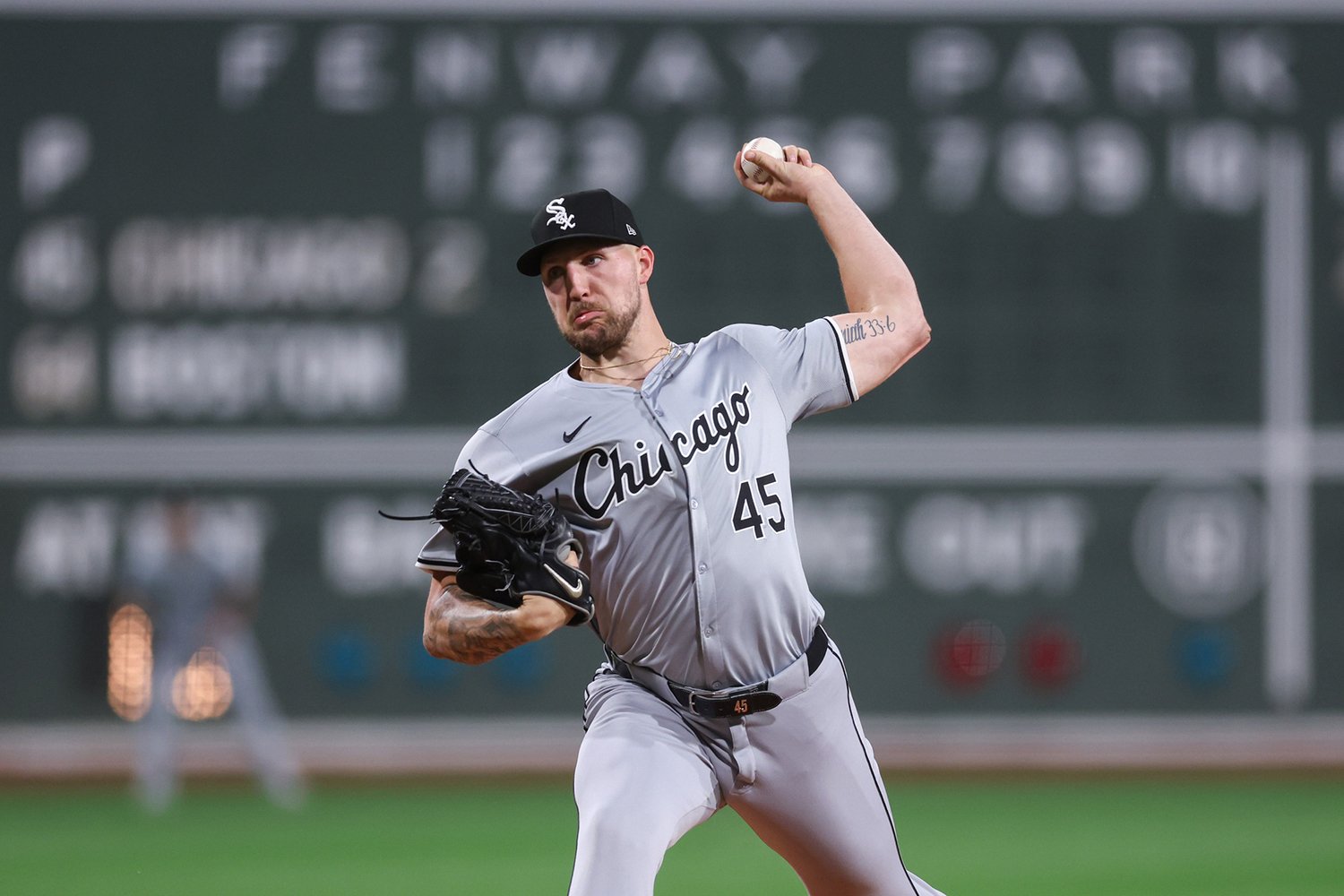
In the most significant trade of his Red Sox tenure, Breslow made the high-risk, high-reward trade that Bloom never could, acquiring White Sox ace Garrett Crochet in exchange for the club’s last two first-round picks, catcher Kyle Teel and outfielder Braden Montgomery, as well as infielder Chase Meidroth and right-handed pitcher Wikelman Gonzalez. Crochet was undoubtedly the best available starting pitcher on the trade market, a 25-year-old with premium stuff and two years of control. The left-hander will provide a perfect compliment to right-handers Brayan Bello and Tanner Houck, two sinkerballers with elite ground ball rates that offset middling strikeout rates.
Crochet, however, does not come without his concerns. For one, he has thrown only 219 major-league innings and has spent just one year in a big-league rotation. He has dealt with a number of arm injuries, including Tommy John surgery in 2022, and has a cross-body delivery that could lead to more ailments. Believing in Crochet requires believing in the pitching development and medical staff, and fortunately for both Crochet and Red Sox fans, the left-handed will be in good hands with Breslow, pitching coach Andrew Bailey, and Driveline Baseball mastermind Kyle Bodde.
Everyone knew that acquiring a pitcher of Crochet’s caliber would be costly, and sure enough, the Red Sox were required to send a package of minor leaguers that would make any prospect enthusiast like myself shudder. However, upon a deeper examination of the future organizational outlook, it is understandable why the Red Sox chose to part ways with this particular collection of talent, even if one or more of them become quality major leaguers.
Let’s start with Gonzalez. Once thought of among the best pitching prospects in the organization, it was becoming more and more evident that a spot in a future big-league rotation was a long shot. His 2024 season can only be considered as a disappointment, as Gonzalez spent the entire year in double-A Portland, bouncing between the rotation and bullpen and walking nearly five batters per nine innings. Still just 22 years old, there is still plenty of time for him to put it all together, but with a high-effort delivery and spotty command, the odds appear stacked against him. A tip of the cap to the White Sox pitching development if they can figure it out.
While the difference between Gonzalez’s ceiling and floor is the size of the Grand Canyon, Meidroth’s polished approach and defensive versatility should earn him plenty of big-league opportunities. The 22-year-old walked an incredible 105 times in just 558 triple-A plate appearances, to go along with a robust .293 average. The issue, however, is that besides an 80-grade batting eye, Meidroth doesn’t have any other standout tools, and his exit velocities can best be described as middling. My fear, and I presume the organization's fear as well, is that major league pitchers are going to challenge him in the zone and dare him to hit their best stuff, preventing him from running the elite walk rates he did in the minors and domming him to a life as a utility-man. With Vaughn Grissom, David Hamilton, Marcelo Mayer, and Trevor Story clogging the Red Sox infield for the foreseeable future, there was no real pathway for playing time for Meidroth with the Red Sox, and I am happy he will get his opportunity with the White Sox.
Once thought of as the team’s catcher of the future, the inclusion of Teel, MLB.com’s 25th-ranked prospect, will be a difficult pill to swallow. With an advanced approach, decent power, and terrific athleticism for a catcher, I have no doubt that Teel will have a decade-long career as a big-league regular. Yet much like Meidroth, Teel’s value comes from his collection of skills rather than one standout tool. He doesn’t possess the ceiling of Marcelo Mayer, Kristian Campbell, or Roman Anthony, as Soxprospects projects he will post a solid average and around 15-20 home runs. His defense, meanwhile, projects to be above average but has frequently been described as inconsistent, indicating that he might be a few years from being able to handle a contender’s pitching staff. Franchise catchers are becoming harder to find in today’s game, and Connor Wong is far from a long-term solution for the Red Sox, but I don’t believe Teel has the elite tools necessary to be a cornerstone. I think the Red Sox will be able to live with themselves if Teel becomes a two- to three-WAR player with slightly above average offensive production.
Though Teel was the best-known and highest-ranked prospect, I believe that if one prospect will come back to burn the Red Sox, it will be Montgomery. The 2024 first-round pick fell to the Red Sox after suffering a broken ankle at Texas A&M, an injury that prevented him from ever taking the field for the Red Sox. Montgomery’s raw skills are off the charts. He possesses legit 30-homer power and a bazooka of an arm that was given a 70 grade by MLB.com. Though there are some swing-and-miss concerns, Montgomery's ability to draw walks should allow him to post solid on-base percentages even if his batting average never gets much higher than the .250s.
Simply put, Montgomery has the kind of raw tools that you don’t want to ever give up, but there are a couple of reasons why it makes sense from a Red Sox perspective. For one, we have yet to see Montgomery play a professional inning, meaning that the best data we have on him is against SEC competition. There are still questions as to how his bat will transfer to the professional level, particularly against breaking balls, making him possibly the biggest lottery ticket of this entire prospect package.
In addition, Montgomery was going to have a difficult time navigating his way up the Red Sox outfielder depth chart, especially considering that he is a switch-hitter who is much better from the left side. The three spots on the MLB roster are already set, with All-Star Jarren Duran in left, Gold Glover Wilyer Abreu in right, and the promising Ceddanne Rafaela, who signed an eight-year extension last spring, in center. Then there is number one prospect Roman Anthony waiting in the wings at Triple A, Jhostynxon Garcia coming off a breakout season in Double A, and the uber-talented Miguel Bleis in High A. Montgomery was by no means expendable, but given how much outfield talent there is in the organization, it was understandable that the Red Sox would put him on the table.
The reality of the situation is that there was no way for the Red Sox to obtain a frontline starting pitcher without taking on some risk. Either they were going to commit seven or eight years to a pitcher on the wrong side of 30 like Fried or Corbin Burnes, or they were going to have to dip into their deep prospect pool. For Breslow to get a pitcher of Crochet's caliber without giving up Anthony, Mayer, Kristian Campbell or Triston Casas is a win in my book, and it puts them in position to continue to supplement the big-league roster.
So what comes next? The addition of Crochet no means closes the chapter on the offseason, especially considering the urgent need for a right-handed bat and relief help. What it does do, however, is take the pressure off for future rotation acquisitions. Before Crochet, I would have said that signing Burnes was an absolute necessity. With an ace now in hand, the Red Sox have more options at their disposal. They could trade for an established starter like Luis Castillo or Dylan Cease, sign a second-tier pitcher like Jack Flaherty, or even take a one-year flier on a guy like Walker Buehler. Adding a second starter is still a priority, but the threshold for said arm has been lowered significantly.
The acquisition of Crochet is by no means a slam dunk. There is no guarantee that Crochet will ever be as successful as he was in 2024, nor than any of the four prospects dealt won’t come back to burn the Red Sox. What it does do, however, is indicate that a new era of Red Sox baseball is upon us. No longer are we to be fed the promise of single-A and double-A prospects. The window of contention is now, and with a couple more additions, the Red Sox can be well-positioned to battle American League contenders for years to come.





Recommended Comments
Create an account or sign in to comment
You need to be a member in order to leave a comment
Create an account
Sign up for a new account in our community. It's easy!
Register a new accountSign in
Already have an account? Sign in here.
Sign In Now