


Dan Fraser
-
Posts
26 -
Joined
-
Last visited
Recent Profile Visitors
1,122 profile views





Dan Fraser's Achievements


-
 Trevor Story is hitting the ball as hard as ever. He's also never squaring it up. What gives? In the days leading up to this season, few would have guessed Trevor Story would have such a great start. Through 25 games and 102 plate appearances, he’s slashed .309/.343/.485 with five home runs and 15 RBIs, instantly becoming one of Boston’s most dangerous hitters in the lineup. Yet, dig into the advanced numbers, and you'll find a profile that’s as confounding as it is productive. Story has launched round-trippers in four different games already, including two different three-run blasts on April 18, displaying his ability to change a contest with a single swing. On paper, Story is obliterating the ball. His average exit velocity this season sits at 91.0 mph, up from his 2024 mark, and his hard-hit rate of 55.2% is a career high. Meanwhile, he’s barreling 13.4% of batted balls, which is all fine and good, but actually down slightly from past seasons. His launch-angle “sweet spot” percentage, however, clocks in at just 37.3%, suggesting fewer perfectly struck balls than one might expect given his raw power. And, despite that raw contact, Story’s squared-up rate (how much exit velocity he generates relative to his swing and the pitch’s speed), is just 17.2%, which is very much below the league average (32% in the 2024 season). Expected metrics also show a cautionary tale: his expected wOBA (.351) trails his actual wOBA (.363) only slightly on one measure, but a zones-based metric pegs his xwOBA at just .240 against an actual .319, a huge 79-point gap that hints at unsustainable success. More tellingly, Story’s chase rate (swings at pitches outside the strike zone), sits at a brutal 39.2%, and he’s whiffing on 29.2% of all swings — both marks showing a free-swinging approach that typically correlates with unsteady contact quality. Simply put, how is Story achieving such standout results? His prowess against breaking balls. Story’s expected slugging on breaking pitches sits at .503, the highest it’s been since his rookie campaign, while his xSLG on off-speed pitches is high as well. Additionally, Story is using his aggressiveness to his advantage, hunting velocity early in counts (he’s swung at 48.2% of pitches in the zone), which forces pitchers into mistakes they can’t afford in high-pressure moments. Defensive positioning around the infield is another factor in his bloated numbers. Opponents treat Story as a pull-ball hitter, using a variety of shifts against him, but he’s navigated those defenses with line drives that find strange angles, boosting his BABIP (batting average on balls in play), even if those hits don’t register as perfectly squared up. Story’s divergence between his raw power metrics and the quality-of-contact data suggests that the speedy slugger could be coming back down to earth sooner than later. Squared-up rates and xwOBA gaps like the ones we see in his profile aren’t often sustained over baseball’s long season. On the other hand, his proficiency against off-speed pitches and his proven track record of handling heaters could also suggest that he’s simply in a groove. Only time will tell. For now, fans can revel in this bizarre paradox: a slugger whose power shows up everywhere but the sweet spot, yet whose results have been stellar. Whether he continues to defy the underlying metrics or soon regresses, Story’s April heroics have already given the Red Sox and their fans something to cheer about. View full article
 -
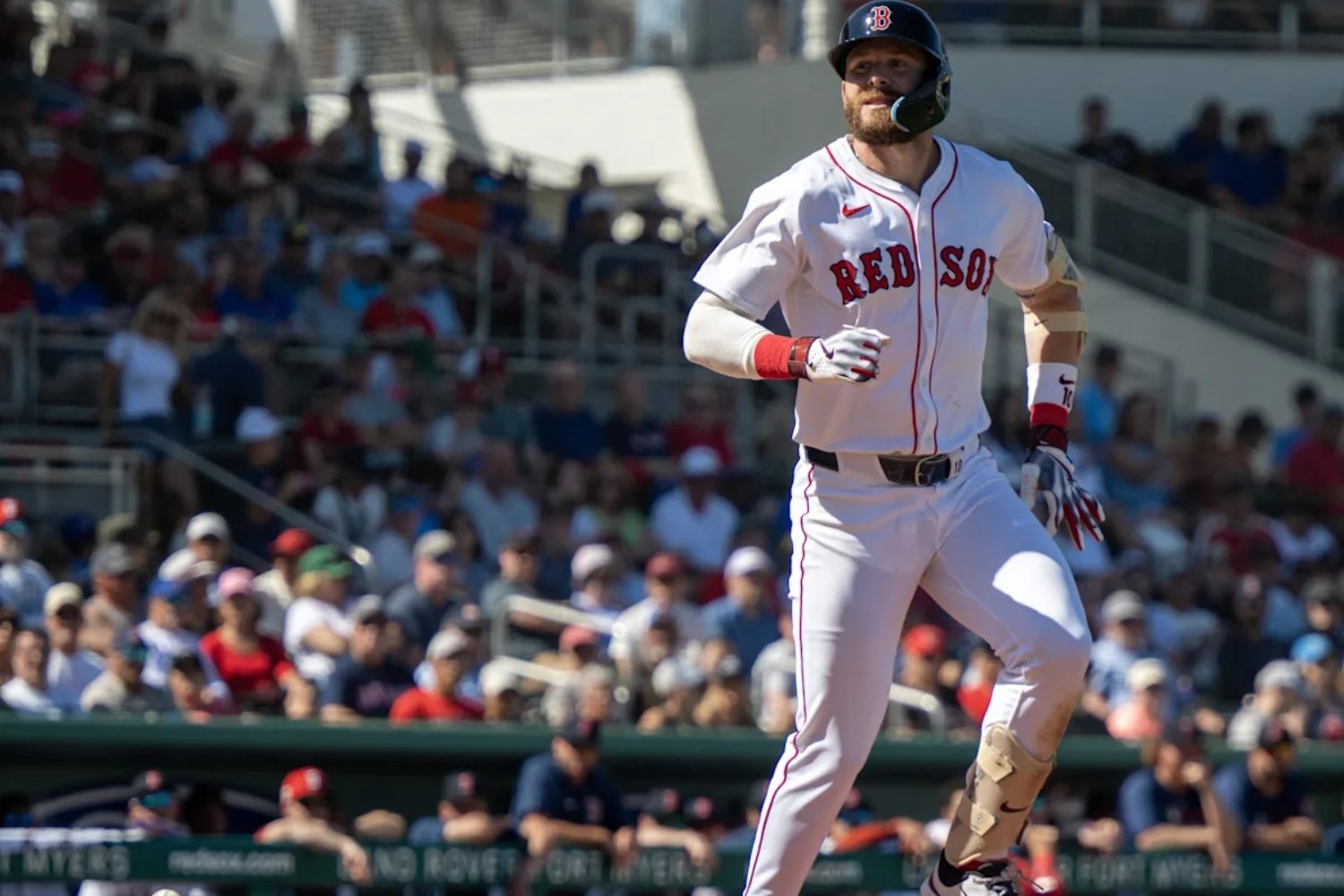 In the days leading up to this season, few would have guessed Trevor Story would have such a great start. Through 25 games and 102 plate appearances, he’s slashed .309/.343/.485 with five home runs and 15 RBIs, instantly becoming one of Boston’s most dangerous hitters in the lineup. Yet, dig into the advanced numbers, and you'll find a profile that’s as confounding as it is productive. Story has launched round-trippers in four different games already, including two different three-run blasts on April 18, displaying his ability to change a contest with a single swing. On paper, Story is obliterating the ball. His average exit velocity this season sits at 91.0 mph, up from his 2024 mark, and his hard-hit rate of 55.2% is a career high. Meanwhile, he’s barreling 13.4% of batted balls, which is all fine and good, but actually down slightly from past seasons. His launch-angle “sweet spot” percentage, however, clocks in at just 37.3%, suggesting fewer perfectly struck balls than one might expect given his raw power. And, despite that raw contact, Story’s squared-up rate (how much exit velocity he generates relative to his swing and the pitch’s speed), is just 17.2%, which is very much below the league average (32% in the 2024 season). Expected metrics also show a cautionary tale: his expected wOBA (.351) trails his actual wOBA (.363) only slightly on one measure, but a zones-based metric pegs his xwOBA at just .240 against an actual .319, a huge 79-point gap that hints at unsustainable success. More tellingly, Story’s chase rate (swings at pitches outside the strike zone), sits at a brutal 39.2%, and he’s whiffing on 29.2% of all swings — both marks showing a free-swinging approach that typically correlates with unsteady contact quality. Simply put, how is Story achieving such standout results? His prowess against breaking balls. Story’s expected slugging on breaking pitches sits at .503, the highest it’s been since his rookie campaign, while his xSLG on off-speed pitches is high as well. Additionally, Story is using his aggressiveness to his advantage, hunting velocity early in counts (he’s swung at 48.2% of pitches in the zone), which forces pitchers into mistakes they can’t afford in high-pressure moments. Defensive positioning around the infield is another factor in his bloated numbers. Opponents treat Story as a pull-ball hitter, using a variety of shifts against him, but he’s navigated those defenses with line drives that find strange angles, boosting his BABIP (batting average on balls in play), even if those hits don’t register as perfectly squared up. Story’s divergence between his raw power metrics and the quality-of-contact data suggests that the speedy slugger could be coming back down to earth sooner than later. Squared-up rates and xwOBA gaps like the ones we see in his profile aren’t often sustained over baseball’s long season. On the other hand, his proficiency against off-speed pitches and his proven track record of handling heaters could also suggest that he’s simply in a groove. Only time will tell. For now, fans can revel in this bizarre paradox: a slugger whose power shows up everywhere but the sweet spot, yet whose results have been stellar. Whether he continues to defy the underlying metrics or soon regresses, Story’s April heroics have already given the Red Sox and their fans something to cheer about.
 -
 Brandon Glick reacted to an article:
The Trevor Story Paradox: Hard-Hit, Hardly Squared
Brandon Glick reacted to an article:
The Trevor Story Paradox: Hard-Hit, Hardly Squared
-
With an assist from advanced statistics, we can see just how great the youngster is at the plate. Thus far, Kristian Campbell’s 2025 campaign offers a textbook case in how great plate discipline can accelerate a young hitter’s development. Through April 23, as recorded by Statcast, Campbell has maintained a remarkably low chase rate (23.7% vs. the 28.5% MLB average) and an above-average in-zone contact rate (84.6% vs. 82.0%), underpinning his .406 on-base percentage and stellar walk rate despite limited power output so far. Beyond raw counting stats, his ability to differentiate pitches both in and out of the zone — and only go for the ones he can handle — sets him apart from most rookies and bodes well for a great season and career. Campbell’s plate-discipline profile — captured over the first month of the 2025 season — shows a hitter who swings less overall and chases fewer pitches outside the zone, yet makes more contact when he does swing. Additionally, the youngster’s 15 walks in 23 contests translate to a 15.6% walk rate, driving a .406 OBP that would place him among the league’s very best if sustained (for example, Vladimir Guerrero Jr. finished last season with a .396 OBP — good for third-best league-wide). It’s worth noting that Campbell's whiff rate of 27.5% is slightly above average, but his high chase-contact rate (46.0%) shows he’s not making hard misses on pitches he swings at. We can examine the more advanced statistics for some more insights. At 43.0%, Campbell’s “edge” rate—swings at pitches just off the zone—matches the MLB norm, showing he’ll attack pitchers’ best secondary offerings when they’re close enough. His 27.1% swing rate on the first pitch is below the league’s 29.9%, which shows his preference to see more of the count. For a rookie not to swing out of his shoes at the first pitch (typically a fastball) is an impressive feat. Plate discipline is one of the most stable, predictive skills in baseball. Campbell’s combination of low chase rates and high contact ability projects to a very impressive above-average OBP and fewer slumps over a full season. As pitchers adjust, his shown ability to refine his approach mid-game — hunting specific zones rather than just “taking pitches” — should let him stay competitive, even as scouting reports become more frequent as he plays more games. Campbell isn’t just off to a hot start with a .300/.406/.475 line through April 22. He’s doing it by playing the percentages, mastering the strike zone in real time, and building a foundation that could sustain an excellent career. View full article
-
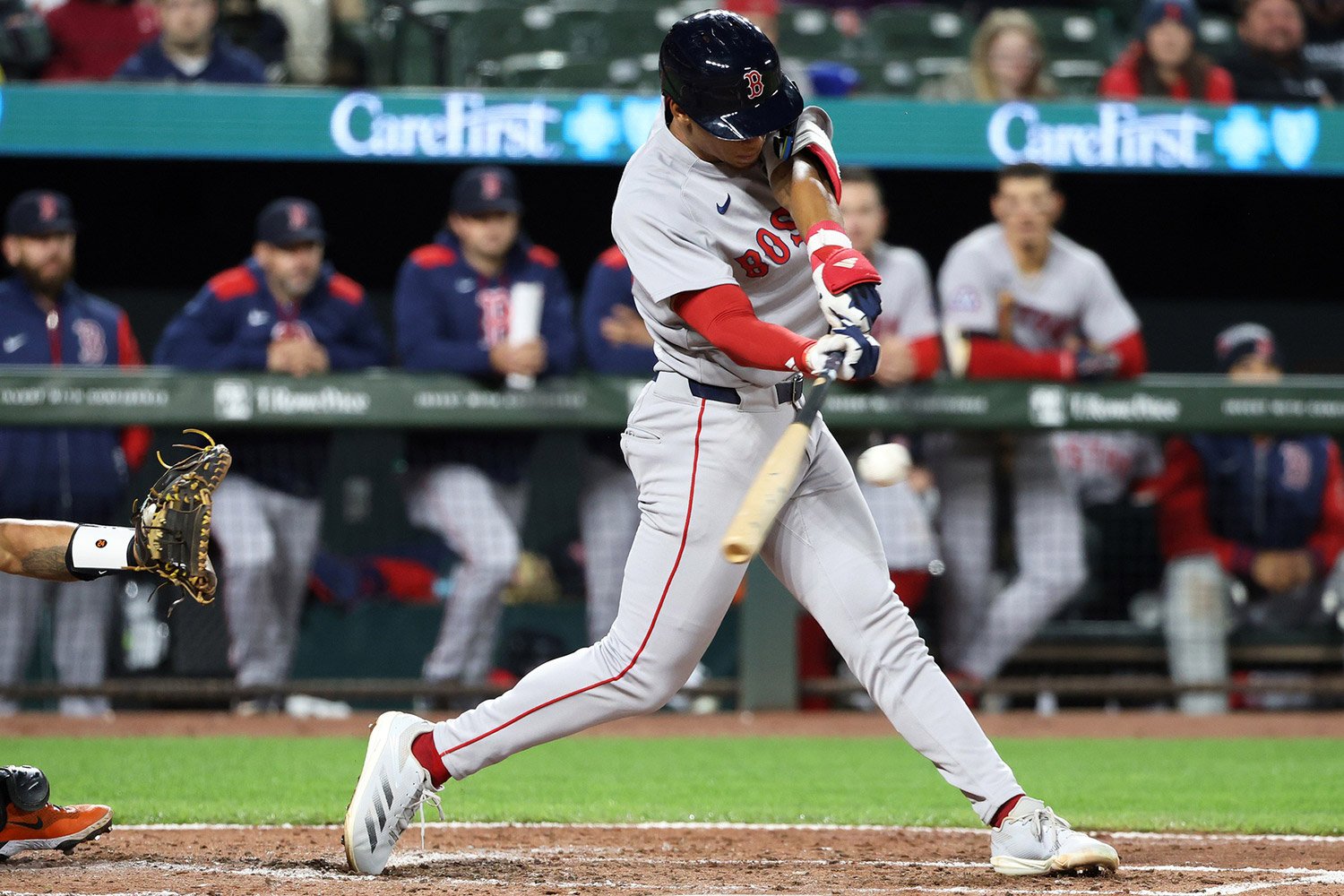 Thus far, Kristian Campbell’s 2025 campaign offers a textbook case in how great plate discipline can accelerate a young hitter’s development. Through April 23, as recorded by Statcast, Campbell has maintained a remarkably low chase rate (23.7% vs. the 28.5% MLB average) and an above-average in-zone contact rate (84.6% vs. 82.0%), underpinning his .406 on-base percentage and stellar walk rate despite limited power output so far. Beyond raw counting stats, his ability to differentiate pitches both in and out of the zone — and only go for the ones he can handle — sets him apart from most rookies and bodes well for a great season and career. Campbell’s plate-discipline profile — captured over the first month of the 2025 season — shows a hitter who swings less overall and chases fewer pitches outside the zone, yet makes more contact when he does swing. Additionally, the youngster’s 15 walks in 23 contests translate to a 15.6% walk rate, driving a .406 OBP that would place him among the league’s very best if sustained (for example, Vladimir Guerrero Jr. finished last season with a .396 OBP — good for third-best league-wide). It’s worth noting that Campbell's whiff rate of 27.5% is slightly above average, but his high chase-contact rate (46.0%) shows he’s not making hard misses on pitches he swings at. We can examine the more advanced statistics for some more insights. At 43.0%, Campbell’s “edge” rate—swings at pitches just off the zone—matches the MLB norm, showing he’ll attack pitchers’ best secondary offerings when they’re close enough. His 27.1% swing rate on the first pitch is below the league’s 29.9%, which shows his preference to see more of the count. For a rookie not to swing out of his shoes at the first pitch (typically a fastball) is an impressive feat. Plate discipline is one of the most stable, predictive skills in baseball. Campbell’s combination of low chase rates and high contact ability projects to a very impressive above-average OBP and fewer slumps over a full season. As pitchers adjust, his shown ability to refine his approach mid-game — hunting specific zones rather than just “taking pitches” — should let him stay competitive, even as scouting reports become more frequent as he plays more games. Campbell isn’t just off to a hot start with a .300/.406/.475 line through April 22. He’s doing it by playing the percentages, mastering the strike zone in real time, and building a foundation that could sustain an excellent career.
 -
Boston has made some great offseason additions thus far - but will they be enough? The Boston Red Sox enter the 2025 season with a mix of optimism and uncertainty. After finishing with a perfectly mediocre record of 81-81 in 2024, the team has made some big moves this offseason, aiming to improve their pitching staff while relying on internal development to address other key areas. In a stacked AL East, the Red Sox have their sights set on returning to the postseason for the first time since 2021. The most significant changes to the team come in the starting rotation. The blockbuster trade for Garrett Crochet and the signing of Walker Buehler have transformed what was a shaky pitching staff into one with major upside. Crochet, a hard-throwing strikeout master acquired from the Chicago White Sox, showed flashes of total dominance last season. Meanwhile, Buehler brings experience and a winning pedigree, having been a key figure in the Los Angeles Dodgers’ postseason success in years past. Though he has faced injuries, Buehler’s one-year deal gives Boston a low-risk, high-reward option at the top of their rotation. While the pitching looks stronger, the Red Sox still face questions in the infield - particularly at shortstop and catcher. Trevor Story is expected to be the everyday shortstop, but his health remains a major concern. Story has struggled to stay on the field since signing with Boston in 2022 (163 games played since then), and his production has been inconsistent. If Story is saddled with more injury problems, David Hamilton will likely step in. Hamilton’s speed and defense make him a solid option, but his offense isn’t quite there yet — which suggests he may not be ready to be an everyday contributor. The catching position presents another area of uncertainty. Trading top catching prospect Kyle Teel to acquire Crochet left Boston with Connor Wong as their primary option behind the plate. Wong performed well in 2024, showing improvement at the plate, but struggling behind. However, with limited depth at the position, the Red Sox will be vulnerable if Wong finds himself in a slump or misses time. Looking ahead, the Sox also have exciting prospects waiting in the wings. Marcelo Mayer, the team’s top prospect, is coming off a strong showing in Double-A despite battling injuries after his promotion to Triple-A. The 2021 fourth-overall pick will begin the season in the minors but could make his MLB debut later this year if he remains healthy and productive. His arrival could provide a much-needed spark at shortstop if both Story and Hamilton run into trouble. The 2025 Red Sox are a team with the pieces to compete but little room for error. The additions of Crochet and Buehler should bolster the pitching staff, but their success truly depends on health and consistency. The lineup has star power, no doubt, but lingering questions at shortstop and catcher could hold the team back. If Boston can avoid injuries and get steady contributions from their young players, a Wild Card spot will be well within reach. But in a division as strong as the AL East, the margin for error remains slim. View full article
-
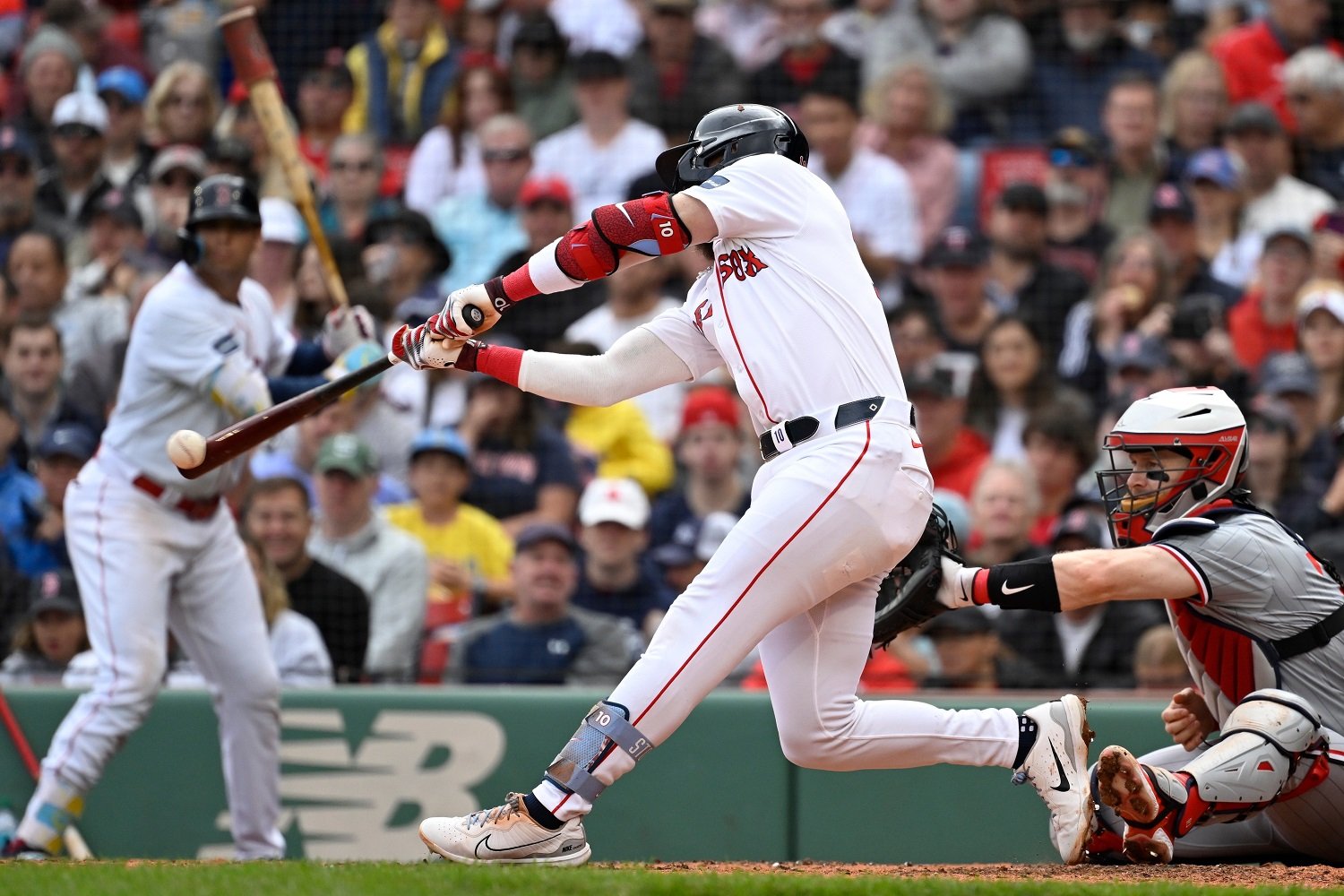 The Boston Red Sox enter the 2025 season with a mix of optimism and uncertainty. After finishing with a perfectly mediocre record of 81-81 in 2024, the team has made some big moves this offseason, aiming to improve their pitching staff while relying on internal development to address other key areas. In a stacked AL East, the Red Sox have their sights set on returning to the postseason for the first time since 2021. The most significant changes to the team come in the starting rotation. The blockbuster trade for Garrett Crochet and the signing of Walker Buehler have transformed what was a shaky pitching staff into one with major upside. Crochet, a hard-throwing strikeout master acquired from the Chicago White Sox, showed flashes of total dominance last season. Meanwhile, Buehler brings experience and a winning pedigree, having been a key figure in the Los Angeles Dodgers’ postseason success in years past. Though he has faced injuries, Buehler’s one-year deal gives Boston a low-risk, high-reward option at the top of their rotation. While the pitching looks stronger, the Red Sox still face questions in the infield - particularly at shortstop and catcher. Trevor Story is expected to be the everyday shortstop, but his health remains a major concern. Story has struggled to stay on the field since signing with Boston in 2022 (163 games played since then), and his production has been inconsistent. If Story is saddled with more injury problems, David Hamilton will likely step in. Hamilton’s speed and defense make him a solid option, but his offense isn’t quite there yet — which suggests he may not be ready to be an everyday contributor. The catching position presents another area of uncertainty. Trading top catching prospect Kyle Teel to acquire Crochet left Boston with Connor Wong as their primary option behind the plate. Wong performed well in 2024, showing improvement at the plate, but struggling behind. However, with limited depth at the position, the Red Sox will be vulnerable if Wong finds himself in a slump or misses time. Looking ahead, the Sox also have exciting prospects waiting in the wings. Marcelo Mayer, the team’s top prospect, is coming off a strong showing in Double-A despite battling injuries after his promotion to Triple-A. The 2021 fourth-overall pick will begin the season in the minors but could make his MLB debut later this year if he remains healthy and productive. His arrival could provide a much-needed spark at shortstop if both Story and Hamilton run into trouble. The 2025 Red Sox are a team with the pieces to compete but little room for error. The additions of Crochet and Buehler should bolster the pitching staff, but their success truly depends on health and consistency. The lineup has star power, no doubt, but lingering questions at shortstop and catcher could hold the team back. If Boston can avoid injuries and get steady contributions from their young players, a Wild Card spot will be well within reach. But in a division as strong as the AL East, the margin for error remains slim.
 -
mvp 78 reacted to a post in a topic:
Article: The Up-And-Down Red Sox Tenure of Bobby Dalbec
-
A look back at Bobby Dalbec, who once looked like the next great slugger for the Red Sox, but elected free agency over the weekend. On Saturday, Bobby Dalbec, once the top-ranked prospect in the Red Sox system, elected free agency, putting a quiet end to his nine-year tenure with the team. Dalbec's journey with Boston was one of high expectations, impressive power, slumps, and constant adjustments at the plate. As a sophomore at the University of Arizona, Dalbec's 15 home runs led the Pac 12 in 2015. His numbers dipped in 2016, and the Red Sox selected in the fourth round of the 2016 draft. Dalbec quickly emerged as a promising power hitter within Boston’s farm system, known for his ability to hit homers and generate impressive exit velocities. He hit 32 homers across two levels in 2018, then 27 in 2019. This potential was on full display in his debut season in 2020. Dalbec hit eight home runs in just 23 games, good for third-most on the team even though Rafael Devers and Xander Bogaerts, the two players ahead of Dalbec, played 30 in more contests. This pleasant surprise set high expectations for his future role in the lineup. In his first full season in 2021, Dalbec showcased both his strengths and limitations. He finished with a very solid 25 home runs and 78 RBIs over 133 games, providing a much-needed extra bit of power in the lineup. However, his performance was hampered by massive plate discipline issues: Dalbec ran a whopping 34.4% strikeout rate and a paltry 62% contact rate. Both numbers were among the worst in baseball. Dalbec also chased nearly 30% of the time. His .240/.298/.494 slash line was good for a 106 wRC+, a bit above average, but it pointed to a boom-or-bust hitter who struggled to get on base and avoid strikeouts. The 2022 season brought major challenges for Dalbec. His batting average dropped to .215, but more important, he stopped slugging. He finished the year with only 12 home runs over 117 games, and his wRC+ of 80 meant that he was 20% worse than a league-average hitter. The advanced metrics weren’t great either: his barrel rate fell from 15.2% to 8.9%. With Rafael Devers at third base and Triston Casas rising through the ranks as a promising first baseman, Dalbec's role became increasingly uncertain. By the end of the 2022 season, he was frequently pushed into a bench role, only playing occasionally, and often in pinch-hitting situations. Dalbec started the 2023 season in triple-A Worcester, working to refine his approach and improve his bat-to-ball skills. He showed some improvements, finishing with a 141 wRC+ and 33 home runs in 114 games. His strikeout rate remained as high as ever, but his walk rate rose to all the way to 13%. These adjustments suggested perhaps he had made some progress, but Boston’s roster configuration and depth in the infield left few opportunities for Dalbec in the majors. Dalbec played just 21 games in the big leagues that year, logging a .204 batting average along with one home run. The 2024 season proved pivotal, as Dalbec hoped to make his way back with the Sox but ultimately found himself in Worcester after a rough spring. This time around, he saw 37 games with Boston, producing a very poor .133/.216/.211 slash line with just one home run once again. His strikeout rate somehow got worse, jumping to a shocking 46.2%. In September, the Red Sox designated Dalbec for assignment, and he cleared waivers before being outrighted back to Worcester. Despite efforts to reclaim his major league spot, Dalbec was unable to figure out the right adjustments needed to produce consistently against big-league pitching. Dalbec’s career with the Sox is a testament to the potential and challenges that come with power-focused hitters. It also shines a light on how difficult it can be to improve plate discipline and bat-to-ball skills. Despite pop that once ranked among the best in the organization, Dalbec’s struggle to adjust his approach and better his contact reduced his role and impact with the ball club. The sad truth is that, is that stories like Dalbec's are all too common. Things like this happen in baseball, and some guys just never pan out. We can hope a team will be willing to take a chance on Dalbec in free agency, and that there's another chapter to this story. View full article
- 1 reply
-
- 1
-
-
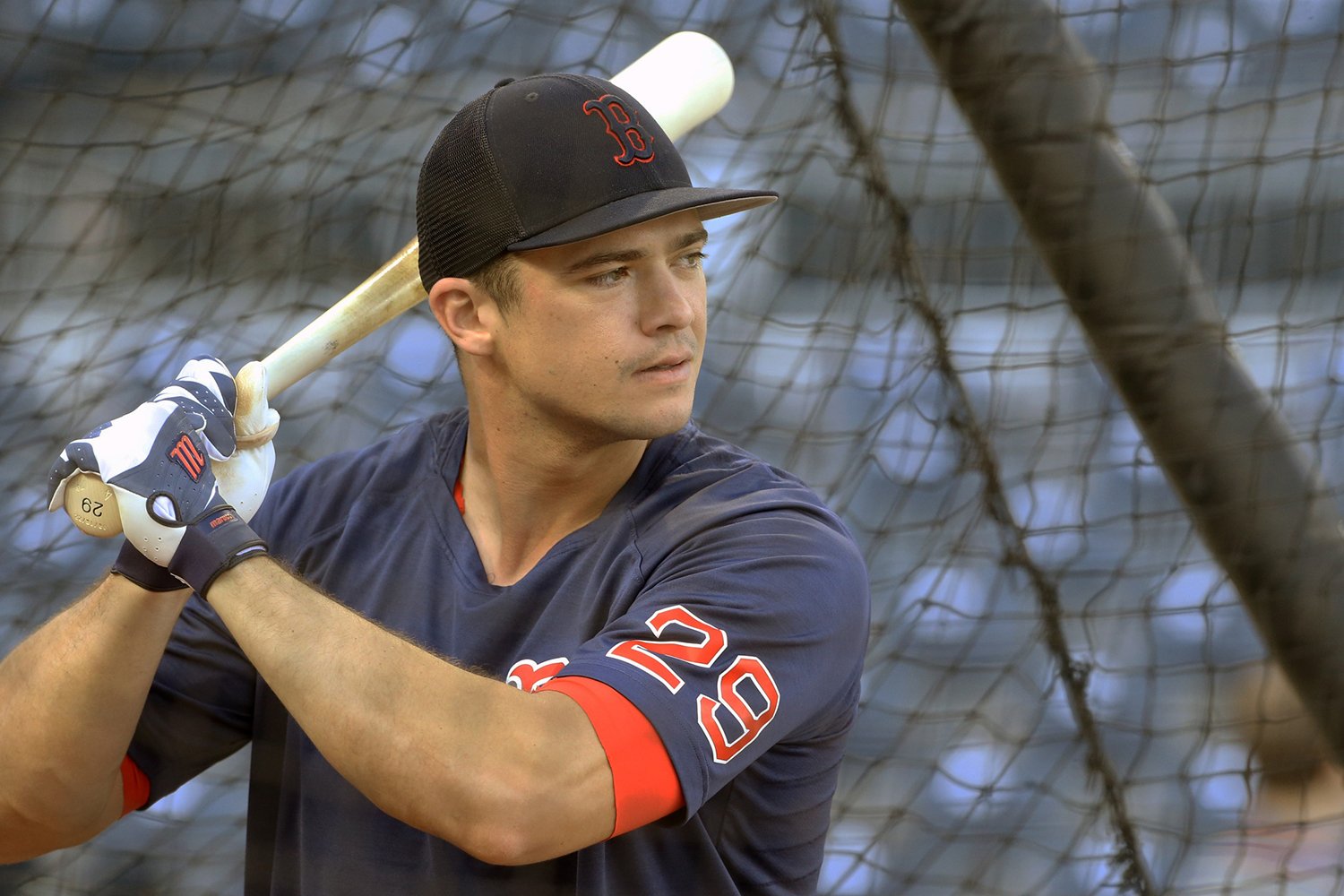 On Saturday, Bobby Dalbec, once the top-ranked prospect in the Red Sox system, elected free agency, putting a quiet end to his nine-year tenure with the team. Dalbec's journey with Boston was one of high expectations, impressive power, slumps, and constant adjustments at the plate. As a sophomore at the University of Arizona, Dalbec's 15 home runs led the Pac 12 in 2015. His numbers dipped in 2016, and the Red Sox selected in the fourth round of the 2016 draft. Dalbec quickly emerged as a promising power hitter within Boston’s farm system, known for his ability to hit homers and generate impressive exit velocities. He hit 32 homers across two levels in 2018, then 27 in 2019. This potential was on full display in his debut season in 2020. Dalbec hit eight home runs in just 23 games, good for third-most on the team even though Rafael Devers and Xander Bogaerts, the two players ahead of Dalbec, played 30 in more contests. This pleasant surprise set high expectations for his future role in the lineup. In his first full season in 2021, Dalbec showcased both his strengths and limitations. He finished with a very solid 25 home runs and 78 RBIs over 133 games, providing a much-needed extra bit of power in the lineup. However, his performance was hampered by massive plate discipline issues: Dalbec ran a whopping 34.4% strikeout rate and a paltry 62% contact rate. Both numbers were among the worst in baseball. Dalbec also chased nearly 30% of the time. His .240/.298/.494 slash line was good for a 106 wRC+, a bit above average, but it pointed to a boom-or-bust hitter who struggled to get on base and avoid strikeouts. The 2022 season brought major challenges for Dalbec. His batting average dropped to .215, but more important, he stopped slugging. He finished the year with only 12 home runs over 117 games, and his wRC+ of 80 meant that he was 20% worse than a league-average hitter. The advanced metrics weren’t great either: his barrel rate fell from 15.2% to 8.9%. With Rafael Devers at third base and Triston Casas rising through the ranks as a promising first baseman, Dalbec's role became increasingly uncertain. By the end of the 2022 season, he was frequently pushed into a bench role, only playing occasionally, and often in pinch-hitting situations. Dalbec started the 2023 season in triple-A Worcester, working to refine his approach and improve his bat-to-ball skills. He showed some improvements, finishing with a 141 wRC+ and 33 home runs in 114 games. His strikeout rate remained as high as ever, but his walk rate rose to all the way to 13%. These adjustments suggested perhaps he had made some progress, but Boston’s roster configuration and depth in the infield left few opportunities for Dalbec in the majors. Dalbec played just 21 games in the big leagues that year, logging a .204 batting average along with one home run. The 2024 season proved pivotal, as Dalbec hoped to make his way back with the Sox but ultimately found himself in Worcester after a rough spring. This time around, he saw 37 games with Boston, producing a very poor .133/.216/.211 slash line with just one home run once again. His strikeout rate somehow got worse, jumping to a shocking 46.2%. In September, the Red Sox designated Dalbec for assignment, and he cleared waivers before being outrighted back to Worcester. Despite efforts to reclaim his major league spot, Dalbec was unable to figure out the right adjustments needed to produce consistently against big-league pitching. Dalbec’s career with the Sox is a testament to the potential and challenges that come with power-focused hitters. It also shines a light on how difficult it can be to improve plate discipline and bat-to-ball skills. Despite pop that once ranked among the best in the organization, Dalbec’s struggle to adjust his approach and better his contact reduced his role and impact with the ball club. The sad truth is that, is that stories like Dalbec's are all too common. Things like this happen in baseball, and some guys just never pan out. We can hope a team will be willing to take a chance on Dalbec in free agency, and that there's another chapter to this story.
 -
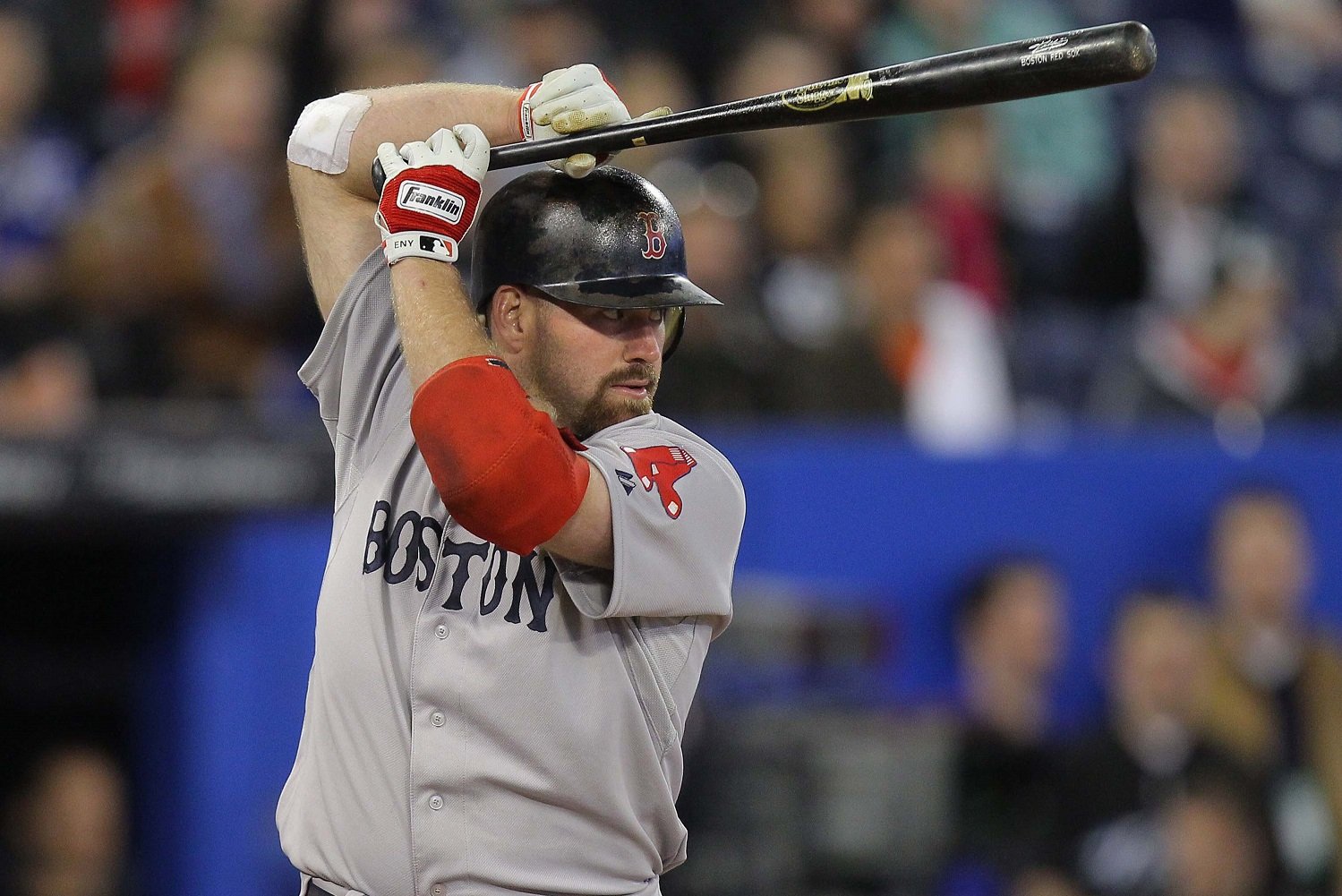 Kevin Youkilis, one of the most beloved figures in recent Boston Red Sox history, carved out a remarkable career defined by his grit, patience at the plate, and versatility in the field. His time with the Red Sox, spanning from 2004 to 2012, was filled with memorable moments, including two World Series wins, a handful of All-Star appearances, and a reputation as one of the toughest outs in baseball. Youkilis made his major league debut with the Red Sox in May 2004 – an obviously historic season for Boston. Though he wasn’t yet a regular starter, he made an immediate impact as a rookie, showing off his excellent eye at the plate, drawing walks, and getting on base – traits that would become the hallmark of his career. Even though he didn’t play in the World Series that year, Youkilis' early appearances showcased the type of player he would become: a hard-nosed, relentless competitor who embodied the team-first mentality that helped Boston reach the pinnacle of baseball. It wasn’t until 2006 that Youkilis became a full-time starter, mostly playing at first after the departure of Red Sox legend Kevin Millar. Youkilis quickly made the position his own, providing steady defense and consistent production at the plate, being issued 91 free passes to first, paired with 72 RBI. His ultimate breakout came in 2007, when he helped lead the Red Sox to their second World Series title in four years. During the 2007 season, Youkilis drew 71 walks and hit .288 with a .390 on-base percentage, continuing to earn a league-wide reputation for his patience and discipline at the plate. He slugged 16 home runs and drove in 83 runs to boot, but it was his postseason heroics that truly cemented his place in Red Sox lore. In the 2007 American League Championship Series (ALCS) against the Cleveland Indians (now Guardians), Youkilis was a force, hitting .500 in the series and helping the Sox overcome a 3-1 series deficit to reach the World Series – and we all know who won that next matchup. The 2008 season was Youkilis at his very best. He finished third in American League (AL) MVP voting after hitting .312 with 29 home runs and 115 RBIs – both career highs. His elite defense at first base earned him his first Gold Glove Award, and his leadership and competitive fire made him a fan favorite among Fenway faithful. One of the things that made Youkilis so valuable to the Red Sox was his ability to play multiple positions. While he primarily played first base, Youkilis also filled in at third base when needed, offering the Red Sox flexibility in their lineup. His defensive prowess, whether at first or third, was a critical asset, particularly as the team dealt with injuries or changes to the roster. He’s certainly a ballplayer the Sox could do with nowadays. From 2008 to 2011, Youkilis was one of the top hitters in the American League. He was named to three All-Star teams and posted a .400+ on-base percentage in multiple seasons. In 2009, Youkilis again showcased his ability to impact the game on both sides of the ball, hitting .305 with 27 home runs and 94 RBIs while continuing to provide Gold Glove-caliber defense. The Red Sox remained contenders during this era, thanks in part to “Youk”. As Youkilis entered his early 30s, injuries began to take their toll, forcing him to miss major time in the 2010 and 2011 seasons. Despite the injuries, he remained a very solid player, continuing to be a key part of the Red Sox lineup when healthy. However, by 2012, it became clear that Youkilis' time in Boston was coming to an end. His production had declined, and the emergence of young third baseman Will Middlebrooks, combined with injuries, led to diminished playing time. In June 2012, Youkilis was traded to the Chicago White Sox, marking the end of an era in Boston. Despite the less than ideal end, Youkilis played a huge part in two World Series wins and truly epitomized the Red Sox teams of the mid-2000s: tough, resilient, and relentless. “The Greek God of Walks” racked up 494 base-on-balls, 133 round-trippers, 618 RBI and a batting average of .281 over nine solid years in Beantown.
 -
A ballplayer the Sox desperately need now, Kevin Youkilis was everything that defined Boston baseball in the early 2000s. Kevin Youkilis, one of the most beloved figures in recent Boston Red Sox history, carved out a remarkable career defined by his grit, patience at the plate, and versatility in the field. His time with the Red Sox, spanning from 2004 to 2012, was filled with memorable moments, including two World Series wins, a handful of All-Star appearances, and a reputation as one of the toughest outs in baseball. Youkilis made his major league debut with the Red Sox in May 2004 – an obviously historic season for Boston. Though he wasn’t yet a regular starter, he made an immediate impact as a rookie, showing off his excellent eye at the plate, drawing walks, and getting on base – traits that would become the hallmark of his career. Even though he didn’t play in the World Series that year, Youkilis' early appearances showcased the type of player he would become: a hard-nosed, relentless competitor who embodied the team-first mentality that helped Boston reach the pinnacle of baseball. It wasn’t until 2006 that Youkilis became a full-time starter, mostly playing at first after the departure of Red Sox legend Kevin Millar. Youkilis quickly made the position his own, providing steady defense and consistent production at the plate, being issued 91 free passes to first, paired with 72 RBI. His ultimate breakout came in 2007, when he helped lead the Red Sox to their second World Series title in four years. During the 2007 season, Youkilis drew 71 walks and hit .288 with a .390 on-base percentage, continuing to earn a league-wide reputation for his patience and discipline at the plate. He slugged 16 home runs and drove in 83 runs to boot, but it was his postseason heroics that truly cemented his place in Red Sox lore. In the 2007 American League Championship Series (ALCS) against the Cleveland Indians (now Guardians), Youkilis was a force, hitting .500 in the series and helping the Sox overcome a 3-1 series deficit to reach the World Series – and we all know who won that next matchup. The 2008 season was Youkilis at his very best. He finished third in American League (AL) MVP voting after hitting .312 with 29 home runs and 115 RBIs – both career highs. His elite defense at first base earned him his first Gold Glove Award, and his leadership and competitive fire made him a fan favorite among Fenway faithful. One of the things that made Youkilis so valuable to the Red Sox was his ability to play multiple positions. While he primarily played first base, Youkilis also filled in at third base when needed, offering the Red Sox flexibility in their lineup. His defensive prowess, whether at first or third, was a critical asset, particularly as the team dealt with injuries or changes to the roster. He’s certainly a ballplayer the Sox could do with nowadays. From 2008 to 2011, Youkilis was one of the top hitters in the American League. He was named to three All-Star teams and posted a .400+ on-base percentage in multiple seasons. In 2009, Youkilis again showcased his ability to impact the game on both sides of the ball, hitting .305 with 27 home runs and 94 RBIs while continuing to provide Gold Glove-caliber defense. The Red Sox remained contenders during this era, thanks in part to “Youk”. As Youkilis entered his early 30s, injuries began to take their toll, forcing him to miss major time in the 2010 and 2011 seasons. Despite the injuries, he remained a very solid player, continuing to be a key part of the Red Sox lineup when healthy. However, by 2012, it became clear that Youkilis' time in Boston was coming to an end. His production had declined, and the emergence of young third baseman Will Middlebrooks, combined with injuries, led to diminished playing time. In June 2012, Youkilis was traded to the Chicago White Sox, marking the end of an era in Boston. Despite the less than ideal end, Youkilis played a huge part in two World Series wins and truly epitomized the Red Sox teams of the mid-2000s: tough, resilient, and relentless. “The Greek God of Walks” racked up 494 base-on-balls, 133 round-trippers, 618 RBI and a batting average of .281 over nine solid years in Beantown. View full article
-
Boston’s Best Bets: The Greatest Free Agent Signings of the 2000s
Dan Fraser posted an article in History
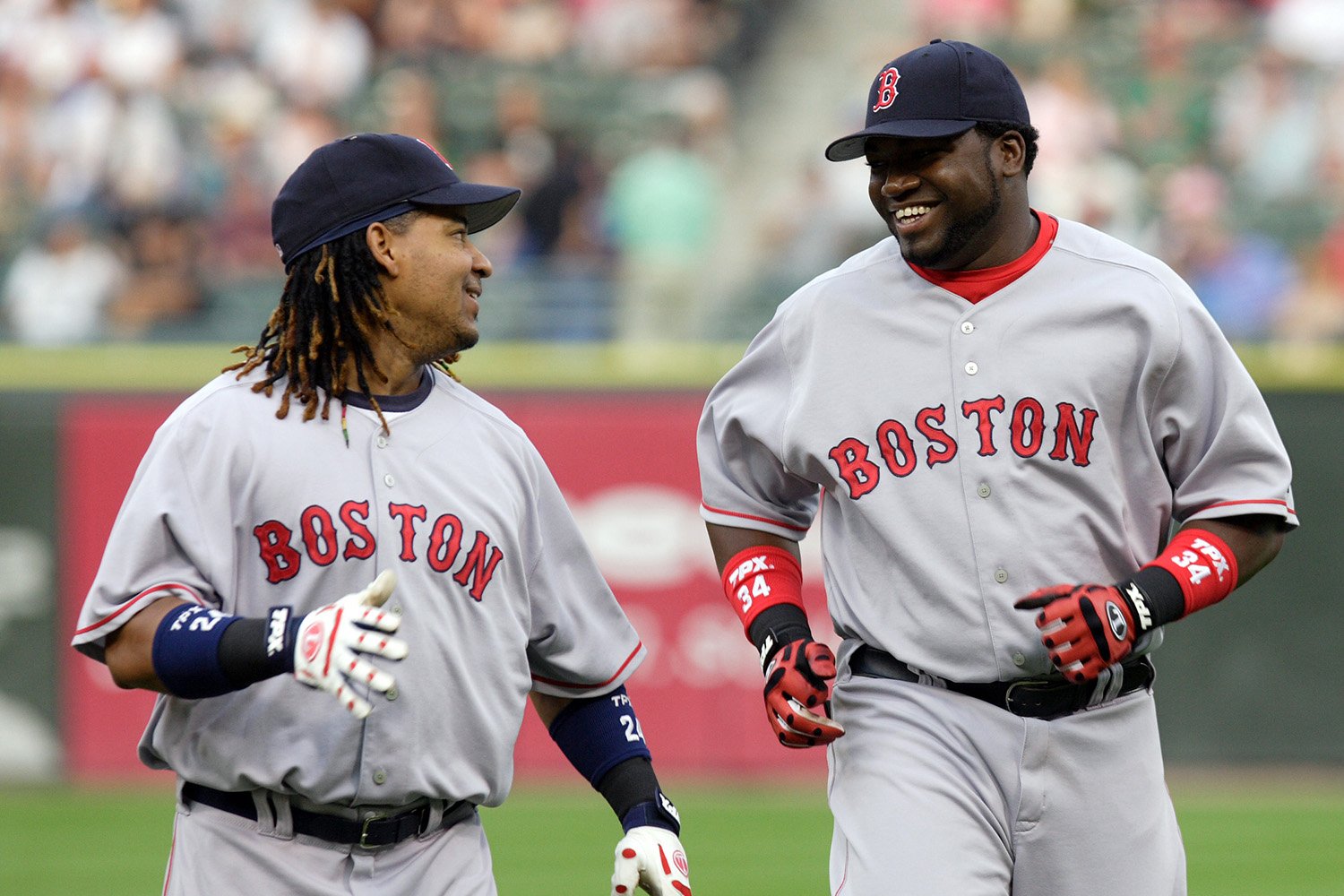 Since the turn of the millennium, the Boston Red Sox have inked some unforgettable free agent deals. While not all have panned out, several have proven to be history-changing decisions that brought championships to Boston. Here are the five most impactful free agent signings by the Red Sox since 2000. David Ortiz (2002 Offseason) Arguably the greatest signing in Red Sox history, David Ortiz transformed from an under-the-radar acquisition into one of the franchise’s all-time greats. Originally signed to a one-year deal after being released by the Minnesota Twins, Ortiz quickly made his mark. "Big Papi" was the heart and soul of the Red Sox for over a decade, leading the team to three World Series titles (2004, 2007, and 2013) and establishing himself as one of the best clutch hitters in baseball history. His postseason heroics, especially in 2004 and 2013, cemented his status as a true Boston legend. We have Minnesota to thank, but also Pedro Martinez, who pleaded with the team’s management to give Ortiz a chance after the Twins cut him. With Boston, Ortiz hit a mind-boggling 483 home runs and drove in more than 1,500 runs, all while batting a very respectable .290. Johnny Damon (2001 Offseason) When the Red Sox signed Johnny Damon to a four-year, $31 million contract before the 2002 season, they were looking for a spark at the top of their lineup — and Damon delivered. His speed, solid defense, and superb ability to get on base made him a perfect fit for Fenway Park and an essential catalyst for Boston's offense. Damon played a crucial role in the 2004 World Series run, particularly in Game 7 of the ALCS against the Yankees, when he hit two home runs, including a grand slam. His energetic, scrappy style of play made him a fan favorite and a key figure in ending Boston’s 86-year championship drought. Unfortunately, he may be remembered poorly by some due to his turning to the dark side and joining the Yankees after his contract expired. Damon racked up 730 hits in his four years with Boston, batted .295, and drove in nearly 300 runs. He swiped 98 bases to boot. Manny Ramirez (2000 Offseason) The Red Sox made major waves when they signed Manny Ramirez to an eight-year, $160-million contract in 2000, one of the richest deals in baseball at the time. While Ramirez’s tenure was often tumultuous off the field, there’s no denying his production on the diamond. Ramirez was a key piece in the middle of the Red Sox lineup, hitting for both power and average. Ramirez and Ortiz quickly became a dynamic slugging duo, terrorizing the league together. His performance in the 2004 postseason, where he was named World Series MVP, remains one of the high points of his career. In eight years with Boston, Ramirez ran a batting average of .312, launched 274 round-trippers, drove in 868 runs, and racked up over 1,200 hits. J.D. Martinez (2017 Offseason) When the Red Sox signed J.D. Martinez to a five-year, $110 million contract in the 2017 offseason, they were banking on his ability to be a difference-maker in their lineup—and he delivered in spectacular fashion. Martinez’s impact was immediate, leading the team in both home runs and RBIs while posting one of the best offensive seasons in franchise history (.330/.402/.629 with 43 home runs and 130 RBI). His presence powered the Red Sox to a franchise-record 108 regular-season wins and culminated in a World Series championship. Martinez’s ability to hit for power and average helped anchor the Red Sox offense for multiple seasons before departing in 2023. Martinez launched 130 home runs with the Sox while registering 430 RBI. He batted .292. Keith Foulke (2003 Offseason) While often overlooked, Keith Foulke was a critical component of the Red Sox's 2004 World Series run. Signed to a three-year deal before the season, Foulke provided much-needed stability to the bullpen as the team’s closer. His performance in the 2004 postseason, where he saved crucial games and closed out the final inning of the World Series, was pivotal to the Red Sox’s success. Foulke’s contributions in high-pressure situations were vital, making him one of the most underrated yet essential free agent signings of the 2000s. During his three-year tenure in Beantown, Foulke registered a 13-9 record along with 47 saves and an ERA of 3.73. An honorable mention goes to southpaw thrower David Price, who inked a seven-year, $217 million deal in December of 2015. Price had an up-and-down tenure with the Sox, but he ultimately helped them take home the 2018 World Series with a handful of masterful starts in that postseason. In four years with the ballclub, Price compiled a record of 46-24, struck out 609 batters across 588 innings, posted a 3.84 ERA, and had a highly-publicized altercation with Dennis Eckersley.
 -
The Red Sox haven't been keen on spending big bucks in recent years, but before the team went full Moneyball, they recruited some legendary ballplayers in free agency. Since the turn of the millennium, the Boston Red Sox have inked some unforgettable free agent deals. While not all have panned out, several have proven to be history-changing decisions that brought championships to Boston. Here are the five most impactful free agent signings by the Red Sox since 2000. David Ortiz (2002 Offseason) Arguably the greatest signing in Red Sox history, David Ortiz transformed from an under-the-radar acquisition into one of the franchise’s all-time greats. Originally signed to a one-year deal after being released by the Minnesota Twins, Ortiz quickly made his mark. "Big Papi" was the heart and soul of the Red Sox for over a decade, leading the team to three World Series titles (2004, 2007, and 2013) and establishing himself as one of the best clutch hitters in baseball history. His postseason heroics, especially in 2004 and 2013, cemented his status as a true Boston legend. We have Minnesota to thank, but also Pedro Martinez, who pleaded with the team’s management to give Ortiz a chance after the Twins cut him. With Boston, Ortiz hit a mind-boggling 483 home runs and drove in more than 1,500 runs, all while batting a very respectable .290. Johnny Damon (2001 Offseason) When the Red Sox signed Johnny Damon to a four-year, $31 million contract before the 2002 season, they were looking for a spark at the top of their lineup — and Damon delivered. His speed, solid defense, and superb ability to get on base made him a perfect fit for Fenway Park and an essential catalyst for Boston's offense. Damon played a crucial role in the 2004 World Series run, particularly in Game 7 of the ALCS against the Yankees, when he hit two home runs, including a grand slam. His energetic, scrappy style of play made him a fan favorite and a key figure in ending Boston’s 86-year championship drought. Unfortunately, he may be remembered poorly by some due to his turning to the dark side and joining the Yankees after his contract expired. Damon racked up 730 hits in his four years with Boston, batted .295, and drove in nearly 300 runs. He swiped 98 bases to boot. Manny Ramirez (2000 Offseason) The Red Sox made major waves when they signed Manny Ramirez to an eight-year, $160-million contract in 2000, one of the richest deals in baseball at the time. While Ramirez’s tenure was often tumultuous off the field, there’s no denying his production on the diamond. Ramirez was a key piece in the middle of the Red Sox lineup, hitting for both power and average. Ramirez and Ortiz quickly became a dynamic slugging duo, terrorizing the league together. His performance in the 2004 postseason, where he was named World Series MVP, remains one of the high points of his career. In eight years with Boston, Ramirez ran a batting average of .312, launched 274 round-trippers, drove in 868 runs, and racked up over 1,200 hits. J.D. Martinez (2017 Offseason) When the Red Sox signed J.D. Martinez to a five-year, $110 million contract in the 2017 offseason, they were banking on his ability to be a difference-maker in their lineup—and he delivered in spectacular fashion. Martinez’s impact was immediate, leading the team in both home runs and RBIs while posting one of the best offensive seasons in franchise history (.330/.402/.629 with 43 home runs and 130 RBI). His presence powered the Red Sox to a franchise-record 108 regular-season wins and culminated in a World Series championship. Martinez’s ability to hit for power and average helped anchor the Red Sox offense for multiple seasons before departing in 2023. Martinez launched 130 home runs with the Sox while registering 430 RBI. He batted .292. Keith Foulke (2003 Offseason) While often overlooked, Keith Foulke was a critical component of the Red Sox's 2004 World Series run. Signed to a three-year deal before the season, Foulke provided much-needed stability to the bullpen as the team’s closer. His performance in the 2004 postseason, where he saved crucial games and closed out the final inning of the World Series, was pivotal to the Red Sox’s success. Foulke’s contributions in high-pressure situations were vital, making him one of the most underrated yet essential free agent signings of the 2000s. During his three-year tenure in Beantown, Foulke registered a 13-9 record along with 47 saves and an ERA of 3.73. An honorable mention goes to southpaw thrower David Price, who inked a seven-year, $217 million deal in December of 2015. Price had an up-and-down tenure with the Sox, but he ultimately helped them take home the 2018 World Series with a handful of masterful starts in that postseason. In four years with the ballclub, Price compiled a record of 46-24, struck out 609 batters across 588 innings, posted a 3.84 ERA, and had a highly-publicized altercation with Dennis Eckersley. View full article
-
 Another Red Sox season is in the books, and the ballclub is one step closer to having a playoff-caliber roster. With roughly $85 million in salary commitments coming off the book, the team has both the impetus and the resources to make big moves during the offseason. These potential transactions would help push them over the top and into the postseason. Yoshida Heads to Queens New York Mets Acquire: OF Masataka Yoshida, SS Yoeilin Cespedes Boston Red Sox Acquire: 1B Ryan Clifford Boston sheds the huge Yoshida contract to make room for up-and-coming outfielders, picking up the Mets' fourth-ranked prospect in the process. Yes, they would be giving up Cespedes, their own seventh-ranked prospect, but adding a sweetener would be necessary in order to unload the remaining $54 million on Yoshida’s deal. The Mets aren't afraid to take on big contracts, and Clifford would add some young depth at a position the Red Sox aren’t often secure in. Here’s my logic behind moving Cespedes. Lately, there’s been a fair bit of chatter about dealing Triston Casas and sliding Rafael Devers over to first. If that comes to pass, one of Boston’s up-and-coming middle infielders like Kristian Campbell or Marcelo Mayer could move to third. Clifford has been shaky at times, specifically when it comes to swing-and-miss, but he’s got great opposite-field power and will likely jump from Double-A to Triple-A next year at the young age of 22 — not bad for an 11th-round draft pick. Clifford could well have a much clearer path to big-league playing time. Although some outlets rank Cespedes as the better prospect, he's only 19 and has yet to play at a higher level than the complex league, making him something of a lottery ticket. Abreu Changes His Sox Chicago White Sox Acquire: OF Wilyer Abreu, cash considerations Boston Red Sox Acquire: SP Garrett Crochet Before you break out the pitchforks, hear me out. Boston needs pitching. Badly. The team’s highest-ranked pitching prospect is Luis Perales, who is ranked a less-than-ideal ninth. Projected as a middle-of-the-rotation starter, Perales has struggled with injuries and recently underwent Tommy John surgery. This year, he recorded a 3.42 ERA over seven starts at Triple-A Greenville. Alas, Boston needs a young front-of-the-rotation guy – Tanner Houck, Kutter Crawford, and Lucas Giolito carry the rotation alone and it would be unfair to expect one of them to reveal himself as an ace. Bringing in Crochet, the 25-year-old All-Star who racked up more than 200 strikeouts this year, would be an enormous coup. Crochet is a capital-G Guy, and because he's entering arbitration next year, he's about to start costing money, which the White Sox prefer not to spend. Plenty of teams will be looking to pry him away from Chicago, but in Abreu, the Red Sox can offer something nobody else has: a cheap, young, proven big-league regular with three more years of team control than Crochet. Abreu has been excellent this season, but the outfield will go from crowded to overrun when Roman Anthony and Braeden Montgomery make their way into the major league lineup – likely in 2025. Given Jarren Duran's emergence as a superstar and Ceddanne Rafaela's long-term contract, Abreu is likely to be the odd man out. Boston could throw in some cash to tip the scales in their favor. Frankie Comes to Fenway Red Sox Sign: SP Frankie Montas Inking Frankie Montas wouldn't be a blockbuster move, but he could be a valuable addition. At 31, he’s logged over 145 innings this season, sitting down 142 via the strikeout while walking 63. His experience and ability to eat innings would bolster the young Red Sox rotation. Montas posted an excellent 3.37 ERA over 32 starts in 2021. Since then, he's run a 4.43 ERA, but his 3.93 xFIP is right in line with his career mark. In other words, he might just be getting a little bit unlucky. Pitch models like Stuff+ indicate that his sinker has looked much nastier this season, and he's brought back his slider. Montas would be a reliable option who could help stabilize the pitching staff. It’s evident that Boston isn’t far from the postseason contention. Next year, with a healthy Giolito and freshly-signed Montas, the team could have itself quite a solid rotation even before it dips into its supply of capital. That would pair nicely with the young core arriving to help push them to the next level.
 -
The Sox face a lengthy offseason with a plethora of options, but they can set themselves up for success in 2025 by making these three moves. Another Red Sox season is in the books, and the ballclub is one step closer to having a playoff-caliber roster. With roughly $85 million in salary commitments coming off the book, the team has both the impetus and the resources to make big moves during the offseason. These potential transactions would help push them over the top and into the postseason. Yoshida Heads to Queens New York Mets Acquire: OF Masataka Yoshida, SS Yoeilin Cespedes Boston Red Sox Acquire: 1B Ryan Clifford Boston sheds the huge Yoshida contract to make room for up-and-coming outfielders, picking up the Mets' fourth-ranked prospect in the process. Yes, they would be giving up Cespedes, their own seventh-ranked prospect, but adding a sweetener would be necessary in order to unload the remaining $54 million on Yoshida’s deal. The Mets aren't afraid to take on big contracts, and Clifford would add some young depth at a position the Red Sox aren’t often secure in. Here’s my logic behind moving Cespedes. Lately, there’s been a fair bit of chatter about dealing Triston Casas and sliding Rafael Devers over to first. If that comes to pass, one of Boston’s up-and-coming middle infielders like Kristian Campbell or Marcelo Mayer could move to third. Clifford has been shaky at times, specifically when it comes to swing-and-miss, but he’s got great opposite-field power and will likely jump from Double-A to Triple-A next year at the young age of 22 — not bad for an 11th-round draft pick. Clifford could well have a much clearer path to big-league playing time. Although some outlets rank Cespedes as the better prospect, he's only 19 and has yet to play at a higher level than the complex league, making him something of a lottery ticket. Abreu Changes His Sox Chicago White Sox Acquire: OF Wilyer Abreu, cash considerations Boston Red Sox Acquire: SP Garrett Crochet Before you break out the pitchforks, hear me out. Boston needs pitching. Badly. The team’s highest-ranked pitching prospect is Luis Perales, who is ranked a less-than-ideal ninth. Projected as a middle-of-the-rotation starter, Perales has struggled with injuries and recently underwent Tommy John surgery. This year, he recorded a 3.42 ERA over seven starts at Triple-A Greenville. Alas, Boston needs a young front-of-the-rotation guy – Tanner Houck, Kutter Crawford, and Lucas Giolito carry the rotation alone and it would be unfair to expect one of them to reveal himself as an ace. Bringing in Crochet, the 25-year-old All-Star who racked up more than 200 strikeouts this year, would be an enormous coup. Crochet is a capital-G Guy, and because he's entering arbitration next year, he's about to start costing money, which the White Sox prefer not to spend. Plenty of teams will be looking to pry him away from Chicago, but in Abreu, the Red Sox can offer something nobody else has: a cheap, young, proven big-league regular with three more years of team control than Crochet. Abreu has been excellent this season, but the outfield will go from crowded to overrun when Roman Anthony and Braeden Montgomery make their way into the major league lineup – likely in 2025. Given Jarren Duran's emergence as a superstar and Ceddanne Rafaela's long-term contract, Abreu is likely to be the odd man out. Boston could throw in some cash to tip the scales in their favor. Frankie Comes to Fenway Red Sox Sign: SP Frankie Montas Inking Frankie Montas wouldn't be a blockbuster move, but he could be a valuable addition. At 31, he’s logged over 145 innings this season, sitting down 142 via the strikeout while walking 63. His experience and ability to eat innings would bolster the young Red Sox rotation. Montas posted an excellent 3.37 ERA over 32 starts in 2021. Since then, he's run a 4.43 ERA, but his 3.93 xFIP is right in line with his career mark. In other words, he might just be getting a little bit unlucky. Pitch models like Stuff+ indicate that his sinker has looked much nastier this season, and he's brought back his slider. Montas would be a reliable option who could help stabilize the pitching staff. It’s evident that Boston isn’t far from the postseason contention. Next year, with a healthy Giolito and freshly-signed Montas, the team could have itself quite a solid rotation even before it dips into its supply of capital. That would pair nicely with the young core arriving to help push them to the next level. View full article
-
One of the few Boston hitters ever to win the AL batting title has found himself in an overlooked section of Sox history. Throughout the years, the Boston Red Sox have had the fortune of employing many exceptional players. However, as time passes, even some of the most skilled athletes can become largely forgotten. A notable example is third baseman Carney Lansford, whose brief but significant stint with the team is often overlooked. Lansford played just two seasons with Boston, from 1981 to 1982, but during that time, he established himself as one of the league’s premier contact hitters and an integral part of the Red Sox lineup. Lansford arrived in Boston via a 1980 trade with the California Angels, coming along with Rick Miller and Mark Clear in exchange for Rick Burleson and Butch Hobson. At just 24 years old, Lansford had already demonstrated his potential with the Angels. In 1980, he posted a .261 batting average, hit 15 home runs and 27 doubles, and drove in 80 runs. Boston needed a dependable third baseman, and Lansford proved to be the perfect fit. In 1981, Lansford came into his own and enjoyed the best season of his career, capturing the batting title with an impressive .336 average over 102 games. This feat was especially notable given the players' strike that shortened the season and the fact Lansford outshone some of the league's top hitters, including George Brett (.314) and Rickey Henderson (.319). He also posted a .389 on-base percentage, a .439 slugging percentage, and swiped 11 bases. Lansford's blend of speed and bat control made him a formidable threat at the plate, further highlighted by his remarkable discipline. He struck out just 28 times in 438 plate appearances. In addition to his prowess at the plate, Lansford was a solid defender at third base. His decent range, quick reflexes, and strong arm helped anchor the Red Sox infield. (Bill James saw it slightly differently, writing, "I don't think I ever saw a regular third baseman who had less range than Carney Lansford. The reason is, he dived for everything, and I meant everything. You could not hit a ball so close to Carney Lansford's left or right that he wouldn't dive for it. You could hit the ball three feet from Lansford on his glove said, and he'd dive for it and come up short half the time.") Lansford's glove work was often overshadowed by the offensive firepower of teammates like Jim Rice, Dwight Evans, and Carl Yastrzemski, but he provided a steady defensive presence that complemented his bat. He didn’t commit many errors, and in two seasons with Boston, he registered a very solid fielding percentage of .960 while playing the hot corner. During the 1981 season, Lansford was one of the few bright spots for the fifth-place Red Sox. He ranked ninth in the league in on-base percentage and 11th in hits. His ability to get on base consistently and his disciplined approach at the plate made him an ideal leadoff or second hitter in the lineup. In fact, Lansford’s .336 average remains one of the highest single-season marks for a Red Sox player during that era, making his batting title even more notable when considering the hitters who have donned the Red Sox uniform. Unfortunately for Boston fans, Lansford's time with the team was cut short. After a productive 1982 season in which he hit .301 with 11 home runs and 63 RBIs, he was traded to the Oakland Athletics as part of a deal that brought slugger Tony Armas to the Red Sox. Lansford continued to excel with Oakland, becoming a key part of the team's success in the late 1980s. He hit over .300 in five different seasons with the A's and helped lead them to a World Series title in 1989. Though his time with the Red Sox was relatively short, Lansford’s accomplishments in Boston remain significant. In 230 games with the Red Sox, he boasted a .317 batting average, 15 home runs, 279 hits, 135 RBIs, and 51 doubles. The Red Sox have won 10 batting titles since Lansford's departure, seven of them courtesy of Wade Boggs and Nomar Garciaparra. Lansford's ability to combine speed, contact hitting, and defense made him a well-rounded player. Despite this, he is often overshadowed by the more prominent Sox hitters of the era and doesn’t always get the recognition he deserves. His contributions to the team, particularly in that standout 1981 season, solidify his place as one of the more underrated players in Red Sox history. View full article
