


Alex Mayes
-
Posts
814 -
Joined
-
Last visited
Content Type
Profiles
Boston Red Sox Videos
2026 Boston Red Sox Top Prospects Ranking
Boston Red Sox Free Agent & Trade Rumors, Notes, & Tidbits
Guides & Resources
2025 Boston Red Sox Draft Pick Tracker
News
2026 Boston Red Sox Draft Tracker: Picks & Bonuses
Forums
Blogs
Events
Store
Downloads
Gallery
Everything posted by Alex Mayes
-
I think we'd all be lying to ourselves if we said we saw this version of Wilyer Abreu in 2025. In what may have been a shocking surprise to most Boston fans, Wilyer Abreu has been the shining star of the 2025 Red Sox so far this season. He missed the bulk of spring training with a gastrointestinal illness that cost him 15 pounds before he finally reported to camp. Fans were cautious about what he could contribute, citing Vaughn Grissom’s similar weight loss and lack of production in 2024 as a possible outcome for Abreu. He proved everyone wrong on Opening Day and he hasn’t stopped mashing since. As of Tuesday morning, Abreu is slashing .424/.537/.788 for a 249 wRC+. No one could have predicted this from him. Last season, he showed some power, but so far in 2025, he’s a can’t-miss at-bat each time he comes up to the plate. With the game on the line, as it was during the first part of the doubleheader on Sunday, there is no one else you want stepping into the batter’s box right now. Abreu is almost that automatic. His Savant page is red-hot. He’s currently in the 92nd percentile or better in the following categories: exit velocity, hard-hit rate, and walk rate. He’s working at-bats to get into counts he wants, taking walks, and making pitchers pay when they miss their spots by crushing the ball. We all knew Abreu was a phenomenal defender, and the Gold Glove last year solidified that. As we saw Sunday night, his arm is a genuine weapon. I venture to say that most other right fielders wouldn’t have thrown out Lars Nootbaar at third with such a precise throw. It was perfect, and it was totally Abreu. He’s played an excellent right field and should be in the Gold Glove conversation again in 2025. After that showcase on Sunday, runners will probably get the hint and finally stop running on Abreu. In my final roster prediction of spring training, I wrote that I expected Abreu to be the odd man out in the outfield as he worked his way back from his illness. I’ve never been more excited to be proven wrong so quickly. We knew that Abreu would shine on defense, but no one expected his offensive onslaught to start the season. He’s making a convincing argument that he’s much more than a platoon right fielder, and he has maybe even played his way into an extension conversation. The front office seems keen on handing those out lately. View full article
-
If the leaked jerseys are real, color me unimpressed. Last week, Sam Kennedy described the new City Connect uniforms as “controversial” in an interview on "The Fenway Rundown" podcast. If the leaks from late on Wednesday night are to be believed, then the new City Connect jerseys are...fine. The Green Monster colorway is excellent. That is a classic color and just as closely associated with the team as the color red. It makes sense that the second round of City Connect jerseys will play off of that. We’ve only seen the front of the jersey, but the back has a lot of heavy lifting to do. It will need to be impressive if the jerseys are going to make fans go, "Oh man, that’s really cool." like the Nationals did with their cherry blossom jerseys. I get that the font on the front mimics the hand-painted letters and numbers featured on the scoreboard. It’s just that it’s pretty bland looking for a jersey that’s supposed to get fans excited. If the back is bracketed in some way to look like the individual number slots in the scoreboard, that would be pretty neat and something that would make the jerseys unique. It makes me wonder if the Red Sox are going to break with tradition and have a home jersey with names on the back this season. They’ve already adopted their red jerseys on the road and left the names off the backs, so it could stand to reason that they could be a bit bold with these and put names on a home jersey. We’ll have to see. I’ve loved the yellow jerseys since I first saw them and would like to add a couple more into my jersey rotation in the near future. I think for these possible Green Monster ones, though, I’ll be more inclined to just pick up one of a player who is going to be here for a while instead of adding multiple green jerseys to my closet. My mind will likely change once the jersey is confirmed and we start seeing them on the field. I was expecting something controversial. Instead we got something perfectly fine. View full article
-
There’s Nothing Controversial About the Leaked City Connect Jerseys
Alex Mayes posted an article in Just For Fun
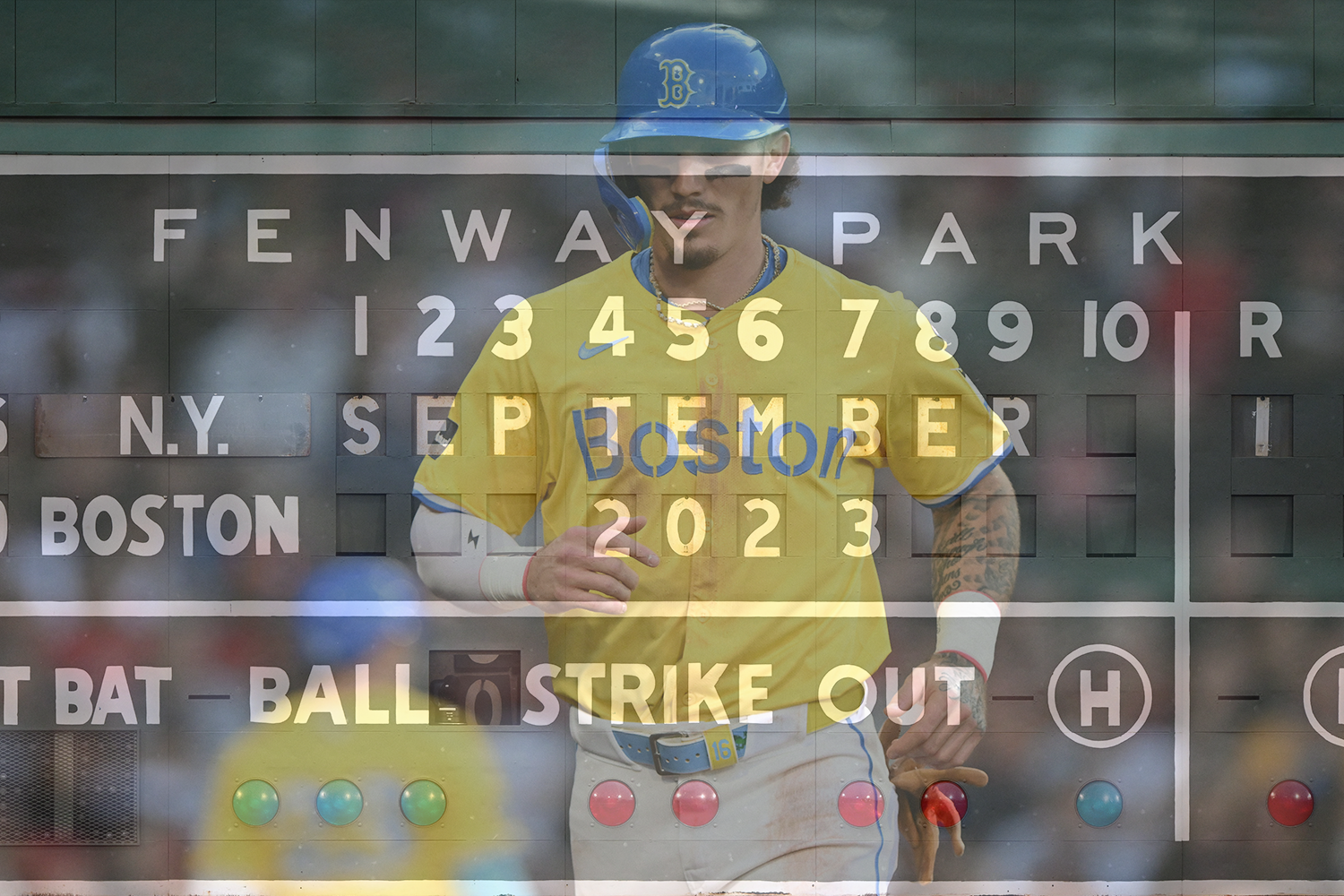 Last week, Sam Kennedy described the new City Connect uniforms as “controversial” in an interview on "The Fenway Rundown" podcast. If the leaks from late on Wednesday night are to be believed, then the new City Connect jerseys are...fine. The Green Monster colorway is excellent. That is a classic color and just as closely associated with the team as the color red. It makes sense that the second round of City Connect jerseys will play off of that. We’ve only seen the front of the jersey, but the back has a lot of heavy lifting to do. It will need to be impressive if the jerseys are going to make fans go, "Oh man, that’s really cool." like the Nationals did with their cherry blossom jerseys. I get that the font on the front mimics the hand-painted letters and numbers featured on the scoreboard. It’s just that it’s pretty bland looking for a jersey that’s supposed to get fans excited. If the back is bracketed in some way to look like the individual number slots in the scoreboard, that would be pretty neat and something that would make the jerseys unique. It makes me wonder if the Red Sox are going to break with tradition and have a home jersey with names on the back this season. They’ve already adopted their red jerseys on the road and left the names off the backs, so it could stand to reason that they could be a bit bold with these and put names on a home jersey. We’ll have to see. I’ve loved the yellow jerseys since I first saw them and would like to add a couple more into my jersey rotation in the near future. I think for these possible Green Monster ones, though, I’ll be more inclined to just pick up one of a player who is going to be here for a while instead of adding multiple green jerseys to my closet. My mind will likely change once the jersey is confirmed and we start seeing them on the field. I was expecting something controversial. Instead we got something perfectly fine.
 -
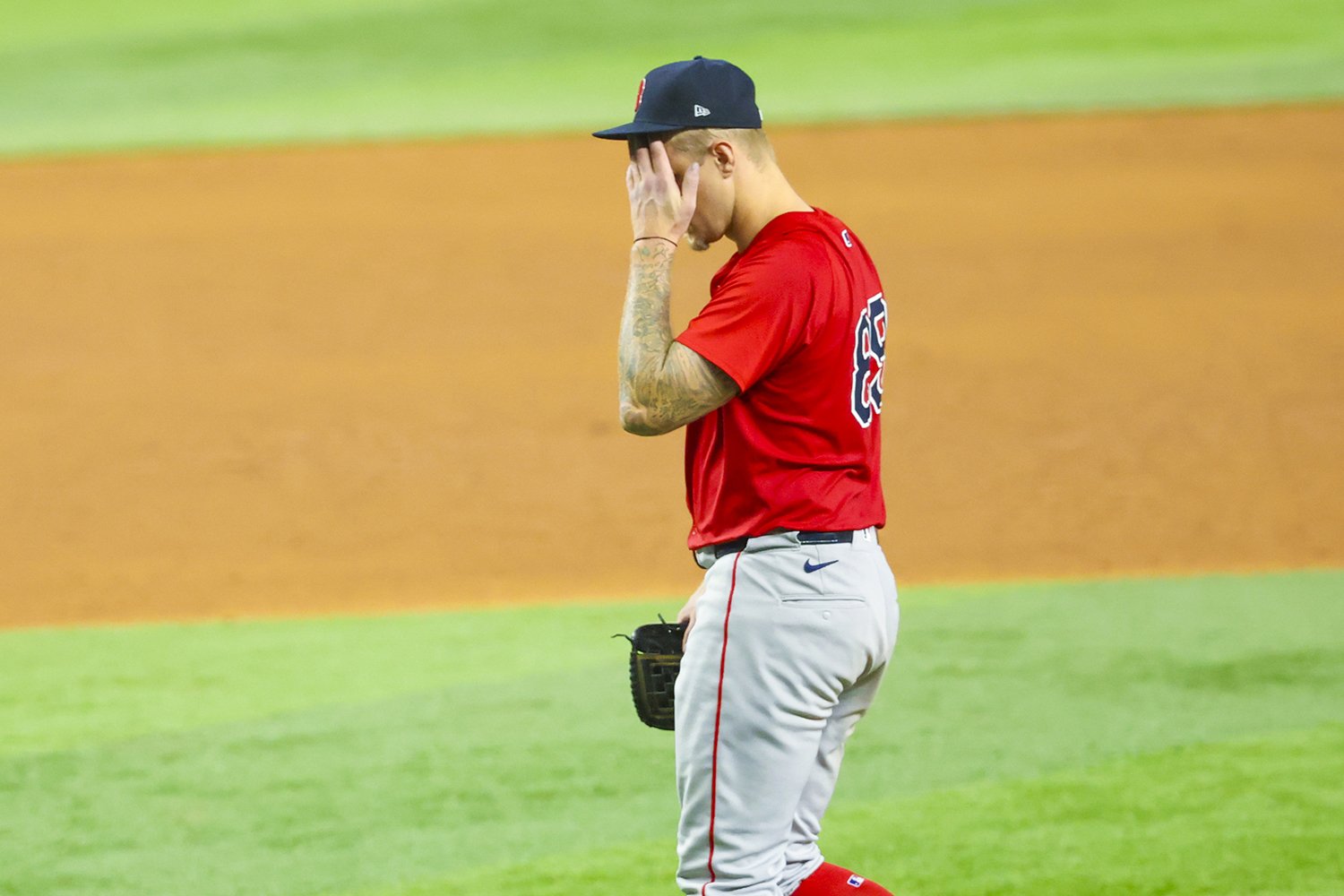 The Red Sox hoped that Tanner Houck would pitch like the guy who earned an All-Star selection in 2024. So far, after only two regular season starts, it has looked like last season may be an outlier. This drastic decline, which started during spring training, got me to wondering what could be going on with Houck and whether there was something he could do to try and rebound quicker. I’d noticed a few things in both starts that I thought were interesting. First, his pitch mix is slightly different this season. Last year, he scrapped his four-seam fastball entirely and replaced it briefly with a cutter. He has brought his four-seamer back for 2025 and so far hasn’t thrown a cutter yet. Second, his sweeper seemed to be breaking much less than it did last year. His splitter was being thrown a tick harder than last year, but since he throws it mostly in the same location as his sinker, it doesn’t play off nearly as well with that increase in velocity. It’s no secret that last season, the Red Sox were a fastball-light organization. Houck was arguably the biggest beneficiary of this, leaning heavily on a sweeper that kept hitters from both sides of the plate off balance. He’s still leaning on that sweeper, but so far he’s thrown his four-seam fastball 9% of the time, way more than the 1% of the time he used the cutter last year. The four-seamer has taken away usage on his best two pitches, the sweeper and the sinker. Last year, Houck used those pitches to keep batters on their toes, often swinging over the sinker and flailing wildly at a sweeper they had no chance to make contact with. So far this year, the sinker doesn’t sink like it did last year and the sweeper doesn’t sweep as much, forcing Houck to rely on a fastball back that lives high in the zone. A refocus on his top two pitches could go a long way towards getting Houck back to what he showed he could be last season. Unfortunately, there's a problem with the sweeper. Even fans watching on television can tell that it’s not sweeping like it was when he was dominant. Last year, his sweeper had 16.7 inches of horizontal break. Hitters typically swung wildly at a pitch that ended up far out of the zone. This season though, the horizontal break is 14.2 inches, a full two and a half inches less break. That may not sound like a lot, but it can make a big difference. Moreover, Houck isn't locating the pitch like he did last season. In the heat maps below, 2024 is on the left and 2025 is on the right. Last season, Houck mainly used the pitch on his arm-side, throwing it as a front-door pitch to righties and a backdoor pitch to lefties. This season he's leaving the sweeper out ove the plate, allowing righties to get their arms extended. Houck’s arm angle hasn’t changed , so that’s not the reason why his sweeper isn’t moving like it should. There’s also not a giant difference in velocity, last season the sweeper came in at 83.2 mph while it comes in this season at 83.6 mph. There could be some correlation with that slight velocity increase, but it shouldn’t take over two inches of break off of a pitch. That brings us to the slight uptick in velocity for the splitter. Last season, Houck threw his splitter at an average of 88.4 mph. So far this season, he’s averaging 89.5 mph. He mentioned in an interview after his final spring training start that he’s ready for the season and his "velo is up," but I think this slight increase is one reason why we’re seeing him get knocked around so much this season. His splitter and his sinker share tunnel off one another, keeping hitters behind on the sinker and out in front of the splitter. However, without as much velocity separation, hitters don't have to guess which pitch is which as often as they did last year. This means the hitter can sit on pitches on one side of the plate, ignoring anything else. I understand that we’re working with a small sample size at this point in the season, and maybe I’m reading too much into things right now. That’s possible, but Houck has looked rough through all of spring training and the regular season, and these three things have stood out to me in both regular season outings so far. It’s entirely possible that Houck gets it together and changes the outlook on his season. As it currently stands, though, the number two starter role could be up for grabs, and there are a number of pitchers behind him looking to move up in the pecking order.
 -
Tanner Houck has looked like a different pitcher in 2025, and not for the better. Three main things have stood out to me in both his outings so far. The Red Sox hoped that Tanner Houck would pitch like the guy who earned an All-Star selection in 2024. So far, after only two regular season starts, it has looked like last season may be an outlier. This drastic decline, which started during spring training, got me to wondering what could be going on with Houck and whether there was something he could do to try and rebound quicker. I’d noticed a few things in both starts that I thought were interesting. First, his pitch mix is slightly different this season. Last year, he scrapped his four-seam fastball entirely and replaced it briefly with a cutter. He has brought his four-seamer back for 2025 and so far hasn’t thrown a cutter yet. Second, his sweeper seemed to be breaking much less than it did last year. His splitter was being thrown a tick harder than last year, but since he throws it mostly in the same location as his sinker, it doesn’t play off nearly as well with that increase in velocity. It’s no secret that last season, the Red Sox were a fastball-light organization. Houck was arguably the biggest beneficiary of this, leaning heavily on a sweeper that kept hitters from both sides of the plate off balance. He’s still leaning on that sweeper, but so far he’s thrown his four-seam fastball 9% of the time, way more than the 1% of the time he used the cutter last year. The four-seamer has taken away usage on his best two pitches, the sweeper and the sinker. Last year, Houck used those pitches to keep batters on their toes, often swinging over the sinker and flailing wildly at a sweeper they had no chance to make contact with. So far this year, the sinker doesn’t sink like it did last year and the sweeper doesn’t sweep as much, forcing Houck to rely on a fastball back that lives high in the zone. A refocus on his top two pitches could go a long way towards getting Houck back to what he showed he could be last season. Unfortunately, there's a problem with the sweeper. Even fans watching on television can tell that it’s not sweeping like it was when he was dominant. Last year, his sweeper had 16.7 inches of horizontal break. Hitters typically swung wildly at a pitch that ended up far out of the zone. This season though, the horizontal break is 14.2 inches, a full two and a half inches less break. That may not sound like a lot, but it can make a big difference. Moreover, Houck isn't locating the pitch like he did last season. In the heat maps below, 2024 is on the left and 2025 is on the right. Last season, Houck mainly used the pitch on his arm-side, throwing it as a front-door pitch to righties and a backdoor pitch to lefties. This season he's leaving the sweeper out ove the plate, allowing righties to get their arms extended. Houck’s arm angle hasn’t changed , so that’s not the reason why his sweeper isn’t moving like it should. There’s also not a giant difference in velocity, last season the sweeper came in at 83.2 mph while it comes in this season at 83.6 mph. There could be some correlation with that slight velocity increase, but it shouldn’t take over two inches of break off of a pitch. That brings us to the slight uptick in velocity for the splitter. Last season, Houck threw his splitter at an average of 88.4 mph. So far this season, he’s averaging 89.5 mph. He mentioned in an interview after his final spring training start that he’s ready for the season and his "velo is up," but I think this slight increase is one reason why we’re seeing him get knocked around so much this season. His splitter and his sinker share tunnel off one another, keeping hitters behind on the sinker and out in front of the splitter. However, without as much velocity separation, hitters don't have to guess which pitch is which as often as they did last year. This means the hitter can sit on pitches on one side of the plate, ignoring anything else. I understand that we’re working with a small sample size at this point in the season, and maybe I’m reading too much into things right now. That’s possible, but Houck has looked rough through all of spring training and the regular season, and these three things have stood out to me in both regular season outings so far. It’s entirely possible that Houck gets it together and changes the outlook on his season. As it currently stands, though, the number two starter role could be up for grabs, and there are a number of pitchers behind him looking to move up in the pecking order. View full article
-
Garrett Crochet’s Extension Turns a Good Offseason Into a Great One
Alex Mayes posted an article in Red Sox
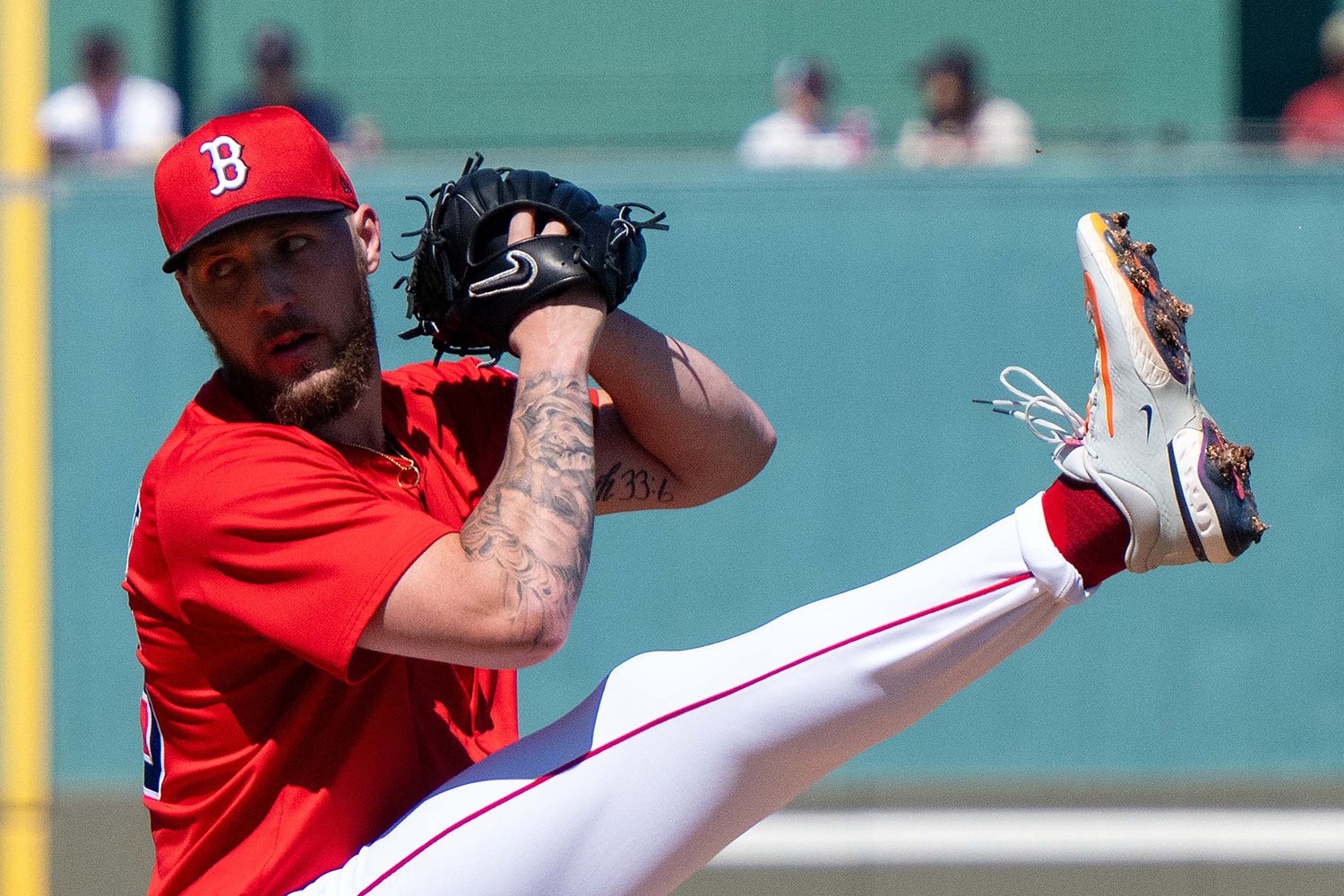 As I write this on April 1, I think back to exactly a month ago when I wrote about how the Boston Red Sox needed to lock Garrett Crochet into a long-term extension, ideally before the season began. It had just come out that Crochet wasn’t interested in talking about an extension once the season was underway. Like Sam Kennedy, I believed that the deadline wasn't iron-clad. Lo and behold, on March 31, ESPN’s Jeff Passan reported that the Red Sox and Crochet were in agreement on an extension that would keep him here through 2031. Caleb Kohn and Nick John have done an excellent job of getting the details of the contract up here on Talk Sox, so I want to go in a different direction for a minute. This deal, along with the rumored Kristian Campbell extension talks and the Alex Bregman signing, proves that the front office is putting its money where its mouth is. The organization is serious about winning, even if the current on-field product has gotten off to a slow start. The Red Sox traded their two most recent first-round picks for Crochet, and that’s a lot to give up for one player. However, the Sox have lacked a top-of-the-rotation arm for years at this point. The starting rotation has been made up of journeymen like Martin Perez, young hurlers like Brayan Bello, or reclamation projects like James Paxton. Tanner Houck turned in a stellar first half of 2024 but faltered as his innings piled up in the second half. If the Red Sox believed that Houck was going to repeat his first-half performance, they likely would have given him some sort of extension during the offseason. Crochet was the best left-handed pitcher on the market, arguably the game, and the Red Sox paid a steep price to get him. It only makes sense, then, that the front office paid a steeper cash price to secure Crochet’s talent for the foreseeable future. Had he pitched well and stayed healthy this season, his price only would have increased. Crochet is legitimate Cy Young candidate, and pitcher anywhere near that level would have meant a significantly more expensive contract. The closer he got to the end of his two-year stint without a contract, the more money he would have cost in free agency. With this deal, Crochet makes enough money to set him up for life and the Red Sox get their Game 1 starter for the long haul. A small percentage of fans complained about the Bregman deal's deferred money and opt-outs, which could have been a possibility for Crochet's as well. However, there is no deferred money, and the only opt-out comes one year before the end of the deal. That’s smart business for both the player and the team. Recent history suggests that the Red Sox have felt burned by giving out massive extensions and contracts to starting pitchers, and some of that is justified. However, Garrett Crochet is young enough to make any kind of risk worth it. Even if he's hurt for a year or two, if he pitches like he's capable of pitching the rest of the time, he will provide more than $170 million in value. By locking him up for the next six seasons, the Red Sox have finally shown that they believe that the championship window in Boston is wide open. We’re now entering the early part of many exciting seasons to come.
 -
The Red Sox finally spent money on a pitcher. Let's win some ballgames. As I write this on April 1, I think back to exactly a month ago when I wrote about how the Boston Red Sox needed to lock Garrett Crochet into a long-term extension, ideally before the season began. It had just come out that Crochet wasn’t interested in talking about an extension once the season was underway. Like Sam Kennedy, I believed that the deadline wasn't iron-clad. Lo and behold, on March 31, ESPN’s Jeff Passan reported that the Red Sox and Crochet were in agreement on an extension that would keep him here through 2031. Caleb Kohn and Nick John have done an excellent job of getting the details of the contract up here on Talk Sox, so I want to go in a different direction for a minute. This deal, along with the rumored Kristian Campbell extension talks and the Alex Bregman signing, proves that the front office is putting its money where its mouth is. The organization is serious about winning, even if the current on-field product has gotten off to a slow start. The Red Sox traded their two most recent first-round picks for Crochet, and that’s a lot to give up for one player. However, the Sox have lacked a top-of-the-rotation arm for years at this point. The starting rotation has been made up of journeymen like Martin Perez, young hurlers like Brayan Bello, or reclamation projects like James Paxton. Tanner Houck turned in a stellar first half of 2024 but faltered as his innings piled up in the second half. If the Red Sox believed that Houck was going to repeat his first-half performance, they likely would have given him some sort of extension during the offseason. Crochet was the best left-handed pitcher on the market, arguably the game, and the Red Sox paid a steep price to get him. It only makes sense, then, that the front office paid a steeper cash price to secure Crochet’s talent for the foreseeable future. Had he pitched well and stayed healthy this season, his price only would have increased. Crochet is legitimate Cy Young candidate, and pitcher anywhere near that level would have meant a significantly more expensive contract. The closer he got to the end of his two-year stint without a contract, the more money he would have cost in free agency. With this deal, Crochet makes enough money to set him up for life and the Red Sox get their Game 1 starter for the long haul. A small percentage of fans complained about the Bregman deal's deferred money and opt-outs, which could have been a possibility for Crochet's as well. However, there is no deferred money, and the only opt-out comes one year before the end of the deal. That’s smart business for both the player and the team. Recent history suggests that the Red Sox have felt burned by giving out massive extensions and contracts to starting pitchers, and some of that is justified. However, Garrett Crochet is young enough to make any kind of risk worth it. Even if he's hurt for a year or two, if he pitches like he's capable of pitching the rest of the time, he will provide more than $170 million in value. By locking him up for the next six seasons, the Red Sox have finally shown that they believe that the championship window in Boston is wide open. We’re now entering the early part of many exciting seasons to come. View full article
-
The Red Sox can steal bases from almost every spot in the lineup. It’s no secret that the Boston Red Sox have a speedy lineup. The focus on the youth movement at the major league level has come with a speed boost on the base paths. We saw this last year from a handful of guys. Jarren Duran swiped bags with ease for the first half of the season, David Hamilton led the team in steals before his injury in late August, and Ceddanne Rafaela flashed his speed on offense and defense. This year, the Sox look ready to run. As of Monday morning, six out of the 12 starters for the team have stolen at least one base. Duran has swiped two, as has Story. Wilyer Abreu, Rafaela, Alex Bregman, and Connor Wong have all stolen one base each so far. The team ranks third in steals, behind the Padres with nine and the Pirates with 15. Out of the top three, Boston is the only organization that has yet to be thrown out. That won’t last as they’ll face better catchers over the next few series, it looks like the Red Sox are going to be aggressive on the bases, and that should pay dividends as the season unfolds. In 2024, the Red Sox finished seventh with 144 stolen bases. That total was carried mostly by Duran and Hamilton, with 34 and 33 steals respectively. Rafaela swiped 19 bases and Romy Gonzalez claimed another 11. Everyone else on the roster was in single digits for the year. Duran all but quit stealing bases in the second half, focusing on saving his legs in order to play a full season. Now that Alex Cora has said Duran will get more rest, he should have the green light whenever he’s on base. Story’s speed looks like it hasn't waned much despite several injuries. Bregman isn’t a speedster, but he showed that he can take advantage of a pitcher who is slow to the plate. Even Wong looked like he was comfortable stealing a base on Sunday. Gonzalez and Hamilton haven’t had much chance to run yet, but we’re early in the season. It wouldn’t be a shock for Hamilton to lead the team in steals even as a utility infielder. Basestealing isn’t a surefire way to guarantee success for a season. Last season, the Dodgers were 10th in the league in steals with 136 while the Yankees came in at 24th with only 88 stolen bases. As we know, both teams made the World Series. However, a team that can steal bases with ease is a team that constantly has runners in scoring position. The Red Sox have struggled both getting on base and hitting with runners on base so far, but we’re only five games in. As the bats wake up ( hopefully soon) watch for the Red Sox to jump up the stolen base leaderboard. View full article
-
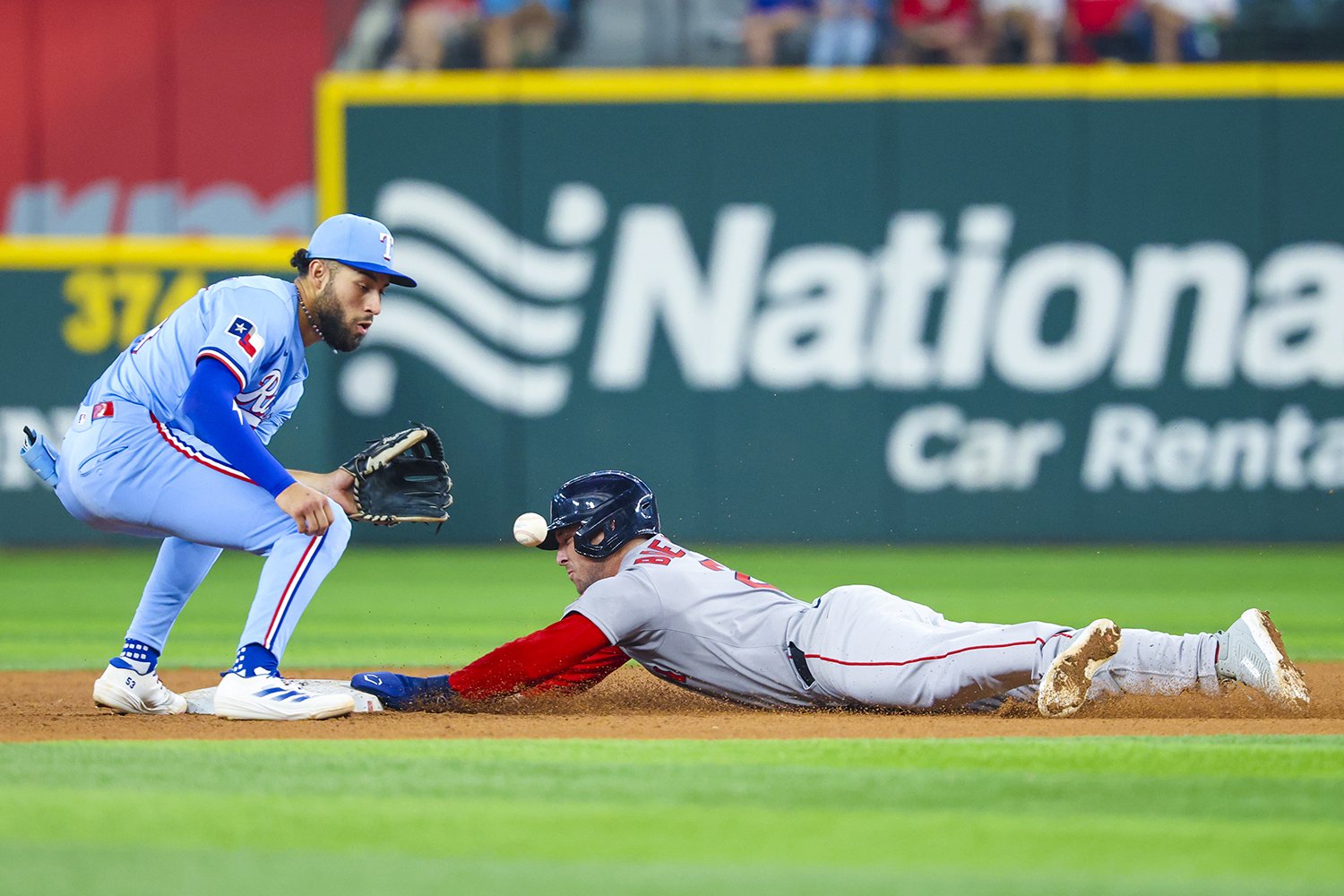 It’s no secret that the Boston Red Sox have a speedy lineup. The focus on the youth movement at the major league level has come with a speed boost on the base paths. We saw this last year from a handful of guys. Jarren Duran swiped bags with ease for the first half of the season, David Hamilton led the team in steals before his injury in late August, and Ceddanne Rafaela flashed his speed on offense and defense. This year, the Sox look ready to run. As of Monday morning, six out of the 12 starters for the team have stolen at least one base. Duran has swiped two, as has Story. Wilyer Abreu, Rafaela, Alex Bregman, and Connor Wong have all stolen one base each so far. The team ranks third in steals, behind the Padres with nine and the Pirates with 15. Out of the top three, Boston is the only organization that has yet to be thrown out. That won’t last as they’ll face better catchers over the next few series, it looks like the Red Sox are going to be aggressive on the bases, and that should pay dividends as the season unfolds. In 2024, the Red Sox finished seventh with 144 stolen bases. That total was carried mostly by Duran and Hamilton, with 34 and 33 steals respectively. Rafaela swiped 19 bases and Romy Gonzalez claimed another 11. Everyone else on the roster was in single digits for the year. Duran all but quit stealing bases in the second half, focusing on saving his legs in order to play a full season. Now that Alex Cora has said Duran will get more rest, he should have the green light whenever he’s on base. Story’s speed looks like it hasn't waned much despite several injuries. Bregman isn’t a speedster, but he showed that he can take advantage of a pitcher who is slow to the plate. Even Wong looked like he was comfortable stealing a base on Sunday. Gonzalez and Hamilton haven’t had much chance to run yet, but we’re early in the season. It wouldn’t be a shock for Hamilton to lead the team in steals even as a utility infielder. Basestealing isn’t a surefire way to guarantee success for a season. Last season, the Dodgers were 10th in the league in steals with 136 while the Yankees came in at 24th with only 88 stolen bases. As we know, both teams made the World Series. However, a team that can steal bases with ease is a team that constantly has runners in scoring position. The Red Sox have struggled both getting on base and hitting with runners on base so far, but we’re only five games in. As the bats wake up ( hopefully soon) watch for the Red Sox to jump up the stolen base leaderboard.
 -
Kristian Campbell looks like the real deal. Maddie, Alex, and Adam try not to overreact to the Red Sox 1-3 start. They find the goodness in Kristian Campbell and Wilyer Abreu's performances while recognizing the historic bad start for Rafael Devers. They also discuss the latest in the Masataka Yoshida saga. Listen on Apple Podcasts: https://podcasts.apple.com/us/podcast/the-talk-sox-podcast/id1783204104 Listen on Spotify: https://open.spotify.com/show/3qPrPXEngu0CxgTmlf0ynm Listen on iHeartRadio: https://www.iheart.com/podcast/263-the-talk-sox-podcast-244591331/ Listen on Pocket Casts: https://pca.st/4tmd121v Watch on YouTube: https://www.youtube.com/@talksox View full article
-
- 1
-

-
- kristian campbell
- wilyer abreu
- (and 2 more)
-
 Maddie, Alex, and Adam try not to overreact to the Red Sox 1-3 start. They find the goodness in Kristian Campbell and Wilyer Abreu's performances while recognizing the historic bad start for Rafael Devers. They also discuss the latest in the Masataka Yoshida saga. Listen on Apple Podcasts: https://podcasts.apple.com/us/podcast/the-talk-sox-podcast/id1783204104 Listen on Spotify: https://open.spotify.com/show/3qPrPXEngu0CxgTmlf0ynm Listen on iHeartRadio: https://www.iheart.com/podcast/263-the-talk-sox-podcast-244591331/ Listen on Pocket Casts: https://pca.st/4tmd121v Watch on YouTube: https://www.youtube.com/@talksox
 -
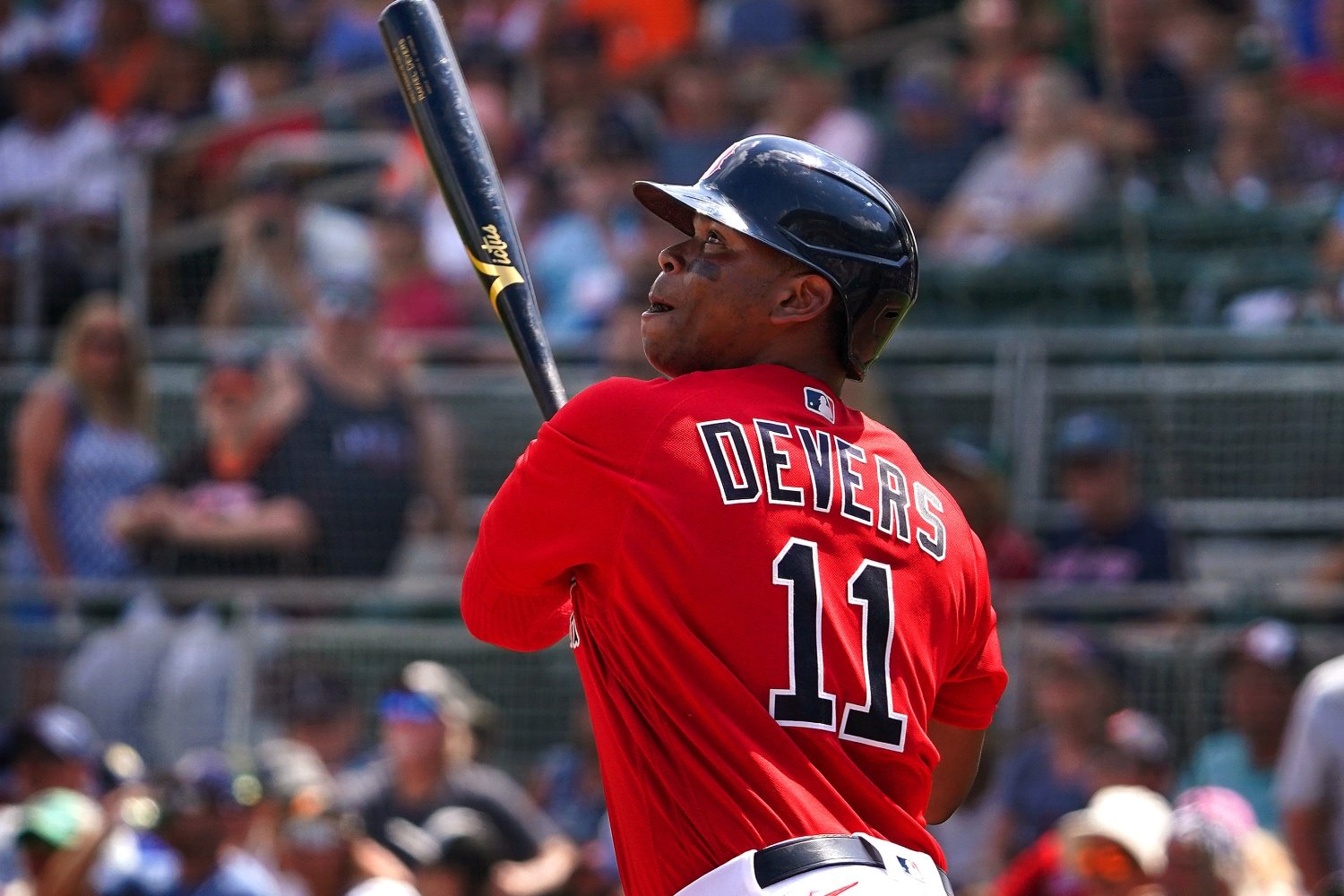 Alex Cora confirmed on Friday that Rafael Devers will not see time at third base this season. When Alex Bregman needs a day off, Romy Gonzalez will man the hot corner. To those paying attention, this shouldn’t have come as much of a surprise. Cora has made it pretty clear since the signing of Bregman that Devers has been moved off of the position. Now, we know that's for good for the 2025 season. In the first two games of the season, Raffy has looked lost at the plate. He’s still swinging from his heels and is behind on almost every pitch. Currently, prior to Saturday's game, he’s 0-for-8 with seven strikeouts. Likely, this is rust that is being shaken off from his abbreviated spring training, so there shouldn’t need to be too much concern from fans. Which means, even though he has looked lost at the plate so far, Devers will continue to be the company man and do what is best for the team while keeping his head down. I’ve written before how Devers doesn’t need to be vocal to be a team leader. His ability to do what the team needs him to do will do that for him. By keeping his head down, even if he disagrees with the position switch, he’s showing the younger players that sometimes you have to put your team ahead of your own personal interests. Something that has been brought up a handful of times recently is that there has been another Dominican powerhouse hitter who made the move to DH at the same age, David Ortiz. In all likelihood, Big Papi will go down as the greatest DH in the history of the game. He has been in Devers' ear, at least through the media, about the position switch. Devers would benefit greatly from reaching out to Ortiz and entering into a mentor/mentee relationship with him. Ortiz is highly regarded in Boston and if Devers follows in his path, then we’re likely looking at two Red Sox designated hitters in the Hall of Fame when everything is said and done. To his credit, outside of the very first time he spoke about the Bregman signing at camp, Devers has publicly said the right thing. Alex Cora has implied that he’s been far more vocal about the switch behind the scenes and that’s to be expected, but at the end of the day, Devers wants to win championships. Having him focus on his best skill will hopefully propel the team to their next championship.
 -
We now know Rafael Devers won't see time at third base this season, and I fully expect him to keep putting the team ahead of his own interests. Alex Cora confirmed on Friday that Rafael Devers will not see time at third base this season. When Alex Bregman needs a day off, Romy Gonzalez will man the hot corner. To those paying attention, this shouldn’t have come as much of a surprise. Cora has made it pretty clear since the signing of Bregman that Devers has been moved off of the position. Now, we know that's for good for the 2025 season. In the first two games of the season, Raffy has looked lost at the plate. He’s still swinging from his heels and is behind on almost every pitch. Currently, prior to Saturday's game, he’s 0-for-8 with seven strikeouts. Likely, this is rust that is being shaken off from his abbreviated spring training, so there shouldn’t need to be too much concern from fans. Which means, even though he has looked lost at the plate so far, Devers will continue to be the company man and do what is best for the team while keeping his head down. I’ve written before how Devers doesn’t need to be vocal to be a team leader. His ability to do what the team needs him to do will do that for him. By keeping his head down, even if he disagrees with the position switch, he’s showing the younger players that sometimes you have to put your team ahead of your own personal interests. Something that has been brought up a handful of times recently is that there has been another Dominican powerhouse hitter who made the move to DH at the same age, David Ortiz. In all likelihood, Big Papi will go down as the greatest DH in the history of the game. He has been in Devers' ear, at least through the media, about the position switch. Devers would benefit greatly from reaching out to Ortiz and entering into a mentor/mentee relationship with him. Ortiz is highly regarded in Boston and if Devers follows in his path, then we’re likely looking at two Red Sox designated hitters in the Hall of Fame when everything is said and done. To his credit, outside of the very first time he spoke about the Bregman signing at camp, Devers has publicly said the right thing. Alex Cora has implied that he’s been far more vocal about the switch behind the scenes and that’s to be expected, but at the end of the day, Devers wants to win championships. Having him focus on his best skill will hopefully propel the team to their next championship. View full article
-
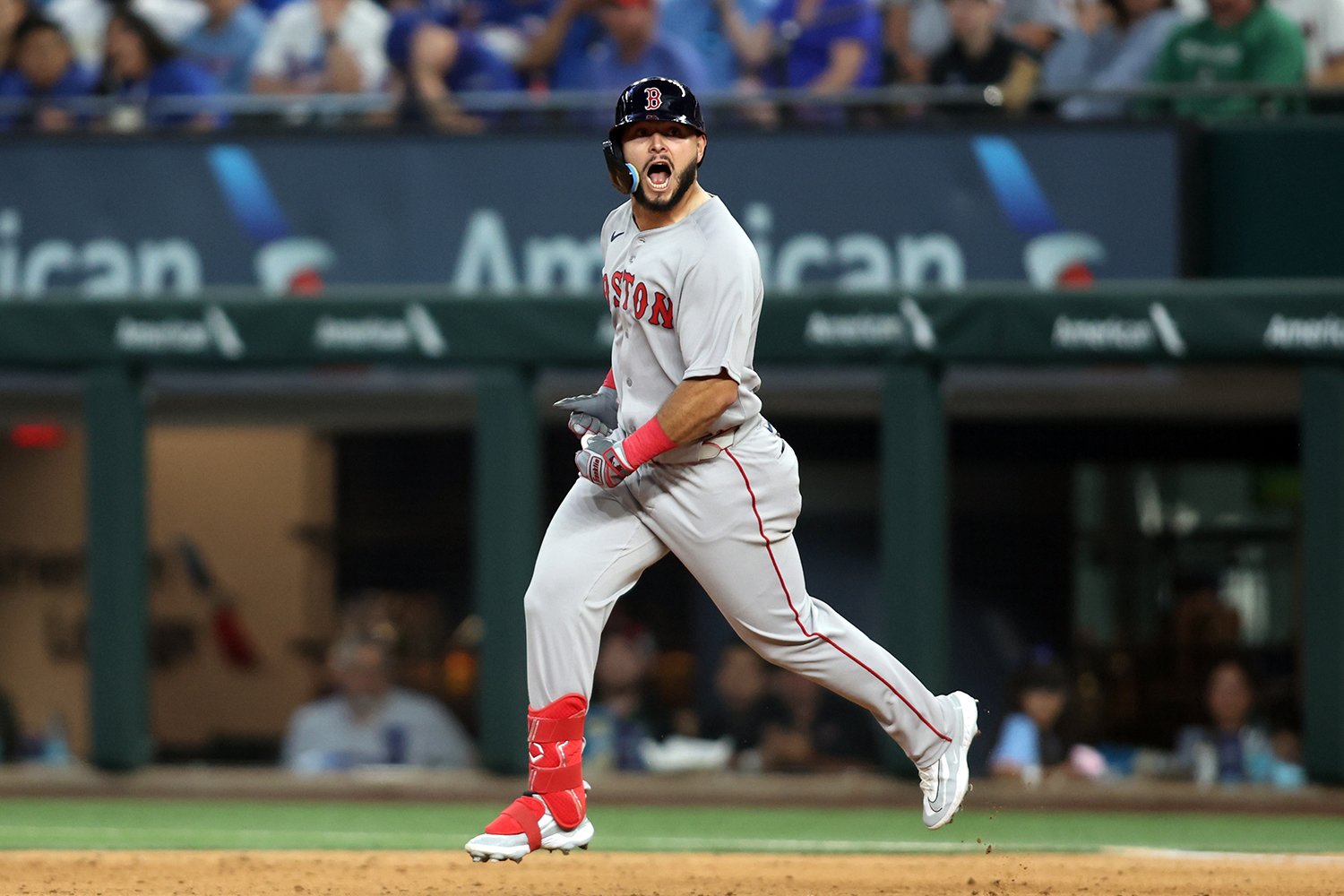 Opening Day is finally here and the Boston Red Sox seemed primed to take the American League by storm in 2025. What questions remain about the 26 man roster as we head into the season? Catchers Connor Wong: Will the defensive progress shown in spring training carry over to the regular season? There has been an added focus on Wong’s defense coming into the season. So far, it seems to be paying off. When the games matter though, especially in tight situations where he’s anxious or pressing a bit to get a call, we could see him revert to his old defensive habits. Should he be able to keep up the defensive strides he’s made so far, we could be looking at Wong stepping into elite catcher status in 2025. Carlos Narváez: Will he be content remaining a backup throughout an entire season in the big leagues? Honestly, there’s no reason to assume Narváez won’t be okay with playing this season as the backup catcher. He will see spot starts when Wong needs a break or if he develops a relationship with certain members of the starting rotation who prefer throwing to him. When that happens, though, if he shows out on both sides of the ball, there could be some ‘what if’ scenarios running through his head. As it stands, backing up Connor Wong on the team that has been picked by experts to with the American League oennant isn’t a bad spot to be in. Infielders Triston Casas: Can he stay healthy through an entire season without drastically changing his incredibly powerful swing? Maddie Landis did an excellent job with this article a couple of months ago, and it’s going to be interesting to watch as the season unfolds. Casas hasn’t had a stellar spring. He finished spring training with a 91 wRC+, a far cry from his season totals over his career. His approach seems to be the same as before, but there is concern that his rib injury from last year could reappear due to his violent cut. I expect Casas to be his usual slugger self, I even predicted he would hit 40 home runs this season on the lost episode of the Talk Sox Podcast, but he has to make it through the season healthy. Kristian Campbell: Can he take big defensive strides at the major league level? Campbell’s bat started to come around toward the end of spring training, likely solidifying the team’s decision to make him the Opening Day starting second baseman. However, he still leaves a little to be desired on the defensive side of the ball. Throughout spring training he has made some excellent plays, but also shown that he’s still learning the position. He’s more than capable of succeeding defensively, so it's more a matter of how long it takes him. Trevor Story: Will he rest his body after a Boston career plagued by freak injuries to this point? I debated a few different questions for Story, but settled on this one because during interviews, he’s mentioned that he knows he needs to rest for his body to heal so he can play a full season but it’s difficult for him to do it. Story offers a calming presence in the infield and excellent veteran leadership to the young core that seems to be major league ready, so staying on the field is paramount for him this season. Alex Bregman: What if he doesn’t live up to his Gold Glove on defense? I guess this is the million-dollar question right now. Alex Bregman was brought here to play third base and will stay at the position throughout the entire season according to Alex Cora. This decision has likely rubbed the longest-tenured member of the team the wrong way, even if he’s saying all the right things, and he will take some time to adjust to his new role. But what if Bregman doesn’t live up to the hype in Boston, especially on the defensive side of the ball? In fairness, I don’t see this being an issue but it’s something to consider. We sometimes forget that free agents fail to live up to the hype they bring to their new teams. Rafael Devers: Will he continue to put the team first or will the drama from early in camp rear its ugly head again? Devers has said all the right things to the media. Sam Kennedy applauded him for putting the team first in his decision to accept the full-time designated hitter role. There’s speculation he’s understandably still upset about it though. Will his frustration leak into his performance? What if he starts making comments similar to the ones he made early in training camp again? At the end of the day, Devers wants to win championships and will do whatever is asked of him to get that done, but don’t be surprised if there are some signs throughout the season that he’s still not totally over his role changing. Romy Gonzalez: Does he have a place on the roster once Marcelo Mayer is ready to be called up? In all likelihood, Gonzalez will be the person DFA’d when Marcelo Mayer is ready to join the big league club. Gonzalez plays one position that Mayer doesn’t, first base, but the team can adjust to that to make sure another member of the Big Three gets his time in the majors this season. Gonzalez has slowly become someone to rally behind, but his time in Boston is probably fairly limited at this point. David Hamilton: Can a utility infielder lead the team in steals? Absolutely. Hamilton will likely see time at various spots across the infield and will pinch-run and hit late in games. Before he was injured last season, he already had 33 steals. Don’t be shocked to see him be a menace on the basepaths in 2025 as well, likely leading the team in steals. Outfielders Jarren Duran: Can he repeat his MVP-caliber season from 2024? In all likelihood, Duran will put up excellent numbers in 2025. He really seemed to come into his own last year and proved that he should be counted on as a valuable, contributing member of the team for the next couple of years. However, repeating his 2024 season is going to be tough. To start, Cora has already mentioned that Duran won’t be chasing playing all 162 games this year. That should open the door for him to steal more bases because he’s not as focused on keeping his legs from tiring out. I expect the biggest contribution from Duran to be on the defensive side of the ball. Don’t be shocked to see him in the conversation for a Gold Glove at the end of the season. Ceddanne Rafaela: Can he continue to showcase a more patient approach at the plate? Rafaela’s defense gives fans a ton to be excited about. He likely would have been in the Gold Glove conversation last year had he not shifted positions so much, but Cora has said that Rafaela will see most of his time in center field this year. The biggest question coming out of 2024 was if he could figure out the offensive side of the game at the big leagues. So far throughout spring training, that answer seems to be yes. He’s been patient, working counts and drawing walks. In spring training he put up a 146 wRC+. I think it’s a bit lofty to expect him to do that during the season but if he takes even just a small step forward on offense then he suddenly becomes one of the better center fielders in the league. There was debate if he was worth the extension he was given, and he seems set on proving to people that he is. Wilyer Abreu: Is he just a platoon outfielder? I want Abreu to be more than a platoon outfielder, and if the minor leagues weren’t stacked with as much talent as they are, I expect we’d see him get more time against left-handed pitching this season. As things stand though, he’s an excellent defender who struggles too much against lefties to be trusted as an everyday outfielder. Rob Refsnyder: Can the Red Sox justify his position on the roster with Roman Anthony knocking on the door? This question goes hand in hand with Abreu’s a bit, because I actually think to make room for Anthony, Abreu will be traded at some point. For this exercise though, I don’t want to speculate on trades, so the question is can Refsnyder survive Anthony’s call-up? Yes, I think he can. He’s a platoon outfielder, no doubt, but he’s a veteran leader in the clubhouse and can hit left-handed pitching better than pretty much anyone on the team. He’s valuable as a late-game pinch hitter, even if his playing time drops once Anthony is in the big leagues. Starting Pitchers Garrett Crochet: Is the deadline of Opening Day real or will his agent still negotiate during the season? I don’t think the deadline is legit. It feels a lot like a hardball tactic that the Red Sox have dealt with quite a bit in the past. Sam Kennedy cited specific examples in his recent sitdown with "The Fenway Rundown" podcast and I think the belief is that they’ll get a deal worked out at some point this season. If not, they are going to have to overpay even more than they would right now to keep Crochet in Boston long-term. Walker Buehler: Can he build on his 2024 postseason success? It’s not crazy to assume Buehler’s performance in the postseason is the main reason he was given the deal he was given. He’s looking to bet on himself this season and his performance in spring training hopefully bodes well for his time in Boston. If he can continue his spring training success into the regular season, the top two spots in the rotation look like legitimate Cy Young contenders. Tanner Houck: What if 2024 was actually his outlier season? Houck has looked overmatched in spring training. He’s not been great in spring trainings past, except for last year. If 2024 was his outlier season, then expect him to get shuffled down in the rotation as the season goes on. They’ll use extra rest days and spot starts to reorganize the starting rotation and it wouldn’t be shocking to see one of the names below end up starting over him if he can’t figure things out. Richard Fitts: Can he force the Red Sox to keep him in the rotation over more veteran pitchers? Houck was the name that immediately came to mind when I wrote this question. I expect Brayan Bello to take a significant step forward this season, Lucas Giolito has the potential to pitch like he did before the back half of the 2023 season, and Kutter Crawford is dependable as long as he’s on the field. Fitts has been electric in spring training and looks like someone who can force a tough conversation about a more established starter who is underperforming. His talent would be wasted in Triple-A, so if he shows out in first few turns through the rotation, don’t be shocked for him to supplant someone more established. Sean Newcomb: How many times will he travel between Boston and Worcester in 2025? A lot. He’s looked great in camp but undoubtedly will be the first name sent back to Worcester as the rest of the staff gets healthy. Should he have a good showing during his time on the big league roster, expect him to be the first pitcher called up when the need arises. Relief Pitchers Aroldis Chapman: How long will he be the closer in 2025? If we’re lucky, not very long. Chapman was once a dominant closer but those days are behind him. Sure, he’s looked good during the end of spring training and can still hit 100 mph on the radar gun, but he’s not reliable. It won’t take long for him to walk in the winning run with a blown save opportunity, and he’s going to be on an incredibly short leash as the season gets underway. Liam Hendriks: Can he return to form or is he unable to be an effective relief pitcher this season? (After I wrote this article, Hendriks hit the IL, so consider this a bonus question.) Watching Hendriks in spring training has been rough. We all are rooting for the guy and want him to return to form after everything he’s been through, but it’s just not happening so far. He’s made the roster but looks like a guy who could benefit from an extended spring training. I don’t think any of us will feel comfortable watching him jog in from the bullpen until he gets his velocity up and isn’t knocked around as hard as he has been so far. Cooper Criswell: Can he make a case to not be optioned back to Worcester while Hendriks is on the IL? Last season was a pleasant surprise from Criswell. He posted a 4.08 ERA, which is what you’d hope for from a back-of-the-rotation starter. He ended up finishing the season a a bullpen piece and that’s where he will begin this season with Liam Hendriks landing on the IL just a few hours before first pitch. He flashed solid stuff last year and has a pitch mix that should work well out of the bullpen for an extended period of time. Should the IL stay be a long one for Hendriks (and elbow inflammation is rarely a quick trip), Criswell can easily make the case that he should be the man to take over that mid to high-leverage position. Justin Slaten: How long until he takes over as the closer in 2025? My prediction is the beginning of May. I believe Slaten is the prime closer candidate in the bullpen and has the mental fortitude to take over the position. It won’t take long for Chapman’s inability to control his pitches to grow old with Cora and we’ll see Slaten start to take a more prominent position in the closer role. Right now, he’ll be the eighth-inning guy, but that won’t last long. Garrett Whitlock: Will the transition to the bullpen prove to be the thing that propels him to dominance again? Let’s hope so. Whitlock is an incredibly likable guy who has struggled to find his footing after being shuttled between the bullpen and starting rotation. He shined as a high-leverage reliever in 2021 and should do so again in 2025. Justin Wilson: Can he be the go-to left-hander in the bullpen? Right now, yes. As long as Chapman is closing Wilson should be the go-to lefty out of the bullpen, but once the closer role is adjusted, we’ll likely see him come in for specific matchups and be used as someone who takes over when the starter can’t get out of the fifth inning. Brennan Bernardino: Just which version of him will we see in 2025? Another loaded question here in the bullpen. Bernardino struggled mightily last year, especially in the second half of the season. His pitch mix was ineffective, but he’s been working on that with Andrew Bailey, so a return to his 2023 form would be a welcome change. It would likely solidify him as the best left-handed reliever in the bullpen as well. Greg Weissert: Will he have more than a mop-up role this season? Weissart started strong in 2024 then fell apart as the season carried on. He spent some time in Worcester where he seemed to figure things out and had a bit of a resurgence at the end of the season. Currently, he feels like he’s jockeying for the low-leverage innings. If he can excel in that role early on, expect Cora to start using him in higher leverage spots as the bullpen wears down throughout the season. Zack Kelly: Can he stick on the roster over Newcomb and Fitts once the rotation is fully healthy? Out of all the options in the bullpen, I think Kelly is the one most likely to be optioned to Worcester if Cora decides to keep either Fitts or Newcomb. Kelly offered glimpses of what he could be last season but wore down with extended use. He has the stuff to make a play for the closer role, but he will have to prove to be more reliable before that conversation can even begin to happen. It will be incredibly interesting to track these questions as the season unfolds. What questions do you have about the Opening Day roster? Let’s discuss them below!
 -
Opening Day is here and I've got some questions about each member of the current roster. Plus one bonus question. Opening Day is finally here and the Boston Red Sox seemed primed to take the American League by storm in 2025. What questions remain about the 26 man roster as we head into the season? Catchers Connor Wong: Will the defensive progress shown in spring training carry over to the regular season? There has been an added focus on Wong’s defense coming into the season. So far, it seems to be paying off. When the games matter though, especially in tight situations where he’s anxious or pressing a bit to get a call, we could see him revert to his old defensive habits. Should he be able to keep up the defensive strides he’s made so far, we could be looking at Wong stepping into elite catcher status in 2025. Carlos Narváez: Will he be content remaining a backup throughout an entire season in the big leagues? Honestly, there’s no reason to assume Narváez won’t be okay with playing this season as the backup catcher. He will see spot starts when Wong needs a break or if he develops a relationship with certain members of the starting rotation who prefer throwing to him. When that happens, though, if he shows out on both sides of the ball, there could be some ‘what if’ scenarios running through his head. As it stands, backing up Connor Wong on the team that has been picked by experts to with the American League oennant isn’t a bad spot to be in. Infielders Triston Casas: Can he stay healthy through an entire season without drastically changing his incredibly powerful swing? Maddie Landis did an excellent job with this article a couple of months ago, and it’s going to be interesting to watch as the season unfolds. Casas hasn’t had a stellar spring. He finished spring training with a 91 wRC+, a far cry from his season totals over his career. His approach seems to be the same as before, but there is concern that his rib injury from last year could reappear due to his violent cut. I expect Casas to be his usual slugger self, I even predicted he would hit 40 home runs this season on the lost episode of the Talk Sox Podcast, but he has to make it through the season healthy. Kristian Campbell: Can he take big defensive strides at the major league level? Campbell’s bat started to come around toward the end of spring training, likely solidifying the team’s decision to make him the Opening Day starting second baseman. However, he still leaves a little to be desired on the defensive side of the ball. Throughout spring training he has made some excellent plays, but also shown that he’s still learning the position. He’s more than capable of succeeding defensively, so it's more a matter of how long it takes him. Trevor Story: Will he rest his body after a Boston career plagued by freak injuries to this point? I debated a few different questions for Story, but settled on this one because during interviews, he’s mentioned that he knows he needs to rest for his body to heal so he can play a full season but it’s difficult for him to do it. Story offers a calming presence in the infield and excellent veteran leadership to the young core that seems to be major league ready, so staying on the field is paramount for him this season. Alex Bregman: What if he doesn’t live up to his Gold Glove on defense? I guess this is the million-dollar question right now. Alex Bregman was brought here to play third base and will stay at the position throughout the entire season according to Alex Cora. This decision has likely rubbed the longest-tenured member of the team the wrong way, even if he’s saying all the right things, and he will take some time to adjust to his new role. But what if Bregman doesn’t live up to the hype in Boston, especially on the defensive side of the ball? In fairness, I don’t see this being an issue but it’s something to consider. We sometimes forget that free agents fail to live up to the hype they bring to their new teams. Rafael Devers: Will he continue to put the team first or will the drama from early in camp rear its ugly head again? Devers has said all the right things to the media. Sam Kennedy applauded him for putting the team first in his decision to accept the full-time designated hitter role. There’s speculation he’s understandably still upset about it though. Will his frustration leak into his performance? What if he starts making comments similar to the ones he made early in training camp again? At the end of the day, Devers wants to win championships and will do whatever is asked of him to get that done, but don’t be surprised if there are some signs throughout the season that he’s still not totally over his role changing. Romy Gonzalez: Does he have a place on the roster once Marcelo Mayer is ready to be called up? In all likelihood, Gonzalez will be the person DFA’d when Marcelo Mayer is ready to join the big league club. Gonzalez plays one position that Mayer doesn’t, first base, but the team can adjust to that to make sure another member of the Big Three gets his time in the majors this season. Gonzalez has slowly become someone to rally behind, but his time in Boston is probably fairly limited at this point. David Hamilton: Can a utility infielder lead the team in steals? Absolutely. Hamilton will likely see time at various spots across the infield and will pinch-run and hit late in games. Before he was injured last season, he already had 33 steals. Don’t be shocked to see him be a menace on the basepaths in 2025 as well, likely leading the team in steals. Outfielders Jarren Duran: Can he repeat his MVP-caliber season from 2024? In all likelihood, Duran will put up excellent numbers in 2025. He really seemed to come into his own last year and proved that he should be counted on as a valuable, contributing member of the team for the next couple of years. However, repeating his 2024 season is going to be tough. To start, Cora has already mentioned that Duran won’t be chasing playing all 162 games this year. That should open the door for him to steal more bases because he’s not as focused on keeping his legs from tiring out. I expect the biggest contribution from Duran to be on the defensive side of the ball. Don’t be shocked to see him in the conversation for a Gold Glove at the end of the season. Ceddanne Rafaela: Can he continue to showcase a more patient approach at the plate? Rafaela’s defense gives fans a ton to be excited about. He likely would have been in the Gold Glove conversation last year had he not shifted positions so much, but Cora has said that Rafaela will see most of his time in center field this year. The biggest question coming out of 2024 was if he could figure out the offensive side of the game at the big leagues. So far throughout spring training, that answer seems to be yes. He’s been patient, working counts and drawing walks. In spring training he put up a 146 wRC+. I think it’s a bit lofty to expect him to do that during the season but if he takes even just a small step forward on offense then he suddenly becomes one of the better center fielders in the league. There was debate if he was worth the extension he was given, and he seems set on proving to people that he is. Wilyer Abreu: Is he just a platoon outfielder? I want Abreu to be more than a platoon outfielder, and if the minor leagues weren’t stacked with as much talent as they are, I expect we’d see him get more time against left-handed pitching this season. As things stand though, he’s an excellent defender who struggles too much against lefties to be trusted as an everyday outfielder. Rob Refsnyder: Can the Red Sox justify his position on the roster with Roman Anthony knocking on the door? This question goes hand in hand with Abreu’s a bit, because I actually think to make room for Anthony, Abreu will be traded at some point. For this exercise though, I don’t want to speculate on trades, so the question is can Refsnyder survive Anthony’s call-up? Yes, I think he can. He’s a platoon outfielder, no doubt, but he’s a veteran leader in the clubhouse and can hit left-handed pitching better than pretty much anyone on the team. He’s valuable as a late-game pinch hitter, even if his playing time drops once Anthony is in the big leagues. Starting Pitchers Garrett Crochet: Is the deadline of Opening Day real or will his agent still negotiate during the season? I don’t think the deadline is legit. It feels a lot like a hardball tactic that the Red Sox have dealt with quite a bit in the past. Sam Kennedy cited specific examples in his recent sitdown with "The Fenway Rundown" podcast and I think the belief is that they’ll get a deal worked out at some point this season. If not, they are going to have to overpay even more than they would right now to keep Crochet in Boston long-term. Walker Buehler: Can he build on his 2024 postseason success? It’s not crazy to assume Buehler’s performance in the postseason is the main reason he was given the deal he was given. He’s looking to bet on himself this season and his performance in spring training hopefully bodes well for his time in Boston. If he can continue his spring training success into the regular season, the top two spots in the rotation look like legitimate Cy Young contenders. Tanner Houck: What if 2024 was actually his outlier season? Houck has looked overmatched in spring training. He’s not been great in spring trainings past, except for last year. If 2024 was his outlier season, then expect him to get shuffled down in the rotation as the season goes on. They’ll use extra rest days and spot starts to reorganize the starting rotation and it wouldn’t be shocking to see one of the names below end up starting over him if he can’t figure things out. Richard Fitts: Can he force the Red Sox to keep him in the rotation over more veteran pitchers? Houck was the name that immediately came to mind when I wrote this question. I expect Brayan Bello to take a significant step forward this season, Lucas Giolito has the potential to pitch like he did before the back half of the 2023 season, and Kutter Crawford is dependable as long as he’s on the field. Fitts has been electric in spring training and looks like someone who can force a tough conversation about a more established starter who is underperforming. His talent would be wasted in Triple-A, so if he shows out in first few turns through the rotation, don’t be shocked for him to supplant someone more established. Sean Newcomb: How many times will he travel between Boston and Worcester in 2025? A lot. He’s looked great in camp but undoubtedly will be the first name sent back to Worcester as the rest of the staff gets healthy. Should he have a good showing during his time on the big league roster, expect him to be the first pitcher called up when the need arises. Relief Pitchers Aroldis Chapman: How long will he be the closer in 2025? If we’re lucky, not very long. Chapman was once a dominant closer but those days are behind him. Sure, he’s looked good during the end of spring training and can still hit 100 mph on the radar gun, but he’s not reliable. It won’t take long for him to walk in the winning run with a blown save opportunity, and he’s going to be on an incredibly short leash as the season gets underway. Liam Hendriks: Can he return to form or is he unable to be an effective relief pitcher this season? (After I wrote this article, Hendriks hit the IL, so consider this a bonus question.) Watching Hendriks in spring training has been rough. We all are rooting for the guy and want him to return to form after everything he’s been through, but it’s just not happening so far. He’s made the roster but looks like a guy who could benefit from an extended spring training. I don’t think any of us will feel comfortable watching him jog in from the bullpen until he gets his velocity up and isn’t knocked around as hard as he has been so far. Cooper Criswell: Can he make a case to not be optioned back to Worcester while Hendriks is on the IL? Last season was a pleasant surprise from Criswell. He posted a 4.08 ERA, which is what you’d hope for from a back-of-the-rotation starter. He ended up finishing the season a a bullpen piece and that’s where he will begin this season with Liam Hendriks landing on the IL just a few hours before first pitch. He flashed solid stuff last year and has a pitch mix that should work well out of the bullpen for an extended period of time. Should the IL stay be a long one for Hendriks (and elbow inflammation is rarely a quick trip), Criswell can easily make the case that he should be the man to take over that mid to high-leverage position. Justin Slaten: How long until he takes over as the closer in 2025? My prediction is the beginning of May. I believe Slaten is the prime closer candidate in the bullpen and has the mental fortitude to take over the position. It won’t take long for Chapman’s inability to control his pitches to grow old with Cora and we’ll see Slaten start to take a more prominent position in the closer role. Right now, he’ll be the eighth-inning guy, but that won’t last long. Garrett Whitlock: Will the transition to the bullpen prove to be the thing that propels him to dominance again? Let’s hope so. Whitlock is an incredibly likable guy who has struggled to find his footing after being shuttled between the bullpen and starting rotation. He shined as a high-leverage reliever in 2021 and should do so again in 2025. Justin Wilson: Can he be the go-to left-hander in the bullpen? Right now, yes. As long as Chapman is closing Wilson should be the go-to lefty out of the bullpen, but once the closer role is adjusted, we’ll likely see him come in for specific matchups and be used as someone who takes over when the starter can’t get out of the fifth inning. Brennan Bernardino: Just which version of him will we see in 2025? Another loaded question here in the bullpen. Bernardino struggled mightily last year, especially in the second half of the season. His pitch mix was ineffective, but he’s been working on that with Andrew Bailey, so a return to his 2023 form would be a welcome change. It would likely solidify him as the best left-handed reliever in the bullpen as well. Greg Weissert: Will he have more than a mop-up role this season? Weissart started strong in 2024 then fell apart as the season carried on. He spent some time in Worcester where he seemed to figure things out and had a bit of a resurgence at the end of the season. Currently, he feels like he’s jockeying for the low-leverage innings. If he can excel in that role early on, expect Cora to start using him in higher leverage spots as the bullpen wears down throughout the season. Zack Kelly: Can he stick on the roster over Newcomb and Fitts once the rotation is fully healthy? Out of all the options in the bullpen, I think Kelly is the one most likely to be optioned to Worcester if Cora decides to keep either Fitts or Newcomb. Kelly offered glimpses of what he could be last season but wore down with extended use. He has the stuff to make a play for the closer role, but he will have to prove to be more reliable before that conversation can even begin to happen. It will be incredibly interesting to track these questions as the season unfolds. What questions do you have about the Opening Day roster? Let’s discuss them below! View full article
-
Masataka Yoshida has seen ample time at DH this spring, but will begin the season in Worcester to rehab his shoulder as he prepares to play the outfield again. Masataka Yoshida hasn't had great results at the plate during spring training, but he’s looked comfortable. His shoulder seems to be feeling well enough for him to make solid contact and put the ball in play. However, after he homered on March 18, it came out that Yoshida would begin the season at Triple-A Worcester. He'll continue a throwing program to rehab his shoulder. Before we dive into what that means, let’s get a clearer picture of what is actually going on with Yoshida’s situation. According to Ian Browne, Yoshida can be placed on a 20-day rehab assignment once he is ready and he would have to consent to being optioned to the minors as per the terms of his contract. This news was a surprising development, considering Yoshida was seeing regular at-bats throughout spring training. Yes, the fact that Rafael Devers seems to be, at least outwardly, okay with moving to DH full-time made Yoshida’s role on the big league club a bit superflous, but many still expected him to break camp on the main roster. The demotion does tell us that Alex Cora was serious when he claimed that Yoshida would get time in the outfield this season. Currently, Yoshida is throwing from 100 feet and ramping up to longer distances. Yoshida's defense graded out terrible in 2023, and when he played just one emergency inning in 2024, the logical assumption was that his days in the outfield were over. Still, Masataka Yoshida will soon be getting outfield reps in real games. What does that mean when he’s finally ready to return to Boston? That’s a bit of a convoluted question. If there is actually a plan for him to receive outfield reps in the majors, whose spot does he take? The Red Sox have three excellent outfield defenders and one more on the way. Jarren Duran is penciled in to start in left field, and you’d rather have his speed and bat in the lineup every day. Yoshida can't play center or right. Roman Anthony showed out in spring training and is expected to get an early season call up as well. Should Yoshida get more looks over him? I think the plan here is to show that Yoshida can indeed play in the outfield in order to rebuild his trade value. If he can play a passable outfield at Worcester, it’s far more likely that another team will be willing to take on at least a small part of his salary. Should he put on a show in Worcester and force his name into the conversation for a promotion, that’s where things get particularly hairy. You wouldn’t let go of Rob Refsnyder, who can play multiple outfield positions and hit left-handed pitching. DFA’ing someone like Romy Gonzalez or David Hamilton doesn’t make any sense either. Yoshida is a better hitter, but he can't do any of the things that make them valuable depth pieces. Yoshida’s 20-day clock won’t start until "he’s ready," and that will be up to the coaching and training staffs to decide. It's a non-issue for the moment, but once that clock starts to tick, decisions will have to be made in short order. I, for one, don’t envy the people who will have to make them. View full article
-
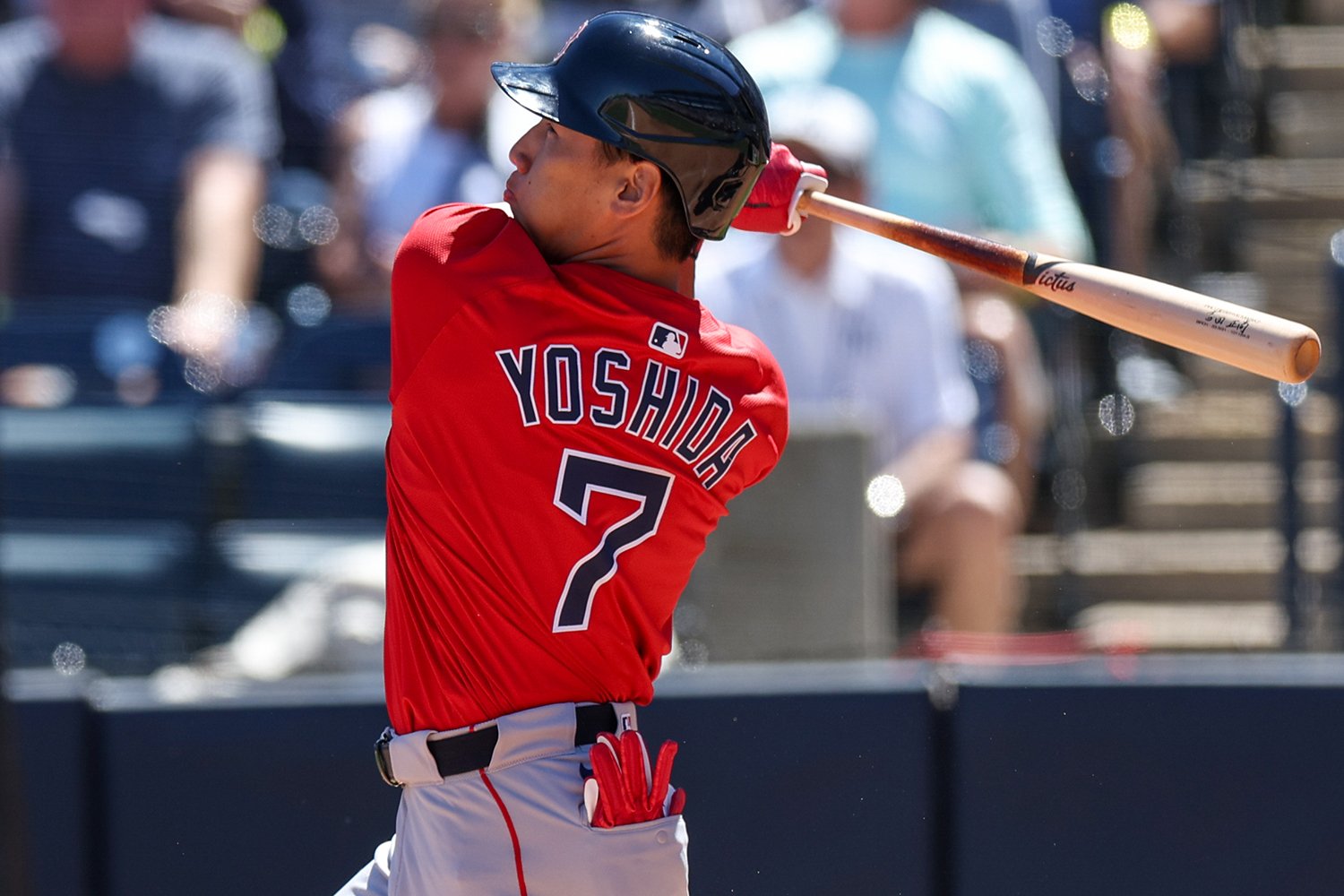 Masataka Yoshida hasn't had great results at the plate during spring training, but he’s looked comfortable. His shoulder seems to be feeling well enough for him to make solid contact and put the ball in play. However, after he homered on March 18, it came out that Yoshida would begin the season at Triple-A Worcester. He'll continue a throwing program to rehab his shoulder. Before we dive into what that means, let’s get a clearer picture of what is actually going on with Yoshida’s situation. According to Ian Browne, Yoshida can be placed on a 20-day rehab assignment once he is ready and he would have to consent to being optioned to the minors as per the terms of his contract. This news was a surprising development, considering Yoshida was seeing regular at-bats throughout spring training. Yes, the fact that Rafael Devers seems to be, at least outwardly, okay with moving to DH full-time made Yoshida’s role on the big league club a bit superflous, but many still expected him to break camp on the main roster. The demotion does tell us that Alex Cora was serious when he claimed that Yoshida would get time in the outfield this season. Currently, Yoshida is throwing from 100 feet and ramping up to longer distances. Yoshida's defense graded out terrible in 2023, and when he played just one emergency inning in 2024, the logical assumption was that his days in the outfield were over. Still, Masataka Yoshida will soon be getting outfield reps in real games. What does that mean when he’s finally ready to return to Boston? That’s a bit of a convoluted question. If there is actually a plan for him to receive outfield reps in the majors, whose spot does he take? The Red Sox have three excellent outfield defenders and one more on the way. Jarren Duran is penciled in to start in left field, and you’d rather have his speed and bat in the lineup every day. Yoshida can't play center or right. Roman Anthony showed out in spring training and is expected to get an early season call up as well. Should Yoshida get more looks over him? I think the plan here is to show that Yoshida can indeed play in the outfield in order to rebuild his trade value. If he can play a passable outfield at Worcester, it’s far more likely that another team will be willing to take on at least a small part of his salary. Should he put on a show in Worcester and force his name into the conversation for a promotion, that’s where things get particularly hairy. You wouldn’t let go of Rob Refsnyder, who can play multiple outfield positions and hit left-handed pitching. DFA’ing someone like Romy Gonzalez or David Hamilton doesn’t make any sense either. Yoshida is a better hitter, but he can't do any of the things that make them valuable depth pieces. Yoshida’s 20-day clock won’t start until "he’s ready," and that will be up to the coaching and training staffs to decide. It's a non-issue for the moment, but once that clock starts to tick, decisions will have to be made in short order. I, for one, don’t envy the people who will have to make them.
 -
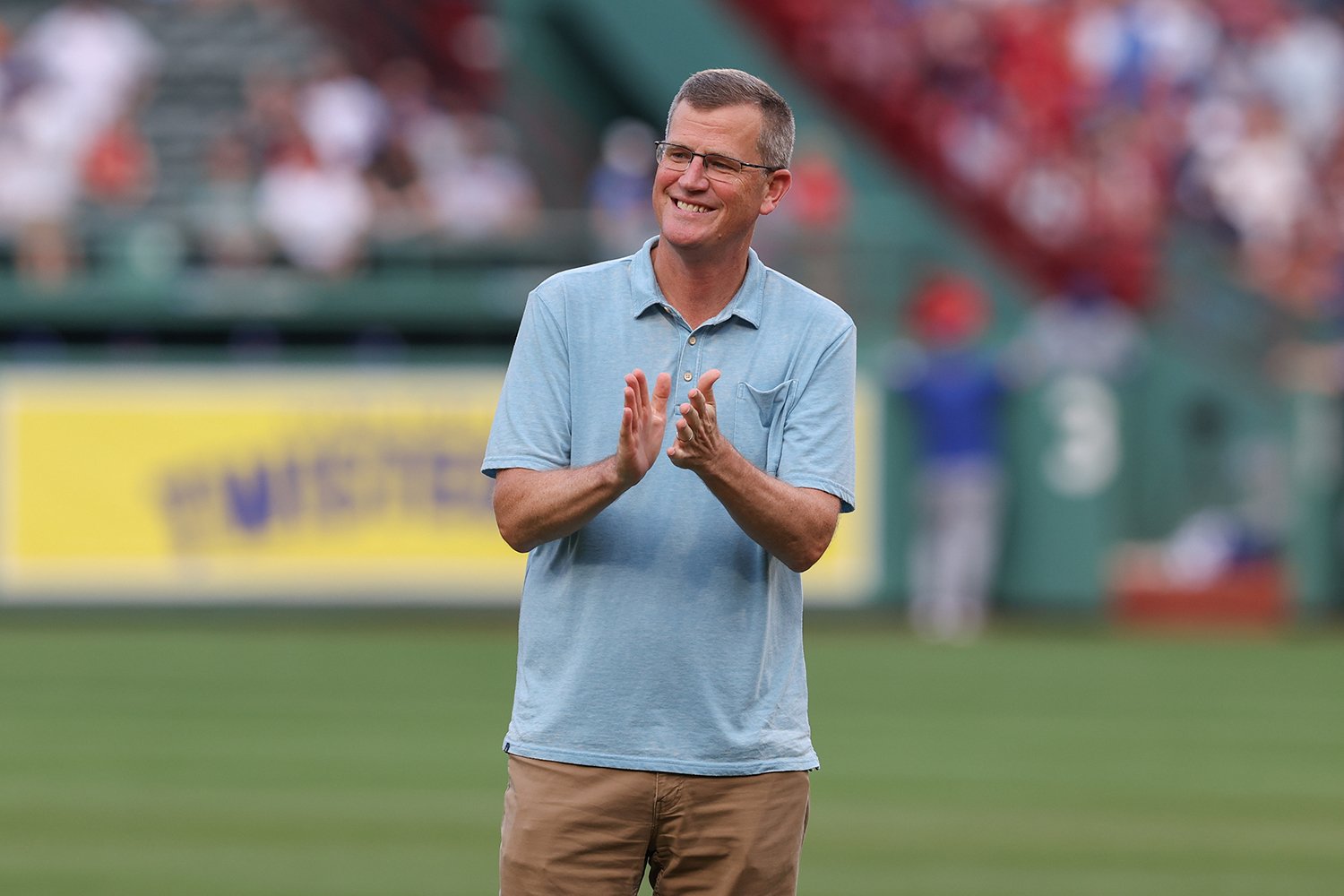 On Monday, Sam Kennedy appeared in his regular beginning-of-the-season interview with Sean McAdam and Chris Cotillo on MassLive.com’s "The Fenway Rundown." They covered a lot of ground in the 27-minute interview, so let’s jump right into some of the quotes that stood out. “Given what a great job our baseball operations group have done in player development; we have guys who are knocking on the door in terms of coming up from the minor league.” We’ll start here because this is a given, considering the current crop of talent in the minor league system. Kristian Campbell already has the Opening Day roster nod, with Marcelo Mayer and Roman Anthony are primed for a breakout at Triple-A. It wouldn’t be a shock at all to see all of the Big Three in Boston sooner rather than later this season. The pitching depth at the minor league level has grown over the last couple of seasons, and there are younger members of the team at the lower level who seem to be on the cusp of their own breakout seasons. “I think we have had a reputation here over the last couple of decades for being an organization that needs to be held accountable to put a team on the field that can play in October. And that’s where we feel we are today. Again, it means nothing until we go out and do it, but that’s the expectation.” I like hearing Kennedy say that the way to prove the organization is headed in the right direction is to play baseball in October. I've been saying this for quite some time as we've reacted and overreacted to various roster moves. On paper, this should be one of the best teams in the American League, if not the best. Failure to live up to that hype after all the moves could mean sweeping changes at multiple levels of the organization. This fan base has been begging for meaningful baseball and it finally feels like we’re going to get that in 2025. “The best organizations in baseball that I’ve observed from my time in the game going to the early 1990s is when you have that stability in baseball…when you have a great working relationship between the general manager and the manager…it feels great that we’re hopefully marching towards some long-term stability in baseball operations.” After the turnover in the president of baseball operations role in Boston, it’s nice to hear Kennedy say that there is some stability in the upper levels of the organization. Yes, the audit that Craig Breslow started when he was hired has been completed and people have been reassigned or let go, but having cohesion between the General Manager/POBO, the team manager, and the ownership group is crucial to success on the field. “Look, I think Raffy did exactly what we would have expected and what superstar players do. He’s putting winning and the team above all else. It doesn’t mean he is going to agree with every decision. Doesn’t mean he’s not one of the more competitive people on the planet…this guy wants to win championships and he’s a championship-caliber player…he ultimately has put the team above himself and his own personal situation, and we expect that he’ll continue to do that.” It took a while to get to the Rafael Devers situation but I again think that Kennedy hit the nail on the head here. Devers put the team’s needs above his personal wants and decided to swap positions to designated hitter to accommodate Alex Bregman and his Gold Glove defense at third. Devers is a competitor and likely wants to prove the doubters wrong when it comes to his ability to play third base but at the end of the day, he needs to do what is asked of him, even if he disagrees with it at times. “We’re really thrilled to have Garrett [Crochet] anchor our rotation in 2025. We will keep the conversations around an extension or contract or any of that in-house and private. I will say from talking to Garrett, his wife Rachel, being around them, seeing their reaction to coming to Boston for our FanFest, seeing them down in spring training, this would be a great place for him for the long term. Hopefully, he feels that way as well…We have to be concerned about everything, including the factors you point to [getting closer to free agency, the top five prospects dealt for two years of control] but I think these conversations in my 24 years here have taken all forms…I remember getting a deal done with Dustin Pedroia at the All-Star break. I was talking to Theo Epstein about a deal that got done, I think, in April with Clay Bucholz, even though there had been discussions about not continuing conversations. I seem to remember a manager of ours more recently signing a contract extension in the middle of the season, even though he said he wasn’t going to. So you just don’t know where these things are going to go.” I combined two sets of quotes for this one because it all centers around Garrett Crochet, his extension, and the deadline for talks he recently set. I believe that an extension with Crochet will get done at some point during the season, with a small possibility that it gets completed before first pitch on Thursday. Setting a deadline of Opening Day to end discussions seems more like a hardball tactic than anything else. As Kennedy pointed out, there have been numerous situations over previous seasons where players and managers have said they didn’t want to talk extension only for their agent to continue talking to the team and getting a deal worked out. The Red Sox would be foolish to trade for Crochet without getting him extended, especially considering what they gave up to get him. “Without getting into specifics, extending our own players is definitely a priority if at all possible. The hallmark of a great Red Sox team, in our experience, is one that is full of homegrown guys all over the diamond, full of international signees, and full of free agents that come in from other places. But we absolutely have to have that core.” This came after Kennedy declined to speak to specifics about extensions with players. You’d have to assume the thought here is to extend the Big Three fairly quickly if given the chance. There are other top contributors who could qualify for this that are currently on the roster — Tanner Houck, Connor Wong, Triston Casas — but the ship seems to have sailed on a Casas extension, and you would think they would have locked Houck up immediately after the 2024 season if they were going to. Wong is intriguing because if his defensive adjustments stick, then he is likely in the elite catcher status for 2025 and it would be smart to get him under contract as the catching position as a whole seems to be on a downhill slide. “I can tell you that they [the new City Connect uniforms] will be controversial. And I think you’re on the right track in terms of the color scheme that you mentioned [green]…I will say, though, nothing can be more controversial than bright yellow…I always have to remind people like my dad and others, you know, these uniforms are not for you. They are for the players and for that next generation of fans…I think there might be a theme with a certain wall in left field.” Outside of the Crochet extension talks, this was the part of the podcast I was most excited to hear. I’m a jersey guy, always have been. I’m so excited for a green City Connect jersey this season and I love that the yellows are part of the home rotation moving forward. I agree with Kennedy that the City Connects aren’t for everyone, but the fact that the Red Sox seem to be pretty bold with their design choices show that they are really trying to get the next generation of baseball fans interested in the team. A brand new City Connect colorway is likely to be another big step in the right direction. Sam Kennedy was more guarded in this interview than he had been in previous appearances on "The Fenway Rundown," but for good reason. Sometimes, those passing comments have gotten him in hot water with fans. It’s refreshing to hear that the front office thinks this team is built to play October baseball, and we can only hope that the Red Sox will live up to that hype.
 -
Sam Kennedy appeared on "The Fenway Rundown" on Monday to give a quick interview before the season gets underway. On Monday, Sam Kennedy appeared in his regular beginning-of-the-season interview with Sean McAdam and Chris Cotillo on MassLive.com’s "The Fenway Rundown." They covered a lot of ground in the 27-minute interview, so let’s jump right into some of the quotes that stood out. “Given what a great job our baseball operations group have done in player development; we have guys who are knocking on the door in terms of coming up from the minor league.” We’ll start here because this is a given, considering the current crop of talent in the minor league system. Kristian Campbell already has the Opening Day roster nod, with Marcelo Mayer and Roman Anthony are primed for a breakout at Triple-A. It wouldn’t be a shock at all to see all of the Big Three in Boston sooner rather than later this season. The pitching depth at the minor league level has grown over the last couple of seasons, and there are younger members of the team at the lower level who seem to be on the cusp of their own breakout seasons. “I think we have had a reputation here over the last couple of decades for being an organization that needs to be held accountable to put a team on the field that can play in October. And that’s where we feel we are today. Again, it means nothing until we go out and do it, but that’s the expectation.” I like hearing Kennedy say that the way to prove the organization is headed in the right direction is to play baseball in October. I've been saying this for quite some time as we've reacted and overreacted to various roster moves. On paper, this should be one of the best teams in the American League, if not the best. Failure to live up to that hype after all the moves could mean sweeping changes at multiple levels of the organization. This fan base has been begging for meaningful baseball and it finally feels like we’re going to get that in 2025. “The best organizations in baseball that I’ve observed from my time in the game going to the early 1990s is when you have that stability in baseball…when you have a great working relationship between the general manager and the manager…it feels great that we’re hopefully marching towards some long-term stability in baseball operations.” After the turnover in the president of baseball operations role in Boston, it’s nice to hear Kennedy say that there is some stability in the upper levels of the organization. Yes, the audit that Craig Breslow started when he was hired has been completed and people have been reassigned or let go, but having cohesion between the General Manager/POBO, the team manager, and the ownership group is crucial to success on the field. “Look, I think Raffy did exactly what we would have expected and what superstar players do. He’s putting winning and the team above all else. It doesn’t mean he is going to agree with every decision. Doesn’t mean he’s not one of the more competitive people on the planet…this guy wants to win championships and he’s a championship-caliber player…he ultimately has put the team above himself and his own personal situation, and we expect that he’ll continue to do that.” It took a while to get to the Rafael Devers situation but I again think that Kennedy hit the nail on the head here. Devers put the team’s needs above his personal wants and decided to swap positions to designated hitter to accommodate Alex Bregman and his Gold Glove defense at third. Devers is a competitor and likely wants to prove the doubters wrong when it comes to his ability to play third base but at the end of the day, he needs to do what is asked of him, even if he disagrees with it at times. “We’re really thrilled to have Garrett [Crochet] anchor our rotation in 2025. We will keep the conversations around an extension or contract or any of that in-house and private. I will say from talking to Garrett, his wife Rachel, being around them, seeing their reaction to coming to Boston for our FanFest, seeing them down in spring training, this would be a great place for him for the long term. Hopefully, he feels that way as well…We have to be concerned about everything, including the factors you point to [getting closer to free agency, the top five prospects dealt for two years of control] but I think these conversations in my 24 years here have taken all forms…I remember getting a deal done with Dustin Pedroia at the All-Star break. I was talking to Theo Epstein about a deal that got done, I think, in April with Clay Bucholz, even though there had been discussions about not continuing conversations. I seem to remember a manager of ours more recently signing a contract extension in the middle of the season, even though he said he wasn’t going to. So you just don’t know where these things are going to go.” I combined two sets of quotes for this one because it all centers around Garrett Crochet, his extension, and the deadline for talks he recently set. I believe that an extension with Crochet will get done at some point during the season, with a small possibility that it gets completed before first pitch on Thursday. Setting a deadline of Opening Day to end discussions seems more like a hardball tactic than anything else. As Kennedy pointed out, there have been numerous situations over previous seasons where players and managers have said they didn’t want to talk extension only for their agent to continue talking to the team and getting a deal worked out. The Red Sox would be foolish to trade for Crochet without getting him extended, especially considering what they gave up to get him. “Without getting into specifics, extending our own players is definitely a priority if at all possible. The hallmark of a great Red Sox team, in our experience, is one that is full of homegrown guys all over the diamond, full of international signees, and full of free agents that come in from other places. But we absolutely have to have that core.” This came after Kennedy declined to speak to specifics about extensions with players. You’d have to assume the thought here is to extend the Big Three fairly quickly if given the chance. There are other top contributors who could qualify for this that are currently on the roster — Tanner Houck, Connor Wong, Triston Casas — but the ship seems to have sailed on a Casas extension, and you would think they would have locked Houck up immediately after the 2024 season if they were going to. Wong is intriguing because if his defensive adjustments stick, then he is likely in the elite catcher status for 2025 and it would be smart to get him under contract as the catching position as a whole seems to be on a downhill slide. “I can tell you that they [the new City Connect uniforms] will be controversial. And I think you’re on the right track in terms of the color scheme that you mentioned [green]…I will say, though, nothing can be more controversial than bright yellow…I always have to remind people like my dad and others, you know, these uniforms are not for you. They are for the players and for that next generation of fans…I think there might be a theme with a certain wall in left field.” Outside of the Crochet extension talks, this was the part of the podcast I was most excited to hear. I’m a jersey guy, always have been. I’m so excited for a green City Connect jersey this season and I love that the yellows are part of the home rotation moving forward. I agree with Kennedy that the City Connects aren’t for everyone, but the fact that the Red Sox seem to be pretty bold with their design choices show that they are really trying to get the next generation of baseball fans interested in the team. A brand new City Connect colorway is likely to be another big step in the right direction. Sam Kennedy was more guarded in this interview than he had been in previous appearances on "The Fenway Rundown," but for good reason. Sometimes, those passing comments have gotten him in hot water with fans. It’s refreshing to hear that the front office thinks this team is built to play October baseball, and we can only hope that the Red Sox will live up to that hype. View full article
-
When Should We Expect Roman Anthony and Marcelo Mayer in Boston?
Alex Mayes posted an article in Red Sox
 With Kristian Campbell making the Opening Day roster, the first member of the Big Three is arriving in Boston. Campbell came into camp with a shot at second base, and even after a slow start has won the starting job over David Hamilton and Vaughn Grissom. We'll have more about Campbell over the coming days, but there’s a discussion to be had about the remaining members of the Big Three. Both Roman Anthony and Marcelo Mayer excelled during spring training and are making the trip to Mexico with the bulk of the big league club. There’s obviously belief within the organization that both Anthony and Mayer are close to ready for their own big league debuts. We can only speculate as to when those call-ups will happen, but I'll lay out a few scenarios in which we could see Anthony and Mayer called up to Boston sooner rather than later. Scenario 1: Roman Anthony Forces Their Hand I think this is by far the most likely scenario involving an early call-up for Anthony. He ran a 103 wRC+ during spring training, and that's not the lights-out success some were expecting from him. However, he dealt with the mysterious stomach bug that plagued the camp for the bulk of spring training and is still working his way back to form. Once the season begins and he is starting in center in Worcester, we’ll see the old Anthony come screaming back into the spotlight. When, not if, he rakes at Triple-A, the Red Sox will have a huge decision to make, specifically involving Anthony and Wilyer Abreu. Yes, Wilyer is a Gold Glove-winning right fielder, but he’s a platoon outfielder. Last year in the minor leagues, Anthony slashed .347/.480/.520 against right-handed pitching and .333/.410/.515 against left-handed pitching. He can hit everybody. Once he gets into major league games, he will do the same in Boston. Scenario 2: Trevor Story Gets Injured I’ll start this one by saying I hope Trevor Story stays healthy and I want him to succeed. However, if recent history is any indication, then we need to be planning for him to spend some amount of time on the injured list. Hamilton and Grissom that can handle shortstop in Story's absence, but neither of those options is particularly appealing. Enter Mayer, who has looked like a big-league shortstop during spring training. He’s proven that his high draft spot was deserved, but as we found out on Sunday, he will begin the season in Worcester. This makes a lot of sense, as outside of spring training, he has seen exactly zero pitches above Double-A. It’s likely that if he started the season in Boston, he would adapt and play well, but there’s no reason to rush him to the big league club until an injury makes it a necessity. Let him hone his offensive abilities under less pressure and bring him up when the team needs him. Scenario 3: Alex Bregman Goes Down Once again, I hope this doesn't happen, but with Rafael Devers seeing no time at third during spring training and beginning the season as the full-time DH, it's hard not to assume his days at third base are over. Sure, he could easily fill in if Alex Bregman were to get injured, but I think it’s far more likely that the team would keep Devers at DH and call Mayer up to fill that void. Mayer saw a bit of time at third during spring training and has been working out there to add some positional versatility to his game. If Devers is raking at DH and feels more confident becoming the next David Ortiz or J.D. Martinez by being a pure offensive weapon, then calling Mayer up to play third would make sense. Scenario 4: Wilyer Abreu Falls Flat Abreu spent the bulk of spring training recovering from a gastrointestinal virus and lost quite a bit of weight and muscle. While he has looked fine in limited action, we saw how much Grissom struggled in the same situation last year. Once the season begins, putting on that kind of weight and maintaining it will be incredibly difficult. It stands to reason that Abreu will be focusing on his baseball skills while trying to add that weight back. The weight loss likely will impact his power at the plate, which could cause the Red Sox to pivot to Anthony quicker than they anticipated. Should Abreu prove to be a liability, the front office will likely look to the top prospect in baseball to take his spot while he tries to figure things out. There are far more scenarios that could see either Anthony or Mayer getting the call, but these four are the four most likely in my opinion. While some of them come with injury woes, seeing the entire Big Three in Boston during the 2025 season is a real possibility. The Red Sox have drafted and developed well over the last few seasons, and the fan base finally has a young core to be excited about. It starts with Campbell making the Opening Day roster, but don’t be shocked to see his highly-touted teammates join him in Boston sooner rather than later.
 -
We already know that Kristian Campbell is going to break camp with the big league club, but when should we expect the other members of the Big Three to make their Red Sox debut? With Kristian Campbell making the Opening Day roster, the first member of the Big Three is arriving in Boston. Campbell came into camp with a shot at second base, and even after a slow start has won the starting job over David Hamilton and Vaughn Grissom. We'll have more about Campbell over the coming days, but there’s a discussion to be had about the remaining members of the Big Three. Both Roman Anthony and Marcelo Mayer excelled during spring training and are making the trip to Mexico with the bulk of the big league club. There’s obviously belief within the organization that both Anthony and Mayer are close to ready for their own big league debuts. We can only speculate as to when those call-ups will happen, but I'll lay out a few scenarios in which we could see Anthony and Mayer called up to Boston sooner rather than later. Scenario 1: Roman Anthony Forces Their Hand I think this is by far the most likely scenario involving an early call-up for Anthony. He ran a 103 wRC+ during spring training, and that's not the lights-out success some were expecting from him. However, he dealt with the mysterious stomach bug that plagued the camp for the bulk of spring training and is still working his way back to form. Once the season begins and he is starting in center in Worcester, we’ll see the old Anthony come screaming back into the spotlight. When, not if, he rakes at Triple-A, the Red Sox will have a huge decision to make, specifically involving Anthony and Wilyer Abreu. Yes, Wilyer is a Gold Glove-winning right fielder, but he’s a platoon outfielder. Last year in the minor leagues, Anthony slashed .347/.480/.520 against right-handed pitching and .333/.410/.515 against left-handed pitching. He can hit everybody. Once he gets into major league games, he will do the same in Boston. Scenario 2: Trevor Story Gets Injured I’ll start this one by saying I hope Trevor Story stays healthy and I want him to succeed. However, if recent history is any indication, then we need to be planning for him to spend some amount of time on the injured list. Hamilton and Grissom that can handle shortstop in Story's absence, but neither of those options is particularly appealing. Enter Mayer, who has looked like a big-league shortstop during spring training. He’s proven that his high draft spot was deserved, but as we found out on Sunday, he will begin the season in Worcester. This makes a lot of sense, as outside of spring training, he has seen exactly zero pitches above Double-A. It’s likely that if he started the season in Boston, he would adapt and play well, but there’s no reason to rush him to the big league club until an injury makes it a necessity. Let him hone his offensive abilities under less pressure and bring him up when the team needs him. Scenario 3: Alex Bregman Goes Down Once again, I hope this doesn't happen, but with Rafael Devers seeing no time at third during spring training and beginning the season as the full-time DH, it's hard not to assume his days at third base are over. Sure, he could easily fill in if Alex Bregman were to get injured, but I think it’s far more likely that the team would keep Devers at DH and call Mayer up to fill that void. Mayer saw a bit of time at third during spring training and has been working out there to add some positional versatility to his game. If Devers is raking at DH and feels more confident becoming the next David Ortiz or J.D. Martinez by being a pure offensive weapon, then calling Mayer up to play third would make sense. Scenario 4: Wilyer Abreu Falls Flat Abreu spent the bulk of spring training recovering from a gastrointestinal virus and lost quite a bit of weight and muscle. While he has looked fine in limited action, we saw how much Grissom struggled in the same situation last year. Once the season begins, putting on that kind of weight and maintaining it will be incredibly difficult. It stands to reason that Abreu will be focusing on his baseball skills while trying to add that weight back. The weight loss likely will impact his power at the plate, which could cause the Red Sox to pivot to Anthony quicker than they anticipated. Should Abreu prove to be a liability, the front office will likely look to the top prospect in baseball to take his spot while he tries to figure things out. There are far more scenarios that could see either Anthony or Mayer getting the call, but these four are the four most likely in my opinion. While some of them come with injury woes, seeing the entire Big Three in Boston during the 2025 season is a real possibility. The Red Sox have drafted and developed well over the last few seasons, and the fan base finally has a young core to be excited about. It starts with Campbell making the Opening Day roster, but don’t be shocked to see his highly-touted teammates join him in Boston sooner rather than later. View full article
-
Living up to the hype of being traded for a future Cy Young winner has likely placed a ton of pressure on Vaughn Grissom. Maybe he already needs a change of scenery to get back to being the player he wants to be. Bleacher Report recently listed Vaughn Grissom as a prime candidate for a change of scenery. Honestly, they probably aren’t wrong. Grissom hasn’t lived up to the hopes the Red Sox front office put in him with they traded Chris Sale for him before the 2024 season. Grissom has looked overmatched at points, he’s struggled to stay healthy, and so far this spring he’s hitting a putrid .188. I wrote earlier about a potential budding competition for second base between Grissom and David Hamilton but since then, the Red Sox have featured Kristian Campbell almost exclusively at second, so it appears as if the competition is actually between Hamilton and Campbell. Where does this leave Grissom now, and how likely is it for a change of scenery during the 2025 season? Both of those are fairly loaded questions, and the likely answer leaves the front office looking a bit foolish. I’m not questioning the Chris Sale trade. I firmly believe had he stayed in Boston that we wouldn’t have gotten the same season the Atlanta Braves did out of him. That being said, trading him for Grissom is major misstep Craig Breslow and company. In their defense, they likely had no idea Campbell would burst onto the scene in such a dramatic way in 2024, but trading someone like Sale for a quad-A player who will likely only see time in Boston during the 2025 season if several people get injured is the biggest black eye for Breslow so far. As for a change of scenery, I suppose it’s possible but it’s going to take Breslow admitting he made a mistake with the original trade and selling Grissom for pennies on the dollar as part of a larger trade package. You’re not going to get any team to trade for Grissom as he currently stands. If he shows out in Worcester to begin the season, his value increases some, but other teams are going to be well aware of his shortcomings. Grissom appeared for a time to be the heir apparent to Dansby Swanson in Atlanta, so the Red Sox are now the second team to decide against him. You could see a team that's out of contention and looking to rebuild take a chance on him but a lot of those programs already have young shortstops and second basemen that profile to be more impactful than Grissom has been. Unfortunately for Grissom, the Red Sox are much stronger up the middle on defense than they have been in previous years, and he’s failed to live up to the expectations of the trade that brought him to Boston. The early returns during spring training have been less than ideal. In the span of a year, Grissom has gone from being traded for the future Cy Young winner to an afterthought on a team focusing on a youth movement. He still has time to turn it around, but it’s becoming increasingly likely that his next opportunity will come somewhere other than Boston. View full article
-
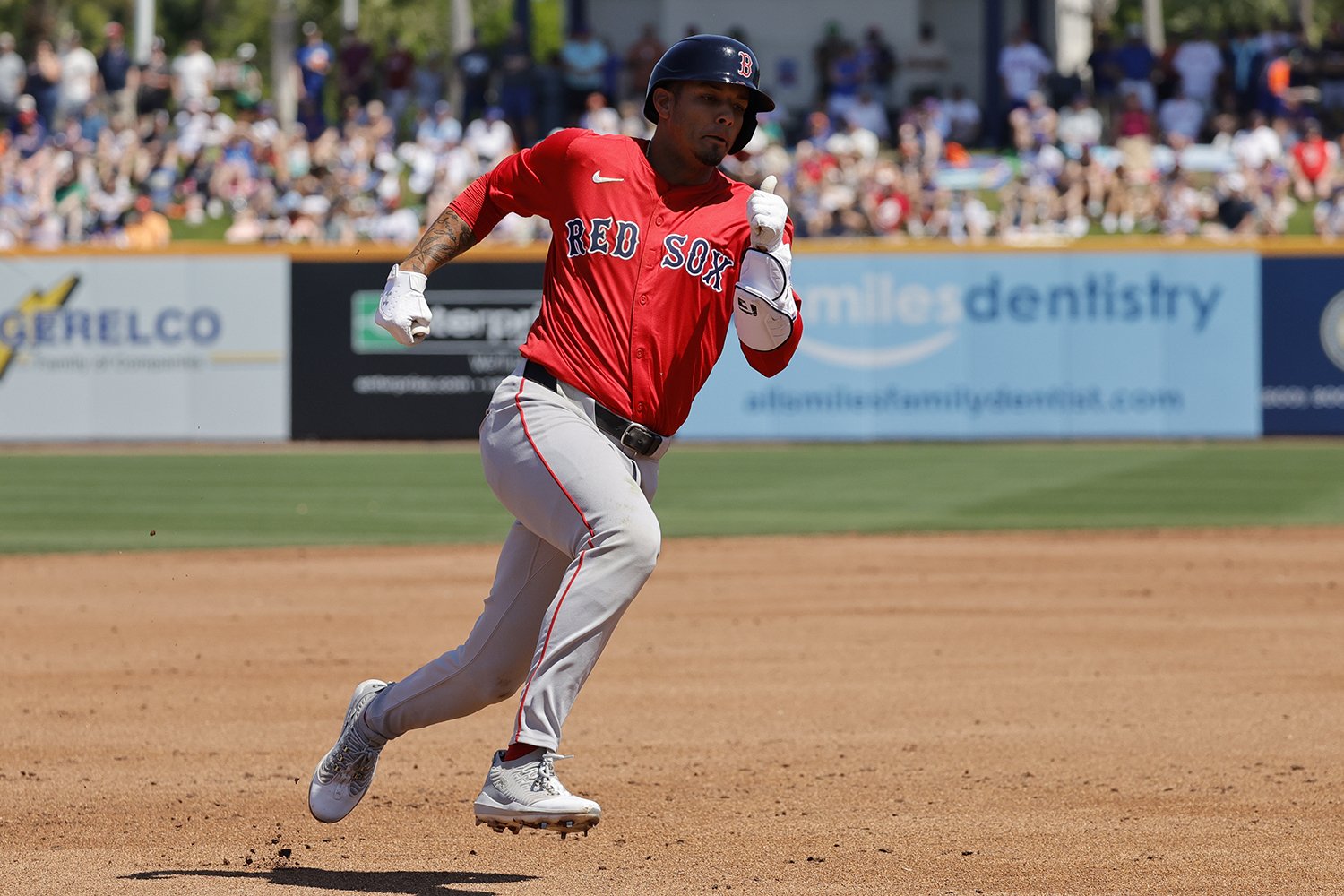 Bleacher Report recently listed Vaughn Grissom as a prime candidate for a change of scenery. Honestly, they probably aren’t wrong. Grissom hasn’t lived up to the hopes the Red Sox front office put in him with they traded Chris Sale for him before the 2024 season. Grissom has looked overmatched at points, he’s struggled to stay healthy, and so far this spring he’s hitting a putrid .188. I wrote earlier about a potential budding competition for second base between Grissom and David Hamilton but since then, the Red Sox have featured Kristian Campbell almost exclusively at second, so it appears as if the competition is actually between Hamilton and Campbell. Where does this leave Grissom now, and how likely is it for a change of scenery during the 2025 season? Both of those are fairly loaded questions, and the likely answer leaves the front office looking a bit foolish. I’m not questioning the Chris Sale trade. I firmly believe had he stayed in Boston that we wouldn’t have gotten the same season the Atlanta Braves did out of him. That being said, trading him for Grissom is major misstep Craig Breslow and company. In their defense, they likely had no idea Campbell would burst onto the scene in such a dramatic way in 2024, but trading someone like Sale for a quad-A player who will likely only see time in Boston during the 2025 season if several people get injured is the biggest black eye for Breslow so far. As for a change of scenery, I suppose it’s possible but it’s going to take Breslow admitting he made a mistake with the original trade and selling Grissom for pennies on the dollar as part of a larger trade package. You’re not going to get any team to trade for Grissom as he currently stands. If he shows out in Worcester to begin the season, his value increases some, but other teams are going to be well aware of his shortcomings. Grissom appeared for a time to be the heir apparent to Dansby Swanson in Atlanta, so the Red Sox are now the second team to decide against him. You could see a team that's out of contention and looking to rebuild take a chance on him but a lot of those programs already have young shortstops and second basemen that profile to be more impactful than Grissom has been. Unfortunately for Grissom, the Red Sox are much stronger up the middle on defense than they have been in previous years, and he’s failed to live up to the expectations of the trade that brought him to Boston. The early returns during spring training have been less than ideal. In the span of a year, Grissom has gone from being traded for the future Cy Young winner to an afterthought on a team focusing on a youth movement. He still has time to turn it around, but it’s becoming increasingly likely that his next opportunity will come somewhere other than Boston.
 -
 Alex Cora told the media early in the offseason that Ceddanne Rafaela would see most of his time at center field. That is a very good thing. It locks up a key position and hopefully brings another Gold Glove to the Boston outfield in 2025. Making sure Rafaela plays his main position will be a major key to success this season for the Red Sox. Red Sox CF at a Glance Starter: Ceddanne Rafaela Backup: Jarren Duran Depth: Wilyer Abreu, Rob Refsnyder, Trayce Thompson (NRI) Prospects: Roman Anthony, Jhostynxon Garcia, Allan Castro, Miguel Bleis Red Sox CF fWAR Ranking Last Year: 13 out of 30 The Good Center field defense should be a bright spot for the Red Sox this season. Ceddanne Rafaela has proven to play Gold Glove, possibly even Platinum Glove-caliber defense when he’s roaming center, and all indications are that he will continue to do so in 2025. The biggest difference seems to be coming on the offensive side of the baseball for Rafaela. He looks far more patient and has unlocked a bit more power while hitting to all parts of the field. If Rafaela were to go down with injury, Jarren Duran is a more-than-capable center fielder in his own right. Both players are speed demons and have flashed the ability to make highlight-reel plays on a regular basis. The Bad The depth behind Duran is lacking. Roman Anthony has played center coming up through the system, but he profiles as a corner outfielder in Boston instead of a true center fielder. He could play the position in a pinch, and the same can be said for Rob Refsnyder and Wilyer Abreu, but you don’t want to count on the three of them manning the position for any significant amount of time. Trayce Thompson isn’t guaranteed to break camp with the big club, and while he would make a fine bench piece in Boston, keeping him on the roster over more infield depth pieces would involve some tough conversations. Garcia and Bleis, are at least a season away from being considered for promotion to Boston. The Bottom Line Between Rafaela and Duran, center field defense in Boston should be locked down for quite a while. There’s depth in the system but outside of Anthony, it is at least a year away from being considered major-league ready. If Rafaela struggles and Anthony proves himself ready for a promotion, center field could look very different at the end of the season. Right now, the Red Sox are hoping that their trio of outfielders are all in contention for Gold Gloves — incredibly, not an outlandish notion — and that would mean that those of us who long for the days of The Killer Bs in the outfield can finally start to feel confident that the outfield in Boston is set for the foreseeable future.
 -
Center should be locked up for years to come, but in the event of injuries, the depth gets surprisingly thin quickly. Alex Cora told the media early in the offseason that Ceddanne Rafaela would see most of his time at center field. That is a very good thing. It locks up a key position and hopefully brings another Gold Glove to the Boston outfield in 2025. Making sure Rafaela plays his main position will be a major key to success this season for the Red Sox. Red Sox CF at a Glance Starter: Ceddanne Rafaela Backup: Jarren Duran Depth: Wilyer Abreu, Rob Refsnyder, Trayce Thompson (NRI) Prospects: Roman Anthony, Jhostynxon Garcia, Allan Castro, Miguel Bleis Red Sox CF fWAR Ranking Last Year: 13 out of 30 The Good Center field defense should be a bright spot for the Red Sox this season. Ceddanne Rafaela has proven to play Gold Glove, possibly even Platinum Glove-caliber defense when he’s roaming center, and all indications are that he will continue to do so in 2025. The biggest difference seems to be coming on the offensive side of the baseball for Rafaela. He looks far more patient and has unlocked a bit more power while hitting to all parts of the field. If Rafaela were to go down with injury, Jarren Duran is a more-than-capable center fielder in his own right. Both players are speed demons and have flashed the ability to make highlight-reel plays on a regular basis. The Bad The depth behind Duran is lacking. Roman Anthony has played center coming up through the system, but he profiles as a corner outfielder in Boston instead of a true center fielder. He could play the position in a pinch, and the same can be said for Rob Refsnyder and Wilyer Abreu, but you don’t want to count on the three of them manning the position for any significant amount of time. Trayce Thompson isn’t guaranteed to break camp with the big club, and while he would make a fine bench piece in Boston, keeping him on the roster over more infield depth pieces would involve some tough conversations. Garcia and Bleis, are at least a season away from being considered for promotion to Boston. The Bottom Line Between Rafaela and Duran, center field defense in Boston should be locked down for quite a while. There’s depth in the system but outside of Anthony, it is at least a year away from being considered major-league ready. If Rafaela struggles and Anthony proves himself ready for a promotion, center field could look very different at the end of the season. Right now, the Red Sox are hoping that their trio of outfielders are all in contention for Gold Gloves — incredibly, not an outlandish notion — and that would mean that those of us who long for the days of The Killer Bs in the outfield can finally start to feel confident that the outfield in Boston is set for the foreseeable future. View full article
