


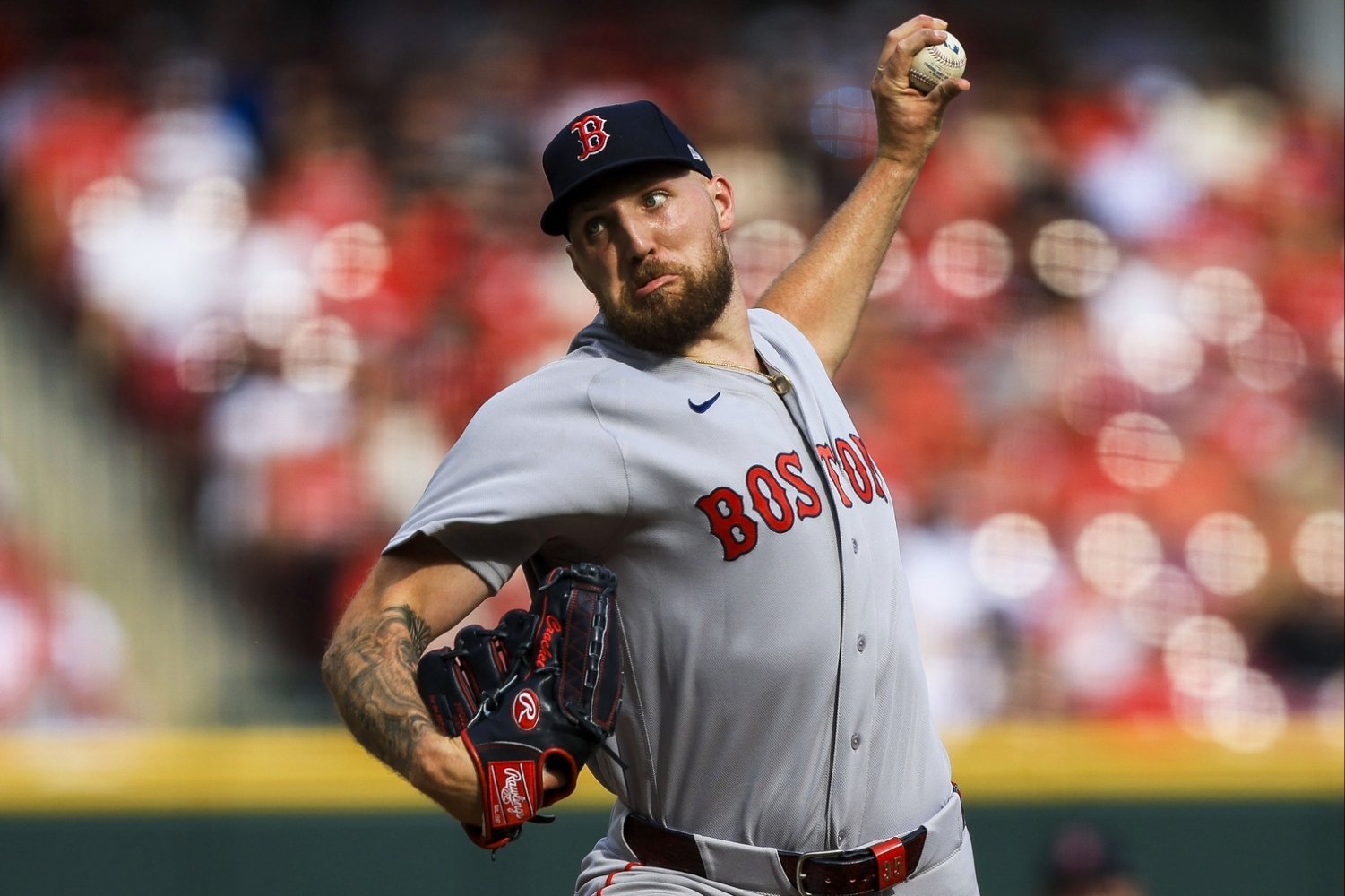
Red Sox Video
Garrett Crochet left all spring-training-related concerns by the wayside on Opening Day, striking out eight while allowing three hits and two walks. Despite a swinging strike rate of only 12.5%, Crochet limited hard-contact throughout the outing with an opponent barrel rate of 7.1% and xAVG of .215.
Crochet was reported to have developed a splitter over the offseason that he liked so much, he offered the guy who suggested the change a job in Major League Baseball.
While it did catch some attention (as well as some headlines), the pitch never ended up making many waves in the spring. It did not grade out poorly by any stretch, generating a tjStuff+ of 101, but its results on the field did not do enough to garner interest from the Red Sox or Crochet to bring it to regular season action.
During spring training, Crochet threw the splitter 11 times. It sat around 88 mph and generated zero whiffs with a below-average zone percentage of 27.3%. Crochet's spring results likely reinforced the "If it ain't broke, don't fix it" mantra. The splitter never generated enough to justify shelving what already works, and what works, as Opening Day reminded us, is plenty.
Jen McCaffery of The Athletic asked Crochet about the absence of the splitter in his opening outing, as Crochet had this to say:
“Just a lot more strikes, a lot more usage of the three fastballs,” Crochet said. “In spring, toying with the splitter, today it was like, ‘Hey, I’m banging the splitter for the year.’ I’ll just go back to the changeup I was throwing last year, and was able to flash that a couple times but didn’t overuse that or the sweeper, and I just felt like I was attacking with strengths and weaknesses when needed to be.”
Crochet only displayed the changeup twice on Thursday, and in 2025, threw it 4.3 percent of the time. Against righties, though, 5.3 percent. Despite its minimal usage, it is a fantastic offering for him, if only to keep opposing hitters guessing. The pitch allowed a .091 SLG and .167 xwOBA along with a ridiculous 71 percent groundball rate. Among all changeups thrown 100 or more times in 2025, Crochet's groundball rate on the pitch was the fifth-highest in baseball.
The primary issue with his changeup is that he rarely throws it for a strike. The Ball% (56%) on his changeup is the sixth-highest among changeups thrown at least 100 times. We can never know for sure, but it is likely that Crochet missed off the plate intentionally. Considering he throws the pitch only 5% of the time, it can be a pitch he tunnels with his fastball, forcing opposing hitters to beat it into the ground by swinging over it.
Below is his change-up heat map to right-handed hitters:

We see a clear, obvious desire to work low and away with his changeup, and his red zone is out of the strike zone, which plausibly explains the high Ball% combined with the high groundball rate. His changeup was plenty effective last season, as was he. While the desire to improve continuously is admirable, recognition of what works and what does not is an equally valuable skill.
The splitter experiment is a footnote. What matters now is that Crochet looks every bit like a pitcher in command of his craft — and the rest of the AL is going to feel that all season long.





Recommended Comments
Create an account or sign in to comment
You need to be a member in order to leave a comment
Create an account
Sign up for a new account in our community. It's easy!
Register a new accountSign in
Already have an account? Sign in here.
Sign In Now