Davy Andrews
-
Posts
196 -
Joined
-
Last visited
Content Type
Profiles
Boston Red Sox Videos
2026 Boston Red Sox Top Prospects Ranking
Boston Red Sox Free Agent & Trade Rumors, Notes, & Tidbits
Guides & Resources
2025 Boston Red Sox Draft Pick Tracker
News
2026 Boston Red Sox Draft Tracker: Picks & Bonuses
Forums
Blogs
Events
Store
Downloads
Gallery
Everything posted by Davy Andrews
-
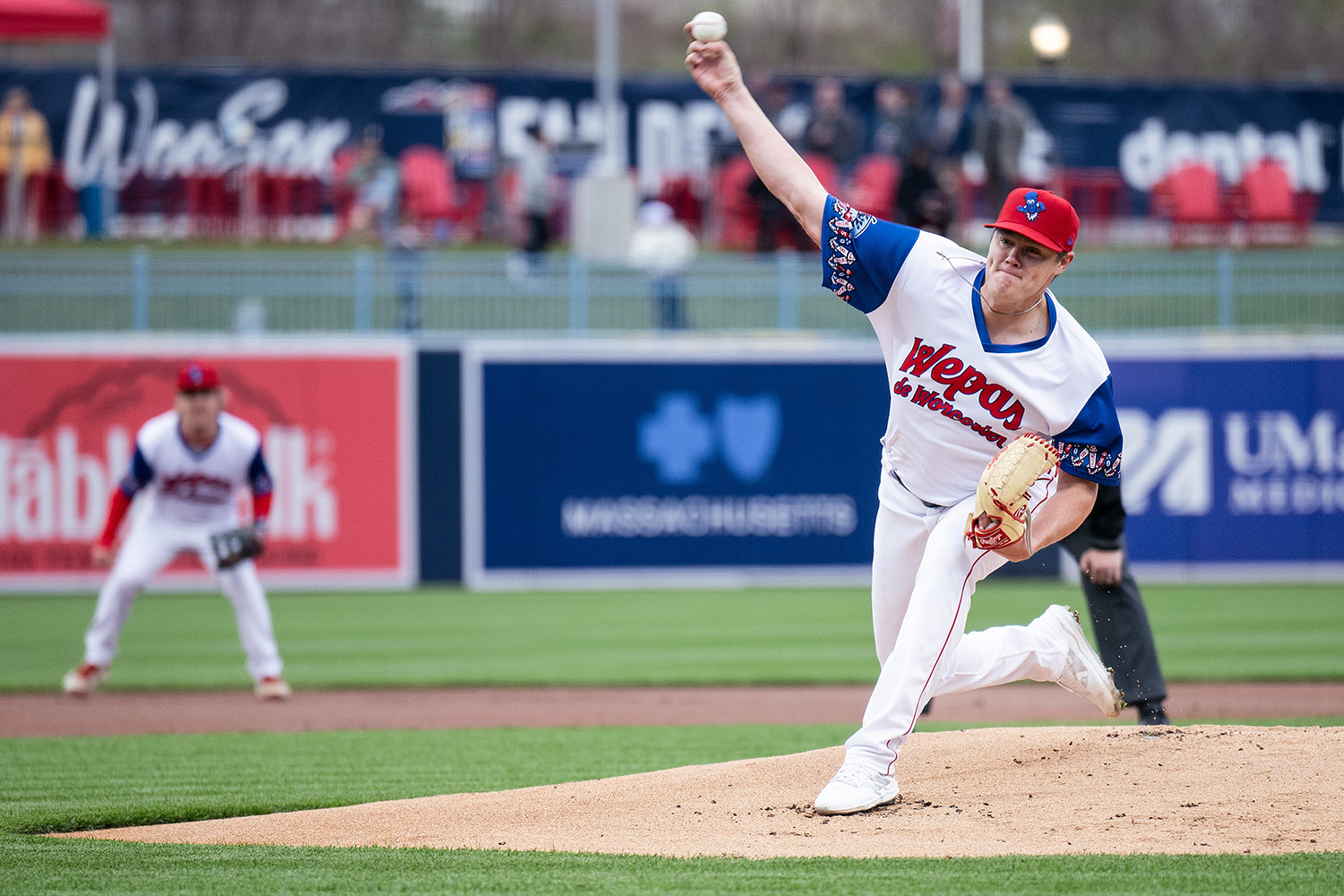 Yesterday, we named Richard Fitts our ninth-ranked Red Sox prospect and Alex Mayes wrote up the right-hander’s 2024 season. Today, I’d like to accompany that piece with a deeper dive, because Fitts had some of the oddest splits you'll see. The splits weren’t between his stats against righties and lefties, but rather his stats in the minors and majors. It’s not just that Fitts pitched much better in Boston than in Worcester, though he definitely did. It's that his results made him look like a totally different kind of pitcher. After running a 4.17 ERA in Triple A, he ran a 1.74 ERA in Boston. What we're interested in, though, is ERA estimators. Level G IP HR ERA FIP xFIP DRA AAA 24 116.2 19 4.17 4.86 4.66 4.98 MLB 4 20.2 0 1.74 3.31 5.51 5.47 Fitts ran a lower FIP with the Red Sox too, but it’s not quite that simple. FIP gives you a better estimate of how the pitcher performed by stripping out batted ball luck. In order to do that, it only looks at walks, strikeouts, and homers. Fitts allowed 19 homers over 24 appearances at Worcester, so we should probably expect him to give up the occasional homer. However, over his four starts with the Red Sox, he didn’t allow a single homer, and naturally, FIP loved that. On the other hand, more advanced estimators like DRA and xFIP were much less impressed. xFIP relies on Statcast’s expected metrics, and Statcast thought that Fitts deserved to give up 0.7 home runs over his four starts. After all, it's not like no one ever hit the ball hard against him. That fraction of a home run was enough to completely tank his xFIP, sending it all the way up to 5.51. You might be wondering why getting credited with just one portion of a homer was enough to wreck his xFIP, and we'll answer that question in a moment. First, though, it's important to recognize that it wasn't just luck that kept Fitts from giving up homers in Boston. Fitts didn't give up homers because he did a great job at limiting hard contact. He had a 41.2% hard-hit rate and a 90.3-mph average exit velocity in Worcester. Among pitchers who faced at least 100 batters while Statcast was tracking the data, that hard-hit rate put him in the ninth percentile. In other words, triple-A batters hit him extremely hard. But when he got to Boston, those numbers somehow fell to 33.3% and 88.5 mph. Not only was Fitts better, but his hard-hit rate was one of the best in baseball! How was he able to do this against big-league competition when he couldn’t do it against minor leaguers? Now let’s get back to xFIP, because there’s a specific reason that seven-tenths of a homer was enough to completely ruin it for Fitts. As I mentioned, FIP looks at walks, homers, and strikeouts. Fitts had a league-average walk rate, but he struck out just nine batters for an extremely low 10.6% strikeout rate. There were 656 pitchers who threw at least 10 big-league innings in 2024, and that mark ranked 648th. Because he didn’t strike anybody out, just one homer – just one fraction of a homer – was enough to throw the balance out of whack and completely change the way that the advanced ERA estimators viewed Fitts. That brings us to our next split, because it’s not like Fitts is incapable of striking batters out. He ran a 22.6% strikeout rate in Worcester, and before that, he’d never run a strikeout rate below 25% in any of his previous minor-league stops. Fitts ran a 25.3 whiff rate in Worcester. That wasn’t great even for Triple A, but in Boston, it fell all the way to 15.2%. Fitts simply couldn’t miss big-league bats. What made it even stranger was that he did induce lots of chases. His excellent 32% chase was almost exactly the same as the one he ran in Worcester. Chases and whiffs usually go hand in hand, but in this case, Fitts simply couldn’t get batters to miss, even on pitches out of the strike zone. So that’s where we are. In Triple A, Fitts racked up plenty of chases, whiffs, and strikeouts, but he allowed enough home runs and loud contact that his overall line wasn’t particularly impressive. Once he got to Boston, Fitts continued to get chases, but he lost the ability to miss bats. However, what he lost in strikeouts he made up for by inducing weak contact. In other words, his profile completely flipped. I don’t have any bright ideas about why this might have happened, and we’re talking about a tiny sample of just four starts. Still, I wanted to write about it because if you watched those four starts without diving into the numbers, you might have come away from the 2024 season thinking that Fitts was a master of contact suppression and that his game revolved around keeping hitters guessing rather than striking them out. That's probably not true. Fitts didn't change his pitch mix drastically when he got to Boston. He leads with his four-seam fastball, and nearly all of his pitches are rising as they approach home plate. Pitchers with arsenals like that tend to earn a lot of strikeouts up above the zone, but also tend to give up a lot of fly balls and home runs. Fitts is young and he's still learning. I don’t think we know what to expect from him just yet, but the version we of him we saw over four starts in September is probably not what we should expect going forward. It might even be backwards.
 -
 Richard Fitts didn't just pitch better during his brief September call-up with the Red Sox than he had in Worcester. He pitched very differently. Yesterday, we named Richard Fitts our ninth-ranked Red Sox prospect and Alex Mayes wrote up the right-hander’s 2024 season. Today, I’d like to accompany that piece with a deeper dive, because Fitts had some of the oddest splits you'll see. The splits weren’t between his stats against righties and lefties, but rather his stats in the minors and majors. It’s not just that Fitts pitched much better in Boston than in Worcester, though he definitely did. It's that his results made him look like a totally different kind of pitcher. After running a 4.17 ERA in Triple A, he ran a 1.74 ERA in Boston. What we're interested in, though, is ERA estimators. Level G IP HR ERA FIP xFIP DRA AAA 24 116.2 19 4.17 4.86 4.66 4.98 MLB 4 20.2 0 1.74 3.31 5.51 5.47 Fitts ran a lower FIP with the Red Sox too, but it’s not quite that simple. FIP gives you a better estimate of how the pitcher performed by stripping out batted ball luck. In order to do that, it only looks at walks, strikeouts, and homers. Fitts allowed 19 homers over 24 appearances at Worcester, so we should probably expect him to give up the occasional homer. However, over his four starts with the Red Sox, he didn’t allow a single homer, and naturally, FIP loved that. On the other hand, more advanced estimators like DRA and xFIP were much less impressed. xFIP relies on Statcast’s expected metrics, and Statcast thought that Fitts deserved to give up 0.7 home runs over his four starts. After all, it's not like no one ever hit the ball hard against him. That fraction of a home run was enough to completely tank his xFIP, sending it all the way up to 5.51. You might be wondering why getting credited with just one portion of a homer was enough to wreck his xFIP, and we'll answer that question in a moment. First, though, it's important to recognize that it wasn't just luck that kept Fitts from giving up homers in Boston. Fitts didn't give up homers because he did a great job at limiting hard contact. He had a 41.2% hard-hit rate and a 90.3-mph average exit velocity in Worcester. Among pitchers who faced at least 100 batters while Statcast was tracking the data, that hard-hit rate put him in the ninth percentile. In other words, triple-A batters hit him extremely hard. But when he got to Boston, those numbers somehow fell to 33.3% and 88.5 mph. Not only was Fitts better, but his hard-hit rate was one of the best in baseball! How was he able to do this against big-league competition when he couldn’t do it against minor leaguers? Now let’s get back to xFIP, because there’s a specific reason that seven-tenths of a homer was enough to completely ruin it for Fitts. As I mentioned, FIP looks at walks, homers, and strikeouts. Fitts had a league-average walk rate, but he struck out just nine batters for an extremely low 10.6% strikeout rate. There were 656 pitchers who threw at least 10 big-league innings in 2024, and that mark ranked 648th. Because he didn’t strike anybody out, just one homer – just one fraction of a homer – was enough to throw the balance out of whack and completely change the way that the advanced ERA estimators viewed Fitts. That brings us to our next split, because it’s not like Fitts is incapable of striking batters out. He ran a 22.6% strikeout rate in Worcester, and before that, he’d never run a strikeout rate below 25% in any of his previous minor-league stops. Fitts ran a 25.3 whiff rate in Worcester. That wasn’t great even for Triple A, but in Boston, it fell all the way to 15.2%. Fitts simply couldn’t miss big-league bats. What made it even stranger was that he did induce lots of chases. His excellent 32% chase was almost exactly the same as the one he ran in Worcester. Chases and whiffs usually go hand in hand, but in this case, Fitts simply couldn’t get batters to miss, even on pitches out of the strike zone. So that’s where we are. In Triple A, Fitts racked up plenty of chases, whiffs, and strikeouts, but he allowed enough home runs and loud contact that his overall line wasn’t particularly impressive. Once he got to Boston, Fitts continued to get chases, but he lost the ability to miss bats. However, what he lost in strikeouts he made up for by inducing weak contact. In other words, his profile completely flipped. I don’t have any bright ideas about why this might have happened, and we’re talking about a tiny sample of just four starts. Still, I wanted to write about it because if you watched those four starts without diving into the numbers, you might have come away from the 2024 season thinking that Fitts was a master of contact suppression and that his game revolved around keeping hitters guessing rather than striking them out. That's probably not true. Fitts didn't change his pitch mix drastically when he got to Boston. He leads with his four-seam fastball, and nearly all of his pitches are rising as they approach home plate. Pitchers with arsenals like that tend to earn a lot of strikeouts up above the zone, but also tend to give up a lot of fly balls and home runs. Fitts is young and he's still learning. I don’t think we know what to expect from him just yet, but the version we of him we saw over four starts in September is probably not what we should expect going forward. It might even be backwards. View full article
 -
I counted every single clean and dirty day, and then I ranked them all on the Abreu Effort Scale. Someone get this guy a laundry detergent sponsorship. The 2024 season didn’t go how the Red Sox wanted it to go, but it still contained plenty of reasons to tune in each night. Personally, I loved watching Wilyer Abreu. In the field, at the plate, and on the basepaths, Abreu is as high-energy, high-effort a player as you’ll ever see. Even when the Red Sox were getting blown out, you could count on him to give something like 158%. One late-September night during garbage time of a meaningless game, I was watching Abreu, the whole front of his uniform already impregnated with dirt, bust it down the line on a routine groundball, and I started wondering. Between his (presumably) Gold Glove defense and his aggressive baserunning, Abreu always seems to be getting his uniform dirty. It's the ultimate sign of hard-nosed play, and I wondered how often he ends up with that particular badge of honor. So I checked. Abreu played in 132 games during the 2024 season, and I watched his final plate appearance in every game to check the state of his uniform. I created a 132-row spreadsheet with three columns. The first was binary: Did Abreu finish the game with a clean uniform or not? In the second column, I rated the state of his uniform. A zero meant that it was spotless, while a five could only be achieved by a particularly messy headfirst slide. I put a brief description in the last column in order to draw takeaways. For example, during 23 different games, you could see evidence of full head-first dives on Abreu’s uniform. In two games, you could see a small stain from pine tar on his left hip. I learned that when he wants to avoid a tag at second base, Abreu will make an extreme, sideways Tokyo Drift dive toward the inside side of the bag that spins him all the way around into the third base line. Not only that, but this kind of slide has a particular effect on his uniform. Like a car that’s trying to corner in a curve that’s too tight for the speed it’s carrying, Abreu’s momentum causes him to roll over onto his right side. As a result, only that side of his uniform gets dirty, while the left side stays pristine. I can also tell you that Abreu exhibited the tell-tale dirt stains on his knee and butt that indicate a regular slide into a base on 15 occasions. However, at least two of those slides weren’t into bases, but on the warning track in order make sweet catches like this one. Abreu also made cool catches in fair territory. On four occasions, his uniform ended up with grass stains. Most of them were from sliding catches, which caused the stains to appear on his knees or his hamstrings, but this was more of an all-out slide that got grass everywhere. Lastly, there was that one time where Abreu got the back of his uniform slightly dirty. If you’re trying and failing to picture a scenario in which a professional baseball player ends up fully prostrate on the field of play, let me save you some trouble. Abreu got hit by a pitch and, as he dealt with his pain, rolled onto his back in a happy baby yoga pose. So here are the final numbers. In his 132 games, Abreu got his uniform dirty 44 times, or exactly one-third of the time. When he did get his uniform dirty, he really got it dirty, though. Thirty of the 44 dirty games were threes or higher. On the Abreu Effort Scale, his overall average was 1.1, but he averaged a 3.3 on dirty days. Dirt Level 0 1 2 3 4 5 Games 88 7 7 8 11 11 It’s possible that I undercounted by a few games. I could have missed a light grass stain, and sometimes his final PA came in the seventh inning, which left a fair amount of time to pick up a stain that I would have missed. Even so, I have to say that I expected Abreu’s uniform to get dirty a bit more often. His longest dirty uniform streak was just four games, all the way back in April. He had streaks of nine and 11 games with an immaculate uniform. Over the nine-game stretch, from May 2-12, he batted .167. That shouldn’t be surprising, though. Generally speaking, players who are getting hits are going to be sliding into bases much more often. A dirty uniform isn’t just a sign of effort, it’s an indicator of solid performance. Maybe that’s why Abreu always ends up so dirty. View full article
-
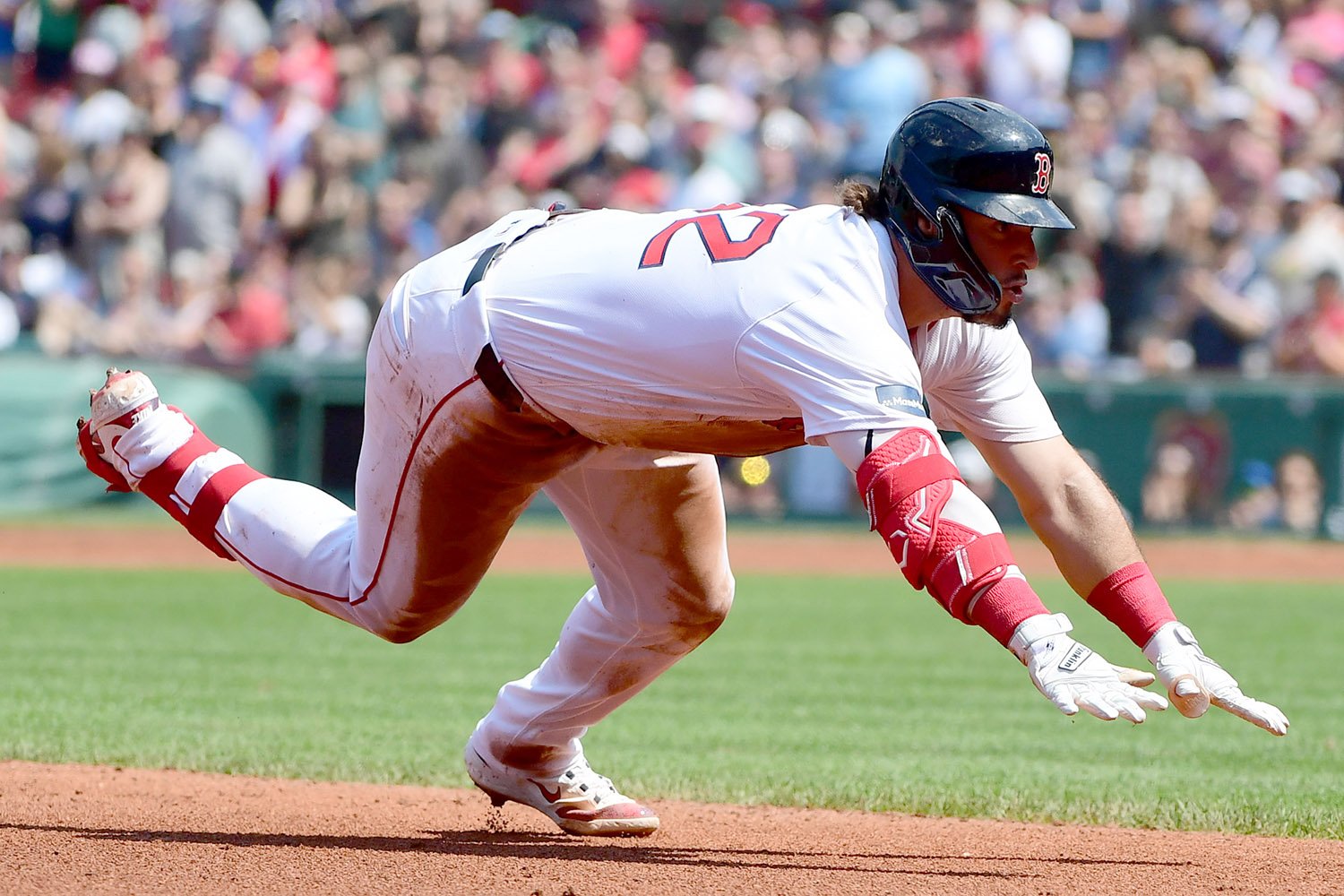 The 2024 season didn’t go how the Red Sox wanted it to go, but it still contained plenty of reasons to tune in each night. Personally, I loved watching Wilyer Abreu. In the field, at the plate, and on the basepaths, Abreu is as high-energy, high-effort a player as you’ll ever see. Even when the Red Sox were getting blown out, you could count on him to give something like 158%. One late-September night during garbage time of a meaningless game, I was watching Abreu, the whole front of his uniform already impregnated with dirt, bust it down the line on a routine groundball, and I started wondering. Between his (presumably) Gold Glove defense and his aggressive baserunning, Abreu always seems to be getting his uniform dirty. It's the ultimate sign of hard-nosed play, and I wondered how often he ends up with that particular badge of honor. So I checked. Abreu played in 132 games during the 2024 season, and I watched his final plate appearance in every game to check the state of his uniform. I created a 132-row spreadsheet with three columns. The first was binary: Did Abreu finish the game with a clean uniform or not? In the second column, I rated the state of his uniform. A zero meant that it was spotless, while a five could only be achieved by a particularly messy headfirst slide. I put a brief description in the last column in order to draw takeaways. For example, during 23 different games, you could see evidence of full head-first dives on Abreu’s uniform. In two games, you could see a small stain from pine tar on his left hip. I learned that when he wants to avoid a tag at second base, Abreu will make an extreme, sideways Tokyo Drift dive toward the inside side of the bag that spins him all the way around into the third base line. Not only that, but this kind of slide has a particular effect on his uniform. Like a car that’s trying to corner in a curve that’s too tight for the speed it’s carrying, Abreu’s momentum causes him to roll over onto his right side. As a result, only that side of his uniform gets dirty, while the left side stays pristine. I can also tell you that Abreu exhibited the tell-tale dirt stains on his knee and butt that indicate a regular slide into a base on 15 occasions. However, at least two of those slides weren’t into bases, but on the warning track in order make sweet catches like this one. Abreu also made cool catches in fair territory. On four occasions, his uniform ended up with grass stains. Most of them were from sliding catches, which caused the stains to appear on his knees or his hamstrings, but this was more of an all-out slide that got grass everywhere. Lastly, there was that one time where Abreu got the back of his uniform slightly dirty. If you’re trying and failing to picture a scenario in which a professional baseball player ends up fully prostrate on the field of play, let me save you some trouble. Abreu got hit by a pitch and, as he dealt with his pain, rolled onto his back in a happy baby yoga pose. So here are the final numbers. In his 132 games, Abreu got his uniform dirty 44 times, or exactly one-third of the time. When he did get his uniform dirty, he really got it dirty, though. Thirty of the 44 dirty games were threes or higher. On the Abreu Effort Scale, his overall average was 1.1, but he averaged a 3.3 on dirty days. Dirt Level 0 1 2 3 4 5 Games 88 7 7 8 11 11 It’s possible that I undercounted by a few games. I could have missed a light grass stain, and sometimes his final PA came in the seventh inning, which left a fair amount of time to pick up a stain that I would have missed. Even so, I have to say that I expected Abreu’s uniform to get dirty a bit more often. His longest dirty uniform streak was just four games, all the way back in April. He had streaks of nine and 11 games with an immaculate uniform. Over the nine-game stretch, from May 2-12, he batted .167. That shouldn’t be surprising, though. Generally speaking, players who are getting hits are going to be sliding into bases much more often. A dirty uniform isn’t just a sign of effort, it’s an indicator of solid performance. Maybe that’s why Abreu always ends up so dirty.
 -
O'Neill's peers named him Comeback Player of the Year. In a twist, he wasn't the only player on the Boston payroll to take home that honor. On Saturday, the Major League Baseball Players Association announced the winners of its 2024 Players Choice Awards Comeback Players of the Year. The Red Sox organization must be bursting with pride, as both winners were on the team’s payroll. Tyler O’Neill won in the American League and Chris Sale won in the National League. Both players bounced back from injury-shortened 2023 seasons; O’Neill led the Red Sox in homers, while the Red Sox paid Sale $17 million to win the NL’s pitching Triple Crown and single-handedly drag the injury-riddled Atlanta Braves into the playoffs. To be clear, although the MLBPA’s award is prestigious – and maybe even more meaningful to its winners, as it’s voted on by their peers – it is different from MLB’s official Comeback Player of the Year Awards. Those awards are voted on by the 30 MLB.com beat writers, and the winners will be announced on November 14. To make matters even more confusing, The Sporting News has been handing out its own Comeback Player of the Year Award since 1965. The Sporting News gave its NL award to Sale and its AL award to Vladimir Guerrero Jr., who bounced back from a 2023 season in which he suffered from a debilitating case of bad BABIP luck. Jokes aside, the award is a great honor for O’Neill, who has battled injuries throughout his entire career. O’Neill has never surpassed 138 games in a season, and in 2023, foot and lower back strains hampered his performance and limited him to just 72 games. Even in his award-winning 2024 season, O’Neill played in just 113 games thanks to a leg infection, right knee inflammation, and a concussion. When he was on the field, though, he was a force. His 31 home runs led the team and tied for 10th in the AL (all nine of the players ahead of him made at least 140 more plate appearances). O’Neill slashed .241/.336/.511 for a 131 wRC+, and according to Baseball Prospectus, he was worth 3.8 wins above replacement. Both by performance and by sheer number of games played, this was the second-best season of the Canadian slugger’s career. The award is also a boon for O’Neill as he enters free agency, and he has signaled that he is open to returning to Boston in 2025. The MLBPA announced three finalists for the AL award last week: O’Neill, Chad Green, and Garrett Crochet. Crochet, who missed the entire 2022 season due to Tommy John surgery and was limited to 13 starts in 2023 by shoulder inflammation, is still the likely favorite for the MLB award. In 2024, he was one of the best and most consistent pitchers in baseball, making 32 starts and running a 3.29 ERA and 2.84 FIP. The MLBPA announced the award on Twitter in a promotional video with quotes from O’Neill and players around the league. “I wanted to be on the field and competing and staying in uniform with my fellow teammates and being out there and grinding every day,” said O’Neill. “Just trying to show up, you know, I want to make a good impression, especially with my new club in Boston here this year….to be recognized for that and all the hard effort, you know, it really means a lot. It’s really good for my confidence.” The Red Sox also boast one of 2023’s winners in Liam Hendriks. Hendriks was diagnosed with non-Hodgkin lymphoma in January 2023, underwent chemotherapy and immunotherapy, and returned to pitch for the White Sox on May 29. He won the MLB and the MLBPA awards, but not the Sporting News award, because apparently there’s just no pleasing some people. As Hendriks missed the entire 2024 season to Tommy John Surgery, he looks like an early favorite to take the award home for the Red Sox in 2024. View full article
-
Tyler O'Neill Wins MLBPA's AL Comeback Player of the Year Award
Davy Andrews posted an article in Red Sox
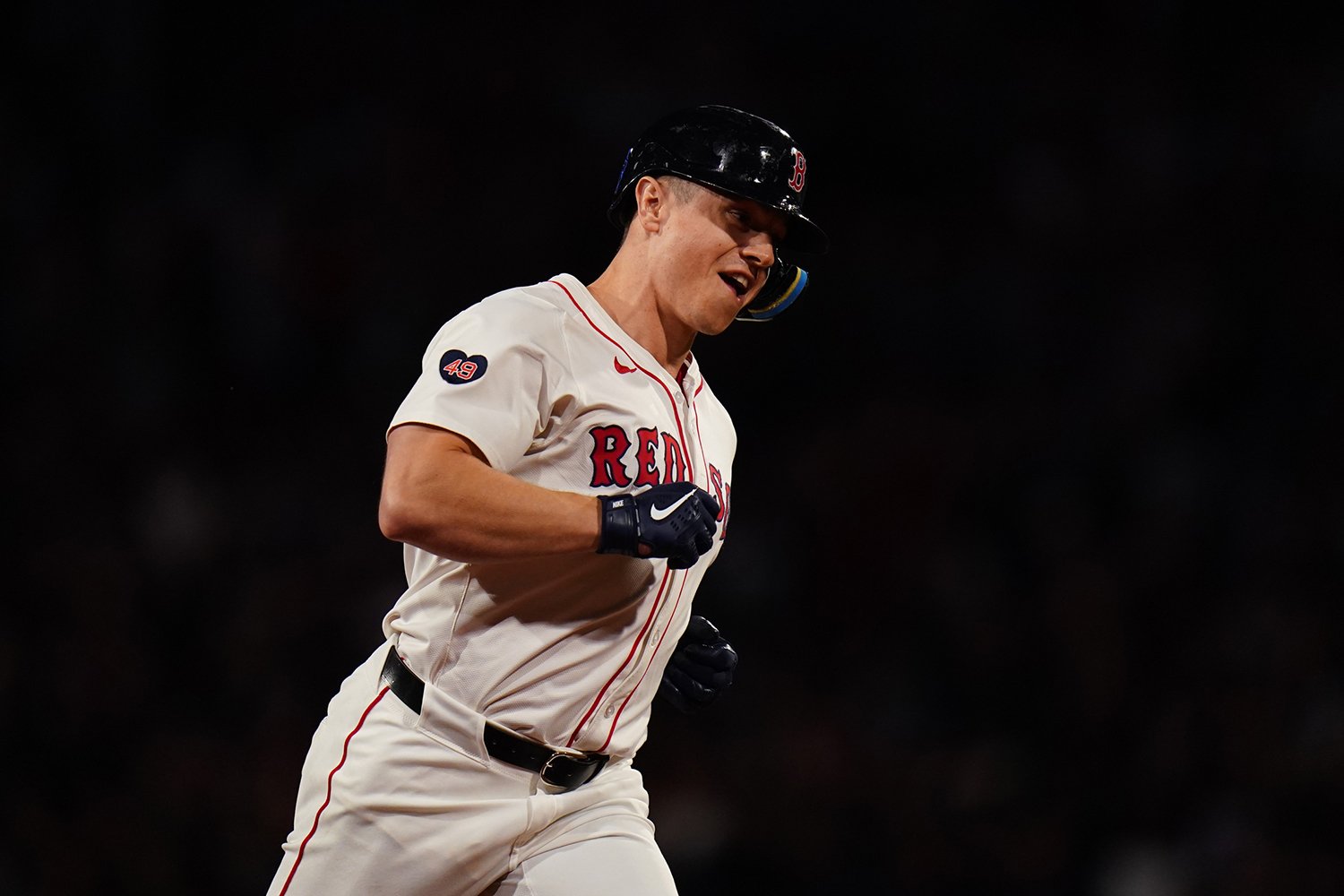 On Saturday, the Major League Baseball Players Association announced the winners of its 2024 Players Choice Awards Comeback Players of the Year. The Red Sox organization must be bursting with pride, as both winners were on the team’s payroll. Tyler O’Neill won in the American League and Chris Sale won in the National League. Both players bounced back from injury-shortened 2023 seasons; O’Neill led the Red Sox in homers, while the Red Sox paid Sale $17 million to win the NL’s pitching Triple Crown and single-handedly drag the injury-riddled Atlanta Braves into the playoffs. To be clear, although the MLBPA’s award is prestigious – and maybe even more meaningful to its winners, as it’s voted on by their peers – it is different from MLB’s official Comeback Player of the Year Awards. Those awards are voted on by the 30 MLB.com beat writers, and the winners will be announced on November 14. To make matters even more confusing, The Sporting News has been handing out its own Comeback Player of the Year Award since 1965. The Sporting News gave its NL award to Sale and its AL award to Vladimir Guerrero Jr., who bounced back from a 2023 season in which he suffered from a debilitating case of bad BABIP luck. Jokes aside, the award is a great honor for O’Neill, who has battled injuries throughout his entire career. O’Neill has never surpassed 138 games in a season, and in 2023, foot and lower back strains hampered his performance and limited him to just 72 games. Even in his award-winning 2024 season, O’Neill played in just 113 games thanks to a leg infection, right knee inflammation, and a concussion. When he was on the field, though, he was a force. His 31 home runs led the team and tied for 10th in the AL (all nine of the players ahead of him made at least 140 more plate appearances). O’Neill slashed .241/.336/.511 for a 131 wRC+, and according to Baseball Prospectus, he was worth 3.8 wins above replacement. Both by performance and by sheer number of games played, this was the second-best season of the Canadian slugger’s career. The award is also a boon for O’Neill as he enters free agency, and he has signaled that he is open to returning to Boston in 2025. The MLBPA announced three finalists for the AL award last week: O’Neill, Chad Green, and Garrett Crochet. Crochet, who missed the entire 2022 season due to Tommy John surgery and was limited to 13 starts in 2023 by shoulder inflammation, is still the likely favorite for the MLB award. In 2024, he was one of the best and most consistent pitchers in baseball, making 32 starts and running a 3.29 ERA and 2.84 FIP. The MLBPA announced the award on Twitter in a promotional video with quotes from O’Neill and players around the league. “I wanted to be on the field and competing and staying in uniform with my fellow teammates and being out there and grinding every day,” said O’Neill. “Just trying to show up, you know, I want to make a good impression, especially with my new club in Boston here this year….to be recognized for that and all the hard effort, you know, it really means a lot. It’s really good for my confidence.” The Red Sox also boast one of 2023’s winners in Liam Hendriks. Hendriks was diagnosed with non-Hodgkin lymphoma in January 2023, underwent chemotherapy and immunotherapy, and returned to pitch for the White Sox on May 29. He won the MLB and the MLBPA awards, but not the Sporting News award, because apparently there’s just no pleasing some people. As Hendriks missed the entire 2024 season to Tommy John Surgery, he looks like an early favorite to take the award home for the Red Sox in 2024.
 -
 The Red Sox have made three personnel moves in recent weeks, and those moves can tell us a least a little bit about the team’s intentions in 2025. First, the team hired Taylor Smith from the Rays to be an assistant general manager. Smith worked for the Rays for seven years, spending the last three as the team’s director of predictive modeling. Second, the team named Kyle Boddy, founder of Driveline Baseball, the interim director of baseball sciences. Boddy is the founder of Driveline Baseball, spent two years as Cincinnati’s minor league pitching coordinator, and has been a senior advisor to Craig Breslow since January. Lastly, the team moved Chris Stasio, the assistant director of player development, to a brand new role: director of major league development. Bringing on Smith, who focused on player valuation, makes a lot of sense at this moment. The Red Sox are looking to acquire players both in free agency and through trades. The Rays are one of the savviest organizations in baseball, and nothing is more crucial right now than accurately assessing the future value of free agents, trade targets, and the players the team might need to surrender in a trade. The other two moves are focused on improving the players already in the organization. The Red Sox remade their entire approach to pitching in 2024, throwing gasoline on the fire of the long-term trend of throwing fewer fastballs. According to Sports Info Solutions, which has been recording pitch types since 2002, the Red Sox had a 37.1% fastball rate in 2024, by a wide margin, the lowest rate ever recorded. Driveline is interested in a lot more than simply helping pitchers throw harder. If you follow Boddy on social media, you’ll see that lately, he’s focused on computer vision and using learning language models in order to help break down large datasets of biomechanical information. In describing his new role, he said that he’ll be “helping with the reorganization, retooling of technology, and some systems/ML/AI stuff.” Boddy will be filling this director of baseball sciences role until the Red Sox hire someone full-time, at which point he’ll step back into his advisor role, but the move makes it clear that the Red Sox aren’t just content to tinker with their pitch mix. They’re going to keep putting a focus on biomechanics and big data, and they’ve enrolled the preeminent mover in that space to help them do it. Stasio’s promotion, and the decision to create a director of major league development role in the first place, couldn’t be better timed either. The Red Sox are bursting with young talent both at the big-league level and in the minors. Roman Anthony, Kristian Campbell, and Kyle Teel all played in Triple A this season, and Marcelo Mayer absolutely torched Double A. These players will be in Boston soon, and whether or not they’re finished products, the team will be expecting them to contribute. Think about the strides that Jarren Duran made in 2024, and the strides that Ceddanne Rafaela needs to make in 2025. Building out the infrastructure to help these young players continue to get better once they hit the majors should be a priority going forward.
 -
A new hire, a temporary promotion, and a newly created role can give us some insight about the team's intentions this offseason. The Red Sox have made three personnel moves in recent weeks, and those moves can tell us a least a little bit about the team’s intentions in 2025. First, the team hired Taylor Smith from the Rays to be an assistant general manager. Smith worked for the Rays for seven years, spending the last three as the team’s director of predictive modeling. Second, the team named Kyle Boddy, founder of Driveline Baseball, the interim director of baseball sciences. Boddy is the founder of Driveline Baseball, spent two years as Cincinnati’s minor league pitching coordinator, and has been a senior advisor to Craig Breslow since January. Lastly, the team moved Chris Stasio, the assistant director of player development, to a brand new role: director of major league development. Bringing on Smith, who focused on player valuation, makes a lot of sense at this moment. The Red Sox are looking to acquire players both in free agency and through trades. The Rays are one of the savviest organizations in baseball, and nothing is more crucial right now than accurately assessing the future value of free agents, trade targets, and the players the team might need to surrender in a trade. The other two moves are focused on improving the players already in the organization. The Red Sox remade their entire approach to pitching in 2024, throwing gasoline on the fire of the long-term trend of throwing fewer fastballs. According to Sports Info Solutions, which has been recording pitch types since 2002, the Red Sox had a 37.1% fastball rate in 2024, by a wide margin, the lowest rate ever recorded. Driveline is interested in a lot more than simply helping pitchers throw harder. If you follow Boddy on social media, you’ll see that lately, he’s focused on computer vision and using learning language models in order to help break down large datasets of biomechanical information. In describing his new role, he said that he’ll be “helping with the reorganization, retooling of technology, and some systems/ML/AI stuff.” Boddy will be filling this director of baseball sciences role until the Red Sox hire someone full-time, at which point he’ll step back into his advisor role, but the move makes it clear that the Red Sox aren’t just content to tinker with their pitch mix. They’re going to keep putting a focus on biomechanics and big data, and they’ve enrolled the preeminent mover in that space to help them do it. Stasio’s promotion, and the decision to create a director of major league development role in the first place, couldn’t be better timed either. The Red Sox are bursting with young talent both at the big-league level and in the minors. Roman Anthony, Kristian Campbell, and Kyle Teel all played in Triple A this season, and Marcelo Mayer absolutely torched Double A. These players will be in Boston soon, and whether or not they’re finished products, the team will be expecting them to contribute. Think about the strides that Jarren Duran made in 2024, and the strides that Ceddanne Rafaela needs to make in 2025. Building out the infrastructure to help these young players continue to get better once they hit the majors should be a priority going forward. View full article
-
And now the thrilling conclusion to the two-part series in which Jarren Duran runs three-quarters of the way around the bases 14 times. Fun Fact: 651 players came to the plate at least once during the 2024 season, and most of them didn’t hit a single triple. Jarren Duran, on the other hand, hit 14 triples (plus one during spring training). Yesterday, we broke down the first seven. Today we’ll continue with the second half, because if we didn't, that would be weird. 8. May 20, Rays Duran’s eighth triple of the season came just one day after his seventh, and it was his first to the opposite field. In the top of the fourth, Taj Bradley fell behind 3-1, then threw a middle-middle fastball to Jarren Duran, which, yeah, maybe he shouldn’t have done that. The ball was begging to be crushed, and Duran obliged. In fact, he hit it so hard that, uncharacteristically, he watched it out of the box, thinking he’d gotten it all. The 350-foot blast would have made it out of 10 parks. Left fielder Richie Palacios tried to make a leaping catch, and the ball’s hard caromed off the wall and back toward the infield allowed Duran to coast to third. 9. June 5, Braves Duran’s ninth triple of the season was an odd one that made full use of Fenway’s unique dimensions. Rookie Spencer Schwellenbach tried to hit the outside corner with a 97-mph four-seamer. Instead, he caught the middle of the plate, and Duran launched a 101-mph blast to center field. The towering fly ball had a projected distance of 378, and it hung in the air for approximately 5.5 weeks. Michael Harris II was camped out under it, but it hit so high up on the wall that that all he could do was wait for it to come down. He played the hop perfectly, but had no chance at catching Duran. 10. June 9, White Sox Once again, a pitcher was foolish enough to throw a ball right down the middle to Duran, and once again, he paid the price. Duran yanked Chris Flexen’s changeup into the right field corner, and Oscar Colás, who made an excellent effort to get to the ball quickly, got a slightly softer bounce off the wall than he expected. That extra fraction of a second was all Duran needed, sliding into the bag before the short relay throw could arrive. 11. July 22, Rockies With its expansive outfield, Coors Field is the most triple-friendly park all of baseball. According to Statcast’s park factors, it allows triples at nearly twice the rate of the average park. Duran ripped a 403-foot, opposite-field blast that would have been out of 27 parks, then flipped his bat for good measure. At Coors, however, the ball merely short-hopped the wall as center fielder Brenton Doyle slid vainly on the warning track. Left fielder Sam Hilliard played the high, ringing bounce well, but the depth and the high carom gave him no chance. Duran coasted into third well ahead of the throw. 12. July 24, Rockies Did I mention that Coors surrenders a whole lot of triples? Although it took Duran more than a month to notch his 11th triple, he had to wait just two whole days for his 12th. Duran chased a changeup from Peter Lambert below the zone and hooked the ball down the line at 83.6 mph, his softest triple of the season. Right fielder Hunter Goodman had to run a half marathon to track the ball down in the corner. The triple knocked in two runs, bringing the score to 20-7 in favor of the Rockies. Duran fairly jogged around the bases, and had the game been closer, there’s at least some chance that he might have been sent home to attempt an inside-the-park homer. 13. August 8, Rangers Duran’s penultimate three-bagger of the season was an extremely rare Duran Duran triple. He lifted a changeup right at the bottom of the strike zone into off the very base of the wall at Globe Life Field. Right fielder Ezequiel Duran was in no hurry to track the ball down and even less inclined to attempt a play at the wall. Jarren Duran, on the other hand, was hungry like the wolf, churning around the bases and diving into third without even drawing a throw. On the season, the two Durans combined for a total of…14 triples. 14. September 23, Blue Jays Duran struggled down the stretch, running a wRC+ of just 60 over his final 27 games, and he waited six weeks for his final triple. It was worth it. Tommy Nance left a slider up and over the middle of the plate, and Duran launched it to center at 105.1 mph. The Blue Jays boasted two all-world center fielders in Kevin Kiermaier and Daulton Varsho, but Jonatan Clase was in center for this play, and he gave it everything he had. Clase chased the ball down leapt, despite not seeming to know exactly where it was. He whiffed badly and crashed into the wall like Wile E. Coyote. With the play in front of him, Duran powered into third prepared to head for home. He would have made it, as Clase overthrew the cutoff man, but unfortunately that happened just after Duran got the stop sign and started slowing down. Watching all 14 of Duran’s triples, the real takeaway is that there were very few cheapies. Aside from Nolan Arenado losing a popup in the sun, you could blame the fielder or the park for remarkably few of them. He ripped the ball down the line, sprayed it into the gaps, and lifted it over the head of the center fielder. The defense only bothered to throw the ball to third on six of the 14 triples, and Duran only slid into the bag seven times. Not once was the play close enough that the fielder even bothered to apply a tag! He never once got caught trying to stretch a double into a triple. He just did a remarkable job of combining power, speed, and desire. View full article
-
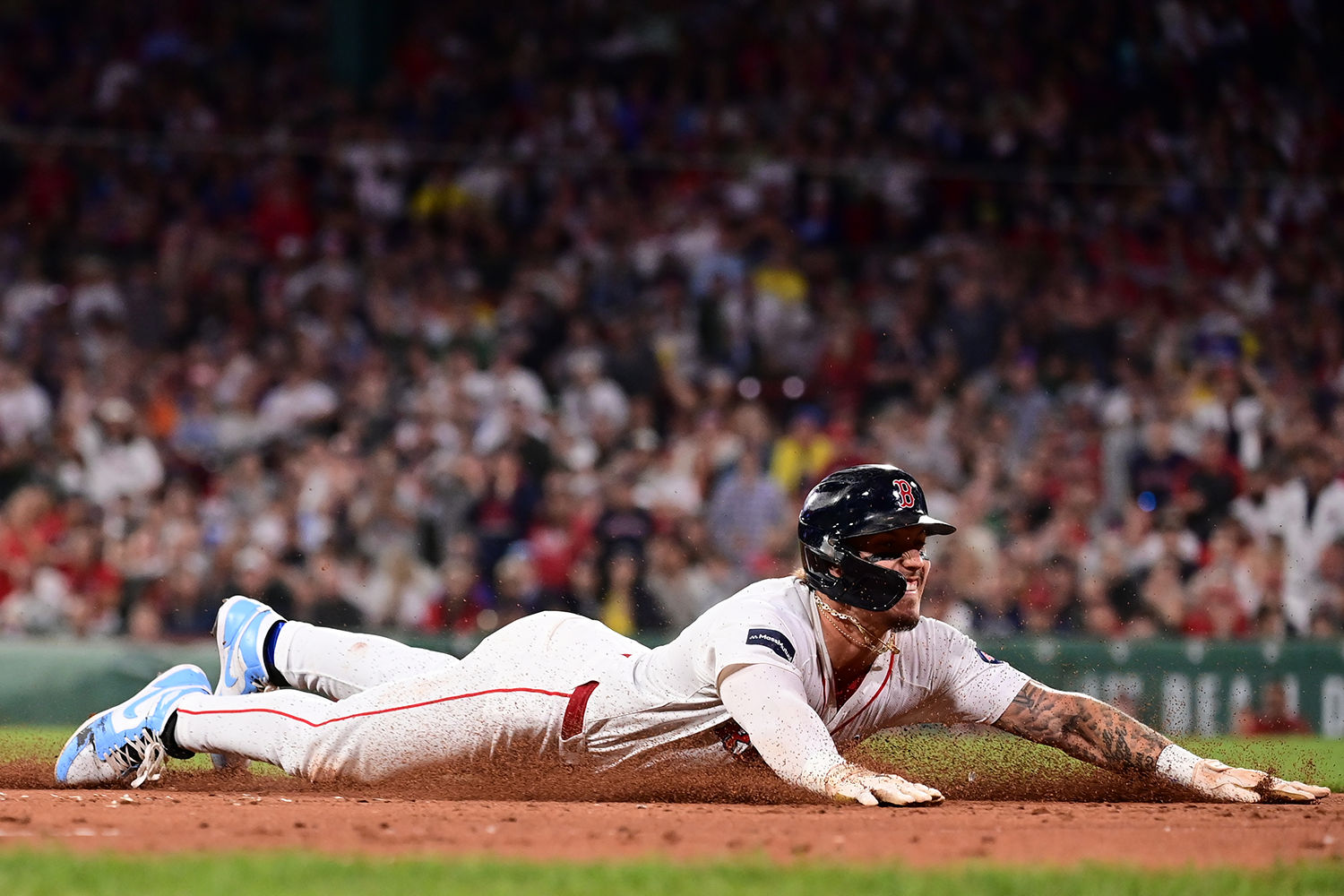 Fun Fact: 651 players came to the plate at least once during the 2024 season, and most of them didn’t hit a single triple. Jarren Duran, on the other hand, hit 14 triples (plus one during spring training). Yesterday, we broke down the first seven. Today we’ll continue with the second half, because if we didn't, that would be weird. 8. May 20, Rays Duran’s eighth triple of the season came just one day after his seventh, and it was his first to the opposite field. In the top of the fourth, Taj Bradley fell behind 3-1, then threw a middle-middle fastball to Jarren Duran, which, yeah, maybe he shouldn’t have done that. The ball was begging to be crushed, and Duran obliged. In fact, he hit it so hard that, uncharacteristically, he watched it out of the box, thinking he’d gotten it all. The 350-foot blast would have made it out of 10 parks. Left fielder Richie Palacios tried to make a leaping catch, and the ball’s hard caromed off the wall and back toward the infield allowed Duran to coast to third. 9. June 5, Braves Duran’s ninth triple of the season was an odd one that made full use of Fenway’s unique dimensions. Rookie Spencer Schwellenbach tried to hit the outside corner with a 97-mph four-seamer. Instead, he caught the middle of the plate, and Duran launched a 101-mph blast to center field. The towering fly ball had a projected distance of 378, and it hung in the air for approximately 5.5 weeks. Michael Harris II was camped out under it, but it hit so high up on the wall that that all he could do was wait for it to come down. He played the hop perfectly, but had no chance at catching Duran. 10. June 9, White Sox Once again, a pitcher was foolish enough to throw a ball right down the middle to Duran, and once again, he paid the price. Duran yanked Chris Flexen’s changeup into the right field corner, and Oscar Colás, who made an excellent effort to get to the ball quickly, got a slightly softer bounce off the wall than he expected. That extra fraction of a second was all Duran needed, sliding into the bag before the short relay throw could arrive. 11. July 22, Rockies With its expansive outfield, Coors Field is the most triple-friendly park all of baseball. According to Statcast’s park factors, it allows triples at nearly twice the rate of the average park. Duran ripped a 403-foot, opposite-field blast that would have been out of 27 parks, then flipped his bat for good measure. At Coors, however, the ball merely short-hopped the wall as center fielder Brenton Doyle slid vainly on the warning track. Left fielder Sam Hilliard played the high, ringing bounce well, but the depth and the high carom gave him no chance. Duran coasted into third well ahead of the throw. 12. July 24, Rockies Did I mention that Coors surrenders a whole lot of triples? Although it took Duran more than a month to notch his 11th triple, he had to wait just two whole days for his 12th. Duran chased a changeup from Peter Lambert below the zone and hooked the ball down the line at 83.6 mph, his softest triple of the season. Right fielder Hunter Goodman had to run a half marathon to track the ball down in the corner. The triple knocked in two runs, bringing the score to 20-7 in favor of the Rockies. Duran fairly jogged around the bases, and had the game been closer, there’s at least some chance that he might have been sent home to attempt an inside-the-park homer. 13. August 8, Rangers Duran’s penultimate three-bagger of the season was an extremely rare Duran Duran triple. He lifted a changeup right at the bottom of the strike zone into off the very base of the wall at Globe Life Field. Right fielder Ezequiel Duran was in no hurry to track the ball down and even less inclined to attempt a play at the wall. Jarren Duran, on the other hand, was hungry like the wolf, churning around the bases and diving into third without even drawing a throw. On the season, the two Durans combined for a total of…14 triples. 14. September 23, Blue Jays Duran struggled down the stretch, running a wRC+ of just 60 over his final 27 games, and he waited six weeks for his final triple. It was worth it. Tommy Nance left a slider up and over the middle of the plate, and Duran launched it to center at 105.1 mph. The Blue Jays boasted two all-world center fielders in Kevin Kiermaier and Daulton Varsho, but Jonatan Clase was in center for this play, and he gave it everything he had. Clase chased the ball down leapt, despite not seeming to know exactly where it was. He whiffed badly and crashed into the wall like Wile E. Coyote. With the play in front of him, Duran powered into third prepared to head for home. He would have made it, as Clase overthrew the cutoff man, but unfortunately that happened just after Duran got the stop sign and started slowing down. Watching all 14 of Duran’s triples, the real takeaway is that there were very few cheapies. Aside from Nolan Arenado losing a popup in the sun, you could blame the fielder or the park for remarkably few of them. He ripped the ball down the line, sprayed it into the gaps, and lifted it over the head of the center fielder. The defense only bothered to throw the ball to third on six of the 14 triples, and Duran only slid into the bag seven times. Not once was the play close enough that the fielder even bothered to apply a tag! He never once got caught trying to stretch a double into a triple. He just did a remarkable job of combining power, speed, and desire.
 -
Join us as we break down Duran's league-leading 14 triples, one at a time. As you surely know, Jarren Duran hit 14 triples during the 2024 season, leading the American League and tying Corbin Carroll for the major league lead. In fact, one minor leaguer also tripled 14 times, Rockies farmhand Cole Carrigg. This was just a good year to hit exactly 14 triples. In celebration of the triple-tastic year that was, we’re going to break down all 14 of Duran’s triples. Because that’s just so many triples, we’ll break it into two articles. Part two will run tomorrow. 1. April 18, Guardians Duran started off with the basics, a classic Fenway Park triangle triple to knock in two runners. With the Cleveland outfield shaded the other way, he ripped a line drive to right center off all-world reliever Cade Smith. The ball rolled directly into the corner in the most satisfying way possible for a routine stand-up triple. 2. April 20, Pirates Duran waited two whole days to triple again, but the second one was a very different variety. In the first at-bat of the game, Mitch Keller attacked Duran with a four-seam fastball on the inside corner, and Duran absolutely hammered it. The ball left his bat at 104.6 mph and traveled 390 feet into right center. It would have been a homer in 25 ballparks (including Fenway), but due to the high wall in Pittsburgh – 21 feet tall, a nod to Roberto Clemente – Duran knew to bust it out of the box. Because the ball left his bat in such a hurry, Duran had to hustle all the way, and he didn’t appear to be sure that he would try for three until he saw the right fielder get an unfriendly bounce off the wall. A perfect relay might have gotten him. Despite a home run swing, this was a hustle triple. 3. April 28, Cubs Duran’s third triple (and second stand-up) triple came back at home. Yency Almonte threw a cutter right down the middle, and like any pitchers throughout the season, he learned that Duran isn’t the kind of player to whom you can make such a mistake. Duran laced the ball into right center and it just snuck into the triangle. Pete Crow-Armstrong played the hop beautifully, but he had chance of catching Duran. The Cubs didn’t even bother to execute a real relay or make a throw to third. 4. May 1, Giants One of the themes we’re starting to see here is teams paying for shading their outfielders toward the opposite field. With two outs in the fourth inning, Daulton Jeffries tried to tempt Duran with a slider below the plate. Instead, that slider just clipped the bottom of the zone, and Duran ripped a grounder down the first base line at 101.2 mph. The first baseman had no chance at it. Right fielder Mike Yastrzemski had to cross an enormous stretch of Fenway’s vast right field. If not for a favorable bounce off the side wall, and if not for the fact that Yastrzemski really hustled after the ball, Duran’s trip around the bases might have extended another 90 feet, going from stand-up triple to inside-the-park homer. Lest you start to think that Duran’s impressive number of triples came simply because Fenway Park helped him out, keep in mind that his next four triples would come on the road. 5. May 5, Twins “This guy has no third or fourth gear,” said Minnesota play-by-play announcer Cory Provus as Duran motored around second base. “It is one and then five.” The quote showed that word about Duran was starting to get out. With the Sox up big in the top of the ninth, Duran’s fifth triple looked very similar to his fourth. Jay Jackson tried to catch him looking with a backdoor slider, but when the pitch caught too much of the plate, Duran yanked a low liner down the line and into the right field corner. It wasn’t a stand-up triple, but it certainly could have been. 6. May 7, Braves Two days later, Duran knocked his first triple of the season that truly qualified as a gapper. When people say home runs are thrown rather than hit, this is what they’re talking about. Reynaldo López hung a big juicy curveball right over the heart of the plate, and Duran unloaded on it. López was lucky that the missile, which left Duran’s bat at 109.5 mph and traveled 379 feet, only went for three bags. Duran got a fortunate hop, as the ball likely would have bounced over the wall for a ground-rule double had it not caught the underside of the yellow padding at the top. Still, without any help from well-placed triangles or defensive shading, Duran had an easy triple. Ronald Acuña Jr., bearer of one of the strongest arms in the game, couldn’t put to use, as the Braves didn’t even try to make a play of it at third. It was Duran’s third triple in under a week. 7. May 19, Cardinals An 11-game gap preceded Duran’s seventh triple of the season. It was the longest wait of the season to that point, despite the fact that he was red-hot at the plate during that stretch. In the same way that every no-hitter needs help from one great defensive play, every league-leader in triples is going to need some charity either from the defense or the official scorer, and on this play, Duran got both. With two outs and a runner on third, Chris Roycroft induced a lazy popup behind third base, and Nolan Arenado, the proud owner of 10 Gold Gloves and six Platinum Gloves, lost the ball in the bright, midday sun. Duran smelled extra bases and hustled to second as the ball clanked off Arenado’s glove. Rafaela scored and Duran, seeing that no one had bothered to cover the bag, swiped third as well. Despite its expected batting average of .006 (which tied it for the second-lowest xBA of any triple this season), the play was ruled a hit. It’s a line drive in the scorebook. That marks the halfway point of this exercise, so join us tomorrow as we break down Duran’s seven remaining triples. What really stands out over the first half is an intense desire to grab the extra base. You can’t rack up a lot of triples without being a good hitter or a fast runner, but desire matters a lot too. According to Baseball Prospectus, Duran was no better than league average when it came to snagging extra bases, but only when he started the play as a baserunner. He finished second in all of baseball at Deserved Runs on Bases After Contact, which shows how good batters are at taking the extra base once they’ve put the ball into play. The biggest reason he hit so many triples? He wanted them badly. View full article
-
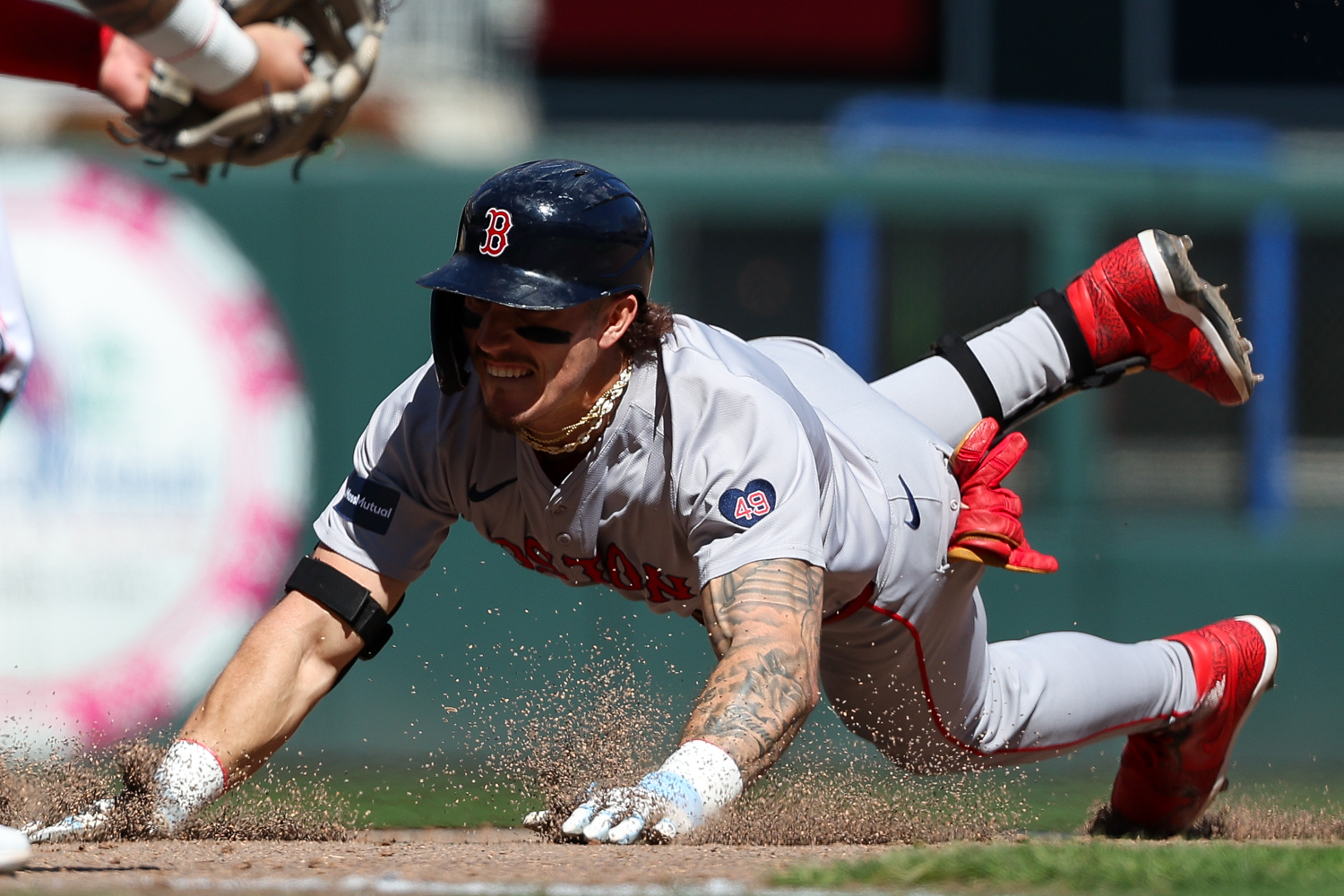 As you surely know, Jarren Duran hit 14 triples during the 2024 season, leading the American League and tying Corbin Carroll for the major league lead. In fact, one minor leaguer also tripled 14 times, Rockies farmhand Cole Carrigg. This was just a good year to hit exactly 14 triples. In celebration of the triple-tastic year that was, we’re going to break down all 14 of Duran’s triples. Because that’s just so many triples, we’ll break it into two articles. Part two will run tomorrow. 1. April 18, Guardians Duran started off with the basics, a classic Fenway Park triangle triple to knock in two runners. With the Cleveland outfield shaded the other way, he ripped a line drive to right center off all-world reliever Cade Smith. The ball rolled directly into the corner in the most satisfying way possible for a routine stand-up triple. 2. April 20, Pirates Duran waited two whole days to triple again, but the second one was a very different variety. In the first at-bat of the game, Mitch Keller attacked Duran with a four-seam fastball on the inside corner, and Duran absolutely hammered it. The ball left his bat at 104.6 mph and traveled 390 feet into right center. It would have been a homer in 25 ballparks (including Fenway), but due to the high wall in Pittsburgh – 21 feet tall, a nod to Roberto Clemente – Duran knew to bust it out of the box. Because the ball left his bat in such a hurry, Duran had to hustle all the way, and he didn’t appear to be sure that he would try for three until he saw the right fielder get an unfriendly bounce off the wall. A perfect relay might have gotten him. Despite a home run swing, this was a hustle triple. 3. April 28, Cubs Duran’s third triple (and second stand-up) triple came back at home. Yency Almonte threw a cutter right down the middle, and like any pitchers throughout the season, he learned that Duran isn’t the kind of player to whom you can make such a mistake. Duran laced the ball into right center and it just snuck into the triangle. Pete Crow-Armstrong played the hop beautifully, but he had chance of catching Duran. The Cubs didn’t even bother to execute a real relay or make a throw to third. 4. May 1, Giants One of the themes we’re starting to see here is teams paying for shading their outfielders toward the opposite field. With two outs in the fourth inning, Daulton Jeffries tried to tempt Duran with a slider below the plate. Instead, that slider just clipped the bottom of the zone, and Duran ripped a grounder down the first base line at 101.2 mph. The first baseman had no chance at it. Right fielder Mike Yastrzemski had to cross an enormous stretch of Fenway’s vast right field. If not for a favorable bounce off the side wall, and if not for the fact that Yastrzemski really hustled after the ball, Duran’s trip around the bases might have extended another 90 feet, going from stand-up triple to inside-the-park homer. Lest you start to think that Duran’s impressive number of triples came simply because Fenway Park helped him out, keep in mind that his next four triples would come on the road. 5. May 5, Twins “This guy has no third or fourth gear,” said Minnesota play-by-play announcer Cory Provus as Duran motored around second base. “It is one and then five.” The quote showed that word about Duran was starting to get out. With the Sox up big in the top of the ninth, Duran’s fifth triple looked very similar to his fourth. Jay Jackson tried to catch him looking with a backdoor slider, but when the pitch caught too much of the plate, Duran yanked a low liner down the line and into the right field corner. It wasn’t a stand-up triple, but it certainly could have been. 6. May 7, Braves Two days later, Duran knocked his first triple of the season that truly qualified as a gapper. When people say home runs are thrown rather than hit, this is what they’re talking about. Reynaldo López hung a big juicy curveball right over the heart of the plate, and Duran unloaded on it. López was lucky that the missile, which left Duran’s bat at 109.5 mph and traveled 379 feet, only went for three bags. Duran got a fortunate hop, as the ball likely would have bounced over the wall for a ground-rule double had it not caught the underside of the yellow padding at the top. Still, without any help from well-placed triangles or defensive shading, Duran had an easy triple. Ronald Acuña Jr., bearer of one of the strongest arms in the game, couldn’t put to use, as the Braves didn’t even try to make a play of it at third. It was Duran’s third triple in under a week. 7. May 19, Cardinals An 11-game gap preceded Duran’s seventh triple of the season. It was the longest wait of the season to that point, despite the fact that he was red-hot at the plate during that stretch. In the same way that every no-hitter needs help from one great defensive play, every league-leader in triples is going to need some charity either from the defense or the official scorer, and on this play, Duran got both. With two outs and a runner on third, Chris Roycroft induced a lazy popup behind third base, and Nolan Arenado, the proud owner of 10 Gold Gloves and six Platinum Gloves, lost the ball in the bright, midday sun. Duran smelled extra bases and hustled to second as the ball clanked off Arenado’s glove. Rafaela scored and Duran, seeing that no one had bothered to cover the bag, swiped third as well. Despite its expected batting average of .006 (which tied it for the second-lowest xBA of any triple this season), the play was ruled a hit. It’s a line drive in the scorebook. That marks the halfway point of this exercise, so join us tomorrow as we break down Duran’s seven remaining triples. What really stands out over the first half is an intense desire to grab the extra base. You can’t rack up a lot of triples without being a good hitter or a fast runner, but desire matters a lot too. According to Baseball Prospectus, Duran was no better than league average when it came to snagging extra bases, but only when he started the play as a baserunner. He finished second in all of baseball at Deserved Runs on Bases After Contact, which shows how good batters are at taking the extra base once they’ve put the ball into play. The biggest reason he hit so many triples? He wanted them badly.
 -
The rookie right-hander's setup makes him very nearly unique among today's pitchers. By any measure, Justin Slaten had an outstanding rookie season. The 27-year-old right-hander, scooped up from the Rangers organization in the Rule 5 Draft last December, threw 55 1/3 big-league innings over 44 appearances. He ran a 2.93 ERA, and as his 2.61 FIP indicates, the underlying numbers loved him as well. He limited hard contact, especially in the air, and got plenty of chases and whiffs. His 35% chase rate, 4% walk rate rate, and 4% barrel rate all put him in the 96th percentile or better. He was also just plain fun to watch. I don’t just mean that it was fun to watch him carve up opposing lineups. I loved watching him because he pitched a little differently than everyone else on the Boston staff, and in fact, everyone else in baseball. Before you look at the picture below, scroll back up and take another look at the picture at the top of this article to see if you notice anything special about it. Give up? Okay, I’ll help you out. Below is the same picture, but this time I’ve added Greg Weissert into it as well. Weissert’s screengrab is from the same game and camera angle, and also from the moment he releases the ball. It's not just that Weissert is a side-armer and Slaten throws over the top. It’s that Weissert is all the way over to the third base side of the rubber, while Slaten is all the way over to the first base side. Slaten’s spot is particularly unusual for a right-handed pitcher, and when you combine it with his 6-foot-4 height and relatively steep arm angle, the result is a release point that’s even more unusual. In that picture, Slaten is releasing the ball almost exactly in the middle of the rubber and the plate. His release point is just 2.16 inches from dead center. Here’s how his average release point stacks up on the Red Sox. Slaten is the red dot. There’s nobody particularly close to him. He’s the only player on the team whose release point is within one foot of the middle of the rubber. And just to be clear, this is almost entirely a result of his spot on the rubber. The graphic below comes courtesy of Statcast. Take a look at how Slaten’s arm angle stacks up compared to the rest of the team’s pitchers. He has one of the steeper arm angles, but he doesn’t really stand out at all. It’s his positioning that makes him such an outlier, and not just on the team. Even if you zoom out to the entire league, Slaten’s release point is still extremely rare. Here’s the average release point of every single pitcher who faced at least 30 batters this season. Once again, Slaten is in red, and once again, he’s found his own niche. Keep in mind, there are 699 pitchers on this chart. Very, very few of them have a release point similar to Slaten’s. Look how many of them overlap in the traditional righty or lefty blob, while Slaten is all the way off to the edge. His average horizontal release point is -0.82 feet, or just under 10 inches from the center of the pitching rubber. Among right-handed pitchers, that puts his horizontal release point in the 94th percentile, and because he achieves it with a higher-than-average release point, he still stands out, even when compared to every other pitcher in the league. This isn’t exactly a new phenomenon either. In July, Eric Longenhagen noted that Slaten had moved over on the rubber more this season, but here’s Slaten pitching for the University of New Mexico back in 2019. Even back then, he was pretty far over. There’s a chance Slaten’s extreme release point may hurt his performance against right-handed hitters slightly. I’ve done a bit of research on horizontal release point, specifically looking at the small number of extremely fun pitchers who scooch from one side of the rubber to the other depending on the handedness of the batter. It’s a lot harder to hit a ball that starts out way behind you, which is one of the reasons that batters struggle against same-handed pitchers. The opposite is also true though: pitches that come from an extreme horizontal release point are hard for same-handed hitters, while pitches that come from close to the middle of the rubber are more platoon neutral. Slaten’s platoon splits were fairly even in 2024, and thanks to his reliance on his cutter, a pitch that often works well against same- and opposite-handed batters, we should probably expect more of the same going forward. That should be helpful in a bullpen that currently skews right-handed. There’s one more benefit to Slaten’s setup. Generally speaking, pitchers want their pitches to look unusual to hitters. Major league batters boast excellent vision and hand-eye coordination, and some of their skill comes from elite pattern recognition. They’ve learned over thousands and thousands of reps what to expect from a pitch. Any time you can show them something surprising, you’re starting out a bit ahead of the game, and smart pitching analysts are working hard to quantify what they call – in open defiance of the English language – pitch uniqueness. Pitching from an unusual spot is helping Slaten throw something new at a hitter. Literally. View full article
-
Justin Slaten Comes Out of Left Field (Well, Actually Right Field)
Davy Andrews posted an article in Red Sox
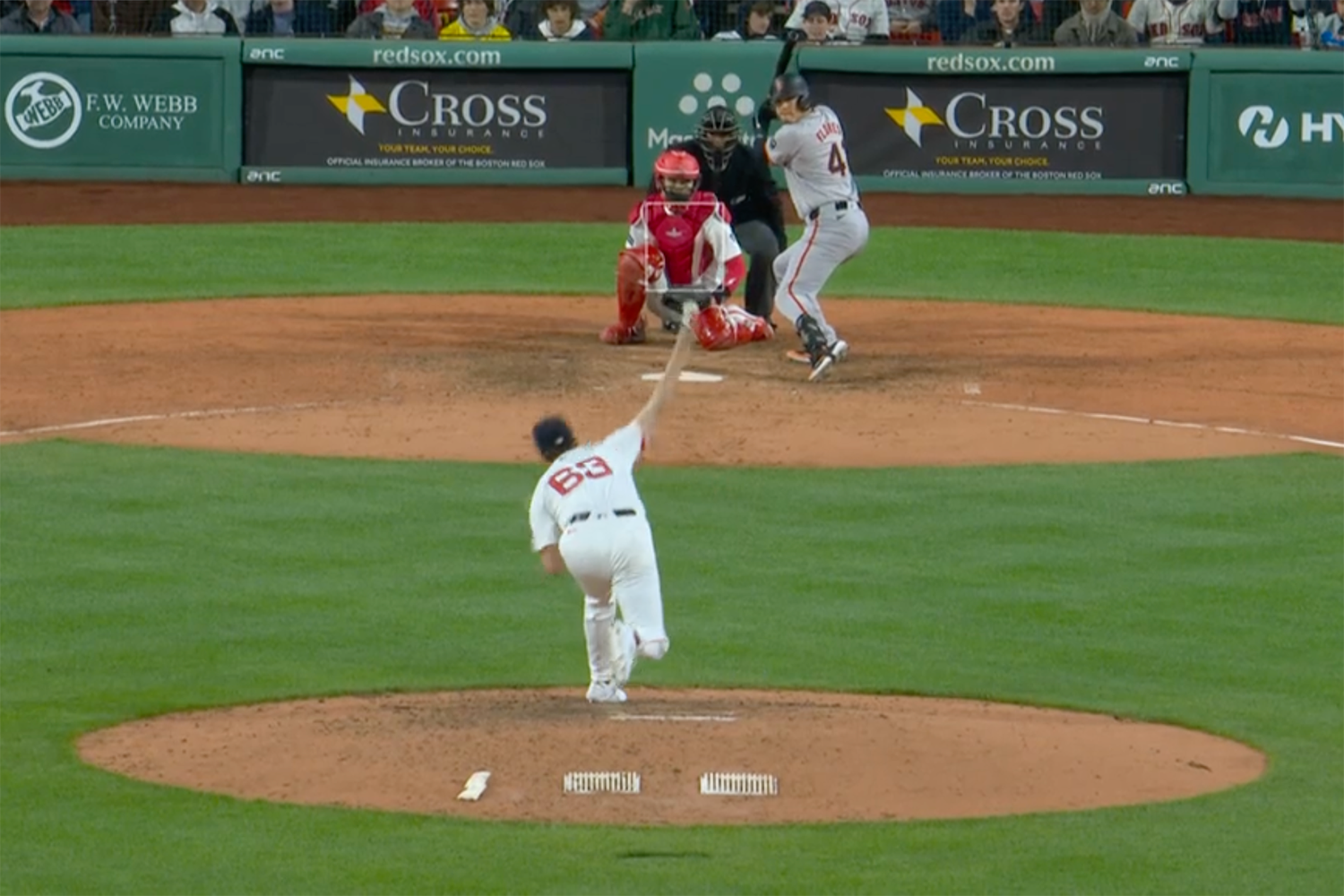 By any measure, Justin Slaten had an outstanding rookie season. The 27-year-old right-hander, scooped up from the Rangers organization in the Rule 5 Draft last December, threw 55 1/3 big-league innings over 44 appearances. He ran a 2.93 ERA, and as his 2.61 FIP indicates, the underlying numbers loved him as well. He limited hard contact, especially in the air, and got plenty of chases and whiffs. His 35% chase rate, 4% walk rate rate, and 4% barrel rate all put him in the 96th percentile or better. He was also just plain fun to watch. I don’t just mean that it was fun to watch him carve up opposing lineups. I loved watching him because he pitched a little differently than everyone else on the Boston staff, and in fact, everyone else in baseball. Before you look at the picture below, scroll back up and take another look at the picture at the top of this article to see if you notice anything special about it. Give up? Okay, I’ll help you out. Below is the same picture, but this time I’ve added Greg Weissert into it as well. Weissert’s screengrab is from the same game and camera angle, and also from the moment he releases the ball. It's not just that Weissert is a side-armer and Slaten throws over the top. It’s that Weissert is all the way over to the third base side of the rubber, while Slaten is all the way over to the first base side. Slaten’s spot is particularly unusual for a right-handed pitcher, and when you combine it with his 6-foot-4 height and relatively steep arm angle, the result is a release point that’s even more unusual. In that picture, Slaten is releasing the ball almost exactly in the middle of the rubber and the plate. His release point is just 2.16 inches from dead center. Here’s how his average release point stacks up on the Red Sox. Slaten is the red dot. There’s nobody particularly close to him. He’s the only player on the team whose release point is within one foot of the middle of the rubber. And just to be clear, this is almost entirely a result of his spot on the rubber. The graphic below comes courtesy of Statcast. Take a look at how Slaten’s arm angle stacks up compared to the rest of the team’s pitchers. He has one of the steeper arm angles, but he doesn’t really stand out at all. It’s his positioning that makes him such an outlier, and not just on the team. Even if you zoom out to the entire league, Slaten’s release point is still extremely rare. Here’s the average release point of every single pitcher who faced at least 30 batters this season. Once again, Slaten is in red, and once again, he’s found his own niche. Keep in mind, there are 699 pitchers on this chart. Very, very few of them have a release point similar to Slaten’s. Look how many of them overlap in the traditional righty or lefty blob, while Slaten is all the way off to the edge. His average horizontal release point is -0.82 feet, or just under 10 inches from the center of the pitching rubber. Among right-handed pitchers, that puts his horizontal release point in the 94th percentile, and because he achieves it with a higher-than-average release point, he still stands out, even when compared to every other pitcher in the league. This isn’t exactly a new phenomenon either. In July, Eric Longenhagen noted that Slaten had moved over on the rubber more this season, but here’s Slaten pitching for the University of New Mexico back in 2019. Even back then, he was pretty far over. There’s a chance Slaten’s extreme release point may hurt his performance against right-handed hitters slightly. I’ve done a bit of research on horizontal release point, specifically looking at the small number of extremely fun pitchers who scooch from one side of the rubber to the other depending on the handedness of the batter. It’s a lot harder to hit a ball that starts out way behind you, which is one of the reasons that batters struggle against same-handed pitchers. The opposite is also true though: pitches that come from an extreme horizontal release point are hard for same-handed hitters, while pitches that come from close to the middle of the rubber are more platoon neutral. Slaten’s platoon splits were fairly even in 2024, and thanks to his reliance on his cutter, a pitch that often works well against same- and opposite-handed batters, we should probably expect more of the same going forward. That should be helpful in a bullpen that currently skews right-handed. There’s one more benefit to Slaten’s setup. Generally speaking, pitchers want their pitches to look unusual to hitters. Major league batters boast excellent vision and hand-eye coordination, and some of their skill comes from elite pattern recognition. They’ve learned over thousands and thousands of reps what to expect from a pitch. Any time you can show them something surprising, you’re starting out a bit ahead of the game, and smart pitching analysts are working hard to quantify what they call – in open defiance of the English language – pitch uniqueness. Pitching from an unusual spot is helping Slaten throw something new at a hitter. Literally.
 -
Yes, the Red Sox could use a right-handed bat, but their need for a left-on-left bullpen arm is even more acute. It’s a fun time to be a Red Sox fan. Although the 2024 season almost certainly didn’t go quite as well as you might have hoped, the team is bursting with prospects, young big-league talent, and potential. It’s a time for dreaming big, and those dreams should include offseason spending. The Red Sox have indicated that they’ll be making big moves over the winter, so you should absolutely be drooling over the list of pending free agents like it’s a dessert menu. Like many other outlets, we here at Talk Sox have written a lot of words about the team’s need for a right-handed hitter to balance out the overwhelmingly left-handed lineup. However, I’d like to point out something pretty simple: Boston’s need for left-handed pitching is more pressing than its need for right-handed hitting. As I wrote a few weeks ago, when they were at the plate, the Red Sox found themselves with the platoon advantage 59% of the time in 2024, which ranked seventh in baseball. Having a lineup stacked with lefties will help toward that end, as most pitchers (and most people) are right-handed. But let’s look at the other side of the coin. In 2024, Boston pitchers faced 6,154 total batters, and they had the platoon advantage in 50.6% of those plate appearances. That was the absolute lowest percentage in baseball. The league average was 57.5%, 25 of the 30 teams were above 55%, and no other team was below 52.5%. The Red Sox were dead last – emphasis on dead. The reason for this was simple: They had no lefties. Left-handed pitchers were on the mound for just 10.8% of their total plate appearances, which ranked 28th out of the 30 teams. When they faced left-handed hitters, the Red Sox had the platoon advantage just 7% of the time. 27 of the other 29 teams were above 24%. By FanGraphs WAR, here were Boston’s five most valuable left-handed pitchers in 2024: James Paxton, who made three starts with the Sox before injuring his calf. Cam Booser, who ran a solid 3.38 ERA and 3.80 FIP over 42.2 relief innings. Brennan Bernardino, who ran a serviceable 4.06 ERA and 4.15 ERA over 51 relief innings. Joe Jacques, who pitched 1.2 innings and allowed one earned run. Dominic Smith, who pitched three innings and is not a pitcher. Booser put up a genuinely nice season, and Bernardino was solid, despite taking a step back from a great 2023 campaign. But that’s really it. Bernardino ranked 12th on the team in innings pitched and Booser ranked 14th. No lefty was in the top 10. No other lefty threw more than 18 innings for the Red Sox this season. Dom Smith – who again is a first baseman – was their fifth-most valuable left-handed pitcher. At this point, I want to stop and make it clear that I’m not the world’s biggest worrier about platoon advantage. Generally speaking, I think it’s much more important to just go out and get the best players you can and deploy them wisely. The Mariners 52.5% of the time, which ranked them in 29th place, just ahead of the Red Sox, and the Mariners arguably had the best pitching staff in baseball. They had righties pitching 93.7% of the time, and because their righties were really good, it worked out just fine. Besides, these days, there’s a lot more to batter-hitter matchups than handedness. You can also look at how the hitter does against certain pitch types, or to get even more in the weeds, how their bat path lines up against the pitcher’s arm angle and pitch shapes. Every team in baseball is looking at this information while making matchup decisions. Pitching-savvy teams like the Rays work hard to keep a great deal of arm-angle diversity on their staff. That said, this stuff does matter, and it matters all the when you’re talking about relievers. If you’ve got a great lefty, you can save them for a high-leverage moment where they can have an outsized effect on the outcome of the game. I’m not saying that the Red Sox need to go out and stock up on left-handed arms, but having one real left-handed weapon coming out of the bullpen would fill a real hole on the roster. View full article
-
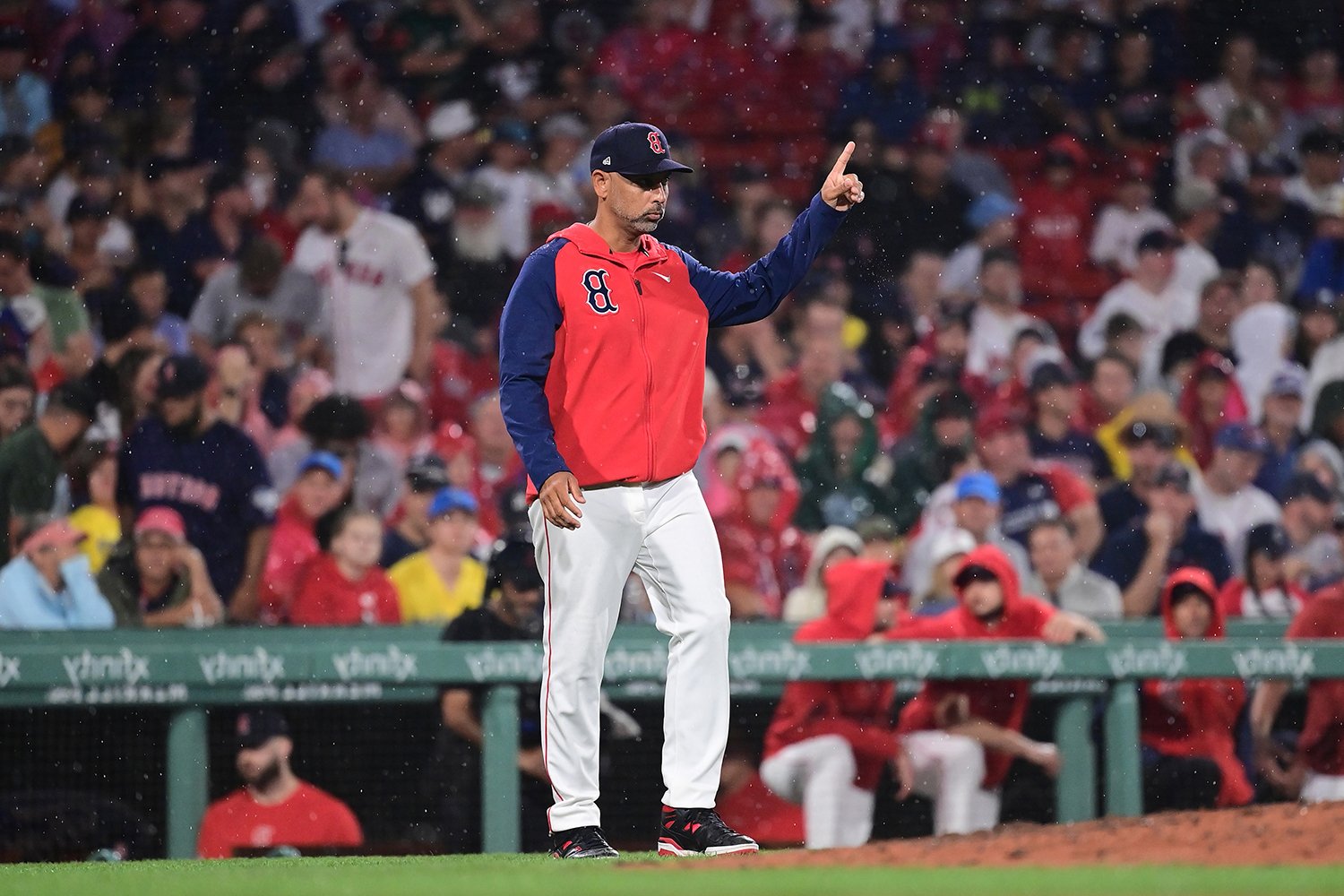 It’s a fun time to be a Red Sox fan. Although the 2024 season almost certainly didn’t go quite as well as you might have hoped, the team is bursting with prospects, young big-league talent, and potential. It’s a time for dreaming big, and those dreams should include offseason spending. The Red Sox have indicated that they’ll be making big moves over the winter, so you should absolutely be drooling over the list of pending free agents like it’s a dessert menu. Like many other outlets, we here at Talk Sox have written a lot of words about the team’s need for a right-handed hitter to balance out the overwhelmingly left-handed lineup. However, I’d like to point out something pretty simple: Boston’s need for left-handed pitching is more pressing than its need for right-handed hitting. As I wrote a few weeks ago, when they were at the plate, the Red Sox found themselves with the platoon advantage 59% of the time in 2024, which ranked seventh in baseball. Having a lineup stacked with lefties will help toward that end, as most pitchers (and most people) are right-handed. But let’s look at the other side of the coin. In 2024, Boston pitchers faced 6,154 total batters, and they had the platoon advantage in 50.6% of those plate appearances. That was the absolute lowest percentage in baseball. The league average was 57.5%, 25 of the 30 teams were above 55%, and no other team was below 52.5%. The Red Sox were dead last – emphasis on dead. The reason for this was simple: They had no lefties. Left-handed pitchers were on the mound for just 10.8% of their total plate appearances, which ranked 28th out of the 30 teams. When they faced left-handed hitters, the Red Sox had the platoon advantage just 7% of the time. 27 of the other 29 teams were above 24%. By FanGraphs WAR, here were Boston’s five most valuable left-handed pitchers in 2024: James Paxton, who made three starts with the Sox before injuring his calf. Cam Booser, who ran a solid 3.38 ERA and 3.80 FIP over 42.2 relief innings. Brennan Bernardino, who ran a serviceable 4.06 ERA and 4.15 ERA over 51 relief innings. Joe Jacques, who pitched 1.2 innings and allowed one earned run. Dominic Smith, who pitched three innings and is not a pitcher. Booser put up a genuinely nice season, and Bernardino was solid, despite taking a step back from a great 2023 campaign. But that’s really it. Bernardino ranked 12th on the team in innings pitched and Booser ranked 14th. No lefty was in the top 10. No other lefty threw more than 18 innings for the Red Sox this season. Dom Smith – who again is a first baseman – was their fifth-most valuable left-handed pitcher. At this point, I want to stop and make it clear that I’m not the world’s biggest worrier about platoon advantage. Generally speaking, I think it’s much more important to just go out and get the best players you can and deploy them wisely. The Mariners 52.5% of the time, which ranked them in 29th place, just ahead of the Red Sox, and the Mariners arguably had the best pitching staff in baseball. They had righties pitching 93.7% of the time, and because their righties were really good, it worked out just fine. Besides, these days, there’s a lot more to batter-hitter matchups than handedness. You can also look at how the hitter does against certain pitch types, or to get even more in the weeds, how their bat path lines up against the pitcher’s arm angle and pitch shapes. Every team in baseball is looking at this information while making matchup decisions. Pitching-savvy teams like the Rays work hard to keep a great deal of arm-angle diversity on their staff. That said, this stuff does matter, and it matters all the when you’re talking about relievers. If you’ve got a great lefty, you can save them for a high-leverage moment where they can have an outsized effect on the outcome of the game. I’m not saying that the Red Sox need to go out and stock up on left-handed arms, but having one real left-handed weapon coming out of the bullpen would fill a real hole on the roster.
 -
Which Free Agents Should the Red Sox Sign? Just Ask the Green Monster
Davy Andrews posted an article in Red Sox
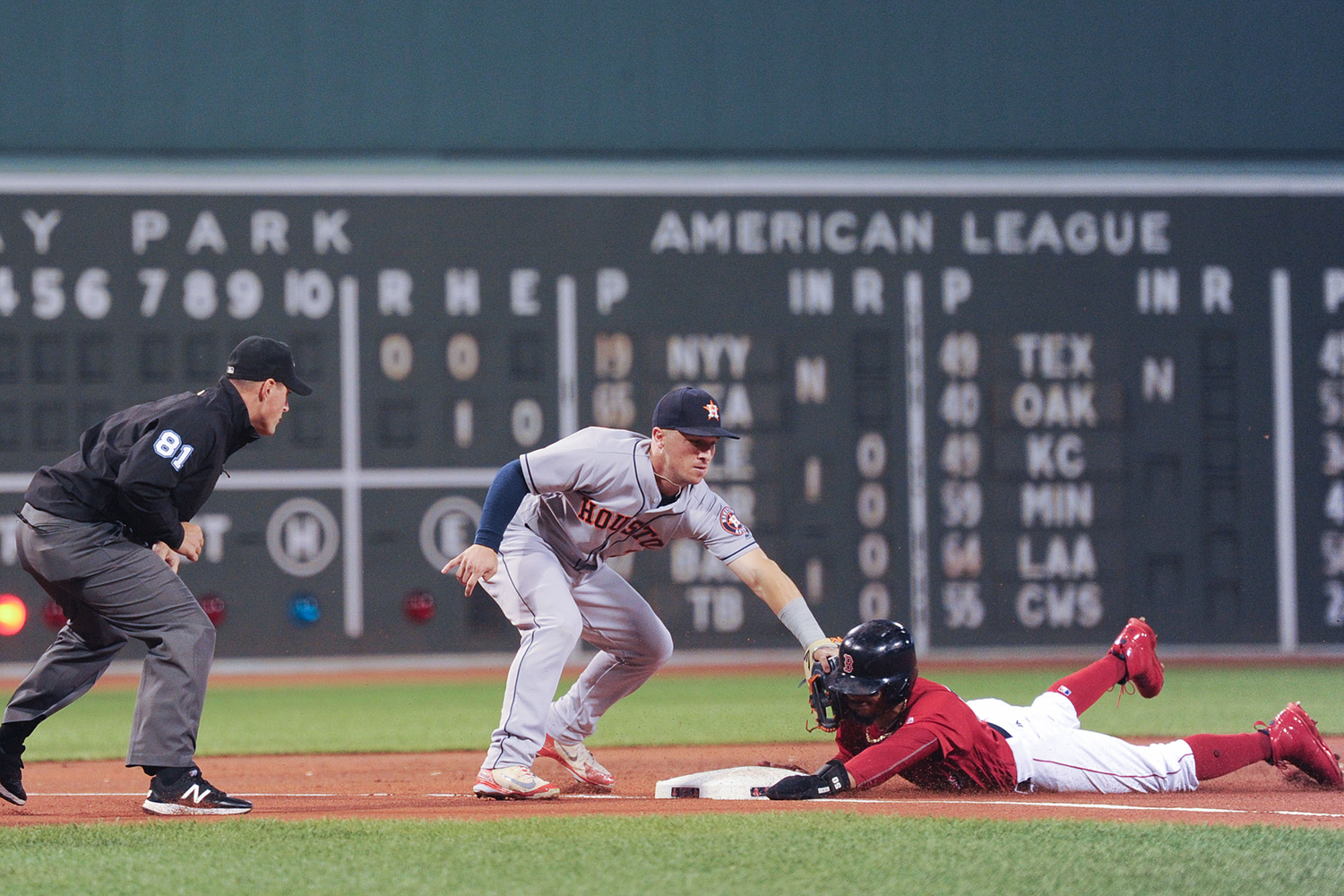 I’m going to say something you probably haven’t heard before: The Red Sox could really use a right-handed hitter to balance out their lineup. It’s a novel observation, I know. However, that means something different in Fenway Park than it does in any other ballpark in baseball, and that’s because of the Monster. Over the past three seasons, right-handed hitters have run a wOBA of .891 when they’ve hit fly balls and line drives to the pull side at Fenway Park. That’s the highest wOBA of any home park in baseball. The only other park within 30 points is Minute Maid Park, which has the Crawford Boxes in left field. In other words, Fenway is uniquely friendly to right-handed hitters who pull the ball in the air. Maybe you remember Adam Duvall’s 2023 campaign, in which he signed with the Red Sox, got into just 92 games thanks to a broken wrist in April, but still managed to hit 21 homers and run a 118 wRC+. By xwOBA, it should have been the fifth-best season of Duvall’s career, but by actual wOBA, it was just one point shy of his best. After the season, Daniel R. Epstein wrote at Baseball Prospectus about what made Duvall such a great fit at Fenway, and it wasn’t batted ball luck: he lifted tons of ball into and over the Green Monster. Well, the Red Sox are looking to compete again. They’ve got money to spend and a surplus of young, controllable talent as trade chips. Craig Breslow and his team are very definitely taking the quirks of their ballpark into account when they consider free agent and trade targets, so let’s do the same thing. I ran a Baseball Savant search for right-handed batter who’s taken at least a thousand swings over the past three seasons. The tables below represent the players with the highest rate of pulled fly balls and line drives per swing. Maybe you’ll remember the player at the very top. Player Pulled FB/Swing Player Pulled FB/Swing Betts, Mookie 10.7 Higashioka, Kyle 8.8 Arenado, Nolan 10.4 Buxton, Byron 8.6 Jansen, Danny 10.3 Hoskins, Rhys 8.5 Paredes, Isaac 9.9 Lewis, Royce 8.4 Bregman, Alex 9.6 Pillar, Kevin 8.3 Duvall, Adam 9.5 Moore, Dylan 8.2 Semien, Marcus 9.5 Bryant, Kris 8.1 Flores, Wilmer 9.4 Díaz, Aledmys 8.1 Altuve, Jose 9 Kim, Ha-Seong 8 Garver, Mitch 9 Renfroe, Hunter 7.9 Wow, Mookie Betts would’ve made a really great fit in Fenway Park. Who knew? The list features plenty of players who are locked into long-term contracts and unlikely to move, but it’s also got a bunch of free agent names that make a lot of sense. Let’s break them down quickly. Danny Jansen had a down season both at the plate and behind it in 2024, but he’s been a solid hitter over the course of his career and his skillset really does line up with the park. The team had a chance to see how it felt about him in 2023, and after the down year, they might be able to pick him up at a bit of a discount. I get the sense that the Boston fanbase is very cool on Alex Bregman, and I can understand the reasons. The team has Rafael Devers at third base, and his contract extends well into the 2060s. Bregman played for the hated Astros, he comes off as cocksure, he’ll be on the wrong side of 30, and over the last two seasons, he’s been more great than elite at the plate. But let’s be clear: Bregman has absolutely elite plate discipline and contact skills, something the Red Sox need desperately. And what if I told you this: In 97 career plate appearances at Fenway Park during the regular season, Bregman has slash line of .375/.485/.750 with seven homers? Or how about this? That works out to a wOBA of .509. Since Bregman’s debut in 2016, 208 different players have made at least 55 regular-season PAs at Fenway. Bregman’s .509 wOBA is the highest among all of them. Over the last nine years, Alex Bregman has literally been the best hitter at Fenway Park in all of baseball. Sure, signing a third baseman might prompt some awkward roster construction questions, but there is a legitimate argument to be made that Bregman is the best fit for Fenway of any player in baseball. Up next is old friend Adam Duvall. If we re-run our list with batted balls as the denominator instead of swings, Duvall jumps to the number one spot. Over the past three seasons, 29.3% of his batted balls have come in the form of pulled fly balls and line drives. He’s coming off an extremely bad season in Atlanta, but it wouldn’t be crazy to give Duvall another shot as a platoon option for Wilyer Abreu. Wilmer Flores is another buy-low option. Flores has a career 105 wRC+, but he’s coming off the worst year of his career. He put up a 68 wRC+ in just 71 games with the Giants in 2024. However, he’s also going into his age-33 season and is extremely limited defensively at this point in his career. He might make sense as a platoon option for DH or first base, but not much more than that. Kyle Higashioka is a very interesting name. Higashioka just made himself some real money, as he’s entering free agency coming off the best offensive season of his career, hitting 17 homers with a 105 wRC+ with the Padres. He also went off in the playoffs to the tune of three homers and a 168 wRC+. However, he’s 34 years old with a career 81 wRC+. Most teams would be looking at Higashioka as a glove-first option to split time at catcher, and it’s hard to imagine he gets more than a one-year deal anywhere at this point of his career. All the same, the Red Sox are in need of catching help, and he really does fit the park. There are more interesting names a bit further down on this list, including a couple of big free agents, but we’re already up over a thousand words here. We’ll continue this exercise later in the week.
 -
Fenway Park's unusual dimensions allow the Red Sox to look for a specific kind of player: right-handed batters who pull the ball in the air a whole lot. Which free agents meet that criteria? I’m going to say something you probably haven’t heard before: The Red Sox could really use a right-handed hitter to balance out their lineup. It’s a novel observation, I know. However, that means something different in Fenway Park than it does in any other ballpark in baseball, and that’s because of the Monster. Over the past three seasons, right-handed hitters have run a wOBA of .891 when they’ve hit fly balls and line drives to the pull side at Fenway Park. That’s the highest wOBA of any home park in baseball. The only other park within 30 points is Minute Maid Park, which has the Crawford Boxes in left field. In other words, Fenway is uniquely friendly to right-handed hitters who pull the ball in the air. Maybe you remember Adam Duvall’s 2023 campaign, in which he signed with the Red Sox, got into just 92 games thanks to a broken wrist in April, but still managed to hit 21 homers and run a 118 wRC+. By xwOBA, it should have been the fifth-best season of Duvall’s career, but by actual wOBA, it was just one point shy of his best. After the season, Daniel R. Epstein wrote at Baseball Prospectus about what made Duvall such a great fit at Fenway, and it wasn’t batted ball luck: he lifted tons of ball into and over the Green Monster. Well, the Red Sox are looking to compete again. They’ve got money to spend and a surplus of young, controllable talent as trade chips. Craig Breslow and his team are very definitely taking the quirks of their ballpark into account when they consider free agent and trade targets, so let’s do the same thing. I ran a Baseball Savant search for right-handed batter who’s taken at least a thousand swings over the past three seasons. The tables below represent the players with the highest rate of pulled fly balls and line drives per swing. Maybe you’ll remember the player at the very top. Player Pulled FB/Swing Player Pulled FB/Swing Betts, Mookie 10.7 Higashioka, Kyle 8.8 Arenado, Nolan 10.4 Buxton, Byron 8.6 Jansen, Danny 10.3 Hoskins, Rhys 8.5 Paredes, Isaac 9.9 Lewis, Royce 8.4 Bregman, Alex 9.6 Pillar, Kevin 8.3 Duvall, Adam 9.5 Moore, Dylan 8.2 Semien, Marcus 9.5 Bryant, Kris 8.1 Flores, Wilmer 9.4 Díaz, Aledmys 8.1 Altuve, Jose 9 Kim, Ha-Seong 8 Garver, Mitch 9 Renfroe, Hunter 7.9 Wow, Mookie Betts would’ve made a really great fit in Fenway Park. Who knew? The list features plenty of players who are locked into long-term contracts and unlikely to move, but it’s also got a bunch of free agent names that make a lot of sense. Let’s break them down quickly. Danny Jansen had a down season both at the plate and behind it in 2024, but he’s been a solid hitter over the course of his career and his skillset really does line up with the park. The team had a chance to see how it felt about him in 2023, and after the down year, they might be able to pick him up at a bit of a discount. I get the sense that the Boston fanbase is very cool on Alex Bregman, and I can understand the reasons. The team has Rafael Devers at third base, and his contract extends well into the 2060s. Bregman played for the hated Astros, he comes off as cocksure, he’ll be on the wrong side of 30, and over the last two seasons, he’s been more great than elite at the plate. But let’s be clear: Bregman has absolutely elite plate discipline and contact skills, something the Red Sox need desperately. And what if I told you this: In 97 career plate appearances at Fenway Park during the regular season, Bregman has slash line of .375/.485/.750 with seven homers? Or how about this? That works out to a wOBA of .509. Since Bregman’s debut in 2016, 208 different players have made at least 55 regular-season PAs at Fenway. Bregman’s .509 wOBA is the highest among all of them. Over the last nine years, Alex Bregman has literally been the best hitter at Fenway Park in all of baseball. Sure, signing a third baseman might prompt some awkward roster construction questions, but there is a legitimate argument to be made that Bregman is the best fit for Fenway of any player in baseball. Up next is old friend Adam Duvall. If we re-run our list with batted balls as the denominator instead of swings, Duvall jumps to the number one spot. Over the past three seasons, 29.3% of his batted balls have come in the form of pulled fly balls and line drives. He’s coming off an extremely bad season in Atlanta, but it wouldn’t be crazy to give Duvall another shot as a platoon option for Wilyer Abreu. Wilmer Flores is another buy-low option. Flores has a career 105 wRC+, but he’s coming off the worst year of his career. He put up a 68 wRC+ in just 71 games with the Giants in 2024. However, he’s also going into his age-33 season and is extremely limited defensively at this point in his career. He might make sense as a platoon option for DH or first base, but not much more than that. Kyle Higashioka is a very interesting name. Higashioka just made himself some real money, as he’s entering free agency coming off the best offensive season of his career, hitting 17 homers with a 105 wRC+ with the Padres. He also went off in the playoffs to the tune of three homers and a 168 wRC+. However, he’s 34 years old with a career 81 wRC+. Most teams would be looking at Higashioka as a glove-first option to split time at catcher, and it’s hard to imagine he gets more than a one-year deal anywhere at this point of his career. All the same, the Red Sox are in need of catching help, and he really does fit the park. There are more interesting names a bit further down on this list, including a couple of big free agents, but we’re already up over a thousand words here. We’ll continue this exercise later in the week. View full article
-
Looking at Boston's current commitments and its historical spending in order to get a sense of just how much the Red Sox might actually spend during the offseason. The Red Sox are going to add during the offseason, likely through both free agency and the trade market. Like just about every team in baseball, they could use some more pitching and a good right-handed hitter. Beyond that, we really don’t know much about the team’s plans. Maybe they expect to slot their promising hitting prospects right into the lineup, or maybe they'll slow-play them and land a big-name free agent like Willy Adames or Alex Bregman. One thing we can get a sense of is how much money the team has to play with. Sources like RosterResource, Cot’s Contracts, MLB Trade Rumors, and Spotrac can give us a sense of where the team’s payroll is right now, where it’s been in the past, and how it stacks up against the rest of the league. All of that can give us a better sense of what we might expect going forward, even if we don’t know the plan. So let’s start with what we know. RosterResource has Boston’s total payroll for this season at an estimated $183,361,623, which makes it the 11th-highest in baseball. I know it feels like the team has been scrimping, but it’s at least worth remembering that as things stand right now, they’re already pretty close to running a top-10 payroll. The other important number relates to the Competitive Balance Tax, also known as the luxury tax. For CBT purposes, RosterResource has the Red Sox at $222,674,123. That number is larger because it factors in things like average annual value adjustments, player benefits, salaries for minor leaguers on the 40-man roster, and so on. Like every club, Boston has less payroll committed for the 2025 season, because free agents like Kenley Jansen, Chris Martin, Luis Garcia, Nick Pivetta, Tyler O’Neill, Danny Jansen, and Lucas Sims are coming off the books. If you combine RosterResource’s estimates with the estimated salaries that Jarren Duran, Tanner Houck, and Kutter Crawford will receive in arbitration, that brings you to somewhere between $127 and $131 million. All of this is to say that coming into the 2025 season, if the Red Sox wanted to do nothing more than keep the same payroll as they had in 2024, they’d have something like $53 million to play with. If they decided to spend a little bit more, going right up to but not exceeding the luxury tax threshold, they’d probably have an extra $10 million on top of that (in terms of average annual value). However, recent history tells us that we should probably expect the Red Sox to shoot a little bit higher. The table below shows payroll figures tracked by Cot’s Contracts. The numbers in parentheses are Boston’s rank in each category, and that's what we're interested in. Year Opening Day 26-Man Year End 40-Man CBT 40-Man 2024 $171,242,167 (12) N/A $223,105,947 (12) 2023 $181,207,484 (12) $203,096,349 (10) $225,767,320 (12) 2022 $206,553,059 ( 6) $217,089,051 ( 6) $236,149,678 ( 5) 2021 $180,147,694 ( 8) $187,356,913 ( 6) $207,640,471 ( 6) 2020 $ 73,931,812 ( 4) $ 64,338,341 (13) $184,859,384 ( 8) 2019 $236,171,429 ( 1) $228,403,219 ( 1) $243,653,717 ( 1) 2018 $233,752,429 ( 1) $230,396,923 ( 1) $239,481,745 ( 1) 2017 $197,041,179 ( 3) $189,218,620 ( 4) $191,888,422 ( 6) 2016 $197,899,679 ( 4) $200,563,162 ( 3) $204,012,716 ( 5) 2015 $184,345,996 ( 3) $185,568,958 ( 3) $199,491,005 ( 3) 2014 $156,350,125 ( 5) $168,178,367 ( 5) $185,922,329 ( 5) 2013 $154,555,500 ( 4) $176,481,441 ( 3) $177,774,334 ( 3) 2012 $175,249,119 ( 2) $168,614,614 ( 3) $177,952,823 ( 2) As you can see, Cot’s has the Sox with the 12th-highest payroll and luxury tax figure in each of the past two seasons. But from 2020 to 2022, they had routinely been in the top eight, and from 2012 to 2019, they were almost always at the very top of the league. If the Red Sox really want to give themselves the best chance to maximize this competitive window, they could jump back into the deep end, where they've lived for pretty much this entire century. This season, the Mets, Yankees, and Dodgers are the only teams with estimated payrolls above $300 million. The Phillies and the Astros are in the next tier, with payrolls approaching $250 million. If the Red Sox are willing to run a top-five payroll, that means paying the luxury tax and adding at least another $115 million in 2025 salary. That wouldn't bring them anywhere near the Yankees, Dodgers, or Mets, but still, for that kind of money, no free agent would be off limits — not even Juan Soto – and the team would be able to sign multiple difference-makers. There are plenty of other factors that will affect free agency, but as the Red Sox start building for the next season and beyond, having a sense of their spending habits in the past should help us get a sense of how they see themselves going forward. View full article
-
 The Red Sox are going to add during the offseason, likely through both free agency and the trade market. Like just about every team in baseball, they could use some more pitching and a good right-handed hitter. Beyond that, we really don’t know much about the team’s plans. Maybe they expect to slot their promising hitting prospects right into the lineup, or maybe they'll slow-play them and land a big-name free agent like Willy Adames or Alex Bregman. One thing we can get a sense of is how much money the team has to play with. Sources like RosterResource, Cot’s Contracts, MLB Trade Rumors, and Spotrac can give us a sense of where the team’s payroll is right now, where it’s been in the past, and how it stacks up against the rest of the league. All of that can give us a better sense of what we might expect going forward, even if we don’t know the plan. So let’s start with what we know. RosterResource has Boston’s total payroll for this season at an estimated $183,361,623, which makes it the 11th-highest in baseball. I know it feels like the team has been scrimping, but it’s at least worth remembering that as things stand right now, they’re already pretty close to running a top-10 payroll. The other important number relates to the Competitive Balance Tax, also known as the luxury tax. For CBT purposes, RosterResource has the Red Sox at $222,674,123. That number is larger because it factors in things like average annual value adjustments, player benefits, salaries for minor leaguers on the 40-man roster, and so on. Like every club, Boston has less payroll committed for the 2025 season, because free agents like Kenley Jansen, Chris Martin, Luis Garcia, Nick Pivetta, Tyler O’Neill, Danny Jansen, and Lucas Sims are coming off the books. If you combine RosterResource’s estimates with the estimated salaries that Jarren Duran, Tanner Houck, and Kutter Crawford will receive in arbitration, that brings you to somewhere between $127 and $131 million. All of this is to say that coming into the 2025 season, if the Red Sox wanted to do nothing more than keep the same payroll as they had in 2024, they’d have something like $53 million to play with. If they decided to spend a little bit more, going right up to but not exceeding the luxury tax threshold, they’d probably have an extra $10 million on top of that (in terms of average annual value). However, recent history tells us that we should probably expect the Red Sox to shoot a little bit higher. The table below shows payroll figures tracked by Cot’s Contracts. The numbers in parentheses are Boston’s rank in each category, and that's what we're interested in. Year Opening Day 26-Man Year End 40-Man CBT 40-Man 2024 $171,242,167 (12) N/A $223,105,947 (12) 2023 $181,207,484 (12) $203,096,349 (10) $225,767,320 (12) 2022 $206,553,059 ( 6) $217,089,051 ( 6) $236,149,678 ( 5) 2021 $180,147,694 ( 8) $187,356,913 ( 6) $207,640,471 ( 6) 2020 $ 73,931,812 ( 4) $ 64,338,341 (13) $184,859,384 ( 8) 2019 $236,171,429 ( 1) $228,403,219 ( 1) $243,653,717 ( 1) 2018 $233,752,429 ( 1) $230,396,923 ( 1) $239,481,745 ( 1) 2017 $197,041,179 ( 3) $189,218,620 ( 4) $191,888,422 ( 6) 2016 $197,899,679 ( 4) $200,563,162 ( 3) $204,012,716 ( 5) 2015 $184,345,996 ( 3) $185,568,958 ( 3) $199,491,005 ( 3) 2014 $156,350,125 ( 5) $168,178,367 ( 5) $185,922,329 ( 5) 2013 $154,555,500 ( 4) $176,481,441 ( 3) $177,774,334 ( 3) 2012 $175,249,119 ( 2) $168,614,614 ( 3) $177,952,823 ( 2) As you can see, Cot’s has the Sox with the 12th-highest payroll and luxury tax figure in each of the past two seasons. But from 2020 to 2022, they had routinely been in the top eight, and from 2012 to 2019, they were almost always at the very top of the league. If the Red Sox really want to give themselves the best chance to maximize this competitive window, they could jump back into the deep end, where they've lived for pretty much this entire century. This season, the Mets, Yankees, and Dodgers are the only teams with estimated payrolls above $300 million. The Phillies and the Astros are in the next tier, with payrolls approaching $250 million. If the Red Sox are willing to run a top-five payroll, that means paying the luxury tax and adding at least another $115 million in 2025 salary. That wouldn't bring them anywhere near the Yankees, Dodgers, or Mets, but still, for that kind of money, no free agent would be off limits — not even Juan Soto – and the team would be able to sign multiple difference-makers. There are plenty of other factors that will affect free agency, but as the Red Sox start building for the next season and beyond, having a sense of their spending habits in the past should help us get a sense of how they see themselves going forward.
 -
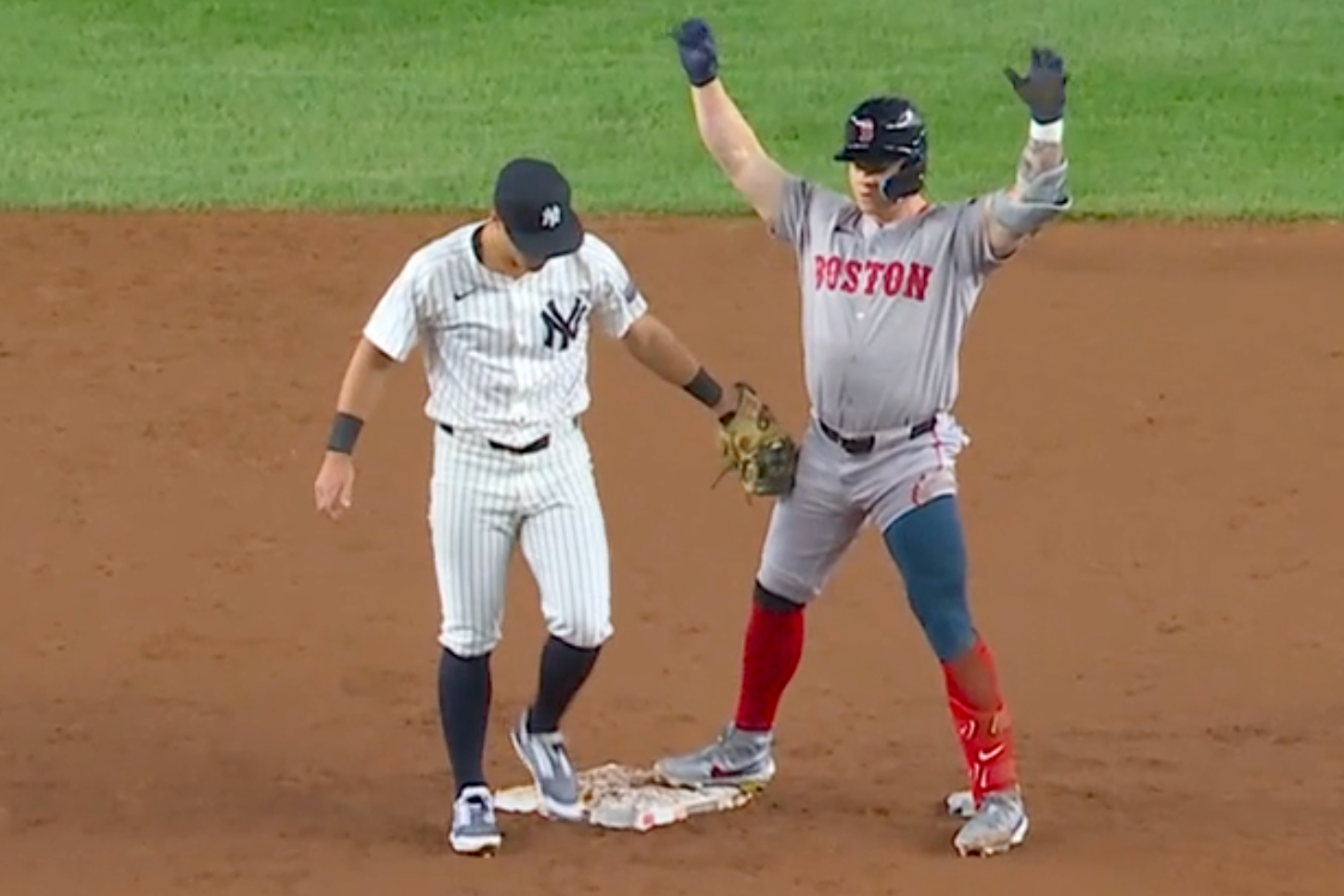 The most memorable play of the 2024 Red Sox season happened just a few weeks ago, on September 12. It wasn’t a walk-off homer, a miraculous diving stop, or a game-saving home run robbery. It was a routine double to the gap in right-center off the bat of Tyler O’Neill. It didn’t result in a run, and it came just one inning before the Red Sox would get walked off in the 10th inning for the second day in a row. O’Neill didn’t even hit the ball particularly hard. If it hadn’t been perfectly placed between Aaron Judge and Juan Soto, it likely would have been a routine fly ball. But it was perfectly placed, and though Judge hustled to cut the ball off before the warning track, O’Neill cruised into second with a casual popup slide. Something else popped up too. O’Neill’s left pant leg rode up all the way to his upper thigh, exposing the blue compression pants that he wears under his uniform. Any time the hulking O’Neill slides, it creates an unstoppable-force-meets-immovable-object type of situation, with the ground as the immovable object and O’Neill’s bulging haunches playing the role of the unstoppable force. Caught in the middle are this season’s transparent uniform pants, manufactured by Fanatics to have the structural integrity of a whisper. Those flimsy britches never stand a chance, and all season long they’ve seemed to know it. Any time O’Neill has slid into second, they’ve evacuated at the first sign of danger, seeking sanctuary up around his bikini zone. We’ve seen a lot of O’Neill’s upper thighs this season, which is a weird thing to type. But what makes it even weirder is that no one else in baseball seems to have this particular problem. All season long, the rest of the league has dealt with tissue-paper thin pants that allow the viewers at home glimpses of tags and bulges and inseams; pants that spontaneously shred themselves the moment a baserunner so much as thinks about sliding. Just ask Freddie Freeman, who stole second base with a sprint speed of approximately negative six miles per hour on Saturday, and in the process seemed to open up some kind of portal to another dimension in his pants. That’s what this year’s pants do. They rip. O’Neill is the only player in the league whose pants constantly ride all the way up to his groin when he slides. Actually, I take that back. He doesn’t even have to slide for this to happen. Even if O’Neill just runs hard, his pants start creeping inexorably upward. It's as if they have some sort of debilitating phobia that leaves them deathly afraid of the human knee. While I can’t say exactly what’s going on to make O’Neill’s pants do this, the fact it’s not happening to anyone else indicates that he could solve it if he wanted to. Therefore, I’m going to go out on a limb and say that he doesn’t want to solve this problem. And you know what? I get it. O’Neill has a solid argument for the most jacked player in all of baseball, and if I had to guess, I would say that he makes that argument in his head once a week while doing hammer curls in front of a mirror. You don’t get muscles like those unless you want them badly enough to put in a whole lot of work. If I had quads like O’Neill’s, I’m sure I’d want to show them off too. What makes it even more fun is that the red-blue color pattern matches identically the pattern of Superman’s tights. When he slides into second base, it looks more than a little bit like O’Neill has stuffed his bemuscled frame into superhero pajamas. If O’Neill ends up signing elsewhere this offseason, there will be plenty of reasons to miss him. He’s always been a great defender, and despite battling through injuries, he became one of just three Red Sox to put up a 30-homer game in this decade. But no matter which of this season’s Red Sox end up playing elsewhere next season, we've seen a whole lot more of O'Neill than just about anybody else. Consequently, there will be a whole lot more of him to miss.
 -
Tyler O'Neill's breakout 2024 season was revealing, in more ways than one. The most memorable play of the 2024 Red Sox season happened just a few weeks ago, on September 12. It wasn’t a walk-off homer, a miraculous diving stop, or a game-saving home run robbery. It was a routine double to the gap in right-center off the bat of Tyler O’Neill. It didn’t result in a run, and it came just one inning before the Red Sox would get walked off in the 10th inning for the second day in a row. O’Neill didn’t even hit the ball particularly hard. If it hadn’t been perfectly placed between Aaron Judge and Juan Soto, it likely would have been a routine fly ball. But it was perfectly placed, and though Judge hustled to cut the ball off before the warning track, O’Neill cruised into second with a casual popup slide. Something else popped up too. O’Neill’s left pant leg rode up all the way to his upper thigh, exposing the blue compression pants that he wears under his uniform. Any time the hulking O’Neill slides, it creates an unstoppable-force-meets-immovable-object type of situation, with the ground as the immovable object and O’Neill’s bulging haunches playing the role of the unstoppable force. Caught in the middle are this season’s transparent uniform pants, manufactured by Fanatics to have the structural integrity of a whisper. Those flimsy britches never stand a chance, and all season long they’ve seemed to know it. Any time O’Neill has slid into second, they’ve evacuated at the first sign of danger, seeking sanctuary up around his bikini zone. We’ve seen a lot of O’Neill’s upper thighs this season, which is a weird thing to type. But what makes it even weirder is that no one else in baseball seems to have this particular problem. All season long, the rest of the league has dealt with tissue-paper thin pants that allow the viewers at home glimpses of tags and bulges and inseams; pants that spontaneously shred themselves the moment a baserunner so much as thinks about sliding. Just ask Freddie Freeman, who stole second base with a sprint speed of approximately negative six miles per hour on Saturday, and in the process seemed to open up some kind of portal to another dimension in his pants. That’s what this year’s pants do. They rip. O’Neill is the only player in the league whose pants constantly ride all the way up to his groin when he slides. Actually, I take that back. He doesn’t even have to slide for this to happen. Even if O’Neill just runs hard, his pants start creeping inexorably upward. It's as if they have some sort of debilitating phobia that leaves them deathly afraid of the human knee. While I can’t say exactly what’s going on to make O’Neill’s pants do this, the fact it’s not happening to anyone else indicates that he could solve it if he wanted to. Therefore, I’m going to go out on a limb and say that he doesn’t want to solve this problem. And you know what? I get it. O’Neill has a solid argument for the most jacked player in all of baseball, and if I had to guess, I would say that he makes that argument in his head once a week while doing hammer curls in front of a mirror. You don’t get muscles like those unless you want them badly enough to put in a whole lot of work. If I had quads like O’Neill’s, I’m sure I’d want to show them off too. What makes it even more fun is that the red-blue color pattern matches identically the pattern of Superman’s tights. When he slides into second base, it looks more than a little bit like O’Neill has stuffed his bemuscled frame into superhero pajamas. If O’Neill ends up signing elsewhere this offseason, there will be plenty of reasons to miss him. He’s always been a great defender, and despite battling through injuries, he became one of just three Red Sox to put up a 30-homer game in this decade. But no matter which of this season’s Red Sox end up playing elsewhere next season, we've seen a whole lot more of O'Neill than just about anybody else. Consequently, there will be a whole lot more of him to miss. View full article
-
Gonzalez hits the ball harder than just about any player on the Boston roster. How can the Red Sox turn all that power into run production? The other day I was looking at some team leaderboards, and something jumped out at me. Maybe you already know this and maybe you don’t, but there’s one name at the top of Boston’s Statcast leaderboards that’s not like the others. Unsurprisingly Rafael Devers sits alone at the top in terms of hard-hit rate, average exit velocity, and 90th percentile exit velocity. In second place? It’s not Jarren Duran or Tyler O’Neill. It’s not even Wilyer Abreu or Triston Casas. It’s Romy Gonzalez. Romy Gonzalez, it turns out, is a threat to baseballs everywhere. Player EV EV90 HH% Rafael Devers 93.2 108.8 52.3 Romy Gonzalez 92.3 107.8 50.3 Tyler O'Neill 90.9 107.2 48.4 Jarren Duran 90.8 106.9 43.7 Rob Refsnyder 89.5 106.7 42.9 Wilyer Abreu 91.6 106.5 49.8 Triston Casas 90.2 106 45.2 Gonzalez is in his fourth season at the big-league level, and although he’s always pulverized the baseball, he’s never been able to turn any of that hard contact into actual production at the plate. However, the 2024 season was the closest he’d ever come. He was just a hair below average this season, but over the last three seasons with the White Sox, he ran an execrable 61 wRC+, and graded out as below replacement level. Frankly, the White Sox are the only organization in baseball that would let a player hit that badly for that long at the major-league level. Still, it’s easy to see why the Red Sox were willing to take a flyer on Gonzalez. Chicago isn’t exactly known for its success in player development, and even a small chance of figuring out how to unlock his potential was worth the risk. I’d like to talk about why Gonzalez hasn’t yet been able to leverage all that contact quality, and to point to a hitter with a similar profile who did manage to figure it all out. As for the first part, the reason for Gonzalez’s struggles is plain to see. In a lot of ways, he’s the archetypal power hitter: he chases too much, he chases too many bad pitches, which leads to too many strikeouts and not enough walks. That’s not great, but there are still plenty of power hitters who have made that all-or-nothing approach work. Gonzalez has a bigger problem. His career groundball rate is 56.2%, miles above the league average of 44.4%. As the saying goes, there’s no slug on the ground. Until Gonzalez figures out how to turn a groundball into a homer, he’s going to keep wasting his greatest gift. Gonzalez had a 90.2 mph average exit velocity on groundballs this season, which ranked 27th in all of baseball (minimum 20 GB). That puts him in the 94th percentile. On fly balls, he had an exit velocity of 92.7 mph. That sounds better, but here’s the thing: everybody hits fly balls harder, so Gonzalez was no longer near the top. He ranked 167th in baseball, all the way down in the 61st percentile. In other words, the problem is not just that Gonzalez puts the ball on the ground too much, it’s that his swing is geared toward groundballs rather than fly balls. When he squares the ball up, he’s not putting it in the air where it can do damage. Let me show you what I mean. The charts above are from Statcast, and they break down Gonzalez’s career launch angle in two different ways. On the left is his average exit velocity, broken down by the angle. As you can see, the graph is at its very highest a bit below zero degrees. In other words, Gonzalez’s swing works in such a way that when he is really crushing the ball, he’s hitting a low line drive or a hard groundball. When he’s hitting the ball between 20 and 35 degrees, where extra-base hits happen, he’s not making his best contact. The graph on the right breaks things down by frequency. The gray area is all of his batted balls, and the red is just the ones that fall in for hits. Even though the graph on the left shows us that Gonzalez really smashes the ball at just below zero degrees, he's not getting any hits there. There just aren’t many hits to get; those end up as groundball outs, even when they’re hit hard. All of this brings me to two players in the Mets organization. Mark Vientos and Brett Baty are both third basemen, and they both laid waste to the minor leagues before struggling mightily in 2023 and 2024. Like Gonzalez, they had plenty of power, but they ran groundball rates over 50%, and as a result, their wRC+ stayed in the 60s. Baty still hasn’t figured things out, but this season, Vientos dropped his groundball rate to 44.2%. That’s still a pretty high, but it was enough to completely turn things around. This season, he ran a 133 wRC+ and was a key contributor to New York’s playoff run. Obviously, the Mets were aware of the problem facing Baty and Vientos, but for whatever reason, they were only able to help one of them solve it. There’s nothing easier than identifying players who need a swing change, but it’s a whole lot harder to implement one successfully. Plenty of players never figure it out, and for Gonzalez, who just turned 28, it’s awfully late in the game for such a radical change. Maybe he’ll never unlock the full potential of his swing, but I would like to propose one specific way that he might try it. Earlier this season, Major League Baseball released bat-tracking data for the first time. I dove into the numbers and wrote several articles about it, but one in particular is more relevant to Gonzalez’s situation. Gonzalez has a career 33% pull rate, which is extremely low. I made the graphic below. You can ignore the numbers, but keep an eye on the bat angle. The point is that the further out you hit the ball, the more likely you are to pull the ball, because your bat will be angled toward the pull side. Because of his extremely low pull rate, we can be certain that Gonzalez isn’t going out and attacking the ball in front of the plate; he’s letting it get deep in the hitting zone. One of the things that the launch angle revolution taught baseball nerds is that when a player hits the ball out in front of the plate, they also tend to lift it more. Here’s what I wrote at the time: “In any but the most dramatic of old-fashioned, chopping-wood-style swings, attack angle will drop at the beginning of the swing, then increase toward the end. To illustrate that down-up-down path, I slowed down a Statcast video showing Oneil Cruz’s bat path on a recent line drive.” If you hit the ball out in front, your bat will be traveling upwards when it meets the ball, making a higher launch angle more likely. If Gonzalez were to keep make a real effort to meet the ball out in front, he might be able to lift the ball without radically changing his swing. I’m not saying that Gonzalez could suddenly turn into a star like Vientos; there’s likely too much swing-and-miss in his game for that no matter what. But he still has the potential to be a real run producer. No matter what happens, this will be an extremely important offseason for Gonzalez. The Red Sox are planning on adding to their roster and returning to contention. They could certainly use a right-handed power bat, but if he can’t figure out a way to contribute to that effort, he’s unlikely to last very long. It’s time to see whether he can finally unlock his potential. View full article
-
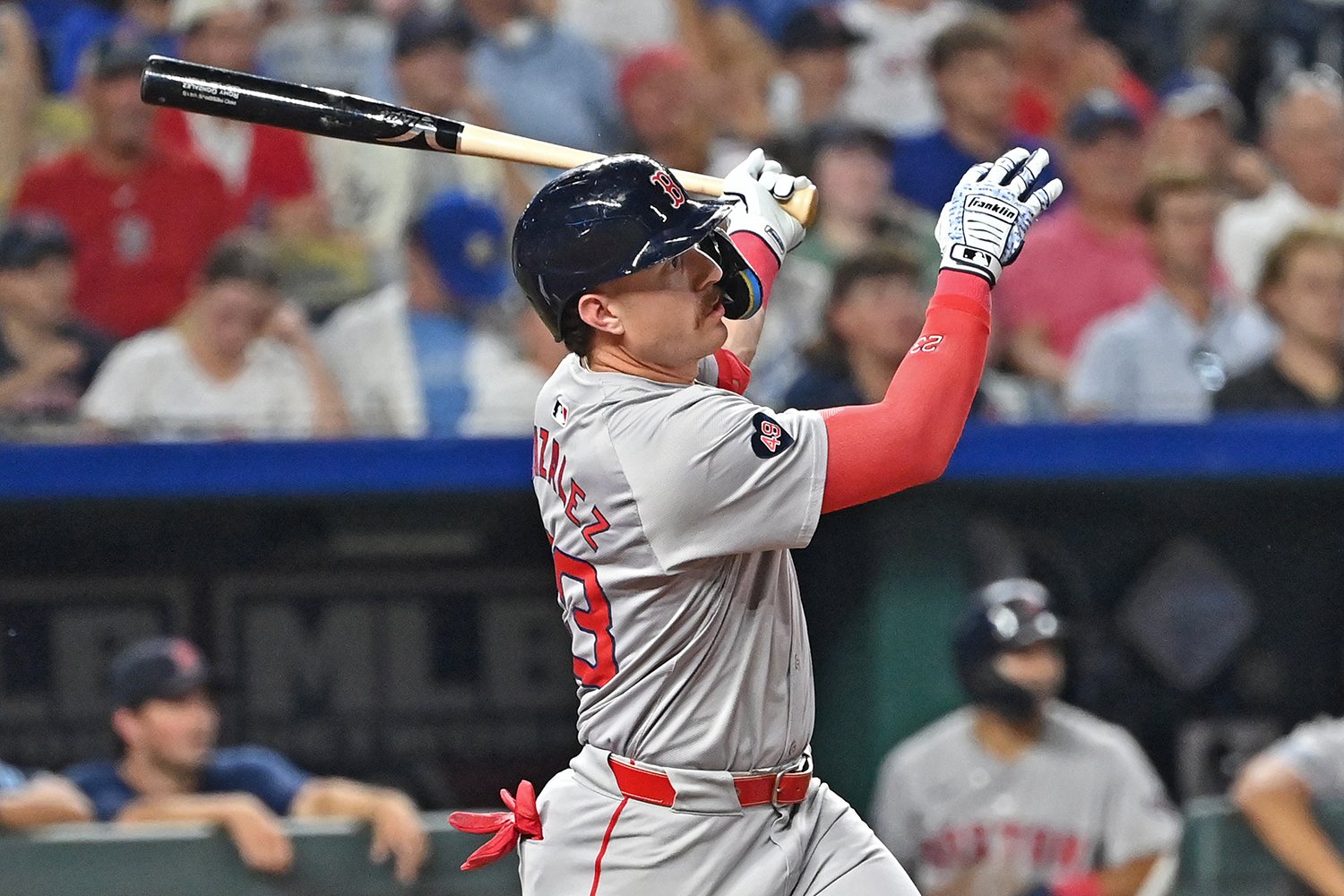 The other day I was looking at some team leaderboards, and something jumped out at me. Maybe you already know this and maybe you don’t, but there’s one name at the top of Boston’s Statcast leaderboards that’s not like the others. Unsurprisingly Rafael Devers sits alone at the top in terms of hard-hit rate, average exit velocity, and 90th percentile exit velocity. In second place? It’s not Jarren Duran or Tyler O’Neill. It’s not even Wilyer Abreu or Triston Casas. It’s Romy Gonzalez. Romy Gonzalez, it turns out, is a threat to baseballs everywhere. Player EV EV90 HH% Rafael Devers 93.2 108.8 52.3 Romy Gonzalez 92.3 107.8 50.3 Tyler O'Neill 90.9 107.2 48.4 Jarren Duran 90.8 106.9 43.7 Rob Refsnyder 89.5 106.7 42.9 Wilyer Abreu 91.6 106.5 49.8 Triston Casas 90.2 106 45.2 Gonzalez is in his fourth season at the big-league level, and although he’s always pulverized the baseball, he’s never been able to turn any of that hard contact into actual production at the plate. However, the 2024 season was the closest he’d ever come. He was just a hair below average this season, but over the last three seasons with the White Sox, he ran an execrable 61 wRC+, and graded out as below replacement level. Frankly, the White Sox are the only organization in baseball that would let a player hit that badly for that long at the major-league level. Still, it’s easy to see why the Red Sox were willing to take a flyer on Gonzalez. Chicago isn’t exactly known for its success in player development, and even a small chance of figuring out how to unlock his potential was worth the risk. I’d like to talk about why Gonzalez hasn’t yet been able to leverage all that contact quality, and to point to a hitter with a similar profile who did manage to figure it all out. As for the first part, the reason for Gonzalez’s struggles is plain to see. In a lot of ways, he’s the archetypal power hitter: he chases too much, he chases too many bad pitches, which leads to too many strikeouts and not enough walks. That’s not great, but there are still plenty of power hitters who have made that all-or-nothing approach work. Gonzalez has a bigger problem. His career groundball rate is 56.2%, miles above the league average of 44.4%. As the saying goes, there’s no slug on the ground. Until Gonzalez figures out how to turn a groundball into a homer, he’s going to keep wasting his greatest gift. Gonzalez had a 90.2 mph average exit velocity on groundballs this season, which ranked 27th in all of baseball (minimum 20 GB). That puts him in the 94th percentile. On fly balls, he had an exit velocity of 92.7 mph. That sounds better, but here’s the thing: everybody hits fly balls harder, so Gonzalez was no longer near the top. He ranked 167th in baseball, all the way down in the 61st percentile. In other words, the problem is not just that Gonzalez puts the ball on the ground too much, it’s that his swing is geared toward groundballs rather than fly balls. When he squares the ball up, he’s not putting it in the air where it can do damage. Let me show you what I mean. The charts above are from Statcast, and they break down Gonzalez’s career launch angle in two different ways. On the left is his average exit velocity, broken down by the angle. As you can see, the graph is at its very highest a bit below zero degrees. In other words, Gonzalez’s swing works in such a way that when he is really crushing the ball, he’s hitting a low line drive or a hard groundball. When he’s hitting the ball between 20 and 35 degrees, where extra-base hits happen, he’s not making his best contact. The graph on the right breaks things down by frequency. The gray area is all of his batted balls, and the red is just the ones that fall in for hits. Even though the graph on the left shows us that Gonzalez really smashes the ball at just below zero degrees, he's not getting any hits there. There just aren’t many hits to get; those end up as groundball outs, even when they’re hit hard. All of this brings me to two players in the Mets organization. Mark Vientos and Brett Baty are both third basemen, and they both laid waste to the minor leagues before struggling mightily in 2023 and 2024. Like Gonzalez, they had plenty of power, but they ran groundball rates over 50%, and as a result, their wRC+ stayed in the 60s. Baty still hasn’t figured things out, but this season, Vientos dropped his groundball rate to 44.2%. That’s still a pretty high, but it was enough to completely turn things around. This season, he ran a 133 wRC+ and was a key contributor to New York’s playoff run. Obviously, the Mets were aware of the problem facing Baty and Vientos, but for whatever reason, they were only able to help one of them solve it. There’s nothing easier than identifying players who need a swing change, but it’s a whole lot harder to implement one successfully. Plenty of players never figure it out, and for Gonzalez, who just turned 28, it’s awfully late in the game for such a radical change. Maybe he’ll never unlock the full potential of his swing, but I would like to propose one specific way that he might try it. Earlier this season, Major League Baseball released bat-tracking data for the first time. I dove into the numbers and wrote several articles about it, but one in particular is more relevant to Gonzalez’s situation. Gonzalez has a career 33% pull rate, which is extremely low. I made the graphic below. You can ignore the numbers, but keep an eye on the bat angle. The point is that the further out you hit the ball, the more likely you are to pull the ball, because your bat will be angled toward the pull side. Because of his extremely low pull rate, we can be certain that Gonzalez isn’t going out and attacking the ball in front of the plate; he’s letting it get deep in the hitting zone. One of the things that the launch angle revolution taught baseball nerds is that when a player hits the ball out in front of the plate, they also tend to lift it more. Here’s what I wrote at the time: “In any but the most dramatic of old-fashioned, chopping-wood-style swings, attack angle will drop at the beginning of the swing, then increase toward the end. To illustrate that down-up-down path, I slowed down a Statcast video showing Oneil Cruz’s bat path on a recent line drive.” If you hit the ball out in front, your bat will be traveling upwards when it meets the ball, making a higher launch angle more likely. If Gonzalez were to keep make a real effort to meet the ball out in front, he might be able to lift the ball without radically changing his swing. I’m not saying that Gonzalez could suddenly turn into a star like Vientos; there’s likely too much swing-and-miss in his game for that no matter what. But he still has the potential to be a real run producer. No matter what happens, this will be an extremely important offseason for Gonzalez. The Red Sox are planning on adding to their roster and returning to contention. They could certainly use a right-handed power bat, but if he can’t figure out a way to contribute to that effort, he’s unlikely to last very long. It’s time to see whether he can finally unlock his potential.
 -
After another stellar year at the plate, the Red Sox are likely to exercise their team option and bring Rob Refsnyder back for the 2025 season. Let's take a look at how Refsnyder turned himself into such a valuable hitter. Through Rob Refsnyder’s first six seasons as a big-league ballplayer, he’d run a really good walk rate, and, well, that’s about it. From 2015 to 2021, Refsnyder got just 614 plate appearances, the equivalent of one full season, spread over six years. He batted .224 with six home runs (and that sparkling 10.7% walk rate), for a wRC+ of 71. Combined with roughly average defense, that gave him a WAR of -1.0. Over those six seasons, 554 different position players made at least 600 PAs. Out of that group, Refsnyder’s WAR ranked 533rd. By any measure, he had been one of the worst players in baseball. Then Refsnyder signed with the Red Sox, and something happened. In 2022, Refsnyder made a career-high 177 PAs and he put up a 146 wRC+. That’s right, he more than doubled his career wRC+, and he was the best hitter on the entire team. He batted .307, kept his wonderful walk rate, and all of a sudden, he was a slugger. He doubled his career total with six homers, and despite running a career slugging percentage of .308 to that point, he put a .497 mark. Despite taking a step back in 2023, Refsnyder raked again in 2024. He has been a completely different hitter since he came to Boston. Over the past three years, he’s got a 122 wRC+, and he’s turned into a left-masher, going from an 83 wRC+ against left-handed pitching to a ridiculous 153. What happened that instantly turned Refsnyder into a great hitter, and can he keep it going in 2025? Those questions just took on renewed urgency, because, as MassLive’s Chris Cotillo reported last week, the Red Sox are widely expected to pick up Refsnyder’s one-year, $2-million club option and Refsnyder is eager to return. Since he arrived in Boston, Refsnyder’s chase rate stayed exactly, but he added nearly four percentage points to his swing rate on pitches inside the zone. He still takes his walks, but he’s now more aggressive when he sees something he can hit. I know that sounds small, but it’s actually made a huge difference. According to Statcast, on pitches right over the heart of the plate, Refsnyder’s swing decisions cost him 37 runs before he joined the Red Sox. In the past three years, those decisions have gained him three runs. That’s a swing of 40 runs! Plate discipline isn’t just about laying off bad pitches; it’s also about making the most of good ones, and Refsnyder has been much better at that. Refsnyder has been hitting the ball harder too. His hard-hit rate has climbed from 37.7% to 40.3%, and his best speed, which measures his average exit velocity on the hardest 50% of his batted balls, has climbed from 90.7 mph to 91.9. Neither of those jumps is enormous, but they do take Refsnyder from solidly below average to solidly above average. But it’s not just about how he hits the ball; it’s also about where he hits it. Refsnyder’s swing is more geared toward line drives and fly balls, the balls on which a hitter can do real damage. Here are the numbers on those air balls: Year BIP% EV HH% wOBA xwOBA Pull% 2015-2021 45.1 91.8 41.9 .413 .506 25.8 2022-2024 50.9 93.6 54.5 .582 .590 34.5 As you can see, Resfnyder hit them much more often, and when he did, he hit them a lot harder. Their hard-hit rate jumped nearly 13 percentage points. He also started pulling them much more often. That helps explain why his wOBA started catching up to his expected wOBA. Expected stats don't account for spray angle, and since ballparks are deeper in center field, balls hit to center tend to underperform their expected stats. Pulling the ball will lead to better results, all the more so when you’re a right-handed hitter who just moved to Fenway Park. Take a look at Refsnyder’s spray charts from before and after he joined the Red Sox. Look at the difference in left and center field. Before he joined the Red Sox, Refsnyder rarely hit the ball deep to left. Now he’s driving the ball into the gap and ripping doubles down the line. Refsnyder is lifting the ball and pulling it like he never did before. Amazingly, all it took for him to start lifting the ball was…to stop trying to lift the ball. Back in 2022, David Laurila interviewed Refsnyder for FanGraphs about what had changed during his breakout season. It’s a really insightful interview, and I encourage you to read the whole thing, but I’m going to pull some quotes. “In 2016, I had about 150 [big-league] at-bats without a home run,” Refsnyder said. “That was kind of when a lot of get-the-ball-in-the-air stuff was going on, so I saw a hitting coach and we worked on getting more loft. That backfired. In 2017, I was pretty much dog crap. I felt really off in the box. I had no chance up there.” Refsnyder explained that selling out for a power approach had messed up his swing. “Basically, I was out of sequence,” he told Laurila. “I was too tilted back — my head was behind my core — and I was entering the zone way underneath plane, which made my room for error miniscule. I couldn’t stay on the off-speed. My barrel was rolling up through the hitting zone. My swing wasn’t flat, at all. I think if you look at guys of my stature, they usually need to have a flat-through-the-zone swing.” Refsnyder was trying so hard to lift the ball that he was off balance, and his bat was coming through the hitting zone at such a steep angle that he had to time everything up perfectly in order to hit the ball hard. Let me show you what he’s talking about. If you have a flatter bat path, your bat will match the trajectory of the ball. Because you’re swinging along the same plane, you have a lot more margin for error. You could time your swing so that it hits the ball’s trajectory behind the plate or way out in front, and you’d still hit the ball. With a steeper swing (or swing that’s steep in the other direction, chopping down on the ball), your bat is only on plane for a short amount of time, so you absolutely have to time it up perfectly. As Refsnyder mentioned, his swing was way too steep, which meant that he had to be perfectly on time for the fastball, which meant that he was always too geared up to be able to lay off a breaking ball. These days, the ideal swing is somewhere between these two extremes. You want to be able to get on plane with the baseball, but you also want to be able to lift it. Refsnyder’s swing was so out of whack that once he stopped trying to lift the ball so much, he actually lifted it much more. His barrel rate more than doubled, from 3.4% to 8%. “I really don’t know why [it’s taken so long],” Refnsyder said. “I mean, I’ve never stopped working along the way.” However, it makes plenty of sense. Refsnyder started adjusting his swing in 2018, but he bounced from team to team and didn’t get consistent playing time, so he was forced to make incremental changes with a series of new hitting coaches. Things started to click in 2021, and before the 2022 season, he went to Driveline Baseball to work on his bat speed. Ever since, he really has been a different hitter. There’s one more factor that we need to address, and that’s batted ball luck. Over the past three years, Refsnyder has run a BABIP of .352, fifth-highest in baseball (minimum 700 PAs). While he does seem like a different hitter since he joined the Red Sox, we probably shouldn’t assume that he’s going to get quite so many bounces. On the other hand, his xwOBA over that period is just five points below his wOBA, so Statcast doesn’t think he’s gotten that lucky. We should also keep in mind that for all of Refnsyder’s career, we’re still talking about a pretty small sample size. He’s 33 years old with nine years in the majors, but there are more than a dozen players with more plate appearances in the last two years alone than Refsnyder has over his entire career. Refsnyder’s always going to be a bit of a mystery, but as long as he’s able to keep hitting line drives in the gap – and getting his walks, of course – he’ll do just fine. View full article