


Davy Andrews
-
Posts
196 -
Joined
-
Last visited
Content Type
Profiles
Boston Red Sox Videos
2026 Boston Red Sox Top Prospects Ranking
Boston Red Sox Free Agent & Trade Rumors, Notes, & Tidbits
Guides & Resources
2025 Boston Red Sox Draft Pick Tracker
News
2026 Boston Red Sox Draft Tracker: Picks & Bonuses
Forums
Blogs
Events
Store
Downloads
Gallery
Everything posted by Davy Andrews
-
 There's been a lot of talk about moving Rafael Devers from third base this offseason. Does it make sense for the Red Sox to actually do it? In this article, Alex Mayes argued the affirmative this morning. Now, Davy Andrews argues the negative. Look, I’ve seen the errors. And even if hadn’t seen them, I could check the advanced stats. According to Statcast’s Fielding Run Values, Rafael Devers graded out as the worst qualified third baseman in baseball this season. And last season. And in 2021. And in 2020. Since his debut in 2017, Defensive Runs Saved says Devers has cost the Red Sox 62 runs. No one else in baseball has cost their team more than 46 over that same timeframe. Devers just isn’t a good defensive third baseman. But overall, he’s still one of the best third basemen in the game. Year in and year out, the Red Sox can count on Devers to play 140 games and to put up a batting line that’s 30% better than league average. Even after accounting for the defense, that means that he plays at an All-Star level year in and year out. Since 2019, he’s put up 24 fWAR, third-best among all third basemen. It would be great if Devers were better with the glove. It would be so, so great. But the big picture is what matters, and Devers makes the whole package work. The Red Sox have an excellent slugging first baseman in Triston Casas. Did you know that Casas and Devers have the exact same career wRC+ of 125? They’ve been identically good as hitters. Not only that, but Casas is only 24. He hasn’t entered his prime yet, and nearly half of his MLB at-bats have come while he was either fighting through an injury or a rookie getting a cup of coffee. He could end up a better hitter than Devers! He’s not a great defensive first baseman, but the advanced numbers indicate that, in a short sample, he improved significantly in 2024. More importantly, there’s no particular reason to expect Devers to improve significantly at first. It’s not as challenging a position, but that’s not exactly a guarantee. If you move Devers to first, there’s a solid chance that you’re just turning him into Casas, but with a huge paycheck. Would you like to see the list of MLB first baseman who have ever made as much per year as Devers makes? Here’s the list: Nobody. Not Freddie Freeman, not Bryce Harper, not Vladimir Guerrero Jr. Nobody. Casas, on the other hand, will be paid much less than he’s worth for the next three seasons. He’s a valuable piece, and he’s made it extremely clear that he wants to be a part of the team. He played through an extremely injury last season. Young, cost-controlled players with that kind of commitment to the team don’t exactly grow on trees. The Red Sox also have an incumbent DH in Masataka Yoshida (as well as several young hitting prospects, who, if they force their way on to the roster during the 2025 season, could spell Yoshida at DH, strengthening the position). Yoshida’s shoulder injury and surgery have tanked his trade value. If they get rid of him, they’re unlikely to get anything valuable in return. Any move would be made simply to save some money. The Red Sox have been shouting from the rooftops that they have money to spend, and the true luxury of money is not having to worry about money. That's not a good enough reason to make the team worse. Moreover, knowing that he played through injury the entire season, it’s not unreasonable to think that Yoshida’s ceiling is a bit higher than what he showed. He may never be a star worth the $18 million he makes each year, but the league-average DH had a wRC+ of 108 last season. Yoshida, while playing hurt, was at 115. He’s better than the average DH! While injured! Selling low on Yoshida and relegating Devers to DH for the next nine seasons seems like an awfully drastic move. The Red Sox have actual holes in their roster that need filling. They need pitching. They need catching. They need a middle infielder. Why, as they’re gearing up to compete for a championship, should they fixate on upgrading spots that have so much less need? There’s also the matter of the players available right now. Alex Bregman is one of the two third basemen who’s put up more WAR than Devers over the past several years. However, he’s also a couple years older than Devers, and his production has fallen in each of the last two years. Don’t get me wrong, I think adding Bregman would be a huge move and a great fit, but Bregman has told reporters that he’s open to playing second base if he signs with a new team. If the Red Sox were to add him, having him do so for at least a season or two would help the team much more. The same goes for Willy Adames, a solid shortstop who has said that he’s open to playing second or third. Second base is the biggest hole on the roster, so keeping Adames in the middle infield is a much better play. As for trade candidate Nolan Arenado, I’m not convinced the Red Sox should get involved. Arenado is still a solid player, but his batting line seemed to be propped up by batted ball luck in 2024. His bat speed ranked in the 28th percentile, and his exit velocity and hard-hit rate were among the worst in all of baseball. He’s 33 years old and under contract for three more seasons. Moving Devers off third to make room for a player who certainly looks like he's entered the decline phase of his career just doesn’t make a ton of sense. The last piece is the most important. As Alex Mayes noted earlier today, Devers has spent just six professional innings playing a position other than third base. Six, out of 11,206 2/3 total innings. The guy is a third baseman. It’s quite literally all he’s ever known. He’s 28 years old, he’s the face of the franchise, and he’s under contract until 2034. If Devers doesn’t want to move off third base – and there’s no indication that he does – trying to move him could end up as a huge mess. The Red Sox just made a 10-year commitment to Devers, telling him he’s their third baseman well into the next decade. Are they really going to tell him – after year one – that they’ve changed their minds? How would you take that news? When it comes to Devers, you just have to take the good with the bad. He’s one of the best overall third baseman in the game year in and year out. So what if he's better with the bat than the glove? View full article
-
- 1
-

-
- rafael devers
- alex bregman
- (and 4 more)
-
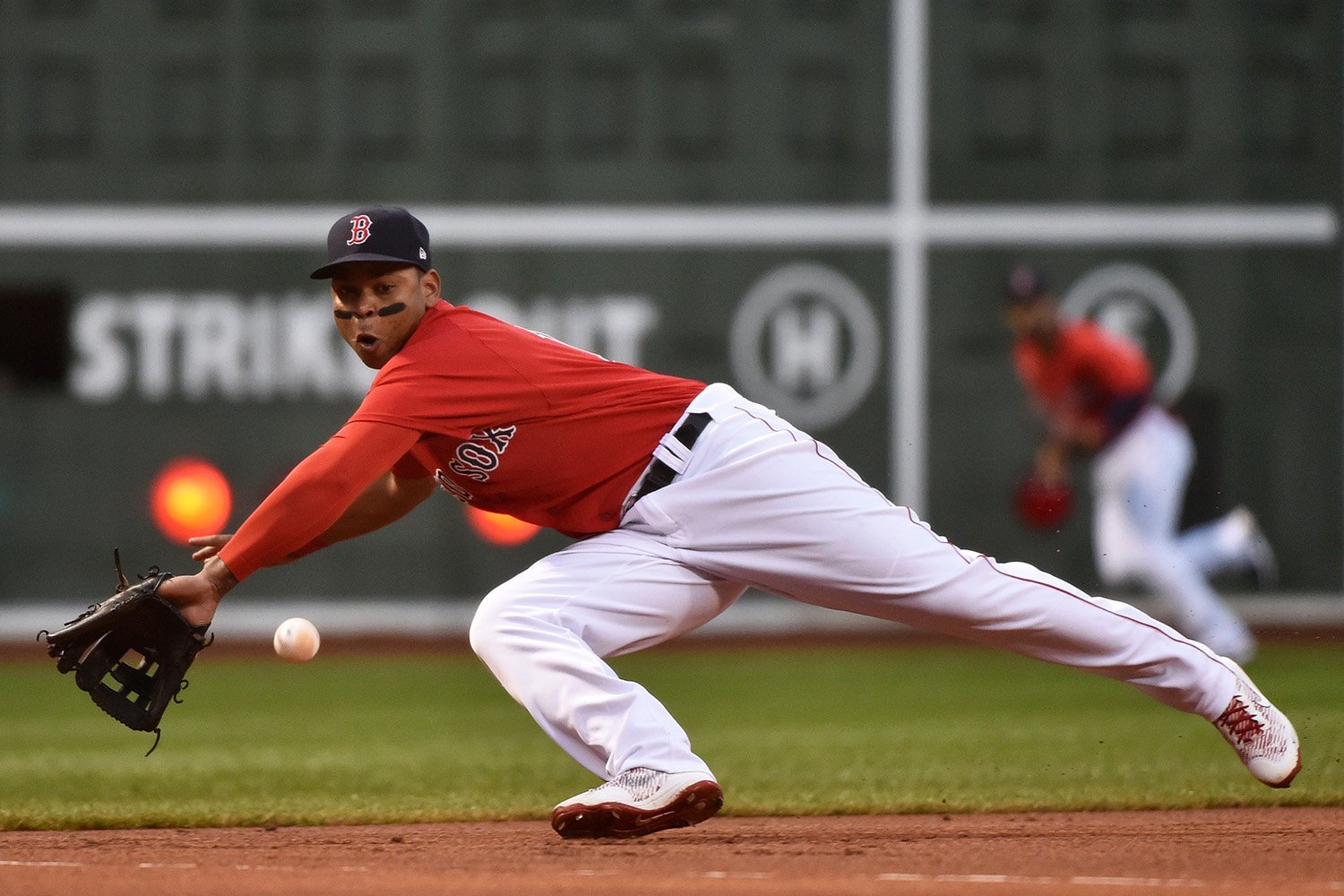 Look, I’ve seen the errors. And even if hadn’t seen them, I could check the advanced stats. According to Statcast’s Fielding Run Values, Rafael Devers graded out as the worst qualified third baseman in baseball this season. And last season. And in 2021. And in 2020. Since his debut in 2017, Defensive Runs Saved says Devers has cost the Red Sox 62 runs. No one else in baseball has cost their team more than 46 over that same timeframe. Devers just isn’t a good defensive third baseman. But overall, he’s still one of the best third basemen in the game. Year in and year out, the Red Sox can count on Devers to play 140 games and to put up a batting line that’s 30% better than league average. Even after accounting for the defense, that means that he plays at an All-Star level year in and year out. Since 2019, he’s put up 24 fWAR, third-best among all third basemen. It would be great if Devers were better with the glove. It would be so, so great. But the big picture is what matters, and Devers makes the whole package work. The Red Sox have an excellent slugging first baseman in Triston Casas. Did you know that Casas and Devers have the exact same career wRC+ of 125? They’ve been identically good as hitters. Not only that, but Casas is only 24. He hasn’t entered his prime yet, and nearly half of his MLB at-bats have come while he was either fighting through an injury or a rookie getting a cup of coffee. He could end up a better hitter than Devers! He’s not a great defensive first baseman, but the advanced numbers indicate that, in a short sample, he improved significantly in 2024. More importantly, there’s no particular reason to expect Devers to improve significantly at first. It’s not as challenging a position, but that’s not exactly a guarantee. If you move Devers to first, there’s a solid chance that you’re just turning him into Casas, but with a huge paycheck. Would you like to see the list of MLB first baseman who have ever made as much per year as Devers makes? Here’s the list: Nobody. Not Freddie Freeman, not Bryce Harper, not Vladimir Guerrero Jr. Nobody. Casas, on the other hand, will be paid much less than he’s worth for the next three seasons. He’s a valuable piece, and he’s made it extremely clear that he wants to be a part of the team. He played through an extremely injury last season. Young, cost-controlled players with that kind of commitment to the team don’t exactly grow on trees. The Red Sox also have an incumbent DH in Masataka Yoshida (as well as several young hitting prospects, who, if they force their way on to the roster during the 2025 season, could spell Yoshida at DH, strengthening the position). Yoshida’s shoulder injury and surgery have tanked his trade value. If they get rid of him, they’re unlikely to get anything valuable in return. Any move would be made simply to save some money. The Red Sox have been shouting from the rooftops that they have money to spend, and the true luxury of money is not having to worry about money. That's not a good enough reason to make the team worse. Moreover, knowing that he played through injury the entire season, it’s not unreasonable to think that Yoshida’s ceiling is a bit higher than what he showed. He may never be a star worth the $18 million he makes each year, but the league-average DH had a wRC+ of 108 last season. Yoshida, while playing hurt, was at 115. He’s better than the average DH! While injured! Selling low on Yoshida and relegating Devers to DH for the next nine seasons seems like an awfully drastic move. The Red Sox have actual holes in their roster that need filling. They need pitching. They need catching. They need a middle infielder. Why, as they’re gearing up to compete for a championship, should they fixate on upgrading spots that have so much less need? There’s also the matter of the players available right now. Alex Bregman is one of the two third basemen who’s put up more WAR than Devers over the past several years. However, he’s also a couple years older than Devers, and his production has fallen in each of the last two years. Don’t get me wrong, I think adding Bregman would be a huge move and a great fit, but Bregman has told reporters that he’s open to playing second base if he signs with a new team. If the Red Sox were to add him, having him do so for at least a season or two would help the team much more. The same goes for Willy Adames, a solid shortstop who has said that he’s open to playing second or third. Second base is the biggest hole on the roster, so keeping Adames in the middle infield is a much better play. As for trade candidate Nolan Arenado, I’m not convinced the Red Sox should get involved. Arenado is still a solid player, but his batting line seemed to be propped up by batted ball luck in 2024. His bat speed ranked in the 28th percentile, and his exit velocity and hard-hit rate were among the worst in all of baseball. He’s 33 years old and under contract for three more seasons. Moving Devers off third to make room for a player who certainly looks like he's entered the decline phase of his career just doesn’t make a ton of sense. The last piece is the most important. As Alex Mayes noted earlier today, Devers has spent just six professional innings playing a position other than third base. Six, out of 11,206 2/3 total innings. The guy is a third baseman. It’s quite literally all he’s ever known. He’s 28 years old, he’s the face of the franchise, and he’s under contract until 2034. If Devers doesn’t want to move off third base – and there’s no indication that he does – trying to move him could end up as a huge mess. The Red Sox just made a 10-year commitment to Devers, telling him he’s their third baseman well into the next decade. Are they really going to tell him – after year one – that they’ve changed their minds? How would you take that news? When it comes to Devers, you just have to take the good with the bad. He’s one of the best overall third baseman in the game year in and year out. So what if he's better with the bat than the glove?
 -
The Red Sox have strengthened the back of their bullpen, at a cost. CONTENT WARNING: This article discusses domestic violence. The Boston Red Sox have just made themselves a little bit better and a lot harder to love. This morning, the team signed left-handed relief pitcher Aroldis Chapman to a one-year deal worth $10.75 million, with bonuses that could push it to $11 million. Chapman has long been one of the game’s premier flamethrowing relievers. He is not known for being one of its best human beings. In 2016, Chapman became the first player to be disciplined under Major League Baseball’s Joint Domestic Violence, Sexual Assault and Child Abuse policy. The punishment came following an October 2015 incident at a party in which Chapman allegedly choked his girlfriend, shoved her against a wall, and then went into the garage and fired a gun eight times. As is so often the case with incidents of intimate partner violence, Chapman was never arrested or charged with a crime. Chapman was suspended for 30 games (or roughly 10 to 15 innings) and apologized solely for using the gun. At the time, Ruth Glenn, executive director of the National Coalition against Domestic Violence, said, “I find it upsetting that Mr. Chapman is not taking any responsibility for really bad behavior.” For those of us who care about such things, Boston’s exciting offseason has suddenly taken a very dark turn. Even if we attempt to remove decency from the equation, it’s hard to deny that in the ensuing years, Chapman’s behavior has occasionally hurt his teams. He was suspended for throwing at a batter’s head in 2020. In 2022, the Yankees fined Chapman and left him off their postseason roster after a series of incidents that ended with him skipping a mandatory team workout. In April of this year, Chapman was fined an undisclosed amount and suspended for two games due to “inappropriate actions.” The Red Sox will be Chapman’s seventh MLB team and his fifth in five years. As for the baseball side of things, he’s not the dominant force he once was – from 2010 to 2019, he ran a 2.23 ERA and a 41.1% strikeout rate – but there’s little doubt that Chapman still has the tools to be an effective reliever. Entering his age-37 season, Chapman is still one of the hardest-throwing players in baseball. His fastball averaged 97.9 mph, and during an August 7 game against the Padres it touched 105.1 mph, making it the second-fastest pitch of the year and the sixth-fastest ever recorded by Statcast. In 2024, he ran a 3.79 ERA, the second-highest mark of his career, but the underlying metrics were much better. He ran a 2.96 expected ERA and a 3.04 FIP while putting up 1.1 fWAR, which ranked 40th among relievers. He also overcame a very slow start, going from a 4.25 ERA and 4.15 FIP in the first half (which kept the Pirates from being able to trade him to a contender) to a 3.33 ERA and 1.43 FIP in the second. Since 2020, Chapman has run a 3.57 ERA. His strikeout rate has fallen to 37.1%, but that still makes it one of the very best in the game. More concerning is his walk rate, which has gone from dangerously high to occasionally untenable. Chapman has walked 15.1% of batters over the past five seasons, making him prone to meltdown innings on bad control days. In 2024, his 14.7% walk rate was the highest among all pitchers who threw at least 50 innings. According to FanGraphs’ valuations, Chapman has only put up enough value to be worth the $10.75-million price of his new contract once over the past five seasons. Season fWAR Dollar Value 2020 0.3 2.3M 2021 0.6 4.5M 2022 -0.2 -1.5M 2023 1.8 14M 2024 1.1 8.9M Still, it’s easy to understand why the Red Sox would think Chapman has more in the tank. He still throws hard, something the Red Sox lacked in 2024. They were one of just four teams that never hit triple digits all season long, and according to FanGraphs, their 94.1-mph average fastball velocity ranked 21st in baseball. Although his four-seam fastball has looked less dangerous – in 2024, Stuff+ rated it as a below-average pitch for the first time ever – he drastically increased his use of his sinker, and that sinker grades out as one of the very best pitches in baseball according to just about any stuff metric. With their focus on pitching development, the Red Sox no doubt figured that they could continue to help Chapman fine-tune his repertoire and dodge Father Time for another season. Still, for many of us, the baseball side of things will come second. We will have to come to terms with Chapman’s presence on the roster and in the game in our own way, but there is no doubt that it will color the season to come. If you would like to support those affected by domestic violence, please consider making a donation to the National Domestic Violence Hotline. View full article
-
Red Sox Sign Reliever Aroldis Chapman To One-Year, $10.75-Million Deal
Davy Andrews posted an article in Red Sox
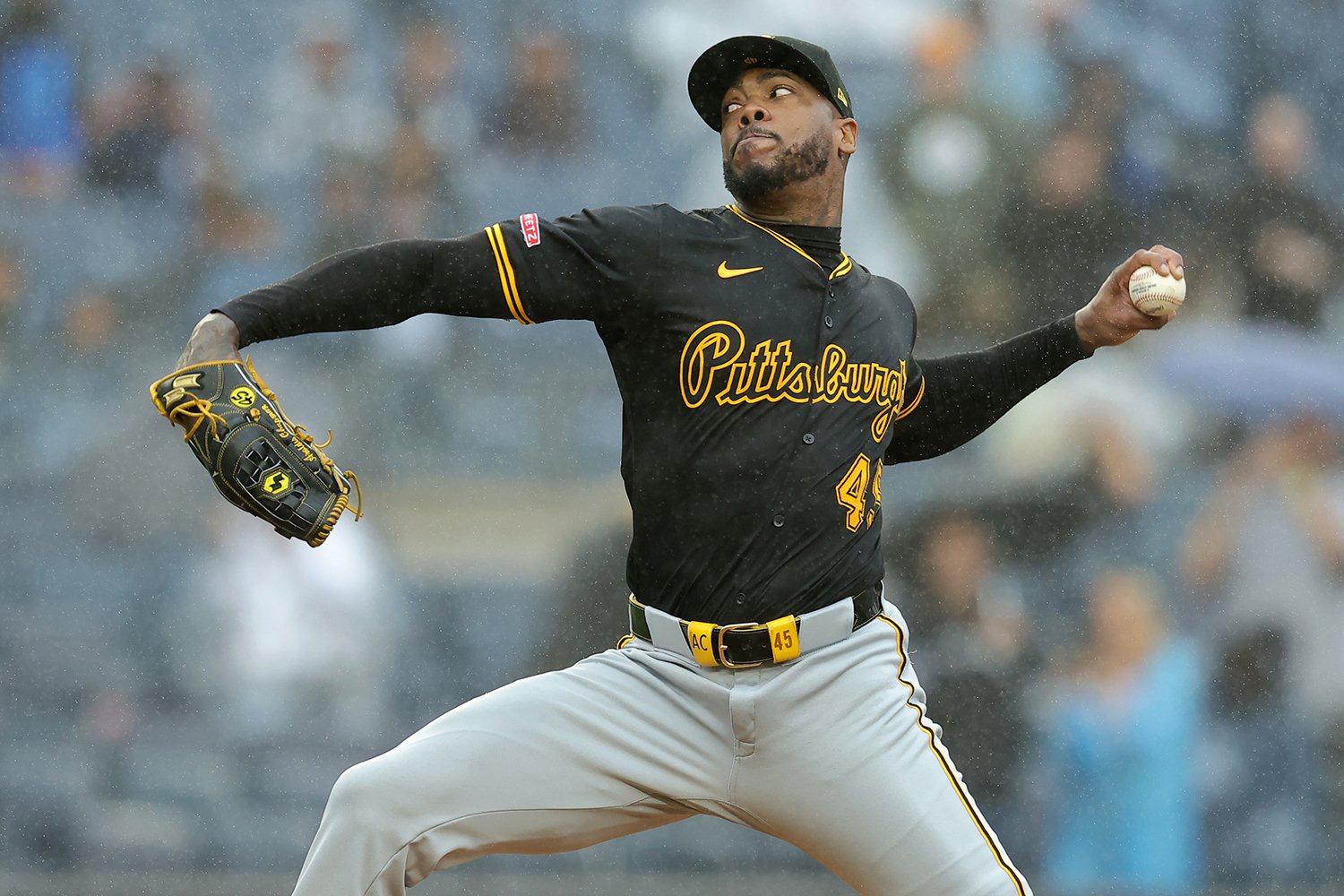 The Boston Red Sox have just made themselves a little bit better and a lot harder to love. This morning, the team signed left-handed relief pitcher Aroldis Chapman to a one-year deal worth $10.75 million, with bonuses that could push it to $11 million. Chapman has long been one of the game’s premier flamethrowing relievers. He is not known for being one of its best human beings. In 2016, Chapman became the first player to be disciplined under Major League Baseball’s Joint Domestic Violence, Sexual Assault and Child Abuse policy. The punishment came following an October 2015 incident at a party in which Chapman allegedly choked his girlfriend, shoved her against a wall, and then went into the garage and fired a gun eight times. As is so often the case with incidents of intimate partner violence, Chapman was never arrested or charged with a crime. Chapman was suspended for 30 games (or roughly 10 to 15 innings) and apologized solely for using the gun. At the time, Ruth Glenn, executive director of the National Coalition against Domestic Violence, said, “I find it upsetting that Mr. Chapman is not taking any responsibility for really bad behavior.” For those of us who care about such things, Boston’s exciting offseason has suddenly taken a very dark turn. Even if we attempt to remove decency from the equation, it’s hard to deny that in the ensuing years, Chapman’s behavior has occasionally hurt his teams. He was suspended for throwing at a batter’s head in 2020. In 2022, the Yankees fined Chapman and left him off their postseason roster after a series of incidents that ended with him skipping a mandatory team workout. In April of this year, Chapman was fined an undisclosed amount and suspended for two games due to “inappropriate actions.” The Red Sox will be Chapman’s seventh MLB team and his fifth in five years. As for the baseball side of things, he’s not the dominant force he once was – from 2010 to 2019, he ran a 2.23 ERA and a 41.1% strikeout rate – but there’s little doubt that Chapman still has the tools to be an effective reliever. Entering his age-37 season, Chapman is still one of the hardest-throwing players in baseball. His fastball averaged 97.9 mph, and during an August 7 game against the Padres it touched 105.1 mph, making it the second-fastest pitch of the year and the sixth-fastest ever recorded by Statcast. In 2024, he ran a 3.79 ERA, the second-highest mark of his career, but the underlying metrics were much better. He ran a 2.96 expected ERA and a 3.04 FIP while putting up 1.1 fWAR, which ranked 40th among relievers. He also overcame a very slow start, going from a 4.25 ERA and 4.15 FIP in the first half (which kept the Pirates from being able to trade him to a contender) to a 3.33 ERA and 1.43 FIP in the second. Since 2020, Chapman has run a 3.57 ERA. His strikeout rate has fallen to 37.1%, but that still makes it one of the very best in the game. More concerning is his walk rate, which has gone from dangerously high to occasionally untenable. Chapman has walked 15.1% of batters over the past five seasons, making him prone to meltdown innings on bad control days. In 2024, his 14.7% walk rate was the highest among all pitchers who threw at least 50 innings. According to FanGraphs’ valuations, Chapman has only put up enough value to be worth the $10.75-million price of his new contract once over the past five seasons. Season fWAR Dollar Value 2020 0.3 2.3M 2021 0.6 4.5M 2022 -0.2 -1.5M 2023 1.8 14M 2024 1.1 8.9M Still, it’s easy to understand why the Red Sox would think Chapman has more in the tank. He still throws hard, something the Red Sox lacked in 2024. They were one of just four teams that never hit triple digits all season long, and according to FanGraphs, their 94.1-mph average fastball velocity ranked 21st in baseball. Although his four-seam fastball has looked less dangerous – in 2024, Stuff+ rated it as a below-average pitch for the first time ever – he drastically increased his use of his sinker, and that sinker grades out as one of the very best pitches in baseball according to just about any stuff metric. With their focus on pitching development, the Red Sox no doubt figured that they could continue to help Chapman fine-tune his repertoire and dodge Father Time for another season. Still, for many of us, the baseball side of things will come second. We will have to come to terms with Chapman’s presence on the roster and in the game in our own way, but there is no doubt that it will color the season to come. If you would like to support those affected by domestic violence, please consider making a donation to the National Domestic Violence Hotline.
 -
If you like flurries of free agency rumors involving the Red Sox and the best player on the market, then you had a lot to be thankful for over the weekend. On Thursday evening, while most of America was sprawled on the couch attempting to digest its turkey, the Red Sox rumor mill cranked into high gear. Rumors that Juan Soto was about to sign with Boston ricocheted around the internet at lightning speed, even as Jeff Passan, the game’s most prolific newsbreaker, tried to pour cold water on them. “I am thankful for reporters who don’t make up stories,” he wrote. “I am also thankful that Juan Soto has not agreed to any contract, which means you can get off Twitter and go spend the holiday with your family.” To be clear, Passan was correct: There is no credible indication that Soto has made up his mind to sign with the Red Sox. I haven’t provided linked to any of those reports or mentioned any of their authors by name because I don’t trust them. That said, as our Matthew Lenz pointed out on Friday, one rumor did seem more credible. Héctor Gómez reported the size of the offer the Sox made to Soto: 13 years and $625. There’s no way to verify Gómez’s information, and depending on how the next few weeks go, we may never get a true accounting of the offer the Sox made to Soto, but that number is at least worth keeping in mind right now. However, even if Gómez is 100% correct, if the Red Sox do land Soto, the contract will likely be bigger. That $625 million number would just be an initial offer, with negotiations to follow. Also on Friday, MLB Trade Rumors published a full update on the Soto situation, and I’d like to go quickly go over it with you. First off, it confirmed the five teams rumored to be the top bidders Soto: the Red Sox, Yankees, Mets, Blue Jays, and Dodgers. The Dodgers, having already landed Blake Snell (and already possessing enough salary obligations to bankrupt a medium-sized nation) are considered somewhat less likely, while Phillies could become more serious in their pursuit, but for now those are the five contenders. Second, the MLBTR article reinforced the timeframe. Super-agent Scott Boras, who represents Soto, asked teams to submit their initial offers by Thanksgiving. That timing makes Gómez’s report a bit more believable, as it seems like he reported the size of the offer right after the Sox officially made it. Regardless, Boras and the quintet of Soto’s suitors are certain to be in intense negotiations all week. Multiple reporters have indicated a growing consensus that Soto might make his decision during the Winter Meetings in Dallas next week. The Red Sox had a sit-down meeting with Soto in California three weeks ago, sending chairman Tom Werner, president Sam Kennedy, chief baseball officer Craig Breslow, and manager Alex Cora. David Ortiz was supposed to attend, but a family matter forced him to sit the trip out. Regardless, part of the team’s pitch at the meeting was to emphasize its history of Dominican stars like Ortiz and Pedro Martinez. Soto has also reportedly been asking teams about the state of their farm systems, as he wants to make sure that wherever he signs, he has a chance to win over the long-term. That should certainly benefit the Red Sox, as they are widely considered to have one of the best farm systems in the game. We should close with some simple logic. As Alex Speier sensibly reported, the likelihood is that Soto signs elsewhere. There are five teams in on Soto, so if each has an equal chance at landing him, then there’s an 80% chance he doesn’t sign in Boston. Even if their chances of signing Soto are twice as high as the other teams, that would still mean there's a 67% chance he signs elsewhere. While it’s thrilling that the Red Sox might land a generational talent – not to mention the closest thing to Ted Williams since Ted Williams – it’s encouraging that they’re still in the running. The team is clearly serious about getting better and is willing to spend money to do so. That’s a good thing, regardless of where Soto ends up. Either way, it sounds more and more like the Soto sweepstakes will be over in a week or two. We can make it. We can make it. View full article
-
Free Agent Rumors: A Juan Soto Update and What It Means for the Red Sox
Davy Andrews posted an article in Red Sox
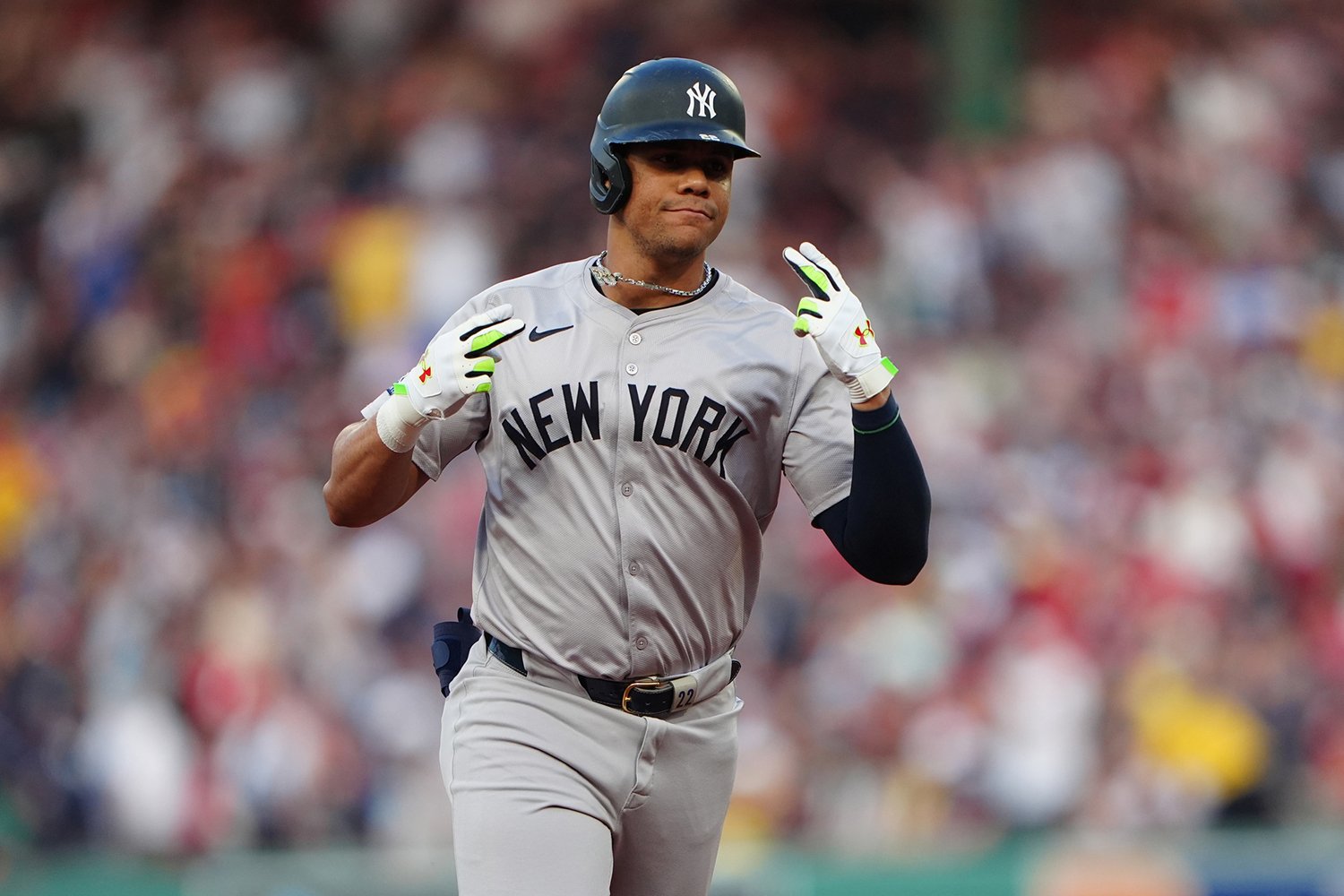 On Thursday evening, while most of America was sprawled on the couch attempting to digest its turkey, the Red Sox rumor mill cranked into high gear. Rumors that Juan Soto was about to sign with Boston ricocheted around the internet at lightning speed, even as Jeff Passan, the game’s most prolific newsbreaker, tried to pour cold water on them. “I am thankful for reporters who don’t make up stories,” he wrote. “I am also thankful that Juan Soto has not agreed to any contract, which means you can get off Twitter and go spend the holiday with your family.” To be clear, Passan was correct: There is no credible indication that Soto has made up his mind to sign with the Red Sox. I haven’t provided linked to any of those reports or mentioned any of their authors by name because I don’t trust them. That said, as our Matthew Lenz pointed out on Friday, one rumor did seem more credible. Héctor Gómez reported the size of the offer the Sox made to Soto: 13 years and $625. There’s no way to verify Gómez’s information, and depending on how the next few weeks go, we may never get a true accounting of the offer the Sox made to Soto, but that number is at least worth keeping in mind right now. However, even if Gómez is 100% correct, if the Red Sox do land Soto, the contract will likely be bigger. That $625 million number would just be an initial offer, with negotiations to follow. Also on Friday, MLB Trade Rumors published a full update on the Soto situation, and I’d like to go quickly go over it with you. First off, it confirmed the five teams rumored to be the top bidders Soto: the Red Sox, Yankees, Mets, Blue Jays, and Dodgers. The Dodgers, having already landed Blake Snell (and already possessing enough salary obligations to bankrupt a medium-sized nation) are considered somewhat less likely, while Phillies could become more serious in their pursuit, but for now those are the five contenders. Second, the MLBTR article reinforced the timeframe. Super-agent Scott Boras, who represents Soto, asked teams to submit their initial offers by Thanksgiving. That timing makes Gómez’s report a bit more believable, as it seems like he reported the size of the offer right after the Sox officially made it. Regardless, Boras and the quintet of Soto’s suitors are certain to be in intense negotiations all week. Multiple reporters have indicated a growing consensus that Soto might make his decision during the Winter Meetings in Dallas next week. The Red Sox had a sit-down meeting with Soto in California three weeks ago, sending chairman Tom Werner, president Sam Kennedy, chief baseball officer Craig Breslow, and manager Alex Cora. David Ortiz was supposed to attend, but a family matter forced him to sit the trip out. Regardless, part of the team’s pitch at the meeting was to emphasize its history of Dominican stars like Ortiz and Pedro Martinez. Soto has also reportedly been asking teams about the state of their farm systems, as he wants to make sure that wherever he signs, he has a chance to win over the long-term. That should certainly benefit the Red Sox, as they are widely considered to have one of the best farm systems in the game. We should close with some simple logic. As Alex Speier sensibly reported, the likelihood is that Soto signs elsewhere. There are five teams in on Soto, so if each has an equal chance at landing him, then there’s an 80% chance he doesn’t sign in Boston. Even if their chances of signing Soto are twice as high as the other teams, that would still mean there's a 67% chance he signs elsewhere. While it’s thrilling that the Red Sox might land a generational talent – not to mention the closest thing to Ted Williams since Ted Williams – it’s encouraging that they’re still in the running. The team is clearly serious about getting better and is willing to spend money to do so. That’s a good thing, regardless of where Soto ends up. Either way, it sounds more and more like the Soto sweepstakes will be over in a week or two. We can make it. We can make it.
 -
Red Sox fans have an unusually good opportunity to hear how pitchers approach the game. Red Sox fans should feel lucky for many, many reasons. They root for a team with a long and illustrious history. They get to take in games at Fenway Park. They’ve seen more championships in the last 20 years than any other team, and the team is gearing up to compete again this season. I could go on, but today I’d like to focus on one particular aspect that makes Red Sox fandom more enjoyable: excellent media coverage. A great beat writer can deepen your connection to a team, whether it’s because they get answers to the questions you most want to know or because they simply write well. The Red Sox boast several excellent beats, but today I wanted to discuss one writer who does things a bit differently. David Laurila is my colleague at FanGraphs, and he’s renowned for getting thoughtful answers from players and coaches, especially when it comes to the mechanics and processes behind pitching and hitting. Laurila is based in Cambridge and many of his interviews take place at Fenway Park. For that reason, a good many of his interview subjects are Red Sox. Especially if you’re a Red Sox fan, he’s a must-read. Today, I’d like to go over two interviews that Laurila published recently, because I think they say a bit about the state of the team. First, Laurila ran an interview with Nick Pivetta that took place during the last week of the season. Pivetta is not exactly an easy interview. Here’s what Peter Abraham wrote about him on Monday: However, if you read Laurila’s interview, you’ll learn a few important things. First, Pivetta revealed that he’s not big on scouting reports. He might act on them if a batter has a particularly notable strength or weakness, but generally, he attacks righties a certain way and lefties a certain way, and that’s it. I’m not showing you these quotes because I want you to think that Pivetta is stubborn or disinterested. I don’t think that’s what’s going on at all. In fact, in a certain light, his attitude is cutting edge. In recent years, as stuff has gotten better and better league-wide – pitchers throw harder, their pitches generate sharper breaks, and pitch modeling helps them optimize each pitch to maximize the effectiveness of their entire repertoire – more and more teams have advised their pitchers that it’s better to pitch with confidence, attacking with their best stuff, rather than worrying about the strengths of the hitters. All the same, compare Pivetta’s answers to the answers of Richard Fitts. Fitts spoke to Laurila back in January, and then again on the last day of the regular season, remarking that he was “definitely not” the same pitcher he’d been during the first conversation. Fitts explained that the big-league ball is different from the minor-league ball, so different, in fact, that his fastball went from six or seven inches of arm-side run to one inch of glove-side cut. “I’m cutting it a little bit more with the big league ball than I was with the minor league ball,” said Fitts. “I’m not losing any vert — I still have 18-20 [inches] — but I’m also facing hitters who are a lot better. That’s why I’ve needed to mix in my other pitches more often.” Fitts, with the casual mention of his vert, or induced vertical break, sounds like most young pitchers coming up these days. It’s not just that they’re open to the revolution in pitch design or that they see it as their path to big-league success. They’re also fascinated by it. They’re pitching nerds and they like to talk about it. Pivetta, blessed with great stuff, trusts his approach possibly even to a fault, while Fitts is still learning what will work for him against big-league hitters. He’s going into the offseason with a plan to improve and he’s open to talking about it with reporters. It will be fascinating to see what his stuff looks like when he returns in 2025. View full article
-
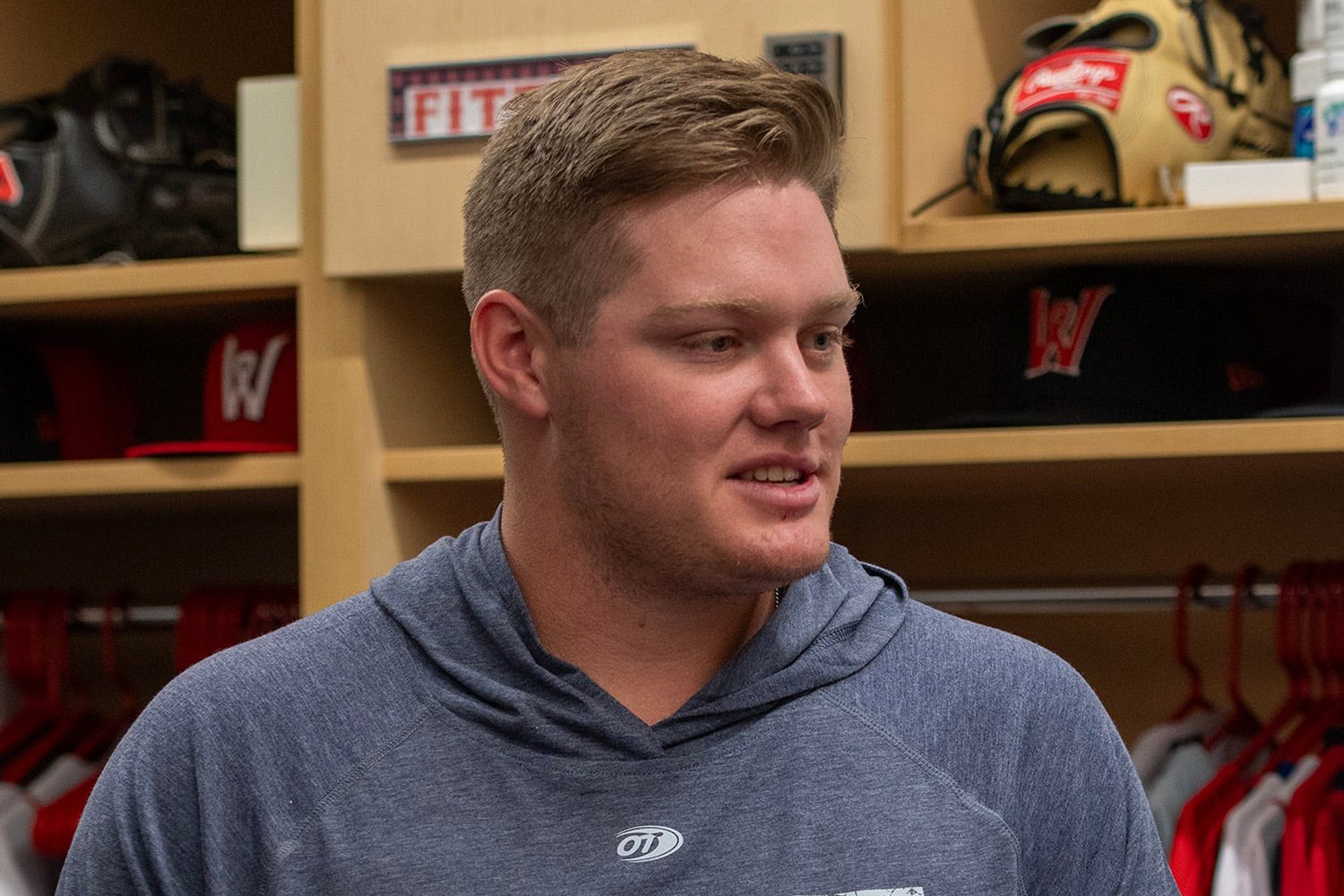 Red Sox fans should feel lucky for many, many reasons. They root for a team with a long and illustrious history. They get to take in games at Fenway Park. They’ve seen more championships in the last 20 years than any other team, and the team is gearing up to compete again this season. I could go on, but today I’d like to focus on one particular aspect that makes Red Sox fandom more enjoyable: excellent media coverage. A great beat writer can deepen your connection to a team, whether it’s because they get answers to the questions you most want to know or because they simply write well. The Red Sox boast several excellent beats, but today I wanted to discuss one writer who does things a bit differently. David Laurila is my colleague at FanGraphs, and he’s renowned for getting thoughtful answers from players and coaches, especially when it comes to the mechanics and processes behind pitching and hitting. Laurila is based in Cambridge and many of his interviews take place at Fenway Park. For that reason, a good many of his interview subjects are Red Sox. Especially if you’re a Red Sox fan, he’s a must-read. Today, I’d like to go over two interviews that Laurila published recently, because I think they say a bit about the state of the team. First, Laurila ran an interview with Nick Pivetta that took place during the last week of the season. Pivetta is not exactly an easy interview. Here’s what Peter Abraham wrote about him on Monday: However, if you read Laurila’s interview, you’ll learn a few important things. First, Pivetta revealed that he’s not big on scouting reports. He might act on them if a batter has a particularly notable strength or weakness, but generally, he attacks righties a certain way and lefties a certain way, and that’s it. I’m not showing you these quotes because I want you to think that Pivetta is stubborn or disinterested. I don’t think that’s what’s going on at all. In fact, in a certain light, his attitude is cutting edge. In recent years, as stuff has gotten better and better league-wide – pitchers throw harder, their pitches generate sharper breaks, and pitch modeling helps them optimize each pitch to maximize the effectiveness of their entire repertoire – more and more teams have advised their pitchers that it’s better to pitch with confidence, attacking with their best stuff, rather than worrying about the strengths of the hitters. All the same, compare Pivetta’s answers to the answers of Richard Fitts. Fitts spoke to Laurila back in January, and then again on the last day of the regular season, remarking that he was “definitely not” the same pitcher he’d been during the first conversation. Fitts explained that the big-league ball is different from the minor-league ball, so different, in fact, that his fastball went from six or seven inches of arm-side run to one inch of glove-side cut. “I’m cutting it a little bit more with the big league ball than I was with the minor league ball,” said Fitts. “I’m not losing any vert — I still have 18-20 [inches] — but I’m also facing hitters who are a lot better. That’s why I’ve needed to mix in my other pitches more often.” Fitts, with the casual mention of his vert, or induced vertical break, sounds like most young pitchers coming up these days. It’s not just that they’re open to the revolution in pitch design or that they see it as their path to big-league success. They’re also fascinated by it. They’re pitching nerds and they like to talk about it. Pivetta, blessed with great stuff, trusts his approach possibly even to a fault, while Fitts is still learning what will work for him against big-league hitters. He’s going into the offseason with a plan to improve and he’s open to talking about it with reporters. It will be fascinating to see what his stuff looks like when he returns in 2025.
 -
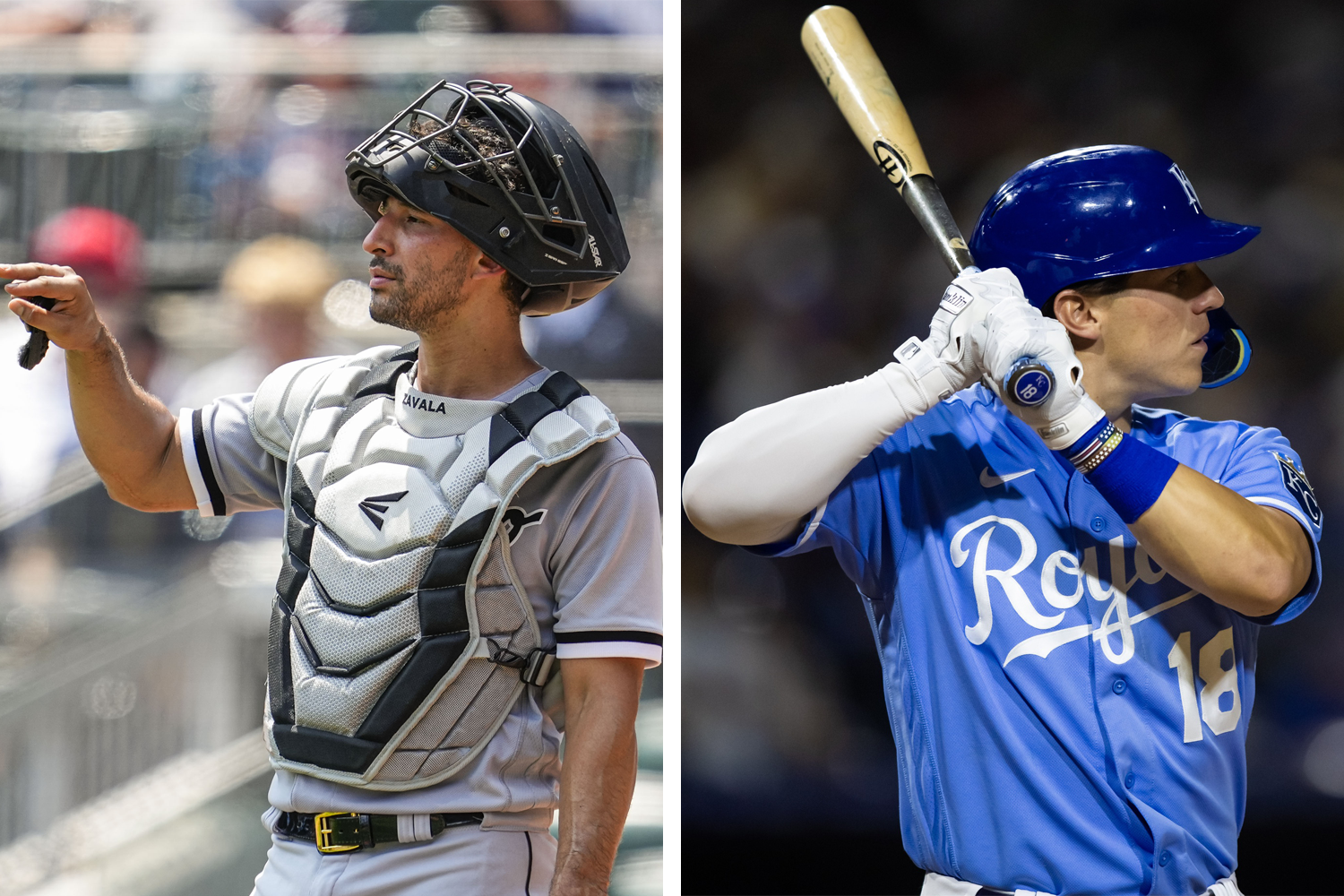 Last week, the Red Sox made a couple of minor-league deals, and in our haste to break down the thousand or so swirling rumors about potential trades and free agent signings, we neglected to cover what really matters: Seby Zavala. The Red Sox added the 31-year-old catcher, along with utilityman Nate Eaton. The two moves make a lot of sense for a Red Sox team with an extremely strong core but some real holes in the lineup. Let’s start at catcher. At the moment, Connor Wong and Mickey Gasper are the only catchers on the 40-man roster. Wong will almost certainly be catching about half the time in 2025. Gasper will not. The 29-year-old Gasper made his major-league debut in 2024, but he only played first and second in Boston. He’s struggled with injuries, and he might not even be a catcher anymore. He spent most of his time at DH in 2024. All of this to say that he probably won’t affect the catcher role much. (On the other hand, it's at least worth noting that he absolutely raked in the minors, running a .970 OPS with 12 homers over 92 double-A and triple-A games with a solid 90-mph average exit velocity and 42.7% hard-hit rate to boot.) That meant that the Red Sox went into the offseason with a dire need to sign a catcher in free agency, and even they did so, the need for at least one backup. Enter Zavala. He’s not going to slot into the lineup, but he’s an excellent option for a third catcher. Zavala has a sterling defensive reputation, along with the numbers to back it up. Since his debut in 2019, 83 different players have caught at least 1,000 innings. On a per-inning basis, Zavala ranks 15th according to Statcast’s Fielding Run Values and ninth according to FanGraphs’ Defensive Runs Above Average. Now for the bad stuff. Zavala has a career 70 wRC+, which means that he’s been 30% below the league average as a hitter. That’s awfully low, even for a catcher, as catchers ran a combined 91 wRC+ last season. However, Zavala has also never really played for an organization known for helping hitters become their best selves. He came up with the White Sox, with whom he played in parts of four seasons, played seven games with the Diamondbacks in 2023 after the team picked him up on waivers, then got sent to Seattle in the Eugenio Suárez trade before the 2024 season. Zavala is no longer young, and he runs gargantuan chase, whiff, and strikeout rates. He’s almost certainly never going to be a good hitter, but getting him into an organization that has had real success grooming hitters certainly won’t hurt. And whether or not he starts hitting, the glove will make him a valuable safety valve for the big club while helping with the development of younger pitchers in triple-A. Nate Eaton is a 27-year-old who has until now spent his entire career with the Royals. He’s likely to serve a 27th-man role, filling in as a utility player when someone gets hurt. Eaton played third base and all three outfield roles during his 72 career games with the Royals, as well as some second base and shortstop in the minors. That versatility helps, but it’s not going to erase the fact that he has a career 51 wRC+. He spent the entire 2023 season at triple-A Omaha. His raw numbers .738 OPS looks nice, but when you account for the friendly hitting environment of the International League, that only translates to a wRC+ of 87. In all, Eaton should be a serviceable fill-in, and having that kind of depth can help keep a contending team afloat during a rough injury spell. Eaton also has excellent speed to go with quite possible the strongest arm of any position player in baseball. He pitched one delightful inning with the Royals during the 2023 season, and I wrote about it here. Eaton is a perfectly reasonable depth move, but we should all be rooting for the Red Sox to try to turn them into their next great pitching prospect.
 -
Stop the presses! The Red Sox handed out minor-league contracts to two useful depth pieces. Last week, the Red Sox made a couple of minor-league deals, and in our haste to break down the thousand or so swirling rumors about potential trades and free agent signings, we neglected to cover what really matters: Seby Zavala. The Red Sox added the 31-year-old catcher, along with utilityman Nate Eaton. The two moves make a lot of sense for a Red Sox team with an extremely strong core but some real holes in the lineup. Let’s start at catcher. At the moment, Connor Wong and Mickey Gasper are the only catchers on the 40-man roster. Wong will almost certainly be catching about half the time in 2025. Gasper will not. The 29-year-old Gasper made his major-league debut in 2024, but he only played first and second in Boston. He’s struggled with injuries, and he might not even be a catcher anymore. He spent most of his time at DH in 2024. All of this to say that he probably won’t affect the catcher role much. (On the other hand, it's at least worth noting that he absolutely raked in the minors, running a .970 OPS with 12 homers over 92 double-A and triple-A games with a solid 90-mph average exit velocity and 42.7% hard-hit rate to boot.) That meant that the Red Sox went into the offseason with a dire need to sign a catcher in free agency, and even they did so, the need for at least one backup. Enter Zavala. He’s not going to slot into the lineup, but he’s an excellent option for a third catcher. Zavala has a sterling defensive reputation, along with the numbers to back it up. Since his debut in 2019, 83 different players have caught at least 1,000 innings. On a per-inning basis, Zavala ranks 15th according to Statcast’s Fielding Run Values and ninth according to FanGraphs’ Defensive Runs Above Average. Now for the bad stuff. Zavala has a career 70 wRC+, which means that he’s been 30% below the league average as a hitter. That’s awfully low, even for a catcher, as catchers ran a combined 91 wRC+ last season. However, Zavala has also never really played for an organization known for helping hitters become their best selves. He came up with the White Sox, with whom he played in parts of four seasons, played seven games with the Diamondbacks in 2023 after the team picked him up on waivers, then got sent to Seattle in the Eugenio Suárez trade before the 2024 season. Zavala is no longer young, and he runs gargantuan chase, whiff, and strikeout rates. He’s almost certainly never going to be a good hitter, but getting him into an organization that has had real success grooming hitters certainly won’t hurt. And whether or not he starts hitting, the glove will make him a valuable safety valve for the big club while helping with the development of younger pitchers in triple-A. Nate Eaton is a 27-year-old who has until now spent his entire career with the Royals. He’s likely to serve a 27th-man role, filling in as a utility player when someone gets hurt. Eaton played third base and all three outfield roles during his 72 career games with the Royals, as well as some second base and shortstop in the minors. That versatility helps, but it’s not going to erase the fact that he has a career 51 wRC+. He spent the entire 2023 season at triple-A Omaha. His raw numbers .738 OPS looks nice, but when you account for the friendly hitting environment of the International League, that only translates to a wRC+ of 87. In all, Eaton should be a serviceable fill-in, and having that kind of depth can help keep a contending team afloat during a rough injury spell. Eaton also has excellent speed to go with quite possible the strongest arm of any position player in baseball. He pitched one delightful inning with the Royals during the 2023 season, and I wrote about it here. Eaton is a perfectly reasonable depth move, but we should all be rooting for the Red Sox to try to turn them into their next great pitching prospect. View full article
-
Why spend prospect capital when you've got actual capital to spend? This week, several of our writers have been putting themselves in Craig Breslow’s shoes and sharing how they’d like the Red Sox to navigate this pivotal offseason. There’s talk of free-agent signings. There’s talk of trading young stars and even younger prospects. I’d like to make my own proposal, and it’s pretty simple: Don’t trade anybody. The Red Sox don’t trade the big four. The Red Sox don’t trade Jarren Duran or Wilyer Abreu or Triston Casas. They just keep all those good, young cost-controlled players right where they are. They accept that the lineup is a little lefty-heavy. They go out and sign a catcher and a couple starting pitchers. They sign a corner outfielder on a one-year deal and if there’s money left over, maybe even a middle infielder. I have my own opinions about which free agents would make sense in Boston, but that’s a discussion for another day. Right now, I just want to explain why I think holding onto all that young talent makes sense. Yes, doing so means the team wouldn’t be able to land Garrett Crochet, which would be a bummer. But multiple frontline starters are available in free agency – players with a longer track record of performance and better injury history than Crochet – and all they cost is money. Sam Kennedy said yesterday that the team is prepared to spend enough to put the team into luxury tax territory this offseason, which is wonderful. Still, the reality in today’s game is that no team, not even the Dodgers, is willing to spend enough money to build an entire competitive team at full market value. You need young, cost-controlled players, which also means that you need to hold onto your prospects so that you’ll have young, cost-controlled players in the future too. It’s definitely possible to prop the window open by landing high-priced veterans either in free agency or by trading prospects, but that path leaves teams vulnerable to a crash afterward. The 2019 Nationals serve as an example of this, and the Astros look likely to serve as another in the near future. There’s no reason for the Red Sox to act like one of those teams, especially not right now. They should be thinking like the Astros of seven or eight years ago, whose thrilling crop of young stars allowed them to bring in aces like Gerrit Cole and Justin Verlander, rounding out the roster without breaking the bank or blowing up the farm. Statistically speaking, one or two of the big four probably won’t work out at the big-league level. That’s just how things work. So give them time, have them start the season in Worcester, and let them force their way into the major-league lineup when they’re ready. When Roman Anthony makes it to Boston, set up a time-share between Abreu and Rafaela, where Abreu sits against most lefties (yes, I know Rafaela struggles against lefties too) and Duran slides over to center against most righties. Rafaela would be a bit overpaid and overqualified as the small side of a platoon and an ace defensive replacement, but that’s the luxury of having money. When you look at the roster of the Dodgers, it's easy to marvel at all the big names at the top of the roster, but the Dodgers also flexed their checkbook by building tons of depth, enough to survive injuries and make sure that their lineup didn't have any holes in it. Catchers progress more slowly than other players, so signing a veteran catcher on short-term deal gives Kyle Teel time to grow without blocking him whenever he’s ready. If the team doesn’t sign a middle infielder, second base will be a black hole on the roster to start the season. However, either Marcelo Mayer or Kristian Campbell is likely to earn a promotion within the first couple months of the season, at which point they’d have a chance to claim the job. The players who don’t force their way up to Boston will still be in the organization and still be highly regarded. That would leave them available to be traded at the deadline when the Red Sox will have a better idea of their roster needs down the stretch. If this model sounds familiar, it’s because it’s similar to what the Orioles have been doing. The Orioles were accused for years of prospect-hoarding as they held onto their seemingly inexhaustible supply of apple-cheeked up-and-comers, but once a few of those prospects had broken through onto the big-league roster, they traded players like Joey Ortiz, DL Hall, and Connor Norby to shore up the weak spots. Those players were no longer at their absolute maximum trade value, but they were still able to bring value back to Baltimore, and the team ran a much lower risk of trading away a future superstar. To be clear, I’m not saying the Red Sox shouldn’t be exploring trade possibilities or listening to trade offers. They should obviously be open to moves that make sense with the roster they want to build. It’s just that right now, they’ve got a solid core and money to spend. Why spend the future instead? View full article
-
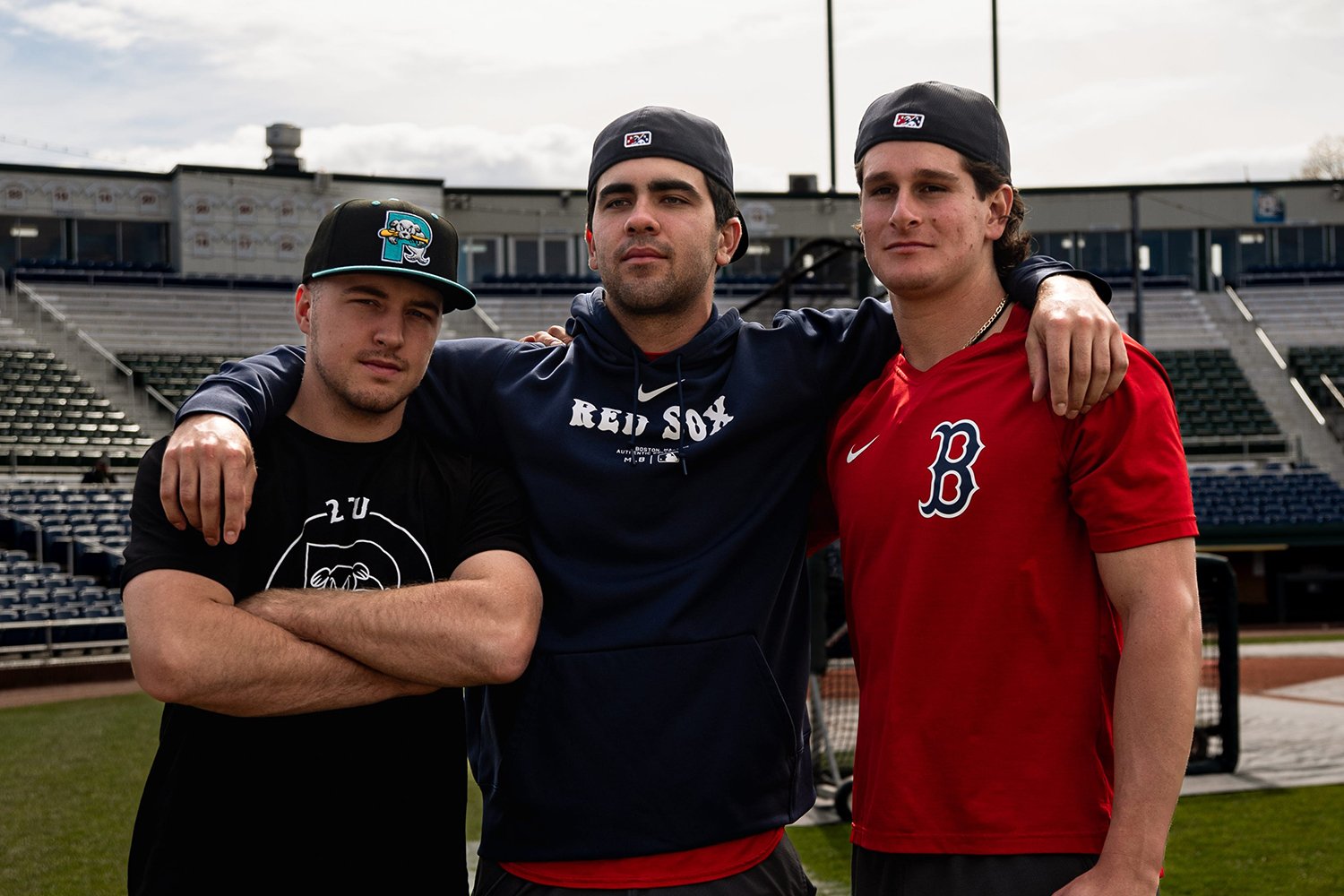 This week, several of our writers have been putting themselves in Craig Breslow’s shoes and sharing how they’d like the Red Sox to navigate this pivotal offseason. There’s talk of free-agent signings. There’s talk of trading young stars and even younger prospects. I’d like to make my own proposal, and it’s pretty simple: Don’t trade anybody. The Red Sox don’t trade the big four. The Red Sox don’t trade Jarren Duran or Wilyer Abreu or Triston Casas. They just keep all those good, young cost-controlled players right where they are. They accept that the lineup is a little lefty-heavy. They go out and sign a catcher and a couple starting pitchers. They sign a corner outfielder on a one-year deal and if there’s money left over, maybe even a middle infielder. I have my own opinions about which free agents would make sense in Boston, but that’s a discussion for another day. Right now, I just want to explain why I think holding onto all that young talent makes sense. Yes, doing so means the team wouldn’t be able to land Garrett Crochet, which would be a bummer. But multiple frontline starters are available in free agency – players with a longer track record of performance and better injury history than Crochet – and all they cost is money. Sam Kennedy said yesterday that the team is prepared to spend enough to put the team into luxury tax territory this offseason, which is wonderful. Still, the reality in today’s game is that no team, not even the Dodgers, is willing to spend enough money to build an entire competitive team at full market value. You need young, cost-controlled players, which also means that you need to hold onto your prospects so that you’ll have young, cost-controlled players in the future too. It’s definitely possible to prop the window open by landing high-priced veterans either in free agency or by trading prospects, but that path leaves teams vulnerable to a crash afterward. The 2019 Nationals serve as an example of this, and the Astros look likely to serve as another in the near future. There’s no reason for the Red Sox to act like one of those teams, especially not right now. They should be thinking like the Astros of seven or eight years ago, whose thrilling crop of young stars allowed them to bring in aces like Gerrit Cole and Justin Verlander, rounding out the roster without breaking the bank or blowing up the farm. Statistically speaking, one or two of the big four probably won’t work out at the big-league level. That’s just how things work. So give them time, have them start the season in Worcester, and let them force their way into the major-league lineup when they’re ready. When Roman Anthony makes it to Boston, set up a time-share between Abreu and Rafaela, where Abreu sits against most lefties (yes, I know Rafaela struggles against lefties too) and Duran slides over to center against most righties. Rafaela would be a bit overpaid and overqualified as the small side of a platoon and an ace defensive replacement, but that’s the luxury of having money. When you look at the roster of the Dodgers, it's easy to marvel at all the big names at the top of the roster, but the Dodgers also flexed their checkbook by building tons of depth, enough to survive injuries and make sure that their lineup didn't have any holes in it. Catchers progress more slowly than other players, so signing a veteran catcher on short-term deal gives Kyle Teel time to grow without blocking him whenever he’s ready. If the team doesn’t sign a middle infielder, second base will be a black hole on the roster to start the season. However, either Marcelo Mayer or Kristian Campbell is likely to earn a promotion within the first couple months of the season, at which point they’d have a chance to claim the job. The players who don’t force their way up to Boston will still be in the organization and still be highly regarded. That would leave them available to be traded at the deadline when the Red Sox will have a better idea of their roster needs down the stretch. If this model sounds familiar, it’s because it’s similar to what the Orioles have been doing. The Orioles were accused for years of prospect-hoarding as they held onto their seemingly inexhaustible supply of apple-cheeked up-and-comers, but once a few of those prospects had broken through onto the big-league roster, they traded players like Joey Ortiz, DL Hall, and Connor Norby to shore up the weak spots. Those players were no longer at their absolute maximum trade value, but they were still able to bring value back to Baltimore, and the team ran a much lower risk of trading away a future superstar. To be clear, I’m not saying the Red Sox shouldn’t be exploring trade possibilities or listening to trade offers. They should obviously be open to moves that make sense with the roster they want to build. It’s just that right now, they’ve got a solid core and money to spend. Why spend the future instead?
 -
You're so right about this, and I should have mentioned it. He's always made his share of errors, and a few more here and there is a lot less concerning than an actual drop-off in range.
-
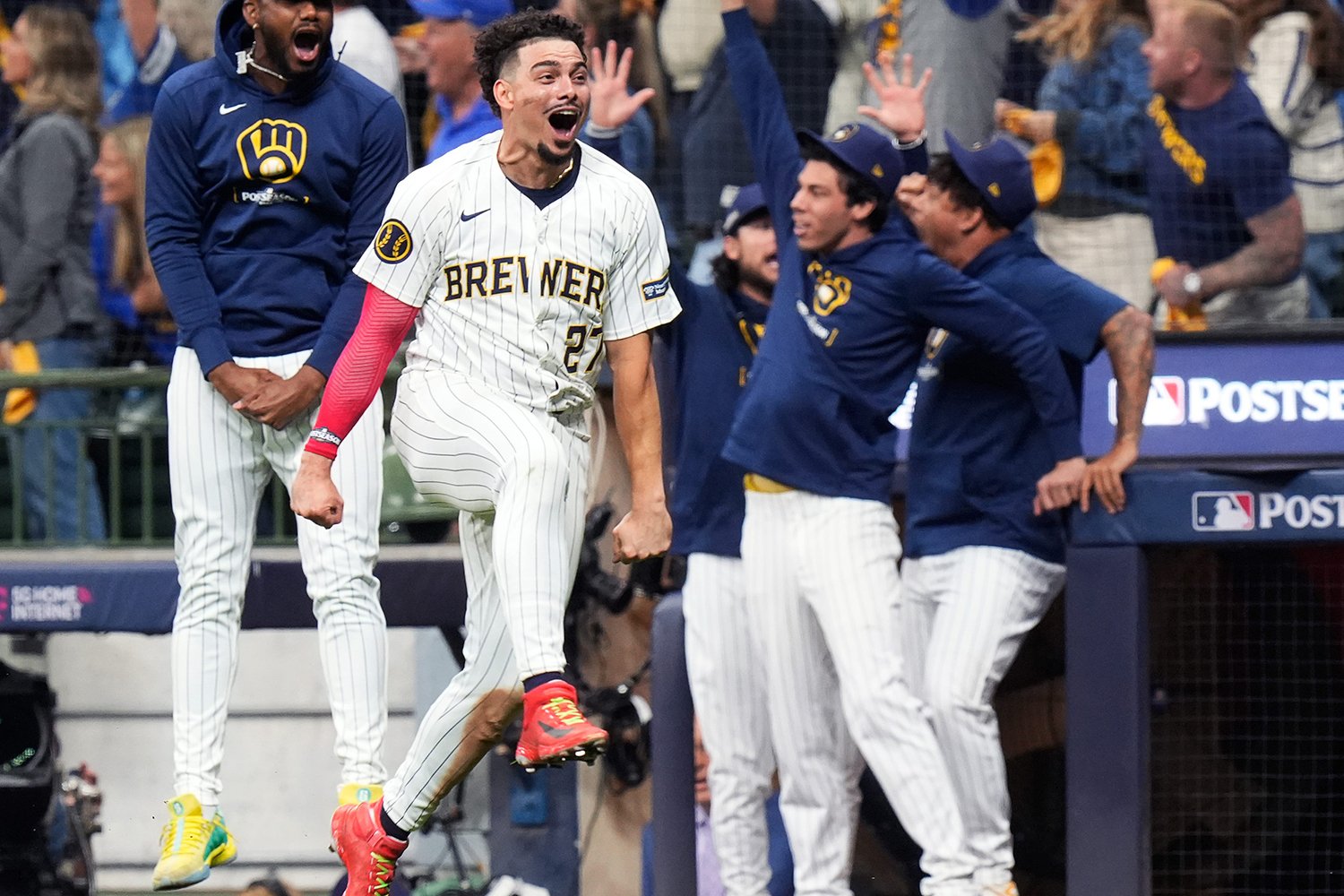 According to a report from MLB Network’s Jon Morosi, the Red Sox are among the many teams expressing interest in shortstop Willy Adames. Morosi also named the Astros, Blue Jays, and Braves as involved, while listing the Dodgers, Giants, and Yankees as potential suitors. Ben Clemens of FanGraphs ranked Adames second in this prospect class and speculated that he was likely to end up with the Dodgers. Matthew Lenz wrote this news up yesterday, so what I’m interested in today is how Adames might fit on the roster. We should start with the obvious: he’s an excellent, excellent shortstop. Adames has been incredibly consistent, putting up at least 3.1 fWAR in every season since 2019 (aside from the abbreviated 2020 campaign, when his 1.2 would have translated to 3.2 over a full season). Altogether, he’s posted 20.1 fWAR over the past six seasons, which ranks ninth among shortstops. He’s never played fewer than 139 games or hit fewer than 20 homers in a full season. Pretty much the only thing he doesn’t do is steal bases; or at least he didn’t steal bases until recently. In 2024, he stole a career-high 21. He’s truly a complete player, he’s hands-down the best shortstop on the market, and it’s a crime that he’s never been an All-Star. That said, there is some real risk involved here. There’s no doubt that Adames is a top 10 shortstop in the game, but he’ll command a five- or six-year contract, which means whoever signs him will be paying him until his age-33 or age-34 season. If his aging curve looks like the standard aging curve, then that’s great and his next contract will start with at least a few years of his prime. If he ages even a little bit more quickly, however, then his contract might not look so pretty. The advanced defensive metrics were down on Adames in 2024, and according to Statcast, his sprint speed has taken a step back in every season of his career. In 2024, it ranked exactly at the league average. If he continues getting slower, if his defense doesn’t bounce back, that puts a lot of pressure on his bat. Whoever signs Adames will of course understand that his next five seasons won’t look as great as his last five, but there is at least some risk that the first few don’t look as pretty as they hoped, leaving the whole contract either underwhelming or underwater. Now to the Red Sox. Obviously, Trevor Story is under contract until 2027, with a club option for 2028. Story has an opt-out after the 2025 season, but seeing as he’s played just 163 games over the past three seasons, it’s unimaginable that he’d opt out. If the Red Sox were to sign Adames, one of those two players would slide over to second base, which would represent an enormous improvement. The Red Sox got -2.3 fWAR from the second base position in 2025. That was the worst in baseball by an enormous margin. The Angels were the only other team with a negative number. It's ugly. Say the Red Sox sign Adames and he puts up just 2.0 WAR. That would make him a league-average player and represent the worst season of his entire career. It would be a huge disappointment. However, it would also be a net gain of more than four wins from the second base spot. If the Red Sox had won four more games in 2024, they would’ve made the playoffs! Upgrading at second base would be huge. Obviously, the Red Sox would like to finally get a full, healthy season from Story, but after three truncated seasons, they probably shouldn’t be expecting it. Signing one of the game’s premier middle infielders wouldn’t just raise the team’s ceiling, it would also raise the floor. If Story goes down, the team wouldn’t need to resort to what they did last year, moving Ceddanne Rafaela out of center field, where he’s spectacular, to shortstop, where he’s, well, unspectacular. The obvious concern is that signing Adames would block Marcelo Mayer and Kristian Campbell at shortstop and second base. However, Mayer has yet to make it to Triple-A or to put up a full, healthy season, so it’s probably too early to worry about blocking him. Campbell’s ascent is more pressing, as he obliterated the pitching at three different levels in 2024. He’s still played in just 75 games at Double-A or higher, so it’s unlikely that he’ll make the team out of camp, but if he keeps on hitting in 2025, he’d deserve a promotion sometime during the second half of the season. At that point, the Red Sox would have more infielders than places to put them, all of them under contract until 2027 or later. While that’s a good problem to have, it’s definitely not the most efficient way to spend your money. Letting Adames slide over to third and getting Rafael Devers some more time at DH would be great, but Masataka Yoshida is currently ensconced at DH, and his recent shoulder surgery means that he’ll be very hard to trade at the moment. You’d like to slide Devers over to first base eventually, but that really won’t make sense as long as Triston Casas is on the roster, and the Red Sox have very sensibly indicated that they’re not particularly interested in trading a young, cost-controlled slugger with a career 125 wRC+. To recap, here are the questions the Red Sox face in contemplating signing Adames: Do they think that Adames will age well? Do they think that Story can stay healthy? Do they intend to trade either Mayer or Campbell, and if not, do they think that either player will force his way onto the big-league roster soon? Lastly, if all goes well, will they mind spending big money on a free agent shortstop when the team faces a possible glut of infielders? No team has an unlimited budget, and if the team feels strongly that Mayer and Campbell are going to excel in Boston soon, then passing on Adames would allow them to spend bigger on pitching (or maybe even Juan Soto). We'll have to wait and see how these priorities sort themselves out, but it's impossible to deny that Adames would make the Red Sox a better club right now.
 -
With the Red Sox rumored to be involved in negotiations for the star shortstop, let's think about how he might actually fit on the roster. According to a report from MLB Network’s Jon Morosi, the Red Sox are among the many teams expressing interest in shortstop Willy Adames. Morosi also named the Astros, Blue Jays, and Braves as involved, while listing the Dodgers, Giants, and Yankees as potential suitors. Ben Clemens of FanGraphs ranked Adames second in this prospect class and speculated that he was likely to end up with the Dodgers. Matthew Lenz wrote this news up yesterday, so what I’m interested in today is how Adames might fit on the roster. We should start with the obvious: he’s an excellent, excellent shortstop. Adames has been incredibly consistent, putting up at least 3.1 fWAR in every season since 2019 (aside from the abbreviated 2020 campaign, when his 1.2 would have translated to 3.2 over a full season). Altogether, he’s posted 20.1 fWAR over the past six seasons, which ranks ninth among shortstops. He’s never played fewer than 139 games or hit fewer than 20 homers in a full season. Pretty much the only thing he doesn’t do is steal bases; or at least he didn’t steal bases until recently. In 2024, he stole a career-high 21. He’s truly a complete player, he’s hands-down the best shortstop on the market, and it’s a crime that he’s never been an All-Star. That said, there is some real risk involved here. There’s no doubt that Adames is a top 10 shortstop in the game, but he’ll command a five- or six-year contract, which means whoever signs him will be paying him until his age-33 or age-34 season. If his aging curve looks like the standard aging curve, then that’s great and his next contract will start with at least a few years of his prime. If he ages even a little bit more quickly, however, then his contract might not look so pretty. The advanced defensive metrics were down on Adames in 2024, and according to Statcast, his sprint speed has taken a step back in every season of his career. In 2024, it ranked exactly at the league average. If he continues getting slower, if his defense doesn’t bounce back, that puts a lot of pressure on his bat. Whoever signs Adames will of course understand that his next five seasons won’t look as great as his last five, but there is at least some risk that the first few don’t look as pretty as they hoped, leaving the whole contract either underwhelming or underwater. Now to the Red Sox. Obviously, Trevor Story is under contract until 2027, with a club option for 2028. Story has an opt-out after the 2025 season, but seeing as he’s played just 163 games over the past three seasons, it’s unimaginable that he’d opt out. If the Red Sox were to sign Adames, one of those two players would slide over to second base, which would represent an enormous improvement. The Red Sox got -2.3 fWAR from the second base position in 2025. That was the worst in baseball by an enormous margin. The Angels were the only other team with a negative number. It's ugly. Say the Red Sox sign Adames and he puts up just 2.0 WAR. That would make him a league-average player and represent the worst season of his entire career. It would be a huge disappointment. However, it would also be a net gain of more than four wins from the second base spot. If the Red Sox had won four more games in 2024, they would’ve made the playoffs! Upgrading at second base would be huge. Obviously, the Red Sox would like to finally get a full, healthy season from Story, but after three truncated seasons, they probably shouldn’t be expecting it. Signing one of the game’s premier middle infielders wouldn’t just raise the team’s ceiling, it would also raise the floor. If Story goes down, the team wouldn’t need to resort to what they did last year, moving Ceddanne Rafaela out of center field, where he’s spectacular, to shortstop, where he’s, well, unspectacular. The obvious concern is that signing Adames would block Marcelo Mayer and Kristian Campbell at shortstop and second base. However, Mayer has yet to make it to Triple-A or to put up a full, healthy season, so it’s probably too early to worry about blocking him. Campbell’s ascent is more pressing, as he obliterated the pitching at three different levels in 2024. He’s still played in just 75 games at Double-A or higher, so it’s unlikely that he’ll make the team out of camp, but if he keeps on hitting in 2025, he’d deserve a promotion sometime during the second half of the season. At that point, the Red Sox would have more infielders than places to put them, all of them under contract until 2027 or later. While that’s a good problem to have, it’s definitely not the most efficient way to spend your money. Letting Adames slide over to third and getting Rafael Devers some more time at DH would be great, but Masataka Yoshida is currently ensconced at DH, and his recent shoulder surgery means that he’ll be very hard to trade at the moment. You’d like to slide Devers over to first base eventually, but that really won’t make sense as long as Triston Casas is on the roster, and the Red Sox have very sensibly indicated that they’re not particularly interested in trading a young, cost-controlled slugger with a career 125 wRC+. To recap, here are the questions the Red Sox face in contemplating signing Adames: Do they think that Adames will age well? Do they think that Story can stay healthy? Do they intend to trade either Mayer or Campbell, and if not, do they think that either player will force his way onto the big-league roster soon? Lastly, if all goes well, will they mind spending big money on a free agent shortstop when the team faces a possible glut of infielders? No team has an unlimited budget, and if the team feels strongly that Mayer and Campbell are going to excel in Boston soon, then passing on Adames would allow them to spend bigger on pitching (or maybe even Juan Soto). We'll have to wait and see how these priorities sort themselves out, but it's impossible to deny that Adames would make the Red Sox a better club right now. View full article
-
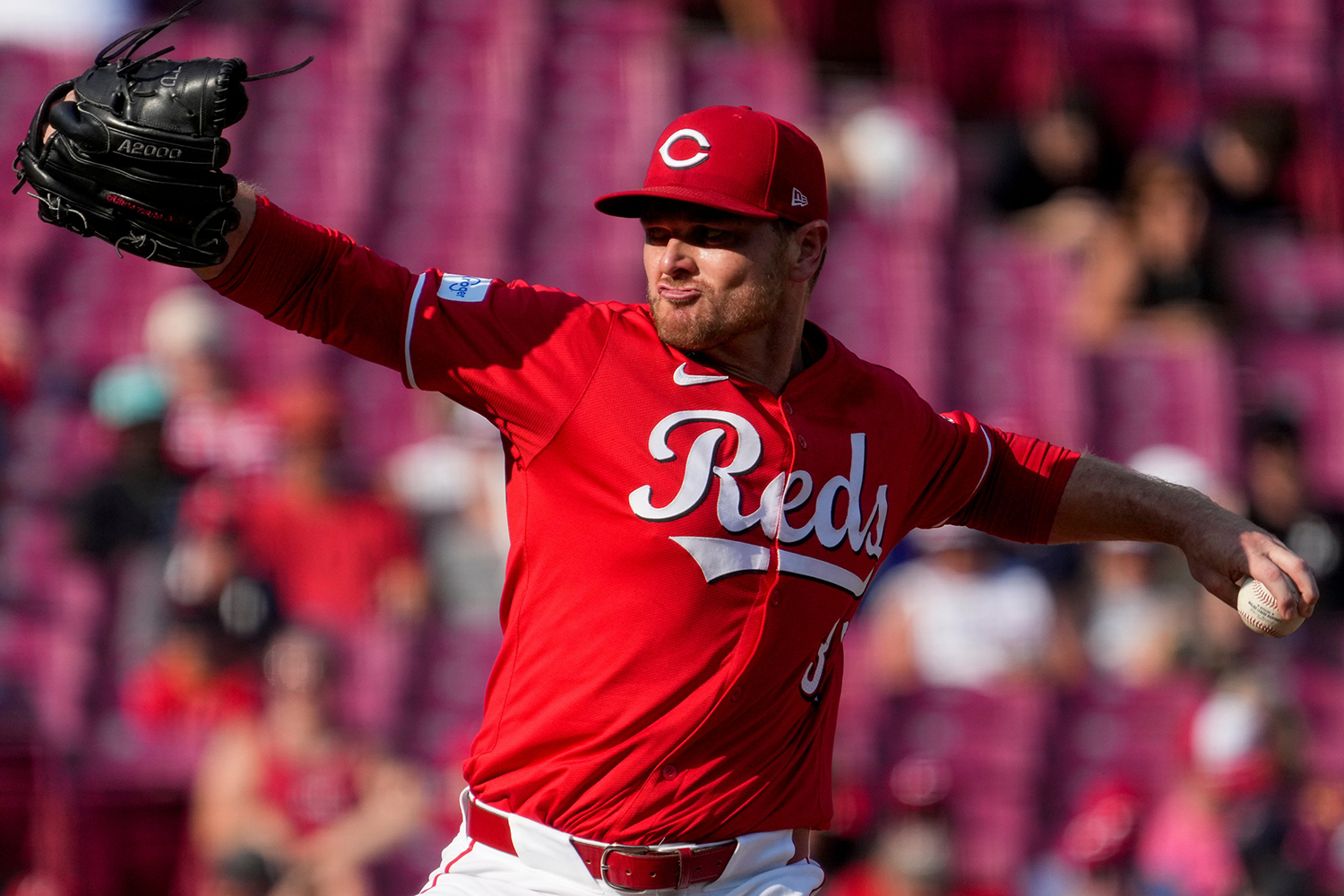 Last week, the Red Sox signed left-handed reliever Justin Wilson for one year and $2.25 million, along with incremental bonuses that could take the contract up to a nice, round $3 million if he finds his way into 60 games. Because, as Nick John noted at the time, Wilson’s recent work doesn’t exactly inspire confidence, let’s dig into what the Red Sox might have been thinking. In 2022, Wilson got into just five games before Tommy John surgery ended his season. He missed the entire 2023 season due to a lat injury that derailed his recovery in July. Wilson finally returned in 2024, getting into 60 games, but the results weren’t there. He ran a 5.59 ERA and a 4.73 WHIP, surrendering 10 homers over just 46 2/3 innings. Wilson is 37-year-old journeyman, and since the 2020 season, he’s got a combined 5.02 ERA over 130 appearances. He’s not a lefty specialist; he actually has better numbers against righties both in recent years and over the course of his career. The Red Sox have given every indication that they mean to compete for a title in 2025. It’s fair to ask what made them think that Wilson could help them toward that end. The first thing to note is that Wilson was particularly unfortunate last season. Among pitchers who threw at least 750 pitches, his .338 BABIP put him in the 91st percentile. His .354 wOBA was 36 points higher than his .318 expected wOBA, and that gap put him in the 98th percentile. His 15.9% HR/FB also ranked in the 91st percentile. Now, some of that was luck and some of it had to do with the defense and the ballpark. That’s good news for Wilson. While Fenway is slightly more hitter-friendly than Great American Ball Park, that friendliness comes in a different fashion. Fenway yields many more doubles and triples, while Great American yields tons of home runs. Wilson is a fly ball pitcher, so dialing down the homers should help him more than most pitchers, as will pitching in front of one of the best defensive outfields in all of baseball. To be clear, even if Wilson’s actual stats had matched his expected stats last season, he still wouldn’t have been fantastic. His .318 xwOBA only put him in the 36th percentile, mostly because he allowed way too much hard contact. If the Red Sox expected him to pitch the exact same in 2025, they wouldn’t have signed him. Let’s dive into why they might think they can get more out of him. Wilson throws a four-seam fastball, a cutter, and a slider (he also threw a few splitters, but they were so infrequent that we’ll leave them out of this discussion). The four-seamer and the cutter have a ton of rise. That’s why Wilson is such a fly ball pitcher, and it’s also why he ran one of the highest popup rates in all of baseball last season. Popups are automatic outs; they’re every bit as good as strikeouts. Wilson ran a solid 24% strikeout rate, but altogether, nearly 39% of his plate appearances ended in either a strikeout or a popup, which put him in the 93rd percentile of all pitchers who threw at least 40 innings. He was literally one spot above Tarik Skubal – yes, the same Tarik Skubal who’s about to walk home with the AL Cy Young Award this week. That alone is inspiring, but it could be even better. Wilson threw the four-seamer just under half of the time and the cutter just under a quarter of the time, but here’s the thing: the cutter was much better. The four-seamer had a .454 wOBA, compared to .303 for the cutter. The cutter didn’t rack up as many whiffs, but batters hit it much softer, popped it up much more frequently, and chased it a huge 42% of the time. What were the Red Sox known for this season? Telling their pitchers to ditch their fastballs. You have to imagine that they’re going to empower Wilson to lean more on his best pitch. I suspect that the Red Sox will tweak Wilson’s slider as well as his location. He ran an elite 33.8 chase rate this season, but he also threw his pitches inside the strike zone at a pretty high rate. If he were to elevate his fastball and cutter a bit more, he’d probably throw more balls, but he’d also earn a lot more chases, and the tradeoff would surely be worth it. However, just dialing down his fastball is an obvious move that very much lines up with what the Red Sox are preaching these days. Signing Wilson was a small part of what looks like it will be a very big offseason, but it’s encouraging to see the Red Sox executing a plan.
 -
The 37-year-old lefty missed nearly two full seasons and then pitched poorly when he returned in 2024, but he actually makes quite a bit of sense in Boston. Last week, the Red Sox signed left-handed reliever Justin Wilson for one year and $2.25 million, along with incremental bonuses that could take the contract up to a nice, round $3 million if he finds his way into 60 games. Because, as Nick John noted at the time, Wilson’s recent work doesn’t exactly inspire confidence, let’s dig into what the Red Sox might have been thinking. In 2022, Wilson got into just five games before Tommy John surgery ended his season. He missed the entire 2023 season due to a lat injury that derailed his recovery in July. Wilson finally returned in 2024, getting into 60 games, but the results weren’t there. He ran a 5.59 ERA and a 4.73 WHIP, surrendering 10 homers over just 46 2/3 innings. Wilson is 37-year-old journeyman, and since the 2020 season, he’s got a combined 5.02 ERA over 130 appearances. He’s not a lefty specialist; he actually has better numbers against righties both in recent years and over the course of his career. The Red Sox have given every indication that they mean to compete for a title in 2025. It’s fair to ask what made them think that Wilson could help them toward that end. The first thing to note is that Wilson was particularly unfortunate last season. Among pitchers who threw at least 750 pitches, his .338 BABIP put him in the 91st percentile. His .354 wOBA was 36 points higher than his .318 expected wOBA, and that gap put him in the 98th percentile. His 15.9% HR/FB also ranked in the 91st percentile. Now, some of that was luck and some of it had to do with the defense and the ballpark. That’s good news for Wilson. While Fenway is slightly more hitter-friendly than Great American Ball Park, that friendliness comes in a different fashion. Fenway yields many more doubles and triples, while Great American yields tons of home runs. Wilson is a fly ball pitcher, so dialing down the homers should help him more than most pitchers, as will pitching in front of one of the best defensive outfields in all of baseball. To be clear, even if Wilson’s actual stats had matched his expected stats last season, he still wouldn’t have been fantastic. His .318 xwOBA only put him in the 36th percentile, mostly because he allowed way too much hard contact. If the Red Sox expected him to pitch the exact same in 2025, they wouldn’t have signed him. Let’s dive into why they might think they can get more out of him. Wilson throws a four-seam fastball, a cutter, and a slider (he also threw a few splitters, but they were so infrequent that we’ll leave them out of this discussion). The four-seamer and the cutter have a ton of rise. That’s why Wilson is such a fly ball pitcher, and it’s also why he ran one of the highest popup rates in all of baseball last season. Popups are automatic outs; they’re every bit as good as strikeouts. Wilson ran a solid 24% strikeout rate, but altogether, nearly 39% of his plate appearances ended in either a strikeout or a popup, which put him in the 93rd percentile of all pitchers who threw at least 40 innings. He was literally one spot above Tarik Skubal – yes, the same Tarik Skubal who’s about to walk home with the AL Cy Young Award this week. That alone is inspiring, but it could be even better. Wilson threw the four-seamer just under half of the time and the cutter just under a quarter of the time, but here’s the thing: the cutter was much better. The four-seamer had a .454 wOBA, compared to .303 for the cutter. The cutter didn’t rack up as many whiffs, but batters hit it much softer, popped it up much more frequently, and chased it a huge 42% of the time. What were the Red Sox known for this season? Telling their pitchers to ditch their fastballs. You have to imagine that they’re going to empower Wilson to lean more on his best pitch. I suspect that the Red Sox will tweak Wilson’s slider as well as his location. He ran an elite 33.8 chase rate this season, but he also threw his pitches inside the strike zone at a pretty high rate. If he were to elevate his fastball and cutter a bit more, he’d probably throw more balls, but he’d also earn a lot more chases, and the tradeoff would surely be worth it. However, just dialing down his fastball is an obvious move that very much lines up with what the Red Sox are preaching these days. Signing Wilson was a small part of what looks like it will be a very big offseason, but it’s encouraging to see the Red Sox executing a plan. View full article
-
The Red Sox are reportedly in the thick of the Crochet sweepstakes. What would they have to give up to make a deal happen? The General Manager Meetings in San Antonio wrapped up on Thursday, and a few small pieces of news made the headlines. Alex Speier of the Boston Globe reported, “there’s now an industry-wide sense that the Sox have arrived at a more clear-eyed and ambitious stage of roster-building than they pursued a year ago.” Chief baseball officer Craig Breslow acknowledged that the team is looking for an ace to lead a staff that performed very well but lacked a top-end starter in 2024. “I think we have to,” Breslow said. “We have lofty goals. We know we need to raise the ceiling of the rotation. I think there are a lot of ways to do that, but we’re going to be really, really open-minded.” There are free agent options available in Max Fried, Corbin Burnes, and Blake Snell, along with pitchers in the next tier, like Jack Flaherty, Shane Bieber, Sean Manaea, and Yusei Kikuchi. You could certainly argue that the Red Sox would hold onto their top prospects and sign one of those pitchers. Even for a team that’s ready to run a payroll that reaches the luxury tax, keeping young, cost-controlled talent at key positions is part of what helps create sustainable success. We just watched the Orioles get accused of “prospect hoarding” for years as they built themselves into one of the best teams in baseball, only shelling out for pitching help once they were ready to compete for a championship. For that reason, I’d like to focus on the most obvious trade candidate today: left-handed starter Garrett Crochet of the White Sox. According to Sean McAdam of MassLive, the Red Sox are definitely involved in talks for Crochet. He wrote: When the White Sox consider trading Crochet, they already have a framework in mind: the Dylan Cease deal from March of this year. That’s not just speculation. General manager Matt Getz told reporters, “In our minds, we’ve got a threshold [for making a deal], and it is nice to have [the Cease trade] to work off of that wasn’t too long ago.” What did the Padres give the White Sox in order to land Cease? In exchange for two arbitration years of a legitimate ace, they received middle reliever Steven Wilson along with three prospects: Drew Thorpe, Jairo Iriarte, and Samuel Zavala. Thorpe and Iriarte, both pitchers, were mature top-100 prospects; FanGraphs had just ranked Iriarte 61st and Thorpe 73rd when the trade went down, and they both made their debuts this season. Zavala, a teenaged outfielder, was considered little more than a lottery pick and he did not hit in 2024. If the Red Sox were to land Crochet, they'd be sending position players rather than pitchers. The White Sox would be happy with that. Getz told Bruce Levine of 670 The Score, "We are focusing on position player return, That is our primary focus in any trade talks. The right players have to be there. We can’t force anything. We certainly need to improve our offense. That is very clear." As it happens, the Red Sox currently have four non-pitching prospects who rank in the top 100 on FanGraphs’ board and six who rank in the top 100 according to MLB Pipeline. The Big Four, Marcelo Mayer, Roman Anthony, Kyle Teel, and Kristian Campbell, are all ranked in the top 20 according to MLB Pipeline, which puts them at least a couple tiers above Thorpe and Zavala. Players like Braden Montgomery, Franklin Arias, and Miguel Bleis. are much more analogous to Thorpe and Zavala, two players on the back half of the top 100, except for one crucial detail: they're younger and much further from being big-league ready than the talent the White Sox got when they traded Cease. Mayer and Anthony are both considered among the very best prospects in the game, while FanGraphs has Teel ranked 42nd and Bleis 54th. There are rumors that Anthony is considered untouchable, and you have to think Teel is unlikely to be moved, as the Red Sox very much need catching help, both in the present and for the long haul. They still need one catcher to fill out the roster, and by far the best option in a lackluster free agent market is Danny Jansen, who finished the season with the Red Sox. The other issue is that Boston's glut of outfielders means that the team might be willing to part with Wilyer Abreu. Considering Jarren Duran's breakout season and Ceddanne Rafaela's long-term contract, Abreu seems most likely t o be the odd man out. On the other hand, it’s hard to imagine the White Sox surrendering their last blockbuster trade piece without prying away either of Boston’s crown jewels in Mayer or Anthony. Given that they’re several tiers above the prospects the White Sox got for Cease, if they were to move, I would then expect two or three lesser prospects to go along as well. This is all speculation, but the point is that if the Red Sox were to make a deal for Crochet, it would likely look pretty different from the Cease deal. View full article
-
 The General Manager Meetings in San Antonio wrapped up on Thursday, and a few small pieces of news made the headlines. Alex Speier of the Boston Globe reported, “there’s now an industry-wide sense that the Sox have arrived at a more clear-eyed and ambitious stage of roster-building than they pursued a year ago.” Chief baseball officer Craig Breslow acknowledged that the team is looking for an ace to lead a staff that performed very well but lacked a top-end starter in 2024. “I think we have to,” Breslow said. “We have lofty goals. We know we need to raise the ceiling of the rotation. I think there are a lot of ways to do that, but we’re going to be really, really open-minded.” There are free agent options available in Max Fried, Corbin Burnes, and Blake Snell, along with pitchers in the next tier, like Jack Flaherty, Shane Bieber, Sean Manaea, and Yusei Kikuchi. You could certainly argue that the Red Sox would hold onto their top prospects and sign one of those pitchers. Even for a team that’s ready to run a payroll that reaches the luxury tax, keeping young, cost-controlled talent at key positions is part of what helps create sustainable success. We just watched the Orioles get accused of “prospect hoarding” for years as they built themselves into one of the best teams in baseball, only shelling out for pitching help once they were ready to compete for a championship. For that reason, I’d like to focus on the most obvious trade candidate today: left-handed starter Garrett Crochet of the White Sox. According to Sean McAdam of MassLive, the Red Sox are definitely involved in talks for Crochet. He wrote: When the White Sox consider trading Crochet, they already have a framework in mind: the Dylan Cease deal from March of this year. That’s not just speculation. General manager Matt Getz told reporters, “In our minds, we’ve got a threshold [for making a deal], and it is nice to have [the Cease trade] to work off of that wasn’t too long ago.” What did the Padres give the White Sox in order to land Cease? In exchange for two arbitration years of a legitimate ace, they received middle reliever Steven Wilson along with three prospects: Drew Thorpe, Jairo Iriarte, and Samuel Zavala. Thorpe and Iriarte, both pitchers, were mature top-100 prospects; FanGraphs had just ranked Iriarte 61st and Thorpe 73rd when the trade went down, and they both made their debuts this season. Zavala, a teenaged outfielder, was considered little more than a lottery pick and he did not hit in 2024. If the Red Sox were to land Crochet, they'd be sending position players rather than pitchers. The White Sox would be happy with that. Getz told Bruce Levine of 670 The Score, "We are focusing on position player return, That is our primary focus in any trade talks. The right players have to be there. We can’t force anything. We certainly need to improve our offense. That is very clear." As it happens, the Red Sox currently have four non-pitching prospects who rank in the top 100 on FanGraphs’ board and six who rank in the top 100 according to MLB Pipeline. The Big Four, Marcelo Mayer, Roman Anthony, Kyle Teel, and Kristian Campbell, are all ranked in the top 20 according to MLB Pipeline, which puts them at least a couple tiers above Thorpe and Zavala. Players like Braden Montgomery, Franklin Arias, and Miguel Bleis. are much more analogous to Thorpe and Zavala, two players on the back half of the top 100, except for one crucial detail: they're younger and much further from being big-league ready than the talent the White Sox got when they traded Cease. Mayer and Anthony are both considered among the very best prospects in the game, while FanGraphs has Teel ranked 42nd and Bleis 54th. There are rumors that Anthony is considered untouchable, and you have to think Teel is unlikely to be moved, as the Red Sox very much need catching help, both in the present and for the long haul. They still need one catcher to fill out the roster, and by far the best option in a lackluster free agent market is Danny Jansen, who finished the season with the Red Sox. The other issue is that Boston's glut of outfielders means that the team might be willing to part with Wilyer Abreu. Considering Jarren Duran's breakout season and Ceddanne Rafaela's long-term contract, Abreu seems most likely t o be the odd man out. On the other hand, it’s hard to imagine the White Sox surrendering their last blockbuster trade piece without prying away either of Boston’s crown jewels in Mayer or Anthony. Given that they’re several tiers above the prospects the White Sox got for Cease, if they were to move, I would then expect two or three lesser prospects to go along as well. This is all speculation, but the point is that if the Red Sox were to make a deal for Crochet, it would likely look pretty different from the Cease deal.
 -
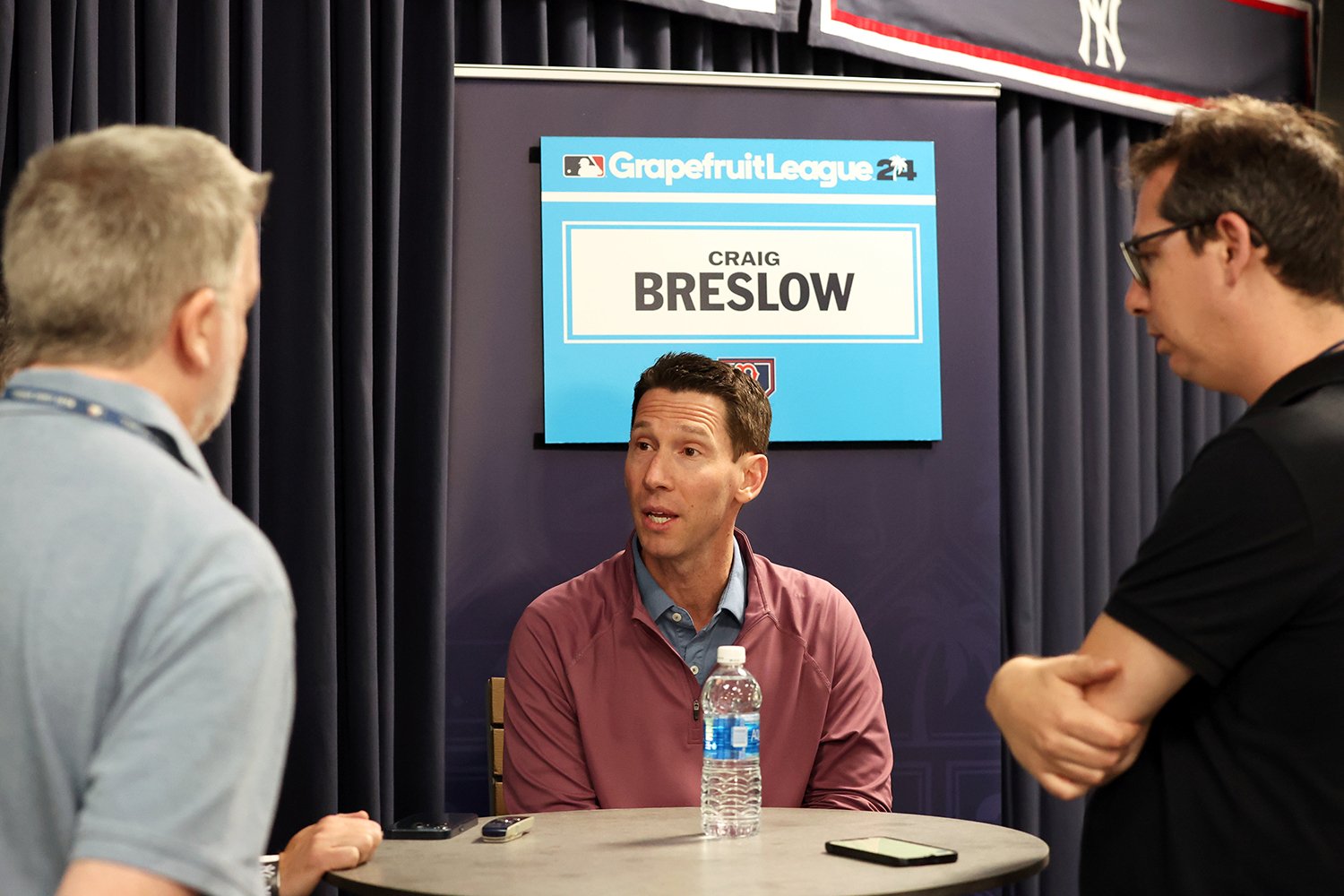 The offseason has just started, and it’s officially the time for whispers. Hot stove rumors about which teams are interested in which players are everywhere. This week, the top executives from all 30 clubs are gathered in San Antonio for the General Managers Meetings, the first event of the offseason, and the rumor mill is in full gear. Here’s a quick breakdown of what has been reported from San Antonio. Credit for what you’re about to read goes to Alex Speier and Peter Abraham of the Boston Globe, who have done excellent reporting so far. The biggest piece of news is also the least solid. Abraham tweeted that several agents, including super-agent Scott Boras, have described the impressions they’ve gotten during their meetings with the Red Sox. “The message from the Sox has been that ownership is committed to high-end talent and the team plans to be active in the free agent market,” he wrote. This is somewhat vague and we’ll have to wait and see how things turn out, but it’s certainly a promising sign. It would at the very least be unusual for the Red Sox to give this impression to multiple agents, including the game’s most prominent one in Boras, only to fail to follow through. Christopher Smith of MassLive reported some quotes from chief baseball officer Craig Breslow that echoed that sentiment. “Without getting kind of into specifics, I think we have to be open to improving our team and I don’t think we’ve been shy about the fact that our position player group is further ahead than our pitching group,” Breslow said. “And so as it relates to upgrades, it will require really elite talent in order to upgrade the position player group in certain instances. So we’ll kind of focus our attention appropriately. But we’re going to engage. We’re going to explore anything that we think makes us better.” After speculating for the last few months about whether or not the Red Sox will really go for it this offseason, it’s relieving to see the words “really elite talent” with quotation marks around them. Smith reported that Breslow is feeling more comfortable in his second season running the Red Sox, and that it could make the team more aggressive. “I think it feels different. I think it should feel different,” Breslow said. “I know a lot more about the organization. I think we know a lot more about our players. And so being better informed allows us to make better decisions. Ultimately, our goal is to deliver to the fans a team that is capable of winning the World Series every year. And we are approaching this offseason that way.” Speier also relayed some significant quotes from Breslow. When asked whether the team would be more likely to add to the club by way of trades or free agent signings, Breslow kept his options open, “We’ll be open to both,” he said. “We do have a bunch of position players that we feel really good about, and we’ve got to figure out how we maximize their value, whether that’s in Boston or elsewhere. But at the same time, I’ve talked for a while about how the recipe for success here has been homegrown talent supplemented via free agency, and I don’t see that changing. We’ll be open to both.” In a similar vein, Smith reported that Breslow said, “The goal is to construct the strongest team we possibly can and we need to be flexible. We need to be open to a number of paths in doing that.” This is one of the biggest questions of the offseason, and Boston fans aren't the only ones asking it. Speier reported some comments from executives of other clubs, who sound awfully excited about the possibility of trading for Roman Anthony, Kristian Campbell, Marcelo Mayer, and Kyle Teel. “That position player group is about as good as you can find,” one American League GM said. “[They can] 100 percent [deal for anyone]. And it’s also totally fair for them to say, ‘Hey, all [four] of those guys may be here in ‘25 and help us, so we’re not going to trade them.’ They’re really good.” Per Speier, Breslow also said that the team is disinclined to trade first baseman Triston Casas. “We’re glad he’s on our team,” he said. “It’s hard to imagine we would ever line up in terms of value. Do we have to be open [to discussing him]? Sure, but a middle-of-the-order bat who can hit 40 home runs and under control for a while [is a] hard guy to trade.” Lastly, Breslow said that the team is interested in acquiring a left-handed reliever and that their new backup catcher – filling the hole left by the departure of Danny Jansen – is likely to come from outside the organization. Abraham reported that the Red Sox met with Scott Boras on Tuesday, not to negotiate anything, but to keep a dialog open. Boras represents several of the most prominent free agents, including Juan Soto, Alex Bregman, Blake Snell, and Pete Alonso. He also represents Tyler O’Neill, who hit 31 homers for the Red Sox in 2024, and to whom they declined give a qualifying offer. Boras reiterated what O’Neill has said himself in recent weeks, that O’Neill “had a great experience” in Boston and would be happy to return. Lastly, If you were skeptical of the team’s move to sign Nick Pivetta, you might be comforted to learn that on Tuesday, MLB Network’s Jon Paul Morosi had an update that might bring you comfort. “His market, from what I’ve been told the last couple days, is surprisingly strong.” Morosi went on to explain that, as we wrote earlier this week, teams are enticed by Pivetta’s raw stuff. If Pivetta ends up signing elsewhere, the Red Sox receive a compensation pick, and the gambit worked. Morosi’s full comments start at the 2:40 mark.
 -
The first event of the offesason is underway and reports out of San Antonio indicate that the Red Sox really are interested in adding to the team in a big way. The offseason has just started, and it’s officially the time for whispers. Hot stove rumors about which teams are interested in which players are everywhere. This week, the top executives from all 30 clubs are gathered in San Antonio for the General Managers Meetings, the first event of the offseason, and the rumor mill is in full gear. Here’s a quick breakdown of what has been reported from San Antonio. Credit for what you’re about to read goes to Alex Speier and Peter Abraham of the Boston Globe, who have done excellent reporting so far. The biggest piece of news is also the least solid. Abraham tweeted that several agents, including super-agent Scott Boras, have described the impressions they’ve gotten during their meetings with the Red Sox. “The message from the Sox has been that ownership is committed to high-end talent and the team plans to be active in the free agent market,” he wrote. This is somewhat vague and we’ll have to wait and see how things turn out, but it’s certainly a promising sign. It would at the very least be unusual for the Red Sox to give this impression to multiple agents, including the game’s most prominent one in Boras, only to fail to follow through. Christopher Smith of MassLive reported some quotes from chief baseball officer Craig Breslow that echoed that sentiment. “Without getting kind of into specifics, I think we have to be open to improving our team and I don’t think we’ve been shy about the fact that our position player group is further ahead than our pitching group,” Breslow said. “And so as it relates to upgrades, it will require really elite talent in order to upgrade the position player group in certain instances. So we’ll kind of focus our attention appropriately. But we’re going to engage. We’re going to explore anything that we think makes us better.” After speculating for the last few months about whether or not the Red Sox will really go for it this offseason, it’s relieving to see the words “really elite talent” with quotation marks around them. Smith reported that Breslow is feeling more comfortable in his second season running the Red Sox, and that it could make the team more aggressive. “I think it feels different. I think it should feel different,” Breslow said. “I know a lot more about the organization. I think we know a lot more about our players. And so being better informed allows us to make better decisions. Ultimately, our goal is to deliver to the fans a team that is capable of winning the World Series every year. And we are approaching this offseason that way.” Speier also relayed some significant quotes from Breslow. When asked whether the team would be more likely to add to the club by way of trades or free agent signings, Breslow kept his options open, “We’ll be open to both,” he said. “We do have a bunch of position players that we feel really good about, and we’ve got to figure out how we maximize their value, whether that’s in Boston or elsewhere. But at the same time, I’ve talked for a while about how the recipe for success here has been homegrown talent supplemented via free agency, and I don’t see that changing. We’ll be open to both.” In a similar vein, Smith reported that Breslow said, “The goal is to construct the strongest team we possibly can and we need to be flexible. We need to be open to a number of paths in doing that.” This is one of the biggest questions of the offseason, and Boston fans aren't the only ones asking it. Speier reported some comments from executives of other clubs, who sound awfully excited about the possibility of trading for Roman Anthony, Kristian Campbell, Marcelo Mayer, and Kyle Teel. “That position player group is about as good as you can find,” one American League GM said. “[They can] 100 percent [deal for anyone]. And it’s also totally fair for them to say, ‘Hey, all [four] of those guys may be here in ‘25 and help us, so we’re not going to trade them.’ They’re really good.” Per Speier, Breslow also said that the team is disinclined to trade first baseman Triston Casas. “We’re glad he’s on our team,” he said. “It’s hard to imagine we would ever line up in terms of value. Do we have to be open [to discussing him]? Sure, but a middle-of-the-order bat who can hit 40 home runs and under control for a while [is a] hard guy to trade.” Lastly, Breslow said that the team is interested in acquiring a left-handed reliever and that their new backup catcher – filling the hole left by the departure of Danny Jansen – is likely to come from outside the organization. Abraham reported that the Red Sox met with Scott Boras on Tuesday, not to negotiate anything, but to keep a dialog open. Boras represents several of the most prominent free agents, including Juan Soto, Alex Bregman, Blake Snell, and Pete Alonso. He also represents Tyler O’Neill, who hit 31 homers for the Red Sox in 2024, and to whom they declined give a qualifying offer. Boras reiterated what O’Neill has said himself in recent weeks, that O’Neill “had a great experience” in Boston and would be happy to return. Lastly, If you were skeptical of the team’s move to sign Nick Pivetta, you might be comforted to learn that on Tuesday, MLB Network’s Jon Paul Morosi had an update that might bring you comfort. “His market, from what I’ve been told the last couple days, is surprisingly strong.” Morosi went on to explain that, as we wrote earlier this week, teams are enticed by Pivetta’s raw stuff. If Pivetta ends up signing elsewhere, the Red Sox receive a compensation pick, and the gambit worked. Morosi’s full comments start at the 2:40 mark. View full article
-
 On Monday, the Red Sox gave a qualifying offer to free-agent starter Nick Pivetta. After spending seven years in the majors and joining the Red Sox in 2020, the 31-year-old Pivetta will get to choose where he wants to work for the first time in his life. Pivetta will need to decide whether to accept the offer by November 19. If he does, he will return to Boston for one year, making $21.05 million, a huge jump from the $7.5 million he made in his final season of arbitration. If he declines it and signs elsewhere, the Red Sox will get a competitive balance pick in the draft. We can’t know exactly why Craig Breslow made this decision, but let’s break down the logic behind it as best we can. First, the Red Sox might simply want that competitive balance pick. They might believe Pivetta will reject the deal and seek out a longer-term contract, or at least that it’s likely enough to make the QO worth the risk. FanGraphs published its Top 50 Free Agents list yesterday (Pivetta ranked 32nd), and one of the real takeaways was that starting pitching is going to be in even greater demand than usual this offseason. The Red Sox might believe that in this market, Pivetta is sure to land a multi-year deal, making the QO a slam dunk. However, in writing up this story, Sean McAdam related something Breslow said to him earlier this year: “If you give a QO, you’d better be prepared for it to be accepted.” The Red Sox certainly aren’t afraid to bring Pivetta back. In terms of production, there’s no reason to believe that he would hurt the club. Since joining the Red Sox, Pivetta has a 4.29 ERA and a 4.19 FIP. That translates to an ERA- of 99 and an FIP- of 101, which is to say that he’s been almost exactly a league-average pitcher. Despite a flexor strain early in the 2024 season, Pivetta has been extremely dependable, pitching at least 140 innings in each of the last four seasons. He’s thrown 633 innings, over 200 more than any other pitcher, and his 7.9 fWAR trails only Tanner Houck. While the Red Sox clearly need to upgrade the front of their rotation, there is no such thing as too much starting pitching depth. At the very least, keeping Pivetta around raises the team’s floor, and it gives them starting pitching depth to trade from as they build out the roster for 2025. Pivetta is a stuff darling – pitch modeling system Stuff+ adores his four-seamer, his slider, and his cutter – but because he's homer-prone and he tends not to pitch deep into games, he has yet to translate all that nastiness into actual big-league success. If you’re a Red Sox fan who’s been watching Pivetta for the better part of five years, you might be understandably skeptical that he’ll figure it out, especially in Boston. However, Breslow has only been running the team for a year, and it’s reasonable for him to want one more crack at it. Remember how I said that Stuff+ loves Pivetta’s slider? Well, it’s a fairly new pitch. In 2024, he traded a more traditional slider for a sweeper with more horizontal movement. The results didn’t come, but among pitchers who threw at least 100 innings, Stuff+ rated it as the best slider in baseball. That’s got to be at least a little bit encouraging. If things really don’t work out, Pivetta could end up pitching out of the bullpen. When he did so in 2023, he put up some of the best numbers of his career. That brings us to the strongest argument against making the QO: It would be an overpay. At FanGraphs, Ben Clemens projected that Pivetta would land a contract for three years and $45 million, while Tim Britton of The Athletic projected roughly the same thing: three years and $48 million. So yes, $21 million would be an overpay for 2025, but it would also be the best kind of overpay: a short-term one. Players and teams make this kind of trade-off all the time: players prefer to sign a larger average annual value in exchange for the security of a longer contract with a larger total dollar value, while teams prefer the flexibility offered by short-term deals. That calculus might have made sense to Breslow. There’s a bigger reason that you shouldn’t worry about overpaying Pivetta by $6 million dollars: The Red Sox are supposed to be thinking bigger. If the Red Sox are trying to stay under the luxury tax for 2025, then this move doesn't make much sense at all. There's not enough room for them to pay more than market value for a back-end starter when there are other real needs on the roster. But if that's what's going on, then the game is already lost. The Red Sox have run one of the highest payrolls in the game in very recent memory. There’s no way of knowing how much money they plan on spending this season or in the future, but they need real pitching upgrades and have been making noises about making a real effort to compete in 2025. They should be shopping in the Burnes-Fried section of the store, and they also need a catcher and a right-handed bat. There are a couple of advantages of being a big market team. It can help you sign big, expensive free agents, but it can also help you build out enviable depth. Think of the Dodgers. They’re packed with stars, but so were plenty of teams in the playoffs. The Dodgers paid more for quality depth, and it meant that even though they suffered some huge injuries, they always had an excellent arm ready in the bullpen and a solid bat coming off the bench. This kind of move, paying a little more for depth with upside, is what all that money is for. If paying $21 million to Pivetta is the extent of Boston's plan, or even enough to make them adjust the overall plan, then the team has bigger problems to worry about.
 -
After parts of five seasons with the Red Sox, Nick Pivetta has never lived up to the promise of his dazzling stuff. Why did the Red Sox just offer him way more than his market value to stick around? On Monday, the Red Sox gave a qualifying offer to free-agent starter Nick Pivetta. After spending seven years in the majors and joining the Red Sox in 2020, the 31-year-old Pivetta will get to choose where he wants to work for the first time in his life. Pivetta will need to decide whether to accept the offer by November 19. If he does, he will return to Boston for one year, making $21.05 million, a huge jump from the $7.5 million he made in his final season of arbitration. If he declines it and signs elsewhere, the Red Sox will get a competitive balance pick in the draft. We can’t know exactly why Craig Breslow made this decision, but let’s break down the logic behind it as best we can. First, the Red Sox might simply want that competitive balance pick. They might believe Pivetta will reject the deal and seek out a longer-term contract, or at least that it’s likely enough to make the QO worth the risk. FanGraphs published its Top 50 Free Agents list yesterday (Pivetta ranked 32nd), and one of the real takeaways was that starting pitching is going to be in even greater demand than usual this offseason. The Red Sox might believe that in this market, Pivetta is sure to land a multi-year deal, making the QO a slam dunk. However, in writing up this story, Sean McAdam related something Breslow said to him earlier this year: “If you give a QO, you’d better be prepared for it to be accepted.” The Red Sox certainly aren’t afraid to bring Pivetta back. In terms of production, there’s no reason to believe that he would hurt the club. Since joining the Red Sox, Pivetta has a 4.29 ERA and a 4.19 FIP. That translates to an ERA- of 99 and an FIP- of 101, which is to say that he’s been almost exactly a league-average pitcher. Despite a flexor strain early in the 2024 season, Pivetta has been extremely dependable, pitching at least 140 innings in each of the last four seasons. He’s thrown 633 innings, over 200 more than any other pitcher, and his 7.9 fWAR trails only Tanner Houck. While the Red Sox clearly need to upgrade the front of their rotation, there is no such thing as too much starting pitching depth. At the very least, keeping Pivetta around raises the team’s floor, and it gives them starting pitching depth to trade from as they build out the roster for 2025. Pivetta is a stuff darling – pitch modeling system Stuff+ adores his four-seamer, his slider, and his cutter – but because he's homer-prone and he tends not to pitch deep into games, he has yet to translate all that nastiness into actual big-league success. If you’re a Red Sox fan who’s been watching Pivetta for the better part of five years, you might be understandably skeptical that he’ll figure it out, especially in Boston. However, Breslow has only been running the team for a year, and it’s reasonable for him to want one more crack at it. Remember how I said that Stuff+ loves Pivetta’s slider? Well, it’s a fairly new pitch. In 2024, he traded a more traditional slider for a sweeper with more horizontal movement. The results didn’t come, but among pitchers who threw at least 100 innings, Stuff+ rated it as the best slider in baseball. That’s got to be at least a little bit encouraging. If things really don’t work out, Pivetta could end up pitching out of the bullpen. When he did so in 2023, he put up some of the best numbers of his career. That brings us to the strongest argument against making the QO: It would be an overpay. At FanGraphs, Ben Clemens projected that Pivetta would land a contract for three years and $45 million, while Tim Britton of The Athletic projected roughly the same thing: three years and $48 million. So yes, $21 million would be an overpay for 2025, but it would also be the best kind of overpay: a short-term one. Players and teams make this kind of trade-off all the time: players prefer to sign a larger average annual value in exchange for the security of a longer contract with a larger total dollar value, while teams prefer the flexibility offered by short-term deals. That calculus might have made sense to Breslow. There’s a bigger reason that you shouldn’t worry about overpaying Pivetta by $6 million dollars: The Red Sox are supposed to be thinking bigger. If the Red Sox are trying to stay under the luxury tax for 2025, then this move doesn't make much sense at all. There's not enough room for them to pay more than market value for a back-end starter when there are other real needs on the roster. But if that's what's going on, then the game is already lost. The Red Sox have run one of the highest payrolls in the game in very recent memory. There’s no way of knowing how much money they plan on spending this season or in the future, but they need real pitching upgrades and have been making noises about making a real effort to compete in 2025. They should be shopping in the Burnes-Fried section of the store, and they also need a catcher and a right-handed bat. There are a couple of advantages of being a big market team. It can help you sign big, expensive free agents, but it can also help you build out enviable depth. Think of the Dodgers. They’re packed with stars, but so were plenty of teams in the playoffs. The Dodgers paid more for quality depth, and it meant that even though they suffered some huge injuries, they always had an excellent arm ready in the bullpen and a solid bat coming off the bench. This kind of move, paying a little more for depth with upside, is what all that money is for. If paying $21 million to Pivetta is the extent of Boston's plan, or even enough to make them adjust the overall plan, then the team has bigger problems to worry about. View full article
-
 Well, every once in a while, justice is served. Wilyer Abreu, the 25- year-old rookie who ran a 114 wRC+ while playing the best right field in baseball, took home the first piece of hardware in his young career in the form of the 2024 American League Gold Glove for right field. Abreu became the first Red Sox rookie to win a Gold Glove since Fred Lynn in 1 975, and just the seventh rookie ever to take home the award. To say that it was well-deserved would be a major understatement. Here’s a list of metrics in which Abreu led all AL right fielders: Assists Defense Runs Above Average Defensive Runs Saved Outfield Arm Runs Saved Ultimate Zone Rating UZR/150 Outs Above Average Fielding Run Value Deserved Runs Prevented Range Defense Added Range Out Score SABR Defensive Index An important thing to keep in mind here is that most of these metrics are counting stats. The more you play, the better your chance to rack up good numbers, and Abreu was a platoon player in 2024. He only spent 921 1/3 innings in right field, 10th-most in baseball. In other words, he racked up all this value in a lot less time than most other players. On a per-inning or per-chance basis, he was even better than the numbers indicate. I don’t expect you to be familiar with every stat I listed above. What's important is that it’s basically all of them. By any metric – from old-school assists to the video-tracked Defensive Runs Saved to the Statcast-powered Fielding Run Value – Wilyer Abreu was the best right fielder in baseball. It’s not just that Abreu was best overall, though. It’s that he was the best in every facet of the game. Some of the metrics in the list above are just the components that make up the more famous metrics. For example, Deserved Runs Prevented is Baseball Prospectus’s flagship metric. It combines a range component, Range Defense Added, with a throwing component, Throwing Runs. Abreu led all right fielders in both components. Statcast breaks things down by range (Outs Above Average) and Arm Value, and once again, Abreu was the best right fielder according to both. Defensive Runs Saved breaks things down into three main categories. Abreu was the AL leader in Outfield Arm Runs Saved and Plus/Minus Runs Saved Above Average, which measures range. However, DRS also has a component called Good Fielding Plays, which gives fielders credit for particularly tough plays, and Abreu didn’t lead that category. This is where things get really interesting. It's important to remember how Abreu achieved all this. He’s not your typical defense-first outfielder. His sprint speed of 27.5 feet per second is just barely above the league average. For an outfielder, where 28 fps is the standard, it actually makes him slow. According to Statcast, which buckets plays by difficulty, Abreu didn’t make a single five-star catch. Those are balls with a catch probability under 25%, and they require great speed and a perfect jump; only the speediest outfielders can get to them, and only if they do everything perfectly. Abreu doesn’t have the speed to make those plays, and he went 0-for-17 on them. But he made more four-star catches than anyone else in baseball. Four-star plays have a catch probability between 25% and 50%. They require great speed OR a great jump, and Abreu went 10-for-10 on them. Because he doesn’t have great speed, that means that he got a great jump on every single one of them. Since Statcast started bucketing catches this way in 2016, Abreu is the only player ever to have more than six four-star opportunities and catch every single one of them. It took a combination of instinct and effort, two categories in which Abreu also led the league. And after all that, the play that best summed up Abreu’s incredible rookie season with the glove was the one he just quite couldn't complete.
 -
Wilyer Abreu was without question the best right fielder in the American League, and that accomplishment is all the more impressive when you consider the one skill Abreu doesn't have. Well, every once in a while, justice is served. Wilyer Abreu, the 25- year-old rookie who ran a 114 wRC+ while playing the best right field in baseball, took home the first piece of hardware in his young career in the form of the 2024 American League Gold Glove for right field. Abreu became the first Red Sox rookie to win a Gold Glove since Fred Lynn in 1 975, and just the seventh rookie ever to take home the award. To say that it was well-deserved would be a major understatement. Here’s a list of metrics in which Abreu led all AL right fielders: Assists Defense Runs Above Average Defensive Runs Saved Outfield Arm Runs Saved Ultimate Zone Rating UZR/150 Outs Above Average Fielding Run Value Deserved Runs Prevented Range Defense Added Range Out Score SABR Defensive Index An important thing to keep in mind here is that most of these metrics are counting stats. The more you play, the better your chance to rack up good numbers, and Abreu was a platoon player in 2024. He only spent 921 1/3 innings in right field, 10th-most in baseball. In other words, he racked up all this value in a lot less time than most other players. On a per-inning or per-chance basis, he was even better than the numbers indicate. I don’t expect you to be familiar with every stat I listed above. What's important is that it’s basically all of them. By any metric – from old-school assists to the video-tracked Defensive Runs Saved to the Statcast-powered Fielding Run Value – Wilyer Abreu was the best right fielder in baseball. It’s not just that Abreu was best overall, though. It’s that he was the best in every facet of the game. Some of the metrics in the list above are just the components that make up the more famous metrics. For example, Deserved Runs Prevented is Baseball Prospectus’s flagship metric. It combines a range component, Range Defense Added, with a throwing component, Throwing Runs. Abreu led all right fielders in both components. Statcast breaks things down by range (Outs Above Average) and Arm Value, and once again, Abreu was the best right fielder according to both. Defensive Runs Saved breaks things down into three main categories. Abreu was the AL leader in Outfield Arm Runs Saved and Plus/Minus Runs Saved Above Average, which measures range. However, DRS also has a component called Good Fielding Plays, which gives fielders credit for particularly tough plays, and Abreu didn’t lead that category. This is where things get really interesting. It's important to remember how Abreu achieved all this. He’s not your typical defense-first outfielder. His sprint speed of 27.5 feet per second is just barely above the league average. For an outfielder, where 28 fps is the standard, it actually makes him slow. According to Statcast, which buckets plays by difficulty, Abreu didn’t make a single five-star catch. Those are balls with a catch probability under 25%, and they require great speed and a perfect jump; only the speediest outfielders can get to them, and only if they do everything perfectly. Abreu doesn’t have the speed to make those plays, and he went 0-for-17 on them. But he made more four-star catches than anyone else in baseball. Four-star plays have a catch probability between 25% and 50%. They require great speed OR a great jump, and Abreu went 10-for-10 on them. Because he doesn’t have great speed, that means that he got a great jump on every single one of them. Since Statcast started bucketing catches this way in 2016, Abreu is the only player ever to have more than six four-star opportunities and catch every single one of them. It took a combination of instinct and effort, two categories in which Abreu also led the league. And after all that, the play that best summed up Abreu’s incredible rookie season with the glove was the one he just quite couldn't complete. View full article
