Davy Andrews
-
Posts
196 -
Joined
-
Last visited
Content Type
Profiles
Boston Red Sox Videos
2026 Boston Red Sox Top Prospects Ranking
Boston Red Sox Free Agent & Trade Rumors, Notes, & Tidbits
Guides & Resources
2025 Boston Red Sox Draft Pick Tracker
News
2026 Boston Red Sox Draft Tracker: Picks & Bonuses
Forums
Blogs
Events
Store
Downloads
Gallery
Everything posted by Davy Andrews
-
 Yeah, he makes great defensive plays sometimes! Let’s watch. We’ve spent a lot of time this offseason talking about the defense of Rafael Devers. We’ve spent so much time on it. I’m not saying we haven’t done so for good reason – that defense is undeniably, likely irredeemably bad – but still, in this holiday season, maybe it’s time we focus on the good stuff. Toward that end, I’m going to watch just about every play Devers made this season. Statcast says there were 275 of them. I’ll be on the hunt for the gems. Sure, he didn’t get to enough balls and he made too many errors, but there were also some gems. I’m going to mine them and present them to you. Please feel free to stuff them in your stocking or whatever else you might have. This is the best of the best when it comes to Devers’ Defense. As a note, Statcast presents these plays in reverse chronological order, so I’m starting with a play Devers made to catch Yandy Díaz on September 19, and then I’m working backward. Keep in mind, at this point Devers’ shoulders were so hurt that he would only get into one more game before calling it a season. Right out of the gate, we’ve got a beautiful barehanded play on a soft chopper. Devers makes a great read and charges hard. He makes the play look easy, but notice how low the ball is when Devers grabs it. Catching it on the long hop like that meant that he couldn’t slow down at all to make the play; he had to do it at full speed, and he still snagged it cleanly and made a perfect throw to first. Devers actually made a somewhat similar play earlier in the game, charging and gloving a different soft chopper from Díaz. I know the next one isn’t the prettiest play you’ll ever see, but it honestly might be the most impressive of the entire bunch. Yup, that’s Devers simultaneously securing a popup from Anthony Rizzo and breaking a tackle from Trevor Story. Not only did Devers have to avoid the sack, he also had to keep his eye on the ball while he felt Story bearing down on him. That’s just pure pocket presence. Then, when the ball understandably popped out of his glove, he had to make a bobbling circus catch to corral it for good. Alright, that one was silly, but check out this next one. It’s legitimately great. That’s why the call it the hot corner. Judge hits an absolute rocket to Devers’ glove side. The ball comes off his bat at 104.7 mph with an extremely difficult trajectory. Devers has to make a diving play while also fielding an awkward short hop, and he does it perfectly cleanly. Then he makes a pinpoint throw to second in order to stop a double play. Even the often-curmudgeonly John Smoltz was awed. “Wow,” said Smoltz. “I mean, that’s as good as it gets.” Guess what. This next one came in the very same game. Volpe didn’t crush the ball like Judge, but Devers was playing in, which gave him very little reaction time. He still managed to make a sliding play in the other direction, execute a nifty spin move, and take a moment to make sure that he unleashed an accurate throw. It even elicited another “Wow” from Smoltz. Kindly ignore the fact that Devers made an error in between these two great plays. This one’s not quite as snazzy but watch how hard Devers has to charge to make this play. He gets a nice easy hop, but that’s because he worked for it! If he hadn’t made such a good read or charged the ball so hard, he would’ve had to scoop a long hop or stab a short hop, and he certainly wouldn’t have been able to catch Jose Iglesias at first base. The throw is also impressive for a couple reasons. For one, Devers is still charging very hard and despite being on the move, he’s right on the money. The second reason is how relaxed Devers looked. Iglesias is out by the barest fraction of a second, but Devers never rushed at all. He knew exactly how much time he had and made a strong, perfectly accurate throw. This play is not as easy as Devers made it look. Our last play came on another ball that Devers had to charge hard. Pete Alonso chops one weakly right up the line, and Devers is immediately on his horse. He scoops it up with his glove and gets it out extremely quickly. The throw isn’t his best, but it’s good enough. I’m not sure I realized that Devers’ hands were this fast. Once again, Devers knows exactly how much time he has. At this point I need to let you in on a secret. These were not the best plays Devers made all year. Remember how I said I was going through these in reverse chronological order? Well, we haven’t even gotten out of September yet. Devers played in just 17 games in September, and he made all of these impressive plays! We’ll just have to continue this series later in the week, so stay with us as we continue documenting the occasional defensive genius of Rafael Devers. View full article
 -
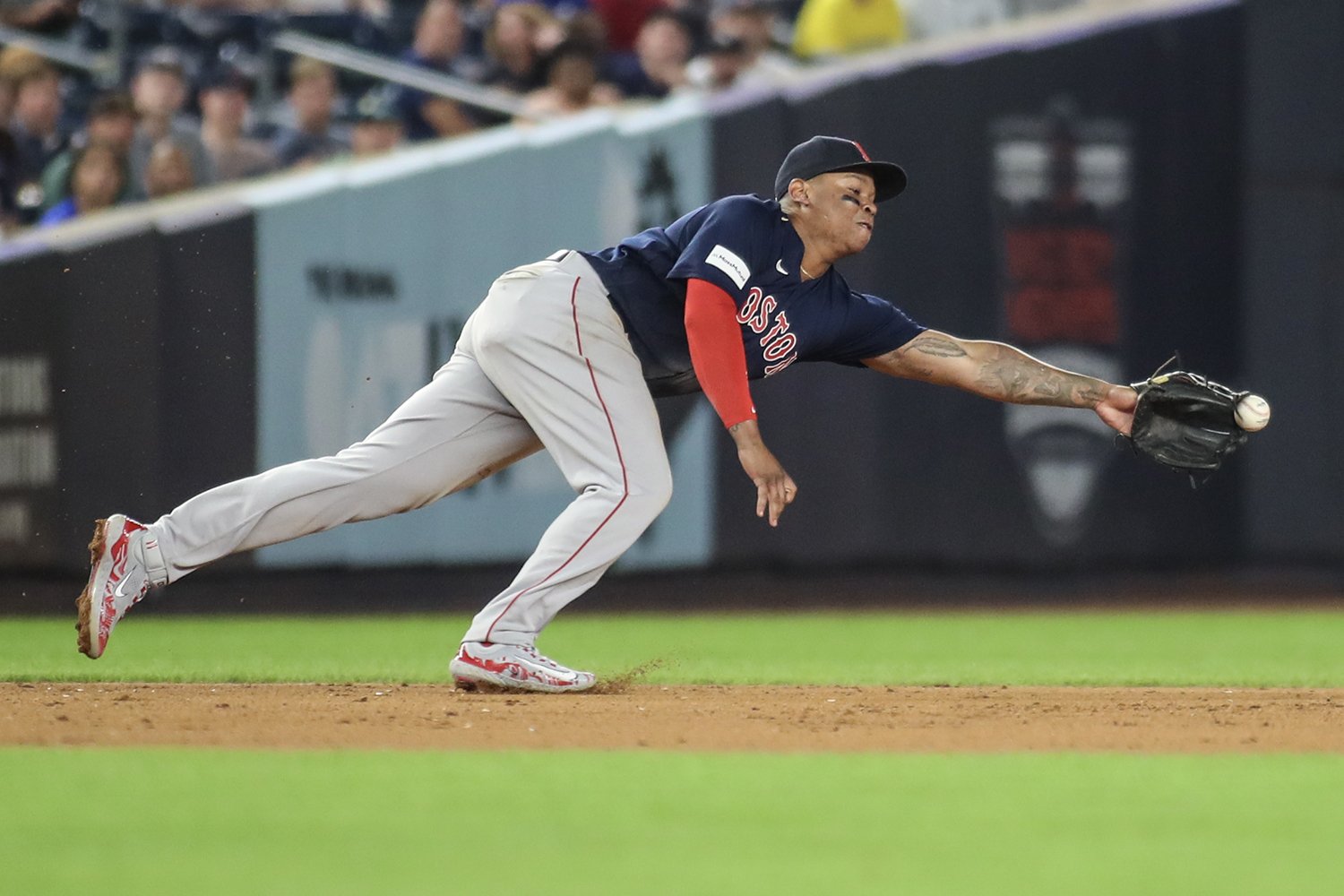 We’ve spent a lot of time this offseason talking about the defense of Rafael Devers. We’ve spent so much time on it. I’m not saying we haven’t done so for good reason – that defense is undeniably, likely irredeemably bad – but still, in this holiday season, maybe it’s time we focus on the good stuff. Toward that end, I’m going to watch just about every play Devers made this season. Statcast says there were 275 of them. I’ll be on the hunt for the gems. Sure, he didn’t get to enough balls and he made too many errors, but there were also some gems. I’m going to mine them and present them to you. Please feel free to stuff them in your stocking or whatever else you might have. This is the best of the best when it comes to Devers’ Defense. As a note, Statcast presents these plays in reverse chronological order, so I’m starting with a play Devers made to catch Yandy Díaz on September 19, and then I’m working backward. Keep in mind, at this point Devers’ shoulders were so hurt that he would only get into one more game before calling it a season. Right out of the gate, we’ve got a beautiful barehanded play on a soft chopper. Devers makes a great read and charges hard. He makes the play look easy, but notice how low the ball is when Devers grabs it. Catching it on the long hop like that meant that he couldn’t slow down at all to make the play; he had to do it at full speed, and he still snagged it cleanly and made a perfect throw to first. Devers actually made a somewhat similar play earlier in the game, charging and gloving a different soft chopper from Díaz. I know the next one isn’t the prettiest play you’ll ever see, but it honestly might be the most impressive of the entire bunch. Yup, that’s Devers simultaneously securing a popup from Anthony Rizzo and breaking a tackle from Trevor Story. Not only did Devers have to avoid the sack, he also had to keep his eye on the ball while he felt Story bearing down on him. That’s just pure pocket presence. Then, when the ball understandably popped out of his glove, he had to make a bobbling circus catch to corral it for good. Alright, that one was silly, but check out this next one. It’s legitimately great. That’s why the call it the hot corner. Judge hits an absolute rocket to Devers’ glove side. The ball comes off his bat at 104.7 mph with an extremely difficult trajectory. Devers has to make a diving play while also fielding an awkward short hop, and he does it perfectly cleanly. Then he makes a pinpoint throw to second in order to stop a double play. Even the often-curmudgeonly John Smoltz was awed. “Wow,” said Smoltz. “I mean, that’s as good as it gets.” Guess what. This next one came in the very same game. Volpe didn’t crush the ball like Judge, but Devers was playing in, which gave him very little reaction time. He still managed to make a sliding play in the other direction, execute a nifty spin move, and take a moment to make sure that he unleashed an accurate throw. It even elicited another “Wow” from Smoltz. Kindly ignore the fact that Devers made an error in between these two great plays. This one’s not quite as snazzy but watch how hard Devers has to charge to make this play. He gets a nice easy hop, but that’s because he worked for it! If he hadn’t made such a good read or charged the ball so hard, he would’ve had to scoop a long hop or stab a short hop, and he certainly wouldn’t have been able to catch Jose Iglesias at first base. The throw is also impressive for a couple reasons. For one, Devers is still charging very hard and despite being on the move, he’s right on the money. The second reason is how relaxed Devers looked. Iglesias is out by the barest fraction of a second, but Devers never rushed at all. He knew exactly how much time he had and made a strong, perfectly accurate throw. This play is not as easy as Devers made it look. Our last play came on another ball that Devers had to charge hard. Pete Alonso chops one weakly right up the line, and Devers is immediately on his horse. He scoops it up with his glove and gets it out extremely quickly. The throw isn’t his best, but it’s good enough. I’m not sure I realized that Devers’ hands were this fast. Once again, Devers knows exactly how much time he has. At this point I need to let you in on a secret. These were not the best plays Devers made all year. Remember how I said I was going through these in reverse chronological order? Well, we haven’t even gotten out of September yet. Devers played in just 17 games in September, and he made all of these impressive plays! We’ll just have to continue this series later in the week, so stay with us as we continue documenting the occasional defensive genius of Rafael Devers.
 -
The Red Sox weren't publicly linked to Gleyber Torres in any prominent fashion. However, now that the Tigers have signed the second baseman, Evan Petznold of the Detroit Free Press reports that the Red Sox were one of many, many teams in on him. The list also includes the Reds, Guardians, Angels, Giants, Blue Jays and Nationals. Torres is coming off a slightly down season, but has been a solid second baseman since his debut in 2018. The Red Sox have an obvious need at second base, and Torres was apparently insistent on a one-year deal, which would fit with their recent predilections. So far this offseason, the only player the Sox have signed to a multi-year deal was Patrick Sandoval, who is rehabbing from Tommy John surgery and will only have one full year with the team. Throughout the offseason, I have been tracking teams that were reported to have interest in a player after they signed or got traded elsewhere. The Red Sox have appeared on the list eight times. No other team has been on it more than five times. View full rumor
-
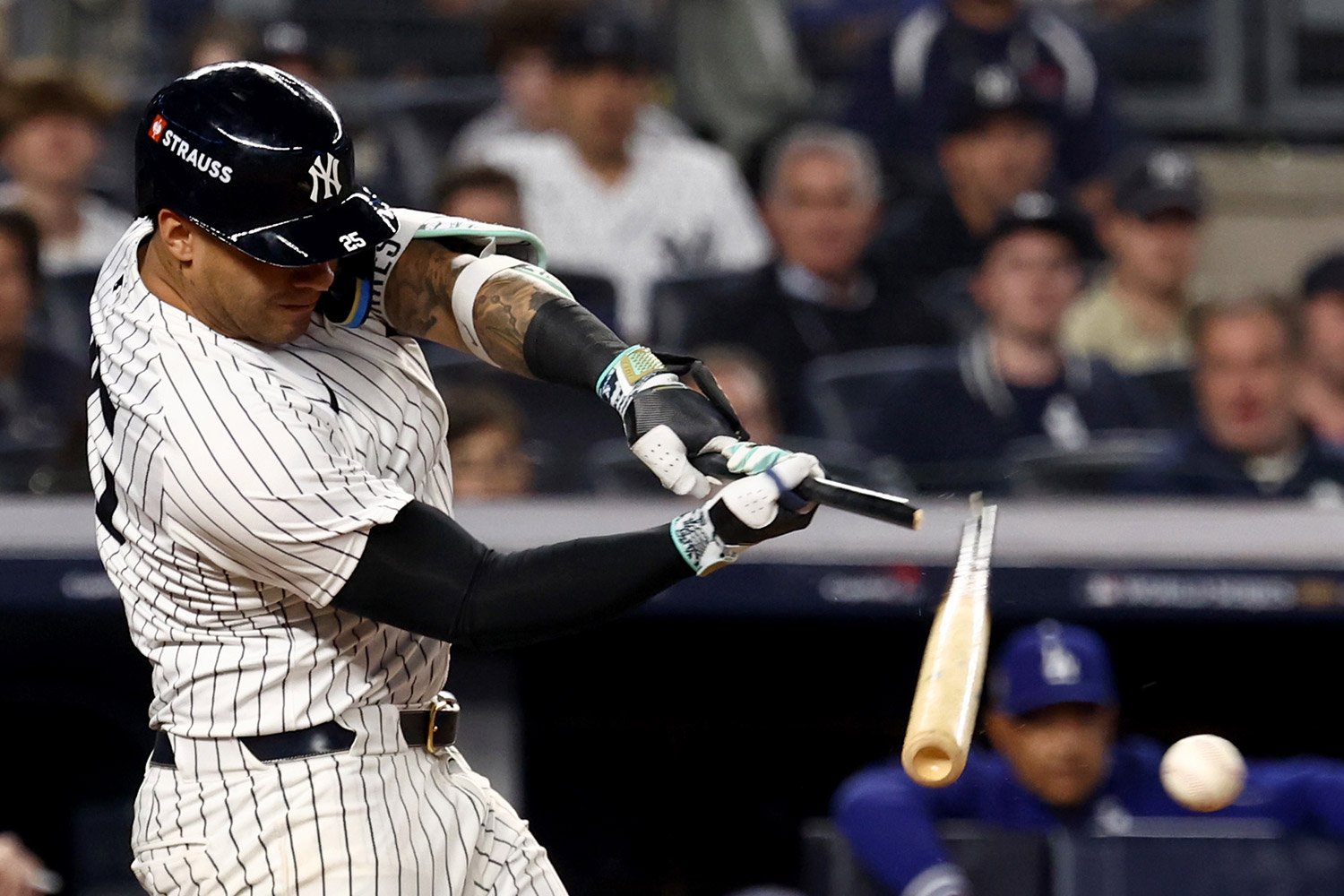 The Red Sox weren't publicly linked to Gleyber Torres in any prominent fashion. However, now that the Tigers have signed the second baseman, Evan Petznold of the Detroit Free Press reports that the Red Sox were one of many, many teams in on him. The list also includes the Reds, Guardians, Angels, Giants, Blue Jays and Nationals. Torres is coming off a slightly down season, but has been a solid second baseman since his debut in 2018. The Red Sox have an obvious need at second base, and Torres was apparently insistent on a one-year deal, which would fit with their recent predilections. So far this offseason, the only player the Sox have signed to a multi-year deal was Patrick Sandoval, who is rehabbing from Tommy John surgery and will only have one full year with the team. Throughout the offseason, I have been tracking teams that were reported to have interest in a player after they signed or got traded elsewhere. The Red Sox have appeared on the list eight times. No other team has been on it more than five times.
 -
Fenway Park features one of the most interesting outfields in baseball. Did the Red Sox take advantage of it this season? There are approximately one million reasons to love Fenway Park. Just for starters, there’s the fact that it’s the oldest stadium in baseball and the way it allows the fans to get closer to the game than they do anywhere else. Personally, I love a good quirk that affects the game on the field, and Fenway features plenty of those. From the Green Monster to the Pesky Pole to the fact that there’s virtually no foul territory to speak of, Fenway throws an abundance of curves at its fielders. Today, I’d like to talk about the center field triangle, the feature that makes Fenway one of the friendliest spots to hit a triple. According to Statcast’s Park Factors, it’s 18% more likely to allow a triple than the average stadium. The odd angle of the cutout, the weird recessed garage door, the way the low, sloping right field wall intersects the high left field wall; it’s like center field was specifically designed to facilitate maximum chaos. Even a visitor from outer space could look down at that gigantic, weird triangle of warning track dirt and know that something freaky was going on. But after that preamble, I have to tell you some terrible news. The Red Sox only sent one base hit into the triangle on the fly during the 2024 season. Just one! Are you ready for the world’s loneliest spray chart? Here you go. That’s it. The one yellow dot was a triple off the bat of Wilyer Abreu against the Brewers back in May. To be clear, I’m just talking about balls hit into the triple on the fly. Jarren Duran hit two triples into the triangle, but both landed well short and then rolled in. Still, that makes just three all season. It was a real down year for base hits into the triangle. This is the entire highlight reel. I did a series of Statcast searches in order to find out how many times the Red Sox hit the ball into the triangle – only for base hits – over the past nine years. Aside from the short 2020 season, in which they hit two balls into the triangle, the 2024 season was tied for the bottom. Year Triangle Hits 2016 8 2017 3 2018 8 2019 7 2020 2 2021 6 2022 3 2023 7 2024 3 It’s a bit surprising considering that the Sox hit 30 triples in 2024, their second-highest total of that period. Moreover, 36% of their batted balls went to center field, and 40% were hard-hit; both of those rates were the third-highest in that timeframe. By all rights, they should have been peppering the triangle this season. So what went wrong? For starters, outfielders have been playing much deeper over the past 10 years or so. That trend allows more balls to fall in for singles in front of them, but it also means that the kinds of hard-hit balls that once would have found their way into the triangle now end up in gloves. In 2017, the league had a .251 batting average on fly balls. In 2024, that average was all the way down to .217. But after that, it’s mostly randomness. Sometimes the ball just doesn’t go to one particular spot. In 2024, 37% of the balls the Red Sox hit in the air went to center field, the exact same as the league average. However, that number was just 35.4% when they were playing at home in Fenway. That was the fourth-lowest rate in the league, and the lowest the Sox have put up at home in the entire Statcast era. There’s no way that could be anything but statistical noise. The GIF below shows all balls they hit to center field over the past two seasons, and I’ve highlighted the center field triangle. That’s not a skill issue. It just kind of happened. Unfortunately, this random effect also robbed us of one of the most exciting plays in baseball. There’s always next year. View full article
-
How Many Times Did the Red Sox Hit It to the Center Field Triangle?
Davy Andrews posted an article in Red Sox
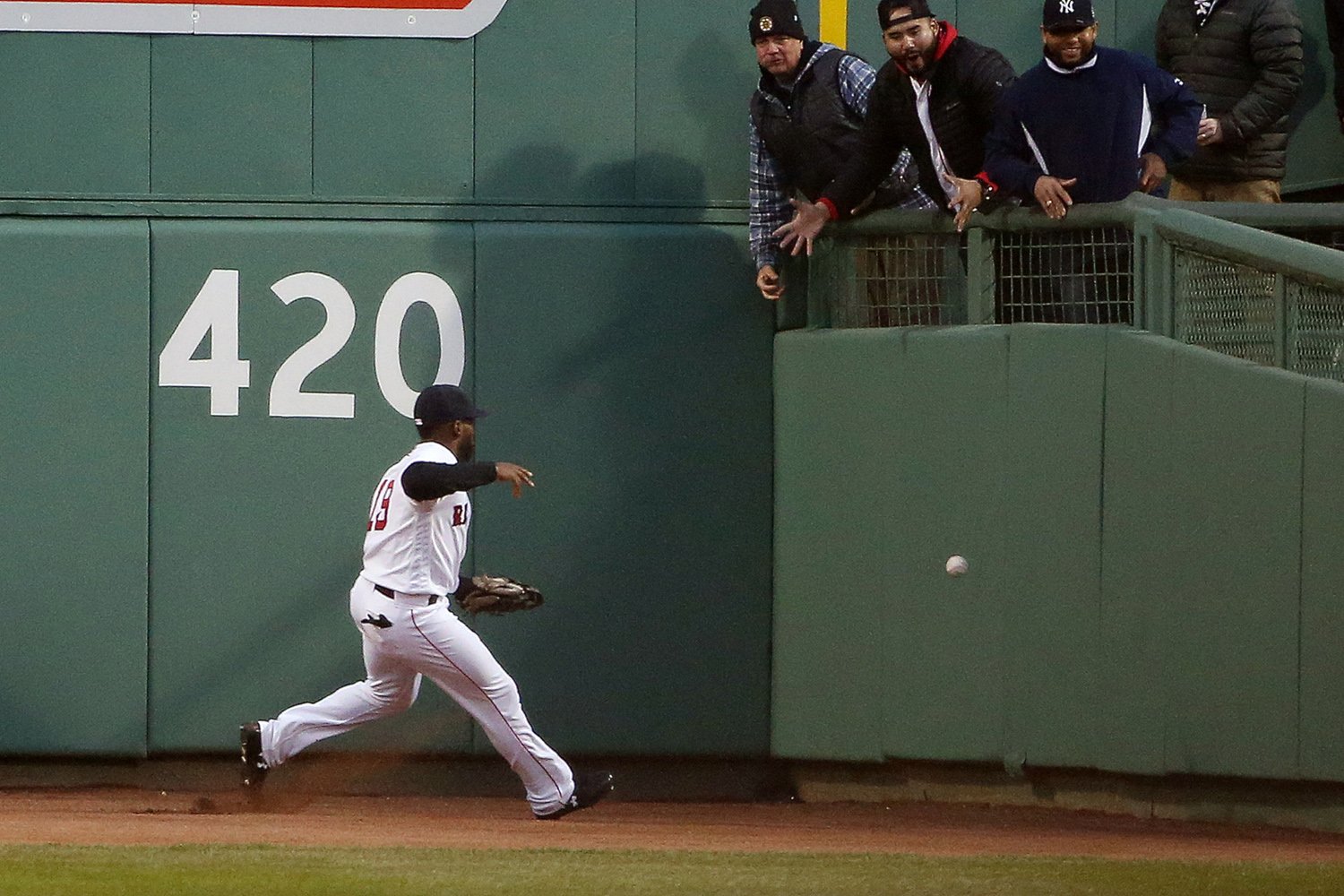 There are approximately one million reasons to love Fenway Park. Just for starters, there’s the fact that it’s the oldest stadium in baseball and the way it allows the fans to get closer to the game than they do anywhere else. Personally, I love a good quirk that affects the game on the field, and Fenway features plenty of those. From the Green Monster to the Pesky Pole to the fact that there’s virtually no foul territory to speak of, Fenway throws an abundance of curves at its fielders. Today, I’d like to talk about the center field triangle, the feature that makes Fenway one of the friendliest spots to hit a triple. According to Statcast’s Park Factors, it’s 18% more likely to allow a triple than the average stadium. The odd angle of the cutout, the weird recessed garage door, the way the low, sloping right field wall intersects the high left field wall; it’s like center field was specifically designed to facilitate maximum chaos. Even a visitor from outer space could look down at that gigantic, weird triangle of warning track dirt and know that something freaky was going on. But after that preamble, I have to tell you some terrible news. The Red Sox only sent one base hit into the triangle on the fly during the 2024 season. Just one! Are you ready for the world’s loneliest spray chart? Here you go. That’s it. The one yellow dot was a triple off the bat of Wilyer Abreu against the Brewers back in May. To be clear, I’m just talking about balls hit into the triple on the fly. Jarren Duran hit two triples into the triangle, but both landed well short and then rolled in. Still, that makes just three all season. It was a real down year for base hits into the triangle. This is the entire highlight reel. I did a series of Statcast searches in order to find out how many times the Red Sox hit the ball into the triangle – only for base hits – over the past nine years. Aside from the short 2020 season, in which they hit two balls into the triangle, the 2024 season was tied for the bottom. Year Triangle Hits 2016 8 2017 3 2018 8 2019 7 2020 2 2021 6 2022 3 2023 7 2024 3 It’s a bit surprising considering that the Sox hit 30 triples in 2024, their second-highest total of that period. Moreover, 36% of their batted balls went to center field, and 40% were hard-hit; both of those rates were the third-highest in that timeframe. By all rights, they should have been peppering the triangle this season. So what went wrong? For starters, outfielders have been playing much deeper over the past 10 years or so. That trend allows more balls to fall in for singles in front of them, but it also means that the kinds of hard-hit balls that once would have found their way into the triangle now end up in gloves. In 2017, the league had a .251 batting average on fly balls. In 2024, that average was all the way down to .217. But after that, it’s mostly randomness. Sometimes the ball just doesn’t go to one particular spot. In 2024, 37% of the balls the Red Sox hit in the air went to center field, the exact same as the league average. However, that number was just 35.4% when they were playing at home in Fenway. That was the fourth-lowest rate in the league, and the lowest the Sox have put up at home in the entire Statcast era. There’s no way that could be anything but statistical noise. The GIF below shows all balls they hit to center field over the past two seasons, and I’ve highlighted the center field triangle. That’s not a skill issue. It just kind of happened. Unfortunately, this random effect also robbed us of one of the most exciting plays in baseball. There’s always next year.
 -
Buehler struggled mightily since returning from his second Tommy John surgery in 2022. Then he seemed to figure things out right when it mattered the most. What should the Red Sox expect from him? The Red Sox promised big moves this offseason, vowing that venturing into luxury tax territory was fully on the table. Until Monday morning, they had made just one major move, landing Garrett Crochet in exchange for prospects, while largely keeping the war chest intact. Over at FanGraphs’ offseason tracker, you can look at every move the Red Sox have made this season. That big picture view is helpful. Until this week, the Red Sox had added Crochet, Aroldis Chapman, Patrick Sandoval, and Justin Wilson. Those players will cost a combined $21.4 million in 2025. The team also waved goodbye to free agents Tyler O’Neill, Kenley Jansen, Chris Martin, James Paxton, Nick Pivetta, and Danny Jansen. According to Baseball America’s rankings, they have also traded away seven of their top 30 prospects. All of this is to say that the Red Sox have traded away a significant piece of their future, but if they were actually planning on improving this season, they still had a lot of work to do. As of this morning, that work has begun. The Red Sox have signed right-hander Walker Buehler to a one-year, $21.05-million contract with incentives that can drive the value even higher. If that number sounds familiar, it ought to: $21.05 million is the exact same value as the Qualifying Offer. The Dodgers chose not to extend Buehler the QO. Instead, he accepted it as the floor of his deal with the Red Sox. Remember that the Red Sox offered a QO to Nick Pivetta. It’s up to you to decide which of these two pitchers you’d rather have in 2025. Regardless of where you come down, Buehler was one of the most intriguing free agents this offseason. A first-round draft pick out of Vanderbilt in 2015, he would eventually become the top-ranked prospect in the Los Angeles system. However, he underwent Tommy John surgery in 2016 and struggled when he made his big-league debut in 2017. He bounced back brilliantly. From 2018 to 2021, running a 2.82 ERA and 3.16 FIP. His 14.4 fWAR over that stretch made him the seventh-most valuable pitcher in all of baseball. He was truly one of the best in the game. Unfortunately, injuries weren’t done with Buehler. He regressed a bit in 2022, and his season ended in June with a second UCL tear, requiring a second Tommy John surgery and flexor tendon repair. He missed the entire 2023 season, and when he returned in 2025, he was not the same pitcher, running a 5.38 ERA and 5.54 FIP. However, after hip inflammation cost him two months in the middle of the season, he seemed to figure things out upon his return. I wrote about Patrick Sandoval two days ago, explaining how his iffy fastballs made him a perfect fit for Boston, by far the organization that is least afraid of ditching the fastball altogether and focusing on the pitches that work. Well, that makes a whole lot of sense for Buehler as well. Although his four-seamer still averages 95 mph, the pitch is slower and it doesn’t rise like it used to. It now sits in the dead zone, which means that it moves exactly the way a batter would expect it to move based on Buehler’s arm angle and release point. Predictability means hitttability, and Statcast says the pitch was worth -8 runs in 2024 and -11 in 2022. From 2018 to 2021, the pitch was worth a combined 58 runs, making it the fifth-most valuable pitch in all of baseball. Part of the reason that Buehler struggled so much since his return is that he was trying to pitch like he did back when he had a great fastball. In August, after returning from the hip injury, Buehler decided to try something new. Michael Rosen wrote an excellent article that describes Buehler’s evolution this season, and it’s required reading for anyone wondering why the Red Sox might spend so much on such a player. Buehler’s cutter and sweeper were still effective, and they played a big role in his turnaround. In May and June, Buehler threw a cutter or a breaking ball roughly 45% of the time. From August onward, that number went up to 54%. Buehler also started throwing his knuckle curve a bit softer in August. The pitch broke more and performed much better, especially in the playoffs, where it ran a 39% whiff rate. Buehler leaned on his cutter and sweeper much more against righties and his knuckle curve against lefties. Without that electric four-seamer, that breaking-ball heavy formula now looks like the clearest path to success. He’ll need to further deemphasize his four-seamer and lean more heavily on his cutter and breakers. Buehler finished the postseason with 13 consecutive scoreless innings, including the ninth inning of the deciding World Series Game 5. He’s unlikely to reach the heights that he did back when he had one of the most dominant pitches in all of baseball, and it's always dangerous to assume that a player can keep a small run of greatness going indefinitely, but the Red Sox clearly believe that Buehler is capable of repeating or building on his late-season run in 2024. However, in Crochet, Sandoval, and Buehler, the Red Sox have now added three pitchers with serious injury history. Like Sandoval, Buehler is a somewhat risky upside play. Buehler is also betting on himself, hoping to turn a great, healthy season in Boston into a long-term deal. All of a sudden, Boston’s rotation is balancing more depth and and higher ceiling with a whole lot more uncertainty. View full article
-
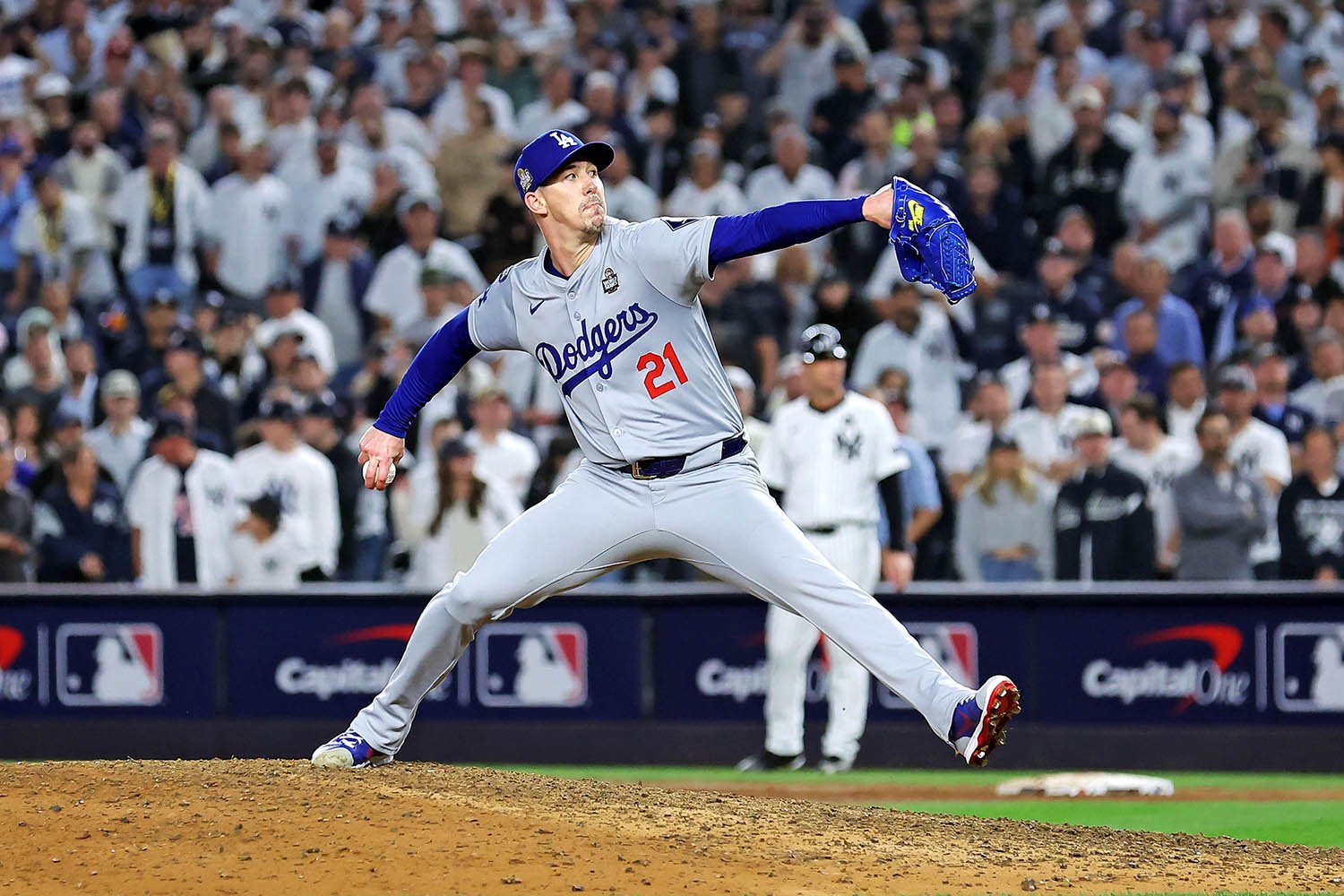 The Red Sox promised big moves this offseason, vowing that venturing into luxury tax territory was fully on the table. Until Monday morning, they had made just one major move, landing Garrett Crochet in exchange for prospects, while largely keeping the war chest intact. Over at FanGraphs’ offseason tracker, you can look at every move the Red Sox have made this season. That big picture view is helpful. Until this week, the Red Sox had added Crochet, Aroldis Chapman, Patrick Sandoval, and Justin Wilson. Those players will cost a combined $21.4 million in 2025. The team also waved goodbye to free agents Tyler O’Neill, Kenley Jansen, Chris Martin, James Paxton, Nick Pivetta, and Danny Jansen. According to Baseball America’s rankings, they have also traded away seven of their top 30 prospects. All of this is to say that the Red Sox have traded away a significant piece of their future, but if they were actually planning on improving this season, they still had a lot of work to do. As of this morning, that work has begun. The Red Sox have signed right-hander Walker Buehler to a one-year, $21.05-million contract with incentives that can drive the value even higher. If that number sounds familiar, it ought to: $21.05 million is the exact same value as the Qualifying Offer. The Dodgers chose not to extend Buehler the QO. Instead, he accepted it as the floor of his deal with the Red Sox. Remember that the Red Sox offered a QO to Nick Pivetta. It’s up to you to decide which of these two pitchers you’d rather have in 2025. Regardless of where you come down, Buehler was one of the most intriguing free agents this offseason. A first-round draft pick out of Vanderbilt in 2015, he would eventually become the top-ranked prospect in the Los Angeles system. However, he underwent Tommy John surgery in 2016 and struggled when he made his big-league debut in 2017. He bounced back brilliantly. From 2018 to 2021, running a 2.82 ERA and 3.16 FIP. His 14.4 fWAR over that stretch made him the seventh-most valuable pitcher in all of baseball. He was truly one of the best in the game. Unfortunately, injuries weren’t done with Buehler. He regressed a bit in 2022, and his season ended in June with a second UCL tear, requiring a second Tommy John surgery and flexor tendon repair. He missed the entire 2023 season, and when he returned in 2025, he was not the same pitcher, running a 5.38 ERA and 5.54 FIP. However, after hip inflammation cost him two months in the middle of the season, he seemed to figure things out upon his return. I wrote about Patrick Sandoval two days ago, explaining how his iffy fastballs made him a perfect fit for Boston, by far the organization that is least afraid of ditching the fastball altogether and focusing on the pitches that work. Well, that makes a whole lot of sense for Buehler as well. Although his four-seamer still averages 95 mph, the pitch is slower and it doesn’t rise like it used to. It now sits in the dead zone, which means that it moves exactly the way a batter would expect it to move based on Buehler’s arm angle and release point. Predictability means hitttability, and Statcast says the pitch was worth -8 runs in 2024 and -11 in 2022. From 2018 to 2021, the pitch was worth a combined 58 runs, making it the fifth-most valuable pitch in all of baseball. Part of the reason that Buehler struggled so much since his return is that he was trying to pitch like he did back when he had a great fastball. In August, after returning from the hip injury, Buehler decided to try something new. Michael Rosen wrote an excellent article that describes Buehler’s evolution this season, and it’s required reading for anyone wondering why the Red Sox might spend so much on such a player. Buehler’s cutter and sweeper were still effective, and they played a big role in his turnaround. In May and June, Buehler threw a cutter or a breaking ball roughly 45% of the time. From August onward, that number went up to 54%. Buehler also started throwing his knuckle curve a bit softer in August. The pitch broke more and performed much better, especially in the playoffs, where it ran a 39% whiff rate. Buehler leaned on his cutter and sweeper much more against righties and his knuckle curve against lefties. Without that electric four-seamer, that breaking-ball heavy formula now looks like the clearest path to success. He’ll need to further deemphasize his four-seamer and lean more heavily on his cutter and breakers. Buehler finished the postseason with 13 consecutive scoreless innings, including the ninth inning of the deciding World Series Game 5. He’s unlikely to reach the heights that he did back when he had one of the most dominant pitches in all of baseball, and it's always dangerous to assume that a player can keep a small run of greatness going indefinitely, but the Red Sox clearly believe that Buehler is capable of repeating or building on his late-season run in 2024. However, in Crochet, Sandoval, and Buehler, the Red Sox have now added three pitchers with serious injury history. Like Sandoval, Buehler is a somewhat risky upside play. Buehler is also betting on himself, hoping to turn a great, healthy season in Boston into a long-term deal. All of a sudden, Boston’s rotation is balancing more depth and and higher ceiling with a whole lot more uncertainty.
 -
The Red Sox could be the perfect team to help injured Southpaw regain his form and rebuild his value over the next two seasons. The Red Sox aren’t ready to break for the holidays just yet. On Friday morning, Jeff Passan announced that Boston had signed left-handed starter Patrick Sandoval to a backloaded two-year, $18.25-million contract. Caleb Kohn has already broken down the nuts and bolts of the deal, so in this article we’ll dig a little deeper career to figure out how and how much Sandoval might be able to help the Red Sox over the next two seasons. Sandoval is 28 years old and has to this point spent his entire career with the Angels. He owns a career 4.01 ERA and 3.96 FIP, and he struggled mightily in 2024 until a UCL tear ended his season in June. Sandoval underwent internal brace surgery, and he’s expected to be ready to pitch some time in the second half of the 2025 season, but that’s certainly not a guarantee. He doesn’t have great velocity, he doesn’t run great strikeout or walk rates, and he’s now a few years and a major injury removed from his best seasons in 2021 and 2022, when he ran a combined ERA of 3.17 over 41 starts and three relief appearances. So what made the Red Sox decide to take a chance on, at the most, a season and a half of Sandoval? Just getting him out of Los Angeles is a good start. The Angels non-tendered Sandoval at the end of the season in the midst of his rehab, which is not exactly a great look. On the other hand, in Sandoval, James Paxton, Liam Hendriks, a nd Michael Fulmer, there’s now a short pattern of players choosing to do their rehab with the Red Sox. Boston clearly thinks it can help these players return to something like their best selves, and the players must believe in their medical and developmental staffs, which is a good sign. If you remember the way Sandoval carved up the USA during the 2023 World Baseball Classic, you understand that he’s capable of some serious highs. Next, the 5.08 ERA Sandoval ran in 2024 was ugly, but his 3.87 FIP was the second-best of his entire career, which means he likely just faced some bad luck. He has done a solid job of avoiding hard contact and inducing groundballs. All of this makes him a bounce back candidate when he returns from his rehab. But there’s also something more fundamental about this move: Sandoval’s current problems make him a perfect fit for Boston’s pitching philosophy. His pitch mix is absolutely begging to be optimized. According to Statcast, Sandoval’s fastballs cost his team 12 runs in 2024. When he threw anything else, he gained his team three runs. The sinker doesn’t really sink, the four-seamer doesn’t rise enough, and neither pitch gets enough arm-side run. The pitch modeling metric Stuff+ absolutely hates Sandoval’s fastballs, rating his four-seamer a 56 and his sinker a 63. Just so we’re clear, an average pitch would be 100. Those are horrific scores, and Sandoval threw a fastball 33% of the time this season. That’s among the lowest rates in the league, but the Red Sox had 12 different pitchers who threw even fewer fastballs this season. If there’s one team that’s willing to find out just how low a pitcher’s fastball rate can go, it’s the Red Sox. Sandoval throws both a slider and a sweeper, and those pitches grade out as excellent. His changeup is also great. It’s easy to see the Red Sox building on those two pitches and his curveball, scrapping Sandoval’s existing fastballs, and helping him design one that makes more sense. Sandoval has a high arm angle and release point, so it would make sense for him to be locating a sinker down in the zone, where a steep vertical approach angle would earn whiffs and push his groundball rate even higher, but he doesn’t seem to have been trying to do so with the Angels. If Sandoval just regresses to the mean and runs an ERA and FIP right around his career 4.00 marks, then that makes him a perfectly solid addition to the rotation and gives the Red Sox the bonus of adding another left-handed arm. If the Red Sox prove to be any better than the Angels at helping him become the best version of himself on the mound – and there’s ample reason to believe that they will be, both because the Angels don't set a high bar and because the Red Soc do – then they just upgraded their rotation at a pretty great price. If Sandoval can join the rotation during the second half of the 2025 season as hoped, then he’ll provide some much-needed insurance if and when a starter struggles or goes down with an injury. View full article
-
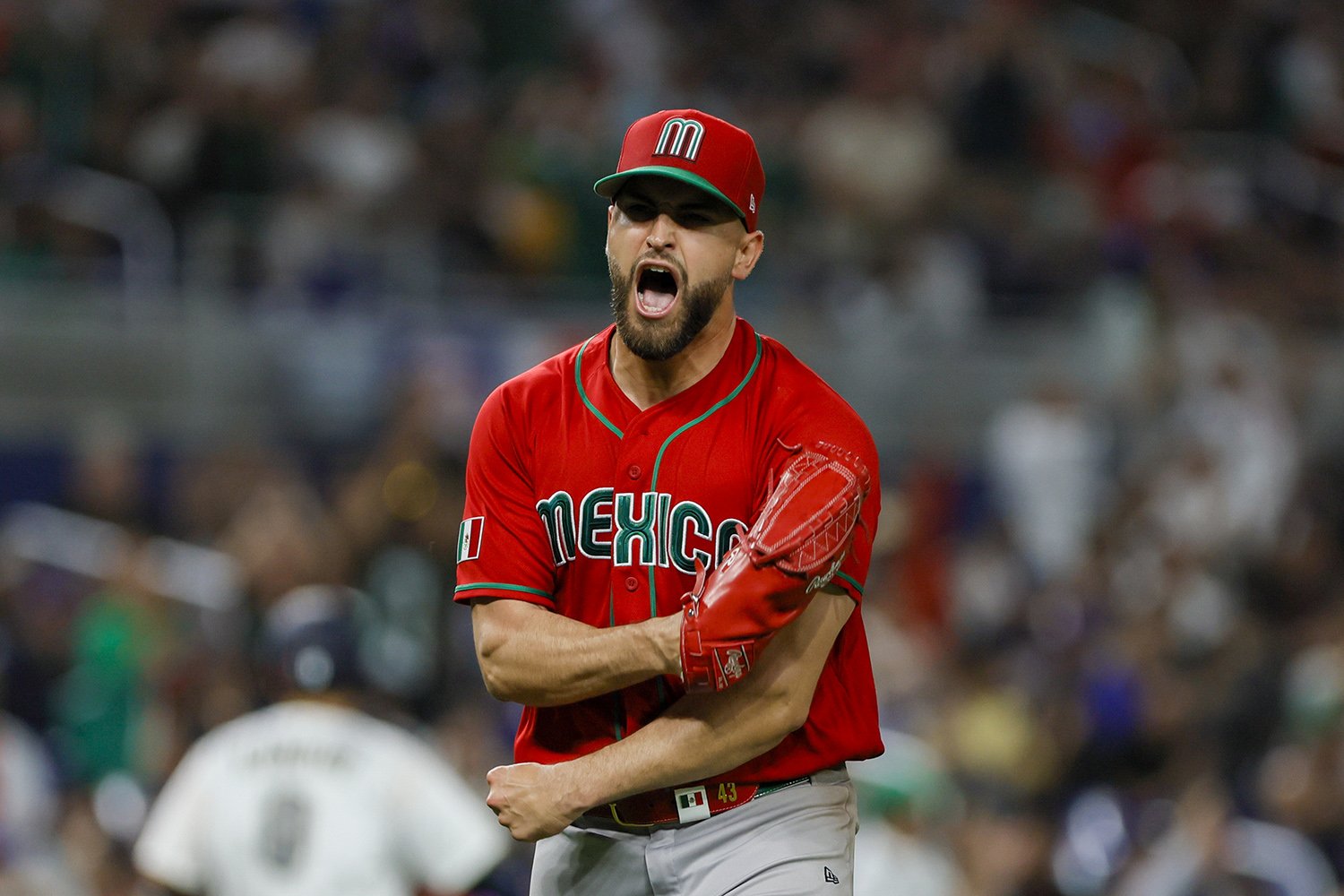 The Red Sox aren’t ready to break for the holidays just yet. On Friday morning, Jeff Passan announced that Boston had signed left-handed starter Patrick Sandoval to a backloaded two-year, $18.25-million contract. Caleb Kohn has already broken down the nuts and bolts of the deal, so in this article we’ll dig a little deeper career to figure out how and how much Sandoval might be able to help the Red Sox over the next two seasons. Sandoval is 28 years old and has to this point spent his entire career with the Angels. He owns a career 4.01 ERA and 3.96 FIP, and he struggled mightily in 2024 until a UCL tear ended his season in June. Sandoval underwent internal brace surgery, and he’s expected to be ready to pitch some time in the second half of the 2025 season, but that’s certainly not a guarantee. He doesn’t have great velocity, he doesn’t run great strikeout or walk rates, and he’s now a few years and a major injury removed from his best seasons in 2021 and 2022, when he ran a combined ERA of 3.17 over 41 starts and three relief appearances. So what made the Red Sox decide to take a chance on, at the most, a season and a half of Sandoval? Just getting him out of Los Angeles is a good start. The Angels non-tendered Sandoval at the end of the season in the midst of his rehab, which is not exactly a great look. On the other hand, in Sandoval, James Paxton, Liam Hendriks, a nd Michael Fulmer, there’s now a short pattern of players choosing to do their rehab with the Red Sox. Boston clearly thinks it can help these players return to something like their best selves, and the players must believe in their medical and developmental staffs, which is a good sign. If you remember the way Sandoval carved up the USA during the 2023 World Baseball Classic, you understand that he’s capable of some serious highs. Next, the 5.08 ERA Sandoval ran in 2024 was ugly, but his 3.87 FIP was the second-best of his entire career, which means he likely just faced some bad luck. He has done a solid job of avoiding hard contact and inducing groundballs. All of this makes him a bounce back candidate when he returns from his rehab. But there’s also something more fundamental about this move: Sandoval’s current problems make him a perfect fit for Boston’s pitching philosophy. His pitch mix is absolutely begging to be optimized. According to Statcast, Sandoval’s fastballs cost his team 12 runs in 2024. When he threw anything else, he gained his team three runs. The sinker doesn’t really sink, the four-seamer doesn’t rise enough, and neither pitch gets enough arm-side run. The pitch modeling metric Stuff+ absolutely hates Sandoval’s fastballs, rating his four-seamer a 56 and his sinker a 63. Just so we’re clear, an average pitch would be 100. Those are horrific scores, and Sandoval threw a fastball 33% of the time this season. That’s among the lowest rates in the league, but the Red Sox had 12 different pitchers who threw even fewer fastballs this season. If there’s one team that’s willing to find out just how low a pitcher’s fastball rate can go, it’s the Red Sox. Sandoval throws both a slider and a sweeper, and those pitches grade out as excellent. His changeup is also great. It’s easy to see the Red Sox building on those two pitches and his curveball, scrapping Sandoval’s existing fastballs, and helping him design one that makes more sense. Sandoval has a high arm angle and release point, so it would make sense for him to be locating a sinker down in the zone, where a steep vertical approach angle would earn whiffs and push his groundball rate even higher, but he doesn’t seem to have been trying to do so with the Angels. If Sandoval just regresses to the mean and runs an ERA and FIP right around his career 4.00 marks, then that makes him a perfectly solid addition to the rotation and gives the Red Sox the bonus of adding another left-handed arm. If the Red Sox prove to be any better than the Angels at helping him become the best version of himself on the mound – and there’s ample reason to believe that they will be, both because the Angels don't set a high bar and because the Red Soc do – then they just upgraded their rotation at a pretty great price. If Sandoval can join the rotation during the second half of the 2025 season as hoped, then he’ll provide some much-needed insurance if and when a starter struggles or goes down with an injury.
 -
This week, Tyler O'Neill spoke candidly about how he ended up signing with the Orioles. He spoke very highly of the Red Sox organization but also made it clear that he was surprised by their lack of interest. We spent a lot of time over the past few months wondering whether the Red Sox would bring back Tyler O’Neill after his excellent, injury-shortened 2024 season. O’Neill hit 31 home runs and put up 2.5 WAR in just 113 games, running a 131 wRC+. However, he also struck out a third of the time, and the injury concerns were nothing new. This was just the second time he’d reached 100 games in seven seasons, although this season’s injuries were much more freakish in nature – a concussion and a leg infection – are very different from, say, a recurring hamstring strain. It’s always hard to give up one of the very best hitters on the team, but the Red Sox also had money to spend and Roman Anthony in Worcester. So we wondered. How hard would the Red Sox try to retain O’Neill in free agency? Would they even try? O’Neill’s three-year deal with the Orioles was reported on December 6, and yesterday, we got the answer to the question: Nope. O’Neill joined Rob Bradford on the “Baseball Isn’t Boring” podcast for a candid discussion of the last season and his offseason. O'Neill was engaging and honest, and it's well worth following the link above to listen to the entire podcast. He went out of his way to praise the Red Sox organization and emphasize how much he enjoyed playing at Fenway. “If anybody ever asks me about Boston, the first thing I say is how grateful I was to play in that ballpark and within that clubhouse culture," he said. "The gig that AC [Alex Cora] runs over there is awesome. The guys are loose and there’s really good chemistry in that locker room. Playing at Fenway Park is special. You don’t see the Green Monster anywhere else in the league or in the world, so being able to take advantage of that for a full season was a lot of fun. It was awesome. It was a great time overall. Unfortunately, things didn’t work out that way, but I’m really happy I landed on my feet, and Baltimore really wanted me and prioritized me. So I’m really happy with everything and how that went down.” That was a common thread throughout the discussion: He made it clear that Baltimore really wanted to sign him, and that their interest really mattered. “Baltimore showed early interest and made it known that I was a priority for them,” said O'Neill. ‘And that’s a really good feeling for a first-time free agent like me.” However, his tone changed when discussing how much fun it was to hit at Fenway. “There’s definitely a few balls that I hit that might have been fly outs on the track at other parks, but the Green Monster took it and that’s awesome. It was awesome, honestly. I have nothing but good to say about Boston and my experience over there. I wish it would’ve worked out in that regard too, but there just wasn’t that push from that side, to get me. Obviously, Boston was caught up in the Soto Sweepstakes, rightfully so. They should be in there. Big market, they should be in the ballpark of spending that kind of money on those types of guys that are generational players. And I think they should be in that conversation, but when I’m getting prioritized interest on the other side with a really good opportunity, there’s nothing for me to wait around on.” At that point, Bradford felt comfortable asking directly whether O’Neill was surprised that the Red Sox didn’t pursue him more aggressively. The answer was fair but unequivocal. "I was surprised at the lack of interest, yeah." said O'Neill. "There was a little bit of interest early on at the GM meetings in November. Obviously, every organization’s going to be talking to Scott [Boras], with the player personnel that he had coming into the market this year. And obviously, Bres [Craig Breslow] and company made it known that they were interested in me, but where I fell in the pecking order, I have no idea. I don’t know if I was second or fourth or fifth or whatever they looked like, right? So it never got to numbers, it never got to anything serious. It is what it is.” I should make it clear that O'Neill never came close to criticizing the organization. He went out of his way to praise the Red Sox, but he also gave an unusually descriptive look at what free agency is like for a young player. As for the content, your mileage on this news may vary. Maybe you wanted O'Neill back, or maybe you were afraid of the risk of injury and underperformance. Most likely it was a mix of both. But however you felt, it seems that the Red Sox had their minds made up from the start. View full article
-
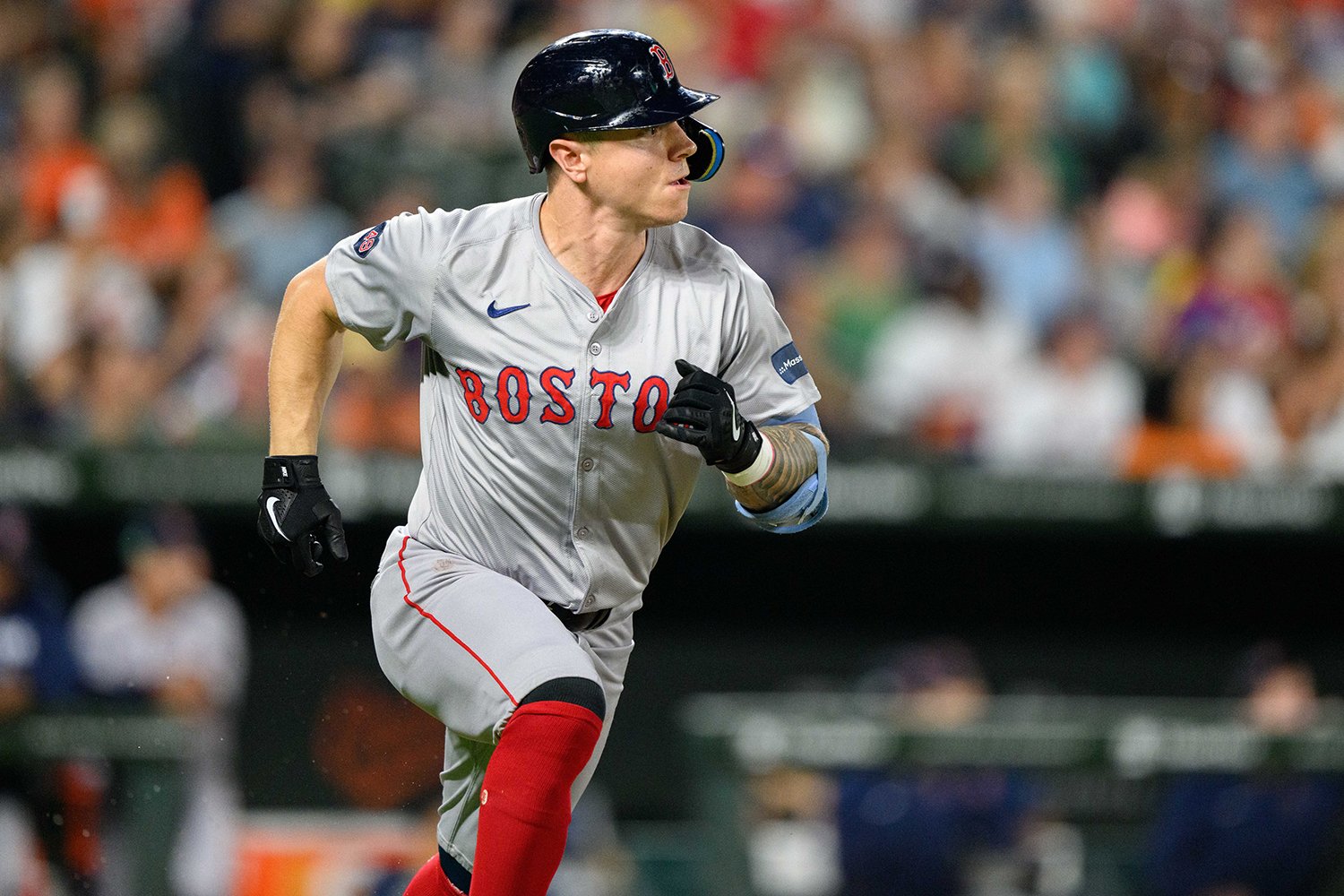 We spent a lot of time over the past few months wondering whether the Red Sox would bring back Tyler O’Neill after his excellent, injury-shortened 2024 season. O’Neill hit 31 home runs and put up 2.5 WAR in just 113 games, running a 131 wRC+. However, he also struck out a third of the time, and the injury concerns were nothing new. This was just the second time he’d reached 100 games in seven seasons, although this season’s injuries were much more freakish in nature – a concussion and a leg infection – are very different from, say, a recurring hamstring strain. It’s always hard to give up one of the very best hitters on the team, but the Red Sox also had money to spend and Roman Anthony in Worcester. So we wondered. How hard would the Red Sox try to retain O’Neill in free agency? Would they even try? O’Neill’s three-year deal with the Orioles was reported on December 6, and yesterday, we got the answer to the question: Nope. O’Neill joined Rob Bradford on the “Baseball Isn’t Boring” podcast for a candid discussion of the last season and his offseason. O'Neill was engaging and honest, and it's well worth following the link above to listen to the entire podcast. He went out of his way to praise the Red Sox organization and emphasize how much he enjoyed playing at Fenway. “If anybody ever asks me about Boston, the first thing I say is how grateful I was to play in that ballpark and within that clubhouse culture," he said. "The gig that AC [Alex Cora] runs over there is awesome. The guys are loose and there’s really good chemistry in that locker room. Playing at Fenway Park is special. You don’t see the Green Monster anywhere else in the league or in the world, so being able to take advantage of that for a full season was a lot of fun. It was awesome. It was a great time overall. Unfortunately, things didn’t work out that way, but I’m really happy I landed on my feet, and Baltimore really wanted me and prioritized me. So I’m really happy with everything and how that went down.” That was a common thread throughout the discussion: He made it clear that Baltimore really wanted to sign him, and that their interest really mattered. “Baltimore showed early interest and made it known that I was a priority for them,” said O'Neill. ‘And that’s a really good feeling for a first-time free agent like me.” However, his tone changed when discussing how much fun it was to hit at Fenway. “There’s definitely a few balls that I hit that might have been fly outs on the track at other parks, but the Green Monster took it and that’s awesome. It was awesome, honestly. I have nothing but good to say about Boston and my experience over there. I wish it would’ve worked out in that regard too, but there just wasn’t that push from that side, to get me. Obviously, Boston was caught up in the Soto Sweepstakes, rightfully so. They should be in there. Big market, they should be in the ballpark of spending that kind of money on those types of guys that are generational players. And I think they should be in that conversation, but when I’m getting prioritized interest on the other side with a really good opportunity, there’s nothing for me to wait around on.” At that point, Bradford felt comfortable asking directly whether O’Neill was surprised that the Red Sox didn’t pursue him more aggressively. The answer was fair but unequivocal. "I was surprised at the lack of interest, yeah." said O'Neill. "There was a little bit of interest early on at the GM meetings in November. Obviously, every organization’s going to be talking to Scott [Boras], with the player personnel that he had coming into the market this year. And obviously, Bres [Craig Breslow] and company made it known that they were interested in me, but where I fell in the pecking order, I have no idea. I don’t know if I was second or fourth or fifth or whatever they looked like, right? So it never got to numbers, it never got to anything serious. It is what it is.” I should make it clear that O'Neill never came close to criticizing the organization. He went out of his way to praise the Red Sox, but he also gave an unusually descriptive look at what free agency is like for a young player. As for the content, your mileage on this news may vary. Maybe you wanted O'Neill back, or maybe you were afraid of the risk of injury and underperformance. Most likely it was a mix of both. But however you felt, it seems that the Red Sox had their minds made up from the start.
 -
Two Boston speedsters graded out among the best baserunners in the game, but they did so in very different fashion. On Monday, Major League Baseball released an update at Baseball Savant, the website that houses and breaks down the copious data collected by Statcast. The update broke down baserunning value into two categories: stealing bases and taking extra bases on balls in play. Two Red Sox appear in the top 10. Jarren Duran and David Hamilton have both been worth six total runs on the bases, which ties them for sixth in baseball (Duran was slightly ahead with, 6.3 to 6.2). Given Duran’s predilection for stretching doubles into triples, his appearance on the leaderboard comes as no shock. In fact, nearly all of his value comes from taking extra bases on balls in play, and only Corbin Carroll was better at that particular skill during the 2024 season. Despite his elite foot speed of 29.4 feet per second, Hamilton’s inclusion might come as a surprise, as he got into just 98 games and had only 317 plate appearances (though if the Red Sox don’t add at second base, he could be in line for more playing time next season thanks to the recent trade of Enmanuel Valdez). On a per-game basis, Hamilton was actually significantly more valuable on the bases than Duran. In fact, if you prorate the run values based on opportunities to advance, Hamilton moves up to third place in the entire league with 0.11 runs per opportunity, while Duran drops to 22nd with 0.06. Duran is at the top of the list because of volume. He’s an excellent hitter who hits lots of singles and doubles, then takes advantage of the chances to stretch them into doubles and triples. Hamilton doesn’t have that luxury. He ran a wRC+ of just 92 during the 2024 season, and just 1.7 of his baserunning runs came from advancing on balls in play. However, he stole 33 bases out of 37 attempts, an elite 89% success rate. Statcast credited him with 24 net bases gained and four runs, just from basestealing. That was enough to rank seventh among all basestealers, According to Baseball Prospectus, he had just 320 opportunities to advance on non-contact plays (opportunities to steal a base), which made him the most successful basestealer in all of baseball on a per-opportunity basis, just ahead of Elly De La Cruz! Now contrast that to Duran, who had 888 opportunities – the most in baseball. He stole 34 bases in 41 attempts. According to Baseball Prospectus, given all those opportunities and the lower 82.9% success rate, Duran’s basestealing graded out at just about average. As a team, Statcast ranked the Red Sox 11th with two basestealing runs. In terms of taking the extra base, they ranked seven with five runs. Together, they graded out as the eighth-best team in baseball on the basepaths. Not surprisingly, when they were on defense, the Red Sox were worth -3 runs, which put them in 23rd place. Wilyer Abreu, one of the game’s grittiest players, was worth two runs, both of them thanks to taking the extra base. Ceddanne Rafaela was worth the same amount, but his poor 19-for-29 stolen base performance cost the team one run. Both Abreu and Rafaela were rookies in 2024, so we should expect them to be more successful stealing bases next season – especially Rafaela, whose sprint speed of 28.8 feet per second makes him one of the game’s fastest players. The chart below comes straight from Baseball Savant and breaks down the baserunning totals for all of the team’s regulars. View full article
-
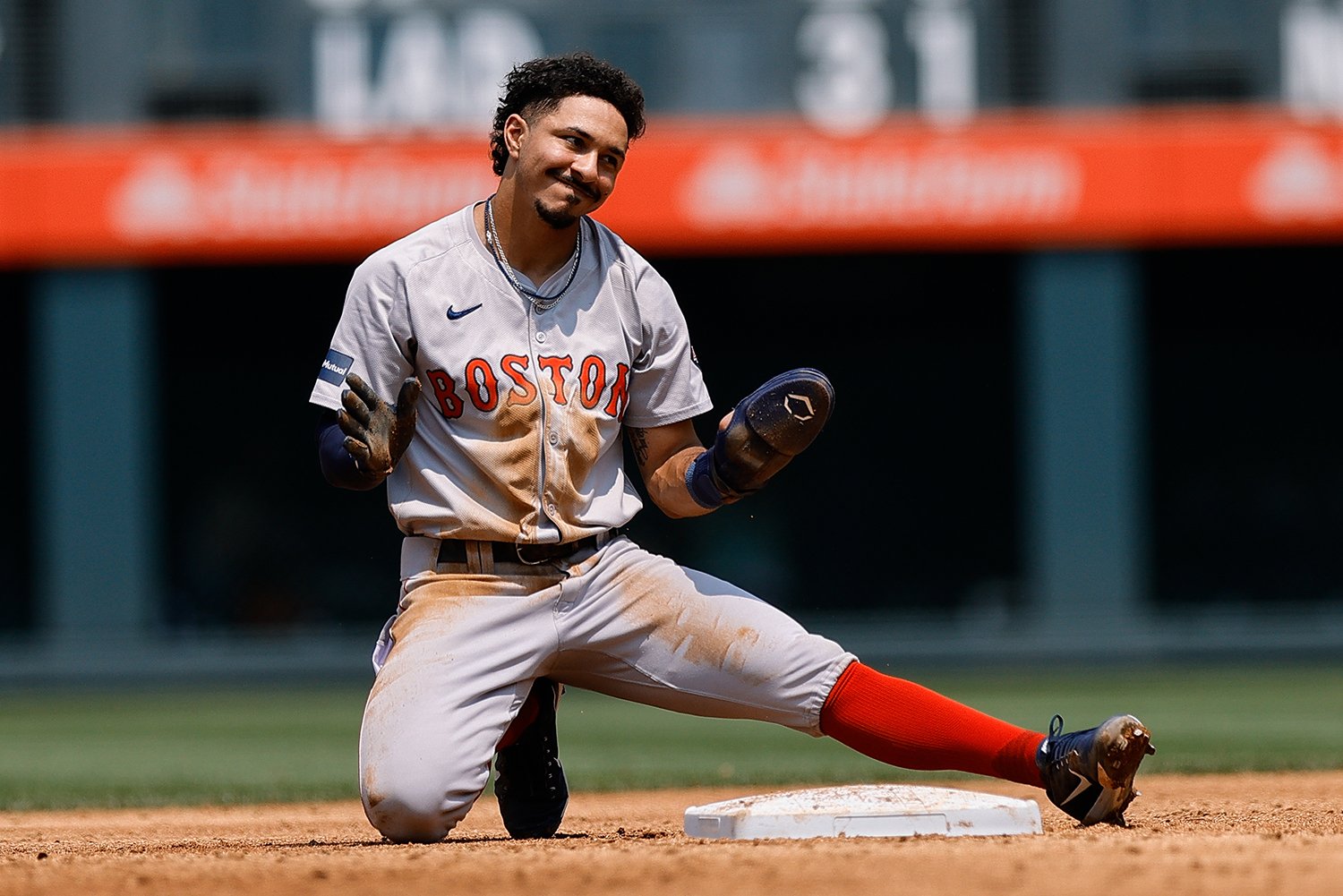 On Monday, Major League Baseball released an update at Baseball Savant, the website that houses and breaks down the copious data collected by Statcast. The update broke down baserunning value into two categories: stealing bases and taking extra bases on balls in play. Two Red Sox appear in the top 10. Jarren Duran and David Hamilton have both been worth six total runs on the bases, which ties them for sixth in baseball (Duran was slightly ahead with, 6.3 to 6.2). Given Duran’s predilection for stretching doubles into triples, his appearance on the leaderboard comes as no shock. In fact, nearly all of his value comes from taking extra bases on balls in play, and only Corbin Carroll was better at that particular skill during the 2024 season. Despite his elite foot speed of 29.4 feet per second, Hamilton’s inclusion might come as a surprise, as he got into just 98 games and had only 317 plate appearances (though if the Red Sox don’t add at second base, he could be in line for more playing time next season thanks to the recent trade of Enmanuel Valdez). On a per-game basis, Hamilton was actually significantly more valuable on the bases than Duran. In fact, if you prorate the run values based on opportunities to advance, Hamilton moves up to third place in the entire league with 0.11 runs per opportunity, while Duran drops to 22nd with 0.06. Duran is at the top of the list because of volume. He’s an excellent hitter who hits lots of singles and doubles, then takes advantage of the chances to stretch them into doubles and triples. Hamilton doesn’t have that luxury. He ran a wRC+ of just 92 during the 2024 season, and just 1.7 of his baserunning runs came from advancing on balls in play. However, he stole 33 bases out of 37 attempts, an elite 89% success rate. Statcast credited him with 24 net bases gained and four runs, just from basestealing. That was enough to rank seventh among all basestealers, According to Baseball Prospectus, he had just 320 opportunities to advance on non-contact plays (opportunities to steal a base), which made him the most successful basestealer in all of baseball on a per-opportunity basis, just ahead of Elly De La Cruz! Now contrast that to Duran, who had 888 opportunities – the most in baseball. He stole 34 bases in 41 attempts. According to Baseball Prospectus, given all those opportunities and the lower 82.9% success rate, Duran’s basestealing graded out at just about average. As a team, Statcast ranked the Red Sox 11th with two basestealing runs. In terms of taking the extra base, they ranked seven with five runs. Together, they graded out as the eighth-best team in baseball on the basepaths. Not surprisingly, when they were on defense, the Red Sox were worth -3 runs, which put them in 23rd place. Wilyer Abreu, one of the game’s grittiest players, was worth two runs, both of them thanks to taking the extra base. Ceddanne Rafaela was worth the same amount, but his poor 19-for-29 stolen base performance cost the team one run. Both Abreu and Rafaela were rookies in 2024, so we should expect them to be more successful stealing bases next season – especially Rafaela, whose sprint speed of 28.8 feet per second makes him one of the game’s fastest players. The chart below comes straight from Baseball Savant and breaks down the baserunning totals for all of the team’s regulars.
 -
The Red Sox did a whole lot more than land Garrett Crochet last week. On Wednesday, just moments before the Rule 5 Draft was set to start at the Winter Meetings in Dallas, the whispers started. It spread around the room like wildfire, with reporters turning around and whispering to the colleagues behind them, “Crochet to Boston.” It was the story of the day, but the team wasn’t done yet. The Red Sox wouldn’t make a pick in the major league portion of the draft, but in the minor league draft, they selected four pitchers in the minor league portion: Hobie Harris, RHP (Mets Double A) Darvin Garcia, RHP (Pirates High A) Manuel Medina, LHP (Marlins Single A) Jack Anderson, RHP (Tigers Double A) They also lost five players in the draft, two of them pitchers and three of them outfielders. That evening, the Red Sox traded minor-league pitcher Elmer Rodriguez-Cruz, along with some international bonus pool space, to the Yankees in exchange for catcher Carlos Narváez. In order to make room for Narváez, the Red Sox DFA’d second baseman Enmanuel Valdez, then on Sunday, they traded Valdez to the Pirates in exchange for right-handed pitcher Joe Vogatsky. Just to recap, since Wednesday, the Red Sox have added six pitchers (including Crochet) and a catcher. We'll get to the pitchers in a moment, but aside from Crochet, the 26-year-old Narváez is the piece who will have the biggest impact on the 2025 season. FanGraphs ranked Rodriguez-Cruz the seventh-best prospect in the top-ranked Boston organization, which is to say that the team gave up a whole lot for Narváez. The catcher made his big-league debut this season, getting into six games with the Yankees. He doesn’t have a particularly high ceiling, but he ran a solid 42.3% hard-hit rate in Triple A this season, and his arm is well-regarded. Right now, he’s back home playing for Cardenales de Lara in the Venezuelan Winter League, and he’s absolutely raking. He’s running a 1.118 OPS and batting .377 with seven doubles and five homers in just 25 games. It’s unclear whether the Red Sox envision Narváez slotting in as the backup catcher behind Connor Wong, or whether they’re still looking to sign another catcher. So far, nine free agent catchers have already signed deals, and the options left on the board aren’t particularly promising. Narváez may not be the most inspiring pickup, but he certainly looks like a reasonable backup option. As for the pitchers, obviously, Crochet is in a different category than the other five pitchers, only two of whom have advanced past Single A and none of whom ran an ERA below 4.50 this season. These are lottery tickets, and it would be surprising to see any of them do more than make an appearance in Boston this season. The 31-year-old Harris, who had a cup of coffee with the Nationals in 2023, is the only one of those five pitchers who has ever appeared on one of FanGraphs’ top prospect lists, and it was all the way back in 2021. However, it’s exciting to see the Red Sox targeting pitchers. Because, as a group, they were so unsuccessful this season, it’s safe to say that Boston wasn’t just scouting the stat line. They’re looking for traits they like and hoping that they can shape these young pitchers. The Red Sox are attempting to build one of the best pitching development systems in baseball, and they’re going out and looking for players whose upside they might be able to unlock. Harris and Garcia ran particularly gnarly walk rates this season, but Baseball American named Garcia’s changeup the best in the Pittsburgh farm system. Medina ran an enormous strikeout rate in both the complex league and Low A this season. Perhaps the most curious pickup is Vogatsky, who went to James Madison and was Pittsburgh’s 19th round pick this year. The Blue Jays drafted him in the 14th round in 2023, but he decided to return to JMU for his senior season, going 3-2 with a 3.49 ERA over 27 relief appearances. Vogatsky didn’t appear for the Pirates at all, but in college he pitched from a nearly-sidearm delivery, his fastball sitting 90 to 93 mph. After the deal went down, Ethan Hullihen, a savant when it comes to MLB contracts and the Pirates in particular, tweeted, "I have every name of the Pirates entire organization in one file, am in it all the time. I don't know who this person is." View full article
-
Did the Red Sox Just Find Their Backup Catcher in Carlos Narváez?
Davy Andrews posted an article in Red Sox
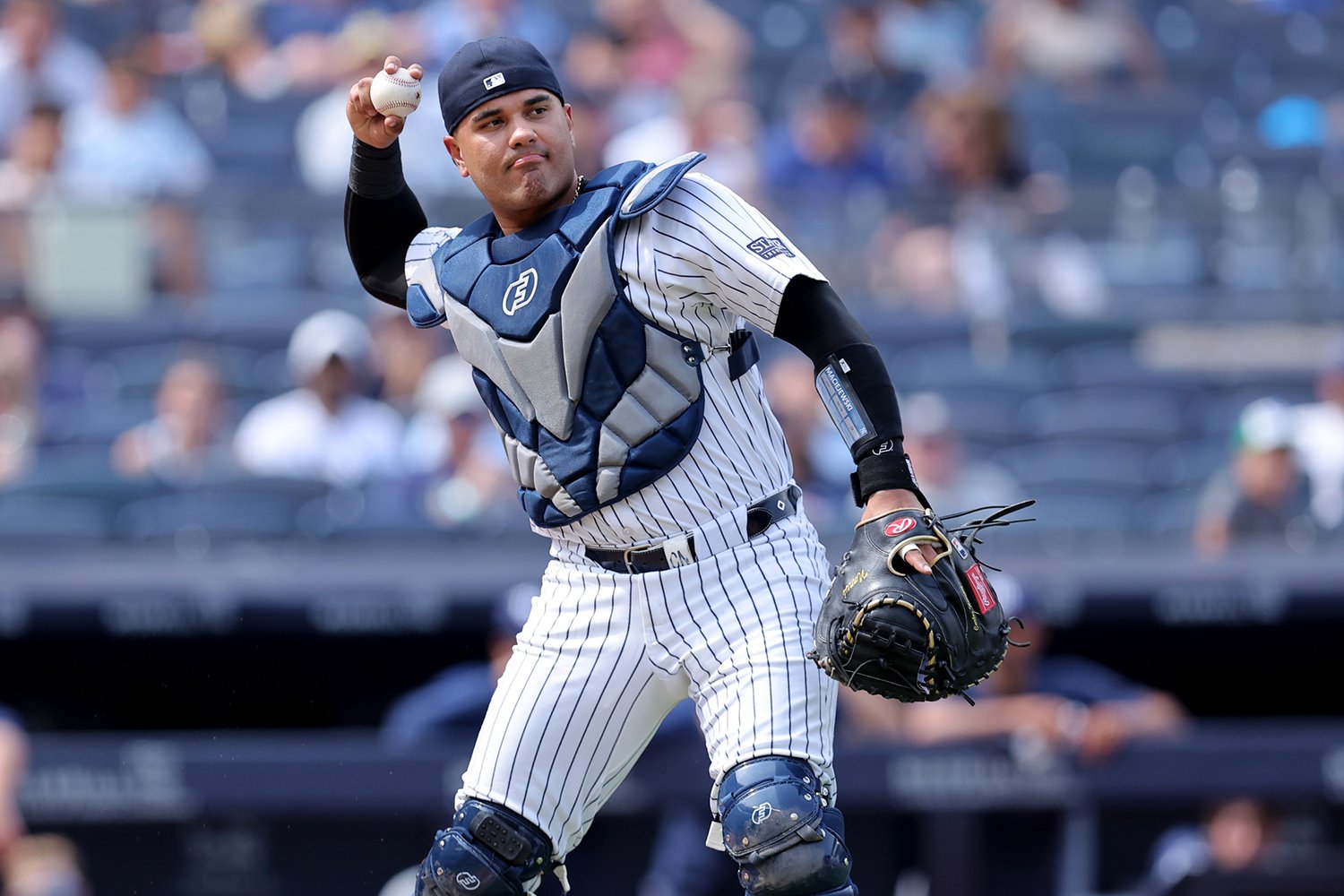 On Wednesday, just moments before the Rule 5 Draft was set to start at the Winter Meetings in Dallas, the whispers started. It spread around the room like wildfire, with reporters turning around and whispering to the colleagues behind them, “Crochet to Boston.” It was the story of the day, but the team wasn’t done yet. The Red Sox wouldn’t make a pick in the major league portion of the draft, but in the minor league draft, they selected four pitchers in the minor league portion: Hobie Harris, RHP (Mets Double A) Darvin Garcia, RHP (Pirates High A) Manuel Medina, LHP (Marlins Single A) Jack Anderson, RHP (Tigers Double A) They also lost five players in the draft, two of them pitchers and three of them outfielders. That evening, the Red Sox traded minor-league pitcher Elmer Rodriguez-Cruz, along with some international bonus pool space, to the Yankees in exchange for catcher Carlos Narváez. In order to make room for Narváez, the Red Sox DFA’d second baseman Enmanuel Valdez, then on Sunday, they traded Valdez to the Pirates in exchange for right-handed pitcher Joe Vogatsky. Just to recap, since Wednesday, the Red Sox have added six pitchers (including Crochet) and a catcher. We'll get to the pitchers in a moment, but aside from Crochet, the 26-year-old Narváez is the piece who will have the biggest impact on the 2025 season. FanGraphs ranked Rodriguez-Cruz the seventh-best prospect in the top-ranked Boston organization, which is to say that the team gave up a whole lot for Narváez. The catcher made his big-league debut this season, getting into six games with the Yankees. He doesn’t have a particularly high ceiling, but he ran a solid 42.3% hard-hit rate in Triple A this season, and his arm is well-regarded. Right now, he’s back home playing for Cardenales de Lara in the Venezuelan Winter League, and he’s absolutely raking. He’s running a 1.118 OPS and batting .377 with seven doubles and five homers in just 25 games. It’s unclear whether the Red Sox envision Narváez slotting in as the backup catcher behind Connor Wong, or whether they’re still looking to sign another catcher. So far, nine free agent catchers have already signed deals, and the options left on the board aren’t particularly promising. Narváez may not be the most inspiring pickup, but he certainly looks like a reasonable backup option. As for the pitchers, obviously, Crochet is in a different category than the other five pitchers, only two of whom have advanced past Single A and none of whom ran an ERA below 4.50 this season. These are lottery tickets, and it would be surprising to see any of them do more than make an appearance in Boston this season. The 31-year-old Harris, who had a cup of coffee with the Nationals in 2023, is the only one of those five pitchers who has ever appeared on one of FanGraphs’ top prospect lists, and it was all the way back in 2021. However, it’s exciting to see the Red Sox targeting pitchers. Because, as a group, they were so unsuccessful this season, it’s safe to say that Boston wasn’t just scouting the stat line. They’re looking for traits they like and hoping that they can shape these young pitchers. The Red Sox are attempting to build one of the best pitching development systems in baseball, and they’re going out and looking for players whose upside they might be able to unlock. Harris and Garcia ran particularly gnarly walk rates this season, but Baseball American named Garcia’s changeup the best in the Pittsburgh farm system. Medina ran an enormous strikeout rate in both the complex league and Low A this season. Perhaps the most curious pickup is Vogatsky, who went to James Madison and was Pittsburgh’s 19th round pick this year. The Blue Jays drafted him in the 14th round in 2023, but he decided to return to JMU for his senior season, going 3-2 with a 3.49 ERA over 27 relief appearances. Vogatsky didn’t appear for the Pirates at all, but in college he pitched from a nearly-sidearm delivery, his fastball sitting 90 to 93 mph. After the deal went down, Ethan Hullihen, a savant when it comes to MLB contracts and the Pirates in particular, tweeted, "I have every name of the Pirates entire organization in one file, am in it all the time. I don't know who this person is."
 -
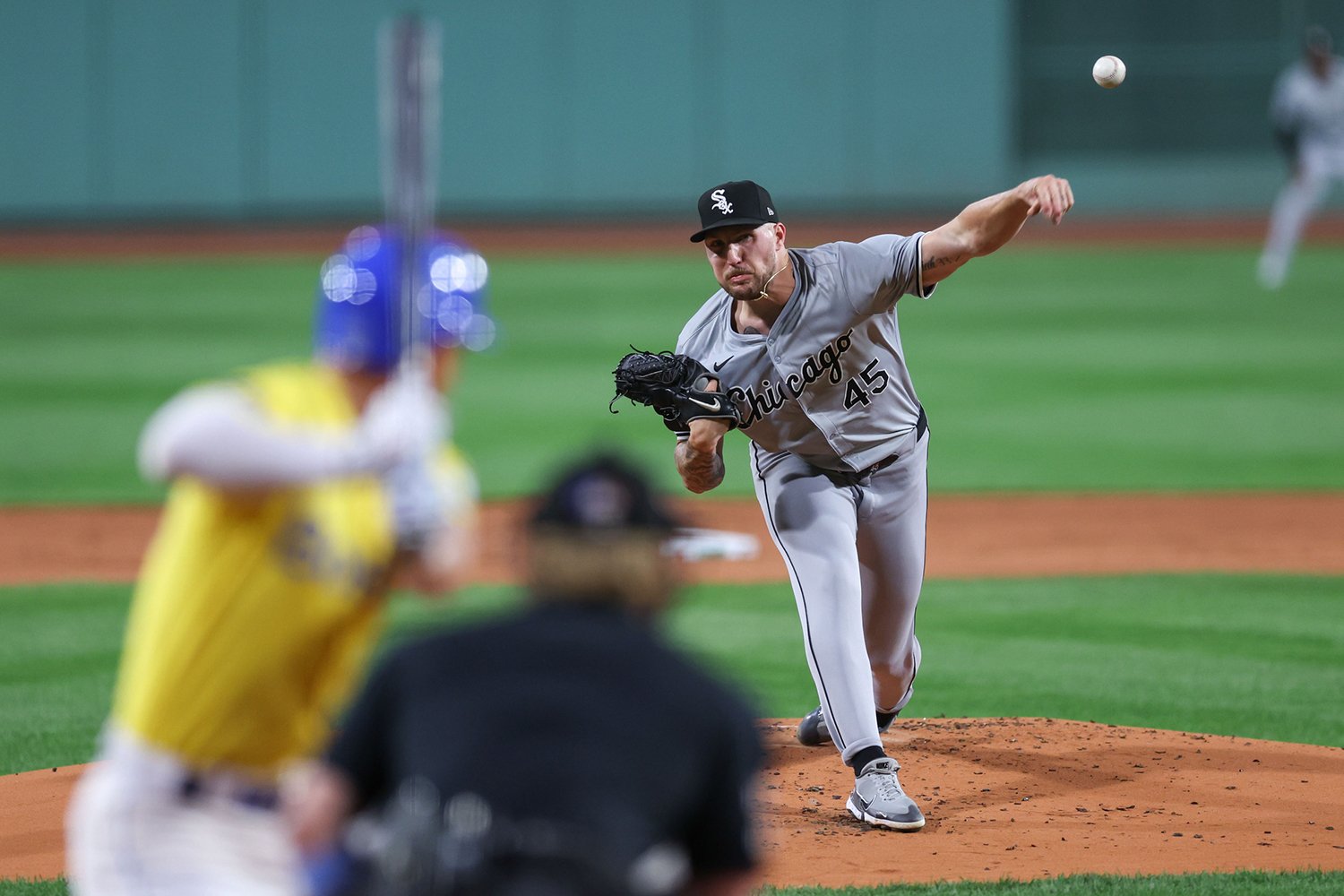 Well, that escalated quickly. A few minutes before 2:00 PM Eastern on Wednesday, Craig Breslow’s appearance on MLB Network was cancelled. Moments after that announcement, the reason for his no-show started rippling through both the internet and the Trinity Ballroom at the Hilton Anatole in Dallas, site of the Winter Meetings. The Red Sox were finalizing a trade that would send a package headlined by catching prospect Kyle Teel to Chicago in exchange for left-handed starting pitcher Garrett Crochet. A trade that would free Crochet from the lifeless White Sox had been expected since before the trade deadline, and it has finally come to pass. As a result, Boston’s Big Four has been reduced to a Big Three, and the Red Sox have also sent minor-leaguers Braden Montgomery, Chase Meidroth, and Wikelman Gonzalez to Chicago. We’re covering this blockbuster trade from many angles. The purview of this article is simple: What exactly are the Red Sox getting in Garrett Crochet? Crochet is 25 years old, and he was picked eleventh overall in the 2020 draft out of the University of Tennessee. He pitched mostly out of the bullpen in college, running a 4.64 ERA and missed time due to either injury or an off-the-field issue at the start of the 2020 season. Regardless of the results, scouts were awed by a filthy slider and a fastball that touched 99 mph, giving Crochet some of the best stuff in the entire draft class. Crochet pitched at the White Sox’ alternate site for a few months, then got called up to Chicago for a cup of coffee in September. Despite some wildness, he didn’t allow a run or a walk over five relief appearances and ended up making the team’s postseason roster. However, in his sole playoff appearance, he had to leave due to a season-ending flexor tendon strain. As is so often the case, the flexor tendon strain eventually led to a UCL tear. Crochet excelled out of the bullpen for the White Sox in 2021, running a 2.82 ERA and 2.80 FIP over 54 relief appearances, but in 2022, he felt a pop during spring training and underwent Tommy John surgery in April. He missed the entire 2022 season and pitched just 25 total innings in 2023, six in Double A, 6 1/3 in Triple A, and 12 2/3 with the White Sox. Coming into the 2024 season, he was still considered one of the top young pitchers in the game and the White Sox were set to convert him into a starter – their Opening Day starter, no less – despite the fact that he had just 75 1/3 total professional innings under his belt. Crochet didn’t disappoint, making a full 32 starts and pitching 146 innings. He earned an All-Star selection, running a 3.58 with extraordinary peripherals. His expected ERA, FIP, and expected FIP were all well below 3.00. His 209 strikeouts ranked seventh in baseball, despite the fact that all six of the players ahead of him threw at least 31 more innings than he did. Despite the low innings total, FanGraphs had Crochet at 4.7 WAR, eighth-best among all pitchers. His fastball averaged 97.1 mph, and stuff metrics drooled over his entire repertoire. Crochet leads with that fastball, throwing it 53.7% of the time, and he pairs it with a 91.5-mph cutter. You surely know that the Red Sox threw fewer fastballs than any team in baseball during the 2024 season, but rest assured that Corchet will keep on throwing both pitches, along with a sinker that he uses sparingly. Together, Statcast calculated Crochet’s three fastballs were worth 21 runs during the 2024 season. That ranked seventh in all of baseball, behind names like Zack Wheeler, Cade Smith, Tarik Skubal, Paul Skenes, Emmanuel Clase, and Sean Manaea. That’s some extremely good company. Crochet attacks lefties with his sweeper 19% of the time. Against righties, he’ll throw both the sweeper and a changeup roughly 8% of the time. However, those numbers are slightly deceptive, because Crochet didn't start throwing his sinker until August. By September, he was throwing it nearly 30% of the time to lefties and 11% of the time to righties. It will be really fascinating to see how the Red Sox help him shape his pitch mix going forward. What makes Crochet so hard to hit? For starters, left-handed pitchers rarely throw as hard as he does, let alone left-handed starters with a five-pitch mix that includes three or four plus offerings. Because he’s 6-foot-6, he has elite extension, which makes his pitches play even faster. Among pitchers who threw at least 500 pitches in 2024, Crochet’s four-seamer graded out as the 37th-fastest in baseball, but its 98.4-mph perceived velocity pushed it up to 25th. Among left-handed pitchers, both of those ranks jumped all the way up to third. Crochet’s movement also means that his pitches play off each other beautifully. Take a look at his movement profile, courtesy of Baseball Savant. For a start, all of Crochet’s pitches feature much more horizontal movement than the average pitch. Next, notice that you could draw a straight line between Crochet’s four-seamer, cutter, and sweeper? The four-seamer and the sweeper leave his hand moving in completely opposite directions. That’s called mirroring, and it makes it extremely hard on hitters. Moreover, notice how his cutter sits right between the two? That allows it to tunnel with both pitches. All of a sudden, any time a batter sees either a four-seamer or a sweeper, they need to take an extra moment and make sure that it’s not a cutter, and the overpowering nature of Crochet’s stuff means that they don’t get many moments in the first place. All of this makes it extremely hard for hitters to sit on any particular pitch. Because his stuff is genuinely elite, Crochet doesn’t get too fancy. He pounds the strike zone, running a 55.6% zone rate that puts him right around the league’s 90th percentile. Both because his stuff is so filthy and because hitters know that he’s going to attack the zone, Crochet racks up tons of chases when he does venture outside the zone. He earns tons of whiffs, fueling a huge 35% strikeout rate and a miniscule 6% walk rate. Crochet is right around the league average in terms of hard-hit rate, and because all of his pitches feature so much rise, he also allows his share of fly balls. However, he also induces tons of mishits. According to Statcast, batters squared up the ball on just 18.4% of their swings against Crochet, the sixth-lowest total in all of baseball. Most of the other players in the top 10 were flame-throwing relievers. His groundball rate was still well higher than average, and a pitcher who induces a lot of groundballs while also striking out everyone in sight will have very few weaknesses. There is some genuine injury risk here. Crochet has thrown shockingly few big-league innings, and the Red Sox will no-doubt want to have a serious plan in place to help build up Crochet’s stamina and keep him healthy throughout the season. Still, Crochet immediately slots in as the ace of the rotation. Because he’s left-handed, because he features elite velocity, and because he leans so heavily on his fastball, Crochet offers an extremely different look from all of the other pitchers in the rotation. That kind of diversity makes it extremely hard for any one team to match up well against them in the playoffs, and that’s what we should be thinking about from now on: the playoffs. The Red Sox have a legit Game 1 starter, and because all he cost was prospects, they still have plenty of money to spend in free agency. The fun might just be beginning.
 -
The Red Sox gave up quite a bit to land Garrett Crochet. What makes him such a formidable weapon? Well, that escalated quickly. A few minutes before 2:00 PM Eastern on Wednesday, Craig Breslow’s appearance on MLB Network was cancelled. Moments after that announcement, the reason for his no-show started rippling through both the internet and the Trinity Ballroom at the Hilton Anatole in Dallas, site of the Winter Meetings. The Red Sox were finalizing a trade that would send a package headlined by catching prospect Kyle Teel to Chicago in exchange for left-handed starting pitcher Garrett Crochet. A trade that would free Crochet from the lifeless White Sox had been expected since before the trade deadline, and it has finally come to pass. As a result, Boston’s Big Four has been reduced to a Big Three, and the Red Sox have also sent minor-leaguers Braden Montgomery, Chase Meidroth, and Wikelman Gonzalez to Chicago. We’re covering this blockbuster trade from many angles. The purview of this article is simple: What exactly are the Red Sox getting in Garrett Crochet? Crochet is 25 years old, and he was picked eleventh overall in the 2020 draft out of the University of Tennessee. He pitched mostly out of the bullpen in college, running a 4.64 ERA and missed time due to either injury or an off-the-field issue at the start of the 2020 season. Regardless of the results, scouts were awed by a filthy slider and a fastball that touched 99 mph, giving Crochet some of the best stuff in the entire draft class. Crochet pitched at the White Sox’ alternate site for a few months, then got called up to Chicago for a cup of coffee in September. Despite some wildness, he didn’t allow a run or a walk over five relief appearances and ended up making the team’s postseason roster. However, in his sole playoff appearance, he had to leave due to a season-ending flexor tendon strain. As is so often the case, the flexor tendon strain eventually led to a UCL tear. Crochet excelled out of the bullpen for the White Sox in 2021, running a 2.82 ERA and 2.80 FIP over 54 relief appearances, but in 2022, he felt a pop during spring training and underwent Tommy John surgery in April. He missed the entire 2022 season and pitched just 25 total innings in 2023, six in Double A, 6 1/3 in Triple A, and 12 2/3 with the White Sox. Coming into the 2024 season, he was still considered one of the top young pitchers in the game and the White Sox were set to convert him into a starter – their Opening Day starter, no less – despite the fact that he had just 75 1/3 total professional innings under his belt. Crochet didn’t disappoint, making a full 32 starts and pitching 146 innings. He earned an All-Star selection, running a 3.58 with extraordinary peripherals. His expected ERA, FIP, and expected FIP were all well below 3.00. His 209 strikeouts ranked seventh in baseball, despite the fact that all six of the players ahead of him threw at least 31 more innings than he did. Despite the low innings total, FanGraphs had Crochet at 4.7 WAR, eighth-best among all pitchers. His fastball averaged 97.1 mph, and stuff metrics drooled over his entire repertoire. Crochet leads with that fastball, throwing it 53.7% of the time, and he pairs it with a 91.5-mph cutter. You surely know that the Red Sox threw fewer fastballs than any team in baseball during the 2024 season, but rest assured that Corchet will keep on throwing both pitches, along with a sinker that he uses sparingly. Together, Statcast calculated Crochet’s three fastballs were worth 21 runs during the 2024 season. That ranked seventh in all of baseball, behind names like Zack Wheeler, Cade Smith, Tarik Skubal, Paul Skenes, Emmanuel Clase, and Sean Manaea. That’s some extremely good company. Crochet attacks lefties with his sweeper 19% of the time. Against righties, he’ll throw both the sweeper and a changeup roughly 8% of the time. However, those numbers are slightly deceptive, because Crochet didn't start throwing his sinker until August. By September, he was throwing it nearly 30% of the time to lefties and 11% of the time to righties. It will be really fascinating to see how the Red Sox help him shape his pitch mix going forward. What makes Crochet so hard to hit? For starters, left-handed pitchers rarely throw as hard as he does, let alone left-handed starters with a five-pitch mix that includes three or four plus offerings. Because he’s 6-foot-6, he has elite extension, which makes his pitches play even faster. Among pitchers who threw at least 500 pitches in 2024, Crochet’s four-seamer graded out as the 37th-fastest in baseball, but its 98.4-mph perceived velocity pushed it up to 25th. Among left-handed pitchers, both of those ranks jumped all the way up to third. Crochet’s movement also means that his pitches play off each other beautifully. Take a look at his movement profile, courtesy of Baseball Savant. For a start, all of Crochet’s pitches feature much more horizontal movement than the average pitch. Next, notice that you could draw a straight line between Crochet’s four-seamer, cutter, and sweeper? The four-seamer and the sweeper leave his hand moving in completely opposite directions. That’s called mirroring, and it makes it extremely hard on hitters. Moreover, notice how his cutter sits right between the two? That allows it to tunnel with both pitches. All of a sudden, any time a batter sees either a four-seamer or a sweeper, they need to take an extra moment and make sure that it’s not a cutter, and the overpowering nature of Crochet’s stuff means that they don’t get many moments in the first place. All of this makes it extremely hard for hitters to sit on any particular pitch. Because his stuff is genuinely elite, Crochet doesn’t get too fancy. He pounds the strike zone, running a 55.6% zone rate that puts him right around the league’s 90th percentile. Both because his stuff is so filthy and because hitters know that he’s going to attack the zone, Crochet racks up tons of chases when he does venture outside the zone. He earns tons of whiffs, fueling a huge 35% strikeout rate and a miniscule 6% walk rate. Crochet is right around the league average in terms of hard-hit rate, and because all of his pitches feature so much rise, he also allows his share of fly balls. However, he also induces tons of mishits. According to Statcast, batters squared up the ball on just 18.4% of their swings against Crochet, the sixth-lowest total in all of baseball. Most of the other players in the top 10 were flame-throwing relievers. His groundball rate was still well higher than average, and a pitcher who induces a lot of groundballs while also striking out everyone in sight will have very few weaknesses. There is some genuine injury risk here. Crochet has thrown shockingly few big-league innings, and the Red Sox will no-doubt want to have a serious plan in place to help build up Crochet’s stamina and keep him healthy throughout the season. Still, Crochet immediately slots in as the ace of the rotation. Because he’s left-handed, because he features elite velocity, and because he leans so heavily on his fastball, Crochet offers an extremely different look from all of the other pitchers in the rotation. That kind of diversity makes it extremely hard for any one team to match up well against them in the playoffs, and that’s what we should be thinking about from now on: the playoffs. The Red Sox have a legit Game 1 starter, and because all he cost was prospects, they still have plenty of money to spend in free agency. The fun might just be beginning. View full article
-
Although nothing has happened for the Red Sox just said, a lot has been said. The Winter Meetings are in full swing and free-agent signings are starting to come quickly. Things are really moving, unless you’re a Red Sox fan. The Red Sox haven’t made a move this week, and with the notable exception of Corbin Burnes, the pitchers they’ve been linked to, Max Fried, Blake Snell, Yusei Kikuchi, and Shane Bieber, have all signed elsewhere. So has that Soto guy. While the actual news has been somewhat bleak, the rumors have been flying fast and thick. Let’s give them a quick recap. The team has is now reportedly readying an offer for Burnes. What does “readying an offer” mean, and why wasn’t the team courting these free agents concurrently? It’s anybody’s guess. “Given our needs and what we intend to address this offseason,” said Craig Breslow, “it’s safe to say we were, we are, and we intend to remain on top rotation options.” That is to say that the Red Sox are taking Burnes seriously. Hopefully they’ll make their offer soon. The team is well known to be interested in trading for White Sox starter Garrett Crochet, and on Tuesday, Jon Morosi reported that they’re part of a group of teams interested in trading for Dylan Cease of the Padres. Cease is an excellent player with a proven track record, but he’s also in his final year of arbitration, which would make him a one-year rental, as opposed to Crochet, who has two more years on his deal. San Diego GM A.J. The current report is extremely speculative, but Preller is never shy to pull a trade. Peter Abraham of the Boston Globe reported on Monday that the team is also interested in Walker Buehler. After multiple major injuries, the 30-year-old Buehler is neither the player nor the prospect he once was, but toward the end of the season and in the playoffs, he showcased a new approach that worked well. Few would consider him a top-of-the-rotation caliber pitcher, but for a team with a solid pitching development program, he’s an interesting choice. A particularly concerning rumor arose on Tuesday, when Sean McAdam of MassLive reported that the Red Sox have strong interest in Alex Bregman, but that the organization isn’t in agreement on the matter. Bregman has said publicly that he’s open to switching to second base if necessary, and adding him at that position would constitute a huge upgrade for the Red Sox. According to McAdam, Craig Breslow the operations department is less sold the idea of adding Bregman, while Sam Kennedy and Alex Cora, who coached Bregman in Houston, is much more sanguine. This is a concerning rumor. It’s not uncommon for different members of an organization to differ in their assessments, and it’s great that Cora feels empowered to pound the table for a player based on extensive knowledge of him. On the other hand, those schisms don’t usually end up in the newspapers, and there are some very good reasons for that. The team is supposed to speak with one voice. When signs of dissension in the ranks go public, it’s a bad sign. Before the Winter Meetings started, Alex Speier, also of the Globe reported, “According to multiple major league sources, the Red Sox have been open to using Casas as a trade chip for pitching help.” The team has publicly been adamant that they aren’t shopping Casas, but either that has changed, or they’re simply listening to offers despite their commitment to the first baseman. Adam Jude and Ryan Divish of the Seattle Times reported something much more specific, the Mariners and Sox had “exploratory talks,” but they didn’t go anywhere. No one can say for certain which, if any, of these moves will actually come to pass. One thing we can be certain of: there are more rumors to come. View full article
-
 The Winter Meetings are in full swing and free-agent signings are starting to come quickly. Things are really moving, unless you’re a Red Sox fan. The Red Sox haven’t made a move this week, and with the notable exception of Corbin Burnes, the pitchers they’ve been linked to, Max Fried, Blake Snell, Yusei Kikuchi, and Shane Bieber, have all signed elsewhere. So has that Soto guy. While the actual news has been somewhat bleak, the rumors have been flying fast and thick. Let’s give them a quick recap. The team has is now reportedly readying an offer for Burnes. What does “readying an offer” mean, and why wasn’t the team courting these free agents concurrently? It’s anybody’s guess. “Given our needs and what we intend to address this offseason,” said Craig Breslow, “it’s safe to say we were, we are, and we intend to remain on top rotation options.” That is to say that the Red Sox are taking Burnes seriously. Hopefully they’ll make their offer soon. The team is well known to be interested in trading for White Sox starter Garrett Crochet, and on Tuesday, Jon Morosi reported that they’re part of a group of teams interested in trading for Dylan Cease of the Padres. Cease is an excellent player with a proven track record, but he’s also in his final year of arbitration, which would make him a one-year rental, as opposed to Crochet, who has two more years on his deal. San Diego GM A.J. The current report is extremely speculative, but Preller is never shy to pull a trade. Peter Abraham of the Boston Globe reported on Monday that the team is also interested in Walker Buehler. After multiple major injuries, the 30-year-old Buehler is neither the player nor the prospect he once was, but toward the end of the season and in the playoffs, he showcased a new approach that worked well. Few would consider him a top-of-the-rotation caliber pitcher, but for a team with a solid pitching development program, he’s an interesting choice. A particularly concerning rumor arose on Tuesday, when Sean McAdam of MassLive reported that the Red Sox have strong interest in Alex Bregman, but that the organization isn’t in agreement on the matter. Bregman has said publicly that he’s open to switching to second base if necessary, and adding him at that position would constitute a huge upgrade for the Red Sox. According to McAdam, Craig Breslow the operations department is less sold the idea of adding Bregman, while Sam Kennedy and Alex Cora, who coached Bregman in Houston, is much more sanguine. This is a concerning rumor. It’s not uncommon for different members of an organization to differ in their assessments, and it’s great that Cora feels empowered to pound the table for a player based on extensive knowledge of him. On the other hand, those schisms don’t usually end up in the newspapers, and there are some very good reasons for that. The team is supposed to speak with one voice. When signs of dissension in the ranks go public, it’s a bad sign. Before the Winter Meetings started, Alex Speier, also of the Globe reported, “According to multiple major league sources, the Red Sox have been open to using Casas as a trade chip for pitching help.” The team has publicly been adamant that they aren’t shopping Casas, but either that has changed, or they’re simply listening to offers despite their commitment to the first baseman. Adam Jude and Ryan Divish of the Seattle Times reported something much more specific, the Mariners and Sox had “exploratory talks,” but they didn’t go anywhere. No one can say for certain which, if any, of these moves will actually come to pass. One thing we can be certain of: there are more rumors to come.
 -
I'm inclined to agree. I think he'd have to put up a true monster season in order to risk it.
-
The shortstop just hasn't been able to keep things going since he joined the Red Sox. It's time to start wondering whether he ever will. We need to talk about Trevor Story. The shortstop has played through three of the six years on his contract with the Red Sox. Over those first three years, he has played in one season’s worth of games, run a wRC+ of 87 (making him 13% worse than the average batter), and posted 3.5 fWAR. According to FanGraphs, 45 different players have provided more value than Story at short over that period. However, Story’s defense has been excellent, so on a per-game basis, he’s been an extremely solid player. It’s perfectly understandable to assume that next season, he’ll be back to full health and he’ll keep on playing well. Still, there are some serious reasons to doubt that assumption, and I’d like to go over them with you. Why has Story’s bat been so much worse over the past few years? For starters, he strikes out a lot. He’s struck out nearly a third of the time since he moved to Boston. He walked a lot during his very abbreviated 2024 season, but that hasn’t historically been a strength for him either. He’s also likely had some luck propping up his numbers on balls in play. According to DRC+, a stat created by Baseball Prospectus that grades players not just according to their outcomes, but the process that goes into their hitting, Story has been something like 30% worse than the average hitter of the past two seasons. It’s not hard to see why. His contact quality has cratered, a really concerning development for anyone, but especially for a player who has suffered a shoulder injury. In 2021 and 2022, Story’s 90th percentile exit velocity ranked in the 79th and 78th percentiles, respectively. It fell to the 50th in 2023 and all the way to the ninth in 2024. It was a small sample size, but still, that's ugly. Even if Story’s power bounces back some, his bat just doesn’t seem like a smart bet going forward. If Story can’t keep up league-average production at the plate, it’s going to put a whole lot of pressure on his glove. The good news is that his glove is great! It’s great right now. The problem is that he’s 32 years old, and his arm grades out as one of the weakest in baseball. He put up a career-low sprint speed in 2024, and this is right around the time that you’d expect a player to slow down. Maybe Story has the quickness and skills to keep playing great defense for a few more years, but that’s probably not the world's safest bet. Just to recap: there’s good reason to mistrust Story’s bat, and we’re also right around the time that we should expect to his glove to start dropping off. Now, maybe none of this comes to pass. Story has really been through it on the injury front, and he so deeply deserves the chance to show people why the Red Sox went out and got him. It was wonderful to see him return at the end of the season and contribute. If, after a healthy offseason, he’s able to regain some strength and hit the ball harder, he could absolutely have a great year. Still, it’s important to be clear-eyed about the middle infield situation. The Red Sox were the worst team in baseball at second base in 2024, and at the moment, the team’s plan there appears to consist of hoping that Marcelo Mayer or Kristian Campbell reach out and grab the job. That’s not necessarily a bad plan, but it carries quite a bit of risk. Take a moment to assume the following hypothetical: Neither prospect comes up and shines right away, Story isn't able to contribute much at short, and lastly (as is almost certain at this point) the Red Sox don’t get much production out of the catcher spot either. All of a sudden, the team that spent most of the offseason talking about all the ways it was going to improve is a complete wasteland up the middle, where great teams are supposed to be their strongest. The Red Sox are at an interesting point in the win curve. While you could be excused for not considering them real contenders during the 2024 season, they weren’t eliminated until the very end of the season. Several lineup spots are already filled by players who range from excellent to solid: Jarren Duran in left field, Ceddanne Rafaela in center, Wilyer Abreu in right, Rafael Devers at third, Triston Casas at first, and Masataka Yoshida at DH. You might not personally believe in every single one of those players, but in nearly every case, it’s hard to argue that the incumbent is unlikely to put up league-average production at the very least next season. Yoshida doesn’t blow you away, but he’s an above average hitter even for a DH. Rafaela doesn’t hit at all, but if he gets regular reps in center field, his defense can more than cover for that. With a roster like this, it’s a bit harder to add significantly because whoever you bring in doesn’t just need to be good, they need to be significantly better than the solid players they’re replacing. That’s one of the reasons Juan Soto’s free agency was so frenzied. There’s simply no such thing as a team that wouldn’t be much, much better with Juan Soto. Shortstop and second base are two positions where the Red Sox could really stand to get much better, and if their current plan there doesn’t work out. Things might not be pretty. View full article
-
 We need to talk about Trevor Story. The shortstop has played through three of the six years on his contract with the Red Sox. Over those first three years, he has played in one season’s worth of games, run a wRC+ of 87 (making him 13% worse than the average batter), and posted 3.5 fWAR. According to FanGraphs, 45 different players have provided more value than Story at short over that period. However, Story’s defense has been excellent, so on a per-game basis, he’s been an extremely solid player. It’s perfectly understandable to assume that next season, he’ll be back to full health and he’ll keep on playing well. Still, there are some serious reasons to doubt that assumption, and I’d like to go over them with you. Why has Story’s bat been so much worse over the past few years? For starters, he strikes out a lot. He’s struck out nearly a third of the time since he moved to Boston. He walked a lot during his very abbreviated 2024 season, but that hasn’t historically been a strength for him either. He’s also likely had some luck propping up his numbers on balls in play. According to DRC+, a stat created by Baseball Prospectus that grades players not just according to their outcomes, but the process that goes into their hitting, Story has been something like 30% worse than the average hitter of the past two seasons. It’s not hard to see why. His contact quality has cratered, a really concerning development for anyone, but especially for a player who has suffered a shoulder injury. In 2021 and 2022, Story’s 90th percentile exit velocity ranked in the 79th and 78th percentiles, respectively. It fell to the 50th in 2023 and all the way to the ninth in 2024. It was a small sample size, but still, that's ugly. Even if Story’s power bounces back some, his bat just doesn’t seem like a smart bet going forward. If Story can’t keep up league-average production at the plate, it’s going to put a whole lot of pressure on his glove. The good news is that his glove is great! It’s great right now. The problem is that he’s 32 years old, and his arm grades out as one of the weakest in baseball. He put up a career-low sprint speed in 2024, and this is right around the time that you’d expect a player to slow down. Maybe Story has the quickness and skills to keep playing great defense for a few more years, but that’s probably not the world's safest bet. Just to recap: there’s good reason to mistrust Story’s bat, and we’re also right around the time that we should expect to his glove to start dropping off. Now, maybe none of this comes to pass. Story has really been through it on the injury front, and he so deeply deserves the chance to show people why the Red Sox went out and got him. It was wonderful to see him return at the end of the season and contribute. If, after a healthy offseason, he’s able to regain some strength and hit the ball harder, he could absolutely have a great year. Still, it’s important to be clear-eyed about the middle infield situation. The Red Sox were the worst team in baseball at second base in 2024, and at the moment, the team’s plan there appears to consist of hoping that Marcelo Mayer or Kristian Campbell reach out and grab the job. That’s not necessarily a bad plan, but it carries quite a bit of risk. Take a moment to assume the following hypothetical: Neither prospect comes up and shines right away, Story isn't able to contribute much at short, and lastly (as is almost certain at this point) the Red Sox don’t get much production out of the catcher spot either. All of a sudden, the team that spent most of the offseason talking about all the ways it was going to improve is a complete wasteland up the middle, where great teams are supposed to be their strongest. The Red Sox are at an interesting point in the win curve. While you could be excused for not considering them real contenders during the 2024 season, they weren’t eliminated until the very end of the season. Several lineup spots are already filled by players who range from excellent to solid: Jarren Duran in left field, Ceddanne Rafaela in center, Wilyer Abreu in right, Rafael Devers at third, Triston Casas at first, and Masataka Yoshida at DH. You might not personally believe in every single one of those players, but in nearly every case, it’s hard to argue that the incumbent is unlikely to put up league-average production at the very least next season. Yoshida doesn’t blow you away, but he’s an above average hitter even for a DH. Rafaela doesn’t hit at all, but if he gets regular reps in center field, his defense can more than cover for that. With a roster like this, it’s a bit harder to add significantly because whoever you bring in doesn’t just need to be good, they need to be significantly better than the solid players they’re replacing. That’s one of the reasons Juan Soto’s free agency was so frenzied. There’s simply no such thing as a team that wouldn’t be much, much better with Juan Soto. Shortstop and second base are two positions where the Red Sox could really stand to get much better, and if their current plan there doesn’t work out. Things might not be pretty.
 -
The biggest domino of the offseason has toppled, and not in Boston's direction. Let's talk about what the Red Sox do now? And with that, the offseason has officially started for the Boston Red Sox. Juan Soto has decided that he will wear a Mets hat on his Hall of Fame plaque. While the Red Sox were never considered the favorite to land Soto, they were by all accounts a real contender, and missing out on that kind of generational talent – even if you’re relieved that it means the team isn’t on the hook for $765 million over the next 15 years – is still a blow. The next Ted Williams won’t be roaming the same right field as the first Ted Williams. But once you’ve come to terms with that reality, you’re left with a simple question: What happens next for the Red Sox? The short answer is that it's time to get moving. First, they’re sure to refocus on the goal that they’ve emphasized repeatedly since the season ended: finding front-line starting pitching. Now that Soto is off the table, the landscape looks much more settled, and several teams will be turning in earnest to the cream of the starting pitching crop: Max Fried and Corbin Burnes in free agency, Garrett Crochet on the trade market, and Roki Sasaki in the international free agent market. (To be clear, every team was already going to be in on Sasaki given the tiny size of his contract, but the PowerPoint decks with which teams are pitching him are undoubtedly being given some extra polish and a few additional slide transitions as you read this.) Sasaki will decide for his own reasons where he wants to play, but it’s extremely difficult to imagine the Red Sox coming away without one of either Fried, Burnes, or Crochet. They’re a marquee organization bursting with both talent and resources. They’ve got enough money to land both Fried and Burnes, and even if they come up empty, they’ve got more than enough prospect capital and young big-league talent to swing a deal for Crochet. With Soto off the table and Tyler O’Neill signing in Baltimore, the Red Sox are still in need of a power bat. Whether or not you think Wilyer Abreu should be playing right field every day, Alex Cora’s decisions over the course of the 2024 season made it clear that he and the Red Sox think the young right fielder needs a platoon partner. Teoscar Hernández would make a lot of sense, both because he’s coming off an excellent season and because he’s now the clear top dog in an outfield market that is starting to look mighty thin. Behind Hernández, someone will have to take the chance that Jurickson Profar is somehow able to repeat his miracle 2024 season. Anthony Santander would make a lot of sense for the Red Sox as well. He’s a bad defender, but he’s a powerful a switch-hitter who hits righties and lefties pretty much the same. It’s easy to see him splitting his time between the outfield and DH. The Boston roster also has a gaping hole at second base. It’s entirely possible that the Red Sox will let David Hamilton and Romy Gonzalez handle the position to start the season and wait for either Marcelo Mayer or Kristian Campbell to come up from Triple A and claim it. However, infield options like Alex Bregman, Ha-Seong Kim, and Gleyber Torres are still available. If the Sox can’t add their power bat in the outfield, signing Bregman and sliding him over to second base (which he’s reportedly said he’s amenable to) would solve that problem in bold fashion. One thing that hasn’t changed: the Red Sox need a catcher. As things stand, Connor Wong is the only catcher on the roster, and the already patchy free agent market at the position is growing sparser by the second. Six different catchers have signed already. Carson Kelly and the 36-year-old Yasmani Grandal are the top options left, and that’s not a position the Red Sox want to find themselves in. The Red Sox have missed out on their chance at adding one of the brightest (and now the highest-paid) stars in the galaxy, and it’s now crunch time, especially when it comes to free agent position players. The pitching market is still robust, but their chances of replacing the punch O'Neill supplied from the right side in 2024 are getting slimmer by the minute. View full article
-
Juan Soto Signed With the Mets. What’s Next for the Red Sox?
Davy Andrews posted an article in Red Sox
 And with that, the offseason has officially started for the Boston Red Sox. Juan Soto has decided that he will wear a Mets hat on his Hall of Fame plaque. While the Red Sox were never considered the favorite to land Soto, they were by all accounts a real contender, and missing out on that kind of generational talent – even if you’re relieved that it means the team isn’t on the hook for $765 million over the next 15 years – is still a blow. The next Ted Williams won’t be roaming the same right field as the first Ted Williams. But once you’ve come to terms with that reality, you’re left with a simple question: What happens next for the Red Sox? The short answer is that it's time to get moving. First, they’re sure to refocus on the goal that they’ve emphasized repeatedly since the season ended: finding front-line starting pitching. Now that Soto is off the table, the landscape looks much more settled, and several teams will be turning in earnest to the cream of the starting pitching crop: Max Fried and Corbin Burnes in free agency, Garrett Crochet on the trade market, and Roki Sasaki in the international free agent market. (To be clear, every team was already going to be in on Sasaki given the tiny size of his contract, but the PowerPoint decks with which teams are pitching him are undoubtedly being given some extra polish and a few additional slide transitions as you read this.) Sasaki will decide for his own reasons where he wants to play, but it’s extremely difficult to imagine the Red Sox coming away without one of either Fried, Burnes, or Crochet. They’re a marquee organization bursting with both talent and resources. They’ve got enough money to land both Fried and Burnes, and even if they come up empty, they’ve got more than enough prospect capital and young big-league talent to swing a deal for Crochet. With Soto off the table and Tyler O’Neill signing in Baltimore, the Red Sox are still in need of a power bat. Whether or not you think Wilyer Abreu should be playing right field every day, Alex Cora’s decisions over the course of the 2024 season made it clear that he and the Red Sox think the young right fielder needs a platoon partner. Teoscar Hernández would make a lot of sense, both because he’s coming off an excellent season and because he’s now the clear top dog in an outfield market that is starting to look mighty thin. Behind Hernández, someone will have to take the chance that Jurickson Profar is somehow able to repeat his miracle 2024 season. Anthony Santander would make a lot of sense for the Red Sox as well. He’s a bad defender, but he’s a powerful a switch-hitter who hits righties and lefties pretty much the same. It’s easy to see him splitting his time between the outfield and DH. The Boston roster also has a gaping hole at second base. It’s entirely possible that the Red Sox will let David Hamilton and Romy Gonzalez handle the position to start the season and wait for either Marcelo Mayer or Kristian Campbell to come up from Triple A and claim it. However, infield options like Alex Bregman, Ha-Seong Kim, and Gleyber Torres are still available. If the Sox can’t add their power bat in the outfield, signing Bregman and sliding him over to second base (which he’s reportedly said he’s amenable to) would solve that problem in bold fashion. One thing that hasn’t changed: the Red Sox need a catcher. As things stand, Connor Wong is the only catcher on the roster, and the already patchy free agent market at the position is growing sparser by the second. Six different catchers have signed already. Carson Kelly and the 36-year-old Yasmani Grandal are the top options left, and that’s not a position the Red Sox want to find themselves in. The Red Sox have missed out on their chance at adding one of the brightest (and now the highest-paid) stars in the galaxy, and it’s now crunch time, especially when it comes to free agent position players. The pitching market is still robust, but their chances of replacing the punch O'Neill supplied from the right side in 2024 are getting slimmer by the minute.