


Davy Andrews
-
Posts
196 -
Joined
-
Last visited
Content Type
Profiles
Boston Red Sox Videos
2026 Boston Red Sox Top Prospects Ranking
Boston Red Sox Free Agent & Trade Rumors, Notes, & Tidbits
Guides & Resources
2025 Boston Red Sox Draft Pick Tracker
News
2026 Boston Red Sox Draft Tracker: Picks & Bonuses
Forums
Blogs
Events
Store
Downloads
Gallery
Everything posted by Davy Andrews
-
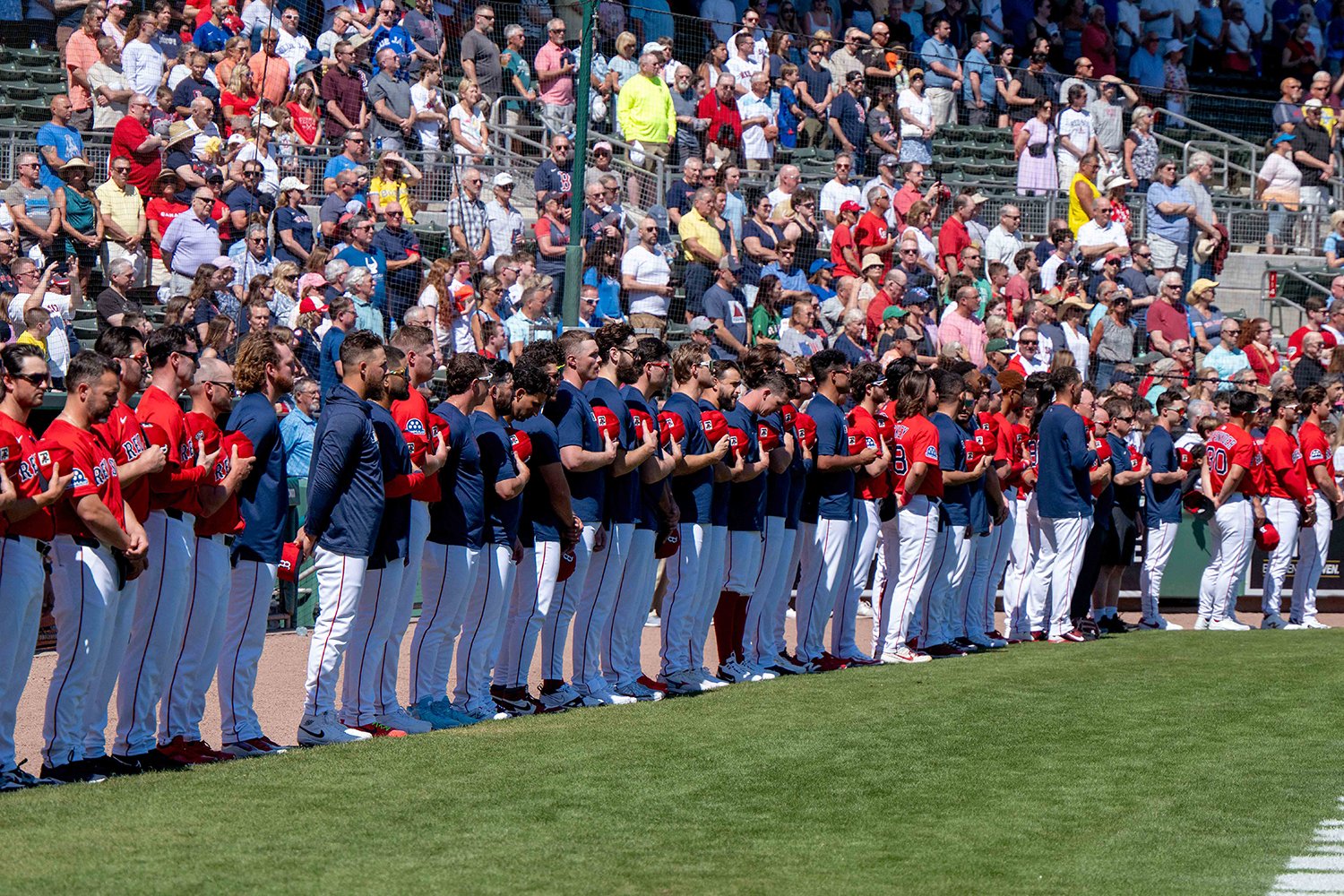 On Thursday, at the end of an article about Wilyer Abreu’s recovery from his mystery gastrointestinal virus, Alex Speier and Peter Abraham of the Boston Globe emptied their notebooks, in the process burying a small but important detail: “With the caveat that an unexpected opportunity could present itself, chief baseball officer Craig Breslow said he’s not looking to make further additions to the roster after bringing [Adam] Ottavino , outfielder Trayce Thompson, and lefthander Matt Moore into camp on minor league contracts.” So that’s it. Over the coming months, plenty of injury news will develop and plenty of roster decisions will need to be made, but we now know what the 2025 Red Sox will look like. Their team is on the field. That wasn’t necessarily a foregone conclusion. As Sam Kennedy has confirmed, signing Alex Bregman put the team just past the first luxury tax threshold. That’s generally not the best place to be. Once a team is over the cap, they’re guaranteed to face an increased penalty in any following seasons. Now, when the penalty isn’t so severe, is the time to go for it. And it’s certainly not as if there aren’t any free agents worth spending on. Even after adding Ottavino, the bullpen could absolutely use a dependable arm. The perennially excellent David Robertson is still available, as is Hector Neris, who struggled in 2024 but ran a 3.03 ERA and 3.45 FIP over the previous three. The catcher position is also iffy. It’s not thin, necessarily, with Connor Wong entrenched as the starter and Carlos Narváez, Blake Sabol, and Seby Zavala all in the mix. But of those four players, Wong is the only one with any track record of even modest big-league success. None of the four project to be even league-average with the bat. As such, Yasmani Grandal, whose 1.4 fWAR in 2024 outpaced Wong’s 1.1 even though Wong got into 54 more games, would make a lot sense. The 36-year-old Grandal isn’t a sure thing, but for a Red Sox team that loves nothing more than handing out one-year contracts, he would raise both the floor and the ceiling at catcher. With Masataka Yoshida likely to start the season on the IL, it wouldn’t be out of line to explore DH options like JD Martinez and Adam Duval, whose game was designed in a lab to excel at Fenway Park. I haven’t yet mentioned the trade market yet. Unless Yoshida (or another player) does start season on the IL, the Red Sox won’t have to break camp with all of Vaughn Grissom, David Hamilton, Rob Refsnyder, and Romy Gonzalez on the 26-man roster, and that’s before they even think of calling up one of the Big Three. With a roster crunch both in the infield and the outfield, it would make a lot of sense for the Red Sox to consolidate value by trading multiple depth pieces or prospects for one productive regular. However, as Breslow said, none of that will be happening. The Red Sox are done adding. I don’t mean to sound pessimistic. Yes, the team has real flaws and real question marks: the starting rotation is much improved from last year, but it’s full of players with injury concerns, and as you can see from the last couple paragraphs, I’m particularly worried about catcher, middle infield, and the bullpen. However, this is a much-improved team from last season. It’s got genuine stars in Garrett Crochet, Rafael Devers, Alex Bregman, and Jarren Duran. This could absolutely be the year that Triston Casas joins that star tier as well, and it wouldn’t be shocking to see Abreu and Rafaela ride excellent defense to productive seasons. There are a lot of things to look forward to, but right now it’s time to look at what’s in hand. Plenty of things will need to go right for this season to be a success. No team achieves all its goals without injury luck and breakout seasons from unexpected places. Although there are still places where the roster could be improved, this team has enough pieces in place to do big things. The job now is to fit them into place.
 -
It didn't get much play in the news, but last week, Craig Breslow confirmed that the Red Sox are no longer looking to add. Do they have enough to win? On Thursday, at the end of an article about Wilyer Abreu’s recovery from his mystery gastrointestinal virus, Alex Speier and Peter Abraham of the Boston Globe emptied their notebooks, in the process burying a small but important detail: “With the caveat that an unexpected opportunity could present itself, chief baseball officer Craig Breslow said he’s not looking to make further additions to the roster after bringing [Adam] Ottavino , outfielder Trayce Thompson, and lefthander Matt Moore into camp on minor league contracts.” So that’s it. Over the coming months, plenty of injury news will develop and plenty of roster decisions will need to be made, but we now know what the 2025 Red Sox will look like. Their team is on the field. That wasn’t necessarily a foregone conclusion. As Sam Kennedy has confirmed, signing Alex Bregman put the team just past the first luxury tax threshold. That’s generally not the best place to be. Once a team is over the cap, they’re guaranteed to face an increased penalty in any following seasons. Now, when the penalty isn’t so severe, is the time to go for it. And it’s certainly not as if there aren’t any free agents worth spending on. Even after adding Ottavino, the bullpen could absolutely use a dependable arm. The perennially excellent David Robertson is still available, as is Hector Neris, who struggled in 2024 but ran a 3.03 ERA and 3.45 FIP over the previous three. The catcher position is also iffy. It’s not thin, necessarily, with Connor Wong entrenched as the starter and Carlos Narváez, Blake Sabol, and Seby Zavala all in the mix. But of those four players, Wong is the only one with any track record of even modest big-league success. None of the four project to be even league-average with the bat. As such, Yasmani Grandal, whose 1.4 fWAR in 2024 outpaced Wong’s 1.1 even though Wong got into 54 more games, would make a lot sense. The 36-year-old Grandal isn’t a sure thing, but for a Red Sox team that loves nothing more than handing out one-year contracts, he would raise both the floor and the ceiling at catcher. With Masataka Yoshida likely to start the season on the IL, it wouldn’t be out of line to explore DH options like JD Martinez and Adam Duval, whose game was designed in a lab to excel at Fenway Park. I haven’t yet mentioned the trade market yet. Unless Yoshida (or another player) does start season on the IL, the Red Sox won’t have to break camp with all of Vaughn Grissom, David Hamilton, Rob Refsnyder, and Romy Gonzalez on the 26-man roster, and that’s before they even think of calling up one of the Big Three. With a roster crunch both in the infield and the outfield, it would make a lot of sense for the Red Sox to consolidate value by trading multiple depth pieces or prospects for one productive regular. However, as Breslow said, none of that will be happening. The Red Sox are done adding. I don’t mean to sound pessimistic. Yes, the team has real flaws and real question marks: the starting rotation is much improved from last year, but it’s full of players with injury concerns, and as you can see from the last couple paragraphs, I’m particularly worried about catcher, middle infield, and the bullpen. However, this is a much-improved team from last season. It’s got genuine stars in Garrett Crochet, Rafael Devers, Alex Bregman, and Jarren Duran. This could absolutely be the year that Triston Casas joins that star tier as well, and it wouldn’t be shocking to see Abreu and Rafaela ride excellent defense to productive seasons. There are a lot of things to look forward to, but right now it’s time to look at what’s in hand. Plenty of things will need to go right for this season to be a success. No team achieves all its goals without injury luck and breakout seasons from unexpected places. Although there are still places where the roster could be improved, this team has enough pieces in place to do big things. The job now is to fit them into place. View full article
-
 After back-to-back incidents during live batting practice on Tuesday, Romy Gonzalez might want to consider raising his launch angle, both to improve as a hitter and to avoid hurting anybody. I first wrote about Red Sox second baseman Romy Gonzalez back in October. Gonzalez begs to be written about because he is one of the many players who features a particular combination: a precious skill locked away within a maddening skillset. He hits the ball hard and he hits it on the ground. That’s a problem. Hitting the ball hard is wonderful, and wasting it by hitting it hard directly into the dirt is the opposite of wonderful. Some players – think Vladimir Guerrero Jr. and Bo Bichette – are able to succeed despite hitting so many balls on the ground because they’re able to hit everything hard all the time. A smaller percentage of players – think Mark Vientos and, it certainly seems, Kristian Campbell – learn to elevate their hard contact, at which point the sky is the limit. A bigger percentage – think Ke’Bryan Hayes and Josh Bell – never quite figure it out. Time will tell whether Gonzalez is able to turn his gift for loud contact into actual offensive production. The Red Sox have certainly had some big player development wins lately, and it would be a real coup if they could help him unlock his potential. However, the matter took on greater urgency on Tuesday. During a live batting practice session, Gonzalez smashed a comebacker directly at Walker Buehler. The ball caught Buehler on the hand, and the Boston Globe's Alex Speier documented it on video: As it turns out, Gonzalez’s penchant hard, altitudinally-challenged contact isn’t just endangering his slash line. It’s endangering pitchers. Buehler turned out to be ok and returned to pitch another inning, but just minutes later, Gonzalez nearly struck again. This time, he ripped a grounder directly back at Lucas Giolito, sending ball right at the recovering righty’s feet. Once again, Speier was doing God's work and caught the play on video: I realize that multiple pitchers have been hit by line drives up the middle so far during spring training, and I don’t mean to make light of that. It’s a serious problem and I worry about it a lot. However, Gonzalez’s penchant for sending the ball back at pitchers, especially his own, is almost too on the nose. Look how hard he hits the ball! And yet, he keeps hitting it right back at the pitcher. Here we are spilling ink on how he could be a great player if he just stopped wasting all his rockets on infielders, and it's almost as if the only reason he's hitting the ball so hard is in order to ensure that he can hand it over to the first defender he can find. I took a trip over to Baseball Savant to see if Gonzalez has a history of threatening to maim pitchers – for the super dorks among you, my search parameters involved balls hit straightaway with an exit velocity above 90 mph and a launch angle between -10 and 15 degrees – and guess what? Romy Gonzalez really is a menace to pitchers everywhere. Don’t think that the clips above are the only ones I found. Gonzalez puts any pitcher in an uncomfortable position the moment he walks up to the plate. The only position that’s even more uncomfortable? The one the pitcher finds themself in immediately after Gonzalez launches a bullet straight back up the middle. So yeah, Gonzalez needs to raise his launch angle and stop hitting the ball on the ground so much. It’s the only way he’ll end up as a successful big-league hitter. But it might also be a matter of life and death. View full article
 -
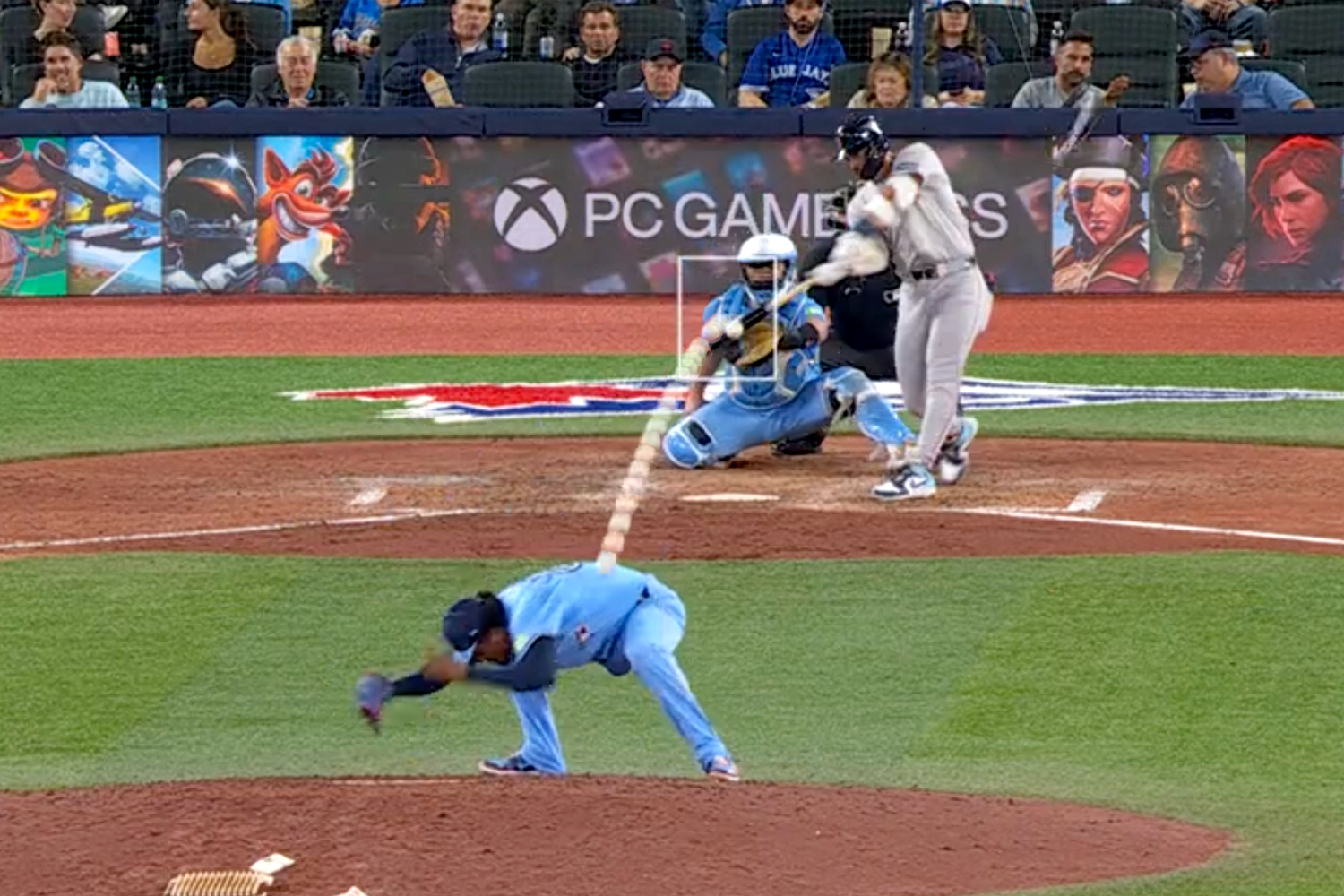 I first wrote about Red Sox second baseman Romy Gonzalez back in October. Gonzalez begs to be written about because he is one of the many players who features a particular combination: a precious skill locked away within a maddening skillset. He hits the ball hard and he hits it on the ground. That’s a problem. Hitting the ball hard is wonderful, and wasting it by hitting it hard directly into the dirt is the opposite of wonderful. Some players – think Vladimir Guerrero Jr. and Bo Bichette – are able to succeed despite hitting so many balls on the ground because they’re able to hit everything hard all the time. A smaller percentage of players – think Mark Vientos and, it certainly seems, Kristian Campbell – learn to elevate their hard contact, at which point the sky is the limit. A bigger percentage – think Ke’Bryan Hayes and Josh Bell – never quite figure it out. Time will tell whether Gonzalez is able to turn his gift for loud contact into actual offensive production. The Red Sox have certainly had some big player development wins lately, and it would be a real coup if they could help him unlock his potential. However, the matter took on greater urgency on Tuesday. During a live batting practice session, Gonzalez smashed a comebacker directly at Walker Buehler. The ball caught Buehler on the hand, and the Boston Globe's Alex Speier documented it on video: As it turns out, Gonzalez’s penchant hard, altitudinally-challenged contact isn’t just endangering his slash line. It’s endangering pitchers. Buehler turned out to be ok and returned to pitch another inning, but just minutes later, Gonzalez nearly struck again. This time, he ripped a grounder directly back at Lucas Giolito, sending ball right at the recovering righty’s feet. Once again, Speier was doing God's work and caught the play on video: I realize that multiple pitchers have been hit by line drives up the middle so far during spring training, and I don’t mean to make light of that. It’s a serious problem and I worry about it a lot. However, Gonzalez’s penchant for sending the ball back at pitchers, especially his own, is almost too on the nose. Look how hard he hits the ball! And yet, he keeps hitting it right back at the pitcher. Here we are spilling ink on how he could be a great player if he just stopped wasting all his rockets on infielders, and it's almost as if the only reason he's hitting the ball so hard is in order to ensure that he can hand it over to the first defender he can find. I took a trip over to Baseball Savant to see if Gonzalez has a history of threatening to maim pitchers – for the super dorks among you, my search parameters involved balls hit straightaway with an exit velocity above 90 mph and a launch angle between -10 and 15 degrees – and guess what? Romy Gonzalez really is a menace to pitchers everywhere. Don’t think that the clips above are the only ones I found. Gonzalez puts any pitcher in an uncomfortable position the moment he walks up to the plate. The only position that’s even more uncomfortable? The one the pitcher finds themself in immediately after Gonzalez launches a bullet straight back up the middle. So yeah, Gonzalez needs to raise his launch angle and stop hitting the ball on the ground so much. It’s the only way he’ll end up as a successful big-league hitter. But it might also be a matter of life and death.
 -
With two games in the books, the list of Red Sox with injury concerns is not exactly short. Let's break down where everyone stands. With two games in the books, spring training is officially underway. After a victory against Northeastern on Friday, the Red Sox dropped a surprisingly eventful game on Sunday. The Sox led the Blue Jays, 5-2, in the fourth inning. The score stayed the same until the ninth, when the Jays exploded for six runs then barely held on for an 8-7 win. The real fireworks happened early, and they made Boston’s offseason moves look very smart. Garrett Crochet looked every bit the ace the Red Sox traded for, striking out the side in the first, while Alex Bregman went 3-for-3 with a single, double, and homer. This is why you go out and get stars: Obviously, spring training results don’t matter, but it sure is encouraging to watch Alex Bregman pepper a Green Monster, even if it isn’t the Green Monster. However, much more important is the thousand Red Sox players with medical concerns. Those concerns range from Tommy John recovery to lingering knee soreness to waking up with a sore calf. Let's go over them all. Rafael Devers Devers is still focused on rehabbing his shoulder. He has started taking grounders and working in the batting cages, but has yet to do any workouts with the rest of the team. Jen McCaffrey posted video of him field grounders on Friday, and he was seen taking infield at third base on Sunday. He’s expected to begin team workouts this week. Masataka Yoshida Speaking of shoulders, Yoshida underwent a repair for a torn labrum in his right shoulder in October, and is still recovering. “It’s a long process. It was a big, big surgery,” Alex Cora told reporters. “He’s swinging right now, and he knows that we need him to play defense.” Yoshida took fielding drills with the outfielders in left field at JetBlue Park. “In terms of hitting, I feel 100 percent with my swing,” Yoshida said through an interpreter. “In terms of throwing, I just started throwing outside, so we’ll see how that goes.” When asked if he’d be ready for Opening Day, he said, “That’s the plan. Trying to get more playing time, more at-bats, just doing everything I can to get myself ready.” Roman Anthony Anthony sat out Friday’s game after getting hit by a pitch on Thursday, but he’s fine. He played against the Blue Jays on Sunday and went 1-for-3 with a single. Jarren Duran Anthony wasn’t actually slated to start on Sunday, but he replaced Duran, who has a tight left calf. Cora said that Duran should be back this week, so at the moment, it seems safe to assume that the move was precautionary. Connor Wong Wong also missed Sunday’s game due to a sore shoulder, but is likely to play today. “He felt it yesterday but it’s nothing serious,” Cora said. “We’ve just gotta play it smart with him and Jarren, too. That’s why they are not playing today.” Wilyer Abreu For whatever it’s worth, Julian McWilliams noted that Abreu showed up to camp “notably slimmer.” More importantly, Abreu came into camp with a gastrointestinal virus, and in order to avoid spreading it, he hasn’t been around the team. “The labs came in Friday, said Cora on Saturday. “There’s still something there. He’ll get another lab Monday and we’ll see where we’re at. I don’t want to get into it but there’s something going on. Until we get the clearance from the doctors, we’ll stay away from him." According to Chris Cotillo, the labs have been getting better, but he won’t get into action until they’re back to normal. Kutter Crawford Let's move on to the pitchers. On Sunday, Alex Cora told reporters that Crawford is unlikely to be ready for Opening Day. Julian McWilliams reported that he’s likely to start the season on the IL. Crawford has been dealing with pain in his right patellar tendon since his third start of 2024, when he tweaked it while covering first base on a groundball Ryan O’Hearn. You can see the play below: Crawford pitched through the injury all year, which might explain why his performance and velocity dipped later in the season. He didn’t reveal the injury publicly until he returned to camp and announced that he’d had a setback in the weight room in December. “I did something [to it] this offseason,” he told reporters. I had a couple hiccups within the rehab progression of it all. I’m just a little behind. The strength just isn't there where we want it to be.” On Sunday, Cora told reporters that Crawford had an MRI over the weekend, and it looked the same as an MRI taken earlier in the offseason. He’s still throwing low-intensity bullpens, but this will be a big one to watch. “With Kutter, that’s the one. It looks like is going to be long,” said Alex Cora on Saturday. “Opening Day, right now, is an ‘if.’ Let’s see what happens. He’s just not feeling well. He’s behind and we’ve got to make sure the knee is good so the shoulder doesn’t suffer.” Garrett Whitlock As videos and reports of other pitchers flooded our timelines over the past week, we didn’t hear much about Whitlock, because he was resting as part of a scheduled de-load week as he rehabs from his internal brace procedure. He threw a 25-pitch bullpen on Friday and all indications are that he looks good. Brayan Bello Bello developed shoulder soreness right before he arrived in camp in Fort Myers, and he took the first week off. He’s graduated to playing catch, and he’s scheduled to throw from a distance of 90 feet today, as well as to undergo a strength test. The timeline here is important. If everything were to go perfectly, Bello would still have time to build up for the start of the season. If he experiences any setbacks, things could get dicey. “I don’t think in a week (he’ll be ready for games). He’s not even throwing bullpens,” Cora said. “Let’s see next week how it goes.” Lucas Giolito The team posted video of Giolito throwing yesterday. He’s set to throw his first live batting practice today. Zach Penrod Coming into camp, Penrod appeared likely to start the season in Worcester, but at least in the mix for a bullpen role to start the season. However, the lefty experienced the dreaded elbow soreness and underwent an MRI on Wednesday. That domino was likely responsible for the team signing Matt Moore to a minor-league deal as a non-roster invite. The good news is that the MRI indicated Penrod’s unlar collateral ligament is intact. The bad news: “He’s gonna be out for a while,” Cora said. “Nothing structural, elbow inflammation. So we’ll shut him down for now. We’re not talking surgery, but rehab and we’ll see how it goes.” Patrick Sandoval There aren't any real updates on Sandoval, who is still expected to return sometime in the second half. In a profile on Sandoval published today, the Boston Globe's Peter Abraham did quote Cora as saying, "We have to be patient." View full article
-
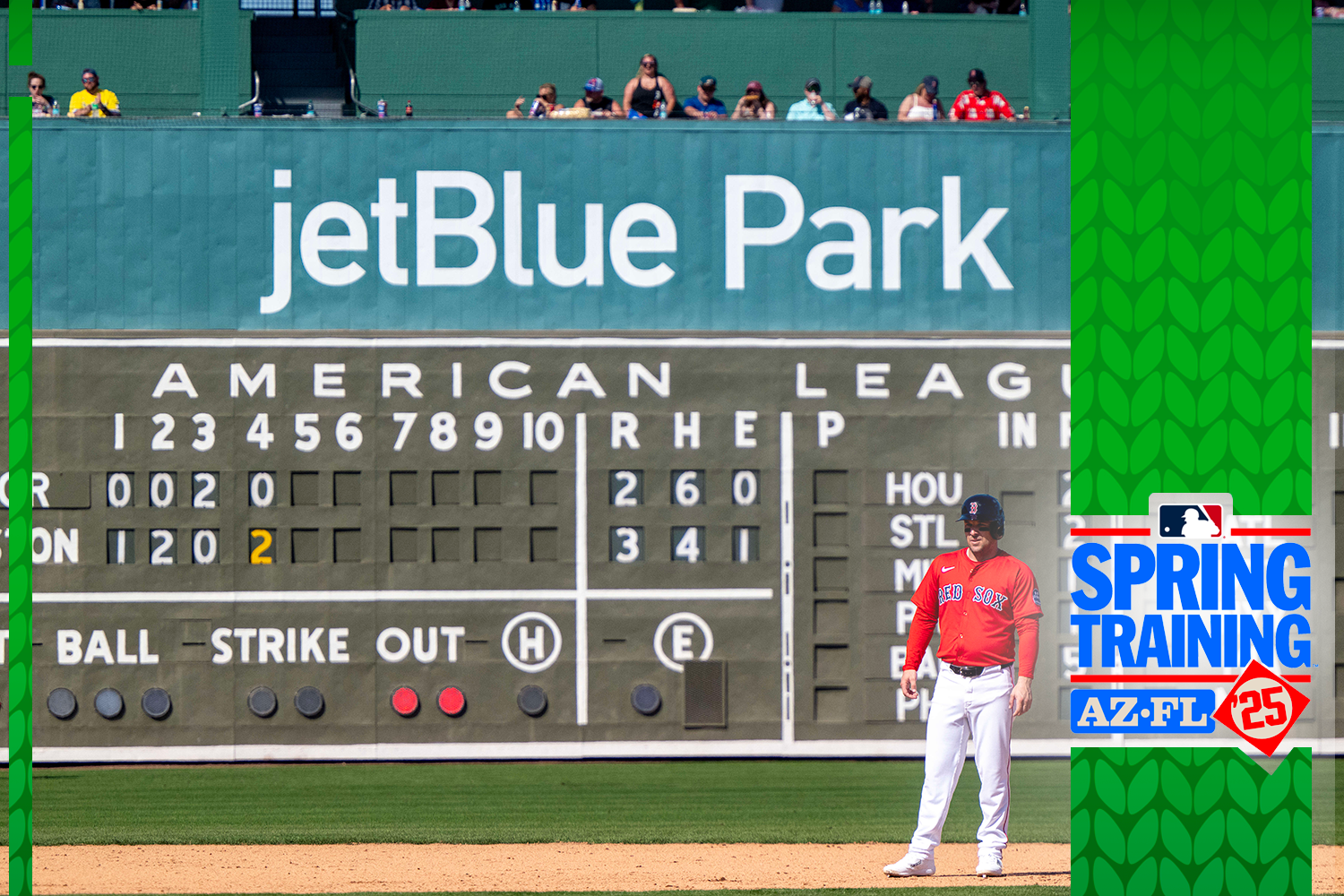 With two games in the books, spring training is officially underway. After a victory against Northeastern on Friday, the Red Sox dropped a surprisingly eventful game on Sunday. The Sox led the Blue Jays, 5-2, in the fourth inning. The score stayed the same until the ninth, when the Jays exploded for six runs then barely held on for an 8-7 win. The real fireworks happened early, and they made Boston’s offseason moves look very smart. Garrett Crochet looked every bit the ace the Red Sox traded for, striking out the side in the first, while Alex Bregman went 3-for-3 with a single, double, and homer. This is why you go out and get stars: Obviously, spring training results don’t matter, but it sure is encouraging to watch Alex Bregman pepper a Green Monster, even if it isn’t the Green Monster. However, much more important is the thousand Red Sox players with medical concerns. Those concerns range from Tommy John recovery to lingering knee soreness to waking up with a sore calf. Let's go over them all. Rafael Devers Devers is still focused on rehabbing his shoulder. He has started taking grounders and working in the batting cages, but has yet to do any workouts with the rest of the team. Jen McCaffrey posted video of him field grounders on Friday, and he was seen taking infield at third base on Sunday. He’s expected to begin team workouts this week. Masataka Yoshida Speaking of shoulders, Yoshida underwent a repair for a torn labrum in his right shoulder in October, and is still recovering. “It’s a long process. It was a big, big surgery,” Alex Cora told reporters. “He’s swinging right now, and he knows that we need him to play defense.” Yoshida took fielding drills with the outfielders in left field at JetBlue Park. “In terms of hitting, I feel 100 percent with my swing,” Yoshida said through an interpreter. “In terms of throwing, I just started throwing outside, so we’ll see how that goes.” When asked if he’d be ready for Opening Day, he said, “That’s the plan. Trying to get more playing time, more at-bats, just doing everything I can to get myself ready.” Roman Anthony Anthony sat out Friday’s game after getting hit by a pitch on Thursday, but he’s fine. He played against the Blue Jays on Sunday and went 1-for-3 with a single. Jarren Duran Anthony wasn’t actually slated to start on Sunday, but he replaced Duran, who has a tight left calf. Cora said that Duran should be back this week, so at the moment, it seems safe to assume that the move was precautionary. Connor Wong Wong also missed Sunday’s game due to a sore shoulder, but is likely to play today. “He felt it yesterday but it’s nothing serious,” Cora said. “We’ve just gotta play it smart with him and Jarren, too. That’s why they are not playing today.” Wilyer Abreu For whatever it’s worth, Julian McWilliams noted that Abreu showed up to camp “notably slimmer.” More importantly, Abreu came into camp with a gastrointestinal virus, and in order to avoid spreading it, he hasn’t been around the team. “The labs came in Friday, said Cora on Saturday. “There’s still something there. He’ll get another lab Monday and we’ll see where we’re at. I don’t want to get into it but there’s something going on. Until we get the clearance from the doctors, we’ll stay away from him." According to Chris Cotillo, the labs have been getting better, but he won’t get into action until they’re back to normal. Kutter Crawford Let's move on to the pitchers. On Sunday, Alex Cora told reporters that Crawford is unlikely to be ready for Opening Day. Julian McWilliams reported that he’s likely to start the season on the IL. Crawford has been dealing with pain in his right patellar tendon since his third start of 2024, when he tweaked it while covering first base on a groundball Ryan O’Hearn. You can see the play below: Crawford pitched through the injury all year, which might explain why his performance and velocity dipped later in the season. He didn’t reveal the injury publicly until he returned to camp and announced that he’d had a setback in the weight room in December. “I did something [to it] this offseason,” he told reporters. I had a couple hiccups within the rehab progression of it all. I’m just a little behind. The strength just isn't there where we want it to be.” On Sunday, Cora told reporters that Crawford had an MRI over the weekend, and it looked the same as an MRI taken earlier in the offseason. He’s still throwing low-intensity bullpens, but this will be a big one to watch. “With Kutter, that’s the one. It looks like is going to be long,” said Alex Cora on Saturday. “Opening Day, right now, is an ‘if.’ Let’s see what happens. He’s just not feeling well. He’s behind and we’ve got to make sure the knee is good so the shoulder doesn’t suffer.” Garrett Whitlock As videos and reports of other pitchers flooded our timelines over the past week, we didn’t hear much about Whitlock, because he was resting as part of a scheduled de-load week as he rehabs from his internal brace procedure. He threw a 25-pitch bullpen on Friday and all indications are that he looks good. Brayan Bello Bello developed shoulder soreness right before he arrived in camp in Fort Myers, and he took the first week off. He’s graduated to playing catch, and he’s scheduled to throw from a distance of 90 feet today, as well as to undergo a strength test. The timeline here is important. If everything were to go perfectly, Bello would still have time to build up for the start of the season. If he experiences any setbacks, things could get dicey. “I don’t think in a week (he’ll be ready for games). He’s not even throwing bullpens,” Cora said. “Let’s see next week how it goes.” Lucas Giolito The team posted video of Giolito throwing yesterday. He’s set to throw his first live batting practice today. Zach Penrod Coming into camp, Penrod appeared likely to start the season in Worcester, but at least in the mix for a bullpen role to start the season. However, the lefty experienced the dreaded elbow soreness and underwent an MRI on Wednesday. That domino was likely responsible for the team signing Matt Moore to a minor-league deal as a non-roster invite. The good news is that the MRI indicated Penrod’s unlar collateral ligament is intact. The bad news: “He’s gonna be out for a while,” Cora said. “Nothing structural, elbow inflammation. So we’ll shut him down for now. We’re not talking surgery, but rehab and we’ll see how it goes.” Patrick Sandoval There aren't any real updates on Sandoval, who is still expected to return sometime in the second half. In a profile on Sandoval published today, the Boston Globe's Peter Abraham did quote Cora as saying, "We have to be patient."
 -
You both make good points. From my perspective, it's all about Campbell's development. They need to do whatever they think will maximize his chance of being a great player. Maybe that means jumping into the majors and maybe that means starting in Worcester, but that's got to be the priority.
-
Might Second Base Be the Real Cause of Boston's Third Base Drama?
Davy Andrews posted an article in Red Sox
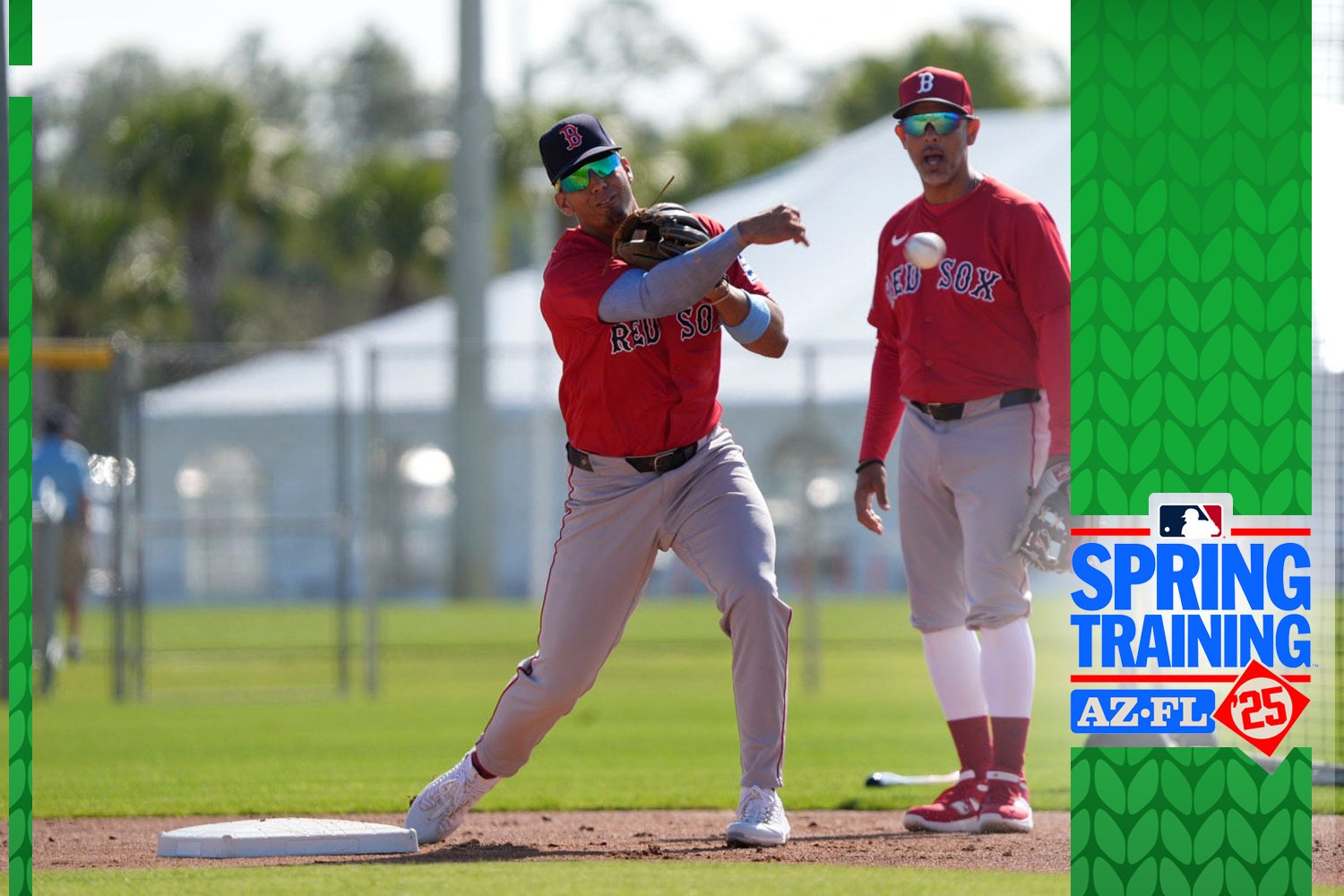 Over the past few days, Red Sox media – including this website – has been understandably focused on the drama at third base. The situation will absolutely iron itself out in time, and it’s hard to fault anyone too much in this situation. We have no idea what Bregman has said behind closed doors, but he’s said all the right things in public. Alex Cora has not chosen his words perfectly, but he’s been pretty clear about where the team stands. Rafael Devers, who was promised that third base was his just two years ago and then spent the whole offseason hearing the Red Sox swear up and down that they had no intention of moving him, has every right to be upset that they’re going back on their word. However things shake out, it’s clear that the team sees Bregman at third and Devers at DH. Our topic for today: What does that mean for second base? Let’s assume that Kristian Campbell starts the season in Worcester, not exactly a stretch, since he’s only played 19 games at Triple A. In a perfect world, with everyone healthy, I think the team’s best infield looks like this: Devers at third, Trevor Story at short, Bregman at second, Triston Casas at first, and Yoshida at DH. Sure, Devers’ glove would hurt the team. But if you move him to DH and sit Yoshida, then Vaughn Grissom takes over at second, and trading Yoshida’s bat for Vaughn Grissom’s hurts much, much more. The Red Sox know that. They’re giving Grissom a chance to earn the second base job, but he has a career 81 wRC+, and the advanced defensive metrics haven’t exactly loved his defense. He has yet to demonstrate great plate discipline or the ability to hit the ball hard. It’s entirely possible that the Red Sox believe in Grissom more than the projections do. He’s only 24, and the Red Sox have had a huge amount of success developing hitters in recent years. Grissom showed up to camp with 20 extra pounds of muscle, so he’s clearly focused on improving his bat speed and hitting the ball harder, a major organizational focus. This is his shot. Still, it’s far from a sure thing, and it’s hard to imagine the team putting all its eggs in that particular basket. That means we need to rethink our initial assumption about Campbell starting the season in Worcester. That’s a lot of preamble, but my point is that the Red Sox must believe that Campbell has a very real chance of breaking camp with the club. With Campbell at second, all of this drama makes much more sense. If he’s on the team, there’s no longer any room for Bregman at second base, so of course they have to move Devers. Unless you're going to take the shortstop job away from Story (not as crazy an idea as it might sound), there's just no other option. Handing the second base job to Campbell would be its own gamble. Once again, he’s played just 19 games at Triple A, and although he’s hit everywhere down the line, he’s also run some crazy BABIPs. Starting him in Boston would be extremely aggressive. The team would need to be sure that he could handle, but also sure that it was in his best interest from a developmental standpoint. Still, the more acrimonious things get at Fenway South, the more it looks like the Red Sox are working on finding a place for the budding star.
 -
All the drama around third base might be telling us even more about the second base situation. Over the past few days, Red Sox media – including this website – has been understandably focused on the drama at third base. The situation will absolutely iron itself out in time, and it’s hard to fault anyone too much in this situation. We have no idea what Bregman has said behind closed doors, but he’s said all the right things in public. Alex Cora has not chosen his words perfectly, but he’s been pretty clear about where the team stands. Rafael Devers, who was promised that third base was his just two years ago and then spent the whole offseason hearing the Red Sox swear up and down that they had no intention of moving him, has every right to be upset that they’re going back on their word. However things shake out, it’s clear that the team sees Bregman at third and Devers at DH. Our topic for today: What does that mean for second base? Let’s assume that Kristian Campbell starts the season in Worcester, not exactly a stretch, since he’s only played 19 games at Triple A. In a perfect world, with everyone healthy, I think the team’s best infield looks like this: Devers at third, Trevor Story at short, Bregman at second, Triston Casas at first, and Yoshida at DH. Sure, Devers’ glove would hurt the team. But if you move him to DH and sit Yoshida, then Vaughn Grissom takes over at second, and trading Yoshida’s bat for Vaughn Grissom’s hurts much, much more. The Red Sox know that. They’re giving Grissom a chance to earn the second base job, but he has a career 81 wRC+, and the advanced defensive metrics haven’t exactly loved his defense. He has yet to demonstrate great plate discipline or the ability to hit the ball hard. It’s entirely possible that the Red Sox believe in Grissom more than the projections do. He’s only 24, and the Red Sox have had a huge amount of success developing hitters in recent years. Grissom showed up to camp with 20 extra pounds of muscle, so he’s clearly focused on improving his bat speed and hitting the ball harder, a major organizational focus. This is his shot. Still, it’s far from a sure thing, and it’s hard to imagine the team putting all its eggs in that particular basket. That means we need to rethink our initial assumption about Campbell starting the season in Worcester. That’s a lot of preamble, but my point is that the Red Sox must believe that Campbell has a very real chance of breaking camp with the club. With Campbell at second, all of this drama makes much more sense. If he’s on the team, there’s no longer any room for Bregman at second base, so of course they have to move Devers. Unless you're going to take the shortstop job away from Story (not as crazy an idea as it might sound), there's just no other option. Handing the second base job to Campbell would be its own gamble. Once again, he’s played just 19 games at Triple A, and although he’s hit everywhere down the line, he’s also run some crazy BABIPs. Starting him in Boston would be extremely aggressive. The team would need to be sure that he could handle, but also sure that it was in his best interest from a developmental standpoint. Still, the more acrimonious things get at Fenway South, the more it looks like the Red Sox are working on finding a place for the budding star. View full article
-
After two days of dueling quotes, we have a much better idea of who wants what and how things are likely to turn out. But that doesn't mean that things will go smoothly. So maybe you were busy on Monday and Tuesday. Monday was a holiday, and maybe you just took Tuesday off from paying attention to spring training. That would be totally fine. Very little that truly matters is happening right now. However, if you love drama, then I’m so sorry for your loss, because the past two days were extremely weird and messy. Allow me to catch you up. On Monday, the Red Sox had a meeting from 9:00 AM to 10:30 AM. Then practice started. Around 12:30, Rafael Devers – simultaneously one of the league’s best overall third basemen and the league’s absolute worst third base defender – took questions from reporters alongside translator Daveson Perez. Let me hit you with some highlights: “My position is third base.” Asked Dan Shaughnessy, if the team asked Devers to DH, would he do it? “No. I play third.” What if they insisted? “No.” Devers then revealed that Craig Breslow and Alex Cora had met with him on Friday to broach the subject of moving to DH. “They asked me the question about how I feel about DH, and yeah, I gave them the answer I just gave: ‘No.’” What about first base? “No.” First of all, let’s give Devers credit for honesty. He wants to play third base. He believes he can hold the position down. He’s being direct and honest. Second, he said plenty of other, less grabby things. He said, “We all know that this team drafted me and I’ve been here my entire career and I am Boston Red Sox through and through….I’m open to listening and hearing what they have to say moving forward.” He also said that when he signed his 10-year deal in January 2023, it was to play third base: “That was definitely what was discussed when I signed, that I would be playing this position for a long time.” He went on, “I believe people’s word and I take it to heart, so it was very surprising that they would suggest that [moving to DH]. Since the beginning, I have known that this is a business and I’ve known that each side is going to do what’s comfortable to them. I don’t think that this is the right way to do business.” For the most part, Alex Cora and Alex Bregman, the two other main characters, did their best to defuse the situation. Cora declined to comment on Devers’ comments on Monday. Then on Tuesday, he repeatedly touted the strength of his relationship with Devers. He told reporters that he’d invited both Bregman and Devers over to his house to chat for 45 minutes on Monday night. After batting practice, Devers and Bregman fist bumped in full view of the writers. In the afternoon, Bregman offered reporters a grand bouquet of bland affirmations: “I’m super excited just to be his teammate. He’s a great player. I think everybody in this clubhouse is worried about winning….I’ll play wherever AC tells me to play.” He kept talking for quite a while, but you get the point. Bregman has never been the most genuine player when it comes to addressing the public, and he came out and said all the things you’d expect while dodging the question of where he thinks he should play. Masataka Yoshida, who would be the odd man out were Devers to move to DH, chimed in: “My job is to give it all my best, whatever my job calls for. If that is to DH or that is to play the outfield, I’m giving it my best.” It sounded like the drama was just about over. Then things got hairy again. Speaking about Devers, Cora said, “He feels like he’s a third baseman.” This is an incredible quote. Cora could have just said that Devers is a third baseman. He would’ve been telling the truth. He could have just said the obvious, that Bregman is literally a reigning Gold Glover. Instead, he went with feels like. It’s a work of passive-aggressive artistry. Cora didn’t stop there. When asked about the promises made to Devers, he got right to the heart of the matter, “Different people here, right? There’s a different leader here. Chaim [Bloom] is in St. Louis right now.” That’s not mincing words, and it’s not accidentally getting passive-aggressive. It’s saying very clearly that the Red Sox do not in any way feel bound by the promises they made to Devers. I don’t think that’s an indefensible argument, but I do think that Devers has every right to be hurt by it. I have my own opinion about how the Red Sox should handle the situation and what the best infield configuration would look like. I’m sure you have yours too. We’re also working with incomplete information, because the injury component – when the shoulders of both Devers and Yoshida will be healthy enough for them to play at 100% – no doubt affects the team’s calculus, and that’s not public knowledge. However, Cora has now made it very clear that the team wants Bregman at third and Devers at DH. That means a couple things. It means Yoshida will either be playing in the outfield or not at all. It means that the team expects either Vaughn Grissom or Kristian Campbell to play second base and play it well. It means the team expects Trevor Story to stay healthy and perform at shortstop, which at this point would be a major surprise. This is purely speculation, but I think we have to at least entertain the possibility that the Red Sox never really considered playing Bregman at second base; that they always figured they’d find a way to move Devers off third. So that’s where things stand as of Wednesday morning, but there’s also one more puzzle piece. So far, the collection of quotes I’ve shown you has been messy, but as is his wont, Triston Casas jumped into the fray and took the whole situation from drama to locker room farce. Visibly smirking, Casas told reporters: ““I think it’s Raffy Devers’s position. I think he’s the third baseman and at that point that’s where it stands. He’s done it for a really long time now and I think he’s only getting better at that position. I think his defense is getting better every single year.” Casas continued, calling Devers, “the best third baseman in the league,” and saying that Bregman should play second base. “I think he’s going to make the transition well. I think he’s athletic enough to.” This is very tricky situation. The Red Sox are bound to Devers for a very long time. Despite his glove, he’s still the best player on the team, and they have not yet figured out how to handle the situation without hurting him. Still, it's hard to imagine Devers staying at third base if Brelsow and Cora want him elsewhere. The situation might stay messy for a while. It will certainly be resolved one way or another by Opening Day. In the meantime, at least we get to enjoy Triston Casas. View full article
-
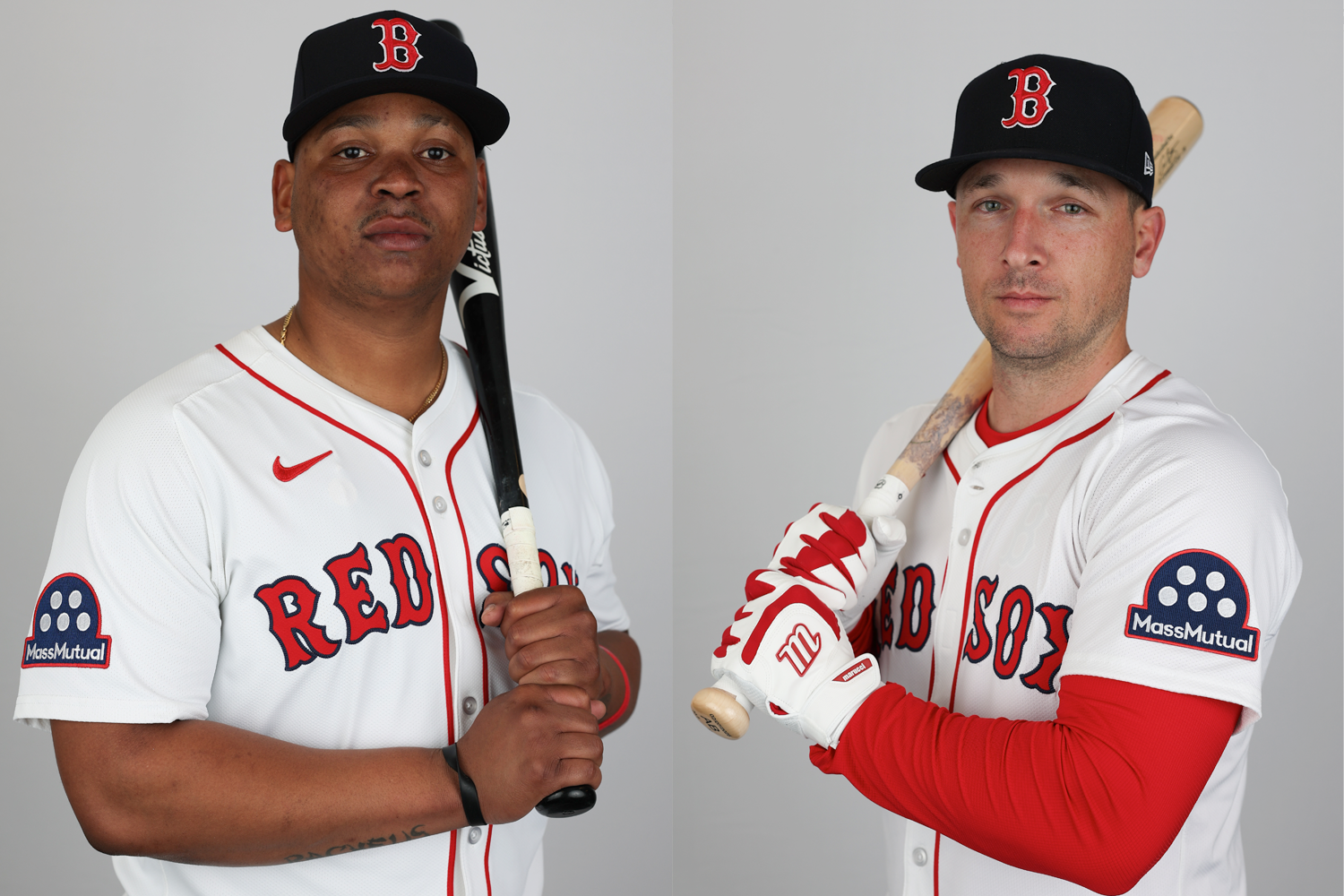 So maybe you were busy on Monday and Tuesday. Monday was a holiday, and maybe you just took Tuesday off from paying attention to spring training. That would be totally fine. Very little that truly matters is happening right now. However, if you love drama, then I’m so sorry for your loss, because the past two days were extremely weird and messy. Allow me to catch you up. On Monday, the Red Sox had a meeting from 9:00 AM to 10:30 AM. Then practice started. Around 12:30, Rafael Devers – simultaneously one of the league’s best overall third basemen and the league’s absolute worst third base defender – took questions from reporters alongside translator Daveson Perez. Let me hit you with some highlights: “My position is third base.” Asked Dan Shaughnessy, if the team asked Devers to DH, would he do it? “No. I play third.” What if they insisted? “No.” Devers then revealed that Craig Breslow and Alex Cora had met with him on Friday to broach the subject of moving to DH. “They asked me the question about how I feel about DH, and yeah, I gave them the answer I just gave: ‘No.’” What about first base? “No.” First of all, let’s give Devers credit for honesty. He wants to play third base. He believes he can hold the position down. He’s being direct and honest. Second, he said plenty of other, less grabby things. He said, “We all know that this team drafted me and I’ve been here my entire career and I am Boston Red Sox through and through….I’m open to listening and hearing what they have to say moving forward.” He also said that when he signed his 10-year deal in January 2023, it was to play third base: “That was definitely what was discussed when I signed, that I would be playing this position for a long time.” He went on, “I believe people’s word and I take it to heart, so it was very surprising that they would suggest that [moving to DH]. Since the beginning, I have known that this is a business and I’ve known that each side is going to do what’s comfortable to them. I don’t think that this is the right way to do business.” For the most part, Alex Cora and Alex Bregman, the two other main characters, did their best to defuse the situation. Cora declined to comment on Devers’ comments on Monday. Then on Tuesday, he repeatedly touted the strength of his relationship with Devers. He told reporters that he’d invited both Bregman and Devers over to his house to chat for 45 minutes on Monday night. After batting practice, Devers and Bregman fist bumped in full view of the writers. In the afternoon, Bregman offered reporters a grand bouquet of bland affirmations: “I’m super excited just to be his teammate. He’s a great player. I think everybody in this clubhouse is worried about winning….I’ll play wherever AC tells me to play.” He kept talking for quite a while, but you get the point. Bregman has never been the most genuine player when it comes to addressing the public, and he came out and said all the things you’d expect while dodging the question of where he thinks he should play. Masataka Yoshida, who would be the odd man out were Devers to move to DH, chimed in: “My job is to give it all my best, whatever my job calls for. If that is to DH or that is to play the outfield, I’m giving it my best.” It sounded like the drama was just about over. Then things got hairy again. Speaking about Devers, Cora said, “He feels like he’s a third baseman.” This is an incredible quote. Cora could have just said that Devers is a third baseman. He would’ve been telling the truth. He could have just said the obvious, that Bregman is literally a reigning Gold Glover. Instead, he went with feels like. It’s a work of passive-aggressive artistry. Cora didn’t stop there. When asked about the promises made to Devers, he got right to the heart of the matter, “Different people here, right? There’s a different leader here. Chaim [Bloom] is in St. Louis right now.” That’s not mincing words, and it’s not accidentally getting passive-aggressive. It’s saying very clearly that the Red Sox do not in any way feel bound by the promises they made to Devers. I don’t think that’s an indefensible argument, but I do think that Devers has every right to be hurt by it. I have my own opinion about how the Red Sox should handle the situation and what the best infield configuration would look like. I’m sure you have yours too. We’re also working with incomplete information, because the injury component – when the shoulders of both Devers and Yoshida will be healthy enough for them to play at 100% – no doubt affects the team’s calculus, and that’s not public knowledge. However, Cora has now made it very clear that the team wants Bregman at third and Devers at DH. That means a couple things. It means Yoshida will either be playing in the outfield or not at all. It means that the team expects either Vaughn Grissom or Kristian Campbell to play second base and play it well. It means the team expects Trevor Story to stay healthy and perform at shortstop, which at this point would be a major surprise. This is purely speculation, but I think we have to at least entertain the possibility that the Red Sox never really considered playing Bregman at second base; that they always figured they’d find a way to move Devers off third. So that’s where things stand as of Wednesday morning, but there’s also one more puzzle piece. So far, the collection of quotes I’ve shown you has been messy, but as is his wont, Triston Casas jumped into the fray and took the whole situation from drama to locker room farce. Visibly smirking, Casas told reporters: ““I think it’s Raffy Devers’s position. I think he’s the third baseman and at that point that’s where it stands. He’s done it for a really long time now and I think he’s only getting better at that position. I think his defense is getting better every single year.” Casas continued, calling Devers, “the best third baseman in the league,” and saying that Bregman should play second base. “I think he’s going to make the transition well. I think he’s athletic enough to.” This is very tricky situation. The Red Sox are bound to Devers for a very long time. Despite his glove, he’s still the best player on the team, and they have not yet figured out how to handle the situation without hurting him. Still, it's hard to imagine Devers staying at third base if Brelsow and Cora want him elsewhere. The situation might stay messy for a while. It will certainly be resolved one way or another by Opening Day. In the meantime, at least we get to enjoy Triston Casas.
 -
Understanding the Deferred Money in Alex Bregman’s Contract
Davy Andrews posted an article in Red Sox
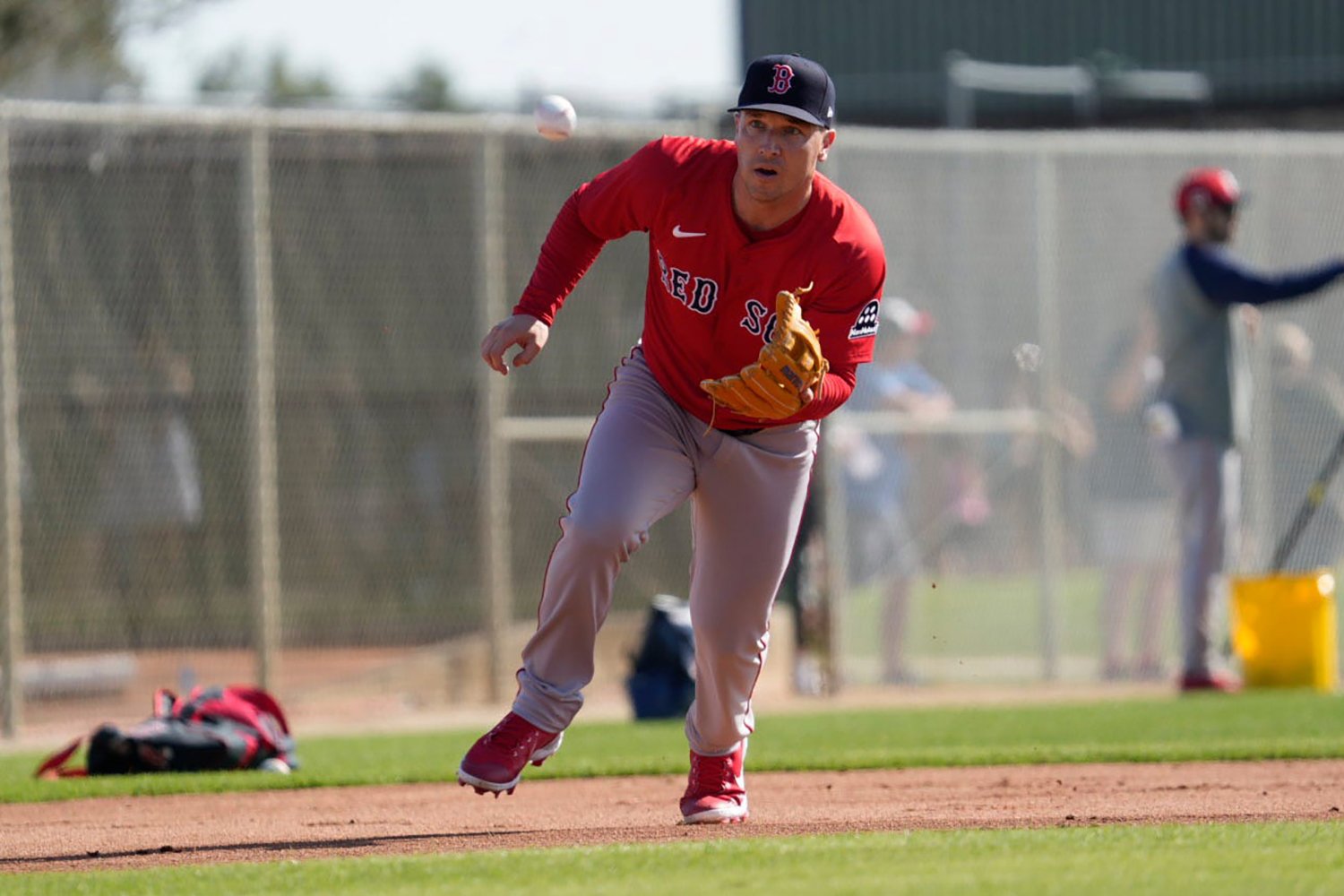 Now that Alex Bregman has officially signed his deal and taken his first batting practice session as a member of the Red Sox, let’s make sure we understand the terms of his contract, because they matter quite a bit. Officially, the deal is for three years and $120 million, with opt-outs after the 2025 and 2026 seasons. More recently, we’ve learned that the contract involved a signing bonus and deferrals, which change the value quite a bit. Let’s start here: we shouldn’t think of this as a $120-million deal; we should think of it as a $95.1-million deal. The Boston Globe’s Alex Speier broke down the final numbers on Saturday: Bregman gets a $5 million signing bonus, and makes $35 million in 2025, then $40 million in both 2026 and 2027. In all three seasons, $20 million is deferred. Each year, the Red Sox will set that deferred money aside for ten years. After those 10 years, they will start paying Bregman the money over a period of another 10 years. So in 2035, Bregman will get $2 million that were set aside in 2015. In 2026, he will get $4 million: $2 million that were set aside in 2015, and $2 million that were set aside in 2016, and so on. The table below shows how many millions Bregman will get paid each season, assuming he stays for the entire three years. Year Bonus Salary '25 Deferral '26 Deferral '27 Deferral Total 2025 5 15 - - - 20 2026 - 20 - - - 20 2027 - 20 - - - 20 2028 - - - - - 0 2029 - - - - - 0 2030 - - - - - 0 2031 - - - - - 0 2032 - - - - - 0 2033 - - - - - 0 2034 - - - - - 0 2035 - - 2 - - 2 2036 - - 2 2 4 2037 - - 2 2 2 6 2038 - - 2 2 2 6 2039 - - 2 2 2 6 2040 - - 2 2 2 6 2041 - - 2 2 2 6 2042 - - 2 2 2 6 2043 - - 2 2 2 6 2044 - - 2 2 2 6 2045 - - - 2 2 4 2046 - - - - 2 2 Total 5 55 20 20 20 120 If this all strikes you as absurd, you’re not wrong. It’s patently absurd. However, that doesn’t mean there’s no logic behind it. For starters, the opt-outs make the deal more valuable for Bregman. He entered free agency coming off a (relatively) down season, and he clearly thinks it’s wise to bet on himself. If he puts up another MVP-caliber campaign in 2025 or 2026, he can opt out and look for the long-term contract that he wanted all along. Essentially, this deal gives Bregman the chance to make more money later, and that chance has value. Because future money is worth less than present-day money – a concept I explored at length over at Baseball Prospectus last season – the deferrals also lower the value of Bregman’s contract. For competitive balance tax purposes, Bregman’s deal is worth $31.7 million a year, rather than $40 million. That’s why we should think of this as a $95.1-million contract. Not at all coincidentally, that $31.7-million average annual value puts Bregman just above Rafael Devers’ $31.35 mark. So the deferrals reduce the value of the contract, but only just enough to keep Bregman as the highest-paid third baseman on the team. Over at North Side Baseball, Matthew Trueblood compared what the Cubs and Red Sox were offering Bregman. According to which report you believe, the Cubs offered Bregman four years and either $115 or $120, with no deferred money, and opt-outs after the 2026 and 2027 seasons. That means that in terms of average annual value, their offer was very, very close to Boston’s, because it didn’t involve any deferred money. If the number really was $120 million, then the AAV is $30 million. The Cubs’ offer also included an extra year, but it didn’t include an opt-out after the first year. These were two very similar deals, from two historic franchises that are building to compete in 2025. Clearly, that flexibility, along with the knowledge that his AAV is higher than Devers’, mattered quite a bit to Bregman and to agent Scott Boras. Bregman’s deal is very similar to the deal Carlos Correa signed with the Twins in 2022, after concerns about the health of his ankle scuttled deals with the Giants and Mets. Correa signed in Minnesota for three years and $105.3 million, with opt-outs after each season. After putting up 4.6 fWAR in 2022, Correa opted out, then signed a six-year, $200-milion deal (with club options over the following four years) to remain in Minnesota. We haven’t even gotten into the luxury tax considerations, but it’s clear that Bregman had a hard decision to make. The deal the Red Sox offered him included some obvious advantages and allowed him to hit in a friendlier ballpark, but it also landed him on a team whose franchise player is a third baseman. Maybe Bregman’s preference for an opt-out is stronger than we thought, and he’s unlikely to stick around unless he has a particularly down year. Maybe he really believes the Red Sox when they say they’re building to compete, and he wants to be around a winner.
 -
What was widely reported as a deal worth $120 million is actually worth much less, but the intricacies help explain why it was still appealing to Bregman. Now that Alex Bregman has officially signed his deal and taken his first batting practice session as a member of the Red Sox, let’s make sure we understand the terms of his contract, because they matter quite a bit. Officially, the deal is for three years and $120 million, with opt-outs after the 2025 and 2026 seasons. More recently, we’ve learned that the contract involved a signing bonus and deferrals, which change the value quite a bit. Let’s start here: we shouldn’t think of this as a $120-million deal; we should think of it as a $95.1-million deal. The Boston Globe’s Alex Speier broke down the final numbers on Saturday: Bregman gets a $5 million signing bonus, and makes $35 million in 2025, then $40 million in both 2026 and 2027. In all three seasons, $20 million is deferred. Each year, the Red Sox will set that deferred money aside for ten years. After those 10 years, they will start paying Bregman the money over a period of another 10 years. So in 2035, Bregman will get $2 million that were set aside in 2015. In 2026, he will get $4 million: $2 million that were set aside in 2015, and $2 million that were set aside in 2016, and so on. The table below shows how many millions Bregman will get paid each season, assuming he stays for the entire three years. Year Bonus Salary '25 Deferral '26 Deferral '27 Deferral Total 2025 5 15 - - - 20 2026 - 20 - - - 20 2027 - 20 - - - 20 2028 - - - - - 0 2029 - - - - - 0 2030 - - - - - 0 2031 - - - - - 0 2032 - - - - - 0 2033 - - - - - 0 2034 - - - - - 0 2035 - - 2 - - 2 2036 - - 2 2 4 2037 - - 2 2 2 6 2038 - - 2 2 2 6 2039 - - 2 2 2 6 2040 - - 2 2 2 6 2041 - - 2 2 2 6 2042 - - 2 2 2 6 2043 - - 2 2 2 6 2044 - - 2 2 2 6 2045 - - - 2 2 4 2046 - - - - 2 2 Total 5 55 20 20 20 120 If this all strikes you as absurd, you’re not wrong. It’s patently absurd. However, that doesn’t mean there’s no logic behind it. For starters, the opt-outs make the deal more valuable for Bregman. He entered free agency coming off a (relatively) down season, and he clearly thinks it’s wise to bet on himself. If he puts up another MVP-caliber campaign in 2025 or 2026, he can opt out and look for the long-term contract that he wanted all along. Essentially, this deal gives Bregman the chance to make more money later, and that chance has value. Because future money is worth less than present-day money – a concept I explored at length over at Baseball Prospectus last season – the deferrals also lower the value of Bregman’s contract. For competitive balance tax purposes, Bregman’s deal is worth $31.7 million a year, rather than $40 million. That’s why we should think of this as a $95.1-million contract. Not at all coincidentally, that $31.7-million average annual value puts Bregman just above Rafael Devers’ $31.35 mark. So the deferrals reduce the value of the contract, but only just enough to keep Bregman as the highest-paid third baseman on the team. Over at North Side Baseball, Matthew Trueblood compared what the Cubs and Red Sox were offering Bregman. According to which report you believe, the Cubs offered Bregman four years and either $115 or $120, with no deferred money, and opt-outs after the 2026 and 2027 seasons. That means that in terms of average annual value, their offer was very, very close to Boston’s, because it didn’t involve any deferred money. If the number really was $120 million, then the AAV is $30 million. The Cubs’ offer also included an extra year, but it didn’t include an opt-out after the first year. These were two very similar deals, from two historic franchises that are building to compete in 2025. Clearly, that flexibility, along with the knowledge that his AAV is higher than Devers’, mattered quite a bit to Bregman and to agent Scott Boras. Bregman’s deal is very similar to the deal Carlos Correa signed with the Twins in 2022, after concerns about the health of his ankle scuttled deals with the Giants and Mets. Correa signed in Minnesota for three years and $105.3 million, with opt-outs after each season. After putting up 4.6 fWAR in 2022, Correa opted out, then signed a six-year, $200-milion deal (with club options over the following four years) to remain in Minnesota. We haven’t even gotten into the luxury tax considerations, but it’s clear that Bregman had a hard decision to make. The deal the Red Sox offered him included some obvious advantages and allowed him to hit in a friendlier ballpark, but it also landed him on a team whose franchise player is a third baseman. Maybe Bregman’s preference for an opt-out is stronger than we thought, and he’s unlikely to stick around unless he has a particularly down year. Maybe he really believes the Red Sox when they say they’re building to compete, and he wants to be around a winner. View full article
-
Alex Bregman struggled against fastballs in 2024, starting a cascade of knock-on effects that ended with the lowest walk rate of his career. If he wants to be one of the league's scariest hitters again, he'll need to crush fastballs again. On Monday night, the baseball world found out that Alex Bregman would be joining the Red Sox on a three-year, $120-million contract with opts-outs after each of the first two seasons and an as-yet-unreported amount of deferred money. Over the coming days, we’ll be looking at this news from every angle, but today I’d like to stick to the one that matters the most. Let’s talk about what Bregman can do on the field. Say he opts out after one year. What should we expect him to do for the Red Sox during the 2025 season? Bregman has a shelf full of hardware, but he’ll turn 31 before the season starts. He has a career wRC+ of 135, meaning that he’s been 35% better than the average hitter over the course of his career. However, he peaked in 2018 and 2019, when he put up 157 and 167 marks, respectively. If we only look at his numbers since 2020, his wRC+ is 124. If we were just expecting him to keep doing what he’s doing, we would pencil him in for a 120 wRC+ in 2025. However, his 2024 season featured a couple red flags – some of which almost certainly kept him from getting the huge long-term deal that he was hoping for. So let’s answer the question: Who is Bregman right now? In 2024, Bregman’s .319 xwOBA was the lowest he’d ever run since he broke into the majors. Let’s talk about why, and whether we should expect it to bounce back in 2025. Bregman has never possessed light-tower power. He has played his entire career in a ballpark with a short porch in left field (which won’t change in 2025), and he’s made the most of that by pulling the ball in the air with great frequency. He’s also run excellent walk and strikeout rates throughout his career, because he has elite plate discipline and great bat-to-ball skills. He rarely chases and rarely whiffs. As Sarah Langs noted, he’s the only player with a whiff rate in the 94th percentile or better in every season since 2018. However, part of that equation changed in 2024. Despite a pristine career walk rate of 12%, in in 2024, that number fell all the way to 7%. The last time Bregman was below 11.7% was 2017, his first full season in the majors. There are a few reasons for this change. Let’s start with the most obvious. Bregman’s chase rate has been creeping up for the last few years, but in 2024, it jumped all the way to 23.6%. Now, that’s still way below the league average rate, but it’s an enormous increase. He used to be quite literally one of the best players in the game at avoiding bad pitches. According to Robert Orr’s SEAGER metric, which measures selective aggression – attacking hittable pitches in the zone and avoiding bad pitches outside the zone – Bregman ranked in the 99th percentile in 2022 and the 94th percentile in 2023. In 2024, he dropped all the way to the 53rd percentile. His once elite swing decisions had fallen nearly to the league average. Normally, when a player shows themselves more likely to chase, they end up seeing fewer pitches in the strike zone; if you’re the pitcher, why throw a hittable pitch when you don’t have to? Generally, there’s a balance there: the more scared of you a pitcher is, the less likely they are to throw a strike. However, if you have a great eye, you force the pitcher’s hand: they have to throw you strikes. With his optimized contact and razor-sharp batting eye, Bregman gave pitchers no choice. He routinely ran zone rates well below the league average, and because he never swung at pitches outside the zone, he ran some of the highest walk rates in baseball. However, that brings us to our next big change. The VIP treatment ended in 2024. Pitchers no longer seemed scared of Bregman. They started attacking him in the zone. Bregman’s 50.7% zone rate was higher than 71% of all qualified batters. If you drill even deeper and look at pitches over the very heart of the plate, Bregman’s rate was 28.4%. That mark was higher than 88% of all batters (minimum 1,000 pitches seen). The other names at the top of those lists are not inspiring: Brice Turang, Alex Verdugo, Andrew Benintendi. These are players who don’t instill any fear in the pitcher. It’s certainly not where you want your brand-new slugger to be. There’s one reason in particular for this change: Bregman really struggled against fastballs in 2024, and fastballs tend to be thrown over the plate more often than breaking balls or offspeed pitches. Bregman ran a .324 wOBA and .335 xwOBA against four-seamers and sinkers. Both of those numbers were the lowest he’d ever run in his entire career, and as a result, 53.2% of the pitches he saw were fastballs. That’s the highest rate of his career. The interesting thing is that there is still plenty of reason to fear Bregman. His bat-to-ball skills are still intact; he ran an absolutely elite contract rate of 87.2% in 2024. Even against fastballs, his 8.7% whiff rate was among the lowest he’s even run. And he actually hit the ball much harder in 2024. His 40.1% hard-hit rate was the highest mark of his career, and more advanced metrics like 90th percentile exit velocity also shows that he was hitting the ball harder. His average bat speed of 71.4 mph put him in the 41st percentile. He also launched a 109.1-mph home run in August, just the second ball of his career over 109 mph. Clearly, Bregman’s top-end power is at or near the best it’s ever been. Maybe that’s a result of seeing all those pitches over the heart of the plate; he saw that pitchers were throwing the ball over the plate, and he attacked, running a career-high 44.9% swing rate. We should be watching his zone rate and his performance against fastballs very closely this season. They will be big indictors: are pitchers afraid of him, or are they coming after him? If Bregman can no longer be counted on to walk at least 12% of the time, that is a big blow. In 2024, when his walk rate fell to 7%, his on-base percentage fell by nearly 50 points. He nearly made up for it with his increased power output, but the real benefit of a high walk rate is that it raises your floor. It’s the reason that even when Juan Soto seems like he’s having a down year, he’s still one of the best hitters in baseball. Getting on base is so important; it’s just hard to be a bad hitter when you’re running an elite walk rate. A Bregman who can walk that often doesn’t have to hit the ball the hardest he’s ever hit it in order to remain successful. In order to do that, he’s going to have to change the way pitchers think of him. And In order to do that, he’ll have to go back to hammering fastballs. View full article
-
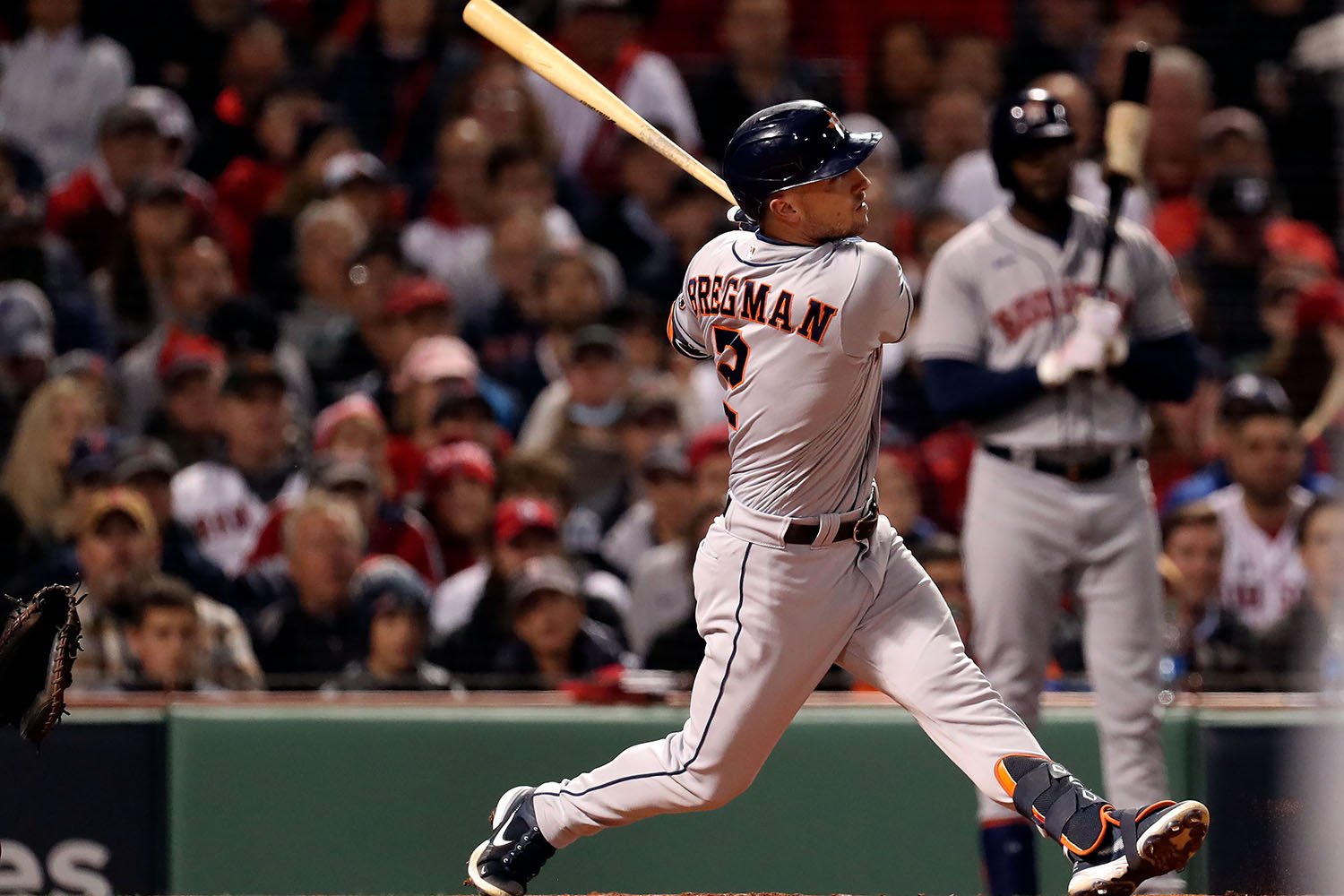 On Monday night, the baseball world found out that Alex Bregman would be joining the Red Sox on a three-year, $120-million contract with opts-outs after each of the first two seasons and an as-yet-unreported amount of deferred money. Over the coming days, we’ll be looking at this news from every angle, but today I’d like to stick to the one that matters the most. Let’s talk about what Bregman can do on the field. Say he opts out after one year. What should we expect him to do for the Red Sox during the 2025 season? Bregman has a shelf full of hardware, but he’ll turn 31 before the season starts. He has a career wRC+ of 135, meaning that he’s been 35% better than the average hitter over the course of his career. However, he peaked in 2018 and 2019, when he put up 157 and 167 marks, respectively. If we only look at his numbers since 2020, his wRC+ is 124. If we were just expecting him to keep doing what he’s doing, we would pencil him in for a 120 wRC+ in 2025. However, his 2024 season featured a couple red flags – some of which almost certainly kept him from getting the huge long-term deal that he was hoping for. So let’s answer the question: Who is Bregman right now? In 2024, Bregman’s .319 xwOBA was the lowest he’d ever run since he broke into the majors. Let’s talk about why, and whether we should expect it to bounce back in 2025. Bregman has never possessed light-tower power. He has played his entire career in a ballpark with a short porch in left field (which won’t change in 2025), and he’s made the most of that by pulling the ball in the air with great frequency. He’s also run excellent walk and strikeout rates throughout his career, because he has elite plate discipline and great bat-to-ball skills. He rarely chases and rarely whiffs. As Sarah Langs noted, he’s the only player with a whiff rate in the 94th percentile or better in every season since 2018. However, part of that equation changed in 2024. Despite a pristine career walk rate of 12%, in in 2024, that number fell all the way to 7%. The last time Bregman was below 11.7% was 2017, his first full season in the majors. There are a few reasons for this change. Let’s start with the most obvious. Bregman’s chase rate has been creeping up for the last few years, but in 2024, it jumped all the way to 23.6%. Now, that’s still way below the league average rate, but it’s an enormous increase. He used to be quite literally one of the best players in the game at avoiding bad pitches. According to Robert Orr’s SEAGER metric, which measures selective aggression – attacking hittable pitches in the zone and avoiding bad pitches outside the zone – Bregman ranked in the 99th percentile in 2022 and the 94th percentile in 2023. In 2024, he dropped all the way to the 53rd percentile. His once elite swing decisions had fallen nearly to the league average. Normally, when a player shows themselves more likely to chase, they end up seeing fewer pitches in the strike zone; if you’re the pitcher, why throw a hittable pitch when you don’t have to? Generally, there’s a balance there: the more scared of you a pitcher is, the less likely they are to throw a strike. However, if you have a great eye, you force the pitcher’s hand: they have to throw you strikes. With his optimized contact and razor-sharp batting eye, Bregman gave pitchers no choice. He routinely ran zone rates well below the league average, and because he never swung at pitches outside the zone, he ran some of the highest walk rates in baseball. However, that brings us to our next big change. The VIP treatment ended in 2024. Pitchers no longer seemed scared of Bregman. They started attacking him in the zone. Bregman’s 50.7% zone rate was higher than 71% of all qualified batters. If you drill even deeper and look at pitches over the very heart of the plate, Bregman’s rate was 28.4%. That mark was higher than 88% of all batters (minimum 1,000 pitches seen). The other names at the top of those lists are not inspiring: Brice Turang, Alex Verdugo, Andrew Benintendi. These are players who don’t instill any fear in the pitcher. It’s certainly not where you want your brand-new slugger to be. There’s one reason in particular for this change: Bregman really struggled against fastballs in 2024, and fastballs tend to be thrown over the plate more often than breaking balls or offspeed pitches. Bregman ran a .324 wOBA and .335 xwOBA against four-seamers and sinkers. Both of those numbers were the lowest he’d ever run in his entire career, and as a result, 53.2% of the pitches he saw were fastballs. That’s the highest rate of his career. The interesting thing is that there is still plenty of reason to fear Bregman. His bat-to-ball skills are still intact; he ran an absolutely elite contract rate of 87.2% in 2024. Even against fastballs, his 8.7% whiff rate was among the lowest he’s even run. And he actually hit the ball much harder in 2024. His 40.1% hard-hit rate was the highest mark of his career, and more advanced metrics like 90th percentile exit velocity also shows that he was hitting the ball harder. His average bat speed of 71.4 mph put him in the 41st percentile. He also launched a 109.1-mph home run in August, just the second ball of his career over 109 mph. Clearly, Bregman’s top-end power is at or near the best it’s ever been. Maybe that’s a result of seeing all those pitches over the heart of the plate; he saw that pitchers were throwing the ball over the plate, and he attacked, running a career-high 44.9% swing rate. We should be watching his zone rate and his performance against fastballs very closely this season. They will be big indictors: are pitchers afraid of him, or are they coming after him? If Bregman can no longer be counted on to walk at least 12% of the time, that is a big blow. In 2024, when his walk rate fell to 7%, his on-base percentage fell by nearly 50 points. He nearly made up for it with his increased power output, but the real benefit of a high walk rate is that it raises your floor. It’s the reason that even when Juan Soto seems like he’s having a down year, he’s still one of the best hitters in baseball. Getting on base is so important; it’s just hard to be a bad hitter when you’re running an elite walk rate. A Bregman who can walk that often doesn’t have to hit the ball the hardest he’s ever hit it in order to remain successful. In order to do that, he’s going to have to change the way pitchers think of him. And In order to do that, he’ll have to go back to hammering fastballs.
 -
Can we ever know a player's true talent level? And was Duran really player over his head in 2024? Let’s start off with a graph, shall we? This is straight from Jarren Duran’s player page on FanGraphs. The point I‘m trying to make by leading off with it is that Duran's stardom came out of nowhere. In his first two stints with the Red Sox in 2021 and 2022, Duran put up negative WAR. He was worse than the average triple-A replacement player. In retrospect, we can say that a 2023 swing change altered the trajectory of his career, but Duran hit a combined .219 over his first 91 games. His 2023 breakout was a real surprise, fueled by a completely unsustainable .381 batting average on balls in play. But instead of coming back to earth, Duran put up 6.7 fWAR in 2024. He was one of the best players in the game. As is their wont, all the projection systems are buying roughly half of Duran’s breakout, projecting him for between three and four wins in 2024. Amrit Brown broke this down a few weeks ago, but to be clear, those are still good projections; a four-win player is an All-Star. All the same, Duran has spent the past two seasons blowing the projections out of the water. Let’s dig a bit deeper and look for reasons to either believe or disbelieve in the sustainability of his brilliant 2024 campaign. The question we're asking is a tough one: What is Duran's true talent level? The stakes here couldn’t be higher. The Red Sox have added to their starting rotation during the offseason, but the bullpen and lineup are worse. Moreover, the starting rotation overperformed expectations, and we should probably expect the returning starters to regress some. If Duran returns to his previous form as a good player rather than an MVP candidate, Boton’s playoff chances look a whole lot dimmer. Let’s start with defense and baserunning, as they played big roles in Duran’s 2024 explosion. Duran has always possessed excellent speed, and he’s nearly impossible to double up. Even when he was putting up negative WAR in 2021 and 2022, his baserunning graded out as excellent. Duran is now entering his age-28 season, but with a spring speed of 29.6 feet per second, he was one of the fastest players in the game last season. Even if Father Time slows him down a little, we should expect him to keep putting up gaudy baserunning numbers. The defense is a bit trickier. As late as 2021, scouting reports indicated that Duran was uncomfortable in center field, and advanced metrics like Defensive Runs Saved and Fielding Run Value backed that up. Duran put up negative marks in both metrics in each season from 2021 to 2023. Then, in 2024, everything seemed to click. Duran’s 23 DRS were the second-best in all of baseball, and his 12 FRV were tied for 12th. I am willing to buy that Duran’s defense will remain good. He’ll still have good speed, and his jumps grade out well according to Statcast. However, he’s definitely due for some regression here. Duran led all outfielders with 12 assists in 2024, and outfield assists are particularly fluky. Duran has a great arm, but he came into the 2024 season with two career assists. The odds that he ends up in double digits again are vanishingly small. We should definitely expect his defense to take a real step back. With that out of the way, it’s time to turn to the bat. Let’s start once again with BABIP. After running an absurd .381 BABIP in 2023, Duran dropped to .345 in 2024. That’s a big drop, but it was still the eighth-highest in all of baseball. We should expect Duran to run high BABIPs because he’s got great speed and his swing seems particularly well-suited to hitter-friendly Fenway Park. However, you just can’t expect somebody to repeat .345 BABIP. It happens for several batters each season, but those are the outliers. According to the projection system Steamer, literally no one is expected to run a .345 BABIP in 2025. We just should not bank on Duran doing that again. On the other hand, Duran’s underlying numbers really did show some signs of improvement in 2024. He was much more patient, knocking two percentage points off his chase rate, a big improvement that took him from the bottom third of the league to right around average. As a result, he ran a career-high 7.3% walk rate and a career-low 21.8% strikeout rate. Those aren’t fantastic numbers, but they push Duran toward the league average. You could argue that Duran was too patient – he also swung less often at pitches inside the zone, which isn’t a recipe for success – but I would disagree. According to Statcast, 54% of the balls Duran put into play came on pitches over the heart of the plate, up from 43% in 2023. That’s a huge jump, and swinging at better pitches allowed him to add nearly a full mile per hour to his average exit velocity while nearly doubling his barrel rate. Those kinds of plate discipline gains tend to be sticky year-over-year, which is encouraging. When we put all that together, the numbers aren’t necessarily encouraging. We should expect Duran to remain a great baserunner while both his offense and defense step back some. There’s also the matter of health. Duran missed only two games in 2024, after a suspension for using a homophobic slur. He’s not particularly young, and he plays extremely hard, so we definitely shouldn’t take it for granted that he’ll stay completely health yet again. Even after his improvement in 2024, Duran’s plate discipline grades out as right around average. Because he hits the ball hard, beats out tons of hits, and takes the extra base, that makes him an All-Star-caliber player. However, it also means that a bunch of things need to break right in order for him to approach the six-win form that he put up in 2024. It’s not impossible, but we really shouldn’t expect it to happen again. View full article
-
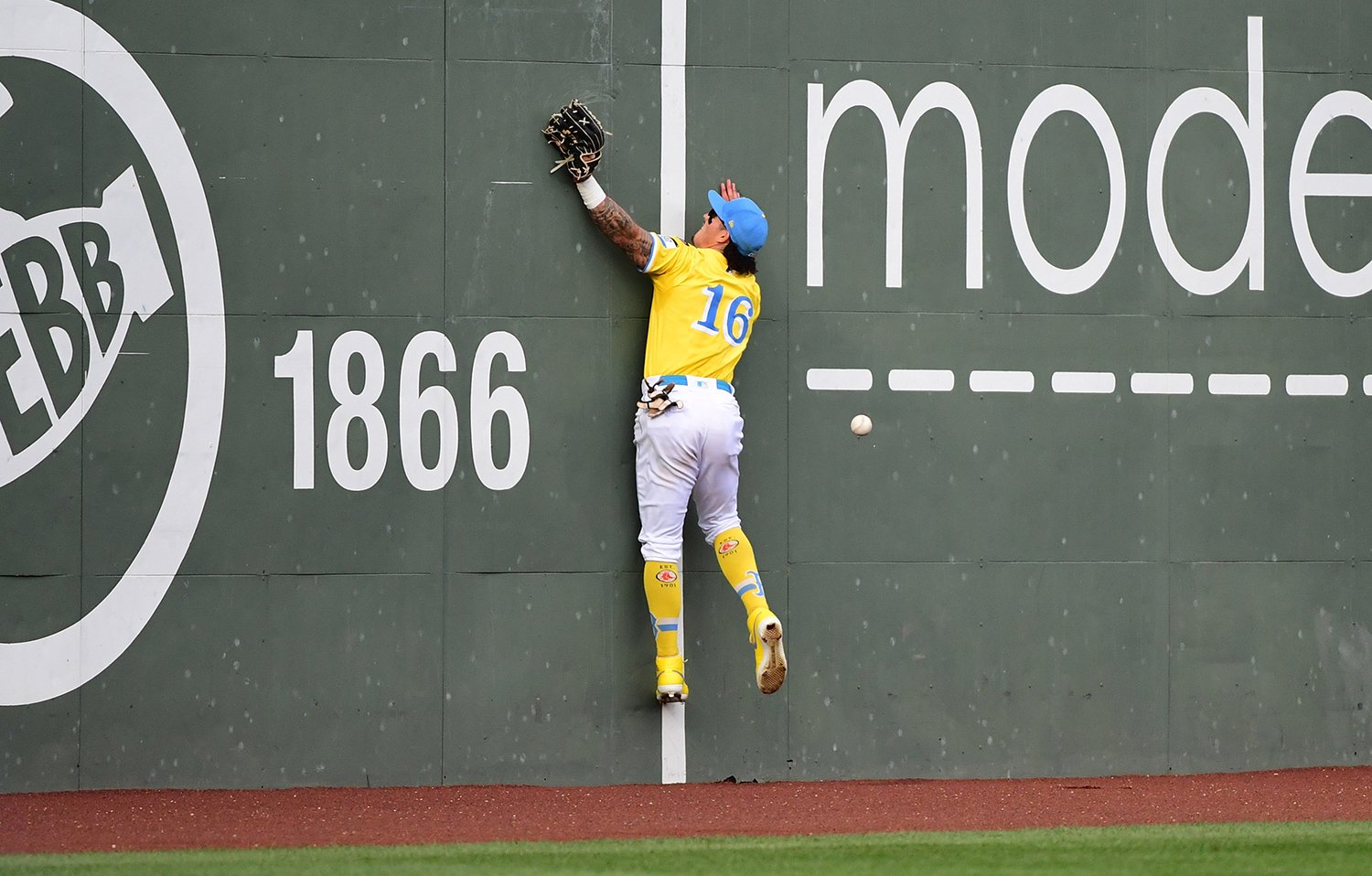 Let’s start off with a graph, shall we? This is straight from Jarren Duran’s player page on FanGraphs. The point I‘m trying to make by leading off with it is that Duran's stardom came out of nowhere. In his first two stints with the Red Sox in 2021 and 2022, Duran put up negative WAR. He was worse than the average triple-A replacement player. In retrospect, we can say that a 2023 swing change altered the trajectory of his career, but Duran hit a combined .219 over his first 91 games. His 2023 breakout was a real surprise, fueled by a completely unsustainable .381 batting average on balls in play. But instead of coming back to earth, Duran put up 6.7 fWAR in 2024. He was one of the best players in the game. As is their wont, all the projection systems are buying roughly half of Duran’s breakout, projecting him for between three and four wins in 2024. Amrit Brown broke this down a few weeks ago, but to be clear, those are still good projections; a four-win player is an All-Star. All the same, Duran has spent the past two seasons blowing the projections out of the water. Let’s dig a bit deeper and look for reasons to either believe or disbelieve in the sustainability of his brilliant 2024 campaign. The question we're asking is a tough one: What is Duran's true talent level? The stakes here couldn’t be higher. The Red Sox have added to their starting rotation during the offseason, but the bullpen and lineup are worse. Moreover, the starting rotation overperformed expectations, and we should probably expect the returning starters to regress some. If Duran returns to his previous form as a good player rather than an MVP candidate, Boton’s playoff chances look a whole lot dimmer. Let’s start with defense and baserunning, as they played big roles in Duran’s 2024 explosion. Duran has always possessed excellent speed, and he’s nearly impossible to double up. Even when he was putting up negative WAR in 2021 and 2022, his baserunning graded out as excellent. Duran is now entering his age-28 season, but with a spring speed of 29.6 feet per second, he was one of the fastest players in the game last season. Even if Father Time slows him down a little, we should expect him to keep putting up gaudy baserunning numbers. The defense is a bit trickier. As late as 2021, scouting reports indicated that Duran was uncomfortable in center field, and advanced metrics like Defensive Runs Saved and Fielding Run Value backed that up. Duran put up negative marks in both metrics in each season from 2021 to 2023. Then, in 2024, everything seemed to click. Duran’s 23 DRS were the second-best in all of baseball, and his 12 FRV were tied for 12th. I am willing to buy that Duran’s defense will remain good. He’ll still have good speed, and his jumps grade out well according to Statcast. However, he’s definitely due for some regression here. Duran led all outfielders with 12 assists in 2024, and outfield assists are particularly fluky. Duran has a great arm, but he came into the 2024 season with two career assists. The odds that he ends up in double digits again are vanishingly small. We should definitely expect his defense to take a real step back. With that out of the way, it’s time to turn to the bat. Let’s start once again with BABIP. After running an absurd .381 BABIP in 2023, Duran dropped to .345 in 2024. That’s a big drop, but it was still the eighth-highest in all of baseball. We should expect Duran to run high BABIPs because he’s got great speed and his swing seems particularly well-suited to hitter-friendly Fenway Park. However, you just can’t expect somebody to repeat .345 BABIP. It happens for several batters each season, but those are the outliers. According to the projection system Steamer, literally no one is expected to run a .345 BABIP in 2025. We just should not bank on Duran doing that again. On the other hand, Duran’s underlying numbers really did show some signs of improvement in 2024. He was much more patient, knocking two percentage points off his chase rate, a big improvement that took him from the bottom third of the league to right around average. As a result, he ran a career-high 7.3% walk rate and a career-low 21.8% strikeout rate. Those aren’t fantastic numbers, but they push Duran toward the league average. You could argue that Duran was too patient – he also swung less often at pitches inside the zone, which isn’t a recipe for success – but I would disagree. According to Statcast, 54% of the balls Duran put into play came on pitches over the heart of the plate, up from 43% in 2023. That’s a huge jump, and swinging at better pitches allowed him to add nearly a full mile per hour to his average exit velocity while nearly doubling his barrel rate. Those kinds of plate discipline gains tend to be sticky year-over-year, which is encouraging. When we put all that together, the numbers aren’t necessarily encouraging. We should expect Duran to remain a great baserunner while both his offense and defense step back some. There’s also the matter of health. Duran missed only two games in 2024, after a suspension for using a homophobic slur. He’s not particularly young, and he plays extremely hard, so we definitely shouldn’t take it for granted that he’ll stay completely health yet again. Even after his improvement in 2024, Duran’s plate discipline grades out as right around average. Because he hits the ball hard, beats out tons of hits, and takes the extra base, that makes him an All-Star-caliber player. However, it also means that a bunch of things need to break right in order for him to approach the six-win form that he put up in 2024. It’s not impossible, but we really shouldn’t expect it to happen again.
 -
In 2024, the Red Sox ran the lowest fastball rate in recorded history. In 2025, they might not even run the lowest rate in the American League. During the 2024 season, the Red Sox didn’t just throw the fewest fastballs in the league; they came in last by a lot. Four-seamers and sinkers made up just 36.9% of Boston’s pitches. That was more than 10 percentage points below the league average of 47.7%. No other team was below 42%, and 10 different teams were above 50%. Here’s what that looks like on a bar graph. The Red Sox are the red bar at the very end. I feel like that graph doesn’t really do just to how much of an outlier the Red Sox really were, so instead of using a baseline of zero, I’m going to show you the same graph, but this time the X axis is set at the league average of 47.7%. Does that make it clearer? Only one other team in baseball, the Twins, was more than five percentage points away from the league average. The Red Sox were more than twice as far away as the Twins were. They were in their own galaxy. As you surely know, the league has been moving away from leading with the fastball for decades now. In 2009, 58.4% of all pitches were four-seamer or sinkers (coincidentally, the Red Sox still ranked last, at 46.7%). Teams are encouraging their pitchers to throw their best pitch more often, and in 2024, the Red Sox decided to jump out in front of the rest of the league. The data only goes back to 2002, but it's very safe to say that the 2024 Red Sox ran the lowest fastball rate in major league history. You’d be hard-pressed to argue that it didn’t work. In 2023, they ran a 4.52 ERA and 4.23 xFIP, which ranked 21st and 15th, respectively. In 2024, those numbers were 4.05 and 4.03, which ranked 16th and 12th. In other words, the Red Sox improved significantly in ERA, while an advanced ERA predictor credited them with a smaller improvement. Obviously, there’s always going to be year-to-year variation, so while one season is probably too small a sample size for us to declare victory, at the very least, we can say that this focus hasn’t hurt. There’s no reason to expect the Red Sox to change their approach in 2025. However, over the offseason, they added some pitchers who rely pretty heavily on fastballs. Garrett Crochet threw his fastball 55.8% of the time in 2024. Aroldis Chapman was at 61.4%, and Justin Wilson was at 49.5%. The Red Sox will also be getting Liam Hendriks back, and he threw his fastball 58.6% of the time in 2023. Knowing all this, I got curious about whether we should still expect Boston to run the lowest fastball rate in the league next season, so I crunched the numbers. I pulled depth charts projections from FanGraphs, which broke down how many innings each pitcher on the team might expect to get, then I pulled their fastball rates from 2024. For players who missed the 2024 season like Hendriks or Lucas Giolito, I pulled rates from 2023. For players who haven’t yet appeared in the majors, I pulled their fastball rate from the minors. Name IP FB% Garrett Crochet 157 55.8 Tanner Houck 177 32.4 Brayan Bello 163 45 Walker Buehler 150 45.4 Kutter Crawford 151 33.7 Lucas Giolito 118 42 Aroldis Chapman 65 61.4 Garrett Whitlock 67 22.7 Liam Hendriks 63 58.6 Justin Slaten 66 29.2 Greg Weissert 61 56.3 Brennan Bernardino 60 46.6 Patrick Sandoval 17 33.4 Richard Fitts 61 44.6 Cooper Criswell 33 29.7 Justin Wilson 57 49.5 Josh Winckowski 50 38.7 Michael Fulmer 52 39.6 Quinn Priester 36 44.6 Zach Penrod 30 45.3 Zack Kelly 32 29.9 Hunter Dobbins 21 52.1 Austin Adams 28 26.2 Luis Guerrero 40 46.6 Sean Newcomb 12 59.2 In order to calculate the team’s overall projected fastball rate, I simply made each player’s rate proportional to their percentage of the team’s innings total (so, for example, Justin Slaten’s 66 projected innings are weighted twice as heavily Cooper Criswell’s 33). This is a very rough way to calculate things, but it’s good enough for our purposes and it left me with a 42.7% fastball rate. To be clear, I still expect the Red Sox to come in a bit lower than that rate for a couple reasons. First, the league fastball rate drops every year, so we should probably expect a small drop from every team. We might even expect that drop to accelerate after the rest of the league saw the Red Sox succeed by going all-in on this approach. Second, all of those new roster additions who throw lots of fastballs? We should probably expect them to stop throwing them so often, simply because they joined the Red Sox: The Team That Doesn’t Throw Fastballs. Regardless, that’s a huge increase from 36.9%. We should definitely expect the Red Sox to throw more fastballs this year. Back to our original question: Will they still be last in the league? In 2024, a 42.7% fastball rate would have finished 29th in the league, just ahead of the Twins at 42.4%. If, as we expect, the Red Sox do push some of their new additions away from their fastballs, the Red Sox should retain their crown as the sovereigns of soft stuff. All the same, we should probably expect the contest to be a bit closer than it was last season. View full article
-
Will the Red Sox Throw the Fewest Fastballs Again in 2025?
Davy Andrews posted an article in Red Sox
 During the 2024 season, the Red Sox didn’t just throw the fewest fastballs in the league; they came in last by a lot. Four-seamers and sinkers made up just 36.9% of Boston’s pitches. That was more than 10 percentage points below the league average of 47.7%. No other team was below 42%, and 10 different teams were above 50%. Here’s what that looks like on a bar graph. The Red Sox are the red bar at the very end. I feel like that graph doesn’t really do just to how much of an outlier the Red Sox really were, so instead of using a baseline of zero, I’m going to show you the same graph, but this time the X axis is set at the league average of 47.7%. Does that make it clearer? Only one other team in baseball, the Twins, was more than five percentage points away from the league average. The Red Sox were more than twice as far away as the Twins were. They were in their own galaxy. As you surely know, the league has been moving away from leading with the fastball for decades now. In 2009, 58.4% of all pitches were four-seamer or sinkers (coincidentally, the Red Sox still ranked last, at 46.7%). Teams are encouraging their pitchers to throw their best pitch more often, and in 2024, the Red Sox decided to jump out in front of the rest of the league. The data only goes back to 2002, but it's very safe to say that the 2024 Red Sox ran the lowest fastball rate in major league history. You’d be hard-pressed to argue that it didn’t work. In 2023, they ran a 4.52 ERA and 4.23 xFIP, which ranked 21st and 15th, respectively. In 2024, those numbers were 4.05 and 4.03, which ranked 16th and 12th. In other words, the Red Sox improved significantly in ERA, while an advanced ERA predictor credited them with a smaller improvement. Obviously, there’s always going to be year-to-year variation, so while one season is probably too small a sample size for us to declare victory, at the very least, we can say that this focus hasn’t hurt. There’s no reason to expect the Red Sox to change their approach in 2025. However, over the offseason, they added some pitchers who rely pretty heavily on fastballs. Garrett Crochet threw his fastball 55.8% of the time in 2024. Aroldis Chapman was at 61.4%, and Justin Wilson was at 49.5%. The Red Sox will also be getting Liam Hendriks back, and he threw his fastball 58.6% of the time in 2023. Knowing all this, I got curious about whether we should still expect Boston to run the lowest fastball rate in the league next season, so I crunched the numbers. I pulled depth charts projections from FanGraphs, which broke down how many innings each pitcher on the team might expect to get, then I pulled their fastball rates from 2024. For players who missed the 2024 season like Hendriks or Lucas Giolito, I pulled rates from 2023. For players who haven’t yet appeared in the majors, I pulled their fastball rate from the minors. Name IP FB% Garrett Crochet 157 55.8 Tanner Houck 177 32.4 Brayan Bello 163 45 Walker Buehler 150 45.4 Kutter Crawford 151 33.7 Lucas Giolito 118 42 Aroldis Chapman 65 61.4 Garrett Whitlock 67 22.7 Liam Hendriks 63 58.6 Justin Slaten 66 29.2 Greg Weissert 61 56.3 Brennan Bernardino 60 46.6 Patrick Sandoval 17 33.4 Richard Fitts 61 44.6 Cooper Criswell 33 29.7 Justin Wilson 57 49.5 Josh Winckowski 50 38.7 Michael Fulmer 52 39.6 Quinn Priester 36 44.6 Zach Penrod 30 45.3 Zack Kelly 32 29.9 Hunter Dobbins 21 52.1 Austin Adams 28 26.2 Luis Guerrero 40 46.6 Sean Newcomb 12 59.2 In order to calculate the team’s overall projected fastball rate, I simply made each player’s rate proportional to their percentage of the team’s innings total (so, for example, Justin Slaten’s 66 projected innings are weighted twice as heavily Cooper Criswell’s 33). This is a very rough way to calculate things, but it’s good enough for our purposes and it left me with a 42.7% fastball rate. To be clear, I still expect the Red Sox to come in a bit lower than that rate for a couple reasons. First, the league fastball rate drops every year, so we should probably expect a small drop from every team. We might even expect that drop to accelerate after the rest of the league saw the Red Sox succeed by going all-in on this approach. Second, all of those new roster additions who throw lots of fastballs? We should probably expect them to stop throwing them so often, simply because they joined the Red Sox: The Team That Doesn’t Throw Fastballs. Regardless, that’s a huge increase from 36.9%. We should definitely expect the Red Sox to throw more fastballs this year. Back to our original question: Will they still be last in the league? In 2024, a 42.7% fastball rate would have finished 29th in the league, just ahead of the Twins at 42.4%. If, as we expect, the Red Sox do push some of their new additions away from their fastballs, the Red Sox should retain their crown as the sovereigns of soft stuff. All the same, we should probably expect the contest to be a bit closer than it was last season.
 -
The Red Sox have yet to add a right-handed outfielder to replace Tyler O'Neill. Either they're expecting Rob Refsnyder to step up, or Wilyer Abreu won't have a platoon partner. Alex Cora spent pretty much the entire 2024 season protecting Wilyer Abreu from left-handed pitchers. The rookie started just six games against lefties all season, and only one of them came after May. Of his 447 plate appearances, 18% came against lefties, one of the lowest rates in all of baseball. The numbers certainly made that look like a good decision. Abreu ran an excellent 126 wRC+ against righties and a disastrous 48 wRC+ against lefties. To be clear, 67 plate appearances is a tiny sample. If you dig into the advanced stats, you’ll find that Abreu probably got a little bit unlucky. He both walked and struck out less often against lefties than against righties, and when facing lefties, he ran a .238 BABIP. However, he had some very real and large contact quality issues. When he faced lefties, Abreu’s bat speed was 1.8 mph lower, and his average exit velocity was 4.1 mph lower. Those are gargantuan differences. Abreu hit the ball harder against righties and he put it in the air more often, allowing him to rack up extra-base hits. He ran a 31% groundball against righties and a 49% mark against lefties. We probably shouldn’t expect Abreu to ever excel against left-handed pitching. The problem isn’t new: We don’t have a ton of minor league data to play with, but according to Statcast, Abreu’s .299 xwOBA against lefties in Triple A was a huge step below his .383 xwOBA against righties. Abreu’s steep bat path makes it difficult to crush high fastballs and soft stuff away, and lefties were content to pound the outside corner whenever he came to the plate. All the same, Abreu is 25 years old and has one full major league season under his belt. He may not be great, but there’s still plenty of time for him to improve and adjust to the way he’s being pitched. He may well have to, because Tyler O’Neill and Bobby Dalbec, who combined to make 25 of Boston’s 43 starts against lefties, are both gone. The Red Sox have so far chosen not to make any attempt to replace O’Neill, so until Roman Anthony makes his way to Boston, it looks like there aren’t any reinforcements coming to the outfield. Rob Refsnyder excels against lefties, and it’s possible that after his breakout 2024 season, the Red Sox are planning on letting him serve as Abreu’s platoon partner in right field. As of now, that appears to be the only alternative to letting Abreu start every day and just hoping that he figures things out. To be clear, I’m not necessarily opposed to that plan. If Abreu even learns to hold his own against lefties, that makes him an even more valuable player, and the only way he’s going to learn is by facing them as often as possible. I hate to bring this up, but I wrote a very similar article to this one just about a year ago, about Twins second baseman Edouard Julien. Like Abreu, Julien is a left-handed hitter with a steep swing. Like Abreu, he put up an excellent rookie campaign by mashing right-handed pitching, pretty much never facing left-handed pitching, and struggling immensely on the rare occasions when he did. The reason I hate to bring this up is that Julien had a rough 2024 season, and the Twins ended up sending him back down to Triple A to try to get his swing figured out. He’s still got tons of potential, and I am rooting for him very hard, but the Twins have a crowded infield, and his path to playing time might be difficult. Does any of that sound familiar? To be clear, Abreu’s floor is probably a bit higher; his splits aren’t quite as extreme as Julien’s, and he also provides a ton of value through his defense and baserunning. All the same, unless the Red Sox go out and find a right-handed corner outfielder – and there are very few of them left – we’re not sure what they’ll be asking of Abreu this season. View full article
-
Will the Red Sox Let Wilyer Abreu Face Left-Handed Pitching?
Davy Andrews posted an article in Red Sox
 Alex Cora spent pretty much the entire 2024 season protecting Wilyer Abreu from left-handed pitchers. The rookie started just six games against lefties all season, and only one of them came after May. Of his 447 plate appearances, 18% came against lefties, one of the lowest rates in all of baseball. The numbers certainly made that look like a good decision. Abreu ran an excellent 126 wRC+ against righties and a disastrous 48 wRC+ against lefties. To be clear, 67 plate appearances is a tiny sample. If you dig into the advanced stats, you’ll find that Abreu probably got a little bit unlucky. He both walked and struck out less often against lefties than against righties, and when facing lefties, he ran a .238 BABIP. However, he had some very real and large contact quality issues. When he faced lefties, Abreu’s bat speed was 1.8 mph lower, and his average exit velocity was 4.1 mph lower. Those are gargantuan differences. Abreu hit the ball harder against righties and he put it in the air more often, allowing him to rack up extra-base hits. He ran a 31% groundball against righties and a 49% mark against lefties. We probably shouldn’t expect Abreu to ever excel against left-handed pitching. The problem isn’t new: We don’t have a ton of minor league data to play with, but according to Statcast, Abreu’s .299 xwOBA against lefties in Triple A was a huge step below his .383 xwOBA against righties. Abreu’s steep bat path makes it difficult to crush high fastballs and soft stuff away, and lefties were content to pound the outside corner whenever he came to the plate. All the same, Abreu is 25 years old and has one full major league season under his belt. He may not be great, but there’s still plenty of time for him to improve and adjust to the way he’s being pitched. He may well have to, because Tyler O’Neill and Bobby Dalbec, who combined to make 25 of Boston’s 43 starts against lefties, are both gone. The Red Sox have so far chosen not to make any attempt to replace O’Neill, so until Roman Anthony makes his way to Boston, it looks like there aren’t any reinforcements coming to the outfield. Rob Refsnyder excels against lefties, and it’s possible that after his breakout 2024 season, the Red Sox are planning on letting him serve as Abreu’s platoon partner in right field. As of now, that appears to be the only alternative to letting Abreu start every day and just hoping that he figures things out. To be clear, I’m not necessarily opposed to that plan. If Abreu even learns to hold his own against lefties, that makes him an even more valuable player, and the only way he’s going to learn is by facing them as often as possible. I hate to bring this up, but I wrote a very similar article to this one just about a year ago, about Twins second baseman Edouard Julien. Like Abreu, Julien is a left-handed hitter with a steep swing. Like Abreu, he put up an excellent rookie campaign by mashing right-handed pitching, pretty much never facing left-handed pitching, and struggling immensely on the rare occasions when he did. The reason I hate to bring this up is that Julien had a rough 2024 season, and the Twins ended up sending him back down to Triple A to try to get his swing figured out. He’s still got tons of potential, and I am rooting for him very hard, but the Twins have a crowded infield, and his path to playing time might be difficult. Does any of that sound familiar? To be clear, Abreu’s floor is probably a bit higher; his splits aren’t quite as extreme as Julien’s, and he also provides a ton of value through his defense and baserunning. All the same, unless the Red Sox go out and find a right-handed corner outfielder – and there are very few of them left – we’re not sure what they’ll be asking of Abreu this season.
 -
Everyone knows the Boston lineup is heavy on left-handed hitters, but the computers are spitting out some scary numbers. Here at Talk Sox, we have been writing for months about how the Red Sox need to balance their lineup with a right-handed hitter. We were writing about it before Tyler O’Neill left, and we’re still writing about it now that he’s an Oriole. If you Google the phrase “right-handed power,” the first thing you see is – well, actually the first thing you see is some nonsensical AI garbage – but the point is, we’ve been writing about this a lot. A search on our site makes that very clear: I have written some of those articles myself, but I’m going to let you on a little secret: I’ve never been all that concerned about the handedness issue. Yes, the Red Sox lineup is overwhelmingly left-handed and yes, it would be great to balance it out some. But even with a lineup this lopsided, I think the goal should simply be to get good hitters in the lineup and figure out the rest later. I’ve never been on board with proposals to trade Masataka Yoshida, Triston Casas, or Wilyer Abreu just for the sake of balance. I've been more focused on the holes in the bullpen, second base, and catcher. So that’s my secret. Or at least, it was my secret. On Tuesday, FanGraphs creator David Appleman announced a slew of new features for FanGraphs members. All of the features were focused on the projection model Steamer, and the one that caught my eye first allows you to look up projections for every player based on platoon splits. Naturally, after spending so much time on this issue, I bee-lined for Boston’s projections against left-handed pitching. They're staggering. Take a moment to think about which Red Sox player you think will put up the best numbers against left-handed pitchers next season. Maybe think up your top three. Got them? I’m doing this after the fact, but if I had to guess, maybe I would have have said Rafael Devers, Casas, and Trevor Story. I would have been wrong on all counts. In 2025, Steamer projects that the best hitter on the Red Sox against left-handed pitching will be Kristian Campbell, with a 122 wRC+. That’s right, Campbell, who has yet to make his big-league debut, and who has just 85 plate appearances at Triple A, is projected to be Boston’s best weapon against lefties. He ranks first on the Red Sox, and 66th across the entire league, which is to say that the Red Sox don’t have a single player in the top 60. They only have three in the top 200; you would expect the average team to have six or seven. Behind Campbell, the second and third spots belong to Rob Refsnyder (120) and Vaughn Grissom (109). Those are the only players on the roster whom Steamer projects to be solidly above average against lefties. Devers, Casas, and Yoshida are all projected to be right around league-average. Abreu and Ceddanne Rafaela are projected to be terrible, but still better than they were last season, because that's how regression to the mean works. Jarren Duran is projected to more or less repeat the 86 wRC+ he put up in 2024. Trevor Story is projected to be nearly as bad a Duran, but that’s mostly because at this point, the projection systems don’t believe in him regardless of the handedness of the pitcher. These are only projections, and we shouldn’t take them too seriously. After all, the Red Sox were right in the middle of the pack against lefties with a 101 wRC+ last season, and the only hitters they lost were O’Neill and Danny Jansen, who combined for fewer than 600 PAs. Moreover, the Red Sox project to be great against right-handed pitchers again. All the same, these are some truly terrible numbers. I might have to rethink my stance. View full article
-
Steamer’s New Splits Projections for the Red Sox Aren’t Pretty
Davy Andrews posted an article in Red Sox
 Here at Talk Sox, we have been writing for months about how the Red Sox need to balance their lineup with a right-handed hitter. We were writing about it before Tyler O’Neill left, and we’re still writing about it now that he’s an Oriole. If you Google the phrase “right-handed power,” the first thing you see is – well, actually the first thing you see is some nonsensical AI garbage – but the point is, we’ve been writing about this a lot. A search on our site makes that very clear: I have written some of those articles myself, but I’m going to let you on a little secret: I’ve never been all that concerned about the handedness issue. Yes, the Red Sox lineup is overwhelmingly left-handed and yes, it would be great to balance it out some. But even with a lineup this lopsided, I think the goal should simply be to get good hitters in the lineup and figure out the rest later. I’ve never been on board with proposals to trade Masataka Yoshida, Triston Casas, or Wilyer Abreu just for the sake of balance. I've been more focused on the holes in the bullpen, second base, and catcher. So that’s my secret. Or at least, it was my secret. On Tuesday, FanGraphs creator David Appleman announced a slew of new features for FanGraphs members. All of the features were focused on the projection model Steamer, and the one that caught my eye first allows you to look up projections for every player based on platoon splits. Naturally, after spending so much time on this issue, I bee-lined for Boston’s projections against left-handed pitching. They're staggering. Take a moment to think about which Red Sox player you think will put up the best numbers against left-handed pitchers next season. Maybe think up your top three. Got them? I’m doing this after the fact, but if I had to guess, maybe I would have have said Rafael Devers, Casas, and Trevor Story. I would have been wrong on all counts. In 2025, Steamer projects that the best hitter on the Red Sox against left-handed pitching will be Kristian Campbell, with a 122 wRC+. That’s right, Campbell, who has yet to make his big-league debut, and who has just 85 plate appearances at Triple A, is projected to be Boston’s best weapon against lefties. He ranks first on the Red Sox, and 66th across the entire league, which is to say that the Red Sox don’t have a single player in the top 60. They only have three in the top 200; you would expect the average team to have six or seven. Behind Campbell, the second and third spots belong to Rob Refsnyder (120) and Vaughn Grissom (109). Those are the only players on the roster whom Steamer projects to be solidly above average against lefties. Devers, Casas, and Yoshida are all projected to be right around league-average. Abreu and Ceddanne Rafaela are projected to be terrible, but still better than they were last season, because that's how regression to the mean works. Jarren Duran is projected to more or less repeat the 86 wRC+ he put up in 2024. Trevor Story is projected to be nearly as bad a Duran, but that’s mostly because at this point, the projection systems don’t believe in him regardless of the handedness of the pitcher. These are only projections, and we shouldn’t take them too seriously. After all, the Red Sox were right in the middle of the pack against lefties with a 101 wRC+ last season, and the only hitters they lost were O’Neill and Danny Jansen, who combined for fewer than 600 PAs. Moreover, the Red Sox project to be great against right-handed pitchers again. All the same, these are some truly terrible numbers. I might have to rethink my stance.
 -
 For the second year in a row, this was the offseason when the Red Sox were going to turn it all around. They were going to put the pedal to the metal, sign all the big free agents, and get back to competing for a World Series trophy. However, it hasn’t exactly happened just yet, and that sounds familiar too. The Red Sox didn’t do much of anything before the 2024 season. This offseason, they have made several moves, but I don’t think you could argue that they represent an all-out effort to build a championship team. Although the Red Sox have been linked to a galaxy of star players, they've signed just two players from FanGraphs’ list of the top 50 free agents. Neither was in the top 20, and both signed one-year deals. In fact, I’d argue that fear of commitment has been the running theme of this offseason. Here are the free agent contracts the Red Sox have awarded so far: Abraham Toro, one year Walker Buehler, one year Aroldis Chapman, one year Justin Wilson, one year Austin Adams, one year Sean Newcomb, one year Patrick Sandoval, two years See the pattern? Keep in mind that Sandoval is coming off Tommy John surgery, and he’ll need to ramp up slowly after missing the first half of the 2025 season. In other words, everybody here is either literally or effectively on a one-year deal. The Red Sox also went into the season with young stars like Jarren Duran, Wilyer Abreu, and Triston Casas on rookie contracts, and it would have made sense to engage in contract extension talks with them. They chose not to do so, buying out Duran’s 2025 and 2026 arbitration years only to avoid a hearing. The Red Sox did add some players with more than one year left on their contracts – trading for catchers Blake Sabol and Carlos Narváez, reliever Jovani Moran, and ace Garrett Crochet – but only Crochet is an impact player. The Red Sox are already engaged in extension talks with Crochet, which isn’t nothing, but still, January is drawing to a close and the reinforcements don’t seem to be coming. I would argue that the bullpen is worse than it was in 2024, and there’s no one to take the place of Tyler O’Neill or to fill the hole at second base. This isn’t how the other championship hopefuls are acting. The Mets went out and signed Juan Soto for 15 years, and the Yankees, Giants, Diamondbacks, Blue Jays, and Dodgers have all handed out contracts of at least four years. The Royals, Astros, Rangers, Orioles, and Athletics also handed out three-year deals. You have to take risks to land great players. We’re way past the point when you can argue that the Red Sox just haven’t found the player they’re looking for. Despite being linked to seemingly every single free agent under the sun, they have failed to make a splash. It just seems like they won’t commit to long-term deals. The Red Sox have a great farm system poised to make an impact in Boston this season, and they clearly believe in the pitching development machine they’re building. Maintaining financial flexibility is helpful. So is getting a discount for players on pillow deals, and so is avoiding albatross contracts. All the same, it’s important to keep in mind that a team with the resources of the Red Sox doesn’t have to conduct business this way. They’re choosing to build their team on a one-year-at-a-time basis, risking the entire season on recently injured pitchers finally staying healthy. All these one-year deals, all these trades for replacement-level players, all these stars who sign elsewhere even though the Red Sox were “interested,” or “engaged,” or “in the mix.” They’re choices.
 -
The Red Sox have been very active this offseason, but it's hard to argue that they've been going for it. For the second year in a row, this was the offseason when the Red Sox were going to turn it all around. They were going to put the pedal to the metal, sign all the big free agents, and get back to competing for a World Series trophy. However, it hasn’t exactly happened just yet, and that sounds familiar too. The Red Sox didn’t do much of anything before the 2024 season. This offseason, they have made several moves, but I don’t think you could argue that they represent an all-out effort to build a championship team. Although the Red Sox have been linked to a galaxy of star players, they've signed just two players from FanGraphs’ list of the top 50 free agents. Neither was in the top 20, and both signed one-year deals. In fact, I’d argue that fear of commitment has been the running theme of this offseason. Here are the free agent contracts the Red Sox have awarded so far: Abraham Toro, one year Walker Buehler, one year Aroldis Chapman, one year Justin Wilson, one year Austin Adams, one year Sean Newcomb, one year Patrick Sandoval, two years See the pattern? Keep in mind that Sandoval is coming off Tommy John surgery, and he’ll need to ramp up slowly after missing the first half of the 2025 season. In other words, everybody here is either literally or effectively on a one-year deal. The Red Sox also went into the season with young stars like Jarren Duran, Wilyer Abreu, and Triston Casas on rookie contracts, and it would have made sense to engage in contract extension talks with them. They chose not to do so, buying out Duran’s 2025 and 2026 arbitration years only to avoid a hearing. The Red Sox did add some players with more than one year left on their contracts – trading for catchers Blake Sabol and Carlos Narváez, reliever Jovani Moran, and ace Garrett Crochet – but only Crochet is an impact player. The Red Sox are already engaged in extension talks with Crochet, which isn’t nothing, but still, January is drawing to a close and the reinforcements don’t seem to be coming. I would argue that the bullpen is worse than it was in 2024, and there’s no one to take the place of Tyler O’Neill or to fill the hole at second base. This isn’t how the other championship hopefuls are acting. The Mets went out and signed Juan Soto for 15 years, and the Yankees, Giants, Diamondbacks, Blue Jays, and Dodgers have all handed out contracts of at least four years. The Royals, Astros, Rangers, Orioles, and Athletics also handed out three-year deals. You have to take risks to land great players. We’re way past the point when you can argue that the Red Sox just haven’t found the player they’re looking for. Despite being linked to seemingly every single free agent under the sun, they have failed to make a splash. It just seems like they won’t commit to long-term deals. The Red Sox have a great farm system poised to make an impact in Boston this season, and they clearly believe in the pitching development machine they’re building. Maintaining financial flexibility is helpful. So is getting a discount for players on pillow deals, and so is avoiding albatross contracts. All the same, it’s important to keep in mind that a team with the resources of the Red Sox doesn’t have to conduct business this way. They’re choosing to build their team on a one-year-at-a-time basis, risking the entire season on recently injured pitchers finally staying healthy. All these one-year deals, all these trades for replacement-level players, all these stars who sign elsewhere even though the Red Sox were “interested,” or “engaged,” or “in the mix.” They’re choices. View full article
- 67 replies
-
- 1
-

-
- walker buehler
- aroldis chapman
- (and 3 more)
