


Davy Andrews
-
Posts
196 -
Joined
-
Last visited
Content Type
Profiles
Boston Red Sox Videos
2026 Boston Red Sox Top Prospects Ranking
Boston Red Sox Free Agent & Trade Rumors, Notes, & Tidbits
Guides & Resources
2025 Boston Red Sox Draft Pick Tracker
News
2026 Boston Red Sox Draft Tracker: Picks & Bonuses
Forums
Blogs
Events
Store
Downloads
Gallery
Everything posted by Davy Andrews
-
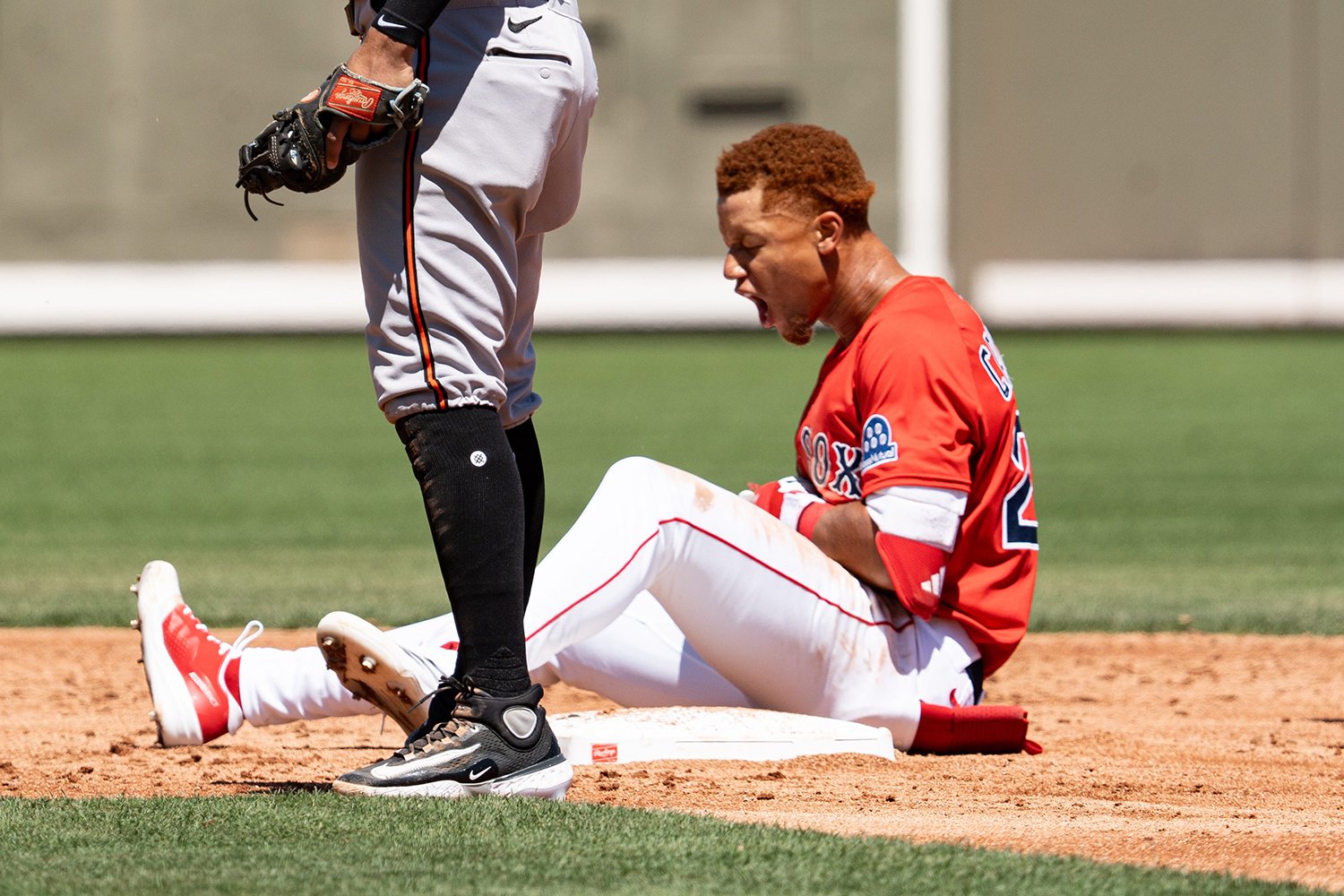 Sunday’s news that highly-ranked prospect Kristian Campbell will be breaking camp with the Red Sox, presumably as the starting second baseman, answered one of the team's most pressing questions. It also raised some big questions. It’s still somewhat surprising, both because of Campbell’s inexperience and because the Red Sox didn’t have to make this move. They had a perfectly solid placeholder in David Hamilton. Yes, Hamilton is better suited to a bench role, but he showed last year that he can absolutely fill in and provide league-average production as an everyday second baseman. This wasn’t a move made out of desperation. The team clearly thinks that Campbell is ready for a shot. So let’s talk about why. Campbell’s batting performance during spring training was undeniably bad. He batted .167 and struck out more than 30% of the time. He ended with a wRC+ of just 59, meaning he was 41% worse than a league-average hitter. As a frame of reference, the worst wRC+ put up by a qualified hitter during the 2024 season was 10 points higher than that. A 59 wRC+ is catastrophically bad. However, there are some encouraging signs to be found; you just really have to be looking for them. Although Campbell’s strikeout rate was ugly, he also walked an excellent 17% of the time and ran a solid 26% line drive rate. Moreover, his .233 BABIP was extremely low. In the short sample size of spring training, getting unlucky on a few balls that should’ve fallen in for hits is enough to make you look much worse than you really are. Campbell also hit well during the Spring Breakout (homering, as did Roman Anthony and Marcelo Mayer), but those games didn’t count toward official spring training stats. Most important is that Campbell looked better as the spring went on, making better swing decision and hitting the ball harder. Just ask Alex Cora, who told reporters, “I saw some underlying numbers and he’s trending in the right direction and he’s hitting the ball hard and not chasing. He’s a good hitter.” Campbell started out 1-for-17 and ended going 7-for-31. That’s still not great, but it’s definitely an improvement. Because JetBlue Park isn’t set up for Statcast, Campbell hit just 12 balls that were tracked, but he recorded a 58% hard-hit rate and 92.4 average exit velocity on them. That’s a tiny sample size, but it’s encouraging because those are excellent numbers. Among Red Sox players with at least 10 tracked balls in play, Campell’s hard-hit rate ranked second (behind spring training god Trayce Thompson) and his exit velocity ranked third (behind Thompson and Anthony). Lastly, Campbell’s defense was impressive throughout the spring. He made several highlight plays both at second and other stops on his grand defensive tour of JetBlue Park. Campbell doesn’t necessarily have a solid defensive position just yet, which is one of the reasons the Red Sox moved him all over the diamond. He’ll almost certainly make some ugly mistakes as the team’s everyday second basemen. He’s an athlete and he’ll improve, but it might not always be pretty because he'll be learning the finer points not in the relative anonymity of the minors but in Boston in front of a whole lot of eyeballs. So those are the reasons for optimism. As previously mentioned, you really have to dig for them. That said, it’s important to remember that Campbell had already given the Red Sox some excellent reasons to dig. It starts with his performance over the last two seasons. Simply put, Campbell has never failed to hit at any stop in the minors. Here are the wRC+ marks he put up at each stop along the way, starting at the complex league and ending in Worcester: 189, 132, 173, 197, 139. What those very high numbers mean is that at his very worst, Campbell was still 32% better than the league-average hitter. That’s how you rack up awards and vault into a consensus top-10 prospect in the game. Moreover, keep in mind that Campbell was raking like this while in the middle of a pretty serious overhaul to his swing. The Red Sox changed his batting stance and swing path and had him undergoing training to improve hit bat speed. That’s a lot to relearn, and somehow, none of it even caused him to slow down a bit. For comparison, I’d point you to Alex Bregman, who undertook a weighted bat program last offseason and faced enormous struggles during the early months as he tried to adapt his new swing to actual game action. Here’s how Eric Longenhagen of FanGraphs, who ranked Campbell the seventh-best prospect in baseball, described Campbell’s offense: Campbell is going to struggle in Boston. Even after the changes the Red Sox implemented, his swing is still unorthodox, and it will likely look bad at times. Maybe he’ll struggle right away as he did in spring training, and maybe it will happen later, but there’s simply no way he won’t face serious struggles against big-league pitching. He’s 22 years old and he’s barely played at all in Triple-A. In fact, he’s played just 75 total games above Single-A! That’s not even half a season. This is an aggressive promotion, and there’s no guarantee that it will work. However, if the Red Sox really do feel that Campbell is ready, and are willing to let him figure some things out in Boston, it’s absolutely the right move.
 -
 Breaking down the reasons the Red Sox didn't let an ugly spring training dissuade them from breaking camp with Kristian Campbell. Sunday’s news that highly-ranked prospect Kristian Campbell will be breaking camp with the Red Sox, presumably as the starting second baseman, answered one of the team's most pressing questions. It also raised some big questions. It’s still somewhat surprising, both because of Campbell’s inexperience and because the Red Sox didn’t have to make this move. They had a perfectly solid placeholder in David Hamilton. Yes, Hamilton is better suited to a bench role, but he showed last year that he can absolutely fill in and provide league-average production as an everyday second baseman. This wasn’t a move made out of desperation. The team clearly thinks that Campbell is ready for a shot. So let’s talk about why. Campbell’s batting performance during spring training was undeniably bad. He batted .167 and struck out more than 30% of the time. He ended with a wRC+ of just 59, meaning he was 41% worse than a league-average hitter. As a frame of reference, the worst wRC+ put up by a qualified hitter during the 2024 season was 10 points higher than that. A 59 wRC+ is catastrophically bad. However, there are some encouraging signs to be found; you just really have to be looking for them. Although Campbell’s strikeout rate was ugly, he also walked an excellent 17% of the time and ran a solid 26% line drive rate. Moreover, his .233 BABIP was extremely low. In the short sample size of spring training, getting unlucky on a few balls that should’ve fallen in for hits is enough to make you look much worse than you really are. Campbell also hit well during the Spring Breakout (homering, as did Roman Anthony and Marcelo Mayer), but those games didn’t count toward official spring training stats. Most important is that Campbell looked better as the spring went on, making better swing decision and hitting the ball harder. Just ask Alex Cora, who told reporters, “I saw some underlying numbers and he’s trending in the right direction and he’s hitting the ball hard and not chasing. He’s a good hitter.” Campbell started out 1-for-17 and ended going 7-for-31. That’s still not great, but it’s definitely an improvement. Because JetBlue Park isn’t set up for Statcast, Campbell hit just 12 balls that were tracked, but he recorded a 58% hard-hit rate and 92.4 average exit velocity on them. That’s a tiny sample size, but it’s encouraging because those are excellent numbers. Among Red Sox players with at least 10 tracked balls in play, Campell’s hard-hit rate ranked second (behind spring training god Trayce Thompson) and his exit velocity ranked third (behind Thompson and Anthony). Lastly, Campbell’s defense was impressive throughout the spring. He made several highlight plays both at second and other stops on his grand defensive tour of JetBlue Park. Campbell doesn’t necessarily have a solid defensive position just yet, which is one of the reasons the Red Sox moved him all over the diamond. He’ll almost certainly make some ugly mistakes as the team’s everyday second basemen. He’s an athlete and he’ll improve, but it might not always be pretty because he'll be learning the finer points not in the relative anonymity of the minors but in Boston in front of a whole lot of eyeballs. So those are the reasons for optimism. As previously mentioned, you really have to dig for them. That said, it’s important to remember that Campbell had already given the Red Sox some excellent reasons to dig. It starts with his performance over the last two seasons. Simply put, Campbell has never failed to hit at any stop in the minors. Here are the wRC+ marks he put up at each stop along the way, starting at the complex league and ending in Worcester: 189, 132, 173, 197, 139. What those very high numbers mean is that at his very worst, Campbell was still 32% better than the league-average hitter. That’s how you rack up awards and vault into a consensus top-10 prospect in the game. Moreover, keep in mind that Campbell was raking like this while in the middle of a pretty serious overhaul to his swing. The Red Sox changed his batting stance and swing path and had him undergoing training to improve hit bat speed. That’s a lot to relearn, and somehow, none of it even caused him to slow down a bit. For comparison, I’d point you to Alex Bregman, who undertook a weighted bat program last offseason and faced enormous struggles during the early months as he tried to adapt his new swing to actual game action. Here’s how Eric Longenhagen of FanGraphs, who ranked Campbell the seventh-best prospect in baseball, described Campbell’s offense: Campbell is going to struggle in Boston. Even after the changes the Red Sox implemented, his swing is still unorthodox, and it will likely look bad at times. Maybe he’ll struggle right away as he did in spring training, and maybe it will happen later, but there’s simply no way he won’t face serious struggles against big-league pitching. He’s 22 years old and he’s barely played at all in Triple-A. In fact, he’s played just 75 total games above Single-A! That’s not even half a season. This is an aggressive promotion, and there’s no guarantee that it will work. However, if the Red Sox really do feel that Campbell is ready, and are willing to let him figure some things out in Boston, it’s absolutely the right move. View full article
 -
The minor league data says that Carlos Narváez is an excellent pitch framer. The spring training data says he might be one of the best in all of baseball. If you went into the offseason hoping the Red Sox would focus on upgrading at the catcher position, you weren’t alone. With trade acquisition Danny Jansen a free agent and Connor Wong due for regression after a too-good-too-be-true offensive performance in 2024, the team needed either a new starter or, at the very least, a decent backup. Once the Red Sox traded Kyle Teel away in the Garrett Crochet deal, the need became all the more pressing, and once again, you weren’t alone if you felt underwhelmed by the three moves the team made. The Red Sox signed Seby Zavala to a minor league deal, traded pitching prospect Elmer Rodriguez-Cruz to the Yankees in exchange for Carlos Narváez, and traded international bonus pool space to the Giants in exchange for Blake Sabol. Zavala is a glove-first 31-year-old with 2.3 fWAR to his name. Narváez is a 25-year-old who has performed adequately on offense in the minors, but his reputation is also as a defensive specialist. Sabol is 25, and was once a fairly-well regarded prospect, but has failed to put it together over the last two years. On Thursday, the plan became clear. The Red Sox optioned Sabol to the minors, and appear set to name Narváez as Wong’s backup to start the season. If and when the team sends Zavala down, he should have the opportunity to opt out, looking for a chance to catch on with another team before accepting a minor league assignment. So what made the team decide to go with Narváez? It probably isn’t the .226 average he’s run in spring training. Narváez has “an incredible track record as a defender at the minor league level,” Red Sox catching instructor Parker Guinn said to MassLive. “He was one of the top, if not the top defender in Triple A last year. Incredible receiver." That's why the Red Sox want him. He's an excellent pitch framer. Unfortunately for us, public framing data for the minor leagues can be hard to come by, so I pulled information from Baseball Savant’s new minor league search tool. I focused on pitches in the shadow zone, which includes any pitch that’s within one baseball's-width of the edge of the strike zone. It’s the pale pink area in the diagram below, zones 11 through 19. Those are the pitches where a catcher’s framing comes into play, so I looked at every minor league catcher who received at least 1,000 tracked pitches there over the past two seasons. That gave me a sample size of 121 players. Narváez has caught 3,230 such pitches, converting 45% of them for strikes. That’s not an incredible percentage. It puts him in just the 55th percentile, which doesn’t sound elite at all. However, not all of that is Narváez’s fault. The shadow zone includes pitches both inside and outside the strike zone. Just 42% of the shadow zone pitches Narváez’s received were actually in the strike zone, the third-lowest total of all the catchers in our sample. In other words, he converted an above-average percentage of strikes even though almost no one had a smaller percentage of pitches that should rightfully have been called strikes. If you subtract those two numbers: each catcher’s called strike rate minus the percentage of pitches that should have been called strikes, Narváez comes in at 3% above his expected called strike rate. That differential ranks 20th among all catchers, putting him in the 86th percentile. If we just look at pitches inside the strike zone, Narváez earned called strikes 86% of the time, which ranks 12th. He converted just over 15% of pitches outside the zone, which ranked 36th. In other words, any time a pitch was close, Narváez was toward the top of the minor leagues in making it look like a strike. Over at Baseball America, they broke the numbers down slightly differently, looking only at the stats after June 25, when Triple-A implemented the full-time challenge system: “During that time, he got called strikes on 85% of pitches in the shadow area of the zone, ranking eighth among Triple-A catchers in that time. He drew strikes on 26% of shadow pitches outside the zone, which was best among Triple-A catchers by a huge margin.” If that's not enough for you, let's dive into spring training numbers. As of Friday, Narváez has received 156 Statcast-tracked pitches that were in both the strike zone and the shadow zone. He has converted 68 of them for strikes. In fact, here's a pitch chart that shows all 68 of them. Those 68 strikes represent a 47.1% conversion rate. Among the 118 catchers who have received at least 100 pitches in the same location, that's the second-best conversion rate in spring training. On shadow zone pitches outside the zone, his 12.1% conversion rate ranks 18th. Almost no one has been better than Narváez this spring. I know I've thrown a lot of numbers at you, but the bottom line is pretty clear: The Red Sox might be onto something here. Narváez really does seem to be elite when it comes to earning extra strikes for his pitchers. There’s real data, quite a bit of it at this point, behind the assertion that Narváez has the chance to be an excellent defender in Boston this season. View full article
-
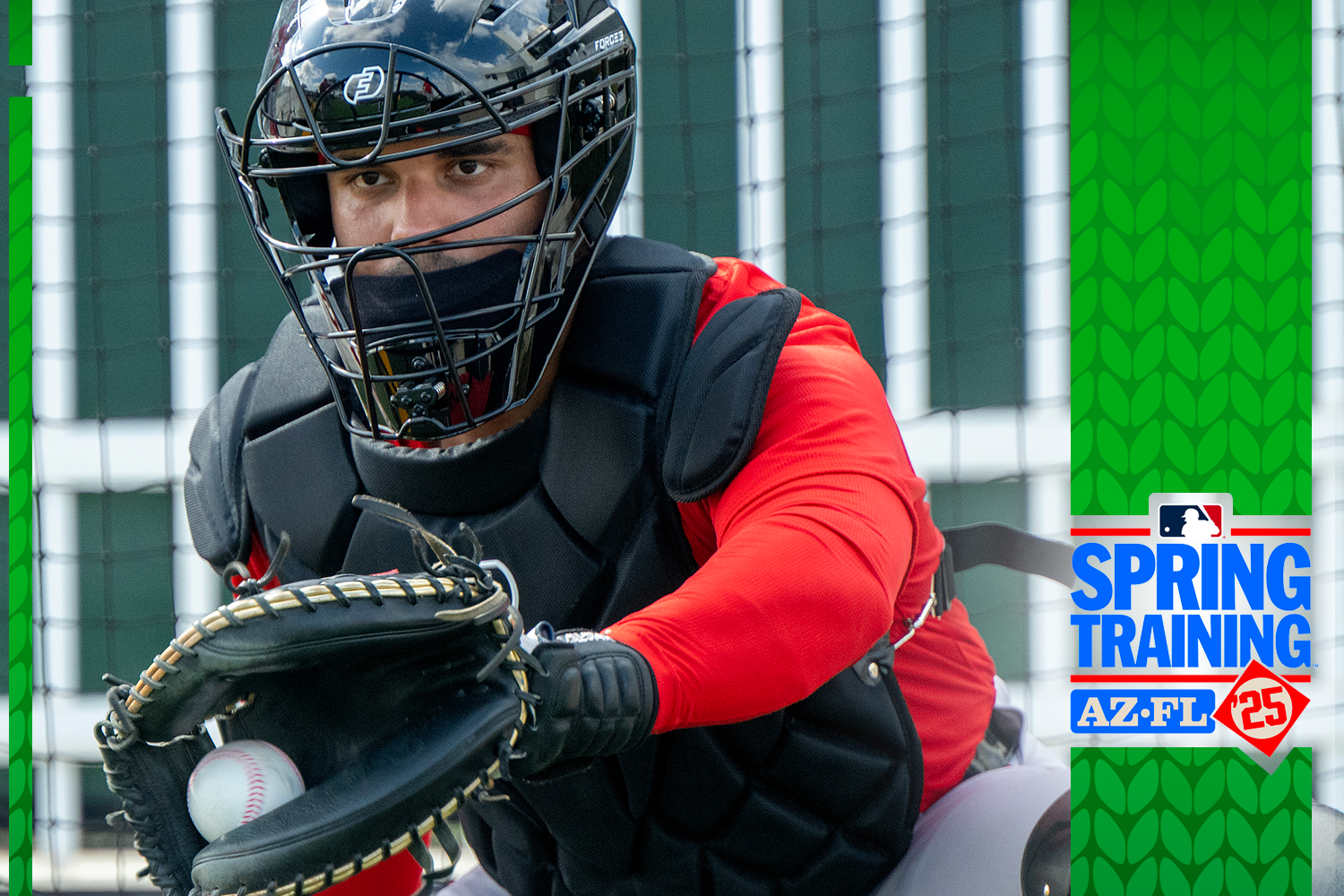 If you went into the offseason hoping the Red Sox would focus on upgrading at the catcher position, you weren’t alone. With trade acquisition Danny Jansen a free agent and Connor Wong due for regression after a too-good-too-be-true offensive performance in 2024, the team needed either a new starter or, at the very least, a decent backup. Once the Red Sox traded Kyle Teel away in the Garrett Crochet deal, the need became all the more pressing, and once again, you weren’t alone if you felt underwhelmed by the three moves the team made. The Red Sox signed Seby Zavala to a minor league deal, traded pitching prospect Elmer Rodriguez-Cruz to the Yankees in exchange for Carlos Narváez, and traded international bonus pool space to the Giants in exchange for Blake Sabol. Zavala is a glove-first 31-year-old with 2.3 fWAR to his name. Narváez is a 25-year-old who has performed adequately on offense in the minors, but his reputation is also as a defensive specialist. Sabol is 25, and was once a fairly-well regarded prospect, but has failed to put it together over the last two years. On Thursday, the plan became clear. The Red Sox optioned Sabol to the minors, and appear set to name Narváez as Wong’s backup to start the season. If and when the team sends Zavala down, he should have the opportunity to opt out, looking for a chance to catch on with another team before accepting a minor league assignment. So what made the team decide to go with Narváez? It probably isn’t the .226 average he’s run in spring training. Narváez has “an incredible track record as a defender at the minor league level,” Red Sox catching instructor Parker Guinn said to MassLive. “He was one of the top, if not the top defender in Triple A last year. Incredible receiver." That's why the Red Sox want him. He's an excellent pitch framer. Unfortunately for us, public framing data for the minor leagues can be hard to come by, so I pulled information from Baseball Savant’s new minor league search tool. I focused on pitches in the shadow zone, which includes any pitch that’s within one baseball's-width of the edge of the strike zone. It’s the pale pink area in the diagram below, zones 11 through 19. Those are the pitches where a catcher’s framing comes into play, so I looked at every minor league catcher who received at least 1,000 tracked pitches there over the past two seasons. That gave me a sample size of 121 players. Narváez has caught 3,230 such pitches, converting 45% of them for strikes. That’s not an incredible percentage. It puts him in just the 55th percentile, which doesn’t sound elite at all. However, not all of that is Narváez’s fault. The shadow zone includes pitches both inside and outside the strike zone. Just 42% of the shadow zone pitches Narváez’s received were actually in the strike zone, the third-lowest total of all the catchers in our sample. In other words, he converted an above-average percentage of strikes even though almost no one had a smaller percentage of pitches that should rightfully have been called strikes. If you subtract those two numbers: each catcher’s called strike rate minus the percentage of pitches that should have been called strikes, Narváez comes in at 3% above his expected called strike rate. That differential ranks 20th among all catchers, putting him in the 86th percentile. If we just look at pitches inside the strike zone, Narváez earned called strikes 86% of the time, which ranks 12th. He converted just over 15% of pitches outside the zone, which ranked 36th. In other words, any time a pitch was close, Narváez was toward the top of the minor leagues in making it look like a strike. Over at Baseball America, they broke the numbers down slightly differently, looking only at the stats after June 25, when Triple-A implemented the full-time challenge system: “During that time, he got called strikes on 85% of pitches in the shadow area of the zone, ranking eighth among Triple-A catchers in that time. He drew strikes on 26% of shadow pitches outside the zone, which was best among Triple-A catchers by a huge margin.” If that's not enough for you, let's dive into spring training numbers. As of Friday, Narváez has received 156 Statcast-tracked pitches that were in both the strike zone and the shadow zone. He has converted 68 of them for strikes. In fact, here's a pitch chart that shows all 68 of them. Those 68 strikes represent a 47.1% conversion rate. Among the 118 catchers who have received at least 100 pitches in the same location, that's the second-best conversion rate in spring training. On shadow zone pitches outside the zone, his 12.1% conversion rate ranks 18th. Almost no one has been better than Narváez this spring. I know I've thrown a lot of numbers at you, but the bottom line is pretty clear: The Red Sox might be onto something here. Narváez really does seem to be elite when it comes to earning extra strikes for his pitchers. There’s real data, quite a bit of it at this point, behind the assertion that Narváez has the chance to be an excellent defender in Boston this season.
 -
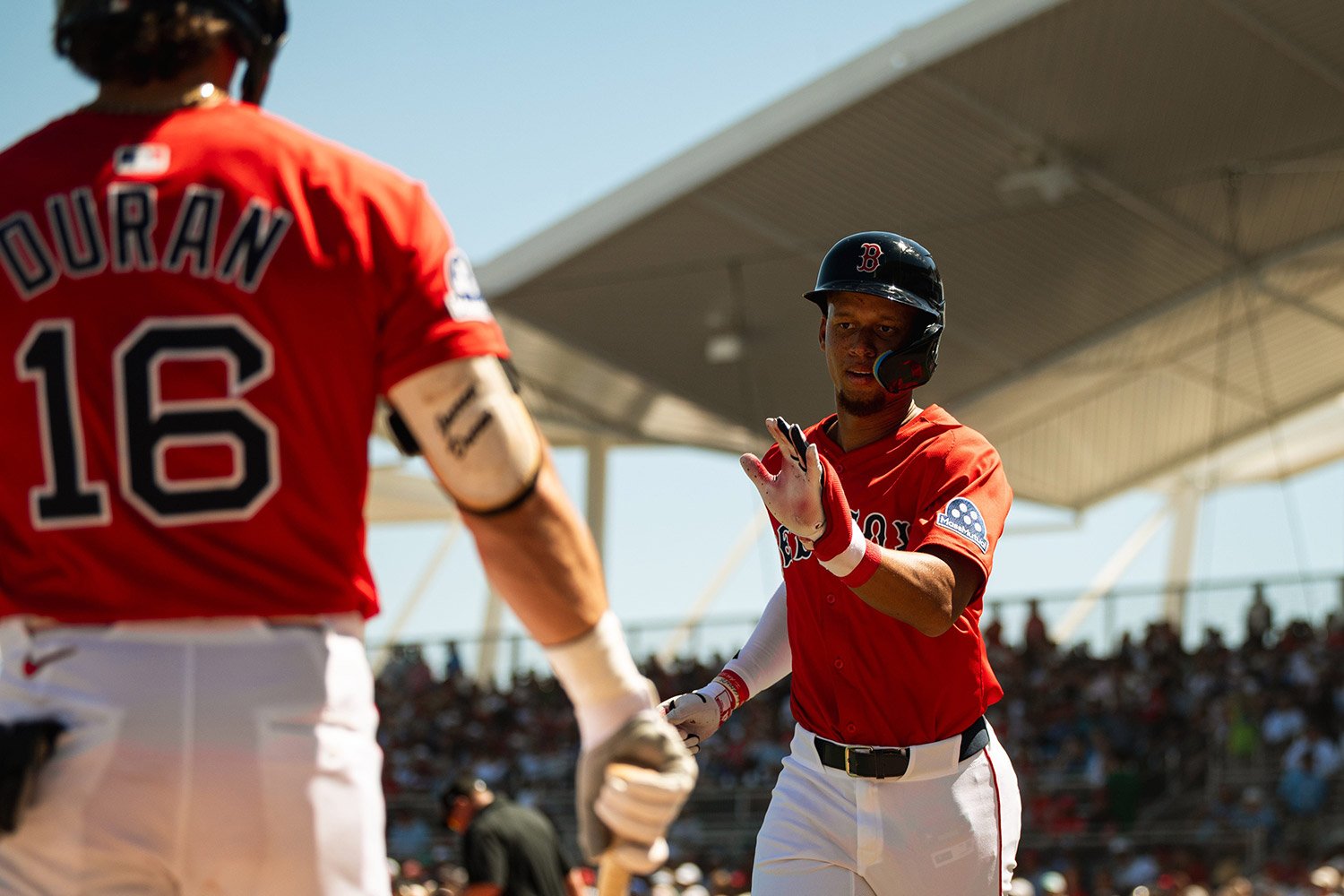 Well, it's finally happening. According to Ari Alexander of KPRC 2 Houston, Kristian Campbell is breaking camp with the Red Sox. He'll be on the Opening Day roster, and will presumably be the team's starting second baseman. We'll obviously write more about this on Monday (and probably throughout the week), but in the meantime, how do you feel about the decision?
 -
Well, it's finally happening. According to Ari Alexander of KPRC 2 Houston, Kristian Campbell is breaking camp with the Red Sox. He'll be on the Opening Day roster, and will presumably be the team's starting second baseman. We'll obviously write more about this on Monday (and probably throughout the week), but in the meantime, how do you feel about the decision? View full rumor
-
Vaughn Grissom Out, Marcelo Mayer In: Red Sox Second Base Battle Rages On
Davy Andrews posted an article in Red Sox
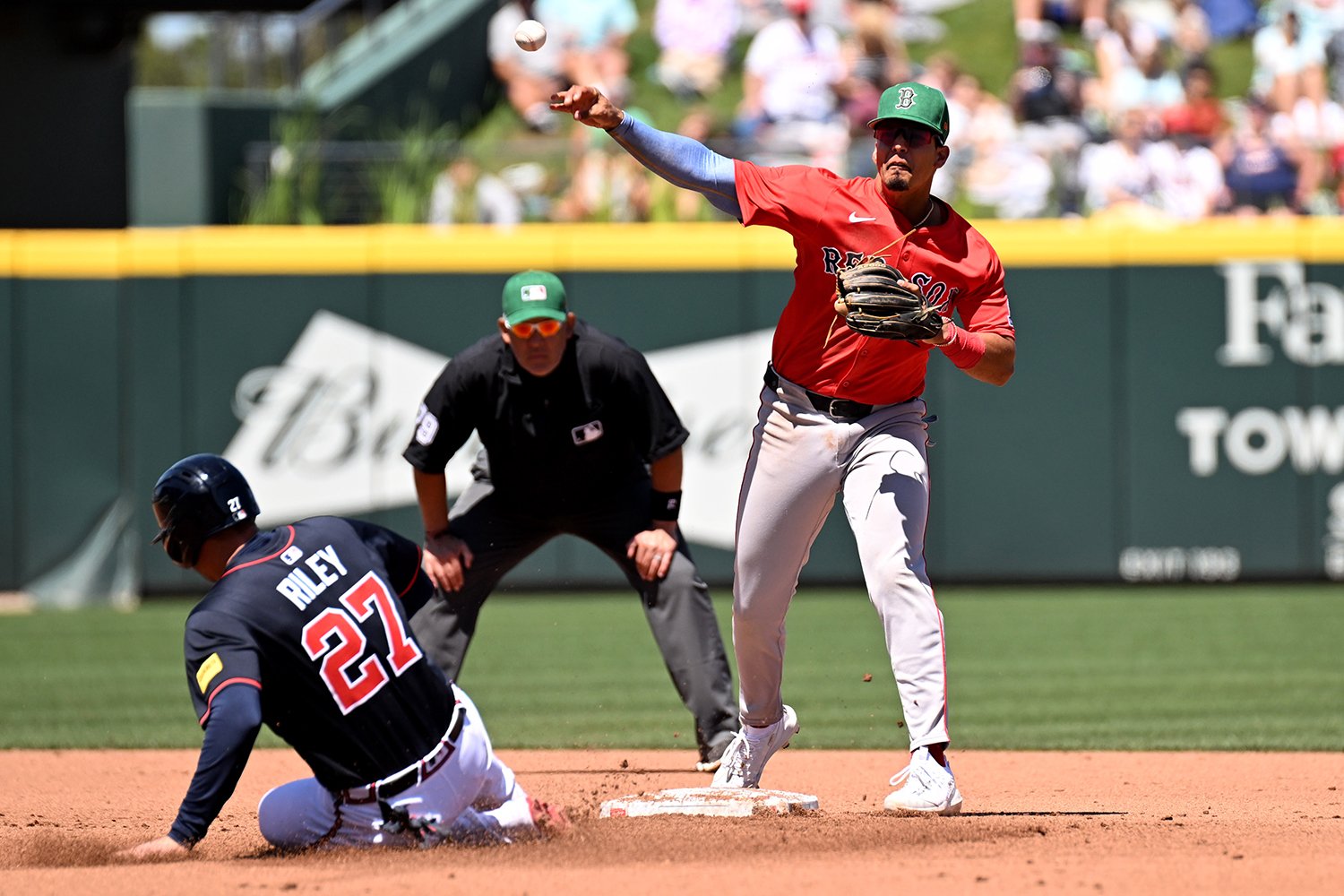 On Tuesday, Bryan Jaeger wrote up the second base entry in our Red Sox Position Analysis series. Now, just three days later, the state of the position looks much different and with apologies to Bryan, it’s time for an update. It started during Tuesday’s game against the Yankees, when Marcelo Mayer, who had never once played second base in 2,034 1/3 professional innings, took over for Kristian Campbell at the keystone in the sixth inning. Mayer spent all game at second base against the Tigers on Wednesday. When reporters asked whether Mayer would have a shot at being the team’s Opening Day second baseman, Alex Cora said simply, “Everybody has a shot.” That wasn’t entirely true. On Wednesday afternoon, word broke that that the Red Sox had optioned Vaughn Grissom back down to triple-A Worcester. Expelling Grissom from the fraternity of everybody was pretty clearly the right move. Grissom was once the heir apparent to Dansby Swanson in Atlanta, but once he reached Triple A, his numbers were propped up by batted ball luck. The Red Sox took a gamble on him, and it has not paid off. Grissom has not shown any reason for optimism in 350 major-league PAs, displaying little plate discipline, power, or on-base ability. Over the same short sample size, the advanced metrics have not liked his defense either. It’s too early to write the 24-year-old off entirely, but he’s simply not who you want starting at second base if you expect to contend. So who’s left in the category of everybody? There’s Mayer, Campbell, David Hamilton, Nick Sogard, and Romy Gonzalez. We should probably talk briefly about Alex Bregman. As you surely know, Bregman made it clear over the winter that he was open to shifting from third base to second if that made the most sense for whoever signed him. Similarly, the Red Sox said very clearly that they had no plans to move Rafael Devers off third base. The moment Bregman arrived in camp, all that went out the window. Bregman has played only third base, and Devers won’t play defense during spring training at all. It remains to be seen what the team will do when both Devers and Masataka Yoshida are healthy, as Devers is the team’s best hitter and Yoshida isn’t too far behind, but at this point, it seems unlikely that Bregman plays anything but third. If the team thought there was the slightest chance that he might end up playing regular season games at second base, he would be getting would reps there. So that leaves Mayer, Campbell, Hamilton, Sogard, and Gonzalez. Now let’s cross off Sogard and Gonzalez. Both seem ticketed for utility roles this season, and they would represent stopgap options at best. Gonzalez has never hit at the big-league level or graded out well as a second baseman. Sogard hasn’t really hit even in the minors. As a side note, Gonzalez left Tuesday’s game with oblique tightness, but an MRI came back clean, so that shouldn’t be a factor. The real competition seems to be between Mayer, Campbell, and Hamilton. Hamilton has an excellent argument for the job, and he seems like the likeliest contender. Hamilton didn’t hit particularly well in 2024, running a 92 wRC+ that seemed to be propped up by a bit of batted ball luck, but he stole 28 bases in just 98 games, and his baserunning and defense helped him put up 1.7 fWAR, an excellent total for a player who got just 317 PAs. However, it’s worth noting that if you use WARP, Baseball Prospectus’s version of WAR, Hamilton was only worth 0.4. WARP docked Hamilton for his batted ball luck, and it was a bit suspicious of his defense too. His real value is likely somewhere between those two valuations, making him a league-average player who could be worth two wins over a full season. He’s also been solid during spring training, making more contact than he did last season and running a 107 wRC+. Still, Hamilton would likely have more value to the team as a bench player who could pinch-hit against lefties and pinch-run when the team needs a bag. All great teams have a player like that. That leaves Mayer and Campbell. Campbell came into camp looking like he had a real shot at the job. He’s a true second baseman and a higher-ranked prospect, and although he had just 19 games of experience at triple-A Worcester, that was 19 more games than Mayer. Campbell has struggled during spring training, batting just .158 and striking out a third of the time. Mayer has excelled, but he’s also run an absurd .476 BABIP, so it’s hard to know how seriously to take his performance. Campbell started seeing time at other defensive positions at spring training, and now Mayer is seeing time at second. This is pretty easy to interpret: the team isn’t quite so high on Campbell at second and wants to give Mayer a shot. So that’s where we stand with just three spring training games and two against the Mexican Sultanes de Monterrey remaining before Opening Day. Just yesterday, I argued strenuously that the Red Sox should only promote Mayer, Campbell, and Roman Anthony to Boston once they're truly ready, and were prepared to give them all the runway they needed to find their feet at the major league level. They’ve got too much potential to do anything that might hinder their development into stars. Maybe the team believes that time is now for either Mayer or Campbell. There’s no way to know. If they don’t feel that way, then letting Hamilton start the season with the job makes a lot of sense. He’s probably not a long-term solution, but he should be solid while Campbell and Mayer get the chance to prove themselves in Worcester. However things shake out, we’ll find out what the team thinks soon enough.
 -
Who will play second base on Opening Day? Perhaps we'll never know. You know, until Opening Day. Let's break down the remaining contenders. On Tuesday, Bryan Jaeger wrote up the second base entry in our Red Sox Position Analysis series. Now, just three days later, the state of the position looks much different and with apologies to Bryan, it’s time for an update. It started during Tuesday’s game against the Yankees, when Marcelo Mayer, who had never once played second base in 2,034 1/3 professional innings, took over for Kristian Campbell at the keystone in the sixth inning. Mayer spent all game at second base against the Tigers on Wednesday. When reporters asked whether Mayer would have a shot at being the team’s Opening Day second baseman, Alex Cora said simply, “Everybody has a shot.” That wasn’t entirely true. On Wednesday afternoon, word broke that that the Red Sox had optioned Vaughn Grissom back down to triple-A Worcester. Expelling Grissom from the fraternity of everybody was pretty clearly the right move. Grissom was once the heir apparent to Dansby Swanson in Atlanta, but once he reached Triple A, his numbers were propped up by batted ball luck. The Red Sox took a gamble on him, and it has not paid off. Grissom has not shown any reason for optimism in 350 major-league PAs, displaying little plate discipline, power, or on-base ability. Over the same short sample size, the advanced metrics have not liked his defense either. It’s too early to write the 24-year-old off entirely, but he’s simply not who you want starting at second base if you expect to contend. So who’s left in the category of everybody? There’s Mayer, Campbell, David Hamilton, Nick Sogard, and Romy Gonzalez. We should probably talk briefly about Alex Bregman. As you surely know, Bregman made it clear over the winter that he was open to shifting from third base to second if that made the most sense for whoever signed him. Similarly, the Red Sox said very clearly that they had no plans to move Rafael Devers off third base. The moment Bregman arrived in camp, all that went out the window. Bregman has played only third base, and Devers won’t play defense during spring training at all. It remains to be seen what the team will do when both Devers and Masataka Yoshida are healthy, as Devers is the team’s best hitter and Yoshida isn’t too far behind, but at this point, it seems unlikely that Bregman plays anything but third. If the team thought there was the slightest chance that he might end up playing regular season games at second base, he would be getting would reps there. So that leaves Mayer, Campbell, Hamilton, Sogard, and Gonzalez. Now let’s cross off Sogard and Gonzalez. Both seem ticketed for utility roles this season, and they would represent stopgap options at best. Gonzalez has never hit at the big-league level or graded out well as a second baseman. Sogard hasn’t really hit even in the minors. As a side note, Gonzalez left Tuesday’s game with oblique tightness, but an MRI came back clean, so that shouldn’t be a factor. The real competition seems to be between Mayer, Campbell, and Hamilton. Hamilton has an excellent argument for the job, and he seems like the likeliest contender. Hamilton didn’t hit particularly well in 2024, running a 92 wRC+ that seemed to be propped up by a bit of batted ball luck, but he stole 28 bases in just 98 games, and his baserunning and defense helped him put up 1.7 fWAR, an excellent total for a player who got just 317 PAs. However, it’s worth noting that if you use WARP, Baseball Prospectus’s version of WAR, Hamilton was only worth 0.4. WARP docked Hamilton for his batted ball luck, and it was a bit suspicious of his defense too. His real value is likely somewhere between those two valuations, making him a league-average player who could be worth two wins over a full season. He’s also been solid during spring training, making more contact than he did last season and running a 107 wRC+. Still, Hamilton would likely have more value to the team as a bench player who could pinch-hit against lefties and pinch-run when the team needs a bag. All great teams have a player like that. That leaves Mayer and Campbell. Campbell came into camp looking like he had a real shot at the job. He’s a true second baseman and a higher-ranked prospect, and although he had just 19 games of experience at triple-A Worcester, that was 19 more games than Mayer. Campbell has struggled during spring training, batting just .158 and striking out a third of the time. Mayer has excelled, but he’s also run an absurd .476 BABIP, so it’s hard to know how seriously to take his performance. Campbell started seeing time at other defensive positions at spring training, and now Mayer is seeing time at second. This is pretty easy to interpret: the team isn’t quite so high on Campbell at second and wants to give Mayer a shot. So that’s where we stand with just three spring training games and two against the Mexican Sultanes de Monterrey remaining before Opening Day. Just yesterday, I argued strenuously that the Red Sox should only promote Mayer, Campbell, and Roman Anthony to Boston once they're truly ready, and were prepared to give them all the runway they needed to find their feet at the major league level. They’ve got too much potential to do anything that might hinder their development into stars. Maybe the team believes that time is now for either Mayer or Campbell. There’s no way to know. If they don’t feel that way, then letting Hamilton start the season with the job makes a lot of sense. He’s probably not a long-term solution, but he should be solid while Campbell and Mayer get the chance to prove themselves in Worcester. However things shake out, we’ll find out what the team thinks soon enough. View full article
-
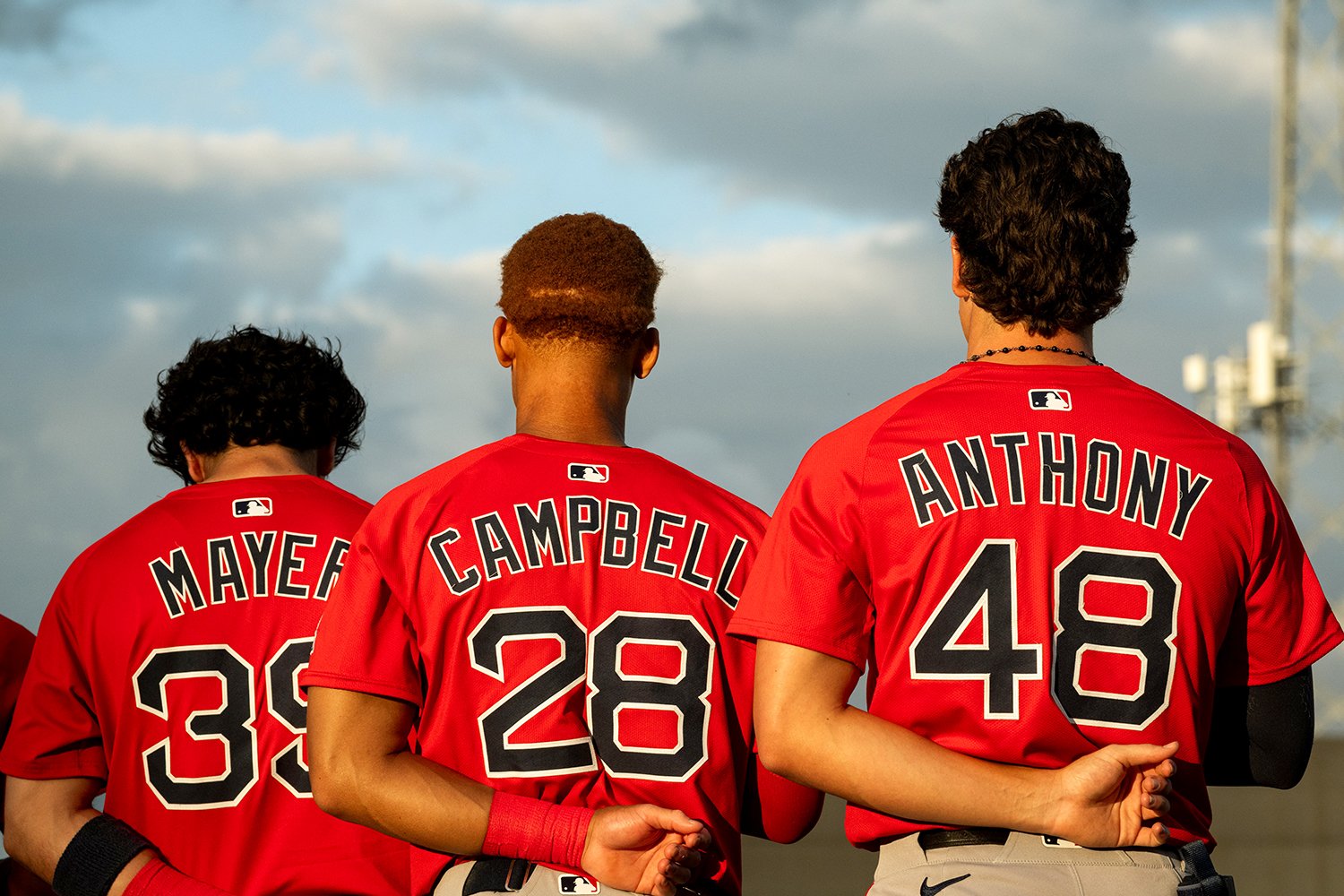 This should be an exciting season for the Red Sox. The team has spent real money and it looks like there’s a chance to compete and make the playoffs. Here at Talk Sox, as we get ready for the season, we’re running prospect rankings, positional previews, and projected lineups. We’ve spilled tons of not-ink about who should make the rotation, how the bullpen should be structured, who should start where, and whether the Big Three, Roman Anthony, Kristian Campbell, and Marcelo Mayer, should break camp with the team. At many positions, the Red Sox have more good players than they can roster; that’s a great problem to have and a fun thing to argue about. I’ve edited dozens of these pieces, and as Opening Day draws near, I figure it’s time to weigh in with my own opinion on the topic, because I feel pretty strongly about it. Here’s when I think the Red Sox should promote the Big Three: Whenever they’re ready. That’s it. That’s my only criterion. It’s all I want from this team: make the development of these three potential stars the top priority. Maybe that means letting Anthony break camp with the big club. Maybe it means keeping Mayer in Worcester until September. I have my own opinions, but I don’t pretend to know. These three players are the future of the club. Anthony is the consensus top prospect in baseball, and there’s similar consensus that Campbell belongs in the top 10 and Mayer in the top 25. That doesn’t mean their success is guaranteed; prospects bust every year for a variety of reasons. But it does mean that maximizing the odds that they turn into successful big leaguers for the next six or seven years an important, delicate job. I’d also remind you that nearly all of the team’s big moves this offseason were for players on one- or two-year deals. Alex Bregman might opt out if he has a great season; Garrett Crochet may not sign a contract extension. In a sense, that means this is a win-now team, but consider this: it also means all those players will come off the books soon, and the team can try again with new free agents. On the other hand, the Big Three will be here into the 2030s, and they’ll be wildly underpaid while they’re here. Making sure that they turn into the best players possible matters way, way more. The absolute worst thing the Red Sox could do is fail to put these players in a position to succeed in order to achieve a short-term goal early in the season. When they’re ready, they need runway to play every day, struggle, and adjust. They should probably be given the chance to own a position, rather than bopping all over the diamond. They definitely shouldn’t be platooning. If Mayer and Campbell are ready to play shortstop and second base in Boston, Trevor Story's contract shouldn't keep it from happening. I understand that the organization needs to put the best team on the field and that in a solid AL East, every game matters, but even if we're just thinking about this season, consider this: If you mishandle one of these players now, they'll struggle both now and later. Better to bring them up later in the season if that means they've got a better chance of succeeding. The good news is that the Red Sox have earned some real trust when it comes to putting these prospects in a position to succeed. The team has done an excellent job developing these players so far. Campbell has adjusted his mechanics in order to lift the ball. It’s worked and sent him soaring up the prospect rankings. If you’ve been paying close attention to the launch angle revolution over the last decade or so, you know that there are absolutely tons of players who have tried and failed to do just that. Anthony had his own meteoric rise after the Sox drafted him as a relatively unheralded second-round pick, and he now runs some of the best exit velocities in the minors. These players have been pushed up the ladder aggressively and managed to succeed at every stop along the way. Put it all together, and you see a player development machine that’s doing good work. At this point, they’ve earned the benefit of the doubt, and their input should be the deciding factor. So that’s my opinion. There’s no guarantee that a top prospect will turn into a star, but that’s exactly why giving the Big Three every chance to reach their potential should be the top priority.
 -
There's only one answer: When they're ready. This should be an exciting season for the Red Sox. The team has spent real money and it looks like there’s a chance to compete and make the playoffs. Here at Talk Sox, as we get ready for the season, we’re running prospect rankings, positional previews, and projected lineups. We’ve spilled tons of not-ink about who should make the rotation, how the bullpen should be structured, who should start where, and whether the Big Three, Roman Anthony, Kristian Campbell, and Marcelo Mayer, should break camp with the team. At many positions, the Red Sox have more good players than they can roster; that’s a great problem to have and a fun thing to argue about. I’ve edited dozens of these pieces, and as Opening Day draws near, I figure it’s time to weigh in with my own opinion on the topic, because I feel pretty strongly about it. Here’s when I think the Red Sox should promote the Big Three: Whenever they’re ready. That’s it. That’s my only criterion. It’s all I want from this team: make the development of these three potential stars the top priority. Maybe that means letting Anthony break camp with the big club. Maybe it means keeping Mayer in Worcester until September. I have my own opinions, but I don’t pretend to know. These three players are the future of the club. Anthony is the consensus top prospect in baseball, and there’s similar consensus that Campbell belongs in the top 10 and Mayer in the top 25. That doesn’t mean their success is guaranteed; prospects bust every year for a variety of reasons. But it does mean that maximizing the odds that they turn into successful big leaguers for the next six or seven years an important, delicate job. I’d also remind you that nearly all of the team’s big moves this offseason were for players on one- or two-year deals. Alex Bregman might opt out if he has a great season; Garrett Crochet may not sign a contract extension. In a sense, that means this is a win-now team, but consider this: it also means all those players will come off the books soon, and the team can try again with new free agents. On the other hand, the Big Three will be here into the 2030s, and they’ll be wildly underpaid while they’re here. Making sure that they turn into the best players possible matters way, way more. The absolute worst thing the Red Sox could do is fail to put these players in a position to succeed in order to achieve a short-term goal early in the season. When they’re ready, they need runway to play every day, struggle, and adjust. They should probably be given the chance to own a position, rather than bopping all over the diamond. They definitely shouldn’t be platooning. If Mayer and Campbell are ready to play shortstop and second base in Boston, Trevor Story's contract shouldn't keep it from happening. I understand that the organization needs to put the best team on the field and that in a solid AL East, every game matters, but even if we're just thinking about this season, consider this: If you mishandle one of these players now, they'll struggle both now and later. Better to bring them up later in the season if that means they've got a better chance of succeeding. The good news is that the Red Sox have earned some real trust when it comes to putting these prospects in a position to succeed. The team has done an excellent job developing these players so far. Campbell has adjusted his mechanics in order to lift the ball. It’s worked and sent him soaring up the prospect rankings. If you’ve been paying close attention to the launch angle revolution over the last decade or so, you know that there are absolutely tons of players who have tried and failed to do just that. Anthony had his own meteoric rise after the Sox drafted him as a relatively unheralded second-round pick, and he now runs some of the best exit velocities in the minors. These players have been pushed up the ladder aggressively and managed to succeed at every stop along the way. Put it all together, and you see a player development machine that’s doing good work. At this point, they’ve earned the benefit of the doubt, and their input should be the deciding factor. So that’s my opinion. There’s no guarantee that a top prospect will turn into a star, but that’s exactly why giving the Big Three every chance to reach their potential should be the top priority. View full article
-
By some measures, Garrett Crochet was already the pitcher in baseball last season. Here's why we should expect even more from him in 2024. I was at the Winter Meetings in Dallas when word got out about the trade that brought Garrett Crochet to the Red Sox. I was just sitting down in a giant ballroom to watch the Rule 5 Draft, and the person at the table in front of mine turned to his neighbor and said, “Crochet to the Red Sox.” Everything stopped. You could hear the news spreading through the room like a ripple expanding across the surface of a pond. I didn’t pay any attention to the draft. I pounded out a thousand words breaking down exactly why Crochet was such a huge addition for Boston. It’s not necessarily obvious if you just look at the traditional numbers. Crochet went 6-12 with a 3.58 ERA in 2024. Among the 126 pitchers with at least 100 innings pitched, his ERA ranked 46th. In other words, he was above average, but not by much. If that’s all you looked at, you would’ve been flummoxed by the decision to ditch Kyle Teel and three other prospects for two years of Crochet. That’s not why the Red Sox sacrificed so much for Crochet. They expect much, much bigger things, and so should we. First of all, Crochet is already better than that. His underlying numbers were much better than his ERA or his record made him look. In Chicago, Crochet was pitching in front of the absolute worst defense in baseball, which cost him tons of runs. Advanced ERA estimators like xERA (2.85), FIP (2.69), xFIP (2.38), and DRA (2.75) all saw him as one of the top 10 starters in baseball. Both xFIP and DRA saw him as the absolute best. Let me say that again: the two advanced pitching metrics that I trust the most said that Crochet was already the best starting pitcher in baseball last season. Crochet was pitching like an ace – striking out everyone in sight, walking next to no one, and keeping the ball on the ground – but bad luck and worse defense were hiding it from us. If for no other reason, we should expect more from Crochet simply because he’s moving from a bad defense to a good one. In that sense, it might be unfair to expect even more of Crochet. His whiff rate, chase rate, strikeout rate, were all in the 93rd percentile or better. There’s not much room for improvement, and it’s hard to imagine him, or anyone, keeping those numbers so incredibly high year after year. That’s just not how things work. Time catches up with everyone, fastballs lose their zip, breaking balls lose their bite. That said, there are some real reasons to think that Crochet is just getting started, so let’s dive into them. When I say Crochet is just getting started, I mean it very literally. He’s just 25 years old. Last season was just his second full season in the majors. It was his first full season as a starter, ever. He didn’t start a single game in the minors on his way up to Chicago, and even when he was pitching for Tennessee in college, most of his appearances came in relief. Crochet is young, and he’s going to keep learning about pitching in general and about being a starting pitcher in particular. And I know I mentioned that velo drops as players get older, but Crochet’s not at that point yet. His fastball averaged just over 97 mph in 2024, but he’s been throwing even harder during spring training, at one point coming so, so close to touching 101 mph. Crochet has also been unhittable during his short sample of four spring training starts, which is never a bad sign. So far he’s struck out very nearly half of the batters he’s faced. He’s absolutely overpowering people. The last factor is maybe even more important than all the others. The Red Sox certainly seem like they’re making leaps and bounds in terms of player development on the pitching side as well as the hitting side. They’ve brought in voices from Driveline Baseball (including founder Kyle Boddy), and we’ve seen rapid growth from players like Richard Fitts and Quinn Priester. You can bet that have a plan for how to help Crochet get even better, and we’re starting to see pieces of it. Back in December, I noted that Crochet depends heavily on his fastballs: a four-seamer that he threw over half the time, as well as a sinker that he only introduced to his repertoire in August, but was throwing nearly 30% of the time by September. The Red Sox have an organizational preference for minimizing fastball use, but in Crochet’s case, I noted, he’ll be excused because he’s working with two of the best fastballs in baseball. As it turns out, I wasn’t 100% right. Because Jet Blue Park isn’t equipped to record Statcast data, there isn’t much publicly available about Crochet’s three spring training starts. However, pitching analyst Lance Brozdowski was able to track down pitch usage data for all three appearances. He found that Crochet has thrown his cutter 47% of the time so far, and though it’s early, he see this is as an indication that Crochet will make it his primary pitch this season. That would certainly make some sense. The two areas in which Crochet wasn’t flat-out exceptional last season were his hard-hit rate and his groundball rate. Four-seamers earn lots of whiffs, but because they play best near or above the top of the strike zone, naturally induce a lot of fly balls. Cutters, on the other hand, are extremely good at creating weak contact; it’s the reason that Mariano Rivera, who threw nothing but cutters, was legendary for breaking bats. If your goal is to stop giving up so many fly balls and hard-hit balls, swapping out some four-seamers for some cutters and sinkers will go a long way. We won’t know what Crochet truly looks like until the season gets going. Maybe his velocity will settle back down to its 2024 levels. Maybe he just happens to be working on the cutter right now, and its usage will drop back down when the season gets going. Maybe he'll need to have his innings managed more conservatively than we expect. Maybe, God forbid, his elbow trouble will come back. But from the outside, the signs are certainly encouraging. He looks healthy and strong. He’s blowing people away. He’s clearly making new adjustments suggested by a player development team that has earned a lot of trust. And the Red Sox are still feeling good enough about their decision to try to lock him down with a long-term extension. Right now, the sky is the limit. View full article
-
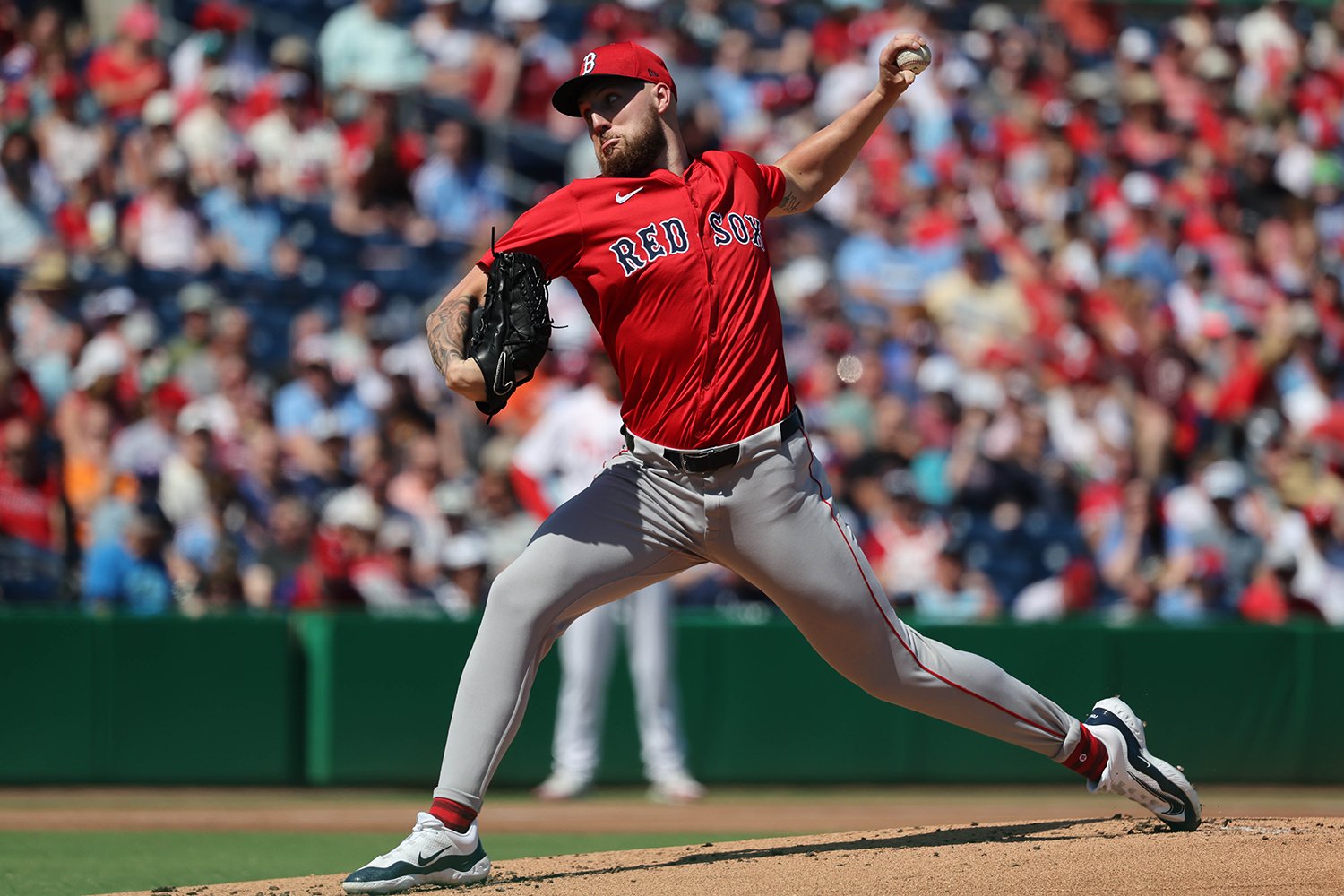 I was at the Winter Meetings in Dallas when word got out about the trade that brought Garrett Crochet to the Red Sox. I was just sitting down in a giant ballroom to watch the Rule 5 Draft, and the person at the table in front of mine turned to his neighbor and said, “Crochet to the Red Sox.” Everything stopped. You could hear the news spreading through the room like a ripple expanding across the surface of a pond. I didn’t pay any attention to the draft. I pounded out a thousand words breaking down exactly why Crochet was such a huge addition for Boston. It’s not necessarily obvious if you just look at the traditional numbers. Crochet went 6-12 with a 3.58 ERA in 2024. Among the 126 pitchers with at least 100 innings pitched, his ERA ranked 46th. In other words, he was above average, but not by much. If that’s all you looked at, you would’ve been flummoxed by the decision to ditch Kyle Teel and three other prospects for two years of Crochet. That’s not why the Red Sox sacrificed so much for Crochet. They expect much, much bigger things, and so should we. First of all, Crochet is already better than that. His underlying numbers were much better than his ERA or his record made him look. In Chicago, Crochet was pitching in front of the absolute worst defense in baseball, which cost him tons of runs. Advanced ERA estimators like xERA (2.85), FIP (2.69), xFIP (2.38), and DRA (2.75) all saw him as one of the top 10 starters in baseball. Both xFIP and DRA saw him as the absolute best. Let me say that again: the two advanced pitching metrics that I trust the most said that Crochet was already the best starting pitcher in baseball last season. Crochet was pitching like an ace – striking out everyone in sight, walking next to no one, and keeping the ball on the ground – but bad luck and worse defense were hiding it from us. If for no other reason, we should expect more from Crochet simply because he’s moving from a bad defense to a good one. In that sense, it might be unfair to expect even more of Crochet. His whiff rate, chase rate, strikeout rate, were all in the 93rd percentile or better. There’s not much room for improvement, and it’s hard to imagine him, or anyone, keeping those numbers so incredibly high year after year. That’s just not how things work. Time catches up with everyone, fastballs lose their zip, breaking balls lose their bite. That said, there are some real reasons to think that Crochet is just getting started, so let’s dive into them. When I say Crochet is just getting started, I mean it very literally. He’s just 25 years old. Last season was just his second full season in the majors. It was his first full season as a starter, ever. He didn’t start a single game in the minors on his way up to Chicago, and even when he was pitching for Tennessee in college, most of his appearances came in relief. Crochet is young, and he’s going to keep learning about pitching in general and about being a starting pitcher in particular. And I know I mentioned that velo drops as players get older, but Crochet’s not at that point yet. His fastball averaged just over 97 mph in 2024, but he’s been throwing even harder during spring training, at one point coming so, so close to touching 101 mph. Crochet has also been unhittable during his short sample of four spring training starts, which is never a bad sign. So far he’s struck out very nearly half of the batters he’s faced. He’s absolutely overpowering people. The last factor is maybe even more important than all the others. The Red Sox certainly seem like they’re making leaps and bounds in terms of player development on the pitching side as well as the hitting side. They’ve brought in voices from Driveline Baseball (including founder Kyle Boddy), and we’ve seen rapid growth from players like Richard Fitts and Quinn Priester. You can bet that have a plan for how to help Crochet get even better, and we’re starting to see pieces of it. Back in December, I noted that Crochet depends heavily on his fastballs: a four-seamer that he threw over half the time, as well as a sinker that he only introduced to his repertoire in August, but was throwing nearly 30% of the time by September. The Red Sox have an organizational preference for minimizing fastball use, but in Crochet’s case, I noted, he’ll be excused because he’s working with two of the best fastballs in baseball. As it turns out, I wasn’t 100% right. Because Jet Blue Park isn’t equipped to record Statcast data, there isn’t much publicly available about Crochet’s three spring training starts. However, pitching analyst Lance Brozdowski was able to track down pitch usage data for all three appearances. He found that Crochet has thrown his cutter 47% of the time so far, and though it’s early, he see this is as an indication that Crochet will make it his primary pitch this season. That would certainly make some sense. The two areas in which Crochet wasn’t flat-out exceptional last season were his hard-hit rate and his groundball rate. Four-seamers earn lots of whiffs, but because they play best near or above the top of the strike zone, naturally induce a lot of fly balls. Cutters, on the other hand, are extremely good at creating weak contact; it’s the reason that Mariano Rivera, who threw nothing but cutters, was legendary for breaking bats. If your goal is to stop giving up so many fly balls and hard-hit balls, swapping out some four-seamers for some cutters and sinkers will go a long way. We won’t know what Crochet truly looks like until the season gets going. Maybe his velocity will settle back down to its 2024 levels. Maybe he just happens to be working on the cutter right now, and its usage will drop back down when the season gets going. Maybe he'll need to have his innings managed more conservatively than we expect. Maybe, God forbid, his elbow trouble will come back. But from the outside, the signs are certainly encouraging. He looks healthy and strong. He’s blowing people away. He’s clearly making new adjustments suggested by a player development team that has earned a lot of trust. And the Red Sox are still feeling good enough about their decision to try to lock him down with a long-term extension. Right now, the sky is the limit.
 -
You don't have to be either of those things to prefer seeing your best hitter in the three spot. It's true that the math says you should put them second, but the math also says it's not all that important. That said, if you really want the old-school approach, wouldn't you want Bregman batting second? He's not just on the team at putting the ball in play, but one of the best in all of baseball.
-
Could the Red Sox Have the Best Lineup in the American League?
Davy Andrews posted an article in Red Sox
.jpg.d84c1f7b023f92a004394b76bb2e34b5.jpg) On Tuesday, MLB.com’s Anthony Castrovince published an article breaking down what he considered the top 10 lineups in baseball. Rankings like these are a staple of preseason coverage. They’re fun and they give people something to talk – or more accurately, to shout – about. Castrovince is well aware that sharing his opinions means opening himself up to criticism, leading off his article, “It’s been a minute since strangers have yelled at me on the internet, so it must be time to post my top 10 lineups for 2025!” To be clear, our goal today is not to roast Castrovince, both because we’re not that kind of website and because, in large part, there’s not too much to quibble with. He starts with the Dodgers, Mets, and Braves, and while you could make a pretty strong argument that the Braves deserve the number two spot, that's clearly the cream of the league. He ranks the Phillies fourth, which also seems like an extremely reasonable spot for them, but that also means that his top four consists entirely of National League teams. Our topic today comes next, and here’s how Castrovince introduced it: “WARNING! I’m about to list three AL East teams in a certain order. Quite frankly, you can shuffle them in any order for all I care. The point is all three belong somewhere right around here, but putting down a ‘tie’ is lame and doesn’t read as well as an actual 1-10 list, so here we are. Flame away.” Castrovince put the Red Sox, Orioles, and Yankees, at four, five, and six, in that order. As you may have noticed, that means he thinks the Red Sox have the best lineup in the American League – though once again, he thinks they’re pretty much tied with the Yankees and Orioles for that honor. That idea certainly caught the Talk Sox Slack channel by surprise. Nicolas Cage GIFs were exchanged. Lots of them. I wanted to dig a little deeper. Is it possible that the Red Sox have the best lineup in the AL? Last year, the team’s 104 wRC+ was tied for fifth with the Mariners. What have they done to get better? Well, they added Alex Bregman, but they also lost Tyler O’Neill, who was their second-best hitter and even put up a better 2024 season than Bregman. That's not necessarily a slam dunk. What about the other teams at the top? Have they gotten worse? The Yankees lost Juan Soto and essentially replaced him with Cody Bellinger, which represents a very steep drop-off. However, they also replaced Alex Verdugo and Anthony Rizzo with Jasson Dominguez and Paul Goldschmidt, and they’ll get a full season of Jazz Chisholm Jr. That should help offset the huge loss of Soto to some degree. The Orioles replaced Anthony Santander with O’Neill, but the main change in their lineup should just be from Adley Rutschman bouncing back to full health and young stars like Gunnar Henderson , Jordan Westburg, Colton Cowser, and Jackson Holliday – my God, this list is long – continuing to improve. It doesn't necessarily seem like either team took a big step back to make room for the Red Sox. Let’s take a look at the lineups Castrovince laid out. Red Sox Orioles Yankees 1. Jarren Duran, LF 1. Gunnar Henderson, SS 1. Jazz Chisholm Jr., 2B 2. Rafael Devers, 3B 2. Jordan Westburg, 3B 2. Aaron Judge, RF 3. Alex Bregman, 2B 3. Adley Rutschman, C 3. Cody Bellinger, CF 4. Triston Casas, 1B 4. Colton Cowser, RF 4. Giancarlo Stanton, DH 5. Trevor Story, SS 5. Tyler O’Neill, LF 5. Paul Goldschmidt, 1B 6. Masataka Yoshida, DH 6. Ryan O’Hearn, DH 6. Austin Wells, C 7. Connor Wong, C 7. Ryan Mountcastle, 1B 7. Jasson Domínguez, LF 8. Wilyer Abreu, RF 8. Jackson Holliday, 2B 8. Anthony Volpe, SS 9. Ceddanne Rafaela, CF 9. Cedric Mullins, CF 9. Oswaldo Cabrera, 3B First of all, I love this Red Sox lineup – I absolutely think it’s their best option – but at this point, it’s clear that we won’t see it regularly, if at all. Bregman has not played second base at all during spring training. He’s going to play third. And with Kristian Campbell getting more and more time in the outfield, second base is pretty clearly a competition between Vaughn Grissom and David Hamilton at this point. I think Hamilton is an interesting player, but I think that the lineup Castrovince runs with here is the best option. Yes, Devers hurts you on defense, but playing him there keeps all the big bats in the lineup, and that matters more. In the table below, I went spot by spot to compare the three lineups. I just did a quick gut-check ranking, so yours may differ slightly, but the color-coding tells the story. The Red Sox are much stronger at the top and weaker at the bottom. The Orioles are much deeper throughout, while the mighty Aaron Judge does a whole lot of heavy lifting for the Yankees. First Second Third Henderson Duran Chisholm Judge Devers Westburg Bregman Rutschman Bellinger Casas Cowser Stanton O'Neill Goldschmidt Story O'Hearn Yoshida Wells Mountcastle Dominguez Wong Holliday Abreu Volpe Mullins Cabrera Rafaela Even if we grant Castrovince this ideal lineup, if I’m being totally honest, I think he’s overrating the Red Sox slightly. I could be wrong, but I just don’t expect to get much offensively from Ceddanne Rafaela, Connor Wong, or Trevor Story. Maybe Story has a bounce-back season, but I just don’t think you can expect it from him at this point. Devers and Masataka Yoshida are both recovering from shoulder injuries and might not be fully themselves, at least at the start of the season. I don’t think it’s fair to expect Jarren Duran and Wilyer Abreu to repeat what they did last season, and Abreu is starting in a hole thanks to the illness that sapped his strength and cost him weeks of spring training. He’ll also need a platoon partner, which means expecting Rob Refsnyder to maintain his torrid pace from 2024. I do expect big things from Triston Casas, but he’s now suffered enough injuries that I worry about his ability to stay in the lineup too. I know that sounds extremely pessimistic. I’ve just expressed concern about everyone in the lineup but Bregman. However, I really do think this is a good lineup. Every team has players who overperform and underperform, so not all of my concerns will become reality. Moreover, the cavalry is coming. In Roman Anthony, Kristian Campbell, and Marcelo Mayer, the Red Sox have three of the best prospects in baseball ready to jump in for anyone who underperforms or gets injured – except for Wong; the team is pretty much stuck when it comes to the catcher position. This is a good lineup and the Big Three have the potential to make it really deep, but it’s also one with a lot of questions. Before I go, I pulled some numbers from FanGraphs to see what the projection systems see as the best offenses in baseballI pulled every depth chart projection from ZiPS and Steamer, then combined each team’s numbers to see which offenses are supposed to be the best. To be clear, this particular exercise seeks to answer a slightly different question. This isn’t about the best lineup, but about which team is projected to hit the best as a whole over the course of the season. The numbers in the table are each team’s total weighted runs created, which essentially means how many runs they would be expected to score while stripping away things like park factors. Rank Team ZiPS Rank Team Steamer 1 LAD 871 1 LAD 849 2 ATL 867 2 ATL 848 3 NYM 835 3 NYM 816 4 BAL 823 4 ARI 805 5 PHI 823 5 PHI 797 6 BOS 818 6 HOU 797 7 NYY 817 7 NYY 795 8 TEX 806 8 BAL 795 9 CIN 805 9 BOS 792 10 HOU 798 10 TEX 790 ZiPS sees the Orioles with the best offense in the AL and the Red Sox just one spot (and one run) ahead of the Yankees in sixth place. Steamer has the Red Sox all the way down at ninth, but once again, all three teams are grouped together, and they’re all within three runs of each other. Essentially, both projection systems are saying what Castrovince did: these offenses are extremely similar in terms of overall quality. Interestingly, even after losing Bregman and Kyle Tucker, Steamer sees the Astros as the best offense in the AL. So do the Red Sox have the best lineup (or the best offense) in the AL? They’ve at least got a shot at the crown, but it’s a whole lot closer than you might realize.
On Tuesday, MLB.com’s Anthony Castrovince published an article breaking down what he considered the top 10 lineups in baseball. Rankings like these are a staple of preseason coverage. They’re fun and they give people something to talk – or more accurately, to shout – about. Castrovince is well aware that sharing his opinions means opening himself up to criticism, leading off his article, “It’s been a minute since strangers have yelled at me on the internet, so it must be time to post my top 10 lineups for 2025!” To be clear, our goal today is not to roast Castrovince, both because we’re not that kind of website and because, in large part, there’s not too much to quibble with. He starts with the Dodgers, Mets, and Braves, and while you could make a pretty strong argument that the Braves deserve the number two spot, that's clearly the cream of the league. He ranks the Phillies fourth, which also seems like an extremely reasonable spot for them, but that also means that his top four consists entirely of National League teams. Our topic today comes next, and here’s how Castrovince introduced it: “WARNING! I’m about to list three AL East teams in a certain order. Quite frankly, you can shuffle them in any order for all I care. The point is all three belong somewhere right around here, but putting down a ‘tie’ is lame and doesn’t read as well as an actual 1-10 list, so here we are. Flame away.” Castrovince put the Red Sox, Orioles, and Yankees, at four, five, and six, in that order. As you may have noticed, that means he thinks the Red Sox have the best lineup in the American League – though once again, he thinks they’re pretty much tied with the Yankees and Orioles for that honor. That idea certainly caught the Talk Sox Slack channel by surprise. Nicolas Cage GIFs were exchanged. Lots of them. I wanted to dig a little deeper. Is it possible that the Red Sox have the best lineup in the AL? Last year, the team’s 104 wRC+ was tied for fifth with the Mariners. What have they done to get better? Well, they added Alex Bregman, but they also lost Tyler O’Neill, who was their second-best hitter and even put up a better 2024 season than Bregman. That's not necessarily a slam dunk. What about the other teams at the top? Have they gotten worse? The Yankees lost Juan Soto and essentially replaced him with Cody Bellinger, which represents a very steep drop-off. However, they also replaced Alex Verdugo and Anthony Rizzo with Jasson Dominguez and Paul Goldschmidt, and they’ll get a full season of Jazz Chisholm Jr. That should help offset the huge loss of Soto to some degree. The Orioles replaced Anthony Santander with O’Neill, but the main change in their lineup should just be from Adley Rutschman bouncing back to full health and young stars like Gunnar Henderson , Jordan Westburg, Colton Cowser, and Jackson Holliday – my God, this list is long – continuing to improve. It doesn't necessarily seem like either team took a big step back to make room for the Red Sox. Let’s take a look at the lineups Castrovince laid out. Red Sox Orioles Yankees 1. Jarren Duran, LF 1. Gunnar Henderson, SS 1. Jazz Chisholm Jr., 2B 2. Rafael Devers, 3B 2. Jordan Westburg, 3B 2. Aaron Judge, RF 3. Alex Bregman, 2B 3. Adley Rutschman, C 3. Cody Bellinger, CF 4. Triston Casas, 1B 4. Colton Cowser, RF 4. Giancarlo Stanton, DH 5. Trevor Story, SS 5. Tyler O’Neill, LF 5. Paul Goldschmidt, 1B 6. Masataka Yoshida, DH 6. Ryan O’Hearn, DH 6. Austin Wells, C 7. Connor Wong, C 7. Ryan Mountcastle, 1B 7. Jasson Domínguez, LF 8. Wilyer Abreu, RF 8. Jackson Holliday, 2B 8. Anthony Volpe, SS 9. Ceddanne Rafaela, CF 9. Cedric Mullins, CF 9. Oswaldo Cabrera, 3B First of all, I love this Red Sox lineup – I absolutely think it’s their best option – but at this point, it’s clear that we won’t see it regularly, if at all. Bregman has not played second base at all during spring training. He’s going to play third. And with Kristian Campbell getting more and more time in the outfield, second base is pretty clearly a competition between Vaughn Grissom and David Hamilton at this point. I think Hamilton is an interesting player, but I think that the lineup Castrovince runs with here is the best option. Yes, Devers hurts you on defense, but playing him there keeps all the big bats in the lineup, and that matters more. In the table below, I went spot by spot to compare the three lineups. I just did a quick gut-check ranking, so yours may differ slightly, but the color-coding tells the story. The Red Sox are much stronger at the top and weaker at the bottom. The Orioles are much deeper throughout, while the mighty Aaron Judge does a whole lot of heavy lifting for the Yankees. First Second Third Henderson Duran Chisholm Judge Devers Westburg Bregman Rutschman Bellinger Casas Cowser Stanton O'Neill Goldschmidt Story O'Hearn Yoshida Wells Mountcastle Dominguez Wong Holliday Abreu Volpe Mullins Cabrera Rafaela Even if we grant Castrovince this ideal lineup, if I’m being totally honest, I think he’s overrating the Red Sox slightly. I could be wrong, but I just don’t expect to get much offensively from Ceddanne Rafaela, Connor Wong, or Trevor Story. Maybe Story has a bounce-back season, but I just don’t think you can expect it from him at this point. Devers and Masataka Yoshida are both recovering from shoulder injuries and might not be fully themselves, at least at the start of the season. I don’t think it’s fair to expect Jarren Duran and Wilyer Abreu to repeat what they did last season, and Abreu is starting in a hole thanks to the illness that sapped his strength and cost him weeks of spring training. He’ll also need a platoon partner, which means expecting Rob Refsnyder to maintain his torrid pace from 2024. I do expect big things from Triston Casas, but he’s now suffered enough injuries that I worry about his ability to stay in the lineup too. I know that sounds extremely pessimistic. I’ve just expressed concern about everyone in the lineup but Bregman. However, I really do think this is a good lineup. Every team has players who overperform and underperform, so not all of my concerns will become reality. Moreover, the cavalry is coming. In Roman Anthony, Kristian Campbell, and Marcelo Mayer, the Red Sox have three of the best prospects in baseball ready to jump in for anyone who underperforms or gets injured – except for Wong; the team is pretty much stuck when it comes to the catcher position. This is a good lineup and the Big Three have the potential to make it really deep, but it’s also one with a lot of questions. Before I go, I pulled some numbers from FanGraphs to see what the projection systems see as the best offenses in baseballI pulled every depth chart projection from ZiPS and Steamer, then combined each team’s numbers to see which offenses are supposed to be the best. To be clear, this particular exercise seeks to answer a slightly different question. This isn’t about the best lineup, but about which team is projected to hit the best as a whole over the course of the season. The numbers in the table are each team’s total weighted runs created, which essentially means how many runs they would be expected to score while stripping away things like park factors. Rank Team ZiPS Rank Team Steamer 1 LAD 871 1 LAD 849 2 ATL 867 2 ATL 848 3 NYM 835 3 NYM 816 4 BAL 823 4 ARI 805 5 PHI 823 5 PHI 797 6 BOS 818 6 HOU 797 7 NYY 817 7 NYY 795 8 TEX 806 8 BAL 795 9 CIN 805 9 BOS 792 10 HOU 798 10 TEX 790 ZiPS sees the Orioles with the best offense in the AL and the Red Sox just one spot (and one run) ahead of the Yankees in sixth place. Steamer has the Red Sox all the way down at ninth, but once again, all three teams are grouped together, and they’re all within three runs of each other. Essentially, both projection systems are saying what Castrovince did: these offenses are extremely similar in terms of overall quality. Interestingly, even after losing Bregman and Kyle Tucker, Steamer sees the Astros as the best offense in the AL. So do the Red Sox have the best lineup (or the best offense) in the AL? They’ve at least got a shot at the crown, but it’s a whole lot closer than you might realize. -
As prediction season begins in earnest, an MLB.com article raises the possibility that the Red Sox have the best lineup in baseball. Let's dig in and find out. On Tuesday, MLB.com’s Anthony Castrovince published an article breaking down what he considered the top 10 lineups in baseball. Rankings like these are a staple of preseason coverage. They’re fun and they give people something to talk – or more accurately, to shout – about. Castrovince is well aware that sharing his opinions means opening himself up to criticism, leading off his article, “It’s been a minute since strangers have yelled at me on the internet, so it must be time to post my top 10 lineups for 2025!” To be clear, our goal today is not to roast Castrovince, both because we’re not that kind of website and because, in large part, there’s not too much to quibble with. He starts with the Dodgers, Mets, and Braves, and while you could make a pretty strong argument that the Braves deserve the number two spot, that's clearly the cream of the league. He ranks the Phillies fourth, which also seems like an extremely reasonable spot for them, but that also means that his top four consists entirely of National League teams. Our topic today comes next, and here’s how Castrovince introduced it: “WARNING! I’m about to list three AL East teams in a certain order. Quite frankly, you can shuffle them in any order for all I care. The point is all three belong somewhere right around here, but putting down a ‘tie’ is lame and doesn’t read as well as an actual 1-10 list, so here we are. Flame away.” Castrovince put the Red Sox, Orioles, and Yankees, at four, five, and six, in that order. As you may have noticed, that means he thinks the Red Sox have the best lineup in the American League – though once again, he thinks they’re pretty much tied with the Yankees and Orioles for that honor. That idea certainly caught the Talk Sox Slack channel by surprise. Nicolas Cage GIFs were exchanged. Lots of them. I wanted to dig a little deeper. Is it possible that the Red Sox have the best lineup in the AL? Last year, the team’s 104 wRC+ was tied for fifth with the Mariners. What have they done to get better? Well, they added Alex Bregman, but they also lost Tyler O’Neill, who was their second-best hitter and even put up a better 2024 season than Bregman. That's not necessarily a slam dunk. What about the other teams at the top? Have they gotten worse? The Yankees lost Juan Soto and essentially replaced him with Cody Bellinger, which represents a very steep drop-off. However, they also replaced Alex Verdugo and Anthony Rizzo with Jasson Dominguez and Paul Goldschmidt, and they’ll get a full season of Jazz Chisholm Jr. That should help offset the huge loss of Soto to some degree. The Orioles replaced Anthony Santander with O’Neill, but the main change in their lineup should just be from Adley Rutschman bouncing back to full health and young stars like Gunnar Henderson , Jordan Westburg, Colton Cowser, and Jackson Holliday – my God, this list is long – continuing to improve. It doesn't necessarily seem like either team took a big step back to make room for the Red Sox. Let’s take a look at the lineups Castrovince laid out. Red Sox Orioles Yankees 1. Jarren Duran, LF 1. Gunnar Henderson, SS 1. Jazz Chisholm Jr., 2B 2. Rafael Devers, 3B 2. Jordan Westburg, 3B 2. Aaron Judge, RF 3. Alex Bregman, 2B 3. Adley Rutschman, C 3. Cody Bellinger, CF 4. Triston Casas, 1B 4. Colton Cowser, RF 4. Giancarlo Stanton, DH 5. Trevor Story, SS 5. Tyler O’Neill, LF 5. Paul Goldschmidt, 1B 6. Masataka Yoshida, DH 6. Ryan O’Hearn, DH 6. Austin Wells, C 7. Connor Wong, C 7. Ryan Mountcastle, 1B 7. Jasson Domínguez, LF 8. Wilyer Abreu, RF 8. Jackson Holliday, 2B 8. Anthony Volpe, SS 9. Ceddanne Rafaela, CF 9. Cedric Mullins, CF 9. Oswaldo Cabrera, 3B First of all, I love this Red Sox lineup – I absolutely think it’s their best option – but at this point, it’s clear that we won’t see it regularly, if at all. Bregman has not played second base at all during spring training. He’s going to play third. And with Kristian Campbell getting more and more time in the outfield, second base is pretty clearly a competition between Vaughn Grissom and David Hamilton at this point. I think Hamilton is an interesting player, but I think that the lineup Castrovince runs with here is the best option. Yes, Devers hurts you on defense, but playing him there keeps all the big bats in the lineup, and that matters more. In the table below, I went spot by spot to compare the three lineups. I just did a quick gut-check ranking, so yours may differ slightly, but the color-coding tells the story. The Red Sox are much stronger at the top and weaker at the bottom. The Orioles are much deeper throughout, while the mighty Aaron Judge does a whole lot of heavy lifting for the Yankees. First Second Third Henderson Duran Chisholm Judge Devers Westburg Bregman Rutschman Bellinger Casas Cowser Stanton O'Neill Goldschmidt Story O'Hearn Yoshida Wells Mountcastle Dominguez Wong Holliday Abreu Volpe Mullins Cabrera Rafaela Even if we grant Castrovince this ideal lineup, if I’m being totally honest, I think he’s overrating the Red Sox slightly. I could be wrong, but I just don’t expect to get much offensively from Ceddanne Rafaela, Connor Wong, or Trevor Story. Maybe Story has a bounce-back season, but I just don’t think you can expect it from him at this point. Devers and Masataka Yoshida are both recovering from shoulder injuries and might not be fully themselves, at least at the start of the season. I don’t think it’s fair to expect Jarren Duran and Wilyer Abreu to repeat what they did last season, and Abreu is starting in a hole thanks to the illness that sapped his strength and cost him weeks of spring training. He’ll also need a platoon partner, which means expecting Rob Refsnyder to maintain his torrid pace from 2024. I do expect big things from Triston Casas, but he’s now suffered enough injuries that I worry about his ability to stay in the lineup too. I know that sounds extremely pessimistic. I’ve just expressed concern about everyone in the lineup but Bregman. However, I really do think this is a good lineup. Every team has players who overperform and underperform, so not all of my concerns will become reality. Moreover, the cavalry is coming. In Roman Anthony, Kristian Campbell, and Marcelo Mayer, the Red Sox have three of the best prospects in baseball ready to jump in for anyone who underperforms or gets injured – except for Wong; the team is pretty much stuck when it comes to the catcher position. This is a good lineup and the Big Three have the potential to make it really deep, but it’s also one with a lot of questions. Before I go, I pulled some numbers from FanGraphs to see what the projection systems see as the best offenses in baseballI pulled every depth chart projection from ZiPS and Steamer, then combined each team’s numbers to see which offenses are supposed to be the best. To be clear, this particular exercise seeks to answer a slightly different question. This isn’t about the best lineup, but about which team is projected to hit the best as a whole over the course of the season. The numbers in the table are each team’s total weighted runs created, which essentially means how many runs they would be expected to score while stripping away things like park factors. Rank Team ZiPS Rank Team Steamer 1 LAD 871 1 LAD 849 2 ATL 867 2 ATL 848 3 NYM 835 3 NYM 816 4 BAL 823 4 ARI 805 5 PHI 823 5 PHI 797 6 BOS 818 6 HOU 797 7 NYY 817 7 NYY 795 8 TEX 806 8 BAL 795 9 CIN 805 9 BOS 792 10 HOU 798 10 TEX 790 ZiPS sees the Orioles with the best offense in the AL and the Red Sox just one spot (and one run) ahead of the Yankees in sixth place. Steamer has the Red Sox all the way down at ninth, but once again, all three teams are grouped together, and they’re all within three runs of each other. Essentially, both projection systems are saying what Castrovince did: these offenses are extremely similar in terms of overall quality. Interestingly, even after losing Bregman and Kyle Tucker, Steamer sees the Astros as the best offense in the AL. So do the Red Sox have the best lineup (or the best offense) in the AL? They’ve at least got a shot at the crown, but it’s a whole lot closer than you might realize. View full article
-
The Red Sox spent the entire offseason collecting players with a history of elbow injuries. Somehow, it's the Yankees and Orioles whose elbows are betraying them. Coming into spring training, any reasonable person would have pegged the Red Sox as the American League East team most likely to be victimized by elbow injuries. During the offseason, the team added Garrett Crochet, who underwent Tommy John surgery in 2022, Walker Buehler, who underwent his second Tommy John surgery in 2022, and Patrick Sandoval, who is still recovering from the internal brace procedure he underwent in 2023. Those three joined current Red Sox Liam Hendriks and Lucas Giolito, who are recovering from their own Tommy John and an internal brace procedures, respectively. Just for good measure, the Red Sox also made smaller moves to bring in Matt Moore, who had Tommy John in 2014, Adam Ottavino (2015), and Jovani Morán (2024). Even if you look past pitchers, Alex Bregman had surgery to remove bone chips from his right elbow in November. Surely, if there was one team that would have its postseason chances undermined by the extreme fallibility of the human elbow, it would be the Red Sox, right? Right? This weekend, however, the Yankees and Orioles were the teams whose elbows betrayed them. New York ace Gerrit Cole reportedly felt off after an ugly performance against the Twins on Thursday. Over the weekend it was reported that Cole has been advised by team doctors to undergo Tommy John surgery, and that he was seeking a second opinion. On Monday night, it was made official: Cole will undergo surgery. This is obviously crushing news for Cole. He’s a former first-round pick with a 2023 Cy Young under his belt to go with multiple All-Star appearances, ERA titles, and strikeout crowns. He’s also been one of the game’s true workhorses, leading his league in innings in 2023, wins in 2021, and starts three separate times. Cole will miss all of the 2025 season, and to make matters worse for the Yankees, reigning AL Rookie of the Year Luis Gil’s lat strain will keep him out for at least three months. The Yankees still have Carlos Rodón, Clarke Schmidt, Marcus Stroman, and big free agent acquisition Max Fried. That’s still a pretty great top of the rotation, but losing Cole and Gil is a massive blow. Let’s head further down I-95. In Baltimore, the Orioles decided to run back their 2024 strategy of rolling out one of the game’s great offenses along with one of its least-pedigreed starting rotations. They let Corbin Burnes walk and brought in Charlie Morton and Tomoyuki Sugano to bolster the rotation. Just like last year, they seemed to be playing with fire, and just like last year, they seemed to be depending a whole lot on Grayson Rodriguez developing into an ace. Instead, just like last year, Rodriguez is battling injury. In 2024, he dealt with shoulder inflammation and a lat strain. This year, he spring training with triceps soreness and is now dealing with elbow inflammation. Although the team has said that there’s nothing structurally wrong, Rodriguez received a cortisone injection this weekend, and the best-case scenario is that he’s able to start throwing within a week or two. “Timeline after a week, I’m not really sure at this point,” manager Brandon Hyde told reporters. “We’ll see how it goes. But we’re giving him a week to not throw and let the cortisone do what it does.” Even in the best case scenario, Rodriguez won’t be ready for Opening Day. To make matters worse, reliever Andrew Kittredge is undergoing surgery to clean up the cartilage in his knee (the elbow of the leg) and will start the season on the IL. Baseball is zero-sum game, and these unfortunate injuries do stand to benefit the Red Sox quite a bit. The Yankees still have a solid rotation, but they lost a perennial Cy Young candidate and crushed their depth. In other words, both their ceiling and their floor just dropped by quite a bit. If any of their big four starters should stumble or suffer their own injuries, they could be in real trouble. In order to compete, the Orioles will need to keep getting surprising contributions from less-heralded starters, and that’s a tough thing to ask for two seasons in a row. To be clear, The Red Sox haven’t been immune to pitching injuries either. It’s looking more and more likely that both Kutter Crawford and Brayan Bello will start the season on the IL. However, their biggest names have so far remained safe, and they have solid options to fill in at the back of the rotation. It’s a long season, and the Red Sox will almost certainly need every bit of the enviable starting pitching depth they have assembled. View full article
-
Elbow Injuries Make the AL East More Winnable for the Red Sox
Davy Andrews posted an article in Red Sox
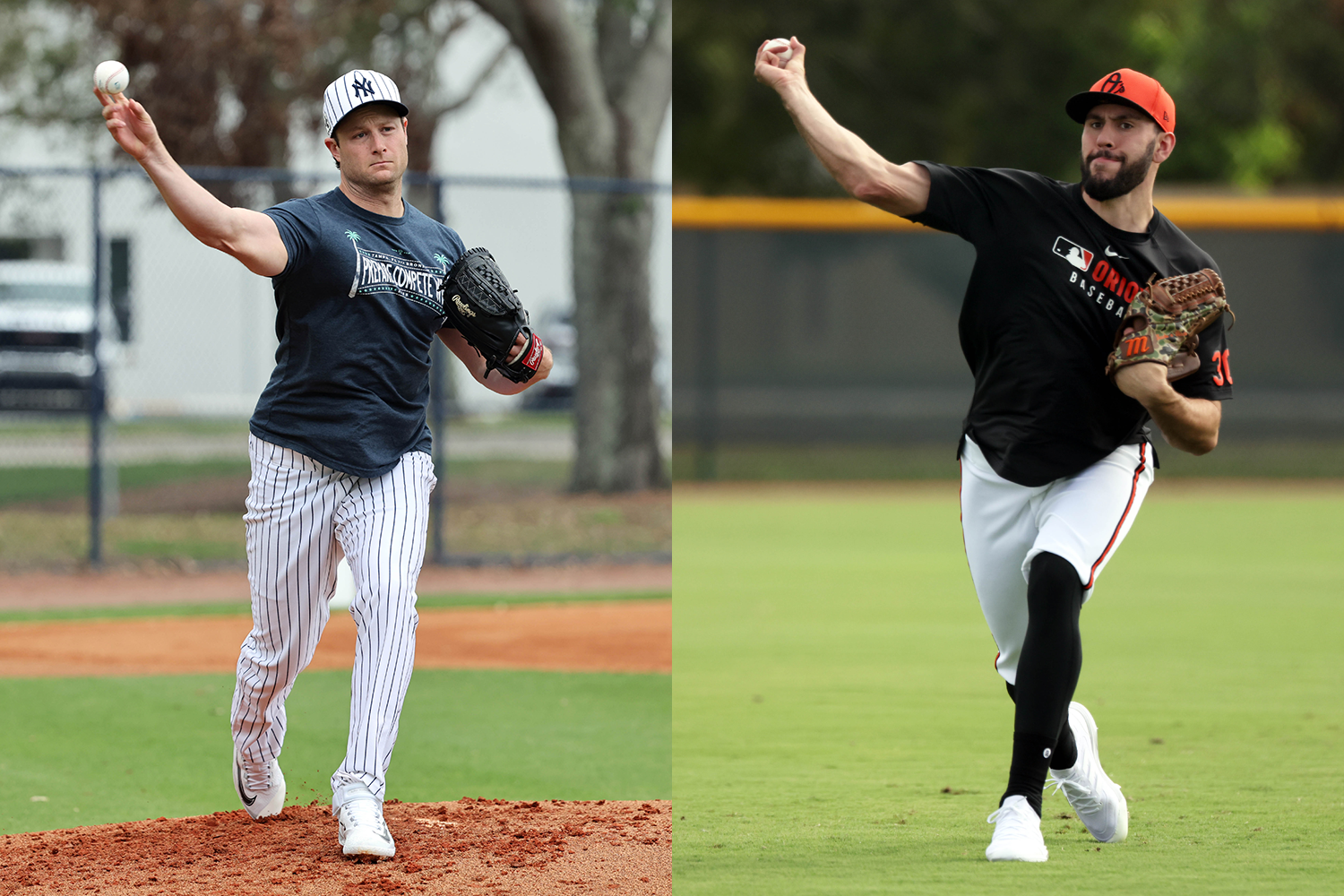 Coming into spring training, any reasonable person would have pegged the Red Sox as the American League East team most likely to be victimized by elbow injuries. During the offseason, the team added Garrett Crochet, who underwent Tommy John surgery in 2022, Walker Buehler, who underwent his second Tommy John surgery in 2022, and Patrick Sandoval, who is still recovering from the internal brace procedure he underwent in 2023. Those three joined current Red Sox Liam Hendriks and Lucas Giolito, who are recovering from their own Tommy John and an internal brace procedures, respectively. Just for good measure, the Red Sox also made smaller moves to bring in Matt Moore, who had Tommy John in 2014, Adam Ottavino (2015), and Jovani Morán (2024). Even if you look past pitchers, Alex Bregman had surgery to remove bone chips from his right elbow in November. Surely, if there was one team that would have its postseason chances undermined by the extreme fallibility of the human elbow, it would be the Red Sox, right? Right? This weekend, however, the Yankees and Orioles were the teams whose elbows betrayed them. New York ace Gerrit Cole reportedly felt off after an ugly performance against the Twins on Thursday. Over the weekend it was reported that Cole has been advised by team doctors to undergo Tommy John surgery, and that he was seeking a second opinion. On Monday night, it was made official: Cole will undergo surgery. This is obviously crushing news for Cole. He’s a former first-round pick with a 2023 Cy Young under his belt to go with multiple All-Star appearances, ERA titles, and strikeout crowns. He’s also been one of the game’s true workhorses, leading his league in innings in 2023, wins in 2021, and starts three separate times. Cole will miss all of the 2025 season, and to make matters worse for the Yankees, reigning AL Rookie of the Year Luis Gil’s lat strain will keep him out for at least three months. The Yankees still have Carlos Rodón, Clarke Schmidt, Marcus Stroman, and big free agent acquisition Max Fried. That’s still a pretty great top of the rotation, but losing Cole and Gil is a massive blow. Let’s head further down I-95. In Baltimore, the Orioles decided to run back their 2024 strategy of rolling out one of the game’s great offenses along with one of its least-pedigreed starting rotations. They let Corbin Burnes walk and brought in Charlie Morton and Tomoyuki Sugano to bolster the rotation. Just like last year, they seemed to be playing with fire, and just like last year, they seemed to be depending a whole lot on Grayson Rodriguez developing into an ace. Instead, just like last year, Rodriguez is battling injury. In 2024, he dealt with shoulder inflammation and a lat strain. This year, he spring training with triceps soreness and is now dealing with elbow inflammation. Although the team has said that there’s nothing structurally wrong, Rodriguez received a cortisone injection this weekend, and the best-case scenario is that he’s able to start throwing within a week or two. “Timeline after a week, I’m not really sure at this point,” manager Brandon Hyde told reporters. “We’ll see how it goes. But we’re giving him a week to not throw and let the cortisone do what it does.” Even in the best case scenario, Rodriguez won’t be ready for Opening Day. To make matters worse, reliever Andrew Kittredge is undergoing surgery to clean up the cartilage in his knee (the elbow of the leg) and will start the season on the IL. Baseball is zero-sum game, and these unfortunate injuries do stand to benefit the Red Sox quite a bit. The Yankees still have a solid rotation, but they lost a perennial Cy Young candidate and crushed their depth. In other words, both their ceiling and their floor just dropped by quite a bit. If any of their big four starters should stumble or suffer their own injuries, they could be in real trouble. In order to compete, the Orioles will need to keep getting surprising contributions from less-heralded starters, and that’s a tough thing to ask for two seasons in a row. To be clear, The Red Sox haven’t been immune to pitching injuries either. It’s looking more and more likely that both Kutter Crawford and Brayan Bello will start the season on the IL. However, their biggest names have so far remained safe, and they have solid options to fill in at the back of the rotation. It’s a long season, and the Red Sox will almost certainly need every bit of the enviable starting pitching depth they have assembled.
 -
With Brayan Bello Behind, the Red Sox Need a Fifth Starter
Davy Andrews posted an article in Red Sox
 Coming into spring training, Brayan Bello was one of the biggest question marks for the Red Sox. The 25-year-old starter is under contract through 2029, but he’s yet to have the breakout season the team has hoped for, running an ERA of at least 4.24 in each of his first three big-league seasons. During spring training, a new, even more unwelcome kind of uncertainty has enveloped Bello: injury uncertainty. Bello has been dealing with shoulder soreness during camp, although the Red Sox made it clear that they expected him to be ready for Opening Day, they sound less sanguine with each passing day, and they wisely don’t want to push the young player too hard right now. Bello threw a controlled bullpen on Friday, but he has not yet been able to throw at 100%, much less to appear in an actual spring training game. With Kutter Crawford out and Bello’s readiness for Opening Day looking less and less likely, let’s consider who might take the final spot in the starting rotation to open the season. “I definitely want that job,” Quinn Priester told reporters last week. Priester, Pittsburgh’s first-round pick in the 2019 draft, joined the Red Sox in a deadline trade. He has made 15 big-league starts and 21 total appearances. So far, he has made three spring training starts, running a 2.70 ERA (along with a ghastly 7.83 FIP) in 6 2/3 innings. The 24-year-old right-hander throws a full starter’s arsenal: sinker, four-seamer, cutter, slider, curve, and changeup. Priester leads with the sinker and threw the cutter just 1% of the time in 2024. However, during the two spring training starts that took place in Statcast-enabled stadiums, he threw the cutter a quarter of the time, making it his second-most used pitch. When Priester was traded to the Red Sox, Eric Longenhagen of FanGraphs diagnosed his problem simply: The Red Sox have famously encouraged their pitchers to deemphasize fastballs in recent years, so while it’s not surprising that Priester is adjusting his pitch mix, it is surprising that he’s still throwing the sinker just as often as he did last season. That said, he’s run impressive groundball rates everywhere he’s gone, and thus far, his sinker has averaged 8.3 inches of sink during spring training, well over the 5.3 it averaged during 2024. Likewise, after averaging 93.1 mph in 2024, his sinker has averaged 94.7 during spring training. We’ll have to wait and see, but those improvements could be enough to transform the pitch into a quality big-league offering. “Priester is another guy that, if we talk about catching my eye, (he’s) impressive,” Alex Cora said a few weeks ago. “He put work in in the offseason. He’s a lot stronger, he’s got good stuff, you saw what he did the last day. He looks really good.” Priester may be the favorite for the job, but Richard Fitts is doing everything he can to challenge him. Fitts made his big-league debut in September and immediately reeled off an impressive scoreless innings streak. He then showed up at camp a stronger and more complete pitcher. Last week, I wrote up the many ways that Fitts looked improved, so I’ll just offer a summary here, but even the summary isn’t exactly short. First and foremost, he worked on his shoulder strength in order to increase his velocity. After his fastball averaged 94.5 mph in 2024, it’s now sitting closer to 98 and touching 99. He’s added a sinker and a curveball, and he modified both his changeup and slider. If you’re keeping score at home, he throws six pitches, and four of them are either brand new or new versions of themselves. “My guy on MLB The Show is going to be pretty crazy,” he joked. Coming into his start against the Braves on Sunday, Fitts had thrown four scoreless spring training innings, allowing four hits and striking out five. However, things didn’t go that well against Atlanta. Fitts only gave up one run, but he couldn’t get out of the third inning, allowing two walks and three hits over 2 1/3 innings. However, he did notch four swinging strikeouts, all of them (to my eyes) all of them on different pitches: cutter, four-seamer, slider, and splitter. So while the results left much to be desired, Fitts did further showcase his transformation into a pitcher who can rack up strikeouts thanks to swing-and-miss stuff. Fitts definitely doesn’t have the prospect pedigree of Preister. The Yankees selected him 183rd overall in 2021 out of Auburn. It’s possible that the biggest advantage Fitts has is his minor league options. He still has three, while Priester has just one remaining. The Red Sox will need to be extremely judicious with Priester’s promotions and demotions, so if he starts the season as the fifth starter, if and when Bello (or Crawford, or Patrick Sandoval) comes back to reclaim the job, he might be more likely to end up in the bullpen than back in Worcester. Cooper Criswell and Hunter Dobbins also represent outside chances at the job, but as of now, it seems like it’s between Priester and Fitts. One thing is certain: trying to decide between a surfeit of quality arms is a good problem to have.
 -
With Brayan Bello's shoulder soreness making it unlikely that he's ready to start the season, Quinn Priester and Richard Fitts are battling it out for the fifth starter spot. Coming into spring training, Brayan Bello was one of the biggest question marks for the Red Sox. The 25-year-old starter is under contract through 2029, but he’s yet to have the breakout season the team has hoped for, running an ERA of at least 4.24 in each of his first three big-league seasons. During spring training, a new, even more unwelcome kind of uncertainty has enveloped Bello: injury uncertainty. Bello has been dealing with shoulder soreness during camp, although the Red Sox made it clear that they expected him to be ready for Opening Day, they sound less sanguine with each passing day, and they wisely don’t want to push the young player too hard right now. Bello threw a controlled bullpen on Friday, but he has not yet been able to throw at 100%, much less to appear in an actual spring training game. With Kutter Crawford out and Bello’s readiness for Opening Day looking less and less likely, let’s consider who might take the final spot in the starting rotation to open the season. “I definitely want that job,” Quinn Priester told reporters last week. Priester, Pittsburgh’s first-round pick in the 2019 draft, joined the Red Sox in a deadline trade. He has made 15 big-league starts and 21 total appearances. So far, he has made three spring training starts, running a 2.70 ERA (along with a ghastly 7.83 FIP) in 6 2/3 innings. The 24-year-old right-hander throws a full starter’s arsenal: sinker, four-seamer, cutter, slider, curve, and changeup. Priester leads with the sinker and threw the cutter just 1% of the time in 2024. However, during the two spring training starts that took place in Statcast-enabled stadiums, he threw the cutter a quarter of the time, making it his second-most used pitch. When Priester was traded to the Red Sox, Eric Longenhagen of FanGraphs diagnosed his problem simply: The Red Sox have famously encouraged their pitchers to deemphasize fastballs in recent years, so while it’s not surprising that Priester is adjusting his pitch mix, it is surprising that he’s still throwing the sinker just as often as he did last season. That said, he’s run impressive groundball rates everywhere he’s gone, and thus far, his sinker has averaged 8.3 inches of sink during spring training, well over the 5.3 it averaged during 2024. Likewise, after averaging 93.1 mph in 2024, his sinker has averaged 94.7 during spring training. We’ll have to wait and see, but those improvements could be enough to transform the pitch into a quality big-league offering. “Priester is another guy that, if we talk about catching my eye, (he’s) impressive,” Alex Cora said a few weeks ago. “He put work in in the offseason. He’s a lot stronger, he’s got good stuff, you saw what he did the last day. He looks really good.” Priester may be the favorite for the job, but Richard Fitts is doing everything he can to challenge him. Fitts made his big-league debut in September and immediately reeled off an impressive scoreless innings streak. He then showed up at camp a stronger and more complete pitcher. Last week, I wrote up the many ways that Fitts looked improved, so I’ll just offer a summary here, but even the summary isn’t exactly short. First and foremost, he worked on his shoulder strength in order to increase his velocity. After his fastball averaged 94.5 mph in 2024, it’s now sitting closer to 98 and touching 99. He’s added a sinker and a curveball, and he modified both his changeup and slider. If you’re keeping score at home, he throws six pitches, and four of them are either brand new or new versions of themselves. “My guy on MLB The Show is going to be pretty crazy,” he joked. Coming into his start against the Braves on Sunday, Fitts had thrown four scoreless spring training innings, allowing four hits and striking out five. However, things didn’t go that well against Atlanta. Fitts only gave up one run, but he couldn’t get out of the third inning, allowing two walks and three hits over 2 1/3 innings. However, he did notch four swinging strikeouts, all of them (to my eyes) all of them on different pitches: cutter, four-seamer, slider, and splitter. So while the results left much to be desired, Fitts did further showcase his transformation into a pitcher who can rack up strikeouts thanks to swing-and-miss stuff. Fitts definitely doesn’t have the prospect pedigree of Preister. The Yankees selected him 183rd overall in 2021 out of Auburn. It’s possible that the biggest advantage Fitts has is his minor league options. He still has three, while Priester has just one remaining. The Red Sox will need to be extremely judicious with Priester’s promotions and demotions, so if he starts the season as the fifth starter, if and when Bello (or Crawford, or Patrick Sandoval) comes back to reclaim the job, he might be more likely to end up in the bullpen than back in Worcester. Cooper Criswell and Hunter Dobbins also represent outside chances at the job, but as of now, it seems like it’s between Priester and Fitts. One thing is certain: trying to decide between a surfeit of quality arms is a good problem to have. View full article
-
Allow me to present Nate Eaton, the greatest hitter in baseball. Fun with small sample sizes and non-roster invites. None of this matters. I know it, you know it, Nate Eaton knows it. It’s spring training. The goal is to get back in shape, to get your work in, to align with the rhythms of baseball if you prefer to get a little mystical with it. No one is checking the spring training leaderboards because they don’t matter. Except for me. I’m checking them, and, uh, there are kind of a lot of Red Sox up there. No, they’re not the Red Sox you’d like to see at the top of the leaderboards. Jarren Duran? Abset. Wilyer Abreu? Literally absent. Rafael Devers, Alex Bregman, Triston Casas, Roman Anthony, Kristian Campbell? No, nope, nay, negative, definitely not. Here are your Red Sox spring training superstars. Enjoy them while you can. If you do nothing more than go to MLB.com, click STATS, and then sort by OPS, Nate Eaton’s at the top of the list. I don’t even know what the criteria are to qualify for this leaderboard, but I don’t care much. Eaton’s got a 1.260 OPS, because he’s somehow gone 4-for-14 with five walks. Oh, and all four of his hits are extra-base hits. He’s got two doubles, a triple, and a homer, so despite a .286 batting average, he’s got a .474 on-base percentage and a .786 slugging percentage. The guy’s got a grand slam? Want to see some Nate Eaton highlights? Of course you do! The only time I wrote a whole article about Nate Eaton, it was about how he should maybe give up hitting and try to become a pitcher. All of a sudden he’s the Kid Who Only Hits Homers. According to MLB.com, he's the best hitter in baseball right now. But wait, there’s more. Second on the list: Trayce Thompson, with a 1.214 OPS. Like Eaton, he’s on there because he’s done nothing but slug and walk. Thompson is 5-for-18 with three walks, three homers, and a double. He’s probably incredibly embarrassed about that one single he hit. You know you want some Trayce Thompson highlights too. Did you see that second homer? It looked sounded like the hardest-hit ball in the history of the world. Also, Thompson has a .278 batting average. Checking in at 12 and 13, we have Marcelo Mayer (.956 OPS) and Nick Sogard (.929). Once again, neither player is batting .300. They’ve just been slugging. Mayer’s got a homer and a triple among his five hits, and Sogard’s got a homer and a double. Down at number 20 is David Hamilton, with an .821 OPS and a .235 batting average. If you’re keeping score at home, that makes five Red Sox in the top 25, according to OPS. Five! Only one other team even has three. And somehow, the likeliest outcome is that only one of these players will make the only day roster. And somehow, when you look at the team stats, the Red Sox aren’t in the top 10 in batting average, on-base percentage, or slugging. And somehow, their five players at the top of the OPS leaderboard are batting a combined .277. I could keep going. I've got a lot of and somehows. Spring training is weird. Luckily, none of this matters. View full article
-
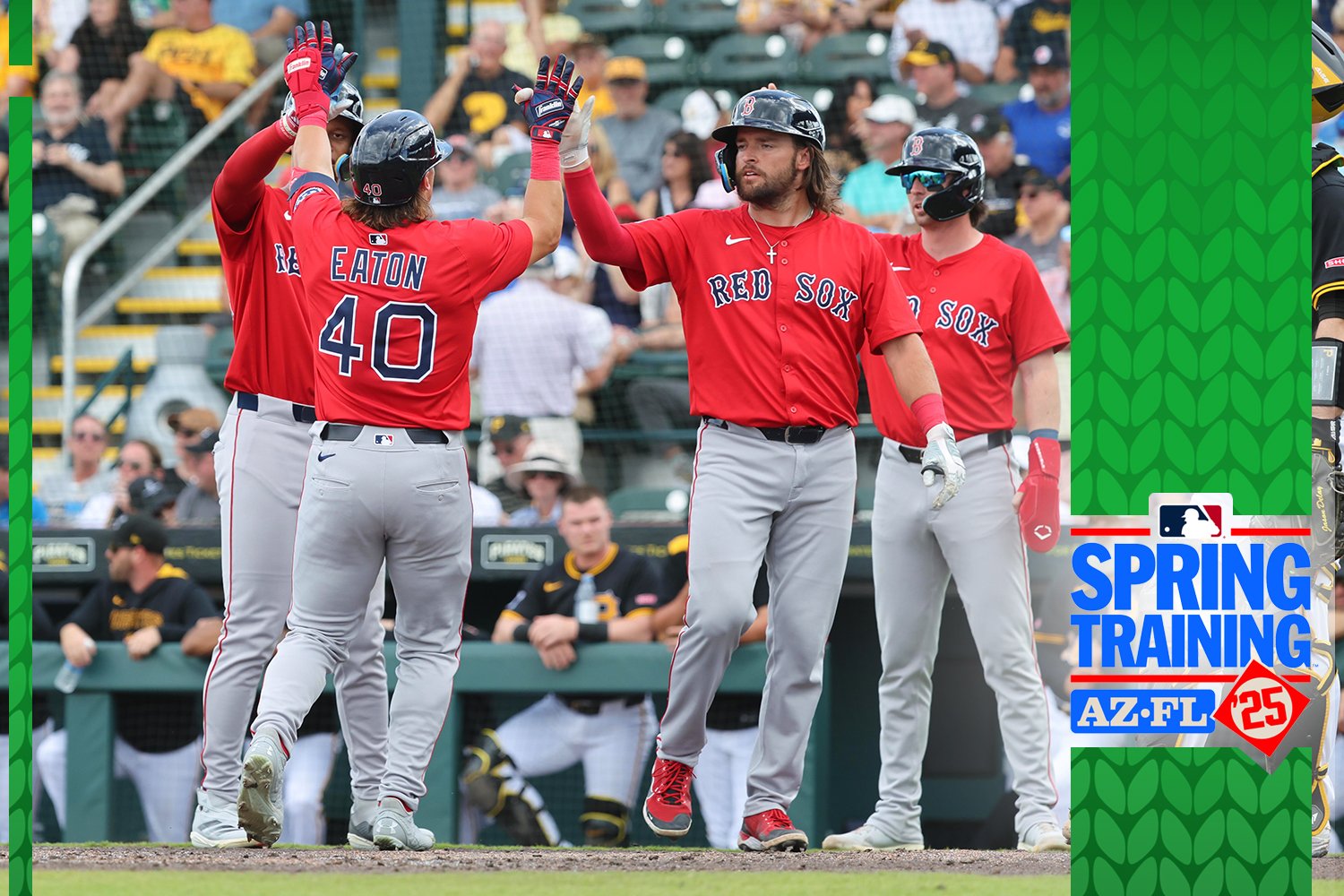 None of this matters. I know it, you know it, Nate Eaton knows it. It’s spring training. The goal is to get back in shape, to get your work in, to align with the rhythms of baseball if you prefer to get a little mystical with it. No one is checking the spring training leaderboards because they don’t matter. Except for me. I’m checking them, and, uh, there are kind of a lot of Red Sox up there. No, they’re not the Red Sox you’d like to see at the top of the leaderboards. Jarren Duran? Abset. Wilyer Abreu? Literally absent. Rafael Devers, Alex Bregman, Triston Casas, Roman Anthony, Kristian Campbell? No, nope, nay, negative, definitely not. Here are your Red Sox spring training superstars. Enjoy them while you can. If you do nothing more than go to MLB.com, click STATS, and then sort by OPS, Nate Eaton’s at the top of the list. I don’t even know what the criteria are to qualify for this leaderboard, but I don’t care much. Eaton’s got a 1.260 OPS, because he’s somehow gone 4-for-14 with five walks. Oh, and all four of his hits are extra-base hits. He’s got two doubles, a triple, and a homer, so despite a .286 batting average, he’s got a .474 on-base percentage and a .786 slugging percentage. The guy’s got a grand slam? Want to see some Nate Eaton highlights? Of course you do! The only time I wrote a whole article about Nate Eaton, it was about how he should maybe give up hitting and try to become a pitcher. All of a sudden he’s the Kid Who Only Hits Homers. According to MLB.com, he's the best hitter in baseball right now. But wait, there’s more. Second on the list: Trayce Thompson, with a 1.214 OPS. Like Eaton, he’s on there because he’s done nothing but slug and walk. Thompson is 5-for-18 with three walks, three homers, and a double. He’s probably incredibly embarrassed about that one single he hit. You know you want some Trayce Thompson highlights too. Did you see that second homer? It looked sounded like the hardest-hit ball in the history of the world. Also, Thompson has a .278 batting average. Checking in at 12 and 13, we have Marcelo Mayer (.956 OPS) and Nick Sogard (.929). Once again, neither player is batting .300. They’ve just been slugging. Mayer’s got a homer and a triple among his five hits, and Sogard’s got a homer and a double. Down at number 20 is David Hamilton, with an .821 OPS and a .235 batting average. If you’re keeping score at home, that makes five Red Sox in the top 25, according to OPS. Five! Only one other team even has three. And somehow, the likeliest outcome is that only one of these players will make the only day roster. And somehow, when you look at the team stats, the Red Sox aren’t in the top 10 in batting average, on-base percentage, or slugging. And somehow, their five players at the top of the OPS leaderboard are batting a combined .277. I could keep going. I've got a lot of and somehows. Spring training is weird. Luckily, none of this matters.
 -
In just two spring training appearances, Richard Fitts has demonstrated that he's an entirely different pitcher from the one we saw in September. Richard Fitts has now made two spring training appearances, striking out five and allowing four hits and a walk. He has yet to surrender a run, and seven of the 10 batted balls he’s allowed have been groundballs. Obviously, it would be ridiculous to try to draw conclusions from the stats Fitts has put up in four spring training innings, but it’s not just the results that have been impressive. Fitts is an entirely different pitcher than the one who burst onto the scene with a scoreless inning streak in September. During his 2024 cameo, Fitts featured a four-pitch mix, leading with a four-seam fastball that averaged 94.5 mph. He followed that up with a slider, a sweeper, and a splitter. There were a couple obvious problems with that particular pitch mix. For one, the slider and sweeper were a little too similar. The slider came in at 85.9 mph, not much above the sweeper at 83.7, and its vertical break didn’t differ much from the sweeper’s either. This likely contributed to Fitts’ trouble getting whiffs. According to the Boston Globe’s Alex Speier, the Red Sox instructed Fitts to focus on improving his velocity during the offseason. “When his velo is up, the other stuff plays better,” Alex Cora told reporters, “So that’s what we pushed in the offseason and he did an outstanding job.” Said Fitts, “I tried to work on a lot of things, but really dove into our shoulder program.” It worked. In his spring training debut, his fastball reached 98 mph. His second appearance, which took place in front of Statcast camera on Friday, revealed a completely revamped repertoire. For starters, his four-seamer hit 99 mph and averaged 97.6. He didn’t throw a single pitch that hard during his September cup of coffee in Boston. His slider was harder and tighter – he has referred to it as a gyro slider – averaging 88.9 mph and giving it four ticks of separation from the sweeper. Furthermore, the sweeper added some drop, separating its movement axis from the slider’s too. Over the offseason, he switched his splitter to a kick change grip – a modified changeup grip in which the pitcher spikes his middle finger in order to alter (or kick) the spin axis as the ball comes off their fingertips. That’s not all; Fitts also debuted a sinker and a curveball. He only threw three curveballs and two sinkers on Friday, but the two looked to complement his existing pitches well. The movement plot below was created by the indispensable Thomas Nestico, and I think it’ll show you what I mean. The curve, in blue, averaged 13.3 inches of induced drop, giving Fitts a weapon to earn whiffs at and below the bottom of the zone against let-handed batters. The sinker, in purple, averaged 14.5 inches of arm-side run, and while that might make it a bit predictable to hitters, it’s way more horizontal movement than his four-seamer gets, and having another high-velocity look really should help. This is what Fitts meant when he told reporters a few weeks ago that his “focus was on the big picture.” All of sudden, he has a six-pitch mix, more velocity, more separation in velocity, and pitches that can break in a wider variety of directions. As he put it, “My guy on MLB The Show is going to be pretty crazy.” Clearly, he’s had a busy offseason. “I feel like I’ve exceeded my expectations of what I ever thought that I could be,” Fitts told reporters, “but I don’t think I’m even done yet.” As it is just March 5, I am legally obligated to close with another reminder that it’s way too early to come to any definite conclusions. Pitchers excel in spring training and then get lit up like a Christmas tree when the season starts. Pitchers try out new pitches in spring training, only to shelve them, sometimes before the season even starts. However, Fitts has given us several tangible things to be excited about. He’s shown that he’s willing to put in serious work. He’s shown us that he can throw a lot harder than anyone knew was capable of. He’s shown us that he can field a full starter’s repertoire. That’s pretty good for four innings of work. View full article
-
.jpg.6dcf582c1bbf0be84f6b8c42282cca09.jpg) Richard Fitts has now made two spring training appearances, striking out five and allowing four hits and a walk. He has yet to surrender a run, and seven of the 10 batted balls he’s allowed have been groundballs. Obviously, it would be ridiculous to try to draw conclusions from the stats Fitts has put up in four spring training innings, but it’s not just the results that have been impressive. Fitts is an entirely different pitcher than the one who burst onto the scene with a scoreless inning streak in September. During his 2024 cameo, Fitts featured a four-pitch mix, leading with a four-seam fastball that averaged 94.5 mph. He followed that up with a slider, a sweeper, and a splitter. There were a couple obvious problems with that particular pitch mix. For one, the slider and sweeper were a little too similar. The slider came in at 85.9 mph, not much above the sweeper at 83.7, and its vertical break didn’t differ much from the sweeper’s either. This likely contributed to Fitts’ trouble getting whiffs. According to the Boston Globe’s Alex Speier, the Red Sox instructed Fitts to focus on improving his velocity during the offseason. “When his velo is up, the other stuff plays better,” Alex Cora told reporters, “So that’s what we pushed in the offseason and he did an outstanding job.” Said Fitts, “I tried to work on a lot of things, but really dove into our shoulder program.” It worked. In his spring training debut, his fastball reached 98 mph. His second appearance, which took place in front of Statcast camera on Friday, revealed a completely revamped repertoire. For starters, his four-seamer hit 99 mph and averaged 97.6. He didn’t throw a single pitch that hard during his September cup of coffee in Boston. His slider was harder and tighter – he has referred to it as a gyro slider – averaging 88.9 mph and giving it four ticks of separation from the sweeper. Furthermore, the sweeper added some drop, separating its movement axis from the slider’s too. Over the offseason, he switched his splitter to a kick change grip – a modified changeup grip in which the pitcher spikes his middle finger in order to alter (or kick) the spin axis as the ball comes off their fingertips. That’s not all; Fitts also debuted a sinker and a curveball. He only threw three curveballs and two sinkers on Friday, but the two looked to complement his existing pitches well. The movement plot below was created by the indispensable Thomas Nestico, and I think it’ll show you what I mean. The curve, in blue, averaged 13.3 inches of induced drop, giving Fitts a weapon to earn whiffs at and below the bottom of the zone against let-handed batters. The sinker, in purple, averaged 14.5 inches of arm-side run, and while that might make it a bit predictable to hitters, it’s way more horizontal movement than his four-seamer gets, and having another high-velocity look really should help. This is what Fitts meant when he told reporters a few weeks ago that his “focus was on the big picture.” All of sudden, he has a six-pitch mix, more velocity, more separation in velocity, and pitches that can break in a wider variety of directions. As he put it, “My guy on MLB The Show is going to be pretty crazy.” Clearly, he’s had a busy offseason. “I feel like I’ve exceeded my expectations of what I ever thought that I could be,” Fitts told reporters, “but I don’t think I’m even done yet.” As it is just March 5, I am legally obligated to close with another reminder that it’s way too early to come to any definite conclusions. Pitchers excel in spring training and then get lit up like a Christmas tree when the season starts. Pitchers try out new pitches in spring training, only to shelve them, sometimes before the season even starts. However, Fitts has given us several tangible things to be excited about. He’s shown that he’s willing to put in serious work. He’s shown us that he can throw a lot harder than anyone knew was capable of. He’s shown us that he can field a full starter’s repertoire. That’s pretty good for four innings of work.
Richard Fitts has now made two spring training appearances, striking out five and allowing four hits and a walk. He has yet to surrender a run, and seven of the 10 batted balls he’s allowed have been groundballs. Obviously, it would be ridiculous to try to draw conclusions from the stats Fitts has put up in four spring training innings, but it’s not just the results that have been impressive. Fitts is an entirely different pitcher than the one who burst onto the scene with a scoreless inning streak in September. During his 2024 cameo, Fitts featured a four-pitch mix, leading with a four-seam fastball that averaged 94.5 mph. He followed that up with a slider, a sweeper, and a splitter. There were a couple obvious problems with that particular pitch mix. For one, the slider and sweeper were a little too similar. The slider came in at 85.9 mph, not much above the sweeper at 83.7, and its vertical break didn’t differ much from the sweeper’s either. This likely contributed to Fitts’ trouble getting whiffs. According to the Boston Globe’s Alex Speier, the Red Sox instructed Fitts to focus on improving his velocity during the offseason. “When his velo is up, the other stuff plays better,” Alex Cora told reporters, “So that’s what we pushed in the offseason and he did an outstanding job.” Said Fitts, “I tried to work on a lot of things, but really dove into our shoulder program.” It worked. In his spring training debut, his fastball reached 98 mph. His second appearance, which took place in front of Statcast camera on Friday, revealed a completely revamped repertoire. For starters, his four-seamer hit 99 mph and averaged 97.6. He didn’t throw a single pitch that hard during his September cup of coffee in Boston. His slider was harder and tighter – he has referred to it as a gyro slider – averaging 88.9 mph and giving it four ticks of separation from the sweeper. Furthermore, the sweeper added some drop, separating its movement axis from the slider’s too. Over the offseason, he switched his splitter to a kick change grip – a modified changeup grip in which the pitcher spikes his middle finger in order to alter (or kick) the spin axis as the ball comes off their fingertips. That’s not all; Fitts also debuted a sinker and a curveball. He only threw three curveballs and two sinkers on Friday, but the two looked to complement his existing pitches well. The movement plot below was created by the indispensable Thomas Nestico, and I think it’ll show you what I mean. The curve, in blue, averaged 13.3 inches of induced drop, giving Fitts a weapon to earn whiffs at and below the bottom of the zone against let-handed batters. The sinker, in purple, averaged 14.5 inches of arm-side run, and while that might make it a bit predictable to hitters, it’s way more horizontal movement than his four-seamer gets, and having another high-velocity look really should help. This is what Fitts meant when he told reporters a few weeks ago that his “focus was on the big picture.” All of sudden, he has a six-pitch mix, more velocity, more separation in velocity, and pitches that can break in a wider variety of directions. As he put it, “My guy on MLB The Show is going to be pretty crazy.” Clearly, he’s had a busy offseason. “I feel like I’ve exceeded my expectations of what I ever thought that I could be,” Fitts told reporters, “but I don’t think I’m even done yet.” As it is just March 5, I am legally obligated to close with another reminder that it’s way too early to come to any definite conclusions. Pitchers excel in spring training and then get lit up like a Christmas tree when the season starts. Pitchers try out new pitches in spring training, only to shelve them, sometimes before the season even starts. However, Fitts has given us several tangible things to be excited about. He’s shown that he’s willing to put in serious work. He’s shown us that he can throw a lot harder than anyone knew was capable of. He’s shown us that he can field a full starter’s repertoire. That’s pretty good for four innings of work. -
After an illness kept him out of camp for the first week and a half, Wilyer Abreu will have to cram spring training into four weeks. How will he do it? This article definitely won't tell you. On February 28, after missing the the entire beginning of camp due to a persistent gastrointestinal virus, Wilyer Abreu was finally cleared for baseball activities. That gives him four weeks — exactly 28 days— to get ready for the season opener on March 27 in Arlington, Texas. How does a baseball player, especially one who’s particularly weak after an illness that serious, get ready to build on a season in which they won a Gold Glove and finished sixth in the Rookie of the Year voting, all in just 28 days? I have no idea. I'm just a writer. Rather than do research or ask anyone who might know, I decided to just take a big, fat guess. You with me? I just made it all up. But between you and me, I think I might have really nailed it. So without further ado, here it is, my 28-day plan for baseball success. February 28: Say hello to everyone. Look, you’ve been away a long time. The season ended all the way back in October. Just to be safe, you should probably make the rounds and introduce yourself to everyone, just in case they forgot your name over the winter. Also, there are some new players. Garrett is the tall one. Alex is the one who pretends he’s tall. March 1: Try on your uniform. How are you supposed to play like a winner if you don’t dress like a winner? Oh, they switched the pants back to the old ones, so they’re not completely see-through anymore. I don’t know if that changes your plans or anything. If you really liked giving everybody a clear view of all your business, maybe we can see if they still have some of the transparent pants. March 2: Crease the brim of your hat. Ok, this was actually supposed to happen yesterday, but sometimes you get so caught up with the jersey and the spikes and the pants that you forget. Gotta crease that brim, though. Can’t be looking like a dad out there. What if the sun gets in the very corner of your eye and you lose the ball and the World Series? March 3: Break in your glove. That’s right, it’s every dad’s favorite activity! Time to break out that glove oil and get to work. How are you going to win a second straight Gold Glove with a hunk of leather that’s so stiff you can’t even squeeze it? Don’t forget to stick it under your mattress before you go to bed. March 4: Get the lay of the land. Look, the past three days have been a lot. Maybe on day four, you just get your bearings. Which one is right field again? Are you a stirrups guy or a full socks guy? Where’s your locker? You still haven’t found it after three days. You’ve just been sitting on a Gatorade cooler in the locker room while you got your spikes on. Now’s the time to get oriented. March 5: Play catch. That’s right, it’s time for baseball related activities. Wait, where’s your glove? It’s still under your mattress? Ok, maybe one of those little kids in the stands would let you borrow theirs. Just trade an autographed ball or something. I don't know, tell them you're Jarren Duran! Great work. Let’s get back in the swing of things. Catch the ball. Throw the ball. Catch the ball. Throw the ball — oh no, I’m sorry! Ugh, that was terrible. Way over your head. This is embarrassing. No, I’ll go get it. Really. I don’t mind. It was my fault any — ok, well, thank you. Catch the ball. Throw the ball. Catch the ball. Get in the zone. Throw the ball. Catch the ball. Throw the ball – damn it, not again! March 6: Breathe deeply and visualize success. Don’t breathe too deeply, of course; you don’t want to hyperventilate. But yeah, you have to prepare yourself mentally for the season, so focus on your breath, and then picture yourself: you’re in the batter’s box spitting on a changeup just off the plate, you’re recognizing a front hip sinker and ripping it down the line like a golden god, you’re finally asking that cute barista for their phone number, you’re getting an amazing jump and making a sliding catch on a liner that’s slicing away from you in the corner, you’re finally telling Alex Cora that you’re name is Wilyer, not Wilbur. March 7: Fungoes. That’s right, more baseball. Very nearly two days in a row. Head on out to right field – you did figure out where right field is, right? It’s the one with the little wall. There you go. Now just have at it. Go run ‘em down. Make some plays. Get that uniform dirty. Oh wow, you're pretty good at this. March 8: Gatorade break. That’s right. Time to hydrate. Replenish those electrolytes. It’s important to get your daily dose of red food coloring. March 9: Apply eye black. The glare is brutal out here in Florida. Smear some gunk on your face. That’s it. Maybe just a little more. March 10: Bullpen session. Wait, sorry, I think your schedule got mixed up with someone else's. You weren’t actually supposed to throw a bullpen session today. That’s just for pitchers. But it’s great to hear that you had fun. And also that you can hit 95 mph with 13 inches of arm-side run. We’ll definitely keep that in mind in August when half the rotation’s on the shelf. March 11: Dry swings. This is where the real baseball happens. Time for some dry swings. Grab a bat – oh shoot, we never put picking a bat on our list – ok, borrow a bat and just start swinging. No ball. No tee. Just you, getting that swing fine tuned to perfection. That's it, lovely dry swings, the closest thing to no swings at all. March 12: Cage work. Wait, you didn’t do your work in the batting cage today? You went back and had another bullpen session? This has to stop. I don’t care if Andrew Bailey thinks you can make it. Tomorrow you’re doing your cage work. March 13: Cage work for real. Ok, Now you actually have to go into the batting cages and hit some pitches. March 14: Catch up on current events. Look, you can’t baseball all the time. It’s important to be a well-informed member of society, so let’s just check in on the news real quick. Oh no. Oh no, no, no. That was a mistake. Just go ahead and spend the rest of the day in bed with the blankets pulled up all the way over your head. March 15: Powerade break. I mean, you can’t drink Gatorade all the time, right? Sometimes you just need your electrolytes to taste a little bit worse, to look a little bluer. The important thing is that you’re just pouring sugar into your body. March 16: Water break. Ok, the Powerade was a mistake. You had a stomachache all day, and let’s not even talk about the colors you saw when you went to the bathroom. Just water today. March 17: Batting practice. It’s time. You’re going to get in that cage and show them what you can do out on the field. Really pound the old horsehide, you know? Really wallop it. Swing for the fences. March 18: Ice. It’s important to keep the inflammation in check. Get some ice packs on your knees and your shoulders and your elbows and your face. Hop in the cold tub. Drink a couple Frosties. If you don’t get hypothermia, you’re not icing hard enough. Match 19: Hit the gym. Yeah, you should probably get a lift in at some point. Gotta get swole. One day should cover it. March 20: Cheat day. Great lift. You’ve definitely earned a break. Just head over the Costco on Alico road, get the biggest container of Reese’s peanut butter cups you can find, and go town. Really have at it. March 21: Barf day. I mean, who knew that Reese’s came in containers that big? How could anyone have known that they would sell them to you by the pallet? It’s so impressive that managed to eat them all. Really, heroic work. We’ll talk once you get out of the hospital. March 22: Maybe one more batting practice. Yeah, this seems like a good idea. Hitting’s pretty important. Maybe you practice it more than once this month. March 23: Intrasquad scrimmage. That’s right. You’re going to be playing ball against your teammates. This should be fun. March 24: Travel day. Alright, two days until Opening Day. Let’s hit the skies. We’re heading to Texas. Maybe watch something inspiring on the flight, like Field of Dreams. Oh, you’ve already picked your movie? You’re watching The Wild Robot? Hmm. No, no, it’s great. It’s just…you know, it’s not really a Get Psyched Up kind of movie. It’s more of a Find Yourself Spontaneously Weeping for Several Days Afterward kind of movie. But sure, great choice. March 25: Check the scouting reports. I told you. Tearjerker, right? Ok, buck up. So you’re playing the Rangers tomorrow. Big day. Season opener. Better check all those tendencies. What’s this guy like to throw to lefties when he’s behind? A sinker. A sweeper. A kick change? Surely, you’re making that up. That can’t be the name of a real pitch. Kick change? I think you’re messing with me. This is why nobody likes the analytics nerds. March 26: Carbo-load. Everybody knows that the night before a big athletic event, you need to pack in the carbohydrates. After all, sports science and nutrition probably haven’t learned anything new in the last 30 years, right? So load up on pasta and bread. Luckily, there’s an Olive Garden that’s just a 10-minute bike ride from the ballpark. Buon appetito! Now you’re ready for the season. March 27: Play ball. Yeah, maybe some Tums are in order, but I can’t believe you made it. You crammed so much into the last four weeks just to get ready for the season, and now you’re here. You’re ready. You can do this. Oh no. What’s wrong? Are you crying? Did all that exposed metalwork at Globe Life Park remind you of the Universal Dynamics factory at the end The Wild Robot? Oh God. Ok, we’ll give you some time. Let's find you some tissues. Maybe you sit this one out after all. View full article
-
.jpg.9567e1b0bea02eb4257fed2fb53ec594.jpg) On February 28, after missing the the entire beginning of camp due to a persistent gastrointestinal virus, Wilyer Abreu was finally cleared for baseball activities. That gives him four weeks — exactly 28 days— to get ready for the season opener on March 27 in Arlington, Texas. How does a baseball player, especially one who’s particularly weak after an illness that serious, get ready to build on a season in which they won a Gold Glove and finished sixth in the Rookie of the Year voting, all in just 28 days? I have no idea. I'm just a writer. Rather than do research or ask anyone who might know, I decided to just take a big, fat guess. You with me? I just made it all up. But between you and me, I think I might have really nailed it. So without further ado, here it is, my 28-day plan for baseball success. February 28: Say hello to everyone. Look, you’ve been away a long time. The season ended all the way back in October. Just to be safe, you should probably make the rounds and introduce yourself to everyone, just in case they forgot your name over the winter. Also, there are some new players. Garrett is the tall one. Alex is the one who pretends he’s tall. March 1: Try on your uniform. How are you supposed to play like a winner if you don’t dress like a winner? Oh, they switched the pants back to the old ones, so they’re not completely see-through anymore. I don’t know if that changes your plans or anything. If you really liked giving everybody a clear view of all your business, maybe we can see if they still have some of the transparent pants. March 2: Crease the brim of your hat. Ok, this was actually supposed to happen yesterday, but sometimes you get so caught up with the jersey and the spikes and the pants that you forget. Gotta crease that brim, though. Can’t be looking like a dad out there. What if the sun gets in the very corner of your eye and you lose the ball and the World Series? March 3: Break in your glove. That’s right, it’s every dad’s favorite activity! Time to break out that glove oil and get to work. How are you going to win a second straight Gold Glove with a hunk of leather that’s so stiff you can’t even squeeze it? Don’t forget to stick it under your mattress before you go to bed. March 4: Get the lay of the land. Look, the past three days have been a lot. Maybe on day four, you just get your bearings. Which one is right field again? Are you a stirrups guy or a full socks guy? Where’s your locker? You still haven’t found it after three days. You’ve just been sitting on a Gatorade cooler in the locker room while you got your spikes on. Now’s the time to get oriented. March 5: Play catch. That’s right, it’s time for baseball related activities. Wait, where’s your glove? It’s still under your mattress? Ok, maybe one of those little kids in the stands would let you borrow theirs. Just trade an autographed ball or something. I don't know, tell them you're Jarren Duran! Great work. Let’s get back in the swing of things. Catch the ball. Throw the ball. Catch the ball. Throw the ball — oh no, I’m sorry! Ugh, that was terrible. Way over your head. This is embarrassing. No, I’ll go get it. Really. I don’t mind. It was my fault any — ok, well, thank you. Catch the ball. Throw the ball. Catch the ball. Get in the zone. Throw the ball. Catch the ball. Throw the ball – damn it, not again! March 6: Breathe deeply and visualize success. Don’t breathe too deeply, of course; you don’t want to hyperventilate. But yeah, you have to prepare yourself mentally for the season, so focus on your breath, and then picture yourself: you’re in the batter’s box spitting on a changeup just off the plate, you’re recognizing a front hip sinker and ripping it down the line like a golden god, you’re finally asking that cute barista for their phone number, you’re getting an amazing jump and making a sliding catch on a liner that’s slicing away from you in the corner, you’re finally telling Alex Cora that you’re name is Wilyer, not Wilbur. March 7: Fungoes. That’s right, more baseball. Very nearly two days in a row. Head on out to right field – you did figure out where right field is, right? It’s the one with the little wall. There you go. Now just have at it. Go run ‘em down. Make some plays. Get that uniform dirty. Oh wow, you're pretty good at this. March 8: Gatorade break. That’s right. Time to hydrate. Replenish those electrolytes. It’s important to get your daily dose of red food coloring. March 9: Apply eye black. The glare is brutal out here in Florida. Smear some gunk on your face. That’s it. Maybe just a little more. March 10: Bullpen session. Wait, sorry, I think your schedule got mixed up with someone else's. You weren’t actually supposed to throw a bullpen session today. That’s just for pitchers. But it’s great to hear that you had fun. And also that you can hit 95 mph with 13 inches of arm-side run. We’ll definitely keep that in mind in August when half the rotation’s on the shelf. March 11: Dry swings. This is where the real baseball happens. Time for some dry swings. Grab a bat – oh shoot, we never put picking a bat on our list – ok, borrow a bat and just start swinging. No ball. No tee. Just you, getting that swing fine tuned to perfection. That's it, lovely dry swings, the closest thing to no swings at all. March 12: Cage work. Wait, you didn’t do your work in the batting cage today? You went back and had another bullpen session? This has to stop. I don’t care if Andrew Bailey thinks you can make it. Tomorrow you’re doing your cage work. March 13: Cage work for real. Ok, Now you actually have to go into the batting cages and hit some pitches. March 14: Catch up on current events. Look, you can’t baseball all the time. It’s important to be a well-informed member of society, so let’s just check in on the news real quick. Oh no. Oh no, no, no. That was a mistake. Just go ahead and spend the rest of the day in bed with the blankets pulled up all the way over your head. March 15: Powerade break. I mean, you can’t drink Gatorade all the time, right? Sometimes you just need your electrolytes to taste a little bit worse, to look a little bluer. The important thing is that you’re just pouring sugar into your body. March 16: Water break. Ok, the Powerade was a mistake. You had a stomachache all day, and let’s not even talk about the colors you saw when you went to the bathroom. Just water today. March 17: Batting practice. It’s time. You’re going to get in that cage and show them what you can do out on the field. Really pound the old horsehide, you know? Really wallop it. Swing for the fences. March 18: Ice. It’s important to keep the inflammation in check. Get some ice packs on your knees and your shoulders and your elbows and your face. Hop in the cold tub. Drink a couple Frosties. If you don’t get hypothermia, you’re not icing hard enough. Match 19: Hit the gym. Yeah, you should probably get a lift in at some point. Gotta get swole. One day should cover it. March 20: Cheat day. Great lift. You’ve definitely earned a break. Just head over the Costco on Alico road, get the biggest container of Reese’s peanut butter cups you can find, and go town. Really have at it. March 21: Barf day. I mean, who knew that Reese’s came in containers that big? How could anyone have known that they would sell them to you by the pallet? It’s so impressive that managed to eat them all. Really, heroic work. We’ll talk once you get out of the hospital. March 22: Maybe one more batting practice. Yeah, this seems like a good idea. Hitting’s pretty important. Maybe you practice it more than once this month. March 23: Intrasquad scrimmage. That’s right. You’re going to be playing ball against your teammates. This should be fun. March 24: Travel day. Alright, two days until Opening Day. Let’s hit the skies. We’re heading to Texas. Maybe watch something inspiring on the flight, like Field of Dreams. Oh, you’ve already picked your movie? You’re watching The Wild Robot? Hmm. No, no, it’s great. It’s just…you know, it’s not really a Get Psyched Up kind of movie. It’s more of a Find Yourself Spontaneously Weeping for Several Days Afterward kind of movie. But sure, great choice. March 25: Check the scouting reports. I told you. Tearjerker, right? Ok, buck up. So you’re playing the Rangers tomorrow. Big day. Season opener. Better check all those tendencies. What’s this guy like to throw to lefties when he’s behind? A sinker. A sweeper. A kick change? Surely, you’re making that up. That can’t be the name of a real pitch. Kick change? I think you’re messing with me. This is why nobody likes the analytics nerds. March 26: Carbo-load. Everybody knows that the night before a big athletic event, you need to pack in the carbohydrates. After all, sports science and nutrition probably haven’t learned anything new in the last 30 years, right? So load up on pasta and bread. Luckily, there’s an Olive Garden that’s just a 10-minute bike ride from the ballpark. Buon appetito! Now you’re ready for the season. March 27: Play ball. Yeah, maybe some Tums are in order, but I can’t believe you made it. You crammed so much into the last four weeks just to get ready for the season, and now you’re here. You’re ready. You can do this. Oh no. What’s wrong? Are you crying? Did all that exposed metalwork at Globe Life Park remind you of the Universal Dynamics factory at the end The Wild Robot? Oh God. Ok, we’ll give you some time. Let's find you some tissues. Maybe you sit this one out after all.
On February 28, after missing the the entire beginning of camp due to a persistent gastrointestinal virus, Wilyer Abreu was finally cleared for baseball activities. That gives him four weeks — exactly 28 days— to get ready for the season opener on March 27 in Arlington, Texas. How does a baseball player, especially one who’s particularly weak after an illness that serious, get ready to build on a season in which they won a Gold Glove and finished sixth in the Rookie of the Year voting, all in just 28 days? I have no idea. I'm just a writer. Rather than do research or ask anyone who might know, I decided to just take a big, fat guess. You with me? I just made it all up. But between you and me, I think I might have really nailed it. So without further ado, here it is, my 28-day plan for baseball success. February 28: Say hello to everyone. Look, you’ve been away a long time. The season ended all the way back in October. Just to be safe, you should probably make the rounds and introduce yourself to everyone, just in case they forgot your name over the winter. Also, there are some new players. Garrett is the tall one. Alex is the one who pretends he’s tall. March 1: Try on your uniform. How are you supposed to play like a winner if you don’t dress like a winner? Oh, they switched the pants back to the old ones, so they’re not completely see-through anymore. I don’t know if that changes your plans or anything. If you really liked giving everybody a clear view of all your business, maybe we can see if they still have some of the transparent pants. March 2: Crease the brim of your hat. Ok, this was actually supposed to happen yesterday, but sometimes you get so caught up with the jersey and the spikes and the pants that you forget. Gotta crease that brim, though. Can’t be looking like a dad out there. What if the sun gets in the very corner of your eye and you lose the ball and the World Series? March 3: Break in your glove. That’s right, it’s every dad’s favorite activity! Time to break out that glove oil and get to work. How are you going to win a second straight Gold Glove with a hunk of leather that’s so stiff you can’t even squeeze it? Don’t forget to stick it under your mattress before you go to bed. March 4: Get the lay of the land. Look, the past three days have been a lot. Maybe on day four, you just get your bearings. Which one is right field again? Are you a stirrups guy or a full socks guy? Where’s your locker? You still haven’t found it after three days. You’ve just been sitting on a Gatorade cooler in the locker room while you got your spikes on. Now’s the time to get oriented. March 5: Play catch. That’s right, it’s time for baseball related activities. Wait, where’s your glove? It’s still under your mattress? Ok, maybe one of those little kids in the stands would let you borrow theirs. Just trade an autographed ball or something. I don't know, tell them you're Jarren Duran! Great work. Let’s get back in the swing of things. Catch the ball. Throw the ball. Catch the ball. Throw the ball — oh no, I’m sorry! Ugh, that was terrible. Way over your head. This is embarrassing. No, I’ll go get it. Really. I don’t mind. It was my fault any — ok, well, thank you. Catch the ball. Throw the ball. Catch the ball. Get in the zone. Throw the ball. Catch the ball. Throw the ball – damn it, not again! March 6: Breathe deeply and visualize success. Don’t breathe too deeply, of course; you don’t want to hyperventilate. But yeah, you have to prepare yourself mentally for the season, so focus on your breath, and then picture yourself: you’re in the batter’s box spitting on a changeup just off the plate, you’re recognizing a front hip sinker and ripping it down the line like a golden god, you’re finally asking that cute barista for their phone number, you’re getting an amazing jump and making a sliding catch on a liner that’s slicing away from you in the corner, you’re finally telling Alex Cora that you’re name is Wilyer, not Wilbur. March 7: Fungoes. That’s right, more baseball. Very nearly two days in a row. Head on out to right field – you did figure out where right field is, right? It’s the one with the little wall. There you go. Now just have at it. Go run ‘em down. Make some plays. Get that uniform dirty. Oh wow, you're pretty good at this. March 8: Gatorade break. That’s right. Time to hydrate. Replenish those electrolytes. It’s important to get your daily dose of red food coloring. March 9: Apply eye black. The glare is brutal out here in Florida. Smear some gunk on your face. That’s it. Maybe just a little more. March 10: Bullpen session. Wait, sorry, I think your schedule got mixed up with someone else's. You weren’t actually supposed to throw a bullpen session today. That’s just for pitchers. But it’s great to hear that you had fun. And also that you can hit 95 mph with 13 inches of arm-side run. We’ll definitely keep that in mind in August when half the rotation’s on the shelf. March 11: Dry swings. This is where the real baseball happens. Time for some dry swings. Grab a bat – oh shoot, we never put picking a bat on our list – ok, borrow a bat and just start swinging. No ball. No tee. Just you, getting that swing fine tuned to perfection. That's it, lovely dry swings, the closest thing to no swings at all. March 12: Cage work. Wait, you didn’t do your work in the batting cage today? You went back and had another bullpen session? This has to stop. I don’t care if Andrew Bailey thinks you can make it. Tomorrow you’re doing your cage work. March 13: Cage work for real. Ok, Now you actually have to go into the batting cages and hit some pitches. March 14: Catch up on current events. Look, you can’t baseball all the time. It’s important to be a well-informed member of society, so let’s just check in on the news real quick. Oh no. Oh no, no, no. That was a mistake. Just go ahead and spend the rest of the day in bed with the blankets pulled up all the way over your head. March 15: Powerade break. I mean, you can’t drink Gatorade all the time, right? Sometimes you just need your electrolytes to taste a little bit worse, to look a little bluer. The important thing is that you’re just pouring sugar into your body. March 16: Water break. Ok, the Powerade was a mistake. You had a stomachache all day, and let’s not even talk about the colors you saw when you went to the bathroom. Just water today. March 17: Batting practice. It’s time. You’re going to get in that cage and show them what you can do out on the field. Really pound the old horsehide, you know? Really wallop it. Swing for the fences. March 18: Ice. It’s important to keep the inflammation in check. Get some ice packs on your knees and your shoulders and your elbows and your face. Hop in the cold tub. Drink a couple Frosties. If you don’t get hypothermia, you’re not icing hard enough. Match 19: Hit the gym. Yeah, you should probably get a lift in at some point. Gotta get swole. One day should cover it. March 20: Cheat day. Great lift. You’ve definitely earned a break. Just head over the Costco on Alico road, get the biggest container of Reese’s peanut butter cups you can find, and go town. Really have at it. March 21: Barf day. I mean, who knew that Reese’s came in containers that big? How could anyone have known that they would sell them to you by the pallet? It’s so impressive that managed to eat them all. Really, heroic work. We’ll talk once you get out of the hospital. March 22: Maybe one more batting practice. Yeah, this seems like a good idea. Hitting’s pretty important. Maybe you practice it more than once this month. March 23: Intrasquad scrimmage. That’s right. You’re going to be playing ball against your teammates. This should be fun. March 24: Travel day. Alright, two days until Opening Day. Let’s hit the skies. We’re heading to Texas. Maybe watch something inspiring on the flight, like Field of Dreams. Oh, you’ve already picked your movie? You’re watching The Wild Robot? Hmm. No, no, it’s great. It’s just…you know, it’s not really a Get Psyched Up kind of movie. It’s more of a Find Yourself Spontaneously Weeping for Several Days Afterward kind of movie. But sure, great choice. March 25: Check the scouting reports. I told you. Tearjerker, right? Ok, buck up. So you’re playing the Rangers tomorrow. Big day. Season opener. Better check all those tendencies. What’s this guy like to throw to lefties when he’s behind? A sinker. A sweeper. A kick change? Surely, you’re making that up. That can’t be the name of a real pitch. Kick change? I think you’re messing with me. This is why nobody likes the analytics nerds. March 26: Carbo-load. Everybody knows that the night before a big athletic event, you need to pack in the carbohydrates. After all, sports science and nutrition probably haven’t learned anything new in the last 30 years, right? So load up on pasta and bread. Luckily, there’s an Olive Garden that’s just a 10-minute bike ride from the ballpark. Buon appetito! Now you’re ready for the season. March 27: Play ball. Yeah, maybe some Tums are in order, but I can’t believe you made it. You crammed so much into the last four weeks just to get ready for the season, and now you’re here. You’re ready. You can do this. Oh no. What’s wrong? Are you crying? Did all that exposed metalwork at Globe Life Park remind you of the Universal Dynamics factory at the end The Wild Robot? Oh God. Ok, we’ll give you some time. Let's find you some tissues. Maybe you sit this one out after all.
.jpg.d84c1f7b023f92a004394b76bb2e34b5.jpg)
.jpg.6dcf582c1bbf0be84f6b8c42282cca09.jpg)

.jpg.9567e1b0bea02eb4257fed2fb53ec594.jpg)