


Red Sox Video
I was at the Winter Meetings in Dallas when word got out about the trade that brought Garrett Crochet to the Red Sox. I was just sitting down in a giant ballroom to watch the Rule 5 Draft, and the person at the table in front of mine turned to his neighbor and said, “Crochet to the Red Sox.” Everything stopped. You could hear the news spreading through the room like a ripple expanding across the surface of a pond. I didn’t pay any attention to the draft. I pounded out a thousand words breaking down exactly why Crochet was such a huge addition for Boston.
It’s not necessarily obvious if you just look at the traditional numbers. Crochet went 6-12 with a 3.58 ERA in 2024. Among the 126 pitchers with at least 100 innings pitched, his ERA ranked 46th. In other words, he was above average, but not by much. If that’s all you looked at, you would’ve been flummoxed by the decision to ditch Kyle Teel and three other prospects for two years of Crochet. That’s not why the Red Sox sacrificed so much for Crochet. They expect much, much bigger things, and so should we.
First of all, Crochet is already better than that. His underlying numbers were much better than his ERA or his record made him look. In Chicago, Crochet was pitching in front of the absolute worst defense in baseball, which cost him tons of runs. Advanced ERA estimators like xERA (2.85), FIP (2.69), xFIP (2.38), and DRA (2.75) all saw him as one of the top 10 starters in baseball. Both xFIP and DRA saw him as the absolute best. Let me say that again: the two advanced pitching metrics that I trust the most said that Crochet was already the best starting pitcher in baseball last season.
Crochet was pitching like an ace – striking out everyone in sight, walking next to no one, and keeping the ball on the ground – but bad luck and worse defense were hiding it from us. If for no other reason, we should expect more from Crochet simply because he’s moving from a bad defense to a good one.
In that sense, it might be unfair to expect even more of Crochet. His whiff rate, chase rate, strikeout rate, were all in the 93rd percentile or better. There’s not much room for improvement, and it’s hard to imagine him, or anyone, keeping those numbers so incredibly high year after year. That’s just not how things work. Time catches up with everyone, fastballs lose their zip, breaking balls lose their bite. That said, there are some real reasons to think that Crochet is just getting started, so let’s dive into them.
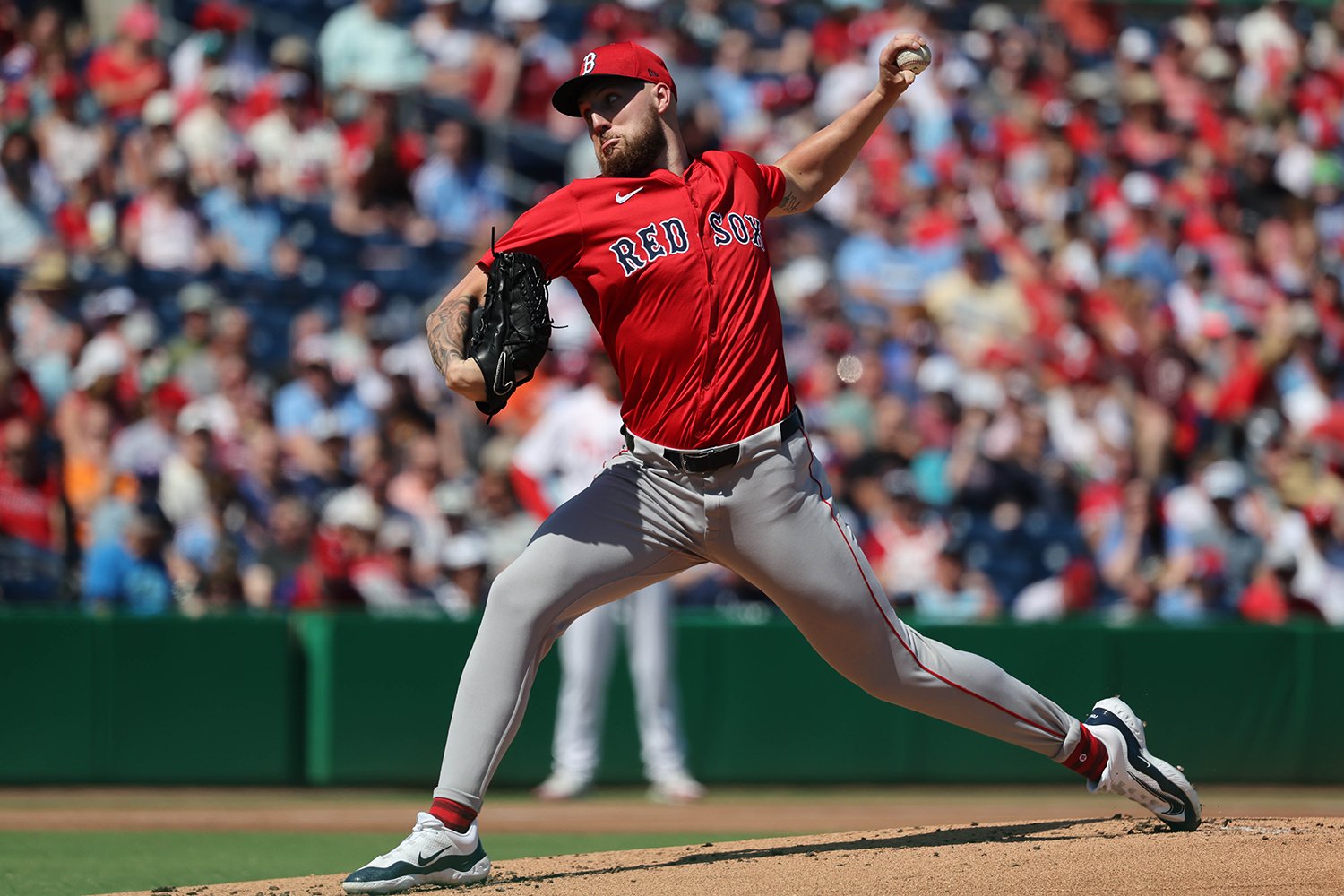
When I say Crochet is just getting started, I mean it very literally. He’s just 25 years old. Last season was just his second full season in the majors. It was his first full season as a starter, ever. He didn’t start a single game in the minors on his way up to Chicago, and even when he was pitching for Tennessee in college, most of his appearances came in relief. Crochet is young, and he’s going to keep learning about pitching in general and about being a starting pitcher in particular. And I know I mentioned that velo drops as players get older, but Crochet’s not at that point yet. His fastball averaged just over 97 mph in 2024, but he’s been throwing even harder during spring training, at one point coming so, so close to touching 101 mph. Crochet has also been unhittable during his short sample of four spring training starts, which is never a bad sign. So far he’s struck out very nearly half of the batters he’s faced. He’s absolutely overpowering people.
The last factor is maybe even more important than all the others. The Red Sox certainly seem like they’re making leaps and bounds in terms of player development on the pitching side as well as the hitting side. They’ve brought in voices from Driveline Baseball (including founder Kyle Boddy), and we’ve seen rapid growth from players like Richard Fitts and Quinn Priester. You can bet that have a plan for how to help Crochet get even better, and we’re starting to see pieces of it.
Back in December, I noted that Crochet depends heavily on his fastballs: a four-seamer that he threw over half the time, as well as a sinker that he only introduced to his repertoire in August, but was throwing nearly 30% of the time by September. The Red Sox have an organizational preference for minimizing fastball use, but in Crochet’s case, I noted, he’ll be excused because he’s working with two of the best fastballs in baseball. As it turns out, I wasn’t 100% right.
Because Jet Blue Park isn’t equipped to record Statcast data, there isn’t much publicly available about Crochet’s three spring training starts. However, pitching analyst Lance Brozdowski was able to track down pitch usage data for all three appearances. He found that Crochet has thrown his cutter 47% of the time so far, and though it’s early, he see this is as an indication that Crochet will make it his primary pitch this season. That would certainly make some sense. The two areas in which Crochet wasn’t flat-out exceptional last season were his hard-hit rate and his groundball rate. Four-seamers earn lots of whiffs, but because they play best near or above the top of the strike zone, naturally induce a lot of fly balls. Cutters, on the other hand, are extremely good at creating weak contact; it’s the reason that Mariano Rivera, who threw nothing but cutters, was legendary for breaking bats. If your goal is to stop giving up so many fly balls and hard-hit balls, swapping out some four-seamers for some cutters and sinkers will go a long way.
We won’t know what Crochet truly looks like until the season gets going. Maybe his velocity will settle back down to its 2024 levels. Maybe he just happens to be working on the cutter right now, and its usage will drop back down when the season gets going. Maybe he'll need to have his innings managed more conservatively than we expect. Maybe, God forbid, his elbow trouble will come back. But from the outside, the signs are certainly encouraging. He looks healthy and strong. He’s blowing people away. He’s clearly making new adjustments suggested by a player development team that has earned a lot of trust. And the Red Sox are still feeling good enough about their decision to try to lock him down with a long-term extension. Right now, the sky is the limit.






Recommended Comments
There are no comments to display.
Create an account or sign in to comment
You need to be a member in order to leave a comment
Create an account
Sign up for a new account in our community. It's easy!
Register a new accountSign in
Already have an account? Sign in here.
Sign In Now