


Red Sox Video
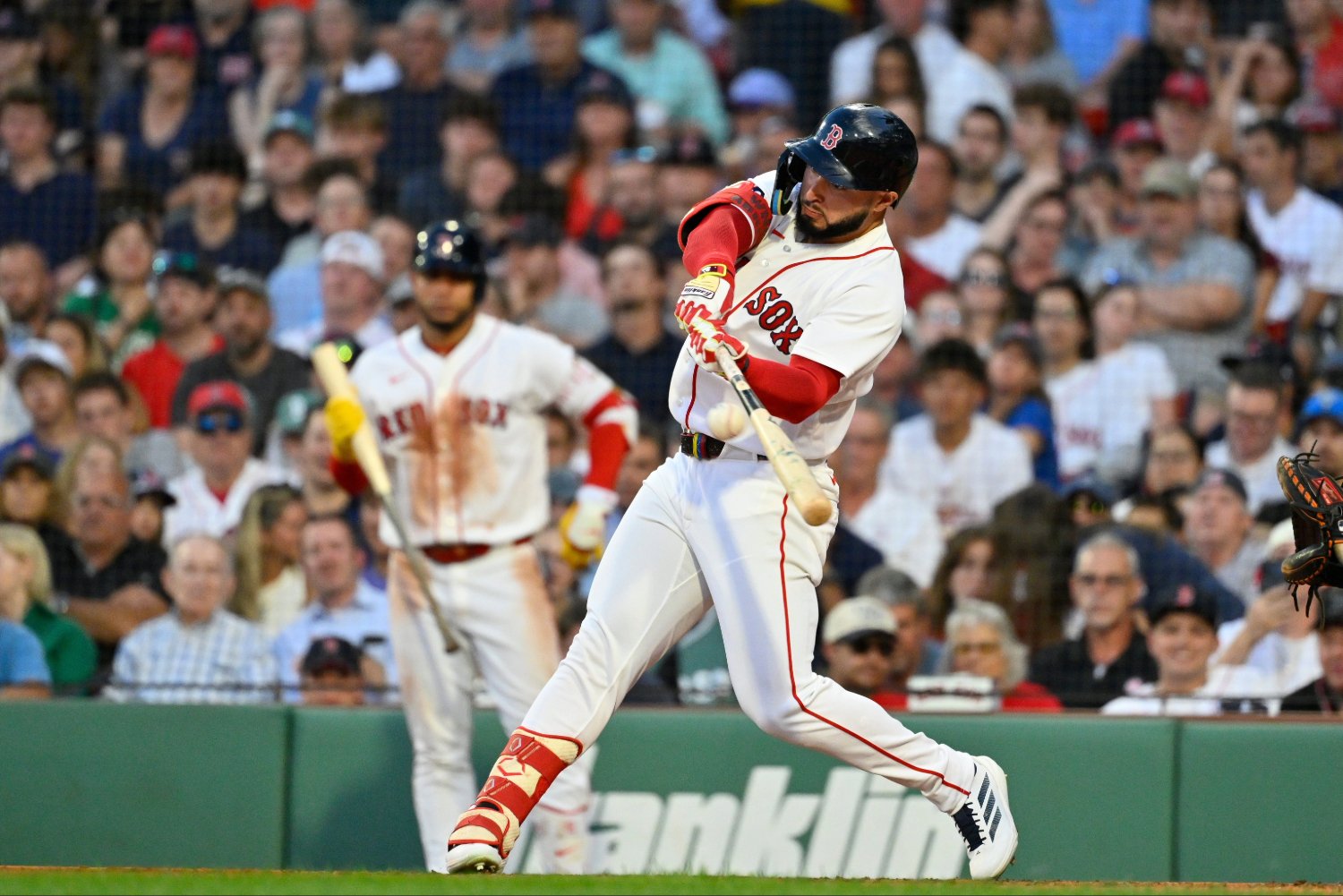
Wilyer Abreu has reached a plane of existence previously unexplored. Since July 10, he’s posted a 1.372 OPS (4th) and an absurd .586 ISO (3rd). His hot bat helped drive the Boston Red Sox's impossible recent winning streak.
Throughout his career, Abreu has been a fairly streaky player, and I held reservations about his hot start in March/April (.855 OPS). He regressed in May (.695 OPS) and June (.741 OPS), but I’m more optimistic about his recent power surge because it’s coming from meaningful adjustments at the plate.
Abreu’s Achilles heel was scorching fastballs up in the zone. At 5’10”, 215 pounds, Abreu resembles a fire hydrant, and I always thought his raw power would be enough for him to catch up to these pitches. He’s recorded above-average bat speeds through his career, averaging 73.8 mph (69th percentile) in 2026
| Wilyer Abreu vs High Cheese | ||||||
|---|---|---|---|---|---|---|
| Year | Pitch % | SLG | xSLG | wOBA | xwOBA | Whiff% |
| 2024 | 11.2% | .290 | .263 | .249 | .227 | 48.3% |
| 2025 | 12.2% | .061 | .198 | .191 | .242 | 36.8% |
| 2026 | 12.2% | .484 | .244 | .336 | .209 | 22.2% |
This year, his numbers are especially encouraging. He’s slugging .484 and has cut his whiff rate against pitches in the upper third of the strike zone (Gameday Zones 1, 2, 3, 11, and 12) at 95+ mph. The one caveat is that his expected stats show a sharp drop-off. His actual production outpaces what his quality of contact supports, so some regression is likely for those specific pitches. That’s not ignoring his other improvements. Zooming out, his expected batting average nearly doubled from the 34th to 67th percentile, and his expected slugging percentage climbed from the 78th to 84th percentile.
Abreu’s swing and batting stance haven’t changed dramatically. His swing length is almost the same (7.1 feet in 2025, 7.2 feet in 2026). He’s standing a smidge farther back in the box (30.5 inches in July) compared to last season (29.8 inches), and he’s implementing a wider stance (34.2 inches between his feet in July). The biggest change is his timing at the plate.
Last year, Abreu’s intercept point averaged 3.5 inches in front of the plate. In July, his intercept point is -3.2 inches, double what it was at the start of the season. He’s allowing pitches, specifically faster ones, to travel deeper before making hard contact. He had previously attacked high-velocity pitches out front to achieve the same effect.

Squared-up rate shows how a hitter maximizes their exit velocity based on their swing speed and pitch velocity. Abreu has increased his squared-up rate from 21.9% (16th percentile) to 24.6% (47th percentile). That initially doesn’t sound like a huge difference; most sluggers don’t need to optimize their quality of contact, and a hitter can be successful with a low or high squared-up rate. The metric includes swings and misses, so a guy with a high whiff rate and sheer power like Kyle Schwarber generates a 16.7% squared-up rate that grades in the 1st percentile. On the other hand, Luis Arraez, a patient hitter who rarely whiffs, records a 42% squared-up rate, the highest in the league. For Abreu, squaring up the ball consistently allows him to convert his improved timing into contact quality.
Hitters want to connect with the ball in front of the plate to increase their launch angle. Abreu’s still making contact there, just not as far out as he previously was. A larger share of his hard-hit balls now come at or past the plate than they did a year ago, which in theory should work against him.
Except, it hasn’t. The sweet spot range spans from 8 to 32 degrees. Balls hit within this window yield higher averages, slugging percentages, and weighted on base averages. Abreu’s launch angle sweet spot rate has catapulted from 31.9% (19th percentile) to 36.6% (75th percentile). The GIF below shows his 2025 and 2026 launch angle spray charts, courtesy of Statcast. You can see his hits this year spike between 10 and 20 degrees, the optimal window for hitting line drives.

Abreu’s adjustments have been gradual year-to-year. Last year, he started to lay off breaking balls. This year, he’s improved his timing, allowing him to do damage on high-velocity pitches. He’s also gotten better hitting lefties, albeit at the expense of hitting righties. The fun thing is that this evolution isn't complete yet; I still don’t think he’s a finished product, and there’s a ton of upside at the plate going forward.






Recommended Comments
Create an account or sign in to comment
You need to be a member in order to leave a comment
Create an account
Sign up for a new account in our community. It's easy!
Register a new accountSign in
Already have an account? Sign in here.
Sign In Now