


Red Sox Video
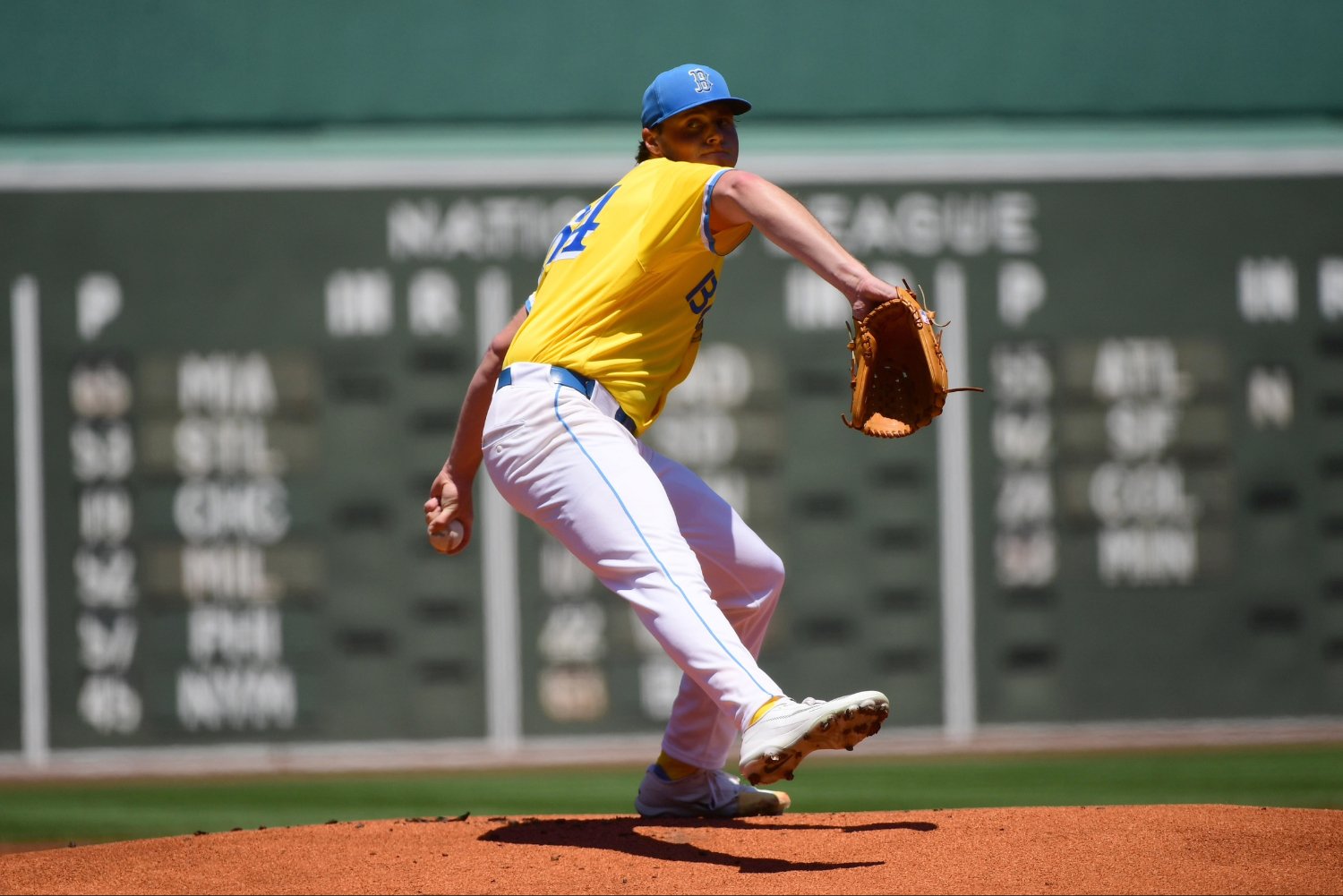
Since making his MLB debut on May 1, Jake Bennett has posted a 3.27 ERA and a 3.11 FIP through six starts. Those are impressive numbers for a rookie, but they raise a more interesting question than the results themselves: How is he doing this with a repertoire that lacks a true overpowering pitch?
Bennett doesn't throw 100 mph. He doesn't feature a wipeout slider. He has five pitches, none of which qualifies as elite on its own. Yet he just held the Yankees to three hits across 6 1/3 innings.
No single pitch explains Bennett's success, but the way they work together does. His changeup does more than generate whiffs, it forces hitters to respect a speed differential that makes both his four-seam fastball and sinker play above their raw quality.
Bennett throws the changeup 25.1% of the time. Hitters chase it outside the strike zone 39% of the time and swing through 34.7% of those chases. Even when they make contact, they produce just a .151 expected batting average and a .166 expected slugging percentage.
Those are elite results. More important, they explain why the rest of Bennett's arsenal works.
His four-seam fastball carries a .301 expected slugging percentage against, while the sinker sits at .388. Neither pitch overwhelms hitters on its own. But opponents can't simply sit on either one because they always have to account for the possibility of the changeup.
Jake Bennett's MLB pitch mix (2026)
|
Pitch |
Usage% |
Whiff% |
xBA |
xSLG |
HardHit% |
|
Fourseam |
33.0% |
29.2% |
.187 |
.301 |
42.3% |
|
Changeup |
25.1% |
34.7% |
.151 |
.166 |
23.8% |
|
Sinker |
28.4% |
8.2% |
.250 |
.388 |
37.8% |
|
Sweeper |
5.8% |
28.6% |
.303 |
.421 |
20.0% |
|
Curveball |
4.6% |
18.2% |
.223 |
.730 |
25.0% |
Movement is what separates the changeup from the rest of the group. It averages 82.8 mph, nearly 10 mph slower than Bennett’s 92.5 mph sinker, while generating roughly 12 inches of horizontal break. Out of his hand, it resembles a fastball. By the time hitters recognize the difference, their swing decision has already been made.
The pitch has produced just a .238 batting average on balls in play, and the quality of contact is even more telling. Hitters rarely square it up. They arrive late, swing underneath it or catch it off the end of the bat, leading to a 23.8% hard-hit rate, the lowest of any pitch Bennett throws.
His approach also changes with the count. Bennett has thrown 52% of his changeups while ahead, repeatedly starting the pitch on the edge of the strike zone before letting it fade away from barrels. Hitters chase it outside the zone, making contact on only 57.6% of those swings, well below the league average. That approach helped him retire 14 of the first 15 batters he faced in his latest outing.
Bat tracking metrics reinforce the same point. Only 2.9% of contact against Bennett’s changeup qualifies as perfect contact. Seventy percent of swings produce flawed contact, and hitters properly match the bat to the ball’s path only 35.7% of the time.
Contact quality by pitch (Bat Tracking)
|
Pitch |
Perfect Contact % |
Flawed Swing % |
Lined Up % |
|
Changeup |
2.9% |
70.0% |
35.7% |
|
Four-seam |
6.0% |
55.0% |
30.6% |
|
Sinker |
9.0% |
9.0% |
8.7% |
Hitters fail to line up Bennett's four-seam fastball 69.4% of the time and his sinker 91.3% of the time. The changeup is different because it wins before contact ever happens. Hitters commit to the wrong pitch, and the quality of contact suffers as a result.
The Yankees saw that firsthand on Saturday. Bennett threw 87 pitches—34% four-seamers, 30% sinkers and 23% changeups. Afterward, Bennett explained where part of that plan came from.
"Being able to watch Payton Tolle and Connelly Early pitch and have so much success really helped me formulate my game plan."
He's studying what works for fellow left-handers and adapting those ideas to his own strengths. Bennett will never be a power pitcher. No individual pitch grades as a true plus offering, yet together they create a repertoire that's far more difficult to solve than its individual pieces suggest.
The margin for error, though, is small. If hitters stop chasing the changeup outside the strike zone, Bennett will have to throw more fastballs and sinkers in the zone. His four-seamer has allowed a 42.3% hard-hit rate. His sinker sits at 37.8%. Asking those pitches to carry more of the workload could expose the repertoire. That makes command—and the continued development of his curveball and sweeper—the next step in his progression.
For now, Bennett has shown that sequencing, command and pitch design can still beat pure velocity. The Red Sox have now produced 10 consecutive quality starts, and during a first half defined by injuries and inconsistency, Bennett's emergence alongside Tolle and Early has become one of the organization's few genuinely encouraging developments.





Recommended Comments
Create an account or sign in to comment
You need to be a member in order to leave a comment
Create an account
Sign up for a new account in our community. It's easy!
Register a new accountSign in
Already have an account? Sign in here.
Sign In Now