


Jordan Leandre
-
Posts
66 -
Joined
-
Last visited
Content Type
Profiles
Boston Red Sox Videos
2026 Boston Red Sox Top Prospects Ranking
Boston Red Sox Free Agent & Trade Rumors, Notes, & Tidbits
Guides & Resources
2025 Boston Red Sox Draft Pick Tracker
News
2026 Boston Red Sox Draft Tracker: Picks & Bonuses
Forums
Blogs
Events
Store
Downloads
Gallery
Everything posted by Jordan Leandre
-

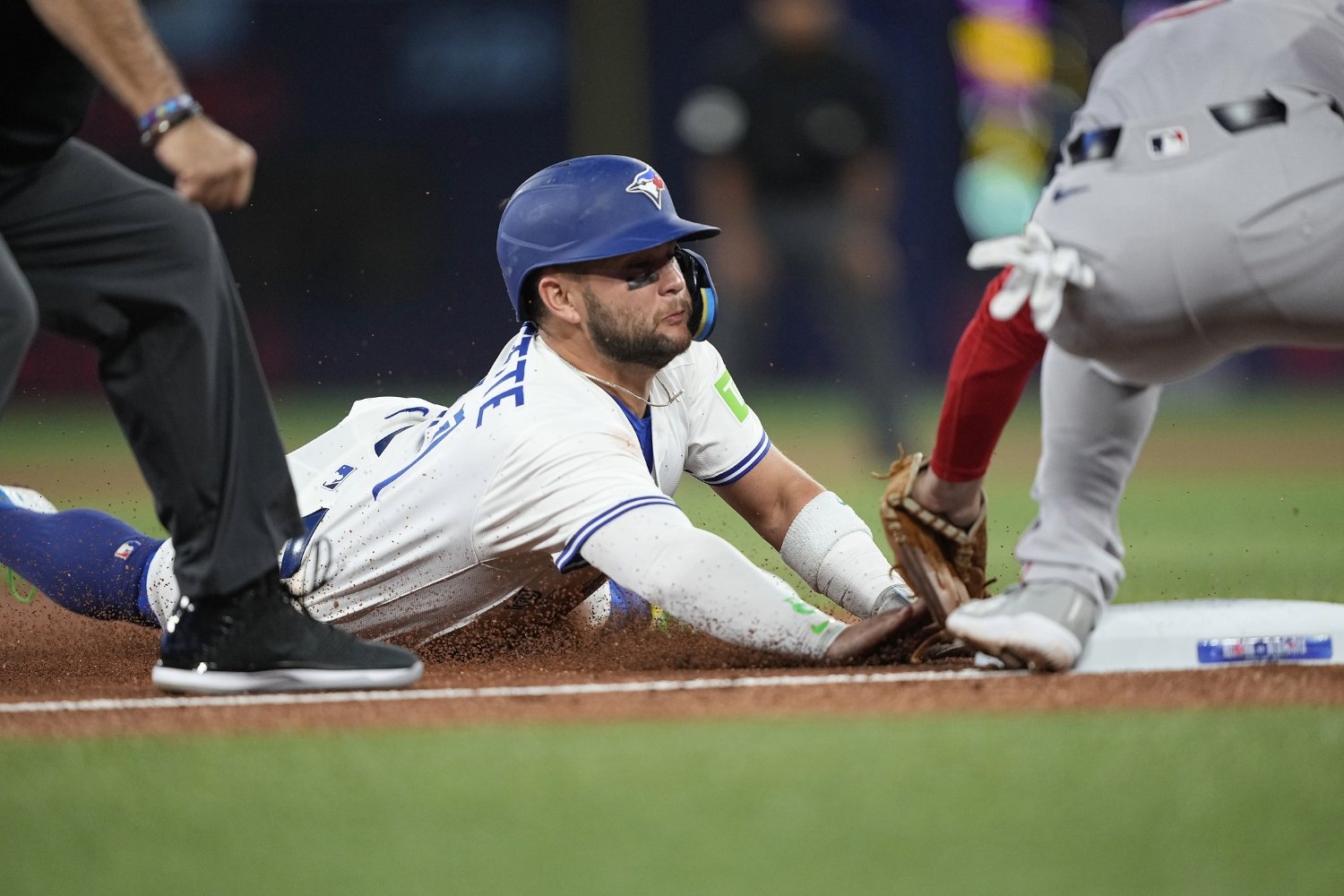 With how the 2025 season unfolded, it's hard to picture any Boston Red Sox team for the remainder of the 2020s not having third baseman Alex Bregman on it. Even with the injury and subsequent struggles upon returning, the All-Star slashed .273/.360/.462 with a 125 wRC+ and 3.5 fWAR in 114 games. He also had a .462 on-base percentage in the team's three-game Wild Card series against the New York Yankees and hit an RBI double to seal Game 1. He made the decision to opt out of his current contract earlier this month, at least temporarily removing himself from the equation in Boston. Therefore, for the second offseason in a row, the team covets a middle-of-the-order righty bat... or two. Many assume (hope?) that the team will add a righty bopper in addition to Bregman. That pairing may have worked on the field, and the group loved him behind the scenes, but does it really make sense for the Red Sox to commit to him for six additional years on top of adding another high-priced player to the mix? The free agent market for impact right-handed bats is top-heavy, meaning the market cultivated by each player may need to act more desperate to land said player. Even when factoring in the trade market, there's just not a lot of noise surrounding impact righty hitters right now. That said, Jim Bowden of The Athletic ran a list of contract predictions. In his predictions, he has Bregman receiving a six-year deal worth $182 million -- a $30.3 million average annual value. That's the same contract he predicted New York Mets first baseman Pete Alonso gets in free agency. Both would be risks at their age, yes, but the upside is also unquestionable. Yet, the contract that caught my attention was that for Toronto Blue Jays infielder Bo Bichette. Bowden predicts Bichette will get seven years at $189 million total value ($27 mil AAV). Despite 2026 being his age-28 season, and coming off a 2025 in which he was better than Bregman at the plate, he has to get a full extra year to obtain just $7 million in total value. It's worth mentioning that these are simply predictions from Bowden (who is far from the most infallible source), so it's hardly a perfect indicator of the contract any of these players receive. For reference, ESPN's Jeff Passan predicted in September Bichette would sign a deal in the ballpark of what fellow shortstops Trea Turner and Xander Bogaerts got. Regardless, if the final contracts are close between Bregman and Bichette, and signing both is unfeasible, the Red Sox should target the services of Bichette. For starters, there's the aging curve of the two players. Bregman is already 32 years old and coming off of a season in which he dealt with a significant quad injury. Assuming it heals with rest, that shouldn't impact his play moving forward. but it serves as a reminder that he's getting older and with that comes injuries. On the other hand, Bichette will be 28 years old next season, meaning he's still got the prime of his career ahead of him. Not only that, but he's become a lock for 60 or so extra-base hits a year. Though his walk numbers aren't spectacular, he hits the ball hard and doesn't strike out. Yes, some BABIP luck is required since he's not a 30-plus-homer guy. But he only outperformed his expected batting average by four points in 2025 -- the dude mashes. That said, shortstop isn't the position Bichette sticks at long term, if one were to guess. Perhaps that's the reason Bowden is so low on his contract value. Calling him a butcher at the position feels harsh, but apropos to his defensive production. In 2025, he posted -13 DRS and -12 OAA, bringing his career totals to -19 and -32, respectively. Moving to second base seems like the obvious solution. In fact, Bichette is already playing there in the World Series for Toronto, albeit mostly due to physical limitations caused by a knee injury. While still not moving well, he's made some nice plays so far in this series at the position. There's one issue with signing Bichette to play second base, however. The Red Sox theoretically have two already on the roster, with the other playing short, between Trevor Story and Marcelo Mayer. As a result, they have three middle infielders and no third baseman to replace Bregman. The logical solution would be to situate Mayer at third base. However, the team must also navigate the possibility of Story's defensive regression being permanent and not some one-off. Thus, I've begun wondering about the upside of sticking Story at third base for the final two years of his contract. It seems extreme, seeing as there are clear limitations to Story's arm. Not only that, but he posted 10 OAA in 2022 at second base. That said, the veteran infielder posted zero OAA moving to his left and -2 ranging in—it was to his right that really tanked his defensive metrics. With third base not being the rangiest position on the field, it could do him some good not having to cover as much ground, which wouldn't be the case at the keystone whether he's playing alongside Triston Casas, Nathaniel Lowe or Pete Alonso in 2026. The Red Sox wouldn't be the first team to spam shortstops with a hypothetical Bichette signing. The San Diego Padres, as recent as 2024, had done the same. Their entire infield was comprised of shortstops: Bogaerts, Ha-Seong Kim, Manny Machado, and Jake Cronenworth. Deploying three shortstops and an offensive-minded first baseman could give the Red Sox a much more dynamic infield while not suffering at the plate, and Bichette's cleaner fit with the timeline of their current core could make him a de facto leader going forward, much like how George Springer has taken these current Blue Jays under his wing.
 -
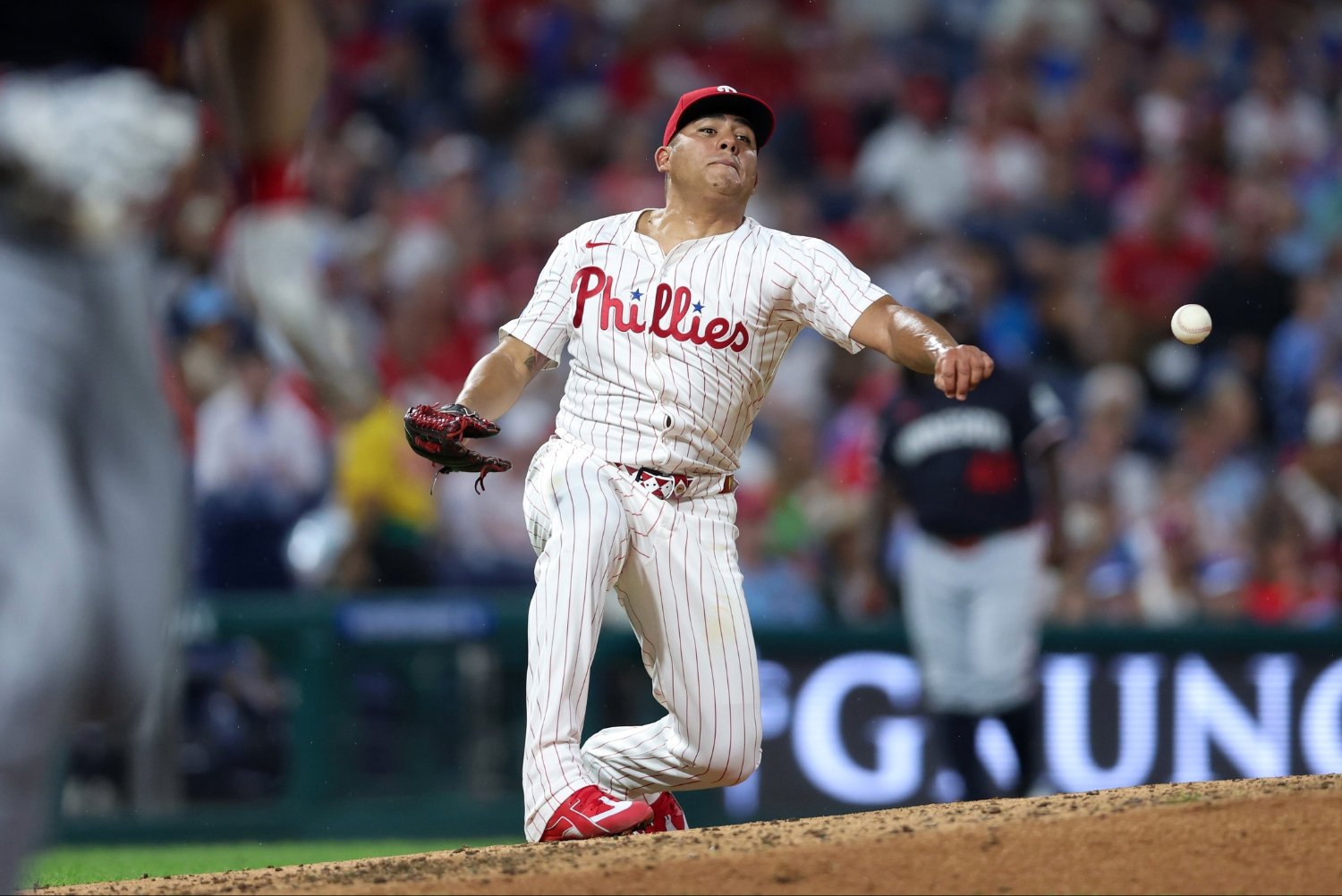 If there's one thing the 2025 season taught the Boston Red Sox, it's that there's no such thing as too much starting pitching. While it's hard to gauge the haul the team received from the Milwaukee Brewers for right-hander Quinn Priester, one can't help but wonder what his 3.32 ERA would've meant for a rotation that got a combined 5.31 ERA in 37 starts between Walker Buehler, Richard Fitts, and Dustin May. At this point, that's water under the bridge as it pertains to the 2026 rotation and beyond. What remains true, as it does every year, is that the Red Sox need to prioritize the rotation on both fronts. Chief Baseball Officer Craig Breslow said on the 310 to Left Podcast that the intent needs to be to "move the needle" at the front-end of the rotation. Talent-wise, it's hard to hear that and not get hung up on things like the recent speculation that Cincinnati Reds ace Hunter Greene could be available, or hyper-fixate on the offseason extension negotiations between the Detroit Tigers and left-hander Tarik Skubal. While there's some high-end stuff on the free agent market, namely San Diego Padres right-hander Dylan Cease, most of the premier talent seems to require getting creative more than financially. However, the middle of the rotation should be treated with as much intent as the top, as oftentimes those guys are capable of going on dominant stretches. We've seen it in this market for years with the likes of Michael Wacha, Nick Pivetta, and the 2025 tandem of Brayan Bello and Lucas Giolito. That's not to suggest the Red Sox should be content *only* landing a mid-rotation arm, but having an ace and a bunch of No. 3 starters can really lengthen the pitching staff. That's where Philadelphia Phillies southpaw Ranger Suarez comes into play. The 30-year-old is coming off a career-high 157 1/3 innings pitched in 2025 with a 3.20 ERA and a strikeout-minus-walk rate of 17.4 percent. He also pitched five innings of one-run ball out of the bullpen in October, lowering his career postseason ERA to 1.48 in 42 2/3 innings (sixth all-time, minimum of 40 innings pitched). He's hardly a sexy pickup; the velocity on his fastball averaged 91.2 mph in 2025, 2.2 miles down from his 2023 mark, albeit in 32 1/3 more innings and with marked improvements in control and command. The Good As mentioned, Suarez commands the ball very well, with improvements yearly since 2023. This past season, he walked just 5.8% of hitters, ranking him 17th among 70 pitchers with at least 150 innings. And despite the less-than-exceptional strikeout stuff, that 17.4% K-BB ranked 20th. While his fastball is on the high-end of average, his off-speed and breaking pitches are elite; his changeup generated a whiff rate of 33% with a .203 batting average against. His curveball did worse in generating whiffs, but yielded a batting average against of .192, which still underperformed the expected results of a .168 BAA. The 2025 season wasn't some flash in the pan season for Suarez in a walk year, either. This is more or less who he's always been, at least since breaking into the Phillies rotation on a consistent basis in 2021. Over that span, he's 21st in pitcher fWAR with 14.5 despite ranking 39th in innings and 41st in starts. As far as being bang for your buck, it's hard to do better on the free-agent market than Suarez. The Bad Being a great "bang for your buck" acquisition does come with its cons, however. Suarez's defect as an MLB starter is, historically, that you can pencil him in for a month missed to injury. That his 2025 total of 157 1/3 innings were a career-high is more indictment than promising sign, and the 26 starts he made doubles as a testament to his ability to provide length and a reminder that he's never made 30 starts in a season. The most outings of his career in a single season is 39, but 27 of those were relief appearances. He's never made more than 29 starts in a season, and he only did that once (2022). Moreover, his fastball isn't great. Sure, being in the 60th percentile for run value is on the higher end of average, maybe even a percentile or two into above average, but that's coupled by a seventh-percentile finish in fastball velocity. The pitch is effective enough to open up everything else in his arsenal, but how will that age? Are his secondaries a byproduct of having a respectable-enough fastball? When he's 34 and, presumably, throwing even slower, how will those secondaries hold up then? As he ages, the health becomes a bigger question as well. If he can't stay healthy in his physical prime, what makes an organization think he'll hold up for 30-plus starts at 33 years old? Not to mention, he's a sure-fire candidate to receive the qualifying offer. Assuming he rejects it, does a team value his talent enough to lose a draft pick to obtain it? Considering the Red Sox traded Priester in large part to acquire a competitive balance pick (Marcus Phillips), one can question their willingness to forgo a draft pick to sign Suarez. The Verdict There's no such thing as the perfect free-agent acquisition. If you are looking for red flags, you'll always be sure to find them. The key is to figure out which red flags are non-negotiable and which ones you can live with. How I see it, all ironmen are only ironmen until they aren't. Pivetta always showed up, until he missed a month in 2024. Giolito was a workhorse, until he missed all of 2024, the first month of 2025 and then the postseason. A bill of health is only clean until it isn't when it comes to athletes. Suarez provides a ton of value for the volume he gives, and that's what the Red Sox should covet. Perhaps the draft pick compensation scares some teams off and Breslow can swoop in and get a better-than-anticipated deal for him done (Spotrac values him at $26.9 million). A contract in the neighborhood of $110 million over four years -- a $27.5 million average annual value -- should be a no-brainer.
 -
If there's one thing the 2025 season taught the Boston Red Sox, it's that there's no such thing as too much starting pitching. While it's hard to gauge the haul the team received from the Milwaukee Brewers for right-hander Quinn Priester, one can't help but wonder what his 3.32 ERA would've meant for a rotation that got a combined 5.31 ERA in 37 starts between Walker Buehler, Richard Fitts, and Dustin May. At this point, that's water under the bridge as it pertains to the 2026 rotation and beyond. What remains true, as it does every year, is that the Red Sox need to prioritize the rotation on both fronts. Chief Baseball Officer Craig Breslow said on the 310 to Left Podcast that the intent needs to be to "move the needle" at the front-end of the rotation. Talent-wise, it's hard to hear that and not get hung up on things like the recent speculation that Cincinnati Reds ace Hunter Greene could be available, or hyper-fixate on the offseason extension negotiations between the Detroit Tigers and left-hander Tarik Skubal. While there's some high-end stuff on the free agent market, namely San Diego Padres right-hander Dylan Cease, most of the premier talent seems to require getting creative more than financially. However, the middle of the rotation should be treated with as much intent as the top, as oftentimes those guys are capable of going on dominant stretches. We've seen it in this market for years with the likes of Michael Wacha, Nick Pivetta, and the 2025 tandem of Brayan Bello and Lucas Giolito. That's not to suggest the Red Sox should be content *only* landing a mid-rotation arm, but having an ace and a bunch of No. 3 starters can really lengthen the pitching staff. That's where Philadelphia Phillies southpaw Ranger Suarez comes into play. The 30-year-old is coming off a career-high 157 1/3 innings pitched in 2025 with a 3.20 ERA and a strikeout-minus-walk rate of 17.4 percent. He also pitched five innings of one-run ball out of the bullpen in October, lowering his career postseason ERA to 1.48 in 42 2/3 innings (sixth all-time, minimum of 40 innings pitched). He's hardly a sexy pickup; the velocity on his fastball averaged 91.2 mph in 2025, 2.2 miles down from his 2023 mark, albeit in 32 1/3 more innings and with marked improvements in control and command. The Good As mentioned, Suarez commands the ball very well, with improvements yearly since 2023. This past season, he walked just 5.8% of hitters, ranking him 17th among 70 pitchers with at least 150 innings. And despite the less-than-exceptional strikeout stuff, that 17.4% K-BB ranked 20th. While his fastball is on the high-end of average, his off-speed and breaking pitches are elite; his changeup generated a whiff rate of 33% with a .203 batting average against. His curveball did worse in generating whiffs, but yielded a batting average against of .192, which still underperformed the expected results of a .168 BAA. The 2025 season wasn't some flash in the pan season for Suarez in a walk year, either. This is more or less who he's always been, at least since breaking into the Phillies rotation on a consistent basis in 2021. Over that span, he's 21st in pitcher fWAR with 14.5 despite ranking 39th in innings and 41st in starts. As far as being bang for your buck, it's hard to do better on the free-agent market than Suarez. The Bad Being a great "bang for your buck" acquisition does come with its cons, however. Suarez's defect as an MLB starter is, historically, that you can pencil him in for a month missed to injury. That his 2025 total of 157 1/3 innings were a career-high is more indictment than promising sign, and the 26 starts he made doubles as a testament to his ability to provide length and a reminder that he's never made 30 starts in a season. The most outings of his career in a single season is 39, but 27 of those were relief appearances. He's never made more than 29 starts in a season, and he only did that once (2022). Moreover, his fastball isn't great. Sure, being in the 60th percentile for run value is on the higher end of average, maybe even a percentile or two into above average, but that's coupled by a seventh-percentile finish in fastball velocity. The pitch is effective enough to open up everything else in his arsenal, but how will that age? Are his secondaries a byproduct of having a respectable-enough fastball? When he's 34 and, presumably, throwing even slower, how will those secondaries hold up then? As he ages, the health becomes a bigger question as well. If he can't stay healthy in his physical prime, what makes an organization think he'll hold up for 30-plus starts at 33 years old? Not to mention, he's a sure-fire candidate to receive the qualifying offer. Assuming he rejects it, does a team value his talent enough to lose a draft pick to obtain it? Considering the Red Sox traded Priester in large part to acquire a competitive balance pick (Marcus Phillips), one can question their willingness to forgo a draft pick to sign Suarez. The Verdict There's no such thing as the perfect free-agent acquisition. If you are looking for red flags, you'll always be sure to find them. The key is to figure out which red flags are non-negotiable and which ones you can live with. How I see it, all ironmen are only ironmen until they aren't. Pivetta always showed up, until he missed a month in 2024. Giolito was a workhorse, until he missed all of 2024, the first month of 2025 and then the postseason. A bill of health is only clean until it isn't when it comes to athletes. Suarez provides a ton of value for the volume he gives, and that's what the Red Sox should covet. Perhaps the draft pick compensation scares some teams off and Breslow can swoop in and get a better-than-anticipated deal for him done (Spotrac values him at $26.9 million). A contract in the neighborhood of $110 million over four years -- a $27.5 million average annual value -- should be a no-brainer. View full article
-
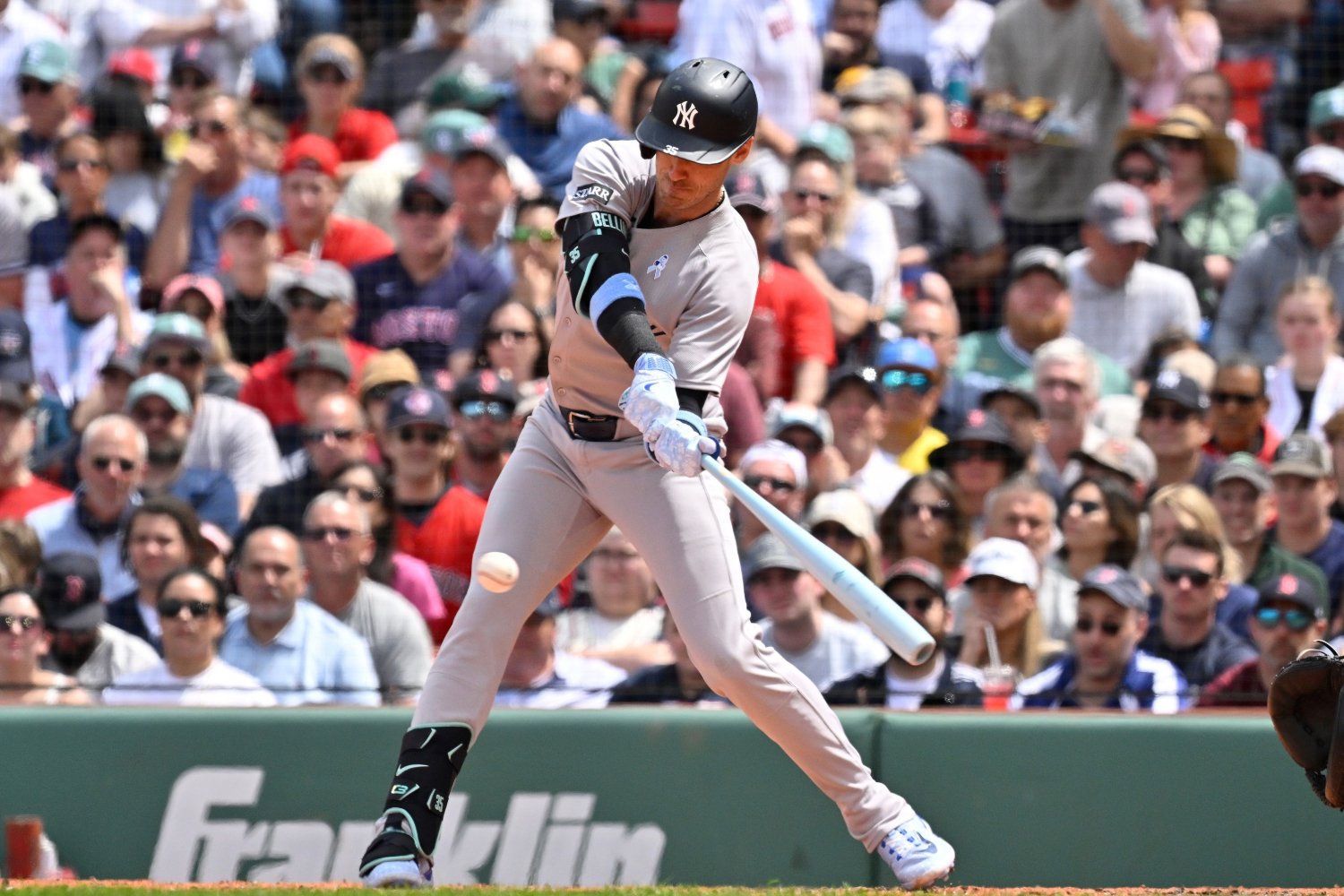 While it's hard to fathom the Boston Red Sox be interested in the services of an outfielder this winter, New York Yankees utility man Cody Bellinger makes a lot of sense. The 30-year-old rebounded for the second time in three seasons, slashing .272/.334/.480 with 4.9 fWAR in 152 games. He also clubbed 29 home runs, his most since winning National League Most Valuable Player in 2019, and drove in 98 runs. While not Juan Soto, he did an admirable job replacing the Dominican outfielder in the lineup, along with center fielder Trent Grisham. But how does he make sense for the Red Sox? After all, they're not exactly starving for outfielders, much less lefty hitters even after the trading of Rafael Devers in June. The Good One thing that often plagued the Red Sox offense in 2025, and even in years prior, was striking out. With runners in scoring position, they were tied for the sixth-highest strikeout rate in the majors at 22.7 percent. With the bases loaded and less than two outs, that strikeout rate climbed to 26.3 percent. However, Bellinger was one of the hardest guys to strike out in the majors in 2025. Among 145 qualified hitters, he ranked 16th-best in strikeout rate at 13.7 percent. Moreover, he did a solid job of taking walks, which is not always a guarantee with guys who don't strike out (see: Luis Arraez). Having a balance of bat-to-ball and command of the strike zone is something that drew the Red Sox to players such as Alex Bregman, even if there was a bit more of swinging and missing to his game in 2025. While contact isn't always a point of emphasis for offenses, Bellinger isn't exactly a "bat-to-ball over power" player, as his 29 home runs (and 98 RBIs) would've led Boston in 2025. He also hits lefties well, so there are no real platoon concerns for Bellinger. In 176 plate appearances against southpaws, he slashed .353/.415/.601 with a 180 wRC+ and more walks than strikeouts. This marks the second time in three seasons he's dominated lefties; the year he didn't, he still hit .298 against them, just without power. Bellinger also plays a very good corner outfield, posting 15 Defensive Runs Saved and six Outs Above Average across nearly 1,000 defensive innings at a corner outfield spot. He also has a strong throwing arm, ranking in the 83rd percentile for arm strength. He even played a smattering of innings at first base in 2025, with a not-so-insignificant amount of playing time there in his career. Should Boston opt to go with the in-house options at first base instead of paying a king's ransom for Pete Alonso, Bellinger can play first base against lefties with Nate Eaton or Rob Refsnyder (free agent) factoring into the outfield. The veteran also has tons of experience playing in big markets. Before the Yankees, the outfielder spent two years with the Chicago Cubs; before that, six years with the Los Angeles Dodgers. He's seen it all in those markets: coming up short in October, winning it all (albeit in the COVID-shortened 2020 season), missing the postseason, winning individual awards, and having disastrous seasons whether health-related or performance-based. The Bad As mentioned before, Bellinger is an outfielder by trade. While they could pursue him as a first base option, he'll garner enough interest as an outfielder to likely prevent a marriage from happening. As a result, it would somewhat force the Red Sox to move multiple outfielders this offseason and, given the 30-year-old's strong defensive track record in recent years, it would pretty much seal the fate of Jarren Duran and Wilyer Abreu. If Hunter Greene is available, trading that pair might be easier than expected, but who knows if he really can be had until he's actually traded? Moreover, it's been a 50-50 shot the past four years that Bellinger actually contributes significant value. Before that stretch, he posted -1.0 fWAR and a 47 wRC+ in 95 games in 2021. Is someone with such topsy turvy results annually worth over $30 million a year, as projected on Spotrac? Lastly, and it's kind of ironic given what makes a hitter successful in 2025, but his pulled fly ball rate is very high. In 2025, he ranked in the top 25 among lefty hitters in pulled fly ball rate, with the only Red Sox hitter ahead of him being Abreu. While he was only a tenth of a percent behind Duran for opposite-field air percentage, there's real cause to believe playing 81 games at Fenway Park would negatively impact Bellinger's power numbers. Granted, he'd also have 81 games on the road, with varying ballpark dimensions, but it's not a hot take to say he's not a tailor-made fit for Fenway. The Verdict Bellinger is quietly becoming a personal favorite of mine for the Red Sox this offseason, but there's probably too many moving parts for this to work. Not only that, but there's going to be significant interest in Bellinger's services this winter. Not only within the division with his most-recent team in the Yankees, but other outfield-hungry teams such as the Cleveland Guardians, Toronto Blue Jays, and *cough cough* the Los Angeles Dodgers, if they're willing to take a risk on the guy they non-tendered three years ago. I just don't see it in Chief Baseball Officer Craig Breslow's best interest to get involved in a bidding war for a position he doesn't necessarily need to fill, even if they trade Duran and Abreu. He'd be a great piece to have in the middle of the lineup, but Cody Bellinger's future probably resides outside of Boston.
 -
While it's hard to fathom the Boston Red Sox be interested in the services of an outfielder this winter, New York Yankees utility man Cody Bellinger makes a lot of sense. The 30-year-old rebounded for the second time in three seasons, slashing .272/.334/.480 with 4.9 fWAR in 152 games. He also clubbed 29 home runs, his most since winning National League Most Valuable Player in 2019, and drove in 98 runs. While not Juan Soto, he did an admirable job replacing the Dominican outfielder in the lineup, along with center fielder Trent Grisham. But how does he make sense for the Red Sox? After all, they're not exactly starving for outfielders, much less lefty hitters even after the trading of Rafael Devers in June. The Good One thing that often plagued the Red Sox offense in 2025, and even in years prior, was striking out. With runners in scoring position, they were tied for the sixth-highest strikeout rate in the majors at 22.7 percent. With the bases loaded and less than two outs, that strikeout rate climbed to 26.3 percent. However, Bellinger was one of the hardest guys to strike out in the majors in 2025. Among 145 qualified hitters, he ranked 16th-best in strikeout rate at 13.7 percent. Moreover, he did a solid job of taking walks, which is not always a guarantee with guys who don't strike out (see: Luis Arraez). Having a balance of bat-to-ball and command of the strike zone is something that drew the Red Sox to players such as Alex Bregman, even if there was a bit more of swinging and missing to his game in 2025. While contact isn't always a point of emphasis for offenses, Bellinger isn't exactly a "bat-to-ball over power" player, as his 29 home runs (and 98 RBIs) would've led Boston in 2025. He also hits lefties well, so there are no real platoon concerns for Bellinger. In 176 plate appearances against southpaws, he slashed .353/.415/.601 with a 180 wRC+ and more walks than strikeouts. This marks the second time in three seasons he's dominated lefties; the year he didn't, he still hit .298 against them, just without power. Bellinger also plays a very good corner outfield, posting 15 Defensive Runs Saved and six Outs Above Average across nearly 1,000 defensive innings at a corner outfield spot. He also has a strong throwing arm, ranking in the 83rd percentile for arm strength. He even played a smattering of innings at first base in 2025, with a not-so-insignificant amount of playing time there in his career. Should Boston opt to go with the in-house options at first base instead of paying a king's ransom for Pete Alonso, Bellinger can play first base against lefties with Nate Eaton or Rob Refsnyder (free agent) factoring into the outfield. The veteran also has tons of experience playing in big markets. Before the Yankees, the outfielder spent two years with the Chicago Cubs; before that, six years with the Los Angeles Dodgers. He's seen it all in those markets: coming up short in October, winning it all (albeit in the COVID-shortened 2020 season), missing the postseason, winning individual awards, and having disastrous seasons whether health-related or performance-based. The Bad As mentioned before, Bellinger is an outfielder by trade. While they could pursue him as a first base option, he'll garner enough interest as an outfielder to likely prevent a marriage from happening. As a result, it would somewhat force the Red Sox to move multiple outfielders this offseason and, given the 30-year-old's strong defensive track record in recent years, it would pretty much seal the fate of Jarren Duran and Wilyer Abreu. If Hunter Greene is available, trading that pair might be easier than expected, but who knows if he really can be had until he's actually traded? Moreover, it's been a 50-50 shot the past four years that Bellinger actually contributes significant value. Before that stretch, he posted -1.0 fWAR and a 47 wRC+ in 95 games in 2021. Is someone with such topsy turvy results annually worth over $30 million a year, as projected on Spotrac? Lastly, and it's kind of ironic given what makes a hitter successful in 2025, but his pulled fly ball rate is very high. In 2025, he ranked in the top 25 among lefty hitters in pulled fly ball rate, with the only Red Sox hitter ahead of him being Abreu. While he was only a tenth of a percent behind Duran for opposite-field air percentage, there's real cause to believe playing 81 games at Fenway Park would negatively impact Bellinger's power numbers. Granted, he'd also have 81 games on the road, with varying ballpark dimensions, but it's not a hot take to say he's not a tailor-made fit for Fenway. The Verdict Bellinger is quietly becoming a personal favorite of mine for the Red Sox this offseason, but there's probably too many moving parts for this to work. Not only that, but there's going to be significant interest in Bellinger's services this winter. Not only within the division with his most-recent team in the Yankees, but other outfield-hungry teams such as the Cleveland Guardians, Toronto Blue Jays, and *cough cough* the Los Angeles Dodgers, if they're willing to take a risk on the guy they non-tendered three years ago. I just don't see it in Chief Baseball Officer Craig Breslow's best interest to get involved in a bidding war for a position he doesn't necessarily need to fill, even if they trade Duran and Abreu. He'd be a great piece to have in the middle of the lineup, but Cody Bellinger's future probably resides outside of Boston. View full article
-
Boston Red Sox Arbitration Decisions & Projections: Tanner Houck
Jordan Leandre posted an article in Red Sox
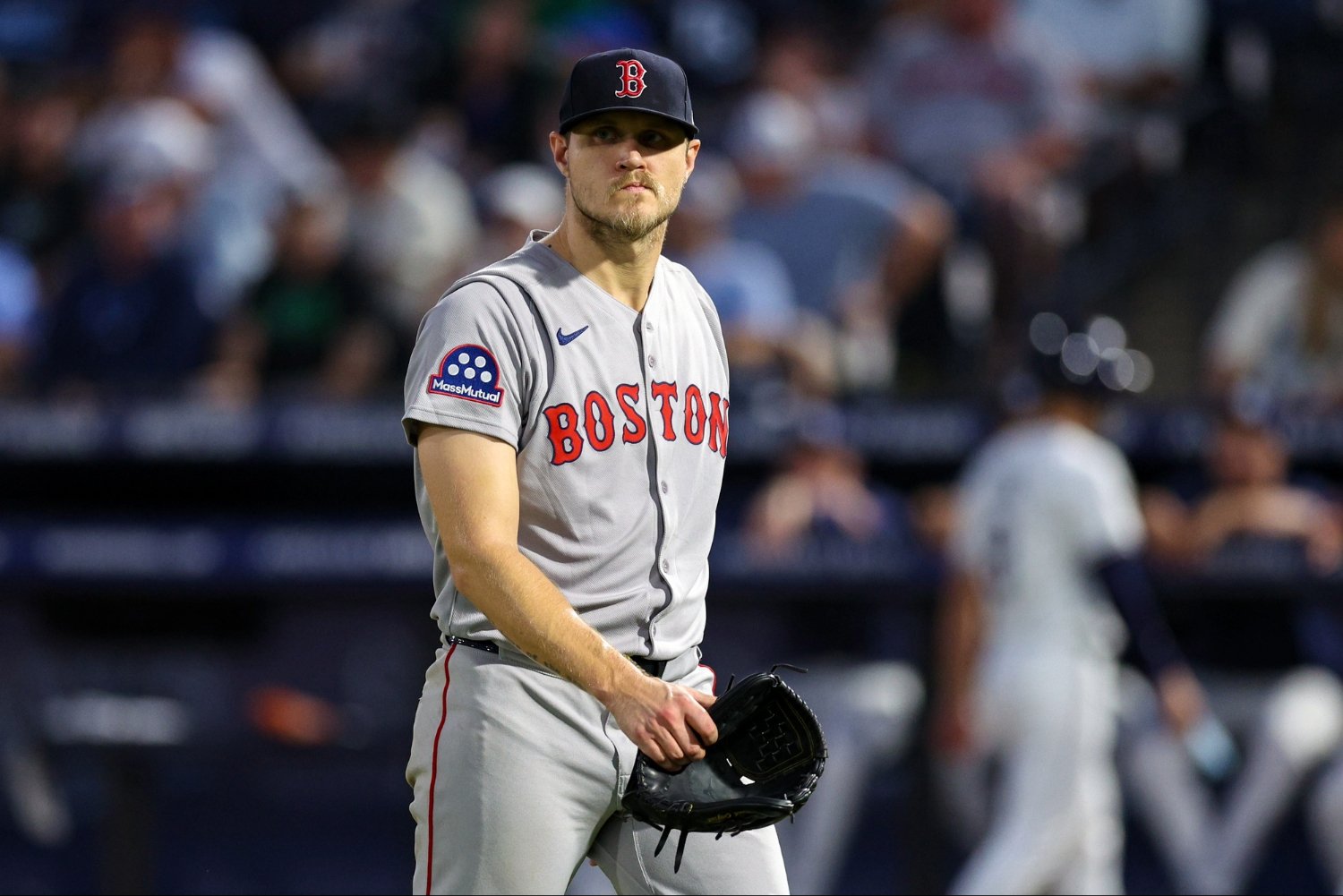 RHP Tanner Houck Age on Opening Day 2026: 29 (30 on June 29) Service Time: 4 years, 100 days 2023 Salary: League Minimum 2024 Salary: League Minimum 2025 Salary: $3.95 million 2026 Salary (Projection): $3.95 million Background: Once a first-round pick, it's been a Boston Red Sox career of many peaks and valleys for Tanner Houck. It's funny to think about how high his stock got less than 18 months ago, when he pitched himself into All-Star status with a 2.54 earned run average and equally-impressive under-the-hood metrics through his 19 first-half starts. His production waned as the season progressed, which many chalked up to Houck pitching in unchartered territory from an innings standpoint. Fast forward to 2025, and he made just nine starts -- two of which saw him give up 11 earned runs in 2 1/3 innings-- and post an 8.04 ERA before hitting the shelf. He rehabbed and appeared somewhat close to returning before getting shut down and eventually having Tommy John surgery, thus ending his 2025 season and likely his 2026 campaign as well. In some ways, the massive swings between elite and utter unplayability of Houck acts as something of a microcosm of his big-league career, which saw him jerked between the rotation and bullpen in 2021 and 2022; that period saw him demoted to Triple-A a few times as well. He also pitched in October with mixed results, though he did get a win in the American League Division Series as a reliever. As fellow Talk Sox writer @Nick John wrote this past weekend, it's a worthwhile discussion to have whether he's worth keeping around at north of $3 million to rehab ahead of an anticipated work stoppage in 2027. Red Sox Depth at his Position (SP, 2027): RHP Kutter Crawford - MLB, pending arbitration LHP Kyle Harrison - 40-man roster (MLB) LHP Connelly Early - 40-man roster (MLB) LHP Payton Tolle - 40-man roster (MLB) RHP Luis Perales - 40-man roster (Triple-A) RHP David Sandlin - Rule-5 eligible (Triple-A) Summary: It's hard to examine depth at a position over a year out, as there seems to be no real optimism surrounding Houck's ability to return next season. However, the Red Sox have a myriad of options at their disposal, assuming no trades or non-tenders to the group above, to withstand his absence and then some. This isn't even accounting for potential additions made this winter, or next winter. Why the Red Sox Should Tender Houck a Contract: It's become a hot-button issue within the Red Sox's fanbase regarding the organization's willingness to part with successful homegrown talent. We've seen it most recently with third baseman and designated hitter Rafael Devers. While Houck doesn't measure up to Devers' résumé, he's become the closest thing to a pitching developmental win for the organization since, what, Clay Buchholz circa 2008? While Brayan Bello has carved out a nice career thus far, and the duo of Tolle and Early look promising, Houck has an All-Star appearance and a successful postseason outing on his track record. None of the aforementioned do. Not to mention, there's an admiration there from pitching coach Andrew Bailey—just listen to how he talks about Houck with reliever Garrett Whitlock in the Netflix documentary covering the 2024 team. Why the Red Should NOT Tender Houck a Contract: While the Red Sox have a history paying guys for a year of rehab -- as recent as left-hander Patrick Sandoval in 2025 -- it's not exactly a foolproof strategy for harboring talent. There will be re-growing pains when the player comes back, and sometimes those pains linger and result in setbacks or poor performance. Houck fell off dramatically in the second half of 2024 before struggling to look like a big leaguer in spring training and his brief 2025 sample. It's not similar to, say, Toronto Blue Jays right-hander Shane Bieber, who looked rejuvenated in 2024 before getting surgery. How confident can the Red Sox be that Houck comes back in 2027, whenever the season happens, and be a serviceable pitcher? Plus, he's going to turn 31 years old in June of 2027. Hardly old, but certainly closer to the end of his prime than the start. Prediction: I believe the Red Sox non-tender Houck this offseason. This is an organization that recently seems motivated to spend for front-line talent, and Houck's recent performance prior to his injury did not fit that bill. However, I do think Boston brings him back similar to what the Milwaukee Brewers did with Brandon Woodruff ahead of the 2024 season. The Brewers right-hander came back and pitched to a 3.20 ERA across 12 starts in 2025 before a lat injury derailed his comeback season. The details of that contract paid Woodruff $2.5 million in 2024 and $5 million in 2025, with a $20 million mutual option for 2026. I think something of similar framework will be done for Houck in Boston, potentially lower on the AAV in 2026 and 2027 with the 2028 season guaranteed. This is a franchise with history of paying guys decent money with the understanding they won't see him that season, and Houck's prior success in Boston makes him a strong candidate to be the next member of that pay-to-rehab program.
 -
RHP Tanner Houck Age on Opening Day 2026: 29 (30 on June 29) Service Time: 4 years, 100 days 2023 Salary: League Minimum 2024 Salary: League Minimum 2025 Salary: $3.95 million 2026 Salary (Projection): $3.95 million Background: Once a first-round pick, it's been a Boston Red Sox career of many peaks and valleys for Tanner Houck. It's funny to think about how high his stock got less than 18 months ago, when he pitched himself into All-Star status with a 2.54 earned run average and equally-impressive under-the-hood metrics through his 19 first-half starts. His production waned as the season progressed, which many chalked up to Houck pitching in unchartered territory from an innings standpoint. Fast forward to 2025, and he made just nine starts -- two of which saw him give up 11 earned runs in 2 1/3 innings-- and post an 8.04 ERA before hitting the shelf. He rehabbed and appeared somewhat close to returning before getting shut down and eventually having Tommy John surgery, thus ending his 2025 season and likely his 2026 campaign as well. In some ways, the massive swings between elite and utter unplayability of Houck acts as something of a microcosm of his big-league career, which saw him jerked between the rotation and bullpen in 2021 and 2022; that period saw him demoted to Triple-A a few times as well. He also pitched in October with mixed results, though he did get a win in the American League Division Series as a reliever. As fellow Talk Sox writer @Nick John wrote this past weekend, it's a worthwhile discussion to have whether he's worth keeping around at north of $3 million to rehab ahead of an anticipated work stoppage in 2027. Red Sox Depth at his Position (SP, 2027): RHP Kutter Crawford - MLB, pending arbitration LHP Kyle Harrison - 40-man roster (MLB) LHP Connelly Early - 40-man roster (MLB) LHP Payton Tolle - 40-man roster (MLB) RHP Luis Perales - 40-man roster (Triple-A) RHP David Sandlin - Rule-5 eligible (Triple-A) Summary: It's hard to examine depth at a position over a year out, as there seems to be no real optimism surrounding Houck's ability to return next season. However, the Red Sox have a myriad of options at their disposal, assuming no trades or non-tenders to the group above, to withstand his absence and then some. This isn't even accounting for potential additions made this winter, or next winter. Why the Red Sox Should Tender Houck a Contract: It's become a hot-button issue within the Red Sox's fanbase regarding the organization's willingness to part with successful homegrown talent. We've seen it most recently with third baseman and designated hitter Rafael Devers. While Houck doesn't measure up to Devers' résumé, he's become the closest thing to a pitching developmental win for the organization since, what, Clay Buchholz circa 2008? While Brayan Bello has carved out a nice career thus far, and the duo of Tolle and Early look promising, Houck has an All-Star appearance and a successful postseason outing on his track record. None of the aforementioned do. Not to mention, there's an admiration there from pitching coach Andrew Bailey—just listen to how he talks about Houck with reliever Garrett Whitlock in the Netflix documentary covering the 2024 team. Why the Red Should NOT Tender Houck a Contract: While the Red Sox have a history paying guys for a year of rehab -- as recent as left-hander Patrick Sandoval in 2025 -- it's not exactly a foolproof strategy for harboring talent. There will be re-growing pains when the player comes back, and sometimes those pains linger and result in setbacks or poor performance. Houck fell off dramatically in the second half of 2024 before struggling to look like a big leaguer in spring training and his brief 2025 sample. It's not similar to, say, Toronto Blue Jays right-hander Shane Bieber, who looked rejuvenated in 2024 before getting surgery. How confident can the Red Sox be that Houck comes back in 2027, whenever the season happens, and be a serviceable pitcher? Plus, he's going to turn 31 years old in June of 2027. Hardly old, but certainly closer to the end of his prime than the start. Prediction: I believe the Red Sox non-tender Houck this offseason. This is an organization that recently seems motivated to spend for front-line talent, and Houck's recent performance prior to his injury did not fit that bill. However, I do think Boston brings him back similar to what the Milwaukee Brewers did with Brandon Woodruff ahead of the 2024 season. The Brewers right-hander came back and pitched to a 3.20 ERA across 12 starts in 2025 before a lat injury derailed his comeback season. The details of that contract paid Woodruff $2.5 million in 2024 and $5 million in 2025, with a $20 million mutual option for 2026. I think something of similar framework will be done for Houck in Boston, potentially lower on the AAV in 2026 and 2027 with the 2028 season guaranteed. This is a franchise with history of paying guys decent money with the understanding they won't see him that season, and Houck's prior success in Boston makes him a strong candidate to be the next member of that pay-to-rehab program. View full article
-
While Carlos Narvaez impressed in his rookie campaign, adding a veteran catcher should be a point of emphasis for the Boston Red Sox this winter. That's not to say that Connor Wong, who recently had hand surgery, can't be a competent backup, but the lack of catching depth became a glaring issue as the 2025 season wore on. It's not a fruitful market for teams with a need for catching, however. While some speculate the potential availability of Baltimore Orioles catcher Adley Rutschman, it's highly unlikely he's moved for anything less than that of someone with first overall pick status. And it'd be rather foolish to pay that price when Narvaez has already locked down the starting gig. So, that generally leaves the free-agent market, where veterans such as Victor Caratini, Austin Hedges, and James McCann will be. Not exactly a murderer's row, there. However, in addition to them is multi-time All-Star and longtime National League East member J.T. Realmuto. Let's examine the veteran's résumé and examine his potential fit with the Red Sox in 2026 (and perhaps beyond). The Good Save for 2024, the 34-year-old backstop is a workhorse who's played at least 125 games -- or on pace to play that many (thank you, 2020) -- every year since becoming an established big leaguer in 2015. For a catcher, that's not easy to do. Sure, he's played some first base in his MLB career, as most catchers tend to do to preserve their bodies, but only 263 total defensive innings and zero since 2022. So, he's a catcher through and through. Plus, he's still a consistent contributor on offense. Though not as potent as his days with the Miami Marlins or even his early days with the Philadelphia Phillies, Realmuto posted a 94 wRC+ with 12 home runs and 52 runs batted in across 550 plate appearances in 2025. Among the 42 catchers with at least 250 plate appearances, the righty bat ranked 15th in fWAR with 2.1. Defensively, he's not a savant as a framer or blocker, but the former doesn't matter as much with the implementation of the Automated Balls and Strikes system. He's still got a cannon back there as well, ranking in the 95th percentile for caught stealing above average and in the 99th percentile for pop time. For reference, Narvaez ranked in the 98th percentile for CSAA but just the 80th percentile for pop time. Wong, on the other hand, was in the 21st percentile for CSAA and the 39th in pop time. Realmuto will get paid like a starting catcher on the open market, which makes sense seeing as he's still very good, but if Boston can convince him that playing in a near 50-50 split with Narvaez will prolong his career and help elevate his performance, he'd make a ton of sense for them next season. The Bad While 2025 was hardly a bad season for Realmuto, the soon-to-be 35-year-old has seen steady regression at the plate from a power standpoint. You can chalk some of the decline in his raw counting stats up to injuries and batted ball variance -- especially seeing as his expected wOBA has been between .323 and .339 since 2023 -- but the power drop-off is fierce. In 2023, Realmuto posted a 101 wRC+ and a .200 isolated power; in 2024, it was a 107 wRC+ but a .163 ISO. This year, both of those figures dropped to 94 and .127, respectively. His walk rate remained about the same, his strikeout rate improved ever so slightly, but the power is way down. Perhaps a ballpark change could help his power, but he'd also have to change his swing. Over the past two years, Realmuto has a pulled fly ball rate under 15 percent, and 2025 saw a dramatic decline in overall bat speed. While the institutional knowledge he possesses can't be priced, the overall production can—the question becomes is he worth getting paid like a starter to get 80 or so games with consistently declining production, given that the alternative is Wong? The Verdict It'd still be in Chief Baseball Officer Craig Breslow's best interest to lessen the workload of Narvaez, especially seeing as his production dipped dramatically in the second half, but there's better avenues to Boston's spending than someone like Realmuto. As mentioned before, guys like Caratini and McCann are available and offer more offensive upside to Wong, with Hedges providing elite defensive prowess back there. Even if it ends up being of similar significance as Jonathan Lucroy in 2020, getting a third catcher with extensive big-league experience is a must, though that likely comes with the hope Wong can strike a happy balance between 2024 and 2025 offensively. Realmuto doesn't seem like a major candidate to leave the Phillies as things stand. If he does, it's probably to another team he can start a lion's share of the games. While, in theory, a Narvaez-Realmuto pairing would be a fun catching tandem, it probably isn't worth the red flags that would come with paying relatively big money for a catcher turning 35 in March. View full article
-
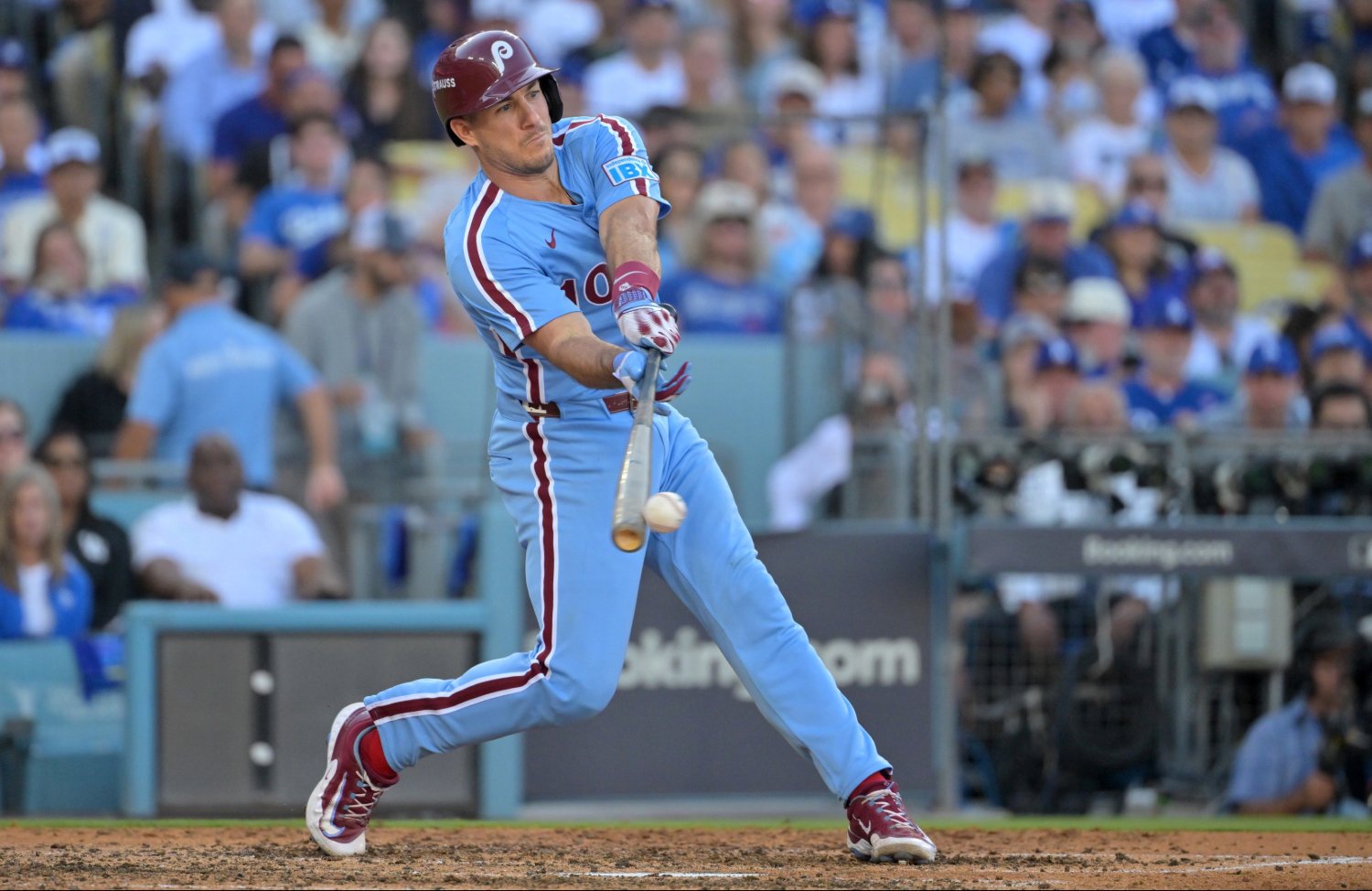 While Carlos Narvaez impressed in his rookie campaign, adding a veteran catcher should be a point of emphasis for the Boston Red Sox this winter. That's not to say that Connor Wong, who recently had hand surgery, can't be a competent backup, but the lack of catching depth became a glaring issue as the 2025 season wore on. It's not a fruitful market for teams with a need for catching, however. While some speculate the potential availability of Baltimore Orioles catcher Adley Rutschman, it's highly unlikely he's moved for anything less than that of someone with first overall pick status. And it'd be rather foolish to pay that price when Narvaez has already locked down the starting gig. So, that generally leaves the free-agent market, where veterans such as Victor Caratini, Austin Hedges, and James McCann will be. Not exactly a murderer's row, there. However, in addition to them is multi-time All-Star and longtime National League East member J.T. Realmuto. Let's examine the veteran's résumé and examine his potential fit with the Red Sox in 2026 (and perhaps beyond). The Good Save for 2024, the 34-year-old backstop is a workhorse who's played at least 125 games -- or on pace to play that many (thank you, 2020) -- every year since becoming an established big leaguer in 2015. For a catcher, that's not easy to do. Sure, he's played some first base in his MLB career, as most catchers tend to do to preserve their bodies, but only 263 total defensive innings and zero since 2022. So, he's a catcher through and through. Plus, he's still a consistent contributor on offense. Though not as potent as his days with the Miami Marlins or even his early days with the Philadelphia Phillies, Realmuto posted a 94 wRC+ with 12 home runs and 52 runs batted in across 550 plate appearances in 2025. Among the 42 catchers with at least 250 plate appearances, the righty bat ranked 15th in fWAR with 2.1. Defensively, he's not a savant as a framer or blocker, but the former doesn't matter as much with the implementation of the Automated Balls and Strikes system. He's still got a cannon back there as well, ranking in the 95th percentile for caught stealing above average and in the 99th percentile for pop time. For reference, Narvaez ranked in the 98th percentile for CSAA but just the 80th percentile for pop time. Wong, on the other hand, was in the 21st percentile for CSAA and the 39th in pop time. Realmuto will get paid like a starting catcher on the open market, which makes sense seeing as he's still very good, but if Boston can convince him that playing in a near 50-50 split with Narvaez will prolong his career and help elevate his performance, he'd make a ton of sense for them next season. The Bad While 2025 was hardly a bad season for Realmuto, the soon-to-be 35-year-old has seen steady regression at the plate from a power standpoint. You can chalk some of the decline in his raw counting stats up to injuries and batted ball variance -- especially seeing as his expected wOBA has been between .323 and .339 since 2023 -- but the power drop-off is fierce. In 2023, Realmuto posted a 101 wRC+ and a .200 isolated power; in 2024, it was a 107 wRC+ but a .163 ISO. This year, both of those figures dropped to 94 and .127, respectively. His walk rate remained about the same, his strikeout rate improved ever so slightly, but the power is way down. Perhaps a ballpark change could help his power, but he'd also have to change his swing. Over the past two years, Realmuto has a pulled fly ball rate under 15 percent, and 2025 saw a dramatic decline in overall bat speed. While the institutional knowledge he possesses can't be priced, the overall production can—the question becomes is he worth getting paid like a starter to get 80 or so games with consistently declining production, given that the alternative is Wong? The Verdict It'd still be in Chief Baseball Officer Craig Breslow's best interest to lessen the workload of Narvaez, especially seeing as his production dipped dramatically in the second half, but there's better avenues to Boston's spending than someone like Realmuto. As mentioned before, guys like Caratini and McCann are available and offer more offensive upside to Wong, with Hedges providing elite defensive prowess back there. Even if it ends up being of similar significance as Jonathan Lucroy in 2020, getting a third catcher with extensive big-league experience is a must, though that likely comes with the hope Wong can strike a happy balance between 2024 and 2025 offensively. Realmuto doesn't seem like a major candidate to leave the Phillies as things stand. If he does, it's probably to another team he can start a lion's share of the games. While, in theory, a Narvaez-Realmuto pairing would be a fun catching tandem, it probably isn't worth the red flags that would come with paying relatively big money for a catcher turning 35 in March.
 -
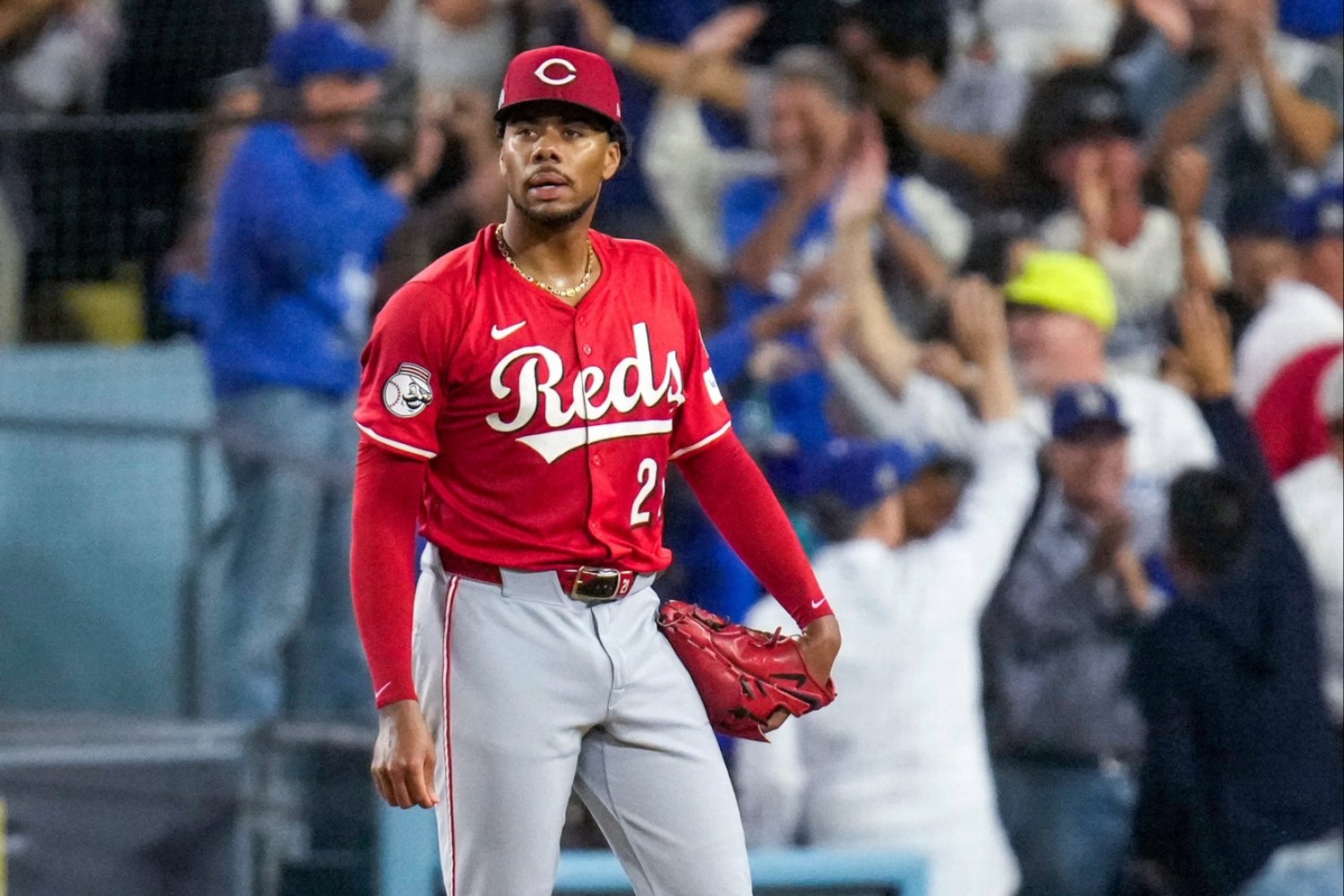 Cincinnati Reds beat writer Mark Sheldon (MLB.com) speculated the team might utilize ace right-hander Hunter Greene in an effort to improve the lineup in 2026 and beyond. More specifically, Sheldon suggested the team might trade its ace in a blockbuster trade this offseason. Greene, 26, posted a 2.76 ERA across 107 2/3 innings pitched in 2025 and was an All-Star in 2024. He has an electric fastball, averaging 99.4 mph this past season, and struck out 31.4% of batters compared to a scant 6.2% walk rate. The right-hander has battled injuries throughout his career, having never posted more than 150 1/3 innings in a season, and made just 19 starts plus one poor postseason outing during Cincinnati's Cinderella run to October this season. Even if healthy, Greene starts just one out of every five games. The one common denominator for a team every night is its lineup; the Reds ranked 24th in baseball in wRC+ at 92, 21st in home runs and 14th in runs scored. Horrible? No, but pedestrian at best, especially for a team that fancies itself as a contender in the years to come. Behind the 26-year-old flamethrower, the Reds have strong starting pitching in left-handers Nick Lodolo and Andrew Abbott, as well as young right-handers Rhett Lowder and Chase Burns. While Greene is, stuff-wise, the most talented of the group, and locked into a contract through at least 2028 (club option for 2029), the Reds wouldn't necessarily be reeling with his absence. In fact, they're all too used to his absence given his injuries. Even so, they've rebuilt into a formidable out in the National League Central in recent years. That said, it's important to temper expectations and remember this is a beat writer's speculation—albeit an incredibly juicy speculation. After all, the Reds may be smart to strike in an offseason will a lot of uncertainty regarding available arms ahead of the likely lockout in 2027. Having Greene as a trade chip can fetch them a haul. Now, if only there was a team out there with a logjam of position players who could help take a Cincinnati's lineup from mediocre to potent overnight. Enter, stage right, the Boston Red Sox. Following the call-up of outfielder Roman Anthony, the constant talking point looming was the team's logjam of outfielders. Such logjam forced Platinum Glove-hopeful Ceddanne Rafaela out of center field and to second base for multiple weeks following Marcelo Mayer's wrist injury. That logjam still exists to this day, with one player in particular garnering a lot of polarization within the fanbase between his on-field antics and somewhat inconsistent production in 2025: Jarren Duran. Perhaps reading too much into the nuances of the player, it just feels like Duran is a Terry Francona guy, doesn't it? After all, for better or worse, the 2024 All-Star, who ironically homered off of Greene in the Midsummer Classic, is a max-effort player. Not only that, but he's durable—two things Francona loves in his players. He may not be of similar value, but there's some resemblance in play style between Duran and longtime Red Sox second baseman Dustin Pedroia, who played for Francona from 2006 until 2011. Regardless, we've established Duran as a likely chip headed back to Cincinnati in this hypothetical deal; what would the entire trade package look like? Well... it's a lot. This is just one hypothetical (the actual pieces can and likely will switch if a deal is struck here), but the point remains that the cost for Greene is going to be uncomfortably high. Red Sox get: RHP Hunter Greene Reds get: OFs Jarren Duran and Wilyer Abreu, IF Kristian Campbell, RHP Luis Perales (No. 3 on Sox Prospects), LHP Brandon Clarke (No. 8), and IF Mikey Romero (No. 10) *Gulp* It may seem like way too much outgoing, and that's because it probably is. However, if you take a step back and examine each piece of the puzzle, you'll see the Red Sox actually make out very well. It's the kind of trade that looks a bit silly on the surface, but it consolidates talent and turns a small handful of good players into one elite talent—something the Red Sox lack outside of the aforementioned Anthony as well as ace southpaw Garrett Crochet. Not to mention, a big reason Boston coveted Crochet and Aroldis Chapman last winter was their electric fastballs and ability to generate whiffs. Greene ranked in the 90th percentile for whiff rate and in the 99th percentile for fastball velocity in 2025. Grnering a luxury tax hit of $8.8 million through 2028, selling out for Greene should be a no-brainer for Chief Baseball Officer Craig Breslow. Here's what the Red Sox rotation could look like post trade, assuming no other moves were made (age): Garrett Crochet, LHP (26) Hunter Greene, RHP (26) Brayan Bello, RHP (26) Connelly Early, LHP (23) Kutter Crawford, RHP (30 on April 1) OR Payton Tolle, LHP (23 on Nov. 1) Here's what the Reds lineup could look like post trade, assuming no other moves were made: (L) Jarren Duran, LF (S) Elly de la Cruz, SS Spencer Steer, 1B (L) TJ Friedl, CF Noelvi Marte, DH Tyler Stephenson, C (L) Wilyer Abreu, RF Ke'Bryan Hayes, 3B Matt McClain, 2B That's a heck of a lot of length that the Reds' lineup gains, not to mention the abundance of prospect talent restocking their farm system coffers. Of course, the Red Sox wouldn't be left without offensive talent, as they could field an outfield of Anthony, Rafaela, and Jhostynxon Garcia on a nightly basis. You can debate the merits of this hypothetical all you want; two truths remains regardless of how you nitpick. Hunter Green is going to cost a metric ton in a trade, and the Red Sox would be fools not to at least try to negotiate for him.
 -
Cincinnati Reds beat writer Mark Sheldon (MLB.com) speculated the team might utilize ace right-hander Hunter Greene in an effort to improve the lineup in 2026 and beyond. More specifically, Sheldon suggested the team might trade its ace in a blockbuster trade this offseason. Greene, 26, posted a 2.76 ERA across 107 2/3 innings pitched in 2025 and was an All-Star in 2024. He has an electric fastball, averaging 99.4 mph this past season, and struck out 31.4% of batters compared to a scant 6.2% walk rate. The right-hander has battled injuries throughout his career, having never posted more than 150 1/3 innings in a season, and made just 19 starts plus one poor postseason outing during Cincinnati's Cinderella run to October this season. Even if healthy, Greene starts just one out of every five games. The one common denominator for a team every night is its lineup; the Reds ranked 24th in baseball in wRC+ at 92, 21st in home runs and 14th in runs scored. Horrible? No, but pedestrian at best, especially for a team that fancies itself as a contender in the years to come. Behind the 26-year-old flamethrower, the Reds have strong starting pitching in left-handers Nick Lodolo and Andrew Abbott, as well as young right-handers Rhett Lowder and Chase Burns. While Greene is, stuff-wise, the most talented of the group, and locked into a contract through at least 2028 (club option for 2029), the Reds wouldn't necessarily be reeling with his absence. In fact, they're all too used to his absence given his injuries. Even so, they've rebuilt into a formidable out in the National League Central in recent years. That said, it's important to temper expectations and remember this is a beat writer's speculation—albeit an incredibly juicy speculation. After all, the Reds may be smart to strike in an offseason will a lot of uncertainty regarding available arms ahead of the likely lockout in 2027. Having Greene as a trade chip can fetch them a haul. Now, if only there was a team out there with a logjam of position players who could help take a Cincinnati's lineup from mediocre to potent overnight. Enter, stage right, the Boston Red Sox. Following the call-up of outfielder Roman Anthony, the constant talking point looming was the team's logjam of outfielders. Such logjam forced Platinum Glove-hopeful Ceddanne Rafaela out of center field and to second base for multiple weeks following Marcelo Mayer's wrist injury. That logjam still exists to this day, with one player in particular garnering a lot of polarization within the fanbase between his on-field antics and somewhat inconsistent production in 2025: Jarren Duran. Perhaps reading too much into the nuances of the player, it just feels like Duran is a Terry Francona guy, doesn't it? After all, for better or worse, the 2024 All-Star, who ironically homered off of Greene in the Midsummer Classic, is a max-effort player. Not only that, but he's durable—two things Francona loves in his players. He may not be of similar value, but there's some resemblance in play style between Duran and longtime Red Sox second baseman Dustin Pedroia, who played for Francona from 2006 until 2011. Regardless, we've established Duran as a likely chip headed back to Cincinnati in this hypothetical deal; what would the entire trade package look like? Well... it's a lot. This is just one hypothetical (the actual pieces can and likely will switch if a deal is struck here), but the point remains that the cost for Greene is going to be uncomfortably high. Red Sox get: RHP Hunter Greene Reds get: OFs Jarren Duran and Wilyer Abreu, IF Kristian Campbell, RHP Luis Perales (No. 3 on Sox Prospects), LHP Brandon Clarke (No. 8), and IF Mikey Romero (No. 10) *Gulp* It may seem like way too much outgoing, and that's because it probably is. However, if you take a step back and examine each piece of the puzzle, you'll see the Red Sox actually make out very well. It's the kind of trade that looks a bit silly on the surface, but it consolidates talent and turns a small handful of good players into one elite talent—something the Red Sox lack outside of the aforementioned Anthony as well as ace southpaw Garrett Crochet. Not to mention, a big reason Boston coveted Crochet and Aroldis Chapman last winter was their electric fastballs and ability to generate whiffs. Greene ranked in the 90th percentile for whiff rate and in the 99th percentile for fastball velocity in 2025. Grnering a luxury tax hit of $8.8 million through 2028, selling out for Greene should be a no-brainer for Chief Baseball Officer Craig Breslow. Here's what the Red Sox rotation could look like post trade, assuming no other moves were made (age): Garrett Crochet, LHP (26) Hunter Greene, RHP (26) Brayan Bello, RHP (26) Connelly Early, LHP (23) Kutter Crawford, RHP (30 on April 1) OR Payton Tolle, LHP (23 on Nov. 1) Here's what the Reds lineup could look like post trade, assuming no other moves were made: (L) Jarren Duran, LF (S) Elly de la Cruz, SS Spencer Steer, 1B (L) TJ Friedl, CF Noelvi Marte, DH Tyler Stephenson, C (L) Wilyer Abreu, RF Ke'Bryan Hayes, 3B Matt McClain, 2B That's a heck of a lot of length that the Reds' lineup gains, not to mention the abundance of prospect talent restocking their farm system coffers. Of course, the Red Sox wouldn't be left without offensive talent, as they could field an outfield of Anthony, Rafaela, and Jhostynxon Garcia on a nightly basis. You can debate the merits of this hypothetical all you want; two truths remains regardless of how you nitpick. Hunter Green is going to cost a metric ton in a trade, and the Red Sox would be fools not to at least try to negotiate for him. View full article
-
Former Boston Red Sox farmhand Anthony Rizzo will sign a one-day contract to retire as a Chicago Cub on Saturday. In doing so, the multi-time All-Star first baseman hangs up the cleats as a career .261 hitter with 303 home runs, 35.8 fWAR, and 1,644 hits. It wasn't a Hall of Fame career for Rizzo, but it was a great one nonetheless; inspirational, as well, considering he overcame a battle with Hodgkin's Lymphoma as he began his professional career in 2008. The 36-year-old made three All-Star teams, won four Gold Glove awards, one Platinum Glove, and took home Silver Slugger honors at first base in 2016.Speaking of 2016, he was also a pivotal piece in the Cubs' first World Series title in 108 years, posting a 145 wRC+ in the regular season and a 127 mark in the postseason. That was how reality played out for Rizzo. However, how might baseball history be different had the Red Sox held onto him instead of trading for Adrian Gonzalez ahead of the 2011 season? Today, we pay homage to the greatness of Rizzo by exploring some hypothetical scenarios had he remained in Boston. Scenario #1: Adrian Beltre re-signs in Boston. The Red Sox traded for Gonzalez on Dec. 5, 2010; one month later, Beltre signed a six-year deal with the Texas Rangers worth $96 million. While Boston already had first base locked down with Kevin Youkilis, it opted to upgrade that position by trading Rizzo, along with Rey Fuentes, Casey Kelly and Eric Patterson, to acquire the All-Star from the San Diego Padres. As a corresponding move, lineup-wise, Youkilis moved to third base and thus effectively ended the tenure of Beltre in Boston. In 2010, Beltre was a fringe MVP candidate, finishing ninth in voting with a 141 OPS+, 28 homers, 102 runs batted in, and a league-leading 49 doubles. After the Red Sox traded Manny Ramirez in 2008, then lost Jason Bay to the Mets after the 2009 season, it appeared they'd found a righty bat to pair with slugging left-handed designated hitter David Ortiz. Only, history had other plans. Rizzo didn't debut until June 9 of 2011, and wasn't a mainstay until the next year as a Cub, which actually played well into how Youkilis' time in Boston came to an end as well. Imagine a 2012 Red Sox lineup of the following: 1. Jacoby Ellsbury, CF 2. Dustin Pedroia, 2B 3. David Ortiz, DH 4. Adrian Beltre, 3B 5. Anthony Rizzo, 1B 6. Cody Ross, RF 7. Carl Crawford, LF 8. Jarrod Saltalamacchia, C 9. Mike Aviles, SS Youkilis also figures to be in the mix somewhere, whether as the Opening Day starter at first base or as trade fodder in the offseason ahead of 2012, potentially for pitching. Scenario #2: Does Theo Epstein and/or Terry Francona leave? A large reason 2012 was under Ben Cherrington and Bobby Valentine's guidance was how the 2011 season unfolded. There was a disconnect between the front office and the clubhouse, and players began behaving selfishly. Rumors that Gonzalez didn't like playing on the East Coast, Carl Crawford struggling, and a messy dynamic in the rotation combined to lead to a colossal collapse that bounced the Red Sox from postseason contention on Game 162 in 2011. Seeing as he was a rookie that season and struggled, Rizzo hardly factors into saving the culture. However, does simply removing one part of the problem alleviate a lot of pressure within the clubhouse? Moreover, are Epstein and Francona sticking around beyond that season, or were their respective departures inevitable? Scenario #3: The Bearded Brothers of 2013 never happens. This isn't to say the 2013 Red Sox would've been bad, especially considering the staying power in that hypothetical 2012 lineup. However, thinking about the 2013 team without Mike Napoli and, potentially, Jonny Gomes, feels almost treasonous. Part of what made the 2013 World Series run so special is just how bad the 2012 team bottomed out, culminating in the trade that sent Gonzalez, Crawford, Nick Punto, and Josh Beckett to the Los Angeles Dodgers for James Loney and prospects. If Gonzalez isn't headlining the outgoing party to Los Angeles, are the Red Sox stuck with Crawford until his contract expires? Beckett rebounded and finished his career with a strong 2014 campaign, but posted an ERA over five across eight starts in 2013. Could a rotation of Beckett, Jon Lester, John Lackey, Clay Buchholz, and Felix Doubront lead the Red Sox to the promised land in 2013? Largely, that same rotation flamed out down the stretch in 2011 and was rife with drama stemming from "fried chicken and beer"-gate. Sure, the lineup would've been markedly better on paper, but Napoli posted a 128 wRC+ to Rizzo's 105 in 2013, with Gomes and Crawford each posting a 108 mark. Scenario #4: Jon Lester's long-term future with the Red Sox. It feels like, rhetorically speaking, Red Sox Principal Owner John Henry would've interfered with giving Lester a long-term deal in the neighborhood of what he received ahead of 2015 from Chicago. However, it's hard to see them poaching Lester from Boston ahead of 2015 without already having Rizzo, Epstein, David Ross, etc. in-house. That said, if Boston keeps Lester, are they in the market for David Price and/or Chris Sale? What does Buchholz's future in Boston look like? Is Lester the only one retained, or do they also bring back John Lackey (who was also a key figure on the Cubs' 2016 team)? Scenario #5: The Cubs World Series drought... still ongoing? Rizzo and Lester each played instrumental roles on the field in getting the Cubs their first title in over a century, with Epstein calling the shots in the front office and Jed Hoyer right beside him. It's crazy to think that the Cubs only won it all in 2016, and didn't really sniff a chance at a second ring at all in the years since. It's hard to imagine that organization winning a ring in 2016 without those three Red Sox alumni, but could they have still managed to win a ring between 2011 and 2024 had history played out this way? Scenario #6: The Killer B's Era. This encapsulates that entire nine-year span of Rizzo, but primarily 2013 through 2019, where Red Sox Nation got to watch Xander Bogaerts, Jackie Bradley Jr., Mookie Betts, and Andrew Benintendi all come up and contribute at the MLB level—three of them became All-Stars in Boston, and all four won a World Series in 2018 (Bogaerts also in 2013). During that 2013 to 2019 span, Rizzo slashed .276/.379/.499 and was 16th among MLB position players in fWAR. During that span, Boston deployed 21 different first basemen and tied for 21st in baseball in wRC+ from that position. It hardly interfered with winning, as they still won four division titles and two World Series in that span, but it's hard to ignore how much better the position could've been had Rizzo -- and Beltre -- been there. During this era, the Red Sox also debuted Rafael Devers at third base, as well as Bogaerts; what is the reality that either is long for Boston in this scenario? Does that make the team better in this window? The point of all this is: History worked out well for both Rizzo and the Red Sox. Neither side would take back that initial trade if they could. But, remember, just one move can alter the future trajectory of a franchise. View full article
-
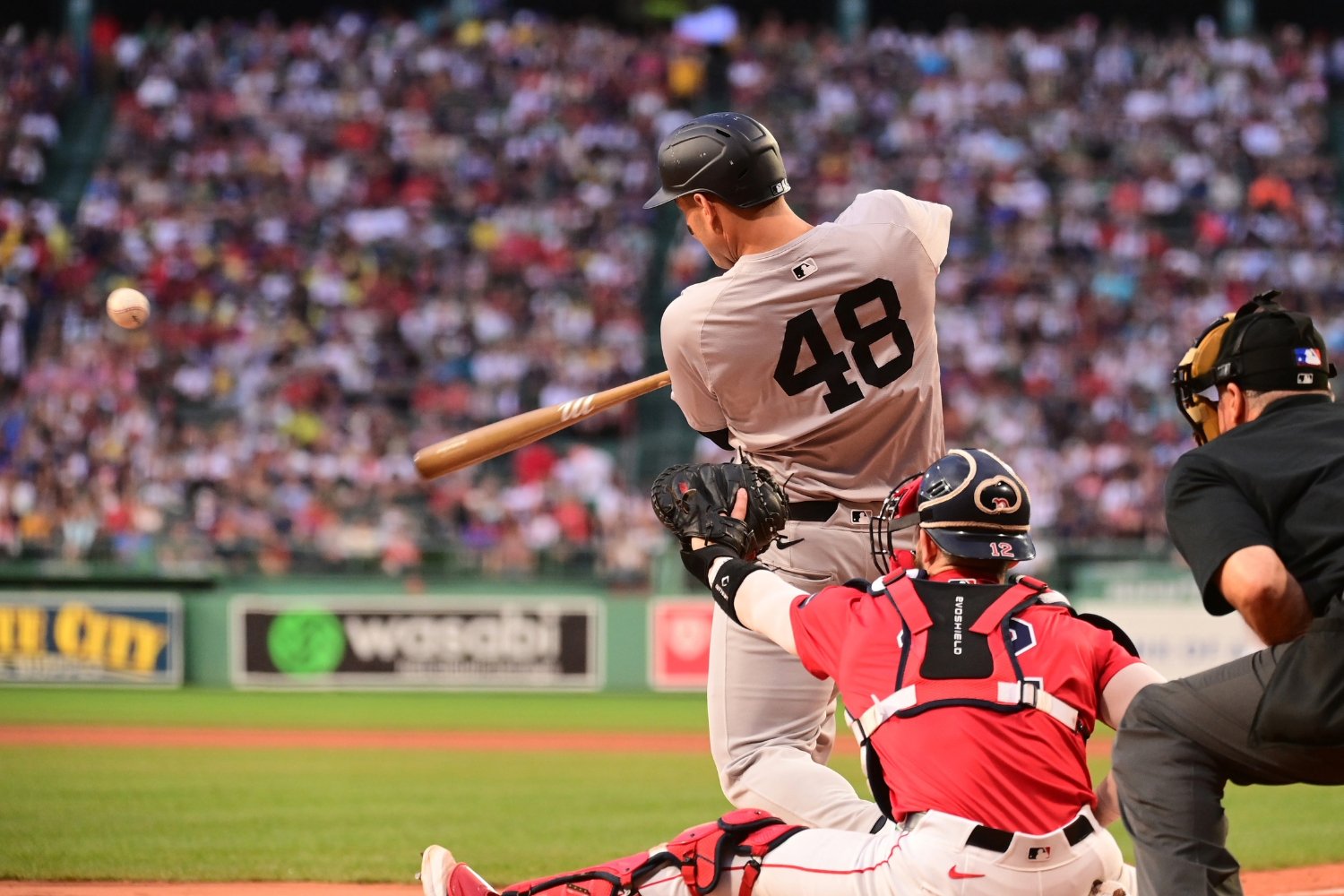 Former Boston Red Sox farmhand Anthony Rizzo will sign a one-day contract to retire as a Chicago Cub on Saturday. In doing so, the multi-time All-Star first baseman hangs up the cleats as a career .261 hitter with 303 home runs, 35.8 fWAR, and 1,644 hits. It wasn't a Hall of Fame career for Rizzo, but it was a great one nonetheless; inspirational, as well, considering he overcame a battle with Hodgkin's Lymphoma as he began his professional career in 2008. The 36-year-old made three All-Star teams, won four Gold Glove awards, one Platinum Glove, and took home Silver Slugger honors at first base in 2016.Speaking of 2016, he was also a pivotal piece in the Cubs' first World Series title in 108 years, posting a 145 wRC+ in the regular season and a 127 mark in the postseason. That was how reality played out for Rizzo. However, how might baseball history be different had the Red Sox held onto him instead of trading for Adrian Gonzalez ahead of the 2011 season? Today, we pay homage to the greatness of Rizzo by exploring some hypothetical scenarios had he remained in Boston. Scenario #1: Adrian Beltre re-signs in Boston. The Red Sox traded for Gonzalez on Dec. 5, 2010; one month later, Beltre signed a six-year deal with the Texas Rangers worth $96 million. While Boston already had first base locked down with Kevin Youkilis, it opted to upgrade that position by trading Rizzo, along with Rey Fuentes, Casey Kelly and Eric Patterson, to acquire the All-Star from the San Diego Padres. As a corresponding move, lineup-wise, Youkilis moved to third base and thus effectively ended the tenure of Beltre in Boston. In 2010, Beltre was a fringe MVP candidate, finishing ninth in voting with a 141 OPS+, 28 homers, 102 runs batted in, and a league-leading 49 doubles. After the Red Sox traded Manny Ramirez in 2008, then lost Jason Bay to the Mets after the 2009 season, it appeared they'd found a righty bat to pair with slugging left-handed designated hitter David Ortiz. Only, history had other plans. Rizzo didn't debut until June 9 of 2011, and wasn't a mainstay until the next year as a Cub, which actually played well into how Youkilis' time in Boston came to an end as well. Imagine a 2012 Red Sox lineup of the following: 1. Jacoby Ellsbury, CF 2. Dustin Pedroia, 2B 3. David Ortiz, DH 4. Adrian Beltre, 3B 5. Anthony Rizzo, 1B 6. Cody Ross, RF 7. Carl Crawford, LF 8. Jarrod Saltalamacchia, C 9. Mike Aviles, SS Youkilis also figures to be in the mix somewhere, whether as the Opening Day starter at first base or as trade fodder in the offseason ahead of 2012, potentially for pitching. Scenario #2: Does Theo Epstein and/or Terry Francona leave? A large reason 2012 was under Ben Cherrington and Bobby Valentine's guidance was how the 2011 season unfolded. There was a disconnect between the front office and the clubhouse, and players began behaving selfishly. Rumors that Gonzalez didn't like playing on the East Coast, Carl Crawford struggling, and a messy dynamic in the rotation combined to lead to a colossal collapse that bounced the Red Sox from postseason contention on Game 162 in 2011. Seeing as he was a rookie that season and struggled, Rizzo hardly factors into saving the culture. However, does simply removing one part of the problem alleviate a lot of pressure within the clubhouse? Moreover, are Epstein and Francona sticking around beyond that season, or were their respective departures inevitable? Scenario #3: The Bearded Brothers of 2013 never happens. This isn't to say the 2013 Red Sox would've been bad, especially considering the staying power in that hypothetical 2012 lineup. However, thinking about the 2013 team without Mike Napoli and, potentially, Jonny Gomes, feels almost treasonous. Part of what made the 2013 World Series run so special is just how bad the 2012 team bottomed out, culminating in the trade that sent Gonzalez, Crawford, Nick Punto, and Josh Beckett to the Los Angeles Dodgers for James Loney and prospects. If Gonzalez isn't headlining the outgoing party to Los Angeles, are the Red Sox stuck with Crawford until his contract expires? Beckett rebounded and finished his career with a strong 2014 campaign, but posted an ERA over five across eight starts in 2013. Could a rotation of Beckett, Jon Lester, John Lackey, Clay Buchholz, and Felix Doubront lead the Red Sox to the promised land in 2013? Largely, that same rotation flamed out down the stretch in 2011 and was rife with drama stemming from "fried chicken and beer"-gate. Sure, the lineup would've been markedly better on paper, but Napoli posted a 128 wRC+ to Rizzo's 105 in 2013, with Gomes and Crawford each posting a 108 mark. Scenario #4: Jon Lester's long-term future with the Red Sox. It feels like, rhetorically speaking, Red Sox Principal Owner John Henry would've interfered with giving Lester a long-term deal in the neighborhood of what he received ahead of 2015 from Chicago. However, it's hard to see them poaching Lester from Boston ahead of 2015 without already having Rizzo, Epstein, David Ross, etc. in-house. That said, if Boston keeps Lester, are they in the market for David Price and/or Chris Sale? What does Buchholz's future in Boston look like? Is Lester the only one retained, or do they also bring back John Lackey (who was also a key figure on the Cubs' 2016 team)? Scenario #5: The Cubs World Series drought... still ongoing? Rizzo and Lester each played instrumental roles on the field in getting the Cubs their first title in over a century, with Epstein calling the shots in the front office and Jed Hoyer right beside him. It's crazy to think that the Cubs only won it all in 2016, and didn't really sniff a chance at a second ring at all in the years since. It's hard to imagine that organization winning a ring in 2016 without those three Red Sox alumni, but could they have still managed to win a ring between 2011 and 2024 had history played out this way? Scenario #6: The Killer B's Era. This encapsulates that entire nine-year span of Rizzo, but primarily 2013 through 2019, where Red Sox Nation got to watch Xander Bogaerts, Jackie Bradley Jr., Mookie Betts, and Andrew Benintendi all come up and contribute at the MLB level—three of them became All-Stars in Boston, and all four won a World Series in 2018 (Bogaerts also in 2013). During that 2013 to 2019 span, Rizzo slashed .276/.379/.499 and was 16th among MLB position players in fWAR. During that span, Boston deployed 21 different first basemen and tied for 21st in baseball in wRC+ from that position. It hardly interfered with winning, as they still won four division titles and two World Series in that span, but it's hard to ignore how much better the position could've been had Rizzo -- and Beltre -- been there. During this era, the Red Sox also debuted Rafael Devers at third base, as well as Bogaerts; what is the reality that either is long for Boston in this scenario? Does that make the team better in this window? The point of all this is: History worked out well for both Rizzo and the Red Sox. Neither side would take back that initial trade if they could. But, remember, just one move can alter the future trajectory of a franchise.
 -
According to the Foul Territory show, the Boston Red Sox are expected to call up left-handed pitching prospect Connelly Early to make his MLB debut Tuesday against the Athletics. Early, Boston's No. 8 prospect according to Sox Prospects, earned his second promotion in 2025 after posting a 2.83 ERA with 36 strikeouts in 28 1/3 innings at Triple-A Worcester. The 23-year-old out of the University of Virginia has a 2.60 ERA in 100 1/3 innings pitched between Worcester and Double-A Portland this season. The corresponding move is expected to be right-handed pitcher Dustin May hitting the injured list, although the injury designation is not confirmed. May showed promise early in his Red Sox career, having two consecutive good starts after a mediocre team debut. However, three straight poor outings yield him a 5.40 ERA across 28 1/3 innings in Boston. The right-hander, poised to hit free agency at season's end, was the only starting pitcher Chief Baseball Officer Craig Breslow acquired at the July 31 trade deadline. The Red Sox traded two prospects -- James Tibbs and Zach Ehrhard -- for May's services. Depending on what his injury designation is, this could mark the end of his tenure with the team. View full rumor
-
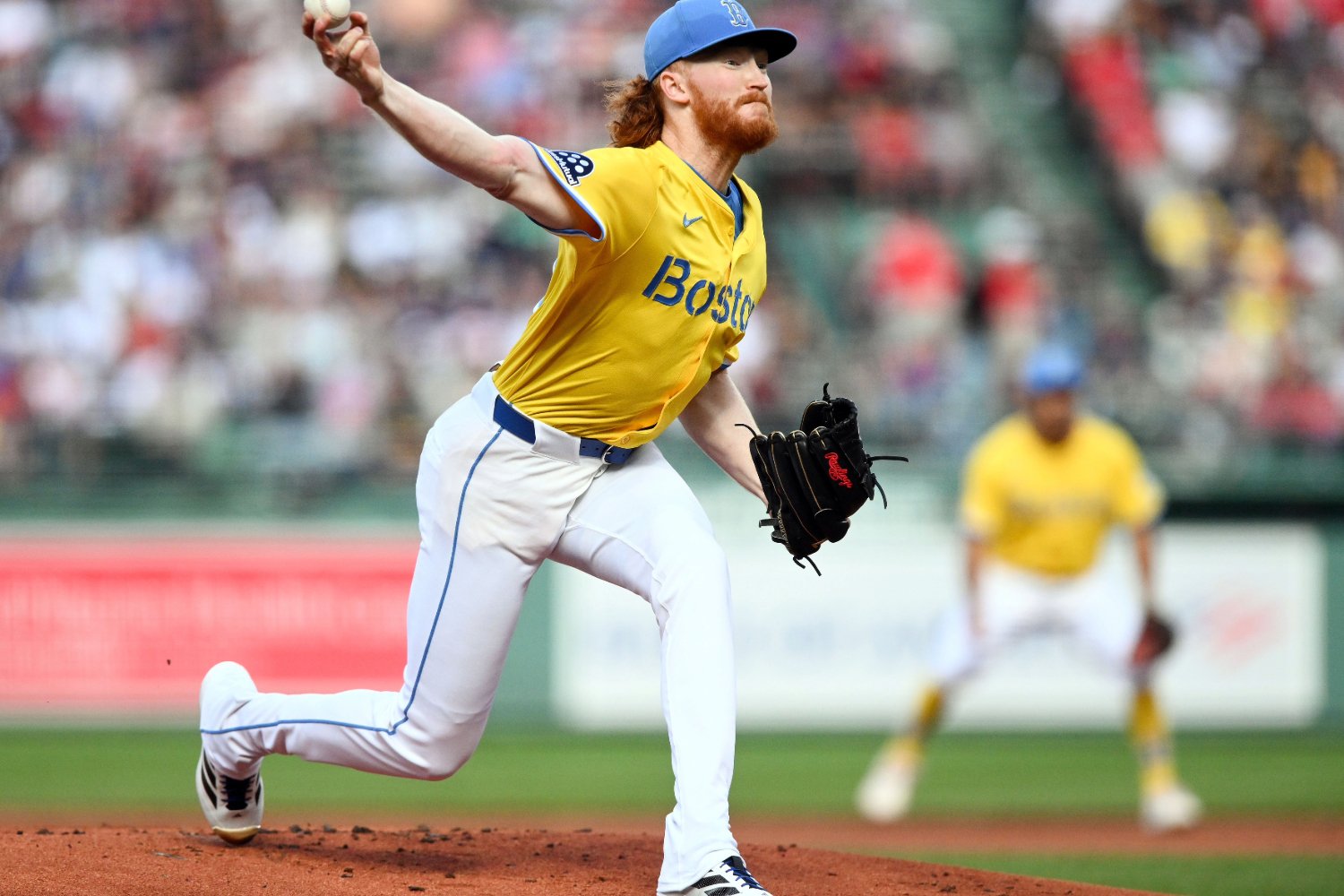 According to the Foul Territory show, the Boston Red Sox are expected to call up left-handed pitching prospect Connelly Early to make his MLB debut Tuesday against the Athletics. Early, Boston's No. 8 prospect according to Sox Prospects, earned his second promotion in 2025 after posting a 2.83 ERA with 36 strikeouts in 28 1/3 innings at Triple-A Worcester. The 23-year-old out of the University of Virginia has a 2.60 ERA in 100 1/3 innings pitched between Worcester and Double-A Portland this season. The corresponding move is expected to be right-handed pitcher Dustin May hitting the injured list, although the injury designation is not confirmed. May showed promise early in his Red Sox career, having two consecutive good starts after a mediocre team debut. However, three straight poor outings yield him a 5.40 ERA across 28 1/3 innings in Boston. The right-hander, poised to hit free agency at season's end, was the only starting pitcher Chief Baseball Officer Craig Breslow acquired at the July 31 trade deadline. The Red Sox traded two prospects -- James Tibbs and Zach Ehrhard -- for May's services. Depending on what his injury designation is, this could mark the end of his tenure with the team.
 -
Payton TolleJhostynxon GarciaFranklin AriasKyson WitherspoonLuis PeralesMikey RomeroConnelly EarlyJuan ValeraBrandon ClarkeDavid SandlinMarcus PhillipsJustin GonzalesAnthony EyansonMiguel BleisDorian SotoYoeilin CespedesJedixson PaezJohanfran Garcia
-
Payton TolleJhostynxon GarciaFranklin AriasKyson WitherspoonLuis PeralesMikey RomeroConnelly EarlyJuan ValeraBrandon ClarkeDavid SandlinMarcus PhillipsJustin GonzalesAnthony EyansonMiguel BleisDorian SotoYoeilin CespedesJedixson PaezJohanfran Garcia
-
For the first time since 2019, the Boston Red Sox went over .500 in August, going 17-11 overall following a 5-2 victory over the Pittsburgh Pirates on the final day of the month. It wasn't the cleanest stretch, despite the team's success, as they lost five straight at home against the Miami Marlins, Baltimore Orioles, and Pirates, but also won seven of eight on the road against the New York Yankees and Orioles. Some very high highs and very low lows, but all in all, you'll never scoff at six games above .500 in the dog days of August. Any player can have a hot month; any player can have a cold month. That said, who are the three players whose stock climbed the most in August for the Red Sox? 1. LHP Aroldis Chapman: 11.0 IP, 0 ER, 0 H, 1 BB, 14 K, 8 SV Any time you go an entire month without allowing a hit, it's safe to say your stock climbed, even if you're only used one inning at a time. It's not lost on the public the nature of Chapman's dominance in 2025, his age-37 season, but every time you look at the numbers, it continues to amaze. Across his 12 outings, Chapman fanned 41.2% of opposing hitters -- fifth among qualified MLB relievers in August -- and carried a WHIP of 0.09. It's gotten to the point with his command where you're almost shocked if he finds himself in a three-ball count, which are words one never thought they'd say about the All-Star left-hander. The Red Sox are clearly believers in his ability to sustain elite-level production beyond 2025, seeing as they extended him through at least the 2026 season with a base salary of $13.3 million. 2. OF Roman Anthony: .304/.390/.520 with a 149 wRC+ and 10 extra-base hits The power began to shine for Anthony in August, who is suddenly on the precipice of double digits in his rookie campaign with less than 30 games to go. Part of the fear with trading someone like Rafael Devers, especially with third baseman Alex Bregman on the shelf, was the perception that the fate of 2025 was in the hands of a 21-year-old the organization deemed unready until mid-June. Not only have they catapulted into a near-lock to make the postseason, but he's also become the best player on the team. In August, Anthony posted 1.2 fWAR, which led the Red Sox. His six home runs also led the team, and his 13 runs batted in were good for third despite him spending the lion's share of his time as the team's leadoff hitter. August was also the month Anthony acquired generational wealth, inking an eight-year deal worth a base salary of $130 million with performance escalators. 3. SS Trevor Story: .278/.345/.472 with a 122 wRC+ and 19 RBIs Every month that passes makes May look like a mirage for the veteran shortstop. It's not always sexy and still features a great deal of swing-and-miss, as well as an uncomfortable expansion of the strike zone, but the authority with which Story hits the baseball continues to impress. In late August, Story joined the 20-homer, 20-steal club, and even later in the month, he belted his 200th career home run. Obviously, for a team to succeed, it needs several of its players firing on all cylinders. However, it feels like getting production out of Story specifically drives this team to a whole different gear that is felt by nobody else, besides maybe outfielder Jarren Duran, who also had a good August. Story was second on the team in Wins Above Replacement with 1.0, and led the team with 19 runs batted in. The fact that he's suddenly on the cusp of the 25/25 club with a distant shot at 30/30 (given where he was in May) is nothing short of incredible. Honorable Mentions: RHPs Brayan Bello (2.27 ERA in five starts) and Lucas Giolito (2.39 ERA in six starts) On the flip side, there was a healthy handful of players who disappointed in August. Here are the three whose stock dropped the most. 1. DH/LF Masataka Yoshida: .214/.296/.300 with a 65 wRC+ and nine RBIs Watching Yoshida hit in August, particularly toward the end of the month, became very difficult. After showing signs of life in late July and early August, the designated hitter went dormant in his final 13 games, slashing .163/.234/.186 with a ground-ball rate north of 50 percent. Yoshida has a rap sheet in MLB as a notorious slow starter; we've seen him overcome it in 2023 and 2024 and have productive campaigns offensively. However, it's gotten to the point where the Red Sox can't afford to wait and see with him. Winning is paramount, and they are struggling to get productivity from the DH spot. Seeing as the team released right-handed pitcher Walker Buehler at the end of the month, they clearly know they can't be wasting roster spots in hopes a player turns it on. While it's unlikely they get that extreme with Yoshida, who still has two years left on his contract, it's hard to justify using him at all, even as a pinch-hitter. 2. OF Ceddanne Rafaela: .208/.266/.317 with a 58 wRC+ and one home run August wasn't kind to Rafaela, though he was instrumental in getting them their four-game sweep of the Orioles with a go-ahead homer in the ninth inning. Though strikeouts were only slightly more of a problem than his season average, his quality of contact tanked. In 79 batted ball events, he had a hard-hit rate of 29.1 percent with a barrel percentage of 3.8. There's cause for optimism that he's working his way out of the skid, however, as he had at least one hit in seven of his final nine games in August, hitting .278 over that span with five extra-base hits. 3. RHP Jordan Hicks: 7.36 ERA, nine strikeouts to seven walks in 11.0 IP Reliever ERA can be deceiving. In this case, it's probably being kinder to Hicks than the feeling within Red Sox Nation when he enters a ballgame. In August, Hicks made 11 appearances and allowed at least two runs in three of them. Not only that, but he didn't once have a 1-2-3 inning. At times, it began to feel like he wasn't even on the roster, as there were two separate stretches where he went five days or more between outings. The frustrating thing about Hicks is that he's immensely talented but has no idea where the baseball is going. You can see the vision with him as a high-leverage reliever, with a triple-digit heater with sink and multiple secondaries to keep hitters off-balance. The problem is he's too inconsistent at the moment to be counted on for anything more intense than mop-up duty until further notice. Honorable Mentions: C Carlos Narváez (.173 average), 3B Alex Bregman (.360 SLG) and RHP Dustin May (5.68 ERA) View full article
-
Stock Up, Stock Down: Red Sox Players to Watch in September
Jordan Leandre posted an article in Red Sox
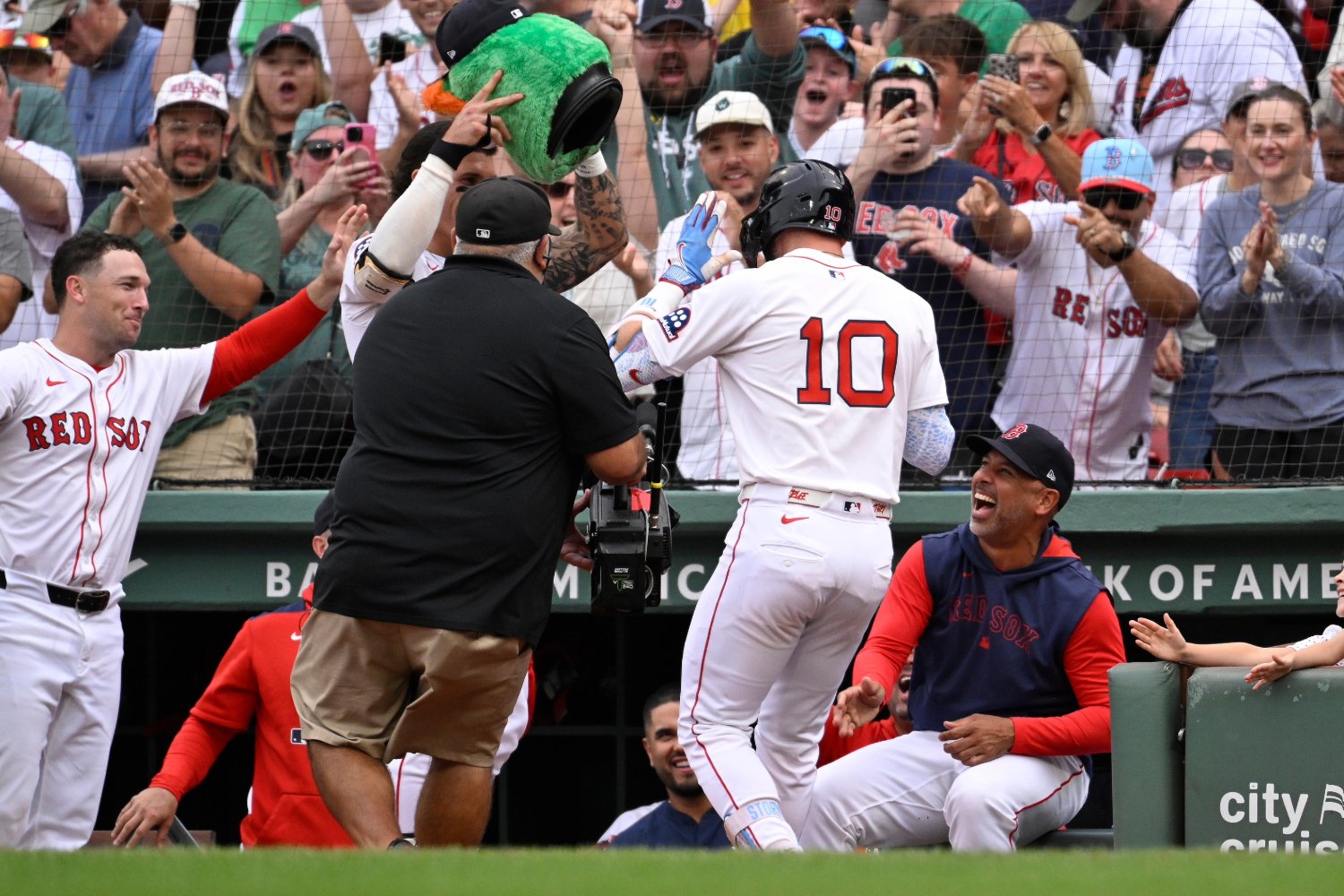 For the first time since 2019, the Boston Red Sox went over .500 in August, going 17-11 overall following a 5-2 victory over the Pittsburgh Pirates on the final day of the month. It wasn't the cleanest stretch, despite the team's success, as they lost five straight at home against the Miami Marlins, Baltimore Orioles, and Pirates, but also won seven of eight on the road against the New York Yankees and Orioles. Some very high highs and very low lows, but all in all, you'll never scoff at six games above .500 in the dog days of August. Any player can have a hot month; any player can have a cold month. That said, who are the three players whose stock climbed the most in August for the Red Sox? 1. LHP Aroldis Chapman: 11.0 IP, 0 ER, 0 H, 1 BB, 14 K, 8 SV Any time you go an entire month without allowing a hit, it's safe to say your stock climbed, even if you're only used one inning at a time. It's not lost on the public the nature of Chapman's dominance in 2025, his age-37 season, but every time you look at the numbers, it continues to amaze. Across his 12 outings, Chapman fanned 41.2% of opposing hitters -- fifth among qualified MLB relievers in August -- and carried a WHIP of 0.09. It's gotten to the point with his command where you're almost shocked if he finds himself in a three-ball count, which are words one never thought they'd say about the All-Star left-hander. The Red Sox are clearly believers in his ability to sustain elite-level production beyond 2025, seeing as they extended him through at least the 2026 season with a base salary of $13.3 million. 2. OF Roman Anthony: .304/.390/.520 with a 149 wRC+ and 10 extra-base hits The power began to shine for Anthony in August, who is suddenly on the precipice of double digits in his rookie campaign with less than 30 games to go. Part of the fear with trading someone like Rafael Devers, especially with third baseman Alex Bregman on the shelf, was the perception that the fate of 2025 was in the hands of a 21-year-old the organization deemed unready until mid-June. Not only have they catapulted into a near-lock to make the postseason, but he's also become the best player on the team. In August, Anthony posted 1.2 fWAR, which led the Red Sox. His six home runs also led the team, and his 13 runs batted in were good for third despite him spending the lion's share of his time as the team's leadoff hitter. August was also the month Anthony acquired generational wealth, inking an eight-year deal worth a base salary of $130 million with performance escalators. 3. SS Trevor Story: .278/.345/.472 with a 122 wRC+ and 19 RBIs Every month that passes makes May look like a mirage for the veteran shortstop. It's not always sexy and still features a great deal of swing-and-miss, as well as an uncomfortable expansion of the strike zone, but the authority with which Story hits the baseball continues to impress. In late August, Story joined the 20-homer, 20-steal club, and even later in the month, he belted his 200th career home run. Obviously, for a team to succeed, it needs several of its players firing on all cylinders. However, it feels like getting production out of Story specifically drives this team to a whole different gear that is felt by nobody else, besides maybe outfielder Jarren Duran, who also had a good August. Story was second on the team in Wins Above Replacement with 1.0, and led the team with 19 runs batted in. The fact that he's suddenly on the cusp of the 25/25 club with a distant shot at 30/30 (given where he was in May) is nothing short of incredible. Honorable Mentions: RHPs Brayan Bello (2.27 ERA in five starts) and Lucas Giolito (2.39 ERA in six starts) On the flip side, there was a healthy handful of players who disappointed in August. Here are the three whose stock dropped the most. 1. DH/LF Masataka Yoshida: .214/.296/.300 with a 65 wRC+ and nine RBIs Watching Yoshida hit in August, particularly toward the end of the month, became very difficult. After showing signs of life in late July and early August, the designated hitter went dormant in his final 13 games, slashing .163/.234/.186 with a ground-ball rate north of 50 percent. Yoshida has a rap sheet in MLB as a notorious slow starter; we've seen him overcome it in 2023 and 2024 and have productive campaigns offensively. However, it's gotten to the point where the Red Sox can't afford to wait and see with him. Winning is paramount, and they are struggling to get productivity from the DH spot. Seeing as the team released right-handed pitcher Walker Buehler at the end of the month, they clearly know they can't be wasting roster spots in hopes a player turns it on. While it's unlikely they get that extreme with Yoshida, who still has two years left on his contract, it's hard to justify using him at all, even as a pinch-hitter. 2. OF Ceddanne Rafaela: .208/.266/.317 with a 58 wRC+ and one home run August wasn't kind to Rafaela, though he was instrumental in getting them their four-game sweep of the Orioles with a go-ahead homer in the ninth inning. Though strikeouts were only slightly more of a problem than his season average, his quality of contact tanked. In 79 batted ball events, he had a hard-hit rate of 29.1 percent with a barrel percentage of 3.8. There's cause for optimism that he's working his way out of the skid, however, as he had at least one hit in seven of his final nine games in August, hitting .278 over that span with five extra-base hits. 3. RHP Jordan Hicks: 7.36 ERA, nine strikeouts to seven walks in 11.0 IP Reliever ERA can be deceiving. In this case, it's probably being kinder to Hicks than the feeling within Red Sox Nation when he enters a ballgame. In August, Hicks made 11 appearances and allowed at least two runs in three of them. Not only that, but he didn't once have a 1-2-3 inning. At times, it began to feel like he wasn't even on the roster, as there were two separate stretches where he went five days or more between outings. The frustrating thing about Hicks is that he's immensely talented but has no idea where the baseball is going. You can see the vision with him as a high-leverage reliever, with a triple-digit heater with sink and multiple secondaries to keep hitters off-balance. The problem is he's too inconsistent at the moment to be counted on for anything more intense than mop-up duty until further notice. Honorable Mentions: C Carlos Narváez (.173 average), 3B Alex Bregman (.360 SLG) and RHP Dustin May (5.68 ERA)
 -
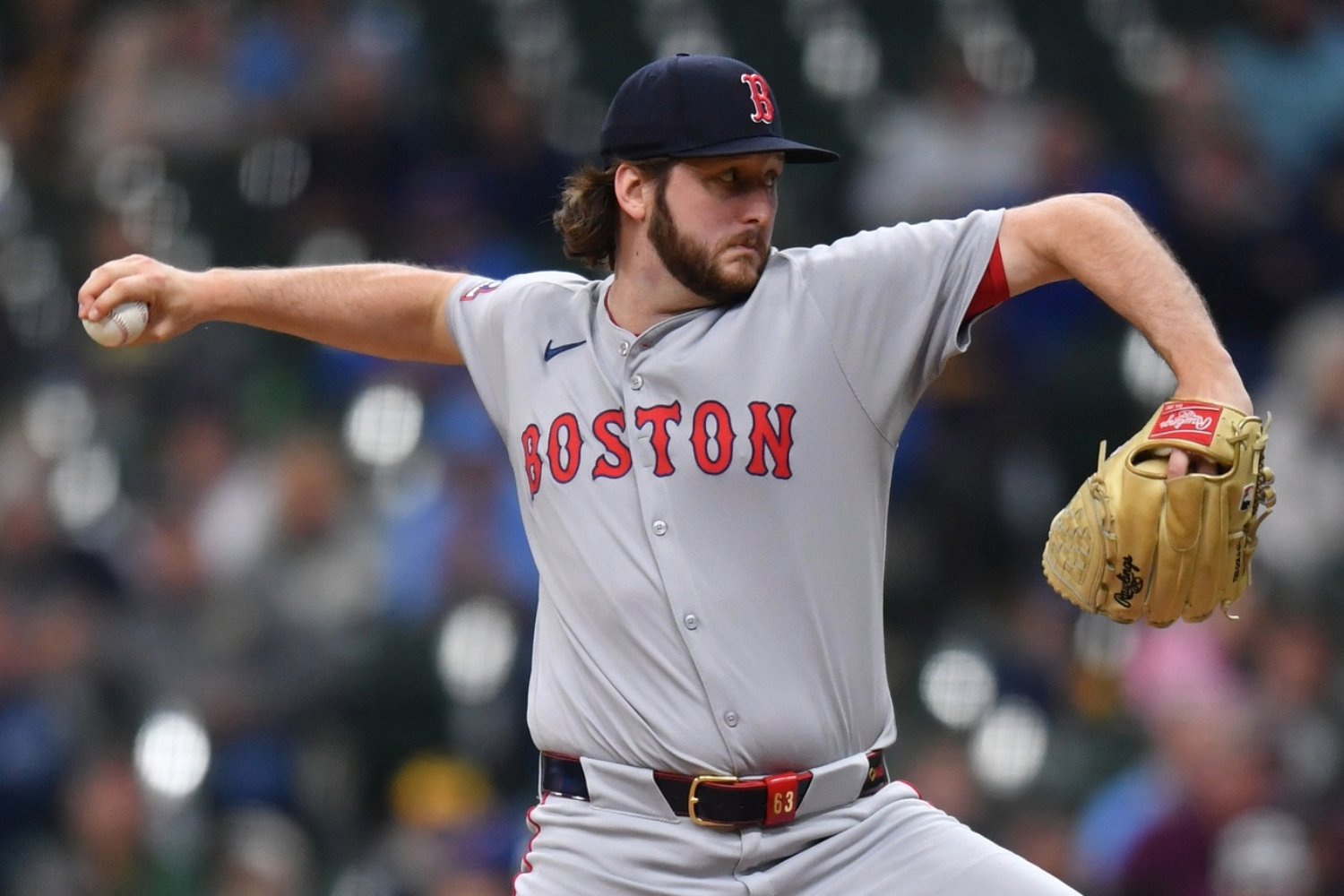 Following their dramatic comeback victory against the Baltimore Orioles, the Boston Red Sox got right to work returning their roster to full strength. According to Tim Healey of the Boston Globe, the Red Sox expect to activate both right-handed reliever Justin Slaten and outfielder Rob Refsnyder ahead of Thursday's series finale. Slaten, who last pitched on May 28 against the Milwaukee Brewers, had been placed on the injured list with a shoulder issue that turned into a nerve problem: a transverse process. "It's a little bony thing that comes out of your cervical spine," Slaten told the media earlier this month. "Essentially, that bone in my neck was kind of pushing on nerves, pushing on blood vessels, causing a lot of shoulder soreness specifically..." Before hitting the shelf, Slaten had a 3.47 ERA and a 3.22 FIP, along with three saves and four holds, across 23 1/3 innings pitched. After consecutive bad outings to start May, the 27-year-old threw 10 straight scoreless outings, allowing just five baserunners across 11 innings. To make room for Slaten, the Red Sox are expected to send down left-handed reliever Jovani Morán. The southpaw was called up to replace the recently injured Richard Fitts, but didn't figure into either game he was on the roster for. As for Refsnyder, he's been on the injured list since Aug. 23 with an oblique injury. The 34-year-old was 2-for-his-last-10 before going on the IL, but has a .905 OPS against left-handed pitching in 2025. Even though he hadn't produced much in his most recent small sample, the absence of Refsnyder was noticeable in Boston's recent stretch of games, as they scored just three runs combined in the two games started by lefties in the Bronx -- going 1-1 in those games. The corresponding move for Refsnyder is the placement of first baseman Nathaniel Lowe on the paternity list. Lowe went 0-for-4 in Wednesday's 3-2 win, but still has a .296/.375/.481 slash line with seven runs batted in across nine games with Boston.
 -
Following their dramatic comeback victory against the Baltimore Orioles, the Boston Red Sox got right to work returning their roster to full strength. According to Tim Healey of the Boston Globe, the Red Sox expect to activate both right-handed reliever Justin Slaten and outfielder Rob Refsnyder ahead of Thursday's series finale. Slaten, who last pitched on May 28 against the Milwaukee Brewers, had been placed on the injured list with a shoulder issue that turned into a nerve problem: a transverse process. "It's a little bony thing that comes out of your cervical spine," Slaten told the media earlier this month. "Essentially, that bone in my neck was kind of pushing on nerves, pushing on blood vessels, causing a lot of shoulder soreness specifically..." Before hitting the shelf, Slaten had a 3.47 ERA and a 3.22 FIP, along with three saves and four holds, across 23 1/3 innings pitched. After consecutive bad outings to start May, the 27-year-old threw 10 straight scoreless outings, allowing just five baserunners across 11 innings. To make room for Slaten, the Red Sox are expected to send down left-handed reliever Jovani Morán. The southpaw was called up to replace the recently injured Richard Fitts, but didn't figure into either game he was on the roster for. As for Refsnyder, he's been on the injured list since Aug. 23 with an oblique injury. The 34-year-old was 2-for-his-last-10 before going on the IL, but has a .905 OPS against left-handed pitching in 2025. Even though he hadn't produced much in his most recent small sample, the absence of Refsnyder was noticeable in Boston's recent stretch of games, as they scored just three runs combined in the two games started by lefties in the Bronx -- going 1-1 in those games. The corresponding move for Refsnyder is the placement of first baseman Nathaniel Lowe on the paternity list. Lowe went 0-for-4 in Wednesday's 3-2 win, but still has a .296/.375/.481 slash line with seven runs batted in across nine games with Boston. View full rumor
-
When the Boston Red Sox extended right-handed pitcher Brayan Bello ahead of the 2024 season, it felt like a passing of the torch to a new era of frontline starting pitching in Boston. Between injuries, inconsistencies and off-the-field factors, it was an up-and-down season for the Dominican Republic native. While he settled into a 4.49 ERA -- a 3.66 ERA from July 1 onward -- it seemed the fan base turned on the right-hander once dubbed with the nickname of "Baby Pedro." He struggled to find his footing early in 2025 as well, despite largely good run prevention. Through his first five starts, Bello had a 2.33 ERA but just 17 strikeouts to 14 walks across 27 innings. His sixth start of the year was a bad one; he allowed seven earned runs and walked five across 4 1/3 innings. While it was only his first start exceeding three earned runs, it was his fourth with at least three walks and second with five walks. At that point, it seemed patience was wearing thin with the 26-year-old and the reality that he was nothing more than a back-end starter became clearer. After four more so-so outings, each a little better than the previous, Bello took off, starting with his June 15 start against the New York Yankees. Bello went seven shutout frames, striking out eight and allowing just three hits. He out-pitched left-hander Max Fried (for the first time) and got the victory in a 1-0 ballgame. Fast forward two months, Bello did it again. He pitched seven shutout innings, allowing just three hits and beat Fried in a 1-0 ballgame. This time, at Yankee Stadium. Over those 13 outings, 12 of which have been starts, Bello has a 2.50 ERA with a 1.02 WHIP and a 46.4% ground ball rate. During that span, he's pitched at least six innings 10 times, including his first career complete game on July 8, and has eight appearances of one or fewer walks. He's getting deeper into games, manipulating contact and even the strikeouts tick up from time to time. His under-the-hood metrics suggests he's gotten somewhat lucky, but he leads the majors in innings pitched and is seventh in ERA since that June outing against the Yankees; overall, he's eighth in the American League in ERA. Independent of his actual performance, the maturation of the right-hander is leaps and bounds better than it was a year ago. In 2024, it felt like any little inconvenience, at least in the first half, led to a downward spiral. This year, even when he was struggling to find his footing early, Bello minimized damage more often than not and gave his team a chance to win. Leading up to the MLB trade deadline, the No. 1 priority for the Red Sox was adding a viable No. 2 starter to pair at the top with southpaw Garrett Crochet. They didn't quite get that, acquiring Dustin May and coming up short on Minnesota Twins right-hander Joe Ryan, which caused Red Sox fans to feel let down yet again by the front office. However, Bello has evolved into the No. 2 starter the Red Sox promised last spring, saving Chief Baseball Officer Craig Breslow's bacon, as the aforementioned May has shown flashes but has come up far short of being that front-end starter. Ideally, Bello would be the No. 3 starter, with someone sandwiched between he and Crochet to form a dastardly trio atop the rotation. But, not every team can live in an ideal world. What is true for certain is Bello would've been exactly the pitcher Red Sox fans would've yearned for at the deadline if he was wearing another uniform. He just didn't get that kind of respect because, fortunately for the Red Sox, they already had him. For a team to be a viable postseason and World Series contender, its rotation needs to have an ace and a very good No. 2 starting pitcher. Boston has an ace in Crochet, and its No. 2 -- Bello -- is very good. That duo has drawn the attention of manager Alex Cora, who went as far as to say Bello gives the organization the same confidence that a win is coming as Crochet. If that proves to be more than just lip service, the Red Sox's 2025 postseason run could last most of October. View full article
-
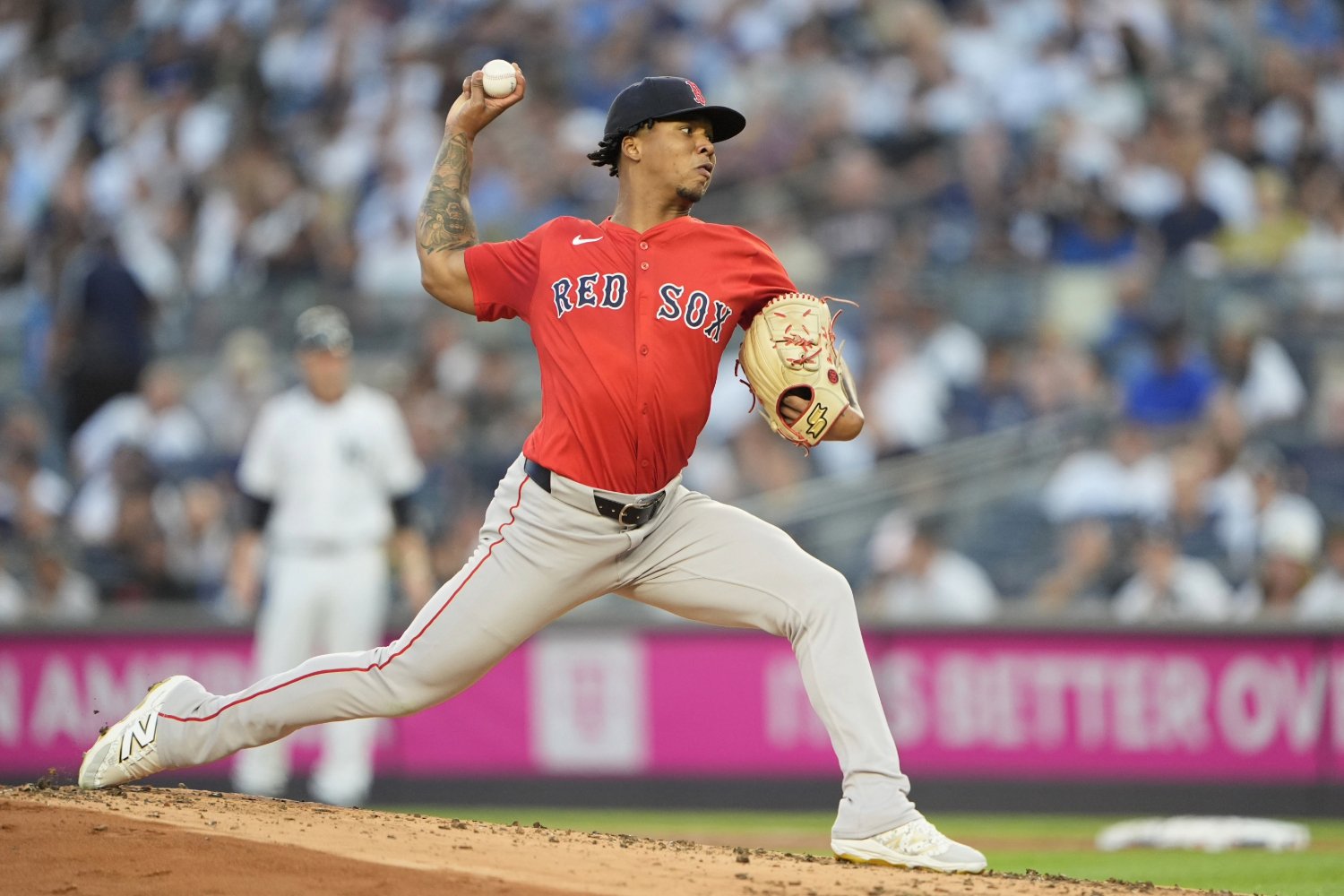 When the Boston Red Sox extended right-handed pitcher Brayan Bello ahead of the 2024 season, it felt like a passing of the torch to a new era of frontline starting pitching in Boston. Between injuries, inconsistencies and off-the-field factors, it was an up-and-down season for the Dominican Republic native. While he settled into a 4.49 ERA -- a 3.66 ERA from July 1 onward -- it seemed the fan base turned on the right-hander once dubbed with the nickname of "Baby Pedro." He struggled to find his footing early in 2025 as well, despite largely good run prevention. Through his first five starts, Bello had a 2.33 ERA but just 17 strikeouts to 14 walks across 27 innings. His sixth start of the year was a bad one; he allowed seven earned runs and walked five across 4 1/3 innings. While it was only his first start exceeding three earned runs, it was his fourth with at least three walks and second with five walks. At that point, it seemed patience was wearing thin with the 26-year-old and the reality that he was nothing more than a back-end starter became clearer. After four more so-so outings, each a little better than the previous, Bello took off, starting with his June 15 start against the New York Yankees. Bello went seven shutout frames, striking out eight and allowing just three hits. He out-pitched left-hander Max Fried (for the first time) and got the victory in a 1-0 ballgame. Fast forward two months, Bello did it again. He pitched seven shutout innings, allowing just three hits and beat Fried in a 1-0 ballgame. This time, at Yankee Stadium. Over those 13 outings, 12 of which have been starts, Bello has a 2.50 ERA with a 1.02 WHIP and a 46.4% ground ball rate. During that span, he's pitched at least six innings 10 times, including his first career complete game on July 8, and has eight appearances of one or fewer walks. He's getting deeper into games, manipulating contact and even the strikeouts tick up from time to time. His under-the-hood metrics suggests he's gotten somewhat lucky, but he leads the majors in innings pitched and is seventh in ERA since that June outing against the Yankees; overall, he's eighth in the American League in ERA. Independent of his actual performance, the maturation of the right-hander is leaps and bounds better than it was a year ago. In 2024, it felt like any little inconvenience, at least in the first half, led to a downward spiral. This year, even when he was struggling to find his footing early, Bello minimized damage more often than not and gave his team a chance to win. Leading up to the MLB trade deadline, the No. 1 priority for the Red Sox was adding a viable No. 2 starter to pair at the top with southpaw Garrett Crochet. They didn't quite get that, acquiring Dustin May and coming up short on Minnesota Twins right-hander Joe Ryan, which caused Red Sox fans to feel let down yet again by the front office. However, Bello has evolved into the No. 2 starter the Red Sox promised last spring, saving Chief Baseball Officer Craig Breslow's bacon, as the aforementioned May has shown flashes but has come up far short of being that front-end starter. Ideally, Bello would be the No. 3 starter, with someone sandwiched between he and Crochet to form a dastardly trio atop the rotation. But, not every team can live in an ideal world. What is true for certain is Bello would've been exactly the pitcher Red Sox fans would've yearned for at the deadline if he was wearing another uniform. He just didn't get that kind of respect because, fortunately for the Red Sox, they already had him. For a team to be a viable postseason and World Series contender, its rotation needs to have an ace and a very good No. 2 starting pitcher. Boston has an ace in Crochet, and its No. 2 -- Bello -- is very good. That duo has drawn the attention of manager Alex Cora, who went as far as to say Bello gives the organization the same confidence that a win is coming as Crochet. If that proves to be more than just lip service, the Red Sox's 2025 postseason run could last most of October.
 -
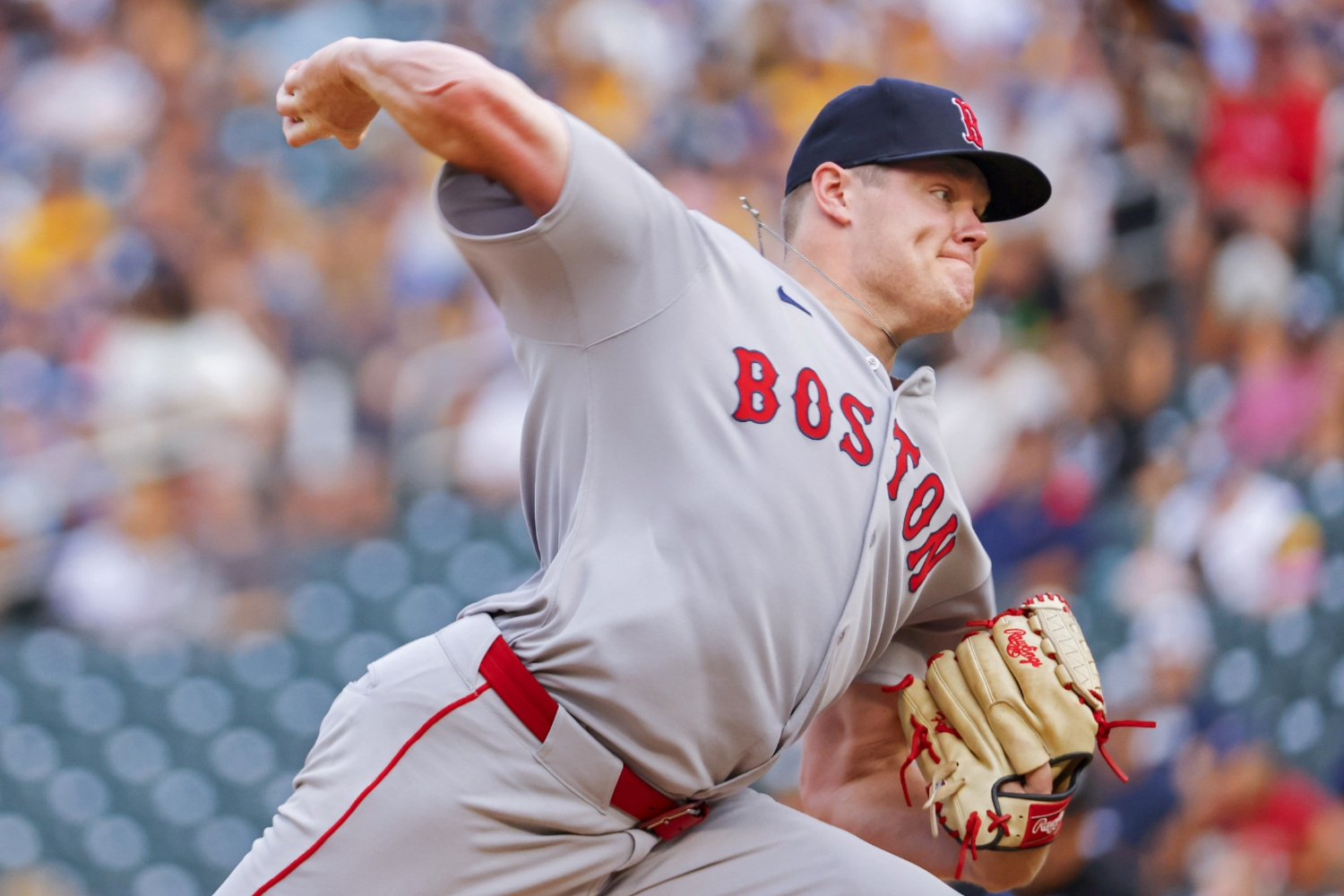 According to Chris Cotillo of MassLive, the Boston Red Sox expect to place right-handed pitcher Richard Fitts on the injured list. Fitts exited Monday's piggyback outing after four-plus innings and could be seen glancing at his arm and gesturing toward it when visited by manager Alex Cora and a trainer. The team announced shortly thereafter that Fitts was removed due to right biceps tightness, which seemed like the best-case scenario considering what it looked like in real time. Fitts even said postgame that he was feeling pretty good about the status of his arm despite it feeling worse after delivering his first pitch to Baltimore Orioles infielder Coby Mayo. This is the second time in 2025 that Fitts exited an outing due to a right arm/pectoral issue; the first time came in April during a start against the Chicago White Sox. The corresponding move, per Cotillo, will be the recalling of left-handed reliever Jovani Moran from Triple-A Worcester. The 28-year-old made two appearances for the Red Sox earlier this month, allowing three earned runs whilst striking out five across four innings of work. Moran, who last pitched for Worcester on Aug. 23, figures to join a bullpen that, despite now having five lefty relievers, might need him right away given the recent usage of Brennan Bernardino and Steven Matz.
 -
According to Chris Cotillo of MassLive, the Boston Red Sox expect to place right-handed pitcher Richard Fitts on the injured list. Fitts exited Monday's piggyback outing after four-plus innings and could be seen glancing at his arm and gesturing toward it when visited by manager Alex Cora and a trainer. The team announced shortly thereafter that Fitts was removed due to right biceps tightness, which seemed like the best-case scenario considering what it looked like in real time. Fitts even said postgame that he was feeling pretty good about the status of his arm despite it feeling worse after delivering his first pitch to Baltimore Orioles infielder Coby Mayo. This is the second time in 2025 that Fitts exited an outing due to a right arm/pectoral issue; the first time came in April during a start against the Chicago White Sox. The corresponding move, per Cotillo, will be the recalling of left-handed reliever Jovani Moran from Triple-A Worcester. The 28-year-old made two appearances for the Red Sox earlier this month, allowing three earned runs whilst striking out five across four innings of work. Moran, who last pitched for Worcester on Aug. 23, figures to join a bullpen that, despite now having five lefty relievers, might need him right away given the recent usage of Brennan Bernardino and Steven Matz. View full rumor
