Jordan Leandre
-
Posts
66 -
Joined
-
Last visited
Content Type
Profiles
Boston Red Sox Videos
2026 Boston Red Sox Top Prospects Ranking
Boston Red Sox Free Agent & Trade Rumors, Notes, & Tidbits
Guides & Resources
2025 Boston Red Sox Draft Pick Tracker
News
2026 Boston Red Sox Draft Tracker: Picks & Bonuses
Forums
Blogs
Events
Store
Downloads
Gallery
Everything posted by Jordan Leandre
-
 In every sense of the word, right-handed reliever Justin Slaten has been a major success story as a Rule 5 selection. However, as the Boston Red Sox stare down the barrel of being a deadline seller, shopping him makes the most sense for the organization. His 6.48 season ERA is incredibly misleading, as he's 15-for-19 in scoreless appearances. In his four outings allowing runs, he's allowed multiple, and twice it's been four. But despite the 6.14 ERA, he's got a 3.90 xERA and 3.31 xFIP across 16.2 innings. His strikeout rate is also at a career-best 26.3 percent, so there's a lot to be encouraged about despite the alarmingly high earned run average. Having already survived his first season on the big-league roster, Slaten is no longer option-ineligible. Additionally, he's got all three of his options at his disposal to go with three more years of team control beyond 2026. So why does trading him make sense for the Red Sox? It's hard to gauge how impactful his career has been so far. His rookie season is his only one of more than 35 innings, but the Red Sox missed the postseason entirely. Last year, Slaten had good under-the-hood metrics, but his strikeouts were way down, and injuries limited him to just 36 appearances and 34 innings. This year, injuries have him at just 16.2 innings. His strikeouts are way up, but the sample size is still so small. Moreover, the Red Sox are closer to the worst record in the sport than postseason contention. So, while he's overall performed well, with a misleading ERA, the team is again hardly reaping the benefits of it. At the trade deadline, every team is hungry to bolster its bullpen. Even the teams with obvious strengths in the late innings could use another warm body. If for nothing else, to cover against injury. The Red Sox, despite all their faults as a team, have three high-leverage relievers teams have already begun calling about. Four, if you want to count the recent stretch of veteran right-hander Tyron Guerrero. And whether this deadline signifies a full-scale teardown or not, the organization should be entertaining all means of recouping minor league assets, especially on the position-player side. It feels like a formality that bullpen ace Aroldis Chapman will be traded, but they're listening on everyone and should have a large market on all three. But Slaten, even above Garrett Whitlock, makes sense for the Red Sox to trade. Justin Slaten's Injuries Are Becoming A Pain Point Injuries are out of everyone's control in most cases, but some guys find themselves on the shelf more than others. Slaten, even in 2024, spent time on the injured list. Because of this, the Red Sox are almost just as likely to have to work around his unavailability than his production on the field. His medical records are easily accessible to any acquiring team, but he's still someone with serious arm talent. That said, for the Red Sox, they don't need to stay patient with him in hopes that he's healthy and productive in 2027 or beyond. It's also important to remember that diddle relievers grow on trees. While a Chapman trade would signal a likely promotion down the stretch for Slaten, one he received at the end of 2024 as well, he's largely used as a hybrid between middle- and high-leverage relief. While incredibly talented, there's not a whole lot about his arsenal that screams eventual breakout, All-Star-caliber reliever. His sweeper is elite, holding opponents to a .167 average and 50% whiff rate in 2026, but his cutter gets hit hard. His four-seam is underperforming expected data, but serious damage is done against it when it's hit. Part of why there's a lot of damage done against Slaten when he's off is because hitters have no issues pulling the ball in the air against him. The past two years, he's had Pull-Air rates of 11.6 and 13.7 percent. This year, it's up to 23.8 percent. Sure, it's quite possibly a one-off issue, but it's dramatically hindering his ability to avoid meltdowns when he doesn't have his best stuff. Slaten's Remaining Team Control Can Be Exploited By Red Sox While Chapman -- despite being a rental with a pending option -- is going to fetch the best return for the Red Sox this summer, Slaten having three added years of control makes him an enticing trade chip. He's not in the echelon of the Mason Millers, the Jhoan Durans, or even the Garrett Whitlocks of the world. What he is, however, is a relatively high-floor arm with high leverage experience. Couple that with team control through the 2029 season, and you have a reliever that'll certainly have intrigue surrounding him this summer. The silver lining of his bad ERA is the under-the-hood metrics. A 21.1% home runs per fly ball rate is simply unsustainable. As proof of concept, only 19 times has a reliever exceeded that threshold across 40-plus innings since 2002. That's out of 4,119 individual seasons meeting that minimum inning requirement. Likewise, his strikeouts are well above average this season, though he's not a qualified arm yet. He also is 83rd percentile in fastball velocity and extension, meaning he's already got a quality fastball that gets on the hitter a bit quicker than what the radar gun reads. There's doubt the Red Sox could get a top-100 prospect for Slaten, but they could likely get at least one (and probably two) organizational top-10. Given the volatility of relief pitching, plus the current state of the team, making that kind of trade would be a decent piece of business. View full article
 -
Justin Slaten Is More Useful As A Red Sox Trade Chip Than Reliever
Jordan Leandre posted an article in Red Sox
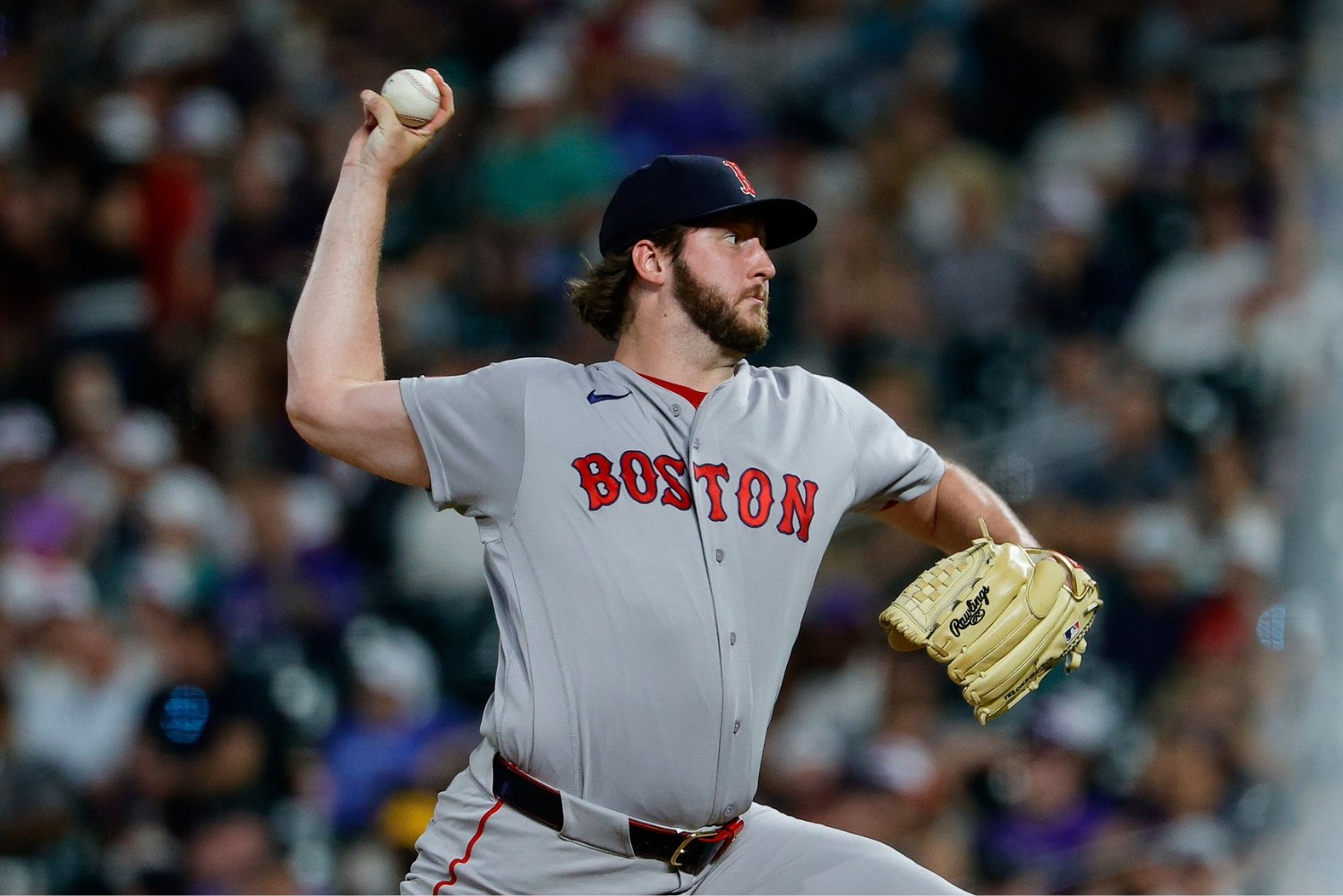 In every sense of the word, right-handed reliever Justin Slaten has been a major success story as a Rule 5 selection. However, as the Boston Red Sox stare down the barrel of being a deadline seller, shopping him makes the most sense for the organization. His 6.48 season ERA is incredibly misleading, as he's 15-for-19 in scoreless appearances. In his four outings allowing runs, he's allowed multiple, and twice it's been four. But despite the 6.14 ERA, he's got a 3.90 xERA and 3.31 xFIP across 16.2 innings. His strikeout rate is also at a career-best 26.3 percent, so there's a lot to be encouraged about despite the alarmingly high earned run average. Having already survived his first season on the big-league roster, Slaten is no longer option-ineligible. Additionally, he's got all three of his options at his disposal to go with three more years of team control beyond 2026. So why does trading him make sense for the Red Sox? It's hard to gauge how impactful his career has been so far. His rookie season is his only one of more than 35 innings, but the Red Sox missed the postseason entirely. Last year, Slaten had good under-the-hood metrics, but his strikeouts were way down, and injuries limited him to just 36 appearances and 34 innings. This year, injuries have him at just 16.2 innings. His strikeouts are way up, but the sample size is still so small. Moreover, the Red Sox are closer to the worst record in the sport than postseason contention. So, while he's overall performed well, with a misleading ERA, the team is again hardly reaping the benefits of it. At the trade deadline, every team is hungry to bolster its bullpen. Even the teams with obvious strengths in the late innings could use another warm body. If for nothing else, to cover against injury. The Red Sox, despite all their faults as a team, have three high-leverage relievers teams have already begun calling about. Four, if you want to count the recent stretch of veteran right-hander Tyron Guerrero. And whether this deadline signifies a full-scale teardown or not, the organization should be entertaining all means of recouping minor league assets, especially on the position-player side. It feels like a formality that bullpen ace Aroldis Chapman will be traded, but they're listening on everyone and should have a large market on all three. But Slaten, even above Garrett Whitlock, makes sense for the Red Sox to trade. Justin Slaten's Injuries Are Becoming A Pain Point Injuries are out of everyone's control in most cases, but some guys find themselves on the shelf more than others. Slaten, even in 2024, spent time on the injured list. Because of this, the Red Sox are almost just as likely to have to work around his unavailability than his production on the field. His medical records are easily accessible to any acquiring team, but he's still someone with serious arm talent. That said, for the Red Sox, they don't need to stay patient with him in hopes that he's healthy and productive in 2027 or beyond. It's also important to remember that diddle relievers grow on trees. While a Chapman trade would signal a likely promotion down the stretch for Slaten, one he received at the end of 2024 as well, he's largely used as a hybrid between middle- and high-leverage relief. While incredibly talented, there's not a whole lot about his arsenal that screams eventual breakout, All-Star-caliber reliever. His sweeper is elite, holding opponents to a .167 average and 50% whiff rate in 2026, but his cutter gets hit hard. His four-seam is underperforming expected data, but serious damage is done against it when it's hit. Part of why there's a lot of damage done against Slaten when he's off is because hitters have no issues pulling the ball in the air against him. The past two years, he's had Pull-Air rates of 11.6 and 13.7 percent. This year, it's up to 23.8 percent. Sure, it's quite possibly a one-off issue, but it's dramatically hindering his ability to avoid meltdowns when he doesn't have his best stuff. Slaten's Remaining Team Control Can Be Exploited By Red Sox While Chapman -- despite being a rental with a pending option -- is going to fetch the best return for the Red Sox this summer, Slaten having three added years of control makes him an enticing trade chip. He's not in the echelon of the Mason Millers, the Jhoan Durans, or even the Garrett Whitlocks of the world. What he is, however, is a relatively high-floor arm with high leverage experience. Couple that with team control through the 2029 season, and you have a reliever that'll certainly have intrigue surrounding him this summer. The silver lining of his bad ERA is the under-the-hood metrics. A 21.1% home runs per fly ball rate is simply unsustainable. As proof of concept, only 19 times has a reliever exceeded that threshold across 40-plus innings since 2002. That's out of 4,119 individual seasons meeting that minimum inning requirement. Likewise, his strikeouts are well above average this season, though he's not a qualified arm yet. He also is 83rd percentile in fastball velocity and extension, meaning he's already got a quality fastball that gets on the hitter a bit quicker than what the radar gun reads. There's doubt the Red Sox could get a top-100 prospect for Slaten, but they could likely get at least one (and probably two) organizational top-10. Given the volatility of relief pitching, plus the current state of the team, making that kind of trade would be a decent piece of business.
 -
The Boston Red Sox opened 2026 with the same catching duo they ended last season with: Carlos Narváez and Connor Wong. After toying around in the J.T. Realmuto market, Boston decided what it had in-house made more sense than shelling out $16 million to an aging catcher. Fast-forward to June, and the catching room is different. Not because someone got hurt and not because someone got traded, optioned, or designated for assignment. They've just decided they didn't have enough catchers to handle their five-man rotation. Enter Mickey Gasper, the 30-year-old career minor leaguer considered without a defensive home, but the bat was intriguing enough to afford opportunities to. Especially this year, where the Red Sox are starving for competitive at-bats, let alone actual tangible offensive production. After a hot start, the switch-hitting Gasper has cooled off drastically. However, that hasn't stopped interim manager Chad Tracy from finding opportunities to use him. Sometimes it's behind the plate, where he's appeared 12 times. Sometimes it's at designated hitter -- again, where he's appeared 12 times. He's even figured into the mix at first base to give Willson Contreras some much-needed breaks. The usage of Gasper has already created a weird dynamic in the clubhouse. While there's no reporting or speculation of conflict amongst the players, the aforementioned Narváez already went public with his frustrations over playing time. On one hand, it's ironic a guy who is slashing .197/.270/.283 feels blindsided as to why he's not playing. On the other hand, he's still far and away the best catcher on the roster. Despite the 52 wRC+, Narváez has has been worth nearly half a win more than Gasper this season. Wong doubles him up, but that's thanks in large to nearly double the wRC+. Defensively, nobody comes close to Narváez on the big-league roster. And, at a position as important defensively as catcher, that's generally good enough to stay in the lineup. But the bigger issue lies in the Red Sox, particularly Tracy's fixation with Gasper. Early on in his second stint with the organization, he was putting forth competitive at-bats and the results followed. Since starting 11-for-31, he's marred in a 15-for-69 slide. In June, he's 9-for-49. He doesn't walk, isn't a good defensive backstop, and doesn't hit for power. The quality of at-bats is generally fine, but the Red Sox need results. If offense is what they seek, and defense out of the catcher spot is optional, then Wong should be the primary backstop. At least it'd feel somewhat like order restored, as he opened 2025 as the starter before a broken hand and poor performance paved the way for Narváez. The overarching issue, however, is that of circumstance. As the saying goes in football, "If you have two quarterbacks, you really have zero." The Red Sox have three catchers. Combined, the trio has 0.5 fWAR and a 73 wRC+. They aren't producing offense as a unit, and the defense is hardly picking up the slack, in large part because they've jettisoned Narváez from the starting lineup. Chalk this up to just another example of how the Red Sox create an awkward environment for their players to play in. There's often a disconnect between the front office and the dugout, then another one from the manager and coaching staff to the players. Narváez isn't star-quality, but he's an employee who saw his hours cut without explanation and is frustrated. Considering who took those hours, that frustration feels justified. Regardless of how this ordeal is settled in 2026, the fact remains the Red Sox need to add a legitimate top catching option sooner rather than later. Given their interest last winter in Realmuto, who isn't exactly killing it in Philadelphia this year, it seems they're aware of this need. The unfortunate truth, however, is the market is barren for catching this offseason. The top free agent option might be Cincinnati Reds backstop Tyler Stephenson. The 29-year-old has intriguing under-the-hood offensive metrics and provides pop from the right side, but he's historically a bottom-tier defensive catcher. Be that as it may, the Red Sox need established roles, with actual high-end contributors at several positions if they want 2026 viewed as nothing more than a lost year due to poor circumstances. Figuring out this catching conundrum, instead of exacerbating it with a hodgepodge of unproductive pieces, is fast approaching priority No. 1. View full article
-
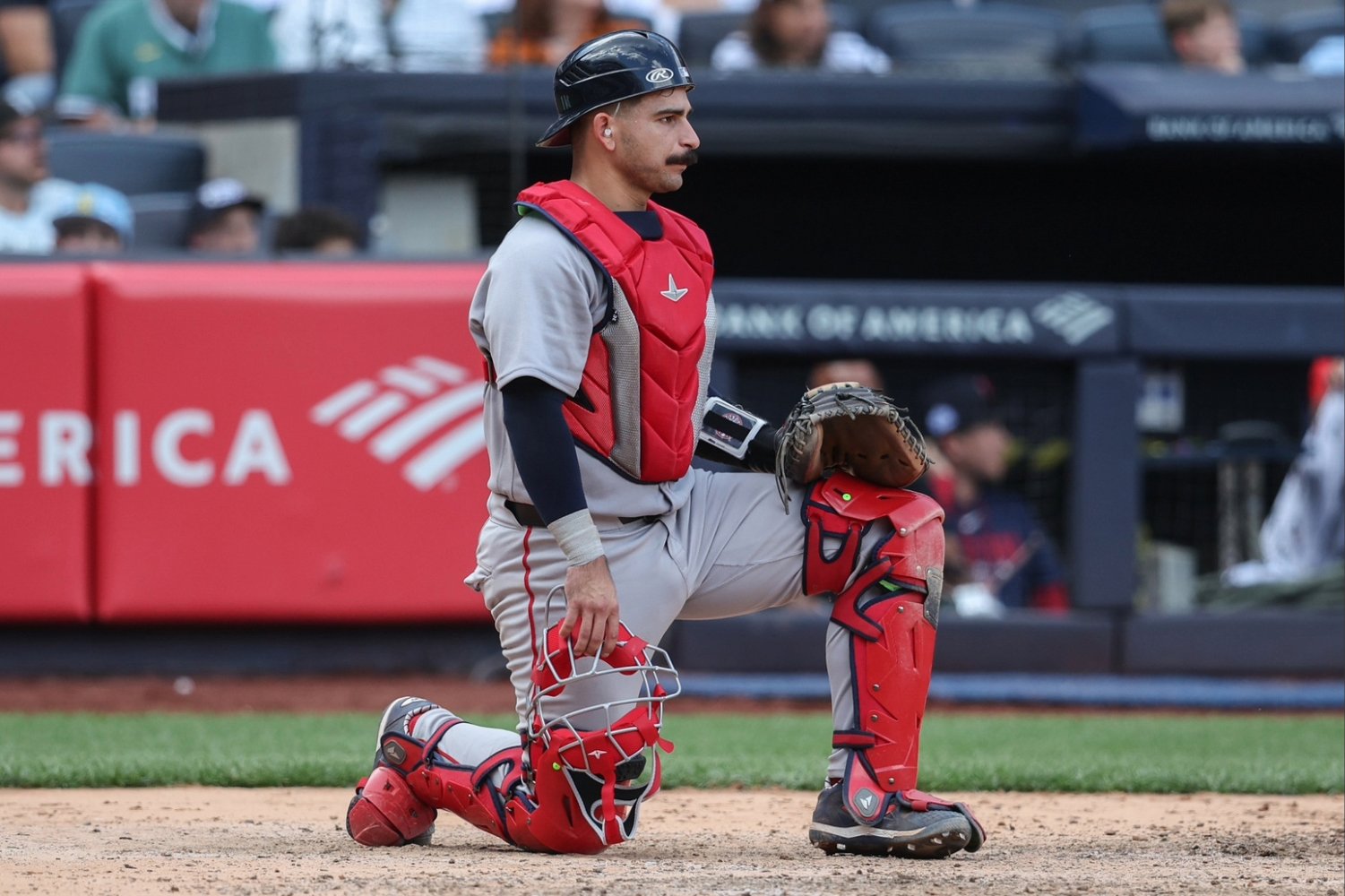 The Boston Red Sox opened 2026 with the same catching duo they ended last season with: Carlos Narváez and Connor Wong. After toying around in the J.T. Realmuto market, Boston decided what it had in-house made more sense than shelling out $16 million to an aging catcher. Fast-forward to June, and the catching room is different. Not because someone got hurt and not because someone got traded, optioned, or designated for assignment. They've just decided they didn't have enough catchers to handle their five-man rotation. Enter Mickey Gasper, the 30-year-old career minor leaguer considered without a defensive home, but the bat was intriguing enough to afford opportunities to. Especially this year, where the Red Sox are starving for competitive at-bats, let alone actual tangible offensive production. After a hot start, the switch-hitting Gasper has cooled off drastically. However, that hasn't stopped interim manager Chad Tracy from finding opportunities to use him. Sometimes it's behind the plate, where he's appeared 12 times. Sometimes it's at designated hitter -- again, where he's appeared 12 times. He's even figured into the mix at first base to give Willson Contreras some much-needed breaks. The usage of Gasper has already created a weird dynamic in the clubhouse. While there's no reporting or speculation of conflict amongst the players, the aforementioned Narváez already went public with his frustrations over playing time. On one hand, it's ironic a guy who is slashing .197/.270/.283 feels blindsided as to why he's not playing. On the other hand, he's still far and away the best catcher on the roster. Despite the 52 wRC+, Narváez has has been worth nearly half a win more than Gasper this season. Wong doubles him up, but that's thanks in large to nearly double the wRC+. Defensively, nobody comes close to Narváez on the big-league roster. And, at a position as important defensively as catcher, that's generally good enough to stay in the lineup. But the bigger issue lies in the Red Sox, particularly Tracy's fixation with Gasper. Early on in his second stint with the organization, he was putting forth competitive at-bats and the results followed. Since starting 11-for-31, he's marred in a 15-for-69 slide. In June, he's 9-for-49. He doesn't walk, isn't a good defensive backstop, and doesn't hit for power. The quality of at-bats is generally fine, but the Red Sox need results. If offense is what they seek, and defense out of the catcher spot is optional, then Wong should be the primary backstop. At least it'd feel somewhat like order restored, as he opened 2025 as the starter before a broken hand and poor performance paved the way for Narváez. The overarching issue, however, is that of circumstance. As the saying goes in football, "If you have two quarterbacks, you really have zero." The Red Sox have three catchers. Combined, the trio has 0.5 fWAR and a 73 wRC+. They aren't producing offense as a unit, and the defense is hardly picking up the slack, in large part because they've jettisoned Narváez from the starting lineup. Chalk this up to just another example of how the Red Sox create an awkward environment for their players to play in. There's often a disconnect between the front office and the dugout, then another one from the manager and coaching staff to the players. Narváez isn't star-quality, but he's an employee who saw his hours cut without explanation and is frustrated. Considering who took those hours, that frustration feels justified. Regardless of how this ordeal is settled in 2026, the fact remains the Red Sox need to add a legitimate top catching option sooner rather than later. Given their interest last winter in Realmuto, who isn't exactly killing it in Philadelphia this year, it seems they're aware of this need. The unfortunate truth, however, is the market is barren for catching this offseason. The top free agent option might be Cincinnati Reds backstop Tyler Stephenson. The 29-year-old has intriguing under-the-hood offensive metrics and provides pop from the right side, but he's historically a bottom-tier defensive catcher. Be that as it may, the Red Sox need established roles, with actual high-end contributors at several positions if they want 2026 viewed as nothing more than a lost year due to poor circumstances. Figuring out this catching conundrum, instead of exacerbating it with a hodgepodge of unproductive pieces, is fast approaching priority No. 1.
 -
If all else fails, one knows the Boston Red Sox aren't afraid of dramatic changes under Chief Baseball Officer Craig Breslow. This year's installment saw several familiar faces lose their jobs, including longtime (sans 2020) manager and 2018 World Series champion Alex Cora. Similar to when a veteran player is designated for assignment, the Red Sox decided to call up a prospect to replace Cora. Thus, Chad Tracy gets the nod for the first time as a big-league manager. Now, with one a few more games under his belt this year than Cora got, the Red Sox are 13-16. Better, sure. But that's hardly marked improvement from the 10-17 they were with the former skipper. There are signs this team, at least offensively, is coming around. But how much of that is the coaching change versus simply positive regression? For example, outfielder Jarren Duran -- whatever your opinion of the player may be -- is a career-110 wRC+ bat. Since Tracy took over as acting manager on April 26, Duran has a 105 wRC+; it's 130 since May 1. Overall, he's still having a subpar season offensively, but he's clearly on the right track. He's someone who succeeded with Cora as manager, and Pete Fatse as hitting coach. He's clearly a good baseball player and, at worst, a solid bat at the top of the order. His power surge isn't unique to his career, as he's had several weeks-long stretches flashing power. So, what gives? Why are the Red Sox, despite playing slightly better, continuing to free fall in the American League playoff race? Red Sox Lesson #1: Firing Coaches Doesn't Change the Roster Roster construction is something of a buzzword at this point. It's gotten so overused, it's gone on "mute watch" several times this season. However, the facts are the facts. This team, while talented, is simply not good enough to win baseball games. It's incredible, really. A team that last year overcame the midseason trade of a longtime franchise cornerstone, then significantly upgraded its pitching staff, isn't good enough to win a year after making the postseason. But it's true. A lion's share of that falls on the man who builds the roster, Breslow. The third-year CBO built a team designed to complement a massive Year 2 from Roman Anthony and a return-to-2024-form for Duran. Neither happened, and the team is suffering because of it. Complacency regarding the outfield in general has held this team back. The Red Sox still have five outfielders for three spots, causing inconsistent playing time for Masataka Yoshida. That wouldn't be a problem if not for Yoshida being a legitimate on-base threat this season, posting a .347 OBP -- tied with Ceddanne Rafaela, higher than Duran -- and 101 wRC+ overall despite just one home run. They also opted to hang on to infielder Marcelo Mayer despite reports that the Arizona Diamondbacks liked him in a possible trade for Ketel Marte. That may eventually prove fruitful, and Mayer is one of the best defenders at his position, but Marte is out pacing him by 1.5 fWAR and 225 OPS points. Another component of those reports was Arizona's desire for one of Payton Tolle or Connelly Early. Both arms have been impressive this season for the Red Sox, but balking at that trade later facilitated the trade that sent Kyle Harrison -- plus two players -- to Milwaukee for infielders Caleb Durbin (39 wRC+), Andruw Monasterio (77 wRC+), and Anthony Seigler (Triple-A). Meanwhile, Harrison is an early-season candidate for the National League Cy Young. So, to echo what Breslow told Cora before firing him, he made the manager's job pretty hard. Red Sox Lesson #2: Bullpen Management Remains an Issue Let's start with the elephant in the room: right-hander Greg Weissert continues to come up small inheriting runners. So far this season, he's inherited 21 runners; twelve scored. Overall, he's got a 4.43 earned run average across 24 appearances. Good? No. Though, probably better than it feels. The recent series against the Braves was the latest in an ever-growing list of situations Weissert didn't come through. On Tuesday, he allowed a two-out RBI single to Ronald Acuña Jr., plating an inherited runner in a game the Red Sox lost by one. Come Thursday, Acuña got him again with inherited runners, blasting a dagger of a grand slam in the sixth inning. Bases loaded, nobody out is an almost impossible situation. At that point, you're conceding at least a run. Weissert walked pinch-hitter Mike Yastrzemski after getting ahead 0-2, then the grand slam followed. Game over. The fact the Red Sox continue using Weissert in those spots is growing concerning. It's cliche, but the definition of insanity is trying the same thing over and over again and expecting a different result. The Red Sox, by that definition, are insane. They had no problem pulling the plug on southpaw Tyler Samaniego -- until he got re-called with right-hander Garrett Whitlock hitting the shelf -- after a few rough outings in high leverage. Why be so stubborn with Weissert? Moreover, Tracy seems to have adopted the old adage of his predecessor when it comes to not chasing wins. Several times in his brief MLB career, the Red Sox have a late-and-close situation and opt for low leverage arms instead of Whitlock (pre-injury), Justin Slaten, or even left-handed bullpen ace Aroldis Chapman. That also reared its ugly head in the Game 1 loss to Atlanta, as right-hander Tyron Guerrero gave up a two-run homer to Michael Harris II after the Red Sox clawed their way back into the game. Again, the offense has shown signs of waking up, but why potentially make their job harder? Where Do the Red Sox Go From Here? Despite the 23-33 record, the Red Sox still sit just five games back of the wild card through 51 games. Not only that, but they're also chasing six teams just to get into the final wild card spot held by the division-rival Toronto Blue Jays. It's too early to start bailing on 2026, especially when you took such a leap of faith by firing so many coaches. That said, the odds remain stacked against a postseason berth despite such promise coming into the year. Several veterans will likely be sought after this summer. Chapman, Duran, Willson Contreras, Whitlock, even someone like Isiah Kiner-Falefa all likely will have suitors. Not to mention right-hander Sonny Gray, whose an contract will all but certainly at season's end. Right now, it's a matter of hoping and wishing for the 2026 Boston Red Sox and, to speculatively a greater extent, Breslow. It's a consistently frustrating watch, but this is the roster they have. All they can do is hope for the best and see where they are two months from now. View full article
-
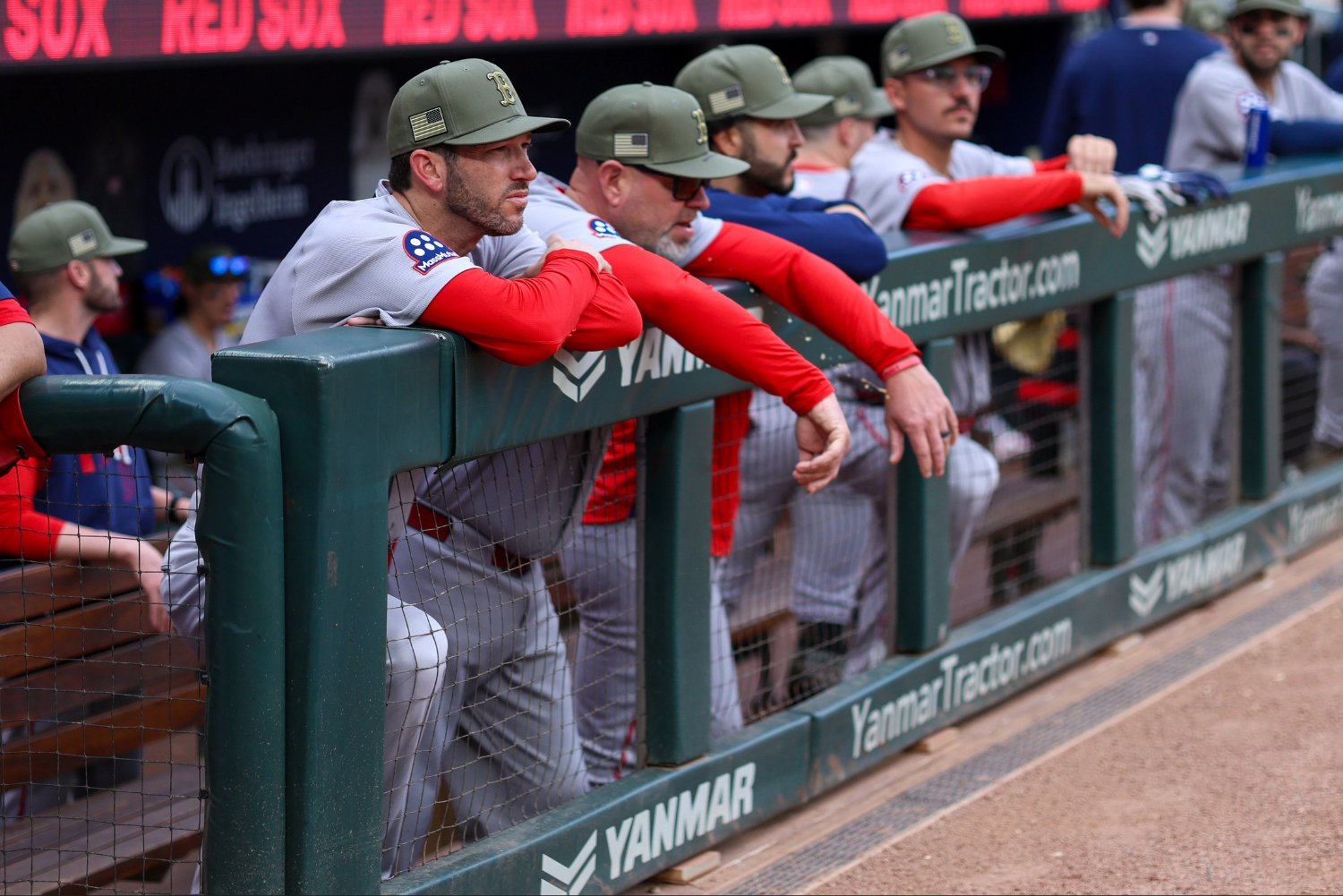 If all else fails, one knows the Boston Red Sox aren't afraid of dramatic changes under Chief Baseball Officer Craig Breslow. This year's installment saw several familiar faces lose their jobs, including longtime (sans 2020) manager and 2018 World Series champion Alex Cora. Similar to when a veteran player is designated for assignment, the Red Sox decided to call up a prospect to replace Cora. Thus, Chad Tracy gets the nod for the first time as a big-league manager. Now, with one a few more games under his belt this year than Cora got, the Red Sox are 13-16. Better, sure. But that's hardly marked improvement from the 10-17 they were with the former skipper. There are signs this team, at least offensively, is coming around. But how much of that is the coaching change versus simply positive regression? For example, outfielder Jarren Duran -- whatever your opinion of the player may be -- is a career-110 wRC+ bat. Since Tracy took over as acting manager on April 26, Duran has a 105 wRC+; it's 130 since May 1. Overall, he's still having a subpar season offensively, but he's clearly on the right track. He's someone who succeeded with Cora as manager, and Pete Fatse as hitting coach. He's clearly a good baseball player and, at worst, a solid bat at the top of the order. His power surge isn't unique to his career, as he's had several weeks-long stretches flashing power. So, what gives? Why are the Red Sox, despite playing slightly better, continuing to free fall in the American League playoff race? Red Sox Lesson #1: Firing Coaches Doesn't Change the Roster Roster construction is something of a buzzword at this point. It's gotten so overused, it's gone on "mute watch" several times this season. However, the facts are the facts. This team, while talented, is simply not good enough to win baseball games. It's incredible, really. A team that last year overcame the midseason trade of a longtime franchise cornerstone, then significantly upgraded its pitching staff, isn't good enough to win a year after making the postseason. But it's true. A lion's share of that falls on the man who builds the roster, Breslow. The third-year CBO built a team designed to complement a massive Year 2 from Roman Anthony and a return-to-2024-form for Duran. Neither happened, and the team is suffering because of it. Complacency regarding the outfield in general has held this team back. The Red Sox still have five outfielders for three spots, causing inconsistent playing time for Masataka Yoshida. That wouldn't be a problem if not for Yoshida being a legitimate on-base threat this season, posting a .347 OBP -- tied with Ceddanne Rafaela, higher than Duran -- and 101 wRC+ overall despite just one home run. They also opted to hang on to infielder Marcelo Mayer despite reports that the Arizona Diamondbacks liked him in a possible trade for Ketel Marte. That may eventually prove fruitful, and Mayer is one of the best defenders at his position, but Marte is out pacing him by 1.5 fWAR and 225 OPS points. Another component of those reports was Arizona's desire for one of Payton Tolle or Connelly Early. Both arms have been impressive this season for the Red Sox, but balking at that trade later facilitated the trade that sent Kyle Harrison -- plus two players -- to Milwaukee for infielders Caleb Durbin (39 wRC+), Andruw Monasterio (77 wRC+), and Anthony Seigler (Triple-A). Meanwhile, Harrison is an early-season candidate for the National League Cy Young. So, to echo what Breslow told Cora before firing him, he made the manager's job pretty hard. Red Sox Lesson #2: Bullpen Management Remains an Issue Let's start with the elephant in the room: right-hander Greg Weissert continues to come up small inheriting runners. So far this season, he's inherited 21 runners; twelve scored. Overall, he's got a 4.43 earned run average across 24 appearances. Good? No. Though, probably better than it feels. The recent series against the Braves was the latest in an ever-growing list of situations Weissert didn't come through. On Tuesday, he allowed a two-out RBI single to Ronald Acuña Jr., plating an inherited runner in a game the Red Sox lost by one. Come Thursday, Acuña got him again with inherited runners, blasting a dagger of a grand slam in the sixth inning. Bases loaded, nobody out is an almost impossible situation. At that point, you're conceding at least a run. Weissert walked pinch-hitter Mike Yastrzemski after getting ahead 0-2, then the grand slam followed. Game over. The fact the Red Sox continue using Weissert in those spots is growing concerning. It's cliche, but the definition of insanity is trying the same thing over and over again and expecting a different result. The Red Sox, by that definition, are insane. They had no problem pulling the plug on southpaw Tyler Samaniego -- until he got re-called with right-hander Garrett Whitlock hitting the shelf -- after a few rough outings in high leverage. Why be so stubborn with Weissert? Moreover, Tracy seems to have adopted the old adage of his predecessor when it comes to not chasing wins. Several times in his brief MLB career, the Red Sox have a late-and-close situation and opt for low leverage arms instead of Whitlock (pre-injury), Justin Slaten, or even left-handed bullpen ace Aroldis Chapman. That also reared its ugly head in the Game 1 loss to Atlanta, as right-hander Tyron Guerrero gave up a two-run homer to Michael Harris II after the Red Sox clawed their way back into the game. Again, the offense has shown signs of waking up, but why potentially make their job harder? Where Do the Red Sox Go From Here? Despite the 23-33 record, the Red Sox still sit just five games back of the wild card through 51 games. Not only that, but they're also chasing six teams just to get into the final wild card spot held by the division-rival Toronto Blue Jays. It's too early to start bailing on 2026, especially when you took such a leap of faith by firing so many coaches. That said, the odds remain stacked against a postseason berth despite such promise coming into the year. Several veterans will likely be sought after this summer. Chapman, Duran, Willson Contreras, Whitlock, even someone like Isiah Kiner-Falefa all likely will have suitors. Not to mention right-hander Sonny Gray, whose an contract will all but certainly at season's end. Right now, it's a matter of hoping and wishing for the 2026 Boston Red Sox and, to speculatively a greater extent, Breslow. It's a consistently frustrating watch, but this is the roster they have. All they can do is hope for the best and see where they are two months from now.
 -
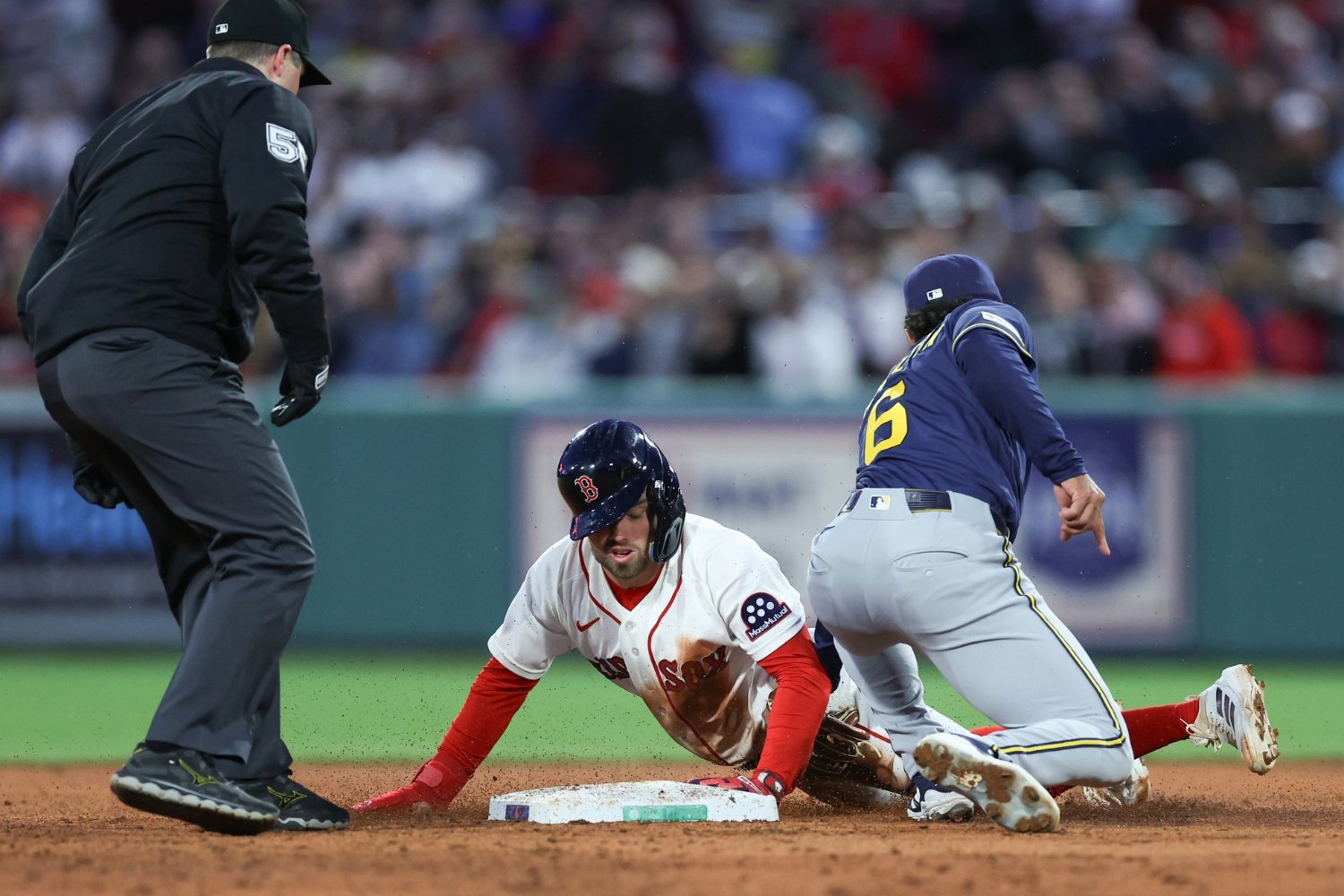 By the time the Boston Red Sox traded with the Milwaukee Brewers for infielder Caleb Durbin, the lineup already looked set in stone. Of course, at the time, there was belief Romy Gonzalez, who had a career-best .305 average with a 123 wRC+ last year, would be a part of that. It turned out, the utility infielder needed shoulder surgery, thus creating a hole on the roster the public wasn't quite aware of. After a strong spring training, there was hype surrounding the 26-year-old third baseman. He slashed .354/.446/.500, drove in nine runs, and stole three bases in 18 games. Though his batted ball data last year hinted that he was a possible regression candidate, there was hope he'd at least fit Fenway Park well enough to combat it. Through 14 regular-season games (leading up to the series opener agains the Twins), Durbin's been anything but a fit. He's slashing .106/.208/.128 with a wRC+ of one (1) across his first 53 Red Sox plate appearances. The bright spot is, relative to his batting average, he's finding himself on base a fairly decent amount; he's drawn four walks and been hit by two pitches. But the fact remains, he's opened his Red Sox career in a 5-for-47 skid. Durbin had some helium surrounding him going back to his torrid pace in the 2024 Arizona Fall League, then a member of the New York Yankees organization. That helium resulted in him being dealt as a headlining piece for All-Star reliever Devin Williams. A year later, he's part of a six-player trade that sends former top prospect Kyle Harrison, fellow left-hander Shane Drohan, as well as much-maligned infielder David Hamilton back to Milwaukee. Two offseasons in a row, Durbin found himself changing organizations. That can't be a comfortable position to be in, but it was a position he seemed to face head-on with the Brewers. Last year, he finished third in National League Rookie of the Year voting, posting 2.6 fWAR with the third-most hits among the freshman class. His knack for getting his nose dirty made him an endearing player in Milwaukee, whose style of play helps them play well above expectations over 162 games, despite not necessarily carrying over into October. His 24 hit by pitches finished second in baseball, one ahead of now-teammate Willson Contreras. Coupled with him being short in stature, it was hard to not at least understand why some Red Sox fans drew comparisons to Dustin Pedroia, who hit .299 for his career from 2006 through 2019 -- all with Boston. But aside from his play style and frame, that's it for similarities between the two. Unless you want to count the influence of now Brewers manager Pat Murphy. There's just no way Durbin's .106 average and .336 OPS hold up as he gets more comfortable in Boston (and he already started breaking out of that slump against Minnesota). That said, what would a turnaround for him actually look like? Caleb Durbin Doing More of the Same Should Lead to Better Results One of my personal criticisms of the response to this trade was the notion that because Durbin finished third in Rookie of the Year voting, he had some incredibly high ceiling. Last year, he slashed .256/.334/.387 with a 105 wRC+ in 136 games. That's far from bad, but it's not super impactful. Ultimately, it's better to have a fringe/average bat than a bad one in your lineup, especially when that someone is merely a fine defender at his primary position. However, a lot went right for him to emerge as a 105 wRC+ guy in 2025. For starters, his batted ball profile mirrors that of guys like Tommy Edman and Miguel Rojas. Neither player is bad, but they're not hitters you expect to contribute at a high-end level. According to Statcast's Affinity metric, used to compare hitters based on their batted ball data, says the most comparable bat to Durbin in 2025 was Los Angeles Angels first baseman Nolan Schanuel. To put that into perspective, Schanuel slashed .264/.353/.389 with a 109 wRC+ last year. Again, not bad, but hardly someone Red Sox fans dubbed a trade target this winter when there was a glaring need at first base. Durbin's 2025 Baseball Savant Page* Durbin's batted ball data suggested a proficiency for making contact, but not a whole lot of damaging contact. He hit 11 home runs, the most he's ever hit in a professional season, but he's not a guy whose swing generates a lot of power, even with a 20.4% Pull Air rate in 2025. So far, he's pulling it in the air at just a 13.9% clip in 2026, so perhaps an easy fix is generating more pull, but is it really that simple? How Are Pitchers Attacking Him? Pretty much exactly the same way they attacked him last year. I scoured Baseball Savant for a while trying to find a different game plan from the opposition. There isn't one. Last year, Durbin saw fastballs on the inner third of the plate on 9.4% of pitches. This year, 9.4% as well. Last year, Durbin saw fastballs on the outer third 9.7% of his pitches; this year, 9.4. Last year, he saw offspeed pitches 9.1% of the time; this year, up to 10.5. He's seeing fastballs at a slightly elevated rate in general, 62.3% versus 57.3% last year, but he's just not finding green. He's only whiffing against fastballs 7.8% of his swings against them. His exit velocity against them is up from 84.4 mph to 86.2 mph on average. The marked difference is his launch angle is down from 14 degrees to just eight in 2026. His contact is firmer, but the line drives are more topspin than anything. His swing path is one degree to the pull side, down from four degrees last year. His ideal attack angle is negligible, but this is a game oftentimes of millimeters. He's basically in a perfect storm of mishitting the baseball. The Good News is... It's all fixable with a change in his swing mechanics. As mentioned, there's no marked difference in how the opposition is attacking him, save for slightly more fastballs that, early on, is too soon to tell if it'll stick all year. If he can get lean back into what worked for him last year, generating more pulled contact in the air (even without a ton of power), there's still a pathway for him to be productive, especially in Fenway. Additionally, because the season has started so poorly for him, getting back to even what he was in 2025 will require a white-hot stretch in all likelihood. Right now, he's lukewarm. Despite already falling out of favor within the fan base -- which is a bit ridiculous -- he's slowly started getting it going of late. After starting the season 0-for-18 with a walk, good for a -92 wRC+ across 19 plate appearances, he's 5-for-his-last-29 with three walks, two hit by pitches, and five runs batted in. Include the first game agains the Twins, and he's 7-for-34. While saying people should be grateful for his .172 batting average over that span is a bit silly, that .294 on-base is actually fifth on the team since April 3; minimum 10 plate appearances. This is not a sexy player. When he's rolling, it'll be very old school-oriented with an array of line drive singles and doubles. Expecting him to be more than the player he is was unfair from jump street. He's not Rafael Devers; he's not even Alex Bregman. He's Caleb Durbin.
 -
By the time the Boston Red Sox traded with the Milwaukee Brewers for infielder Caleb Durbin, the lineup already looked set in stone. Of course, at the time, there was belief Romy Gonzalez, who had a career-best .305 average with a 123 wRC+ last year, would be a part of that. It turned out, the utility infielder needed shoulder surgery, thus creating a hole on the roster the public wasn't quite aware of. After a strong spring training, there was hype surrounding the 26-year-old third baseman. He slashed .354/.446/.500, drove in nine runs, and stole three bases in 18 games. Though his batted ball data last year hinted that he was a possible regression candidate, there was hope he'd at least fit Fenway Park well enough to combat it. Through 14 regular-season games (leading up to the series opener agains the Twins), Durbin's been anything but a fit. He's slashing .106/.208/.128 with a wRC+ of one (1) across his first 53 Red Sox plate appearances. The bright spot is, relative to his batting average, he's finding himself on base a fairly decent amount; he's drawn four walks and been hit by two pitches. But the fact remains, he's opened his Red Sox career in a 5-for-47 skid. Durbin had some helium surrounding him going back to his torrid pace in the 2024 Arizona Fall League, then a member of the New York Yankees organization. That helium resulted in him being dealt as a headlining piece for All-Star reliever Devin Williams. A year later, he's part of a six-player trade that sends former top prospect Kyle Harrison, fellow left-hander Shane Drohan, as well as much-maligned infielder David Hamilton back to Milwaukee. Two offseasons in a row, Durbin found himself changing organizations. That can't be a comfortable position to be in, but it was a position he seemed to face head-on with the Brewers. Last year, he finished third in National League Rookie of the Year voting, posting 2.6 fWAR with the third-most hits among the freshman class. His knack for getting his nose dirty made him an endearing player in Milwaukee, whose style of play helps them play well above expectations over 162 games, despite not necessarily carrying over into October. His 24 hit by pitches finished second in baseball, one ahead of now-teammate Willson Contreras. Coupled with him being short in stature, it was hard to not at least understand why some Red Sox fans drew comparisons to Dustin Pedroia, who hit .299 for his career from 2006 through 2019 -- all with Boston. But aside from his play style and frame, that's it for similarities between the two. Unless you want to count the influence of now Brewers manager Pat Murphy. There's just no way Durbin's .106 average and .336 OPS hold up as he gets more comfortable in Boston (and he already started breaking out of that slump against Minnesota). That said, what would a turnaround for him actually look like? Caleb Durbin Doing More of the Same Should Lead to Better Results One of my personal criticisms of the response to this trade was the notion that because Durbin finished third in Rookie of the Year voting, he had some incredibly high ceiling. Last year, he slashed .256/.334/.387 with a 105 wRC+ in 136 games. That's far from bad, but it's not super impactful. Ultimately, it's better to have a fringe/average bat than a bad one in your lineup, especially when that someone is merely a fine defender at his primary position. However, a lot went right for him to emerge as a 105 wRC+ guy in 2025. For starters, his batted ball profile mirrors that of guys like Tommy Edman and Miguel Rojas. Neither player is bad, but they're not hitters you expect to contribute at a high-end level. According to Statcast's Affinity metric, used to compare hitters based on their batted ball data, says the most comparable bat to Durbin in 2025 was Los Angeles Angels first baseman Nolan Schanuel. To put that into perspective, Schanuel slashed .264/.353/.389 with a 109 wRC+ last year. Again, not bad, but hardly someone Red Sox fans dubbed a trade target this winter when there was a glaring need at first base. Durbin's 2025 Baseball Savant Page* Durbin's batted ball data suggested a proficiency for making contact, but not a whole lot of damaging contact. He hit 11 home runs, the most he's ever hit in a professional season, but he's not a guy whose swing generates a lot of power, even with a 20.4% Pull Air rate in 2025. So far, he's pulling it in the air at just a 13.9% clip in 2026, so perhaps an easy fix is generating more pull, but is it really that simple? How Are Pitchers Attacking Him? Pretty much exactly the same way they attacked him last year. I scoured Baseball Savant for a while trying to find a different game plan from the opposition. There isn't one. Last year, Durbin saw fastballs on the inner third of the plate on 9.4% of pitches. This year, 9.4% as well. Last year, Durbin saw fastballs on the outer third 9.7% of his pitches; this year, 9.4. Last year, he saw offspeed pitches 9.1% of the time; this year, up to 10.5. He's seeing fastballs at a slightly elevated rate in general, 62.3% versus 57.3% last year, but he's just not finding green. He's only whiffing against fastballs 7.8% of his swings against them. His exit velocity against them is up from 84.4 mph to 86.2 mph on average. The marked difference is his launch angle is down from 14 degrees to just eight in 2026. His contact is firmer, but the line drives are more topspin than anything. His swing path is one degree to the pull side, down from four degrees last year. His ideal attack angle is negligible, but this is a game oftentimes of millimeters. He's basically in a perfect storm of mishitting the baseball. The Good News is... It's all fixable with a change in his swing mechanics. As mentioned, there's no marked difference in how the opposition is attacking him, save for slightly more fastballs that, early on, is too soon to tell if it'll stick all year. If he can get lean back into what worked for him last year, generating more pulled contact in the air (even without a ton of power), there's still a pathway for him to be productive, especially in Fenway. Additionally, because the season has started so poorly for him, getting back to even what he was in 2025 will require a white-hot stretch in all likelihood. Right now, he's lukewarm. Despite already falling out of favor within the fan base -- which is a bit ridiculous -- he's slowly started getting it going of late. After starting the season 0-for-18 with a walk, good for a -92 wRC+ across 19 plate appearances, he's 5-for-his-last-29 with three walks, two hit by pitches, and five runs batted in. Include the first game agains the Twins, and he's 7-for-34. While saying people should be grateful for his .172 batting average over that span is a bit silly, that .294 on-base is actually fifth on the team since April 3; minimum 10 plate appearances. This is not a sexy player. When he's rolling, it'll be very old school-oriented with an array of line drive singles and doubles. Expecting him to be more than the player he is was unfair from jump street. He's not Rafael Devers; he's not even Alex Bregman. He's Caleb Durbin. View full article
-
How to Optimize the Red Sox's Lineup for the 2026 Season
Jordan Leandre posted an article in Red Sox
 Entering the offseason, the direction seemed clear as day for the Boston Red Sox's position player group. Bring back third baseman Alex Bregman, add another middle-of-the-order bat, ideally at first base, and trade away an outfielder. Well, as spring training fast approaches, they've kept all their outfielders, didn't bring back or replace Bregman, but they did at least trade for first baseman Willson Contreras. In a perfect world, they can trade from the outfield contingent to add another infielder. In the perfect-est world, that outfielder is probably 2024 All-Star Game Most Valuable Player Jarren Duran. The 29-year-old is the oldest from the contingent and also has the least amount of team control. However, it may not be a perfect world. The closer it gets to Opening Day, the likelier the Red Sox are of having to make do with the roster they have -- for better or worse. There are several questions they need to answer, both about individual players and overall construction. By the time he got hurt in September, Roman Anthony's most-frequented order spot was leadoff. But is that the best way to use him in 2026? Duran took to the heart of the order against righties last season, but are the strikeouts too much to keep him there? Where does he play? How about Ceddanne Rafaela? Let's do our best to answer those questions. Leading off: DESIGNATED HITTER, Masataka Yoshida There are a couple of reasons Yoshida makes sense as the team's leadoff man. For starters, he's simply a good hitter. While his 2025 numbers suggest otherwise on the whole, he had the team's second-highest wRC+ in September. In 20 games, he slashed .333/.351/.486 with 13 runs batted in and just a 6.5% strikeout rate. There's a great level of dependence on batted ball luck with Yoshida. He's not a power bat, nor does he strike out with great frequency at his worst. But with the over-reliance on BABIP luck comes a less-than-optimal profile — one conducive to ground balls. He's a good hitter, but hitting him behind Anthony in a lot of ways leaves them susceptible to rally-killing opportunities. Double plays, glorified sacrifice bunts, etc. Hitting him leadoff opens up the first base line for Yoshida, it also may help him lean back into his 2024 approach which had him crushing the ball despite playing through a torn labrum. Not to mention, it's a great way to open up potential pinch-hitting opportunities against left-handed relievers late in close games. Batting second: LEFT FIELDER, Roman Anthony The way game the game is trending with lineup construction, you often want your best hitter hitting second. The last few years, that was Rafael Devers. But right now, projection models believe Anthony is comfortably the team's best hitter. Given how he took over the lineup before his oblique strain last season, it'd be hard to disagree with that idea. In 2025, he slashed .292/.396/.463 with a 140 wRC+ and eight home runs. His Steamer projection calls for a 124 wRC+ in 2026, but models are often conservative. Really, though, that's neither here nor there. Hitting him behind Yoshida could put some training wheels on Anthony in terms of stretching boundaries on base hits, taking extra bases. However, hitting Anthony second gives him RBI opportunities early in the game. Part of the 2025 team's identity was early offense, ranking second in runs scored in the first inning. Setting the tone first, especially with this group's pitching staff, is paramount, especially if the offense as a whole is a question mark. Batting third: FIRST BASEMAN, Willson Contreras Guaranteeing Contreras a first inning at-bat is critical. Sure, maybe the way he does damage is best served for the cleanup spot. However, he's the team's best right-handed hitter. Grand slams are more fun, but I can already envision the Yoshida single, Anthony walk or double, then Contreras three-run home run sequence. While his career-high for homers is just 24 (and came during the juiced-ball era of 2019) he still hit 20 a season ago in 135 games. There's no real debate he shouldn't hit in the heart of the order; it's just a matter of third versus fourth. Batting fourth: RIGHT FIELDER, Wilyer Abreu This one's a little tricky, as Abreu is more of a run-producer than a table-setter. He's certainly capable of being a table-setter, but his BABIP struggles last year hindered his on-base ability. The average leadoff hitter in 2025 had a .333 on-base percentage; Abreu's was .317. Perhaps foolish to compare him to a leadoff hitter while jockeying for him to clean up, but there's a real chance he'd be counted on in similar first-man-up situations in 2026. He could be leading off the second inning; he could follow up a home run. There's a value to having both the ability to reach base and hit the ball out of the ballpark. Abreu can do both, he just needs to find a bit more success when he puts the ball in the play. Batting fifth: SHORTSTOP, Trevor Story Story had a great year by his Red Sox standards in 2025, but projection models question his ability to replicate it. He's 33 years old, and his whiff, chase, walk, and strikeout numbers all don't love him. He hits the ball hard when he makes contact, but he doesn't make a ton of it. That said, he's a power source and was the team's leading RBI man a season ago. Keeping him in a similar role, even if demoting him from third to fifth, is vital for this team's success. Perhaps at some point during the year, he can fall down to seventh, or re-claim his spot in the upper-third, but on Opening Day, his best slot is smack dab in the middle of the batting order. Batting sixth: CENTER FIELDER, Jarren Duran Duran might be polarizing among Red Sox fans, but objectively he's still a very good player. He didn't take to being a full-time left fielder last year and historically is a better center fielder. But the very sight of seeing that be his position in 2026 isn't exciting to fans. As for hitting sixth, it's a good spot for him. Less pressure on him to be the table-setter or the run producer. It gives him a chance to operate freer. It gives him a chance to push the envelope as a baserunner as well, hitting ahead of the perceived weakest part of the order. There's some give and take here with Duran. On one hand, you're giving him back his best defensive position, but you're taking from him a lot of plate appearances dropping him out of the top half. To me, I think that's the best way to get the 2024 version of Duran back, or at least closer to that version. Perhaps I'm oversimplifying it, but this lineup will need its 29-year-old speedster to shoulder a lot of responsibility this year. They'll also need someone in the lower half to do the same. Why not kill two birds with one stone? Batting seventh: THIRD BASEMAN, Marcelo Mayer Speaking of players needing to shoulder a massive burden, Mayer has a lot riding on him in 2026. Defensively, he was awesome in his rookie campaign. Offensively, he hit the ball hard but not often enough for it to yield strong results. He was a rookie, so it's water under the bridge. The main concern with him is his health. Drafted in 2021, Mayer's never had a fully healthy campaign as a professional. Sometimes, that'll course correct itself and he'll not be a major health risk. But sometimes, a leopard is a leopard. Replacing Bregman isn't an easy ask of anyone, much less a second-year player. But Mayer had that task a season ago and, while his offense was pretty touch-and-feel, it wasn't something people talked about a lot as an issue because he was so great defensively. Batting eighth: CATCHER, Carlos Narvaez Narvaez is one of the best defenders in the sport, regardless of position. Offensively, he was overall a fine bat but generally a lucky hitter. Hitting him eighth softens the blow if his offense over-corrects itself and he's considered a liability at the dish. But his profile of average bat speed, average barrel rate, and average Pull-Air give him a decent chance of sustaining a roughly league-average output. He doesn't have to set the world on fire, because his defense is so potent. But if he can stay above a 90 wRC+, he can cement himself as a top-10 catcher in baseball. Batting ninth: SECOND BASEMAN, Ceddanne Rafaela This isn't optimal for the defensive alignment, but Rafaela at second base gives the Red Sox their best chance at deploying their nine best hitters. Offense is secondary when analyzing Rafaela's game. But if he can maintain his Pull- and Straight-Air approach of last season, he should be able to offset struggles with impact hits. The argument for Rafaela at second base is a losing one. They're appeasing Yoshida and Duran while asking the player they signed to an extension in 2024 to make a sacrifice. Not only that, but it's also a sacrifice that's not proven to be beneficial. But people treat Rafaela like he's a bad second baseman. Anything compared to his center field defense is bad, but him being an average second baseman and average bat is the best this team's got right now. But this lineup construction is under the presumption a right-hander is pitching. The Red Sox have obvious platoon questions at several positions. Mayer had a 6 wRC+ last year against lefties; Duran's a career 70 wRC+ hitter against them, with Abreu sitting at a 62 mark. Two outfielders are potentially worthy of sitting against southpaws, meaning Rafaela can play out there against lefties. Again, there's give and take. This is about optimizing the 2026 Boston Red Sox. As constructed, Rafaela as the team's primary second baseman is the best thing for ensuring success early in the season.
 -
Entering the offseason, the direction seemed clear as day for the Boston Red Sox's position player group. Bring back third baseman Alex Bregman, add another middle-of-the-order bat, ideally at first base, and trade away an outfielder. Well, as spring training fast approaches, they've kept all their outfielders, didn't bring back or replace Bregman, but they did at least trade for first baseman Willson Contreras. In a perfect world, they can trade from the outfield contingent to add another infielder. In the perfect-est world, that outfielder is probably 2024 All-Star Game Most Valuable Player Jarren Duran. The 29-year-old is the oldest from the contingent and also has the least amount of team control. However, it may not be a perfect world. The closer it gets to Opening Day, the likelier the Red Sox are of having to make do with the roster they have -- for better or worse. There are several questions they need to answer, both about individual players and overall construction. By the time he got hurt in September, Roman Anthony's most-frequented order spot was leadoff. But is that the best way to use him in 2026? Duran took to the heart of the order against righties last season, but are the strikeouts too much to keep him there? Where does he play? How about Ceddanne Rafaela? Let's do our best to answer those questions. Leading off: DESIGNATED HITTER, Masataka Yoshida There are a couple of reasons Yoshida makes sense as the team's leadoff man. For starters, he's simply a good hitter. While his 2025 numbers suggest otherwise on the whole, he had the team's second-highest wRC+ in September. In 20 games, he slashed .333/.351/.486 with 13 runs batted in and just a 6.5% strikeout rate. There's a great level of dependence on batted ball luck with Yoshida. He's not a power bat, nor does he strike out with great frequency at his worst. But with the over-reliance on BABIP luck comes a less-than-optimal profile — one conducive to ground balls. He's a good hitter, but hitting him behind Anthony in a lot of ways leaves them susceptible to rally-killing opportunities. Double plays, glorified sacrifice bunts, etc. Hitting him leadoff opens up the first base line for Yoshida, it also may help him lean back into his 2024 approach which had him crushing the ball despite playing through a torn labrum. Not to mention, it's a great way to open up potential pinch-hitting opportunities against left-handed relievers late in close games. Batting second: LEFT FIELDER, Roman Anthony The way game the game is trending with lineup construction, you often want your best hitter hitting second. The last few years, that was Rafael Devers. But right now, projection models believe Anthony is comfortably the team's best hitter. Given how he took over the lineup before his oblique strain last season, it'd be hard to disagree with that idea. In 2025, he slashed .292/.396/.463 with a 140 wRC+ and eight home runs. His Steamer projection calls for a 124 wRC+ in 2026, but models are often conservative. Really, though, that's neither here nor there. Hitting him behind Yoshida could put some training wheels on Anthony in terms of stretching boundaries on base hits, taking extra bases. However, hitting Anthony second gives him RBI opportunities early in the game. Part of the 2025 team's identity was early offense, ranking second in runs scored in the first inning. Setting the tone first, especially with this group's pitching staff, is paramount, especially if the offense as a whole is a question mark. Batting third: FIRST BASEMAN, Willson Contreras Guaranteeing Contreras a first inning at-bat is critical. Sure, maybe the way he does damage is best served for the cleanup spot. However, he's the team's best right-handed hitter. Grand slams are more fun, but I can already envision the Yoshida single, Anthony walk or double, then Contreras three-run home run sequence. While his career-high for homers is just 24 (and came during the juiced-ball era of 2019) he still hit 20 a season ago in 135 games. There's no real debate he shouldn't hit in the heart of the order; it's just a matter of third versus fourth. Batting fourth: RIGHT FIELDER, Wilyer Abreu This one's a little tricky, as Abreu is more of a run-producer than a table-setter. He's certainly capable of being a table-setter, but his BABIP struggles last year hindered his on-base ability. The average leadoff hitter in 2025 had a .333 on-base percentage; Abreu's was .317. Perhaps foolish to compare him to a leadoff hitter while jockeying for him to clean up, but there's a real chance he'd be counted on in similar first-man-up situations in 2026. He could be leading off the second inning; he could follow up a home run. There's a value to having both the ability to reach base and hit the ball out of the ballpark. Abreu can do both, he just needs to find a bit more success when he puts the ball in the play. Batting fifth: SHORTSTOP, Trevor Story Story had a great year by his Red Sox standards in 2025, but projection models question his ability to replicate it. He's 33 years old, and his whiff, chase, walk, and strikeout numbers all don't love him. He hits the ball hard when he makes contact, but he doesn't make a ton of it. That said, he's a power source and was the team's leading RBI man a season ago. Keeping him in a similar role, even if demoting him from third to fifth, is vital for this team's success. Perhaps at some point during the year, he can fall down to seventh, or re-claim his spot in the upper-third, but on Opening Day, his best slot is smack dab in the middle of the batting order. Batting sixth: CENTER FIELDER, Jarren Duran Duran might be polarizing among Red Sox fans, but objectively he's still a very good player. He didn't take to being a full-time left fielder last year and historically is a better center fielder. But the very sight of seeing that be his position in 2026 isn't exciting to fans. As for hitting sixth, it's a good spot for him. Less pressure on him to be the table-setter or the run producer. It gives him a chance to operate freer. It gives him a chance to push the envelope as a baserunner as well, hitting ahead of the perceived weakest part of the order. There's some give and take here with Duran. On one hand, you're giving him back his best defensive position, but you're taking from him a lot of plate appearances dropping him out of the top half. To me, I think that's the best way to get the 2024 version of Duran back, or at least closer to that version. Perhaps I'm oversimplifying it, but this lineup will need its 29-year-old speedster to shoulder a lot of responsibility this year. They'll also need someone in the lower half to do the same. Why not kill two birds with one stone? Batting seventh: THIRD BASEMAN, Marcelo Mayer Speaking of players needing to shoulder a massive burden, Mayer has a lot riding on him in 2026. Defensively, he was awesome in his rookie campaign. Offensively, he hit the ball hard but not often enough for it to yield strong results. He was a rookie, so it's water under the bridge. The main concern with him is his health. Drafted in 2021, Mayer's never had a fully healthy campaign as a professional. Sometimes, that'll course correct itself and he'll not be a major health risk. But sometimes, a leopard is a leopard. Replacing Bregman isn't an easy ask of anyone, much less a second-year player. But Mayer had that task a season ago and, while his offense was pretty touch-and-feel, it wasn't something people talked about a lot as an issue because he was so great defensively. Batting eighth: CATCHER, Carlos Narvaez Narvaez is one of the best defenders in the sport, regardless of position. Offensively, he was overall a fine bat but generally a lucky hitter. Hitting him eighth softens the blow if his offense over-corrects itself and he's considered a liability at the dish. But his profile of average bat speed, average barrel rate, and average Pull-Air give him a decent chance of sustaining a roughly league-average output. He doesn't have to set the world on fire, because his defense is so potent. But if he can stay above a 90 wRC+, he can cement himself as a top-10 catcher in baseball. Batting ninth: SECOND BASEMAN, Ceddanne Rafaela This isn't optimal for the defensive alignment, but Rafaela at second base gives the Red Sox their best chance at deploying their nine best hitters. Offense is secondary when analyzing Rafaela's game. But if he can maintain his Pull- and Straight-Air approach of last season, he should be able to offset struggles with impact hits. The argument for Rafaela at second base is a losing one. They're appeasing Yoshida and Duran while asking the player they signed to an extension in 2024 to make a sacrifice. Not only that, but it's also a sacrifice that's not proven to be beneficial. But people treat Rafaela like he's a bad second baseman. Anything compared to his center field defense is bad, but him being an average second baseman and average bat is the best this team's got right now. But this lineup construction is under the presumption a right-hander is pitching. The Red Sox have obvious platoon questions at several positions. Mayer had a 6 wRC+ last year against lefties; Duran's a career 70 wRC+ hitter against them, with Abreu sitting at a 62 mark. Two outfielders are potentially worthy of sitting against southpaws, meaning Rafaela can play out there against lefties. Again, there's give and take. This is about optimizing the 2026 Boston Red Sox. As constructed, Rafaela as the team's primary second baseman is the best thing for ensuring success early in the season. View full article
-
While most of Boston Red Sox Nation frets over the lineup, Chief Baseball Officer Craig Breslow got to work building a super rotation. This offseason alone, the third-year executive added right-handers Sonny Gray and Johan Oviedo via trades, later signing left-hander Ranger Suarez to a five-year deal. Before diving in deeper, here's how the 2024 Opening Day rotation compares to the projected one for 2026: 1. RHP Brayan Bello | LHP Garrett Crochet 2. RHP Nick Pivetta | RHP Sonny Gray 3. RHP Garrett Whitlock | LHP Ranger Suarez 4. RHP Kutter Crawford | RHP Brayan Bello 5. RHP Tanner Houck | RHP Johan Oviedo The only constant in the two rotations is Bello, though Crawford remains with the organization. As a result of the turnover, just reading the names does little to emphasize the improvement, if not for Bello. The 2024 Opening Day starter went from de facto No. 1 to the No. 4 in two seasons. Even after a campaign in which he produced a 3.35 ERA, the 26-year-old once dubbed "Baby Pedro" has more people clamoring to trade him than vouching for him as a candidate to further break out in 2026. That's the rotation Breslow built this winter. One that FanGraphs projects as the No. 1 rotation in all of Major League Baseball. Yes, including the superteam Los Angeles Dodgers. Why is that? After all, the Dodgers have World Series hero Yoshinobu Yamamoto, two-time Cy Young winner Blake Snell, as well as All-Stars Shohei Ohtani and Tyler Glasnow. Well, let's go down the line of what each Red Sox pitcher accounted for in these projections. Garrett Crochet -- 5.7 Projected fWAR The 2025 American League Cy Young runner-up isn't just elite for the American League. He's actually projected 2.1 fWAR higher than the best Dodgers arm, Yamamoto. The southpaw is a jack of all trades in modern baseball. Long gone are the days of guys pitching 300 innings, or even 250. Honestly, even 200 is a stretch for most guys. But in 2025, Crochet matched dominance to volume, with a 2.59 ERA in 205 1/3 innings. Sure, there were signs of fatigue in the second half, but that was unchartered territory for him. He still reached back for a 101-mph fastball on Pitch 117 in his postseason start against the Yankees. If not for Tarik Skubal, there's a real argument for Crochet as SP1 in baseball, potentially over right-hander Paul Skenes of the Pittsburgh Pirates. Sonny Gray -- 3.9 Projected fWAR Like Crochet, Gray is also projected more fWAR than the highest Dodger, by 0.3. This one is a shock to most, which makes sense given his 4.28 ERA in 2025. But in spite of his 4.28 ERA, he posted 3.6 fWAR in 2025 on account of his 3.39 FIP and 21.6% strikeout-to-walk rate. This is why projection models love the 36-year-old despite the homer-proneness and velocity drop. He is a crafty right-hander who gets a lot of chase, whiff, and strikeouts in addition to avoiding "ball four". Ultimately, you can live with home run issues if you're not also a walk liability. Gray forces opposing hitters to beat him. They did at points in 2025, but he remains ridiculously efficient on the mound. It wouldn't shock me if Gray still underperforms his peripherals in 2026 in large part due to his home run issues, but his results will remain strong so long as he doesn't change who he is as a pitcher. Ranger Suarez -- Projected 3.3 fWAR Suarez is the first Red Sox starter not projected as high as the Dodgers' ace, but he's tied with Snell for second! Suarez is a hound, even if you have to contend with a month of missed starts. His biggest deterrent, in addition to lingering velocity struggles, is his availability. So, when the Red Sox commit five years, $130 million, and lose a draft pick to sign him, it raises some eyebrows. But he's super talented. His secondaries are second to none in baseball. He ranked in the 88th percentile for breaking ball run value, and 90th percentile for off-speed. He misses barrels, he limits hard contact, and he gets hitters to expand the zone. He's super crafty, a stark contrast to Crochet, but he's a different kind of dominant. There's a reason he's SP14 for fWAR since 2023, despite being tied for 47th in starts. The Red Sox will need him to be healthy, especially for October, but he's among the best bang-for-your-buck arms in the game. Brayan Bello -- 1.8 Projected fWAR Projection models don't love Bello to repeat his 2025 success, and that makes sense. But he's still someone who limits runs and eats innings. What makes Bello so effective is his ability to keep the ball on the ground. When he couples his grounder proficiency with strong command, he gets deep into games. The Red Sox are hoping he can put it all together with volume and strikeouts, but the man they got a year ago was certainly anything but disappointing. Reminder, this is their No. 4 starter. Johan Oviedo -- 1.2 Projected fWAR Depending on who you ask, Oviedo is one of the more intriguing arms in the building for the Red Sox on Day 1 of camp. The truth of the matter, however, is there's not a whole lot to point to in his MLB career that portends elite production. Projection models like him slightly more than Bello by run prevention, but considerably less volume. He's a talented arm, but will be in his first full year removed from elbow surgery rehab. He can light up the radar gun and is obviously a physical specimen. Patrick Sandoval -- 0.6 Projected fWAR Sandoval signed with the Red Sox last offseason and suddenly doesn't have a guaranteed spot in the rotation. However, he's someone with past big-league success. In 2022, he posted a 2.91 ERA for the Angels. That year, he also exceeded 150 strikeouts. While he's a few years removed from being a viable member of a rotation, he's still a guy with a plus changeup. At 29 years old and making roughly $13 million in 2026, it's reasonable to assume the Red Sox will listen to trade offers for him. But should he factor into the mix this season – he's an effective pitcher when healthy. Connelly Early -- Projected 0.6 fWAR Early blossomed in a brief MLB stint last season and put a bow on what was a tremendous year for his stock as a prospect. His secondaries give him a complete arsenal, which is rare for someone his age, especially for someone who ascended through the prospect ranks so quickly. He has a smooth delivery and appears to be ready for the moment. It's no surprise teams want him badly in a trade for productive hitters. We've seen reports that Arizona wanted him in a potential Ketel Marte trade, and the same for Houston with Isaac Paredes. Kutter Crawford -- Projected 0.5 fWAR Crawford is someone I'm excited to see in 2026 for a few reasons. First, he's a talented pitcher. We saw it in the first half of 2024, his ability to command the zone and chew up innings. He ran out of gas, especially considering he was pitching hurt in the second half, but he's still someone with a decent track record in MLB. As a swingman, I think he can be a vital piece of the Red Sox's pitching staff. In a lot of ways, similar to his 2023 self, where he emerged as one of the most intriguing arms in the organization. What will be pivotal for him to get back to that level is a resurrection of his fastball, which dropped from the 91st percentile to 50th in run value. If he can unlock the heater, he's got potential to be a Swiss Army knife for the Red Sox in 2026. Payton Tolle -- Projected 0.4 fWAR Tolle got a cup of coffee in 2025 and immediately put the league on notice. Overall, his numbers didn't reflect the hype, but we learned there's something special about that man's fastball. If he can develop even one off-speed pitch into a plus offering, he and Crochet might take the league by storm as a 1-2 punch for the next half decade. Right now, his safest bet would be the MLB bullpen or as a Triple-A starter, but he will be an important member of this team's journey. Kyle Harrison -- Projected 0.1 fWAR Rounding out the accounted-for starters is Harrison, the headlining piece of the Rafael Devers trade last June. In limited exposure for Boston, he did alright in 2025. He made one strong relief appearance against the Athletics, and a so-so start against the Detroit Tigers in Game 160. His fastball is his primary offering, and it's far and away his best pitch. It's no surprise people like him as a left-handed reliever in 2026. There's precedent for the Red Sox doing that to get their talented arms into big-league action; Tanner Houck in 2021 and 2022, Crawford in 2023, even Tolle last year. They could go that route with Harrison, as that would be a great way to recoup some value lost in the trade already. Overall Outlook -- Projected 18.3 fWAR FanGraphs projects the Red Sox to finish with the most fWAR, lowest FIP, and third-best ERA in baseball in 2026. It makes sense, as they're the only team in baseball with a starter projected for 5.0 or more fWAR alongside another arm projected over three wins. And they have two of those! Say what you want about the Red Sox's lineup, but the rotation is an enviable strength of the team. They'll obviously need to prove they can score to be a real threat to win it all, but their pitching staff is certainly up to snuff on paper. View full article
-
 While most of Boston Red Sox Nation frets over the lineup, Chief Baseball Officer Craig Breslow got to work building a super rotation. This offseason alone, the third-year executive added right-handers Sonny Gray and Johan Oviedo via trades, later signing left-hander Ranger Suarez to a five-year deal. Before diving in deeper, here's how the 2024 Opening Day rotation compares to the projected one for 2026: 1. RHP Brayan Bello | LHP Garrett Crochet 2. RHP Nick Pivetta | RHP Sonny Gray 3. RHP Garrett Whitlock | LHP Ranger Suarez 4. RHP Kutter Crawford | RHP Brayan Bello 5. RHP Tanner Houck | RHP Johan Oviedo The only constant in the two rotations is Bello, though Crawford remains with the organization. As a result of the turnover, just reading the names does little to emphasize the improvement, if not for Bello. The 2024 Opening Day starter went from de facto No. 1 to the No. 4 in two seasons. Even after a campaign in which he produced a 3.35 ERA, the 26-year-old once dubbed "Baby Pedro" has more people clamoring to trade him than vouching for him as a candidate to further break out in 2026. That's the rotation Breslow built this winter. One that FanGraphs projects as the No. 1 rotation in all of Major League Baseball. Yes, including the superteam Los Angeles Dodgers. Why is that? After all, the Dodgers have World Series hero Yoshinobu Yamamoto, two-time Cy Young winner Blake Snell, as well as All-Stars Shohei Ohtani and Tyler Glasnow. Well, let's go down the line of what each Red Sox pitcher accounted for in these projections. Garrett Crochet -- 5.7 Projected fWAR The 2025 American League Cy Young runner-up isn't just elite for the American League. He's actually projected 2.1 fWAR higher than the best Dodgers arm, Yamamoto. The southpaw is a jack of all trades in modern baseball. Long gone are the days of guys pitching 300 innings, or even 250. Honestly, even 200 is a stretch for most guys. But in 2025, Crochet matched dominance to volume, with a 2.59 ERA in 205 1/3 innings. Sure, there were signs of fatigue in the second half, but that was unchartered territory for him. He still reached back for a 101-mph fastball on Pitch 117 in his postseason start against the Yankees. If not for Tarik Skubal, there's a real argument for Crochet as SP1 in baseball, potentially over right-hander Paul Skenes of the Pittsburgh Pirates. Sonny Gray -- 3.9 Projected fWAR Like Crochet, Gray is also projected more fWAR than the highest Dodger, by 0.3. This one is a shock to most, which makes sense given his 4.28 ERA in 2025. But in spite of his 4.28 ERA, he posted 3.6 fWAR in 2025 on account of his 3.39 FIP and 21.6% strikeout-to-walk rate. This is why projection models love the 36-year-old despite the homer-proneness and velocity drop. He is a crafty right-hander who gets a lot of chase, whiff, and strikeouts in addition to avoiding "ball four". Ultimately, you can live with home run issues if you're not also a walk liability. Gray forces opposing hitters to beat him. They did at points in 2025, but he remains ridiculously efficient on the mound. It wouldn't shock me if Gray still underperforms his peripherals in 2026 in large part due to his home run issues, but his results will remain strong so long as he doesn't change who he is as a pitcher. Ranger Suarez -- Projected 3.3 fWAR Suarez is the first Red Sox starter not projected as high as the Dodgers' ace, but he's tied with Snell for second! Suarez is a hound, even if you have to contend with a month of missed starts. His biggest deterrent, in addition to lingering velocity struggles, is his availability. So, when the Red Sox commit five years, $130 million, and lose a draft pick to sign him, it raises some eyebrows. But he's super talented. His secondaries are second to none in baseball. He ranked in the 88th percentile for breaking ball run value, and 90th percentile for off-speed. He misses barrels, he limits hard contact, and he gets hitters to expand the zone. He's super crafty, a stark contrast to Crochet, but he's a different kind of dominant. There's a reason he's SP14 for fWAR since 2023, despite being tied for 47th in starts. The Red Sox will need him to be healthy, especially for October, but he's among the best bang-for-your-buck arms in the game. Brayan Bello -- 1.8 Projected fWAR Projection models don't love Bello to repeat his 2025 success, and that makes sense. But he's still someone who limits runs and eats innings. What makes Bello so effective is his ability to keep the ball on the ground. When he couples his grounder proficiency with strong command, he gets deep into games. The Red Sox are hoping he can put it all together with volume and strikeouts, but the man they got a year ago was certainly anything but disappointing. Reminder, this is their No. 4 starter. Johan Oviedo -- 1.2 Projected fWAR Depending on who you ask, Oviedo is one of the more intriguing arms in the building for the Red Sox on Day 1 of camp. The truth of the matter, however, is there's not a whole lot to point to in his MLB career that portends elite production. Projection models like him slightly more than Bello by run prevention, but considerably less volume. He's a talented arm, but will be in his first full year removed from elbow surgery rehab. He can light up the radar gun and is obviously a physical specimen. Patrick Sandoval -- 0.6 Projected fWAR Sandoval signed with the Red Sox last offseason and suddenly doesn't have a guaranteed spot in the rotation. However, he's someone with past big-league success. In 2022, he posted a 2.91 ERA for the Angels. That year, he also exceeded 150 strikeouts. While he's a few years removed from being a viable member of a rotation, he's still a guy with a plus changeup. At 29 years old and making roughly $13 million in 2026, it's reasonable to assume the Red Sox will listen to trade offers for him. But should he factor into the mix this season – he's an effective pitcher when healthy. Connelly Early -- Projected 0.6 fWAR Early blossomed in a brief MLB stint last season and put a bow on what was a tremendous year for his stock as a prospect. His secondaries give him a complete arsenal, which is rare for someone his age, especially for someone who ascended through the prospect ranks so quickly. He has a smooth delivery and appears to be ready for the moment. It's no surprise teams want him badly in a trade for productive hitters. We've seen reports that Arizona wanted him in a potential Ketel Marte trade, and the same for Houston with Isaac Paredes. Kutter Crawford -- Projected 0.5 fWAR Crawford is someone I'm excited to see in 2026 for a few reasons. First, he's a talented pitcher. We saw it in the first half of 2024, his ability to command the zone and chew up innings. He ran out of gas, especially considering he was pitching hurt in the second half, but he's still someone with a decent track record in MLB. As a swingman, I think he can be a vital piece of the Red Sox's pitching staff. In a lot of ways, similar to his 2023 self, where he emerged as one of the most intriguing arms in the organization. What will be pivotal for him to get back to that level is a resurrection of his fastball, which dropped from the 91st percentile to 50th in run value. If he can unlock the heater, he's got potential to be a Swiss Army knife for the Red Sox in 2026. Payton Tolle -- Projected 0.4 fWAR Tolle got a cup of coffee in 2025 and immediately put the league on notice. Overall, his numbers didn't reflect the hype, but we learned there's something special about that man's fastball. If he can develop even one off-speed pitch into a plus offering, he and Crochet might take the league by storm as a 1-2 punch for the next half decade. Right now, his safest bet would be the MLB bullpen or as a Triple-A starter, but he will be an important member of this team's journey. Kyle Harrison -- Projected 0.1 fWAR Rounding out the accounted-for starters is Harrison, the headlining piece of the Rafael Devers trade last June. In limited exposure for Boston, he did alright in 2025. He made one strong relief appearance against the Athletics, and a so-so start against the Detroit Tigers in Game 160. His fastball is his primary offering, and it's far and away his best pitch. It's no surprise people like him as a left-handed reliever in 2026. There's precedent for the Red Sox doing that to get their talented arms into big-league action; Tanner Houck in 2021 and 2022, Crawford in 2023, even Tolle last year. They could go that route with Harrison, as that would be a great way to recoup some value lost in the trade already. Overall Outlook -- Projected 18.3 fWAR FanGraphs projects the Red Sox to finish with the most fWAR, lowest FIP, and third-best ERA in baseball in 2026. It makes sense, as they're the only team in baseball with a starter projected for 5.0 or more fWAR alongside another arm projected over three wins. And they have two of those! Say what you want about the Red Sox's lineup, but the rotation is an enviable strength of the team. They'll obviously need to prove they can score to be a real threat to win it all, but their pitching staff is certainly up to snuff on paper.
 -
The back end of the Boston Red Sox's bullpen is a strength anchored by right-hander Garrett Whitlock and left-hander Aroldis Chapman. Bridging the game to them with a lead, on the other hand, remains a question mark in mid-January. The Red Sox have a smattering of quality middle relievers, but not a whole lot of certainty in durability and performance. Last season, that role primarily fell to Justin Wilson and Greg Weissert. However, neither was particularly dominant -- Wilson had a 3.66 ERA in the seventh inning, Weissert a 5.94. Of the 90 relievers to get at least 45 outs in the seventh inning, those ERAs ranked tied for 49th and 80th, respectively. And while both pitchers had good 2025 seasons overall, it wasn't good enough often enough. So, how can the Red Sox address that area of the roster in 2026? Here are several internal options. 1. RHP Justin Slaten Slaten dealt with injuries and some inconsistencies on the mound in 2025. But just last winter, there was real dialogue among the Red Sox contingent that the right-hander had closer potential. Obviously, Chapman nips the opportunity to close in the bud, but the third-year reliever has the chance to be a weapon in the middle-to-late innings. With a fastball that rides into the high-90s, along with high whiff and chase rates, the framework is there for him to become one of the elite set-up guys in the game. In 2025, Slaten avoided hard contact and was tremendous at getting to two strikes. The last step for him, beyond simply staying healthy, is putting hitters away. Last year, he struck out just 25 in 34 innings. His 6.62 K/9 ranked 220th out of 244 relievers with at least 30 innings. But talent-wise, Slaten is right up there with others set-up men around the league. It's just about realizing that potential at this point; he should be the leading candidate for the seventh inning. 2. RHP Kutter Crawford Perhaps it's unfair to the right-hander to lump him here, but after a strong first half in 2024, he fell off a cliff before missing all of 2025. A lot's changed since he last pitched in an MLB game. The Red Sox have added Garrett Crochet, Sonny Gray, Johan Oviedo, and Patrick Sandoval. That's without mentioning the young guys who have and have not debuted. Crawford could very well win a starting rotation spot in camp, but perhaps his calling is high-leverage relief. Even as good as he was in the first half of 2024, there were signs he wasn't as dominant as he results suggested. His secondaries improved, but his fastball deteriorated from 2023 production. As a reliever, Crawford is a career 3.35 ERA arm with a strikeout rate over 25 percent. While not elite, it's a dramatic improvement on his career 4.69 ERA as a starter. With the collection of arms vying for the rotation, he's probably the likeliest to move to the bullpen. With a starter's arsenal and perhaps an uptick in fastball velocity, Crawford has a chance to really thrive in that role. 3. LHP Patrick Sandoval Similar to Crawford, a lot's changed since the Red Sox signed Sandoval. There's been a lot of discourse about him as a trade chip, but I don't buy that the Red Sox won't give him a shot to earn his keep in Boston. Once a promising starter for the Angels, it's always felt there's more than meets the eye with the southpaw. However, it's been three seasons since he flashed a 2.91 ERA for them in 27 starts. He wouldn't be a typical mid-leverage reliever, as his changeup is his money pitch. But we've seen guys like Tommy Kahnle thrive in high leverage without an imposing fastball. Now, is he better served as a long reliever -- similar to Sean Newcomb in 2025 -- with Jovani Morán getting the first crack as a high-leverage lefty? Maybe. But there's a reason so many relievers thrive after toying with starting for a while. 4. LHP Payton Tolle On one hand, letting Tolle develop his secondaries in Triple-A makes sense for the long-term outlook of him and the team. On the other hand, there are few fastballs more lethal than the rookie's. There's precedent for the Red Sox having top pitching prospects break into the league as relievers. They did it with Tanner Houck in 2021 and Crawford between 2022 and 2023. So, there's also proof of concept; this doesn't stunt growth into the rotation. Houck was an All-Star in 2024, with Crawford also a top-20 starter in the first half that season. Tolle has the stuff to dominate out of a big-league bullpen right now. For a team posturing as a contender in 2026, that option may be more enticing than signing a veteran like Danny Coulombe or bringing back Wilson. The rookie out of TCU made five relief appearances, including the postseason, with an ERA of 2.84. He was sitting in the high-90s on his heater, even hitting triple digits with frequency. That kind of asset is tough to pass on, but they've got to do what they think is best for his development as well. 5. RHP Greg Weissert Weissert struggled in the seventh inning last year, but he's one of the more deceptive arms in the Red Sox's bullpen. Overall, the right-hander had a 2.82 ERA in 67 innings. Whenever he was needed, he was available. Perhaps at times too available, especially with inherited runners, but he's built a track record of availability. It'd do him some good to figure out how to generate more strikeouts, but he's about as dependable as they come when given a clean frame. He's the most practiced in that role; perhaps he ends up getting first dibs for set-up duty in 2026. View full article
-
Who Has the Seventh? Five Internal Set-Up Options for Red Sox's Bullpen
Jordan Leandre posted an article in Red Sox
 The back end of the Boston Red Sox's bullpen is a strength anchored by right-hander Garrett Whitlock and left-hander Aroldis Chapman. Bridging the game to them with a lead, on the other hand, remains a question mark in mid-January. The Red Sox have a smattering of quality middle relievers, but not a whole lot of certainty in durability and performance. Last season, that role primarily fell to Justin Wilson and Greg Weissert. However, neither was particularly dominant -- Wilson had a 3.66 ERA in the seventh inning, Weissert a 5.94. Of the 90 relievers to get at least 45 outs in the seventh inning, those ERAs ranked tied for 49th and 80th, respectively. And while both pitchers had good 2025 seasons overall, it wasn't good enough often enough. So, how can the Red Sox address that area of the roster in 2026? Here are several internal options. 1. RHP Justin Slaten Slaten dealt with injuries and some inconsistencies on the mound in 2025. But just last winter, there was real dialogue among the Red Sox contingent that the right-hander had closer potential. Obviously, Chapman nips the opportunity to close in the bud, but the third-year reliever has the chance to be a weapon in the middle-to-late innings. With a fastball that rides into the high-90s, along with high whiff and chase rates, the framework is there for him to become one of the elite set-up guys in the game. In 2025, Slaten avoided hard contact and was tremendous at getting to two strikes. The last step for him, beyond simply staying healthy, is putting hitters away. Last year, he struck out just 25 in 34 innings. His 6.62 K/9 ranked 220th out of 244 relievers with at least 30 innings. But talent-wise, Slaten is right up there with others set-up men around the league. It's just about realizing that potential at this point; he should be the leading candidate for the seventh inning. 2. RHP Kutter Crawford Perhaps it's unfair to the right-hander to lump him here, but after a strong first half in 2024, he fell off a cliff before missing all of 2025. A lot's changed since he last pitched in an MLB game. The Red Sox have added Garrett Crochet, Sonny Gray, Johan Oviedo, and Patrick Sandoval. That's without mentioning the young guys who have and have not debuted. Crawford could very well win a starting rotation spot in camp, but perhaps his calling is high-leverage relief. Even as good as he was in the first half of 2024, there were signs he wasn't as dominant as he results suggested. His secondaries improved, but his fastball deteriorated from 2023 production. As a reliever, Crawford is a career 3.35 ERA arm with a strikeout rate over 25 percent. While not elite, it's a dramatic improvement on his career 4.69 ERA as a starter. With the collection of arms vying for the rotation, he's probably the likeliest to move to the bullpen. With a starter's arsenal and perhaps an uptick in fastball velocity, Crawford has a chance to really thrive in that role. 3. LHP Patrick Sandoval Similar to Crawford, a lot's changed since the Red Sox signed Sandoval. There's been a lot of discourse about him as a trade chip, but I don't buy that the Red Sox won't give him a shot to earn his keep in Boston. Once a promising starter for the Angels, it's always felt there's more than meets the eye with the southpaw. However, it's been three seasons since he flashed a 2.91 ERA for them in 27 starts. He wouldn't be a typical mid-leverage reliever, as his changeup is his money pitch. But we've seen guys like Tommy Kahnle thrive in high leverage without an imposing fastball. Now, is he better served as a long reliever -- similar to Sean Newcomb in 2025 -- with Jovani Morán getting the first crack as a high-leverage lefty? Maybe. But there's a reason so many relievers thrive after toying with starting for a while. 4. LHP Payton Tolle On one hand, letting Tolle develop his secondaries in Triple-A makes sense for the long-term outlook of him and the team. On the other hand, there are few fastballs more lethal than the rookie's. There's precedent for the Red Sox having top pitching prospects break into the league as relievers. They did it with Tanner Houck in 2021 and Crawford between 2022 and 2023. So, there's also proof of concept; this doesn't stunt growth into the rotation. Houck was an All-Star in 2024, with Crawford also a top-20 starter in the first half that season. Tolle has the stuff to dominate out of a big-league bullpen right now. For a team posturing as a contender in 2026, that option may be more enticing than signing a veteran like Danny Coulombe or bringing back Wilson. The rookie out of TCU made five relief appearances, including the postseason, with an ERA of 2.84. He was sitting in the high-90s on his heater, even hitting triple digits with frequency. That kind of asset is tough to pass on, but they've got to do what they think is best for his development as well. 5. RHP Greg Weissert Weissert struggled in the seventh inning last year, but he's one of the more deceptive arms in the Red Sox's bullpen. Overall, the right-hander had a 2.82 ERA in 67 innings. Whenever he was needed, he was available. Perhaps at times too available, especially with inherited runners, but he's built a track record of availability. It'd do him some good to figure out how to generate more strikeouts, but he's about as dependable as they come when given a clean frame. He's the most practiced in that role; perhaps he ends up getting first dibs for set-up duty in 2026.
 -
 After two forgetful years in the Boston Red Sox organization, infielder Vaughn Grissom knows freedom again. On Tuesday, the city he loosely called home since 2024 bid him farewell, trading him to the Los Angeles Angels in exchange for outfield prospect Isaiah Jackson. In 31 games with the MLB team, Grissom slashed .190/.246/.219 with -0.7 fWAR and just three extra-base hits. It wasn't all his fault, but the fact remains, Grissom fell out of favor fast in Boston. That reality only exacerbated the failure that was the Chris Sale trade for Red Sox chief baseball officer Craig Breslow. As is always the case, the analysis of this trade shouldn't be black and white. The context surrounding Sale's status with the Red Sox at the time he was traded doesn't change because he tapped into the fountain of youth with the Atlanta Braves. The Sale that the Red Sox were dealing was one they couldn't depend on anymore. After signing his extension with the team ahead of the 2019 season, Sale made just 56 starts from 2019 to 2023. In that span, he won just 17 games and ranked 111th in ERA. To add injury to insult, pun intended, Sale also had three seasons in which he made fewer than 10 starts. It's revisionist history to say the act of trading him was a mistake. Now, paying him $17 million so you could acquire Grissom? One of the biggest failures of the Breslow regime's player evaluation. A process that's had some home runs, to be sure, but this one was a massive whiff. It's not hard to see what the organization liked about Grissom at the time. Starting with the obvious, his age. At just 22 years old, it was conceivable the Red Sox had their second baseman of the future, adding him to the young core of Marcelo Mayer and Roman Anthony. Remember, Kristian Campbell hadn't ascended through the ranks yet. At the time, Mayer was the plan for the long haul at shortstop with some serious uncertainty at second base; uncertainty that still lingers going on nine years since Manny Machado took out Dustin Pedroia's knee in Baltimore. Moreover, the profile of hitter Grissom projected: He was a true hit-over-power bat with a projectable, athletic frame and a pretty good feel for the strike zone. While 2023 was forgettable, he flashed great potential with the bat in 2022 when he hit .291 with five homers in 156 plate appearances. They thought they were, at worst, getting controllable, steady play at second base for the next half-decade. Little did the organization know he'd hurt himself in spring training, get violently ill right before returning from the injured list, lose 15-plus pounds, and absolutely eviscerate his standing in the organization. By the time he flashed his potential late into the 2024 season, Campbell had emerged as an untouchable asset, and Grissom's hopes of being a Boston Red Sox contributor dwindled. Couple that with a .176/.300/.235 slash line in spring training in 2025, and the young infielder never stood a chance. At least for him now, he has a chance to rehab his standing in Major League Baseball on a team rife with question marks but hungry to return to the postseason for the first time since 2014. For the Red Sox's troubles? They get a young outfielder with 10 professional games under his belt. If Breslow is fortunate enough to have a long career as a decision-maker in an MLB front office, trades like this will happen from time to time. Yes, Sale winning the National League Cy Young in 2024 makes it hurt even more, especially as the Red Sox continue to covet top-of-the-market starting pitching. But that much is honestly irrelevant to the point; it was time to move on from the postseason hero. Good process, bad results.
 -
After two forgetful years in the Boston Red Sox organization, infielder Vaughn Grissom knows freedom again. On Tuesday, the city he loosely called home since 2024 bid him farewell, trading him to the Los Angeles Angels in exchange for outfield prospect Isaiah Jackson. In 31 games with the MLB team, Grissom slashed .190/.246/.219 with -0.7 fWAR and just three extra-base hits. It wasn't all his fault, but the fact remains, Grissom fell out of favor fast in Boston. That reality only exacerbated the failure that was the Chris Sale trade for Red Sox chief baseball officer Craig Breslow. As is always the case, the analysis of this trade shouldn't be black and white. The context surrounding Sale's status with the Red Sox at the time he was traded doesn't change because he tapped into the fountain of youth with the Atlanta Braves. The Sale that the Red Sox were dealing was one they couldn't depend on anymore. After signing his extension with the team ahead of the 2019 season, Sale made just 56 starts from 2019 to 2023. In that span, he won just 17 games and ranked 111th in ERA. To add injury to insult, pun intended, Sale also had three seasons in which he made fewer than 10 starts. It's revisionist history to say the act of trading him was a mistake. Now, paying him $17 million so you could acquire Grissom? One of the biggest failures of the Breslow regime's player evaluation. A process that's had some home runs, to be sure, but this one was a massive whiff. It's not hard to see what the organization liked about Grissom at the time. Starting with the obvious, his age. At just 22 years old, it was conceivable the Red Sox had their second baseman of the future, adding him to the young core of Marcelo Mayer and Roman Anthony. Remember, Kristian Campbell hadn't ascended through the ranks yet. At the time, Mayer was the plan for the long haul at shortstop with some serious uncertainty at second base; uncertainty that still lingers going on nine years since Manny Machado took out Dustin Pedroia's knee in Baltimore. Moreover, the profile of hitter Grissom projected: He was a true hit-over-power bat with a projectable, athletic frame and a pretty good feel for the strike zone. While 2023 was forgettable, he flashed great potential with the bat in 2022 when he hit .291 with five homers in 156 plate appearances. They thought they were, at worst, getting controllable, steady play at second base for the next half-decade. Little did the organization know he'd hurt himself in spring training, get violently ill right before returning from the injured list, lose 15-plus pounds, and absolutely eviscerate his standing in the organization. By the time he flashed his potential late into the 2024 season, Campbell had emerged as an untouchable asset, and Grissom's hopes of being a Boston Red Sox contributor dwindled. Couple that with a .176/.300/.235 slash line in spring training in 2025, and the young infielder never stood a chance. At least for him now, he has a chance to rehab his standing in Major League Baseball on a team rife with question marks but hungry to return to the postseason for the first time since 2014. For the Red Sox's troubles? They get a young outfielder with 10 professional games under his belt. If Breslow is fortunate enough to have a long career as a decision-maker in an MLB front office, trades like this will happen from time to time. Yes, Sale winning the National League Cy Young in 2024 makes it hurt even more, especially as the Red Sox continue to covet top-of-the-market starting pitching. But that much is honestly irrelevant to the point; it was time to move on from the postseason hero. Good process, bad results. View full article
-
On Tuesday, the Boston Red Sox pulled the plug on the Vaughn Grissom era, trading him to the Los Angeles Angels, per Jeff Passan of ESPN. The return for Grissom is outfielder Isaiah Jackson, whom the Angels drafted in the eighth round this past summer. Jackson spent three seasons at Arizona State University. In his final year for the Sun Devils, Jackson hit .310 with 18 home runs and 14 stolen bases, but his calling card is his defense. The move clears a 40-man spot for the Red Sox, with the Rule 5 Draft scheduled for Wednesday. Grissom showed flashes of the player Boston coveted when it dealt 2024 National League Cy Young winner Chris Sale to Atlanta, but ultimately fell out of favor fast. In two seasons, he played just 31 big-league games, slashing .190/.246/.219 with a 30 wRC+ and -0.7 fWAR. He was a fine ballplayer in Triple-A Worcester, hitting 19 homers in 151 games, but simply didn't do enough to win himself an opportunity at any point in 2025. With the Red Sox scouring the market for infield help, even reportedly exchanging names with the Arizona Diamondbacks for Ketel Marte, there was seemingly no chance for the 24-year-old to ever wear a Red Sox uniform again barring something extreme. They tried moving him around the infield in 2025, even giving him 12 games at first base. Ultimately, the team felt the contingent of Abraham Toro, Nick Sogard, Romy Gonzalez, and Nathaniel Lowe gave them a better chance to win games in 2025. With, at the very least, Triston Casas slated to return from a ruptured patellar tendon at some point in 2026, opportunities were growing scarce. Grissom will try to revive his career in Los Angeles from here on out. View full rumor
-
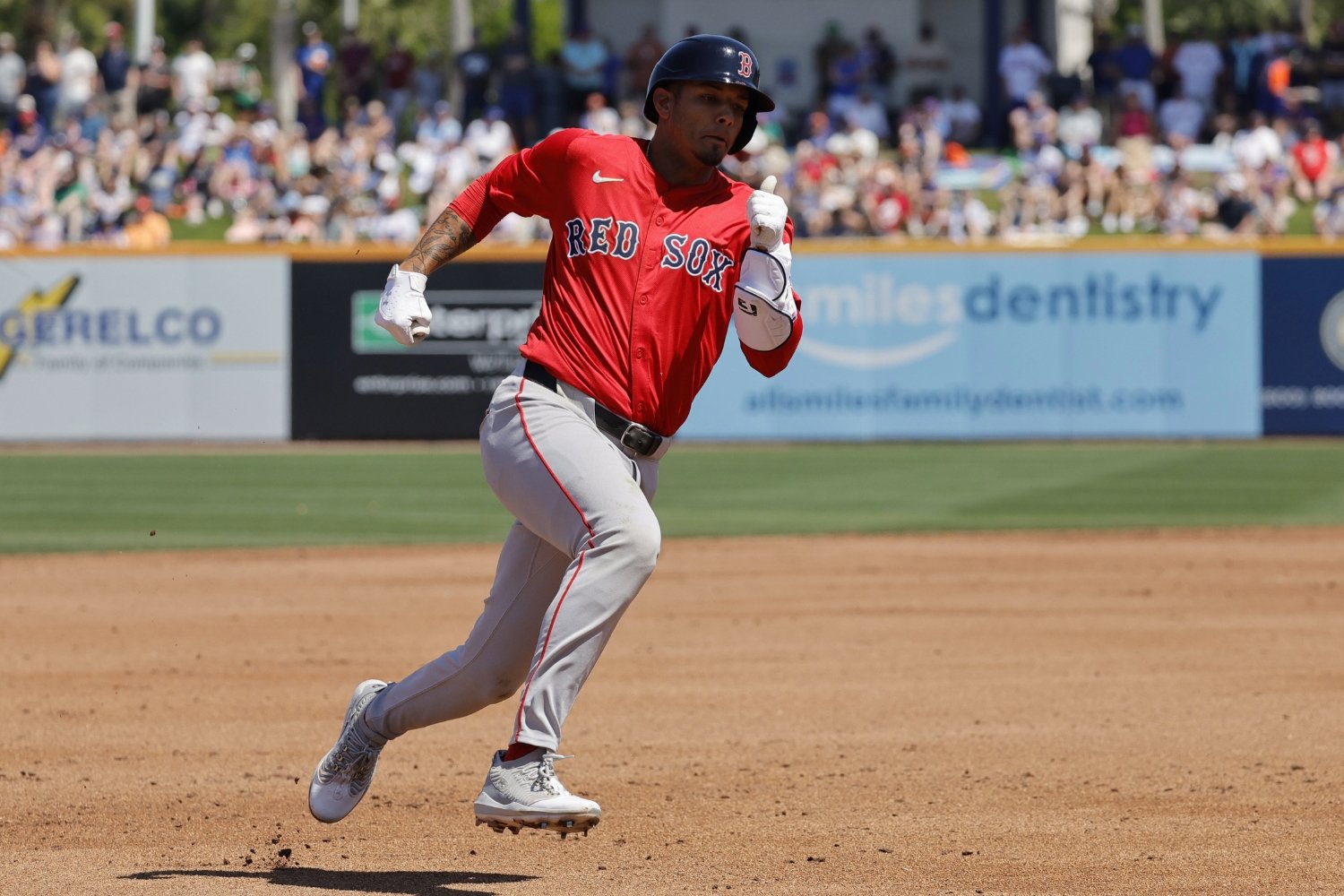 On Tuesday, the Boston Red Sox pulled the plug on the Vaughn Grissom era, trading him to the Los Angeles Angels, per Jeff Passan of ESPN. The return for Grissom is outfielder Isaiah Jackson, whom the Angels drafted in the eighth round this past summer. Jackson spent three seasons at Arizona State University. In his final year for the Sun Devils, Jackson hit .310 with 18 home runs and 14 stolen bases, but his calling card is his defense. The move clears a 40-man spot for the Red Sox, with the Rule 5 Draft scheduled for Wednesday. Grissom showed flashes of the player Boston coveted when it dealt 2024 National League Cy Young winner Chris Sale to Atlanta, but ultimately fell out of favor fast. In two seasons, he played just 31 big-league games, slashing .190/.246/.219 with a 30 wRC+ and -0.7 fWAR. He was a fine ballplayer in Triple-A Worcester, hitting 19 homers in 151 games, but simply didn't do enough to win himself an opportunity at any point in 2025. With the Red Sox scouring the market for infield help, even reportedly exchanging names with the Arizona Diamondbacks for Ketel Marte, there was seemingly no chance for the 24-year-old to ever wear a Red Sox uniform again barring something extreme. They tried moving him around the infield in 2025, even giving him 12 games at first base. Ultimately, the team felt the contingent of Abraham Toro, Nick Sogard, Romy Gonzalez, and Nathaniel Lowe gave them a better chance to win games in 2025. With, at the very least, Triston Casas slated to return from a ruptured patellar tendon at some point in 2026, opportunities were growing scarce. Grissom will try to revive his career in Los Angeles from here on out.
 -
Just before Thanksgiving, Rob Bradford of WEEI reported that some members of the Boston Red Sox front office believe veteran right-hander Sonny Gray is none too dissimilar from Minnesota Twins All-Star Joe Ryan. This, of course, created another avenue for Red Sox fans to argue about what was a very polarizing trade. Gray, who turned 36 on Nov. 7, is two seasons removed from finishing second in American League Cy Young voting, but most recently put up a 4.28 ERA in 2025. With the dialogue surrounding the team's need to acquire a "legitimate No. 2 starter," fans seem to feel underwhelmed by Gray. Let's address the belief brought to light by Bradford: the Red Sox front office believe Gray and Ryan are very similar pitchers. At the outset, it seems foolish. After all, this is the same Ryan that Chief Baseball Officer Craig Breslow reportedly offered an arm and a leg -- short of outfielders Jarren Duran or Wilyer Abreu -- for at this past summer's trade deadline. Even if St. Louis didn't require a package headlined by shortstop Franklin Arias (No. 3 on Talk Sox) or outfielder Jhostynxon Garcia (No. 2), wouldn't the acquisition cost of Richard Fitts and Brandon Clarke signify the talent gap between the two? Not necessarily. Being seven years older and owed a lot more financially, that alone lowers the cost for Gray. Even if they're the exact same pitcher, there are a ton of variables at large when a trade comes to fruition. But let's look at these two side-by-side and re-assess how Boston did in the Sonny Gray trade. Whiffs and Chase Last season was something of an outlier for Ryan in the chase department. Historically, he's never been exceptional at missing bats, constantly hovering around the high-50s in his percentile, but inducing solid amounts of chase helped him rack up the punchouts. In 2025, his chase rate fell to the 14th percentile. As a result, despite holding opponents to a .203 average on his sweeper, he only had a put-away rate of 18.8% on the pitch. He maintained a 34% whiff rate on it, but finishing hitters off became a problem. As for Gray, he stayed well above average at both. In 2025, he had a chase rate of 31.2%, which put him in the 81st percentile. His whiff rate ranked in the 68th percentile. His sweeper was even better than Ryan's, holding opponents to a .151 average while generating 42.4% whiff and 28.2% put-away rates. This isn't a long-lasting part of Gray's pitching track record, but it explains why he's able to maintain elite strikeout stuff despite an unspectacular fastball. Fastball If anyone is arguing Gray's heater can hold a candle to Ryan's, they're lying. The Twins right-hander had a 93rd-percentile fastball in 2025 in terms of run value, holding opponents to a .204 batting average with a 26.9% whiff rate on his four-seam. In fact, only Nick Pivetta registered more strikeouts on four-seam fastballs than Ryan in 2025, who had 108 and tied with San Francisco Giants left-hander Robbie Ray. Gray's four-seam got killed in 2025, as opponents slugged .594 against it. It's not an outlier season either, as opponents slugged .567 against it in 2024. It's simply not an effective offering anymore for the 36-year-old veteran, who reduced his usage rate to 21.7% in 2025. He's much more spin-dominant than he once was, and that's more than acceptable with an increased use of his sinker and cutter to generate ground balls and weak contact. But, in a vacuum, Ryan made more sense given the trends established by Red Sox brass last season. Overall, here's how their 2025 seasons looked: Gray: 4.28 ERA, 3.39 FIP, 3.07 xFIP, 21.6% K-BB, 3.6 fWAR, 180.2 IP, 66th percentile pitching run value Ryan: 3.42 ERA, 3.74 FIP, 3.70 xFIP, 22.5% K-BB, 3.4 fWAR, 171.0 IP, 71st percentile pitching run value ERA aside, hard to see much difference between the two arms, no? Thus begs the question: If you're willing to trade Duran and/or Abreu for Ryan, why are you upset about trading Fitts and Clarke for Gray? Which brings me to my next point: Acquisition Cost Part of why the Gray trade made so much sense this early in the offseason is the options it continues to give the Red Sox on the trade market. While fans think very highly of the team's farm system, that doesn't mean other organizations necessarily agree. Even if, say, the New York Yankees viewed the Red Sox as having the No. 2 farm system in the league, that doesn't mean the Twins do. It's magnified to the grandest degree when we're talking about MLB decision-makers, but it's none too dissimilar to how we as consumers talk about farm systems on social media. That said, age and contracts play a major role in determining acquisition cost. Ryan is turning 30 in 2026; Gray is 36. Therefore, Ryan is more expensive. The Red Sox likely have the ammunition for one big trade this offseason; why does that trade have to happen before any other moves are made? The team acquired Gray for Fitts and Clarke, meaning the Red Sox still have their biggest chips -- Duran and Abreu -- to address a glaring need closer to January or even February of 2026. That could be circling back to Ryan, but it also could be to add impact to the heart of the order. Plain and simple, these two arms for one year are not very far apart in terms of overall production. Gray's a bit more battle-tested, while Ryan has more long-term projectability. But when you've got to get creative to bolster a roster that has so much of its team under control already, unloading all of your assets before Thanksgiving is poor management. As is sitting on your hands waiting for Tarik Skubal or Hunter Greene to become available, similar to what Breslow did at this past deadline with Ryan. It seems he's learned his lesson. View full article
-
Comparing Sonny Gray and Joe Ryan: Did the Red Sox Make A Mistake?
Jordan Leandre posted an article in Red Sox
 Just before Thanksgiving, Rob Bradford of WEEI reported that some members of the Boston Red Sox front office believe veteran right-hander Sonny Gray is none too dissimilar from Minnesota Twins All-Star Joe Ryan. This, of course, created another avenue for Red Sox fans to argue about what was a very polarizing trade. Gray, who turned 36 on Nov. 7, is two seasons removed from finishing second in American League Cy Young voting, but most recently put up a 4.28 ERA in 2025. With the dialogue surrounding the team's need to acquire a "legitimate No. 2 starter," fans seem to feel underwhelmed by Gray. Let's address the belief brought to light by Bradford: the Red Sox front office believe Gray and Ryan are very similar pitchers. At the outset, it seems foolish. After all, this is the same Ryan that Chief Baseball Officer Craig Breslow reportedly offered an arm and a leg -- short of outfielders Jarren Duran or Wilyer Abreu -- for at this past summer's trade deadline. Even if St. Louis didn't require a package headlined by shortstop Franklin Arias (No. 3 on Talk Sox) or outfielder Jhostynxon Garcia (No. 2), wouldn't the acquisition cost of Richard Fitts and Brandon Clarke signify the talent gap between the two? Not necessarily. Being seven years older and owed a lot more financially, that alone lowers the cost for Gray. Even if they're the exact same pitcher, there are a ton of variables at large when a trade comes to fruition. But let's look at these two side-by-side and re-assess how Boston did in the Sonny Gray trade. Whiffs and Chase Last season was something of an outlier for Ryan in the chase department. Historically, he's never been exceptional at missing bats, constantly hovering around the high-50s in his percentile, but inducing solid amounts of chase helped him rack up the punchouts. In 2025, his chase rate fell to the 14th percentile. As a result, despite holding opponents to a .203 average on his sweeper, he only had a put-away rate of 18.8% on the pitch. He maintained a 34% whiff rate on it, but finishing hitters off became a problem. As for Gray, he stayed well above average at both. In 2025, he had a chase rate of 31.2%, which put him in the 81st percentile. His whiff rate ranked in the 68th percentile. His sweeper was even better than Ryan's, holding opponents to a .151 average while generating 42.4% whiff and 28.2% put-away rates. This isn't a long-lasting part of Gray's pitching track record, but it explains why he's able to maintain elite strikeout stuff despite an unspectacular fastball. Fastball If anyone is arguing Gray's heater can hold a candle to Ryan's, they're lying. The Twins right-hander had a 93rd-percentile fastball in 2025 in terms of run value, holding opponents to a .204 batting average with a 26.9% whiff rate on his four-seam. In fact, only Nick Pivetta registered more strikeouts on four-seam fastballs than Ryan in 2025, who had 108 and tied with San Francisco Giants left-hander Robbie Ray. Gray's four-seam got killed in 2025, as opponents slugged .594 against it. It's not an outlier season either, as opponents slugged .567 against it in 2024. It's simply not an effective offering anymore for the 36-year-old veteran, who reduced his usage rate to 21.7% in 2025. He's much more spin-dominant than he once was, and that's more than acceptable with an increased use of his sinker and cutter to generate ground balls and weak contact. But, in a vacuum, Ryan made more sense given the trends established by Red Sox brass last season. Overall, here's how their 2025 seasons looked: Gray: 4.28 ERA, 3.39 FIP, 3.07 xFIP, 21.6% K-BB, 3.6 fWAR, 180.2 IP, 66th percentile pitching run value Ryan: 3.42 ERA, 3.74 FIP, 3.70 xFIP, 22.5% K-BB, 3.4 fWAR, 171.0 IP, 71st percentile pitching run value ERA aside, hard to see much difference between the two arms, no? Thus begs the question: If you're willing to trade Duran and/or Abreu for Ryan, why are you upset about trading Fitts and Clarke for Gray? Which brings me to my next point: Acquisition Cost Part of why the Gray trade made so much sense this early in the offseason is the options it continues to give the Red Sox on the trade market. While fans think very highly of the team's farm system, that doesn't mean other organizations necessarily agree. Even if, say, the New York Yankees viewed the Red Sox as having the No. 2 farm system in the league, that doesn't mean the Twins do. It's magnified to the grandest degree when we're talking about MLB decision-makers, but it's none too dissimilar to how we as consumers talk about farm systems on social media. That said, age and contracts play a major role in determining acquisition cost. Ryan is turning 30 in 2026; Gray is 36. Therefore, Ryan is more expensive. The Red Sox likely have the ammunition for one big trade this offseason; why does that trade have to happen before any other moves are made? The team acquired Gray for Fitts and Clarke, meaning the Red Sox still have their biggest chips -- Duran and Abreu -- to address a glaring need closer to January or even February of 2026. That could be circling back to Ryan, but it also could be to add impact to the heart of the order. Plain and simple, these two arms for one year are not very far apart in terms of overall production. Gray's a bit more battle-tested, while Ryan has more long-term projectability. But when you've got to get creative to bolster a roster that has so much of its team under control already, unloading all of your assets before Thanksgiving is poor management. As is sitting on your hands waiting for Tarik Skubal or Hunter Greene to become available, similar to what Breslow did at this past deadline with Ryan. It seems he's learned his lesson.
 -
As fans, it's customary to seek the thrill of the marquee player acquisition. That thrill is unique in the sports world, even compared to that of winning a championship. Regardless of confidence level in landing the particular player, knowing your team got them eliminates any doubt, subconscious or otherwise. That said, it's often the moves that get little limelight that put a team over the top, especially in Boston Red Sox history. As crucial as trading for Chris Sale or signing J.D. Martinez and David Price were, there are several players that got little praise in comparison that ended up playing huge roles for the Red Sox. So, as the offseason begins, with all eyes fixated at the top of the market for talent, it's important to remember those under-the-radar acquisitions. The sexy moves aren't always as attractive when they play out. The Red Sox are laden with those outcomes as well—Pablo Sandoval, Carl Crawford, and to some degree, current players like Trevor Story and Masataka Yoshida have all been mixed bags in terms of "living up to" the hype. With that in mind, let's take a look at some of these recent unsung offseason pickups, shall we? UT Romy Gonzalez Gonzalez flashed his potential with a 98 wRC+ and six home runs in 2024, but the waiver pickup from the Chicago White Sox flourished in 2025. Across 96 games, he slashed .305/.343/.483 with a 123 wRC+ and 1.5 fWAR this past season. He also nearly doubled his career RBI total, driving in 53 runs in 341 plate appearances. The former White Sox utility man promised versatility when he came over to Boston, but injuries on the roster held him to mostly first and second base in 2025. At both spots, he filled in admirably and even started to hit right-handers at a clip he'd never previously come close to. Time will tell what his future with the Red Sox looks like as far as his role goes, but finding at-bats for him, especially against southpaws, is something manager Alex Cora needs to continue doing. OF Rob Refsnyder Though not a World Series champion, outfielder Rob Refsnyder is one of the best signings in recent Red Sox history, full stop. Signed as a minor-league free agent before the 2022 season, the lefty-masher posted an 88 wRC+ in 2021 with the Minnesota Twins. Since coming to Boston, he's slashing .276/.364/.440 with a 124 wRC+ across 936 plate appearances. He's tied with Joc Pederson and Jackson Merrill in wRC+ for 17th among outfielders with at least 750 plate appearances in that span. Though primarily manufacturing these gaudy numbers against southpaws, that's been the veteran's role with the club. Given that he's made, in total, less than $6 million in four seasons with the team, it's safe to say he's done his job and then some. The jury is still out on whether the soon-to-be 35-year-old will return to the Red Sox for his fifth season. If not, they will certainly miss his presence in the clubhouse and the lineup. RHP Garrett Whitlock Any time you hit a home run with a Rule 5 selection, they must find their way onto a list like this. You could give an honorable mention to fellow reliever Justin Slaten, but I felt as though there's an element of uncertainty there thanks to injuries. Whitlock's had several injuries to his credit, as well, but is heading into his sixth year in Boston and, hopefully, his third healthy campaign. After the organization waved the white flag on making him a starter, the right-hander returned to high-leverage relief and was almost every bit as good as All-Star closer Aroldis Chapman in 2025. In his two seasons as a full-time reliever, Whitlock has accumulated 3.8 fWAR and ERAs of 1.96 and 2.25, respectively. For all the talk about Slaten being the future closer of this team when Chapman is no longer in the equation, perhaps that sentiment should go to Whitlock. He's filthy on the mound, and it's nice to see him sustain a year of healthy volume. Now, he's just got to do it again. 1B Mitch Moreland Moreland spent three-plus seasons with the Red Sox and filled in admirably at first base. An All-Star and World Series Champion in 2018, Moreland was tasked with filling the roster spot created by David Ortiz's retirement. Despite most public clamoring for eventual Red Sox first baseman Eric Hosmer, president of baseball operations Dave Dombrowski signed the former Texas Ranger to a one-year deal worth $5.5 million. In three-plus seasons with the Red Sox, Moreland slashed .251/.332/.471 with a 108 wRC+ and 64 home runs in 381 games. He added a .333/.412/.533 slash line in 15 playoff games for Boston and, of course, we all remember his pinch-hit, three-run homer in the World Series against the Los Angeles Dodgers. RHP Rick Porcello I had a tough time deciding on Porcello, seeing as he wasn't some unknown commodity at the time of acquisition. Not only that, but he also cost the Red Sox Yoenis Cespedes. But given the level of expectations, him churning out a Cy Young campaign and being a pivotal part of a World Series winner dramatically outweighs the struggles he faced at times in 2015, 2017, and 2019. If nothing else, the right-hander ate up innings with the best of the best during his Red Sox tenure. In fact, he ranked fourth in the league in workload, behind only Max Scherzer, Justin Verlander, and Zack Greinke. He was also top 30 in fWAR during that stretch, among qualifiers. While not a super-valuable pitcher relative to his volume, his Boston career was one of tremendous highs. RHP Koji Uehara It feels somewhat taboo to refer to Uehara as an under-the-radar signing, but people forget he wasn't the Red Sox's Plan A or B at the closer position in 2013. When the call came, though, he was electric. In 2013 alone, Uehara posted a 1.09 ERA with a 1.61 FIP in 74 1/3 innings pitched. Despite not opening as the team's closer, he finished with 21 saves in the regular season. That October, he allowed one earned run in 13 2/3 innings pitched, recorded seven saves, and struck out 16 of 46 batters faced. The only more valuable season by a Red Sox reliever, minimum of 50 innings, was Craig Kimbrel in 2017, with 2006 Jonathan Papelbon tying him at 3.1 fWAR. The only two seasons a reliever had a better ERA was Papelbon's 2006 (0.92) and Chris Martin's 2023 (1.05). But his Red Sox career didn't end after 2013; he played three more years in Boston before wrapping up with the Chicago Cubs in 2017. From 2014 to 2016, Uehara posted a 2.73 ERA and 58 saves across 157 outings. He was über-dependable, hammered the strike zone, and had a tantalizing splitter that kept him dominant despite sub-90 mph velocity on his fastball. UT Brock Holt Holt is one of the most widely loved Red Sox players of the 21st century for several reasons, and that's before we even get to what he did on the field. His impact on the community is still felt to this day, especially with the Jimmy Fund. His impact on the field greatly outweighed expectations seeing as he was a throw-in in the deal that acquired Joel Hanrahan ahead of 2013. Holt spent parts of seven seasons with the Red Sox, slashing .270/.340/.374 with 144 extra-base hits. He hit for the cycle twice, including once in the 2018 playoffs, made an All-Star team, and logged over 100 games at three separate positions. Had it not been for vertigo in 2017, who knows how much better his Red Sox tenure looks, even though it's already viewed in a very favorable light. View full article
-
 As fans, it's customary to seek the thrill of the marquee player acquisition. That thrill is unique in the sports world, even compared to that of winning a championship. Regardless of confidence level in landing the particular player, knowing your team got them eliminates any doubt, subconscious or otherwise. That said, it's often the moves that get little limelight that put a team over the top, especially in Boston Red Sox history. As crucial as trading for Chris Sale or signing J.D. Martinez and David Price were, there are several players that got little praise in comparison that ended up playing huge roles for the Red Sox. So, as the offseason begins, with all eyes fixated at the top of the market for talent, it's important to remember those under-the-radar acquisitions. The sexy moves aren't always as attractive when they play out. The Red Sox are laden with those outcomes as well—Pablo Sandoval, Carl Crawford, and to some degree, current players like Trevor Story and Masataka Yoshida have all been mixed bags in terms of "living up to" the hype. With that in mind, let's take a look at some of these recent unsung offseason pickups, shall we? UT Romy Gonzalez Gonzalez flashed his potential with a 98 wRC+ and six home runs in 2024, but the waiver pickup from the Chicago White Sox flourished in 2025. Across 96 games, he slashed .305/.343/.483 with a 123 wRC+ and 1.5 fWAR this past season. He also nearly doubled his career RBI total, driving in 53 runs in 341 plate appearances. The former White Sox utility man promised versatility when he came over to Boston, but injuries on the roster held him to mostly first and second base in 2025. At both spots, he filled in admirably and even started to hit right-handers at a clip he'd never previously come close to. Time will tell what his future with the Red Sox looks like as far as his role goes, but finding at-bats for him, especially against southpaws, is something manager Alex Cora needs to continue doing. OF Rob Refsnyder Though not a World Series champion, outfielder Rob Refsnyder is one of the best signings in recent Red Sox history, full stop. Signed as a minor-league free agent before the 2022 season, the lefty-masher posted an 88 wRC+ in 2021 with the Minnesota Twins. Since coming to Boston, he's slashing .276/.364/.440 with a 124 wRC+ across 936 plate appearances. He's tied with Joc Pederson and Jackson Merrill in wRC+ for 17th among outfielders with at least 750 plate appearances in that span. Though primarily manufacturing these gaudy numbers against southpaws, that's been the veteran's role with the club. Given that he's made, in total, less than $6 million in four seasons with the team, it's safe to say he's done his job and then some. The jury is still out on whether the soon-to-be 35-year-old will return to the Red Sox for his fifth season. If not, they will certainly miss his presence in the clubhouse and the lineup. RHP Garrett Whitlock Any time you hit a home run with a Rule 5 selection, they must find their way onto a list like this. You could give an honorable mention to fellow reliever Justin Slaten, but I felt as though there's an element of uncertainty there thanks to injuries. Whitlock's had several injuries to his credit, as well, but is heading into his sixth year in Boston and, hopefully, his third healthy campaign. After the organization waved the white flag on making him a starter, the right-hander returned to high-leverage relief and was almost every bit as good as All-Star closer Aroldis Chapman in 2025. In his two seasons as a full-time reliever, Whitlock has accumulated 3.8 fWAR and ERAs of 1.96 and 2.25, respectively. For all the talk about Slaten being the future closer of this team when Chapman is no longer in the equation, perhaps that sentiment should go to Whitlock. He's filthy on the mound, and it's nice to see him sustain a year of healthy volume. Now, he's just got to do it again. 1B Mitch Moreland Moreland spent three-plus seasons with the Red Sox and filled in admirably at first base. An All-Star and World Series Champion in 2018, Moreland was tasked with filling the roster spot created by David Ortiz's retirement. Despite most public clamoring for eventual Red Sox first baseman Eric Hosmer, president of baseball operations Dave Dombrowski signed the former Texas Ranger to a one-year deal worth $5.5 million. In three-plus seasons with the Red Sox, Moreland slashed .251/.332/.471 with a 108 wRC+ and 64 home runs in 381 games. He added a .333/.412/.533 slash line in 15 playoff games for Boston and, of course, we all remember his pinch-hit, three-run homer in the World Series against the Los Angeles Dodgers. RHP Rick Porcello I had a tough time deciding on Porcello, seeing as he wasn't some unknown commodity at the time of acquisition. Not only that, but he also cost the Red Sox Yoenis Cespedes. But given the level of expectations, him churning out a Cy Young campaign and being a pivotal part of a World Series winner dramatically outweighs the struggles he faced at times in 2015, 2017, and 2019. If nothing else, the right-hander ate up innings with the best of the best during his Red Sox tenure. In fact, he ranked fourth in the league in workload, behind only Max Scherzer, Justin Verlander, and Zack Greinke. He was also top 30 in fWAR during that stretch, among qualifiers. While not a super-valuable pitcher relative to his volume, his Boston career was one of tremendous highs. RHP Koji Uehara It feels somewhat taboo to refer to Uehara as an under-the-radar signing, but people forget he wasn't the Red Sox's Plan A or B at the closer position in 2013. When the call came, though, he was electric. In 2013 alone, Uehara posted a 1.09 ERA with a 1.61 FIP in 74 1/3 innings pitched. Despite not opening as the team's closer, he finished with 21 saves in the regular season. That October, he allowed one earned run in 13 2/3 innings pitched, recorded seven saves, and struck out 16 of 46 batters faced. The only more valuable season by a Red Sox reliever, minimum of 50 innings, was Craig Kimbrel in 2017, with 2006 Jonathan Papelbon tying him at 3.1 fWAR. The only two seasons a reliever had a better ERA was Papelbon's 2006 (0.92) and Chris Martin's 2023 (1.05). But his Red Sox career didn't end after 2013; he played three more years in Boston before wrapping up with the Chicago Cubs in 2017. From 2014 to 2016, Uehara posted a 2.73 ERA and 58 saves across 157 outings. He was über-dependable, hammered the strike zone, and had a tantalizing splitter that kept him dominant despite sub-90 mph velocity on his fastball. UT Brock Holt Holt is one of the most widely loved Red Sox players of the 21st century for several reasons, and that's before we even get to what he did on the field. His impact on the community is still felt to this day, especially with the Jimmy Fund. His impact on the field greatly outweighed expectations seeing as he was a throw-in in the deal that acquired Joel Hanrahan ahead of 2013. Holt spent parts of seven seasons with the Red Sox, slashing .270/.340/.374 with 144 extra-base hits. He hit for the cycle twice, including once in the 2018 playoffs, made an All-Star team, and logged over 100 games at three separate positions. Had it not been for vertigo in 2017, who knows how much better his Red Sox tenure looks, even though it's already viewed in a very favorable light.
 -
Four Free Agent Fits for the Middle of the Red Sox's Rotation
Jordan Leandre posted an article in Red Sox
 It's not sexy to talk about rotation depth, but it often proves just as conducive to winning as having top-shelf talent. The Boston Red Sox enter the 2025-26 offseason in a fascinating position: They already have a ton of organizational depth for the rotation. Looking at the youth on the precipice of big-league readiness, they have left-handers we saw briefly in Payton Tolle, Connelly Early, and Kyle Harrison, as well as right-handers Hunter Dobbins and Richard Fitts. They also have Luis Perales and David Sandlin residing in Triple-A Worcester, both of whom were at least discussed as potential break-glass-in-case-of-emergency options at the tail-end of the 2025 season. Then, you get into the veterans this team has coming back. Right-hander Kutter Crawford, who made 56 starts between 2023 and 2024, missed all of 2025 and is set to return next season. There's also left-hander Patrick Sandoval, who looked like a potential All-Star with the Angels as recently as 2022. With all of that in mind, one can argue the Red Sox have enough depth, but not enough elite-level talent behind ace left-hander Garrett Crochet. And it's true to a degree—the front of the rotation needs to be a priority. However, ignoring the middle of the rotation would be irresponsible for third-year Chief Baseball Officer Craig Breslow. While depending on Early, Dobbins, or Tolle isn't a bad strategy (depending on health), having them as Plan B would make the organization stronger. Not only that, but for the Red Sox to add someone at the top of the rotation, they may have to dip into all of this depth to acquire an ace on the trade market. So, if the Red Sox do pursue a lesser starting pitcher in free agency, who should they target? 1. RHP Lucas Giolito The obvious candidate here is to re-sign the right-hander who just spent two years in the organization. While the finish to his season was sub-optimal, there was a lot to like about Giolito's 2025 campaign. For starters, he pitched deep into games. In his 26 starts, he got at least one out into the sixth inning 16 times, the seventh inning seven times, and the eighth inning three times (completing eight twice). His strikeout-to-walk numbers left a bit to be desired, as did his under-the-hood metrics, but it's hard to argue against a 3.41 ERA in 145 innings. There's logic to letting the 31-year-old be one-and-done in Boston, similar to when the organization decided to make Michael Wacha a one-and-done project after 2022. However, Wacha went on to maintain success for the San Diego Padres and Kansas City Royals. While the logic was sound then, and would be now, that thought may linger on the minds of remaining Red Sox brass from that era. If they're going to add someone in this tier of starting pitcher, Giolito probably makes the most sense given the familiarity both parties have. 2. RHP Zach Eflin The Red Sox had Eflin on their radar ahead of the 2023 season, before he shockingly signed the richest free-agent contract in Tampa Bay Rays history. While the 2025 season was nothing short of disastrous for the right-hander, injuries played a major role. From 2023 to 2024, the 31-year-old posted a 3.54 ERA, a 3.37 FIP, and a 19.6% strikeout-minus-walk rate in 59 starts between the Rays and Baltimore Orioles. However, 2025 was a bad year for him; his ERA skyrocketed to 5.93 and his K/9 dropped to 6.31 across 14 starts before his season officially ended in August. He had a lumbar microdiscectomy in August, which people undergo to remove part, or all of, a bulging or herniated disc in the lower spine. According to reports, he expects to have a normal offseason after the standard eight to 12 weeks of recommended rest and rehab. Back injuries are no joke, though, especially for pitchers. It's hard to not at least expect that to linger more as he gets deeper into his 30s. That said, he's a talented arm and the injury and his 2025 performance should knock down the acquisition cost. Spotrac gives him a market value of $16.2 million, which is higher than I'd anticipate given early signs this market is showing, including Shane Bieber opting into his $16 million contract with the Toronto Blue Jays. Something in the range of $10 million over one year should feasibly get the job done. 3. RHP Chris Bassitt From one division rival to another, Bassitt is one of the highest floor guys in the sport. Since 2022, he's made at least 30 starts each year, pitched at least 170 innings, and posted at least 2.3 fWAR. He's not the same pitcher he was a half-decade ago for the Athletics, but he's the same pitcher in theory as Walker Buehler, except with less ceiling and a higher floor. In layman's terms: He's actively good at pitching, just nearing the end of his career. *ducks* Hear me out. He throws eight pitches, which is pretty darned impressive. While half of them registered at under six percent usage, all made up at least 2.7% of his total pitches. He also throws everything to both sides, even though there's a clear skew to one side of the platoon or the other. His cutter, curveball, four-seam, and splitter all kept hitters at bay in 2025, as all four had opponent batting averages of .220 or lower. He also comes in with a lot of institutional knowledge of the American League East, spending the last three years with Toronto, with whom he played a key role in getting them to a World Series Game 7. Bassitt isn't a big strikeout-getter, but he keeps the ball on the ground and generally avoids loud contact. His walks are also generally always in check, save for 2024 where his walk rate sat at a career-worst 9.2 percent. Now, adding him would make it even more imperative that Boston improve its infield defense, which should be a priority anyway, but they could do a lot worse on a one-year deal. 4. RHP Justin Verlander Despite being the ripe old age of 43 (in February), Verlander is coming off of a very solid season for the San Francisco Giants. In 29 starts, the right-hander posted a 3.85 ERA and 2.2 fWAR across 152 innings. After coming off the injured list in June, he was razor sharp to the tune of a 3.60 ERA and 3.34 FIP with 8.64 K/9. It feels like Verlander is becoming an Immaculate Grid legend by bouncing from team to team in the latter stages of his career, but he's still viable for a competitive rotation. While he gives up a lot of fly balls, he's fairly average at missing the barrel and above average at minimizing hard contact. Additionally, his changeup was a plus offering in 2025, while his slider performed worse than expected. His fastball is nowhere near the level it was in his Detroit days, but Andrew Bailey has no problem telling his starters to not throw the fastball (if it's ineffective). Lastly, one cannot overstate the institutional knowledge Verlander possesses. He's won rings, personal awards, and just about everything a MLB pitcher can achieve. He'd be the most decorated arm to don the Red Sox jersey since Pedro Martinez and Curt Schilling, even if signing him would give major John Smoltz vibes.
 -
It's not sexy to talk about rotation depth, but it often proves just as conducive to winning as having top-shelf talent. The Boston Red Sox enter the 2025-26 offseason in a fascinating position: They already have a ton of organizational depth for the rotation. Looking at the youth on the precipice of big-league readiness, they have left-handers we saw briefly in Payton Tolle, Connelly Early, and Kyle Harrison, as well as right-handers Hunter Dobbins and Richard Fitts. They also have Luis Perales and David Sandlin residing in Triple-A Worcester, both of whom were at least discussed as potential break-glass-in-case-of-emergency options at the tail-end of the 2025 season. Then, you get into the veterans this team has coming back. Right-hander Kutter Crawford, who made 56 starts between 2023 and 2024, missed all of 2025 and is set to return next season. There's also left-hander Patrick Sandoval, who looked like a potential All-Star with the Angels as recently as 2022. With all of that in mind, one can argue the Red Sox have enough depth, but not enough elite-level talent behind ace left-hander Garrett Crochet. And it's true to a degree—the front of the rotation needs to be a priority. However, ignoring the middle of the rotation would be irresponsible for third-year Chief Baseball Officer Craig Breslow. While depending on Early, Dobbins, or Tolle isn't a bad strategy (depending on health), having them as Plan B would make the organization stronger. Not only that, but for the Red Sox to add someone at the top of the rotation, they may have to dip into all of this depth to acquire an ace on the trade market. So, if the Red Sox do pursue a lesser starting pitcher in free agency, who should they target? 1. RHP Lucas Giolito The obvious candidate here is to re-sign the right-hander who just spent two years in the organization. While the finish to his season was sub-optimal, there was a lot to like about Giolito's 2025 campaign. For starters, he pitched deep into games. In his 26 starts, he got at least one out into the sixth inning 16 times, the seventh inning seven times, and the eighth inning three times (completing eight twice). His strikeout-to-walk numbers left a bit to be desired, as did his under-the-hood metrics, but it's hard to argue against a 3.41 ERA in 145 innings. There's logic to letting the 31-year-old be one-and-done in Boston, similar to when the organization decided to make Michael Wacha a one-and-done project after 2022. However, Wacha went on to maintain success for the San Diego Padres and Kansas City Royals. While the logic was sound then, and would be now, that thought may linger on the minds of remaining Red Sox brass from that era. If they're going to add someone in this tier of starting pitcher, Giolito probably makes the most sense given the familiarity both parties have. 2. RHP Zach Eflin The Red Sox had Eflin on their radar ahead of the 2023 season, before he shockingly signed the richest free-agent contract in Tampa Bay Rays history. While the 2025 season was nothing short of disastrous for the right-hander, injuries played a major role. From 2023 to 2024, the 31-year-old posted a 3.54 ERA, a 3.37 FIP, and a 19.6% strikeout-minus-walk rate in 59 starts between the Rays and Baltimore Orioles. However, 2025 was a bad year for him; his ERA skyrocketed to 5.93 and his K/9 dropped to 6.31 across 14 starts before his season officially ended in August. He had a lumbar microdiscectomy in August, which people undergo to remove part, or all of, a bulging or herniated disc in the lower spine. According to reports, he expects to have a normal offseason after the standard eight to 12 weeks of recommended rest and rehab. Back injuries are no joke, though, especially for pitchers. It's hard to not at least expect that to linger more as he gets deeper into his 30s. That said, he's a talented arm and the injury and his 2025 performance should knock down the acquisition cost. Spotrac gives him a market value of $16.2 million, which is higher than I'd anticipate given early signs this market is showing, including Shane Bieber opting into his $16 million contract with the Toronto Blue Jays. Something in the range of $10 million over one year should feasibly get the job done. 3. RHP Chris Bassitt From one division rival to another, Bassitt is one of the highest floor guys in the sport. Since 2022, he's made at least 30 starts each year, pitched at least 170 innings, and posted at least 2.3 fWAR. He's not the same pitcher he was a half-decade ago for the Athletics, but he's the same pitcher in theory as Walker Buehler, except with less ceiling and a higher floor. In layman's terms: He's actively good at pitching, just nearing the end of his career. *ducks* Hear me out. He throws eight pitches, which is pretty darned impressive. While half of them registered at under six percent usage, all made up at least 2.7% of his total pitches. He also throws everything to both sides, even though there's a clear skew to one side of the platoon or the other. His cutter, curveball, four-seam, and splitter all kept hitters at bay in 2025, as all four had opponent batting averages of .220 or lower. He also comes in with a lot of institutional knowledge of the American League East, spending the last three years with Toronto, with whom he played a key role in getting them to a World Series Game 7. Bassitt isn't a big strikeout-getter, but he keeps the ball on the ground and generally avoids loud contact. His walks are also generally always in check, save for 2024 where his walk rate sat at a career-worst 9.2 percent. Now, adding him would make it even more imperative that Boston improve its infield defense, which should be a priority anyway, but they could do a lot worse on a one-year deal. 4. RHP Justin Verlander Despite being the ripe old age of 43 (in February), Verlander is coming off of a very solid season for the San Francisco Giants. In 29 starts, the right-hander posted a 3.85 ERA and 2.2 fWAR across 152 innings. After coming off the injured list in June, he was razor sharp to the tune of a 3.60 ERA and 3.34 FIP with 8.64 K/9. It feels like Verlander is becoming an Immaculate Grid legend by bouncing from team to team in the latter stages of his career, but he's still viable for a competitive rotation. While he gives up a lot of fly balls, he's fairly average at missing the barrel and above average at minimizing hard contact. Additionally, his changeup was a plus offering in 2025, while his slider performed worse than expected. His fastball is nowhere near the level it was in his Detroit days, but Andrew Bailey has no problem telling his starters to not throw the fastball (if it's ineffective). Lastly, one cannot overstate the institutional knowledge Verlander possesses. He's won rings, personal awards, and just about everything a MLB pitcher can achieve. He'd be the most decorated arm to don the Red Sox jersey since Pedro Martinez and Curt Schilling, even if signing him would give major John Smoltz vibes. View full article
-
With how the 2025 season unfolded, it's hard to picture any Boston Red Sox team for the remainder of the 2020s not having third baseman Alex Bregman on it. Even with the injury and subsequent struggles upon returning, the All-Star slashed .273/.360/.462 with a 125 wRC+ and 3.5 fWAR in 114 games. He also had a .462 on-base percentage in the team's three-game Wild Card series against the New York Yankees and hit an RBI double to seal Game 1. He made the decision to opt out of his current contract earlier this month, at least temporarily removing himself from the equation in Boston. Therefore, for the second offseason in a row, the team covets a middle-of-the-order righty bat... or two. Many assume (hope?) that the team will add a righty bopper in addition to Bregman. That pairing may have worked on the field, and the group loved him behind the scenes, but does it really make sense for the Red Sox to commit to him for six additional years on top of adding another high-priced player to the mix? The free agent market for impact right-handed bats is top-heavy, meaning the market cultivated by each player may need to act more desperate to land said player. Even when factoring in the trade market, there's just not a lot of noise surrounding impact righty hitters right now. That said, Jim Bowden of The Athletic ran a list of contract predictions. In his predictions, he has Bregman receiving a six-year deal worth $182 million -- a $30.3 million average annual value. That's the same contract he predicted New York Mets first baseman Pete Alonso gets in free agency. Both would be risks at their age, yes, but the upside is also unquestionable. Yet, the contract that caught my attention was that for Toronto Blue Jays infielder Bo Bichette. Bowden predicts Bichette will get seven years at $189 million total value ($27 mil AAV). Despite 2026 being his age-28 season, and coming off a 2025 in which he was better than Bregman at the plate, he has to get a full extra year to obtain just $7 million in total value. It's worth mentioning that these are simply predictions from Bowden (who is far from the most infallible source), so it's hardly a perfect indicator of the contract any of these players receive. For reference, ESPN's Jeff Passan predicted in September Bichette would sign a deal in the ballpark of what fellow shortstops Trea Turner and Xander Bogaerts got. Regardless, if the final contracts are close between Bregman and Bichette, and signing both is unfeasible, the Red Sox should target the services of Bichette. For starters, there's the aging curve of the two players. Bregman is already 32 years old and coming off of a season in which he dealt with a significant quad injury. Assuming it heals with rest, that shouldn't impact his play moving forward. but it serves as a reminder that he's getting older and with that comes injuries. On the other hand, Bichette will be 28 years old next season, meaning he's still got the prime of his career ahead of him. Not only that, but he's become a lock for 60 or so extra-base hits a year. Though his walk numbers aren't spectacular, he hits the ball hard and doesn't strike out. Yes, some BABIP luck is required since he's not a 30-plus-homer guy. But he only outperformed his expected batting average by four points in 2025 -- the dude mashes. That said, shortstop isn't the position Bichette sticks at long term, if one were to guess. Perhaps that's the reason Bowden is so low on his contract value. Calling him a butcher at the position feels harsh, but apropos to his defensive production. In 2025, he posted -13 DRS and -12 OAA, bringing his career totals to -19 and -32, respectively. Moving to second base seems like the obvious solution. In fact, Bichette is already playing there in the World Series for Toronto, albeit mostly due to physical limitations caused by a knee injury. While still not moving well, he's made some nice plays so far in this series at the position. There's one issue with signing Bichette to play second base, however. The Red Sox theoretically have two already on the roster, with the other playing short, between Trevor Story and Marcelo Mayer. As a result, they have three middle infielders and no third baseman to replace Bregman. The logical solution would be to situate Mayer at third base. However, the team must also navigate the possibility of Story's defensive regression being permanent and not some one-off. Thus, I've begun wondering about the upside of sticking Story at third base for the final two years of his contract. It seems extreme, seeing as there are clear limitations to Story's arm. Not only that, but he posted 10 OAA in 2022 at second base. That said, the veteran infielder posted zero OAA moving to his left and -2 ranging in—it was to his right that really tanked his defensive metrics. With third base not being the rangiest position on the field, it could do him some good not having to cover as much ground, which wouldn't be the case at the keystone whether he's playing alongside Triston Casas, Nathaniel Lowe or Pete Alonso in 2026. The Red Sox wouldn't be the first team to spam shortstops with a hypothetical Bichette signing. The San Diego Padres, as recent as 2024, had done the same. Their entire infield was comprised of shortstops: Bogaerts, Ha-Seong Kim, Manny Machado, and Jake Cronenworth. Deploying three shortstops and an offensive-minded first baseman could give the Red Sox a much more dynamic infield while not suffering at the plate, and Bichette's cleaner fit with the timeline of their current core could make him a de facto leader going forward, much like how George Springer has taken these current Blue Jays under his wing. View full article